 |
| ||||||||||||||||||||||||||||||||||||||||||||||||||||||||||||||||||||||||||||||||||||||||||||||||||||||||||||||||||||||||||||||||||||||||||||||||||||||


|
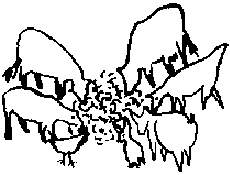
| |||||||||||||||||||||||||||||||||||||||||||||
by V. Ravindran
Department of Animal Science
Faculty of
Agriculture
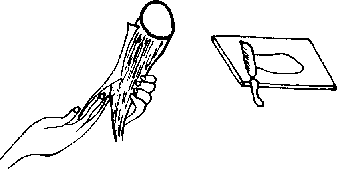
University of Peredeniya
Sri Lanka
FOOD AND AGRICULTURE ORGANIZATION OF THE UNITED NATIONS
Rome,
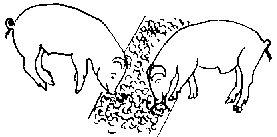
1995
FAO Economic and Social Development Series No. 3/46
The designations employed and the presentation of material in this publication do not imply the expression of any opinion whatsoever on the part of the Food and Agriculture Organization of the United Nations concerning the legal status of any country, territory, city or area or of its authorities, or concerning the delimitation of its frontiers or boundaries.
David Lubin Memorial Library Cataloguing in Publication Data
Ravindram, V.
Use of cassava and sweet potatoes in animal feeding.
(FAO
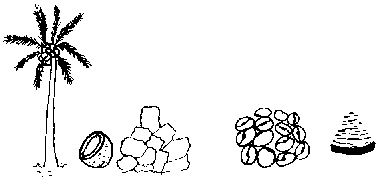
Better Farming Series, no. 46)
ISBN 92-5-103618-7
1. Cassava
2. Sweet potatoes
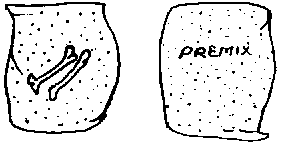
3. Animal feeding
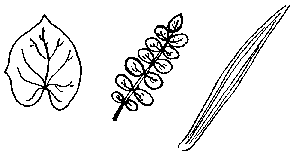
I.
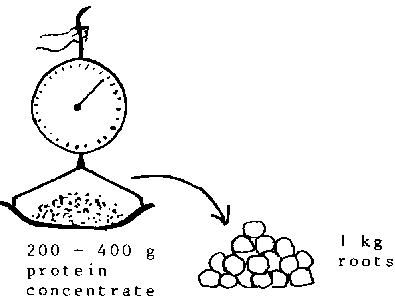
Title
II. Series
III. FAO, Rome (Italy )
FAO code: 23
AGRIS: L02
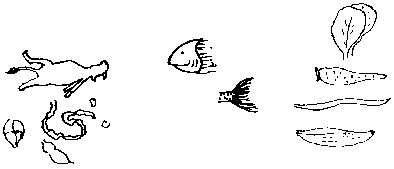
All rights reserved. No part of this publication may be reproduced, stored in a retrieval system, or transmitted in any form or by any means, electronic, mechanical, photocopying or otherwise, without the prior permission of the copyright owner Applications for such permission, with a statement of the purpose and extent of the reproduction, should be addressed to the Director, Publications Division, Food and Agriculture Organization of the United Nations, Viale delle Terme di Caracalla, 00100 Rome, Italy.
© FAO 1995
|
| |||||||||||||||||||||||||||||||||||||||||||||
Preface
The first 26 volumes in FAO's Better Farming Series were based on the Cours d'apprentissage agricole prepared in Cote d'lvoire by the Institut africain de developpement economique et social for use by extension workers. Later volumes, beginning with No. 27, have been prepared by FAO for use in agricultural development at the farm and family level. The approach has deliberately been a general one, the intention being to create a basic model that can be modified or expanded according to local conditions of agriculture.
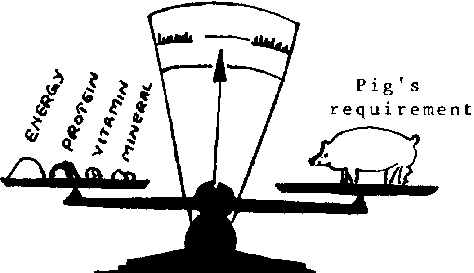
Many of the booklets deal with specific crops and techniques, while others are intended to give farmers more general information that can help them to understand why they do what they do, so that they will be able to do better.
Adaptations of the series, or individual volumes in it, have been published in Amharic, Arabic, Armenian, Bengali, Creole, Ewe, Gipende, Hindi, Igala, Indonesian, Kiswahili, Malagasy, Malaysian, Nepali, Oriyia, SiSwati, Thai, Tschiluba, Urdu and Vietnamese.
Requests for permission to issue this booklet in other languages and to adapt it according to local climate and ecological conditions are welcomed. They should be addressed to the Director, Publications Division, Food and Agriculture Organization of the United Nations, Viale delle Terme di Caracalla, 00100 Rome, Italy.
|
| |||||||||||||||||||||||||||||||||||||||||||||
Introduction
1. You learned in Booklet No. 44 that cassava roots and sweet potato tubers are good energy sources for animal feeding.
2. You also learned how to process cassava and sweet potato into dried chips and silage.
3. In this booklet, you shall learn how to use processed cassava and sweet potato in the feeding of various farm animals.
Animals
4. Cassava tops and sweet potato vines remaining after root harvest are also valuable feeds.
5. In this booklet, you will learn how to use these in animal feeding.
|
| |||||||||||||||||||||||||||||||||||
Better Farming Series 46 - Use of Cassava and Sweet Potatoes in Animal Feeding (FAO, 1995, 47 p.)
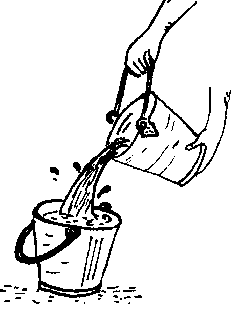
Cassava roots as an animal feed
6. Cassava roots can be fed to animals in many forms including:
- as fresh roots;
- as dried chips;
- as a meal;
- as
silage.

Food
7. In the next few sections, we will learn separately how we can use cassava in the feeding of pigs, chickens, rabbits and cattle.
Use of cassava roots in pig feeding
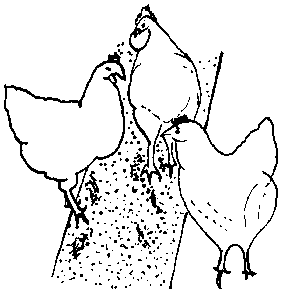
Feeding of fresh roots
8. The easiest way to feed cassava is in the fresh form. Whole roots can be peeled, chopped and given free choice to pigs.
Roots
9. You can let the animals eat as much as they like. But you must be careful since cyanide can cause problems.
10. Pigs will not readily eat fresh roots of bitter cassava because of the cyanide. They will not grow well. They may even get sick.
11. If you want to use bitter cassava, you must boil it. However, boiling will require wood or fuel and it is costly.
12. The safe way is to introduce the fresh roots slowly and watch the pigs carefully.
Pigs
13. If you don't see any bad signs, that means there is no cyanide problem. Then slowly increase the amount given.
14. When you introduce fresh roots, if you notice anything wrong with the animals and you don't understand why, stop feeding the fresh roots.
15. The bigger the pigs are, the more cassava roots they can be given. For two- to four-month old pigs, you can feed 1-1.5 kg of fresh roots every day. For older pigs, you can feed 3-6 kg of roots daily.
Need for supplements
16. Remember cassava root is an energy feed. It cannot be used as the sole feed to pigs.
17. You have learned that cassava is low in protein, minerals and vitamins. These nutrients must be given in the form of supplements when you feed cassava
18. There are many feeds that can supply protein to pigs. These include:
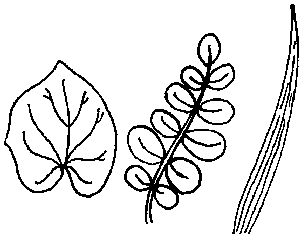
- oilcakes;
- grain legumes (or pulses);
- meat meal;
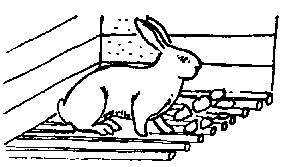
-
fish meal;
- dried leaf meals.
19. Oilcakes are the commonly used protein feeds in animal feeding. You can find many types of oilcakes in your area.
20. Soybean meal, cottonseed meal, groundnut meal, coconut meal and palmkernel meal are some examples of oilcakes. Soybean meal is a very good protein feed, but is expensive.
Soybean meal
21. Grain legumes such as cowpea and mung beans are important protein foods for humans. Usually these are too costly to use as animal feeds; but if the price is low, you can use them as well.

Grain legumes
22. Animal protein feeds are better sources of protein than plant protein feeds. Fish meal and meat meal are examples of animal protein feeds.

Animal protein feeds
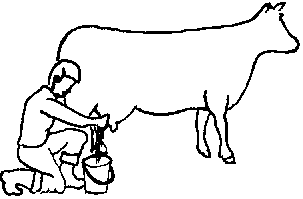
23. Minerals and vitamins are needed only in small amounts. Calcium and phosphorus can be given as bone meal or dicalcium phosphate. Other minerals and vitamins can be given as premix. Premix can be purchased from feed dealers.
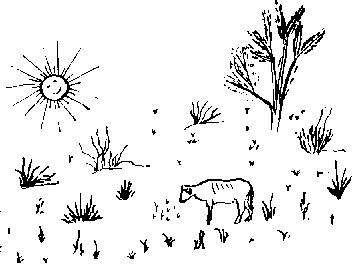
Premix
24. You can also supply the vitamins and minerals by giving leaves, grass and other fresh materials to pigs.
Leaves, grass and other
25. The vitamins and mineral supplements must be mixed with the protein feeds and the mixture must be fed along with cassava roots. This mixture is called protein concentrate.
The protein concentrate
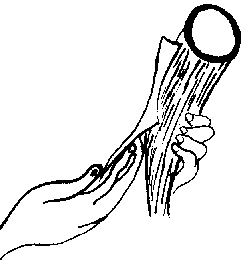
26. A 10- kg mixture of protein concentrate could be prepared using the following ingredients:
- 4-5 kg of oilcakes;
- 3-5 kg of fish meal, meat meal or
soybean meal;
- 80-100 g of bone meal;
- 20 g of salt;
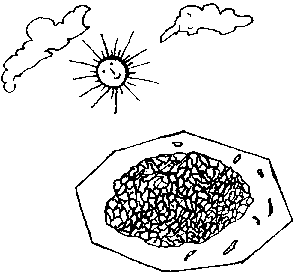
- 20 g of
mineral and vitamin premix;
- 20 g of methionine (if available).
27. To get good results, you must give 200-400 g of protein concentrate for every kilogram of cassava roots that you are feeding.
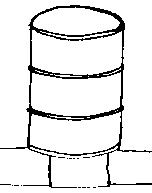
Protein concentrate
28. You must mix the protein concentrate well with the fresh roots and then feed the pigs. Do not feed the roots and the protein concentrate separately.
29. Sometimes you may find that feeding protein concentrate is not economical, especially when you are getting low prices for your pigs.
30. At times like this, you can feed cassava along with various wastes available in your area, such as fish wastes, slaughterhouse wastes, vegetable wastes, leaves and grasses.
Wastes
31. Pigs will not grow fast on this type of feeding, but this method is cheaper.
Feeding of dried chips to pigs
32. You can use dried cassava chips to feed pigs, just as you would feed the fresh roots. You must mix the chips with a protein concentrate and feed.
33. Pigs will eat the dried chips without any problem. However, they will like them more if they are moistened before use.
34. A convenient way of using the dried chips is to grind them into a meal and use for feeding.
Use of cassava meal for pig feeding
35. Cassava meal can be included into compounded rations and can be fed to pigs.
36. Compounded rations are complete feeds and are balanced to supply all necessary nutrients.
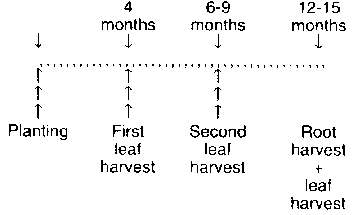
Feed
37. Compounded rations are prepared by mixing together energy feeds, protein feeds and mineral and vitamin supplements in correct amounts.
38. The mash-type feeds that you buy from the dealer are prepared like this. You can mix this type of ration on your farm as well.

Man
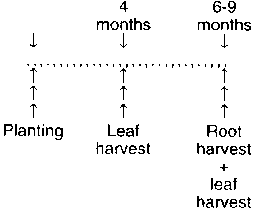
9. In compounded rations, cereal grains are used as energy feeds. You can use cassava meal instead of cereal grains.
40. Cassava meal gives the pigs the same amount of energy as cereal grains.

Cassava meal
41. How much cassava meal can you use? The amount of cassava meal that you can put into compounded rations will vary according to the size of the pigs.
42. As the pigs grow bigger, you can use more cassava meal.
43. For growing pigs (two to four months of age), you can use up to 60 percent of the ration. If you are mixing a 10- kg ration, up to 6 kg of it can be cassava meal.
44. For finishing pigs (four to six months of age) and older animals, you can increase the use of cassava meal up to 70 percent. In a 10- kg ration, up to 7 kg can be cassava meal.
45. When you are using cassava meal in your rations, you must use good protein feeds. You must use fish meal, meat meal or soybean meal.
46. For you to understand the principle of compounded rations, some examples of pig rations using cassava meal follow.
Pig rations using cassava meal
|
Ingredient |
Ration for | |
| |
growing pigs |
finisher pigs |
| |
Parts | |
|
Cassava meal |
60 |
70 |
|
Maize |
10 |
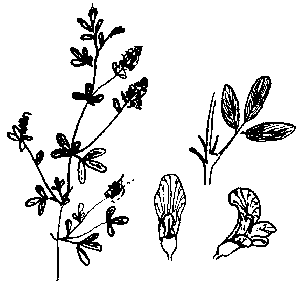
6 |
|
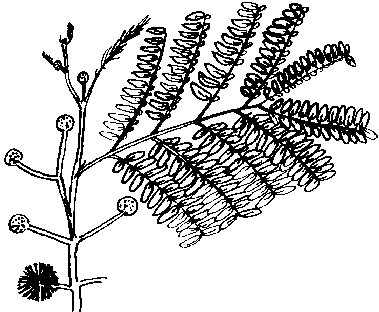
Soybean meal |
22 |
16 |
|
Fish meal |
6 |
6 |
|
Bone meal |
1 |
1 |
|
Vitamin-mineral premix |
0.5 |
0.5 |
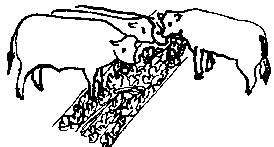
|
Common salt |
0.3 |
0.3 |
|
Methionine |
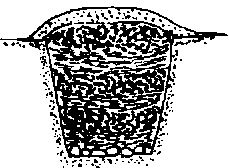
0.2 |
0 2 |
|
Total |
100 |
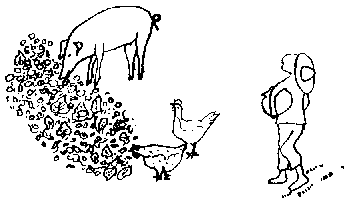
100 |
47. If you want to mix your own pig ration in your farm using cassava meal as the energy feed and if you need help ask your extension agent.

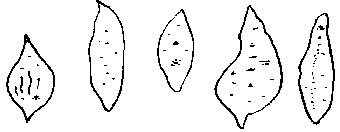
Extension agent
48. The agent can help you to formulate a properly balanced ration using feedstuffs available in your area.
49. When you use high levels of cassava meal in ration, the ration becomes powdery.
50. If you find a pig ration powdery,- you can overcome the problem by mixing with water and practicing wet feeding.
51. When you wet the ration, use one bucket of water to wet one bucket of ration. Pigs like wet feed and will eat enough of the ration.
Wet bucket
Feeding of cassava root silage to pigs
52. Cassava root silage is a good pig feed. It has low levels of cyanide. When you make silage, the cyanide level is reduced.
53. When you first introduce the silage, pigs may not like it. They may not eat much. After a few days, they will get used to the silage.
54. You may see watery faeces when you feed root silage. You need not worry about it because all silages have a slightly laxative effect.
55. Cassava root silage can be used just like fresh roots to feed pigs. Give the pigs as much as they want to eat.
56. Make sure that you feed the silage with a protein concentrate.
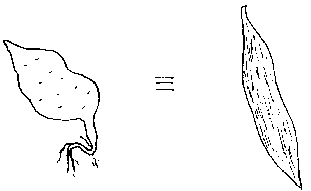
57. You can use the silage to feed pigs of all age groups, except for very young pigs.
Use of cassava roots in chicken feeding
58. Feeding chickens is different from feeding pigs. For pigs, you can give the feed as mash, dried materials or fresh materials. For chickens, you need to give all their feed in mash form only.
59. Just like pig feeding, cassava meal must be mixed with other feeds in compounded rations and fed in mash form.
60. The energy value of cassava meal for chickens is similar to those of cereal grains.
61. How much cassava meal can be used? The maximum amount of cassava meal that can be used varies for different types of chickens.
Chickens
62. For young chickens and for broilers, you must not use more than 20 percent cassava meal in rations. If you are mixing a 10-kg ration, cassava meal must not make up more than 2 kg.
63. In the rations of growing chickens, you can include up to 30 percent cassava meal. You can use up to 3 kg of cassava meal in mixing a 10-kg ration.
64. For chickens that are laying eggs, you can include up to 40 percent cassava meal. When you mix a 10-kg ration, up to 4 kg can be cassava meal.
65. Too much cassava meal must be avoided. If you use too much cassava meal, the ration will become powdery and dusty.
66. Powdery rations can cause problems. You can get irritated by the dust. Birds can also be irritated by dust. Finally they will not eat enough.
67. How can you overcome the dustiness? There are several ways by which dustiness can be overcome:
- by pelleting;
- by the addition of molasses or fat;
- by
wet mash feeding.
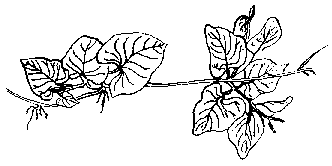
68. Using pellets effectively overcomes the dustiness and powdery texture. However, you cannot do this on your farm because you need a pelleting machine.

Dust
69. You can also overcome the dustiness by adding molasses or fat, if these are available and cheap in your area.
70. Wet mash feeding can be used to avoid the dustiness problem. Wet mash feeding is also very useful during hot weather.
71. You have to wet the feed daily and feed it to chickens.
Otherwise the feed will get spoiled.
Low level of pigments in cassava
72. Cassava meal is white in colour. It does not have any pigments. When you feed rations with a lot of cassava, the egg yolks will be light-coloured and the chicken meat will have pale skin. These egg and this chicken meat will get only a low price.
73. You can avoid this problem by using feeds that have a lot of pigments. Leaves have a lot of pigments. You can use dried leaf meals in your ration to supply the pigments.
74. When you use high levels of cassava meal, make sure to include a leaf meal in the chicken ration.
75. At least 300-500 g of leaf meal must be used when mixing a 10- kg chicken ration.
76. You can prepare leaf meals from many plants that are available around your farm. Some examples are:
- cassava leaves;
- sweet potato leaves;
- ipil-ipil
leaves;
- young grass.
Leaf meals
77. If you are interested in mixing chicken rations on your farm, the examples that follow may be useful. The formulations are given for mixing of a 100- kg ration.
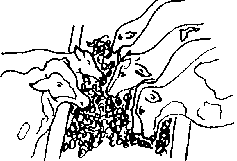
Chicken rations using cassava meal
|
Ingredient |
Ration for | ||
| |
chicks |
growing chickens |
laying chickens |
| |
Parts | ||
|
Cassava meal |
20 |
30 |
40 |
|
Maize |
37 |
40 |
20 |
|
Soybean meal |
30 |
15 |
20 |
|
Fish meal |
8 |
6 |
6 |
|
Cassava leaf meal |
3 |
6 |
6 |
|
Bone meal |
1 |
2 |
1 |
|
Oyster shell |
0 |
0 |
6 |
|
Vitamin-mineral premix |
0.5 |
0.5 |
0.5 |
|
Salt |
0.3 |
0.3 |
0.3 |
|
Methionine |
0.2 |
0.2 |
0.2 |
|
Total |
100 |
100 |
100 |
78. These ingredients are given as useful examples. The feeds that are commonly available in your area may be different. You can modify the formulation according to what feeds are available to you.
Use of cassava roots in rabbit feeding
79. You can feed fresh cassava roots to rabbits. They like to nibble and eat them.
Rabbits
80. When you are giving fresh roots, remove the peel, cut the roots into sections and then feed the root pieces.
81. You can also feed the cassava as dried chips or as meal. You can use up to 40 percent cassava meal in rabbit rations.
Use of cassava roots in ruminant feeding
82. Pigs and chickens have simple stomachs. Cattle have complex
stomachs. Goats, sheep, buffaloes and camels also have complex stomachs.
83.
Animals with complex stomachs are called ruminants because they ruminate
(Booklet No. 12, page 11).

complex stomachs
84. Ruminants eat feeds that are different from the feeds eaten by pigs and chickens. They can eat and digest feeds that are fibrous. These feeds are called roughages.
85. Grasses, legumes and tree leaves are all roughages. These are good roughages. Straws remaining after harvesting crops are also roughages; but these are poor-quality roughages.
86. Ruminants can be reared on good-quality roughages alone. These will give the nutrients to maintain the body and to grow.
87. There may be situations where you have to give supplementary feeds, such as cassava roots, for good growth of animals.
88. When the animals are raised for meat, you cannot make them grow fast on roughages alone. You can give cassava roots as supplementary feeds.
89. In milking animals, you are likely to get more milk from them. You can feed cassava roots to these animals, in addition to the roughages.
Cow
90. In the dry season, there may not be enough grass for the animals to eat. Animals will then lose weight and become thin. Cassava can be useful.
Grass for the animals
91. You can feed cassava roots to ruminants in several forms:
- as chopped fresh roots;
- as dried chips;
- as
silage;
- as cassava meal.
92. You need not worry much about the cyanide problem when you feed cassava to ruminants. They can tolerate high levels of cyanide.
93. Silage is the best way to preserve cassava roots for ruminants. When you are making root silage for ruminants you can add chopped cassava foliage to the silage.
94. Adding foliage will increase the protein content of the silage. This silage is a balanced feed for ruminants. Animals readily eat this silage.
|
| |||||||||||||||||||||||||||||||||||||||||||||
Cassava peels as an animal feed
95. During cassava processing a lot of cassava peels become available. These may be used for feeding animals.
Cassava peels
96. When you process 100 kg of cassava roots, 10-15 kg of cassava peel becomes available as a by-product.
97. Cassava peel looks fibrous. You must know that it can supply many nutrients.
98. If you take 100 kg of cassava peel, it will contain about:
- 6 kg of protein;
- 4 kg of fat;
- 6 kg of minerals.
99. You must limit the amount of cassava peel fed to pigs and chickens because it also has a lot of fibre.
100. Fresh cassava peels have high levels of cyanide - much higher than the level present in the flesh of the roots.
101. Fortunately, you can reduce the cyanide in the peels by simply drying in the sun.
Drying peels
102. For ruminant animals, peels are good energy feeds. They can be safely used.
103. You can also use the peels to feed pigs and chickens, but you must combine them with other feeds. Do not use more than 2 kg cassava-peel meal in a 10- kg ration.
104. You can also make a peel silage. You can make a silage using cassava peels, in the same way that cassava root silage is made.
105. You can use a small silo such as an oil drum. Line the oil drum with polyethelene sheets. Make holes at the bottom to drain the liquid coming out of the silage. Keep the drums on stones or on a concrete floor for easy drainage.
Small silo
106. You must first wilt the peels in the sun for a day to reduce the water content. Then pack the wilted peels in the drum and press them tight.
107. You must then cover the top of the drum. You can use banana leaves, grass or polyethelene sheets to cover. Then put some stones on the top.
108. Cassava peel silage will be ready in four weeks. It can be used for feeding of ruminants and pigs. Cyanide levels are far lower in the peel silage.
|
| |||||||||||||||||||||||||||||||||||||||||||||
Better Farming Series 46 - Use of Cassava and Sweet Potatoes in Animal Feeding (FAO, 1995, 47 p.)
Cassava leaves as an animal feed
109. Did you know that cassava leaves can be used as an animal feed? If you did not, read this section carefully. You will learn about:
- the feed value of cassava leaves;
- how they can be
processed;
- how they can be used in animal feeding.
110. Cassava leaves can supply many nutrients that are necessary for animals. They are a good protein feed.

Cassava leaves
111. For ruminant animals, you can feed both the leaves and the tender stems. This is called cassava forage.
112. For pig and chicken feeding, you must strip the leaves, dry them and grind them into a meal. The milled product is called cassava leaf meal. By drying 100 kg of fresh cassava leaves, you can prepare about 20-25 kg of meal.
Production of cassava leaves
113. The amount of leaves that you can get will vary depending on the cultivar that you have planted. Some cultivars have more branches and produce more leaves than others.
114. The amount of leaves that you can harvest from a plant also varies, depending on:
- the age of plant;
- the climate in your area;
- soil
fertility.
115. You can produce leaves in three ways. We will look at each of these possibilities.
Growing for roots
116. Farmers grow cassava mainly to harvest the roots. When you harvest the roots, you can save the leaves to feed animals.
117. You will not get many leaves when you collect them at root harvest. The leaf yields will be low.
Growing for roots and leaves
118. You can also harvest the leaves while the cassava plant is growing and while the roots are being formed.
119. In this way, you can increase the leaf yields. However, you must plan carefully when and at what intervals you should harvest the leaves.
120. If you harvest the leaves too frequently, the roots will not enlarge. You will get few smaller- sized roots.
121. If you plan to harvest the leaves while the plant is growing, you must make sure that the root yields are not affected.
122. In short- season cultivars, you must harvest the leaves only once while the plant is growing. Then the root enlargement will not be affected and you can still get good root yields.
Short-season cultivars
123. In long-season cultivars, you can obtain at least two leaf harvests while the plant is growing and still get acceptable root yields.
Long-season cultivars
Growing for leaves only
124. You can also plant cassava for the sole purpose of harvesting leaves.
125. In parts of Brazil, farmers plant cassava to produce leaves only. Leaves are harvested, dried, ground into a meal and sold for mixing in compounded rations.
126. When you plant cassava for leaf production only, you can plant it with closer spacing. You can have about 60 000 plants to the hectare.
127. This is much closer planting than that used for root production. For root production, you plant only 10 000 plants to the hectare.
128. You can start the first leaf harvest four months after planting and then harvest at three-month intervals.
129. In Venezuela, with this type of cultivation practice, leaf dry-matter yields of over 21 000 kg to the hectare have been obtained. This is a high yield for any forage material.
Feed value of cassava leaves
130. Cassava leaves are a good protein feed. Even mature cassava leaves contain a lot of protein. Dried mature cassava leaves can give about 200 g of protein to the kilogram.

Dried mature cassava
31. Let us see the amount of protein that is supplied by 1 kg of alfalfa meal and different oilcakes. Alfalfa is a legume that is widely used in animal feeding in cold climates.
132. You can see that mature cassava leaves have similar amounts of protein 10 coconut meal and palmkernel meal.
|
Alfalfa meal |
200 g |
|
Soybean meal |
400 g |
|
Groundnut meal |
350 g |
|
Cottonseed meal |
350 g |
|
Coconut meal |
250 g |
|
Palmkernel meal |
210 g |
133. Young cassava leaves have even higher levels of protein. They can give 280-300 g of protein to the kilogram of dried leaves.
134. Cassava leaves are also a rich source of minerals and vitamins.
135. We know that all leaves are fibrous. Cassava leaves have a lot of fibre.
136. This fibre level does not cause any problems to ruminants. Ruminant animals can digest and use the fibre for energy. Cassava leaves are good feeds for ruminants.
137. For pigs and chickens, this high fibre level can cause problems. This means that cassava leaves must be used within limits in pig and chicken feeding.
138. Cassava leaves are rich in pigments. This is useful in chicken feeding.
139. As with cassava roots, cassava leaves contain cyanide. In fact, fresh cassava leaves have more cyanide than the roots.
140. By simple drying of the leaves in the sun, you can eliminate most of the cyanide present in cassava leaves.
141. You have to chop and wilt the leaves before drying in the sun.
142. While wilting, you must regularly turn the leaves over. Otherwise fermentation may occur and spoilage may start.
143. After wilting, the chopped leaves must be uniformly spread over a drying area. They will dry quickly.
144. Once well dried, they can be collected and ground into a meal. Meal can be stored in bags or gunny sacks.
145. Dried cassava leaves and cassava leaf meal have excellent storage qualities. Insects and moulds will not attack them. They can be kept in dry places for over a year and used when necessary.
Use of cassava leaves in chicken feeding
146. The chicken mash which you purchase from dealers usually has a leaf meal in it to supply the pigments and to improve the colour of egg yolk and colour of skin of meat birds. In a 10- kg mash, 300-500 9 of leaf meal is usually included.
Chicken mash
147. In North America and Europe, alfalfa meal is the popular leaf meal used in chicken feeds. It is also known as lucerne meal.
Alfalfa meal
148. In warm climates, cassava leaf meal can be used for this purpose. The feed value of cassava leaf meal for chickens is equal to that of alfalfa meal.
149. In some tropical countries, Leucaena leaf meal is used to supply the pigments in chicken rations. Leucaena is a tree legume. It is also called ipil-ipil.
Leucaena leaf
150. Cassava leaf meal has a better feed value than Leucaena leaf meal.
151. For the best results, you must use about 3 to 5 percent cassava leaf meal in your rations.
152. You have learned earlier (in Paragraph No. 77) about some examples of chicken rations with cassava leaf meal.
153. You have also learned earlier (in Paragraph No. 131) that cassava leaf meal has a protein content similar to those of coconut meal and palmkernel meal.
154. Therefore you can include cassava leaf meal instead of some oilcakes in chicken rations. In Sri Lanka, cassava leaf meal has been used in levels of up to 10 percent in chicken rations instead of coconut meal.
Use of cassava leaf meal in pig feeding
155. Cassava leaf meal can be included at levels of up to 10 percent in compounded pig rations. In a 10- kg ration, you can use up to 1 kg cassava of leaf meal.
156. If you use higher levels of cassava leaf meal in rations for fattening pigs, they will not fatten well.
157. Rations also become powdery when you use high levels of leaf meal. But pig rations are normally mixed with water and fed. Therefore this is not a big problem.
158. In areas where coconut meal is used for pig feeding, cassava leaf meal can be used instead of coconut meal. As a substitute for coconut meal, it can be used at levels of up to 20 percent in pig rations.
Use of cassava forage in ruminant feeding
159. In tropical climates, the grasses mature and flower quickly. They quickly become fibrous and have poor digestibility and low protein contents.

Grass
160. These problems are more severe during the dry season. The grasses are dry and are more fibrous. Animals will not get much digestible feed or protein by eating them.
161. Animals will not grow and may lose weight. To avoid this, you must feed quality forages with high protein, along with available grasses.
162. You can feed legumes that are high protein forages. In many areas, tree legumes are used to feed animals. Gliricidia, Leucaena, Sesbania and Acacia are some tree legumes that you may find in your area.
163. Cassava forage has a protein value equal to those of these tree legumes. Cassava forage includes leaves as well as the tender stems. It is a good supplementary feed for all ruminants.

Cassava forage
164. To lower the cyanide level, you must wilt the forage for a few hours before feeding.
165. Animals like the wilted forage more than the fresh forage. They will eat more of the wilted forage than fresh forage.
Animals
166. When you first give cassava forage, you may find that the animals are reluctant to eat. Usually it takes two to three days before the animals readily eat it.
Use of cassava forage silage
167. You can make a silage with cassava forage in three ways:
- by using cassava forage alone;
- by using a mixture of
cassava forage and grasses;
- by using a mixture of cassava forage and roots.
168. When you mix the cassava forage with grasses available in your area and make a silage, you improve the quality of the silage. You will make a silage with more protein.
169. The method of making silage from cassava forage is similar to that used for making silage from cassava roots. You have also learned about making silage from grass in Booklet No. 12 (page 23).
170. The forage and the grasses must be wilted first and then chopped. Wilting is done to reduce the water content in the materials.

Forage and grasses
171. If you make silage with too much moisture, a lot of liquid will drain out of the silage. This liquid will remove nutrients. Too much moisture will also make the silage spoil.
172. You can avoid the problem of too much moisture by using layers of dry grass or straw between layers of chopped forages. Dried materials will absorb the excess moisture.
Silage
173. You can mix the chopped roots with the forage and make a silage. This silage will be well balanced. Roots will supply the energy and the forage will supply the protein.
174. In parts of Brazil, the whole cassava plant is used to make silage. Roots, stems and forage are chopped together, made into a silage and used to feed fattening cattle.
|
| ||||||||||||||||||||||||||||||
Better Farming Series 46 - Use of Cassava and Sweet Potatoes in Animal Feeding (FAO, 1995, 47 p.)
Sweet potatoes as an animal feed
Use of sweet potatoes in pig feeding
175. In many parts of China, farmers fatten their pigs mainly on sweet potatoes. They have known the value of sweet potatoes for a long time.
Pigs
176. Chinese farmers also make dried chips from sweet potatoes, store and use them throughout the year. Some make a silage with sweet potato tubers to feed their pigs.
Feeding fresh tubers to pigs
177. Fresh tubers can be chopped and fed to pigs. Pigs readily eat them.
Fresh tubers
178. Fresh sweet potato tubers are better feeds than fresh cassava roots because:
- they have more protein;
- they have no cyanide.
179. However, tubers from some cultivars have high levels of
trypsin inhibitor. If you feed these tubers without cooking, animals will not
digest enough protein. They will not grow well.
180. You can suspect high
levels of trypsin inhibitors if your pigs do not grow well when fresh sweet
potatoes are used as the main feed.
181. If you suspect a high level of trypsin inhibitor in the tubers, you must boil them before feeding. Boiling will destroy the trypsin inhibitor.

Boiling the tubers
182. When you boil the tubers, digestibility will be increased; more protein will become available for the growth of animals.
183. You can feed the pigs with fresh sweet potatoes as much as they like.
184. You have learned earlier that you need to give protein feeds with cassava roots. Similarly sweet potatoes cannot be used as the sole teed. They must be fed along with protein feeds.

Food
Feeding dried chips to pigs
185. Dried sweet potato chips can be fed to pigs just like the chopped fresh tubers. In China, this is a common way of feeding pigs.
186. When you feed dried chips it is best to moisten them with water. Then the pigs like them better.
Feeding sweet potato meal to pigs
187. Sweet potato meal is a good energy feed. It can be mixed with other feeds and used in compounded rations, just as cassava root meal is used.
188. It can be used in compounded rations instead of cereal grains. It must be mixed with protein feeds, mineral supplements and vitamin supplements.
189. The energy that pigs can get from sweet potato meal is similar to that they get from cassava meal and maize. Sweet potato meal can completely replace maize in pig rations.
Sweet potato
190. However, if you suspect trypsin inhibitor may be a problem in the meal, it is safe to replace only 50 percent of the maize in your pig ration with sweet potato meal.
191. If you are now using 7 kg of maize when mixing a 10 kg pig ration, instead you can use 3.5 kg of maize and 3.5 kg of sweet potato meal.
192. Some examples of compounded pig rations with sweet potato meal follow. These will give you an idea as to how to mix the rations.
Pig rations using potato meal
|
Ingredient |
Ration for | |
| |
growing pigs |
finisher pigs |
| |
Parts | |
|
Maize |
35 |
35 |
|
Sweet potato meal |
35 |
35 |
|
Soybean meal |
20 |
18 |
|
Fish meal |
5 |
3 |
|
Sweet potato vine meal |
4 |
8 |
|
Bone meal |
2 5 |
2.5 |
|
Vitamin-mineral premix |
0 3 |
0.3 |
|
Salt |
0.2 |
0.2 |
|
Total |
100 |
100 |
193. Note that sweet potato vine meal is used in these examples. Sweet potato vine meal can also be used in animal feeding.
194. When you mix high levels of sweet potato meal the ration will become dusty. You must wet the ration with water before feeding to pigs.
Feeding tuber silage to pigs
195. Sweet potato tubers can also be preserved as a silage. Making sweet potato tuber silage is similar to making cassava root silage.
196. Pigs readily eat the silage. You can feed any amount of silage to pigs. You must feed the silage along with protein feeds to get good results.
Use of sweet potatoes in rabbit feeding
197. Sweet potato tubers are good energy feeds for rabbits. You can feed them as:
- chopped, fresh tubers;
- dried chips;
- meal.
198. You can feed the rabbits with sweet potatoes in the same way as you feed the pigs. You must take the same precautions.
Use of sweet potatoes in chicken feeding
199. How much sweet potato meal you can put into a ration will depend on the age of the birds.
200. In rations of young birds that are less than eight weeks old, you must not use more than 20 percent sweet potato meal. If you are mixing a 10- kg ration, you must not use more than 2 kg of sweet potato meal.
201. As the birds grow bigger, you can gradually increase the amount of sweet potato meal that is used. In rations for laying chickens you can use up to 30 percent sweet potato meal.
202. Like the cassava root meal, sweet potato meal is dusty and powdery. When you use high levels of sweet potato meal, you will face similar problems.
203. Some examples of chicken rations with sweet potato meal follow.
Chicken rations using sweet potato meal
|
Ingredient |
Ration for | |
| |
young chickens |
Iaying chickens |
| |
Parts | |
|
Maize |
40 |
35 |
|
Sweet potato meal |
20 |
30 |
|
Rice bran |
5 |
6 |
|
Soybean meal |
22 |
16 |
|
Fish meal |
8 |
3 |
|
Sweet potato vine meal |
3 |
3 |
|
Bone meal |
1.5 |
2.5 |
|
Shell grit |
- |
0.4 |
|
Vitamin- mineral premix |
0.3 |
0.3 |
|
Salt |
02 |
0.2 |
|
Total |
100 |
100 |
Use of sweet potatoes in ruminant feeding
204. Sweet potato tubers can be given to all ruminants. They can be fed as:
- fresh, chopped tubers;
- dried chips;
- silage.
205. If sweet potatoes are available at cheap prices, you can feed them as energy supplements along with locally available grasses:
- during the dry season;
- for fattening animals and milking
animals.
|
| |||||||||||||||||||||||||||||||||||
Better Farming Series 46 - Use of Cassava and Sweet Potatoes in Animal Feeding (FAO, 1995, 47 p.)
Sweet potato vines as an animal feed
206. When you harvest sweet potato tubers, large amounts of vines are available. Most people throw away the vines. You must know that they have good feed value.
Sweet potato vines
207. Sweet potato vines can be used as a protein feed for animals. They do not have as much protein as cassava leaves, but they do have more protein than grasses that may be available in your area.
208. 100 kg of dried sweet potato vines can supply 10-12 kg of protein. Grasses that commonly grow in tropical climates supply much less protein than this.
209. Sweet potato vines have no substances that are bad for animals. They can be safely fed to animals.
Use of vines in pig feeding
210. Sweet potato vines can be fed to pigs either in the fresh form or after drying.
211. Pigs readily eat the vines. You can feed the pigs any amount of fresh vines without restriction.
212. You can also dry the vines and grind them into a meal. Vines dry easily. By drying 100 kg of fresh vines, you can get about 30 kg of dried vines.
213. You can use sweet potato vine meal in compounded pig rations, but only at low levels.
214. You must not use more than 5 percent vine meal in pig rations. If you are mixing a 10- kg ration, the maximum amount of vine meal that you can use is 500 9.
Use of vines in rabbit feeding
215. If you have rabbits, you can make good use of sweet potato leaves. They like sweet potato leaves from the vines.

Rabbit
216. Sweet potato leaves give the protein needed for growth of rabbits. You can rear the rabbits on sweet potato leaves and grasses and get good growth.
Use of vines in chicken feeding
217. On many chicken farms, fresh green leaves are chopped and given to birds, in addition to mash. This is practiced:
- to supply pigments;
- to supply minerals and vitamins.
218. Giving green leaves to chickens is a good practice. You can reduce the amount of mash given to the chickens when you give additional greens.
219. You can use fresh sweet potato vines for chicken feeding.
220. Vine meal can be included in compounded chicken rations at low levels. In a 10- kg ration, you can use about 300 9 of sweet potato vine meal.
Use of vines in ruminant feeding
221. Fresh sweet potato vines make good feed for all ruminants. They can be given without any restriction.
222. When you feed sweet potato vines to milking animals or fattening animals, you don't have to give any other protein supplement. Vines alone can supply all the protein needed by these animals.
223. Cattle fed on sweet potato vines alone can put on more than 500 9 of body weight per day. This shows the feed value of sweet potato vines to ruminant animals.
224. You will usually have a lot of fresh vines at harvest time. If you cannot use all the fresh vines to feed animals, you can preserve the extra vines as sweet potato vine silage.
225. The method of making silage from vines is similar to that used for making silage from any other forage. You must follow the same principles.
Silage
226. To get a good silage from sweet potato vines, you have to follow an additional step.
227. You must put in an additive that will supply carbohydrates that will ferment quickly.
228. If you do not put in the additive, the silage may not be good. Moulds may grow and silage will be spoiled.
229. Sweet potato tubers, cassava roots and molasses are good examples of additive materials. Molasses is the best additive of all.
230. If you are making 100 kg of silage, you must add 2-4 kg of molasses.
231. A good sweet potato vine silage will be brownish-green in colour. It will have a pleasant fruity smell. Animals will like it. You can feed the vine silage free choice to all ruminants.
End of the Better Farming booklets
series