 |
| |||||||||||||||||||||||||||||||||||||||||||||||||||||||||||||||||||||||||||||||||||||||||||||||||||||||||||||||||||||||||||||||||||||||||||||||||||||||||||||||||||||||||||||||||||||||||||||||||||||||||||||||||||||||||||||||||||||||||||||||||||||||||||||||||||||||||||||||||||||||||||||||||||||||||||||||||||||||||||||||||||||||||||||||||||||||||||||||||||||||||||||||||||||||||||||||||||||||||||||||||||||||||||||||||||||||||||||||||||||||||||||||||||||||||||||||||||||||||||||||||||||||||||||||||||||||||||||||||||||||||||||||||||||||||||||||||||||||||||||||||||||||||||||||||||||||||||||||||||||||||||||||||||||||||||||||||||||||||||||||||||||||||||||||||||||||||||||||||||||||||||||||||||||||||||||||||||||||||||||||||||||||||||||||||||||||||||||||||||||||||||||||||||||||||||||||||||||||||||||||||||||||||||||||||||||||||||||||||||||||||||||||||||||||||||||||||||||||||||||||||||||||||||||||||||||||||||||||||||||||||||||||||||||||||||||||||


|
| |||||||||||||||||||||||||||||||||||||||||||||||||||||||||||||||||
Patrick M. Maundu
Grace W. Ngugi and Christine H.S. Kabuye
ILLUSTRATIONS BY LUISE GULL AND NICHOLAS S. MUEMA
Kenya Resource Centre for Indigenous Knowledge (KENRIK)
NATIONAL MUSEUMS OF KENYA
Published by Kenya Resource Centre for Indigenous Knowledge
(KENRIK)
National Museums of Kenya
P.O. Box 40658
Nairobi, Kenya
© 1999 National Museums of Kenya
ITK: All rights reserved
Be advised that the indigenous traditional knowledge contained in this volume has been given in good faith as a contribution to the common good and the furtherance of mutual understanding and the preservation of all life on our planet and not to be used for personal or commercial gain and must be treated with respect and used only for the purpose for which it was gifted. Anyone who reads this volume assumes the moral and ethical obligations implied by this statement.
Editing: Caroline Agola, P.O. Box 21582, Nairobi
Design, layout and typesetting: Graeme Backhurst, P.O. Box 15194, Nairobi
Cover photographs (clockwise from top left): Vangueria infausta, Acokanthera oppositifolia, Uvaria scheffleri, Citrullus lanatus, Nymphaea nouchali, Thylachium thomasii
Photographs: All by Patrick Maundu except Hyphaene compressa, plate 3, which is by David Lowe
Cataloguing-in-publication data
Traditional food plants of
Kenya/Patrick M. Maundu, Grace W. Ngugi and Christine H.S. Kabuye-
Nairobi,
Kenya: National Museums of Kenya, 1999
Index
Bibliography: p.
ISBN 9966-9861-4-6
This publication may be reproduced in whole or in part, and in any form, for educational or non-profit purposes without special permission of the copyright holder provided due acknowledgement of the source is made.
Reproduction for sale or other commercial purposes is prohibited without prior written permission from the copyright holder.
Additional copies of this book are available from:
The Library
National Museums of Kenya
Museum Hill
P.O. Box 40658
Nairobi, Kenya
Printed by: English Press Limited, Enterprise Road, P.O. Box 30127, Nairobi, Kenya
|
| |||||||||||||||||||||||||||||||||||||||||||||||||||||||||||||||||
Foreword
This book is a result of four years' research on indigenous food plants of Kenya. The original data was obtained from the plant collections in the East African Herbarium at the National Museums of Kenya (NMK) and was expanded through extensive ethnobotanical fieldwork carried out during the Indigenous Food Plants Programme (IFPP), 1989-1992.
The programme was implemented by the National Museums of Kenya in collaboration with the Kenya Freedom From Hunger Council (KFFHC) and Worldview International Foundation (WIF) (Kenya), covering Kajiado, Baringo, Turkana, Siaya, Nyandarua and Kilifi Districts.
During the final year, the programme also covered Machakos, Kitui, Mwingi and Makueni Districts, through a contract with World Neighbors.
The IFPP set up an Indigenous Food Plants Database, now at KENRIK in the NMK, which has data on over 800 indigenous plant species used for food in one way or another. Of these, fruits form about 50%, leafy vegetable 25%, tubers and roots 12.5%, gums, resins, spices, herbs and those used for tea, and other minor food products making up the rest. However, this book deals with 175 species, which are of particular importance, especially among the communities the programme worked with. The book also covers in less details about 130 other closely related species traditionally used for food in Kenya or elsewhere. Some of these species are little known because of their localized use or distribution but still have the potential to be used more widely. Many are collected from the wild, a few are in transition to domestication, while even fewer are well-established crops.
The book aims at helping the user appreciate the wealth of food-plant resources traditionally used in Kenya and how to recognize and utilize them for the well-being of society at large and particularly the local communities who are the custodians of the resources and information presented. Besides food use, other uses are mentioned. Of particular interest are medicinal uses where the distinction from food uses may sometimes be unclear, especially among pastoral communities who rely heavily on wild species. Ethnoveterinary, cultural, household and a host of other uses are also listed in an attempt to show the value of each species to the communities concerned, as well as its potential for use elsewhere. A salient characteristic of foods obtained from indigenous plants is their relatively high nutritional value, an important point for nutritionists in extension work.
Although this book deals with both naturally occurring and cultivated species, the emphasis is on the relatively less known but locally important species that are indigenous to Kenya. The book also includes a few cosmopolitan exotic species of cultural and nutritional importance, such as some Amaranthus species, and a few traditional food plants whose specific origins are still debatable - Solanum nigrum being a good example.
Information on the status of the species and their distribution will be useful not only in decision making but also in efforts to encourage the sustainable use of food and other plant resources. The awareness created by this book will lead to increased use, more respect and appreciation for these valuable foods as well as conservation of the species, their various forms and the preservation of the associated indigenous knowledge.
The book will be useful to researchers, social and development workers, those working in conservation and others interested in the subjects covered. It is my hope that it will also contribute to development, conservation of cultures and the associated plant resources.
Mohamed Isahakia
Director-General, National Museums
of
Kenya
|
| |||||||||||||||||||||||||||||||||||||||||||||||||||||||||||||||||
Acknowledgements
The production of any ethnobiological work involves an enormous number of people. A few of those involved in the production of this book are mentioned here, but all those who are not should feel that their role was also important and is appreciated.
Work of the Indigenous Food Plants Programme (IFPP) which led to this book would not have been possible without the generous grant from the Ford Foundation for which we are deeply grateful. In this connection special thanks go to Dianne Rocheleau and Eric Rusten, Program Officers at the Ford Foundation's Eastern and Southern Africa Office in Nairobi, for their great interest and encouragement throughout the IFPP period.
We are grateful to the Canadian Organization for Development through Education (CODE) for providing funds through their Eastern Africa Regional Office in Dar-es-Salaam for production education and extension materials. In this Scott Walter, and later Julie Holder, were very helpful. In addition, the programme received seed money from Nog Meer Binding Foundation and Columbine Foundation of the Netherlands.
We are grateful to Richard L. Leakey former Director and later Mohamed Isahakia Director National Museums of Kenya for their encouragement given to IFPP.
In nutritional research, we are indebted to S. Mbugua and J. Imungi of the Department of Food Science, University of Nairobi for their support and permission to use laboratory facilities for food-value analyses.
Of particular mention and appreciation is the contribution made by the management and staff of IFPP in implementing the programme: Moses Mbugua, Secretary General, Kenya Freedom From Hunger Council (KFFHC); Grace Kanyua, Director, Worldview International Foundation Kenya (WIF); Joe Kuhn who initiated the programme and worked tirelessly to get it off the ground; Matthijs de Vreede who assisted in the programme design and continued to provide advice; David Lowe and later Bernard Muchiri, Coordinators; Abbey Olendi, Nutritionist; Gatonye Gathura, Communications officer; Jane Makumi, Programme Secretary; Nicholas Maina, Driver; and the late Peter Olala, Gardener.
The success of IFPP depended highly on local leaders and committed field collaborators who took the programme as their own, and to the local communities contained in this book and to whom much of it belongs. We are deeply indebted to them all.
Kajiado: J. Kimani of Maasai Rural Training Centre (MRTC) and the staff of the Elang'ata Wuas Ecosystem Management Programme, especially Charles Samperu, Ezekiel Roimen, Irene Katete and David Moile.
Baringo and Koibatek: Justus Kumu of the Food Security Programme and Fr Sean McGovern of the Kositei Catholic Mission.
Turkana: Mr Karanja of the Ministry of Agriculture, Livestock Development and Marketing (MALD&M);Turkana, KEFRI staff, especially Rosina Auren; the staff of the former Turkana Cultural Heritage Project (TCHP) and especially Sammy Emekwi Nalukoowoi, John Rigano, Geoffrey Clarfield, Dominic Akeno, John Ekales, Pauline Lokuruka, and Christopher Eweikar of Kaputir Community Health Clinic.
Kilifi and Malindi: the staff of the Malindi NGO programme in Magarini Division. Special thanks go to Shida Kaplanga, Shadrack Magambo, Mary Ngonyo, Charles Nzai, Rachael Kafedha, Esther Gona, Samson Chengo and the late Edward Jeffwa for their commitment to the programme.
Nyandarua: the extension staff of the MAL&D and Olkalou Council. Special thanks go to Marion Kaniu, Kennedy, and Jane Mathenge.
Siaya: the staff of the Lake Victoria Programme I and II, and especially Justo Oremo.
Machakos, Makueni and Mwingi: Elkanah Odembo, Director, World Neighbors, and the staff of the World Neighbors Ukambani Programme, Arnold Maingi and F.S. Musembi.
Kitui: World Neighbors staff in Kitui, Alexander Mutiso and J. Syombua.
Some additional information which benefited the book was obtained in Kitui during the project on Indigenous Agricultural Knowledge Systems (INDAKS) implemented by Kenya Resource Centre for Indigenous Knowledge 1994 - 1997 and funded by the European Union through the Leiden Ethnosystems and Development Programme of Leiden University.
Final stages of the book and printing were made possible by funds provided by the International Plant Genetic Resources Institute (IPGRI), the Swedish International Development Co-operation Agency (SIDA) and the United Nations Educational, Scientific and Cultural Organisation (UNESCO); for this we are particularly grateful to Frank Attere, Dr Luigi Guarino and Henry Kamau (IPGRI), Christine Holding (RELMA, SIDA) and Robert Hoft (UNESCO) for their interest in seeing the book published. We are also most grateful for the invaluable contributions of Bo Tengnas, Caroline Agola, Graeme Backhurst and Christine Holding in editing, formatting and seeing the publication through the printers.
We are indebted to the following for checking the local names in their various languages with great care: Boran and Gabra: Hassan Gurancha Wario: Chonyi: Joshua Buni Mturi; Daasanach: Richard Rogono, Eric J. Ness, Haira Makoro, J. Yeragalech Komoi, Gosh Kuanyang; Embu: Esther Njiro; Giriama: Joshua Buni Mturi, Kikuyu: G.M. Mungai, S. Mathenge; Kisii: David Nyakundi; Luhya: P. Masinde, P. Namachanja, S. Simiyu, Pius Ndinyo, Dinah Khayota; Maasai: Joyce Nasieku, Charles Ole Saitabau; Luo: Alfred Odhiambo, the late Peter Olala, H. Omondi Odongo; Marakwet: J. Kasagam; Mbeere: Ephantus Mwangi Ndiritu: Meru: Faith Njeru, J. M. Ruthiiri, Rendille: John Rigano; Somali: Abdirahman I. Yusuf, Suleiman, Ibrahim Serar; Sanya: Komoro Badula, Baloni Badula, Bini Baloni, Safo Badula, Godana Badula; Taita: G. Mwachala, Teso: P. Ipulet; Turkana: Sammy Emekwi Nalukoowoi.
We are grateful to Abede Kifetew of Ethiopian Curio Centre in Nairobi for providing useful information on teff and coffee, Jacob Muhando for plotting species distribution on the maps, Pius Namachanja for preparing the agro-climatic zone map, and to Yasuyuki Morimoto, Geoffrey Kilili and Patrick Kobai for their input on the final layout. We are also grateful to Joshua Muasya who drew some last-minute illustrations.
Last but not least, our most sincere thanks go to Bettina Ng'weno, J. Nyokabi Oteba, Francis Sikuku, the late Joseph Musyoka Kavisa and Benedetta Nthenya who carefully entered the original work in WordPerfect and AskSam database, Jane M Macharia and Phyllis Karanja for carrying out corrections, Joyce Chege for entering data on late records and L. Sojah for painstakingly matching the local names in the index with those in the main text.
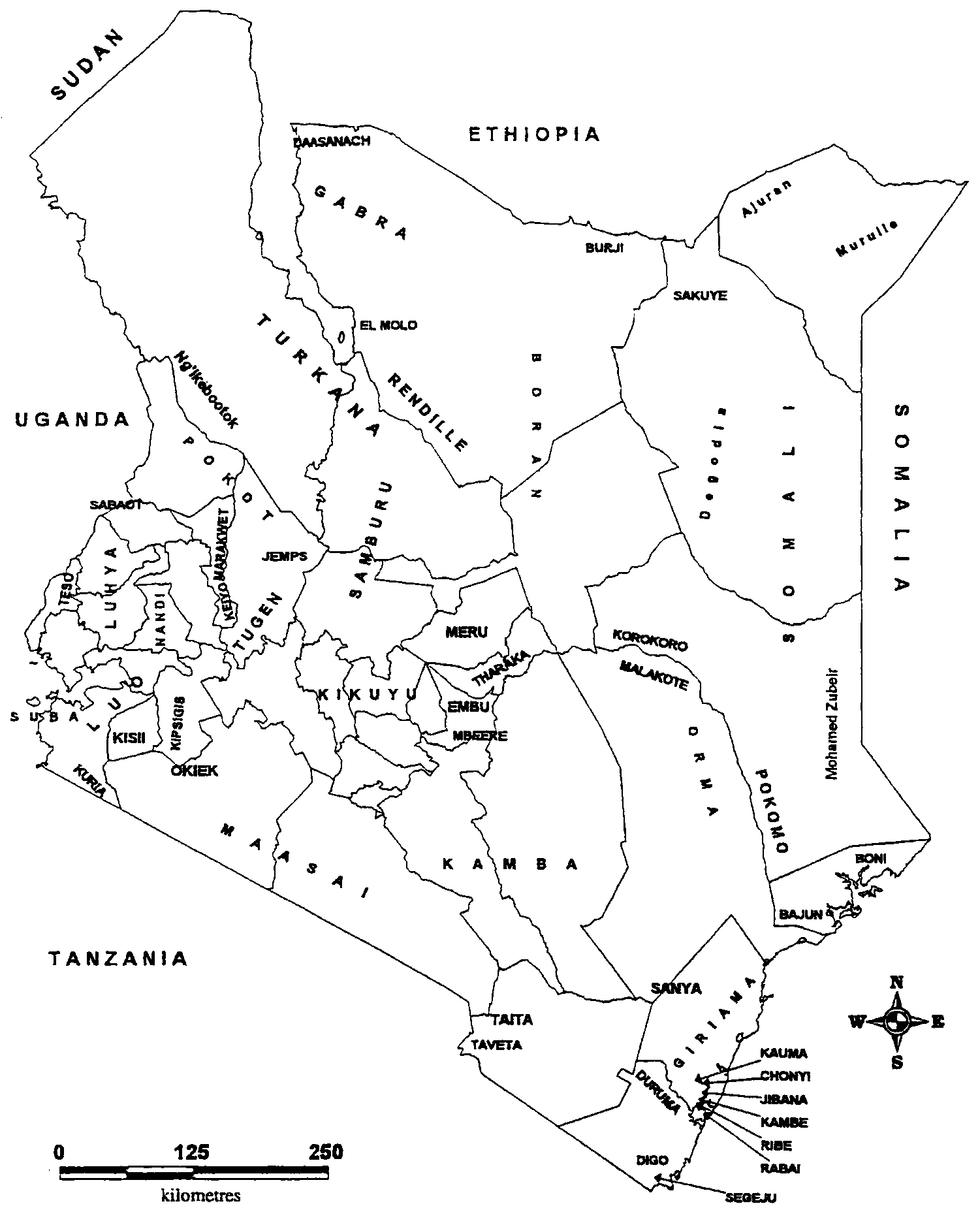
Map 1. Distribution of the major ethnic groups in Kenya
|
| |||||||||||||||||||||||||||||||||||||||||||||||||||||||||||||||||
Introduction
Background
Botanical and ecological diversity in Kenya
Plants are essential for human existence. They are the direct source of the world's staple foodstuffs in the form of their seeds, fruits, leaves and tubers, for example, or as less important products such as edible gums. Other species provide products or services that people depend on directly or indirectly, e.g. medicine, fodder for livestock, fibre, materials for construction, shade-the list is a long one!
Ecologically, there is a great deal of variation within Kenya which has extremes of environments (see Map 3). Land rises from the coastal zone and the lowlands of the north and north-east-where day temperatures exceed 40°C - to the cool highlands and mountain tops in the centre of the country, including Mt Kenya with a summit at 5,199 m, which is permanently snow covered. This great altitudinal range significantly influences rainfall and temperatures in various areas of the country, which in turn dictate the dominant vegetation types. Precipitation ranges from 150 mm annually in the dry low-lying deserts of the north and north-east to over 2,500 mm on the slopes of Mt Kenya. Likewise, vegetation ranges from almost bare rock and sand dunes in the deserts through Acacia-Commiphora bushland to grassland with scattered trees, dry highland forests, tropical rain forests and to alpine vegetation. This wide ecological range has resulted in a rich flora of about 7,100 distinct plant species and several thousand subspecies and varieties. Some of these species have a wide, almost world-wide distribution (e.g. some weedy species such as Amaranthus spp.), while others, or their subspecies or varieties, may have a more limited distribution. Some, for example Bridelia taitensis, are only found within the country (that is, they are endemic to Kenya), and others occur in even more restricted areas; for example the yet-to-be-described Salacia sp. = ndendela, Thui Hill, has only been reported from a single hill that covers an area of less than 4 hectares.
Ethnic diversity
The population of Kenya is also characterized by high diversity. Kenya is a meeting point of three major groups of people: Bantu, Nilotic and Cushitic speakers, each with a diversity of ethnic groups (see Map 1 and Table 1). Altogether, there are over 55 distinct languages and several hundred dialects. Some of these ethnic groups, such as the Kikuyu and Luo, comprise many millions of people, but others, like the Suba and El Molo, are small and their languages are on the verge of extinction. These original inhabitants of Kenya were later joined by people from other continents, e.g. the Arabian peninsular, India and Europe, thus further diversifying the linguistic and cultural situation. With the passage of time, and through observation and trial and error, a wealth of knowledge and experience about the environment, its resources and how best to exploit them was accumulated-for example, knowledge about the uses of plants as food, medicine and as poisons. This deep-rooted indigenous knowledge is necessary for the survival and well-being of a community in its environment. The Mijikenda, for example, use over 80 local species of plants as leafy vegetables, while the Turkana exploit over 140 species of edible plants obtained from their arid environment.
Historical and cultural change
The last century has brought more change for the people of Kenya than perhaps any other before. Western culture and modern science and technology are encroaching on traditional practices and eroding local knowledge. Modern times have brought new food habits and even several new crops. The plants from which traditional foods were obtained are now suffering a double tragedy: genetic erosion and loss of traditional knowledge on how to grow and use them. Many traditional cultivars, which evolved with the cultures concerned as they were consciously selected to meet specific cultural roles, have disappeared within the lifespan of the present generation. In many areas, even outside towns and cities, diets are based on fewer and fewer plant species: one in particular-maize-is becoming an increasingly dominant and widespread staple to the detriment of the health of families and national food security. This, coupled with low incomes and a misguided preference for expensive exotic foods, has contributed significantly to poverty in the country. Traditional farming systems, which are associated with specific traditional crops, varieties and technologies, are being abandoned, also resulting in increasingly monotonous diets and the loss of food-plant resources and indigenous knowledge about them. Specialized habitats such as indigenous forests and wetlands are being destroyed, similarly endangering specific forms and varieties of plants and sometimes resulting in the loss of entire species.
The role of food from the wild
Food from the wide range of traditional food plants makes supplemental, seasonal and emergency contributions to household food supplies.
Supplements to the staple food add flavour, which enhances the appetite. Some foods increase the absorption of vitamins, e.g. gum arabic (from Acacia senegal), and may help maintain the normal intestinal flora.
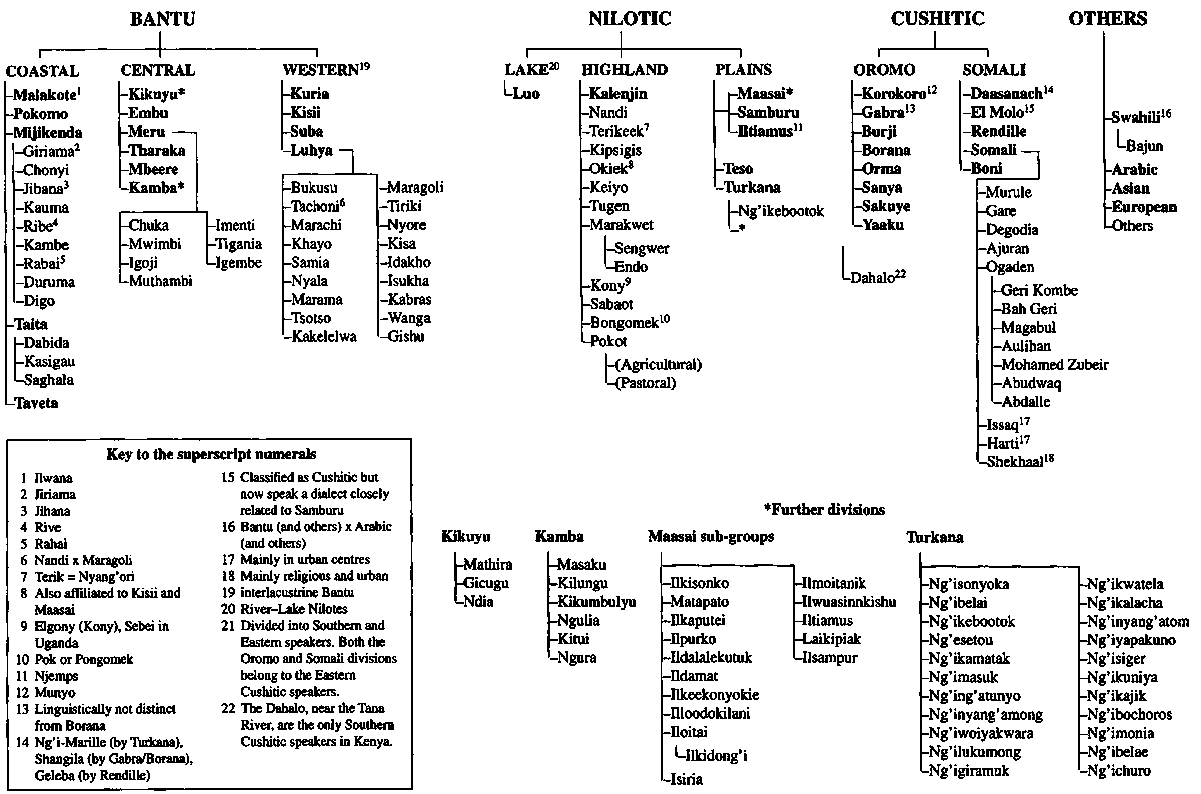
Table 1. Linguistic classification of the communities of Kenya
Many traditional plant foods are characteristically energy rich and play a crucial nutritional role during hunger periods. They may be equally important during periods when people have less time for food preparation, such as during peak agricultural seasons, or in arid regions where seasonal food-supply fluctuations are particularly acute. Commelina spp., for example, are strategically available at the beginning of the rainy season before other species can be harvested.
Perhaps the most common use of food from the wild is as snacks. Traditionally, people ate fruit between meals while herding cattle or working in the fields. Snack foods are especially important for children since they need to eat more frequently than adults. In addition, these wild fruit may supply micronutrients that are very important for the healthy growth of children but may be deficient in the bulky cereal-based diet in the home. Grewia spp., for example, are a major nutritional resource for pastoralists in dry zones.
Leafy vegetables collected from the wild play an important role in traditional diets in rural areas. In some cultures such as the Luhya, Kisii, Luo and Mijikenda, traditional indigenous vegetables are a common food in the diet. While some may be collected from the wild, a sizeable number have now been cultivated, including Cleome gynandra, and Crotalaria, Solarium, and Amaranthus species.
Nutritional value of traditional food plants
If hunger periods lead to actual starvation, or if other calamities such as war cause emergencies, a range of food plants, although sometimes requiring complex preparation to avoid toxicity, can provide a life-saving buffer, as is the case with Balanites pedicellaris and Boscia coriacea among the Turkana of north-western Kenya.
Although malnutrition and famine did also occur in the past, the nutritional benefits that resulted from the consumption of a wide variety of plants in the olden days were undoubtedly great and have been lost in modern times. If these traditional food plants could be promoted through extension work, better nutrition and better health could be achieved (see Appendix 1).
Nutritional problems in Kenya
The main nutritional problems that occur currently in Kenya can be summarized as follows:
Low energy and protein intake
People do not eat enough food of all kinds. In many areas food shortages are seasonal, being most severe at the end of the dry season and at the beginning of the rains. In addition, eating habits are changing-tea, for example, is replacing the more nutritious millet porridge for breakfast among many communities, a habit that is particularly detrimental for children's nutrition.
A number of traditionally used wild plants are good sources of unsaturated fats which, even in small quantities, can play a vital role in increasing the energy content of staple foods while making them more palatable and less bulky for children to eat.
Lack of variety in the diet
A varied diet is likely to be a well-balanced one. More important, the use of different foods, even in small quantities (snack foods), improves the flavour of the staple food and thus tends to increase overall consumption of the staple. Dietary deficiencies and food insecurity are strongly related to the decreasing diversity of traditional diets.
Vitamins
Vitamins are essential for the body's metabolic processes to take place normally.
Lack of Vitamin A: Vitamin A deficiency can lead to dry-eye disease (xerophthalmia), night-blindness and eventually complete blindness. Children who are deficient in vitamin A are more likely than healthy children to die from infectious diseases. Yellow fruits and green vegetables, as well as dark green leaves, are good sources of this vitamin. Fats, protein and zinc help the body to absorb and use vitamin A, thus a diet low in these nutrients can contribute to vitamin A deficiency. Nuts and oil seeds, in addition to fruit and vegetables, help to meet this nutritional shortfall.Low levels of riboflavin (Vitamin B): Riboflavin deficiency is responsible for eye and skin disorders. Many wild foods, especially leaves, are good sources of this vitamin, and wild leafy vegetables have sometimes been found to have significantly higher riboflavin levels than cultivated varieties.
Other vitamins: Several other vitamins are essential for a healthy body. Vitamin C (ascorbic acid) is readily obtainable from fruits and fresh vegetables. Fruits such as baobab (Adansonia digitata) and morula (Sclerocarya birrea) are exceptionally rich in the vitamin. Vitamin E is abundant in vegetables such as purslane (Portulaca oleracea).
Iron and iodine deficiency
Iron is essential for the manufacture of haemoglobin, the red pigment in the blood. Low levels of iron lead to anaemia which is a major health problem in many parts of eastern Africa, particularly for women. Many traditional foods, especially dark green leaves, are good sources of iron.
In some areas of Kenya, the soils are deficient in iodine and therefore the diet is also deficient in this mineral. Iodine deficiency causes goitre and mental retardation in children. This deficiency can be prevented by importation of foodstuffs grown in other areas where there is no iodine deficiency and by use of iodized salt.
Table 2. Marketed species
|
Type/species |
Common name |
Areas commonly sold |
| | | |
|
Leafy vegetables | | |
|
Adansonia digitata |
baobab |
Kitui, Coast |
|
Amaranthus hybridus |
amaranth |
countrywide |
|
Amaranthus dubius |
amaranth |
countrywide |
|
Amaranthus lividus |
amaranth |
Kisii, Kericho, Nyanza, Western, central Rift Valley |
|
Amaranthus spinosus |
spiny amaranth |
Nyanza, countrywide |
|
Asystasia mysorensis | |
Nairobi, West Pokot, Western, Nyanza |
|
Asystasia gangetica | |
Nyanza, Western |
|
Basella alba |
vine spinach |
Nairobi, Coast, Western, Nyanza, central Rift Valley |
|
Brassica carinata |
kandhira |
Nyanza, Western |
|
Cleome (Gynandropsis) gynandra |
spider herb |
Kisii, Nyanza, Western, Coast, Central and northern Rift Valley, Nairobi |
|
Corchorus trilocularis | |
Nairobi, Coast, Western, Nyanza, central Rift Valley |
|
Corchorus olitorius |
jute |
Nairobi, Coast, Western, central Rift Valley, Nyanza |
|
Crotalaria ochroleuca | |
Nairobi, Western, Nyanza, central Rift Valley |
|
Crotalaria brevidens | |
Nairobi, Western, Nyanza, central Rift Valley |
|
Digera muricata | |
northern Rift Valley, Coast |
|
Ipomoea aquatica | |
Coast, Malindi |
|
Kedrostis pseudogijef | |
Voi |
|
Launaea cornuta | |
Western, Nyanza, Coast |
|
Sesamum calycinum |
onyulo |
Nyanza, Western |
|
Solanum nigrum |
black nightshade |
Nairobi, Nyanza, Western, Coast, central Rift Valley, countrywide |
|
Vigna unguiculata |
cowpea |
countrywide |
| |
| |
|
Cucurbits |
| |
|
Citrullus lanatus |
water melon |
large towns countrywide |
|
Coccinia grandis |
ivy gourd |
northern Rift Valley, other parts of the world |
|
Cucumis metuliferus |
spiny cucumber |
Nairobi |
|
Lagenaria siceraria |
gourd |
Nyanza, Central Rift Valley, Eastern, Coast |
|
Cucurbita maxima |
pumpkin |
countrywide |
|
Cucumis ficifolia |
kahurura |
Central |
| | | |
|
Flavouring/spices | | |
|
Zanthoxylum chalybeum |
mjafari |
northern Rift Valley |
|
Lippia carviodora |
eur |
northern Rift Valley |
|
Tamarindus indica |
tamarind |
Nairobi, Eastern, Coast, Western, Nyanza |
|
Gums/resins |
| |
|
Acacia Senegal |
gum arabic |
Maralal, Isiolo, northern Kenya |
|
Acacia seyal |
|
Nairobi, Maralal, Isiolo, northern Kenya, exported |
|
Boswellia neglecta |
frankincense |
northern Kenya |
| |
| |
|
Pulses/other seeds | | |
|
Cajanus cajan |
pegionpea |
countrywide |
|
Lablab purpureus |
lablab bean |
Nairobi, Central, Eastern, countrywide |
|
Sesamum orientale |
sesame |
Nairobi, Coast, Western Nyanza, Central Rift Valley |
|
Vigna subterranea |
Bambara groundnut |
Nairobi, Western, Nyanza, Coast |
|
Vigna unguiculata |
cowpea |
countrywide |
| |
| |
|
Grains |
| |
|
Eleusine coracana |
finger millet |
countrywide |
|
Eragrastis tef |
teff |
Nairobi, northern Kenya |
|
Pennisetum glaucum |
pearl millet |
Eastern, Nairobi, Coast |
|
Sorghum bicolor |
sorghum |
countrywide |
| |
| |
|
Fruits |
| |
|
Acacia tortilis | |
northern Rift Valley |
|
Adansonia digitata |
baobab |
Coast, Eastern |
|
Annona senegalensis |
wild custard apple |
Coast |
|
Azanza garckeana | |
Embu, Tharaka, Kitui |
|
Balanites pedicellaris | |
northern Rift Valley, Lodwar |
|
Berchemia discolor | |
northern Rift Valley, Eastern |
|
Borassus aethiopum |
African fan palm |
Coast |
|
Boscia coriacea | |
northern Rift Valley |
|
Carissa edulis | |
Nairobi, central and northern Rift Valley |
|
Citrullus lanatus | |
Nairobi, northern Rift Valley |
|
Coccinia trilobata | |
Eastern |
|
Cordia sinensis | |
Lodwar, northern Rift Valley |
|
Dialium holtzii | |
Coast |
|
Dialium orientale | |
Malindi, Coast |
|
Flacourtia indica |
Indian plum |
Kapenguria, Chepararia, northern Rift Valley |
|
Hyphaene compressa |
doum palm |
Lodwar, northern Rift Valley |
|
Lagenaria siceraria |
gourd |
countrywide |
|
Landolphia kirkii |
rubber vine |
Coast |
|
Landolphia petersiana | |
Coast |
|
Lannea alata |
|
Eastern, North Eastern |
|
Manilkara sansibarensis | |
Kilifi |
|
Manilkara sulcata | |
Kilifi |
|
Myrianthus holstii |
giant yellow mulberry |
Central |
|
Physalis peruviana* |
Cape gooseberry |
Nairobi, Western, Nyanza |
|
Salacia madagascariensis | |
Coast |
|
Sclerocarya birrea |
marula |
northern Rift Valley, Eastern |
|
Syzygium cumini* | |
countrywide |
|
Syzygium guineense |
water berry |
northern Rift Valley |
|
Tamarindus indica |
tamarind |
countrywide |
|
Vangueria infausta |
vangueria |
central and northern Rift Valley, Eastern |
|
Vangueria madagascariensis |
vangueria |
Eastern |
|
Vitex payos |
black plum |
Embu, Kitui, Kilifi |
|
Ximenia americana |
tallow nut |
Eastern, northern Rift Valley |
|
Ziziphus mauritiana | |
Coast, northern Rift Valley |
| | | |
|
Tubers/roots |
| |
|
Colocasia esculenta* |
coco yam |
Nairobi, Central, Eastern, countrywide |
|
Dioscorea bulbifera | |
Western |
|
Dioscorea minutiflora | |
Nairobi, Embu, Meru, Central |
|
Mondia whitei |
|
Nairobi |
| | | |
|
Stimulants |
| |
|
Catha edulis |
khat |
Most towns, exported |
| |
| |
|
Others |
| |
|
Termitomyces spp. |
edible fungi |
Nyanza, Western, central Rift Valley |
|
Elaeis guineensis |
Guinea oil palm |
commercial centres |
|
Kigelia pinnata (K. africana) |
sausage tree |
Eastern, southern Rift Valley |
The species listed in Table 2 have either been seen in markets or arc reported to be sold either in the raw or processed form. Most of the species are marketed in specific areas and seasons. The buyers may also be a specific group of people.* Exotic species
Notes:
1. Many important food plant species are normally protected in their wild state but only a few are widely cultivated.2. This list excludes those species sold for medicinal and other purposes.
3. Nyanza, Western, Coast, Eastern, North Eastern, Nairobi, Rift Valley and Central refer to Kenyan administrative Provinces.
Economic considerations
Easy access
Many traditional food plants grow wild. Therefore, where they are accessible, they can be collected freely and are thus available to everyone, including the poor. But these traditional vegetables may also conveniently be grown within the homestead in kitchen or homegardens. This is a common practice among the Kisii, Luhya and Mijikenda.
Contributions to household economy
Other traditional food plants are commercial in the sense that they are collected and sold, and yet others are cultivated either for household use or for sale. Many species, especially leafy vegetables, contribute to income generation, and such sources are often important for women and children in poor rural areas (Table 2).
Plant domestication
All wild species treated in this book are occasionally consciously protected by the communities in areas where they occur and therefore are often spared when vegetation is being cleared. A few may also be managed in their natural habitat (e.g. by pruning), while in other species seeds, saplings, cuttings or other parts of the plant are collected for propagation in fields or homegardens. Selection of tree species for domestication or management is based on their overall usefulness (e.g. as a shade tree), availability of propagating material and convenience of growing it.
Table 3. Wild food plants rated highly for domestication
|
Alcoholic beverage |
Parinari curatellifolia |
Kedrostis pseudogijef* |
|
Borassus aethiopum |
Rubus volkensii |
Leptadenia hastata |
|
Cordia sinensis |
Saba comorensis |
Portulaca oleracea |
|
Sclerocarya birrea |
Sclerocarya birrea |
Sesamum calycinum* |
|
Tamarindus indica* |
Sorindeia madagascariensis |
Solanum nigrum* |
| |
Strychnos innocua |
Solanum scabrum* |
| | | |
|
Fermentation media |
Strychnos madascariensis |
Solanum villosum* |
|
Aloe spp. |
Strychnos spinosa |
Vatovaea pseudolablab* |
|
Kigelia pinnata (K. africana) |
Syzygium guineense |
Vernonia amygdalina* |
| | | |
|
Fruits |
Tamarindus indica* |
Vernonia cinerea |
|
Annona senegalensis |
Uvaria scheffleri |
Vigna membranacea |
| | | |
|
Azanza garckeana |
Vangueria infausta |
Nuts and roasted seeds |
|
Balanites rotundifolia |
Vangueria madagascariensis |
Cordeauxia edulis* |
|
Berchemia discolor |
Vitex doniana |
Sclerocarya birrea |
|
Borassus aethiopum |
Vitex payos |
|
|
| | |
|
Carissa edulis |
Ximenia americana |
Pulses (legumes) |
|
Coccinia grandis |
Zanthoxylum chalybeum |
Vatovaea pseudolablab |
|
Cordia sinensis |
Ziziphus mauritiana |
Roots and tubers |
| | | |
|
Cucumis metuliferus |
Leafy vegetables |
Eriosema shirense |
|
Diospyros mespiliformis |
Amaranthus dubius* |
Ipomoea lapathifolia |
|
Dobera glabra |
Amaranthus hybridus* |
Stathmostelma propinquum |
| | | |
|
Flacourtia indica |
Amaranthus blitum (A. lividus)* |
Spices, flavourings and tea substitutes |
| |
Basella alba* |
Lippia carviodora |
|
Garcinia livingstonei |
Cleome (Gynandropsis) gynandra* |
Ocimum gratissimum |
|
Kedrostis pseudogijef* |
Corchorus olitorius* |
Zanthoxylum chalybeum |
|
Landolphia buchananii |
Corchorus trilocularis* | |
| | | |
|
Landolphia kirkii |
Crotalaria brevidens* |
Stimulants |
|
Lannea alata |
Crotalaria ochroleuca* |
Catha edulis |
|
Momordica rostrata | | |
| | |
|
|
Myrianthus holstii |
Digera muricata var. patentipilosa |
Others |
|
Pappea capensis |
Ipomoea aquatica |
Mondia whitei |
* = semi-domesticated: this group includes plants whose food resources are picked from the wild but which are also often planted on a small scale in cropland and near the homestead.
Considering the vast number of potentially edible plants that occur in the wild, many of them yet to be discovered, there is considerable scope for domestication and breeding of new crops (Table 3). Introduced crops often require reliable rainfall and large amounts of pesticides and fertilizers to perform well. Indigenous plants exist in a better balance with other components of the ecosystem, and can produce without expensive inputs.
Few of the plants described in this book are currently cultivated and little or no consideration has so far been given to their genetic improvement. Therefore the vast potential of the genetic resource represented by traditional food plants has barely begun to be exploited.
Cultivated species
Out of some 3,000 different plant species that have been commercialized (1% of the total number of plant species in the world) only 20 are consumed on a large scale. In fact, as much as 80% of world human energy intake comes from only 15 species of plants and animals. These 15 main foods are, however, not always the most nutritious. As already pointed out, this concentration on a few species has resulted in a vast number of potential food-plant species being neglected, genetic erosion and loss of associated indigenous knowledge.
The few crops that are now dominant were domesticated long ago, most in just a few regions in the world, e.g. the Middle East, the Ethiopian highlands, South East Asia and the highlands of South America (Table 4).
The promotion of traditional food plants
Traditional food plants, both domesticated and non-domesticated, have been neglected throughout the world. Kenya is no exception. Instead of concentrating on commercial food crops, extension efforts should now be aimed at maintaining, popularizing and improving the accessibility of a wide range of species as this can do much to improve nutrition and food security. A rich flora providing a variety of snack foods located near or in school compounds, for example, would improve the health of school children.
Even as individual citizens we have a responsibility to maintain the maximum possible diversity in our food plants and use them for everyone's well-being. To achieve this we need to:
· Make sure we and our families eat more traditional foods;· Discard the false and unwarranted notion that traditional foods are inferior;
· Take the initiative to grow those species that we can grow ourselves and to manage others in the wild while preserving their habitats and ecosystems, even in our own back yards;
· Promote and keep alive indigenous knowledge about edible plants, methods of preparation, local names, etc., pass this knowledge on to our children and, where possible, document it;
· Identify rare and endangered cultivars or varieties and liaise with the National Gene Bank at the Kenya Agricultural Research Institute (KARI) for long-term conservation.
Notes on the use of this book
Distribution maps
The maps in the Species Accounts section indicate localities where specimens of each plant were collected and stored by the East African Herbarium at the National Museums of Kenya in Nairobi. But these maps should not be regarded as providing a complete picture of each species' distribution in Kenya as it may also occur in other areas not represented in the Herbarium collection. In the case of a crop species, the areas indicated are those where it is cultivated.
Information for future editions
The authors welcome comments, corrections and additions from readers. These contributions (to be sent to KENRIK, National Museums of Kenya, P.O. Box 40658, Nairobi) should be accompanied by details of localities and person(s) supplying the information, and will be acknowledged appropriately.
A note for genetic and information prospectors
The information and knowledge about the plants in this book, and the methods by which they are used traditionally, belong to the communities concerned. Any proposed commercialization of this intellectual property, and the associated genetic resources, should be initiated in good faith, with acknowledgement to and the full participation and knowledge of the relevant peoples.
Table 4. Commonly used cultivated food species and their origins
|
Species |
Common name |
Probable origin |
| | | |
|
Abelmoschus esculentus* |
Okra, lady's fingers |
Tropics of Old World, eastern Africa |
|
Allium ampeloprasum |
Leek |
North Africa, Eurasia |
|
Allium cepa |
Onion |
Mediterranean region |
|
Allium sativum |
Garlic |
Asia |
|
Amaranthus blitum (A. lividus)* |
Amaranth |
Southern Europe, northern tropical Africa |
|
Amaranthus cruentus** |
Amaranth |
Tropical America |
|
Amaranthus dubius** |
Amaranth |
Tropical America |
|
Amaranthus hybridus** |
Amaranth |
Central America |
|
Anacardium occidentale** |
Cashew nut |
South America |
|
Ananas comosa** |
Pineapple |
Northern South America |
|
Anethum graveolens |
Dill |
Western Asia |
|
Annona cherimola |
Custard apple, cherimoya |
Western tropical South America |
|
Annona squamosa |
Custard apple |
Tropical America |
|
Arachis hypogaea |
Groundnut, peanut |
Brazil |
|
Asparagus officinalis |
Garden asparagus |
North Africa to southern Europe |
|
Basella alba* |
Vine spinach, Ceylon spinach |
Africa, South Asia |
|
Brassica carinata** |
Kandhira, Ethiopian cabbage, texsel greens |
Ethiopia, north-eastern Africa |
|
Brassica oleracea var. acephala |
Sukuma, kale |
Western Europe |
|
Brassica oleracea var. capitata |
Cabbage |
Western Europe |
|
Brassica oleracea var. botrytis |
Cauliflower, broccoli |
Western Europe |
|
Cajanus cajan |
Pigeon pea |
? Africa, Asia |
|
Camellia sinensis |
Tea |
Southern China, South Asia |
|
Capsicum annuum |
Pepper |
Tropical America |
|
Carica papaya |
Pawpaw, papaya |
Tropical America, West Indies |
|
Catha edulis* |
Khat, Abyssinian tea |
Africa |
|
Cinnamomum zeylanicum |
Cinnamon |
Sri Lanka, South India |
|
Citrullus lanatus |
Water melon |
Africa |
|
Citrus aurantiifolia |
Lime |
? India |
|
Citrus aurantium |
Sour orange |
S.E. Asia |
|
Citrus limon |
Lemon |
Asia |
|
Citrus reticulata |
Tangerine, mandarin |
Far East |
|
Citrus sinensis |
Sweet orange |
China |
|
Citrus x paradisi |
Grapefruit |
? West Indies |
|
Cleome (Gynandropsis) gynandra* |
Spider herb, cat's whiskers |
Tropical Africa and Asia |
|
Coccinia grandis* |
Ivy gourd |
Tropics of the Old World |
|
Cocos nucifera** |
Coconut |
South Asia |
|
Coffea arabica* |
Coffee |
Ethiopia, northern Kenya |
|
Colocasia esculenta |
Cocoyam, taro |
Tropical Asia |
|
Corchorus olitorius* |
Jute, Jew's mallow |
Africa, tropical Asia (India) |
|
Corchorus tridens (C. trilocularis)* |
Mrere |
Africa |
|
Cordeauxia edulis |
Yeheb, yeheb nut |
Somalia, eastern Ethiopia |
|
Coriandrum sativum |
Coriander |
West Mediterranean |
|
Crotalaria brevidens* |
Mito |
Tropical Africa |
|
Crotalaria ochroleuca* |
Mito |
Tropical Africa |
|
Cucumis melo |
Sweet melon |
? West Africa |
|
Cucumis metuliferus* |
Spiny cucumber, horned melon) |
Africa |
|
Cucumis sativus |
Cucumber |
Himalayas, western China |
|
Cucurbita ficifolia |
Malabar gourd |
Central America, Mexico |
|
Cucurbita maxima |
Pumpkin |
South America |
|
Cucurbita moschata |
Pumpkin |
Tropical America |
|
Cymbopogon citratus |
Lemon grass |
South India, Sri Lanka |
|
Cyphomandra crassicaulis |
Tree tomato |
South America |
|
Daucus carota |
Carrot |
Mediterranean region |
|
Dioscorea bulbifera |
Aerial yam, air potato |
Africa, Asia |
|
Dioscorea minutiflora |
Kikuyu yam |
Africa |
|
Dovyalis caffra |
Kei apple |
Southern Africa |
|
Elaeis guineensis* |
Oil palm, Guinea oil palm |
West to East Africa |
|
Eleusine coracana |
Finger millet |
N.E. Africa |
|
Ensete ventricosum* |
False banana |
N.E. and East Africa |
|
Eragrostis tef |
Teff |
Ethiopia |
|
Eriobotrya japonica** |
Loquat |
China, Japan |
|
Foeniculum vulgare |
Fennel |
Mediterranean region |
|
Fragaria spp. |
Strawberry |
? |
|
Species |
Common name |
Probable origin |
|
Hordeum vulgare |
Barley |
N.E. Africa to southern Europe |
|
Ipomoea aquatica* |
Water spinach |
Tropics of the Old World |
|
Ipomoea batatas |
Sweet potato |
Central America |
|
Kedrostis pseudogijef* |
Mukauwu |
East Africa |
|
Lablab purpureus* |
Hyacinth bean |
Tropical Africa |
|
Lagenaria siceraria |
Gourd, calabash gourd |
Africa |
|
Lantana camara** |
Curse of India |
Tropical America |
|
Lycopersicon esculentum |
Tomato |
The Andes |
|
Macadamia integrifolia |
Macadamia nut |
Australia (Queensland) |
|
Mangifera indica** |
Mango |
India, southern Asia |
|
Manihot esculenta |
Cassava, manioc, tapioca |
Brazil |
|
Momordica charantia |
Balsam pear, bitter cucumber |
? Tropical Africa, ? Tropical Asia |
|
Moringa oleifera |
Ben tree, horseradish tree |
N.W. India |
|
Morus alba |
White mulberry |
China |
|
Morus nigra |
Black mulberry |
Western Asia |
|
Musa spp. |
Banana |
Tropical Asia |
|
Musa x paradisiaca |
Plantain |
Tropical Asia |
|
Ocimum basilicum |
Basil, sweet basil |
Tropics |
|
Opuntia ficus-indica** |
Prickly pear |
Mexico |
|
Oryza saliva |
Rice |
Tropical Asia, ? Africa |
|
Passiflora edulis |
Passion fruit, purple granadilla |
South America |
|
Passiflora mollissima** |
Banana passion fruit |
Tropical America |
|
Pennisetum glaucum |
Pearl millet, bulrush millet |
The Sahel |
|
Persea americana |
Avocado pear |
Tropical America |
|
Petroselinum crispum |
Parsley, garden parsley |
Europe, western Asia |
|
Phaseolus aureus |
Green gram |
Asia |
|
Phaseolus coccineus |
Scarlet runner bean |
Central America |
|
Phaseolus vulgaris |
Kidney bean, French bean |
Tropical America |
|
Phoenix dactylifera |
Date palm |
North Africa, western Asia |
|
Physalis mimina** | |
Tropical America |
|
Physalis peruviana** |
Cape gooseberry |
Tropical South America |
|
Pisum sativum |
Garden pea |
East Mediterranean to Iran |
|
Portulaca oleracea* |
Purslane |
Africa, Europe, Asia |
|
Psidium guajava** |
Guava |
Tropical America |
|
Punica granatum |
Pomegranate |
S.E. Europe, western Asia |
|
Rosemarinus officinalis |
Rosemary |
Mediterranean region |
|
Rubus niveus** |
Ceylon raspberry |
India, western China |
|
Saccharum officinarum |
Sugarcane |
S.E. Asia |
|
Sclerocarya birrea* |
Morula plum, morula nut |
Tropical Africa |
|
Sesamum calycinum* |
Onyulo |
Africa |
|
Sesamum orientale* |
Sesame, simsim, sesamum |
Africa, northern Kenya |
|
Setaria italica |
Foxtail millet, Italian millet |
East Asia |
|
Solanum macrocarpon |
African egg plant |
Central to West Africa |
|
Solanum melongena |
Egg plant |
India, East Indies |
|
Solanum nigrum* |
Black nightshade |
Tropics and sub-tropics |
|
Solanum scabrum* |
Black nightshade, sunberry, wonderberry |
Tropics and sub-tropics |
|
Solanum tuberosum |
English/Irish potato, potato |
Chile, western Argentina |
|
Solarium villosum* |
Wonderberry, sunberry |
Old World |
|
Sonchus oleraceus** |
Sow thistle |
Mediterranean region, Eurasia |
|
Sorghum bicolor |
Sorghum |
The Sahel |
|
Spinacia oleracea |
Spinach |
? S.W. Asia |
|
Syzygium aromaticum |
Clove |
Moluccas (S.E. Asia) |
|
Syzygium cumini** |
Java plum, jambolan |
India, southern Asia |
|
Tamarindus indica* |
Tamarind |
Tropical Africa and Asia |
|
Triticum aestivum |
Bread wheat |
Middle East |
|
Vicia faba |
Broad bean |
Tropics of the Old World |
|
Vigna subterranea |
Bambara groundnut |
Central to West Africa |
|
Vigna unguiculata* |
Cowpea |
Tropical Africa and Asia |
|
Zea mays |
Maize, com |
Mexico |
|
Zingiber officinale |
Ginger |
India, southern Asia |
|
Ziziphus mauritiana* |
Jujube |
North Africa, Asia |
* = Indigenous to Kenya;
** = Introduced but now naturalized in parts of Kenya;
? = Origin uncertain or disputed
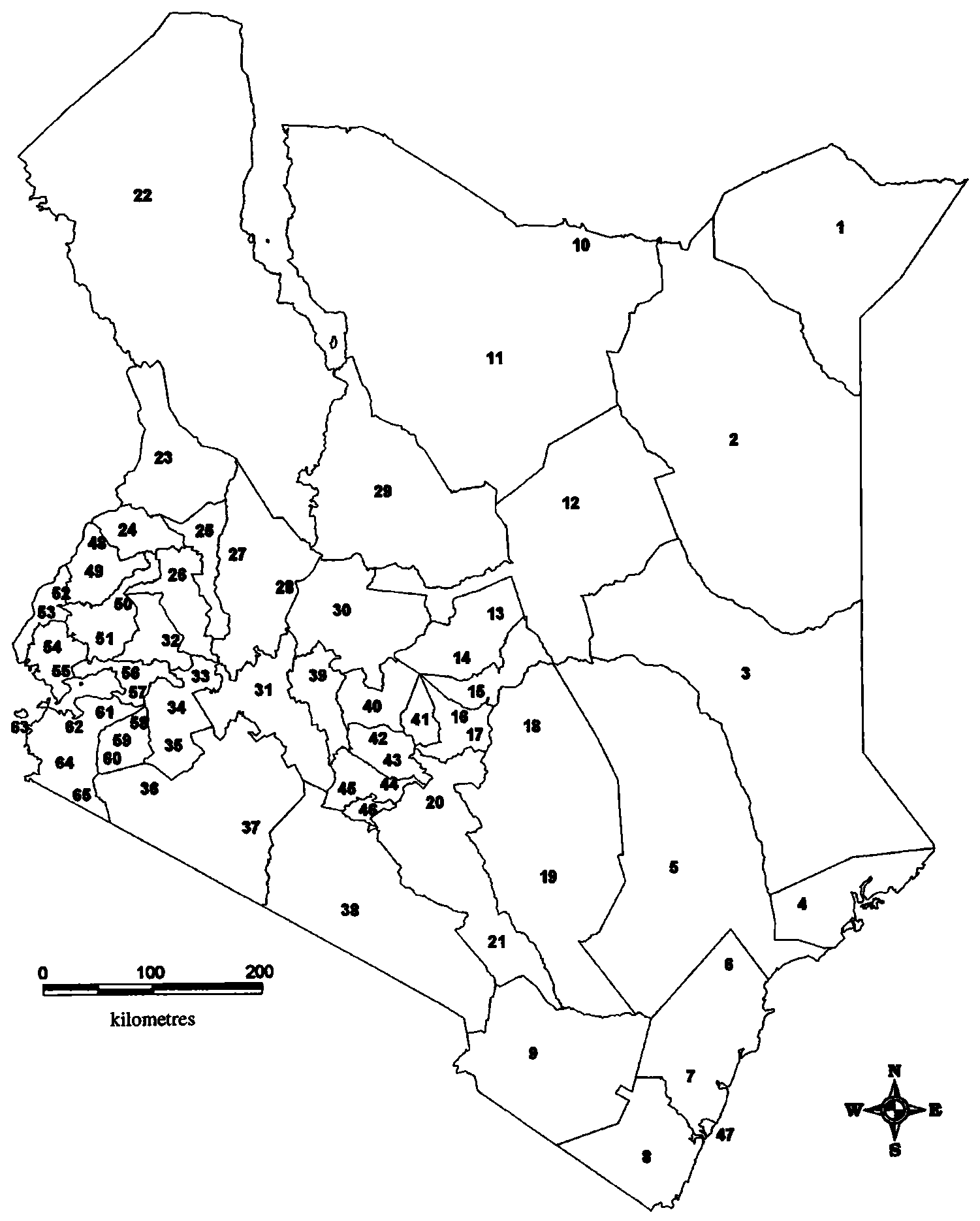
Map 2. Administrative Districts of Kenya (1998)
|
1. |
Mandera |
12. |
Isiolo |
23. |
West Pokot |
34. |
Buret |
45. |
Kiambu |
56. |
Kisumu |
|
2. |
Wajir |
13. |
Nyambene |
24. |
Trails Nzoia |
35. |
Bomet |
46. |
Nairobi |
57. |
Nyando |
|
3. |
Garissa |
14. |
Meru |
25. |
Elgeyo Marakwet |
36. |
Trans Mara |
47. |
Mombasa |
58. |
Nyamira |
|
4. |
Lamu |
15. |
Tharaka-Nithi |
26. |
Uasin Gishu |
37. |
Narok |
48. |
Mt Elgon |
59. |
Kisii |
|
5. |
Tana River |
16. |
Embu |
27. |
Baringo |
38. |
Kajiado |
49. |
Bungoma |
60. |
Gucha |
|
6. |
Malindi |
17. |
Mbeere |
28. |
Koibatek |
39. |
Nyandarua |
50. |
Kakamega |
61. |
Rachuonyo |
|
7. |
Kilifi |
18. |
Mwingi |
29. |
Samburu |
40. |
Nyeri |
51. |
Vihiga |
62. |
Homa Bay |
|
8. |
Kwale |
19. |
Kitui |
30. |
Laikipia |
41. |
Kirinyaga |
52. |
Teso |
63. |
Suba |
|
9. |
Taita Taveta |
20. |
Machakos |
31. |
Nakuru |
42. |
Murang'a |
53. |
Busia |
64. |
Migori |
|
10. |
Moyale |
21. |
Makueni |
32. |
Nandi |
43. |
Maragwa |
54. |
Siaya |
65. |
Kuria |
|
11. |
Marsabit |
22. |
Turkana |
33. |
Kericho |
44. |
Thika |
55. |
Bondo | | |
|
| |||||||||||||||||||||||||||||||||||||||||||||||||||||||||||||||||
Local names
* = exotic
|
Bajun |
| |
|
Also see under Swahili. | ||
| | | |
|
abiro |
Maerua decumbens | |
|
mchunda-kula |
Ximenia americana | |
|
mkuraki |
Manilkara sulcata | |
|
myae |
Strychnos spinosa | |
|
ukwaju |
Tamarindus indica | |
|
warendi |
Manilkara mochisia | |
| | | |
|
Boni |
| |
|
dabeh |
Landolphia kirkii | |
|
daber |
Landolphia kirkii | |
|
digi |
Dioscorea dumetorum | |
|
gonyooriya |
Phoenix reclinata | |
|
gurguo |
Hoslundia opposita | |
|
halas |
Uvaria scheffleri | |
|
kedura |
Sesamum calycinum | |
|
kuragi |
Manilkara sulcata | |
|
malamoto |
Annona senegalensis | |
|
mangales |
Garcinia livingstonei | |
|
mangula |
Strychnos madagascariensis | |
|
mangula |
Strychnos spinosa | |
|
mangura |
Strychnos madagascariensis | |
|
mangura |
Strychnos spinosa | |
|
mede |
Hyphaene coriacea | |
|
mishothie |
Hoslundia opposita | |
|
mkalashote |
Vitex ferruginea | |
|
mkalijote |
Vitex mombassae | |
|
mlamote |
Annona senegalensis | |
|
mogalishat |
Vitex ferruginea | |
|
mukai |
Tamarindus indica | |
|
mulilago |
Antidesma venosum | |
|
ngogaje |
Antidesma venosum | |
|
oh |
Hyphaene coriacea | |
|
ong |
Borassus aethiopum | |
|
sheshubla |
Dialium orientale | |
|
shishobli |
Dialium orientale | |
|
sisin |
Sesamum calycinum | |
|
tomur |
Uvaria acuminata | |
|
tsina |
Scutia myrtina | |
|
tumorr |
Uvaria acuminata | |
|
unglise |
Garcinia livingstonei | |
| | | |
|
Boran (Borana) | | |
|
Note: c- is pronounced ch-. Many of the words with k- here are normally written with q-; thus kalkacha would be written qalqaca. | ||
|
adesa |
Rhus natalensis | |
|
agarnyaab |
Maerua decumbens | |
|
andarak |
Lannea triphylla | |
|
andaraka |
Lannea schimperi | |
|
awagino |
Flueggea virosa | |
|
baabido (gum) |
Acacia senegal | |
|
baddan |
Balanites aegyptiaca | |
|
baddan |
Balanites rotundifolia | |
|
badoda |
Cucurbita moschata | |
|
bariyub |
Maerua decumbens | |
|
bododa |
Cucurbita maxima | |
|
boraati |
Aerva lanata | |
|
buge |
Lagenaria siceraria | |
|
bun |
Coffea arabica | |
|
burate-harre |
Cucumis dipsaceus | |
|
buriri |
Vangueria madagascariensis | |
|
burquqe |
Acacia nilotica | |
|
burquqis |
Acacia nilotica | |
|
burra diima |
Acacia senegal | |
|
buruudo |
Grewia villosa | |
|
buruuri |
Vangueria apiculata | |
|
chame |
Vigna membranacea | |
|
chati |
Catha edulis | |
|
dabobes |
Ximenia americana | |
|
daboobes |
Rhus natalensis | |
|
dadach |
Acacia tortilis | |
|
dadacha |
Acacia tortilis | |
|
dagams |
Carissa edulis | |
|
dakar |
Boswellia neglecta | |
|
dakkar |
Boswellia neglecta | |
|
dakkar gurate |
Boswellia neglecta | |
|
dakkara |
Boswellia neglecta | |
|
daraara |
Aerva lanata | |
|
deeka |
Grewia tenax | |
|
deeka-diima |
Grewia tenax | |
|
deeka-imimo |
Grewia tenax | |
|
deka |
Grewia tembensis | |
|
denyo |
Mimusops fruticosa | |
|
didisa |
Sclerocarya birrea | |
|
dirraa |
Commiphora rostrata | |
|
gaabbe |
Vatovaea pseudolablab | |
|
gabbe |
Vatovaea pseudolablab | |
|
gadda |
Zanthoxylum chalybeum | |
|
gadu |
Thylachium thomasii | |
|
galgacha-hareh |
Boscia coriacea | |
|
galgethoom |
Digera muricata | |
|
garse |
Dobera glabra | |
|
gda |
Zanthoxylum chalybeum | |
|
getgedaan |
Digera muricata | |
|
hancha-dakkara (resin) |
Boswellia neglecta | |
|
hancha-lubadin (incense) |
Boswellia neglecta | |
|
harores |
Cordia sinensis | |
|
huda |
Salvadora persica | |
|
iddado |
Acacia senegal | |
|
irgegud |
Grewia tenax | |
|
jajab |
Berchemia discolor | |
|
jejab |
Berchemia discolor | |
|
kada |
Syzygium guineense | |
|
karaa |
Strychnos henningsii | |
|
karo |
Bridelia taitensis | |
|
kate |
Lantana trifolia | |
|
kone |
Hyphaene compressa | |
|
kumude |
Lannea alata | |
|
kurawa |
Dovyalis abyssinica | |
|
kurkuurah |
Ziziphus mauritiana | |
|
kurquura |
Ziziphus mucronata | |
|
kurte |
Cyphia glandulifera | |
|
ladana |
Canthium pseudosetiflorum | |
|
luuftoole |
Corchorus tridens | |
|
luuftoole |
Corchorus trilocularis | |
|
maa |
Dactyloctenium aegyptium | |
|
madeer |
Cordia sinensis | |
|
madeer-qoowe |
Cordia sinensis | |
|
mader |
Cordia monoica | |
|
mader-boor |
Cordia sinensis | |
|
maqala |
Dactyloctenium aegyptium | |
|
meeti |
Hyphaene compressa | |
|
meti |
Phoenix reclinata | |
|
misinga |
Sorghum bicolor | |
|
moorodah |
Grewia villosa | |
|
murie |
Grewia tenax | |
|
od |
Ficus sycomorus | |
|
oda |
Ficus sycomorus | |
|
odda |
Ximenia americana | |
|
ogomdi |
Grewia villosa | |
|
pika |
Pappea capensis | |
|
qaaleda |
Meyna tetraphylla | |
|
qadu |
Thylachium thomasii | |
|
qalqalq |
Boscia coriacea | |
|
qoone |
Hyphaene compressa | |
|
qotte |
Cordia monoica | |
|
quaqura |
Ziziphus mauritiana | |
|
roka |
Tamarindus indica | |
|
roqa |
Tamarindus indica | |
|
sapans diima |
Acacia senegal | |
|
sarkam |
Grewia tenax | |
|
tafi |
Eragrostis tef | |
|
tende |
Phoenix dactylifera | |
|
toga |
Hydnora abyssinica | |
|
uda |
Ximenia americana | |
|
urbu-ree (fruit) |
Acacia tortilis | |
|
waachu |
Acacia seyal | |
|
waachu-adi |
Acacia seyal | |
|
waaqu-hallu |
Acacia seyal | |
|
wachu dima |
Acacia seyal var. fistula | |
|
wanreh |
Lannea alata | |
|
woda |
Ficus sycomorus | |
| | | |
|
Chonyi |
| |
|
Note: the prefix chi- in most Mijikenda groups will normally change to ki- for Giriama | ||
| | ||
|
chibuzi |
Vernonia cinerea | |
|
chidungadunga |
Bidens pilosa | |
|
chidungadunga |
Bidens spp. | |
|
chikosho |
Corchorus olitorius | |
|
chikosho |
Corchorus tridens | |
|
chikosho |
Corchorus trilocularis | |
|
chimbiri |
Keetia zanzibarica | |
|
chirenje |
Lagenaria siceraria | |
|
chirunji |
Nymphaea nouchali | |
|
chiswenya |
Amaranthus hybridus | |
|
chivuma nyuchi |
Aerva lanata | |
|
dzadza |
Commelina africana | |
|
dzadza |
Commelina forskaolii | |
|
dzadza |
Commelina imberbis | |
|
fudu (fruit) |
Vitex spp. | |
|
fula (fruits) |
Sclerocarya birrea | |
|
kahawa |
Coffea arabica | |
|
kipuru |
Lagenaria siceraria | |
|
kunazi (fruits) |
Ziziphus mauritiana | |
|
kunde |
Vigna unguiculata | |
|
kwamba (fruits) |
Flueggea virosa | |
|
maburu (leaves) |
Colocasia esculenta | |
|
mabwe (leaves) |
Ipomoea batatas | |
|
mahwa |
Solanum macrocarpon | |
|
manga (tuber) |
Manihot esculenta | |
|
mani ga mabenda (leaves) |
Abelmoschus esculentus | |
|
mauyu (fruits) |
Adansonia digitata | |
|
mbalazi (fruit) |
Cajanus cajan | |
|
mbata (flesh) |
Cocos nucifera | |
|
mdungatundu |
Dovyalis abyssinica | |
|
mdungu |
Zanthoxylum chalybeum | |
|
mfudu madzi |
Vitex ferruginea | |
|
mfudu |
Vitex mombassae | |
|
mfudu |
Vitex payos | |
|
mfudu-unga |
Vitex payos | |
|
mfudukoma |
Vitex mombassae | |
|
mfula |
Sclerocarya birrea | |
|
mgugune |
Ziziphus mucronata | |
|
mhango (leaves) |
Cucurbita maxima | |
|
miraa |
Catha edulis | |
|
miunga (plural) |
Acacia spp. | |
|
mkayamba |
Piliostigma thonningii | |
|
mkayukayu |
Cordia sinensis | |
|
mkoma |
Hyphaene compressa | |
|
mkone |
Grewia bicolor | |
|
mkone |
Grewia spp. | |
|
mkonga |
Balanites aegyptiaca | |
|
mkuha |
Dobera glabra | |
|
mkuha |
Dobera loranthifolia | |
|
mkulu |
Berchemia discolor | |
|
mkwakwa |
Strychnos madagascariensis | |
|
mnavu jangaa |
Solanum nigrum | |
|
mnavu |
Solanum nigrum | |
|
mnavu tsaka |
Solanum nigrum | |
|
mnazi* |
Cocos nucifera | |
|
mng'ambo kapehe |
Mimusops fruticosa | |
|
mng'ambo |
Manilkara sansibarensis | |
|
mnyumbu |
Lannea schweinfurthii | |
|
mpea (leaves)* |
Manihot esculenta | |
|
mpupu |
Lablab purpureus | |
|
mpweke |
Diospyros squarrosa | |
|
mshomoro |
Lantana camara | |
|
mswaki |
Salvadora persica | |
|
mtamba-kiko |
Meyna tetraphylla | |
|
mtambachiko |
Canthium glaucum | |
|
mtandamboo |
Carissa edulis | |
|
mtandamboo |
Carissa tetramera | |
|
mtikiti |
Citrullus lanatus | |
|
mtongazi |
Landolphia petersiana | |
|
mtsemeri |
Acacia nilotica | |
|
mtserere |
Hoslundia opposita | |
|
mtsumbwi |
Dialium orientale | |
|
mtsunga |
Launaea cornuta | |
|
mtsunga wa utsungu |
Launaea cornuta | |
|
mtundukula |
Ximenia americana | |
|
mubalazi |
Cajanus cajan | |
|
mudungatundu |
Flacourtia indica | |
|
mudzipo |
Salacia madagascariensis | |
|
mueza-moyo |
Salvadora persica | |
|
mugazija* |
Manihot esculenta | |
|
muhama |
Sorghum bicolor | |
|
muizu-wa-arisa |
Thylachium thomasii | |
|
mukunazi |
Ziziphus mauritiana | |
|
mukuyu |
Ficus sycomorus | |
|
mukwamba |
Flueggea virosa | |
|
munago |
Manilkara mochisia | |
|
mung'ambo |
Manilkara sansibarensis | |
|
munga |
Acacia nilotica | |
|
musimbiji |
Antidesma venosum | |
|
mutserere |
Hoslundia opposita | |
|
mutsumbwi |
Dialium orientale | |
|
mutunguru |
Thylachium thomasii | |
|
muungo |
Landolphia kirkii | |
|
muyu |
Adansonia digitata | |
|
muzhumaa |
Cymbopogon citratus | |
|
muzungi |
Moringa oleifera | |
|
mwangani |
Cleome gynandra | |
|
nago (fruits) |
Manilkara mochisia | |
|
nazi (fruits)* |
Cocos nucifera | |
|
nduma (tuber) |
Colocasia esculenta | |
|
ng'ambo (fruits) |
Manilkara sansibarensis | |
|
nzugu mawe |
Vigna subterranea | |
|
pupu (fruits) |
Lablab purpureus | |
|
tendegwa |
Vigna subterranea | |
|
tsafe |
Vigna unguiculata | |
|
tsalakushe |
Asystasia gangetica | |
|
ufuha |
Sesamum orientale | |
|
vimumunye (edible) |
Lagenaria siceraria | |
|
viyogbwe (root)* |
Ipomoea batatas | |
|
viyogbwe |
Ipomoea batatas | |
|
vombo |
Corchorus olitorius | |
|
wimbi |
Eleusine coracana | |
| | | |
|
Daasanach (Merille) | | |
|
bal-burach |
Digera muricata | |
|
barbar |
Grewia villosa | |
|
bunite |
Dactyloctenium bogdanii | |
|
daal-guo, |
Coccinia grandis | |
|
daale (fruit) |
Coccinia grandis | |
|
damich |
Grewia tenax | |
|
damich-arab |
Grewia tembensis | |
|
dang'ite |
Acacia senegal | |
|
dhuorich |
Boscia coriacea | |
|
dong'od-nee-dhieroka |
Boswellia eglecta | |
|
dong'od-salab-g'ayyua |
Commiphora rostrata | |
|
g'ayyuka |
Commiphora rostrata | |
|
gabite |
Ziziphus mauritiana | |
|
hocholoch* |
Moringa oleifera | |
|
holshe |
Commelina benghalensis | |
|
huluf |
Maerua decumbens | |
|
kadite |
Dobera glabra | |
|
kerech-dhata |
Commiphora africana | |
|
kulidhe |
Hyphaene compressa | |
|
kuute |
Balanites rotundifolia | |
|
seech-geebe |
Acacia tortilis | |
|
suriech |
Grewia bicolor | |
|
yierit-etha |
Kedrostis gijef | |
| | | |
|
Digo |
| |
|
chigbwada |
Manihot esculenta | |
|
chigundigundi |
Acacia nilotica | |
|
chikuse |
Vernonia cinerea | |
|
chiswenya |
Amaranthus dubius | |
|
chiswenya |
Amaranthus graecizans | |
|
dradra |
Commelina benghalensis | |
|
dzedza |
Commelina forskaolii | |
|
dzedza |
Commelina imberbis | |
|
futsure |
Asystasia gangetica | |
|
futswe |
Asystasia gangetica | |
|
kigundi |
Acacia nilotica | |
|
kihuro |
Antidesma venosum | |
|
kikwata |
Acacia senegal | |
|
kisambwe |
Garcinia livingstonei | |
|
kitoria (fruit) |
Landolphia kirkii | |
|
libugu |
Landolphia kirkii | |
|
mbara |
Diospyros mespiliformis | |
|
mbokwe |
Annona senegalensis | |
|
mbuyu |
Adansonia digitata | |
|
mbwana nyahi |
Rhus vulgaris | |
|
mchindu |
Phoenix reclinata | |
|
mdungu |
Zanthoxylum chalybeum | |
|
mfundukoma |
Vitex mombassae | |
|
mfunga-tanzu |
Garcinia livingstonei | |
|
mgorodo |
Ziziphus mucronata | |
|
mgwanyahi |
Rhus natalensis | |
|
mhama |
Sorghum bicolor | |
|
mkoma |
Hyphaene compressa | |
|
mkoma lume |
Hyphaene compressa | |
|
mkone |
Grewia tembensis | |
|
mkulu |
Diospyros mespiliformis | |
|
mkunguma |
Sorindeia madagascariensis | |
|
mkwaju |
Tamarindus indica | |
|
mkwamba |
Flueggea virosa | |
|
mlenda |
Corchorus olitorius | |
|
mng'ongo |
Sclerocarya birrea | |
|
mnyondoiya |
Flacourtia indica | |
|
mpira |
Landolphia kirkii | |
|
mrenda |
Sesamum calycinum | |
|
msami |
Synsepalum brevipes | |
|
mtandamboo |
Carissa edulis | |
|
mtandamboo |
Carissa tetramera | |
|
mtsekeshe |
Piliostigma thonningii | |
|
mtserere |
Hoslundia opposita | |
|
mtundakula |
Ximenia americana | |
|
mudhungu |
Zanthoxylum chalybeum | |
|
mudzala |
Uvaria acuminata | |
|
mugiaki |
Syzygium guineense | |
|
muhonga |
Strychnos madagascariensis | |
|
muhonga |
Strychnos spinosa | |
|
mumbweni |
Uvaria acuminata | |
|
mung'ambo |
Manilkara sansibarensis | |
|
munyunzu |
Keetia zanzibarica | |
|
mutseketse |
Piliostigma thonningii | |
|
mutsunga |
Launaea cornuta | |
|
muvuma |
Vangueria apiculata | |
|
muziahi |
Syzygium cordatum | |
|
muziahi |
Syzygium guineense | |
|
muziyahe |
Syzygium guineense | |
|
mviru |
Vangueria infausta | |
|
mwambangoma |
Balanites aegyptiaca | |
|
mwatsaka wa bara |
Corchorus olitorius | |
|
mzangatchango |
Antidesma venosum | |
|
tala-kushe |
Asystasia gangetica | |
|
toro |
Nymphaea nouchali | |
|
ufuha |
Sesamum orientale | |
|
utundi |
Sarcostemma viminale | |
| | | |
|
Duruma |
| |
|
(Also see Giriama) |
| |
|
kifuka |
Vernonia cinerea | |
|
lufia |
Vernonia cinerea | |
|
madungatundu |
Flacourtia indica | |
|
mdzala |
Uvaria acuminata | |
|
msanzanza |
Sorindeia madagascariensis | |
|
mugumo |
Borassus aethiopum | |
| | | |
|
Embu |
| |
|
Also see vernacular names in other Central Bantu groups |
||
| | | |
|
gikwa |
Dioscorea minutiflora | |
|
ikwa (plural) |
Dioscorea minutiflora | |
|
kaua |
Coffea arabica | |
|
kinya (fruit) |
Lagenaria siceraria | |
|
makunu |
edible fungi | |
|
managu |
Solanum nigrum | |
|
mbiruiru (fruit) |
Vangueria spp | |
|
mbota* |
Physalis peruviana | |
|
mtogotorgo |
Pachystigma schumannianum | |
|
mucimoro* |
Lantana camara | |
|
mugaa |
Acacia spp | |
|
mugimbi |
Eleusine coracana | |
|
mugumo |
Ficus natalensis | |
|
mugumo |
Ficus thonningii | |
|
mukawa |
Carissa edulis | |
|
mukengeria |
Commelina benghalensis | |
|
mukombi* |
Setaria italica | |
|
mukuu |
Ficus sycomorus | |
|
munathi* |
Cocos nucifera | |
|
muramba |
Adansonia digitata | |
|
muthithi |
Tamarindus indica | |
|
mutimoko* |
Annona cherimola | |
|
muvia |
Sorghum bicolor | |
|
mwere |
Pennisetum glaucum | |
|
nathi (fruit)* |
Cocos nucifera | |
|
ndare |
Rubus spp | |
|
ndaugu |
Oxygonum sinuatum | |
|
ndende* |
Phoenix dactylifera | |
|
nduma* |
Colocasia esculenta | |
|
ngwaci |
Ipomoea batatas | |
|
njavi |
Lablab purpureus | |
|
njugu |
Cajanus cajan | |
|
nthoroko |
Vigna unguiculata | |
|
nzavi |
Lablab purpureus | |
|
rungu |
Lagenaria siceraria | |
|
rwoga |
Amaranthus graecizans | |
|
rwoga |
Amaranthus spp | |
|
thatha |
Urtica massaica | |
|
ugimbi |
Eleusine coracana | |
| | | |
|
English and standard names | ||
|
Abyssinian banana |
Ensete ventricosum | |
|
Abyssinian tea |
Catha edulis | |
|
African ebony |
Diospyros mespiliformis | |
|
African fan palm |
Borassus aethiopum | |
|
African olive |
Olea africana ssp. africana | |
|
air potato |
Dioscorea bulbifera | |
|
amaranth |
Amaranthus dubius | |
|
amaranth* |
Amaranthus graecizans | |
|
amaranth* |
Amaranthus hybridus | |
|
Arabian tea |
Catha edulis | |
|
arrow poison plant |
Acokanthera oppositifolia | |
|
arrow poison plant |
Acokanthera schimperi | |
|
Bambara bean |
Vigna subterranea | |
|
Bambara groundnut |
Vigna subterranea | |
|
baobab |
Adansonia digitata | |
|
bastard mustard |
Cleome gynandra | |
|
ben tree* |
Moringa oleifera | |
|
bird plum |
Berchemia discolor | |
|
black-galled acacia |
Acacia drepanolobium | |
|
black nightshade |
Solanum nigrum | |
|
black plum |
Vitex doniana | |
|
black plum |
Vitex payos | |
|
blackjack* |
Bidens pilosa | |
|
blue lotus of Egypt |
Nymphaea nouchali | |
|
blue water lily |
Nymphaea nouchali | |
|
bonavist bean |
Lablab purpureus | |
|
borassus palm |
Borassus aethiopum | |
|
bottle gourd |
Lagenaria siceraria | |
|
brown ivory |
Berchemia discolor | |
|
buffalo thorn |
Ziziphus mucronata | |
|
bulrush millet |
Pennisetum glaucum | |
|
bush okra |
Corchorus olitorius | |
|
calabash gourd |
Lagenaria siceraria | |
|
calabash |
Lagenaria siceraria | |
|
camel foot |
Piliostigma thonningii | |
|
camphor basil |
Ocimum kilimandscharicum | |
|
Cape fig |
Ficus sur | |
|
careless weed |
Amaranthus spinosus | |
|
cassava* |
Manihot esculenta | |
|
cat's whiskers |
Cleome gynandra | |
|
catch thorn |
Ziziphus abyssinica | |
|
Ceylon raspberry* |
Rubus niveus | |
|
Ceylon spinach |
Basella alba | |
|
cherimoya* |
Annona cherimola | |
|
Chinese date |
Ziziphus mauritiana | |
|
Chinese spinach |
Amaranthus hybridus | |
|
cider tree |
Sclerocarya birrea ssp. caffra | |
|
clove basil |
Ocimum gratissimum | |
|
clove* |
Syzygium aromaticum | |
|
coconut* |
Cocos nucifera | |
|
coco yam* |
Colocasia esculenta | |
|
coffee |
Coffea arabica | |
|
crow foot grass |
Dactyloctenium aegyptium | |
|
custard apple* |
Annona squamosa | |
|
date palm* |
Phoenix dactylifera | |
|
deleb palm |
Borassus aethiopum | |
|
desert date |
Balanites aegyptiaca | |
|
doum palm |
Hyphaene compressa | |
|
doum palm |
Hyphaene coriacea | |
|
drumstick tree* |
Moringa oleifera | |
|
East Indian basil |
Ocimum gratissimum | |
|
Egyptian lotus |
Nymphaea lotus | |
|
Egyptian mimosa |
Acacia nilotica | |
|
Egyptian thorn |
Acacia nilotica | |
|
Ethiopian cabbage |
Brassica carinata | |
|
Ethiopian mustard |
Brassica carinata | |
|
false medlar |
Vangueria infausta | |
|
false sandalwood |
Ximenia americana | |
|
fever plant |
Ocimum kilimandscharicum | |
|
finger millet |
Eleusine coracana | |
|
foxtail millet* |
Setaria italica | |
|
frankincense |
Boswellia carterii | |
|
frankincense |
Boswellia frereana | |
|
frankincense |
Boswellia neglecta | |
|
giant yellow mulberry |
Myrianthus holstii | |
|
gourd |
Lagenaria siceraria | |
|
governor's plum |
Flacourtia indica | |
|
Guinea oil palm |
Elaeis guineensis | |
|
gum arabic |
Acacia senegal | |
|
horned cucumber |
Cucumis metuliferus | |
|
horseradish tree |
Moringa oleifera | |
|
horseradish tree |
Moringa stenopetala | |
|
hyacinth bean |
Lablab purpureus | |
|
Indian plum |
Flacourtia indica | |
|
Indian plum |
Ziziphus mauritiana | |
|
Indian spinach |
Basella alba | |
|
Italian millet* |
Setaria italica | |
|
ivy gourd |
Coccinia grandis | |
|
jackal berry |
Diospyros mespiliformis | |
|
jackal plum |
Pappea capensis | |
|
jambolan* |
Syzygium cumini | |
|
Java plum* |
Syzygium cumini | |
|
jelly melon |
Cucumis metuliferus | |
|
Jew's mallow |
Corchorus olitorius | |
|
jujube |
Ziziphus mauritiana | |
|
jute |
Corchorus olitorius | |
|
Kaffir orange |
Strychnos spinosa | |
|
kat |
Catha edulis | |
|
Kei apple* |
Dovyalis caffra | |
|
khat |
Catha edulis | |
|
lablab bean |
Lablab purpureus | |
|
Malabar gourd* |
Cucumis ficifolia | |
|
Malabar spinach |
Basella alba | |
|
morula |
Sclerocarya birrea ssp. caffra | |
|
mustard tree |
Salvadora persica | |
|
Natal orange |
Strychnos spinosa | |
|
oil palm |
Elaeis guineensis | |
|
okra |
Abelmoschus esculentus | |
|
Palmyra palm |
Borassus aethiopum | |
|
pearl millet |
Pennisetum glaucum | |
|
pharaoh's fig |
Ficus sycomorus | |
|
pigeon pea |
Cajanus cajan | |
|
potato yam |
Dioscorea bulbifera | |
|
prickly amaranth* |
Amaranthus spinosa | |
|
prostrate amaranth |
Amaranthus graecizans | |
|
purple amaranth |
Amaranthus blitum (A. lividus) | |
|
purslane |
Portulaca oleracea | |
|
quick weed* |
Galinsoga parviflora | |
|
rubber vine |
Landolphia kirkii | |
|
sandpaper tree |
Cordia monoica | |
|
sausage tree |
Kigelia pinnata (K. africana) | |
|
scarlet gourd |
Coccinia grandis | |
|
Senegal date |
Phoenix reclinata | |
|
sesame |
Sesamum orientale | |
|
sorghum |
Sorghum bicolor | |
|
sorrel |
Rumex usambarensis | |
|
sour plum |
Ximenia americana | |
|
soursop* |
Annona cherimola | |
|
spider flower |
Cleome gynandra | |
|
spider herb |
Cleome gynandra | |
|
spiked millet |
Pennisetum glaucum | |
|
spiny amaranth* |
Amaranthus hybridus ssp. Hybridus | |
|
spiny amaranth* |
Amaranthus spinosus | |
|
spiny cucumber |
Cucumis metuliferus | |
|
spleen amaranth* |
Amaranthus hybridus | |
|
stinging nettle |
Urtica massaica | |
|
Sudan gum arabic |
Acacia senegal | |
|
sunhemp |
Crotalaria ochroleuca | |
|
sweet basil |
Ocimum basilicum | |
|
sweet potato* |
Ipomoea batatas | |
|
sycamore fig |
Ficus sycomorus | |
|
tallow nut |
Ximenia americana | |
|
tamarind |
Tamarindus indica | |
|
taro* |
Colocasia esculenta | |
|
teff |
Eragrostis tef | |
|
toothbrush bush |
Salvadora persica | |
|
torchwood |
Balanites wilsoniana | |
|
tree hibiscus |
Azanza garckeana | |
|
umbrella thorn |
Acacia tortilis | |
|
vine spinach |
Basella alba | |
|
water berry |
Syzygium cordatum | |
|
water berry |
Syzygium guineense | |
|
water lily |
Nymphaea lotus | |
|
water lily |
Nymphaea nouchali | |
|
water pear |
Syzygium guineense | |
|
water spinach |
Ipomoea aquatica | |
|
watermelon |
Citrullus lanatus | |
|
whistling thorn |
Acacia seyal ssp. fistula | |
|
whistling thorn |
Acacia drepanolobium | |
|
white lotus |
Nymphaea lotus | |
|
wild custard apple |
Annona senegalensis | |
|
wild date palm |
Phoenix reclinata | |
|
wild date |
Phoenix reclinata | |
|
wild plum |
Ximenia americana | |
|
wild soursop |
Annona senegalensis | |
|
wild tea |
Lippia javanica | |
|
winter lotus |
Nymphaea lotus | |
|
winter spinach |
Ipomoea aquatica | |
|
wonderberry |
Solanum nigrum | |
|
yeheb |
Cordeauxia edulis | |
| | | |
|
Gabra |
| |
|
See also Borana names for equivalents. Note: c- is pronounced ch-. Many of the words with k- are normally written with q-; thus burk'uk'e would normally be written burquqe. | ||
| | | |
|
aadde |
Salvadora persica | |
|
baddana |
Balanites aegyptiaca | |
|
baddana |
Balanites rotundifolia | |
|
buratte |
Cucumis dipsaceus | |
|
burk'uk'e |
Acacia nilotica | |
|
burquqe |
Acacia nilotica | |
|
c'iimap'a |
Vigna frutescens | |
|
d'addaca |
Acacia tortilis | |
|
d'eeka |
Grewia tenax | |
|
dabobbessa |
Rhus natalensis | |
|
dagams |
Carissa edulis | |
|
dakkara |
Boswellia neglecta | |
|
gaabbe |
Vatovaea pseudolablab | |
|
gaale |
Kedrostis gijef | |
|
gaddaa |
Zanthoxylum chalybeum | |
|
gelgedaana |
Digera muricata | |
|
hammeesaa |
Commiphora africana | |
|
iddaad'o |
Acacia senegal | |
|
iddaado |
Acacia seyal | |
|
iddad'o |
Acacia seyal | |
|
k'alk'acca |
Boscia coriacea | |
|
k'arraaru |
Acokanthera schimperi | |
|
k'urk'uura |
Ziziphus abyssinica | |
|
luftoole |
Corchorus tridens | |
|
luftoole |
Corchorus trilocularis | |
|
mad'eer |
Cordia sinensis | |
|
meetti |
Hyphaene compressa | |
|
ogomdi |
Grewia villosa | |
| | | |
|
Giriama (Giryama) | | |
|
Notes: | ||
|
(a) |
Some writers would prefer to omit the u that follows the prefix m-, while others would prefer to retain it. Thus mfula may also appear as mufula. | |
|
(b) |
The prefix ka- is diminutive | |
|
(c) |
The prefix ki- in Giriama will normally change to chi- for other Mijikenda groups. | |
|
(d) |
The suffix -koma implies its use as a food is forbidden. | |
|
(e) |
Some of the names below may be a corruption of Chonyi and Sanya names. | |
|
| | |
|
budzi |
Vernonia cinerea | |
|
burutula |
Asystasia gangetica | |
|
bwere |
Ipomoea batatas | |
|
bwere-mlungu |
Ipomoea aquatica | |
|
dungatundu (fruit) |
Dovyalis abyssinica | |
|
dzadza |
Commelina africana | |
|
dzadza |
Commelina forskaolii | |
|
dzadza |
Commelina imberbis | |
|
fudu (fruit) |
Vitex spp. | |
|
fula (fruits) |
Sclerocarya birrea | |
|
fulafula (fruits) |
Sclerocarya birrea | |
|
gune (tuber) |
Nymphaea nouchali | |
|
kadzadza |
Commelina africana | |
|
kadzadza |
Commelina forskaolii | |
|
kahawa |
Coffea arabica | |
|
kahedtho |
Ipomoea mombassana | |
|
kibudzi |
Vernonia cinerea | |
|
kidungadunga |
Bidens spp. | |
|
kigbwada (leaves)* |
Manihot esculenta | |
|
kigulukimwenga |
Digera muricata | |
|
kikosho |
Corchorus olitorius | |
|
kikosho |
Corchorus tridens | |
|
kikosho |
Corchorus trilocularis | |
|
kimbiri |
Oxygonum salicifolium | |
|
kindwi (fruit) |
Phoenix reclinata | |
|
kipuru |
Lagenaria siceraria | |
|
kirunji |
Nymphaea nouchali | |
|
kiswenya |
Amaranthus hybridus | |
|
kiswenya-chamiya |
Amaranthus spinosus | |
|
kivuma nyuchi |
Aerva lanata | |
|
kunazi (fruits) |
Ziziphus mauritiana | |
|
kwamba (fruits) |
Flueggea virosa | |
|
logatsi |
Amaranthus graecizans | |
|
mafa |
Solanum macrocarpon | |
|
marabu (fruits) |
Cucurbita maxima | |
|
matikiti |
Citrullus lanatus | |
|
mauyu (fruits) |
Adansonia digitata | |
|
mazaladowe (fruits) |
Uvaria scheffleri | |
|
mbalazi (fruit) |
Cajanus cajan | |
|
mbat'the |
Diospyros consolatae | |
|
mbata (flesh) |
Cocos nucifera | |
|
mbathe |
Strychnos henningsii | |
|
mbokwe |
Annona senegalensis | |
|
mdevere |
Flacourtia Indica | |
|
mdungatundu |
Dovyalis abyssinica | |
|
mdungu |
Zanthoxylum chalybeum | |
|
mfudu |
Vitex mombassae | |
|
mfudu |
Vitex payos | |
|
mfudu-madzi |
Vitex ferruginea | |
|
mfudu-unga |
Vitex payos | |
|
mfudukoma |
Vitex mombassae | |
|
mfula |
Sclerocarya birrea | |
|
mfuranje |
Canthium glaucum | |
|
mgugune |
Ziziphus mucronata | |
|
miraa |
Catha edulis | |
|
miunga (plural) |
Acacia spp. | |
|
mjungumoto |
Salvadora persica | |
|
mkalakala |
Bridelia cathartica | |
|
mkambi-kikambi |
Asystasia gangetica | |
|
mkayamba |
Piliostigma thonningii | |
|
mkayukayu |
Cordia sinensis | |
|
mkindu |
Phoenix reclinata | |
|
mkindwi |
Phoenix reclinata | |
|
mkoma |
Hyphaene compressa | |
|
mkone |
Grewia bicolor | |
|
mkone |
Grewia spp. | |
|
mkone-kilaa |
Grewia tenax | |
|
mkonga |
Balanites aegyptiaca | |
|
mkuha |
Dobera glabra | |
|
mkuha |
Dobera loranthifolia | |
|
mkulu |
Berchemia discolor | |
|
mkulube |
Diospyros mespiliformis | |
|
mkwakwa |
Strychnos madagascariensis | |
|
mlori |
Uvaria acuminata | |
|
mnavu mahombo |
Physalis mimina | |
|
mnavu |
Solanum nigrum | |
|
mnavu-jangaa |
Solanum nigrum | |
|
mnavu-tsaka |
Solanum nigrum | |
|
mnazi |
Cocos nucifera | |
|
mng'ambo |
Manilkara sansibarensis | |
|
mng'ambo-kapehe |
Mimusops fruticosa | |
|
mnthungu |
Lannea alata | |
|
mnyumbu |
Lannea schweinfurthii | |
|
mpupu |
Lablab purpureus | |
|
mpweke |
Diospyros squarrosa | |
|
mrenda |
Sesamum calycinum | |
|
mswaki |
Salvadora persica | |
|
mtamba-kiko |
Meyna tetraphylla | |
|
mtandamboo |
Carissa edulis | |
|
mtandamboo |
Carissa tetramera | |
|
mtoria |
Landolphia kirkii | |
|
mtsami |
Mimusops fruticosa | |
|
mtsami |
Synsepalum brevipes | |
|
mtsami |
Synsepalum msolo | |
|
mtsemeri |
Acacia nilotica | |
|
mtserere |
Hoslundia opposita | |
|
mtsumbwi |
Dialium orientale | |
|
mtundukula |
Ximenia americana | |
|
mubalazi |
Cajanus cajan | |
|
mubenda |
Abelmoschus esculentus | |
|
mudungatundu |
Flacourtia indica | |
|
mudzaladowe |
Uvaria scheffleri | |
|
mudzipo |
Salacia madagascariensis | |
|
mueza-moyo |
Salvadora persica | |
|
mufodzohi |
Garcinia livingstonei | |
|
mufula |
Sclerocarya birrea | |
|
mugazija* |
Manihot esculenta | |
|
mugumo |
Borassus aethiopum | |
|
muhama |
Sorghum bicolor | |
|
muizu-wa-arisa |
Thylachium thomasii | |
|
mujaje |
Strychnos madagascariensis | |
|
mujaje |
Strychnos spinosa | |
|
mukimbiri |
Keetia zanzibarica | |
|
mukipo |
Salacia madagascariensis | |
|
mukunazi |
Ziziphus mauritiana | |
|
mukuyu |
Ficus sycomorus | |
|
mukwamba |
Flueggea virosa | |
|
mulori |
Uvaria acuminata | |
|
munago |
Manilkara mochisia | |
|
mung'ambo |
Manilkara sansibarensis | |
|
munga |
Acacia nilotica | |
|
munyee |
Dovyalis macrocalyx | |
|
munyhee |
Dovyalis macrocalyx | |
|
murabu (leaves) |
Cucurbita maxima | |
|
mushomoro |
Lantana camara | |
|
musimbiji |
Antidesma venosum | |
|
musishwi |
Commiphora africana | |
|
mutakuma |
Annona senegalensis | |
|
mutokera |
Dioscorea bulbifera | |
|
mutongazi |
Landolphia petersiana | |
|
mutsedzi |
Manilkara sulcata | |
|
mutserere |
Hoslundia opposita | |
|
mutsuchwi |
Commiphora africana | |
|
mutsumbwi |
Dialium orientale | |
|
mutsunga |
Launaea cornuta | |
|
mutunguru |
Thylachium thomasii | |
|
muungo |
Landolphia kirkii | |
|
muviru |
Vangueria infausta | |
|
muyu |
Adansonia digitata | |
|
muzhumaa |
Cymbopogon citratus | |
|
muzungi |
Moringa oleifera | |
|
muzungu wa mboko |
Lagenaria siceraria | |
|
muzungwi |
Moringa oleifera | |
|
muzunzwi |
Keetia zanzibarica | |
|
mviru |
Vangueria infausta | |
|
mwanakabaga |
Lannea schimperi | |
|
mwangani |
Cleome gynandra | |
|
mzaladowe |
Uvaria scheffleri | |
|
nago (fruits) |
Manilkara mochisia | |
|
nazi (fruits)* |
Cocos nucifera | |
|
ng'ambo (fruits) |
Manilkara sansibarensis | |
|
nzugu mawe |
Vigna subterranea | |
|
pupu (fruits) |
Lablab purpureus | |
|
talakushe |
Asystasia gangetica | |
|
thalakushe |
Asystasia gangetica | |
|
t(h)oro (tuber) |
Nymphaea nouchali | |
|
tsafe |
Vigna unguiculata | |
|
tsatsatsa (leaves) |
Cucurbita maxima | |
|
ufuha |
Sesamum orientale | |
|
viazi tamu* |
Ipomoea batatas | |
|
vilo(ro)ri (fruits) |
Uvaria acuminata | |
|
vimumunye (edible) |
Lagenaria siceraria | |
|
vitoria (fruit) |
Landolphia kirkii | |
|
viyogwe* |
Ipomoea batatas | |
|
vombo |
Corchorus olitorius | |
|
vongonya |
Asysatasia gangetica | |
|
wimbi |
Eleusine coracana | |
| | | |
|
Ilchamus (Iltiamus, Njemps) | ||
|
i-okuronit |
Amaranthus dubius | |
|
i-okuroniti |
Amaranthus dubius | |
|
ikilorit |
Acacia nilotica | |
|
ikiloriti |
Acacia nilotica | |
|
ikogom |
Grewia tembensis | |
|
ikogomi |
Grewia tembensis | |
|
ilkogomi |
Grewia tenax | |
|
l-naboli |
Ficus sycomorus | |
|
lama |
Ximenia americana | |
|
lamai |
Ximenia americana | |
|
lamalogi |
Maerua decumbens | |
|
lamaloki |
Maerua decumbens | |
|
lamayoki |
Maerua decumbens | |
|
lamayokin |
Maerua decumbens | |
|
lderende |
Ziziphus mucronata | |
|
lderendei |
Ziziphus mucronata | |
|
lderkesi |
Acacia senegal | |
|
lera |
Acacia seyal | |
|
lerai |
Acacia seyal | |
|
lgweita |
Cordia sinensis | |
|
limambai |
Ziziphus mucronata | |
|
lkunyi |
Acacia tortilis | |
|
lmampaai |
Ziziphus mauritiana lam. | |
|
lmampaan |
Ziziphus mauritiana lam. | |
|
lmang'wa |
Sclerocarya birrea | |
|
lmang'wai |
Sclerocarya birrea | |
|
lmisigiyo |
Rhus natalensis | |
|
lmisigiyoi |
Rhus natalensis | |
|
lmomo |
Solanum nigrum | |
|
lmomoi |
Solanum nigrum | |
|
lmuleel |
Cordia monoica | |
|
lmuleelin |
Cordia monoica | |
|
loisuki |
Zanthoxylum chalybeum | |
|
lokuronit |
Amaranthus graecizans | |
|
lokuroniti |
Amaranthus graecizans | |
|
longoosoiron |
Flueggea vimsa | |
|
lousuk |
Zanthoxylum chalybeum | |
|
lousukui |
Zanthoxylum chalybeum | |
|
lowa |
Balanites aegyptiaca | |
|
lowei |
Balanites aegyptiaca | |
|
lparrua |
Hyphaene compressa | |
|
lparruai |
Hyphaene compressa | |
|
lpupo |
Grewia villosa | |
|
lpupoi |
Grewia villosa | |
|
ltepes |
Acacia tortilis | |
|
muleelin |
Cordia monoica | |
|
nkampiror |
Lannea triphylla | |
|
nkampurok |
Lannea triphylla | |
|
nkampurori |
Lannea triphylla | |
|
olmomoi |
Solanum nigrum | |
|
raprapa |
Amaranthus dubius | |
|
raprapa |
Amaranthus graecizans | |
|
salapani |
Cordia sinensis | |
|
sek |
Cordia monoica | |
|
seki |
Cordia monoica | |
|
sericho |
Boscia coriacea | |
|
serichoi (plural) |
Boscia coriacea | |
| | | |
|
Kamba |
| |
|
Notes: The prefixes mu- and ki- are normally used interchangeably, thus kiae may also be referred to as muae. The letter r is normally used in Mwingi District only. | ||
| | ||
|
ikii |
Lagenaria siceraria | |
|
ikulutui |
Ensete ventricosum | |
|
ikunu |
mushroom | |
|
ikwasi (tuber) |
Ipomoea batatas | |
|
ilenge |
Cucurbita maxima | |
|
ilenge |
Cucurbita moschata | |
|
imondiu |
Coccinia grandis | |
|
imore |
Coccinia grandis | |
|
ithookwe |
Vigna membranacea | |
|
itikitiki |
Citrullus lanatus | |
|
itula |
Commelina benghalensis | |
|
iunga (plural) |
Acacia drepanolobium | |
|
ivole |
Tylosema fassoglense | |
|
kamumama |
Portulacca spp. | |
|
kamusuusuu |
Crotalaria brevidens | |
|
kiae |
Ziziphus abyssinica | |
|
kiae |
Ziziphus mucronata | |
|
kiathani |
Flacourtia indica | |
|
kieema |
Basella alba | |
|
kikalwa |
Grewia bicolor | |
|
kikangakanywa |
Garcinia livingstonei | |
|
kikathani |
Flacourtia indica | |
|
kikoe |
Commelina forskaolii | |
|
kikole |
Acacia senegal | |
|
kikolya |
Lannea alata | |
|
kikowe |
Commelina africana | |
|
kikowe |
Commelina forskaolii | |
|
kikowe |
Commelina imberbis | |
|
kikungi |
Cucumis dipsaceus | |
|
kikwa |
Dioscorea minutiflora | |
|
kikwasu |
Tamarindus indica | |
|
kikweo |
Acokanthera oppositifolia | |
|
kilali |
Uvaria scheffleri | |
|
kilia |
Saba comorensis | |
|
kilului |
Balanites aegyptiaca | |
|
kimee |
Strychnos spinosa | |
|
kimowe |
Coccinia grandis | |
|
kimuu |
Vitex payos | |
|
kimuya |
Coccinia grandis | |
|
kimuya |
Coccinia trilobata | |
|
king'ole |
Acacia senegal | |
|
king'olola |
Acacia senegal | |
|
kinondo |
Boswellia neglecta | |
|
kinyonywe |
Rumex usambarensis | |
|
kinyua |
Acacia hockii | |
|
kinyukwi |
Portulacca spp. | |
|
kiongoa |
Momordica rostrata | |
|
kiongwa |
Saba comorensis | |
|
kiongwa |
Landolphia buchananii | |
|
kisaa |
Manilkara mochisia | |
|
kisaaya |
Berchemia discolor | |
|
kisambalau* |
Syzygium cumini | |
|
kisanawa |
Berchemia discolor | |
|
kisemei |
Acacia nilotica | |
|
kisewa |
Acacia seyal | |
|
kisiu |
Dobera glabra | |
|
kisiu |
Dobera loranthifolia | |
|
kisyoo |
Dobera glabra | |
|
kitae |
Rubus apetalus | |
|
kitae |
Rubus pinattus | |
|
kitelanthia |
Antidesma venosum | |
|
kithaala |
Lannea rivae | |
|
kithaala |
Lannea triphylla | |
|
kithaalwa |
Lannea triphylla | |
|
kithaalwa |
Lannea triphylla | |
|
kithambalau* |
Syzygium cumini | |
|
kithauna |
Lannea schimperi | |
|
kithea |
Cordia sinensis | |
|
kithei |
Cordia monoica | |
|
kitheu |
Rhus tenuinervis | |
|
kithia |
Cordia sinensis | |
|
kithoona |
Lannea schimperi | |
|
kithumula |
Tamarindus indica | |
|
kitolanthia |
Antidesma venosum | |
|
kitolosuu |
Ziziphus mucronata | |
|
kitootoo |
Meyna tetraphylla | |
|
kitootoo |
Pachystigma schumannianum | |
|
kitotoo |
Meyna tetraphylla | |
|
kitulu |
Solanum nigrum | |
|
kitumbuu |
Scutia myrtina | |
|
kitungu |
Lannea alata | |
|
kitungu |
Commiphora africana | |
|
kitungulu |
Thylachium thomasii | |
|
kituva |
Grewia tembensis | |
|
kiumo |
Ficus thonningii | |
|
kiunga |
Acacia drepanolobium | |
|
kiva |
Pappea capensis | |
|
kyaa |
Manilkara mochisia | |
|
kyae |
Strychnos spinosa | |
|
kyambatwa |
Cucumis dipsaceus | |
|
kyanga |
Manihot esculenta | |
|
kyongoa |
Momordica rostrata | |
|
kyongonywe |
Rumex abyssinicus | |
|
kyuasi |
Lannea schweinfurthii | |
|
kyunyu |
Erucastrum arabicum | |
|
luta |
Sesamum calycinum | |
|
mae (fruits) |
Strychnos spinosa | |
|
mailiungi |
Catha edulis | |
|
makulo (fruits) |
Annona senegalensis | |
|
makunu (plural) |
edible fungi | |
|
maongwa (fruits) |
Landolphia buchananii | |
|
mauw'a (fruits) |
Sclerocarya birrea | |
|
mba (fruit) |
Pappea capensis | |
|
mbisavisi (fruit) |
Lantana spp. | |
|
mbu (fruit) |
Grewia villosa | |
|
mbueni (fruit) |
Syzygium spp. | |
|
mbumbu |
Lablab purpureus | |
|
muaa |
Acacia tortilis | |
|
muae |
Ziziphus mucronata | |
|
muamba |
Adansonia digitata | |
|
muandi |
Bridelia taitensis | |
|
mukakai |
Cleome gynandra | |
|
mukala |
Antidesma venosum | |
|
mukambua |
Dovyalis abyssinica | |
|
mukanga |
Garcinia livingstonei | |
|
mukanu |
Zanthoxylum chalybeum | |
|
mukauw'u |
Kedrostis pseudogijef | |
|
mukawa |
Carissa edulis | |
|
mukayau |
Salvadora persica | |
|
mukenea |
Zanthoxylum chalybeum | |
|
mukindu |
Phoenix reclinata | |
|
mukinyai |
Euclea divinorum | |
|
mukiti* |
Lantana camara | |
|
mukolokolo |
Piliostigma thonningii | |
|
mukoma |
Hyphaene compressa | |
|
mukomoa |
Vangueria infausta | |
|
mukomoa |
Vangueria madagascariensis | |
|
mukomoa |
Vangueria volkensii | |
|
mukomoa |
Vangueria volkensii | |
|
mukomole |
Pachystigma schumannianum | |
|
mukukuma |
Uvaria scheffleri | |
|
mukuluu |
Flueggea virosa | |
|
mukumuti |
Keetia gueinzii | |
|
mukururu |
Flueggea virosa | |
|
mukuthi |
Euclea divinorum | |
|
mukuyu |
Ficus sycomorus | |
|
mulaa |
Acacia tortilis | |
|
mulawa |
Grewia bicolor | |
|
munatha |
Maerua decumbens | |
|
munathi* |
Cocos nucifera | |
|
munganga* |
Bidens pilosa | |
|
munzee* |
Bidens pilosa | |
|
musee* |
Bidens pilosa | |
|
musemeli |
Acacia nilotica | |
|
musomolo* |
Lantana camara | |
|
musovasovi |
Hoslundia opposita | |
|
musovi |
Hoslundia opposita | |
|
musuu |
Cajanus cajan | |
|
musyavisi |
Lantana spp. | |
|
muteleli |
Vangueria infausta | |
|
muteta |
Strychnos henningsii | |
|
muthaalwa |
Lannea rivae | |
|
muthaalwa |
Lannea triphylla | |
|
mutheu |
Rhus vulgaris | |
|
mutheu |
Rus natalensis | |
|
muthiiti |
Lippia kituiensis | |
|
muthunga |
Launaea cornuta | |
|
mutomoko |
Annona cherimola | |
|
mutomoko |
Annona senegalensis | |
|
mutoo |
Azanza garckeana | |
|
mutote |
Carissa edulis | |
|
mutula |
Ximenia americana | |
|
muu (fruit) |
Vitex payos | |
|
muuw'a |
Sclerocarya birrea | |
|
muvisavisi |
Lantana trifolia | |
|
muvisavisi |
Lantana ukambensis | |
|
muvisavisi |
Lantana viburnoides | |
|
muvu |
Grewia villosa | |
|
muvuena |
Syzygium cordatum | |
|
muvueni |
Syzygium cordatum | |
|
muvueni |
Syzygium guineense | |
|
muvya |
Sorghum bicolor | |
|
mwaamba |
Adansonia digitata | |
|
mwanga |
Manihot esculenta | |
|
mwee |
Pennisetum glaucum | |
|
mweya |
Acacia xanthophloea | |
|
mwianzo |
Cleome gynandra | |
|
ndae (fruit) |
Rubus spp. | |
|
ndelanthia (fruit) |
Antidesma venosum | |
|
ndootoo (fruit) |
Pachystigma schumannianum | |
|
ndote (fruit) |
Carissa edulis | |
|
ndula (fruit) |
Ximenia americana | |
|
ndungu (fruits) |
Commiphora africana | |
|
ndungu (fruits) |
Lannea alata | |
|
nduva (fruits) |
Grewia tembensis | |
|
ng'athu |
Cyphia glandulifera | |
|
ng'athu |
Eriosema shirense | |
|
ngaatu |
Cyperus blysmoides | |
|
ngaatu |
Cyperus giolii | |
|
ngalwa (fruit) |
Grewia bicolor | |
|
ngangakanywa (fruit) |
Garcinia livingstonei | |
|
ngavu* |
Physalis peruviana | |
|
ngawa (fruit) |
Carissa edulis | |
|
ngiima |
Lablab purpureus | |
|
nginyai (fruit) |
Euclea divinorum | |
|
ngolya (fruit) |
Lannea alata | |
|
ngomo |
Cyphia glandulifera | |
|
ngomoa (fruit) |
Vangueria spp. | |
|
ngomole (fruit) |
Pachystigma schumannianum | |
|
ngweo (fruit) |
Acokanthera oppositifolia | |
|
nthei (fruit) |
Cordia monoica | |
|
nthooko |
Vigna unguiculata | |
|
nthoona (fruit) |
Lannea schimperi | |
|
nthumula (fruit) |
Tamarindus indica | |
|
nzaala (fruits) |
Lannea triphylla | |
|
nzaaya (fruits) |
Berchemia discolor | |
|
nzanawa (fruits) |
Berchemia discolor | |
|
nzavi |
Lablab purpureus | |
|
nzavisi (fruit) |
Lantana spp. | |
|
nzola |
Ipomoea lapathifolia | |
|
nzola |
Ipomoea oenotherae | |
|
nzooko |
Vigna unguiculata | |
|
nzumula (fruit) |
Tamarindus indica | |
|
nzuu (fruits) |
Cajanus cajan | |
|
sake |
Cleome gynandra | |
|
telele |
Amaranthus dubius | |
|
telele |
Maranthus graecizans | |
|
telele |
Amaranthus hybridus | |
|
telele munene |
Amaranthus hybridus | |
|
terere* |
Amaranthus dubius | |
|
terere |
Amaranthus graecizans | |
|
terere |
Amaranthus hybridus | |
|
uimbi |
Eleusine coracana | |
|
ukuku |
Dactyloctenium aegyptium | |
|
ukuku |
Dactyloctenium giganteum | |
|
ukwasi |
Ipomoea batatas | |
|
ukwasi wa nthi |
Ipomoea mombassana | |
|
ulaa (fruits) |
Acacia tortilis | |
|
uthunga |
Launaea cornuta | |
|
w'oa |
Amaranthus dubius | |
|
w'oa |
Amaranthus graecizans | |
|
w'oa |
Amaranthus hybridus | |
|
walange |
Digera muricata | |
|
woa |
Amaranthus graecizans | |
|
yanga (tuber) |
Manohot esculenta | |
| | | |
|
Kambe |
| |
|
Note: The prefix chi- in most Mijikenda groups will normally change to ki- for Giriama. | ||
|
Chibudzi |
Vernonia cinerea | |
|
chikosho |
Corchorus olitorius | |
|
chikosho |
Corchorus tridens | |
|
chikosho |
Corchorus trilocularis | |
|
chimbiri |
Keetia zanzibarica | |
|
chimbiri |
Oxygonum salicifolium | |
|
chirenje |
Lagenaria siceraria | |
|
chirunji |
Nymphaea nouchali | |
|
chiswenya* |
Amaranthus hybridus | |
|
chivuma nyuchi |
Aerva lanata | |
|
dzadza |
Commelina africana | |
|
dzadza |
Commelina forskaolii | |
|
dzadza |
Commelina imberbis | |
|
fudu (fruit) |
Vitex spp. | |
|
fula (fruits) |
Sclerocarya birrea | |
|
kahawa |
Coffea arabica | |
|
kipuru |
Lagenaria siceraria | |
|
kunazi (fruits) |
Ziziphus mauritiana | |
|
kunde |
Vigna unguiculata | |
|
kwamba (fruits) |
Flueggea virosa | |
|
matikiti |
Citrullus lanatus | |
|
mauyu (fruits) |
Adansonia digitata | |
|
mbalazi (fruit) |
Cajanus cajan | |
|
mbata (flesh)* |
Cocos nucifera | |
|
mbokwe |
Annona senegalensis | |
|
mdungatundu |
Dovyalis abyssinica | |
|
mdungu |
Zanthoxylum chalybeum | |
|
mfudu |
Vitex mombassae | |
|
mfudu |
Vitex mombassae | |
|
mfudu |
Vitex payos | |
|
mfudu-madzi |
Vitex ferruginea | |
|
mfudu-unga |
Vitex payos | |
|
mfudukoma |
Vitex mombassae | |
|
mfula |
Sclerocarya birrea | |
|
mgugune |
Ziziphus mucronata | |
|
miraa |
Catha edulis | |
|
miunga (plural) |
Acacia spp. | |
|
Mkayamba |
Piliostigma thonningii | |
|
mkayukayu |
Cordia sinensis | |
|
mkoma |
Hyphaene compressa | |
|
mkone |
Grewia bicolor | |
|
mkone |
Grewia spp. | |
|
Mkonga |
Balanites aegyptiaca | |
|
mkuha |
Dobera glabra | |
|
mkuha |
Dobera loranthifolia | |
|
mkulu |
Berchemia discolor | |
|
mkulwe |
Diospyros mespiliformis | |
|
mkwakwa |
Strychnos madagascariensis | |
|
mnavu |
Solanum nigrum | |
|
mnavu-jangaa |
Solanum nigrum | |
|
mnavu-tsaka |
Solanum nigrum | |
|
mnazi* |
Cocos nucifera | |
|
mng'ambo kapehe |
Mimusops fruticosa | |
|
mng'ambo |
Manilkara sansibarensis | |
|
mnyumbu |
Lannea schweinfurthii | |
|
mnyumbu |
Lannea schweinfurthii | |
|
mpupu |
Lablab purpureus | |
|
mpweke |
Diospyros squarrosa | |
|
mswaki |
Salvadora persica | |
|
mtamba-kiko |
Meyna tetraphylla | |
|
mtambachiko |
Canthium glaucum | |
|
mtandamboo |
Carissa edulis | |
|
mtandamboo |
Carissa tetramera | |
|
mtsemeri |
Acacia nilotica | |
|
mtserere |
Hoslundia opposita | |
|
mtsumbwi |
Dialium orientale | |
|
mtundukula |
Ximenia americana | |
|
mubalazi |
Cajanus cajan | |
|
mudungatundu |
Flacourtia indica | |
|
mudzipo |
Salacia madagascariensis | |
|
mudzipo |
Salacia madagascariensis | |
|
mudzipo |
Salacia madagascariensis | |
|
mueza-moyo |
Salvadora persica | |
|
mugazija* |
Manihot esculenta | |
|
muhama |
Sorghum bicolor | |
|
muhama |
Sorghum bicolor | |
|
muizu-wa-arisa |
Thylachium thomasii | |
|
mukunazi |
Ziziphus mauritiana | |
|
mukuyu |
Ficus sycomorus | |
|
mukwamba |
Flueggea virosa | |
|
munago |
Manilkara mochisia | |
|
mung'ambo |
Manilkara sansibarensis | |
|
munga |
Acacia nilotica | |
|
mupea (leaves)* |
Manihot esculenta | |
|
mushomoro |
Lantana camara | |
|
musimbiji |
Antidesma venosum | |
|
mutongazi |
Landolphia petersiana | |
|
mutserere |
Hoslundia opposita | |
|
mutsumbwi |
Dialium orientale | |
|
mutsunga |
Launaea cornuta | |
|
mutunguru |
Thylachium thomasii | |
|
muungo |
Landolphia kirkii | |
|
muwele |
Pennisetum glaucum | |
|
muyu |
Adansonia digitata | |
|
muyu |
Adansonia digitata | |
|
muzungwi |
Moringa oleifera | |
|
mwangani |
Cleome gynandra | |
|
nago (fruits) |
Manilkara mochisia | |
|
nazi (fruits)* |
Cocos nucifera | |
|
ng'ambo (fruits) |
Manilkara sansibarensis | |
|
nzugu mawe |
Vigna subterranea | |
|
pupu (fruits) |
Lablab purpureus | |
|
talakushe |
Asystasia gangetica | |
|
tendegwa |
Vigna subterranea | |
|
tsafe |
Vigna unguiculata | |
|
ufuha |
Sesamum orientale | |
|
vimumunye (edible) |
Lagenaria siceraria | |
|
viyogwe* |
Ipomoea batatas | |
|
vombo |
Corchorus olitorius | |
|
wimbi |
Eleusine coracana | |
| | | |
|
Keiyo (Elgeyo) | | |
|
chepkerta |
Amaranthus hybridus | |
|
chepkerte |
Amaranthus hybridus | |
|
kiprutyot (fruit) |
Acacia nilotica | |
|
kipsongik |
Eleusine coracana | |
|
kisuchot |
Solanum nigrum | |
|
komoluet |
Vangueria madagascariensis | |
|
komoluet |
Vangueria volkensii | |
|
moosong' |
Sorghum bicolor | |
|
moosongik |
Sorghum bicolor | |
|
nderemia |
Basella alba | |
|
ng'osonaik (plural) |
Balanites aegyptiaca | |
|
ng'oswet |
Balanites aegyptiaca | |
|
ng'osyet (fruit) |
Balanites aegyptiaca | |
|
nterere |
Corchorus olitorius | |
|
saka |
Cleome gynandra | |
|
siwot |
Urtica massaica | |
|
suchot |
Solanum nigrum | |
|
tamanges |
Uvaria scheffleri | |
|
tamangesig |
Uvaria scheffleri | |
|
tamangesyat (singular) |
Uvaria scheffleri | |
|
tungururak (fruit) |
Flacourtia indica | |
|
tungururwet |
Flacourtia indica | |
| | | |
|
Kikuyu |
| |
|
Note: the prefix mu- normally signifies the singular and mi- the plural form. | ||
| |
| |
|
cong'e |
Oxygonum sinuatum | |
|
gatumia |
Portulaca oleracea | |
|
gatumia |
Portulaca quadrifida | |
|
gikwa |
Dioscorea minutiflora | |
|
hatha |
Urtica massaica | |
|
ihindu |
Ensete ventricosum | |
|
ikwa (plural) |
Dioscorea minutiflora | |
|
inagu |
Solanum nigrum | |
|
kagiri |
Lantana camara | |
|
kahua |
Coffea arabica | |
|
kahurura* |
Cucumis ficifolia | |
|
kaiyaba* |
Dovyalis caffra | |
|
kang'ei |
Galinsoga parviflora | |
|
kanyuria* |
Cucumis ficifolia | |
|
karumaa |
Syzygium cordatum | |
|
kigerema |
Coccinia grandis | |
|
kigerema |
Coccinia trilobata | |
|
kinya |
Lagenaria siceraria | |
|
kiruru |
Acokanthera oppositifolia | |
|
kiururu |
Acokanthera oppositifolia | |
|
macahi (leaves) |
Lablab purpureus | |
|
mahura nugu (fruits) |
Strychnos spinosa | |
|
mairungi |
Catha edulis | |
|
makunu |
edible fungi | |
|
managu |
Solanum nigrum | |
|
mararia |
Erucastrum arabicum | |
|
marenge* |
Cucurbita maxima | |
|
marera nugu (fruits) |
Strychnos spinosa | |
|
mathoroko (leaves) |
Vigna unguiculata | |
|
matuya (fruits) |
Myrianthus holstii | |
|
mbiru (fruit) |
Vangueria spp. | |
|
mboco* |
Phaseolus vulgaris | |
|
minji* |
Pisum sativum | |
|
mubiru |
Vangueria apiculata | |
|
mubiru |
Vangueria infausta | |
|
mubiru |
Vangueria madagascariensis | |
|
mubiru |
Vangueria volkensii | |
|
mubiru-ng'ombe |
Vangueria volkensii | |
|
mucege* |
Bidens pilosa | |
|
mucohi |
Lippia kituiensis | |
|
mugaa |
Acacia hockii | |
|
mugaa |
Acacia nilotica | |
|
mugaa |
Acacia seyal | |
|
mugagatio |
Rumex abyssinicus | |
|
mugagatio |
Rumex usambarensis | |
|
mugimbi |
Eleusine coracana | |
|
mugu |
Landolphia buchananii | |
|
mugu-wa-munyati |
Landolphia buchananii | |
|
mugua nugu |
Aloe secundiflora | |
|
mugucwa |
Zanthoxylum usambarense | |
|
mugumo |
Ficus thonningii | |
|
mugumo-ciano |
Mimusops kummel | |
|
mugunguma |
Keetia gueinzii | |
|
muhehenje* |
Bidens pilosa | |
|
muheheti |
Zanthoxylum usambarense | |
|
muhia |
Sorghum bicolor | |
|
muhika-naihu |
Asystasia mysorensis | |
|
muhindu |
Ensete ventricosum | |
|
muhoigwa |
Antidesma venosum | |
|
muhukura |
Mondia whiteii | |
|
muhura-thi |
Strychnos spinosa | |
|
muhuru |
Vitex doniana | |
|
muieri |
Syzygium cordatum | |
|
mukambura |
Dovyalis abyssinica | |
|
mukawa |
Carissa edulis | |
|
mukengeria |
Commelina africana | |
|
mukengeria |
Commelina benghalensis | |
|
mukenia |
Lantana trifolia | |
|
mukigi |
Lantana camara | |
|
mukinda |
Dactyloctenium aegyptium | |
|
mukinda |
Dactyloctenium giganteum | |
|
mukindu |
Phoenix reclinata | |
|
mukinyai |
Euclea divinorum | |
|
mukinyai |
Euclea schimperi | |
|
mukinyei |
Euclea divinorum | |
|
mukoe |
Syzygium cordatum | |
|
mukoe |
Syzygium guineense | |
|
mukombi* |
Setaria italica | |
|
mukondwe |
Antidesma venosum | |
|
mukuo |
Cordia monoica | |
|
mukuu |
Cordia monoica | |
|
mukuyu |
Ficus sur | |
|
mukuyu |
Ficus sycomorus | |
|
mungu |
Lagenaria siceraria | |
|
murama |
Piliostigma thonningii | |
|
murangari |
Scutia myrtina | |
|
murerema |
Basella alba | |
|
muricu |
Acokanthera schimperi | |
|
muriru |
Syzygium cordatum | |
|
muroro |
Flacourtia indica | |
|
muroroma |
Ximenia americana | |
|
mururu |
Acokanthera oppositifolia | |
|
mutandambogo |
Scutia myrtina | |
|
mutare |
Rubus apetalus | |
|
mutare |
Rubus pinatus | |
|
mutare-kigombe |
Rubus volkensii | |
|
muteta |
Strychnos henningsii | |
|
mutherengendi |
Grewia tembensis | |
|
mutherengendin |
Grewia similis | |
|
mutherengendu |
Grewia similis | |
|
muthigi |
Cordia monoica | |
|
muthigio |
Rhus natalensis | |
|
muthigio |
Rhus vulgaris | |
|
muthigira |
Hydnora abyssinica | |
|
muthiriti |
Lippia kituiensis | |
|
muthoroti |
Lippia kituiensis | |
|
muthuga |
Launaea cornuta | |
|
muthunga |
Launaea cornuta | |
|
muthunga |
Sonchus schweinfurthii | |
|
mutuhacu |
Flacourtia indica | |
|
mutuya |
Myrianthus holstii | |
|
mwere |
Pennisetum glaucum | |
|
nagu (fruit) |
Solanum nigrum | |
|
nathi* |
Physalis peruviana | |
|
ndare (fruit) |
Rubus spp. | |
|
ndirikumi |
Pappea capensis | |
|
nduma* |
Colocasia esculenta | |
|
nduma ya mwanake |
Colocasia spp. | |
|
ngawa (fruits) |
Carissa edulis | |
|
ngoe (fruit) |
Syzygium cordatum | |
|
nguirubi |
Ipomoea oenotherae | |
|
nguyu (fruit) |
Ficus sur | |
|
nguyu (fruit) |
Ficus sycomorus | |
|
njahi |
Lablab purpureus | |
|
njugu |
Cajanus cajan | |
|
nyaragita |
Dactyloctenium aegyptium | |
|
nyatana |
Lantana camara | |
|
rungu |
Lagenaria siceraria | |
|
ruta |
Sesamum calycinum | |
|
rutana |
Lantana camara | |
|
terere |
Amaranthus blitum (A. lividus) | |
|
terere |
Amaranthus dubius | |
|
terere |
Amaranthus graecizans | |
|
terere |
Amaranthus hybridus | |
|
terere wa gikuyu |
Amaranthus graecizans | |
|
terere wa kigombe |
Amaranthus spinosus | |
|
terere-wa-ng'ombe |
Amaranthus spinosus | |
|
thabai |
Urtica massaica | |
|
thageti |
Cleome gynandra | |
|
thagiti |
Cleome gynandra | |
|
theregendu (fruit) |
Grewia similis | |
|
thigiu (fruits) |
Rhus natalensis | |
|
thigiu (fruits) |
Rhus vulgaris | |
|
thoroko |
Vigna unguiculata | |
|
togotia |
Erucastrum arabicum | |
|
ugimbi |
Eleusine coracana | |
| | | |
|
Kipsigis |
| |
|
bek ap torit |
Lantana trifolia | |
|
chebitet |
Acacia nilotica | |
|
chebitet |
Acacia tortilis | |
|
cheplekwelet |
Keetia gueinzii | |
|
cheplemindet |
Erucastrum arabicum | |
|
chepleminik |
Erucastrum arabicum | |
|
cheptokdogan |
Amaranthus hybridus | |
|
cherungut |
Hoslundia opposita | |
|
chesarebut |
Grewia tembensis | |
|
degainmatniet |
Rubus volkensii | |
|
engongaat |
Pappea capensis | |
|
isagek (plural) |
Cleome gynandra | |
|
isakiat |
Cleome gynandra | |
|
isakyat |
Cleome gynandra | |
|
isoiyot |
Solanum nigrum | |
|
kelichot |
Amaranthus dubius | |
|
kelichot |
Amaranthus graecizans | |
|
kimolwet |
Vangueria apiculata | |
|
kimolwet |
Vangueria infausta | |
|
kimolwet |
Vangueria madagascariensis | |
|
kimolwet |
Vangueria volkensii | |
|
kimolwet-ne-ingin |
Vangueria volkensii | |
|
kipkurkuriet |
Crotalaria brevidens | |
|
kipkurkuriet |
Crotalaria ochroleuca | |
|
kipkururiet |
Crotalaria brevidens | |
|
kipkururiet |
Crotalaria ochroleuca | |
|
kipsoeniot |
Rubus volkensii | |
|
komolik |
Vangueria infausta | |
|
komolik |
Vangueria madagascariensis | |
|
kopko |
Acacia nilotica | |
|
laiyo-nebo-sin |
Corchorus trilocularis | |
|
laiyonebo-soin |
Corchorus tridens | |
|
lamaiyat |
Syzygium guineense | |
|
legetetyet |
Carissa edulis | |
|
legetiet |
Carissa edulis | |
|
leraecwhet |
Syzygium guineense | |
|
lemeyet |
Syzygium cordatum | |
|
loplobitet |
Commelina forskalaolii | |
|
maset |
Strychnos henningsii | |
|
mborochet |
Amaranthus blitum (A. lividus) | |
|
mborochet |
Amaranthus spinosus | |
|
mindeiywet |
Rumex usambarensis | |
|
mindoywet |
Rumex abbysinicus | |
|
mindoywet |
Rumex usambarensis | |
|
mindoywet |
Rumex usambarensis | |
|
mogoiwet |
Ficus sycomorus | |
|
mon-foronat |
Rhus vulgaris | |
|
monjororriat |
Rhus vulgaris | |
|
muekelwet |
Vitex doniana | |
|
mugurit |
Acacia seyal | |
|
muguruit |
Acacia drepanolobium | |
|
mwokiot |
Dovyalis abyssinica | |
|
mwokiot |
Lippia kituiensis | |
|
nderemek (plural) |
Basella alba | |
|
nderemiat |
Basella alba | |
|
nemingin |
Rubus volkensii | |
|
ng'oswet |
Balanites aegyptiaca | |
|
ngiingichet |
Landolphia buchananii | |
|
ngonyet |
Pappea capensis | |
|
nogirwet |
Cordia monoica | |
|
nokirwet |
Cordia sinensis | |
|
nukiat |
Dovyalis abyssinica | |
|
robuonjot-ab-tirita |
Ipomoea oenotherae | |
|
saiyakirur |
Scutia myrtina | |
|
sirontet |
Rhus natalensis | |
|
sitetet |
Grewia bicolor | |
|
sitetooik (plural) |
Grewia bicolor | |
|
siwot |
Urtica massaica | |
|
sosiyot |
Phoenix reclinata | |
|
soyot |
Solanum nigrum | |
|
suriat |
Rhus natalensis | |
|
suriet |
Rhus vulgaris | |
|
tagaimamiet |
Rubus volkensii | |
|
tangaimamiet |
Rubus pinnatus | |
|
tunguroloet |
Flacourtia indica | |
|
tunoiyet |
Landolphia buchananii | |
|
turkwot |
Asystasia gangetica | |
| | | |
|
Kisii |
| |
|
abanyabwasi* |
Ipomoea batatas | |
|
amaemba |
Sorghum bicolor | |
|
amoba (plural) |
edible fungi | |
|
chichungu |
Vigna subterranea | |
|
chimbinsi |
Cajanus cajan | |
|
chinduma (plural) |
Dioscorea spp. | |
|
chinkomoni (fruits) |
Vangueria apiculata | |
|
chinkomoni (fruits) |
Vangueria madagascariensis | |
|
chinkongonywa* |
Dovyalis caffra | |
|
chinsaga |
Cleome gynandra | |
|
chinsobosobo (fruits) |
Physalis peruviana | |
|
egesare |
Vigna unguiculata | |
|
ekahawa |
Coffea arabica | |
|
ekawa |
Coffea arabica | |
|
ekayaba |
Dovyalis caffra | |
|
ekerandi (fruit) |
Lagenaria siceraria | |
|
emboga |
Amaranthus blitum (A. lividus) | |
|
emboga |
Amaranthus dubius | |
|
emboga |
Amaranthus hybridus | |
|
emboga |
Amaranthus spp. | |
|
enderema |
Basella alba | |
|
enduruma (singular) |
Dioscorea spp. | |
|
enkomoni (fruit) |
Vangueria apiculata | |
|
enkomoni (fruit) |
Vangueria madagascariensis | |
|
ensobosobo (fruit) |
Physalis peruviana | |
|
esarara |
Flueggea virosa | |
|
mitoo |
Crotalaria brevidens | |
|
mutahuru |
Vitex doniana | |
|
oboba (singular) |
edible fungus | |
|
obori |
Eleusine coracana | |
|
omokera* |
Annona cherimola | |
|
omokomoni |
Vangueria apiculata | |
|
omokomoni |
Vangueria infausta | |
|
omokomoni |
Vangueria madagascariensis | |
|
omokorogoinwa |
Dovyalis abyssinica | |
|
omonyangateti |
Carissa edulis | |
|
omonyenya |
Acacia spp. | |
|
omoraa |
Parinari curatellifolia | |
|
omosobosobo* |
Physalis peruviana | |
|
omotere |
Corchorus olitorius | |
|
omuongo (fruit) |
Cucurbita maxima | |
|
omwogo* |
Manihot esculenta | |
|
rikongiro |
Commelina spp. | |
|
rinagu |
Solanum nigrum | |
|
risosa* |
Cucurbita maxima | |
| | | |
|
Kuria |
| |
|
igikomani |
Vangueria apiculata | |
|
igikomani |
Vangueria infausta | |
|
ikikumuni |
Vangueria apiculata | |
|
munyoke |
Carissa edulis | |
|
mutaburu |
Parinari curatellifolia | |
| | | |
|
Luhya | ||
|
Notes: Buk: Bukusu; Gis: (Ba-)Gishu; Ida: Idakho; Isu: Isukha; Kab: Kabras; Kha: (Ba-)Khayo; Ksa: Kisa; Man: Banyala; Mrc: Marachi; Mrg: Maragoli; Mrm: Marama; Nya: (Ba-)Nyala; Nyo: (Ba-)Nyore; Sma: Samia; Tac: Tachoni; Tir: Tiriki; Tso: Tsotso; Wan: Wanga. | ||
| | | |
|
amabele (Tac) |
Sorghum bicolor | |
|
amabera (Ksa) |
Sorghum bicolor | |
|
amabere (Sma) |
Sorghum bicolor | |
|
amakhuyu (fruit) (Tac) |
Ficus sycomorus | |
|
amarinda (fruit) (Tac) |
Pappea capensis | |
|
amarinda (Tac) |
Pappea capensis | |
|
amatekesi (Tac) |
Syzygium guineense | |
|
biembaemba |
Lantana trifolia | |
|
bubwoba (Buk) |
edible fungi | |
|
bufutu (fruit) (Buk) |
Vitex doniana | |
|
bukararambi (Buk) |
Rubus apetalus | |
|
bukararambi (Buk) |
Rubus pinnatus | |
|
bukhakasu (fruit) |
Antidesma venosum | |
|
bulo (Buk) |
Eleusine coracana | |
|
bunyinyi (Buk) |
Multidentia crassa | |
|
bunyungululwe (fruit) (Buk) |
Flacourtia indica | |
|
burobelo (fruit) (Buk) |
Lannea edulis | |
|
burwa (fruit) (Buk) |
Carissa edulis | |
|
busangura (fruit) (Buk) |
Rhus vulgaris | |
|
busangura busecha (fruit) (Buk) |
Rhus natalensis | |
|
busemwa (fruit) (Buk) |
Syzygium guineense | |
|
busongolomunwa (fruit) (Buk) |
Dovyalis macrocalyx | |
|
chifutu (Tac) (Buk) |
Vitex doniana | |
|
chiisaka (plural) (Tac) |
Gynandropsis gynandra | |
|
chikhanu (Buk) |
Sesamum orientale | |
|
chimbande (Tac) |
Vigna subterranea | |
|
chinduli-chimbukusu (fruit) (Buk) |
Ximenia americana | |
|
chingaayu (fruit) (Ta) |
Tylosema fassoglense | |
|
chinjayu (Buk) |
Lablab purpureus | |
|
chisaka (plural) (Buk) |
Gynandropsis gynandra | |
|
chisaka (Tac) |
Gynandropsis gynandra | |
|
ekawa (Buk) |
Coffea arabica | |
|
ekhubi (Sma) |
Vigna unguiculata | |
|
ekiragai |
Mimusops fruticosa | |
|
emboka (Buk) |
Amaranthus dubius | |
|
emboka (Buk) |
Amaranthus spp. | |
|
emifwora (fruit) |
Annona senegalensis | |
|
emiro (Ksa, Kab, Tac) |
Crotalaria brevidens | |
|
emiro (Ksa, Tac) |
Crotalaria ochroleuca | |
|
emuka (fruit) (Buk) |
Lagenaria siceraria | |
|
endelema (Buk) |
Basella alba | |
|
enderema (Tir, Sma) |
Basella alba | |
|
esaka (singular) (Buk, Sma) |
Gynandropsis gynandra | |
|
esebebe (Sma) |
Cucurbita maxima | |
|
eshingayangaya (Kab) |
Commelina africana | |
|
eshivetso (Kab) |
Basella alba | |
|
esidiba (Sma) |
Asystasia mysorensis | |
|
esitipa (Tac) |
Asystasia mysorensis | |
|
esufwa (hairy) (Buk) |
Solanum nigrum | |
|
ibunabuni (Mrg) |
Sonchus schweinfurthii | |
|
ihranda (Mrg) |
Lablab purpureus | |
|
imbasa (Mrc) |
Tylosema fassoglense | |
|
imboka (Tac) |
Solanum nigrum | |
|
imito (Mrg) |
Crotalaria brevidens | |
|
imito (Mrg) |
Crotalaria ochroleuca | |
|
inderema (Tac) |
Basella alba | |
|
itogotia |
Erucastrum arabicum | |
|
itungu (Mrg) |
Dioscorea bulbifera | |
|
kamachabungwe (fruits) (Buk) |
Saba comorensis | |
|
kamachayu (fruits) (Buk) |
Tylosema fassoglense | |
|
kamaemba (plural) (Buk) |
Sorghum bicolor | |
|
kamafwora (fruits) (Buk) |
Annona senegalensis | |
|
kamakhuyu (fruit) (Buk) |
Ficus sycomorus | |
|
kamarinda (fruit) (Buk) |
Pappea capensis | |
|
kamatekesi (Buk) |
Syzygium guineense | |
|
kihuma (Mrg) |
Hoslundia opposita | |
|
kimiro (Buk) |
Crotalaria brevidens | |
|
kimiro (Buk) |
Crotalaria ochroleuca | |
|
kumuro (singular) (Buk) |
Crotalaria ochroleuca | |
|
kisuvu |
Asystasia mysorensis | |
|
kumuchabungwe (Buk) |
Saba comorensis | |
|
kumuchayu (Buk) |
Tylosema fassoglense | |
|
kumufutu (Buk) |
Vitex doniana | |
|
kumufwora (Buk) |
Annona senegalensis | |
|
kumukhakasu (Buk) |
Antidesma venosum | |
|
kumukhomoli (Buk) |
Vangueria infausta | |
|
kumukhubwe (Buk) |
Tamarindus indica | |
|
kumukhuwa (Buk) |
Tamarindus indica | |
|
kumukhuyu (Buk) |
Ficus sycomorus | |
|
kumukombera (Buk) |
Mondia whitei | |
|
kumulamalama (Buk) |
Piliostigma thonningii | |
|
kumulinda (Buk) |
Pappea capensis | |
|
kumunasi (Buk) |
Cocos nucifera | |
|
kumunyenya (Buk) |
Acacia spp. | |
|
kumunyenya (Buk) |
Acacia xanthophloea | |
|
kumunyinyi (Buk) |
Multidentia crassa | |
|
kumunyungululwe (Buk) |
Flacourtia indica | |
|
kumurwa (Buk) |
Carissa edulis | |
|
kumusangura (Buk) |
Rhus vulgaris | |
|
kumusangura kumusecha (Buk) |
Rhus natalensis | |
|
kumusemwa (Buk) |
Syzygium cordatum | |
|
kumusemwa (Buk) |
Syzygium guineense | |
|
kumusitole (Buk) |
Syzygium guineense | |
|
kumusitole |
Syzygium cordatum | |
|
kumusongolomunwa (Buk) |
Dovyalis macrocalyx | |
|
kumutekesi (Buk) |
Syzygium guineense | |
|
kumutuli-kumubukusu (Buk) |
Ximenia americana | |
|
kumuumbu (Buk) |
Lannea schimperi | |
|
kumuyenjayenja (Buk) |
Piliostigma thonningii | |
|
lidodo (Mrc) |
Amaranthus hybridus | |
|
lidodo (Sma, Mrc, Bah) |
Amaranthus spp. | |
|
liemba (singular) (Buk) |
Sorghum bicolor | |
|
lifwafwa (Buk, Tac) |
Commelina benghalensis | |
|
lifwora (fruit) (Buk, Mrc) |
Annona senegalensis | |
|
lihu (Tac) |
Corchorus trilocularis | |
|
likhubi (Ksa, Mrc) |
Vigna unguiculata | |
|
liliakhunyu (Buk) |
Dioscorea bulbifera | |
|
linyolonyolo (Buk) |
Commelina benghalensis | |
|
linyororo (Mrg) |
Commelina africana | |
|
liola (Buk) |
Amaranthus spp. | |
|
liondo (fruit) (Buk, Mrc) |
Cucurbita maxima | |
|
lirungu |
Dioscorea bulbifera | |
|
lisaka (Mrc, Wan) |
Gynandropsis gynandra | |
|
lisebebe (Mrc) |
Cucurbita maxima | |
|
lisiebeb (Buk) |
Cucurbita maxima | |
|
lisiebebe (Buk) |
Cucurbita moschata | |
|
lisutsa (Kab, Mrc) |
Solanum nigrum | |
|
lisutsa (Tir) |
Solanum nigrum | |
|
litolotolo (Buk) |
Colocasia esculenta | |
|
litoto (Buk, Mr'g, Mrc, Wan) |
Amaranthus spp. | |
|
litoto (Tac) |
Amaranthus hybridus | |
|
litoto-lia-bamia (Buk) |
Portulaca oleracea | |
|
lukhanukhanu (Buk) |
Sesamum calycinum | |
|
lumenenambuli |
Lantana trifolia | |
|
luoba (Mrc) |
edible fungi | |
|
lurabu (Buk) |
Lagenaria siceraria | |
|
lusebi |
Keetia gueinzii | |
|
lushindu (Mrc) |
Phoenix reclinata | |
|
mboka (Tac) |
Amaranthus dubius | |
|
miroo (Mrc) |
Crotalaria brevidens | |
|
miroo (Mrc) |
Crotalaria ochroleuca | |
|
mito (Mrg) |
Crotalaria brevidens | |
|
mito (Mrg) |
Crotalaria ochroleuca | |
|
mughomoli (Mrg) |
Vangueria infausta | |
|
mugombero (Mrg) |
Mondia whitei | |
|
muholu |
Vitex doniana | |
|
mukhomoli |
Vangueria madagascariensis | |
|
murere (Buk, Mrc) |
Corchorus olitorius | |
|
murere musatsa |
Corchorus trilocularis | |
|
murere nalubonga (Buk) |
Corchorus trilocularis | |
|
murere-nalubembe (Buk) |
Corchorus trilocularis | |
|
musioma (Mrg) |
Syzygium cordatum | |
|
muvulu (Buk) |
Annona senegalensis | |
|
nabikumba (Buk) |
Oxygonum sinuatum | |
|
nabusuma |
Keetia gueinzii | |
|
nalubembe (Buk) |
Corchorus trilocularis | |
|
namasaka (Buk, Tac) |
Solanum nigrum | |
|
namawa (Buk) |
Oxygonum sinuatum | |
|
namwirobelo |
Lannea edulis | |
|
neloba (Buk) |
Lannea edulis | |
|
nyag'ori |
Asystasia mysorensis | |
|
obengele (Mrc) |
Lantana trifolia | |
|
obukararambi (Tac) |
Rubus apetalus | |
|
obukararambi (Tac) |
Rubus pinnatus | |
|
obule (Mrc, Tac) |
Eleusine coracana | |
|
obure (Mrc, Tac) |
Eleusine coracana | |
|
oburwa (fruit) (Tac) |
Carissa edulis | |
|
obusangura (fruit) (Tac) |
Rhus vulgaris | |
|
obusangura busecha (fruit) (Tac) |
Rhus natalensis | |
|
obusemwa (fruit) (Tac) |
Syzygium guineense | |
|
obusemwa (Tac) |
Syzygium cordatum | |
|
obwoba (plural) (Tac, Mrc, Sma) |
edible fungi | |
|
olukenukenu (Tac) |
Sesamum calycinum | |
|
olwoba (singular) (Tac) |
edible fungus | |
|
omboga |
Amaranthus lividus | |
|
omufudu (Mrc) |
Vitex doniana | |
|
omufutu (Tac) |
Vitex doniana | |
|
omufutu |
Vitex doniana | |
|
omugombera (Mrc) |
Mondia whiteii | |
|
omukhulumuru (Mrm) |
Syzygium cordatum | |
|
omukhulumuru (Mrm) |
Syzygium cordatum | |
|
omukhuyu (Mrc) |
Ficus sycomorus | |
|
omukhuyu (Tac) |
Ficus sycomorus | |
|
omukombela (Tac) |
Mondia whiteii | |
|
omukombera (Mrm) |
Mondia whiteii | |
|
omukombera |
Mondia whiteii | |
|
omurele (Ksa) |
Corchorus olitorius | |
|
omurere (Kab, Tir) |
Corchorus olitorius | |
|
omurinda (Tac) |
Pappea capensis | |
|
omusangura (Tac) |
Rhus vulgaris | |
|
omusemwa (Tac) |
Syzygium cordatum | |
|
omusitole (Tac) |
Syzygium guineense | |
|
omutekesi (Tac) |
Syzygium guineense ssp. senegalensis | |
|
shikomoli |
Vangueria apiculata | |
|
shikomoli |
Vangueria infausta | |
|
shikuma |
Hoslundia opposita | |
|
shimanyamunyi |
Vangueria apiculata | |
|
shingayangaya (Tir) |
Commelina africana | |
|
sikandakanda (Buk) |
Lablab purpureus | |
|
sikayangaya (Buk) |
Commelina africana | |
|
sikhubi (Buk) |
Vigna unguiculata | |
|
sikhuvbi (Buk) |
Vigna unguiculata | |
|
simbande |
Vigna subterranea | |
|
sinyamanyama (Buk) |
Pappea capensis | |
|
sinyungulwe (Buk) |
Flacourtia indica | |
|
sitanyamurwe (Buk) |
Physalis peruviana | |
|
sitipa (Buk) |
Asystasia mysorensis | |
|
tsibande |
Vigna subterranea | |
|
tsiderema (plural) |
Basella alba | |
|
tsimbande (Tac) |
Vigna subterranea | |
|
tsimboga (Buk) |
Amaranthus spp. | |
|
tsimboka (Ksa) |
Amaranthus spp. | |
|
tsinuni (Mrc) |
Sesamum orientale | |
|
tsisaka (Ks'a, Kab, Tir) |
Gynandropsis gynandra | |
|
yisaka (singular) (Tac) |
Gynandropsis gynandra | |
|
yisufwa (Tae) |
Solanum nigrum | |
| | | |
|
Luo | |
|
|
abuna |
Saba comorensis | |
|
abune |
Saba comorensis | |
|
achak |
Launaea cornuta | |
|
achokra |
Keetia gueinzii | |
|
adugo |
Acacia drepanolobium | |
|
afwong'o |
Hoslundia opposita | |
|
akado |
Euclea divinorum | |
|
akeyo |
Cleome gynandra | |
|
akudtho |
Dovyalis abyssinica | |
|
akudtho |
Dovyalis macrocalyx | |
|
akwalakwala-liech |
Strychnos spinosa | |
|
ali |
Acacia seyal | |
|
alikra* |
Amaranthus hybridus | |
|
alot-bo |
Vigna unguiculata | |
|
alot-dek |
Cleome gynandra | |
|
amoyo |
Maerua decumbens | |
|
ang'were-rao |
Lippia javanica | |
|
anyuka |
Vangueria infausta | |
|
anyuka |
Vangueria madagascariensis | |
|
apindi |
Vangueria infausta | |
|
apindi |
Vangueria madagascariensis | |
|
apoth |
Corchorus olitorius | |
|
apoth |
Corchorus tridens | |
|
apoth |
Corchorus trilocularis | |
|
apoth-nyapololo |
Corchorus olitorius | |
|
aroya |
Grewia similis | |
|
arumbe |
Acacia hockii | |
|
arupiny |
Commiphora africana | |
|
atego |
Keetia gueinzii | |
|
atek |
Lantana camara | |
|
athuno |
Keetia gueinzii | |
|
atipa |
Asystasia gangetica | |
|
atipa |
Asystasia mysorensis | |
|
awayo |
Oxygonum sinuatum | |
|
awayo |
Rhus vulgaris | |
|
bel |
Sorghum bicolor | |
|
bo |
Vigna unguiculata | |
|
bongu |
Ficus sur | |
|
budho* |
Cucurbita maxima | |
|
bwar |
Ocimum basilicum | |
|
bwar |
Ocimum gratissimum | |
|
chumo |
Diospyros mespiliformis | |
|
chumu |
Diospyros mespiliformis | |
|
chwaa |
Tamarindus indica | |
|
deg-akeyo |
Cleome gynandra | |
|
dek |
Cleome gynandra | |
|
demra |
Basella alba | |
|
dodo |
Amaranthus spp. | |
|
dugna |
Acacia drepanolobium | |
|
dunga |
Acacia drepanolobium | |
|
jamna* |
Syzygium cumini | |
|
jobune |
Saba comorensis | |
|
juelu |
Vitex doniana | |
|
jwelo |
Vitex doniana | |
|
kagena |
Flueggea virosa | |
|
kagna |
Flueggea virosa | |
|
kal |
Eleusine coracana | |
|
kandhira |
Brassica carinata | |
|
kang'o |
Synsepalum brevipes | |
|
kango |
Olea europaea ssp. africana | |
|
kawa |
Coffea arabica | |
|
kikumba |
Keetia gueinzii | |
|
kiluor |
Acacia senegal | |
|
kuogo |
Lannea schimperi | |
|
kuogo |
Lannea schweinfurthii | |
|
kwogo |
Lannea schimperi | |
|
lang'o |
Ziziphus mucronata | |
|
lang'u |
Ziziphus mucronata | |
|
magwaga |
Lantana trifolia | |
|
magwagwa* |
Lantana camara | |
|
magwagwa |
Lantana trifolia | |
|
majand-lum |
Cymbopogon citratus | |
|
mang'u |
Sclerocarya birrea | |
|
mariwa* |
Manihot esculenta | |
|
mbaas |
Cajanus cajan | |
|
mbande |
Vigna subterranea | |
|
migodha |
Scutia myrtina | |
|
mito |
Crotalaria ochroleuca | |
|
mitoo |
Crotalaria brevidens | |
|
mitoo |
Crotalaria ochroleuca | |
|
mukutao achak |
Syzygium cordatum | |
|
mutkuru |
Coccinia grandis | |
|
muto |
Crotalaria ochroleuca | |
|
mweny |
Lippia javanica | |
|
naas* |
Cocos nucifera | |
|
ndemra |
Basella alba | |
|
nderma |
Basella alba | |
|
ner-powo |
Grewia villosa | |
|
ng'ong'o |
Sclerocarya birrea | |
|
ng'owo |
Ficus vallis-choudae | |
|
ngwenye |
Hoslundia opposita | |
|
nyabend-winy |
Lantana trifolia | |
|
nyabolo |
Annona senegalensis | |
|
nyabondo |
Mimusops kummel | |
|
nyabuth-muok |
Cucumis dipsaceus | |
|
nyakonglo ojuo* |
Physalis mimina | |
|
nyakonglo ojuo* |
Physalis peruviana | |
|
nyakonglo* |
Physalis peruviana | |
|
nyamridh* |
Lantana camara | |
|
nyamutkuru |
Coccinia grandis | |
|
nyaner kadhira |
Erucastrum arabicum | |
|
nyanyiek-mon* |
Bidens pilosa | |
|
nyathund-guok |
Coccinia grandis | |
|
nyatiend-gueno |
Oxygonum sinuatum | |
|
nyatonglo ojuo* |
Physalis mimina | |
|
nyatonglo ojuo* |
Physalis peruviana | |
|
nyatonglo* |
Physalis peruviana | |
|
nyim |
Sesamum orientale | |
|
obengle* |
Lantana camara | |
|
obengle |
Lantana trifolia | |
|
obolo |
Annona senegalensis | |
|
obong |
Cajanus cajan | |
|
obuolo |
edible fungi | |
|
obwanda |
Portulaca quadrifida | |
|
obwolo |
edible fungi | |
|
ochol |
Euclea divinorum | |
|
ochuoga |
Carissa edulis | |
|
ochwa |
Tamarindus indica | |
|
ochwaa |
Tamarindus indica | |
|
odielo |
Commelina africana | |
|
odielo |
Commelina benghalensis | |
|
ododo* |
Amaranthus blitum (A. lividus) | |
|
ododo* |
Amaranthus dubius | |
|
ododo* |
Amaranthus hybridus | |
|
odok |
Ficus sycomorus | |
|
ofuong'o |
Hoslundia opposita | |
|
ofwong'o |
Hoslundia opposita | |
|
ogaka |
Aloe secundiflora | |
|
ogaka |
Aloe spp. | |
|
ogal |
Piliostigma thonningii | |
|
ogalo |
Piliostigma thonningii | |
|
ogombo |
Mondia whitei | |
|
ogonjo |
Scutia myrtina | |
|
oguombula |
Antidesma venosum | |
|
ojuelo |
Vitex doniana | |
|
okinga |
Ocimum basilicum | |
|
okinga |
Ocimum gratissimum | |
|
okuoro |
Pappea capensis | |
|
okuru |
Oxygonum sinuatum | |
|
okworo |
Pappea capensis | |
|
olemo |
Ximenia americana | |
|
olemo |
Sclerocarya birrea | |
|
olimbochok |
Ximenia americana | |
|
olusia |
Vernonia amygdalina | |
|
omaange |
Pappea capensis | |
|
ombasa |
Tylosema fassoglense | |
|
omboga* |
Amaranthus dubius | |
|
omboga |
Amaranthus graecizans | |
|
omboga* |
Amaranthus hybridus | |
|
ombok-alikra |
Amaranthus graecizans | |
|
omuya |
Vangueria infausta | |
|
omwogo* |
Manihot esculenta | |
|
ong'eni |
Ipomoea oenotherae | |
|
ong'ong'o |
Sclerocarya birrea | |
|
ong'ono |
Sclerocarya birrea | |
|
ongeny |
Ipomoea oenotherae | |
|
ongono |
Scutia myrtina | |
|
ongoro |
Parinari curatelifolia | |
|
onyalobiro* |
Lantana camara | |
|
onyiego |
Bidens pilosa | |
|
onyulo |
Sesamum calycinum | |
|
oriang' |
Acacia hockii | |
|
oroka |
Dioscorea bulbifera | |
|
oruka |
Dioscorea bulbifera | |
|
osangla |
Rhus natalensis | |
|
oseno |
Cordia monoica | |
|
osiri |
Scutia myrtina | |
|
osuga |
Solanum nigrum | |
|
osuyo |
Hydnora abyssinica | |
|
otangre |
Cucumis dipsaceus | |
|
othith |
Phoenix reclinata | |
|
othith |
Phoenix reclinata | |
|
otho |
Balanites aegyptiaca | |
|
othoo |
Balanites aegyptiaca | |
|
otiep |
Acacia senegal | |
|
otonglo* |
Physalis peruviana | |
|
oyuelo |
Vitex doniana | |
|
oyusu |
Hydnora abyssinica | |
|
pocho |
Ficus thonningii | |
|
powo |
Grewia bicolor | |
|
rabuon* |
Ipomoea batatas | |
|
rayuthu |
Flueggea virosa | |
|
roko |
Zanthoxylum usambarense | |
|
roko |
Zanthoxylum chalybeum | |
|
sangla |
Rhus natalensis | |
|
songola |
Dovyalis abyssinica | |
|
tagalo |
Piliostigma thonningii | |
|
tek-taguari |
Lantana camara | |
|
tende* |
Phoenix dactylifera | |
|
yago |
Kigelia pinnata (K. africana) | |
|
yunga |
Nymphaea lotus | |
|
yunga |
Nymphaea nouchali | |
| | | |
|
Maasai |
| |
|
Notes: | |
|
|
(a) |
Words beginning with il- normally signify the plural form. | |
|
(b) |
The prefixes or- and ol- are normally interchangeable in speech and normally refer to the mature plants, while e- refers to young plants; ol is associated with masculine while e signifies feminine. | |
| |
| |
|
eirri-narok |
Grewia tenax | |
|
eleleshwa-enkop |
Vernonia cinerea | |
|
elerai |
Acacia seyal | |
|
eluaai |
Acacia drepanolobium | |
|
eluai |
Acacia drepanolobium | |
|
emankulai |
Grewia villosa | |
|
embokwe |
Dactyloctenium aegyptium | |
|
emungushi |
Rhus vulgaris | |
|
enchilewa |
Ipomoea longituba | |
|
enderkesi |
Acacia senegal | |
|
engoiswashi |
Ipomoea longituba | |
|
enkaikuinyoi |
Eriosema shirense | |
|
enkaikuji |
Rubus volkensii | |
|
enkaisijoi |
Oxygonum sinuatum | |
|
enkaisijoi |
Rumex abyssinicus | |
|
enkaisijoi |
Rumex usambarensis | |
|
enkaiswishoi |
Rumex usambarensis | |
|
enkaiteteyiai |
Commelina benghalensis | |
|
enkamai (plural) |
Ximenia americana | |
|
enkampa |
Dactyloctenium aegyptium | |
|
enkamposhi |
Momordica rostrata | |
|
enkorir |
Pentarrhinum insipidum | |
|
enkurma-oonkayiok |
Lantana trifolia | |
|
enonkepiren |
Garcinia livingstonei | |
|
enoonkoroi |
Digera muricata | |
|
entamejoi |
Urtica massaica | |
|
entiangege |
Landolphia buchananii | |
|
entuyesi |
Strychnos henningsii | |
|
enyaru |
Erucastrum arabicum | |
|
enyaru-nanyokie |
Amaranthus hybridus | |
|
enyaru-olmuaate |
Amaranthus hybridus | |
|
erukunyi |
Hydnora abyssinica | |
|
ilama (plural) |
Ximenia americana | |
|
ilamuriak (plural) |
Carissa edulis | |
|
ilgum (plural) |
Vangueria apiculata | |
|
ilkinye (plural) |
Euclea divinorum | |
|
ilmang'ua (plural) |
Sclerocarya birrea | |
|
ilmankula (plural) |
Grewia villosa | |
|
ilmisigiyo (plural) |
Rhus natalensis | |
|
ilmisigyio (plural) |
Rhus vulgaris | |
|
ilmorog (plural) |
Dovyalis abyssinica | |
|
ilokwa (fruits) |
Balanites aegyptiaca | |
|
ilsagararam |
Piliostigma thonningii | |
|
ilsek (plural) |
Cordia monoica | |
|
iluaa (plural) |
Acacia drepanolobium | |
|
intamejo (plural) |
Urtica massaica | |
|
interkes (plural) |
Acacia senegal | |
|
iremit (plural) |
Salvadora persica | |
|
irgum (fruit) |
Vangueria spp. | |
|
iri (plural) |
Grewia tembensis | |
|
iri (plural) |
Grewia tenax | |
|
isanankurur (plural) |
Scutia myrtina | |
|
isek |
Cordia monoica | |
|
isinon (plural) |
Lippia kituiensis | |
|
isojon (plural) |
Euclea divinorum | |
|
lemba-e-nabo |
Cleome gynandra | |
|
msigwe |
Rhus vulgaris | |
|
mushae |
Sorghum bicolor | |
|
naibor-lukunya |
Cleome gynandra | |
|
nangua |
Amaranthus sparganiocephalus | |
|
nanyi |
Amaranthus dubius | |
|
nanyi |
Amaranthus graecizans | |
|
nanyi |
Amaranthus hybridus | |
|
nanyi |
Amaranthus thunbergii | |
|
nanyi |
Amaranthus sp. | |
|
natua-ekong'o |
Pappea capensis | |
|
natwa-ong'o |
Pappea capensis | |
|
ngoswaki |
Ipomoea longituba | |
|
nkosida |
Asystasia gangetica | |
|
nyani |
Amaranthus graecizans | |
|
nyani |
Amaranthus sp. | |
|
nyanyi |
Amaranthus graecizans | |
|
nyanyi |
Amaranthus thunbergii | |
|
oirri |
Grewia tembensis | |
|
oirri |
Grewia tenax | |
|
ol'matakuroi |
Parinari curatellifolia | |
|
olaikuinyoi |
Eriosema shirense | |
|
olaimurunyai |
Dovyalis abyssinica | |
|
olamai |
Ximenia americana | |
|
olamposhi |
Momordica rostrata | |
|
olamuriaki |
Carissa edulis | |
|
olaposhi |
Coccinia grandis | |
|
olayakuji |
Rubus spp. | |
|
olbida |
Acacia senegal | |
|
olchaki |
Vigna membranacea | |
|
oldelemet |
Sesamum angustifolium | |
|
olderkesi |
Acacia senegal | |
|
oldongururwo |
Flacourtia indica | |
|
oldorko |
Cordia sinensis | |
|
oleechei |
Crotalaria brevidens | |
|
oleechei |
Crotalaria ochroleuca | |
|
olemuran |
Hoslundia opposita | |
|
olemuran |
Ocimum gratissimum | |
|
oleragai |
Syzygium guineense | |
|
oleragi |
Syzygium guineense | |
|
olerai |
Acacia seyal | |
|
olerai-oibor |
Acacia seyal | |
|
olgum |
Vangueria infausta | |
|
olgumi |
Vangueria apiculata | |
|
olgumi |
Vangueria infausta | |
|
olgumi |
Vangueria madagascariensis | |
|
olgumi |
Vangueria volkensii | |
|
oljani-lool-tatwa |
Cleome gynandra | |
|
oljerai |
Acacia seyal | |
|
olkalei |
Vatovaea pseudolablab | |
|
olkiage |
Maerua decumbens | |
|
olkifulwa |
Garcinia livingstonei | |
|
olfciloriti |
Acacia nilotica | |
|
olkinyei |
Euclea divinorum | |
|
olmagirigiriani |
Lantana trifolia | |
|
olmang'ua (fruit) |
Sclerocarya birrea | |
|
olmang'uai |
Sclerocarya birrea | |
|
olmankulai |
Grewia villosa | |
|
olmesera |
Adansonia digitata | |
|
olmiraa |
Catha edulis | |
|
olmisigiyioi |
Rhus natalensis | |
|
olmisigiyioi |
Rhus tenuinervis | |
|
olmisigiyioi |
Rhus vulgaris | |
|
olmorijoi |
Acokanthera oppositifolia | |
|
olmorijoi |
Acokanthera schimperi | |
|
olmorogi |
Dovyalis abyssinica | |
|
olmotoo |
Azanza garckeana | |
|
olmpombo |
Lablab purpureus | |
|
olmuateni |
Cleome gynandra | |
|
olnasi* |
Physalis peruviana | |
|
olng'oswa |
Balanites aegyptiaca | |
|
olng'oswa |
Balanites glabra | |
|
olnyaasi* |
Physalis peruviana | |
|
oloibare bare |
Dioscorea dumetorum | |
|
oloikimbe |
Eleusine coracana | |
|
oloilalei |
Ziziphus mauritiana | |
|
oloilalei |
Ziziphus mucronata | |
|
oloiragai |
Syzygium cordatum | |
|
oloirangai |
Syzygium cordatum | |
|
oloireroi |
Flacourtia indica | |
|
oloiropiji |
Ipomoea oenotherae | |
|
oloisijoi |
Tamarindus indica | |
|
oloisugi |
Zanthoxylum chalybeum | |
|
oloisugi |
Zanthoxylum usambarense | |
|
oloisuki |
Zanthoxylum chalybeum | |
|
olokwai |
Balanites aegyptiaca | |
|
olorok-kilele |
Ipomoea oenotherae | |
|
olotwalan |
Crotalaria brevidens | |
|
olotwalan |
Crotalaria ochroleuca | |
|
olowon |
Erucastrum arabicum | |
|
olperetini |
Ziziphus mucronata | |
|
olpombo |
Lablab purpureus | |
|
olpomboi |
Lablab purpureus | |
|
olremit |
Salvadora persica | |
|
olsagararam |
Piliostigma thonningii | |
|
olsinoni |
Lippia kituiensis | |
|
olsiteti |
Grewia bicolor | |
|
oltaraboi |
Kigelia pinnata (K. africana) | |
|
oltepesi |
Acacia tortilis | |
|
oltimigomi |
Pappea capensis | |
|
oltipilikwa |
Strychnos henningsii | |
|
oltukai |
Phoenix reclinata | |
|
onyalugwai |
Grewia similis | |
|
orcharpalani |
Acacia hockii | |
|
oremit |
Salvadora persica | |
|
oretiti |
Ficus thonningii | |
|
orkalei |
Vatovaea pseudolablab | |
|
orkisikong'o |
Pappea capensis | |
|
orkorirr |
Pentarrhinum insipidum | |
|
ormomoi |
Solanum nigrum | |
|
orng'aboli |
Ficus sycomorus | |
|
orng'oting'ot |
Vigna frutescens | |
|
orpande |
Lannea schweinfurthii | |
|
osananguruti |
Scutia myrtina | |
|
osanankururi |
Scutia myrtina | |
|
osaragi |
Balanites aegyptiaca | |
|
oseki |
Cordia monoica | |
|
osilalei |
Commiphora africana | |
|
osilalei |
Commiphora schimperi | |
|
osinon-kurruti |
Scutia myrtina | |
|
osinoni |
Lippia kituiensis | |
|
osoiyai |
Basella alba | |
|
osojo |
Euclea divinorum | |
|
osoyai |
Basella alba | |
|
osukuro |
Aloe spp. | |
|
osuyai |
edible fungi | |
|
oyiri |
Grewia similis | |
|
oyiri |
Grewia tembensis | |
|
oyirri |
Grewia tenax | |
|
sagararam (fruit) |
Acacia tortilis | |
|
warkisikong'o |
Pappea capensis | |
| | | |
|
Malakote |
| |
|
Note: some words are borrowed from Somali. | ||
| | | |
|
choneh |
Commiphora rostrata | |
|
dadacha |
Acacia tortilis | |
|
dadech (young) |
Acacia tortilis | |
|
dadwota |
Acacia tortilis | |
|
dawa-aaze |
Maerua decumbens | |
|
dawa-nyoka |
Maerua decumbens | |
|
gedo |
Phoenix reclinata | |
|
huda-hudo |
Ximenia americana | |
|
jajabho (fruit) |
Berchemia discolor | |
|
kaka-mchangani |
Carissa edulis | |
|
kalaqacha |
Boscia coriacea | |
|
kukube |
Thylachium thomasii | |
|
loguo |
Saba comorensis | |
|
mezi (young) |
Hyphaene compressa | |
|
mokalakala |
Carissa edulis | |
|
mokoma |
Hyphaene compressa | |
|
mokopa |
Dobera glabra | |
|
mokororo |
Flueggea virosa | |
|
mokowlo |
Diospyros mespiliformis | |
|
mokoyo |
Ficus sycomorus | |
|
morhoqa |
Tamarindus indica | |
|
mubadana |
Balanites aegyptiaca | |
|
mubadana |
Balanites rotundifolia | |
|
mubururi |
Meyna tetraphylla | |
|
mubuyu |
Dansonia digitata | |
|
mujajabho |
Berchemia discolor | |
|
munugau |
Mimusops fruticosa | |
|
murifate |
Borassus aethiopum | |
|
musigisigi |
Antidesma venosum | |
|
muswaki |
Salvadora persica | |
|
mutaale |
Cordia sinensis | |
|
mutalya-chan |
Cordia sinensis | |
|
muwarande |
Manilkara mochisia | |
|
mwebebe |
Sorindeia madagascariensis | |
|
mwitwa-mow |
Salacia madagascariensis | |
|
sufi-bara |
Lannea alata | |
| |
| |
|
Marakwet |
| |
|
adomoyon |
Cordia sinensis | |
|
arol (plural) |
Sclerocarya birrea | |
|
arol |
Sclerocarya birrea | |
|
arolwo |
Sclerocarya birrea | |
|
bapchebilil |
Dovyalis abyssinica | |
|
bochon |
edible fungi | |
|
bukanar |
small edible fungi | |
|
chebilio (plural) |
Maerua decumbens | |
|
chebilis |
Maerua decumbens | |
|
chebiliswo |
Maerua decumbens | |
|
chebololo |
Cucurbita maxima | |
|
chementri |
Oxygonum sinuatum | |
|
chepiliowo (plural) |
Maerua decumbens | |
|
chepiliswo |
Maerua decumbens | |
|
chepkarta |
Amaranthus hybridus | |
|
cherat (plural) |
Commelina forskalaei | |
|
imito |
Crotalaria brevidens | |
|
imito |
Crotalaria ochroleuca | |
|
karkar (plural) |
Corchorus trilocularis | |
|
kibiryak |
Pappea capensis | |
|
kibiryokwo |
Pappea capensis | |
|
kimeley |
Urtica massaica | |
|
kipchimchim |
Coccinia grandis | |
|
kipiriak (plural) |
Pappea capensis | |
|
kipiriokwa |
Pappea capensis | |
|
kipkanding'wa |
Amaranthus dubius | |
|
kipkanding'wa |
Amaranthus graecizans | |
|
kisoyo |
Solanum nigrum | |
|
kolowo |
Vatovaea pseudolablab | |
|
komohuo |
Vangueria volkensii | |
|
komol (plural) |
Vangueria madagascariensis | |
|
komolwo |
Vangueria madagascariensis | |
|
korkorwo |
Hoslundia opposita | |
|
koros (plural) |
Dobera glabra | |
|
korosion |
Dobera glabra | |
|
ksoiyek |
Solanum nigrum | |
|
kunyat (plural) |
Ximenia americana | |
|
kunyotwo |
Ximenia americana | |
|
lalat (plural) |
Lannea rivae | |
|
lalat (plural) |
Lannea schimperi | |
|
lamai |
Syzygium guineense | |
|
leketet (plural) |
Carissa edulis | |
|
leketetwa |
Carissa edulis | |
|
leketetwo |
Carissa edulis | |
|
lolotwa |
Lannea rivae | |
|
lolotwa |
Lannea schimperi | |
|
lom (plural) |
Balanites pedicellaris | |
|
lomion |
Balanites pedicellaris | |
|
lomion |
Balanites rotundifolia | |
|
lomoiywo |
Syzygium guineense | |
|
makany |
Ficus sycomorus | |
|
makany |
Ficus sycomorus | |
|
malkach |
Uvaria scheffleri | |
|
malkat |
Canthium pseudosetiflorum | |
|
malkatwo |
Canthium pseudosetiflorum | |
|
man (plural) |
Lannea schweinfurthii | |
|
mendililwa |
Dovyalis abyssinica | |
|
mendiril |
Oxygonum sinuatum | |
|
mendirlwo |
Dovyalis abyssinica | |
|
mendril |
Oxygonum sinuatum | |
|
merkwo |
Garcinia livingstonei | |
|
mito |
Crotalaria brevidens | |
|
mito |
Crotalaria ochroleuca | |
|
mokongwo |
Ficus sycomorus | |
|
mokung'ua |
Ficus sycomorus | |
|
momoon |
Rubus pinnatus | |
|
monwo |
Lannea schweinfurthii | |
|
morkut |
Cyperus blysmoides | |
|
mosiyon |
Sorghum bicolor | |
|
mosong |
Sorghum bicolor | |
|
muchuk (plural) |
Berchemia discolor | |
|
muchukwo |
Berchemia discolor | |
|
nderemia |
Basella alba | |
|
ng'eng'ech (plural) |
Landolphia buchananii | |
|
ng'eng'echwo |
Landolphia buchananii | |
|
ochon |
Saba comorensis | |
|
oroluo |
Sclerocarya birrea | |
|
oron |
Tamarindus indica | |
|
piriak (plural) |
Pappea capensis | |
|
rena |
Acacia seyal | |
|
renon (plural) |
Acacia seyal | |
|
reper (plural) |
Syzygium cordatum | |
|
reperwo |
Syzygium cordatum | |
|
sachan |
Cleome gynandra | |
|
ses |
Acacia tortilis | |
|
sesoy (plural) |
Acacia tortilis | |
|
siitet |
Grewia bicolor | |
|
simat (plural) |
Ficus thonningii | |
|
simotwo |
Ficus thonningii | |
|
sitit (plural) |
Grewia bicolor | |
|
sorik (plural) |
Boscia coriacea | |
|
sorikwo |
Boscia coriacea | |
|
sot |
Lagenaria siceraria | |
|
suroyo |
Cleome gynandra | |
|
tabirir |
Vangueria volkensii | |
|
tabirirwo |
Vangueria volkensii | |
|
tamalak |
Uvaria scheffleri | |
|
tarak (plural) |
Ziziphus mucronata | |
|
taran (plural) |
Grewia tenax | |
|
tarokwo |
Ziziphus mucronata | |
|
tilam (plural) |
Ziziphus mauritiana | |
|
tilam |
Ziziphus mauritiana | |
|
tiling'wo |
Meyna tetraphylla | |
|
tilingwo |
Meyna tetraphylla | |
|
tiliny (plural) |
Meyna tetraphylla | |
|
tilomwa |
Ziziphus mauritiana | |
|
tilomwo |
Ziziphus mauritiana | |
|
tingas (plural) |
Flacourtia indica | |
|
tingoswo |
Flacourtia indica | |
|
tomolokwo |
Uvaria scheffleri | |
|
tungururwa |
Flacourtia indica | |
|
tuyun |
Balanites aegyptiaca | |
|
tuyunwo (plural) |
Balanites aegyptiaca | |
| | | |
|
Mbeere |
| |
|
cong'e |
Oxygonum sinuatum | |
|
gikungui |
Cucumis dipsaceus | |
|
ginda-arithi |
Maerua decumbens | |
|
gingara |
Dactyloctenium aegyptium | |
|
gitangira |
Boscia coriacea | |
|
gitiko |
Dactyloctenium aegyptium | |
|
iguko |
Dactyloctenium aegyptium | |
|
ikunu |
mushroom | |
|
inagu (singular) |
Solanum nigrum | |
|
irara |
Hyphaene compressa | |
|
kagura mbeu |
Cleome monophylla | |
|
karimi-ka-nthia |
Cleome monophylla | |
|
karimi-kanthia |
Asystasia mysorensis | |
|
kigerema |
Coccinia grandis | |
|
kigerema |
Coccinia trilobata | |
|
kii |
Kedrostis foetidesma | |
|
kikiare |
Boscia coriacea | |
|
kimore |
Commelina africana | |
|
kimore |
Commelina benghalensis | |
|
kimore |
Commelina forskalaei | |
|
king'ong'oya |
Momordica rostrata | |
|
kirigirigi |
Coccinia grandis | |
|
kirigirigi |
Coccinia trilobata | |
|
kirugurugu |
Commiphora africana | |
|
kithi |
Commelina forskalaei | |
|
macica |
Amaranthus spinosus | |
|
managu |
Solanum nigrum | |
|
mathorokwe |
Vigna membranacea | |
|
rnatu-ma-nthia |
Vigna membranacea | |
|
mingongoya |
Momordica rostrata | |
|
mubaa |
Pappea capensis | |
|
mubage |
Strychnos spinosa | |
|
mubage wa andu |
Strychnos spinosa | |
|
mubebiaiciya |
Rhus vulgaris | |
|
mubiruiru |
Vangueria infausta | |
|
mubiruiru |
Vangueria madagascariensis | |
|
mubiruiru |
Vangueria volkensii | |
|
mububua |
Balanites aegyptiaca | |
|
muburu |
Vitex payos | |
|
mubuu |
Grewia villosa | |
|
muce |
Bridelia taitensis | |
|
mucemeri |
Acacia nilotica | |
|
mucigara |
Uvaria scheffleri | |
|
muciigara |
Manilkara mochisia | |
|
mucimoro |
Lantana camara | |
|
mucobi |
Hoslundia opposita | |
|
mucururi |
Urtica massaica | |
|
mudundi |
Flacourtia indica | |
|
mugaa |
Acacia tortilis | |
|
mugagu |
Ziziphus abyssinica | |
|
mugambu |
Acacia drepanolobium | |
|
muguagua |
Commiphora africana | |
|
mugucu |
Grewia fallax | |
|
mugucwa |
Zanthoxylum chalybeum | |
|
mugumo |
Ficus thonningii | |
|
mugumo-ciano |
Mimusops kummel | |
|
mugunga |
Acacia drepanolobium | |
|
mukandakiria |
Cyphia glandulifera | |
|
mukanga-arithi |
Antidesma venosum | |
|
mukangati |
Commelina forskalaei | |
|
mukangati |
Commelina imberbis | |
|
mukawa |
Carissa edulis | |
|
mukenenga |
Zanthoxylum chalybeum | |
|
mukengeria |
Commelina benghalensis | |
|
mukenia |
Lantana trifolia | |
|
mukiare |
Boscia coriacea | |
|
mukiinyi |
Uclea divinorum | |
|
mukinda-arithi |
Maerua decumbens | |
|
mukinda-athuri |
Antidesma venosum | |
|
mukinyi |
Euclea divinorum | |
|
mukomboiru |
Vangueria volkensii | |
|
mukomora |
Vangueria infausta | |
|
mukomothi |
Sclerocarya birrea | |
|
mukoro |
Diospyros mespiliformis | |
|
mukui |
Syzygium cordatum | |
|
mukumuti |
Annona senegalensis | |
|
mukungui |
Cucumis dipsaceus | |
|
mukunya-nthegere |
Ziziphus mucronata | |
|
mukura |
Piliostigma thonningii | |
|
mukururu |
Flueggea virosa | |
|
mukuura |
Piliostigma thonningii | |
|
mukuyu |
Ficus sycomorus | |
|
mumuu |
Annona senegalensis | |
|
mundarithi |
Maerua decumbens | |
|
mung'othi |
Acacia senegal | |
|
mungo |
Saba comorensis | |
|
munyei |
Commiphora rostrata | |
|
munyua |
Acacia hockii | |
|
muracu |
Lannea schweinfurthii | |
|
muraga |
Dovyalis abyssinica | |
|
muraga |
Flacourtia indica | |
|
muragwa |
Grewia bicolor | |
|
muramba |
Adansonia digitata | |
|
murawa |
Grewia bicolor | |
|
mureera |
Acacia seyal | |
|
muriru |
Syzygium cordatum | |
|
muriru |
Syzygium guineense | |
|
muruba |
Grewia tembensis | |
|
muruguci |
Zanthoxylum chalybeum | |
|
muruoga |
Amaranthus spp. | |
|
mururu |
Acokanthera oppositifolia | |
|
musamburu |
Lantana camara | |
|
mutamaiyu |
Flacourtia indica | |
|
mutamayu |
Flacourtia indica | |
|
mutambananguru |
Commelina africana | |
|
mutambi |
Strychnos henningsii | |
|
mutanga |
Citrullus lanatus | |
|
mutangira |
Boscia coriacea | |
|
muterere |
Amaranthus dubius | |
|
muterere |
Amaranthus spp. | |
|
muthanguta |
Rhus natalensis | |
|
muthanguta |
Rhus vulgaris | |
|
mutheru |
Rhus natalensis | |
|
mutheru |
Rhus tenuinervis | |
|
mutheru |
Rhus vulgaris | |
|
muthethuka |
Antidesma venosum | |
|
muthigiyu |
Rhus natalensis | |
|
muthigiyu |
Rhus vulgaris | |
|
muthiigi |
Rhus natalensis | |
|
muthiigi |
Rhus vulgaris | |
|
muthithi |
Tamarindus indica | |
|
muthithio |
Antidesma venosum | |
|
muthiu |
Boscia coriacea | |
|
muthunga |
Launaea cornuta | |
|
muthwana |
Berchemia discolor | |
|
mutogotogo |
Pachystigma schumannianum | |
|
mutoo |
Azanza garckeana | |
|
mutoroma |
Diospyrus consolatae | |
|
mutunga ariithi |
Maerua decumbens | |
|
mutungu |
Lannea alata | |
|
mutungurutha |
Scutia myrtina | |
|
mutura |
Ximenia americana | |
|
mutuura |
Ximenia americana | |
|
muura |
Parinari curatellifolia | |
|
muvuu |
Grewia villosa | |
|
mwange |
Strychnos spinosa | |
|
mwange-wa-ndue |
Strychnos spinosa | |
|
mwere |
Pennisetum glaucum | |
|
nakamwe |
Landolphia buchananii | |
|
nang'ombwe |
Commelina benghalensis | |
|
ndamba na ngaa |
Coccinia trilobata | |
|
ndambawangaa |
Coccinia grandis | |
|
ndera |
Garcinia livingstonei | |
|
ndongoraniria |
Eriosema shirense | |
|
ng'iru |
Ipomoea oenotherae | |
|
rwarange |
Digera muricata | |
|
rwonge |
Saba comorensis | |
|
rwongi |
Saba comorensis | |
|
terere |
Amaranthus dubius | |
|
terere |
Amaranthus graecizans | |
|
terere |
Amaranthus hybridus | |
|
tiko |
Dactyloctenium aegyptium | |
| | | |
|
Meru |
| |
|
Note: nce- is pronounced as nche-. In Tigania and Igembe (Nyambene), r- is replaced by l-, thus rungu would be lungu. | ||
| | | |
|
atha |
Urtica massaica | |
|
cong'e |
Oxygonum sinuatum | |
|
dilikoni |
Pappea capensis | |
|
gikiri (fruit) |
Lagenaria siceraria | |
|
gikwa |
Dioscorea minutiflora | |
|
ikuo |
Cordia monoica | |
|
ituma* (singular) |
Colocasia esculenta | |
|
kahuwa |
Coffea arabica | |
|
kariaba* |
Dovyalis caffra | |
|
kauwa |
Coffea arabica | |
|
kimore |
Commelina benghalensis | |
|
maguru (leaves) |
Colocasia esculenta | |
|
makunu |
edible fungi | |
|
managu |
Solanum nigrum | |
|
marenge |
Cucurbita maxima | |
|
matomoko (fruits) |
Annona cherimola | |
|
matoo (plural) |
Azanza garckeana | |
|
matuma* (plural) |
Colocasia esculenta | |
|
miraa |
Catha edulis | |
|
mirimamuthua |
Rhus vulgaris | |
|
mirimuthu |
Rhus vulgaris | |
|
mpuru (fruit) (Mwimbi) |
Vitex payos | |
|
mubiru (Mwimbi) |
Vangueria infausta | |
|
mubiru |
Vangueria madagascariensis | |
|
muburu |
Vitex payos | |
|
mubuu |
Grewia villosa | |
|
mubuyu |
Ziziphus mucronata | |
|
muchimbi |
Strychnos henningsii | |
|
mucimoro (Mwimbi) |
Lantana camara | |
|
mugaa |
Acacia spp. | |
|
muguchwa |
Zanthoxylum chalebeum | |
|
mugugu |
Keetia gueinzii | |
|
mugumo |
Ficus natalensis | |
|
mugumo |
Ficus thonningii | |
|
muiru |
Vangueria volkensii | |
|
mukanjukanju |
Hoslundia opposita | |
|
mukawa |
Carissa edulis | |
|
mukengeya |
Commelina benghalensis | |
|
mukirinyei |
Euclea divinorum | |
|
mukura |
Piliostigma thonningii | |
|
mukururu |
Flueggea virosa | |
|
mukuyu |
Ficus sycomorus | |
|
munathi* |
Cocos nucifera | |
|
mung'ei |
Bidens pilosa | |
|
mungu |
Lagenaria siceraria | |
|
munyugunyugu |
Cleome gynandra | |
|
muraga |
Flacourtia indica | |
|
muramba |
Adansonia digitata | |
|
murawa |
Grewia bicolor | |
|
murikitha |
Rhus natalensis | |
|
muro |
Dovyalis abyssinica | |
|
muroko |
Diospyros mespiliformis | |
|
muroroma |
Ximenia americana | |
|
mururu |
Acokanthera oppositifolia | |
|
muthigiyu |
Rhus vulgaris | |
|
muthiriti |
Lippia kituiensis | |
|
muthithi |
Tamarindus indica | |
|
muthithiu |
Rhus natalensis | |
|
muthunka |
Launaea cornuta | |
|
muthwaye |
Berchemia discolor | |
|
mutimoko* |
Annona cherimola | |
|
mutonye |
Antidesma venosum | |
|
mutoo |
Azanza garckeana | |
|
mutungururi |
Commiphora eminii | |
|
muura |
Sclerocarya birrea | |
|
muya |
Sorghum bicolor | |
|
mwere |
Pennisetum glaucum | |
|
nathi* |
Cocos nucifera | |
|
ncabi |
Lablab purpureus | |
|
ncugu |
Cajanus cajan | |
|
ndagarago* |
Cymbopogon citratus | |
|
ndoroma (fruit) |
Ximenia americana | |
|
nguyu (fruit) |
Ficus sycomorus | |
|
njabi |
Lablab purpureus | |
|
njugu (Mwimbi) |
Cajanus cajan | |
|
nkamba |
Commelina forskaolii | |
|
nkawa (fruit) (Mwimbi) |
Carissa edulis | |
|
ntende* |
Phoenix dactylifera | |
|
nthoroko |
Vigna unguiculata | |
|
ntirikomi |
Pappea capensis | |
|
pau (fruit) (Mwimbi) |
Lagenaria siceraria | |
|
rukwa |
Dioscorea minutiflora | |
|
rungu |
Lagenaria siceraria | |
|
rwoga |
Amaranthus blitum (A. lividus) | |
|
rwoga |
Amaranthus hybridus | |
|
rwoga ra kicuka |
Amaranthus graecizans | |
|
terere |
Amaranthus hybridus | |
|
terere |
Amaranthus spp. | |
|
thaa |
Urtica massaica | |
|
ugimbi |
Eleusine coracana | |
| | | |
|
Nandi |
| |
|
kaptowinet |
Dovyalis macrocalyx | |
|
kipsarkiat |
Piliostigma thonningii | |
|
kwetingwet |
Lannea schimperi | |
|
lamayuet |
Syzygium guineense | |
|
legetetwa |
Carissa edulis | |
|
lichet |
Flacourtia indica | |
|
limaiyua |
Syzygium guineense | |
|
mangwanyet |
Lablab purpureus | |
|
monion |
Erucastrum arabicum | |
|
monjororioyot |
Rhus natalensis | |
|
ngungyet |
Landolphia buchananii | |
|
nokok |
Dovyalis abyssinica | |
|
nonion |
Erucastrum arabicum | |
|
nyingiget |
Landolphia buchananii | |
|
petiapteriet |
Lantana trifolia | |
|
pipterit |
Lantana trifolia | |
|
sebetwet |
Ficus sycomorus | |
|
tungururiet |
Flacourtia indica | |
|
usuet |
Euclea divinorum | |
| | | |
|
Orma |
| |
|
See also Borana names. Note: c- is pronounced ch-. Many of the words with k- are normally written with q-, thus kolati would be written qolati. | ||
| | | |
|
adhe |
Salvadora persica | |
|
araba |
Cordia monoica | |
|
baddan |
Balanites aegyptiaca | |
|
baddan |
Balanites rotundifolia | |
|
bura-diima |
Acacia senegal | |
|
bururi |
Meyna tetraphylla | |
|
chalado |
Acacia nilotica | |
|
dakar |
Boswellia neglecta | |
|
deka-dubra |
Grewia tembensis | |
|
dika |
Thylachium thomasii | |
|
gashir |
Dobera glabra | |
|
gudis |
Acacia tortilis | |
|
hadaraku |
Lannea triphylla | |
|
haroru |
Grewia bicolor | |
|
huda-hudo |
Ximenia americana | |
|
jajab |
Berchemia discolor | |
|
kalkach |
Boscia coriacea | |
|
kolati |
Mimusops fruticosa | |
|
kolati-gurati |
Diospyros mespiliformis | |
|
komper |
Commiphora africana | |
|
konchor |
Phoenix reclinata | |
|
kone |
Hyphaene compressa | |
|
kororo |
Flueggea virosa | |
|
kukube-tari |
Maerua decumbens | |
|
kumudhe |
Lannea alata | |
|
mader |
Cordia sinensis | |
|
marafa |
Borassus aethiopum | |
|
meti (young) |
Hyphaene compressa | |
|
odha |
Ficus sycomorus | |
|
roka |
Tamarindus indica | |
|
udesi |
Commiphora rostrata | |
|
waradhe |
Manilkara mochisia | |
|
yak |
Adansonia digitata | |
| | | |
|
Pokomo |
| |
|
bungo |
Strychnos spinosa | |
|
mchanga |
Elaeis guineensis | |
|
mfudu |
Vitex mombassae | |
|
mhali |
Cordia sinensis | |
|
mtale |
Cordia sinensis | |
|
muhale |
Cordia sinensis | |
|
mukuha |
Dobera glabra | |
|
munyiza |
Euclea divinorum | |
|
nyambembe |
Sorindeia madagascariensis | |
| | | |
|
Pokot |
| |
|
Note: in some cases, the spellings of words that have a or o are difficult as their pronunciation may lie between the two vowels as a in aron. | ||
| |
| |
|
adome (fruit) |
Cordia sinensis | |
|
adomeyon |
Cordia sinensis | |
|
alaskau |
Cucumis dipsaceus | |
|
allechuwa |
Commiphora africana | |
|
aportotoyon |
Commelina forskalaei | |
|
ariapongos |
Coccinia grandis | |
|
ariapongos |
Cucumis dipsaceus | |
|
arol (plural) |
Sclerocarya birrea | |
|
aron |
Tamarindus indica | |
|
ashokonyon |
Salvadora persica | |
|
asiokon |
Salvadora persica | |
|
asiokonion |
Salvadora persica | |
|
aurieng'o |
Hydnora abyssinica | |
|
chapkamkam |
Strychnos henningsii | |
|
chekirio |
Digera muricata | |
|
chemalokutan |
Mimusops kummel | |
|
chemanka |
Acacia senegal | |
|
chemankayan |
Acacia senegal | |
|
chemchai |
Lippia carviodora | |
|
chementril |
Oxygonum sinuatum | |
|
chepchai |
Lippia kituiensis | |
|
chepiliswo |
Maerua decumbens | |
|
chepiwa |
Hoslundia opposita | |
|
chepkarkarian |
Corchorus trilocularis | |
|
chepkuratian |
Amaranthus spinosus | |
|
chepliswo |
Maerua decumbens | |
|
chepochepkai |
Flueggea virosa | |
|
cheprukwo |
Lannea schimperi | |
|
cheptapesyit |
Lannea edulis | |
|
cheptuya |
Euclea divinorum | |
|
chepuluswo |
Maerua decumbens | |
|
chererayan |
Digera muricata | |
|
cheretwo |
Commelina forskalaei | |
|
cheriyan |
Digera muricata | |
|
cherotwo |
Commelina forskalaei | |
|
chesapulian |
Cucumis dipsaceus | |
|
chesokisyon |
Leptadenia hastata | |
|
chesuwancha |
Vigna sp. | |
|
chesuwarian |
Vernonia cinerea | |
|
chokow'o |
Salvadora persica | |
|
chow |
Corchorus olitorius | |
|
chuchween (plural) |
Dovyalis macroalyx | |
|
chuchwenion |
Dovyalis macrocalyx | |
|
chururkchir |
Erucastrum arabicum | |
|
chuwugh |
Acacia seyal | |
|
kamra |
Crotalaria brevidens | |
|
kamra |
Crotalaria ochroleuca | |
|
kaprimot |
Digera muricata | |
|
karaturwa |
Dovyalis abyssinica | |
|
karelmet |
Cleome gynandra | |
|
karelmet |
Crotalaria ochroleuca | |
|
katagh |
Commiphora africana | |
|
kaworiongo |
Hydnora abyssinica | |
|
kela (plural) |
Vatovaea pseudolablab | |
|
kelion |
Acokanthera schimperi | |
|
kelowo |
Vatovaea pseudolablab | |
|
kelpomough |
Portulaca oleracea | |
|
kelyomough |
mushroom | |
|
ketporapis |
Coccinia grandis | |
|
kinyat (plural) |
Ximenia americana | |
|
kinyotwo |
Ximenia americana | |
|
kiptanya |
Amaranthus thunbergii | |
|
kiptarpotich |
Flueggea virosa | |
|
komol (plural) |
Vangueria madagascariensis | |
|
komolwo |
Vangueria infausta | |
|
komolwo |
Vangueria madagascariensis | |
|
kopko |
Acacia nilotica | |
|
korosion |
Dobera glabra | |
|
ksoiyo |
Solanum nigrum | |
|
ksoyo |
Solanum nigrum | |
|
kukugho |
Strychnos spinosa | |
|
kuutitan (fruit) |
Cucumis dipsaceus | |
|
lakatetwa |
Carissa edulis | |
|
lamaiwa |
Syzygium guineense | |
|
lamaiyua |
Syzygium guineense | |
|
lokimeta |
Commiphora rostrata | |
|
lokotetwo |
Carissa edulis | |
|
lolotwo |
Lannea rivae | |
|
loma (fruits) |
Balanites rotundifolia | |
|
lomion |
Balanites pedicellaris | |
|
lomion |
Balanites rotundifolia | |
|
makow (plural) |
Grewia villosa | |
|
mamachemeloi |
Corchorus trilocularis | |
|
mamapatontolwo |
Corchorus trilocularis | |
|
matagh |
Eleusine coracana | |
|
mataighio (singular) |
Eleusine coracana | |
|
meley |
Urtica massaica | |
|
merwo |
Garcinia livingstonei | |
|
meworil |
Oxygonum sinuatum | |
|
mintirilwo |
Dovyalis abyssinica | |
|
mochonyon |
Lippia kituiensis | |
|
moikut |
Cyperus blysmoides | |
|
moino |
Lannea schweinfurthii | |
|
mojonyon |
Lippia kituiensis | |
|
mokoghio |
Grewia villosa | |
|
mokong'wo |
Ficus sycomorus | |
|
mokono |
Dactyloctenium aegyptium | |
|
mokuwo |
Grewia villosa | |
|
molkech |
Uvaria scheffleri | |
|
molkotwo |
Canthium pseudosetiflorum | |
|
monmonwo |
Rubus pinnatus | |
|
monmoon (plural) |
Rubus pinnatus | |
|
mosongh (plural) |
Sorghum bicolor | |
|
mosyoon |
Sorghum bicolor | |
|
muchuk (plural) |
Berchemia discolor | |
|
muchukwo |
Berchemia discolor | |
|
muikisia |
Uvaria scheffleri | |
|
ng'eng'echwo |
Landolphia buchananii | |
|
ng'eng'eech (fruit) |
Landolphia buchananii | |
|
nokow'o |
Ficus vallis-choudae | |
|
oota |
mushroom | |
|
ooten (plural) |
mushroom | |
|
oroluo |
Sclerocarya birrea | |
|
oron |
Tamarindus indica | |
|
orongwo |
Asystasia mysorensis | |
|
pchichen |
Coccinia grandis | |
|
pchichin (fruit) |
Coccinia grandis | |
|
portotion |
Commelina benghalensis | |
|
portotoyon |
Commelina forskalaei | |
|
priak (plural) |
Pappea capensis | |
|
priokwo |
Pappea capensis | |
|
ptanya |
Amaranthus dubius | |
|
ptanya |
Amaranthus graecizans | |
|
ptanya |
Amaranthus thunbergii | |
|
puriokwo |
Pappea capensis | |
|
pusyoon |
Mimusops kummel | |
|
putoro |
Canthium lactescens | |
|
rachan |
Basella alba | |
|
rena |
Acacia seyal | |
|
reper (plural) |
Syzygium cordatum | |
|
reperwo |
Syzygium cordatum | |
|
ses |
Acacia tortilis | |
|
sesoy (plural) |
Acacia tortilis | |
|
sikukuu |
Amaranthus spinosus | |
|
simayon |
Hoslundia opposita | |
|
simaywa |
Hoslundia opposita | |
|
simbai (plural) |
Hoslundia opposita | |
|
simboywo |
Hoslundia opposita | |
|
simotwo |
Ficus thonningii | |
|
siria (plural) |
Rhus natalensis | |
|
siryewo-kaptamu |
Rhus vulgaris | |
|
siryowo |
Rhus natalensis | |
|
sitet |
Grewia bicolor | |
|
sitowonyon |
Acacia draepanolobium | |
|
sonkoou (plural) |
Zanthoxylum chalybeum | |
|
sonkouwo |
Zanthoxylum chalybeum | |
|
sorich (plural) |
Boscia coriacea | |
|
sorichon |
Boscia coriacea | |
|
sunkululwo |
Boswellia neglecta | |
|
suriyo |
Cleome gynandra | |
|
takayua |
Hyphaene compressa | |
|
tamrenwo |
Uvaria scheffleri | |
|
tamuketwo |
Uvaria scheffleri | |
|
tapa-murkutwo |
Lippia carviodora | |
|
taparper |
Vangueria apiculata | |
|
tapirpirwo |
Vangueria volkensii | |
|
tapoyo |
Lannea triphylla | |
|
taran (plural) |
Grewia tenax | |
|
tarmuch |
Coccinia grandis | |
|
tilam (plural) |
Ziziphus mauritiana | |
|
tiling (plural) |
Meyna tetraphylla | |
|
tiling'wo |
Meyna tetraphylla | |
|
tilomwo |
Ziziphus mauritiana | |
|
tinkas (plural) |
Flacourtia indica | |
|
tinkoswo |
Flacourtia indica | |
|
tirak (plural) |
Ziziphus abyssinica | |
|
tirak (plural) |
Ziziphus mucronata | |
|
tirkirwo |
Vitex doniana | |
|
tirokwo |
Ziziphus abyssinica | |
|
tirokwo |
Ziziphus mucronata | |
|
tlomwo |
Ziziphus mauritiana | |
|
tomekekwo |
Uvaria scheffleri | |
|
topererwo |
Cordia monoica | |
|
toperpirwo |
Vangueria apiculata | |
|
toporewo |
Cordia monoica | |
|
toprepirwo |
Vangueria apiculata | |
|
toronwo |
Grewia tenax | |
|
tumeighio |
Portulaca oleracea | |
|
tuyun (plural) |
Balanites aegyptiaca | |
|
tuyunwo |
Balanites aegyptiaca | |
| | | |
|
Rendille |
| |
|
abah (gum) |
Acacia senegal | |
|
akhai (fruit) |
Salvadora persica | |
|
arlilo (fruit) |
Grewia bicolor | |
|
baar |
Hyphaene compressa | |
|
bejelo |
Lannea alata | |
|
bekeila-ki-dakhan |
Cleome gynandra | |
|
bubunto |
Ficus sycomorus | |
|
dabach |
Grewia bicolor | |
|
dahar |
Acacia tortilis | |
|
domook (fruit) |
Grewia tenax | |
|
fulai |
Acacia seyal | |
|
gab |
Ziziphus mauritiana | |
|
gab |
Ziziphus mucronata | |
|
galafu |
Lippia carviodora | |
|
galdayan |
Commiphora rostrata | |
|
gayer |
Cordia sinensis | |
|
geiybekeila |
Cleome gynandra | |
|
gengalat |
Solanum nigrum | |
|
gey-gidhan |
Digera muricata | |
|
gey-i-qoona |
Hyphaene compressa | |
|
giddan |
Digera muricata | |
|
giddan-ki-dahn |
Digera muricata | |
|
hadhaadh |
Acacia senegal | |
|
halale |
Boswellia neglecta | |
|
hanja (resin) |
Boswellia neglecta | |
|
hayayi |
Salvadora persica | |
|
henadi |
Vatovaea pseudolablab | |
|
hinaadi |
Vatovaea pseudolablab | |
|
ilbule (fruits) |
Balanites rotundifolia | |
|
ilbule |
Balanites pedicellaris | |
|
ilgiliti |
Acacia nilotica | |
|
ilmasara |
Commiphora africana | |
|
ilmo (fruit) |
Ficus sycomorus | |
|
irigormosso |
Vangueria madagascariensis | |
|
kahabale (fruit) |
Vatovaea pseudolablab | |
|
kahabele (tuber) |
Vatovaea pseudolablab | |
|
kalum |
Balanites pedicellaris | |
|
koh |
Cordia crenata | |
|
kulum |
Balanites rotundifolia | |
|
lahuhuge |
Coccinia grandis | |
|
lerokoa |
Commiphora africana | |
|
lyoror |
Boscia coriacea | |
|
madeer |
Cordia sinensis | |
|
mulahanyo |
Grewia tenax | |
|
niondoh |
Lannea triphylla | |
|
obhoob |
Grewia villosa | |
|
qabdo (fruit) |
Acacia tortilis | |
|
qoona (fruit) |
Hyphaene compressa | |
|
yoror |
Boscia coriacea | |
| | | |
|
Sabaot |
| |
|
bulgelwa |
Vitex doniana | |
|
cheptuishak |
Euclea divinorum | |
|
chuuandet |
Balanites aegyptiaca | |
|
katagi |
Ziziphus mauritiana | |
|
kotelalam |
Sclerocarya birrea | |
|
letwa |
Scutia myrtina | |
|
marungiyandet |
Annona senegalensis | |
|
mucukwet |
Dioscorea minutiflora | |
|
mundililwet |
Dovyalis abyssinica | |
|
musapchet |
Dioscorea minutiflora | |
|
mutoywo |
Ximenia americana | |
|
njowaruwa |
Rhus vulgaris | |
|
pulgelwet |
Vitex doniana | |
|
sakiantet |
Cleome gynandra | |
|
shiendet |
Euclea divinorum | |
|
sirwa |
Rhus natalensis | |
|
tungururu |
Flacourtia indica | |
|
uluteywa |
Ximenia americana | |
|
uswa |
Euclea divinorum | |
|
wuswet |
Euclea divinorum | |
| | | |
|
Samburu |
| |
|
dalamboi |
Tylosema fassoglense | |
|
dorgo |
Cordia sinensis | |
|
dudhu |
Cucumis dipsaceus | |
|
ilchinge |
Euclea divinorum | |
|
ilerendei |
Ziziphus mauritiana | |
|
ilmisingiyot |
Rhus natalensis | |
|
irri |
Grewia tembensis | |
|
irri |
Grewia tenax | |
|
labai |
Hoslundia opposita | |
|
labebegi |
Vigna membranacea | |
|
laburaun |
Dactyloctenium aegyptium | |
|
lagat |
Lablab purpureus | |
|
lagrat-denai |
Grewia bicolor | |
|
lairakai |
Syzygium cordatum | |
|
lairakai |
Syzygium guineense | |
|
lamai |
Adansonia digitata | |
|
lamai |
Ximenia americana | |
|
lamantume |
Cordia monoica | |
|
lampurori |
Lannea triphylla | |
|
lamulii |
Syzygium cordatum | |
|
lamulii |
Syzygium guineense | |
|
lamuriai |
Carissa edulis | |
|
lamuriei |
Carissa edulis | |
|
lamuyaki |
Maerua decumbens | |
|
laparaan |
Dactyloctenium aegyptium | |
|
lapironit |
Bridelia taitensis | |
|
lapurori |
Lannea schweinfurthii | |
|
lapurori |
Lannea triphylla | |
|
lasaitet |
Cleome gynandra | |
|
lchinge |
Euclea divinorum | |
|
ldelopiji |
Ipomoea oenotherae | |
|
lderendei |
Ziziphus mauritiana | |
|
lderendei |
Ziziphus mucronata | |
|
lderkesi |
Acacia senegal | |
|
ldooge |
Digera muricata | |
|
lecholoo |
Boswellia neglecta | |
|
lejoro |
Rhus vulgaris | |
|
lekawai |
Phoenix reclinata | |
|
lekulee |
Launaea cornuta | |
|
lekuruu |
Solanum nigrum | |
|
leminyani |
Lippia carviodora | |
|
lemoldongu |
Basella alba | |
|
lemudong'o |
Basella alba | |
|
leperei |
Syzygium cordatum | |
|
leperei |
Syzygium guineense | |
|
leperia |
Corchorus tridens | |
|
leperia |
Corchorus trilocularis | |
|
lera |
Acacia seyal | |
|
lerai |
Acacia seyal | |
|
leroongo |
Pappea capensis | |
|
leturmet |
Meyna tetraphylla | |
|
lgerdedi |
Acacia senegal | |
|
lgueita |
Cordia sinensis | |
|
lgumi |
Vangueria volkensii | |
|
lgurong'ui |
Pappea capensis | |
|
lgurugu |
Pappea capensis | |
|
lgweita-orok |
Cordia sinensis | |
|
lkarayoi |
Grewia tenax | |
|
lkarraiyo |
Grewia bicolor | |
|
lkasiyoi |
Garcinia livingstonei | |
|
lkiloriti |
Acacia nilotica | |
|
lkinoi |
Lannea alata | |
|
lkirebuk |
Flueggea virosa | |
|
lkiremichoi |
Meyna tetraphylla | |
|
lkogomi |
Grewia tenax | |
|
lkormosiyoi |
Vangueria madagascariensis | |
|
lkoromos/yoi |
Vangueria infausta | |
|
lkoromosien |
Vangueria infausta | |
|
lkoromosien |
Vangueria madagascariensis | |
|
lkoromosyei |
Vangueria apiculata | |
|
lkoromosyeoi |
Vangueria apiculata | |
|
lkuroti |
Cyperus blysmoides | |
|
lkutetei |
Landolphia buchananii | |
|
lmaim |
Commiphora rostrata | |
|
lmakutikuti |
Lippia carviodora | |
|
lmanturre |
Cordia sinensis | |
|
lmisigiyoi |
Rhus natalensis | |
|
lmludai |
Vangueria volkensii | |
|
lmomoi |
Solanum nigrum | |
|
lmoroo |
Dovyalis abyssinica | |
|
lnanyo |
Vatovaea pseudolablab | |
|
lng'aboli |
Ficus sycomorus | |
|
lng'arboli |
Pentarrhinum insipidum | |
|
lngongomi |
Grewia tenax | |
|
loilalei |
Ziziphus mucronata | |
|
loisiasi |
Ipomoea longituba | |
|
loisugi |
Zanthoxylum chalybeum | |
|
loisuki |
Zanthoxylum chalybeum | |
|
loiswasi |
Ipomoea longituba | |
|
lokiteng' |
Ipomoea oenotherae | |
|
lokwai |
Balanites aegyptiaca | |
|
loloroi |
Flacourtia indica | |
|
lomunyanyi |
Lippia carviodora | |
|
looisietchi |
Ipomoea longituba | |
|
lopisedi |
Pappea capensis | |
|
loposeta |
Pappea capensis | |
|
lorumcheria |
Digera muricata | |
|
lparwai |
Hyphaene compressa | |
|
lpopoi |
Grewia villosa | |
|
lpupoi |
Grewia villosa | |
|
ltaai |
Basella alba | |
|
ltani |
Basella alba | |
|
ltebebiti |
Vigna membranacea | |
|
ltepes |
Acacia tortilis | |
|
ltilimani |
Commiphora rostrata | |
|
Itooj |
Manilkara mochisia | |
|
luai |
Acacia drepanolobium | |
|
luoi |
Acacia drepanolobium | |
|
lyoret |
Garcinia livingstonei | |
|
manok (gum) |
Acacia senegal | |
|
mir |
Amaranthus dubius | |
|
mir |
Amaranthus graecizans | |
|
musigio |
Rhus natalensis | |
|
nairepirepi |
Amaranthus spinosus | |
|
naisichoi |
Rumex abyssinicus | |
|
naiteteyyai |
Commelina africana | |
|
naketeyai |
Commelina africana | |
|
nanyoi |
Vatovaea pseudolablab | |
|
nchipilikwa |
Strychnos henningsii | |
|
nchunge |
Oxygonum sinuatum | |
|
nchungee |
Portulaca quadrifida | |
|
ndaaruma |
Dobera glabra | |
|
ndukee |
Digera muricata | |
|
ng'aisichoi |
Basella alba | |
|
ngabitoo |
Vigna frutescens | |
|
ngaiteteyai |
Commelina benghalensis | |
|
ngururusi |
Vangueria volkensii | |
|
ngumrusia |
Vangueria volkensii | |
|
njasi |
Vatovaea pseudolablab | |
|
njunge |
Erucastrum arabicum | |
|
njunge |
Oxygonum sinuatum | |
|
nkaisiruaruai |
Coccinia grandis | |
|
nkaisiruaruai |
Coccinia trilobata | |
|
nkujit-ae-nkeok |
Hyphaene compressa | |
|
ntalanwen |
Dactyloctenium aegyptium | |
|
nterere |
Amaranthus dubius | |
|
nterere |
Amaranthus graecizans | |
|
ntererei |
Amaranthus dubius | |
|
ntererei |
Amaranthus graecizans | |
|
ntujuu |
Cucumis dipsaceus | |
|
nturmayei |
Portulaca oleracea | |
|
nyoni |
Amaranthus dubius | |
|
nyoni |
Amaranthus graecizans | |
|
nyoni |
Amaranthus sparganiocephalus | |
|
reteti |
Ficus thonningii | |
|
rogei |
Tamarindus indica | |
|
sabai |
Cleome gynandra | |
|
sagaram (fruits) |
Acacia tortilis | |
|
sakurdumii |
Kedrostis pseudogijef | |
|
sananguri |
Scutia myrtina | |
|
santaiti |
Berchemia discolor | |
|
sarai |
Balanites pedicellaris | |
|
sarai |
Balanites rotundifolia | |
|
se'eki |
Cordia monoica | |
|
sebit |
Landolphia buchananii | |
|
seketeti |
Lantana trifolia | |
|
senoni |
Lippia kituiensis | |
|
serichoi |
Boscia coriacea | |
|
serr-i |
Dobera glabra | |
|
seteti |
Grewia bicolor | |
|
shinghe |
Euclea divinorum | |
|
silalei |
Boswellia neglecta | |
|
silapani |
Cordia sinensis | |
|
sinoni |
Lippia kituiensis | |
|
sioloran |
Rhus vulgaris | |
|
sokotei |
Salvadora persica | |
|
sokotu |
Salvadora persica | |
| | | |
|
Sanya (Sanye, Liangulu) | | |
|
adhe |
Salvadora persica | |
|
amosi kunde |
Vigna unguiculata | |
|
auwaki |
Hyphaene compressa | |
|
badhane |
Balanites aegyptiaca | |
|
badhesa |
Mimusops fruticosa | |
|
bombo |
Vangueria infausta | |
|
buchuma |
Lagenaria siceraria | |
|
chamari* |
Ipomoea batatas | |
|
chamarirobia |
Ipomoea aquatica | |
|
dhoka |
Manilkara sansibarensis | |
|
doka |
Manilkara sansibarensis | |
|
gadhayu |
Zanthoxylum chalybeum | |
|
gony'ora |
Phoenix reclinata | |
|
gune (tuber) |
Nymphaea nouchali | |
|
gurura |
Carissa edulis | |
|
gurura |
Carissa tetramera | |
|
handaraku |
Lannea schweinfurthii | |
|
haroru |
Grewia bicolor | |
|
haroru korma |
Grewia tenax | |
|
hathocha |
Landolphia kirkii | |
|
ho'orocha |
Cordia sinensis | |
|
horocha |
Strychnos madagascariensis | |
|
hudahuda |
Ximenia americana | |
|
itkindu |
Phoenix reclinata | |
|
kabanesa |
Landolphia petersiana | |
|
kahu |
Commelina africana | |
|
kahu |
Commelina africana | |
|
kahu |
Commelina forskaolii | |
|
kahu |
Commelina imberbis | |
|
kanjakanja |
Salacia madagascariensis | |
|
kararacha |
Diospyros consolatae | |
|
kikosho |
Corchorus olitorius | |
|
kikosho |
Corchorus tridens | |
|
kikosho |
Corchorus trilocularis | |
|
kimanjala |
Piliostigma thonningii | |
|
kiswenya |
Amaranthus hybridus | |
|
kiswenya-korati |
Amaranthus spinosus | |
|
kone |
Hyphaene compressa | |
|
kukube |
Salacia madagascariensis | |
|
kumudhin |
Oxygonum salicifolium | |
|
kumunye (edible) |
Lagenaria siceraria | |
|
kunazi (fruits) |
Ziziphus mauritiana | |
|
kuraga |
Manilkara sulcata | |
|
kuraga |
Manilkara sulcata | |
|
magadhoguyo dhembela |
Garcinia livingstonei | |
|
manga |
Manihot esculenta | |
|
mangula |
Strychnos madagascariensis | |
|
mangula |
Strychnos spinosa | |
|
marafa |
Borassus aethiopum | |
|
mbalazi (fruit) |
Cajanus cajan | |
|
metsengwa |
Elaeis guineensis | |
|
mkalakala |
Bridelia cathartica | |
|
mkiboyea |
Flueggea virosa | |
|
mkidonyathi |
Dovyalis abyssinica | |
|
mkikili |
Citrullus lanatus | |
|
mkikufathi |
Vitex ferruginea | |
|
mkikufathi |
Vitex mombassae | |
|
mkikufathi |
Vitex payos | |
|
mkikufathi |
Vitex spp. | |
|
mkukura |
Ziziphus mucronata | |
|
mnavu |
Solanum nigrum | |
|
mogodonya |
Flacourtia indica | |
|
mpweke |
Diospyros squarrosa | |
|
msinga |
Sorghum bicolor | |
|
mthonokobada |
Annona senegalensis | |
|
mtserere |
Hoslundia opposita | |
|
mtsunga |
Launaea cornuta | |
|
mukunazi |
Ziziphus mauritiana | |
|
mushomoro |
Lantana camara | |
|
muzungwe |
Moringa oleifera | |
|
mwangani |
Cleome gynandra | |
|
n'dufulukwa |
Vernonia cinerea | |
|
nadhi |
Cocos nucifera | |
|
njugu |
Vigna subterranea | |
|
odha |
Berchemia discolor | |
|
odha |
Ficus sycomorus | |
|
pea (leaves) |
Manihot esculenta | |
|
pupu |
Lablab purpureus | |
|
roka |
Tamarindus indica | |
|
shilole dal thu |
Uvaria acuminata | |
|
shilole korima |
Uvaria scheffleri | |
|
shiyole |
Uvaria acuminata | |
|
shoshobli |
Dialium orientale | |
|
shoshole |
Dialium orientale | |
|
shusholwe |
Dialium orientale | |
|
sisino |
Sesamum orientale | |
|
thalakushe |
Asystasia gangetica | |
|
walidhenya |
Thylachium thomasii | |
|
wario |
Aerva lanata | |
|
wimbi |
Eleusine coracana | |
|
yaka |
Adansonia digitata | |
| | | |
|
Somali |
| |
|
Note: the letter c may be pronounced as ah or may be silent, only giving the next word a deeper sound. | ||
| | | |
|
abar mog |
Maerua decumbens | |
|
abq |
Acacia tortilis | |
|
abqo (pods) |
Acacia tortilis | |
|
adad |
Acacia senegal | |
|
adad ak |
Pappea capensis | |
|
adad-geri |
Acacia senegal var. senegal. | |
|
adadak |
Pappea capensis | |
|
adde |
Salvadora persica | |
|
ade |
Salvadora persica | |
|
adhei |
Salvadora persica | |
|
adishawel |
Carissa edulis | |
|
alol |
Phoenix reclinata | |
|
anri |
Lannea triphylla | |
|
asel |
Pappea capensis | |
|
ausdenan |
Dactyloctenium giganteum | |
|
baamiya |
Azanza garckeana | |
|
baar |
Hyphaene compressa | |
|
baaror |
Lannea triphylla | |
|
balambal |
Ipomoea oenotherae | |
|
balanbal |
Ipomoea aquatica | |
|
bar |
Commelina spp. | |
|
bar |
Hyphaene coriacea | |
|
baradurua |
edible fungi | |
|
barambar |
Coccinia grandis | |
|
barda |
Ficus sycomorus | |
|
bardafa |
Borassus aethiopum | |
|
bassac |
Tylosema fassoglense | |
|
berde |
Ficus sycomorus | |
|
berde |
Ficus sur | |
|
bire berfo |
Ipomoea mombassana | |
|
bocore |
Nymphaea nouchali | |
|
bukural |
Kigelia pinnata (K. africana) | |
|
bun |
Coffea arabica | |
|
cismaan |
Uvaria acuminata | |
|
daargo sagar |
Amaranthus hybridus | |
|
daargo-warabe |
Amaranthus hybridus | |
|
dabaunun |
Commiphora africana | |
|
dabell (young) |
Hyphaene compressa | |
|
dainjo |
Commiphora rostrata | |
|
damiek |
Grewia tenax | |
|
dan-farur |
Grewia tenax | |
|
danusagar |
Commiphora rostrata | |
|
daresa |
Garcinia livingstonei | |
|
dargu |
Amaranthus graecizans | |
|
debhi |
Grewia bicolor | |
|
deen |
Berchemia discolor | |
|
deen |
Lannea schweinfurthii | |
|
degeiyar |
Boscia coriacea | |
|
degeiyar |
Boscia coriacea | |
|
deka |
Grewia tenax | |
|
demeg |
Grewia tembensis | |
|
dhangalow |
Saba comorensis | |
|
dhayedhabe |
Lippia carviodora | |
|
dheen-den ro'o |
Berchemia discolor | |
|
dingah |
Hydnora abyssinica | |
|
dongola |
Saba comorensis | |
|
dowee |
Grewia bicolor | |
|
dumeg |
Grewia tembensis | |
|
dumod |
Lantana camara | |
|
edaad |
Acacia senegal | |
|
edad |
Acacia senegal | |
|
ensili |
Dactyloctenium aegyptium | |
|
fod cadde |
Aerva lanata | |
|
frim |
Dialium orientale | |
|
fulaay-boor |
Acacia drepanolobium | |
|
fulai |
Acacia seyal | |
|
fulaii |
Acacia seyal var. fistula | |
|
fullai |
Acacia seyal | |
|
garas |
Dobera glabra | |
|
garso (plural) |
Dobera glabra | |
|
ged hamu |
Lippia carviodora | |
|
geed xamar |
Lantana viburnoides | |
|
ghalangal |
Boscia coriacea | |
|
ghalanghal |
Boscia coriacea | |
|
gidami |
Sorghum bicolor | |
|
gisrep |
Albizia amara | |
|
gob |
Ziziphus mauritiana | |
|
gohosa |
Cyperus blysmoides | |
|
gooso |
Cyperus blysmoides | |
|
gora |
Xanthoxylum chalybeum | |
|
gud |
Cordeauxia edulis | |
|
guduud |
Keetia zanzibarica | |
|
guider |
Acacia nilotica | |
|
gup |
Ziziphus mauritiana | |
|
hadesa |
Strychnos henningsii | |
|
hamar |
Tamarindus indica | |
|
hammes-sagara |
Commiphora africana | |
|
hamur geb |
Ziziphus mucronata | |
|
hamur-gob |
Ziziphus mauritiana | |
|
hashanli |
Grewia tembensis | |
|
hashileh |
Grewia tenax | |
|
hayab |
Pentarrhinum insipidum | |
|
hidow |
Dactyloctenium aegyptium | |
|
hidowensili |
Dactyloctenium aegyptium | |
|
hungureri |
Cucumis dipsaceus | |
|
hungureri damer |
Cucumis dipsaceus | |
|
infidi |
Brassica carinata | |
|
jaad |
Catha edulis | |
|
jag |
Adansonia digitata | |
|
jano |
Commiphora rostrata | |
|
jano sagarr |
Commiphora rostrata | |
|
jarba |
Dactyloctenium aegyptium | |
|
jenau |
Commiphora rostrata | |
|
jeu-gurreh |
Cleome gynandra | |
|
kalejeje |
Ficus thonningii | |
|
kamasha |
Grewia tenax | |
|
kamudhe |
Lannea alata | |
|
kobish |
Grewia villosa | |
|
kolati |
Mimusops fruticosa | |
|
kolati |
Diospyros mespiliformis | |
|
kor'guba |
Berchemia discolor | |
|
korati |
Diospyros mespiliformis | |
|
kula |
Lagenaria siceraria | |
|
kullan |
Balanites aegyptiaca | |
|
kullan |
Balanites rotundifolia | |
|
kumudhe |
Lannea alata | |
|
laka |
Hydnora abyssinica | |
|
like |
Hydnora abyssinica | |
|
maderie |
Salacia madagascariensis | |
|
magafur |
Boswellia neglecta | |
|
magafur |
Boswellia rivae | |
|
malmalei |
Hoslundia opposita | |
|
marah |
Acacia nilotica | |
|
marai |
Acacia nilotica | |
|
mareer |
Cordia sinensis | |
|
mareer-booy |
Uvaria scheffleri | |
|
marer |
Cordia sinensis | |
|
marer-girgir |
Cordia monoica | |
|
marer-koh |
Cordia crenata | |
|
marergoh |
Cordia monoica | |
|
marfi |
Vitex ferruginea | |
|
mawa |
Moringa stenopetala | |
|
maydho |
Phoenix reclinata | |
|
mirafur |
Boswellia neglecta | |
|
moroh |
Leptadenia hastata | |
|
mugli |
Boswellia microphylla | |
|
mukerafo |
Rorippa nasturtium-aquaticum | |
|
murcud |
Ximenia americana | |
|
murie |
Grewia tenax | |
|
murie-bonati |
Grewia tembensis | |
|
muryo |
Grewia tenax | |
|
nasi |
Cocos nucifera | |
|
natana |
Canthium pseudosetiflorum | |
|
ohia |
Thylachium thomasii | |
|
ohia-sagara |
Maerua decumbens | |
|
ohob |
Grewia villosa | |
|
parampar |
Coccinia grandis | |
|
qat |
Catha edulis | |
|
qoona (fruit) |
Hyphaene compressa | |
|
qoone |
Hyphaene coriacea | |
|
qumbe |
Cocos nucifera | |
|
qup |
Ziziphus mauritiana | |
|
quraa |
Acacia tortilis | |
|
qurac |
Acacia tortilis | |
|
qurah |
Acacia tortilis | |
|
rahkai |
Tamarindus indica | |
|
rasso |
Amaranthus sparganiocephalus | |
|
reehan |
Ocimum gratissimum | |
|
reexam |
Lippia carviodora | |
|
roqe |
Tamarindus indica | |
|
saar saar |
Ipomoea plebeia | |
|
salalmac |
Sesamum orientale | |
|
timir |
Phoenix dactylifera | |
|
timir |
Phoenix dactylifera | |
|
timir-duur |
Canthium glaucum | |
|
tuger |
Acacia nilotica | |
|
tuwer |
Acacia nilotica | |
|
waanri |
Lannea triphylla | |
|
waradhe |
Manilkara mochisia | |
|
waradhei |
Manilkara mochisia | |
|
yaaq |
Adansonia digitata | |
|
yaq |
Adansonia digitata | |
|
yeheb |
Cordeauxia edulis | |
|
yihip |
Cordeauxia edulis | |
|
yumaruk |
Oxygonum sinuatum | |
| | | |
|
Swahili |
| |
|
bamba |
Oxygonum salicifolium | |
|
bungo (fruit) |
Saba comorensis | |
|
fiwi (fruit) |
Lablab purpureus | |
|
fuchwe |
Asystasia gangetica | |
|
jaja |
Commelina forskalaei | |
|
kala |
Corchorus olitorius | |
|
kanzira-sukuma |
Brassica carinata | |
|
karacha |
Antidesma venosum | |
|
kiazi kikuu |
Dioscorea dumetorum | |
|
kiazi kikuu |
Dioscorea minutiflora | |
|
kifuka |
Vernonia cinerea | |
|
kikunde warimu |
Vigna membranacea | |
|
kikwa |
Dioscorea dumetorum | |
|
kikwakwa |
Strychnos madagascariensis | |
|
kikwakwa |
Strychnos spinosa | |
|
kikwata |
Acacia senegal | |
|
kilungwana |
Landolphia kirkii | |
|
kimbugimbugi |
Dactyloctenium aegyptium | |
|
kimbugimbugi |
Dactyloctenium giganteum | |
|
kindiri |
Oxygonum salicifolium | |
|
kinongo |
Aerva lanata | |
|
kongwa |
Commelina africana | |
|
kongwe |
Commelina forskalaei | |
|
kongwe |
Commelina imberbis | |
|
korie |
Strychnos madagascariensis | |
|
kunde |
Vigna unguiculata | |
|
mafa (leaves) |
Solanum macrocarpon | |
|
makoma |
Hyphaene coriacea | |
|
makombe |
Tamarindus indica | |
|
mariga |
Dioscorea dumetorum | |
|
maringa |
Dioscorea dumetorum | |
|
matango |
Cucurbita maxima | |
|
matoje (fruit) |
Rubus pinnatus | |
|
mawele (plural) |
Pennisetum glaucum | |
|
mbaazi |
Cajanus cajan | |
|
mbalibali |
Acacia drepanolobium | |
|
mbokwe |
Annona senegalensis | |
|
mbua nono |
Antidesma venosum | |
|
mbua ya nuno |
Antidesma venosum | |
|
mbunga |
Landolphia kirkii | |
|
mbungo |
Saba comorensis | |
|
mbuyu |
Adansonia digitata | |
|
mbwanga |
Vitex mombassae | |
|
mchambigi |
Manilkara sulcata | |
|
mchapa |
Borassus aethiopum | |
|
mchedi |
Manilkara sulcata | |
|
mchegi |
Manilkara sansibarensis | |
|
mcheje mume |
Manilkara sulcata | |
|
mchekeche |
Piliostigma thonningii | |
|
mchicha |
Amaranthus dubius | |
|
mchicha |
Amaranthus graecizans | |
|
mchicha |
Amaranthus hybridus | |
|
mchicha mwitu |
Amaranthus graecizans | |
|
mchikichi |
Elaeis guineensis | |
|
mchikichi |
Piliostigma thonningii | |
|
mchongoma |
Flacourtia indica | |
|
mchunga |
Sonchus schweinfurthii | |
|
mchunju |
Balanites aegyptiaca | |
|
mdaha mwitu |
Hoslundia opposita | |
|
mfiwi |
Lablab purpureus | |
|
mfudu |
Vitex doniana | |
|
mfudu |
Vitex ferruginea | |
|
mfudu |
Vitex mombassae | |
|
mfudu |
Vitex payos | |
|
mfukufuku |
Grewia bicolor | |
|
mfundumaji |
Vitex mombassae | |
|
mfuta mwitu |
Sesamum calycinum | |
|
mfuta |
Sesamum orientale | |
|
mganda |
Uvaria scheffleri | |
|
mganda-simba |
Uvaria acuminata | |
|
mgege |
Vitex mombassae | |
|
mgiriti |
Diospyros mespiliformis | |
|
mgovigovi |
Flacourtia indica | |
|
mgunga |
Acacia nilotica | |
|
mgunga |
Acacia nilotica | |
|
mgunga |
Acacia senegal | |
|
mgunga |
Acacia tortilis | |
|
mguvi |
Manilkara sansibarensis | |
|
mgweni |
Uvaria acuminata | |
|
mikoche |
Grewia bicolor | |
|
miwele (plural) |
Pennisetum glaucum | |
|
mjafari |
Zanthoxylum chalybeum | |
|
mjenga |
Elaeis guineensis | |
|
mjuari |
Syzygium cordatum | |
|
mjungu |
Acacia nilotica | |
|
mjunju |
Balanites aegyptiaca | |
|
mkabili |
Cleome gynandra | |
|
mkadi |
Diospyros mespiliformis | |
|
mkandi |
Dactyloctenium giganteum | |
|
mkarakara |
Bridelia cathartica | |
|
mkarati |
Bridelia cathartica | |
|
mkindu |
Phoenix reclinata | |
|
mkingiri |
Flacourtia indica | |
|
mkoche |
Hyphaene compressa | |
|
mkoma |
Hyphaene compressa | |
|
mkoma |
Hyphaene coriacea | |
|
mkone |
Grewia bicolor | |
|
mkono chuma |
Rhus natalensis | |
|
mkonochuma |
Rhus vulgaris | |
|
mkororo |
Commiphora africana | |
|
mkulu |
Berchemia discolor | |
|
mkuna chuma |
Rhus natalensis | |
|
mkunazi |
Ziziphus mauritiana | |
|
mkunazi |
Ziziphus mucronata | |
|
mkunguma |
Sorindeia madagascariensis | |
|
mkuyu |
Ficus sycomorus | |
|
mkwaju |
Tamarindus indica | |
|
mkwamba |
Flueggea virosa | |
|
mlala |
Hyphaene compressa | |
|
mlala |
Hyphaene coriacea | |
|
mlama-mwitu |
Rhus vulgaris | |
|
mlandege |
Ficus thonningii | |
|
mlanyuni |
Hoslundia opposita | |
|
mlenda |
Corchorus olitorius | |
|
mlenda |
Corchorus tridens | |
|
mlenda |
Corchorus trilocularis | |
|
mlishangwe |
Rhus vulgaris | |
|
mnafisi |
Boscia coriacea | |
|
mnafu |
Solanum nigrum | |
|
mnago |
Manilkara mochisia | |
|
mnavu |
Solanum nigrum | |
|
mng'ambo kope |
Mimusops fruticosa | |
|
mng'ongo |
Sclerocarya birrea | |
|
mngombe |
Diospyros mespiliformis | |
|
mnguvi |
Mimusops fruticosa | |
|
mnyaa |
Hyphaene compressa | |
|
mnyambo |
Hydnora abyssinica | |
|
mnyambo |
Hydnora africana | |
|
mnyumbu |
Lannea schweinfurthii | |
|
mongo |
Sclerocarya birrea | |
|
moyo |
Landolphia kirkii | |
|
mpekechu |
Dialium orientale | |
|
mpekechu |
Garcinia livingstonei | |
|
mpeketo |
Garcinia livingstonei | |
|
mpepeta |
Dialium holtzii | |
|
mpepeta |
Dialium orientale | |
|
mpingi |
Ximenia americana | |
|
mpira |
Landolphia kirkii | |
|
mpira |
Saba comorensis | |
|
mporopojo |
Keetia zanzibarica | |
|
mpweke |
Diospyros mespiliformis | |
|
mpweke |
Diospyros squarrosa | |
|
mpyo |
Landolphia kirkii | |
|
mrinja-kondo |
Rhus vulgaris | |
|
mrongo |
Moringa stenopetala | |
|
msambarau |
Syzygium cordatum | |
|
msasa |
Cordia monoica | |
|
msasuzi |
Antidesma venosum | |
|
msega |
Dobera glabra | |
|
msega |
Dobera loranthifolia | |
|
msegese |
Piliostigma thonningii | |
|
mshomoro |
Lantana camara | |
|
mshonjie |
Manilkara sansibarensis | |
|
msindi |
Diospyros mespiliformis | |
|
msisi |
Tamarindus indica | |
|
msunguti |
Acokanthera oppositifolia | |
|
mswaki |
Dobera glabra | |
|
mswaki |
Dobera loranthifolia | |
|
mswaki |
Salvadora persica | |
|
mtalawanda |
Manilkara mochisia | |
|
mtama |
Sorghum bicolor | |
|
mtandamboo |
Carissa edulis | |
|
mtandamboo |
Carissa tetramera | |
|
mtapa |
Borassus aethiopum | |
|
mteja |
Flueggea virosa | |
|
mtengeji |
Canthium glaucum | |
|
mteremtere |
Hoslundia opposita | |
|
mtetewe |
Acacia nilotica | |
|
mteweji |
Manilkara sulcata | |
|
mtikini |
Asystasia gangetica | |
|
mtikiti |
Citrullus lanatus | |
|
mtindapo |
Keetia gueinzii | |
|
mtindapo |
Keetia zanzibarica | |
|
mtishangwe |
Rhus natalensis | |
|
mtoje |
Rubus pinnatus | |
|
mtokuu |
Annona senegalensis | |
|
mtomoko mwitu |
Annona senegalensis | |
|
mtonga |
Salvadora persica | |
|
mtonga |
Strychnos madagascariensis | |
|
mtope tope |
Annona senegalensis | |
|
mtotozi |
Garcinia livingstonei | |
|
mtundakula |
Ximenia americana | |
|
mtundukula |
Ximenia americana | |
|
mtunguma |
Sorindeia madagascariensis | |
|
muaa |
Hyphaene compressa | |
|
muizu wa kirisa |
Thylachium thomasii | |
|
mukhalita |
Ziziphus mauritiana | |
|
mukorobosho |
Grewia villosa | |
|
mulambulo |
Hoslundia opposita | |
|
mulenda |
Corchorus olitorius | |
|
mungango |
Sclerocarya birrea | |
|
muuyu |
Adansonia digitata | |
|
muwatata |
Azanza garckeana | |
|
mvepe |
Lantana trifolia | |
|
mviru |
Vangueria infausta | |
|
mviru |
Vangueria madagascariensis | |
|
mvumba |
Vitex mombassae | |
|
mvumo |
Borassus aethiopum | |
|
mvunja kondo |
Rhus natalensis | |
|
mwaacha |
Uvaria acuminata | |
|
mwangani |
Cleome gynandra | |
|
mwele |
Pennisetum glaucum | |
|
mwimbi |
Eleusine coracana | |
|
myungiyungi |
Nymphaea nouchali | |
|
mziwaziwa |
Antidesma venosum | |
|
mzuari |
Syzygium cordatum | |
|
mzuari |
Syzygium guineense | |
|
mzunze |
Moringa stenopetala | |
|
ndapo |
Keetia zanzibarica | |
|
ndiga |
Dioscorea dumetorum | |
|
nduwe |
Azanza garckeana | |
|
njugu mawe |
Vigna subterranea | |
|
simsim |
Sesamum indicum | |
|
sope tope |
Annona senegalensis | |
|
ubani |
Boswellia neglecta | |
|
ufuta |
Sesamum indicum | |
|
ulimbo |
Landolphia kirkii | |
|
uvuta |
Sesamum indicum | |
|
uwele |
Pennisetum glaucum | |
|
uyoga |
edible fungi | |
|
viazi tamu |
Ipomoea batatas | |
|
viazi-vikuu (.plural) |
Dioscorea bulbifera | |
|
vigongo |
Dioscorea dumetorum | |
|
wimbi |
Eleusine coracana | |
| | | |
|
Taita |
| |
|
bule |
Rumex usambarensis | |
|
chanya |
Amaranthus hybridus | |
|
imbo (fruit) |
Salacia erecta | |
|
kangalige |
Maerua decumbens | |
|
kichanya |
Amaranthus dubius | |
|
kichanya |
Amaranthus graecizans | |
|
kigangachi |
Phoenix reclinata | |
|
kimbungu |
Rhus longipes | |
|
kirimba |
Carissa edulis | |
|
kisambara |
Dactyloctenium giganteum | |
|
kiwowa |
Balanites aegyptiaca | |
|
kizenya |
Amaranthus dubius | |
|
kizenya |
Amaranthus graecizans | |
|
m'mbuku |
Euclea divinorum | |
|
mako |
Dioscorea dumetorum | |
|
makongo |
Oxygonum salicifolium | |
|
mameru (plural) |
Saba comorensis | |
|
maratua |
Rubus pinnatus | |
|
mbalu |
Digera muricata | |
|
mboghombogho |
Vangueria infausta | |
|
mbuche |
Dovyalis abyssinica | |
|
mdolondolo |
Acokanthera oppositifolia | |
|
meru |
Saba comorensis | |
|
mhale |
Digera muricata | |
|
mkongo |
Syzygium guineense | |
|
mkunguruli |
Sorindeia madagascariensis | |
|
mjarnba |
Adansonia digitata | |
|
mmara |
Grewia bicolor | |
|
mmbogha |
Grewia tembensis | |
|
mmeru-sukari |
Landolphia kirkii | |
|
mndendele |
Pappea capensis | |
|
mnyinya |
Launaea cornuta | |
|
mshashote |
Grewia villosa | |
|
msheshere |
Rumex usambarensis | |
|
mshoshoti |
Grewia villosa | |
|
msungusungu |
Acokanthera oppositifolia | |
|
mtandamboo |
Carissa edulis | |
|
mtandamboo |
Carissa tetramera | |
|
mtundukula |
Ximenia americana | |
|
mtungu |
Boswellia neglecta | |
|
mtunguru |
Thylachium thomasii | |
|
muimbo |
Salacia erecta | |
|
muku |
Ficus sycomorus | |
|
mumeru |
Saba comorensis | |
|
mung'anga |
Garcinia livingstonei | |
|
munyanga |
Garcinia livingstonei | |
|
mushiga |
Lannea alata | |
|
musu |
Syzygium cordatum | |
|
musu |
Syzygium guineense | |
|
mvudi |
Lantana camara | |
|
mvudi |
Lippia kituiensis | |
|
mvumu |
Ficus thonningii | |
|
mvunde |
Hoslundia opposita | |
|
mwakiserere |
Rumex usambarensis | |
|
mwemberi |
Lantana camara | |
|
mwemberi |
Lantana trifolia | |
|
mzwana |
Berchemia discolor | |
|
ndaendae |
Rubus pinnatus | |
|
ndaindai |
Rubus apetalus | |
|
ndaindai |
Rubus pinnatus | |
|
ndandai |
Rubus pinnatus | |
|
ndandangoma |
Carissa edulis | |
|
ndelema |
Basella alba | |
|
ndendele (fruit) |
Pappea capensis | |
|
ndimu |
Saba comorensis | |
|
ndunda |
Solanum nigrum | |
|
ndundukula (fruit) |
Ximenia americana | |
|
ngariso |
Lannea alata | |
|
ngomba |
Erucastrum arabicum | |
|
seria |
Rhus vulgaris | |
|
shighiri |
Acacia nilotica | |
|
tagashiko |
Ximenia americana | |
|
vikunguu |
Rhus vulgaris | |
|
voga |
edible fungi | |
| |
| |
|
Taveta |
| |
|
irara |
Hyphaene compressa | |
|
ivungu |
Saba comorensis | |
|
mase |
Syzygium guineense | |
|
mdaria |
Vangueria madagascariensis | |
|
mdaria |
Vangueria volkensii | |
|
mhongana |
Phoenix reclinata | |
|
mposi |
Elaeis guineensis | |
|
mugongolo |
Diospyros mespiliformis | |
|
mundaraha |
Sorindeia madagascariensis | |
|
mwemba |
Grewia tembensis | |
| | | |
|
Teso |
| |
|
abatot |
Dioscorea bulbifera | |
|
akima |
Eleusine coracana | |
|
aogot |
Dioscorea minutiflora | |
|
atenum |
Garcinia livingstonei | |
|
atigo |
Corchorus trilocularis | |
|
eborborei |
Ficus sycomorus | |
|
ebubu |
Rhus natalensis | |
|
ebwolo |
Annona senegalensis | |
|
ecadoi |
Cleome gynandra | |
|
echomai |
Balanites aegyptiaca | |
|
edukudukut |
Borassus aethiopum | |
|
edukut |
Borassus aethiopum | |
|
eduro |
Ficus natalensis | |
|
eduro |
Ficus sycomorus | |
|
ejikai |
Sclerocarya birrea | |
|
ekajikai |
Sclerocarya birrea | |
|
ekapelimen |
Acacia nilotica | |
|
ekarukei |
Vitex doniana | |
|
ekarukei |
Vitex doniana | |
|
ekisim |
Acacia hockii | |
|
ekodokodoi |
Acacia senegal | |
|
ekodokodoi |
Ziziphus abyssinica | |
|
ekoramai |
Acacia seyal | |
|
ekoropot |
Commelina benghalensis | |
|
ekum |
Diospyros mespiliformis | |
|
ekunoit |
Acacia senegal | |
|
ekwalakwala |
Garcinia livingstonei | |
|
ekwalakwalat |
Strychnos spinosa | |
|
ekwatet |
Rhus vulgaris | |
|
ekwayu |
Rhus vulgaris | |
|
elakas |
Flueggea virosa | |
|
elamai |
Ximenia americana | |
|
emairungi |
Catha edulis | |
|
emaniman |
Coccinia grandis | |
|
emuriei |
Carissa edulis | |
|
emus |
Euclea divinorum | |
|
emusogot |
Phoenix reclinata | |
|
epapai |
Piliostigma thonningii | |
|
epeduru |
Tamarindus indica | |
|
epena |
Cajanus cajan | |
|
epwatet |
Rhus vulgaris | |
|
esidiba |
Asystasia mysorensis | |
|
esilang' |
Ziziphus abyssinica | |
|
esilang' |
Ziziphus mauritiana | |
|
eturukukut |
Strychnos spinosa | |
|
eusuk |
Zanthoxylum chalybeum | |
|
ewaya |
Rhus natalensis | |
|
ewayo |
Rhus natalensis | |
|
ewelo |
Vitex doniana | |
|
eyelel |
Acacia drepanolobium | |
|
ikanyum |
Sesamum indicum | |
|
imomwa |
Sorghum bicolor | |
|
olimu |
Ximenia americana | |
| | | |
|
Tharaka |
| |
|
ikuru (plural) |
Lagenaria siceraria | |
|
ituma* |
Colocasia esculenta | |
|
marenge* |
Cucurbita maxima | |
|
mathoroko |
Vigna unguiculata | |
|
mikwaji* |
Manihot esculenta | |
|
mituungu |
Lannea alata | |
|
muboobua |
Balanites aegyptiaca | |
|
mubuu |
Grewia villosa | |
|
muguna-kirindi |
Adansonia digitata | |
|
muguunda |
Moringa stenopetala | |
|
mukenia |
Lantana trifolia | |
|
mukiindu |
Phoenix reclinata | |
|
mukonde |
Euclea divinorum | |
|
mukurungu |
Meyna tetraphylla | |
|
mukururu |
Flueggea virosa | |
|
mukuura |
Piliostigma thonningii | |
|
munatha |
Maerua decumbens | |
|
mungaritha |
Dobera glabra | |
|
munya |
Sorghum bicolor | |
|
muraagwa |
Grewia bicolor | |
|
muramba |
Adansonia digitata | |
|
murawa |
Grewia bicolor | |
|
muroroma |
Ximenia americana | |
|
muruguyu |
Hyphaene compressa | |
|
muthithi |
Tamarindus indica | |
|
muthiuthiu |
Boscia coriacea | |
|
muthuchi |
Lannea schweinfurthii | |
|
muthugagu |
Cordia monoica | |
|
muthunka |
Launaea cornuta | |
|
muthuthuura |
Garcinia livingstonei | |
|
muthwana |
Berchemia discolor | |
|
mutugangu |
Cordia monoica | |
|
mutunkuuri |
Commiphora rostrata | |
|
muungu |
Lagenaria siceraria | |
|
muyee |
Bridelia cathartica | |
|
muyee |
Bridelia taitensis | |
|
mwemba |
Acacia nilotica | |
|
mwere |
Pennisetum glaucum | |
|
ngurungu (fruit) |
Meyna tetraphylla | |
|
ngwaci* |
Ipomoea batatas | |
|
njavi |
Lablab purpureus | |
|
njugu |
Cajanus cajan | |
|
nthoroko |
Vigna unguiculata | |
|
rwoga |
Amaranthus graecizans | |
|
terere |
Amaranthus dubius | |
|
ugimbi |
Eleusine coracana | |
| | | |
|
Tugen |
| |
|
adomewa |
Cordia sinensis | |
|
adumewa |
Cordia sinensis | |
|
barsute |
Salvadora persica | |
|
biriokwo |
Pappea capensis | |
|
chebiwa |
Acacia nilotica | |
|
chebiwo |
Acacia nilotica | |
|
edoma (leaves) |
Cordia sinensis | |
|
kimolik |
Vangueria infausta | |
|
kisakiat |
Cleome gynandra | |
|
kisuchon |
Solanum nigrum | |
|
kisuchot |
Solanum nigrum | |
|
kokian |
Zanthoxylum chalybeum | |
|
kokiin (plural) |
Zanthoxylum chalybeum | |
|
komolik |
Vangueria madagascariensis | |
|
lamaek (fruit) |
Syzygium guineense | |
|
legetetwa |
Carissa edulis | |
|
lobbitiet |
Commelina benghalensis | |
|
lokoek (fruit) |
Ficus sycomorus | |
|
lokoitwo |
Ficus sycomorus | |
|
lokoiwo |
Ficus sycomorus | |
|
lomoiwo |
Syzygium guineense | |
|
lubchan |
Basella alba | |
|
mokilokwa |
Keetia gueinzii | |
|
mokuiwo |
Grewia villosa | |
|
momonwo |
Rubus pinnatus | |
|
mowonwo |
Rubus pinnatus | |
|
muchukwa |
Berchemia discolor | |
|
myengwo |
Ximenia americana | |
|
narogeki |
Nymphaea nouchali | |
|
ngonswo |
Balanites aegyptiaca | |
|
ngoswa |
Balanites aegyptiaca | |
|
ninoiwa |
Ziziphus mucronata | |
|
noswo |
Manilkara mochisia | |
|
ntereryan |
Corchorus olitorius | |
|
sekechewo |
Lantana trifolia | |
|
sesya |
Acacia tortilis | |
|
siesiet |
Acacia tortilis | |
|
sirkwa |
Boscia coriacea | |
|
siwon |
Urtica massaica | |
|
sogotaiwa |
Salvadora persica | |
|
talatany (fruit) |
Flacourtia indica | |
|
tapuya |
Lannea triphylla | |
|
taran |
Grewia tenax | |
|
taronwet |
Grewia tenax | |
|
tilattil |
Acacia hockii | |
|
tilingwo |
Meyna tetraphylla | |
|
tilinyek (fruit) |
Meyna tetraphylla | |
|
tilomwo |
Ziziphus mauritiana | |
|
tingoswo |
Flacourtia indica | |
|
tirikikwa |
Balanites rotundifolia | |
|
tololokwo |
Sclerocarya birrea | |
|
tungururwo |
Flacourtia indica | |
| | | |
|
Turkana |
| |
|
Note: in Turkana, -ch is normally written -c, thus elamach will normally be written elamac. | ||
| | | |
|
adeya |
Amaranthus graecizans | |
|
akademoit |
Cyperus blysmoides | |
|
akeju-apoo |
Ipomoea plebeia | |
|
akio |
Cleome gynandra | |
|
amunyet |
Citrullus lanatus | |
|
arekoi |
Coccinia grandis | |
|
ataa-kunyuk |
Ipomoea plebeia | |
|
auriong'o |
Hydnora abyssinica | |
|
ebaale |
edible fungi | |
|
ebei |
Balanites rotundifolia | |
|
ebune |
Solanum nigrum | |
|
echaboi |
Cleome gynandra | |
|
echekereng |
Acacia seyal | |
|
echoke |
Ficus sycomorus | |
|
echoke |
Flacourtia indica | |
|
edapal |
Dobera glabra | |
|
edeya |
Amaranthus sparganiocephalus | |
|
edome |
Cordia sinensis | |
|
eedung |
Boscia coriacea | |
|
eeng'ol |
Hyphaene compressa | |
|
eerut |
Maerua decumbens | |
|
eewoi (mature) |
Acacia tortilis | |
|
egilae |
Vatovaea pseudolablab | |
|
egum |
Diospyros mespiliformis | |
|
egumoit |
Diospyros mespiliformis | |
|
ekadala |
Coccinia grandis | |
|
ekadeli |
Commiphora africana | |
|
ekadet-etum |
Cyperus blysmoides | |
|
ekadeteu |
Rhus natalensis | |
|
ekadetewae |
Rhus natalensis | |
|
ekajiket |
Sclerocarya birrea | |
|
ekalale |
Ziziphus mauritiana | |
|
ekaleruk |
Cucumis dipsaceus | |
|
ekaletelete |
Portulaca oleracea | |
|
ekali |
Grewia bicolor | |
|
ekamong'o |
Leptadenia hastata | |
|
ekapelimen |
Acacia nilotica | |
|
ekiliton |
Amaranthus graecizans | |
|
ekoromomwae |
Digera muricata | |
|
ekoromwae |
Digera muricata | |
|
ekoromwait |
Acacia seyal | |
|
ekunde |
Vigna unguiculata | |
|
ekunoit |
Acacia senegal | |
|
elakas |
Flueggea virosa | |
|
elamach |
Balanites pedicellaris | |
|
elamae |
Ximenia americana | |
|
emaleker |
Grewia tembensis | |
|
emaler |
Vangueria apiculata | |
|
emaniman |
Coccinia grandis | |
|
emaniman |
Vangueria infausta | |
|
emaret |
Vigna unguiculata | |
|
emeyen |
Berchemia discolor | |
|
emeyen |
Berchemia discolor | |
|
emidi-kan |
Canthium pseudosetiflorum | |
|
eng'ol |
Hyphaene compressa | |
|
eng'omo |
Grewia tenax | |
|
eome |
Cucumis dipsaceus | |
|
eosin-aikeny |
Digera muricata | |
|
epeduru |
Tamarindus indica | |
|
epespes |
Amaranthus spinosus | |
|
epong'ae |
Grewia villosa | |
|
eroronyit |
Balanites aegyptiaca | |
|
esekon |
Salvadora persica | |
|
esilang' |
Ziziphus abyssinica | |
|
esilang' |
Ziziphus mucronata | |
|
esokon |
Salvadora persica | |
|
esugumaran |
Meyna tetraphylla | |
|
esuuja |
Solanum nigrum | |
|
etiir (young) |
Acacia tortilis | |
|
etirae |
Commelina benghalensis | |
|
etirae |
Commelina forskalaei | |
|
etoler |
Pappea capensis | |
|
etopojo |
Lannea rivae | |
|
etopojo |
Lannea schimperi | |
|
etopojo |
Lannea triphylla | |
|
etoukoroe |
Canthium pseudosetiflorum | |
|
etulelo |
Erucastrum arabicum | |
|
etuntun |
Cordia monoica | |
|
eur |
Lippia carviodora | |
|
eurumosing |
Commiphora rostrata | |
|
eusugu |
Zanthoxylum chalybeum | |
|
eyelel |
Acacia drepanolobium | |
|
lojeel |
Corchorus olitorius | |
|
lojeel |
Corchorus trilocularis | |
|
lokiliton |
Amaranthus graecizans | |
|
lokimeta |
Commiphora rostrata | |
|
lokora |
Commiphora rostrata | |
|
lookwa |
Amaranthus spinosus | |
|
louyeing'orok |
Amaranthus graecizans | |
|
louyeing'orok |
Amaranthus sparganiocephalus | |
|
nabutachwee |
Commelina benghalensis | |
|
nakadoki |
Phoenix reclinata | |
|
namale |
Corchorus trilocularis | |
|
namunio |
Erucastrum arabicum | |
|
namunye |
Citrullus lanatus | |
|
ng'akalalio (fruits) |
Ziziphus mauritiana | |
|
ng'ikuram |
Nymphaea nouchali | |
|
ng'imomwa |
Sorghum bicolor | |
|
ngomwo |
Dovyalis abyssinica | |
|
| |||||||||||||||||||||||||||||||||||||||||||||||||||||||||||||||||
Colour plates
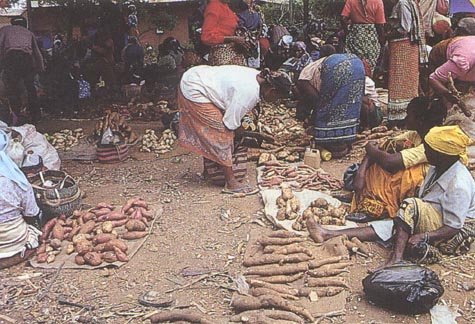
A rural market scene, Kalundu, Kitui
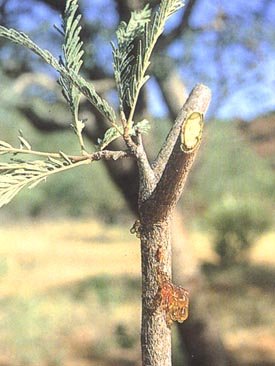
Orperelong'o, Albizia amara, Kajiado. The gum is edible
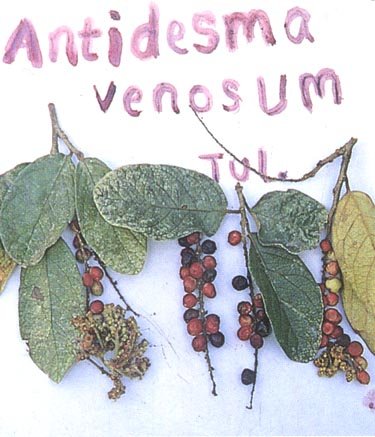
Antidesma venosum. The ripe fruits are a source of dye
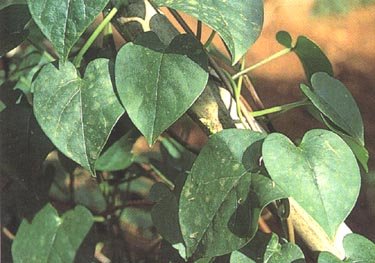
Basella alba, a leafy vegetable and an ornamental plant
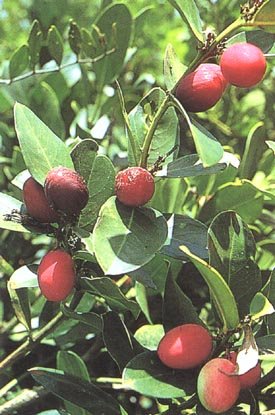
Acokanthera oppositifolia. Ripe fruits are edible
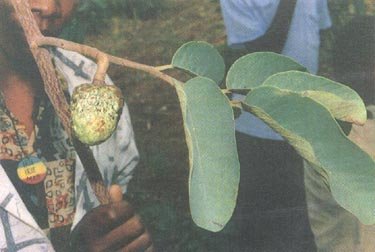
Annona senegalensis, near Museve, Kitui hills
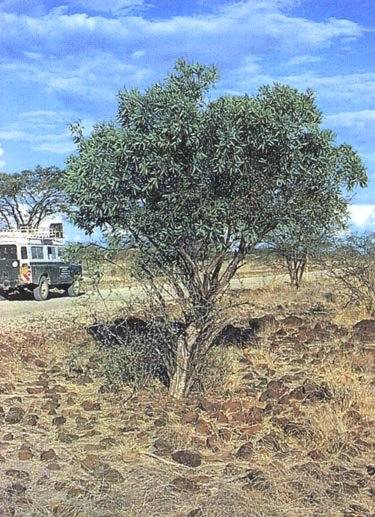
Boscia coriacea, an important food plant of the arid lands of northern Kenya
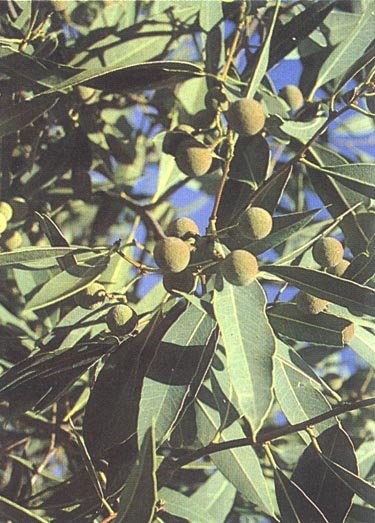
Boscia coriacea
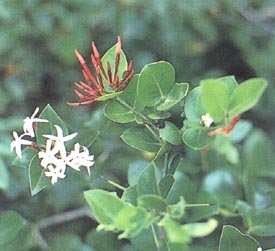
Carissa edulis. Flowers are occasionally picked as a snack
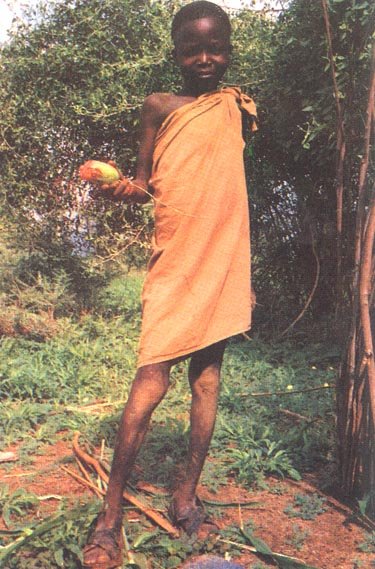
A herdsboy displays a favourite fruit, Coccinia grandis, Lokwar village, south Turkana
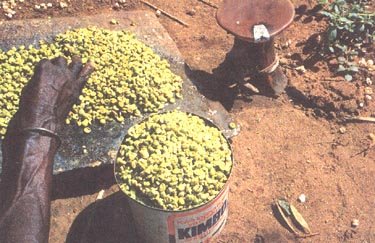
Boscia coriacea cotyledons ready for boiling, Kaputir, south Turkana
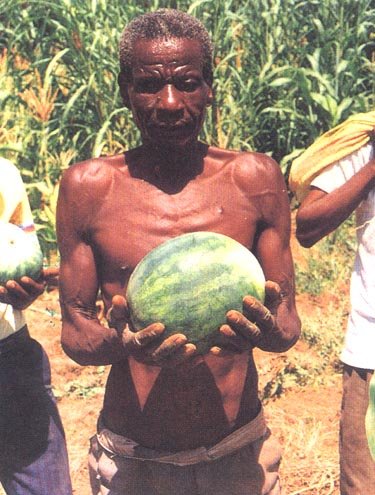
A local cultivar of water melon (Citrullus lanatus), Lodwar
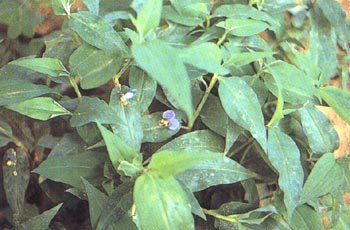
Commelina forskaolii
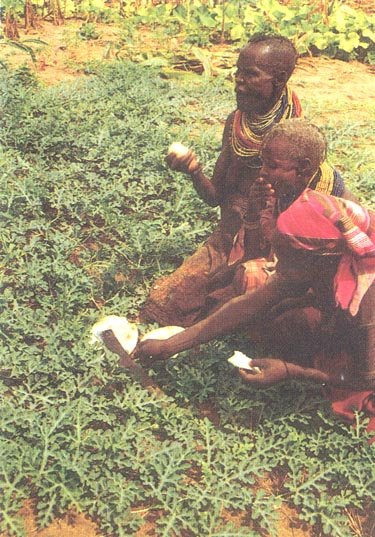
Ng'ikebootok women feasting on water melon along the Turkwel River, south Turkana
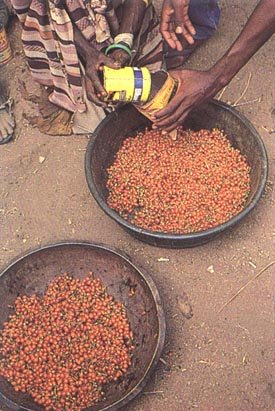
Selling Cordia monoica fruits, Lodwar market
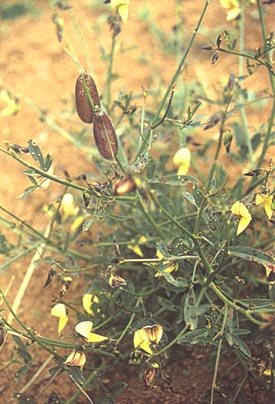
Crotalaria ochroleuca
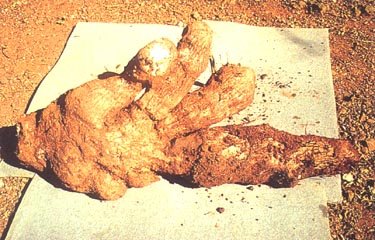
Dioscorea minutiflora, a common yam in Central Province
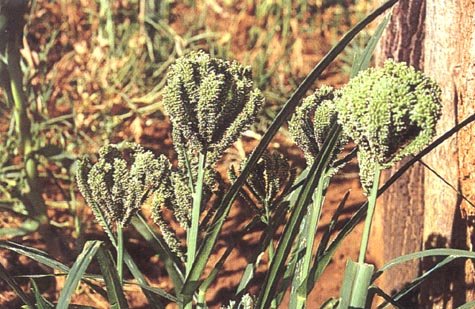
Finger millet, Eleusine coracana, a favourite for making porridge
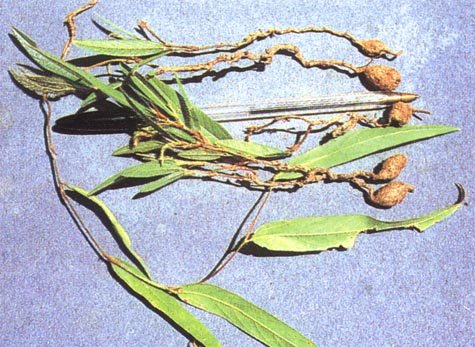
Eriosema shirense. Small tubers are edible
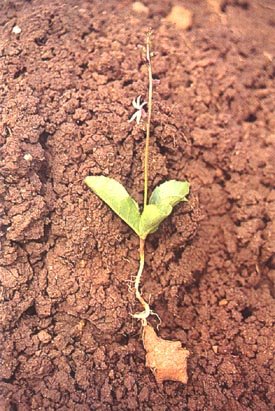
Cyphia glandulifera. The leaves and tubers are used for food
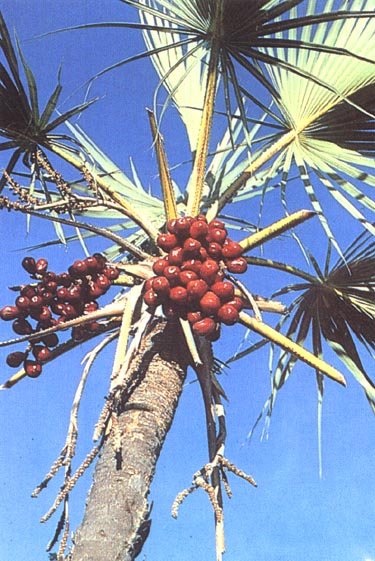
Hyphaene compressa, Lodwar
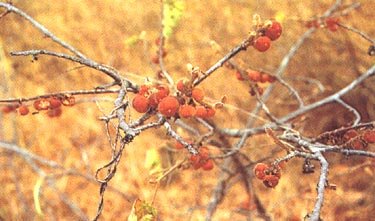
Grewia villosa
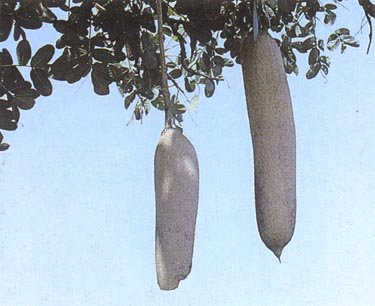
Kigelia pinnata (K. africana)
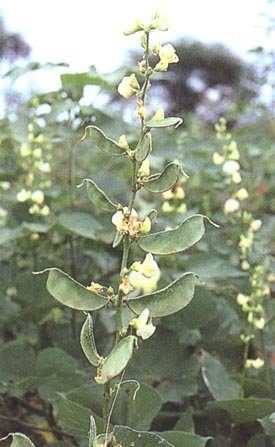
Lablab bean Lablab purpureus
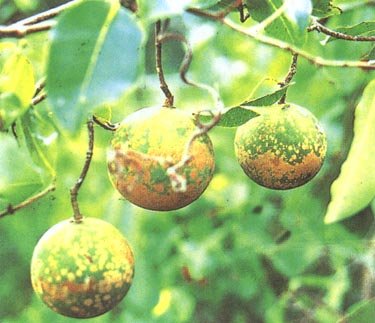
Landolphia buchananii
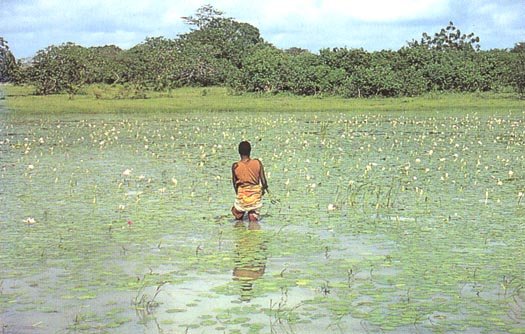
Collecting Nymphaea nouchali, Magarini, Malindi
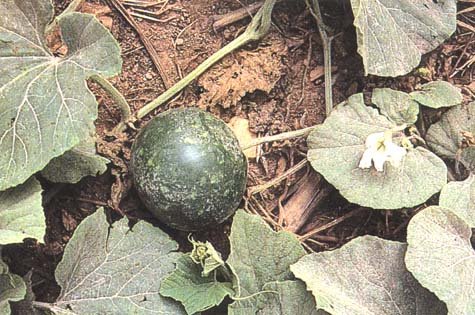
An edible cultivar of the gourd Lagenaria siceraria, south-east Makueni
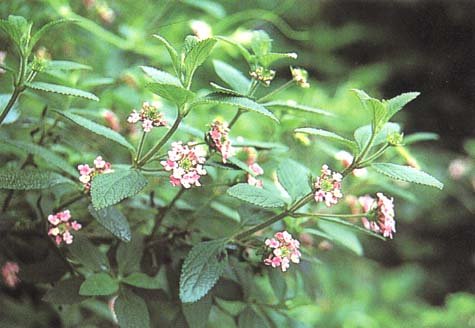
Lantana trifolia
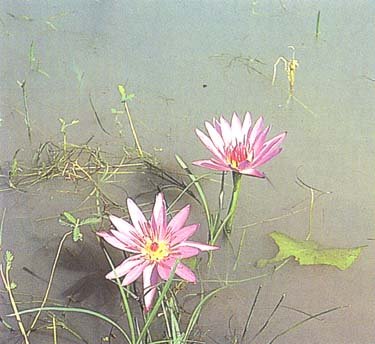
Nymphaea nouchali
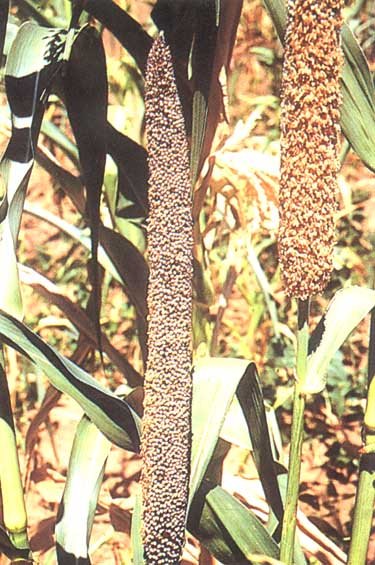
Bulrush millet, Pennisetum glaucum
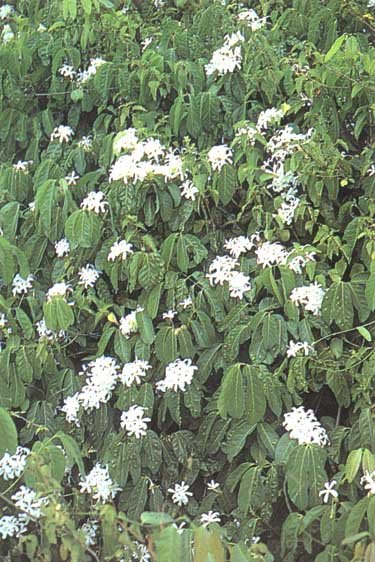
Saba comorensis
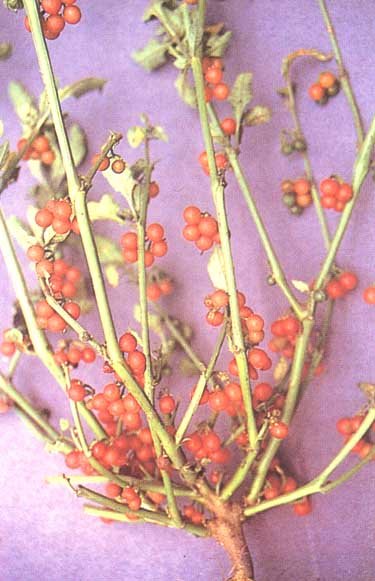
Solanum villosum
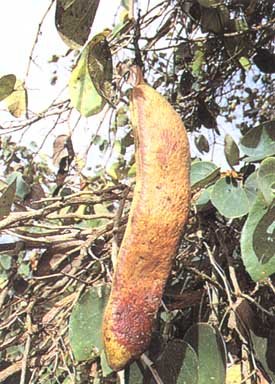
Piliostigma thonningii. The fruit pulp is edible
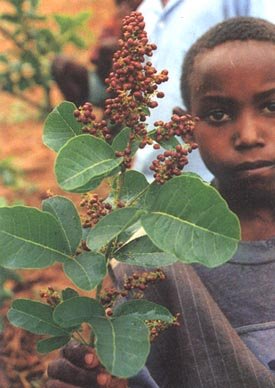
Rhus vulgaris
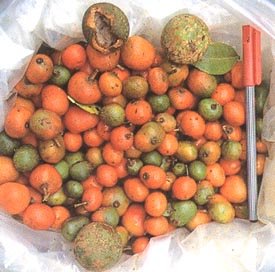
Ndendela, Salacia sp. This species may be new to science but not to the locals in Thui, near Mukuyuni, Makueni
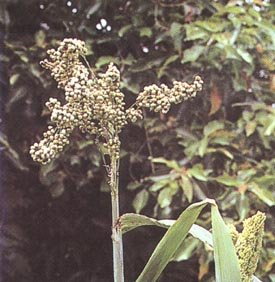
Sorghum, Sorghum bicolor
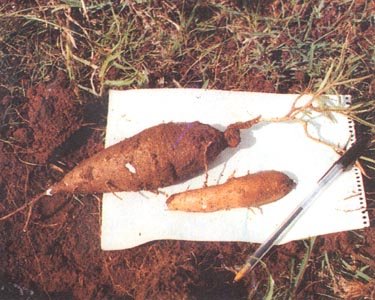
Stathmostelma propinquum, plains near Kajiado
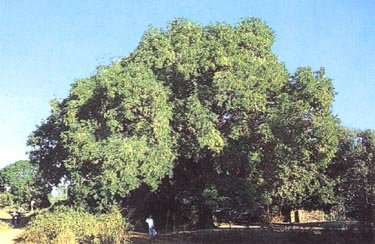
Tamarindus indica
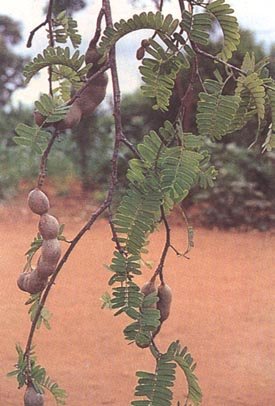
Tamarindus indica
Edible fungi, Termitomyces species, on a termite mound, north Kajiado
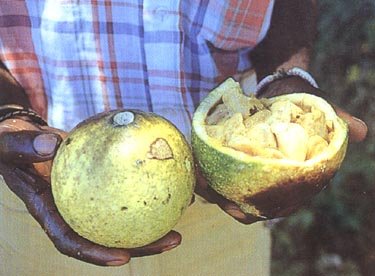
Strychnos spinosa
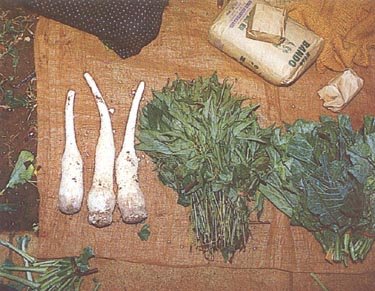
Edible fungi and Corchorus in a market in Siaya
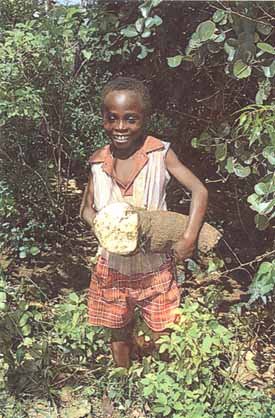
A boy carrying a tuber of Thylachium thomasii
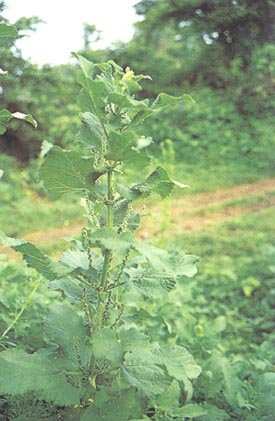
Stinging nettle, Urtica massaica. Leaves are used as a vegetable
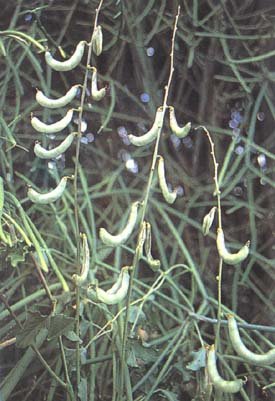
Vatovaea pseudolablab. The seeds in these pods are edible
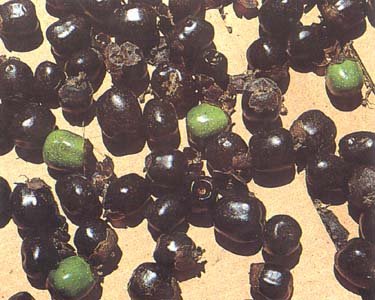
Ripe fruits of Vitex payos, Wikililye, Kitui
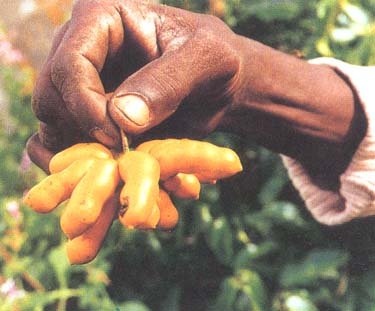
Uvaria scheffleri fruits, Mbui Nzau, near Kibwezi
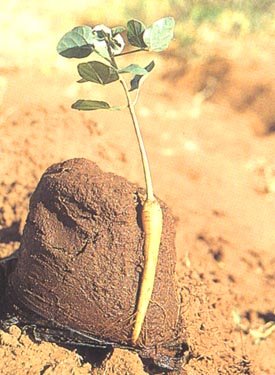
Young plant of Vatovaea pseudolablab. The tuber is edible
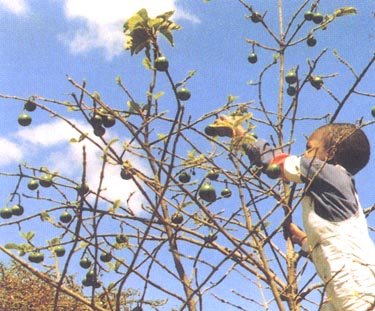
A boy picking Vangueria infausta fruit, Kajiado
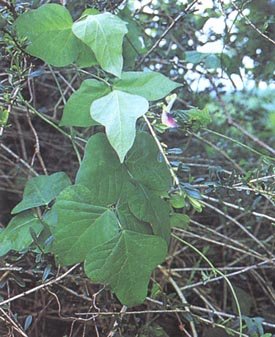
Vigna membranacea ssp. caesia, a leafy vegetable
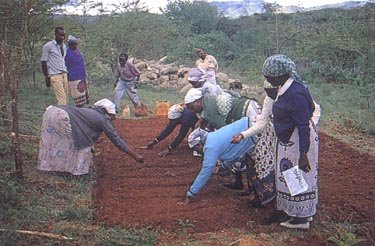
Members of a women's group sowing traditional leafy vegetables. Kamuwani, near Muumandu, Makueni
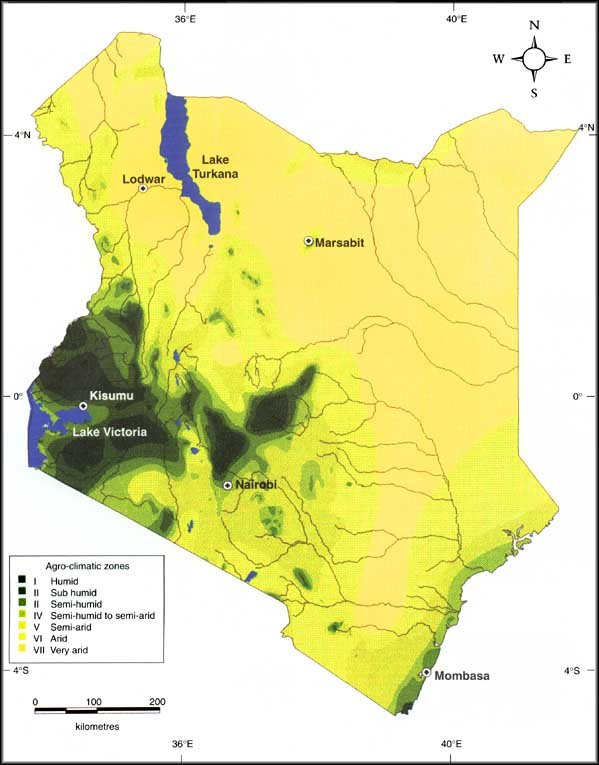
Map 3. Agro-climatic zones of Kenya
|
| ||||||||||||||||||||||||||||||||||||||||||||||||||||||||||||||||||||||||||||||||||||||||||||||||||||||||||||||||||||||||||||||||||||||||||||||||||||||||||||||||||||||||||||||||||||||||||||||||||||||||||||||||||||||||||||||||||||||||||||||||||||||||||||||||||||||||||||||||||||||||||||||||||||||||||||||||||||||||||||||||||||||||||||||||||||||||||||||||||||||||||||||||||||||||||||||||||||||||||||||||||||||||||||||||||||||||||||||||||||||||||||||||||||||||||||||||||||||||||||||||||||||||||||||||||||||||||||||||||||||||||||||||||||||||||||||||||||||||||||||||||||||||||||||||||||||||||||||||||||||||||||||||||||||||||||||||||||||||||||||||||||||||||||||||||||||||||||||||||||||||||||||||||||||||||||||||||||||||||||||||||||||||||||||||||||||||||||||||||||||||||||||||||||||||||||||||||||||||||||||||||||||||||||||||||||||||||||||||||||||||||||||||||||||||||||||||||||||||||||||||||||||||||
Traditional Food Plants of Kenya (National Museum of Kenya, 1999, 288 p.)
Species accounts
Key
Species importance
The importance of a specific species for a particular use is indicated as follows:
|
|
+++ |
Locally very important |
| |
++ |
Locally important |
| |
+ |
Locally less important |
Acacia drepanolobium Sj�stedt
Mimosaceae (Fabaceae)
English: whistling thorn, black-galled acacia Kamba: kiunga, iunga (plural) Kikuyu: muruai Kipsigis: mukuruit, muguruit Luo: dunga, adugo, dugna, oduga Maa: eluai, eluaai, iluaa (plural) Mbeere: mugambu, mugunga Pokot: sitowonyon, stoghon (singular), stoghoonei (plural) Rendille: fulaay Samburu: luai, luoi Somali: flai Swahili: mbalibali Teso: eyelel Turkana: eyelel
Description: A spiny bush, shrub or small tree to 6 m high with an open spreading crown, flat-topped at maturity. More commonly a small shrub 1.5-3.5 m. BARK: Grey, usually smooth, older bark finely fissured. THORNS: White, straight, some galled at their base. Galls fleshy, hollow, up to 5 cm in diameter, dark green to reddish purple when fresh, turning dark grey to black and usually inhabited by black or brown ants as they dry. FLOWERS: Numerous, in white heads. FRUIT: A narrow reddish brown pod.
Ecology: Grows in eastern and Central Africa, e.g. Uganda, Tanzania, Ethiopia, Sudan, Somalia and the Democratic Republic of Congo (Zaire). Found in Kenya in, e.g. Kaputei plains, Loita plains, Kedong valley, Lambwe Valley, Ndaragwa, Naivasha and Morupus (West Pokot), commonest at 1,300-2,400 m. Most common in open black clay plains, dry rocky hillsides or wooded grassland. Often the dominant shrub in plains with black cotton soil at medium altitudes; less often in red clay soil and rocky areas. Rainfall: 500-1,300 mm. Zones III - V.
Uses: FOOD: Fresh soft fleshy galls edible (+). Galls have a sweet, often slightly bitter taste. Very young galls are green to dark green, bitter and filled with fluid. As they mature they turn reddish purple and hollow. This is the right stage to eat them. Also at this stage stinging ants bore into them at the thorn base and inhabit them. With age, the galls harden, become fibrous, greyish-black and unpalatable. Inner bark fibre, which has a sweetish bitter taste, may be chewed (Machakos). Galls are a favourite food for herdsmen.
OTHER: Branches are used in fencing. Mature plants are a good source of fuelwood (++). Leaves, shoots and fresh soft galls are good fodder for goats, camels (+++), cattle and donkeys (+). Giraffes like browsing on this plant.
Season: Fresh galls found during active growth, mainly after rainy season. Flowers in October-November in Naivasha and Kajiado.
Status: Locally very common.
Remarks: A quite variable species in Kenya.
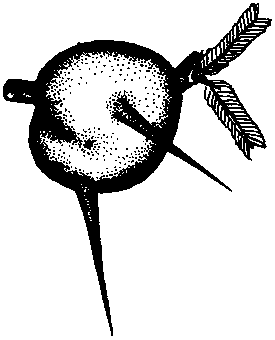
Figure

Figure
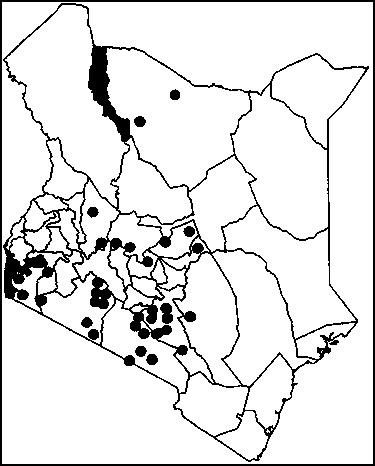
Figure
Acacia hockii De Wild.
Mimosaceae (Fabaceae)
Kamba: kinyua Kikuyu: mugaa Luo: arumbe, oriang' Maa: enchapalani, orcharpalani (Ngong) Mbeere: munyua Pokot: chuwan Teso: ekisim Tugen: tilatil
Description: A usually small acacia, 2-4 m high with a rather open crown. Occasionally a tree to 8 m. BARK: Yellow to greenish yellow, peeling. THORNS: Paired, straight on relatively few branches. FLOWERS: In yellow or orange heads. FRUIT: Pods reddish brown, narrow, straight or crescent shaped.
Ecology: From West Africa east to Sudan and south to Mozambique. Widely distributed in most parts of Kenya and common on sloping rocky bushed grassland, 0-2,400 m. Associated with poor soils, especially sands. Often the dominant shrub. Rainfall: 650-800 mm or occasionally more. Zones III-V.
Uses: FOOD: Inner bark fibre chewed for its juice which has a sweet taste (+++) (Kamba, Maasai, Mbeere). The gum is edible (Kamba, Maasai, Mbeere).
OTHER: Fuelwood (++), fodder, fence.
Status: May be locally common.
Remarks: The acacia with the sweetest bark string in Kenya.
Season: Flowers in December-February (Kitui, Machakos, Kajiado).
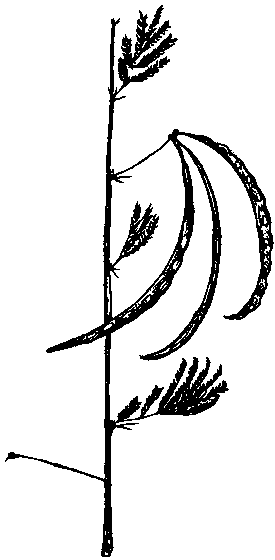
Figure
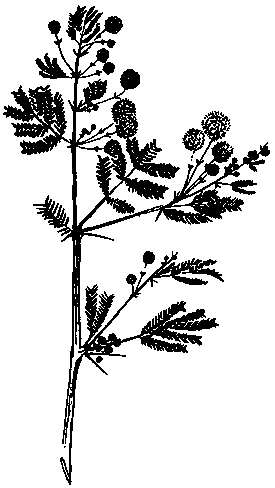
Figure
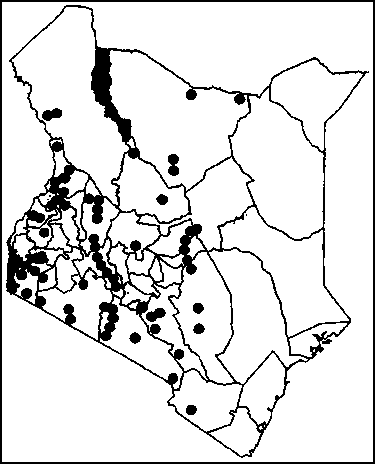
Figure
Acacia nilotica (L.) Del.
Mimosaceae (Fabaceae)
Borana: burquqe, burquqis Chonyi: mtsemeri, munga Digo: kigundi, chigundigundi English: Egyptian mimosa, Egyptian thorn Gabra: burquqe, burq'uq'e Giriama: msemeri, munga, muhegakululu Ilchamus: lkiloriti, lkilorit Kamba: kisemei (Machakos), musemeli (Kitui) Kambe: mtsemeri, munga Keiyo: kiprutyot Kikuyu: mugaa Kipsigis: chebitet, kopko Maa: olkiloriti Mbeere: mucemeri Orma: chalado Pokot: kopko, kapka Rendille: ilgiliti Samburu: lkiloriti Somali: marah, guider, langid, marai, tuwer Swahili: mgunga, mjungu, mtetewe Taita: shighiri Teso: ekapelimen Tharaka: mwemba Tugen: chebiwo, chebiwa Turkana: ekapilimen, ekapelimen
Description: A small- to medium-sized acacia, usually 3-5 m, with scattered branches (especially in young plants) or with a spreading umbrella-shaped crown and low branches (in older plants). BARK: Dark brown to black on the trunk. Branches reddish brown. THORNS: Branches armed with paired strong spines. FLOWERS: In bright yellow to orange heads. FRUIT: A grey to purple-black, straight or slightly curved indehiscent pod up to 12 cm long by 1.2 cm wide, with a whitish bloom and a gummy pulp.
Ecology: A species widely spread in tropical and subtropical Africa and east to India, from Ethiopia and Sudan to north-eastern South Africa and northern Namibia. Widely distributed in Kenya in acacia bushland and wooded grassland, e.g. growing in Kaputei plains (Kajiado), Kedong valley and Kerio Valley, 0-2,500 m. Common in both dry lowlands and highlands. Soils variable from sandy to black cotton. Seems to prefer gravelly red soils. Rainfall: Commonest at 500-800 mm. Zones III - VI.
Uses: FOOD: Bark (Kamba, Maasai, Mbeere) and the gummy fruit pulp (Pokot, Turkana, Rendille) boiled in water, sugar added and drunk as tea (+++). Pods are a famine food (Mbeere).
FOOD/MEDICINAL: Bark and roots boiled in milk, blood (Rendille) or soup, especially by warriors for appetite and general fitness (Maasai, Rendille, Samburu). Tea made from fruit drunk for stomach problems. Boiled root extract drunk as a tea for chest pain, abdominal pain and tuberculosis (Samburu). Root or bark extract taken alone or boiled in soup for indigestion (constipation), stomach upset (Maasai, Samburu), as an emetic (Samburu) and for hepatitis (Samburu).
MEDICINAL: Bark and root used in the treatment of venereal diseases (Maasai, Kamba, Tharaka). Cold bark infusion drunk to treat nausea caused by drinking milk. Chewed leaf or boiled bark applied on wounds, burns and sore eyes (Samburu). Inner bark chewed or boiled as cure for stomach-ache and diarrhoea (Pokot). Inner bark chewed for sore throat and cough (Maasai). Boiled leaf extract used for chest pain or pneumonia (Maasai). Bark and roots used as an aphrodisiac, and roots for gonorrhoea, impotence and chest diseases (Maasai). Bark decoction given to children for fever (Maasai). Sap from twigs (Pokot) and squeezed pods (Turkana, Pokot, Tharaka) applied to infected eyes. Bark infusion used against "malaria" (Pokot) and for stomach problems in goats (Pokot). Infusion of any plant part used to treat headache (Somali, Boran). Root bark (Mbeere) and fruit (Kamba) decoction used for coughs; boiled bark with fat used for painful joints, backache and stomach ulcers (Pokot).
OTHER: Fencing material, fuelwood (+++), charcoal (+++), fodder for all livestock (+). Bark boiled with meat to soften it (Pokot). Bark used for tanning (Mbeere). Bark and roots are a source of dye for baskets (Machakos). Thorns used for piercing ears (Kamba, Tharaka), removing jiggers (Mbeere) and as plugs for gourds (Kamba, Mbeere). Gum from fruit or bark used for attaching feathers to arrows (Mbeere). Wood hard and durable, used as posts for grain stores (Kamba).
CULTURAL/BELIEF: Ground bark used for rituals (Maasai). Fresh juice from fruit rubbed on eyelids to make them black during dances (Digo). Gum from fruits rubbed on hair by old men (Digo).
Season: Flowers in January (Kitui), May-June (Laikipia) or September-October (Naivasha, Kajiado). Fruits in August-September (Kitui) or October (Laikipia).
Management: Best propagated by direct sowing at site.
Status: Very common.
Remarks: This species is quite variable. Two subspecies occur in Kenya: ssp. subalata (Vatke) Brenan (syn: A. subalata Vatke) which is by far the commonest; ssp. leiocarpa is a coastal subspecies (Malindi, Pate Islands, Kiunga, into Somalia) with hairless fruit and young branches. At least seven subspecies are recognized, the others being found outside Kenya.
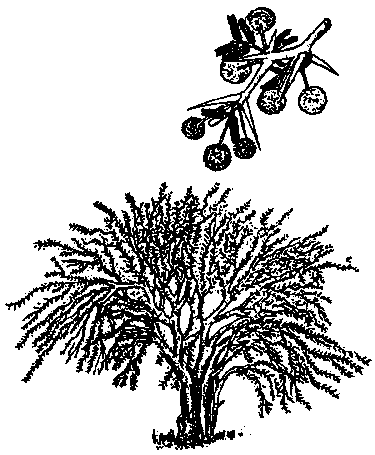
Figure
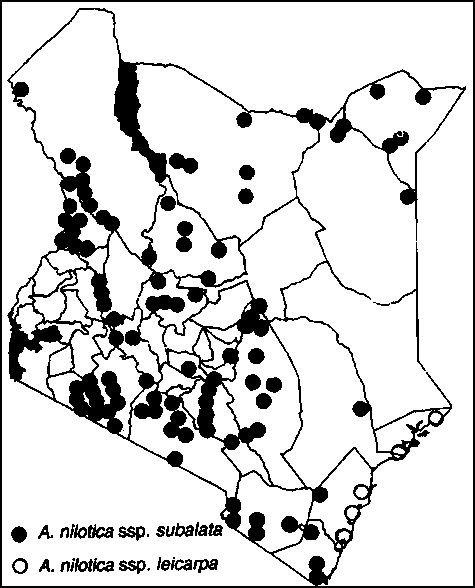
Figure
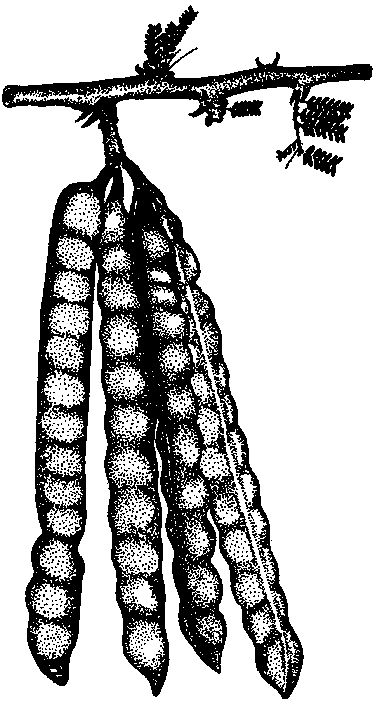
Figure
Acacia senegal (L.) Willd.
Mimosaceae (Fabaceae)
Borana: burra diima, sadeema, sapans diima, iddado, baabido (gum) Daasanach: dang'ite Digo: kikwata English: gum arabic tree, Sudan gum arabic Gabra: iddaad'o Ilchamus: lderkesi Kamba: king'ole (Machakos), kikole, king'olola (north Kitui) Luo: kiluor, otiep Maa: olderkesi, enderkesi, interkes (plural), olbida Mbeere: mung'othi Orma: bura-diima Pokot: chemanga, chemankayan Rendille: hadhaadh, mirgi-abah (gum) Samburu: lderkesi, manok (gum) Somali: edad, edad-geri, adad, edaad Swahili: kikwata, mgunga Teso: ekunoit, ekodokodoi Turkana: ekunoit
Description: Shrub or small tree up to 9 m tall, more often 2-4 m high. Crown flat in mature trees. BARK: Scaly, yellowish brown or grey-brown. Branches armed. THORNS: Spines brown-black, usually arranged in threes at the leaf nodes, the middle one recurved, the others directed forwards. FLOWERS: Buds red, opening to long white or cream spikes, borne in twos or threes or singly. FRUIT: A flat brown, papery, prominently veined dehiscent pod to 10 cm long by 2 cm broad, often slightly constricted between some or all seeds. Seeds usually 3-5, greenish brown, flattened with a circular outline.
Ecology: From West Africa east to Egypt, south to South Africa and Namibia. Also found in Asia. Grows in Kenya, e.g. on Homa Hill, in the Rift Valley, Lokitaung and Mutha hill in dry Acacia-Commiphora bushland and wooded grassland, often forming a pure stand on raised rocky ground in very dry areas, 100-1,700 m. Prefers well-aerated soils, especially rocky, loam or sandy soils. Rainfall: 200-800 mm. Zones III-VII.
Uses: FOOD: A clear edible gum is produced by this tree (+++). This is the best acacia gum in Kenya, much treasured by pastoralists. To induce gum formation, a section of the bark is wounded or stripped off. In the wild state gum production is induced by natural factors. Plants in arid areas or in the dry season tend to produce better gum. This species produces the well-known gum arabic used in pharmaceutical, food and confectionery industries and in the manufacture of glue.
MEDICINAL: Juice obtained from fruits is used as eye medicine (Ilchamus).
OTHER: Fuelwood (++), charcoal, house poles (+), fencing. Bark a source of fibre. Leaves are goat (+++) and camel (++) fodder.
COMMERCIAL: Commercial gum is collected from the wild (Wajir, Mandera, Isiolo, Marakwet, Garissa, Samburu) mainly by children and women. It is usually picked for export to the Far East and Europe. The gum trade in Kenya is less lucrative than in Sudan and Somalia. The main reason is the poor quality of the gum, mainly due to the fact that various grades and types are mixed.
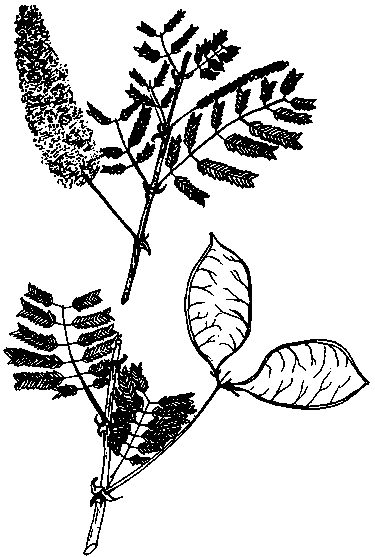
Figure
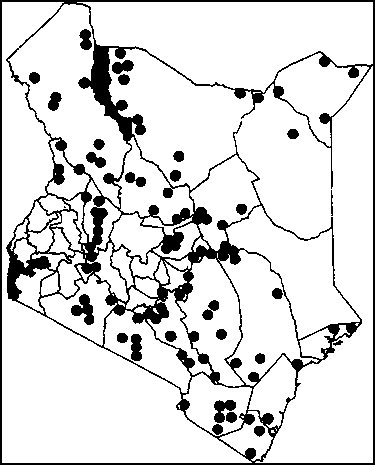
Figure
In Kenya, the gum exudes from the tree mainly as a result of natural causes or stress. In the Sudan, the business is old and well established. Here the plant is purposely injured during tapping to induce gum formation. The gum is ready for harvesting about a month after tapping. Collecting can be done over two or more months. Tapping may begin when the tree is four years old and a tree may produce gum up to the age of 15-20 years. Tapping tends to destroy the bark thus lowering production. In the Sudan, tapping is done with a small axe, mainly by removing a long strip of the outer bark from the branches, and is normally done in the dry season when the plant is in stress. The tappers are experienced and hence the quality is good. Kenyan gum, on the other hand, is traditionally collected by pastoralists. Until recently, the business only attracted a few Somali traders, but now the business is attracting full-time collectors and thus the quality of gum is improving.
The potential for development exists. High densities and sometimes pure stands of this species have been found in parts of Turkana and Baringo Districts, especially in northern Baringo, in Kakuma and along Kapedo-Lokichar road. Training of collectors, improved collecting methods and more organized marketing would be the way forward in developing this resource as the market for gum arabic is far from saturated. Currently the Sudan is the largest producer. Others include Mali, Senegal, Mauritania, Chad, Ethiopia and Somalia.
Season: Gum production is highest in August-September and February-March. Flowers in July (Kitui); fruits in August-September (Turkana, Baringo, Ngong).
Management: Best propagated by seed. Soaking in water for a day or nicking may improve germination.
Status: Locally common.
Remarks: This species is extremely variable. At least three varieties are found in Kenya:
· var. Senegal. Distribution: Moyale, Homa Hill, 100-1,700 m.· var. kerensis Schweinf. Distribution: Lokitaung, Baringo, Mutha, 460-1,130 m. Gum of less superior quality than that of var. senegal.
· var. leiorachis Brenan. (Orma: bura-diima, Somali: adad-gher). This species often hybridizes with Acacia mellifera in Kajiado.
Acacia seyal Del.
Mimosaceae (Fabaceae)
English: whistling thorn Borana: waachu, waachu-adi, waaqu-hallu Gabra: iddaado, iddad'o Ilchamus: lerai, lera Kamba: kisewa (Machakos), mweya Kikuyu: mugaa Kipsigis: mugurit Luo: ali, ale, arombe Maa: olerai, elereta, elereta-nanyokie, oljerai, olerai-oibor (Ngong) Marakwet: rena, renon (plural) Mbeere: mureera Pokot: rena, chowogh, chuwugh Rendille: fulai Samburu: lerai, lera Somali: fullai (Mandera), fulai Teso: ekoramai Turkana: ekoromait, echekereng
Description: Thorny tree up to 10 m high with an open flat-topped crown at maturity. Trunk often with many bulging knots. BARK: Yellowish to greenish white or orange-red and powdery on the surface, green inside. THORNS: White, long, straight, in pairs. They may or may not be galled. FLOWERS: In bright yellow to orange fluffy heads. FRUIT: A slightly curved, narrow dehiscent pod.
Ecology: Widespread in eastern Africa from Egypt in the north to Malawi and Zambia in the south. In Kenya, absent in the coastal zone but widespread in the drier parts of the country in open or bushed grassland and woodland, especially at the foot of hills and on plains, 200-2,200 m, more common at about 1,500 m. Often found forming pure stands. Common on black cotton and rocky soils, less frequently on red soils. Zones III - V.
Uses: FOOD: Inner bark fibre chewed for its nice rather sweet taste (++). The tree produces an excellent clear gum (+++). Bark is ground and used to make tea (Maasai).
OTHER: Poles, fodder (++), bee forage, fuelwood (++), dye, charcoal (++).
COMMERCIAL: Gum occasionally exported along with gum arable but is less valuable as it cracks with time.
Season: Flowers in September-October (Naivasha, Kajiado).
Management: Best propagated by seed. Soaking in water for a day or nicking may improve germination.
Status: Common.
Remarks: Two varieties of this species occur in Kenya:
· var. seyal is the more common of the two and has no galls. Distribution: From Uganda and Tanzania north to Egypt. Altitude: 550-2,200 m.· var. fistula (Schweinf.) Oliv. (Borana: wachu dima, Somali: fulaii wajol) has ant galls. Distribution: Baringo, Wajir, Isiolo, Marsabit. From Sudan, Somalia south to Malawi, Mozambique and Zambia. Altitude: 200-1,750 m. Use: Gum edible and of some commercial value.

Figure
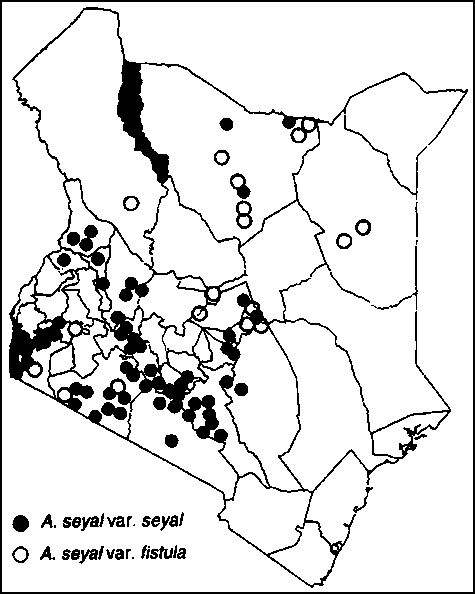
Figure
Acacia xanthophloea Benth., (English: fever tree, Naivasha thorn, Kamba: mweya, Maa: olerai) is a much larger acacia. It usually has the same uses and local names as A. seyal. Ecology: Most drier parts of Africa, and East Africa south to eastern Zimbabwe and KwaZulu Natal in South Africa.
Common at medium altitudes 1,400-2,300 m, especially Nairobi, Kajiado, Narok and Naivasha, especially in riverine conditions or places with high groundwater. Zones III-IV.

Acacia xanthophloea
Acacia tortilis (Forssk.) Hayne
Mimosaceae (Fabaceae)
syn: A. spirocarpa A. Rich., A. raddiana Savi
Borana: dadach, dadacha, urbu-ree (fruits) Daasanach: seech-geebe, sies-geebe (plural) English: umbrella thorn Gabra: d'addaca Ilchamus: ltepes, lkunyi Kamba: mulaa, muaa, ulaa (fruits) Kipsigis: chebitet Maa: oltepesi, sagararam (fruit) Malakote: dadacha, dadwota, dadech (young) Marakwet: ses, sesai (plural), sesoy (plural) Mbeere: mugaa Meru: mugaa Orma: gudis Pokot: ses, sesyai (plural), sesoy (plural) Rendille: gahar khabdo (pods), dahar, qubdo Samburu: ltepes, sagaram (fruits) Somali: qurah Swahili: mgunga Tugen: siesiet, sesya Turkana: ewoi (mature), etir (young)
Description: A spiny acacia, usually 4-8 m high but reaching 20 m in riverine vegetation. Crown narrow when young, spreading, fiat-topped and umbrella-like at maturity. BARK: Longitudinally fissured, dark grey. THORNS: Branches armed at each node with a straight white thorn as well as two short grey sharply recurved spines. FLOWERS: In white heads. FRUIT: A green-yellow to brown pod, often curled into a ring or crescent shape. Seeds smooth, greenish grey.
Ecology: Widespread in Africa from Algeria and Senegal to Eritrea and south to Angola, Namibia and Mozambique. Widespread in Kenya in dry bushland, bushed grassland, wooded grassland, riverine vegetation and arid-land scrub, 600-1,500 m. Soils very variable, from sandy to black cotton. Common in red soils. It is among the most drought-resistant acacias in Kenya. Rainfall: 200-900 mm. Zones IV-VII.
Uses: FOOD: Ripe fresh pods are eaten but seeds are discarded (+) (Maasai, Pokot, Turkana, Somali, Gabra, Daasanach). The crunchy pods have a faint sweet taste. Pods (ng'itit) are pounded, sieved to remove fibrous particles and the flour mixed with blood and eaten (Turkana). The gum is also eaten (Pokot, Turkana, Somali) but is of inferior quality, sticky and may cause choking.
MEDICINAL: Boiled infusion of bark used for diarrhoea and stomach-ache (Pokot).
OTHER: Fuelwood (+++), charcoal (+++), fibre (++) for weaving traditional baskets (Tharaka), kyondo (Kamba), ciondo (Mbeere); ropes and string for building and other purposes are obtained from the bark. This fibre was much used before the introduction of sisal. Thorns used as pins or needles. Fibre chewed for coated tongue, kivuti (Kamba). Debarked roots, which have tiny perforations, are smoked as a remedy for colds (Kamba, Tharaka). Leaves, young shoots, and especially dry pods, are excellent fodder (+++) for livestock, especially goats and camels. Shade and as a meeting place (Turkana). Fencing using dry branches.
CULTURAL/BELIEFS: Roots burned to reconcile families (Tharaka). The tree is believed to attract lightning (Tharaka).
COMMERCIAL: This is the most important acacia among pastoral communities. Pods sold for livestock (Lodwar, Mandera) and human food (Lodwar). Fuelwood and charcoal from this plant are widely sold in small market centres.
Season: Fruits in September-October (Machakos, Kajiado, Kitui, Tharaka).
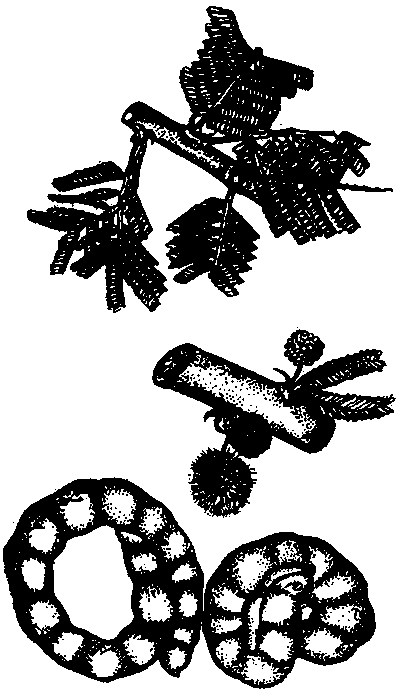
Figure
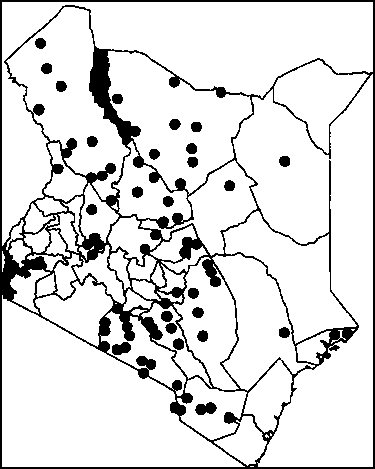
Figure
Management: Seeds taken straight from the pod seldom germinate. Dormancy is broken when they pass through an animal gut, by scarification, bush fire or by hot-water treatment. Should not be planted near homes because of its thorns and the likelihood of attracting caterpillars that feed on the plant at certain seasons. Protection of some areas for some time to give young plants time to grow above the reach of goats may be the best way of increasing this useful tree. As this species is very drought-resistant it has a high potential for desert reclamation.
Status: Locally very common.
Remarks: Two subspecies occur in Kenya:
· ssp. spirocarpa (A. Rich.) Brenan (syn: A. spirocarpa A. Rich.). Fruit hairy and glandular. Distribution: Moyale, Kima (Machakos), Taveta. Eritrea and the Sudan south to Mozambique and Angola.· ssp. raddiana (Savi) Brenan var. raddiana (syn: A. raddiana Savi). Fruit non-hairy and non-glandular. Distribution: Coastal area, Faza and Manda Islands, Lamu. Algeria and Senegal east to Egypt, Somalia and Kenya.
Figure
Acokanthera schimperi (A. DC.) Schweinf.
Apocynaceae
syn: A. friesiorum Markgr.
Borana: karraru English: arrow-poison plant Gabra: k'arraaru Kamba: kivai Kikuyu: muricu Kipsigis: kelyot Maa: olmorijoi Meru: mururu Nandi: keliot Pokot: kelion Samburu: ilmorijoi Somali: marid Tugen: kelyon
Description: A dense round evergreen shrub or spreading sparsely branched tree to 7 m high. BARK: Fissured. LEAVES: Shiny, usually elliptic or ovate. FRUIT: Ellipsoid, to 2 cm long, green, turning green-yellow then dark purple on ripening. Seeds cream with an ivory appearance, compressed on one side.
Ecology: Widespread in East Africa, south to Zimbabwe, Mozambique, Swaziland and north-eastern South Africa. Grows in Kenya in bushland on rocky hillsides, especially on red or black rocky soils, e.g. at Muumandu (Machakos), Ongata-Rongai, Oloosaiyeti hill (Kajiado), Rumuruti (Laikipia), Loita, and Chepelion (north Baringo), 1,200-2,400 m. Common in dry highland forests and bushed grasslands. Rainfall: 500-900 mm. Zone III.
Uses: FOOD: Ripe fruits are edible (+). They are sweet with a slightly bitter taste, but should only be eaten when ripe. Otherwise the whole plant is poisonous. Birds have been known to drop dead on sucking nectar from the flowers.
OTHER: This is the plant used to make arrow poison (Pokot, Kamba, Kipsigis, Embu, Tharaka, Maasai) and by many communities in Central, East and southern Africa. Roots (or other parts of the plant) are boiled in a secluded place for up to 10 hours, adding water up to 5 times. A black viscous substance results which, on drying, may be wrapped up and stored far from people. The poison should never be handled with bare hands if there is any break in the skin. On cooling, the poison may also be pounded to a powder and stored. It is softened again by adding a little water (Maasai). The poison is said to remain potent for a long time. Trees in the hotter areas give better poison and it softens or may melt in cold humid weather. Ash or Aloe sap may be put on top to prevent poison from oozing out (Kamba, Maasai). Acokanthera poison is a lethal cardiac poison only effective when it gets into the bloodstream. This is used against wild game ranging from dikdik to elephant, and small quantities may kill a human in 20 minutes or less. Antidote: In case of accident, squeeze out and suck contaminated blood from the point of entry immediately. (The person doing this should not have sores in his mouth.) Apply paraffin oil (Kitui).
COMMERCIAL: Poison sold in Kitui, said to be obtained from the coast. Arrows with poison from this plant sold (Mwala in Machakos, Tseikuru in Mwingi, Ishiara in Embu, Tharaka, Kitui). Locally, poison experts make this poison and apply it to other people's arrows for a fee (Loita in Narok).
Season: Fruits in May (Narok).
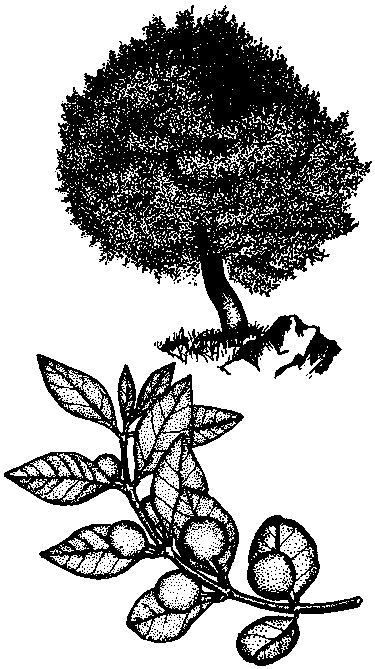
Figure
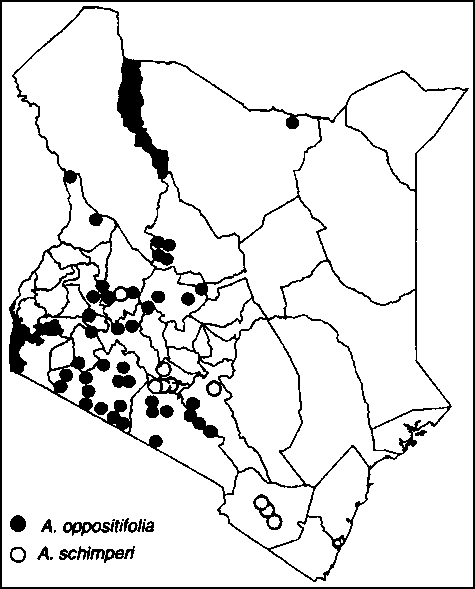
Figure
Remarks: A related species, but usually with larger fruits and leaves than those of A. schimperi: Acokanthera oppositifolia (Lam.) Codd, syn: A. longiflora Stapf has edible fruits too (English: arrow-poison tree, Swahili: msunguti, Kamba: kikweo, ngweo (fruit), Kikuyu: kiruru, mururu, kiururu, Mbeere: mururu, Meru: mururu, Taita: msungusungu). It is an evergreen shrub or small tree, normally 3-5 m high, exuding a white latex when any part is injured. Bark grey, rough. Leaves opposite, shiny, elliptic to obovate, broadly ovate with a sharp tip. Flowers in clusters, made up of 5 parts, with a pink tube and white lobes. Fruit oval, 2-3 cm long. Distribution: Kanzalu Range and Kalama (Machakos), Kiambu, Nairobi. Also in Tanzania, south to South Africa. Habitat: Bushland (especially on rocky hillsides) and riverine forest edges and dry highland forests, up to 2,400 m. Soils: Rocky, red clay, clay-loam. Rainfall: 600-1,000 mm. Uses: Fruit edible when ripe (+), sweet and rather bitter. Latex from fruit used as chewing gum by children. Only ripe fruits should be eaten. The roots are occasionally used to make arrow poison (Kamba, Pokot, Kipsigis). A shade and ornamental tree. Season: Fruits in February-March (Machakos). Status: Uncommon. Remarks: Plant roots and other plant parts may be poisonous.

Acokanthera oppositifolia
Adansonia digitata L.
Bombacaceae
Chonyi: muyu, mauyu (fruits) Digo: mbuyu Embu: muramba English: baobab Giriama: mbuyu, muuyu Kamba: muamba, mwaamba, mauyu Kambe: muyu, mauyu (fruits) Maa: olmesera Malakote: mubuyu Mbeere: muramba Meru: muramba Orma: yak Samburu: lamai Sanya: yaka Somali: yak (Tana River), jag Swahili: mbuyu, muuyu Taita: mlamba (mbale) Tharaka: muramba, muguna-kirindi
Description: A grotesque-looking deciduous tree to 15 m, with a disproportionately large trunk and twisted branching habit. Trunk soft, fibrous with a smooth grey surface. LEAVES: Digitate. Leaflets to 13 cm long. FLOWERS: Large, white. FRUIT: To 25 cm long, with shiny yellowish green or rusty soft hairs and a hard oval or round shell, often grooved longitudinally. Seeds hard, embedded in a cream or white pulp.
Ecology: Somalia to southern Africa. In Kenya, a common plant in the coastal region but which also grows further inland, e.g. Taveta, Kibwezi, south-eastern Makueni, dry parts of Kitui, Meru National Park and at Torosei in Kajiado, 0-1,300 m. Also planted as an ornamental outside this range. Grows in dry low country in Sterculia-Delonix alata-Acacia-Commiphora bushland and in low, hot, high-humidity coastal areas. Soils varied, but common on red soils, sandy loam and in rocky areas. Rainfall: 300-900 mm. Zones II-VI.
Uses: FOOD: The dry cream-coloured pulp is eaten raw (+++) or is dissolved in water, stirred to a milky state (milk may be added), seeds sieved off and the juice used as sauce (mboga) or added to porridge. Coconut juice is normally added (Giriama). Seeds are roasted like groundnuts (Kitui, Tharaka). Soft tuber-like root tips are cooked and eaten in times of famine. Germinating seed roots are also eaten. Young leaves are used as a vegetable (Giriama, Mbeere). Normally mixed with more coarse vegetables like cassava leaves (Giriama). The pulp-coated seeds (mabuyu) are coloured, sugar-coated and sold as sweets in coastal towns (Swahili).
MEDICINAL: Bark decoction used for steam bathing of infants with high fever. Juice made from pulp is drunk to treat fever (Giriama).
OTHER: Fibre from trunk used as string and for weaving baskets and ropes. To obtain fibre, two cuts, one above and the other below, are made on the trunk and strips of string pulled out (the trunk is fibrous from surface to the centre). Strings for baskets are first chewed to soften them (Kamba). Tree used for placing beehives. Trunks damaged, e.g. by elephants, are used as shelter in shambas (Kamba, Giriama) and as a hiding place during war (Tharaka). Bark used for roofing and making temporary structures (Giriama). Appearance of new leaves or flowers signals the start of the rainy season (Kamba, Mbeere). Fallen trees improve the soil quality considerably. Fruit shells are used as fuelwood, containers, bowls and for making a variety of items, including rat traps (Giriama). The fruit pulp mixed with fig-tree latex is used as birdlime. The shoot and trunk are eaten by elephants, the trunk is also a source of water. Fallen leaves are eaten by livestock.

Figure
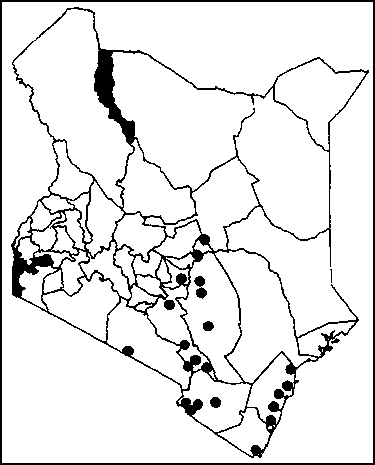
Figure
CULTURAL/BELIEFS: A tree surrounded by complex myths and beliefs among most peoples in areas where it grows. Young plants not cut at all (Tharaka), while large trees are not debarked during or just before rains (Kamba) for fear of rain failure. A sacred and peaceful tree (Giriama). A cut tree is said to bleed like a human being, and this brings bad luck to whoever cuts it (Giriama). A person is believed to turn into the opposite sex if he/she walks round it with a goat (Meru).
COMMERCIAL: Large quantities of fruits harvested and sold in coastal areas. Coloured pulp sold as sweets. Fibre sold in markets (Tseikuru, Mwingi, Tharaka). Baskets (ciondo, syondo) sold in curio shops. Usually more expensive than sisal baskets.
Management: Propagated by seed. Scarify or put seed in boiling water and let cool together. Naturally the seed may take several years before germination, hence the belief that it only germinates after abandoning the present homestead (Giriama). Very slow growing, the tree should not be planted near houses. Lateral roots may reach a length of 100 m or more. It is said to produce its first fruits after 60 years (Kitui).
Season: Flowers in October. Leaves in November-December. Fruits ready in July-September.
Status: Locally very common.
Remarks: Eating much fruit pulp with little else is said to cause weakness and swelling of joints. Up to three types of the tree are recognized by farmers through taste (some sweeter than others), and size and shape of the tree or its fruits as well as season of flowering.
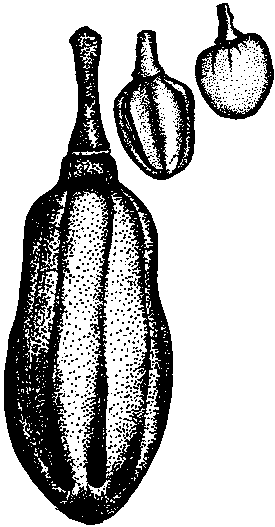
Figure

Figure
Figure

Figure
Aerva lanata (L.) Schultes
Amaranthaceae
Borana: daraara, boraati Chonyi: chivuma nyuchi Digo: chivwa kuku Giriama: kivuma nyuchi Kambe: chivuma nyuchi Maa: eleturot, ediati-ormwaate Pokot: chepiskut, chepkumot Sanya: wario Somali: fod cadde Swahili: kinongo Tugen: simetwo
Description: Erect, decumbent or scandent perennial woody herb usually 0.3-1 m high, occasionally to 2 m, usually with numerous ascending branches. Young stems covered with soft hairs. LEAVES: Round to elliptic, usually covered with woolly hairs. FLOWERS: In dense clusters, look like cream or greenish white wool.
Ecology: Widespread in the tropics and subtropics of the world. From West Africa to Egypt and south to South Africa. Widespread in Kenya in open grassland, seasonally waterlogged areas, roadsides, forest edges and rocky areas, 0-2,200 m. Zones III-VII.
Uses: FOOD: Leaves eaten as a vegetable (++) (Giriama, Duruma, Chonyi).
MEDICINAL: Decoction of the leaves used for bathing babies suffering from malaria.
OTHER: Chicken feed (Digo). White wool used for stuffing pillows (Tharaka).
Status: Very common.
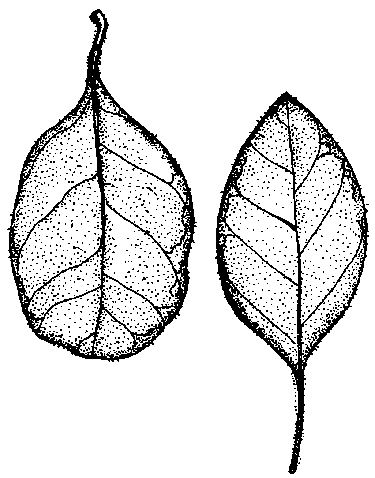
Figure
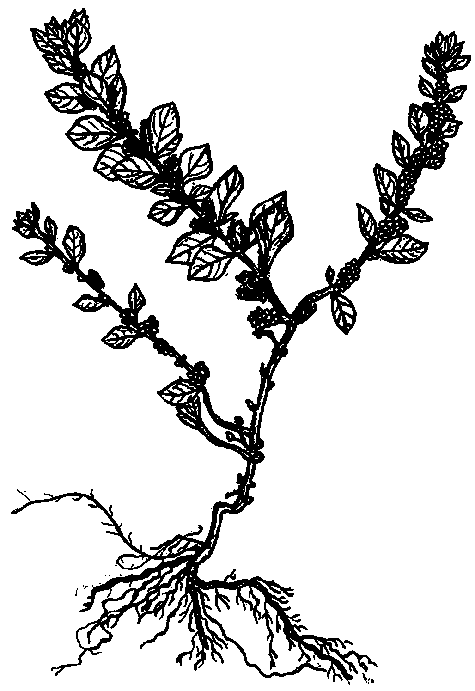
Figure
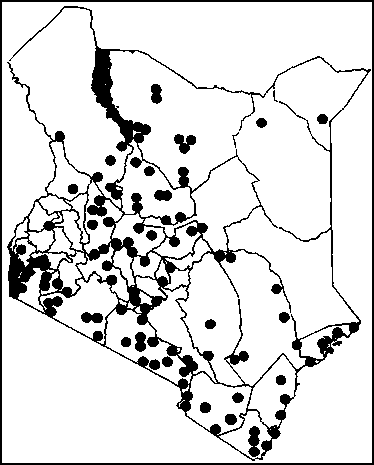
Figure
Albizia amara (Roxb.) Boivin
Mimosaceae (Fabaceae)
Borana: boria Kamba: kyundua, kiundua Maa: orperelong'o Pokot: kukutwo, panan Somali: gisrip, gisrep Tugen: kukutwo
Description: An open tree to 8 m high or more. BARK: Brown, fissured. LEAVES: Bipinnately compound. FLOWERS: In cream heads. FRUIT: A long, flat, brown pod.
Ecology: Found in India and Sri Lanka and in East Africa south to north-eastern South Africa. Widespread in Kenya in bushland, especially in red and sandy soils, 500-2,000 m. Rainfall: 500-800 mm. Zones IV-V.
Uses: FOOD: Gum is edible (++). Stems are used in the preparation of soup (+++). Pieces are cut, sun dried and the extract added to soup (Maasai). The soup is stirred vigorously and served. At most, the pieces may be used three times. An important soup additive for the Maasai.
OTHER: A good source of fuelwood and charcoal (+++).
Status: Locally common.
Remarks: Two subspecies occur in Kenya:
· ssp. amara distinguished by its relatively fewer leaflets
· ssp. sericocephala extending to southern Africa.
Many other plant species are used in the preparation of soup, especially by pastoral communities. The Maasai use at least 80 species in soup preparation. While some are used as appetizers and to keep fit, others have a drugging effect meant to make warriors fearless. Many have an emulsifying effect on meat fat. The majority are used by warriors (moran) in the wilderness.
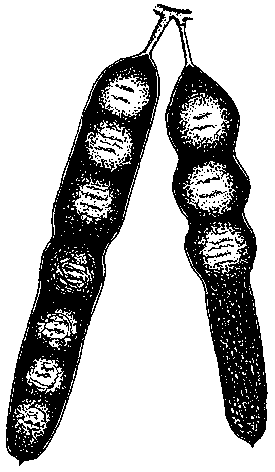
Figure

Figure
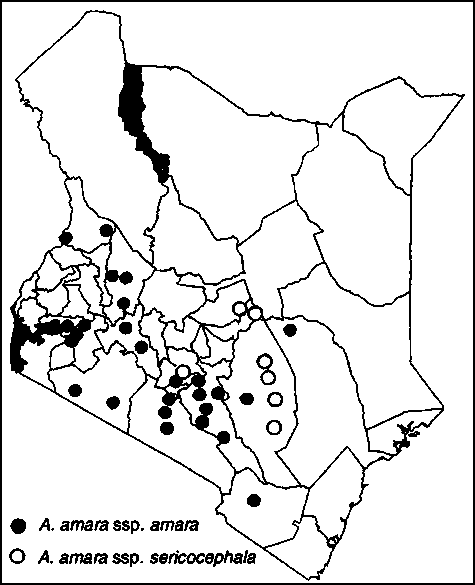
Figure
Amaranthus blitum L.*
Amaranthaceae
syn: A. lividus L.
English: purple amaranth Kikuyu: terere Kipsigis: mborochet, mborochik Kisii: emboga Luhya: omboga Luhya (Bukusu): litoto Luhya (Maragoli): tsimboga Luo: ododo Meru: rwoga
Description: A branched, erect or prostrate herb to 50 cm. LEAVES: Long petioles and an ovate lamina to 10 cm long. The tip has a characteristic notch. FLOWERS: Green, borne in axillary and terminal spikes.
Ecology: Grows in tropical and subtropical parts of the world. This species is found in the central and western parts of Kenya, especially Kisii, Kericho, Bomet and Nandi Districts, in wet areas, on waste ground and in cultivated land, 800-2,400 m. Zones I-III.
Uses: FOOD: Leaves and young shoots used as a vegetable (+++) (Kikuyu, Nandi, Kipsigis, Marakwet, Luhya, Luo, Kisii). An important leafy vegetable for the Kisii and Kipsigis who cultivate it in kitchen gardens. COMMERCIAL: Sold in Kericho, Kisii and Kisumu markets. Occasionally seen in Nairobi markets.
Remarks: Two subspecies are recognized by Townsend in Flora of Tropical East Africa:
· ssp. lividus (syn. A. blitum) is generally larger, erect with larger fruit and leaves.
· ssp. polygonoides is smaller and normally prostrate.
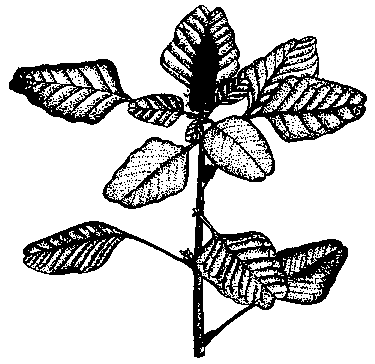
Figure
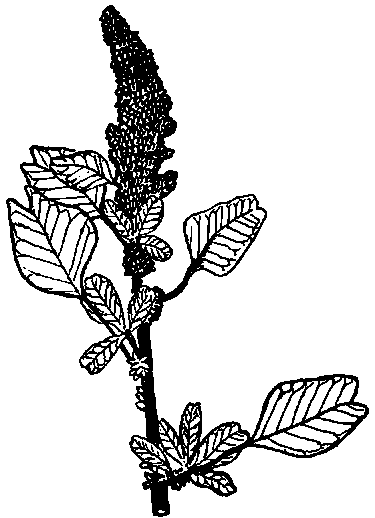
Figure
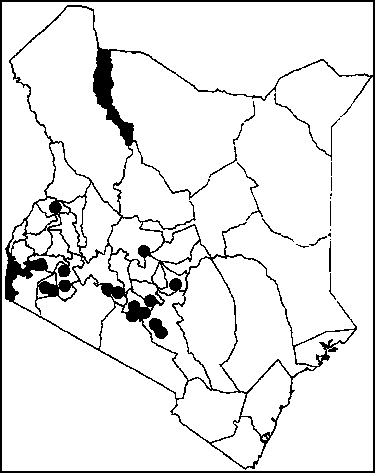
Figure
Amaranthus dubius Mart. ex Thell.*
Amaranthaceae
Digo: chiswenya English: amaranth Giriama: kiswenya, kiswenya-kithithe (small form) Ilchamus: raprapa, i-okuronit, i-okuroniti Kamba: w'oa, telele (Kitui), terere (Mwingi) Kikuyu: terere Kipsigis: kelichot Kisii: emboga Luhya (Bukusu): emboka, litoto Luhya: lidodo Luhya (Tachoni): lidodo Luo: ododo, omboga Maa: nanyi, nyanyi Marakwet: kipkanding'wa Mbeere: muterere Pokot: ptanya Samburu: nyoni, nterere, ntererei, mir Swahili: mchicha Taita: kichanya, kizenya Tharaka: terere
Description: An erect branched herb up to 1 m or more, resembling the spiny amaranth, A. spinosus, but without spines. Stems ridged. LEAVES: Simple, long petiolate, alternate, usually with an ovate lamina to 8 cm long, veins conspicuous underneath. FLOWERS: Borne in clusters, in the axils and in terminal branched heads or spikes. FRUIT: Covered by bracts and bracteoles which are the more visible structures of the flowering part. Seeds black, shiny.
Ecology: Grows in most tropical parts of the world and usually found in most sub-humid parts of Kenya below 2,000 m. A common herb in most towns in Kenya and commonly found on cultivated land, roadsides and flood plains. Cultivated a great deal in kitchen gardens in western Kenya and among the Mijikenda of Coast Province. Zones I-V.
Uses: FOOD: Leaves and tender shoots are used as a vegetable (+++), sometimes cooked with more bitter vegetables such as Cleome gynandra (Luo, Siaya), black nightshade and Launaea cornuta (coast). This avoids the process of pouring out the water used for boiling the vegetables. A. dubius is a popular choice for improving the taste of many traditional leafy vegetables.
Season: Two weeks after the onset of the rainy seasons, April-September, November-January (coast).
Management: The mature inflorescence is squeezed between the palms to release the seeds which may be broadcast at the required site. Occasionally, weedy seedlings may be uprooted and planted at the required place (coast).
COMMERCIAL: Grown on a commercial scale along the Sabaki flood plains, in Kaloleni near Mombasa and in Wangige near Nairobi. Sold in Nairobi, Malindi, Mombasa, Siaya, Kisumu.
Remarks: Amaranthus dubius is believed to be of American origin. A more recently introduced large-leaved giant amaranth is believed to be a form of this species (Giriama: kiswenya kibomu). It grows much larger, the stems are thicker, leaves are larger and usually blotched purple. The inflorescence is large but seeds are smaller. This form is becoming more popular with farmers. Amaranths are among the most commonly used leafy vegetables in Kenya and most of Africa. Of the 60 or so species of Amaranthus in the world, at least 13 occur wild in Kenya. Many of these (probably with the exception of A. thunbergii, A. sparganiocephalus and A. graecizans) have been introduced from other parts of the world, especially the Americas and Asia. Because of their close resemblance and the fact that many are only newcomers, they are often known by the same local names and used in the same manner. They are among the most nutritious leafy vegetables.
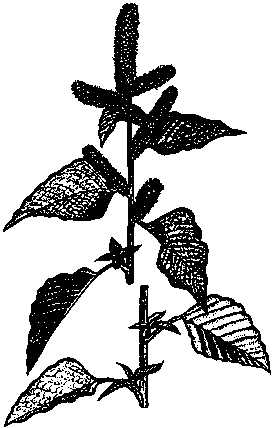
Figure
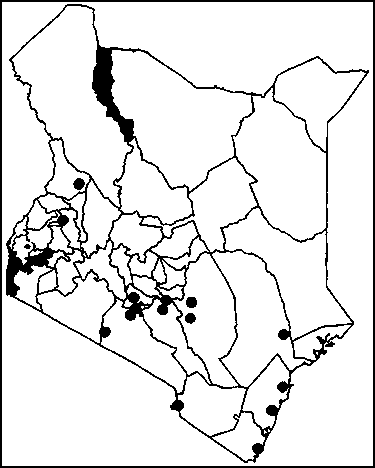
Figure
Amaranthus graecizans L.
Amaranthaceae
syn: A. angustifolius Lam., A. silvestris Vill., A. parvulus Peter
Digo: chiswenya Embu: rwoga English: amaranth, prostrate amaranth Giriama: logatsi Ilchamus: raprapa, lokuronit, lokuroniti Kamba: w'oa, woa, telele (Kitui), terere (north Kitui) Kikuyu: terere, terere wa gikuyu Kipsigis: kelichot Luhya (Bukusu): edodo, litoto Luhya (Tachoni): lidodo Luo: ombok-alikra, omboga Maa: nanyi, nyanyi, nyani, embeneyoi Marakwet: kipkanding'wa, kipiriak (plural) Mbeere: muterere, muruoga Meru: rwoga ra kicuka Pokot: ptanya Samburu: mir, nyoni, nterere, ntererei Somali: dargu Swahili: mchicha, mchicha mwitu Taita: kizenya (Mbale), kichanya Tharaka: rwoga Turkana: ekiliton, lokiliton, louyeing'orok, adye
Description: An erect, decumbent or prostrate herb usually branched from the base and often less than 40 cm high. LEAVES: On long petioles and with small lamina (about 4 cm). FLOWERS: Green and borne in axillary clusters. FRUIT: Seeds tiny, smooth, shiny black.
Ecology: Found throughout most of Africa, warmer parts of Europe, tropical and subtropical Asia. The commonest amaranth species in the semi-arid and arid regions of Kenya but also grows in wetter regions on waste ground and as a weed of cultivation. Common on sand deposits along rivers, at roadsides and forest edges. It is most abundant where surface run-off collects in semi-arid lands. It can grow in partially shaded areas under trees. Soils varied, mainly sand and sandy alluvium. Zones II-VII.
Uses: FOOD: The leaves and young tender shoots are used as a vegetable (+++). Later as the seeds mature it is advised to pick individual leaves as stray seeds in food feel like sand in the mouth. The vegetable is normally cooked and eaten with ugali or it may be cooked together with flour to a stuff known as ngunzakutu (Kamba) or atap (Turkana). Leaves may also be mashed with a mixture of maize and a pulse (Kikuyu, Kamba). A major drawback is that leaves of this species are small and collecting enough for a meal can take some time.
OTHER: Fodder (++) for all livestock.
Management: Seeds can be obtained from mature plants by rubbing the flower heads to release them. Passing a light current of air through cleans them of other particles. The seeds may be broadcast soon after the onset of the rains. It can be intercropped with trees as it is shade-tolerant. In the wild, this amaranth sprouts easily soon after the onset of rains, grows fast, seeds and dries as fast, and hence its ability to survive in the arid lands. At maturity the plant sheds the small, black, shiny seeds.
Status: Common, especially in dry areas.
Remarks: Three subspecies have been recognized:
· ssp. graecizans (syn. A. angustifolius Lam.) with a narrow leaf blade and common in seasonally flooded areas,· ssp. silvestris (syn. A. silvestris Vill.) with a broader leaf blade and more common than the former, and
· ssp. thellungianus (Nevski) Gusev., a rare type, only occurring in Central Province.
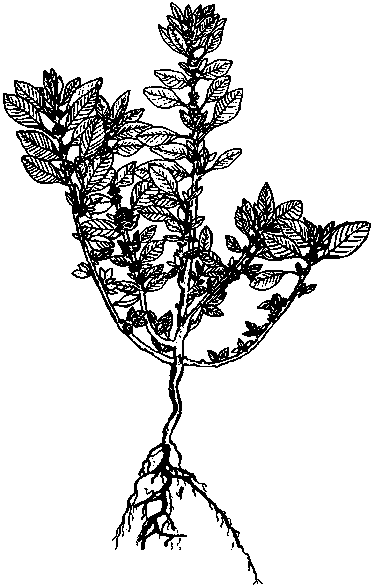
Figure

Figure
Amaranthus hybridus L.*
Amaranthaceae
syn: A. patulus Bertol.
Chonyi: chiswenya, English: amaranth, Chinese spinach, spiny amaranth, spleen amaranth Giriama: kiswenya Kamba: w'oa, terere (Mwingi), telele-nene Kambe: chiswenya Keiyo: chepkerte, chepkerta Kikuyu: terere Kipsigis: cheptokdogan Kisii: emboga Luhya (Bukusu): litoto, liola, edodo, tsimboga Luhya (Kisa): tsimboka tsia navanyolo Luhya (Marachi): lidodo Luhya: tsimboga, edodo, litoto (plant) Luhya (Tachoni): litoto Luo: ododo, omboga, alikra Maa: enyaru-olmuaate, enyaru-nanyokie, nanyi, nyani Marakwet: chepkerte, chepkarta Mbeere: terere Meru: terere, rwoga Sanya: kiswenya Somali: dargo sagar, daargo-warabe Swahili: mchicha Taita: chanya (mbale) Teso: eboga
Description: An erect or prostrate branched herb usually 40-80 cm but occasionally attaining the height of a Mandera, especially in cultivation. Stems green or tinted red, ridged. LEAVES: Simple, alternate, green or tinted red with a lamina to 15 cm or more and a long petiole. FLOWERS: Borne in clusters in green, yellow, red or occasionally purple axillary and terminal spikes. FRUITS: Seeds shiny black or cream.
Ecology: Widespread in tropical and subtropical regions of the world and widely distributed in humid to sub-humid areas in Kenya, mainly as a weed of cultivation, in degraded land and built-up areas, along rivers, roadsides and forest edges, 900-2,600 m. Commonest in the middle altitudes and highlands (1,400-2,400 m). Zones I-V.
Uses: FOOD: Leaves and young shoots used as a vegetable (+++). This is the commonest and the most widely used species in the wetter regions. Much of it is picked from the wild or occasionally it is spared when found growing as a weed. In some parts of Kenya, especially in the west, the species is cultivated in small home gardens. The vegetable is very tasty and its large leaves make it a very popular amaranth.
COMMERCIAL: Leaves, and occasionally seeds, sold in Nairobi and some other markets throughout the country.
Season: Rainy season and soon thereafter.
Management: A. hybridus grows easily from the small hard black seeds. Prepare the ground to loosen the soil and to get rid of weeds. The seeds may be sowed by broadcasting or in lines made at 30 cm intervals. As the seeds are tiny, they can be mixed with sand to ensure a more even distribution. Seeds germinate after a few days. Thin out the plants leaving the appropriate distance between neighbouring plants. These will be your first vegetables! Weed as often as necessary. Seed harvesting: At maturity, the flowering head will start losing its natural green colour (or whichever was the original colour). Mature seeds are black, while immature ones are red or pale. Whole heads may be cut, dried in the sun on a polythene sheet and beaten with light sticks to release the seeds. Rubbing between the palms may release more seeds. The seeds and chaff are then winnowed on a tray.
Status: Very common.
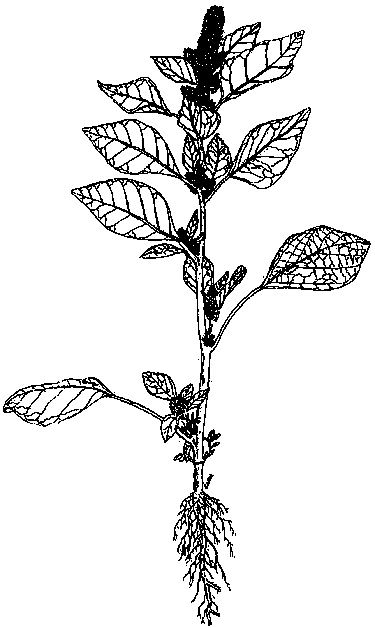
Figure
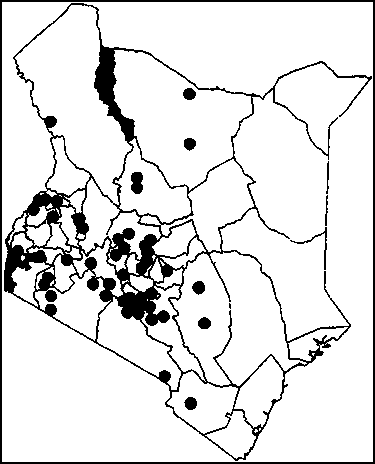
Figure
Remarks: Two related species are found in Kenya:
· A. hypochondriacus L. (syn. A. patulus Bertol.) has a prominent terminal spike, a more "spiny" look and often has a prostrate habit. It is more common in the higher altitudes.· A. cruentus L. (syn. A. paniculatus L.) has a more branched flowering head, with a less "spiny" appearance. It is not as common at high altitudes. The red form of this species is also cultivated as an ornamental. These two species are often treated as subspecies of A. hybridus. Ethnobotanical surveys have confirmed that this is one of the introduced amaranth species in Kenya. A. hybridus is of Central American origin.
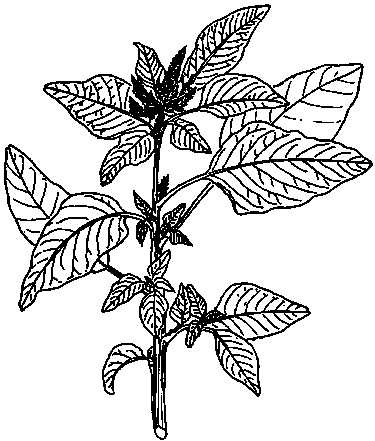
Amaranthus cruentus
Amaranthus sparganiocephalus Thell.
Amaranthaceae
Maa: nanyi, nyani Samburu: nyoni Somali: rasso Turkana: edeyea, loyeing'orok, louyeing'orok
Description: A spreading prostrate or erect herb to about 50 cm, often branching near the ground forming a dense mass. LEAVES: Greenish brown, with long petioles and a lamina of about 5 cm long. FLOWERS: Borne in sessile axillary clusters.
Ecology: North-eastern Africa and the Arabian peninsula. In Kenya it grows in abandoned pastoral settlements in semi-arid areas, especially in Kajiado, Samburu, Turkana and Marsabit. 100-1,600 m. Zones V-VII.
Uses: FOOD: Picked and cooked as a leafy vegetable (+) (Maasai, Samburu, Turkana, Pokot, Somali). This plant sprouts quickly soon after rain. It is picked along with A graecizans by pastoral communities in the semi-arid areas of Kenya.
Management: Propagated by seeds.
Status: Uncommon.
Remarks: The species is closely associated with animal enclosures in Maasai land. It is often found along with A. graecizans growing on top of Maasai traditional houses during the rainy season.
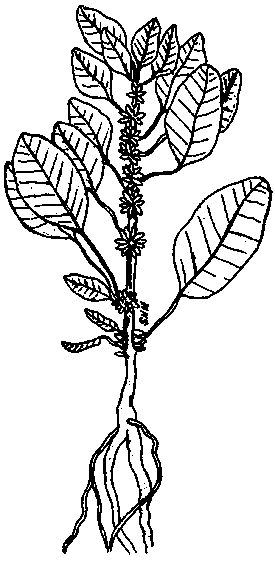
Figure
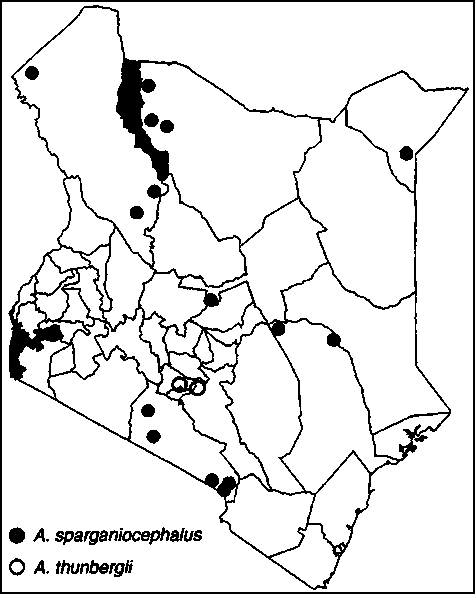
Figure
Amaranthus spinosus L.*
Amaranthaceae
English: careless weed, prickly amaranth, spiny amaranth Giriama: kiswenya-cha-miya Ilchamus: lkamasei Kikuyu: terere-wa-ng'ombe, terere wa kigombe Kipsigis: mborochet Luo: ododo Mbeere: macica Pokot: sikukuu, chepkuratian Samburu: nairepirepi Sanya: kiswenya-korati Turkana: lookwa, epespes the rest of the local names as for A. hybridus.
Description: A stout, erect (occasionally decumbent) herb about 1 m or more with green or red and usually branched stems. LEAVES: Have a long petiole and an ovate lamina to 10 cm or more. FLOWERS: Spiny and green, forming axillary clusters and in terminal inflorescences.
Ecology: Grows in tropical and subtropical parts of the world, occasionally in temperate regions. The species is widely distributed in Kenya in most areas below 1,900 m. A common plant near livestock enclosures (hence the Kikuyu name for it), in abandoned settlements, along streams, at roadsides, in open grassland and as a weed of cultivation. It is the scourge of farmers at maturity. Zones I-VI.
Uses: FOOD: The species is seldom used as a leafy vegetable (+), picked mostly while still young before the spines have hardened and mainly by communities in the Coast, Nyanza and Western Provinces of Kenya as well as the central part of Rift Valley. The species is not much liked and its use is declining. This species is native of tropical America but was probably introduced to Kenya earlier than A. hybridus.
COMMERCIAL: Leaves occasionally sold, especially in Nyanza and western Kenya.
Status: Common.
Remarks: This species may easily be confused with A. hybridus and A. dubius, but the red stems and spiny nature of A. spinosus are distinguishing features.

Figure

Figure
Annona senegalensis Pers. ssp. senegalensis
Annonaceae
syn: A. chrysophylla Bojer
Boni: malamoto, mlamote Chonyi: mtakuma Digo: mbokwe Embu: matimoko (fruits) mutimoko (tree) English: wild custard apple, wild soursop, Giriama: mbokwe, mutakuma, mtomoko-tsaka Kamba: makulo, mutomoko, makulo Kambe: mbokwe Kisii: omokera Luhya (Bukusu): kumufwora Luhya: muvulu Luhya (Tachoni): omfwora (tree), emifwora (fruit) Luo: obolo, nyabolo Mbeere: mukumuti, mumuu Sabaot: marungiyandet Sanya: mtomoko-badha, mthonoko-bada Swahili: mtomoko mwitu, mbokwe, mtope tope, mtokuu, sope tope, mtonkwe, mchekwa Teso: ebwolo
Description: A spreading shrub or small tree to 6 m. BARK: White grey. LEAVES: Broadly ovate, large, pale and softly hairy beneath. FLOWERS: Green-yellow to cream with numerous stamens. FRUIT: To 5 cm in diameter, oval or conical, formed from several carpels fusing together. Green when young, turning yellow to orange on ripening. Seeds smooth, shiny brown.
Ecology: Widespread in tropical Africa, from West Africa to the Sudan and south to South Africa. Grows in the coastal zone, Kitui, Kisii, and Homa Bay Districts of Kenya in bushed grassland, especially humid, riverine woodland, coastal bushed grassland and forests, 0-1,750 m. Soils: deep sandy, alluvial or light red loam. Zones II-IV.
Uses: FOOD: Ripe fruit edible raw (+++). It is sweet with an acid taste and aroma of pineapple. The fruit cover may be eaten but is usually discarded together with the seeds. Bark chewed (Luo).
MEDICINAL: Roots used as cure for stomach-ache, vomiting and diarrhoea (Sabaot).
OTHER: Bark source of a brown dye. Fuelwood (++) (wood is soft).
Season: Fruits in August (Kitui).
Management: Propagated by seeds. Coppices well.
Status: Occasional.
Remarks: The species is related to the cherimoya (A. cherimola), sugar apple or sweetsop (A. squamosa) and to the custard apple (A. reticulata), generally known as mtomoko (Swahili), cultivated for their delicious fruit and commonly sold in Kenyan markets. A related but more shrubby species, A. stenophylla Engl. & Diels, found in southern Africa, has edible fruit too.
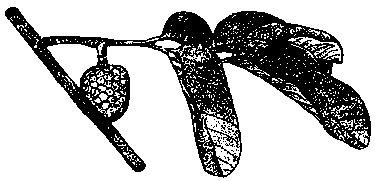
Figure
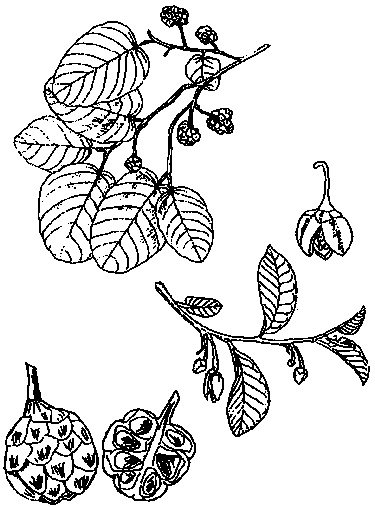
Figure
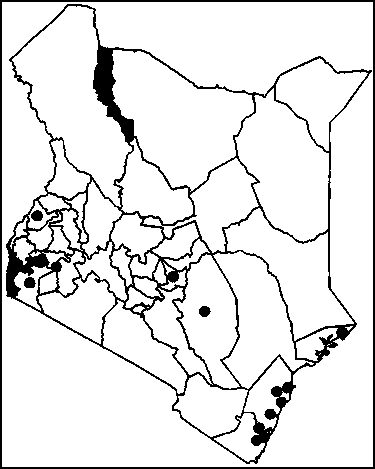
Figure
Antidesma venosum Tul.
Euphorbiaceae
syn: A. bifrons Tul., A. boivinianum Baill.
Boni: ngogaje, mulilago Chonyi: musimbiji Digo: mzangatchango, kihuro, chikuro Giriama: mhirondo, musimbiji Kamba: mukala (Kitui), kitelanthia, kitolanthia (Makueni), ngala, ndelanthia (fruits) Kambe: musimbiji Kikuyu: mukondwe, muhoigwa Luhya (Bukusu): kumukhakasu, bukhakasu (fruit) Luo: oguambula, oguombula Malakote: musigisigi Mbeere: mukanga-arithi, muthithio, muthethuka Meru: mutonye Pokomo: Musasusi Swahili: mbua nono, mbua ya nuno msasuzi, karacha, mziwaziwa, mwinamia ziwa, msuaga
Description: Shrub or, less often, a small tree to 6 m tall, with scattered branches. BARK: Rough. LEAVES: Large, elliptic, densely hairy and light green to reddish brown beneath. FLOWERS: Dioecious, yellow-green in axillary and terminal spikes. Inflorescence often galled, drooping. FRUITS: Numerous in bunches, light green, turning red to reddish purple to almost black on ripening. Ecology: Widespread in Africa from Gabon east to Ethiopia and south to Namibia and South Africa and Madagascar. In Kenya, in Boni forest, Thui Hill (Makueni), Kitui hills, Nzaui hills (Makueni), Mavuria (Embu), Central, Coast and Nyanza Provinces, in bushed grassland, coastal bushland, forest edges, riverine bushland, 0-1,900 m. Rare in Central and Nyanza Provinces. Mainly on rocky hill slopes with light clay soil or sandy loam. Rainfall: about 850-1,000 mm. Zones III-IV.
Uses: FOOD: Fruits are edible (++). They have a sweet, slightly sour taste. Ripe fruits are small but with a lot of reddish purple juice. Seeds are discarded.
MEDICINAL: Leaves, twigs and roots used to treat abdominal pains.
OTHER: Fruits eaten by some species of birds. Fruits used by children as dye or ink (Makueni). The writing fades slightly from blue-purple to light reddish purple after some time. Ornamental, fuelwood.
Season: Fruits in March (Makueni). A few plants may be in fruit in June or at other times.
Management: Propagated by seeds.
Status: Locally common, especially in the coastal region, Kitui hills and Thui Hill (Makueni). Generally uncommon.
Remarks: Roots said to be toxic.
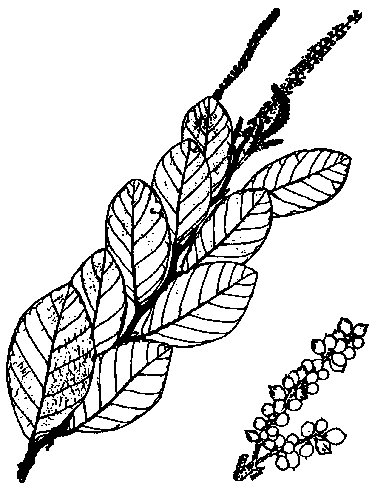
Figure
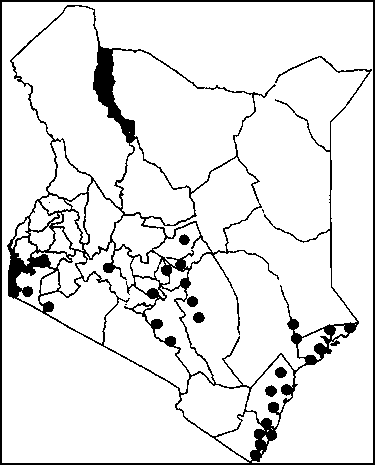
Figure
Asystasia gangetica (L.) T. Anders.
Acanthaceae
Chonyi: tsalakushe Digo: futswe, tala-kushe, futsure Giriama: thalakushe, talakushe, burutula, vongonya Kambe: talakusha Kipsigis: turkwot Luo: atipa Maa: gosida, enkosida Sanya: thalakushe Swahili: fuchwe, mtikini
Description: A scrambling, prostrate or erect weak-stemmed herb 45-100 cm high. LEAVES: Dark green up to 8 cm long by 5 cm, broadly ovate, base rounded or heart shaped, apex narrow. FLOWERS: Pink, corolla lip purple, borne on one side of a long slender inflorescence. FRUIT: A light brown dehiscent capsule.
Ecology: Widely distributed in most of tropical Africa. Mainly in the coastal region and western Kenya. Not recorded in northern Kenya. Found in forests, at forest edges and disturbed areas, 0-1,900 m. Zones I-III.
Uses: FOOD: Leaves used as a vegetable (++) (Digo, Giriama, Luo, Luhya). Cooking time is normally brief (Mijikenda). Also used as a vegetable in southern Africa.
OTHER: Browsed by stock.
Management: Propagated by seeds.
Status: Locally common.
Remarks: An important vegetable among the Mijikenda, mainly used for mixing with other leafy vegetables. Notable mixtures are with any of the following vegetables: Corchorus olitorius (vombo), pumpkin leaves (mhango), cassava (Manihot esculenta) leaves (mpea), Launaea cornuta (mtsunga), sweet potato (mabwe), cocoyam (maburu), cowpea and okra (mabenda). The cassava leaves have to be pounded in a mortar before use.
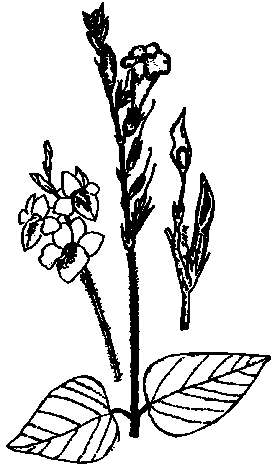
Figure
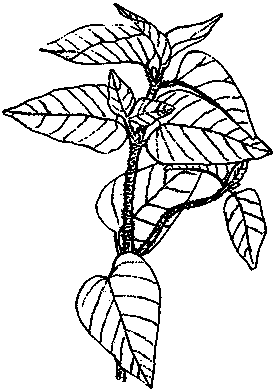
Figure
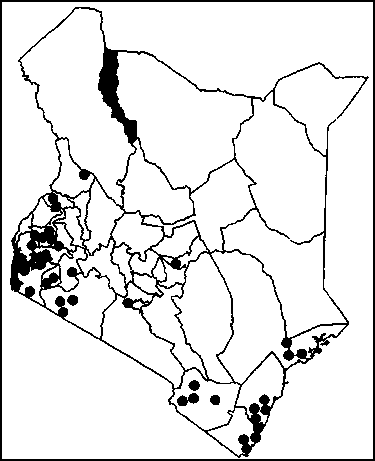
Figure
Asystasia mysorensis (Roth) T. Anders.
Acanthaceae
syn: Asystasia schimperi T. Anders.
Kikuyu: muhika-naihu Luhya: kisuvu (Kakamega) Luhya: esidiba, nyag'ori Luhya (Samia): esidiba Luhya (Bukusu): sitipa (plant) Luhya (Tachoni): esitipa Luo: atipa Mbeere: karimi-ka-nthia Pokot: orongwo Teso: esidiba
Description: A small erect herb usually 30-75 cm high. LEAVES: Ovate or elliptic, to 10 cm long. FLOWERS: White, lip often spotted green with brown streaks, borne on a short, densely bracted terminal inflorescence. FRUIT: A dehiscent yellowish brown capsule narrowing abruptly at the base.
Ecology: Widely distributed in Kenya and also in other parts of eastern Africa, i.e. Uganda, Tanzania, Ethiopia and Somalia. Very common in Nyanza and Western Provinces and in Nairobi, 500-1,900 m; commonest between 1,200 and 1,700 m. Very common in disturbed areas, on roadsides, towns, grassland and found as a weed in gardens, especially on sandy and light clay soils. Zones II-V.
Uses: FOOD: Cooked and eaten as a vegetable (+++) (Luhya, Luo, Teso, Kikuyu, Mbeere, Giriama, Digo, Pokot). Normally cooked with leaves of cowpeas or spider herb Cleome gynandra (Luo). Said to be good for digestion (Siaya).
COMMERCIAL: Occasionally sold in some markets in Nyanza and Western Provinces.
Management: Propagated by seeds.
Season: Vegetable available during the rainy season and soon after.
Status: Locally very common.
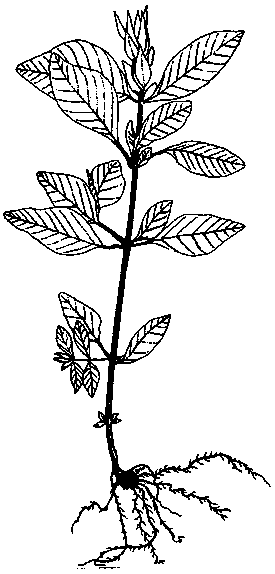
Figure
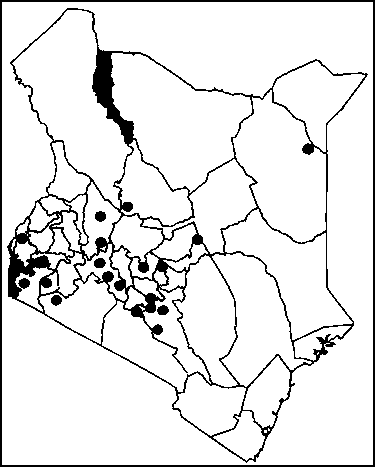
Figure
Azanza garckeana (F. Hoffm.) Exell & Hillcoat
Malvaceae
Embu: muto, matoo English: tree hibiscus Kamba: mutoo Maa: olmotoo Mbeere: mutoo Meru: matoo (plural) Somali: baamiya Swahili: nduwe, muwatata
Description: Shrub or tree to 8 m high. Crown light, spreading or occasionally narrow and high. BARK: Fissured, grey. LEAVES: Large, broad, rough, divided into 3-5 shallow lobes, petioles long. FLOWERS: Large, yellow, with a red or purple centre. FRUIT: To 5 cm across, light green, velvety hairy, with a clasping calyx, splitting into five valves on ripening. Seeds dark grey (almost black) and covered with woolly hairs.
Ecology: The only Azanza species found in Africa, from eastern to South Africa. Very common in Machakos and Kitui Districts in open bushland and woodland. Common in Combretum-Terminalia bushland, 500-1,500 m. Soils: sandy or red clay. Rainfall: 600-800 mm. Zones III-V.
Uses: FOOD: Ripe fruits edible and very sweet (+++). Valves are chewed, the gelatinous sweet extract is swallowed and the fibrous remains discarded after chewing. Occasionally stored for up to a month without losing sweetness. Hard dry ones eaten too.
MEDICINAL: Used for coughs (Makueni). Stems and leaves pounded and extract taken against liver problems (Kitui).
OTHER: Fuelwood (+++), shade (++). Fruit juice used as a lubricant for toy wheels by boys (Makueni). Wood strong, finishing smooth and used in carvings, mortars and pestles, wooden spoons, yokes, handles for axes and in the construction of traditional tables for drying utensils (Kamba, Mbeere). The centre poles in huts are usually of this plant (Kitui). The heartwood from some types is said to be very hard and resistant to attack by termites and other insects, hence used for combs and carvings (Kitui).
Season: Flowers in November-December (Kitui). Fruits in August-September and are spoilt by November rains (Kitui). Note: Fruits ripening said to coincide with months of food shortage in Kitui Central, and so an important famine food.
Management: Propagated by seeds, direct sowing. Planted in crop land as well as near homes as an ornamental. Prune lower branches to give it a good shape.
Status: May be locally common.
Remarks: An important fruit plant among the Kamba, especially in times of famine, hence the saying "Mutumia aleele muthoni kulea umutwiiya itoo", meaning a father recalled his daughter from in-laws when they refused to give him this fruit during his visit. Fruits attract the cotton-boll stainer, hence not a suitable tree near cotton fields.
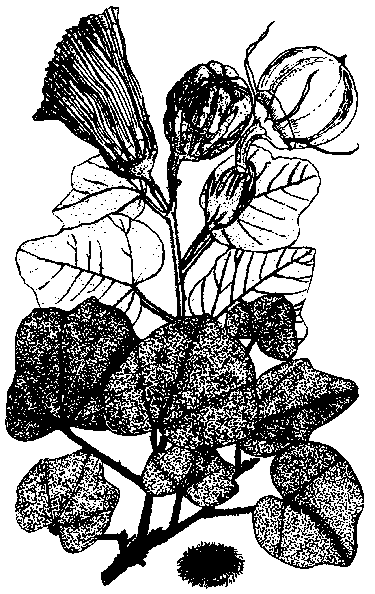
Figure
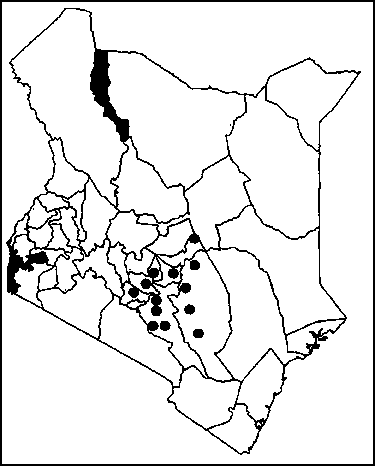
Figure
Balanites aegyptiaca (L.) Del.
Balanitaceae
Borana: baddan Digo: mwambangoma English: desert date Gabra: baddana Ilchamus: lowei, Iowa Kamba: mulului, kilului Kambe: mkonga Keiyo: ng'osonaik, ng'oswet, ng'osyet (fruit) Kipsigis: ng'oswet Luo: otho, othoo Maa: olokwai, ilokwa (fruits), olng'oswa, osaragi Malakote: mubadana Marakwet: tuyun, tuyunwo (plural) Mbeere: mububua Orma: baddan Pokot: tuyunwo Sabaot: chuuandet Samburu: lowvai, lowwai Somali: kullan (Tana River) Swahili: mjunju, mchunju Taita: kiwowa Teso: echomai Tharaka: mubuubua Tugen: ngonswo, ngoswa Turkana: eroronyit
Description: A much-branched spiny shrub or tree up to 10 m high. Crown rounded, dense (but still can be seen through, cf. B. glabra which has a more dense crown and long stout branchlets). BARK: Trunk grey, deeply fissured longitudinally. Branchlets green, with (or without) long straight green spines (up to 10 cm). LEAVES: With a conspicuous petiole to 2 cm long, two leaflets, usually small, greyish green, normally shed in severe drought. FLOWERS: Small, greenish yellow, in leaf axils. FRUITS: Ellipsoid, up to 4 cm long, green. Ripe fruit brown or pale brown with a brittle coat enclosing a brown or brown green sticky pulp. Seed a hard stone.
Ecology: An important tree found from West and North Africa south to Zimbabwe and Angola from arid and semi-arid regions to sub-humid savannah. Found in many parts of Kenya, e.g. in Lambwe valley and Kaputei plains, but rare in the coastal zone. Pound at 250-2,000 m in bushland and wooded grassland. A common tree in open grassland with black-cotton soil. Soils: Mainly red and black-cotton clay. Zones IV-VI.
Uses: FOOD: Ripe fruit is edible (++). The brown fruit shell, which is readily detached from the pulp, is removed. The brown pulp is sucked and the seed discarded. It has a sweet taste, rather bitter nearer the seed. Young leaves and tender shoots are used as a vegetable (Pokot, Turkana, Tugen, Marakwet, Keiyo, Ilchamus). The vegetable is boiled (water may be changed), pounded then fried or mixed with fat (Pokot, Marakwet). Seeds (with shell) or cotyledons (shell removed) are boiled for 2-3 hours and the bean-like cotyledons eaten (Pokot, Tugen, Marakwet). Gum is edible (Maasai). Elsewhere the seeds are a source of oil.
MEDICINAL: Decoction of roots is used for the treatment of malaria (Pokot). Roots boiled in soup used for oedema (sir) and stomach pains (Pokot). Roots are used as an emetic (Pokot). Bark infusion used to treat heartburn (Machakos).
OTHER: Fuelwood, charcoal (+++). Wood hard, durable, worked easily and made into yokes, wooden spoons, pestles, mortars, handles, stools, combs. Resin from stems used to stick feathers on to arrow shafts (Pokot, Turkana) and spear heads on to shafts (Pokot, Maasai, Turkana, Kipsigis), and repair cracks in tool handles, arrows, etc. (Turkana, Pokot). Branches used for fencing. Bark used as fish poison. Animal fodder (++). Elsewhere fruits are used as poison to kill some stages of the bilharzia fluke in water. Even a few are effective. Activity has been reported in other Balanites species, and B. maughamii of southern Africa, with forked spines, is reportedly even more potent.
CULTURAL/BELIEFS: Fire made using this tree used to warm beer gourds for elders (Mbeere).
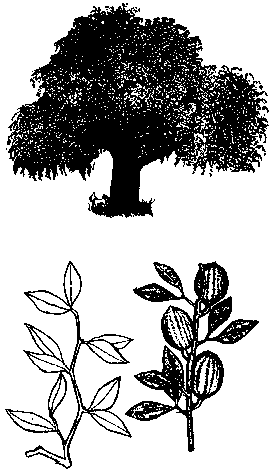
Figure
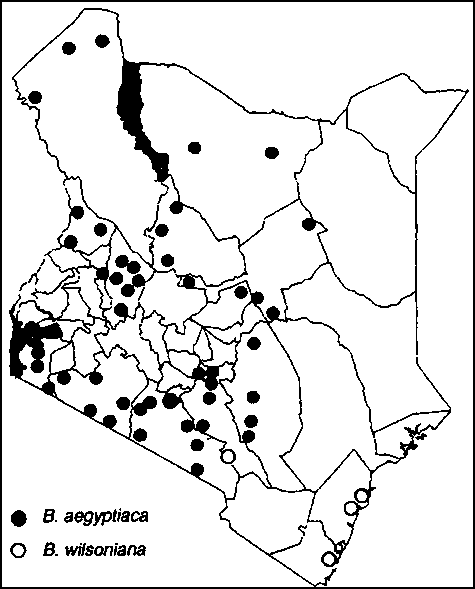
Figure
Season: Fresh new leaves in July-August (West Pokot). Fruits in March-April (Machakos, Kitui, Kajiado).
Management: Propagated by planting seed directly or by raising seedlings in a nursery.
Status: Common.
Remarks: The name olng'oswa (Maa) is mainly used for B. glabra Mildbr. & Schlecht., an evergreen, much-branched dense bush, shrub or small tree 2-4 m high. Branches green, drooping. Spines thick, long, to 10 cm or more. LEAVES: Usually without a conspicuous petiole and usually with two almost round fleshy looking leaflets. FLOWERS: Greenish yellow. FRUITS: Shortly ellipsoid, with light green longitudinal lines. The plant is common in Kajiado and Kaputei plains at 1,400-1,800 m on black soil. The commonest Balanites around Athi River. Ripe fruit pulp is sweet, juicy and eaten (Maasai) but is said to be mildly poisonous, causing a feverish feeling, stomach-ache and even diarrhoea (Maasai). B. wilsoniana Dawe & Sprague (Swahili: mtonga, Giriama: mkonga, Kamba: kivuw'a) is a large, extremely thorny tree (when young) up to 10 m tall. It is only found in the coastal area and in Kibwezi forest. Its leaves and fruits are larger than those of the other Kenyan Balanites species. Fruits are edible. The plant is often infested with caterpillars (maungu) which are collected for food by the Giriama.
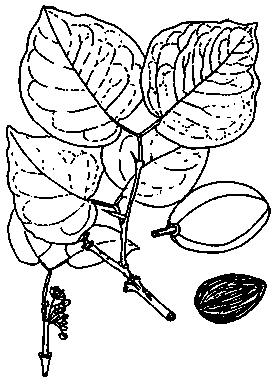
Balanites wilsoniana
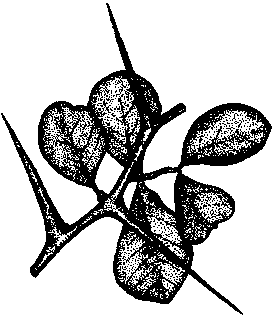
Balanites glabra
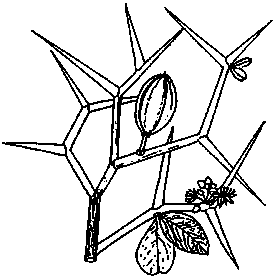
Balanites glabra
Balanites pedicellaris Mildbr. & Schlecht.
Balanitaceae
Marakwet: lomion, lom (plural) Pokot: lomion Rendille: ilbule Samburu: sarai Turkana: elamach
Description: A spiny, often multi-stemmed much-branched shrub or, rarely, a small tree usually 2-4 m high, with a rather narrow crown. Larger spines usually with many smaller ones. BARK: Usually smooth, grey. LEAVES: Leaflets short-stalked, with a rounded apex. FLOWERS: Green. FRUITS: More or less round, 2-3 cm in diameter, green turning yellow when ripe.
Ecology: Grows in eastern Africa south to north-eastern South Africa. Widespread in Kenya, e.g. along the Turkwel River and on Observation hill (Amboseli). Usually along dry watercourses, flood plains, dry bushland, 300-1,300 m. Rainfall: 200 (riverine)-500 mm. Zones V-VII.
Uses: FOOD: Cooked cotyledons eaten (Pokot, Turkana, Samburu, Tugen, Marakwet) (+++). Fresh fruits are bitter and toxic but reportedly eaten fresh in southern Africa. Preparation: Fruits are gathered and pounded (usually after brief boiling) to break open the seed. Two green bean-shaped cotyledons are released. These are washed and then boiled for 8-9 hours. Over-boiling turns the cotyledons into a porridge-like fluid. Water is changed 8-10 times. Salt, ash solution (Pokot), tamarind (Tamarindus indica) (Turkana: Ng'ikebootok), bark of Sclerocarya birrea or Lannea schweinfurthii (Pokot) may be added at the end of the process to remove any remaining bitterness and to improve the taste. The food is eaten like beans, usually alone, occasionally with butter or milk. Uncooked cotyledons may be dried and stored. They can keep for several years.
FOOD/MEDICINAL: Boiled root infusion added to children's milk (Pokot).
MEDICINAL: Root infusion used for fever and diarrhoea (Pokot).
COMMERCIAL: Boiled cotyledons sold in Lodwar town and in some villages, e.g. in Kaputir, southern Turkana.
Season: Fruits in February (southern Turkana, Baringo) or September-October (Turkana, Baringo).
Management: Propagation by direct sowing at the desired site is recommended.
Status: Locally common.
Remarks: Symptoms of poisoning by fresh fruits are thirst, dizziness and vomiting.
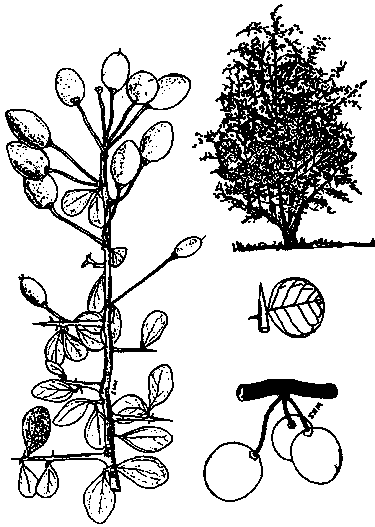
Figure

Figure
Balanites rotundifolia (Van Tiegh.) Blatter
Balanitaceae
syn: B. orbicularis Sprague, B. gillettii Cuf.
Borana: baddan Daasanach: kuute, kuusam (plural) Gabra: baddana Marakwet: lomion, lorn (plural) Malakote: mubadana Orma: baddan Pokot: lomion, loma (fruit) Rendille: kulum Samburu: sarai Somali: kullan (Tana River) Tugen: tirikikwa Turkana: ebei
Description: A usually spiny shrub or small tree to 5 m. Crown usually open. BARK: Grey, corky. SPINES: Long, bearing leaves and flowers. LEAVES: Almost stalkless, divided into two almost round leaflets. FLOWERS: Pale green. FRUIT: Up to 4 cm long, ellipsoid, green with longitudinal lines, turning orange when ripe.
Ecology: Found in Kenya, e.g. along the Turkwel River, in the Kerio delta, Mutha hill and in other parts of the country in dry Acacia-Commiphora bushland, often in rocky areas. Often seen as the only tree on sand dunes in northern Kenya, 50-1,350 m. Rainfall: 150-400 mm. Zones VI-VII.
Uses: FOOD: The pulp of the ripe orange fruit is eaten fresh (+) (Gabra, Boran, Somali, Turkana, Pokot, Daasanach). Cotyledons are eaten when boiled (+++). The seed shell is removed by pounding or boiling then pounding. The cotyledons are boiled for 3-4 hours (Turkana, Marakwet, Tugen, Pokot, Daasanach) and eaten, normally with milk. The fruit pulp is made into a local brew (Turkana).
FOOD/MEDICINAL: Boiled root infusion added to children's milk as a tonic (Pokot).
MEDICINAL: Boiled root infusion used as an emetic and purgative during fever and for diarrhoea (Pokot).
OTHER: Trunk used for carving headrests (Turkana: ekichelong) and wooden spoons (Turkana: ekalaboch) (Turkana, Daasanach). Branches used for making livestock enclosures (Turkana, Daasanach). Wood used for smoking milk and blood containers (Daasanach) for flavour and to disinfect the container. Camel and goat fodder (++). Fuel wood (++).
Management: Propagation by direct sowing at the desired site is recommended.
Season: Fruits in February and August-October (southern Turkana).
Status: May be locally common.
Remarks: A very drought-resistant tree species, even more so than the desert date (Balanites aegyptiaca). This species, together with Acacia tortilis and A. reficiens, may be a good substitute for Prosopis chilensis and P. juliflora for reclaiming desert areas.
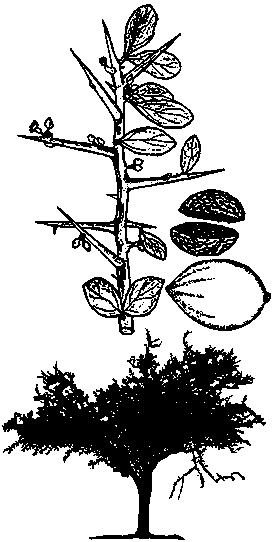
Figure
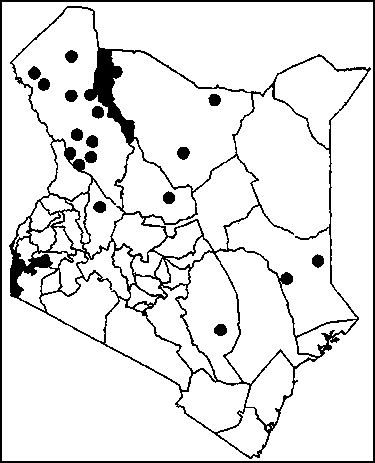
Figure
Basella alba L.
Basellaceae
English: vine spinach, indian spinach, ceylon spinach, malabar spinach Kamba: kieema Keiyo: nderemiat Kikuyu: murerema Kipsigis: nderemiat, nderemek (plural) Kisii: enderema Luhya: tsinderema Luhya (Bukusu): endelema Luhya (Kabras): eshivetso Luhya (Samia): enderema (singular) Luhya (Tachoni): yindelema Luhya (Tiriki): enderema Luo: nderma, demra (Homa Bay) Maa: osoiyai, osoyai Marakwet: nderemia, okiek: nderemiat Pokot: rachan Samburu: ng'aisichoi, lemudong'o, lemoldongu, ltaai, ltani Taita: ndelema Tugen: lubchan
Description: A soft, twining perennial plant. Stems fleshy, green, often tinged brownish purple. LEAVES: Heart-shaped with a pointed tip, soft, shiny, dark green, blade up to 10 cm long or more. FLOWERS: Small, fleshy, cream or white, borne on an erect inflorescence.
Ecology: Widely distributed in the tropics, e.g. in China, Japan, the Philippines, Borneo, Fiji and Hawaii, West Indies, Brazil and Guyana. From West Africa to Ethiopia and south to Mozambique, Malawi, Zambia and Angola. Rare in Central Africa. In Kenya, e.g. on the Elgon, Aberdare, Mt Kulal and Mt Kenya highlands and in Trans Mara and Donyo Sabuk (River Athi). Found in forest, forest edges, humid bushland, wet rock cliffs and common in disturbed areas, 0-2,450 m. Often planted in hedges in towns and homes. Zones II-III.
Uses: FOOD: Leaves used as a vegetable (Taita, Kikuyu, Kipsigis, Luhya, Luo, Pokot, Tugen, Kisii, Kipsigis, Maasai (Narok)) (+++). Leaves soft and usually cooked with other coarse vegetables. Leaves given to cattle to increase milk yield (Homa Bay).
MEDICINAL: Used for constipation in animals and humans.
COMMERCIAL: Leaves sold in West Pokot.
Management: Best propagated from stem cuttings.
Status: Rare in truly wild habitats.
Remarks: Some cultivated forms with relatively thicker stems and larger leaves are probably from South Asia.
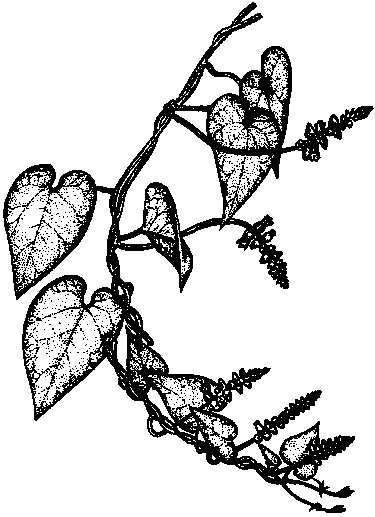
Figure
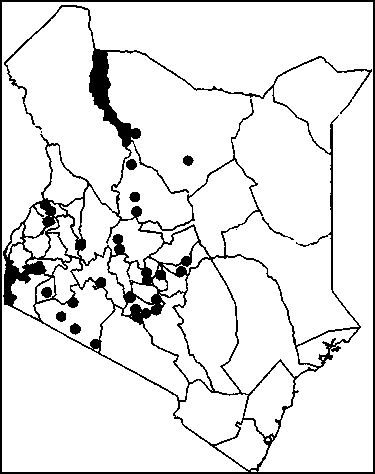
Figure
Berchemia discolor (Klotzsch) Hemsley
Rhamnaceae
Borana: jajab, jejab Chonyi: mkulu English: bird plum, brown ivory Giriama: mkulu Kamba: kisanawa (Kitui), kisaaya, nzaaya (fruit), nzanawa (fruit), Kambe: mkulu Malakote: mujajabho, jajabho (fruit) Marakwet: muchukwa (singular), muchuk (plural), muchukwo Mbeere: muthwana Meru: muthwaye Orma: jajab Pokot: muchukwo, muchuk (plural) Samburu: santaiti Somali: deen (Tana River), dheen-den ro'o, kor'guba Swahili: mkulu Taita: mzwana Tharaka: muthwana Tugen: muchukwa Turkana: emeyen
Description: A more or less evergreen tree up to 10m high with a narrow or rounded crown, less often a spreading bush. BARK: Greyish brown, reticulately fissured. LEAVES: Ovate to oblong, yellowish green below. FLOWERS: Small, yellow-green, with 5 floral parts. FRUIT: Oval, tapering towards the tip, 1-2 cm long, green, turning yellow to reddish brown when ripe.
Ecology: Widespread from the Sudan to South Africa in semi-arid bushland, wooded grassland as well as riverine vegetation, 0-1,600 m. Tends to be riparian in the more arid areas. Common on riverine alluvial soils, in rocky areas and in light soils. Zones V-VII.
Uses: FOOD: Ripe (and occasionally unripe) fruit eaten (++); may be eaten whole together with outer covers and seed, which may also be discarded. Gum edible.
MEDICINAL: Bark infusion used for "enlarged spleen" and diarrhoea (Pokot). Ground up fruits used for sore throat and tonsillitis (Pokot).
OTHER: This species has hard yellowish brown durable wood used as poles, in construction, for furniture (+++) and frames for doors and windows. Stems are good fuelwood (+++) and charcoal is excellent. Shade (++). Poles used for constructing granaries. Dried fruit used by Tharaka girls as beads. Samburu warriors use the fruits as clasps for fastening their hair. Tree used for suspending beehives (Kitui, Tharaka, Mbeere).
CULTURAL/BELIEFS: Root decoction given to barren women (Tugen).
COMMERCIAL: Fruits occasionally sold in Mutomo (Kitui), and Tseikuru (Mwingi).
Season: Fruits in February-March (Meru, Tharaka, Mwingi, Kitui).
Management: Directly sown seed germinates easily.
Status: Occasional.
Remarks: Berchemia zeyheri with edible fruits is found in Zimbabwe, South Africa and Mozambique.
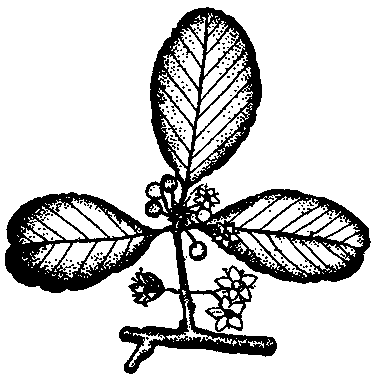
Figure
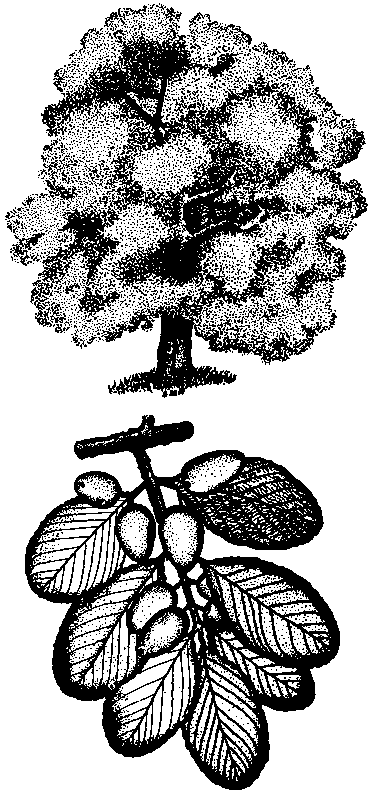
Figure
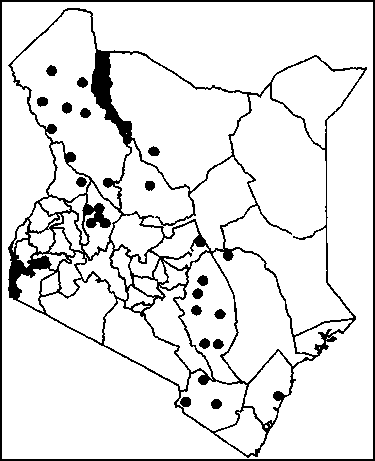
Figure
Borassus aethiopum Mart.
Palmae (Arecaceae)
Boni: ong Chonyi: mnazi, nazi (fruit) Digo: dzova, mvumo, ngolokolo (fruit), Duruma: mugumo English: borassus palm, African fan palm, palmyra palm, deleb palm Giriama: mugumo Kambe: mnazi, nazi (fruit) Luhya (Tachoni): mnazi Malakote: murifate Meru: mungthi Orma: marafa Somali: mardafa (Tana River) Swahili: mvumo, mtapa, mchapa Teso: edukut, edukudukut
Description: A strikingly tall unbranched palm to 25 m high. Trunk: Smooth to rough, grey, widening high up above the middle. Leaf scars prominent immediately below crown, less prominent below. LEAVES: Fan-shaped, very large, to 2.5 m long, upper half divided into many folded leaf segments. FLOWERS: Green, dioecious. FRUIT: Large, up to 15 cm long by 12 cm wide, smooth, slightly elongate, orange to orange-brown, containing up to 3 seeds surrounded by a fibrous pulp.
Ecology: Widespread throughout the less dry areas of tropical Africa. Open grassland with a high water-table, along watercourses, flood plains, coastal coral sands, often in dense stands. Found at the coast in Kenya, e.g. at Madunguni (Kilifi), Gede ruins and in Shimba forest, western Kenya and around Mandera, 0-1,400 m. Zones III-IV.
Uses: FOOD: Fruit pulp and seed edible (Digo, Giriama) (++). The immature seeds are eaten. Germinating seedlings are reportedly eaten (Uganda). Excellent palm wine, dzova (Digo) is made from sap tapped from inflorescence penducles (stalks). It is reputedly the best palm wine in Africa with a high sugar content (Uganda).
OTHER: Leaves are used in the mat and basket industry. The trunk is tough and termite-resistant. It is used as poles, in construction and as beehives.
Management: Propagated by seed which are best sown directly on site. Grows fast when young but very slowly later. Fallen seeds root easily in humid soil. Root develops well before shoot is seen.
Status: Generally rare but may be locally common. Over-exploitation of the palm for its wood and sap has led to its decline in most areas where it grows.
Remarks: Another palm used for wine production is Elaeis guineensis Jacq. (English: oil palm, Guinea oil palm, Swahili: mchikichi, mjenga, Digo: mchikichi, Pokomo: mchanga, Sanya: metsengwa, Taveta: mposi). It is a tree palm to 15 m high. Young stems covered with persistent leaf bases which are shed with age leaving ridges of scars on the trunk. LEAVES: Dark green, long, borne in a terminal crown. Leaflets with spiny margins. FLOWERS: Monoecious, borne in the leaf axils. Riverine. Uses: An important oil crop (seeds) in West Africa but not in Kenya. Oil is used in the manufacture of margarine, soap and as a lubricant. Palm wine is tapped from the palm in Uganda and West Africa but not in Kenya. Unlike Borassus, the wood is not durable. A rare species in Kenya.
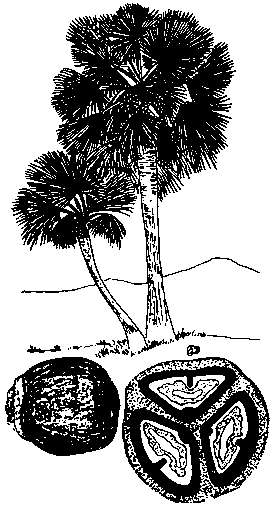
Figure
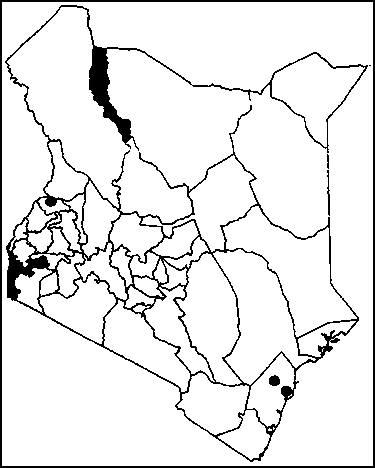
Figure
Another important palm is Cocos nucifera (English: coconut palm, Giriama: mnazi, Kamba: munathi, Sanya: madhi, Swahili: mnazi, nazi (fruit)). This palm is grown all over the tropics in hot humid coastal areas and has been cultivated for a long time. In Kenya it is grown along the coastal strip and in a few inland areas as an ornamental plant (Lake Turkana, Lake Victoria, Kitui). An important source of wine, food, thatching material, building poles, fuelwood, shade, oil, leaves for handicrafts and a host of other traditional uses. The oily extract from the coconut flesh, tui (Swahili), is used for flavouring food. It is added to the dish only in the last 5-10 minutes of cooking to avoid boiling and curdling.
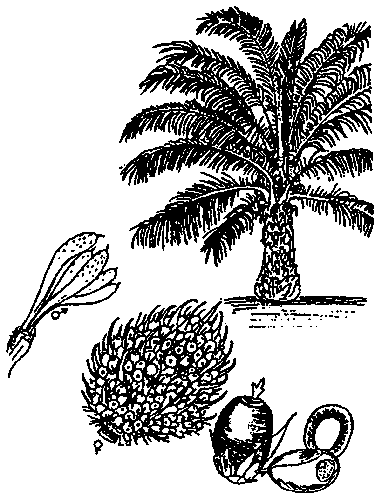
Elaeis guineensis
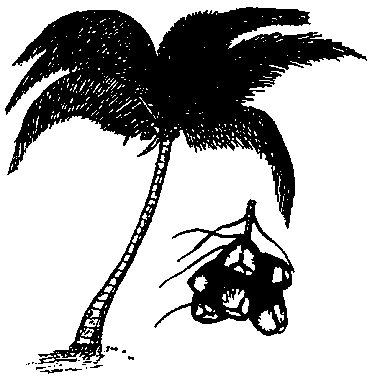
Cocos nucifera
Boscia coriacea Pax
Capparidaceae (Capparaceae)
Borana: qalqalq, galgacha-hareh Daasanach: dhuorich Gabra: k'alk'acca Ilchamus: sericho, serichoi (plural) Maa: enkapalases, enkapoleses Malakote: kalaqacha Marakwet: sorikwo, sorik (plant) Mbeere: mukiare, muthiu, kikiare, mutangira, gitangira Orma: kalkach Pokot: sorichon, sorich (plural) Rendille: lyoror, yoror Samburu: serichoi Somali: ghalangal, degaiyare, degeiyar Swahili: mnafisi Tharaka: muthiuthiu Tugen: sirkwa Turkana: eedung, eerdung
Description: An evergreen, much-branched, usually multi-stemmed shrub or small tree to 6 m high. BARK: Smooth, dark grey to grey-white. LEAVES: Light green, leathery, elliptic, apex sharply pointed. FLOWERS: Creamy green. FRUITS: Light green with a fleshy coat. Seeds enclosed in a tough white skin.
Ecology: An evergreen shrub common in all drier areas of northern Uganda, the Sudan, southern Ethiopia, Somalia and northern Tanzania in dry bushland or Acacia-Commiphora bushland, often in rocky areas or in loose red clay or sandy soils, 100-1,500 m. Common, e.g. in Turkana and Tsavo. Rainfall: 300-500 mm. Zone VI.
Uses: FOOD: Boiled cotyledons eaten (Pokot, Tugen, Turkana) (+++). Preparation: Fruits are pounded with a stone to remove the green outer fleshy coat. The seeds are then boiled briefly in water to loosen the tough white outer skin and then pressed between stones to release the green cotyledons. The skins are floated off in water and the green cotyledons boiled. Water is changed 8-12 times. Boiled seeds may be fried. Ripe fruit may be sucked for its sweet taste (Taita, Kamba, Tharaka, Mbeere, Daasanach).
MEDICINAL: Root decoction used for the treatment of headache (Pokot) and bark for yellow fever (Samburu); root infusion taken for gonorrhoea (Daasanach).
OTHER: Fodder for goats, donkeys, camels and cattle, especially important during the dry season. Fruits eaten by birds. Branches and stems used in construction (Pokot, Turkana). Shade tree, fuelwood. Stems made into blunt arrow heads used for shooting birds (Daasanach).
COMMERCIAL: Cooked food sold in Turkana markets. Often exchanged with other foodstuffs.
Season: Fruits in February (southern Turkana) or March, October (Mtito Andei).
Management: Propagated by direct sowing at site.
Status: Common. Usually protected (Turkana).
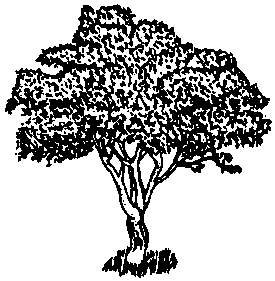
Figure
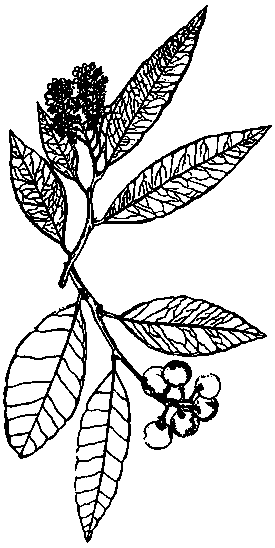
Figure
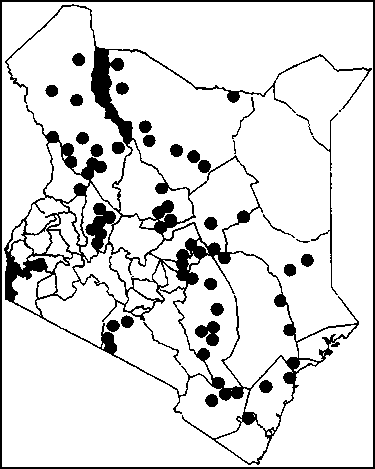
Figure
Boswellia neglecta S. Moore
Burseraceae
syn: B. hildebrandtii Engl.
Borana: dakkara, dakkar, dakkar gurate, hancha-dakkara (resin), hancha-lubadin (incense) Daasanach: dong'od-nee-dhieroka, hancha-dakkara (gum) English: frankincense Gabra: dakkara Kamba: kinondo Orma: dakar Pokot: sungululwo Rendille: halale, hanja (resin) Samburu: lecholoo, lkinoo Somali: magafur, murfur-madbe, mirafur (Tana River) Swahili: ubani Turkana: ekinyate
Description: Shrub or, less often, a tree to 5 m high. LEAVES: Borne in tufts on small side shoots. FLOWERS: Greenish white. FRUIT: Red, triangular, 3-seeded.
Ecology: Found in northern and eastern Uganda, northern Tanzania, eastern Ethiopia, Somalia and in most drier parts of Kenya, e.g. in southern Turkana, Mutha (Kitui), northern Baringo in Acacia-Commiphora bushland chiefly in rocky and red loam or clay soils, 200-1,350 m. Rainfall: 250-600 mm. Zones V-VI.
Uses: FOOD: Resin from bark used as chewing gum (Turkana, Pokot, Rendille). Bark used for making tea (Pokot, Turkana).
FOOD/MEDICINAL: Bark decoction added to milk and given to children as tonic (Somali, Pokot).
MEDICINAL: Dried ground bark put into wounds (Somali); root decoction drunk for enlarged spleen (Pokot).
OTHER: Plant used in tanning (Rendille). Resin burned for its aroma (as frankincense) (Somali), during peace prayers (hancha-lubadin, Boran) and to drive away mosquitoes (Somali). Goat and camel fodder (++). Toothbrush, stools (Daasanach).
COMMERCIAL: Resin sold as frankincense. The species is the commonest source of frankincense in Kenya.
Status: May be locally common.
Remarks: True frankincense is resin of a more superior quality yielded by Boswellia carterii Birdw. and B. frereana Birdw. both occurring in northern Somalia. Three other species of Boswellia occur in Kenya: B. papyrifera (Del.) Hochst. found in Turkana District at the Sudan/Uganda border, B. rivae Engl. found in Mandera and B. microphylla Chiov. found in Moyale and Mandera Districts (Somali: mugle, Borana: dakkar). Resin from the last is exploited commercially.
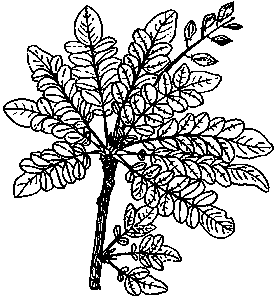
Boswellia frereana
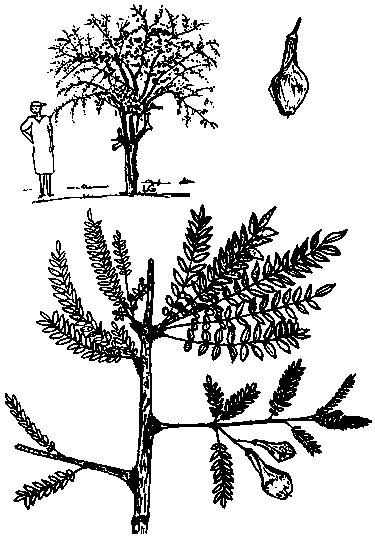
Figure
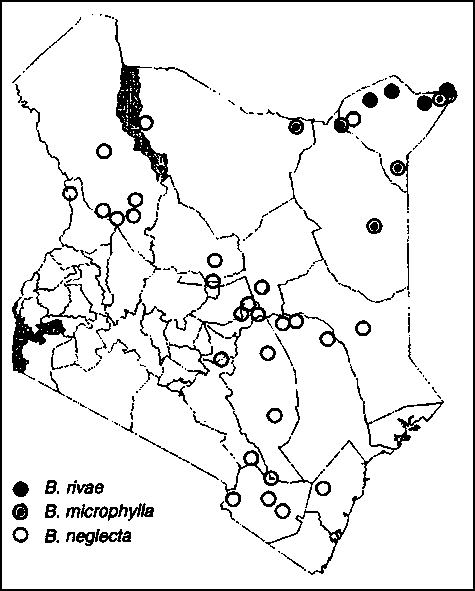
Figure
Brassica carinata A. Br.
Cruciferae (Brassicaceae)
syn: B. integrifolia (Wes.) Rupr.
English: Ethiopian cabbage, Ethiopian mustard Kisii: chinkongonyira Luhya (Maragoli): likabichi lya manyonyi Luo: kandhira Mijikenda: kanzira-sukuma (Mariakani)
Description: An erect annual herb, often branched, to 1.2 m or more. LEAVES: Pinnately lobed, smaller compared to those of other brassicas. FLOWERS: Yellow, borne in a long terminal inflorescence. FRUIT: A long capsule. Seeds small.
Ecology: Grown in many parts of the world with several cultivars. In Kenya mainly grown in Nyanza and Western Provinces, especially by the Luo and Luhya communities. Introduced at the coast. Occasionally grown in large cities such as Nairobi by the same communities. Also found as an escape in the same areas, 0-1,600 m (in Kenya). A weed of cultivation also grown as a vegetable. Prefers fertile places such as abandoned cattle enclosures. Rainfall: 600-1,600 mm. Zones II - III.
Uses: FOOD: Leaves are used as a vegetable (Kisii, Luo, Luhya, Mijikenda, Suba) (+++). A popular vegetable among the Luo. Leaves mixed with those of akeyo (Cleome gynandra) are boiled, made into lumps, dried in the sun and stored in a clay pot (agulu) as a dry-season food (Luo). This may be eaten with apoth (Asystasia mysorensis) as mboga. Leaves are also fried with meat and used as mboga. Leaves are said to be mixed with those of Solarium nigrum and Cleome gynandra in Malawi. The cooked vegetable has a characteristic sharp odour and it is not bitter. In southern Africa, oil is extracted from the seeds and used for cooking and for rubbing on the skin.
MEDICINAL: Water obtained after boiling leaves is used to treat diarrhoea (Luo).
OTHER: Seeds much liked by birds, hence the Maragoli name.
Management: Grows easily from seeds which are sown in lines or broadcast. Normally grown in kitchen gardens (Luo: sirundi, kirundi) at the homestead to minimize on bird attack (Luo, Luhya). Among the Luo it is grown together with akeyo (Cleome gynandra). Seeds are often mixed with ash when planting to keep off pests. Seeds are also distributed by birds. Plants are normally cut at a height of about 15 cm to induce the plant to produce larger leaves.
Remarks: A plant of unclear taxonomic position and doubtful origin. Some authorities treat B. carinata as a variety of B. juncea (L.) Czern. This species is also found in India (English: Indian mustard). B. carinata is believed to be a native of the Ethiopian highlands. Significant variation in leaf width is found in this species. Some forms have very narrow leaves. Leaves are generally small and there is need for improvement if it is to have potential as a vegetable.
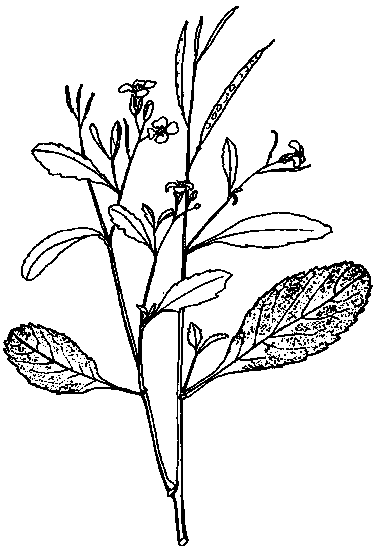
Figure
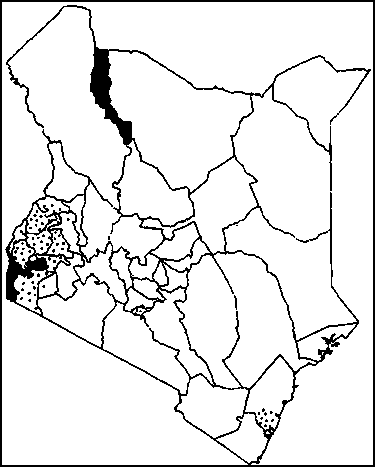
Figure
The genus Brassica contains some important exotic species such as the cabbage (B. oleracea L. var. capitata), rape and swede (B. napus L.), turnip (B. rapa L.) and kales (B. oleracea L. var. acephala). (Swahili: sukuma-wiki, Kikuyu: matharu, Kipsigis: sarokel, Luo: badmaro, Kisii: egesusura, Luhya: likabichi). Several of these introduced species have gone wild, especially in the highlands. Kales are becoming more important, especially among urban dwellers, thus replacing cabbage and traditional vegetables.
Bridelia taitensis Vatke & Pax
Euphorbiaceae
Borana: karo Kamba: mwaanzia Mbeere: muce Samburu: lapironit Tharaka: muyee
Description: Usually a much-branched multi-stemmed shrub, 2-3 m high. LEAVES: Broad, apex blunt or slightly notched with prominent veins underneath. FLOWERS: Tiny, greenish yellow, borne in clusters, inconspicuous. FRUITS: Small, to 1 cm across, green (tinged purple) turning almost black.
Ecology: Only known in northern, eastern and coastal Kenya. Found in Marsabit, Mutomo and Tsavo East National Park. Grows in dry bushland, woodland or riverin bushland, often on rocky or gravelly ground and on sandy soil, 440-1,200 m. Zones IV-V.
Uses: FOOD: Fruit is edible (+). It has a sweet-sour taste.
MEDICINAL: Bark extract used against earache (Tharaka).
CULTURAL/BELIEFS: The dead were buried under this shrub (Tharaka).
Season: Fruits in March in Machakos.
Status: Locally common.
Remarks: B. cathartica Bertol.f. (Swahili: makarakara, mkarati, Giriama: mkalakala) also has edible fruits.
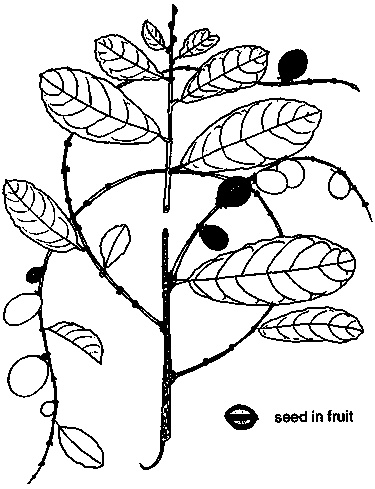
Bridelia cathartica
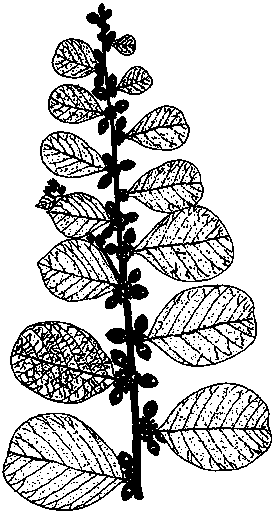
Figure
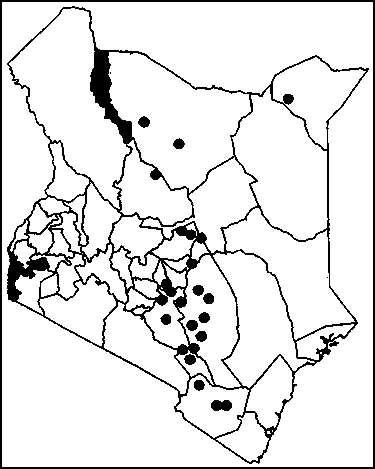
Figure
Cajanus cajan (L.) Millsp.
Papilionaceae (Fabaceae)
Chonyi: mbalazi (fruit), mubalazi Embu: njugu English: pigeon pea Giriama: mbubalazi Kamba: nzuu Kambe: mbalazi (fruit), mubalazi Kikuyu: njugu Luo: obong Marakwet: njugu Meru: nangu, ncugu Swahili: mbaazi Teso: epana Tharaka: njugu
Description: A shrub, usually 2-3 m tall with a dense and narrow or loose crown. Branches erect, drooping when with fruit. BARK: Green or dark red with pale longitudinal lines. LEAVES: Each with 3 leaflets covered with glands. Upper surface soft, dark green. Paler and with prominent veins beneath. FLOWERS: In terminal or axillary inflorescences, yellow to dark red (standard with reddish brown lines). FRUIT: Pods to 10 cm long, straight or slightly curved with hairy glandular surface, green, often streaked red, dark brown or purplish black. Seeds up to 9 (commonly 5-6) per pod, green, turning cream or light brown on drying.
Ecology: Cultivated in tropical Africa and America and a great deal in India. Cultivated in many parts of Kenya, especially in Murang'a, Kirinyaga, Embu, Meru, Machakos, Kitui and Makueni Districts. Also grown in the Kerio valley. West Pokot, southern Turkana and in Nyanza Province, 0-1,800 m. Does best in semi-arid to sub-humid areas. Occasionally found as an escape on waste ground. Red clay soils and clayey sandy soils are best. Rainfall: 600-1,000 mm. Zones III-V.
Uses: FOOD: Peas may be mashed with other foods like potatoes, cooked with maize, or made into a stew (mbogd) and eaten along with ugali. Peas are boiled, mashed and rolled into balls or boiled with sorghum (Luo). Among the Kikuyu, pigeon peas were important food during ceremonies like circumcision.
OTHER: After harvesting the stalks are cut and used as firewood (rather poor quality, burns fast but an important fuel during the wet and planting seasons). A good plant for crop rotation or intercropping. An important fodder plant during the dry season after crop harvest. The dry leaves and pods remain after harvest and are important food for donkeys, cattle and goats.
COMMERCIAL: Sold in various forms: fresh pods, green peas without pods and dry peas, mainly in central and coastal parts of Kenya and in Nairobi.
Season: Flowers in May-June in Machakos, Kitui, Mbeere and Mwingi. Fruits in July-August in Mbeere, Kitui and Machakos.
Management: May be grown as a pure stand or with other crops. In the low hot regions of Eastern Province it is normally planted during the short October/November rains and harvested in July-August the following year. In Nyanza normally planted sparsely or at the edge of crop land. Harvesting: Once the pods are dry, the fruiting branchlets are cut or broken off and spread on the ground for further drying (especially of leaves and fresh pods). Dry pods easily split open releasing seeds when threshed. These are winnowed on a windy day. Seeds do not store for long without insecticides.
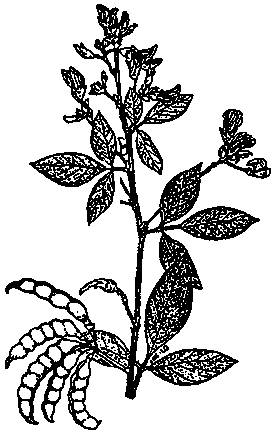
Figure
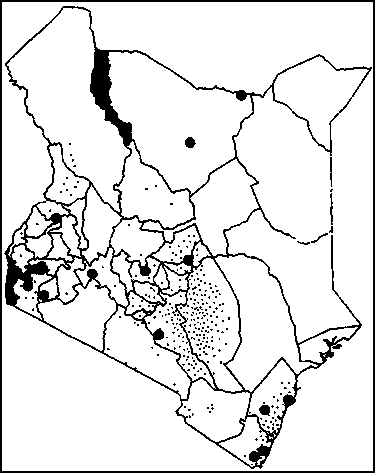
Figure
Pigeon pea is still an important crop in semi-arid areas, i.e. Machakos, Makueni, Mbeere and Tharaka-Nithi Districts. In the more humid areas its cultivation has declined because of introduction of other crops such as field peas (Pisum sativum, Kikuyu: minji) and kidney beans (Phaseolus vulgaris L., Kikuyu: mboco, Kamba: mboso, Luo: oganda, Swahili: maharagwe). In many areas increased attack by insect pests (kathoa, Kikuyu, Kamba) at flowering time has reduced yields significantly in recent years, in some cases causing total crop failure.
Pigeon pea is a hardy crop and a preferred food. It may be intercropped with deeply rooted crops such as cowpeas (the creeping type), cassava, pumpkins, gourds and sweet potato. Crops such as maize, beans, millets, sorghum and quick-maturing types of cowpeas are adversely affected. Its potential in the food industry is still not yet fully exploited. Pests are a major problem threatening its cultivation.
Remarks: The origin of this important crop is still a subject of contention. It is believed to be of African origin, but the possibility of it being Asian cannot be discounted. There are only two species in this genus; the other, C. kerstingii. Harms, grows wild in West Africa and hence the assumption that the pigeon pea is probably of African origin. Some forms of this crop have their origin in India.
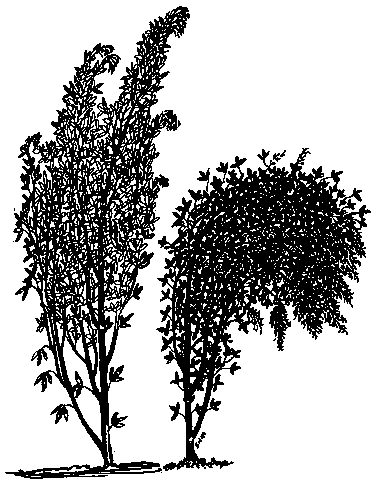
Figure
Canthium glaucum Hiern
Rubiaceae
Chonyi: mtambachiko Giriama: mfuranje Kambe: mtambachiko Swahili: mtengeji
Description: A spiny shrub usually 2-4 m high. BARK: Brown to grey. LEAVES: With very short petioles, elliptic, usually 2-5 cm long, borne at nodes or on short shoots below the paired spines. FLOWERS: In cymes, few, greenish. FRUIT: Square in outline, green turning yellowish orange when ripe.
Ecology: Found in coastal bushland, usually in open places with deep sandy soils, 0-150 m, e.g. in Marafa and in Arabuko forest (Kilifi). Ssp. glaucum occurs in Somalia and ssp. frangula in southern Africa. Zones III-IV.
Uses: FOOD: Ripe fruits fleshy, sweet and much liked (+++) (Mijikenda).
OTHER: Branches used for fencing.
Season: Fruits in March-April (Sabaki), April-June (Kilifi, Malindi).
Status: Rare.
Remarks: Many members of the closely related genera Keetia, Psydrax and Multidentia have edible fruits. Notable examples are Keetia gueinzii (Sond.) Bridson (syn: Canthium gueinzii Sond.) (Swahili: mtindapo, Kamba: mukumuti, Kikuyu: mugunguma, Luhya: lusebi, Luhya (Bukusu): nabusuma, Luhya (Tachoni): olwobo, Luo: kikumba, athuno, Kipsigis: cheplekwelet, Meru: mugugu, Tugen: mokilokwa), altitude: 150-2,500 m; Keetia zanzibarica (Klotzsch) Bridson (syn: Canthium zanzibaricum Klotzsch) (Swahili: mporopojo, ndapo, mtindapo, Digo: muyunzu, Giriama: muzunzwi, mukimbiri, Kambe: chimbiri), distribution: Kwale, Kilifi, Tana River, altitude: 0-450 m; Multidentia crassa (Hiern) Bridson & Verdc, var. crassa (syn: Canthium crassum Hiern) (Luhya (Bukusu) and Luhya (Tachoni): kumunyenya, kumunyinyi, bunyinyi (fruit)), found in Trans Nzoia District and Western Province.

Multidentia crassa

Keetia gueinzii
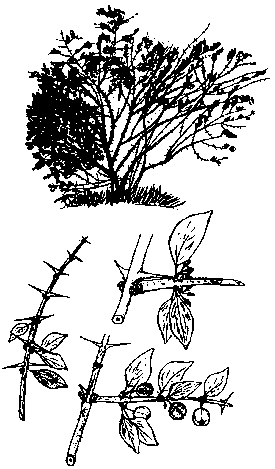
Figure
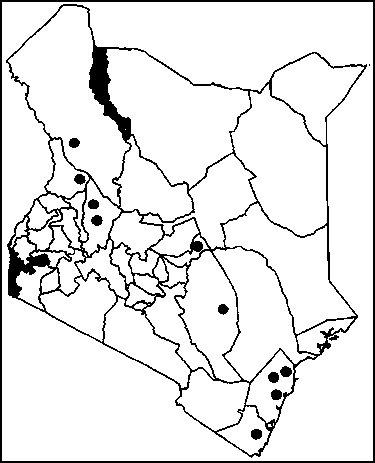
Figure
Canthium lactescens Hiern
Rubiaceae
Pokot: putere, ptere, putoro
Description: A shrub or small tree to 9 m. Stems thick with short internodes. BARK: Reddish to dark grey. LEAVES: Broad to almost round, large, paired, usually at branch tips. FLOWERS: Cream or yellowish green in cymes borne in leafless nodes. FRUITS: Usually with 2 lobes, 1.0-1.5 cm in diameter, green, turning yellow on ripening.
Ecology: Distributed in eastern and southern Africa from the Sudan and Ethiopia south to Zimbabwe and Angola, and in Kenya in Samburu, at Siyabei River in Narok, Baringo and West Pokot. Grows in riverine bushland and on rocky hillsides, 1,000-2,300 m. Zones III-IV.
Uses: FOOD: Fruits fleshy when ripe and very sweet.
Remarks: Many of the Canthium species have edible fruits. Other notable ones are C. setiflorum Hiern, a coastal shrub usually 1.5-3 m high, flowers yellowish green to cream, fruit yellow to dark brown, to 1.5 cm long, and C. pseudosetiflorum Bridson (Pokot: molkotwo, Borana: ladana, Turkana: etoukoroe, emidakan, Somali: natana) mainly found in the Rift Valley region and northern Kenya. A boiled root extract is added to children's milk as a tonic (Pokot). Altitude: 750-1,750 m.
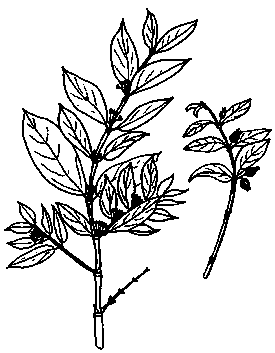
Canthium setiflorum
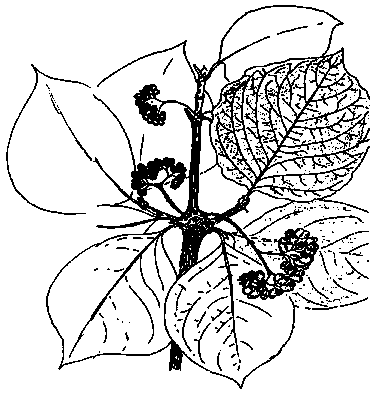
Figure
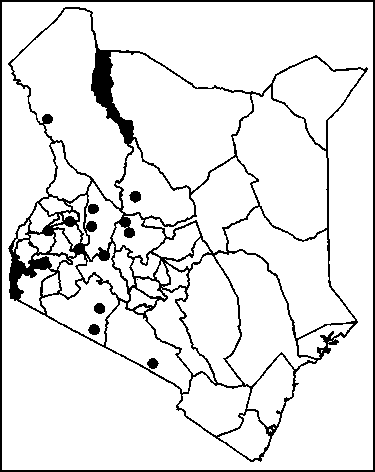
Figure
Carissa edulis (Forssk.) Vahl
Apocynaceae
Borana: dagams Chonyi: mtandomboo Embu: mukawa Gabra: dagams Giriama: mtandamboo Kamba: mukawa (Machakos, Makueni), mutote (Kitui), ngawa, ndote (fruit), nzunu (fruit, Kitui) Kambe: mtandamboo Kikuyu: mukawa Kipsigis: legetetyet, legetiet Kisii: omonyangateti, Kuria: munyoke Luhya (Bukusu): kumurwa (plant), burwa (fruit) Luhya (Tachoni): oburwa Luo: ochuoga Maa: olamuriaki, ilamuriak (plural) Malakote: mokalakala, kaka-mchangani Marakwet: leketeet (plural), leketetwa (singular), leketetwo Mbeere: mukawa Meru: kamuria, nkawa-mwimbi (fruit) Nandi: legetetwa Pokot: lakatetwa, lokotetwo Rendille: godhoom-boor Samburu: lamuriei, lamuriai Sanya: gurura Somali: adishawel Swahili: mtandamboo Taita: kirimba, ndandangoma Teso: emuriei Tugen: legetetwa
Description: Dense, evergreen, spinous shrub commonly found scrambling on other bushes or, rarely, standing by itself and sending out branches from the main bush. All parts exuding white latex on slight injury. SPINES: Straight, sometimes forked and up to 5 cm long. LEAVES: Broadly ovate to elliptic, glossy green, opposite and with a pointed apex. FLOWERS: Reddish pink outside, white inside as seen when they open. FRUITS: Round or ellipsoid, up to 26 mm in diameter, green, often tinged red or purple when unripe but turning dark purple (almost black) and glossy when ripe. Seeds few, dark brown, often compressed or undeveloped.
Ecology: Widespread in Kenya and much of Africa. Forest edges, bushland and thickets, especially on rocky hillsides. Common in rocky areas, on clay soils, especially black-cotton soils at valley bottoms and near seasonally flooded areas, 0-2,500 m. Rare in the coastal belt. Rainfall: 500-1,800 mm. Zones II-V.
Uses: FOOD: Both the unripe and ripe fruits are eaten whole (+++) (in the case of ripe fruits seeds may be discarded). The unripe fruits (green to purple) taste tart. Ripe fruits delicious-sweet and soft. Much liked by both children and adults. All fruits exude a milky latex. Flowers eaten (Luhya (Bukusu)).
MEDICINAL: The plant is among the most important sources of traditional medicine. Roots boiled and taken with soup to strengthen bones, for general fitness (Kamba, Meru, Pokot, Maasai) and (usually with other plants) for gonorrhoea (Maasai, Samburu, Kikuyu-Nyandarua). Boiled root extract drunk for chest pain (Kamba), indigestion, lower abdominal pains in pregnant mothers (Luo), polio symptoms (Samburu), headache and fever in children (Pokot). Decoction from boiled branches and leaves used for treating breast cancer, headache and chest pains (Nandi).
OTHER: Good goat fodder (+++). Good hedge plant (+++). Ripe fruits used as a dye by children. Silk-moth cocoons occasionally found on the plant.
COMMERCIAL: Fruits occasionally sold in markets.
Management: Seeds sown directly germinate easily. Saplings often grow under parent bushes and may also be used. Cultivated in several parts of the world for its fruit and as a hedge plant.
Status: Locally common. Rare in some parts (coastal areas) and Machakos, Makueni (partly due to over-exploitation for medicinal purposes).
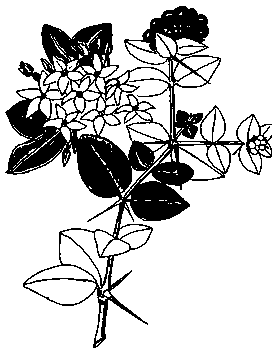
Figure
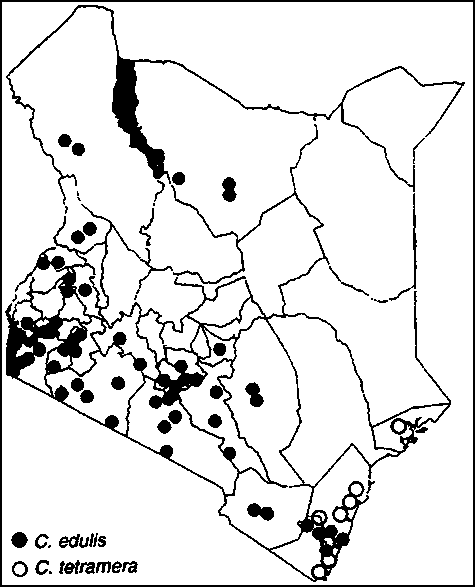
Figure
Remarks: Carissa edulis is a variable species in Kenya. Variation is seen in the spines (some individual plants have almost all spines forked), fruits (while some are almost spherical, others have a slightly pointed base), leaves (some glabrous while others are hairy, and others conspicuously narrowed towards the apex). Some large fruit-bearing plants are found in parts of Ngong forest and in the Kitui highlands. The germplasm for some of these populations is threatened and hence the need to collect it. The taxonomy and herbarium collections of this species in Kenya (especially as it relates to C. bispinosa, with which it seems to share many features) needs to be clarified. Typically, the petals of C. edulis overlap to the left while those of C. bispinosa overlap to the right.
A related species, C. tetramera (Sad.) Stapf (Swahili: mtandamboo, Digo: mtandamboo, Giriama: mtandamboo, Chonyi: mtandamboo, Kambe: mtandamboo, Sanya: gurura) with forked spines, smaller fruit and slightly toothed leaf margins also has delicious edible fruits. Distribution: Kwale, Kilifi in coastal bushland and wooded grassland, 0-450 m. Propagation: Seed, direct sowing. Season: Flowers in December, January, February, May, June. Fruits in January, February, June, July, August in Nairobi, Kitui, Machakos, Embu.
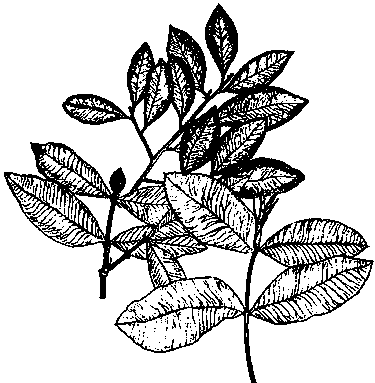
Carissa tetramera
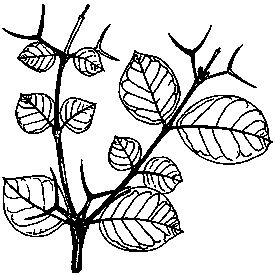
Carissa bispinosa
Catha edulis Forssk.
Celastraceae
Arabic: qat, khat Borana: chati, cati Chonyi: miraa Embu: miraa English: khat, Abyssinia tea, Arabian tea Giriama: miraa Kamba: mailyungi, miungi (plural) Kambe: miraa Kikuyu: muirungi, miirungi (plural) Kipsigis: tomoiyot Kisii: mairungi Maa: olmeraa Marakwet: tumayot Meru: muraa, miraa (plural) Okiek: tumayot Samburu: mamiraa Somali: qat, kat (pronounced chat) Swahili: miraa Teso: emairugi
Description: An evergreen shrub or large tree to 25 m with a dense crown. Trunk to 1 m in diameter. BARK: Grey-green or pale greyish brown. Young shoots green to red. LEAVES: Up to 12 cm long, narrowly elliptic with serrate margins, opposite, alternate on coppice shoots. Young leaves crimson brown, glossy, becoming yellow-green and leathery with age. FLOWERS: Small, white to creamy yellow in axillary cymes. FRUIT: A red-to-dark-brown, oblong, pendulous 3-valved capsule, up to 1 cm long. Seeds reddish brown with a small brown papery wing at the base.
Ecology: Found in south-western Arabia and Yemen and in many parts of Africa from Ethiopia to South Africa. Introduced in India and many other tropical countries. In Kenya, found, e.g. in the Nyambene mountains, Kyulu hills, south-western Mau forest, Cherangani forest, Mt Kenya, Turbo, Kakamega Forest, Mt Elgon. Cultivated in Nyambene and Meru. In the wild it is found in moist montane forests, evergreen forests and their margins, dry Olea and Juniperus forests, riverine forests and in thickets in Combretum wooded grassland. Along drainage lines and rocky hillsides, 1,200-2,400 m. Commonest around 2,000 m. Colluvial, stony or red soil. Rainfall: 800-1,800 mm. Commonest around 1,000 mm. Zones I-III.
Uses: Stimulant: Bark from fresh young shoots is peeled off and chewed as a stimulant, mainly by Somali and Meru and in towns (popular with long-distance heavy truck drivers as it is said to keep them awake). As one chews, a lump of khat (Somali: taksin) is gathered on one side of the mouth. Khat is usually chewed along with soft drinks, black spiced tea or chewing gum. The leaves are reportedly used to make a beverage like tea-called Abyssinia or Somali tea. Dried leaves may be smoked like tobacco. An important plant during wedding ceremonies (Boran, Somali).
MEDICINAL: Roots and bark boiled in tea or soup as a remedy for gonorrhoea (Kipsigis, Maasai).
CULTURAL/BELIEFS: Khat, tobacco and coffee taken as a gift to the girl's home during the first visit of the boy's parents as a sign of friendship between the two families (Boran). Said to form part of the bride price in marriage among people of Nyambene. Plant used in wedding ceremonies among the Boran and Somali.
OTHER: Building poles, fuelwood (++).
COMMERCIAL: Young shoots are sold in urban centres, especially to the Somali community. The khat trade is a flourishing multi-million shilling business in Kenya. Loads of it are harvested from the Nyambene highlands and air-freighted (mainly by chartered aircraft) from Nairobi to Somalia. It is also exported to the Middle East and often finds its way to Somali nationals in many parts of the world. Shoots are bound into small bundles which in turn are wrapped in banana leaves to protect the twigs from withering. In this condition khat can last for up to a week. In Kenya the banana leaves are hung outsides kiosks to indicate the presence of khat vendors. Despite its wide occurrence in other parts of Kenya, khat obtained from Nyambene District is of a superior quality. The Kangeta type with reddish purple bark is best and is often exported. Muringene and Maua types are poorer quality and are often mixed with the Kangeta type to increase their value. Up to six types have been reported in Ethiopia.
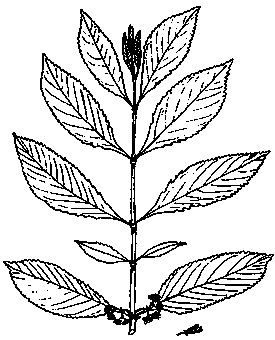
Figure
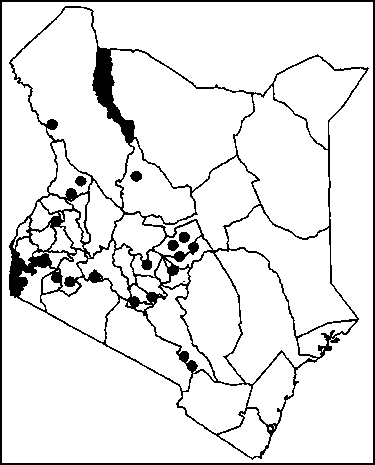
Figure
Management: Planting may be done vegetatively through cuttings. Twigs harvested for chewing are mainly obtained from coppiced plants.
Status: Generally uncommon in the wild. Large populations have, however, been reported in the Kyulu and Gwasi hills.
Remarks: Catha edulis, the only member of its genus, is an important drug plant in eastern Africa. Khat chewing is an important social activity among the Somali. Khat is usually provided to important visitors by the bride during wedding ceremonies. It is said to produce wakefulness and mental alertness by its stimulating effect on the nervous system. Thus it is used in situations requiring concentration.
The health, social and economic costs of khat chewing, however, outweigh the advantages. It induces thirst and therefore the user has to buy a lot of soft drinks. Khat is corrosive to the mouth wall. Chewing gum has recently gained popularity as it soothes the mouth besides absorbing stray khat particles. It is often a cause of constipation among chewers. It suppresses appetite and, when used for long periods, the alertness induced may lead to extreme fatigue and even stupor. Excess use of khat may induce symptoms of hallucination, intoxication or poisoning and, in extreme cases, insanity. Despite its short energy-boosting effect, prolonged use has been reported to cause emaciation and impotence. Khat chewing is addictive and often may impose a financial strain on the individual or family. The practice of chewing khat is condemned by non-users and is generally seen as unhealthy. There have been several attempts to ban the use of the drug by the authorities in Kenya and in some Islamic countries. The majority of khat users are found in the Islamic community.
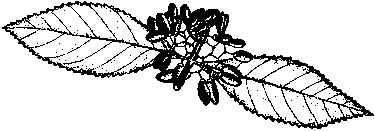
Figure
Citrullus lanatus (Thunb.) Mansf.
Cucurbitaceae
Chonyi: matikiti English: watermelon, egusi melon Giriama: matikiti Kamba: itikitiki Kambe: matikiti Luo: afwoto Marakwet: sot Sanya: mkikili Swahili: mtikiti Turkana: namunye, amamnyet
Description: A trailing or climbing plant. Stems hairy, usually creeping extensively. LEAVES: With deep lobes, usually 3-5 lobes. Central lobe the largest. Tendrils usually divided into two, rarely simple. FLOWERS: Monoecious, petals yellow, joined below. FRUITS: Ellipsoid to almost round, usually 15-20 cm long, green with pale green longitudinal stripes and white juicy flesh. (Note: The form with dark green stripes on the surface and red-pink flesh is the one more commonly found in markets.)
Ecology: Tropical Africa, Asia and America. In Kenya grows, e.g. in southern Turkana along the Turkwel River and in the coastal region. Cultivated land, abandoned cultivation, grassland, flood plains, 0-1,400 m. Common on sandy soils. Zones II-VII (riverine).
Uses: FOOD: The fruit is peeled and the flesh eaten raw or boiled. It can also be peeled, seeds removed and chopped into small pieces which may be eaten raw or cooked with pumpkin leaves or those of Lycium europaeum L. (Turkana: ekereru, Daasanach: il-maarach). Seeds may be sun-dried, ground and the resulting meal mixed with sorghum flour and made into a porridge, atap (Turkana). In other parts of Africa, seeds may be roasted and eaten. Leaves are also reported to be used as a leafy vegatable.
OTHER: Children make toy wheels from the fruits (Makueni).
COMMERCIAL: Local form sold in Turkana. Commercially cultivated form common in most markets in large towns.
Season: Fruits in July in southern Turkana.
Status: Common in cultivation (Turkana). Rare elsewhere.
Remarks: The local form of the watermelon is among the earliest cultivated food plants of the Ng'ikebootok in southern Turkana who believe that it came with elephant dung. Both the immature and mature fruits are eaten raw. The mature ones are sweeter.
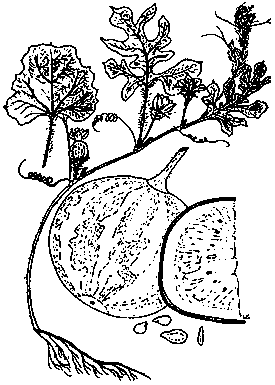
Figure
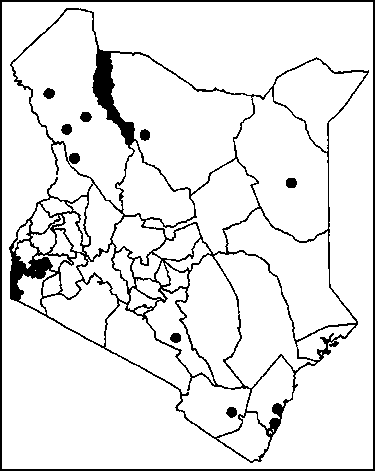
Figure
Cleome gynandra L.
Capparidaceae (Capparaceae)
syn: Gynandropsis gynandra (L.) Briq., Cleome pentaphylla (L.) Schrank
Chonyi: mwangani English: bastard mustard, spider herb, spider flower, cat's whiskers Giriama: mwangani Kamba: mwianzo, mukakai (Machakos) sake, mwaanzo, ithea-utuku (Kitui) Kambe: mwangani Keiyo: saka Kikuyu: thagiti, thageti Kipsigis: isakyat, isagek, isakiat Kisii: chinsaga Luhya (Bukusu): esaka (singular), chiisaka (plural) Luhya (Kisa): tsisaka Luhya (Kisa, Kabras, Tiriki): tsisaka Luhya (Marachi): lisaka Luhya (Tachoni): chiisaka (plural), yisaka (singular) Luhya (Samia): esaka (singular) Luo: dek (Homa Bay), akeyo, alot-dek, deg-akeyo (Siaya) Maa: lemba-e-nabo (Elang'ata wuas), olmuateni, oljani-lool-tatwa (Meto), naibor lukunya Marakwet: sachan, suroyo Meru: munyugunyugu Okiek: isakiat, isagek (plural) Pokot: suriyo, suriya, karelmet Rendille: bekeila-ki-dakhan, Sabaot: sakiantet Samburu: sabai, lasaitet Sanya: mwangani Somali: jeu-gurreh Swahili: mkabili, mwangani Teso: ecadoi Tugen: kisakiat Turkana: echaboi, akio
Description: An erect herb to 1.3 m high (usually 0.5-1.0 m). Stems hairy, rather oily. LEAVES: On long stalks, usually divided into 3, 5 and 7 leaflets, to 7 cm long. FLOWERS: White or pink borne on a long much-branched inflorescence. FRUIT: A long-stalked capsule splitting to release small rough, greyish black seeds.
Ecology: Widely distributed in most of Africa, tropical Asia and America and all over Kenya as a weed of cultivation and disturbed areas, 0-2,400 m. Common in abandoned homesteads, especially animal enclosures. Soils: Fertile soils with a lot of organic matter. Zones I-VI.
Uses: FOOD: Leaves (often with flowers) widely used as a vegetable in Kenya, especially in the western and coastal regions (+++), (Luo, Luhya, Kisii, Teso, Kipsigis, Nandi, Giriama). Not a traditional vegetable of the Central Bantu, however. By themselves leaves are bitter. Leaves are boiled, butter added and eaten along with ugali made from finger millet flour. This is served to important visitors such as in-laws as a sign of respect (Luo). Usually cooked with other vegetables such as cowpeas, amaranth (Luhya, Pokot, Luo) and Solanum nigrum (Pokot). In western Kenya, milk is added and preferably left overnight in a pot. This reduces the bitterness. Leaves mixed with those of kandhira (Brassica carinata) are boiled, made into lumps, dried in the sun and stored in a clay pot (agulu) as a dry-season food (Luo). This may be eaten with apoth (Asystasia mysorensis) as mboga. Among the Kisii, it is almost mandatory for women to use this before and after childbirth, circumcised boys must eat it and it is served to important visitors.
MEDICINAL: Root infusion used for chest pain (Makueni); vegetable a cure for constipation (Luo). Water obtained after boiling leaves is used to treat diarrhoea (Luo). Leaves are pounded with a little water and the extract drunk as a treatment for chira (a condition with symptoms like those of AIDS, but associated with a curse or punishment from the spirits). Patient also bathes with this.
COMMERCIAL: Vegetable sold in the major towns, especially in Coast, Nairobi, Nyanza, Rift Valley and Western Provinces.
Management: Grown from seeds. Planted either in lines or by broadcasting. Cultivated on a small scale by farmers, especially the elderly in western parts of Kenya. Outside Kenya commonly cultivated for seed oil.
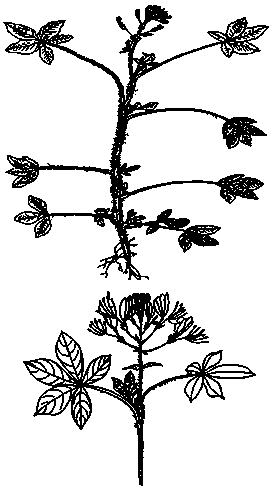
Figure
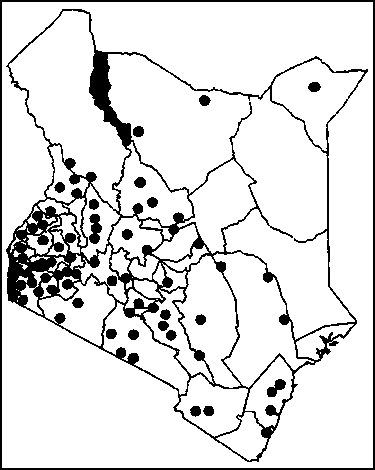
Figure
Status: Common.
Remarks: Because of the bitterness of the leaves, some people prefer not to use salt. The Mijikenda believe that use of salt may lead to the disappearance of the plant from cropland. The synonym Gynandropsis gynandra is the name used at the East African Herbarium. The related species Cleome monophylla L. (Somali: aiyo) is widespread in Africa and common as a weed in cultivation. C. allamanii Chiov. (Somali: liimo danyeer) and C. hirta (Clotzsch) Oliv. (Somali: garah lahgurare) are also used as a vegetable but to a lesser extent. Their leaves are smaller. Among the Luo, dek is often used as a general term for a leafy vegetable.
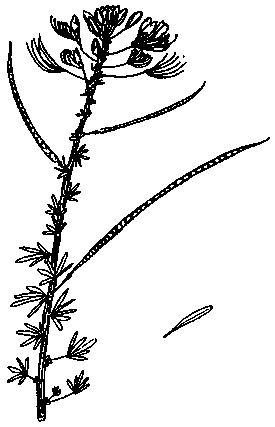
Cleome hirta
Coccinia grandis (L.) Voigt
Cucurbitaceae
Daasanach: daal-guo, daalle, dalaam (fruit) English: ivy gourd, scarlet gourd Kamba: kimuya, kimowe (Machakos, Makueni), imore, imondiu (Mwingi) Kikuyu: kigerema Luhya (Maragoli): kidunda Luo: mutkuru, nyamutkuru, nyathund-guok, mitkuru (Homa Bay) Maa: ndegegeya, olamposhi, enkaiserariai Marakwet: kipchimchim Mbeere: kigerema, kirigirigi (Riandu), ndambawangaa Pokot: ariapongos, pchichen, pchichin (fruit), tarmuch, ketporapis Rendille: lahuhuge Samburu: nkaisiruaruai Somali: parampar, barambar Turkana: ekadala, arekoi, elero, emanimun
Description: A climbing or prostrate perennial plant arising from a tuberous rootstock. Stems weak, angled, with tendrils. LEAVES: Usually 3-5 lobed (lobes often divided into further lobes), margin usually with small hard red teeth. FLOWERS: Male and female flowers borne on separate plants, yellow to light yellow. Male flowers usually solitary or paired, female flowers solitary. FRUITS: Ellipsoid, to 7 cm long by 4 cm wide, rounded at both ends, green, ripening to bright red from the bottom upwards. Ripe fruits soft and easily detached from the plant.
Ecology: Tropical Asia, tropical Australia, Arabia, Fiji, introduced to West Indies and tropical South America. In Africa from Senegal east to Somalia. In Kenya, e.g. in Moyale, Turkwel Valley (riverine bushed grassland), Kisumu, and Kibarani in Kilifi District. Grows in dry Acacia bushland and riverine bushland. Commonly found climbing on bushes and hedges. Zones III-V.
Uses: FOOD: The soft juicy, bright red fruit are eaten raw (+) (Kamba, Turkana, Pokot). Ripe fruit are beaten into a solution, boiled in water, flour added and made into stiff porridge (Turkana). The fruits are dried, ground into flour and mixed with cereal flour (Turkana). Young leaves occasionally used as a vegetable (Luo (Siaya), Mbeere, Kikuyu, Pokot (Nginyang)), mashed and mixed with maize and pulses (Kikuyu, Mbeere).
MEDICINAL: Leaves mixed with ghee are used as medicine for hima (pain on the left side of the abdomen and lightening of the skin) in children. Medicine is applied externally (Luo).
OTHER: Seeds chewed (Daasanach). Fodder for camels and all livestock (+). Fruits eaten by birds.
Season: Flowers in January-February (Marsabit), March-April (Wajir, Isiolo, Turkana), December (Homa Bay), September (Taita), November (Kitui, Samburu). Fruits in March (Samburu, Kajiado, Kitui), October (Mombasa), June (Kilifi).
Status: Common.
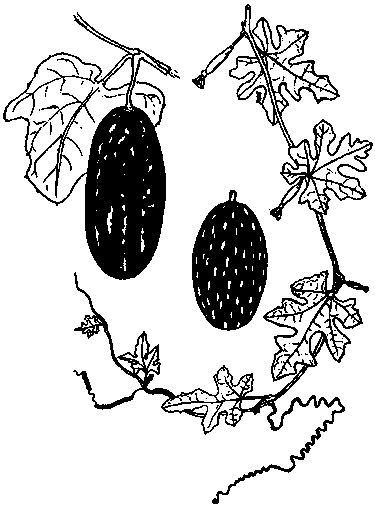
Figure

Figure
Remarks: In Asia the fruits are occasionally candied and sold in local markets. This species resembles C. trilobata (Cogn.) C. Jeffrey (Kikuyu: kigerema, Mbeere: kirigirigi, Samburu: nkaisiruaruai). Stems slender but strong. Leaves usually 3-5 lobed and very rough above (usually more so than in C. grandis) and softly hairy below. Fruits ellipsoid, often with a narrow end, bright red with longitudinal stripes of light green or yellow. Very common around Nairobi. Found in the central part of the country. Rift Valley and coastal area and in northern Tanzania but not known anywhere else. The leaves are used as a vegetable (Mbeere, Meru, Kikuyu). C. adoensis (A. Rich.) Cogn. (Kamba: kyambatwa, kimoe, Luhya (Bukusu): nandemu, Luhya: obutsiba). Grows in most parts of Kenya, e.g. in Kitui, Kitale, Thika, Karura forest. Also in southern Africa. A creeping or climbing plant with deeply lobed leaves. Fruit pale green with dark green interrupted longitudinal lines, ripening to orange-red. Altitude 0-2,400 m, especially in bushland, grassland and at roadsides. Fruits are edible. Normally associated with snakes. Liked by birds.
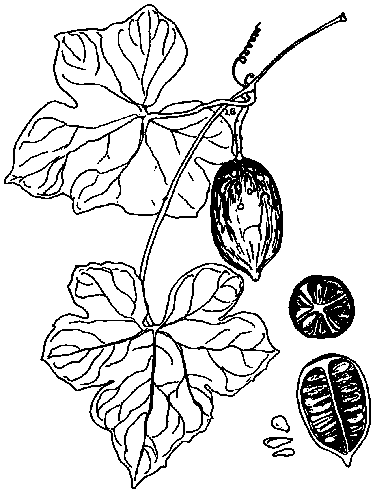
Coccinia trilobata
Coffea arabica L.
Rubiaceae
Borana: bun English: arabian coffee, arabica coffee, coffee Kamba: kaawa Kikuyu: kahua Kipsigis: kawek, kahawek Kisii: ekawa, ekahawa Luhya (Bukusu): ekawa Luhya (Tachoni): kahawa Luo: kawa Meru: kahuwa Mijikenda: kahawa Somali: bun Swahili: kahawa
Description: Shrub or small tree up to 6 m high, but kept below 3 m in cultivation. Leaves elliptic, flowers white and axillary. Fruit a 2-seeded drupe, ellipsoid, to 2 cm, green, turning red to dark red on ripening.
Ecology: Wild populations of coffee are found in southern Ethiopia and in northern Kenya on Mt Marsabit and possibly Mt Kulal in highland forests, 1,300-1,500 m. Coffee is cultivated throughout the tropics and most of Africa. In Kenya it is grown throughout the country at medium altitude (1,300-2,200 m) and rainfall (700-1,200 mm). Does well in deep red clay-loam soils. Zones III-IV.
Uses: This is the well-known coffee plant grown for its seeds which are the source of household coffee, a stimulating beverage. Processing involves separating the fruit pulp from the seeds. In homes this may be done by squeezing the ripe fruits in water. The cream seeds are washed and dried for a few days then pounded in a mortar to remove the seed wall. Seeds are then roasted and pounded or ground. Bulk processing in rural coffee factories involves removing the fruit wall, grading, fermenting, air drying and packing. Roasting is a specialized process done at a central factory. In Ethiopia, coffee drinking is an important social event. Members of a neighbourhood may meet every morning to drink coffee (Guragae area, central Ethiopia). It is served in special pots and cups. Members meet at the house whose owner's turn it is to prepare the coffee.
Management: Easily grown from seeds in nurseries from where it is transplanted to farms.
Other: Pruned branches used as firewood. "Husks" from factories are used as manure.
Cultural/beliefs: Coffee, tobacco and khat are taken as gifts to a girl's home during the first visit of the boy's parents as a sign of a developing friendship between the two families (Boran). Coffee is one of the plant materials offered under fig trees during some cultural ceremonies (Boran).
Remarks: Arabica coffee is native to the Kaffa region (whence the name coffee is derived but now falling under Oromia Federal State) of southern Ethiopia.
Several other species of coffee are cultivated. The best known of these is Coffea canephora (syn: C. robusta), (English: robusta coffee). This is said to have the highest content of caffeine. Others are C. liberica (English: Liberian coffee) and C. stenophylla (English: Sierra Leone coffee, highland coffee), both of West Africa. At least five other species of Coffea are found wild in Kenya but are of no commercial importance. Coffee is an important export crop in Kenya, ranking second after tea in foreign currency earnings.
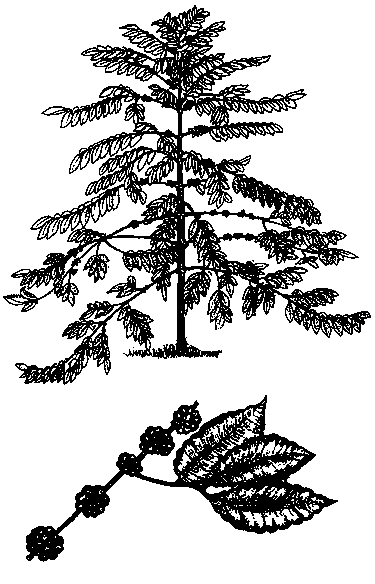
Figure
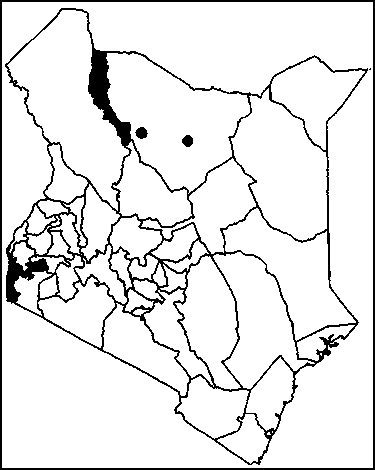
Figure
Commelina africana L.
Commelinaceae
Chonyi: dzadza, Digo: dzadza Giriama: dzadza, kadzadza Kamba: kikowe Kambe: dzadza Kikuyu: mukengeria Luhya (Bukusu): sikayangaya (plant) Luhya (Kabras): eshingayangaya Luhya (Maragoli): linyororo Luhya (Tiriki): shingayangaya Luo: odielo Mbeere: mutambananguru Samburu: naiteteyai Sanya: kahu Somali: bar Swahili: kongwa
Description: A prostrate or erect (when young) herbaceous plant with soft stem. LEAVES: Alternate, lanceolate to almost linear with bases clasping the stem. FLOWERS: Yellow, occasionally white. Leaf blade ovate, up to 10 cm long by 5 cm wide.
Ecology: A common Commelina in tropical Africa and in Kenya. Rare in northern Kenya and the coastal region. Found in cultivated and disturbed areas, open grassland, bushed grassland and under trees in woodland.
Uses: FOOD: Widely eaten as a vegetable (Luhya, Luo, Kamba, Teso, Mbeere) (++). An important vegetable just after the onset of the rainy season before cultivated vegetables are available; it is soft and therefore mixed with other types of leafy vegetable.
FOOD/MEDICINAL: Stalks pounded, boiled and milk added for children's colds and coughs (Samburu); fluid from spathes is applied locally for eye diseases.
OTHER: Fodder (+++) for all livestock; the plant sprouts earlier than other plants and is therefore useful, especially after a prolonged dry season. Said to quench thirst in animals.
Management: Propagated vegetatively from rhizomes.
Status: Common.
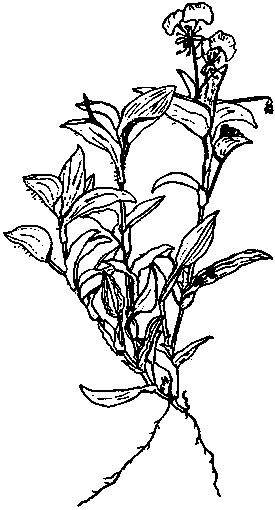
Figure
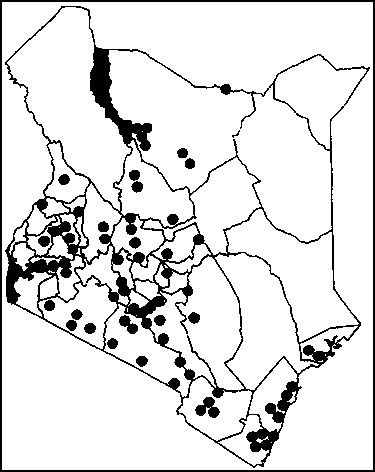
Figure
Commelina benghalensis L.
Commelinaceae
Digo: dzadza Embu: mukengeya, mukengeria Kamba: itula Kikuyu: mukengeria Luhya (Bakhayo): linyolonyolo, lifwafwa Luhya (Bukusu): lifwafwa Luhya (Tachoni): lifwafwa (plant) Luo: odielo Maa: enkaiteteyiai Mbeere: mukengeria, nang'ombwe Pokot: portotion, partation Samburu: ngaiteteyai Somali: bar Teso: ekoropot Tugen: lobbitiet Turkana: aturae, etirae Turkana (Ng'iramuk): nabutachwee
Description: A common herb with creeping or ascending branches. LEAVES: Light green, hairy and ovate, with sheathed bases. FLOWERS: Blue.
Ecology: Widespread in Kenya, Africa and Asia. Often found as a weed in cultivation, on roadsides and in disturbed areas, especially in grassland and damp places, 0-2,400 m. Zones I-VI.
Uses: FOOD: Leaves only rarely used as a vegetable (+). Women used to advise their children against picking this type of Commelina as it is said to cause a disease known as kithunda ndutu and knee-joint problems after prolonged use (Kamba). Also eaten as a vegetable in Kiberenge, Sukumaland and among the Nyamwezi of Tanzania.
OTHER: Cattle and goat fodder (+++). Normally harvested for livestock (Kikuyu, Mbeere).
Management: Can be planted for livestock by use of rooted stems or rhizomes.
Status: Very common.
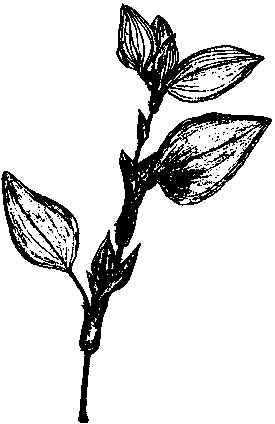
Figure
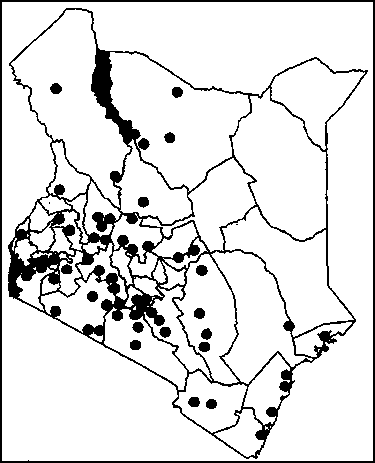
Figure
Commelina forskaolii Vahl
Commelinaceae
Chonyi: dzadza Digo: dzedza lume Giriama: kadzadza Kamba: kikowe, kikoe (Kitui) Kambe: dzadza Marakwet: cherat (plural) Mbeere: kithi, mukengeria, kimore Pokot: cheretwo, cherotwo, aportotoyon, aportoyon, partatoyon Sanya: kahu Somali: bar Swahili: jaja, kongwe Turkana: atuarae, etirae
Description: A soft, weak-stemmed trailing plant arising from underground rhizomes. Stems with distinct nodes. LEAVES: Narrow, long, up to 12 cm, by 3 cm wide. FLOWERS: Deep blue.
Ecology: Widely distributed in Kenya and in the neighbouring countries. Common in Embu, Meru, Machakos and Kitui. Commonly found in lightly shaded cool or damp areas. Found as a weed in cultivation, disturbed places and in bushed grassland, especially dry Combretum bushland, 0-1,700 m. Favours sandy to loam soils and occasionally red clay. Zones II-VI.
Uses: FOOD: Leaves picked and cooked as a vegetable (+++) (Mbeere. Kamba, Giriama, Turkana). Soft when cooked and hence usually mixed with other coarse vegetables or mashed in a maize and pulse mixture (Mbeere, Kamba). Sprouts fast after the first rains and is normally harvested at this time before other vegetables are ready. Leaves widely used as a vegetable in Kenya and Tanzania. An important vegetable among the Kamba.
OTHER: Good fodder for animals (+++). Leaves eaten by chickens.
Management: Propagated vegetatively by rhizomes (root cuttings).
Status: Common.
Remarks: a related and also commonly used species is C. imberbis Hassk. With elongated leaves and mauve-blue flowers. (Digo: dzedza lume, Chonyi: dzadza, Giriama: dzadza, Kamba: kikowe, Kambe: dzadza, Mbeere: kimore, Sanya: kahu). It is common in the coastal region.
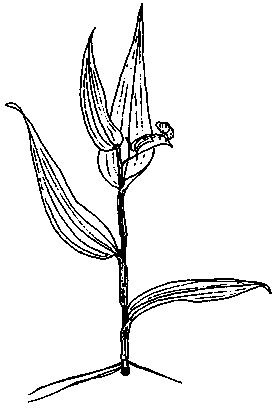
Commelina imberbis
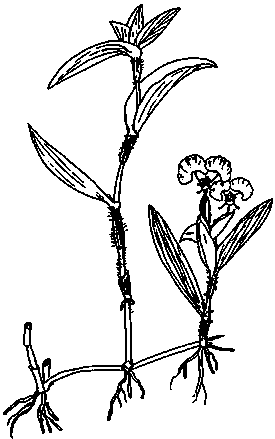
Figure
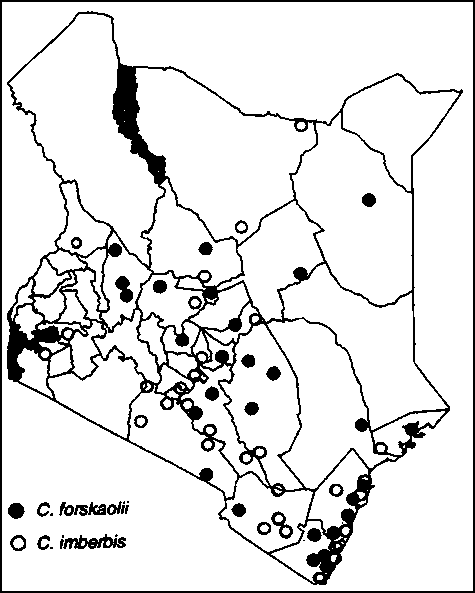
Figure
Commiphora africana (A. Rich.) Engl.
Burseraceae
Borana: hamis, dibo Daasanach: kerech-dhata Gabra: hameesaa Giriama: musishwi, mutsuchwi Kamba: kitungu, ndungu (fruit), itula Luo: arupiny Maa: oloishimi Mbeere: muguagua, kirugurugu (Evurore) Orma: komper Pokot: katagh, kallechuwa Rendille: ilmasara, lerokoa Somali: dabaunun Swahili: mkororo Turkana: ekadeli
Description: Deciduous spiny shrub or small tree to 5 m high (usually 2-4 m). Branchlets reddish purple. BARK: Green, with a thin light yellow but translucent scaling cuticle. LEAVES: 3-foliolate, the middle leaflet being largest, obovate and with toothed margin, lateral ones much smaller and usually elliptic. FLOWERS: Small, dioecious. FRUITS: To 1.5 cm, green, turning brown on ripening.
Ecology: Widely distributed in the drier parts of Africa from Senegal east to Ethiopia and south to South Africa. Mainly in the low, drier parts of Kenya where it is common in Acacia-Commiphora bushland. Soils varied, but mainly red clay, sandy clay and on rocky ground. Rainfall: 400-1,000 mm. Zones IV-VII.
Uses: FOOD: Roots of young plants chewed for their sweet taste and to quench thirst (Kamba, Maasai, Pokot). Roots are juicy with a slightly sweet taste. Gum eaten (Maasai, Pokot, Turkana). Bark is used to make a red tea (Pokot, Turkana).
MEDICINAL: Fruits chewed or pounded and used for diseases of the gum, muthingithu (Makueni), ulcerated gums, toothache.
OTHER: Hedge, wooden spoons, fencing. Stems used as a toothbrush (Rendille, Kamba). Camel and goat fodder (++), especially in the dry season. Gum used in arrow making. Wood used for house building, headrests, stools, milk containers (Pokot, Turkana, Daasanach).
Management: Propagated vegetatively by stem cuttings.
Status: Common.
Remarks: A good hedge plant.
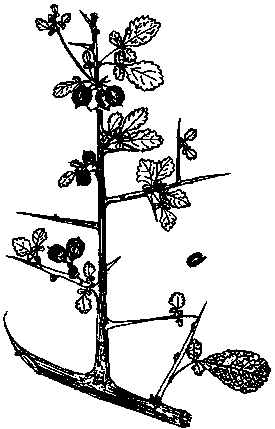
Figure
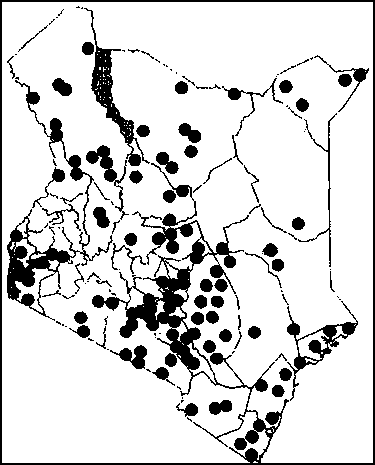
Figure
Commiphora rostrata Engl.
Burseraceae
Borana: dirraa, dainjo Malakote: choneh Mbeere: munyei Orma: udesi Pokot: lokimeta Rendille: galdayan (Korr) Samburu: lmaim, ltilimani Somali: jano (Isiolo), jenau, janau (Wajir), hanguli (Eldas) Tharaka: mutunkuuri Turkana: lokimeta, eurumosing (Ng'ikebootok), lekora
Description: A strong-smelling shrub to 3.5 m. Stems exude a copious, clear, sap. Lateral shoots end in strong spines. BARK: Smooth, dark purple or maroon to almost black. FLOWERS: Dioecious, narrow-stalked, deep red. FRUITS: Red, pointed, with wiry stalks. Plant usually leafless at time of flowering.
Ecology: Grows in eastern Ethiopia, Somalia and north-and south-eastern Kenya in drEluy open Acacia-Commiphora-Boswellia bushland, 80-1,050 m. Common on sandy, gravelly soils or on rocky areas. Rainfall: 200-600 mm. Zones V-VII.
Uses: FOOD: Leaves eaten raw (Somali, Marakwet). Salty or tasting of oxalic acid. Leaves used as a relish or cooked to add flavour to food (Mbeere (Thambu)). Bark or branches used in the preparation of tea (Turkana (Ngikebootok), Daasanach). Stem pith chewed to quench thirst (Somali). Bark from young plants chewed (Somali).
FOOD/MEDICINAL: The bark or branches may be chewed or an infusion drunk for fever, colds and coughs (Turkana).
MEDICINAL: Leaves and young twigs chewed for coughs and chest problems (Tharaka). Sap applied to sore eyes (Turkana, Somali), but painful.
OTHER: Sap used to glue feathers on to arrow shafts (Pokot). The bark is pounded, put in to a new gourd with water and left for 3 days then washed out leaving a nice smell in the gourd (Pokot). Stems used as toothbrush (Rendille).
Season: Flowers in April-May (Tana), November-December (southern Turkana, Tana, Isiolo).
Management: Propagated vegetatively by stem cuttings.
Status: Occasional.
Remarks: Two varieties are known: var. rostrata, which is an erect shrub and the more common and widespread variety, and var. reflexa (Chiov.) Gillett with a spreading prostrate habit found in Dandu in north-eastern Kenya, south-east Ethiopia and in Somalia.
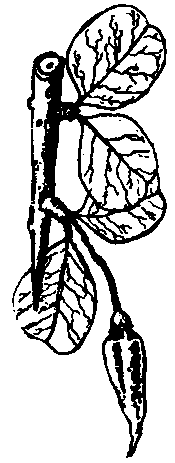
Figure
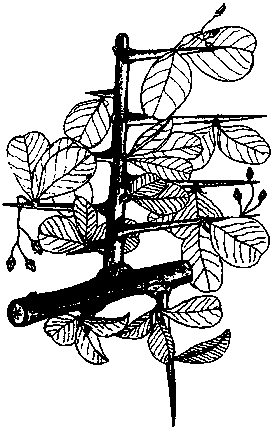
Figure
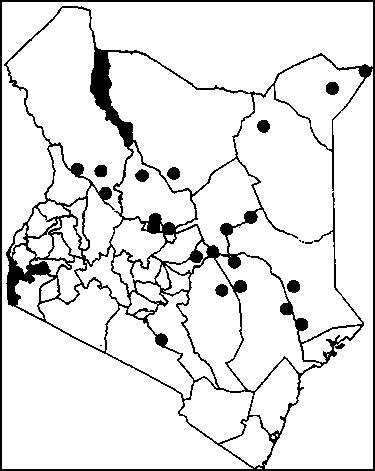
Figure
Commiphora schimperi (O. Berg) Engl.
Burseraceae
syn: C. trothae Engl., C. buraensis Engl.
Maa: osilalei
Description: A deciduous spiny shrub or small tree to 5 m high (usually 2-4 m). BARK: Cuticle reddish brown or grey, peeling in rolling sheets. LEAVES: 3-foliolate, central leaflet to 3.5 cm long, lateral leaflets smaller and similar.
Ecology: Ethiopia and Yemen, Somalia, northern Uganda, Tanzania south to South Africa. Found in most parts of Kenya except Western and Nyanza Provinces. Common in Acacia-Commiphora bushland and bushed grassland, 400-1,900 m. Soils varied, but mainly red clay, sandy clay and rocky ground. Zones IV-VI.
Uses: FOOD: Roots of young plants are chewed because of their juicy sweet taste and to quench thirst (Maasai, Kamba). Resin exuded from bark (enaing'orre) is chewed (Maasai). Root infusion added to children's milk as a tonic (Maasai, Kajiado). The red inner bark is boiled in tea (Maasai).
OTHER: A hedge plant. Sticks used for making fire.
Management: Propagated vegetatively by stem cuttings.
Status: May be locally common.
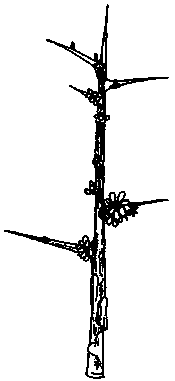
Figure
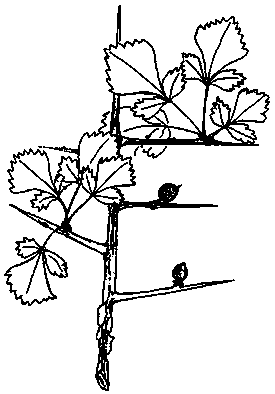
Figure
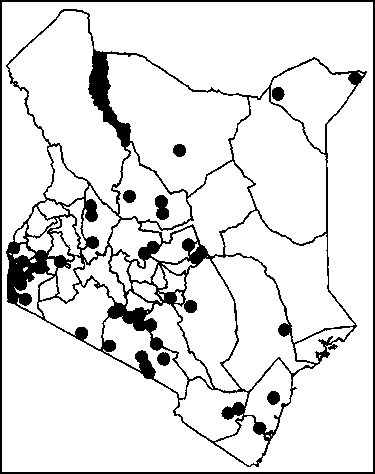
Figure
Corchorus olitorius L.
Tiliaceae
Chonyi: chikosho, vombo Digo: mlenda, mwatsaka wa bara, bombo English: jute, bush okra, Jew's mallow Giriama: vombo, Kambe: chikosho, vombo Kisii: omotere Luhya (Bukusu): murere Luhya (Kabras): omurere Luhya (Kisa): omurele Luhya (Marachi): murere Luhya (Tiriki): omurere Luo: apoth, apoth-nyapololo Pokot: chow (Sigor) Sanya: kikosho Swahili: mlenda, mulenda, kala Tugen: ntereryan (Kibingor) Turkana: namale, lojeel, emarot, abungu
Description: An erect woody herb, usually 0.5 to 1.2m high but may reach a height of up to 2.5 m in cultivation. LEAVES: To 15 cm long, short stalked, ovate to elliptic, margin serrated. Leaf blade usually with basal protrusions. FLOWERS: Yellow. FRUIT: A short-stalked, cylindrical capsule that splits into 5 parts. Seeds greyish black, angled.
Ecology: Grows in northern Australia north to China and west through India and Pakistan to the Middle East and in most of Africa. Also naturalized in tropical America. Widespread in Kenya in seasonally flooded areas, flood plains, at edges of lakes, dams and marshes and in bushland, wooded grassland and open grassland, especially in low hot country, 0-1,500 m. Alluvial soils or sandy loam. Zones II-IV.
Uses: FOOD: Leaves widely used as a vegetable in Kenya and the rest of Africa (+++) (Luhya, Luo, Giriama, Digo, Swahili, Samburu). Normally cooked with other coarse vegetables as it is slippery, e.g. with Gynandropsis gynandra, Crotalaria brevidens and C. ochroleuca or cowpeas. When cooked with cowpeas, milk and butter, it is given to lactating mothers (Luo). Leaves are pounded in a mortar, cooked with meat and flavoured with lemon or lime juice (Swahili). It is mixed with Asystasia gangetica (tsalakakushe) or a mixture of cowpea, pumpkin, sweet potato and cocoyam leaves (Mijikenda).
MEDICINAL: Scrapings from the root are put into cavities in teeth to ease pain (Digo). Bark is a source of the common commercial jute fibre. In India and Bangladesh, this plant is cultivated extensively for its fibre.
COMMERCIAL: Vegetable sold in Nairobi and many market centres around the country, especially in Coast, Western and Nyanza Provinces.
Season: Rainy season and soon afterwards.
Management: Propagated by seeds. Sown in rows or broadcast. The vegetable may be harvested by breaking off small branches. This encourages the growth of new shoots.
Status: May be locally common but generally rare.
Remarks: This species is one of the ancient food crops of the Middle East. It is sown and used as a pot-herb by Jews (hence the name "Jew's mallow") and in stews in Egypt where it is known as melokhia. It is reportedly used in soups in Central America and as a pot-herb in South East Asia. Large quantities of this species are grown for the extraction of jute (used for making ropes and bags) in eastern India, Bangladesh and south China. A variable species with several cultivars.
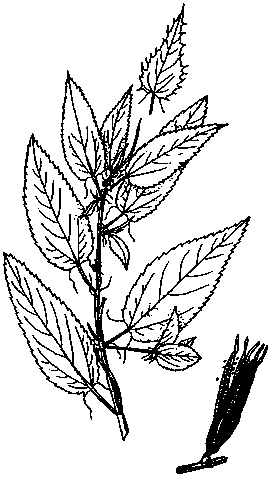
Figure
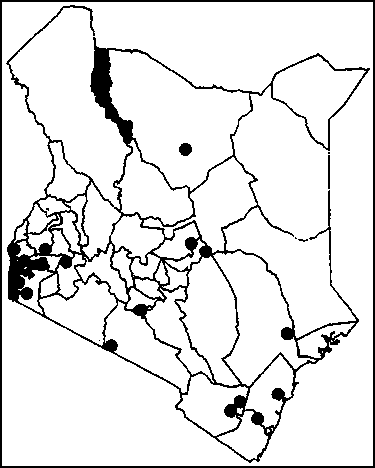
Figure
Corchorus trilocularis L.
Tiliaceae
Borana: luuftoole Chonyi: chikosho, vombo Gabra; luftoole (Gabra): qaqalla (Huri Hills) Giriama: kikosho Kambe: chikosho Keiyo: nterere Kipsigis: laiyo-nebo-soin, laiyonebo-soin (Timbilil) Luhya: mrere msatsa (Busia) Luhya (Bukusu): murere-nalubenga, murere-nalubembe, sitanyamurwe, nalubembe, nalubonga Luhya (Kabras): omurere Luhya (Maragoli): mrere Luhya (Tiriki): omurere Luhya (Tachoni): lihu, oluvembe Luo: apoth Marakwet: karkar, kokorwo (singular) Pokot: chepkarkarian, mamapatontoluo, mamachemeloi Samburu: leperia Sanya: kikosho Swahili: mlenda
Description: A usually erect branched herb. LEAVES: Ovate or broadly so with serrated margins. FLOWERS: Yellow. FRUIT: Slender long pod-like capsule, to 7 cm or more, straight or slightly curved and splitting into 3-4 (often 3) valves. Capsules are held erect on the stems, singly or in pairs.
Ecology: Found in most parts of Africa from Senegal east to Ethiopia and from Egypt south to South Africa. A common Corchorus in most parts of Kenya in open Acacia bushland, grassland, cultivated ground, flood plains, edges of marshy places, dams and lakes, 0-2,400 m. Soils vary, e.g. sandy alluvial, black cotton, sandy or clay. Zones II-VI.
Uses: FOOD: Leaves eaten as a vegetable (+++) (Pokot, Giriama, Luo, Luhya, Kipsigis). As this vegetable is slippery when cooked, it is normally mixed with other coarse vegetables, usually Gynandropsis gynandra, Crotalaria brevidens and C. ochroleuca or cowpeas (Luhya, Luo). When cooked with cowpeas, milk and butter it is given to breast-feeding mothers to aid lactation (Luo). OTHER: Fodder.
COMMERCIAL: Sold in many markets throughout the country, especially in Nairobi, coastal and western areas.
Management: Propagated by seeds which are sown in rows or broadcast.
Status: Common.
Remarks: There could be up to eight Corchorus species in Kenya, about half of which are commonly used as a vegetable. C. tridens L. (Chonyi: chikosho, Giriama: kikosho, Kambe: chikosho, Luo: apoth, Sanya: kikosho) has narrow or ovate leaves to 10 cm long with a pair of protrusions at the base of the blade. The capsules are slender, short (to 4 cm long), straight or slightly curved with 3 spreading horny protrusions at the end of each capsule and split into 3 valves. This species is found in most of Africa. In Kenya it is found in most dry areas, dry bushland, grassland, swamps and in cultivation. C. aestuans L. (syn. C. acutangulus Lam.) has oval leaves with a pair of protrusions at the base of the leaf blade. Capsules are broader than in C. tridens, up to 3 cm long, with three diverging horns and splitting into 3 valves. C. fascicularis L., on the other hand, has long narrow leaves without protrusions and a short capsule to 1.5 cm long. These species are also used as a vegetable.
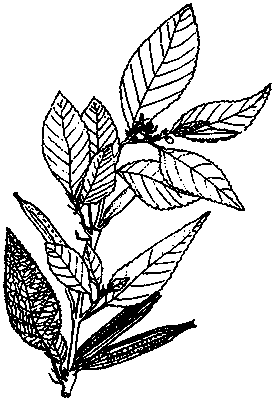
Corchorus trilocularis
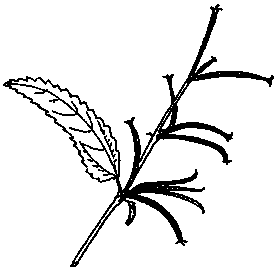
Corchorus tridens
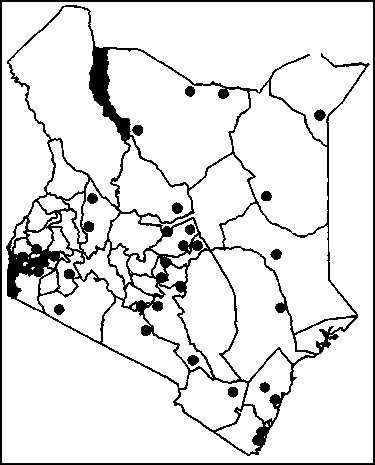
Figure
Cordia monoica Roxb.
Boraginaceae
syn: C. ovalis DC.
Borana: qotte, mader English: sandpaper tree Ilchamus: seki, lsek, lmuleel, lmuleelin, muleelin Kamba: kithei, nthei (fruit) Kikuyu: muthigi, mukuo, mukuu Kipsigis: nogirwet Luo: oseno Maa: oseki, eseki, lsek, il-seki (plural) Meru: ikuo Orma: araba Pokot: topererwo, toporewo, taparer Samburu: se'eki, lamantume Somali: marergom, marer-girgir (Tana River), marer-goh Swahili: msasa Tharaka: muthugagu, mutugangu Turkana: etuntun, elkaisekiseki
Description: Spreading, much-branched bush, shrub or tree to 6 m high (normally 3-5 m). BARK: Yellow to ash grey, smooth, flaking. LEAVES: Ovate to almost round, very rough above, greenish grey. FLOWERS: Cream, turning brown on drying. FRUIT: Yellow or orange, oval, up to 2 cm across.
Ecology: Grows in India, Sri Lanka and in Africa from Sudan south to South Africa. Widely distributed all over Kenya in bushland, 0-2,200 m. Common in valley bottoms and along watercourses. Often on rocky areas and red clay soil. Zones I-VI.
Uses: FOOD: Mucilaginous pulp of fruit edible (+). Fruit coat is normally removed, the pulp (with seed) is sucked and the seed discarded. The pulp is sweet but gummy.
MEDICINAL: Roots boiled and the extract taken for vomiting and malaria, especially by children. Leaf extract given to animals and people to remove retained placenta (Tharaka).
OTHER: Fuelwood, shade, good charcoal, handles, wood carving (Kamba), beehive hooks (Kamba, Tharaka). Rough leaves are used as sandpaper to polish wooden shafts of spears (Maasai, Pokot). Camel and goat fodder. Stems made into clubs (Luo) and thinner ones into arrow shafts (Maasai, Narok). CULTURAL/BELIEFS: Used in blessings (Maasai, Samburu, Pokot). Used in rituals (Luo). The Maasai believe that if a livestock keeper carries an oseki stick his cattle will not suffer from certain diseases. Believed to be a peace-engendering plant (Maasai). To stop a fight or to prevent oneself from being attacked, a stick from this plant is placed between the opposing parties. The aggression should stop immediately. Whoever disregards this warning may be punished heavily. Bad luck may also befall him and it may mean death of one or more members of the family. It is therefore enough warning to say "elua eseki", meaning "I separate you with eseki".
Season: Flowers in April-May (Kajiado, Samburu), October-November (Taita, West Pokot, Nairobi, Meru). Fruits in February-March (Kajiado, Samburu), April-May (Kwale, Kisii); June-July (Machakos, Kitui, Meru, Isiolo), August (Isiolo, Baringo). Timing mainly depends on rains.
Management: Propagated by seeds sown directly and without pre-treatment.
Status: Common.

Figure
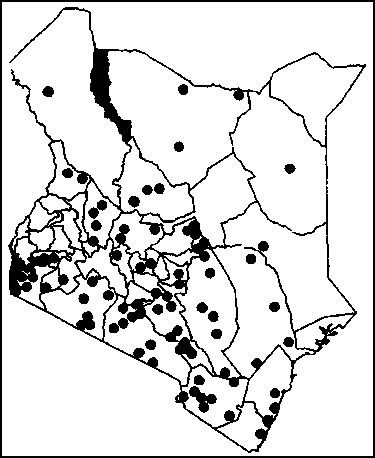
Figure
Cordia sinensis Lam.
Boraginaceae
syn: C. gharaf Ehrenb. ex Aschers.
Borana: harores, mader-boor, madeer-qoowe, madee'r Chonyi: mkayukayu Gabra: mad'eera Giriama: mderia, mkayukayu Ilchamus: salapani, lgweita Kamba: kithea, muthei-munini, kithia Kipsigis: nokirwet Maa: ol-durgo, ol-dorko, ol-olgot Malakote: mutalya-chana (riverine. Tana River), mutaale Marakwet: adomoyon Orma: mader Pokomo: muhale, mhali, mtale Pokot: adomeyon, adomeon, adome (fruit) Rendille: gaer, koh, madeer, gayer Samburu: dorgo, lmanturre, lgueita, lgweita-orok, silapani Sanya: ho'orocha Somali: mareer, marer Tugen: adumewa, edoma (leaves), adomewa Turkana: edome
Description: A low leafy shrub or bush, rarely a small tree up to 6 m high, often multi-stemmed. BARK: Finely fissured longitudinally, or smooth, dark grey on branches. LEAVES: Variable, smooth or slightly rough, narrow and long, ovate to obovate or broadly so. FLOWERS: Cream, browning when over. FRUITS: Conical, bright red or orange when ripe, produced in masses. Seed hard, rough, yellowish cream.
Ecology: Grows in the Middle East, Pakistan, India, Sri Lanka and in Africa from West Africa to Ethiopia, Somalia and Egypt south to Namibia and north-east South Africa. Widespread in the drier parts of Kenya but absent in Western and Nyanza Provinces. Found in dry riverine vegetation, usually with Salvadora persica, or in open bushland, usually 0-1,400 m. Mainly alluvial, sandy, red loam and rocky soils. Zones IV (coast)-VII.
Uses: FOOD: Ripe fruits eaten raw (+++). The sweet mucilaginous pulp may be eaten fresh. Fruit cover and seeds are discarded. Large quantities of the fruits are gathered, pounded to a sticky mass, sun-dried and stored in a wooden container, eburr (Turkana). Whenever it is needed, water is added to soften it, then served. The fruit pulp is sometimes used for brewing a local beer. The fresh fruits are squeezed in water to dissolve the pulp. This is mixed with tamarind (Tamarindus indica) juice and fermented. Fresh juice may also be drunk (Turkana). A clear gum produced by the tree is edible.
OTHER: Stems are widely used as poles in hut construction (+++) (Turkana, Pokot, Boran, Somali, Gabra) and for erecting bird-scaring platforms in sorghum fields (Turkana). In many cases these may root, hence becoming a near-by source of food. Fodder (+++) for goats, camels, sheep and cattle. Stems are made into walking sticks, wooden spoons, stirrers. Stems used for smoking gourds (Maasai).
CULTURAL/BELIEFS: Branches are spread where the house of a newly married couple is to be built, branches are put above the house during almadho and soriyo ceremonies (Samburu). Sticks used in settling battles in the absence of C. monoica, oseki (Maasai). Widely used in rituals (Gabra, Samburu. Maasai, Boran).
COMMERCIAL: Fruits sold in Lodwar (Turkana). Poles for construction sold (Pokot, Turkana).
Season: Flowers in April-May (Turkana). Fruits in March (Kilifi), May-June (Kajiado, Kitui), August-September (Garissa, Samburu, Turkana, Kajiado).
Management: Propagated by seeds which are best sown directly on site.
Status: May be very common.
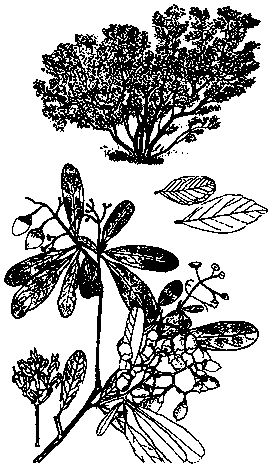
Figure
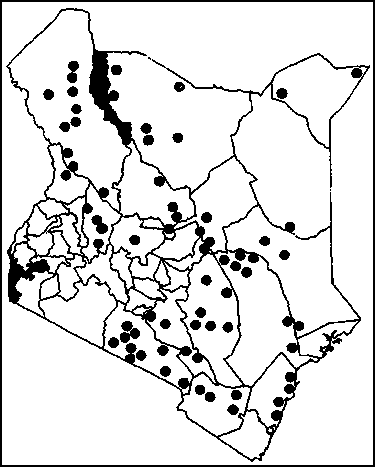
Figure
Remarks: C. sinensis is a very variable species. In northern Kenya and at the coast it tends to have longer, smooth leaves. In the Tharaka, Kitui, Mbeere, Machakos and Kajiado area, the leaves tend to be more coarse, shorter and with an irregular margin. A very important plant in dry zones as a source of food, fodder and wood for building. Many of the Cordia species have edible fruits. Other notable examples are C. somaliensis Bak., a bushy usually multi-stemmed shrub found in the drier parts of coastal Kenya and southern Somalia only in open areas and in bushland on sandy soils, dunes and coral, and C. crenata Del. (Turkana: ebiteosin, Rendille: koh, Somali: marer-koh) with hairy young shoots and broad leaves which is widespread in the drier parts of Kenya. Common in riverine vegetation.

Cordia crenata
Crotalaria brevidens Benth.
Papilionaceae (Fabaceae)
syn: C. intermedia Kotschy
Kamba: kamusuusuu Kipsigis: kipkururiet, kipkurkuriet Luhya (Bukusu): kimiro Luhya (Kisa): emiro Luhya (maragoli): imito, mito Luhya (Marachi): miroo Luhya (Maragoli): imito Luhya (Tachoni): vimboka, emiro Luo: mito, mitoo Maa: oleechei, olotwalan, enoontwalan Pokot: kamra
Description: An erect much-branched herb (rarely decumbent), usually 0.5-1.2 m high. Stems green. Branches ascending. LEAVES: Divided into 3 narrow leaflets to 10 cm long by 2 cm wide (normally much less). FLOWERS: Yellow with very conspicuous reddish purple veins. FRUITS: Long narrow pods to 5 cm by 0.7 cm wide, very short stalked, slightly longitudinally compressed on one side, black when dry. Seeds yellow turning orange to dark red.
Ecology: Grows from Nigeria east to Ethiopia. In Kenya, e.g. in Kitui, Embu, Muguga (Kiambu), Nairobi, Kapenguria, Nanyuki, Sotik. Absent in the coastal region. Occasionally cultivated for its leaves. Grassland and bushland, 500-2,700 m, often on termite mounds, at roadsides, in cultivated land, disturbed forest and near seasonally flooded areas. Zones I-IV.
Uses: FOOD: Leaves are widely used as a vegetable in western Kenya (+++) (Luo, Luhya, West Pokot) and into Uganda. Bitter, normally cooked with Corchorus species (Pokot) or milk to mask the bitterness (Luhya). More bitter than C. ochroleuca.
OTHER: Fodder.
COMMERCIAL: Sold in the major towns of western Kenya and in Nairobi.
Management: Propagated by seeds.
Status: May be locally common. Generally uncommon in the wild. Widely cultivated, especially in western Kenya.
Remarks: Several varieties of this species occur, with two in Kenya:
· var. intermedia (Kotschy) Polhill has a large flower with the calyx 5-8 mm long. Found from Tanzania to Ethiopia, west to the Democratic Republic of Congo (Zaire) and Nigeria.· var. parviflora (Baker f.) Polhill has a smaller flower with the calyx up to 4-5 mm long. Grows in Kitui, Embu, Muguga (Kiambu), Nairobi and adjoining areas, but not known elsewhere.
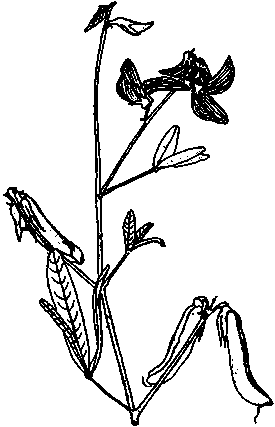
Figure
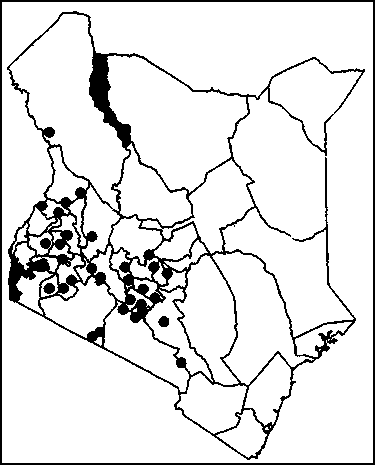
Figure
Crotalaria ochroleuca G. Don
Papilionaceae (Fabaceae)
syn: C. cannabina. Bak. f.
Kamba: kamusuusuu Kipsigis: kipkururiet, kipkurkuriet Luhya (Bukusu): kimiro, kumuro (singular) Luhya (Kisa): emiro Luhya (Maragoli): imito, mito Luhya (Marachi): miroo Luhya (Tachoni): yimboka Luo: mito, mitoo, muto, ambaro Maa: oleechei, olotwalan Pokot: kamra, karelmet
Description: An erect herb (annual or short-lived perennial) usually 0.5-1.5 m high. Stems ribbed with ascending branches. LEAVES: Divided into 3 narrow leaflets to 13 cm long by 3 cm wide, normally much smaller. FLOWERS: Yellow with very conspicuous purple veins. FRUITS: Fat pods, up to 7 cm long by 2 cm wide, shortly stalked, slightly longitudinally compressed on one side, end blunt with persistent style. Seeds yellow to orange.
Ecology: Grows from West Africa to the Sudan and south to Angola, Mozambique, Zimbabwe and Botswana. Cultivated for its leaves in Nyanza and Western Provinces. In seasonally flooded areas, flood plains, swamp edges, bushland, at roadsides and in cultivated land, 300-2,000 m. Zones I-III.
Uses: FOOD: Leaves widely used as a vegetable in western Kenya (+++) (Luhya, Pokot, Luo). The vegetable is slightly bitter and is normally cooked with milk or other vegetables such as cowpeas and Corchorus species to counteract this.
Commercial: Leaves sold in Nairobi and most major towns of western Kenya.
Management: Grows easily from seeds.
Status: Generally rare in the wild. Widely cultivated, especially in western Kenya.
Remarks: Often confused with C. brevidens, but easily distinguished from it by size and shape of leaf and pod.
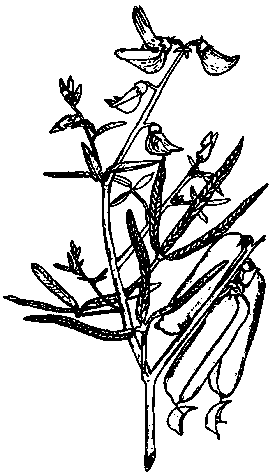
Figure

Figure
Cucumis dipsaceus Spach
Cucurbitaceae
Borana: burate-harre English: teasel gourd Gabra: buratte Kamba: kikungi, kyambatwa Luo: nyabuth-muok Maa: orng'alayoi-loo-sirkon, eng'alayioi-naju Mbeere: gikungui, mukungui Pokot: alaskau, kuutitan (fruit), chesapulian, ariapongos Rendille: khonjote Samburu: ntujuu, dudhu Somali: hungureri, hungureri-damer Turkana: eome, ekaleruk
Description: A trailing or climbing plant. Stems with tendrils, angled and with prickly hairs. LEAVES: Ovate or shallowly 3-lobed, coarsely hairy, light green, up to 10 cm long. FLOWERS: Yellow. FRUITS: Oval with numerous protrusions, light green, turning yellow on ripening.
Ecology: North-eastern tropical Africa in bushland, grassland, cultivated land and in disturbed areas climbing on bushes and on hedges. Common at river banks on alluvial and sandy soils but also found in clay soils, 425-1,800 m. Zones IV-VII (riverine).
Uses: FOOD: Young leaves from young plants (Turkana) or young shoots of older plants are used as a vegetable (++) (Kamba, Turkana, Pokot). Leaves are occasionally used in mashed food (Makueni).
MEDICINAL: Roots and leaves crushed and put on cuts. Juice from fruits used to rub on swollen neck glands (Pokot). Fruit juice is made into a solution (Pokot, Somali) or boiled (Luo, Homa Bay) and taken as an emetic or purgative (Turkana). Solution is usually given as an antidote after poisoning. Milk is served immediately after vomiting (Pokot, Nginyang).
OTHER: Goat and camel fodder. Fruit liked by donkeys, pulp eaten by squirrels (Makueni), but said to be poisonous to man.
Season: Leaves available 2 weeks after the start of the rainy season and fruits 2 months later.
Management: Plant grows easily from seeds.
Status: Common.
Remarks: The fruits of several Cucumis species are used as food. These include C. prophetarum L., a prostrate herb from a perennial rootstock, with rough, narrow-lobed leaves and yellow flowers. Fruit egg-sized, pale green with dark green lines and soft bristles, ripening to a yellow colour. (Turkana: ekolese, Samburu: ntuyu, Pokot: ariapongos, Maa: ilporbol lo ntare). Ecology: India west through the Middle East to Africa. Widely distributed in the drier parts of Kenya. Not recorded in Nyanza and western Kenya. Found in dry bushland and woodland. Processed fruits are used as food (Turkana). Fruits are goat and sheep fodder. Two subspecies are recognized: ssp. dissectus (Naud.) Jeffrey, found in north-eastern Africa, the Democratic Republic of Congo (Zaire), Uganda, Tanzania and most parts of Kenya; ssp. prophetarum found from Senegal east to India and the northern parts of Kenya. Ripe fruits are clear yellow.
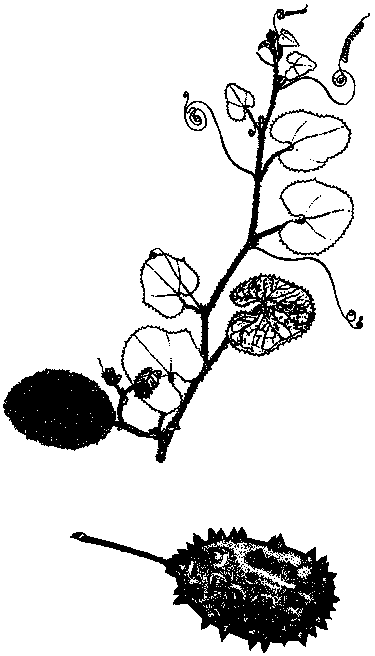
Cucumis metuliferus
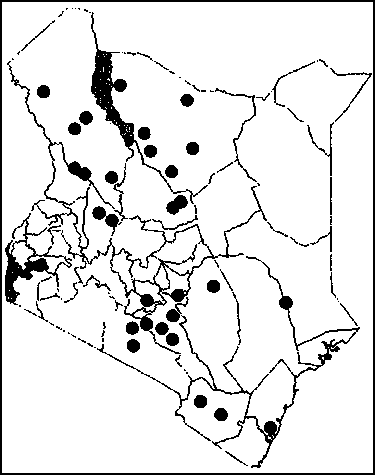
Figure
Another member worth mentioning in this genus is Cucumis metuliferus Naud. (English: spiny cucumber, horned cucumber). This is a climbing herb with hairy stems and solitary unbranched tendrils. LEAVES: Heart-shaped, hairy with long petioles. FLOWERS: Male and female flowers are separate on the same plant. FRUITS: Up to 12 cm long by 6 cm wide. Dark green with striations of white dots and covered with scattered spiny processes to 1.2 cm long, with a horny tip. The fruit turns orange to bright red on ripening. It is found in Acacia bushland (in miombo woodland in southern Africa) and roadside bushes mainly in red alluvial or loamy soils at an altitude of 800-1,300 m. The species is found wild in northern Kenya. Collections have been made in Sigor (West Pokot) and Mandera. It is widely distributed in the rest of Africa but cultivated for commercial purposes in southern Africa. The mature unripe or ripe fruits are eaten raw. The horny part of the spiny processes is cut off and the fruit split to eat the seed-filled white to translucent pulp. Fruit may also be peeled. This fruit has the taste of a cucumber (Cucumis sativus). Its use as a food has not yet been reported in Kenya. The fruit is common in markets in southern Africa and is also exported to Europe and America. The leaves may also be used as a vegetable.
Cucurbita maxima
The ripe fruit has a striking orange-red colour and so the plant may also be grown as an ornamental. Fruits last long in cool weather.
Cucurbita ficifolia Bouch� (English: Fig-leafed gourd, malabar gourd, Kikuyu: kahurura, kanyuria) is another extensive creeper or climber. Cultivated in the central highlands, especially by the Kikuyu. Leaves used in the preparation of irio, a mixture of maize, pulses and often green bananas and/or Irish potatoes. It usually germinates spontaneously in cultivated land.
Also commonly grown for their fruit and leaves are the pumpkins (Borana: bododa, Kamba: ulenge, ilenge (fruit), Kikuyu: marenge, Kisii: risosa, Embu: irenge, marenge, Luhya (Bukusu): lisiebebe, liondo (fruit), Meru: marenge, malenge (Nyambene), Turkana: ekaideit) Cucurbita moschata Duch. ex Lam. and Cucurbita maxima Duch. Ex Lam. C. moschata has distinctly lobed (divided) leaves, while those of C. maxima only have a wavy margin. Both have yellow flowers. Leaves and young shoots are used as vegetables.
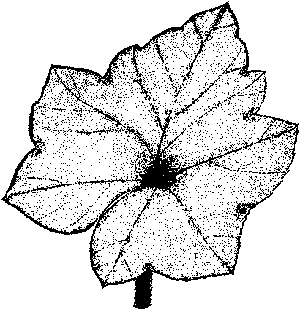
Cucurbita moschata
Cyperus blysmoides C. B. Cl.
Cyperaceae
syn: C. bulbosus Vahl var spicatus Boeck
Kamba: ngaatu Luo: rabuon-apuoyo Marakwet: morkut Pokot: moikut Samburu: ilkuroti Somali: gohosa, gooso Turkana: akademoit, ekadet-etum, ikikiriau
Description: A slender erect perennial sedge to 30 cm, emerging during the wet season and dying back in the dry season. Basal bulb up to 8 mm and covered by brown to blackish scales and with very slender stolons ending in new roots. Stems 5-25 cm long, triangular or compressed, with many crowded leaves at the base. FLOWERS: Inflorescence a single spike without bracts, of 3-6 spikelets 8-12 mm long.
Ecology: Grows in northern Kenya, Rift Valley, Central, Eastern and Nairobi Provinces. Also in Uganda and northern Tanzania (Tanga Region). Seasonally wet habitats, sandy to heavy clay, often in stony areas. Found in woodland, wooded grassland and as a weed in cultivated land, 300-2,100 m. Zones III-VI.
Uses: FOOD: The bulb or "nut" is edible (++). Used to be an important famine food in the early days. The nuts are tasty and the stem bases are peeled and the soft fleshy part eaten.
MEDICINAL: Bulb eaten for fever (Pokot).
OTHER: Bulb also eaten by rodents, baboons and birds. Fodder for cattle.
Status: Locally common.
Remarks: Several other species of sedges have edible stem bases and nuts.
· C. bulbosus Vahl var. melanolepis K�kenthal is found in Kenya, Uganda, Eritrea, Ethiopia, Somalia and northern Tanzania at 200-2,000 m. It grows to about 30 cm and is less common. Absent from the coast and western Kenya. The stem base is edible (Maasai).· C. rotundus L. grows to 30 cm and is widely distributed in Kenya.
· C. giolii Chiov. has a bulbous base and a 3-angled stem and is widespread in the drier parts of Kenya. Found in wooded grassland and as a weed in cultivation. The base is said to be used as perfume.
Sedges differ from grasses in their pith-filled stems which are not jointed.
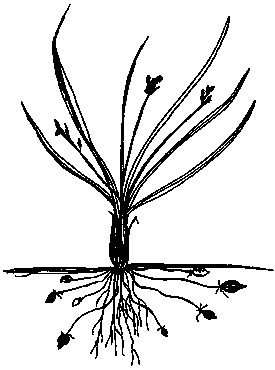
Figure
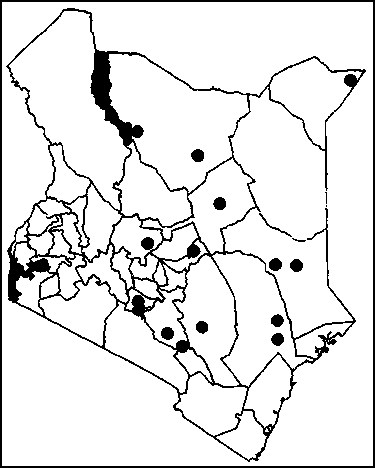
Figure
Cyphia glandulifera A. Rich.
Campanulaceae (Lobeliaceae)
Borana: kurte Kamba: ngomo Mbeere: mukandakiria Samburu: lokorijet, ekurgigi
Description: Erect often single-stemmed herb, usually 25-40 cm high. Stem purplish green arising from a globose yellowish white scaly tuber (occasionally with short protrusions) to 5 cm across and about 6-12 cm below the soil surface. LEAVES: Arranged in whorls round the stem at approximately the same point 1-2 cm above ground level, without a conspicuous leaf stalk, nearly fleshy, ovate to almost round, up to 10 cm long, dark green, margin irregularly serrated. FLOWERS: Short-stalked, pinkish with five petals, borne alternately in the axils of miniature leaf-like bracts along a long erect spike, occasionally twining around other more sturdy plants.
Ecology: Grows in most parts of Kenya and central and northern Tanzania, Ethiopia and Somalia. In Kenya, e.g. at the foot of the Ngong Hills, in Chepararia (West Pokot), Mwingi and in Murang'a. Common between 1,000 and 2,000 m. Found in open grassland, disturbed grassland, open wet depressions and cultivated land, usually in loose clayish soils. Also common and often the only plant in eroded and bare black-cotton or alluvial soil derived from it. Zones III-V.
Uses: FOOD: Leaves used as a vegetable (++) (Kitui). Juicy tubers peeled and eaten, especially by herdsmen (+) (Kamba, Boran). Tubers are slightly sweet.
OTHER: A fodder plant for livestock.
Season: March-April, November-December (Nairobi, Kajiado, Kitui). Sprouts soon after the rains.
Management: Propagated by tubers or seeds.
Status: Locally common.
Remarks: Several forms occur; one much-branched.
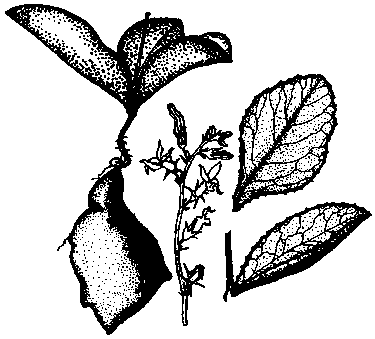
Figure
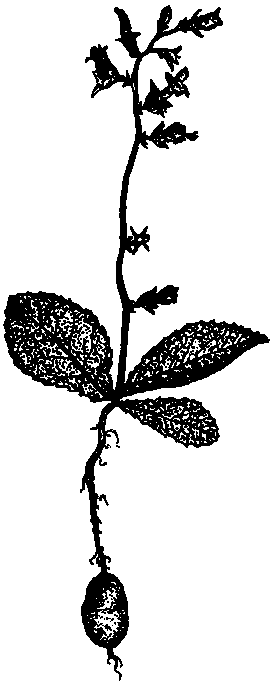
Figure
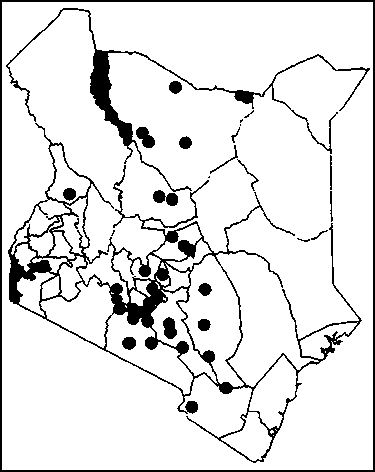
Figure
Dactyloctenium aegyptium (L.) Willd.
Gramineae (Poaceae)
Borana: maasai, makwala, magala Daasanach: bunite English: crow-foot grass Kamba: ukuku Kikuyu: mukinda, nyaragita Maa: embokwe, empokui, enkampa (Elang'ata Wuas), porori aja Mbeere: iguko, gingara, gitiko, utiko Pokot: mokono, kumokon Samburu: laparaan, laburaun, ntalanwen, hidowensili Somali: ausdenan, ensili, jarba, hidow, hidowensili Swahili: kimbugi-mbugi Taita: kisambara Turkana: ekauduudu, emekwi, ekahuduhudu
Description: Grass, normally 0.3-0.7 m high, often spreading. Nodes with a brown ring. Culms (stems) ascending. FLOWERS: Inflorescence consisting of several spikes, ascending or radiating horizontally from the culm tip in a star-like manner. FRUITS: Seeds (grain) light brown and sand-like, to 0.7 mm across.
Ecology: Throughout tropical and warm temperate regions of the world, introduced into America and widespread in Africa. All over Kenya, especially in semi-arid areas, 0-2,100 m. A common weed in cultivated land, in grassland and disturbed bushland. Zones III-VII.
Uses: FOOD: Grain ground into flour and used for the preparation of porridge or ugali (Pokot, Turkana, Kamba) in times of famine. It is difficult to grind the grain into flour because of the small size. Grain eaten raw by children (Pokot). Grain mixed with that of Amaranthus graecizans (ptanya) and ground on stone (kungowoi) to flour and made into stiff porridge (paan) (Pokot). Flour may be cooked together with vegetables in a mixture known as ngunzakutu or added to milk and eaten raw (Kamba: kinaa). Root rhizomes of Dactyloctenium spp., especially those of D. bogdani (Somali: ausdenan), are chewed by Turkana and Daasanach children because of their sweet taste. Grain may keep almost indefinitely (Pokot).
OTHER: Grain, chicken food; grass, livestock fodder (++).
Season: Grain mainly available in February-March and July-August in Makueni, Machakos, Kitui and Pokot.
Status: Locally common.
Remarks: A variable species. Anthers are smaller than those of D. giganteum.
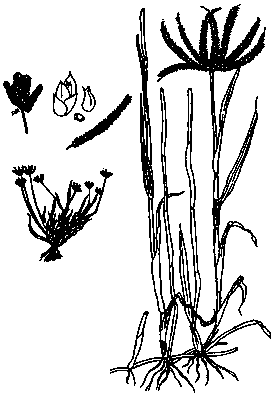
Figure
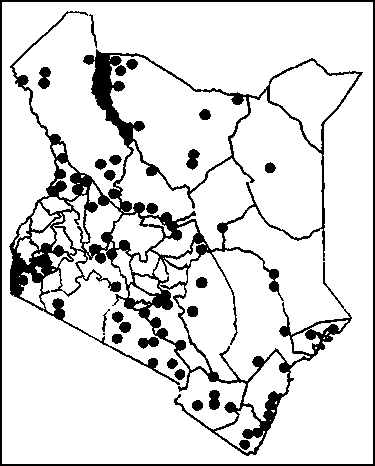
Figure
Dactyloctenium giganteum Fischer & Schweick.
Gramineae (Poaceae)
Kamba: ukuku Kikuyu: mukinda Somali: ausdenan Swahili: mkandi, kimbugimbugi Taita: kisambara
Description: Grass, normally 0.5-1.5 m high, spreading by above-ground stolons which root at the nodes. Node with a brown ring. Culms (stems) usually erect. FLOWERS: Inflorescence consisting of several spikes, ascending or rarely radiating horizontally from the culm tip in a star-like manner. FRUITS: Seeds (grain) light brown and sand-like up to 0.8 mm long.
Ecology: From Kenya south to South Africa. In Kenya confined to the east, e.g. Mtito Andei, Machakos, Kitui, Kajiado and Taita. A weed of cultivated land, roadsides and disturbed bushland, 200-2,000 m. Usually light red clay and loam soils. Zones V-VI.
Uses: FOOD: Grain ground into flour which is made into porridge or cooked together with vegetables in a mixture known as ngunza-kutu (Kamba). Milk may also be added to flour and eaten raw (kinaa). It is difficult to grind the grain into flour because of its small size.
OTHER: Grain, chicken food; grass, animal fodder.
Season: Grain available in February-March and July-August.
Management: Propagated by seed which are directly sown on site.
Status: Locally common.
Remarks: Distinguished from D. aegyptium in having longer anthers, a more erect habit and longer, usually ascending, spikes.
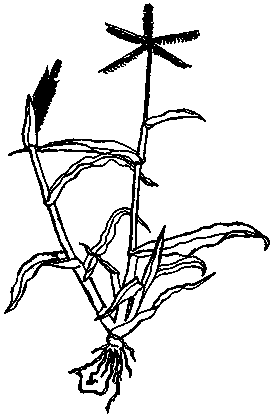
Figure
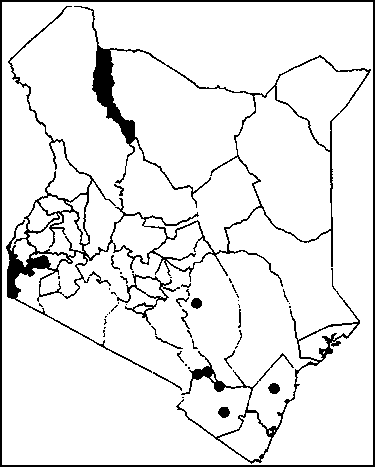
Figure
Dialium holtzii Harms
Caesalpiniaceae (Fabaceae)
Giriama: Mtsumbwi Swahili: mpepeta
Description: Tree to 20 m. Crown with a medium spread. BARK: Grey-brown, smooth. FLOWERS: Cream. FRUITS: Dark brown with a brittle outer coat. Pulp red, enclosing 1-2 nearly round brown seeds.
Ecology: Grows along the east African coast from Kenya through Tanzania to Mozambique. In Kenya only in the coastal region, especially towards the Tanzanian border in moist lowland forest, 0-100 m in coastal limestone sandy soils. Zones I-III.
Uses: FOOD: Fruit edible (++). The dry pulp has a sweet, acid taste. Often used on porridge.
OTHER: Wood used in construction and as fuelwood.
COMMERCIAL: Ripe fruits occasionally sold in coastal towns.
Management: Propagated by seeds.
Season: Flowers in November-December. Fruits in March-April.
Status: May be locally common.
Remarks: Fruits may keep for over 2 years.
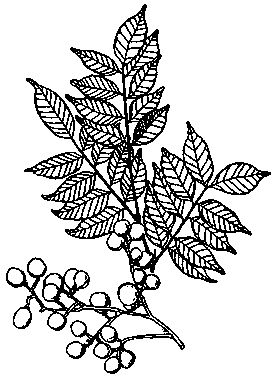
Figure
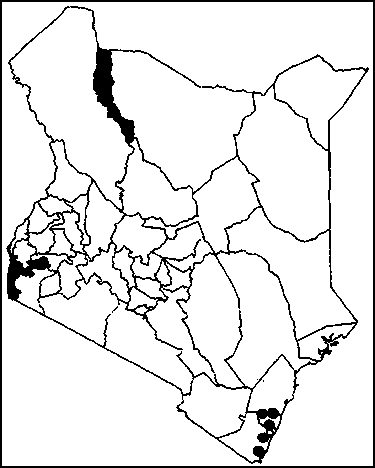
Figure
Dialium orientale Bak. f.
Caesalpiniaceae (Fabaceae)
Boni: sheshubla, shishobli Chonyi: mtsumbwi, mutsumbwi Giriama: mtsumbwi, mutsumbwi Kambe: mtsumbwi, mutsumbwi Sanya: shoshobli, shusholwe Somali: frim Swahili: mpepeta, mpekechu
Description: A spreading, often multi-stemmed, shrub or small tree usually to about 5 m, rarely to 15 m. Branches drooping, occasionally touching the ground. BARK: Smooth, grey. FLOWERS: Cream or yellow-green, in dense panicles. FRUITS: Reddish brown with a thin dry brittle shell enclosing a dry red pulp. Seeds 1 or 2, grey-brown, smooth, shiny, enclosed in a thin soft membrane.
Ecology: Grows along the east African coast from southern Somalia to north-eastern Tanzania. In Kenya only in the coastal area: Kwale, Kilifi, Tana River and Lamu, in dry coastal forest, in Brachystegia, Afzelia, Manilkara woodland, and in coastal riverine vegetation, 0-100 m. Sandy or alluvial soils. Zones II-IV.
Uses: FOOD: Fruits eaten raw and have a sweet acid taste (+++). The outer shell is easily detached, the pulp sucked (membrane covering the seed is eaten too) and the seed discarded. Good when used as a snack. The fruit pulp is used for flavouring porridge and may also be made into a juice.
OTHER: Wood is used for dhow ribs and building poles. Fuelwood.
COMMERCIAL: Fruit sold in Malindi town.
Season: Fruits in March-April.
Management: Propagated by seed sown directly on site.
Status: May be locally common in the Coast Province.
Remarks: Fruits may keep for over 2 years.
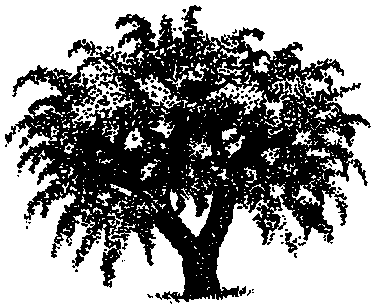
Figure
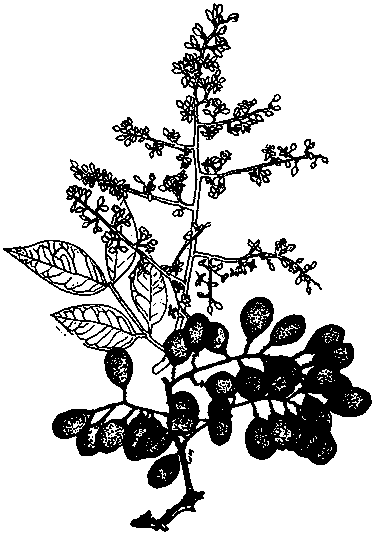
Figure
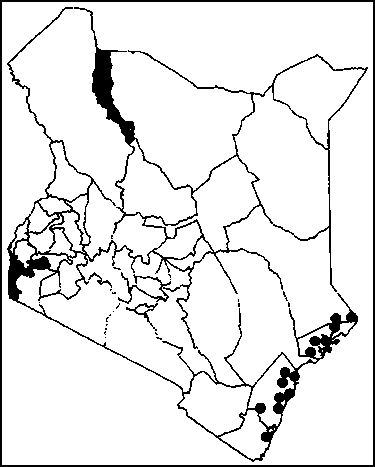
Figure
Digera muricata (L.) Mart.
Amaranthaceae
syn: D. angustifolia Suesseng.
Borana: getgedaan, galgethoom (Bubissa) Daasanach: bal-burach Gabra: gelgedaana Giriama: kigulukimwenga (var. patentipilosa) Kamba: walange Maa: enoonkoroi (magadi road), enoonkori Pokot: kaprimet, cheriyan, chererayan, chekirio Rendille: gey-gidhan, giddan, giddan-ki-dahan Samburu: lorumcheria, idooge (Mathews Range), ndukee Taita: mhale, mbalu Turkana: ekoromomwae, ekoromwae, eosin-aikenyi (katilo)
Description: Erect herb usually 0.7-1.3 m high with numerous straight thin branches, some arising from just above ground level. LEAVES: Usually narrow and up to 6 cm long, apex pointed. FLOWERS: Small, pink to white, borne on a long slender inflorescence.
Ecology: Found in Uganda, Tanzania, Sudan, Ethiopia, Somalia, Socotra and in Asia (ssp. muricata). All over Kenya in dry bushland, grassland, forest edges and hillsides. Most common in dry low-lying areas in grassland, flood plains, cultivated land and disturbed areas, especially towns, 0-1,500 m. Commonest below 1,000 m. Varied soils: alluvial in flood plains, sandy loam to red clay. Mainly in Zones V-VI, but var. patentipilosa in Zones III-IV.
Uses: FOOD: Leaves and young shoots used as vegetable (Pokot, Turkana, Giriama, Digo, Kamba) (+++); flower base contains nectar sucked by children (Rendille).
OTHER: Fodder, especially for goats and sheep.
Status: Locally very common.
Remarks: Two subspecies occur in Kenya:
· ssp. muricata with outer tepals (sepals and petals) closely (7-12) veined, and· ssp. trinervis C. C. Townsend (outer tepals not closely (3-5) veined). The former is found at the coast and probably introduced. Ssp. trinervis has three varieties:
- var. trinervis the commonest of the three found all over Kenya- var. macroptera C. C. Townsend almost as widely distributed and closely resembling var. trinervis
- var. patentipilosa has ovate leaves with prominent veins underneath and a short spike. It is found at the coast and is much used by the Giriama. This last variety has large leaves and great potential for domestication.
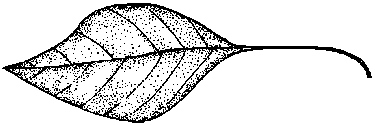
Figure
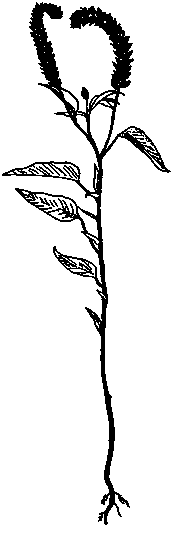
Figure
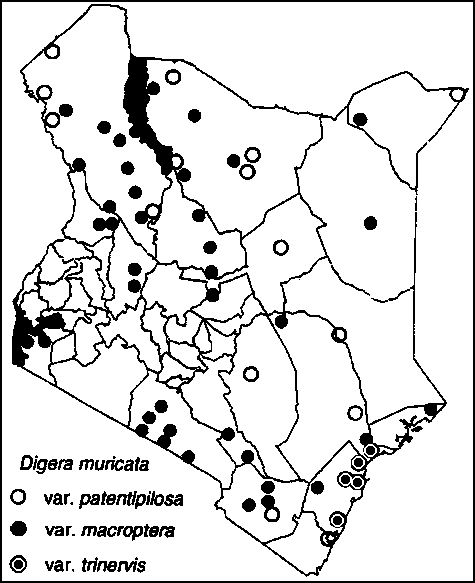
Figure
Dioscorea bulbifera L.
Dioscoreaceae
English: potato yam, air potato Giriama: mutokera Luhya (Bukusu): liliakhunyu Luhya: litugu, lirungu Luhya (Maragoli): litugu, liruku Luo: oruka, oroko
Description: A twining dioecious plant. Underground tubers elongate or nearly round and irregular, occasionally absent. Aerial tubers (bulbils) up to 7 cm in diameter, brown, rounded or angular. LEAVES: Alternate with a long petiole, heart-shaped, narrowing towards the apex. FLOWERS: Pink-white, borne on long inflorescences arising from the leaf axils. Male up to 4 per axil and up to 10 cm long. Female up to 3 per axil and up to 30 cm long. FRUIT: A dry capsule to 2 cm long.
Ecology: Tropical Africa (including West Africa), Asia, Pacific islands. Cultivated in western Kenya. High-rainfall lowland and mid-altitude rain forest, wet woodland, swamp and stream edges. Zones I-III.
Uses: FOOD: Aerial tubers roasted or boiled like sweet potatoes (Luhya, Bukusu). Often soaked for about two days in cold water to dissolve out poisonous compounds.
FOOD/MEDICINAL: Boiled tubers peeled and given to children as a cure for measles. Often maintained traditionally in gardens for this purpose (Luhya).
Management: Grown from the mature bulbils. New shoots may also grow from the rootstock. In poor soils it should be planted with manure if possible.
Status: Very rare, probably entirely absent in the wild. The cultivation of this crop in Kenya has declined considerably in recent years.
Remarks: Two varieties are distinguished in Kenya:
· the cultivated var. anthropophagorum (A. Chev.) Summerh. with reduced or absent underground tubers and angular edible aerial tubers· the wild var. bulbifera has no underground tuber but has rounded aerial tubers; it is reportedly poisonous.
· var. sativa with edible tubers is an Indian variety.
The yams belong to the family Dioscoreaceae, a group of plants which, like the grasses, have one cotyledon (monocotyledons). There are about 600 species in the genus Dioscorea distributed over the tropical and subtropical parts of the world. They are generally dioecious twining climbers, often prickly and arising from a tuberous rootstock. Yams are known for their tubers which may be underground or up on the stem (aerial). The yam tuber is the storage organ for the plant and is the edible part. Many of the species, however, do not have edible tubers.
Yams are cultivated throughout the tropics, especially in South-East Asia, Central and West Africa and in South America. In West Africa they are an integral part of the culture. D. bulbifera, a native species in East Africa and a traditional crop of the Luhya, has long been cultivated in Africa and Asia. Some other species of edible yams cultivated in East Africa include the West African yams (D. cayenensis or yellow Guinea yam) and they are cultivated in Uganda and probably in western Kenya too. D. alata (white yam, originally from India) is also cultivated in Uganda and Tanzania but reportedly not yet in Kenya.
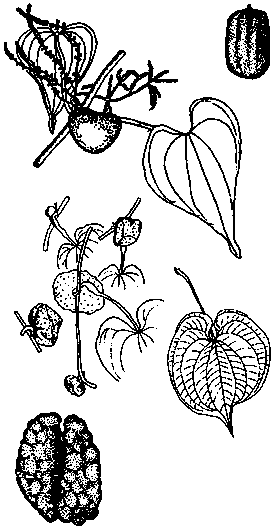
Figure
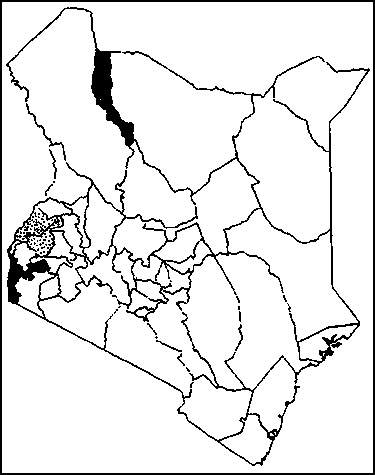
Figure
Dioscorea dumetorum (Kunth) Pax
Dioscoreaceae
Boni: digi Giriama: mariga Maa: ol-oibare bare Swahili: maringa, kiazi kikuu, vigongo, kikwa, ndiga, mariga Taita: mako
Description: A twining prickly dioecious plant. Underground tubers lobed, often intertwined among roots. LEAVES: Long-stalked, divided into three leaflets, rather rough above, light green and softly hairy below. FLOWERS: Inflorescences long and pendulous, to 20 cm, often branched, dirty white, woolly. FRUIT: A winged capsule to 3 cm long.
Ecology: Grows from Ethiopia and Somalia west to Senegal and south to South Africa. Found in Kenya in the coastal region and in adjoining areas, 0-1,650 m. Cultivated to a small extent outside Kenya. In the wild at edges of low evergreen forests, coastal bushland and Brachystegia woodland. Commonly found on deep sandy soils. Zones II-V.
Uses: FOOD: Tubers eaten like potatoes (++), and used as a famine food (Boni (Tana River), Giriama). Tuber roasted like the cultivated yam. A most important wild tuber but requiring careful preparation as it may be poisonous. Tubers are normally peeled, soaked and washed before cooking. This eliminates the poisonous compounds normally concentrated in the latex. In southern Sudan the tubers are boiled and soaked for three days before being eaten. Tubers are peeled, sun-dried, ground into flour and made into stiff porridge, sima (Digo).
MEDICINAL: Dried and ground roots mixed with water are used to cure bilharzia.
Remarks: In Tanzania the root is reported to have caused vomiting followed by death when eaten raw.
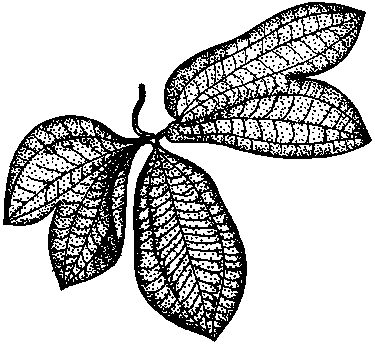
Figure
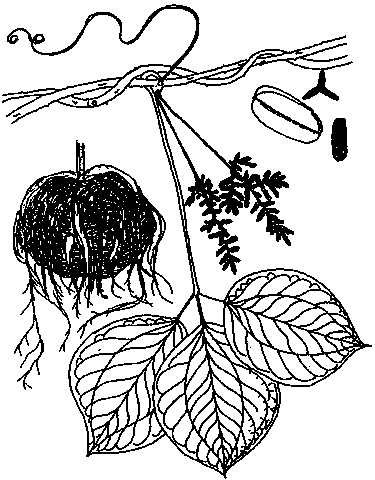
Figure
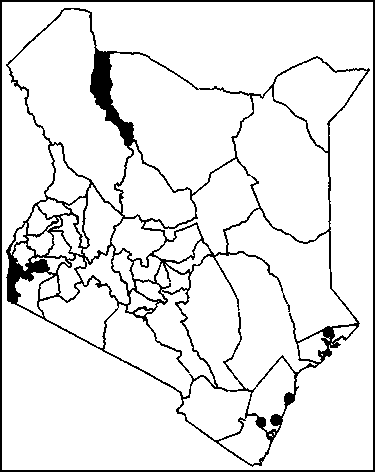
Figure
Dioscorea minutiflora Engl.
Dioscoreaceae
Embu: gikwa, ikwa (plural) (tuber) Kamba: kikwa Kikuyu: gikwa Kisii: chinduma (plural), enduruma (singular) Luhya (Bukusu): litolotolo Luhya (Maragoli): kihama Luhya (Tachoni): litolotolo (plural) Meru: rukwa, gikwa (tuber), Sabaot: musapchet, mucukwet Swahili: kiazi-kikuu, viazi-vikuu (plural)
Description: A prickly twining perennial, dioecious plant. Stems slender, prickly, arising from a tuberous root. Tubers reddish brown, up to 40 cm long with several finger-like projections. Found 20-50 cm below the soil surface. LEAVES: Usually opposite, often heart-shaped with a pointed apex. FLOWERS: Male numerous, borne on a cluster of up to 10 short stalks on either side of the leaf node. Female borne in pairs on flower stalks which are longer than those of the male, up to 15 cm or more and resembling "hair pieces". The two flower stalks are opposite each other at the leaf node. FRUITS: Winged, rare.
Ecology: Grows wild from Uganda west to Senegal and south to Angola, but not in Kenya. Cultivated in Kenya especially by the Kikuyu, Embu, Meru (previously by the Kamba) and by some communities in Tanzania and Uganda. In the wild it is common at the edges of tropical forest where it twines to great heights on other plants. In cultivation the plant is found in humid areas with deep, well-drained soils. Mostly does well in deep fertile red soils. Common at 1,500-2,400 m in areas with more than 700 mm rainfall. Zones II-IV.
Uses: FOOD: The tubers are eaten either roasted, boiled or fried. Tubers for roasting require no peeling and are the tastiest. Yams may be fried with other types of tubers like Irish potato. D. minutiflora has a dry consistency with an appealing taste. Tubers are much relished by old people. Damaged or bruised tubers do not keep for long.
COMMERCIAL: Tubers are occasionally sold in Nairobi and Central Province. They are generally more expensive than other types of tubers.
Management: Many types of yams are propagated vegetatively. In Central Province, among the Kikuyu, D. minutiflora is propagated by use of the hard, much-branched stem base (ihindi, meaning bone), from which the tubers arise. Portions of the stem base are chopped off. The pieces may keep for a month or more. Preferably the soil should be mixed with manure. Planted pieces take 3-5 weeks before sprouting. As the stems are weak they should be supported by strong, tall stakes to give the plant more space for climbing and to enable more light to reach the leaves. Better still, the yam can be planted near an existing large tree on which it can twine. Traditionally the Kikuyu, Embu and Meru plant D. minutiflora along with cuttings of Commiphora eminii ssp. zimmermanii (Kikuyu: mukungugu, Chuka: mutungururi, Embu: mukugugu) for support, and hence the Kikuyu saying, "They are as friendly as the gikwa and mukungugu". Where the soil is not deep or loose, artificial mounds may be created.
Growth is quite fast (up to 1 m a month) and tubers may be harvested after 2-3 years. One plant at the Nairobi Museum that had not been disturbed for almost 20 years gave more than a 60-kg sack of yams!
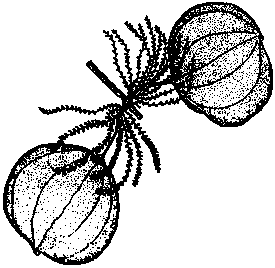
male flowers
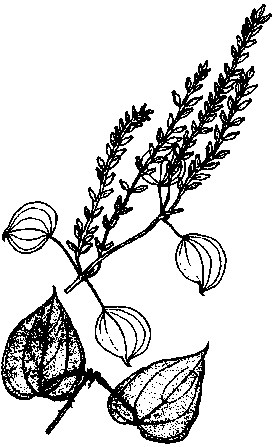
female flowers

Figure
The yam can be intercropped with other common crops like maize, beans and Irish potatoes. They can also be planted just outside crop land where they will not inconvenience other activities. They should be grown on deep-rooted trees to avoid competition.
Remarks: The most commonly used yam in Kenya; at one time widely used by the Central Bantu. But its use as food has declined rapidly in recent decades. It is now a rare crop, almost invariably maintained by elderly women as a matter of tradition in their small shambas.
Also referred to as "yam" in Kenya is Colocasia esculenta (L.) Schott (Araceae), syn. C. antiquorum Schott (English: cocoyam, taro, Swahili: nduma, Kikuyu: nduma, matuma (leaves), Kisii: enduruma (singular), chinduma (plural), Kamba: nduma, Embu: nduma, ituma (singular), Luhya (Bukusu): litolotolo, Mbeere: nduma, Meru: nduma, matuma, ituma (singular)). This is the root crop erroneously referred to as arrow root in Kenya. The starchy corms, which may have a black or greyish cover, are much liked, especially for breakfast. The leaves are also used as a leafy vegetable as a side dish (mboga) and for mashing with traditional food (kienyeji, Kikuyu, Kamba). Cocoyams are native to Asia and the Pacific islands. They are propagated vegetatively by planting the top of the corms (the stem base) in valley bottoms, along streams and where waste water collects. C. antiquorum was until recently treated as a distinct species but now it is considered a variety of C. esculenta. Var. antiquorum (Schott) Hubb. & Rehder is the commonest variety in Kenya; var. esculenta is distinguished by the presence of numerous smaller corms in addition to the main one. The earliest forms to be cultivated by the central Bantu had small, less tasty corms that left an itchy sensation in the throat (Kikuyu: nduma-ya-mwanake) after eating them. Nowadays, these are rare as they are rapidly being replaced by the larger tastier cultivars.
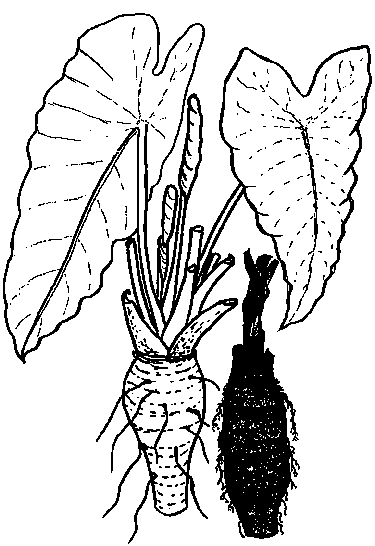
Colocasia esculenta
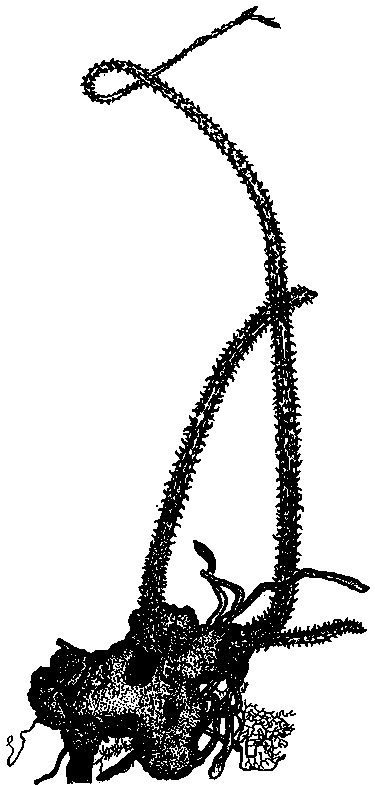
Dioscorea minutiflora sprouting shoot
Dioscorea minutiflora tuber
Diospyros mespiliformis A. DC.
Ebenaceae
Digo: mbara, mkulu English: african ebony, jackal berry Giriama: mkulwe, mkuluye Kambe: mkulwe Luo: chumo, chumu Malakote: mokowlo Mbeere: mukoro Meru: muroko Orma: kolati-gurati Somali: korati (Tana River), kolati Swahili: msindi, mgombe, mkadi, mpweke, mgiriti Taveta: mugongolo Teso: ekum Turkana: egum, egumoit
Description: An evergreen tree to 30 m or more. Crown usually narrow (occasionally spreading), dense with drooping smaller branches. BARK: Greyish black, longitudinally fissured or scaly. LEAVES: 4-14 cm long, shiny, entire, leathery, alternate, elliptic to oblong, midrib prominent below. FLOWERS: Bell-shaped, white, dioecious, sweet smelling. Male flowers clustered, female solitary or up to 3. FRUIT: Round or nearly so, smooth with tough glossy skin, up to 3 cm in diameter, yellow to yellowish brown when ripe, clasped by persistent calyx and with a persistent style. Seeds up to 6, brown.
Ecology: An evergreen tree of medium-to-low altitudes, in West, East and southern Africa. Found in Kenya near watercourses in dry bushland, on lava flows in semi-evergreen thickets and rocky hillsides, especially in gullies, 0-1,500 m. Zones IV-VI.
Uses: FOOD: Ripe fruit sweet, eaten raw (Digo, Turkana, Taita, Embu, Mbeere) (+). Seeds may be eaten or discarded. Fruits are collected in bulk and a kind of porridge made from them and drunk in times of famine (Mbeere).
OTHER: Shedding of old leaves seen to signal the coming of the rainy season (Mbeere). Hanging beehives (Mbeere). An excellent source of timber. Wood hard, heavy, very durable even in damp conditions, termite-resistant; sapwood cream-white, heartwood yellowish pink, darkening on drying and with age. Timber used for wood carving and for furniture.
Status: Uncommon and depletion high.
Remarks: Many other Diospyros species have edible fruits. Good examples are:
· D. consolatae Chiov. (Mbeere: mutoroma, Giriama: mbat'the, Sanya: kararacha) and· D. squarrosa Klotzsch (Giriama: mpweke, Kambeere: mpweke, Swahili: mpweke, Chonyi: mpweke, Sanya: mpweke) with a slender trunk and a flaking black bark. Young parts hairy (pink). Common in the Coast Province.
· D. scabra (Chiov.) Cuf. has edible fruit but they are rarely eaten (Daasanach). Common along luggas in northern Kenya. Wood very hard. Made into sticks used for planting sorghum (Daasanach).
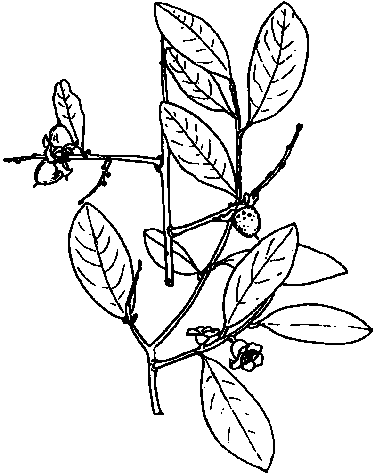
Diospyros consolatae

Figure
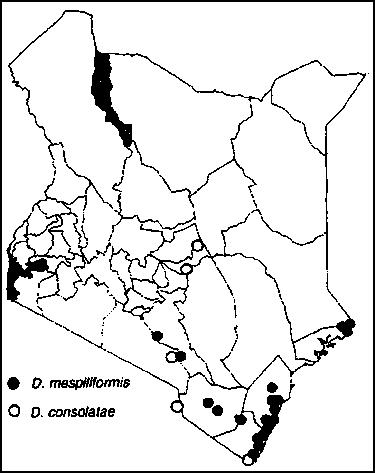
Figure
Dobera glabra (Forssk.) Poir.
Salvadoraceae
Borana: garse Chonyi: mkuha Daasanach: kadite, kada (plural) Giriama: mkuha Kamba: kisiu, kikaitha (Kitui) Kambe: mkuha Malakote: mokopa Marakwet: koros (plural), korosion (singular) Orma: gashir Pokomo: mukuha Pokot: keresion, korosion Samburu: serr-i, n-daaruma Somali: garas, garso Swahili: msega, mswaki Tharaka: mungaritha Turkana: edapal
Description: Evergreen tree usually 4-7 m high with rounded or spreading low crown. Bark dark grey, almost black or light grey, smooth or nearly so with reticulation giving it a false rough appearance. Leaves opposite, simple, entire, dark green or grey-green, ovate to almost round with a fleshy appearance. Flowers greenish white, fragrant. Fruit green, wrinkled, oval, turning yellow-orange when ripe.
Ecology: Widespread in East and north-east Africa. Also in India. In Kenya common at the coast, Kitui and northern areas in dry bushland, often near watercourses and places with a high groundwater-table in rocky or sandy soils, less often on clay soils. Zones IV (coast)-VII.
Uses: FOOD: Fruit pulp eaten raw (+). Cotyledons eaten when cooked (++). Preparation: The fruit and seed covers are removed, usually by pounding. The bean-like cotyledons are boiled for 3-4 hours during which water is replaced 4-6 times (Pokot, Turkana, Tugen, Marakwet, Daasanach). Ash or a salty extract from a type of soil (ngeny) is added towards the end of the process to improve the taste (Pokot). Dried cotyledons may be stored for more than a year. The fruit ripens during drought, thus making it particularly useful as a source of food. Gum from the tree eaten in Mandera (Somalia).
MEDICINAL: Boiled root infusion given to a mother after birth to prevent fainting. Leaves pounded, soaked in cold water and solution used as drops for eye disease (Samburu).
OTHER: Wood used as fuelwood and in construction of huts (Tharaka, Pokot, Turkana). Wood used to make mortars (Giriama), watering troughs, taker (Pokot), containers (Somali, Mandera). It is, however, soft. Smaller branches used as toothbrushes (Giriama, Pokot, Somali, Turkana); camel and goat fodder (+++); a good shade tree (+++).
CULTURAL/BELIEFS: A ceremonial tree and meeting place (Pokot, Baringo). Leaves are burnt in ceremonies, for sick cattle, for protection during battles and against wild animals, and by young girls before circumcision (Pokot).
COMMERCIAL: Boiled cotyledons sold in Lodwar town.
Management: Propagated by seeds which are best sown directly on site. Seeds lose viability rather quickly. A very slow-growing tree. Coppices well.
Status: Uncommon but may be very common locally.
Remarks: A related, almost indistinguishable (and probably the same), species is D. loranthifolia (Warb.) Harms. (Chonyi: mkuha, Orma: dende, Swahili: msega, mswaki, Giriama: mkuha, Kamba: kisiu). A medium-sized tree with a rather spreading crown. LEAVES: Grey-green, leathery. BARK: Corky, longitudinally fissured, flaking off in small patches. FLOWERS: White. FRUITS: Oval, wrinkled, yellow-green on ripening. Fruits are used in the same way as those of D. glabra and the other uses are more or less the same. Distribution: Kenya, southern Somalia, Tanzania, Mozambique. Altitude: 0-800 m.
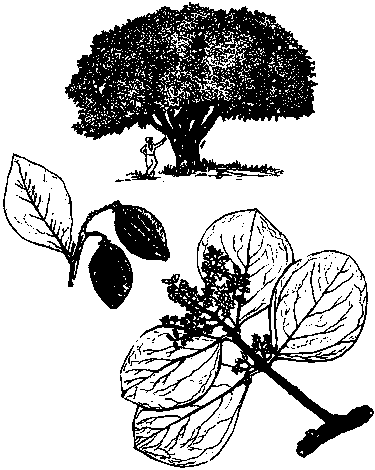
Figure
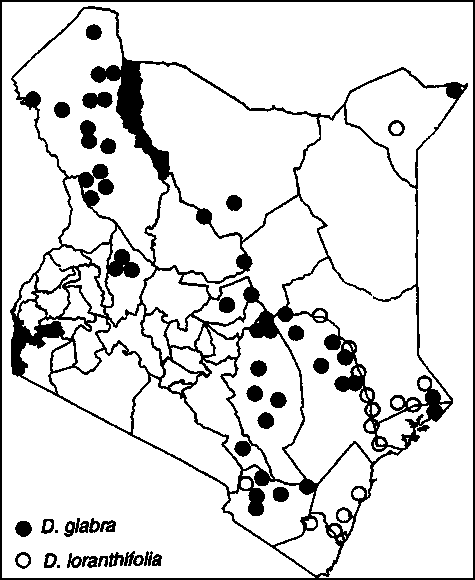
Figure
Dovyalis abyssinica (A. Rich.) Warb.
Flacourtiaceae
syn: Aberia abyssinica Clos
Borana: kurawa Chonyi: dungatundu (fruit), mdungatundu Giriama: mdungatundu, dungatundu Kamba: mukambua, ngambua (fruit) Kambe: dungatundu (fruit), mdungatundu Kikuyu: mukambura, ngambura (fruit) Kipsigis: nukiat, mwokiot Kisii: omokorogunywa, omokorogoinwa Luo: akutho, songola Maa: olmarogi, olmorogi, ilmorok (plural) Marakwet: mendililwo, bapchebilil Mbeere: muraga Meru: muro Nandi: nokok Pokot: mintirilwo, karaturwa, Sabaot: mundililwet Samburu: lmoroo Sanya: mkidonyathi Taita: mbuche
Description: Spiny shrub or small tree, often 2.5-5 m but occasionally reaching 9 m. BARK: Ash grey, almost always supporting lichens. Branches armed with stout spines. LEAVES: Shiny, alternate, entire or undulate. Petioles and veins often red. FLOWERS: Dioecious, female solitary, male often clustered, green or pale yellow, faintly sweetly scented. FRUITS: To 2 cm in diameter, light green turning yellow or orange on ripening.
Ecology: Grows in Uganda, Tanzania, Ethiopia, Somalia, Malawi and Socotra. In Kenya on Mt Kulal, Nyambene Hills, Taita Hills, Central Kenya highlands, Loita Hills, Rift Valley highlands at forest edges, 0-2,700 m. Common on red soils. Zones II-IV.
Uses: FOOD: Ripe fruit eaten raw, but very acidic. The thin fruit cover may be peeled and the fruit, together with the seeds, eaten. They are excellent for making jam and for souring porridge.
FOOD/MEDICINAL: Roots boiled in soup (Kikuyu).
MEDICINAL: Root decoction taken with fat for cure of gonorrhoea (Maasai, Narok). Roots used for bilharzia (Kikuyu), stomach-ache and fever.
OTHER: Used for fencing (Samburu). Fodder for goats and sheep. Thorns used for piercing ears (Giriama).
COMMERCIAL: At one time fruits were sold in some local markets.
Status: Uncommon.
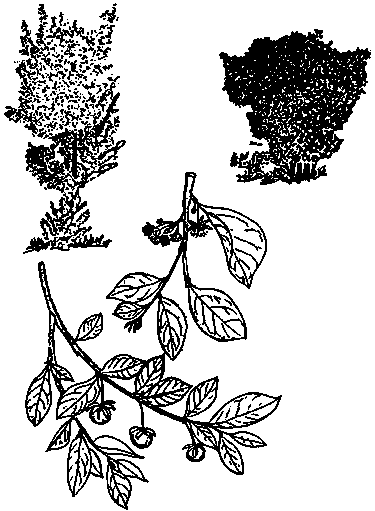
Figure
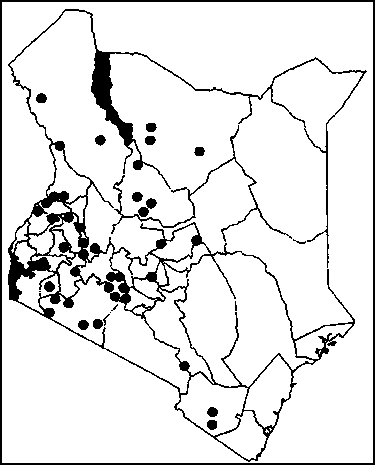
Figure
Dovyalis macrocalyx (Oliver) Warb.
Flacourtiaceae
syn: Aberia. macrocalyx Oliver
Giriama: munyhee, munyee Luhya (Bukusu): kumusongolomunwa, busongolomunwa (fruit) Maa: enkoshopini, olaimurunyai Nandi: kaptowinet Pokot: chuchwenion, chuchween (plural)
Description: A spiny shrub 2-4 m high, less often a tree 6 m high. Spines narrow, long, up to 6 cm or more. LEAVES: Ovate, entire. FLOWERS: Male in clusters. Female solitary, in leaf axils. FRUITS: Up to 2.5 cm long, oval, bright red with a persistent beautiful greenish yellow calyx.
Ecology: Grows in Uganda, Tanzania, including Zanzibar and Pemba, Sudan and south to Angola and Zimbabwe. In Kenya, e.g. along the Mara River, in Uasin Gishu, West Pokot and Kisumu in forest, forest edges or riverine, 0-2,600 m. Common in deep red soils. Zones I-IV.
Uses: FOOD: The ripe bright red fruit are edible (Pokot, Marakwet, Maasai, Kipsigis, Nandi). Sour with a slight sweet taste.
Status: Occasional.
Remarks: Many other Dovyalis species have edible fruit but are often quite acid in taste. One good example is the southern African D. caffra (Hook. f. & Harvey) Warb. (Kisii: chinkongonywa, ekayaba, Kamba: kaiyava, Embu: rweso) commonly known as Kei apple and widely planted as a hedge in Kenya.
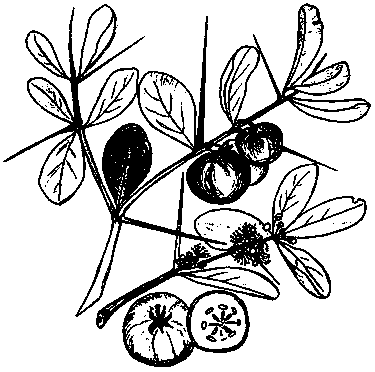
Dovyalis caffra
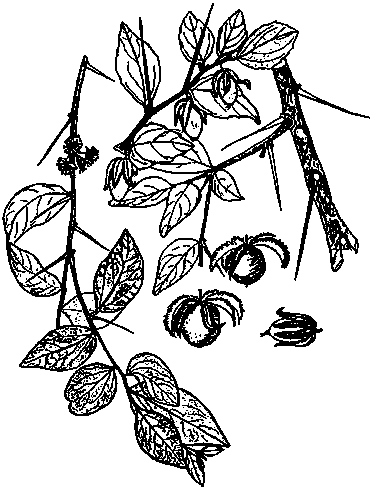
Figure

Figure
Eleusine coracana Gaertn.
Gramineae (Poaceae)
Chonyi: wimbi Embu: ugimbi English: finger millet Kamba: uimbi Kambe: wimbi Keiyo: kipsongik Kikuyu: ugimbi, mugimbi Kisii: obori Luhya: obure Luhya (Bukusu): bulo Luhya (Isukha): vule Luhya (Marachi): obule Luhya (Maragoli): voro, boro Luhya (Tachoni): obure, obul, bulo, obule Luo: kal Maa: oloikimbi Meru: ugimbi Nandi: kipsongik Pokot: matagh, mataighio (singular) Sanya: wimbi Swahili: wimbi, mwimbi Teso: akima Tharaka: ugimbi
Description: A grass usually 0.5-1 m high. FLOWERS: Head dirty green and branched into 5-7 spikes (fingers) usually 5-10 cm long. FRUITS: Grain usually reddish brown, dark brown or occasionally cream.
Ecology: In Africa found in cultivation from Nigeria east to Eritrea and south to South Africa and Namibia. Northeastern Africa is considered the centre of origin of this crop.
A traditional crop of many communities in Kenya, but nowadays grown to a relatively smaller extent than before. Still a major crop among the Kuria, Ilchamus, West Pokot District, Tugen and Marakwet, 0-2,400 m. Requires fertile soils and 650-1,000 mm well-distributed rainfall. Zones II-IV.
Uses: FOOD: The grain is normally made into flour used for the preparation of uji (porridge) and ugali (stiff porridge). It is often mixed with sorghum or maize in these preparations. Sour milk and melted butter are added to ugali made from finger millet and this is wrapped in new banana leaves and eaten by warriors (Luo). Flour and grain are also used in local beer brewing, especially among the Luo, Kuria and Luhya. Among the Luo, the seeds are germinated and dried (thowi), ground and put in water for 4-7 days to ferment. Fresh flour is put in water for a day or two and fried in balls (mbare). The two are mixed and left for about three days to ferment. The resulting brew is drunk through long hollow sticks called oseke tipped with a filter. Finger millet has been cultivated in Kenya since ancient times and is a traditional food for many communities, especially Keiyo, Marakwet, West Pokot, Tugen, Giriama, Taveta, Teso, Luo, Luhya, Kisii, Kikuyu, Ilchamus, Embu, Taita, Kuria, Kamba. Its use as a food is closely integrated in the traditional customs of many communities.
COMMERCIAL: Grain and flour are sold throughout the country. Now common in major food stores in towns.
Management: Traditionally sown by broadcasting. It can also be sown in lines, especially when intercropped. Finger millet requires fertile soil and is normally associated with shifting cultivation. It is less susceptible to bird attack than bulrush millet. Harvesting: Individual heads are cut and spread out to dry in the sun. These are threshed, winnowed and the grain stored. This grain can keep for over ten years. This ability to keep for a long time made it an important famine food in the olden days.
Remarks: Like many of the traditional grains, the cultivation and utilization of finger millet has declined in recent years. This may be attributed to:
· Low yields compared to maize. The latter has thus superseded finger millet where it used to be grown.· Tedious traditional methods of preparing the grain.
· Not many people are used to eating it nowadays (mainly due to neglect). This has reduced demand and the market price for the grain. More recently, however, packaging and availability of the flour in shops and supermarkets has helped boost consumption in towns.
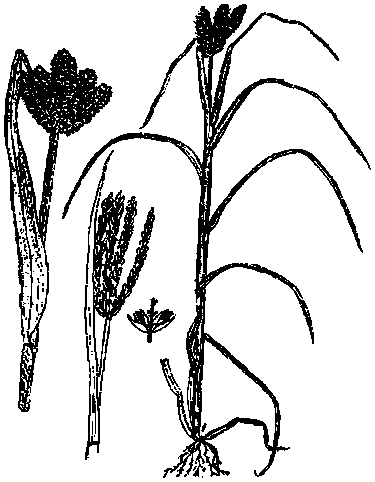
Figure
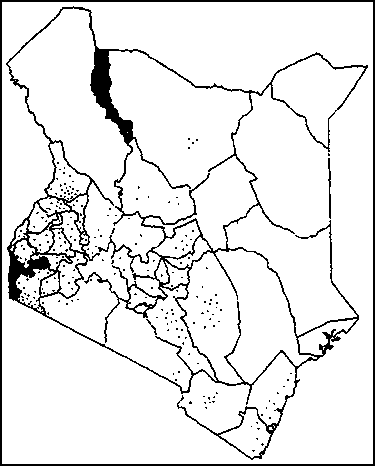
Figure
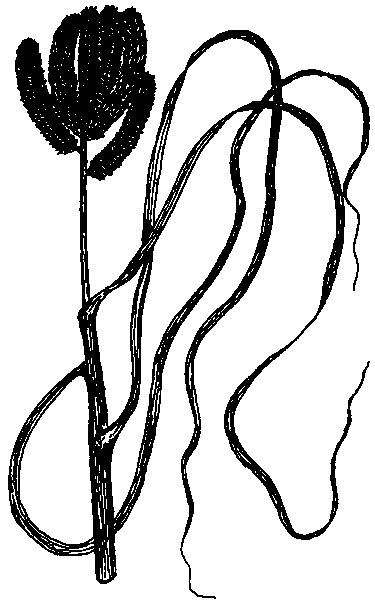
Figure
Eragrostis tef (Zucc.) Trotter
Gramineae (Poaceae)
Borana: tafi, thafi English: teff Gabra: tafi
Description: A small grass usually to 0.6 m high. FLOWERS: Inflorescence white or brown. FRUITS: Seeds small, ovoid, about 0.5-1.0 mm long, brown or white (cream) in colour.
Ecology: Teff is an almost exclusively Ethiopian cereal but in Kenya it is popular among the Boran groups and people of Ethiopian origin. Grows wild and also widely cultivated in the Ethiopian highlands. Occasionally cultivated on a small scale in the Marsabit and Moyale highlands, 1,000-2,500 m (in Kenya). Rainfall: 650-900 mm. Introduced further south for experimental purposes in agricultural research stations (Katumani, Kitale, Muguga). Also introduced in Lesotho and South Africa as a fodder crop.
Uses: FOOD: A traditional grain crop of the Oromo groups of people including the Boran. Grain is ground to flour (traditionally, stones are used for grinding) which may be used in the preparation of an Ethiopian bread (known as injera in Ethiopia and anjera by the Boran), porridge and cakes. Injera is made by fermenting dough for about three days. A handful of the fermented dough is put in hot water which is then used to prepare more dough. This is poured on a large hot plate up to 60 cm across and a pancake made. Anjera (Boran) is served with meat stew (often spiced) or vegetables on large, shallow plates. The grain may be eaten alone. There is a cream type of grain and a brown type which has a similar but slightly bitter taste.
COMMERCIAL: Grain and flour are traded locally in northern Kenya. The cream type is tastier and more valued than the brown. The grain is sold in the purely brown or purely cream forms but mixtures with varying proportions of the two are more common, the price charged being a reflection of the ratio of the two.
Management: In Ethiopia, land is ploughed up to three times between April and August. Seeds are usually sown by broadcasting but may also be sown in lines. Harvesting is done in November-December. Weeding is usually done once. The two cultivars (cream and brown) are hard to separate once mixed. For this reason the grain is often seen in varying mixtures of the brown and the cream seeds. Harvesting: Traditionally the grain is cut from the field and spread in a clean, usually round, clearing. The grain is separated from the heads on the stalks by driving oxen several times over the pile. Forked sticks are used to remove the stalks. The seeds are separated from the chaff by winnowing (usually with a wooden spade).
In Ethiopia teff is grown only once in a year. Heavy rain, especially when the grain has formed, spoils the teff. This, together with frequent droughts, has been a main cause of the famines in Ethiopia in recent years.
Remarks: Teff is an old and locally important crop of the Ethiopian communities but little known outside the country. Injera is the staple food of some communities, especially in north-western, central and southern Ethiopia. It is a common food in Ethiopian restaurants throughout the world.
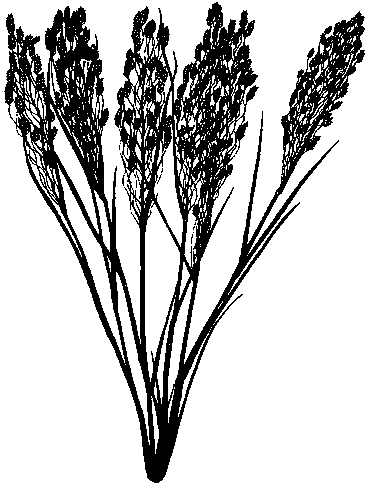
Figure
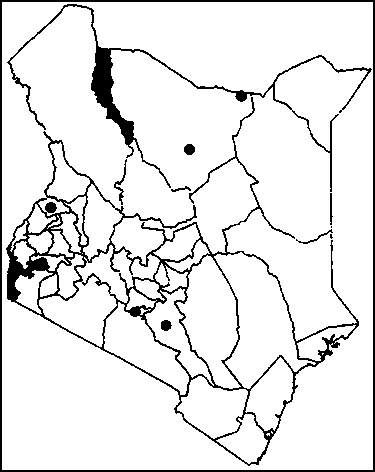
Figure
Eriosema shirense Bak. f.
Papilionaceae (Fabaceae)
Kamba: ng'athu Maa: enkaikuinyoi (Loita)
Description: Small erect herb to 30 cm high, normally single stemmed (remains of older stem may be present) and arising from a chain of tubers formed from enlargements at intervals along the taproot. Tubers one to several, surface brown or grey, white inside, usually found 10-25 cm below the soil surface. LEAVES: Long, hairy. FLOWERS: Yellow with dark purple lines. FRUIT: A broad hairy dark-brown pod to 1.5 cm, shrivelling after dehiscing.
Ecology: Apart from Kenya, it also grows in Uganda, Tanzania, Malawi, Cameroon, Rwanda, Ethiopia, Zimbabwe and Angola. In Kenya, e.g. in the Kitui hills, Loita hills, Thui Hill, northern Kyulu and Kilungu hills. Bushed grassland, especially on rocky hillsides, 1,400-2,200 m. Mainly in Zones in-IV.
Uses: FOOD: Tubers peeled and eaten (++) (Kamba, Maasai, Kipsigis). Very tasty and said to always leave one longing for more. They are, however, small. Plant often found in rocky areas and hence may be difficult to dig up. Tubers spoiled by rain. Also eaten in Tanzania and Malawi.
Season: Tubers in December-January and June-July in Thika, Machakos and Makueni.
Management: Propagated by seeds. Very specific to certain soil types.
Status: May be locally common though generally rare. Now threatened due to habitat destruction.

Figure
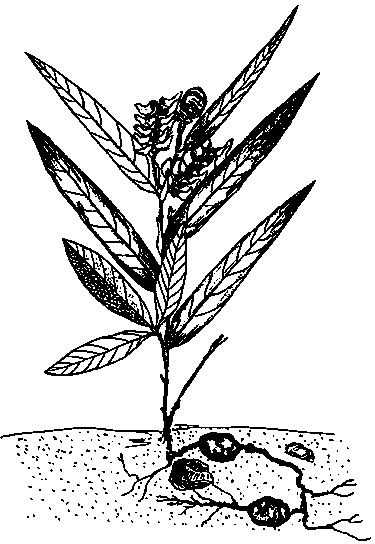
Figure
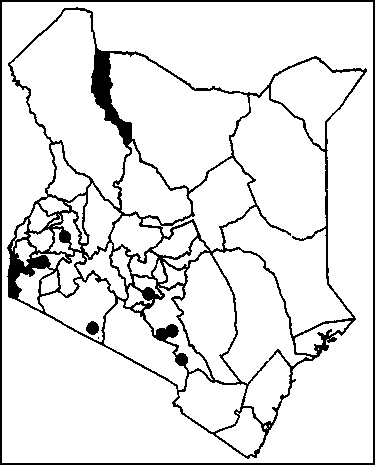
Figure
Erucastrum arabicum Fisch. & Meyer
Cruciferae (Brassicaceae)
Kikuyu: togotia Kipsigis: cheplemindet, chepleminik Luhya: itogotia Luo: nyaner kadhira Maa: enyaro, enyaru, olowon Nandi: nonion, monion Pokot: churukechir Samburu: njunge Somali: gomanza Taita: ngomba Turkana: etilelo, namunio
Description: Annual herb to 1 m high, often less. LEAVES: Slightly hairy, lobed or wavy. FLOWERS: Yellow to cream, borne on long slender shoots. FRUIT: A long slender capsule to 5 cm. Seeds brown, small, round. Fresh roots smell of mashed Irish potatoes.
Ecology: Grows from Arabia, Somalia, Ethiopia and Sudan through eastern and southern Africa south to Botswana and Namibia. Introduced in many other parts of Africa. In Kenya, e.g. on Mt Elgon and in the highlands of central and western Kenya in upland grassland, disturbed places in forests and cultivated land, 0-2,500 m. Most common at 1,500-2,000 m. Zones II-IV.
Uses: FOOD: Leaves eaten as a vegetable (++) (Kikuyu, Pokot, Kamba, Kipsigis, Maasai, Narok).
Status: Locally very common, e.g. in Nairobi.
Remarks: Many Kenyan species of the family Cruciferae (cabbage family) are introduced. As they are often weedy, they tend to escape easily from cultivation. E. arabicum has been introduced as a weed in many regions of Africa and is probably introduced in Kenya too. Other notable genera with members providing leafy vegetables are Brassica and Rorippa. R. nasturtium-aquaticum (L.) Hayek (English: water cress, Kikuyu: mararia) is used as a vegetable by the Kikuyu. It is a trailing herb with pinnate leaves, white flowers and short capsules. Stems root at the nodes. Found in the highlands east and west of the Rift Valley and Nairobi area at 1,500-2,750 m, mainly along streams.
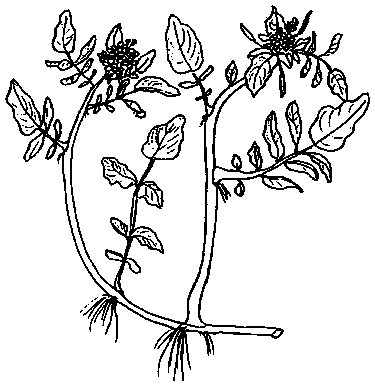
Rorippa nasturtium-aquaticum

Figure

Figure
Euclea divinorum Hiern
Ebenaceae
Kamba: mukinyai, mukuthi, (Mwala-Machakos) nginyai (fruit) Kikuyu: mukinyai, mukinyei Luo: ochol, akado Maa: olkinyei, ilkinyei (plural), osojo (Narok), isojon (plural) Mbeere: mukiinyi, mukinyi Nandi: usuet Pokomo: munyiza Pokot: cheptuya Sabaot: shiendet, uswa, wuswet, cheptuishak Samburu: shinghe, ilchinge, lchinge Taita: m'mbuku Teso: emus Tharaka: mukonde
Description: Evergreen shrub, bush or small tree usually 3-5 m with dense foliage. Bark ash grey. LEAVES: Elliptic, glossy above. FLOWERS: Yellowish white. FRUITS: To 8 mm in diameter, green turning purple-black on ripening.
Ecology: Widely distributed throughout Kenya and most of Africa on rocky hillsides, especially in middle altitudes, 0-2,500 m. Commonest between 1,400 and 2,200 m. In lowlands mainly found near watercourses and areas with groundwater, especially on black soil. Zones II-IV.
Uses: FOOD: Ripe purple-black fruits have a sweet edible pulp (+) (Kamba, Luhya, Kipsigis, Nandi, Kikuyu, Samburu, Pokot, Tugen, Maasai). The edible part is, however, scanty, much of the fruit being seed which is discarded. Fruit leaves a rough feeling in the mouth. Bark is added to soup together with Rhamnus prinoides L. Herit. ol-konyil (Maasai) as an appetizer (Kipsigis, Maasai); also added to children's milk as a tonic.
FOOD/MEDICINAL: The root and bark are made into soup which is taken as a tonic (Maasai, Kikuyu).
MEDICINAL: One of the most important medicinal plants (+++). Roots are boiled with the roots of Croton dichogamus and the decoction used to treat chest pains, pneumonia and internal body pains (Kamba, kati). Root infusion or boiled root (occasionally the bark) extract widely used as a purgative (Luo, Kamba, Tharaka, Nandi). Medicine for spleen (Machakos). Soup made from the bark is taken as a worm medicine (Kamba, Pokot). Boiled root infusion used for stomach-ache (Kamba) and diarrhoea (Pokot, Kamba). Roots chewed for toothache (Kikuyu).
OTHER: Leaves used as sleeping mats for initiates during their period of seclusion (Sabaot). Roots (Kamba, Kikuyu) and bark (Mbeere) sources of dye. Wood hard but usually small, used for building houses and grain stores, handles, walking sticks. Branches used as toothbrushes from which the Kikuyu and Mbeere names are probably derived. Fuelwood (+++), fodder (+), shade (++).
Season: Fruits in August in West Pokot.
Status: Locally common.
Remarks: A closely related species is E. racemosa Murr. ssp. schimperi (E. schimperi A. DC.). This too has edible fruits and is normally used in the same manner. It is also common throughout the country.
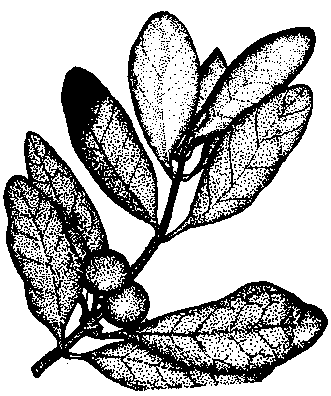
Figure
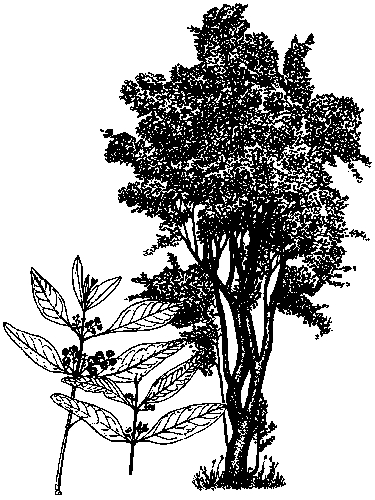
Figure
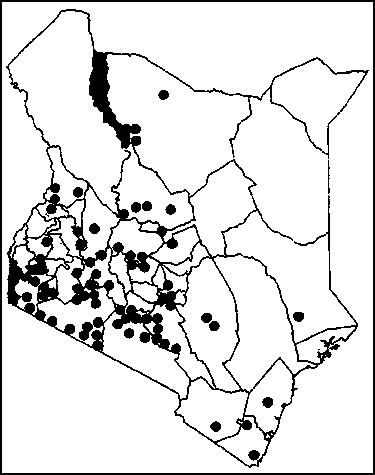
Figure
Ficus sycomorus L.
Moraceae
syn: F. mucosa sensu Dale & Greenway 1961
Borana: oda, woda, od Chonyi: mukuyu Embu: mukuyu, nguyu English: sycamore fig Ilchamus: lnaboli Kamba: mukuyu Kikuyu: mukuyu, nguyu (fruit) Kipsigis: mogoiwet Luhya (Bukusu): kumukhuyu kamakhuyu (fruit) Luhya (Tachoni): omukhuyu amakhuyu (fruit) Luo: olam, odok (Ugenya) Maa: orng'aboli Malakote: mokoyo Marakwet: mokung'ua, mokongwo (singular), makany (plural) Mbeere: mukuyu Meru: mukuyu, mukuu, nguyu (fruit) Nandi: sebetwet Orma: odha Pokot: mokong'wo Rendille: bubunto, ilmo (fruit) Samburu: lng'aboli Sanya: odha Somali: bardah (Tana River), berde Swahili: mkuyu Taita: muku Teso: eborborei, eduro Tugen: lokoitwo, lokoiwo, lokoek (fruit) Turkana: echoke
Description: A large tree to 20 m with an upright branching habit and a dense or open rounded or occasionally spreading crown. BARK: Trunk and branches yellow, orange-red or yellow-green. Bark surface powdery. LEAVES: Rough. FRUITS: Figs to 2 cm across, slightly hairy, borne on small leafless branches.
Ecology: From Egypt and the Middle East to South Africa and Namibia and the Comoro Islands. Widely distributed all over Kenya in riverine vegetation, flood plains and places with a high groundwater-table. In the wetter zones it can be found away from riverine vegetation. Alluvial, sandy or rocky soils, 0-1,850 m. Rainfall: 250 mm (riverine)-l,200 mm or more. Zones II-VII.
Uses: FOOD: Figs fleshy, sweet and eaten raw. Figs are split open, dried and stored, usually in honey (Pokot, Turkana). Dry figs may also be ground into flour which may be stored or mixed with grain flour and used to prepare atap, a type of thick porridge (Turkana). Figs cooked and eaten (Tugen). Figs are only very rarely eaten nowadays; they may occasionally be infested with insects.
MEDICINAL: Sap used for toothache (Kikuyu) and powdered bark infusion for dysentery (Kamba).
OTHER: Beehives (Kamba, Pokot, Turkana). Stools (Kamba). Door frames. Pestles and mortars (Maasai, Kipsigis, Kamba). Bow of a lyre (Turkana, Pokot). Hanging beehives (Pokot). Doors, house building (Kipsigis, Maasai (Narok)). Water troughs, alio, serving bowls, tuwan and perta, and movable doors, tikichon (Pokot, Turkana). Inner parts of bark beaten or chewed into fibre for weaving (Taita). Trunks used in Buganda for making the canoe-like troughs in which beer is made. Good shade tree, hence used as a meeting place. Figs also eaten by birds. Leaves cut for animal fodder (Pokot, Turkana). Latex applied to arrow shafts (Pokot, Kamba).
CULTURAL/BELIEFS: A sacred tree among many communities (Boran, Kamba, Kikuyu, Mbeere, Tharaka, Meru, Luo).
Season: Fruits in January-March in Tana River, Marsabit and southern Turkana and in April in Machakos, Makueni, Narok and Taita.
Status: Occasional.
Remarks: Most fig species have edible fruits. They were important famine foods in the past but their use has declined a great deal, especially in the agricultural areas. A closely related species is F. sur Forssk. (syn. F. capensis Thunb.) (English: Cape fig, Somali: berde, Luo: bongu) with greyish bark and figs that are borne in clusters on special branched stalks arising directly from the trunk. It is found in West Pokot, Makueni and most parts of Kenya south to KwaZulu Natal in South Africa, in riverine conditions but also away from such habitats. Local names as for F. sycomorus.
Another important fig is F. vallis-choudae Del. (Maa: mutoyo, Pokot: nohow'o, Luo: ng'owo), a huge tree to 25 m high with a low crown, large heart-shaped to almost circular leaves, and large finely hairy, solitary figs to 5 cm in diameter. This tree is usually riverine.
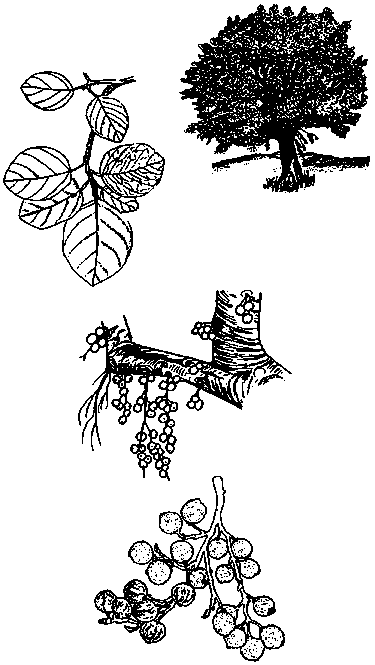
Figure
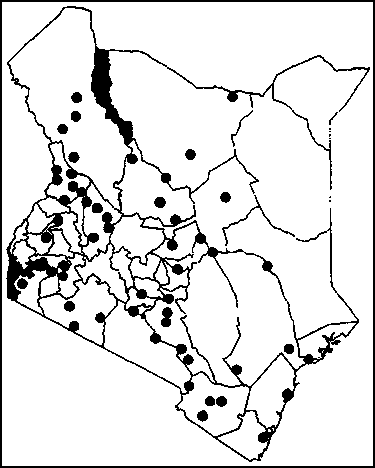
Figure
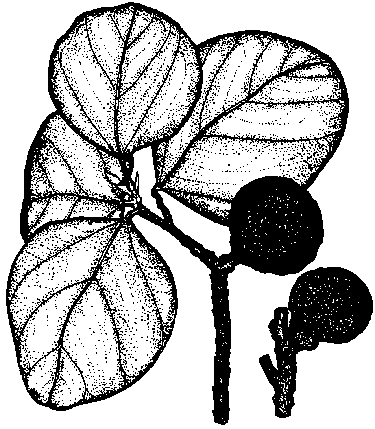
Ficus vallis-choudae
Ficus thonningii Bl.
Moraceae
syn: F. dekdekana (Miq.) A. Rich., F. hochstetteri (Miq.) A. Rich., F. eriocarpa Warb.
Kamba: kiumo Kikuyu: mugumo Luo: pocho Maa: oretiti Marakwet: simotwo, simat Mbeere: mugumo Meru: mugumo Pokot: simotwo Samburu: reteti Somali: kalejeje Swahili: mlandege Taita: mvumo, mvumu
Description: Large evergreen tree to 20 m or more, with a low, dense, rounded crown often epiphytic initially (growing on other large trees; the association often leading to the death of the host species by strangling). BARK: Grey, smooth. Aerial roots often dangling from stems. White latex produced when plant is injured. LEAVES: Dark green, shiny, elliptic, sides almost parallel. FRUITS: Figs without a visible stalk, round, often paired, yellow to red.
Ecology: From Ethiopia to South Africa and Angola. Widely distributed in Kenya in dry forest remnants and wooded grassland, 300-2,300 m. Often starting as an epiphyte. Zones II-V.
Uses: FOOD: Figs edible. Not important nowadays in most areas.
MEDICINAL: Latex used in the treatment of mouth sores, mutata (Kamba).
OTHER: Source of fibre for baskets (Machakos, Makueni). Fuelwood (++) (wood is soft). Dye (++). Fodder(+). Gum (birdlime) for trapping birds (Tharaka) and for arrow feathers is made from latex tapped from this plant. Good shade (+++) tree. A traditional place for offering sacrifices (Kamba, Kikuyu, Mbeere, Meru).
Management: Propagated by cuttings.
Status: Occasional. Preserved by most communities as it is considered sacred.
Remarks: A closely related fig, F. natalensis Hochst., has similar uses. Figs are small, 0.6-1.0 cm in diameter, smooth or slightly hairy and with or without a visible stalk. This species is less common but distinguished by its leaves which are usually smaller than in the other species. The leaves tend to be widest above the middle and taper to the base. The apex is more rounded. This is also a ceremonial tree in many communities. Distribution: Widely distributed in Kenya, south to KwaZulu Natal in South Africa.
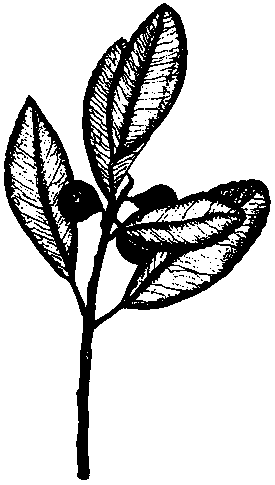
Ficus natalensis
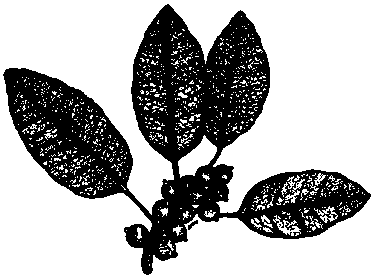
Figure
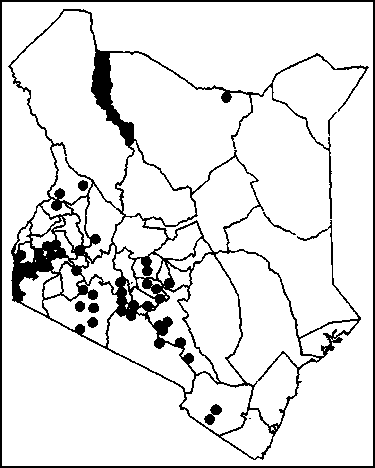
Figure
Flacourtia indica (Burm. f.) Merr.
Flacourtiaceae
syn: F. afra Pichi-Serm.
Chonyi: mdungatundu Digo: mnyondoiya, duruma: madungatundu English: governor's plum, indian plum Giriama: mdungatundu, mdevere Kamba: kiathani, kikathani Kambe: mudungatundu Keiyo: tungururwet, tungururak (fruit) Kikuyu: mutuhacu, muroro Kipsigis: tunguroloet Luhya (Bukusu): sinyungulwe, kumunyungululwe, bunyungululwe (fruit), bubwarakumba (fruit) Maa: oloireroi, oldongururwo, oldongurgurwo Marakwet: tungururwa Mbeere: mudundi, muraga, tingoswo (singular), tingas (plural) Meru: muraga Nandi: tungururiet, lichet Pokot: tingoswa, tingoswo, tingas (plural) Sabaot: tungururu Samburu: loloroi Sanya: mogodonya Swahili: mchongoma, mkingiri, mgovigovi Tugen: tingoswo, tungururwo, talatany (fruit) Turkana: echoge
Description: A much-branched shrub or a tree to 15 m high with narrow or spreading crown. BARK: Grey or pale yellow, smooth or slightly rough, scaling. Branches may or may not be spiny. LEAVES: Usually ovate, glossy, margin entire or serrated. FLOWERS: Yellowish green with a mass of yellow stamens. FRUITS: To 2.5 cm in diameter, green, turning reddish purple and soft on ripening. Seeds: Several.
Ecology: Widespread in tropical Africa, Madagascar, Seychelles, Malaysia as well as other parts of Asia. Cultivated for its fruit. Widespread in Kenya, e.g. at Kacheliba, Chepareria (West Pokot), Thika, Iveti, Karura, Baringo, Nandi and Gede. Although widely distributed in the country, it is locally rare. Grows in the wild in bushland on rocky hillsides, woodland, riparian forest, mainly on red clay, sandy and rocky soils, 0-2,400 m. Zones III-V.
Uses: FOOD: Soft, sweet, reddish purple, ripe fruit is eaten (+++). Seeds usually discarded but occasionally swallowed. Outer part of the fruit not eaten.
MEDICINAL: Root decoction used to treat diarrhoea and gonorrhoea (West Pokot).
OTHER: Goat fodder. Stems used for building huts (Maasai). Branches used in fencing. Fuelwood.
COMMERCIAL: Fruits sold in West Pokot.
Season: Fruits in February-March (Embu and Machakos), in July-August (West Pokot, Malindi, Kilifi and Kwale), in October (Elgeyo) and in December (Nandi).
Status: Uncommon.
Remarks: Can make a good live fence.
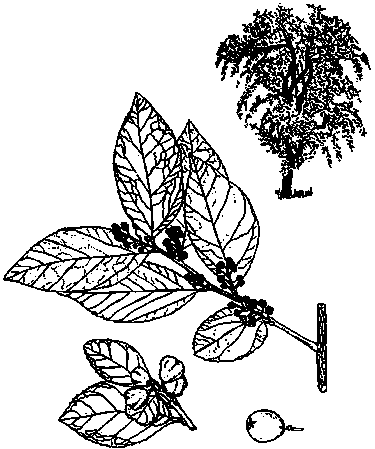
Figure
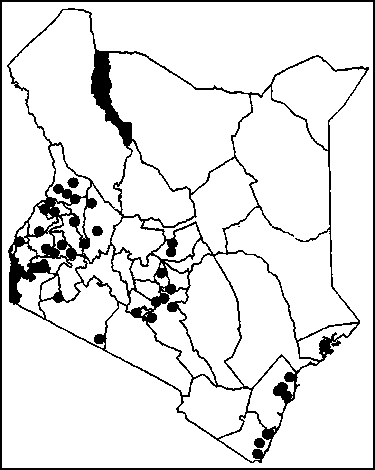
Figure
Flueggea virosa (Willd.) J. Voigt
Euphorbiaceae
syn: Securinega virosa (Willd.) Baill.
Borana: awagino Chonyi: mukwamba, kwamba (fruits) Digo: mkwamba Giriama: mukwamba, kwamba (fruits) Ilchamus: longoosoiron Kamba: mukuluu, mukururu (Mwingi) Kambe: mukwamba, kwamba (fruits) Kisii: esarara Luo: rayuthu (Siaya), kagera, kagena, kagna, odok Malakote: mokororo Mbeere: mukururu Orma: kororo Pokot: kiptarpotich, chepochepkai Samburu: lkirebuk Sanya: mkibonyea Swahili: mkwamba, mteja Teso: elachas Tharaka: mukururu Turkana: elakis, ekalis
Description: Much-branched deciduous shrub to 4 m or more (usually 2-3 m). Main stem hardly exceeding 10 cm in diameter. Branches normally straight and with numerous short side branchlets. LEAVES: Small, alternate, ovate or elliptic with a smell when crushed. FLOWERS: Dioecious, greenish yellow, numerous, clustered in leaf axils. FRUITS: Light green berries, to 1 cm across, turning white on ripening. Seeds numerous.
Ecology: A widely distributed species: Tropical Africa south to South Africa and Namibia, Arabia, Socotra, Madagascar, Pakistan to Japan and Timor. In Kenya in open bushland, bushed grassland. Soils variable but common-on sandy and clay-sandy soils. Commonest in Zones IV and V.
Uses: FOOD: Ripe white fruits eaten whole (+), soft and sweet with a slightly bitter taste. Mainly eaten by children.
MEDICINAL: Root decoction used to treat muthyoi (Kamba, bilharzia). Fruits used for itching skin, and partially fermented leaves used to treat malaria (Tharaka). Leaf extract (often mixed with Lantana trifolia leaves) is given to children to stop diarrhoea (Siaya).
OTHER: Fuelwood (++). Fruits given to chicken as fodder (+++) (Machakos) and loved by the larger birds. Ashes used for cleaning out milk gourds (Maasai (Narok)). Toothbrush (Maasai, Kipsigis). Twigs used in construction of huts and grain stores (++). Larger stems an excellent fuelwood and charcoal source. Goat fodder.
CULTURAL/BELIEFS: Used in kitigo kia mburi, a charm for good health in goats dusted on the animals as they pass the entrance to the boma (Tharaka).
Season: Fruit in June-July in Tharaka, Machakos and Kitui.
Status: Common.
Remarks: A fast-growing shrub that can be planted for its firewood and as a source of chicken and bird food.
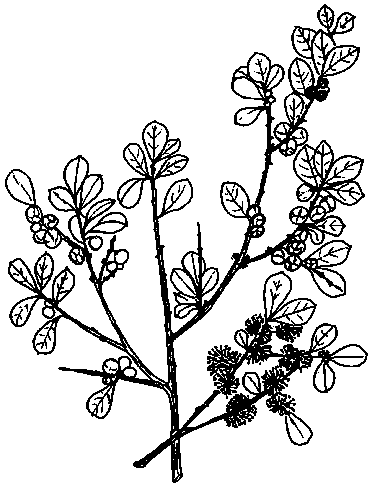
Figure
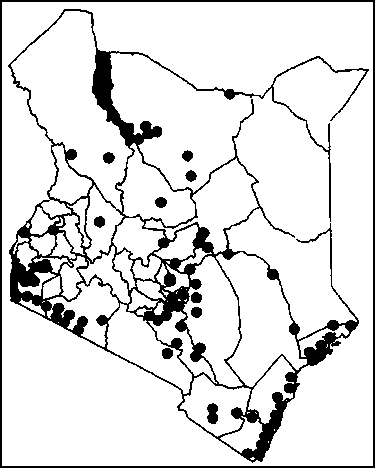
Figure
Garcinia livingstonei T. Anderson
Guttiferae (Clusiaceae)
Boni: mangales, unglise Digo: kisambwe, mfunga-tanzu Giriama: mufodzohi Kamba: mukanga, kikangakanywa, ngangakanywa (fruit) Maa: olkifulwa, enongeperen Marakwet: nerkwo Pokot: merwo Samburu: lkasiyoi, lyoret Sanya: magadhoguyo, dhembela Somali: daresa (Garissa) Swahili: mpekechu, mpeketo, mtotozi Taita: munganga, munyanga Teso: atenum, ekwalakwala Tharaka: muthuthuura
Description: A shrub or small, narrow-crowned tree, occasionally deciduous, usually 3-6 m high but may be up to 15 m. Branches often arranged horizontally in whorls of 3 round the main stem. BARK: Grey, smooth or slightly reticulate exuding an oily yellow or orange sap when injured. LEAVES: Shiny, leathery, dark green, often in whorls of threes or opposite. FLOWERS: Cream or pale green and scented. FRUIT: Ovoid, yellow to orange when ripe, 2-3 cm long.
Ecology: Kenya, Tanzania, Uganda, west to Cameroon and south to South Africa. In Kenya, e.g. along the Athi River (Mbiuni, Machakos) and in Kitui Central. Widely distributed in Kenya but generally uncommon. Found in riverine forest or thicket (often understorey), or on rocky outcrops away from water in Coast Province, 0-1,900 m. Zones II-IV.
Uses: FOOD: Fruit edible, juicy with a sweet acid taste (+++).
MEDICINAL: Infusion made from roots and liquid mixed with milk and drunk by women for abdominal pains during pregnancy or shortly after giving birth. Fruit used in mumps (Kitui).
OTHER: Branched stems widely used as stirrers due to the branching habit, hence the Swahili and Giriama names for the plant. Good fuelwood. Shade tree. Yellow oily sap used to decorate arrows as well as in the manufacture of arrow poison (Tharaka).
Season: Fruits in February-March in Embu. Flowers in September in Lamu and Kilifi.
Status: Rare in most areas.
Remarks: Lufudzo is a stirrer in Giriama. Two other species of Garcinia are found in Kenya. G. buchananii Bak. (syn G. huillensis in Dale & Greenway 1961) is found at the coast and in western parts of Kenya in moist forest and bushland. It is distinguished from G. livingstonei by the leaves which are usually opposite. Ripe fruit fleshy, yellow to orange and edible G. volkensii Engl. is found from central Kenya to the coast in evergreen forest. Flower petals and sepals are in fives but in fours in G. buchananii. There are no records of its use as food in Kenya.
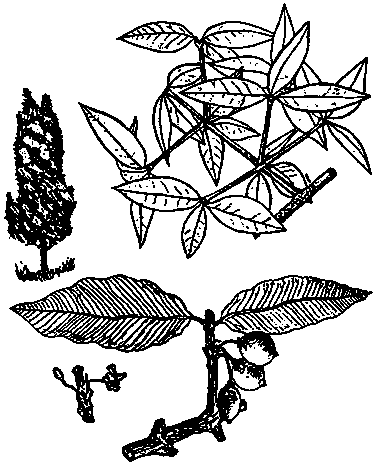
Figure

Figure
Grewia bicolor Juss.
Tiliaceae
Chonyi: mkone Daasanach: suriech Giriama: mkone Kamba: mulawa, kikalwa, ngalwa (fruit), ilawa Kambe: mkone Kipsigis: sitetet, sitetooik (plural) Luo: powo Maa: olsiteti Marakwet: siitet, siti (plural) Mbeere: muragwa, murawa Orma: haroru Pokot: sitet Rendille: dabach, arlilo (fruit) Samburu: lagrat-denai, seteti, lkarraiyo Sanya: haroru Somali: debhi (Tana River), dowee Swahili: mkone, mfukufuku, mikoche Taita: mmara, ndomoko Tharaka: murawa, muraagwa Turkana: ekali
Description: Spreading shrub or tree with a light crown and up to 7 m high. Branches hanging down. BARK: Smooth or fissured, dark grey. LEAVES: Usually asymmetrical at the base, whitish green underneath, margins toothed. FLOWERS: Yellow, on short stalks. FRUIT: Often divided into two lobes, each up to 0.7 cm, orange when ripe, rather hairy.
Ecology: Widely distributed in Africa and a common species all over Kenya, especially in lowlands in dry bushland, bushed grassland, 300-1,800 m. Soils very varied but mainly red clay, sandy and rocky soils. Zones III-V.
Uses: FOOD: Fruits eaten raw (+). The pulp, which is sweet but scanty, is sucked off the seeds and then the seeds are discarded. Occasionally the whole fruit may be crushed and eaten. Seeds are hard, however.
MEDICINAL: Bark chewed and placed on cuts as a bandage (Kitui). A cold infusion of the root is drunk for chest complaints (Maasai). Root decoction used for diarrhoea in humans and mixed with another species (sokotwo) for the extraction of the afterbirth in cattle (Pokot). The slimy pounded bark is applied locally for body itches.
OTHER: Sticks, bows and stirrers. Wood is tough and used to make knives, spears, clubs, bows, arrows, walking and fighting sticks (Daasanach), construction. Wood carving (Kamba). Bark used for string and rope. Animal fodder (++). Shade tree (++).
CULTURAL/BELIEFS: Leaves used by medicine men in exorcizing spirits and used to produce smoke in ceremonies for sick cattle (Pokot). Sticks used in an earthquake-prevention ceremony. Ritual sticks (Maasai).
Season: Flowers mainly in the rainy season. Fruits about 3 months later.
Status: Locally common.
Remarks: Most of the 27 or so species of Grewia occurring in Kenya have edible fruits. They are generally shrubs, rarely attaining tree size, usually multi-stemmed and more common in dry areas. Leaves are simple, alternate and toothed. Flowers usually have 5 coloured sepals, usually joined below, and 5 petals which are often shorter than the sepals and free. Many, usually 10, stamens. The fruit is normally hairy and divided into 2-6 lobes (often 1, 2 and 4).
Fruits with smaller lobes such as G. tenax, G. similis and G. tembensis can be chewed and swallowed whole. With the larger ones, one can only scrape off the thin sweet outer pulp then throw away the seed. Fruits eaten whole have better food value, especially proteins. The seeds are, however, known for their constipating property and ingesting large amounts may lead to serious constipation. Due to their high prevalence in the dry areas, Grewia fruits may form a substantial part of the daily diet among the pastoral communities. Apart from providing food, Grewia species are good sources of fibre. Their stems are often tough and durable, thus they find many uses in the household.
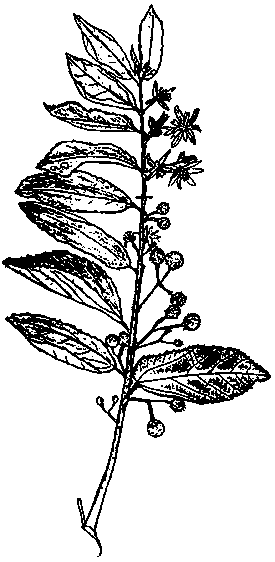
Figure

Figure

Figure
Grewia tembensis Fres.
Tiliaceae
Borana: ogumdi, deka Daasanach: damich-arab Digo: mkone Ilchamus: Ikogomi, Ikogom Kamba: kituva, nduva (fruit) Kipsigis: chesarebut Maa: oyiri, oirri, iri (plural) Mbeere: muruba Orma: deka-dubra Rendille: mulahanyo, dook-gudhan Samburu: irri Somali: hashanli, dhamag, mured-bonati (Tana River), demag, dumag Taita: mmbogha Taveta: mwemba Turkana: emaleker, emaleger
Description: Small, usually multi-stemmed straggling shrub to 4 m or more. Stems long, narrow, whitish grey to dark grey, smooth. LEAVES: Ovate, thinly hairy, slightly rough above, margin serrated. FLOWERS: Buds pinkish green. Flower white to pink (sepals pinkish, petals white, stamens purplish pink). FRUITS: Usually 4-lobed, hairy, light green with some dark green patches (above), ripening to orange or bright red.
Ecology: Widespread in Kenya, but uncommon in western parts. Found in bushland, often riverine, 250-2,200 m. Surrounding bushes provide initial support for its long weak young stems. Soils varied, usually sandy or rocky, also red and black clay soils. Rainfall: 500-800 mm. Zones III-VI.
Uses: FOOD: The bright orange-red fruits are sweet and much liked (++) by people. Large quantities may be gathered and juice extracted (Kamba, Turkana). Fruits may be chewed and just the juice swallowed. Whole fruit together with seeds may be eaten but large amounts may cause constipation.
OTHER: Fuelwood (+). Stems used for weaving granaries and mud-walled houses, sticks, pegs, forked and hooked sticks for hives and fencing, bows; arrow shafts (Daasanach, Kamba, Mbeere), spits for roasting meat (Daasanach), stirrers. Good fodder plant (++).
Season: Flowers in the rainy season. Fruits two to three months later (usually March and June-July).
Management: Propagated by seeds. Also said to grow from cuttings (Kitui).
Status: Common.
Remarks: Resembling this species but usually with larger leaves, flowers and fruits is G. similis K. Schum. (Kamba: mutuva wa kiima (Mbiuni, Machakos), Kikuyu: mutheregendi (mutheregendu), theregendu (fruit), Maa: oyirri). Stems are dark grey to brown. Leaves usually obovate, short-stalked, conspicuously veined below. Flower bud greenish brown opening to a striking purple-blue or purple-pink blossom. Fruits 4-lobed, green ripening to orange. This is a bushland and forest-edge species normally found at medium altitude. It is common around Nairobi. Zones III-IV.
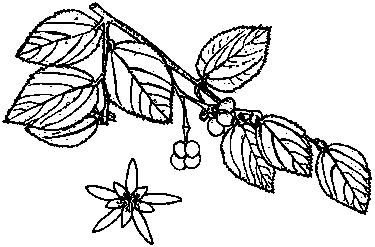
Grewia similis
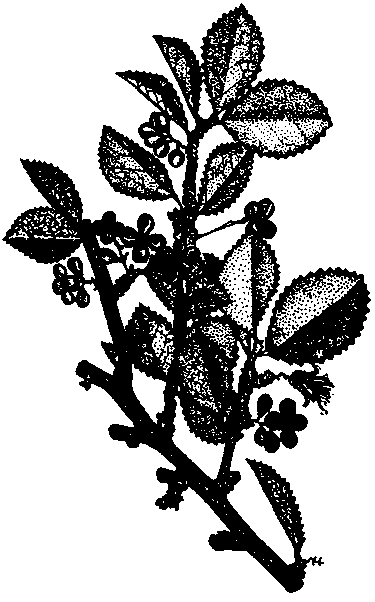
Figure
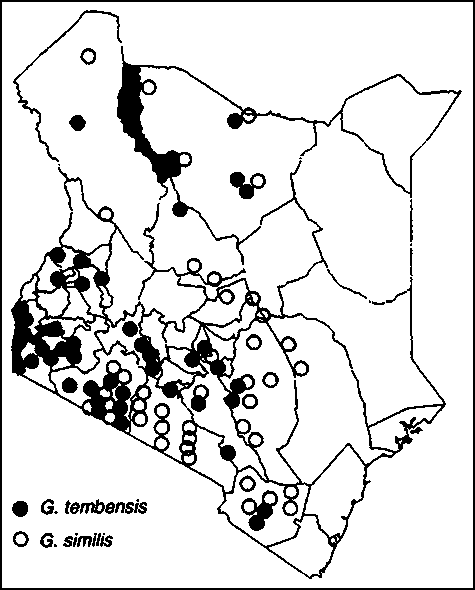
Figure
Grewia tenax (Forssk.) Fiori
Tiliaceae
syn: G. erythraea Schweinf.
Borana: deeka, deeka-imimo, irgegud, deeka-diima, murie, sarkam Daasanach: damich, damis (plural) Gabra: d'eeka Giriama: mkone-kilaa Ilchamus: ilkogomi Maa: oyirri, oirri, iri (plural), eirri-narok (Magadi Road) Pokot: toronwo, taran (plural) Rendille: mulahanyo, domook (fruit), domook derle Samburu: irri, lkarayoi, lkogomi, lngongomi loitipai, lpuusani Sanya: haroru korma Somali: amasha, deka, kamasha, muryo, murie, nashimleh, damiek (Wajir), mared (Garissa) Tugen: taran, taronwet Turkana: eng'omo
Description: Small much-branched, often multi-stemmed, straggling deciduous shrub to 3 m or more. Stems narrow, whitish grey with longitudinal streaks. Older stems dark grey. LEAVES: Small, variety of shapes, often almost round and papery with a serrated margin. FLOWERS: White. FRUIT: Small, light green ripening to yellow or orange. Large amounts of fruits may be produced.
Ecology: Widely distributed in most of Kenya except the western part. Found in dry acacia bushland, 0-1,250 m. Soils varied but usually rocky and red clay. Zones V-VII.
Uses: FOOD: Ripe (and unripe) fruit eaten raw (+++). Fruits sweet, may be eaten whole or chewed and only the sweet juice swallowed. If large amounts of seeds are ingested they may cause severe constipation. Fruits may be pounded, dried and stored. This is normally eaten along with fat or milk to avoid constipation (Turkana). Juice may also be made by extracting the pulp in water (Turkana). Roots are boiled in milk and given to children as a tonic (Maasai).
MEDICINAL: Roots are mixed with those of Diospyros scabra (tuwot), boiled and used to treat tuberculosis (Pokot).
OTHER: Bows and arrows (Pokot). Toothbrushes (Maasai). Shoots and fruits good camel and goat fodder (+++).
Status: Very common in dry lands. The fruit of this species are the most preferred of all dry-land Grewia species.
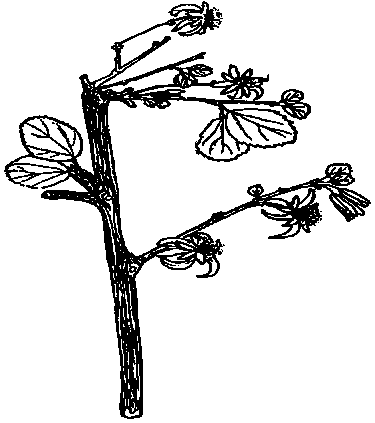
Figure

Figure
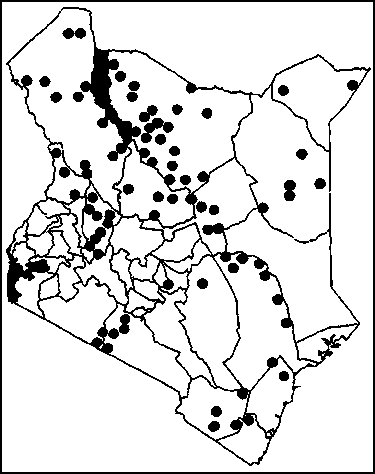
Figure
Grewia villosa Willd.
Tiliaceae
Borana: ogomdi, buruudo, moorodah Daasanach: barbar Gabra: ogomdi Ilchamus: lpupoi, lpupo Kamba: muvu, mbu (fruit) Maa: olmankulai, emankulai, ilmankula (plural) Mbeere: mubuu Pokot: mokoghio, mokuwo, makow (plural) Rendille: obhoob Samburu: lpupoi, lpopoi Swahili: mukorobosho Taita: mshashote, shoshoti Tharaka: mubuu Tugen: mokuiwo Turkana: epong'ae, epokoo
Description: Small deciduous shrub to 3.5 m high but often 1.3-2.5 m. Branch tips soft, hairy. LEAVES: Large, heart-shaped, hairy, margins serrated. Underside light green, more hairy with prominent veins. FLOWERS: Brownish yellow, in clusters. FRUITS: Copper-red, covered with soft hairs. FRUIT: 1.0-1.5 cm in diameter, coat light green turning brown and brittle on drying.
Ecology: A common plant in dry bushland and thickets 0-1,500 m. Soils: red, sandy, rocky and occasionally black cotton. Zones: IV-VII.
Uses: Fruits edible (+++). Seeds are normally discarded. Fruits are rubbed between the palms to remove the outer skin which is then blown away. The fruit pulp is then sucked.
FOOD/MEDICINAL: Roots boiled in soup to fortify mothers after childbirth (Maasai). Root decoction with milk is used as child's tonic (Pokot).
MEDICINAL: Roots pounded, water added and used for diarrhoea (Mwingi). Roots boiled in soup used for stomachache (Kamba). Boiled plant extract used for aching bones. Roots boiled in soup for diarrhoea and general health.
OTHER: Stems used for the construction of small grain stores, large basket-like grain containers (Kamba, Mbeere), bird-trapping cages, arrows (Mbeere). Bark source of string. Fuelwood. Camel, sheep, goat and cattle fodder.
Management: Propagated by seed which are best planted directly.
Status: Locally common.
Remarks: Grewia forbesii Mast. (Digo: mbavumbavu, Giriama: mbavung'ombe, Kamba: mutalenda, kivu kyotwa) with a very warty fruit is prepared in a similar way and is used a great deal by the Orma.
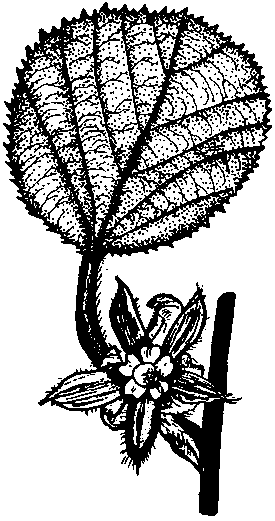
Figure
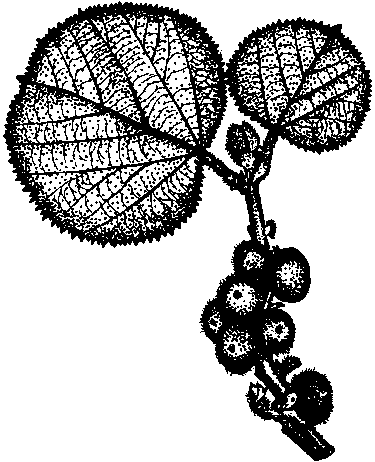
Figure
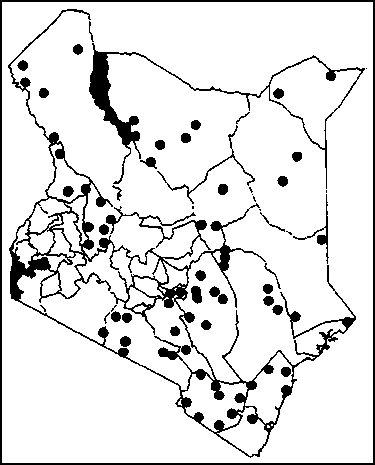
Figure
Hoslundia opposita Vahl
Labiatae (Lamiaceae)
Boni: gurguo, mishothie Chonyi: mutserere, mtserere Digo: mtserere Giriama: mutserere, mtserere Kamba: musovi, musovasovi Kambe: mtserere, mutserere Kipsigis: cherungut Luhya (Bukusu): bifwofwo Luhya (Maragoli): kihuma, shikuma Luhya: shikuma Luo: ofwong'o, ofuong'o, ngwenye, afwong'o Maa: olenaran, olemoran Mbeere: mucobi Pokot: simbaywa, simbai (plural), simaywa, simayon, chepiwa Samburu: labai Sanya: mtserere Somali: gedcad malmaki, maimasei Swahili: mlanyuni, moulambulo, mteremtere, mdahamwitu Taita: mvunde
Description: A dense much-branched shrub, often a short-lived perennial 1.0-1.5 m high, occasionally higher. Stems light grey, angled. LEAVES: Ovate to elliptic, opposite, clustered on older stems, softly hairy, aromatic with a toothed margin. FLOWERS: White to yellow. FRUIT: Up to 1 cm long, with a fleshy calyx, green, turning yellow to orange on ripening.
Ecology: Widely distributed all over Kenya in bushland, at edges of bush and hedges, roadsides, disturbed bushland, 0-2,000 m. Fertile loam, sand or clay. Often in alluvial soils. Rainfall: 650-1,000 mm. Zones: II-VI.
Uses: FOOD: Ripe yellow or orange fruits eaten whole (+). They are sweet and soft. Leaves and stems occasionally used for tea (Maasai, Kipsigis).
MEDICINAL: Root decoction used to produce an aphrodisiac (Boni). Leaves crushed, chewed and then put on cuts.
OTHER: Goat fodder (++). Fuelwood (+). Branches made into brooms.
CULTURAL/BELIEFS: Leaves and roots used as a medicine against evil spirits (Giriama). Boiled root and leaf extract is poured along a path to rid a child of epilepsy. The disease is said to be passed to the first person to walk along it (Pokot).
Season: Fruits ready in May-June and in January (Kajiado and Machakos), July-August (coastal area).
Status: Locally common.
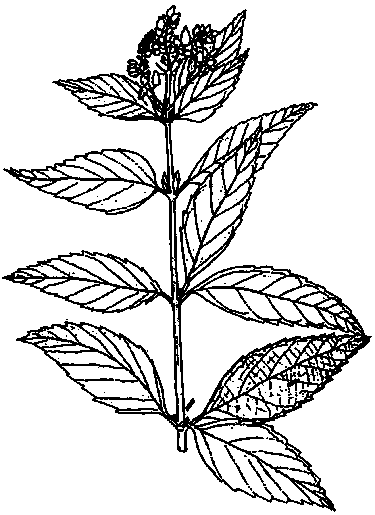
Figure
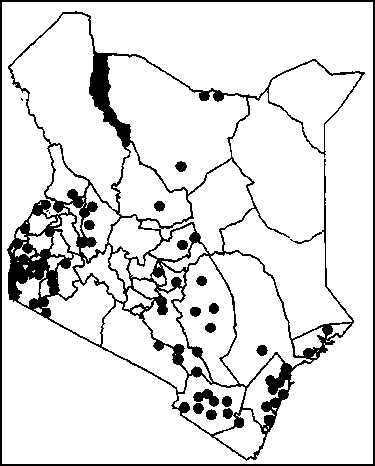
Figure
Hydnora abyssinica Schweinf.
Hydnoraceae
syn: H. johannis Becc.
Borana: toga Burji: guli Kikuyu: muthigira Luo: oyusu, osuyo Maa: erukunyi, erkunyi Pokot: aurieng'o, kaworiongo Somali: liki, like, laka, dingah Swahili: nyambo, mnyambo Turkana: auriong'o
Description: A plant parasite 10-15 cm high, usually growing on acacia roots, the floral parts being the only visible structure above ground. Below the ground are thick, hard, dark brown almost black, warty, usually branched rhizomes attached to the host's root. Flower bud bursts out of the ground and opens out. Bud angled, perianth lobes joined, fleshy with a red surface. Flesh of the bud thick, white, turning rusty red on exposure to air. Flower large, up to 15 cm long, brown, scaly, edges of lobes pink or red, covered with coarse bristles. Stamens inside normally 4, joined to form a cream, convoluted fold. Anthers numerous and without a visible stalk. Fruit produced underground with numerous seeds embedded in a glutinous pulp.
Ecology: From Sudan south to South Africa and in Madagascar in dry acacia bushland or on hillsides with acacia. The species is common in Acacia mellifera woodland. Loose red or dark brown soil often rich in organic matter. Zones: V-VI.
Uses: FOOD: The fleshy part of the flower bud (calyx), whole flower and the mealy underground fruit are eaten raw (++) (Somali, Pokot, Turkana, Maasai, Boran, Samburu). Among the Maasai, two parts of Hydnora are eaten at different stages. The smaller erkunyi-e-ntari (of goat) is the first to come out (the flower) and the bigger erkunyi-e-ngishu (of cattle), representing the edible underground parts (Elang'ata Wuas), is eaten later.
OTHER: Squirrels, cattle and other animals attracted by the smell may feed on the plant.
Season: Mainly rainy season April-May and October-November in Kajiado and Taita.
Status: Locally common.
Remarks: The other member of this genus in Kenya, H. africana, is different in that it has no hairs at the edge of the perianth lobes. The taxonomy of these species requires further work.

Figure
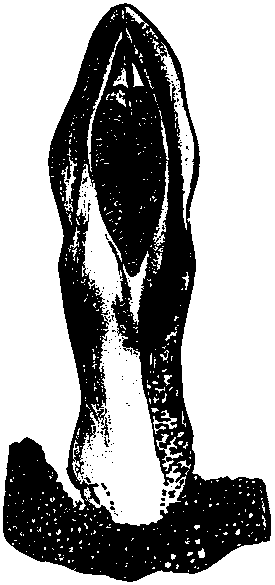
Figure
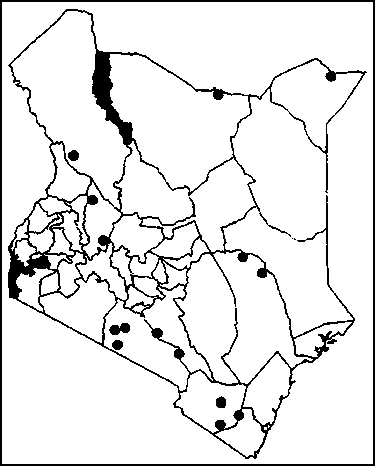
Figure
Hyphaene compressa H. Wendl.
Palmae (Arecaceae)
Borana: qoone, kone, meeti Chonyi: mkoma Daasanach: kulidhe Digo: mkoma, mkoma lume English: doum palm Gabra: meetti Giriama: mkoma Ilchamus: lparruai, lparrua Kamba: mukoma, ilala (Mbitini, Kitui) Kambe: mkoma Malakote: mokoma, mezi (young) Mbeere: irara (Mavuria) Orma: kone, meti (young) Pokot: takuyua, takaiw'a, takayua Rendille: gey-i-khooona, baar Samburu: lparwai, nkujit-ae-nkeok Sanya: auwaki Somali: baar, qoona (fruit), dabell (young. Tana River) Swahili: mkoma, mkoche, mlala, mnyaa, muaa Taveta: irara Tharaka: muruguyu Turkana: eeng'ol, eng'ol
Description: A branched or unbranched usually multi-stemmed palm tree up to 15 m high. Trunk grey. Leaves and petiole up to 2 m long. Petiole semicircular in cross-section, edges armed with sharp black spines. Leaf lamina up to 0.8 m long, spreading, with numerous longitudinal folds and segmented in the upper (third) part into up to 60 segments. FLOWERS: Borne on long inflorescences to 1.5 m. FRUITS: Young fruit dark red or maroon. Mature fruit to 8 cm long, yellow to red, glossy, smooth with markings, laterally compressed on 2 sides.
Ecology: Egypt, Sudan, Ethiopia, Somalia, and south to Mozambique. In Kenya along the Kerio and Turkwel Rivers and at Lokori, Lodwar, Kwale, Kilifi and Malindi. In northern Kenya along rivers and all along the coast, 0-1,400 m. Sandy coastal lowlands, places with a high water-table, along seasonal watercourses, open sandy flood plains. Often forming pure stands. Much affected by bushes and taller trees. Alluvial, deep sand. Rainfall: 200-900 mm. Zones: I-III (coastal)-VII (riverine).
Uses: FOOD: The brown fibrous pulp of mature fruit eaten raw (+++). As with the coconut, the juice in immature fruits is drunk (Turkana, Pokot), also used in beer making. The fruit's outer coat (epicarp) is peeled, pulp is sliced off the stony "seed" (endocarp), sun-dried, ground, mixed with blood to a brown, sticky, fibrous mixture (lokot) and eaten or sold in markets (Turkana). Young germinating seedling is dug up and embryo eaten (Turkana).
MEDICINAL: Fruit pulp eaten for worms (Giriama).
OTHER: Leaves used for making baskets, brooms, mats, hats, ropes, handbags, and in thatching (Turkana, Somali (Mandera), Boran, Gabra), sewing milk containers (Daasanach). Leaf rachis used as a stirrer for melted fat (Daasanach). Trunks strong, durable and used as poles in fencing (Turkana, Somali), in house construction, as fuelwood (Turkana, Somali, Boran, Gabra) and when bound together they make good fishing rafts (Turkana, El Molo). Hard fruit endocarp used as fuelwood. Roots are a source of dye used in the basketry industry (Turkana). Leaves may also be dyed black by soaking for a week in lorimoch, a herb, usually found in association with Salvadora persica roots.
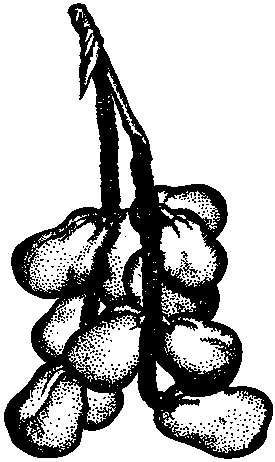
Figure
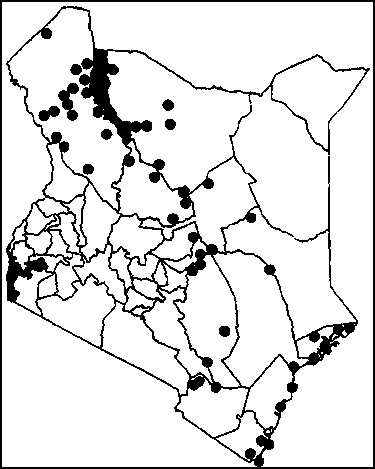
Figure
COMMERCIAL: The fruit and its products are sold in Lodwar market. Items made from the leaves (baskets, brooms, mats, etc.) are sold throughout the country. Fibre sold in Mbeere (Ishiara). The endocarps are sold to the Kamba as snuff containers. A very important tree palm in Turkana district.
Management: Propagated by seed (endocarp) with pulp removed. Preferably it should be scarified to hasten germination, which, under normal conditions, may take several months to a year. Preferably plant deep in moist sand.
Season: Fruits in all seasons but mainly July-November in Turkana.
Status: May be locally very common but over-exploited in some areas.
Remarks: Fruit pulp is also used as food in the Sudan and Egypt.

Figure
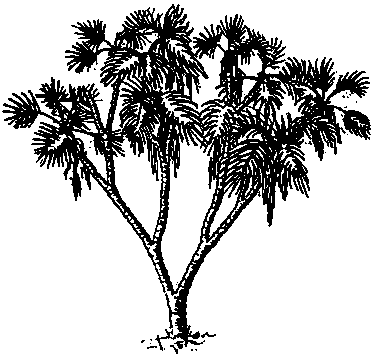
Figure
Hyphaene coriacea Gaertner
Palmae (Aracaceae)
Boni: oh, mede Digo: mkoma lume English: doum palm Somali: bar, qoone (fruit) Swahili: makoma, mkoma, mlala
Description: A palm up to 8 m high, but rarely more than 5 m, more often forming shaggy thickets with some trunks lying along the ground; less often solitary. Trunk grey, to 25 cm in diameter with persistent leaf bases or numerous scars. Leaf stalks armed with black spines. LEAVES: Upper half or so of the leaf divided into 15-20 segments, each up to 40 cm long. FLOWERS: Dioecious. Inflorescences to 1 m long, usually arching. FRUITS: Variable in shape and size. Usually elongate, up to 6 cm long, light green when young maturing to dark brown, usually constricted in the middle, widest at the bottom.
Ecology: Grows in Somalia, Kenya, Tanzania, Mozambique, South Africa and Madagascar. In Kenya confined to the coastal areas, e.g. Diani, Gazi creek, Malindi, sand dunes at Shela and elsewhere in Lamu, flood plains, places with a high water-table, 0-300 m. Zones I-V.
Uses: FOOD: The dark brown fruit pulp (mesocarp) is eaten raw (Pokomo, Boni, Swahili).
MEDICINAL: Stomach medicine (Swahili).
OTHER: Leaves used to make braiding around skin containers, forehead bands for newly circumcised girls (Pokomo) and to make baskets (Boni), mats (Digo). Leaves used for thatching. Old leaf midribs used to clean calabashes. The inner part of the fruit is called vegetable ivory and is used to make pendants (Pokomo).
COMMERCIAL: Products made from the leaves (mats, baskets, etc.) sold in coastal markets.
Management: Propagated by seed (endocarp) with pulp removed. Scarification may enhance germination rate.
Status: May be locally common.
Remarks: Distinguished from H. compressa by its usually constricted fruit and unbranched trunks.
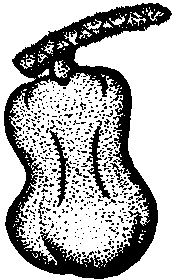
Figure
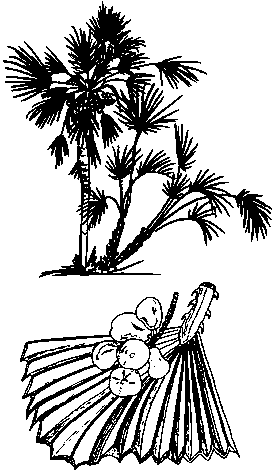
Figure
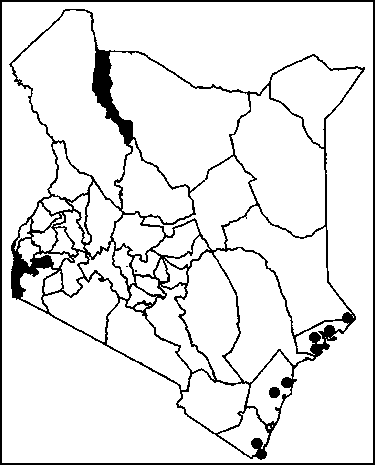
Figure
Ipomoea aquatica Forssk.
Convolvulaceae
Chonyi: bwere-mlungu English: water spinach, winter spinach Giriama: bwere-mlungu Sanya: chamarirobia Somali: balanbal
Description: Prostrate or ascending much-branched plant always associated with wetlands. Stems hollow, fleshy with white sap, dirty green, rather fat and with hairy roots arising from nodes when floating in water. LEAVES: Triangular to heart-shaped, up to 15 cm long. Apex usually pointed. Petioles long. FLOWERS: Mauve, purple or pink, tubular. FRUITS: Seeds hairy.
Ecology: Grows from Somalia to West Africa and south to Namibia. Widely distributed in the tropics. In Kenya at the coast, in the Lake basin and in the north in wetlands, on lake shores, in swampy places, seasonally flooded depressions, marshy river banks, rice fields, 0-1,400 m. On mud or shallow water.
Uses: FOOD: Leaves eaten as a vegetable (+++) (Giriama, Duruma, Digo). The leaf blade is separated from the leaf stalk before cooking for a few minutes. Also used as a vegetable in Tanzania, South East Asia and China.
OTHER: Good fodder for most animals (+++).
COMMERCIAL: Leaves sold in Malindi.
Management: Propagated by rhizomes, stem runners and possibly seeds. Grows easily from cuttings.
Status: Locally common.
Remarks: A cultivated variety has been reported in Malawi. This species resembles the sweet potato (Ipomoea batatas (L.) Lam.) (Giriama: bwere, Sanya: chamai, Chonyi: mabwe (leaves), viyobwe (roots), Kisii: abanyabwasi), usually planted for its tubers, but also used as a leafy vegetable (some forms). The leaves are rather slippery and are normally mixed with other leafy vegetables such as cocoyam (maburu), pumpkin (mhango), Asystasia gangetica (thalakushe), okra and cowpeas (tsafe). They are, however, said to aggravate stomach ulcers (Mijikenda).The sweet potato, though a traditional crop in Africa, is native to South America.
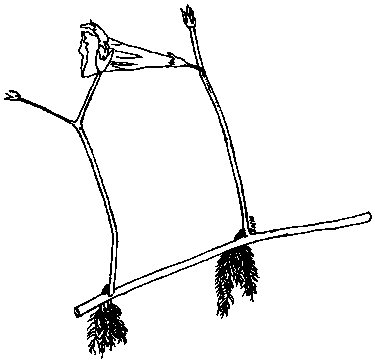
Figure
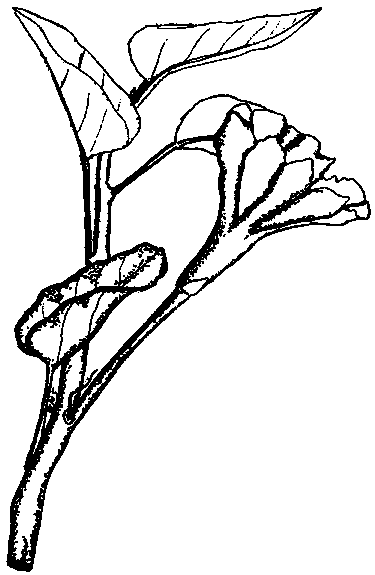
Figure

Figure
Ipomoea lapathifolia Hall. f.
Convolvulaceae
Kamba: nzola, kinzola
Description: A perennial erect, occasionally climbing, herb, usually 20-30 cm high but attaining a height of 1 m or more, arising from a tuberous rootstock. Tubers carrot-like to 10 cm long by 2 cm wide, occasionally nearly globose, up to 3.5 cm across. Young tubers cream, turning dark brown with pale longitudinal streaks at maturity. Stem usually one, rarely two or more, narrow, occasionally branched, green, often tinged purplish brown and exuding latex when bruised. LEAVES: Short stalked, narrow and long to 10 cm. FLOWERS: White, funnel-shaped, opening in the morning, short stalked, usually 1-4, on a short fat branch arising from a leaf axil. FRUIT: A 4-seeded round capsule turning from green (usually tinged purple) to smooth brown with a short stiff pointed structure at the end.
Ecology: Found in Kenya and Tanzania. In Kenya in Sultan Hamud area (Machakos, Kajiado), Yatta (Kitui) and Mwala (Machakos). Open grassland, 0-1,400 m. Soils black cotton, especially seasonally waterlogged depressions. Zones IV-V.
Uses: FOOD: The tubers are peeled (they peel easily by hand) and the tasty white inner part is eaten raw (++). The tuber has the sweet, dry taste of a raw sweet potato. Much liked by children.
Season: Tubers in the rainy season.
Management: Propagated by seeds or tubers.
Status: May be locally common. Generally uncommon. Its habitats are under threat from overgrazing and cultivation.
Remarks: Two varieties are distinguished:
· The Kenyan material is var. lapathifolia with entire leaves.· var. bussei (Pilger) Verdc. usually has ovate leaves with an irregular margin. It is the variety common in southern Tanzania.
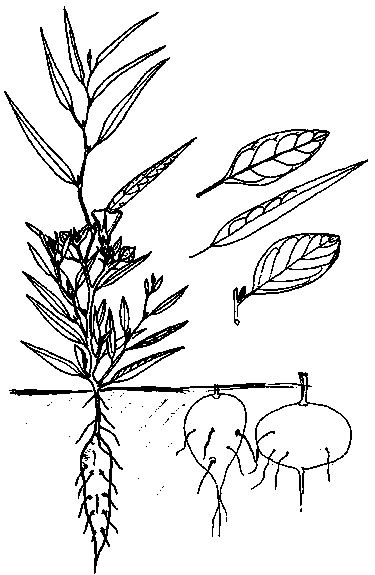
Figure
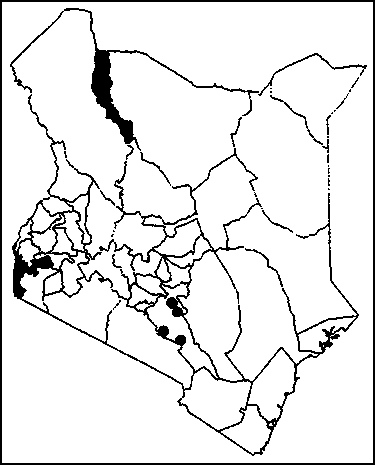
Figure
Ipomoea longituba Hall. f.
Convolvulaceae
Kamba: iseembe Maa: enchilewa, ngoswaki, engoiswashi (Narok) Samburu: loiswasi, loisiasi, loisiaci, looisietchi
Description: Prostrate or ascending deciduous perennial arising from a tuberous rootstock. Quick growing and spreading extensively in the rainy season, dying back during dry periods. Stems thin, green. Tubers grey-white, juicy, exuding white latex, up to 40 cm long by 15 cm at the widest part. There may be several tubers on one plant, growing near the ground. Larger older tubers often fibrous, giving rise to more fleshy, juicy smaller ones. LEAVES: Large, ovate, smooth or with numerous folds, hairy when young. FLOWERS: Clustered at the tips of ascending branches, white, large, with a long tubular corolla often coming when the plant is leafless. FRUIT: Brown when dry, dehiscing to release small seeds with thread-like hairs.
Ecology: In Uganda, Tanzania and in Kenya, e.g. at Rumuruti, Sultan Hamud, Kiimakiu (Machakos), Kisamis (Magadi Road), Ewaso-Nyiro (Narok). In open Acacia drepanolobium grassland (Kaputei plains), medium altitude rocky hillsides, 1,200-2,000 m. Commonest about 1,400-1800 m. Light black cotton soil or rocky red soils. Zones III - V.
Uses: FOOD: Tubers eaten raw (++) (Kamba, Maasai, Pokot, Samburu) as food and to quench thirst. Peeled first then the juicy inside eaten. Tubers have a slightly sweet taste.
OTHER: Leaves do not seem to be liked by livestock, though reportedly browsed by goats and sheep.
Season: Tubers all year round. Said to be best during the dry season.
Management: Propagated by seeds, stem base or tubers. Plants grown from seeds develop good-sized tubers within 6-9 months.
Status: May be locally common.
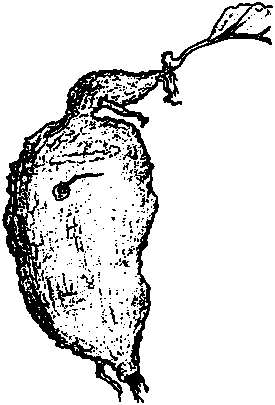
Figure
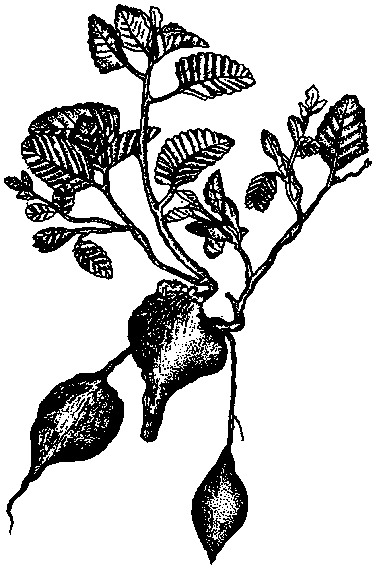
Figure

Figure
Ipomoea mombassana Vatke
Convolvulaceae
Giriama: kahedtho Kamba: ukwai-was-nthi, wimbia (Kitui), musele, uthui (Machakos) Maa: enkoeniyeni Samburu: lokiteng' Somali: bire, barfo
Description: A trailing plant often climbing on grass and other plants. Stems weak, hairy. LEAVES: Ovate, often heart-shaped, usually slightly hairy. FLOWERS: Funnel-shaped, white with purple centre in the corolla, occasionally mauve.
Ecology: Widespread in Kenya and also found in Tanzania in grassland, disturbed bushland, cultivated areas, 0-1,600 m. Common at 0-1,300 m. A common weed in cultivation often seen twining on other erect plants in cropland. Soils mainly sandy or light clay.
Uses: FOOD: Leaves used as a vegetable (+) (Turkana, Kamba, Giriama, Mijikenda). May be cooked alone or mixed with amaranth, Corchorus spp. and Oxygonum spp. This lessens the slippery texture of the vegetable.
OTHER: Fodder. Season: Rainy season.
Status: Common.
Remarks: This species may be a serious weed. A closely related species is I. plebeia R. Br. ssp. africana Meeuse (Turkana: ataakunyuk, ekeju-apoo, Somali: saarsaar) with a twining stem. Leaves somewhat triangular with a heart-shaped base. Corolla white with a purple centre. This species is also used as a vegetable (Turkana, Ng'ikebootok). Found in northern and eastern parts of Kenya and in southern Africa. A common trailing herb in open areas along the Turkwel River in southern Turkana.
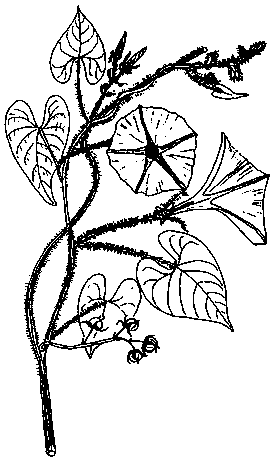
Figure
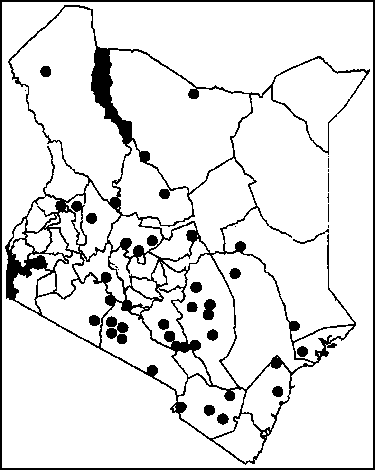
Figure
Ipomoea oenotherae (Vatke) Hall. f.
Convolvulaceae
Kamba: nzola Kikuyu: nguirubi Kipsigis: robuoniot-ab-tirita Luo: ongeny Maa: oloiropiji, olorok-kilele, oloirobi-elongera Samburu: ldelopiji
Description: Small spreading herb rarely more than 15 cm high arising from a small carrot-like tuber. Stems several, arising from the top of the tuber, weak, thin, often prostrate or ascending. LEAVES: Of two types. Young leaves recently developed from the tubers are long, ascending and usually with few side lobes. Older leaves from the branches are deeply lobed and often smaller. FLOWERS: Purplish pink (mauve) usually opening in the morning. FRUIT: A small round capsule. Seeds few, grey or light brown. Tubers single or divided, up to 8 cm long by 2 cm wide, surface cream in young tubers, brown in older ones.
Ecology: Grows from Ethiopia and northern Somalia south to Zambia, Zimbabwe, South Africa and Namibia. In Kenya, e.g. at Ndaragwa (Nyandarua), Kaputei plains, Ildalalekutuk (Kajiado), Ong'ata Rongai (northern Kajiado), Nyandarua, Machakos, Makueni and Narok. Commonest in open grassland with short-grass species, 1,000-2,400 m. Common in the mid-altitudes, 1,500-1,800 m in rather damp but well-aerated clayish sandy soils, especially black cotton in transition to loam and in soils of volcanic origin. Rainfall: 650-1,200 mm. Zones: III-V.
Uses: FOOD: The carrot-like tuber is peeled and eaten raw (+++) (Kamba, Kikuyu, Samburu, Maasai, Luhya, Kuria, Luo, Pokot, Kipsigis). Tubers have the texture and taste of a raw sweet potato (Ipomoea batatas) and are much liked by children. Cooking not tried yet.
OTHER: Good fodder.
Management: Propagated by seeds or tubers. The seeds are produced in small numbers and so bulking is necessary before one has enough for planting. Seeds may be planted the same way carrots are planted. Germination is within a few days. If conditions are favourable, good-sized tubers are seen within 2-3 months. Fruits containing seeds should be collected as soon as they turn brown and kept to dry ready for planting the following season. The shoot dries off leaving the tubers below the ground and it is in this form and from the seeds that the species is able to survive the dry season. Young leaves sprout soon after the start of the next rainy season.
Status: Occasional. Encroachment of its grassland habitat by expanding human population, coupled with overgrazing and the poor rate of production, are threatening this species.
Remarks: Two varieties are distinguished:
· var. oenotherae with a corolla over 2 cm long. Found in Uganda, Tanzania, Ethiopia, northern Somalia, south to South Africa and Namibia.· var. angustifolia (Oliv.) Verdc, has smaller flowers, the corolla hardly exceeding 1.5 cm and with narrow leaves and lobes. It is found only in western and north-western Kenya and in Uganda.

Figure
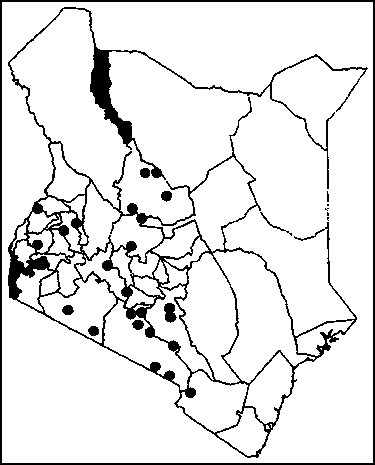
Figure
Kedrostis pseudogijef (Gilg) C. Jeffrey
Cucurbitaceae
Daasanach: yierit-etha Kamba: mukauw'u Samburu: sakurdumii
Description: Climbing deciduous liane with thick foliage. Stems greyish white, ridged, rough, with tendrils. LEAVES: Up to 5 cm long, divided into 3 leaflets with toothed margin. Leaflets without a stalk, may or may not be lobed. FLOWERS: Dioecious, usually appearing when the plant is leafless, often borne in clusters, male flowers numerous, female flowers one to a few. FRUITS: Usually in clusters (1-7), conical, roughly hairy, grooved, fleshy, to 2 cm long.
Ecology: Grows in Ethiopia, Kenya, Uganda and Tanzania. Not known elsewhere. Found in many parts of Kenya, e.g. Moyale, Waita (Mwingi), Mutomo, south-eastern Makueni, Voi, Kitui, Taita and Marsabit. Dry Acacia-Commiphora bushland on red, sandy or rocky soil, 500-1,200 m. Often associated with Adansonia, Delonix, Entada, Acacia brevispica, A. tortilis. Rainfall: 450-600 mm. Zones V-VI.
Uses: FOOD: Young leaves and soft tips used as a vegetable (++) (Kamba, Taita). The vegetable emits an unpleasant odour during cooking but this disappears afterwards. The first water used in boiling is normally thrown away. A tasty vegetable even when not fried. Eaten along with ugali or mashed with a maize and beans or peas mixture (Kamba). Ripe fruits edible (Kitui, Marsabit).
OTHER: Branches made into mats for balancing loads on the head (Daasanach). Vine used as rope (Daasanach). Plant used in a ritual performed to purify cattle before movement to a new area (Daasanach).
COMMERCIAL: Leaves sold in Mutomo in southern Kitui and Voi. Much liked by the Ngulia people living near the Chyulu range.
Management: Can be propagated by cuttings and probably seed.
Status: May be locally common.
Remarks: A related species, K. gijef (J. F. Gmel.) C. Jeffrey (Gabra: gaale, Kamba: witulu), is probably also used as a vegetable. The fruits are edible (Gabra). Unlike K. pseudogijef, which has 3-foliolate leaves, this has simple, kidney- or heart-shaped leaves. It is found in most dry lowland areas of Kenya north to Arabia. Important camel and goat fodder.
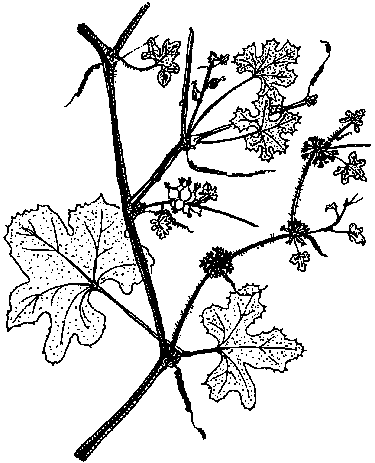
Kedrostis gijef
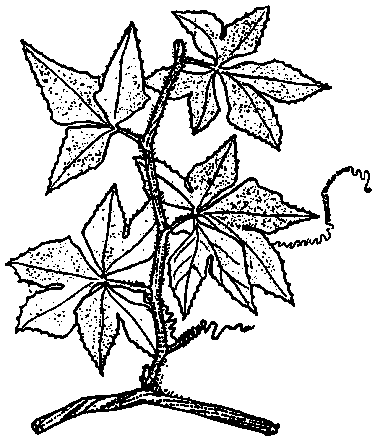
Figure
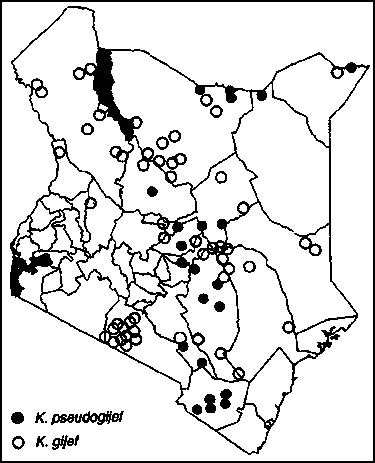
Figure
Kigelia pinnata (Jacq.) DC.
Bignoniaceae
syn: K. aethiopium (Fenzl) Dandy, K. africana (Lam.) Benth.
Boni: shelole English: sausage tree Giriama: mobwoka Kamba: kiatine Kikuyu: muratina Kipsigis: ratuinet Luhya (Bukusu): kumumungu Luhya: morabe Luo: yago Maa: oldarpoi, ortarboi Marakwet: rotio Meru: muratina Nandi: ratinuet Orma: bogh Pokot: rotin Rendille: muun Samburu: imombi Somali: bukorola Swahili: mwegea, mvungunya Taita: mwaisina Taveta: mukisha Turkana: edot
Description: Tree to 12 m high (usually 5-8 m) with a light to medium dense rounded crown. LEAVES: Large, divided into 7-9 leaflets. Leaflets very rough and stiff with an entire or serate margin and asymmetrical base. FLOWERS: In panicles, red, large and hanging. FRUIT: Long, usually 30-40 cm, sausage-like and hanging on long stalks. Very variable.
Ecology: Widely distributed in Kenya and the rest of Africa in wooded grassland, shrubland and riverine vegetation. Common on hillsides, 0-2,200 m. Loam, red clay or rocky ground. Rainfall: 500-1,500 mm. Zones II-V.
Uses: FOOD: Fruits, split in half longitudinally, are widely used for fermenting traditional beer (Kamba, Kikuyu, Mbeere, Embu, Tharaka, Giriama, Digo). The soft inner tissue is cleaned out in hot water then dried and inoculated with the fermenting agent by mixing with old fruits (Kamba). To ferment beer, these fruits are left in a solution of water and sugar or honey for 3-5 days. A wide-mouthed gourd (Lagenaria siceraria) is the preferred container. This is placed near the fireplace in the house.
CULTURAL/BELIEFS: Plant revered in many communities. Often preserved. Fruit buried instead of the body of a lost person believed to be dead (Luo).
COMMERCIAL: Fruits occasionally seen in market places (Makueni, Machakos, Kitui, Mwi, Tharaka, Embu, Meru).
Season: Flowers in December-January (Kitui). Fruits in April-May in Kitui, Machakos, Tharaka, Makueni, Mwingi.
Status: Occasional but not threatened.
Remarks: May be a good ornamental plant. For fermentation the Maasai also use the roots of Aloe species (Kamba: kiluma, Kikuyu: kiruma, muguna nugu, thukurui, Maa: osuguroi, Meru: kiluma, Kipsigis: tangaratwet, Luo: ogaka, Tharaka: kiruma, Turkana: echuchuka). Several species of Aloe are used for this purpose (A. secundiflora Engl., A. deserti Berger, A. ngongensis Christian, A. kedongensis Reynolds).
Aloes are perennial fleshy-leaved plants. Some are small and almost stemless while others attain tree size. Over 30 species have been recorded in Kenya. Uses: Nectar from the flowers of A. secundiflora is sucked by children (Machakos, Kajiado). The sweet base of the inflorescence may be chewed. The sap from the leaves of most species is applied to wounds to keep flies away. Leaves are dropped into drinking water for chickens as a treatment for coccidiosis and Newcastle disease.
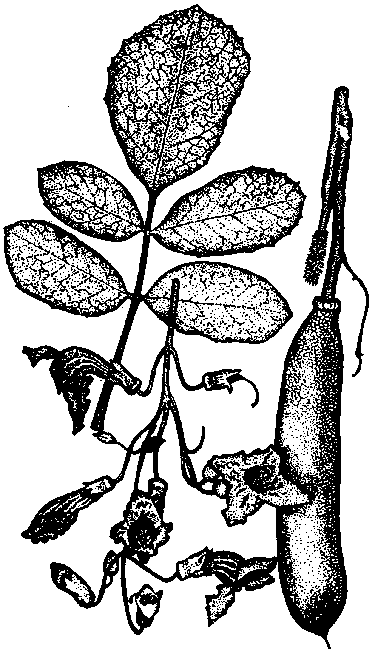
Figure
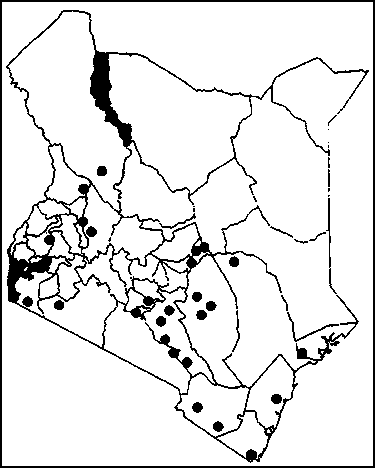
Figure
Lablab purpureus (L.) Sweet
Papilionaceae (Fabaceae)
syn: Dolichos lablab L., D. purpureus L., Lablab niger Medic., L. vulgaris Savi
Borana: marage Chonyi: mpupu, pupu (fruit) Embu: njavi, njabi nzavi English: hyacinth bean, bonavist bean, lablab bean Giriama: mpupu Kamba: mbumbu, ngiima, nzavi Kikuyu: njahi Luhya (Bukusu): njawu, sikandakanda Luhya (maragoli): ihranda Maa: ormbombo, mbombo, irpombo Mem: njabi, ncabi Nandi: mangwanyet Samburu: lagat Sanya: pupu Swahili: mfiwi, fiwi (fruit) Tharaka: njavi
Description: A climbing perennial with thick foliage. LEAVES: With 3 leaflets, to 15 cm long. FLOWERS: Of varying colours, borne on long-stalked erect inflorescences arising from the leaf axils. Purple or cream with purple tinge. The wild subspecies uncinatus has a white keel and the standard and wing purple to violet. FRUIT: A pod variable in shape and size: broad and short (to 4 cm long by 1.5 cm wide) in ssp. uncinatus; a bit larger (up to 10 cm long) but the same shape in ssp. purpureus; long (up to 14 cm) and slender, resembling kidney bean in ssp. bengalensis of Indian origin. Seeds pink, reddish brown to black, white, or mottled red with a white hilum and a long aril.
Ecology: Cultivated mainly in the Coast, Central, Eastern and Rift Valley (central part) Provinces, 0-2,500 m. Also in the rest of Africa and in Asia. In the wild state, found climbing on other plants at the edges of riverine forest and in mountain forest. Cultivated in various types of soils. Propped up or planted with other less leafy plants where it can get support. Rainfall: 600-1,200 mm. Zones II-V.
Uses: FOOD: Dry or green beans are cooked and eaten (Kikuyu, Kamba, Maasai, Meru, Embu, Nandi), often being soaked before cooking. Beans cooked for 2-3 hours, water used to boil seeds may or may not be poured out. The beans can be cooked with vegetables or maize (Kamba, Kikuyu) or mashed with potatoes (Kikuyu). Seeds may also be boiled, fried and used as mboga (relish) with ugali. An important traditional food among the Kikuyu, almost always served to recuperating mothers after childbirth (said to increase mother's milk), important visitors (such as in-laws visiting a child named after them) and during important ceremonies. Leaves occasionally used as a vegetable in Central and Coast Provinces but a good knowledge of preparation is needed.
OTHER: A fodder crop.
Season: First crop harvested after 3½ months (at about the same time as maize). Continues to bear a crop so long as there is water in the ground, hence preferably planted in moist places.
Management: Propagated by seed. Said to be planted with other crops but preferably at the edge of cropland. Staked or planted near hedges to climb on. Pods are normally harvested individually as they mature. The same plant may produce a crop for several years.
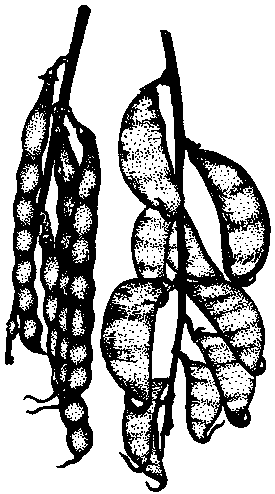
Figure
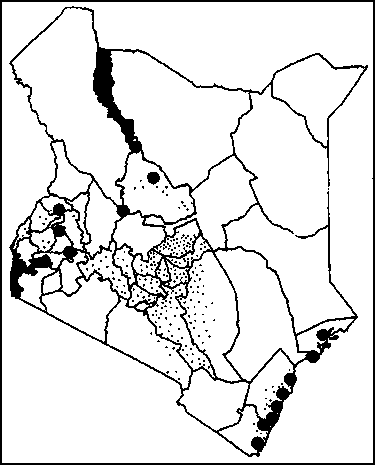
Figure
Remarks: This bean is very variable with at least three subspecies in Kenya:
· ssp. uncinatus Verdc, is the wild form of local origin but also cultivated. Distribution: Throughout tropical Africa and south to South Africa.· ssp. purpureus is the form widely cultivated throughout the tropics.
· ssp. bengalensis (Jacq.) Verdc. is a widely cultivated variety of Asian origin with long pods. This form is also grown in Kenya.
All the varieties are still grown in Kenya and are distinguished by the shape and colour of the seeds and pods. Seeds may be black, brown, white, speckled red or red. In Kitui the first two are referred to as mbumbu while the last three are known as ngelenge. The taxonomy of these last three with reference to the others is still dubious. Seeds of the red type may change to being poisonous after a few generations, a property which some seeds are said to have acquired at the middle of the century. To be on the safe side, throw away the first two rounds of the water used for boiling.
These are very drought-resistant pulses. Nowadays less commonly grown and the population is barely maintained by spontaneous growth in cropland or its edges. The consumption and cultivation of this bean have diminished over the years, and its place has been taken by kidney beans, peas and cowpeas. It is, however, a drought-resistant plant that should not be forgotten, especially in drier areas.
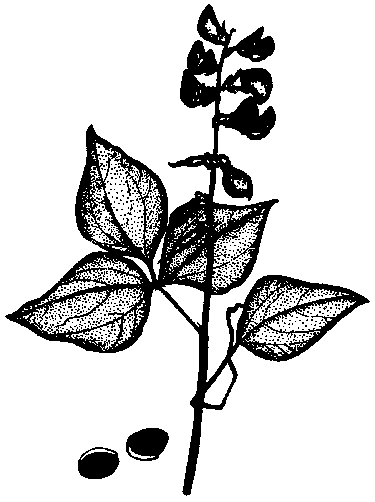
Figure
Lagenaria siceraria (Molina) Standley
Cucurbitaceae
syn: L. vulgaris Ser., L. leucantha Rusby
Borana: buge Chonyi: vilonje, chirenje, vimumunye (edible), kiburu Embu: rungu, kinya (container) English: gourd, bottle gourd, calabash gourd, calabash Giriama: vipuru, kipuru, muzungu wa mboke Kamba: ungu, kikuu (container), yungu (fruit, edible) Kambe: chirenje, vimumunye (edible) Keiyo: silangwet, soteet (fruit) Kikuyu: mungu, rungu, kinya (container) Kipsigis: soteet (fruit), monkwo (half) Kisii: ekerandi, egesanda (half), risosa (container) Luhya (Bukusu): lurabu, kumwendo (fruit), emuka (fruit-prepared) Luhya (Samia): sesebebe Luhya (Tachoni): emuka Luhya: rihondo, kimuga (gourd), kisanda (half) Luo: obudho (plant), budh-keno (fruit), poko (fruit-prepared), agwata (half) Maa: oltulet (plant), enkukuri (container) Marakwet: silangwa, sot (fruit) Meru: mungu, rungu, ungu, lungu, gikiri (container), pau, ncengerio (milk container, Mwimbi), kiuga (fruit, half-fruit) Nandi: silangwet, soteet (fruit) Pokot: silangwa Rendille: ororo, kuulal Sanya: buchuma, kumunye (edible) Somali: kula Swahili: kibuyu (fruit), mmunya, mmung'unya Tharaka: ikuru (plural), muungu Turkana: etyo
Description: A monoecious annual, long-trailing or climbing herb with divided tendrils. LEAVES: Simple, kidney-shaped. FLOWERS: Male solitary, borne on long stalks, large, white, axillary, with funnel-shaped tube, opening in the evening. Female with short tube. FRUIT: Young fruit softly hairy, variable in colour from green, speckled to cream or pale yellow. Mature fruit with a dry, usually brown, hard but brittle shell with a smooth or warty surface. Cultivated forms very variable in shape and size, 5-100 cm or more long. Shapes may vary from spindly to spherical with almost infinite intermediate shapes- constricted, crescent-shaped, cylindrical, etc. Seeds cream to brown, compressed, embedded in a white spongy pulp. The size and shape of gourds is both genetically and environmentally determined. Flowers produced first give rise to bigger gourds as the growth of the plant is vigorous.
Ecology: L. siceraria is believed to be of African origin. Now widely grown in Kenya for its fruits which are used as containers and often escaping to the wild, 0-2,800 m. Cultivated 0-2,500 m. Escapes common in the wetter areas, especially central highlands of Kenya and the Rift Valley west to Nyanza and Western Provinces. A traditional crop in many African cultures. Cultivated throughout the tropics and subtropics of both the New and Old World. Riverine and lakeshore conditions, in grassland and bushland. Common in abandoned homesteads. Pound in a wide range of soil types but common in well-aerated, fertile soils. Rainfall: 400-1,500 mm. Needs well-distributed rain. Moisture crucial during fruit growth since drought leads to dropping of the immature fruit. Zones I-VI.
Uses: FOOD: Young, tender fruits of some small cultivars are eaten as a vegetable. The cooked fruit is soft, slightly sweet or almost without taste. These "sweet" types (Kikuyu: mungu, Kamba: ungu wa muyo, makii (Luo, Homa Bay), nyatao (Giriama: vimumunye) may be boiled, salted and eaten or boiled, mashed, fried and made into a stew. Mature fruits turn somewhat bitter and are not used as food. The seeds are edible and in some cultivars are high in protein and oil. Young shoots and leaves of some cultivars (Luo: maguti) are used as a leafy vegetable (Luo, Mijikenda). Several forms of these edible ones have been noted.
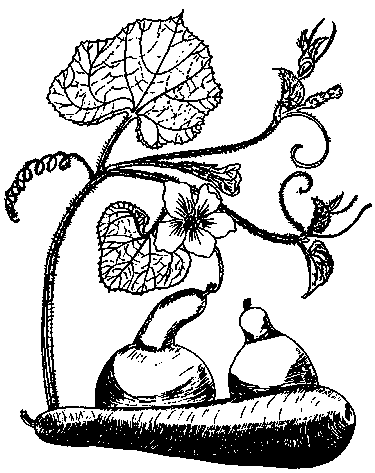
Figure
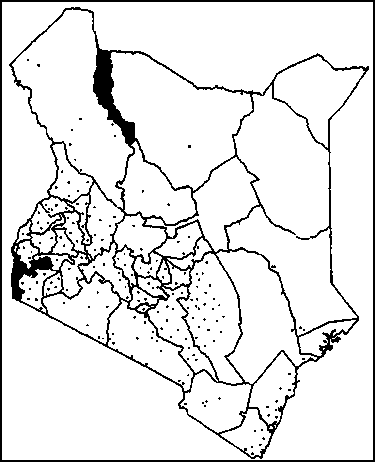
Figure
Edible gourds have variable shapes and sizes: they may be small, elongate with a smooth surface or spherical or nearly so with numerous lumps on the shell (Luo: budh-nyatao). Most other gourd cultivars, especially those producing large fruit, are bitter even when young and cannot be eaten. Neither are the leaves eaten. These should not be confused with those of the pumpkin (Cucurbita spp.) which are widely cooked as a vegetable.
MEDICINAL: Roots and fruit are used as a purgative in some communities.
OTHER: Both edible and inedible cultivars are cultivated for a wide range of uses depending on their shape and size. The use of the gourd as a container is common in many African cultures, cultivators and pastoralists alike. When cut into two halves the various types, including the edible ones, find new uses-as open containers used for storage, ladling out food, fluids, seeds, etc., and as a cup, bowl or plate. Different cultivars have specific shapes with different end uses.
COMMERCIAL: Various forms of gourds are sold either as containers or in halves used as bowls or ladles. The very small ones are sold as household ornaments (Nairobi). The long snake gourds are grown in Murang'a and sold among the Maasai where they are still valued as containers for milking and bottles for a child's milk.
Season: Planted during the rainy season. Flowers in January-February in Makueni. Fruits in April-May in Makueni and Kajiado.
Management: Gourd plants grow easily from seed. Seedlings require well-aerated, fertile soils. Traditionally seeds for next season's planting may be in the form of stored gourds, or even seeds from broken gourds left in cropland. The plant is normally planted at the edge of cropland, next to a fence or on terraces to minimize on use of cropland. Among the Maasai the plants are not usually planted but grow spontaneously near cattle enclosures, on fences and in abandoned homesteads from where they are harvested. Occasionally there is deliberate propagation when seeds are broadcast at specific places or seedlings uprooted from the wild and planted in the homestead (Maasai, Bukusu). The plant climbs on hedges, becoming further strengthened. The shape of the container is affected by its position during growth. Among the Mbeere, Tharaka and Kamba, the gourds are placed upright on flat ground so that they form with a flat bottom-to be stable later when in use.
The fruit is harvested when the shell hardens and outer and inner layers begin to turn yellow. The container is prepared by soaking its contents (seeds and pulp) in water, dislodging the pulp with a stick, shaking it vigorously and emptying the contents.
Status: Species as a whole not threatened but genetic erosion taking place fast.
Remarks: Other important members of the genus are L. sphaerica (Sond.) Naud., an extensive climber, and L. abyssinica (Hook f.) C. Jeffrey, widespread from Kajiado and Embu to western Kenya. Common in bushland and evergreen forest.
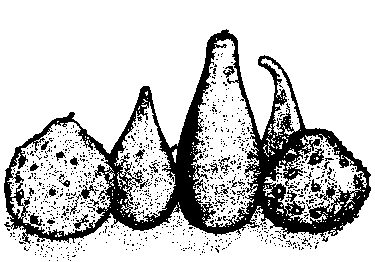
Figure
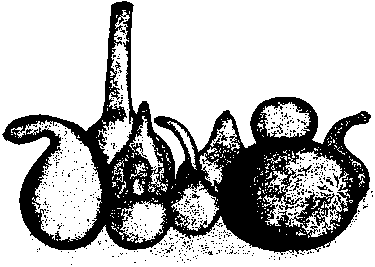
Figure
Landolphia buchananii Stapf
Apocynaceae
Digo: mpira Kamba: kiongoa (Makueni), maongoa (fruits) Kikuyu: mugu, mugu-wa-munyati Kipsigis: ngiingichet, tunoiyet (south-west Mau) Maa: entiangege (Narok) Marakwet: ng'eng'echwo, ng'eng'ech (plural) Nandi: nyingiget, ngungyet Pokot: ng'eng'echwa, ng'eng'eech (fruit) Samburu: lkutetei, sebit
Description: An extensive strong-stemmed liane. Stems narrow, flexible, strong with tendrils. Plant exudes white latex when any part is injured. LEAVES: Opposite, ovate or elliptic. Young leaves tinged red. FLOWERS: White, tubular, borne in axillary or terminal inflorescences. FRUITS: Round, 4-6 cm across, light green with corky, grey-white or brown patches on the surface. Ripe fruit the same colour, soft with several seeds embedded in a white juicy pulp.
Ecology: Found mainly in central and western Kenya, e.g. in Karura forest, Thika, Namanga, Thui Hill (Makueni), Marsabit, Kisii, Nandi, Uasin Gishu, Baringo and Meru. Hillside thickets and bushland, riverine forest in clay loam, especially on sloping rocky areas. Zones I-IV.
Uses: FOOD: The ripe fruit is eaten (++). The white juicy pulp has a sour sweet taste. Seeds are usually discarded but may occasionally be swallowed like passion fruit seeds. They are, however, rather large and may cause choking. Unripe fruit is bitter. The pulp has been used to make jam.
MEDICINAL: Both ripe and unripe fruits used for "coated tongue"-kivuti (Kamba, Makueni), unripe ones said to be more effective; roots used for gonorrhoea and bilharzia (Kikuyu).
OTHER: Branches used as string (Kikuyu), for tying beehives (Kamba), for building (Maasai, Kamba), and weaving baskets and winnowing trays (Kikuyu). The twigs used to be sold in the past (Mukuyuni, Makueni). The liane is cut, warmed in water to avoid snapping then sold in rings as ropes. The copious latex produced has been used as a rubber substitute but it is said to be bad for clothes. Fodder plant for goats and sheep.
Season: Fruits in February in Kisii, July-August in Machakos and Meru, October in Baringo and November-December in Kiambu.
Management: Propagated by seeds which germinate readily after passing through gut.
Status: Generally rare but may be locally common.
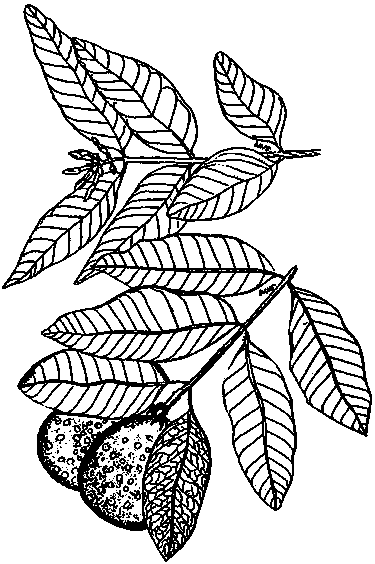
Figure
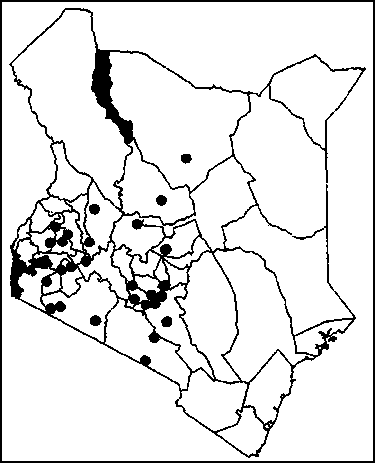
Figure
Landolphia kirkii Dyer
Apocynaceae
Boni: dabeh, daber Chonyi: muungo Digo: mpira, libugu, kitoria (fmit) English: rubber vine Giriama: mutongazi, mtoria, muungo, vitoria (fruit), maungo (fruit) Kambe: muungo Sanya: hathocha Swahili: ulimbo, mpira, mbunga, kilungwana, moyo, mpyo Taita: mmeru-sukari
Description: Extensively climbing evergreen liane or spreading bush. Stems narrow, dark brown, with tendrils. Plant with a white latex. LEAVES: Opposite, small. FLOWERS: White or pale pink, borne in axillary or terminal inflorescences. FRUITS: Round to 5 cm in diameter, green, turning reddish yellow when ripe.
Ecology: Grows in the coastal area, e.g. in Arabuko-Sokoke Forest, at forest margins, in Brachystegia woodland and coastal bushland, 0-300 m on sandy soils. Zones I-V.
Uses: FOOD: The ripe fruit is edible (+++) (Giriama, Digo, Duruma, Chonyi, Kambe). Fruits are sweet with an added acid taste. The fruit wall is opened and the yellow-orange pulp covering the seeds sucked. The seeds are then discarded. Leaves are said to be eaten as a vegetable (Boni).
OTHER: Source of wild rubber which is often used for trapping birds.
COMMERCIAL: Sold in most coastal towns including Mombasa, Malindi and Kilifi. A very popular fruit eaten as a snack.
Season: Flowers in March and November and fruits in March-April and November-December in Kilifi.
Status: May be locally common.
Remarks: A fruit plant with a great potential for domestication.
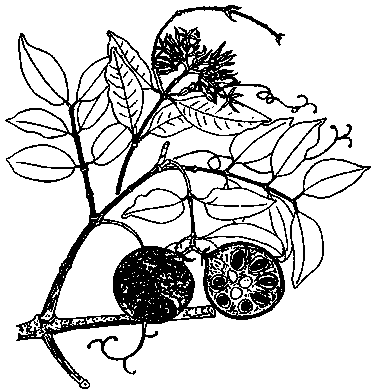
Figure
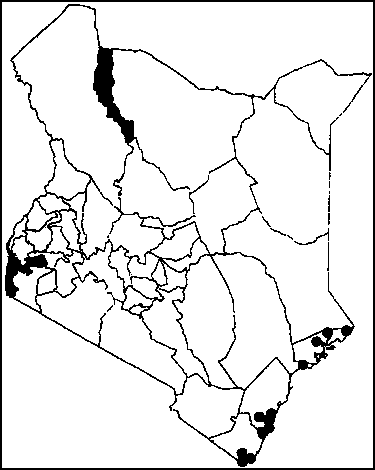
Figure
Lannea alata (Engl.) Engl.
Anacardiaceae
Borana: wanreh, kumude Giriama: manga, mnthungu Kamba: kikolya (Makueni), kitungu (Mwingi), ngolya (fruit), ndungu (fruit) Malakote: sufi-bara Orma: kumudhe Rendille: bejelo Samburu: lkinoi Somali: waareh, kumudhe (Tana River), waanreh Taita: mushiga, ngariso Tharaka: mituungu
Description: Much-branched spreading deciduous shrub usually 1.5-4.0 m high, with drooping branches and a spiky appearance. BARK: Dark grey, smooth. Stem base and main roots normally covered with brown, thread-like growths resembling cotton wool. LEAVES: Usually clustered on short shoots and divided into tiny leaflets which are bluntly toothed towards the apex. The leaf rachis is often winged. FLOWERS: Borne in inflorescences arising together with leaves from the short shoots, greenish yellow, small, inconspicuous. FRUITS: Up to 2 cm across, fleshy, green turning yellow to orange or reddish brown on ripening. Seeds green with a rough surface.
Ecology: Grows in Somalia, coastal, eastern and northeastern parts of Kenya and northern Tanzania. In Kenya may be found at El Wak (Wajir), Mtito Andei, Kurawa (Tana River), Mutwang'ombe (Kitui). Found on rocky hillsides, in Acacia-Commiphora bushland, often associated with Delonix alata, Lannea triphylla, Adansonia digitata. Acacia tortilis, Sterculia stenocarpa and Grewia species in light red clay and in rocky areas, 0-1,200 m. Rainfall: 400-600 mm. Zones V-VI.
Uses: FOOD: Fruits edible and much liked (+++) (Samburu, Somali, Rendille, Boran, Kamba, Taita). These are sweet but also with a rather sour taste. With good rains fruits are juicy.
MEDICINAL: Used for fever, malaria, snakebite, fractures and injuries (Samburu).
OTHER: Goat and camel fodder (++). Fruits eaten by goats. Fuelwood (+). Wool from roots used for stuffing pillows and mattresses (Somali, Tharaka, Kamba, Mbeere).
COMMERCIAL: Fruits sold in Mwingi District.
Season: Flowers in September-October in Makueni, Tharaka, Kitui and Taita, in December in Tana River. Fruits in February-March in Makueni, Tharaka, Kitui, Taita and Wajir, in May in Mandera, in July-August in Kilifi and Kwale and in December in Garissa.
Status: May be locally common.
Remarks: An excellent fruit tree for dry lands. Needs good management to control the poor spreading habit. Fruits of many Kenyan species of Lannea are edible. They are deciduous shrubs, rarely trees, often with thick bark. Leaves are pinnately compound. Flowers normally have 4 floral parts. The fruit has one hard seed, often with persistent style.
L. schweinfurthii (Engl.) Engl. syn: L. stuhlmannii (Engl.) Engl. (Swahili: mnyumbu, Chonyi: mnyumbu, Digo: mnyumbu, Giriama: mnyumbu, Kamba: kyuasi, Mbeere: muracu, Luo: kuogo Maa: orpande, Marakwet: monwo (singular), Pokot: moino, Samburu: lapurori, Sanya: hadaraku, Somali: deen, Tharaka: muthuchi) is a tree to 15 m high with a rounded usually dense crown. Ripe fruits are reddish brown and edible but unimportant as a food source. Like most other Lannea species it has soft fleshy bark which is used for tea (Maasai, Pokot), medicine for fever (Mbeere). The inner bark is a source of string (Maasai). Fibre from bark used to make grain containers and baskets, syondo (Kamba). The brown dye obtained from bark was used to decorate the baskets. A brown wool used for stuffing mattresses is obtained from roots just below the ground surface (Kamba, Tharaka, Mbeere). The large trunk is carved into stools, beehives, mortars, and drums for storing honey (Kamba, Tharaka). A good shade tree and bee forage. Grows fast. A widespread tree in Kenya and in Africa from Sudan to South Africa. Season: Flowers in December-January (Kitui). Fruits in February-March (Kitui).
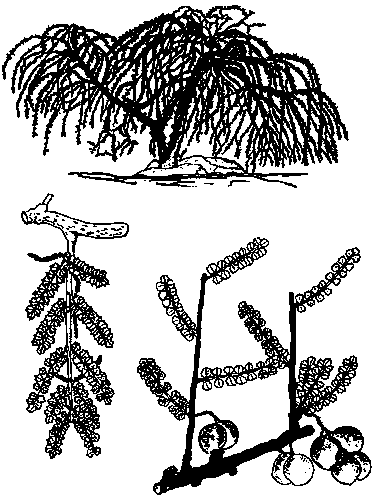
Figure
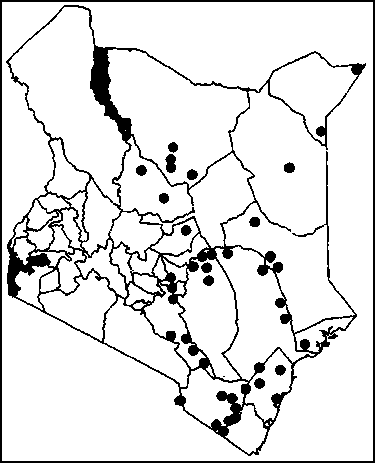
Figure
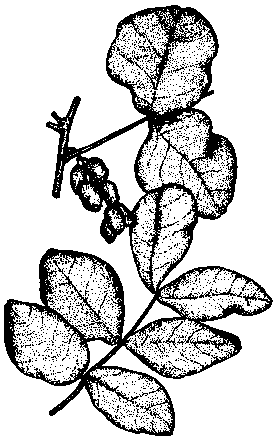
Lannea schweinfurthii
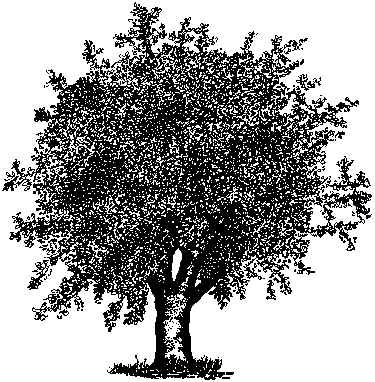
Lannea schweinfurthii
Lannea edulis (Sond.) Engl.
Anacardiaceae
Pokot: cheptapesyit Luhya (Bukusu): neloba, burobelo (fruit), namwirobelo
Description: An extremely short shrub with underground branches which produce leaves and fruits hardly 30 cm above the ground. Shoots resemble those of L. schimperi. FLOWERS: Yellow, borne in clusters near ground level. Often coming when the plant is leafless. FRUITS: Numerous, bright red, oval, up to 1.5 cm long.
Ecology: East and Central Africa south to Mozambique, Angola and South Africa. In Kenya it grows, e.g. at Kitale and Soy (Uasin Gishu). It is common in humid areas in wooded grassland, especially areas that are frequently burnt, 900-2,200 m. Zones I-II.
Uses: FOOD: Fruits eaten mainly by children.
Status: Occasional.
Remarks: Variety edulis with compound leaves is the one described here; var. integrifolia Engl. is reported in Tanzania and Zimbabwe.
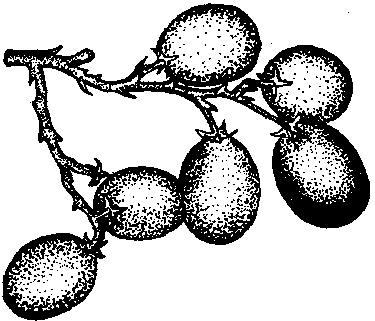
Figure

Figure
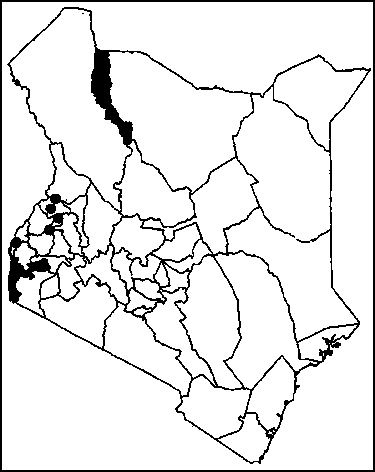
Figure
Lannea rivae (Chiov.) Sacleux
Anacardiaceae
syn: L. floccosa Sacleux
Kamba: muthaalwa, kithaala, kithaalua kya kiima Marakwet: latat (plural), lolowe (singular) Pokot: lolotwo Somali: jidwey Turkana: etopojo
Description: Much-branched, spreading, deciduous shrub or tree usually 3-6 m. Trunk and branches rather thick. BARK: Thick, smooth or rough, grey to dark grey. LEAVES: Often simple, dull green, softly hairy, especially beneath, usually borne in clusters on short, stout branchlets. FLOWERS: Yellowish with red patches. Fruit to 1.5 cm long, densely hairy.
Ecology: Grows in southern Ethiopia, Kenya and northern Tanzania. In Kenya, e.g. at Moyale, Masii (Machakos), Bisili (Kajiado). Open Terminalia-Combretum bushland and wooded grassland, 300-2,000 m. Common at 1,400-1,900 m on well-aerated sandy, rocky and loam soils. Zones IV-V.
Uses: FOOD: Inner bark chewed for its sweet taste and as a source of water (++). Fruits edible but unimportant.
FOOD/MEDICINAL: Inner bark chewed for colds.
OTHER: Fibre obtained after chewing is used for ropes and weaving; "wool" of dug up roots is used for stuffing mattresses (Mbeere); tree used as a bird-scaring platform (Kamba) in millet fields. Toothbrush. Hedge. Shade.
Management: Propagated by cuttings and seed. Regenerates easily when cut.
Status: Generally uncommon but common in some areas.
Remarks: This species may be a useful support for lianas used for fruit. It resembles L. triphylla, distinguished by its 3-foliolate leaves, smaller growth habit and narrower branches.
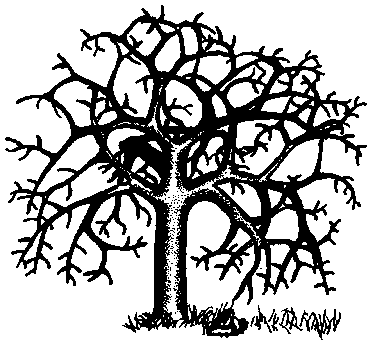
Figure
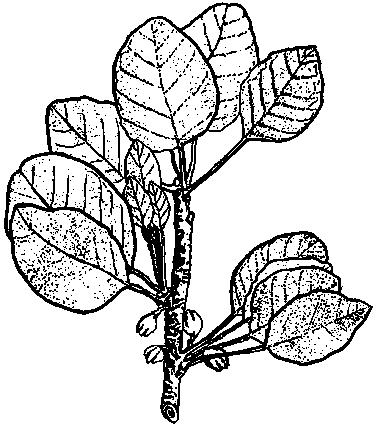
Figure
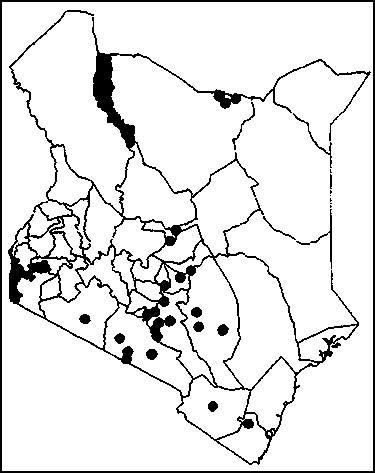
Figure
Lannea schimperi (A. Rich.) Engl.
Anacardiaceae
Borana: andaraka Giriama: mwanakabaga Kamba: kithoona, kithauna (Kitui), nthoona (fruit) Luhya (Bukusu): kumuumbu (tree) Luo: kwogo, kuogo Marakwet: lolotwa (singular), latat (plural) Nandi: kwetingwet Pokot: cheprukwo, cheprukwo Turkana: etopojo
Description: Tree to 7 m high. Trunk to 45 cm or more in diameter. BARK: Smooth or fissured, pale grey. LEAVES:
Long, pinnately compound, often on stout branches. Underside of leaflets and young leaves rusty hairy. FLOWERS: Greenish yellow, borne on long usually unbranched inflorescences. FRUIT: Ovoid, to 1.5 cm long.
Ecology: Nigeria, east to Ethiopia and south to Zimbabwe and Mozambique. In Kenya it may be found, e.g. at Kanzalu Range (Machakos), Wikililye (Kitui), Loima hills (Turkana), Mt Elgon, Eldoret, West Pokot and Marakwet. Shrubland on rocky hillsides, especially on sandy soils, 750-1,900 m. Zones II-IV.
Uses: FOOD: Fruit eaten (++) (Pokot, Kamba, Turkana, Marakwet). Bark used in tea (Pokot).
MEDICINAL: Roots and bark decoction used for chest troubles (Kamba, Pokot).
OTHER: A source of fuelwood, poles and a good shade tree. Trunk made into seats and bowls (Pokot).
Management: Said to grow from cuttings.
Status: Generally uncommon.
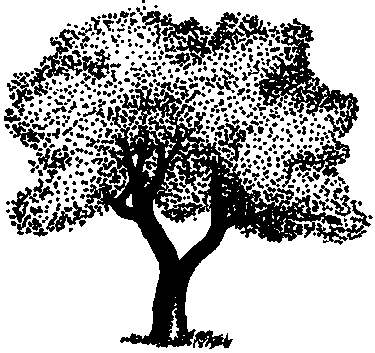
Figure
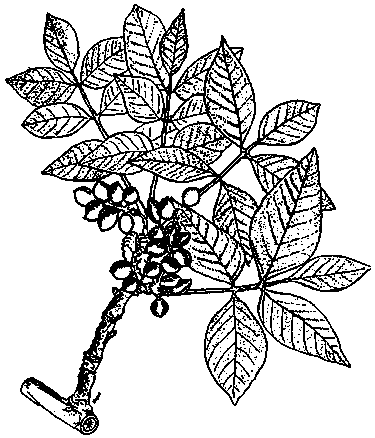
Figure
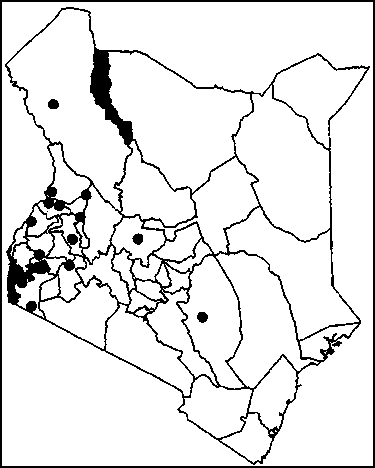
Figure
Lannea triphylla (A. Rich.) Engl.
Anacardiaceae
Borana: andarak Ilchamus: nkampurori, nkampurok, nkampiror Kamba: kithaala, kithaalwa, nzaala (fruit) Kambe: mnyumbe Luo: kuogo Maa: orpande Marakwet: monwo (plural), man (singular) Mbeere: muracu Orma: hadaraku Pokot: moino Rendille: niondoh Samburu: lapuroi Somali: anri, anthri, wankhri, waanri (Tana River), baaror Tugen: tapuya Turkana: etopojo, atopojo
Description: Deciduous spreading shrub or small tree to about 5 m high. Branches flexible. BARK: Fleshy, smooth, grey to dark grey on the surface. LEAVES: Softly hairy, often divided into 3 leaflets. FLOWERS: Cream, in spikes. FRUIT: Dirty green, softly hairy, turning dirty red on ripening. Seed red.
Ecology: Uganda, north-eastern Tanzania, Ethiopia, Somalia and Arabia. In Kenya, found, e.g. at Moyale, Nginyang (Baringo), Mtito Andei, Mackinnon Road, southern Turkana, Baringo, Kwale, Machakos and Marsabit in Acacia-Commiphora bushland, 340-1,400 m. Common on red clay, sandy clay and in rocky areas. Zones IV-VI.
Uses: FOOD: Roots, especially from young plants, peeled and chewed raw during the dry season, sweet and succulent inside (+) (Turkana, Pokot, Kamba). Ripe fruit edible (++). Inner bark chewed for its water and sweetness. Bark boiled for "tea".
FOOD/MEDICINAL: Boiled bark used as child's tonic. It is believed to cleanse the stomach (Pokot). String is chewed for colds.
OTHER: Flexible stems used in hut building. Inner bark a source of fibre used for weaving baskets and ropes (Pokot, Kamba). Toothbrushes (Pokot, Kamba). Wood used in construction and said to be termite-resistant. Camel and goat fodder. Planted as a hedge in dry areas.
Management: Propagated by stem cuttings and probably by seed too.
Remarks: This plant may easily be confused with L. rivae which it resembles in habit. The leaves are a distinguishing feature.
Figure
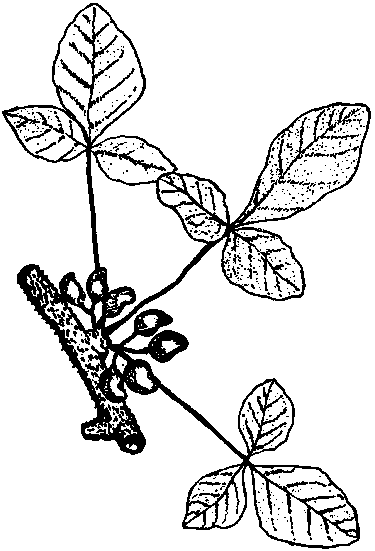
Figure
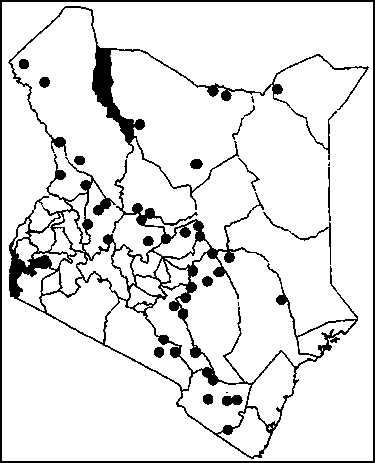
Figure
Lantana trifolia L.
Verbenaceae
Borana: kate Kamba: muvisavisi; musyavisi, mbisavisi (fruit), nzavisi (fruit) Kikuyu: mukenia Kipsigis: bek ap tarit Luhya: biembaemba, lumenenambuli Luhya (Marachi): obengele Luo: magwagwa, magwaga, nyabend-winy, teg-tagwari, obengle Maa: enkurma-onkayiok, lukurman-oonkayiok, olmagirigiriani Mbeere: mukenia Nandi: pipterit, petiapteriet Samburu: seketeti Swahili: mvepe Taita: mwemberi Tharaka: mukenia Tugen: sekechewo
Description: Small much-branched shrub usually 1.0-1.5 m high, occasionally to 3 m. Stems ridged. LEAVES: Aromatic, in threes, opposite, margin serrated, coarse above. FLOWERS: Purplish pink, borne in clusters. Corolla over 3 mm across at apex. FRUITS: Small (2-3 mm), green, shiny, turning reddish purple when ripe, numerous on one head, each one-seeded.
Ecology: Widespread in Africa and throughout the tropics in forest and at bush edges, disturbed forests and roadsides. Common in the Kenya highlands on fertile sandy and light clay soils, 900-2,500 m. Zones II-V.
Uses: FOOD: The sweet fruits are eaten whole, mainly by children (+); fruit used for dyeing paper and fingers by children.
OTHER: Branches used as a broom. Leaves were used as perfume by old ladies (Mbeere). Branches used for constructing grain stores (Kikuyu) and as torches while harvesting honey (Mbeere). Important goat fodder (++) and bird food.
CULTURAL/BELIEFS: A ritual plant (Mbeere).
Season: Fruits in May-July and January-February.
Status: Common.
Remarks: A potential hedge plant and ornamental. Virtually all Lantana species in Kenya have edible fruit. These include:
· L. ukambensis (Vatke) Verdc. (syn. L. rhodesiensis Mold.) (Kamba: muvisavisi) a small plant to 1.5 m high, often multi-stemmed with ovate leaves which are paired or in whorls of threes. Corolla reddish purple, often with a white centre, generally shorter (less than 2 mm at apex). Found in Trans Nzoia, Uasin Gishu, Murang'a, most of Africa.· L. viburnoides (Forssk.) Vahl, has opposite leaves and usually white (rarely pink) flowers (Somali: geedxamar). It is an important fodder and is used in the preparation of male and female aphrodisiacs (Tharaka). Distribution: Egypt south to Angola, Mozambique.
· L. camara L. (Chonyi: mshomoro, Digo: shomoro mjesasa, English: curse of India, tick-berry, Giriama: mushomoro, Kamba: mukiti, musomolo, Kikuyu: mukigi, kagiri, rutana, nyatana, mushomoro, mucimoro, Luo: obengle, onyalobiro (both Homa Bay), tek-taguari, nyamridhi (both Siaya), Mbeere: musamburu, mucimoro, Meru: mucimoro (in Mwimbi), Sanya: mushomoro, Somali: dumod, Swahili: mshomoro, Taita: mvudi, mwemberi) is of American origin and now widely distributed in the tropics and subtropics. It has prickly stems and larger (5-8 mm) blue-black fruits. It has been spread by running water and birds, which feed on it, to become a major weed in all agricultural zones. It is common in mid-altitudes forming dense thickets. In Nyanza Province these have provided an ideal habitat for tsetse flies and hence the persistent problem of trypanosomiasis in the region. The fruits are edible and are also used as a dye for baskets (Kitui).
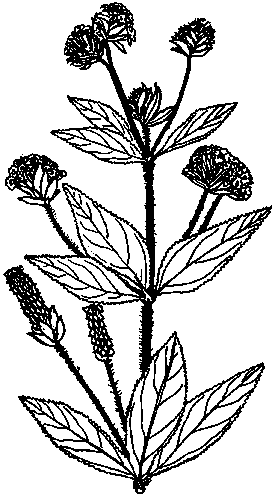
Figure
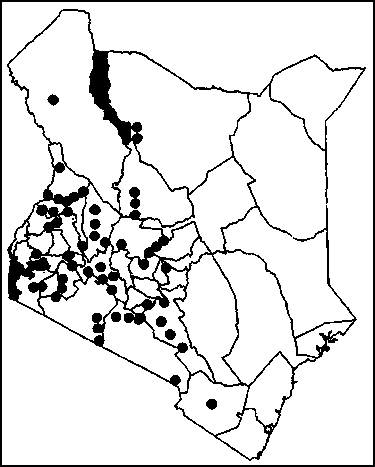
Figure
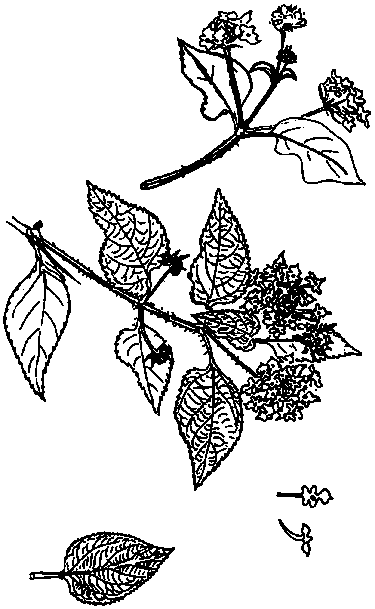
Lantana camara
Launaea cornuta (Oliv. & Hiern) Jeffr.
Compositae (Asteraceae)
Chonyi: mutsungu, mtsunga wa utsungu Digo: mutsunga Giriama: mutsunga Kamba: muthunga, uthunga Kambe: mutsungu Kikuyu: muthuga Luo: achak Mbeere: muthunga Samburu: lekulee Sanya: mtsunga Taita: mnyinya Turkana: lukwaras
Description: Erect herb with underground rhizomes. Usually 0.3-1.5 m, branching above into branchlets which end in flower heads. LEAVES: Grey-green, long, narrow, lobed laterally, often on one side and with a toothed margin. FLOWERS: Yellow, borne on numerous heads.
Ecology: Widely distributed in Kenya in cultivated land, abandoned cultivation, at roadsides, disturbed grassland, 0-2,000 m. Found on all soil types from sandy to black-cotton soils. Seems to prefer sandy soils. Zones II-V.
Uses: FOOD: Eaten as a vegetable (Kamba, Kikuyu, Luo, Giriama, Taita). Often cooked with Solarium nigrum leaves. Vegetable said to be good for stomach disorders, ulcers, dysentery, etc. (Taita, Kamba). An important vegetable among the Giriama, often cooked during wedding ceremonies (+++).
FOOD/MEDICINAL: Vegetable believed to have curative as well as prophylactic properties against malaria.
MEDICINAL: Leaves given to chickens for mavui (lung diseases) (Kamba).
OTHER: Fodder, especially for rabbits.
COMMERCIAL: Leaves sold in most coastal urban centres.
Management: Not normally planted as it is a common weed where it is used as a vegetable. May be grown from stem bases which have some roots. The plant readily sends out new shoots even in dry weather and when harvested intensively.
Status: Very common.
Remarks: Among the Chonyi, the name mutsunga is occasionally used as a general term for a leafy vegetable. Among the Mijikenda this vegetable is never cooked alone. It is usually mixed with less bitter ones such as Asystasia gangetica (talakushe), amaranth, pumpkin leaves, cowpea leaves and Vernonia cinerea, but never with sweet potato leaves, okra leaves, Corchorus spp. and Oxygonum salicifolium (kimbiri), which are slippery. This vegetable is very important in Mijikenda culture. Its preparation is considered an important role of a married woman and is often given as the reason why a bride should leave her parents for her new home (Giriama). Related to this species is the exotic Sonchus oleraceus (sow thistle) whose leaves are occasionally used.
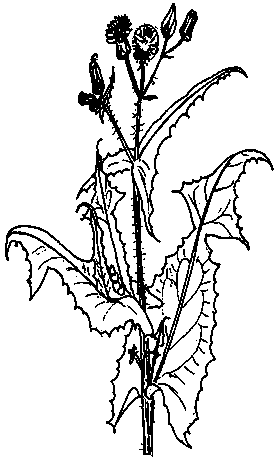
Sonchus oleraceus
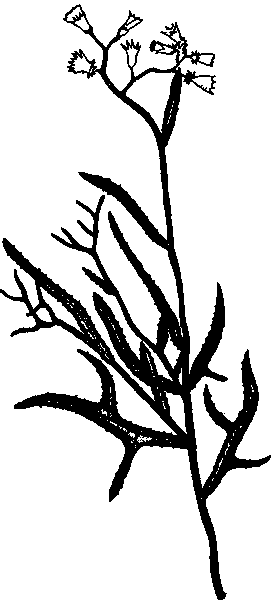
Figure
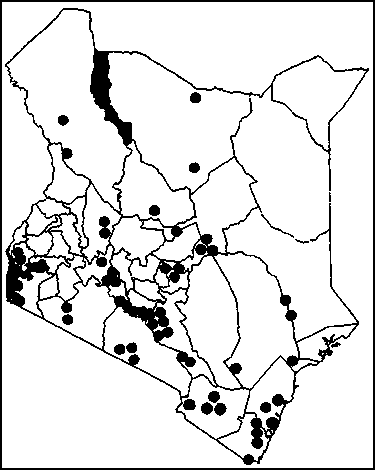
Figure
Leptadenia hastata (Pers.) Decne.
Asclepiadaceae
Pokot: chesakisyon Somali: moroh Turkana: ekamong'o
Description: A trailing or climbing plant. Stems light green, young shoots of climbing plants spreading out into the air with long internodes. LEAVES: To 10 cm long, mostly ovate, light green. FLOWERS: Cream or yellowish green. FRUIT: Two-valved, conical, dehiscing to release cottony winged seeds.
Ecology: Found in Kenya along Turkwel and Kerio rivers and elsewhere in Baringo, Turkana and West Pokot in bushland, riverine bushland, prostrate in open areas or climbing on bushes, 500-1,500 m. Zones VI-VII (riverine).
Uses: FOOD: Leaves used as a vegetable (Turkana, Pokot). Normally cooked with other vegetables such as cowpea leaves.
MEDICINAL: Sap from stems is applied to wounds (Turkana, Ng'ikebootok).
OTHER: Important camel, goat, cattle fodder.
Management: Can probably be propagated by seeds.
Status: Locally common.
Remarks: In the same family is Pentarrhinum insipidum E. Mey. (Maa: orkorirr, Samburu: lng'arboi, ng'arboi, Somali: ayab), a climber with simple, entire, cordate leaves. Fruit to 10 cm long, with a milky latex and numerous protrusions on the surface. Widely distributed in Kenya (such as at Mile-46, Kajiado District) in bushland, especially in low-lying seasonally flooded areas. Common on alluvial and light sandy clay soils. The leaves are used as a vegetable and said to be tasty (Maasai). The ripe fruits are edible and liked by children and women (Maasai).
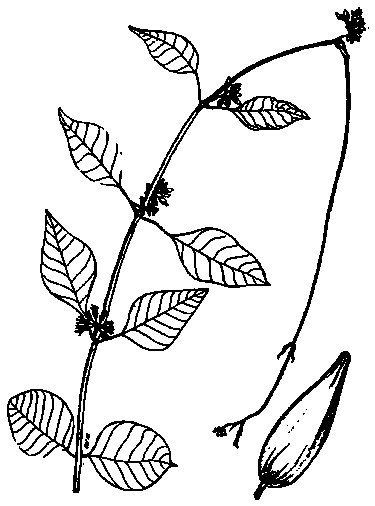
Figure
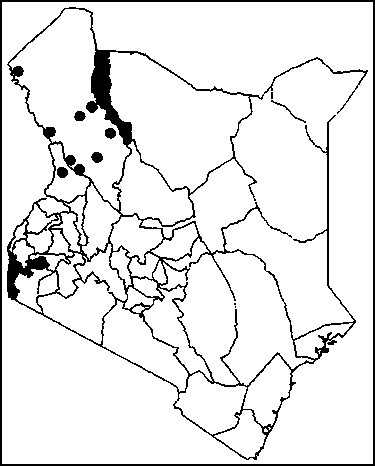
Figure
Lippia carviodora Meikle
Verbenaceae
Pokot: chemchai, tapa-murkutwo Rendille: galafu Samburu: leminyani, lomunyanyi, lmakutikuti, reexam Somali: ged hamu, dhaye dhabe Turkana: eur
Description: A small much-branched shrub usually 0.5-1.3 m. Stems ribbed, dark grey, branchlets grey with peeling surface. LEAVES: To 4 cm long, broadly ovate, very aromatic with a blunt or rounded apex, margin with blunt notches (crenate), upper surface rough. FLOWERS: In spikes, white or cream with large conspicuous papery bracts.
Ecology: Found in Kenya, south-eastern Ethiopia and Somalia. In Kenya in Turkana, Marsabit, Samburu, Tana River and Tsavo East in dry bushed grassland usually on rocky ground, 500-1,150 m. Zone VI.
Uses: FOOD: Used for flavouring tea (Turkana, Pokot, Somali). Dried leaves are crushed and added to boiling water and may be used with or without tea leaves. In the past chewed as tobacco and to cleanse the breath (Pokot).
COMMERCIAL: Leaves sold in Lodwar market (Turkana).
Season: Leaves available during the rainy season in April-May in Turkana and Baringo.
Management: Propagated by seeds.
Status: May be locally common, often forming pure stands.
Remarks: This is a popular flavouring plant in northern Kenya.
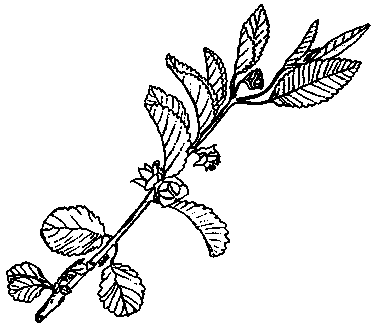
Figure
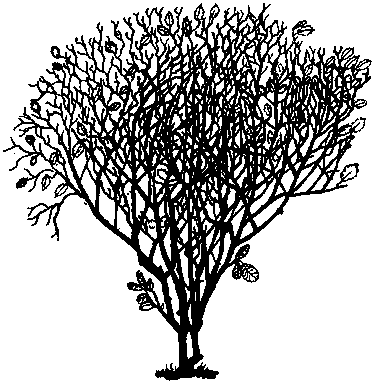
Figure

Figure
Lippia kituiensis Vatke
Verbenaceae
syn: L. ukambensis Vatke (in Dale & Greenway 1961)
English: wild tea Kamba: muthiiti, muthyeti Kikuyu: muthiriti, muthoroti, mucohi Kipsigis: mwokiot Maa: osinoni, olsinoni, isinon (plural) Meru: muthirith, muthiritii Pokot: mosonyon Pokot: mojonyon, chepchai Samburu: sinoni, senoni Taita: mvudi
Description: A much-branched aromatic herb or shrub, usually 1-2 m high, occasionally higher. Stems hairy. BARK: Rough, longitudinally fissured in old stems. LEAVES: To 10 cm long, usually opposite, ovate to elliptic with a crenate (bluntly notched) margin, rough above, softly hairy below. FLOWERS: White to cream.
Ecology: Found in many parts of Kenya in bushed grassland, especially on rocky ground and lava, 400-2,550 m. Zones II-IV.
Uses: FOOD: Leaves used to make tea (Pokot, Taita, Maasai). Fruits and seeds are eaten.
MEDICINAL: Leaves are crushed and the vapour inhaled to relieve nasal congestion. Leaves are boiled for colds (Maasai). Inhalation of steaming leaves is good for coughs and chest congestion.
OTHER: Said to be a termite repellant, hence used for constructing traditional grain stores (Kikuyu). Goat and camel fodder.
Status: Common. Often forming pure stands.
Remarks: Lippia javanica (English: wild tea, Luo: ang'were-rao, mweny), a common species in the middle highlands, is used in a similar manner.
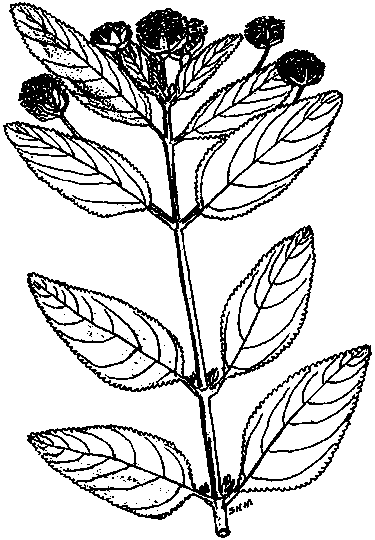
Figure
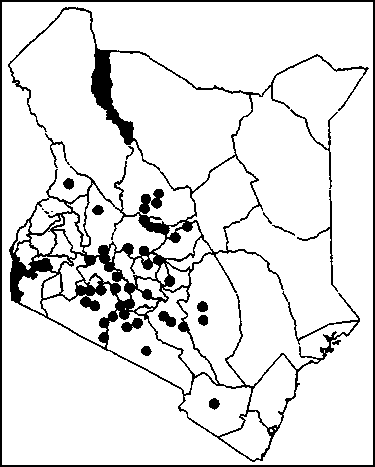
Figure
Maerua decumbens (Brongn.) De Wolf
Capparidaceae (Capparaceae)
syn: M. subcordata (Gilg) De Wolf, M. edulis De Wolf
Bajun: abiro Borana: bariyub, agarnyaab Daasanach: haluf Giriama: mkulube Ilchamus: lamayoki, lamayokin, lamaloki, lamalogi Kamba: munatha Luo: amoyo Maa: olkiage Malakote: dawa-nyoka, dawa-aaze Marakwet: chebillio (plural) chepiliowo (singular) Mbeere: mukindaarithi, mutunguarithi, mundarithi, gindarithi Orma: kukube-tari, kukube-dik dik Pokot: chepuluswo, chepiliswo, chebliswo Samburu: lamuyaki Somali: abarmog (Mandera), ohia-sagara (Tana River) Taita: kangalige Tharaka: munatha Turkana: eerut
Description: A small shrub to 3 m high (more commonly 1.2-1.8 m), often multi-stemmed, arising from a tuberous rootstock. LEAVES: Greyish green, broadly ovate. FLOWERS: Generally white (due to the numerous large white male parts). FRUITS: Ellipsoid up to 3 cm long and borne on a long stalk. Ripe fruits yellow or orange.
Ecology: Kenya, Uganda, Tanzania, Sudan, Ethiopia and Somalia. Widespread in Kenya, e.g. at Nginyang (Baringo), Kaputir (southern Turkana), Mutha (Kitui) and Marafa (Kilifi) in dry bushland and open areas in riverine vegetation. Commonly found in sandy areas, light clay soils and rocky areas. Zones IV-VI.
Uses: FOOD: Sweet ripe fruits are sucked. Seeds boiled for 3-4 hours with water being replaced 4-6 times, then eaten (Pokot, Turkana, Bajun). Seeds soaked for up to two days, rinsed and cooked (Bajun). Roots added to water to make it sweet. The water is used for preparing tea or as a drink which causes thirst, enabling one to drink a lot. Good before one sets out on a long journey (Pokot). Root bark chewed by women when pregnant because of its sweet taste (Maasai).
FOOD/MEDICINAL: Roots boiled and mixed with broth for health and strength (Kipsigis).
MEDICINAL: Leaves and flowers boiled in a little water and the mixture applied in a poultice and bandaged firmly on sore joints (Boran). Roots a strong purgative (Pokomo; Pare, Tanzania).
OTHER: Camel and goat fodder (eaten sparingly) in the dry season; said to provide salt (Pokot). Roots added to muddy water and left overnight for purification (Pokomo, Pokot, Turkana, Somali, Samburu, Bajun, Maasai (Narok), Daasanach).
Status: Common.
Remarks: Beentje in Kenya Trees, Shrubs and Lianas combines M. subcordata (Gilg) De Wolf, and M. edulis De Wolf putting them under M. decumbens (Brongn.) De Wolf. Roots of this species may be toxic if used improperly. Many species in the family Capparidaceae (Capparaceae) are known for their sweetening and flocculating (water purification) properties. Preparation, however, needs care and should be left to those with sufficient knowledge.

Figure
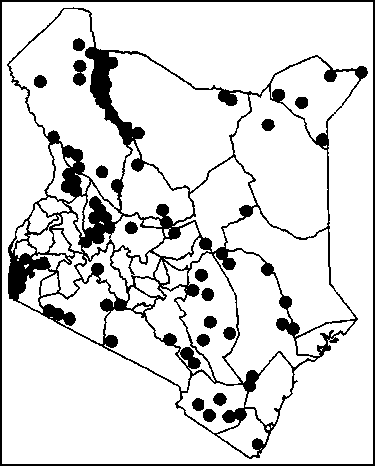
Figure
Manilkara mochisia (Baker) Dubard
Sapotaceae
Bajun: warendi Chonyi: munago, nago (fruits) Giriama: munago, nago (fruits) Kamba: kisaa (Mwala), kinako (Kibwezi), kyaa Malakote: muwarande Orma: waradhe Samburu: ltooj Somali: waradhe (Tana River) Swahili: mtalawanda, mnago Tugen: noswo
Description: A tree usually 3-6 m high, or a bushy stunted shrub, often browsed back, or occasionally a tree to 30 m (once to 45 m) high. Crown open, usually narrow, with an untidy branching habit. BARK: Trunk bark dark grey to almost black, longitudinally fissured. Branches entwined, twigs short, light grey. LEAVES: Leathery, in whorls or clusters at end of branchlets. FLOWERS: Greenish white or cream, clustered in leaf axils. FRUIT: Yellow to 2 cm long.
Ecology: Found from Somalia south to South Africa and Angola. In Kenya, e.g. in Kwale, Kilifi, Tana River, Kibwezi forest, Mwala Taita and Lamu in dry deciduous bushland and bushed grassland, especially along dry watercourses, 0-1,400 m. Sandy, light red clay and occasionally black-cotton soils. Zones IV-V.
Uses: FOOD: Fruit eaten raw when ripe (++).
OTHER: Fuelwood. Wood very hard, used in the carving industry and in carpentry.
Season: Flowers in November-December in Tana River and Kilifi.
Status: Uncommon.
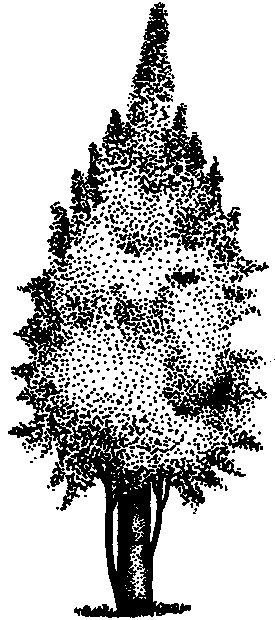
Figure
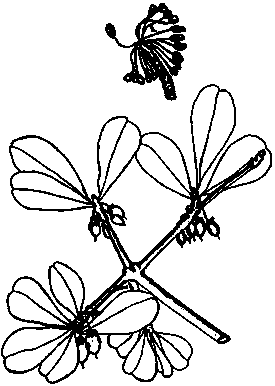
Figure
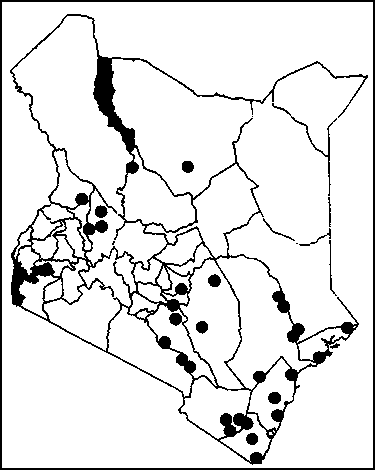
Figure
Manilkara sansibarensis (Engl.) Dubard
Sapotaceae
Chonyi: mng'ambo, mung'ambo, ng'ambo (fruit) Digo: mung'ambo Giriama: mung'ambo, mng'ambo, ng'ambo Kambe: mng'ambo Sanya: doka, dhoka Swahili: mshonjie, mguvi, mchegi
Description: A tree usually 5-10 m with a dense crown. BARK: Grey to almost black, fissured. LEAVES: Dark green, usually ovate but wider towards the apex. Leaves smaller than those of M. mochisia. FLOWERS: Cream, borne in clusters in leaf axils. FRUIT: Ellipsoid, to 1.8 cm long.
Ecology: Found in Kenya, Tanzania and Mozambique. In Kenya confined to the coastal region in Brachystegia woodland and coastal forests, e.g., Marafa, Arabuk Sokoke Forest, 0-300 m. Deep coastal red sandy soils. Zones II-IV.
Uses: FOOD: Ripe fruits have a milky sweet pulp which is eaten (+++), the seed normally being discarded.
MEDICINAL: Strips of bark are cut, pounded into powder and drunk with warm water as a remedy for pneumonia (Digo).
OTHER: Wood is used for tool handles and furniture. Strong and long lasting. Used in boat building, construction and in the carving industry. Fuelwood, shade.
Management: Propagated by seeds.
Season: Flowers in May-June, November-December and fruits in February-March and August-September in Kwale and Kilifi.
Status: Common.
Remarks: An important fruit plant of the coastal zone, often eaten in sufficient quantity to stave off hunger.
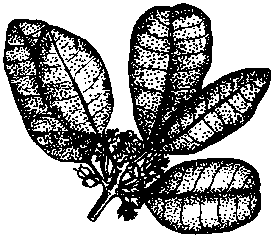
Figure
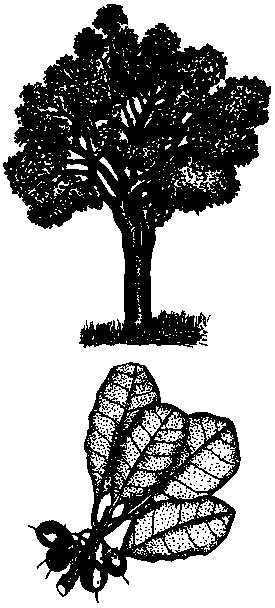
Figure
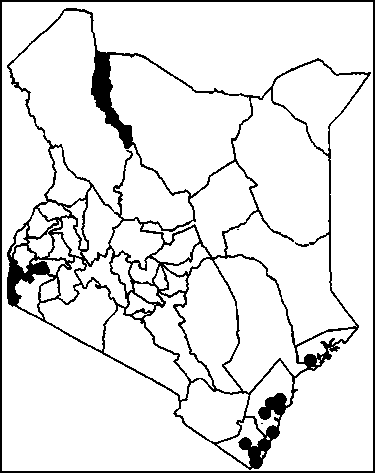
Figure
Manilkara sulcata (Engl.) Dubard
Sapotaceae
syn: Mimusops sulcata Engl.
Bajun: mkurati Boni: kuragi Digo: nzezi, mzezi Giriama: mtsezi, mtsedzi Sanya: kuraga Swahili: mchambigi, mchedi, mcheje mume, mteweji
Description: Shrub or small tree usually 3-6 m tall. BARK: Grey, fissured. LEAVES: Small, normally clustered towards branch tips, shiny, light green, apex usually rounded and notched. FLOWERS: Cream. FRUIT: Ellipsoid, 0.8-1.3 cm long, light green turning greyish yellow on ripening. Ecology: Only known from the coastal region and adjacent areas in Kenya, north-eastern Tanzania, Zanzibar and Pemba. Grows in Cynometra thickets, coastal bushland, Brachystegia woodland and coastal forests, mainly sandy and especially coastal red sandy soils, 0-1,000 m. Zones III-IV.
Uses: FOOD: Ripe fruits edible and sweet (++).
MEDICINAL: Roots used to treat snake bite.
OTHER: Fruits (Malindi: Marafa) much liked by elephants. Wood is hard and used in construction, and for carvings, combs, wooden spoons, fishing rods (Giriama). Excellent fuelwood.
Management: Propagated by seed.
Season: Flowers in May-June, November-December and fruits in February-March and August-September in Kwale and Kilifi).
Status: Common.
Remarks: Most Manilkara species in Kenya have edible fruit. Fruits are sweet and much liked despite their usually small size. Other notable species are:
· M. discolor (Sond.) J. H. Hemsel, a dry forest, usually riverine, tree to 20 m with a dark grey bark. Leaves clustered towards the end of branchlets. Flowers yellow, in clusters. Found in northern, central and southern parts of Kenya.· M. butugi Chiov. is a tall upland and western Kenya forests or riverine tree species, usually with spreading crown, a straight bole and relatively large fruit. Found in central and western parts of Kenya and in Uganda, south Sudan and Ethiopia.
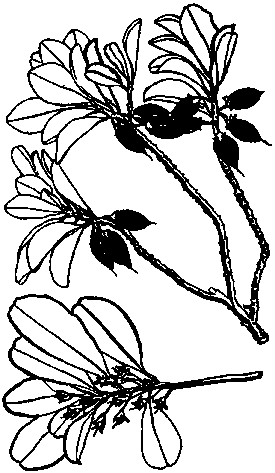
Figure
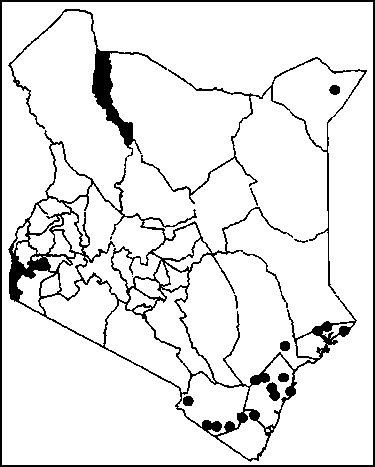
Figure
Meyna tetraphylla (Hiern) Robyns
Rubiaceae
Borana: qaaleda Chonyi: mtamba-kiko Giriama: mtamba-kiko Kamba: kitotoo, kitootoo, kakomoa, kitolousuu Kambe: tamba-kiko Malakote: mubururi Marakwet: tiling'wo (singular), tiliny (plural) Orma: bururi Pokot: tiling'wo, tiling (plural) Rendille: yeho Samburu: lkiremichoi, leturmet Tharaka: mukurungu, ngurungu (fruit) Tugen: tilingwo, tilinyek (fruit) Turkana: esugumaran
Description: Spiny shrub 2-4 m high with ascending branches and a narrow crown or, rarely, a liana. BARK: Grey-brown. Stems armed with strong paired spines above leaf nodes. LEAVES: Yellow-green, slightly glossy. FLOWERS: Cream to green, densely clustered in leaf axils. FRUIT: A more or less round 5-angled berry up to 2 cm across.
Ecology: Found in East Africa, southern Ethiopia, Somalia and Comoro Islands. In Kenya, e.g. at Endau (Kitui), Kaputir (Turkana), Nginyang (Baringo) and Samburu, 0-1,100 m. Riverine bushland and along dry watercourses in dry country. At the coast, in bushland. Mainly rocky and sandy soils. Zones: III (coast)-VI.
Uses: FOOD: Fruit edible, sweet (+++), (Pokot, Turkana, Samburu, Boran, Kamba). Much liked by pastoralists.
MEDICINAL: Root decoction given to pregnant women to ease pain (Pokot) and to protect them against bad spirits. Crushed leaves are applied to infected hooves of animals.
OTHER: Camel and goat fodder.
Status: Occasional.
Remarks: Two subspecies are recognized:
· ssp. comorensis (Robyns) Verdc. The more common of the two, and· ssp. tetraphylla only found at 1,000-1,400 m. The latter subspecies is recognized by its densely hairy flower stalk and grey-green leaves and it is only found in northern Kenya.
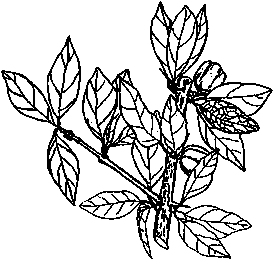
Figure

Figure
Mimusops fruticosa Bojer
Sapotaceae
Borana: denyo Chonyi: mng'ambo-kapehe Giriama: mng'ambo-kapehe, mtsami Kambe: mng'ambo-kapehe Luhya: ekiragai Malakote: munugau Orma: qolati Sanya: badhesa Somali: kolati (Tana River) Swahili: mng'ambo kope, mnguvi
Description: Large tree to 15 m or more or, rarely, a shrub and resembling Manilkara sansibarensis. BARK: Dark grey, rough. FLOWERS: Cream. FRUIT: Orange to red to 2.5 cm in diameter.
Ecology: Grows in eastern and southern Africa. In Kenya confined to the coastal areas in dry coastal forests, bushland and near sand dunes. Zone IV.
Uses: FOOD: Fruits eaten.
OTHER: Timber tree; stems used for spear shafts; fuelwood.
Remarks:
· M. somaliensis Chiov. (syn. M. schliebenii Mildbr. & G. M. Schuize) is a medium-sized tree with leaves clustered at the end of shoots. Fruit are good to eat. Found in coastal Kenya and Tanzania only. A good fruit, fuelwood and timber tree.
The related genus, Synsepalum (formerly Pachystela) also has members with edible fruit:
· S. brevipes (Baker) Pennington (syn: Pachystela brevipes (Baker) Engl.) (Giriama: mtsami, Swahili: msamvi, Luo: kang'o) is an evergreen tree with dense clusters of cream flowers and pointed orange or yellow fruit to 25 mm long.· Synsepalum msolo (Engl.) Pennington (syn: Pachystela msolo (Engl.) (Giriama: mtsami, Digo: mtsami) is a tree with long stipules on the branches and is found in riverine forests. Fruit nearly spherical, to 25 mm long.
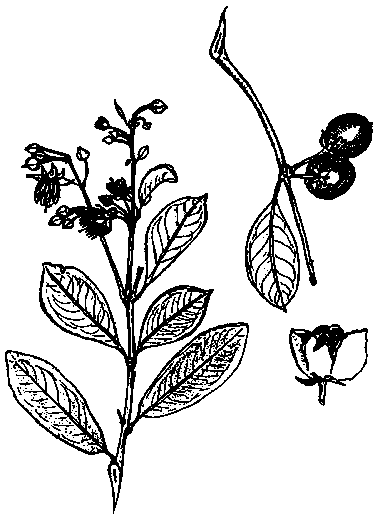
Figure
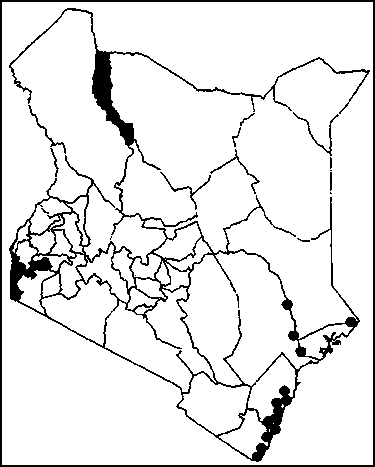
Figure
Mimusops kummel A. DC.
Sapotaceae
Kikuyu: mugumo-ciano Luo: nyabondo Maa: olkirenyi Mbeere: mugumo-ciano Pokot: pusyoon, chemalokutan
Description: A shrub, or more often a tree, usually 4-8 m, occasionally much higher. BARK: Dark grey. FLOWERS: White, scented. FRUIT: Orange to red, ellipsoid to 2.5 cm long. The plant exudes a white latex when bruised.
Ecology: From Eritrea and Ethiopia to West Africa. In Kenya, e.g. in Baringo, Kiambu, Ngong Forest (Nairobi) in riparian vegetation and dry forests, 500-2,250 m. Zones II-III.
Uses: FOOD: Fruit is edible, sweet (+). Inner bark used for tea (Pokot).
OTHER: Wood used in construction and as fuelwood.
Status: May be locally common.
Remarks: As in the related genus, Manilkara, many of the members of this genus in Kenya have edible fruits.
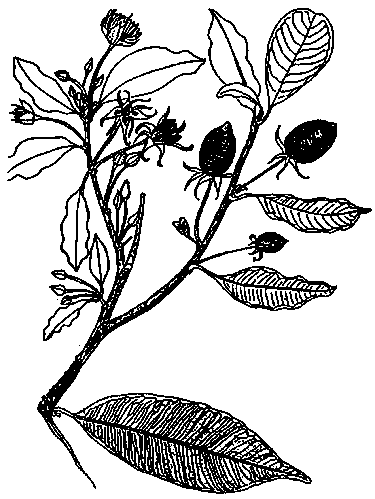
Figure
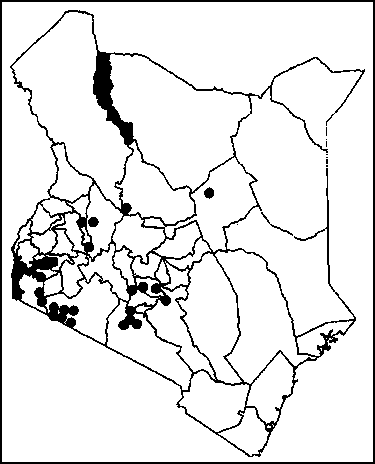
Figure
Momordica rostrata A. Zimm.
Cucurbitaceae
Kamba: kiongoa, kyongoa Kikuyu: rukiri Maa: olamposhi, enkamposhi Mbeere: king'ong'oya
Description: A climbing or trailing plant arising from a tuberous rootstock often seen exposed above ground, the exposed part usually green to dark grey and narrowing to the stem. Stems weak, narrow and green when young, turning grey-white when older, bearing simple tendrils. LEAVES: Divided into three leaflets which are further divided into several other leaflets not necessarily arising from the same point. FLOWERS: Dioecious. FRUITS: Ovoid, 3-7 cm long by 2-4 cm wide and beaked, usually with 8 longitudinal ridges, fleshy, bright red when ripe. Seeds brown to brownish black, embedded in a yellow pulp.
Ecology: Grows in northern Uganda, northern Tanzania, Ethiopia and Kenya. In Kenya, e.g. at Elang'ata Wuas (Kajiado), Embu, Machakos and Kwale in Acacia-Commiphora bushland and thickets and wooded grassland. Soils mainly red clay but also sandy and even black cotton. Zones IV-VI.
Uses: FOOD: Ripe fruits are edible (Maasai, Mbeere, Samburu) (++). Young leaves are picked and used as a vegetable, while the seeds may be roasted and eaten. Leaves may also be mashed with maize and pulses (Mbeere). Leaves do not last for long on the plant and are lost soon after the onset of the dry season.
OTHER: The tuber was used as soap in the past (Kamba, Mbeere).
Status: Occasional.
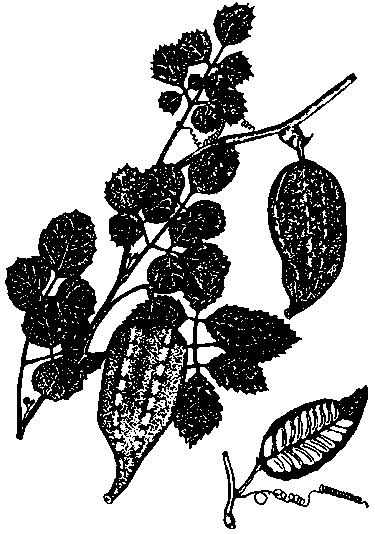
Figure

Figure
Mondia whitei (Hook. f.) Skeels
Asclepiadaceae
syn: M. ecornuta (N. E. Br.) Bullock
Kikuyu: muhukura Luhya (Bukusu): kumokombera Luhya (Marachi): omugombera Luhya (Marama): omukombera Luhya (Tachoni): omikobela Luo: ogombo
Description: A trailing or climbing plant with thin hairy stems. LEAVES: Large, opposite, softly hairy and heart-shaped or nearly so. Roots yellow and strongly aromatic. Stems, roots and leaves exude a white latex. Roots may spread out just beneath the ground surface covering large areas.
Ecology: Tropical Africa. In Kenya, may be found in Kakamega Forest, Busia, Bungoma, Murang'a at forest edges, especially Markhamia lutea woodland and riverine vegetation, 1,500-2,000 m. Common under trees on soft ground with plenty of humus. Zones I-III.
Uses: FOOD: The fleshy bark of the narrow roots is eaten raw or occasionally in the dried state (Kikuyu, Luhya, Nandi, Luo) for its good taste, as an appetizer (Luhya), to freshen the mouth (Luhya, Kikuyu) and for pleasure (Kikuyu). The root tastes rather hot and bitter at first then slightly sweet later. It leaves a persistent spicy taste in the mouth which is easily recognized. The root may be dried, stored and eaten when desired.
MEDICINAL: Roots used for gonorrhoea and said to cause profuse urination (Maasai). Roots chewed as an aphrodisiac and a cure for impotence (Luhya, Kikuyu) and by women to contract the uterus after delivery (Kikuyu).
OTHER: The woody middle part of thicker roots is reported to be used as a toothbrush.
CULTURAL/BELIEFS: Roots chewed for good luck (Luhya) before setting out to perform a difficult task.
COMMERCIAL: A species with the potential for commercialization. Roots reportedly sold in Western, Nairobi and Central Provinces.
Status: Nowadays generally rare, mainly because of destruction of its habitat and over-exploitation.
Remarks: Several species in this family have stem parts that are chewed, mainly by pastoral groups, for their taste and water content. Several Caralluma species and Sarcostemma viminale (L.) R. Br. have succulent edible stems. S. viminale (Maa: ol'loilei, endepeu, Pokot: cheporewo, mosolion, Samburu: loiyei, Kipsigis: ngolinyit, ngololiet, Luo: ohao, Turkana: eligoi, egis) is a scrambling, usually leafless plant often confused with Euphorbia species. Stems are green, narrow, smooth, sometimes twining and with a milky juice. Flowers are cream, borne in a cluster. Widely distributed in Kenya and the rest of Africa, also in Asia. Habitat: Rocky, dry areas especially Acacia-Commiphora bushland on rocky ground and along dry streams. Altitude: 0-2,000 m. Uses: The young soft stems are chewed and may be swallowed. In older stems, only the juicy extract is swallowed (Turkana, Pokot, Maasai, Luo, Samburu, Somali, Boran). Stems have an acid taste. MEDICINAL: Roots are used for the treatment of gonorrhoea (Maasai). Status: Common. Remarks: A variable species with several subspecies in Kenya.
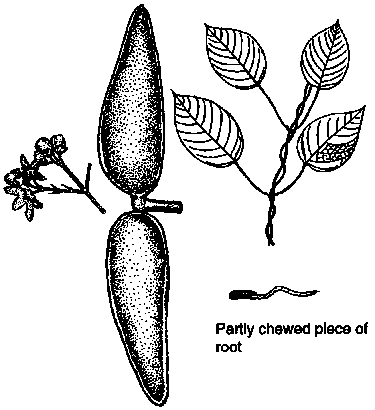
Figure
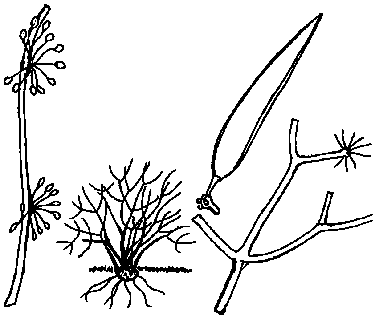
Sarcostemma viminale
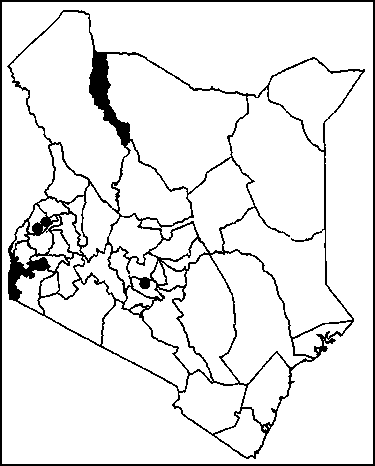
Figure
Moringa oleifera Lam.
Moringaceae
syn: M. pterygosperma Gaertn.
English: ben oil tree, horseradish tree, moringo, drumstick tree Swahili: mrongo, mzunz.e Chonyi: muzungwi Daasanach: hocholoch Giriama: muzungi, muzumbwi, muzungwi Kambe: muzungwi Tharaka: muguunda Sanya: muzungwa
Description: A usually deciduous tree 4-6 m or higher, roots tuberous, bark whitish grey, wood soft and branches drooping. Capsules to 30 cm or more, splitting into three valves. Seeds brown, 3-winged.
Ecology: This species is native to northern India but it is cultivated throughout the tropics, especially in arid areas. It is a very drought-resistant and valuable tree, grown at the coast, Makindu and drier parts of the country. Prefers sandy soils. 0-1,450 m. Zones III-VI.
Uses: FOOD: The leaves of the horseradish tree are used as a vegetable (Mijikenda) while the tender young capsules (drumsticks) are a delicacy, especially among the Asian community. An oil may be extracted from the seeds. Immature seeds can be used like green peas. Planted by the Mijikenda who use the leaves as a vegetable. Normally mixed with other vegetables. Leaves have a slight odour. To prepare the vegetable, remove the small leaflets from the main branch by pressing on the branchlet between the fingers and pulling. Mix the leaves with cowpea leaves (tsafe), kimbiri (Oxygonum salicifolium), kiswenya (Amaranthus dubius) and talakushe (Asystasia gangetica). Kiswenya and tsafe are normally cut into small pieces. Boil, add salt and serve. The vegetable may also be fried (Mijikenda). Cooking is normally brief.
MEDICINAL: The plant is said to cure impotence (Tharaka).
OTHER: Seeds are used in water purification.
Management: M. oleifera Lam. is propagated by large stem cuttings, by seeds and also roots. Germination from seeds ranges from a few days to 2 weeks. It is often used as a living fence in coastal homesteads.
Remarks: Root bark contains poisonous alkaloids, so care should be taken in its use as food and medicine. It is said to cause dizziness (kisuzi, Mijikenda).
A related indigenous species is M. stenopetala (Bak. f.) Cuf. (Daasanach: hocholoch, English: horseradish tree, Somali: mawa (Mandera), mrongo, Tharaka: muguunda). Description: Tree up to 9 m with smooth bark and soft branches. LEAVES: Compound, 2-3 pinnate, alternate. FLOWERS: Parts in fives, sweet-scented, white, numerous in lax inflorescences. FRUIT: Long, pod-like, reddish with a grey bloom, dehiscing to release seeds that are 3-winged. Ecology: Found in Ethiopia and Kenya. In Kenya, e.g. in Baringo, Marsabit and Turkana. Riverine, especially in sandy areas with a high water-table. Zones V-VI.
Uses: FOOD: It is thought that this species, like its relative M. oleifera, may have potential as a food plant. The pod-like fruits and the leaves may be used as a vegetable. Reportedly used as a vegetable in Mandera and in Ethiopia by the Konso. Seeds are used for purifying muddy water (Somali).
MEDICINAL: Roots are medicine for stomach-ache and infertility (Somali, Mandera).

Moringa stenopetala
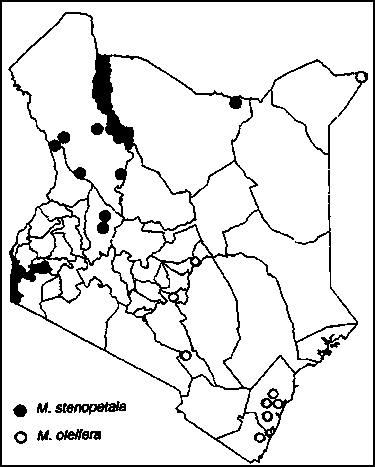
Figure
Myrianthus holstii Engl.
Moraceae
English: giant yellow mulberry Kikuyu: mutuya
Description: A medium-sized or large tree to 20 m, often with stilt roots, and branching close to the ground into several branches. BARK: Brown, exuding a watery sap that turns black. LEAVES: Large, digitate or deeply digitately lobed into 5-7 segments. Leaflets often serrated, veins very conspicuous underneath, softly hairy, almost without a stalk. FLOWERS: Inflorescences dioecious, borne in leaf axils. FRUIT: Compound, rough, resembling a pineapple or custard apple (Annona cherimola, Swahili: mtomoko), fleshy, to 6 cm across, yellow to orange when ripe. Seeds embedded in pulp.
Ecology: Found in East, Central and southern Africa. In Kenya only found in the central zone such as Mt Kenya, Nyambene Hills, and in Murang'a, Kiambu and Meru in highland forests, especially on forest edges and near watercourses, 900-2,400 m. Zones I-II.
Uses: FOOD: Fruit pulp surrounding seeds edible (+++) (Kikuyu, Meru). It has a slightly acid taste.
COMMERCIAL: At one time (1930s) sold in some local markets in Central Province.
Status: Rare.
Remarks: M. arboreus is a related species usually with bigger fruits. It is found in Uganda, Tanzania and westwards to Guinea. The name mulberry is used for Moms alba L. an exotic plant in the same family introduced from Asia and now widely planted in homesteads and in cropland (Kikuyu: ndare, Kamba: ndae-these local names are derived from those of Rubus spp. which have similar fruits). Muberry grows easily from cuttings. The ripe dark-red-to-black fruits are a favourite with children and birds. The plant is commonly used as a food for silkworms.
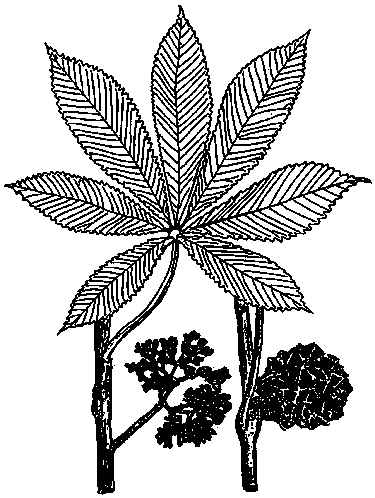
Figure
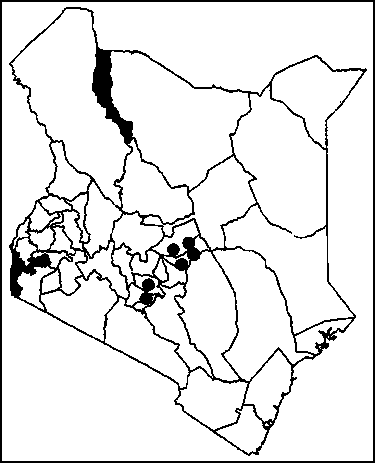
Figure
Nymphaea nouchali Burm. f. var. caerulea (Savigny) Verdc.
Nymphaeaceae
syn: N. caerulea Savigny, N. capensis Thunb.
Chonyi: chirunji Digo: toro English: water lily, blue lotus of Egypt, blue water lily Giriama: kirunji, t(h)oro (tubers), gune (tubers) Kambe: chirunji Kikuyu: marera Luo: yunga Sanya: gune (tuber) Somali: qomisho (tuber), sobagel (fruit), bocore Swahili: myungiyungi Tugen: narogeki Turkana: nkuram
Description: A large-leafed weak-stemmed aquatic herb to 1.2 m high arising from tuberous rhizomes. Stems dark red. LEAVES: Floating, often heart-shaped with an almost round shape and smooth or toothed margin. Green and smooth above, wholly or partly blotched greenish purple below. FLOWERS: Usually blue, occasionally pink to white. FRUIT: To 4 cm in diameter, almost round.
Ecology: From Egypt and Sudan south to South Africa and also in West Africa. Widespread in Kenya in seasonally flooded depressions, rivers, reservoirs and ponds. Cultivated as an ornamental, 0-2,700 m.
Uses: FOOD: The tuberous rhizomes are edible (+) (Turkana, Pokot, Giriama, Tugen). Eaten fresh, boiled or roasted. Normally used with milk (Turkana). Tubers may be boiled and stirred to a viscous mixture and eaten. Maize or sorghum flour may be added and cooked together. Boiled tubers may be mashed and ghee added. The dried tubers may be ground into flour and stored (Turkana, Somali, Pokot). When a pond dries out, the tuber (dale - Somali), which is enclosed in a hard coat, is cracked, eaten fresh or boiled (Somali). Fruit and seeds are edible (Pokot, Somali). Flowers eaten in certain ceremonies (Tugen).
FOOD/MEDICINAL: Rhizomes are chopped up with the flowers, mixed with honey and then chewed as a remedy for kidney problems (Digo).
OTHER: Ornamental.
Remarks: Variety zanzibariensis (Casp.) Verdc., syn: N. zanzibariensis Casp. is found at the coast in Kenya and Tanzania, Zanzibar, Pemba, Mozambique and South Africa. Other varieties exist outside Kenya. Another water lily used as food in the same manner is N. lotus L. (English: white lotus, winter lotus, Luo: yunga) which is much like N. nouchali but with white-to-cream flowers and toothed leaves which have a sharp point at the tip (mucronate). Widespread in Kenya, tropical Africa and South America. The species is used as food in many parts of Africa and Asia. An important plant in ancient Egypt, symbolizing love. A number of exotic Nymphaea species are cultivated in ponds as ornamentals and should not be confused with the above.
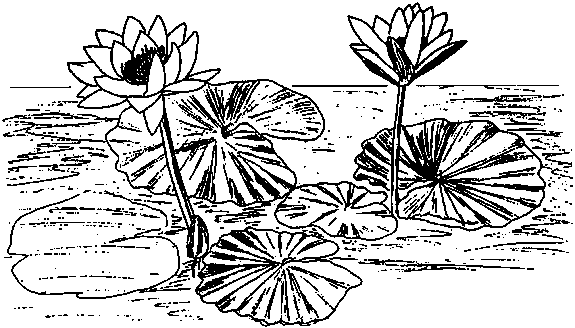
Figure
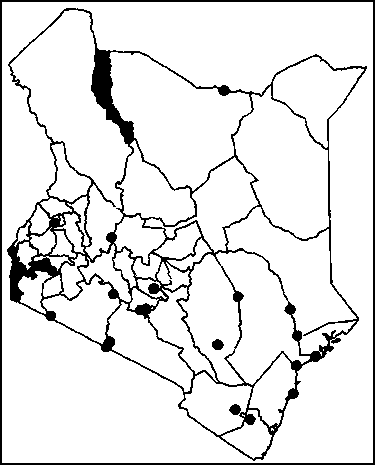
Figure
Oxygonum sinuatum (Meisn.) Dammer
Polygonaceae
Chonyi: chimbiri Giriama: kimbiri, mchetwatongo Kamba: song'e Kambe: chimbiri Kikuyu: cong'e Luhya (Bukusu): namawa, echirikukwai, nabikumba Luo: awayo, okuru, nyatiend-gueno Maa: enkaisijoi, echunge Marakwet: mendiril Mbeere: cong'e, ng'onge Pokot: chementril, emeworil Samburu: njunge, nchunge Swahili: kindri, bamba Taita: makongo Turkana: apadita
Description: An erect or prostrate herb 20-40 cm high. Stems green to reddish brown. LEAVES: With bases sheathing round the stem, usually obovate to elliptic with deep lobes and usually with bristles at base of leaf stalk. FLOWERS: Borne on a long inflorescence to 25 cm, white to pink. FRUIT: Angled with three sharp prickles.
Ecology: Widespread in Kenya and also in Uganda, Tanzania, Sudan, the Democratic Republic of Congo (Zaire) and Ethiopia. A common weed in cultivation, waste places, roadsides and in grassland, 0-2,400 m. Common on poor sandy soils. Zones I-VI.
Uses: FOOD: Leaves boiled as a vegetable (+) (Kamba, Luo, Luhya). Leaves eaten raw for their acid taste (Luo, Maasai).
MEDICINAL: Leaves used for muimu (boils) (Kamba, Kitui) and stems chewed for tonsillitis (Kikuyu). Juice squeezed from leaves used in eye treatment (Kikuyu).
Remarks: The coast species, Oxygonum salicifolium (Giriama: kimbiri) is widely used by the Mijikenda as a leafy vegetable. It is normally mixed with Amaranthus spp. (kiswenya) to improve its taste.
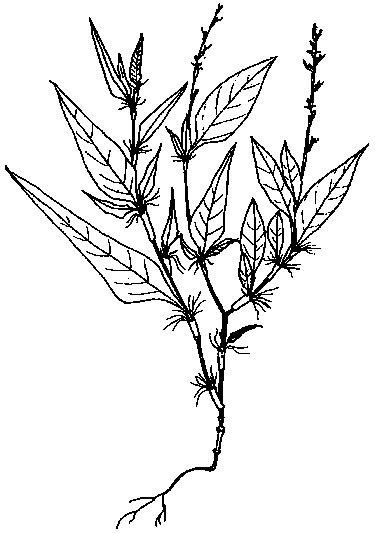
Oxygonum salicifolium
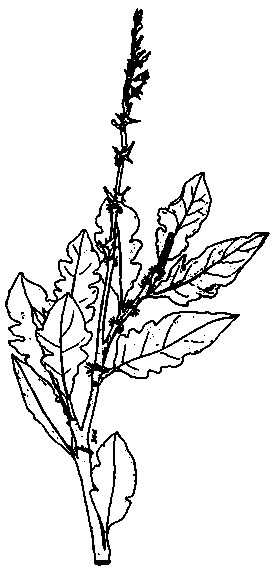
Figure
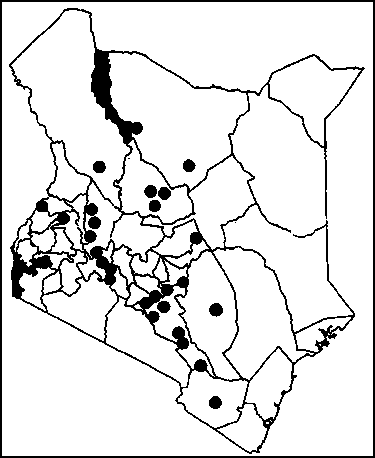
Figure
Pachystigma schumannianum (Robyns) Bridson & Verdc.
Rubiaceae
syn: Tapiphyllum schumannianum Robyns, Rytigynia tomentosa (K. Schum.) Robyns
Embu: mtogotogo Kamba: kitootoo (Kitui), mukomole (Machakos), ngomole (fruit), ndootoo (fruit)
Description: Much branched narrow shrub up to 3-4 m high. Main branches ascending, each with numerous short lateral branches. LEAVES: Light green and hairy. FLOWERS: Cream. FRUITS: To 1.5 cm across, green, turning soft and yellowish brown on ripening.
Ecology: Found in northern Tanzania and in coastal and south-eastern Kenya, e.g. at Ngong Hills, Masii (Machakos), Makueni, Kitui, Embu, Tharaka and Taita in Combretum bushland, bushed grassland, 1,000-2,000m. Commonest at about 1,400 m on sandy and red soils. Rainfall: 500-700 mm. Zones IV-V.
Uses: FOOD: Ripe fruits edible (occasionally eaten unripe). Seeds discarded. Fruits sweet.
OTHER: Smoking stems inserted in milk gourds to impart a good flavour to milk (Kamba).
Season: Fruits in February-March in Kajiado and Machakos.
Status: Locally common.
Remarks: Two subspecies are recognized:
· ssp. schumannianum with smaller leaves found west of Ngong to northern Tanzania only.· ssp. mucronulatum (Robyns) Bridson & Verdc. with larger more hairy leaves and found only in coastal and south-eastern parts of Kenya.
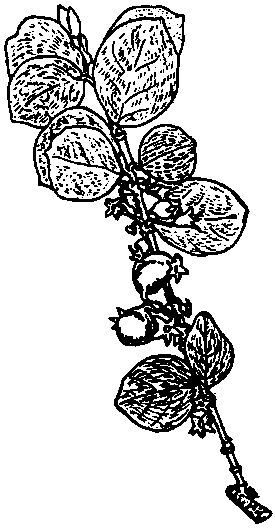
Figure
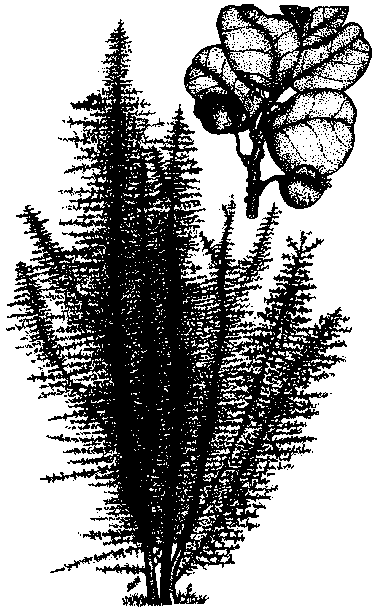
Figure
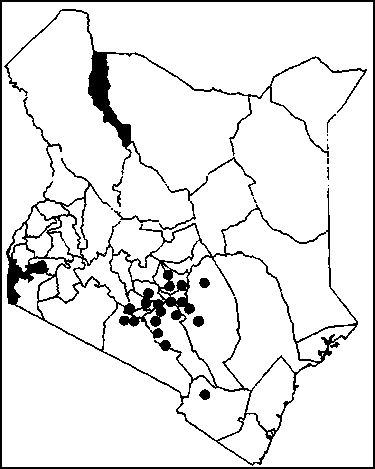
Figure
Pappea capensis Eckl. & Zeyh.
Sapindaceae
Borana: pika English: jackal plum Kamba: kiva, mba (fruit) Kikuyu: ndirikumi Kipsigis: ngohyet, engongaat Luhya (Bukusu): kumurinda (tree), kamarinda (fruits), sinyamanyama, bunyamanyama (fruit) Luhya (Tachoni): omurinda (tree) amarinda (fruit) Luo: okuoro (Siaya), omaange (Homa Bay) Maa: oltimigomi, orkisikong'o, natua-ekong'u, natwa-ong'o Marakwet: kipiriokwa, kibiriokwo (singular), piriak (plural) Mbeere: mubaa Meru: ntirikomi, dilikoni Pokot: puriokwo, priokwo, priak (plural) Samburu: loposeta, lopisedi, lgurugu, lgurong'ui, leroongo Somali: asel, adadak Taita: mndendele, ndendele (fruit), mkongori Tugen: biriokwo Turkana: etolerh
Description: An evergreen tree, normally small (4-6 m) but sometimes attaining 10 m or more. Crown usually dense. Branches low, often drooping, young branches usually ascending. BARK: Grey-white to dark grey, smooth except for lower parts of trunk which are corky. LEAVES; Entire or serrate, usually borne from short shoots. FLOWERS: Yellowish green in long racemes. FRUITS: Small, 7-10 mm across, round and borne in clusters. At maturity the skin bursts splitting the fruit into two and exposing juicy orange-to-pink flesh. Seed globose, dark red, smooth, shiny.
Ecology: From Kenya and Uganda to southern Africa. Widespread in Kenya, e.g. at Kisamis (Magadi Road), Iikerin (Loita), Juja, Thika, Churo (Baringo), Chepareria (West Pokot), Makueni, Machakos and Kitui, especially in the wetter and higher parts of the semi-arid zones on rocky hillsides and sandy lowlands. Found in bushland and wooded or bushed grassland, 1,050-2,400 m in black clay, sandy soil, sloping rocky ground with clay or sand. Zones II-V.
Uses: FOOD: The pinkish yellow or orange flesh of the fruit is eaten (++). Seed may be discarded but are often swallowed. Both ripe and unripe fruits are eaten. Fruits have a sweet acid taste. Unripe ones are sour. Inner bark is dried and grated to make tea (Maasai, Loita).
MEDICINAL: The bark is boiled to make a kind of soup which is taken for stomach disorders (Maasai) and roots or stems are boiled in soup by Maasai warriors. Leaves are used for stomach-ache and diarrhoea (Kamba).
OTHER: Wood very strong and durable. Source of excellent firewood (+++) and charcoal (+++). Used for making forked and hooked sticks for hanging beehives, bows (Kamba), handles, mortars and pestles, traditional sticks for cooking ugali, yokes (very durable), building poles, stools, and bows. Ripe fruits liked by birds. Forage for bees. Dye. Fodder for cattle and goats during dry periods (++). Shade (+++).
Season: Flowers in February-March in Narok, June in Makueni and Machakos, August in Homa Bay, November-December in Baringo and Marsabit. Fruits in February-March in Laikipia, August-September in Kajiado, Machakos, Kitui and Samburu.
Management: Propagated by seeds. Coppices well. A slow-growing tree.
Status: Locally common.
Remarks: A useful tree in agroforestry.
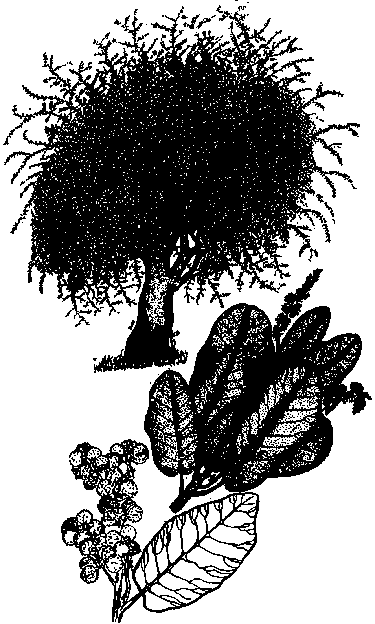
Figure
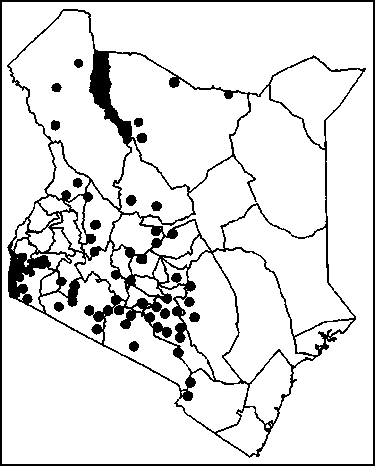
Figure
Parinari curatellifolia Planch. ex Benth.
Chrysobalanaceae
syn: P. mobola Oliver
English: mobola plum Kisii: omoraa Kuria: mutaburu Luo: ongoro Maa: ol'matakuroi Mbeere: muura, maura (fruits)
Description: An evergreen tree to 15 m high, usually much smaller. Crown normally rounded. Bark dark grey, rough and longitudinally fissured. Young branches covered with lenticels. LEAVES: Alternate with short petiole hardly 3 mm long, usually elliptic with a rounded tip, base cuneate or slightly cordate, blade leathery, light green above, silvery grey and softly hairy underneath. Veins conspicuous and parallel. FLOWERS: Small, lightly scented, borne on hairy terminal or axillary inflorescences, calyx grey and hairy, corolla mauve, pink or purple. FRUIT: Ellipsoid nearly spherical, to 5 cm long, yellow to orange and soft when ripe, turning dark brown as it dries. Fruit covered with numerous white or brown specks of cork. Pulp yellow, enclosing a single hard seed.
Ecology: Senegal east to Sudan and south to north-eastern South Africa and north-eastern Namibia. In Kenya, e.g. at Siakago (Embu), Keumbu, Wanjare (Kisii), Suna, Lolgorien, Maasai Mara, Homa Bay, Kuria, Kwale, in bushland, wooded grassland, forest edges, &-2.100 m. Common on sandy and light clay soils and rocky hill slopes. Rainfall: 700-1500 mm. Zones I-V.
Uses: Food: Ripe fruit pulp is edible (+++). Sweet, with a strong pineapple smell. An important fruit tree, usually preserved by farmers. In southern Africa it is made into alcoholic and non-alcoholic drinks.
OTHER: Fuelwood. Source of timber (++). Wood red, hard, heavy and durable (++).
COMMERCIAL: Reportedly sold in Tanzania.
Season: Rowers in March in Embu, December in Kisii, July in Narok, September in Kwale. Fruits in May-June in Embu.
Management: Propagated by seed which may need pre- treatment with hot water to speed up germination. Produces suckers.
Status: Generally uncommon.
Remarks: Seeds have a high oil content. Two subspecies are recognized:
· ssp. curatellifolia with leaves which have silvery grey hairs on the lower surface and in Kenya found inland in Embu, Kisii, Narok, Kuria, Homa Bay and Migori. It is commonest from Tanzania north-west to Senegal.· ssp. mobola (Oliv.) R. Grah. (syn. P. mobola Oliv.) with brown hairy underside of leaves and, on average, longer flowers. It is common in coastal areas and is the commonest in southern Africa. The presence of intermediate characters such as pubescence and flower size, however, make it hard to differentiate the two subspecies.
P. goetzeniana Engl., an evergreen forest tree with edible black fruits, has been reported in the Usambara Mountains in north-eastern Tanzania. P. capensis, on the other hand, is a small shrub found in southern Africa, south of the Zambezi River.
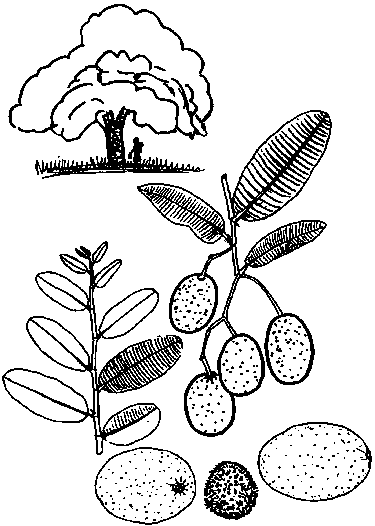
Figure
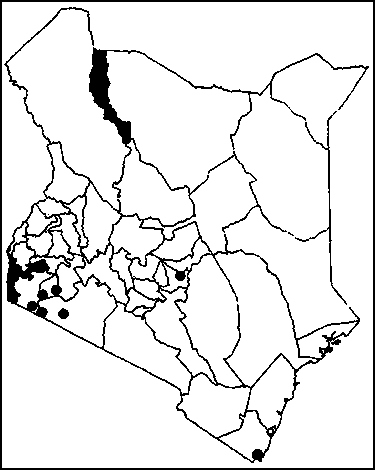
Figure
The other member in this family in Kenya is Hirtella zanzibarica Oliv., an evergreen tree with a buttressed base and smooth dark bark. Flowers in axillary or terminal panicles. The ripe reddish fruits, which may be up to 25 mm long, are edible. Distribution: Southern Kenyan coast, especially the Shimba Hills (Digo: mwawa). All these species were earlier placed in the family Rosaceae. P. curatellifolia is valued almost as much as Sclerocarya birrea. Their fruits resemble each other and are used in a similar manner; hence the local names are sometimes the same or share a common root.

Hirtella zanzibarica
Pennisetum glaucum (L.) R. Br.
Gramineae (Poaceae)
syn: P. typhoides (Burm.) Stapf and Hubbard, P. americanum (L.) Leeke, P. echinurus Stapf & Hubbard, P. malacochaete Stapf & Hubbard, P. spicatum (L.) Koem
Embu: mwere English: bulrush millet, pearl millet, spiked millet Kamba: mwee Kambe: muwele Kikuyu: mwere Mbeere: mwere Meru: mwere Swahili: uwele, mawele (plural), mwele, miwele (plural) Tharaka: mwere Turkana: erau
Description: Tall grass, usually 1.5-2.5 m (some varieties up to 5 m) cultivated for its grain. Stems often branched and in many cases several arising from the rootstock. LEAVES: Slightly hairy, long and narrow. FLOWERS: Head cylindrical, up to 20 cm long (some cultivars up to 50 cm) greenish white at first (due to styles), turning dirty yellow-brown (due to anthers) then grey as grain matures. Large amounts of pollen produced. FRUITS: Grains 1.5-2.5 mm long, greenish grey, oval and may be conspicuous or, as in some varieties, hidden by long bristles.
Ecology: Cultivated in the drier parts of Kenya and especially the Tharaka region of Tharaka-Nithi District, Mbeere and also in Mwingi where it may be a staple food. Occasionally seen in parts of Coast Province, Makueni, Machakos, Embu, Mbeere and Kirinyaga Districts. Recently introduced in Turkana District. Also grown in the drier parts of Uganda and Tanzania and many other parts of Africa. A very drought-resistant crop of the low semi-arid regions, below 1,500 m. Does well on sandy soils but can also be grown on heavy clay soils. Can even produce a crop on infertile soils. Rainfall: 400-800 mm. Best suited to Zones IV and V.
Uses: FOOD: The grain is ground into flour which is used in the preparation of uji or ugali (Giriama, Duruma, Digo, Kamba, Embu, Tharaka). Among the Kamba the flour may be mixed with fermented milk and eaten on its own (kinaa) or fermented in a gourd to a form of porridge (isandi). More recently the grain is also prepared like rice to make dishes similar to pilau and the flour for a type of chapatti. Boiled like rice in Turkana but not popular.
MEDICINAL: Grain flour in water said to be excellent for diarrhoea.
OTHER: The stalks are used as mulch and are said to improve the soil for other crops like maize. They are not good fodder. Grain is used as bird food, hence the use of the name bird millet in some shops.
COMMERCIAL: Flour and grain sold in markets in central and coastal parts of Kenya when in season. Grain and flour sold in Nairobi supermarkets.
Management: May be sown by broadcasting or in lines then covered with a little soil. Traditionally several grains are dropped at intervals of about 30 cm. Crop lines can be at intervals of 0.5-0.7 m. Bulrush millet may be intercropped with maize but in different lines. Maize thinly scattered among the millet also gives good results.
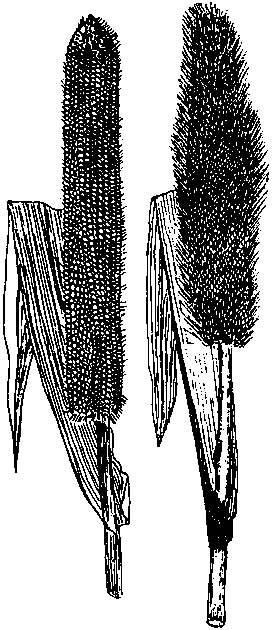
Figure
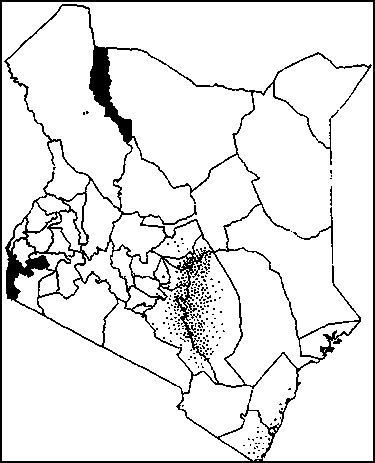
Figure
Harvesting: Traditionally the heads are cut, spread to dry out, threshed and winnowed. The grain may store almost indefinitely when well kept. Before using it, it is further pounded to remove the husks. Among the Kamba, Mbeere and Tharaka, millet is stored in large (up to 2 m3) containers (kiinga, Kamba) made from twigs and grass stalks (such as this millet). The container is smeared all over with cow dung to keep insects away. In such a store the millet can last for more than ten years. The grain is normally used during hard times.
Remarks: The cultivation and consumption of bulrush millet in Kenya (and the rest of Africa) has declined over the years. This has been attributed mainly to the tedious preparation methods involved, and lack of labour, especially for keeping away birds from the crop now that most children attend school. Surveys have shown that many farmers would be willing to return to this crop only if the bird problem could be addressed. Some argue that if everybody in the growing areas could plant the crop they would share the burden and growing it would be less risky. As the millet needs little moisture and matures fast, one is almost assured of harvesting a crop even at times of severe drought. It would, therefore, be better than maize in the drier areas.
Another millet worth mentioning is Setaria italica (English: foxtail or Italian millet, Kikuyu, Mbeere, Meru, Embu: mukobi). A traditional grain of the Kikuyu, Embu and Meru it is presumed to be native to East Asia where it has been grown for thousands of years. Now it is cultivated in both the Old and New Worlds. Culms may reach a height of 1.5 m. Due to its early-maturing nature, it is suitable for growing in the short rainy season.

Setaria italica
Phoenix reclinata Jacq.
Palmae (Aracaceae)
Boni: gonyooriya Borana: meti Digo: mchindu, makindu English: wild date palm, Senegal date Giriama: mkindu, mkindwi, kindwi (fruit) Kamba: mukindu Kikuyu: mukindu, muthuthi Kipsigis: sosiyot Luhya (Marachi): lushindu Luo: othith Maa: oltukai Malakote: gedo Orma: konchor Samburu: lekawai Sanya: itkindu, gonyora Somali: alol (Tana River), maydho Swahili: mkindu Taita: kigangachi Taveta: mhongana Teso: emusogot Tharaka: mukiindu Turkana: nakadoki
Description: A tree palm 4-6 m high, rarely to 10m, solitary or in tufts. LEAVES: Pinnate, pinnate sharply pointed. FLOWERS: Cream, in much-branched panicles. FRUITS: Oval, to 2.5 cm long, yellow to orange, ripening almost to dark red.
Ecology: Widely distributed in Kenya and southern Africa. Found in Kenya, e.g. in Loita forest (Narok), Nandi Hills (Nandi) and cultivated in towns as an ornamental.
Naturally growing in hillside gulleys, at forest edges and along watercourses, 0-2,600 m. Zones II-IV.
Uses: FOOD: Ripe fruits edible (+). A type of palm wine (muyence) may be tapped from the palm, though not a common practice nowadays (Tharaka).
OTHER: Leaves are used in making baskets, mats, hats, brooms and in thatching; a skirt (manyugi) is made from leaves for use during circumcision ceremonies (Tharaka); leaf rachis used to clean the inside of milk gourds (Maasai (Narok), Kipsigis). Charcoal is used as the scouring agent; roots a source of brown dye (Kikuyu).
CULTURAL/BELIEFS: Leaves are weaved and used for adorning women during the irua ceremony (Tharaka).
Management: Seeds or offshoots from the base of the palm can be used for propagation. If not thinned, the palms form a thick clump.
Status: May be locally common.
Remarks: This is related to the cultivated date palm of North Africa, P. dactylifera L. (Borana: tende, Luo: tembe, Meru: ntende, Kama: ndende, Somali: limits, Swahili: tende, Teso: epapai). Grown near water in arid areas for its dates. A spiny, unbranched palm which may grow extremely tall. The date has a very high sugar and carbohydrate content and is an important food for desert communities of Arabia and North Africa. It is cultivated along the Turkwel River near Lodwar. Also grown as an ornamental plant in dry areas (Tseikuru-Mwingi). It is presumed to be native to west Asia from where it spread to North Africa and the Nile Valley several millennia ago and to the rest of the dry tropics where it may be cultivated on a commercial scale.
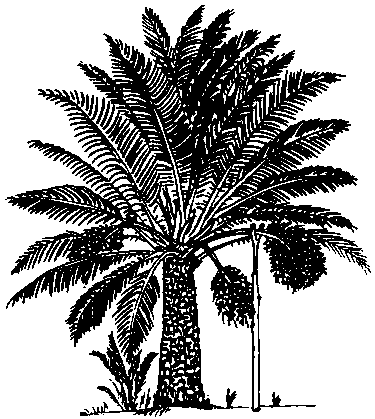
Phoenix dactylifera
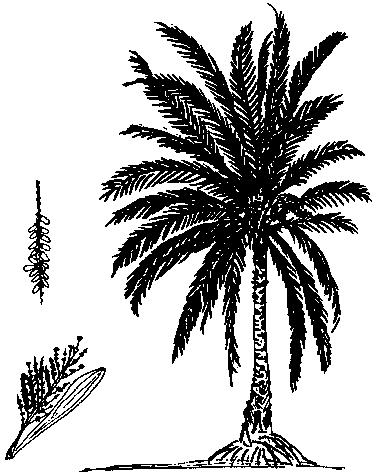
Figure
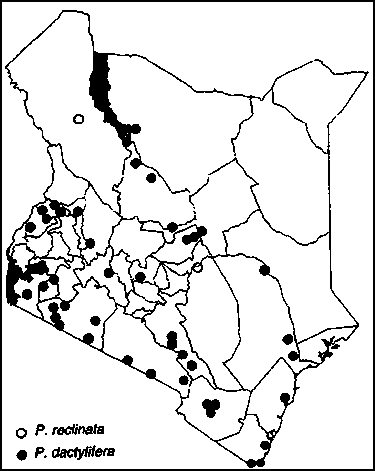
Figure
Piliostigma thonningii (Schum.) Milne-Redh.
Caesalpiniaceae (Fabaceae)
syn: Bauhinia thonningii Schum.
Chonyi: mkayamba Digo: mtsekeshe, mutseketse English: camel foot Giriama: mkayamba Kamba: mukolokolo Kambe: mkayamba Kikuyu: mulama Luhya (Bukusu): kumuyenjayenja (tree), kumulamalama (tree) Luo: ogal, ogalo Maa: olsagararam, ilsagararam (plural) Mbeere: mukuura Nandi: kipsarkiat Sanya: kimanjala Swahili: msegese, mchekeche, mchikichi Teso: epapai Tharaka: mukuura
Description: Shrub or small tree with a few scattered branches and a light crown. BARK: Fissured, grey. Buds rusty hairy. LEAVES: Large, 2-lobed (the shape of a camel's footprint), grey-green. FLOWERS: White to pink. FRUIT: A large smooth flattened yellowish brown pod, turning dark brown to almost black and with fine cracks on drying. Young pods brownish, hairy.
Ecology: Widespread in Africa from Senegal to Sudan south to Namibia and South Africa. Found in western and central Kenya and at the coast in woodland and wooded grassland, 0-2,200 m. Common in open, often disturbed, sandy areas. Zones I-IV.
Uses: FOOD: Fruit pulp of the drying pod edible (+). It has a sweet acid taste. Young shoots used in porridge preparation to give it a sour taste (Luo). Leaves chewed.
MEDICINAL: Leaves eaten while green as a stomach medicine. Bark used in the treatment of gonorrhoea. Leaves chewed as a treatment for snake bite. Root and leaf infusion drunk for cough and chest complaints.
OTHER: Roots and pods used as a substitute for soap. Roots and bark yield a red-brown dye (Kikuyu, Maasai). Pods and seeds are said to yield a black or blue-black dye. Shade (++). Fuelwood (++).
Season: Flowers in January in Kitui central, May-June in Kisumu, Kirinyaga, Machakos, Kakamega and Kwale, in October-November in Uasin Gishu, Siaya, Meru. Fruits in February-March and September-October.
Management: Propagated by seeds which can be sown directly on site. Soaking for a day improves germination rate.
Status: Locally common.
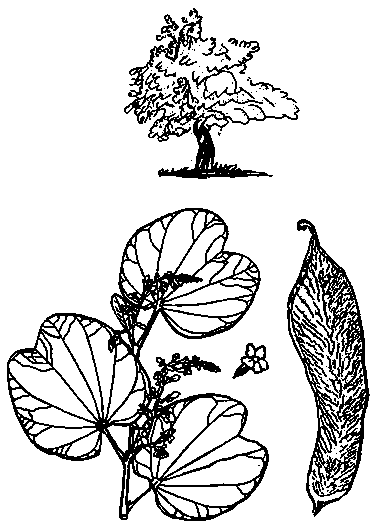
Figure
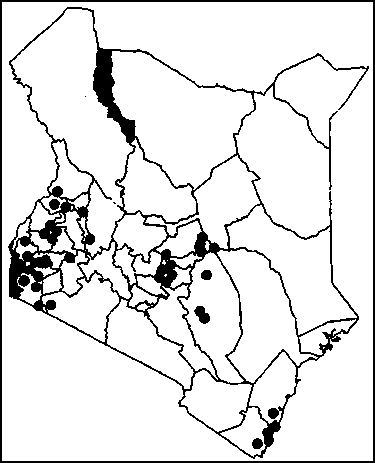
Figure
Portulaca oleracea L.
Portulacaceae
English: purselane, pursley, purslane Kamba: kamama, kamumama (Kitui), kinyukwi Kikuyu: gatumia Luo: obwanda Luhya (Bukusu): litoto-lia-bamia Maa: engaiyagut Pokot: tumeighio, tumeiw'o, kelpomough Samburu: nturmayei Tharaka: mwere Turkana: ekaletelete
Description: An erect or prostrate decumbent fleshy herb with spreading branches. LEAVES: Fleshy, shiny, widest towards the tips. FLOWERS: Yellow, borne terminally in clusters.
Ecology: Widespread in most warm countries and cultivated in a few sub-tropical countries. Also widespread in Kenya and commonly found in less weedy areas, especially near homes, along paths and in cultivated land, 0-2,000 m. Found in a variety of soil types but common on sand and loam. Zone I-VII (riverine).
Uses: FOOD: The leaves and tender stems are all used as a vegetable (+) (Kipsigis, Pokot, Turkana (Ng'ikebootok), Tugen, Marakwet). Leaves eaten raw (Pokot). Seeds eaten (Pokot, Turkana (Ng'ikebootok)). Seeds are ground into flour that is made into porridge. Used as a salad and soup plant in some European countries. The flour is said to have an unpleasant smell (Turkana (Ng'ikebootok)).
OTHER: Fodder, especially for cows and camels. Liked by baboons (Turkana). Fodder plant for pigs.
Management: Propagated by shoots or rooted stem parts. The plant dries with difficulty and hence germinates easily if still in contact with the soil.
Status: Common.
Remarks: This plant has a high vitamin E content. Improved erect cultivars have been reported in Europe. Cultivated in France, Denmark and the Netherlands. A related species, P. quadrifida (Kamba: kenyinyia, kamumama, Samburu: nchungee), is used in the same manner but the leaves are tiny. It is usually prostrate with slender stem nodes which are usually covered with brown hairs. Rowers usually yellow to orange. Widely distributed in Kenya, 1,000-2,400 m in cultivated land, roadsides, grasslands and open bushed grasslands.
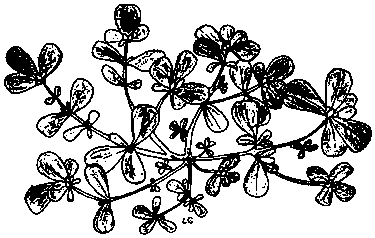
Figure
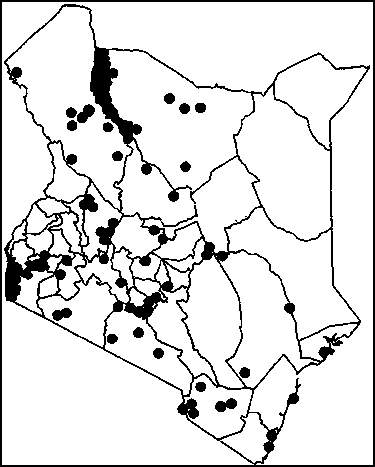
Figure
Rhus natalensis Krauss
Anacardiaceae
Borana: daboobes, adesa Digo: mgwanyahi, mbwananyahi English: KwaZulu Natal rhus Gabra: dabobbessa Ilchamus: lmisigiyoi, lmisigiyo Kamba: mutheu Kikuyu: muthigio Kipsigis: suriat Luhya (Bukusu): kumusangura kumusecha, busangura busecha (fruit) Luhya (Tachoni): obusangura, busecha (fruit) Luo: sangla, osangla Maa: olmisigiyioi, ilmisigiyo (plural) Mbeere: muthanguta, mutheru, muthigiyu, muthiigi Meru: murikitha Nandi: monjororioyot, okiek: sirontet Pokot: siriewo, siria (plural), Sabaot: sirwa Samburu: ilmisingiyot, musigio, lmisigiyoi Swahili: mtishangwe, mvunja kondo, mkuna chuma, mkono chuma Teso: ewayo, ebubu Turkana: ekadetewa
Description: A bush or spreading shrub to 5 m high. BARK: Fissured, dark brown. LEAVES: With 3 leaflets. FLOWERS: Greenish yellow. FRUITS: Small, 1.5-2.5 mm across, green, turning reddish brown on ripening, shiny, numerous.
Ecology: Found from Guinea to Arabia and from Somalia south to South Africa. Widespread in Kenya in thickets, bushland, dry forest margins, riverine thickets and wooded grassland, 0-3,000 m. Very common at about 2,000 m on clay soils (red and black cotton) but can grow on various soil types. Zones I-V.
Uses: FOOD: Fruits have a sweet-sour taste (+). Eaten mainly by children. Bark made into tea (Maasai, Kipsigis). Roots used in soup (Kikuyu). Tender shoots and young leaves are chewed (Maasai).
MEDICINAL: Leaves used for heartburn, roots for influenza and abdominal pains, leaves for cough and stomach-ache (Kamba). A decoction of the roots is taken as a remedy for diarrhoea (Digo). Branches are boiled for stomach problems (Maasai, Samburu).
OTHER: Fuelwood (++). Charcoal (+). Goat, camel and cattle fodder (+). Toothbrushes. Root bark source of dye.
CULTURAL/BELIEFS: Fresh young shoots along with roasted liver and spleen obtained from an animal that had died of anthrax or blackwater were given to 7-8-month-pregnant mothers. It was believed to protect the child from diseases when born, a process nowadays seen as a kind of immunization (Maasai, Narok).
Status: Very common.
Remarks: Lower branches need constant pruning.

Figure
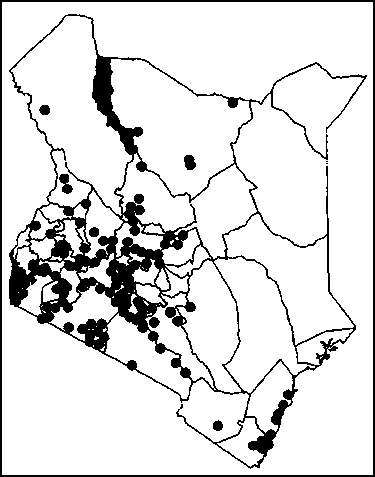
Figure
Rhus tenuinervis Engl.
Anacardiaceae
Kamba: kitheu Maa: olmisigiyoi
Description: Shrub or small tree to 6 m, usually 2.5-4.0 m. Branches twiggy, some thorn-like. LEAVES: With three leaflets which are small and slightly softly hairy. FLOWERS: Greenish yellow, borne on large branched inflorescences. FRUITS: Small, angled, compressed, green, turning brownish yellow on ripening.
Ecology: From Ethiopia and Sudan south to South Africa. In Kenya mainly found in Kitui, Embu, Machakos and Kajiado in Combretum bushland and bushed grassland, 900-1,850 m. Sandy, red clay and also in black-cotton soil. Rainfall: 500-800 mm. Zones IV-V.
Uses: FOOD: Fruits eaten mainly by children (++) and have an appealing sweet-acid taste. Young shoots and leaves are sour and are chewed like khat (Catha edulis), the juice is swallowed and the rest thrown out (Maasai, Kikuyu).
MEDICINAL: Leaves used for heartburn (kiunguia, Kamba).
OTHER: Fuelwood (++). Charcoal (+++); trunk produces intense heat when burned, hence used by blacksmiths (Kamba). Fodder (+). Fences (+). Branches cut and stuck into the ground in a row to form a fence (Kamba). Tooth-brushes (Maasai, Kamba). Root bark source of dye. Provides good shade but often harbours hairy caterpillars at certain seasons.
Status: Locally very common, especially in Machakos and Kajiado Districts.
Remarks: Most species in the genus Rhus have edible fruits. Because they share many characteristics they are usually known locally by the same names. Other notable members are:
· R. longipes Engl., leaves with large hairless leaflets and large greenish white inflorescences. Common on hillsides and forest margins all over the country.· R. ruspolii Engl., a usually large-leafed Rhus with hairy leaflets commonly found in the highlands of central and northern Kenya, and
· R. quartiniana A. Rich. with small, slightly hairy leaflets, common in Maasai land but also occurs elsewhere in the country.
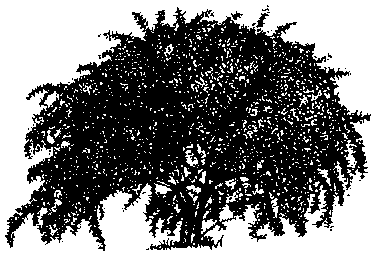
Figure
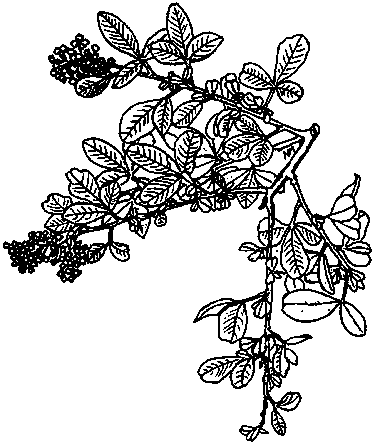
Figure
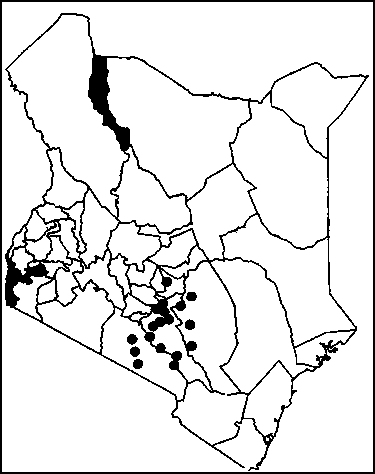
Figure
Rhus vulgaris Meikle
Anacardiaceae
Digo: mbwana nyahi Embu: terere, muthigiu Kamba: mutheu, mutheu munene Kikuyu: muthigio Kipsigis: suriet, mon-foronat, monjororriat Luhya (Bukusu): busangura, kumu-sangura (fruit) Luhya (Tachoni): obusangura (fruit) omusangura (tree) Luo: awayo Maa: olmisigiyioi, ilmisigyio (plural), msigwe, emungushi, engarachi Mbeere: mubebiaiciya Mbeere: muthanguta, mutheru, muthigiyu, muthiigi Meru: mirimuthu, mirimamuthua Pokot: siriewo-kaptamu, Sabaot: njowaruwa Samburu: sioloran, lejoro Swahili: mlishangwe, mlama-mwitu, mkonochuma, mrinja-kondo Taita: vikunguu, seria Teso: ekwatet, ekwayu, epwatet.
Description: A shrub or small tree usually 3-5 m high. BARK: Rough. Branchlets densely (softly) hairy. LEAVES: With 3 leaflets which are usually densely hairy underneath, entire, occasionally toothed in the upper part, the middle leaflet usually larger than lateral ones. FLOWERS: Greenish yellow, borne in long panicles. FRUITS: Small, up to 6 mm in diameter, almost round, slightly flattened when dry, reddish brown.
Ecology: In Africa from Cameroon east to Ethiopia and south to Mozambique, Malawi, Zambia and Zimbabwe. Widespread in Kenya, e.g. in the Chyulu Hills, Mt Elgon, Ngong Hills, Thui Hill (Makueni), Kitui hills, Chepareria (West Pokot), in bushland (usually disturbed), 800-2,700 m. Soils vary-clay, sandy or rocky. Rainfall: 700-1,500 mm. Zones II-IV.
Uses: FOOD: Fruits eaten (++). Small, but large quantities produced. Have a sweetish acid taste.
MEDICINAL: Stems boiled and liquid applied to wounds (Maasai).
OTHER: Toothbrushes. Wedges for enlarging ear-lobe holes (Kikuyu). Branches used for fencing (Kipsigis).
Remarks: The taxonomic status of this species needs further work.

Figure
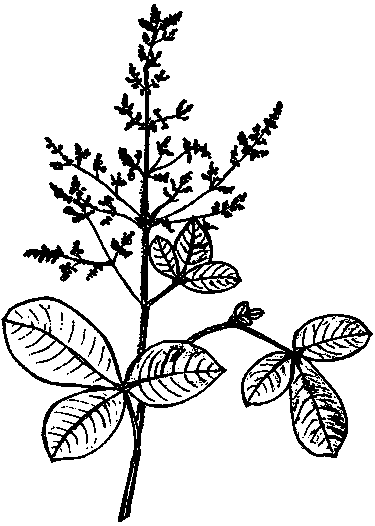
Figure
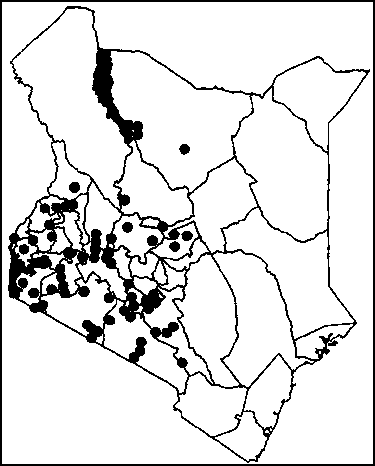
Figure
Rubus apetalus Poir.
Rosaceae
syn: Rubus rigidus Sm.
Kikuyu: mutare Luhya (Bukusu): bukararambi Luhya (Tachoni): obukararambi Taita: ndaindai
Description: A scrambling prickly shrub. Branches hairy, armed with hooked prickles. LEAVES: With 3-7 leaflets, each ovate, hairy, pale green beneath with serrated margins. FLOWERS: White to pink. FRUITS: Light green, turning yellow to purple-black on ripening. Ecology: From West Africa to Ethiopia south to Malawi. Widely distributed in Kenya, e.g. in the Nyambene Hills, Mt Nyiru, Mt Kulal, Kandara (Maragua), Chania Falls, Ngong Hills, Maasai Mara, Meru, Kisii and Marsabit in riverine vegetation, forest edges, humid bushland, hillside springs, 1,450-2,700 m. Zones II-IV.
Uses: FOOD: Fruits edible with a sweet-acid taste.
Remarks: A species with the potential for use as a hedge and an ornamental.
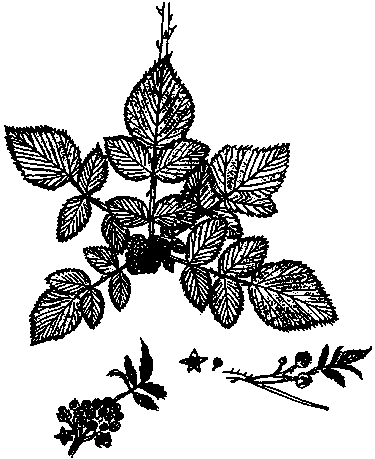
Figure
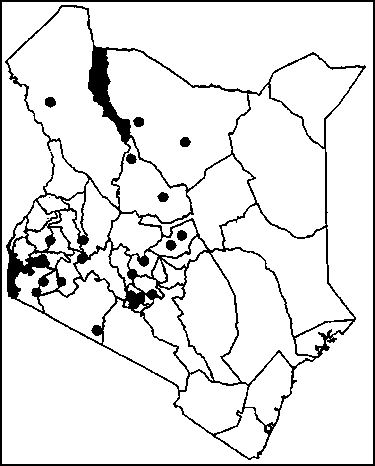
Figure
Rubus pinnatus Willd.
Rosaceae
Embu: ndare Kamba: kitae, ndae (fruit) Kikuyu: mutare, ndare (fruit) Kipsigis: tangaimamiet Luhya (Bukusu): bukararambi Luhya (Tachoni): obukararambi Maa: engaiyagut Marakwet: momoon Pokot: monmonwo, monmoon (plural) Swahili: mtoje, matoje (fruit) Taita: ndandai, ndaendae, maratua, ndaindai Tugen: momonwo, mowonwo
Description: A prickly scrambling shrub. Branches occasionally white, armed with hooked prickles. LEAVES: With up to 9 leaflets, each ovate with serrated margins. FLOWERS: White to pink. FRUITS: Turning reddish black on ripening.
Ecology: Found in tropical Africa to South Africa. Widely distributed in Kenya in riverine vegetation, near hillside springs, forest edges, 1,500-2,750 m.
Uses: FOOD: Fruits edible, sweet.
Remarks: May be used as a hedge plant.
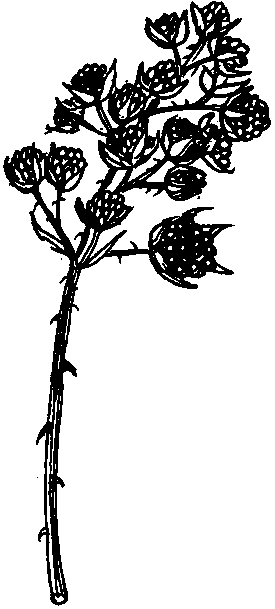
Figure
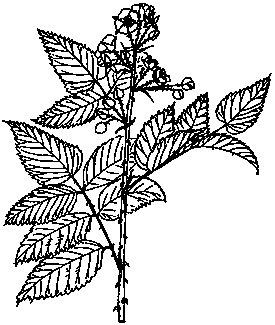
Figure
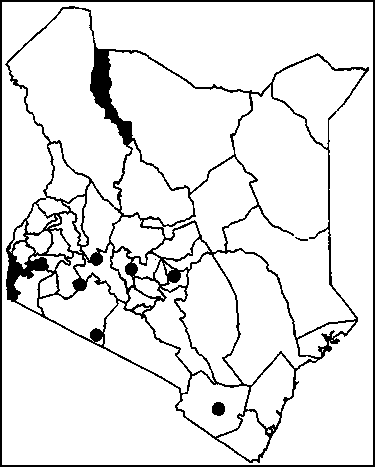
Figure
Rubus volkensii Engl.
Rosaceae
Kikuyu: Mutare-kigombe, mutare, ndare (fruit), Kipsigis: Kipsoeniot, nemingin, degainmamiet, tagaimamiet, Maa: Engaiyaguji, engaiyagut
Description: Prickly shrub up to 4 m. Stems with hooked prickles, covered with brown sticky hairs. LEAVES: Compound with up to 7 leaflets, the stalk and rachis prickly. Leaflets hairy, with serrated margins. Top leaflets often incompletely divided. FLOWERS: Yellow-white, borne in panicles. Fruit to 1.5 cm across, orange to red when ripe.
Ecology: Found in Uganda, northern Tanzania, Kenya and Ethiopia. In Kenya, e.g. at Limuru, Lari, Aberdares in high-altitude forest edges and bushland, bamboo margins, 2,150-3,550 m. Zones I-II.
Uses: FOOD: Fruit edible, delicious.
Season: Fruits in December in Central Province.
Status: May be locally common.
Remarks: Many of the Kenyan Rubus species are edible. Other notable species are:
· R. scheffleri Engl., usually with densely hairy red-to-black fruit and found in central and north-western Kenya, Uganda and Tanzania at forest margins and in evergreen bushland.· R. niveus Thunb., distinguished by the white undersurface of the leaf and a white bloom on the stems is believed to have been introduced from the Indian/Malayan region. It is naturalized in many forested areas. Also cultivated as an ornamental.
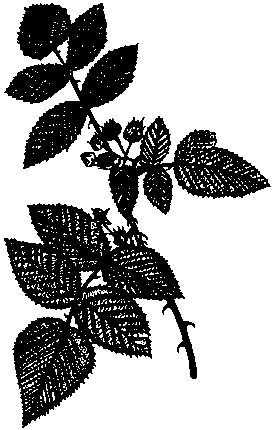
Rubus niveus
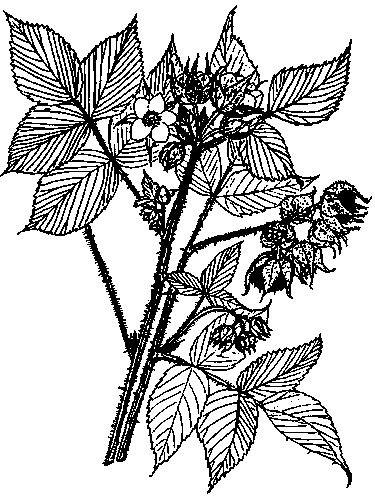
Figure
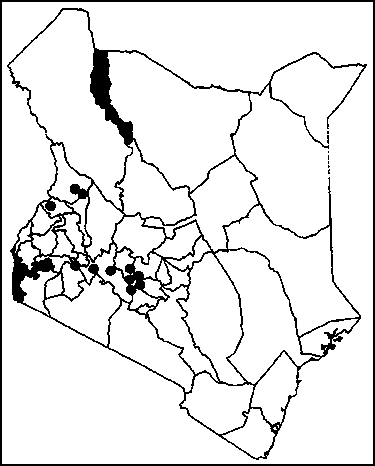
Figure
Rumex usambarensis (Damm.) Damm.
Polygonaceae
English: sorrel Kamba: kinyonywe, kyongonywe Kikuyu: mugagatio Okiek: mindoywet Kipsigis: mindeiywet Maa: enkaiswishoi, enkaisijoi Taita: bule, mwakiserere, msheshere
Description: A soft-stemmed erect or straggling plant usually 1-2 m high. Stems tinged brown, soft, juicy. LEAVES: With two short lobes towards the base and 3 distinct veins. FLOWERS: Borne on a much-branched red inflorescence. FRUIT: Ovoid, 3-sided.
Ecology: Found in Kenya, Uganda, Tanzania, the Democratic Republic of Congo (Zaire) and Malawi. In Kenya in highland bushland and grassland, at roadsides, forest edges, rocky areas, 900-2,500 m. Zones III-IV.
Uses: FOOD: Raw stems chewed for their sour taste. Stems may be roasted and eaten with sugar or salt (Taita). Leaves eaten raw (Taita) or cooked as a vegetable (Kipsigis). Stems should be peeled or cleaned before chewing.
MEDICINAL: Roots used in the treatment of scabies (Kikuyu). Roots a source of dye (Kikuyu).
Status: Common.
Remarks: Rumex species mainly occur in the highlands of tropical Africa and on Madagascar. Some other commonly used species include:
· R. abyssinicus Jacq. (Samburu: naisichoi), a stout plant with palmately veined leaves and relatively larger basal lobes.· R. steudelii A. Rich. (syn: R. bequaertii De Wild.) has long narrow leaves without lobes and a long, dark brown branched inflorescence. The plant is used in the same manner as R. usambarensis.
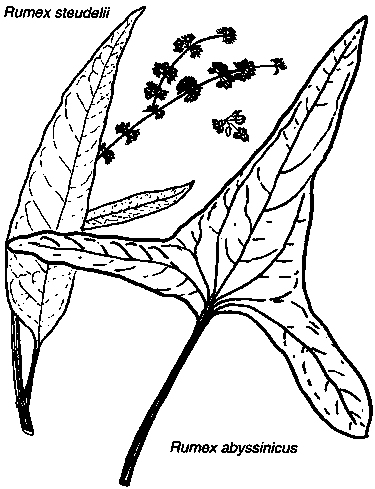
Figure

Figure
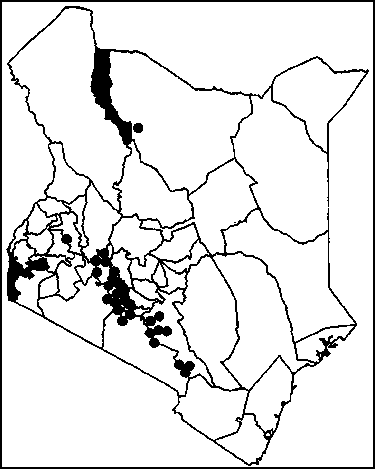
Figure
Saba comorensis (Bojer) Pichon
Apocynaceae
syn: Saba florida (Benth.) Bullock, Landolphia comorensis (Bojer) K. Schum. var. florida (Benth.) K. Schum.
Kamba: kilia (Makueni), kiongwa (Kitui), kyongoa (Kitui), mongoa (fruits, Kitui) Luhya (Bukusu): kumuchabungwe (plant), kamachabungwe (fruit) Luo: abune, jobune, abuna Malakote: loguo Marakwet: ochon Mbeere: mungo, rwonge, rwongi Somali: dhangalow, dongola Swahili: mbungo, mpira, bungo (fruit) Taita: meru, mameru (plural), ndimu Taveta: ivungu
Description: An extensive liana climbing up to the tops of trees and capable of creeping over low bushes for over 50 m. Stems smooth with long strong tendrils. All parts of the plant exuding milky white latex when injured. LEAVES: Large, dark green, glossy, often with a rounded apex. FLOWERS: In dense clusters, white, scented, corolla tubular. FRUIT: Light green, large, the size of a small orange (up to 7 cm across), turning yellow to orange-brown on ripening, coat drying to a hard brown shell. Seeds numerous, embedded in a brown pulp.
Ecology: Found in most parts of Kenya (except the dry north), e.g. in Thui Hill (Makueni), Kitui hills and Nzeeu River (Kitui), Kuja River (Migori), Cherangani, Muhoroni, west Bukusu, Kihanja, Pengo Hill (Kwale), Wundanyi, Witu, Murang'a and along the Thiba River. Usually in riverine vegetation, on rocky hillsides, often forming thickets, or in lowland evergreen forest on alluvial, sandy clay or on rocky ground, 0-1,800m. Zones II-III.
Uses: FOOD: Fruit is edible (+++). Ripe fruits burst open when pressed. Seeds are sucked and discarded. Fruit have a sweet-acid taste and are much liked by both children and adults.
MEDICINAL: Fruits sucked for "coated tongue" (Kamba).
OTHER: Stems used for weaving granaries and as wall-plate in traditional houses (Kamba, Luo). Stems used for supporting beehives (Taita). Rubber obtained from it during the Second World War.
Season: Flowers in September-November in Siaya, Kwale and Taita, in March in Kitui and Makueni. Fruits in April in Kitui and in August in Migori, Bungoma and Kitui, in September in Makueni and Kitui.
Management: Propagated by seed. Germinate readily after passing through animal gut.
Status: Generally rare but locally common in a few areas. Much reduced in recent years due to encroachment into its habitats.
Remarks: Can be used as a living fence (climber) or as an ornamental. Beautiful flowers and leaves and flowers with a nice scent.
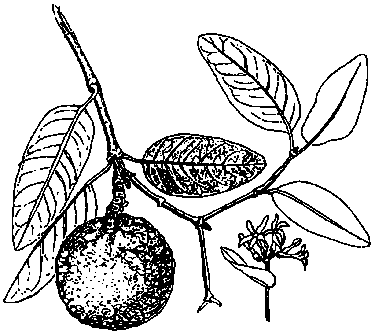
Figure

Figure
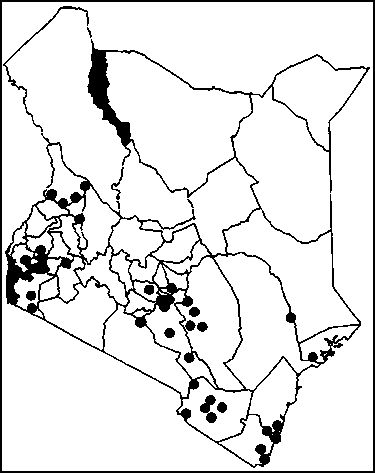
Figure
Salacia madagascariensis (Lam.) DC.
Celastraceae
Chonyi: mudzipo Giriama: mukipo, mudzipo Kambe: mudzipo Malakote: mwitwa-mow Sanya: kukube, Somali: madderie
Description: Evergreen bush, shrub or liana. LEAVES: Shiny, elliptic with a serrated margin. FLOWERS: Greenish yellow, in clusters. FRUIT: To 3 cm in diameter, round, bright red to orange when ripe.
Ecology: In Kenya found in the coastal area, e.g. at Diani, Kwale town, Boni Reserve and Lamu in bushland, dry evergreen coastal forests, coastal sands, rocky areas, 0-500 m. Zones III-VI (riverine).
Uses: FOOD: Fruits edible with a sweet taste (++). The edible portion is meagre, however. The seed is large and not swallowed. Fruit coat removed before eating.
Remarks: A related species with edible fruits is S. erecta (G. Don) Walp found in the coastal and western parts of Kenya. An unidentified species, Salacia sp.-ndendela (Thui Hill, Makueni District)-also has edible fruit much liked by children. Shrub or liana with large shiny serate leaves. Fruits bright yellow or orange. Produced in large quantities but the edible portion is small.
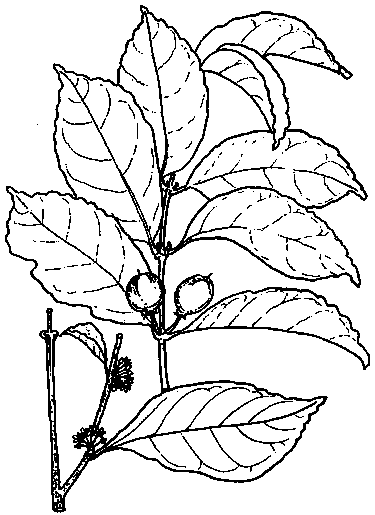
Salacia erecta
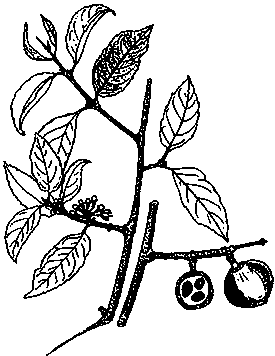
Figure
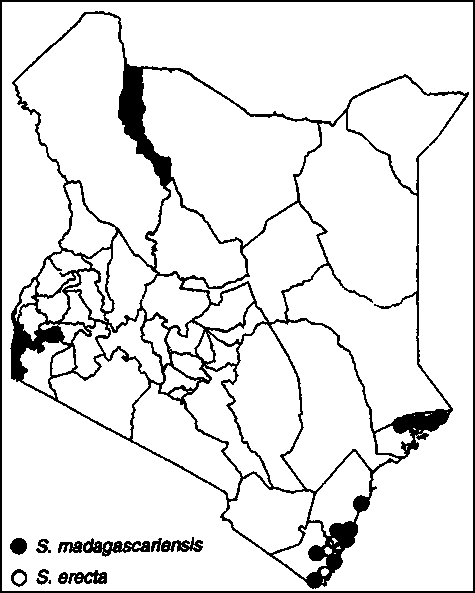
Figure
Salvadora persica L.
Salvadoraceae
English: toothbrush bush, mustard tree Swahili: mswaki Borana: huda Chonyi: mswaki, mueza-moyo Daasanach: nyedhe, nyaa (plural) Gabra: aadde Giriama: mswaki, mjungumoto, mueza-moyo Kamba: mukayau Kambe: mswaki, mueza-moyo Maa: oremit, iremito (plural), olremit Malakote: muswaki Orma: adhe Pokot: asiokon, ashokonyon, chokow'o, asiokonion Rendille: hayay, akhai (fruit) Samburu: sokotu, sokotei Sanya: adhe Somali: ade, adhei (Tana River), cadei, adde Tugen: sogotaiwa, barsute Turkana: esokon, esekon
Description: An evergreen bush to 4 m, a climbing shrub or an insubstantial tree to about 8 m. Trunk usually convoluted or prostrate, bark rough in older trees. Branches often hanging down. BARK: Greyish white. LEAVES: Slightly succulent or appearing so. FLOWERS: Small, greenish white, borne in large axillary or terminal panicles. FRUITS: Small and dark purple when ripe.
Ecology: Found in Arabia, Somalia, the Sudan, south to Mozambique, Malawi, Zambia and Angola and in West Africa, North Africa, the Middle East to north-west India and Sri Lanka. Grows in most low-altitude areas of Kenya, especially arid, semi-arid and coastal regions in riverine vegetation on sandy, sandy-loam and alluvial soils or on rocky ground, 0-1,500 m. Occasionally in bushland, especially in red soils. Zones V-VI.
Uses: FOOD: The ripe purple fruits are eaten whole (+). Also may be chewed or sucked. Fruit, especially seeds, have a slightly hot taste. Occasionally large quantities are gathered and brought home (Pokot, Turkana). Among some communities in northern Kenya fruits may be dried and stored for future use. Ripe fruits pounded and made into a sugary ball eaten as a snack (Turkana).
MEDICINAL: Roots mixed with Acacia oerfota (syn: A. nubica) bark in soup are used for dizziness, tuberculosis and fever (Pokot, Somali). Roots used as a toothbrush or chewed when one has bad teeth (Pokot). Plant used to cure worms (Kamba, Maasai). A decoction of the root used to cure gonorrhoea; also added to child's milk as a tonic (Maasai Kajiado); roots used for stomach-ache (Samburu). Dried root bark is boiled with tea and taken as a health drink, a spice when one has a cold or to freshen the mouth (Maasai, Kajiado). Roots boiled and mixed with soup as a tonic and for stronger bones (Pokot, Maasai), this mixture is said to cure fever and colds; boiled root infusion given to breast-feeding mothers to increase milk (Maasai, Magadi).
OTHER: Leaves and fruit are fodder for camels (+++) and goats (++). Branches used as toothbrushes (+++). COMMERCIAL: Toothbrush sticks sold throughout the country.
Season: Fruits in June-July in Lodwar.
Management: Propagated by seeds and root suckers. Trees for shade should be planted near other trees such as Acacia tortilis for support.
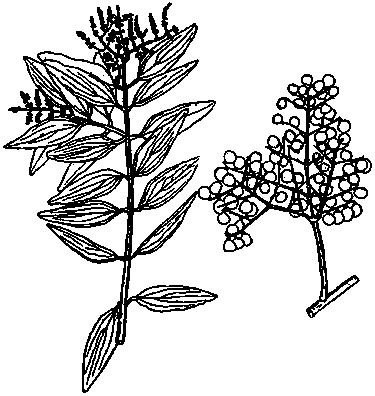
Figure
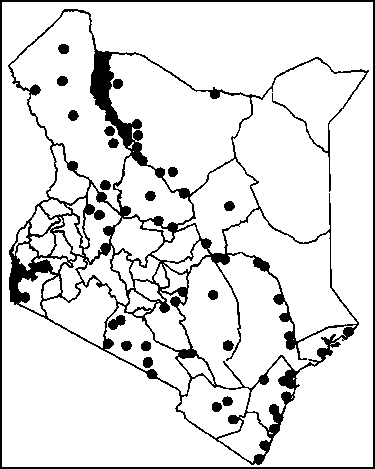
Figure
Remarks: S. persica is an evergreen tree and often the only green plant seen during the dry season in areas where it grows. It provides excellent shade. In riverine vegetation, the bushy plant is good for erosion control. Said to be the mustard of the Bible. Three varieties found in Kenya:
· var. persica with slightly succulent, narrow, usually pointed leaves is widely distributed and by far the commonest.· var. cyclophylla (Chiov.) Cut, distinguished by its broad leaves. Kenya coast and Somalia on coral.
· var. pubescens Brenan with hairy leaves. Maasai land in Kenya, also in Tanzania, Zambia, Zimbabwe and Angola.
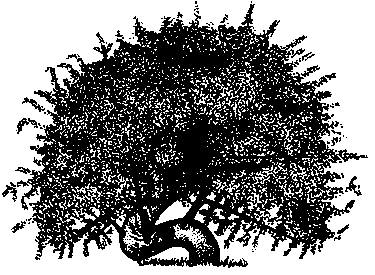
Figure
Sclerocarya birrea (A. Rich.) Hochst.
Anacardiaceae
syn: S. caffra Sond.
Borana: didisa, Chonyi: fula (fruit), mfula Digo: mngongo, mng'ongo English: cider tree, morula Giriama: mfula, mufula, tulafula (fruit), fula Ilchamus: lmang'wai, lmang'wa Kamba: muuw'a, mauw'a (fruit) Luo: ong'ong'o (Gwasi), ng'ong'o (Kanyamwa), olemo, mang'u (Kadem) Maa: olmang'uai, ilmang'ua (plural) Marakwet: arol, oroluo (singular) Mbeere: mukomothi Pokot: oroluo, oroluwo, Sabaot: kotelalam Swahili: mng'ongo, mongo, mungango Teso: ekajikai Tugen: tololokwo Turkana: ekajiket
Description: A deciduous shrub or medium-sized tree to about 15 m, usually with a rather dense rounded crown. BARK: Grey, finely fissured, scaling. LEAVES: Pinnate, borne at tips of branchlets that end bluntly. Leaflet margins entire or undulate. FLOWERS: Dioecious. Female flowers reddish, borne on long stalks at the tips of branches. FRUIT: Light green, oval or nearly globose, 3-4 cm long, turning yellow on ripening. Fruit skin tough, leathery, enclosing a juicy white pulp and a single large hard nut.
Ecology: A widely distributed species in the dry zones. Ssp. birrea: Found from Senegal to Ethiopia and widespread in Kenya, e.g. in Lambwe Valley (Ruma National Park), Moyale, Ortum (West Pokot) and Baringo. Wooded grassland and rocky hillsides. Commonest on sandy and loam soils as well as dry rocky riverbeds. Ssp. caffra: Found in Tanzania and the Democratic Republic of Congo (Zaire) south to South Africa and Madagascar. A very common plant in Botswana. In Kenya, in coastal and adjoining areas. Open bushland, especially on sandy loam soils and rocky hillsides. Altitude: ssp. birrea, 500-1,600 m; ssp. caffra, 0-1,200 m. Zones IV-V.
Uses: FOOD: Ripe fruit eaten raw, fruit cover removed (often after squeezing the fruit several times) and the cream fruit pulp sucked. Pleasantly acid (+++) and strongly scented. Fruits can make a refreshing drink and are exceptionally high in vitamin C. The oil-rich seeds are edible. The stone is cracked and the contents eaten raw (Pokot, Kamba). Children are advised against swallowing the seed as it can easily cause choking. In southern Africa, the fruits are used for making a kind of alcoholic drink.
FOOD/MEDICINAL: Root or bark decoction added to milk as child's health drink (Pokot, Maasai). The bark is added to boiling Balanites pedicellaris cotyledons in the last hour of the 10 hours of cooking to improve taste and colour (Pokot).
MEDICINAL: Bark used for the treatment of dysentery (Pokot). Bark decoction used for diarrhoea, for adults with enlarged spleen as well as for liver diseases (Pokot). Medicine for toothache (Swahili).
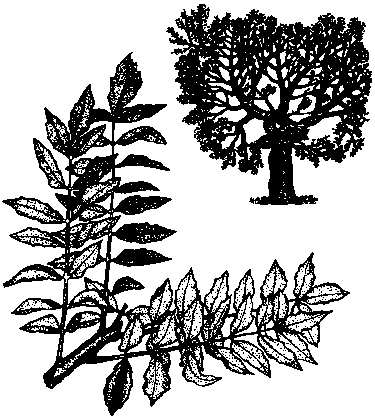
Figure
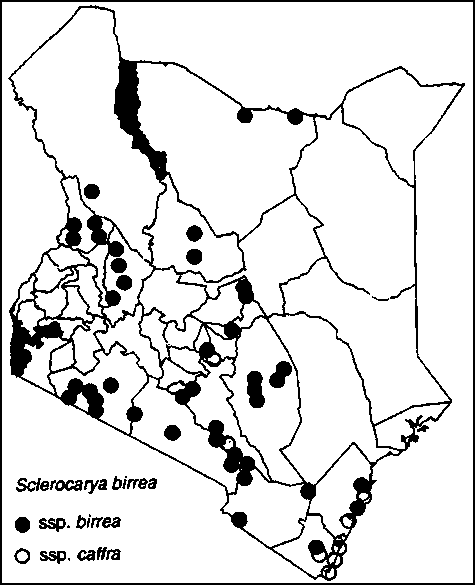
Figure
OTHER: Wood used for making bowls (Pokot), wood carving, mortars, stools, beehives (Kamba). Bark is used for cleaning gourds used in beer brewing. It is left for 3-4 days then washed out (Pokot). The bark also yields a dye as well as fibre. Trees can serve as shade trees but are deciduous. The plant is also a source of soft fuelwood (takes rime to dry). Fruit eaten by elephants and goats; the seeds are regurgitated by the latter and are still of value to humans (Pokot).
COMMERCIAL: Fruits sold (Pokot). Wine made from the fruits.
Season: Fruits in April-May in Kerio Valley, Baringo, Makueni and Sultan Hamud, in July in Homa Bay and Lambwe Valley.
Management: This species does not readily propagate itself by seed. Due to the hard coat, seeds require pre-treatment by nicking or applying concentrated sulphuric acid to enhance germination. The species does not respond well to coppicing.
Status: May be locally uncommon.
Remarks: A quite variable species, especially in leaf shape, fruit size and taste. The two subspecies may be distinguished by the shape of the leaflets:
· ssp. birrea: Leaflets are usually shorter with obtuse or acute tips, and
· ssp. caffra (Sond.) Kokwaro (syn: S. caffra Sond.):
Leaflets have narrower and more elongate tips. This is the marula fruit which is much valued in southern Africa, especially in Botswana. Ripe fruits fall from the tree to the ground where they ferment naturally and can be quite intoxicating to humans, goats and wild game. In Botswana, varieties with exceptionally large fruit have been bred. Fruiting has been achieved in about 3 years in grafted plants.

Figure
Scutia myrtina (Burm. f.) Kurz
Rhamnaceae
Boni: tsina Kamba: kitumbuu, mbombo-kenya, (Museve, Kitui) Kikuyu: murangari Kipsigis: saiyakirur Luo: migodha Maa: osanankururi, osanankuruti, osinon-kurruti Sabaot: letwa Samburu: sananguri
Description: A spiny often scrambling shrub 2-4 m high, occasionally higher. Branches scattered and spreading with recurved thorns which are normally in pairs. BARK: Grey, smooth, older bark longitudinally fissured. FLOWERS: Pale green. FRUITS: Green turning purple-black on ripening, up to 1 cm in diameter.
Ecology: From Kenya and Uganda south to South Africa and Madagascar; India and Sri Lanka east to Vietnam. Widely distributed in Kenya and common in dry middle- to high-altitude areas in bushed grassland and thickets, 0-2,700 m. Confined to riverine vegetation in the lower dry altitudes. Common on clay soils, red and black cotton. Zones II-IV.
Uses: FOOD: Fruit edible, sweet, but leaving a rough feeling in the mouth. Edible portion small (+). Seed discarded. Roots used a great deal by Maasai morans in soup.
MEDICINAL: Roots are mixed with those of Ximenia americana and eaten mixed with goat and sheep fat in the treatment of gonorrhoea (Maasai). Pounded leaves and a little water used for ringworm, ieya (Kamba).
Season: Flowers in June in Narok and fruits in February and July in Kajiado and Kitui.
Management: Easily grown from seeds.
Status: Very common in some areas.
Remarks: May be grown as a hedge but would require constant trimming.
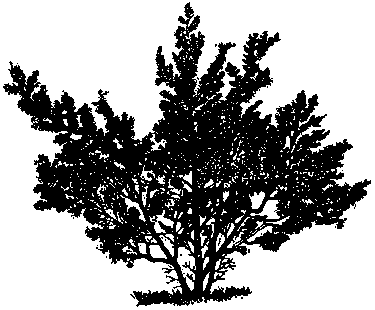
Figure
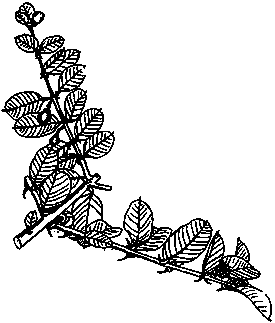
Figure
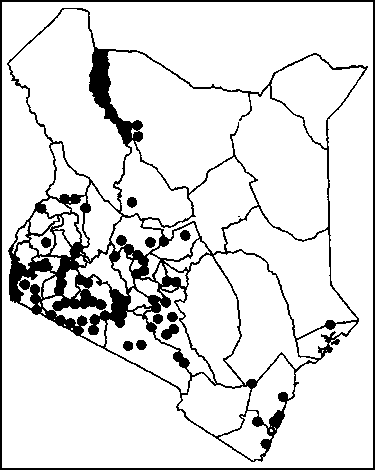
Figure
Sesamum calycinum Welw.
Pedaliaceae
var. angustifolium (Oliv.) Ihlenf. and Siedenst.
Boni: sisin, kedura Chonyi: mrenda Giriama: mrenda Kamba: luta Luhya (Bukusu): lukhanukhanu Luhya (Tachoni): olkenu kenu Luo: onyulo, anyulo, olukenu, kenu Maa: oldelemet Swahili: mfuta mwitu
Description: A usually erect herb, rarely straggling, sparingly branched, to 1.3 m, occasionally higher. Stems angled, finely hairy. LEAVES: Narrow, long. FLOWERS: Funnel-shaped, pink to reddish purple, hairy, longer lip pale inside with purple lines.
Ecology: Nigeria south to Namibia and Mozambique. In Kenya occurs in abandoned cultivated land, grassland, roadsides, 0-3,000 m. Common in light clay and sandy soils. Zones II-V.
Uses: FOOD: Used as a vegetable (+++) (Luhya, Luo, Teso) which has a mucilaginous texture and a slight odour. It is normally cooked with Corchorus (Luo: apoth, Luhya: murenda). A useful oil may be obtained from the seeds.
MEDICINAL: Oil used as medicine for ringworm (Uganda, Busoga). Leaves ground and applied to the scalp for baldness (Boni). Leaves rubbed in water give a mucilage used for eye troubles and infant diarrhoea. Mucilage is used to treat burns and wounds. Crushed leaves are rubbed in the hair when washing it to give it a glossy look. Used in the treatment of stomach-ache (Kamba).
COMMERCIAL: Leaves sold in Siaya.
Management: Propagated by seeds sown randomly (Siaya) or in lines. Seedlings are thinned to a spacing of about 20 cm as they grow. Coppices well.
Status: Locally common.
Remarks: May be used as an ornamental.
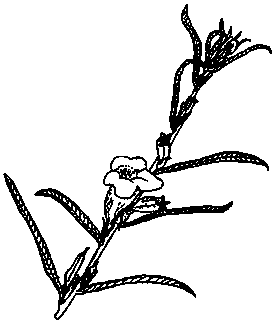
Figure
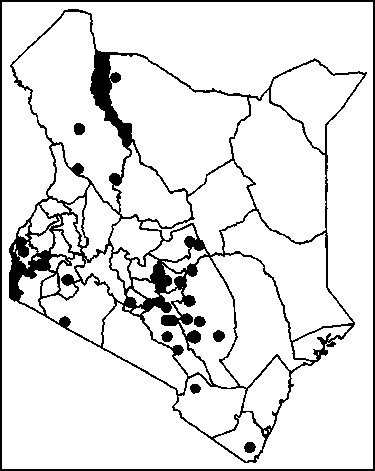
Figure
Sesamum orientale L.
Pedaliaceae
syn: Sesamum indicum L.
English: sesame, baniseed, sesamum Swahili: mfuta, ufuta, uvuta, simsim Chonyi: ufuha Digo: ufunha Giriama: ufuha Luo: nyim Luhya (Maragoli): tsinuni Luhya (Tachoni): chikhanu Kambe: ufuha Sanya: sisino Somali: salalmac Teso: ikanyum
Description: An erect annual plant up to 2 m, more often 1.0-1.5 m. LEAVES: Lobed (lower) or lanceolate (upper). FLOWERS: Purple to white. FRUIT: A capsule to 4.5 cm long which dehisces releasing cream, brown to black seeds depending on variety.
Ecology: Widely cultivated in the tropics, especially in Asia. Grown on a small scale in the Coast, Western and Nyanza Provinces. Wild populations found in southern Turkana, West Pokot and northern Kenya in open grassland, bushed grassland, roadsides and disturbed areas, 0-1,500 m. Wild populations common at about 1,000 m. Often found on loam soils. Rainfall: 400-1,200 mm. Zones: III-VI.
Uses: FOOD: Simsim is grown for its oil-rich seeds. Seeds are baked into a cake or fried and rolled into balls; commonly seen in markets in western parts of Kenya. Sweet seeds are often fried with those of the Bambarra groundnut (Luhya) and served to visitors on special occasions. Cooking oil is also extracted from the seeds. Leaves eaten as a vegetable (Digo). Seeds mixed with grain flour and used in baking cakes (Duruma). Seeds often sprinkled on bread and cakes. Among the Mijikenda, seeds are fried then pounded in a mortar to a thick soft oily paste. This is served as the mboga with ugali.
COMMERCIAL: Seed cakes and sweet balls sold in major markets, especially in western Kenya; also seen in supermarkets. Oil is of great commercial value. Bread and cakes sprinkled with simsim are common.
Management: Sesame may be sown in lines or by broadcasting. Seeds are small and usually mixed with loose soil for more even sowing. It may be intercropped with other crops such as maize. As soon as the lower capsules start to dry (lower ones mature earlier), the plant may be cut or uprooted and dried for about a week, normally while suspended upside down. They are then threshed to release the seeds which fall on a sheet spread below, a mat (mkeka) or a large shallow doum-palm basket (tuguu). Seeds are then winnowed before storing. In small gardens, individual capsules may be picked as they mature.
Remarks: Sesame is a traditional food for the Luhya, Luo and coastal peoples. In Kenya most of the sesame produced is consumed in the areas where it is grown and in larger towns by the same communities that grow them. Thus, there is a need for promotion of the crop among the other communities.
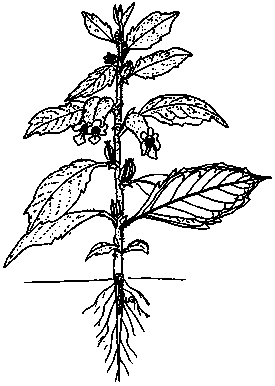
Figure
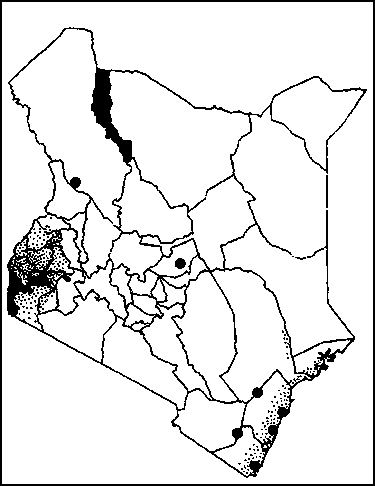
Figure
Solanum nigrum L.
Solanaceae
Chonyi: mnavu-tsaka, mnavu, mnavu-jangaa Embu: managu English: black nightshade, wonderberry Giriama: mnavu, mnavu-jangaa (black fruits), mnavu-tsatsa, mnavu-mahomba Ilchamus: olmomoi, lmomoi, lmomo Kamba: kitulu Kambe: mnavu-tsaka, mnavu Keiyo: suchot, kisuchot Kikuyu: managu, inagu, nagu (fruit) Kipsigis: isoiyot Kisii: rinagu Luhya (Bukusu): namasaka, esufwa Luhya (Maragoli): litsusa Luhya (Tachoni): yisufwa, yimboka, namasaka, imboka Luhya (Tiriki): lisutsa Luo: osuga Maa: ormomoi Marakwet: ksoiyek, isoiyo, kisoyo Mbeere: managu, inagu (singular) Meru: managu Okiek: soyot Pokot: ksoya Rendille: gengalat Samburu: lmomoi, lekuruu Sanya: mnavu Swahili: mnavu, mnafu Taita: ndunda Tugen: kisuchot, kisuchon Turkana: esuja, abune, lokitoemenyan
Description: An erect herbaceous plant to 1 m or more. Stems ridged, soft, occasionally with soft, miniature prickles. LEAVES: With long petioles. Blade up to 15 cm long, usually 5-10 cm long, elliptic, entire or undulate. FLOWERS: Small, white, borne on a branched inflorescence. FRUITS: Green, turning orange, red or yellow at maturity (in S. villosum) or shiny purplish black at maturity (in other species). Seeds small, almost round, flattened, pale yellow.
Ecology: Most of Africa, tropics and subtropics of the world. Widely distributed in Kenya. Commonly found as a weed in cultivated fields, in weedy plant communities, under trees, along fences and shaded areas near buildings, 0-2,600 m. Rainfall: More than 500 mm. Soils vary. Zones I-VI.
Uses: FOOD: Leaves widely used as a vegetable in Kenya (+++). Normally cooked with amaranth (Pokot, Luo), meat or Cleome gynandra. Leaves are picked, boiled and may or may not be fried. As the vegetable is bitter, some prefer not to use salt. Among the Mijikenda the vegetable is mixed with less bitter vegetables such as amaranth (mchicha), cowpeas and Vernonia cinerea (kibudzi). Normally eaten with ugali. The ripe orange fruits are edible. The black fruits of the highland forms are bitter and may be poisonous. The green berries may contain poisonous solanum alkaloids and should not be eaten. The densely hairy form is hardly used as food.
MEDICINAL: Unripe fruits applied to aching teeth (Makueni) and squeezed on baby's gums to ease pain during teething (Kajiado, Kitui). Leaves used for stomach-ache (Machakos). Leaves and fruits pounded and the extract used for tonsillitis (Machakos). Roots boiled in milk and given to children as tonic (Maasai).
OTHER: Fodder for cattle and goats. Eaten and spread by birds.
COMMERCIAL: The vegetable is common in Nairobi markets and in many other market centres, especially in Coast, Nyanza, Rift Valley and Western Provinces. The demand in Nairobi is high.
CULTURE/BELIEFS: Some Mijikenda communities regard it as taboo to add salt, believing the plant will stop growing in cropland as a result.
Season: Leaves best during and just after the rains. Fruits normally available in June-August and in January-February.
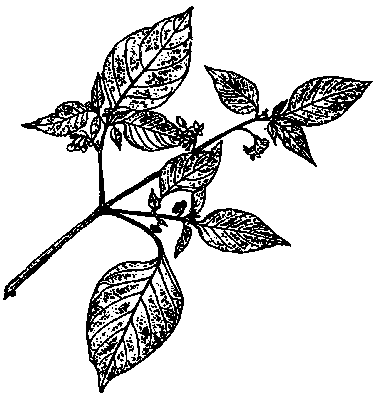
Solanum nigrum
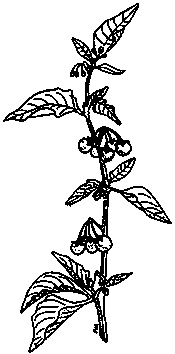
Solanum villosum
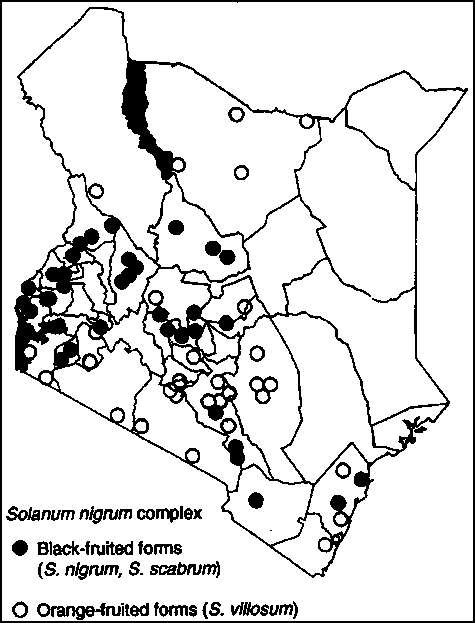
Figure
Management: Propagated by seeds or cuttings. The Giriama propagate the coastal form by shoot cuttings. The seeds may be obtained by bursting the ripe fruits and drying them in the sun. The germination rate is normally poor.
Remarks: Polyploidy in the genus Solarium is common. What is referred to as Solanum nigrum in this book may well be a complex of species and their various forms which can be termed the Solanum nigrum complex. In recent years, following extensive research on the genus Solanum, and more specifically on the section to which it belongs, the trend has been to split the complex into a number of species easily distinguished by such features as the colour of the ripe fruit, fruit size, leaf shape and stem morphology.
In Kenya at least five species can be recognized. Each of these has a distinct distribution, habitat and altitude range.
Solanum nigrum L. This type has shiny black fruits and leaves with a somewhat wavy margin. In Kenya it is commonest in high-altitude areas above 2,000 m with a humid climate.
Solanum villosum Miller (English: red-fruited nightshade). The type has yellow to orange fruits up to 1 cm across. Seeds are usually visible through the fruit wall. It is commonest in the middle and low altitudes, including the coastal zone. It is the more common species in warm, sub-humid to dry areas in agro-climatic Zones III-VI. The ripe fruits are edible.
Solanum americanum Miller (English: huckleberry) is a small species with relatively smaller fruits, usually less than 9 mm across. Fruits are purple-black when ripe. The coastal type with dark green leaves and small purple-black fruits is most likely this species. It is often found in cropland, planted or growing naturally.
Solanum scabrum Miller. This is a type with relatively large fruits (up to 2 cm across) which turn shiny purple-black on ripening. It is occasionally grown by farmers in Western and Nyanza Provinces and in the highland part of central Rift Valley. Ripe fruits are edible.
A hairy form with regular notches on the leaf margin and black berries common around Nairobi is probably S. physalifolium. This form is not used for food.
While there is little doubt that some of these forms are indeed distinct species, the debate over the correct taxonomic classification of most of them is far from over with some authors preferring to lump most of the above species, and others not found in Kenya, under one species - Solanum nigrum.
In recent years, several other species in the genus Solanum have been seen in cultivation.
· Solanum aethiopicum L. (English: bitter tomato, mock plant (depending on the type)) is mainly cultivated in West Africa. It has shallowly lobed leaves and sub-globose or ellipsoid orange-red fruits to 6 cm long.· Solanum macrocarpon L. (English: African eggplant, Swahili: ngogwe) found in Uganda, Tanzania and West Africa, has large shallowly lobed leaves and large cream-yellow to orange or purple fruits, to 5 cm across. Leaves and fruits are used as a vegetable at the coast and in Uganda and West Africa.
Also in this tomato family are several species in the genus Physalis.
· Physalis peruviana L. (English: Cape gooseberry, Kamba: ngavu, Maa: olnasi, Kikuyu: nathi, Luo: nyakonglo, nyatonglo, otonglo, Somali: tabaako). The Physalis spp. grown in Kenya are all native to tropical America. P. peruviana is cultivated and also naturalized in many parts of the world as well as Kenya. This has edible fruits which are very popular with children. Fruits are 1.5-2.5 cm across, yellow when ripe and enclosed in an inflated papery calyx. It is occasionally sold in Nairobi markets and in western Kenya.· Physalis minima has smaller fruits. It is common in western parts of Kenya. Fruits are eaten, while the leaves are used as a vegetable (Luo, Luhya).
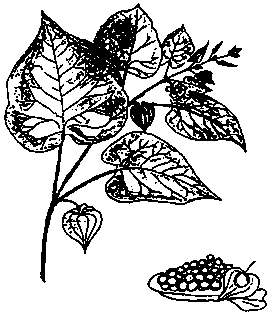
Physalis peruviana
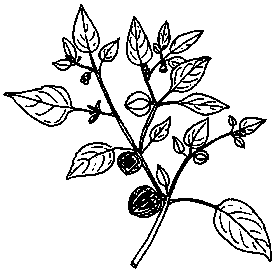
Physalis minima
Sorghum bicolor (L.) Moench
Gramineae (Poaceae)
Borana: misinga Chonyi: muhama Embu: muvia English: sorghum. Guinea corn Giriama: muhama Kamba: muvya Kambe: mhama Keiyo: moosong', moosongik Kikuyu: muhia Kisii: amaemba Luhya (Isukha): mavele Luhya (Kisa): amabere Luhya (Marachi): mabere, mavere Luhya (Maragoli): mabere, mavere Luhya (Bukusu): liemba, kamaemba (plural) Luhya (Tachoni): amabele, kamaemba Luhya (Samia): amabele Luo: bel Marakwet: mosong (plural), mosiyon (singular) Meru: muya Nandi: mosongik Pokot: musyoon, musuu (plural) Sanya: misinga, msinga Somali: gidami Swahili: mtama Teso: imomwa Tharaka: munya Turkana: ng'imomwa
Description: A strong annual or perennial grass cultivated for its grain. Culms (stems) usually 1-2 m high, often with prop roots at the lowest nodes. LEAVES: Leaf-blade broader than in pearl millet. FLOWERS: Inflorescence a large terminal branched panicle which may be compact or loosely held. FRUITS: Grain of various colours ranging from white to red and dark brown. Many varieties are known, some only found and maintained locally by individual communities and deeply integrated into their culture. The Ng'ikebootok of southern Turkana, for example, keep up to 15 types, probably representing races, all with distinct vernacular names.
Ecology: Cultivated in most areas of Kenya, particularly in Nyanza and Western Provinces, usually between 0 and 2,400 m.
Uses: FOOD: A traditional grain crop of most communities in Kenya. The grain is ground into flour and used for making porridge and ugali. Used a great deal by the Luo, Turkana, Tharaka, Taveta, Tugen, Marakwet, Elgeyo, Teso, Luhya, Kisii, Kamba, Kikuyu, Embu and Mijikenda (Giriama, Digo, Duruma, Rabai, Ribe, Kambe, Jibana, Chonyi, Kauma) groups. Among the Luo, Teso and Luhya, the grain may be mixed with dried cassava and ground into flour. Flour may often be mixed with maize or finger-millet flour. The brown husks of sorghum, chung'bel, are used for making tea (Luo). The flour is used for making traditional beer (Teso, Luo). Fresh grain of some sweet cultivars is eaten. Bitter cultivars are preferred where bird attack is a problem. The stems of some cultivars are sweet and chewed like sugarcane. These are often sold in markets in southern Africa, especially in south-western Zimbabwe.
CULTURAL/BELIEFS: The Ng'ikebootok of southern Turkana believe sorghum came to their land by way of elephant dung.
COMMERCIAL: The grain and flour are sold all over the country.
Management: Propagated through seed. Takes 3-4 months to reach maturity. Quicker maturing varieties now available. In some cultivars, the crop may be left to give a second or even a third harvest by cutting off mature stems. The second crop may be as good as the first (Turkana) or better, but the third is always much less. Diseases are a limiting factor in later harvests.
Season: Mature crop in February-March in Machakos, Kitui, Embu, Mbeere, Tharaka, Meru, in June-July in Kitui, Mwingi, Tharaka (second harvest from same crop) and in July-September in Turkana (with up to three harvests).
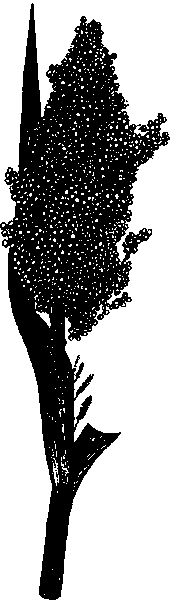
Figure
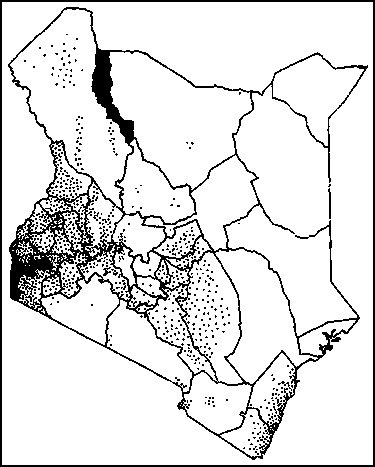
Figure
Remarks: Sorghum is a crop that has been cultivated since ancient times and hence a great number of cultivars exist. Local people not only distinguish the various forms using morphological characters (like plant height, stem colour and thickness, size and shape of the ear, colour and shape of grain) but also others such as taste and hardness of the grain. Like many other traditional grain foods, sorghum has declined in importance compared to maize among many communities. It is, however, still a staple food among the Luo, Teso and agricultural Turkana.
Sorghum is believed to have originated in north-eastern Africa. Its diversity among the communities in southern Sudan and bordering communities in Kenya and Ethiopia is of great interest. Many varieties become extinct each year due to disuse or introduction of more competitive varieties. Sorghum's close wild relative, S. arundinaceum (Kamba: mukombi, imila, Turkana: etiriwae) is commonly seen in association with it. It is common in the Kibwezi area and in Laikipia. De Wet and Harlan (1971) combined all spontaneously occurring taxa into S. bicolor ssp. arundinaceum (Desv.) de Wet and Harlan and all cultivated taxa into S. bicolor ssp. bicolor. Harlan (1971) considered that sorghum was domesticated in the savannah somewhere between Chad and the Sudan where ssp. arundinaceum is abundant and still harvested as a cereal in times of scarcity.

Sorghum arundinaceum
Sorindeia madagascariensis DC.
Anacardiaceae
syn: S. obtusifoliolata Engl.
Digo: mkunguma Duruma: msanzanza Malakote: mwebebe Pokomo: nyambembe Swahili: mtunguma, mkunguma Taita: mkunguruli Taveta: mundaraha
Description: An evergreen tree to 20 m or more. BARK: Flaking. LEAVES: With alternate leaflets which have an asymmetrical base. FLOWERS: Yellow, in long, loose panicles. FRUIT: 1.0-2.5 cm long, in clusters, oval and fleshy, green, ripening to a yellow colour.
Ecology: Kenya, Tanzania, Malawi, Mascarene Islands. In Kenya in riverine vegetation, especially along the lower Tana River, coastal forests, areas with high groundwater, usually on sand or loam, 0-1500 m. Zones I-VI (riverine).
Uses: FOOD: The fleshy ripe fruit is edible. It has a pleasant flavour. Rated as one of the best indigenous fruits by the Pokomo and Malakote.
OTHER: Fuelwood.
Status: Locally common.
Remarks: The only member in its genus found in Kenya. Like many of the members of this family, the species is dioecious.
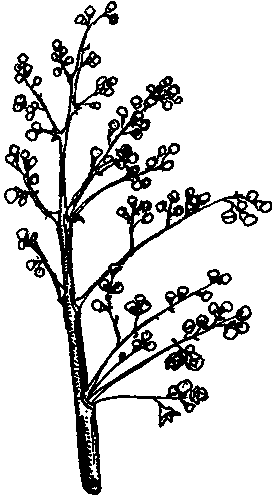
Figure
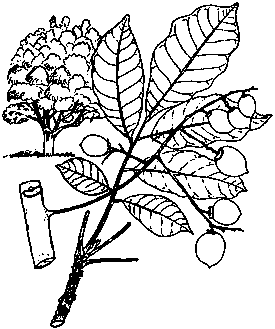
Figure
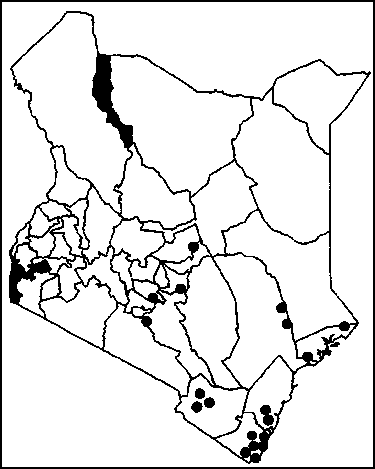
Figure
Stathmostelma propinquum (N. E. Br) Schltr.
Asclepiadaceae
Maa: oltiakule, entiakule, entiakuleti, olekole loosirkon, olkikwakei
Description: A short herb to 15 cm high with low spreading branches. Stem arising from a tuberous rootstock. Tubers cream, ovoid but tapering towards the bottom, up to 15 cm long by 6 cm at the widest part, juicy. Tubers and the plant generally exude a milky latex when bruised. LEAVES: Opposite, very narrow, long, slightly hairy. FRUIT: Long, tapering towards the tip, light green with dark green lines of projections directed towards the tip.
Ecology: Found in Kenya, e.g. at Isinya (Kajiado), Kaputei plains, Loita plains in open grassland and common in black-cotton soil, especially that which is mixed with sand. Occurs at 0-2,400 m, but more common at 1,500-1,800 m. Zones IV-V.
Uses: The juicy tubers are peeled and eaten raw (Maasai). They have a very bland taste but are much liked by pastoralists for quenching thirst.
Season: Tubers: Perennial but shoots seen during the rainy season.
Status: Occasional. Survival of the species is threatened by human pressure on grasslands.
Remarks: A related and probably more common species is S. pedunculatum (Decne.) K. Schum. which has branches with a more ascending habit, a taller shoot and broader leaves. The tuber is said to be edible too. Altitude 0-2,400 m. The taxonomy of these species needs further work.
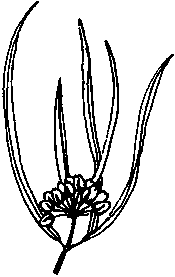
Figure

Figure
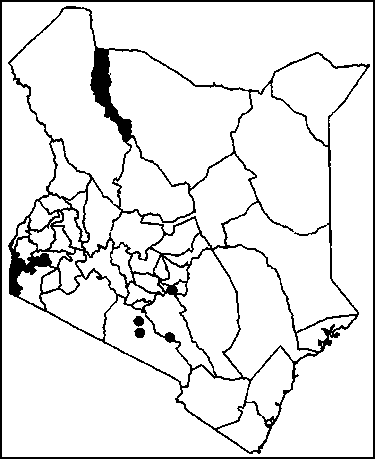
Figure
Strychnos henningsii Gilg
Loganiaceae
Borana: karaa, karrah Giriama: mbathe Kamba: muteta Kikuyu: muteta Kipsigis: maset Maa: entuyesi, oltipilikwa Mbeere: mutambi Meru: muchimbi Pokot: chapkamkam Samburu: nchipilikwa Somali: hadesa
Description: Much-branched shrub or small tree usually 3-6 m. LEAVES: Glossy, opposite with 3 prominent veins, ovate or elliptic with a short petiole. FLOWERS: Cream to yellowish pink in groups in leaf axis. FRUIT: To 2 cm long, round to ellipsoid, green ripening to red.
Ecology: Widely distributed in Kenya in dry Podocarpus and Olea forests, hillsides, riverine vegetation, thickets and Combretum bushland, 0-2,300 m. Zones III-V.
Uses: FOOD: Roots, stems and stem bark commonly boiled in soup for fitness and painful joints or general body pains (Kikuyu, Maasai, Kamba) (+++). Fruits used for flavouring beer (Mbeere). Pieces of stem or root are boiled for about 45 minutes, sieved and the bitter decoction mixed with boiled bone soup (preferably cattle bones). The root extract is more bitter than that obtained from stems and hence only a little is added to the soup. Salt, milk, cream or meat may be added to improve the taste. The resulting mixture of soup and muteta is stirred vigorously using a traditional stirrer. The roots may be used up to four times before their bitterness fades and potency wanes.
MEDICINAL: A decoction from roots and leaves is drunk in soup or honey to treat malaria and rheumatism (Pokot). Bark is boiled in a little water and used for backache.
OTHER: Wood used for tool handles (Kikuyu) and building huts (Maasai).
COMMERCIAL: Bundles of stems and roots sold (Kitui, Machakos, Nairobi). Soup sold in some major hotels, especially in Nairobi.
Remarks: The plant may be harmful if wrongly prepared. Care should be taken while collecting it in the wild as it can easily be confused with Acokanthera spp. used to prepare arrow poison.
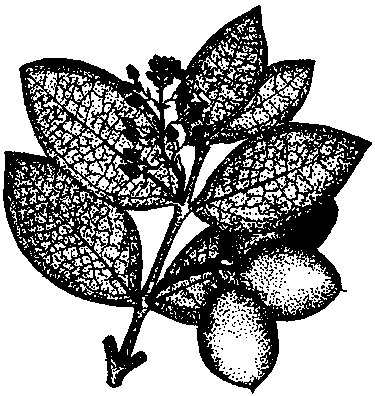
Figure
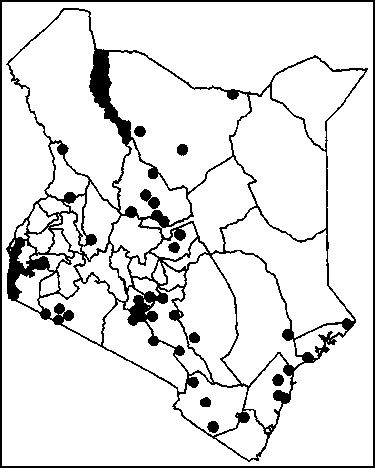
Figure
Strychnos madagascariensis Poir.
Loganiaceae
Boni: mangura, mangula Chonyi: mkwakwa Digo: muhonga, musikiro Giriama: mujaje, mkwakwa Kamba: kikolakolania (Kathonzweni) Kambe: mkwakwa Sanya: horocha, mangula Swahili: mtonga, kikwakwa
Description: Much-branched shrub or small tree to 6 m high. BARK: Pale grey. LEAVES: Broadly elliptic, glossy green, opposite, shortly stalked or stalkless. FLOWERS: Small, greenish white. FRUITS: Round, large, to 8 cm across, green with a hard cover, turning orange-yellow on ripening. Seeds tetrahedral, not as many as in S. spinosa.
Ecology: Kenya, Tanzania south to Mozambique and South Africa. In Kenya, found at the coast and inland to Makueni District in coastal bushland, rocky hillsides and thickets, 0-700 m. Mainly in coastal sands. Zones II-IV.
Uses: FOOD: The ripe orange fruit is eaten and the pulp-covered seeds are sucked. Pulp may also be dissolved in water and made into a juice which has a sweet-acid taste. Seeds are discarded.
Management: Propagated by seeds which germinate easily.
Remarks: A related species, S. innocua Del., usually with smaller fruits 4-7 cm in diameter, has been reported in West Pokot District. The deep yellow ripe fruit is edible. Although rare in Kenya, the species is found nearby in Uganda and in West Africa east to Ethiopia and south to Angola, Zimbabwe and Mozambique.
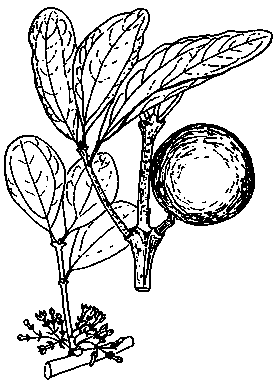
Strychnos innocua
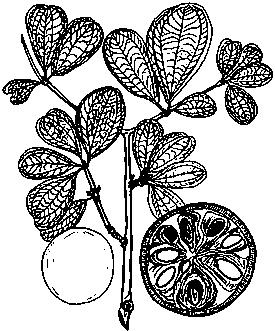
Figure
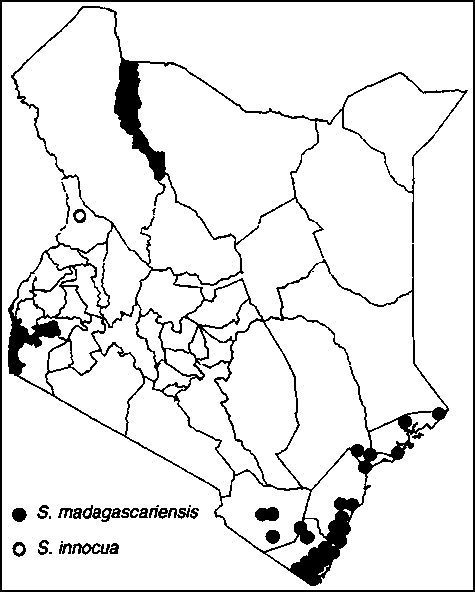
Figure
Strychnos spinosa Lam.
Loganiaceae
Bajun: myae Boni: mangura, mangula Chonyi: mujaje Digo: muhonga, mursapungu English: Kaffir orange, KwaZulu Natal orange Giriama: mujaje Kamba: kyae (Kitui), kimee (Makueni), mae (fruits) Kambe: mujaje Luo: akwalakwala-lyech Mbeere: mwange, mwange-wa-ndue, mubage Pokomo: bungo Pokot: kukugho Sanya: mangula Swahili: mtonga, kikwakwa Teso: eturukurut, ekwalakwalat
Description: Much-branched shrub or small tree to 5 m high. Branches may or may not be armed with short, straight or slightly curved spines. BARK: Pale grey. LEAVES: Glossy green, opposite. FLOWERS: Small, inconspicuous, borne in groups. FRUITS: Round, large to 8 cm across, green with a hard rind, turning yellow on ripening. Seeds numerous, embedded in a creamish brown pulp.
Ecology: Found in the coastal zone and in some inland areas, e.g. in Mbeere, Wikililye (Kitui), Chepareria (West Pokot) and Baringo in bushland and wooded grassland, 0-1,800 m. Soils: Mainly sandy, occasionally well-drained clay soils. Zones II-IV.
Uses: FOOD: The large ripe yellow fruits are edible (++). They have a sweet-acid taste. The pulp-covered seeds are sucked and discarded. Ripe fruits can be made into juice. Unripe fruits are poisonous.
OTHER: Fuelwood (++), shade (++).
Season: Fruits in August in Kitui and Kwale and in January-February in Lamu and Kilifi.
Management: Germinates easily from seeds.
Status: Occasional.
Remarks: Roots, leaves, unripe fruit and seeds are said to be toxic. Only the pulp of the ripe fruit should be eaten. Distinguished from S. madagascariensis by its leaves which are less leathery and with less prominent veins.
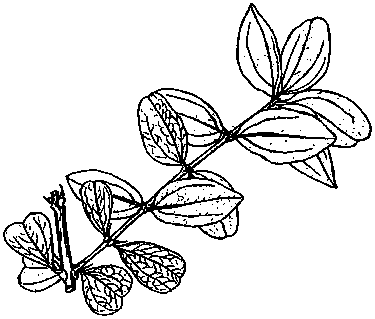
Figure
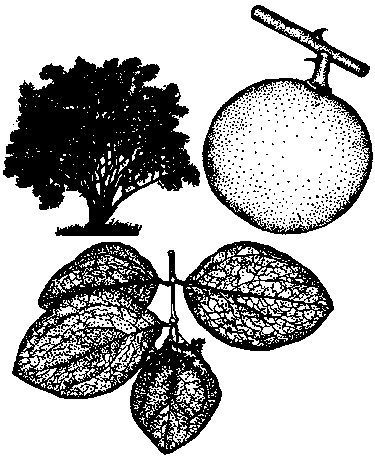
Figure
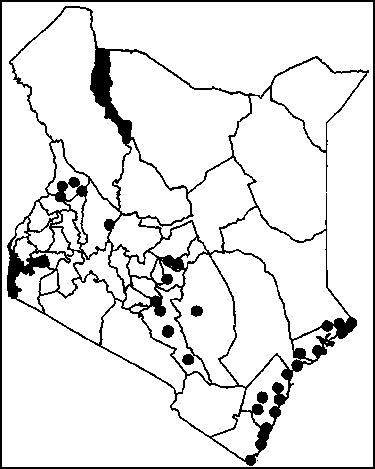
Figure
Syzygium cordatum Krauss
Myrtaceae
Digo: muziahi, mzihae Kamba: muvuena, kivueni Kikuyu: muriru, mukoe, ngoe (fruit), muieri, karumaa Kipsigis: lemeyet Luhya (Bukusu): kumusemwa (tree), kumusitole Luhya (Maragoli): musioma Luhya (Tachoni): omusemwa (tree), obusemwa (fruit) Maa: oloiragai Marakwet: reper, reperwo (plural) Mbeere: muriru, mukui Pokot: reperwa, reperwo Samburu: lairakai, lamulii, leperei Swahili: msambarau, mzuari, myamayu Taita: musu
Description: An evergreen riverine tree with a rather narrow crown to 15 m or more. Usually 5-8 m. Branches often drying at tips. BARK: Dark grey almost black, reticulate, flaking. LEAVES: Cordate (base heart-shaped), shiny, opposite. FLOWERS: Cream. FRUIT: Up to 2 cm, oval, purple-black, fleshy when ripe.
Ecology: East and southern Africa. In Kenya, e.g. at Chepareria (West Pokot), Saiwa Swamp (Trans Nzoia), Thika road and in swamps in Amboseli National Park, in riverine vegetation along permanent rocky streams or in swampy areas, 100-2,500 m. Zones I-IV.
Uses: FOOD: Fruits edible (++). The pulp (and thin fruit skin) is eaten away from the seed which is then discarded. Fruit may be made into a drink.
MEDICINAL: Bark is soaked in water and the liquid drunk when cold to stop abdominal pains.
OTHER: Fuelwood; wood used for construction, beehives (Pokot), watering troughs, alio (Pokot). Goat fodder and, importantly, as bee forage. Ripe fruits eaten by birds.
Season: Fruits in April-May in West Pokot.
Management: Easily grown from seeds. Seeds do not store.
Status: May be very common locally.
Remarks: The species is related to the well-known S. cumini (L.) Skeels (English: jambolan, Java plum, Swahili: mzambarao, zambarao (fruits), Kamba: kisambalau, kithambalau, Luo: jamna) a native of South Asia and widely cultivated for its fruits. In Kenya, found especially in towns. Occasionally naturalized in some areas. It is also related to S. aromaticum (L.) Merr. & L. M. Perry (syn. Eugenia caryophyllus) (English: cloves, Swahili: mkarafuu) native of Indonesia but much grown in Zanzibar for its dried flower buds which are used as a spice.

Figure
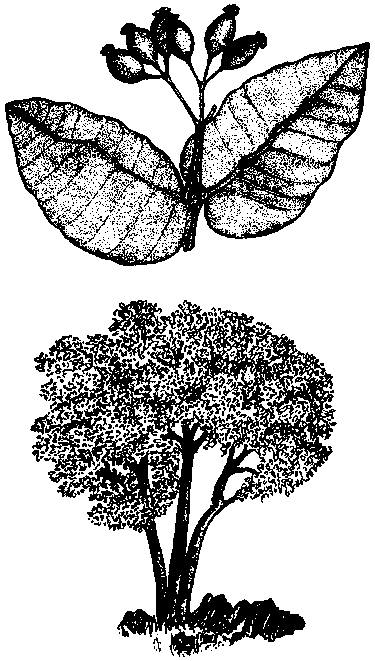
Figure
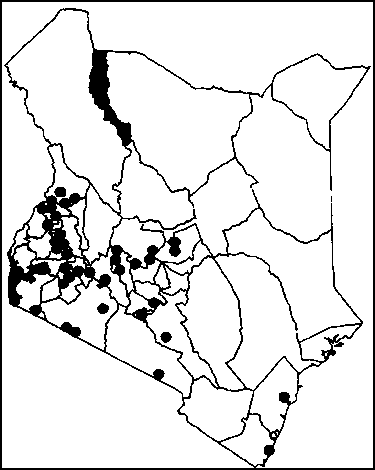
Figure
Syzygium guineense (Willd.) DC.
Myrtaceae
Borana: kada Digo: muziyahe, mugiaki, muziahi English: waterberry, water pear Kamba: muvuena, muvueni Kikuyu: mukoe Kipsigis: lemecwhet, lamaiyat Luhya (Bukusu): kamatekesi, kumutekesi (plural), kumusemwa, busemwa (fruit), kumusitole, busitole Luhya (Tachoni): omutekesi amatekesi (fruit), omusitoleobustole (fruit), obusemwa, omusitole Maa: oleragai (Narok), oleragi, olairagai Marakwet: lemaiyua Mbeere: mukui, muriru Nandi: limaiyua, lamayuet Pokot: lamaiwa, lamaiyua Sabaot: lemaiyua Samburu: lairakai, lamulii, leperei Swahili: mzuari, mzambarau Taita: musu, mkongo Taveta: mase Tugen: lomoiwo, lamaek (fruit)
Description: Tree with a rather narrow crown to 15 m high. BARK: Pale brown or dark grey. LEAVES: Elliptic. FLOWERS: White, scented. FRUITS: Round or ellipsoid to 2.5 cm long, glossy purple-black when ripe.
Ecology: Found in eastern and southern Africa. Widespread in Kenya. Found in Muthaiga, Kikuyu escarpment, Kakamega Forest, Mt Kulal, Nguruman, Kibwezi, Chogoria, Tambach, Churo, Kitale, Nyeri and Kwale in high-altitude forest and riverine forests, 0-2,500 m. Zones I-II.
Uses: FOOD: Fruit edible (+++). The pulp (and the fruit skin) are sucked and the seed discarded. The fruit is sweet. Elsewhere made into a drink.
OTHER: Wood used as timber, hard, durable, easy to work. Beehives (Pokot). Watering troughs (Pokot). The bark is a source of a black dye. Flowers are good bee forage. Ripe fruits eaten by birds.
Season: Flowers in November in Kiambu. Fruits in March in Embu.
Management: Propagated by seeds. Seeds do not store.
Remarks: A very variable species with several subspecies, two of which occur in Kenya:
· ssp. guineense (with blunt leaf apex) common near streams and in bushland at low to medium altitudes, and· ssp. afromontanum F. White (leaf apex narrow) usually found in high-altitude forests.
Several other subspecies are found in southern Africa.
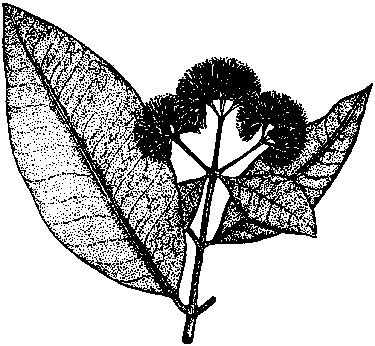
Figure
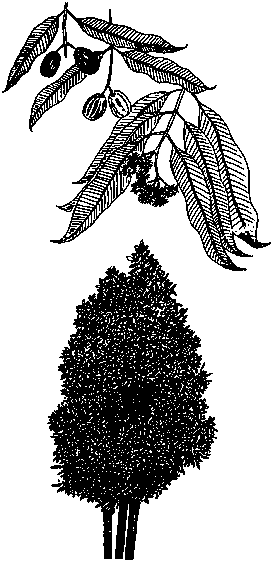
Figure
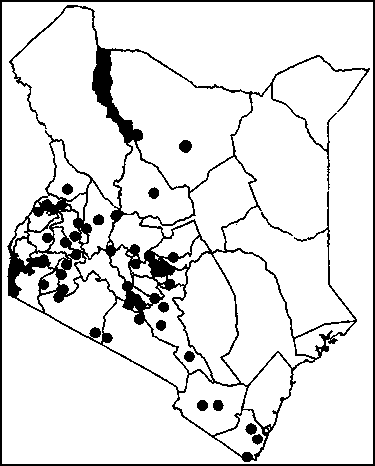
Figure
Tamarindus indica L.
Caesalpiniaceae (Fabaceae)
Bajun: ukwaju Boni: mukai Borana: roka, roqa Digo: mkwaju Embu: muthithi English: tamarind Kamba: kithumula, kikwasu (south-eastern Makueni), nthumula (fruit), nzumula (fruit), ngwasu (fruit) Luhya (Bukusu): kumukhuwa, kumukhubwe Luo: ochwa, chwaa (Ugenya), ochwaa (Alego) Maa: oloisijoi Malakote: morhoqa Marakwet: aron, oron Mbeere: muthithi Meru: muthithi Orma: roqa Pokot: oron, aron Samburu: rogei Sanya: roka Somali: hamar, rahkai (Tana River), roge Swahili: mkwaju, msisi, ukwaju (fruit) Teso: epeduru Tharaka: muthithi Turkana: epeduru
Description: An evergreen tree with a low spreading crown often attaining a huge size. BARK: Dark brown, coarsely fissured longitudinally. LEAVES: Buds and young leaves red. FLOWERS: Orange-yellow. FRUIT: A sausage-shaped pod to 10 cm or more. Young fruits greenish brown turning rusty brown at maturity. Dry fruit coat brittle. Pulp reddish brown. Seeds dark red.
Ecology: Widespread in the tropics in South East Asia, India and Africa. Found in most low parts of Kenya, 0-1,600 m; usually 0-1,300 m. Very common in the drier parts of Coast Province and along rivers and streams in the dry northern and southern parts of the country. In the more humid semi-arid areas, the plant is not restricted to riverine environments. Commonly seen in light clay (especially red), loam, sandy and alluvial soils as well as rocky areas. Rainfall: 250-1,200 mm. Zones IV-VII.
Uses: FOOD: The fruit pulp, which is eaten raw, has a strong acid taste. The pulp is dissolved in water and the resulting solution used for preparing porridge. The solution may also be added to stews (mboga), as a flavouring for various foods such as tea (Digo) and rice (Coast) or with dried termites (Turkana); young leaves are chewed like Catha edulis (khat, miraa, Maasai, Luo-Migori) or cooked as a vegetable (Boni). Seeds are fried and eaten. Fruit pulp is used in beer preparation (Turkana). The tree bears large quantities of fruit which, after the coats are removed, are tied in bundles and stored in sacks for up to 2 years. In some countries the pulp is used in the preparation of jams, juice and sweets.
MEDICINAL: Leaves are pounded in a mortar or boiled, then sieved and the solution drunk or applied to the body for measles or chickenpox (Kamba). Leaves and fruits are widely used as a laxative. Infusion made from dried pounded leaves is taken for stomach-ache (Siaya); boiled bark (and roots from other plants) is used for the treatment of gonorrhoea (Tharaka). Leaf extract is applied to inflamed eyes (Giriama).
OTHER: Fuelwood, charcoal (+++). In Kenya's arid north the plant is fodder for camels and goats (++). The tree is ideal for shade in hot areas. The wood is hard, used in building, in construction of dhows and making furniture, yokes and tool handles. It is made into stools or headrests, ekichelong (Turkana), pestles, mortars (Somali-Mandera), and boats at the coast. Branches and smaller roots are flexible and are made into walking sticks (Mbeere, coastal people), or branches woven into seats (Kitui). The bark of young stems is a source of fibre. The leaves make good mulch. Soil under the tree is said to be very fertile and is often used as "forest soil" in tree nurseries. Among coastal communities the acid pulp was used to clean copper. Branches said to be excellent for water purification (Tana River).
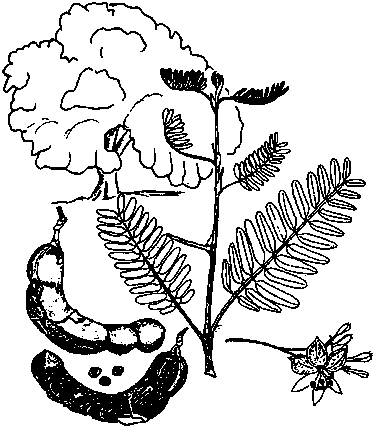
Figure
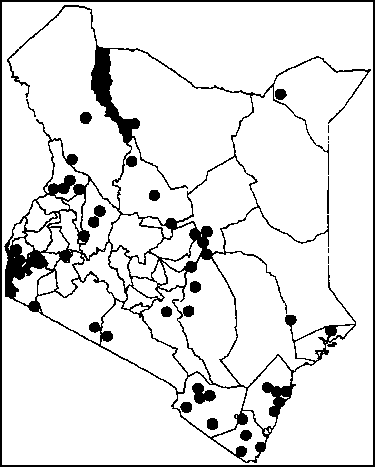
Figure
CULTURAL/BELIEFS: The tree is never planted as it is believed the person may die as soon as it starts bearing fruit (Luo, Siaya). It is believed that a person will die without eating its fruit (Kamba, Mbiuni) if he attempts to grow it (probably because it is such a slow-growing tree). Sprouting of young leaves is an indication of the approach of the rainy season (Kitui).
COMMERCIAL: One of the most commonly sold indigenous fruits. Fruits sold in Siaya, Lodwar, West Pokot, Baringo, Kitui and coastal towns. Tamarind pulp is sold in large shops in Nairobi and in coastal towns.
Season: Fruits in July-August in Kitui.
Management: Germinates easily from seeds without any pre-treatment. This species is light-demanding and should be planted in an open area. Seeds germinate after 2-3 weeks. Growth rate is quite high at first. If not well stored (especially with the pulp intact), seeds may be damaged by weevils which bore through the fruit wall and the pulp. Coppices well.
Status: May be locally common.
Remarks: Besides being a good shade tree, this species may also be grown as an ornamental.

Figure
Thylachium thomasii Gilg
Capparidaceae (Capparaceae)
Borana: gadu Chonyi: muizu-wa-arisa, mutunguru Giriama: mutunguru, muizu-wa-arisa Kamba: kitungulu Kambe: muizu-wa-arisa, mutunguru Malakote: kukube Orma: dika Somali: ohia (Tana River) Swahili: muizu wa kirisa Taita: mtunguru
Description: A shrub or small tree to 5 m high with a dense, usually rounded, crown. BARK: Grey, rough. LEAVES: Broadly ovate, dark green, almost round, surface rough. FLOWERS: White (due to long white stamens). FRUITS: Ridged, oval, usually short to 2.5 cm, occasionally up to 5 cm, usually borne on long curved stalks.
Ecology: Found in southern Somalia and Kenya in the coastal region and adjoining areas. Common in Tsavo East National Park. Usually near seasonal water depressions, bushland, mainly in sandy and red clay loam, 0-1,300 m. Zones IV-VI.
Uses: FOOD: The tuberous root is used as a famine food. The roots are grated on the hard bark of a mkulu tree (Diospyros sp.) and the resultant meal boiled for 3 hours or more. The liquid is sugary and is used for making tea or drunk as it is (Giriama, Duruma). Ripe fruits edible, called maizu, meaning banana (Giriama) (++).
OTHER: Peeled roots and branches are excellent flocculants (Tana River).
Status: May be locally common.
Remarks: Roots of this species may be poisonous if prepared in the wrong way. The right knowledge for its preparation is necessary.

Figure
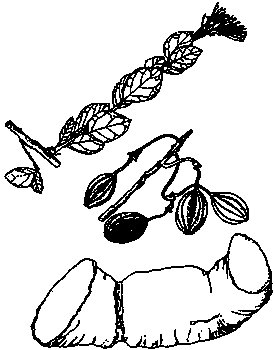
Figure

Figure
Tylosema fassoglense (Schweinf.) Torre and Hillc.
Caesalpiniaceae (Fabaceae)
syn: Bauhinia fassoglensis Schweinf.
Kamba: ivole Luhya: wanga, imbasa Luhya (Bukusu): kumuchayu, kamachayu (fruit), chingayu Luhya (Tachoni): chingaayu Luhya (Maragoli): imbasa Luo: ombasa Maa: esinkarua Somali: bassac Samburu: dalamboi
Description: An extensive climber originating from a huge, usually globose, tuber up to 1 m across. LEAVES: Large, 2-lobed. FLOWERS: Yellow to pink. FRUIT: A flattened pod.
Ecology: East Africa and the Shaba Province of the Democratic Republic of Congo (Zaire). Common in dry hot country, e.g. in Mtito Andei and Siaya, especially dry Acacia or scattered-tree bushland. Prefers sandy and deep loam or coastal soils. Zones IV-VI. Also in Adansonia, Commiphora bushland on almost flat land with loose red clay-loam soil.
Uses: FOOD: The dry fruit are split and seeds roasted (Luo, Kamba). They are then cracked open and the inner part eaten. Fresh seeds are eaten raw. Dry seeds may also be roasted in oil like groundnuts and they pop (Luo, Aki-e of Tanzania); young pods may be eaten raw. There are reports that ground dry seeds are used as a coffee substitute.
MEDICINAL: The tuber is an important source of medicine for a variety of diseases and is often infused in tea (Siaya). Tubers used for backache (Samburu).
OTHER: Fruits used to smooth pots (Luo); narrow stems used as rope (Maasai, Kipsigis). An important plant for cattle and goat fodder.
COMMERCIAL: Pieces of tuber often sold as medicine (Siaya).
Remarks: Tubers dry leaving a gaping hole in the ground. Another plant of the same family used as a nut is Cordeauxia edulis Hemsley (English: Yeheb nut, Somali: gild (plant), yeheb (yihib) (fruit)), an evergreen shrub usually 1-2 m high. Grown in Kenya on an experimental basis at Galana Ranch (Kilifi) and Mwakiki Seed Farm near Voi (Taita). Also grown on a few private farms in Coast Province such as Rukingo Ranch (Taita). Native of the Ogaden region of Ethiopia south to the Indian Ocean coast of Somalia. Introduced to Kenya in the 1950s. Prefers sandy and deep loam coastal soils. Zones IV-VI.
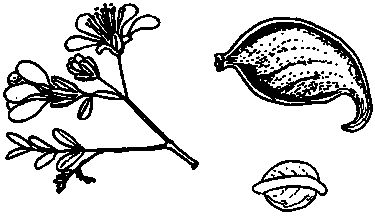
Cordeauxia edulis
Uses: Seed is edible when raw, boiled or roasted and is appreciated a great deal by pastoralists. An important dry-season fodder plant and a source of fuelwood.
Commercial: Seeds occasionally sold in Somalia. In Kenya, the total number of plants being cultivated is only a few hundred at the moment.
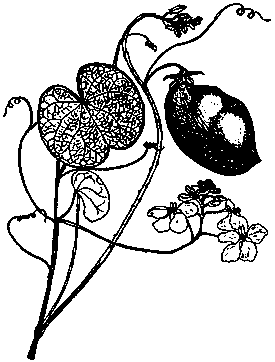
Figure
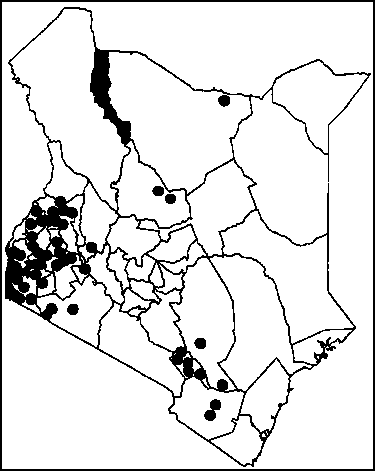
Figure
Urtica massaica Mildbr.
Urticaceae
Embu: hatha English: stinging nettle Keiyo: siwot Kikuyu: thabai (Kiambu), hatha (Nyeri) Kipsigis: siwot Maa: entamejoi, entameijoi, intameijo (plural) Marakwet: kimeley Mbeere: mucururi Meru: thaa, thatha Pokot: meleyi Tugen: siwon
Description: An erect perennial herb up to 2 m high covered all over with stinging hairs about 2 mm long. Stems are angled, arising from a rhizome creeping below the soil surface. LEAVES: Large, opposite, heart-shaped with a serrated margin and a pointed tip. FLOWERS: Dioecious, small and green, borne in long spike-like inflorescences arising from the leaf axils. FRUITS: Small, green and flattened. FRUITS: Seeds compressed, resembling those of tomato.
Ecology: East Africa, Rwanda, Burundi and eastern parts of the Democratic Republic of Congo (Zaire). Found in most of Kenya's highlands in humid and semi-humid forest clearings, forest edges, stream banks and glades as well as moist bushland, 1,500-3,250 m. It is also common near human dwellings, especially in cattle enclosures and cleared areas near gardens. Prefers deep red clay, especially loose soils with plenty of organic matter. Zones II-III.
Uses: FOOD: Leaves are used as a vegetable (++) (Sabaot, Pokot, Kikuyu, Marakwet, Kipsigis, Keiyo). The leaves are fried and eaten along with ugali and other foods or mashed with potatoes, maize and pulses. The latter practice is common with the Kikuyu of Central Province. The leaves are harvested using a stick and protection such as polythene bags. After boiling, the stings lose their potency. Leaves are mainly used in Mount Elgon, Kericho, Nyandarua, Nyeri and West Pokot, but their use has declined a great deal in recent years due to the difficulties posed by the hairs. A famine food only (Keiyo).
Management: Propagated by seeds and rhizomes. Urtica massaica invades surrounding areas through its extensive rhizomes as well as seeds. New colonies are established through the seeds which are small and easily transported in mud during the rainy season. Expansion of the plant should be checked by thinning as it may easily invade land meant for other purposes. Mature plants should be cut back for new tender leaves to sprout. In the absence of gloves one should wear a thick polythene bag or, better still, several, while harvesting nettles (the hairs can easily pierce through a polythene bag!). The Pokot normally use a stick to break off the tender tips. These are then picked up and put in a basket.
Remarks: Urtica spp. are used as vegetables in many parts of the world. Skin contact with the hairs causes an intense burning sensation which may take from a few minutes to several hours to subside, depending on the intensity of contact and the individual. The irritating principle has been shown in a related nettle (U. urens L.) to contain acetylcholine and histamine.
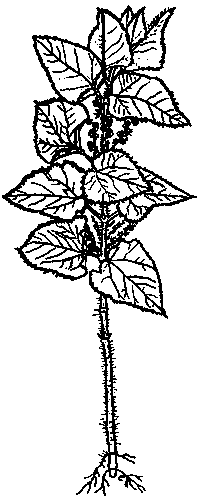
Figure
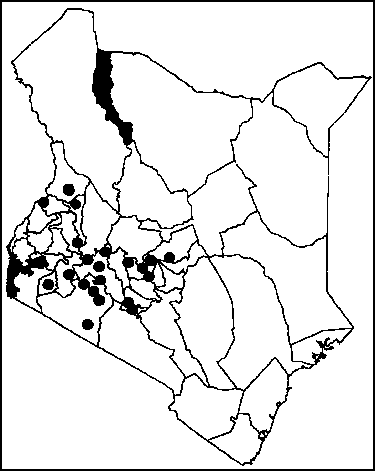
Figure
Uvaria acuminata Oliv.
Annonaceae
Boni: Tomur, tumorr Digo: mumbweni, mudzala Duruma: mdzala Giriama: mlori, mulori, vilolro, ri (fruit) Kamba: mukukuma, ngukuma (fruit), Sanya: shiyole Somali: cirmaan booy Swahili: mwaacha, mgweni, mganda-simba
Description: A shrub or liana to 5 m high. LEAVES: Usually hairy underneath, bases rounded or heart-shaped, apices narrow. FLOWERS: Yellow, borne singly or in pairs. FRUIT: Divided into several warted greenish brown round or ovoid carpels, yellow when ripe. Usually one-seeded, occasionally with up to 4 seeds each.
Ecology: Found in Kenya, Tanzania, Mozambique and Madagascar. In Kenya, mainly in the coastal region, e.g. at Kiunga (Lamu) in coastal bushland, 0-1,400 m. Sandy soils, especially red sand.
Uses: FOOD: Ripe fruit eaten raw (++) (Kamba, Taita, Mijikenda). Edible portion rather small. Fruits sweet but not as sweet as those of U. scheffleri.
MEDICINAL: A decoction of the roots is taken as a remedy for dysentery (Digo).
Season: Flowers in December-January. Fruits in May-June at the coast, in July in Kitui.
Status: Locally common at the coast.
Remarks: Several other Uvaria species have edible fruit.
Other examples are:
· U. kirkii Oliv., a coastal species (from Kenya to Mozambique) with oblong fruit carpels.· U. lucida Benth. ssp. lucida (Swahili: mganda-simba, Boni: halas, Giriama: mudzaladowe) has fruit with rusty brown carpels constricted between the seeds. It is found in Marafa, Arabuko-Sokoke (Kilifi), Lamu, Thika, Mbololo (Taita), Kwale, 0-1,800 m, south to Zambia and Malawi. Fruits sweet (+++). U. lucida ssp. virens (N. E. Br.) Verdc. occurs south of the Zambezi River in southern Africa.
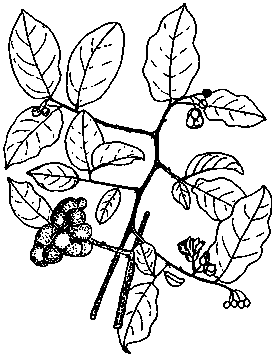
Figure
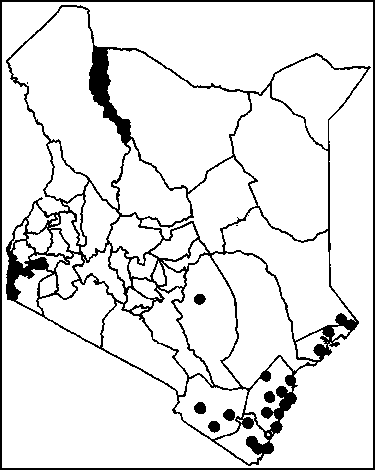
Figure
Uvaria scheffleri Diels.
Annonaceae
Chonyi: mudzaladowe Giriama: mazaladowe, mudzaladowe, mzaladowe Kamba: mukukuma, kilali Kambe: mudzaladowe Keiyo: tamangesyat (singular), tamanges, tamangesig Marakwet: malkach, tamalak (plural), malkatwa, tomolokwo (singular) Pokot: tamuketwo, tomekekwo, tamrenwo, mikisia, molkech Somali: mareer booy
Description: A scrambling shrub or liane to 5 m or more with long shoots, rarely standing on its own. Stems long, narrow with short branches at right angles, young shoots extending out of the main bush. LEAVES: Long, narrow and glossy. FLOWERS: Borne singly, bud dull green or brown, golden yellow to cream or yellow. FRUIT: Divided into finger-like carpels, each to 5 cm long, green, ripening to bright yellow to orange-red. Seeds shiny brown, usually compressed on one side.
Ecology: Found only in Kenya and northern Tanzania. In Kenya, e.g. in Karura Forest, Kibwezi, Namanga, Sigor, Ong'ata Rongai, Thui Hill (Makueni), Kitui hills, Kerio Valley on rocky hillsides, bushland, thickets and forest edges where it is usually found climbing on other plants. Soils various, ranging from red clay to rocky.
Uses: FOOD: Ripe fruits edible, sweet with an appealing acid taste (+++). The seeds, which are enclosed in pulp, are sucked clean then discarded. The soft outer skin may also be eaten. Occasionally a few of the seeds may be attacked by insect larvae (Kibwezi).
MEDICINAL: A medicinal plant (Kamba).
OTHER: Narrow stems flexible, used for weaving round structures like grain stores. Stem used for smoking milk gourds (Kamba).
Season: Fruit all year round, more in August-September (Nairobi, Makueni, Kajiado) and less in February-March.
Management: Propagated by seeds. May be planted near fences and hedges to give support.
Status: Occasional, locally common in some areas.
Remarks: May be planted as an ornamental.
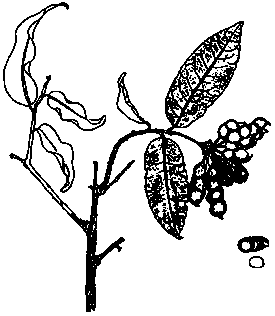
Figure
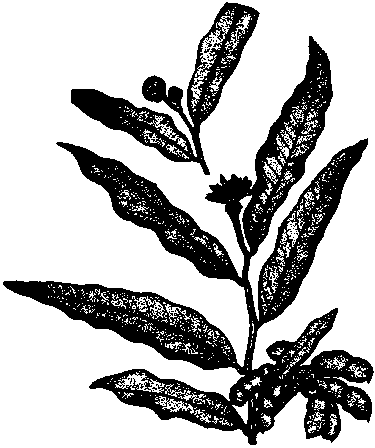
Figure
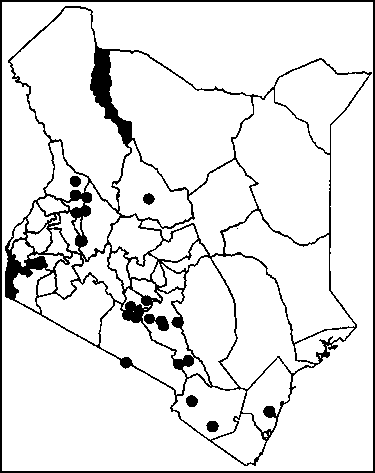
Figure
Vangueria apiculata K. Schum.
Rubiaceae
Borana: buruuri Digo: muvuma Kamba: mukomoa Kikuyu: mubiru Kipsigis: kimolwet Kisii: omokomoni, enkomoni (fruit), chinkomoni (fruits) Kuria: ikikumuni, igikomani Luhya: shimanyamunyi, shikomoli Maa: olgumi, ilgum (plural), engumieker Pokot: toperpirwo, taparper, toprepirwo Samburu: lkoromosyei, lkoromosyeoi Turkana: emaler
Description: Shrub or small tree to 6 m, often with drooping or horizontally spreading leafy branches. Stems dark grey. LEAVES: Opposite, narrow, pointed. FLOWERS: Yellowish green. FRUITS: Nearly globose, slightly compressed, 2-3 cm long, green, turning yellowish brown on ripening.
Ecology: Found from Ethiopia and the Sudan south to Mozambique, Malawi and Zimbabwe. In Kenya, e.g. at Chepareria (West Pokot), Loima Hills (Turkana), Homa Bay and Kisii in evergreen forest, riverine and wetland forests, bushland, thickets, rocky outcrops, 900-2,500 m. Zones II-IV.
Uses: FOOD: Fruit pulp is eaten (++). Fruits smaller than in V. infausta but produced in very large numbers.
OTHER: Stems are used for building small structures (Pokot). Shade plant.
Season: Fruits in July-August in West Pokot.
Management: Easily grown from seeds.
Status: Occasional.
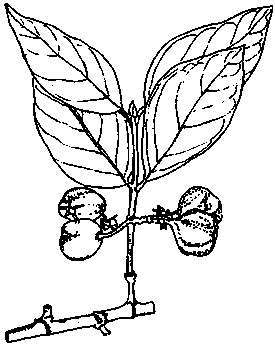
Figure

Figure

Figure
Vangueria infausta Burch. ssp. rotundata (Robyns) Verdc.
Rubiaceae
syn: V. rotundata Robyns, V. tomentosa, Hochst., V. campanulata sensu Dale & Greenway 1961
Digo: mviru English: false medlar Giriama: mviru, muviru Kamba: mukomoa, muteleli Keiyo: kimolwet Kipsigis: kimolwet, komolik Kisii: omokomoni Luhya (Bukusu): kumukhomoli Luhya (Maragoli): mukhomoli, kumukhomoli, mughomoli Luhya: shikomoli Luo: anyuka (Homa Bay), omuya, apindi (Siaya) Maa: olgumi, olgum (plural), engumi-etari (Loita) Mbeere: mbiruiru, mukomora Meru: mubiru Nandi: kimolwet Pokot: komolwo Samburu: lkoromosyoi, lkoromosien Swahili: mviru Taita: mboghombogho Tugen: kimolik Turkana: emaler
Description: A deciduous, usually multi-stemmed bushy shrub or, less often, a small tree rarely exceeding 5 m. BARK: Smooth and grey. LEAVES: Opposite, large, dark green (light green beneath), soft and covered with minute hairs, especially on the veins. Minute growths on the surface often present. FLOWERS: Up to 5 mm long, green or greenish white, borne on a branched inflorescence. FRUITS: Up to 4.5 cm across, shiny dark green, spherical or nearly so and with a circular scar at the tip left by drying floral parts. Ripe fruits greenish brown and soft. Dry fruit brown, grooved like a pumpkin.
Ecology: Widespread in Kenya and also found in Tanzania and Uganda. In Kenya, e.g. on the south-eastern slopes of Mt Elgon and in Kibwezi, Machakos and Nairobi in a wide range of habitats. Bushland, especially along streams, dry forests, fringing forest, woodland, grassland with scattered trees, rocky bushland, 10-2,450 m. Does well in open as well as partially shaded areas, especially under acacias. Prefers well-drained soils, especially sandy, rocky and light clay, but can occasionally be found in places that are briefly waterlogged during the rainy season.
Uses: FOOD: The ripe fruits are much relished. The tough brown elastic skin of the ripe fruit encloses a brown edible mealy pulp and about four seeds. This pulp is sucked and the skin and seeds discarded. Pulp used to be added to milk or water to make a kind of porridge given to children (Maasai). Mature unripe fruits may be picked and kept to ripen. Dry fruits may be stored for over a year without much loss of the sweet-acid taste. Soaking fruits overnight softens them once more. The tough outer skin offers good protection.
OTHER: Shade, fuelwood, stirrers, poles (centre pole for huts) (Kamba). Stems are tough and used as handles for hoes and small implements, and for building temporary structures. Fruits were used by children to make tops (Makueni). The large dark green leaves give the plant an attractive appearance and hence its use as an ornamental. A major disadvantage is that it sheds its leaves at times of acute water stress. Leaves are occasionally browsed by animals but are not a favourite.
Management: Naturally propagated through seeds and root suckers. Seeds germinate in about 3-4 weeks. Scarification of the hard seed coat may enhance the germination rate. The plant may also be propagated through cuttings but the success rate is low. If planted near the home, it will act as a shade and ornamental tree as well as providing a source of fruit, and the leaf litter improves the condition of the soil. Vangueria infausta is quick growing-healthy plants may fruit in about three years. Mature Vangueria plants should be pruned occasionally. Preferably, one or two branches should be maintained. In cropland this is necessary to avoid over-shading crops.
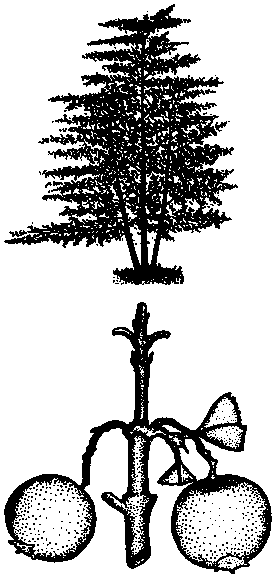
Figure
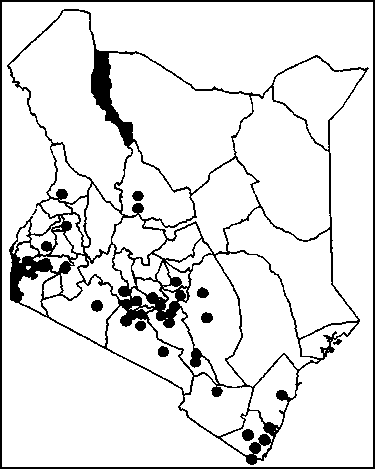
Figure
Season: Flowers are normally produced just before or during the rainy season in October-December and April-June. Generally fruits are ready in April-May (Nairobi, Kajiado, Machakos, Makueni, Kiambu, Embu) and August-October (West Pokot, Samburu, Elgeyo Marakwet, Trans Nzoia, Baringo). Local variations in climate may affect the seasonality of this species.
Status: Locally common.
Remarks: ssp. infausta is found in Rwanda, Tanzania and south to South Africa.
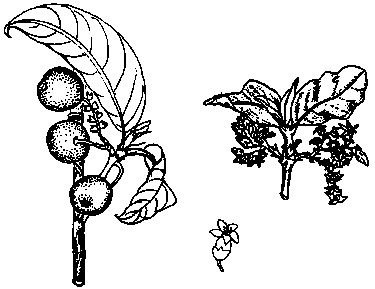
Figure
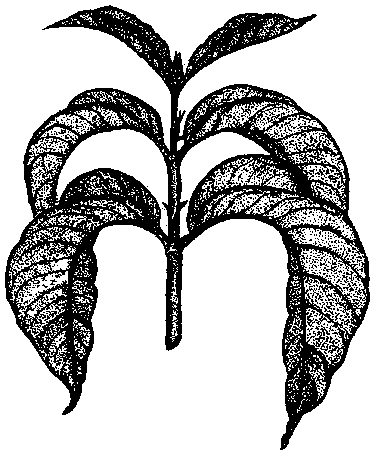
Figure
Vangueria madagascariensis Gmel.
Rubiaceae
syn: V. acutiloba Robyns, V. edulis Lam., V. floribunda Robyns
Borana: buriri (Moyale) Okiek: muluet Kamba: kikomoa Kikuyu: mubiru, mbiru (fruit) Kipsigis: komolik, kimolwet Kisii: omokomoni, enkomoni (fruit), chinkomoni fruits) Luhya (Maragoli): mukhomoli Luo: anyuka, apindi Maa: olgumi Marakwet: komol (plural), komolwo (singular) Mbeere: mubiru Meru: mubiru Pokot: komolwo Rendille: irigormosso Samburu: lkormosiyoi, lkoromosien Swahili: mviru Taveta: mdaria Tugen: komolik
Description: A deciduous, usually multi-stemmed shrub or, less often, a small tree rarely exceeding 6 m. BARK: Smooth, grey to dark grey. LEAVES: Opposite, large, dark green, more or less without hairs, with conspicuous greenish white veins. FLOWERS: To 8 mm long, green or greenish white borne on a branched inflorescence. FRUITS: Shiny dark green, round or narrowed to one end and up to 4.5 cm across. Ripe fruits are greenish brown, soft. The dry fruit is grooved like a pumpkin.
Ecology: Distributed from Nigeria to Ethiopia and south to South Africa. Also cultivated in India, northern Australia and Trinidad.
In Kenya, e.g. at Kikuyu Escarpment, Keekerok (Maasai Mara), Mwala (Machakos), Churo (Baringo) and in Kapseret Forest (Uasin Gishu) in riverine bushland, bushland, evergreen forest, bushed grassland, sometimes on rocky outcrops and termite mounds, 0-2,400 m. Soils: Rocky, sandy, red clay or sandy clay. Zones: II-V.
Uses: FOOD: Fruit sweet and delicious with a slight acid taste (+++). Fruit skin is tough. It is removed and the pulp-covered seeds sucked. Seeds are discarded.
OTHER: Used for shade, handles for hoes, fuelwood, stirrers, poles (centre pole for huts) (Kamba). Fruit eaten by elephants.
Season: Rowers in October-November in Marsabit and Kiambu, in March-April in Isiolo, Taita, Kiambu, Narok, Machakos, Kajiado, and in September in Marsabit. Fruits in April-May in Kitui, Kiambu and Narok, and in August-September in Baringo, Kiambu, West Pokot.
Management: Propagated by seeds.
Status: May be locally common.
Remarks: A useful tree in agroforestry.
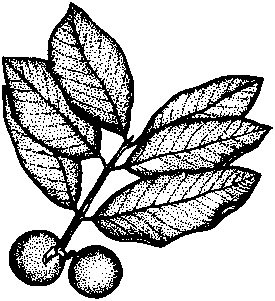
Figure
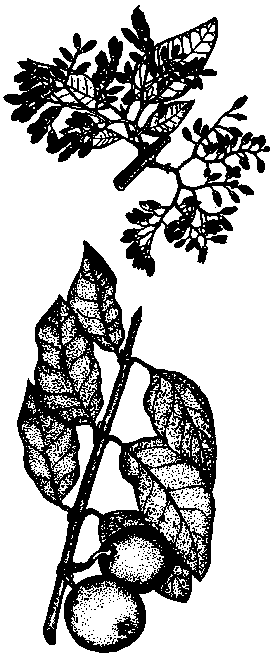
Figure

Figure
Vangueria volkensii K. Schum. var. volkensii
Rubiaceae
syn: V. linearisepala K. Schum.
Okiek: muluet, maldai, Keiyo: komoluet Kamba: mukomoa, kikomoa Kikuyu: mubiru, mubiru-ng'ombe Kipsigis: kimolwet, kimolwet-ne-mingin Maa: olgumi Marakwet: komohro, tabirirwo, tabirir (plural) Mbeere: mukomboiru (Nthawa), mubiruiaru (Mavuria, Embu) Meru: muiru Pokot: tapirpirwa Samburu: ngururusia, ngururusi, lgumi, lmludai (Mathew's Range) Taveta: mdaria
Description: A tree to 6 m high, often with arching branches at maturity. LEAVES: Velvety hairy. FLOWERS: Pale greenish yellow, often with hairs on throat of corolla tube. FRUIT: Round, up to 3 cm in diameter, green turning brown on drying.
Ecology: Found in Ethiopia, Sudan, Kenya, Rwanda and the Democratic Republic of Congo (Zaire). In Kenya, e.g. at Mathew's Range, Londiani, Iveti Hills, Moyale, Aberdare National Park, Karura Forest, Kibwezi Forest, Nyeri, Elgon National Park, Bura (Taita), Kapenguria and Kapsabet. Occurs at evergreen forest margins, particularly with Juniperus and Podocarpus, riverine forests and thickets, wet valleys, rocky bushland, often in rocky places and on termite mounds, 900-2,500 m. Zones II-IV.
Uses: FOOD: Fruit eaten (++). It is sweet with an acid taste.
OTHER: Wood hard, used for constructing small structures (Mbeere, Kikuyu). Goat fodder. Season: Flowers in March-April in Kericho, Nakuru, Nyeri, Trans-Nzoia, Machakos. Fruits in August-September in Machakos and Taita, in October in Kakamega and in December in Laikipia.
Management: Propagated by seed.
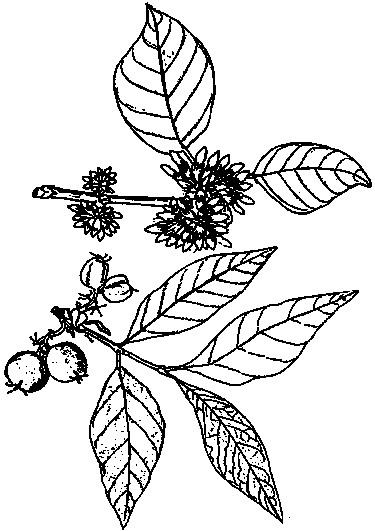
Figure
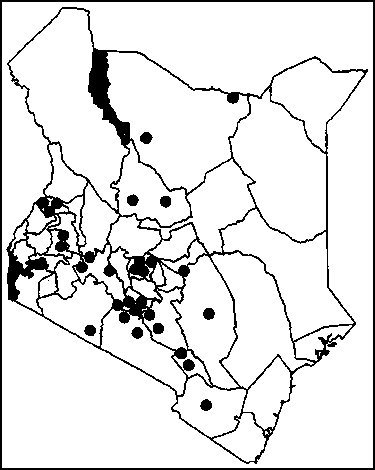
Figure
Vatovaea pseudolablab (Harms) J. B. Gillett
Papilionaceae (Fabaceae)
syn: Vigna pseudolablab Harms, Vatovaea biloba Chiov.
Borana: gaabbe, gabbe Daasanach: gele Gabra: gabe, gaabbe Kamba: kilukyo Maa: olkalei, orkalei Marakwet: kobwo Pokot: kelowo, kela (plural) Rendille: henadi, hinaadi, kahabele (tuber) Samburu: lnanyo, nanyoi, njasi Turkana: egilae, eglae, emare (pods)
Description: A deciduous climbing leguminous plant often found covering shrubs in dry country. Stems greenish purple. Roots long, some horizontal, swollen in some parts, juicy and fibrous. LEAVES: With three leaflets. FLOWERS: Purple to blue and green. FRUIT: A softly hairy, slightly curved pod with up to 6 seeds, these usually greyish black when dry.
Ecology: Found in Kenya, Uganda, Tanzania, Sudan, Ethiopia and Somalia. Found in northern Kenya and Kajiado District along dry watercourses in dry bushland in loose red soil or sandy clay, 450-1,400 m. Zones V-VII. Also recorded at Mile-46, Olorgesailie, Nginyang' and Kaputir.
Uses: FOOD: The juicy fibrous tubers with a sugary taste are peeled and eaten raw both as food and a source of water (+++) (Turkana, Pokot, Samburu, Rendille, Gabra, Maasai). They may also be roasted, peeled and eaten (Turkana, Pokot) or boiled (Turkana) and the fibrous residue discarded. Seeds eaten raw (Turkana, Pokot, Samburu) or when cooked (Kamba, Turkana, Pokot). Immature pods, flowers and leaves cooked and eaten as a vegetable (Pokot, Turkana). Leaves alone are cooked as a vegetable (++) (Maasai, Mile-46; Samburu; Kamba, Kitui). Flour may be made from the roots (Turkana). This is done by peeling the tubers, chopping them up, drying and grinding them. The flour is normally mixed with sorghum flour and used to prepare stiff porridge (atap). It is normally stored and used during lean periods (Turkana).
OTHER: Root fibres used for making ropes (Maasai, Rendille, Turkana) or for making hats and fly whisks (Maasai, Mile-46). Roots used to clean the mouth (Rendille, Maasai). Cattle, camel and goat fodder (++).
Season: Flowers just before and during the rainy season, March-April, October-November. Fruits in April-May, November-December in Baringo and Kajiado. In leaf during the rainy season.
Status: Occasional, rarely common.

Figure
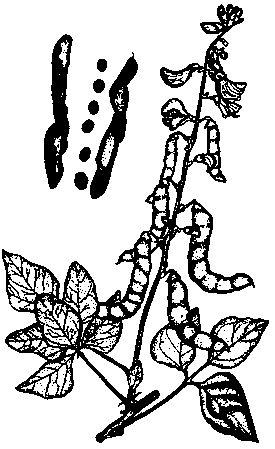
Figure
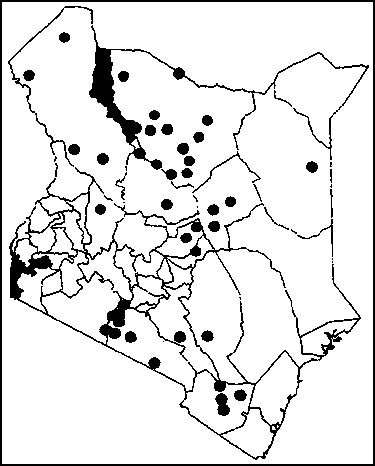
Figure
Vernonia cinerea Less.
Compositae (Asteraceae)
Chonyi: chibuzi Digo: chikuse Duruma: kifuka, lufia Giriama: kibudzi, budzi Kambe: chibudzi Maa: eleleshwa-ekop Pokot: chesuwarian Sanya: n'dufulukwa Swahili: kifuka
Description: Erect, branched or unbranched herb up to 1.5 m high, usually 30-100 cm. Stem with longitudinal lines, hairy. LEAVES: Broadly ovate, slightly hairy, margin wavy or toothed, base flat, narrowed or rounded. FLOWERS: Purple or white, borne on a terminal branched inflorescence.
Ecology: Widely distributed in Kenya, especially in the wetter areas, in grassland, roadsides, disturbed areas and cultivated land as a weed, often under trees. Commonest in hot low areas, 0-1,700 m.
Uses: FOOD: Leaves used as a vegetable (Giriama, Duruma and other Mijikenda groups). This vegetable is cooked with other vegetables as by itself it has an unpleasant odour. Common combinations are Launaea cornuta (mchunga, mutsunga), amaranths and cowpea leaves.
Season: April-August, October-December (coast).
Management: Easily grown from seed.
Status: May be locally very common.
Remarks: An important vegetable for the Mijikenda. Vernonia amygdalina Del. (Luo: olusia) is common in western Kenya and is also used as a vegetable there. A number of other common weedy species in the family are used as vegetables. Examples include the exotic weeds:
· Bidens pilosa L. (English: blackjack, Meru (Chuka): mung'ei, Kikuyu: mucege, muhehenje, Kamba: musee, munzee, munganga, Maa: oloreperep) is used as a vegetable by the Pokot and Giriama and in West Africa.· Galinsoga parviflora Cav. is an introduced weed from Central and South America used as a vegetable by the Pokot (English: chickweed, Kew weed). Also used in other parts of Africa and in South East Asia. These are weeds of cultivated and disturbed ground.
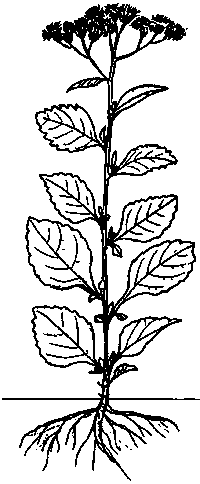
Figure

Figure
Vigna friesiorum Harms var. angustifolia Verdc.
Papilionaceae (Fabaceae)
Maa: olgisoyiai, orgesoyae
Description: A small erect much-branched herb, usually about 20-30 cm high, arising from a narrow tuber. Tubers 15-25 cm long, 2 cm at the widest part and reddish brown on the surface. Stems weak. LEAVES: With long petioles. Leaflets narrow and long, linear to elliptic, slightly hairy, without lobes.
Ecology: Only known from Kenya, Uganda and Tanzania. In Kenya found, e.g. on Kaputei plains, Kajiado and Turkana in grassland, bushed grassland or Combretum woodland, 400-1,700 m. Usually on red clay. Zones V-VI.
Uses: FOOD: The root tuber is peeled and chewed. It is much liked by the Maasai, young and old alike (Kajiado). Roots are fibrous but juicy and sugary.
Management: Propagated by seeds.
Remarks:
· var. ulugurensis (Harms) Verdc. with round to elliptic leaves is found in Kenya, Uganda, Tanzania, Rwanda and the Democratic Republic of Congo (Zaire).· var. friesiorum with decumbent stems and short oblong to broadly elliptic leaves is found in Kenya and Tanzania.
Another commonly used tuber in the genus Vigna is V. frutescens A. Rich. (Maa: orng'oting'ot, Gabra: c'iimp'a, Samburu: ngabitoo), a creeping or climbing plant commonly found in low hot areas in Kenya and most of Africa. The fibrous tuber is much larger than that of V. friesiorum and the leaflets are ovate to rhomboid and may be entire or 3-lobed.
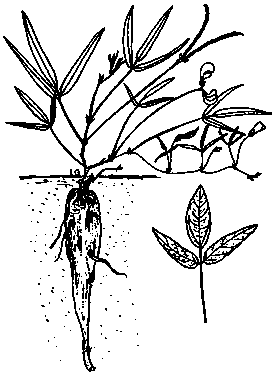
Figure
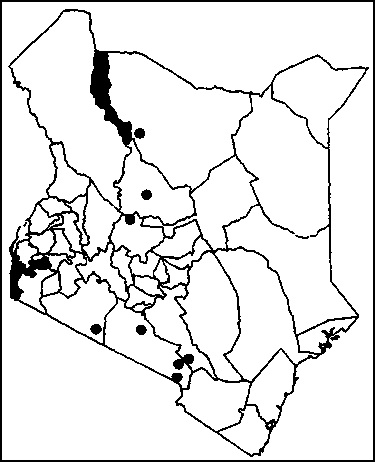
Figure
Vigna membranacea A. Rich.
Papilionaceae (Fabaceae)
syn: V. caesia Chiov.
Borana: chame Kamba: ithookwe Pokot: kelowo-kelowo, chesuwanja Samburu: labebegi, ltebebiti Swahili: kikunde warimu, kekunde mbola
Description: An extensive climbing cowpea-like plant. LEAVES: With 3 leaflets, each leaflet usually with side lobes. FLOWERS: Blue, tinged purple. FRUIT: A narrow pod.
Ecology: Grows in Kenya, Uganda, Tanzania, Somalia, Ethiopia, the Democratic Republic of Congo (Zaire) and Sudan. In Kenya, e.g. at Mtito Andei, Kitui and Taita, climbing on other plants at the edges of cultivated land, bushland, riverine bushland and roadside bushes. Usually on red, sandy clay. Zones IV-VII.
Uses: FOOD: Leaves used as a vegetable. Normally fried and eaten with ugali. Said to taste like cowpea leaves (Kitui and Mwingi). Also boiled and mashed with maize and beans.
Season: During rains, i.e. March-May and November-January (Kitui, Makueni, Samburu, Baringo).
Management: Propagated by seed.
Remarks: Four subspecies are recognized in Kenya:
· ssp. caesia (Chiov.) Verdc. syn: V. caesia Chiov. Distribution: South-eastern and coastal Kenya such as Mtito Andei, Sabaki River, Taita, Kitui. Tanzania, Somalia, Ethiopia.· ssp. macrodon (Robyns & Boutique) Verdc. Distribution: Coastal, central and south-eastern Kenya. Reported in Karura Forest, Kiambu. Uganda, Tanzania and the Democratic Republic of Congo (Zaire).
· ssp. membranacea. Distribution: Central parts of Kenya westwards. Reported from north-eastern Mt Elgon, Endebess, Samburu. Uganda, Tanzania, Sudan, Ethiopia.
· ssp. hapalantha (Harms) Verdc. Distribution: Likoni (Mombasa), Arabuko-Sokoke Forest.
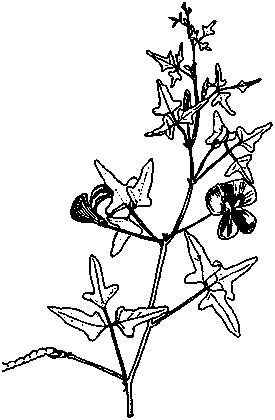
Figure
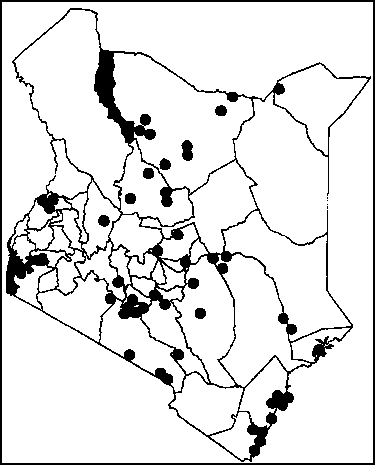
Figure
Vigna subterranea (L.) Verdc.
Papilionaceae (Fabaceae)
syn: Voandzeia subterranea (L.) Thouars; Glycine subterranea L.
Chonyi: tendegwa, nzugu mawe English: Bambarra groundnut, Madagascar groundnut, earthnut, baffin pea, Bambarra bean Giriama: dzugu mawe Kambe: tendegwa Kisii: chinchugu Luhya (Bukusu): chimbande Luhya (Isukha): tsimbande Luhya (Kisa): tsimbande Luhya (Maragoli): tsimbande Luhya (Tiriki): simbande, zimbande Luhya (Wanga): tsimbande Luhya (Tachoni): chimbande (plural), yimbandu (singular) Luo: bande, mbande Sanya: njugu mawe Swahili: njugu mawe
Description: A dense annual herb to 40 cm. Stems creeping, short, much branched, rather hairy and usually rooting at the nodes. LEAVES: 3-foliolate, held erect by a long petiole. FLOWERS: Inflorescence borne on the leaf axils with only a few (1-3) small yellow flowers whose short, hairy peduncles bend downwards and into the soil, thus the fruits (pods) develop underground. FRUITS: Pods short, to 2.5 cm, oblong to obovoid with a recurved style base. Seeds usually 1, occasionally 2 per pod, smooth, rounded to sub-globose, cream, red, brown or black and up to 1.5 cm (commonly 1.0-1.3 cm) long.
Ecology: Cultivated in most of Africa from Senegal east to Chad and Uganda, south to South Africa. Grown in the western parts of Kenya and to a lesser extent in Coast Province. Also grown in Asia, Australia and tropical America. A traditional crop of many central and southern African groups. Can be grown in hot low country. It is found in well-drained deep to moderately deep, reddish to brown, sandy clay loam to clay soils, 0-1,550 m. At the coast, however, it is found in well-drained deep fine to very fine sandy to sandy loamy soils ranging in colour from yellow brown to reddish brown. Zones: II-IV. Will produce a crop in relatively poor soils.
Uses: FOOD: Seeds are cooked with maize (occasionally after overnight soaking) or alone, mashed, fried and used as stew. Eating a lot leads to stomach discomfort. Requires careful preparation as it may be rather bitter. Among the Mijikenda, dry seeds are pounded in a mortar to remove the seed coat, winnowed and boiled. They are then pounded and tui (coconut juice) added. The mixture is boiled until the coconut juice is ready, stirred with a wooden stirrer (lufudzo) until homogenous and of smooth consistency. It is then served with rice or ugali. Fresh seeds are prepared in the same way.
Pods are harvested before they dry, washed and boiled, salt added and eaten as a snack. These are said to be very tasty (Luhya).
Dry seeds are roasted, salt or brine added, and mixed with peanuts so that the ratio of Bambarra nut is low.
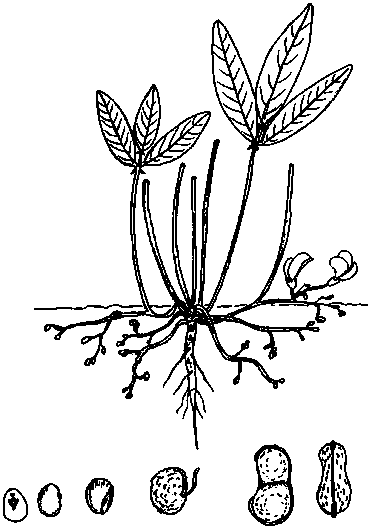
Figure

Figure
The seeds are pounded to remove the outer coat or ground and the resultant meal boiled, stirred vigorously, then simmered to a stew (borohowa, Giriama). The stew may be added to traditionally prepared leafy vegetables, especially cowpea (Vigna unguiculata). It is then cooked a little and served. The stew can also be served with ugali or potatoes (Luhya). The Bambarra nut may also be boiled with maize and beans and eaten as a snack, especially with tea (Luhya), fried (like groundnuts), usually with sesame seeds, or boiled, then mixed with boiled sweet potatoes and mashed. This dish is preferred for children. Cooked during ceremonies like weddings, or for very important persons (Luhya).
It is used in the same way as kidney beans to prepare nyoyo (a mixture of beans and maize boiled together), or boiled alone. This is then eaten with tea, porridge (Luo) or alone. Bambarra nuts are dried, ground using a pong (grinding stone) or pounded in a pany (mortar), then cooked like green grams to a sauce known as ogira. This is eaten with other foods (Luo).
OTHER: Leaves are fodder.
COMMERCIAL: The pulse is sold in Nairobi markets. Also sold in other urban centres especially in Nyanza and Western Provinces, such as Kakamega, Bungoma and Kisumu.
Management: The seeds are planted in rows or randomly. The crop takes about 4 months to mature when the leaves become brown. It can be intercropped with maize, sorghum or millet. Intercropping may affect the yield adversely. Harvesting is usually by uprooting or digging out the entire plant and picking individual pods. The pods are pressed by hand, or more often sun-dried, threshed and stored. Traditionally the seeds used to be left in the pods and were only shelled when they were needed for cooking. These pods would then be stored in a pot (Luhya).
Remarks: This is a traditional crop of the Luhya and many other communities in Africa. Its cultivation has declined over the years partly due to the labour entailed, especially during harvesting, and partly due to exhaustion of soils. The plant is native to Central and West Africa.
Two varieties are distinguished: var. subterranea is the cultivated one. The wild variety, var. spontanea (Harms) Hepper, with smaller seeds, is reported in north-eastern Nigeria and northern Cameroon. The name Bambarra seems to have been derived from a community in Mali.
The groundnut or peanut, Arachis hypogea (Swahili: njugu karanga, Giriama: nzugu nyasa, nzugu karanga, Chonyi: dzugu, nyasa, Kambe: nzugu kalanga, Luo: dzugu, njugu) also has pods that develop underground. It is native to South America but a traditional crop of coastal, Nyanza and western people of Kenya.
Vigna unguiculata (L.) Walp.
Papilionaceae (Fabaceae)
syn: V. sinensis (L.) Hassk.
Chonyi: tsafe, kunde Digo: chani, kunde Embu: nthoroko English: cowpea Giriama: tsafe Kamba: nthooko (Makueni, Machakos) nzooko (Kitui, Mwingi), kilusya Kambe: kunde, tsafe Kikuyu: thoroko, mathoroko (leaves) Kipsigis: kunde Kisii: egesale Luhya (Bukusu): sikhubi, sikhuvbi Luhya (Isukha): likhuvi Luhya (Marachi): likhubi, likhuvi Luhya (Maragoli): likhuvi Luhya (Tachoni): esikhubi, sikhubi Luhya (Samia): ekhubi Luo: bo, alot-bo Maa: soroko Marakwet: kunde Meru: nthoroko Nandi: kunde Sanya: amos, kunde Swahili: kunde Tharaka: mathoroko, nthoroko Turkana: emaret, ekunde, ekundi
Description: An erect, trailing or climbing herb. LEAVES: With 3 leaflets. Leaflets to 10 cm long or more, ovate, rhomboid or lanceolate, entire or lobed at the base. FLOWERS: Various colours; pale green to light blue or purple, borne on axillary inflorescences composed of a long stalk, usually held vertically and with several flowers towards the tip. FRUITS: Pods to 15 cm long, straight, usually hanging.
Ecology: Cultivated all over Kenya as a vegetable and pulse, mainly 0-1,500 m. Also grows in the wild. Growth is poor at higher altitudes. Requires hot, moderately wet conditions. Prefers loam, sandy and other well-drained soils. Zones III-VI.
Uses: FOOD: Leaves and seeds widely used as a food (+++). Some communities grow cowpeas mainly as a vegetable (Luhya). Young leaves are often cooked with potash. The vegetable may be cooked alone or with other types, mainly Corchorus olitorius and C. trilocularis. The leaves are cooked with Corchorus spp. leaves, milk and butter added and served to breast-feeding mothers (Luo). Leaves are normally eaten with ugali or mashed with maize and potatoes or other pulses (Kikuyu). The seeds may be cooked with sorghum (Luo) or maize (nyoyo, Luo, isyo, Kamba, githeri, Kikuyu) or boiled, fried and made into a stew which is eaten with ugali or other foods. Seeds may also be boiled and eaten alone (afwoka, Luo) or mashed and butter added (mukenye, Luo). Seeds are not traditionally used by some Luhya communities but are harvested for next season's planting. Cowpea leaves may be dried and stored for several months. Cowpea is a major leafy vegetable among the Mijikenda, often mixed with leaves of sweet potato (mabwe), cocoyam (maburu), pumpkin and Corchorus olitorius (vombo).
OTHER: Good animal fodder. Roots reputedly very poisonous.
COMMERCIAL: Both the peas and leaves are sold all over the country. Young plants 3-4 weeks old are uprooted, tied in bundles and sold in markets.
Remarks: As with most cultivated crops, this is a very variable species. Several cultivars are grown that differ in seed colour, pod shape and length, habit (some creeping, others erect) and leaf shape and size. Fast maturing, usually erect cultivars are grown for seeds. The creeping, deeply rooted types are drought resistant and are preferred for their leaves (Kamba, Tharaka, Mbeere, Meru). Wild forms of this species are widely distributed in Kenya. The dark grey seeds of some cultivars and wild forms are impossible to cook satisfactorily (mbitia, Kamba).
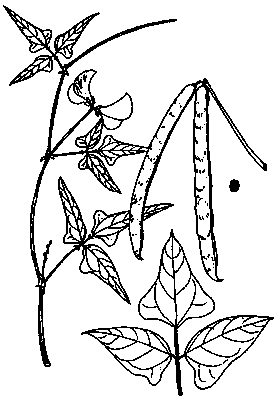
Figure

Figure
Verdcourt, in the Flora of East Africa, recognizes five subspecies in Kenya:
· ssp. dekindtiana (Harms) Verdc.: pods dark, to 10 cm long. Wild or cultivated.
· ssp. unguiculata: pods 20-30 cm long. The cultivated cowpea.
· ssp. cylindrica (L.) Eselt.: pods to 13 cm long. Cultivated or wild.
· ssp. mensensis (Schweinf.) Verdc.: pods to 13 cm long. A wild form.
· ssp. sesquipedalis (L.) Verdc.
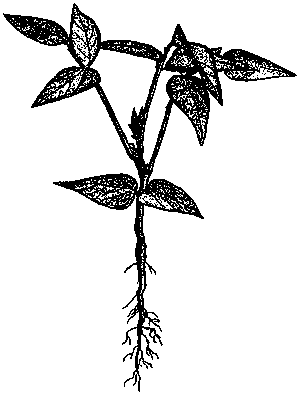
Figure
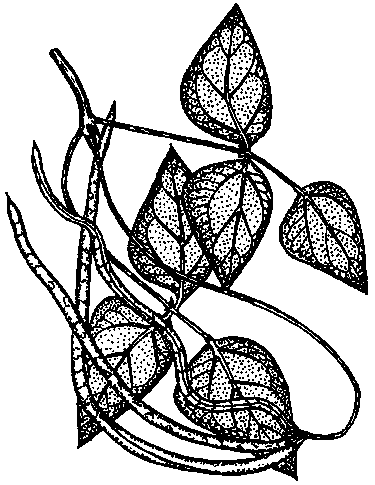
Figure
Vitex doniana Sweet
Verbenaceae
Chonyi: fudu (fruit) English: black plum Kambe: fudu (fruit) Kikuyu: muhuru Kipsigis: muekelwet Kisii: mutahuru Luhya (Bukusu): kumufutu, bufutu (fruit), chifutu (fruits) Luhya: omufutu, muholu, omufutu Luhya (Tachoni): chifutu (fruits) omufutu, yifutu (fruit) Luo: ojuelo, oyuelo, juelu Mbeere: muburu Pokot: tirkirwo Sabaot: bulgelwa, pulgelwet Swahili: mfudu Teso: ewelo, ekarukei
Description: A deciduous tree, usually 4-8 m high, occasionally up to 15 m, with a dense rounded crown. BARK: Light grey with numerous vertical fissures. Branchlets not hairy. LEAVES: Long stalked, with 5-7 leaflets. Leaflets usually widest towards the tip, more or less hairless. FLOWERS: Numerous, white, tinged purple, usually borne in short, stout axillary cymes on a long stalk. Calyx and pedicels densely hairy. FRUIT: Ellipsoid to oblong, up to 2.5 cm long, clasped by a calyx cup, green turning black on ripening.
Ecology: Found in eastern, southern and West Africa and Comoro Islands. In Kenya e.g. on the south coast, Loima Hills, West Pokot, Migori, Kakamega and Homa Bay in wooded grassland, forest edges, 0-1,950 m. More common on light soils.
Uses: FOOD: The ripe black fruit pulp is eaten raw (+++) (Sabaot, Luhya, Luo, Kuria). It has a sweet taste. Fruit cooked during famine (Sabaot).
OTHER: Wood reasonably durable and used as poles in house building and as a source of timber.
Status: Occasional. Common in Uganda.
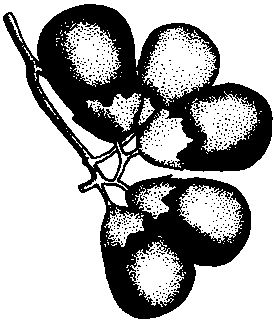
Figure
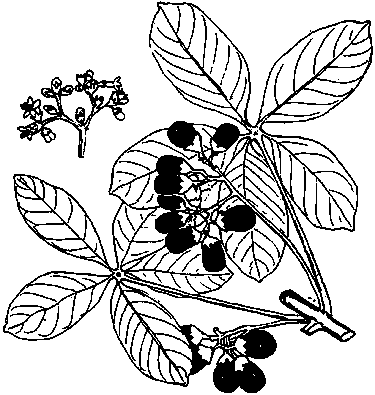
Figure
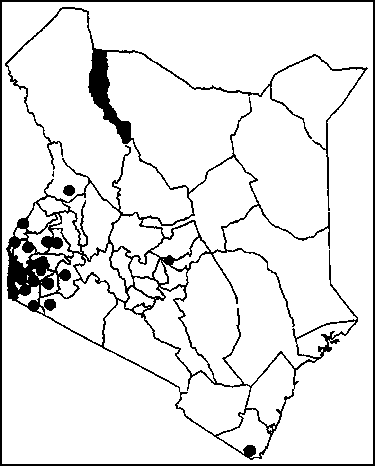
Figure
Vitex ferruginea Schum. & Thonn.
Verbenaceae
Boni: mkalashote, mogalishat Chonyi: fudu (fruit), mfudu-madzi Giriama: mfudu-madzi Kambe: fudu (fruit), mfudu-madzi (plant) Somali: marfis Swahili: mfudu
Description: Deciduous shrub or tree, usually 3-8 m high, occasionally up to 10 m. BARK: Light grey, smooth. Branchlets rusty hairy. LEAVES: With 3-7 leaflets. Leaflets elliptic or widened towards the tip, usually hairless above and velvety rusty hairy to hairless beneath. FLOWERS: Numerous, white, pale blue or violet, borne in dense axillary cymes on a long stalk. FRUIT: Nearly round, up to 3.5 cm in diameter, green, turning brownish black on ripening. Seed hard, with 4 grooves.
Ecology: Grows in Kenya and south to South Africa. In Kenya, occurs in coastal bushland and dry forests and Brachystegia woodland. Usually found in deep coastal sandy soils.
Uses: FOOD: Fruit eaten raw (+). Pulp not as dry as in V. doniana, hence the Mijikenda name for it. Fruit is sweet.
OTHER: Wood tough, used to make toy knives used by small boys.
Season: December-January (Kilifi).
Status: Occasional.
Remarks: ssp. amboniensis (Guerke) Verdc. is referred to here. Ssp. ferruginea is found in Uganda, north-western Tanzania, west to Angola and Guinea.
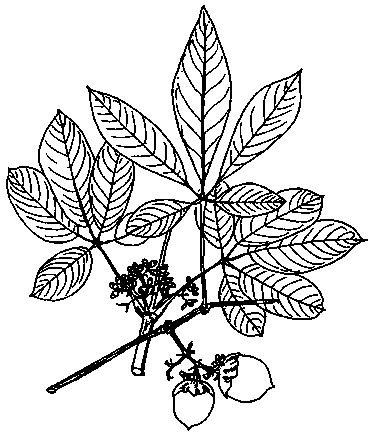
Figure
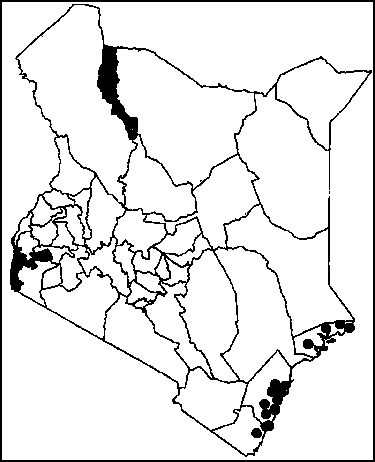
Figure
Vitex mombassae Vatke
Verbenaceae
Boni: mkalijote Chonyi: fudu (fruit), mfudukoma, mfudu Digo: mfudukoma, fudumadzi Giriama: mfududu, mfudukoma, mfudu Kambe: mfudu, mfudukoma, fudu (fruits) Pokomo: mfudu Swahili mfundumaji, mvumba, mbwanga, mfudu, mgege
Description: A tree, usually 3-6 m high. Shoots more slender than in V. payos. BARK: Grey, fissured or corrugated. Younger stems rusty, softly hairy. LEAVES: With 5 leaflets, occasionally 3. Leaflets elliptic, hairy above, rusty, softly hairy beneath, usually not stalked, rarely all stalked. FLOWERS: Pale blue to light purple. FRUITS: Round, to 3 cm across, clasped by a calyx cup, green, turning purplish black on ripening.
Ecology: Grows in Kenya, Tanzania and the Democratic Republic of Congo (Zaire), south to South Africa. Found in Kenya in Shimba Hills, Gazi and elsewhere in the coastal region, in coastal bushland, wooded grassland, 0-450 m. Mainly in sandy soils.
Uses: FOOD: Fruit edible (+), sweet (Giriama, Duruma, Digo).
OTHER: Fuelwood, shade.
Season: December-January (Kilifi).
Status: Occasional.

Figure

Figure
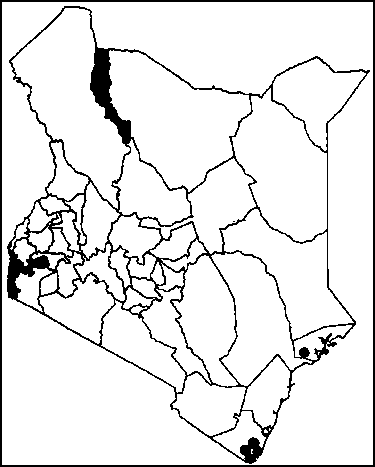
Figure
Vitex payos (Lour.) Merr.
Verbenaceae
Chonyi: fudu (fruit), mfudu unga Embu: muburu, mburu (fruits) English: black plum Giriama: mfudu Kamba: kimuu, muu (fruit) Kambe: fudu (fruit), mfudu unga Mbeere: muburu Swahili: mfudu
Description: Deciduous tree to 8 m high with a low rounded crown. Bark grey-brown, deeply fissured. Younger stems with a rusty, woolly bark. Leaves with 5 leaflets, occasionally 3. Leaflets often without a stalk but the larger leaflets sometimes with a winged stalk, obovate to elliptic, roughly hairy above, softly hairy beneath. Young leaflets are densely hairy, especially beneath. Flowers white, blue or mauve. Fruits shortly cylindrical, clasped by a calyx cup, green, dotted with lenticels, turning brownish black to black on ripening. Seed hard, grooved.
Ecology: Found in Kenya, Tanzania, Zimbabwe, Mozambique and Malawi. In Kenya it grows, e.g. in Kitui, Embu, Machakos, Kilifi and Kwale in hot, low and semi-arid lands, 0-1,600 m. In the more arid zones found near rock outcrops. Often in sandy soils, less often red and rocky ones. Rainfall: 650-850 mm.
Uses: FOOD: The ripe fruit has a black pulp which is mealy, sweet and edible (+++). Ripening accelerated by covering mature green fruits in ash (Kamba).
OTHER: Wooden spoons (Kitui). Fuelwood. Dry stems very hard. Straight trunks used for poles.
COMMERCIAL: Fruits sold in Kitui, Mutomo, Mbeere (Ishiara).
Season: Flowers in November-December in Machakos, Makueni and Embu, in March and September-October in Kwale and Kilifi. Fruits in April-June in Kitui, Makueni and Embu. The tree may produce profusely.
Status: Occasional, but may be common locally.

Figure
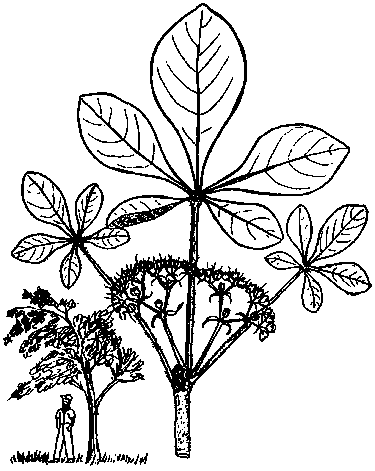
Figure
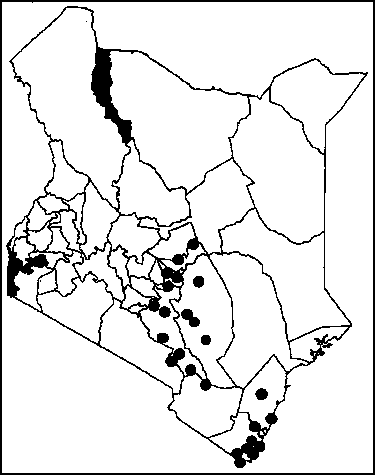
Figure
Ximenia americana L
Olacaceae
syn: X. caffra Sonder
Bajun: mchunda-kula Borana: uda, odda, dabobes Chonyi: mtundukula Digo: mtundakula English: wild plum, tallow nut, false sandalwood Giriama: mtundukula Ilchamus: lamai, lama Kamba: mutula Kambe: mtundukula Kikuyu: mutura Luhya (Bukusu): kumutuli-kumubukusu, chinduli-chimbukusu (fruit) Luo: olemo (red fruit), olimbochok (yellow fruit) Maa: olamai, engamai (plural), ilama (plural) Malakote: huda-hudo Marakwet: kunyat (singular), kunyotwo (plural) Mbeere: mutuura Meru: muroroma, ndoroma (fruit) Orma: huda-hudo Pokot: kinyotwo, kinyat (plural), Sabaot: mutoywo, uluteywa Samburu: lamai Sanya: hudahuda Somali: murcud, mandurcet Swahili: mtundukula, mtundakula, mpingi Taita: mtundukula, ndundukula (fruit), tagashiko Teso: olimu, elamai Tharaka: muroroma Turkana: elamai
Description: Spreading or, less often, a scrambling spiny shrub or small tree up to 6 m, commonly less than 4 m. Branches normally arching down, often armed with straight spines. BARK: Fissured, scaly, greyish brown. LEAVES: Ovate or oblong, mainly borne in clusters on short shoots, occasionally softly hairy. FLOWERS: Small, greenish white, fragrant, normally borne on short shoots. FRUITS: Up to 3 cm long, oval, shiny, light green, turning yellow, orange or red-on ripening. Seed smooth, hard coated, yellowish brown to brown.
Ecology: Widespread in tropical Africa, Asia and America. Widely distributed in Kenya, e.g. at Madunguni (Kilifi), Kisamis (Kajiado), Nginyang (Baringo) and Kaputir (southern Turkana). A plant of diverse habitats, dry hilly areas, bushland, especially on hilly places, coastal bushland, 0-2,000 m. Soils: red clay, red sandy coastal soils, rocky areas. Zones III-V.
Uses: FOOD: The juicy fruit pulp is eaten raw (+++). The thin outer skin is removed and the fruit sucked until the seeds are clean. The pulp is sweet but tart. The seed is discarded. Dried root bark is used in tea for good health (Maasai).
MEDICINAL: The seeds contain up to 60% oil which is extracted and used to heal cracking feet (Pokot, Turkana). Seed oil is obtained by roasting the seeds in a pan and used for skin and tanning leather skirts and blankets (Pokot, Turkana). The roots are a component of a medicine used to treat syphilis and hookworm. Leaf decoction used to treat measles (Kitui). Unripe (and ripe) fruits used for tonsillitis (Kamba), mouth sores (Pokot, Nginyang). Root bark and leaf extract used as a treatment for a number of diseases (Kamba). Leaf infusion used for stomach-ache (Kamba). Roots mixed with those of ochol (Euclea divinorum), roko (Zanthoxylum chalybeum) (Somali: gora) and ochuoga (Carissa edulis) in a drink and also in a steam bath used for baha (a type of fever like that of malaria) (Luo). A concoction of the roots (together with those of Grewia villosa (muvu) and Croton dichogamus (muthinia)) is given to women after childbirth (Kamba). Pounded root extract is given to children with diarrhoea. Seed oil applied on lip sores in goats.
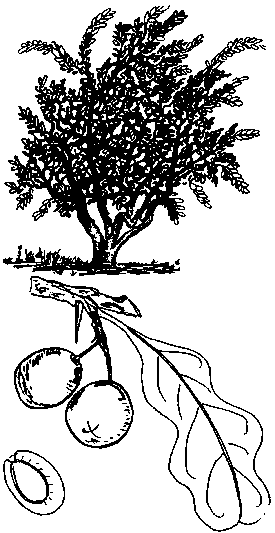
Figure
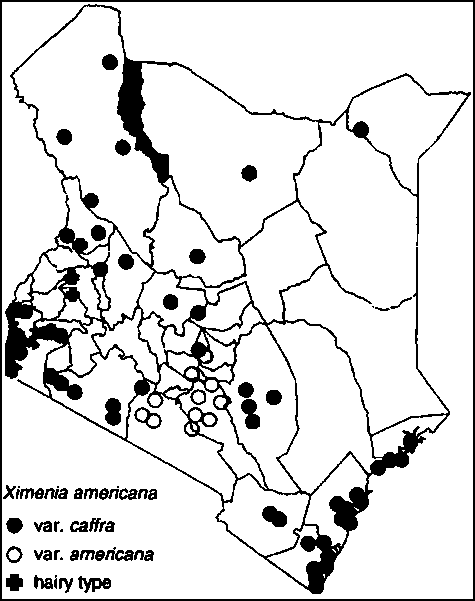
Figure
OTHER: The oil-rich seeds were once piled on sticks of Acalypha racemosa (mukulw'a) and burned as candles (Kitui). Bark and root a source of dye. Shade (+). Wood of good quality, very hard. Made into poles and rafters (Tharaka). Fuelwood (++). Charcoal (++). Seed oil smeared on wood and metal and the inside of honey drums as a preservative. Also used for tanning leather (Tharaka). Fodder (++) for livestock.
COMMERCIAL: At one time sold at some market centres in Machakos District. Sold in north Baringo (Nginyang) and West Pokot.
Season: Flowers in August in West Pokot. Fruits in February-March in Baringo and Kilifi, January and May in Kitui.
Remarks: The species is very variable. Plants in Machakos and Kajiado may attain tree size and the leaves are abnormally hairy. The Siaya, coast and southern Turkana forms have dark green leaves and tend to be more scrambly in habit. Two varieties are recognized in Kenya:
· var. caffra (Sender) Engl. is the commonest, found from 0 to 2,000 m.
· var. americana is found in the region of Kitale and Kapenguria at 1,700-1800 m.
There is, however, a need for further taxonomic work, especially on the Machakos, Kajiado and yellow-fruited forms in relation to the varieties described above.

Figure
Zanthoxylum chalybeum Engl. var. chalybeum
Rutaceae
syn: Fagara chalybea (Engl.) Engl.
Borana: gadda, gda Chonyi: mdungu Digo: mdungu, mudhungu English: knobwood Gabra: gaddaa Giriama: mdungu Giriama: mdungu Ilchamus: loisuki, lousuk, lousukui Kamba: mukenea, mukanu (Kitui) Kambe: mdungu Luoi roko Maa: oloisuki, oloisugi Mbeere: mugucwa, mukenenga, muruguci Pokot: songow'o, songouwa, songoou (plural) Samburu: loisugi, loisuki Sanya: gadhayu Swahili: mjafari Teso: eusuk Tugen: kokian, kokiin (plural) Turkana: eusugu
Description: Spiny shrub or tree to 10 m with a light narrow crown, occasionally (in old trees) spreading with dangling branches. BARK: Dark grey with scaling woody, conical or ridge-like protrusions, slash yellow, with a strong smell. Young branches wickedly armed with strongly rooted spines directed backwards and arranged spirally on stem. LEAVES: Aromatic, midrib often with little spines, entire or serrated. FLOWERS: Small, yellow. FRUITS: Strongly aromatic, grey, 5-8 mm across, pitted, cover splitting into two to expose a blue-black seed.
Ecology: Grows from Ethiopia and Somalia south to Zambia and Zimbabwe. Widely distributed in Kenya, e.g. in Madunguni (Kilifi), Waita (Mwingi), Mile-46 (Kajiado), Nginyang (Baringo), and Chepareria (West Pokot) on dry rocky hillsides, bushed grassland, wooded grassland and bushland, 0-1,800 m. Soils: Coastal sands, well-drained red clay soils, often sloping. Zones IV-V.
Uses: FOOD: The strongly aromatic leaves (Kamba, Giriama, Luo) and fruits (Maasai, Turkana, Pokot, Gabra) are used for flavouring tea (+++). Bark used for making tea (Pokot, Tharaka, Mbeere) or flavouring soup (Kamba).
FOOD/MEDICINAL: Tea made from fruits (Maasai, Pokot, Turkana), leaves (Kamba, Maasai) or a bark or root decoction (Maasai, Kamba, Tugen) is used as a cure for coughs, colds, chest pain and respiratory diseases such as asthma (Kamba), sore throat and TB. Fruits have a hot taste and are chewed by women for good breath and for fever (Pokot). A fruit infusion is used as a tonic for children (Tugen).
MEDICINAL: Leaves boiled in soup (Tharaka) are used for malaria. Bark or root decoction used for malaria and fever. Smoke from burning bark is inhaled to stop fainting or headache (Pokot). Bark infusion (mixed with bark of Terminalia brownii) is applied to sores and wounds (Tharaka). Bark used for chest pain (Kamba). Infusion of leaves used for coughs in camels and cattle. Dry-fruit infusion used for sick camels or for the goat disease chepcherim or boiled with bark for plokai (rinderpest) in cattle. Cold extract of bark used for diarrhoea in camels and for general goat diseases. Fruit infusion used for anaplasmosis (Samburu).
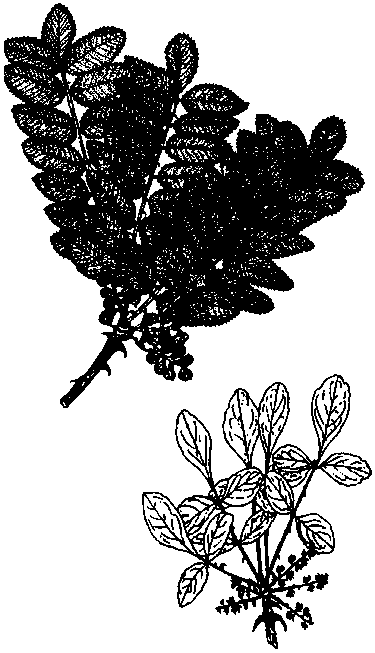
Figure
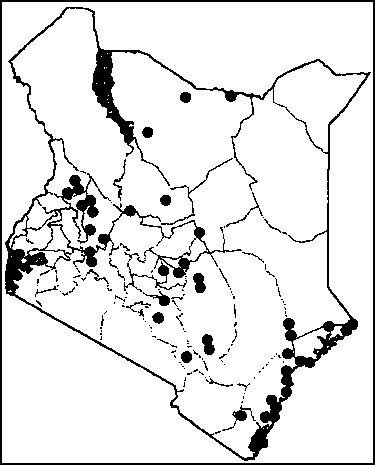
Figure
OTHER: The young leaves, animal fat and soda ash used to be made into soap (Mbeere). Woody protrusions are broken off and may be carved into stoppers for gourds and tops for children (Mbeere). The base may be made smooth and when words are inscribed on it act as "rubber stamps" (Kamba). The protrusions may also be burned by blacksmiths to soften metal (Tharaka). The plant is used for lighting fires (Pokot). Branches are used for smoking milk gourds and as toothbrushes (Mbeere). Good fuelwood (++).
The black seeds were used as beads for decorating traditional dresses (Tharaka). Trunk said to be termite-resistant and used as posts for construction (Tharaka, Mbeere). Camel and goat fodder. Dry leaves eaten by goats.
CULTURAL/BELIEFS: Long ago used for administering blessings during ceremonies (Mbeere).
COMMERCIAL: Fruits sold throughout the year in many market centres in northern Kenya (Nginyang, Kapenguria, Chepararia, Lodwar), especially among the Pokot and Turkana. Bark is sold as medicine throughout the country.
Season: Fruits in July-August in West Pokot and in March in northern Baringo (Nginyang).
Management: Propagated by seed or root suckers. But the success rate with seed is poor because they are normally destroyed by pests long before maturity. The plant seems to propagate itself naturally by root suckers. Coppices easily.
Status: May be locally common. Generally rare in many parts due to over-exploitation for medicinal purposes.
Remarks: A related species, Z. usambarense (Engl.) Kokwaro (syn. Fagara usambarensis Engl.) (Kikuyu: muheheti (Nyeri), mugucwa, Maa: oloisugi) has similar uses to Z. chalybeum. A tree, usually 5-8 m high, with a spreading crown and drooping branches. Bark deeply fissured. Leaves are usually smaller and less scented than those of Z chalybeum. Flowers cream, fruits paired, red and resembling those of Z. chalybeum in shape and size. More common in highlands, especially in dry forest or bushed grassland, Narok, Kiambu, Kericho, Samburu. Altitude: 1,400-2,500 m. Common at about 2,000 m. Twigs used as toothbrushes but have a hot taste. There are several related species in southern Africa. Season: Flowers in June and fruits in October in Narok.
Another genus with essential oils and used in flavouring tea is Ocimum (Labiatae (Laminacae)). Ocimum species include:
· O. gratissimum L. (syn: O. suave Willd.) (Borana: anchabbi, Digo: vumba manga, Giriama: vumba manga, Kamba: mukandu, Kikuyu: mugio, Luo: olulururuecha, Maa: olemoran, Marakwet: chesimia, Samburu: lmurran, Taita: mrumbawassi, Turkana: loguru, ichoke).· O. kilimandscharicum Guerke (Embu: makori, Kamba: wenye, Luo: bwar, Pokot: supko).
· O. basilicum L. (Kamba: mutaa).
All are used for flavouring tea. A few leaves are boiled in water and the infusion used to prepare tea. Branches of O. basilicum are also used as insect repellants. They are often used traditionally for sweeping the household to rid it of fleas and mites. It is also placed in grain stores to reduce weevil attack. Ocimum species are used a great deal in traditional medicine, especially for respiratory diseases, and in many African traditional ceremonies. Essential oils from these species are used in the perfume industry.
Another traditional beverage plant is Cymbopogon citratus (Nees) Stapf (Gramineae) (English: lemon grass, Kamba: nyeki ya kyai, Luo: majand-lum, Meru: ndagarago). This is a tufted grass with pale green leaves and a strong lemon scent. It is planted on terraces to stabilize the soil. Leaves are used for flavouring tea (Kamba, Kikuyu, Luo, Luhya, Giriama, Taita). The species is a native of southern India and is grown throughout the tropics as a flavouring and source of essential oil used in the perfume industry. Propagation is through the rootstock.
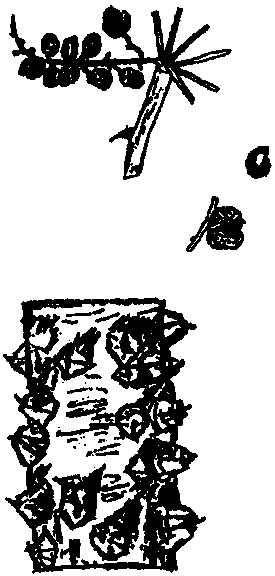
Zanthoxylum chalybeum
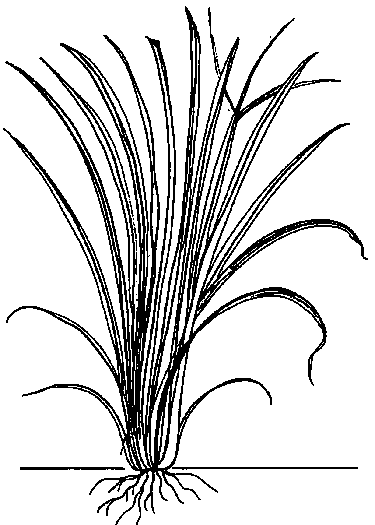
Cymbopogon citratus
Ziziphus abyssinica A. Rich.
Rhamnaceae
English: catch thorn Gabra: k'urk'uura Kamba: kiae (Machakos), kitolosuu (Kitui) Mbeere: mugagu Pokot: tirokwo, tirak (plural), tirekwo Teso: ekodokodoi Turkana: esilang'
Description: A spreading, often spiny, shrub or small tree normally 3-6 m high. BARK: Greyish brown, finely fissured. Branches may or may not be armed with paired spines, one directed forward the other recurved. LEAVES: Thick, alternate, base asymmetrical, conspicuously 3-veined and rusty hairy beneath. FLOWERS: Buds rusty hairy. FRUIT: To 3 cm, green, turning yellow and finally glossy dark red or brown on ripening.
Ecology: Found from Senegal east to Ethiopia and south to Angola and Mozambique. Widespread in Kenya in wooded grassland, bushed grassland and along rivers. Soils: Well-drained soils (sandy, clayish sand). Zones IV-V.
Uses: FOOD: The rather dry cream pulp and the outer skin are eaten (+). Pulp has a sweet slightly bitter taste. Edible portion rather small.
OTHER: Wood strong, durable, resistant to insect attack and used for making pestles, yokes, poles and in construction. Good shade tree (++). Fuelwood (++). Camel and goat fodder(+).
Season: Fruits in June in Kitui, August-October in Kiambu, Machakos and Moyale, December-January in Kisumu and West Pokot. Flowers in January-February in Kiambu and Kitui, May-June in Meru and Turkana and in July in West Pokot and Narok.
Status: Occasional.
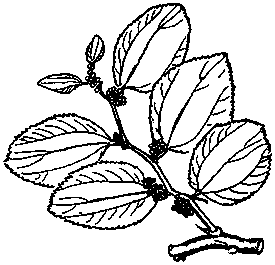
Figure
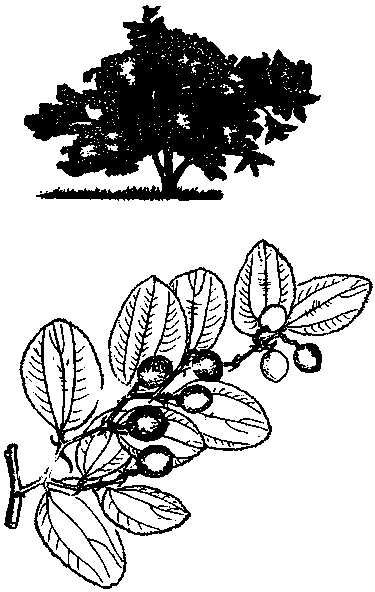
Figure
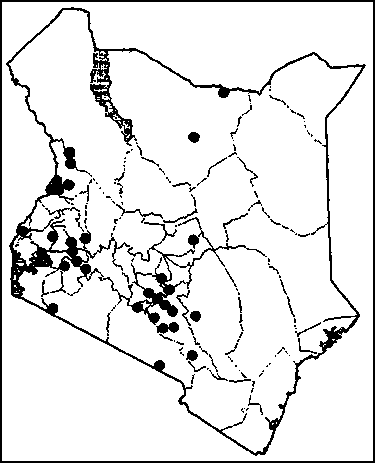
Figure
Ziziphus mauritiana Lam.
Rhamnaceae
Borana: quaqura, kurkuurah Chonyi: mukunazi, kunazi (fruit) Daasanach: gabite, gaba English: Indian plum, jujube, Chinese date Giriama: mukunazi Ilchamus: lmampaai, lmampaan Kambe: mukunazi, kunazi (fruit) Maa: oloilalei Marakwet: tilomwo, tilam (plural) Pokot: tlomwo, tilomwo, tilam (plural) Rendille: gab Sabaot: katagi Samburu: ilerendei, lderendei Sanya: kunazi (fruit), mukunazi Somali: gup, gob, qup Swahili: mkunazi, mukhalita Teso: esilang Tugen: tilomwo Turkana: ekalale, ng'akalalio (fruits)
Description: A spiny shrub, thick bush or tree to about 9 m, often with multiple stems. Trunk to 45 cm in diameter. Branches drooping. BARK: Fissured, dark brown. Branchlets light grey to cream, zigzag in shape, armed with brown paired spines. LEAVES: Ovate, hairless above, usually softly hairy beneath, almost white or brown. FLOWERS: Cream, scented, clustered in leaf axils. FRUITS: 1.5-2.5 cm in diameter. Unripe fruits light green, turning cream, yellow to shiny reddish brown as they ripen. Seed a large stone surrounded by a dry cream pulp.
Ecology: Occurs from Ethiopia and Somalia to North Africa and west to Senegal, south to the Democratic Republic of Congo (Zaire) and Tanzania. Also in the Middle East, east to India and the Far East. Widely cultivated and often an escape in tropical parts of the world. Introduced further south in Africa in Malawi, Zambia, Zimbabwe and Mozambique where it is cultivated for its fruit. Widespread in the coastal and northern arid and semi-arid areas of Kenya, in riverine vegetation in dry areas, flood plains, dry bushland, roadsides and disturbed areas, 0-1,600 m. Grows in open areas. Soils: Sandy to black cotton. Well-drained sandy loams and alluvial soils most favoured. Zones III-VII. In the more arid areas it is mainly found along river valleys where it may attain tree size.
Uses: FOOD: The fruit is a very important food in the arid zones (+++). It has a sweet dry cream pulp surrounding a large stone with two seeds. In most cases only the pulp is eaten, but among the Turkana and the Pokot large amounts of fruit may be gathered, dried, pounded in a mortar (kono, Pokot) and winnowed to remove particles of crushed seeds. The fine flour may be mixed with figs in honey and stored in large containers (kosim) to be used in times of food scarcity (Pokot).
MEDICINAL: Root decoction taken as an abortifacient. Root infusion used as a treatment for dysentery (Swahili), tuberculosis (Pokot) and indigestion (Marakwet). The root is dried, powdered and rubbed on an incision on the chest for the treatment of pneumonia. Root decoction taken as a prophylactic against elephantiasis believed to be caused by menstruating women (Swahili). Bark decoction or ground bark put in cold water and used for diarrhoea and stomachache (Pokot).
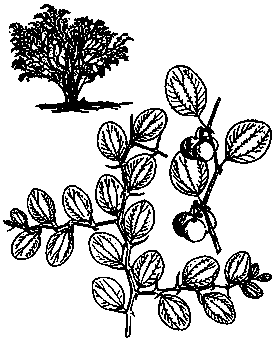
Figure
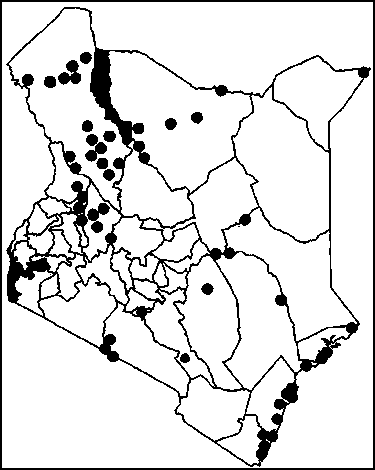
Figure
OTHER: An important camel and goat fodder plant. Dead and living fence. Wood, very hard, durable and used in building (Pokot, Turkana), making furniture, walking sticks, stools and stirrers. Said to be termite-resistant. The bark yields fibre and dye (Swahili). This tree is also used as a shade plant and as a windbreak. Due to its bushy nature, the plant is excellent in soil-erosion control, especially on river banks. Branches are cut to make beds and to form the supports of the portable Somali house (gurgi).
COMMERCIAL: Fruits sold in most big market centres in northern Kenya and in the coastal region, especially Malindi, Kilifi, Mombasa, Lodwar and Nginyang.
Season: Flowers in January in Garissa, May in Mandera, Turkana and Marsabit, August in West Pokot, Turkana and Marsabit and November in Kwale. Fruits in September-October in Turkana, Marsabit and Lamu, and March-April in Kilifi and Mombasa.
Management: Normally propagated by seeds. Also root suckers and, reportedly, by cuttings. Seeds planted directly on site. Cracked ones germinate faster. A fast grower even in dry areas. The shape of the plant should be controlled to suit requirements. May turn into an impenetrable bush if uncontrolled.
Status: Common.
Remarks: A very versatile plant, quite at home from the arid zones in northern Kenya to the hot humid coastal regions. Cultivated as an ornamental in Nairobi and other town centres. The plant was probably introduced from northern Africa to northern Kenya by migrating Nilotic or Cushitic communities.
Ziziphus mucronata Willd.
Rhamnaceae
Borana: kurquura Chonyi: mgugune., Digo: mugugune, mgorodo English: buffalo horn Giriama: mgugune Ilchamus: lderendei, lderende, limambai Kamba: muae, kitolosuu (Kitui) Kambe: mgugune., Luo: lang'o, lang'u Maa: oleylalei, olperetini Marakwet: torokwo, tarak (plural) Mbeere: mukunya-nthegere Pokot: tirokwo, tirekwo, tirak (plural) Rendille: gab Samburu: loilalei, lderendei Sanya: mkukura Somali: hamur geb, hamur-gob Swahili: mkunazi Tugen: ninoiwa Turkana: esilang
Description: An extremely thorny shrub, rarely straggling, or a tree, normally 4-8 m with rather straight branches, ascending at first then drooping. BARK: Dark grey, smooth or rough. Branchlets dark brown, zigzag, usually armed with paired dark red spines. LEAVES: Dark green, glossy, almost heart-shaped (cordate), broad towards the asymmetrical base, serrate, with 3 conspicuous veins from the base. FLOWERS: Yellow green. FRUITS: Up to 2.5 cm in diameter, green, turning glossy dark red on ripening.
Ecology: A widely distributed plant from Senegal east to Arabia and south to South Africa and Madagascar. In Kenya, in bushland and woodland, common along dry river courses. Soils varied. Mainly rocky areas in dry riverbeds on sandy or red clay. Zones III-V.
Uses: FOOD: The cream fruit pulp is eaten raw (++). Pulp dry with a sweet, rather bitter taste. The stones of the fruit have been used as a substitute for coffee in times of shortage, especially during war-time emergencies (Riley and Brokensha 1988).
FOOD/MEDICINAL: Tea made from bark used to cure stomach complaints (Maasai, Pokot).
MEDICINAL: Cold bark infusion used for enlarged spleen (Pokot).
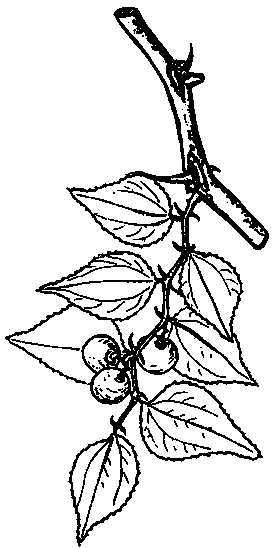
Figure

Figure
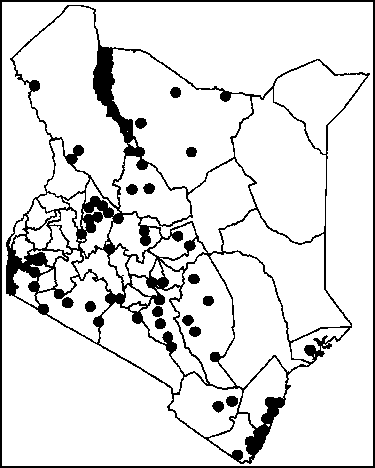
Figure
OTHER: Camel and goat fodder. Wood used for building (Pokot), wood carving (Kamba) and handles for hoes (Mbeere, Somali). Shade tree (++). Fence, hedge plant (+++). Fuelwood (++). Charcoal. Fruit easily attacked by insects.
Status: Common.
Termitomyces-mushrooms (edible fungi)
Kamba: ikunu, makunu (plural) Kikuyu: makunu Kisii: oboba, amandegere, amoba (plural) Luhya (Bukusu): bubwoba Luhya (Marachi): luoba Luhya (Samia): obwoba Luhya (Tachoni): obwaba, bumbo Luo: obuolo, obwolo Maa: osuyai Mbeere: ikunu Meru: makunu Pokot: kelyomough, oota, ooten (plural) Swahili: uyoga Taita: voga Tharaka: ikunu Turkana: ebaale
Mushrooms belong to a group of plants without chlorophyll known as fungi. As these types of fungi are relatively large, they are referred to as Macrofungi. They originate from a mass (mycelium) of tiny branches which originally germinate from tiny spores distributed by wind and growing where the situations are favourable. The mycelium obtains food from the substrate, usually dead organic matter such as dead plant material and dung. The spores germinate when conditions become favourable especially during the rainy season. The fruiting body-the umbrella-like structure seen above ground (pileus) or cap- is borne by a stem-like structure, the stipe. The underside of the pileus bears gills which produce spores. There are many edible species of mushrooms classified into several genera, some, especially those bearing the "deathcup" can be very poisonous. The following are the commonest:
· Termitomyces are fungi found growing on or near termite mounds. These usually have no ring on the stipe. They have a large white cap up to 12 cm across depending on the species, a large stalk and a long "root". They are found on termite mounds where termites cultivate the spores deep in the mound in special "fungus gardens". The spores germinate when conditions become conducive, sending the fruiting body above the mound.· Agaricus species have a pileus which is smooth, free gills, stipe with a ring (left when the cap breaks away), and brown spores. Some cultivated mushrooms belong to this genus. A common wild example is A. campestris (English: field mushrooms) which has a white cap hardly more than 4 cm across and pink gills and is found in grassland. The gills turn dark brown with age.
· Amanita'. some species of this genus are edible but others are deadly poisonous. Amanita spp. should thus be identified beyond reasonable doubt as many cases of mushroom poisoning are caused by members of this genus. The genus is distinguished by its green to yellowish-green cap, radial streaks, a ring (annulus) on the stalk and a cup at the stalk base. Several other genera with edible members exist in Kenya. More work, however, needs to be done on the classification of macrofungi in Kenya.
Distribution: Edible mushrooms are found all over the country.
Ecology: Depending on the species, they may be found on termite mounds, fallen logs, near and on houses and even on bare ground and roadsides.
Uses: Mushrooms are still used a great deal in stews by the Pokot, Turkana (Ng'ikebootok), Luo, Luhya and coastal peoples, especially the Giriama.
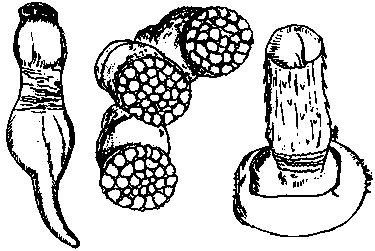
Figure
The Giriama recognize up to six edible types known as: zhoga-utuwe, zhoga-nyama, zhoga-muuyu (on baobabs), zhoga-mkulu (on Diospyros sp.), zhoga-mayonda and zhoga-kazonzo (these names usually reflect the kind of substrate).
The Luo use up to five types known by the names obuoch-oruka (white, large, on termite mounds), obuoch-omegere (omejre) (small, found in groups, near houses, roadsides and along streams and which in day gone by were mixed with milk and blood) obuoch-alando (small, red-topped, several together on the ground), obuoch-atieno (with dull spotted top, often growing together with obuoch-alando), obuoch-opumo (ofumo) (brown, small, on termite mounds).
The Pokot eat at least five types of fungi. Examples are oota, the common Termitomyces found on termite mounds, and tree-trunk fungi called embeei and samandar, usually found on fallen logs. Others are sorkopi and ghum.
Preparation: The pileus and the stipe are harvested and stewed with meat, alone or cooked with other vegetables (Turkana). They may be boiled or fried and often eaten with ugali. They may be dried and stored. The pokot may eat samandar cooked or raw. Among the Luo the mushrooms are dried, covered with dry banana stems, okola rabolo or ondakla rabolo. These are hung above the fireplace for preservation. Dry mushrooms are softened by soaking in water. Fresh or softened mushrooms are boiled for about 15 minutes, and fresh milk added. Sometimes soda ash, or more often solution extracted from ashes (thutho), is added to soften them further before eating. Fresh ones may also be mixed with other vegetables, especially cowpeas (bo), apoth (Corchorus spp.), and muto (Crotalaria spp.). By simulating the field conditions (temperature, humidity and substrate), some species may be grown indoors. COMMERCIAL USE: Termitomyces species sold in Siaya, Kisumu, West Pokot (Chepararia, Kapenguria). Agaricus campestris is a common mushroom in the market.
Season: Normally available early in the rainy season.
Propagation: Mushrooms grow from tiny spores. They require special conditions for growth and hence it is difficult for the ordinary farmer to grow them. Mushrooms in the field sprout fast, last for a day or two then start to rot, disintegrating as maggots infest them. They have to be picked as soon as they appear. Folk knowledge of mushrooms, such as the time of emergence of each species and suitable preparation methods, is enormous.
Remarks: The use of mushrooms as food has declined considerably over recent years. But they are nutritious, tasty, widely distributed and readily available during the rainy season so their use should be encouraged. While there are many edible ones in the wild, a good number are, however, poisonous and there is no general rule to determine which is which. However, any species with a "death cup", especially just below the soil surface, should not be harvested. Mushrooms showing colours such as green should also be avoided. Perhaps the safest way is to rely on the knowledge and experience of the local community.
|
| |||||||||||||||||||||||||||||||||||||||||||||||||||||||||||||||||
Appendix: Nutritional composition of edible parts of plants
|
Species |
plant part |
energy |
water |
protein |
fibre |
ash |
fat |
total |
NFE |
vit C |
b-carotein |
Na |
P |
Ca |
Mg |
Fe |
K |
thi |
ribo |
niac |
chlorides |
|
Acacia nilotica |
seeds | | |
14.1 |
14.3 |
6.2 |
1.9 | | | | | |
23 | | | | | | | | |
|
Acacia senegal |
seeds | | |
22 |
39 |
7.1 |
1 | | | | | | | | | | | | | | |
|
Acacia senegal |
seeds | | |
40.1 |
13.7 |
5 |
5.8 | | | | | |
0.3 | | | | | | | | |
|
Acacia tortilis |
seeds | |
8.28 |
13.21 | |
16.21 |
6.93 |
55.37 | |
|
18000 |
42 |
206 |
101 |
23 |
31 |
843 | | | | |
|
Acacia tortilis |
green pod |
280 |
75 |
4.2 |
7.2 |
1.5 |
0.3 |
19 |
11.8 |
1.1 | |
1.03 |
62.7 |
187 |
45 |
3.9 |
296 |
0.23 |
0.02 | | |
|
Acokanthera oppositifolia |
fruit | |
89.03 | |
| | | | |
3.58 | | | | | | | | | | | |
|
Adansonia digitata |
fruit |
1229 |
8.7 |
2.7 |
8.9 |
5.8 |
0.2 |
82.6 |
73.7 |
20.9 | |
11.2 |
76.2 |
335 |
167 |
2.65 |
2409 | | | | |
|
Adansonia digitata |
kernel |
1803 |
8.1 |
33.7 |
16.9 |
5.9 |
30.6 |
21.7 |
4.8 | | |
2.48 |
5.12 |
273 |
640 |
6.55 |
1275 | | | | |
|
Adansonia digitata |
pulp |
1214 |
16.0 |
2.2 |
6.8 |
4.3 |
0.8 |
76.7 |
69.9 |
270 |
70 | |
118 |
284 | |
7.4 | |
0.37 |
0.06 |
2.1 | |
|
Adansonia digitata |
meal |
1331 |
7.4 |
6.6 |
5.7 |
4.2 |
0.3 |
81.5 |
75.8 | | | |
143 |
300 | |
2.6 | |
0.02 |
0.07 |
2.2 | |
|
Adansonia digitata |
leaves raw |
289 |
77 |
3.8 |
2.8 | | | | |
50 | | | |
400 | | | | | | | |
|
Aerva lanata |
leaves raw | |
85.85 |
2.59 | |
3.46 | | | |
10.84 |
1518 | | | | | | | | | | |
|
Aerva lanata |
leaves |
201 |
83.1 |
3.9 |
2.1 |
3.0 |
0.6 |
9.4 |
7.3 | | | |
86 |
493 | | | | | | | |
|
Amaranthus sp. |
leaves raw | |
83.28 |
3.15 |
2.01 |
3.12 |
0.21 |
10.24 |
8.23 |
127.27 |
10667 | |
| | | | | | | | |
|
Amaranthus sp. |
leaves raw |
176 |
84 |
4.6 | | |
0.2 | | |
64 |
5716 | |
103 |
410 | | | | | | | |
|
Amaranthus sp. |
seeds dried |
1490 |
12.7 |
14.0 | | |
6.0 | | | | | |
455 |
490 | | | | | | | |
|
Amaranthus sp. |
leaves raw |
151 |
86.9 |
3.5 |
1.3 |
2.6 |
0.5 |
6.5 |
5.2 |
80 | | |
67 |
267 | |
3.9 |
411 |
0.08 |
0.16 |
1.4 | |
|
Amaranthus caudatus |
leaves raw | |
75.51 |
4.72 |
3.02 |
5.55 |
0.29 |
14.29 |
11.27 |
179.49 |
9031 | | | | | | | | | | |
|
Amaranthus cruentus |
leaves raw | |
79.96 |
4.84 |
2.0 |
4.36 | | | | | |
2.2 |
94.18 |
673 |
644 |
10.62 |
1204 | | | | |
|
Amaranthus dubius |
leaves raw | |
80.74 |
3.83 |
3.33 |
3.45 |
0.2 |
11.79 |
8.46 |
137.88 |
10375 | |
| | | | | | | | |
|
Amaranthus hybridus hybridus |
leaves raw |
336 |
72.7 |
6.3 |
2.8 |
5.2 |
0.5 |
15.3 |
12.5 | | |
6.54 |
116 |
553 |
329 |
10.9 |
1389 | | | | |
|
Amaranthus thunbergii |
leaves raw |
147 |
83.6 |
4.3 |
2.8 |
5.1 |
0.2 |
6.8 |
4.0 | | |
14.4 |
67.5 |
313 |
135 |
13.6 |
381 | | | | |
|
Antidesma venosum |
fruit | |
83 | | | | | | |
3.08 | | | | | | | | | | | |
|
Asystasia gangetica |
leaves raw | |
88.04 |
2.96 |
1.3 |
2.95 | | | |
6.05 |
4625 |
38.41 |
43.08 |
379 |
242 |
15.56 |
493 | | | | |
|
Azanza garckeana |
fruit | |
18.0 | | | | | | | | | | | | | | | | | | |
|
Balanites aegyptiaca |
fruit raw |
511 |
64.0 |
2.2 | |
1.9 |
tr. |
31.9 | |
14 | | | |
47 | | | | | | | |
|
Balanites aegyptiaca |
fruit dried |
1151 |
19.0 |
5.0 |
3.1 |
4.4 |
0.1 |
71.5 |
68.4 |
35 |
0 | |
62 |
141 | |
3.1 | |
0.20 |
0.11 |
1.17 | |
|
Balanites aegyptiaca |
kernel dried |
2289 |
5.0 |
23.0 |
5.4 |
3.2 |
43.5 |
25.3 |
19.9 |
0 |
0 | |
508 |
172 | |
7.0 | |
1.60? |
0.07 |
1.3 | |
|
Balanites aegyptiaca |
seeds |
2140 | |
27 |
1.0 |
3.7 |
34 | | | | | |
720 | | | | | | | | |
|
Balanites aegyptiaca |
fruit |
1129 | |
4.9 |
3.5 | | | | | | | |
58 | | | | | | | | |
|
Balanites aegyptiaca |
fruit |
1357 | |
4.1 |
6.6 |
3.9 | | | | | | |
80 | | | | | | | | |
|
Basella alba |
leaves raw | |
90.2 |
1.85 |
1.5 |
1.4 |
0.33 |
6.22 |
4.73 |
227.45 |
1927 | | | | | | | | | | |
|
Basella alba |
leaves raw |
84 |
92.5 |
1.8 |
0.8 |
1.7 |
0.3 |
3.7 |
2.9 |
39 | | |
69 |
138 | | | | | | | |
|
Basella alba |
leaves raw |
80 |
93.4 |
1.6 |
0.6 | | | | |
85 |
3500 | | |
105 |
1.6 | | | | | | |
|
Berchemia discolor |
fruit | | | | | | | | |
116 | | | | | | | | | | | |
|
Berchemia discolor |
fruit | |
38.65 |
0.99 |
30.43 |
3.08 |
2.8 |
59.26 | |
2.85 | |
300 |
2250 |
18.75 |
1250 |
175 |
7500 | | | |
38.48 |
|
Borassus aethiopum |
fruit raw |
179 |
87.6 |
0.8 | | |
0.1 | | |
5 | | |
30 | | | | | | | | |
|
Boscia coriacea |
fruit ripe |
1994 |
7.46 |
16.63 |
31.92 |
4.82 |
1.93 | |
44.7 | | | | | | | | | | | | |
|
Brassica carinata |
leaves | |
86.1 |
3.5 |
1.6 |
3.4 |
0.8 |
4.3 | |
197 | | |
77 | | | | | | | | |
|
Cajanus cajan |
seed whole dried |
1444 |
9.9 |
19.5 |
7.3 |
3.8 |
1.3 |
65.5 |
58.2 |
tr. |
55 | |
285 |
161 | | | |
0.72 |
0.14 |
2.9 | |
|
Cajanus cajan |
seeds raw unripe |
|
67.4 |
7.0 |
3.5 |
1.3 |
0.6 |
23.7? |
20.2 | | | | | | | | | | | | |
|
Cajanus cajan |
seeds dry ripe |
|
10.1 |
19.2 |
8.1 |
3.8 |
1.5 |
65.4 |
57.3 | | | | | | | | | | | | |
|
Carissa edulis |
fruit ripe, no seeds |
77.2 |
3.4 |
2.0 | | | | | | | | | | | | | | | | | |
|
Carissa edulis |
fruit unripe with seeds |
79.2 |
5.7 |
2.0 | | | | | | | | | | | | | | | | | |
|
Citrullus lanatus |
fruit raw |
92 |
93.6 |
0.5 |
0.4 |
0.3 |
0.1 |
5.5 |
5.1 |
8 |
250 | |
9 |
8 | |
0.3 | |
0.04 |
0.05 |
0.1 | |
|
Citrullus lanatus |
flesh |
60 |
94.2 |
0.4 |
1.2 |
1.1 |
0.04 |
4.26 |
3.06 |
9.2 | |
2.1 |
5.1 |
31.6 |
16 |
0.3 |
267 | | | | |
|
Citrullus lanatus |
seed |
1274 |
5.7 |
17.9 |
41.8 |
1.9 |
20.2 |
54.3 |
12.5 | | |
5.67 |
474 |
54 |
209 |
6.55 |
433 | | | | |
|
Citrullus lanatus |
fruit | |
93.4 |
0.5 |
0.2 |
0.5 |
0.1 |
5.5 |
5.3 | | | | | | | | | | | | |
|
Cleome gynandra |
leaves raw |
181 |
85 |
5.1 |
1.3 |
3.6 |
0.6 |
5.7 |
4.4 | | |
33.6 |
12.0 |
262 |
86.8 |
18.8 |
410 | | | | |
|
Cleome gynandra |
leaves raw |
142 |
86.6 |
4.8 |
1.2 |
3.0 |
0.4 |
5.2 | |
13 | | |
111 |
288 | |
6.0 | | | | | |
|
Cleome gynandra |
leaves cooked |
172 |
86.6 |
4.2 |
1.3 |
1.9 |
1.0 |
6.3 | | | | |
94 |
135 | |
3.4 | | | | | |
|
Commelina benghalensis |
leaves raw | |
82.31 |
3.79 | |
1.98 | | | | | |
2.83 |
37.15 |
228 |
109 |
11.59 |
616.5 | |
| | |
|
Commelina forskaolii |
leaves dry | |
|
20.25 |
17.4 |
15.7 |
2.89 |
61.16 |
43.76 | |
| | | | | | | | | | |
|
Commiphora sp. nr. campestris |
fruit unripe |
|
77.42 |
1.04 | |
1.27 | | | | | | | | | | | | | | | |
|
Corchorus olitorius |
leaves raw |
243 |
80.4 |
4.5 |
2.0 |
2.4 |
0.3 |
12.4 |
10.4 |
80 |
6410 | |
122 |
360 | |
7.2 | |
0.15 |
0.53 |
1.2 | |
|
Corchorus olitorius |
leaves dried |
1000 |
20.2 |
19.0 | |
9.1 |
1.6 |
50.1 | |
2.0 | | |
525 |
1540 | |
8.0 | | | | | |
|
Corchorus olitorius |
leaves raw |
180 |
86.1 |
5.6 |
1.7 | | | | |
55 |
7900 | | |
270 | |
7.7 | | | | | |
|
Corchorus trilocularis |
leaves raw | |
86.91 |
3.36 |
1.43 |
1.83 | | | |
7.55 |
3562 | | | | | | | | | | |
|
Cordia sinensis |
fruit | |
12.06 |
25.89 |
26.38 |
5.32 |
5.01 |
68.98 | |
| |
2125 |
3500 |
1250 |
1250 |
275 |
125 | | | |
28.41 |
|
Cordia sinensis |
berry ripe |
2015 |
8.79 |
16.59 |
6.81 | |
5.25 |
27.11 |
44.24 | |
| | | | | | | | | | |
|
Crotalaria brevidens |
leaves raw | |
74.5 |
8.8 |
1.6 |
1.6 | | | | | | | |
222 | |
0.8 | | | | | |
|
Crotalaria brevidens |
leaves raw | |
|
4.55 | | | | | |
122 |
5800 | | |
270 | |
38 | | | | | |
|
Crotalaria ochroleuca |
leaves raw | |
74.5 |
8.8 | |
1.6 | | | | | | | | | | | | | | | |
|
Cucumis dipsaceus |
leaves raw |
146 |
89.9 |
1.0 |
tr. |
0.8 |
0.7 |
7.6 | |
21 | | |
25 |
14 | |
1.0 | |
0.03 |
0.05 | | |
|
Cyperus blysmoides |
corm sheaths |
| |
12.44 | |
12.81 |
3.14 | | | | | | | | | | | | | | |
|
Dactyloctenium aegyptium |
whole seed |
1440 |
11.4 |
15.7 |
2.8 |
2.9 |
1.9 |
68.1 | | | | |
460 | | | | | | | | |
|
Dialium orientale |
fruit pulp | |
20.37 |
2.44 | |
2.83 | | | | | | | | | | | | | | | |
|
Dialium orientale |
fruit pulp with membrane | |
20.44 |
2.16 | |
3.42 | | | | | | | | | | | | | | | |
|
Digera muricata var. patentipilosa |
leaves raw | |
88.48 |
3.2 |
1.07 |
2.53 | | | |
4.85 |
3800 |
65.32 |
73.73 |
316 |
190.4 |
14.9 |
597.8 | |
| | |
|
Digera muricata ssp. trinervis |
leaves raw | |
88.43 |
2.89 |
1.97 |
2.44 |
0.04 |
6.21 |
4.24 |
35.17 |
5719 | | | | | | | | | | |
|
Dioscorea bulbifera |
tuber |
326 |
79.4 |
1.4 |
1.2 |
1.0 |
0.2 |
18.0 | | | | |
58 |
40 | |
2.0 | | | | | |
|
Dioscorea bulbifera |
tuber |
469 |
71.0 |
1.5 |
0.9 |
0.9 |
0.1 |
26.6 | | | | |
29 |
69 | | | | | | | |
|
Dioscorea dumetorum |
tuber |
519 |
67.3 |
3.2 |
0.8 |
1.1 |
0.1 |
28.3 | | | | |
45 |
52 | | | | | | | |
|
Dioscorea minutiflora |
tuber |
494 |
64.0 |
3.0 |
10 |
1.5 |
0.1 |
27.0 | | | | |
41 |
69 | | | | | | | |
|
Diospyros mespiliformis |
fruit pulp raw |
522.5 |
64.5 |
1.0 | | | | | |
13 | | |
46 | | | | | | | | |
|
Dobera glabra |
fruit green |
|
11.04 |
22.63 |
19.1 |
20.66 | |
| | | | | | | | | | | | | |
|
Eleusine coracana |
whole grain red |
1373 |
11.3 |
7.5 |
3.4 |
3.3 |
1.4 |
76.5 | | | | | | | | | | | | | |
|
Eleusine coracana |
whole grain white |
1444 |
10.5 |
9.9 |
2.7 |
3.1 |
4.5 |
72.0 | | | | | | | | | | | | | |
|
Eleusine coracana |
grain |
1377 |
10.9 |
7.4 |
4.3 | |
1.3 |
77.7 | | |
tr. | |
244 |
397 | |
17.1 | |
0.18 |
0.11 |
0.8 | |
|
Ficus sycomorus |
fruit |
227 |
82.7 |
1.3 |
3.6 |
1.3 |
0.9 |
13.8 |
10.2 | | |
3.91 |
36.5 |
68.1 |
42.3 |
1.94 |
399 | | | | |
|
Flacourtia indica |
fruit | |
72.3 | | | | | | |
0 | | | | | | | | | | | |
|
Grewia bicolor |
fruit dry (flesh + skin) |
1302 |
13.2 |
10.3 |
13.5 |
5.9 |
0.1 |
70.5 |
57 |
9.3 | |
12.4 |
181 |
268 |
317 |
5.92 |
1707 | | | | |
|
Grewia tenax |
fruit | |
59.14 |
4.5 |
21.13 |
4.33 |
6.8 |
60.87 | |
161.09 |
1400 |
350 |
2750 |
1875 |
1250 |
125 |
7500 | | | |
2.93 |
|
Grewia villosa |
fruit flesh |
443 |
70 |
3.3 |
1.9 |
2 |
0.2 |
24.5 |
22.6 | | |
3.8 |
41 | |
34.6 |
1.9 |
672 | | | | |
|
Grewia villosa |
berries green |
|
84.2 |
1.6 |
5.9 |
1.5 |
0.1 | |
6.7 | | | | | | | | | | | | |
|
Hyphaene compressa |
fruit | |
6.45 |
1.24 |
14.95j |
8.24 |
2.74 |
67.36 | |
| |
3100 |
3000 |
1250 |
2500 |
275 |
16250 | |
| |
0 |
|
Hyphaene compressa |
fruit (mesocarp) |
|
10.73 |
1.95 |
15.09 |
7.5 | | | | | | | | | | | | | | | |
|
Hyphaene coriacea |
pulp ripe | |
11.72 |
4.66 |
28.86 |
4.55 |
3.91 | |
58.02 | |
| | | | | | | | | | |
|
Ipomoea aquatica |
leaves raw | |
87.95 |
3.15 |
1.13 |
1.3 | | | | |
3063 | | | | | | | | | | |
|
Ipomoea aquatica |
leaves raw | |
83.54 |
3.42 |
2.25 |
1.81 | | | | | |
121.74 |
61.85 |
261.5 |
73.3 |
11.7 |
545.7 | |
| | |
|
Ipomoea aquatica |
leaves raw |
184 |
85.0 |
3.3 |
1.9 |
2.0 |
0.4 |
9.3 |
7.4 | | | |
42 |
180 | |
5.4 | | | | | |
|
Ipomoea aquatica |
leaves raw |
126 |
90.0 |
2.7 |
1.1 | | | | |
45 |
2900 | | |
60 | |
2.5 | | | | | |
|
Ipomoea longituba |
tuber | |
85.72 |
4.02 |
1.61 |
1.6 |
0.1 |
8.56 |
6.96 | | |
6.32 |
22.85 |
599 |
72.61 |
6 |
230.6 | |
| | |
|
Ipomoea mombassana |
leaves raw | |
87.3 |
3.25 |
1.9 |
2.16 |
0.26 |
7.03 |
5.13 |
18.62 |
5969 | | | | | | | | | | |
|
Ipomoea mombassana |
leaves raw | |
86 | |
2.1 |
1.89 |
0.29 | | | |
6862 | | | | | | | | | | |
|
Kedrostis pseudogijef |
leaves raw | |
88 |
3.0 |
2.58 |
2.45 |
0.20 |
6.47 |
3.89 |
33.87 |
4505 | | | | | | | | | | |
|
Lablab purpureus |
seed whole dried |
1423 |
10.9 |
22.8 |
8.6 |
3.2 |
1.0 |
62.1 | |
tr. | | |
328 |
90 | |
9.0 | |
0.54 |
0.14 |
2.3 | |
|
Lablab purpureus |
pods immature |
|
82.4 |
4.5 |
2.0 |
1.0 |
0.1 |
12 |
10 | | | | | | | | | | | | |
|
Lablab purpureus |
pulse dry | |
9.6 |
24.9 |
1.4 |
3.2 |
0.8 |
61.5 |
60.1 | | | | | | | | | | | | |
|
Landolphia buchananii |
fruit | |
87.5 | | | | | | |
18.29 | |
| | | | | | | | | |
|
Launaea cornuta |
leaves raw | |
88.77 |
2.66 |
1.29 |
2.16 | | | |
6.06 |
4609 | | | | | | | | | | |
|
Launaea cornuta |
leaves raw | |
82.69 |
3.62 |
1.98 |
2.61 | | | | | |
1.62 |
48.47' |
355.2 |
121.69 |
12.72 |
396.66 | |
| | |
|
Leptadenia hastata |
leaves raw |
226 |
81.0 |
4.9 |
4.7 |
2.6 |
0.2 |
11.3 | |
78 |
4915 | |
94 |
417 | |
5.4 | |
0.25 |
0.35 |
1.9 | |
|
Maerua decumbens |
fruit ripe |
1990 | |
24.18 |
16.57 |
1.85 |
1.48 | |
51.18 | |
| | | | | | | | | | |
|
Nymphaea lotus |
root |
502 |
64 |
5.2 |
1.0 |
1.1 |
0.2 |
29.5 | | | | |
151 |
93 | | | | | | | |
|
Ocimum basilicum |
leaves |
313.5 |
77.1 |
5.5 |
2.1 |
5.2 |
1.4 |
13.9 | | | | | | | | | | | | | |
|
Oxygonum salicifolium |
leaves raw | |
88.69 |
2.3 |
1.68 |
2.1 | | | |
10.16 |
3250 | | | | | | | | | | |
|
Pennisetum glaucum |
grain whole dried |
1427 |
12.0 |
10.4 |
1.9 |
2.0 |
4.0 |
71.6 | |
3 |
tr. | |
286 |
22 | |
20.7 | |
0.3 |
0.22 |
1.7 | |
|
Portulaca oleracea |
leaves raw |
96 |
90.6 |
2.4 |
0.8 |
2.5 |
0.3 |
4.2 | |
58 | | |
31 |
104 | |
1.4 | |
0.03 |
0.15 | | |
|
Portulaca oleracea |
leaves raw |
142 |
87.5 |
2.2 |
1.1 | | | | |
20 |
1300 | | |
115 | |
1.4 | | | | | |
|
Salvadora persica |
fruit | |
10.72 |
14.77 |
4.03 |
8.82 |
5.27 |
49.31 | |
| |
725. |
2500 |
875 |
125 |
300 |
875 | | | |
49.27 |
|
Sclerocarya birrea |
flesh |
225 |
85 |
0.5 |
1.2 |
0.9 |
0.4 |
13.2 |
12 |
194 | |
2.24 |
11.5 |
20.1 |
25.3 |
0.5 |
317 | | | | |
|
Sclerocarya birrea |
nut |
2703 |
4 |
28.3 |
2.9 |
3.8 |
57.3 |
6.6 |
3.7 | | |
3.81 |
808 |
118 |
462 |
4.87 |
601 | | | | |
|
Sclerocarya birrea |
fruit pulp raw |
|
87.0 | | | | | | |
179 | | | | | | | | | | | |
|
Sclerocarya birrea ssp caffra |
fruit raw |
126 |
91.7 |
0.5 |
0.5 |
0.2 |
0.1 |
7.5 | |
68 | | |
19 |
6 | |
0.1 | |
0.03 |
0.05 |
0.2 | |
|
Sesamum calycinum |
leaves raw | |
76.51 |
5.60 |
2.23 |
2.23 |
0.62 |
15.04 |
12.81 |
47.06 |
8302 |
2.32 |
59.95 |
373.5 |
168.9 |
35.22 |
410 | | | | |
|
Sesamum orientale (S. indicum) |
seed whole dried |
2336 |
5.2 |
17.9 |
4.5 |
6.2 |
48.4 |
22.3 | |
tr. |
30 | |
600 |
816 | |
8.1 | | | | | |
|
Sesamum orientale (S. indicum) |
seed | |
5 |
22 | | |
50 | | | | | | | | | | | | | | |
|
Solanum nigrum |
leaves raw |
159 |
87.2 |
4.3 |
1.3 |
2.0 |
0.8 |
5.7 | |
20 |
3660 | |
75 |
442 | |
1.0 | | | | | |
|
Solanum nigrum |
leaves raw |
184 |
85 |
4.6 |
1.1 | | | | |
30 |
1700 | | |
215 | |
4.2 | | | | | |
|
Sorghum bicolor |
grain whole brown |
1431 |
9.5 |
10.3 |
2.4 |
2.9 |
2.9 |
74.4 |
72 | | | | | | | | | | | | |
|
Sorghum bicolor |
grain whole red |
1419 |
11.5 |
9.8 |
2.3 |
2.0 |
3.1 |
73.6 |
71.3 | |
10 | |
318 |
30 | |
15.6 | |
0.29 |
0.28 |
3.7 | |
|
Sorghum bicolor |
grain whole while |
1431 |
11.0 |
9.8 |
2.4 |
2.0 |
3.2 |
74.0 |
71.6 | | | |
320 |
40 | |
5.8 | |
0.21 | | | |
|
Stathmostelma propinquum |
tuber (semi-dry) |
| |
4.29 |
6.8 |
11.25 |
1.12 |
83.34 |
76.54 | |
| | | | | | | | | | |
|
Strychnos innocua |
fruit | |
70.6 | | | | | | |
14 | | | | | | | | | | | |
|
Strychnos spinosa |
fruit |
305 |
78.8 |
2.7 |
1.4 |
1.8 |
0.1 |
16.6 |
15.2 |
10.6 | |
4.55 |
22.6 |
45.8 |
43.6 |
0.75 |
328 | | | | |
|
Strychnos spinosa |
fruit |
301 |
79.7 |
1.6 |
0.6 |
1.0 |
0.6 |
17.1 |
18 | | | |
42 |
28 | |
0.7 | |
0.11 |
0.17 |
1.9 | |
|
Syzygium guineense |
fruit | |
88.1 | | | | | | | | | | | | | | | | | | |
|
Tamarindus indica |
fruit raw |
285 |
80.2 |
2.0 |
8.4 |
1.0 |
0.2 |
16.6 |
8.2 |
8 | | |
97 |
60 | | | | | | | |
|
Tamarindus indica |
fruit dried |
1130 |
21.3 |
5.0 |
18.3 |
2.4 |
0.6 |
70.7 |
52.4 |
9 |
60 | |
190 |
166 | |
2.2 | |
0.18 |
0.09 |
0.6 | |
|
Tamarindus indica |
Fruit pulp | |
20.6 |
3.1 |
3.0 |
2.1 |
0.4 |
73.8 |
70.8 | | | | | | | | | | | | |
|
Tamarindus indica |
seeds | | |
16.0 | | |
5.5 | | | | | | | | | | | | | | |
|
Thylachium thomasii |
tuber | |
76.12 |
4.87 |
2.44 |
2.60 |
0.12 |
16.29 |
13.85 | |
|
150.56 |
57.31 |
397 |
206.44 |
0.84 |
506.26 | |
| | |
|
Urtica massaica |
leaves raw | |
80.45 |
5.79 |
1.82 |
3.26 | | | |
138.6 |
8116 | | | | | | | | | | |
|
Vangueria madagascariensis |
fruit green |
|
11.96 |
9.75 |
43.93 |
7.27 | | | | | | | | | | | | | | | |
|
Vangueria infausta |
fruit |
498 |
64.4 |
1.4 |
4.7 |
1.4 |
0.1 |
32.7 |
28 |
4.7 | |
28.1 |
36.6 |
24.9 |
39.1 |
1.07 |
521 | | | | |
|
Vatovaea pseudolablab |
leaves raw | |
83.44 |
5.41 |
2.89 |
1.69 |
0.66 |
8.81 |
5.91 |
113.69 |
5177 | | | | | | | | | | |
|
Vernonia cinerea |
leaves raw | |
89.32 |
2.8 |
1.16 |
2.41 | | | |
6.07 |
2515.5 | |
| | | | | | | | |
|
Vigna membranacea caesia |
leaves dry | |
|
26.25 |
17.3 |
12.13 |
3.0 |
58.63 |
41.33 | |
| | | | | | | | | | |
|
Vigna membranacea caesia |
leaves raw | |
80.9 |
6.56 |
2.0 |
2.83 |
0.37 |
9.34 |
7.34 | |
4812.5 | |
| | | | | | | | |
|
Vigna unguiculata |
leaves raw |
142 |
88.4 |
4.2 |
1.7 | | | | |
35 |
2400 | | |
110 | |
4.7 | | | | | |
|
Vigna unguiculata |
pulse dry | |
11.0 |
23.4 |
3.9 |
3.6 |
1.3 |
60.7 |
56.8 | | | | | | | | | | | | |
|
Vigna unguiculata |
pods young green |
|
86.2 |
3.4 |
1.8 |
0.9 |
0.3 |
9.2 |
7.4 | | | | | | | | | | | | |
|
Vigna unguiculata |
leaves | |
84.4 |
4.7 |
1.8 |
2.0 |
0.3 |
4.3 | |
87 | | | | | | | | | | | |
|
Vigna unguiculata |
leaves raw |
184 |
85 |
4.7 | | |
0.3 | | |
56 |
7970 | |
63 |
256 | | | | | | | |
|
Vigna unguiculata |
leaves dried |
950 |
10.6 |
22.6 | | |
3.2 | | |
86 | | |
348 |
1556 | | | | | | | |
|
Vigna unguiculata ssp unguiculata |
seeds dried |
1415 |
11.4 |
22.4 |
5.4 |
3.7 |
1.4 |
61.0 |
55.6 |
2 | | |
416 |
104 | | | |
0.08 |
0.09 |
4.0 | |
|
Vitex doniana |
fruit |
435 |
70.6 |
0.7 |
1.3 |
0.9 |
0.4 |
' 27.4 | |
9 | | |
47 |
34 | |
2.7 | |
0.02 | | | |
|
Vitex doniana |
fruit |
1031 | |
0.3 |
27 |
5.5 |
0.8 | | | | | |
50 | | | | | | | | |
|
Vitex payos |
fruit |
63 | | | | | | | |
1.95 |
593.75 | |
| | | | | | | | |
|
Ximenia americana |
fruit |
556 |
64.8 |
2.8 |
1.2 |
1.9 |
0.8 |
29.7 |
28.5 |
69.7 |
680 |
3.36 |
34.2 |
7.58 |
31.1 |
1.27 |
718 | | | | |
|
Ximenia americana var. Caffra |
fruit |
37.4 |
77.4 |
1.9 |
0.9 |
1.3 |
1.5 |
17.9 |
17.0 |
68.2 | |
1.25 |
35.4 |
8.17 |
19.0 |
0.49 |
558 |
0.03 |
3.02 | | |
|
Zanthoxylum chalybeum |
fruit dry | |
10.98 |
8.5 | |
5.52 |
7.75 |
67.26 | |
| |
13.65 |
196.0 |
964.0 |
285.3 |
21.81 |
1460 | | | | |
|
Ziziphus mauritiana |
fruit semi-dry |
1005 |
30.8 |
3:7 |
2.8 |
2.4 |
0.1 |
63.0 | |
35 |
0 | |
64 |
170 | |
3.1 | |
0.02 | |
2.1 | |
|
Ziziphus mauritiana |
fruit dried |
1201 |
17.4 |
4.3 |
3.4 |
2.8 |
0.1 |
75.4 | |
24 |
0 | |
56.0 |
210 | |
3.0 | |
0.03 |
0.02 |
2.1 | |
|
Ziziphus mauritiana |
fruit dry |
565 | |
1.2 |
1.5 | |
0.3 | | |
400 | | |
110 | | | | | | | | |
|
Ziziphus mucronata |
fruit |
1695 | |
4.4 |
11.4 |
4.3 |
21.8 | | | | | |
120 | | | | | | | | |
|
Ziziphus mucronata |
fruit |
653 |
56.4 |
5.6 |
2.0 |
3.2 |
0.4 |
34.4 |
32.4 |
86.4 | |
2.82 |
32.0 |
80.9 |
54.9 |
0.89 |
57.1 | | | | |
These data are from a number of sources listed in the Bibliography.
|
Key | |
| | |
|
b-carotein eq |
p-carotene equivalent |
|
Ca |
calcium |
|
CHO |
carbohydrates |
|
Fe |
iron |
|
K |
potassium |
|
Mg |
magnesium |
|
Na |
sodium |
|
NFE |
nitrogen-free extract |
|
niac |
niacin |
|
ribo |
riboflavin |
|
thi |
thiamine |
|
tr. |
trace |
|
kJ |
kilojoules |
|
g |
grams |
|
mg |
milligrams |
|
mg |
micrograms |
|
| |||||||||||||||||||||||||||||||||||||||||||||||||||||||||||||||||
Glossary
Anther The part of a flower producing pollen.
Asymmetric Not divisible by one or several planes into two or more similar parts.
Axil The upper angle between the stem and the branch or leaf growing from it.
Axillary Rising from the axil.
Berry A juicy indehiscent fruit having the seeds enclosed in pulp.
Bract A small leaf-like organ or modified leaf, especially one with a flower or inflorescence growing from its axil.
Bracteoles Small, usually scale-like bracts on or close to the calyx of a flower, above the bract.
Bulbil Small bulb-like organ near the base of leaves or in place of flowers which breaks off to form a new plant.
Calyx Outer (usually green) protective envelope of a flower consisting of free or united sepals.
Capsule A dry dehiscent fruit, composed of two or more united carpels.
Carpel Female reproductive organ, consisting of ovary, style and stigma. Carpels may be fused to form a single pistil.
Compound leaf A leaf with several leaflets.
Concoction Mixture of various ingredients.
Cordate Heart shaped (a term usually applied to leaf bases).
Corolla The petals as a whole, especially when joined.
Cotyledon A seed leaf.
Cyme An inflorescence in which the first flower to open is the terminal bud of the main stem, and subsequent flowers develop from lateral buds below it, or as terminal buds of lateral stems.
Deciduous Shedding leaves at certain times of the year.
Decoction An extract made from boiling parts of a plant in water.
Decumbent Lying flat with the tip growing upwards.
Dehisce To burst open.
Dehiscent Opening spontaneously when ripe.
Digitate Divided into five leaflets.
Dioecious Flowers unisexual; the male and female flowers on different plants (cf. monoecious).
Drupe Fleshy fruit with a stone enclosing the seeds.
Elliptic Shaped like an ellipse.
Elongate Drawn out.
Entire Having an edge without ridges or lobes.
Epiphyte Plant growing on another but not deriving nourishment from it (cf. parasite).
Filament The stalk of a stamen.
- foliate Bearing leaves (e.g. 4-foliate = bearing 4 leaves).- foliolate Bearing leaflets (e.g. trifoliolate = bearing 3 leaflets).
Free Not united.
Globose Spherical.
Glutinous Sticky.
Gum A product of the disintegration of internal tissue, swelling or dissolving in water, insoluble in alcohol or ether.
Habit General appearance and manner of growth.
Head Mass of sessile or subsessile flowers grouped on a common receptacle.
Herbaceous Soft, not woody.
Hilum The point of attachment of a seed to its stalk.
Indehiscent Remaining closed when ripe.
Inflorescence The flowering part of a plant and the arrangement of the flowers upon it.
Infusion Liquid extract obtained when parts of one or more plants are left in hot water for some time.
Kernel The part lying inside the hard shell of a nut or drupe.
Lamina Blade of a leaf or petal.
Leaflet A single division of a compound leaf.
Leguminous Relating to the legumes (plants of the bean, acacia and tamarind families).
Liana A woody climber.
Live fence, live hedge A fence or hedge composed of growing plants
Lobe Division of a leaf, perianth or anther. Lobed margins usually have large rounded teeth and shallow notches.
Monoecious Flowers unisexual; the males and females on the same plant.
Nerves A vascular bundle of a leaf, usually appearing as a projecting ridge or line on the under surface of leaves, often starting from the midrib. The smaller ones are veins.
Oblong With sides more or less parallel and a rounded apex; longer than broad.
Obovate Like the longitudinal section of an egg, with the narrow end at the top.
Ovate Shaped like the longitudinal section of an egg, with the narrow end at the base.
Ovoid Egg shaped.
Pedicel Stalk bearing an individual flower of an inflorescence.
Petiole Stalk of a leaf.
Pinna Primary division of a pinnate or bipinnate leaf.
Pinnate Having leaflets growing on each side of a common stem or rachis.
Prostrate Lying along the surface of the ground.
Raceme Inflorescence in which the flowers are borne on pedicels or stalks along an unbranched stem or axis, the lower flowers opening first.
Rachis The axis of an inflorescence or of a compound leaf.
Recurved Bent backwards or downwards.
Resin A product of secretion or disintegration of internal tissue, insoluble in water but soluble in alcohol or ether, bum-ing with a sooty flame.
Rhizome Root-like stem, partly or wholly creeping underground and sending out roots and shoots.
Riparian Confined to river banks or along a stream.
Scandent Climbing.
Scrambling Producing long weak shoots with which it covers other plants.
Sepal One of the separate parts of the calyx of a flower.
Serrate Toothed like a saw.
Sessile Without a stalk.
Shamba Cropland or a piece of land owned by an individual or group.
Sheath Protective covering.
Simple leaf An undivided leaf.
Spike An arrangement of flowers (normally without a stalk) along an unbranched axis or stem, the lower flowers usually opening first.
Stamen Male organ of a flower, consisting of anthers (with pollen) and usually a filament (stalk).
Toothed With short projections on the margin of a leaf.
Tuber Underground food storage organ of a plant.
Ugali A kind of stiff porridge made by boiling flour and water-the flour is usually of maize, sorghum, cassava or millet.
Uji A runny porridge made by boiling flour and water (see ugali).
Whorl Group of three or more similar parts arranged in a circle about an axis (e.g., a twig).
|
Wing |
1. Any flat membranaceous expansion. |
| |
2. One of the two lateral petals of a papilionaceous flower. |
|
| |||||||||||||||||||||||||||||||||||||||||||||||||||||||||||||||||
Bibliography
Ackland, J.D. 1975. East African crops. London: FAO/Longman.
Agnew, A.D.Q. and Agnew, S. 1994. Upland Kenya wild flowers (second edition). Nairobi: East African Natural History Society.
Anon. 'Miraa causes cancer.' The People, 26 April-2 May 1996, Nairobi, Kenya.
Beentje, H. 1994. Kenya trees, shrubs and lianas. Nairobi: National Museums of Kenya.
Blundell, M. 1987. Collins guide to the wild flowers of East Africa. London: Collins.
Bukenya, Z.R. and Hall, J.B. 1988. The genus Solanum in Ghana. Bothalia 18(1):79-88.
Chweya, J.A. and Mnzava, N.A. 1997. Cat's whiskers, Cleome gynandra L.: Promoting the conservation and use of underutilized and neglected crops 11. Gatersleben: IPK/Rome: IPGRI.
Cobley, L.S. 1963. An introduction to the botany of tropical crops. London: Longman.
Council of Scientific and Industrial Research (various volumes and dates). The wealth of India. New Delhi: Government of India, Publication and Information Directorate.
Dale, I.R. and Greenway, P.J. 1961. Kenya trees and shrubs. London: Hatchard's and Buchanan's Kenya Estates Ltd.
de Saint-Sauveur, A. 1996. The potential of yeheb (Cordeauxia edulis) as a food and fodder shrub for Kenyan arid lands. Nairobi: French Embassy.
de Saint-Sauveur, A. 1996. Improvement of gum and resin production and marketing in Kenya. Nairobi: French Embassy.
Edmonds, J.M. 1990. Herbarium survey of African Corchorus L. species. Nairobi: IBPGR/IJO.
Eggeling, J.W. 1951. The indigenous trees of Uganda Protectorate. Entebbe: Government of Uganda Protectorate.
Erukudi, C.E. 1986. Ngikitetio a ngamuja a ngiturkana. Lodwar, Kenya: Diocese of Lodwar.
Facciola, S. 1990. Cornucopia: a source book of edible plants. Vista, California: Kampong publications.
FAO. 1983. Food and fruit bearing forest species: 1. Examples from Eastern Africa. FAO forestry paper 44/1. Rome: FAO.
FAO. 1968. Food composition tables for use in East Africa. Rome: FAO.
FAO: Food composition tables for use in East Asia. Rome: FAO.
FAO: Food composition tables for use in Latin America. Rome: FAO.
Fedders, A. and Salvadori, C. 1989. Peoples and cultures of Kenya. Nairobi: Transafrica/Rex Collings with KTDA.
Gachathi, F.N. 1989. Kikuyu botanical dictionary. Nairobi: GTZ.
Gachathi, F.N., Johansson, G.A. and Johansson, S. 1987. A check-list of indigenous trees and shrubs of Bura, Tana River District, Kenya, with Malakote, Orma and Somali names. Nairobi: KEFRI/FINNIDA/University of Nairobi.
Greenway, P.J. 1939 A Swahili-Botanical-English Dictionary of Plant Names. Amani, Tanganyika: East African Agricultural Research Station.
Greenway, P.J. 1947/48. Khat. East African Agricultural Journal 13:98-102.
Heine, B. 1988. Plant concept and plant use: an ethnobotanical survey of the semi-arid and arid lands of East Africa (various parts): Borana, Samburu, Ilchamus. Saarbruchen, Germany: Verlag Breitenbach.
Ichikawa, M. 1980. The utilization of wild food by the Suei Dorobo in northern Kenya. Journal of the Anthropological Society of Nippon 88(1):25-48.
Johns, T. and Kokwaro, J.O. 1991. Food plants of the Luo of Siaya District, Kenya. Economic Botany 45(1):103-113.
Kassam, A. and Stiles, D. 1991. An ethnobotanical study of Gabra plant use in Marsabit District, Kenya. Journal of the EANHS and NMK 81 (189): 14-37.
Katampoi, K. ole, et al. 1990. Kajiado District Atlas. Kajiado, Kenya: ASAL Programme, Ministry of Reclamation and Development of Semi-Arid, Arid and Waste Lands.
Lock, J.M. 1998. Legumes of Africa: a checklist. London: Royal Botanic Gardens, Kew.
Mabberley, D.J. 1997. The plant-book: A portable dictionary of the vascular plants. 2nd edn. London: Cambridge University Press.
Magogo, F.C. and Glover, P.E. 1969. A Digo botanical glossary from Shimba Hills, Kenya. Nairobi: Kenya National Parks.
Maundu, P.M. 1991. Important fruit trees of the ASAL. In Proceedings of the Agroforestry in ASAL Workshop, Masinga, Machakos, 18-22 November, pp. 25-41. Nairobi: S&WCB, Ministry of Agriculture.
Maundu, P.M. 1993. Important indigenous food plants of Kenya. In Proceedings of the Indigenous Food Plants Workshop, National Museums of Kenya, 14-16 April, pp. 15-18. Nairobi: National Museums of Kenya.
Maundu, P.M. 1994. The role played by indigenous food plants among the Ng'ikebootok of southern Turkana, Kenya. In Seyani, J. and Chikuni, A.C. (eds). Proceedings of the 13th AETFAT Congress. Zomba: Malawi.
Mbogo, N. and Blomley, T. 1992. Traditional use and management of the trees of Tharaka, Meru. Nairobi: KARI (unpublished).
Mbugua, S.K. 1989. Preliminary results of Turkana tree foods survey. Nairobi: University of Nairobi.
Morton, J.F. 1991. The horseradish tree, Moringa pterygosperma (Moringaceae): a boon to arid lands? Economic Botany 45(3):318-333.
Polhill, R.M. (ed.) (various dates). Flora of tropical East Africa. Rotterdam: A.A. Balkema.
Purseglove, J.W. 1968. Tropical crops (dicotyledons/monocotyledons). London: Longman.
Putter, A. (ed.). 1994. Safeguarding the genetic basis of Africa's traditional crops. Rome: IPGRI.
Riley, B.W. and Brokensha, D. 1988. The Mbeere in Kenya. Vol. II: Botanical identities and uses. Lanham: Institute for Development Anthropology and University Press of America.
Sept, J.M. 1984. Plants and early hominids in East Africa: a study of vegetation in situations comparable to early archaeological site locations. PhD thesis, University of California, Berkeley.
Stevels, J.M.C. 1990. L�gumes traditionnels du Cameroun: une �tude agrobotanique. Wageningen: Wageningen Agricultural University.
Tallantire, A.C. 1975. A preliminary study of the food plants of the West Nile and Madi Districts of Uganda. East African Agricultural and Forestry Journal 40(3):252-253.
Teel, W. 1984. A pocket directory of trees and seeds in Kenya. Nairobi: KENGO.
Tengn�s, B. 1994. Agroforestry extension manual for Kenya. Nairobi: ICRAF.
Timberlake, J. 1987. Ethnobotany of the Pokot of northern Kenya. Nairobi: National Museums of Kenya (unpublished paper).
Wachira, K.K. 1987. Women's use of off-farm and boundary lands: agroforestry potentials. Nairobi: ICRAF.
Weiss, E. 1987. Guide to plants tolerant of arid and semi-arid conditions: nomenclature and potential uses. Weikersheim: Margraf Scientific Publishers.
Wickens, G.E., Goodin J.R. and Field. D.V. (eds). 1984. Plants for arid lands. London: George Allen & Unwin.
Williamson, J. 1975. Useful plants of Malawi. Zomba: University of Malawi.
|
| |||||||||||||||||||||||||||||||||||||||||||||||||||||||||||||||||
List of families and species
Main entries in bold.
Synonyms are in italics.
* Species introduced from or found in other parts of the
continent.
** Species introduced into the continent.
ACANTHACEAE
Asystasia gangetica (L.) T. Anders.
Asystasia
mysorensis (Roth) T. Anders.
Asystasia schimperi T. Anders.
ALOACEAE
Aloe deserti Berger
Aloe kedongensis Reynolds
Aloe
ngongensis Christian
Aloe secundiflora Engl.
AMARANTHACEAE
Aerva lanata (L.) Schultes
Amaranthus angustifolius
Lam.
Amaranthus blitum L.**
Amaranthus cruentus
L.**
Amaranthus dubius Mart ex Thell.**
Amaranthus graecizans
L.
Amaranthus hybridus L.**
Amaranthus hypochondriacus
L.**
Amaranthus lividus L.**
Amaranthus paniculatus
L.**
Amaranthus patulus Bertol.**
Amaranthus
sparganiocephalus Thell.
Amaranthus spinosus L.**
Amaranthus
thunbergii Moq.
Digera angustifolia Suesseng.
Digera
muricata (L.) Mart.
ANACARDIACEAE
Lannea alata (Engl.) Engl.
Lannea edulis
(Sond.) Engl.
Lannea floccosa Sacleux
Lannea rivae
(Chiov.) Sacleux
Lannea schimperi (A. Rich.) Engl.
Lannea
schweinfurthii (Engl.) Engl.
Lannea stuhlmannii (Engl.)
Engl.
Lannea triphylla (A. Rich.) Engl.**
Rhus longipes
Engl.
Rhus natalensis Krauss
Rhus quartiniana A. Rich.
Rhus
ruspolii Engl.
Rhus tenuinervis Engl.
Rhus vulgaris
Meikle
Sclerocarya birrea (A. Rich.) Hochst.
Sclerocarya
caffra Sond.
Sorindeia madagascariensis DC.
Sorindeia
obtusifoliolata Engl.
ANNONACEAE
Annona cherimola Mill.**
Annona chrysophylla
Boj.
Annona senegalensis Pers.
Annona stenophylla Engl. &
Diels
Uvaria acuminata Oliv.
Uvaria kirkii Oliv.
Uvaria
lucida Benth.
Uvaria scheffleri Diels.
APOCYNACEAE
Acokanthera friesiorum Markgr.
Acokanthera
longiflora Stapf
Acokanthera oppositifolia (Lam.) Codd
Acokanthera
schimperi (A. DC.) Schweinf.
Carissa bispinosa (L.) Desf.
Carissa
edulis (Forssk.) Vahl
Carissa tetramera (Sacl.) Stapf
Landolphia
buchananii Stapf
Landolphia kirkii Dyer
Saba comorensis
(Bojer) Pichon
Saba florida (Benth.) Bullock
ARACEAE
Colocasia antiquorum Schott**
Colocasia esculenta (L.)
Schott**
ASCLEPIADACEAE
Caralluma spp.
Leptadenia hastata (Pers.)
Decne.
Mondia ecornuta (N. E. Br.) Bullock
Mondia whitei (Hook. f.)
Skeels
Pentarrhinum insipidum E. Mey.
Sarcostemma viminale (L.) R.
BR.
Stathmostelma pedunculatum (Decne.) K. Schum.
Stathmostelma
propinquum (N. E. Br.) Schltr.
BALANITACEAE
Balanites aegyptiaca (L.) Del.
Balanites glabra
Mildbr. & Schlecht.
Balanites maughamii*
Balanites orbicularis
Sprague
Balanites pedicellaris Mildbr. &
Schlecht.
Balanites rotundifolia (Van Tiegh.) Blatter
Balanites
wilsoniana Dawe & Sprague
BASELLACEAE
Basella alba L.
BIGNONIACEAE
Kigelia africana (Lam.) Benth.
Kigelia aethiopum
(Fenzl) Dandy
Kigelia moosa Sprague
Kigelia pinnata (Jacq.) DC.
BOMBACACEAE
Adansonia digitata L.
BORAGINACEAE
Cordia crenata Del.
Cordia gharaf Asch.
Cordia
monoica Roxb.
Cordia ovalis DC.
Cordia sinensis
Lam.
Cordia somaliensis Bak.
BURSERACEAE
Boswellia carterii Birdw.*
Boswellia frereana
Birdw.*
Boswellia hildebrandtii Engl.
Boswellia microphylla
Chiov.
Boswellia neglecta S. Moore
Boswellia papyrifera (Del.)
Hochst.
Boswellia rivae Engl.
Commiphora africana (A. Rich.)
Engl.
Commiphora rostrata Engl.
Commiphora schimperi (O.
Berg) Engl.
Commiphora trothae Engl.
CAESALPINIACEAE (FABACEAE)
Bauhinia fassoglensis Schweinf.
Bauhinia thonningii
Schum.
Cordeauxia edulis Hemsley
Dialium holtzii
Harms
Dialium orientale Bak. f.
Piliostigma thonningii
(Schum.) Milne-Redh.
Tamarindus indica L.
Tylosema
fassoglense (Schweinf.) Torre & Hillc.
CAMPANULACEAE
Cyphia glandulifera A. Rich.
CAPPARIDACEAE (CAPPARACEAE)
Boscia coriacea Pax
Cleome allamanii
Chiov.
Cleome gynandra L.
Cleome hirta (Kl.) Oliv.
Cleome
monophylla L.
Cleome pentaphylla L.
Gynandropsis gynandra
(L.) Briq.
Maerua decumbens (Brongn.) De Wolf
Maerua edulis
De Wolf
Maerua subcordata (Gilg) De Wolf
Thylachium thomasii
Gilg
CELASTRACEAE
Catha edulis Forssk.
Salacia erecta (G. Don)
Walp
Salacia madagascariensis (Lam.) DC.
Salacia sp. =
ndendela (Thui Hill)
CHRYSOBALANACEAE
Hirtella zanzibarica Oliv.
Parinari curatellifolia
Benth.
Parinari goetzeniana Engl.
Parinari mobola Oliv.
CLUSIACEAE (GUTTIFERAE)
Garcinia buchananii Bak.
Garcinia livingstonei T.
Anders.
Garcinia volkensii Engl.
COMMELINACEAE
Commelina africana L.
Commelina benghalensis
L.
Commelina forskaolii Vahl
Commelina imberbis Hassk.
COMPOSITAE (ASTERACEAE)
Bidens pilosa L.**
Galinsoga parviflora Cav.**
Launaea
cornuta (Oliv. & Hiern) Jeffr.
Vernonia amygdalina
Del.
Vernonia cinerea Less.
CONVOLVULACEAE
Ipomoea aquatica Forssk.
Ipomoea batatas (L.)
Lam.**
Ipomoea lapathifolia Hall. f.
Ipomoea longituba Hall.
f.
Ipomoea mombassana Vatke
Ipomoea oenotherae (Vatke)
Hall. f.
Ipomoea plebeia R. Br.
CRUCIFERAE (BRASSICACEAE)
Brassica carinata A. Br.*
Brassica integrifolia
(West) Rupr.
Brassica juncea (L.) Czern.**
Brassica oleracea
L.**
Erucastrum arabicum Fisch. & Mey.
Rorippa
nasturtium-aquaticum (L.) Hayek**
CUCURBITACEAE
Citrullus lanatus (Thunb.) Mansf.
Coccinia grandis
(L.) Voigt
Coccinia trilobata (Cogn.) C. Jeffrey
Cucumis dipsaceus
Spach
Cucumis metuliferus Naud.
Cucumis prophetarum L.
Cucurbita
ficifolia Bouche**
Cucurbita maxima Duchesne ex Lam.**
Cucurbita moschata
(Duchesne ex Lam.) Poir.**
Cucurbita pepo L.**
Kedrostis gijef (J. F.
Gmel.) C. Jeffrey
Kedrostis pseudogijef (Gilg) C. Jeffrey
Lagenaria
abyssinica (Hook. f.) C. Jeffrey
Lagenaria siceraria (Molina)
Standley
Lagenaria sphaerica (Sond.) Naud.
Lagenaria vulgaris
Ser.
Momordica rostrata A. Zimm.
CYPERACEAE
Cyperus blysmoides C. B. Cl.
Cyperus bulbosus
Vahl
Cyperus giolii Chiov.
Cyperus rotundus L.
DIOSCOREACEAE
Dioscorea bulbifera L.
Dioscorea dumetorum
(Kunth) Pax
Dioscorea minutiflora Engl.
EBENACEAE
Diospyros consolatae Chiov.
Diospyros mespiliformis A.
DC.
Diospyros scabra (Chiov.) Cuf.
Diospyros squarrosa
Klotzsch
Euclea divinorum Hiern
Euclea racemosa Murr.
Euclea
schimperi A. DC.
EUPHORBIACEAE
Antidesma venosum Tul.
Bridelia cathartica Bertol.
f.
Bridelia taitensis Vatke & Pax
Flueggea virosa
(Willd.) Voigt
Manihot esculenta Crantz**
Manihot utilissima
Pohl**
Securinega virosa (Willd.) Baill.
FLACOURTIACEAE
Aberia abyssinica Clos.
Aberia macrocalyx
Oliv.
Dovyalis abyssinica (A. Rich.) Warb.
Dovyalis caffra
(Hook. f. & Harv.) Warb.*
Dovyalis macrocalyx (Oliv.)
Warb.
Flacourtia afra Pic.-Ser.
Flacourtia indica (Burm. f.)
Merr.
GRAMINEAE (POACEAE)
Cymbopogon citratus (Nees) Stapf**
Dactyloctenium
aegyptium (L.) Willd.
Dactyloctenium bogdani S. M.
Phillips
Dactyloctenium giganteum Fischer &
Schweinck.
Eleusine coracana Gaertn.
Eragrostis tef (Zucc.)
Trotter*
Pennisetum americanum (L.) Leeke
Pennisetum glaucum
(L.) R. BR.*
Pennisetum malacochaete Stapf and
Hubbard*
Pennisetum typhoides (Burm.) Stapf & Hubbard*
Setaria
italica P. Beauv.**
Sorghum arundinaceum de Wet & Harlam*
Sorghum
bicolor (L.) Moench*
HYDNORACEAE
Hydnora abyssinica Schweinf.
Hydnora johannis
Becc.
LABIATAE (LAMINACEAE)
Hoslundia opposita Vahl
Ocimum basilicum L.
Ocimum
gratissimum L.
Ocimum kilimandscharicum Guerke
Ocimum suave Willd.
LOGANIACEAE
Strychnos henningsii Gilg
Strychnos innocua
Del.
Strychnos madagascariensis Poir.
Strychnos spinosa Lam.
MALVACEAE
Abelmoschus esculentus (L.) Moench*
Azanza garckeana
(F. Hoffm.) Exell & Hillcoat
MIMOSACEAE (FABACEAE)
Acacia drepanolobium Sj�stedt
Acacia hockii De
Wild.
Acacia nilotica (L.) Del.
Acacia raddiana
Savi
Acacia senegal (L.) Willd.
Acacia seyal
Del.
Acacia spirocarpa A. Rich.
Acacia subalata
Vatke
Acacia tortilis (Forssk.) Hayne
Acacia xanthophloea
Benth.
Albizia amara (Roxb.) Boiv.
MORACEAE
Ficus capensis Thunb.
Ficus natalensis
Hochst.
Ficus sur Forssk.
Ficus sycomorus L.
Ficus thonningii
Bl.
Ficus vallis-choudae Del.
Myrianthus arboreus
Pal.
Myrianthus holstii Engl.
MORINGACEAE
Moringa oleifera Lam.**
Moringa pterygosperma
Gaertn.**
Moringa stenopetala (Bak. f.) Cuf.
MYRTACEAE
Syzygium aromaticum (L.) Merry. and Perry**
Syzygium
cordatum Krauss
Syzygium cumini (L.) Skeels**
Syzygium guineense
(Willd.) DC.
NYMPHAEACEAE
Nymphaea caerulea Savigny
Nymphaea lotus
L.
Nymphaea nouchali Burm. f.
Nymphaea zanzibariensis Casp.
OLACACEAE
Ximenia americana L.
Ximenia caffra Sonder
PALMAE (ARECACEAE)
Borassus aethiopum Mart.
Cocos nucifera L.**
Elaeis
guineensis Jacq.
Hyphaene compressa H. Wendl.
Hyphaene coriacea
Gaertn.
Phoenix dactylifera L.**
Phoenix reclinata Jacq.
PAPILIONACEAE (FABACEAE)
Cajanus cajan (L.) Millsp.*
Cajanus
kerstingii*
Crotalaria brevidens Benth.
Crotalaria
intermedia Kotschy
Crotalaria ochroleuca G. Don
Dolichos
lablab L.
Dolichos purpureus L.
Eriosema shirense Bak.
f.
Lablab niger Medic.
Lablab purpureus (L.)
Sweet
Lablab vulgaris Savi
Phaseolus vulgaris L**
Pisum sativum
L.**
Vatovaea pseudolablab (Harms) Gillett
Vigna caesia
Chiov.
Vigna friesiorum Harms
Vigna frutescens A.
Rich.
Vigna membranacea A. Rich.
Vigna subterranea (L.)
Verdc.*
Vigna unguiculata (L.) Walp.
Voandzeia subterranea
(L.) Thouars*
PEDALIACEAE
Sesamum angustifolium Engl.
Sesamum calycinum
Welw.
Sesamum indicum L.
Sesamum orientale L.
POLYGONACEAE
Oxygonum sinuatum (Meisn.) Dammer
Rumex abyssinicus
Jacq.
Rumex bequaertii De Wild.
Rumex steudelii A. Rich.
Rumex
usambarensis (Damm.) Damm.
PORTULACACEAE
Portulaca oleracea L.
Portulaca quadrifida L.
RHAMNACEAE
Berchemia discolor (Klotzsch) Hemsl.
Berchemia zeyheri
(Sonder) Grabov
Scutia myrtina (Burm. f.) Kurz
Ziziphus
abyssinica A. Rich.
Ziziphus mauritiana Lam.
Ziziphus
mucronata Willd.
ROSACEAE
Rubus apetalus Poir.
Rubus niveus Thunb.**
Rubus
pinnatus Willd.
Rubus rigidus SM.
Rubus scheffleri Engl.
Rubus
volkensii Engl.
RUBIACEAE
Canthium crassum Hiern
Canthium glaucum
Hiern
Canthium gueinzii Sond.
Canthium lactescens
Hiern
Canthium pseudosetiflorum Bridson
Canthium setiflorum
Hiern
Canthium zanzibaricum Klotzsch
Coffea arabica
L.
Keetia gueinzii (Sond.) Bridson
Keetia zanzibarica (Klotzsch)
Bridson
Meyna tetraphylla (Hiern) Robyns
Multidentia crassa (Hiern)
Bridson & Verdc.
Pachystigma schumannianum (Robyns) Bridson &
Verdc.
Tapiphyllum schumannianum Robyns
Vangueria acutiloba
Robyns
Vangueria apiculata K. Schum.
Vangueria infausta
Burch.
Vangueria linearisepala K. Schum.
Vangueria
madagascariensis Gmel.
Vangueria rotundata Robyns
Vangueria
volkensii K. Schum.
RUTACEAE
Fagara chalybea (Engl.) Engl.
Fagara usambarensis
Engl.
Zanthoxylum chalybeum Engl.
Zanthoxylum usambarense
(Engl.) Kokwaro
SALVADORACEAE
Dobera glabra (Forssk.) Poir.
Dobera loranthifolia
(Warb.) Harms
Salvadora persica L.
SAPINDACEAE
Pappea capensis Eckl. & Zeyh.
SAPOTACEAE
Manilkara butugi Chiov.
Manilkara discolor (Sond.) J. H.
Hemsel
Manilkara mochisia (Baker) Dubard
Manilkara sansibarensis
(Engl.) Dubard
Manilkara sulcata (Engl.) Dubard
Mimusops
fruticosa Bojer
Mimusops kummel A. DC.
Mimusops schliebenii
Mildbr. & G. M. Schulze
Mimusops somaliensis Chiov.
Pachystela
brevipes (Baker) Engl.
Pachystela msolo (Engl.)
Engl.
Synsepalum brevipes (Baker) Pennington
Synsepalum msolo (Engl.)
Pennington
SOLANACEAE
Lycium europaeum L.
Physalis minima L.**
Physalis
peruviana L.**
Solanum aethiopicum L.
Solanum americanum Mill.
Solanum
macrocarpon L.*
Solanum nigrum L.
Solanum scabrum Mill.
TILIACEAE
Corchorus aestuans L.
Corchorus fascicularis
Lam.
Corchorus olitorius L.
Corchorus tridens L.
Corchorus
trilocularis L.
Grewia bicolor Juss.
Grewia forbesii
Mast.
Grewia similis K. Schum.
Grewia tembensis Fres.
Grewia
tenax (Forssk.) Fiori
Grewia villosa Willd.
URTICACEAE
Urtica massaica Mildbr.
VERBENACEAE
Lantana camara L.**
Lantana rhodesiensis
Mold.
Lantana trifolia L.
Lantana ukambensis (Vatke)
Verdc.
Lantana viburnoides (Forssk.) Vahl
Lippia carviodora
Meikle
Lippia kituiensis Vatke
Lippia ukambansis Vatke
(in KTS 1961)
Vitex doniana Sweet
Vitex ferruginea Schum. &
Thonn.
Vitex mombassae Vatke
Vitex payos (Lour.)
Merr.
|
| |||||||||||||||||||||||||||||||||||||||||||||||||||||||||||||||||
Back Cover
|
The great range of climatic and ecological conditions prevailing in Kenya has resulted in a flora of about 7,100 distinct plant species and several thousand subspecies and varieties, some widely distributed, others endemic or more restricted in occurrence. Very many of these species are used traditionally for food as well as for a wide variety of other purposes. Leafy vegetables, fruit, roots and tubers collected from the wild often play a crucial nutritional role for rural communities, for example in children's diets and in times of famine, and some are cultivated on a small scale in homegardens. But on the whole, as elsewhere in the world, these traditional food plants have been neglected in Kenya and their vast potential for domestication and improvement has barely begun to be exploited. This book aims to help the user to appreciate this wealth of plant resources, the cultural traditions behind their use in Kenya and how to recognize and utilize them for the well-being of society, including urban communities, in these times of recurring food shortages and increasing reliance on a few commercial food crops. In addition to describing the ways in which the plants are used as food by the various communities, medicinal, ethnoveterinary, cultural, household and other uses are also given to show the value of each species to the communities concerned, as well as its potential for use elsewhere. The book will be invaluable for researchers, development workers and all those working to conserve Kenya's cultures and plant resources. Some of its features are: · Descriptions of 175 main and some 60 minor species with information on food, medicinal and other uses, distribution in Kenya and the rest of the world, ecology, commercial use, potential for domestication and status of the species in the wild · Maps showing the distribution of the species within Kenya, administrative divisions, ethnic communities and agro-ecological zones. |
|
The publication of this book was made possible by financial support from: International Plant Genetics Resources Institute
(IPGRI) | ||
 |
 |
 |
| | ||
 Kenya Resource Centre for Indigenous Knowledge
(KENRIK) | ||
ISBN 9966-9861-4-6