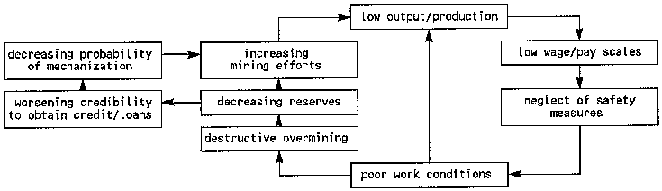
For many developing countries throughout the world, small-scale
mining provides an important source of income as well as a significant source of
foreign monetary exchange.
Table: The Most Important Small-Scale Mining Countries and
Coresponding Minerals Processed (Source: Noetstaller)
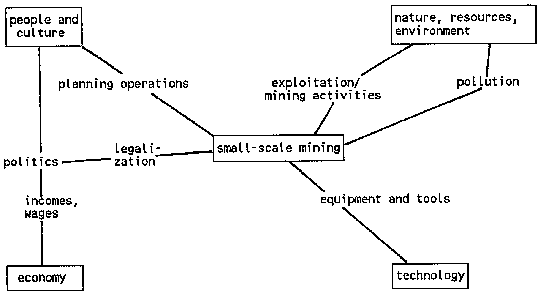
Small-scale mining activities and mine workers have an integral
interrelationship with their surroundings -nature, culture and people,
technology and economy: mining disturbs nature through the depletion of its
natural resources and its deleterious impact on the environment, which it is
dependent upon for its energy and raw materials. Mining on the one hand, and
culture and people on the other, have greatly influenced each other since
prehistoric times: mining activities provided culturally significant metals and
precious stones; mining has always, still to this day, led the way for rural and
technological development. Mining, with its tools and equipment, utilizes this
technology to generate income through the materials it produces. This
interrelationship can be depicted as follows:
Figure
A comprehensive promotion of small-scale mining must consider
the social suitability, assessed needs, profitability and environmental
compatibility; only then can subsequent improvements in the working conditions
of small-scale miners be achieved. In particular, the following measures are
essential:
Table: Catalogue of possible Promotion Measures for the
various Stages of Production
On-site technical and organizational consultation
Research and development
Policy on raw materials
Exploration
Training in: - analysis - deposit geology and
mineralogy - geological mapping
Development of appropriate: - methods of analysis -
instrument kits
National assistance through: - regional exploration
programs - providing suitable maps - service facilities - reducing
bureaucratic requirements
Mining, Exploitation
Training in organization and implementation of: -
exploration activities - safety measures - mining operation -
mecanization - training in the operation of machines
Development of appropriate: - mining methods and
equipment - haulage facilities - safety procedures - ventilation
methods
Implementation of: - security and health control -
technical advice Devising a social security system for small-scale
mining
Beneficiation
Training in: - operation of machines - planning,
operation, optimization and supervision of beneficiation plants - water
management - handling/treatment of chemicals which are hazardous to health
and the environment
Development of appropriate: - crushing and grinding
equipment - beneficiation techniques and machines for small-scale mining,
e.g.:
- mobile systems - heap
leaching - flotation - mechanization of
equipment - analysis of concentrates
Promotion and construction of: - central processing
plants - infrastructure for - transportation - water source facilities
Development of appropriate: - credit schemes for
small- scale mining - organizational structures - advertising
formulation of raw material policy suited to small-scale
mining - debureaucratization - legalizing small mines - government
purchase of products at market prices - management consulting - credit and
tax incentives
The objective of this technical handbook on small-scale mining
is to provide technical alternatives and organizational improvements for
small-scale mining. The goal of these technical innovations is to assist the
small-scale mining industry in numerous ways in solving its problems;
specifically, this can be accomplished by:
- improving operational success by increasing mine output, -
job generation with low specific cost, - improving the quality of social and
economic living conditions, - increasing production through
semi-mechanization1) using regenerative sources of energy, -
improving job safety, and - minimizing environmental impact.
1)Semi-mecanization is defined here as a form of
mechanization in which only individual steps of the total mining and
beneficiation operations are mechyanized (e.g. mechanization of the crushing
process by use of a breaker). Additionally, semi-mechanization also defines an
operation in which the control and feeding of the machine are performed entirely
manually.
The techniques or methods discussed in this handbook are
summarized according to five categories: analysis, surface and underground
mining, beneficiation, and energy supply. In addition to purely technical
solutions, the handbook also provides alternatives for improvement of
organizational problems typical to small-scale mining. In conjunction with that,
historical mining machines, modern small-scale mining equipment, and traditional
techniques were examined within the scope of the investigation. The integration
of the historical, modern and traditional elements serves as the basis here for
the development of an appropriate technology.
This technology is aimed not only at the small-scale miners
themselves. The majority of the mining and dressing techniques identified to be
applicable for small-scale mining, due to their suitability for local
production, offer various approaches to the promotion of crafts and small
manufacturing industries.
The craftsmen and the small to medium-scale manufacturers can
especially profit from the production of machines and facilities for the
small-scale mining industry and resulting diversification of product lines when
- competetive products do not yet exist on the local market, and
- if the local market for mining and processing equipment is
protected from the import market as a result of, amongst others, import duties,
shortage of foreign exchange, and high transportation costs.
Small-scale craftmen or manufacturers associated with the mining
industry can:
- deliver faster and cheaper
- more accurately meet the customers needs
- benefit from the relationship to become independent and
self-organized
- shorten repair and maintenance time, which is especially
important in seasonal small-scale mining operations.
The following results are expected from the application of the
recommended technical and organizational improvements for small-scale mining in
developing countries:
- local production of equipment for appropriate mining
and beneficiation technology by craftshops and small-scale manufacturers. This
would be developed to meet demand within the country itself and, in addition,
could lead to the intensification of a South-South cooperation
- consultancy for small-scale mining operations,
accompanied by installation of appropriate equipment, support for adaption
developments, etc.
- educational measures; training of small-scale mining
personnel, planners and consultants in suitable educational facilities, for
example in the areas of analysis, geology, mineral-deposit geology, work
organization and techniques in mining and beneficiation, work safety, marketing
and economics
- development of new concepts for environmentally and
economically advantageous energy supply systems, such as the use of
renewable energy sources
- development and implementation of environmental protection
measures in small-scale mining (e.g. decreasing the amount of lumber needed
for mine supports, reducing or even eliminating mercury emissions in the gold
amalgamation process, addressing problems of cyanide-leaching in gold-ore
processing, reducing contamination of waste water by, for example, reagents from
flotation processing or slurry effluents from beneficiation operations).
The effects of such a politically-instigated developmental
program would include creating and securing jobs in the non-agricultural sector,
qualifying workers in the mining and craft industries, import-substitution of
raw materials in the industrial, energy, and agricultural sectors, substituting
locally- manufactured for imported machinery and equipment, as well as
contributing to regional development.
As a whole, these measures lead to the internalizing of costs
and income in the areas influenced by mining i.e. the mines themselves, the
craft and manufacturing industries, as well as the suppliers of raw
materials.
Tools for Mining: Techniques and Processes for Small Scale Mining (GTZ, 1993, 538 p.)
A. Analysis
A.1. Definition
A.2. Initial conditions and problem areas
Tools for Mining: Techniques and Processes for Small Scale Mining (GTZ, 1993, 538 p.)
A. Analysis
A.1. Definition
The section on analysis includes the determination of the
chemical and physical properties of soil, rock and ore samples as well as of
concentrates, middlings and tailings from beneficiation processing. The
analytical procedure used here consists of the following four steps:
1. sampling, 2. chemical or physical analysis of sample
material, 3. classification and statistical analysis of data, and 4.
interpretation of the results.
The application of analytical procedures in the small-scale
mining industry are particularly significant for prospecting, exploration,
quality control during mining, beneficiation, marketing and environmental
protection.
A.2. Initial conditions and problem areas
Small-scale mining in developing countries suffers from a lack
of knowledge concerning crude ore reserves as well as product composition. The
situation is worsened by the fact that ihomogeneous mineralization exists,
especially in deposits of sub-volcanic genesis as are characteristic of the
Andean region. As a result, variations in mineralization occur within small
proximities with regard to both geological relationships and mineralogical and
geo-chemical compositions. A good example of this can be seen in Bolivian tin
deposits, where the tin source can be Cassiterite (for chemical composition see
Table), Cylindrite, Teallite or Frankeite (three Sulfostannates) or Stannite.
Knowledge of the entire geological relationship is critical for planning. not
only the mining procedure but especially the beneficiation processing.
The composition of concentrates is frequently not known by the
small-scale mining operators, which can be disadvantageous for selling the
products. Impurities in the concentrates result in lower prices for the product
following high penalty deductions assessed by the buyers or the beneficiation
plant, and further impairing the marketing of profitable by-products. The
Cascabel Mine in Bolivia (Dept. La Paz) serves as an example, which, despite
higher lead, silver and tin contents in its concentrates, is only able to market
its products with great difficulty, suffering large penalty assessments (price
discounts) due to abnormally high levels of mercury contamination. These
mineralization problems occur not only in the primary vein ore deposits, but are
also present in placer deposits; deficient product knowledge is the reason why
valuable platinum contents in alluvial gold deposits (e.g. in Colombia) are not
being mined and consequently not being separately marketed.
Another characteristic problem of small-scale mining in
developing countries is the questionable credibility of the analyses, which, as
a rule, are performed by the buyer himself. Control checks have shown that
results of the analyses are being manipulated to the advantage of the buyer and
to the disadvantage of the small-scale mine operators. Primarily, the silver
contents were given as too low, and the residual moisture levels as too high,
which is difficult to prove in the absence of control measures.
The resulting conclusion is that the small-scale mining industry
needs to implement its own control program. In addition to quality control
during mining (grade control) and beneficiation and marketing planning,
analytical procedures suitable for small-scale mining are also important for
prospecting and exploration activities.
The use of centralized analytical methods becomes inconvenient
or even impossible for small-scale mining due to the location-dependency of
stationary analytical techniques, and the lack of infrastructure in the
remotely-located, isolated small-scale mining operations.
The need exists within the small-scale mining industry for a
simple, portable analyitical procedure. The main criteria should include low
cost and quick performance with limited equipment and time requirements while
avoiding unnecessary measuring precision. The extent to which the analytical
results are representative and are reproducable is determined more through the
quality and preciseness of the sampling rather than the application of the most
optimal method of analysis. An analysis which is precise to several places
behind the decimal point is worthless when an improper sampling procedure
results in inaccurate figures in front of the decimal point.
The lack of simple analysing procedures for smallscale mining is
not limited just to developing countries; this is an area calling for
research-anddevelopment efforts. A.2.1
SAMPLING
The sampling procedure is of primary importance for the
technical planning of mining and beneficiation operations. However, a very
precise and exact analysis is of no value if the sample being analyzed is not
representative. A sample is representative of its original geologic environment
only when the same chemical, mineralogical and physical relationships
characteristic of the specific geologic area are exhibited in the sample. These
relationships are defined by the mineral or element distribution, humidity,
granulation and grain-size distribution, permeability, etc. When a waste dump,
mineral deposit or beneficiation product is analyzed, it is not possible to
examine the entire dump or deposit, or the total product quantity, but only
portions of the whole. Proper conclusions can only be made from these sampled
portions when they are representative of the whole.
In the testing of a pile of crude ore, for example, it is not
sufficient to take only one chunk of ore from the pile, which may be
representative of only the country-rock or the mineralization itself. An
analysis of this sample alone would result in erroneous conclusions concerning
the metal-content of the deposit in general. Several sampling techniques which
consistently produce representative results are discussed below:
Bulk sampling is employed for the sampling of loose
fine-to-coarse-grained materials, such as in the analysis of tailings, waste
dumps, products, and crude ores. Numerous smaller samples are taken from a
number of various arbitrary locations throughout the material pile without
preference to any particularly richer or poorer regions. The sampling procedure
should not only include numerous different sample locations but should also
ensure that the grain-size of the samples also vary, in that samples of the
finer fractions and the fines are also collected along with the large pieces of
ore. In so doing, the sample volume or quantity should always be at least ten
times greater than that of the largest individual sample in order to assure that
the effects of classification, whether from deposition in the pile or from
selectivity during blasting, are statistically compensated.
Channel sampling is a method of sampling exposed in-situ
ore-bodies. In this procedure, sample material is obtained from a groove,
constant in width and depth, cut into the rock over a specific length, for
example from the hanging wall to the foot wall across the width of the face
during drifting; for example, a slit 10-cm in height and 5-cm in depth is cut
out along the entire stope width with the sample material being collected on a
tarp spread on the roadway floor below.
In-situ ore bodies can also be tested by grab sampling.
Over the affected sample area, for example the area of the face, numerous
equally-sized samples are randomly taken by hammering, digging or prying off
loosened chunks without any locational preference for richer or poorer zones of
mineralization. This sampling method is considerably easier to carry out than
channel sampling, especially in hard ore bodies.
Cuttings-sampling recovers sample material from the
washed drill dust or drill cuttings which are produced during drill-and-blast
drifting and mining. As a result, the collected sample material originates not
just from exposed surfaces, but rather represents a three-dimensional sampling
area when an entire drilling-grid is sampled. An additional advantage of this
method is that the sample material already exists in a finely-comminuted form.
In order to avoid systematic causes of errors, sampling should
always be conducted by only one and the same person.
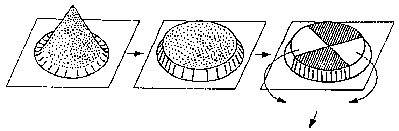
Fig.: Manual quartering of sample
material by mixing, coning, mixing, flattening, quartering, and discarding of
two opposite-lying quarters. Source: Schroll
For further treatment larger-sized samples are crushed and
subsequently quartered. This is performed by heaping the crushed sample material
into a cone, thoroughly mixing it several times via shovelling, and again
heaping it into a cone by pouring. The cone is then pressed or stomped flat, and
the resulting flat cone base is divided into four equal segments. Two of the
quarters, located opposite one another, are analogously processed further, while
the remaining two quarters are discarded. This procedure is repeated as often as
required until the desired sample quantity has been reached. The conical pouring
of the sample material assures the homogeneity of the sample.
The homogeneity of ores, alluvial deposits, tailings or other
mined waste, and the degree to which the samples are representative, is
particularly important where the element or mineral-content is low. This occurs
in discrete aggregates, where the valuable mineral exists as separate grains
independent of the mineralized matrix. An important example is gold. Gold
analysis demands values of a magnitude of less than 1 g/t. Gold particles can
appear as gold glitters or nuggets with individual weights of up to more than 1
9. If, for example, one ton of crude ore which has only a single 1-9 gold nugget
is analyzed by using 100kg of sample material which happens to contain this
nugget, the results will indicate 10 9 of gold/l, which of course is too high.
Statistically, in 9 out of 10 cases the nugget would not be contained in a
100-kg crudeore sample, so that the gold content is then assessed at 0 g/t. This
effect is known as the nugget effect and requires, in such cases, multiple
samples of large quantities. The more nonhomogeneous the sample material, the
higher the number of samples required in order to obtain a statistical median
value which approaches the true value for the material as a whole. A.2.2 MINERALOGICAL
EXAMINATION
Under certain conditions, an optical measuring or visual
estimation of the ore content underground can serve as a substitute for an
analysis. The prerequisites for this are:
- a relatively high proportion of ore minerals in the total
material, since only then is the measured or estimated value of sufficient
accuracy, and
- high visibility of the ore mineral under the conditions of
examination. This requires clean working faces or sampling surfaces, perhaps
involving the use of artificial methods to improve visibility, for example with
ultra-violet lamps to detect mineral luminescence.
The visual evaluation is significant in lead-zinc mining in
hydrothermal deposits with classic vein patterns. As a rule, testing is combined
in this case with geological mapping of the hanging or footwalls. In so doing,
the total width of the wall and the width of the ore veins are measured onto one
profile. The profile must run vertically along the strike and dip of the vein;
otherwise the values appear unrealistically high. If the profile is divided into
several fragments, the sum of the individual vein thicknesses can be determined
(for example, 25 cm galena, 15 cm sphalerite over a thickness of 175 cm). From
this information, the volumetric proportion of the various ore minerals can be
calculated. When the densities of each ore mineral and host rock are included,
the total weight proportion of the ore minerals can then be established. With
this information, and the additional knowledge of the metal content in each ore
mineral, the metal-content distribution (% by weight) of the sampled profile can
be determined. The incorporation of correction factors to account for mineral
intergrowths, etc., can increase the accuracy of this method. This form of
sampling or testing has proven itself even in highly mechanized operations in
industrialized countries where it competes against modern procedures, such as
portable X-ray fluorescent analysis.
Another mining sector which employs optical evaluation is
scheelite mining, where the mine face is irradiated with an ultra-violet lamp
which induces fluorescence of the scheelite.
As is true for sampling procedures, a high degree of accuracy in
the optical test results can only be attained through disciplined work
procedures and a great deal of experience. A.2.3 ADVANTAGES OF MINIMIZING
ACCURACY
All analysing procedures and evaluation methods exhibit a linear
relationship between degree of accuracy and the cost of analysis, or, in other
words, the more accurate the analysis, the more complex the equipment and the
higher the costs. The lower the detection limit of the analytical method, i.e.
the smaller the analyzed value is, the more expensive the analysis will be.
Looking at this fact, it is absolutely necessary from an economical standpoint
that the small-scale mining industry employs the cheapest method of analysing
available within the desired accuracy and metal-content limits. A.2.4 DETERMINATION OF ELEMENT
DISTRIBUTION IN RAW ORE AND CONCENTRATES
Lack of knowledge about the contents of the different elements
in raw ore, mine waste and concentrates is frequently the cause for the
inefficient or uneconomic performance of small-scale mining operations. As a
rule, only the contents of the desired metals in the ore and concentrate are
examined. Consequently, the causes for undesired metal contents in the products,
and subsequent penalty assessments, are not known by the small-scale miner.
Additionally the accounting statements from the ore buyer do not explicitly
indicate the reasons for penalty deductions. Commercially marketable byproducts
also remain unidentified.
A number of various contaminating metals and elements which may
be present in the mine products lead to penalties, assessed by the smelters in
the form of price reduction, when the content of these metals exceed a maximum
tolerance level. These elements, their maximum tolerance limits, and the penalty
amounts are established by the smelting standards, varying according to smelting
process, market situation and buyer. Consequently, a definite statement
concerning these elements and tolerance limits cannot be made; however, as a
general reference, the following table lists some critical elements which are
deleterious to non-ferrous metal ore concentrates:
As a rule, non-ferrous metal smelters penalize:
Bi
In almost all concentrates
Hg
in almost all concentrates
S
in concentrates of valuable oxide minerals
As
in Pb-Ag-concentrates
Cu
in Pb-Ag-concentrates
Cd
in Pb-Ag-concentrates
Se
in almost all concentrates
Penalties can lead to a considerable decrease in profit for
small-scale mining operations. Therefore, knowledge of the element and
trace-element distribution should be obtained, as much as possible, before
initiating any mining activities or planning the beneficiation plant in order to
establish a marketing strategy.
Similar to the deleterious metals, element contents which would
be worth recovering and marketing in the form of by-products are also often
overlooked; for example, zircon sand from alluvial deposits, gold-containing
pyrite and arsenopyrite from complex sulphide veins. Here, as well, a knowledge
of the element distribution prior to the start of any mining activities is
crucial in order to formulate an optimal marketing strategy.
The practice of performing complete analyses on a concentrate
sample and on a mixed raw-ore sample, conducted by a competent laboratory for
the purpose of determining the contents of all relevant metals, trace-elements
and cations, should become standard procedure for the small-scale mining
industry. Governmental support of these needs, for example by providing
inexpensive analyses, would significantly contribute to promoting the
small-scale mining industry.
The performing of mineral analyses also serves an important
function from an environmental-protection viewpoint by identifying
environmentally-damaging components such as sulfur in coal, residual mercury in
gold tailings, cyanide and arsenic contents in mining wastes, etc. A.2.5 DETERMINATION OF THE
VALUABLE-MINERAL SOURCE
In addition to a purely geochemical examination of the raw
materials, a mineralogical knowledge, especially of the valuable-mineral
sources, is of major priority in small-scale mining. Since beneficiation
processing in small-scale mining usually leaves the material components of the
minerals unchanged, this identification of the valuable-mineral source is
particularly important for planning and marketing. This can be accomplished
through microscopic examination of polished sections, which enables experienced
microscope analysts to quickly and easily semi-quantitatively recognize
segregations, trace element minerals, etc.
The question, for example, of whether silver appears as a silver
mineral or as a lattice element of lead or zinc minerals can strongly influence
the beneficiation, marketing and profitability of a mining operation.
Equally important is the mineralogical composition of the raw
material in primary gold deposits, in which the gold can occur as free gold or
bound to pyrite or arsenopyrite as "refractory ore".
Whatever the situation, it is essential that the major ore
minerals can be marketed. Some ore deposits produce main valuable minerals which
are sellable only with great difficulty, if at all; such as the complex ore
deposits with spienles sulfades (antimony and arsenic) as the metal source.
One example is the Taricoya Mine in Bolivia, whose raw ore
reserves are relatively promising according to FONEM, as here shown in the
Table:
Pb: 3.45 %
Ag: 379 g/t
Sb: 6.48 %
Au: 7 g/t
However, because the main ore mineral is composed of specular
jamsonite (Pb4FeSb6S14) selling the concentrates is very difficult.
The above example shows that the results of mineralogical
studies play an important role in determining whether or not an ore deposit can
be mined profitably using the simple mining methods characteristic of
small-scale mining. A.2.6 OTHER RAW MATERIAL
STUDIES
In addition to chemical and mineralogical composition, other
characteristic data are also important, depending upon the material, for the
analysis of raw mineral reserves. Examples are:
- ash content' thermal value, sulfur content, caking capacity,
etc. for fossil fuels (coal, peat); - compressive strength of a cube,
cleavability and permeability for construction materials; - swelling
characteristic for certain clays (vermiculite); - weaving characteristic for
asbestos; - coloration for pigment raw materials (barite, kaolin); - grain
sizes for many raw materials (large grain size for graphite and mica, fine grain
size for kaolin; - hardness for grinding material (corundum, garnet).
The following table presents a list of essential ore minerals
including primary physical characteristics and types of veins and host rocks.
Table: Characteristics of Ore Minerals including Vein Types,
Gangue or Matrix, Asociated Minerals and Host Rocks:
Name
Composition
Content of valuable minerals
Density
Tennnacity 1)
Ordinary lead-zinc mineralization:
galena
PbS
Pb: 86.6 %
7.2-7.6
4
sphalerite
ZnS
Zn: 67.0 %
3.9-4.1
2
wurtzite
ZnS
Zn: 67.0 %
4.0-4.1
2
greenockite
CdS
4.8
*
cerussite
PbCO3
Pb: 77.5 %
6.4-6.6
1
anglesite
PbSO4
Pb: 68.3 %
6.3-6.4
1
smithsonite
ZnCO3
Zn: 52.1 %
4.0-4.5
2
Mixed lead-silver-zinc-gold mineralization:
bournonite
CuPbSbS3
Pb: 42 %
5.75.9
3
boulangerite
Pb5Sb4S11
Pb: 55 %
5.9-6.5
2
jamesonite
Pb4FeSb6S14
Pb: 40 %
5.6
4
tetrahedrite
Cu12Sb4S13
Ag: up to 19 %
4.6-5.1
2
free silver
Ag
Ag: up to 100 %
10.1-11.1
6
stephanite
Ag5SbS4
Ag: 68 %
6.2-6.4
2-4
argentite
Ag2S
Ag: 87 %
7.2-7.4
6
proustite
Ag3AsS3
Ag: 65 %
5.6
2
pyrargyrite
Ag3SbS3
Ag: 60 %
5.8
2
petzite
Ag3AuTe2
Ag: 41.8 %
Au: 25.4 %
8.7-9.1
5
free gold
Au
Au: up to 100 %
15.5-19.3
6
copper minerals:
free copper
Cu
Cu: up to 100 %
8.5-9.0
6
covellite
CuS
Cu: 66.5 %
4.6-4.8
4
chalcocite
Cu2S
Cu: 79.9 %
5.5-5.8
4
bornite
Cu5FeS4
Cu: 63 %
4.9-5.3
2-4
chalcopyrite
CuFeS2
Cu: 34.7 %
4.1-4.3
3
enargite
Cu3AsS4
Cu: 48 %
4.4-4.5
2
cuprite
Cu2O
Cu: 88.8 %
6.1
2
malachite
Cu2(OH)2CO3
Cu: 57 %
4.0-4.1
azurite
CU2(OH/CO3)2 Cu: 55 %
3.8
2
tin minerals:
cassiterite
SnO2
Sn: 78.1 %
6.8-7.1
2
teallite
PbSnS2
Sn: 30%
6.4
4
franckeite
Pb5Sn3Sb2S14 Sn: 17
%
59
4
stannite
Cu2FeSnS4
Sn: 27.5 %
4.3-4.5
2
antimony minerals:
antimonite
Sb2S3
Sb: 71.4 %
4.6-4.7
4
antimonochre
Sb2O3(H2O)
Sb: var.
5.6-6.6
**
bismuth minerals:
free bismuth
Bi
Bi: up to 100 %
9.7-9.8
2
bismuthinite
Bi2S3
Bi: 81 %
6.8
4
bismuthochre/bismite
Bi2O3
6.7-7.5
**
tungsten minerals:
scheelite
CaWO4
W: 63.8 %
6.1
2
wolframite
(Fe,Mn)WO4
WO3: 76 %
7.1-7.5
2
ferberite
FeWO4
WO3: 76.4 %
7.5
2
huebrerite
MnWO4
WO3: 76.6 %
7.1
2
tungstic ochre/tungstite
WO2(OH)2
4.0-4.5
**
additional and accompanying minerals:
realgar
As4S4
As: 70 %
3.6
orpiment
As2S3
As: 61 %
35
molybdenite
MoS2
Mo: 60 %
4.6-5.0
pyrite
FeS2
5.0-5.2
pyrrhotite
FeS
4.6-4.8
haematite
Fe2O3
4.9--5.3
arsenopyrite
FeAsS
5.9-6.2
limonite
FeOOH
aprooox.4
jarosite
KFe3((OH)6/(SO4)2)
3.1-3.3
argentojarosite
AgFe3((OH)6/(SO4)2)
?
plumbojarosite
PbFe6((OH)6/(SO4)2)
?
1)Tenacity characterizes brittleness or breaking
characteristics of the mineral
Explanation of tenacity/Remarks:
1
very brittle
2
brittle
3
less brittle
4
mild
5
ductile
6
very ductile
*
exists as fine intergrowths
**
exists in pulverized form due to weathering
1)
Tenacity characterizes brittleness or breaking characteristics
of the mineral
Table: Characteristics of Ore Minerals including Vein Types,
Gangue or Matrix, Associated Minerals and Host Rocks:
Name
Composition
Density
quartz
SiO2
2.6-2.7
calcite
CaCO3
2.6-2.8
siderite
FeCO3
3.7-3.9
dolomite
CaMg(CO3)2
2.8-2.9
fluorite
CaF2
3.1-3.2
barite
BaSO4
4.3-4.7
vivianite
Fe3PO4 8H2O
2.6-2.7
apatite
Ca5(F,Cl,OH)(PO4)3
2.9-3.1
epidote
(Ca2Fe)(AI2O)(OH)Si2O7SiO4
3.4-3.5
tourmaline
Complex boron-hydroxylic silicate
3.0-3.1
orthoclase
(K,Na)AISi3O8
2.5-2.7
plagioclase
(Ca,Na)(Al,Si)4O8
2.6-2.7
alunite
KAI3(OH)6(SO4)2
2.6-2.9
HOST ROCK
Name
Density
granite
2.6-2.7
diorite
2.8-2.9
syenite
2.6-2.8
dacite
2.6-2.7
andecite
2.5-2.6
trachyte
2.6-2.8
basalt
2.7-3.2
porphyry
2.7-2.9
gneiss
2.4-2.7
quartzite
2.3-2.6
sandstone
2.2-2.5
clay shale
2.6-2.7
Tools for Mining: Techniques and Processes for Small Scale Mining (GTZ, 1993, 538 p.)
Technical Chapter 1: Analysis
1.1 Blow pipe assaying
1.2 Pycnometer
1.3 Manual magnetic separator by Dr A. Wilke
1.4 Quick-test-strips merckoquant
1.5 Rifflebox
Tools for Mining: Techniques and Processes for Small Scale Mining (GTZ, 1993, 538 p.)
Technical Chapter 1: Analysis
1.1 Blow pipe assaying
General Ore Mining Analysis
germ.:
Lotrohrprobierkunde
span.:
analisis con soplete
Manufacturer:
Krantz
TECHNICAL DATA:
Dimensions:
approx. 20 - 25 cm long, pointed nozzle with 0.4 - 0.5 mm jet of
platinum or nickel
Blowpipe analysis is a multiple-step procedure for qualitatively
or semi-quantitatively determining the individual elements contained within a
small quantity of sample. The process involves dry thermal procedures, sometimes
in combination with wet testing methods. The sample is heated in an open or
half-closed pipe, melted to a bead with borax
(Na2B4O7 × 10 H2O) or
microcosmic salt (NaNH4HPO4 × 4 H2O) under
oxidizing and reducing conditions, burned directly in a flame to determine flame
color, or heated with coal under oxidizing and reducing conditions. A small
flame torch serves as the energy source, which is intensified by blowing into it
through a tapered tube, the blowpipe. The discoloration of smelt, sublimate,
corona or flame in each particular assay or experiment, together with any
distinct odors and/or reactions which may appear, provide Information on the
chemical composition of the sample.
REMARKS:
Of importance is a waterbag, which is an extension of the pipe
for collecting condensed water, to prevent It being expelled during blowing.
Lamps with cotton wick and rape-oil, paraffin, tree oil and
mixtures of alcohol (spirits) with gasoline (benzine) or oil of turpentine are
suitable.
Polished pieces of charcoal of approx. 30 × 30 × 40 mm
are employed as a base. If charcoal is not available, the foundation or base can
be prepared using coal dust and starch paste.
In 1670, Erasmus Bartholin conducted the first scientific
research on the use of the blowpipe. A homogeneous air current can be achieved
during blowing by connecting the blowpipe to an available compressed air line.
If this is not possible, a pumped-up tire, for example from a wheel barrow or
automobile, can be used as a compressed air tank.
The advantages of blowpipe analysis are the simplicity of both
the determination and the required equipment. Samples can be analyzed very
quickly and comparatively accurately, which is particularly important in an
operating mine. Special sample preparation, such as extensive crushing, etc. are
not necessary.
The analysis methods, which appear complex in their description,
can be greatly simplified when standard assays are conducted on known metals.
SUITABILITY FOR SMALL-SCALE MINING:
Semi-quantitative and qualitative analytical technique requiring
simple and low-cost equipment; demands, however, a highly-experienced operator.
In metal mining, the blowpipe analysis is suitable for grade control and for
assaying during prospecting and exploration.
Fig.: View of blowpipe with
changeable precious-metal nozzle (above left). Source: Frick-Dausch
Table: The primary chemical reactions of blowpipe analysis.
Source: Frick-Dausch
A. Heating of the substance in a half-closed pipe
1. A distillate develops: water.
2. A pure white sublimate develops: Salts of ammonia:
simultaneous occurrence of NH3 odor. Mercury chloride: melts, evaporates and
condenses in a needle-like form. Mercury all-chloride: sublimates without
melting; hot sublimate is yellow, cold is white. Arsenic tri-oxide:
fine-crystalline white sublimate. Antimony tri-oxide: melts to a yellow
liquid and sublimates at higher temperatures.
3. A coloured sublimate develops: Arsenic and high-grade
arsenic ores: mirror of arsenic, garlic odor. Antimony: mirror of
antimony. Arsenic sulphides, arsenopyrite: hot sublimate is dark, cold varies
from yellow to red. Antimony sulphides: at higher temperatures; hot sublimate
is black, cold is red-brown. Sulphur: melts easily, condenses as a yellow
sublimate. Mercury sulphide: black sublimate which when rubbed with a match
changes only very slowly into a red modification. Mercury grey sublimate from
metallic mercury.
4. A gas develops: Oxygen: from chlorates and
peroxides. Carbon all-oxide: from carbonates and bi-carbonates.
CO2-gas put into lime water produces a white precipitate, which then
dissipates when acidified with HCI, contrary to CaSO4. Ammonia:
from salts of ammonia Hydrogen sulphide: from water-bearing sulphides.
B. Heating in a half-closed pipe with
potassium-bisulphate Nitrate and nitrite form
NO2. Bromides emit red-brown bromine vapors. Iodides release
violet-colored iodine vapors. Chlorides form hydrogen chloride.
C. Heating in a pipe open on both sides (calcination
test) Free sulphur and metal sulphides form SO2. Tellurium
emits white smoke, which partially condenses. Selenium sublimates black, on
the upper edge often reddish, Selenium odor. Arsenic substances emit white,
volatile, cristalline arsenic tri-oxide.
D. Bead test
a) Borax bead: borax Na2B4O7 10
H2O
Borax bead
Coloring element
Oxidation bead
Reduction bead
hot
cold
hot
cold
Mn
violet1)
red-violet
colorless
colorless
Ni
violet (recognizeable only for a short time)
red-brown
cooolorless or
colorless or grey2)
grey
Co
blue
blue
blue
blue
Cu
green
blue-green to light blue
colorless
sealing-tax red opaque3)
Vd
yellowish
green-yellowish
brownish
lllight greenish
Cr
dark yellow to red
green
green
green
U
yellow-red
yellowish
green4)
green4)
Mo
yellowish5)
colorless
yellow
light brown-yellow
Wo
yellow to colorless
colorless
yellow
light brown-yellow
Ti
yellowish
colorless
yellow-brown
yellow-brown
Fe
yellow-red
yellow to colorless
greenish
greenish
1) black when solution is too
strong 2) from finely-divided metallic nickel 3)
easy to produce with tin, highly characteristic 4) when saturation
is too strong and by whirling, greenish-black and muddy 5) only in
a very pure oxidizing flame completely free of reducing components
b) Phosphor salt test; phosphor salt (= microcosmic salt)
NaNH4HPO4 × 4H2O
Phosphor salt bead
coloring element
oxidation bead
reduction bead
hot
cold
hot
cold
Mn
violet
violet
colorless
colorless
Co
blue
blue
blue
blue
Cu
green
blue-green to light blue
colorless to greenish
sealing-wax red opaque1)
Mo
yellowish2)
colorless2)
brownish-green
green
Cr
red, then dirty green, finally clear green
as with oxidation bead, but colors more intense
Vd
dark yellow
yellow
brownish
green
U
yellow
yellow-green
dirty green
green
Ti
yellowish to colorless
colorless
yellow
violet3)
Wo
yellowish to colorless
colorless
dirty green
blue4)
Ni
reddish-brown
yellow to reddish-yellow
reddish to yellowish with SnCl2 grey and muddy
Fe
red-yellow, then green-yellow, finally brownish
like oxidation bead, but colors less intense
1) with the help of tin 2) only in a
very pure oxidizing flame completely free of reducing
components 3) calcined with a trace of ferro sulphate, blood red;
very sensitive! 4) with a trace of ferro sulphate, blood red; also
very sensitive (e.g. wolframite!). With SnCl2 and without
Fe-additive, dark green.
E. Flame coloration
Yellow flame:
sodium
Reddish-yellow flame:
calcium
Red flame: lithium;
strontium
Differentiation between Li and Sr: LiCl is more volatile
than SrCI2. LiCI develops at once and does not last. Green flame:
barium: yellowish-red lasting coloration. Boric acid:
very sensitive when sample is mixed with CaF2 and
H2SO4; evaporates as BF3 Copper nitrate:
pure green (copper chloride: blue). Phosphoric acid: light bluish-green,
especially after moistening the sample with
H2SO4. Blue flame: copper chloride.
Selenium: selenium odor. Violet flame:
potassium; rubidium; caesium. Separation of Na and K:
viewed through a cobalt glass, the light from Na fades, and the potassium flame
appears purple-violet.
F. Sample with cobalt solution
The sample is soaked with a cobalt solution (1:10) and heated on
a magnesia stick in the oxidizing flame. Blue coloration: silicic acid and
silicates: light blue. alumina: dark blue
(Thenard's-blue). Green coloration: zinc oxide, pure green
(Rinnmann's-green). Tin oxide: blue-green.
G. Soda-saltpeter-melt
Light yellow melt: chrome. Light reddish-yellow melt:
uranium. Vanadium produces a very
pale-yellowish-colored melt; colorless when cold. Ferro oxide does not go
into solution. Greenish-blue melt: manganese. Testing for:
molybdenum, tungsten, vanadium, columbium, titanium The
soda-salpeter-melt is rubbed with water in a flask filtered, and the filtrate is
acidified with H2SO4. A piece of metallic zinc is soaked
in the solution for a longer period of time. Tungsten: The
solution slowly turns sky-blue Molybdenum: solution slowly turns
brownish-black. Vanadium: solution becomes light blue, then later green. If
the sulphuric solution is treated with hydrogen peroxide, vanadium causes a
yellow-brown coloration. Columbium: the dry mass is treated with concentrated
H2SO4. When cooled, the solution is poured into a
threefold volume of water and zinc is added. In the presence of columbium the
solution first becomes blue and then changes to a turbid
brownish-black Titanium: present if a white powder, which slowly turns
violet, precipitates out when an aqueous solution of the melt is
acidified. Special reaction for titanium: potassium bisulphate bead is
dissolved in water and hydrogen peroxide is added; if the solution becomes
brownish-yellow, titanium is present. To test for manganese, alcohol is added
to an aqueous solution of the melt and the precipitated manganese dioxide is
filtered off. In the presence of chrome, testing for the other metals according
to the described method is not possible.
H. Testing on Coal
1. Sublimates
Yellow sublimate: hot - dark yellow lead, bismuth (often
bead). White sublimate: hot - yellow zinc; when moistened with cobalt nitrate
and strongly annealed: green.Blue sublimate: cadmium. White sublimate,
adhering to sample: tin (involatile). White sublimate: hot - yellow.
molybdenum. When a reducing flame is briefly held over a molybdenum sublimate,
perpendicular to longitudinal direction of coal, a dark blue band of
Mo3O2 develops in the middle of the white sublimate.
Highly characteristic. Brownish sublimate: silver (silver bead). Grey
sublimate and odorous fumes: selenium. White sublimate and arsenic odor:
arsenic. White sublimate, slightly volatile and thick fumes: antimony.
2. Reduction with soda
White bead: silver, lead, bismuth, antimony, tin.
Colored bead: copper, gold.
Grey metallic spangle: iron, nickel, cobalt (magnetic) and
platinum metals (non-magnetic). Important special samples: sulphur (Hepar
test). The substance is melted with soda under reducing conditions and placed on
a thin sheet of silver. After moistening, a brownish-black coating develops on
the silver sheet in the presence of sulphur.
Flourine: heating of the sample substance in a lead crucible
with SiO2 and H2SO4 (Browning test, see below).
Tellurium: when tellurium ores are slightly warmed with
concentrated H2SO4, the sulphuric acid turns red.
Uranium: the sample substance is first melted with soda, then
with saltpeter; the melt is mixed with water to a pulp, which is then placed on
a filter; acetic acid and solution of ferro potassium cyanide are added, which
produces a brownish-red spot in the presence of uranium.
Silicic acid and flourine: Browning Test: the sample is mixed
with calcium chloride and sulphuric acid to a pulp in a thimble-shaped lead
crucible which is then covered by a lead lid with a hole in the middle. A wet
piece of black filter paper (available by Schleicher and Schull) is placed over
the hole, and a second, standard filter paper (wet and folded) is placed on top
to keep the black paper wet. Following warming of the crucible in a water bath
for about 10 minutes, silicon flouride escapes which hydrolytically dissociates
during deposition of white silicic acid when it comes in contact with the
moisture of the black filter paper. Upon completion of testing, the presence of
silicic acid in the sample is revealed by a white spot on the black filter paper
where it covers the hole in the lid. Very characteristic and highly sensitive.
The procedure can also be used to test for flourine by mixing the sample
substance with silicic acid and sulphuric acid. Boric acid can be disruptive
since it similarly
volatilizes.
1.2 Pycnometer
General Ore Mining Analysis
engl.:
specific gravity bottle
germ.:
Pyknometer
span.:
picnometro (densimetro)
TECHNICAL DATA:
Dimensions:
available in volumes from approx. 10 ml to 1,000 ml
Weight: 50 ml-size:
16 grams
Extent of Mechanization:
not mechanized
Mode of Operation:
intermittent
Throughput/Performance:
approx. 10 - 12 measurements/h
Operating Materials:
Type:
water
ECONOMIC DATA:
Investment Costs:
30 to 100 DM
Operating Costs:
predominantly labor cost
Related Costs:
weighing scale with minimum accuracy of ±0.1g, cost approx.
200 DM
CONDITIONS OF APPLICATION:
Operating Expenditure:
low |———|————| high
Maintenance Expenditure:
low |———|————| high
Personnel Requirements:
experience in collecting and evaluating test data
Type of Analysis:
quantitative/qualitative
Accuracy of Results:
dependent weighing accuracy.
Time Requirement:
approx. 5 min.
On-site Performability:
pycnometric determination of density through the use of
mechanical scales can easily be performed in the field, especially when at least
10 g of material is available for testing. The weighed sample for determining
density should be dry and must be insoluble in a medium (e.g. water).
Operating Experience:
very good |———|————| bad
Environmental Impact:
low |———|————| very high
Suitability for Local Production:
very good |————|———| bad
Precision instrument made of glass which cannot be manufactured
locally; the mechanical scale also cannot, in most instances, be
locally manufactured.
Lifespan:
very long |———|————| very
short
OPERATING PRINCIPLE:
The pycnometer determines the density or specific weight of
insoluble mineral fragments or powder. It is a carefully calibrated, very
precise volumetric measuring apparatus. Three weighings to determine the density
are taken as follows:
- with the dry, empty container (tare) -
with the container filled with dry mineral sample and - with the container
including sample filled with water in the absence of bubbles
The density is determined according to the following formula:
SPECIAL APPLICATIONS:
Determination of mineral density (mineral-identification method)
and determination of beneficiation product densities.
REMARKS:
The accuracy of determination is particularly high when the
differential quantities to be measured are not too small, such as when the
pycnometer is half-full with sample material.
This measuring method, which measures density to an accuracy of
±0.1 g/m³ and therefore meets mining requirements, necessitates only
minor equipment expenditures. A mechanical weighing scale accurate to ±0.1
g has been proven sufficient and enables this method to be applied in the field.
SUITABILITY FOR SMALL-SCALE MINING:
Pycnometer assaying is a simple and accurate method for
determining density and is therefore well-suited for the evaluation of product
quality and for mineral
determination.
1.3 Manual magnetic separator by Dr A. Wilke
Metal Mining General Analysis
germ.:
Handmagnetscheider nach Dr. Wilke
span.:
separador magnetico manual segun Dr. A. Wilke, separador
magnetico manual
Producer:
Krantz
TECHNICAL DATA:
Dimensions:
Dia: approx. 3 cm, H: approx. 8 cm
Weight:
approx. 150 g
Externa power needs:
none, due to permanent magnet
Throughput/Performance:
for example, 30 min required for the quantitative separation of
a 5-g heavy-mineral sample into five portions of differing magnetic
susceptibility
Technical Efficiency:
relatively high selectivity
Operating Materials:
none .
ECONOMIC DATA:
Investment Costs:
approx. 200 DM
Operating Costs:
no operating materials, therefore only labor costs
Related Costs:
for quantitative determination: weighing scale
CONDITIONS OF APPLICATION:
Operating Expenditure:
low |———|————| high
Maintenance Expenditure:
low |———|————| high
Location Requirements:
none
Sample Requirements:
sample must be dry and dissociated.
Period of Analysis:
several minutes
Accuracy:
quantitative analysis is possible with liberated sample
material. Probability of error ± 10 %
Regional Distribution:
not yet employed in small-scale mining in South America
Operating Experience:
very good |———|————| bad
Environmental Impact:
low |———|————| very high
Suitability for Local Production:
very good |————|———| bad
Under What Conditions:
requires a very strong, homogeneous permanent magnet and good
membrane material.
Lifespan:
very long |———|————| very
short
Bibliography, Source: Manufacturer information
OPERATING PRINCIPLE:
The pocket magnetic separator by A. Wilke is made of a strong,
cylindrical permanent magnet with a cylindrical pole gap which can be moved up
and down in a brass container by means of a pull rod. The container is covered
by a transparent graduated plastic tube with increments in millimeters, and by
means of screwing can be adjusted within this plastic tube to change the height
of the magnetic surface above the sample material being separated. In this way
the separation capability of the magnetic separator is varied, being greatest at
the greatest height and smallest at the smallest height (thus biotite is Just
barely separable).
To perform the analysis, the sample is thinly spread over a
smooth, non-magnetic plate (glass, wood) and magnetically separated over the
entire surface by placing the magnetic separator on the plate. The magnetic
particles are attracted by and adhere to the magnet. The magnetic separator is
then placed on another plate, and the enclosed magnet is lifted by the pull rod,
resulting in the release of the magnetic particles. Starting with the minerals
exhibiting the highest magnetic susceptibility, the magnetic separator can
selectively separate a number of different magnetic fractions. Weighing the
entire sample and the products can provide quantitative results when the sample
material is completely analyzed.
AREAS OF APPLICATION:
Apparatus for selective separation of magnetic components of
mineral sands, ground minerals and ores (beneficiation products). Generation
of monomineralic specimen for microscopic and chemical analysis.
Quantitative determination of composition of mineral mixtures.
Highly magnetic substances which can be separated:
Magnetite, maghemite, franklinite, pyrrhotine; Moderately or weakly
magnetic substances: arsenopyrite, chromite, hematite, ilmenite, limonite,
manganite, wolframite, rhodochrosite, garnet, amphiboles and pyroxenes.
DESIGN INSTRUCTIONS:
In addition to its analytical application, locally-manufactured
pocket magnetic separators can be used in beneficiation for the purpose of
recleaning concentrates, for example to separate out magnetic heavy-mineral
particles from precious metal concentrates. Loud-speaker magnets (strong
permanent magnets), placed in a plastic container and calibrated with distance
washers made of cardboard, paper, wood, plastic or similar material, are
suitable for this purpose.
SUITABILITY FOR SMALL-SCALE MINING:
Pocket magnetic separators are ideally suited for quick
quantitative determination of magnetic mineral contents in raw ores and
beneficiation products.
The simplest magnetic separators are well suited, depending upon
the situation, for recleaning concentrates by removing magnetic
components.
1.4 Quick-test-strips merckoquant
General Ore Mining Analysis
germ.:
Schnellteststreifen Merckoquant
span.:
tire de prueba rapida Merckoquant
Manufacturer:
Merck
TECHNICAL DATA:
Dimensions:
Dia 3 cm, H: approx. 10 cm for 100 test-strips
Weight:
approx. 100 - 150 g
Throughput/Performance:
one analysis per test-strip
ECONOMIC DATA:
Investment Costs:
between 20 and 35 DM/100 quick-test-strips
Operating Costs:
none
Related Costs:
laboratory equipment to bring mineral samples into solution:
mortar, acids, glass flasks and possibly an alcohol burner for quantitative
analyses; analytical balance for samples in an aqueous solution.
CONDITIONS OF APPLICATION:
Operating Expenditure:
low |———|————| high
Maintenance Expenditure:
low |———|————| high
Personnel Requirements:
highly precise weighing scale necessary for quantitative
determination
Location Requirements:
none
Sample Requirements:
sample must be completely dissolved in an aqueous solution.
Duration of Analysis:
several seconds
Accuracy of Analysis:
varies depending upon the type of substances being analyzed;
values for arsenic, for example, are accurate to ±0.1 ppm, for pH-values to
0.5 pH.
Regional Distribution:
not widely distributed to date.
Operator Experience:
very good |———|————| bad
Environmental Impact:
low |———————| very high
depending upon type and degree of sample preparation (sample
solution).
Suitability for Local Production:
very good |————|———| bad
not possible
Bibliography, Source: Manufacturer information
OPERATING PRINCIPLE:
Merckoquant quick-test-strips consist of plastic strips which
have a sealed test-zone on one end impregnated with reagents, buffers and other
compounds. These provide a quick preliminary identification in the range 2 1
mg/l (ppm). Application involves dipping the reaction-zone end into the aqueous
sample solution for 1 to 2 seconds, and then comparing it to a color scale
(included with the strips).
AREAS OF APPLICATION:
For quick determination of metal-contents in water
(environmental impact assessments), raw-ore solutions, beneficiation products,
etc. Control of reagents during simple cyanide leaching of gold.
REMARKS:
The following can be determined:
arsenic:
0.1
-
3 ppm
cobalt:
10
-
1000 ppm
copper:
10
-
300 ppm
molybdenum:
5
-
250 ppm
nickel:
10
-
500 ppm
silver:
0.5
-
10 g/l
zinc:
10
-
250 ppm
tin:
10
-
200 ppm
Total hardness:
4
-
25
pH-value:
0
-
14
Solutions which are too highly concentrated can be diluted with
distilled water until the measureable concentration range is reached.
SUITABILITY FOR SMALL-SCALE MINING:
Highly suitable for environmental impact assessment (water) in
that it provides fast and location-independent analysis and is very simple to
use; unsuitable for raw-material analysis due to substantial difficulties in
sample
preparation.
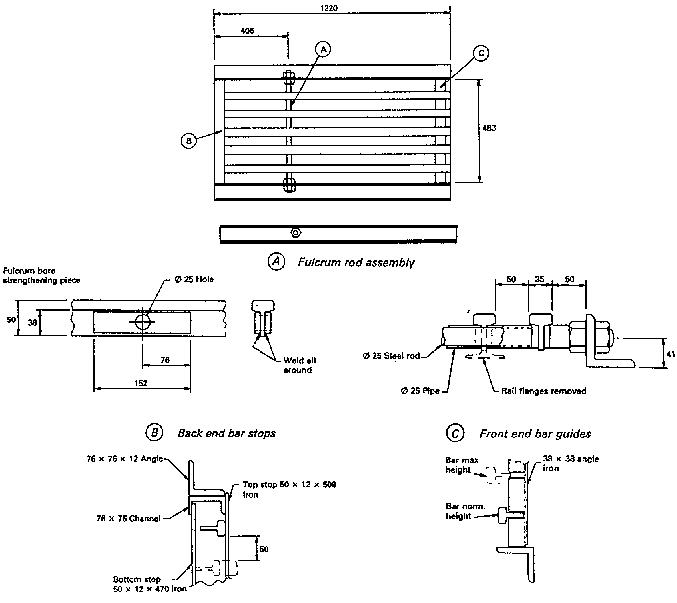
1.5 Rifflebox
Metal Mining General Analysing
germ.:
Riffelteiler
span.:
partidor de muestras acanalado
Manufacturer:
Haver + Boecker, Siebtechnik
TECHNICAL DATA:
Dimensions:
approx. 30 cm H × 60 cm W × 30 cm D
Weight:
approx. 2 - 5 kg depending on thickness of material
External power needs:
not mechanized
Throughput/Performance:
several hundred kg/in
Technical Efficiency:
good representation of sub-samples
ECONOMIC DATA:
Investment Costs:
300 to 1200 DM for equipment manufactured in the FRG; approx.
100 DM when locally manufactured
Operating Costs:
labor costs only
Related Costs:
none
CONDITIONS OF APPLICATION:
Operating Expenditure:
low |———|————| high
Maintenance Expenditure:
low |———|————| high
Location Requirements:
none
Sample Requirements:
sample must be crushed to a size less than half the riffle
width.
Duration of Separation:
very short
Replaces other Equipment:
mechanized sample-divider
Regional Distribution:
already distributed in the laboratories of organizations
involved with small-scale mining.
Operating Experience:
very good |———|————| bad
Environmental Impact:
low |———|————| very high
Suitability for Local Production:
very good |———|————| bad
Under What Conditions:
ordinary metal-working shops
Lifespan:
very long |———|————| very
short
Bibliography, Source: Schroll, manufacturer information
OPERATING PRINCIPLE:
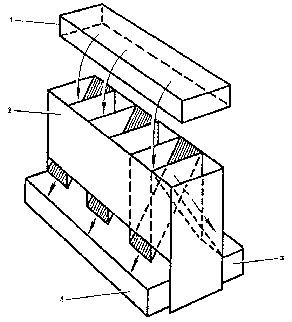
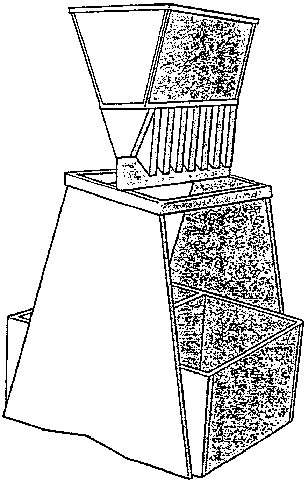
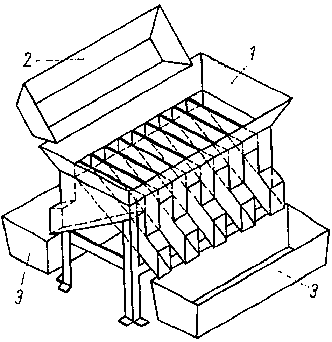
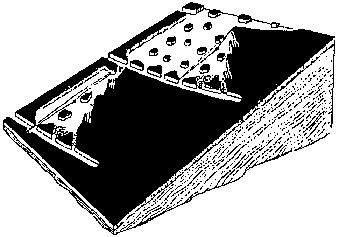
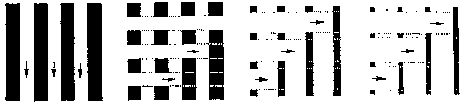
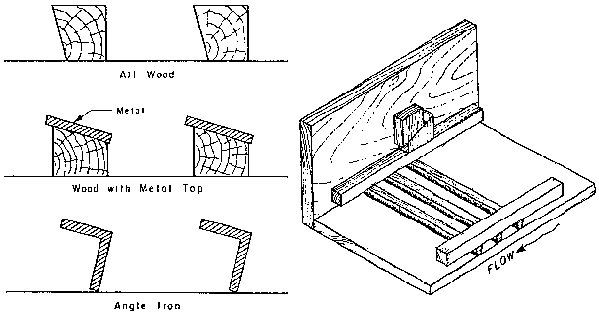
The sample-divider directs the sample material over riffles
which alternately distribute the sample to one side or the other, thereby
guiding it into two separate compartments; the sample material of one container
is then retained for testing, that of the other is discarded.
AREAS OF APPLICATION:
Sample preparation through a stepwise halving of sample material
from individual or composite samples of raw-ores from ore-vein or alluvial
deposits, or of beneficiation products.
REMARKS:
Riffleboxes are very simple dividers which are known for their
success in producing highly representative sub-samples.
SUITABILITY FOR SMALL-SCALE MINING:
Riffleboxes are highly suitable for small-scale mining
application especially since they can be locally manufactured and because they
offer an easily-operable method for improving sample preparation, which
increases the analytical accuracy associated with small-scale mining.
Fig: Physical Principle of the
Rifflebox. Source: Lauer
Fig.: Rifflebox for example
preparation. Source: Armstrong
Fig.: Rifflebox with (1) sample
divider, (2) feed tray and (3) receiving tray, from
Schubert.
Tools for Mining: Techniques and Processes for Small Scale Mining (GTZ, 1993, 538 p.)
B. Underground mining
B.1. Definition
B.2. Existing situation and problem areas
B.3. Organizational measures
B.4 Environmental and health aspects
Tools for Mining: Techniques and Processes for Small Scale Mining (GTZ, 1993, 538 p.)
B. Underground mining
B.1. Definition
Underground mining includes all aspects of raw mineral
extraction by man assisted by the use of technical aids. In addition to the
activities involving mining and haulage, it also includes exploration and
provision of the necessary infrastructure as well as all measures for the
miner's safety. Included among these are:
- drilling
- drainage
- blasting
- ventilation
- loading
- lighting
- haulage
- roof support.
The frequently-used small-scale mining method in developing
countries, characterized as a shallow digging or excavating (cateo), can be
regarded as a transitory form of open-pit mining.
Deposit exploration in small-scale mining in Latin America and
other developing countries is performed using underground mining development
methods (tunnelling), due to the comparatively high cost of core
drilling.
B.2. Existing situation and problem areas
Small-scale mining in the developing countries extracts raw ores
from extremely varying deposit types. The following ore-deposit types can be
considered suitable for small-scale mining methods:
- alluvial or placer deposits,
- oxidation zones,
- magmatic hydrothermal vein ore deposits with defined veins
(which, however, frequently contain complex mineralizations as a result of
extreme telescoping),
- pegmatite veins,
- low-sulphide gold-quartz-veins,
- veins with high-grade gold-containing sulphides (which can be
enriched into a sulphide concentrate by flotation),
- pneumatolytic and metasomatic deposits.
In can generally be stated that in small-scale mining the
individual mineralized parts or excavations are of small dimension. The mine
buildings are sometimes so small that the use of technical improve meets in the
form of standardized, mechaninized mining equipment is impossible. An example of
this is the large tungsten deposit Kami in Bolivia, where numerous small
veinlets and associated difficulties in mechanizing the operation have led to a
predominantly manual extraction of the ore.
Besides the purely technical problems accompanying nonmechanized
mining, small-scale mines, particularly the cooperative mining operations (span:
Cooperativas Mineras), also encounter a multitude of organizational
difficulties, namely;
- inappropriate extracting/ mining
methods, - low degree of division of labor, - lack of coordinated
efforts.
The organizational problems are especially apparent in the
structure devided in "cuadrillas", typically four-man mining teams in the
cooperatives. At the Cooperativa Minera Progreso in Kami, it could be observed
that every cuadrilla in the cooperative was given the right to mine the portion
of the deposit extending above or below of 15 meters drift. This results in
unplanned, irregular and totally varying mining activities which have limited
advance rates due to the lack of ventilation, supports, etc.
These technical and organizational deficits are responsible for
the especially low specific performance rates characteristic of small-scale
mining in developing countries. As a result, many small mines, although rich in
ore, must be classified as economically marginal operations.
These economical inefficiencies lead to further problems
specific to small-scale mining:
- Insufficient safety measures. Deficient
cash availability has caused mine operators to save on expenses, particularly in
the areas of ventilation and support, as well as in supplying safety equipment
for miners.
- The economic problems of miners' families force the women and
children to work in the mines (see photo). While women, due to tradition and
religious beliefs, are only allowed to work above ground, i.e. in the
beneficiation processing activities, children as young as 10 - 12 years old are
already working underground mining the ore. These children frequently work in
extremely small holes which are inaccessible to adult miners.
- The high exploitation costs and related costs incurred in
poorly-organized, manual small-scale underground mining force the operators to
more selectively mine only the high-grade zones in the vein. This screening-out
method of mining (= highgrading) which follows only the rich portions of ore
veins is a form of destructive exploitation which can lead to substantial
macro-economic damages. In areas where poorer deposits become inaccessible or
are abandoned due to destructive exploitation of rich ores, a later mining
becomes technically difficult or if not impossible. Even under changing economic
conditions (as for example higher world market prices for mineral resources),
the deposits that have been destroyed through exploitation mining practices
still may not be mineable. This situation applies only to unorganized
small-scale mining of large deposits; the unique macro-economic value of
small-scale mining lies in its ability to adapt to small deposits which could
not be mined by any other organinized form of mining.
A further goal of the handbook "Tools for Mining" is to help
solve the problems associated with small-scale underground mining. Recommended
work-organization improvements are presented below which can benefit small-scale
mining operators without requiring additional investment costs:
- lowering the cut-off grade, -
extending the life-span of the deposits, - improving work conditions
(increased safety, elimination of child labor practices), - improving mine
productivity, - increasing incomes, and - stimulating the economy through
job
security.
B.3. Organizational measures
B.3.1 USE OF GRAVITY TO
REDUCE HANDLING
Small-scale mining frequently employs inefficient loading and
transport methods. Loose material is rehandled a number of times through
reloading, redumping, relocating. Particularly primitive and unproductive are
the mining methods practiced in the small-scale mining cooperatives where the
miners are organized into small mining teams (cuadrilla) which work from the
haulage level downward. In these mines, hoists are the standard form of ore
transport (see photo, Technical Outline 9.1), sometimes being found every 15 -
20 meters. This is a situation in which changes in mining procedures in order to
increase production, listed below as a three-fold concept, are not only logical
but also necessary:
1. A reorganization which incorporates
division of work duties (job specialization) should be established.
2. A mining procedure should be chosen which employs gravity to
increase the efficiency of loading and transport activities.
3. Shaft haulage should be centralized where possible; this
involves planning and driving of haulage drifts for the transport of raw ore to
the haulage shaft or blind shaft.
A planned loading procedure through the use of loading
platforms, raise chutes and bunkers can significantly increase mine productivity
and reduce loading and transportation costs. Furthermore, a centralization of
shaft haulage can simplify a mechanization of the hoisting equipment. B.3.2 BACKFILL WITH
HAND-PICKED ROCKS
Another method for reducing haulage costs is the hand-sorting of
waste rocks underground for further use as packing or backfill material in the
excavations. In deposits where portions of unmineralized hanging or foot wall
also need to be mined, hand sorting can significantly decrease the volume of
raw-ore to be transported. Although hand-sorting in small-scale underground
mines in developing countries is a frequent occurrence (see photo, bottom), the
sorted-out waste material is not always used in the excavations for backfill,
but rather hauled separately out of the mine and deposited on the surface. A
change in this practice could contribute significantly to lowering transport
costs, improving safety at the mining face and, especially in the small
manually-operated mines, alleviating drift and shaft haulage activities. Aside
from these, a systematic back-filling can also contribute towards improving the
ventilation in the mine, for example by filling in old man (abandoned) workings
and thereby preventing short circuits in the ventilation flow. B.3.3 DIVISION OF LABOR IN
UNDERGROUND MINING
One basic organizational deficiency in small-scale mining is the
frequent lack of work specialization. Especially the cooperatives' "cuadrilla"
work procedures repeatedly lead to difficulties due to the parallellism or
duplication of work performed by these small mining teams. As a result, a
continuous working operation is not possible, and due to economic and
organizational necessities, the work activities are limited to a few critical
areas. Mining, haulage and beneficiation are performed sequentially, and other
essential tasks are negelected for the present time; as a result, work
activities such as development of deposits (even where this is possible
internally inside the ore-body structure), timbering and maintenance of
galleries (see photo) are not performed.
This has the following effects:
- lack of safety in the mining
operations - a steadily worsening
mineral-reserves situation which further lowers the ability of the operations to
receive credits and further impedes potential investment through exploration
funds (e.g. from the Fondo Nacional de Exploracion Minera, FONEM,
Bolivia).
These problems can be countered by a systematic division of
labor in the mining operations. This normally requires, however, that the
existing distrust first be eliminated. This lack of confidence has been the
primary cause of failure so far for numerous projects which attempted to promote
a cooperative work system, despite the fact that a concept incorporating
rotating job responsibilities not only contains components for specialized
training, but also most ideally encompasses the cooperative idea.
Furthermore, a system of work specialization could also
facilitate essential planning and coordination activities such as ventilation,
supply of energy, mine planning and mine safety.
The introduction of work specialization should include the
negociation of personnel salaries based on performance or productivity. B.3.4 COST REDUCTION IN
DRILLING, BLASTING, MAULING, CRUSHING
Depending upon deposit geology and existing mechanization and
equipment both on the surface and underground, possibilities exist for reducing
costs for drilling, blasting, hauling and crushing. The following relationships
regulate potential savings within these cost categories:
fewer drill holes per drilling round (lower drilling costs)
produces coarser material (higher crushing costs), stronger explosives (higher
blasting costs) results in fewer and/or smaller drill holes (lower drilling
costs), electrical milk-second detonator (higher detonator costs) yields
finer-grained material (lower loading and crushing costs).
In mines with defined veins without impregnation zones, coarser
mined materials can make the hand-sorting or backfilling work easier.
Optimization possibilities are dependent on the specific mineralization
conditions and the technical capabilities of the mine operation. B.3.5 SELECTING AN APPROPRIATE
STOPING METHOD
The primary deficiency in underground mining operations is the
lack of mine planning. As a rule, a type of exploitation mining in the form of
irregular excavating or room-and-pillar mining is practiced without any prior
planning. This results in lower recovery, lack of safety, and adverse
macroeconomic effects due to a partial destruction of the deposits. The
different mining methods can be classified according to the type of mine
development and support and roof-control measures as follows:
block type(excavation chamber not open or visible)
block caving with square sets
block caving
In the following sections, mining methods are presented
(according to Stoces) which, under the special conditions of small-scale mining
in the Andean region, contribute to lowering costs, increasing productivity,
improving the use of resources (through higher recovery) and decreasing the
effort required to extract the ore (consequently increasing mine safety).
Pillar mining
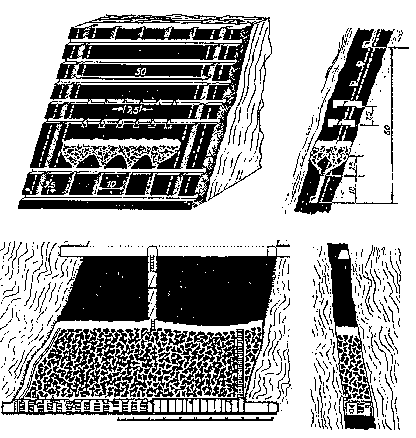
Fig.: Development of pillar mining in
an inclined deposit. Source: Stoces
Pillar mining is characterized by irregular forms and
arrangements of the excavation chambers, determined by the characteristics of
the deposit, the chambers being separated by pillars of varying shapes to
support the roof.
It can be applied in deposits with competent mineral and host
rock.
Room-and-pillar method
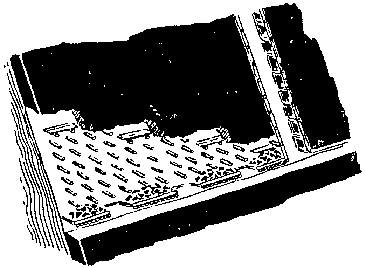
Fig.: Room-and-pillar method.
Source: Stoces
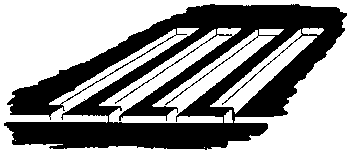
This mining method is characterized by the development of
parallel headings which resemble long drifts in their form and dimensions. The
width of the headings depends upon the competence of the host rock and can reach
10 meters; the height can total up to 3 meters.
The individual headings are laid out either parallel to each
other, or either perpendicularly or diagonally crossing each other. Support
pillars are left between the headings to support the roof. The roof and floor of
the headings usually correlate with the hanging and foot walls of the vein being
mined; in some cases, however, the mineralization may extend beyond the upper
and lower heading boundaries.
This mining method can be applied in flat or slightly-inclined
deposits with competent ore and country-rock.
Panel mining
Fig.: Panel mining. Source: Stoces
Within the deposits, only the narrow, long panels are mined, the
valuable mineral contained in the support pillars between panels is left
unmined. The deposit is normally developed by a main gallery from which other
drifts branch off. These drifts are then widened into panels, leaving a stretch
of unwidened drift between the main gallery and the panel for support reasons.
This method of mining is characterized by the construction of
panels of regular, mostly rectangular shape. These panels are usually larger
than headings, being developed according to preplanned, defined measurements.
Support pillars are left between the panels, consisting of
either a solid wall (without cross-cuts), or a row of singular pillars
(separated by cross-cuts connecting adjacent panels), depending on the method of
ecavation employed.
In gently-dipping deposits, either the hanging wall and foot
wall, or portions of the mineralized ore itself, form the roof and floor of the
panels. In steeply-dipping or massive deposits, the mineralization can extend
beyond the chamber boundaries in all directions. The panels can be mined by
various methods, for example, a full advance to the final dimension, or with
overhand or bench stoping, with or without backfilling or roof caving.
Panel mining can be applied in thick and massive deposits with
competent mineral and host rock regardless of dip.
Shrinkage stoping
The blasting is performed from small chambers in the roof of the
stope itself which are sunk from the overlying drifts.
Fig.: Shrinkage stope. Source: Stoces
With this procedure, the extracted ores are stored in the
excavation chamber for the duration of mining of the individual slopes. The
advantages of shrinkage stoping lie in the fact that no support measures are
required and recovery is very high. Shrinkage stoping in small-scale mining in
the Andean region is particularly suitable where local conditions permit only
seasonal execution of certain processing steps; for example where there is a
lack of processing water during the dry season, so that raw-ore beneficiation
can only be performed in those months with sufficient rainfall.
Sub-level stoping
Sub-level stoping is an irregular form of panel mining.
This method is characterized by the blasting of large chambers,
varying in size depending upon the structure and stability of the deposit and
the host rock, and therefore, contrary to panel mining, not precisely defined
prior to mining. The excavation chamber must be designed so that gravitational
forces alone enable the blasted ore to slide down out of the chamber. Only in
rare exceptions (for example, in particularly competent host rock) in only
slightly inclined deposits, can a scraper be installed to assist in removing the
blasted ore from the chamber.
The stoping, contrary to that in the panel stoping method, does
not occur within the chamber itself, but rather at the chamber perimeter, either
from horizontal sublevels or through long drillholes, since for safety reasons
the chamber may not be entered.
The sublevel stoping can be performed either with roof-caving or
with backfilling. It is applicable in steeply-diping deposits of lesser or
greater thickness, and in flatter, more massive deposits where a required
minimum stope height of around 15 meters can be realized.
A sufficient host-rock stability is important since the stopes
can only be worked as long as they remain open. Due to the specified minimum
sizes of the chambers and the corresponding greater degree of mechanization,
sublevel stoping cannot be considered suitable for small-scale mining.
Fig.: Sublevel stoping. Source:
Stoces.
Sublevel stoping (sublevel widening and sublevel caving). When
competent ore is being mined from sublevel drifts, then mining from the lower
sublevels can proceed.
Cut-and-fill stoping
Fig.: One-Sided cut-and-fill stoping
of overhand faces with brace support. Source: Stoces.
This type of stoping is defined primarily according to the type
of advance and not the shape of the excavated chamber. The overhand stope, which
aside from bench stoping is the oldest form of mining, is characterized by the
arrangement of the overhand-stope faces in a step-like pattern of advance
whereby each stope cuts into the roof of the preceding stope. The floor of the
stope generally is constructed with backfill' although in rare cases square sets
are employed for chamber support.
Bench stoping (Underhand stoping)
Figure
Bench stoping is sometimes employed for mining smaller regions
of deposits which lie below the haulage level where it would be uneconomical to
develop additional levels.
Fig.: underground bench stoping or
glory-hole mining in a steeply-dipplig coal mine in Checua Region, Cundinamarca,
Colombia.
This mining method is the graphic opposite of overhand stoping.
Here also, the type of development rather than cavity shape characterizes this
mining method. The step-like stoping advances in such a manner that each face
mines the floor of the preceding one.
In more massive deposits, the bench stoping develops into an
underground glory-hole mining without backfill. It is applicable in deposits of
smaller thickness and steep dip, and also as underground glory-hole mining in
more massive deposits.
Inclined cut-and-fill mining is differentiated from the regular
cut-and-fill method only by the inclined position of the face, which occurs as a
result of applying this stoping method in steeply dipping deposits.
This method is only applied in steeply-dipping seamlike deposits
of smaller thickness.
Inclined cut-and-fill mining
Fig.: Example of double-sided
inclined cut-and-fill mining. Source: Stoces
Sub-level caving
Fig.: Sub-level caving. Source:
Stoces
This form of stoping is characterized by the drifting of
underground sub-levels, aligned underneath each other, separated by vertical
distances of two to three times the height of the roadway. Mining progresses, as
the name implies, from the top downwards, followed by caving which automatically
also advances downward from sublevel to sub-level.
At each sublevel, the mineral is mined by a two-step form of
"small panel mining" as follows:
advance mining involving the driving of individual parallel
headings (similar to drifts in height and width), which is then immediately
followed by retreat mining whereby the in-situ mineral above the sub-level is
mined and the pillars between the drifts simultaneously weakened to the furthest
extent possible. The stoping can be performed either sequentially, one sublevel
after the next, or simultaneously with several staggered sublevels in deposits
of sufficient thickness.
The sub-level caving method is predominantly applied in steeply
inclined deposits, of smaller or greater thickness, or in rare cases in thick
flat deposits.
A comparison of the various mining methods with regard to their
technical and economic characteristics is presented below:
In any case, the application of a systematic mining method leads
to a reduction in costs and improved mine saftey compared to the visual mining
methods currently being used. The selection of one of the above-mentioned mining
methods must give serious consideration according to the deposit
characteristics.
Table: Compasion of the essential mining parameters of the
major mining methods
Mining Costs:
Productivity per man:
(low)
panel mining
(high)
panel mining
pillar mining
pillar mining
|
abandoned pillar mining
|
abandoneeed pillar mining
|
shrinkage stoping
|
shrinkage stoping
|
overhand cut-and-fill
|
overhand cut-and-fill
|
bench stoping
|
sublevel caving
¯
sublevel caving
¯
inclined cut-and-fill
(high)
inclined cut-and-fill
(low)
bench stoping
Recovery
Preparation:
(high)
cut-and-fill mining
(low)
panel mining
shrinkage stoping
pillar mining
|
sublevel caving
|
abandoneeed pillar mining
|
pillar mining
|
bench stoping
|
abandoned pillar mining
|
cut-and-fill mining
|
panel mining
|
shrinkage stoping
¯
¯
sublevel caving
Timber Consumption:
Ore Dilution:
(low)
panel mining
(low)
panel mining
abandoned pillar mining
abandoned pillar mining
|
pillar mining
|
pillar mining
|
shrinkage stoping
|
shrinkage stoping
|
bench stoping
|
cut-and-fill mining
|
cut-and-fill mining
|
bench stoping
¯
inclined cut-and-fill mining.
¯
sublevel stoping(high)
(high)
sublevel caving
(high)
Number of drills
B.3.6
DEVELOPMENT OF FURTHER PORTIONS OF THE DEPOSIT
A factor worth considering for increasing the economically
mineable reserves is the possibility of developing parallel mineable seams or
areas of the deposit. In the small-scale mining industry in developing
countries, exploration of the mined areas of the deposit is only performed where
very massive seams or veins are being mined. Only in a few mines are the mine
workings designed to accommodate mining of parallel seams or veins. This would
be especially favorable, from an economic-geology point of view, for operations
where steeply to moderately-inclined seams or veins are being mined, since the
steep country-rock layers between the mineralized seams or veins could be
penetrated by horizontal cross-cuts. Furthermore, cross-cuts could be driven
through the country-rock simultaneously with the ongoing mining activities.
From a mining perspective, the development of parallel seams
offers the following advantages:
- simplification of ventilation -
centralization of haulage - reduction of exploration and extraction
costs - avoidance of water supply and drainage problems.
The mining of parallel seams or veins also permits a
postponement of development at greater depths, which characteristically
encounters substantial technical difficulties such as advancing into
water-bearing levels, higher mining costs due to greater ground pressure, or
higher transport costs due to longer haulage distances.
Without exception, the development of the mine should begin with
the upper seams or veins, especially in flat or moderately-inclined strata. The
mining of underlying seams occurs only after mining and caving of the upper
seams has been completed. Only in this way can damage to overlying mineable
seams be avoided, caused by fracturing or caving of the roof of the underlying
mined seams which results in the overlying seams becoming incompetent and
therefore unsuitable for mining. A fracturing and caving of the exposed rock
surfaces also in large mined stopes as well can affect the competency of massive
country-rock over a distance of several hundred meters. As a result, complete
portions of the overlying veins or seams can fracture or cave, rendering them in
any event unsuitable for mining. Given this fact, the mining of only one
mineralization, for example the thickest seam, can under certain conditions
cause major irreversible damage to the economy as a whole.
On the one hand, mine operators should be motivated through
consulting efforts to design their mine workings to accommodate parallel mining
activities, even if this results, under the circumstances, in temporary economic
disadvantages such as postponement in the mining of explored sections. On the
other hand, it remains to be investigated whether a small revolving fund with
pre-financing capabilities for the purpose of developing the cross-cuts
traversing the country-rock could offer sufficient support to the mines in their
exploration
activities.
B.4 Environmental and health aspects
Mining activities adversely affect the environment both
underground and on the surface by polluting air and water.
a) Air Pollution: Contamination of the mine air in
small-scale mining of non-iron metallic ores in developing countries is not, as
a rule, due to natural causes. Radon emission from host rock and natural
radioactivity which occurs, for example, in uranium mining, firedamp gas from
methane emission which occurs in coal mining, or CO2 blow outs which
occur in salt mining can be disregarded. The main causes of mine-air
contamination are man-made, produced by gas emissions from mechanized diesel
equipment and vehicles, by oil aerosols generated by direct oiling of
compressed-air equipment, and also by blasting fumes. As a result of the
explosive reaction of blasting materials, highly toxic nitrous gases are
released. To solve these air-quality problems, artificial ventilation is
employed, which in small-scale mines in developing countries is often employed
insufficiently and operated inadequately. Standard values for minimum air volume
should be incorporated here according to the specifications applicable in
Europe:
6m³ / man × min
plus
3-6m³/ PS × min
for diesel equipment underground.
In addition, high dust levels further contaminate the mine-air.
Quartz-containing country-rock is particularly problematic, in that the
respirable quartz fines cause the lung disease silicosis. These respirable dusts
are generated during drilling and blasting activities. Wet drilling, wearing of
masks, and sprinkling of blasted muck are attempts to minimize these problems.
In general, growing mechanization increases dust levels and the associated
health hazards.
b) Water Pollution: Contrary to mine-air pollution
underground, pollution of mine water directly affects the above-ground
ecosystem. Almost without exception, the vein deposits in smaller non-ferrous
metal ore mines contain more or less high proportions of sulphide ore minerals
or other accompanying minerals. In permeable zones of the vein mineralization,
soluble sulfate compounds are formed through oxidation processes (partially
stimulated by microbial calatytic reactions); in combination with water these
compounds form sulphuric-acidic mine water. The pH-value of this acidic water
can reach levels below pH 2. Besides being acidic and containing high levels of
sulfates, these waters form solutions containing high levels of heavy metals,
some of which are toxic. Furthermore, these waters may also be contaminated with
oil from diesel-operated equipment and lubrication of compressed-air
machine-tools. One lifer of oil poisons one million lifers of water. This
polluted water becomes hazardous when it ends up on the surface or when it comes
into contact with the ground water. Serious impacts on unstable, vulnerable
ecosystems, for example in the semi-arid high Andean region, cannot be ruled
out. Surface water not only serves as processing water for mining and
beneficiation, but is also used as a source for drinking water and for
irrigation purposes.
Quantitative statements regarding the degree of environmental
impact cannot be made since measurement values of pollution levels outside
regions of greater population density in developing countries are not available.
Measures to alleviate this deficiency are greatly needed.
In addition, general deficiencies are apparent in terms of work
safety, namely:
- noise protection during drilling or other
mining and transport activities is rare
- safety shoes and helmets (see photo) are not standard
equipment
- no safety measures are provided during personnel transport
- safety measures during blasting operations (for example,
detonating fuses are too short, etc.) are lacking
- lighting is inadequate (e.g. candles).
The cause for this deplorable state of affairs is not the
negligence or mentality of the miners but rather the result of economic
pressures.
Increased mine productivity and improvements in ore
beneficiation should, above all, also place priority on the implementation and
financing of miner health and safety measures.
c) Destruction of Trees and Forests: Lumbering for
purposes is one of the major causes of massive destruction of forests in Latin
America and elsewhere. This can be countered by application of cheaper, reusable
support elements (individual props, such as railroad ties; see technical
chapter).
Tools for Mining: Techniques and Processes for Small Scale Mining (GTZ, 1993, 538 p.)
Technical Chapter 2: Safety Techniques
(introduction...)
2.1 Safety kit
Tools for Mining: Techniques and Processes for Small Scale Mining (GTZ, 1993, 538 p.)
Technical Chapter 2: Safety Techniques
TECHNIQUES APPLIED IN UNDERGROUND
MINING
2.1 Safety kit
General Ore Mininig Underground Mining Safety
Technology
Mining and work safety, especially in small-scale mining in
developing countries, are sensitive areas frequently characterized by major
deficiencies due to cost factors or negligence. The following section presents
the safety-equipment components for small-scale mining, categorized according to
personnel equipment and general mine equipment. The personal safety equipment
should ideally consist of the following:
Helmet - serves as the primary protection from head
injuries caused, for example, by falling stones and debris, roof-falls or
supports. Mining helmets are made of thermoplastic, such as PE, or
fiber-reinforced synthetic resin and are predominantly produced in the
developing countries. They have an adjustable inset mounted inside the helmet,
with several centimeters of space left in between to accommodate a first-aid
kit. The external helmet surface is affixed with a fastener for a cap lamp. The
cost of one helmet ranges between 10 and 20 DM.
Safety shoes - with steel-reinforced cap and sole to
protect against crushing of the toes or cutting of the foot from sharp objects.
In dry working areas leather shoes are preferable, and rubber boots in wet or
moist working areas. Locally-manufactured boots are available in most of the
mining countries. The cost for one pair varies between 20 and 40 DM.
Ear protectors - against health-damaging noise levels
such as those produced by pneumatic drilling. They are available either in the
form of a head-piece with attached ear-covers, or in a simpler and cheaper form
as absorptive foam-plastic ear plugs which are independently placed directly
into the ear.
The following safety items are also necessary, depending upon
the type of potential dangers present in the particular work-area:
Shinbone protector - protects against shinbone injuries.
It consists of a hard plastic shield placed over the clothing on the shinbone
and fastended with two straps.
Hand gloves - to protect hands and fingers from injury.
Protective goggles/glasses - to be worn when danger of
eye injuries exists due to flying objects, stone splitters or other particles
(e.g. dust from drilling or grinding activities).
Face Mask/Oxygen Mask - with replaceable filter which is
placed over the mouth and nose. Especially dangerous is air-transmittable stone
dust, which can cut the pulmonary alveolus in the lungs when inhaled. This
disease, known as silicosis or "mal de mines", is the most common occupational
disease in mining. Dry drilling, blasting and caving are activities which
produce extreme amounts of stone dust, requiring not only the use of breathing
masks for personal protection, but also sprinkling of the dust sources with
water. In less dangerous working areas where smaller levels of dust are
prevalent, a soft cloth tied over the mouth and nose frequently serves as a
temporary protection.
Knee protectors/Knee shoes - these are only needed as
protection in drifts of low roof height where longer stretches need to be
travelled via crawling. Knee shoes are made of rubber (sometimes from parts of
car tires) and fastened in place with an attached rubber belt.
Filter-Self-rescuer - In some branches of mining,
particularly coal and certain salt deposits, dangers to the miner exist in the
form of toxic or explosive gas emissions from the country-rock during mining
underground. In salt deposits, especially those of tectonic or vulcanic origin,
the accumulation of CO2-gas under conditions of high ground pressure
can lead to a sudden explosion. CO2 is a toxic, odourless,
respiration-inhibiting gas which is heavier than air and therefore collects in
the deepest locations. Since the danger of gas explosion is the greatest when
the country-rock is loosened by blasting, it is standard practice that blasting
in underground salt mines occur during shift change in the absence of mining
personnel. As a protection again these gases, every miner carries a
filter-self-rescuer which allows him to escape from the toxic fumes to the
surface in the event of an explosion. In coal mining, the occurrence of
underground fires can likewise lead to the danger of high levels of CO and
CO2 gas in the mine air, use of the filter-self-rescuer offers
protection against these gases during escape as well. CO and methane gas,
emitted from the seam or country-rock, are both explosive as fire damp in
certain concentrations. In order to avoid mine gas explosions, flameproof
electrical equipment, permissable explosives, continual measurement of the gas
content in the mine air, and extensive ventilation of the gob are necessary.
Coal dust can also become explosive when present in whirling air vortexes.
Gas Measuring Devices - to measure mine gas
concentrations. Measuring appratuses are available on the market either as small
rechargeable electrical meters for taking single or continual measurements, or
as larger measuring devices equipped with a graduated pipe and bellow pump for
taking single measurements.
For the first device, the investment costs are higher, whereas
for the second, the operating costs are higher. For the Indirect measurement of
methane gas, gasoline safety lamps can also be used (see 6.1).
The mine safety equipment should include the following items:
Personnel tags - small numbered metal tags which hang on
a check-in/check-out board near the shaft or mine entrance. One side of the
board holds the tokens for those workers currently in the mine, the other side
for miners who are not in the mine at the time. Every miner has a tag with his
own number or name, and personally hangs it on the appropriate board every time
he enters or leaves the mine. In the event of an accident, or prior to blasting,
this personnel-control system allows immediate determination of which workers
are currently in the mine.
Scaling rods · a basic component of the safety
equipment in underground mining, used to pry off loose rock pieces from the roof
and headings caused by blasting or the effects of ground-pressure. Scaling rods,
like crow bars, are applied by inserting the tip in the fracture between the
loosened portion and the country-rock, and prying until the loose rock falls.
Old drill-rods with a sharpened tip can be employed as scaling bars in small
openings or drifts, whereas lighter, longer aluminum pipes with a chisel tip are
used in larger cavities. Fundamentally, scaling should be performed after every
blasting round before any other activity is undertaken. Thereby, the blasted
debris provides easier access to the roof. These simple safety precautions
significantly Increase work safety, decreasing the risk of accidents.
First-Aid Kit - with an assortment of medicines and
adhesive plasters, bandages and splints for treatment of injuries.
Stretcher - to rescue injured miners.
Gas Protection Equipment - for use by the mine-rescue
team in emergency situations, these are practical in small-scale mining In
developing countries only if miners are trained in mine-rescue operations. This
safety measure, however, is frequently not implemented by the individual mine
operators in developing
countries.
Tools for Mining: Techniques and Processes for Small Scale Mining (GTZ, 1993, 538 p.)
Technical Chapter 3: Ventilation
3.1 Bricked brattice, bricked duct
3.2 Small blowers, manual fans
3.3 Air-jet ventilator
3.4 Hydro-compressor
3.5 Ventilation oven
3.6 Wind sail
3.7 Box blower
3.8 Bell blower baaders blower
Tools for Mining: Techniques and Processes for Small Scale Mining (GTZ, 1993, 538 p.)
Technical Chapter 3: Ventilation
3.1 Bricked brattice, bricked duct
Deep Mining in Solid Rock Underground Mining
Ventilation
germ.:
Streckenscheider, gemauerte Lutte
span.:
canal de ventilacion embovedado, huayrachina, huayracanyon
TECHNICAL DATA:
Dimensions:
air channel approx. 30 cm in width × 70 cm in height
Extent of Mechanization:
not mechanized
Form of Driving Energy:
differential air pressure and temperature
Alternative methods:
blowing or exhaust ventilation
Mode of Operation:
continuous
Operating Materials:
contruction material
Type:
rough rocks, loam
ECONOMIC DATA:
Investment Costs:
labor costs only
Operating Costs:
none
Related Costs:
none for mechanized ventilation fans
CONDITIONS OF APPLICATION:
Operating Expenditure:
low |————|———| high
Maintenance Expenditure:
low |———|————| high
Personnel Requirements:
none
Location Requirements:
none
Ore Requirements:
none
Host Rock Requirements:
Larger host-rock fragments should be generated during blasting
for
use in constructing the duct (huayrachina), requiring that the
mine's
drilling scheme be adjusted accordingly
Regional Distribution:
In earlier times, widely distributed in Latin America
Huayrachina is a bricked duct erected on one side of the roadway
floor. This method is suitable for ventilating mines with only one opening to
the surface. On the surface, the huayrachina ends in a chimney or short
ventilation raise in order to achieve the required pressure differential.
AREAS OF APPLICATION:
For ventilation of drifting or tunnelling operations. For
ventilation of isolated activities in mines with natural ventilation.
REMARKS:
The natural mine ventilation is a natural air current which
automatically replaces the mine air without human intervention. Natural
ventilation is possible when a mine has at least two openings located at
different topographic elevations. In special cases, natural ventilation can also
temporarily occur in deep mines with two shaft or roadway openings of the same
elevation. Natural ventilation results primarily from differences in temperature
(and therefore air density), and secondarily from variations in humidity and air
pressure, between the inside and outside air. Whereas in summer the air current
normally flows In from the opening at the higher elevation through the mine to
the lower opening, this flow pattern reverses direction In the winter months
(see Fig. 3.2). The air current in deeper mines is stronger in winter than in
summer.
The Huayrachina is suitable for blowing (forced) as well as
exhaust ventilation.
Materials for constructing the wall are taken from the gob,
which minimizes the transport distances required for the stones used to build
the huayrachina and simultaneously reduces the volume of gob.
A disadvantage of this bricked brattice ventilation system is
the inhomogeneity of cross-sectional areas and rough Inner surfaces of the
huayrachina, resulting in high friction losses. In order to mechanize the
ventilation, larger-capacity blower fans are therefore necessary.
A similar method of ventilation was applied already in the old
Japanese gold mine of Sado, where two parallel drifts at an interval of approx.
0.5 m served to ventilate the mine.
SUITABILITY FOR SMALL-SCALE MINING:
Given the prerequisite of low labor costs, this method is
appropriate even today, particularly for small-scale mining operations In Latin
America. The ability to ventilate with exhaust fans, together with the almost
unlimited lifespan and minimal cost of materials, fulfill the requirements for
small-scale mining
application.
3.2 Small blowers, manual fans
Deep Mining General Underground Mining
Ventilation
germ.:
Kleine Wetterlufter, Wetterrad, Facher, Facherceblase,
Centrifugalgeblase, Windtrumel, Focher
manual, pedal or with a small electric, pneumatic or internal-
combustion engine
Mode of Operation:
continuous
ECONOMIC DATA:
Investment Costs:
probably around 500 DM (estimated value) when locally
manufactured
Operating Costs:
labor costs only
Related Costs:
ducts, huayrachina, etc.
CONDITIONS OF APPLICATION:
Operating Expenditure:
low |————|———| high
Maintenance Expenditure:
lubrication
low |———|————| high
Location Requirements:
independent of location
Mining Method Requirements:
due to the relatively small air-flow volume, should not be
employed where larger open exacavation chambers exist to ensure a complete air
exchange.
Replaces other Equipment:
Other mechanized types of ventilation blower-fans For mining
activities.
Regional Distribution:
Earlier, generally widely distributed, today used only seldom
for auxiliary ventilation.
Operating Experience:
very good |———|————| bad
Environmental Impact:
low |———|————| very high
Suitability for
Local Production:
very good |———|————| bad
Under What Conditions:
qualified metal workshops where the fan-rotors, gears, etc. can
be manufactured.
Lifespan:
very long |———|————| very
short
Bibliography, Source: Delius, Schauroth, DBM, v. Hauer, v.
Humbolt
OPERATING PRINCIPLE:
Different types of centrifugal and axial-flow fans which
circulate and displace the air by means of rotating blades. In centrifugal fans,
air is drawn in near the blades' center of rotation where it is rotated,
compressed and finally expelled outward due to inertia. With axial-flow fans,
the air is tangentially accelerated by the rotating fan blades in an axial
direction due to the generation of a pressure differential (higher pressure on
the inner side of the blades where expelled air is compressed, and lower
pressure at the suction side of the blades where the expelled air creates a
vacuum).
AREAS OF APPLICATION:
Complete ventilation of mines. Auxiliary ventilation.
REMARKS:
Manual fans are available from Delius (radial air compressor).
Manual fans were industrially produced in Germany until the
beginning of this century (Pelzer, Wulf, Mortier) and were driven by means of
cranks and gears up to velocities of 650 rpm.
SUGGESTIONS FOR DESIGN:
To serve as a gear drive, spur gears were placed at the rotor
periphery. For pedal-driven fans, a chain-coupling would suffice, such as a
bicycle chain.
SUITABILITY FOR SMALL-SCALE MINING:
For small-scale and minimally-mechanized operations, a manual or
pedal-driven fan which is manufactured locally offers the possibility to
ventilate artificially at low investment cost and without external energy input.
Fig.: Principle of natural
ventilation (left, flow in winter; right, flow in summer). Source: Armstrong.
Fig.: Small fans: left a pneumatic
fan, right an electric fan. Source: Armstrong
Fig.: A comparison of different fan
types (in cross-section); high-pressure fan (above), equal-pressure fan
(below)
3.3 Air-jet ventilator
Deep Mining General Underground Mining
Ventilation
engl.:
injector fan, venturi fan, air driver, venturi blower
germ.:
Luftstrahigeblase, Pneumatisches Strahlgeblase
span.:
ventilador neumatico de inyeccion
Producer:
Turmag
TECHNICAL DATA:
Dimensions:
diameter 200 mm, length 550 mm with 3 nozzles of 2-mm diameter
Extent of Mechanization:
fully mechanized
Form of Driving Energy:
compressed air, pneumatic
Mode of Operation:
continuous
Output/Performance:
air volume of 55 m³/min; fan type Altenkamp (1921)
delivered 256.9 m³/min, intake fan: 0.667 m³/min
Technical Efficiency:
somewhat less than that of pneumatic turbofans
Operating Materials:
Type:
compressed air to 4 bar
Quantity:
1.6 m³/min
ECONOMIC DATA:
Investment Costs:
If locally made, estimated to be as low as 400 DM; for Turmag
fan, 618 DM + sales tax
Operating Costs:
costs to compress air
Related Costs:
costs of ducts
CONDITIONS OF APPLICATION:
Operating Expenditure:
low |———|————| high
Maintenance Expenditure:
low |———|————| high
Location Requirements:
independent of location
Mining-
Method Requirements:
Due to the relatively small pressure gradient between the intake
and exhaust sides of the fan, the length of the ducts is limited (maximum of 100
m for a 200 - 300 mm duct) therefore, the mining procedure must be so designed
as to ensure that a fresh-air intake is within close proximity of the area to be
ventilated.
Replaces other
Equipment:
other ventilators, manual as well as mechanized fans
Compressed air is blown through one or more small nozzles (2 - 3
mm 0 or larger) into an expansion chamber of the air driver. As the compressed
air expands it draws additional air into the chamber, which has the form of a
laval turbine. The ratio between compressed air and the quantity of air drawn in
can reach 1 : 35.
AREAS OF APPLICATION:
Ventilation and auxiliary ventilation of mines, working faces or
roadways with relatively short duct lengths.
REMARKS:
Air-drivers or infector fans are stable and have a long lifespan
as a result of their simple design, which involves no driven moving parts.
Therefore maintenance is minimal and potential repair work is simple.
SUITABILITY FOR SMALL-SCALE MINING:
For pneumatically-mechanized mining operations with small
workings, locally-made air-drivers are superior to other pneumatic ventilators
due to their stable design and maintenance-free operation.
Fig.: Design of an Air-driver.
Source:
Armstrong
3.4 Hydro-compressor
Deep Mining General Underground Mining
Ventilation
germ.:
Wassertrommel, Hydrokompressor, Althaus'Geblase
span.:
toner de aguacompresor, hidrocompresor fuelle de Althaus
TECHNICAL DATA:
Dimensions:
approx. 3 m × 1 m × 1 m (HWL)
Weight:
approx. 100 kg
Extent of Mechanization:
not mechanized
Form of Driving Energy:
hydromechanic
Mode of Operation:
continuous
Throughput/Performance:
small capacities
Technical Efficiency:
substantially higher than other compressors, 8 - 15 % for a
simple hydro-compressor
Operating Materials:
Type:
water
Quantity:
relatively high
ECONOMIC DATA:
Investment Costs:
highly dependent on air pressure (higher pressure requires
longer pipelines and better quality)
Operating Costs:
none
Related Costs:
for operation of compressor very high
CONDITIONS OF APPLICATION
Operating Expenditure:
low |———|————| high
Maintenance Expenditure:
low |———|————| high
Operator Experience:
little
Location Requirements:
requires water and a sufficient elevation difference
Mining Requirements:
A shaft is a prerequisite for the use of hydro-compressors.
Replaces other Equipment:
fan, small compressors
Regional Distribution:
No longer in use today; distributed throughout Central Europe
earlier.
Operating Experience:
very good |———|————| bad
Environmental Impact:
low |———|————| very high
Suitability for Local Production:
very good |———|————| bad
Under What Conditions:
carpenter shop for fans, qualified metal workshop for
compressors and fans
Lifespan:
very long |———|————| very
short
Bibliography, Source: Calvor, v. Bernewitz, Slotta in Eckholdt,
Delius, Kircher, v. Hauer, Cancrinus, Wagner
OPERATING PRINCIPLE:
The water falls into a closed barrel where it strikes a
reflecting plate, separating it from the air which has been drawn along with the
water; this air is then directed through a duct to the working face.
The air-collection system can be designed using a water-jet pump
(injector pump) of tubular construction (Bernewitz).
AREAS OF APPLICATION:
Blowing (forced) ventilation of smaller mines. As a small
compressor for revolution of slurries, reagents etc. according to the air-lift
pump principle.
SPECIAL AREAS OF APPLICATION:
As a compressor to produce compressed air for driving pneumatic
motors.
REMARKS:
Hydro-compressors were in operation until the early 1980s in the
Harz Mountains mining region in Germany, whereby the output capacity of around
11 m³/min or 16.3 m³/min was somewhat low. The air pressure sufficed,
however, for pneumatic drive units.
When used to generate compressed air, the separating of the air
must occur under pressure, which is created by means of a standpipe for the
expelled water. The height of the standpipe determines the pressurization of the
compressed air.
SUITABILITY FOR SMALL-SCALE MINING:
The hydro-compressor for ventilation is a simple, stable
apparatus without moving parts; it is locally available and suitable for
small-scale mining. Prerequisites for its use, without exception, are the
presence of water and an elevation gradient.
Its use as a compressor to produce compressed air appears less
suitable due to the high construction costs. In situations where conditions
permit the construction of a hydro-compressor (water, sufficient elevation
gradient), a turbine-driven conventional compressor is probably more economical
than a hydro-compressor for generating compressed air.
Fig.: Waterdrum for ventilation
porposes, by Cancrinus
Fig.: A Small hydro-compressor for
operating a cirulating pump according to the air-lift-pump principle for
circulation of agitation-leaching solution. Source: Bernewitz
Fig.: Working principle of a
waterdrum for ventilation purposes, by Wabner
Fig.: A waterdrum for ventilation
purpose. Source:
Calv�r
3.5 Ventilation oven
Deep Mining General Underground Mining
Ventilation
large oven-house or furnace with a chimney several meters high,
or preferably underground oven in a by-pass with approx. 4 m hearth area
Extent of Mechanization:
not mechanized
Form of Driving Energy:
wood or coal-fired
Alternative Forms of Energy:
gas, oil
Mode of Operation:
semi-continual
Technical Efficiency:
20 - 80 % (in English mines)
Operating Materials:
Type:
wood or coal
Quantity:
large, 30 - 50 k9/PSuseable × h
ECONOMIC DATA:
Investment Costs:
high
Operating Costs:
high, due to high fuel costs
Related Costs:
intake ducts, huayrachinas when only one opening exists
CONDITIONS OF APPLICATION:
Operating Expenditure:
low |————|————| high
Maintenance Expenditure:
low |———|————| high
Location Requirements:
wood or coal fuel must be available in sufficient quantities
Deposit Requirements:
only suitable for small excavation areas due to the small intake
capacity
Mining Requirements:
the mining procedure must be so designed that only small
excavation chambers are created
Replaces other
Equipment:
fans
Regional Distribution:
historically used in Europe
Operator Experience:
very good |———|————| bad
Environmental Impact:
low |————|———| very high
Suitability for Local Production:
very good |————|————|
bad
Under What Conditions:
adobe construction, metal hearth-grates
Lifespan:
very long |————|————|
very short
Bibliography, Source: Henning Calvor, Delius, A. v. Humboldt,
Schauroth, Wagner
OPERATING PRINCIPLE:
The fire in the oven heats the air which then escapes through
the chimney, drawing mine-air along with it; ducts direct the mine-air into the
oven. Based on convection principle.
AREAS OF APPLICATION:
Exhaust ventilation of small mines where sufficient coal or wood
is available. Also suitable as supplementary support for natural ventilation.
REMARKS:
It remains to be investigated if the effects of convective flow
could be achieved through the use of solar energy (e.g. air collectors).
Ventilation ovens of this type are suitable for non-coal mining
only in regions of abundant vegetation; unsuitable for regions of higher
elevation with low vegetation density.
Use of ventilation ovens is appropriate especially in coal
mining, where even products of poor market quality (for example, coal with high
ash contents or poor carbonization, etc.) can be employed for firing the
ventilation ovens.
Ventilation ovens have not only been constructed on the surface,
but also underground, where the entire shaft served as a chimney, making this
type of ventilation significantly more effective. The ventilation oven was in
this case installed in a by-pass In a slightly-ascending roadway, whereby the
correct quantity of air needed for combustion was regulated by ventilation doors
and gates. The heat loss from the ovens is predominantly dependent on the
humidity of mining air, leading to fluctuations in the efficiency between 80% in
dry ventilation shafts to 20% in wet shafts.
An alternative method was also investigated in which the heat
generated by coal combustion was used to heat water and convert it to steam,
which then flowed under high pressure into an injector fan (jet-stream fan by
Korting), drawing mine air along with it. The effect of this arrangement was
however only minimal (efficiency only 2 % that of the ventilation oven).
SUITABILITY FOR SMALL-SCALE MINING:
Ventilation ovens are not recommended for small-scale mining
because of their detrimental impact on vegetation. In isolated cases, the use of
ventilation ovens in coal mines may be appropriate, however the associated risk
of mine fires must be taken Into consideration.
Fig.: Above-ground ventilation oven,
by Wabner
Fig.: Installation of underground
ventilation oven in by-pass roadway, by Wabner
Fig.: Elevation and section of
ventilation oven constructed underground. Source: Wabner
Fig.: Ventilation oven or Bartel's
Fire Machine. Source: Calv�r
3.6 Wind sail
Deep Mining General Underground Mining
Ventilation
vela de ventilacion, vela de viento, machine anemica,
cortaviento
TECHNICAL DATA:
Dimensions:
up to several m in diameter
Weight:
10 - 50 kg
Extent of Mechanization:
not mechanized
Form of Driving Energy:
wind
Mode of Operation:
intermittent
Throughput/Performance:
depends on resistance of the duct/huayrachina
Technical Efficiency:
high
ECONOMIC DATA:
Investment Costs:
very low
Operating Costs:
none
Related Costs:
an alternative ventilation system may be necessary; ducts or
huayrachina must be installed
CONDITIONS OF APPLICATION:
Operating Expenditure:
low |————|————| high
Maintenance Expenditure:
low |————|————| high
Location Requirements:
locations of mine or shaft openings must be characterized by
sufficiently strong daily and seasonal winds
Mining Requirements:
mine has to be designed for blowing (forced) ventilation
Replaces other Equipment:
mechanized types of fans, natural ventilation
Regional Distribution:
Australia
Operating Experience:
very good |————|————|
bad
Environmental Impact:
low |————|————| very
high
Suitability for Local Production:
very good |————|————|
bad
Under What Conditions:
carpentry and/or other workshops where the manufacture of
textile sails and wooden or metal frames can be combined
Lifespan:
very long |————|————|
very short
given that the construction is storm-resistant
Bibliography, Source: Armstrong, Kircher, A. v. Humboldt,
Loehneyss, Schauroth, Wagner
OPERATING PRINCIPLE:
A funnel-shaped extension of the duct is oriented with its
opening toward the wind. The creation of a pressure head causes air to flow into
the duct. The windsail is constructed of wind-permeable materials such as sail
cloth, coated cotton or linen, or fiber-reinforced synthetic material. The
wooden or metalic frame keeps the funnel open.
MODES OF OPERATION:
Ventilation of small mines where ducts or huayrachinas are
present.
REMARKS:
During periods of insufficient winds, non-wind-dependent
auxiliary ventilation equipment must be available.
Kircher describes a Machina Anemica, which is a wooden wind sail
automatically aligned by use of a tail fin.
Schauroth indicates that combination blowing and exhaust
ventilation sails have already been constructed, the simplest being at the
opening of the shaft or drift, whereby the doors and gates were opened on the
windward side for exhaust ventilation and on the leeward side for blowing
ventilation.
Windsails are historically the oldest form of artificial mine
ventilation.
Windsails of textile-construction, such as those currently used
in small-scale mines in Australia, are preferable to those of wooden
construction.
Aside from the mechanics for turning the opening toward the wind
direction, windsails do not have moving parts and are therefore of sturdy
construction. They should be designed to accommodate the strongest occurring
winds.
In downcast ventilating shafts in dry locations, ventilation can
be enhanced by cooling the intake air with a fine water mist which is sprayed
Into the shaft. The evaporation effect cools the air flow; the higher the air
temperature and the lower the relative humidity, the stronger the cooling
effect.
SUITABILITY FOR SMALL-SCALE MINING:
The use of wind sails in Latin American small-scale mines is
only practical where sufficient winds occur on a regular daily or seasonal basis
near the shaft or mine entrances.
Fig.: Types of historical windsails
applied primarily for bowing
ventilation.
3.7 Box blower
Deep Mining General Underground Mining
Ventilation
germ.:
Kastengeblase
span.:
soplador de cajon
TECHNICAL DATA:
Dimensions:
e.g. 3 square pistons, 1 × 1 m surface area; box: 4 ×
1.2 × 5 m LWH
Weight:
approx. 1,000 kg
Extent of Mechanization:
partly mechanized
Power:
starting at approx. 0.5 kW
Form of Driving Energy:
waterwheel (as for the box Freiberg) blower of above-mentioned
dimensions in
Alternative Forms:
other slow-moving driving mechanisms
Mode of Operation:
semicontinual
Technical Efficiency
420 m³/h air volume with 450 mm water column pressure
Operating Materials:
Type:
lubricant
Quantity:
small quantities
ECONOMIC DATA:
Investment Costs:
approx. 2,000 DM
Operating Costs:
depends on drive-system, however generally very low
Related Costs:
drive-system, air channel system (ducts, etc.)
CONDITIONS OF APPLICATION:
Operating Expenditure:
low |————|————| high
Maintenance Expenditure:
low |————|————| high
Replaces other Equipment:
all other blower systems for auxiliary ventilation
Regional Distribution:
to date not distributed in the Latin American small-scale mining
industry
Operating Experience:
very good |————|————|
bad
Environmental Impact:
low |————|————| very
high
Suitability for Local Production:
very good |————|————|
bad
Under What Conditions:
as traditional wooden system, possibly also produceable as
plastic, fiberglass-reinforced resin, etc; valves of leather and felt for
sealing, possibly also of rubber.
Lifespan:
very long |————|————|
very short
Bibliography, Source: Wagenbreth, Grube Alte Elisabeth/Freiberg
OPERATING PRINCIPLE:
Air contained in the compression chamber of the wooden box is
compressed by tightly-fitting wooden pistons which work in two opposite
directions. Each wooden box accordingly has an inlet and an outlet valve for
each of the two compression chambers, which are separated by the piston in
between. As the piston travels in one direction, the air in front of it is
compressed and driven out through a simple flap valve. When the piston has
reached the end of the stroke and reverses direction, the flap valve closes
gravitationally and the suction valve opens due to the pressure drop behind the
piston, letting fresh air into the chamber. In the other chamber, now in front
of the piston, the air is compressed and then driven out the respective
flap-valve in that chamber. With each piston stroke and corresponding direction
change, air is alternately compressed and expelled from the one chamber while
fresh air is drawn into the other. A cross head Joint assures that the pistons
travel parallel to their axis. As an alternative, Watts' parallelogram system
can be used in conjunction with a beam.
Box blowers are generally constructed in an upright position
where the driving-axle is vertical; all other constructions have experienced
significantly higher friction losses and sealing problems.
AREAS OF APPLICATION
Compressing of air for ventilation and forge furnaces
SUITABILITY FOR SMALL-SCALE MINING:
Box blowers are suitable for ventilation of small mines where
waterwheels or slow moving drive-systems exist.
Fig.: Box blower for ventilation,
driven by a steam engine with balancing beam and Watt's Parallelogram
construction, by Wabner
Fig.: Horizontal box blower, by
Wabner
3.8 Bell blower baaders blower
Deep Mining General Underground Mining
Ventilation
soplador de campana, equipo pare ventilacion del Harz, soplador
de Baader
TECHNICAL DATA:
Dimensions of one blower unit:
approx. 1 m in dia., 2 - 3 m in height
Driving Output:
100 W or more
Extent of Mechanization:
not or semi-mechanized
Form of Driving Energy:
manual or hydromechanic
Alternative Forms:
pedal drive, animal-powered gear
Mode of Operation:
intermittent
Throughput/Performance:
per stroke approx. 2 m³ air, frequency approx. 6
strokes/min
Technical Efficiency:
very high, due to low frictional losses
ECONOMIC DATA:
Investment Costs:
very low, < 550 DM
Operating Costs:
dependent upon extent of mechanization
Related Costs:
duct, conduit or huayrachina nessesary
CONDITIONS OF APPLICATION:
Operating Expenditure:
low |————————| high
depending upon extent of mechanization
Maintenance Expenditure:
low |————|————| high
Personnel Requirements:
low
Location Requirements:
none
Replaces other Equipment:
natural ventilation, blower
Regional Distribution:
historical only (Harz, Germany)
Operating Experience:
very good |————|————|
bad
Environmental Impact:
low |————|————| very
high
Suitability for Local Production:
very good |————|————|
bad
Under What Conditions:
simple metal or wood manufacturers, leather or rubber valves
Lifespan:
very long |————|————|
very short
Bibliography, Source: German Museum, Slotta in Eckhlodt, A. v.
Humboldt, v. Hauer, Schauroth, Wagner, Treptow
OPERATING PRINCIPLE:
A small, bottomless bell-shaped or cylindrical container is
continually moved up and down in a water bath within a larger open-topped
container. This causes a constant increase or decrease of air space volume in
the upper portion of the inside vessel, like a bellow. A pipe connecting the
ventilation duct to the head of the inner container is equipped with valves to
direct the air flow.
AREAS OF APPLICATION:
Ventilation and auxiliary ventilation in small mines and drifts.
REMARKS:
In the 18th century in the Harz mining region in Germany, drifts
up to 3 km in length were ventilated with Baaders blowers (invented by Josef
Baader, 1789). At that time, wooden ventilation ducts (hollowed out logs) were
used which were connected and sealed with metal rings.
Depending on the valve type, exhaust or blowing (forced)
ventilation is possible. The simultaneous operation of two Baader's blowers
counterposed on a tilting beam can produce a continual air flow. Compared to all
other designs of bellows, box blowers, etc., Baader's blower is distinguished by
its very low friction losses and high performance efficiency.
It would be worth investigating to what extent Baader's blowers
could be animal-powered.
SUITABILITY FOR SMALL-SCALE MINING:
Low investment costs, a simple operating principle and its
suitability for local production make Baaders blower appropriate as one of the
simplest method for artificial ventilation. Slowly-moving drive systems are most
suitable.
Fig.: Design section of a bell-shaped
blower. Source: Slotta, in: Eckhold
Fig.: Schematic diagram of a Baader's
blower (Harzer Wettersatz). Source:
Lempe
Tools for Mining: Techniques and Processes for Small Scale Mining (GTZ, 1993, 538 p.)
Technical Chapter 4: Water supply and drainage
4.1 Pneumatic positive-displacement pump
4.2 Chinese liberation pump
4.3 Water bag
4.4 Bucket-chain conveyor
4.5 Pneumatic high-pressure pump
Tools for Mining: Techniques and Processes for Small Scale Mining (GTZ, 1993, 538 p.)
Technical Chapter 4: Water supply and drainage
4.1 Pneumatic positive-displacement pump
Deep Mining General Underground Mining Mine
Drainage
volumes ranging from a few lifers up to several 100 lifers
Weight:
the total weight of the pump's displacement chamber should be
greater than that of the volume in lifers, so that the pump sinks down when it's
empty
Extent of Mechanization:
semi-mechanized
Form of Driving Energy:
pneumatic
Mode of Operation:
intermittent
Technical Efficiency:
relatively low, due to the low efficiency of compressed air;
furthermore, the intermittent operation results in a loss in the built-up air
pressure relative to standard pressure
Operating Material:
Type:
compressed air
Quantity:
P = P hydrostat + (0.5 - 1.0) bar
ECONOMIC DATA:
Investment Costs:
very low, approx. 100 DM + pipe costs = f (height)
Operating Costs:
f (costs for compressed air)
Related Costs:
Compressed air system, compressor
CONDITIONS OF APPLICATION:
Operating Expenditure:
low |————|————| high
manually operated
Maintenance Expenditure:
low |————|————| high
Personnel Requirements:
low
Location Requirements:
theoretically, greater pumping depths are possible; in practice,
the compressive strength of the material and the maximum compressed-air pressure
limit the depth to 50 m.
Replaces other
Equipment:
other types of pumps for mine drainage, and for pumping of
processing and mill water in smaller volumes but over greater heights.
Regional Distribution:
new technology, so far not distributed
Operating Experience:
low |————|————| very
high
non-existent; only test operations performed in Landtechnik
Weihenstephan (Germany)
Environmental Impact:
low |————|————| very
high
oil-contamination of water due to leaking oil from the
compressed air system
Suitability for Local Production:
very good |————|————|
bad
Under What Conditions:
metal workshop employing simple components, e.g. pipe sections,
simple ball valves employing hard rubber balls.
The pump consists of a displacement chamber with two valves: an
intake valve with protective sand filter and an outlet valve with an uptake on
the delivery side of the pump. The intake and discharge are located at the
bottom of the pump housing, where a standpipe serving as the outlet has proven
to be best. The valves are designed as check-valves, e.g. as flap valves or ball
valves. The latter for example, should be constructed with rubber balls of a
density only slightly higher than water allowing them to open at even the
smallest pressure increase on the intake side. A compressed-air line,
externally-controlled by means of a three-way cock, is connected to the pump
chamber. Water from the mine sump flows through the intake valve into the pump
chamber, when the pump chamber is full, the three-way cock is turned to allow
compressed air to flow into the chamber. The intake valve closes and the outlet
(discharge) valve starts to open, whereby the compressed air drives the water
out through the standpipe, outlet valve and uptake pipe. After all the water has
been discharged, the three-way cock is switched open, the air pressure drops,
the outlet valve closes, the intake valve begins to open and water again flows
into the pump chamber. The manual three-way-cock pump control can be automated
by means of floats.
ADVANTAGES:
+ can be self-made or locally-produced
using inexpensive material
+ can be applied in narrow shafts, drill holes or pump sumps
since the pump is suspended only by two flexible hoses, and perhaps additionally
by a rope or cable
+ less susceptible to break-downs since, except for the valves,
there are no moving parts
+ can be controlled manually in its simplest
construction
DISADVANTAGES:
- lower efficiency than directly-driven
piston or diaphragm pumps
Proposals for optimization: a three-way cock at the pump
housing, controlled for example by a mechanical transmission, decreases the
depressurization volume and therefore increases efficiency.
SUITABILITY FOR SMALL-SCALE MINING:
Suitable for handling small quantities of water, under the
condition that a compressed-air system and compressor are already available;
otherwise, robust pneumatic immersible pumps are superior.
A rope with rubber disks runs around an upper drive pulley and a
lower return pulley through the sump. The upward-travelling portion runs through
a PVC pipe, carrying water with it between tightly-fitting rubber flaps.
Comparable to 'Heinzenkunst' by Agricola, one of the early forms
of mine drainage pumps during the end of the Middle Ages. Rods were made of wood
or iron chains and the water-transport vessels of leather.
AREAS OF APPLICATION:
Mine drainage at pump depths of 10 - 15 m.
SPECIAL AREAS OF APPLICATION:
Recirculation of plant water.
REMARKS:
For technical reasons due to excessive wear, Chinese Liberation
Pumps or 'Heinzenkunste' have been displaced. Modern materials, however, such as
PVC-pipes, etc., can produce long-lasting designs.
The efficiency of the pump decreases with increased transport
distances as a result of increasing frictional losses and weakening of the seal
in the cells. Therefore the maximal conveying distance is limited to approx. 15
m. The primary range of appilcation is to a depth of around 2 - 5 m.
SUITABILITY FOR SMALL-SCALE MINING:
'Heinzenkunst' can be applied most appropriately where energy is
not available and wherever it is possible to pump intermittently over small
heights. One area of application is the recirculation of plant water for
beneficiation.
Fig.: 'Heinzenkunst' and other early
types of drainage pumps. Sourece: Cancrinus, Part
6
4.3 Water bag
Deep Mining General Underground Mining Mine
Drainage
germ.:
Bulgen zur Wasserhaltung, Botas zur Wasserhaltung
span.:
botas de aro pare desague, botas de aro, botas de mano
TECHNICAL DATA:
Dimensions:
30 - 50 lifer leather bag for transporting water
Weight:
approx. 20 kg
Extent of Mechanization:
not or semi-mechanized
Form of Driving Energy:
pneumatic or electric engine on a winch
Alternative Forms:
animal-powered whim, animal drive, water wheel
Throughput/Performance:
1 - 5 m³/h up to approx. 30 m
Mode of Operation:
intermittent
ECONOMIC DATA:
Investment Costs:
approx. 100 DM, local production
Operating Costs:
dependent on type of drive
Related Costs:
winch, hoisting rig, hoisting rope or cable
CONDITIONS OF APPLICATION:
Operating Expenditure:
low |————|————| high
Maintenance Expenditure:
low |————|————| high
Personnel Requirements:
low
Location Requirements:
driving energy source is necessary
Replaces other Equipment:
drainage pumps
Regional Distribution:
rare; Bolivia, Colombia and Chile
Operating Experience:
very good |————|————|
bad
Environmental Impact:
energy-intensive
low |————|————| very
high
Suitability for Local Production:
very good |————|————|
bad
water bag, hoisting rig, and possibly drive-systems (e.g.
hydromechanic)
Intermittently-operating technology for water drainage and
crude-ore transport by means of leather bags. For mine drainage, the filled
leather bag is hoisted by a shaft winch to the surface, where it is emptied
through a hose following the principle of interconnected containers (known
through Villefosse from Mexico).
AREAS OF APPLICATION:
Water drainage for small quantities at shallow depths.
SPECIAL AREAS OF APPLICATION:
In addition to water drainage, this technique is still currently
used in small-scale mining for crude-ore transport.
REMARKS:
The discontinuous operation is characterized by high energy
demand, low efficiency, and low throughput. This could be improved by
implementing a shuttle-service with two transport containers. In any case, the
drive unit has to provide a controlled up and down movement, or reversal in
direction. For a hydromechanic drive with a water wheel this can only be
achieved only with a gear-drive unit or with a very complicated bull-wheel
drive. In this case, an animal-powered drive is preferable.
As a whole, this technique is very labor intensive. At least
three men are necessary for a drainage operation.
Drainage bags made of grass and coated with pitch are known to
have been used in ancient Mazarron/Spain.
Water-bag transport is possible only in steep shafts. In ramps,
small mines employ simple water wagons for mine drainage which are driven Into
the mine sump where they are filled with water. In some places, water wagons are
equipped with flap valves and ball valves attached to the bottom of the water
tank which automatically open and close in the sump, thus avoiding the necessity
for personnel for filling at the sump. At the surface, the wagons are emptied by
means of tipping devices, siphons, etc.
SUITABILITY FOR SMALL-SCALE MINING:
Application is practical only under extreme conditions. This
technique is highly labor and energy intensive and has a comparably low
transport capacity.
Fig.: Types of water bags, by
Agricola
4.4 Bucket-chain conveyor
Deep Mining General Underground Mining Mine
Drainage
slow moving (water wheel or animal-powered whim) or geared-down
high-speed drives (engines, turbines)
Mode of Operation:
semicontinuous/continuous
Operating Materials:
Type:
lubricants
Quantity:
small amounts
ECONOMIC DATA:
Investment Costs:
starting at approx. 100 DM plus drive-system for approx.10m
Operating Costs:
mainly cost of energy
Related Costs:
dependent on type of drive
CONDITIONS OF APPLICATION:
Operating Expenditure:
low |————|————| high
Maintenance Expenditure:
low |————|————| high
Mining Requirements:
Bucket-chain pumps are designed only for steep shafts, and not
for use in inclined shafts or ramps. They are widely used for pumping slurries
in beneficiation operations (bucket elevators or hoisting wheels).
Replaces other Equipment:
other pumping systems
Regional Distribution:
Formerly a widely distributed technique, today used in Africa
for purposes of conveying water.
Operating Experience:
very good |————|————|
bad
Environmental Impact:
low |————|————| very
high
Suitability for Local Production:
very good |————|————|
bad
Under What Conditions:
Metal workshops handling wire ropes, metal chains, metal bands
or rods, synthetic or natural-fiber ropes, and metal or wooden transport
containers.
Lifespan:
very long |————|————|
very short
Bibliography, Source: DBM, Cancrinus, Agricola
OPERATING PRINCIPLE:
The bucket-chain conveyor consists of conveyor vessels attached
to two circulating ropes or chains. At the deepest point of the pump, these
vessels submerge into the sump where they automatically fill with water. When
the vessels reach the upper driving axle, they automatically empty into a
discharge trough. As a result of the well-balanced weight distribution between
the full transporting chain stringer and the empty return stringer, energy is
needed only to overcome friction and to lift the weight of the water.
REMARKS:
Bucket-chain conveyor pumping systems were successfully used in
mines in the the Harz region (Germany) and in the other central european mines
up to depths of 150 m, and were typically driven by hydropower (water wheels).
Unlike the chinese liberation pump, the bucket conveyor pump
does not empty out when the driving power is off.
The driving power required can be regulated by the number of
vessels attached to the cable.
Bucket-chain conveyors are frequently employed in beneficiation
processing where minor elevation differences are encountered because they can
transport slurries with high solids contents without difficulties (still in
operation today in tin beneficlation in Altenberg/Saxony, Germany).
SUITABILITY FOR SMALL-SCALE MINING:
Appropriate for transporting smaller quantities over greater
lifting distances, a simple and practical drainage system which can be locally
produced and can be powered by a slow drive-system.
Fig.: Different types of drainage
apparatures, by Agricola: a) bucket-chain b) chinese liberation pump c) water
bag d) piston pump. Source: Wagenbreth
Fig.: Bucket elevator in benefication
processing, from Treptow.
Fig.: Vertical bucket elevator in
bemeficiation processing, from
Treptow
4.5 Pneumatic high-pressure pump
Deep Mining General Underground Mining Mine
Drainage
germ.:
Pneumatische Forder- und Hochdruckpumpe
span.:
bomba neumatica de transporte y de alta presion, bomba neumatica
de alta presion
Producer:
Atlas Copco, Pleiger
TECHNICAL DATA:
Dimensions.
40 × 40 × 60 cm LWH
Weight:
25 - 50 kg
Form of Driving Energy:
pneumatic
Alternative Forms:
none
Mode of Operation:
centrifugal pump, diaphragm pump or multistage piston pump
Operating Materials:
Type:
compressed air (6 bar)
Quantity:
2 - 4 m³/min
ECONOMIC DATA:
Operating Costs:
mainly cost of energy
Related Costs:
compressed air feed line, transport line (fire hose or pipe)
CONDITIONS OF APPLICATION:
Operating Expenditure:
low |————|————| high
Maintenance Expenditure:
low |————|————| high
Location Requirements:
no restrictions, however pump selection must consider water
quality: centrifugal pump and diaphragm pump for waste water; centrifugal pump
for fresh water
Replaces other Equipment:
other pump and water conveying systems
Regional Distribution:
worldwide
Operating Experience:
very good |————|————|
bad
due to low specific weight and non-susceptibility to
malfunctions
Environmental Impact:
low |————|————| very
high
minimal oil contamination from the air compressor
Suitability for Local Production:
very good |————|————|
bad
Lifespan:
very long |————|————|
very short
OPERATING PRINCIPLE:
For drainage in underground mines, a wide range of different
pumps are available as pneumatic pumps which can be operated with the commonly
used underground energy source compressed air.
Depending on the type of fluid to be conveyed and the transport
distances and quantities, axial, radial, piston or diaphragm pumps can be
employed. The first two of these pump types are fluid-flow engines, which
transmit energy to the water through acceleration. The resulting lifting
pressure is sufficient for only small to moderate lifting distances, the rate of
flow is however relatively high. The positive-displacement pumps (piston and
diaphragm pumps) expel the water from the pump chamber by decreasing the volume.
High pressures are attainable especially with piston pumps.
AREAS OF APPLICATION:
Pneumatic pumps are employed both in underground and surface
mining for drainage purposes, for the supply of hydraulic fluids, for pumping of
gelatinous blasting explosives, etc.
REMARKS:
Fluid-flow engines serving as pumps are generally not equipped
with check valves, so that the water in the transport line flows back down when
the power is turned off. Piston pumps, on the other hand, are inherently
designed with check-valves, so that the return flow of water through the pump is
not possible.
Piston and diaphragm pumps can also function as suction pumps
whereby the maximum suction head should not exceed 5 m.
In mines where a compressed air infrastructure does not exist
(rendering pneumatic pumps infeasible), electric pumps and even pumps driven by
internal-combustion engines are also available. They are, however, inferior to
compressed air pumps in terms of operating safety.
SUITABILITY FOR SMALL-SCALE MINING:
For pneumatically mechanized mining operations, compressed air
pumps are mobile and universally employable as a result of their high safety of
operation, low specific weight and sturdy technology.
Fig.: Cross-section of a pneumatic
immersion pump for drainage purposes. Source: Manufacture's information,
Pleinger
Tools for Mining: Techniques and Processes for Small Scale Mining (GTZ, 1993, 538 p.)
Technical Chapter 5: Support
5.1 Rigid support in drifts and stopes
5.2 Single mechanical prop
5.3 Hydraulic prop support
5.4 Rock bolts, rods, rock stabilizers
Tools for Mining: Techniques and Processes for Small Scale Mining (GTZ, 1993, 538 p.)
Technical Chapter 5: Support
5.1 Rigid support in drifts and stopes
Deep Mining General Underground Mining Support
germ.:
Starrer Ausbau in Strecke und Abbau
span.:
entibacion rigida en galeria y explotacion, enmaderacion
TECHNICAL DATA:
Dimensions:
dependent upon roadway cross-section
Extent of Mechanization:
not mechanized
Alternative Forms:
possibly pneumatic chain saw to adjust roof bars and props, gas
welding units for steel supports (for example from old railroad rails), cutting
torch.
Operating Materials:
Type:
wood, possibly impregnation agents, e.g. common salt, iron or
copper vitriol, mercury or zinc chloride.
Quantity:
large quantities
ECONOMIC DATA:
Investment Costs:
vary greatly depending on location of mining operation, cost of
wood, cost of transportation, quality of wood, etc.
Related Costs:
possibly pneumatic chain saw (e.g. from Spitznas) for wooden
supports, welding torch for steel supports.
CONDITIONS OF APPLICATION:
Operatig Expenditure:
low |————|————| high
Maintance Expenditure:
low |————|————| high
Replaces other Equipment:
all other types of support
Regional Distribution:
worlwide
Operating Experience:
very good |————|————|
bad
Environmental Impact:
low |————|————| very
high
damage to vegetation due to use of wooden supports
Suitability for Local Production:
very good |————|————|
bad
Lifespan:
very long |————|————|
very short
steel frame-sets are reusable
OPERATING PRINCIPLE:
Framing or timbering support consists of two props and one roof
bar made of wood or iron. Support capabilities vary depending upon the type of
connection between the props and the roof bar.
The German framing method is characterized by the
interlocking or scarfing of bars and props. The frame-set can then resist both
shear forces as well as vertical compressive loading. Depending on the
calculated ratio between these two loads, scarfing can be designed more for
shearing forces or more for vertical compressive loading. To increase the
compressive strength of the props, the props are installed with the thicker end
toward the roof.
The Polish timbering method is characterized by a loose
laying of the roof bar on top of the two grooved props. This method cannot
counter shearing forces (lateral compression).
The 'Silesian' method includes a "soldier sprag" brace
wedged between the props underneath the roof bar to reinforce the props against
lateral compressive forces.
Frame-set supports are additionally braced by wedging struts
between the props of adjacent sets to increase their stability. The spacing
between sets ranges from a few centimeters up to 1,5 m depending on the
compressive load. In Inclined formations, frame supports are installed with the
props perpendicular to the stratification (dip).
REMARKS:
For mine support, a timber with a long fiber structure is always
employed, such as spruce, fir, or other conifer wood, or eucalyptus. Timbers of
these wood types shatter slowly when their loading capacity is exceeded and thus
warn the miners through a definite creaking. Short-fibered timbers break without
any prior, slowly-developing visible or audible indications. A dense, resinous,
slow-growing wood type is always preferable for mine support purposes. For
mining activities of longer duration, the timber should be cultivated by the
mine operators themselves near the mine site.
Timber employed in moist or wet mines, especially for shaft
construction in exhaust ventilation shafts or drifts in water-bearing strata,
should be previously treated by a preservative. Timbers are impregnated by
dipping them into special solutions, such as Roman-salt, copper sulphate, etc.,
either with or without pressure.
Timber support normally is not reuseable. The only exception is
simple prop timbering for stoping which is sometimes recovered and the wood then
reused for shorter props, head boards, breast timbers or wooden cribbing. In
situations requiring excessive support, such as mining in incompetent rock, the
cost off timbering becomes a significant factor in the economic analysis of the
operation. Here the higher investment costs for friction prop support can result
in a substantial savings In operation costs, since these support elements can be
reused.
Timbering is the simplest roof support method in incompetent
rock (e.g. in faulted zones) and contributes greatly to increasing mine safety.
It is, however, disadvantageous for artificial mine ventilation in that it
increases air resistance.
In addition to purely wooden supports, there are also systems
which employ mixtures of wood and steel, as well as purely steel supports or
arches and - also widely distributed - yielding arches made from steel channel
sections.
An alternative method for supporting drifts is the construction
of non-cemented or cemented brick arches. These are used to support longitudinal
vault-like tunnels, requiring either expensive abutments on both sides (built
into deep grooves in the floor or constructed as retaining walls) or as adjacent
arches with span-widths of several meters which run along both sides of the
vault parallel to its longitudinal axis. Bricked arch support is extremly
expensive and is suitable only where galleries must remain open for longer
durations. In areas of stoping activities, support is provided by individual
props (see 5.2).
SUITABILITY FOR SMALL-SCALE MINING:
As an auxiliary support in stopes and drifts, timbering is a
very sturdy support method which is quick and simple to install. The local
availability of timber for the supports has a major effect on the costs. In
areas of poor vegetation, timbering should not be employed In order to avoid
destruction of forests.
Fig.: polish and Swedish timber sets.
Source: Treptow.
Fig.: Timbering with individual
props; left: a) simple prop, b) prop with head board and foot block; right:
prop, wedged to counter lateral compression. Source: Treptow
Fig.: Joint between prop and roof
bar of a Polish frame-set (left) and scarf joint between the prop and roof bar
of a German frame-set (right). Source: Treptow
Fig.: Different types of simple
timbering for various deposit and strata conditions. Source: Treprow
German frame-set timbering with
breast timbers, typical roof lagging and latticed lagging of the stopes. Fig.:
Laggin in German timbering support in a drift. Source:
Treptow
5.2 Single mechanical prop
Deep Mining, General (Coal) Underground Mining
Support
germ.:
Einzelstempelausbau/mechanisch
span.:
estemple individual mecanico
TECHNICAL DATA:
Dimensions:
from 0,63 - 3,15 m
Weight:
approx. 10 - 50 kg
Extent of Mechanization:
not mechanized
Form of Driving Energy:
manual
Mode of Operation:
intermittent
ECONOMIC DATA:
Investment Costs:
dependent on material
Operating Costs:
low
Related Costs:
none, requires only hammers for installation; bars of wood or
steel rails.
CONDITIONS OF APPLICATION:
Operating Expenditure:
low |————|————| high
Maintenance Expenditure:
low |————|————| high
Personnel Requirements:
low
Location Requirements:
suitable for areas of low timber availability
Replaces other Equipment:
wooden timbering, etc.
Operating Experience:
very good |————|————|
bad
Environmental Impact:
low |————|————| very
high
Suitability for Local Production:
very good |————|————|
bad
Under What Conditions:
meetal workshop
Lifespan:
very long |————|————|
very short
Bibliography, Source: Bansen, Fritzsche, Woodruff
OPERATING PRINCIPLE:
A single mechanical prop consists of encased prop sections which
are mechanically telescoped outward for wedging the prop between the floor and
the roof or roof bar. Rigid props are differentiated from yielding props
according to the operating principle: rigid props, for example threaded and
nonius-props, can only react to increased compressive loads when a wooden bar
permits deformation, otherwise they collapse when the maximum load is exceeded.
Yielding props, on the other hand, telescope together when the maximum load is
exceeded. This can be achieved either by friction systems (friction prop) or by
inserting compressible elements (e.g. peat prop).
REMARKS:
Flexible due to unlimited reapplication possibilities.
Different types:
- nonius-prop / temporary prop
- friction prop
- threaded prop / temporary prop
can possibly be made out of scrap, e.g. railroad rails.
A common problem is that single mechanical props can only be
installed with a low setting load. Various mechanical setting devices make the
setting process easier.
The less the props are extended, the better they can withstand
loading without bending and will therefore last longer.
Problems arise in employing mechanical prop supports in mines
which are characterized by highly fluctuating deposit thicknesses, in that a
precise assessment is required in advance to determine the appropriate long-term
prop length. This greatly limits their suitability for small-scale mining.
SUITABILITY FOR SMALL-SCALE MINING:
A mechanical prop support is a suitable reuseable support method
in mining of deposit zones where relatively low compressive loads are
encountered. The low setting load is a major disadvantage of this technique,
which -- particularly when a large quantity of props are employed -- is
technically inferior to hydraulic prods.
Fig.: (above): Simple yielding props
with compressible insets. (right, of peat; left. of wood). Source: Bansen
Fig.: Types of props with
compressible elements made of wood. Source: Bansen
Fig.: Nonius-prop, in which the
nonius serves to increase the setting load of the otherwise rigid prop. Source:
Bansen
Fig.: Friction elements of modern
friction props. Source: Woodruff
Fig.: Cross-section of a duplex
prop, the top part with threads and the bootom part with friction
element.Source: Reuther
Fig.: Profile (left) and section
view (right) of a wedged prop. Source: Reuther
Fig.: Various types of German-made
friction props. Source:
Woodruff
5.3 Hydraulic prop support
Deep Mining General Underground Mining Support
germ.:
Einzelstempelausbau/hydraulisch
span.:
estemple individual hidraulico
Producer:
Salzgitter, DeBeSa
TECHNICAL DATA:
Dimensions:
650 - 3600 mm collapsed, 675 - 5000 mm extended
Weight.
steel: 42 - 240 kg/prop + 4 - 18 kg extension pieces, light
alloy: 25 - 65 kg
Extent of Mechanization:
fully-mechanized when serviced by a central pumping and
distribution system for hydraulic fluid; not mechanized when serviced by a
manual pumping system (internal or external)
Form of Driving Energy:
electric or pneumatic pump for producing hydraulic pressure
Throughput/Performance:
10 - 15 sec. setting time Operating Materials:
Type:
oil in water-emulsion pure water (DeBeSa)
Quantity:
2 - 4 % oil in H2O, pH 5 - 8, dH up to 15
ECONOMIC DATA:
Investment Costs:
approx. 1.2 - 4 times the cost of friction props (see 5.2)
Operating Costs:
approx. 50 % of the costs for traditional timbering
hydraulic props are primarily employed in slightly or partly
mechanized coal mines, but are also found in ore mines, industrial mineral
mines, etc.Even in fully-mechanized mines hydraulic props are still in use for
special support, for example in areas of geological faults, at the ends of the
face, face-roadway intersections, etc. due to their flexibility and versatility.
Replaces other Equipment:
timbering, friction props
Regional Distribution:
worldwide, especially in coal mining
Operating Experience:
very |————|————| good
bad
Environmental Impact:
low |————————| very
high
With conventional props, high pollution of mine water and
drainage ways due to use of oil-in-water emulsion for hydraulic fluid. Glued -
joint steel pipe props from DeBeSa use pure water as hydraulic fluid and thereby
contribute to environmental protection.
Suitability for Local Production:
very good |————|————|
bad
Under What Conditions:
Assembly and repair of the glueable DeBeSa hydraulic props is
possible in comparably simple manufacturing workshops.
Lifespan:
very long |————|————|
very short
The long lifespan and suitability for reuse, in conjuction with
the capability to replace defective components, ensure longlasting employment.
Bibliography, Source: Salzgitter Company information, DeBeSa
Company information, Fritzsche, Woodruff
OPERATING PRINCIPLE:
Hydraulic props consist of a sealed working cylinder with two
valves, one for intake (setting valve) and the other for discharge (release
valve, working valve) of hydraulic fluid. For increased stability the hydraulic
props are equipped with a claw at the upper head-end and a base at the bottom.
The function of the props is to stabilize incompetent roof or hanging wall. The
positioned prop is telescopically extended by highly-pressurized hydraulic fluid
injected by means of a setting gun and wedged into place with a specific setting
load adjusted according to the respective compressive rock load. When the rated
load is reached during installation or by subsequent strata movement, the
working valve engages and opens the cylinder. This yielding prevents damage to
the support from increasing compressive loading. The optimal support is attained
when the props are installed in combination with articulated bars which
distribute the forces over a wider hanging-wall or roof surface. During prop
recovery, the release valve is opened with a key, allowing the hydraulic fluid
to escape and the prop, equipped with a spring, to recede. The prop is then
available for reuse.
AREAS OF APPLICATION:
Use of hydraulic single prop supports is only practical and
economic where incompetent roof or hanging wall require a support method which
can be adjusted to meet rapidly changing conditions. Hydraulic prop supports are
appropriate for short-term installations involving frequent changes of location
due to rapid face advance, or where high prop-setting loads are desireable. Such
conditions arise in coal mining with roof caving or backfilling, in longwall
mining, in room and pillar mining, as well as in ore mining by overhand stoping.
In addition, single hydraulic props are suitable for support of all special
mining activites such as support of fault-zones or roof-fall areas, machine
rooms, and face-roadway intersections.
REMARKS:
The use of single hydraulic props in the situations listed above
can contribute significantly to protecting valuable natural resources by
substituting for traditional timbering methods. Replacing the normally
non-reuseable support timbers (e.g. in Turkey, totalling more than 1 m³/20
t of useable output) with re-usable props can also result in decreased operating
costs.
The limited working length of the hydraulic prop, like
mechanical friction props, is disadvantageous in mines with fluctuating seam or
vein thickness. Due to the high setting load achievable with hydraulic props,
capable of supporting areas 5 to 10 times larger than mechanical props, the prop
density can be reduced.
The DeBeSa Company is striving to adapt their products
(individual props and articulated bars) to meet the demands of small-scale
mining in developing countries:
- assembly and repair can be performed by
local labor. The costs for an assembly and repair shop amount to only around 10
% of the costs of commonly manufactured parts.
- the approx. 30 % net product arising from local production
preserves the country's foreign exchange position.
- cost savings of more than 50 % can be realized compared to the
widely-used wood timbering.
- the capital investment for a highly developed and complex
support system is not required.
- the use of glueable Joints in this modular system permits the
replacement of damaged parts, therefore increasing the lifespan of the remaining
components.
- storage costs are reduced by around 70 % as inventory can be
limited to only a few standardized parts.
Disadvantages of hydraulic props include high consequential or
related costs for producing and distributing high-pressure fluids (pneumatic or
electric high-pressure pump, liquid storage tank, high-pressure hoses, setting
guns, etc.).
This disadvantage can be overcome by employing props which are
set with manually-operated pumps. Such props were employed earlier in Germany,
and are still used today in Anglo-Saxon countries. They function by using a hand
pump to force the hydraulic fluid from the upper cylinder (storage cylinder)
into the lower cylinder (working cylinder), analogous to a hydraulic automobile
jack.
SUITABILITY FOR SMALL-SCALE MINING:
The type of prop system employed affects the consequential
costs. Simple manually-operated props offer an alternative to timbering in
small-scale mines. The investment for single hydraulic props with an external
pump system can only be recovered when large quantities are employed to offset
the higher costs for the necessary auxiliary installation devices.
Fig.: Telescoping, setting and
drawing (recovery) of hydraulic individual props with manual pump (left, from
top to bottom) and cross-section of a hydraulic prop. Source: Woodruff
Fig.: Sketch of a hydraulic prop,
supplied externally with hydraulic fluid. Source: Manufacturer's information,
Salzgitter
5.4 Rock bolts, rods, rock stabilizers
Deep Mining in Competent Rock Underground Mining
Support
800 mm - 4,000 mm length, 16 - 42 mm for drilling hole 32 - 76
mm
Weight:
1 - 25 kg
Extent of Mechanization:
not/partly mechanized
Mode of Operation:
intermittent
Capacity/Throughput:
5 - 100 t pulling force
Technical Efficiency:
30 - 40 min/bolt inserting time in low mechanized mines, density
of bolts up to 1 per m²
ECONOMICAL DATA:
Investment Cost:
approx. 20 DM/piece
Consequential Cost
through Coupling Effects:
jack-hammer with drill steel of same length as bolt, spanner or
roof bolting drilling and setting machine
CONDITIONS DE APPLICATION:
Operating Expenditures:
low |————|————| high
Maintenance Experience:
low |————|————| high
Mining Requirements
bolts have to be preloaded whose intensity is difficult to
assess manually. Pneumatic impact wrench or setting winch is therefore
preferred.
Replaceable Equipment:
other support methods in solid rock excavations
Regional Distribution:
worldwide
Experience of Operators:
very good |————|————|
bad
Environmental Impacts:
low |————|————| very
high
deecreasing demand for wood in mines
Suitability for Local Production:
rod anchor
very good |————|————|
bad
Under what Conditions:
metal manufacture
Lifespan:
very long |————|————|
very short
Bibliography, Source: Fritzsche, Company Info, Woodruff, Ruther
OPERATING PRINCIPLE:
Bolt support is being applied to fix rock strata which are
slacking off due to a decreasing pressure of strata in the area of mining
excavations at the stable rock mass. This is being done by inserting a bolt into
a drilling hole that is then either wedged mechanically or along the whole
length or sections cemented or pasted together with the adjoining rock. The
anchor bolt transmits the tension to the screwed roof-bolt head.
AREAS OF APPLICATION:
To support mining excavations and roadways of underground mines.
Bolt support can be an alternative to timbering which is what is commonly used
in the developing countries.
In hard rock mining, bolts are used where larger excavations in
stable rock are supposed to last long, e.g., storage bunkers, crushers,
chambers, draw points.
Various types of bolts that are used can be classified as
follows:
Mechanical bolts:
- slot-and-wedge bolt*
- expansion anchor as expansion shell bolt*
- expansion wedge bolt* and wedge shell bolt*
- split set and folding bolt
Mortar bolts:
- cement bolts
- resin-based mortar bolts
Combination bolts:
- end-cemented expansion bolt or split set
- cemented press bolt
*such types of anchors need the lowest extension of mechanical
equipment
REMARKS:
Bolted support shall be applied, where nonrelaxed rock is
stable. Bolted support would be the wrong method in faulted zones.
Advantages of bolted support are the fast insertion and that no
space requirements are needed.
Blasting tremors can affect the bracing of mechanical bolts.
Different bolts for mechanical bracing in stable and semi-stable
rock are available. Semi-stable and loose rock necessitates cemented bolts.
Expansion bolts are usually braced with half its yield stress.
Besides washers and bolting plates with or without angular
compensation, bolted support is being applied by lagging screen wire, steel
belts etc. The lagging keeps back the broken rock and directs stress to the
bolts.
For the optimal functioning of bolted support, it is necessary
to insert the bolt in the direction of the expected pulling force. Specific
geological knowledge (stratification, foliated structure) is therefore
necessary.
Besides metallic bolts, wooden slot-and-wedge anchors were
applied in the U.S.A. mainly in places with soft hanging such as argillaceous
and quarzitic shalestone. Its dimensions were 5 cm, 125 cm length, 6 × 6 cm
head, turned on a lathe with fresh, wet pine or spruce wood, two wedges 1 7/8
× 1 × 16" and one 30" in anchor plate. The cost approx. 0.5 US$/plece.
The advantages were, high retaining force in loose adjoining rock, the possible
production at the mine site, and high corrosion resistance. Such anchors have
been produced locally with output of some 500 pieces/man-shift and setting
capacity of some 100 pieces/ms.
SUITABILITY FOR SMALL-SCALE MINING:
Bolted support is advisable only for pneumatic mechanized mines
with semi-stable adjoining rock as roof support.
Figs.: Different types of expansion
bolts, Reuther.
Fig.: Wooden bolted support in
Dayrock Mine, USE, by Woodruff
mechanic bolts
expanding anchors
friction pipe bolts
Figure
mortar bolt
cement mortar bolt
synthetic resin-based mortar bolt
Figure
combinations of mechanic and mortar bolt partely filled at
bottom with mortar
completly filled with mortar
expanding anchor with resin-based mortar
Figure
Fig.: Different types of bolt systems,
Reuther
Tools for Mining: Techniques and Processes for Small Scale Mining (GTZ, 1993, 538 p.)
Technical Chapter 6: Lighting
6.1 Underground lighting equipment
Tools for Mining: Techniques and Processes for Small Scale Mining (GTZ, 1993, 538 p.)
Technical Chapter 6: Lighting
6.1 Underground lighting equipment
Deep Mining General Underground Mining Lighting
Equipment
0.7 - 1.1 I C2H2/cd. for calcium carbide
lamps, 10 - 17.5 W/cd. for electric lamps
Operating Materials:
Which:
calcium carbide + water gasoline (benzene) possibly battery acid
Quantity:
approx. 250 g + 250 g/MS approx. 100 g/MS
ECONOMICAL DATA:
Investment Cost:
1. calcium carbide lamp: 50 to 80 DM; 2. gasoline safety lamp:
200 DM, 3. cap lamp: 350 to 400 DM
Operating Cost:
fuel cost for 1. and 2., Energy cost for 3.
Consequential Cost through Coupling Effects:
charging station and energy supply for electric lamps
CONDITIONS OF APPLICATION:
Operating Expenditures:
low |————|————|high
calcium carbide lamp
Maintenance Experience:
low |————|————|high
battery lamp
Location Requirements:
All open or naked-light lamps should be used only at explosion
proofed locations. The danger of foul air whose oxygen content decreases
perilously cannot be determined by the use of carbide lamps.
Replaceable Equipment:
other types of lighting equipment, e.g. candles, open or
naked-light
oil or grease lamps
Regional Distribution:
calcium carbide lamps worldwide, gasoline lamps in Latin
America, electric cap lamps worldwide
Environmental Impacts:
low |————|————|very
high
Suitability for Local Production:
very good
|————|————|bad
a photovoltaic battery charging station can be assembled from
easily available components calcium carbide lamp
Lifespan:
very long
|————|————|very short
electric cap lamp
Bibliography, Source: Fritzsche, Company Information,
Information from Mining Pits
OPERATING PRINCIPLE:
As source of lighting for underground mining, diferent types of
lamps are here being distinguished:
Calcium carbide lamps:
A calcium carbide lamp is composed of a double container, the
upper vessel of which is filled with water dripping under control of a cock into
the lower vessel filled with calcium carbide (CaC2). Through the
water impact, acetylene (C2H2), a burnable gas results,
which is then sprayed under pressure through the burner jet. The gas is flamed
at the external opening of the Jet. A reflector is installed behind the flame.
The bright and continually shining light is a remarkable quality
of calcium carbide lamps. The consumption of calcium carbide and Water average
approx. 250 9/8 furs. The total weight of a filled lamp is approx. 1 - 1.2 kg.
Calcium carbide lamps are made out of either metal (iron, steel or brass) or
plastic. Beside hand lamps, cap lamps are used in which an approx. 1 m long hose
combines gas producing unit with jet. The gas producing unit can then be carried
at the belt, whereas the Jet with reflector can be carried at the helmet
Besides, there are calcium carbide lamps of smaller size that can be fixed
directly at the helmet.
Gasoline lamps:
Today, gasoline lamps are still widely distributed in Latin
American mines. They are composed of a gasoline tank, a wick system, a burning
chamber isolated with glass, and an open wire basket. When explosive gas
develops, the wire basket avoids an outbreak of flame into the atmospheric
weather by cooling flame temperature. At the same time, gas concentration of
mine air in a particular weather can be determined by comparing the flame cap
(aureole) with known values. Weight is approx. 1 kg.
Electric lamps:
Electric cap lamps with a battery unit carried at the belt and a
supply cord connected to the cap lamp weigh between 1.4 and 2 kg and are shining
up to approx. 10.5 to 12 hours. The cap lamp is equipped with a double filament
bulb which allows different luminescences and operating periods. The use of
electric lamps is problematic where supply of electricity does not exist.
In areas with high radiation intensity and long periods of
sunshine, it is possible to charge battery lamps by photovoltaic method. Two
scenarios should be taken in mind. In the first case, direct charging of
batteries is done during day time per solar cells, and In the second case,
charging of batteries is done by interconnected storage batteries. The volt
regulation of charging voltage, however, has turned out to be a problem. If it
drops below 5 volts, operation period of the lamp and the amount of possible
charging cycles decrease. Normally, an electric lamp can be charged and
discharged up to 1000 times. Northern Light Company offers simple charging
stations operated by car batteries which, most probably could be applied for
charging with solar cells. The cost of a charging unit with direct current of 12
volt ranges between 100 and 120 US$. Cost of electric cap lamps with a capacity
of 7 to 14 h are approx. 350 to 400 DM.
Finally, compressed air lamps can be used for stationary
lighting. Here, an alternating current generator is driven by compressed air
with working pressure between 3 and 6 bar, and consumption of compressed air
between 5 and 20 m³/h. As source of light, either a high-pressure mercury
lamp (approx. 80W), a halogen lamp (50 - 70W) or fluorescent lamp (20 - 40 W) is
used. The weight of these stationary lamps is between 10 and 15 kg.
Fig.: Shape and size of a gasoline
lamp flame in correlation to the gas content of mine air. Source: Fritzsche
Fig.: A calcium carbide lamp as hand
carrier lamp. Above, water tank; calcium carbide container. Source: Fritzsche
Fig.: A gasoline lamp. 1) upper
frame pannel, 2) wire baskets, 3) ring, 4) lower frame pannel, 5) magnetic lock
ring, 6) number plate, 7) hard glass cylinder, 8) heat plug, 9) ring, 10) lamp
vesel. Source: Fritzsche
Fig.: Electric cap lamp. Source:
Frieman & Wolf, Company Information
Fig.: Cross-section of an
electromagnetic compressed air lamp from CEAG. Source:
Fritzsche
Tools for Mining: Techniques and Processes for Small Scale Mining (GTZ, 1993, 538 p.)
Technical Chapter 7: Stoping
7.1 Pneumatic jack hammer, drilling stand, jackleg
7.2 Gasoline hammer drill
7.3 Wedge ram
7.4 Electric hammer drill with stand Y D Z
7.5 Manual mining methods
7.6 Pneumatic charging machine for explosives
Tools for Mining: Techniques and Processes for Small Scale Mining (GTZ, 1993, 538 p.)
Technical Chapter 7: Stoping
7.1 Pneumatic jack hammer, drilling stand, jackleg
Stable Rock Deep Mining, Stable Rock
Open-Pit Underground Mining, Extraction Mining
Almost without exemption, all adjoining rock can be drilled in;
in cases of very soft adjoining rock, rotating or rotating-percussion drilling
is applied to that drill cuttings or debris can be removed easily.
Regional Distribution:
worldwide
Experience of Operators:
very good
|————|————|bad
Environmental Impacts:
low |————|————|very
high
Especially in cases of insufficient water or air circulation,
dangerous dust pollution occurs: Silicosis
The pneumatic Jack-hammer works with a centrifugal piston driven
by compressed air with strokes ranging between 1,800 and 3,500 min-1 in
reciprocating motion and is controlled by a flutter valve. After a forward
motion, when the admission strike reaches the bigger cylindrical chamber, the
centrifugal piston hits the male end of the drilling rod. As the strike
reverses, the male end is rotated by spinning grooves at the centrifugal piston.
The rotation device with a pawl and ratchet mechanism allows rotation only in
one direction. Thus, the cutting edge of drilling steel always hits another
sector of the bottom hole. A central water supply leads through the centrifugal
piston and male end to the flush. The flushing fluid then cools the drilling
steel, removes drill cuttings or debris, and binds possible silicone dusts.
Drilling stands guide the percussion bit into the hole and
transmit the thrust to the hammer. Such drilling stands composed of pneumatic
telescoping cylinders, are fed with compressed air and fixed in an inclined
position at the bottom hole. Depending upon the design, air pressure and
therefore the thrust can be controlled either directly at the hammer or at the
stand. A pneumatic device withdraws the hammer.
In drilling rise heading and vertical holes in upward designed
mining, such as in steep vein ore deposits, the so called stop-hammers are used
which are fixed at the stand.
Repeated sharpening of drilling bits or steel is very important
for the drilling progress as well as for a long-lasting drilling equipment. This
can be done by small compressed air driven grinding machines fixed on a tripod
and equipped with a vice to fix the drilling bits. The most important standards
for carbide bits, e.g., wedge angle, cutting edge curve, coefficient of wear and
lateral angle are controlled by pattern. The standing time of drilling bits
until they have to be sharpened are in correlation to the wearing hardness of
drilled rock. The following table shows after what rate of penetration
sharpening becomes necessary
Kind of rock
Drilling meterage
Sandstone
8 - 16
Sandy shale
20 - 30
Shalestone
50 - 100
Gneiss, granite
3 - 6
Older rock salt
30 - 36
Carnalitite
40 - 50
Hard salt
22 - 100
REMARKS:
Percussion and rotating-percussion hammers need high thrust.
It should be taken in mind to avail of small jack hammers with
stand such as the Tll of Montabert weighing 9.5 kg and consuming 1.4 m³/min
compressed air. The low capacity could be amended by higher explosives.
Additional cost for this should be taken In relation to the lower cost of
compressed air supply.
Instead of supplying water in a costly pipe system, water can be
carried by mobile tanks, in which the resuming space is filled with compressed
air.
Cost of percussion drilling:
Jack hammer
approx. 50 %
Compressed air
approx. 10 %
Percussion drill bit
approx. 40 %
In pneumatic drilling, the degree of efficiency with the
corresponding applied energy is very low considering the losses in the
production of compressed air and lies between 1 to 10%, depending upon the
parameters used. Aside from losses during the production and distribution of
compressed air, losses also occur during transmission of power in percussion,
sound insulation, friction at the drilling hole wall as well as during reflexion
of percussion energy into the drilling rod.
A further source of losses is in the connection of drilling rod,
bit, and possibly of extension rods. Power loss of each connection is approx. 5
%. To avoid such losses, using monobloc drilling machines and avoiding extension
rods can be done.
Since jack-hammers are usually delivered with a left turning
rotation, they should be ordered with a right turning rotation for anchor
setting, so that the anchor nut can be tightened with the hammer which is
equipped with a special device.
The thrust which needs a medium-sized hand hammer, ranges
between about 60 to 120 kg. Of this, only an average of approx. 5 kg can be done
by the hammer manually or without any mechanical aid. Heavier dead weights lower
the backward thrust of hand-held percussion drilling machines.
In order to be able to distribute the needed high thrust, an
optimal angle of attack of the stand has to be selected. It should be always
smaller then 40.
After a distance of 5 - 10 cm and starting with a low thrust,
more power can then be applied.
Instead of a pneumatic drilling stand, the mexican method and a
system comprising of two ladders and one slide board can be used for light
weight hammers.
Before assembly of the drilling system begins, hoses have to be
blown out in order to avoid water hammer destroying the drilling machine.
Pneumatic mining hammers are used for minerals that don't
require drilling and blasting due to their low degree of hardness. Only a
forward and backward motion is transmitted by the centrifugal piston to the
striking bit. Rotation and flushing of water are excluded.
SUITABILITY FOR SMALL-SCALE MINING:
Pneumatic jack hammers are suitable for all drilling purposes in
underground and open-pit mining due to their low weight and high stability,
however, they need expensive power supply.
Fig.: Jack-Hammer with water jet, 1)
jet, 2) feed line for compressed air, 3) feed line for water supply. Source:
Roschlau.
Multiplers to detrmine the air consumption of rock and drills
at various altitudes
Number of drills
Altitude
1
2
3
4
5
6
Multipliers
ft.
0
1.0
0.9
0.9
0.85
0.82
0.8
1.000
1.0
0.95
0.93
0.87
0.84
0.83
2.000
1.1
0.97
0.95
0.92
0.88
0.86
3.000
1.1
1.0
1.0
0.95
0.92
0.9
4.000
1.1
1.05
1.03
0.97
0.94
0.93
5.000
1.2
1.1
1.07
1.02
0.98
0.96
Fig.: A drilling stand. Source:
Fritzsche
Fig.: Quality control of drilling
bit sharpening, a) wearing control, b) control of wedge angle, c) control of
open angle curve. Source: Roschlau.
Fig.: Cross-section of a
jack-hammer. Source: Reuther.
1.
compressed air adapter
10.
behind cylinder room
18.
canal
2.
free room inside the cylinder head
11.
cover
19.
cylinder
3.
valve chatter
12.
cover room
20.
piston shaft
4,5.
canal
13.
canal
21.
twist nut
6.
front cylinder room
14.
exhaust arris
22.
leader nut
7.
percussion piston
15.
front piston arris
23.
drill sleeve
8.
behind piston arris
16.
arris at the piston shaft
24.
shank
9.
exhaust arris
17.
wearing box
25.
drill sleeve
26.
ratchet wheel
Fig.: Design of a jack-hammer with
stand, a) for thrust, b) stop-hammer. Source: Armstrong.
Fig.: Composition of a complete
drilling system for pneumatic drilling with stand. Source: Atlas Copco Company
Information.
1. jack-hammer 2. coupling 3. stand 4. extension for
stand 5. flush water hoses with claw coupling 6. compressed air hoses with
claw coupling 7. oil lubricator 8. water separator
Fig.: Drilling bits for percussion
drilling, 1) hard metal tip 2) flush hole 3) bit neck 4) hard metal pins.
Source:
Roschlau
7.2 Gasoline hammer drill
Stable Rock Deep Mining Stable Rock
Open-Pit Underground Mining Drilling Mining
special sucking ventilation for underground operations is
necessary
CONDITIONS OF APPLICATION:
Operating Expenditures:
low |————|————| high
Maintenance Experience:
low |————————| high
Mining Requirements:
Gasoline driven jack-hammer can only drill in horizontal or
downward approach, but in exceptional cases, up to 45° upward. The reasons
for that is the direct coupling of engine and carburetor. Advantages are mining
methods which lead downward and so allow bench drilling.
Replaceable Equipment
compressed air hammer drill
Availability of Technique:
import is necessary
Regional Distribution:
so far unknown in small-scale mining in Latin America
Experience of Operators:
very good |————|————|
bad
Environmental Impacts:
low |————|————| very
high
contamination of the environment with exhaust and used oil
Suitability for Local Production:
very good |————|————|
bad
Lifespan:
very long |————————|
very short
Bibliography, Source: AC-Handbook
OPERATING PRINCIPLE:
Gasoline hammer drills operate with a twin-piston internal
combustion engine. One part of the piston is a centrifugal piston which
functions as a striking piston, whereas the other part is used for the
transmission of drilling rods and compression air in order to blow clean the
drilling hole.
AREAS OF APPLICATION:
Drilling of downward and possibly horizontally aligned blasting
holes of underground and open-pit mining with hard or solid rock.
REMARKS:
Grinding machines with bending shaft and centrifugal pump are
available as auxiliary equipment to drive gasoline fed hammer drills.
Very problematic are the following:
- somewhat heavy weight is specially when
working at or near a hanging wall
- exhaust with high CO content. Special ventilation is
absolutely necessary. Long hose for exhaust lowers efficiency
- reduced efficiency of up to 50 % in high altitudes of Latin
American small-scale mines
- pulling of drill rods without extra equipment is often
difficult or impossible
- drilling is dry resulting to enormous dust
development.
General internal combustion engines are dangerous in underground
mines and need special ventilation due to high CO-content in the exhaust. The
use of such machines is not advisable especially in small-scale underground
mining which often lack sufficient ventilation. The advantage of being
independent from an underground power supply system is being neutralized by the
expenses for a special sucking ventilation.
There is a high danger of silicosis development when working in
hard or solid rock where quartz stones are drilled.
Pionjar is more suitable for high altitudes in developing
countries than the Cobra. On one hand, the needle carburetor can be adjusted to
a higher altitude, on the other hand, its design is simpler than the diaphragm
carburetor of the Cobra
Already used in Afghanistan in blasting short tunnels for
storage rooms. There they were used with slides on stands.
Analogous to pneumatic mining hammer, gasoline driven mining
hammers are available for easily exploitable minerals such as coal.
SUITABILITY FOR SMALL-SCALE MINING:
Not suitable for application in running underground operations
due to environmental and safety problems. Application or use seems right only
for special works without compressed air infrastructure and in open-pit mining
for hard sediments.
Fig.: Cross-sectional sketch of a
Cobra gasoline hammer. Source: Atlas Copco company
Information
7.3 Wedge ram
Stable Rock Deep Mining Stable Rock
Open-Pit Underground Mining Extraction Mining
germ.:
Rammkeil, Gesteinsbrecher nach Francois
span.:
rompedor de rocas, segun Fran,cois
TECHNICAL DATA:
Dimensions:
length about 4 m
Weight:
approx. 30 kg + 45 kg driving ram
Extent of Mechanization:
not mechanized
Form of Driving Energy:
manual
Mode of Operation:
intermittent
Operating Materials:
none
ECONOMICAL DATA:
Investment Cost:
self-made: 250 - 500 DM
Operating Cost:
exclusively labor cost
CONDITIONS OF APPLICATION:
Operating Expenditures:
low |————|————| high
Maintenance Experience:
low |————|————| high
Mining Requirements:
no breakings can be cut by wedge ramming, which means full work
is not possible with wedge ram
Replaceable Equipment:
blasting explosives
Regional Distribution:
mostly replaced by blasting explosives, application where ram or
blast effects have to be controlled, e.g., in natural stone mining, marble
quarries etc.
Environmental Impacts:
low |————|————| very
high
Suitability for Local Production:
very good |————|————|
bad
Under what Conditions:
good metal manufacture with good welding technique and can
operate with tenacious steel
Lifespan:
very long |————|————|
very short
Bibliography, Source: Lengemann
OPERATING PRINCIPLE:
Four springs are inserted Into the drilling hole. The wedge
which leads to a quadratic area for the ram is then being rammed into the
remaining space. The four roles being integrated into the ram lower the
friction. The ram is pulled with a pulling rope over a pulley against the inset.
AREAS OF APPLICATION:
Extraction of coarse debris in hand tramming works in the mine
heading. Application in mining of natural stones.
REMARKS:
Due to insufficient crushing, problems in transporting coarse
debris occur. The use or application of wedge ram is right in friable bedrock or
in open-pit mining where possibly large blocs have to be extracted ( e.g.
marble).
Cut or sawed marble yield higher prices than blasted marble for
sculpting purposes. The latter contains fine micro splits which can lead to a
sudden breakage of other parts during treatment.
SUITABILITY FOR SMALL-SCALE MINING:
For underground ore mining, this technique has only a limited
application but it is quite suitable for open-pit mining.
Fig.: Design and work principle of a
wedge ram. Source: Lengemann Fig. 4: Wedge ram by A and J. Francois. The 4
springs a, a', a, a', are being inserted into the drill hole and if necessary
the spring e in-between a and a'. In the remaining space o (compare fig. 4b) the
wedge b is rammed In that has backward a quadratic guide f for the quadratic
hole of 45 mm width of ram R. The 4 roles r that are let in the latter are
minimizing friction. The shackle 9 serves to fix pulling rope Z through pulley v
(compare fig. 4b). The ram can also being moved by a tin iron rod with handle,
which is fixed at shackle g. K locking pin to limit the ram
lifting.
7.4 Electric hammer drill with stand Y D Z
Stable Rock Deep Mining, Stable Rock
Open-Pit Underground Mining Extraction Mining
germ.:
Elektrischer Bohrhammer auf Stutze
span.:
perforadora electrica sobre apoyo
Producer:
China Mining Technology Consultant Centre
TECHNICAL DATA:
Dimensions:
610 × 335 × 220 mm + stand
Weight:
30 kg + drilling rod, supply cord, water hose
Extent of Mechanization:
fully mechanized
Driving Output
2 kw
Form of Driving Energy:
electric: 3 phases, 127 V, 15,7 A, 50 Hz
Mode of Operation:
semi-continuous
Throughput/Capacity:
> 3 kg × m hammer impulse, > 150 kg × cm
rotation impulse, 2640 min-1, holes up to 4 m � 34 - 43 mm, drilling
rods 22 or 25 mm, hexagonal with central flush
Technical Efficiency:
65 %
ECONOMICAL DATA:
Consequential Cost through Coupling Effects: power supply
CONDITIONS OF APPLICATION:
Operating Expenditures:
low |————|———| high
Maintenance Experience:
low |————|————|high
Location Requirements:
none, machine is explosion proofed
Mining Requirements:
power supply needed up to the mine heading
Repleaceable Equipment
pneumatic hammer drills
Regional Distribution:
China
Environmental Impacts:
low |————|————| very
high
low oil consumption in comparison with compressed air
Suitability for
Local Production:
very good |————|————|
bad
Lifespan:
very long |————————|
very short
Bibliography, Source: Company information
OPERATING PRINCIPLE:
With 3-phases-alternating current driven percussion hammer drill
with stand and external water coolant and flush.
AREAS OF APPLICATION:
Drilling in heading and winning of mechanized small-scale mines
with power supply for all rock types.
REMARKS:
Efficiency of electrical systems is significantly higher than
that of pneumatic systems, which means, it requires less input for primary
energy.
The performance of electrical systems is dependent of external
air, which means efficient operation can be done also in greater heights.
The environmental impact (oil suspension, noise pollution, etc.)
of electric hammer drills is comparably low or not existing at all.
In the case of lifespan and maintenance, doubts still remain as
there has been no experience on these yet. Particularly for drilling equipment,
small-scale mining maintains high standards for stability and lifespan. So far,
pneumatic systems rank first under these aspects.
Besides electric hammer drills, electric mining hammers (
without rotation and flush) for cutting bits are also being marketed. They are
used mainly in coal mining.
Electric Systems are only advisable if transmission from a
public power supply net is available. Disadvantages of an electric mechanization
in underground mining are the results of:
- sensitive technique especially of the
percussion device of hammer drills - safety problems - low
marketability.
SUITABILITY FOR SMALL-SCALE MINING:
The electric hammer should be considered as an alternative to
pneumatic systems in small mines with only few working places. Its low Input of
primary energy needed and environmental soundness are marks of the electric
hammer, however, high cost of installation of electric power supply should be
considered in the case that it is not
available.
7.5 Manual mining methods
Deep Mining in Soft Rock Underground Mining
Extraction
germ.:
Manuelle Gewinnungstechniken
span.:
tecnicas de explotacion manual
TECHNICAL DATA:
Extent of Mechanization:
not mechanized
Form of Driving Energy:
manual
Mode of Operation:
intermittent
Throughput/Capacity:
capacity is very low compared with winning capacity of fully
mechanized working units
Operating Materials:
none
ECONOMICAL DATA:
Investment Cost:
low
Operating Cost:
predominantly labor cost, additionally cost of wearing parts
(drill bits, drill steels)
Consequential Cost through Coupling Effects:
none
CONDITIONS OF APPLICATION:
Operating Expenditures:
low |————|————| high
Maintenance Experience:
low |————|————| high
Ore Requirements:
soft rock
Adjoining Rock Requirements:
most favorable deposits are those with stable adjoining rock and
comparably soft or loose material to be mined, e.g., that of some oxidation
zones, coal seams, etc.
Replaceable Equipment:
mechanized mining
Regional Distribution:
worldwide
Experience of Operators:
very good |————|————|
bad
extremely high physical stress, wherever exploitation of hard
raw materials is required
Environmental Impacts:
low |————|————| very
high
Suitability for Local Production:
very good |————|————|
bad
Under what Conditions:
hammers, picks, chisels bits, eventually drill rods can be
produced bylocal small scale industry, and probably simple hand drilling
machines, in metal manufactures
Bibliography, Source: Fritzeche, Roschlau
OPERATING PRINCIPLE:
Manual mining techniques are mostly applied in soft rock in
underground and open-pit mining. To be distinguished are the following:
1. Manual working with pick and shovel. Predominantly in coal
mining but also in extraction of ore from residual zones and consolidated loose
material, such as in gold mining wherein extracted ore is cut with a pick.
The miner often uses the method of "undermining" by drifting a
split into the wall face near the bottom and cutting upward by making use of
gravity.
First and foremost, this technique is common in an artisan coal
mining.
2. Manual drilling by rotation and blasting. In small-scale
mining more solid materials can be cut with manual rotating drills (such as
Lisbeths hand rotary drill) and by blasting. These include such materials as
coal, salt, sulfa, shale, gypsum, etc The drilling machines are hand driven,
have a manual thrust, are guided by a stand braced at the drilling hole and
operate with a percussion drill but without a flush. An auger bit removes the
drill cut of the hole. The objective of any drilling is to adjust the thrust so
that the chips are cut off with the maximum size in order to guaranty the lowest
possible work effort for cutting. The lifespan of hand drill drilling rod is
very high and lies within a minimum of 3,000 m. Attached to the drilling rods
are exchangeable symmetrical or asymmetrical slot-and-cut bits with hard facing.
The time duration between each sharpening is equivalent to 30 - 150 meterage,
the total lifespan after about 15 - 25 sharpenings is approx. 2,000 meterage.
The stands for hand driven drills are comprised of a telescoping double-tube
frame which is braced with an adjusting screw at the fixing point and to the
hanging wall.
3. Hard rock materials can be broken by manual percussion
drilling of blasting holes and by blasting. This is a technique which is widely
applied up to now in small-scale mining for high quality ore, such as gold ore,
tungsten, tin and precious stones. The advancing distance per round here is
shorter than in mechanized mining and is on the average of about 30 cm. A main
problem is the discharging of drill cuttings or debris from the drilling holes.
Most suitable therefore are small scrapers with flattened bended end. They are
placed into the drill hole to scrap out drill cuttings.
Here, productivity is seen as the volume of cuttings per shift
and is about 3 - 5 times as high as that of the hammer and chisel or manual
minining without blasting.
AREAS OF APPLICATION:
Manual winning or extraction of raw materials in underground and
open-pit mining, mainly for soft and medium soft rock.
SUITABILITY FOR SMALL-SCALE MINING:
Manual extraction In small-scale mines of the developing
countries is important where no mechanization of underground work is being
planned.
Fig.: Mining tools. Source: Trptow.
Fig.: A Lisbeth hand drill. Source:
Treptow.
Fig.: Mining tools. Source: Lengemann
Fig. 1 - 5 double-pointed picks, fig. 1 - 3 with removable
blades and fig. 1 - 2 retaining flanch on helmet by using fig. 3 a wedge
following the Acmes method. Fig. 6 and 7 simple pick. Fig. 8 simple pick with
removable blade. Fig. 9 and 10 pick with detachable bits. Fig. 11 cutting pick.
Fig. 12 double-pointed cutting pick. Fig. 13 - 15 Belgium cutting pick. Fig. 16
acute
hammer.
7.6 Pneumatic charging machine for explosives
Deep Mining General Open-Pit Mining
General Underground Mining Extraction
germ.:
Pneumatische Sprengstoffpumpe, Injektorpumpe
span.:
bomba neumatica pare explosivos, bomba inyectora
TECHNICAL DATA:
Dimensions:
70 × 70 × 100 cm LWH including tank for blasting
explosives
Weight:
approx. 50 kg
Extent of Mechanization:
partly mechanized
Form of Driving Energy.
pneumatic
Mode of Operation:
semi-continuous
Throughput/Capacity:
several 100 kg explosives/hour
ECONOMICAL DATA:
Investment Cost:
not known
Operating Cost:
cost of compressed air and labor
Consequential Cost through Coupling Effects:
cost of supply of compressed air
CONDITIONS OF APPLICATION:
Operating Expenditures:
low |————|————| high
Maintenance Experience:
low |————|————| high
Deposit Requirements:
in coal deposits with methae emission and, in all cases where
electric detonation is used, non static hoses have to be applied
Regional Distribution:
wherever prilled explosives are being used
Experience of Operators:
very good |————|————|
bad
Environmental Impacts:
low |————|————| very
high
mining air pollution by gas and dust blown out by explosives
Suitability for Local Production:
very good |————|————|
bad
Under what Conditions:
good metal manufacture with lathe
Lifespan:
very long |————|————|
very short
Bibliography, Source: Roschlau
OPERATING PRINCIPLE:
Pneumatic charging machines serve as filling device to insert
blasting explosives into the drill hole. Fed by compressed air line or tank,
compressed air flows through a venturi Jet. The smaller the cross-section of the
Jet is, the higher is the speed of streaming air. In or shortly before the Jet
becomes narrowest, granulated explosive is poured into the air stream. The
explosive is then transported through a conveying hose into the drill hole.
Another way is to fill a storage tank with explosives and
compressed air and discharge at the bottom of the tank. This conveying system is
more careful, causes less abrasion and little fine dust particles of the
explosive.
In non-mechanized mines, cartridged blasting explosive can be
charged with a tamping stick.
AREAS OF APPLICATION:
Charging of prilled explosives in blasting drill holes by using
compressed air.
REMARKS:
Charging of drill holes with explosives is being done through
the following steps:
1. Blowing the drill hole clean so that the remaining water
caused by drilling flush or influx of crack water is removed. Wet explosive can
hardly be fired and occasionally leads to a missed hole. Subsequently, this
results to either large size debris or breaking away of the round. To clean the
hole, a conveyor hose is placed at the drill bottom to blow compressed air Into
the hole which then carries the water out. The control panel should therefore be
so designed so as to allow switching of air mix from explosive compressed air to
pure air, alternatively.
2. Charging the drill hole with a high explosive blasting
cartridge and detonator with electric ignition or ignitor fuse, by using a
tamping stick or charging machine. This charging of cartridged explosive serves
as the primer detonation. During insertion of the cartridge with detonator, care
should be taken that electrical wires are carefully inserted into the bottom of
the hole so as not to damage them.
3. Prepared safety explosive (ANC, ANO, ANFO, ANDEX), a mixture
of ammonium nitrate (94 %) and oil (6 %) is inserted with the above-mentioned
charging machine through the charging hose.
4. Filling of drill holes with clay, small stones or cotters.
Important for a good blasting effect is the correct use of
energy which is released during the chemical reaction of explosive. This can be
achieved mainly by a complete filling of drill hole with blasting explosive or
with explosive components.
SUITABILITY FOR SMALL-SCALE MINING:
Pneumatic charging machines are suitable for local production,
very simple and cheap remedies, which allow the use of cheaper ANO explosive.
Fig.: Schematic sketches of the
general methods of compressed air charging. Source:
Roschlau.
a)
Jet stream transport, b) Transporter with belt betcher, c) Transporter
with porous bottom, d) Pressure tank
transporter.
Tools for Mining: Techniques and Processes for Small Scale Mining (GTZ, 1993, 538 p.)
Technical Chapter 8: Loading
8.1 Mucking sheet
8.2 Hand scraper and tray
8.3 Scraper loader
8.4 Pneumatic overhead loader
8.5 Chute, charging hopper
Tools for Mining: Techniques and Processes for Small Scale Mining (GTZ, 1993, 538 p.)
Technical Chapter 8: Loading
8.1 Mucking sheet
Deep Mining General Underground Mining Loading
germ.:
Blechboden als Ladehilfe
span.:
Piso de plancha como ayuda pare la carga
TECHNICAL DATA:
Dimensions:
approx. 2 × 1 m ( several pieces), 5 mm thick
Weight:
approx. 50 kg
Extent of Mechanization:
not mechanized
Mode of Operation:
intermittent
Throughput/Capacity:
for increasing efficiency of manual loading
ECONOMICAL DATA:
Investment Cost:
if scrap, then very low, approx. 100 DM
Operating Cost:
none
CONDITIONS OF APPLICATION:
Operating Expenditures:
low |————|————| high
Maintenance Experience:
low |————|————| high
Location Requirements:
sufficient space should be available or sheets should be cut
into
sizes according to space available.
Mining Requirements:
Mucking sheets should be used if loading has to be made manually
without a scraper, overhead shovel loader or other mechanical loading equipment.
Mucking sheets are not bound or dependent upon certain locations since they are
also used or applied for cutting and filling, for abandoned workings etc. and
avoid muck losses or crushing.
Regional Distribution:
used or applied in some places in Latin America
Experience of Operators:
very good |————|————|
bad
Environmental Impacts:
low |————|————| very
high
Suitability for Local Production:
very good |————|————|
bad
Under what Conditions:
appplication of scrap or simple cuttings of sheet steel
Lifespan:
very long |————|————|
very short
Bibliography, Source: Stout, Treptow
OPERATING PRINCIPLE:
The mucking sheets are spread out at the bottom completely
before cutting. The cut material is then thrown mostly on the sheets by the
blasting or manual cutting. Manual loading becomes easier with mucking sheets,
because the shovel can be pushed under the cut materials with less friction. The
sheets are then tipped up after loading.
AREAS OF APPLICATION:
Loading device for drifting, for cutting, for shaft sinking and
at reloading places where materials are loaded by hand.
REMARKS:
Mucking sheets are long lasting, very simple and effective.
Before blasting, some materials should be placed on the sheets to serve as
weight.
SUITABILITY FOR SMALL-SCALE MINING:
Summery of suitability
Mucking sheets are the right loading remedies for non-mechanized
small-scale mining operations. With very low Investment cost, high increases In
efficiency can be realized without technical modification and changes of mining
method.
Fig.: Shovels for loading. a) Coal
shovel, b) Muck shovel. Source:
Boki.
8.2 Hand scraper and tray
Deep Mining General (vein ore mining) Underground
Mining Loading
germ.:
Kratze und Trog
span.:
Rastrillo y pale pequena
TECHNICAL DATA:
Dimensions:scraper:
1 m handle, triangular pick, tray approx. 70 × 50 × 20
cm
Weight:
together approx 15 kg
Extent of Mechanization:
not mechanized
Form of Driving Energy:
manual
Throughput/Capacity:
10 :/MS with simultaneous hand-picking
Technical Efficiency:
improves loading efficiency of manual loading
ECONOMICAL DATA:
Investment Cost:
< 100 DM
Operating Cost:
none
CONDITIONS OF APPLICATION:
Operating Expenditures:
low |————|————| high
Maintenance Experience:
low |————|————| high
Location Requirements:
manual loading with scraper and tray is the right technique only
where mine cars or kibbles are loaded.
Regional Distribution:
not known in Latin America
Experience of Operators:
very good |————|————|
bad
Environmental Impacts:
low |————|————| very
high
Suitability for Local Production:
very good |————|————|
bad
Under what Conditions:
simple metal manufacture
Lifespan:
very long |————|————|
very short
approx. 300 shifts × 8 h
Bibliography, Source: Gerth, Salzmann, Gaetzschmann, Treptow,
Freiberg Grube Alte Elisabeth
OPERATING PRINCIPLE:
Scraper and tray are supposed to ease loading and increase
efficiency. Instead of loading directly everytime into the mining car using the
shovel with small loading quantities involving a lot of movement, the material
is scraped from the muck or heap into the Iying tray, which, when filled up, is
emptied out into the car.
AREAS OF APPLICATION:
Manual loading in small-scale mining, increase in efficiency
possible with such simplest remedies.
REMARKS:
Before mechanized loading was invented, scraper and tray were
widely known in European ore mining during the Middle Ages. Up to this century,
they are still used or applied for mining in Harz.
Gaetzschmann distinguishes a scraper with crescent-shaped
concave forged head with a width of 6 - 8", and triangular scraps.
To ease or smooth pulling work, about half the length of a nose
should stand out at the handle.
Scraping is particularly suitable in mines with very limited
space where otherwise shovels with short handles would be used.
SUITABILITY FOR SMALL-SCALE MINING:
Well-suited remedy to increase loading efficiency with less work
effort and less investment in manual small-scale mining In Latin America.
Fig.: Different forms of scrapers,
Source:
Gaetzschmann.
8.3 Scraper loader
Deep Mining General Underground Mining Loading
germ.:
Schrapper, Schrapplader
span.:
trailla cargadora, cuchara de arrastre
Producer:
Wolff, MAD (2. hand)
TECHNICAL DATA:
Dimensions:
engine and loading platform 7 m × 2,2 m; also smaller units
available
Weight:
several tones
Extent of Mechanization:
partly mechanized
Driving Capacity:
11 kW
Form of Driving Energy:
electric/only compressed air motor
Mode of Operation:
intermittent
Throughput/Capacity
1350 kg pulling force approx. 10 m³/h
Operating Materials:
Which:
lubricants
ECONOMICAL DATA:
Investment Cost (DM):
New:
Used:
drum (double)
18.900
without motor
7.000 - 8.000
motor 11 kW
1.410
motor
2.000
rope
680
loading platform
5.000
bucket 0,2 m³
3.400
approx.
15.000
pulley
670
rope anchor
70
loading platform
15.000
40.130
Operating Cost:
labor cost, power cost and cost of wearing parts, especially
ropes
CONDITIONS OF APPLICATION:
Operating Expenditures:
low |————|————| high
Maintenance Experience:
low |————|————| high
Location Requirements:
Due to immobility of the large and heavy loading platform, the
chosen mining method should allow loading of as much material as possible from
one location.
Deposit Requirements:
only applicable, where relative thick veins or gentle inclined
deposits are mined
A double hoist at the loading and transfer point moves both the
cable with scraper bucket and empty cable through a pulley fixed at the face of
heading. The scraper bucket, which is open at the end facing conveying direction
is automatically loaded by scrapping through the material like a prow, and is
pulled by the haulage cable up to the loading platform to be emptied into a
mining car.
AREAS OF APPLICATION:
A scraper loader is used for haulage in horizontal gently steep
and trackless roadways with stable ground ( not consolidated back fill,
abandoned workings, etc.) as, e.g., in drifting, transport to chute, cutting of
sills etc..
REMARKS:
Scraper loader was widely known and used in all types of small,
medium and large-scale mining operations in Europe until the middle of this
century. Special advantages have been the reliability as well as stability of
such machines. Old scraper loaders are always offered at the second hand market
as a mining equipment
The simplest construction of a scraper loader is the manual
hoist which is economically sound for smaller quantities and shorter transports.
The manual hoist works completely without a backward pulling device and pulley.
Backward pulling and guiding are done by hand. One man operates the scraper
bucket while a second one operates the coupling and detaching of hoist and
motor. Motor capacity is approx. 1.5 - 5 kW, scrapping capacity is more than 10
t/h for a transport distance of 15 · 20 m.
If scrapers are driven from the surface, other forms of drive
can also move the scraper bucket. For example, auto engines were used in
small-scale fluorspar mining in Stulln/F.R.Germany.
SUITABILITY FOR SMALL-SCALE MINING:
For larger small-scale mines that are already mechanized and
have adequate geological deposit conditions, the scraper lader is an appropriate
remedy for mechanizing the loading despite its somewhat high cost of investment
and operation.
Fig.: Sketch of a scraper loader;
left, With a track-bound loading platform; right, A three-drum scraper loader.
Source:
Fritzsche.
8.4 Pneumatic overhead loader
Deep Mining General Underground Mining Loading
germ.:
Wurfschaufellader
span.:
pale cargadora
Producer:
Salzgitter MAD (2. hand), Atlas Copco
TECHNICAL DATA:
SALZGITTER HL 221 T/TSL Type N
Dimension:
1.56 × 1.05 × 2.44 × m HWL, roadway height min.
2.5 m
Pneumatic overhead loader is controlled while running or from a
platform. The bucket is being filled during forward driving and emptied into a
mining car located at the back by turning the bucket over the whole machine.
AREAS OF APPLICATION:
loading in drifting loading in ramps loading in haulage way
under chutes clean up/loading at special working places under loading in
cross-cuts draw points
REMARKS:
For decades, this type of overhead loader was widely known in
small-scale ore mining both in Europe and Latin America and also in other mining
countries. It made itself known by its stability, simplicity and long lasting
quality.
Overhead loaders are also available for operating in ramps with
an angle of deviation of 25 goniometer.
Overhead loader operate as track bound or as trackless machines.
For the latter, it would need more inside roadway diameter.
SUITABILITY FOR SMALL-SCALE MINING:
The right application for overhead loaders is, where an already
mechanized efficient drilling system and conveying installations exist.
Likewise, the existing compressed air system should be adjusted to the
comparably high energy consumption of an overhead loader. Under these
conditions, overhead loaders can do the loading work economically and
efficiently.
Fig.: An overheadloader PPN-1s. a)
side view; b) front view. Source: Roschlau
1) bucket 2) protective grating 3) control panel 4)
machine platform 5) drive system 6) footboard 7) spray device 8)
driving motor 9) lifting motor
Fig.: An overhead loader. Source:
Salzgitter Company
Information.
8.5 Chute, charging hopper
Deep Mining General (steep formation) Underground
Mining Loading
germ.:
Bunkerschurre, Ladekasten
span.:
tolva de buzon, cajon pare cargar
TECHNICAL DATA:
Dimensions:
approx. 2 × 2 × 2 m
Extent of Mechanization:
not mechanized
Form of Driving Energy:
loading remedy using gravity
Mode of Operation:
intermittent
Other Opportunities:
pneumatic cylinders for opening
Operating Materials:
none
ECONOMICAL DATA:
Investment Cost:
if constructed with wood, very low cost of material
Operating Cost:
none
CONDITIONS OF APPLICATION:
Operating Expenditures:
low |————|————| high
Maintenance Experience:
low |————|————| high
Deposit Requirements:
inclined or especially steep ore vein deposits, where the
vertical interval can be used for loading. Particularly suitable in mines with
roadways in which daydrifting is placed under work facings.
Mining Requirements:
all mining methods that lead upwards and allow partly material
storage
Replaceable Equipment:
loader as overhead loader under chute
Regional Distribution:
widely known in medium-scale mining but unknown in small scale
mining
Experience of Operators:
very good |————|————|
bad
Environmental Impacts:
low |————|————| very
high
Suitability for Local Production:
very good |————|————|
bad
Under what Conditions:
simple wooden constructions
Lifespan:
very long |————|————|
very short
Bibliography, Source: Stout, Fritsche, Armstrong
OPERATING PRINCIPLE:
The chutes that are placed under cavities caused by the
extraction under drop-holes or bunker, are designed to hold the material above
the loading height of mining cars. By opening the chute, the material falls into
the mining car which is loaded by gravity.
AREAS OF APPLICATION:
Material storage and loading of mining cars in haulage road.
REMARKS:
Sticky muck becomes a problem when it muds off and badly affects
the transport by gravity. To Increase the lifespan of chutes, the material
storage should show a certain minimum filling requirement, to avoid direct
impact of material on the feed gate.
SUITABILITY FOR SMALL-SCALE MINING:
Under suitable conditions (deposit geology, mining method),
reloading can then often be avoided and gravity can be used for loading
purposes. Thus, chutes are very suitable for application in small-scale mines
which are low mechanized.
Fig.: Charging hopper. Source:
Stout.
Fig.: Charging hopper. Source:
Stout.
Fig.: Chutes with compressed air
drive, left from below, Closing gate; right from above, Closing gate. Source:
Fritzsche
Fig.: Chute; left, longitudinal
section; right, general view. Source: Armstrong
Fig.: Chute; left, side view; right,
perspective view. Source:
ITDG.
Tools for Mining: Techniques and Processes for Small Scale Mining (GTZ, 1993, 538 p.)
Technical Chapter 9: Hauling
9.1 Manual winch
9.2 Motor cars as hauling machines, depth indicators
9.3 Block and pulley
9.4 Trackless and track bound haulage
9.5 Passenger lifting moving ladder
Tools for Mining: Techniques and Processes for Small Scale Mining (GTZ, 1993, 538 p.)
Technical Chapter 9: Hauling
9.1 Manual winch
Deep Mining General Open-Pit Mining
General Underground Mining Hauling
germ.:
Handhaspel, Winde
span.:
guinche manual, malacate, torno
Producer:
INCOMAQ, COMESA, DERENA, FIMA, Metal Callao, E.P.S.
TECHNICAL DATA:
Dimensions:
approx. 2 × 1.5 × 1 m WLH
Weight:
approx. 10 kg
Extent of Mechanization:
not mechanized
Driving Capacity:
0.3 - 0.6 kW in 2 man operation
Form of Driving Energy:
manual
Other Opportunities:
winch (animal power gear), hydromechanic with water wheel
Mode of Operation:
intermittent
Throughput/Capacity:
depth up to approx. 45 m, max. 100 m with 0.1 - 0.2 m/s hauling
speed
Technical Efficiency:
very high if friction is low
ECONOMICAL DATA:
Investment Cost:
approx. 200 DM if locally produced with wood
Operating Cost:
exclusively labor cost
Consequential Cost through Coupling Effects:
cable (rope), bucket 0.05 - 0.2 m³ content
CONDITIONS OF APPLICATION:
Operating Expenditures:
low |————|————| high
Maintenance Experience:
low |————|————| high
Location Requirements:
shaft or blind shaft with hoist chamber at the upper end of
conveying distance or drift
Replaceable Equipment:
leather bag hauling with rope pulled by hand, which is typical
for small-scale mining
With one or two handles the conveying rope is wound up by hand
on a direct coupled drum.
AREAS OF APPLICATION:
Ore and material conveyance also water transport and passenger
lift in shafts and roadways of small-scale mines.
REMARKS:
Winch suspension with counter weight and counter rope to lower
the necessary leverage. To equalize the static load moment tapered cable drums
were invented. If the bucket hangs deep within the shaft, the load is higher due
to the weight of rope. The load moment of hoist is then minimized by the small
drum diameter, while the stronger the load is wound up, the weight of the
hanging rope is smaller and the drum diameter increases. In case of static load,
the following formula is used:
Mstat. = rdrum × (actual load +
weight of material + rope weight)
which calculates the conical angle of drum.
For the purpose of personnel lifting it is important to use
safety dogs and breaks.
The integration of anti-friction bearings decreases friction
losses.
SUITABILITY FOR SMALL-SCALE MINING:
In comparison to the simple form of conveying by leather bag
hooked on a rope, the manual winch which is especially used as double drum
system with good ball bearings, makes work considerably easier. On the surface,
it is however preferred to use animal power.
Fig.: Windlass with break. Source:
Armstrong
Fig.: Tapered drum of winch to
equalize cable weight as double cable operation. Source: Ponson.
Fig.: Manual winch. Source:
Agricola
9.2 Motor cars as hauling machines, depth indicators
Deep Mining General, Open-Pit Mining
General Underground Mining Hauling
germ.:
Fordermaschinen mit PKW-Chassis, Teufenstandsanzeiger fur
Schachtforderung
span.:
maquina de extraccion con chasis de auto, indicador de
profundidad pare el transporte en el pozo
if a second-hand car chassis is used, approx. 2000 DM
Operating Cost:
high fuel cost
Consequential Cost through Coupling Effects:
hauling cable, bucket
CONDITIONS OF APPLICATION:
Operating Expenditures:
low |————|————| high
Maintenance Experience:
low |————|————| high
Mining Requirements:
mine design should allow shaft hoisting and inclined shaft
hoisting from surface
Replaceable Equipment:
animal power gear, winch etc.
Regional Distribution:
known in Colombian mines, but also used to drive a ski lift at
Chacaltaya, Bolivia
Experience of Operators:
very good |————|————|
bad
Environmental Impacts:
low |———————| very high
pollution through used oil and exhaust gas
Suitability for Local Production:
very good |————|————|
bad
Under what Conditions:
old cars redesigned by auto mechanics
Lifespan:
very long |————|————|
very short
Bibliography, Source: Hentschel, Priester
OPERATING PRINCIPLE:
The small-scale mining industry uses car chassis as a simple
hauling system of which engine, clutch, gear, differential and drive axle are
still in operation. One side of the drive is put away and at the other side, the
cable is wound up by the remaining rim used as drum. The radiator is replaced by
an open barrel to serve as water tank for a closed cooling circuit. The haulage
is controlled by forward and backward shifting.
A depth indicator which reflects the location of the bucket on a
well displayed board, substantially helps in controlling the shaft hoist,
especially if rope marking fails due to foul rope. Simple designs of depth
indicators are:
- string indicators, which wind up a string
on a screw bolt at the axle of the hauling machine or the rope drum along the
thread. The exact position of the bucket is indicated or shown on a weighted or
gauged scale by a clean thread and a nonelastic string guided through a pulley
and suspended by a weight at the string end.
- thread indicator comprised of a thread coupled with an axle of
the cable drum or hoist and drives a nut holed by a pin avoiding the nuts
rotation.
For the correct performance of string indicators it is necessary
that the cable is equally wound up.
Beside depth indicators, signal systems like for example curb
bells (see 1st photo, Technique 4.3), are most practical. Even in inclined
shafts, mechanized curb bells can be operated over several hundred meters by
moving the tongue of the bell placed at the opening with a loosely distributed
wire. In shafts which are used simultaneously for hauling and personnel lifting,
operation of signal bells should be possible from any point for safety reasons.
REMARKS:
Advantages are, the widely known auto techniques and therefore
repairs can be done by local technicians, easy procurement of wearing spare
parts, and their comparably low cost.
To avoid abrasion of cable or rope in inclined shafts, it is
important to install pulleys by which the rope is free-wheeling. Under no
circumstances should it drag along the floor. At the same time, to avoid
corrosion, the wire should be oiled or greased. This can multiply the hauling
cable's lifespan several times.
SUITABILITY FOR SMALL-SCALE MINING:
Car chassis is very suitable for hauling due to their
availability everywhere at reasonable prices especially for second hand units.
Another advantage is also the availability of very good repair and maintenance
knowledge.
Development of hauling machines for deep shafts, respectively
with steam engine or electric motor drive. Small rope drum for shafts of low
depth was enlarged for deep shafts - was redesigned into a spiral basket to get
a small load arm for huge loads (hoisting cage in the depth + weight of rope) -
was redesigned into bobbin with the same principle such as that of spiral
basket- changed into the new principle of band wheel (Koepe wheel): both
hoisting cages are on a common rope (weight equalization by under-rope in
shaft).
Fig.: Tipping bucket for inclined
haulage. Source: Fritzsche.
Fig.: Development of a rope drum.
Source: Wagenbreth
Development of hauling machines for deep shafts, respectively
with steam engine or electronic motor drive. Small rope drum for shafts of low
depth - was enlarged for deep shafts - was redesigned into a spiral basket to
get a small load arm for huge loads (hoisting cage in the depth + weight of
rope) - was redesigned into bobbin with the same principle such as that of
spiral basket - changed into the new principle of band wheel (Koepe wheel): both
hoisting cages are on a common rope (weight equalization by under-rope in
shaft).
mechanical remedy for conveying and lifting material
ECONOMICAL DATA:
Investment Cost:
< 200 DM with pulleys which are available in the market
Operating Cost:
none
Consequential Cost through Coupling Effects:
rope and bucket should be available
CONDITIONS OF APPLICATION:
manual
Operating Expenditures:
low |————|————| high
mechanized
Maintenance Experience:
low |————|————| high
Regional Distribution:
not applied for haulage in small-scale mining
Environmental Impacts:
low |————|————| very
high
Suitability for Local Production:
very good |————|————|
bad
Under What Conditions:
woood or metal manufacture
Lifespan:
very long |————|————|
very short
Bibliography, Source: Born
OPERATING PRINCIPLE:
With several pulleys, the weight of the bucket is distributed
into several rope units.
AREAS OF APPLICATION:
Remedy to make such works as haulage and transport easier.
REMARKS:
Block and pulley demand an increased length of rope since the
pulling distance doubles with each pulley causing respectively half the tension.
Still, the use of block and pulley is meaningful in adjusting the cycle of the
winding period and haulage capacity to the operating cycle of loading and
unloading.
In ecuadorian mining of aluvial gold deposits, large stones are
pulled up into the surface with block and pulley with simple tripod during shaft
sinking.
SUITABILITY FOR SMALL-SCALE MINING:
Suitable for the small-scale mining industry as an auxiliary
equipment. Also contributes to a continuous operation in haulage work.
Fig.: Block and pulley. Source:
Born.
9.4 Trackless and track bound haulage
Deep Mining General Open-Pit Mining
General Underground Mining Hauling
germ.:
Gleislose und gleisgebundene Frderung unter Tage
span.:
Transporte en interior mine sobre y sin rieles, aparejo
For transporting in underground mining, trackless and track
bound haulage are to be distinguished:
Trackless haulage:
This can be done without mechanized remedies by back-pack over a
short distance for hand picked and high-grade, selective mine ore, or by
wheelbarrow or carts with rubber wheels. The shuttle-belt conveying method
originating from the mining at Mansfeld's thin copper shales where the workable
thickness has only 90 cm, is also known for immediate transporting to the main
galleries. Therefore, a hoist pulls a piece of conveying belt where the ore is
piled on to the main conveying system. This method makes sense where conveying
belts are in operation and sufficient construction material is available. The
wheelbarrow is designed to lead the load weight to the wheels by arranging the
axles position in front of the center of gravity. The miner handles the steering
and driving.
Biaxial mine cars work analogously. Trackless hauling needs a
properly cleaned, balanced and stable ground to guaranty transporting without
friction as much as possible. Boards are lined along the bottom as support on
which cars run with or without track nail. This leads to the so-called track
bound haulage.
Track bound haulage:
If laying of rails is made properly, track bound haulage
guaranties friction-free transporting of loaded cars even without locomotives.
Still, comparably high expenditures for infrastructure of rail tracking becomes
inevitable. On the other hand, keeping the tracks clean is easy and they allow
transporting of heavy tools, machines as well as construction materials.
The rails could be made of wood or metal: wooden rails are less
expensive, resistant against acidic water, but allow less axle load in
comparison to steel rails and mouldering appears fast in a humid environment.
Steel rails and switches (riel de coville, linea decauville)
are comprised of:
rails
steel
fishplates and screws
sleepers
wood, steel
screws, wing plates
switches
steel
crossings
steel
turn sheets
steel
Mining cars:
Mining cars are composed of a drive system, normally with four
equally sized wheels and coupling devices with buffers as well as a container.
Unloading of mining cars is done by dumping devices or gates to be opened
forward, backward or to the side. Rigid and closed cars can be unloaded by a
rotary car dumper.
The most common way to move mining cars in small-scale mines is
to push them forward by hand, wherein the loaded car almost runs alone by itself
along the track, and the empty one has to be pushed slightly upwards.
If the roadway cross-section is wide enough in main roads,
mining car transport can be supported by horses. Mining horses can pull 6 - 10
fully loaded cars if rail track laying is made properly. Until the beginning of
this century, this kind of transporting was done in Central Europe.
For haulage in long and straight roadways, mining cars can be
driven by a revolving rope on which clamping devices fasten the cars. The
circulating haulage cable or chains can run along the roof or bottom and are
guided by track carrier rollers.
Finally, mining cars are pulled by locomotives which operate
with an electric drive as trolley or battery locomotives, with compressed air
and, as an exception, driven by diesel engines. All locomotives are very costly,
heavy and involving much expense in technique, maintenance and repair, etc.
Turn sheets:
To change direction, the mining car is pushed on a turntable
which is comprised either of a flat conical disc or of a plate With adopted
rails. If the car stands on the plate, it is turned around by hand and the car
is pushed on the railway to a new direction.
Vertical switch:
Vertical switches are used to connect ramps with floors or
sublevels which can be tipped up or down to let cars go under. Thus, the use of
mining cars for roadway haulage as containers for ramp or inclined shaft
haulage, is possible without reloading. The haulage cable has to be hooked at
the mining car with a safety hook.
Roof shunts:
Roof shunts are used in vein ore small-scale mines, where only
one railway goes to the heading. To handle two or more cars coming in and going
out, it should be possible to put an empty car at the side if the car at face is
loaded. The roof shunt now offers an opportunity to hook the empty car and lift
it up from the rails with block and pulley or by a pneumatic hoist and switch it
sideways. In case the loaded car has already passed, the lifted car is then put
back on track.
Haulage in ramps and shafts is done either trackless or track
bound analogously. In a trackless haulage, a mine car either simply runs on
proper ground (only short distance) or a haulage container slides along wooden
bars. In a track bound haulage, the rails are laid within the ramp. In steep
ramps, the track system, especially the rail sleepers also as a manway. What is
important is to install passing places in case miners have to pass by the mine
cars. The mine car then runs along the railway pulled by a hauling cable.
REMARKS:
Mining cars:
Villefosse introduces an English mine car without its own
dumping device that can be opened at the backside and dumped at the unloading
point. Counter weights with right dimensions simplify the handling. The car has
brakes.
For mines with shaft haulage, mine cars can also be designed so
that the kibble can be carried on its chassis thus, avoiding multiple reloading.
With rail nail, two big wheels under the center of gravity plus
two small ones. Driving is done on two wheels.
For hauling in ramps and slopes and in case the hauling cable or
rope breaks, it is proposed to install fishing hooks or gripping devices which
fall int o the bottom or in front of sleepers to apply brakes or derail the car,
thus avoiding its speeding down.
Steel rails and switches:
For haulage wih cars pushed by hand without drive, the right
falling gradient should be > 0.5° to the opening. The same also applies
for water supply and drainage.
Falling gradients of railways for full mine cars (by Gerth,
Salzmann):
straight railway
1.2 %
curves
1.8 %
switches
1.8 %
switches in curves
2.0 %
Track gauge: normal 600 mm
In roadways with 1.5° to 3° falling gradient, haulage
without driving machines can be done by stopping the cars with brake billet or
brake devices. Higher gradients even make difficult the upward movement of empty
cars.
To manage higher gradients in slopes, counterweights or shuttle
operation are appropriate to pull up empty cars by using the weight of loaded
cars running downward.
Roof shunts:
Roof shunts need a very small space. They can be used wherever
the width of gallery allows without making changes in the railway.
Haulage in working:
Haulage by hand trams with 1/3 - 1/4 of the capacity of that of
mining cars in 3 - 30 falling ways along the bottom or on wooden tramways which
can also be moistened to reduce friction. Trammed by a shoulder belt.
Haulage in steeper roadways (15° - 40°): application
or use of chutes made of wood or of iron plates.
In galleries or rise drifts with > 45° falling, gradient
materials will fall along roller tracks.
Fig.: Hauling with a cycling ground
rope. Source: Lengemann.
Fig. 1 and 2 clamping device. Fig. 3 demonstrates, how to handle
the clamping devices shown in fig. 1 and 2. Fig. 4 operators car with clamping
device by Ramsay. The rope can be clamped between jaws a, b and d with the hand
wheel h (Fig. 4a,4b,4c), if lever c is in the position 1 (fig.4a). The rope is
being disconnected, if the lever c is brought into position 2 and 3; the lower
jaw a, b that is designed as a lever looses its support and goes back into the
position shown in Fig. 4e and Fig. 4f. Fig. 5 operators car with clamping device
of mine Ironstone of Tredegar corporation in Wales. The screw spindle s that is
rotated by hand crank c clamps or disconnects the rope. Fig. 6 clamping device
by Hanson is fixed at the iron rods bb' of operators car. The clamping of the
rope is done with wedge k that is guided by bolts in the slots e and handled
with lever c. At the clamping devices shown in Fig. 4 and 5 an automatic
disconnection from the rope can be realized by placing barriers at the ends of
the track which hit lever c or the handle of crank c. Since an operator is not
needed anymore seats are useless. The hooks shown in Fig. 7 are to connect the
rope with the clamping devices that are shown in Fig. 4 - 6.
Fig.: End dumping truck; left, back
view; right, side view. Source: Bernewitz
Fig.: Mining car with fishing hook.
Source: Treptow
Figures
Fig.: Wings rails, common shape. Source: Fritzsche. Fig.:
Gauge for rail laying. Source: Frtizsche.
Figure
Fig.: Attachment device composing of three elements; Scheidt
Company, Essen-Kettwig. Source: Fritzsche Fig.: A hammer head nail. Source:
Fritzsche.
Fig.: Swiches and rails. Source:
Stout.
Above left:
rigid turning device for mining cars;
Above right:
simple turntable;
Below left:
track extension in face;
Below right:
retailer.
9.5 Passenger lifting moving ladder
Deep Mining Underground Mining Hauling
germ.:
Fahrkunst
span.:
ascensor rosario en vaiven
TECHNICAL DATA:
Dimensions:
up to 800 m depth (Samson Mine in Harz)
Weight:
very high
Driving Capacity:
for example 5 kW for more then 200 m depth in Samson Mine
Form of Driving Energy:
electric or mechanic ( very low R.P.M. needed, e.g. water wheel)
Throughput/Capacity:
frequency: 6/min
Operating Materials:
Which:
lubricants
ECONOMICAL DATA:
Investment Cost:
high
Consequential Cost through Coupling Effects:
aggregates for power supply
CONDITIONS OF APPLICATION:
Operating Expenditures:
low |————|————|high
Maintenance Experience:
low |————|————|high
Replaceable Equipment:
all hoisting systems for passengers
Regional Distribution:
historical technique, today only in Samson Mine in Harz, in
Samson-Museum
Experience of Operators:
very good
|————|————|bad
Environmental Impacts:
low |————|————|very
high
only from energy supply
Suitability for Local Production:
verry good
|————|————|bad
Under what Conditions:
wood manufacture
Lifespan:
very long
|————|————|very short
Bibliography, Source: Samson-Museum, St. Andreasberg, Treptow,
Gentz,H., Die Fahrkunst des Oberharzer Bergbaus in Bergbau-Rundschau, Jg. 7, 83
ff.
OPERATING PRINCIPLE:
Passenger lifting moving ladder is a system of hauling
passengers in a vertical or inclined shaft. Two pairs of ropes or rods (wood,
steel) are driven counter wise up and down by an approx. 1.5 - 2 m wheel.
Frequency is very low (approx. 5 - 10 min-1). Foot boards and handles are
attached on the rope pairs every 3 - 4 meters. At the moment the movement
reverses, foot boards of both rope pairs are facing each other in one level due
to the counter movement. Upward or downward haulage is then possible by
transferring systematically from one pair to the other. Ropes lead through
intermediate platforms in the shaft which serve as safety installations. Every
30 - 50 m, a catch fork secures the rope pairs against falling by broken rope.
In inclined shafts, rope pairs are guided over slide boards or rollers.
REMARKS:
In deep mining in the Harz region, the introduction of the
moving ladder considerably reduced travelling and therefore contributed to
increased efficiency in mining operations. Invented by Drell in Zellerfeld/Harz
in 1833.
In vein ore mining, haulage shafts usually are drifted in ore.
Only moving ladders allow a mechanized passenger lifting in these shafts where
falling gradient often changes.
The balanced weight of both rope pairs of the moving ladder has
its real advantage of having to overpower only friction, the weight of
travelling miners, and weight of 3 · 4 m rope. The driving energy may
remain low.
In Harz, the ropes were preserved with a mixture of grease and
beeswax. This mixture gave a more than 50 years of protection from corrosion.
Wire cables were designed so as to reduce into a smaller
diameter downwards. This reduced the weight of the ropes.
SUITABILITY FOR SMALL-SCALE MINING:
Moving ladder is the right mechanized passenger lifting system
for deeper shafts, but needs the installation of a haulage system for materials
in a parallel shaft.
Schematic draw of function of a moving ladder during miners
going out of the shaft W crankshaft, driven by water wheel or steam engine, G1G2
both, the up and down moving rods of the ladder, 1 and 3 dead centers of rod
movement: The miners step over to then upwarts going rod or they step out at
surface, 2 the left rod is lifted with miners, 4 the right rod is lifted with
miners. Additionally for protection in the passinger lifting shafts ladders have
been installed.
Fig.: Moving ladder. Source:
Wagenbreth.
Schematic draw of function of a moving ladder during miners
going out of the shaft W crankshaft, driven by water wheel or steam engine, G1G2
both, the up and down moving rods of the ladder, 1 and 3 dead centers of rod
movement: The miners step over to then upwarts going rod or they step out at
surface, 2 the left rod is lifted with miners, 4 the right rod is lifted with
miners. Additionally for protection in the passinger lifting shafts ladder have
been
installed.
Tools for Mining: Techniques and Processes for Small Scale Mining (GTZ, 1993, 538 p.)
C. Surface mining
C.1. Definition
C.2. Initial conditions and problem areas
C.3. Factors related to environment and health
C.4. Pit and quarry industry
Tools for Mining: Techniques and Processes for Small Scale Mining (GTZ, 1993, 538 p.)
C. Surface mining
C.1. Definition
Like underground mining, surface mining involves the production
of mineral raw materials. In the latter, production takes place at surface.
Surface mining processes solid rock, loose rock and alluvial deposits.
Production takes place on the land surface as well as in rivers and seas, free
of deep sea mining. The production activities in surface mining particularly
alluvial deposits with heavy and precious metals, entails mainly the processing
of products although here an attempt is made to contribute to an improved system
through a strict separation of areas of activities. In the areas of production
and hauling, and in draining, various techniques are applied which are used as
well in underground mining. A renewed discussion of these devices will not be
undertaken in this
section.
C.2. Initial conditions and problem areas
A number of different types of deposits are found even in the
limited field of alluvial precious metal deposits. This brings about various
problems in mining production, particularly in processing.
The following are the most important of those alluvial deposits
which have exploitable deposits of gold, as well as tin and tungsten, zircon and
sand and gravel minerals and which are appropriate for small-scale mining:
- recent fluviatile sediments in
riverbed areas. This type of deposits is common in the Andes. The high
morphodynamic in this mountainous region with its erosion and sedimentation,
accounts for a recent genesis of rich precious metal deposits. These
unconsolidated loose sediments either are exploited under water using dredges or
suction dredges operating directly from the river. During the dry season, or
when the riverbed is generally dry as a result of the diversion of the river,
these are mined manually or mechanically with shovels, wheel loaders etc.
Examples are the riverbed alluvial deposits of eastern scarp of Bolivia's Andes
such as the Rio Tipuani, Rio Mapiri, and Rio Kaka. Analogous to the above
mentioned gold deposits, recent fluviatile alluvial tin deposits are exploited,
e.g. on the Rio Huanuni, Dept. Oruro, Bolivia. After 500 years of mining
history, these deposits additionally exhibit anthropogenetic characteristics
1(natural erosions from anthropogenous forms such as waste deposits, tailing
ponds).
- fluviatile fossil placers and terrace deposits. Being
older geological formations, these Palo- frenches (sediment filled old V
valleys) and graded terraces are often already solidified. Due to the high
mobility of cementing minerals as a result of the climatic conditions of the
tropics, even recent accumulations are already solidified. This causes
difficulty in mining, and particularly in processing when only liberated feed
may be worked upon. Fossil placers of this kind are frequently overlapped with
more recent sediments which marks the transition to underground mining. Provided
that sufficient quantities of water are available, these alluvial deposits are
exploited either hydromechanically by monitors, manually or mechanically.
Examples are the gold deposits in the Cangalli series, e.g. Molleterio, Dept. La
Paz, Bolivia.
- glacial und fluvioglacial alluvial deposits, moraines
and sediments in the pleistocene, that is, recent glaciation of the Andes. Being
sediments which have been exposed only to a short and purely mechanical
transport devoid of a natural concentration through separation or chemical re-
grouping, these alluvial deposits usually contain relatively marginal tin and
tungsten deposit. As a result of the negligible natural size reduction to which
the material has been exposed, the ores are extensively unliberated.
Accordingly, the processing of ores of this kind must also involve crushing and
grinding. Otherwise the sediment is usually unconsolidated and is mined using
manual or mechanized methods of open-pit mining Example: El Rodeo, Cord. Quimsa
Cruz, Dept. La Paz, Bolivia.
- mineral bearing rock slides, llamperas. Inferior forms
of heavy mineral alluvial deposits exhibit mineral bearing fell rocks which,
analogous to glacial alluvial deposits, are unliberated and partly in huge
blocks. After it is produced using a mining method (drilling and blasting),
the material is processed in a manner similar to an ore exploited underground.
The tungsten bearing fell rocks of the Cerro Chicote Grande, Dept. Oruro,
Bolivia, which is mined by the Cooperative Minera Taminani, provide an example.
- anthropogenous deposits such as waste stockpiles,
heaps, tailing ponds originating from old production and processing plants. This
group of deposits offer a huge potential not only for large scale but also for
small scale mining operations.
The following are the reasons behind the wide range of valuable
contents of waste deposits:
- the negligible recovery of the processing
plants not only of large-scale operations e.g. the COMIBOL in Bolivia with its
current output at 40% of the metals but also of small-scale operations,
- the mining of previously rich deposits for centuries for which
have left behind comparatively rich waste deposits,
- the mining economy of colonial Latin America which
concentrated on precious metals such as gold and silver dumped by-products such
as tin, tungsten, among other base metals.
- the sophisticated improved processing techniques which today
is capable of, for instance, producing precious metals out of pyrites, led to
the conversion of previous waste deposits into new minable
deposits.
Today the above-mentioned alluvial deposits constitute an
important field of activity in small-scale mining. The significance of these
reserves for the national mining industry, and with it small-scale mining, will
definitely increase.
Low costs of production, previously crushed material and a
reserve situation which, comparatively, can be estimated with certainty,
combined with a negligible investment risk, are factors which make these
deposits appear predestined for small-scale mining.
Regardless of location, water usually creates crucial problems.
In the case of production from a riverbed, besides the high costs of pumping and
drying, excess water creates extremely difficult and dangerous working
conditions.
To dry it out, the flow of the river is redirected by
constructing of flanking dams on one side of the riverbed so that the other side
is left to dry and is thus made available for mining.
The yearly turnus of precipitation in the alternating dry and
humid tropics characterised by a marked dry and wet season, causes huge
fluctuations in the water level: special characteristics of the mesoclimatic
specifications in high mountain regions and local precipitations in the
catchment area may cause an extreme rise of the river's water level within a
short time. The planning of mining is thus influenced significantly by this
unpredictable factor.
In the case of production in a dry location, the supply of
industrial water requirements of mine and processing plants is particularly a
problem. This is especially so when huge quantities of water are necessitated by
hydraulic mining methods using monitoring. Such hydraulic mining is often
necessary in places where partly a consolidation of materials of alluvial
deposits has occurred. These places are usually located high above the draining
level and hence difficult to supply with industrial water.
Otherwise, the technical deficiencies of small-scale mining in
open-pit mining are significantly lesser compared to those in underground
mining. The bigger space requirements of modern technology is not a problem at
surface. Production and loading techniques are also available in the countries
along the Andes and maybe utilized for the production of raw materials at
surface.
As in underground mining, the degree of mechanization of
operations dictates production capacity in open-pit mining. The ratio of
production of manual-primitive mining to fully mechanized loading and haulage
lies at present over 1: 100. In open-pit mining, huge amounts of materials may
have to be produced and hauled for negligible raw ore grades. Only through a
consequential, step by step partial mechanization is it possible to progress
from the subsistence mining of the individual gold digger, from the margins of
the subsistence level to a secure existence.
In partial mechanization, the bottlenecks are found in the
provision of an energy supply which is reasonably priced and is appropriate
rather than in the availability of mining methods (the technology of mining and
transport in mining of alluvial deposits is definitely simpler compared to that
of the underground mining).
Although it is difficult to draw a distinction between mining
and processing in the field of open-pit production, it must be emphasized that
critical problems in mining of alluvial deposits in the small and in the
smallest scales may be found in the processing. Hence the present work puts
emphasis on processing
techniques.
C.3. Factors related to environment and health
In many ways, production activities of surface mining have
placed a strain on the ecosystem. Apart from the dangers to the environment
posed by equipment and vehicles run by internal combustion which produces
- exhaust fumes - waste oil, and -
noise
open-pit mining disturbs the ecological balance by destroying
vegetations and pollution of rivers.
- Pollution of rivers. Huge
quantities of water are contaminated with mud as a result particularly of the
open-pit production of alluvial deposit materials from recent riverbeds and the
hydraulic mining of alluvial deposits. Usually no purification of the water
follows. The effects of the suspended sediment burden endures. In some places,
this may extend up to a distance of over 300 km down the river. In irrigated
agriculture, the sediment burden renders cultivation difficult. In the dry
season, the sludge concentration is especially high and therefore, has serious
consequences for people living in areas down the river. On one hand, the quality
of drinking water, which particularly in lowlands is taken directly from rivers,
suffers. Filtration procedures are generally not known. On the other hand, the
river fauna is altered or is exterminated as a result of changes in the aquatic
environment of the rivers. The consequences are felt not only by fishermen. It
is also felt in the supply of food containing animal protein. The river system
Rio Tipuani, Rio Mapiri and Rio Kaka in Bolivia presents an example. It can be
seen at first glance in which river gold production is being undertaken.
- Dissappearance of vegetation. The huge space
requirements of open-pit mining can mean the extensive destruction of
vegetation. In the humid tropics that is the climatic region of the eastern
scarp of Andes, this has led to the well-known phenomenon of soil erosion (slope
sliding, soil flushing, further sediment burden of rivers).
C.4. Pit and quarry industry
Among the raw materials of pit and quarry industry are various
minerals and rocks, which are found in the most varied forms of deposits, used
in the most varied ways, and which among other things, have extremely differing
price values. The nature of mining production, depends on these and other
parameters - whether this takes place on the surface or underground - the
processing method, the manner of trading, the market and particularly, whether
the raw material can be transported. For instance, while highly valued
refractory raw materials can pay for their transport worldwide, the construction
raw materials can only be marketed within a closeby region due to their low
value.
The following overview according to Schneiderhhn lists the main
applications of non-metallic raw materials and indicates which raw material can
be exploited mainly in open-pit mining (bold and italic):
Salts and fertilizing minerals Mineral Salt, Potassium
Salt, Leucite, Alunite, Saltpeter, Limestone, Gypsum, Anhydrite, Apatite,
Phosphate.
Minerals for chemical industry Sulphur, Halite,
Potassium Salt, Limestone, Fluorite, Manganese minerals serving besides
of combustibles for producing the basic materials for the large scale chemical
industry (Sulphuric Acid, Nitric Acid, Hydrochloric Acid, Fluohydric Acid,
Hydroxydes, Ammonia, etc.).
Mineral colors, pen minerals and textile minerals Iron
oxide and hydroxide, Manganese, Cinnabar, Gypsum, Rutile, Baryte,
Mica, Graphite, Chalk,Scapstone, Greenstone, Brown
Coal.
Lubrication and polished minerals Graphite, Talc,
Pyrophyllit.
Minerals for ceramics, cement and glass
industry Kaolin, Clay, Quartz, Feldspar, Talc, Soapstone, Boron
Minerals, Rare Earth Minerals, Chalk, Marl, Gypsum, Sand, Gravel
Stone, Volcanic Sinter, Chips of Rock.
Building material Eruptive Rock, Tuffs, Sandstone
and other, Building Stone Slates, Clay Slate, Chalk, Marble, Serpentine,
Alabaster, Stones for Road Construction, Auxiliary Material for Road
Construction, Building Sands and Additives to Artificial Stones.
Basic minerals for building materials and their application are
listed below due to their importance for regional development.
Basically, the technique of mining of non-metallic raw materials
does not differ from that of the mining techniques described earlier. Solid rock
are obtained by drilling and blasting. Only special decorative stones, e.g.
marble are produced by sawing using diamond saws. The bigger the blocks to be
obtained, the more protective should be the blasting during mining. This can be
done by selecting the correct drilling scheme and particularly through the
choice of the appropriate explosive. Through the expansion or dilution of
granulated and gelatinous explosives with non explosive components or through
the selection of explosive medium which are less powerful, the miner can obtain
a huge heap of broken material. Thus the mining of shale for roof tiles for
example, uses black powder for the production of large slate blocks. The special
techniques of producing blocks of stones and their processing however should not
be the concern of the present work especially because these techniques are
described accurately in the following recently published work.
STONE. An Introduction. Asher Shadmon. Intermediate Technology
Publications. LONDON 1989 [ISBN 0946688 08 7 (UK); ISBN 0942850 15 7 (USA)]
Relative to the mining techniques for metallic raw materials and
fuel minerals (coal, lignite, peat, asphalt, bituminous shale), the specific
quantities of exploited raw materials are usually greater. Surface mining of
construction materials, particularly, is a mass production due to the minimal
value of the product already mentioned above. The problem lies mainly in the
haulage and the transport to the market. Usually, cost intensive transport
systems as truck/wheel loader, etc. are required by means of which operations
located on the deposits of these raw materials already land in the range of
medium-scale mining. On the other hand, mining activities aiming at
highly-valued products, e.g. graphite, diatomite, or other industrial minerals,
or mining work which has a big share of manual work or activity which can not be
mechanized easily, can definitely be undertaken by the usual small-scale
operations using partially mechanized or improvised
method.
Tools for Mining: Techniques and Processes for Small Scale Mining (GTZ, 1993, 538 p.)
Technical Chapter 10: Surface Mining Equipment
(introduction...)
10.1 Aerial cable-way by gravity
10.2 Cable tool drill
10.3 Suction dredge
10.4 Hydram, hydraulic ram pump, rife ram
10.5 Noria
10.6 Tyre pump
10.7 Archimedian screw
10.8 Boat mill
10.9 Hydraulic mining gravel pump mining
Tools for Mining: Techniques and Processes for Small Scale Mining (GTZ, 1993, 538 p.)
Technical Chapter 10: Surface Mining Equipment
SPECIFIC SURFACE MINING
TECHNIQUES
10.1 Aerial cable-way by gravity
Pit Banks for Deep Mines and Open-Pit Mines Surface
Mining Equipment
germ.:
Einfache Schwerkraftseilbahn
span.:
teleferico simple por gravedad, cablevia por contrapeso,
andarivel por contrapeso
quechua:
hualaycho
TECHNICAL DATA:
Dimensions:
depends on vertical deviation as transport distance
Form of Driving Energy:
technique without external drive
Operating Materials:
Which:
lubricants
Quantity:
small quantity
ECONOMICAL DATA:
Investment Cost:
somewhat low, pulleys, cable, container
Operating Cost:
very low
CONDITIONS OF APPLICATION:
Operating Expenditures:
low |————|————| high
Maintenance Experience:
low |————|————| high
Location Requirements:
extensive difference in topographic level is needed to overpower
the friction only by weight of material
Mining Requirements:
the mine or production is above topographic level of
beneficiation or further processing
Replaceable Equipment:
roads with transport of mined ore by truck to beneficiation or
reloading place
Regional Distribution:
worldwide applied, not only for mining
Experience of Operators:
very good |————|————|
bad
Environmental Impacts:
low |————|————| very
high
eventually avoids roads and their consequences (erosion, etc.)
Suitability for Local Production:
very good |————|————|
bad
Under what Conditions:
construction of foundations for pulley piles, probably
installation of stretching device
Lifespan:
very long |————|————|
very short
Bibliography, Source: Priester, Hentschel
OPERATING PRINCIPLE:
Aerial cable-way by gravity is comprised of a circulating cable
guided by two pulleys, one at the upper loading level, and the other at the
lower unloading level. The buckets which are hitched on the cable are driven by
the difference in weights of loaded or non loaded material.
Thus, the loaded bucket is driven along the cable downward by
gravity and pulls the empty one upwards for the next hauling procedure. To
control speed, one pulley (preferably the upper one) has a brake, e.g. band
brake or shoe brake. An automatic unloading device can contribute to make
haulage easier. One pulley should allow cable tension or stretch to vary.
REMARKS:
As an alternative, the simple gravity aerial cable-way can be
equipped with separate rail ropes and pull ropes or brake ropes. Two parallel
stretched cables serve as rail ropes. They are usually made of mashed wire
steel. Along the cables, rollers run which carry suspended buckets. The pull or
brake rope that leads over a pulley and put on the brake, connects the two
buckets. These are equipped with bottom gates which open automatically while
passing a ripper.
Aerial cable-ways driven by gravity are used where ore is to be
transported from a mine at the mountain side toe a processing plant located in
the valley. Often, processing is bound at the river side to avail of huge
quantities of water for Industrial purposes including for hydromechanic driven
machines.
SUITABILITY FOR SMALL-SCALE MINING:
Following the chutes, gravity driven aerial cable ways are the
simplest and cheapest systems for transporting in vertical
distances.
10.2 Cable tool drill
Open-Pit Mining, Well Drilling probably Deep
Mining Surface Mining Equipment
germ.:
Seilbohren
span.:
perforacion a cable
TECHNICAL DATA:
Dimensions:
pennsylvanian drilling
drilling in China
lift 500 - 1000 mm
striking height of bit
frequency approx. 30 min-1
up to about 12 cm
Driving Capacity:
12 - 15 strikes per minute
Mode of operation:
continuous
Throughput/Capacity:
2 - 5 years for 1000 m deep drillings in China
Technical Efficiency:
at 250 mm (above) - 125 mm (below) 0 0.5 - 1.2 m/d
ECONOMICAL DATA:
Operating Cost:
very low drilling cost, partly high rope wear
CONDITIONS OF APPLICATION:
Operating Expenditures:
low |————|————| high
Maintenance Experience:
low |————————| high
Deposit Requirements:
brine and natural gas were already found (before Christ) while
drilling with a cable tool drill, where sandstone rocks, soft sandstones,
limestones, claystones, generally non sturdy, cohesive loose rocks were drilled
out but are not supposed to break back andshould not show much Joining or big
cavities, such as karst.
Replaceable Equipment:
bench drilling machines, probably in quarries
Environmental Impacts:
low |————|————| very
high
Suitability for Local Production:
very good |————|————|
bad
Under what Conditions:
cable tool drilling, for example with wooden drilling rigs and
wooden or metallic drilling beam can be produced locally
In China, cable tool drilling was used with a four-leg rig made
of bamboo bundles, above which a drilling tool bit hanging on a rope was being
moved. The movement was caused either by a seesaw, e.g. a one side tipping
wooden beam on which one or two persons bounced Up and down' or directly by
pulling the rope. This then lifted the drill bit a little above the drill bottom
and fell down consequently due to its own weight. By twisting the rope, the
drilling bit could be moved or turned. Once the drill bottom was filled with
drill cuttings, these loose materials were taken out or excavated into the
surface by a simple bailer pulled by the rope. In the mounting and dismantling
of the bit and the bailer, a hoist is being used. Bamboo rods served as casings
which are partly sealed off with bitumen, resin and linen rags. Water bearing
strata could be filled up with mud or clay and resin and could be penetrated
again. The Pennsylvanian cable tool drilling method follows the principle of
this chinese cable free falling drilling.
AREAS OF APPLICATION:
for drilling of vertical deep blasting holes in open-pit
mining for sampilag for putting down ventilation holes with 100 - 150 mm
diameter
REMARKS:
Cable tool drilling is known in China since more then 2000 years
in boring for salt brine sources.
Disadvantages of cable tool drilling
are: - difficult assessment of rope lift due to rope
twisting - aperiodic rotation due to twisting of rope - no possibility to
apply water circulation or flushing - difficulties in fishing out lost bit if
rope breaks, usually a system of rods has to be available
Advantages of cable tool drilling
are: - low weight of needed drilling equipment -
fast installation of drill device - very straight, exact vertical
holes
Rope elasticity is being used in drilling, which means the rope
is still stretched as it reaches the drill bottom. Otherwise it will be
compressed which leads to breaking of the rope near the bit joint. The
Pennsylvanian cable drilling method avoids this rope compression by using
drilling jars in the drilling tool.
SUITABILITY FOR SMALL=SCALE MINING:
Cable tool drilling is a suitable technique of putting down deep
vertical drill holes without the use of external energy. However, drilling
efficiency is comparably low.
Fig.: The chinese method of putting
down a deep well. Source: Feldhaus.
Fig.: Deep drilling installation in
China. Source: Arnold.
Fig.: Drilling instalation in China
with percussion device in ca. 600 before Chr. Source: Arnold.
Fig.: Piping or pipe installation in
a Chinese deep drilling in ca. 600 before Chr. Source: Arnold.
Fig.: Schematic diagram of the
Pennsylvanian cable drilling method. Source:
Schmiedchen.
10.3 Suction dredge
Aluvial Mining in Open-Pit on River Surface Mining
Level Equipment
germ.:
Saugbaggerflo�e
span.:
dragalina de succion, draga aspirante, draga de succion
from 20 - 350 kg weight of machines (engine, pump, chutes)
Extent of Mechanization:
fully mechanized
Form of Driving Energy:
approx. up to 10 PS internal combustion engine
Technical Efficiency:
Other Opportunities: probably drive type "Schiffsmuhle" (see
10.8)
Mode of Operation:
semi-continuous/continuous
Throughput/Capacity:
from 7.5 m³/d to approx. 220 m³/d
Operating Materials:
Which:
gasoline
Quantity:
0.3 - 1.0 I/m3 sediment
ECONOMICAL DATA:
Investment Cost:
approx. 7500 to 20.000 DM
Operating Cost:
fuel cost
Consequential Cost through Coupling Effects:
eventually outboard motor
CONDITIONS OF APPLICATION:
Operating Expenditures:
low |————————| high
two man crew, one diver
Maintenance Experience:
low |————|————| high
Location Requirements:
river with depth of < 10 m
Ore Requirements:
relatively high amount of large sized material
Deposit Requirements:
alluvial, not cemented, loose sandy sediment
Adjoining Rock Requirements:
low clay content
Mining Requirements:
significant locations for mining are places where natural strips
or barriers at the river bed traps for gold particles have been formed
Regional Distribution:
Bolivia, Brazil, Ecuador, Colombia, Venezuela, etc.
Experience of Operators:
very good |————|————|
bad
Environmental Impacts:
low |————|————| very
high
exhaust, fumes, used oil, river contamination by muddy waste
which flow back into the river
Suitability for Local Production:
very good |————|————|
bad
if components are imported such as motor and pump
Lifespan:
very long |————|————|
very short
Bibliography, Source: Dahlberg
OPERATING PRINCIPLE:
The whole machinery unit (e.g. suction pump, engine,
beneficiation) is installed on a floating boat anchored at river banks or
controlled by an outboard motor. The motor drives a centrifugal pump. Water is
injected by a pressure hose near the suction nozzle into the suction hose and
carries water and sediments through this suction hose. This mud flow reaches the
float and on a mostly simple gravimetric separation with screening off of large
sized fractions and various types of through washers. The remaining
pre-concentrate will then be sorted out later by batea, and finally, will either
be sorted by hand or amalgamated.
AREAS OF APPLICATION:
Suction dredges are applied or used for mining of alluvial gold
in riverbeds. Between 0.75 and 22.5 m³/h sediment is being pumped from a
depth of 2 - 10 m with a suction nozzle diameter of between 15" and 8", and is
then processed.
REMARKS:
Due to the mostly simple processing with through washers, only
large sized gold particles are won. Thus, fine gold is lost. It is to be
investigated if fine gold extractions can be recovered by spiral separator or
centrifuge. It would be advantageous if the material would have been completely
suspended already.
The smallest suction dredges are transportable and are weighing
only about 25 kg including the float. In this case, floats are made of truck
tyres. Bigger floats have an uplift mechanism, for instance, by the use of
barrels.
Bigger floats are equipped with compressed air supply for the
divers who will then guide the suction nozzle directly along the river bed or
ground.
SUITABILITY FOR SMALL-SCALE MINING:
Not considering the somewhat high amount of investment and
operation cost, suction dredges are quite suitable for small-scale recent
fluviatile alluvial gold mining with relatively large size particles. Thus,
deposits can be mined which otherwise cannot be extracted with manual rustic
mining methods.
Fig.: Schematic diagram of a suction
dredge. Source:
Dahlberg.
10.4 Hydram, hydraulic ram pump, rife ram
Pit Banks for Deep/Open-Pit Mining General Surface
Mining Equipment
Drive water flows through the lower part of widder and is
released through the open waste valve with accelerating speed. If the speed
exceeds a certain limit, the waste valve is automatically closed by the
streaming water. A pressure peak occurs caused by this inertia which opens the
delivery valve to the air chamber. The backwater is being pressed into the air
chamber until the accumulated pressure falls below the internal pressure of the
air chamber. Here, the delivery valve then closes while the waste valve opens
again.
The procedure as described above reiterates itself periodically.
Water that is inside the air chamber is then conveyed through internal pressure
to the end user by a delivery pipe.
AREAS OF APPLICATION:
Hydraulic ram pump can always be applied where huge quantities
of water with low falling gradient are available and where simultaneously, water
is needed above water level for mining, beneficiation, water supply or for other
purposes.
REMARKS:
This pump was invented by the Montgolfier Brothers who were
awarded with a related patent in France In 1797, and called It hydraulic ram
pump or hydram.
Hydraulic ram pumps are suitable for local production if
qualified metal manufacture shops are available. As a result, the pumps
components can be manufactured with simple pipes, etc. and allows savings in the
cost of material and complicated welding works.
A very important source of failure in the operation of the
hydram lies with the fact that air cushion in the air chamber can dissolve in
(drive) water. If this happens, huge pressure peaks occur in all parts of the
hydram thus stopping delivery. As a counteraction, a hole can be drilled into
the drive water pipe near the hydram entrance to let fresh air enter into the
air chamber, using the principle of the jet pump.
Of further importance is the length of drive water pipe which
influences pressure distribution by the closing and opening of valves. Length of
the pipe should be preferably between 5 - 12 times of the water gradient or
inclination.
Drive water should be free of suspended materials and sediments
as much as possible.
It is necessary that the water drive pipe is made of metal since
flexible materials, such as PE or PVC usually yield to pressure peaks which then
leads to falling pressure and decreased efficiency in the conveyance. The
delivery pipe can be made of plastic and can be connected with adhesives,
welding seams, or clamping devices.
SUITABILITY FOR SMALL-SCALE MINING:
Hydrams are very suitable for mining purposes if infrastructure
for energy supply is lacking, but sufficient water and water level differences
are available. The pumps are very reasonably priced, they are stable and are
suitable for local production.
Fig.: Function of a hydraulic ram
pump. Source: Fraenkel.
Fig.: Different types of hydrams.
Source: Fraenkel. Above left: Traditional European type (Blakes); Above right:
South-East-Asian type; Below: Hydram made of pipes.
Table: Falling and efficiency gradients for a hydraulic ramp
pump. Source: Schlumpf Company Information.
Pumped quality as a percent of the water volume pumped
throught the hydraulic ram:
Table
10.5 Noria
Pit Banks for Deep/Open-Pit Mining General, Open-Pit Mining
General Surface Mining Equipment Hauling
germ.:
Schopfrad, Hesselrad
span.:
noria, rueda elevadora
Producer:
M. Impler
TECHNICAL DATA:
Dimensions:
diameter 2.5 m and bigger, 0.7 m wide
Weight:
700 - 800 kg
Form of Driving Energy:
hydromechanic
Mode of Operation:
continuous
Throughput/Capacity:
1 I/sec, head of water approx. 1.5 m
Technical Efficiency:
up to 60 %
Operating Materials:
Which:
water
Quantity:
very low vertical interval, but high flowing speeds
ECONOMICAL DATA:
Investment Cost:
14.000 DM, substantially lower if locally produced
Operating Cost:
very low
Consequential Cost through Coupling Effects:
few water engineering works, flood protection
CONDITIONS OF APPLICATION:
Operating Expenditures:
low |————|————| high
Maintenance Experience:
low |————|————| high
Personnel Requirements:
low
Location Requirements:
water with streaming speed needed
Mining Requirements:
water demand should be relatively near above the river level
since water head ranges only between ca 50 to 60 % of wheel diameter such as for
beneficiation of raw ore mined from gravel terraces at river banks.
Replaceable Equipment:
smaller pumps, hydraulic ram pump
Regional Distribution:
historically, widely known; until today, still used in the
agricultural industry in Asia and Africa
Experience of Operators:
very good |————|————|
bad
Environmental Impacts:
low |————|————| very
high
Suitability for Local Production:
very good |————|————|
bad
Under what Conditions:
wood manufacture
Lifespan:
very long |————|————|
very short
Bibliography, Source: M. Impler, Eckholdt, Meyer, Cancrinus,
Fraenkel
OPERATING PRINCIPLE:
Noria is an undershot (Zuppinger-) water wheel with lateral
attached buckets. It draws water from the river level and empties out
automatically at the upper dead point into a draining chute. Needed is a
relatively high streaming or flowing speed but a low falling gradient.
AREAS OF APPLICATION:
Water wheels are used for water haulage from large rivers to a
level which is a little higher, such as for operating through washers, wet
screening, etc. near a river.
REMARKS:
Wooden water wheels can also be designed so that components can
be disassembled and allow its transporting even in remote areas.
Local manufacture with local materials can be implemented easily
per instructions and leads to substantial cost savings.
A problem for the operation of water wheels are fluctuating
levels of the water surface. If the water level rises to the height of axis, the
water wheel could be damaged. Here, flood protection is indispensable. Besides,
efficiency declines by a rising water surface level.
Water wheels were built with a diameter of 10 m (Syria) but were
less efficient and needed more construction efforts than the other systems.
SUITABILITY FOR SMALL-SCALE MINING:
Only suitable in rivers with less daily or yearly fluctuating
water levels and short conveying distance or low head of water.
Fig.: A water wheel in North Bavaria.
Source: Eckhold.
Fig.: Lifting wheel. Source: Treptow.
Fig.: Early types of water conveying
machines. Source:
Cancrinus.
10.6 Tyre pump
Pit Banks for Deep/Open-Pit Mining General Surface
Mining Equipment
germ.:
Reifenpumpe
span.:
bomba con llanta como membrane
TECHNICAL DATA:
Dimensions:
approx. 1 m × 1 m × 0.5 m + rods
Weight:
approx. 30 kg
Extent of Mechanization:
not mechanized/partly mechanized
Form of Driving Energy:
mechanical, for example, energy from wind and water
A tyre pump is a simple diaphragm pump. The pump room inside the
tyres enlarges and becomes smaller alternatively, as the space between the
casings of the tyre increases and decreases pulsatingly. The check valves in the
feed and discharge line control the inflow and outflow of water.
AREAS OF APPLICATION:
To convey huge quantities of water with small head of water.
REMARKS:
Tyre pump is one of the most simple forms of pumps driven by a
pulsating connecting rod and works simultaneously with low pulse code (even <
100 min-1).
High forces appear to be a problem. A car tyre with 400 mm
diameter has a working area of 0.126 m². Such area needs 1.230 N/m pressure
height, which means for a 3 m diameter, this is approximately 3,7 N or 376 kg
force of connecting rod. All in all, tremendous forces occur at the rods.
SUITABILITY FOR SMALL-SCALE MINING:
Tyre pump is the simplest design to pump water with slow R.P.M.
of drive and high torque. It conveys large quantities of water with small head
of water which is often used in alluvial gold mining.
Fig.: Schematic diagram of a tyre
pump with eccentric tumbling rod. Source: Landtechnik
Weihenstephan.
10.7 Archimedian screw
Alluvial Mining Open-Pit and Quarry
Industry Underground Mining Open-Pit Mining/Drainage
The archimedian screw is comprised of a strong shaft which is
twined by a spiral shaped surface thread. To be distinguished are open and
closed conveying screws. The open screws rotate with tow tolerance within a
fixed half cylindrical channel. The closed screws are completely covered by a
cylinder which rotates with the screw. Water is being enclosed by plunging in of
screw threads at the lower end of the archimedian screw. The slight inclined
screw displaces water along the cylindrical cover upwards until it flows out at
the upper end of the screw.
AREAS OF APPLICATION:
Draining of peat digging, water utilization with very low
vertical interval, e.g. in open-pit mining within ground water.
SPECIAL AREAS OF APPLICATION:
Water conveyance with low head of water, recirculation of water
in arid regions
REMARKS:
The archimedian screw is one of the oldest water lifting
systems. It has been in use since about 200 B.C. in the silver mines In Spain.
Water screws are very stable against suspended solids and other
impurisation of water to be conveyed.
Failure in operation of water screws are very seldom and can be
easily repaired by an experienced technician locally.
Water screw is most efficient if the filling end is dipped by 50
- 65 % of its diameter into the water and decreases rapidly as the filling end
is under water. For fluctuating water levels, a lifting device is recommended.
Only drives of low specific rpm are adequate in order to
mechanize archimedian screws otherwise high losses in efficiency caused by
shifting have to be put up with. "animal power gear" or wind wheels would be
appropriate as drives.
The pitch of a water screw is mostly identical or a little
smaller as the external diameter. The screw is often designed as double or
tripple screw.
SUITABILITY FOR SMALL-SCALE MINING:
As manual pumps, archimedian screws are to be used for large
conveyance quantities and low lifting height. Due to their simple design and
high efficiency, archimedian screws are suitable for use as draining equipment
in open-pit mines and for lifting industrial water.
Fig.: A cross-section of an open
archimedian screw. Source: Fraenkel.
Fig.: A waterscrew. Source:
Hausding.
Fig.: A manual driven archimedian
screw. Source: Fraenkel.
Fig.: A archimedian screw,
animal-driven by car axis. Source:
Fraenkel.
10.8 Boat mill
Open-Pit Mining at River Level Surface Mining
Machinery
germ.:
Schiffsmuble
span.:
barco con ruedas hidraulicas pare generar energia, barco o
ponton con ruedas de ague pare generar enegia
TECHNICAL DATA:
Dimensions:
approx. 15 × 5 m
Extent of Mechanization:
partly mechanized
Form of Driving Energy:
hydromechanical, hydraulic energy
Mode of Operation:
continuous
Throughput/Capacity:
up to approx. 10 kW
Technical Efficiency:
equal to a"Zuppinger" wheel: 65 - 70 % (see 19.6)
Operating Materials:
Which:
water
Quantity:
bigger river with strong rapids
ECONOMICAL DATA:
Investment Cost:
30.000 to 50.000 DM including water wheels
Operating Cost:
extremely low
Consequential Cost through Coupling Effects:
anchorage
CONDITIONS OF APPLICATION:
Operating Expenditures:
low |————|————| high
Maintenance Experience:
low |————|————| high
Location Requirements:
river with strong rapids
Regional Distribution:
today almost unknown
Experience of Operators:
very good |————|————|
bad
Environmental Impacts:
low |————|————| very
high
Suitability for Local Production:
very good |————|————|
bad
but requires too much time and very expensive
Under what Conditions:
experienced wood manufacture, metal manufacture
Lifespan:
very long |————|————|
very short
Bibliography, Source: Kur, Mager, Meyer, Muller 1939, v. Konig
1985
OPERATING PRINCIPLE:
Boat mills are stationarily anchored pontoons, floats or boats
in river streams equipped with one, two or several undershot water wheels. They
are similar to paddle steamers. However, the water wheels are not used as the
driving unit, but used exclusively for the production of energy.
The mechanical energy can either be used directly for pumping,
beneficiation or for other purposes, or can be converted into electrical energy
by a generator (see below).
REMARKS:
A big advantage of the boat mill is its simple control and
there's no need for water engineering works. The water wheels are always equally
submerged deep into the streaming water, so that during both high and low tides
equal forces are applied at the wheels at the same rate of rapid or streaming
speed.
Thus, energy can be easily produced from large rivers with
heavily fluctuating water levels, such as rivers in tropical climatic zones.
The conversion of energy into electrical power is difficult due
to very low rpm of the driving axis of the boat mill. Beforehand, generators
should be converted into slow moving generators by rewinding with long and fine
wires. Only in this way can the necessary voltage be attained.
Likewise, a gear has to be placed between the driving axis and
the generator.
Boat mills are very old forms in utilizing water energy or hydro
power. Their invention could be traced back to 536 A D. and were found to have
been used already in mining.
Boat mills were designed in two different models:
- with one water wheel between the main
boat and the outrigger boat; and
- with two laterally attached, directly coupled or unattached
undershot water wheels and only one boat or ship.
The second model is the one that is more suitable for production
of energy and for mining purposes.
SUITABILITY FOR SMALL-SCALE MINING:
A good investment if utilized and financed collectively, such as
by cooperatives under appropriate environmental conditions (isolated locations
in large rivers). Main advantages are the multi-purpose utilization and there is
no need for supply of operating materials and equipment.
Fig.: A boat mill with an outrigger
boat and a main boat; left, side view; right, top view. Source:
Kur.
10.9 Hydraulic mining gravel pump mining
Open-Pit Mining of Heavy Mineral and Precious
Surface Mining Extraction Metal Alluvial Deposits
10 - 50 m head of water, 6 - 12" delivery pipe, 50 - 600 m
length (conveying distance)
Power required:
100 - 600 kW drive for gravel pump, less for water pumps for
monitors
Form of Driving Energy:
diesel or electric motors
Alternative Forms:
none
Throughput/Capacity:
20 - 100 m³/h
Technical Efficiency:
about 0.45 for gravel pump, manufacturer's figures for new pump
approx. 60 % by optimal operation
Operating Materials:
Type:
water
Quantity:
about 20 times the volume of conveyed material with additional
auxiliary equipment about 10 times the material volume, up to approx. 65 % (by
weight) solids (limestone) and 30 - 40 % (by weight) sand can be pumped
ECONOMIC DATA:
Investment Costs:
comparably low especially if locally produced. Gravel pump
locally manufactured (Malaysia), 8 × 10", approx. 2000 DM without motor;
for pumps (5 m³/h output) manufactured in industrialized countries approx.
5000 DM.
Operating Costs:
approx. 50 % for energy, 18 % for spare parts and material, 25 %
for personnel
Related Costs:
high cost of energy-supply installation
CONDITIONS OF APPLICATION:
Operating Expenditures:
low |————|————| high
2 persons minimum
Maintenance Expenditures:
low |————|————| high
Location Requirements:
large quantities of water must be available
Deposit Requirements:
Gravel pump mining of alluvial deposits of heavy minerals (tin)
and precious metal (gold) which exhibit non-consolidated or only slightly
consolidated host rock and limited coarseness of granulation suitable for
pumping. The strata underlying the deposit should be water-impermeable and
preferably slightly inclined. There are no requirements regarding the thickness
of the deposit. Steeply inclined overlying strata is unfavorable,and when
present must be of minimal thickness.
Host Rock Requirements:
none; however, the abrasive strength of the host rock has a
major effect on the lifespan of the pump in hydraulic mining
Replaces other Equipment:
dry mining with wheel loader, trucks, bulldozer, excavators
Regional Distribution:
in tin mining in Thailand and Malaysia, in gold mining worldwide
Operating Experience:
very good |————|————|
bad
Environmental Impact:
low |——————| very high
The major cause of environmental pollution is the occaisional
high sediment (sludge) load in the high quantities of waste produced; an
additional source is the pump's drive-unit.
Suitability for Local Production:
very good |————|————|
bad
Under What Conditions:
very good metal foundries are necessary for repeated casting of
new sand-pump impellers. Gravel pumps are locally produced in Malaysia and
Thailand.
Lifespan:
very long |————|————|
very short
The working lifespan of gravel pump impellers ranges between 80
and 1200 hours of operation; for locally-manufactured Impellers this figure can
lie substantially lower. It has been reported that in Thailand impellers can
already wear out after only two days in operation, and are then melted down and
recast in a local foundry. The lifespan of the pump housing is about three times
longer than that of the impellers.
Bibliography, Source: Hageluken, Gartner
OPERATING PRINCIPLE:
In sand-pump mining of heavy-mineral and precious-metal alluvial
deposits, mining is performed hydraulically, and the mined slurry is transported
hydraulically to the beneficiation facility where it undergoes wet mechanical
and gravity separation. Hydraulic mining can be differentiated according to two
different methods.
Thin sediment deposits of medium-sized granulation with a
thickness of less than 3 meters are mined from above by water jets. All other
thicker deposits are mined from underneath with a so-called monitor. A monitor
is a water-powered water Jet stream which is fed by a fresh-water pump (pressure
up to 10 bars, discharge velocity 15 · 50 m/s). The jet stream is directed
toward the part of the deposit to be mined, whereby the rock bonds are loosened
from the impact, releasing the valuable minerals which then Join the slurry
being drawn into the gravel pump. The hydraulic gravel pump is placed at the
deepest point of excavation and hydraullically conveys the slurry, with a
maximum solids content of 5 - 10 % (by volume), through the delivery pipe to the
beneficiation facility. Gravel pumps are usually manufactured with
wear-resistant housings and impellers. The beneficiation of the slurry occurs in
a parallel-operated system of sluices, possibly with subsequent processing in
Jig washers, spiral separators (see 14.18), conical separators or similar
apparatuses.
SPECIAL AREAS OF APPLICATION:
Reverse-polarity gravel pumps are also used as turbines when
turbid slurries or waters with high solids contents make up the propelling fluid
flow.
REMARKS:
Gravel pump impellers are subject to extremely high wear due to
the abrasive effects of coarse-grained suspended solids, the extent of which
depends on the soil conditions. In general, impeller wear increases with
increasing grain size. In order to limit this abrasive wear, it is advisable to
screen the slurry prior to its being drawn into the pump, choosing a cut-off
fraction Just above the largest grain-size with valuable-mineral content.
To avoid Individual particles from settling out during slurry
transport, the specified minimum flow velocity must be maintained.
For positioning the gravel pump, the most successful solution
has been to suspend the complete apparatus (directly-coupled pump and
drive-unit) from a tripod. This avoids the necessity for an expensive foundation
construction. Additionally, suspending the system from a tripod makes the
frequent repositioning of the gravel pump easier as mining work progresses.
The smallest incline of the underlying strata between the
monitor and the gravel pump should be at least 1:40 In order to avoid losses in
valuable minerals through sedimentation. An auxiliary monitor, or booster, can
possibly be used to maintain the slurry as a stable suspension and to transport
materials which have already settled out.
To increase the density of slurry to be conveyed, auxiliary
equipment such as bulldozers, hydraulic shovels, bucket wheel loaders, etc. are
employed.
The drive-unit of the gravel pump should be about 30 - 50 %
oversized to account, in advance, for excessive loading or increased output
demands resulting from fluctuations in slurry density, extension of the delivery
pipe, etc.
SUITABILITY FOR SMALL-SCALE MINING:
Gravel pump mining is characterized by its low investment cost
but high cost of energy. It can be the most profitable method of mining heavy
mineral sands if deposit conditions are suitable.
Fig.: Forms of hydraulic mining with
with gravel pumps. Source: Gartner.longitudinal section I·I
1. gravel pump. 2. hydromonitor 3. water jet-stream flow
direction 4. discharge direction of the slurry (sediment/water mixture)
Fig.: Sand-pump hydraulic mining
operation with sluice separation. Source: Gast.
Fig.: Flow chart of alternative
mining methods in Southeast Asian open-pit tin mines (not considering floating
dredge operation or solid-rock quarries). Source: Hageluken.
Table: Summary of comparison of mining and transporting methods
applied in Southeast Asian tin mining.
Source:Hageluken
A
B
C
D
Hidraulic transport
with monitor mining
with monitor mining and auxiliary equipment
Truck transport with dry mining
Combined truck and hydraulic transport
Water requirements
depending on type of earth generally very high since ore is
loosened only by water impact
lower than A, since loosening of ore also by auxiliary equipment
low, water only needed for classifying and beneficiation
medium, for interim dump only small loosening forces required
Utilization of energy
bad, mainly transport of water
a little better than A, since higher contents of solids possible
depending mainly on loading capacity/total weight relation of
trucks as well as on work organization and conditions of roads
Abrasive wear
depending on type of earth, generally high wear on pump and
pipes
EME: depending on on type of soil, load and EME conditions of
roads
HT: as A
Coordination of equipment capacity
difficult; necessary power varies after re-location of pump and
changed pipe length; mostly oversizing of motors
EBG: simple, since appropriate equipment can be chosen
greater transport
HT: simple, since
distances require
length of pipes
high investments
remain constant
Downtime of the entire operation
by failure of water supply, by moving of the pump position and
by failure of a part of the system (pump, pipes, beneficiation or dumping of
tailings); direct connection from extraction to waste dump
Total downtime only there is no intermediate deposit and
simultaneous failure of all extraction equipment or of all trucks resp. by
failure of beneficiation of dumping or tailings if intermediate deposit is
impossible
-
Intermediate buffer deposit
not possible
only limited (with auxiliary equipment at the face)
possible
already existing because of method used
Variations in content of solids
high because monitor operations in untouched material
depending on layout of dump, high when dumped directly on grate
lower with controlled monitor operation
Variations in content of valuable material
high because heterogene deposits and sedimentation of heavy
minerals in delivery channel and pump sump
reduction of influence by deposit possible by means of blending
stockpile
HT: as A
Desintegration of the ore
through monitor (auxiliary equipment), pump and pipe transport;
long reaction time of water
by excavator and addition of water at dump point/screen short
reaction time
as A, but shorter reaction time of water
Dependence on climatic conditions
in some areas the mining operation must possibly be ceased
because of water shortage during dry season
generally, truck open ation is impossible during the rainy
season
Operation in difficult terrain:
- swamp
possible
limited
not possible
- lime slone pockets
possible
limited
limited
Widespread very small deposits
only possible for very small mines since for larger operations
continuous moving of haulage system and beneficiation would be required
possible, high flexibility through truck transport to centrally
positioned beneficiation
materiales pare soldadura, proteccion contra desgaste, material
de blindaje
Manufacturer:
Vautid
TECHNICAL DATA:
Dimensions:
for electric manual welding, cast or pressed round electrode
rods, 2.5 - 8 mm, 350 - 450 mm in length
Power required:
90 - 320 A ave. current strength, whereby amperage increases
with the diameter of the electrodes
Form of Driving Energy:
electric
ECONOMIC DATA:
Investment Costs:
electrode rods: approx. 20 - 60 DM/kg
CONDITIONS OF APPLICATION:
Operating Expenditures:
low |————|————| high
Maintenance Expenditures:
low |————|————| high
Personnel Requirements:
good welding skills required
Location Requirements:
power supply must be available
Regional Distribution:
worldwide in industrialized countries
Operating Experience:
very good |————|————|
bad
Environmental Impact:
low |————|————| very
high
Suitability for Local Production:
very good |————|————|
bad
Lifespan of wear-resistant tools:
very long |————|————|
very short
this technique is applied to extend lifespan
Bibliography, Source: Vautid-Company information
OPERATING PRINCIPLE:
Available forms of welding materials are standard electrodes,
filling wires, continuous cast rods and injecting powder. Various demands upon
materials, such as abrasion by hard minerals or cavitation, impact or
compressive stresses, temperature extremes caused by high ambient heat or
friction, or corrosion by aggressive media can be counteracted by means of
coating with the electrode material. Depending upon the requirements, alloys of
Fe, Cr, Mn, Ni, W, V, Mo, Nb with Si, B, and C are applied.
AREAS OF APPLICATION:
Electrodes, for example against abrasion, contain in addition to
other alloy elements, high proportions of chromium and carbon which form
extremely hard chromium carbide during welding. They are used to increase
resistance to abrasion of machine parts subject to wear in mining, beneficiation
and energy production.
The coating of machinery parts with wear-resistant welding
materials is, of course, work intensive, but extremely effective and especially
important in developing countries, where it can substantially improve the
quality of locally-produced machinery components for use in the mining industry.
Low labor costs in developing countries enable this work-intensive solution to
remain economical. A further significant advantage of this hand coating method
lies In the fact that even complicated structures such as pump blades, etc., can
be treated.
Depending on the electrode material, the goal is to achieve
Vickers hardness values HV 10 from 230 - 2000, corresponding to Rockwell HRC
values from 19 to about 70.
Welding materials can be used to coat the following materials:
- non-alloyed steel and
cast-steel (magnetic, soft: test with magnet and file)
- alloy steel and steel with up to over 0.5 % C (magnetic, hard)
after preheating at approx. 300 - 500° C
- manganese steel (non magnetic, hard), welded cold in water
bath
- cast iron (magnetic, soft) possibly when thoroughly preheated
(approx. 500°C)
- hard cast iron (magnetic, hard) should not be coated due to
danger of cracking.
The electric current should not be too strong and welding should
not be too slow in order to prevent too much mixing between the welding material
and the melted base material which results in a reduction in hardness.
The maximum thickness of the coating depends upon the welding
materials and ranges from 5 to 20 mm; greater thickness is achieved through
multiple layers of thinner coatings.
Larger surface areas are sometimes reinforced only with
individually welded beads or buttons.
During the hardening process, cracks develop in the coating
materials which lower the stress and, as a rule, do not extend to the basic
material underneath.
A reworking of wear-resistant parts is usually only possible
with SiC or corundum grinding wheels.
For large planar surfaces, pre-fabricated hardened compound
plates, special threaded fittings, etc., are available on the market.
Armored and wear-resistant elements made of rubber can be
recommended for various purposes, particularly when slow moving parts are
exposed to abrasive materials (slurry) such as in spiral separation.
SUITABILITY FOR SMALL-SCALE MINING:
Wear-resistant materials are highly suitable and effective in
greatly increasing the lifespan of locally-manufactured equipment and machine
parts, and in reducing the frequency of maintenance and
repairs.
11.2 Rubber tanks, flexible tanks
Surface Facilities General Surface Mining Special
Techniques
germ.:
Gummitanks, flexible Tanks
span.:
tanques de goma, cistern as flexopleglables, tanques flexibles
Manufacturer:
Arcotex, Continental
TECHNICAL DATA:
Dimensions:
from 700 1
over 10.000 1
up to 40.000 1
up to 100.000 1
2.00 × 1.25 m
4.80 × 3.20 m
8.5 × 5.30 m
10.1 × 10.5 × 1.3m
Weight:
12 kg
54 kg
130 kg
338 kg
Extent of Mechanization:
not mechanized
Form of Driving Energy:
not powered
ECONOMIC DATA:
Investment Costs:
5,000 I tank approx. 2000 US$ FOB Santiago de Chile
CONDITIONS OF APPLICATION:
Operating Expenditures:
low |————|————| high
Maintenance Expenditures:
low |————|————| high
Location Requirements:
due to their flexibility and collapsibility, empty tanks can
also be transported through small doors in buildings or into the mine.
Replaces other Equipment:
brick tanks, tank-cars
Environmental Impact:
low |————|————| very
high
Suitability for Local Production:
very |————|————|
goodbad
Lifespan:
very long |————|————|
very short
Bibliography, Source: Arcotex Company information, Continental
Company information
OPERATING PRINCIPLE:
The flexible tanks have an interior lining which inhibits
splashing of the fluid content, enabling transport by truck to meet supply
requirements for mine water, gasoline, diesel, chemical fluids, etc. The
collapsed empty tanks require very little space (less than 5% that of full
tanks), allowing the trucks to be used for product and material transport on the
return trip.
AREAS OF APPLICATION:
Transporting of fluids for mining, agriculture and industry.
SPECIAL AREAS OF APPLICATION:
Permanent stationary tanks.
REMARKS:
The tanks are filled without pressure, eliminating any need for
filling pumps or similar equipment.
The tanks are made of a very strong nylon material which is
coated on both sides with black synthetic rubber. The individual sections are
joined by heat-cured (vulcanized) seams. To improve safety, additional nylon
tarps are placed underneath the tank.
Flexible tanks are available on the market for the following
fluids:
drinking water gasoline, diesel and
other common fuels vegetable and mineral oils hydraulic fluids and
lubricants waste water, salt water alcohols ethylene and various
derivatives leaches and acids up to medium concentration formaldehyde,
formamide, glucose, glycol, glycerin carbon dioxide, corrosion-preventives,
glue, soap buck, various inorganic salts and their leachates, etc.
The tanks are resistant to ageing and to reactions with the
fluid content within a temperature range of -30° to + 70° C.
SUITABILITY FOR SMALL-SCALE MINING:
Flexible tanks are especially attractive as mobile tanks for the
combined truck transport of fuels (to the mine) and of raw materials (from the
mine). They are also suitable for short term application as stationary
tanks.
11.3 BY-Pass oil filters, by-pass micro-filters
Open-Pit Mining General Surface and Under ground
Vehicles Surface Mining Special Techniques
germ.:
Bypass-Olfiiter, Nebenstrom-Feinstfilter
span.:
filtro de aceite-bypass, microfiltro secundario
Manufacturer:
Kleenoil
TECHNICAL DATA:
Dimensions:
0.15 m H, 0.15 - 0.25 m 0
Weight:
approx. 2.5 kg
Form of Driving Energy:
driven by oil pump pressure
Alternative forms:
for stationary systems, additional external manual pump
Throughput/Capacity:
approx. 100 I/h
ECONOMIC DATA:
Investment Costs:
approx. 640 DM without delivery and installation
Operating Costs:
approx. 40 DM per filter element
CONDITIONS OF APPLICATION:
Operating Expenditures:
low |————|————| high
Maintenance Expenditures:
low |————|————| high
Personnel Requirements:
periodic changing of filter
Replaces other Equipment:
recycling of lubricating oil can drastically reduce mining
equipment oil consumption, and especially minimizes of used-oil disposal
problems
Regional Distribution:
in industrialized countries
Operating Experience:
very |————|————| good
bad
Environmental Impact:
low |————|————| very
high
technique is environmentally advantageous
Suitability for Local Production:
very good |————|————|
bad
Under What Conditions:
good metal workshop, filter candles can be made from suitable
types of toilet-paper rolls
Lifespan:
very long |————|————|
very short
Bibliography, Source: Kleenoil information
OPERATING PRINCIPLE:
A microfilter functions by pressing oil through a filter
cartridge which removes:
- particles > 1 ym (common oil filters
separate above 5 ym), and - water (for example, condensed water from
combustion) down to < 0.05 %.
This results in greatly reducing the abrasiveness of the oil,
and substantially inhibits the development of acids from contact between the
condensed water and combustion gases. The filter cartridges are made of tightly
wound, long fibrous conifer-wood cellulose, held togother by a cotton sleeve.
AREAS OF APPLICATION:
Applicable either as by-pass filters in secondary oil circuits
or as stationary microfilter systems.
In secondary oil circuits in engines, they can be installed, for
example, on the pressure (delivery) side at the oil-pressure sensor using a
tee-piece, or on the return side at the oil pan. The advantage of this
installation is that the oil-change Interval no longer needs to be observed,
with only an occasional change of filter cartridge being required.
Employed as stationary microfilters, the oil is pumped from the
engine's oil pan during periods of non-operation (engine off) through a
microfilter unit.
REMARKS:
Following longer periods of operation between oil changes, the
oil normally contains up to 4-5 % impurities. With the use of filter cartridges,
these impurities are already partially removed during engine operation, so that
the time interval between oil changes (i.e. oil lifespan) can be increased ten
to fifteen-fold.
90 % of machine wear is caused by acids which develop when
acidic by-products combine with water in the oil.
The crucial problems of waste-oil disposal can be largely
minimized through application of such filters, which reduce the volume of used
oil to around 10 %.
Stationary filter types can also be used for cleaning of
hydraulic oil.
Used filter cartridges can be burned, during which the
production of smoke is minimal due to the high proportion of vegetable fibers
contained in the filters.
SUITABILITY FOR SMALL-SCALE MINING:
Fine oil filters, either as stationary or by-pass filters, can
help solve the disposal problems associated with used oil by substantially
extending the lifespan of lubricants.
Fig.: Operating principle of a
by-pass oil filter in secondary oil circuit. Source: Kleenoil Company
information.
11.4 Eccentric motor, vibrator, shaker
Open-Pit Mining Mine Workshop Surface Mining
Special Techniques
germ.:
Unwuchtmotoren, Ruttler
span.:
motores con contrapeso, vibrador
Manufacturer:
Bosch, Italvibras, Netter, Schenck, AEG, Jost
TECHNICAL DATA:
Dimensions:
depends on type and capacity, from 5 × 5 × 5 cm to 8
× 8 × 65 cm
Weight:
approx. 100 g to more than 100 kg
Extent of Mechanization:
fully mechanized
Power required:
electric alternating-current vibrator: 0.03 - 11 kW; electric
direct-current vibrator 0.2 kW (12V)
vibrating devices are being increasingly employed in conveying,
sorting, feed-proportioning and drainage equipment.
Operating Experience:
very good |————|————|
bad
Environmental Impact:
low |————|————| very
high
low noise pollution and possible resonance vibrations
Suitability for Local Production:
very good |————|————|
bad
Lifespan:
very long |————|————|
very short
Bibliography. Source: Company Information
OPERATING PRINCIPLE:
For use as vibrators or shakers, motors are equipped with
unbalanced rotating weights which can be adjusted In order to vary the
centrifugal force. An alternative system is the pneumatic piston vibrator, which
is characterized by its high adjustability of vibrational frequency and
amplitude. Shakers and vibrators can be used as external vibrators mounted to
the machine exterior, or as internal vibrators shaking the material directly
inside the machine.
AREAS OF APPLICATION:
For loosening or jarring, the vibratory motion reduces the
friction forces or breaks down the adhesive attraction, causing the material to
loosen and attain flow-like properties. For conveyance, the flow of material can
be maintained with the help of vibrations inducing minute forward-advancing
movements.
For compressing or compacting, an artificial "flow" of the
material, similar to that produced for loosening or jarring, is induced by
vibrating whereby the material particles are deposited as densely as possible
and the volume of air or water pores is minimized.
REMARKS:
Through the use of an eccentric motor, the machine is shaken by
rotational vibration forces. The use of two counter-rotating eccentric motors of
identical frequencies produces a resonance due to linear vibration (see diagram
below).
Fig.: Operating principle of a single
centrifugal vibrator (Fig.1); two counter-roatating eccentric motors (Fig.2);
and a linear vibration system with foundation determining the direction of
vibration (Fig.3).
Vibrators should always be fixed at the most rigid (reinforced)
part of a machine to allow optimal transmission of imposed vibration. In the
event that no reinforcements exist, they must be added to the construction in
the area where the shaker is to be attached.
When the entire machine is subject to a low-frequency vibrating,
it should be mounted, depending on the weight, on rubber. metal fixtures, screws
or leaf springs.
The following approximation formula can be used to obtain a
rough advance estimate of the dimensions for vibrators based on their
centrifugal force:
Centrifugal force = (3 to 5) × (weight of the machine to
be vibrated + 0.2 × weight of material to be vibrated)
Additionally, the following rough calculation can also be used
(by Italvibras):
centrifugal force = amplitude of vibration × total
weight of system to be shaken × ( rpm)² / 900.000
with centrifugal force:
kg
weight: kg
work moment:
kg mm
amplitude: mm
rpm:
min-1
Low-voltage direct-current shakers permit operation with energy
supplied from solar cells.
SUITABILITY FOR SMALL-SCALE MINING:
Imported vibrators and shakers, incorporated into
locally-manufactured mining and beneficiation machines with high "local
content", can increase both the efficiency and technical quality of such
equipment. In beneficiation machines, for example, vibrators increase the
selectivity of the sorting processes.
Selection of the required frequency range is facilitated by
the following table according to Bosch company information
Areas of Application and Vibration Frequency/min.
PROCESSES AND MATERIALS:
normal frequency
high frequency (HF) + compressed air
1000
1500
30000
6000
12.000
COMPRESSING/ COMPACTING of light, normal, and heavy concrete
forms + casings for pre-poured concrete parts, vibrating tables,
vibrating frames, battery casings, in-situ-concrete casings, slip form paver,
stone forming machines
of bulk materials of all kinds, molding sand, graphite, powdered
quarzite, food stuffs
foundry machinery, packing machinery furnace lining, production
of electrodes,
LOOSING of bulk materials, e.g. sand, lime, cement, coal, grain,
etc.
emptying of silos, bunkers, containers, casting boxes, forms,
settling grids
CLEANING
filter equipment, amongst others
CONVEYING of bulk materials, such as sand, gravel, crushed
stone, granulates, concrete; of piece goods, such as castings, packages,
chips/cuttings
Tools for Mining: Techniques and Processes for Small Scale Mining (GTZ, 1993, 538 p.)
D. Beneficiation
D.1. Definition
D.2. Initial conditions and problem areas
D.3. Proposals for procedural and organizational solutions
D.4. Environmental and health aspects
D.5. Processing of diamonds
D.6. Gold beneficiation processing
D.7 The processing of phosphate-containing raw-minerals into p-fertilizers
Tools for Mining: Techniques and Processes for Small Scale Mining (GTZ, 1993, 538 p.)
D. Beneficiation
D.1. Definition
The term beneficiation includes all procedures related to the
enrichment of raw ores to produce marketable concentrates. These include not
only mechanical procedures (e.g. wet mechanical processing) which leaves the
material composition of the mineral unchanged, but also chemical procedures
(e.g. leaching), which transforms the valuable mineral into other chemical
compounds. In addition to the separation of valuable minerals from the
non-desired material for purposes of concentration, or the so-called sorting
process, the pre- and post-preparatory activities such as crushing,
classification, drying, etc. are also included under beneficiation.
Significant values which define the success of beneficiation
operations are the concentration factor, total weight recovery and valuable
mineral recovery as well as the contents of the
concentrate.
D.2. Initial conditions and problem areas
The processing of raw ores into marketable products is a problem
of major concern for small-scale mining operations. At present, small-scale
mining in developing countries is characterized by a distinct dualism. On the
one hand, small operations exist which process their products using modern
techniques. Problems with energy supply, the acquisition of spare parts, the
availability of operating funds, or simply an inadequate knowledge of the
equipment frequently drive these operations to the brink of economical
efficiency. On the other hand, there are a number of small-scale mining
operations which use more primitive labor-intensive methods and simple machine
technology to process the raw ore. These operations are also confronted with
substantial technical, organizational and economic difficulties. The major
problems associated with these traditional processing methods are:
- minimal throughput, or low specific
recovery
Traditional beneficiation facilities produce a throughput value
for raw ore which is, in some cases, clearly below 1 t/MS. As a result,
small-scale mining processing operations in developing countries are
labor-intensive. The problem is intensified by the fact that, as a rule, the
beneficiation is performed as a noncontinuous operation with frequent breaks and
repetition of feeding, drawing, and deposition activites, resulting in high
proportions of idle time. In some cases, the idle periods can total up to 50 %
of the total work time in small-scale mining beneficiation plants.
- low recovery
Desired-mineral recovery of only 50 % or even less occurs
frequently . Half of the valuable minerals, which are expensive to extract
underground, end up in the tailings piles. As a result, the recovered
concentrate represents high production costs. The reasons for this minimal
recovery are predominantly attributable to poor organization and planning of the
work steps: too coarse or too fine grinding, insufficient classifying,
inappropriate equipment selection, interrupted noncontinuous work operation,
careless processing of fine-grained material, etc.
The causes for the low concentrate contents which sometimes
occur are:
too wide a range of classification of the feed material for the
wet mechanical sorting,
too coarse comminution (liberation not yet attained) or
very finely intergrown ores, for which the separation cut-off
size in the fine-grain beneficiation is insufficient.
A modification of the entire beneficiation method is not
possible for small-scale mining operations; however, there are a number of
technical processes available which, when combined, can significantly increase
the recovery in modern facilities to values typically in the range of 70 % and
even up to 80 - 90 %, depending upon the degree of intergrowth in the minerals.
These processes are:
Physical processes
*
wet and dry mechanical
*
optical
**
magnetic electrostatic processing
Surface-physical processes
*
flotation
Chemical processes
*
amalgamation and leaching, and finally
Biochemical processes
microbial leaching
Of these, only those marked with a * are of relevance for
small-scale mining. Those marked with ** are generally only applied for
secondary cleaning of the concentrate (re-concentration) and are farmed out to
subcontractors (commission beneficiation). All remaining processes are not
suitable alternatives for use in small-scale mining beneficiation due to high
investment costs, high degree of complexity, local-market restrictions, or the
absence of tradition surrounding the particular process in small-scale mining.
A mechanization and modernization of existing processing plants
in small-scale mining operations is hindered by a chronic lack of capital or
available funds. Credits for financing mechanization are also not available due
to insufficient knowledge of the mineral reserves and the lack of feasibility
studies necessary to allow the deposit to serve as collateral.
It should also be emphasized that mechanization and
modernization cannot always be regarded as positive entities. This is clearly
indicated through numerous examples where partially malfunctioning or already
abandoned modern beneficiation facilities have been rejected in favor of the
simple, traditional small-scale mining techniques. The dependence on energy,
spare parts and operating materials, combined with the loss of flexibility as a
result of high investment costs, often led to more severe problems than those
associated with traditional techniques.
Therefore, the possibilities of technical improvements are
limited to the most economic inexpensive investments through the purchase and
step-by-step introduction of locally-manufactured equipment. Furthermore,
organizational improvements in the processing procedure can provide substantial
economic advantages.
As an example, the cooperatively-run lead-silver mine in
Pulacayo, Bolivia illustrates the necessity for changes in the work organization
of the processing procedures. The miners, organized into cuadrillas (four-man
mining team) operate about 30 parallel, traditional beneficiation plants, some
of which are only able to process coarse-grained feed exceeding 1 mm in size.
Fine-grained material with very high silver contents are discharged as tailings
without being separated. The follow a rotating schedule between production and
processing in which about one third of a monthly work phase is spent on
processing. The ore quantity being mined by the cuadrillas for processing is,
however, too small to support a beneficiation which includes fine-grain
separation. Only the combined raw-ore output of several cuadrillas would provide
a volume sufficient to justify fine-grain separation steps.
Beneficiation facilities exhibiting fewer, less critical
problems, can also benefit from the incorporation of organizational or
procedural improvements. Even minor optimization can achieve lasting
improvements in operating efficiency. The critical role played by beneficiation
in small-scale mining has long been overlooked.
Other concepts presented as solutions to small-scale mining
beneficiation problems have often failed, as illustrated below:
Mobile processing plants which periodically concentrate the raw
ore from an entire small-scale mining area, have failed due to problems with
infrastructure and technology. According to a study done by the KfW on the
possibility of introducing a mobile processing plant for lead-silver ores in the
deposit-rich highlands of Bolivia, no appropriate location or mining region
could be found. The lack of homogeneity of raw ores and deposits, poor road
connections, and the subsistence existence of small-scale mining operations
which demand a rapid return on capital, prevent the successful introduction of
mobile processing plants.
Equally problematic is introduction of central raw-ore
processing plants. High transportation costs and low ore values limit the
profitability of central processing. Furthermore, the experience in small-scale
mining in Bolivia has shown that central processing plants can only be
successful when operated as non-profit enterprises, possibly sponsored by
mining-related governmental agencies, and must be run at high capacity. Such an
endeavor requires realistic analysis and weighing of facts prior to
implementation. Concepts which deliver ore in the form of preconcentrates,
whether as hand-sorted products or as pre-concentrates from simple, traditional
separation facilities, expand the area of economic influence (marketing base)
and offer more efficient solutions than those involving the sale of raw ores or
poorly-processed final concentrates.
Almost without exception, mines located in isolated remote areas
have to process their ore in their own beneficiation plants due to the high cost
of transportation. The following chapter offers suggestions regarding planning,
construction and operation of processing plants appropriate for the needs of
small-scale
mining.
D.3. Proposals for procedural and organizational solutions
D.3.1 VARIOUS
BENEFICIATION PROCEDURES
A number of different processing methods are available for
separating raw ores into marketable mineral-ore concentrates, by-products and
waste. The composition of the raw ore, the chemical and physical characteristics
of the minerals contained in the raw ore, the grain-size distribution, etc.
determine which of these methods are most appropriate for separating the desired
mineral from the non-desired host material.
The primary processing methods available are:
THE GRAVIMETRIC BENEFICIATION PROCESS:
For the sorting of raw ore feed in which heavy minerals are the
valuable mineral source, either dry or wet mechanical methods are employed,
depending on the location, which utilize the difference in density between
minerals to achieve the separation. In gravimetric processes, variations in
density-specific phenomena (e.g. falling speed, radial acceleration), which
appear in a sorting medium of air (dry sorting) or water (wet mechanical
sorting), to produce a separation of the feed into two or more components
(streams), one chiefly containing ore minerals and the other host-rock
particles. Equipment used in gravimetric sorting includes sluices jigs,
sink-float (heavy-medium) separators, buddies, spiral separators, cyclones,
pneumatic classifiers (sifters), etc.
The gravimetric separation is the processing method typically
used in small-scale mining.
THE FLOTATION PROCESS:
In flotation, the different electro-chemical surface
characteristics of minerals are utilized in the separation process, in that some
minerals in a fine-grained slurry are made hydrophobic through the addition of
reagents (collectors, activators). Air injected into a tank (flotation cell)
containing the slurry carries the hydrophobic particles to the surface where
they collect as foam which is then subsequently scooped off. This form of
separation, where the mineral concentrate is removed in the foam is known as
direct flotation; when the mineral remains in the heavy liquid component, the
process is known as indirect flotation. By varying the pH-values of the slurry
and the reagent additives, different minerals can be selectively recovered.
In mechanized ore mining, flotation is the most widely used
processing method.
THE AMALGAMATION PROCESS:
This process is applied on precious-metal ores. Gold, silver and
some of their compounds have the characteristic that they can alloy with
mercury. These alloys are referred to as amalgams. To separate the precious
metal, the raw ore is processed together with mercury, the amalgam removed, and
the compound then dissociated into the precious metal and mercury by
distillation. The amalgamation is performed in washing pans (bateas), sluices,
vessels, barrels, amalgamating drums, Chilean (edge) mills, stamp mills,
amalgamating bottles or tables.
THE MAGNETIC SEPARATION PROCESS:
Magnetic separation makes use of the varying magnetic
susceptability of the minerals contained in the ore being processed. This
physical characteristic (magnetism) enables individual, magnetic minerals to be
separated from non-magnetic, or less magnetic ones through the use of a magnet.
THE LEACHING PROCESS:
Separation by leaching utilizes chemical solutions, transport
and precipitating phenomena Here, under specific Eh-pH conditions, minerals are
dissolved by certain acids, leaches or solutions. The presence of bacteria can
have a catalytic effect on the reactions. In a separate facility, the metals are
dissociated from the solution and concentrated. Leaching is performed in tanks,
on ore stockpiles, or in-situ.
Cyanide leaching is gaining in importance in gold mining.
THE ELECTROSTATIC SEPARATION PROCESS:
Electrostatic separation is based on the varying ionization
characteristics between minerals subjected to an electric field. This procedure
is, however, seldom used.
In addition, there are methods of optical sorting which,
however, are only of marginal importance.
Fundamentally, the design of a beneficiation facility should
limit, as much as possible, the number of different sorting procedures employed;
the greater the number of processes, the more expensive the machinery, and the
more complicated, sensitive and unmanageable the beneficiation operation becomes
in general. D.3.2
PREVENTING IDLE PERIODS AND ACHIEVING A CONTINUOUS MODE OF OPERATION
Ore beneficiation in the traditional small-scale mining industry
in Bolivia is usually performed as a discontinuous process. Substantial time is
lost through intermediary storage of products, restocking the supply of feed or
in preparing the equipment. Observations by the authors in the processing
facilities indicate that this idle, wasted time accounts for up to 50% of the
total time worked. Consequently, attempts to improve processing-plant throughput
should be directed toward achieving a continuous mode of operation in which the
entire raw-ore feed quantity undergoes comminution, sorting and classifying
steps. D.3.3
CAREFULLY-PERFORMED COMMINUTION
The output in processing plants drops with decreasing grain-size
of the feed. Even in modern mechanized plants, the finest grains present
difficulties for the operation. Hence, it is absolutely necessary to ensure that
comminution is performed so as to produce the smallest possible quantity of
fines. This is especially important for those valuable minerals which exhibit a
brittle to very brittle tenacity, such as cassiterite, sphalerite and the
tungsten minerals scheelite and wolframite. The tenacity describes the
fracturing behavior (as opposed to cleavage or scratch (abrasive) hardness) of
the mineral, and decisively governs the behavior of a mineral during
comminution. Brittle minerals tend to be comminuted quicker, frequently
resulting in over-milling (and associated higher proportion of fine material).
To prevent the valuable mineral from being reduced to such fine fractions that
they can be separated only with great effort, a carefully-controlled crushing is
required. When grinding is necessary, it should be limited to a short period,
after which a classification can be performed with subsequent regrinding of the
over-sized grains.
It is often possible to omit grinding to a large extent.
Figure D.3.4 PREVENTION OF
OVER-GRINDING
Grinding until liberation, or the dissociation of valuable
minerals from host rock or waste material, is of fundamental importance to
beneficiation technology. In so doing, the occurrence of intermediate products
(middlings), i.e. intergrowths of host material with the mineral ores within
individual grains, is prevented. On the other hand, however, such a
technically-appropriate grinding (from the beneficiation point of view) creates
other problems.
High concentrations of fines resulting from excessive grinding
not only adversely affect the separation by reducing recovery but also raise
energy consumption during grinding, which comprises up to 50 % of the processing
costs in modern plants in some cases. In traditional manually-operated
processing plants, this energy is produced by hand, for example through the use
of simple "see-saw" (or rocker) crushers.
To eliminate the above-mentioned problems, grinding should be
entirely omitted when possible and replaced by the processing of coarser-grained
material to produce pre-concentrates. A regrinding of the middlings from the
coarse-material sorting considerably reduces the feed quantity for the grinding
process. This results in lower energy costs (also of importance in terms of
energy-supply investment costs), relatively high recovery values, but
non-optimal concentrate contents, however.
When the optimal grain size is exceeded, increased losses of the
valuable mineral occur during the pre-concentrate separation process as a result
of intergrowths which inhibit the complete liberation of the mineral contained
in the large grain sizes.
Raw ore characteristics such as degree of intergrowth,
grain-size distribution of the valuable minerals, etc. determine whether a
grinding of the feed material is absolutely necessary. Whenever possible, the
separation steps should receive only a crushed or broken feed material, such as
can be produced by a roll crusher, which yields a final grain size of up to 1
mm. The roll-crusher produces a product which is homogeneous in granulation and
therefore exhibits a relatively low proportion of fine fractions. D.3.5 PROCESSING OF NARROW
GRAINSIZE RANGES
In all of the sorting processes, and particularly the
gravimentric processes, a classifying effect occurs in addition to a separating
effect. Many of the gravity-separation processes are based on sedimentation
within a water media, whereby the settling velocity plays a major role. Particle
behavior of large, light grains (of low specific density) and small, heavy
grains (of high specific density) is similar, which is indicated by their almost
identical speed of falling. In order to minimize the classifying effects during
classification separation, it is necessary to achieve a sufficiently thorough
pare-classifying of the feed material to permit further separation to occur only
on narrow grain-size ranges. Many of the traditional small-scale mining plants
in Bolivia classify their feed, with grain-sizes between less than 30 mm and the
finest fraction, into only five or even fewer grain-size fractions. This results
in a relatively low total recovery, and low valuable-mineral content in the
concentrate, since the concentrate contains impurities of waste-material
particles which exhibited the same hydraulic behavior as the valuable-mineral
particles during gravity separation.
The density and solids content of the slurry feed are essential
parameters for achieving good separation results from classifying, sorting, and
clarifying steps. The maximum allowable solids-contents of the feed for the
various separation equipment are presented in the following table (from
Trawinski, Priester):
Table: Standard Values for Solid Contents of Slurry Feed for
Classifying, Sorting and Clarifying Processes
Solids Content of Feed
Conical hydrocyclone
max. 20 % by vol
in extreme cases up to
40 % by vol
CBC cyclone
max. 15 % by vol
in extreme cases up to
25 % by vol
Countercurrent hydro-classifier
25 - 40 % by vol
Rake classifier
30 - 50 % by vol
Spiral classifier
30 - 50 % by vol
Tables
max. 15 - 20 % by vol
Spiral cleaner
max. 15 - 20 % by vol
Conical separator
max. 20 % by vol
Jigs
max. 10 % by vol
Dense medium cyclone
max. 10 % by vol
Countercurrent separator
max. 25 % by vol
Buddles
max. 10 - 15 % by vol
Circular buddies
max. 10 % by vol
Sedimentation barrel
approx. 30 - 50 % by vol
Filter press
15 - 40 % by vol
Disk-type vacuum filter
10 - 20 % by vol
Rotary drum vacuum filter
10 - 30 % by vol
Rotary-drum belt-type
vacuum filter
20 - 40 % by vol
Thickener
max. 5 - 10 % by vol
Fig.: Schematic diagram of a
classifying separation with wide-range (1) and two narrow-range (B1 and B2)
classified feed fraction; black circles; valuable mineral (heavy component),
white circles: vaste mineral (light component).
Table: Gran-size ranges (in ym) of feed material for various
beneficiation equipment and techniques: upper and lower limit, respectively;
extreme values in parentheses.
Conical hydrocyclone
(5) 10 - 200
Rake classifier
200 - 5000
Hydraulic classifier
(20) 50 - 1000 (2000)
Wet screen classifier
(50) 75 - 5000
Dry screen classifier
(40) 100 - 10000
Pneumatic cyclone
(10) 50 - 150
Sizing drum
250 - 50000
Hand sorting
5000 - (500 mm)
CBC cyclone
20 - 500
Shaking table
(20) 50 - 1000 (3000)
Spiral separator
(30) 50 - 1000 (3000)
Cone separator/ fanned sluice
(30) 50 - 1000 (3000)
Sink-float separator
(400) 500 - 5000
Dense-medium cyclone
200 - 5000
Jig
(80) 100 - 5000 (10000)
Sluices
(60) 100 - 1500 (3000)
Bartle's-Mozley table
(2) 5 - 100 (200)
Low-intensity wet magnetic separator
(40) 50 - 2000 (5000)
High-intensity wet magnetic separator
(10) 20 - 500 (2000)
Flotation
(5) 15 - 500
Foam Flotation
(100) 150 - 1500 (2000)
Selective agglomeration
2 - 50
Thickener
0 - 50
Bartle's belt table
(5) 10 - 100
Amalgamation
(20) 50 - 2000
Gold leaching
0 - 750
Fluidized bed concentrators or centrifuge
20 - 2000
Flotation in sluices
200 - 3000
Flotation in buddies
20 - 250
Washing gulley
100 - 2000
Sludge pond, buddle
(20) 50 - 1500
Mechanized buddle
10 - 500
Dolly tub (Schanz process)
20 - 2000
Air Jigs
30 (200) 500 - 2000
Air tables
50 - 600 (50 mm)
Dry magnetic separation
- low intensity
100 - 5000
- high intensity
80 - 1000
Electrostatic sorting
(75) 100 - 1000 (1500)
Electrodynamic sorting
(40) 70 - 2000 (5000)
Magnetic induction
500 - 10000
Dry Sluice
75 - 1500
Dry vibrating Sluice
200 - 1500
D.3.6
INCREASING SPECIFIC THROUGHPUTS
The use of certain equipment or processes in a traditional
beneficiation procedure limits the throughput of the entire operation. An
example of this is the employment of sludge ponds to recover the fine-grained
solids in a slurry, which perform with such a low throughput so that some
processing plants have entirely eliminated any separation of fines. Considering
that the finest grains contain significant amounts of the valuable mineral, this
decision is detrimental in terms of total plant recovery values. As an
alternative, solutions such as those applied, for example, in San Cristobal,
Porco, Bolivia should be emphasised. In this region, the parallel operation of
multiple sludge ponds has been implemented in order to increase the specific
throughput in the fine-grain separation steps. The simultaneous, parallel
running of other processing steps in a continuous or semi" continuous operation
is likewise possible, such as pinched sluices, spiral separators, funnel
furnaces, etc. D.3.7
HYDROCLASSIFYING VS. SCREENING
Especially in wet mechanical beneficiation processing, the type
of classifying employed determines the precision of separation in the sorting
process. Hydroclassifying is clearly more appropriate than screening for
feed-preparation of sorting equipment such as furnaces, buddies and sluices. The
reason for this is that a hydroclassified material is separated according to
equal settling rates, which means that larger, lighter particles and smaller,
heavier particles end up in the same fraction. When one of the above-named
pieces of equipment is charged with this feed, a better spatial separation
between heavy and light materials is achieved than with screened feed due to the
drifting resulting from the flow forces applied on the grain surfaces. A further
advantage for small-scale mining is the continuous operating mode which
hydroclassifying provides in non-mechanized plants.
At present, screening is the primary feed separation method used
in traditional small-scale mining in developing countries. It has, however, the
following disadvantages:
- low throughputs - low separation
precision - higher operating costs, and - discontinuous mode of
operation,
which are eliminated with hydroclassifying. D.3.8 PRODUCTION OF
PRE-CONCENTRATES
In order to avoid handling large quantities of material in the
beneficiation facility, one of the initial steps should be the production of
pre-concentrates, particularly where feeds of low valuable-mineral content are
involved, such as tin ore with around 2 % Sn, but also for higher-content feeds
as well. These pre-concentrates can be produced by one of two methods, or a
combination of both. The simplest method involves manual hand sorting, whose
importance and application to "selective semi-mechanized mining" in solving
beneficiation problems specific to small-scale mining has already been described
in Horvay (1983). Through manual sorting or hand picking, a marketable
hand-sorted concentrate, as well as a pre-concentrate for further beneficiation,
is obtained. The alternative method for achieving pre-concentrates employs
sorting equipment with high specific throughput.
Whereas hand sorting of pre-concentrates is realistically
limited to material of grain-sizes larger than 10 mm, a wide assortment of
pre-concentrating sorting equipment is available for feed material of
grain-sizes ranging from 30 to 100 mm. These are:
piston jig
Sluices, sludge ponds, spiral separators,
pinched sluices
The employment of any of the above-named sorting equipment
requires a presizing of the feed material in order to achieve a sufficiently
high recovery from the pre-concentrating process.
- The primary advantage of
pre-concentrating the raw ore is that the quantity of feed entering successive
sorting steps is reduced. Pre-concentration of feed material, for example tin
ore, from 2 to 4 % Sn (in this case), eliminates 50% of the waste material
(assuming 100% recovery), and the throughput quantity in the succeeding steps is
reduced to one half.
- For all of the marketable hand-sorted pre-concentrates,
further beneficiation efforts (comminution, classifying, sorting) are not
necessary. Losses in recovery can also be avoided for this portion of the
ore. D.3.9
HOMOGENIZATION OF FEED MATERIAL
In small-scale mining in Bolivia, the authors could repeatedly
observe that totally inhomogeneous feed material served as charge for the
various separation equipment. A sludge pond for fine-grain separation serves as
an example in which first the middlings from a previous separation step and then
raw ore comprised the feed, whereby the second feed input (raw ore) was
deposited directly onto the sedimentation cone of the first (middlings). This
procedure can lead to spatial variations in concentrations within the subsequent
sedimentation cone due to extreme periodic variations in the granulation and
heavy-metal content of the feed. This problem can be solved by mixing the
separate feed constituents in order to attain a homogenous feed prior to further
processing. Homogeneity of the feed is essential for semi-continuous or
continuous processes whose operating parameters such as feed quantity and rate,
inclination of separating tables, reagent additives, etc. are determined by the
slurry-feed characteristics.
Sufficient homogenisation can frequently be achieved through
very simple methods, such as the dumping of different feeds, one on top of the
other, onto the cone-shaped discharge pile. While the cone as a whole is
inhomogeneous, removing the material from the side near the bottom of the cone
induces a certain degree of homogeneity through the resulting sliding and
resettling of material. D.3.10 SECONDARY PROCESSING OF
THE MIDDLINGS
In all traditional beneficiation procedures, middlings are
produced as a by-product of the processes. These products occur as two different
forms, namely:
- middlings produced as a result of low
separation accuracy in the sorting facility. Although the components are
liberated, i.e., the valuable mineral occurs as free grains and is no longer
intergrown with host rock, waste material, or secondary minerals; however, the
grains are not separated according to whether they do or do not contain the
valuable mineral. This type of middlings frequently occurs in mechanized
gravity-separation processing, especially when the specific characteristics,
such as density, do not vary greatly between the valuable mineral and the host
rock particles.
- middlings which emerge from prior comminution steps but still
exist in an unliberated form where individual grains still contain intergrowths
of the valuable mineral with host rock material. This type of middling product
occurs even in the most precise separation processes, and valuable mineral so
contained cannot be separated by further processing without additional
comminution.
The two forms of middlings can also occur as a combination. In
any event, the nature of the middlings must be determined prior to any
successive processing to prevent any unnecessary expensive regrinding of
already-liberated material and resulting reduced recovery due to the increased
proportion of fines. The washing pan (common for panning for gold) offers a
simple, fast and reasonably priced apparatus for quickly determining the
characteristics of the middlings and the further processing steps
required: - liberated middlings require secondary
separation - non-liberated middlings require recrushing or regrinding prior
to secondary separation.
In small-scale mining in developing countries, middlings
frequently receive only very incomplete further processing, or are simply
discarded as waste. This practice, however, cannot be economically justified; no
additional mining costs, and only minimal grinding and separating costs, are
incurred by secondary processing of the middlings, costs which generally can be
recovered through marketing of the resulting products. Only in cases of very
fine-grained material should the sale of middlings to an operation with
mechanised beneficiation be considered. D.3.11 CLASSIFYING OF FEED
PRIOR TO SEPARATION PROCESSING
Technical journals of the last century record the debate among
engineers over the English versus German classifying methods used in
beneficiation processes.
The "Harzer" or German method involves first sizing the
feed material and then separating the narrow grain-size fractions, while the
English method makes use of the sizing effect of the wet mechanized
separation operation and then classifies only the products. For example, in the
case of sludge-pond separation, the feed material, which includes a wide range
of grain-sizes, is sorted and the concentrate extracted and then classified. The
coarse-sized material thus obtained comprises the end concentrate, and the
undersized material constitutes the pre-concentrate which is then further
separated.
Mining of base metals (non-ferrous metals) in Latin America,
particularly tin mining, was primarily influenced by Anglo-Saxon engineering
during the 19th century. As a result, the English method of wet-mechanized
beneficiation has been dominated even in small-scale mining. The advantage of
this method is that only the concentrates and the middlings are classified, with
waste material remaining unclassified. In so doing, the cost of sizing is
minimised. I However, the several disadvantages associated with this method
justify a reconsideration of the use of the English method in small-scale
mining. On one hand, the sorting of feed material which exhibits a wide-range
granulation occurs at such high slurry flow velocities that the coarse grain
fractions are also separated out. These high slurry velocities also frequently
cause the fine and very fine-grained particles to be carried off due to their
large specific surface area and be removed as part of the tailings. A sizing of
the material before sorting would have the advantage that the fine and finest
grain fractions could be separated and sorted at low slurry flow velocity. On
the other hand, the disadvantages of subsequent classifying via settling are
substantial. Materials exhibiting a wide range of grain sizes are more difficult
to sort by settling processes than materials of narrow-range granulation. This
is explained by the fact that the bonds in narrow-range grain-size fractions are
loosened more easily during the pulsating settling process, therefore requiring
less energy. This is of significance particularly in the manually-run jig
separation process in small-scale mining in developing countries. D.3.12 BENEFICIATION OF
FINE-GRAINED MATERIAL
A significant shortcoming of beneficiation facilities, both in
large-scale operations as well as in small-scale mining processes in developing
countries, is the insufficient attention devoted to fine grain sorting.
Beneficiation plants with low valuable-mineral recovery (for example, less than
50 % recovery from modern mechanized beneficiation of tin ores at the Bolivian
state-owned COMIBOL mines), lose, as a rule, a large quantity of the
valuable-mineral source in the fines. Additionally, plants are encountered where
fine-grain sorting is non-existent. The rich silver ores of Pulacayo (Bolivia)
are beneficiated using traditional small-scale mining methods whereby, in some
cases, all material smaller than 1 mm lands on the waste pile. In view of this
problem, the significance of fine-grain beneficiation cannot be emphasized
enough. Especially for two raw-ore types, the concentration of valuable mineral
in the fine and finest fractions is of great importance:
- raw ores which exhibit a fine intergrowth
and therefore require fine grinding to liberate the valuable mineral. Deposits
of non-iron metallic ores, for example those of sub-Volcanic or submarine
emanative genesis, or sulfide veins with oxidized valuable-mineral sources, or
stratified tin deposits, such as frequently occur in the Latin American Andes,
exhibit this fine intergrowth and must be handled during beneficiation with
special attention regarding the fine grain distribution. Similarly, alluvial
gold deposits where the gold occurs as fine grains also belong to this category
of raw ores. In traditional mining operations without any separate fine-grain
separation processes, the recovery can lie well below 10% in some instances.
- raw ores where the valuable-mineral sources are brittle
minerals which are quite easily subject to overgrinding during comminution.
Sphalerite, cassiterite (tin ore) and scheelite are only a few examples of this
type of brittle mineral ore (see Table). A pre-concentrate can already be
achieved by performing selective classifying, since the fine" grain fraction
already represents a pre-concentrate following the initial comminution step. In
any event, beneficiation of these raw materials requires that particular
consideration be given to the fine-grain fractions.
One solution is demonstrated by the unfortunately already
historic example of a wet mechanized silver-ore beneficiation performed in
Pulacayo, Boliva up until 1952, where even separating table wastes were resorted
using mechanized sludge ponds to achieve very fine concentrates. In mining of
gold alluvial deposits, gold centrifuges and cyclones, for example, could be
employed; for extracting non-iron metallic-ore concentrates, the above-mentioned
mechanized sludge pond, Bartles-Mozley-separating table, or blanket sluice
(corduroy table), etc. could be used.
Difficulties are encountered in the wet mechanical separation of
fine and very fine-grained material due to the fact the final falling velocities
of minerals of varying density approach similar values with decreasing grain
size. Thus, beneficiation of the finest grains involves greater expense and
achieves lower recovery at a lower degree of concentration compared to those
separation facilities for coarsergrained material. Nevertheless, in the majority
of cases, a fine or finest-grain sorting stage is of advantage. D.3.13 MANUAL SORTING BY
HAND
Hand sorting of raw ores, feed materials and concentrates during
beneficiation is of special significance in small-scale mining operations, as
mentioned by Horvay (1983) amongst others. Examples from fluorite mining in the
Upper Pfalz region of Germany (until 1988) show that even under conditions of
extremely high labor costs, as found in German mechanized mining, hand picking
plays an important role. Pre-concentrates or concentrates can be won by manual
sorting, performed either as negative selection (sorting out of waste-rock
material) or as positive selection (selection of chunks of pure ore). In both
cases, the material load on the beneficiation plant is obviously reduced.
Moreover, for positively-selected material, losses due to low valuable-mineral
recovery are minimised. One difficulty is the relatively low efficiency, or
performance rate, which characterizes the hand-sorting operation in Andean
small-scale mining, as a result of very poor working and sorting conditions.
Improving the hand-sorting operation by providing cleaner material (through wet
classifying of coarse material, for example), better lighting, etc. at the
separation tables or sorting belts could increase
efficiency.
D.4. Environmental and health aspects
Beneficiation operations exert substantial impact on the natural
environment.
Noise pollution from comminution (crushing or grinding)
processes and the operation of power equipment.
Air pollution from multiple sources:
- Dust pollution, especially as a result of
dry sorting of feed material, for example from air classifiers and dry
classifying.
- Air pollution resulting from mercury vapors produced during
open-circuit distillation of amalgam occurs frequently in gold mining and leads
to a variety of health risks due to mercury contamination: loss of hair, decay
of fingernails and bones, and can also result in death (see also Section
D.6.5.1).
One solution to this problem is the implementation of
closed-circuit amalgamation through the use of distillation retorts.
Water pollution. Contamination of the drainage system
from beneficiation processes is an especially serious and dangerous problem,
particularly considering the multiple utilization of surface water. In semi-arid
regions with defined dry periods, rivers represent the ultimate source of water.
The use of water can basically be categorized according to three primary
purposes:
1. as drinking water for the population,
which usually uses untreated water directly from rivers.
2. for irrigation purposes in agriculture, and
3. as process water for small industries, whereby mining with
its widespread geographical distribution and large water requirements for
raw-ore beneficiation is the primary industrial consumer of water.
Legal restrictions regarding water rights, environmental
regulations, etc. in the Andes region are generally either non-existent, or
their compliance not controlled, so that competitive surface water consumption
needs pose serious problems.
The situation is worsened by the fact that the natural
biochemical decomposition of toxic pollutants in the water occurs at a
substantially slower rate in the Andes region due to the high elevation with its
low oxygen partial pressure and very low water temperatures.
Specifically, the following pollutants may be released by
beneficiation processing:
- Sludge/Silt: occurs in all wet-mechanized
and flotation beneficiation processes.
- Toxic flotation reagents: those reagents most commonly used in
small-scale mining in Latin America are sulfuric acid, diesel oil and
long-chained carbon-hydroxides (frothers and collectors) such as xanthate. In
small-scale mining, the manner in which these substances reach the drainage
system is not known. Especially problematic is the regulation of dosages of
reagent additives used for the noncontinuous, low-recovery flotation processes.
Compared to large industrial-scale flotation operations, the concentrations of
reagents used in small-scale mining are extremely high.
- Highly toxic cyanides: used as activator substances in
selective sulfide flotation and in leaching. The decomposition of cyanide
normally takes two years; however, in the Andes region the process is
accelerated as a result of more intensive ultra-violet (UV) radiation at higher
elevations. Demarcated sludge ponds (sedimentation basins) for receiving waste
products are urgently necessary in small-scale mining as well.
- Amalgam and mercury: These two substances are released in
water during amalgamation of gold in stamp mills, sluices, tables, and Chilean
(edge) mills. More detailed information on this subject is presented in Section
D.6.5.
The mining industry's most serious environmental problems stem
from the beneficiation operations. In this area, changes and remedial measures
designed specifically for small-scale mining are particularly important, a fact
which justifies the large amount of attention given to beneficiation in this
handbook.
D.5. Processing of diamonds
Diamonds constitute an important branch of precious-stone
extraction. Small-scale mining accounts for about 10 - 15 % of the entire global
diamond production. The methods employed for mining and processing diamonds
differ according to the geology of the deposit:
1. Primary deposits,
diamond-containing volvcanic breccia (tuff) of basic and ultra-basic rocks such
as Volcanic chimney vents, the socalled Kimberlite or blue ground; additionally,
Precambrian olivine rock.
2. Secondary deposits which consist of weathered,
decomposed products of diamond-containing rocks. These may develop either as
hardened sediments, for example in the form of conglomerates, as loose sediments
in river beds, or above blue-ground deposits as yellow ground.
In the beneficiation of diamonds originating from primary
deposits or hardened sediments, care must be taken to prevent the precious raw
stones from being crushed or ground along with the waste rock. The high
cleavability (splitting tendency) of diamonds requires a very careful grinding
of the parent rock. In the South African small- and medium-scale diamond mining
operations, a special form of grinding has been developed. Following extraction,
the feed material is thinly distributed over the ground surface where it is
exposed to natural weathering. On the so-called 'floors' the weathering process
is enhanced by adding water. The sorting of the comminuted material can proceed
in different ways:
OPTIC-MECHANICAL :
Performed by hand sorting, whereby the feed material is
spread out in a thin layer on a sorting table and the diamonds, being highly
visible due to their light refracting characteristic, are manually sorted. The
lower profitable grain-size limit lies at a weight of about 5 mg (1/40 karat).
Modern optic-mechanical separation procedures involve
photometric or radiometric sorting which utilizes
artificially-induced luminiscence of the diamond. A thin stream of material
flows through an optical detector which responds to the special optical
characteristics of the diamonds and steers a pneumatic nozzle which blows the
diamond grain out of the material stream.
GRAVIMETRIC :
Gravimetric utilizing the density of the diamond (3.52
g/cm³ )
In the processing of diamonds, small-scale mining in developing
countries frequently uses jigs, mostly in the form of manual separators.
In this procedure, the lower profitable grain size is about 150 ym due to the
minimal density variations between the quartz, the main sediment component, and
the diamonds, the valuable mineral (q = 1.48 for separation in water). To
increase the precision of separation, jigs with beds are used; for diamond
processing, glass balls serve as the bed material (glass bed).
Grease tables utilize the strong hydrophobia exhibited by
diamonds; the feed material is suspended in a slurry which flows over the
greased surface of a stationary sorting table. The diamonds are drawn to the
grease, from which they are later individually recovered.
Additional methods of gravimetric separation include the
sink-float separation processes with FeSi-slurries in normal sink-float
separators or in heavy-media cyclones. The FeSi, a weighting material for
increasing the slurry density which appears 65 to 90 % in the <0.05 mm
fraction, is recovered after sorting by means of magnetic separation.
ELECTROMECHANICAL:
Electrostatic-separators can successfully separate
diamond-containing feed up to maximum grain size of 6 mm, whereby the
semi-conducting characteristic of diamonds are utilized as the basis of
separation.
D.6. Gold beneficiation processing
D.6.1 GENERAL INFORMATION
The processing of precious-metal-containing raw minerals places
special demands on the separation method employed due to the physical and
geochemical characteristics of the gold and the economic geology of the
deposits. Gold generally occurs in deposits where the content of raw ore, in
primary deposits, lies at 100 - 200 g/t (maximum) and 1 - 2 g/t (minimum). The
lower limit serves as the grade cut-off for marginally economically mineable
deposits. Sedimentary deposits generally contain between 0.2 and approx. 20
· 50 g/t raw precious-metal ore. The beneficiation of these ores must,
correspondingly, concentrate to a factor of up to 100,000. At the same time,
comparatively larger amounts of raw ores must be mined and processed in order to
cover the production and processing costs. Due to the low wages in most
developing countries, coupled with the predominance of manual labor, a gold
recovery of about 0.3 9 gold per man-shift is still considered an acceptable
production level.
A further problem confronting gold processing, specific to
precious-metal alluvial (placer) deposits, is that many operations can only mine
seasonally. During the rainy season, the rivers often carry such large
quantities of water that mining activities in the riverbed or along the banks
are hindered. Correspondingly, the beneficiation facilities must either be
located above the high-water level or be semi-mobile to allow its transfer to
higher ground at the start of the rainy season.
Additionally, the grain shape of gold, both from sedimentary
deposits as well as after grinding, is in many ways unfavourable for
hydromechanic gravity processing. Flat, flour-type gold grains of the smaller
particle range can only be gravimetrically separated with major difficulty,
despite the high specific density of gold. D.6.2 ALTERNATIVE PROCEDURES
Among the various techniques for general mineral processing,
many can be applied specifically for the processing of gold ores. The methods
can be differentiated according to those methods which produce pre-concentrates
that are not marketable as final concentrates, and those methods which lead to
marketable final concentrates containing between 90 and > 99 % Au. These
processing alternatives are presented in the following tables, in which those
techniques appropriate to small-scale mining appear in bold face.
Table: Methods for the processing of gold ores into
pre-concentrates.
CYANIDE LEACHING as heap leaching, vat leaching, agitation
leaching with Merill-Crowe, CIP, CIC-, CIL process or zinc precipitation
chemical solution as complex, adsorption, stripping
leaching tanks, adsorbers
Na cyanide CaO for adjusting pH, Zn (possibly +
PbNO3) or activated carbon
THIOUREA LEACHING
chemical solution as complex, adsorption, stripping
leaching tanks, adsorbers
thiourea, pH-reagents, Al or Fe powder SO2
CHLORINATION BIO-D- LEACHANT PROCESS
formation of halogen- complexes (e.g. tetra- chlorine- bromine
com plex)
reaction tanks, leaching tanks
chlorine gas, organic bromodimethylhydrates
BRINE LEACHING
salt solutions, manganese dioxide, sulfuric acid
LEACHING with solutions, containing thiosulfate, rhodonate,
polysulfides or nitrite
biological
BACTERIAL LEACHING
bacteria, air as oxidizing agent
* as an analytical method only. Techniques printed in bold type
are wholly or partly applicable to small-scale mining. D.6.3 PROCESSING PROCEDURES
Depending upon the nature of the raw ore, and the investment
possibilities for the beneficiation plant to acquire equipment, processes emerge
which include production of final concentrates. A few selected procedures for
gold-ore beneficiation of various raw ores and grain size magnitudes are
presented as flow sheets on the following pages.
Flow sheet of a small-scale
manually-run gold-ore beneficiation plant in the Philippines.
Flow sheet of a small-scale tank
leaching of tailing containing free (liberated) gold and adsorption using
locally produced activated carbons, Brazil.
Flow sheet of a small gravimetric
beneficiation plant for primary gold-ores in the Andean region of Narino,
Colombia.
Flow sheet of a large mechanized
beneficiation plant for primary gold-ores with a combined gravitational and
leaching process. The hydromechanically-extracted pre-concentrates are
amalgamated, the fine material processed by a tank leaching and the
Merrill-Crowe process and then refined by a smelting separation.
Flow sheet of a beneficiation plant
for primary gold ores with amalgamation and leaching, Mina Los Guavos, Narino,
Colombia.
Flow sheet of a mechanized
beneficiation plant for primary gold-ores from Bolivia (Mina Luchusa/Dept. La
Paz), wich is however also typical for small and medium-scale operations in
Chilean gold mining.
Flow sheet of a small gold
beneficiation facility in vein-ore gold mining in Ecuador.
Flow sheet of a small manual
alluvial-gold beneficiation operation in Brazil.
Flow sheet of a mechanized
alluvial-gold beneficiation facility near Barbacoas, Narino, Colombia.
In small-scale gold mining in developing countries, gravity
separation for pre-concentrating as well as amalgamation for production of
marketable final concentrates are of major importance. The technical
optimization of these processes in order to increase recovery and
pre-concentrate contents are critical aspects in improving beneficiation
operations. Suggestions for attaining these goals are offered in the respective
technical sections of the handbook. D.6.4 PRODUCTION OF
BY-PRODUCTS
A further strategy for improving the economic success of gold
processing plants includes the marketing of by-products. In primary gold
deposits, the deposit genesis of the associated (paragenetic) mineral
composition determine the economic feasibility of mining or processing
by-products, which, amongst others, include:
- Antimonite
- Scheelite
- Copper pyrite
- Bismuth minerals
- Uranium minerals
- Silver and silver minerals
- Galena (PbS)
- Sphalerite
ALLUVIAL GOLD DEPOSITS
Fluvial heavy-mineral deposits, which include important gold
deposits, represent the physical deposition of heavy, weather-resistant
minerals, meaning that the sought-after gold can be associated with numerous
other minerals. Some of these by-product minerals are easy to extract and market
separately (the names of which appear marked with a * in the following table).
Table: Potential Composition of Alluvial Gold Deposits and
their Primary Characteristics
Mineral
Chemical Formula
Color
Density (g/cm³)
Hardness according to Mohs
Remarks
Free gold*
Au(+Ag)
golden-yellow
15.6 - 19.3
2.5
Magnetite
Fe3O4
black
5.2
5.5 - 6.5
shiny, strongly magnetic
Ilemenite
(Mg,Fe)TiO3
black
4.5 - 5.0
5.6
weakly magnetic
Garnet
M²+3M³+2(SiO4)3²
red, brown
3.8
6.5 - 7.5
vitreous luster
Zirkon *
ZrSiO4
brown, light yellow, colourless
4.7
7.5
diamond luster
Hematite
Fe2O3
dark steel grey, black
4.9 - 5.3
5.5 - 6.5
rounded grains
Chromite
FeCr2O4
iron black to brown black
4.1- 4.9
5.5
possibly weakly magnetic
Olivine
(Mg,Fe)2SiO4
olive green
3.3 - 3.4
6.5 - 7.0
vitreous luster, transparent to translucent, good cleavability
Epidote
HCa2(Al,Fe)3SiSO1V3
pistachio green
3.2 - 3.5
6.7
Pyrite
FeS2
bronze yellow
4.9 - 5.1
6.0 - 6.5
angular grains, metallic luster
Monazite *
(Ce,La,Di)PO4+ThO2
yellow
4.9 - 5.3
5.0 - 5.5
resinous or greasy luster, rounded grains
Limonite
2Fe2O33HO
dark brown
3.6 - 4.0
5.0 - 5.5
Rutile
TiO2
red brown, red
4.2
6.0 - 6.5
metallic diamond luster
Platinum *
Pt (possibly also Ir)
steel white
16.5 - 18.0
4.0 - 4.5
malleable, flakes and grains
Iridium *
Ir (also Pt, etc.)
silver white greyish
22.6 - 22.8
6.7
angular grains
Iridosmium*
Ir Os
tin white to light steel-gray
19.3 - 21.1
6.7
flat grains, tenacious, good cleaveability
Cinnabar
HgS
red
8.0 - 8.2
2.0 - 2.5
Wolframite*
(Fe,Mn)WO4
black, dark grey
7.2 - 7.5
5.0 - 5.5
semi-metallic luster, good cleavability (axotomous)
Scheelite *
CaWO4
white, light yellow, brown or grey
5.9 - 6.1
4.5 - 5.0
diamond to greasy luster, translucent
Cassiterite *
SnO2
brown or black
6.8 - 7.1
6.0 - 7.0
friable, rounded grains
Corundum *
Al2O3
brown, yellow
3.9 - 4.1
9.0
diamond to vitreous luster
Saphire
Al2O3
blue
3.9 - 4.1
9.0
diamond to vitreous luster
Ruby
Al2O3
red
3.9 - 4.1
9.0
diamond to vitreous luster
Diamond *
C
white, colourless, pale
3.5
10.0
diamond to greasy luster
Native Mercury
Hg
tin white
13.6
small opaque, fluid beads
Amalgam
Hg, Ag, Au
silver white
13.0 - 14.0
friable to tenacious
Galena
PbS
lead grey
7.4 - 7.6
2.5 - 2.7
metallic luster,very good cubic cleavage, brittle
Silver *
Ag
silver white
10.1 - 11.1
2.5 - 3.0
tenacious,malleable, black tarnished
Copper
Cu
red brown
8.8 - 8.9
2.5 - 3.0
tenacious, flexible
Bismuth
Bi
tin white
9.8
2.5
friable, metallic luster
Cerussite
PbCO3
colourless, white
6.5
3.0 - 3.5
diamond luster
Columbite * Tantalite
(Fe,Mn)(Nb,Ta)2O6
iron-black, grey, brown-black
5.3 - 7.3
6.0
iridescent, semi- metallic luster, good cleavability
Quartz
SiO2
colourless
2.6
7.0
vitreous or greasy luster, no cleavage
Felspar
Silicates with K, Na, Ca, Al, etc.
colourless, white, light yellow, cream, pink
2.5 - 2.7
6.0 - 6.5
good cleavage vitreous luster,
D.6.5
TECHNICAL AND ECOLOGICAL PROBLEMS IN AMALGAMATION
Amalgamation is one of the most important processes in gold
production in small-scale mining in developing countries. Gold in ore slime is
alloyed with mercury into an amalgam and then this is separated by heating into
mercury steam and gold.
The simplicity of the technique and its gold yield has favoured
amalgamation in the eyes of small-scale miners. Health risks and ecological
dangers are however not considered. As a result of the faulty application of the
procedure, reports of massive mercury poisoning in developing coutries are
encountered now and again, Unfortunately, such incidents are not to be viewed as
isolated accidents. The same is true for Latin America where, according to
estimates, a million people work directly in gold mining. In Brazil alone
650.000 people are active in this branch. Other important gold producing
problematic countries of South America are Bolivia, Chile, Ecuador, Colombia,
Venezuela and Surinam. But also in countries of other continents, for instance,
the Philippines, New Guinea and Ghana, environmental problems as a result of the
application of mercury are increasing.
The sensibilization of people to ecological issues in Brazil in
connection with the destruction of tropical rain forests has lead to intensified
investigations into the mercury problems.
Exact figures about the extent of Hg-emssion in the tropical
ecosystem are hardly available especially since figures about mercury purchase
do not exist and the real gold production - which eventually allow inferences -
lies very evidently above the official output. According to Brazilian reports,
mercury consumption lies between 35 and 200 t Hg/y. The most recently
promulgated mercury prohibition in Brazil has largely remained
ineffective. D.6.5.1
TOXICOLOGY OF THE HG AND ITS COMPOUNDS
The toxicity of mercury depends greatly upon the nature of the
compound and the state of oxidation of the mercury.
Some 75 - 80 % of steam-forming mercury, such as that released
in amalgam distillation in an open cycle or circulation, is reabsorbed
pulmonarily by humans. It reaches the kidneys through the bloodstream and with a
half-life period of about two months, it is excreted again from the body as
Hg-protein compound. The toxic effect results from the Hg2+-lons. The
manifestation of an acute Hg poisoning through inhaling of mercury steam
proceeds in stages as follows:
1. Colic, vomitting and intestinal
inflammation
2. Kidney and urinary tract complaints
3. Acute intestinal inflammation, and eventually
4. Formation of cysts on the gums (stomatitis mercurialis)
accompanied by a heightened light sensibility (Photophobia).
If the mercury steam is inhaled for a longer period, chronic
poisoning develops (Merkurialismus). The symptoms are:
- formation of cysts - HgS-deposits in
the body - nervousness, and trembling - speech impairments, concentration
difficulties, among others
Many "garimpeiros" ("gold diggers" in Brazilian Portuguese)
suffer from acute and chronic mercury poisoning.
Organic mercury compounds, particularly methyl mercury (CH3Hg+)
are highly toxic for men. When taken in through contaminated food, this is
assimilated in the blood due to its stability and solubility in fat, and leads
to damages to nerve ends.
Metallic mercury cannot be absorbed by the human body and is not
toxic in this form. D.6.5.2
MERCURY CYCLE
Mercury that is released in the atmosphere by evaporation is
oxidized in the course of time under the influence of ozone, air humidity and
ultra-violet radiation. Precipitation transport these ions to earth. Further
details of the Hg-cycle in the biosphere and the incorporation of metallic
mercury through mining. Microbial anaerobic conversions especially in aquatic
ecosystems and on land can lead to a methylizing of the mercury.
The above mentioned inorganic and organic Hg-compounds reach the
human body through drinking water, food and through respiration. An especially
critical point is the Hg-concentration through the food chain of fishes which
can accumulate this element at a multiple rate compared to the concentration in
the environment. This effect is even increased by the fact that the
Hg-transformation in methyl mercury and its intake in warm, tropical bodies of
water (depending upon the temperature and Eh-pH conditions) is especially high.
New researches in Brazilian ecosystems show clear violations of
the effective "Maximale Arbeitsplatz Konzentration" (MAK) and "World Health
Organization" (WHO) threshold value for Hg and its compounds (see box).
WHO- and MAK-limits for mercury
drinking water
maximum 4 yg/1
fish
maximum 0.5 yg/g weight;
or
maximum 0.2 mg methyl-Hg
per person and week
or
maximum 0.3 mg inorganic Hg
fruits
maximum 0.03 mg/kg weight
air one breathes
for Hg°
maximum 0.1 mg/m³ (MAK)
for organic
Hg-compounds
maximum. 0.01 mg/m³ (MAK)
The following mercury contents were found in:
drinking water, up to
11/µ/ltr
in fishes, up to
2.7 µg/g peso fresco
in spawns, up to
3.8 µg/g
in the air, up to
0.3 mg/m³
The last figure was obtained in the surroundings of an amalgam
distillation plant The extreme values measured exceed the corresponding
reference measurement in drinking water by a factor of 250, in fishes by about
300 times and in the air by a factor of 14,000. Unfortunately, it was found that
the mercury concentrations were not restricted to the particular area. Rather,
significant mercury levels were found within a radius of about 200 km around the
mining area.
This manifests itself in the mercury levels in human blood, in
the urine and in the hair particularly in comparison to the normal values
contained in parentheses below:
in the blood
in urine
in the hair
ppb Hg
ppb Hg
yg/g dry weight
up to 175
up to 225
up to 40.0
(10-13)
(0.5-8)
(0.7-3)
The indian natives are affected in a particular way by the
mercury contamination of the environment since they nourish themselves almost
exclusively from their immediate surroundings. River fishes are, for example the
most important source of animal protein for this ethnic group. To worsen their
situation, migrating gold diggers are competing in their living space. D.6.5.3 AMALGAMATION IN
SMALL-SCALE MINING FOR GOLD
The first use of amalgamation for gold production presumably
dates back to mining in Bosnia in the reign of Emperor Nero (54- 68 A.D.). Until
now, small-scale mining uses this technique very intensively.
For amalgamation, liberated, basic, not incrusted Au- for
instance through fine iron oxides - in grain sizes of between 2 mm and 20 - 50 m
is appropriate. The lower grain size is essentially determined by the
interfacial tension of the mercury and that of the water as well as the shape of
the grain.
Amalgamation may be applied in sedimentary ores as well
as the primary intergrown gold ores. In alluvial deposit mining, the already
liberated gold is made to combine with Hg. Riffle troughs whose riffle spaces
are filled with mercury mainly serves this purpose. The entire suspended feed is
made to flow through the trough. During this process, the slurry extracts about
5 - 30 % of the mercury from the troughs for which generally there is no
available catchment mechanism. The addition of bigger amounts of soap or similar
tensides should increase the beneficiation output while Hg losses decreases.
Primary ores require the exploration of valuable
minerals. The miner amalgamates either directly during the grinding or crushing
or in a separate procedural stage after grinding. In simultaneous amalgamation
and crushing, small-scale mining utilizes pan grinders, stamping mills, ball
mills or manual weight crusher. For post-activated amalgamation, amalgamating
barrels, amalgamating furnaces (see respective technical discussions) and manual
amalgamation in washing pans are used.
On the average, losses on metallic mercury from the sorting and
amalgamation installations account for about 40 - 50 % of total losses.
The resulting amalgam-Hg mixture is separated into the highly
viscous amalgam (Au2Hg and Au3Hg) and liquid mercury by squeezing-through a
piece of leather or a towel (usually through the shirt of the miner).
The production of gold takes place through heating of the
amalgam lumps with about 50 - 60 wt. % Hg, 40 - 50 % Au which are wrapped in
paper. The procedure is done in an open ceramic bowl using a blow lamp and in
temperatures of 350-600%. The steamed mercury goes directly uinto the
atmosphere; it accounts for about 50 - 60 % of the entire Hg emissions.
Researches of the author in Ecuador and Colombia have shown that
retorts (see technical discussion 15.7) for Hg distillation in closed cycles are
known and usually available but are rarely applied. The main reason behind this
is the discoloration of the gold after distillation in the retorts- presumably
as a result of Fe-compounds-, and consequently a lesser valuation of the product
by small-scale miners. It is to be determined to what extent technical
improvements could encourage acceptance of distillation retorts.
In some cases, especially when mercury supply is short, a fresh
banana leaf placed on top of a vaporising dish or basin can serve to the partial
recovery of mercury. Mercury condenses on the surface of the leaf. D.6.5.4 WAYS OF MINIMIZING
RELEASE OF MERCURY DURING AMALGAMATION
As described above, the emission of mercury takes place in
metallic form during amalgamation as well as in the form of steam through the
separation of the amalgam in mercury and gold. This section discusses ways of
avoiding both of these sources of contamination.
Metallic mercury is produced in the amalgamation devices
almost exclusively as crushed mercury in the form of tiny pearls, referred to as
"floured mercury". The surface of these tiny globules are usually inactive due
to impurities (among others, very fine mineral particles, fat and oil sediments
from the water), other chemical transformations (for example, incrustations from
antimony amalgam and the globules' inherent surface tension. This means that the
globules can neither serve amalgamation nor fusion of gold and are discharged
during high slurry speeds.
In vein ore mining, it is possible to avoid such loss of
mercury. This is done through the separation of the simultaneous processes of
amalgamation and grinding or comminution in pan grinders (as in Chile) or
stamping mills (as in Ecuador and Colombia) using two procedural steps. The
effect of high slurry speeds during amalgamation is avoided.
In alluvial gold deposit mining the use of mercury in
trough washing, during which huge amounts of mercury is released in the
environment, should be avoided. Instead, it is recommended in the two branches
of mining to first produce the highest possible quality of pre-concentrate.
Among the devices appropriate to wet mechanized gravity sorting using
specifically high throughput are: fluid bed centrifugals, spiral separator, cone
separator and fine grain separator with bedding, tables or improved sluices.
Through post-concentration by means of precipitation of mineral by-products, for
instance through magnetic separation, the pre-concentrates can be further
improved.
Afterwards, the relatively small amounts of concentrate can be
amalgamated in appropriate amalgamation installations such as in closed
amalgamation barrels (referred to in Ecuador as "chancho") or in quick grinding
mill (for example, Berdan pan). These devices also allow the addition of
reagents for the improvement of the surface activity of mercury, for example
(NaOH, nitrate amalgam, ammonium chloride, cyanide and nitric acid or tenside.
The least that can be done in plants in which a change in the
course of the process is not possible would be planning post-activated sink
angles to catch the "floured mercury".
To prevent the release of mercury steam, the "queimador"
(the one which distills the amalgam) must distill only in close mercury cycle.
Amalgam pressing and distillation retorts sink the mercury loss up to below 0.1%
per distillation. Distillation retort must be user-friendly and hence, in their
construction, care must be taken especially in the choice of materials and the
cooling systems.
Alternatively, the amalgam can be chemically separated. In the
process, the hot thinned or diluted nitric acid dissolves the mercury and gold
slime comes off. From the resulting mercury nitrate solution mercury is again
deposited with base metals. Ores containing silver, lead to a successive
Ag-concentration in mercury which then necessitates distillation to purify.
Generally, it appears that the centralisation of amalgamation
and/or distillation is to be advised. Miners can then further process
pre-concentrates or amalgam in these central plants. D.6.5.5 TECHNICAL ALTERNATIVES
TO THE SUBSTITUTION OF AMALGAMATION
As alternative to amalgamation, there are available a number of
methods of gold production or extraction. Most of these however have not gained
currency in mining until today. Among these is the "gold-coal agglomeration"
which was developed about 70 years ago but has not found application in
beneficiation. Others such as cyanide leaching has extensively dispensed with
amalgamation in large-scale mining. Due to complicated procedures, difficult
control and the dependence on huge amounts of reagents etc., these alternatives
are not rendered less appropriate for small-scale mining. Further development,
technically, of the gravimetric beneficiation such as the sorting in centrifugal
area, the increased utilization of vibration devices or equipment or the
combination of gravity beneficiation with other physical processes correspond
more to the requirement of small-scale mining. Such devices, for example, the
Knelson centrifugal, allow the production of pre-concentrates with very high
quality and whose final conversion into marketable products takes place in one
last procedural step. This is the melting separation of gold pre-concentrates in
gold and clinker using borax as fluxing agent, a process which the "mineros"
usually do
themselves.
D.7 The processing of phosphate-containing raw-minerals into p-fertilizers
Around 85% of phosphate fertilizers produced today come from
phosphorites and sedimentary phosphate mineralizations which are comprised of
fine mineral crystallises. For application in developing countries, the simplest
fertilizer processing methods are most appropriate for meeting the needs of
small-scale mining. A direct feed of raw mineral is frequently not practical due
to the relatively low solubility of untreated phosphorites. This can be
alleviated by performing a short activation grinding, which dissociates the
mineral bonds and consequently increases the specific surface area, and also
fractures the crystallite structure which significantly increases the
weatherability and therefore the solubility of these minerals.
The other important raw material from which phosphate
fertilizers are produced is apatite. This mineral is even less soluble than
phosphorite, so that a direct application of apatite onto cultivated fields
exhibits a fertilizing effect only after a period of 10- 15 years. In
small-scale mining in Zambia, the apatite raw-ore with about 10 - 20 % POx
content, is currently being processed by having it react with sulfuric acid
which produces a readily soluble mineral fertilizer. Small processing plants,
with capacities of up to 2t/d, employ cement mixers as reaction tanks for the
treatment with sulfuric acid.
Fig.: Impact and circulation of
mercury into the ecosystem by small-scale
mining.
Tools for Mining: Techniques and Processes for Small Scale Mining (GTZ, 1993, 538 p.)
Technical Chapter 12: Crushing
(introduction...)
12.1 Jaw crusher, jaw breaker
12.2 Roll crusher, roll grinder
12.3 Ball mill
12.4 Stamp mill, hammer mill
12.5 Chilean mill edge mill, roller mill
12.6 ''See-saw'' crusher, ''rocker'' crusher
Tools for Mining: Techniques and Processes for Small Scale Mining (GTZ, 1993, 538 p.)
Technical Chapter 12: Crushing
BENEFICATION
TECHNIQUES
12.1 Jaw crusher, jaw breaker
Mining General (Ore, Coal, Sand and
Gravel) Beneficiation, Crushing
germ.:
Backenbrecher, Knackwerk
span.:
chancadora de mandibulas, trituradora de mandibulas
electric, diesel or gasoline driven internal combustion engine
Alternative forms:
very successful with turbine drive and transmission
Mode of Operation:
continuous
Throughput/Capacity:
from 350 kg/h
ECONOMIC DATA:
Investment Costs:
between 1000 US$ (350 kg/h) and 4000 US$ (1.5 t/h) for Bolivian
production; etween 4000 US$ (1 t/h) and 18.000 US$ (2 t/h) for imported crusher
cif La Paz
Operating Costs:
personnel wages, energy costs and minimal repair costs; cost of
replacing jaws when worm
CONDITIONS OF APPLICATION:
Operating Expenditures:
low |————|————| high
Maintenance Expenditures:
low |————|————| high
Personnel Requirements:
low
Grain Size Material:
depends on type of crusher: here < 20 cm 0
Output:
crushing ratio of 5: 1 to 10: 1; smallest final grain size
approx. 5 - 10 mm; only compressive loading: maximum grain size of feed up to
1,000 mm; crushed product approx. 100 mm (main area of application)
The Jaw crusher crushes the raw-ore feed by pressing it between
two jaws, one fixed and one moveable, in a wedge-shaped crushing chamber. The
moving Jaw pivots around its upper (feed side) axis. At its lower end, the Jaw
is moved via an eccentrically-driven toggle system, which in turn increases or
decreases the volume of the crushing chamber. During the decreasing stroke, the
ore becomes broken, and subsequently slides deeper into the chamber as the Jaws
open again, expanding the crushing chamber; this process repeats itself until
the final grain size is reached, whereby the crushed ore falls out of the
chamber through a slit at the bottom.
AREAS OF APPLICATION:
Pre-crushing and crushing of raw ore.
REMARKS:
Can successfully be mechanizing with turbines, whereby the
starting torque of turbines has an advantageous effect, for example if the
crusher is clogged; in this case, the power can be adjusted significantly lower
than with electric power units.
Raw ore should first be screened µ® reduced feed
quantities, lower energy costs.
The wear on the crushing Jaws depends greatly on the tenacity
(toughness) of the feed material; sufidic ores rich in quartz, for example, can
wear out a set of crushing jaws after only 30.000 t, galena-sphalerite ores in
graywacke after approx. 60.000 t and carbonate iron-ores first after around
300.000 t (Gerth, et. al.).
Fine Jaw crushers have wider jaws and operate at higher rpms,
with one jaw frequently being of concave construction so that the crushing
chamber tapers down in almost parallel flanks, thereby minimizing the occurrence
of fines.
Wear-resistant coating of crushing jaws with welding material
(see 11.1) leads to an extended lifespan.
SUITABILITY FOR SMALL-SCALE MINING:
Jaw crushers are the most simply-constructed apparatuses for
coarse preliminary crushing, and can also be locally produced in developing
countries. The application of jaw crushers can significantly improve the
efficiency of beneficiation operations.
Fig.: Operating principle of the
single-jaw crusher. Source: Ullmann. a) crushing jaw c) supporting plate d)
fixed plate B: eccentric pivot C: supporting-plate bearing.
Fig.: Jaw crusher. Source: Armstrong.
Fig.: Jaw crusher. Source: Gerth.
Fig.: Detailed diagram of a jaw
crusher. Source:
Bernewitz.
12.2 Roll crusher, roll grinder
Mining General (Ore, Sand and
Gravel) Beneficiation, Crushing
germ.:
Walzenbrecher, Walzwerk, Walzenmuhlen
span.:
trituradora de rodillos, chancadora de rodillos, molino de
discos, laminador, molino de rodillos
Manufacturer:
Millan, Volcan, Denver
TECHNICAL DATA:
Dimensions:
approx. 0.7 × 0.7 × 1.5 m, roller die 25 cm or more
Weight:
approx. 350 kg
Extent of Mechanization:
fully mechanized
Power Required:
starting at approx: 5 kW
Form of Driving Energy:
electric motor, internal combustion engine
Alternative Forms:
possibly hydromechanic
Mode of Operation:
continuous
Throughput/Capacity:
approx. 700 kg/in
Technical Efficiency:
degree of comminution between 3:1 and 4:1
ECONOMIC DATA:
Investment Costs:
Denver mill, 2 t/h: 18.900 US $, Volcan mill, 500 kg/h: 5000 US
$, Millan mill approx. 6500 DM including motor fob La Paz
Operating Costs:
labor costs, energy costs, minimal wear
CONDITIONS OF APPLICATION:
Operating Expenditures:
low |————|————| high
Maintenance Expenditures:
low |————|————| high
Personnel Requirements:
low
Grain Size:
> 20 - 25 mm (max. 100 mm)
Output:
100 % < 1.5 mm with especially homogeneous grain-size
distribution
The feed material is crushed between two counter-clockwise
rotating rollers to a degree of fineness allowing it to fall through a slit at
the bottom. In the event that the pressure becomes too great, the rollers
deflect outwardly, increasing the gap between them and consequently also the
final grain size.
AREAS OF APPLICATION:
Crushing of brittle ore in preparation of hydromechanic
gravimetric sorting of medium-sized grain fractions.
REMARKS:
Roll crushers are known for producing a ground product with a
very low proportion of fines.
30 - 200 g of hard-steel wear per ton throughput depending on
hardness and tenacity of the feed material.
The roll crushing of hard minerals (igneous rocks, hard ores,
gravel sediments) uses smooth Jaws, whereas the rollers for crushing medium hard
or soft material (e.g. Iimestone, anhydrite, sedimentary Iron ores, etc. or
salts, clays, soft brown coal, etc.) are fluted or serrated.
The roller diameters should equal approx. 20 times that of that
largest grain-size contained in the feed.
SUITABILITY FOR SMALL-SCALE MINING:
Roller mills are suitable machines for fine crushing, which
leads to extreme exposure of the feed in case of somewhat coarse intergrown ore
avoiding further fine milling.
Fig.: Roll crusher. Source: Gerth.
Above: side view; Below: plan view.
Fig.: Plan diagram of a roll crusher
with swinging rollers. Source: Schennen.
Fig.: Roll crusher. Source: Treptow.
Above: side view, Below: plan
view.
12.3 Ball mill
Mining General (Ore, Sand and
Gravel) Beneficiation, Crushing
manual to fully mechanized, depending on drive system
Power Required:
from 100 W up to several kW, e.g. approx. 7.5 kWh/t energy input
to crush Volcanic sulfide ores, up to 50 kWh/t energy consumption for milling of
hard quartzite and similar ores
Form of Driving Energy:
electric
Alternative forms:
manual, pedal drive, hydromechanic with water wheel
10.000 US$, Denver mill: 22.000 US$ for mills with approx. 1 t/h
throughput
Operating Costs:
replacement of worn milling balls, energy costs
Related Costs:
possibly thickener, since ground product is a slurry
CONDITIONS OF APPLICATION:
Operating Expenditures:
low |————|————| high
Maintenance Expenditures:
low |————|————| high
Personnel Requirements:
low
Location Requirements:
water availability is the only requirement
Grain Size:
approx. < 30 mm
Replaces other Equipment:
see-saw (rocker) crusher for fine crushing
Operating Experience:
very good |————|————|
bad
Environmental Impact:
low |————|————| very
high
Suitability for Local Production:
very good |————|————|
bad
Under What Conditions:
small ball mills can be produced locally in good
metal-manufacturing workshops, for example in the Philippines, where ball mills
are being produced entirely locally.
Lifespan:
very long |————|————|
very short
Bibliography, Source: Museum case de la Moneda, Potosi, Ullman,
Schubert, Taggert, Stewart
OPERATING PRINCIPLE:
Manual hand-cranked ball mills with spiral feed chute are used
for fine grinding. The ball mill is a rotating cylindrical crushing device which
contains steel balls which comminute the material through percussive, shearing
and compressive (squeezing) forces. Rotating the drum results in a continuous
cascading of the balls and material contained inside. The duration of milling is
determined by the final grain-size desired for the ground product. Water flowing
through the mill removes the fine material.
AREAS OF APPLICATION:
Fine grinding of middlings, raw ores or pre-concentrates.
SPECIAL AREAS OF APPLICATION:
For special grinding steps where it is important that the
products remain free of iron, such as in grinding of graphite, hard stones of
flint, granite, etc. are used instead of the balls.
REMARKS:
In autogenous grinding, only the feed material itself, in the
absence of balls or other grinding bodies, is subjected to the rotation of the
mill drum. The grinding is achieved as a result of the larger material grains
functioning as the balls, crushing the smaller or softer feed components. An
example where autogenous grinding is applied is in the liberation of
loosely-consolidated gold-containing conglomerates.
All types of ball mills produce high proportions of fine-grained
product. In the case of particularly brittle minerals such as scheelite,
wolframite, cassiterite, sphalerite, etc., this readily leads to overgrinding,
resulting in poor recovery of the valuable mineral. Under these conditions,
grinding needs to be performed with care, including prescreening and
intermediate screening of the fines, and recycling of the screened overs back
into the mill.
When the ground product is discharged from the mill as a slurry,
the heavy material components remain in the mill longer due to their increased
resistance to the flow forces. Consequently, grinding must be conducted
correspondingly carefully, or an alternative method of removing the ground
product from the mill must be employed, such as screening.
CONSTRUCTION INFORMATION:
Wheel bearings from cars are suitable as bearings for
hand-cranked ball mills.
With belt or chain-driven systems, the entire mill housing is
rotated.
The optimal rotational speed (rpm) is 75 % that of the critical
rotational speed, or that where the centrifugal force causes the mill balls to
remain on the drum perimeter:
n in min-1 D
= mill diameter in m
For this rotational speed, at 30 % degree of filling, the power
can be determined by the following formula
P (kW) ~ 10 GK (t) × V D (m), where GK is weight of balls
in 1000 kg
For 20 % degree of filling the power is about 10 % higher, and
for 40 % degree of filling about 15 % lower.
The rotational speeds for coarse grinding lie somewhat higher
than for fine grinding, to a maximum of
D diameter of ball mill <= D/20
Old rail sections, cemented Into place, provide an inexpensive
ball-mill lining.
The ends of the mill housing can be placed on roller or ball
bearings, or on other forms of rollers or tires, the latter form can also be
used to drive the mill, allowing good access to the front and back ends of the
mill for easier handling at the feed and discharge points.
SUITABILITY FOR SMALL-SCALE MINING:
Hand-cranked ball mills have a rather limited application due to
their low throughput. Useful primarily for regrinding of middlings. Small
mechanized ball mills are appropriate in small-scale mining operations where
finely-intergrown ore requires a fine liberation grinding, in which case a good
supply of replacement parts must be available.
Fig.: Mill lining of old rails
cemented to the drum. Source: Stewart.
Fig.: Schematic diagram of a ball
mill. Source:
Armstrong.
12.4 Stamp mill, hammer mill
Metal Mining (gold ores, tenacious
ores) Beneficiation, Comminution
germ.:
Pochwerk, Hammerwerk
span.:
bocarte, bateria de pisones, molino antioqueno, molino
caiforniano, mortero (K.)
TECHNICAL DATA:
Dimensions:
approx. 4 × 2 × 1 m; 400 - 700 mm-deep die (box) in
wet stamp mill, depending on final grain size (approx. 1 mm)
Weight:
several tons; stamp piston about 150 kg
Extent of Mechanization:
fully mechanized
Power Required:
depending on size, up to 10 kW
Form of Driving Energy:
mechanical, driven by hydropower or internal combustion engine;
approx. 300 mm lift; approx. 60 stamps/mini approx. 0.6 PS/ stamp
Mode of Operation:
intermittent/semi-continuous/continuous
Throughput/Capacity:
approx. 0.8 - 2.5 t / 24 hrs / stamp
Operating Materials:
Type:
water for wet stamping
Quantity:
0.4 - 0.8 ft³/min. stamp
ECONOMIC DATA:
Investment Costs:
steel stamp mills approx. 10.000 DM including motor (in
Colombia); wooden stamp mills approx. 1000 DM for a three-piston stamp mill of
wooden-construction, and an additional 100 DM per stamp shoe. Wooden stamp mills
are much cheaper, since the raw materials are generally less expensive and the
mill easier to construct.
Operating Costs:
depends on mechanization
Related Costs:
drive system; e.g. approx. 1300 DM for wooden water wheel in
Columbia
CONDITIONS OF APPLICATION:
Operating Expenditures:
low |————|————| high
Maintenance Expenditures:
low |————|————| high
Location Requirements:
water availability
Grain Size:
< 100 mm
Output:
high degree of crushing; final grain sizes < 2 mm
Replaces other Equipment:
crushers, other mills, Chilean (edge) mill
Regional Distribution:
historically widely distributed, today rather rare; used in Asia
for Au and rice!, in Brazil, Ecuador and Colombia for processing gold ores;
pedal-driven lever stamp mill used on harvested crops (e.g. in Nepal for
threshing rice), historically used in Japanese gold mining (tail hammers).
Operating Experience:
very good |————|————|
bad
Environmental Impact:
low |————|————| very
high
with wooden stamp mills dust pollution, otherwise primarily
noise pollution; for the construction of wooden stamp mills, wood consumption,
which, however, is relatively negligible, since the wood is cut and formed
on-site without much excess waste, and the life span of wooden stamp mills is
quite long. The energy consumed during casting of steel stamp mills is much more
environmentally deterimental.
Suitability for Local Production:
very good |————|————|
bad
Under What Conditions:
for steel stamp mills: good metal manufacturers, possible
production of stamps from old rails; for wooden stamp mills: carpenters,
frequently working directly on-site; stamp shoes produced in metal foundries.
The stamp is raised by means of a camshaft and falls down, under
its own weight, onto the stamp dle. The mill is constructed with a higher wall
at the intake side to accommodate the feed input. The discharge side is equipped
with slots, screens or weirs. The stamp die, where the crushing occurs
underneath the stamp, is constructed of very hard material or of a
sufficiently-thick layer of coarse material. In the recommended wet stamp
milling, stamping is performed under water and the final ground product is
flushed out by a supplementary stream of water. Multiple-stamp mills usually
consist of four to six stamps.
AREAS OF APPLICATION:
For wet or dry crushing of coarse metalliferous ores.
SPECIAL AREAS OF APPLICATION:
For crushing and amalgamation of Au-ores (tray amalgamation).
REMARKS:
Sn, W, and other brittle ores are subject to overgrinding due to
the high peak impact forces. For this reason, the use of the stamp mill in metal
mining, except for gold ores, has been replaced by crushers.
Invented as a single-stamp dry stamp mill by Heinrich dem
Jungerer (Henry the Younger, 1489 - 1568) in the Harz mining region of Germany.
Designed also as a tail hammer, front stamp, helve hammer etc.;
this design with horizontally moving stamps is suitable for water-powered drive
systems such as water levers or "Gnepfe", which are water see-saws equipped with
a slowly-filling container at one end to raise the counterweight at the other
end, whereby the water container abruptly empties Itself again.
Stamp mill drive-systems have traditionally almost always been
hydromechanic, employing water wheels; exceptions were steam-operated mills.
The stamp shoe and stamp stem should always be independently
constructed to permit easy replacement of worn shoes. However, the joint between
the stem and the shoe must be rigid to prevent slippage and a resulting drop in
efficiency.
Wooden stamp dies should be protected against wear by leaving a
layer of already-crushed material in the die to buffer it from newly-added
coarse feed; mills operated under these conditions then exhibit wear-resistant
characteristics similar to steel stamps.
Of importance in the crushing process is the stamping frequency
too low a frequency leads to sedimentation of the fine material and consequently
a very fine milling with low throughput. Optimal stamp frequencies are in the
range of approx. 30 min-1 for fine milling up to approx. 90 min-1 for coarse
milling.
For stamp-mill processing in gold mine operations, it is
important that the slurry does not contain any oil or grease, and therefore it
is absolutely necessary to prevent lubricants from dripping into the stamp die.
The presence of lubricants in the slurry causes immediate flotation of the fine
gold in the successive separation processes.
In gold mining in Ghana and Ecuador, locally-produced mortars
are used for manually-operated impact or stamp crushers. As stampers, car axles
or axle stumps constructed of high-tensile steel can be used. The local name In
Ecuador for these is "porron".
Fundamentally, the throughput of stamp mills is relatively low.
Therefore, mechanized gold mines have chosen to replace them with crushers for
coarse-crushing steps, and with Chilean (edge) mills for finer grinding
requirements.
For use in gold mining, the stamp mill is equipped with a screen
(e.g. in Colombia with perforated rubber, zarandas) on the discharge side, and
with mercury, or even better silver-amalgamated replaceable copper plates, on
the feed-intake side.
Coarse heavy material is often concentrated in the stamp die.
OPERATING EXPERIENCE:
In the Andean gold mining region of Colombia,
locally-manufactured stamp mills are the most widely used crushers. These wooden
stamp mills, made of chachajo-wood, are generally driven by primitive, overshot
water wheels. The three to four catchers per stamp are located directly on the
axis of the water wheel. Mills with between three and five stamps are in use.
The time required to construct such a mill totals about three weeks for the
complete installation. The stamp shoes are made of iron and are replaced
approximately every 6 months; the bearings are predominantly slide bearings.
Iron stamp mills can be purchased from local machine manufacturers, and are
usually powered by diesel engines and a system of belts or chains. The
catcher-equipped axle rests on rollers or ball bearings.
To avoid flotation caused by dissolved lubricants, the Colombian
miner grinds pieces of sisal leaves (cabuya, fique, lat.: Fourcraea macrophylla
Baker) in with the feed material (see Technique 15.2).
SUITABILITY FOR SMALL-SCALE MINING:
When stamp mills can be manufactured at low cost, and a
hydromechanical, slow-moving direct drive system is available, they are
advantageous compared to other, turbo-driven crushers (jaw crusher, roll
crusher). Stamp mills are especially suitable for the grinding of tenacious gold
ores.
Wooden stamp mill with three stamps and open stamp die, easily
visible are the Inset iron stamp shoes, and above them the water wheel axle with
catchers for driving the stamps. In the foreground, a blanket sluice with
blanket-cover removed; La Llanada' Narino, Colombia
Iron stamp mill with drive-belt gear transmission from a diesel
engine. At stamp mill discharge side, the perforated rubber strips serving as
screens. In foreground, blanket sluice for gold sorting. La Llanada, Narino,
Colombia.
Fig.: Functional diagram of a stamp
mill. Source: Wagenbreth.
Wooden stamp mill with three stamps and open stamp die; easily
visible are the insert iron stamp shoes, and above them the water-wheel axle
with catchers for driving the stamps. In the foreground, a blanket sluice with
blanket-cover removed; La Llanada, Narino, Colombia.
Iron stamp mill with drive-belt gear transmission from a diesel
engine. At stamp mill discharge side, the perforated rubber strips serving as
screens. In foregound, blanket sluice for gold sorting. la Llanada, Narino,
Colombia.
Fig.: Discharge installations in wet
stamp mill. Source: Treptow.
Manual stamping mortar (porron) for crushing of rich gold ores
in Guaysimi, Ecuador. Left: discharge over the wall, middle: discharge
throught a slit, right: discharge throught piston (stamp) displacement.
Fig.: Californian stamp mill with
trimmed set of screens. Source: Treptow.
Millan, Volcan/both in La Paz, Bolivia, Talleres J.G.
TECHNICAL DATA:
Dimensions:
approx. 2 × 2 × 2 m HWD + drive
Weight:
> 1000 kg
Extent of Mechanization:
fully mechanized
Power required:
5 - 7 kW + 15 kW starting motor
Form of Driving Energy:
electric
Alternative forms:
hydromechanic, animal-powered whim
Mode of Operation:
continuous
Throughput/Capacity:
approx. 1000 kg/in
Operating Materials:
Type:
water
ECONOMIC DATA
Investnment Costs:
approx. 5000 to 6000 DM (locally produced in Bolivia)
Operating Costs:
depends on type of drive system
CONDITIONS OF APPLICATION:
Operating Expenditures:
low |————|————| high
Maintenance Expenditures:
low |————|————| high
Personnel Requirements:
low
Gain Size:
up to 20 mm
Special Feed Requirements:
even hard abrasive feed materials can be crushed
Output:
very high degree of crushing; very fine ultimate grain size
Replaces other Equipment:
ball mills, amalgamating mills, stamp mills
Regional Distribution:
Chile, Ecuador, Bolivia; earlier worldwide, today mainly in
agriculture for milling of oil producing fruits (oil mill)
Operating Experience:
very good |————|————|
bad
Environmental Impact:
low |————|————| very
high
high when combined with amalgamation, otherwise low
Suitability for Local Production:
very good |————|————|
bad
Under What Conditions:
metal manufacturers, foundry
Lifespan:
very long |————|————|
very short
Bibliography, Source: Priester, v. Bernewitz, Gerth, Schennen,
Schabel, Diderot,Gaetzschmann, Treptow
ECONOMIC DATA:
Investment Costs:
approx. 5000 to 6000 DM (locally produced in Bolivia)
Operating Costs:
depends on type of drive system
OPERATING PRINCIPLE:
The Chilean (edge) mill is a typical crusher used in gold
beneficiation of primary gold-quartz veins. Two steel-rimmed concrete wheels,
frequently weighing more than half a ton, roll around a circular milling track
and grind the ore underneath them, yielding fine to very fine grain-sized
products due to the high degree of crushing forces exerted. The final grain size
is determined by the length of time the mineral is crushed or by the velocity of
the water flowing through the mill.
AREAS OF APPLICATION:
For fine grinding and pulverizing. For grinding and amalgamation
of Au-ore.
REMARKS:
The real advantage of the edge (Chilean) mill in ore
beneficiation lies in its ability to simultaneously grind and amalgamate gold
ore, whereby fine gold is kneaded into the mercury so that the amalgam is
reached by fine gold particles, which would not otherwise be amalgamated without
the kneading due to the mercury's high surface tension. At the same time, the
surfaces of liberated gold particles are cleanest during milling, not yet
becoming corroded again.
The extremely heavy weight of the wheels poses difficulties in
overcoming intertia during the start-up phase, possibly requiring a stronger
starting motor. The outer axle stump is sometimes supported by a chain in order
to minimize the high lifting forces that occur.
In northern Chilean gold mining, when the grinding operation
includes a simultaneous amalgamation, the cone-shaped rim of the grinding track
is sometimes covered with copper plates to serve as an amalgamation table. This
aids in the binding of finely-distributed "floured mercury".
In general, the Hg-losses during amalgamation in Chilean mills
are somewhat high. The finely crushed, flushed-out mercury and amalgam require
subsequent removal by gravimetric secondary separation, for example in a
hydraulic trap.
In gold mining in Ecuador, copper plates for amalgamation
directly suceed the Chilean mill in the beneficiation procedure.
SUITABILITY FOR SMALL-SCALE MINING:
Especially for small-scale gold mining, edge (Chilean) milling
with simultaneous amalgamation is very suitable, provided that environmental
damage is avoided. For other forms of ore mining, this system is suitable only
in limited situations, such as for very finely intergrown ores. For all other
types of feed material, the occurence of larger proportions of fines poses
difficulties.
Fig.: Molino de arrastre, an early
form of the edge (Chilean) mill. Source: Ulsar. Left: side view, Right: top
view.
Fig.: Diagram of an edge (Chilean)
mill. Source: Bernewitz.
Fig.: Early type of Chilean mill as
roller mill with animal-powered whim. Source: Schennen. Left: side view, Right:
top view.
Fig.: Edge (Chilean mill. Source:
Schanabel.
Fig.: Construnction diagrams of an
edge (Chilean) mill produced in Bolivia. Source:
Priester.
12.6 ''See-saw'' crusher, ''rocker'' crusher
re Mining (Gold Ore, Sand and Gravel (colored
clays)) Beneficiation, Crushing
germ.:
Wiegezerkleinerer
span.:
quimbalete, maray
TECHNICAL DATA:
Dimensions:
approx. 1.5 × 1 × 2 m HWD
Weight:
up to >= 2 t
Extent of Mechanization:
not mechanized
Form of Driving Energy:
manual
Alternative forms:
in Peru partly hydromechanic with water wheel
Mode of Operation:
semi-continuous
Throughput/Capacity:
0.7 - 1.5 kg/M × min
ECONOMIC DATA:
Investment Costs:
nominal since usually self-constructed
Operating Cost:
Iabor costs only
CONDITIONS OF APPLICATION:
Operating Expenditures:
low |————|————| high
Maintenance Expenditures:
low |————|————| high
Grain Size:
up to approx. 5 - 10 cm
Output:
degree of crushing very high, depending on duration of milling:
normally 1: 5 to 1:20; final grain-size depending on mill design, of up to 100 %
< 100 ym, homogeneous grain distribution in ground product
Replaces other Equipment:
mills, Chilean mills, stamp mills
Regional Distribution:
Bolivia, Peru, Chile, Honduras, Philippines
Operating Experience:
very good |————|————|
bad
disregarding the work-intensity involved with the technique,
very good
Environmental Impact:
low |————|————| very
high
Suitability for Local Production:
very good |————|————|
bad
Under What Conditions:
see-saw crusher made of hard rock material (granite, gneiss,
etc.) or welded together from scrap Iron, possibly filled with stones or
concrete, on a steel or stone plate, are primarily locally produced
Lifespan:
very long |————|————|
very short
practically no wear
Bibliography, Source: Priester, Latin America Seminar Hannover,
Ahlfeld, Hentschel, Rittinger
OPERATING PRINCIPLE:
Very heavy stone or steel see-saw or rocker crushers are rolled,
with the help of a lever arm, over the material to be ground, which is placed on
a stone or steel surface. This method of crushing is comparable to that of roll
crushers. Through a slight rotation at the dead-canter lever-arm position, the
wheels can be repositioned on the grinding surface.
AREAS OF APPLICATION:
Grinding of coarse to medium-grained ores as part of the
beneficiation process. Many mining operations crush exclusively with see-saw or
rocker crushers.
SPECIAL AREAS OF APPLICATION:
Concave circular stampers are used for fine-crushing/recrushing
of fine-grained middlings (see photo opposite).
REMARKS:
Even hard abrasive material can be processed; the wear on the
see-saw or rocker crusher remains very low, however the great physical effort
required for the hand-crushing of this material poses difficulties. In gold
mining in North-Peru, these crushers are sometimes driven by water wheels.
A well-formed grinding surface makes the crushing process
significantly easier. The geometric center should be above the mass center.
See-saw or rocker crushing can be performed either as a wet or a
dry process, whereby wet crushing produces a more homogeneous product with fewer
fines and also minimizes the occurrence of airborne silicate dusts.
Wet crushing could possibly be performed in troughs or sluices,
with the fine grains being carried out in the water flow.
According to Rittinger, very hard quartz-ores are sometimes
burned prior to crushing in order to shatter the crystals. This in turn reduces
the required output in the crushing step by approx. 15%.
In northern Chilean gold mines, poured-concrete milling wheels
called "marajes", which run in concrete or stone troughs and are moved by the
use of branches or two simple wooden levers, are employed for wet crushing and
amalgamation.
SUITABILITY FOR SMALL-SCALE MINING:
As a traditional and widely-used crushing apparatus in Latin
American small-scale mining, the see-saw or rocker crusher can still be employed
today whenever the quantity of feed material is low, such as for secondary
grinding of middlings. Despite its being a highly work-intensive technique, the
see-saw crusher is the most effective of the non-mechanized crushing
processes.
Tools for Mining: Techniques and Processes for Small Scale Mining (GTZ, 1993, 538 p.)
Technical Chapter 13: Classification
13.1 Set of rigid screens
13.2 Screen riddle, vibrating screen
13.3 Cantilever grizzly
13.4 Sizing drum, classifying drum
13.5 Cone classifier
13.6 Countercurrent hydraulic classifier
13.7 Hydro-cyclone
13.8 Log washer, spiral classifier
13.9 Rake classifier
13.10 Sluice, sluice box, washing sluice
Tools for Mining: Techniques and Processes for Small Scale Mining (GTZ, 1993, 538 p.)
Technical Chapter 13: Classification
13.1 Set of rigid screens
Mining General Beneficiation, Classification
engl.:
screening gate, grizzly
germ.:
Siebklassierung in starren Sieben, Durchwurf, Reibgatter
span.:
clasificacion en tamices fijos, clasificacion por tamano en
tamiz
TECHNICAL DATA:
Dimensions:
starting at 30 × 40 cm screen area for single screen, up to
2 × 2 m for coarse screens (grizzly)
Weight:
starting at 5 kg per screen
Extent of Mechanization:
not mechanized
Form of Driving Energy:
manual feeding, possible manual drawing as well
Mode of Operation:
semi-continuous
Throughput/Capacity:
very dependent on grain-size of feed
Operating Materials:
Type:
water for wet screening
ECONOMIC DATA:
Investment Costs:
example: for three screens 300 DM
Operating Costs:
labor costs only
CONDITIONS OF APPLICATION:
Operating Expenditures:
low |————|————| high
Maintenance Expenditures:
low |————|————| high
Location Requirements:
water availability
Grain Size:
100 ym up to several decimeters separation cut-off size (screen
openings)
Special Feed Characteristics:
no clay-containing' sticky material
Replaces other Equipment:
other classifiers
Regional Distribution:
worldwide
Operating Experience:
very good
|————|————|bad
Environmental Impact:
low |————|————|very
high
Suitability for Local Production:
very good |———|————|bad
Under What Conditions:
frames are very suitable for local production by carpentry or
metal workshops; screens are generally imported since they are subject to
extreme abrasive forces and must therefore be constructed of high-quality
material.
Screen classification with rigid (stationary) screens can be
performed either wet or dry. Dry screening is applied for dry coarse-grained
material and occurs in an inclined screen. Wet classification is conducted in
"screening gates", or a series of successive stationary screens built into a
sluice or trough, sequentially going from coarser to finer screen openings from
the top (feed end) to the bottom (discharge end) of the trough. The screened
unders are transferred to the next (one degree finer) screen via the processing
water.
AREAS OF APPLICATION:
For classifying material of coarse and medium granulation prior
to its entering the main separation facility.
SPECIAL AREAS OF APPLICATION:
Selective classification of products from sorting and
comminution processes.
REMARKS:
The dry screening process with the inclined screen is
disadvantageous in that it has a low separation precision as a result of
undesired separation of adhesive grains.
Wet screening in rigid screens and distributing the material
over the screen by means of a spatula leads to inhomogeneity in the slurry
comprised of the screened unders. When the classification processes, which are
sensitive to changes in the feed slurry, directly succeed the wet screening,
then special equipment (such as pinched sluices) for homogenizing the slurry
flow must be placed between these two steps. Screens were already being applied
in antiquity in Greek mining. For acidic process water, it is absolutely
necessary that the bottom of the screens be constructed of stainless steel or
plastic. During wet screening, care should be taken to either catch the fines in
sedimentation basins, or immediately separate them in sludge ponds, to avoid
high losses of valuable minerals.
Grizzlys, used for coarse-material separation, should be
installed with a minimum inclination of 25° - 30°, allowing the
coarseest fractions to roll down the grid and be collected for subsequent
crushing.
SUITABILITY FOR SMALL-SCALE MINING:
Wet screening is a low cost, simple, quick and precise
alternative for sorting feed material of medium to coarse grain-size. Especially
when only smaller quantities of feed require processing, a mechanized
classification is not necessary.
Fig.: Screening gate or screened
grid-washer for wet classification with rigid screens. Source: Schennen.
Fig.: Simple hand screen with
sprinkling device. Source: Stewart.
Screening gate for wet classification of course-grained
material. Clearly visible are the outles for the screened unders , wich then
directly enter the next (finer) subsequent sorting step; Mina Candelaria, Sud
lipez, Bolivia.
Fig.: rigid, fixed grate for
separating out large boudles, made of rails. Source: Stout.
Wooden grizzly for separating coarse coal underneath an
unloading ramp for end-loading mine cars; Colliery in Region Rio Checua,
Cundinamarca,
Columbia.
13.2 Screen riddle, vibrating screen
Mining General Beneficiation, Classification
germ.:
Ruttelsiebe, Schwingsiebe, Ratter
span.:
criba vibradora, instalacion de tamices con movimiento circular
In contrast to rigid, fixed screens, the bottom of vibrating
screens (screen riddles) oscillates either longitudinally or laterally, shaking
the material on the bottom of the screen and enhancing the flow through the
screen openings. This results in a separation between the oversized (screen
overs) and undersized (screen unders) grain fractions.
AREAS OF APPLICATION:
Dry or wet classification of coarse, medium or fine-grained feed
fractions.
REMARKS:
Deflection with vibrating screen 55 - 80 mm Deflection with
impact screen 25 - 55 mm
The space requirement for vibrating screens is much less than
that for rigid screens. Colotten placed underneath the screens for catching the
individual fractions allow the screens to be staggered vertically on top of each
other.
Car springs can be used as shaking devices and buffers.
Optimal ratio of screen length to width is approx. 2.7: 1
SUITABILITY FOR SMALL-SCALE MINING:
Even slightly-mechanized forms of vibrating screens are
preferable to rigid screens due to their higher efficiency, lower space and
water requirements, and finer degree of separation.
Fig.: Manual shaking screen. Source:
Cancrinus.
Fig.: Operating principle of a
vibrating screen (left) and impact screen (right). Source: Treptow.
Fig.: Self-vibrating screens made of
railroad rails which start swinging upon impact of the feed material. Source:
ITDG.
Mining General (pit and quarry) Beneficiation,
Classification
germ.:
Antriebslose Schwingsiebe
span.:
criba vibradora sin fuerza motriz (parrilla)
Manufacturer:
Mogensen
TECHNICAL DATA:
Dimensions:
separable grain-size cut-off: 25 - 40 mm minimum, approx. 300 mm
maximum
Weight:
from approx. 200 kg
Extent of Mechanization:
not mechanized
Form of Driving Energy:
uses impact of falling feed material to induce shaking
Alternative forms:
as vibro-sizer for material that is very difficult to screen,
but then mechanized
Mode of Operation:
continuous
Throughput/Capacity:
> 100 t/h
ECONOMIC DATA:
Investment Costs:
minimum of 20.000 DM fob location of manufacture in Germany
Operating Costs:
very low
CONDITIONS OF APPLICATION:
Operating Expenditures:
low |————|————| high
Maintenance Expenditures:
low |————|————| high
Location Requirements:
none
Grain Size:
< 1000 mm
Output:
precise screening
Replaces other Equipment:
vibro-screens
Operating Experience:
very good |————|————|
bad
Environmental Impact:
low |————|————| very
high
Suitability for Local Production:
very |————|————| good
bad
Under What Conditions:
Mogensen holds a patent for its product "rod-sizer". Other forms
of powerless self swinging screens can be locally constructed from old rails or
by using old drilling rods.
Screening occurs through the use of one-sided and divergently
attached rods, inclined so as to allow the feed material to flow over the
"grate". The impact of the material flowing over the grate causes the rods to
swing, which in turn prevents the grate from becoming clogged.
AREAS OF APPLICATION:
Coarse screening prior to coarse crushing Screening of
gold-containing conglomerates Screening of coarse coal Classification of
construction material in industrial minerals (pit and quarry) operations
REMARKS:
For local production, old drilling rods are very suitable; they
are inexpensive, very resistant to wear, highly elastic and available on the
local market.
The lower separable grain-size limit lies around 50 - 100 mm.
SUITABILITY FOR SMALL-SCALE MINING:
For non-mechanized coarse-grain classification, the "rod-sizer"
is very suitable for application in vein ore mining, In alluvial mining and in
pit and quarry mining due to its high throughput and simple construction.
Fig.: Non-powered "rod-sizer" for
coarse screening. Source: Mogensen company
information.
13.4 Sizing drum, classifying drum
Mining of partly consolidated loose
material Beneficiation, Classification
The sizing or classifying drum is a mechanized form of wet
screening in which several screens or perforated plates (arranged finer to
coarser from intake to discharge) are aligned so as to form a drum. The drum is
rotated by an external belt-drive transmission. The material moves from finer to
coarser screens, during which the undersized grains are discharged via cones and
distributed to the various sorting devices, such as hand jigs or sludge ponds.
Water is sprayed after 100 to 120 degrees rotation (from deepest
point) to clean the screens and improve material transport.
REMARKS:
The sizing drum is characterized by its highly synchronous
operation. The throughput quantity greatly depends upon size of the screen
openings, with coarser screens delivering a higher throughput. Double-shell or
triple-shell screens require less electrical energy and water consumption, have
higher throughput, and are subject to less wear. Reference has also been made to
manually-driven classifying drums (Stifft).
Two different types are in operation:
- drums with cylindrical screens and
inclined axis and - drums with conical screen housings and horizontal
axis
Angle of Inclination: 4° - 5°
Lifespan: with wet screening up to 20.000 t throughput; with dry
screening up to 100.000 t.
The disadvantages of sizing drums are the comparably high energy
consumption and low self-cleaning effect
To process tenacious, sticky or clay-containing materials, a
preliminary sorting with a screenless drum-unit, equipped only with catchers,
should be performed. In this unit, the material is precrushed autogenously.
Drums constructed without an axis also exist. Such drums must
have a load-bearing housing which also enables the load to be carried on rollers
(such as, for example, four car wheels), a construction which then permits a
simpler drive-system design,
SUITABILITY FOR SMALL-SCALE MINING:
Sizing drums are most suited in small-scale mining for
classification of coarse and medium-grained feed material. Advantages lie in the
high throughput quantities, continuous mode of operation and low space
requirements.
Fig.: Concentric multi-step drum with
conical screens for easy screen replacement. Source: Treptow.
Figures
Fig.:Conical sizing drums, above with screen housing, below with
concentric screens. Source: Fischer. Fig.: Conical drum: longitudinal and
cross-section views. Source: Treptow
Fig.: Double-shelled drum. Source:
Gerth.
Fig.: Construction for inserting
screen plates into a concentric drum. Source:
Treptow.
13.5 Cone classifier
Mining General Beneficiation, Classification
engl.:
box classifier, settling box
germ.:
Spitzkasten
span.:
clasificador de caja en punta, caja en punta
Manufacturer:
FIMA
TECHNICAL DATA:
Dimensions:
from about 1 × 0.8 × 2 m up to several m in width and
over 10 m in length
Weight:
from approx. 40 kg
Extent of Mechanization:
not mechanized
Form of Driving Energy:
only processing-water current
Mode of Operation:
continuous
Operating Materials:
Type:
water
Quantity:
slurry with < 40 % by vol. solids
ECONOMIC DATA:
Investment Costs:
approx. 200 DM when locally produced
Operating Costs:
labor costs only
CONDITIONS OF APPLICATION:
Operating Expenditures:
low |————|————| high
Maintenance Expenditures:
low |————|————| high
Location Requirements:
water necessary
Grain Size:
fines up to 1 mm
Output:
Separates into several different grain-size fractions, for
example a 3-chamber settling box into 3 distinct fractions plus fines.
Settling-box classification leads to more precise separation results in later
processes (concentrating tables, sludge ponds, chutes, etc.) than does screen
classification.
A cone classifier or settling box is comprised of several
settling chambers, in the form of inverse pyramids, with outlets at the bottom.
The slurry-feed flows through this series of chambers, and depending upon the
retention period, intake and discharge flow velocity, volume of the settling
chamber, etc., specific grain fractions settle out onto the bottom of the
chamber (according to the principle of equal settling velocites) and are
removed. The remaining slurry flows into the succeeding basin, where the next
finer fraction is separated via sedimentation.
AREAS OF APPLICATION:
Classification of medium and fine-grain feed material for
subsequent processing in hydromechanic gravimetric separating facilities.
REMARKS:
- lost fines can be avoided by the use of a back (underscreen)
water flow (settling boxes with clean water countercurrent) - the walls have
> 50° inclination - Rittinger provides the following dimensioning and
calculation guidelines:
Per m³ slurry input per minute, the following dimension
relationships for single chambers are applicable:
Slurry flow should be approx. 45 l per minute and m water
surface.
No.
width
length
� discharged material
1
1 m
2 m
40 % of the weight
2
2 m
3 m
20 % of the weight
3
3 m
4 m
18 % of the weight
4
4 m
5 m
10 % of the weight
in sludge overflow 4 %
SUITABILITY FOR SMALL-SCALE MINING:
As non-powered fine-grain classifiers, settling boxes (cone
classifiers) are very suitable for small-scale mining beneficiation of fine
material due to their sturdy construction, continuous mode of operation and low
investment costs.
qualified carpentry or metal workshop, high-quality screens must
be available on the national market
Lifespan:
very long |————|————|
very short
Bibliography, Source: Priester, Quittkat, Schubert, EP 0012740
OPERATING PRINCIPLE:
The countercurrent hydraulic classifier separates the feed into
three or more fractions plus a fines-overflow by means of a cassifying chamber
with partitioning walls of varying height. For each fraction to be separated, a
bottom screen is provided through which an added underwater flow builds a
fluidized bed or turbulent layer. Classified products are removed from the
fluidized bed through pipe drains, located in the center of the bed and
regulated by cone-shaped valves. In the direction of slurry flow, continually
finer products, or products with increasingly slower settling velocities, are
separated out. The process is regulated by both the added underwater current and
the adjustable valves.
AREAS OF APPLICATION:
Classification of fine-grained feed into several fractions in a
continuous operation.
REMARKS:
The precision of separation is higher than with cone classifiers
(settling boxes). Extensive experience is required to optimally regulate the
process in correlation with the particular feed material. The processing of
sulfide ores requires that the equipment be of high-quality materials,
especially the screens, since the processing waters are usually acidic and lead
to extremely rapid corrosion.
The latest patent literature refers to a cross-current
hydro-classifier serving as the basis for an analytical apparatus for examining
the grain-size distribution in cement. This classifier has a very narrow and
high cross-section, a small classifying-chamber volume, and comparably low
throughput, but can continuously or semi-continuously separate the feed material
into as many as seven fractions. This operating principle could be applied to
hydraulic chamber classifiers for use in ore beneficiation as well.
SUITABILITY FOR SMALL-SCALE MINING:
Countercurrent hydraulic classifiers are very suitable for use
in small-scale mining beneficiation operations. Low Investment costs,
suitability for local production, drive-less operating systems, and high
throughput characteristize this apparatus. Sufficient experience in regulating
the apparatus is a prerequisite for optimal utilization; when newly Introduced,
its proper use can only be achieved through on-thejob-training (educational
requirements).
Fig.: Construction design of a
hydro-classifier, type Taller Metal Mecanico, potosi. Source: Priester.
not mechanized when operated only by hydrostatic pressure from
the slurry
Power:
pressure of slurry
Form of Driving Energy:
hydrostatic, higher pressures only with the use of a pump, 0.3 -
40 bar
Alternative Forms:
pump with electric or hydromechanic drive system
Mode of Operation:
continuous
Throughput/Capacity:
throughput of slurry up to > 100 t/h, 100 - 2000 g
acceleration, throughput is f (nozzle diameter for influent and overflow, and
influent pressure). Grain-size of separation between 5 and 2150 ym (maximum 500
ym)
Operating Materials:
Type:
water
ECONOMIC DATA:
Investment Costs:
< 1000 DM
Operating Costs:
low
Related Costs:
pipelines for pressurized water and possibly slurry pump
CONDITIONS OF APPLICATION:
Operating Expenditures:
low |————|————| high
Maintenance Expenditures:
low |————|————| high
Personnel Requirements:
low
Location Requirements:
water and elevation difference (Dh) must be available
Grain Size of Feed:
separation cut-off grain-size up to 500 ym
Special Feed Requirements:
the higher the grain-size to be separated, the larger the
diameter of the cyclone has to be.
Output:
depending on type of hydraulic cyclone, more classifying
(acute-angled cyclone) or more sorting (obtuse-angled cyclone) occurs.
Replaces other Equipment:
classifiers and sorters for fine fractions
Regional Distribution:
rare in Latin America, otherwise widely distributed
Operating Experience:
very good |————|————|
bad
Environmental Impact:
low |————|————| very
high
Suitability for Local Production:
very good |————|————|
bad
Under What Conditions:
metal manufacturing workshop, or workshop for special plastics
used in low-pressure cyclones
Lifespan:
very long |————|————|
very short
depends upon abrasiveness of the feed material
Bibliography, Source: AKW, Shoukry, Schubert
OPERATING PRINCIPLE:
The slurry feed flows into the cyclone under acceleration (due
to hydrostatic pressure) through a tangential inlet-nozzle. Inside the cyclone,
the whirling slurry-flow is divided into two currents - an outer sinking portion
and an inner ascending portion - as a result of a damping effect from the
cyclone's lower conical section. Under these conditions, the heavier or coarser
grains comprise the descending slurry-flow and are removed with the underflow,
whereas the finer-grained material enters the ascending slurry-flow and is
carried out with the overflow (see sketches).
Hydro-cyclones are differentiated according to their areas of
application:
- thickening of finest (silty) slurries,
suspensions, etc. - desliming
- classification, for example in conjunction with
carefully-controlled comminution involving preliminary and intermediary
classifying in the milling process
- selective classification, such as for two materials of varying
fineness (e.g. quartz sand, kaolin)
- sorting or classifying separation in order to pre-concentrate
fine heavy-mineral fractions, e.g. gold, tin or tungsten
ores.
SPECIAL AREAS OF APPLICATION:
Sink-and-float method in a heavy-medium cyclone with
ferro-silicon.
In this process, separation occurs in a slurry of magnetite or
ferrosilicon (FeSi) of a defined density. The dense material can be removed
later by magnetic separation. Best results are achieved using atomized dense
material due to the rounded grates and also the production process, which lead
to:
- low viscosity of slurry - greater
resistance to corrosion - lower mechanical abrasive wear of the powder -
lower mechanical abrasive wear of the machine - lower surface adhesion of the
beneficiated product
Slurry densities of between 2.0 and 3.8 kg/1 can be achieved
with FeSi, enabling ores of iron, manganese, chromite, lead, tin and zinc, as
well as fluorite, barite, diamonds, gravel and scrap-iron to be separated.
REMARKS:
A hydro-cyclone classification performed prior to separation
with spiral separators, concentrating tables, settling basins, etc., whereby
grains are sorted primarily according to their surface area exposed to flow
forces, produces a more precise separation than with screen classification.
DESIGN CONSIDERATIONS:
The hydro-cyclone component most susceptible to wear is the
underflow nozzle, which is subjects to coarse grains flowing through at
relatively high pressure. Various designs for underflow nozzles exist which can
extend the lifespan of a cyclone:
- hard-porcelain lining
- replaceable underflow nozzle made of wear-resistant material
(rubber, PU, hard porcelain)
For normal acute-angled cylindrical-conical cyclones with intake
angles of 10°- 20°, the following dimensions can be recommended:
Di = (0.15 - 0.25) Dc where
Dc : diameter of cyclone
Do = (0 20 - 0-40) Dc where
Di : diameter of intake nozzle
Da = (0.15 - 0.80) Do where
Do : diameter of overflow nozzle
Da : diameter of underflow nozzle
The finer the separaion cut-off grain size, the smaller the
diameter of the cyclone and the higher the intake pressure must be.
SUITABILITY FOR SMALL-SCALE MINING:
Due to the diverse areas of application for purposes of
desliming or desilting, classifying or sorting, the hydro-cyclone is very
suitable for small-scale mining. Prerequisite for drive-less operation is the
minimal elevation gradient of 3 - 10 m. Even considering that hydro-cyclones can
only be locally produced in exceptional cases, they are still appropriate
particularly for sorting classification purposes. Hydro-cyclones are comparably
simple in design and low in cost.
Fig.: Diagram of flow pattern in a
hydro-cyclone. Source: AKW.
Fig.: Various types of cyclones for
desliming (left, classifying (middle) and sorting (right). Source: AKW.
Figures Fig.:
Pneumatically-controlled under-flow nozzle for hydro-cyclones, made of elasomer.
Source: Guelt
Fig.: Modular construction of a hydro-cyclone. Source:
Shoukry.
1 × 1 × 8 m HWD, inclination 1: 20, shaft diameter
18", length of shovel 9", also smaller dimensions possible
Weight:
several tons
Extent of Mechanization:
semi-mechanized
Power:
up to 25 PS, double-classifier up to 30 PS, 15 - 20 min-1
Form of Driving Energy:
belt transmission from internal combustion engine, electric
motor
Alternative Forms:
turbine/water wheel
Mode of Operation:
semi-continuous
Throughput/Capacity:
up to 100 t/24 h
Operating Materials:
Type:
water
Quantity:
up to 200 I/min
ECONOMIC DATA:
Investment Costs:
when locally produced 1000 to 5000 DM
Operating Costs:
depends on drive system
CONDITIONS OF APPLICATION:
Operating Expenditures:
low |————|————| high
Maintenance Expenditures:
low |————|————| high
Location Requirements:
water requirements must be met
Grain Size of Feed:
< 5 - 10 cm
Output:
cclassified into underflow (silt and fine fraction) and overflow
(coarse fraction)
Replaces other Equipment:
sppiral classifier
Regional Distribution:
USA, Australia
Operating Experience:
very good |————|————|
bad
Environmental Impact:
low |————|————| very
high
Suitability for Local Production:
very good |————|————|
bad
if hard lumber is available
Under What Conditions:
wood and metal-manufacturing workshops
Lifespan:
very long |————|————|
very short
Bibliography, Source: v. Bernewitz, Schennen
OPERATING PRINCIPLE:
Analogous to spiral classifiers. The slurry, fed onto the lower
one-third of the shaft, is separated by means of the shovels into an upward-flow
containing the coarse, heavy grains and a downward-flow containing the
light-weight grains. The classification box of rectangular cross-section fills
with material at the start of the process before the actual classification
begins.
AREAS OF APPLICATION:
Desliming, classification, drainage, and separating of the
ground product in grinding circuits.
REMARKS:
Construction does not require that the housing be adjusted to
the cross-section of the shaft since gaps are filled with minerals.
Separation cut-off grade is determined by angle of inclination.
SUITABILITY FOR SMALL SCALE MINING:
In smaller dimensions log washers are also appropriate for
small-scale mining classification purposes if a suitable drive-system is
available at low energy costs. Log washers are very suitable for local
production.
Fig.: Schematic diagram of a log
washer. Source: Bernewitz.
1.2 × 3.5 × 1.0 m HWD for a small rake classifier,
working frequency 10 - 30 min-1, minimum angle of inclination 12 Weight: approx.
600 kg
Extent of Mechanization:
ully mechanized
Power:
1.5 PS
Form of Driving Energy:
mechanical via electric motor, internal combustion engine,
turbine
Mode of Operation:
continuous
Throughput/Capacity:
0.5-1 t/h
Operating Materials:
Type:
water
ECONOMIC DATA:
Investment Costs:
minimum of 10.000 DM when locally produced
Operating Costs:
low, primarily energy costs
CONDITIONS OF APPLICATION:
Operating Expenditures:
low |————|————| high
Maintenance Expenditures:
low |————|————|high
Location Requirements:
none, except water
Grain Size of Feed:
high proportion of fine grains (0.1 - 0.5 mm) necessary to
guarantee stability of the suspension. Only under these conditions can a rake
classifier separate with high precision.
Special Feed Requirements:
30 - 50 % by vol. solids in the slurry
Output:
the classifying is regulated by controlling the slurry density
Replaces other Equipment:
spiral classifier
Regional Distribution:
very rare
Operating Experience:
very good |————|————|
bad
Environmental Impact:
low |————|————| very
high
Suitability for Local Production:
very good |————|————|
bad
Under What Conditions:
national machinery manufacturers
Lifespan:
very long |————|————|
very short
Bibliography, Source: Gerth
OPERATING PRINCIPLE:
In a declined trough, the coarse material is scraped upwards by
a rake. At the return point, the rake is lifted, moved back down to the initial
position and lowered onto the bottom of the trough. The fine material remains
suspended and flows out over a weir at the lower end of the trough. The
slurry-feed intake is located about a third of the way up from the lower end of
the trough.
AREAS OF APPLICATION:
For intermediary classification of milled material in a closed
grinding circuit.
REMARKS:
Very low wear, limited to the rake.
The rake has a very long lifespan due to the possibility to
adjust its height. For lead-zinc ore, Gerth estimates a rake lifespan of approx.
30.000 t throughput (rake height worn from 60 down to 20 mm).
SUITABILITY FOR SMALL-SCALE MINING:
Rake classifiers are characterized by their simple construction
and low wear' and are suitable for small scale mining if they can be nationally
manufactured.
Fig.: Schematic diagram of a rake
classifier. Source: Schmiedchen.
Fig.: Simplified elevation drawing
of a rake classifier. Source:
Schmiedchen.
13.10 Sluice, sluice box, washing sluice
Mining General Beneficiation, Classification
germ.:
Lauterrinne, Ablauterrinne, Waschrinne
span.:
canaleta de lavado, canaleta de relavado, canaleta de limpieza .
TECHNICAL DATA:
Dimensions:
inclination: approx. 10°, several stepped sections approx.
50 - 60 cm in width and 50 cm in depth, 4 - 5 m total length
Weight:
masonry construction, built into the ground
Extent of Mechanization:
not mechanized
Form of Driving Energy:
uses the energy of flowing water, possibly supported by turning
the material with rakes, shovels, etc.
Throughput/Capacity:
several tons of material per hour
Operating Materials:
Type:
water
Quantity:
at least ten times the feed quantity
ECONOMIC DATA:
Investment Costs:
very low since the sluice is built into the ground with minimal
effort
Operating Costs:
labor costs only
Related Costs:
beneficiation equipment for the fine slurry, e.g. settling
basins or buddies
CONDITIONS OF APPLICATION:
Operating Expenditures:
low |————|————| high
Maintenance Expenditures:
low |————|————| high
Location Requirements:
water must be available in large quantities
Grain Size of Feed:
from silt fraction (fines) to approx. 200 mm
Special Feed Requirements:
washing (i.e. dissociation of strongly baked, partially
solidified grain bonds) must occur during beneficiation of conglomerates and
breccia, or during re-processing of old waste deposits or abandoned workings
Output:
coarse fraction is sufficiently cleaned to allow hand-sorting
Replaces other Equipment:
washing drum, autogenous mill
Regional Distribution:
found rarely in small-scale mining, e.g. in Bolivia/Potosi
Operating Experience:
very good |————|————|
bad
Environmental Impact:
low |————|————| very
high
depending on type of feed, sludge (fines) loading can occur,
requiring a subsequent fines separation, when necessary with sludge pond or
settling basin.
Suitability for Local Production:
very good |————|————|
bad
Under What Conditions:
local production is easily possible since only simple masonry
work is involved
Lifespan:
very long |————|————|
very short
Bibliography, Source: Rittinger
OPERATING PRINCIPLE:
The feed material in the washing sluice is separated into its
individual components through the energy conveyed by the flowing water and
through supplementary agitation (manually-operated shovels, rakes, etc.).
AREAS OF APPLICATION:
For crushing and classifying slightly-solidified conglomerates
and breccia as well as cemented crude ore from underground mines, old deposits
or abandoned workings.
REMARKS:
To process feed with high clay content, e.g. from abandoned
works, the material is mixed with water in a basin or pit and is repeatedly
kneaded by means of stamping or worked with scrapers or picks. In this way, the
adhesive and cohesive forces of the cemented clay fractions are broken down.
This process is called ch'etachado in Quechua. It is very work intensive, but in
combination with subsequent washing in a sluice, it is the only possibility for
non-mechanized mines to process feeds with high clay contents.
SUITABILITY FOR SMALL-SCALE MINING:
Washing in sluices is the simplest method of crushing and
classifying slightly-solidified feed or feed materials of high clay
content.
Tools for Mining: Techniques and Processes for Small Scale Mining (GTZ, 1993, 538 p.)
Technical Chapter 14: Sorting
14.1 Jig screen, hand-jigging
14.2 Simple hand jig, moving bed(percussion) jig
14.3 Hand piston jig
14.4 Piston jig, ''harzer'' jig
14.5 Pulsator classifier pan american jig
14.6 Sluices with or without linings/insets, long tom
14.7 Ground sluice
14.8 Pinched sluice, fanned sluice
14.9 Air separator, dry blower
14.10 Settling basin, buddle
14.11 Circular buddle
14.12 Dolly tub
14.13 Bumping table, concussion table
14.14 Racking table, tilting frame
14.15 Sweeping table, belt table
14.16 Vibrating table
14.17 Humphrey's spiral, spiral separator
14.18 Spiral concentrator
Tools for Mining: Techniques and Processes for Small Scale Mining (GTZ, 1993, 538 p.)
Technical Chapter 14: Sorting
14.1 Jig screen, hand-jigging
Metal Mining, Gem Mining Beneficiation, Sorting
germ.:
Handsetzen im engen Sieb, Setzsieb
span.:
concentracion gravimetrica manual en cribas pequenas, criba
pequena pare concentracion
TECHNICAL DATA:
Dimensions:
15 × 30 × 20 cm HWD
Weight:
approx. 0.5 -1 kg
Extent of Mechanization:
not mechanized
Form of Driving Energy:
manual
Mode of Operation:
intermittent
Throughput/Capacity:
0.5 - 1.5 kg/M × min
Operating Materials:
Type:
water
Quantity:
small
ECONOMIC DATA:
Investment Costs:
< 10 DM
Operating Costs:
low, only labor costs
CONDITIONS OF APPLICATION:
Operating Expenditures:
low |————|————| high
Maintenance Expenditures:
low |————|————| high
Personnel Requirements:
low
Grain Size of Feed:
(50) 200 ym · 2 mm
Special Feed Requirements:
high density difference between valuable mineral and host
material
Recovery:
relatively high, since process can be precisely regulated
Manual Jigging operation achieved through up-and-down movements
of the screen in water. Separation occurs through the oscillating movements of
the Jigged material: concentrate on the bottom, then the middlings, and on top,
the waste material. The valuable mineral is concentrated through repeated
jigging of the feed material with simultaneous removal of the waste with a
spatula
AREAS OF APPLICATION:
Refining/secondary cleaning of fine and medium-grained products.
REMARKS:
Very work-intensive technique with very low efficiency.
SUITABILITY FOR SMALL-SCALE MINING:
This manual Jigging technique using Jig screens is only suitable
for special application such as prospecting and exploration, or for processing
small quantities of feed requiring a very precise separation cut-off, due to the
high level of strenuous physical work involved and the low specific output.
Fig.: Work-chronogram of manual
jigging operation with jig screen. Source:
Priester.
14.2 Simple hand jig, moving bed(percussion) jig
Metal Mining, Coal Mining Beneficiation,
Sorting
germ.:
Einfache Handsetzmaschine, Stauchsetzmaschine
span.:
maritate
TECHNICAL DATA:
Height of Jig:
5 cm to max. 10 cm, jig dilluing depth 2" for coarser feed, <
1" for finer feed, frequency 80 min-1 (coarse feed) up to 120 min-1 (fine feed
material)
Dimensions:
approx. 2 × 1 × 3 m HWD
Weight:
approx. 100 kg
Extent of Mechanization:
non mechanized
Form of Driving Energy:
manual
Alternative Forms:
pedal-drive, hydromechanical
Mode of Operation:
intermittent
Throughput/Capacity:
5 - 10 kg/M × min
Operating Materials:
Type:
water
Quantity:
small
ECONOMIC DATA:
Investment Costs:
approx. 250 DM, lower when self-constructed
Operating Costs:
very low, practically only labor costs
Related Costs:
none
CONDITIONS OF APPLICATION:
Operating Expenditures:
low |————|————| high
Maintenance Expenditures:
low |————|————| high
Personnel Requirements:
low
Location Requirements:
none
Grain Size of Feed:
500 ym - 10 mm (30 mm)
Special Feed Requirements:
high density difference between valuable mineral and host
material
Output:
concentrate approx. 30 %, middlings approx. 50 %; secondary
separation leads to higher total recovery
Replaces other Equipment:
mechanized types of jigs
Regional Distribution:
Bolivia
Operating Experience:
very good |————|————|
bad
when employed for production of pre-concentrates or coarse-grain
separation
Environmental Impact:
low |————|————| very
high
Suitability for Local Production:
very good |————|————|
bad
Under What Conditions:
wood manufacturer, good screen quality is a prerequisite
In manual moving-bed (percussion) jigs, the feed material
undergoes pulsating movements in water which produces a vertical differentiation
according to density; the heaviest material lies on the bottom, the
medium-weight material in between, and the light material on top. Concentration
of the valuable mineral is achieved through repeated feeding of the jigged
material and removal of the light material.
AREAS OF APPLICATION:
for
- production of pre-concentrates
- sorting of coarse grains
SPECIAL AREAS OF APPLICATION:
For wet classification, whereby the undersized-pre-concentrate
is removed from the Jig box.
REMARKS:
In the Harz mining region of Germany, mechanized moving-bed
(percussion) Jigs were employed up until the 19th century.
Jigs suspended from spring-mounted wooden beams anchored at one
end; with guides.
Percussion Jigs are characterized, contrary to all other types
of jigs, by their extreme low consumption of processing-water, which is an
Important advantage. A shortage of water at beneficiation-plant locations in
Latin American small-mining operations often restricts the possibilities to
employ wet mechanical settling processes or wet classification in moving-bed
(percussion) jigs.
Additionally, moving-bed Jigs can handle larger throughput
quantities than piston Jigs.
A further advantage is the minimal loss of valuable minerals
through the fines, since they are removed from the Jig box.
For all types of jigs, it is absolutely necessary that the
screens are of the highest quality. Even surface-tempered screen material
remains abrasion and corrosion resistant only for a short period before rusting,
which leads to clogging especially of the fine-meshed screens. Especially during
processing of sulfide ores, or through the use of mine water in beneficiation,
the screens are subject to such strong corrosion from acidic water that screens
of inferior quality can become useless after Just one application.
SUITABILITY FOR SMALL-SCALE MINING:
Due to its simple operating principle and suitability for local
production, the hand Jig is knowngood traditional ore-beneficiation tool which
has become widely distributed throughout the small-scale mining industry. The
manual extraction of the product provides a high degree of separation precision,
which, however, is offset by the disadvantages ofintermittent operation and low
throughput. Use of the hand jig is suitable where water availabilily is limited.
Fig.: Work-chronogram of a simple
hand jig, or "maritate" to produce pre-concentrate from feed material of low
valuable-mineral content. Source: Priester.
Fig.: Sketch of a simple hand jig
(see above). Source: Priester.
Fig.: Plan view of double-chambered
hand jig. Source: Priester.
Fig.: Cross-sectional view of
double-chambered hand. Source: Priester.
Fig.: Hand jing attached to a
spring-mouned wooden beam. Source: Cancrinus.
Fig.: Hand jig from the Harz mining
region (Germany) design. Source: Treptow.
hand piston jig: Bolivia and worldwide; manual diaphragm jig: in
Potosi, Bolivia as proto-type
hand piston jig
Operating Experience:
very good |————|————|
bad
however often replaced by simple hand jigs;
manual diaphragm jig: information not yet available
hand piston jig
Environmental Impact:
low |————————| very
high
manual diaphragm jig
manual piston jig: environmentally detrimental due to
sludge/silt load; can be solved through use of a thickener or clarifying basin
hand piston jig
Suitability for Local Production:
very good |———|————| bad
manual diaphragm Jig
Under What Conditions:
hand piston jig: wood manufacturer; manual diaphragm jig: wood
and metal-manufacturing shops
hand piston jig
Lifespan:
very long |————————|
very short
manual diaphragm jig
Bibliography, Source: Priester, Treptow, Callon, de Hennezel,
Rittinger, Hunter, Stewart
OPERATING PRINCIPLE:
Hand piston jig:
Manually-operated pulsating Jig with double jig box. Operating
principle is analogous to that of a hand Jig, with the addition of a lateral
component generated by the longitudinal flow of the slurry through the jig. Thus
the purely up-and-down motion with various vibrational amplitudes is overlaid by
a longitudinal motion, which creates density-dependent particle flow-paths of
varying vibrational amplitudes and wavelengths. This results in a faster
transport of lighter (lower specific weight) particles and slower transport of
heavier particles (higher specific weight). Consequently, in the semi-continuous
operation, the heavier concentrate grains remain in Screen 1 due to their lower
vibrational amplitude, while the middlings and tailings land in Screen 2, with
the tailings subsequently being carried out of the jig with the slurry flow.
Manual diaphragm jig:
Manual pulsating jig or pulsating jig with pedal drive. An
oscillating motion is induced in the process water flow by means of a car-tire
pulsator. The jig feed moves up and down and is sorted via vertical density
differentiation.
AREAS OF APPLICATION:
Hand piston jig:
The sorting process is interruped to allow removal of the
products. Employed for pre-concentration of coarser material.
Manual diaphragm jig:
Used to perform simplified jigging of fine and medium-sized
grain fractions as an improvement over manual screen Jigging.
REMARKS:
Hand piston jig:
Wet classification: relatively low recovery of finer grain
fractions due to the high velocity of slurry flow which also carries
valuable-mineral particles out with the discharge. To achieve high recovery
values, a wet classification in pulsating Jigs should be avoided. Alternatively,
the fines should be caught in sedimentation basins and reprocessed (secondary
separation).
A small bucket elevator (conveyor) - manual or mechanized - can
be used to extract the product from the settling basin.
The density distribution of the feed must be regarded as the
most important parameter in controlling the jigging process. The higher the
density difference between the valuable mineral and host rock or waste material,
the more successful the material can be separated in a jig. Schubert ( 1978)
offers the following formula for estimating the sortability of the feed:
dS= specific density
of the heavy mineral, or density of the ore or valuable mineral in beneficiation
d1= specific density
of the light mineral, or density of the gangue (waste material or host rock) in
beneficiation
d= density of the medium,
usually water, density = 1
For determining the suitability of jigging in water, the value
of q indicates the following:
q over 2.5:
separation by jigging is possible up to a lower grain- size
limit of 100 ym
q over 1.75:
separation by jigging is possible up to a lower grain-size limit
of 200 ym
q over 1.5:
separation up to 1.5 mm is possible, but difficult
q over 1.25:
separation by jigging is not possible
Manual diaphragm jig:
Proto-types exist, but results of operation are not yet known.
Difficulties can arise during operation concerning the
homogeneity of the water flow over the jig bed; inhomogeneities must be
minimized through the use of metal chutes to prevent disruption of the
processing. Further need for research and development efforts.
Additional problems: sealing between the tire and the housing as
well as between the tire and the reflecting plate. The use of counter-weights
can minimize the leverage forces.
SUITABILITY FOR SMALL-SCALE MINING:
Hand piston jig:
As a purely manually-operated machine, the hand piston jig is
suitable only under special circumstances. Since large quantities of water are
needed to operate the hand jig, it should be investigated whether a
hydromechanization as a "Harzer" Jig would be possible. Advantages of the hand
Jig are its simple design and suitability for local construction.
Fig.: Work-chronogram of jigging in a
piston jig. Source: Priester.
Fig.: Front view, side view and plan
view of pulsating hand jig with car-tire pulsator. Source: Priester.
Fig.: Plan view and cross-section of
a hand piston jig. Source:
Priester.
14.4 Piston jig, ''harzer'' jig
Metal Mining, Coal Mining Beneficiation,
Sorting
germ.:
Kolbensetzmaschine, Harzer Setzmaschine
span.:
jig de embolo, jig tipo Harz, maritate tipo Harz, jigger
Mechanized pulsating jig which works analogous to a hand piston
jig, but is equipped with a mechanized drive-system via an eccentric shaft.
Mechanized Jigs operate efficiently only when the extraction of concentrate and
middlings occurs so as to ensure a continuous operation.
AREAS OF APPLICATION:
Production of pre-concentrate. Sorting of coarse grain
fractions.
SPECIAL AREAS OF APPLICATION:
In addition to hydromechanical-gravimetric sorting also for wet
classification.
REMARKS:
In wet classification, relatively low recovery of fines.
Various constructions for discharge of products which also offer
continuous operation are of great advantage:
- pipe and bell, installed in the center of
the screen bottom, convey the product out of the water- filled jig box.
Adjustment of slot width and height of pipe supports allows the proportion of
concentrate to be regulated;
- side slits and discharge devices in retained water
- side-mounted sliding plug in conjunction with an inclined jig
bottom which functions as a discharge in retained water.
Kirschner gives the following design data for the piston stroke
relative to the grain-size of the feed:
Grain Size (mm)
Frequency (min-1)
Grain Size (mm)
Amplitude (mm)
Grain Size (mm)
Amplitude (mm)
20 - 30
75
3 - 5
35
1.5 - 3
140
13 - 20
60
2 - 3
25
3 - 8
130
8 - 13
50
1.5 - 2
15
8 - 30
110 - 120
5 - 8
40
SUITABILITY FOR SMALL-SCALE MINING:
The high throughput quantities achievable in conjunction with a
continuous mode of operation, as well as the ability to easily regulate product
quality, make "Harzer" Jigs very suitable even for use in larger small-scale
mining operations. In combination with a hydromechanical waterwheel drive, they
present an ideal classifying method.
Fig.: Sliding drive transmission for
the jig piston. Source: Treptow.
Fig.: Adjustable eccentric (cam) of
"Harzer" jig. Source: Treptow.
Fig.: Various forms of discharge
devices for "Harzer" kigs. Above left: weirs in a jig with inclined jig bed
(Source: Fischer), side-slots in retained water (Treptow), pipe and bell
(Treptow) and funnel and pipe (Treptow).
Fig.: "Harzer" jig with discharge
through a pipe out the side; discarge outlet in detail. Source: Liwehr.
Figure Fig.: "Harzer" jig with
hoisting device for discharge of the heavy component. Source: Liwehr. Fig.:
Detail of coal jig discharge. Source: Treptow.
Fig.: Detail of central discharge
throught pipe and bell from "Harzer" jig. Source: Liwehr.
Fig.: Discharge with slotted weir
and counter-current water. Source:
Liwehr.
14.5 Pulsator classifier pan american jig
Metal Mining, Coal Mining Beneficiation,
Sorting
engl.:
diaphragm jig
germ.:
Pulsatorsetzmaschine, Membransetzmaschine
span.:
jig de diafragma, jig de ague, jig con pulsador
Manufacturer:
Denver, Svalcor
TECHNICAL DATA:
Dimensions:
approx. 1 × 1 × 1 m HWD
Weight:
starting at around 150 kg
Extent of Mechanization:
semi-mechanized
Form of Driving Energy:
water pressure
Alternative Forms:
pneumatic jigs
Throughput/Capacity:
approx. 20 t/h × m² jig bed
Operating Materials:
Type:
water
Quantity:
420 - 6601/min × m2 pg bed
ECONOMIC DATA:
Investment Costs:
minimum 500 to 1000 DM when self-constructed
Operating Costs:
low, mainly labor costs
CONDITIONS OF APPLICATION:
Operating Expenditures:
low |————|————| high
Maintenance Expenditures:
low |————|————| high
Location Requirements:
water and elevation gradient necessary
Grain Size of Feed:
approx. 0.5 - 10 mm
Special Feed Requirements:
high density difference between valuable mineral and host
material
Output:
analogous to other coarse-grain jigging processes
Replaces other Equipment:
under certain conditions, the mechanized jig
Operating Experience:
very good |————————|
bad
mostly unknown
Environmental Impact:
low |————|————| very
high
Suitability for Local Production:
very good |————|————|
bad
Under What Conditions:
welding and metal workshops
Lifespan:
very long |————|————|
very short
Bibliography, Source: Priester, Schubert
OPERATING PRINCIPLE:
Hydromechanic pulsating jig, whereby the water flow is induced
by a diaphragm-spring system. Analogous to "Harzer" Jig. Continuous-drive,
semi-continuous operation. Pan-American jigs are operated with a jig bed and the
screen throughput of the concentrate.
AREAS OF APPLICATION:
Sorting and pre-concentrating coarse-grained feed material.
REMARKS:
- other forms of discharge devices may be
possible
- pulsators can be simply constructed of rubber diaphragms (car
tires)
- a buffer of air at the charging side underneath the pulsator
elastically suppresses the water movements.
SUITABILITY FOR SMALL-SCALE MINING:
Given sufficient water and vertical elevation gradient, and when
the construction permits continual operation, this type of jig appears to be
suitable for the sorting of coarse and medium-grained feed in small-scale mining
operations.
14.6 Sluices with or without linings/insets, long tom
Metal Mining, Alluvial Gold Mining Beneficiation,
Sorting
germ.:
Rinnenwasche mit und ohne Einsatze
span.:
canaleta para la concentracion , canal eta, chap a lavadora,
canalon prefabricado, mesas rayadas, canoe
Manufacturer:
Keene
TECHNICAL DATA:
Dimensions:
inclination of sluice depends on mode of operation and
grain-size of feed: 2° - 8° for semi-continuous pre-concentration of
heavy mineral feed; 14.8° in Bolivia for reprocessing of narrowly
classified concentrates in intermittent operation. Depending on the individual
situation, sluices ranging from 2 × 0.5 × 0.5 m (Bolivia) to > 100
× 2 × 2 m (Thailand) are in use.
Weight:
depends on type of construction, either as masonry built into
the ground, or as wooden construction
Extent of Mechanization:
not mechanized
Form of Driving Energy:
only processing water
Alternative Forms:
possibly mechanical vibrators/shakers
Mode of Operation:
intermittent/semi-continuous
Throughput/Capacity:
between 10 - 100 kg/in in a discontinuous operation; around 20 -
50 t/h in a semi-continuous operation
Operating Materials:
Type:
water
water
in intermittent operation
in semi-continuous operation
Quantity:
up to 351/min
6-10: 1 ratio of fluid volume: solids volume
ECONOMIC DATA:
Investment Costs:
up to 10 DM/m
Operating Costs:
labor costs only; with turf lining higher costs due to frequent
replacement
CONDITIONS OF APPLICATION:
Operating Expenditures:
low |————|————| high
Maintenance Expenditures:
low |————|————| high
Personnel Requirements:
experience is necessary
Location Requirements:
flowing water necessary, minimum elevation gradient Dh of 0.5 m
Grain Size of Feed:
(100) 500 - 2000 ym (3 mm)
Special Feed Requirements:
high density difference between valuable mineral and host
material
Output: .
approx. 60 % as concentrate, 40 % as waste in re-concentration
of tin concentrates. Recovery is increased by re-sorting. Gold-sluices yield
around 90 % in optical operation; the major problem is the loss of fines and of
the flat, flour-like (float) gold particles, which can reduce the recovery to
less than 50 % of the valuable mineral in some instances.
Replaces other Equipment:
fine-grain jigs, jig screens, flotation cells
Regional Distribution:
Bolivia; in gold mining worldwide
Operating Experience:
very good |————|————|
bad
Environmental Impact:
low |————|———()—| very
high
when accompanied by flotation in the sluice, high contamination
of receiving stream through acids, diesel oil and reagents
Suitability for Local Production:
very good |————|————|
bad
Under What Conditions:
depending on construction, simple wood working, tin-smithing
(sheet metal) or masonry work
Lifespan:
very long |————|————|
very short
when using sluices with turf lining, these have to be replaced
every 2 - 6 weeks, depending on throughput quantities.
Sluices of different longitudinal profiles (e.g. straight, bent,
inclined to varying degrees, concave, etc.) with water flowing through in which,
at the location of separation, the flow conditions are so regulated as to allow
further conveyance of the light material but sedimentation of the heavier
valuable-mineral particles.
AREAS OF APPLICATION:
For sorting of medium-sized grain fraction; for secondary
processing of concentrates.
SPECIAL AREAS OF APPLICATION:
Flotation in sluice washers to eliminate sulfide impurities
(e.g. pyrite, arsenopyrite, etc.) from oxidic concentrates (e.g. tin ore
(cassiterite) or wolframite) .
Reagents: sulfuric acid, diesel oil, xanthate.
Feed: coarser than in hydromechanic-gravimetric sorting.
In gold mining, amalgamation is also frequently performed in
sluices, whereby mercury is placed in the riffle channels. This technique leads
to high Hg-losses (5 - 30 % of the Hg used per round) as a result of the mercury
being broken down into small perls that are then flushed out with the slurry. In
Brazilian mining, pieces of soap are packed into the riffle channels along with
the mercury in an attempt to minimize the Hg losses. In any event, the practice
of conducting amalgamation in sluices is extremely detrimental to the
environment.
REMARKS:
Turf lining improves the separation precision in sluices
(Bolivian name for this type is "Champalvadora") by increasing adhesive forces
at the bottom. The following plant varieties are used in Bolivia for vegetative
linings: - Plantago tubulosa Decne - Distichia
muscoides
Both are proliferous ground-covering plants indigenous to the
Andean moor ecosystem (bofedales).
Besides vegetative linings, other riffles and inserts are also
being used to enhance the sorting characteristics of sluices by altering the
bottom-surface and flow conditions. Known methods include:
- wooden cross-riffles - stone
packing - rubber matting (car footmats) - sisal (hemp) mats - fine and
coarse textiles (e.g. corduroy) - Venetian window-blind arrangement of split
bamboo rods - structural metal/iron grid - expanded metal mesh (biscocho,
malla rombica) - nets/mesh made from knotted ropes (e.g. hemp or grass),
coarse screen mesh, or a combination of these.
Such sluices already characterize the transition to blanket
sluices (corduroy tables) especially since such sluices mostly operate
semi-continuously.
The higher the proportion of heavy minerals in the feed, the
larger the sluice must be. In tin-ore mining in Thailand, sluices (palong) with
lengths up to 120 m are in use, whereby the length also serves to homogenize the
slurry flow.
The higher the proportion of heavy minerals in the feed, the
larger the volume of the sedimentation chambers behind the riffles needs to be
in order to permit a sufficiently long operating period without interruption for
removal of concentrate.
The finer the grain-size of the valuable minerals in the feed,
the smaller the sluice inclination must be to prevent the slurry velocity from
becoming too high. In mining of alluvial deposits in Southeast Asia, sluice
inclinations of 3°- 6 can be observed (slurry speed: 0.7 to 3.0 m/s).
The latest state of technology for sluice sorting is the use of
artificially-induced vibrations in sluice-bed proximity, generated through
electric or pneumatic vibrators. The high-frequency motions contribute toward
improving the separation precision and allow reduction of the sluice length. To
minimize the required energy consumption, only the sluice bottom, mounted with
flexible rubber seals, is vibrated.
In gold beneficiation, the successful sorting in sluice washers
with riffles or stone packing requires an exact setting of the sluice
inclination. If the sluice is installed too flat (a common error), the riffle
channels or spaces between the packed stones become filled up with sediment,
preventing flow turbulence behind the riffles, and consequently sedimentation of
gold, from occurring. On the other hand, if the sluices are set too steep, gold
is flushed out of the sedimentation chambers, leading to increased losses and
decreased recovery.
Also of importance is the avoidance of fluctuations in the feed
quantity. Whenever only pure water flows through the sluice following
separation, already-sedimented gold is partially carried back out.
Long wooden riffle sluices (about 4 m) are found frequently in
gold mining, succeeding delivery chutes and washing sluices in the processing
sequence. These so-called "long toms" are in use worldwide. Their average
inclination is about 8%; throughput quantities total around 3.5 m
gold-containing feed per day.
An interesting new development is a small tandem sluice in which
the slurry feed flows over a screen (3/16") and separates into an underflow of
the -450 ym grain-fraction and an overflow of the coarser grains. These two
divided slurry streams then run over two riffled sluices, stacked on top of each
other; the throughput (flow volume) of the fine slurry can be regulated by
adjusting the slurry-feed level of the upper sluice, accomplished by restricting
the cross-section of the discharge.
Another form of sluice washer was invented for processing
magnetic and slightly-magnetic valuable minerals. This is a combined
sluicing/magnetic separation process where magnets are placed underneath the
sluice bottom near the riffle channels.
One method applied in gold ore mining involves the flow of
slurry feed through a sluice with a concave depression for extracting fine gold.
Mercury Iying in this cavity is stimulated by ultrasound, leading not only to a
more precise density differentiation, but also to a strong activation of the Hg
surface and resulting heating. The micro-sized Hg begins to evaporate and
selectively precipitates onto the gold surface, a process which enhances
amalgamation. Cooling is achieved by the water flowing through the sluice. The
proper adjustment of the sluice incline is complicated; it should prevent
mercury from being carried out while at the same time assuring optimal surface
contact for amalgamation.
Riffles for sluices used in gold mining are between 1 and 3 cm
in height and installed at distances of 1 - 10 cm from the riffle grid inserted
in the sluice.
Gold recovery from sluices increases if riffle grids are cleaned
sufficiently often. During longer periods of operation there is a tendency for
riffles to become filled or clogged with heavy minerals, causing a loss in
recovery of the fine-grained material.
Studies in Brazil showed that Hg losses from amalgamation
processes in sluices comprise around 40 - 50 % of the total Hg emissions in that
country.
SUITABILITY FOR SMALL-SCALE MINING:
Sluices with a discontinuous charging of feed, and therefore low
throughput despite very precise separation in some cases, are only suitable for
processing small ore quantities, such as in secondary cleaning of concentrates.
Sluices for semi-continuous operation are exceptionally well suited for
producing pre-concentrates.
Fig.: Various forms of wood and metal
or iron riffles and their installation in the source. Source: Silva.
Fig.: Construction designs of sluice
washers for intermittent operation; tin and tungsten mining in Bolivia. Source:
Priester.
Figures
Fig.: Sluice for semi-continuous operation. Source:
Bernewitz. Fig.: Various types of wooden of stone riffles. Source:
Stout.
14.7 Ground sluice
Metal Mining, Alluvial Gold Mining Beneficiation,
Sorting
germ.:
Erdrinne
span.:
canaletas naturales, suceo in Potosi, canalon natural
TECHNICAL DATA:
Dimensions:
approx. 1.5 × 1.5 × 200 - 300 m, up to 100 m elevation
drop
Weight:
built into the ground
Extent of Mechanization:
not mechanized
Form of Driving Energy:
water and slurry flow
Mode of Operation:
intermittent
Throughput/Capacity:
approx. 10 t/min (ground sluices in Potosi)
Operating Materials:
Type:
water
Quantity:
large quantities
ECONOMIC DATA:
Investment Costs:
high construction costs
Operating Costs:
possibly high water costs
CONDITIONS OF APPLICATION:
Operating Expenditures:
low |————|————| high
Maintenance Expenditures:
low |————|————| high
Personnel Requirements:
low
Location Requirements:
large elevation difference (vertical drop) and water necessary
Grain Size of Feed:
unclassified waste-dump material
Special Feed Requirements:
high density difference between valuable mineral and host
material
Recovery:
very low, estimated value: < 10 % in Potosi, < 50 % in
Colombia
Regional Distribution:
Potosi,Bolivia; alluvial-gold mining in Colombia
Operating Experience:
very good |————|————|
bad
locally good
Environmental Impact:
low |————————| very
high relatively high quantities of waste sludge, very large
space requirements
Suitability for Local Production:
very good |————|————|
bad
Under What Conditions:
masonry work only
Lifespan:
very long |————|————|
very short
Bibliography, Source: Priester
OPERATING PRINCIPLE:
Sluice washing with fluctuating ground and elevation
characteristics in which unclassified feed flows torrentially downward as
sludge. The material which settles out onto the ground serves as a
pre-concentrate for further processing.
AREAS OF APPLICATION:
For production of pre-concentrate from unclassified waste-dump
material at Cerro Rico de Potosi, Bolivia.
For production of pre-concentrate in alluvial gold mining In
Colombia.
REMARKS:
Due to the low degree of liberation of the sluiced material, it
can only be expected that this process yields to a very low recovery of valuable
minerals. In addition, processing activities in ground sluices burden the
receiving stream with high sludge loading. Only a few topographical conditions
allow the construction of ground sluices, since the sluice feed-input point must
lie within close proximity to the raw-material deposit. Any necessity to
transport the raw-material renders this already inefficient process
uneconomical.
In gold mining In Colombian Barbacoas, similar ground sluices
(canalones naturales) are likewise being used for the production of
pre-concentrates. Gold-containing sediment, rinsed with low-pressure water,
flows as a muddy slurry through the ground sluice, which is subdivided by stone
riffle-like barriers. The pre-concentrate which collects in front of these stone
barriers is repeatedly loosened and cleaned with the help of almocafres
(scraping hooks) and cachos (wooden scrapers for removing the stones).
SUITABILITY FOR SMALL-SCALE MINING:
Applicable only under the special conditions present in Potosi,
Bolivia; not transferable to other beneficiation plants or local
conditions.
14.8 Pinched sluice, fanned sluice
Metal Mining, Alluvial Gold Mining Benefication,
Sorting
germ.:
Facherrinne
span.:
canaleta en forma de abanico, canaleta abanica
Manufacturer:
Taller Metal Mecanico
TECHNICAL DATA:
Dimensions:
0.5 × 0.5 × 1.5 m HWD
Weight:
approx. 25 kg
Extent of Mechanization:
not mechanized
Form of Driving Energy:
only processing water
Mode of Operation:
continuous
Technical Efficiency:
concentrates to a factor of 2 or 3 per charge (processing cycle)
Operating Materials:
Type:
water
Quantity:
< 50 I/min; 30 - 45 % by weight
ECONOMIC DATA:
Investment Costs:
approx. 150 DM
Operating Costs:
low
CONDITIONS OF APPLICATION:
Operating Expenditures:
low |————|————| high
Maintenance Expenditures:
low |————|————| high
Personnel Requirements:
low
Location Requirements:
water and Dh (elevation gradient) required
Grain Size of Feed:
100 µm - 1 mm
Special Feed Requirements:
Proportion of clay fraction in the feed should be < 5 %;
valuable mineral grains between 50 ym and 0.5 mm; high density difference
between valuable mineral and host material required
Recovery:
depends on degree of concentration
Replaces other Equipment:
other sluice washers, fine-grain Jigs, settling basins or
buddies
Regional Distribution:
only as proto-type in Potosi, Bolivia
Environmental Impact:
low |————|————| very
high
Suitability for Local Production:
very good |————|————|
bad
Under What Conditions:
wood manufacturer
Lifespan:
very long |————|————|
very short
depends on abrasive hardness of feed
Bibliography, Source: Priester, Helfricht, R. Leutz (heavy
mineral sand) in: Erzmetall 42, Nr. 9, peg. 383 ff, Silva
OPERATING PRINCIPLE:
Sluices with converging cross-section in which a wide, shallow
slurry stream is transformed into a deep, narrow stream. In this process, the
heavy material separates out towards the bottom. A dividing blade at the outflow
diverts the material flow into light-particle slurry (upwards) and
heavy-particle slurry (downwards).
AREAS OF APPLICATION:
For pre-concentration of medium, fine and finest grain
fractions.
SPECIAL AREAS OF APPLICATION:
For homogenizing and pre-concentrating of slurry prior to
sedimentation in settling basins. The use of pinched or fanned sluices can
eliminate peaks in flow during classification.
REMARKS:
The small relative difference in velocity between the
slurry-material and the processing water allows precise separation even of the
fine-grained fractions.
The pinched sluice can be very finely adjusted by varying the
inclination, slurry feed and dividing-blade (experience necessary, possibly
accompanied by quality-control measures via panning during processing). Rubber
or plastic wear-resistant coatings increase the sluice lifespan. Pinched or
fanned sluices are in use even in the technologically modern large-scale mining
facilities (Cannon, Carpo-Schneider, Reichert Konus).
Concentration with pinched sluices or cone separators is only
possible up to levels of 70% heavy-mineral content, since beyond this amount
they no longer operate selectively.
The "tray tester" is a system of vertically-stacked pinched
sluices, connected in series, in which tailings and concentrate are multiply
re-sorted.
In addition to the simple gravity-based pinched sluices
described above, these gravimetric-sorting sluices can also be used In
combination with other separating processes. One example is the flotation
fan-separator which vertically differentiates the material into float and
non-float components through the use of reagent additives (to enhance flotation
selectivity) and by injecting air through a fine metal mesh in the upper portion
of the sluice where the slurry-feed flow is still flat; at the end of the
sluice, these two flow components are separated by a dividing blade. Another
example is found in the beneficiation of magnetic iron ores, where a magnetic
pinched sluice is employed which is equipped with magnets installed underneath
the sluice bottom to intensify the separation of heavy and magnetic ore
particles into the underflow.
SUITABILITY FOR SMALL-SCALE MINING:
Pinched or fanned sluices are well suited for various processes
in small-scale mining (production of pre-concentrate, homogenizing of
settling-basin feed, etc.). Continuous, drive-less operation and a simple
construction which can easily be produced locally are essential characteristics
of pinched sluices.
Fig.: Special types of pinched
sluices: left, flotation pinched separator; right, magnetic pinched sluice.
Source: Helfricht.
Fig.: Side view, top view, and front
view of pinched sluice. Source: Priester.
Fig.: Operating principle of a cone
separator. Source: Robinson.
Fig.: Flow-path of material (slurry)
in a cone separator. Source:
Silva.
14.9 Air separator, dry blower
Metal Mining, Alluvial Gold Mining Benefication,
Sorting
engl.:
dry washer, pneumatic sluice, pneumatic table
germ.:
Aerorinnen
span.:
canaleta neumatica
Manufacturer:
Keene, Oliver Manufacturing Comp., Berry Neu
TECHNICAL DATA:
Dimensions:
2 × 1 × 1.5 m HWD
Extent of Mechanization:
not mechanized
Form of Driving Energy:
manual drive or pedal drive, drive 250 min-1 approx. 10 cm
amplitude
Alternative Forms:
mechanized with internal combustion engine
Mode of Operation:
semi-continuous
CONDITIONS OF APPLICATION:
Operating Expenditures:
low |————————| high
Maintenance Expenditures:
low |————————| high
Location Requirements: .
none, employable even in arid regions
Grain Size of Feed:
< 5 mm; in pneumatic tables between approx. 1 and 50 mm
Special Feed Requirements:
feed must be completely dry; high density difference between
valuable mineral and host material necessaryOutput: recovery in fine grain-size
range is relatively low
Regional Distribution:
Australia, USA
Environmental Impact:
low |————|————| very
high
low pollution from airborne-dust
Suitability for
Local Production:
very good |————|————|
bad
Under What Conditions:
wood manufacturer
Lifespan:
very long |————|————|
very short
Bibliography, Source: de Bernewitz, Hunter, Stout, Silva
OPERATING PRINCIPLE:
Feed is classified by screening into several fractions. The
screens are inclined, and air is blown through them from underneath by means of
bellows. This blown air picks up the screened oversize material lying on the
screens cloth bottom and suspends it in a turbulent air layer where it is
differentiated according to density. The material flow is induced by the screens
inclination, whereby the heavy fraction is caught by riffles and the lighter
material is discharged over the riffles.
AREAS OF APPLICATION:
Pre-concentration of liberated (comminuted) mine ore in arid
regions.
REMARKS:
By mounting the screens onto a flexible steel construction, a
shaking movement can be incorporated into the system.
Besides dry blowers, dry vibrating sluices are also used in arid
regions. Since a fluidized bed (turbulent air layer) is not generated in these
sluices, the separation precision and recovery of valuable minerals are
correspondingly lower.
Pneumatic tables:
Pneumatic tables are used for benefication of dry feed (e.g.
gold sands in arid regions or coal) in high throughput quantities. Pneumatic
tables consist of a screen bottom permeated by a forced-air current which
suspends the feed material in a stable turbulent air-layer (fluidized bed). The
inclination of the screen as well as applied impact-forces cause the suspended
feed material to separate into a light-material zone and heavy-material zone.
The comparably high energy consumption as well as the high proportion of
airborne dust generated which characterize this process call for the use of a
closed-circuit air-flow system, or an intermediary cycloning or dust removal in
a dust-collecting chamber with dust collector. The fact that pneumatic
gravimetric-separated concentrates do not require subsequent drying is
advantageous; the low separation precision is disadvantageous.
Air separation:
Another important pneumatic sorting technique is air
classification. The material falls through an air current, whereby the lighter
particles are deflected over a greater distance due to their larger surface:
weight ratio than are the heavier particles. The flow components can be
separated by the use of dividing blades. Air classification can be employed for
separating narrowly. classified (narrow-band), totally dry, fine feed; however,
the extremely large quantities of dust generated during processing pose enormous
environmental problems. The use of cyclones, wet air-washing, or completely
covered plants where the processing air flows in closed circuits can reduce dust
pollution, but raise processing costs accordingly.
Pneumatic dry washer:
Pneumatic benefication, for example for use in arid regions, can
be performed by means of pneumatic pinched sluices where air is blown through a
cloth bottom creating a fluidized bed which suspends the feed material and
classifies it analogous to the pinched hydro-sluice principle. High density
difference and narrowly-classified feed granulation are prerequisites for
successful sorting. Pneumatic pinched sluices are employed for
pre-concentrating.
SUITABILITY FOR SMALL-SCALE MINING:
Well suited for application in arid regions, especially for the
processing of low-grade precious-metal ores (such as the recovery of gold from
laterites); simple apparatus which can be locally manufactured.
Fig.: Sorting in air current; left,
air classifer for grain; right, mineral sorting in air classifer. Source:
Fischer.
buddle redondo, rumbulo, rumbo, phurmuchina, plataforma conica,
plataforma, redonda de concentracion
TECHNICAL DATA:
Dimensions:
approx. 2 m 0, 1 m H, 6.3° angle of opening
Weight:
mostly built into the ground; above-ground parts approx. 20 kg
Extent of Mechanization:
not mechanized
Form of Driving Energy:
only processing water
Mode of Operation:
semi-continuous
Throughput/Capacity:
up to approx. 1000 kg/h
Operating Materials:
Type:
water
Quantity:
up to 751/min
ECONOMIC DATA:
Investment Costs:
approx. 300 - 350 DM, less expensive if self made
Operating Costs:
insignificant, labor costs only
CONDITIONS OF APPLICATION:
Operating Expenditures:
low |————|————| high
Maintenance Expenditures:
low |————|————| high
Personnel Requirements:
low
Location Requirements:
water and min. Dh of approx. 1 m necessary
Grain Size of Feed:
50 ym - 2.000 ym
Special Feed Requirements:
high density difference between valuable mineral and host
material
Recovery:
Averages about 50 % as concentrate, 25 % as middlings, 25 % as
waste material, whereby the material is frequently recycled (reprocessed) in
order to increase concentrate contents.
The slurry-feed is placed into the center of a flat
sedimentation cone (conical table, buddle). The geometrical form of the
sedimentation chamber causes a decrease in slurry velocity as it flows outward
toward the table perimeter, which results in a sedimentation of the slurry
material: fine heavy-material (with small surface-area exposed to the flow
forces) settles in the middle, then coarser heavy-material, further out the fine
light-material and at the periphery coarse light-material. The silty fines
remain suspended and are carried off. Homogeneous conditions for sedimentation
are achieved by damming or retaining the slurry in order to regulate the feed
level. The products are extracted manually, with shovels, in concentric rings
following completion of the separation process and after the material has dried.
AREAS OF APPLICATION:
Sorting of fine feed. Sorting of waste from sorting tables.
SPECIAL AREAS OF APPLICATION:
Flotation to separate sulfide impurities from oxidic
concentrates using sulfuric acid, diesel oil and xanthate. Air-water interfaces
occur in the centrally-located slurry feed input.
REMARKS:
- for homogenizing and slowing the slurry
flow, bundled grass stalks (chorros) are place at the slurry input point,
- to simplify the damming of the slurry flow in the
sedimentation chamber, weirs made from metal sheets or wood can be employed.
- throughput can be increased by simply dividing the slurry feed
and processing the separate flows simultaneously in parallel-arranged buddies,
- invented about 1840 in England by Hughes/Ball (Zeitschrift fur
das Berg-, Hutten- und Salinenwesen 1865, 22), 1842 by Taylor (Gurlt),
- the round buddle (Linkenbach table) is similar to the type of
conical table used in Bolivia; it varies regarding feed Input and
homogenization, which are performed by means of a rotating mechanism from which
cloths or brooms are hung. This reduces the extent of turbulence at the
feed-input point.
To assess the quality of the product, the traditional mill
worker uses a shovel as a panning dish to analyze the contents of the heavy
minerals at the perimeter of each respective sedimentation ring. In this way the
diameter of the respective concentric rings of concentrate, middlings and waste
material can be established for product extraction.
The inclination of the cone angle significantly influences the
concentrate content and the recovery. Optimal values can be achieved when the
inclination of the conical table (buddle) equals that of the growing sediment
cone. This varies depending on grain size, distribution of minerals and
throughput of slurry. The finer the feed or the smaller the density difference
between valuable and non-valuable minerals, the flatter the inclination of the
sediment cone becomes towards the perimeter.
In Bolivian tin and tungsten-ore vein deposits the optimal cone
angles are around 6.3°.
Regarding the processing procedure, the process flow sheets vary
according to whether classification occurs before or after separation
processing; i.e. whether an already-classified feed of narrow grain-size range
is fed into the separation equipment (Harzer method), or whether a feed of
broad-ranged granulation is processed, in which case classification is
subsequently performed to remove the host or waste material (screened overs)
from the concentrate (Anglo-Saxon method).
SUITABILITY FOR SMALL-SCALE MINING:
In general, the settling basin or buddle is very suitable for
wet mechanical fine-grain sorting in small scale mining. It is also quite
suitable for secondary separation of sorting-table tailings. The settling basin
is characterized by its simple, low-cost construction which does not involve any
moving parts.
Fig.: Conical table or buddle.
Source: Callon.
Fig.: Top view and cross-section of
a Bolivian setting basin. Source: Priester.
Fig.: Work-chronogram of sorting
process in Bolivian setting basin. Source: Priester.
Buddle with peripheral input of slurry feed by means of a
star-shaped, slowly-rotating hub with radial channels. The slurry flows down the
outer wall into the funnel-shaped sedimentation chamber. The very low slurry
velocity allows sedimentation and sorting of the finest-grained feeds. In
mechanized buddies the heavy material sediments at the outer perimeter, with
light material and water discharging at the center.
AREAS OF APPLICATION:
Sorting of finest feed. Secondary separation of tailings from
sorting tables.
REMARKS:
Long work-cycles are possible due to the large volumetric
capacity. Parallel-connected mechanized buddies increase the plant throughput
Extremely well suited for gravimetric-hydrodynamic beneficiation of the finest
fractions, which especially In tin and tungsten ore processing contain high
proportions of the valuable mineral. Invented by Hundt in 1858 in Siegerland
(Germany) and tested in Ramsbek. Results indicated higher throughput quantities
than with non-mechanized buddies (settling basins) as well as significantly
higher valuable-mineral content In the concentrate, but only slightly higher
total recovery. Apart from a few minor details (slurry feed input, non-linear
separation-chamber profile), the mechanized buddies in Bolivia have exhibited
the same design for 130 years!!
According to Hundt, only one person is required to operate 3 to
4 circular buddies. Advantages compared to non-mechanized buddies are:
+ low water requirements + low motive
power required + low cost for masonry construction
Driven by 2-meter high water-wheel with a very low quantity of
propelling water (Pieler). The selectivity of buddies sinks in direct
proportion to the solid feed content of the slurry, which makes circular buddies
more suitable for pre-concentrating purposes than for final sorting. To achieve
concentrate with high valuable-mineral contents, the feed has to be reprocessed
as much as six times.
SUITABILITY FOR SMALL-SCALE MINING:
Mechanized buddies represent the only known wet-milling,
fine-grain sorting processincluded in traditional small-scale mining
beneficiation techniques. A drive system is necessary for mechanization.
Fig.: Mechanized buddle. Source:
Liwehr.
Fig.: Buddle from Bolivian tin
mining. Source:
Priester.
14.12 Dolly tub
Metal Mining Beneficiation, Sorting
engl.:
tossing tub, kieve, agitator
germ.:
Raffinationstonne nach dem Schanzverfahren, Schlammfa�, Engl.
Ruhrfa�, Ruhrwerk, Stauchkasten
span.:
tine de refinacion, tine de levante, tine de refinacion segun el
proceso de Schanz, tine de deslame, cajon de asentamiento
TECHNICAL DATA:
Dimensions:
metal barrel or tub, 50 - 150 lifers in volume
Weight:
approx. 10 - 30 kg
Extent of Mechanization:
not mechanized
Form of Driving Energy:
manual
Alternative Forms:
possibly hydromechanic ?
Throughput/Capacity:
1 - 6 kg/min
Operating Materials:
Type:
water
Quantity:
< 51/min
ECONOMIC DATA:
Investment Costs:
nominal Operating Costs: labor costs only
CONDITIONS OF APPLICATION:
Operating Expenditures:
low |————|————| high
Maintenance Expenditures:
low |————|————| high
Personnel Requirements:
low
Location Requirements:
none
Grain Size of Feed:
20 - 2,000 µm
Special Feed Requirements:
density difference between valuable mineral and host material
Output:
an average of 60 % as concentrate, tailings are reprocessed
Replaces other Equipment:
sluices, buddies
Regional Distribution:
Bolivia, formerly widespread throughout Central Europe, initally
as sorting apparatus, later used only for drainage purposes
Feed is mixed with water (at a ratio of 1: 1 by weight) and
homogenized by agitating. Through impact pounding on the barrel the sediment
becomes thixotrope and begins to flow. A sink-float process then begins in the
high-density slurry, with lighter material floating upward and heavier material
sinking downward. After several minutes, the water is decanted. The consolidated
sediment is vertically differentiated according to density' end is selectivly
removed by means of a spatula.
AREAS OF APPLICATION:
Secondary cleaning of concentrates from sluices and settling
basins or buddies.
REMARKS:
As a result of the very minimal motion of the water, the finest
grains can also be selectively separated with a high degree of precision. Even
materials exhibiting a low density difference between valuable and waste
material can successfully be processed with this technique. Results can be
improved if a suitable bottom material, such as rubber matting, is used (less
wave adsorption as when directly on the ground).
In mechanized form, the dolly tub by Villefosse (from England)
is known. The impact forces were induced by means of a camshaft, initially
driven hydromechanically, later via steam engines. Shock-absorbing devices
appropriate for vibrating presses can be made from car springs (need for
research and development).
Establishing the boundary between middlings amd tailings and
between concentrate and middlings is determined by product control with a batea
(panning principle).
SUITABILITY FOR SMALL-SCALE MINING:
The "Schanz-method" dolly tub is suitable for use in
non-mechanized mines as a secondary-cleaning or dewatering apparatus for
processing valuable concentrates (e.g. tin, wolframite, or silver concentrates).
Investment costs are extremely low and the separation precision very high even
for fine grained material.
Fig.: Work-chronogram of sorting
steps in tossing tub with "Schanz" method. Source: Priester.
Fig.: Tossing tub. Source: Schennen.
Fig.: Tossing tub. Source:
Treptow.
14.13 Bumping table, concussion table
Metal Mining Beneficiation, Sorting
engl.:
concussion table, percussion frame
germ.:
Sto�herd
span.:
mesa de concentracion a golpes, mesa de sacudimientos, mesa de
concentracion, mesa de golpe
TECHNICAL DATA:
Dimensions:
3 m in length, 1.2 m in width
Form of Driving Energy:
hydromechanical drive most appropriate due to the relatively low
rated speed of the shaking table
approx. 250 kg/Mh (including charging of feed and drawing of
products)
Technical Efficiency:
higher than in vanners (belt table); very fine heavy materials,
for example < 20 µm gold-ore grains, are also recovered in the
concentrate.
Operating Materials:
Type:
water
Quantity:
approx. 50 - 80 % by weight
ECONOMIC DATA:
Investment Costs:
bumping tables can be produced locally at very low cost. For
example, in a Colombian pilot-plant, a bumping table with 0,65 × 1,5 m
table-size could be constructed for 250 DM without camshaft or drive-unit.
Operating Costs:
energy costs, labor costs
Related Costs:
possibly thickener
CONDITIONS OF APPLICATION:
Operating Expenditures:
low |————|————| high
lower in comparison to vanners (belt tables)
Maintenance Expenditures:
low |————|————| high
Personnel Requirements:
one man can operate three bumping tables; table adjustment
requires experience.
Grain Size of Feed:
between around < 10 µm and 1,000 µm - 2,000 µm
Output:
According to test results by Althaus, the concentrate-contents,
recovery and throughput quantities are higher than with vanners: 3 bumping
tables: 3300 kg ore, 48 h, 552 kg Pb-concentrate with 53.0 % Pb (296 kg Pb) 1
M/3 h 3 vanners: 3300 kg ore, 60 h, 643 kg Pb-concentrate with 45.5 % Pb (292 kg
Pb) 2 M/3 h
A bumping table (percussion frame) is a flat rectangular
sedimentation basin. At the feed-input side, the slurry is homogeneously
distributed onto the table with the help of a knubbed wooden board. The slurry
then flows over the longitudinally-inclined table. Heavy material settles out in
proximity of the feed input-point whereas lighter material remains suspended and
is carried out with the float. To increase the precision of separation, the
material is loosened by pounding on the table surface in the longitudinal
direction. In so doing, the suspended table is deflected by a camshaft and
swings back under its own weight against a buffer. The impact forces are
transmitted with varying intensity to the feed material on the table.
Consequently,the horizontally density-differentiated material comprises separate
counter-current flow components: the heavy material Iying directly on the table
surface receives the strongest impulse and is set into upward motion against the
slurry flow. The overlying lighter material receives a dampened impulse, which
combined with its closer proximity to the overlying water current, causes it to
be moved in a downstream direction with the flow. From time to time, the entire
material on the table should be swept upstream toward the feed-input end to
avoid possible undesired loss of valuable mineral.
After a sufficiently long sorting duration, the input of slurry
feed is interrupted so that the concentrate can be extracted by shovels,
spatulas or brooms and stockpiled for reprocessing.
AREAS OF APPLICATION:
Bumping tables are used for sorting of medium and fine-grained
feed containing heavy minerals such as galena, wolframite, tin ore, gold, etc.
REMARKS:
Bumping tables were developed from enlarged bateas (panning
dishes) and originate from Bohemia, having expanded to Hungary by 1770; also
known in Germany by 1772 through the mining engineer Schmidt in Freiberg silver
mining.
Bumping tables were employed until the beginning of this century
in Central Europe, primarily in the German mining regions of the Harz Mountains
and Saxony.
A very significant design detail of the bumping table is the
installation of a wooden board at the feed input point in an attempt to achieve
a homogeneous distribution of slurry over the entire width of the table. Typical
historic designs for these boards are shown on the following page.
The great advantage of bumping tables are their easy regulation
of the processing conditions through the very quickly adjustable table
inclination, through the frequency and intensity of impacts, and the quantity of
feed slurry.
Of importance for high separation precision is to maintain a
homogeneity in the slurry-feed quantity and particularly in the density, since
fluctuations in these parameters cause variations in transport conditions of the
discharge flow.
Bumping tables are differentiated according to those with solid
buffers and those with elastic buffers. The bumping tables equipped with solid
buffers operate with comparably greater separation precision when density
differences In the feed (valuable mineral vs. host material) are sufficiently
high; however, they consume more energy with lower throughput quantities.
SUITABILITY FOR SMALL-SCALE MINING:
Bumping tables are very suitable for filling the technical gap
between buddies and shaking tables. The simple and stable construction combined
with simple (but inefficient) drive systems permits local manufacture of the
apparatus at low investment costs compatable with small-scale mining budgets.
Fig.: Various designs of boards
for homogenizing and distributing the feed. Source: Schennen (left); Liwerhr
(right).
Fig.: Bumping (concussion) table.
A: table; B: roller to adjust table inclination; C: rod that is moved by spiral
disc D; E and E': buffer, E on table and E' on frame, G: sluice (washing
trough), K: ore concentrate, shoved to right side when table rebounds and when E
and E' strike; T: barren material flushed our by water into G. Source:
Wagenbreth.
similar to vanner (belt table), approx. 2 - 6 m in length, 1 - 2
m in width
Extent of Mechanization:
not mechanized
Form of Driving Energy:
only processing water or slurry
Mode of Operation:
semi-continuous
Throughput/Capacity:
low, can be increased with multiple-deck table
Operating Materials:
Type:
water for flushing
ECONOMIC DATA:
Investment Costs:
approx. 1500 DM if self-made
Operating Costs:
labor costs only
CONDITIONS OF APPLICATION:
Operating Expenditures:
low |————|————| high
Maintenance Expenditures
low |————|————| high
Personnel Requirements:
operating experience required
Location Requirements:
large quantities of water must be available
Grain Size of Feed:
0.1 - 2 mm
Special Feed Requirements:
high density difference between valuable mineral and host
material
Recovery:
comparable to that of vanners (belt tables); throughput is
higher due to ease of extracting products
Replaces other Equipment:
vanner (belt table), mechanized buddle
Regional Distribution:
historic technique
Operating Experience:
very good |————|————|
bad
Environmental Impact:
low |————|————| very
high
Suitability for Local Production:
very good |————|————|
bad
Under What Conditions:
wood manufacturer
Lifespan:
very long |————|————|
very short
Bibliography, Source: Zirkel
OPERATING PRINCIPLE:
Racking tables or tilting frames function similar to vanners
(belt tables): the feed material settles out onto a slightly-inclined
(longitudinally) sedimentation surface, with grains of higher specific density
sedimenting closer to the feed-input point and grains of lower specific density
settling out further downstream, the distance being proportional to the density.
When the table-surface capacity is reached, the charging cycle is interrupted
and the table tipped along its longitudinal axis. Supplementary water rinses the
surface free of material, whereby the grains are separated by dividing plates
into various catching compartments. Upon completion of the rinsing step, the
table is tipped back into the original horizontal position and the process
continues with renewed input of feed.
AREAS OF APPLICATION:
Tables of this type were widely used in tin mining in Cornwall
(England) in the last century.
REMARKS:
Zirkel describes a design in which the table is connected to a
water channel by a chain, so that the tipping action automatically releases the
supplementary water used to flush the products from the table.
Modern racking tables with multiple-deck (vertically stacked)
and possibly a swinging system (Bartles-Mozley table) are employed for sorting
the very finest heavy-mineral feeds (5 - 100 ym).
SUITABILITY FOR SMALL-SCALE MINING:
Racking tables (tilting frames) in the form of multiple-deck
tables are appropriate for small-scale mining for extraction of valuable
minerals from the finest grain fractions.
Fig.: Operating principle of a simple
racking table. Source: Priester, according to
Zirkel.
mesa de concentracion de limpieza manual, bayetas, pangs,
tableros, mesas rayadas, mesa de concentracion con pano, mesa de concentracion
brunton, pieles de animal
TECHNICAL DATA:
Dimensions:
7 m in length, 1.2 m in width, Brunton table 3 × 1 m
Extent of Mechanization:
not mechanized/semi-mechanized/fully-mechanized
Form of Driving Energy:
only slurry flow, Brunton table by electric or mechanical drive,
with or without vibrator
Mode of Operation:
intermittent/semi-continuous
Throughput/Capacity:
according to Althaus: approx. 100 kg/Mh Including feed input,
product extraction, etc.; 3 m corduroy table: approx. 100 t/24 h
Operating Materials:
Type:
water
ECONOMIC DATA:
Investment Costs:
approx. 200 DM when self-made
Operating Costs:
labor costs only (excluding powered Brunton table)
CONDITIONS OF APPLICATION:
Operating Expenditures:
low |————————| high
Maintenance Expenditures:
low |————|————| high
Personnel Requirements:
experience in adjusting tables is necessary
Location Requirements:
water and sufficient elevation difference required
Grain Size of Feed:
approx. 0.05 - 2 mm
Special Feed Requirements:
high density difference between valuable mineral and host rock
Output:
the recovery from rigid tables is significantly less than that
achieved with vibrating or shaking tables. The geometry of the sedimentation
chamber creates practically constant settling conditions in the longitudinal
direction. As a result, the separation precision of this sorting apparatus is
highly limited; comparison can be made with the bumping (concussion) table
(research results from H. Althaus).
Replaces other Equipment:
sluices, tables, amalgamation tables
Regional Distribution:
corduroy (blanket) tables widely distributed in gold mining in
Ecuador and Colombia; historically distributed worldwide
Operating Experience:
very good |————|————|
bad
Environmental Impact:
low |————|————| very
high
Suitability for Local Production:
very good |————|————|
bad
Under What Conditions:
simple carpentry or masonry construction
Lifespan:
very long |————|————|
very short
Bibliography, Source: Schubert, Treptow, Reitemeier, Villefosse,
Althaus, Ullmann, Crennell, Plinius en Moesta, Agricola, Priester, v. Bernewitz,
Libro de Inventos 1890, Medina/Peru
OPERATING PRINCIPLE:
A separating table, slightly inclined along the longitudinal
axis, serves as a sedimentation surface for valuable-mineral grains of high
specific density and for those grains in the feed which exhibit mineral-waste
intergrowths. Table inclination and slurry volume are the parameters influencing
the cut-off density of the separation process. After completion of
sedimentation, charging of feed is interrupted and the concentrate near the
feed-input point is swept together and removed. Middlings settle out further
downstream from the feed intake.
For sorting of the very finest fractions, the table surface is
covered with coarse cloth towels which enhance the sedimentation of heavy
material. The towels are washed following sedimentation and spread out again so
that the entire table surface is covered. Corduroy was the commonly-used
material for lining the corduroy or blanket table. Later, riffled rubber linings
(thickness 10 mm, riffle depth 3 mm, riffle interval 6 mm) were widely used.
Mechanized processing plants employ endless rotating belts in
the so-called Bruton tables, in which the sorting surface is inclined 11 and the
belts move at around 0.4 m/min in the opposite direction to slurry flow. Above
the slurry feed, the concentrate is continually rinsed. Continuous-operating
belt tables have also been constructed as slow-rotating drums (e.g. 3.6 m
length, 0.9 m 0, 3.75° inclination) with riffled rubber linings.
Cow hides are used for the winning of cassiterite (tin ore),
analogous to the "Golden Fleece" of the Kolchier for winning gold, they are
employed during beneficiation of very fine sludge or silt to recover the
valuable minerals. The heavy ,-trains are trapped between the hairs of the hide
and are recovered during subsequent washing of the hide. After several
applications, the hide is then burned and the ashes further processed to extract
any remaining valuable-mineral fines.
Sludge trough, German square buddle (in Bolivia: buddle
quadrado)
Sluice-type buddle with square or trapezoidal cross-section
measuring approx. 2 × 1 × 1 m and a preceeding sedimentation chamber.
Coarse concentrate settles out in the first sedimentation chamber, and
sedimentation and classified sorting of fine. grained feed (100 - 2000 ym) occur
In the second sedimentation chamber, analogous to settling basins (round
buddies). Due to the geometry of the grains in the slurry feed, there is only a
nominal change in the slurry velocity, resulting in poor separation precision.
AREAS OF APPLICATION:
For sorting of fine and finest grains from heavy-mineral
slurries, e.g. tin, tungsten or gold mining. For extraction of heavy minerals
from the finest mud or silt.
REMARKS:
Already at the time of the early Egyptians belt tables were
employed for sorting silver, gold and copper ores.
The "buddle quadrado" that is applied in Bolivia represents a
simple construction of a belt table.
Belt tables should be constructed in such a way that a simple
mechanism allows the adjustment of table Inclination, for example by a one-sided
suspension. This allows the inclination to be adjusted according to feed
parameters or the desired separation cut-off size. Inclination angles range
between about 1: 10 (approx. 6°) and 1: 120 (approx. 0.5°). The finer
the grain-size of the feed or the lower the separation density, the smaller the
sedimentation inclination angle needs to be.
In place of animal hides, industrially-produced textiles such as
corduroy or similar material are suitable. This technique was widely distributed
in North American gold mining for a while. Animal hide or corduroy sluices or
tables are independent of the pH-value of mine water, contrary to amalgamation
tables.
Cow hides were used for winning gold from alluvial deposits in
Brazil up until the beginning of this century.
Reports of artisan gold mining in Peru mention the extraction of
pre-concentrate from "empedrados", which are simple artificial gold traps built
by packing stones together in the river bed during periods of low water level.
These "chacras de oro" are then collected following the rainy season, and this
pre-concentrate then further concentrated with the help of sheepskins spread on
sorting tables. In this way, as much as 4 9 of gold could be won from each
m² of "empedrados" or stone barrier.
SUITABILITY FOR SMALL-SCALE MINING:
Fixed, rigid tables are suitable especially for processing
low-grade ores with high-density valuable minerals (e.g. in the beneficiation of
tin-ore, tungsten or gold). For the processing of high-grade ore feed or
pre-concentrates, the discontinuous operation which is characteristic of this
techniques offers only limited throughput.
Fig.: Sluice-type buddle, simple belt
table. left: from Treptow; right: from Priester.
Fig.: Belt table (left) and corduroy
table (right). Source: Agricola.
High density difference between valuable mineral and host
material is necessary; preliminary hydro-classification of the feed, for example
with a cyclone, counter-current classifier, pyramidal cone classifier, etc. is
recommended.
Recovery:
only high if tailings are re-sorted by finest-grain sorting
equipment such as buddies or mechanized buddies
Replaces other Equipment:
sluices, buddies, spiral separators
Regional Distribution:
worldwide, the most widely distributed sorting system for
hydromechanic-gravimetric processing of medium and fine grainded feed; manual
tables are rare
Operating Experience:
very good |————|————|
bad
Environmental Impact:
low |————|————| very
high
Suitability for Local Production:
very good |————————|
bad
Under What Conditions:
good carpentry or metal workshops, welding shop, knowledge of
vulcanizing, etc. possibly including the use of components made of plastic,
rubber, fiberglass, etc.
Vibrating tables consist of a rectangular or
parallelogram-shaped separating surface that is slightly inclined both laterally
and in the direction of vibrational movement. The table surface is equipped with
riffles which decrease in size with increasing distance in the direction of
movement (away from feed input, which occurs at the highest point on the table
surface). Supplementary water is applied across the table in a lateral direction
along the entire length. Explained simply, the heavy material is less subject to
cross-flow forces than the lighter material, so that the feed is differentiated
into strips according to density with the heavy material discharging as
concentrate over the end, middlings near the lower corner and tailings over the
long side.
AREAS OF APPLICATION:
Medium and fine-grain sorting of heavy-mineral feed in
solid-rock and alluvial mining of:
and for separation of industrial-minerals (sand and gravel)
pre-concentrates in monacite (cryptolite) and xenotime products.
REMARKS:
Concentration tables made of fiber glass in which the riffles
are preformed as negative impressions and inverted during construction are very
suitable for local production.
A miniature table is being offered on the prospecting-equipment
market (Keene) which operates on 12 V, weighs a total of about 15 kg, and has a
throughput of 250 kg/in maximum, making it suitable for secondary sorting of
Au-concentrates (price approx. 600 US$).
The table's angle of Inclination has a crucial effect on the
separation results. It could often be observed that the table inclination was
set incorrectly.
Particularly for beneficiation of gold-containing ores, black
rubber-lined tables have proven to be highly advantageous (good visual contrast
to gold).
Concentration tables are capable of processing relatively
wide-band classified feed (wide grain-size range).
The maximum grain-size of the feed must be smaller than riffle
height and smaller than one-third of the interval between riffles.
A disadvantage of this technique, when large throughput
quantities or feed containing high proportions of fine-grained material are
being handled, is that valuable-mineral fines are carried out with the tailings.
In such cases, a subsequent fine-grained separation process must be performed.
Consequently, special gold tables operate with extremely low
throughput quantities (for example the Gemini 60 table with 25 kg/m² ×
h).
Concentrating-table feed should always be hydro-classified prior
to sorting to assure adequate separation precision.
The lowest grain-size that can still be sorted with sufficient
precision ranges between 20- 100,um, depending on the feed material, whereby the
grain shape of the valuable mineral and the density distribution of the minerals
play an important role.
The industry has been trying for a long time to develop table
sorters that separate in the centrifugal field in order to reduce the sizes of
the grains which can be processed (EP 0247 795, EP 0323 447, DE 3309 385). For
this purpose, the table surface is rolled to a truncated cone with small opening
angle and set into rapid rotation (160 - 240 min-1), creating 10 - 50 kg
centrifugal acceleration. Finally the drum is positioned with the opening on top
(0° - 5°). The entire unit is subject to a vibrating frequency of 240
- 450 min-1 parallel to the rotational axis and an oscillation amplitude of 1 -
35 cm. The only supplier (Mozley) lists a throughput of approx. 0.2 t/h with a
feed grain-size range of 1 to 250 ym.
The very complicated technique for removing the tailings, which
involves a rotating raking device and high investment costs of approx. 150.000
DM, render this machine unsuitable for small-scale mining purposes despite the
fact that experience from Cornish tin-ore mining, where the multi-gravity
separator was employed as a substitution for traditional table separating, shows
that comparably high throughput, high recovery and high-grade concentrates can
be achieved.
SUITABILITY FOR SMALL-SCALE MINING:
Vibrating tables, employed for mechanized sorting of medium and
fine-grained heavy mineral feed, are very suitable for small-scale mining
application due to their low energy requirements, high throughput, flexibity and
ease of adjustment, and comparably simple operating principle.
Fig.: Wilfley table. Source: Otero.
Fig.: Shaking table. By Schmiedchen.
Fig.: Distribution of the products
over the table. Source: Silva.
Fig.: Manual shaking table. Source:
Stewart.
14.17 Humphrey's spiral, spiral separator
Metal Mining, Gold Mining Beneficiation,
Sorting
germ.:
Humphreyspirale, Wendelscheider, Spiralscheider
span.:
espiral de Humphrey, espiral de separacion por gravedad,
separador helicoidal, espiral
TECHNICAL DATA:
Dimensions:
approx. 1 × 1 × 3 m / 5 to 6 windings / 1 to 3
discharge outlets
Weight:
approx. 200 kg
Extent of Mechanization:
not mechanized
Form of Driving Energy:
velocity of slurry/processing water
Mode of Operation:
continuous
Throughput/Capacity:
0.5 12 t/h depending on dimension of channel (launder) and grain
size of feed
Operating Materials:
Type:
processing water, slurry water
ECONOMIC DATA:
Investment Costs:
approx. 8000 DM
Operating Costs:
low
Related Costs:
possibly slurry pumps
CONDITIONS OF APPLICATION:
Operating Expenditures:
low |————|————| high
Maintenance Expenditures:
low |————|————| high
Location Requirements:
minimum Dh (without pump) of 5 m
Grain Size of Feed:
(50 ym) 100 µm - 2 mm
Special Feed Requirements:
density difference between valuable mineral and tailings
Recovery:
solids-content of the slurry: 14 - 20 % by vol.
Replaces other Equipment:
other sluice washers
Regional Distribution:
in small-scale mining in Latin America very rare; widely
employed in mining in South East Asia (alluvial tin deposits) and Australia
Operating Experience:
very good |————|————|
bad
Environmental Impact:
low |————|————| very
high
Suitability for Local Production:
very good |————|————|
bad
Under What Conditions:
metal foundry
Lifespan:
very long |————|————|
very short
when lined with wear-resistant rubber
Bibliography, Source: Kirchner, DBM
OPERATING PRINCIPLE:
Spiral separators vertically separate the feed slurry in the
launder (channel) according to density differences. The heaviest feed particles
fall to the bottom of the launder, where frictional forces slow their velocity.
As a result, the slower, heavier grains are less subject to the centrifugal
forces (generated by the flow of slurry through the spiral-formed channel) than
are the lighter, faster grains higher up in the flow. This creates a horizontal
density differentiation of the feed grains, with the heavy particles flowing
along the inside walls of the channel, and the faster, lighter particles
travelling higher up towards the outer rim. The discharge outlets are located on
the inside of the channel for removal of the heavier particles (concentrate).
Separation precision can be improved by adding additional water during the
sorting process.
AREAS OF APPLICATION:
Production of concentrates or pre-concentrates from
medium-grained Feed.
REMARKS:
The launders (channel) are made of rubberized cast-iron or
cast-steel or, in more modern constructions, also of fiberglass or ceramic. The
design involves numerous pipes for supplementary-water intake and discharge
outlets, making the spiral separator a fairly complicated construction.
Critical construction parameters are: launder (channel)
cross-section and spiral diameter, number of windings, inclination and number of
discharge outlets.
Spirals of this kind were first manufactured by Humphreys in
1943.
SUITABILITY FOR SMALL-SCALE MINING:
The complicated pipe-system for input of auxiliary water and
removal of concentrate makes the Humphrey's spiral less suitable for small-scale
mining, although as a continual, non-powered sorting apparatus with high
throughput it achieves good separation results.
Fig.: Distribution of mineral
particles in the Humphreys' spiral. Source: Silva
Wendelscheider, Reichertspirale Mark 6+7, Zentrifugal-Fallherd
span.:
concentrador en espiral, separador helicoidal, espiral de
Reichert, mesa centrifuge
Manufacturer:
Mineral Deposits, AKW, Svalcor
TECHNICAL DATA:
Dimensions:
3.5 × 1 × 1 m HWD / Fiber glass PU coated
Weight:
43 kg (single channel) - 105 kg (triple channel)
Extent of Mechanization:
semi-mechanized
Form of Driving Energy:
hydrostatic pressure
Mode of Operation:
continuous
Throughput/Capacity:
up to 2 t/h slurry; up to 0.3 t/h concentrate
Operating Materials
Type:
water
Quantity:
40 - 80 % by weight
ECONOMIC DATA:
Investment Costs:
approx. 6000 DM
Operating Costs:
low
Related Costs:
possibly pumps for transport of slurry
CONDITIONS OF APPLICATION:
Operating Expenditures:
low |————|————| high
Maintenance Expenditures:
low |————|————| high
Personnel Requirements:
low
Location Requirements:
water and vertical elevation difference required
Grain Size of Feed:
0.03 - 2 mm
Special Feed Requirements:
depends on type of spiral, e.g., type LG (low grade) < 10 %
heavy minerals
Recovery:
according to the Colorado School of Mines Research Institute,
concentrates contain between 75 and 98% gold
Replaces other Equipment:
Humphrey spiral, sluices, buddies, fine grain jig
Regional Distribution:
worldwide for mining of alluvial deposits, chromite, etc.
Operating Experience:
very good |————|————|
bad
Environmental Impact:
low |————|————| very
high
Suitability for Local Production:
very good |————|————|
bad
Under What Conditions:
difficult, fiber glass construction
Lifespan:
very long |————|————|
very short
depends upon abrasiveness of the feed
Bibliography, Source: AKW, C.N. Robinson, Cziernioch,
Gaetzschmann, EP 0075563, EP 0074366, EP 0123501, EP 149518
OPERATING PRINCIPLE:
In a 6-phase spiral, density-differentiated side-streams develop
as the slurry flows: the heaviest material (concentrate) collects in the deepest
part (inside rim) of the channel as a result of being slowed by frictional
forces due to scraping against the channel bottom, the medium-dense grain
fraction collects in the middle, and the lightest particles (tailings)
concentrate at the highest, outermost portion of the channel. The latter grains
have the highest flow velocity are are therefore mostly affected by centrifugal
force (large radius, high speed). The three stream components are split apart by
dividing blades.
AREAS OF APPLICATION:
Processing of pre-concentrate from:
alluvial gold-ore deposits tin sands
and primary tin ore veins titanous sands (ilmenite, rutile) zirconium
sands pyrite and other sulfides for leaching gold from gold-quartz veins
scheelite chromite
REMARKS:
In contrast to the Humphrey's spiral, this type of spiral (Mark
7) has a much simpler design, lacking the complex pipe system for water intake
and concentrate discharge. The slurry flow is first divided into concentrate,
middlings and tailings at the end of the spiral channel.
Several channels (2 or 3) can be combined to form a composite of
nested spirals.
Gaetzschmann describes a precursor of the spiral concentrator:
The centrifugal spiral, invented by Hundt in 1863, had a spiral with a 15°
- 25° inclined channel which rotated around a vertical axis whereby the
products were differentiated according to density and discharged into separate
concentric catchment basins for concentrate (inside), middlings (middle) and
tailings (outside).
The most modern design for Reichert cones is characterized by
the channel shape which is relatively flat at the deepest point (where the
concentrate collects) and becomes wider as the spiral continues downward. This
results in a displacement of the separation boundary further toward the outer
rim, where the increased centripetal forces have a greater effect on the
material being sorted. Simultaneously, the depth of the slurry flow in the
region of the channel where the concentrate flows is reduced, causing tangential
waves to develop which in turn increase the separation precision by carrying
lighter grains outward away from the concentrate region.
In the event that, in the deepest portion (Inner wall) of the
channel, a large enough increase in slurry density occurs 60 as to disrupt the
sorting process, wedge-shaped reflector or dashboards can be mounted onto the
outer channel rim which cause the outer slurry flow to be sprayed evenly over
the entire width of the channel (EP 123501).
SUITABILITY FOR SMALL-SCALE MINING:
In poorly mechanized operations, the Reichert cone provides a
good opportunity for increasing the efficiency of pre-concentrate production
from heavy-mineral feed. Despite comparably high investment costs, it remains
suitable for small-scale mining application.
Fig.: Centrifugal spiral, a precursor
of the spiral separator. Source: Gaetzschmann.
Fig.: Illustrations of spiral
separators: above, left: Triple spiral; above, right: Spiral separator with
varying channel channel diameter; below: Dividing plates (splitting devices) for
withdrawal of products. Source: Patent No. EP 0075563 and No. EP
0074366.
Tools for Mining: Techniques and Processes for Small Scale Mining (GTZ, 1993, 538 p.)
Technical Chapter 15: Gold Benefication
15.1 Amalgam press
15.2 Amalgamating table
15.3 Amalgamating barrel
15.4 Rocker, cradle
15.5 Mechanized, compact gold processor
15.6 Hydraulic gold trap
15.7 Retort for, amalgam
15.8 Centrifugal separator
15.9 Gold pan, batea
15.10 Jigs with jig bed, russel jig
15.11 Gold leaching
15.12 Gold separation by smelting
15.13 Gold-coal-agglomeration
Tools for Mining: Techniques and Processes for Small Scale Mining (GTZ, 1993, 538 p.)
Technical Chapter 15: Gold Benefication
15.1 Amalgam press
Gold Mining Beneficiation, Gold Processing
germ.:
Amalgampressen
span.:
prensa de amalgama
Manufacturer:
ASEA, Zutta
TECHNICAL DATA:
Dimensions:
starting at approx. 0.5 × 0.5 × 1 m
Weight:
approx. 40 kg
Extent of Mechanization:
not mechanized
Form of Driving Energy:
manual
Mode of Operation:
intermittent
Throughput/Capacity:
very high, several 100 kg of Amalgam-Hg-mixture per day
Technical Efficiency:
very high degree of separation in comparison to amalgam
extrusion performed in cloths without the assistance of a press; residual
amalgam contains about 50 - 65 % HgOperating Materials:
Type:
possibly hot water
ECONOMIC DATA:
Investment Costs:
when locally produced approx. 100 DM
Operating Costs:
low
CONDITIONS OF APPLICATION:
Operating Expenditures:
low |————|————| high
Maintenance Expenditures:
low |————|————| high
Effects on Personnel:
high health hazard due to handling of toxic operating materials
Recovery:
very high, < 0.2 % Au remains in the Hg, which is recycled
back into the process with the Hg
Replaces other Techniques:
simple extruding without auxiliary apparatuses
Regional Distribution:
very seldom used, to date unknown in developing countries
The Amalgam Press takes advantage of differences in viscosity
between pure metallic mercury and the gold amalgam alloy (Au3Hg and Au2Hg,
viscous masses). The mixture is pressed through leather (chamois or deer) or
dense cloth (such as linen) whereby the amalgam remains completely in the press
while pure mercury, with an insignificant quantity of gold (< 0.2 %), is
forced through the filter cloth/leather and collected.
AREAS OF APPLICATION:
Separation of amalgam from amalgam-mercury mixtures from
amalgamating processes in order to reduce feed quantities entering the
distillation retort.
REMARKS:
In small-scale mining in Latin America, the amalgam and Hg are
often separated without the use of an Amalgam Press. This involves manually
removing the mercury from the thick, paste-like amalgam by squeezing it out the
side with the fingers. The amalgam is then wrapped in a damp cloth and wrung,
whereby the Hg beads are forced out through the cloth and collected In a batea
(pan). The high toxic effects of mercury, combined with the low recovery values
obtained, advise against the use of this method.
In Colombian gold mining, the mixture is warmed up in hot water
prior to pressing it in order to improve the separation of the amalgam from the
mercury. The rise in temperature leads to a reduction in the viscosity of the
compound and consequently to a better separation of the individual components as
it is forced through cloth or squeezed in a press.
SUITABILITY FOR SMALL-SCALE MINING:
A simply-constructed amalgam press can be produced locally at
low cost. Its use reduces health and ecological risks associated with the
handling of mercury. For this reason, the small-scale mining industry should
implement the use of amalgam presses in combination with distillation wherever
amalgamation is being performed.
Fig.: Amalgam Press. Source:
Rittinger.
15.2 Amalgamating table
Gold Mining Beneficiation, Gold processing
engl.:
copper plates
germ.:
Amalgamierherd, Amalgamiertisch
span.:
place de amalgamacion, place electroplateada, mesa de
amalgamacion, planca de cobre
TECHNICAL DATA:
Dimensions:
4 × 2 × 1 m WDH and smaller; 2.5° - 12°
inclination angle
Weight:
several 100 kg as free-standing apparatus with stand, otherwise
constructed on the ground
Extent of Mechanization:
not mechanized
Form of Driving Energy:
only processing water
Mode of Operation:
semi-continuous
Throughput/Capacity:
3 t/d per m², table surface area
Operating Materials:
Type:
water
Hg see comments below
Quantity:
slurry density 20 % solids
>= 50 g/m²
ECONOMIC DATA:
Investment Costs:
when of imported construction with stand, high costs due to
copper or muntz metal plates, approx. 10.000 DM; when locally produced with
copper plates in masonry sluices built on the ground, less than 1000 DM
Operating Costs:
relatively low, almost exclusively costs of reagents
Related Costs:
subsequent hydraulic heavy-material trap for recovery of
discharged amalgam and Hg; sun shade above plates to reduce mercury evaporation.
CONDITIONS OF APPLICATION:
Operating Expenditures:
low |————|————| high
Maintenance Expenditures:
low |————|————| high
Effects on Personnel:
high health risk from handling toxic material
Location Requirements:
water necessary
Grain Size of Feed:
50 µm - 1 mm; good classification necessary to avoid
mechanical wear (abrasion) of the amalgam
Special Feed Requirements:
Au must exist as liberated free gold; gold may not be encrusted,
for example by limonite; a slightly basic pH-value of the slurry improves the
amalgamation
Recovery:
60 - 80 % of the free gold, in the fine grain-size range
generally higher than with gravimetric sorting
Replaces otherEquipment:
sluices, tables, amalgamating barrels
Regional Distribution:
earlier widely distributed especially in the USA
Operating Experience:
very good |————|————|
bad
Environmental Impact:
low |————————| very
high
possible sources of environmental contamination are: discharge
of large quantities of Hg due to mechanical abrasion of the amalgam and to
discharge of foreign-metal amalgams, such as antimony and arsenic amalgam;
evaporation of Hg through the water film into the air; discharge of reagents
during preparation of the copper plates prior to the amalgamation, e.g., cyanide
and silver nitrate
Suitability for Local Production:
very good |————|————|
bad
Under What Conditions:
good copper plates must be available
Lifespan:
very long |————————|
very short
Bibliography, Source: Schnabel, von Bernewitz, Schennen,
Clennell, Treptow, Hentschel, Amalgamation ABC, Taggert. Hypolito, Escobar
Alvarez and Echeverri Villa
OPERATING PRINCIPLE:
A slurry composed of the liberated, ground feed material flows
along the flat, inclined copper plates. The angle of Inclination must be so
chosen as to prevent sedimentation of the mineral particles (dependent on the
specific density of the heaviest accompanying minerals). Gold flows at the
bottom of the slurry flow and is amalgamated by the mercury. The table surfaces
are cleaned of the gold amalgam several times daily and prepared anew for the
next amalgamation processing.
AREAS OF APPLICATION:
The amalgamation of finely stamped or ground Au ores. The
recovery of Hg following amalgamation in stamp mills or Chilean mills.
REMARKS:
- Besides copper plates, muntz metal plates
(60 % Cu, 40 % Zn) are recommended.
- The pre-treatment of the plates is complex and
time-consuming:
- Polishing
with fine sand - Degreasing using a 1 % Na- or K-cyanide solution -
Polishing with fine sand - Use of salmiac solution to remove the oxides of
non-precious metals - Coating with
mercury - Silver amalgam
is more effective than pure mercury in amalgamating gold. This is produced
either by adding silver nitrate solution to the Hg or alloying with silver foil.
Alternatively, the copper or muntz metal plates can be activated by plating them
with a thin layer of silver. Pure copper tends to oxidize on the surface. Upon
the application of Hg, the Hg surface is made inert by the partly soluble copper
salts. Furthermore, these hydrated layers prevent the mercury from adhering to
the surface of the plates. The application of silver on the surface prevents
this.
- Acidic mine water is detrimental to the amalgamation. By
grinding limestone in with the feed, this effect can be neutralized.
Correspondingly, It is recommended that this be done only in deposits which have
ores containing little or no sulfidic accompanying minerals.
The development of the amalgamation occurred in the 1st century
AD. during the reign of Emperor Nero (54 - 68 AD.) in Bosnia.
The inclination of the table has a critical effect on Au
recovery. Tables should be inclined just enough so that heavy-material grains do
not settle out. The slurry should flow with small periodic waves over the table
surface. Small steps improve the amalgamation. The plates comprising the table
surface must, in any case, be completely smooth.
To avoid evaporation of mercury especially when the flow of
slurry is turned off, the amalgamation table should always be protected from
direct sunlight.
- Soluble lead minerals, arsenic (in
arsenopyrite, arsenic sulfphides etc.), antimony, and bismuth react either with
the mercury, forming amalgam or chemical coatings, or dissolve Hg or precious
metal amalgam out of the compound, which lead to substantial losses of precious
metals and mercury. Fresh pyrite and copper pyrite, to the contrary, do not
affect amalgamation. Barite, talc, steatite and viscous hydrogenized magnesium
and aluminum silicates also cause disruptions or losses during amalgamation.
- Oils, grease or lubricants are extremely deleterious and
instantly lower the recovery achieved from the amalgamation.
- Prior to amalgamation on the amalgamation table, the feed must
be thoroughly classified to ensure that no coarse grains flow over the table
which could cause mechanical abrasive wear of the amalgam.
Contaminated, impure mercury is much less active than fresh
mercury. While the latter forms ideal beads, almost perfectly round with a
bright metallic glow, the contaminated mercury can be recognized by its dull
surface, deformed shape of the beads, and the tendency of the beads to adhere
somewhat and form a tail when rolled over a smooth inclined surface.
There are several methods of cleaning and reactivating
contaminated mercury;
- by screening with a very fine-mesh screen
(~ 200 mesh)
- by washing with wood ashes and water (whereby calcium
carbonate contributes to the saponification of impurities)
- by washing the mercury with water containing tensides or with
special plant-sap solutions, both of which are capable of saponifying grease and
greasey substances and bringing them into solution
- by washing with reagents such as ammonia, ammonium chloride,
cyanides, hydrochloric acid, nitric acid, etc.
- by distilling the mercury in the retort, which removes
slightly volatile impurities
- by admixing sodium amalgam with the mercury, whereby the
Na-amalgam is transformed into NaOH upon contact with water, which in turn
dissolves surface components of the impure mercury. An effective solution
concentration is 1 part sodium to 2000 parts mercury. (The production of
Na-amalgam through electrolysis is performed as follows: A vessel is filled with
mercury and brought into contact with a carbon cathode placed inside an
insulated tube (e.g. glass or plastic). A sodium chloride bath (10 - 15 %
solution), which is connected to a carbon anode, is poured over the mercury.
Through the direct current of a car battery, Na+-ions are transferred onto the
Hg surface and amalgamated as metallic sodium. After 10-15 minutes, sufficient
concentrations are reached. The Na-amalgam obtained should be stored under
air-tight conditions, for example under petroleum.
REPORTS OF OPERATING EXPERIENCES:
In gold mining in northern Chile, the copper plates are cleaned
with urine before being coated with the mercury.
In gold mining in Colombia, amalgamating tables are widely
distributed. The amalgamating tables are cleaned of amalgam every 6 hours and
newly prepared for reuse. Cleaning of the copper plate, and then the mercury
surface, is performed using either a strong detergent or the sap from sisal
leaves (cabulla, fique). Sisal contains tenside-like substances which dissolve
grease. At the same time, sisal sap helps prevent flotation of gold particles
during the amalgamation process. This is accompilshed by placing a piece of leaf
in the stamp mill and grinding it in with the ore feed' thereby releasing the
sap.
SUITABILITY FOR SMALL-SCALE MINING:
For the processing of finely intergrown gold ores which do not
have high sulfide contents, the amalgamation table represents a sorting method
which is very effective, reasonably-priced and simple to operate. The use of
amalgamation tables should, however, automaticallyinclude the use of devices for
the recovery of amalgam and mercury (retorts and hydraulic heavy-material traps)
for protection of both health and the environment.
Fig.: Amalgamating table directly
behund a stamp mill. Source: Uslar.
Fig.: Amalgamating table. Source:
Uslar.
15.3 Amalgamating barrel
Gold Mining Beneficiation, Gold Processing
germ.:
Amalgamiertrommel
span.:
tromel de amalgamacion, chancho, amalgamadora, barril de
amalgamacion
free, liberated gold without crustations (for example by fine
Fe-oxides); possibly treatment with reagents, no platy floured gold, low content
of antinomy minerals, possibly prior flotation, but then problematic surface
conditions (hydrocarbons)
Recovery:
very high under good working conditions; in some cases > 95 %
Grade of Concentrate:
amalgam contains up to 50 % Au, but lower concentrations of gold
in the amalgam are practical, with subsequent concentration in an amalgam press
Replaces other Equipment:
manual amalgamation in batea (pan), amalgamation in combination
with other processes
Regional Distribution:
worldwide in gold mining
Operating Experience:
very good |————|————|
bad
compared to amalgamation in sluices, Chilean mills, stamp mills,
etc., Hg-emissions can be kept at very low levels; in particular the addition of
reagents and reduction of slurry velocity prevent the occurrence of floured
mercury.
Environmental Impact:
low |————|————| very
high
Suitability for Local Production:
very good |————|————|
bad
Under What Conditions:
metal manufacturing involving pipe sections, sheet metal,
bearings, etc.
Lifespan:
very long |————|————|
very short
Bibliography, Source: Hentschel, Born, Bernewitz,
OPERATING PRINCIPLE:
The amalgamating barrel operates according to the same principle
as the ball mill. The mineral feed consists of rich pre-concentrates. During
rotation of the barrel, this feed material is extensively mixed with water,
mercury (in a quantity about three times the amount of gold expected to be
recovered), grinding bodies and the above-mentioned reagents. During the
process, Au-particles come into contact with the mercury and amalgamate. Under
influence of the grinding bodies, the gold is worked into the mercury; this
occurs so effectively that even the finest gold-fraction, which otherwise could
not be recovered In the amalgam due to the surface tension of the mercury,
penetrate into the mercury. Upon completion of the rotation process, vibrations
and pounding impact forces enhance the density differentiation, whereby the
amalgam-Hg mixture collects at the deepest portion of the barrel and is removed
following flushing or scimming off of the tailings.
AREAS OF APPLICATION:
For amalgamation of pre-concentrates in a closed reactor.
SPECIAL AREAS OF APPLICATION:
For the simultaneous grinding and amalgamation of non-liberated
pre-concentrates in a non-continuous operation, which requtres, without
exception, a higher filling-gradient (more grinding bodies) in the ball mill.
REMARKS:
Instead of a ball mill, small-scale mining operations often use
cement mixers for barrel amalgamation.
The feed material for barrel amalgamation should always be
thoroughly washed prior to amalgamating In order to wash out soluble minerals
which could cause inactivation of the Hg-surface.
During a purely amalgamating process, the rotation speed of the
amalgamating barrel lies at about 50 % of the optimal rotation speed for a mill
of comparable size. At this low speed, the formation of floured mercury is
avoided. In simultaneous grinding and amalgamation, an intermediate rotational
speed must be applied as a compromise between losses in efficiency due to
sliding of the grinding bodies and unfavorable conditions for the amalgamation.
The American "berdan pan" is a slowly-running one-ball mill
equipped with a circular ecliptic track, whereby the mill shell rotates and the
ball remains in the deepest portion of the track where it floats on the mercury.
The advantage of amalgamating barrels is their contribution to
environmental protection by eliminating or reducing losses In metallic mercury
(as floured mercury) during amalgamation. During processing, the surface
characteristics of the Hg in the closed barrel can be maximized according to the
feed material through the addition of reagents.
SUITABILITY FOR SMALL-SCALE MINING:
Amalgamating barrels can be highly recommended for their
effectiveness in preventing the release of Hg during amalgamation. They combine
the advantages of easy low-cost construction, diverse mechanization
possibilities, and ability to control the surface activity of mercury through
the addition of reagents with the utilization of the good separating
characteristics of amalgamation. Pre-concentrating of the feed material is a
prerequisite.
Fig.: Berdan pan, single-ball mill
for amalgamation. Source: Bernewitz.
Fig.: Amalgamating barrel as rod
mill. Source: Bernewitz
Fig.: Amalgamation in agitators, by
Agricola. Source:
Agricola.
500 - 1000 kg/MS including refining with batea (panning)
Technical Efficiency:
approx. 6 - 10 t feed with 2 persons in 10 h when solely
pre-concentrating
Operating Materials:
Type:
water
Quantity:
400 - 3000 1/10 h
ECONOMIC DATA:
Investment Costs:
starting at approx. 200 DM if locally produced
Operating Costs:
mainly labor costs
CONDITIONS OF APPLICATION:
Operating Expenditures:
low |————|————| high
Maintenance Expenditures:
low |————|————| high
Special Feed Requirements:
lowest possible content of sticky, tenacious clays or partially
consolidated sediments that cannot be crushed with the rocker during processing
and therefore prevent liberation of the gold
Recovery:
somewhat low recovery in fine fractions, therefore suitable for
high quantities of feed (high throughput) containing relatively coarse-grained
gold (> 100 ym).
Replaces other Equipment:
sluices, batea (panning)
Regional Distribution:
Chile, Colombia
Operating Experience:
very good |————|————|
bad
Environmental Impact:
low |————|————| very
high
Suitability for Local Production:
very good |————|————|
bad
Under What Conditions:
rockers can be manufactured in simple wood manufacturers using
good screen material
Lifespan:
very long |————|————|
very short
Bibliography, Source: Rittinger, Buch der Erfindungen 1890
("Book of Inventions 1890", in German), Silva
OPERATING PRINCIPLE:
The rocker consists primarily of a classifying device and a
trough washer. The classifying device has the form of a deep screen box for
receiving the feed. Located underneath it is an Inclined wooden riffled trough
with transverse slats. The inclination of the trough varies depending on the
grain size of the feed material. For feed with high clay content, the angle of
inclination is less than for material of coarse grain size. This entire unit is
mounted on rockers, so that the whole upper portion can be rocked back and forth
by means of a lever handle. The input and discharge of processing water for
flushing is performed manually, requiring a total of four people for the mining
and processing of gold using one rocker: one for mining the raw ore, one for
transporting and feeding the ore into the rocker, one to do the rocking, and one
for flushing with water.
AREAS OF APPLICATION:
For processing of loose or slightly-consolidated gold-containing
sediments.
REMARKS:
The rocker represents the classic processing tool of North
American gold miners and was used up until the present century.
In gold mining in North America, the pre-concentrates obtained
from processing with the rocker (heavy-mineral sands with gold) were
subsequently dried and sorted by wind-classifying.
The proper adjustment of the sluice's inclination greatly
affects the recovery achieved with the rocker. The discussion presented for
sluices is applicable here as well.
Rockers are particularly well suited for arid regions due to
their low water requirements.
SUITABILITY FOR SMALL-SCALE MINING:
The advantages of a rocker (light-weight construction, portable
non-powered technique, highly suitabile for local production) make it
appropriate as a mobile beneficiation apparatus for processing sedimentary gold
ores during prospecting and mining. Especially for loose materials which do not
require crushing, the rocker offers the advantage of a combined classification
and sorting.
Fig.: Elevation and plan views of a
rocker. Source: Bernewitz.
Fig.: Design plans a rocker. Source:
Silva
15.5 Mechanized, compact gold processor
Gold Mining Beneficiation, Gold Processing
engl.:
gold saver, washplants
germ.:
Mechanisierte kompakte Goldaufbereitungen, z.B. Gold Saver,
Prospektor
span.:
beneficios de oro mecanizados en forma compacta, por ejemplo
gold saver, prospector
3 people: 1 to feed, 1 to remove tailings, 1 to operate
Maintenance Expenditures:
low |————|————| high
Grain Size of Feed:
< 100 mm
Special Feed Requirements:
relatively coarse gold grains
Recovery:
can be substantially increased with subsequent sluice or
amalgamating table
Replaces other Equipment:
sluices, Long Tom
Regional Distribution:
Colombia
Operating Experience:
very good |————|————|
bad
Environmental Impact:
low |————|————| very
high
depending on type of feed material, high sludge loading can
occur
Suitability for Local Production:
very good |————|————|
bad
according to Degowski, a Gold Saver has already been reproduced
locally in Pasto, Colombia
Under What Conditions:
good metal and welding workshops
Lifespan:
very long |————|————|
very short
Bibliography, Source: Degowski
OPERATING PRINCIPLE:
Washplants for gold processing, for example those offered by
Denver or Goldfield, consist of a classification drum with a coarse screen for
separating and autogenous crushing of consolidated chunks of host rock. Fine
material is subsequently processed in a vibrating sluice at a frequency of 200 -
220 min-1. The over-flow can then be further processed, for example, in a sluice
or amalgamating table.
AREAS OF APPLICATION:
Extraction of gold from non or slightly-consolidated sediments
containing coarse lumps < 100 mm in size.
REMARKS:
A Gold Saver of similar construction as described above was
locally produced and applied in a GTZ-project (German Technical Assistance) in
Colombia.
Gold Savers may find little acceptance compared to traditional
methods. Especially in the extraction of gold from fluviatile alluvial deposits'
mine operators consider the following aspects as problematic: the dependency on
fuels, the danger of rising water levels in the river which necessites
relocation of the Gold Saver to higher ground at the end of each work day, and
the very high throughput which requires a corresponding increase in production
capacity.
SUITABILITY FOR SMALL-SCALE MINING:
The advantage of the Gold Saver is its compact and mobile
construction, serving as a complete processinq unit for loose and
slightly-consolidated sediments. For stationary application, however, or when
powered hydromechanically. the employment of individual components is a more
cost-effective
solution.
15.6 Hydraulic gold trap
Gold Mining Beneficiation, Gold processing
germ.:
Hydraulische Schwergutfalle
span.:
trampas hidraulicas pare material pesado
Manufacturer:
Zutta Hermanos, ASEA-Perini
TECHNICAL DATA:
Dimensions:
up to 60 × 60 × 60 cm depending on throughput capacity
Weight:
from approx. 2 - 20 kg
Extent of Mechanization:
not mechanized
Form of Driving Energy:
only processing water, no drive system
Mode of Operation:
continuous
Throughput/Capacity:
several t/d
Operating Materials:
Type:
water for counter flow
Quantity:
10 - 50 I/min with hydrostatic pressure of 0.1 - 0.5 bar
ECONOMIC DATA:
Investment Costs:
very low, approx. 100 - 200 DM depending on size
Operating Costs:
very low
CONDITIONS OF APPLICATION:
Operating Expenditures:
low |————|————| high
Maintenance Expenditures:
low |————|————| high
Location Requirements:
trap is built into sluice systems, water necessary
Grain Size of Feed:
range of grain size should have an upper limit of 1 - 3 mm
Output::
only coarse gold grains are separated from the mass flow, for
example to prevent their being subject to further grinding; no amalgamation
occurs, contrary to the similarly designed Jackpot where amalgamation occurs at
the deepest point
Replaces other Equipment:
sluices for coarse fractions
Operating Experience:
very good |————|————|
bad
Environmental Impact:
low |————|————| very
high
since no mercury is used
Suitability for Local Production:
very good |————|————|
bad
Under What Conditions:
metal workshop
Lifespan:
very long |————|————|
very short
Bibliography, Source: v. Bernewitz, Schennen
OPERATING PRINCIPLE:
The hydraulic gold trap functions like a small artificial
sedimentation basin which is placed in the material flow. In so doing, the flow
is not interrupted, so that only heavy particles sink down. The sedimentation
chamber is kept free of light material by means of a supplementary underwater
flow. Therefore, the hydraulic gold trap is comparable to a single-celled
settling box with clear water countercurrent.
The concentrate can be withdrawn during processing by opening
the outlet valve.
AREAS OF APPLICATION:
Separation of coarse gold and heavy-mineral sand fractions from
beneficiation processing circuits, e.g. prior to further grinding, sorting,
amalgamating, leaching, etc.
SPECIAL AREAS OF APPLICATION:
Also applied for separating amalgam and mercury after the
amalgamating process, for example following a stamp mill to collect the amalgam.
Also appropriate for collecting jig-bed particles discharged
from a Jig.
REMARKS:
Suitable only in deposits which contain coarse fractions of
gold; not practical for use in deposits containing exclusively fine. grained
gold fractions.
In addition to the above-described construction with
cross-current flow, some hydraulic gold traps have a slurry-feed input through a
centralized pipe under the slurry surface. This forces a reversal in the
direction of slurry flow, allowing the gold to settle out. This system therefore
functions analogous to the continuous (rake) thickener, or Dorr-type thickener.
SUITABILITY FOR SMALL-SCALE MINING:
Hydraulic gold traps are a simple, efficient, and inexpensive
alternative for preliminary separation of coarse gold grates or nuggets.
Hydraulic gold traps also play an important role as amalgam or mercury traps
succeeding any type of amalgamating equipment.
Fig.: Simple hydraulic trap. Source:
Schennen.
Fig.: Cross-section through a
hydraulic trap. Source: Taggert.
Fig.: A hydraulic gold trap. Source:
Bernewitz
Fig.: Basic operating principle of a
simple hydraulic trap for mercury and amalgam. Source: Escobar
Alvarez.
15.7 Retort for, amalgam
Gold Mining Beneficiation, Gold Processing
engl.:
still, distillation retort
germ.:
Destillierkolben
span.:
retorta de destilacion, retorta de amalgama, matraz de
destilacion
approx. 10 × 10 × 60 - 80 cm, crucible approx. 5 cm in
diameter, 5 cm deep
Weight:
approx. 10 kg
Extent of Mechanization:
not mechanized
Form of Driving Energy:
thermal from biological fuels
Mode of Operation:
intermittent
Throughput/Capacity:
depending on design, between 0.5 and 70 or more kg capacity,
duration of distillation approx. 15 - 25 min
Operating Materials:
Type:
water Heat by burning wood, coal, gasoline, diesel, gas, etc
Quantity:
small quantities For cooling
ECONOMIC DATA:
Investment Costs:
Retort: 100 to 500 DM if locally produced, serial production
should be targeted to lower the cost of production, however amortization
possible through recovery of Hg.
Operating Costs:
relatively high due to heating; however in open-circuit
distillation, costs are also incurred for fuel
Related Costs:
blow torch approx. 30 DM
CONDITIONS OF APPLICATION:
Operating Expenditures:
low |————|————| high
Maintenance Expenditures:
low |————|————| high
Location Requirements:
even the distillation of amalgam in retorts should take place in
sufficiently ventilated environments, preferably in open air
Special Feed Requirements:
the amalgam should be cleaned (see 15.2)
Recovery:
heating of the gold amalgam to a temperature above the boiling
point of mercury (350° C) separates the amalgam into gold (residue) and
mercury (vapor). Recovery is nearly 100 %.
Replaces other Techniques:
must replace separation processes openly exposed to the
atmosphere!!
Regional Distribution:
widespread in beneficiation laboratories in Latin America,
seldom found in production plants
Operating Experience:
very good |————|————|
bad
Environmental Impact:
low |————|————| very
high
minimal Hg-vapor pollution due to opening of the crucible or
loose cover/seal
Suitability for Local Production:
very good |————|————|
bad
Under What Conditions:
simple metal manufacturer, produced from pipe sections
(Rossi-Retort)
Lifespan:
very long |————|————|
very short
Bibliography, Source: v. Bernewitz, Stout, Albes, Villefosse,
Rittinger, Ullmann, Company Information
OPERATING PRINCIPLE:
Through the inparting of heat to the crucible, the
gold-mercury-alloy is dispersed into its components at around 600°C and
mercury is vaporized. In the condenser tube, the Hg-vapor condenses as droplets
(counter-current cooling with water) and flows into a catchment vessel
containing water (which prevents further evaporation).
AREAS OF APPLICATION:
For the separation of amalgam into mercury and the valuable
metal (gold or silver)
REMARKS:
Due to the short utilization period of distillation processes,
the distillation retorts should, when possible, be cooperatively purchased and
used in order to more widely distribute the investment costs.
Retort constructions which are built from steel-pipe sections
are comparatively inexpensive and lend themselves to mass production without
major cost or effort.
In all types of retorts, extra care must be taken that fittings,
valves or closures are air-tight.
In cases where amalgamating with open Hg-circuits cannot be
eliminated, then efforts should be taken to encourage the gold buyer to purchase
the amalgam instead of the processed gold. The amalgam could then be distilled
in the presence of the mine operator, the gold weighed, and payment made.
Before distillation, the amalgam is wrapped in paper. The ashes
of the burned paper form a non-adhesive intermediate layer between gold and the
bottom of the retort. It would be better to dust the lining of the retort with a
thin layer of graphite, limestone, gypsum or talc prior to inserting the amalgam
so that the gold does not stick to the bottom of the retort following
distillation. In no case should greasy or fatty substances be used; these
evaporate with the mercury and Inactivate its surface.
If a retort is not tightly sealed, the leak can be sealed prior
to distillation with a mass made of fine, moist clay mixed with ash applied at
the fitting between the cover and the bottom. The clay may not contain any
grains, however.
It could often be observed that the acceptance of distillation
devices in small-scale mining in developing countries is relatively low. Even
when retorts are already present, amalgamation is still performed in open
Hg-circuits, first because this proceeds faster, and secondly because the color
of the gold produced after evaporating the mercury in a ceramic crucible is
lighter, and therefore brings a higher price from the buyers. These
disadvantages can possibly be counteracted by lining the Inner surface of the
retort with a highly corrosion-resistant material. On the other hand, impurities
in the amalgam are partly responsible for the discoloration. In small-scale
mining in Ecuador, for instance, the gold concentrate is washed with the juice
from sugar-cane oranges or lemons in order to complex silver and thereby
increase the fine-gold content. Such impurities impart a black coating during
air-tight distillation. A good washing of the concentrate or amalgam can remove
these substances, which cause later discoloration, from the feed prior to
distillation.
Finally, there are other amalgams, for instance amalgams of
arsenic, antimony or copper, which cause impurities In the gold as well as in
the Hg. Depending on the boiling temperature and the vapor pressure of the
metal, these evaporate With the mercury during the distillation process, or
remain as a crust on the gold. These amalgam impurities can be washed out before
distillation. First, the amalgam is degreased using a milk of quick lime, then
freed of iron chips, and finally washed with diluted hydrochloric acid.
In order to increase acceptance of disillation retorts in
small-scale mining regions, the process can be demonstrated to the miners using
glass retorts made of heatproof glass. These demonstrations would make the
process understandable to the miners and remove their fears of allowing their
gold or amalgam to be processed in a closed reactor. This type of retort could
also be produced in developing countries by technically-qualified glass-blowers.
In constructing retorts, It is important that the condensation
surface for the mercury is kept as small as possible. This minimizes the loss of
mercury through cohesion of the finest beads on the inner wall of the retort.
Therefore the cooling pipes should be of the least possible diameter, and must
be made of iron or steel pipe sections since brass amalgamates with mercury, The
inside surface of the pipe must be smooth, and seams should always face upwards
to avoid losses due to dripping. Nevertheless, about 2 - 5 g mercury always
remain in the device which can only be recovered by washing. For this reason it
is advantageous to always collect larger quantities of amalgam for distilling
together in one operation.
During operation, the distillation retort must always be heated
so that the entire crucible and its lid, as well as the rising portion of the
vapor tube, become hot enough to prevent a condensation of mercury in this zone.
Otherwise, this liquid mercury runs down again Into the deepest part of the
retort and has to be revaporized.
Instead of amalgamating in a distillation retort, the distilling
process is unfortunately often conducted in an open-circuit process involving
open flat clay or ceramic bowls which are heated by means of blow torches,
allowing the mercury to evaporate out of the amalgam. Highly toxic Hg vapors
develop.
In Ecuador, a fresh banana leaf is placed over the bowl or
crucible in order to recover part of the mercury escaping as vapor from the
amalgam. Hg condenses on the surface of the leaf and collects at the edges.
Colombian miners use orange peels or cabbage leaves for this purpose.
Besides distillation in retorts, there are also chemical methods
for separating mercury from the amalgam. Among these is the analytical method of
dissolving Hg out of the amalgam with (diluted) nitric acid. The transformation
reaction occurs as follows:
HgAu + 2 HNO3 ®
Hg(NO3) + Au + H2
After the precipitated spongy gold-residue has been separated
from the dissolved nitrate, the mercury can be recovered through ion exchange
with copper or other non-precious metals, with the copper nitrate being
discarded. In using chemical separation methods, the danger exists with
silver-containing gold ores that Ag gradually concentrates in the mercury, which
consequently requires a periodic cleaning by distillation. The chemical reaction
for mercury separation is:
Hg(NO3)2 + Cu ®
Cu(NO3)2 + Hg
Mercury losses through distillation in retorts are very minimal
(< 0,1 %).
WARNING!!!
The separation of the amalgam in the atmosphere is endangering
to life and toxic to the environment (Hg-vapors).
In all distillation retorts, care must be taken that, upon
completion of heating, no water is sucked in which can penetrate inside the
crucible during cooling. This can lead to an explosion of the still-hot crucible
due to sudden evaporation. This danger can be prevented through the use of water
sacks or similar devices, or by maintaining a minimal distance between the
suspended cooling pipe and the catchment bucket.
SUITABILITY FOR SMALL-SCALE MINING:
For economic and especially ecological and health reasons, every
amalgamation plant should, without exception, amalgamate in closed mercury
circuits, i.e. employ distillation retorts.
Fig.: Design drawing of distilation
retort. Source: Bernewitz.
Fig.: Retort for amalgam
distillation, designed by Proiekt-Consult,made in Colombia.
Fig.: Retort for distilation of
amalgam. Source: Ulsar.
Fig.: Types of retort constructions
for distillation. Source: Stout.
Fig.: Simplest retort made of
standard pipe joints, threaded couplings and pipe sections. Source: Apropriate
Technology
Figure 1. The Hypolito retort or RHYP (above) Figure 2. The
condensation tube (1), tampion (2), elbow (3), and double nipple (4), wich
together make up the retort (below).
Fig.: Design sketch of a
distillation retort made of pipe sections. Source:
Bernewitz.
Knelson International Sales Inc., Mineral Deposits, Steve and
Duke's Manufacturing Co. or Lee-Mar Industries Ltd., Goldfield, Falcon
Concentraters, FUNDEMIN, VARDAX, Met Lacha, INCOMEC
TECHNICAL DATA:
Knelson 7.5"
Knelson 12"
Knudson
Dimensions LWH
33" × 22" × 26"
31" × 31" × 34"
~ 860 × 760 × 585 mm
Weight
117 kg
154 kg
172 kg (without motor)
Driving Capacity
3/4 PS
1 PS
7.5 PS
Throughput
650 kg/in
5 m³/h
3 - 4 t/h
Quantity of Concentrate
1.5 kg
5 kg
Slurry
17 gal/min
30 gal/min
Backwater Quantity
20 gal/min
35 gal/min
-
Backwater Pressure
2 - 3 bar
aprox. 4 bar
-
Washing Water
Maximum Grain �
< 4 mm
< 4 mm
< 4 mm
Minimum Grain �
> 30 µm
> 30 µm
50 - 70 µm
RPM
~ 400
100 - 400
100 - 105
Centrifugal acceleration
60 g
Separation Cut-off
Mode of Operation
semicont.
semicont.
discont.
Falcon B 12
Falcon B 6
Vardax 801
Dimensions LWH
36" × 60" × 73"
19" × 20" × 32"
72" × 18" × 24"
Weight
800 kg
100 kg
110 kg with classifier
Driving Capacity
7.5 PS
1.0 PS
2 PS
Throughput
~ 6 t/h
0.5 t/h
- 2 t/h
Quantity of Concentrate
- 4.5 kg
~ 1 kg
~ 80 kg
Slurry
7 - 12 gal/min
Backwater Quantity
-
-
Backwater Pressure
-
-
Washing Water
5 gal/wash
2 gal/wash
Maximum Grain �
< 1.5 mm
< 0.9 mm
< 6 mm
Minimum Grain �
> 30 µm
> 30 µm
RPM
Centrifugal acceleration
300 g
300 g
Separation Cut-off
4 g/cm³
Mode of Operation
discont.
discont.
discont.
Extent of Mechanization:
fully mechanized
Form of Driving Energy:
electrical, optional internal combustion engine, possibly
convertable to hydromechanical drive with difficulty
Technical efficiency:
concentration up to more than 1: 8000; comparatively very high
recovery with well-liberated free gold
ECONOMIC DATA:
Investment Costs:
Prices from original manufacturer fob factory:
Knelson 7.5":
6850 US$
Knelson 12":
12500 US$
Knudson:
4500 US$
Falcon B 12:
34000 US$
Falcon B 6:
7000 US$
Vardax 801:
2400 US$
Vardax Sec.:
14500 US$
Operating Costs:
cost of energy and minimal labor costs
Related Costs:
possibly costs for thickener, sedimentation basin or sludge pond
CONDITIONS OF APPLICATION:
Operating Expenditures:
low |————|————| high
Maintenance Expenditures:
low |————|————| high
Location Requirements:
water
Grain Size of Feed:
< 6 mm
Special Feed Requirements:
the feed may only contain a small proportion of clay minerals or
partly-consolidated sediments, since these envelope the gold and, due to their
consistence, prevent it from existing in a liberated state.
Output:
According to the manufacturers, approx. 95 % free Au up to grain
size > 500 mesh (approx. 30 ym). Mineral Deposits lists 50 - 70 µm as
the lower grain-size limit for Knudson centrifuge. BGR in Burundi with Knelson
concentrator, 95.5 % recovery, 0.63 - 0.063 mm grain size.
Replaces other Equipment:
sluices
Regional Distribution:
rare
Operating Experience:
very good |————|————|
bad
Environmental Impact:
low |————|————| very
high
Suitability for Local Production:
verygood |————|————|
bad
Lifespan:
very long |————|————|
very short
Bibliography, Source: Beyer, Hersteller, BGR
OPERATING PRINCIPLE:
Knelson:
Centrifuge with radial acceleration up to 60 g. Slurry is fed
through a pipe at the deepest point of the centrifuge and rotated in circular
grooves within the drum. Counter-current water flow is forced into the circular
grooves from the outside which loosens the material, similar to a fluidized bed.
Light material flows over the wall into the next higher circular groove.
Knudson:
The similarly-built Knudson centrifuge operates without a
counter-current flow, which greatly simplies the construction. Instead of the
water, a vertical blade within the rotating drum assists in spinning the
material In the circular grooves, leading to a purification of the concentrate
material.
Falcon:
The Falcon centrifuge is comprised of a vertically rotating
cylinder with a partially cone-shaped inner surface. A central slurry
feed-intake pipe directs the suspended solids onto the rotating feed-intake
disk. Under the influence of centrifugal acceleration, the material migrates
outward onto the upward-widening conically-formed centrifuge wall. This
effectively results in a radial density-sorting of the slurry in which the
heaviest particles remain adhered to the smooth wall. The light material flows
over the top of the upper cylindrical portion of the centrifuge and is carried
out. A ring-formed zone of concentrate with a wedge-shaped cross-section
develops. After cessation of feed input, this concentrate is washed off with
supplementary rinsing water, whereby the solid materials between the feed-intake
disk and the wall of the centrifuge are flushed through the hollow axis into a
receptacle for collecting the concentrate.
AREAS OF APPLICATION:
Sorting of feed material containing high proportions of fine
gold, specifically alluvial gold.
SPECIAL AREAS OF APPLICATION:
In addition to its application in gold deposits, the profitable
winning of by-products with the Knelson centrifuge is also possible in some
cases, such as obtaining gold from gravel pits or heavy industrial minerals from
kaolinite deposits. The very high throughput capacity of the Knelson centrifuge
concentrator allows it to be integrated directly into the processing circuit.
Knudson centrifuges have also been used in some instances for
amalgamating.
REMARKS:
In Brazil, Knelson centrifuges have already been manufactured
locally. A problem encountered with local production is the centrifuge bearings;
worn bearings must be taken up or replaced if necessary.
It is extremely important that the feed material to be
centrifuged is completely liberated or suspended prior to processing in the
centrifuge. Clay-like sediments or gold occurring in laterites require a
partially expensive pre-processing before sorting by centrifuging. Mineral
components in the feed which have very heavy specific densities, particularly
arsenic gravel, are also recovered with the concentrate. If the proportion of
these minerals is very high, the separation accuracy of the centrifugal sorting
is impaired.
The product of the centrifuge is a pre-concentrate which then
requires subsequent cleaning (purifying) either by amalgamating, leaching or
similar processing.
The counter-current water flow of the Knelson centrifuge must
consist of clear water, otherwise the fine perforations in the centrifuge shell
could become clogged, and consequently the centrifuged material in the circular
grooves could not be loosened. Furthermore, it is absolutely necessary that the
water pressure be kept constant, since even negligible increases in pressure can
result in fine-grained concentrate, especially particles of high specific
surface area, being carried out in the overflow. Likewise, the flow of feed
should not be interrupted. These difficulties with process regulation do not
arise in simply-designed centrifuges.
On account of their simple construction, Knudson concentrators
and possibly Falcon centrifuges are quite suitable for local manufacturing.
In comparind fluid-bed centrifuges (Knelson) to simple
centrifuges, Knelson has the advantage of being able to recover significantly
smaller grains of the precious metals and achieving a higher degree of
concentration, as a result of the fluidized-bed structure. Whereas the Knelson
concentrator can operate continuously for many weeks and, as a result, yields
high concentrations of gold, the construction of simple centrifuges allows these
to operate semi-continuously with only brief pauses and to produce comparatively
larger amounts of pre-concentrate (for example, turbulence can be generated in
the Knudson centrifuge only very incompletely and the sorting barrel rotates at
lower rpm).
SUITABILITY FOR SMALL SCALE MINING:
The Knelson centrifuge is a very suitable apparatus for winning
even the finest fractions of gold from alluvial deposits. Despite relatively
high investment costs and the necessity to import the equipment, the investment
is amortized relatively quickly through the income from the high recovery of the
gold fines. Suitable deposit characteristics are a prerequisite for successful
application.
Simple centrifugal separators are, especially when they can be
manufactured locally, the most suitable for small-scale mining due to their
sturdier, simpler construction.
Fig.: Schematic cross-section diagram
through the centrifuge of a Knelson concentrator. Source:
Knelson.
Through shaking of the pan, gold settles at the deepest point on
the pan's bottom. During washing, the tray is moved in such a way that the
middle and deepest part, containing the heavy gold particles, remains almost
stationary and the lighter tailings, carried along by the flowing water and
subject to the radial acceleration forces near the pan's rim, are discharged.
This procedure is repeated until only the gold or the black gold-containing
sands remain. The final step performed by the gold penner is to slightly tip the
pan and lightly knock on the back of the rim in the direction of inclination.
This resembles the bumping-table effect whereby the gold accumulates at the
highest point of concentrate fan.
AREAS OF
APPLICATION: - for analysis in almost all
beneficiation processes - for sorting of pre-concentrates, for instance,
from sluices - for sorting of gold-containing alluvial deposits - for
semi-quantitative analysis of contents exceeding around 10 g/t
REMARKS:
Gold pans are manufactured from various materials, such as:
- metal
- wood
- half-shell or rind of pumpkin, squash or melon
- PVC
- animal horn (poruna), historically from Argentina and Mexico
(bull horn); still being used in arid mining regions in Chile
- rubber (car tires)
The best have proven to be those made of black PVC:
Advantages:
- cracks do not develop
Disadvantage:
- the surface repells water
- good gold visibility
- durable and long-lasting
- light weight
Chromite or ilmenite sands are recommended as contrast medium
(added to the raw material)
Gold tends to undergo flotation. 1 or 2 drops of detergent added
to the water, or often also sap from plants (e.f. sisal, spanish: fique) can
prevent flotation.
Panning was already described by the Swede Peter Mansson who
died in 1536.
The number of individual particles per ounce of gold depends
upon the grain size:
small nuggets
10 - 20 mesh:
2200/oz.
big flakes
20 - 40 mesh:
12000/oz. gold
fine flakes
< 40 mesh:
40000/oz.
The minimum particle size visible with the naked eye in a black
pan is around 20 ym
The lower limit for manual removal of gold particles is 1 - 2
mm, smaller particles require amalgamation or leaching.
Gold pans are often clearly different in their design depending
upon the type of feed to be processed: gold pans used In alluvial deposits are
generally significantly flatter (shallower) than those pans used in vein ore
mining.
For hand-sorting of fine pre-concentrates, small spray bottles
with thin elongated nozzles for sucking up the grain are preferred.
In gold mining in Ecuador, for example, amalgamation is also
performed in gold pans. The gold is worked in with a stone for about an hour,
after which the mercury, divided into fine beads, is recombined by knocking on
the rim of the gold pan. The finest beads, or floured mercury, cannot be
refused, due in part to the high surface tension of the mercury or encrustations
of fine oxidic mineral dusts, and is carried off and released into the
environment during washing of the amalgam. For this reason, this procedure must
be considered extremely dangerous and should not be used.
In large-scale facilities, the surface tension of the mercury is
relieved by adding cyanide or nitric acid, or less frequently sodium amalgam,
caustic soda or ammonium chloride. This is not possible when processing in a
gold pan.
SUITABILITY FOR SMALL-SCALE MINING:
Gold pans are used in small-scale mining because of their high
degree of separation in all areas of application (prospecting, exploration,
analysis during processing, and beneficiation); their use is indispensible. In
beneficiation they are primarily employed for cleaning of pre-concentrates. They
are characterized by very low throughput quantities and investment costs.
Fig.: Different types of gold pans,
above left: "Freiberger" pan, above right: "Salzburger" pan, below left: North
American from, below right: Latin American form. Source: Treptow (above) and
Schnabel (below).
Fig.: Gold pan designs form the Rhine
gold mining region (Germany). Source:
Lepper.
15.10 Jigs with jig bed, russel jig
Gold Mining Beneficiation, Gold Beneficiation
germ.:
Setzmaschinen mit Setzbett
span.:
jig con came de boles de promo
Manufacturers:
Mineral Deposits, Denver, IHC Sliedrecht, Goldfield
TECHNICAL DATA:
Dimensions:
from 1 × 0,75 × 1 m up to 3,60 × 3 × 3 m LWH
with 0,5 × 0,2 m (2 jig beds) up to several m jig bed sizes
Weight:
from 50 kg
Extent of Mechanization:
fully mechanized
Throughput/Capacity:
4 - 65 t/h
Form of Driving Energy:
electric
Power/Performance:
0,5 to several kW, 50 - 300 thrusts/minute, approx. 25 mm lift
Alternative Forms:
with internal combustion engine, possibly even manual operation
for small machines
Operating Materials:
Type:
lead balls grease
Quantity:
8 - 10 DM/kg
ECONOMIC DATA:
Investment Costs:
from approx. 3000 DM when locally produced
Operating Costs:
mainly costs of energy and labor
CONDITIONS OF APPLICATION:
Operating Expenditures:
low |————|————| high
Maintenance Expenditures:
low |————|————| high
Location Requirements:
water must be available
Grain Size of Feed:
50 ym - 2.5 mm gold grain-size fraction is recovered; nuggets
larger than 2,5 mm are concentrated on the screen bottom underneath the jig bed.
Special Feed Requirements:
gold must exist as liberated free gold
Replaces other Equipment:
troughs, sluices, other Jigs, Gold Saver
Regional Distribution:
available on the world market, widespread in gold mining in
Australia, Indonesia
Operating Experience:
very good |————|————|
bad
Environmental Impact:
low |————|————| very
high
Suitability for Local Production:
very good |————————|
bad
Under What Conditions:
possibly as manual jig or jig with pedal-drive, can be entirely
produced by local metal manufacturing shops. For motorized jigs, imported drive
units are mostly used.
The Russel Jig with Jig bed for processing gold is a two-staged
diaphragm Jig with an internal double-action diaphragm membrane. In comparison
to conventional Jigs, this type of construction substantially reduces the
drive-power required. The pulsating water flows through a coarse screen mesh of,
for example, 1.6 mm wire thickness and 2.5 mm screen openings. A Jig bed,
consisting of lead balls (SPb approx. 11.3 g/cm³ ), rests on the bottom of
this screen; the lead ball diameter of 4.1 mm has been dimensioned to correspond
to the screen openings. Thereby, the Jig bed, which settles onto the screen
bottom in the densest volumetric arrangement, is capable of completely closing
the screen openings, resulting in higher separation precision and lower
quantities of concentrate. The jig's pulse frequencies can be regulated between
50 and 300 min-1. Similarly, the pulse width and the quantity of supplementary
water added can also be regulated. The addition of water occurs in the Jig bed
above the screen. In this respect, jig types which operate with a constant water
quantity (with suction) are differentiated from those in which water is added
only during the respective suction-stroke of the diaphragm (without suction).
The later is accomplished by regulating with a rotary piston valve.
AREAS OF APPLICATION:
Jigs of the above-described design are used to produce
concentrates from alluvial gold or platinum ores. For larger quantities of feed
material, the jig is used initially to achieve pre-concentrates, which are then
refed into the jig for secondary processing to yield concentrates. Smaller feed
quantities are jigged only once and then subsequently processed in an amalgam
trap for secondary cleaning or to produce final concentrates.
SPECIAL AREAS OF APPLICATION:
Jigs with jig beds, or Russel jigs, are standard components of
mobile pilot-scale beneficiation plants and small mobile production units.
REMARKS:
The simple construction and low specific-energy requirement of
the diaphragm jig with Jig bed (Russel Jig) appear to support local production
of a manually or pedal-driven Jig of this type. Jig bed size in the order of 2
× 40 × 20 cm should still permit manual operation.
Modern Russel jigs are of modular construction, consisting of
several units. These are fashioned from circular segments which are assembled
into a round unit. This has the advantage that, with a relatively simpler
central feed input, large quantities of feed material can be processed and
sorted. The geometry of the jig bed causes the cross-flow to become relatively
smaller toward the rim, which increases the processing duration and therefore
separation precision.
By modifying the bed material (balls of lighter
specific-density), these fine-grain Jigs can also be used for winning
well-classified tin or tungsten ores.
The thickness of the jig bed is determined by the granulation of
the feed material: for coarse feed, the bed should be 7 to 12 times thicker than
the upper grain-size of the concentrate, and for finer feed (< 2 mm) about 20
times the maximum grain-size. The diameter of the bed grains should be 3 to 4
times that of the upper grain-size in the concentrate.
If a Jig is operated with suction, fine fractions are quickly
and accurately drawn through the processing, while coarse fractions migrate only
very slowly through the jig bed and screen mesh. In jigs run without suction,
the effect is reversed.
If several consecutively-arranged jig beds are used, the grain
sizes of the jig-bed particles increase In the direction of feed input.
The length of duration of feed material in the jig can be varied
by changing the ratio of cross-current flow: quantity of supplementary water.
The use of a heavy-material trap, such as a riffled sluice,
installed in the light-material discharge outlet in the Jig bed is highly
recommended for the recovery of jig-bed material which has been undesirably
flushed out.
The large diaphragm dilations can be achieved by using a rubber
car hose as the membrane element The complicated insertion of the diaphragm
connecting-rod through the jig's settling-box wall can also be accomplished with
the help of a locally-available standard part, namely the bellow which covers
the gear-shift-lever slot in a car, which can be used to seal the opening around
the rod.
As bed material for locally-manufactured jigs, lead buckshot
(for hunting purposes) can be used, which is freely sold on the market in
developing countries.
The concentrate or underflow valves in the jig bed should always
be slightly open during operation and the concentrate continuously discharged in
order to avoid sedimentation and clogging of drain outlets.
SUITABILITY FOR SMALL-SCALE MINING:
Jigs with Jig beds for producing gold pre-concentrates at high
factors of concentration with comparatively high throughput are very appropriate
for small-scale mining; they require, however, a motorized drive
system.
lixivacion de oro, lixiviacion, lixiviacion con cianuro
(lixiviacion por agitacion, lixiviacion en tanques, lixiviacion en piles)
Manufacturers:
HBS-Equipment (cell for electrolytic + absorptive separation),
Denver
TECHNICAL DATA:
Dimensions:
leaching tanks several m³ in volume
Weight:
brick masonry basins
Extent of Mechanization:
fully mechanized
Mode of Operation:
semi-continuous, continuous
Power:
varies according to type of leaching procedure chosen, from 100
W for small percolation leaching plants (pump drive) up to several kW for larger
agitation-leaching plants
Form of Driving Energy:
electric drive for pumps and filter
Technical Efficiency:
three various categories of efficiency are differentiated:
leaching efficiency, adsorption efficiency (= f (activated carbon quality,
etc.)), stripping efficiency (degree of stripping does not influence processing
results if activated carbon is reused in the circuit because gold is not lost in
the process) the sum of the different efficiencies leads to recovery values
which lie at approx. 90 - 95 % for agitation leaching, approx. 80 - 90 % for vat
leaching and ca 50 - 80 % for heap leaching.
Operating Materials:
Type:
sodium cyanide (NaCN) or calcium cyanide/black cyanide
(Ca(CN)2)
Quantity:
Concentration: 1 - 5 kg/t (ave. 1,5), Consumption: up to 8 kg/t,
compressed air, CaO, Zn and PbNO3 or activated carbon
ECONOMIC DATA:
Investment Costs:
for small percolation-leaching plants only minimal costs for the
masonry construction of leaching basins, precipitating basins and leach
collection containers, totalling approx. 1000 DM depending upon cost of
materials. For industrial-scale plants, (e.g. CIP - carbon-in pulp process)
costs are extremely high at 1.000.000 DM minimum.
Operating Costs:
high costs due to consumption of reagents, approx. 50 % of
operating costs are for cyanide; also energy-intensive technique, especially the
Merrill-Crowe-Procedure
Related Costs:
costs for sludge ponds, especially in leaching facilities where
finely-ground ores are processed
CONDITIONS OF APPLICATION:
heap leaching
Operating Expenditures:
low |————|————| high
CIP
Maintenance Expenditures:
low—|high
depends on type of leaching
Personnel Requirements:
of extreme importance is a precise control of the process,
especially with regard to the homogeneity of concentrations, feeds and slurry
characteristics
Location Requirements:
very high space requirements for heap leaching
Grain Size of Feed:
< 0.1 mm for agitation leaching; <10 mm for vat leaching
of 2 - 4 day duration; < 50 mm for heap leaching of 3 - 6 week duration
Special Feed Requirements:
minerals of arsenic, antimony, manganese and especially soluble
oxidic copper, which are extremely deleterious and cause high cyanide
consumption, high gold losses in organic CH-bonding, graphite, etc., require the
use of CIL (carbon-in-leach process). Pyrrhotine (magnetic pyrite) is also a
detrimental mineral: it binds cyanide ions and consumes oxygen during
decomposition.
Replaces other Equipment:
all other methods of cleaning pre-concentrate in gold
beneficiation, e.g. manual sorting, amalgamation, gravimetric processes,
smelting
Regional Distribution:
worldwide more than 70 % of all gold is won by leaching. Cyanide
leaching, however, is cost intensive, difficult to control and involves
complicated technical equipment, restricting its application to large-scale
mining operations.
Operating Experience:
very good |————|————|
bad
Environmental Impact:
low |————|————| very
high
The dangers associated with leaching operation lie in the
possibility of cyanide being released as a result of leaks, haphazard handling,
etc. Cyanide is highly toxic; only trained personnel should operate leaching
operations to ensure safe use; large space requirements heap leaching
heap leaching
Suitability for Local Production:
very good |————|————|
bad
CIP
Under What Conditions:
for small percolation leaching plants, the simple brickwork
provides very good possibilities for local construction
Lifespan:
very long |————|————|
very short
Bibliography, Source: Krone/Erzmetall (German publication),
Ullmann, Rollwagen in Erzmetall 41/2, Beyer, Bugnosen, DE 3429458 Al, Seeton,
Meza S.
OPERATING PRINCIPLE:
Agitation leaching
The cyanide gold leaching exploits the ability of gold to build
soluble cyanide complexes. Specifically, the ore is subject to the following
procedure: After grinding of the raw ore to < 0,1 mm, the resulting slurry is
treated with CaO as lime milk to bring the pH-value to around 10 · 11,5 and
then thickened to 40 - 50 % solids (by mass). Sodium cyanide is added to the
slurry in the agitation tank at a concentration of 100 ppm NaCN; the solids are
held in suspension either by means of a stirrer or by injected compressed air
(In Pachucas). At a pH-value of between 10 and 1 1,5, at which point the
dissociation balance shifts In favour of the cyanide ions, the following
chemical reaction takes place:
2Au + 4NaCN + 1/2 O2 + H2O ® 2NaAu(CN)2 + 2NaOH
The leaching duration lasts between 12 and 24 hours, producing
solutions containing gold. concentrations of about 4 - 6 ppm.
Vat leaching
In vat leaching, pre-crushed or agglomerated ores in containers
(vats) are flooded with a cyanide leaching solution of specified pH-value. The
leaching process proceeds analagous to the above-described chemical process. At
the end of the exposure time, a clear leachate solution is withdrawn through a
filter tube.
Percolation leaching
Tailings derived from gravimetric beneficiation processes are
often leached by percolation leaching. Large open tanks (of up to more than 100
m in volume) are equipped with a leachate outlet on the bottom, sometimes
constructed as a double bottom with filter cloth or gravel. These tanks are
filled with the ores to be leached, the leachate solution is alternately added
and then allowed to seep down through the ore: the trickling speed should exceed
8 - 10 cm/h; rates below 2 cm/in are very disadvantageous, and indicate that the
feed material requires prior desilting or desliming. After sprinkling of the
leachate solution, the solution level sinks to the bottom, during which air and
therefore oxygen for oxidation penetrate into the ore layer. This process is
repeated daily for the duration of leaching, which ranges from a few days to
more than a month.
The leachate can be added in varying concentrations, that is:
first, highly concentrated, then less concentrated, and later as washing
leachate.
Heap leaching
Depending upon the leachability, coarsely-crushed ore is placed
onto a leakproof basin on the ground which has been sealed with clay, asphalt
and/or a tarp covering. The ore is then doused with leachate solution. Upon
completion of the leaching process, a clear gold-containing cyanide complex
solution is drawn off.
Depending upon the nature of the gold-cyanide complex solution,
various methods can be used for further processing:
For clear solutions:
- In the Merrill-Crowe
Process the solution is separated from unsoluble components in a cloth-lined
vacuum filter or a suspended filtering candle and is completely deaerated with a
vacuum cylinder (otherwise oxidation occurs in subsequent steps which leads to
high gold losses). The oxygen concentration is consequently reduced to about 0.5
mg/l. Following the addition of zinc dust and lead nitrate solution (from local
elements), the cementation of the gold takes place according to the following
reaction:
2 NaAu(CN)2 + 2Zn ® 2
Au + Na2[Zn(CN)4].
Gold and excess zinc are filtered through a filter press (the
cyanide solution is re-circulated), and the solid materials are then treated
with diluted sulfuric acid in order to wash out the excess zinc. The gold slime
is then calcined at approx. 800° C and subsequently melted at 1200° C
with borax and silicate fluxing agents.
- A significantly simplified variation, however associated with
higher gold losses, is the zinc precipitation method. This is performed using a
calotte of nested screens containing loosely-layered fine zinc shavings with
large specific surface area The leachate solution is then applied from
underneath, flowing upward through the screens. The gold separates out onto the
zinc shavings and becomes visible as a black discoloration. When all the
shavings are loaded with gold, these are melted and the gold collected (possibly
performed by buyers or service organizations).
Recent patent literature also describes the cementation of gold
from slightly-turbid cyanide leachate in reaction vessels filled with zinc
granules and shaken by means of a vibrator which supposedly leads to faster
cementing, higher recovery, lower zinc consumption, and a greatly simplified
processing procedure.
- A third possibility is the CIC (Carbon in Column)
Process in which clear gold-cyanide- complex solution flows from the bottom
upwards through a cylinder filled with activated carbon, whereby the gold
adsorbs onto the carbon. Activated carbon which is completely saturated with
gold can contain as much as 20 - 30 kg gold/l, marketed either as ashed gold or
as gold concentrate.
For slurries:
- In the Carbon-in-Pulp
Process, in which granulated activated carbon is added to the slurry, the
precious-metal cyanide complex is adsorbed onto the activated carbon. This is
then mechanically separated (by screening) and washed out with a strong alkaline
sodium-cyanide leaching solution, possibly under conditions of increased
pressure and temperature; subsequently the gold is recovered electrolytically by
collecting it together with silver and copper on steel wool electrodes. Upon
completion of the process, the activated carbon must be regenerated (a costly
endeavor). Alternatively, the gold-saturated activated carbon can be incinerated
to ash.
- Gold-containing ores that also contain organic substances
(which as semi-activated medium can potentially absorb gold from the leachate),
are processed using the CIL (Carbon-in-Leach-Process), in which the
leachate already contains the activated carbon when it is added to the ore. The
more active carbon absorbs, which can then be mechanically separated as
described above for the CIP Process. Slurries with a small proportion of
suspended material can be filtered in gravel-bed filters; this is the cheapest
method, involving the least equipment, for purifying solutions.
For purifying slurries, the CCD method (counter current
decantation) is also applied, a process in which several thickeners are charged
in counter-current system (opposite direction); the thickened sludge from one is
again fed back into the previous thickener, and the overflow is directed into
the next thickener.
REMARKS:
The process was developed in South Africa in 1889.
In agitation leaching operations, the leaching can partly begin
already in the mill by performing wet grinding in a cyanide leach. This has the
advantages in that absolutely fresh (uncontaminated) mineral surfaces come into
contact with the solution.
In the ClP-Leaching, it is often the extremely high cost of the
activated carbon which renders the procedure uneconomical in developing
countries. At the same time, there are good possibilities in many areas in
developing countries where activated carbon could be locally produced. Raw
materials such as coconut husks are particularly well suited for such purposes.
Coconut shell carbon is known particularly for its hardness and fine porosity.
However, the raw material, namely the coconut shells, which are usually used as
heating fuel, are relatively expensive. Moreover, the quality standards are very
high: the shells must be clean and very fresh. For these reasons, imported
activated carbon has been employed so far in small-scale mining in developing
countries.
High costs occur due to consumption of reagents, particularly
the consumption of cyanide through oxidation, release of HCN and reactions with
accompanying substances in the ores. In ClP-leaching, abrasion of the loaded
activated carbon is problematic (gold losses).
The agitation leaching processes ground products or
finely-crushed ores, the vat leaching processes pre-crushed ores, the heap
leaching processes coarsely crushed crude ore. Heap leaching is less expensive,
but with respect to the comparatively low recovery (approx. 50 %) is less
recommended (the process is better suited for low grade ores). Ores which can be
leached in the stockpile in a coarsely-crushed form are rare. Gold particles
which, for example, are bound within quartz cannot be leached without grinding
to liberate them.
Tailings from gold leaching operations must be stockpiled or
collected in a sludge pond. Excessive CN-contents decompose over time under the
influence of ultra-violet radiation.
In general, agitation leaching and vat leaching, and also heap
leaching for easily-leachable ores, appear to be the most suited for small-scale
mining; these methods require substantially less equipment for the leaching,
adsorption and winning of gold from clear slurries than other methods.
High temperatures tend to cause decomposition of cyanide
leaching solutions, whereas low temperatures drastically reduce the speed of
reaction. The economical optimum lies at a leaching temperature of about 20 C,
which in colder climates is attained through artificial heating. In all cases,
leaching tanks and vessels should be covered since UV-radiation leads to
decomposition of the leaching solution.
To avoid environmental hazards, leaching tanks and vessels
should be covered on top with wire mesh to prevent humans, animals and
especially birds from gaining direct access to the toxic solution. Pachuca tanks
for compressed-air agitation leaching of the slurry have a height which
corresponds to at least three times the diameter of the tank.
Leaching tanks for percolation leaching should not be too deep.
Very deep tanks inhibit the penetration of air during the sinking of the
leachate level, thereby insufficiently supplying the ore with the necessary
oxygen for leaching.
Leached ores can be removed from vat leaching plants and tanks
by means of a bottom gate or, even simpler, by flushing with large quantities of
water.
Cyanide leaching allows the processing of a very wide spectrum
of gold ores, for example, ores with fine-grained free gold (down to
sub-microscopic gold occurences such as in vulcanises or carbonates), gold from
soluble sulfides, and gold attached to the surface of sulfides. Refractory ores,
for example, with gold-containing pyrites are not leachable without further
processing (e.g. roasting).
Ores which exhibit varying intergrowth relationships can be
selectively comminuted in order to attain liberation without overgrinding. Ores
with coarse gold intergrowths in quartz or with finer gold intergrowths in
sulfides and their interspaces are frequently encountered. In this case, the
sulfides from the primary grinding circuit can be gravimetrically separated (for
example in a jig) and selectively finely ground in a second grinding circuit.
Gold-containing cyanide leachates should always be immediately
further treated, otherwise there is danger that colioids (mostly aluminum, iron
or magnesium hydrates) settle out of the clear solution which hinder the
precipitation of gold onto the zinc shavings or zinc dust. Furthermore, the
Ca-rich leachates can precipitate calcium carbonate by absorbing CO2
from the air.
Zinc wool for precipitation should have a thickness of approx.
0.02 mm. It then exposes between 10 and 20 m² of specific surface area pro
kg and has a volume of approx. 10 lifers. Optimal quantities are approx. 30
lifers of zinc wool for every m³ leachate/24 hours. Solutions which have
passed through the zinc wool precipitation are dropped into the supply tank from
greater heights so as to enrich it with oxygen as it falls through the air.
High, cylindrical leach tanks, such as pachucas, can be built
out of cement rings stacked on top of each other. For leaching in an acidic
medium (for example, with thiourea), these cement rings can simply be lined with
synthetic resin.
Leaching is especially suitable for ores containing fine-grained
gold particles of high specific surface area With feed of coarser grain-size
fractions the leaching speed drops. Therefore, these coarser fractions are
usually separated in a prior gravity beneficiation, leaving only the tailings
and the fine fractions to be leached.
Leaching speed may be increased by leaching under pressure; this
method, however, is characterized by enormously high investment costs and is
therefore not appropriate for small-scale mining.
EXPERIENCES IN LEACHING IN SMALL-SCALE MINING:
In Brazilian gold mining at its smallest scale, a technique
could be observed in which raw ores are mixed with cement via shovelling and
thus agglomerated. A leaching process which produces pure solutions is conducted
in small vessels (for example, diesel barrels). The adsorption of the
gold-cyanide-complex takes place on locally produced Babacu-nut-carbons, which
are subsequently incinerated to ashes.
In small-scale gold ore mining in Colombia and Ecuador,
percolation leaching plants are in operation in which the tailings from
amalgamation plants and gravimetric beneficiation processes are leached. Here
the slurry-flow falls in a sedimentation basin, which has the effect of
desilting the sands. The sedimented material is then sufficiently permeable to
produce a pure solution during leaching. The brick leaching tanks have a
capacity of 20 - 100 t and are situated above the precipitation basin in which
the gold is precipitated onto the zinc shavings. Subsequently, the solution
drains into the leachate supply tank. A small pump, driven by a gasoline-engine,
pumps the leachate into the leaching tank once daily. The investment costs for
this type of facility are minimal and, depending upon the cost of building
materials and wages, total less than 5000 DM.
Electrolytic separation of gold from the cyanide leachate is
performed in Philippine mining using locally-produced cells constructed from
batteries, where the anodes are made of stainless-steel screen mesh and the
cathodes of steel wool The gold-containing leachate continuously flows through
these cells in which a 12 V, 60 A electrical current has been applied The gold
is later shaken out of the steel wool and collected, and the steel wool reused.
SUITABILITY FOR SMALL-SCALE MINING:
Cyanide leaching yields high recovery particularly in the
beneficiation of ores containing fine gold fractions. However, its dependence on
large quantities of reagents, some toxic, and the difficulties in controlling
the processes are problematic for small-scale mining application. In
medium-scale plants where specialized knowledge is readily available, gold
leaching is an economic alternative which can even serve, among others, as a
substitute for the environmentally detrimental amalgamation processing.
Fig.: A zinc precipitation plant made
of wood. Source:
Armstrong.
15.12 Gold separation by smelting
Gold Mining Beneficiation, Gold Beneficiation
germ.:
Schmeiztrennung von Gold
span.:
separacion del oro por fundicion
TECHNICAL DATA:
Dimensions:
oven approx. 1 × 1 × 1 m
Throughput/Capacity:
thermal heating up to about 1200° C
Form of Driving Energy:
gasoline, oil, coal or wood burner; or electric oven
Mode of Operation:
intermittent
Technical Efficiency:
very high recovery
Operating Materials:
Type:
various fluxing agents, coating agent and precious-metal
collector (the latter only when fire assay is applied (Dokimasie))
ECONOMIC DATA:
Investment Costs:
refractory (fireclay) crucible, graphite crucible, oxide-ceramic
crucible, crucible tongs, agitator, mortar, iron crucible, and heating facility
(crucible oven) to 2.000° C, totalling about 5000 DM when of Latin American
production
Operating Costs:
cost of energy, labor costs, cost of reagents, cost of crucibles
(20 to 35 (max) melts/crucible)
Related Costs:
possibly cost of presses for the manufacture of crucibles and
cupels.
CONDITIONS OF APPLICATION:
Operating Expenditures:
low |————|————| high
Maintenance Expenditures:
low |————|————| high
Personnel Requirements:
extensive experience is necessary, especially for the
quantitative separation by fire assay
Recovery:
through the use of precious-metal collectors, recovery can be
quasi quantitative (100 %)
Replaces other Equipment:
as a beneficiation technique, replaces other methods for winning
pure gold from pre-concentrates, e.g. hand picking. As an analytical technique,
fire assay is the simplest, fastest and above all the most accurate method of
gold analysis.
Regional Distribution:
in gold analysis worldwide, as a beneficiation technique very
rare
Operating Experience:
very good |————|————|
bad
Environmental Impact:
low |————|————| very
high
during use of this process, gases of volatile and possibly toxic
components are emitted into the atmosphere; also, depending upon energy source,
detrimental exhaust gases.
Suitability for Local Production:
very good |————|————|
bad
Under What Conditions:
oven cannot be locally produced by non-specialized manufacturing
plants; crucibles and cupels can be locally manufactured
Lifespan:
very long |————————|
very short
short service life especially of crucibles and cupels
Bibliography, Source: Chemikerausschu� der GDMB
OPERATING PRINCIPLE:
To separate gold from the heavy minerals, the enriched
pre-concentrate is placed in a crucible with borax and baking powder or ammonium
chloride (NH4CI) and heated to a temperature of 1200° C. This
causes the oxidic minerals such as limonite, ilmenite, etc. to melt. In the
solid-liquid system which is created, liquid gold concentrates at the bottom of
the crucible underneath the slag. The melting temperature of gold is 1063°
C.
In the "fire assay" method, the material to be separated,
normally a sample for determing precious metal content, is melted together with
the excess lead and flux. Through the addition of oxidation or reduction agents,
as well as slag-forming agents, the melt separates into the precious-metal
containing lead regulus and a slag extensively free of precious metals. The lead
regulus is then separated and further processed by the so-called cupellation
process. The regulus is heated in a cupel a crucible made of bone ashes -
whereby the lead is oxidized in the liquid melt and is either volatized or
absorbed by the cupel material (especially the magnesium component therein).
What remains is an almost perfectly round preclous-metal grain which allows
precise quantitative conclusions to be drawn, either by weighing or by
size-comparison with a linear scale, concerning the Initial content of the feed
material.
AREAS OF APPLICATION:
Melting to produce pure precious metals from concentrates,
employed as a separation technique In small-scale mining.
Fire assay, as the most important method of analysis for gold
contents in mined ore, can no longer be ignored; In addition to free gold, other
gold occurrences, such as gold contained in pyrite, can also be determined.
REMARKS:
This technique or method is not applicable for platinum group
metals due to their significantly higher melting point (platinum 1769° C,
rhodium 1966° C, palladium 1550° C, osmium 2700° C, iridium
2454° C).
As an analytical method, fire assay captures and reveals the
entire gold content of a sample, including the diadochic contents in the pyrite
lattice such as dispersed gold. The recoverable free-gold contents are
determined by panning.
Cost of analysis with imported crucibles and cupels is about 4 -
6 US$ per sample, compared to 2 - US$ when locally. manufactured crucibles and
cupels are used. Crucibles of clay can be locally formed and fired. It must be
taken into consideration, however, that only clay which is completely free of
gold should be used, since during melting the crucible material is also melted,
and any gold contained in the crucible material could accordingly alter the
analytical results. Cupels can also be locally manufactured from a mixture of
bone ashes or magnesium and common, commercially-traded cement.
SUITABILITY FOR SMALL-SCALE MINING:
Gold separation by smelting is an inexpensive and very accurate
method of achieving marketable products when the concentration of gold is
adequate (determined by previous sample melting). Fire assay is the most
Important analytical method for determing gold contents in ores.
Cupels made of Bone Ashes
Size
Upper diameter mm
Lead adsorption capacity gr
Height mm
Weight gr
1
22
4
11
4
2
24
7
13
7
4
30
13
14
13
5
33
18
16
18
6
35
24
18
24
7
40
30
19
30
8
50
60
25
60
9
60
100
27
100
10
88
300
33
300
Fig.: Cupels: sizes, lead-adsorption capacity and shape.
Source: Frick-Dausch
Table: The most important sample reagents. Source:
Frick-Dausch
Name of Sampler
Composition
Tasks and Characteristics
Quartz
SiO2
scorification, fluxing agent, acidic
Glass
x Na2O y CaO z SiO2
scorification, fluxing agent, acidic (weaker than quartz)
collector, also desulfurizing, oxidizing basic fluxing agent
Lead acetate
Pb(CH3COO)2 3H2O
collector, sometimes also desulfurizing basic fluxing agent
Sodium chloride
NaCI
coating agent
Fluorite
CaF2
inert neutral fluxing agent
Greenland spar cryolite
Na3AlF6
dissolves Al2O3
Ammonium carbonate
(NH4)2CO3
desulfurizing, volatilizing
1 The earlier common names have been kept
Fig.: Phase diagram of gold-lead
melting. Source: Frick-Dausch.
Fig.: Crucible tongs. Source:
Frick-Dausch. a) strainght from; b) curved form
Fig.: Mold for fire assay. Source:
Frick-Dausch.
Fig.: Standardized reference scale
for the determination of gold content from fire assays. Source:
Frick-Dausch.
15.13 Gold-coal-agglomeration
Gold Mining Beneficiation, Gold Beneficiation
engl.:
coal-gold agglomeration, CGA
germ.:
Gold-coal-agglomeration
span.:
aglomeracion oro-carbon
TECHNICAL DATA:
Extent of Mechanization:
fully mechanized
Power:
for agitating and pumping, several kW
Form of Driving Energy:
electric for mixing, agitating
Throughput/Capacity:
not known, since it has not yet been applied in large-scale
industrial operations, British Petroleum operates with a 1 t/h pilot plant (see
House), 30 min contact time gave optimal results
Technical Efficiency:
loading of the agglomerate in large-scale plant operations to
between 1000 and 5000 g/t is possible
Operating Materials:
Type:
oil, activated carbon
ECONOMIC DATA:
Investment Costs:
not known
Operating Costs:
high cost of reagents, conservative cost estimates show that
operating costs for CGA are less than those for leaching
Related Costs:
costs of grinding and settling basin, thickener or sludge pond
for treating tailings
CONDITIONS OF APPLICATION:
Grain Size of Feed:
0.2 - 200 ym gold particles can be agglomerated
Special Feed Requirements:
gold, electrum (Ag-bearing Au), gold telluride, also for ores
with significantly less than 1 g Au/t
Recovery:
over 90 % in pilot plants
Replaces other Equipment:
this technique is used for obtaining meltable gold concentrates
and should replace amalgamation, leaching, and other methods.
Regional Distribution:
so far not applied in large scale operations; used in pilot
plants in Australia
Operating Experience:
information not yet available
Environmental Impact:
low |————|————| very
high
high sludge loading; pollution through discharge and consumption
of reagents, which are produced by highly energy-intensive and environmentally
detrimental processes (for example the production of activited carbon). Positive
effect if it proves successful as a substitute for amalgamation.
Bibliography, Source: F 530793, USA 4, 597, 791, House
OPERATING PRINCIPLE:
In a BP-gold-coal-agglomeration pilot project, the high-grade
gold-containing fine-grained slurry is transposed by activated carbon into an
oil suspension. The hydrophobia of the gold is being utilized in this process.
The gold then agglomerates onto the oil-saturated activated carbon particles.
Following agitation of the slurry-reagents-mixture, the gold-oil-activated
carbon agglomerate is mechanically separated.
CGA Process Flowsheet:
SUITABILITY FOR SMALL-SCALE MINING:
Suitability for small-scale mining application is not yet
assessible due to insufficient operational data.
Tools for Mining: Techniques and Processes for Small Scale Mining (GTZ, 1993, 538 p.)
Technical Chapter 16: 0ther Sorting and Separating Techniques
16.1 Roasting oven, calcining furnace
16.2 Salt gardens, salt works, salterns
16.3 Sulfur production in heap smelting or chamber ovens
16.4 Autoclaves for extracting sulfur
16.5 Copper sulfate plant
16.6 Electrostatic sorting
16.7 Flotation
Tools for Mining: Techniques and Processes for Small Scale Mining (GTZ, 1993, 538 p.)
Technical Chapter 16: 0ther Sorting and Separating Techniques
16.1 Roasting oven, calcining furnace
Metal Mining Beneficiation, Special Techniques of
Separation
germ.:
Abrostofen
span.:
horno de calcinacion
TECHNICAL DATA:
Dimensions:
oven deck plate approx. 2 × 1 × 0.1 m
Weight:
approx. 50 kg
Form of Driving Energy:
thermal energy from heat of combustion
Operating Materials:
Type:
Fuels: oil, coal, gas or wood, possibly NaCI for chloridized
roasting
ECONOMIC DATA:
Investment Costs:
when locally produced < 200 DM
Operating Costs:
high energy and fuel costs
Related Costs:
cleaning of exhaust gases
CONDITIONS OF APPLICATION:
Operating Expenditures:
low |————————| high
Maintenance Expenditures:
low |————|————| high
Location Requirements:
large quantities of fuel have to be made available or be
transported
Special Feed Characteristics:
ores may contain sulfides but no! arsenic, selenium or mercury
Recovery:
after a sufficient retention period the feed oxidizes
quantitatively (i.e. nearly 100%)
Regional Distribution:
Bolivia
Operating Experience:
very good |————|————|
bad
Environmental Impact:
low |————|————| very
high
during roasting of sulphidic ores large quantities of sulfur
dioxide are released; additionally there is a high risk of possible release of
very volatile and highly toxic metals, such as mercury, arsenic and selenium
amongst others, either as elements or oxidized
Suitability for Local Production:
very good |————|————|
bad
Under What Conditions:
simple metal construction on top a brick oven foundation
Lifespan:
verylong |————|————|
very short
depends on the aggressiveness of the roasted products
Bibliography, Source: Ullmann
OPERATING PRINCIPLE:
Roasting is a thermal process for eliminating sulfides, whereby
the sulfide and other sulfide-compounds are oxidized, e.g:
2FeS + 3½O2 ®
Fe2O3 + 2SO2
This reaction begins at approx. 105° C if there is
sufficient oxygen partial pressure. The products to be roasted are spread out on
a flat pan-shaped furnace plate and heated to over 105° C.
SPECIAL AREAS OF APPLICATION:
Roasting is performed when it is necessary to free oxidic
concentrates of sulfide, for example tin-ore and wolframite concentrates. In
addition, sulfide-containing gold ores are roasted prior to being leached with
cyanide.
AREAS OF APPLICATION:
For purifying gold concentrates. This involves the roasting of
high-grade pre-concentrates, whereby hematite and other iron minerals are broken
down and, following a brief grinding, are pulverized into powder. The product is
then freed of Fe-mineral fines by means of air (wind) classification or simple
manual blowing.
REMARKS:
During the roasting process, large quantities of volatile,
gaseous sulfur dioxides are generated. When, besides sulfides, arsenic, selenium
or mercury compounds are also present in the products, volatile compounds of
these elements also develop. The vapors or gases of these compounds are all
highly toxic, and therefore it is not advisable to operate small roasting plants
without cleaning of gas emissions.
For special requirements, such as to acquire easily-soluble
halide for the leaching process or to eliminate high-metting-point minerals,
chlorinated roasting can be performed under addition of common salt (sodium
chloride).
SUITABILITY FOR SMALL-SCALE MINING:
The use of roasting ovens is appropriate for small-scale mining
needs only in special cases since they are highly detrimental to the
environment.
16.2 Salt gardens, salt works, salterns
Salt Mining Beneficiation, Special Techniques, of
Separation
germ.:
Salzgarten, Salinen
span.:
salines
TECHNICAL DATA:
Depositional surface area:
crystallization area: depends on seasonal climate fluctuations;
ratio of evaporation to crystallization area = 1: 7
Dimensions:
storage ponds: approx. 1 m in depth; large ground basins,
evaporating ponds: approx. 20 cm in depth; crystallisation ponds: approx. 20 cm
in depth, thickness of brine layer in crystallisation ponds can be as shallow as
a few millimeters
Driving Energy:
seasonally changing solar energy between approx. 5000 and 30.000
kJ/ha/year
possibly secondary cleaning facility, rakes and shovels for
harvesting salt; possibly tractors, shovel loaders, etc.
CONDITIONS OF APPLICATION:
Operating Expenditures:
low |————|————| high
Maintenance Expenditures:
low |————|————| high
Location Requirements:
location should be characterized by extensive sunshine and low
atmospheric humidity (high evaporation potential)
Special Feed Requirements:
ocean saltwater or water (brine) from salt lakes of saltwater
composition: NaCI 2.723 %; MgCI2 0.334 %; MgSOA 0.225 %;
CaSO4 0.120 %; KCI 0.076 %; NaBr 0.010 %; CaCO3 0.011 %;
H2O 96.495 %
Regional Distribution:
technique is distributed worldwide; approx. 30 % of the world
production of NaCI is produced by evaporation and crystallization of saltwater.
Operating Experience:
very good |————|————|
bad
Environmental Impact:
low |————————| very
high
space requirements, possibly damage to sea-coast areas
Suitability for Local Production:
very good |————|————|
bad
Under What Conditions:
simple, but involves very large surface-area excavations,
possibly excavation machinery needed
Lifespan:
very long |————|————|
very short
Bibliography, Source: Ullmann, Muller
OPERATING PRINCIPLE:
The winning of NaCI in salt gardens is achieved by evaporating
saltwater (from oceans, seas, or salt lakes) according to the separation
procedure listed below. The crystallization ponds are fed in such a way that
carbonates and gypsum are precipitated separately, as the following processing
steps indicate:
1. Pumping of saltwater into the initial
evaporation ponds.
2. Concentration of the brine in these ponds to a density of
approx. 6.5° Be (Baume-Scale: 6.5 mass-% salt solution).
3. Transfer of this pre-concentrated brine to a second
evaporation zone, where the evaporation continues up to 17° Be; at this
density the bulk of the gypsum precipitates out
4. Transfer to a third evaporation zone, where the brine reaches
the saturation point for NaCI. At 20° C the corresponding density is
25.6° Be.
5. Transfer of the saturated brine into crystallization ponds,
where density may not exceed an upper limit of 29 - 30° Be. In this way
approx. 23 kg NaCI can be won from 1 m of saltwater, while the manganese and
potassium salts remain in the mother liquor (spent solution).
6. Removal of the mother liquor from the cristallization pond.
7. Harvesting of the salt.
AREAS OF APPLICATION:
Used for production of common table salt and NaCI for other
purposes (e.g. electrolysis) from ocean saltwater and water from saltwater
lakes. Bromine and magnesium compounds, as well as potassium salts, could also
be separated and won as by-products. Chloridic mother liquors from salt lakes
are then further evaporated and subsequently processed in a subsequent flotation
facility where sylvinite for use in KCI production is floated out.
REMARKS:
Micro-organisms, plankton, algae and halophillic bacteria have
an important influence through their ability to accelerate evaporation due to
their radiation-absorbent coloring. The growth of micro-organisms can be
enhanced by the addition of nutrients rich in nitrogen or phosphorus.
In situations where the salt is too greatly contaminated by
magnesium and gypsum, it can be purified by a washing process in which the salt
is washed in a screw conveyor with a saturated counter-current NaCI solution.
Gypsum is removed in the float, and Mg-salts dissolve into the solution. The
remaining product is dewatered in a hydro-cyclone and then centrifuged.
The average composition of common table salt is:
NaCI:
99.50 % (dry matter)
CaSO4:
0.25 %
MgCI2:
0.15 %
MgSO4:
0.01 %
KCI:
0.02 %
Insoluble residue:
0.02 %
Residual moisture:
3.00 %
Separation sequence of evaporation of ocean saltwater at
27° C:
Remaining saltwater
Initial separation of
100.00
calcite
CaCO3
32.22
gypsum
CaSO4
12.13
halite
NaCl
2.45
astrakanite
Na2SO4 × MgSO4 ×
4H2O
2.18
epsomite
MgSO4 × 7H2O
1.96
kainite
MgSO4 × KCl3 H2O
1.63
hexahydrite
MgSO4 × 6 HgO
1.22
kieselite
MgSO4 × H2O
1.18
carnallite
KCl × MgCl2 × 6H2O
0.93
bischofite
MgCl2 × 6 H2O
In the production of potassium salts, it must be taken into
account that the demand for agricultural fertilizer is subject to vast seasonal
fluctuations, requiring large-capacity covered (weather-tight) storage
facilities.
Small amounts of common salt can also be won by collecting
precipitated salt crystals developing from salt water sprayed along the sea
coast, for example on the cliffs along the shores of the Sinai Peninsula, at
Cape Verde, etc.
In polar climates, smaller amounts of salt freeze when water
sprays onto pack-ice and freezes, causing salt to crystallize out (Rassol). The
freezing procedure is also utilized at an industrial scale for concentrating
salt brines in cold climatic regions.
Besides the production of salt from ocean saltwater, production
from dry, or former, saltwater lakes in the steppe, desert and high-altitude
desert areas of Latin America is of great regional importance. Here, the actual
winning of salt occurs by cutting the salt with huge axes into "Quader" or
rectangular blocks (panes) weighing approx. 10-15 kg. To remove the most recent,
or uppermost, crystallized epsom (bitter) or waste salts, the top layer is split
off about 3 cm down. The further processing takes place in small milling plants
in which the salts are coarsely crushed and then ground to the desired final
grain-size.
Mined salts are, in some cases, heavily contaminated with
bituminous substances or other minerals such as gypsum, quartz or a number of
others. In order to clean them, the salts are dissolved, possibly boiled, and
then enriched into pre-concentrates in cooling towers before being crystallized
either under the influence of natural evaporation or by heating.
Rainfall hinders the operation of salterns or salt gardens. The
diluting influence of rain water may be countered either by covering the
crystallisation basins with plastic film or cement roofs, by diverting the
highly-concentrated saltwater into deep, covered rain ditches, or by draining
off the lighter (lower specific-density) rain water over an overflow weir.
Salt gardens are always built so that the initial solution, for
example sea water, is conveyed by means of a pump into the highest-situated
initial evaporation ponds. From here, the saltwater is discharged over weirs
without pumps to the lower-lying subsequent evaporation steps and
crystallization ponds.
SUITABILITY FOR SMALL-SCALE MINING:
The production of salt in salterns is, in terms of investment
requirements, a typical small-scale mining technique which, given a suitable
location, yields high specific production quantities and high-quality
products.
16.3 Sulfur production in heap smelting or chamber ovens
Mining on Industrial, Minerals and Rocks
Beneficiation, Special Techniques of Separation
germ.:
Schwefelgewinnung im Schmelzmeiler, Kammerofen
span.:
recuperacion de azufre en carboneras de fusion, horno de cameras
ital.:
calcarone, calcarelli
TECHNICAL DATA:
Dimensions:
diameter up to 30 m, height up to 6 m, with inclined bottom
(approx. 15° - 20°)
Weight:
brick masonry
Extent of Mechanization:
not mechanized
Form of Driving Energy:
energy of combustion
Mode of Operation:
intermittent
Technical Efficiency:
30 - 60 % recovery, in chamber oven up to 78 %
Operating Materials:
Type:
sulfur as fuel
ECONOMIC DATA:
Investment Costs:
depends on possibilities for purchasing construction material,
starting at approx. 1000 DM
Operating Costs:
mainly labor costs
CONDITIONS OF APPLICATION:
Operating Expenditures:
low |————|————| high
Maintenance Expenditures:
low |————|————| high
Location Requirements:
atmospheric partial pressure of oxygen must be sufficient to
burn sulfur; for this reason the maximum topographic elevation is limited.
Recovery:
comparably low in heap smelting due to losses caused by
capillary forces and burning of sulfur
Replaces other Equipment:
autoclaves
Regional Distribution:
Sicily
chamber oven
Experience of Operators:
very good |————|————|
bad
heap
due to the low degree of melting
Environmental Impact:
low |————|————| very
high
due to emission of H2SO3 (sulfurous acid)
Suitability for Local Production:
very good |————|————|
bad
Under What Conditions:
masonry work
Lifespan:
very long |————|————|
very short
Bibliography, Source: Ullmann, Buch der Erfindungen "Book of
Inventions" (in German) 8 edtn..lV. Bd.
OPERATING PRINCIPLE:
The simple method of winning sulfur by smelting is performed in
mounded ore piles, in which sulfur is openly piled against a brick wall (with
drainage outlet) where it partially burns and partially melts. The losses of
sulfur due to the combustion reaction to sulfur dioxide can exceed 60 %. In
order to extract sulfur in a smelting pile, small-lumped feed material is piled
into a round brick-walled construction 10 to 30 m in diameter and up to 7 m in
height, and covered with spent melt, gypsum and clay. The pile is ignited on the
surface, opposite the drain outlet at the deepest point in the pile, in order to
generate heat to melt the sulfur. The burning is controlled through the exhaust
outlet and openings in the cover. The duration of the smelting process in such a
pile lasts about 3 weeks. The sulfur is extracted from the lower end and allowed
to crystallize in flat basins or moistened wooden molds, such as is described
for autoclaves.
Better smelting results can be obtained with the chamber oven,
in which already-melted residues with residual sulfur content are burned,
generating hot gases which are then directed through a duct into a second
chamber where they serve as the heat source for smelting sulfur out of fresh raw
ore. A multi-chamber design avoids the need to re-handle the ore, since the
melted ore is burned in a second processing step, thus using the smelting
chamber as a combustion chamber.
AREAS OF APPLICATION:
To extract sulfur from raw ore of volcanic or sedimentary
deposits containing elementary sulfur.
REMARKS:
The burning of sulfur to produce hot gases for smelting purposes
requires high partial pressure of oxygen. At the high altitude of the Andes,
where many volcanic deposits of sulfur are being mined at elevations of up to
6000 meters above sea level, the air pressure is not sufficient for burning
sulfur. In this situation, the mine operators resort to the autoclave technique
which uses steam for smelting.
Chamber ovens can also process feed containing < 15 % S, and
are therefore often used for reprocessing residual material from autoclave
processing.
Due to its non-dependence on external fuel and its
non-mechanized technology devoid of high investment costs, smelting In chamber
ovens is very economical.
SUITABILITY FOR SMALL SCALE MINING:
Due to the high environmental Impact associated with the winning
of sulfur in smelting-piles, the use of this method is only appropriate in
situations where other fuels are not available. At high altitudes the partial
pressure of oxygen is not sufficient for combustion, so that the use of chamber
ovens or smelting piles is not
possible.
16.4 Autoclaves for extracting sulfur
Mining of Industrial Minerals and Rocks
Beneficiation, Special Techniques of Separation
germ.:
Autoklaven zur Schwefelgewinnung
span.:
autoclave pare la recuperacion de azufre, recuperacion de azufre
en autoclaves
TECHNICAL DATA:
Dimensions:
horizontal, slightly inclined cylindrical boiler approx. 1 m in
diameter, 4.75 m in length; or vertical, of cylindrical dimensions
Form of Driving Energy:
thermal steam-energy from combustion
Alternative Forms:
preheating of water with flat-plate or concentrating solar
collectors
Technical Efficiency:
depends on feed content of ore and absorptive capacity of host
rock
Operating Materials:
Type:
water fuel, e.g. in Bolivia plant material llareta (Lat.
azorella compacta)
Quantity:
approx. 5 m³/t S
ECONOMIC DATA:
Operating Costs:
very high fuel costs
CONDITIONS OF APPLICATION:
Operating Expenditures:
low |————|————| high
Maintenance Expenditures:
low |————|————| high
Location Requirements:
sufficient fuel must be available, or possibilities must exist
to transport fuel in large quantities. Grain size of feed: the ore is fed as
lumps, but sizes > 20 cm should be avoided due to the low thermal
conductivity of sulfur.
Special Feed Requirements:
S content of feed should be as high as possible, which is
achievable by selective mining, hand picking of rocks or preliminary flotation.
Output:
In contrast to the extraction of sulfur by heap melting or in
chamber ovens, the autoclave process is highly independent of altitude. In
Bolivia there are autoclaves in use at altitudes exceeding 4500 m above sea
level.
Replaces other Equipment:
heap smelting, chamber oven
Regional Distribution:
in small-scale mining in Latin America, especially in the
high-altitude cordillera region
Operating Experience:
very good |————|————|
bad
Environmental Impact:
low |————|————| very
high
through waste deposition, gas emissions from steam-generating
oven, and destruction of vegetation through the use of biogenic fuels
Suitability for Local Production:
very good |————|————|
bad
Under What Conditions:
local construction companies
Lifespan:
very long |————|————|
very short
Bibliography, Source: Ullmann
OPERATING PRINCIPLE:
To smelt sulfur in autoclaves, the lumpy feed is charged into
vertical or horizontal cylindrical boilers in layers. The boilers are
pressure-sealed following charging, and injected with hot steam at 4 - 5 bar,
during which the thermal energy of the steam is transmitted to the ore. At
temperatures exceeding 114°C, the surphur begins to melt. It is important
that the steam continues to flow through the heaped feed material, since, on the
one hand, sulfur is a poor heat conductor, and on the other hand, there is a
sharp increase in dynamic viscosity of the melt above 158°C, which has a
viscid (semifluid) effect. The melted sulfur flows downward and is discharged
periodically through the bottom outlets, from which it then flows into large
flat basins where the dark-brown sulfur melt cools down during crystallization
and turns into a solid yellow mass. When this mass has reached a thickness of 30
- 50 cm it is manually broken up by means of crowbars and carried off as blocks.
The spent melt is removed from the autoclave following depressurization of the
melting chamber and discarded as waste. To simplify material transport, the feed
material for horizontal autoclaves is brought into the melting chamber in small
wagons. Depending upon the composition of the feed, this material still contains
significant amounts of sulfur which either could not flow out during melting, or
remained in capillary bonds. The recovery from technical-scale plants ranges
between 47 % and 55%.
AREAS OF APPLICATION:
Used to extract sulfur from raw ore feed preferably containing
> 25 % S. When the S-content is lower, the feed can be pre-concentrated via
flotation and then dewatered prior to smelting in autoclaves.
REMARKS:
The energy costs for generating steam are extremely high. In
small scale mining in the western cordillera region in Bolivia, a resinous plant
is used as fuel. In any event, it should be investigated whether fuel
consumption could be reduced by empoying solar energy collectors to preheat the
water to just below the boiling point.
Alternatively, the melted sulfur can be poured into moistened
wooden boxes, with inclined walls, and then recovered in the form of uniform
castings.
SUITABILITY FOR SMALL-SCALE MINING:
Autoclaves are suitable even at high altitudes for the winning
of sulfur from high-grade ore feed; however, the high energy consumption creates
logistical, economical and ecological
problems.
16.5 Copper sulfate plant
Metal Mining Beneficiation, Special Techniques of
Separation
germ.:
Kupfersulfatfabrik
span.:
fabrica de sulfato de cobre
TECHNICAL DATA:
Extent of Mechanization:
not mechanized/semi-mechanized
Operating Materials:
Type:
H2SO4, possibly fuel
CONDITIONS OF APPLICATION:
Operating Expenditures:
low |————|————| high
Maintenance Expenditures:
low |————|————| high
Replaces other Equipment:
production of sulfide copper concentrates
Regional Distribution:
Bolivia
Operating Experience:
very good |————|————|
bad
Environmental Impact:
low |————|————| very
high
minimal environmental impact due to acidic residues in the
tailings. With oven drying, very high impact due to destruction of vegetation
and/or gas emissions.
To produce a copper sulfate, the feed material is placed in a
large reaction-tank (basin), soaked with a diluted sulfuric acid solution, and
left to react for approx. 2 weeks. The resulting copper sulfate solution is then
concentrated either by solar thermal evaporation of the water, or by heating
over a fire in drying-calottes made of lead vessels. When the solution reaches
the point of saturation, it is pumped into crystallization tanks where copper
sulfate crystals form along the bottom and walls, and on iron-wire spirals hung
from above.
AREAS OF APPLICATION:
The production of copper sulfate from raw ore, tailings piles,
or beneficiation wastes is suitable for feed which is porous, rich in weathered
copper minerals, rich in sulfides or sulfates, and of low iron content. During
leaching of such material, sulfide is transformed through partial oxidation
(supported by bio-catalyzation) into H2SO4 over
H2SO3.
REMARKS:
In the vegetation-poor highlands of Bolivia, a three-man copper
sulfate operation for processing old tailings piles has proven economical
despite high energy and transportation costs.
SUITABILITY FOR SMALL-SCALE MINING:
Suitable technique for the processing of low-grade sulfidic and
oxidic copper ores with relatively low investment
costs.
16.6 Electrostatic sorting
Ore Mining, Mining of Precious Stones, Gold Mining, Salt
Mining Beneficiation, Special Techniques of Separation
germ.:
Elektrostatische Sortierung
span.:
concentracion electrostatica
TECHNICAL DATA:
Dimensions:
1 - 3 m in height
Weight:
large units are several thousand kg
Power Consumption:
electrical separation efficiency, voltages lie within the range
of 5 - 90 kV at field strengths of 3 - 9 kV/cm several 100 W plus roller drive
Form of Driving Energy:
electrical
Alternative Forms:
none
Throughput/Capacity:
up to 5 t/h, in potash up to 25 t/h
Technical Efficiency:
comparatively low degree of separation in one processing step,
therefore electrostratic separation always involves a multiple-step procedure
Operating Materials:
Type:
surface-active or chemosorptive substance, tensides for
selective separation of various non conductors
ECONOMIC DATA:
Related Costs:
drying, preparation, conditioning
CONDITIONS OF APPLICATION:
Operating Expenditures
low |————|————| high
Personnel Requirements:
working with very high voltages demands strict compliance with
safety rules by personnel
Grain Size of Feed:
minimum oF 150 ,um; extremely poor separation when higher
proportions of < 40 ym are present due to dust adhesion on larger grains,
adhesion on electrodes, etc.; maximum grain size 2 - 6 mm
Special Feed Requirements:
as mentioned above, the dust particles must be removed from the
feed; additionally, a narrow-band classification is necessary, since
electrostatic separation is characterized by a sharp, precise classification.
This is attributable to the comparably high gravitational forces.
Replaces other Equipment:
is employed as an inexpensive sorting process in potash,
diamond, and metal mining.
Regional Distribution:
worldwide, but has only seldom been applied as a beneficiation
technique in small-scale mining
Operating Experience:
very good |————|————|
bad
Environmental Impact:
low |————|————| very
high
Suitability for Local Production:
very good |————————|
bad
Under What Conditions:
qualified manufacturers experienced in high-voltage technology,
capable of working with various materials, might possibly be in a position to
build electrostatic separators
Electrostatic separation utilizes the differences in
conductibility of the various feed components. The feed material, which has been
pretreated or conditioned with surface-activating reagents, is placed in an
electrical field which, depending upon the type of construction of the
separator, has various effects on the mineral grains:
- in a roller separator, the
material is fed onto a roller electrode and directed past a counter-electrode.
The non-conductive material is not charged by the counter electrode, but rather
only polarised, creating weak adhesive forces which draw this material to the
roller electrode. Conducting material transmits its charge to the roller
electrode, then becomes recharged and is repelled by the roller electrode and
drawn to the counterelectrode. Separating blades divide the sorted material into
a conducting and a non-conducting product.
- In a plate separator, the feed must be
triboelectrically charged prior to separation. These electrostatically charged
particles fall through the gap of a capacitor field between two electrode plates
and are differentially deflected by the electric field, depending on the
particle material.
- In a high-tension separator, the feed is charged by a
corona electrode. Through the rotation of the roller out of the sphere of
influence of the corona discharge, the moving conductor material immediately
loses its charge; due to the centrifugal force of the roller and the
gravitation, these particles are propelled away from the roller, while the
nonconductors continue to adhere to the roller and fall off later.
Significant parameters for the separation in electrostatic
separators are the inner and surface resistances, the electricity contents, etc.
as well as the moisture and grain-size distribution. In order to separate
non-conducting materials, the feed must be specially prepared, depending upon
the characteristics of the non-conductors, through, for example, the following
measures
- thermic pretreatment to dry or alter the
surface characteristics of the mineral particles
- triboelectric charging, for example in vibrating screens,
rotating drums, fluidized-bed apparatuses
- conditioning with surface-active tensides which affect the
surface conductibility of the minerals and their hydration sheaths.
AREAS OF APPLICATION:
- for the separation of heavy-mineral
pre-concentrates, for example zircon, monacite, rutile, columbite, tontalite,
scheelite, cassiterite, etc.
- for the separation of quartz from hematite concentrates, gold
pre-concentrates.
- sorting of phosphate raw materials
- production of pre-concentrates during winning of diamonds
- processing of potassium salts, for example with sylvanite,
carnellite, kieserite, etc.
REMARKS:
Specifically for the electrostatic separation of raw potassium
(potash) salts, many reagents have been tested and patented which allow a
selective separation of potassium-salt mixtures, such as aromatic carboxylic
acids such as O-cresotic acid, phthalic acid, cinnamic acid, atropic acid,
vanillic acid, salicylic acid, benzoic acid, fatty acids with 6 to 15 C atoms
(e.g. hydroxyphenyl butyric acid), etc., which are added in amounts of 50 - 200
g/t, for example supported by auxiliary conditioning agents such as HCI-gas,
NH3, acetic acid, silicic acid, etc. These reagents are, for
instance, vaporized onto the surface, whereby temperature variations play an
important role. Small-scale mining operations can only be advised against
employing tints highly sensitive, difficult-to-control technique. All of the
other above-mentioned substances can be electrostatically sorted in small-scale
operations.
The separation in the electrical field is greatly affected by
moisture in both the air and the material. Films of moisture within the
molecular density range can already negatively affect the surface conductibility
of the feed. The relative air humidity for successful sorting ranges between
approx. 2 and 25 %.
SUITABILITY FOR SMALL SCALE MINING:
Electrostatic separation for secondary cleaning of concentrates
and winning of by-products in ore-mining operations is an economic technique
which is also of interest for small-scale mining purposes. The electrostatic
separation of salt to produce potassium (potash) salt concentrates is only
suitable for small-scale mining if the mineralogical composition of the feed is
not too complex. However, this is not the case for most of the deposits being
mined by small-scale mines. Additionally, the unsuitability for local
construction generally requires the use of imported equipment.
Fig.: Principle of electrostatic
sorting. Source: Otero.
Table: Behavior of minerals in the high-voltage electrical
field
Minerals attracted to the rotor
Minerals repelled by the rotor
baryte
cassiterite
beryl
chromite
calcite
galena
quartz
gold
diamond
magnetite
feldspar
graphite
monacite
haematite
scheelite
ilmenite
sillimanite
pyrite
zircon
rutile
wolframite
16.7 Flotation
Mining General (Gold, Ore, Coal,Industrial
Minerals) Beneficiation, Sorting
flotation cells approx. 1 × 1 × 0.8 m up to 5 × 5
× 2.5 m and larger
Weight:
approx. 1 - 20 t
Extent of Mechanization:
fully mechanized
Power:
2.2 kW to 100 kW, approx. 1.5 - 5 kW/m³ volume of flotation
cells
Form of Driving Energy:
electromechanical
Mode of Operation:
continuous
Operating Materials:
Type:
compressed air reagents bubbles < 2 mm in diameter
Quantity:
0.3 - 2 m³ /min m³ of slurry
ECONOMIC DATA:
Operating Costs:
high grinding costs
Related Costs:
dosing mechanism for reagents, grinding facility, classifying
facility, settling pond for tailings
CONDITIONS OF APPLICATION:
Operating Expenditures:
low |————|————| high
Maintenance Expenditures:
low |————|————| high
Personnel Requirements:
for good separation results, precise control of slurry density,
alimentary quantities and concentration of reagents is necessary
Grain Size of Feed:
50 · 200 ym
Recovery:
with preliminary flotation and subsequent cleaning of sulfidic
ores, considerably higher than with gravimetric methods
Replaces other Equipment:
wet-mechanical sorting processes
Regional Distribution:
worldwide, flotation is the most widely used sorting process for
mineral raw materials, partially also used in small~scale mining; approx. 2
billion tons of raw material is floated annually
Operating Experience:
very good |————|————|
bad
Environmental Impact:
low |————|————| very
bigh
high environmental impact through discharge of reagents with the
tailings. The use of tailing ponds, neutralization basins, etc. and precise
dosages of reagents are absolutely necessary.
Suitability for Local Production:
very good |————|————|
bad
Under What Conditions:
flotation cells can be locally produced, e.g. from wood, iron,
ferro-concrete or plastic materials; remaining components from imports
Lifespan:
very long |————|————|
very short
when components subject to wear are made of elastomers
Bibliography, Source: Stewart, Priester, Taggert, Schubert,
Gerth, Manufacturers information
OPERATING PRINCIPLE:
The flotation process utilizes the differences in surface
wettability of various minerals, which can be artifically influenced, to achieve
a separation. The completely-liberated feed material is suspended in a slurry
containing approx. 30 % solids (by volume) and the valuable mineral selectively
hydrophobed through the addition of collector reagents, which are mostly
long-chained hydrocarbons of specifically regulated pH-values. This conditioned
slurry then flows into the flotation cell' where it is brought into contact with
injected, dispersed air bubbles; the electively-hydrophobed valuable-mineral
particles adhere to the bubbles and travel upwards as a foam-mineral mixture
(possibly stabilized through the addition of foam reagents or 'frothers') to the
slurry surface where this "float" is then skimmed off. To suppress the unwanted
hydrophobing of accompanying minerals and to enhance their removal with the
"non-float", depressant reagents are added to the slurry. In the indirect
flotation process, the valuable mineral is concentrated in the hydropilic
non-float.
AREAS OF APPLICATION:
For the selective extraction of valuable minerals from raw ore
feed: - sulfide minerals non-ferrous metal
minerals (sometimes following sulfidizing) precious metals
To separate impurities and accompanying minerals from
mineral-material mixtures
e.g.
reversed iron-ore flotation
reversed magnesite or calcite flotation
cleaning of glass sands
REMARKS:
For small-scale mining needs, flotation cells with external air
supply can be recommended. This process requires more equipment and therefore
higher investment costs, however permits regulation of the air supply to
accommodate fluctuations in feed-quantity, feed contents, slurry density, etc.
Self-aspirating cells allow a narrow range of variation only by changing the rpm
of agitation.
Of importance for successful flotation is freshly-exposed
surfaces. Especially sulfidic ores, which are easily subject to surface
corrosion, require wet grinding prior to flotation.
Oil-flotation: W. Haynes/England/1860
Flotation with reagents for the separation of graphite, 1877 by
Gebr. (brothers) Bessel/Germany
Foam-flotation: since the mid-twenties, important for very fine
feed: agglomeration flotation (not economically significant)
REAGENTS:
Collectors For sulfide
minerals, anionic sulfhydryl collectors such as xanthate and
dialkyldithiophosphate (for example, aerofloat, phosokresol) at concentrations
of 10 - 200 g/t feed are applied,for non-sulfidic minerals: use of
anionic oxhydryl or cationic collector, for example, long-chained, non-saturated
(as much as possible) fatty acids or their soaps, which have previously been
dissolved in hot oil, in concentrations of between 100 and 1000 g/t feed; by
these quantities, the cost of reagents substantially affects operating costs.
Silicates, halides and oxidic zinc ores are floated with organic amines
as collector. To strengthen natural hydrophobia, for example in sulfur
and coal or through the addition of an artificial hydrophobia, saturated
hydrocarbons such as petroleum and oils are suitable.
Foaming agents/Frothers Terpene and cresol or
synthetic foaming agents added in quantities of around 5 - 50 g/t during sulfide
flotation reduces the size of the bubbles and stabilizes the foam by lowering
the surface tension.
Depressing agents/Depressants Examples: zinc sulfate
to depress zinc blende (sphalerite) in Pb-Zn-ores, cyanide to depress gold and
silver, copper minerals, etc. by complexing.
Activators Examples: addition of small quantities (1 -
10 g/t) of cyanide to clean mineral surfaces; sodium sulfide to convert oxide
layers in sulfides; copper sulfate to activate zinc blende.
pH-reagents to establish basic conditions: hydrated
(slaked) lime, soda or caustic soda; to establish acidic conditions: sulfuric
acids.
For small-scale mining, of special interest are individual
components such as stator/impeller units from Aker which can be installed into
existing, or possibly locally-manufactured, cells. In addition, these parts,
being highly subject to wear, are normally made today of elastomers (for example
polyurethane) which are extremely wear-resistant.
In order to assure the quality of the end products of flotation,
precise control of the process is crucial. It is essential that the quantities
of reagents added during flotation remain constant. Whereas this is performed
today in large mechanized plants via dosing pumps, in small-scale mining,
bucket-wheel proportioners have proven to be extremely effective. By altering
the volume and/or number of buckets, or by modifiying the rpm of the
bucket-wheel disk, they can be adjusted to cover a wide range of dosages.
Furthermore, they are very sturdy, simple, accurate and suitable for local
manufacture.
In addition to the process control, flotation also requires
continuous monitoring of product quality. A simple periodic product sampling
with the batea or gold pan assists many plants in quickly detecting possible
deviations from the standard values. Small pan-shaped or inverted roof-shaped
wooden troughs are used for this purpose.
Local products are sometimes used as reagents for the flotation,
for example, natural oils, wastes from wood processing and from paper plants,
etc. In this way the costs for imported reagents can be decreased substantially.
Tailings from flotation also provide a good aggregate or filler
for lean mixed concrete backfill consisting of approx. 10 % cement, 60 % mine
waste and 30 % flotation tailings.
EXPERIENCE FROM APPLICATION IN DEVELOPING COUNTRIES:
Representing the simplest forms of foam flotation, pipe
flotation, in addition to flotation in sluices and settling basins (buddies see
14.10), is also being used.
The slurry, preconditioned with reagents, is allowed to fall
into an open vertical standpipe, whereby air is drawn down along with it (after
the principle of the water-jet vacuum pump). The aerated slurry is directed
through the pipe into the flotation cell; perforations in the pipe allow the
bubbles to escape and the flotation to take place. The float is subsequently
scooped or skimmed off.
The quality of the flotation can be assessed simply by visual
inspection of the bubbles on the slurry surface. A thick, fine-bubbled, and
especially dark-colored foam indicate a correct reagent dosage and good mineral
loading on the bubbles.
A foam with big bubbles and a transparent appearance removes
only low quantities of "float" minerals and indicates an insufficient addition
of reagents or an incorrect pH-value.
SUITABILITY FOR SMALL-SCALE MINING:
Flotation of sulfides is a suitable technique for small-scale
mining, particularly if local manufacturers build the flotation cells and are
dependent only on a few imported components. The selective sulfide flotation can
also be considered appropriate for supplementing gravimetric beneficiation in
small-scale processing operations.
Fig.: Designs of standard
commercially-sold flotation cells. Source: Young.
Fig.: Types of impellers for
standard, commercially-sold flotation cells. Source: Young.
Fig.: Operating principle of a
flotation cell. Source:
Otero.
Tools for Mining: Techniques and Processes for Small Scale Mining (GTZ, 1993, 538 p.)
Technical Chapter 17: Drying
17.1 Drying oven
17.2 Solar houses
17.3 Drying areas, drying surfaces
Tools for Mining: Techniques and Processes for Small Scale Mining (GTZ, 1993, 538 p.)
Technical Chapter 17: Drying
17.1 Drying oven
Mining General Beneficiation, Drying
germ.:
Trockenofen
span.:
horno de secar, horno secador
TECHNICAL DATA:
Dimensions:
approx. 2 × 1 m hearth area, 10-cm-high rim for oven plate
Weight:
several 100 kg
Form of Driving Energy:
thermal from combustion of wood, peat, diesel, gasoline, oil,
gas, coal
Alternative Forms:
mechanical heat generator (by METZLER)
Technical Efficiency:
very low
Operating Materials:
Type:
fuels
Quantity:
very high, approx. 0.05 - 0.1 t coal/t concentrate
ECONOMIC DATA:
Investment Costs:
approx. 200 DM when self made
Operating Costs:
high fuel costs
Related Costs:
fuel transportation costs, which could vastly increase for
biogenic fuels due to lumbering requirements
CONDITIONS OF APPLICATION:
Operating Expenditures:
low |————————| high
Maintenance Expenditures:
low |————|————| high
Personnel Requirements:
minimal
Grain Size of Feed:
theoretically no restrictions; however, drying of fine grains is
lengthy and expensive due to the large proportion of adhesive water which
requires high energy input to separate it
Replaces other Equipment:
drying areas
Regional Distribution:
very rare, known from Bolivia, Thailand
Operating Experience:
very good |————————|
bad
Environmental Impact:
low |————|————| very
high
especially when temperatures exceed 1 05°C and sulfides
begin to roast
Suitability for Local Production:
very good |————|————|
bad
Lifespan:
very long |————|————|
very short
Bibliography, Source: Priester, Gast, Inversin
OPERATING PRINCIPLE:
The drying surface of the oven - the oven plate - is formed like
a pan for holding the feed, which is periodically stirred by means of shovels or
scrapers. Gast describes an oil-fired oven for drying of wet concentrate: the
cylindrical outer wall is perforated and the inner wall (cone shaped) serves as
the oven's chimney. The material is fed by shovel and percolates through the
oven automatically as the dried concentrate trickles out through the holes and
piles up around the oven.
AREAS OF APPLICATION:
For drying of concentrates.
REMARKS:
It is absolutely necessary to ensure that the drying temperature
of products containing sulfide minerals remains below 105° C; above this
temperature the sulfides begin to roast, releasing sulfide-containing acids,
sometimes at very high concentrations.
For preliminary dewatering, the concentrates need to be
processed in a raffination barrel following the Schanz-method or in a tossing
kieve.
SUITABILITY FOR SMALL-SCALE MINING:
Due to the negative environmental effects of drying in drying
ovens, this process should only be employed when alternative methods cannot be
used.
17.2 Solar houses
Mining General Beneficiation, Drying
engl.:
solar tents, solar tunnel dryer
germ.:
Solarhauser, Solarzelte, solare Tunneltrockner
span.:
cases solares, carpas solares, tuner de secado solar
TECHNICAL DATA:
Dimensions:
size depends on drying requirements, specific drying duration
and radiation energy
Weight:
e.g. solar tunnel dryer for drying harvested crops: 3 × 20
× 0.1 m
Extent of Mechanization:
not mechanized
Form of Driving Energy:
heat of radiation (solar thermal energy or insolation)
Alternative Forms:
in solar tunnel dryer with small fan: electric or photovoltaic
Mode of Operation:
semi-continuous
Throughput/Capacity:
up to approx. 100 kg/m² drying area
Technical Efficiency:
40° - 70° C drying temperature, drying duration is
around half that of simple ground drying
ECONOMIC DATA:
Investment Costs:
dependent on construction material, minimum of approx. 500 DM;
also dependent on intensity of solar radiation (insolation), less sun means more
collector surface area is required.
Operating Costs:
when fan-operated, low energy costs
Related Costs:
possibly wind protection measures
CONDITIONS OF APPLICATION:
Operating Expenditures:
low |————|————| high
Maintenance Expenditures:
low |————|————| high
Personnel Requirements:
minimal
Location Requirements:
feasibility can only be calculated when solar radiation
fluctuations are measured over the entire year
Grain Size of Feed:
all sizes
Special Feed Requirements:
no restrictions
Output:
the drying speed in solar houses and solar tents is notably
higher than that of drying areas, especially when the material to be dried is
spread out on tables, etc. (see Diderot). This is a result of air circulation
through convection.
Replaces other Equipment:
drying areas, drying ovens
Environmental lmpact:
low |————|————| very
high
Suitability for Local Production:
very good |————|————|
bad
Under What Conditions:
depends upon the available possibilities using the following
building materials: transparent corrugated sheets, glass, black plastic-foil,
etc.; imported material (Nicolon) or nationally produced material, UV-stabilized
transparent foil, insulation material, sealing material
Lifespan:
very long |————|————|
very short
Bibliography, Source: Diderot, Landtechnik Wethenstephan, Bine
OPERATING PRINCIPLE:
Diderot describes southward-facing glass houses for solar drying
of beneficiation products where the feed is spread out on tables. A similar
effect can be achieved in foil tents made of black cloth foil, whereby the
warming principle varies somewhat: with transparent materials, the enclosed
space is warmed through the solar irradiation, and with opaque material the
covering itself is heated by the solar energy.
Of simpler design, due to their compactness, are solar tunnel
dryers. These consist of two flat, parallel tunnel channels, one of which serves
as the air collector and the other as the concentrate dryer. Both channels are
covered with a transparent foil. The collector is lined on the inside with a
black absorbent-foil, black cloth, black stones, or similar heat-asbsorbing
material. Towards the bottom, the dryer is thermally-insulated with, for
example, plastic foam, rock wool, coconut fiber, straw or other dry organic
materials. The walls of the channel are made of wood, brick or metal. The foil
covering can be rolled up around a pipe to enable the dryer to be charged. A
small fan is used for blowing air into the collector, where it warms up before
entering a ventilation duct directing it into the tunnel dryer; the now warm,
dry air passes over the thinly-spread layer of feed material and dries It out.
AREAS OF APPLICATION:
Drying of mining products especially in humid or semi-humid
locations where open drying in direct sunlight is not possible. In locations at
higher elevations, for example in Andean mining where the radiation intensity is
particularly high, solar houses and solar tents offer an alternative to oven
dryers.
Self-built air collectors are widely used in the agricultural
industry for drying of herbs, hay, grains, peanuts, fuel materials, etc, One of
the best foil-covering materials has proven to be Nicolon 66530 (from NICOLON
B.V., Box 236, 7600 AE Almelo, the Netherlands). This material is a black
PE-fabric with monofilament threads in the warp and stretched bands in the woof;
It is 0,5 mm thick, 2.4 m or 5 m wide, weighs 182 g/m², has a tensile
strength of 227 kg/5 cm in the warp and 104 kg/5 cm In the woof, and is
characterized for its high resistance to radiation and long service-life (more
than 5 years). Nicolon is air-permeable, thereby allowing air collectors to
operate either with blower-fan drive or as gravity dryers. In gravity dryers,
the collector unit must be positioned below the drying unit. In windy locations,
collectors yield poor results. Air collectors can also possibly be used for
ventilation purposes (exhaust of mine air).
SUITABILITY FOR SMALL-SCALE MINING:
This is suitable in locations where drying outside in the open
air is not possible for climatic reasons. Simple, reasonably-priced and
environmentally compatible constructions are possible.
Fig.: Solar tent made of syntetic
fabric, from Landtechnik Weihenstephan
(Germany).
17.3 Drying areas, drying surfaces
Mining General Beneficiation, Drying
germ.:
Trockenflachen
span.:
superficies de secado
TECHNICAL DATA:
Dimensions:
up to 20 × 20 m
Form of Driving Energy:
solar radiation (insolation)
Throughput/Capacity:
several tons per day depending on grain size, climate etc.
ECONOMIC DATA:
Investment Costs:
approx. 10 to 20 DM/m² area
CONDITIONS OF APPLICATION:
Operating Expenditures:
low |————|————| high
Maintenance Expenditures:
low |————|————| high
Location Requirements:
also employable in humid climates, however high radiation
intensity necessary
Regional Distribution:
Bolivla, Chile
Operating Experience:
very good |————|————|
bad
Environmental Impact:
low |————|————| very
high
large space requirements
Suitability for Local Production:
very good |————|————|
bad
Under What Conditions:
cement foundation
Lifespan:
very long |————|————|
very short
Bibliography, Source: Priester, Diderot
OPERATING PRINCIPLE:
The dewatered ore or concentrate is thinly spread over the
drying surface and allowed to dry in the sunlight. Wooden rakes are used for
turning the feed material over, rubber scrapers for gathering and distributing
the material and brooms to sweep together the dried material.
AREAS OF APPLICATION:
Drying of concentrate prior to selling, processing by magnetic
separation, etc.
REMARKS:
The drying duration depends greatly on the grain size of the
material to be dried. The finer the material, the more water is adhesively bound
to the surface, and the longer it takes to dry. Drying time can total 8 hours or
more.
SUITABILITY FOR SMALL SCALE MINING:
Drying on drying areas is the simplest method of drying
products, and plays an important role particularly in arid and semi-arid
climates.
Tools for Mining: Techniques and Processes for Small Scale Mining (GTZ, 1993, 538 p.)
Technical Chapter 18: Clarification
18.1 Thickener
18.2 Lamella-thickener
18.3 Continuous (rake) thickener
Tools for Mining: Techniques and Processes for Small Scale Mining (GTZ, 1993, 538 p.)
espesador, canaletas pare polvo, espesador por gravedad,
estanque de sedimentacion
TECHNICAL DATA:
Dimensions:
up to 40 × 10 m surface area, continuous (Dorr-type)
thickeners without rabble arm with approx. 55 inclined walls
Weight:
brick basin
Driving Capacity:
non-driven technique
Form of Driving Energy:
only gravitational influence
Alternative Forms:
mechanized rectangular thickener with scraper for collecting the
sludge in the discharge (electric drive), mechanized continuous (Dorr-type)
thickener (see technique )
Mode of Operation:
semi-continuous
Operating Materials:
Type:
possibly flocculants
ECONOMIC DATA:
Operating Costs:
only labor cost for removal of sludge
CONDITIONS OF APPLICATION:
Operating Expenditures:
low |————|————| high
Maintenance Expenditures:
low |————|————| high
only sludge removal
Personnel Requirements:
only for periodic sludge removal
Location Requirements:
level areas
Grain Size of Feed:
< 1 ,um up to 50 ,um, max. 5 - 10 % solids in the feed
Special Feed Requirements:
suspended slurry, where the density of the solids must clearly
lie above 1. The clarifying characteristics of slurries are dependent on the
specific surface area of the particles being clarified or sedimented. This
increases inversely proportional to the square of the particle-size of
separation; for the finest particle separation, flocculants are added to
artificially increase the particle size.
Replaces other Equipment:
the construction and employment of thickeners is absolutely
necessary to avoid contamination of the receiving stream and natural drainage
basin.
Regional Distribution:
worldwide, in small-scale mining however very rare
Operating Experience:
very good |————|————|
bad
Environmental Impact:
low |————|————| very
high
environmentally beneficial through clarification of tailings,
but large space requirement of sludge ponds is destructive to the natural
landscape.
Suitability for Local Production:
very good |————|————|
bad
discontinuous rectangular thickener
Under What Conditions:
masonry work
Lifespan:
very long |————|————|
very short
Bibliography, Source: Schubert
OPERATING PRINCIPLE:
The slurry to be clarified flows into the thickener, whereby the
slurry velocity is reduced. Depending upon the residence time In the clarifying
basin, the suspended particles settle out and collect on the bottom of the
basin, while the clarified water discharges over the overflow. In
semi-continuous thickening operations, a second thickener must be available so
as to allow alternate clarifying and sludge-removal between the two basins.
AREAS OF APPLICATION:
For clarifying all types of slurries from beneficiation
processes. Thickeners (German: Mehlgerinne or "dust sluice") were already used
in the beneficiation of lead and silver ores during the 18th and 19th centuries
in the Harz mining region in Germany.
SPECIAL AREAS OF APPLICATION:
In locations with strong winds, increased flow velocities,
turbulence and short-circuit currents can impair the clarification.
REMARKS:
The space requirements for thickeners are very high.
The design of thickeners is quite simple. These types of
thickeners can be locally constructed of simple brickwork for any beneficiation
operation.
Sludge ponds are well-suited for clarifying larger quantities of
fine-grained slurries; the distribution of the slurry over the larger surface
area increases the residence time of the slurry in the basin, providing a chance
for even fine grains to settle out. Where the quantity of sedimented fines is
very large, the outer rim of the basin is extended in height to prevent the
slurry from flowing over the top. The clay fractions in the settled fines act as
a sealant on the bottom of the pond.
SUITABILITY FOR SMALL-SCALE MINING:
In small mines, thickeners are the most inexpensive method for
the clarification of tailings that are rich In suspended solids, especially
since the basins can be built of simple earth or
brick-work.
18.2 Lamella-thickener
Mining General Beneficiation, Clarifying
germ.:
Lamelleneindicker
span.:
espesador de lamelas Manufacturer: Sala
TECHNICAL DATA:
Dimensions:
inclination of lamella 45° - 55°; 15 - 500 m²
projected lamellar area, as a combination lamella-continuous (Dorr-type)
thickener up to 2500 m² surface area; volume between 3 and 150 m³
Weight:
1 - 30 t
Driving Energy:
applied only if rabble arm or vibrator is used
Form of Driving Energy:
electrical
Alternative Forms:
mechanical or pneumatic drive
Mode of Operation:
continuous
Technical Efficiency:
very good clarification and thickening
Operating Materials:
Type:
possibly flocculants
ECONOMIC DATA:
Related Costs:
sludge ponds or tailings piles for thickened sludge
CONDITIONS OF APPLICATION:
Operating Expenditures:
low |————|————| high
Maintenance Expenditures:
low |————|————| high
Grain Size of Feed:
for clarification of slurries with the finest of solids
particles: 0 - 50 ym, maximum 5 - 10 % (by volume) solids in the slurry feed
Special Feed Requirements:
solids must have a significantly heavier specific density than
water; the finest sludges are treated with flocculants to increase particle
sizes.
Output:
the recovered slurry is separated into clarified water and
thickened sludge
The lamella-thickener consists primarily of two components: the
upper tank with 45° to 55 -inclined lamellae-plates, and the lower conical
or cylindrical sludge-collecting tank.
The slurry feed entering the lamella-thickener separates into
two flows due to the presence of vertical chambers at both sides of the
lamella-plates and flows through inlet slots between the lamella-plates. Above
each group of lamella-plates there is a continuous overflow-channel which is
equipped with outlet openings to create a slight hydraulic counter-pressure
against the incoming slurry. This method of feeding the slurry guarantees a
homogeneous distribution of slurry into all interstitial spaces betweem lamella
with a minimum of turbulence at the points of entry.
The slurry lands in the spaces between the lamella through
intake-slots located on the sides in the lower region of the lamella-plates. The
clarification occurs above the point of slurry intake to prevent mixing of the
clarified fluid with the incoming slurry.
The thickening and consolidation of the sludge in the sludge
collecting tank can be enhanced through the use of a vibrator or rabble (raking)
unit.
AREAS OF APPLICATION:
For use In mining and beneficiation for clarifying and
thickening slurries from classification and sorting processes, washing water and
mine water. In addition, it is also employed in the metallurgy industry for
purification of domestic water.
SPECIAL AREAS OF APPLICATION:
For clarification of solutions from gold leaching processes
which contain coarser solids.
REMARKS:
Due to increasingly stricter environmental regulations, the use
of thickeners is gaining in importance also for small-scale mining operations.
Lamella-thickeners are suitable for small-scale mining only where available
space is limited and the quantity of slurry produced is very large, for example
in processing plants which are located in cities.
The very simple driveless design of a lamella-thickener enables
it to be locally manufactured. The construction materials are:
Lamella-plates
Lamella tank and sludge-collecting tank
PVC
steel, rubberized as required
fiber-glass reinforced synthetic resin
rustproof, acid-resistant, etc.
other plastics
steel
SUITABILITY FOR SMALL-SCALE MINING:
Lamella-thickeners, as a driveless, continually-operating
thickener, are particularly advantageous where space is limited. They can be
locally manufactured, and their application for clarification of tailings
contributes positively to environmental protection.
Fig.: Lamella-thinckener, 1. slurry
intake, 2. slurry distribution chamber, 3. lamella-plates, 4. overflow channels,
5. overflow outlet, 6. sludge collecting tank, 7. underflow outlet. Source: Sala
company
information.
bottom angle cat 8°; outlet cone 45° - 50°; 0.07
- 0.14 m/s peripheral speed of rabble (raking) arm; approx. 10 - 1500 m²
clarification surface area
Weight:
brick construction in the ground
Driving Energy:
electrically-driven rabble arm 0.5 (2.5 m 0) - 2.5 (20 m 0) kW
Alternative Forms:
possibly hydromechanical
Mode of Operation:
continuous
Technical Efficiency:
very good clarification and thickening
Operating Materials:
possibly flocculants
ECONOMIC DATA:
Operating Costs:
energy costs
CONDITIONS OF APPLICATION:
Operating Expenditures:
low |————|————| high
Maintenance Expenditures:
low |————|————| high
Grain Size of Feed:
0 - 50 ym
Special Feed Requirements:
max. 5 - 10 % solids content in the feed, density distribution
of components must permit gravity separation, i.e. solids must have comparably
high specific density
Replaces other Equipment:
settling basin
Regional Distribution:
worldwide application in residential water works for clarifying
domestic as well as industrial sewage; also used in large-scale mining worldwide
Operating Experience:
very good |————|————|
bad
Environmental Impact:
low |————|————| very
high
positive: minimizes sludge-loading (through fines in effluents)
on the natural drainage system; negative: large space requirements
Suitability for Local Production:
very good |————|————|
bad
Under What Conditions:
smaller units can be manufactured by local machinery and
equipment manufacturers, the most complicated elements are the roller bearings
and the worm gear for the rabble arm.
Lifespan:
very long |————|————|
very short
Bibliography, Source: Ullmann
OPERATING PRINCIPLE:
Continuous (Dorr-type) thickeners are round settling basins for
clarifying suspensions and thickening slurries. The most simple non-mechanized
form is the 'Dortmund basin' with a funnel-shape cross-section, centralized
suspension intake and discharge of the sludge either by means of pumping or a
gooseneck hose from the deepest point. To increase the clarification area,
larger thickeners of flat-cylindical cross-section and flat hopper bottom are in
use in which the sedimented sludge is pushed toward the central discharge cone
by means of a scraper on a rabble arm. The rabble arm rotates very slowly around
the central thickening channel and serves to thicken the sludge in addition to
stirring it. The driving force is extremely low. The clarified water flows over
the periphery of the thickener and is collected in the overflow channel.
AREAS OF APPLICATION:
Clarification of mine water and beneficiation slurries
containing solids particles smaller than 100 ym, as well as thickening of solids
before further drying, for example in filter presses, etc., or prior to
deposition in sludge ponds.
REMARKS:
The design of thickeners must take into consideration the slurry
quantities and characteristics:
Form of drive:
small thickeners are usually driven by worm gears, larger ones
are equipped with a peripheral drive
Rabble arm suspension:
smaller thickeners have rabble arms which are suspended directly
at the middle axis, in larger thickeners the arm can be supported by a roller at
the periphery of the basin.
Basin construction:
can be of steel-plate or concrete; for agressive slurries, wear
resistant materials such as rubber coatings, stainless steel or possibly wood
should be employed.
Discharge devices:
pipes in goose-neck form, diaphragm pumps or excentric screw
pumps are favorable.
Feeding devices:
These should largely eliminate all kinetic energy of the
incoming slurry, e.g. by use of deflecting or baffle plates, or tangential entry
of the slurry into the cylinder.
In the event that the slurry feed contains solids that tend
toward flotation, possibly due to residuals of flotation reagents from the
beneficiation processing, those should be removed with stripping devices
installed near the feed intake.
SUITABILITY FOR SMALL-SCALE MINING:
Mechanized continuous (Dorr-type) thickeners are appropriate for
use in larger small-scale mines where the high space requirement is not
problematic, where large flow volumes of slurry need clarifying and where the
necessary energy Infrastructure is available. The complicated technology demands
the importation of essential construction components.
Fig.: Continuous (Dorry-type)
thinckener with central axis. 1) feed cylinder, 2) overflow channel, 3) sludge
discharge outlet, 4) drive-unit bridge, 5) drive unit, 6) hoisting device, 7)
rabble arms with scrapers, A slurry feed, K clarified fluid, S thinckened
sludge. Source:
Schubert.
Tools for Mining: Techniques and Processes for Small Scale Mining (GTZ, 1993, 538 p.)
E. Mechanization and energy supply
E.1. Introduction
E.2. Energy source
E.3. Drive unit
E.4. Energy conversion
E.5. Distribution of energy
E.6. Energy systems
E.7. Aspects of mechanization in mining
E.8. Environmental and health aspects
Tools for Mining: Techniques and Processes for Small Scale Mining (GTZ, 1993, 538 p.)
E. Mechanization and energy supply
E.1. Introduction
Small-scale mining in developing countries operates at varying
technical levels. The simplest level is the artisan or manual small-scale mining
in which all tasks are performed by hand and no external energy is employed to
ease the workload.
Examples are the gold diggers who win gold or mine tin with
shovels, double-pointed picks, sluices and gold pans, in which drilling and
blasting is performed by hand, transportation is performed with wheelbarrows and
beneficiation with see-saw (rocker-type) crushers, hand jigs and settling
basins.
In mining at an intermediary technical level, single work stages
in the extraction, hauling and beneficiation processes are mechanized through
the application of machines, whereby the control and regulation of the machines
are usually performed manually. At this level, the proportion of work performed
manually or with physical labor is still very high.
Examples are numerous small mining operations which drill
using pneumatic drills on jacklegs, load the ore manually or with simple loading
machines, sometimes employ crushers in the comminution process, and employ
non-mechanized wet mechanical gravity beneficiation techniques. An additional
example is sand-pumping operations in the mining of alluvial tin deposits.
In fully-mechanized mining at the progressive stage, most or all
work phases are mechanized through the use, in part, of automated machinery.
Examples are the modern mining operations in industrial
countries which are developed using tunnel boring machines.
The majority of the machines described in the previous sections
find application in mining at the artisan and intermediary levels. If an
external source of energy is necessary, a drive unit (e.g. engine or motor) must
be added to the machine:
Energy Source
Drive- unit
Conversion
Energy distribution
Machine
diesel
internal comb. engine
compressor
compressed air line
pneumatic drill mill
water
water wheel
transmission gear
stamp mill
The machines and their intended applications determine the
amount and form of energy required. In small-scale mining, the various
operational steps should be considered separately.
For underground mining, machines are available for operation by
three different basic drive-systems:
- electric - pneumatic -
internal-combustion devices.
For reasons of mine safety, sturdiness, low maintenance, etc.,
compressed air tools and equipment have proven to be superior despite the low
efficiency of the total system.
The energy requirement for mechanization of underground
operations is determined by the size of the operation, surface facilities,
geological conditions and particularly the degree of mechanization. There is
practically no upper limit. The minimal energy demand is determined by the
compressed-air consumption of drills on jacklegs, since drilling is usually the
most energy-intensive activity in underground mining, and is accordingly the
first area to be mechanized with the help of machines.
Depending upon the characteristics of the deposit, i.e. the
hardness of the ore and host rock, drilling of blast holes requires approx. 0,5
kWh drilling work per drilled meter. Hence, mechanization of the drilling can
lead to enormous increases in work productivity. A comparison of data from
drifting activities in mechanized versus manual operations in solid-rock
underground mining clearly demonstrates the differences:
purely manual:
0.02 to 0.243m³ loosened mass/MS
mechanized drilling, manual loading:
0.6 to 1.5 m³ Ioosened mass/MS
mechanized drilling and loading:
2.7 up to 4.6 m³ loosened mass/MS
Compressed-air demand for drilling lies at a minimum of approx.
2 m³/min at 7 bar air pressure and therefore approx. 10-15kW compressor
power consumption.
In beneficiation, the comminution of the raw ore is the most
energy-intensive processing step. Depending upon the geology of the deposit, the
comminution of a ton of raw ore to a flotable fineness (100 % <100 µm)
can require up to around 50kWh of crushing and grinding. The minimal power
requirement for beneficiation is established by the consumption of a small
crusher which lies between 3 - 5 kW.
Branches of mining which have to move bulk materials (for
example, sand-pumping operations) need to orient their operations around their
planned transport capacities; sulfur mines require, in part, high thermal energy
for the operation of autoclaves for smelting.
The total energy requirement can be categorized into individual
forms of energy, namely:
- mechanical - electrical -
thermal
General opinion ascertains - especially from the viewpoint of
industrialized countries with their extensive supply of electric power - that
mechanization through electrical energy is particularly advantageous. Under
closer scrutiny, however, it becomes evident that in the majority of cases,
electrical energy is again transformed back into mechanical energy (with
corresponding losses in efficiency). This is especially true in small-scale
mining in developing countries.
Mechanical Drives for:
- Ventilators
- Jigs
- Pumps
- Vibrating screens
- compressors
- Tables etc.
- Crushers
In small-scale mining, electrical or thermal energy is only
necessary in special cases.
Electrical energy for:
- charging lamps
- magnetic separation
- electrostatic beneficiation
Thermal energy for:
- drying
- distillation
- autoclaves
In order to meet the energy demand in terms of the energy form
and amount, an energy supply system with the above-mentioned individual
components is required. These are:
- energy source - drive unit (engine or
motor) - energy conversion - energy distribution
Relevant aspects for planning the energy system and its
individual components are briefly systematized and outlined
below.
E.2. Energy source
The essential criteria for planning the energy source are the
costs and availability.
As energy sources for small-scale mining purposes, the following
come into consideration:
- fossil fuels, especially diesel and
gasoline - electrical power originating from a central power supply -
water
The regenerative energy forms - wind, biomass and solar energy -
cannot be used for the basic mechanization of mining, but are suitable in some
cases for isolated tasks (such as solar charging stations for mining lamps).
When possible, the data collected should not only pertain to the
present conditions, but should also, when possible, take into consideration any
possible (foreseeable) future changes over the longterm. An important example
which indicates the variability of absolute and relative costs for the energy
source is the price data for diesel fuel in Bolivian tin mining relative to the
price of the raw material produced (in this case tin):
The following table shows a comparison of the price development
of tin and diesel in Bolivia:
1984
1 lb mined Sn ca. 6 US$
while 1 lifer diesel 0.03 US$
1987
1 lb mined Sn ca. 3 US$
while 1 lifer diesel 0.30 US$
While a miner could still buy 200 lifers of diesel/lb Sn sold in
1984, in 1987 he could only buy 10 lifers/lb Sn produced. Similarly, the price
relation for electric energy from the central power supply (public utility
network) reflects a parallel development.
The potential price-fluctuations and supply-shortages (poor
infrastructure, strikes, market changes) associated with conventional energy
sources suggest that the planning of an energy system which uses regenerative
energy should be given priority. A prerequisite for this is the availability of
a regenerative energy source on a daily and yearly basis, and comparatively
favorable investment costs for the drive system (i.e. engine -possibly through
local
manufacture).
E.3. Drive unit
The drive systems for supplying energy are discussed in detail
in Chapter 19. Decisive planning criteria are obtained by comparing the various
systems with regard to the following parameters:
- costs, i.e. operating and investment
costs - repair and maintenance requirements - adaptability -
suitability for local manufacture
A comparison of investment costs for drive-systems employed in
mining is presented in the following table, whereby effort was given to consider
machines which can be manufactured locally; these units are not only
characterized by lower costs, but also by their comparatively simpler and
quicker maintenance and repair requirements.
Table: Investment costs for drive units and energy. supply
systems
3000 - 10.000 DM/kW (fob without hydro engineering measures)
Wind, mechanical (local production)
3000 - 5000 DM/kW
Wind, electrical
5000 - 15.000 DM/kW (fob)
Photovoltaic
15.000 - 20.000 DM/kW (fob)
At increasing efficiency or output, prices per installed kW
react degressively; an exception is the linear trend in costs for solar
electricity. The investment-cost ranges listed above pertain approximately to
the maximum and minimum power requirements of small-scale mining.
Regarding investment costs, internal combustion engines are
comparatively inexpensive, especially when compared to other drive units
manufactured in industrialized countries; the high cost of fuels, however, leads
to comparably high operating
costs.
E.4. Energy conversion
A number of devices are available for converting one form of
energy into another. The most important of these are presented in the Table. It
is generally known that every conversion of energy is coupled with a loss in
efficiency, which in some cases is very strongly dependent upon location; this
is particularly true for conversion of electrical and pneumatic energy, whereby
temperature and elevation are the primary influencing parameters.
In converting mechanical into pneumatic energy in two-staged
compressors at 8-bar operating pressure, the following elevation-dependent
efficiency losses are measured:
Copresor Type
Decrease in % for every 1000 m Elevation increase
Delivery Quantity
Power Consumption
Medium-size, air-cooled compressor
2.1
7.0
Screw compressor with oil injection
0.6
5.0
Larger, water-cooled piston compressor
1.5
6.2
Larger, water-cooled screw compressor
0.3
7.0
The conversion of mechanical into electrical energy in
generators is calculated through the use of the following elevation and
temperature dependent correction factors:
Elevation of the machine
1000 m
1500 m
2000 m
2500 m
3000 m
factor f1
1
0.96
0.91
0.87
0.83
ambient temperature °C
25
45
50
55
60
factor f2
1.07
0.96
0.93
0.91
0.88
Mechanical energy conversions for the purpose of altering
transmission torque and rpm are listed in the following tables (including values
for maximum limit and degree of efficiency).
Transmission type
For one transmission step
Capacity N1(PS) up to
RPM n1 (RPM) up to
Periheral speed v (m/sec) up to
Periheral force (wheel) U0(kg) up to
Torque of wheel M0(mkg) up to
Transmission
Total efficiency of efficiency %
usual up to
extreme up to
Spur gear
8
(20)
95...99
25000
100000
200
-
Planetary gear
8
(13)
98...99
10000
40000
-
-
-
Worm gear
60
(100)
97...45
1000
30000
70
50000
25000
Chain drive
6
(10)
97...98
5000
5000
17
28000
-
Flat-belt drive
5
(10)
96...98
2200
18000
90
5000
17500
V-belt drive
8
(15)
94...97
1500
-
26
-
2150
Friction wheel drive
6
(10)
95...98
200
-
20
-
-
E.5. Distribution of energy
Finally, the equipment for bringing the energy from the
generator to the machine (drive unit) must be planned. These distribution
systems are characterized by different distance ranges and efficiency-losses:
- mechanical drives are limited in range to
a few meters but operate a high degrees of efficiency,
- electric drives require power lines and, depending upon the
range, high-tension transformers to reduce resistance losses,
- pneumatic drives require expensive compressed-air lines which
are characterized by high losses in air pressure (pressure drop) and in the
delivered quantity (see Technical Outline 19.1
3).
E.6. Energy systems
In planning a complete energy-supply system for small-scale
mining in developing countries, in addition to efficiency, the following
parameters are also relevant:
economic factors:
investment costs,
operating costs,
technical factors:
overall efficiency,
worker safety,
environmental aspects
(see below)
A comparison of complete energy-supply systems is presented in
the following tables. Generally, installations with a high degree of complexity
present greater problems concerning operation, maintenance and repair. The
conversion of mechanical into electrical energy and the reconversion for
machinery drive-units is not only associated with high efficiency losses and
high investment costs, but is also too complex for application in developing
countries. Mechanical drives with direct use of torque, for example in internal
combustion engines and small turbines, contribute greatly to simplifying
mechanized equipment (see also Technical Outline
19.12).
E.7. Aspects of mechanization in mining
The most important aim of mechanization and partial
mechanization is to increase efficiency. This goes hand in hand with a reduction
in production personnel.
For coal mining at constant production rates, Noetstaller has
quantified the number of personnel required as follows:
Finally, the costs accrued due to mechanization must be
considered, i.e., the investment costs as well as the operating costs.
Mechanization or partial mechanization exerts influence on the following
factors, amongst others:
- the extent of investment costs not only
for drive units but also for the machines and the associated related
investments,
- the energy costs,
- cost of wages, since every mechanization step leads either to
increased production or lower personnel requirements as a result of increased
efficiency. (A consequence which poses problems in developing countries with
their already high rate of
unemployment.)
The
extent of costs for each respective category listed above vary significantly
between industrialized and developing countries. As a rule, the following is
true of developing
countries:
-
investment costs for imported equipment are higher than in industrialized
countries
- service costs on capital are higher than in industrialized
countries,
- costs of wages are significantly lower than in industrialized
countries.
The investment capital requirements for a coal mining operation
are described by Noetstaller for the following ranges of mechanization:
A further major consequence of mechanization or partial
mechanization is a change in the cost-structure of the operation; this is
exemplified by ore beneficiation plants in Bolivia with varying degrees of
mechanization:
A problem in the mechanization or semimechanization of plants or
processes is the estimation of coupling (indirect) effects. Mechanization
usually leads to increased efficiency in the mechanized processing step.
However, in order to accommodate the newly-installed machine's operating mode
(for example, a continuous mode of operation requiring continuous, homogeneous
feed quantities), or the changed economic conditions (for example, higher
production capacity), increases in efficiency/production must also be achieved
in the preceding and succeeding processing steps. This may be difficult to
realize, depending upon the characteristics of the deposit and on the
operation's physical and personnel infrastructure. Increased production in th
shaft-hoisting system, for instance, can only be attained through major
investments or change of the haulage system. In the event that the steps
preceding and succeeding a mechanization upgrade cannot be altered, the newly
mechanized step cannot be operated economically at full production capacity.
Inorder to achieve an improvement in production through mechanization, a prior
calculation of the effect on the entire processing procedure is critical.
Fig.:Relative distribution of
beneficiation costs in plants with varying degree of mechanization. Source:
Priester.
A mechanization or partial mechanization of a plant can then be
justified on an economic basis only when the production costs for the final
product do not increase as a result of the investment. Aside from the economic
aspects, the social, humanitarian, safety, environmental and
regional-development aspects in conjuction with mechanization are also
important. These are difficult to quantify and hence no concrete suggestions can
be offered here in this regard (see Noetstaller).
In providing energy for direct use in mining operations, the
welfare of the miners and their families should also be considered. The
difficult living conditions in the mining regions located at elevations as high
as 5000 m or more above sea level could be alleviated through the provision of
warm water, energy for heating, lighting or electricity in general, or energy
for cooking. Energy requirements in this area should not be negleted during
planning.
E.8. Environmental and health aspects
For economic and especially ecological reasons, it cannot be
regarded as reasonable to meet increasing primary-energy demands through the use
of fossil fuels, either in the Andean region or worldwide. Unfortunately,
ecological considerations in planning in developing countries remain an
exception (for instance, mining in the watershed area of drinking-water
reservoirs in Potosi, Bolivia). For the long-range and middle. range
conservation of the ecological life-support systems, the protection of the
atmosphere, water, soil and flora and fauna is imperative. Even small-scale
mining in developing countries can and must contribute to protecting the future,
without having to suffer economic disadvantages because of it.
In developing countries, the use of renewable energy sources
could make a valuable contribution to environmental protection and increase the
environmental awareness. This also applies to small-scale mining, where
consideration of environmental aspects has so far been lacking.
The diesel-run generators used in conventional decentralized
electrical-energy supply, as well as the internal combustion engines used in the
operation of machines, burn fossil fuels and, in so doing, emit toxic residues
in the form of exhaust fumes. The regenerative energy sources, to the contrary,
use water, wind or sunshine as an energy-producing medium, but does so without
consuming it and without creating residues. The operation of internal combusion
engines not only produces environmental impact through exhaust fumes and noise,
but also creates a serious problem concerning waste-oil contamination and
disposal. In the remote regions of small-scale mining, environmentally-sound
waste-oil disposal is either not possible, or due to inadequate environmental
awareness is not available. Usually, waste-oil ends up directly in the soil or
in the drainage system, which can have catastrophic effects on the unstable
ecosystems of the high-altitude Andes region. Even the rural population in the
larger vicinity can be adversely affected since flowing bodies of water (e.g.
rivers) are often used for drinking water and for irrigation (possible solution
is in Technical Outline
11.3).
Tools for Mining: Techniques and Processes for Small Scale Mining (GTZ, 1993, 538 p.)
Technical Chapter 19: Energy Techniques
(introduction...)
19.1 Bicycle drive pedal drive
19.2 Animal-powered whim
19.3 Water balance
19.4 Wind generator
19.5 Savonius rotor
19.6 Water wheel
19.7 Horizontal water wheel
19.8 Rope turbine
19.9 Solar cells
19.10 Solar collector (solar thermal)
19.11 Water turbine
19.12 Internal combustion engine
Tools for Mining: Techniques and Processes for Small Scale Mining (GTZ, 1993, 538 p.)
Technical Chapter 19: Energy Techniques
ENERGY SUPPLY
TECHNIQUES
19.1 Bicycle drive pedal drive
Mining General Energy, Energy Techniques
germ.:
Fahrradantriebe, Pedalantriebe
span.:
accionamiento a bicicleta, accionamiento a pedal
TECHNICAL DATA:
Dimensions:
starting at approx. 1.2 × 2 × 0.5 m
Weight:
25 kg
Form of Driving Energy:
pedal drive
Mode of Operation:
semi-continuous/intermittent
Throughput/Capacity:
continual output of 80 - 100 W, peak performance up to 500 W
ECONOMIC DATA:
Investment Costs:
for simple pedal lever approx. 20 DM; for bicycle drive starting
at approx. 200 DM
bumping table, Chinese liberation pump (see fig.) possibly
haulage by block and pulley, small ball-mill, small sizing drum, pedal fan,
vibrating screen
Replaces other Equipment:
manual and small mechanized drives
Regional Distribution:
based on current knowledge, so far not used in small-scale
mining
Environmental Impact:
low |————|————| very
high
Suitability for Local Production:
very good |————|————|
bad
Under What Conditions:
metal manufacturing shop using bicycle parts
Lifespan:
very long |————|————|
very short
Bibliography, Source: McCullogh
OPERATING PRINCIPLE:
The pedal-lever system transfers the power forces from the leg
to the machine using the principle of leverage. In situations where machines
have been hand-driven, the use of pedal drive frees the hands for other
activities such as control, regulation, feeding, discharge, etc. The
bicycle-drive uses the motion of the bicycle chain or rear wheel to drive the
particular machine, possibly via a chain gear.
AREAS OF APPLICATION:
Pedal-levers are used for imparting simple pulsating
power-impacts in the lower capacity range.
Bicycle drives are applied in all situations where continually
rotating low-power movements are needed.
REMARKS:
In small-scale mines of artisan character which have so far been
operated primarily manually, there are numerous areas of application where a
simple pedal or bicycle drive can substantially ease the work load and increase
ouput.
SUITABILITY FOR SMALL-SCALE MINING:
Pedal drive systems are practical for application in traditional
small-scale mining in Latin America as low power drive mechanisms (< 100 W).
They should, however, not be mistaken as a substitute for mechanization.
Fig.: Pedal drive for a centrifugal
water pump. Centrifugal water pump. Source:
McCaullagh.
19.2 Animal-powered whim
Mining General Energy, Energy Techniques
engl.:
animal-driven gear germ.: Gopel
span.:
malacate
TECHNICAL DATA:
Dimensions:
required space: approx. 50 m²
Weight:
150 - 500 kg
Extent of Mechanization:
semi mechanized
Driving Capacity:
0.7 - 3 kW, average of approx. 800 W
Form of Driving Energy:
mechanical via animal power
Mode of Operation:
practically continuous
Throughput/Capacity:
depends on draft animal
Technical Efficiency:
70 - 90 %, for example for shaft haulage: haulage speed 0.3 -
0.65 m/s with haulage bucket volume of 0.3 - 1.2 m³ at a maximum depth of
250 m
Operating Materials:
Type:
draft animals and feed
Quantity:
1 - 2 draft animals (donkeys, oxen, horses)
ECONOMIC DATA:
Investment Costs:
750 to 5000 US$ depending on land of origin and machine
Animals harnessed to the outer end of a horizontal lever arm
continuously walk in a circle, rotating the arm around a central axis, thereby
either directly or indirectly (via gear mechanism) driving a machine. Numerous
design and construction variations.
AREAS OF APPLICATION:
Driving force for machines of low output for mining and
beneficiation. Especially suitable for machines requiring high torque and low
rpm.
REMARKS:
Animal-powered whims (gears) are particularly suitable for
draining or hauling water. Animal-powered whims were applied historically in
beneficiation and for ventilation.
The harnessing of animals for powering machinery was widely used
in mining in central Europe during the late Middle Ages up to the 19th century;
it was also historically found in agriculture, primarily for pumping purposes,
an application which has been transferred to present-day small-scale mining. The
output varies substantially depending on the kind of draft animal (e.g. horse
400 - 1000 W, mule 300 - 600 W, donkey 75 - 200 W, ox 300 - 500 W). The
camel-type animals typical of the Andes (llamas, alpakas) do not accept being
harnessed. In the high altitudes of the Andes, minimum values (output,
efficiency, etc.) must be used for planning purposes. The very low rpm of the
animal-powered whim prevents a conversion to other forms of energy and limits
its application to mechanical uses. Since agriculture and mining activities
frequently exist adjacent to one another, and agriculturally-employed draft
animals are only needed periodically, use of these animals during idle periods
for mining purposes appears practical.
The ability of draft animals to spontaneously produce up to ten
times their normal long-term output permits the animal-powered whim, depending
on the particular machine, to serve as a replacement for small motors whose
output lies around 2-3 times that of the normal output of draft animals.
A special form of animal-powered whim is the Koepe-sheave whim
(friction pulley), which was widely used in mining earlier,
SUITABILITY FOR SMALL-SCALE MINING:
Animal-powered whims are suitable for driving machines with low
output, especially those with low rpm. The possibility for local production also
provides an impetus for technical developments in other economic sectors (e.g.
agriculture).
Fig.: Horse-powered whim for shaft
haulage. Source: Agricola.
Fig.: Animal-powered whim for deep
haulage. Source:
Calvor.
19.3 Water balance
General Mining Energy, Energy techniques
germ.:
Wasseraufzuge
span.:
elevadores de ague
TECHNICAL DATA:
Dimensions:
depends on transport distance
Extent of Mechanization:
not mechanized
Form of Driving Energy:
potential energy of water
Mode of Operation:
semi-continuous
Technical Efficiency:
very high efficiency when constructed with low-friction bearings
Operating Materials:
Type:
water
Quantity:
> weight of material to be conveyed + difference of rope
weight
ECONOMIC DATA:
Investment Costs:
substantially cheaper compared to other haulage systems, since
rope costs, etc. occur in the latter as well
Operating Costs:
very low
CONDITIONS OF APPLICATION:
Operating Expenditures:
low |————|————| high
Two persons for filling and emptying the water; these activities
could also be partly automated.
Maintenance Expenditures:
low |————|————| high
Location Requirements:
large quantities of water at suitable topographical conditions
(vertical elevation difference close to the haulage shaft or drainage gallery)
Equipment which can be Driven:
water and ore transport systems, ore and man-lifts in shafts
Replaces other Equipment:
mechanized haulage machines
Regional Distribution:
no longer in use today; formerly (19th century) distributed
throughout Europe
Environmental Impact:
low |————|————| very
high
Suitability for Local Production:
very good |————|————|
bad
Under What Conditions:
metal and wood manufacturing shops using industrially-made ropes
(cables); car parts can be used for brake systems
Lifespan:
very long |————|————|
very short
Bibliography, Source: Various issues of "Zeitschrift fur das
Berg- Hutten-, und Salinenwesen im preuss Staate" (Magazine for Mining,
Metallurgy and Salt Industry in Prussian States, Germany)
OPERATING PRINCIPLE:
Water balances work according to the counter-weight principle.
The bucket to be conveyed is lifted through the lowering of a heavier,
water-filled counter-weight. Two conditions are necessary for operation:
- the counter weight has to generate a
greater lifting power than the weight to be lifted
- the lifting force of the empty bucket has to be greater than
the lifting force of the empty counter- weight (without water) in order to allow
both the counter weight and bucket to return to the start position.
In cases where the counter-weJght is guided up a steep ramp, the
lifting forces must be corrected by the cosine of the inclination angle. The
less steep the ramp is, the higher the empty weight and the filling volume of
the counter-weight have to be.
AREAS OF APPLICATION:
Hydromechanical hoisting of raw ore, mine water and possibly
personnel transport.
REMARKS:
This method can most successfully be applied where drainage
galleries allow the draining of process water, with the counterweight travelling
up and down the shaft, without associated difficulties. Historically water
balances were in use primarily in English and Upper Silesian coal mines.
The Installation of water balances demands specific conditions:
- mine infrastructure: haulage shafts must
be located close to a suitable path for the counter-weight (ramp to the surface
or shaft). The fact that drift mining is dominant in Latin America limits the
possibilities for small-scale mining application in that region.
- large quantities of water and sufficient elevation potential
must be available (topographical and hydrographical prerequisites).
Historically, hydro and pressurized-water motors were in use
until the middle of this century.
SUITABILITY FOR SMALL-SCALE MINING:
The possibilities for application of water balances are very
limited. Under ideal conditions (hydrographic, topographic and those related to
mine-infrastructure) water balances guarantee a simple, stable, and driveless
hoisting
system.
19.4 Wind generator
Mining General Energy, Energy Techniques
germ.:
Windgenerator
span.:
generador eolico
Manufacturers:
Elektro, Sudwind, Brummer, Enercon, Electromat and others
TECHNICAL DATA:
Dimensions:
10 m 0, height of tower 14 m with 20 kW generator; weight: 2500
kg
Extent of Mechanization:
fully mechanized
Form of Driving Energy:
wind (aeolian): for high-speed wind generators to produce
electrical energy, minimum wind speed of 3.5 m/sec., nominal (rated) speed of 11
m/sec., for low-speed wind-mechanical wind mills, significantly lower wind
speeds are sufficient
Mode of Operation:
continuous
Throughput/Capacity:
from 100 W to 50 kW depending on demand
Technical Efficiency:
up to a maximum of 35 % total efficiency as Cp (performance
coefficient) × m (mechanical efficiency of the converter) × AM
(efficiency of the machine)
Operating Materials:
Type:
wind
Quantity:
for generation of electrical energy, starting at speed of
approx. 4 m/sec.
ECONOMIC DATA:
Investment Costs:
8000 to 20.000 DM/kW for facilities of 10 - 30 kW without tower
Operating Costs:
none
Related Costs:
tower, possibly storage batteries
CONDITIONS OF APPLICATION:
Operating Expenditures:
low |————|————| high
Maintenance Expenditures:
low |————|————| high
Location Requirements:
prerequisite for permanent operation is sufficient wind speeds
both daily and annually. This must be confirmed by taking wind measurements for
a period of several years at the location under consideration.
Machines which can be Driven:
electric motors and other machines with an electrical connection
Replaces other Equipment:
e.g. diesel generator, central electrical power supply, water
turbines employing electricity
Regional Distribution:
common in industrialized countries (dependent on location), less
frequent in developing countries
Operating Experience:
very good |————|————|
bad
Environmental Impact:
low |————|————| very
high
Suitability for Local Production:
very good |————|————|
bad
Lifespan:
very long |————————|
very short
rotors, gears and generators long-lasting, accumulators limited
Bibliography, Source: Manufacturer information, DVA, von Konig,
GATE, STAMPA, Kleemann/Melip
OPERATING PRINCIPLE:
The high-speed wind generator orients itself according to the
wind direction, whereby the rotor is set into rotation by the pressure of the
wind (wing principle). The rotor axis is coupled, either directly or with a
gear, to an asyncronous generator. The electrical energy so generated is drawn
off either directly as counter-current electricity and consumed, or rectified
for storage in accumulators.
With mechanical utilization of wind - most suitable with
low-speed multiple-blade impeller - a connecting rod or drill rods transfer the
mechanical energy to the machine (mainly pumps).
AREAS OF APPLICATION:
- decentralized generation of electrical
energy as an isolated operation.
- for pumping mine and processing water in mining operations;
possibly also for water drainage in shallow mines.
REMARKS:
The high specific investment costs for wind generators can only
be Justified when the location exhibits optimal climatic conditions.
The longer the duration of calm periods to be accommodated, the
higher the investment costs for the energy-storage unit (batteries with low
discharge current). Such batteries are expensive and comparably short-lived,
which significantly affects the operating costs and generated energy costs.
Experiences from research activities of the DAV and the Frauenhofer Gesellschaft
(Society) revealed that wind conditions of the alpine region are very
non-constant and are in no way comparable to those of coastal regions, where
experiences in using wind to generate energy have been actualized. Storm
protection and regulation is still problematic in the alpine region.
Unfortunately, it can be feared that this situation also applies to the high
mountainous region of the Andes.
In the eastern Mediterranean region and in Persia, indications
of early application of wind-energy converters can be traced back to the time of
approx. 1000 B.C.
SUITABILITY FOR SMALL-SCALE MINING:
Extreme dependency on location and high investment costs for an
imported product make this technology mostly inappropriate for small-scale
mining. Furthermore' the storage of wind-generated energy, e.g. in the form of
compressed air, is too expensive for the small-scale mining
industry.
19.5 Savonius rotor
Mining General Energy, Energy Techniques
engl.:
cross-flow rotor
germ.:
Savoniusrotor, Durchstromrotor
span.:
rotor savonius, motor de impulsion radial
TECHNICAL DATA:
Dimensions:
7 m × 2.5 m × 5 m (HWL, three-bladed rotor), rotor 0
160 cm
Form of Driving Energy:
aeolian (wind)
Throughput/Output:
up to 200 W
Operating Materials:
Type:
wind
Quantity:
min. 3 m/sec.
ECONOMIC DATA:
Investment Costs:
approx. 2000 DM for smaller units
Operating Costs:
none
CONDITIONS OF APPLICATION:
Operating Expenditures:
low |————|————| high
Maintenance Expenditures:
low |————|————| high
Location Requirements:
sufficient wind conditions (see Technical Outline 19.4 - wind
generators), whereby it must be noted that Savonius and cross-flow rotors are
more suitable for low wind speeds (around 3 m/sec.).
Machines which can be Driven:
pumps (e.g. small compressors for displacement pumps, tire
pumps)
Replaces other Equipment:
fans, ventilators
Reglonal Distribution:
earlier, relatively widely distributed
Operating Experience:
very good |————|————|
bad
Environmental Impact:
Iow |————|————| very
high
Suitability for Local Production:
very good |————|————|
bad
Under What Conditions:
workshops working with fiberglass-reinforced synthetic resins,
metal and wood
Lifespan:
very long |————————|
very short
Bibliography, Source: Landtechnik Weinhenstephan (Germany), von
Konig
OPERATING PRINCIPLE:
The Savonius rotor, as a machine operated by continual flow,
functions similarly to the cross-flow turbines, with the exception that the
driving flow-medium is air (wind). Low-pressure (suction) develops on the
concave side of the impeller blades, and high-pressure conditions prevail on the
convex side. The rotor begins to rotate around its central axis when wind forces
are sufficient; this movement is used to power mechanical drive units.
AREAS OF APPLICATION:
Discontinuous drive for low-output machines (e.g. pumps),
especially pumps for circulating or hoisting processing water in beneficiation.
SPECIAL AREAS OF APPLICATION:
For generating 12V direct-current electricity with battery
storage for illumination or other low-consumption demands for electricity (e.g.
recharging of electric mining lamps).
REMARKS:
Due to the unpredictability and nonreliability of wind, making
it impossible to plan on, this wind-driven mechanical drive technology is only
suitable for machines which can be left to operate periodically without
supervision.
The storm protection of Savonius or cross-flow rotors is
problematic, since the same surface area of the rotor is exposed to the wind
regardless of wind direction, and cannot, as is the usual case, be turned away
from too-strong winds. However, the qyrostatic force of the propeller at high
rpms has a stabilizing effect. The tower for Savonius or cross-flow rotors can
easily be locally constructed of wooden logs at low cost.
The major disadvantages of all wind aggregates are the
significantly higher space requirement and the non-planable energy production
resulting from the constantly fluctuating wind conditions which determine the
output.
SUITABILITY FOR SMALL-SCALE MINING:
Small-scale mining operations in Latin America are seldom
located where conditions are suitable for utilization of wind energy; this
limits the possibilities for use even of Savonius or cross-flow rotors, which
are able to operate at lower wind speeds and are ideal for mechanical-drive
purposes.
Fig.: View and cross-section of a
Savonius (left and above right) and a cross-flow rotor. Source: Landtechnik
Weihenstephan
(Germany).
19.6 Water wheel
General Mining Energy, Energy Techniques
engl.:
water-powered gear
germ.:
Wasserrad, Wassergopel
span.:
rueda de ague, rueda hidraulica, malacate a ague
Manufacturer:
M. Impler, Filou
TECHNICAL DATA:
Dimensions:
water wheels from 80 cm up to more than 7 m in diameter are in
use in small-scale mining. E.g. overshot water wheel: with approx. 27 lifer
scoop-volume, diameter approx. 4 m, around 40 scoops approx. 70 cm wide, approx.
3 m long axle
Weight:
e.g. 1700 kg for overshot water wheel of 4-m diameter, 950 kg
for 2.5 m diameter wheel, 700 - 800 kg for Zuppinger water wheel of 2.5 m
diameter
Form of Driving Energy:
hydromechanical
Mode of Operation:
continuous
Throughput/Capacity:
up to approx. 10 kW
Technical Efficiency:
highest with overshot water wheels, approx.70 % middleshot water
wheels approx.60 % lowest for undershot water wheels at approx.32 - 38 %
Zuppinger water wheel approx.65 - 70 %
Operating Materials:
Type:
water
Quantity:
approx. 100 liters/sec or less for smaller wheels
ECONOMIC DATA:
Investment Costs:
in Germany: overshot water wheel with 4 m diameter: 25.000 DM;
overshot water wheel with 2.5 m diameter: 15.000 DM; in developing countries
with local production substantially lower costs in some cases, e.g. for overshot
wooden water wheel 5 m in diameter made in Colombia 1300 DM
demand For water and vertical elevation difference as follows:
overshot wheels: approx. 1 m plus wheel diameter middleshot wheel: radius of
wheel undershot wheel: no elevation-drop necessary at higher flow velocities
generators and all mechanical drive systems, various turbines,
combustion engines
Regional Distribution:
historically worldwide, presently in small-scale mining in
Colombia and Ecuador
Operating Experience:
very good |————|————|
bad
Environmental Impact:
low |————|————| very
high
Suitability for Local Production:
very good |————|————|
bad
Under What Conditions:
wood manufacturer, metal manufacturing shop, shop working with
fiberglass-reinforced plastics
Lifespan:
very long |————|————|
very short
depends on flood protection
Bibliography, Source: Manufacturer information, Agricola,
Delius, v. Koning, Bach, Beyrich, Hartmann, Henne, Mager, Meyer, Muller, Ovens,
Redtenbacher, J. Reynolds, T.S. Reynolds, Shaw, Utta, Garrad, Fyfield-Shayler,
Hutte, Wagenbreth.
OPERATING PRINCIPLE:
Overshot and middleshot water wheels (wheels with scoops):
containers attached at the periphery of the water wheel fill with water from the
feeding stream and rotate the wheel under the influence of leverage forces due
to the added weight and impact of the water. The scoops empty automatically at
the lowest point of revolution.
Undershot water wheels (paddle wheels): Radially-mounted paddles
set the wheel into rotation due to the impact forces of the water flow striking
the paddles.
AREAS OF APPLICATION:
To win energy for:
- production of electrical energy or -
mechanical drive for machinery by utilizing the torque
REMARKS:
Water wheels were already described by Philon in 230 B.C.
Water wheels represent the simplest utilization of the energy
from flowing water. They are basically differentiated as undershot, middleshot
and overshot water wheels with horizontal axis; water wheels with vertical axis
(e.g. bucket wheel, Ghatta/Nepal); and boat mill or river mill (as special cases
of undershot wheels, see Technical Outline 10.8).
Water wheels are generally not susceptible to sediment build-up
or ice, but flood-protection measures should be taken regardless. An advantage
of well-constructed wheels (with roller bearings) is the high degree of
efficiency even with only partially-full buckets or scoops.
Further advantages of water wheels are:
- high moment of inertia, making it
particularly suitable for direct drive of slowly-rotating machines and machines
with fluctuating resistance (e.g. crushers)
- simple hydraulic design and construction
- suitable for small, highly fluctuating water quantities
- when well-constructed up to 80 % rate of efficiency
- low maintenance expenditures, easy to repair, long lifespan
- simple local production possible
- a storage of water and therefore energy is possible with the
help of reservoirs
Disadvantages of water wheels are the heavy weight and large
space requiement, as well as the losses with overshot wheels due to height and
suspension.
The rotational speed should be as low as possible to avoid
premature emptying of the scoops due to the greater centrifugal forces created
at higher rotational speeds.
A high initial torque (around 10 rpm) is required. Unlike
turbines, water wheels are gravity machines. They are more efficient than
turbines (in the category of up to 10 kW) when well constructed. Due to the low
rotational operating speed (15 · 20 rpm) the conversion into other forms of
energy is quite difficult (electric) or impossible (pneumatic). For low-speed
mechanical direct-drive systems (up to 300 rpm), "step-ups" in gearing
(reduction in gear ratio) can be realised with force-locking or form-locking
belt-drives.
A long-distance transmission of the energy generated by water
wheels is not possible. Therefore producer and consumer are both directly bound
to the location of the water energy-source. This can require expensive
hydrological construction measures, without which the utilization of the
hydromechanical energy may not be possible at all. The climatic and geographic
conditions in the Andes, characterized by periodic high rainfall and sufficient
topographical relief, provide numerous locations which offer an opportunity to
utilize the energy of flowing water through water wheels and small turbines. The
high demand for processing water in the hydromechanic beneficiation of ores in
small-scale mining operations frequently justifies establishing a
hydromechanical energy supply.
Types of water wheels: the 'Zuppinger' wheel is the most
practical design for undershot water wheels.
Construction material: Wood and iron, fiberglass-reinforced
synthetic resins
Advantages of wooden water wheels:
+ can be disassembled
+ resistent to acidic water
+ no lime deposition
+ can be centered
+ simpler to construct, disassemble and repair
When used in conjuction with moor water, the wooden parts should
be impregnated (with Roman salt) since moss disposition promotes rotting.
Water-wheels are seated in bearings of bronze or on
bearing-blocks made of soapstone. In the situation where several overshot water
wheels are installed on the same level in series, the feeding water is directed
through a chute past all of the water wheels; the wheels are filled through
opening of bottom gates in the chute.
Ordinary water wheels operate only in one rotational direction.
For haulage purposes, reversible bull wheels (overshot) have been developed.
They consist, as a unit, of two water wheels with opposite fill directions. By
changing the incoming flow from one to the other intake chute, the wheel's
rotational direction can be reversed. Bull wheels of up to 15 m or more in
diameter were frequently installed underground just above the drainage level.
For shaft haulage with bull wheels, outputs ranging between 7.4
to 11 kW were achieved with haulage speeds of 0.65 to 1.4 m/see and bucket
volumes of up to 1.2 m . This system functioned down to depths of 550 m maximum.
SUITABILITY FOR SMALL-SCALE MINING:
Water wheels are very suitable for application in small-scale
mining due to the numerous possibilities to use them in direct mechanical drive
of various mining and beneficiation machines. Despite the relatively high
investment costs, water wheels are simple to manufacture locally using native
construction materials; additionally, they are characterized by very low
operating, maintenance and repair costs.
Fig.: Undershot water wheel in a
mill. Source: Eckholdt.
Fig.: Water wheels for supplying
energy in mining: A feeding chute, A' discharge chute (the supports are not
shown), R1 bull wheel, S cable drums, SS cable pulleys, B brake mechanism
(pulling on 1 releases the brake, pulling on 2 activates the brake). R2 wheel to
operate "Frahrunst" or oscillating manlift ladder, SG connecting rods for
manlift, KW angular rods for manlift (cast-iron), G shaft rods for manlift.
Source: Wagenbreth.
Fig.: (above): Curve of degree of
efficiency of an overshot water wheel (1) compared to a Francis turbine (2) and
a Kaplan turbine (3) by partial loading. Source: Konig.
Fig.: Limits of application of
various water wheel. Source:
Beyrich.
19.7 Horizontal water wheel
General Mining Energy, Energy Techniques
engl.:
bucket wheel mill
germ.:
Loffelrad
span.:
rueda de cucharas
in Nepal:
ghatta
TECHNICAL DATA:
Dimensions:
diameter 0.7 - 2 m, height of wheel approx. 0.2 - 1 m, 7 - 10
inserted flat or curved wooden paddles (18 max.)
Weight:
from approx. 25 kg
Form of Driving Energy:
hydromechanic
Mode of Operation:
continuous
Throughput/Capacity:
up to approx. 1 kW, 50 - 100 rpm
Technical Efficiency:
approx. 10 - 30 %, in Nepal (with ghatta) 20 - 25 %; much higher
(50 - 55 %) with high-quality bearings and paddles as well as sheet-metal guides
at the inlet
Relatively large difference in elevation with relatively low
flow quantities necessary, e.g. 20 I/sec and 10 m vertical drop yields 0.5 kW,
minimum head approx. 2 m. Paddle wheels must always be erected above the highest
water level.
Equipment which can be Driven: examples are gold centrifuge
concentrators, possibly vibrating screens, vibrating chutes small Jigs, buddies,
small vibrating and concussion tables
Replaces other Equipment:
small electrical motors or internal combustion engines for
drive-systems with vertical axes
Regional Distribution:
still in use today, and being promoted, in Nepal for driving
grain mills with up to 50 kg milling stones; in Chile on the island of Chil6e,
in Bolivia in Dept. Cochabamba as a technique for processing harvested crops,
otherwise in the Balkan
Operating Experience:
very good |————|————|
bad
Environmental Impact:
low |————|————| very
high
Suitability for Local Production:
very good |————|————|
bad
Under What Conditions:
simple wood manufacturing. The paddle-wheel is technically the
simplest and smallest hydromechanical drive-unit; improved wheels are made of
iron.
Paddle wheels are the predecessors of impulse (free-jet)
turbines and have a vertical axis. The high-speed water flow strikes the flat or
spoon-shaped paddles at an angle tangential to the wheel, which sets it into
rotation.
AREAS OF APPLICATION:
Hydromechanical drive for machines with low power output and
relatively low rpm.
REMARKS:
Formerly widely distributed in the Balkan, Austria and South
Tyrol. As post-harvest technique still applied today in Nepal, Chile and Bolivia
An advantage is the vertical axis, which enables a direct
coupling with, for example, milling stones, Chilean mills, etc.
A further advantage is that this low-maintenance drive unit can
be placed directly underneath the machine to be driven.
A disadvantage is that rpm of a paddle-wheel drive cannot be
controlled or influenced externally.
In Nepal the bearing between the water wheel and milling stone
is made of bamboo, which has proven to be much cheaper, longer lasting and very
simple to manufacture.
In Nepal, in the meantime, several paddle-wheel drives have been
equipped with small counter-current generators for producing electricity for
lighting purposes.
SUITABILITY FOR SMALL-SCALE MINING:
Horizontal water wheels are simple and economic power generating
devices up to 1 kW, which could be employed to run mineral concentration
equipment directly coupled to the turbine
shaft.
19.8 Rope turbine
General Mining Energy, Energy Techniques
germ.:
Seilturbine
span.:
turbine a cable
Manufacturer:
Campo Nuevo
TECHNICAL DATA:
Dimensions:
two pulleys approx. 1.5 m in diameter, approx. 10 m apart
Weight:
approx. 50 kg
Form of Driving Energy:
energy from flowing water with low elevation difference but high
flow velocity
Mode of Operation:
continuous
Throughput/Output:
approx. 0.5 kW at very low rpm
Operating Materials:
Type:
water
ECONOMIC DATA:
Investment Costs:
local production: approx. 200 DM
Operating Costs:
low
Realted Costs:
none, possibly minimal hydrological construction measures
CONDITIONS OF APPLICATION:
Operating Expenditures:
Iow |————|————| high
Maintenance Expenditures:
low |————|————| high
Location Requirements:
locations with small elevation differences and small quantities
of flowing water, but high flow velocities, are appropriate for rope turbines.
The efficiency can be improved by building a channel (e.g. with corrigated
sheet-metal or halved PVC-pipes) to control the water flow and to take up the
rope of the turbine.
Equipment which can be Driven:
low-speed rotationing devices such as mech. buddies, Harzer
Wettersatz (Baader's blower)
Replaces other Equipment:
geared-down electric-motor drive systems
Regional Distribution:
to date not distributed
Environmental Impact:
low |————|————| very
high
Suitability for Local Production:
very good |————|————|
bad
Under What Conditions:
simple wood manufacture for pulleys, synthetic rope, rubber
parts from car hoses for buckets
Lifespan:
very long |————————|
very short
Bibliography, Source: Manufacturer, Hentschel
OPERATING PRINCIPLE:
A rope is suspended longitudinally or diagonally along a flowing
stream by means of two pulleys, with the lower rope strand hanging in the water.
Flexible rubber buckets are attached to the rope with the open end facing
upstream; the buckets fill with water which causes them to be pulled along with
the flow due to the ensuing hydraulic pressure head. In the process, several
buckets are always under water at any given time. At the lower, downstream
pulley the buckets are raised out of the water and emptied. The upper rope
strand travels above the water surface back toward the upstream pulley,
maintaining a continuous revolving system.
AREAS OF APPLICATION:
To produce slow rotations at high rpm in areas with relatively
low energy from flowing water.
REMARKS:
The extremely low rotational speed (< 100 rpm) generated with
this rope-turbine is disadvantageous, limiting its application as a drive-unit
to just a few machines, such as buddies. There is a need here for further
research and development efforts.
SUITABILITY FOR SMALL-SCALE MINING:
Further development of the rope turbine is necessary before it
can become suitable for small-scale mining purposes. Furthermore, it remains
rather inappropriate for practical application as a drive
system.
19.9 Solar cells
General Mining Energy, Energy Techniques
engl.:
photovoltaic energy
germ.:
Solarzellen, Photovoltaik
span.:
celdas solares, fotovoltaica
TECHNICAL DATA:
Dimensions:
depending on capacity approx. 1 m²/100W
Weight:
2.5 kg/100 W
Form of Driving Energy:
solar
Mode of Operation:
semi-continuous analogous to intensity of daytime radiation
Throughput/Capacity:
unloaded: 0.55 V per cell; loaded up to 0.35 V, nominal voltage
0.45V
Technical Efficiency:
13 - 15 %
ECONOMIC DATA:
Investment Costs:
approx. 20 DM per Watt, tendency falling
Operating Costs:
none
Related Costs:
storage batteries, regulator
CONDITIONS OF APPLICATION:
Operating Expenditures:
low |————|————| high
Maintenance Expenditures:
low |————|————| high
Location Requirements:
sun, global radiation
Equipment which can be Driven:
none, area of application is, for example, charging station for
electric lamps; lighting with energy-saving lamps, direct current vibrator
Replaces other Equipment:
smallest generators for electric power production
Regional Distribution:
worldwide, and increasing
Operating Experience:
very good |————|————|
bad
Environmental Impact:
low very |————|————|
high
Suitability for Local Production:
not possible
Lifespan:
very long |————|————|
very short
Bibliography, Source: GTZ, Suntronic, Rau
OPERATING PRINCIPLE:
The solar cell photovoltaically transforms available light
energy into electric current. Solar cells consist of mono or semicristalline or
amorphous silicon that is doped with boron or posphorus N/P. Electrodes are
placed onto the surface and back side. During insolation, free ions as
charge-carriers are created which produce voltage in the solar cell by
diffusion. Power and voltage can be increased by parallel or serial connection
of several individual cells.
AREAS OF APPLICATION:
Solar cells are suitable for generating power in the low-voltage
or low-power range, e.g. Iighting, charging of electric mining lamps, charging
of booster batteries for lighting purposes.
REMARKS:
Due to technical simplification of the production process, the
manufacturing costs of solar cells will be decreasing in the future.
Solar cells are still characterized by very high investment
costs because of the technically complicated production process. They can,
therefore, only be recommended for the lowest capacity range. Their use in
small-scale mining in Latin America can be considered appropriate, since
especially in the low-power range up to 200 W, a very definite demand exists for
energy generation for:
- lighting, e.g. energy-saving lamps -
mining lamp recharging stations - audiovisual communication media (TV, radio,
etc.) - The smallest vibrators for beneficiation purposes
The external temperature affects the electrical output of solar
cells. As a general rule, the lower the temperature, the higher the capacity
(0.3 % per C°). Altogether, solar cells operate in a temperature range from
- 50° C to + 120° C (see table below). This fact, combined with the
long duration of sunshine and the high quantity of global radiation of the
sub-tropical region of the Andes (South Peru, Bolivia) provides ideal natural
conditions for the use of solar cells.
Therefore, photovoltaic energy production in the lowest power
range is, without question, an ecologically favorable alternative to other
generators (internal combustion engines, small hydro-electric generators). In
Bolivia, small mining operations have been observed using a gasoline-driven
generator for several hours per day only for recharging mining lamps.
SUITABILITY FOR SMALL-SCALE MINING:
Only in the lowest capacity range (up to a maximum of 200 W) are
solar cells competitive with other energy sources with regard to investment
costs. The independence from operating materials and the very favorable natural
climatic conditions support the use of solar cells in small-scale mining in
Latin America for the purpose of charging battery-lamps for underground useage.
Table: Typical temperature coefficients for solar cells. Source:
Suntronic Company information
colector solar (termico solar), colectores de baja temperature,
colectores pianos
TECHNICAL DATA:
Dimensions:
depends on size and radiation intensity
Driving Energy:
possibly circulating pump to transport the medium
Form of Driving Energy:
intensity of radiation, for circulation electric energy
Alternative Forms:
gravity collector, i.e. utilization of density differences of
the various
warm media
Mode of Operation:
continuous
Technical Efficiency:
between 65 % and 85 % (maximum) and losses between 1.5 and 7.5
W/m²K
Operating Materials:
Type:
collector medium, e.g. water, oil
ECONOMIC DATA:
Investment Costs:
in Germany approx. 300 to 800 DM/m² depending on design
Operating Costs:
very minimal
CONDITIONS OF APPLICATION:
Operating Expenditures:
low |————|————| high
Maintenance Expenditures:
low |————|————| high
Location Requirements:
high radiation energy during daylight hours over the entire year
is a prerequisite
Equipment which can be Driven:
can be used for heaters, pre-heating of process water, etc.
Replaces other Equipment:
helps to reduce fuel consumption, especially in poorly-vegetated
arid zones
Regional Distribution:
in the meantime worldwide
Operating Experience:
very good |————|————|
bad
Disregarding large fluctuations in the daily and yearly solar
radiation values
Environmental Impact:
low |————|————| very
high
Suitability for Local Production:
very good |————|————|
bad
Under What Conditions:
simple workshop for handling metals and synthetic materials
Lifespan:
very long |————|————|
very short
Bibliography, Source: Kleemann, Meliss; Patent E. Korber P.2713
810.9 and P 2804999.2
OPERATING PRINCIPLE:
Sun collectors transform incidental sunlight into heat. The flat
collectors accomplish this by means of an absorber, a black metal or plastic
plate that absorbs light and transforms it into feelable heat. Underneath the
absorber are pipes through which a transport medium for the heat (e.g. water,
oil, air) flows. This medium conveys the heat from the absorber to the user. In
order to minimize heat loss to the surroundings, the collector is lined with a
thermal insulation on the back side and is covered over the front with one or
more transparent plates. This collector-unit is oriented toward the average
direction of radiation in order to transform mostly vertical radiation into as
much energy as possible.
FORMS OF APPLICATION:
Heating of process water in the beneficiation processes. Air
collectors for drying.
SPECIAL FORMS OF APPLICATION:
Results of technology (warm water for washing, showers, heating,
etc.).
REMARKS:
In addition to improving working conditions, the use of warm
processing water produced substantially better results from wet mechanical
beneficiation by improving the degree of separation achieved in the sorting
processes. This effect can be attributed to the lower viscosity of warm water;
the warmer the process water, the better the sorting conditions. Moreover, the
warming up of processing water provides more confortable working conditions
where direct contact is made with the processing water (e.g. manual activities
where the hands are under water); examples are hand picking in sluices or hand
jigging with screens.
Global radiation values vary significantly depending on the
location, ranging between approx. 800 kWh/am² (Iceland) and more than 2200
kWh/am² (in sub-tropical desert regions, e.g. SW-USA/Mexico, highlands of
Peru/Bolivia, the Sahara, Arabian Peninsula, the Kalahari and Namib as well as
central Australia).
The simple flat collectors also can be equipped to serve as
sun-wind generators, whereby the surface of the collector serves as an
accumulation area for the wind and thus accelerates the air. This air then used
to drive a cylindrically-shaped horizontal Savonius rotor (0.5 m diameter).
Through the use of wind sails, this rotatable device can be turned so that the
rotar is oriented toward the wind during periods of strong winds.
Materials for the collectors:
Cover:
Corrugated plastic sheets
light, but somewhat opaque
Acrylic tiles
(transmits less sunlight)
Glass
best cover material
Absorber:
Plastic (from 30 DM/m²)
poor heat conduction
Aluminium (approx. 120 DM/m²)
possible corrosion if combined with Cu parts
Steel (approx. 120 DM/m²)
Stainless steel (approx. 12O DM/m²)
very long lasting
Copper (approx. 200 DM/m²)
best heat conduction, very long lasting
Isolation:
Pu-foam
Polystyrene
SUITABILITY FOR SMALL-SCALE MINING:
Sun collectors are particularly suitable for pre-warming of
processing water used in small-scale mining equipment in order to lower energy
costs and Improve separation results.
Fig.: Operating principle of a flat
collector. Source:
Klemann.
19.11 Water turbine
General Mining Energy, Energy techniques
engl.:
water turbine (mechanical and electrical application)
germ.:
Wasserturbinen (mech. und elektrische Nutzung)
span.:
turbine a ague (aprovechamiento mec. y electrico)
Manufacturers:
Campo Nuevo Ossberger, yolk, Voith
TECHNICAL DATA:
Dimensions:
depends on capacity, e.g. for cross-flow (impulse) turbine with
2.5 kW output: turbine wheel 200 mm in diameter, 82 mm in width
Weight:
25 kg for above-mentioned example
Form of Driving Energy:
hydromechanical
Mode of Operation:
continuous
Throughput/Capacity:
practical up to 30 kW
Technical Efficiency:
cross-flow turbine (75 - 82 %), Pelton turbine (75 - 86 %),
Kaplan turbine (up to 90 %), Francis turbine (up to 90 %), total degree of
efficiency with generator: 50 - 80 %, mechanical utilization (70 - 80 %)
Operating Materials:
Type:
water
Quantity:
depends on fall head of water and size of turbine
N [kW] = n [%] × Q [m³/sec] × h [m] × 9.81
[m/sec²]
ECONOMIC DATA:
Investment Costs:
local production in Bolivia: 200 US$/kW without penstock
(pressure pipe)
requires topographical and hydrographical conditions such as
minimum flow and minimum head (approx. 5 m) of water must exist
Equipment which can be Driven:
high-speed beneficiation equipment, e.g. crusher, sizing drum,
vibrating screen, pumps, Chiliean or edge mill, jig, heat generator, bumping or
concussion table, compressors; can additionally be used to generate electrical
energy, e.g. with car generator
Replaces other Equipment:
all other drive units
Regional Distribution:
worldwide, but seldom used for direct drive
Operating Experience:
very good |————|————|
bad
Environmental Impact:
low |————|————| very
high
Suitability for Local Production:
very good |————|————|
bad
Under What Conditions:
qualified metal manufacturing shops: blades can partially be
made from stainless steel pipe sections, are also made in developing countries:
Bolivia, Colombia, Ecuador, etc.
Lifespan:
very long |————|————|
very short
Bibliography, Source: Manufacturer information, T. Hentschel,
Meier, Meyer, v. Konig, Elliott, Gate, Inversin, FAKT
OPERATING PRINCIPLE:
Unlike water wheels, which transform only the energy associated
with the weight of the water, turbines utilize the flow-energy of water which,
upon striking an obstruction (in this case the turbine blades), is partially
converted into kinetic energy as pressure. Depending on the water head (height
difference) and quantity, different types of turbines (cross-flow turbines,
Pelton, Francis and Kaplan turbines) are employed. The operating range of the
various types are shown in the figures.
The cross-flow turbine is a radial, partial-admission
impulse (free-jet) turbine. It is classified as a slow-speed turbine on account
of its low specific rotational speed (low rpm). The water jet stream is formed
into a rectangular cross-section by means of a distributor. It flows through the
blade ring of the cylindrically-shaped runner first from the outside inwards and
then, after passing through the center of the runner, from the inside outwards.
The run away speed (off-load) is 1.8 times the on-load speed; the degree of
efficiency is good at part load of the turbine.
The Pelton turbine is a tangentially-admitted free jet
impulse turbine in which the cup-shaped blades (buckets) are forged, screwed or
cast onto a disk. The disk shaft can be set vertically or horizontally, the
buckets are loaded tangentially through one or more (maximum of four) jet
nozzles; a jet needle valve, operated by a governor, controls the Jet discharge
by changing its cross-sectional area. The jet is split into two flows which are
discharged from opposite sides to avoid any unbalanced thrust on the shaft. The
rotational speed is less than that of Francis turbines. An increase in the
diameter of the runner further reduces the rotational speed. Pelton turbines are
well suited for smaller flow volumes at higher heads (falling heights). They are
characterized by a very flat efficiency curve at partial load of the buckets.
Already at 8 % (single-nozzled) and 4 % (double-nozzled) maximum capacity, a
high degree of efficiency can be achieved (nearly 90 % at sufficiently high
head). The run away (off-load) is approx. 2.0 times the on-load speed. Pelton
turbines operate in atmospheric air pressure, requiring that they hang freely
and are never submerged under water even when highest water levels are reached.
The Francis turbine is a radially-admitted reaction
turbine in which a stay ring with adjustable guide vanes directs the water flow
into the runner, which exits along this same axis. Francis turbines are well
suited for larger flow quantities at small and intermediate heads, they are
characterized by their high-speed operation and have a run away speed (off-load)
of revolution 1.8 to 2.1 times the on-load speed.
The Kaplan turbine is constructed as a propeller with 2 -
7 wing-shaped, rotatable blades which are axially loaded with water directed
through a stay ring with similarly adjustable gates. It is suitable for handling
very large flow quantities at the smallest of water heads (falling height); it
has a run away ratio (off-load: on-load) of 2.3 - 2.5 and has a relatively poor
efficiency at partial loading.
Another important type of turbine which, depending on its
design, can operate more as propeller or Francis turbine, is a pump employed
as a turbine. Pumps are produced around the world in great numbers, operate
at high efficiency, and can be manufactured at lower cost compared to turbines.
By reversing flow direction, pumps can operate as turbines.
USE AND CONVERSION OF ENERGY:
The mechanical utilization of the energy from flowing water as
driving power is both possible and practical for the majority of machinery used
in small-scale mining. The ideal turbine type for this purpose has proven to be
the cross-flow turbine. It is simple to produce locally and operates at a
pressure range which allows the investment costs for the penstock (pressure
pipe) to remain low. Small useable drops in elevation with large flow quantities
lead to lower penstock costs, but generally higher costs for hydraulic
engineering measures. High pressure heads (greater elevation drop) increase the
penstock costs but require less hydraulic engineering construction work. An
economical optimum lies in the pressure-head range which allows the use of
locally-produced, reasonably-priced raw materials (for example, PVC up to about
50 m pressure head).
The rotational speed of cross-flow turbines lies in the range of
200 to 1000 rpm, and is thus well suited as a drive-unit for compressors. Modern
axial-flow screw compressors operate at a rotational speed between approx. 1000
and 2800 rpm. These rotational values can be reached through the use of chain or
V-belt drive systems.
The starting torque of electric drive-units is markedly less
favorable than that of hydromechanical drive systems, as revealed during trial
testing performed with small crushers common to small-scale mining.
The generation of low voltage electricity (12 V DC) is
possible using common commercially-available automobile generators of up to
around 500 W capacity. Booster batteries as truck batteries are also locally
available. 12 V DC electricity can serve as the energy source for:
- energy-saving lamps - television
- refrigerators - vibrator motors - charging stations for mining
lamps, etc.
The generation of alternating-current voltage is
similarly possible, however with the following disadvantages for use in
small-scale mining in developing countries:
- high investment costs for the generation,
transport and re-conversion of the electrical energy source,
- the low degree of efficiency, the larger installation and
corresponding hydraulic potential requiret at the turbine location- the greater
complexity of the installation, which in developing countries can cause
significant maintenance and repair problems for the user,
- the difficulties with regulation - the regulation of frequency
and efficiency poses relatively major technical problems. Hydraulic or
electronic regulating systems consume the unused electrical power as heat
resistance or regulate the inflowing water
- the overload-protection system, which protects the generator
from rotating too fast. Reasonably-priced, converted motors serving as
generators are capable of withstanding only up to approx. 1.2-times the rated
speed without being damaged. Generators which safely operate up to twice the
rated speed are very expensive,
- major difficulties with local manufacture and maintenance of
this equipment.
Of advantage is the fact that electrical energy is easily
transportable via power lines.
COMMENTS REGARDING LOCAL PRODUCTION:
Cross-flow turbines are the easiest to manufacture
locally. The runner can be equipped with blades made of either curved
sheet-metal or pipe sections sawed in half lengthwise.
Pelton turbines can either be cast (of bronze) in one
piece using the wax smelting procedure, or constructed of individual blades
(bronze or cast-iron) mounted to a disk with a central shaft. Single blades as
models are available on the machinery-parts market, whereby the width of the
blade should be approx. 3 times the maximum jet diameter. The greater the number
of blades, the better the degree of efficiency. Of primary importance is an
exact balancing of the runner.
AREAS OF APPLICATION:
For utilization of water flow energy (hydropower) for low-output
requirements in the low-pressure range (5 - 50 m head).
- the direct operation of machines for
mining and beneficiation - the conversion of flow energy into other forms of
energy:
* compressors for
generating pneumatic energy for use in underground mining (compressed air) *
generators for producing electrical energy, for example through 12 V car
generator * heat generators for producing
heat. REMARKS:
Due to the fact that cross-flow turbines are recommended for use
only in the low-pressure range, locally produced plastic pipes can be employed
for the penstock, which offer the advantages of being inexpensive and less
susceptible to frost. Care should be taken, however, that UV-resistant pipe
material is employed to avoid having to cover the penstock. The hydraulic
construction measures must include the incorporation of sedimentation chambers
(sand traps), since suspended particles can lead to abrasion of the turbine
runner.
For direct utilization of torque, the turbine is especially well
suited for small-scale mining application in developing countries:
- high starting torque leads to
drive-system efficiency (output) which lies as much as 50% below that of
electric motors
- the altitude-independent efficiency of turbines compared to
electric generators and internal combustion engines (small capacity, more fuel
consumption at higher elevation) makes it preferable to use turbines with direct
utilization of torque. Numerous small-scale mines in the Andes operate at
elevations higher than 4000 m.
A curve of efficiency values for the various types of turbines
is presented in the figure. Type BYS is a cross-flow turbine locally
manufactured in Nepal of the simplest materials. The curve shows that even
handcrafted turbines can achieve a high degree of efficiency (> 70 %).
SUITABILITY FOR SMALL-SCALE MINING:
Small cross flow turbines with direct utilization of torque by
means of belt or chain drive systems represent ideal' versatile drive-units
which have numerous possibilities for application within the geographical
conditions and technical requirements which characterize small-scale mining in
Latin America Low-cost local production can also generate technological effects
outside the mining sector which provide a stimulus for regional development.
Other types of turbines require more complicated regulation and
hydraulic engineering measures' making them more appropriate for medium-scale
mining operations.
Fig.: Schematic diagram of a Francis
turbine (from Meier) and detailed diagram of a runner (I.Z.E.)
Fig.: Design drawing of cross-flow
turbine. Source: Ossberger company information.
Fig.: Pelton turbines: jet needle
valve and defection of jet in a blade (above), deflector and jet needle valve
for regulating flow (below). Source: Meier: runner from a Pelton turbine.
Source: I.Z.E.
Fig.: Schematic diagram of
double-nozze Pelton turbine. Source: Meier.
Fig.: Degree-of-efficiency curves
for different turbine types. Source: Meier.
Fig.: Range of application for
different types of turbines for small-scale hydropower needs. Source: Das
Wassertriebwerk 10/82:
1 = A-pipe turbine, 2 = S-pipe
turbine, 3 = compact regulated propeller turbine, 4 = special
construction, pipe and Kaplan turbine, 5 = spur turbine, 6 = Reiffenstein
reaction trubine, 7 = Francis compact spiral turbine, 8 = Francis spiral
turbine (horizontal), 9 = special construction Francis spiral turbine, 10
= Mini jet turbine, 4 jets (vertical), 11 = small jet turbine with belt
drive, 12 = jet turbine, 1 jet (horizontal), 13 = jet turbine, 2 jet
(horizontal), 14 = jet turbine, 3 to 4 jet (vertical), 15 = special
construction jet turbine, 16 = Ossberger cross-flow
turbine.
19.12 Internal combustion engine
General Mining Energy, Energy Techniques
germ.:
Verbrennungsmotor
span.:
motor a combustion, motor a gasoline
Manufacturer:
Briggs/Stratton, USA, Liste
TECHNICAL DATA:
Dimensions:
dependent on type and horsepower; internal combustion engines
are characterized however by low specific weight (per horsepower) and
performance values, e.g. for 20 kW gasoline engine 0.7 × 1 × 1 m
Weight:
starting at approx. 40 kg up to several 100 kg
Form of Driving Energy:
burning of biogenic fuels
Mode of Operation:
continous
Throughput/Capacity:
from 2 kW up to several 100 kW
Technical Efficiency:
25 %(gasoline), 38 %(diesel)
Operating Materials:
gasoline or diesel starting at approx. 21/h; lubricants in
nominal quanties
ECONOMIC DATA:
Investment Costs:
for small 5 PS engine approx. 320 US$ (August, 1987)
Operating Costs:
approx. 1 US$/h
Related Costs:
cost of maintenance and repair approx. 50 US$/year
CONDITIONS OF APPLICATION:
Operating Expenditures:
low |————|————| high
Maintenance Expenditures:
low |————————| high
Equipment which can be Driven:
mainly beneficiation machines and compressors as well as
generators
Replaces other Equipment:
e.g. water turbines
Regional Distribution:
worldwide
Operating Experience:
very good |————|————|
bad
Environmental Impact:
Iow |————————| very
high
used oil, exhaust gases, noise
Suitabllity for Local Production:
unsuitable
Lifespan:
very long |————|————|
very short
OPERATING PRINCIPLE:
Engines with one or more cylinders and two or four-stroke
cycles, V-belt transmission.
AREAS OF APPLICATION:
Primarily for driving smaller beneficiation machines,
compressors and generators.
REMARKS:
Internal combustion engines cover the entire range of energy
from 2 kW to more than 100 kW, whereby smaller units are appropriate as direct
drive systems which utilize torque. Larger systems, to the contrary, are coupled
with generators for producing electric power. Internal combustion engines
operate at rotational speeds Iying between 1000 rpm (large diesel engines) and
3000 rpm (small diesel and gasoline engines). The regulation of rpm is very
simple, and consequently the conversion into other forms of energy can be
accomplished without difficulties; this is significant to small-scale-mining
especially for pneumatic drive-systems underground.
Internal combustion engines are generally very independent of
location. Problem areas are the supplying of the necessary fuels and the losses
in efficiency at higher altitudes; as a general rule, every 100 m increase in
altitude results In the following efficiency losses:
for simple internal combustion engines
1.3%
for turbo-charged engines
0.9%
Internal combustion engines are characterized by low investment
costs but very high operating costs. In addition, a number of other factors
exist which characterize the use of internal combustion engines as an energy
source In developing countries as unfavorable:
- difficulty in acquiring spare parts and
maintaining imported products. In addition to the direct costs of repair,
substantial financial losses can occur from operational disruptions caused by
lengthy delivery times for spare parts.
- the poor infrastructure characterizing the majority of
small-scale mining regions makes it difficult to maintain a continuous supply of
fuel. Especially in the rainy season, remote mining areas are often inaccessible
due to damaged roads. Further difficulties can arise due to bottle necks in the
supply (e.g. strikes) from the mostly state-owned oil companies.
- high national transport costs as a result of the poor
Infrastructure, on the one hand, and drastic increases in energy prices on the
other. The fuel costs in Bolivia, for example, in the gold area of Tipuani,
approx. 200 km from La Paz, are twice as high as in La Paz.
- the high-altitude topographical loation of many of the mine
operations, such as in the Andes of Latin America, is disadvantageous for two
reasons for one, the large losses in rated capacity of machines operated at high
altitude (up to 50% at 5000 m above sea level) requires large-scale equipment at
corresponding high investment costs, secondly' the low degree of efficiency
leads to increased fuel consumption and therefore higher operating costs.
- ecological aspects.
SUITABILITY FOR SMALL-SCALE MINING:
Internal combustion engines are suitable for small-scale mining
in situations where renewable energy sources are not available. Low Investment
costs but relatively high operation costs and a limited lifespan characterize
these engines, as well as their technically versatile application. 19.13 Compressed-air supply
General Mining Energy, Energy Techniques
engl.:
compressor (compressed air tank, compressed-air lines, water
separator, lubricator, etc.)
compressors: ranging from 1 × 1 × 1 m to 2 × 3
× 4 m
pipeline:
50 - 600 mm diameter for pipes, 3/4" or more for hoses
Weight:
e.g. for stationary watercooled axial-flow compressor with 45 kW
and 7.2 m³/min (8 bar): 860 kg e.g. for watercooIed piston compressor with
40 kW and 8 m³/min (7 bar): 1650 kg
Material:
pipes: steel, PVC; PE-hoses: rubber, fabric
Driving Capacity:
5 - 6.5 kW per m³ per min
Form of Driving Energy:
mechanical by electric motor, diesel engine
Other Opportunities:
hydromechanical
Mode of Operation:
continuous
Throughput/Capacity:
6 - 10 m/see air speed
Technical Efficiency:
10 - 15 % for total system
Operating Materials:
Type:
oil
cooling water
Quantity:
for axial-flow compressor
approx. 0,5 I/min × kW
for piston compressor
ECONOMIC DATA:
Investment Costs:
new equipment: up to 50.000 DM
Operating Costs:
high due to pressure losses from leakages
Related Costs:
compressed-air dryer, compressed-air lubricator, compressor
compressed-air tank, flexible suspension system
CONDITIONS OF APPLICATION:
Operating Expenditures:
low |————|————| high
compressed-air lines
Maintenance Expenditure:
low |————|————| high
compressed-air lines
Personnel Requirements:
training for operation and maintenance is necessary
Location Requirements:
depends on drive-system (possibly hydromechanical) and cooling
system (possibly water cooled). Important is the reduction of compressed-air
losses due to leakage. In German coal mining these account for 35 % of the total
compressed-air volume. These losses can be minimized especially by reducing the
number of fittings and employing high-quality material. Besides the volumetric
losses, pressure losses (pressure drop) also occur due to friction in the
pipeline; the extent depends on pipe diameter, pipe surface conditions and
particularly flow geometry.
Piston, axial-flow and turbo compressors can be used to generate
compressed air. Piston compressors compress the drawnin air by reducing
the volume in the compression chamber through the stroke of the piston. They
operate at 1000 rpm; the operating pressure can be regulated. Axial-flow
screw compressors are displacement compressors in which static pressure is
created through the rotation of the threaded axis which draws in air, compresses
it, and rereleases it. They operate at rpms ranging from 1500 to 2500. Turbo
compressors are used to generate large volumes of oli-free compressed air,
under conditions of varying air requirements, through acceleration of the
drawn-in air and subsequent conversion of the kinetic energy into static
pressure.
In present-day mining, both stationary and transportable
axial-flow compressors are commonly in use.
Compressed air tanks have three main functions, namely:
1. compressed air storage 2. improving
cooling and condensation precipitation 3. equalizing pressure fluctuations in
the system caused by tool operation
Compressed air tanks for mining purposes should have a volume
equal to about one-tenth the rated output of the compressor (m³n/min). This
applies when the compressor can be periodically disconnected (to protect the
compressor) from a continuously running drive aggregate. Where the frequent
starting of a directly-coupled drive unit must be avoided, a larger tank volume
is required. The frequency of start-up operations should not exceed 10 per hour.
The difference in pressure during regulation is approximately 1 bar.
The consumption of compressed air at 7 bar equals about:
2,5 - 5 m³ per drilling hammer 7 -
10 m³/min per overhead shovel loader 3 - 5 m³/min per hoist
(winch)
The advantages of compressed air as an energy source are
evident, according to Roschlau, in the pneumatic equipment itself:
- simple and sturdy construction, -
relatively small mass (low specific weight), - employable in all operational
activities, - Infinitely variable setting, adjusting and regulating, -
extremely reliable in operation and function, therefore minimal down-time, -
automatic overload protection - easy to handle maintain and repair, - no
safety problems (exhaust fumes, heating, etc.) - escaping compressed air
improves the climate at the work place (oxygen supply, cooling).
However, these advantages have serious consequences. Among these
are following disadvantages:
- the total degree of efficiency of
pneumatic equipment, at only around 15 to 20%, is significantly lower than that
of other forms of energy,
- compressed air is the most expensive industrial energy source,
- high noise levels during operation of compressed air equipment
- enerqy conveyance requires the installation of an expensive
pipeline network, involving substantial costs for maintenance and repair.
Compressed-air Line:
Compressed air pipes/hoses conduct the compressed air to the
face where it is needed for driving the equipment. Hence the air line is
installed as a large-diameter rigid pipe to a point just short of the working
face, where hoses then complete the connections to the pneumatic equipment. The
joints between pipeline sections, hoses, to lubricators and to pneumatic
equipment are connected with clutch (claw) couplings.
Following the compressed-air tank, and possibly before the
pneumatic equipment, a water separator should be installed into the
compressed-air network. This device removes the moisture in the air either by
having the air flow repeatedly through a screen mesh, or repeatedly deflecting
the air so that it strikes the separator walls; both methods result in the
moisture condensing and precipitating out. The collected condensate is withdrawn
from the collecting container either automatically or by hand. This reduces the
risk of occurrence of water-hammer or icing in the equipment.
made of PVC/PE: For example: 0 50 mm, light, easy to
install even around corners; couplings (connections) are difficult to obtain,
modern glueable couplings of synthetic material are better and much cheaper -
suitable for PE-pipes, also either welding or clamp-couplings with rated
pressures up to 16 bar air-tight. 0 up to 1 10 mm: brass couplings, expensive
and heavy, otherwise inexpensive, relatively long life-span, very low frictional
resistance! Not easy to handle, since delivered in huge rolls.
made of steel Purely rubber couplings are less
expensive than PVC, standardized pipe-section lengths, corrodes easily from
contact with condensed water, therefore filtering of the compressed air prior to
its use is practical.
In surface facilities, exposed PE/PVC pipes must be covered with
earth, straw, etc. in order to prevent adverse effects from UV radiation which
lead to accelerated ageing of the plastic material.
Prior to the input of compressed air into the pneumatic
equipment, the air must be mixed with oil to lubricate the operating motors.
This is achieved through the use of compressed-air lubricators (oilers)
which add oil in measured dosages.
REMARKS:
Compressed-air Lines
The pressure available to the consumer is also significantly
influenced by the air conveyance system. Couplings and valves as well as
smaller-diameter lines greatly reduce the pressure. Consequently, a
comparatively larger diameter should always be used. The pressure drop is
inversely proportional to the diameter of the line, raised to the fifth power.
Even a small increase in diameter from 3/4" to 1" in a 10-m-long line can
already reduce the pressure-drop loss to less than half. In general, about 10 -
15 % of the compression work is lost through friction.
The removal of water from the compressed-air line is essential.
Condensed moisture collects in the low points of the pipeline and causes not
only pressure drop, corrosion, and icing, but also water hammers (water shock)
in the operating equipment. In addition to the use of water separators, the
compressed air should be pre-cooled on the surface. The climatic conditions at
the location play a major role; high temperature and high relative humidity lead
to high water condensation in the pipeline.
In the event that the pressure of compressed air drops down
under the operating pressure of the machine, an over-proportional decrease in
the machine's efficiency results.
The overall efficiency of the compressed-air system is
considerably affected by pressure losses through leakages. Such losses have
averaged up to 35 % in coal mine in the German Ruhr area!! These losses mostly
occur at the joints between pipe sections, which is another point favoring
PVC-pipes.
SUITABILITY FOR SMALL-SCALE MINING:
The generation and supply of compressed air is the most
important energy-technology installation for mechanized small-scale mining
underground. In view of the high investment and fuel costs, the dimensioning of
the facility becomes critical in determing the economical success of the
operation.
Fig.: Pressure drop per 100 m of line
at an average compressed-air pressure of 6.5 bar (5.5 above atmpspheric
pressure) and an average temperature of 20°C, relative to compressed-air
flow velocity and inner pipe diameter. Source: Hoffmann.
Figures Fig.: Water separator.
Source: Hoffmann Fig.: Self-regulating (automatic) water separator for main
compressed-air pipe. Source: Hoffmann.
Figures Fig.: Draining of
compressed air pipelines. Source: Hoffmann Fig.: Water separator made from
pipe and structural sections. Source: Hoffmann.
Tools for Mining: Techniques and Processes for Small Scale Mining (GTZ, 1993, 538 p.)
(introduction...)
Acknowledgements
Preface
Guide to the user
Introduction
A. Analysis
Technical Chapter 1: Analysis
B. Underground mining
Technical Chapter 2: Safety Techniques
Technical Chapter 3: Ventilation
Technical Chapter 4: Water supply and drainage
Technical Chapter 5: Support
Technical Chapter 6: Lighting
Technical Chapter 7: Stoping
Technical Chapter 8: Loading
Technical Chapter 9: Hauling
C. Surface mining
Technical Chapter 10: Surface Mining Equipment
Technical Chapter 11: Other special techniques
D. Beneficiation
Technical Chapter 12: Crushing
Technical Chapter 13: Classification
Technical Chapter 14: Sorting
Technical Chapter 15: Gold Benefication
Technical Chapter 16: 0ther Sorting and Separating Techniques