 |
| ||||||||||||||||||||||||||||||||||||||||||||||||||||||||||||||||||||||||||||||||||||||||||||||||||||||||||||||||||||||||||||||||||||||||||||||||||||||||||||||||||||||||||||||||||||||||||||||||||||||||||||||||||||||||||||||||||||||||||||||||||||||||||||||||||||||||||||||||||||||||||||||||||||||||||||||||||||||||||||||||||||||||||||||||||||||||||||
|
| ||||||||||||||||||||||||||||||||||||||||||||||||||||||||||||||||||||||||||||||
ENERGY REPORT SERIES
Volume 18,1989
A case study of a joint United Nations Environment
Programme/Bellerive Foundation project
Plantation and Efficient
Utilisation of Fuelwood in Rural Areas of Kenya
(UNEP Project No.
FP/2103-83-02)
June 1989
© United Nations Environment Programme, 1989
Published by UNEP Information and Public Affairs
P.O. Box
30552, Nairobi, Kenya
Text by: Myles Allen
Illustrations by: Dorothy Migadde
ISBN 92 807 1234 9
ISSN 0257 5086
This report was prepared by the Bellerive Foundation at the request of the United Nations Environment Programme. Any opinions expressed therein do not necessarily reflect the official views of the United Nations Environment Programme.

Figure
|
| ||||||||||||||||||||||||||||||||||||||||||||||||||||||||||||||||||||||||||||||
Foreword
The problem of actual and impending shortages of fuelwood in developing countries has occupied considerable attention for a number of years. With our deepening understanding of the scope and complexity of this issue, has come the realisation that trees provide far more than just another energy source. They are an integral component of the lives of millions, particularly women, in the rural areas of the developing world.
The role of the United Nations Environment Programme does not end with acting as a “watch-dog”, alerting the international community to the potential dangers of a problem such as deforestation. We also set out to initiate and catalyse the implementation of measures to counteract the deterioration of our environment and to promote the adoption of sustainable resource-utilisation strategies in the future.
To this end the project Plantation and Efficient Utilisation of Fuelwood in Rural Areas of Kenya, implemented jointly by UNEP and the Bellerive Foundation, was established in 1983, to investigate low-cost measures to alleviate the problem of rural deforestation.
To me, the most encouraging outcome of this project is that it has shown how, through the involvement of the target community both in identifying areas for intervention and in developing strategies on the ground, economic forces may be brought to contribute to the conservation effort, rather than coming into conflict with it.
The ongoing stove dissemination programme established by this project is an excellent demonstration of this fact: not only has it grown to a size at which it is making a significant environmental impact on a national scale, but it is now financially self-sustaining and attracting considerable interest in the private sector. In the light of current, fast-changing perceptions of the role of environmental conservation in development, this is a significant result.
In recognition of the potential of the approach we developed in Kenya, interest has been aroused in establishing similar projects elsewhere in Africa, and a pilot phase programme is already in place in Tanzania. As the project in Kenya moves from being a pilot activity to a fully operational programme, it is appropriate to make available the results of activities to date and recommendations for the development of such projects in the future.
This report sets out to present this approach, in a readable and accessible form, not only to the specialist scientific community, but also to general policy-makers and those working in the field.
Mostafa K. Tolba
Executive Director, United Nations Environment Programme
Nairobi. May 1989
|
| ||||||||||||||||||||||||||||||||||||||||||||||||||||||||||||||||||||||||||||||
Introduction
It is a picture all too familiar to all of us working in development: a woman supporting a load of firewood almost as heavy as herself by a single strap across her forehead. She has an hour’s walk ahead of her and the fuel will last the family no more than a few days.
The scene might be almost anywhere in Africa, or parts of Asia and Latin America. We have a renewable resource which is no longer being renewed fast enough: every year this housewife has a few hundred meters farther to walk. A relentlessly increasing demand: every year a few more children to cook for. She is trapped in a vital but unproductive activity consuming more and more of her time.
But there is one aspect of the picture which often goes unnoted by those accustomed to addressing global issues. For her, this is a local problem: where last year she gathered fuel the land has now been cleared for agriculture, so she has to search beyond. But as far as she is concerned, it makes little difference whether the rest of the planet is desert or virgin forest.
Unlike an increase in the price of oil the fuelwood crisis should be seen as an aggregate of millions of village-scale tragedies, rather than as a single, global problem. This is not to belittle its significance. As a commodity which plays a central role in the lives of half the world’s population, the importance of fuelwood can hardly be over-emphasised. But it does mean that we must take a different approach to the fuelwood problem to those we adopt when addressing impending shortages of fossil fuels.
While the consequences of deforestation do have global implications - as any climatologist will confirm - the problem is manifest on an infinitely smaller scale and must be approached accordingly.
The tools of macroeconomic policy have little impact on the use of firewood outside the monetised economy, and even on the micro level, we cannot expect to find a single, globally applicable solution to so diverse a problem. Rather we have to investigate ways and means of improving the situation where it is most acutely felt: in the villages of the developing world.
Although the full diversity of the problem has only come to be appreciated in recent years, the need for grassroots action was recognised at the United Nations Conference on New and Renewable Sources of Energy held in Nairobi in 1981. In an initiative inspired by this conference, the United Nations Environment Programme, in cooperation with the Bellerive Foundation, established a project in Kenya to investigate measures to alleviate the village fuelwood shortage.
This project has received continuous assistance and cooperation from the Government of Kenya. I wish to express our gratitude to His Excellency President Daniel Arap Moi for the personal interest he has taken in the UNEP/Bellerive project’s progress. The constructive links we have maintained with the Government of Kenya are being consolidated, with ongoing activities becoming an integral component of the district development strategies of the Ministries of Energy, Environment and Natural Resources, and Technical Training and Applied Technology.
Our efforts to reduce the consumption of fuelwood in large-scale catering institutions have proved particularly encouraging. The success of this programme is such that more than half the institutional stoves now being installed in Kenya are models developed by the UNEP/Bellerive project. The figures confirm that this will significantly reduce the nation’s fuelwood consumption.
Many lessons have been learnt in the course of this project. I am pleased that, through this report, an opportunity has arisen to present, to others working in conservation and development, all we did right, and wrong.
For by far the clearest lesson to come out of our activities in Kenya is that no single initiative will ever be enough to reverse the fuelwood crisis. Hence the importance of sharing knowledge and experience as widely as possible amongst those working in the field.
If the problems are to be solved, it will be through the combined efforts of hundreds of different organisations, each working to the same end but in many diverse ways. We can learn from each other’s experiences and argue about each other’s ideas. But we have only to think again of the woman trudging home under her inhuman burden to recognise that something must be done - now.
Sadruddin Aga Khan
President, Bellerive Foundation
Geneva, April 1989
|
| ||||||||||||||||||||||||||||||||||||||||||||||||||||||||||||||||||||||||||||||
Acknowledgements
This report has been prepared by the Bellerive Foundation at the request of the Energy Unit of the United Nations Environment Programme (UNEP). It is based on the results of a collaborative UNEP/Bellerive Foundation project: Plantation and Efficient Utilisation of Fuelwood in Rural Areas of Kenya (UNEP Project No. FP/2103-83-02-2423).
Much of the discussion of the early stages of the project is based on a draft report submitted to UNEP in 1986 by Waclaw Micuta of the Bellerive Foundation. The ideas of Emil Haas and Sophie Kiarie also contributed substantially to the development of the project.
In the course of the Pre-implementation study for the Kenya Institutional Fuelwood Saving Programme, Ngure Mwaniki of Mwaniki Associates, Nairobi and W.F. Sulilatu of TNO Apeldoorn, The Netherlands, were responsible for specific project outputs, cited below in the Bibliography.
Concerning this specific publication, I would like to thank Janos Pasztor of the Energy Unit, who initiated its preparation. I received very useful suggestions and comments on the initial draft from John Christensen. UNEP/Energy Unit; Clive Costa-Correa, Third World Communications; Yehia ElMahgary. Technical Research Centre of Finland; Peter Hetz, CARE-International; Hartmut Krugmann, International Development Research Centre; Erling Nielsen, Danida; Phil O’Keefe, ETC Foundation: Anthony Ratter. ERDA Ltd.; and Niels Richter, Consultant. Steve Barnes, of Drum Publications, assisted considerably in editing and proof-reading the final text.
Thanks are also due to Enid Ngaira of UNEP/Conference Services for the final design and layout, and to Susan Matiah and Rose Magothe of the Bellerive Foundation, for typing the text. They have all been very patient.
Dorothy Migadde’s illustrations speak for themselves.
Finally, I must thank Chris Davey of the Bellerive Foundation, Nairobi: most of the ideas in what follows were worked out in the course of discussions with him.
Myles Allen
Technical Manager, Bellerive Foundation - Kenya Regional Office
Nairobi, June 1989
|
| ||||||||||||||||||||||||||||||||||||
Technology, Markets and People: The Use and Misuse of Fuelsaving Stoves - A project case study (UNEP, 1989, 66 p.)
Section 1: Overview
This is a case study of a fuelwood conservation project. It is intended to provide a series of suggestions and ideas which have emerged from our own experience and which we believe will be of interest and value to those concerned with similar issues elsewhere.
The project is still going on, and going well. It was never a research project, nor does this set out to be an academic research paper it is written by the management of the ongoing programme, and addressed to those directly involved in combatting the growing, global problem of deforestation. It is a brief document: we assume you are as hard-pressed as we are. We hope you find it useful.

Hard
pressed
1.1) Summary
The United Nations Environment Programme/Bellerive Foundation project Plantation and Efficient Utilisation of Fuelwood in Rural Areas of Kenya set out to pilot a number of responses to the problem of unsustainable fuelwood demand, perceived to be inseparably linked to the issue of deforestation. Since readers will be familiar with these issues, we assume that it is not necessary to justify the longterm objective: reducing the rate of deforestation in Africa.
The link between deforestation and fuelwood demand is clearly not as simple as it was generally thought at the time of the project’s inception, but we will postpone discussion of this point to sub-section 4.4 below.
Of the activities originally looked at which ranged from the introduction of food/fuel crops to the development of low-cost biogas utilisation systems, two were singled out very early in the project for intensive investigation. These were:
· the promotion of fuelwood production through the cultivation and distribution of tree seedlings;and
· the reduction of fuelwood demand through the introduction of improved, fuel-efficient, cooking systems.
This latter activity was subsequently resolved into two independent project components, one addressing domestic fuelwood demand, the other addressing the consumption of fuelwood in institutional catering.
Most of this report is devoted to specific lessons to be drawn from our progress in implementing the project. Three general conclusions have emerged:
· Concerning project design:
It is not just the technology which needs to be “appropriate”. The whole production, extension and marketing strategy (“dissemination” in the jargon) must be developed on the ground, tailored to the conditions prevailing in the project target area through an extensive pilot phase. But this is not an invitation to yet more research and endless feasibility studies. Academic surveys can not, in any case, ever yield all the information that would, ideally, be required.
We should make what assumptions are necessary to get action started in the field, and (this is the key) subsequently acknowledge that these assumptions may turn out to be wrong. Such flexibility, from both donors and project implementors alike, is essential if we are to adopt a sufficiently responsive approach to such a diverse and complex problem as deforestation.
· Concerning the role of technology:
In almost all projects involving technical innovations, there is a tendency for the technology itself to be overemphasised (“how many stoves have been disseminated?”), at the expense of the human aspects of the problem: the need for new ideas, new ways of doing things, new attitudes, perhaps, among the people of the target region.
There is no such thing as a fuel-saving stove: stoves, in themselves, do not save fuel. People may use an improved stove to help them to conserve, but the stove is nothing more than a tool, and using the stove may be only one of a number of innovations all of which may contribute to reducing fuelwood consumption. The starting point of any fuelwood demand reduction project must be to demonstrate to the people the potential for fuelwood savings, and not the technical characteristics of the gadget to be introduced.
· Concerning the role of the market:
In pursuit of “self-sustaining” projects there is a tendency to restrict interventions to those which “make economic sense” now. In combatting deforestation, the problem is that fuelwood is still effectively free almost everywhere, the only cost involved being the cost of collecting, and it will remain so until the environmental situation is beyond hope. Thus conserving fuelwood cannot. In general, be presented as an economically sensible activity.
This does not mean we have to give up. This project has shown that by focussing on specific sectors of the fuelwood economy, and by presenting people with more clearly accessible goals than the global environmental concerns usually offered as justification for afforestation, we can motivate the community to conserve, regardless of what is dictated by the raw cost-benefit equation.
Markets are made up of people, and the attitudes and beliefs of the people define the values on which the market operates. These values are not sacrosanct: any effective project will influence them to some degree, not least by making new ideas and information available. If narrow economics seems to conflict with our objectives, as is often the case with environmental projects, we should not abandon those objectives as “unsustainable”. Nor, on the other hand, can we disregard the market altogether.
We should design the project to create the conditions in which market forces will work in our favour. We must work with the market, but not prostrate ourselves before it.
1.2) Target readership
This report will probably be most valuable to those directly engaged in the design, implementation and evaluation of fuelwood conservation programmes in developing countries. While we assume, therefore, that readers will be familiar with the issues involved, the tone throughout is non-technical.
Although this is written by the project management, it is not a project management report: we have left out detailed quantitative analysis of the degree of achievement of specific project objectives, assuming the majority of readers will be more interested in our general conclusions. Those interested in such details may refer to the Final Report on the project, submitted June 1988 to the United Nations Environment Programme (UNEP).
1.3) Structure
We have divided up the sections according to areas of interest rather than by the historical progress of events, because we feel that this structure will be more useful for our primary purpose: to provide ideas, rather than to tell a story. To place the events and activities in context, we begin with a discussion of the project as a whole, as it was originally designed. We go on to consider the strategies which we developed in the light of our experience in the early stages of the project One sub-section, 4.5, is devoted to the most successful outcome of the project, the ongoing Kenya institutional Fuelwood Saving Programme.
More space is devoted to the activities relating to fuelwood demand reduction. This should not be taken to imply that we believe that demand reduction is the highest priority in a programme aimed at combatting deforestation: simply that we have aquired more experience in this particular field. Moreover, there is substantially more information available on the subject of fuelwood production, and we therefore feel we have more to contribute on the demand reduction side.
|
| ||||||||||||||||||||||||||||||||||||||||||||||||||||||||||||||||||||||||
Technology, Markets and People: The Use and Misuse of Fuelsaving Stoves - A project case study (UNEP, 1989, 66 p.)
Section 2: The project
Our entire approach to the problem of deforestation has evolved radically away from that adopted by this project initially. Given the success of the ongoing programme, we are confident that we now have a number of positive recommendations to make, but we feel readers will be better able to Judge the merits of our conclusions if we present the whole process whereby we arrived at our present approach, rather than a straightforward listing of project achievements.
2.1) Project chronology
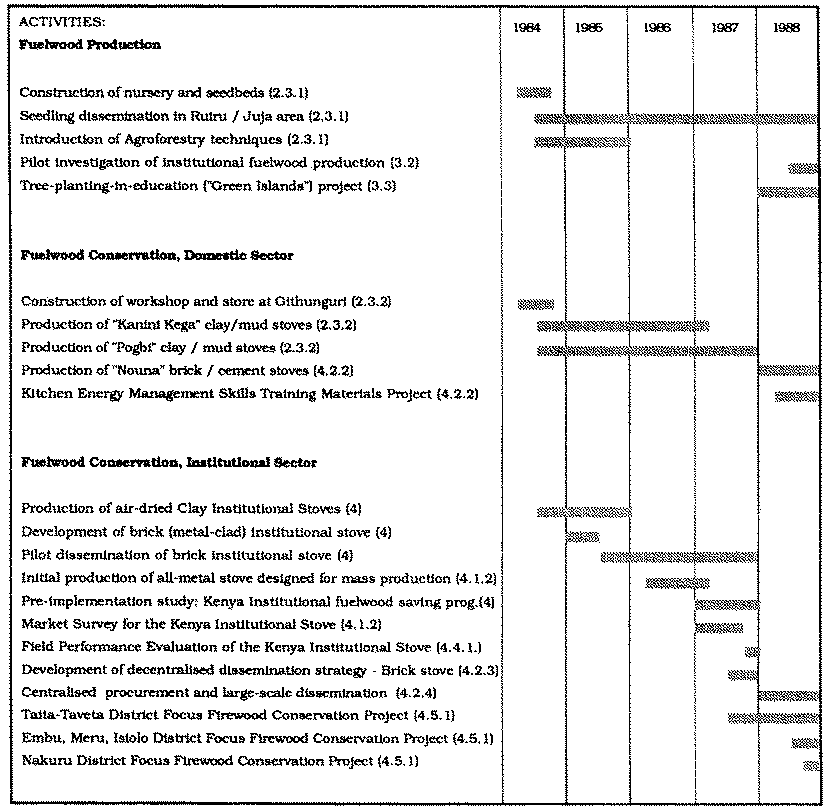
Figure
2.2) The project location
The UNEP/Bellerive project was based, throughout the period 1984 to 1987, in Githunguri, a small village near the town of Ruiru in Kiambu District. Ruiru, a recently industrialised town about 30km north of Nairobi on the main Nairobi-Thika road, is the focal point of the immediate project area.
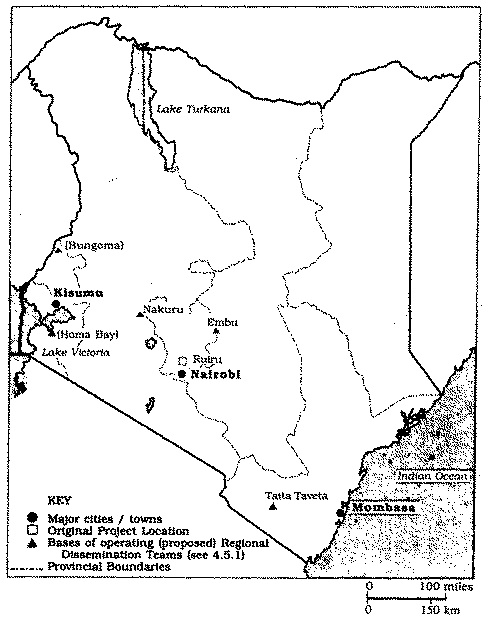
Map of Kenya indicating key project
locations
It is an arid zone of relatively poor soils which in the past was devoted to large-scale sisal plantations. These plantations were sub-divided into smallholdings in the late 1960s, which are now cultivated primarily by ex-plantation-workers, workers on neighbouring coffee estates, industrial employees and their families.
Kiambu district is a relatively rich area of Kenya, its wealth being derived from coffee. Githunguri location and the environs of Ruiru, on the other hand, receive too little rainfall and have the wrong soil conditions for coffee cultivation. The population is thus substantially poorer than in the remainder of Kiambu, and dependent primarily on food crops - particularly maize - and on cash derived from family members working on the coffee estates and/or in non-agricultural employment in Ruiru and Nairobi.
2.3) Initial approaches
2.3.1) Fuelwood production
A combined nursery and tree-planting demonstration centre was established on the project site in the opening months of the project. Officials from the Ministry of Environment and Natural Resources (MENR - Forest Department) were of considerable assistance to the project staff in establishing the nursery, in the following fields:
· selection of appropriate fuelwood species for the region· layout and design of the nursery
· arid zone planting techniques
· supply of initial seedlings from established Forest Department tree nurseries.
Project activities promoting fuelwood production can be divided into two general areas: the introduction of agroforestry techniques, and the dissemination of fuelwood tree seedlings.
a) Agroforestry
The pilot-scale use of inter-planting and food-fuel crops on the project site was entirely successful, as a demonstration of the potential of these agroforestry techniques. Yields for the crops planted between fuelwood trees were higher than the average for these soil and climatic conditions, with fuelwood yields also very satisfactory.
The project demonstrated clearly that it was feasible for an average smallholding to yield enough fuel to satisfy the family’s cooking needs for the year, without reducing food-crop yields.
Despite this success, the uptake of these techniques by the community has been disappointing. The general pattern of response seems to have been initial enthusiasm, sometimes translated into action on the part of the individual farmers, but little long-term alteration in land-use practices in the project area.
Several reasons may be put forward for this. Our main finding is that such agroforestry extension projects must identify more clearly defined and accessible project goals, from the point of view of the target community, than the straightforward “need for more trees”. This need might be perceived by the community, but still provide too weak an incentive to motivate a sustained reformation of farming techniques. We discuss this point further in sub-section 3.4 below.
A second point relates to the way in which the agroforestry component of this project was developed. Agroforestry techniques are, in a sense, an improved technology.
This project has demonstrated conclusively that, whatever the potential benefits of such a technology might be, the technical innovation cannot be expected to “stand alone”: it must be introduced as a component of a broader intervention addressing, in this case, all related aspects of land use.
This theme, the need to see improved technology as one component only of a programme aimed at reforming the overall pattern of resource-utilisation, will be very familiar by the end of this report, We mention it here in the context of agroforestry as an indication that our general conclusions on this point may have some application beyond that of improved stove projects.
b) Seedling dissemination
As a component of project efforts to promote tree planting among the inhabitants of the project area, the project nursery was used to cultivate fuelwood species to an age of 2 to 3 months. The young trees were then distributed to the local population together with instruction on planting and cultivation.
Although the seedlings proved enormously popular, with people travelling considerable distances to collect them, the survival rate of trees planted by individuals in the area was generally poor. Several reasons may be advanced for this, the very adverse climatic conditions which obtained in the period 1984-85 being the most obvious. But it is not enough just to blame the drought, since other projects have had very similar experiences under much more favourable conditions.
Nor is it enough to say that local awareness of the need for reafforestation was simply too low: the lengths people were prepared to go to in obtaining the seedlings suggests that they were more than adequately aware of the need to plant trees. Credit for this level of awareness must be given to the project’s very limited extension services, and also to the promotional activities of the Forest Department.
Why, then, was the survival rate so poor? It is tempting to blame short-sightedness and/or lack of persistance on the part of the local people responsible for cultivating the trees, but it might equally be said to reflect the fact that the villagers had a better idea of the real economic value of these trees than did the project management: this point is discussed in more detail below.
2.3.2) Domestic stove dissemination -I
The second major component of the project was the introduction of fuel-saving stoves, as a means of reducing fuelwood consumption to a sustainable level. Considerable doubt has been cast in recent years on the fundamental validity of this approach: “does fuelwood consumption directly determine the rate of deforestation?” Probably not, in many instances. “Does the use of improved technology affect the overall rate of fuelwood consumption?” Perhaps more efficient utilisation of fuelwood for cooking means that fuelwood is used for other purposes, or that the transition to other fuels is postponed, or...
None of these questions has a straightforward answer, applicable everywhere. We will discuss these issues in depth as we consider specific aspects of woodfuel demand reduction programmes below. In a report of this nature, however, we must begin by considering the project on its own terms.
We set out, in 1984, to disseminate domestic fuel-saving stoves. That component of the project was effectively wound up in 1986 as completely unpromising: why?
In considering the initial activities relating to woodstove dissemination, the key point to note is that the dissemination strategy, as is the case in the majority of such projects, was largely determined by features of the technical design of the stoves under dissemination. These stoves were:
· the Kanini Kega Stove (or protected open fire): a single-pot, chimneyless “stove” consisting of an air-dried clay wall built around three brick pot supports and a rudimentary grate.· the “Pogbi” stove: a double-pot stove also built of air-dried clay, with a chimney and sheet-metal cover. The construction method required for both these designs involves manually compressing a clay/straw mix into a heavy mould made of sheet-metal or wood.
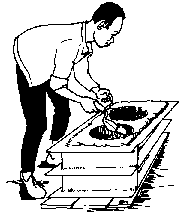
Building a “Pogbi”
stove
The following should be noted:
· the stoves are extremely heavy: they were designed to be built on the site of use.· special equipment is required for construction
· the craftsmen who build them must master a number of unusual skills (albeit not very high-level ones): in particular, how to work the clay. Clay is used in the project area as a building material, but for this application it does not have to be worked in the same way as it does for the production of durable clay stoves.
The only feasible dissemination strategy for such designs was to establish a network of specifically trained, professional stove-producers. The nature of the work was such that only relatively unskilled artisans were prepared to take it up - working clay being comparable to the most strenuous tasks in the agricultural or building sectors. The requirement that a mould should be carried to the construction site restricted the prospective stove producer to a relatively small accessible market.
This approach had been adopted previously by Bellerive Foundation in Pakistan, and had worked. By the end of 1985, it was dear it was not working in Kiambu. Two groups had been trained, totalling 21 artisans, and all but two of the trainees had stopped producing stoves within a few weeks of completing their courses. Even those two had not established themselves independently, as intended, but had returned to their former employment, and were producing stoves only on an ad hoc, part-time basis.
The key reason given for this failure at the time was the high cost of the stoves produced. But this cannot be regarded as the only factor: the training centre never experienced any difficulty in finding customers for the stoves produced by the trainees, with these costed to reflect the prices which would be charged by a private independent producer. The most expensive design - the two-pot stove with a chimney sold at prices ranging to over Ksh. 1.000/- (US $60) -was also the most popular; while the cheapest stove - the basic protected open fire costing KSh 50/- (US $3) - was clearly the least popular, despite the fact that its performance, in terms of fuel consumption, was as good as the more elaborate models.
Whatever may have been thought initially, reducing wood-fuel consumption at minimum cost was clearly not a priority among the inhabitants of the project area. Other considerations, such as eliminating smoke from the kitchen and introducing a general air of modernity into cooking, probably took precedence.
Thus there clearly was a market for the stoves, albeit one made up of potential purchasers motivated in a different way than originally thought. Why, then, did the “graduating” trainees find it so difficult to establish themselves to supply this market?
The marketing infrastructure required to provide such products to the consumer was unfamiliar and inappropriate to the project target area. In other words, there was nothing wrong with the designs of the stoves from the technical point of view, it was simply that these designs forced upon us the wrong dissemination strategy. It is a clear example of technical considerations exerting a disproportionate influence over project development.
There are two ways in which “consumer durables” are obtained by the inhabitants of the project target area: either they are bought from a central selling point, or they are built on-site by a non-specialist, usually a relative or family member who has some training in building skills. The specialist plumber, who does nothing but plumbing and does that for cash, is virtually unknown, never mind the specialist stovemaker.
The products introduced by the project needed to be built on-site by a craftsman who had received a course of training specific to those products, and who was confined to a relatively small geographical area owing to the difficulty of transporting the equipment involved. Dissemination was therefore doomed from the outset: the craftsmen built stoves for their immediate families and relatives living nearby, and then stopped.
The importance of tailoring improved technology to the needs of the consumer in the project target area is generally appreciated. The emphasis placed on the consumer may however, lead to the producer being neglected: the product which the housewife wants may not coincide with the product which the local artisan finds easiest to produce and market.
With effective promotion, we can often persuade people to buy a novel product. But to persuade producers to adopt a production and marketing system different from that to which they are accustomed is virtually impossible. Think of the risks involved: the husband who buys his wife an improved charcoal stove is risking KSh. 90/= (US$5); the artisan who takes up stove-making as a career is risking his livelihood.
Given these problems, we decided in 1986 not to pursue the domestic stove dissemination programme further, in order to concentrate on the (radically different) institutional sector.
With the institutional fuelwood saving programme now fully established and operational, we have, in the course of 1988, begun to look again at the problem of domestic fuelwood consumption. Some of the ideas to emerge from this are given in subsection 4.2.2 below.
2.4) Where we went wrong...
A recurrent theme throughout this report is the need for projects addressing the problem of deforestation to be tailored to the specific features of the problem relevant to the area in which they are operating. And the key to that is to establish what the problem actually is in the first place: it may not be obvious.
2.4.1) Problem definition
A problem has been identified, which relates to deforestation - hence the initiative to establish a programme to combat it. But before we do anything else certain basic questions need to be answered. Is the problem one of excessive fuelwood demand? Perhaps the observed increasing scarcity of fuelwood is due to clearing of forests for agriculture. If it is a problem of unsustainable demand, is it an economic problem (fuelwood prices rising uncontrollably) or a social/humanitarian one (women being subjected to an increasingly degrading and time-consuming task: the collection of fuelwood)?
Is the problem that, despite relatively efficient use of resources, demand simply outstrips supply? Or that fuelwood is being utilised inefficiently? Or that the wrong fuel is being used, with viable and environmentally sound alternatives to fuelwood being available? Or that the fuelwood is there, but in the wrong place, and at the wrong price, due to inefficiencies in the marketing and distribution infrastructure?
The answers to these questions are always built into the design of a woodfuel conservation project, at least implicitly in the strategies adopted.
The problem is that the questions themselves axe very seldom asked, and still more seldom are the answers arrived at in a manner which could be said to guarantee that they reflect the conditions and aspirations of the communities which the project is to deal with.
The root cause of this problem seems to be that donors assume (or at least, donors are assumed to assume) that any implementing agency worth its salt would have the answers to such basic questions at its fingertips, and therefore that the inclusion of an exploratory phase in a project proposal, during which these questions are investigated, must be a sign of inexperience on the part of the project implementors. Those responsible for drafting and submitting proposals feel obliged, often against their better Judgement, to make the answers to such questions implicit in the strategy they propose, in the fear that if these things are left too vague it will be thought that they don’t know what they’re talking about.
But this is precisely the point. We often don’t know what we’re talking about at the initial proposal-submission stage. The diversity of the fuelwood problem is such that experience gained in another country, or even in another district of the same country, will never provide us with the answers to these questions. Such experience may assist us to find out what the answers are (not least in suggesting questions we may not otherwise have considered). But until an adequate problem-definition exercise has been carried out on the ground, in the project target area involving local participation, no one, least of all the expert on fuelwood conservation, should claim to be very sure of anything at alt.
Consider the design of the UNEP/Bellerive project in Kiambu: as a result of pressure for an “action-oriented” project with a minimal research component, no formal socio-economic or demographic surveys were built into the original project design. The project took a straightforward economic approach, assuming that the use of improved stoves and the cultivation of fuelwood trees could be presented to the target community as economically viable activities.
Problems emerged: although the fuelwood economy in the project area was partially monetised, the degree of monetisation was substantially lower than originally thought. Owing to the availability of waste from the coffee estates, the inhabitants of the project area were obliged to obtain only a relatively small proportion of their fuel needs through the purchase of cut firewood. Coffee waste often had to be paid for, but the price varied so considerably that it was virtually impossible to place even an order-of-magnitude figure upon it
Without a formal survey built into the project, informal inquiries in the project area suggested a substantially higher degree of monetisation of firewood, and a much higher cost, than was probably the case in practice.
This was entirety understandable, and a frequent feature of projects of this nature: the reason is simply that the proportion of firewood which has to be purchased with hard cash is by far the most painful for the consumer, and so verbal reports of firewood prices tend to exaggerate it.

Verbal reports of firewood
prices
The collection of waste from coffee estates consumed a considerable amount of time, the burden being born principally by the women of the project area, The cost of this activity in social and humanitarian terms might be considered to be quite large, but it to important to note that in purely economic terms this cost was relatively low: the Opportunity cost of firewood (resulting from the time taken up in collecting it) being reduced by the lack of income-generating activities available to the women who had to undertake this task. The high population density and small size of the agricultural holdings meant there was general excess of labour available.
This lower-than-anticipated real cost of fuelwood clearly had a considerable impact on the progress of both components of the project. It was assumed that people would see the improved stoves as an investment which would help them to save money on firewood. But if they were not spending money on firewood in the first place... Likewise it was assumed that people would see the value in growing more trees. But if trees are free...
We are not criticising these initial assumptions themselves: although they turned out to be wrong, they were perfectly reasonable given the information available to the project management at the time. Nor are we criticising the fact that the assumptions were made: such assumptions had to be made in order for the project to get started. It is completely unrealistic to think that we can determine objectively all aspects of our strategy through academic surveys before we begin the implementation phase.
What we are criticising is this: it was not acknowledged in the original project design that these were assumptions, and that, as such, they might turn out to be wrong. There was therefore no mechanism built into the project for correcting our course of action once implementation began.
If a project turns out to be based on a misguided assessment of the needs of the project target community, the usual response is to say that more research should have been carried out initially. In the course of this report, we frequently reiterate the need for studies to be carried out on the ground to clarify the problem, determine impact priorities, develop dissemination strategies and so on. Is this not an invitation for programmes to get bogged down in a morass of academic research?
Elaborate surveys and pilot studies which lead to no effective action are too familiar in the development world for us to ignore the danger. And the approach which we advocate here may well appear elaborate and academic: research must be undertaken initially simply to establish what the problem realty consists in, then to identify the priorities for any programme addressing it, then to develop and pilot locally appropriate designs and dissemination strategies... Anyone with experience in this field will already be beginning to smell the rot setting in: years of surveys and countless consultant man-months before anything actually gets done.

The rot setting in
We have two ways of avoiding this: focus and flexibility.
2.4.2) Focus and flexibility
First of all, in the problem definition exercise, we should aim to identify specific components of the fuelwood problem in the project area on which to focus our efforts. Provided we restrict ourselves to a sufficiently well-defined and homogenous field, then we have some hope of developing a realistic and effective programme within a reasonable time-frame and at a finite cost
What we mean by homogenous may be understood by an example: almost all large-scale permanent institutions in Kenya have similar catering requirements and operate under similar conditions. It therefore makes sense to establish a single programme to address the problems of fuelwood supply and demand in this sector. On the other hand, the domestic fuelwood consumer in the Central Highlands is in a completely different situation to one in a lowland arid region. Thus a single, uniform, domestic fuelwood saving programme on a national scale is impossible: this is not a sufficiently homogenous aspect of the problem of fuelwood scarcity.
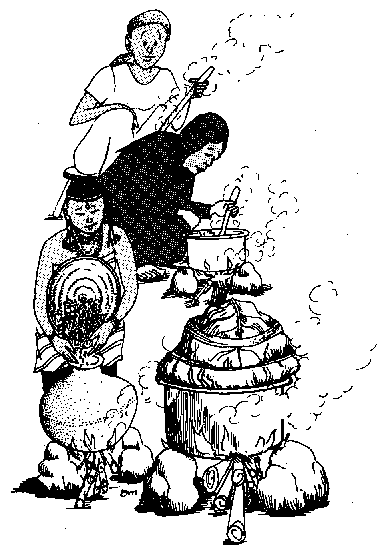
Not really the same problem
Our second point, the need for flexibility, may be more controversial. Donors seem to appreciate tidy, linear projects. One activity should be completed, then the next activity begun on the basis of the results obtained from the first activity. There are obvious advantages to structuring a project in this way: it facilitates project timetabling, provides a simple check on whether the project is on schedule, makes for clear reporting and so on.
There are two problems with adopting such a linear approach to the design of fuelwood conservation projects. First, as remarked above, if we aim to finalise the research phase completely before proceeding to implementation, then there will definitely be an unacceptable delay between the project launch and anything concrete being achieved on the ground. Pressure will be placed on project managers to minimise this delay, which usually results in inadequate attention being given to the crucial initial exercise of problem definition.
Secondly, it is questionable whether it is possible to adopt such a linear approach. There is no clear cause-and-effect progression between programme components. The progress of pilot dissemination may contribute to clarifying the problem; technical designs will suggest dissemination strategies which in turn will suggest modifications in the design and so on. Everything is interconnected.
The fuelwood problem is such that it is completely impossible for any activity in a programme addressing it to be completely and objectively determined by the results of previous activities.
There is probably no way, for example, that a survey involving nothing more than the collection of data on the project target community, could have forewarned us of the fundamental problem encountered in the initial dissemination of domestic stoves (see above). When questioned, it was clear that local artisans either had very little idea of the make-up of their clientele, or (more likely) were disinclined to reveal such sensitive information to a numerator. Thus only by trying it out, could we determine whether or not the proposed dissemination strategy was going to work.
Every afforestation project must therefore begin with a phase during which the project management is free to try out, with the community, different strategies and approaches: on the understanding, accepted by project supervisors and donors alike, that not every strategy tried will necessarily succeed.
The need for such flexibility undoubtedly places a considerable responsibility on the project implementors in the field, to ensure that opportunities are taken to try out new ideas, while tight control is still retained over project activities. But unless we accept such an exploratory approach we will always be imposing the priorities of the project onto the community. If we are extremely lucky, these may coincide with the community’s own priorities. But experience suggests that the chances of this are slim.
|
| ||||||||||||||||||||||||||||||||||||||||||||||||||||||
Technology, Markets and People: The Use and Misuse of Fuelsaving Stoves - A project case study (UNEP, 1989, 66 p.)
Section 3: Strategies developed: fuelwood production
Our initial approach to the promotion of fuelwood production was to distribute seedlings and advice on agroforestry to individual smallholders. Problems arose, as in many other similar projects, not with persuading people to plant out seedlings, but with ensuring that the young trees were adequately tended after planting. The survival rate among seedlings distributed to individuals was correspondingly poor.
The fundamental problem, noted above, was that the value set upon fuelwood trees by the project target community was clearly lower than the project anticipated, and too low to provide adequate motivation for the afforestation programme.
We developed three distinct strategies in response to this observation:
· using market forces more effectively in a project aimed at individuals, through an alteration in pricing policy for seedlings (and, indirectly, through a change in project evaluation procedures).· presenting fuelwood production units as viable economic investments for fuelwood-using institutions.
· using education as a means of influencing the community’s priorities such that the perceived value of trees becomes closer to their “true” value, which takes into account their long-term role in ensuring the stability and productivity of the agricultural economy.
3.1) Making the most of the market
3.1.1) A pricing policy for seedlings
It is a familiar situation: we have a nursery producing seedlings and the idea is that the local farmers will plant them out and (we hope) look after the young trees. Leaving aside the question of the overall validity of this approach, how can we best set about it?

The seedlings’ poor chances if
left untended
The key, in most such projects, is that the supply of seedlings is strictly limited by the nursery’s production capacity. There will probably never be any question of our failing to distribute them all. Thus we can concentrate entirely on maximising the survival rate.
Our priority must be to target the seedlings towards individuals who will look after them. Left untended, they have an extremely poor chance of survival. This targetting should be relatively easy to achieve, but involves a move which many rural afforestation programmes may find unpalatable: the use of price as means of controlling the seedling distribution operation. We assume that the individual farmer is in a much better position to Judge how many trees he can afford to look after than is the project management.
If the price of the seedlings is set at or close to zero, the cost of collection and planting being negligible, then demand per individual purchaser is essentially unlimited: he or she may as well buy as many seedlings as possible on the offchance that some may survive even though only a very small proportion can be properly tended.
The seedlings will prove enormously popular; if the project is evaluated in terms of numbers of seedlings distributed it will be adjudged a great success; and the survival rate will be appalling. The seedlings will have been distributed more-or-less at random according to who arrives first and how many they can physically carry away.
If, on other hand, we set the price of the seedlings such that it becomes a substantial factor in the decision as to how many to buy, then the individual will only purchase seedlings up to the number he/she can afford to look after. With only a limited number of seedlings available and an essentially unlimited market, we must set the price such that we only Just manage to sell all the seedlings available: we either increase the price until some seedlings remain unsold and then get rid of these at a small discount, or use auction, or whatever the established technique might be, in the project target community, for exploring what the market will bear.
The problem is that evaluation procedures built into the design of many, perhaps the majority, of rural afforestation programmes encourage project managers to maximise the number of seedlings distributed, and the simplest way to achieve this is to discount the price, ideally to zero. The overall impact of the afforestation effort might be substantially improved if project managers were not given the target:
“Here are 20,000 seedlings, distribute them to the target community as fast as possible so that we have something concrete to include in the first six-monthly progress report”
but instead:
“Here are 20,000 seedlings, make as much money as you can...”
The other attractive feature of charging a higher price for the seedlings is that private-sector seedling production then becomes a possibility in the long-term. No one is going to set up in the business of seedling production as long as the project is distributing them for free.
3.1.2) Where the market goes wrong
We can make better use of market forces, but this does not mean we can rely on them entirely. There are problems.
First of all, to depend upon narrow economic considerations to drive the afforestation programme is undeniably a long-term approach. While it would be impossible to place a figure on it, the value of fuelwood in the project area is clearly still too low for it to have become established as an economically viable crop.
Even if it had done, given the long maturation time of fuelwood species in arid areas, it would be many years before an increase in the value of a mature tree due to fuelwood shortage was reflected in an increase in supply.
And anomalous occurences may complicate the picture yet further: for example, the 1984 drought killed a large number of mature trees, resulting in a temporary but heavy over-supply of fuelwood, which actually depressed the effective value of fuelwood trees, hampering afforestation efforts despite the fact that in the long term it made the environmental situation substantially more serious.
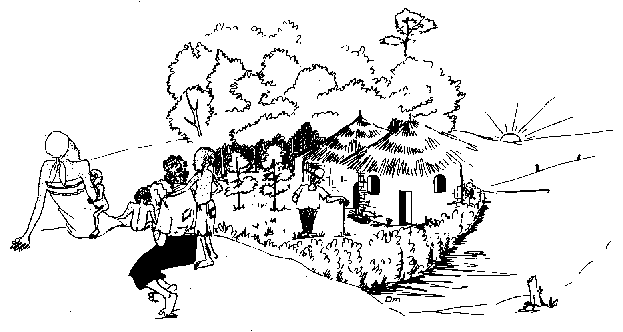
The problems of supply-side
agroforestry
Moreover, relying on market forces may further the very simple objective of getting more trees growing in an area, But the aims of rural afforestation are probably substantially more complicated than merely growing more trees. If all the trees supplied are healthy and well-tended but concentrated in the compounds of the four well-off farmers who could afford the seedlings, then the programme may not be contributing towards the community-development priorities of the district
The fundamental problem may, of course, be that market forces are and will always be inadequate to motivate the community towards a collective benefit such as fuelwood conservation. These issues take us well beyond the scope of this report.
Accordingly, we turn to consider the two strategies developed in the course of the project which side-step altogether the problem of how to provide the individual with sufficient economic incentive to grow trees before it is too late.
3.2) Institutional fuelwood production units
The situation of an institutional fuelwood consumer is very different to that of an individual farmer. An institution depending on firewood for large scale catering needs a reliable, regular supply. It cannot rely on the casual, manual collection methods adopted by individuals, except in unusual cases. Thus the majority of institutions have to resort to the cash purchase of fuelwood with mechanised collection.
Since fuelwood is not a viable commodity to transport over long distances, the market is heavily localised, with prices varying widely around the country. Within a limited area, however, institutional fuelwood purchasers, unlike individuals, are in a position to “shop around” somewhat, because they are using mechanised collection. Thus a relatively well-defined cash price can become established.
In a survey carried out in 1985 by the Kenya Energy and Environment Organisation (KENGO), the nationwide average price paid by institutions for uncut firewood was found to be KSh 155/= per tonne including delivery (US$8.3), with a standard deviation across a sample of 40 institutions of over 30%. The situation is complicated by government regulations on the harvesting of trees, which means that most institutional consumers make special arrangements with a particular supplier, and pay a somewhat lower price than the open-market figure of over KSh 500/= per tonne.
Despite these complications, the administration of an institution normally has a fairly clear idea of how much, in cash terms, fuelwood is costing them per month, unlike the individual farmer who has no way of putting a cash figure on the monthly opportunity cost of fuelwood collection. Moreover, the key decision-makers in an institution are generally financially astute enough both to project fuelwood costs on a five-year time-scale and to assess the viability of investments over a similar period. Few individuals, particularly in an area where the majority of small-holders do not yet even have title deeds to their land, are in a position to work on this basis.
Thus the establishment of a fuelwood plantation may be an economically attractive proposition for an institutional fuelwood consumer even in an area where fuelwood is not yet a viable crop for the individual farmer. This, coupled with the fact that institutional fuelwood consumption tends to be derived from logged firewood, i.e. entire cut trees rather than gathered dead branches, and therefore potentially does more environmental damage than domestic consumption, provides a strong argument for focussing reafforestation efforts on institutions, at least initially.
In the framework of the District. Focus Firewood Conservation Projects (DFFCPs) established in the last phase of the UNEP/Bellerive project. Bellerive Foundation is currently developing. In conjunction with the Kenya Forestry Department and with the assistance of the Danish International Development Agency (DANIDA) and the Overseas Development Administration of the UK, a technical assistance package to enable an institutional fuelwood consumer to become energy self-sufficient through the establishment of a fuelwood production unit. The details of the package need to be tailored to the individual requirements of the areas covered by each DFFCP, and are therefore of limited interest in a general report such as this one. The overall structure, however, should be widely applicable.
The package, which has not yet been finalised and is scheduled for introduction on a pilot scale in 1989, is intended for use by extension officers: specifically the Foundation’s own network of Field Officers, the Forest Department’s extension services and the network of District Energy Officers being established by the Ministry of Energy. With it, they will provide the institution with advice and assistance in the following:
· Current and projected fuel requirements with existing and/or proposed cooking systems -it is envisaged that the fuelwood production package will, in many cases, be introduced together with the improved cooking systems described below.· Current and projected expenditure on fuel
· The most appropriate fuelwood species for the climatic and soil conditions in the area
· The land area required for an adequate, sustainable fuel supply
· The optimum planting and cropping cycle to adopt according to the species selected
· The infrastructure required in terms of personnel, equipment for tending the plantation, structures for seed-beds and nurseries (if appropriate), irrigation systems if any and so forth
· An estimate of capital and running costs and projected payback period.
The proposed package sets out to provide the institution with a systematic approach to fuelwood production and management. Many institutions in Kenya obtain all or some of their fuelwood requirements from trees on their own compounds, and many more have land available and are seriously considering entering fuelwood production. The problem, which in almost all cases results in less than optimal use of the land and capital available, is the lack of clearly defined systems to ensure that replanting is carried out at the right time, cropping is undertaken correctly, and so on.
In wealthy institutions with abundant land and capital this problem does not matter - but these institutions usually own their own forests and are thus effectively energy-self-sufficient already. There is no reason why many smaller institutions should not also achieve self-sufficiency if the systems are available to enable them to use the resources they have as efficiently as possible.
3.3) Conservation education
The third strategy identified by the project, and the most thoroughly developed to date, is to integrate tree planting activities into the educational programmes of local primary schools through the establishment of tree plantations on school compounds. The basic concept is use the school’s “green island” (plantation) to introduce the children to environmental issues in a variety of different subjects, in the same way that school farms are used to facilitate education in agriculture and related topics. Although the plantation may provide a source of fuelwood, this objective is secondary and thus the exercise does not necessarily have to be an economically profitable undertaking.
The Green Islands project has been developed by Bellerive Foundation in collaboration with the Conservation Foundation of the United Kingdom, with the generous support of the Aluminium Federation of the UK. A highly successful method of fundraising was used to launch the project: British schoolchildren were organised by the Conservation Foundation to collect used aluminium cans for recycling. For every can collected the Aluminium Federation made a contribution to the fund which enabled Bellerive to launch the Green Islands in Kiambu district, Kenya.
The money contributed from the UK is primarily used to maintain the nursery where seedlings are produced and to cover the salaries of essential extension staff. The cost of establishing and maintaining the school plantations is borne by the community, with Bellerive contributing seedlings and advice. Parents provide the materials for fencing, and the children themselves plant out and tend the young trees.
We are now approximately one year into the implementation of this project, and the response of the local community has been very encouraging. The survival rate of seedlings planted in the long rains of 1988 is estimated at the time of writing to be between 95 and 98% - with the most dangerous period for the young trees, their first dry season, now over. This is largely thanks to the efforts of the children and teachers responsible for looking after them, but credit must also be given to the local authorities, who were responsible for some valuable initiatives in support of the project - for example, a complete ban, decreed by the locational chief, on goats in the village centre and school compounds.
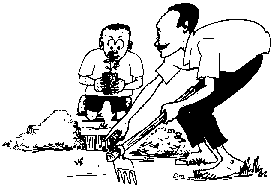
Figure
3.4) Structure and goals
We have found that both project activities, the introduction of agroforestry techniques and the distribution of seedlings, suffered in the early stages of the project from unclear objectives and a lack of structure.
The distribution of seedlings must both be, and be seen as, a means to an end which is both genuinely achievable and aligned with the priorities of the key people involved: the inhabitants of the project area. The general environmental benefits which accrue from afforestation are probably too nebulous and global an objective to provide the necessary immediate goal.
We have discussed how economic forces might be brought to bear on the problem, to provide the necessary structure and goals, and concluded that, although they could be exploited more effectively than they are at present, through an alteration in pricing policy for seedlings, they will remain an inadequate incentive for the individual farmer for the forseeable future.
We found that economics may be exploited directly in the case of institutional fuelwood consumers to encourage the adoption of a sustainable resource utilisation strategy. But, in the case of individuals, the value of trees in the district, being based on the opportunity cost of collecting firewood, is still too low to encourage large scale planting by individual members of the local community.
One way in which this problem may be resolved is for us to wait until firewood becomes so scarce, and this opportunity cost so high, that extensive replanting becomes attractive: by which time the environmental situation is probably past regeneration.
A more attractive approach would seem to be to use the process of education to change the perceptions of the community, thereby changing the perceived value placed upon fuelwood trees. It will be a long time before such an approach begins to have a tangible impact. But given that the present perceived value seems to be effectively zero almost everywhere, except in certain sectors such as among institutions, there is no clear alternative.
|
| ||||||||||||||||||||||||||||||||||||||||||||||||||||||||||||||||||||||||||||||||||||||||||||||||||||||||||||||||||||||||||||||||||||||||||||||||||||||||||||
Technology, Markets and People: The Use and Misuse of Fuelsaving Stoves - A project case study (UNEP, 1989, 66 p.)
Section 4: Strategies developed: fuelwood demand reduction
The fuelwood demand reduction component of the project began with the pilot-scale dissemination of domestic stoves through the training of artisans as independent stove-producers. For reasons outlined above, this approach was abandoned as unpromising in 1986. At much the same time, we recognised the potential of an improved stove dissemination programme targetted at the institutional catering sector.
In the course of the period 1985-86 a range of fuelsaving stoves were developed by Bellerive Consultants Waclaw Micuta and Emil Haas, designed for permanent institutions catering for large numbers of people (in excess of 100 or so). The basic design (illustrated below) was that of a simple channel stove built around a cylindrical, stainless-steel pot
Pilot dissemination was an immediate success, despite being restricted, by the project’s limited production capacity, to a local programme largely confined to Central Province. A pre-implementation study was commissioned, with a view to finalising the details of a national dissemination strategy.
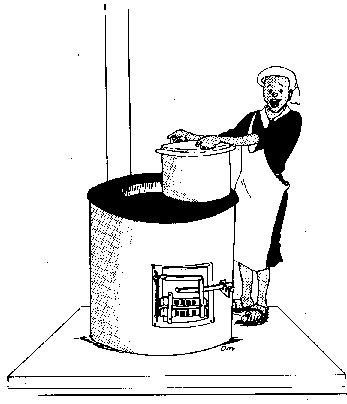
An institutional stove
The strategy favoured initially was to develop a version of the design suitable for mass-production, and then to franchise the entire production and marketing operation to a firm in the private sector.
In the course of the pre-implementation study, an extensive market survey was undertaken by a team of Nairobi-based consultants, and the field performance of the institutional stoves was evaluated by an external technical consultant from the Woodenergy Systems Group.
The experience of pilot dissemination, together with these consultants’ findings, led us to revise the proposed strategy substantially, and with it the designs of the stoves to be disseminated. The dissemination programme will be retained within the Foundation, at least for the next few years. In order that key components such as after-sales-service and the training of operators in fuelwood management may be firmly entrenched before it is transferred to the private sector.
The programme now covers its operational costs, including the cost of this extension service for operators, and has secured a position as the largest single source of this type of catering equipment in Kenya, with systems which save on average more than half the fuelwood consumed by the stoves they are replacing. Given this success, we set out here to consider how the different activities involved in developing the programme were undertaken, and (perhaps more importantly) how they fitted together.
4.1) Market research
The need for accurate market data is generally accepted. But the obstacles and difficulties inherent in any method of obtaining such data seem to be less widely acknowledged. Consequently, we tend to find, both in project proposals and in the execution of ongoing projects, rather than too little market research being undertaken, too much being expected of the market research exercise.
There are certain things a market survey can tell us. And certain things it emphatically cannot. It is essential to clarify where the line should be drawn to avoid the danger of being lulled into thinking that some aspect of our strategy has been objectively determined by the market data, when in fact it has been at least partially, decided on the basis of preconceived opinion.
Recognising the limits of objectivity is essential for us to maintain an adequately flexible approach to project development.
We consider two types of research: needs-oriented and product-oriented. Needs-oriented research covers everything from the collection and analysis of data for problem-definition to the evaluation of the needs and priorities of a particular consumer group. Product-oriented research is the exercise of evaluating the nature of the market for a particular product, the relative merits of different marketing strategies for that product and so forth.
It would be tidy and convenient if there was a clear dividing line between these two activities. If there were, our course of action would be clear. We carry out needs-oriented research initially to establish what products and systems are required; we then design or identify the relevant products and systems, and subsequently carry out a product-oriented survey to establish the market size and how best to set about penetrating it. Just the sort of linear project structure the donor likes.
In the case of anything relating to fuelwood conservation, it is never this straightforward.
4.1.1) Needs-oriented research - chickens and eggs
It is completely impossible to design and execute a totally objective needs-oriented market survey: one which is completely neutral with regard to possible interventions. The designers and implementors of the survey invariably have certain ideas in mind, and, rather than merely enumerating the consumers’ requirements, such surveys tend in reality to be, at least in part, assessing the probable consumer response to a particular product or strategy.
Consider the practical problem of designing a questionnaire. We have the usual conflict between open-ended, qualitative questions which usually do not yield the sort of concrete information which we need to develop a product or system design; and specific yes/no, numerical or multiple-choice questions which do yield concrete information, but only that information which the questionnaire designer thinks is relevant
And what the questionnaire designer thinks is relevant is to a large extent determined by what he or she has in mind for that particular area in the first place.
The problem is that, after the initial survey, the project management is expected to get on and do something. Few donors or government supervisory bodies would have very much patience with a project which began with a survey to establish what the problem was, and then immediately went on to commission a second survey to decide what to do about it. And action based on insufficient or vague information is as dangerous as action based on unfounded presuppositions.
But to achieve an adequate degree of detail to determine completely our subsequent strategy, a survey would have to focus on specific aspects of the situation directly relevant to a particular approach. It is simply not feasible to include, within a single, manageable survey, questions to determine what price of stove the market will bear with questions to determine to what degree fuelwood demand contributes to deforestation in the region.

An unmanageable survey
So what should we do? It seems we cannot act without relying on a number of, possibly ill-founded, presuppositions, while we cannot completely eliminate these presuppositions without becoming bogged down in academic studies. However, in any real situation, the problem is not as intractable as it might seem.
There is nothing inherently wrong with relying on presupposition or, as one might prefer to call it, on the Judgement and experience of project staff. In any case we are always obliged to do so - no objective market survey will completely determine our course of action. The important point is that we acknowledge what has been assumed, rather than pretending that everything was determined objectively.
It was assumed in the original design of the UNEP/Bellerive project, for example, that all types of fuelwood demand contributed equally to deforestation. It seemed so obvious at the time that no one recognised explicitly that this was an assumption. And until the assumption was recognised, the question of which sectors of fuelwood demand caused the most environmental damage per tonne of wood consumed, made no sense.
We soon found, as a number of others have done in recent years, that in many areas the direct impact of rural domestic fuelwood demand on deforestation is remarkably small, since a large proportion of the fuelwood used in this sector is supplied either from gathered dead wood; or from trees which would have been cut down in any case to clear land for agriculture; or from trees which died of natural causes (particularly. In this case, after the 1984-85 drought). This, together with the obvious difficulty of creating a market for improved stoves in a sector where fuelwood is predominantly non-monetised, decided us against pursuing a rural domestic stove programme along the lines originally envisaged.

Spot the cause of deforestation
At the same time, we found that the direct environmental impact of fuelwood consumption by large-scale catering institutions was substantially higher, since such consumers, needing a high-volume and regular supply, depend heavily on logged wood from trees cut down specifically for fuel. Accordingly, we focussed our attention on this sector, with much greater success.
Much may depend on the correct questions being asked, and it is almost always unrealistic to expect them all to be asked at the outset. Key questions may only be suggested by experience in the field.
Thus it is essential that needs-oriented research is not seen as a self-contained exercise to be completed at the commencement of the project, but an ongoing activity integrated into project implementation.
Likewise, project implementors must be flexible enough to accomodate radical changes in what they perceive as the needs of the project target community, since these may only emerge in the course of project implementation. Only through such flexibility can we avoid the conflict between the demand for action (as opposed to yet more research) and the demand for a purely objective basis for our action.
Quite similar conclusions emerge from our experience in product-oriented research. The Market Survey for the Kenya Institutional Stove, carried out in 1987, was essentially a product-oriented exercise. We therefore discuss these conclusions in the direct context of that component of the project.
4.1.2) Product-oriented research - The Market Survey for the Kenya Institutional Stove
A major component of the pre-implementation study for the national institutional fuelwood saving programme was a market survey undertaken by Mwaniki Associates Limited, a Nairobi-based team of consultants in Economics, Finance and Management.
The terms of reference for the survey oriented it specifically towards evaluating the characteristics of the market for a particular product: a version of the Bellerive Institutional Stove, designed for mass production with the national programme in mind, constructed from cast iron and (imported) metal sheet.
Even though this was not the version eventually adopted for dissemination (the decision to adopt another version being largely based on the results of the market survey) this specific product-orientation was the key to the success of the whole exercise.
Since they were dealing with a well-defined product, the consultants were in a position to quantify potential demand, make recommendations on promotional and pricing strategies and provide a series of comparative cost-benefit analyses for a range of alternative strategies. This information formed the basis of the design of the national programme.
But it would not be true to say that the market survey determined the final designs and dissemination strategy. We recognise that many of the assumptions on which our strategy is based were already in place when the survey was commissioned and formed the basis of the consultants’ work.
Thus in the same way that we have to rely on ungrounded assumptions in order to get the needs-oriented research exercise started, initial product-development work cannot be “derived” from market data. We must to some extent rely on the Judgement and experience of the experts responsible for product design. There is nothing wrong with this. The danger lies in failing to acknowledge that assumptions have been made, with a consequent loss of flexibility.
It was assumed, for example, before the Market Survey was carried out, that the appropriate stove design for a national programme was one which could be mass-produced, and that the most effective strategy would be to franchise the entire production and marketing effort to a firm in the private sector. The survey revealed that these assumptions were incorrect (or, more precisely, that they were not compatible with the project’s primary objective of alleviating the problem of deforestation). The main reasons for this were:
a) Market size
The key factor determining the size of the potential market was the fact that only those institutions with readily predictable catering requirements would be interested in investing in the stoves.
The accessible market was thus restricted to health and educational institutions, in both government and private sectors, and large state-sector institutions such as prisons and military barracks.
Such institutions would be prepared to invest in stainless steel pots (the principal cost element in the institutional stoves disseminated by the project) on the basis of the fact that these would last for more than 10 years, while aluminium pots (the only available alternative, at one-third of the cost) would last one year at the most.
The other important group of institutional fuelwood consumers is made up of private hotels and restaurants, but the survey found that these institutions tend to require much greater flexibility in their catering equipment, to accomodate fluctuating demand, than the project’s large-volume cooking systems could provide. Also, those hotels and restaurants which make extensive use of fuelwood (primarily those at the lower end of the market) tend to operate on a very short time-frame, owing to the volatility of their business.
Thus defined, the potential market for the UNEP/Bellerive project’s institutional stoves was assessed at 400 to 500 units per annum. The consultants concluded that a programme aimed at supplying a substantial proportion of these institutions with improved catering equipment would not be financially attractive for a purely profit-motivated concern.
The cost of an adequate marketing and distribution infrastructure to reach the majority of potential programme beneficiaries (being principally located in rural areas) would be prohibitive (witness the fact that major oil companies are pulling out of the rural liquid petroleum gas market).
b) After sales service
The consultants found that after-sales-service would be a key factor determining the actual fuel savings achieved by the improved stoves.
Any stove needs to be adequately maintained for it to function properly and save fuel, and the majority of potential programme beneficiaries would need this maintenance to be provided by specialists (as opposed, for example, to supplying operators with a maintenance manual).
Such after-sales-service would be neglected by a commercial operation for reasons of cost, since it would have to be based on personal visits to institutions by service staff.
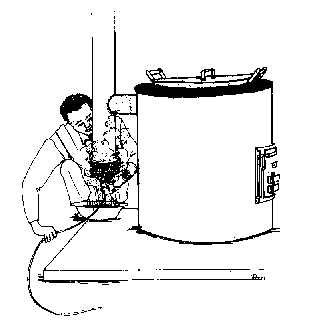
After sales service
c) Costs of rural-sector marketing
Since most institutions would need specialist advice on their probable catering equipment requirements prior to placing orders, it would not be feasible to sell the stoves “off the shelf” through established retail outlets. For a promotional campaign to be effective, it would have to rely heavily on personal contact between sales personnel and the key decision-makers in institutions.
In view of the geographical dispersal of the potential market, such a campaign would be a relatively heavy burden on the programme’s cashflow: the reason why none of the established commercial producers of institutional stoves make any serious effort to market and/or distribute their products.
d) Need for concessionary credit
The number of institutions able to benefit from the dissemination programme, and thus the pace at which fuel savings could be achieved, would both increase substantially if concessionary credit facilities were available to assist programme beneficiaries to cover the initial capital outlay. In order for the majority of institutions to be able to afford it, given the high market interest rates currently prevailing in Kenya, the capital required to establish such a credit scheme would have to be provided by a donor.
If the programme were being run as a profit-making concern, then shareholders would benefit indirectly from the donor-funded credit scheme through increased market penetration. Most donors would be dissatisfied with supporting private shareholders in this way.
These conclusions, together with the findings of the external technical consultant, our own experience of pilot dissemination and input from Government of Kenya officials, served to determine the final strategy for the national programme.
The important point is that the technical design of the stoves to be disseminated was modified on the basis of these findings. The sheet-metal/cast-iron construction was abandoned in favour of an earlier construction method based on fired-clay bricks. The brick construction was rejected in 1986, since it would not have been attractive to a private company. But since the survey demonstrated that the programme was going to have to continue to be run on a non-profit basis in the short-term, a partially decentralised dissemination strategy, involving the brick construction, proved to be the least-cost approach overall (see below).
For product-oriented market research to be genuinely effective, it must be based on a precise description of the characteristics of the product to be disseminated. On the other hand, effective market research will and should suggest modifications in technical designs, dissemination strategies, and so on.
The market research exercise must be seen as an integral component of the process of product development, not as a self-contained exercise to be completed either before or after the technical design phase.
4.1.3) Market research and impact priorities
We remarked, at the beginning of this subsection, that the principal danger relating to market research is that too much is expected of it. We may, by including an extensive user-needs survey in the opening phase of the project, convince ourselves that the approach we adopt has somehow been arrived at objectively. Likewise, by commissioning a comprehensive product-oriented survey prior to implementation, we may hope to “prove”, equally objectively, that our approach is the “correct” one.
Such a view conceals the extent to which such market research exercises are themselves based on assumptions. They can and should guide the thinking of project implementors. But they cannot provide a substitute for it No survey returns can replace the experience and ideas of project staff working in the field.
And we must therefore design a fuelwood conservation project to be flexible enough for those in the field to develop their ideas, and not stifle everything in the pursuit of objectivity.
4.2) Dissemination strategies
It has become commonplace to stress the importance of a realistic dissemination strategy in any project involving the introduction of improved technology. Rather than reiterating this point, we hope, in this section, to show how we may set about developing such a strategy.
The key to getting these things right is to do them in the right order.
The very importance attached to dissemination strategy often leads to it being determined at the wrong point in the project cycle, viz: at the initial project design stage.
The point is best illustrated by taking a specific example from the original (1983) UNEP/Bellerive project document. We find, mapped out in the proposal, the intended dissemination strategy for the improved domestic stoves: experts were to teach a team of instructors, who in turn would teach selected inhabitants of the project area, how to build fuelsaving stoves. The inhabitants so trained were then intended to begin building stoves either for their own families or, as an income-generating activity, for their neighbours.
Now there was nothing inherently wrong with this strategy - it had been used successfully by a number of organisations disseminating improved stoves in India and, in particular, in the Foundation’s own successful programme in Northern Pakistan. In any case we will not discuss here the strategy itself. The point is that it was there, specified in the original project document, before any work had been done on the ground in the project area. And we now realise that it should not have been.
With an effective promotional campaign, it is often possible to introduce a product into a community which is not necessarily tailored to the original wants of that community. Wants can change, or be changed. But we have found that to persuade the community to adopt unfamiliar methods of production and marketing is a far more difficult task. And it is the community, not the foreign expert, which is in the best position to Judge how such things should be done.
Thus it makes no sense to specify the dissemination strategy for an improved technology before an adequate, ground-level pre-implementation study has been carried out to determine what the real priorities of the target community are.
Yet even today we find donor agencies, in the name of “action-oriented projects”, demanding that a “dissemination component” should be written in to the first document they see. And the document writers feel obliged to specify the strategy to be adopted for fear of it being thought that they have not given enough attention to dissemination.
The usual result seems to be that the dissemination strategy adopted is simply that which is in vogue at the time.
Ten years ago, on the basis of experience in India, it was user-built stoves. Now, after the success of the Kenya Ceramic Jiko project, everyone is talking about the informal sector. Next...?
It is almost always unrealistic to specify the dissemination strategy for an improved technology in the initial project proposal, but this does not mean we leave out mentioning it altogether. What must be specified is how the strategy is to be developed - in particular, how the target community is to be involved in developing it.
The process of designing or identifying the optimum strategy must involve surveys of established practices (not cooking practices in this case, but production and marketing practices), comparative tests, field trials and pilot-scale implementation: all activities which are normally confined to technical product development
In any project based around the introduction of improved technology, as much attention must be paid to the design and testing of locally appropriate production and marketing systems, as is devoted to the development of the products themselves.
4.2.1) Impact priorities
Where do we begin? A frequent starting point for thinking on dissemination strategy is the stove design: “we’ve got this stove, it works, now how do we get as many as possible out into the field?” This is precisely the wrong place to start. If the stove design is considered finalised before thinking on dissemination strategy has even begun it is a sure sign that we have let technical considerations gain an excessive influence over the development of the project.

An excessive influence
The problem with such a design-led approach is that the dissemination programme then tends to have the sole objective of maximising the number of stoves disseminated (or, on a slightly more sophisticated level, maximising the number of stoves in use). If project implementors are subject to evaluation-by-numbers in this way, they will understandably tend to neglect such considerations as how the stoves disseminated are operated, which may have as great an impact of fuelwood savings as the raw number in use.
The starting point for the development of a dissemination strategy should be the problem-definition exercise undertaken at the very beginning of the whole project.
It may seem paradoxical to begin considering dissemination before we have developed or identified a product to disseminate, but that is precisely what we are advocating.
It seems less paradoxical when we recall that designing improved stoves never seems to have presented very many problems, while designing effective dissemination mechanisms certainly has done.
It may, therefore, make more sense to design a dissemination mechanism and then tailor the product to fit it, rather than the other way around.
The problem-definition exercise will yield a preliminary set of specific project objectives, which we refer to here as “impact priorities”, to distinguish them from the more general alms and objectives of the organisation or project as a whole. These will form the basis for initial thinking on dissemination strategy. They may change, or at least become clearer as the project develops, but it is essential to begin thinking about dissemination at this stage in order to guide the process of technical development
The types of impact priorities which may lead to the development of projects involving the dissemination of improved stoves include far more than the usually-quoted “combatting deforestation”. A brief list of examples might include:
· to contribute to a reduction in the rate of deforestation through the promotion of more efficient fuelwood utilisation systems and practices (the usual impact priority)· to improve the national balance-of-payments position through the substitution of fuelwood for imported fossil fuels
· to improve the status and self image of rural women
· to reduce the risk of respiratory diseases resulting from the use of biomass fuels
· to increase the effective size of the working population available for growth-generating activities through the reduction of the burden of fuelwood collection
An improved-stove programme might have any one or a combination of these priorities (perhaps we can note in passing that a programme which tried to address them all at once would be in serious danger of losing focus). For example, the domestic stove dissemination programme currently being implemented in Kenya by Maendeleo ya Wanawake Organisation (MYWO), with technical assistance and support from the GTZ Special Energy Programme of West Germany, has as its key impact priorities the first and third examples quoted above.
In view of the importance of the status of rural women to that programme, a dissemination strategy has been developed which centres on women’s groups as the primary vehicle through which the stoves are installed in rural homes. The programme organisors recognise that, from the perspective of getting the stoves out as fast as possible, other channels, such as profit-motivated artisans, might be equally effective. But that is not the point of the project
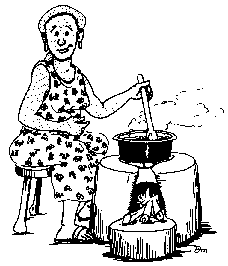
More than just a fuel-saving
device
It is these impact priorities, identified through experience gained on the ground in the course of the project pre-implementation phase, which should guide the development of dissemination strategy, and not the secondary consideration of how many stoves we can sell.
4.2.2) Domestic stove dissemination - II
Now that the institutional stove dissemination programme is fully established, we are turning our attention again to the problem of domestic fuelwood consumption. While the overall objective of these activities remains reducing the rate of deforestation, we now realise that the initial (unstated) impact priority, that of reducing domestic fuelwood demand by improving the efficiency of domestic cooking equipment, was based on two misconceptions.
First: the assumption that the technical characteristics of the equipment used is the determining factor in the overall system efficiency of a domestic kitchen. In many areas, fuelwood management may play a larger role.
Second: the assumption that domestic fuelwood consumption contributes directly to deforestation. This is probably only true for the upper-income sector, whose members rely on purchased fuelwood. The environmental impact of the collection of fuelwood by lower-income consumers is difficult to quantify, and may have been overestimated.
Two different approaches are now being explored, targeted at two different sectors of the domestic fuelwood market. For the low-income sector we have established a project, in conjunction with the Wordwide Fund for Nature (WWF) to produce training materials on energy management in the kitchen, for use in women’s groups and primary schools.
It has been found that widely varying overall system efficiencies are achieved by different women using essentially the same equipment. Thus the training package alms to transfer economical fuelwood-use practices from areas which have long suffered chronic fuelwood shortages to those in which fuelwood shortages have only recently begun to be felt.
The initial series of lessons for primary schools are being piloted in Taita-Taveta and Nakuru districts, with the assistance of the District Education authorities and the Kenya Institute of Education. It is hoped that they will prove suitable for incorporation into the national Home Science curriculum. The teaching materials include an illustrated student’s pamphlet for each lesson, accompanied by a detailed lesson plan for the teacher.

“Cooking to Conserve”
It may prove appropriate to incorporate the introduction of a low-cost stove into this lesson series, but the introduction of the stove is to be seen as an extension of the training material, not as an end in itself.
The key reason we believe this extension-oriented approach will prove more successful for the low-income community than the introduction of improved technology is that the fuelwood economy among low-income consumers is predominantly non-monetised (and therefore an improved stove cannot be presented as a viable economic investment).
In the case of middle and upper income fuelwood consumers, the situation is different. Such consumers tend to purchase fuelwood for convenience, being denied alternative fuels by the limited rural distribution infrastructure for gas and kerosene. As in the case of institutions, such purchased (as opposed to gathered) firewood tends to be produced through the harvesting of whole trees: with corresponding environmental damage.
As well as having a greater negative environmental impact per tonne of wood consumed, the upper-income sector of the domestic fuelwood market is also more accessible to the introduction of improved stoves “sold” simply on the basis that they save fuel and improve the quality of life. Accordingly, we are introducing a range of relatively high-cost but high-performance stoves targeted at this sector.
Two production methods are being tried, tailored (with the benefit of hindsight) to established practices in Kenya.
The first method: the stoves will be mass-produced from sheet metal and sold ready-made from established retail outlets. While probably the fastest strategy, this has the disadvantage that the cost of such production contains a substantial convertible-currency component.
The second method: the design will be adapted, so that the stove can be built on site, primarily from locally-produced materials, but requiring only standard masonry skills. This bypasses the need for specifically-trained professional stove-producers which, as we noted above, was a key problem in the earlier built-on-site designs. The masonry stove, which has already aroused considerable interest in the private building sector, from small-scale building contractors to those responsible for major housing estates, is a combination of the Bellerive “Pogbi” design with the “Nouna C” stove developed for West Africa by W. F. Sulilatu of TNO Apeldoorn, the Netherlands.
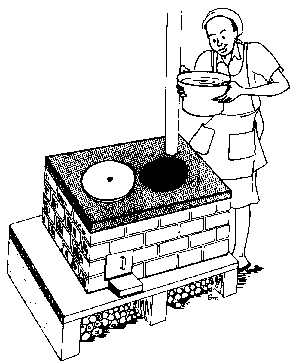
The Bellerive Nouna
Stove
4.2.3) Institutional stove dissemination
The starting point for the development of the dissemination strategy for the institutional stove programme was the finding that the fuel consumption of any woodburning system could more than double if it is operated badly.
The difference made by operator practices is usually more marked in the case of traditional cooking systems: a badly managed Bellerive institutional stove might consume twice as much fuel as it should do, while a badly managed open fire could out-consume its well-managed counterpart by up to ten times. Even so given these findings, it seems inappropriate to speak of a “fuelsaving stove”, as if the stove, of itself, saves fuel A radical change in the thinking behind what we were doing was called for.
Rather than being seen as an end in itself, the introduction of improved woodstove technology must be understood to be one component only of a comprehensive training package designed to reform the overall management of firewood. The stove is a tool which cooks may use to conserve fuel.
There are many other components to the complete system, which are normally neglected by fuelwood demand reduction programmes, as they were by the UNEP/Bellerive programme until the 1986/1987 pre-implementation study drew our attention to their importance.
Accordingly, a fuelwood conservation training package was designed for application in institutional catering establishments. This package, which incorporates the introduction of the improved stoves developed by the UNEP/Bellerive project, is detailed in the Bellerive Foundation Dissemination Manual for Institutional Cooking Systems. As the title of the Manual indicates, we now believe it is no longer appropriate to speak of stove dissemination. The current programme is better described as engaged in the dissemination of improved cooking systems.
The system includes a substantial training
component:
· firewood drying, cutting and splitting· how to feed the fire (how much wood should be fed for a particular task)
· how to regulate the air supply (leaving the door open may make the fire blaze nicely, but actually cools the contents of the pot)
· how to cook economically (simple points such as keeping pots covered and the fact that boiling food fiercely does not cook it any faster, but simply wastes fuel)
· even how to wash up (if the soot is left to build up on the outside of the pot, as is the traditional practice in Kenya, it forms an insulating layer, which dramatically reduces overall system efficiency).
Getting such things right has as much an impact on fuel consumption as using the right equipment
The problem with introducing improved firewood-use practices into institutions (and the principal reason systems in use in institutions tend to be less efficient than domestic systems) is that the operators of institutional cooking systems have little direct personal or financial incentive to save fuel
When a domestic housewife knows that she will have to walk several kilometres to replace every twig she uses in cooking, remarkably efficient cooking practices rapidly evolve. But in an institution, the firewood bill is the bursar’s problem, and does not concern the catering staff. Thus the training package has to provide sufficient structure and detail to compensate for the operators’ lack of incentive to work out the details themselves.
A detailed operator’s manual was rejected as a vehicle for the training material, since a large proportion of the catering staff in Kenyan institutions are women of the often illiterate, older generations brought up before independence. Training by direct demonstration was clearly needed.
Since only low-level communication skills would be required of the trainers, the expense of a network of specialist extension staff seemed unjustified. The clear solution was that the teams of craftsmen responsible for installing and servicing the stoves would also undertake the training of operators, with the assistance of a detailed series of “lesson plans”, which do not require the trainers to have any previous extension experience.
The advantage of this integrated approach, incorporating the introduction of improved technologies and improved practices within a single dissemination programme, is that through the link to technology the training component may be made financially self-sustaining. It is relatively straightforward to sell a tangible product such as a stove. It is far more difficult to persuade the consumer to cover the cost of intangibles such as training of operators. By marketing stove, auxiliary equipment and training as a single package, we can recover all the operational costs of the programme, including the cost of training cooks, from the programme’s beneficiaries.
This need for extensive on-site training was one of the key factors determining our decision to adopt a decentralised approach to dissemination. The strategy favoured in 1986, centralised production in Nairobi, would have maximised the rate at which improved stoves could be produced and introduced into the field. But we found that the introduction of improved stoves alone was not adequate to achieve the key impact priority of reducing fuelwood consumption.
The introduction of the other components of the cooking system, the “software”, required a decentralised approach. The overall cost of the programme would be minimised by integrating the “hardware” and “software” dissemination components. Thus a partially decentralised production system for the stoves themselves became perfectly acceptable, since the limiting factor determining fuel savings was not the rate at which stoves could be produced at a factory, but the rate at which they could be installed with operators fully trained in their correct use and auxiliary skills.
Consideration of two other impact priorities finally determined the dissemination strategy adopted.
4.2.4) The Fuel Saving Package
These two further impact priorities emerged from discussions on the development of the programme with Government of Kenya officials in the Ministries of Energy and Planning and National Development. In the current five-year development plan, the following are explicitly stated as development objectives:
· generation of employment in rural areas, away from Nairobi· Improvement of the national balance-of-payments position through import substitution.
Both of these priorities indicated that centralised production of complete stoves in Nairobi was inappropriate. The first, concerning rural employment, obviously implies that as large a proportion as possible of the labour involved in producing and installing the stoves should be undertaken in rural areas. This favours the production of stoves in kit form, to be assembled on site by specialised teams of craftsmen based in rural areas.
Although this is a more labour intensive production method, and the cost of maintaining teams in the field renders it a slightly higher-cost approach if the sole objective is producing stoves, the need for operator-training and on-site service and maintenance by specialists means that we have to maintain teams in the field anyway, rendering decentralised production the least-cost strategy overall.
The link between the balance-of-payments related priority and the decision to adopt decentralised production relates to raw materials. The only appropriate structural material for stoves of this size, which are to be produced in finished form in a central factory, is mild-steel sheet, which is not produced in Kenya.
On the other hand, if stoves are constructed on site, and therefore do not have to be transported in finished form it becomes feasible to use locally-produced materials such as fired-clay bricks and clay mortar to form the structure of the stove, with the minimum of metal components incorporated to give dimensional uniformity.
Through the adoption of this construction system, the convertible currency component of the cost of the units now under dissemination has been reduced to less than ten per cent.
The details of the dissemination strategy of the ongoing programme are given below in sub-section 4.5. Our point here is that impact priorities, rather than considerations of technical design, determined the final strategy adopted.

Not, ideally, the determining
factor
4.3) Technical design
This report is not meant to be a reference work for the woodstove designer: there are a large number of such texts available. This subsection is written for the non-technician who finds him/herself in the unenviable position of having to direct and set priorities for his/her technical staff, with neither the background nor the inclination to ascertain what, if anything, the technicians are talking about when they get onto the subject of engineering. We hope that the following will provide some ammunition.
4.3.1) Any fool can design an efficient stove...
the problem is designing one which saves fuel.
In the majority of woodfuel demand reduction projects, technical development begins from the wrong starting point, viz: the three stone fire, as opposed to the complete cooking system traditional to the project target area.
If the traditional system happens to incorporate a three stone fire, as it does in most parts of Africa, is this anything other than a verbal distinction? It is, and moreover, the assumptions implicit in taking the three stone fire alone as the starting point often lead to distortions throughout the technical development phase and subsequent components of the programme.
It has been argued, recently and forcefully, that the assumptions on which woodstove programmes are based are actually incorrect, and therefore that improved stoves are a complete waste of time. We shall argue that this conclusion is too strong:
Improved stoves do have a concrete role to play in fuelwood conservation, but this role is less universal than previously thought and in some areas, other measures may contribute as much to reducing fuelwood consumption as the introduction of new technology.
A highly simplified version of the traditional argument for the introduction of improved stoves might go as follows:
“In the traditional three-stone fire, with a clay pot, operated correctly by an African woman, between 10% and 15% of the heat generated by the burning wood is transferred to the contents of the pot. In this improved stove, the rate of heat utilisation is more than 30%, with the same operator and test procedure.
Thus the open fire consumes two to three times as much fuel as the improved stove in executing the same task. Therefore, if all the households in this district were to use the improved stove, we may expect a reduction in fuelwood consumption by a factor of 2 to 3”.
There are, of course, all sorts of qualifications to be made to this argument. We do not intend to attribute it to anyone in particular, but to use the general line of thought (which must be familiar) as a basis for discussion.
In recent literature, the usual response to the above “naive” argument is along these lines:
“Woodstove designers habitually underestimate the efficiencies achieved by African women using traditional equipment. Heat utilisation rates of up to 25% have been obtained from simple three-stone fires. Since most woodstoves which are affordable for the rural poor do not claim efficiencies of more than 30%, it follows that fuel savings resulting from their use will be minimal”.

Underestimated
One of two moves is then made:
a) “It follows that more efficient stoves are required (with efficiencies over 40%) for us to make any real impact - therefore more resources should be devoted to stove design”.or
b) “It follows woodstove programmes are a waste of time”.
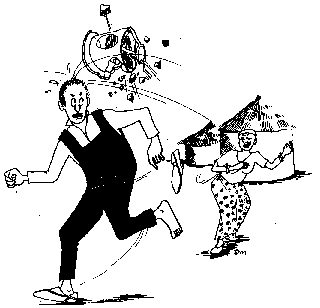
Figure
But neither of these moves makes sense of the fact that in many instances the introduction of improved stoves, even not particularly efficient ones, does seem to result in a reduction of total wood consumption. For example, the clay two-pot domestic stove disseminated in the initial stages of the UNEP/Bellerive project had an overall efficiency of less than 30% and yet the results of controlled cooking tests and monitoring of the frequency of fuelwood collection trips in the field indicated that the introduction of this stove reduced overall consumption by about a factor of three.
Moreover, both conclusions - that designers should try harder or that designers should give up - are still based on an acceptance of the essentials of the argument given above. Those who question the conclusion of the simple argument (that a 30% efficient stove can save fuel) do so on the basis that one of the stated premises (that the open fire is only 15% efficient) is invalid.
What is seldom questioned is the basic reasoning behind both positions, in particular the unstated assumption that stoves save fuel by increasing the percentage of the energy released by the fire which is recovered by the contents of the pot.
This assumption may seem so obviously true that it is not worth thinking about. But this is precisely the sort of assumption we should question.
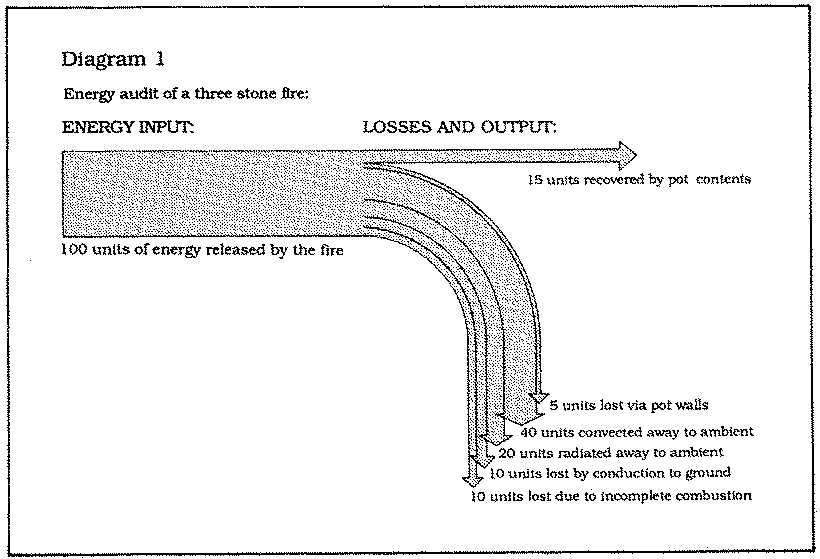
Figure
Consider the situation in a little more detail. Diagram 1 below might be a rough heat balance (energy audit) for a traditional three-stone fire. None of these figures are the result of any research on our part: they are drawn from the literature simply to illustrate the point we are trying to make. Hence from the diagram, the three stone fire is said to be 15% efficient.
But where do these figures come from? They seem quite straightforward, particularly to the non-specialist who is not in the business of designing stoves but in developing implementing and/or evaluating fuelvood conservation projects. We have energy in, energy wasted and energy out. Reduce the proportion of energy wasted and we will get the same energy out for less energy in. What could be simpler?
If, however, we look carefully at some of the terms in the energy equation in diagram 1 the position seems a little less clear. Take, for example, the two most important terms - the energy released by the fire and the energy recovered by the pot contents (“energy utilised” in the literature).
a) Energy released by the fire
Unless it has been dried in an oven for around twenty-four hours, wood contains moisture. When it is burnt, this moisture must be heated to boiling point and evaporated away. A sample of freshly-cut green wood may be over 40% water (by mass). When such wood is burnt, over 45% of the chemical energy released through the combustion of the inflammable components of the wood is used simply to drive off this moisture.
When property air-dried wood with a moisture content (wet basis) of about 10%, is burnt, the proportion of energy needed to drive off the moisture is only about 11%.
Thus by drying out the wood sample from 45% to 10% moisture content before burning it, we increase the amount of energy effectively released when the wood is eventually burned -energy available to heat the pot, stove, chimney etc. - by up to 63%
The “energy released by the fire” term in the heat balance given in diagram 1, as in all calculations of the efficiencies of open fires, woodstoves etc. is calculated on the basis of effective calorific value (ECV). The ECV is a measure of the energy content of the wood after compensating for moisture content. The fact that some of the chemical energy in the wood is used to drive off the moisture is compensated for by calculating heat utilisation efficiencies as if that energy was not there in the first place. If we are using wood of 40% moisture content (w.b.) then we say the energy released in burning a sample weighing one kilogramme is 10.2 MegaJoules. Never mind that an extra 6.4 Mega-Joules could have been released from the same sample if we had air-dried it for two months before-hand: that is of no relevance to the stove designer.
The point of using ECV as the measure of energy released is to eliminate the variable of wood moisture content in order that efficiencies calculated from tests using woods of differing moisture contents may be directly compared. Any stove technician knows this. The technicians are deliberately excluding part of the picture because it is of no relevance to what they are trying to do. Yet for the programme director, who’s Job it is to place the activities of the stove technicians into the wider context of fuelwood conservation, what is peripheral for them is precisely what connects their work up to rest of the project.
b) Energy recovered by the pot contents.
What do we mean by “energy utilised”? The VITA standard definition is straightforward: in a water boiling test, energy utilised is the energy received by the water in the pot - the sum of the energy used to heat the water to boiling point and the energy used to evaporate whatever water is boiled away. Again, from the point of view of the stove designer, this is the most appropriate quantity to measure, since what he or she is trying to do, in designing a stove, is to minimise the losses identified in the heat balance of the open fire given above. The ratio of energy utilised, so defined, to the energy released by the fire, as defined above, is the clearest and most reproducible measure of his or her success in doing this (known as percentage heat utilisation rate, or PHU). Once the energy is inside the pot, as it were, the stove designer’s Job is over.
But the Job of reducing the amount of fuelwood used to cook the food of the developing world is anything but over. Consider what happens to the energy after it reaches the contents of the pot during a typical cooking task: stewing beans, for example. Only a very small proportion of the energy entering the pot (less than 2%) is actually consumed in the chemical reactions which convert the beans from their uncooked to cooked state. Most of the energy is used to heat water and beans to boiling point and to evaporate away whatever water is lost as steam. If we look at the overall cooking process, the energy used to evaporate water away and even, if the hot water is thrown away afterwards, the energy used to heat the water, should be seen as system losses.
“Yes” the stove designer will respond. “But the stove can’t do anything about those losses”. This is perfectly true (almost - see below). But, as in the case of losses due to high wood moisture content, it does not mean that nothing can be done: see 4.3.2 below.
Thus a slightly more comprehensive picture of the energy flow during the entire cooking process, using the open fire considered above, is shown in diagram 2.
We notice immediately that the losses which were not included in the first (simple) heat balance (diagram 1 above) and which are eliminated from the calculations of stove technicians, are precisely those which improved stoves can do nothing about. Thus if we are presented with diagram 1, and are under the impression it tells the whole story, then it seems stoves are the whole answer: every one of those losses can be substantially reduced by a properly designed stove.
Of course, the simple heat balance does not tell the whole story. Nor does diagram 2 - but a little more of it than diagram 1 does. Is it therefore coincidence that the simple heat balance picks out Just those features of the story which are relevant to stoves? Or a dark plot on the part of the woodstove designers to mislead us?
It is neither. The simple heat balance, along with the concepts of percentage heat utilisation, specific fuel consumption, and all the various test procedures, have been designed by technicians, for technicians. These concepts and procedures are specifically tailored to eliminate everything which is not relevant to stove design from the picture - which is perfectly standard scientific practice. This is the language which stove designers need to communicate with each other and pursue their work most effectively.
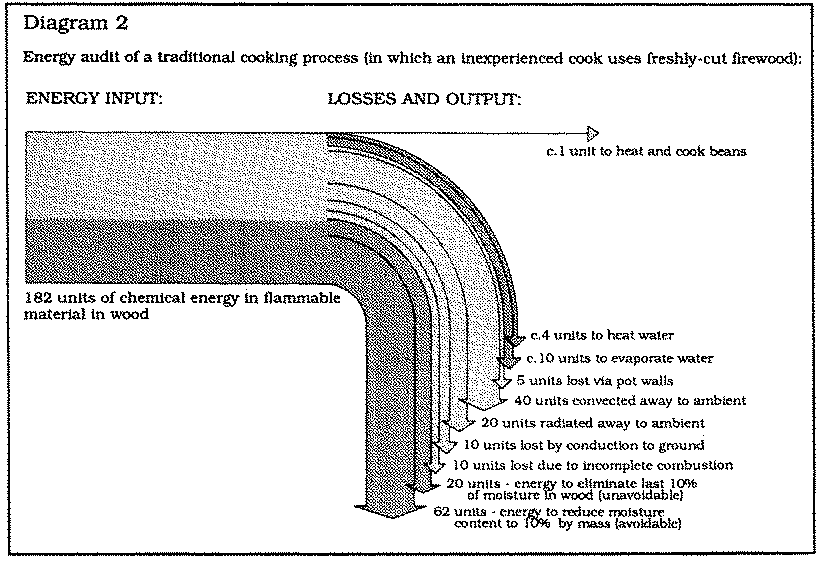
Figure
The danger lies in attempting to discuss the whole problem of fuelwood conservation in the same terms: when for example, the simple heat balance, which is in reality just a tool of the stove designer’s trade, is offered as a proof of the stove designer’s importance.
So the lesson for programme directors is clear when a clear-cut and “obvious” solution is presented, that is precisely the time to look for the preconceptions on which it is based. We have noted already that we are obliged to work on the basis of preconception. But preconceptions are only realty dangerous when they are not recognised as such.
The assumption that improved technology is the answer to woodfuel demand reduction is one of the most prevalent and insidious assumptions of all, because it is presented in the context of a complete, coherent and convincing argument, often in terms which those responsible for prioritising different programme components, as non-technicians, do not fully understand.
The stove designer provides us with a concrete solution to a genuine problem: how to direct more of the heat released by the fire into the contents of the pot. He or she does so by an impressive process of scientific reasoning, such that it is difficult for us to recall that this may not be the key problem in fuelwood conservation.
In accepting the technicians’ formulation we are, quite subtly, designing the problem so that our solution applies to it. In principle, at least, it might seem preferable to work in the opposite direction.
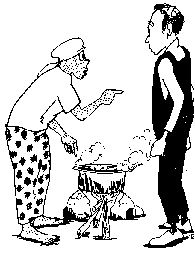
The right
direction
4.3.2) Who needs stoves, anyway?
Stoves can help to save fuel. We have, so far, played down the importance of improved technology, not because we believe it is totally unimportant, but because its importance has been generally overestimated. We are trying to redress the balance.
The only way to maintain a sense of proportion in setting priorities for a fuelwood conservation programme is to keep a clear idea of what it is we are actually trying to do; as opposed, in this instance, to what the technicians think we are trying to do. Let us suppose that the overriding priority is to combat deforestation, and that the level of fuelwood demand in the project area is actually an important factor determining the rate at which trees are cut down (this is not always the case).
The first question to ask is: is it true that fuelwood is being used inefficiently at present - and we mean here the broad sense of efficiency: could these same tasks be carried out using a substantially smaller amount of fuelwood? As opposed to the narrow sense: could the percentage heat utilisation rate of this open fire be improved?
In evaluating the overall efficiency of fuelwood use it is essential to look at all stages of the fuelwood-consumption process, from trees being cut down to the food finally being cooked (if we are focussing on the use of fuelwood in catering), and not just the specific stage in the process - the transfer of heat from fire to pot -which is normally considered when we talk of “efficiency”.
Interesting trends may emerge. For example, the efficiency of the equipment used in traditional institutional kitchens, narrowly defined as PHU, is approximately the same as the efficiency of traditional domestic cooking equipment. Yet we found that, in Kenya at least, the overall system efficiency of an institutional kitchen was far poorer than a domestic kitchen: much more fuel was consumed in the institution than in a typical domestic situation to carry out the same task. It was obvious that losses occurring at points in the cooking process other than those identified in the standard PHU test were much greater in the average institution than the average household.
What these losses are and which ones are the most important will depend on where we are working and how people use fuelwood in that area. In the case of Kenyan institutional catering, the two key causes of losses “outside” the stove (i.e. outside that stage in the cooking process to which the stove is relevant) were failure to dry wood properly before using it, and failure to regulate the power supplied to the pot.

Losses may occurr at other points
in the fuelwood utilisation process
a) Wood preparation
We have discussed the implications of using wet wood in some detail above. It is easy to exhort institutions to dry firewood before using it but this is not enough. In developing the institutional fuelwood saving programme, we devised a detailed firewood preparation system with the following key elements:
· wood is cut and split before it is stored. This is important because wood dries primarily through the cut ends of the grain, not across the grain through the sides of the log. In the training package we supply the institution with a specially designed wood-cutting stool to ensure logs are cut short enough not only to dry properly, but to fit into the stove firechamber.· wood is stacked in a triple-bay woodstore (design supplied to the institution by the programme) with open, or perforated, walls. The open sides allow air circulation to accelerate drying and prevent rot. The three-bay system is designed so that each bay accommodates one month’s supply. When it is exhausted, the institution begins to use the wood in the next bay and refills the first. In this way we ensure that all wood has been stored a minimum of two months before use.
· The base of the storage site is lined with ash to prevent termite infestation - an essential precaution in most tropical countries.
These are very simple points - it hardly seems appropriate to call them innovations. But if we recall that institutional catering staff have no direct incentive to save fuel, and therefore that there is no pressure for such economical practices to “evolve naturally”, the importance of setting these activities into a structured and detailed training package becomes clear.
b) Power regulation
It is likewise with the regulation of power supplied to the pot. Most cooking tasks in Kenya involve boiling or stewing. Many of these require that food is maintained, in water, at boiling temperature, for a certain length of time. So long as the temperature is maintained it is irrelevant how hard the water bolls. Thus once the water has been brought to the boll, the power supplied to the pot must be reduced to the level at which it only compensates for losses, no more. Energy spent in driving off steam is energy wasted.
Any woman in an area which has experienced chronic fuelwood shortages over a long period knows this. But inexperienced cooks and, in particular institutional catering staff who may not be all that interested in saving fuel, still tend to boll food as hard as possible, perhaps under the mistaken impression that this will make it cook faster. Thus the training package provided by the institutional fuelwood saving programme incorporates a detailed demonstration component in which the cooks are shown how to regulate the fire in cooking each of the main dishes used in Kenyan institutions.
As in the case of drying firewood, to exhort cooks to boll food slowly is not enough. We must provide them with a specific way of carrying out the tasks they have to undertake.
It is worth noting that using almost any improved stove does make it substantially easier for the cook to control the power supplied to the pot. This point is probably the key to the (ostensibly puzzling) fact that the use of a not-particularly-efficient stove (in terms of PHU “score”) can result in a reduction in fuel consumption.
For example, in the course of a comparative evaluation of the performance of various domestic stove models, carried out on behalf of UNEP by the Kenyatta University Appropriate Technology Centre, a ceramic stove from Somalia was found to be one of the least “efficient” of the stoves tested, in terms of PHU. In the course of controlled cooking tests, on the other hand, this same stove gave one of the lowest rates of fuel consumption - particulary for slow cooking tasks.
The reason for this was that the design of the stove was such that it had a very low maximum power output, and for slow cooking it is the power output, not the heat transfer efficiency, which determines fuel consumption. All the other stoves were transfering heat to their respective pots more efficiently, but since too much heat was being supplied to the pots anyway, this simply resulted in more water being boiled away, more cold water needing to be added to prevent food from burning and a lower overall system efficiency.
One response to this might be to conclude that the VITA standard test, and PHU as a measure of stove performance, are both useless, and a “better” test procedure and indicator should be developed. This is a completely misguided reaction.
The VITA standard water-boiling test is a specialised procedure with a very specific purpose. For that purpose, it is entirely suitable. Other tests, such as the comparative controlled cooking test, have other purposes, for which they are equally suitable. It is misleading, for example, to say that the specific fuel consumption (SFC) - the indicator which emerges from a controlled cooking test - is a “better” indicator of stove performance than PHU. They are measures of different aspects of the stove’s performance - neither tells the whole story.
Rather than trying to devise a test which does tell us the whole story, which is probably a fruitless undertaking, we should recognise the limitations of the various tests and treat data generated by them accordingly.
Any test is an artificial situation which may or may not have any relevance to the actual performance of these stoves in carrying out the tasks they were designed for. What matters in the end is not how a stove performs in a VITA standard water-boiling test, but how using that stove affects the amount of fuelwood which the women of the project target area require to cook the food their families need.
This seems to suggest that we have to begin technical development work from scratch every time we move to a new area. There is a sense in which this is so, in that we must be prepared to find that the designs we developed for a neighbouring district will turn out, for some reason or another, to be inappropriate to that area.
But it does not mean that all work done to date is irrelevant: an engineer with experience in designing tractors who is put onto designing combine harvesters will be far better placed than one with no experience at all. Certain features, incorporated into the design of a tractor, will reduce its fuel consumption. The same features may well also reduce the consumption of the combine, even though the two are being used for different tasks and their fuel consumptions are not directly comparable.
Thus the experienced stove technician, travelling to a new region, knows that he does not carry with him the answer to reducing fuelwood demand in that region; and that he will not have the answer until he has been working on the ground, with the people of the project area, for long enough for them to make their input into whatever design is eventually developed: long enough to establish, not which stove performs best in a VITA standard test, nor even in a controlled cooking test, but which design enables the cooks of that area to use the least fuel over the year.
Rethinking the role of the technical expert in this way has a direct impact on project design. The traditional approach is for technical development to be carried out by expatriate experts in a relatively short time-frame. We have found that rather than being a short, self-contained exercise, technical development should be integrated into the overall development of the project, with the design of the technology not being considered “finalised” until the end of a substantial pilot dissemination phase. The role of the expert is to provide suggestions for system modifications, not to design a gadget.

Not the way to handle the technical
expert
For such an approach to be adopted, a minimum level of technical expertise must be available on a continuous basis in the project area over a long period - one to two years at least.
The sort of expertise required is the ability to monitor the performance of systems in use, evaluate quickly the probable impact on performance of any design modifications which stove producers or users may come up with, adapt production systems to accommodate changes in dissemination strategy and so forth. Unless such expertise is available, the project will be “tied” inflexibly to the original design produced by the short-term technical consultant.
4.4) Impact assessment
Most impact assessments, or cost-benefit analyses, of fuelwood conservation projects depend to some degree on the notion of national fuelwood demand, treated in an analogous fashion to national petroleum demand, and such like.
It is assumed implicity that the level of fuelwood demand is a cause for environmental concern in the same way that the level of petroleum demand, in a non-oil-producing country, is a cause for economic concern. It is not.
Petroleum demand within a country is linked, in a completely straightforward way, to oil imports. There is no such simple connection between fuelwood demand and the rate of deforestation. Different sectors of fuelwood demand, (such as institutional vs. domestic catering) may have a completely different environmental impact, since not all the wood that is burnt has been obtained by environmentally-damaging means. To burn trees which have already been cut down to clear land for agriculture, or which have died of natural causes, has virtually no direct impact on the rate of deforestation.
What matters is not total national woodfuel demand, but the level of demand which must be met by the harvesting of trees specifically for fuel. And a realistic figure for that is exceedingly difficult to obtain.
Several factors complicate the picture. We mentioned in sub-section 2.4.1 the problem of the proportion of fuelwood which has to be paid for in cash being naturally exaggerated by survey respondents. Thus demand-side data is inevitably suspect Moreover, in a country such as Kenya where the harvesting of trees for fuel is virtually illegal in most areas, accurate data from the supply side is equally scarce.
Even if accurate data were available, in many cases there may be no clear-cut distinction to be drawn between trees cut down “for fuelwood” and those cut down primarily for other reasons, but which end up being used for fuelwood.
On the one hand we have trees being cut (usually illegally) on undeveloped land or in national parks and converted into charcoal. This is a clear case of woodfuel demand doing direct environmental damage: if the demand for charcoal were not there, then these trees would have been left alone.
At the other extreme we have a housing estate developer clearing land for building, and selling the trees cut down for fuelwood. In this case it is extremely unlikely that the value of the fuelwood so obtained played any part in the developer’s decision to clear the plot These trees would have been cut down regardless of whether or not there was a demand for the fuelwood.
But in between these two extremes we have a great many cases in which the situation is much less clear. For example, a farmer clears an area of marginal land and sells the trees he has cut down to be made into charcoal. He plants up the plot, finds after one year that it is not viable and abandons it When we look at the price obtained for the cut trees, it turns out to be comparable to the value of the plot for agricultural purposes. Is this a case of an unsuccessful attempt at agricultural expansion, or the commercial felling of trees for fuel?
Since the latter description would almost certainly make the operation illegal. It is extremely unlikely that any survey return will give us the correct answer.
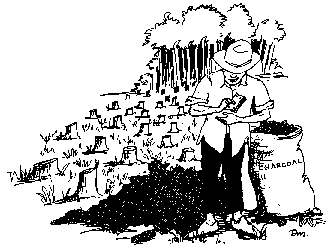
An unsuccessful attempt at
agricultural expansion
Accordingly, it is impractical to consider our activities in the context of national woodfuel demand. It might be preferable to focus on a particular sector where the environmental damage per tonne of wood consumed is particularly high -such as the institutional sector in Kenya.
Our principle grounds for believing that institutions consume a higher-than-average proportion of harvested wood is that the normal unit of purchase for fuelwood among institutions is the trailer-load: one to two tonnes. While a domestic consumer might gather a back-load (30 - 40 kg) from dead branches over an area of a hectare or so, it is unlikely that the owner of a tractor and trailer would spend a proportionate amount of time gathering across 50 hectares. Whatever the legalities, systematic harvesting seems much more likely.
Given that we are focussing on the institutional sector, there are three components to an impact assessment for a project such as this one. We must evaluate:
· the average change in fuel consumption which takes place at consumption centres when the new systems are introduced
· the proportion of the total number of consumption centres in that sector into which it is estimated/projected that the project has succeeded or will succeed in introducing improved systems
· the total woodfuel consumption due to that sector which is supplied by harvested trees, as opposed to trees which are cut or fall down other reasons.
Now the first two of these figures are relatively straightforward. We illustrate using the institutional fuelwood saving programme established by this project as an example.
4.4.1) The impact of the Kenya Institutional Fuelwood Saving Programme
a) Evaluating the change in fuelwood consumption
As a component of the institutional fuelwood saving programme pre-implementation study, undertaken in 1987, a consultant from the Woodenergy Systems Group, W. F. Sulilatu of TNO Apeldoorn, the Netherlands, carried out an evaluation of the field performance of the project’s improved systems compared with that of other institutional cooking systems currently available in Kenya.
The consultant found that the improved systems consumed between 40% and 75% less fuel than the alternatives, on the basis of comparative cooking tests. These tests were carried out using fuelwood with a standardised moisture content. Since the programme also provides training in fuelwood preparation, this may result in further savings which are difficult to quantify.
Field reports suggest that in the majority of cases savings observed are of the order of 70%. This may be partly due to improvements in fuelwood preparation associated with the introduction of the new systems, and partly because the systems replaced tend to be the least efficient ones. It is also possible that savings may be exaggerated by operators enthusiastic about their new equipment.
Even greater savings of woodfuel are realised when the improved stoves replace charcoal burning systems (as they often do), owing to the inefficiency of current charcoal conversion techniques in Kenya. Accordingly, we consider the consultant’s figures on fuelwood consumption to give a realistic (and, if anything, conservative) estimate of the probable savings achieved.
b) Evaluating actual/potential market penetration
The market survey carried out by Mwaniki Associates identified a market for institutional stoves of this type of between 400 and 500 units per annum in 1987. Total installations carried out by the programme in the course of 1988 numbered 220 units, giving us a market share of about 50%.
Accordingly, if the programme does no more than maintain its present market share, we may expect it to achieve an eventual reduction in national institutional woodfuel consumption of 20 - 37% over a six-year period (Mwaniki’s estimate of the average replacement cycle for institutional stoves in Kenya). If the programme can increase its market penetration to 80%, as seems possible if scale-up capital is obtained and a credit scheme introduced for programme beneficiaries, this reduction would increase to 32 - 59%.
Thus of the three components of an overall impact assessment listed above, we have reliable data on the first two, which give us an indication of the potential percentage reduction which the programme can achieve in fuelwood consumption in the institutional sector: up to 69%.
c) Evaluating total impact
Translating this into absolute figures for savings achieved is more problematic. There are three possible impact measures which a funding and/or implementing agency might be interested in: woodfuel savings in tonnes and/or hectares-of-forest-equivalent; cash savings at the individual-institution level; and economic benefits at the national level.
All of these depend on estimates of national institutional woodfuel demand, which are very unreliable. The data we have to work with comprises the market survey carried out to 1987 by Mwaniki Associates, which identified a total of about 2000 woodfuel-using institutions in Kenya; and a survey of 40 institutions for which the principle fuel was wood or charcoal, carried out by the Kenya Energy and Environment Organisation (KENGO) with the International Development Research Centre of Canada (IDRC) in 1985.
Both surveys broadly categorised institutions into school and colleges, military institutions and prisons, and hospitals and health-related institutions. On the basis of average consumption per institution within each category (from the KENGO/IDRC survey) and the total number within that category (from Mwaniki’s survey), we find that 2000 institutions would consume approximately 450 thousand tonnes of woodfuel per annum, either directly in the form of firewood or in the form of charcoal, taking a typical conversion rate of 5 tonnes of wood to one tonne of charcoal.
It must be acknowledged that the majority of project impact-assessment exercises would leave the statistics at this point. If we look a little closer, however, we find that the averages on which the above estimate is based are subject to standard deviations of the order of 100%, which renders any inferences from them suspect, to say the least.
A better measure, one might assume, would be woodfuel consumption per individual fed through an institutional catering establishment. This would eliminate the spread due to the variation in institutions’ populations in the various categories. This approach yields a total consumption of 530 thousand tonnes per annum feeding a total of 730 thousand people. But again, the standard deviations involved are still of the order of 100%, indicating the wide spread of efficiencies achieved with traditional institutional cooking systems (none of the institutions surveyed by KENGO/IDRC were using Bellerive improved systems).
The conclusion to be drawn from all this is that any estimate of national-level demand for woodfuel cannot be anything more than an order-of-magnitude indication.
For the sake of investigating the implications, we may take a national institutional woodfuel demand of 500 thousand tonnes, based on the above two figures.
If the programme increases its market share from the present 50% to 80%, then the eventual reduction in demand would be approximately 50% (taking W.F. Sulilatu’s performance findings and weighting according to numbers of units of each type of stove found in use by KENGO/IDRC).
On the above assumptions, this translates to an annual saving of 260 thousand tonnes of woodfuel, for which institutions would otherwise be paying a total of about 47 million Kenya shillings (2.6 million US dollars) at 1088 prices.
Given that the total cost of a fully sustainable programme of the required volume (including new stoves, servicing, regular replacement of delivery vehicles etc.) would be approximately 8 million shillings (US$450,000) per year at 1988 prices, this figure gives us an indication of the viability of the programme from the individual beneficiaries’ point of view. It does not give us a figure for the “net economic benefit” to the nation as a whole.
4.4.2) Problems with impact assessment
The average price paid by an institution per tonne of woodfuel (fuelwood or charcoal-equivalent) was found by KENGO/IDRC to be KSh 155/= in 1985 (standard deviation about 30%). After inflation, this is equivalent to approximately KSh 188/= in 1988, which is the basis of the above “value of savings”. But if we consider the origin, of this price, it is clear that it does not represent the “true economic value” of the trees cut down. This KSh 188/= is essentially the cost of the labour required to cut down the trees and transport the wood to the school, or to convert the wood into charcoal first, as the case may be.
The problem of placing an economic value on 250 thousand tonnes of woodfuel, when we are not even sure of how much of that wood was cut down specifically to provide fuel in the first place, is one which has exercised a great many authors, and no clear consensus has yet emerged as to how this should be done.
Thus: an overall cost-benefit analysis, from the point of view of individual programme beneficiaries, is possible, but only if we rely on figures for national sectoral demand which cannot be anything more than indicators of order-of-magnitude.
Attempting to produce a CBA from the point of view of national accounts (with or without some sort of compensatory terms for “capital” environmental resource consumption) is clearly more problematic, and may be impossible.
4.5) The Kenya Institutional Fuelwood Saving Programme
4.5.1) Operational structure
Following the Market Survey and Field Performance evaluation it was decided to retain the programme within the overall framework of the Bellerive Foundation, despite the fact that it is now generating enough revenue to cover its operational costs.
The current scale of operations, however (we are the largest single supplier of institutional catering equipment in Kenya with an estimated 50% market share), means that systems must be adopted similar to those operated by commercial concerns. The basic structure is as follows:
Structure of the ongoing programme:
· A network of District Focus Firewood Conservation Projects (DFFCPs) is being established as a component of the District Focus initiative of the Government of Kenya. Each DFFCP is individually funded by a donor. The DFFCP concept was piloted successfully in Taita-Taveta district with support from the Danish International Development Agency, DANIDA. Two further DFFCPs have been launched in Embu and Nakuru districts, with the assistance of the Overseas Development Administration of the U.K., and the Worldwide Fund for Nature respectively. DFFCPs are under development in conjunction with Danida and Norad (the Norwegian bilateral aid agency) in South Nyanza and Bungoma districts. (See map on page 4)
· Each of the DFFCPs incorporates or will incorporate a field officer, responsible (inter alia) for promoting the institutional fuelwood saving programme at the regional level, and a regional dissemination team (RDT): a team of craftsmen, responsible for all installation, training and service-follow-up work in their district.
· A small Programme Coordinating Unit, based in Nairobi, manages procurement of components and materials (from Kenya-based suppliers), coordination of orders, distribution of stove kits (direct to programme beneficiaries), national level promotion and all programme finances. In this way kits are delivered direct to the institution and payments remitted direct to Nairobi.
Thus the craftsmen actually installing the systems and carrying out training in the field do not have to have access to delivery vehicles nor administer the programme’s cashflow (currently of the order of 4 million shillings - c.US$230.000 - per annum), all of which is essential to controlling the cost of such a decentralised approach to dissemination.
Prices charged to programme beneficiaries are currently calculated to cover
· costs of materials and components of stove kits
· delivery costs (excluding depreciation on vehicles)
· salaries of staff directly involved in the dissemination programme
· Communications costs (excluding promotion)
Our current market penetration is estimated at c. 50%: the total market was evaluated by Mwaniki Associates to be 400 - 500 units per annum and the programme installed c. 220 units in the course of 1988. Given the relatively poor performance of other systems available (on average they consume at least 100% more fuelwood than a properly managed Bellerive system), environmental considerations indicate that this penetration should be increased.
With an expanded distribution capacity and the increased marketing and installation capacity given by an eventual network of six DFFCPs in place of the present three, a market penetration of up to 80% is perfectly feasible. Once this position is achieved, it will be possible for the burden of promotion and depreciation costs to be transferred to programme beneficiaries with no increase in real unit prices.
Thus when scale-up is complete, the programme will be fully self-sustaining with an indefinite life-time. It is proposed that the scale-up should be undertaken over a five-year period, partially funded by external donors: details of the various components are given below.
4.5.2) What next?
This document is intended to provide ideas based on our experience to date. Accordingly, we provide only a brief indication of proposed developments.
a) The future of the Institutional Fuelwood Saving Programme.
We have explained above why we do not feel it would be appropriate at this stage to turn this programme over to the private sector. The essential training element would be neglected, and the abrupt change in pricing policy, which would be required by a private operator needing to cover depreciation on capital equipment to service a debt on scale-up costs and/or to provide a rate of return on investment typical of the Kenyan private sector, would have a negative effect on the programme’s environmental impact.
Accordingly, a five-year scale-up project is proposed, during which time donor funds will be utilised to expand the programme such that, by the end of the 5-year period, economies of scale will allow the costs which are currently born by donors (principally depreciation on capital) to be transferred to beneficiaries with no change in real unit prices.
This scale-up operation comprises three main elements:
· a revolving fund to provide concessionary credit faculties to programme beneficiaries, to be administered by a leading Kenyan Bank (lack of access to capital was identified in the market survey as a major constraint on potential investors in improved stoves, despite short payback periods - average 1.5 years)
· a national promotional campaign· capital to expand the distribution capacity of the programme: storage facilities, delivery vehicles etc.
The scale-up project will be undertaken in conjunction with the establishment of further District Focus Firewood Conservation Projects (see above).
We have mentioned the ongoing technical development work being undertaken into:
· mass-producible stoves for the higher-income domestic sector
· low-cost/low-durability systems for small-scale commercial catering establishments· training materials in Kitchen Energy Management for the low-income domestic sector
· fuelwood production units for larger institutions.
Further work is required, examining the following:
· the potential for the introduction of alternative fuels to supplement and/or replace fuelwood in the institutional sector in key regions (including agricultural wastes, sawdust, solar pre-heating of water etc.)
· mechanisms whereby other fuelwood saving systems may be disseminated through the DFFCP network (addressing baking, small-scale fuelwood-using industries etc.)
b) Beyond Kenya.
It should be clear to those who have read this report that straightforward “replication” of the Kenya programme in other parts of Africa is out of the question. Strategies must be developed tailored to the conditions prevailing in other countries. Recognition of every country’s unique environmental-economic situation is essential to success.
However, we believe that the experience gained in developing the Kenya programme has left us with a substantial amount to offer elsewhere, and the overall approach, combining the introduction of improved technology with an extension programme aimed at improving firewood management, should prove generally applicable.
The increasing pressure on the continent’s remaining reserves of standing trees was noted as a cause for grave concern by the participants of the
First African Ministerial Conference on the Environment, held in Cairo in 1985. Initiatives which result in genuine reductions in fuelwood consumption, in those sectors which are doing direct environmental damage (see above), have a clear place in the follow-up to this conference.
The approach adopted by the UNEP/Bellerive project in Kenya, whereby savings are achieved in a sustainable manner through the progressive transfer of programme costs onto project beneficiaries. Is also clearly in line with the socio-economic developmental objectives of a large number of African nations. Invitations have already been received to establish institutional fuelwood saving programmes in Tanzania and in Northern Nigeria - at the behest of the Tanzania Ministry of Energy and Minerals and the Nigerian Conservation Foundation respectively.
In each of these countries, and any further areas in which we establish operations, we aim to adopt a two-pronged approach: introducing a suitably modified version of the fuel-saving systems as developed for Kenya, while at the same time establishing a capacity to develop strategies and technologies on the ground. Thus we can aim to achieve an immediate impact while. In the long run, the “Kenyan” systems will be replaced by those developed entirety within the project host country.
4.6) Is non-profit sustainable?
It is certainty unusual for a non-governmental organisation to be implementing a fully-developed marketing operation, on a scale comparable to a private-sector concern, and, on the face of it, in direct competition with private business. Is it right?
There seems to be a general consensus that direct donor-assisted intervention should be restricted to such areas as research, education, extension services and the development of infrastructure. Spheres of activity which are traditionally the preserve of the private sector, such as the production and marketing of consumer durables, should be left alone. Any attempt to intervene directly in such areas, beyond such seminal activities as technical development, the creation of public awareness, and the provision of launch capital must automatically, be “unsustainable”.
All too often such direct intervention has taken the form of crude subsidies, and for obvious reasons programmes have tended to collapse as soon as the donor subsidy is removed. This has led to the conclusion that, once a new product, technology or system is introduced, either it will be taken up by the private sector, or it will have “failed the test of the market place” and should be abandoned.
The institutional stove dissemination programme is clearly no longer a pilot scale activity. It is the largest single source of this type of catering equipment in Kenya, it might be argued that, as a non-profit organisation maintaining such a significant market presence, we are having a negative effect in the long-term, since prices are thereby depressed, discouraging the establishment of independent private-sector production.
We could defend our continued direct involvement with the fact that we are using the ongoing dissemination of improved catering equipment as a means to fund an extension programme aimed at improving the management of fuelwood in institutional catering.
Thus, even though the programme is run on a non-profit basis, the prices charged to programme beneficiaries, with these training costs built in, are such that we are not undercutting a private entrepreneur who wishes to produce and market institutional stoves over a limited region.
Such small-scale production in densely populated parts of the country, is commercially viable, and at least five independent producers are currently in operation installing stoves of the Bellerive design in their own districts. Arguing that we are not undercutting the private sector does not, however, provide a positive justification of our approach. For that, we must consider the situation on a wider scale.
The 1987 market survey found that a national-scale programme, reaching those remote, poorer regions (such as the arid north of the country) which arguably have the greatest need would not be an attractive venture for a private company. Should these remote regions, which cannot support a programme run on a profit-making basis, Just wait until shortages put up the price of fuelwood sufficiently for programme beneficiaries to “become prepared to pay” a much higher price for fuel-saving equipment?
It is not clear whether such a non-interventionist approach would work, since the main constraint determining the present rate of dissemination is not the beneficiaries’ willingness to pay, but their ability to raise the necessary capital. Most target institutions have relatively rigid patterns of expenditure, and the poorer the institution, the less flexible its budget. It is difficult to see how an even higher price of fuelwood could make more capital available for the purchase of improved stoves.
Moreover, the link between fuelwood availability and fuelwood prices is far from straightforward. Fuelwood at source, is still effectively free, however scarce it may have become. An institution is paying only for delivery, not for the fuelwood itself. These delivery costs will increase as shortages become more severe and fuelwood has to be transported over greater distances, but it is unrealistic to expect a smooth, predictable relationship between price and supply for a given level of demand.
Thus, despite the obvious need for fuelwood conservation in institutions, the market cannot, at present, support a national programme unless it is operated by a non-profit-motivated organisation such as the Foundation. And this situation will not be resolved through the operation of market forces. Does this mean that we are committing ourselves to indefinite involvement, that as soon as the Foundation departs the majority of institutions will go back to using three stone fires?

the non-interventionist
approach...
No. Because the project has focussed on a specific, limited sector of the fuelwood economy, the sheer scale of the ongoing programme is now having a direct, significant impact on the market situation within that sector. We are in effect, creating the conditions required for a sustainable programme.
How?
To begin with the most obvious impact: the programme is creating awareness among institutional fuelwood consumers of the scope for fuelwood savings, and the financial benefits to be derived from the use of improved systems. Perhaps more importantly, the success of the programme has alerted the private sector to the potential of the market for improved institutional stoves. The independent producers mentioned above have established that by operating over a limited region, omitting the training component, and charging prices comparable to the programme’s, they can generate an attractive return on investment.
But we have found that substantial fuelwood savings depend on the training component not being ommitted. This brings us to the fundamental impact of the ongoing programme, beyond the simple creation of awareness. At present, Bellerive institutional stoves are in use in only 10 to 15% of Kenyan institutions. The fuelwood management training package, introduced towards the end of 1987, is even more of a novelty. Consider the situation in 5 years time if the programme does no more than maintain its current share of the market.
By that time more than half the institutions in the country will be using stoves installed by the programme, and most of these will have received, at some stage, the benefit of the training package. The system will be, de facto, the national standard.
Once this position is achieved, the bulk of the work being undertaken by the programme will be the servicing and rebuilding of old Bellerive stoves, retraining cooks and so forth, as opposed to new installations.
The servicing of existing stoves will require a much lower level of working capital, and much less investment in delivery vehicles, than the installation of new ones. It will therefore be substantially easier to transfer to the small-scale independent private sector.
Once the fuelwood management techniques introduced by the programme are in general use, it may be possible for standards to be maintained by a scaled-down extension service: perhaps through the medium of “are you remembering to...” posters, or through the newly-established extension network of the Ministry of Energy, or through the Forest Department.
As the national standard, the improved cooking systems should no longer require an extensive promotional campaign: one of the key costs which ruled out the transfer of the programme to the private sector in 1987. Thus the Foundation will then be able to terminate direct involvement without jeopardising the programme’s environmental objectives.
We may find that a new way of doing things, using a new product, for example, has clear environmental benefits, but is not “economically justified”. One response is to abandon the innovation, and with it the environmental benefits it was intended to yield. A second response is to defy market forces, using subsidies or regulation to impose our innovation onto the target community. The first approach will always work, but might not achieve very much. The second will work very seldom.
We must compromise: recognising that market conditions are unfavourable at the outset, but developing a strategy to guide market forces such that they eventually work towards our overall objectives. It may seem ambitious for a development project to set out to alter the market situation, but this project has shown that if we focus on a sufficiently well-defined sector of the economy, such that the scale of our intervention is significant, this approach may be the most realistic available.

...may not achieve very
much
|
| ||||||||||||||||||||||||||||||||||||||||||||||||||||||||||||||||||||||||||||||
Section 5: Conclusions
Deforestation is not a tidy, closed problem, and we do not claim to have found a tidy, closed solution. But the success of the institutional fuelwood saving programme established by the UNEP/Bellerive Foundation project has shown that measures to reduce fuelwood consumption can have a role to play.
At a time of general disillusionment with “stove projects”, this is in itself an important conclusion. This report has discussed why, as we see it, this component of the project suceeded, and what lessons may be drawn for the design and implementation of such projects in the future.
First of all, project designers need a much clearer idea than they often seem to have of what the project is trying to achieve, in order to avoid being sidetracked by secondary objectives. We are trying to save trees it is not necessarily true that reducing fuelwood consumption will contribute to achieving this goal if most of the fuelwood consumed in a certain sector is derived from dead wood or from trees which would have been cut down anyway, to clear land for agriculture, for example, then the level of fuelwood consumption in that sector is generally irrelevant to the issue of deforestation.
To make it more complicated, it is very difficult to establish which parts of the fuelwood economy are directly responsible for environmental damage. For while it is clear that not all fuelwood use is damaging, to conclude, as some recent authors seem to have done, that there is no fuelwood problem in Africa, is equally unjustified it is essential to acknowledge the problem’s diversity. In order to recognise that it is pointless to propose global solutions, and equally pointless to criticise such “solutions” on a continent-wide level.
Fuelwood is used in so many different ways that sweeping, across-the-board measures to reduce consumption are out of the question. Thus the issue of whether Africa as a whole, or even a particular country within Africa, has a fuelwood surplus or deficit, is of academic interest only. Certain sectors of the economy, and individual communities, are clearly suffering fuelwood shortages, and are having to meet their fuelwood needs by cutting down trees faster than they can be regenerated. This is the level on which we must address the problem.
Such a small-scale approach depends on involving the target community in identifying priorities and developing project strategy. As we found in the course of this project, the community’s immediate priorities may be very different from our own, and from what we initially perceive them to be. Although the level of awareness of the problem of deforestation is generally very high in Kenya, as long as fuelwood is available for free then investing extensively in fuelsaving equipment or in planting trees, is a luxury which few can afford in a developing country. Money is scarce and the household has other pressing needs.
If we want the project’s beneficiaries to bear some or all of its cost, on the basis of their fuelwood savings, then it is essential that we identify a sector of the fuelwood economy in which a cash price for fuelwood has become established. Clear examples of such monetised sectors include urban charcoal consumers, upper income rural consumers and fuelwood using institutions.
Figure
Within such a monetised sector, this project has demonstrated that it is possible to establish a sustainable conservation programme, and achieve a significant impact on consumption. Because the fuelsaving systems developed by the project are an economically viable investment (saving over half the fuelwood consumed by the alternatives available, giving an average payback period of about 1.5 years), the dissemination programme is now financially self-sustaining and has become the largest single source of institutional catering equipment in Kenya, with approximately 50% of the market.
Given that institutional fuelwood consumption, much more than domestic, has to be supplied through the systematic harvesting of standing trees, the programme is clearly alleviating the rate at which trees are cut down. By how much, in terms of tonnes of fuelwood or hectares of forest saved, is very difficult to quantify, since consumption estimates can be no more than indicators of order-of-magnitude. To give some idea of the project’s impact: the Beijer institute and KENGO/IDRC estimate that institutional catering accounts for approximately 15% of national consumption of harvested woodfuel. The programme will be saving over half of this if present market trends continue.
In developing this programme, our key practical conclusion is that the importance of improved technology has been generally over-emphasised in such fuelwood conservation projects. Stoves do not save trees. People may use a stove to help them to conserve, but there may be other changes to be made in the management of fuelwood in the kitchen which will have as much or more impact on fuelwood consumption as the introduction of improved equipment.
The improved stove must be seen as only one component of a training package aimed at improving fuelwood management. It was only after we introduced such a package that the project began to increase its market penetration and achieve significant fuelwood savings.
The importance of the complete system, as opposed to Just the hardware, may have been neglected in “appropriate technology” development projects, but the concept is far from new. In a recent survey in The Economist, the chairman of ICI attributed his company’s recovery in the 1980s to their present approach: providing chemicals-related services rather than Just selling chemical products.
Thus as long as we are working in a monetised sector of the fuelwood economy, it is clearly more effective to market a fuelwood conservation service, rather than simply to sell a fuelwood saving stove. But while it is essential to identify and exploit such sectors, since only thus can we expect to establish a sustainable conservation programme in the short term, we must recognise that the monetisation of fuelwood is the exception rather than the rule.
For the vast majority of consumers, fuelwood is still effectively free, and it is therefore unrealistic to expect them to invest in conservation. This does not mean such consumers will not be interested in improved stoves, but if they are, it will be for other reasons: improving kitchen working conditions, hygiene and so on.
The fact that the value of fuelwood is still too low to motivate a sustained reforestation or conservation effort, even in areas where the environmental situation is deteriorating rapidly, is clear evidence that the market isn’t working. The present value of a tree does not reflect its long-term importance to the agricultural economy.
This calls for a fundamental change in the thinking behind what we are doing. We are not simply providing the consumer with what he or she wants. In the non-monetised economy, conservation is not yet a high enough priority to motivate a monetary investment.
Two options are open, both of them based on education. In the short term, we can teach consumers to manage fuelwood better, using the equipment they have. The wide range in overall system efficiencies achieved by different African women using three-stone fires is clear evidence that substantial savings can be made without consumers having to invest in improved stoves. The development of skills-training materials to improve kitchen energy management should be a priority for domestic sector fuelwood conservation projects in the future.
In the long term, we must be more ambitious. Those who already pay for fuelwood will pay for conservation measures. And the majority, who don’t pay, can conserve a considerable amount without investing anything. We can help both. But as long as standing trees are still effectively regarded as free, there is a limit to what conservation can achieve.
What is needed is a change in the value set upon a tree by the target community, such that investments will be made not Just for the sake of short-term monetary savings, but for long-term environmental benefits. The process of change has begun. We can, through education, facilitate it. But it will take time.

Figure
|
| ||||||||||||||||||||||||||||||||||||||||||||||||||||||||||||||||||||||||||||||
Bibliography
The following is a sample of some of the more controversial recent contributions to the literature on fuelwood conservation, as well as publications which we have found particularly useful. For a more comprehensive guide to the literature, see Krugmann (1987).
BALDWIN, S. (1986): Biomass Stoves: Engineering, Design, Development and Dissemination, VITA, Arlington, USA,
...an excellent technical reference work.
FLOOR, W. (1985): Why Bother about Stoves?, Energy Assessments Division, World Bank,
...the title is self-explanatory.
FOLEY. G. (1987): Exaggerating the Sahelian Woodfuel Problem?, Ambio, Vol. 16. No. 6, 1987.
...iconoclastic.
FOLEY, G (1988): Discussion Paper on Demand Management, Proceedings of the ESMAP Eastern & Southern Africa Household Energy Planning Seminar, Harare. 1988, UNDP/World Bank
...discussion of the problems inherent in evaluating, or even defining, the impact of a fuelwood demand management project.
JOSEPH, S. (1983): A Preliminary Evaluation of the impact of Wood-Burning Stove Programmes, FAO, Rome.
...a good overview of the progress of the “early” stove projects.
KRUGMANN, H. (1987): Review of issues and Research Relating to improved Cookstoves, IDRC Manuscript Report No. 152e, Ottawa.
...an overview of more recent thinking, and emphasises the importance of the institutional sector.
MWANIKI, N. (1987): Market Survey for the Kenya Institutional Stove, Mwaniki Associates, Nairobi.
...as outlined in sub-section 4.1 above.
O’KEEFE, P., RASKIN, P. & BERNOW, S. (Eds.) (1984):
Energy Development in Kenya: Opportunities and Constraints, The Beijer Institute and The Scandinavian Institute of African Studies, Uppsala, Sweden.
...the best available overview of the Kenyan energy sector: considers biomass in detail.
SULILATU, W. (1988): Comparative Evaluation of the Field Performance of Current Production Models of Institutional Cooking Systems in Kenya, TNO Apeldoorn, The Netherlands.
...as cited above in 4.4.
VITA (1982, updated 1985): Testing the Efficiency of Wood-Burning Cookstoves - Provisional International Standards, Arlington, USA,
...useful reference, but see 4.3 above.
WALUBENGO, D., NAMUYE, S. & KIMANI. M. (1986): Testing Institutional Woodstoves, Report prepared for the International Development Research Centre (IDRC) by the Kenya Energy and Environment Organisation (KENGO)
...as cited above in 4.4.
|
| ||||||||||||||||||||||||||||||||||||||||||||||||||||||||||||||||||||||||||||||
Energy Report Series
ERS-1-79 The Environmental Impacts of Production and Use of Energy, Part I - Fossil Fuels
ERS-2-79 The Environmental Impacts of Production and Use of Energy, Part II - Nuclear Energy
ERS-3-80 Energy and Environment in East Africa
ERS-4-80 Feasibility of Harnessing Renewable Sources of Energy in the Philippines
ERS-5-80 African Solar Energy Workshop
ERS-6-82 The Pattiyapola Energy Centre
ERS-7-80 The Environmental Impacts of Production and Use of Energy, Part III - Renewable Sources of Energy
ERS-8-82 Renewable Sources of Energy for Rural Development
ERS-9-84 Energy Storage Systems in Developing Countries
ERS-10-84 Harnessing Renewable Sources of Energy in the Rural Areas of Indonesia
ERS-11-84 Energy Supply/Demand in Rural Areas of Developing Countries
ERS-12-85 The Niaga Wolof Energy Centre
ERS-13-85 The Environmental Impacts of Exploitation of Oil Shales and Tar Sands
ERS-14-85 The Environmental Impacts of Production and Use of Energy
Part IV - Comparative Assessment of the Environmental Impacts of Energy SourcesPhase I - Comparative Data on the Emissions, Residuals and Health Hazards of Energy Sources
ERS-15-85 The Environmental Impacts of Production and Use of Energy
Part IV - Comparative Assessment of the Environmental Impacts of Energy SourcesPhase II - Cost-Benefit Analysis of the Environmental Impacts of Commercial Energy Sources and Its
Use in Emission Control of Energy Systems
ERS-16-86 Energy Conservation in Developing Countries
ERS-17-86 The Environmental Impacts of Production and Use of Energy,
Part IV - Comparative Assessment of the Environmental Impacts of Energy SourcesPhase III - Assessment of Tools and Methods for Incorporating the Environmental Factor into Energy Planning and Decision-making
ERS-18-89 Technology, Markets, and People: The use and misuse of fuelsaving stoves - A Project Case-study
|
| ||||||||||||||||||||||||||||||||||||||||||||||||||||||||||||||||||||||||||||||
Back Cover

As the environmental conscience of the UN system, the role of the United Nations Environment Programme (UNEP) is to motivate and inspire, to raise the level of environmental action and awareness at all levels of society worldwide. UNEP coordinates the environmental activities of all the UN agencies and works to win the co-operation and participation of governments, the international scientific and professional communities, and non-governmental organisations.
In the field of energy, UNEP seeks to promote and catalyse sustainable and environmentally sound energy development. To this end, the UNEP Energy Unit assists policy-makers to incorporate environmental considerations into energy planning by providing information on the environmental impacts of different energy systems; through the development of environmentally sensitive energy planning tools; and by providing institutional guidelines. Field projects supported by UNEP focus on the environmentally sound satisfaction of energy needs at the community level in rural areas.
For further information contact:
UNEP Energy Unit
P.O. Box 30552
Nairobi Kenya
or
UNEP information and Public Affairs
P.O. Box
30552
Nairobi
Kenya

Bellerive Foundation
The UNEP Energy Unit will be focussing in particular on the global problem of atmospheric pollution and climate change: an issue in which energy plays a crucial role.
Established in 1977 by Prince Sadruddin Aga Khan, the Bellerive Foundation is a non-profit organisation dedicated to the promotion of environmental protection and sustainable development.
Recognising that development will only be of benefit to future generations if it is based on the sustainable management of natural resources, and that efforts to conserve the environment must take into account the conditions and aspirations of the communities involved, the Bellerive Foundation works to reconcile the demands of conservation with the community’s pursuit of economic growth.
The Foundation’s headquarters are in Geneva, Switzerland. The Nairobi office, serves as the focal point for the coordination of the Kenya programme and for the design and supervision of further projects to be undertaken in East and Central Africa.
The Foundation’s activities in the region address the issue of deforestation: one of the most serious problems arising from the pressure of development and an expanding population on Africa’s fragile resource base.
For further information contact:
Foundation de Bellerive
P.O. Box 6
1211 Geneva
3
Switzerland
or
Bellerive Foundation
P.O. Box
42994
Nairobi
Kenya