 |
| ||||||||||||||||||||||||||||||||||||||||||||||||||||||||||||||||||||||||||||||||||||||||||
|
| ||||||||||||||||||||||||||||||||||||||||||||||||||
Manufacture & Installation
|
| ||||||||||||||||||||||||||||||||||||||||||||||||||
ACKNOWLEDGEMENTS
The Mechanical Training Centre (MTC) is a vocational training centre run jointly by His Majesty's Government of Nepal and the Government of Switzerland through the Concil for Technical Education and Vocational Training (Nepal) and Helvetas Nepal.
SKAT, Swiss Center for Appropriate Technology, is a documentation centre and consultancy group which is engaged in promoting Appropriate Technology in the Third World. Its mail - order bookshop with more than 1200 publications in stock and its publishing help to fulfill this aim.
|
First Edition |
1979 |
|
Second Edition |
1990, revised and expanded, co-published by MTC and SKAT |
| | |
|
Authors |
Andreas Bachmann & Heinz Waldvogel |
| | |
|
Editor |
MTC (Mechanical Training Centre, Balaju, Kathmandu/Nepal) |
| | |
|
Publishers |
MTC, Balaju, Kathmandu/Nepal SKAT, St Gallen/Switzerland |
| | |
|
Copyright |
Material of this publication mad be freely quoted, translated or otherwise used. Acknowledgement is requested. |
| | |
|
Comments |
Questions and comments are welcome at MTC |
| | |
|
Distributors |
in Nepal: Mechanical Training Centre P.O. Box 4897 Kathmandu / Nepal |
|
|
outside Nepal: SKAT, Varnbuelstrasse 14 CH-9000 St. Gallen/Switzerland |
| |
and |
| |
KODIS, Wartstrasse 6 CH-8400 Winterthur/Switzerland |
|
ISBN |
3 908001 11 0 |
Front cover designed by Mr. Sapta Raj Shakya
Printed in Nepal at SAHAYOGI PRESS, Tripureshwar, Kathmandu
|
| ||||||||||||||||||||||||||||||||||||||||||||||||||
INTRODUCTION
Solar water heaters were developed some two hundred years ago. The first known flat plate collector was made by H. B. de Sausurre, a Swiss, in the second half of the 18th century. However, little interest was shown in such devices until the world-wide oil crisis of 1973. This crisis promoted new interest in alternative energy sources. As a result, solar energy has, received increased attention and many countries are taking a keen interest in new developments.
It is understood that achievements in science and technology cannot always simply be transferred from one country to another. They must usually be somewhat changed and adapted to suit local conditions and constraints on production. It is known, for example, that copper has the best characteristics for solar heaters, and that aluminium has considerable potential. However, in many countries these materials may be too costly, too difficult to work with, or not available in local markets.
In Nepal, attention was given from the beginning to the use of locally available materials. This resulted in simple working techniques and in designs which favoured the modular system. The combination of product manufacture and installation by the same enterprise proved to be a satisfactory approach. Nowadays, solar water heaters are manufactured in several workshops which, with increasing demand, are gradually upgrading to real small-scale industries.
Performance: Solar water heaters are one of the best known applications for the direct use of the sun's energy. Simple solar water heaters requite almost no attention; they work automatically and provide hot water without any special care.
Design: Solar water heaters have been designed to suit local conditions. "Passive Systems,, were tested first. These systems, which have collecting surfaces connected to a separate hot water storage, tank, circulate water by thermosiphon (convection) effect. This proved to be the most popular design. Another type, the flat tank collector, was also developed. This simple one-piece unit can be a satisfactory alternative to more complex systems. It does not keep water hot overnight, but hot water is available from late morning until after sunset. These are the two most commonly used systems in Nepal. The manufacture and installation of pumped systems and systems incorporating anti-freeze protection is as yet untried, but is technically feasible.
Size: The size of solar water heaters depends on the daily hot water requirements. In general one person may require approx. 25 to 40 liters of hot water at approx. 55° to 60° Centigrades per day (for domestic bathing only, without laundry and not in hotels). For a small family a circulation system with a hot water storage capacity of approx. 120 liters may be sufficient. A flat tank collector of 60 or 90 liters may be appropriate for a few persons where the demand is limited. Selection of size would also depend on availability of standard products. Prizes vary with the heater size and with the installation charges. Installation is simplest when the system is incorporated in the initial planning of the construction of a new house. This allows the architect to incorporate the heater into the plan, both esthetically and economically.
A. Bachmann H. Waldvogel
|
| ||||||||||||||||||||||||||||||||||||||||||||||||||
FOREWORD
The first pilot solar water heater at Balaju Yantra Shala (BYS) Plumbing Division was made in autumn 1974. It was constructed from an old electric hot water tank and a small, self-made collector. After considerable experiment, improved solar water heaters were supplied to the boarding school at Budhanilkantha. For BYS this was the beginning of a challenging development.
The development of solar water heaters received further support at the newly established sanitary section of the Mechanical Training Centre in Balaju. This work, like that of BYS, was supported by Helvetas. (Both BYS and MTC were initiated by agreements between His Majesty's Government of Nepal and HELVETAS, Switzerland.)
In this manner, through improvements in design, manufacturing and installation and through a combination of the efforts of a private company and a technical school, the efficiency and performance of solar collectors and hot water storage tanks was much improved. Today, these installations are a common sight in Nepal and in neighbouring countries.
This second edition includes the latest developments made at MTC. The basics of "pumped circulation systems" have been added, and has with thanks much valuable information from "Solaranlagen" by Mr. H. R. Schmidli.
Much information on solar energy technology was generously made available by the late Rev. B. R. Saubolle, S. J. whose pioneering work in this field began as early as 1968. Thanks largly to his efforts, the utilization of solar energy has become a promising reality in Nepal, India and Africa.
We acknowledge with thanks the support given for the production of this book by Mr. Laxmi Bahadur Manandhar, Principal of MTC and Mr. Andres Wiederkehr at Helvetas in Zuerich. Thanks are also due to Mr. Ram Kumar Thapa, office assistant, Mr. Purna Man Shrestha, Head of Printing Section to Mr. Ram Prasad Shah, Draftsman and to Mr. Nick Gregory for checking the English language. We gratefully acknowledge the contribution of HELVETAS (Swiss Association for Development and Cooperation), whose support made this edition possible.
Ben Dolf/Programme Director
Helvetas Nepal
Patrick Leu /
Co-Principal
MTC,
Balaju
|
| ||||||||||||||||||||||||||||||
Solar Water Heaters in Nepal (SKAT, 1979, 142 p.)
PART I INSTALLATION
1. PRINCIPLES
For systems with natural circulation (i.e. by convection or thermo-siphon) in non-freezing areas, with some basic information on anti-freeze protection and pumped circulation systems.
Typical solar heating systems collect the sun's energy with rooftop arrays of piping and net metal sheets, painted black to absorb as much radiation as possible. They are encased in glass or plastic and angled towards south to catch maximum sunshine. The collectors act as miniature greenhouses, trapping heat under their glass plates. Because solar radiation is so diffuse, the collectors must have a large area.
Solar water heaters can be made in various sizes depending on requirements. They give enough hot water for cooking, showers and washing. They can be used as pre-heaters for existing electric water heaters. SWH should be automatic and self-regulating and be designed to refill as they are used.
The hottest water in the heating system is always served automatically, and if a steady water supply to the heater is maintained at all times, there is no inconvenience of having to replace it manually.
The SWH is a very economical way to supply hot water. Since the sun does not send a monthly bill for services costs are nominal. Compared to fuel charges for firewood, gas, kerosene, etc., the SWH is so economical that it will pay for itself within a few years.
1.1 HOT WATER INSTALLATION
Basics -the plumbing for hot water is in principle the same as for cold, but there are certain additional factors that apply to hot water systems, and these must be taken in account (e.g. Iength and diameter of pipes, insulation, safety devices, etc.).
Layout of pipelines -connection of hot water storage tank and collectors to be of shortest possible distance.
-Pipes should not be exposed to the weather if possible. (keep pipes inside the house where possible).-All connections must be of good quality.
-Adequate spacing must be left for insulation (insulation thickness: 30 to 50 mm).
-Air valves and drainage valves must be in accessible places.
-Layout must allow complete drainage of the entire system.
Diameter-pipe diameter depends on different factors, such as:
- Consumption/time unit
- Total quantity/time
- Length
- Materials, etc.
To ensure trouble-free functioning there must be a safety device for the release of over-pressure due to the increase of volume by heating. This is normally a safety valve and a non-return valve (check), or a non-return valve and a vent pipe.
Note: In a low pressure system using a separate feed tank (as in installation example No. 6), over pressure safety devices are not required. If 100 liters of water are heated from 10 to 70 Centigrade the volume will increase by 1.08 liters!
Distribution systems -a choice of different systems is available. One should choose the system best suited to the individual circumstances. For large buildings a central hot water system, having well insulated pipes, may be best.
For smaller installations, the single pipe system (one pipe for one tap) is usually preferable. For solar heater water with thermo-siphon circulation this is the best solution.
Note: It is important to have several separate pipes from the heater to the taps to reduce heat losses (smaller pipes) and to give a convenient and fast supply of hot water to the user, with a maximum delay of about 10 to 20 seconds. Pipes concealed in cement or in brickwork must be protected against heat loss with a corrosion-free bandage of at least 5 mm thickness.
1.2 HOT WATER STORAGE TANKS
All hot water storage tanks must be well insulated to keep the water hot during the night. Heat loss depends on many factors (ambient temperature, wind, season, etc.) and will be approximately 0.5 to 1 Centigrade per hour during the night. Experience shows that a minimum thickness of insulation of 100 mm should be maintained.
There are several different sizes of tanks available. All tanks must have connections for cold water inlet and hot water outlet as well as two connections for circulation pipes. These hot water storage tanks can easily be fitted to a stand. An electric element can be inserted, even after the installation, as there is a flange for this purpose. The flange at the bottom serves also for cleaning and maintenance of the tank.
These hot water storage tanks are made for low pressure use only. They can withstand a pressure of approx. 30 meters head. It is important to select correct connections to guarantee trouble-free functioning (as shown in the drawings).
Shape -two important factors influence the shape of a tank: -The smaller the diameter the less the tension (because of pressure from the inside) -The larger the outer surface of the tank proportion to its volume, the greater the heat losses.
Suitable proportions are as follows:
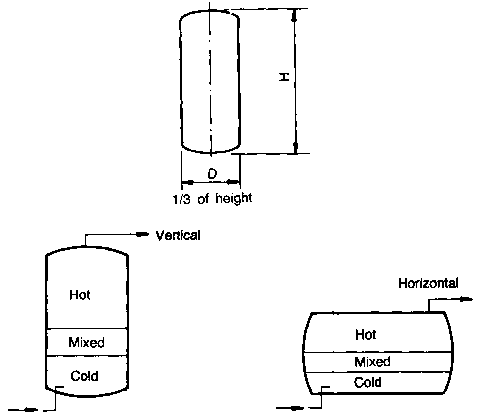
FIGURE
Types -there are vertical and horizontal types available. For solar hot water systems with thermo-siphon circulation the vertical position is essential for proper circulation and hot water availability.
Hot water availability: A vertical hot water storage tank will provide more liters of hot water (having a smaller volume of mixed water)
Cold inlet and hot outlet - these pipes must be welded to the hot water storage tanks by the manufacturer so that the incoming cold water will not mix with the hot water inside the storage tank (by fitting a baffle plate or by a tee on to the cold inlet). It is important to follow the rules for installation of the hot water storage tank (as shown in the tables) so as to guarantee satisfactory hot water supply.
Sizes of hot water storage tanks -must be of adequate size to fulfill maximum requirement of hot water per day, or per heating time cycle.
Because of the intermittent availability of solar energy a large insulated storage tank is required, with a lagging of 100 mm. It is poor planning to install and undersized tank, no matter what heating medium is used: Sun, gas, oil, electricity. A well insulated storage tank keeps the water hot during the night. The storage tank and the circulation pipes must have a weatherproof cover when exposed to outside climate.
If an all-solar system is to be installed, then a tank with a capacity of between two and two-and-a-half times the daily consumption is suggested, owing to the intermittent nature of the solar energy received.
To estimate the daily usage, a figure of approximately 25 to 40 liters of hot water per person may be used.
Once the decision has been made on the type of energy-system, i. e. all-solar or solar with auxiliary boosting circulation of flat tank collector, then the tank capacity and collector area must be decided. These are determined by the daily requirement of hot water. Count approximately 50 liters of hot water per day for one collector surface of 1.m².
Quality and maintenance - corrosion of pipes and tanks is greater with hot water. The water should not be heated above 60 to 65 Centigrade. PE or PVC plastic pipes are easily damaged by hot water, and their use should be avoided. Heat, causes pipes to expand, thus increasing the length of the pipeline. It is therefore necessary to take proper precautions to allow for constant expansion and contraction due to changes in temperature.
Nowadays solar water heater systems are often made of galvanized M. S. Sheet metal, and are therefore protected from rusting. If the galvanized layer is damaged, or after several years of service, they may have to be painted with a good paint. The collectors and the hot water storage tanks require cleaning and painting before rust takes hold and causes damage.
1.3 CONNECTION OF COLLECTORS TO HOT WATER STORAGE TANKS
Hot water storage tanks have to be connected to collectors as follows:
|
Capacity of Hot Water storage tank |
Number of Collectors |
Circulation Pipes | |
| | |
riser |
down-comer |
|
100 Itr |
1 |
1" |
1" |
|
125 Itr |
1 to 2 |
1" |
1" |
|
150 Itr |
2 to 3 |
1" |
1" |
|
200 Itr |
2 to 3 |
1" |
1" |
Note:
1) Surface of a standard collector is approximately 1.4 m².2) Per m² of such a collector count approximately 50 Itr. of hot water at 50 K (say from 10 to 60 Centigrade)
At each connection between the collector and the hot water storage tank there has to be a union to allow the disconnection of the collector and also the disconnection of the hot water storage tank from the pipelines.
The pipes between the hot water storage tank and the collectors must be free of any obstructions, and it is advisable to check this by blowing through these pipes before connecting them.
1.4 COLLECTORS AND CIRCULATION PIPES
For proper functioning it is most important to have gradients in pipelines and collector installations. The upper edge (upper head) of the collectors have to be slightly inclined to prevent the trapping of air bubbles in the 1" circulation pipes. The side of the collector connected to the hot water storage tank should be approximately,1 to 3 cm higher than the closed end of the 0 1" end pipe. In case of multiple connections between collectors, where a collector is connected on both sides, the upper head should be slightly inclined towards one side to allow air bubbles to pass through the collector into the hot water storage tank in thermo-siphon systems (or to air valves, in pumped systems).
The side of the collector closed with a � 1" cap can be opened for flushing and cleaning the collector. In the lower head sludge, sand and dirt may accumulate, and in the upper head air bubbles may accumulate.
1.5 CONNECTION TO DRINKING WATER MAINS
Water heaters may be connected to the drinking water main line only if the following points are fulfilled and where sufficient pressure from the supply side is available. (As with any hot water tank connection, it is essential to have sufficient water pressure available, either from the mains or from a roof tank).
Diameter - the cold water inlet pipe to a hot water storage tank should never be smaller, in diameter than the hot water outlet pipe. In pressure systems a 0 1/2" pipe is in most of the cases sufficient, but in systems with less than 10 m head, when measured with a pressure gauge, or with greater supply demands, it is better to use a 0 3/4" or 0 1" pipe.
Cold water inlet and stop valve - the cold inlet in water heaters, has to be at the bottom of the tank. It is essential to have a baffle plate, a tee or elbow fitted inside the tank by the manufacturer. This is to avoid direct mixing of cold water with hot water, i.e. to guarantee satisfactory hot water supply.
The branch from the roof tank or from the main cold water supply pipeline should have a stop valve, fitted near the hot water storage tank. This is required for any maintenance work, which can then be done without disturbance to the cold water supply.
Hot water pipeline -in cases where the water supply pressure is low, the hot water pipe should always be installed with a downward flow. Should piping with a U-bend be unavoidable, install at the lowest point of the piping a riser of suitable length with a tap at the top end of the riser, so that air can be let out (or install a vent pipe or a air release valve).
Non-return valve -a non return valve is needed to prevent a back flow of hot water into the cold water pipeline. A good alternative solution for low pressure is a separate line from the roof tank to the water heater, not requiring a check valve, but eliminating the possibility of back flow into the cold water pipeline.
Note: When fitted with an electric booster, a safety valve has to be installed between tank and none return valve.
Pressure reduction - if the head is greater than 30 meters or even less, depending on the manufacturer's instructions) a pressure reducing valve, or a pressure reducing feed tank (with ball valve) has to be used.
Safety valve -a safety valve or vent pipes are required to protect the water heaters and other apparatus from over-pressure. A safety valve has to be installed between the non-return valve and the water heater.
Caution -there must never be any other stop valve between the non-return valve and the water heater, to guarantee the functioning of the safety valve.
For small heaters one safety valve of � 1/2" is sufficient up to 7 kWh or 6000 kcal/h. For bigger heaters one � 3/4" or two � 1/2" safety valves may be used.
The working pressure of the safety valve must be adjusted to approx. 0.5 to 1 kg/cm² (5 to 10 m head) above normal working pressure of the installation.
Example: the working head is 15 m, the safety valve shall be set at 25 meters (15 m + 10 m).
Note: Because of pressure release, a drain from the safety valve is needed. Direct connection to the drainage system is not permissible, such drains must pass through a siphon, and the inlet funnel must have a spacing of at least 2 cm. The safety fixtures must remain easily accessible.
Drainage -for ease of maintenance the system must have the facility for complete drainage. A tee with a valve and/or plug has to be fitted in the cold water pipeline, between the non-return valve and the water heater.
Disconnection -water heaters, like all other fixed appliances to the pipe systems, are to be connected with unions, to ensure easy connection and removal.
1.6 ELECTRIC BOOSTING
In places with electricity available people may wish to have electric boosters incorporated. Such arrangements are a convenient upgrading of such a system, providing heating of water during cloudy days and where a greater amount of hot water is needed.
When deciding on production of hot water storage tanks there are some questions to be answered, such as costs of production (simple or advanced modules, with one or two flanges) and requirments for boosting (on a regular basis, or on a few, exceptional days only).
Solution 1 (regular basis, electricity always "ON"):
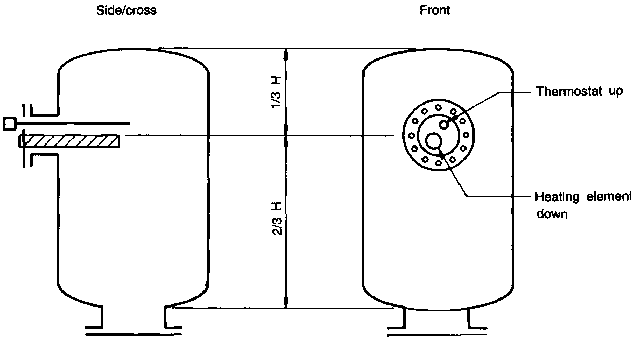
Fix thermostat and heating element in
diagonal alignment
This system as shown above, will always provide hot water (1/3 of total content), heated either by solar energy or electricity).
Solution 2 (exceptional boosting only -by hand switching)
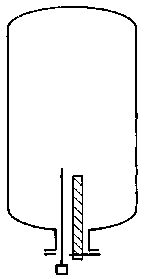
FIGURE
The above system may be considered, where additional hot water requirements are on exceptional occasions only. It is less costly, but also provides less comfort.
Where solar water heaters are connected to electricity earthing is essential. The electric heating element must be connected to the installation according to the regulations. The thermostat should be adjusted to switch off at approximately 50 Centigrade. The operation of the thermostat should be checked regularly.
1.7 COMBINATION OF SOLAR-AND WOOD STOVE-HEATER
A very satisfactory arrangement in rural areas is to combine solar collectors and the ordinary, wood-fired cooking stove, so that they supply the same hot water storage, tank, (see illustration). The system automatically adjusts itself, to whichever input is operating at the time. If disired, a electric booster can be installed near the top of the hot water storage tank. This avoids unnecessary lighting of the stove to provide additional hot water during the summer months.
To prevent circulation through the collectors when the stove is operating at night, the pipes from the stove and collectors should be connected to a tee (branch) at the hot water storage tank. Separate connections may be used if more convenient.
1.8 PRINCIPLES OF HOT WATER STORAGE TANK CONNECTIONS
Note: All water heaters installed must have a pressure release possibility with a safety valve or by an air pipe.
Caution: The max. head for water heaters is given by the factory, indicated on the water heaters. (Normally for max 30 m head)
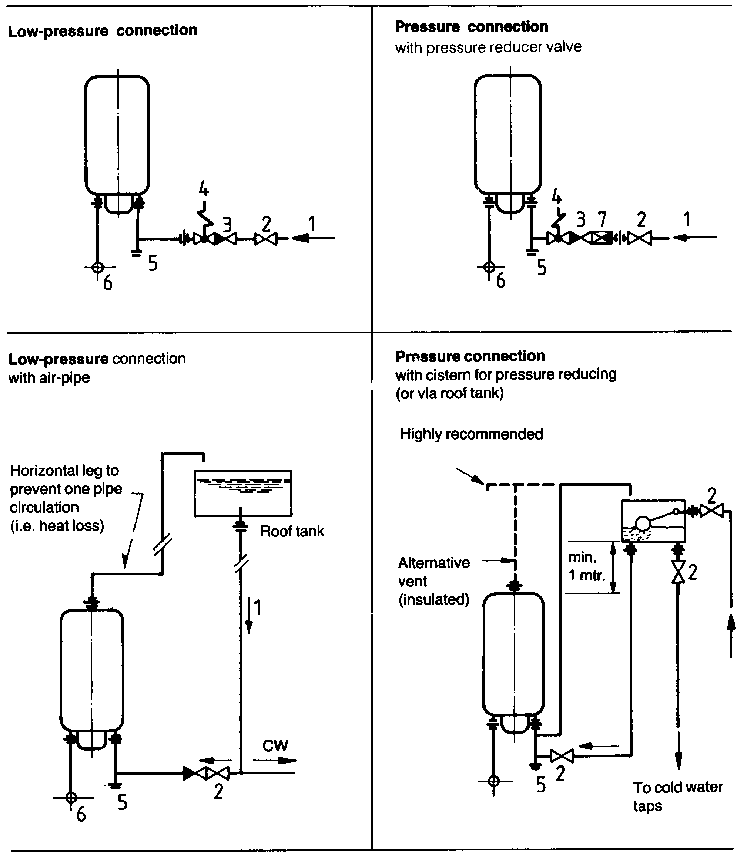
FIGURE
1 Feed pipe
2 Main valve
3 Non return valve
4 Safety
valve
5 Drain
6 Hot water tap
7 Pressure reducer valve
1.9 HOT WATER DISTRIBUTION SYSTEMS
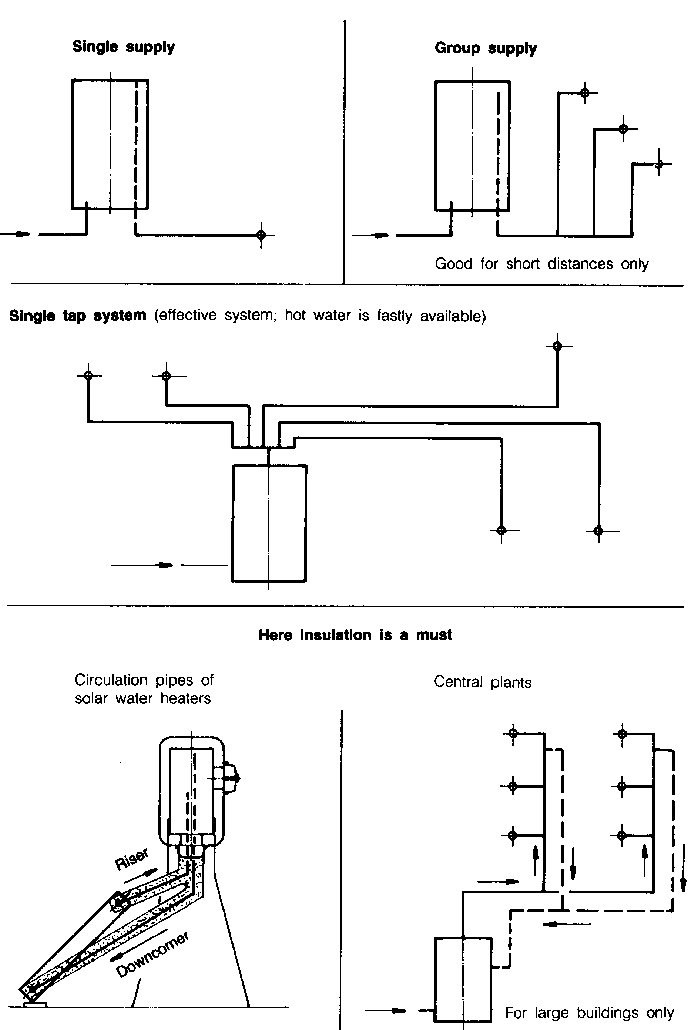
FIGURE
1.10 GUIDING PRINCIPLES FOR HOT WATER REQUIREMENTS
|
Purpose |
Medium consumption day |
Maximum consumption day |
| |
Liter / person |
Liter / person |
| |
at 60 -65 °C |
at 60 -65 °C |
|
Modest domestic |
20 -40 |
30 -60 |
|
Comfortable standard |
40 -60 |
60 -90 |
|
High standard |
60-120 |
90-180 |
|
Children hostel |
40 -60 |
60 -80 |
|
Hospital (town) |
70 - 100 |
100 -150 |
|
Hostel (luxury) |
upto 200 |
upto 300 |
|
Consumption |
Quantity |
Temperature °C |
| |
in Itrs. |
|
|
Bathtub |
150 - 200 |
40 |
|
Shower (ca. 5-6 min.) |
40 - 60 |
40 |
| |
(20-30) | |
|
Bidet (for 1 filling) |
25 |
40 |
|
Washbasin (1 filling) |
6 - 8 |
40 |
|
Kitchen (1 filling) |
25 - 30 |
50 -60 |
|
Dish washing machine |
15 - 25 |
55 |
GUIDING PRINCIPLES FOR WATER REQUIREMENTS
|
Purpose |
Unit |
Requirement | ||
| |
Consumer/Time |
Min. |
Medium |
Max. |
|
Domestic Purposes: |
| | |
|
|
Drinking, cooking, cleaning |
Person day |
50 |
80 |
120 |
|
Laundry (washing) |
Person day |
10 |
20 |
40 |
|
Bathing, douche |
Person day |
50 |
100 |
180 |
|
WC-cistern, flush |
Person day |
40 |
50 |
60 |
|
Cleaning of a car |
Car |
150 |
250 |
4000 |
| | | | | |
|
Domestic Buildings: |
| | |
|
|
Modest conditions |
Inhabitant day |
100 |
150 |
200 |
|
Medium comfort |
Inhabitant day |
150 |
200 |
300 |
|
Higher standard |
Inhabitant day |
250 |
400 |
600 |
| | | | | |
|
Public: | |
| | |
|
Schools |
Student day |
10 |
12 |
15 |
|
Hospitals |
Patient day |
300 |
450 |
600 |
|
Bathing establishment |
500-600 bath |
500 |
550 |
600 |
|
Restaurants (for meals) |
Guest day |
60 |
100 |
150 |
|
Barracks (army) |
Man day |
50 |
100 |
150 |
|
Covered market |
m² day |
3 |
4 |
5 |
|
Slaughter houses |
Cattle/big |
400 |
450 |
5000 |
| | | | | |
|
Slaughter houses |
Livestock, small |
300 |
350 |
400 |
|
Wash institution |
Kg (dry wash) |
50 |
60 |
70 |
|
Open yard (grass field) |
m² surface |
1 |
1.5 |
2 |
|
Road sprinklers |
m² surface |
1 |
1.25 |
1.5 |
|
Car workshop |
Employee day |
30 |
40 |
50 |
|
Bakery (bread) |
Employee day |
120 |
130 |
140 |
|
Hair-dresser |
Employee day |
160 |
170 |
180 |
|
Photo-studio |
Employee day |
280 |
300 |
320 |
|
Administration-building |
Employee day |
30 |
40 |
50 |
| | | | | |
|
Industries: |
| | |
|
|
Brewery | |
| | |
|
(without cooling) |
100 ltr. beer |
600 |
700 |
800 |
|
(with cooling) |
100 ltr. beer |
1400 |
1700 |
2000 |
|
Dairy |
100 Itr. milk |
400 |
500 |
600 |
|
Paper factory |
kg, fine paper |
1500 |
2200 |
3000 |
| | | | | |
|
Farming Purposes: |
| | |
|
|
Horses |
1 pc. day |
60 |
70 |
80 |
|
Cows |
1 pc. day |
60 |
65 |
70 |
|
Young cattle |
1 pc. day |
40 |
45 |
50 |
|
Pig |
1 pc. day |
15 |
20 |
25 |
|
Sheep/goats |
1 pc. day |
5 |
6 |
7 |
* According to international standards
2. INSTALLATION OF A SOLAR WATER HEATER SYSTEM
For the best performance of a solar water heater system the basic rules of installation should be strictly followed. The heaters should be installed only when the rules have been properly understood and solutions determined only after studying the instructions.
The proper situation of collectors is determined by the hours of sunshine available. Care must be taken that shading of them does not occur at any time of the day during any seasons of the year.
Having decided on the dimensions of the system, it is necessary to plan the layout of the installation. The cold water supply tank (roof tank) has always to be higher than the SWH system. If the thermo-siphon system is chosen, it is necessary to mount the collectors below the hot water storage tank (because of the functioning of natural circulation). It is recommended to keep sufficient spacing between the riser (upper head, of collector) and the bottom of the hot water storage, tank (min. 150 mm spacing).
It is recommended to keep easy access to collectors and the solar system. For example to keep a space between groups of collectors for maintenance and repairs.

Keep space between groups of
collectors for maintenance and repair
2.1 PLAZING AND PREPARATION
After the collectors have been unpacked, the blackened collector plate has to be cleaned as follows:
-Clean off dust and dirt with a dry rag.
-Remove all traces of oil or dirt with clean, dry rag.
-Clean the glass of dust and dirt.
If a glass cracks or breaks it must be replaced immediately. The collector front has to be covered until the broken glass is replaced. Water or humidity will damage the insulation. Before new glass is fitted, clean the plate with a dry rag. Glass can easily be replaced on collectors already installed, provided the site is easily accessible.
2.2 INSTALLATION ON THE ROOF
Arrangement of collectors as an awning over windows or placed
directly on roofs can be suitable.
Note: Keep in mind that for thermo-siphon
systems the hot water storage tank has to be mounted above the collectors, e.g.
in the roof space or on the roof itself.
The roof of any ordinary house will be able to support the weight of a domestic SWH without problem.
On houses with sloping roofs, it is suggested that a roof window is fitted above the collectors for easy access for cleaning and repairs.
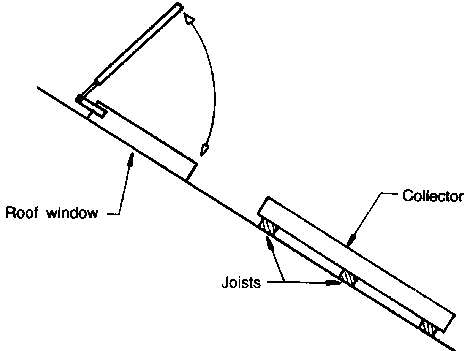
FIGURE
2.3 INSTALLATION ON THE GROUND
If the solar system is to be placed near floor level, then the collectors must be mounted on the ground. It is recommended that collectors are placed far enough from the house wall to prevent rain water dropping from the roof onto the glass. In case of mounted rain gutters, a suitable distance should be kept so that bird droppings are not deposisted on the glass. It should be realized that ground mounted collectors are subject to easy breakage from stones, and may possibly be shaded during part of the day.
2.4 HAIL SCREENS / VANDALISM
In parts of Nepal very severe hailstorms sometimes occur. Sometimes glass covers are also subject to vandalism. In such places protection could be provided in the form of galvanized wire netting (say approximately 1 mm thick, 13 mm + holes). The net to be fitted on a light frame, about 80 mm above the collector surface. Owing to the reduction in solar transmission of from 12 to 15 percent, which is caused by the net, a corresponding increase in collector area may be necessary.
2.5 ANGLE AND DIRECTION OF COLLECTORS
Direction - the solar collectors have to be exposed with the glass front directly facing south in the northern hemisphere (and due north in the southern hemisphere). Deviation from this direction may be up to 15 to 20 degrees to either side. It is preferable to have the deviation, if any, slightly towards the west, as the sun shines brighter in the afternoon than in the early morning (fog).
Angle -the angle of inclination of the collector to the horizontal should be 5 to 10 degrees more than the latitude of the location, with a minimum of 17°.
Example: The latitude of Kathmandu is 27°. 27° + 10° = 37°, so 37° is the recommended. angle of installation (measured from the horizontal).
Note: The drawings provided correspond nearly to this geographical latitude of Kathmandu. Where solar water heaters are fitted, at, a different latitude, necessary adjustments of angle and measurements have to be made.
It is understood that compromises may be required for both angle and direction. Slight changes may not have much negative effect. If required, one or more additional collector(s) may be fitted, in order to provide the heating requirements. The following tables show the influences on changes.
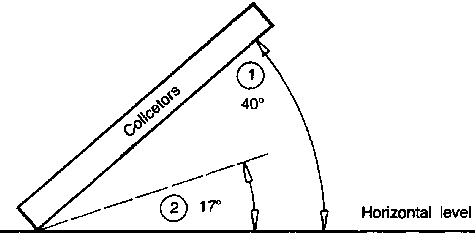
Angle of collectors
Note:
1) Angle of flat tank colectors should not be above 40°
2) Angle of thermosiphon systems should not be below 17°
Correcting Factors (Angle)
| |
Horizontal |
Vertical | ||||||||
|
Angle of collectors |
0.° |
10° |
20° |
30° |
40º |
50° |
60° |
70° |
80° |
90° |
|
Correcting factors |
0.77 |
0.85 |
0.92 |
0.97 |
1 |
1 |
0.98 |
0.93 |
0.85 |
0.75 |
(Source of tables: "Solaranlagen", by H.R. Schmidli, Switzerland)
Example: At a site, collectors are to be fitted at an angle of 40°, however, the angle of the roof is only 20° . Will the system work with the same numbers of collectors? When checking on the above table it shows, at 20° the factor 0.92, i.e. a reduction of 0.08, or of 8 percent. This system will work very well, despite of a slight change of angle.
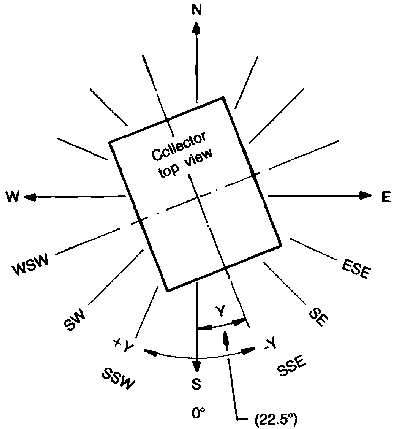
Direction of collector (Azimuth)
Correcting Factors (Direction)
Collectors set at proper
angle.
| |
W |
WSW |
SW |
SSW |
S |
SSE |
SE |
ESE |
E |
|
Deviation from south direction |
90° |
67.5 |
45° |
22.5 |
0° |
22.5 |
45º |
67.5 |
90° |
|
Correcting factor |
0.75 |
0.85 |
0.95 |
1 |
1 |
1 |
0.9 |
0.88 |
0.7 |
(Source of tables: "Solaranlagen", by H.R. Schmidli, Switzerland)
Example 1: The direction measured at a site is 45° towards the east, but angle is maintained at required 40°. Reading in above table -SW, 45° shows correcting factor of 0.95. This is a negligible change and the system will work satisfactorily.
Example 2: At a site three collectors are to be fitted at an angle of 20°, and at a direction west-south-west (67.5°). Reading at charts, correcting factors, shows:
|
angle |
0.92 |
=0.08 |
|
direction |
0.85 |
=0.15 |
| |
reduced efficiency |
=0.23 |
At the same site the system required a hail screen, which further reduces the solar energy input.
|
reduced efficiency (as above) |
23% |
|
hail screen reduction |
15% |
|
total reduction |
38% |
In this case one more collector will be required to meet the heating requirement, since the reduction exceeds acceptable limits.
2.6 INSTALLATION IN FREEZING CLIMATE
Solar water heaters fitted in sub-zero temperature climates
have, to be fitted with an "indirect
system", having a heat exchanger fitted
in the hot water storage tank. Collectors exposed to cold climate require an
anti-freeze mixture of water and glycol.
Solar collector systems require a liquid for heat transfer equal to the volume of water. This liquid would ideally be non-toxic and non-corrosive, would not freeze or boil and still be a good heat transfer medium. As there is no product to meet these requirements to the maximal extent, a compromise through a combination of the various requirements has to be made. Glycol/water mixtures, with corrosion reducing additions are commercially available. Specific data are available from the manufacturers.
Note: Ordinary rubber and plastics are not resistant against
corrosion caused by such mixtures
(pipes, washers, etc.).
Water piping in houses -to secure regular water supply and avoid damage, pipelines fitted in places with sub-zero temperatures require special attention. Security can be partly achieved by proper installation. However, when systems inside the buildings are left without room heating they need to be drained.
The following requirements should be noted
-Supply line from mains to be underground (1 meter deep) with pipelines placed inside the building.-Main valve to be inside the house, having a drain valve at the lowest point. The drain valve has to be operated before freezing conditions occur, and to be left open until the system is refilled.
-All pipes to be fitted, with constant slope towards tars at the lowest point. It is unwise to have any U-bend fitted, since, drainage is then not possible. Proper ventilation is also required to guarantee a thorough drainage (top-most valve or ventilation pipe).
-Pipelines not be concealed in outer walls (to reduce cooling effect).
-Consider whether pipelines could be fitted on walls or in ducts (keeping distance from walls by means of clamps) with insulation added where required.
-Pipelines not to pass through shafts, chimneys, etc., and to remain accessible as much as possible.
-Hot water tanks to be fitted inside the house, with easy draining facility.
-Pipelines and valves exposed to outside temperatures (pump line, pipeline in roof, vent pipe) probably require good pipe insulation.
-The use of G. 1. pipes in the house is recommended since they can be thawed by flame heat. (HDPE pipes have the advantage as they will not crack in normal circumstances, but if they freeze they cannot be thawed by flame heat).
-Water storage tanks and pipelines may require lagging to prevent freezing of the water, especially when fitted in cold roofs. The insulation has to be of inorganic and anti-corrosive materials.
2.7 VENTILATION
Air locks are the main cause of non-functioning solar water
heater installations. Pipes should
be fitted with a slight gradient towards
the vent pipe as this enables air to escape. There should be no U-bend in the
system.
The installation of hot water systems requires attention also to
the expansion of heated water
as well as air escape.
In installations with roof tanks (low pressure) this can be achieved by having a vent pipe.
Note: That such pipes should preferably have a "horizontal leg" of min. 500 mm. This to avoid a "one pipe circulation". A vent pipe releases air from the system, and breaks a possible vacuum caused in pipelines when water is drawn from a tap. A vent pipe requires careful lagging to provide good insulation against heat losses.
Air release valve -these are small valves which release air bubbles in a system. They replace vent pipes, but make a safety release of heated, expanded water necessary (i.e. fitting of safety valves).

FIGURE
Air release valves on thermo-siphon circulation systems can be fixed directly on to the hot water storage tanks.
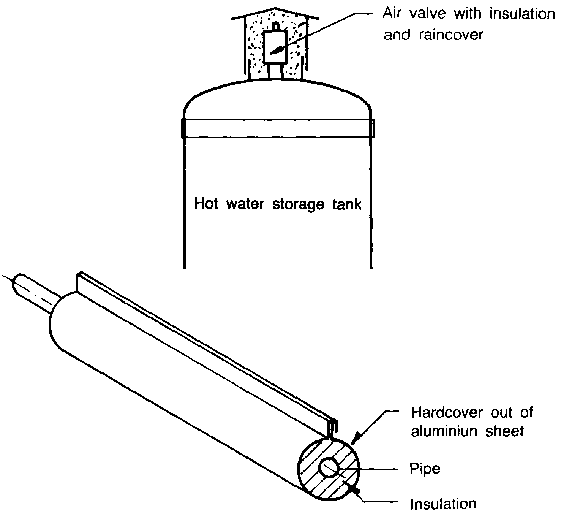
FIGURE
2.8 INSULATION
The transformation of one form of energy to another always entails losses. With hot water systems this is experienced as a heat loss between the source of energy (e.g. the sun) and the storage tank, and again between the tank and the taps.
In proper installations these losses are minimized by having short pipelines, adequate insulation, etc. Therefore the storage tank and the distribution pipelines have to be well insulated. It is recommended that pipelines are placed, as far as possible, within the building and not on the outside. Depending on the quality of the insulation, heat loss through distribution pipelines may be from 10 to 15 percent (or more)!.
The money invested in captured solar energy should be carefully handled by providing adequate insulation. Even more important than a little more or less lagging applied to pipes is the comprehensiveness of insulation:
-No heat bridges (heat transfers at clamps)
-Pipes passing through walls, ceilings, etc., are also to be properly insulated
-All parts are to be insulated, such as unions, valves, etc.
The insulation has to be water tight and ultra violet resistant!
Note: A wet insulation has reduced efficiency and may even accelerate heat losses.
Weatherproof protection of insulation material can be made with sheet metal pipes of sufficient diameter.
Example of pipe insulation with aluminium cover
A main difficulty exists in making bends, and probably a square pipe is easier to arrange for change in direction.
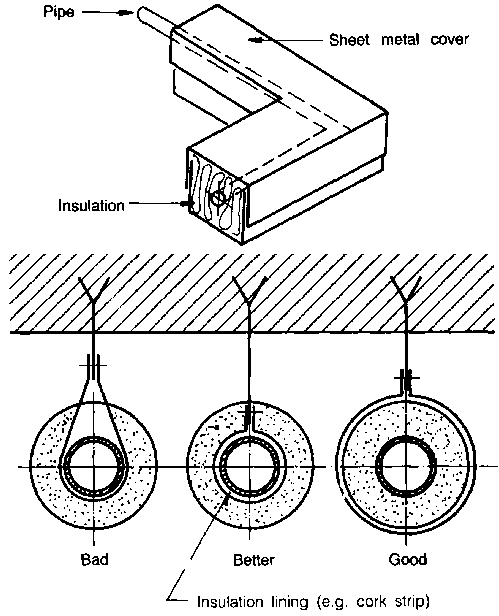
Pipe fixation with
insulation
3. PASSIVE SYSTEMS
Two types are available:
3.1 THERMOSIPHON
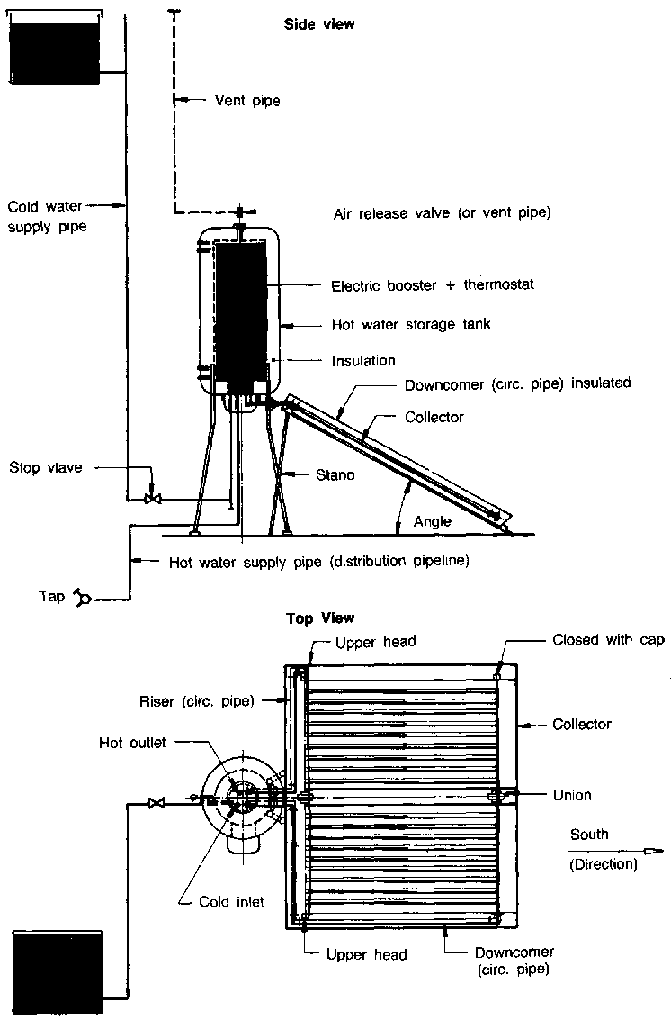
Thermo-siphon Circulation System
The complete SWH thermo-siphon circulation system may be divided into three separate sections:
-The flat plate collector (absorber).
-The circulation piping.
-The hot water storage tank (boiler).
Such installations involve more labour and require more materials, however, they provide more comfort, as the water remains hot throughout the night. The circulation pipes from and to the hot water storage tank and collectors have to be insulated and, where exposed to weather, protected with weatherproof covering, (e.g. aluminium or galv. sheets).
Flat Tank Collector (Solar absorber) -is a simple flat plate heat exchanger, which absorbs radiant energy from the sun and transfers the energy to the water within it.
The Circulating Piping
In this section the natural circulation (thermo-siphon) is mentioned. Natural circulation is suitable for domestic application, because of its simplicity and reduced requirements for maintenance.
It has the advantage that it functions only when the solar energy input is sufficient to heat the water in the collector to a temperature above that of the water in the bottom of the hot water storage tank.
This thermo-siphon circulation occurs because of the variation of water density with its temperature. With the heating of the water in the collector, the warm water rises, and since it is connected in a riser pipe to the hot water storage tank and a down-comer pipe again to the collector, it is replaced by the cooler, heavier cold water from the bottom of the hot water storage tank. It is therefore necessary to place the collectors below the hot water storage tank and to insulate both connecting circulation pipes.
Filling and Bleeding of a Solar Heater Unit
After all connections between the collector and the hot water storage tank are correctly made, the tank itself has to be connected to the main cold water supply, and the hot water circuit connected to the house.
When this has been done, one or more hot water taps should be opened, and then the main stop valve to the hot water storage tank completely opened. The hot water storage tank will slowly fill with water and air will be driven out of the piped system.
Bleeding of Collectors
To bleed the upper head of the collector proceed as follows:
-Close main cold inlet valve to the hot water storage tank.-Open upper 1" cap on collector.
-Open main valve and flush.
-Open hot water tap completely.
-Close main valve till water is flowing slowly.
-Close 1" cap while water is flowing through the hot water storage tank. This prevents the forming of an air pocket in the collector.
-Open main valve completely, tighten 1" cap.
-Close hot water tap and check under pressure for leaks.
Checking of Operation
After thirty minutes on a sunny day, the riser (circulation pipe from collector to hot water storage tank) should be hot. This shows that the collectors are working. The riser should not be hotter than 50 (or maximum 65 Centigrade). If the riser stays warm but does not get hot, this is a sign that the flow of the thermo-siphon is too fast. In this case a regulator-tee (circulation flow regulator) or valve in the circulation pipe may be required to slow the flow down.
If the riser is too hot, the flow is too slow Check for obstructions in all pipes of the collector circuit.
If the riser and down-comer are hot, this might be for two reasons: Either the hot water storage tank is completely filled with hot water and the circulation has almost stopped -as might be the case after several hours of sunshine, or the flow in the collectors has completely stopped because of an obstruction in the pipes. The flow in the collectors' circuit is very sensitive, even a small air bubble is sufficient to stop it!
Each m² of collector area, should heat approximately 8 liters of cold water (starting with cold water of approximately 15 to 20 Centigrade) to a temperature of 50 to 65 Centigrade during one hour's full sunshine.
The temperature depends on many factors: Time of the day, season, wind, ambient temperature, temperature of cold water, angle and direction of the collector, etc. Generally speaking, the pipes in the collector circuit should be of the maximum recommended diameter. They can easily be throttled, if necessary as follows:
-Close the regulator tee or valve slightly
If there is no such possibility of regulation:
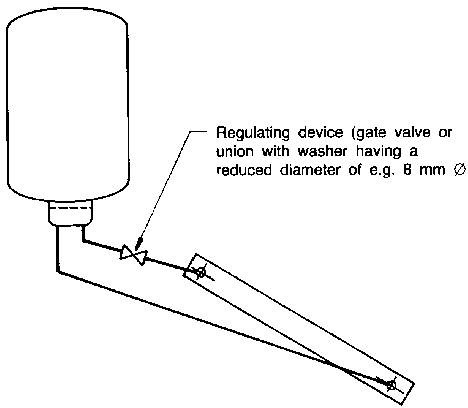
-Close the main inlet valve, open union in hot pipe (circulation pipe between collector and storage tank) insert into union recess a washer (preferably of brass) with a hole of smaller diameter than that of the inside pipe diameter.
The washer will work as a speed flow regulator and reduce the velocity of flow in the collector/hot water storage tank circuit. The correct diameter of the hole must be found by trial and error; but it should not be smaller than 0,8 mm (Smaller holes or smaller pipes will become clogged by lime deposits). After this is done, the main stop valve can be opened, the union tightened and checks be made for possible leaks.
Regulating Device in Circulation Pipes
Regulating devices are often fitted to thermo-siphon circulation systems. These reduce the speed of flow through the system, water remain longer in the collector and is therefore heated to a higher temperature. The disadvantages of this system are reduced efficiency of the collector due to high collector temperature (heat loss to surrounding colder air).
To achieve such regulation a gate valve can be fitted, however, experience shows that someone will open the valve at some time and the regulation is then gone. A metal washer, preferably made of brass, inserted in a union might be a better solution.
FIGURE
SOLAR WATER HEATER / THERMOSIPHON
SYSTEM

CONNECTION OF COLLECTORS /
THERMOSIPHON SYSTEM
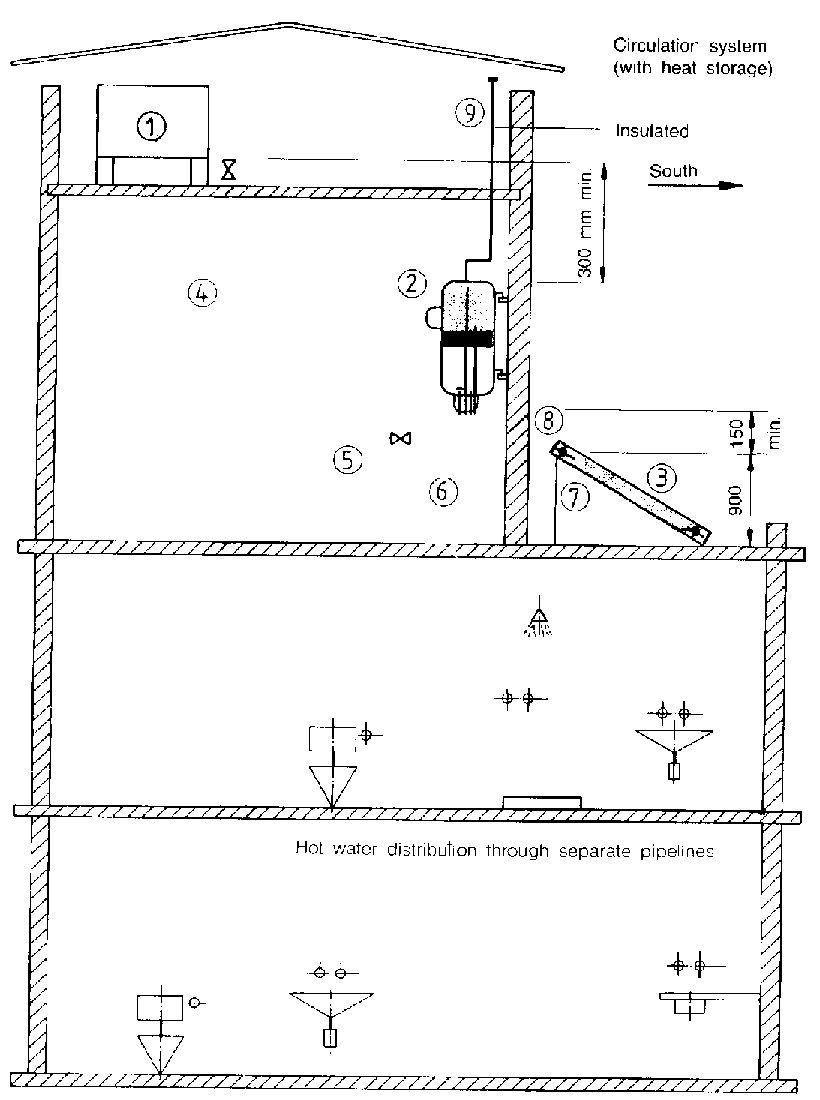
THERMOSIPHON SYSTEM
Installation example No. 1
-Roof tank with separate cold water pipeline to the SWH -system this does not require any special valve.
1 Coldwater storage tank
2 Hotwater storage tank
3
Collector
4 Coldwater pipeline
5 Coldwater to hot tank
6 Hotwater to
the taps
7 Circulation pipe to collector
8 Circulation pipe to hot
tank
9 Vent pipe
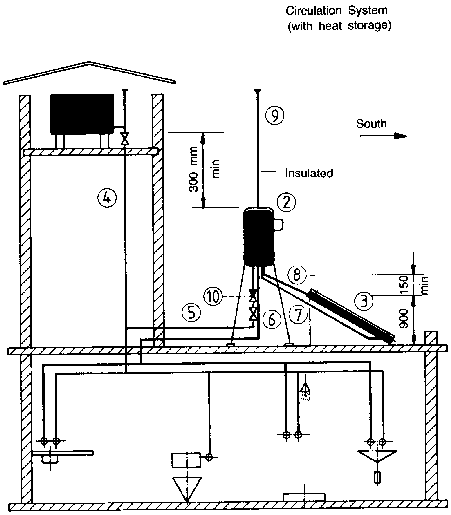
THERMOSIPHON SYSTEM
Installation example No. 2
-Roof tank with branch in main, cold water pipeline to the
SWH-system
-Requires one non return valve
1 Coldwater storage tank
2 Hotwater storage tank
3
Collector
4 Coldwater pipeline
5 Coldwater to hot tank
6 Hotwater to
the taps
7 Circulation pipe to collector
8 Circulation pipe to hot
tank
9 Vent pipe insulated
10 Check valve (non return valve)
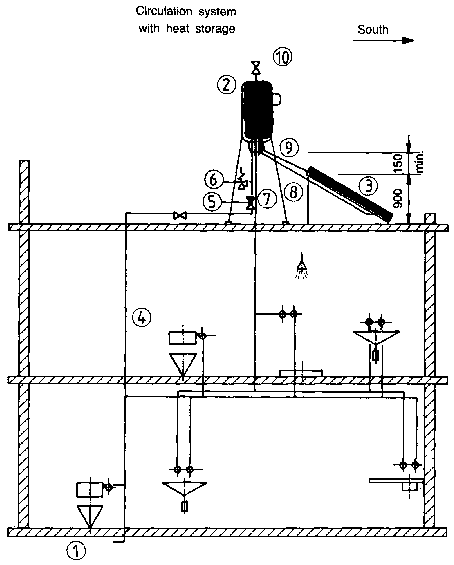
THERMOSIPHON SYSTEM
Installation example No. 3
-Town supply (24 hours/day) with low-pressure
conditions
-Requires one none return and safety valve
1 Coldwater townsupply
2 Hotwater storage tank
3
Collector
4 Coldwater to hot tank
5 Check valve (non return valve)
6
Safety valve
7 Hotwater to the taps
8 Circulation pipe to collector
9
Circulation pipe to hot tank
10 Air valve
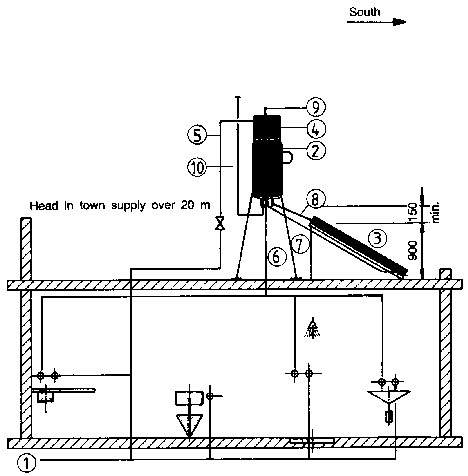
THERMOSIPHON SYSTEM
Installation example No. 4
-Town supply (24 hours day) with pressure over 2 kg/cm² (20
m.head)
- Requires one feed tank with ball valve
1 Coldwater townsupply
2 Hotwater storage tank
3
Collector
4 Feed cistern (pressure reduced)
5 Coldwater supply to boiler
head more than 20 m.
6 Hotwater to the taps
7 Circulation pipe to
collector
8 Circulation pipe to boiler
9 Vent pipe
10 Coldwater to
boiler (of reduced pressure)

THERMOSIPHON SYSTEM
Installation example No. 5
-Open hotwater storage tank (cover not welded)
-Adaption of
existing container
-Requires one feed tank with ball valve
1 Coldwater supply from roof tank or town
2 Hotwater storage
tank open container (oil drum)
3 Collector
4 Coldwater line
5 Coldwater
to the boiler
6 Hotwater to the taps
7 Circulation pipe to collector
8
Circulation pipe to boiler
9 Vent-pipe
10 Feed-cistern, with ball-valve
Note: Levels from boiler and feed-cistern (top most) have to be the same.
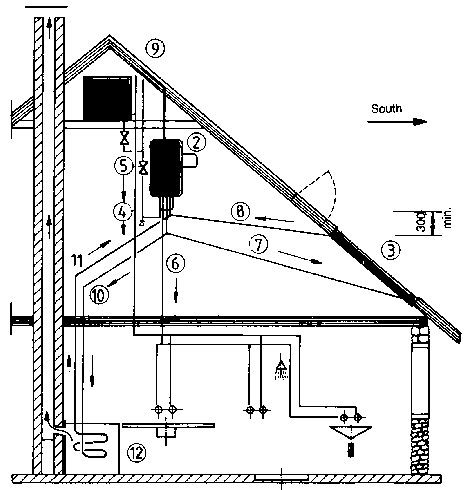
THERMOSIPHON SYSTEM
Installation example No. 6
-Combination of solar and stove heater
1 Coldwater storage tank
2 Hotwater storage tank
3
Collector
4 Coldwater line
5 Coldwater to the boiler
6 Hotwater to the
taps
7 Circulation pipe to collector
8 Circulation pipe to boiler
9
Vent-pipe
10 Circulation pipe to the combution cooker
11 Circulation pipe
to boiler
12 Slow combustion heater
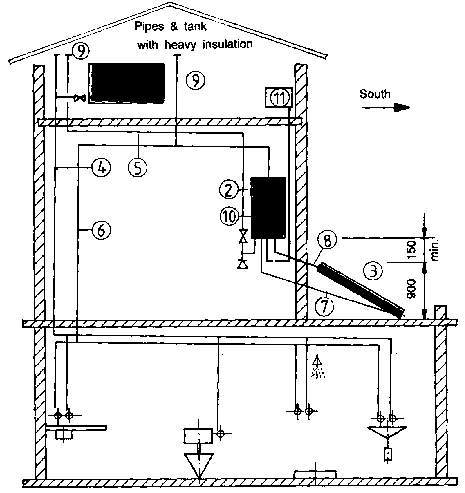
THERMOSIPHON SYSTEM / ANTI-FREEZE
Installation example No. 7
-System with anti-freeze mixture
-Special hotwater tank with
heat exchanger
1 Coldwater storage tank
2 Hotwater storage tank
3
Collector
4 Coldwater pipeline
5 Coldwater to hot tank
6 Hotwater to
the taps
7 Circulation pipe to collector
8 Circulation pipe to hot
tank
9 Vent pipes, insulated
10 Heat exchanger
11 Cistern, for top-up
and expansion, containing anti-freeze and anti-corrosion fluid
3.2 FLAT TANK COLLECTOR SYSTEMS
The flat tank collector (FTC) is a high performance solar water heater, which produces hot water efficiently with solar energy. It combines the principle c, a heating box using the greenhouse effect with a heat absorbing flat tank collector and it is a single unit for installation at the site.
The flat tank collector system is a one-piece unit. It gives cheaper water during most hours of the day. The installation is quite simple: the pipes have not to be insulated, there are no circulation pipes and no separate hot water storage tank. Possible types of installation are shown in the tables.
The FTC gives hot water for warm bathing, washing and for the kitchen or anything else that requires hot water. It should be noted however, that when using a FTC for bathing, or for a hot water supply round the clock, it has to be connected to a electric hot water storage tank or to another suitable means of heating to provide additional warmth.
One can expect hot water from an FTC from around 11 O'clock in the morning till 7 O'clock in the evening (in summer till 10 O'clock). That depends mainly on the hours of sunshine and the outside temperature after sunset.
This one-piece unit serves very well where hot water is not required in the early morning. This cheaper, yet efficient solar water heater provides enough water for a small family.
Solar preheater -the solar preheater can be connected to an existing hot water storage tank to which it is impractical or inconvenient to attach collectors directly. This may occur when the existing system is fixed in such a way that it is difficult to install collectors below it. The existing system can be converted in the manner shown in the examples in the tables.
EXAMPLE OF FLAT TANK COLLECTORS
Max. permitted head = 10 m
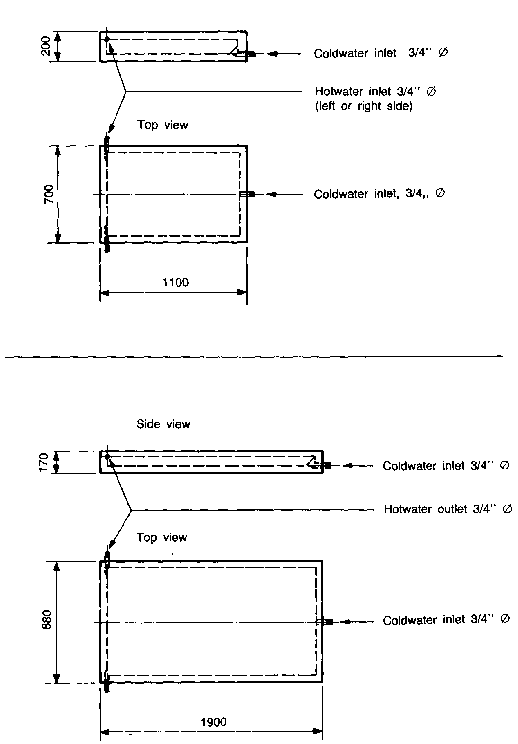
Flat tank collector (60 Itr. ;90
Itr.)
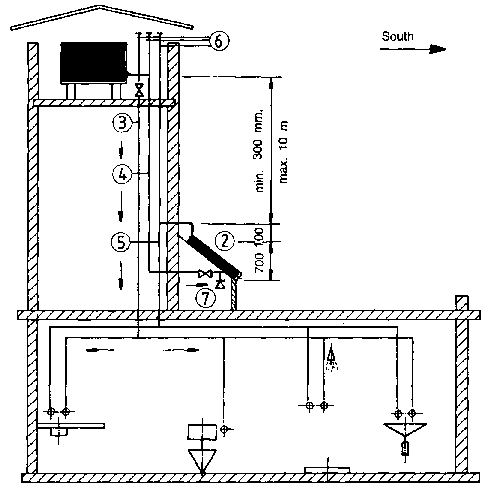
FLAT TANK COLLECTOR
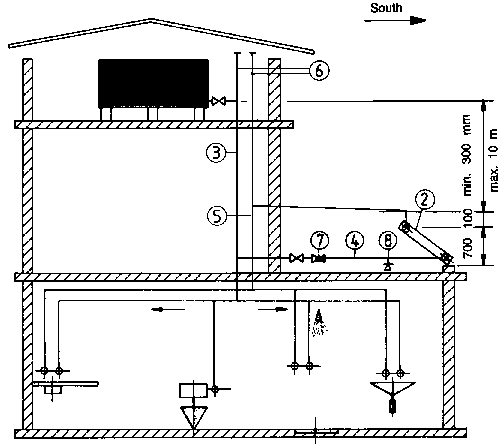
Installation example No. 8
-Roof tank with separate cold water pipeline to the flat tank collector. This does not require special valves.
1 Coldwater storage tank
2 Collector
3 Coldwater line
4
Coldwater to flat tank collector
5 Hotwater to the taps
6 Vent pipes
7
Drain plug
FLAT TANK COLLECTOR
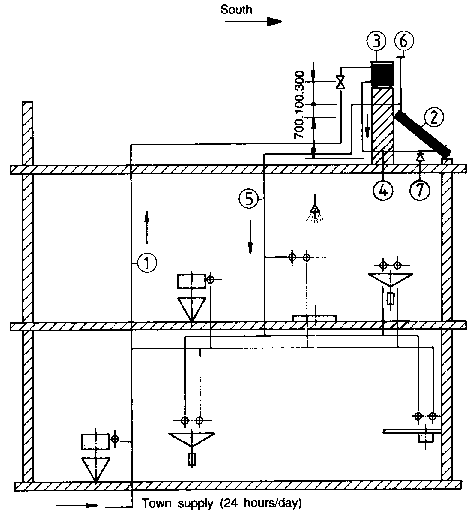
Installation example No. 9
-Roof tank with branch in the main cold water pipeline to the
flat tank collector
-Requires one non-return valve
1 Coldwater storage tank
2 Flat tank collector
3 Coldwater
line
4 Coldwater to flat tank
5 Hotwater to the taps
6 Vent pipes
7
Check (non return valve)
8 Drain plug
FLAT TANK COLLECTOR
Installation example No. 10
-Town supply (24 hours/day) with high or low
pressure
-Requires one feed tank with ball valve
1 Coldwater town supply
2 Flat tank collector
3 Feed
cistern (with ball valves)
4 Coldwater to flat tank collector
5 Hotwater
to taps
6 Vent pipe
7 Drain plug

FLAT TANK COLLECTOR
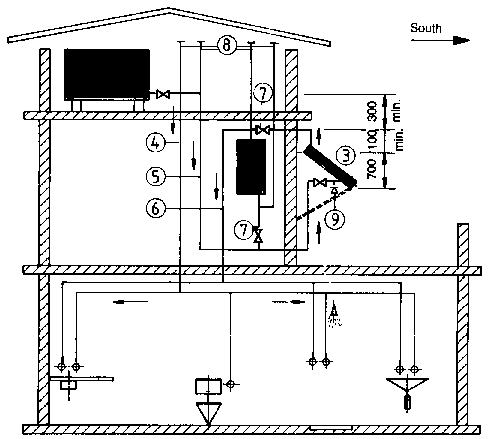
Installation example No. 11
-Fixing of flat tank collector without raising of existing roof tank
1 Coldwater supply
2 Coldwater storage tank (existing)
3
Flat tank collector
4 Cold water storage tank (Additional, capacity CA. 80
Itr)
5 Coldwater to flat tank collector
6 Hotwater to the taps
7 Vent
pipes
8 Tank filling line (disconnected)
9 Extended tank filling
line
10 Overflow too main coldwater tank
11 Drain plug
FLAT TANK COLLECTOR
Installation example No. 12
-Preheater before electric water heater. This increases the hot water capacity, reduces the electricity consumption.
1 Cold water storage tank
2 Electro or gas boiler
3 Flat
tank collector
4 Cold water line
5 Cold water line to flat tank collector
(and electro or gas boiler)
6 Hotwater to the taps
7 By-passes (for
electro boiler use only)
8 Vent pipes
9 Drain
plug
4. PUMPED CIRCULATION SYSTEMS
Wherever possible, thermo-siphon (natural) circulation is recommended. Good reasons for this are lower costs and reliable operation. This is especially valid for smaller sizes and where site situations are favorable.
The information provided herewith is made to outline basic principles. However, when making such systems a thorough design planning and reading of other relevant tables (friction loss) is required, and a list of suppliers should be consulted (valves, pumps, anti-freeze mixtures, etc.). Pumped circulation systems might be required:
-When collectors are above hot water storage tank (incl. swimming pools)
-For larger plants
-For heat exchanger (in freezing areas)
Such systems require more attention in many respects, since they are more demanding in design planning and material utilization.
Several important factors are to be considered:
-Collector arrangements
-Aeration system
-Pump / Bypass
-Temperature control
-Valves, drainage
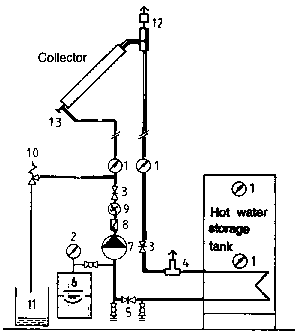
FIGURE
EXAMPLE: Scheme of functioning of a pumped system for domestic solar water heating
1 Thermometer
2 Pressure gauge
3 Stop valve
4 Air
valve
5 Filling and drainage
6 Expansion vessel
7 Circulation pump
8
Non return valve
9 Flow control
10 Safety valve
11 Safety vessel
12
Air vessel and airation
13 Drain plug
4.1 CIRCUITS
Direct Circuits
Principle of direct connection (or by means of a heat exchanger)
Advantages:
-Simple, economical
Disadvantages:
-At "switch-On" of pump, cold water, is flowing into the hot water storage tank (or through the heat exchanger).-Reduced heat efficiency of collectors
-Risk of blocking-up through calcifying
Applications:
-For domestic, smaller hot water requirements.
Simple anti-freeze system with circulation pipe

FIGURE
External Heat Exchanger
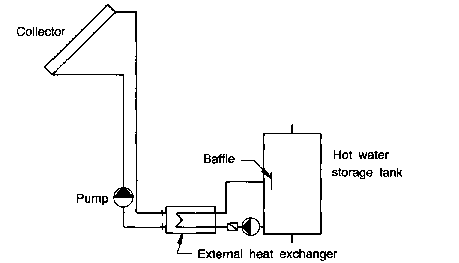
(Principle, showing system, but not
complete requirements, e.g. electricity, etc.)
|
Advantages: |
-No heat losses, when pump is switched on |
| |
-Variable sizes, of heat exchangers |
| |
-High output of heat exchanger |
| |
-Adaptable to all types of hot water storage tanks (e.g. existing boiler, with improved insulation and incorporating baffle plates). |
| |
|
|
Disadvantages: |
-Larger investment |
| |
-Requires two pumps |
| |
-Larger heat losses in pipes |
| | |
|
Applications: |
-Medium and larger hot water requirements |
(such systems might be available from McMaster Carr, Supply Company, P.O. Box 4355, Chicago/lllinois).
Collector Circuit Connection for Swimming Pool Heating
For swimming pool solar heating systems, a simple circuit system can be made. The thermostat fitted, on the collector is to have the reading of the required water temperature in the swimming pool. Such switches are not recommended for other solar heated systems. Additional precautions are required against corrosion in collectors, since the water is quite aggressive (use of low temperature collectors, possibly made of plastics).

Principle, showing system without
details
Adequate swimming pool heating can be achieved by having low temperature collectors directly connected to the filter circulation. The full volume flow will be pumped through the collectors, whenever sufficient solar radiation is available. Note that such systems require higher corrosion resistance of collectors and pipe works.
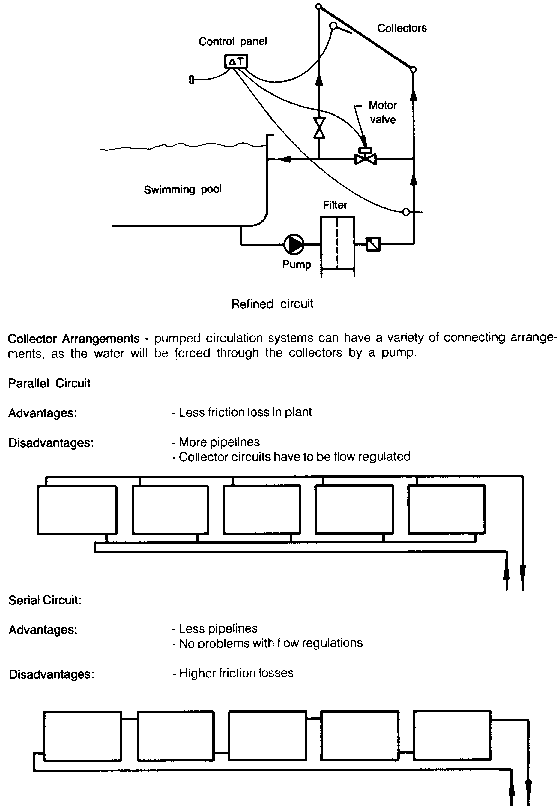
Refined circuit
Parallel and Serial Circuit (for larger installations)
The advantages and disadvantages must to be balanced by consideration of site specifications in order to achieve optimized solutions.
Note: System requires numerous air release points, easier access is provided when collectors are installed on flat roofs.

FIGURE
Aeration Systems
It is essential that collector circuits are fitted with air valves wherever necessary. The major problem in solar systems is the blockage of water circulation by air bubbles. Therefore all U-bends (for example highest points at collectors) require an air valve.
1 Automatic air valve
2 Drain (valve or plug)
3
Hand-operated air valve

FIGURE
Examples of properly placed air valves

FIGURE
4.3 PUMPS
When buying or installing a pump, consider the following: Pumps have to be of good quality. They have to withstand hot water temperatures (up to 130°C) and to be resistant against corrosion from anti-freeze mixtures.
The temperature difference of inlet and outlet of collector should be approximately 10-15° C. Having 4 m² collector surface, for example, requires a circulation of 160 to 200 liters per hour.
A pump of 15 to 20 Watts is normally sufficient. However, available pumps are often too powerful, and need a regulating device. Thermometers should be fitted for easy readings and adjustment.
Pumps have to be regulated by thermo-switches. They have to run when the temperature. in collectors is higher (10 K) than the temperature in the hot water storage tank.
Note: When using a circulation pump run from batteries (charged by solar panels) it is recommended to use differential thermostats working on Bi-metal principles, and therefore not using electricity for functioning. Manufactured by Danfoss.
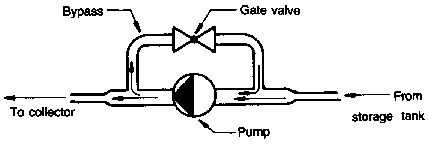
FIGURE
4.4 TEMPERATURE CONTROL
The pump needs to run when the temperature in the collector is higher than that in the hot water storage tank. The difference should be 10 K.
Differential thermostat - most of these require a little electricity to operate, which is acceptable when the pump is run by electricity from the mains. However, in cases where pumps run from solar panels (direct or from batteries) it is important not to consume more electricity. There are differential thermostats available which work on Bi-metal principles, not consuming electricity (Danfoss, Type RT).
Control panels -manufacturers of pumps often also provide control panels for temperature regulation, pump switching including gauges, etc. they may be fitted in larger plants and also where multiple switches are required.
4.5 PLACEMENT OF TEMPERATURE SENSING DEVICES
The sensing devices for temperature regulation (for pump switching) have to be placed properly.
Collector -to be fitted at the highest place and at the exit of the collector. The best systems are dip-sensing devices, which project into the collector exit.
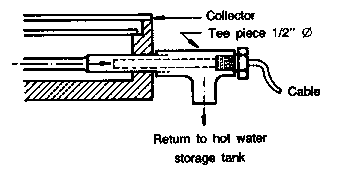
Upper edge of collector
Hot Water Storage Tank -dip sensing devices are best for sensing of the temperature in hot water storage tanks preferably alternatively, a clip-sensing device can be fitted to the outside of the metal container, but are not very accurate.
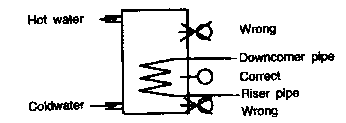
Correct placement of sensing device
It is important to have the sensing device fitted at the height of the heat exchanger.
Collector circuit connection with differential thermostatic switching, connected to circulation pump:
1 Collector
2 Hot water storage tank/heat exchanger
3
Circulation pump
4 Differential thermostatic switch
5 Collector sensing
device
6 Hot water storage tank sensing device
4.6 VALVES
The efficient functioning of a solar water heater system depends greatly on proper installation and the use of appropriate valves.
The following functions must be possible:
-Complete filling and draining of a system (valves, drain plugs)-Ventilation to release air, by means of vent pipes or air release valves (manual or automatic types), to completely remove any air blockages.
-Release of over pressure by means of a safety valve.
-Maintain required volume of liquid for circulation.
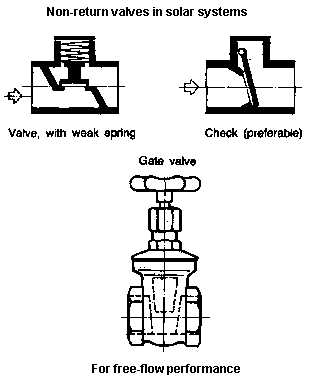
FIGURE
Valves must be of "free flow" type and be heat resistant. Valves, air valves, drain plugs, vent pipes must remain operational in freezing climates and have adequate insulation.
|
| |||||||||||||||
Solar Water Heaters in Nepal (SKAT, 1979, 142 p.)
PART II SOLAR WATER HEATER APPLIANCES MADE BY MECHANICAL TRAINING CENTRE
5. SOLAR WATER HEATERS MADE BY MECHANICAL TRAINING CENTRE
5.1 HOTWATER STORAGE, TANK 100 LTR (SE 100)
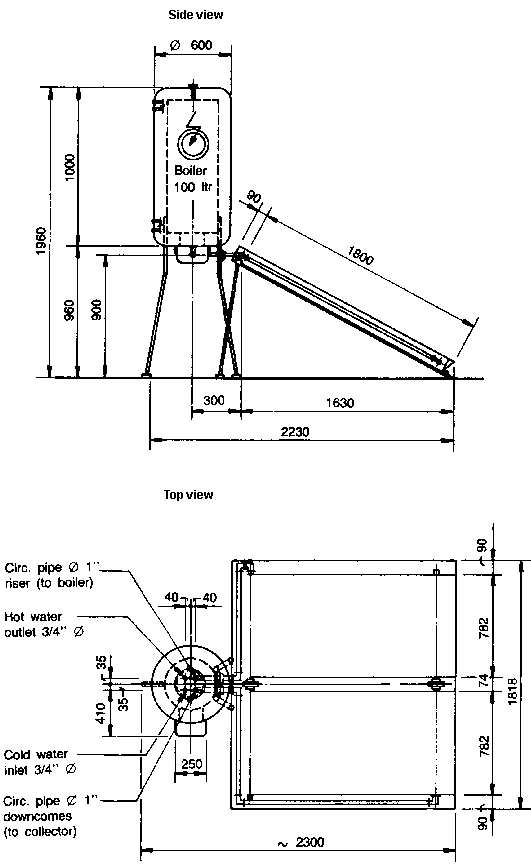
FIGURE
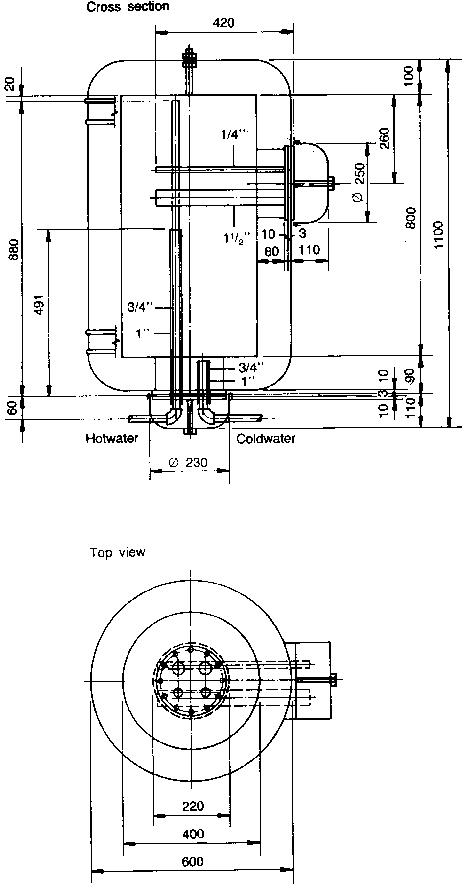
FIGURE
FIGURE
FIGURE

FIGURE
FIGURE

FIGURE

FIGURE

FIGURE
FIGURE
FIGURE
FIGURE

FIGURE

FIGURE

FIGURE
FIGURE
FIGURE

FIGURE
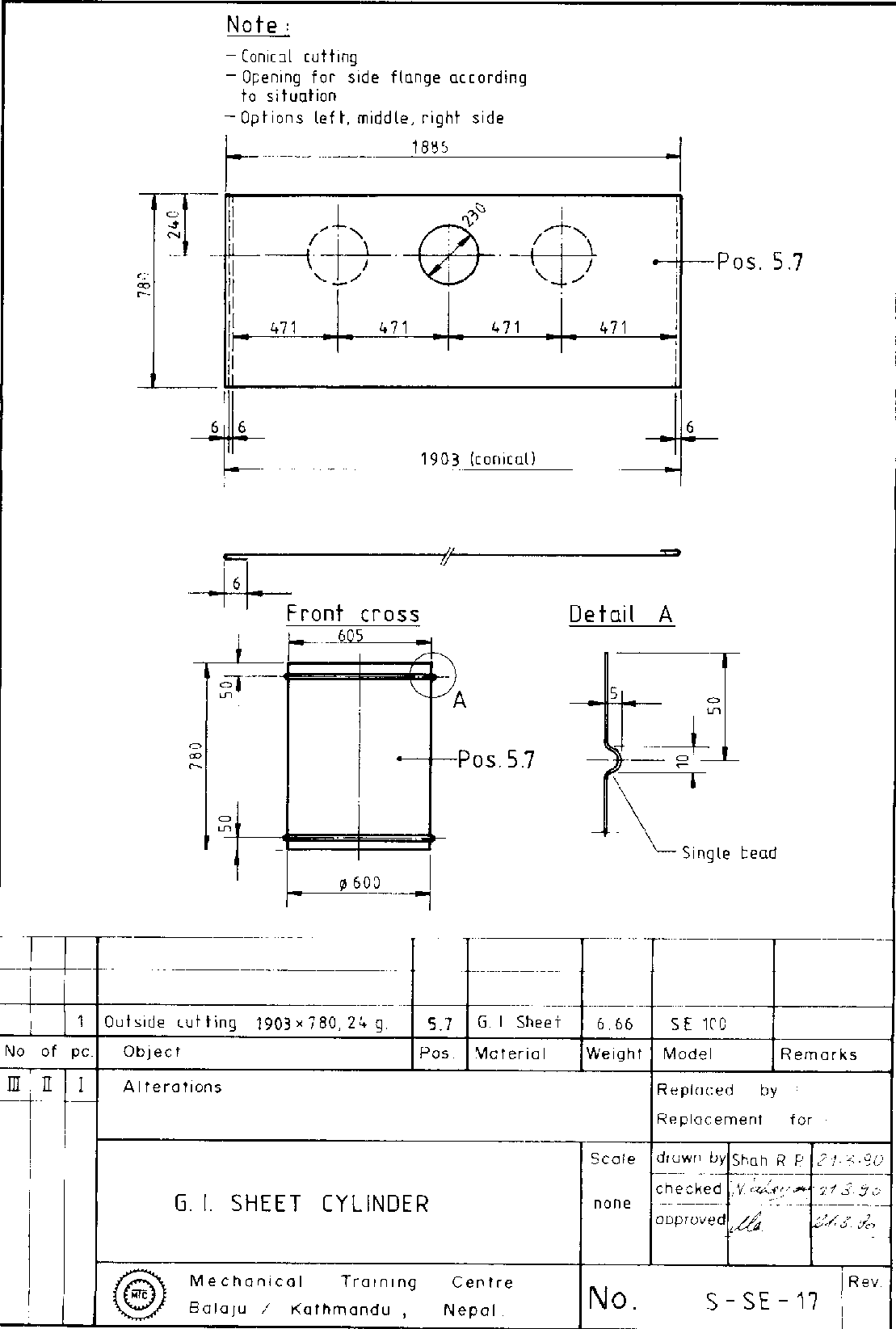
FIGURE
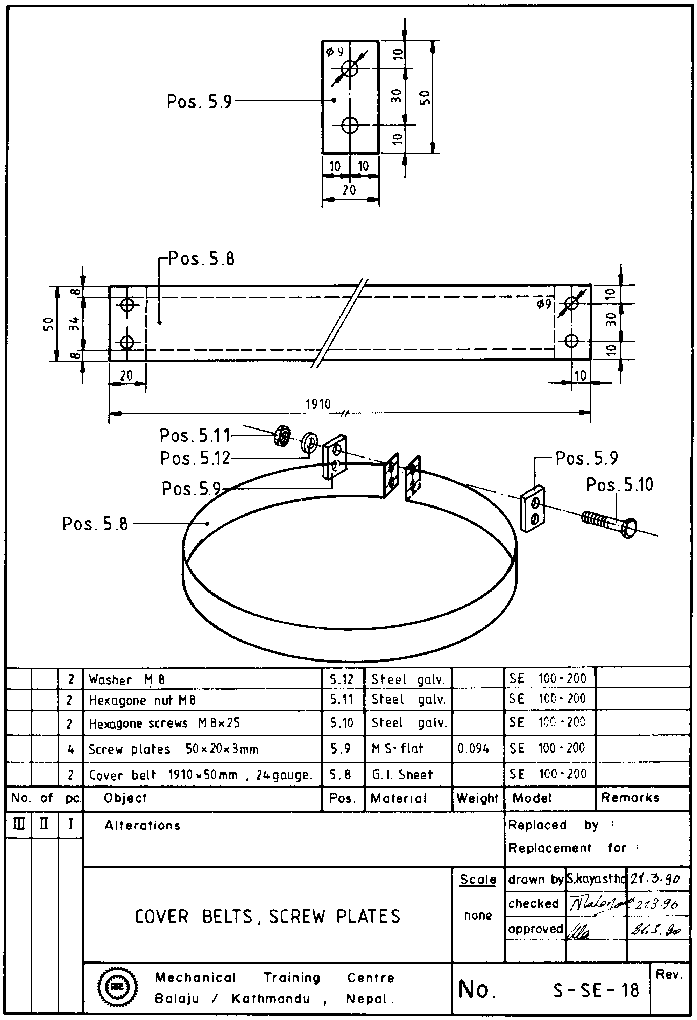
FIGURE
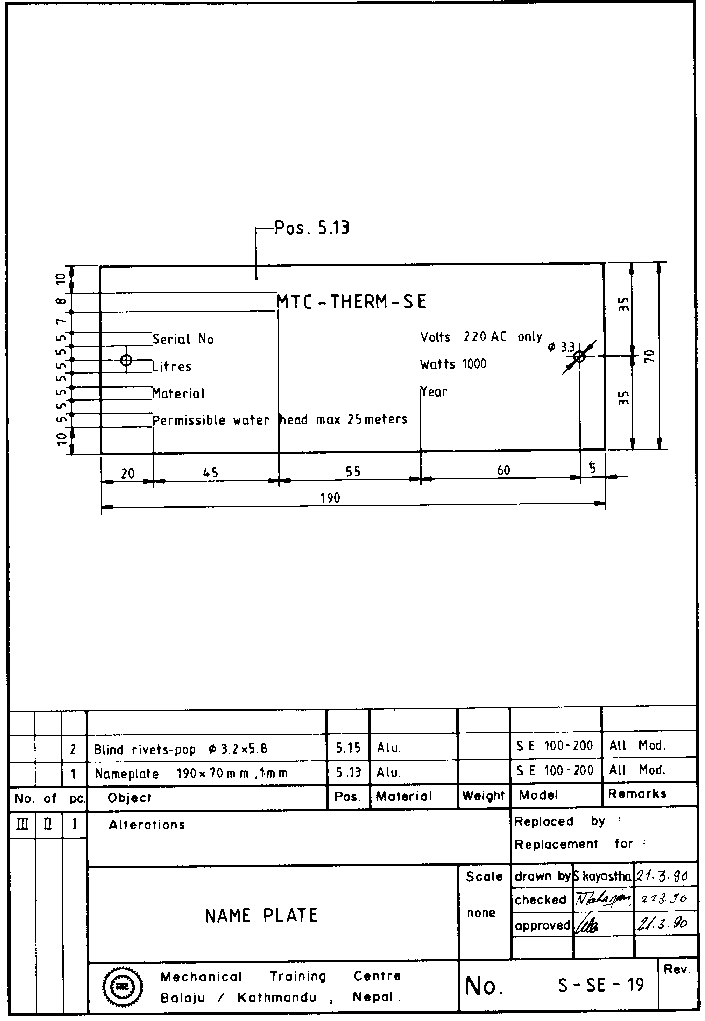
FIGURE
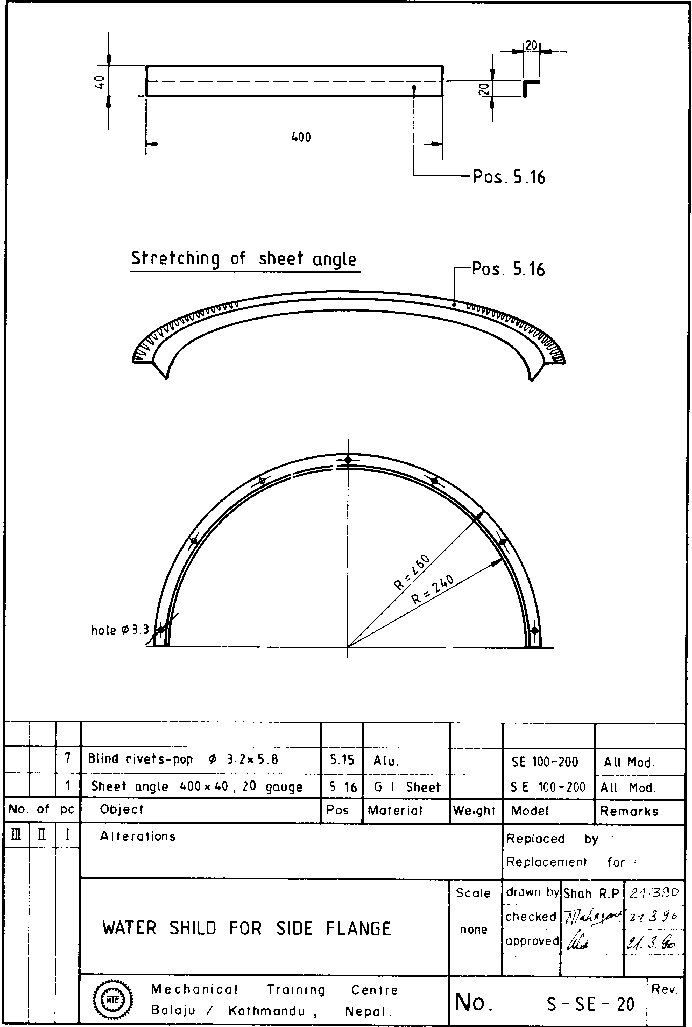
FIGURE

FIGURE
FIGURE

FIGURE
FIGURE

FIGURE

MS-tank, flanges w. water, solar and
electro connections
Outside sheet cylinder

Stand
Wall support
5.2 SOLAR COLLECTOR (SE-85)
Solar collector, MTC-SC-85
Dates:
|
Collector effective area |
1.22 m² |
|
Weight |
47 kg |
|
Contain of water |
3.9 ltr. |
|
Test pressure |
10 bar |
|
Working pressure |
5 bar |
|
Overall size |
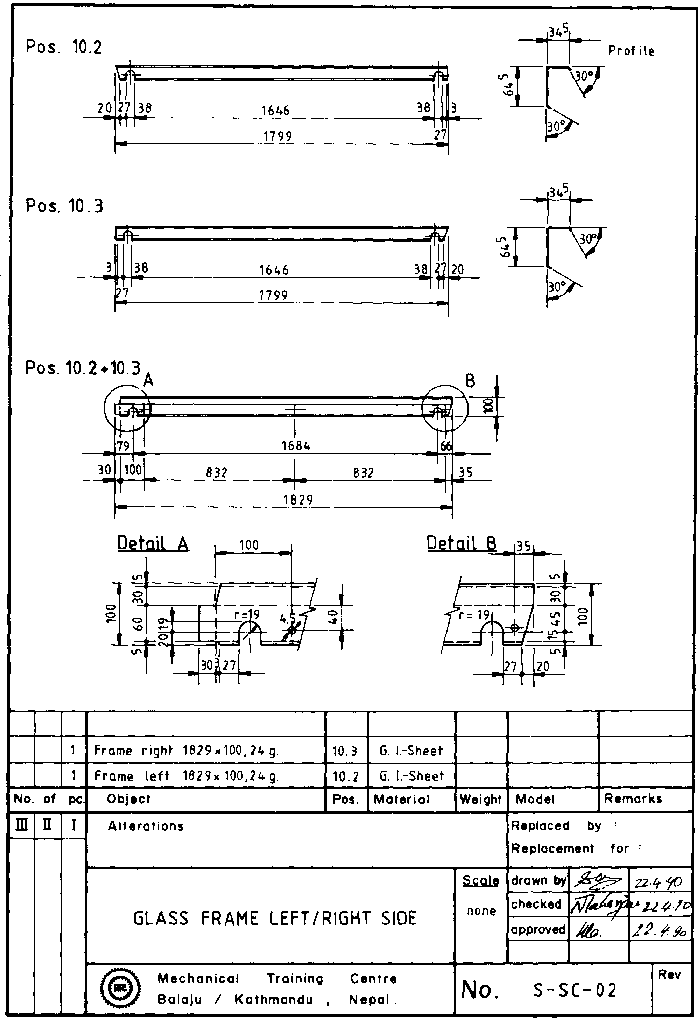
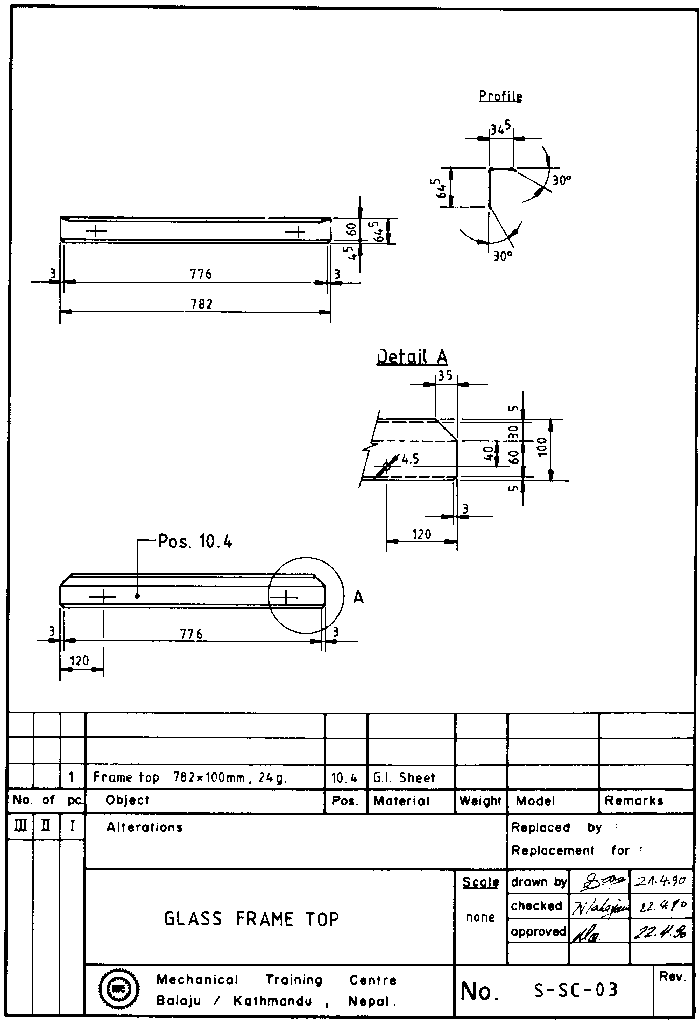
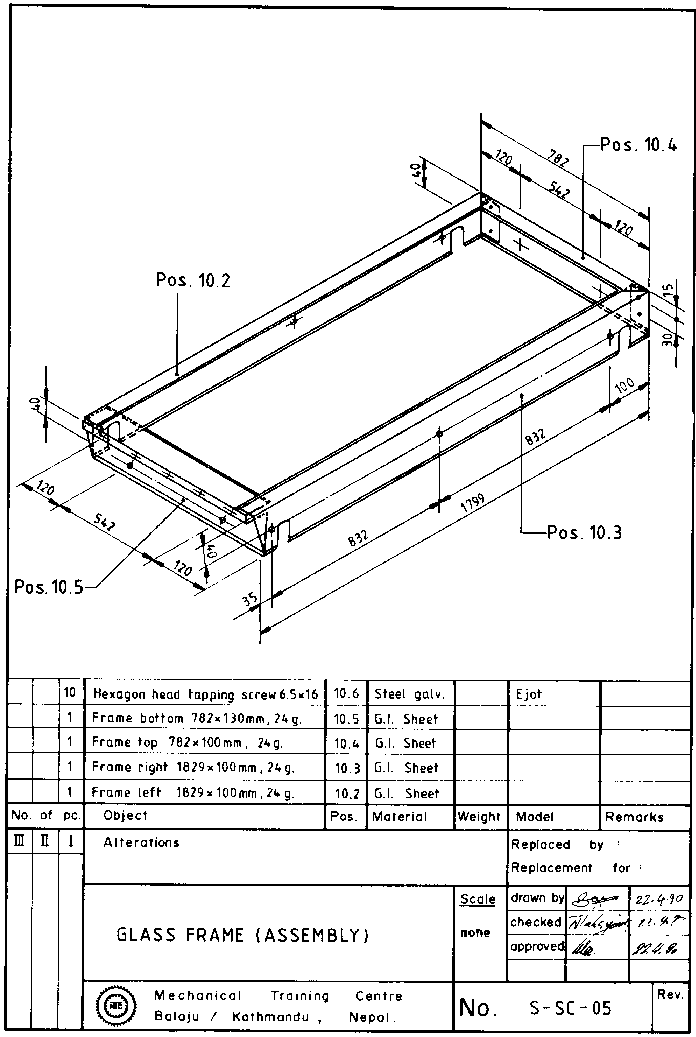
782 x 1300 x 1 10 mm |
|
Absorber |
36 alu. fins 0.5 |
|
Absorber surface |
black colour paint |
|
Collector box/frame |
galvanized steel sheet 24 gauge, 0 56 |
|
Collector box inside/outside |
1 coat red oxyde, 1 coat dark brown |
|
Cover |
single glass 4 mm |
|
Insulation |
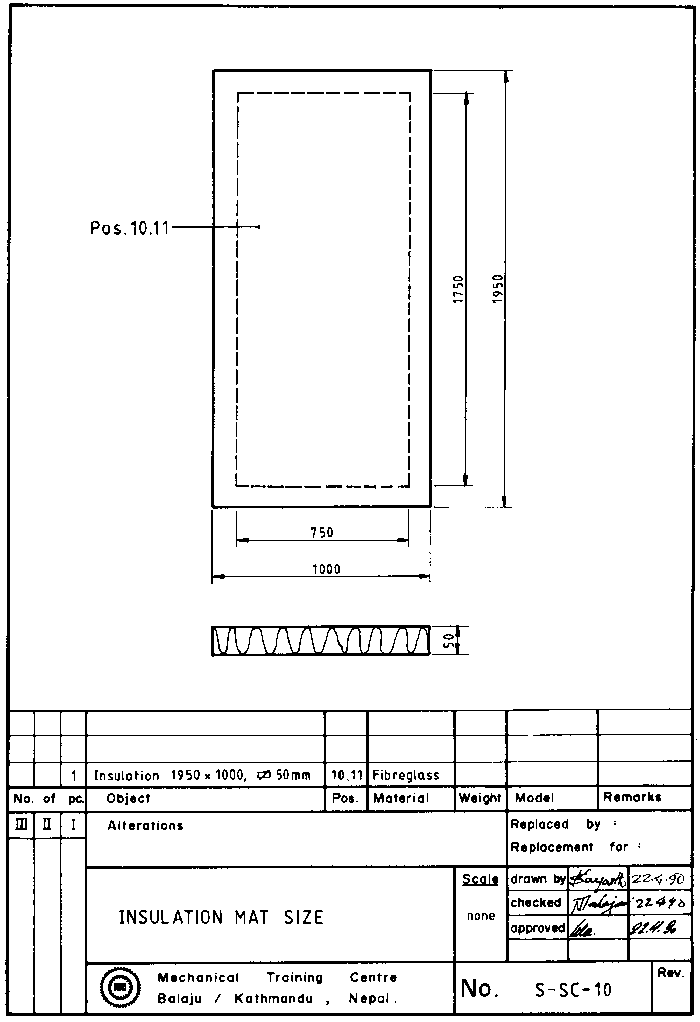
50 mm fibreglass |

FIGURE

FIGURE
FIGURE
FIGURE

FIGURE
FIGURE

FIGURE

FIGURE

FIGURE

FIGURE
FIGURE
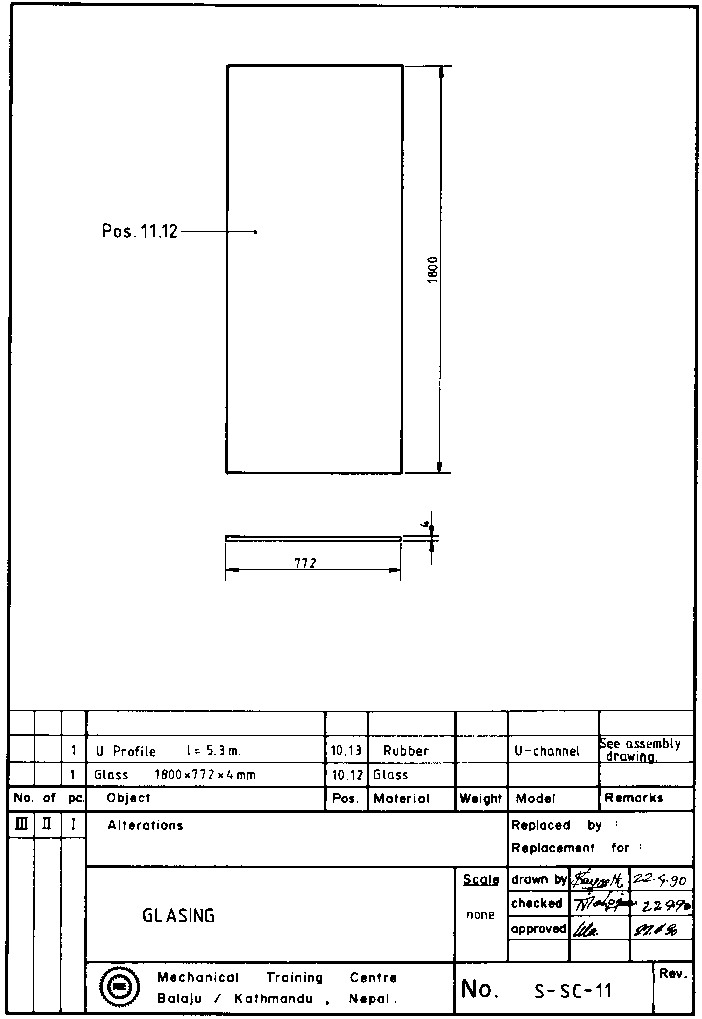
FIGURE
5.3 SUPPORT FOR TWO COLLECTORS

FIGURE

FIGURE
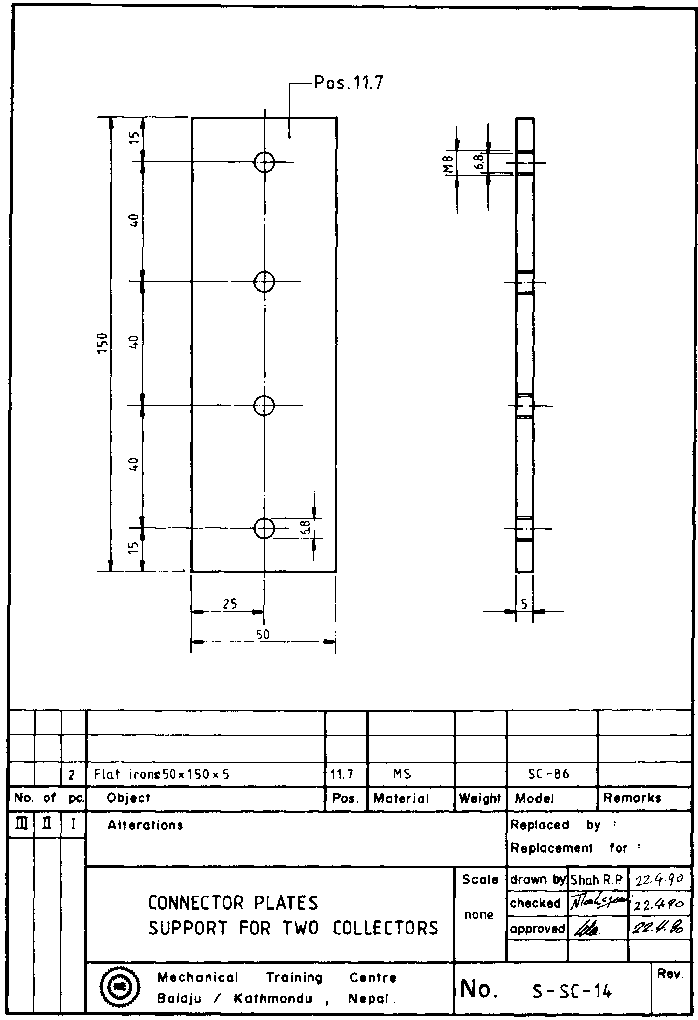
FIGURE

FIGURE
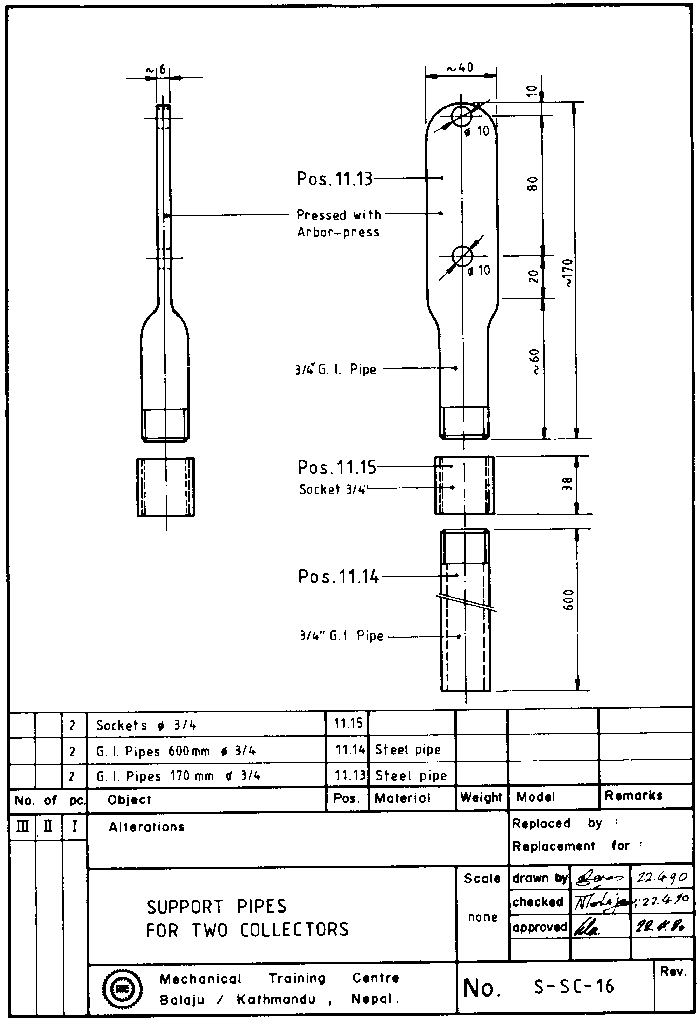
FIGURE

FIGURE

FIGURE

FIGURE
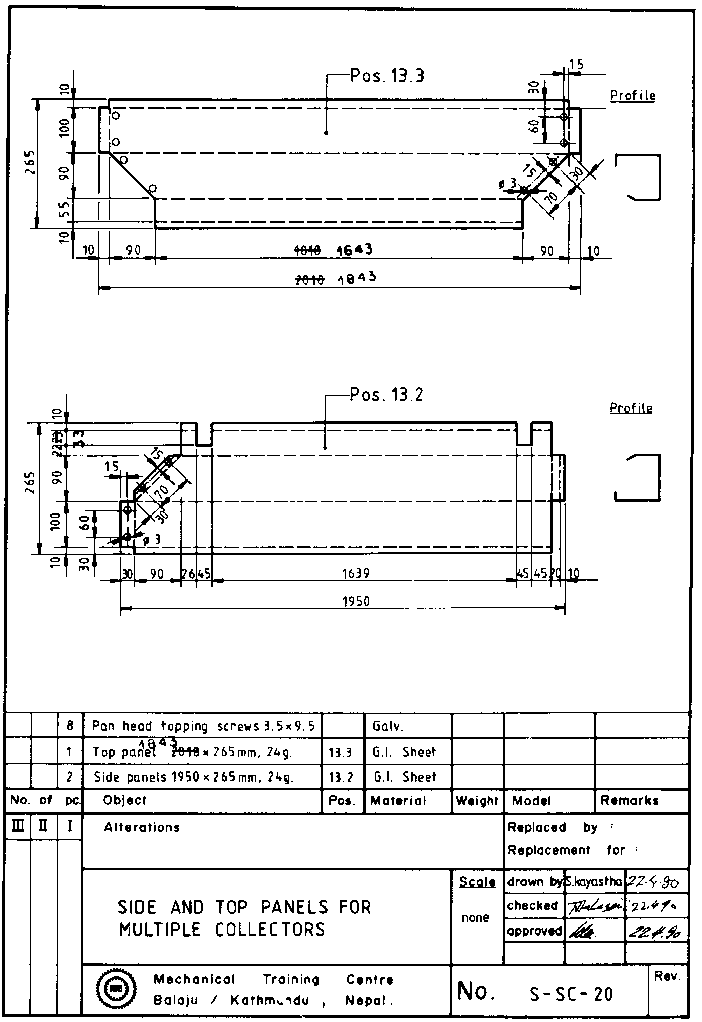
FIGURE
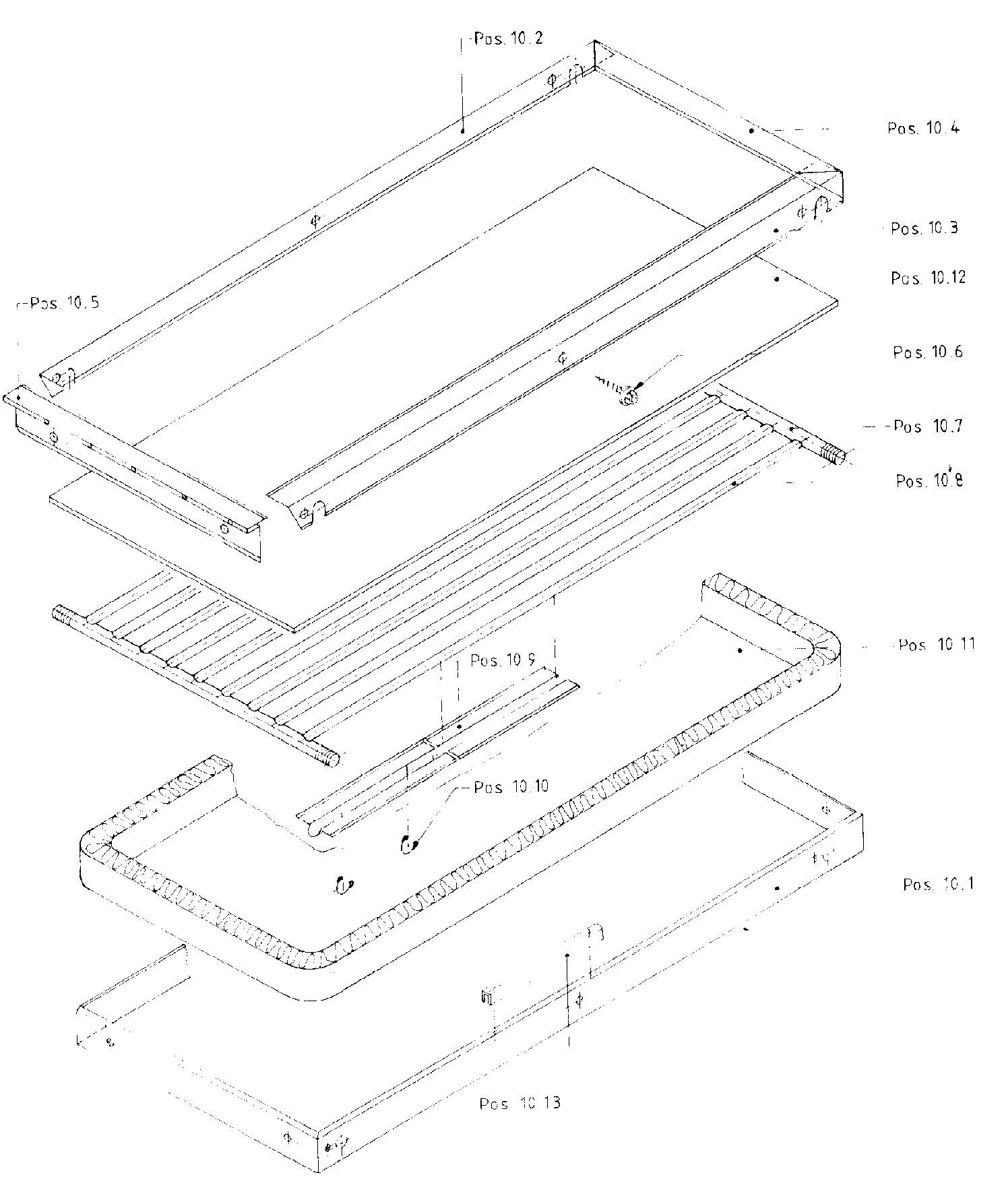
Assembly of collector
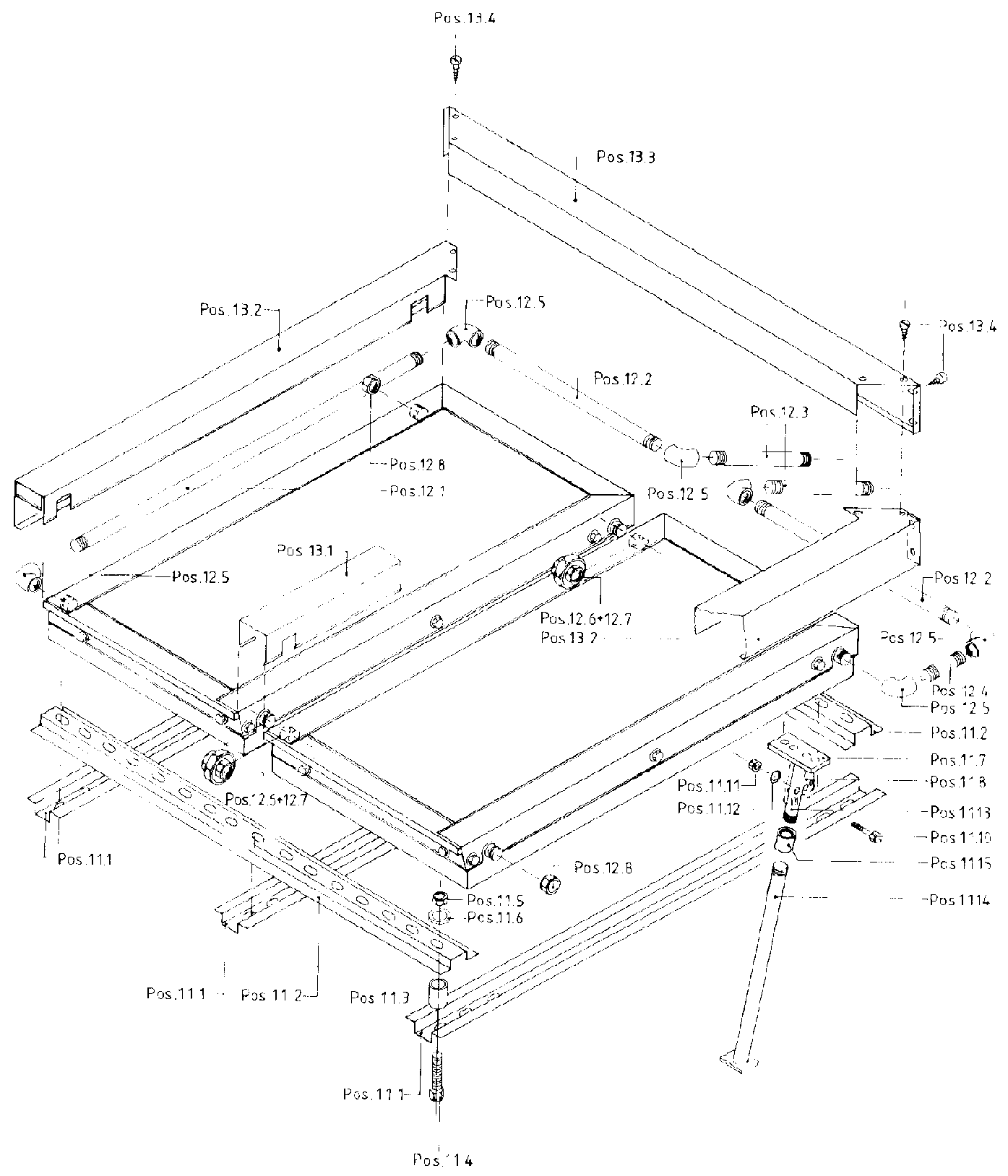
Support, pipes and panels
5.4 WELDING JIG FOR PIPE GRID

FIGURE
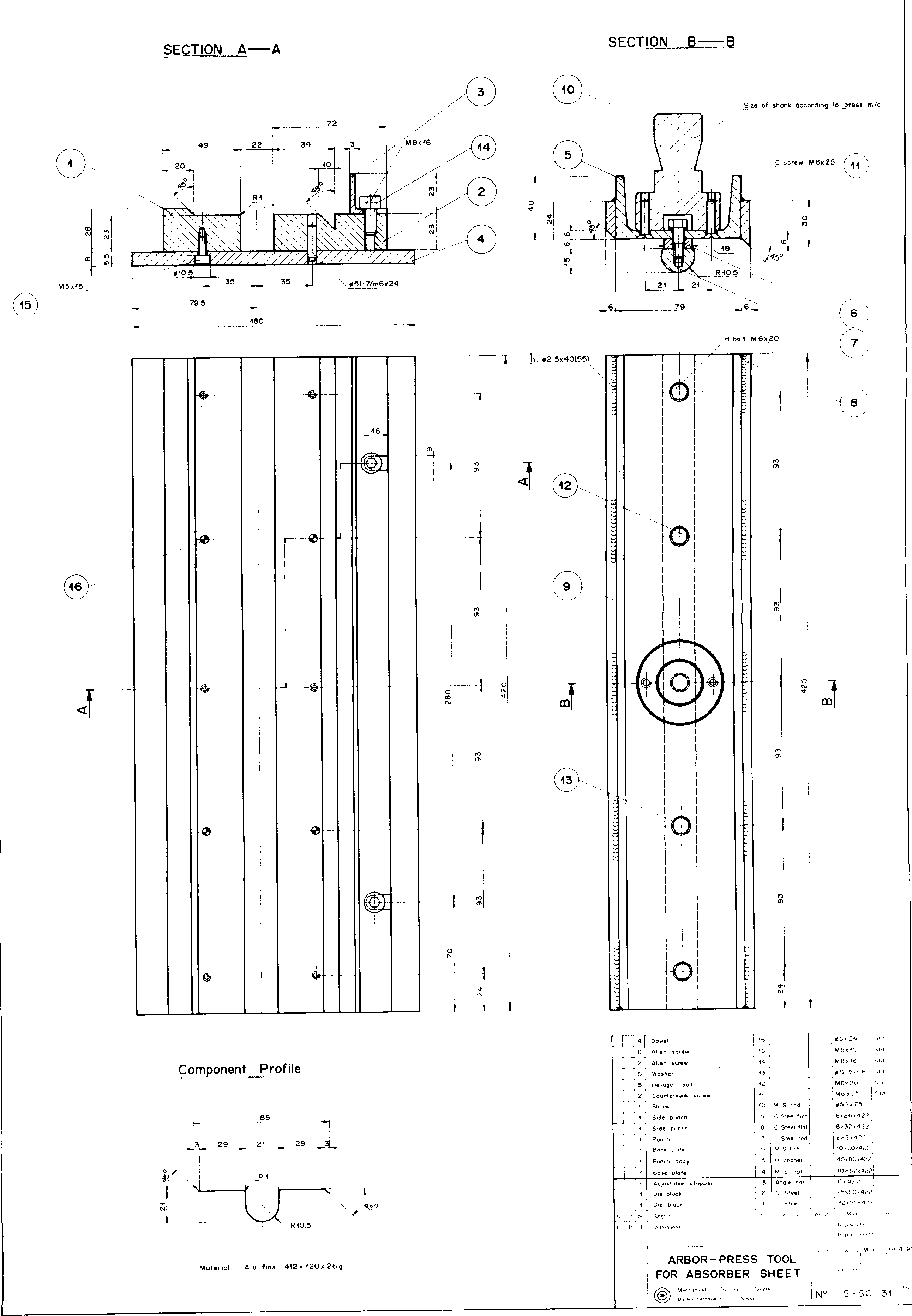
5.5 ARBOR PRESS TOOL FOR ABSORBER SHEET
FIGURE
|
| |||||||||||||||
Solar Water Heaters in Nepal (SKAT, 1979, 142 p.)
PART III SOLAR WATER HEATER APPLIANCES OTHER DESIGNS
6. SOLAR WATER HEATER APPLIANCES/OTHER DESIGNS
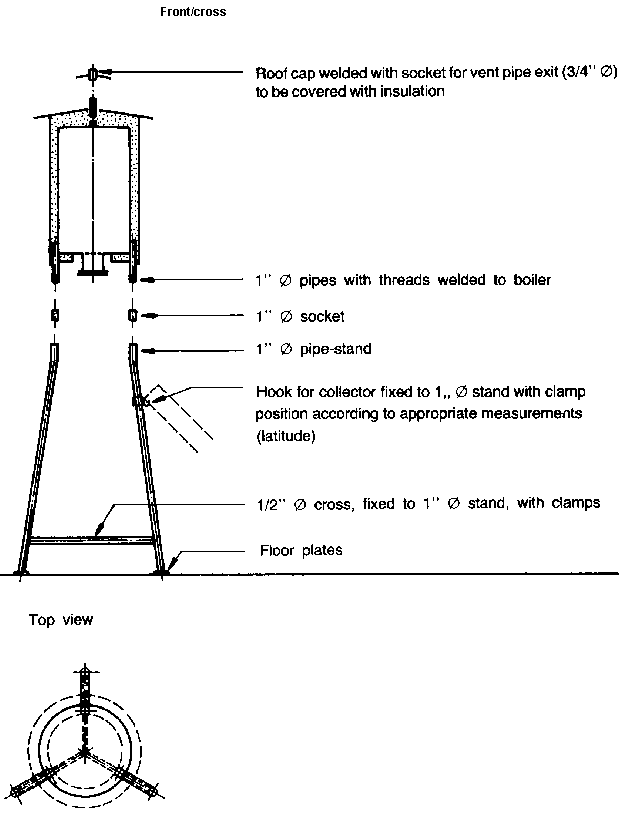
6.1 STAND FOR HOT WATER STORAGE TANK
FIGURE
6.2 SOLAR HOT WATER STORAGE TANK
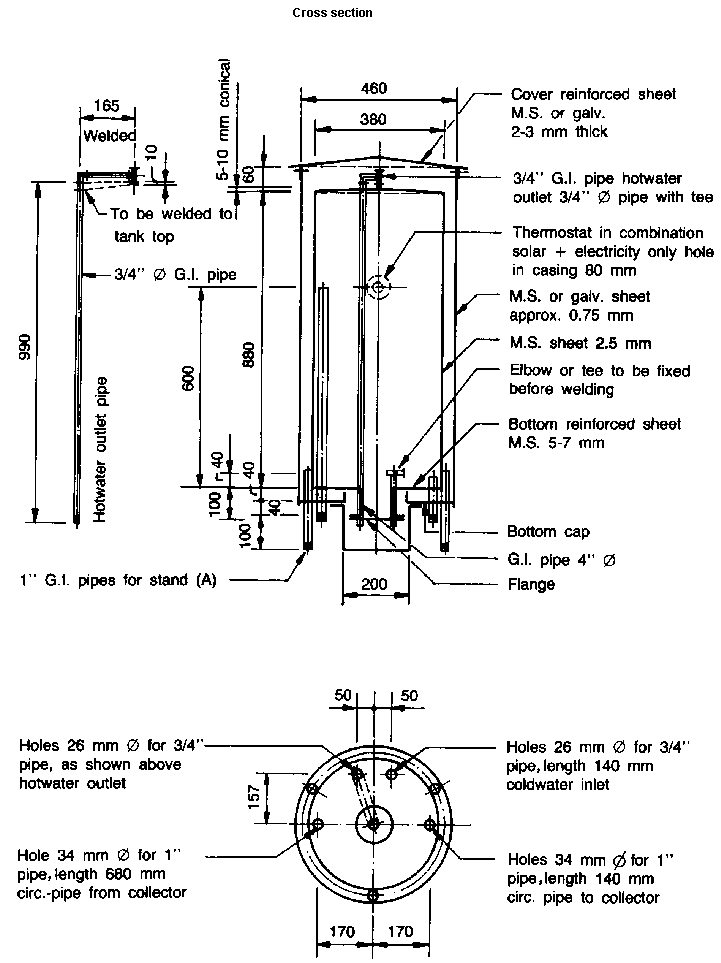
100 ltr. Capacity (for simple make)
Note: To further reduce heat losses the thickness of insulation can be increased.
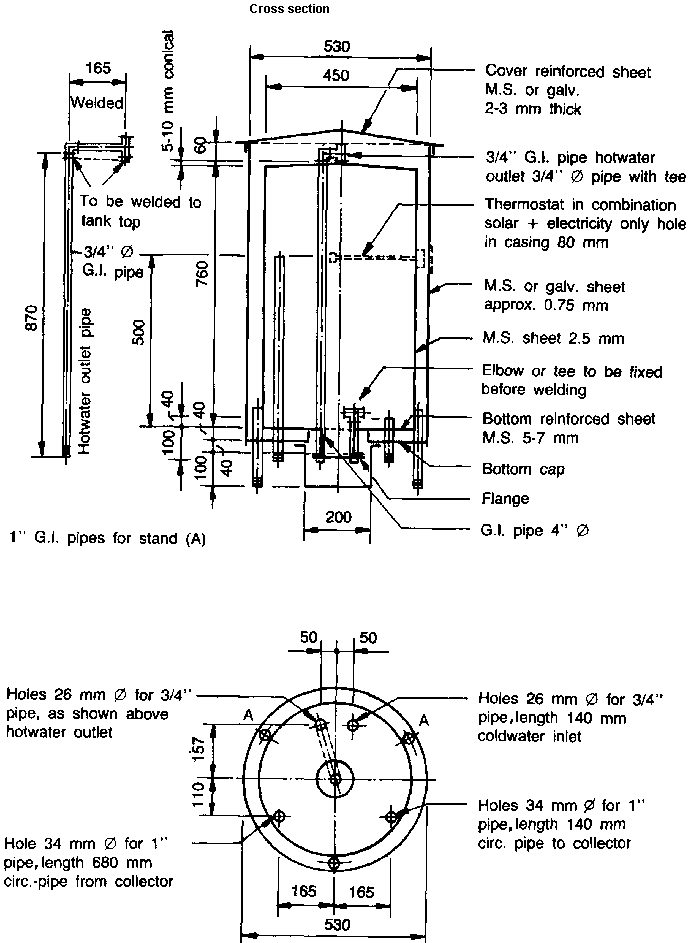
120 ltr. Capacity (for simple make)
Note: To further reduce heat losses the thickness of insulation can be increased.
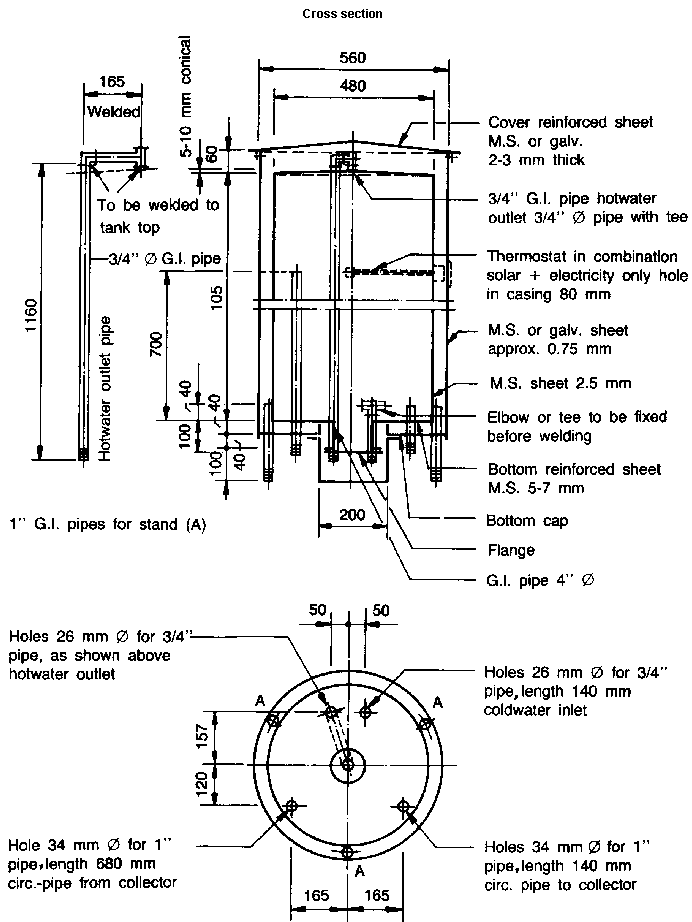
200 ltr. Capacity (for simple make)
Note: To further reduce heat losses the thickness of insulation can be increased.
FLANGES FOR SOLAR HOT WATER STORAGE TANKS
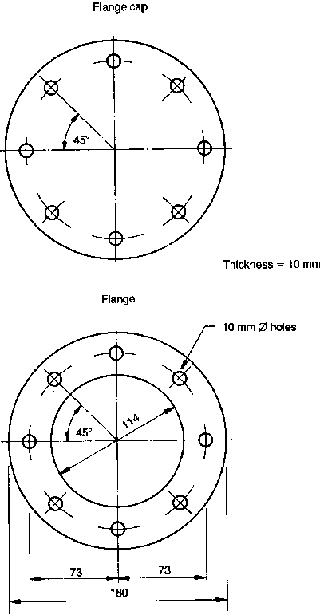
FIGURE
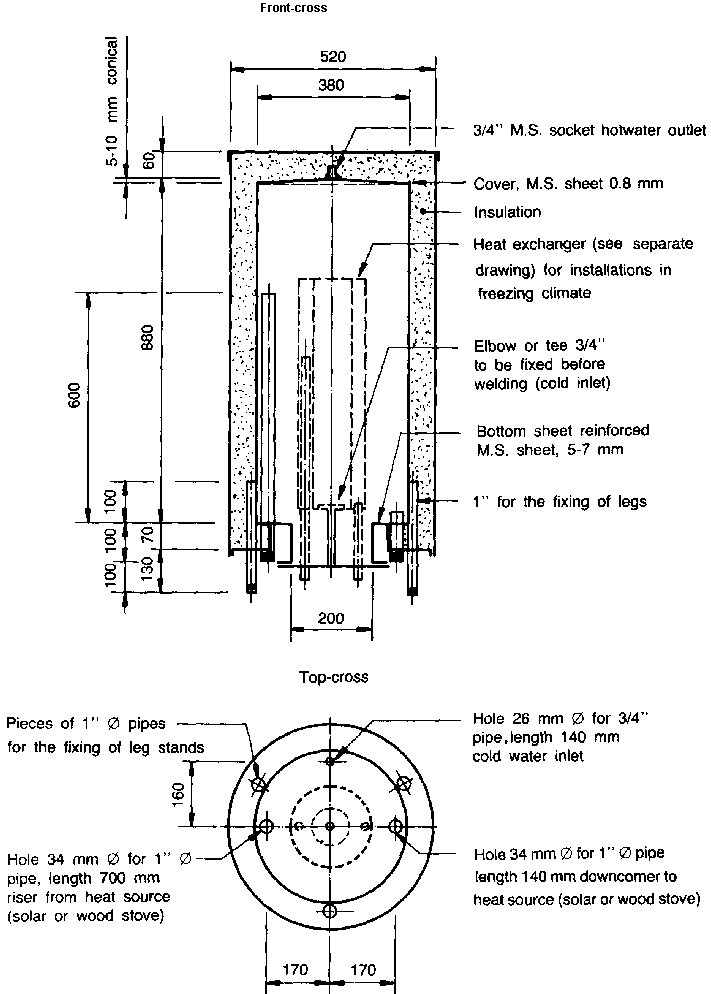
6.3 HOT WATER STORAGE TANK WITH HEAT EXCHANGER
Circulation to work with thermosiphon system can also be connected to a wood stove heat exchanger
FIGURE
HEAT EXCHANGER FOR HOT WATER STORAGE TANK
To fit inside special hot water storage tank.

FIGURE
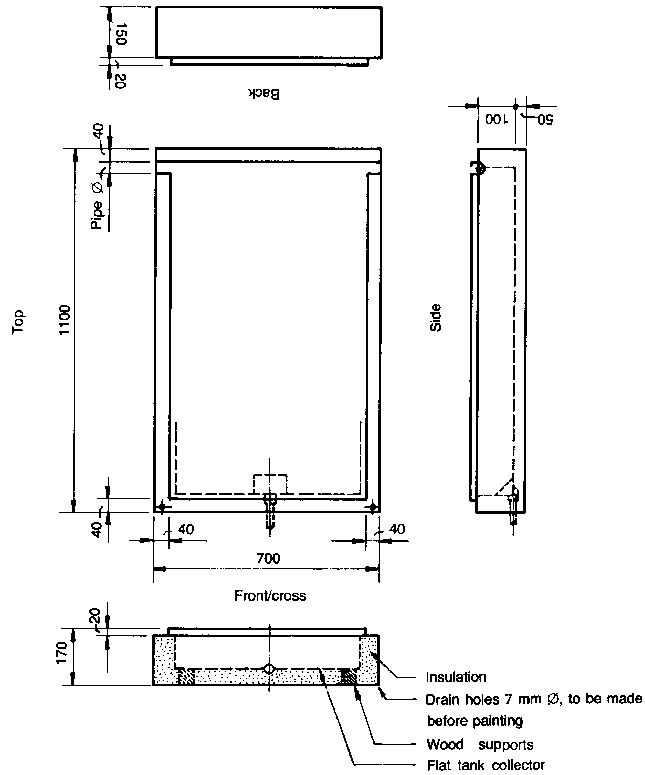
6.4 FLAT TANK COLLECTOR, 60 Itr. Box
Materials: Gl-sheet 22 gauge (0.75), corner double seam or riveted and soldered painting one coat red oxyde and one coat enamel paint.
FIGURE
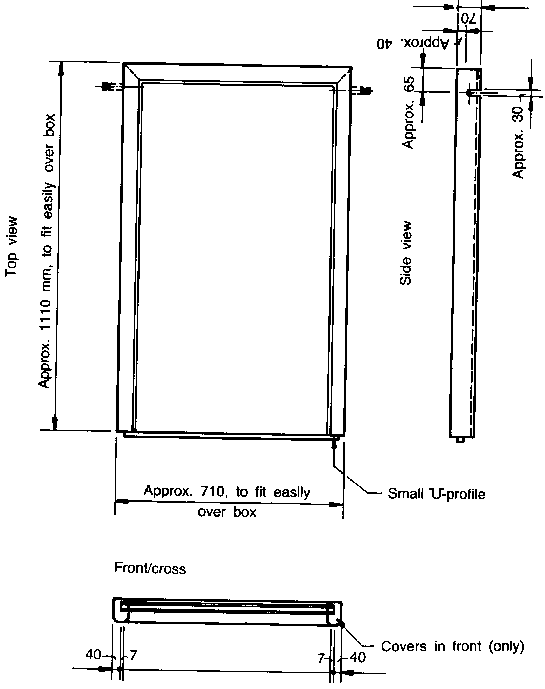
FLAT TANK COLLECTOR, 60 Itr. COVER FRAME
Materials: Gl-sheet 22 gauge (0.75), corner double seam or riveted and soldered, painting one coat red oxyde and one coat enamel paint.
FIGURE
FLAT TANK COLLECTOR, 60 Itr. MS-TANK
Materials: M.S. sheet, 3 mm welded
Inside: Non-toxic
paintings
Outside: Painting

FIGURE
SIMPLE MAKING OF PROFILES (ABSORBER PLATES)

FIGURE
HARD COVER OVER WELL INSULATED PIPES

FIGURE
|
| |||||||||||||||
Solar Water Heaters in Nepal (SKAT, 1979, 142 p.)
PART IV EXAMPLES OF COST CALCULATION
7. EXAMPLES OF COST CALCULATION
7.1 SOLAR SYSTEM
One hotwater storage tank 100ltr.
Two solar collectors SC-85
|
Pos. |
Article |
Qty. |
Rate |
Amount |
| |
Summary material | | | |
|
1-8 |
Material cost for hot water storage tank 100 Itr. net |
1 | | |
|
10-13 |
Material cost for two solar collectors SC-85 and accessories, net |
2 | | |
| | | | | |
| |
Sub total |
| | |
| |
| | |
|
|
|
Summary working hrs., labour charge | |
| |
| | |
| | |
|
1-8 |
Hotwater storage tank 100 Itr. working hrs., and labour cost |
163 hrs. | |
|
| | | | | |
|
10-13 |
Two solar collector SC-85 and accessories | |
| |
| |
Working hrs., and labour cost |
173 hrs. | |
|
| | | | | |
| |
Sub total |
| | |
| |
Overhead on material % | | | |
| |
Overhead on labour charge % | | | |
| |
Transportation charge | | | |
| | | | | |
|
1-13 |
Total cost of one solar system one hotwater storage tank 100 Itr. two solar collectros SC-85 |
| | |
7.2 HOTWATER STORAGE TANK 100 LTR.
|
Pos. |
Article |
|
Qty. |
Rate |
Amount |
|
1 |
MS-tank 100 ltr. (inside) | | | | |
|
1.1 |
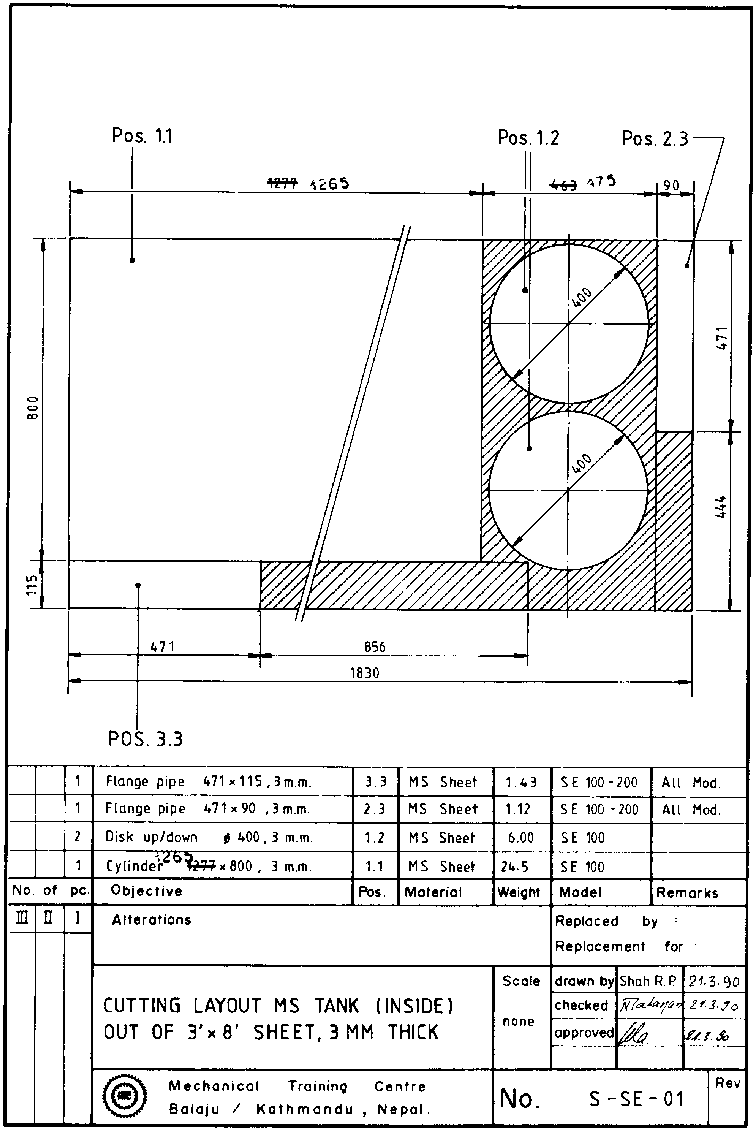
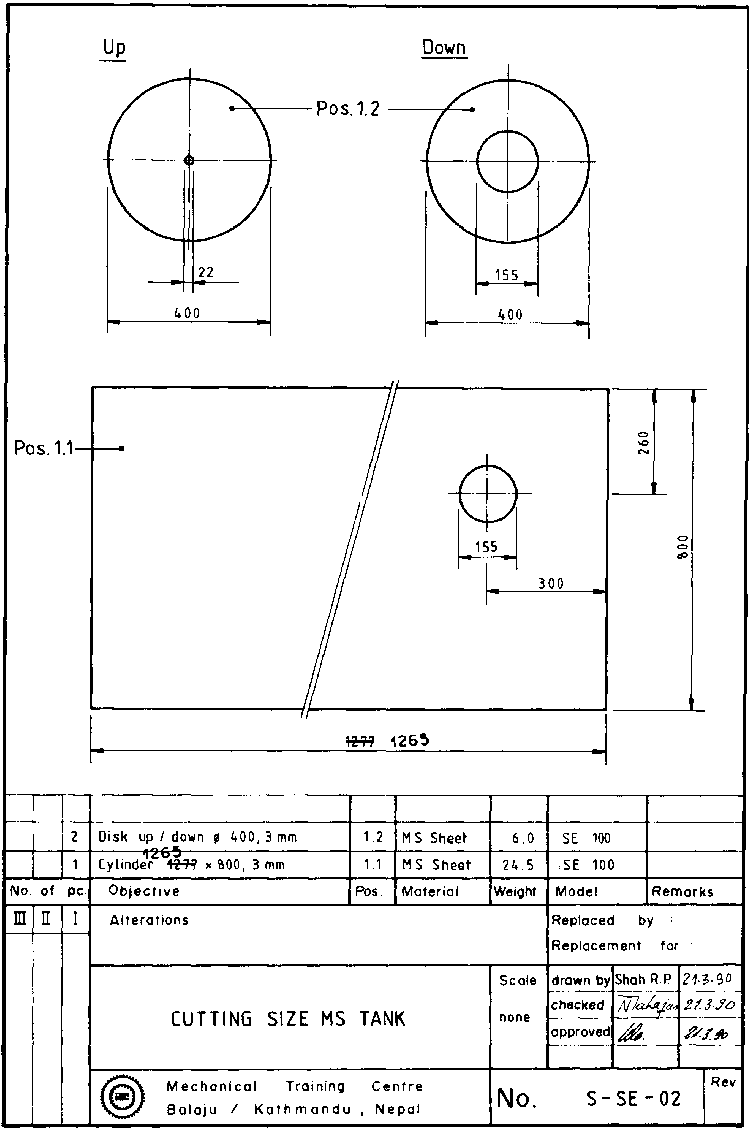
Cylinder MS-sheet 3 mm | | | | |
| |
1277 x 800 mm |
| | |
|
|
|
1.021 m²+ 10%* |
|
1.23 m² |
| |
|
1.2 |
Disk up/down MS-sheet 3 mm | | | | |
| |
400 x 400 mm |
| | |
|
|
|
0.16 m² + 10% = 1.76 m² x 2 | |
0.352 m² |
| |
|
1.3 |
G.l. pipe (vent) |
1/2" |
0.1 m | |
|
|
1.4 |
G.l. hexagon nuts |
1/2" |
2 pcs. | |
|
|
1.5 |
G.l. socket |
1/2" |
1 pc. | |
|
|
1.6 |
G.l. cap |
1/2" |
1 pc. | |
|
|
1.7 |
Red. Socket |
1 /2" -3/8" |
1 pc. | |
|
|
1.8 |
Welding rods 0 3 mm |
|
40 pcs. | |
|
|
1.9 |
Tar-paint (2-coats) |
|
1.2 Itr. | |
|
|
1.10 |
Cement (inside lining, corrosion production) | |
5 kg | | |
|
1.11 |
Electric charge |
| | |
|
|
1.12 |
Tool and machine charge | | | | |
|
1 |
Material cost for MS-tank 100 ltr. net | | | | |
|
1 |
Working hrs. and Labour charge for | |
| | |
| |
cutting, rolling, welding, pressure | |
| | |
| |
testing, painting and cement coating | |
24 hrs. | |
|
| | | | | | |
|
2 |
Flange with water and solar connection | | | | |
|
2.1 |
Flangeringg MS |
10 mm | |
| |
| |
outside � 220, inside � 155 | |
4.25 kg | |
|
|
2.2 |
Flange MS 10 mm |
�220 mm |
4.25 kg | |
|
|
2.3 |
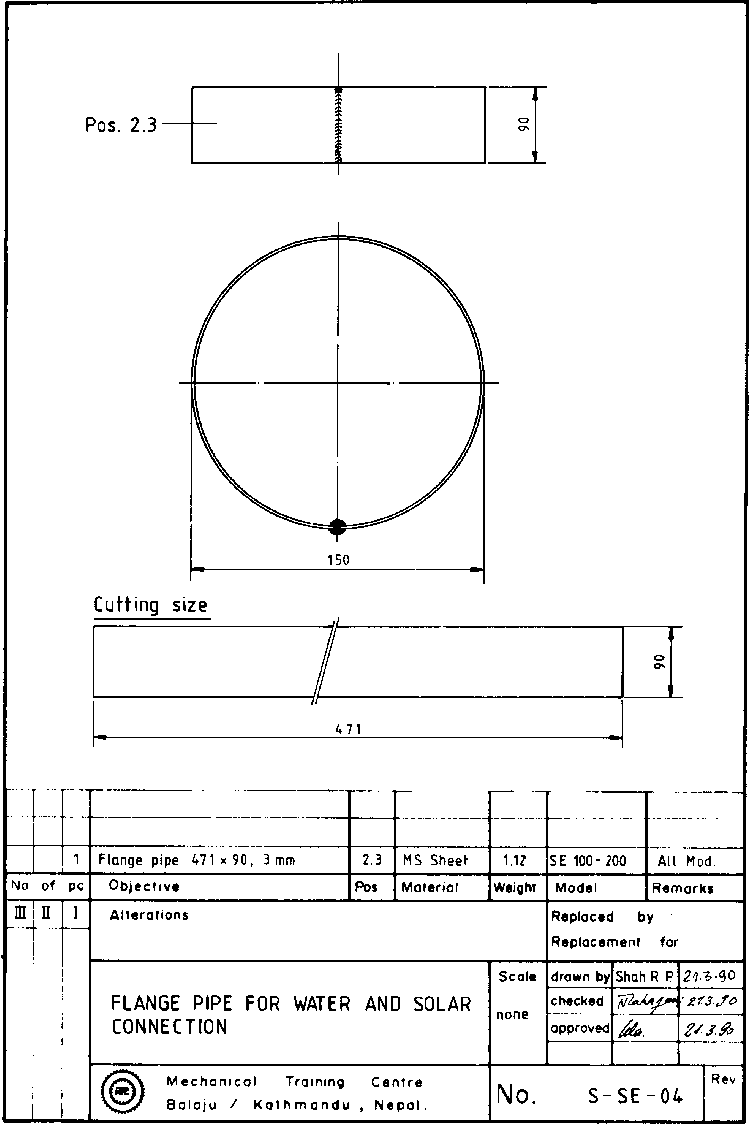
Flange pipe MS-sheet 3 mm | | | | |
| |
471 x 90 mm = 0.042 m² + 10% | |
0.046 m² |
| |
|
2.4 |
G.l. pipe (hot water) |
3/4" |
0.2 m | |
|
|
2.5 |
G.l. pipe (hot water) |
3/4" |
0.712 m | |
|
|
2.6 |
G.l. pipe (cold water) |
3/4" |
0.1 m | |
|
|
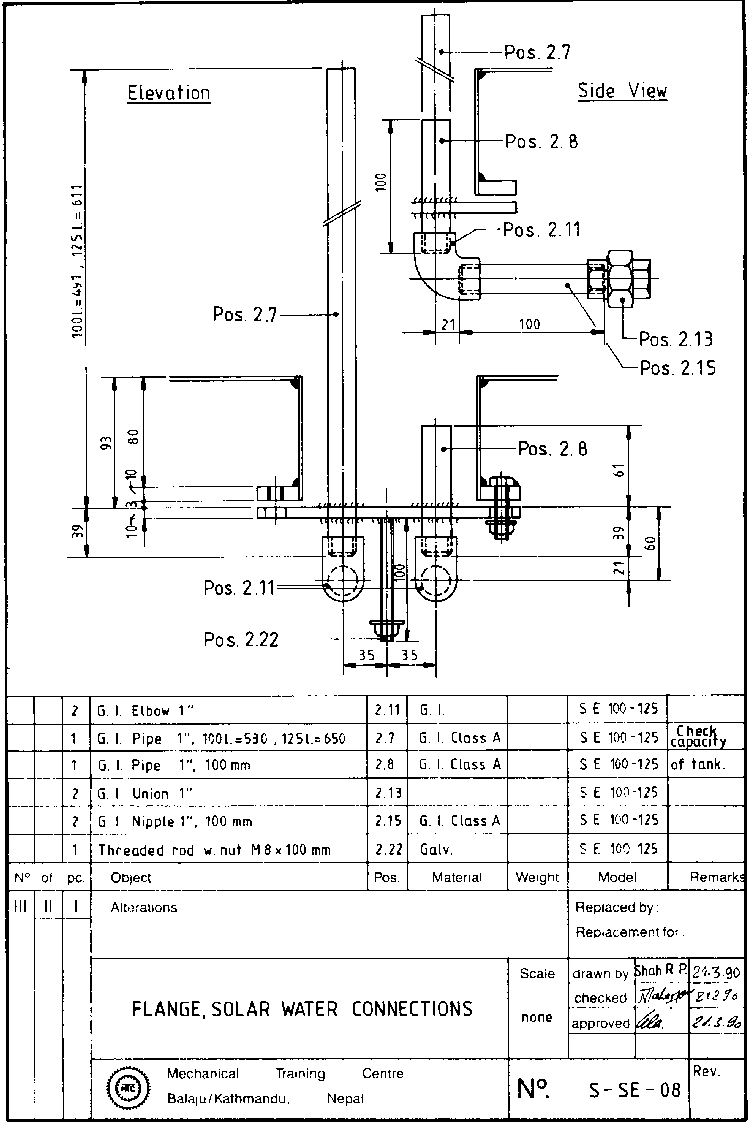
2.7 |
G.l. pipe (solar inlet warm) |
1 " |
0.53 m | |
|
|
2.8 |
G.l. pipe (solar outlet cold) |
1 " |
0.1 m | |
|
|
2.9 |
Baffle plate G.l. sheet 18 gauge | | | | |
| |
60 x 70 mm | |
0.0046 m² |
| |
|
2.10 |
G.I. elbows |
3/4" |
2 pcs. | |
|
|
2.11 |
G .I. elbows |
1 " |
2 pcs. | |
|
|
2.12 |
G.I. unions |
3/4" |
2 pcs. | |
|
|
2.13 |
G.I. unions |
1 " |
2 pcs. | |
|
|
2.14 |
Nipple 2 x 120 mm |
3/4" |
0.24 m | |
|
|
2.15 |
Nipple 2 x 100 mm |
1 " |
0.2 m | |
|
|
2.16 |
G.I. socket |
3/4" |
1 pc. | |
|
|
2.17 |
Steam packing washers for union |
¾” |
2 pcs. | |
|
|
2.18 |
Steam packing washers for union |
1" |
2 pcs. | |
|
|
2.19 |
Steam packing washer 3 mm | | | | |
| |
� 180 outside, � 145 inside | | | | |
| |
� 180 mm² = 0.032 m² + 10% | |
0.035 m² |
| |
|
2.20 |
Hexagon screws, galv. |
M8 x 40 |
12 pcs. | |
|
|
2.21 |
Hexagon nuts, galv. |
M8 |
12 pcs. | |
|
|
2.22 |
Threaded rod, galv. L= 100 mm |
M8 |
1 pc. | |
|
|
2.23 |
Washers, galv. |
M8 |
12 pcs. | |
|
|
2.24 |
Red oxyde paint |
|
0.1 ltr. | |
|
|
2.25 |
Welding rods 0 3 mm |
5 pcs. | |
| |
|
2.26 |
Electric charge |
| | |
|
|
2.27 |
Tool and machine charge | | | | |
|
2.28 |
Oxygen and gas |
| | |
|
|
| | |
| | |
|
2 |
Material cost for flange with water and solar connection, net | | | | |
|
2 |
Working furs. and labour charge for gas cutting, filing, drilling, preparation of pipes, welding and assembling | |
32 hrs. | |
|
|
3 |
Side flange for thermostat and electro heating element | | | | |
|
3.1 |
Flangeringg MS 10 mm |
| | |
|
|
|
� 220 outside, 0 155 mm inside | |
4.25 kg | |
|
|
3.2 |
Flange, MS 10 mm 0 220 mm | |
4.25 kg | |
|
|
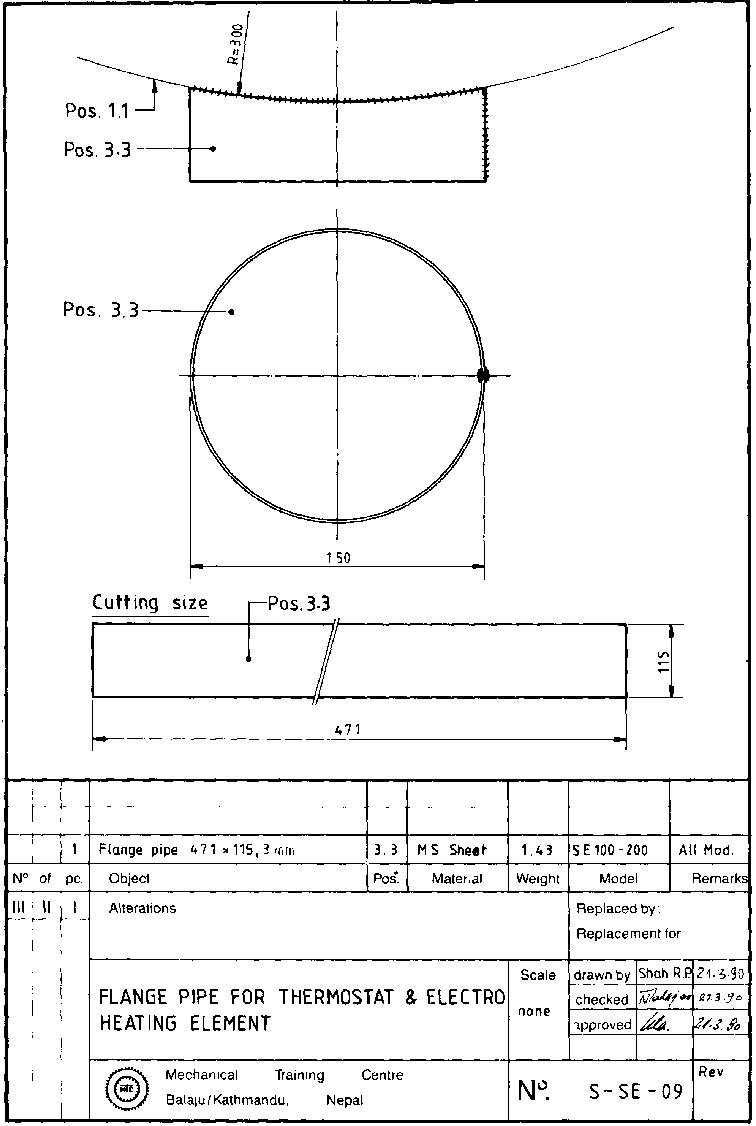
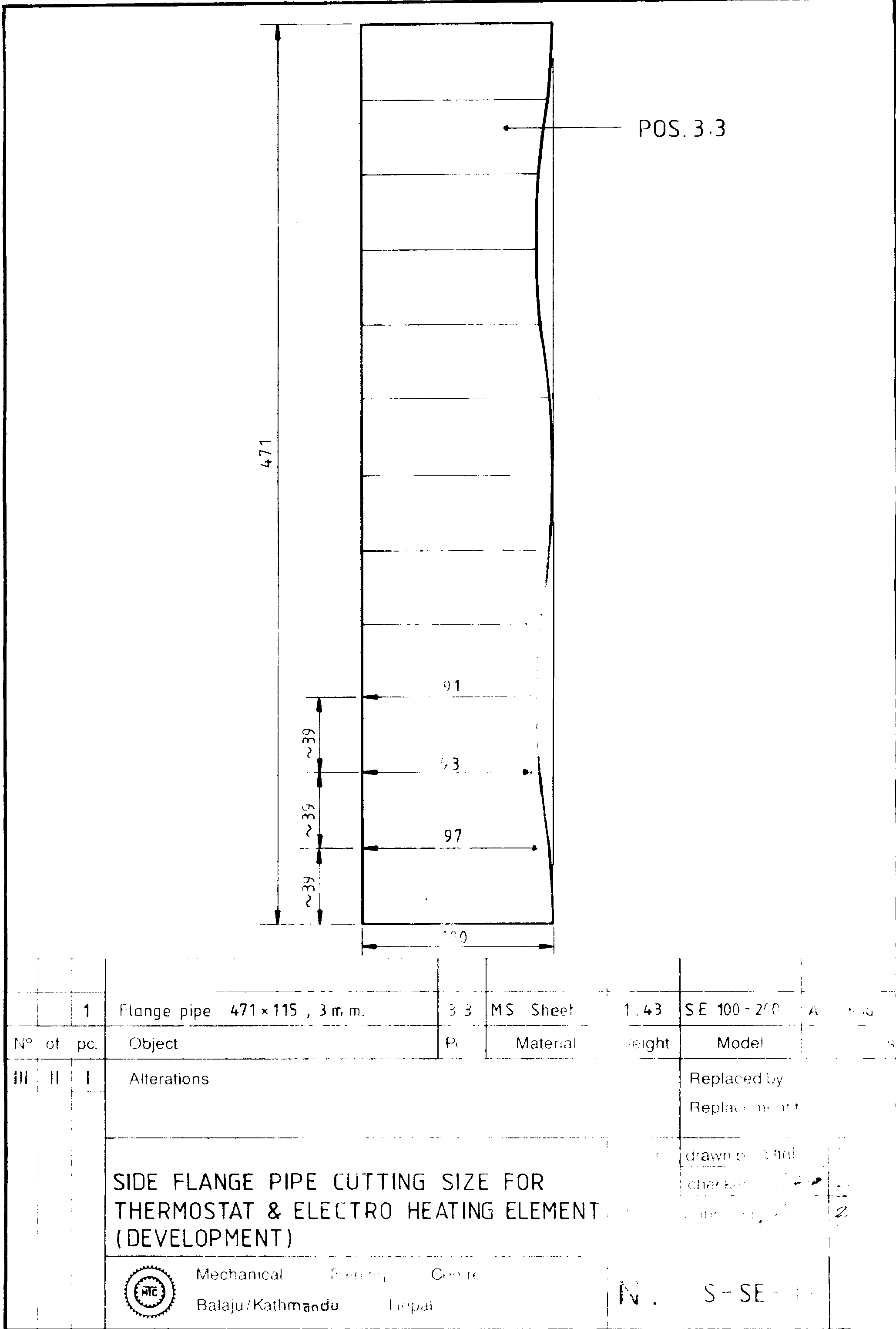
3.3 |
Flange pipe, MS-sheet 3 mm | | | | |
| |
0 150 mm, length 90 mm | | | | |
| |
471 x 115 mm |
| | |
|
|
|
0.054 m² + 10% |
|
0.059 m² |
| |
|
3.4 |
G.l. pipe |
1½ '' |
0.42 m | |
|
|
3.5 |
Disk MS-sheet 3 mm |
| | |
|
|
|
48 x 48 mm | |
0.002 m² |
| |
|
3.6 |
MS-pipe |
1/4" |
0.42 m | |
|
|
3.7 |
Connectorr sheet 2 mm | | | | |
| |
60 x 40 mm | |
0.0024 m² |
| |
|
3.8 |
Electro element holder 2 mm | | | | |
| |
58 x 10 mm | |
0.0006 m² |
| |
|
3.9 |
Slotted pan head screw |
M6 x 5 |
1 pc. | |
|
|
3.10 |
Steam packing washer 3 mm | | | | |
| |
� 180 outside, 0 145 inside | | | | |
| |
� 180 mm² = 0.034 m² + 10% | |
0.038 m² |
| |
|
3.11 |
Threaded rod + nut |
M8 x 100 |
1 | | |
|
3.12 |
Hexagon screws, galv. |
M8 x 40 |
12 pcs. | |
|
|
3.13 |
Hexagon nuts, galv. |
M8 |
12 pcs. | |
|
|
3.14 |
Washers, galv. |
M8 |
12 pcs. | |
|
|
3.15 |
Welding rod � 3 mm |
|
5 pcs. | |
|
|
3.16 |
Electric charge |
| | |
|
|
3.17 |
Tool and machine charge | | | | |
|
3.18 |
Oxygen and gas |
| | |
|
|
3.19 |
Red oxyde paint |
|
0.1 ltr. | |
|
| | | | | | |
|
3 |
Material cost for one side flange for thermostat and electro | | | | |
| |
heating element, net |
| | |
|
|
3 |
Working furs. and labour charge for gas cutting, filing, drilling, | | |
| |
| |
preparation of pipes, welding and assembling | |
24 hrs. | |
|
|
4 |
Insulationn 100 mm (for tank 100 ltr.) | |
| | |
|
4.1 |
Fibreglasss insulation 50 mm | | | | |
| |
First layer |
| | |
|
|
|
1550 x 800 | |
1.24 m² |
| |
|
4.2 |
Second layer |
| | |
|
|
|
1900 x 800 | |
1.52 m² |
| |
|
4.3 |
Top and bottom |
| | |
|
|
|
600 x 600 = 0.36 m² x 4 | |
1.44 m² |
| |
|
4.4 |
Pe-bag 1900 x 1000 mm | |
1 | | |
|
4 |
Material cost for insulation 100 mm thick for one 100 ltr. hotwater storage tank, net | |
| | |
|
4 |
Working furs. and labour charge for | |
| | |
| |
cutting, fixing of the insulation | |
8 hrs. | |
|
| | | | | | |
|
5 |
Outside cover, (for tank 100 ltr.) | | | | |
|
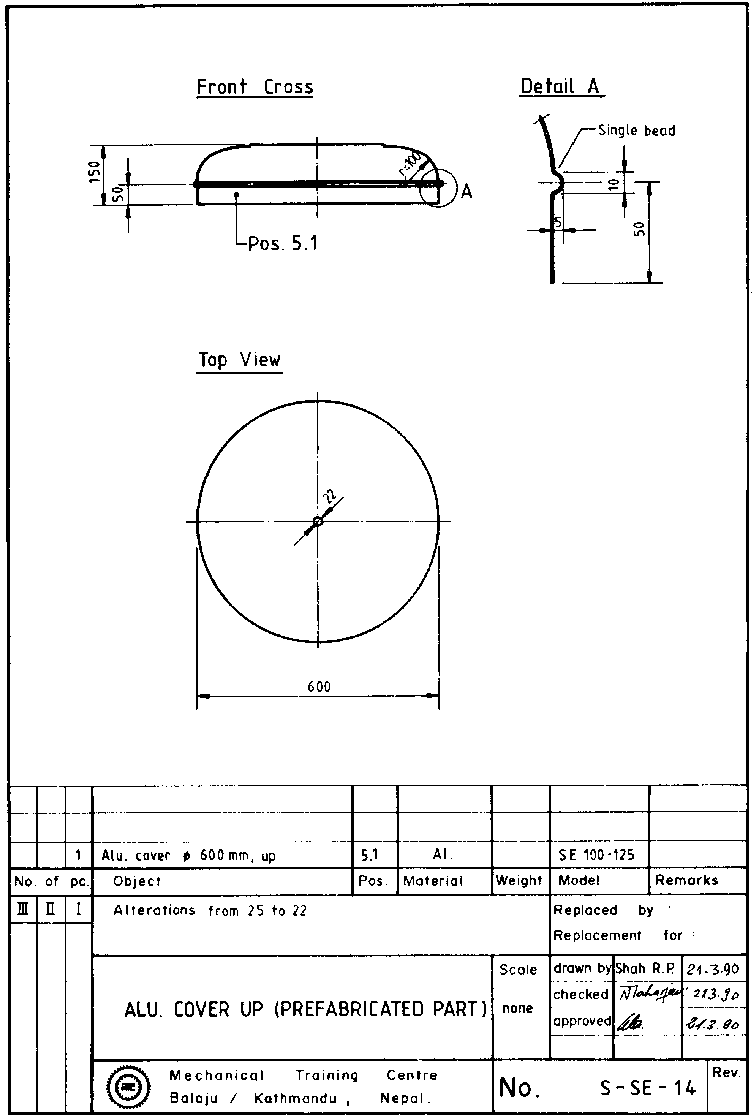
5.1 |
Alu. cover up, prefabricated | | | | |
| |
� 600 mm. | |
1 pc. | |
|
|
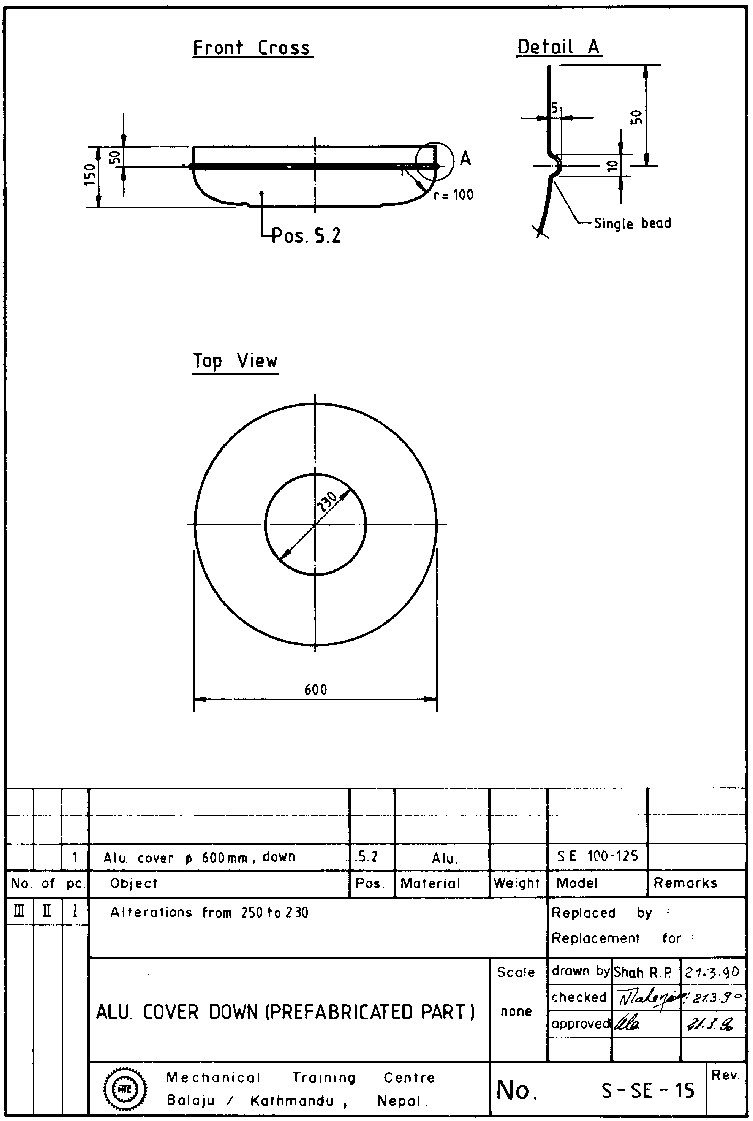
5.2 |
Alu. cover down, prefabricated | | | | |
| |
� 600 mm | |
1 pc. | |
|
|
5.3 |
Alu. cover for side flange | | | | |
| |
(250 mm), prefabricated � 10" | |
1 pc. | |
|
|
5.4 |
Alu. cover for bottom flange | | | | |
| |
(230 mm), prefabricated 0 9" | |
1 pc. | |
|
|
5.5 |
Washers, galv. |
M8 |
2 pcs. | |
|
|
5.6 |
Hexagon nuts |
M8 |
2 pcs. | |
|
|
5.7 |
G.l. sheet, cylinder 24 gauge | | | | |
| |
1903 x 780 mm |
| | |
|
|
|
1.48 m² + 10% |
|
1.59 m² |
| |
|
5.8 |
Cover belts, G.l. sheet 24 gauge | | | | |
| |
(2 pieces) | |
| | |
| |
50 x 1910 mm |
| | |
|
|
|
0.095 m² + 10% = 0.1 x 2 | |
0.2 m² |
| |
|
5.9 |
Screw plates, 4 pieces | | | | |
| |
size: 50x20 x 3 mm |
| | |
|
|
|
MS-flat 0.08 m (1.8 kg/m) | |
0.094 kg | |
|
|
5.10 |
Hexagon screws, galv. |
M8 x 25 |
4 pcs. | |
|
|
5.11 |
Hexagon nuts, galv. |
M8 |
4 pcs. | |
|
|
5.12 |
Washers, galv. |
M8 |
4 pcs. | |
|
|
5.13 |
Nameplate alu. |
190 x 70 mm |
1 pc. | |
|
|
5.14 |
Soldering mat. Tin |
40/60 |
0.05 kg | |
|
|
5.15 |
Pop rivets alu. |
� 3 |
30 pcs. | |
|
|
5.16 |
G. I. sheet watershild 20 gauge | | | | |
| |
400 x 40 mm |
| | |
|
|
|
0.016 + 10% |
|
0.017 m² |
| |
|
5.17 |
Red oxide paint |
|
1.5 ltr. | |
|
|
5.18 |
White paint,enamel |
|
1.0 ltr | |
|
|
5.19 |
Blue paint,enamel |
|
0.2 ltr | |
|
|
5.20 |
Thiner | |
1.0 ltr | |
|
|
5.21 |
Tool and machine charge | | | | |
|
5.22 |
Electric charge/gas |
| | |
|
|
| | |
| | |
|
5 |
Material cost for G. l. outside | | | | |
| |
cover for one hotwater storage | | | | |
| |
tank 100 ltr., net |
| | |
|
|
5 |
Working furs. and labour charge for | |
| | |
| |
cutting, of alu. covers and G.l. | | | | |
| |
sheets, folding, bending, | | | | |
| |
assembling and painting | |
35 hrs. | |
|
| | | | | | |
|
6 |
Electric heating/thermostat | | | | |
|
6.1 |
Heating element removable | | | | |
| |
L = 280 mm, � 37 mm, 230 V | |
1 pc. | |
|
|
6.2 |
Thermostaat, L = 280 mm, � 8 mm | | | | |
| |
230 V, 20 A |
| | |
|
|
|
range 30 -80°C |
|
1 pc. | |
|
|
6.3 |
Connectorr | |
1 pc. | |
|
|
6.4 |
Control lamp |
|
1 pc. | |
|
|
6.5 |
Wiring | |
1 | | |
|
6.6 |
Cable shoes |
|
3 pcs. | |
|
|
6.7 |
Slotted pan head screws |
M4 x 20 |
3 pcs. | |
|
| | | | | | |
|
6 |
Material coast for electro | | | | |
| |
heating/thermostat ,net | | | | |
|
6 |
Working furs. and labour charge for | |
| | |
| |
fixing of heating element, thermostat, | |
| | |
| |
wiring and testing |
|
5 hrs. | |
|
| | | | | | |
|
7 |
Boiler stand SE 100 ltr. | | | | |
|
7.1 |
Belt for boiler stand, MS 3 mm | | | | |
| |
1305 x 115 mm |
| | |
|
|
|
0.15 m² + 10% |
|
0.165 m² |
| |
|
7.2 |
G.l. pipe, support legs (3 pcs.) 1" | |
| | |
| |
length 1000 mm x 3 |
|
3 m | | |
|
7.3 |
G.l. pipe, support nipples | | | | |
| |
(3 pcs.) 1 " |
| | |
|
|
|
length 250 mm x 3 |
|
0.75 m | |
|
|
7.4 |
Baseplate MS-sheet |
|
5 mm | | |
| |
100 x 100 mm |
| | |
|
|
|
0.01 m²+ 10% |
0.011 m² |
| | |
|
7.5 |
Gl-socketss |
1" |
3 pcs. | |
|
|
7.6 |
Hexagon screws, galv. |
M10 x 50mm |
2 pcs | |
|
|
7.7 |
Hexagon nuts, galv. |
M10 |
2 pcs. | |
|
|
7.8 |
Washers, galv |
M10 |
2 pcs | |
|
|
7.9 |
Welding rods � 3 mm |
|
3 pcs | |
|
|
7.10 |
Red oxyde paint |
|
0.3 ltr. | |
|
|
7.11 |
Electric charge |
| | |
|
|
7.12 |
Tool and machine charge | | | | |
| | | | | | |
|
7 |
Material cost for one boiler | | | | |
| |
stand, net | |
| | |
|
7 |
Working furs. and labour charge for | |
| | |
| |
cutting, drilling, rolling, thread | | | | |
| |
cutting, welding, painting, and assembling | |
14 hrs. | |
|
|
8 |
Wall-hangeers 100 ltr. | | | | |
|
8.1 |
Belt for boiler wall-hangers | | | | |
| |
MS 3 mm (2 pcs.) |
| | |
|
|
|
1305 x 115 mm |
| | |
|
|
|
0.15 ²2 + 10% x 2 | |
0.33 m² |
| |
|
8.2 |
Insulatingg strip, tarfelt | | | | |
| |
1265 x 115 mm (up only) | |
0.145 m² |
| |
|
8.3 |
Reinforceement up, MS-sheet 3 mm | | | | |
| |
95 x 55 mm (2 pcs.) |
| | |
|
|
|
0.0052 m² + 10% x 2 | |
0.002 m² |
| |
|
8.4 |
Reinforceement down, MS-sheet 3 mm | | | | |
| |
95 x 55 mm (2 pcs.) |
| | |
|
|
|
0.0052 m² + 10% x 2 | |
0.002 m² |
| |
|
8.5 |
Hexagon screws, galv. |
M10 x 50 mm |
4 pcs. | |
|
|
8.6 |
Hexagon nuts, galv. |
M10 |
4 pcs. | |
|
|
8.7 |
Washers, galv. |
M10 |
8 pcs. | |
|
|
8.8 |
Spacing sheets, MS 3 mm | | | | |
| |
220 x 195 mm (2 pcs.) | | | | |
| |
0.043 + 10% x 2 |
|
0.094 m² |
| |
|
8.9 |
Hangers, MS-flat |
| | |
|
|
|
410 x 50 x 5 mm (2 pcs.) | | | | |
| |
L = 0.41 m (1.96 kg/m) | |
0.8 kg | |
|
|
8.10 |
Wall plugs, Mod. Fischer S12 | | | | |
| |
(plastic dowel 0 12 mm) | |
4 pcs. | |
|
|
8.11 |
Square head wood screws, galv. | | | | |
| |
100 x 10 mm, (4" x 3/8") | |
4 pcs. | |
|
|
8.12 |
Welding rods 0 3 mm |
|
3 pcs. | |
|
|
8.13 |
Red oxyde paint |
|
0. 3 ltr. |
| |
|
8.14 |
Electric charge |
| | |
|
|
8.15 |
Tool and machine charge | | | | |
| | | | | | |
|
8 |
Material cost for two wall hangers | | | | |
| |
net | | | | |
|
8 |
Working furs. and labour charge for | |
| | |
| |
cutting, drilling, rolling, welding, | |
| | |
| |
painting and assembling | |
21 hrs. | |
|
7.3 Hotwater storage tank 100 Itr.,SUMMARY
|
Pos. |
Article |
Qty. |
Rate |
Amount |
| |
Summary Material | | | |
|
1. |
MS-tank 100 ltr. (inside) |
1 | | |
|
2. |
Flange with water and solar connection |
1 | | |
|
3. |
Side flange for thermostat and electro heating element |
1 | | |
|
4. |
Insulation, 100 mm (tank 100 ltr.) |
1 | | |
|
5. |
Outside cover (tank 100 ltr.) |
1 | | |
|
6. |
Electro heating/thermostat |
1 | | |
|
7. |
Boiler stand |
1 | | |
|
8. |
Wall hangers (optional to boiler stand) | |
1 | |
|
1-8 |
Material cost for hotwater storage tank 100 ltr. net | | | |
| |
Working hrs., labour charge | | | |
|
1. |
MS-tank 100 ltr. (inside) |
24 hrs. | |
|
|
2. |
Flange with water and solar connection |
32 hrs. | |
|
|
3. |
Side flange for thermostat and | | | |
| |
electro heating element |
24 hrs. | |
|
|
4. |
Insulation 100 mm (tank 100 ltr.) |
8 hrs. | |
|
|
5. |
Outside cover (tank 100 ltr.) |
35 hrs. | |
|
|
6. |
Electro heating/thermostat |
5 hrs. | |
|
|
7. |
Boiler stand |
14 hrs. | |
|
|
8. |
Wall hangers (optional to boiler stand) |
21 hrs. | |
|
|
1-8 |
Working hrs., labour charge total | | | |
| | | | | |
| |
Overhead on materials, % | | | |
| |
Overhead on labour charge, % | | | |
| |
Transportation charge | | | |
| |
Total cost of one hotwater storage tank 100 ltr. | | | |
EXAMPLES OF COST CALCULATION
7.4 SOLAR COLLECTOR SC-85
|
Pos. |
Article |
|
Oty. |
Rate |
Amount |
|
10 |
Solar collector SC-85 | | | | |
| |
Size: 1810x 790x 110 mm, | | | | |
| |
effective area 1.2 m² | | | | |
| |
Weight: 47 kg |
| | |
|
|
10.1 |
Collector box 24 gauge G. l. sheet | | | | |
| |
1000 x 2000 mm |
| | |
|
|
|
2m² + 10%* |
|
2.2 m² |
| |
|
10.2 |
Frame left 24 gauge G. l. sheet | | | | |
| |
1829 x 100 mm |
| | |
|
|
|
0.182 m² + 10% |
|
0.2 m² |
| |
|
10.3 |
Frame right 24 gauge G. l. sheet | | | | |
| |
1829 x 100 mm |
| | |
|
|
|
0.182 m² + 10% |
|
0.2 m² |
| |
|
10.4 |
Frame top 24 gauge G. l. sheet | | | | |
| |
782 x 100 mm |
| | |
|
|
|
0.078 m² + 10% |
|
0.086m² |
| |
|
10.5 |
Frame bottom |
24 gauge G. l. sheet | | | |
| |
782 x 150 mm |
| | |
|
|
|
1.17 m² + 10% |
1.3 m² |
| | |
|
10.6 |
Hexagon head tapping |
| | |
|
|
|
screws w. metal and rubber | | | | |
| |
washer 6.5 x 16 |
|
10 pcs. | |
|
|
10.7 |
G.l. pipes 1/2" |
| | |
|
|
|
length = 1668 mm, |
9 pcs. |
15.012 m | |
|
|
10.8 |
G.I. pipes 1 /2" |
| | |
|
|
|
length = 830 mm, |
2 pcs. |
1.66 m | |
|
|
10.9 |
Alu. fins 26 gauge Alu. sheet | | | | |
| |
412 x 120 mm 36 pcs. |
| | |
|
|
|
1.78 m² + 10% |
|
1.95 m² |
| |
|
10.10 |
Cresent rings 27.7 x 21.7 mm | |
72 pcs. | |
|
|
10.11 |
Insulation fibreglass |
50 mm | |
| |
| |
1950 x 1000 mm |
| | |
|
|
|
1.95 m² |
|
2 m² |
| |
|
10.12 |
Glass, 4 mm thick |
| | |
|
|
|
1800 x 772 mm |
|
1.39 m² |
| |
|
10.13 |
Rubberseal, |
| | |
|
|
|
U-channel | |
5.3 m | |
|
|
10.14 |
Pop-rivets copper � 3.2 | |
8 pcs. | |
|
|
10.15 |
Soldering mat. tin 40/60 | |
0.05 kg | |
|
|
10.16 |
Black board paint |
|
0.5 ltr. | |
|
|
10.17 |
Red oxyde | |
1.0 ltr. | |
|
|
10.18 |
Brown No. 403 or dark green No. 212 | |
| | |
| |
enamel paint |
|
1.0 ltr. | |
|
|
10.19 |
Thinner | |
0.5 ltr. | |
|
|
10.20 |
Tool and machine charge | | | | |
|
10.21 |
Electric charge |
| | |
|
|
| | |
| | |
|
10 |
Mat. cost for one collector | | | | |
| |
type SC-85, net |
| | |
|
|
10 |
Working hrs., and labour charge | | | | |
| |
for one collector type SC-85 | | | | |
| |
marking, cutting, folding, | | | | |
| |
pressing, welding, soldering, | | | | |
| |
testing, painting and assembling. | |
53 hrs. | |
|
| | | | | | |
|
11 |
Support for two collectors SC-85 | | | | |
|
11.1 |
Hat rails, (G.l. sheets 20 gauge | | | | |
| |
1926 x 152 mm (3 pcs. ) | | | | |
| |
0.292 m² + 10% = 0.32 x 3 | |
1.0 m² |
| |
|
11.2 |
Hat rails, G.l. sheets 20 gauge | | | | |
| |
1638 x,52 mm (2 pcs.) | | | | |
| |
0.248 m² + 10% = 0.273 x 2 | |
0.55 m² |
| |
|
11.3 |
Distance pipes (6 pcs.) | | | | |
| |
G.l. pipe 3/4" |
| | |
|
|
|
L= 60 mm x 6 |
|
0.36 m | |
|
|
11.4 |
Hexagon screws, galv. |
M8 x 70 |
6 pcs. | |
|
|
11.5 |
Hexagon nuts, galv. |
M8 |
6 pcs. | |
|
|
11.6 |
Washers, galv. |
M8 |
12 pcs. | |
|
|
11.7 |
Flat iron (2 pcs.) |
| | |
|
|
|
size: 50 x 150 x 5 mm | | | | |
| |
MS-flat 0.3 m (1.96 kg/m) | |
0.6 kg | |
|
|
11.8 |
Support sheets |
3 mm | | | |
| |
100 x 170 mm |
(2 pcs.) | |
| |
| |
0.017 m² + 10% |
|
0.019 m² |
| |
|
11.9 |
Reinforcement triangle sheet, 3 mm | | | | |
| |
50 x 50 mm (2 pcs.) |
| | |
|
|
0.25 |
m² + 10% |
|
0.0027m² |
| |
|
11.10 |
Hexagon screws, galv. |
M8 x 20 |
4 pcs. | |
|
|
11.11 |
Hexagon nuts, galv. |
M8 |
4 pcs. | |
|
|
11.12 |
Washers, galv. |
M8 |
4 pcs. | |
|
|
11.13 |
G.I. pipes |
(2 pcs.) | |
| |
| |
L = 600 mm |
3/4" |
1.2 m | |
|
|
11.14 |
G.l. pipes |
(2 pcs.) | |
| |
| |
L = 170 mm |
3/4" |
0.34 m | |
|
|
11.15 |
G.I. sockets |
3/4" |
2 pcs. | |
|
|
11.16 |
Hexagon screws, galv. |
M8 x 20 |
4 pcs. | |
|
|
11.17 |
Hexagon nuts, galv. |
M8 |
4 pcs. | |
|
|
11.18 |
Washers, galv. |
M8 |
4 pcs. | |
|
|
11.19 |
Red oxyde paint |
|
0.2 llr. | |
|
|
11.20 |
Dark brown paint |
|
0.2 ltr. | |
|
|
11.21 |
Tool and machine charge | | | | |
|
11.22 |
Electric charge |
| | |
|
|
| | |
| | |
|
11 |
Mat. cost support for two | | | | |
| |
collectors SC-85 |
| | |
|
|
11 |
Working hrs., and labour charge | | | | |
| |
support for two collectors SC-85 | | | | |
| |
marking, cutting, punching, | | | | |
| |
folding, thread cutting, painting | | | | |
| |
and assembling |
|
42 hrs. | |
|
| | | | | | |
|
12 |
Circulation G.l. pipes for two | | | | |
| |
collectors SC-85 |
| | |
|
|
12.1 |
G.I. pipe 1742 mm 1 " | |
1.742 m | |
|
|
12.2 |
G.l. pipes(2 pcs.) |
| | |
|
|
|
L = 787 mm 1 " |
|
1.574 m | |
|
|
12.3 |
G.I.pipes (2 pcs.) |
| | |
|
|
|
L= 150 mm 1" |
|
0.3 m | |
|
|
12.4 |
G.I. pipes 58 mm 1 " |
|
0.058 | |
|
|
12.5 |
G.l. elbows 1 " |
|
6 pcs. | |
|
|
12.6 |
G.l. unions 1" |
|
2 pcs. | |
|
|
12.7 |
Steam packing washers for | | | | |
| |
union 1" | |
2 pcs. | |
|
|
12.8 |
G.l. caps 1 " |
|
2 pcs. | |
|
|
12.9 |
Fibreglass insulation 50 mm 1.0 m² | |
| | |
| |
| | |
| |
|
12.10 |
Red oxyde paint |
|
0.3 ltr. | |
|
| | | | | | |
|
12.11 |
Tool and machine charge | | | | |
| | | | | | |
|
12 |
Mat. cost circulation pipes for | | | | |
| |
two collectors SC-85 |
| | |
|
|
12 |
Working hrs., and labour charge, | | | | |
| |
circulation pipes for two | | | | |
| |
collectors SC-85 |
| | |
|
|
|
marking, cutting, thread cutting, | | | | |
| |
painting and assembling | |
14 hrs. | |
|
| | | | | | |
|
13 |
Panels for two collectors SC-85 | | | | |
|
13.1 |
Middle panel 24 gauge | | | | |
| |
1840 x 200 mm |
| | |
|
|
0.368 |
m² + 10% |
|
0.4 m² |
| |
|
13.2 |
Side panel 24 gauge |
| | |
|
|
|
1950 x 265 mm (2 pcs.) | | | | |
| |
0.516 m² + 10% x 2 | |
1.14 m² |
| |
|
13.3 |
Top panel 24 gauge |
| | |
|
|
|
2018 x 265 mm |
| | |
|
|
|
0.534 m² + 10% |
|
0.59 m² |
| |
|
13.4 |
Pan head tapping screws, galv. 3.5 x 95 | |
8 pcs | |
|
|
13.5 |
Red oxyde paint |
|
1.0 ltr. | |
|
|
13.6 |
Dark brown paint. |
|
1.0 ltr. | |
|
|
13.7 ´ |
Tool and machine charge | | | | |
| | | | | | |
|
13 |
Mat. cost panels for two | | | | |
| |
collectors SC-85 |
| | |
|
|
13 |
Working hrs., and labour | | | | |
| |
charge panels for two collectors | | | | |
| |
marking, cutting, folding, drilling | |
| | |
| |
painting, assembling |
|
11 hrs. | |
|
7.5 SOLAR COLLECTOR SC-85, SUMMARY
|
Pos. |
Article |
Qty. |
Rate |
Amount |
| |
Summary Material | | | |
|
10 |
Material cost for two collectors SC-35 |
1 set | |
|
|
11 |
Support for two collectors SC-85 |
1 | | |
|
12 |
Circulation G. I. pipes for two | | | |
| |
collectors SC-85 |
1 | | |
|
13 |
Panels for two collectors SC-35 |
1 | | |
|
10-13 |
Material cost for two solar collectors | |
| |
| |
SC-85 and accessories, net | | | |
| | | | | |
| |
Working hrs., labour charge | | | |
| | | | | |
| | | | | |
|
10 |
Solar collector SC-85 | | | |
| |
two pieces (2 x 53 hrs.) |
106 hrs. | |
|
|
11 |
Support for two collectors SC-85 |
42 hrs. | |
|
|
12 |
Circulation G. I. pipes for two | | | |
| |
collectors SC-85 |
14 hrs. | |
|
|
13 |
Panels for two collectors SC-85 |
11 hrs. | |
|
|
10-13 |
Working hrs., labour charge total |
173 hrs. | |
|
| |
Overhead on materials, % | | | |
| |
Overhead on labour charge % | | | |
| |
Transportation charge | | | |
| |
Total cost for two solor collectors SC-85 | |
| |
| |
and accessories |
| | |
|
| |||||||||||||||
Solar Water Heaters in Nepal (SKAT, 1979, 142 p.)
PART V ANNEX
8. ANNEX
8.1 CHECKLIST FOR SOLAR WATER INSTALLATIONS
1) Careful site selection. Check for full sunshine throughout the year.
2) Structure to hold weight of system.
3) Water supply: Sufficient quantity and pressure (head).
4) Continued accessibility of installation (collectors, tank) for maintenance and repairs.
5) Cold connection to supply pipeline to prevent return of hot water into cold water pipeline, (e.g. non-return valve or separate pipeline from feed or roof tank).
6) Safety valve or vent pipe for over pressure release (due to expansion of hot water).
7) Ventilation of system: Requires gradient in circulation pipes and an air release valve or a vent pipe on top of the hot water storage tank.
8) Slopes in pipelines, to avoid blockages of flow through air bubbles. Avoid U-bend installations (especially in low-pressure supply systems).
9) Insulation requirements for hot water storage tank, circulation pipes and for hot water pipelines.
10) Drainage facility (tap, cap) for drainage of entire system.

Four common installation mistakes
1st mistake: Distance between storage tank and collector is too small-circulation can reverse during the night, which means great heat loss!
2nd mistake: Cold-and hot water pipe connections are mixed up-cold-and hot water layer are disturbed which results in low water temperature!
3rd mistake: U-bent in collector circuit-air accumulates and interrupts the circulation, which means no heating at all!
4th mistake: Distance between rooftank and storage tank is too small-below a certain level in the rooftank the storage tank is not refilled, which means hot water doesn't flow!
8.2 LEAFLET SOLAR SYSTEM
The natural circulation system is driven by one fundamental principle: hot water is lighter than cold water and tends therefore to rise.
The figures to the side show, how the system cleverly uses this principle to avoid any moving parts except the water.
The sun heats the water in the collector, which starts to rise and accumulate at the top of the storage tank. It is replaced by cold water from the bottom of the tank.
As long as the collector water is hotter than the storage tank water, it keeps circulating. Hot and cold water in the storage tank will not mix. Always the hottest water is the top layer. Therefore during night, when the collector is cold, the circulation will not reverse. Never the hot water can sink down to the cold collector.
If hot water is consumed it is always the hottest water in the storage tank, as the hot outlet is at the very top. The consumption is replaced by cold water from the rooftank. This water has to enter at the bottom of the storage tank so it will not disturb the hot and cold water layers.
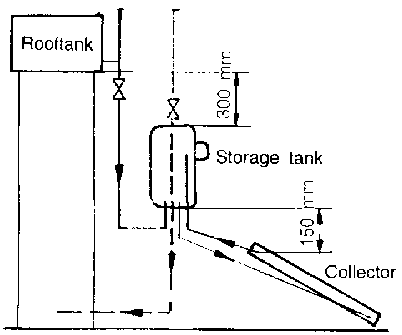
FIGURE
Essentials
-Storage tank has to be higher up than the collectors, the roof tank has to be higher up than the storage tank.
-Heating circuit: Cold water leaves the storage tank at the bottom and enters the collector at the bottom. Hot water leaves the collector at the top and enters the storage tank at about 2/3 in highs.
-Consumer circuit: Hot water leaves the storage tank at the top and is replaced by cold water from the roof tank entering at the bottom.
Solar collector, MTC-SC-85
Datas:
|
Vertical pipe type and overall size |
1810 x 1 10 mm |
|
Collector effective area |
1.22 m² |
|
Weight |
47 kg (empty) |
|
Contain of water |
3.9 ltr. |
|
Test pressure |
10 bar |
|
Working pressure |
5 bar |
|
Absorber |
36 fins alu. sheet 0.5 |
|
Absorber surface |
Black colour paint |
|
Collector box / frame |
Galvanized steel sheet 0.55 |
|
Collector box inside / outside |
1 coat painted |
|
Cover |
Single glass 4 mm |
|
Insulation back/side |
50 mm fibreglass |
THREADS AND FORMULAS
8.3 SHEET-METAL AND STEEL PIPES
Drill diameter for
|
For metric threads |
For whitworth threads | ||||
|
Thread size |
Through hole |
Threaded hole |
Thread size |
Through hole |
Threaded hole |
|
M3 |
3 6 |
2 5 |
1/4" |
7.4 |
5 0 |
|
M4 |
4 8 |
3.3 |
5/16" |
9.5 |
6.4 |
|
M5 |
5 8 |
4 2 |
3/8" |
11.5 |
7.7 |
|
M6 |
7.0 |
5.0 |
7/16" |
13.0 |
9.25 |
|
M8 |
9 5 |
6 7 |
1/2" |
15.0 |
10 25 |
|
M10 |
115 |
84 |
5/8" |
18.0 |
1325 |
|
M12 |
140 |
100 |
3/4" |
22.0 |
16.25 |
Circle and cylinder
A =pi/4 D²
Area = pi/4 x Diameter x Diameter
C = pi r² = 0.785 D²
C= p D
|
Circumference |
=pi x Diameter |
| |
= 3.142 D |
| |
= 2 pi r |
V = A × h
V = A0 x h
V= pi /4 x D² x h
Lateral area of the cylinder
Al = pi x D x h

FIGURE
8.4 STEEL DIMENSIONS AND WEIGHT
MS-flat
|
Width mm |
Thickness mm | ||||||||
| |
3 |
4 |
5 |
6 |
7 |
8 |
10 |
12 |
14 |
|
10 |
0,236 |
0,314 |
0,393 |
0,471+ |
0 550+ |
0,628+ | |
| |
|
12 |
0,283 |
0,377 |
0,471 |
0,565 |
0 659 + |
0,754 |
0,942 + | |
|
|
15 |
0,353 |
0,471 |
0,589 |
0,707 |
0,824 + |
0,942 |
1,18 |
1,41 + | |
|
16 |
0,377 |
0,502 |
0,628 |
0,754 |
0,879 + |
1,00 |
1,26 |
1,51 + | |
|
18 |
0,424 |
0,565 |
0,707 |
0,848 |
0,989 + |
1,13 |
1,41 |
1,70 + |
1,98 + |
| | | | | | | | | | |
|
20 |
0,471 |
0,628 |
0,785 |
0,942 |
1,10 |
1,26 |
1,57 |
1,88 |
22,20 |
|
22 |
0,518 + |
0,691 |
0,864 |
1,04 |
1,21 |
1,38 |
1,73 |
2,07 |
22,42+ |
|
24 |
0,565 + |
0,754 + |
0,942+ |
1,13+ |
1,32+ |
1,51 + |
1,88+ |
2,26+ |
2,64+ |
| | | | | | | | | | |
|
25 |
0,589 |
0,785 |
0,981 |
1,18 |
1,37 |
1,57 |
1,96 |
2 36 |
2,75 |
|
27 |
0,636 + |
0,848 + |
1,06 |
1,27 + |
1,48 + |
1,70 + |
2,12 + |
2 54 + |
2,97 + |
|
28 |
0,659 + |
0,879 + |
1,10 + |
1,32 + |
1,54 + |
1,76 + |
2,20 + |
2,64 + |
3,08 + |
|
30 |
0,707 |
0,942 |
1,18 |
1,41 |
1,65 |
1,88 |
2,36 |
2,83 |
33,30+ |
| | | | | | | | | | |
|
32 |
0,754 + |
1,00 + |
1,26 + |
1,51 + |
1,76 + |
2,01 + |
2,51 + |
3,01 + |
3,52 + |
|
35 |
0,824 |
1,10 |
1,37 |
1,65 |
1,92 |
2,20 |
2,75 |
3,30 |
33,85 + |
|
40 |
0,942 |
1,26 |
1,57 |
1,88 |
2,20 |
2,51 |
3,14 |
3,77 |
44,40 + |
|
45 |
1,06 |
1,41 |
1,77 |
2,12 |
2,47 |
2,83 |
3,53 |
4,24 |
44,95 + |
| | | | | | | | | | |
|
50 |
1,18 |
1,57 |
1,96 |
2,36 |
2,75 |
3,14 |
3,93 |
4 71 |
5,50+ |
|
55 |
1,30 |
1,73 |
2,16 |
2,59 |
3,02 |
3,45 |
4,32 |
518 |
66,04 + |
|
60 |
1,41 |
1,88 |
2,36 |
2,83 |
3,30 |
3,77 |
4,71 |
5,65 |
66,59 + |
|
65 |
1,53 |
2,04 |
2,55 |
3,06 |
3,57 |
4,08 |
5,10 |
6,12 |
77,14 |

FIGURE
Round bar
|
� d |
cm² |
kg/m |
� d |
cm² |
kg/m |
| |
| | |
| |
|
5 + |
0,196 |
0,154 |
9 |
0,636 |
0,499 |
|
5,5 |
0,238 |
0 187 |
9,5+ |
0,709 |
0,556 |
|
6 |
0,283 |
0 222 |
10 |
0,785 |
0,617 |
|
6,5 + |
0,332 |
0,260 |
10,5 + |
0,866 |
0,680 |
| | | | | | |
|
7 |
0,385 |
0 302 |
11 |
0,950 |
0,746 |
|
7,5 + |
0,442 |
0 347 |
11,5 |
1,04 |
0,815 |
| |
0,503 |
0,395 |
12 |
1,13 |
0,888 |
|
8,5 + |
0,568 |
0,445 |
12,5 + |
1,23 |
0,963 |
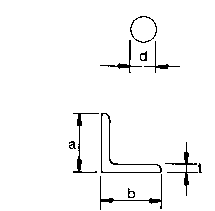
FIGURE
Angle iron
|
Size |
a x b |
Thickness |
cm² |
kg/m |
Size |
a x b |
Thickness |
cm² |
kg/m |
|
15 |
15 |
3 |
0,82 |
0,640 |
40 |
40 |
3 + |
2,35 |
1,84 |
| | | | |
40 |
40 |
4 |
3,08 |
2242 | |
|
20 |
20 |
3 |
1,12 |
0,880 |
40 |
40 |
5 |
3,79 |
297 |
|
20 |
20 |
4 |
1,45 |
1,14 |
40 |
40 |
6 |
4,48 |
3,52 |
| | | | | |
40 |
40 |
7 + |
5,13 |
4,03 |
|
25 |
25 |
3 |
1,42 |
1,12 |
40 |
40 |
8 |
580 |
4 55 |
|
25 |
25 |
4 |
1,85 |
1,45 | | | | | |
|
25 |
25 |
5 + |
2,26 |
1,77 |
45 |
45 |
3 + |
2,66 |
2,09 |
| | | | | |
45 |
45 |
4 |
3,49 |
22,74 |
|
30 |
30 |
3 |
1,74 |
1,36 |
45 |
45 |
5 |
4,30 |
3,38 |
|
30 |
30 |
4 |
2,27 |
1,78 |
45 |
45 |
6 |
509 |
4 00 |
|
30 |
30 |
5 |
2,78 |
2,18 |
45 |
45 |
7 |
586 |
4 60 |
|
30 |
30 |
6 |
3,27 |
2,57 | | | | | |
| | | | | |
50 |
50 |
4+ |
3,89 |
33,06 |
|
35 |
35 |
3+ |
2,04 |
1,60 |
50 |
50 |
5 |
4,80 |
3,77 |
|
35 |
35 |
3,5+ |
2,33 |
1,87 |
50 |
50 |
6 |
5,69 |
4,47 |
|
35 |
35 |
4 |
2,67 |
2,10 |
50 |
50 |
7 |
6 56 |
515 |
|
35 |
35 |
4,5 |
2,93 |
2,30 |
50 |
50 |
8 |
7,41 |
582 |
|
35 |
35 |
5 |
3,28 |
2,57 |
50 |
50 |
9 |
824 |
647 |
|
35 |
35 |
6 |
3,87 |
3,04 | | | | | |
8.5 SHEET-METAL
Convertion table for sheet thickness
|
Thickness |
Thickness |
Thickness |
Thickness |
|
in ISWG |
in mm |
in ISWG |
in mm |
|
30 |
0.314 |
19 |
1.015 |
|
29 |
0.345 |
18 |
1.218 |
|
28 |
0.376 |
17 |
1.422 |
|
27 |
0.416 |
16 |
1.625 |
|
26 |
0.457 |
15 |
1.828 |
|
25 |
0.507 |
14 |
2.040 |
|
24 |
0.558 |
13 |
2.337 |
|
23 |
0.609 |
12 |
2.641 |
|
22 |
0.711 |
11 |
2.946 |
|
21 |
0.812 |
10 |
3.250 |
|
20 |
0.914 | |
|
FIGURE
Steel sheet
|
Plate thickness |
Weight kg/m² |
size of plate | |
| | |
100 x 2000 mm |
1250 x 2500 mm |
|
in mm |
|
weight in kg | |
|
0.5 |
4 |
8 |
12.5 |
|
0.62 |
5 |
10 |
16 |
|
0.75 |
6 |
12 |
19 |
|
087 |
7 |
14 |
22 |
|
1 |
8 |
16 |
25 |
|
1.25 |
10 |
20 |
31 |
|
1.5 |
12 |
24 |
38 |
|
1.75 |
14 |
28 |
44 |
|
2 |
16 |
32 |
50 |
|
2.5 |
20 |
40 |
63 |
|
3 |
24 |
48 |
75 |
|
3.5 |
28 |
56+ |
88+ |
|
4 |
32 |
64 |
100 |
|
5 |
40 |
80 |
125 |
|
6 |
48 |
96 |
150 |
|
7 |
56 |
112 |
175 |
|
8 |
64 |
128 |
200 |
|
9 |
72 |
144+ |
225+ |
|
10 |
80 |
160 |
250 |
Alu. sheet
|
Plate |
Weight |
Size of plate |
|
thickness |
kg/m² |
1000 x 2000 mm |
| |
in mm |
weight in kg |
|
0.5 |
1.35 |
5.4 |
|
0.75 |
1.62 |
- |
|
0.80 |
2.18 |
- |
Copper sheet
|
0.5 |
4.45 |
8.9 |
|
0.55 |
4.90 |
9.8 |
|
0.6 |
5.35 |
10.70 |
|
0.7 |
6.25 |
12.5 |
8.6 ADDRESSES OF SUPPLIERS
|
1) Air vent valve "TACO" |
TACO Armaturen AG |
|
(also heat exchangers, |
Buckhauserstrasse 40 |
|
solar modules, etc.! |
Postfach 1381 |
| |
CH-8048 Zurich/Switzerland) |
|
2) Differential-Thermostat |
W. Kuster AG |
|
type "RT" (Bimetal- |
Parkstrasse 6 |
|
switching) DANFOSS) |
4402 Frenkendorf/Switzerland |
| | |
|
3) 12 V/DC circulation |
R. Brun |
|
pump ARWA vortex |
Alternative Energy Technologies |
|
(and other solar |
95 Ruefa |
|
appliances) |
CH-7015 Tamins, Switzerland |
SOLAR WATER HEATERS FURTHER READINGS:
1) Guidelines for the cost-effective design of solar water
heating collectors
by A W K McGregor, Senior Lecturer
Dept. of Mechanical
Engineering
Napier College, Colinton Road
Edinburgh EH10 5DT, Scotland,
U.K.
2) Solaranlagen
von H. R. Schmidli,
Berufsschullehrer,
erhaeltlich: SSIV, Postfach, Ch-8023 Zuerich, Switzerland
3) Le chauffe-eau solaire
de Thierry Cabirol et
al.
EDISUD, La Calade, F-13090 Aix-en Provence, France
4) Agua caliente solar (Original: practical solar
heating)
1978: Kevin McCartney -Prism Press, Chalmington, Dorchester
1980:
H. Blume Ediciones, Rosario, 17, Madrid -5, Spain
5) Plumbing, hot water supply and heating systems
by F. Hall
(1986)
Longman Scientific & Technical, Longman House,
Burnt Mill,
Harlow, Essex CM20 2JE, England, U.K.
6) Plumbing and heating
by F. Hall (1980)
The Macmillan
Press, Ltd, London and Basingstoke
7) Drinking water installations and drainage requirements in
Nepal
by A. Bachmann and H. Waldvogel
a publication by MTC-Nepal and
Skat-Switzerland
SKAT, Varnbuelstrasse 14, CH-9000 St. Gallen,
Switzerland