 |
| ||||||||||||||||||||||||||||||||||||||||||||||||||||||||||||||||||||||||||||||||||||||||||||||||||||||||||||||||||||||||||||||||||||||||||||||||||||||||||||||||||||||||||||||||||||||||||||||||||||||||||||||||||||||||||||||||||||||||||||||||||||||||||||||||||||||||||||||||||||||||||||||||||||||||||||||||||||||||||||||||||||||||||||||||||||||||||||||||||||||||||||||||||||||||||||||||||||||||||||||||||||||||||||||||||||||||||||||||||||||||||||||||||||||||||||||||||||||||||||||||||||||
|
| ||||||||||||||||||||||||||||||||||||||||||
SERIES TECHNOLOGIES Nr 12

Centre for
the
Development of Industry
ACP - UE
This document was originally prepared on the basis of information provided by the institutions and the companies profiled. Despite all efforts made for updating and verification, the Centre for the Development of Industry does not accept responsibility for the accuracy or completeness of the information. The inclusion of any institution or company in this document does not imply any commitment on the part of that institution or company to provide any of the services described.
CDI
___________________________________________
Centre
for the Development of Industry
52 avenue Hermann Debroux
1160
Brussels
Belgium
Tel: +32 2 679.18.11
Fax: +32 2 675.26.03
Telex:
61427 cdi b
Since it was founded in 1977, the Centre for the Development of Industry (CDI) has acquired extensive technical and commercial know-how in the creation, development and rehabilitation of small and medium-sized industries in the ACP countries (Africa, Caribbean and Pacific), particularly through the establishment of lasting partnerships with companies in the European Union.
In publishing this collection of "Practical Guides", the CDI is meeting a clearly expressed need by ACP promoters and companies in the EU wishing to lay the foundations for industrial co-operation. The purpose of these guides is to enable them to adapt to the technical, commercial, financial, administrative and legal environment of the different countries. Designed to ease their task by providing detailed information - in simple practical terms - on a specific aspect or field of their activities, these guides are intended above all to be effective tools which managers can use on a day-to-day basis.
To prepare the guides, the CDI calls upon the services of consultants, researchers and businessmen - in both the ACP countries and the European Union - with extensive experience in the field concerned, in the practical problems actually encountered by entrepreneurs and in the solutions to be applied. Whenever circumstances allow, the CDI cooperates with partners (consultancy bureaux, research bodies, specialised institutions, etc.) to ensure that the guides are as widely circulated as possible.
This guide on Tilapia Farming was compiled by Damien Legros, (Collaborator of the Gabriel group) with the collaboration of CDI experts.
© 1998 CDI, Brussels, first edition
This volume of CDI Guides is published by the CDI
May not be sold by persons or organisations other than the CDI and its official distributors.
Price: 20 Ecus
Reproduction authorised with indication of the source, except for commercial purposes.
|
| ||||||||||||||||||||||||||||||||||||||||||||||||||||||||||||||||||||||||||||||||||||||||||||||||||||||||||||||||||||||||||||||||||||||||||||||||||||||||||||||||||||||||||||||||||||||||||||||||||||||||||||||||||||||||||||||||||||||||||||||||||||||||||||||||||||||||||||||||||||||||||||||||
Technical Guide for Tilapia Farming (CDI, 1998, 51 p.)
PART ONE: FISH FARMING NOTIONS
A. Tilapia
'Tilapia' are fish species that are fresh water cichlids but some species are described as being eurhyaline. a term which means that they can tolerate and adapt to different water salinity levels including, under certain conditions, sea water.
There are some 80 species of tilapia where almost all of them are of African origin although a few species come from the Israeli and Jordanian geographic regions. From all of these species, only a few tilapia species possess the characteristics required for interest in commercial fish fanning. It should be noted that the scientific classification confers to 'tilapia' several different species names, notably Sarotherodon and Oreochromis.
Tilapia is also identified under a number of different generic names; it can be called "carpe" in West Africa, "St Peter's Fish" in Israel, "bream" in Southern Africa, "mojarra" in Latin America and, of course, under many different local names.
The biology of many individual tilapia species is now well known and the interest in using these species for fish farming has led to considerable developments in recent decades.
The principal practical reasons for farming tilapia are:
· simple reproduction/breeding processes;
· rapid growth rate;
· good tolerance to high stocking densities and intensive rearing conditions;
· resistance to physical handling.
It is therefore a robust performer that reduces many of the general risks encountered in fish stock farming. Tilapia has also a very good reputation with consumers, usually available at a reasonable price which, combined with the high quality of its flesh, allows it to occupy a good place in most markets.
B. Notions of Tilapia rearing
1. Breeding
The reproduction of tilapia is best achieved in ponds, arenas or in 'hapas'1, as described below but the basic principles that are used for breeding remain identical in all cases:
1 A 'hapa' is a small cage that can be immersed in a pond or shore-line conditions
· Brood fish are stocked together and at the ratio of 3 females for 1 male:
· Stocking density may vary from 1 to 4 fish per m2.
Spawning occurs naturally when the female arrives at the stage of maturity; the female lay eggs in a nest that is built by the male (for Oreochromis sp.). The female lays the eggs in the nest where external fertilisation by the male ensues. The female then incubates the fertilised eggs in her mouth. The fry develop during this period of buccal incubation until the complete re-absorption of the yolk sac of the fry and, often, even later.
The occurrence of tilapia breeding is influenced mainly by water temperature where breeding activity will ensue at temperatures around and exceeding 22°C; below this temperature, the breeding process is inhibited. In practice, according to the geographical zone, a period of non-breeding or low reproductive activity will probably occur (even in tropical zones) due to the incidence of low cyclical temperatures (winter). Fry production needs to be planned according to these criteria.
1. Where breeding is done in ponds, the parent brood fish will be left together for +/-40 days (up to a maximum of 2 months), before being harvested from the pond with large mesh nets, in order to capture the brood fish but to leave the fry in the pond.2. The fry will remain in the pond for another month so that they can be grown to a sufficient size to be harvested without damage (where the individual body weight should be >5 g.).
3. Fry can also be harvested daily: A shallow net is usually used, allowing broodstock fish to escape underneath, while new-born fry, which swim on the surface of the water, will be caught.
4. When breeding arenas are used, fry must be harvested daily, in order to avoid cannibalism (bigger fry acting as predators on the newborn).
5. Following harvest, fry will be counted and reared thereafter in small tanks or ponds.
For all tilapia species, the male is bigger than the female and has higher production performances for farming (growth speed and food conversion ratio). Different methods can be used to obtain, theoretically, 100 % male populations in order to make best use of these characteristics.
In commercial fish fanning, the following are the principal techniques applied in order to obtain mono-sex populations:
· hormonal sex reversal of fry,
· hybridisation through inter-species breeding
· genetic manipulation.
The main advantage of working with mono-sex populations is to avoid the problems of uncontrolled over-breeding that can be problematic for good stock-control procedures.
It must also be recognised that efforts geared to the production of high quality; healthy fry are invariably rewarded by better growth and productivity for the adult fish.
2. Fingerling production
Fingerling production requires specific facilities that are adapted to this stage of farming and if controlled management of the production scenario is to be successful.
Fingerlings can be produced in ponds, concrete tanks (round, square or D-end) or floating cages. The main point, particularly if high rearing densities are to be applied, is that the feeds administered must be of high quality.
Moreover, if the possibility exists, fry and fingerlings will always benefit from a longer residence time, at low stocking densities, in a pond that has 'natural' feed production. Residual mortalities that occur at this stage are usually linked to the stocking density (too high) and the natural physical or genetic vigour of the fry in question.
3. Fattening/On-growing
Fattening or on-growing represents the final rearing stage before harvest and sale. It concerns the stage of fish growth between ± 40 g. to the harvest-size fish of 200 to 800 g., the individual size being determined by market demand. Generally, one can consider that urban markets are looking for fish that exceed 400-450 g. as a minimum market size and many developed2 markets require >600 g.. These factors vary considerably between different market sectors and countries and, obviously, influence farm production planning and therefore its operational economics.
2 'Developed' refers particularly to European and North American Markets as well as supermarkets.
Globally, the average growth of O. niloticus is between 1 and 2 g. per day (depending on individual size and growing conditions). This estimate constitutes a prudent average, referring to data for an intensive growing system for a mixed sex population reared at a suitable temperature (> 25 °C).
Better growth performance is achieved when 100 % male populations are used as the stock and also when improved genetic strains are reared. Some fish farmers can obtain growth of 4 g. per day, for fish >350 g. individual size under such circumstances.
It is therefore possible to forecast the necessary time required for the production of fish for the market, while integrating all of the rearing parameters that need to be assessed individually and the following graph represents the theoretical growth rate for Nile Tilapia in intensive farming conditions.
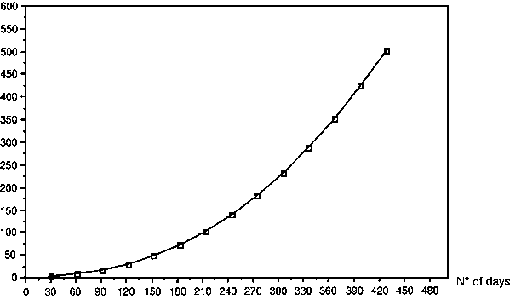
Theoretical growth of sex-reversed O.
Niloticus reared in intensive
conditions
4. Nutritional aspects
The tilapia species that are commonly used in aquaculture (O. aureus, O. niloticus, O. mossambicus, etc.) are microphage species and, consequently, have a small stomach and a narrow oesophagus. Feeding methods must then be adapted to these physiological characteristics which necessitate frequent feedings during the day.
Feeding trials have shown that both the food conversion ratios3 and the growth rates are improved if 4 feed rations are distributed during the day. The use of more than 4 feed rations has not shown any real improvement under experimental conditions (except in the case of fry). Nonetheless, it is likely that increased feeding periods (>4 per day) that are combined with well-determined ration size, which would be variable following the individual size of the fish, could improve production significantly under commercial conditions.
3 F.C.R.
As mentioned previously, tilapia fry are more demanding in their diet than the adults, notably in respect of dietary protein requirements. A formulated (milled) meal, containing a 45 % protein level, satisfies the energy requirements of tilapia fry. It is important to note that the protein content must be partially of animal protein origin and that the use of vegetable materials as the unique source of dietary protein is not adequate.
Appropriate animal protein sources include abattoir by-products (e.g. blood, bone and meat meals) and fishmeals and oils can be integrated as well. Vegetable-based complements such as soya meal, maize meal, cottonseed cake etc. can also be used. Where possible, the incorporation of a vitamin complex is recommended in order to account for specific dietary requirements.
Feeding rates also depend on different parameters such as:
· Age and size of the fish.
· Feed composition and its energetic value.
· Temperature and oxygen levels of the water.
· Water turbidity.
· Rearing system used (intensive, semi-intensive, etc.)
Feeding rates are usually calculated as a percentage of the biomass concerned in the individual rearing units, relating to the average body weight of the fish population but can be adapted relative to the other rearing parameters.
The goal of all feeding strategies is to get the maximum amount of feed into the fish without losses; consequently the feed type, composition and manner of distribution is of key importance to the success of any commercial fish farm.
The use of automatic feeders can assist avoiding use of these approximate calculations (different parameters4 can be difficult to appreciate and to integrate but influence the fish appetite; in many cases such considerations are the decision of the fish farmer and based on personal experience).
4 time of day, water turbidity, abrupt temperature change etc.
The demand feeder is a very simple mechanical unit composed of a pellet feed reservoir equipped with a pendulum system, which drops pellets into the water when the fish hits the shank of the pendulum. The fish feeds as desired, ad libitum. This significantly reduces feed wastage and encourages a feeding rate between optimal and maximal. This system is also labour saving because the reservoir need only be filled once per day compared to manual feeding of each unit 4 times per day.
Pressed or extruded pellets are the usual forms of presentation of commercial feeds. Extruded feeds, usually termed 'high-digestibility' due to the manufacturing process, are often considered to be the best option. These feeds can also be fully or partially floating pellets, which allows a higher stability of the pellet in the water rather than dissolving and being lost to the fish.
Pellet size is also important and must be adapted to individual fish size, in order to ease physical ingestion (due to the small oesophagus). Pellets that are too large can only be 'nibbled' and cause significant waste.
Feed quality is not only related to the formula of composition but also to the physical particle size of the raw materials employed. Small particle size will facilitate digestion of the food while poorly milled materials (particularly of hard components such as corn) can create health problems.
Important Factors and References
Feeds usually constitute the most important operating cost for any farm and efficient growth and food conversion are the main keys for profitability. It is therefore important to understand the key analytical tools that are used by all farmers in order to analyse and understand how a fish farm is performing.
Food conversion ratio (FCR):
This phrase expresses the amount of feed used for the production of fish biomass and is a numeric value; for example, a FCR of 1,8 means that 1,8 kg of food has been used to produce 1 kg of live fish.
Logically, a precise scientific conversion ratio should also take the water content in account, which is around ± 10 % in fish feed and ± 70 % in fish (according to species) but in commercial fish farming, the scientific conversion ratio is rarely if ever used.
Note: In commercial fish farming, the economical food conversion ratio is the more important.It accounts for all of the conditions encountered including losses (due to mortality, predation, escapees, etc.) in order to give the real economical result of the farm. It is obviously interesting to know how fish perform in 'experimental' conditions that indicate, for example, the performance of a specific batch of fish in a specific tank.
However, it is essential to know how the whole of the fish stock of the farm is going to perform in commercial facilities, including all risks and constraints.
Growth rates:
In fish fanning, the growth rate is expressed in individual weight gain per day (e.g. 1.2 g./day). It can also be expressed as a % of the body weight gain of the fish per day (e.g. 1.5% for a fish of 25 g.).
Globally, the average growth for tilapia species, between fry up to 200 g., is considered to be ± 1 g./day for a mixed sex population. Obviously, small fish grow at a rate of some milligrams per day while bigger fish grow at more than 1 g. per day; the growth curve at early stages can be exponential but this stabilises at later stages.
Optimal feeding rate:
This is the feeding rate, expressed as percentage of body weight, which allows the lowest (therefore, the best) food conversion ratio. The fish receives the amount of food necessary for the maintenance of normal vital functions (swimming, respiration etc.) as well as encouraging growth.
Maximal feeding rate:
This is the feeding rate that allows the highest growth speed. The FCR is usually not as good as that obtained with the optimal feeding rate since the fish are induced to consume more food than is necessary, which leads to waste.
Maintenance feeding rate:
The 'maintenance' feeding rate is used to keep the fish at the same body weight where only the food necessary for sustenance is given. This is generally applied to adult fish and is not recommended for young fish. Tilapia, in case of environmental problems such as oxygen depletion or an abrupt drop in temperature, spontaneously adopts the maintenance rate. Managed administration of this rate is applied when fish have been manipulated (e.g. grading or treatment for disease). Generally, the normal feeding of fish that are stressed results in very poor food conversion.
C. Fish farming sites
The requirements of a fish farm have particular constraints, which limit the possibilities and choice considerably. Water is, of course, the main consideration, where quality and quantity are the prime factors.
In addition, sites must present geological qualities (soil, topography, etc.). geographic qualities (demography, roads network, electricity network, etc.) and economic qualities (production costs, access to markets, etc.).
The evaluation of all of these parameters will guide the investor to the final selection for realising the project. In the tropical regions, a lot of sites have excellent technical characteristics, but are not suitable for the development of a commercial farm due to difficult access, lack of raw material suppliers, lack of personnel and essential support services, distance to markets etc..
Indeed, total assessment of the advantages and constraints has to be done in order to avoid costly mistakes.
1. Sites with a river boundary
The following characteristics need to be considered:
Topography:
It is particularly interesting to identify sites where the natural topography allows water supply and drainage to be done by gravity. This situation presents the major advantage of being much cheaper to operate and is also more secure (i.e. no power cuts). However, the site must be safe from floods and drought.
In some cases, pumping will be considered if cost-effective energy is available (public electricity or generator); in these cases, extensive or semi-intensive fish farming will probably be envisaged.
Altitude is also very important in the tropics; at heights over 1.000 meters; it is unusual to find tilapia farms due to low seasonal temperatures. At these altitudes, carp, bass and other temperate water fish can be reared and, over 1.500 m., trout farming may become possible.
Surface area:
Sites with only a small surface area have obviously more constraints because they imply that intensive (high density) fish farming has to be considered otherwise production potential is severely limited. It is possible to envisage a commercial fish farm on a small surface area for as long as good water supplies are available; for example, Piscimeuse S.A. (Sited at Tihange in Belgium) achieves a production of 450 tonnes per year on 2 hectares of land by using hyper-intensive growing methods. To be able to consider such an intensive fish fanning system, it is necessary to be assured of adequate water and constant energy supply, two factors that are inherent to the intensive farming concept.
In extensive fish farming, usually the productivity is around 6 to 8 tonnes per hectare per annum, consequently the surface required for profitable economics is usually large (>10 hectares)
In a semi-intensive system, involving complementary feeding and sometimes aeration, annual productivity of 40-60 tonne/hectare can be achieved.
In an intensive system, with feeding and aeration, production is estimated rather in g./m3. day (e.g. 150 to 250 g./m3.day), this measurement being a function of the volume of the installations (Tank, cage) rather than the land or water surface which is the alternative benchmark.
Soils
Clay soils are particularly suitable for pond building due to their impermeability. The ideal composition for a 'pond' soil is clay that mixed with some sand (sand acting as a binding agent). Clay alone cracks when drying in the sun while sandy soils are permeable; the mixing of these two elements offers the best material. Soils that are rich in organic material must be avoided due to their permeability and unstable physical nature.
If intensive farming is foreseen in concrete structures, the soil nature is less important, although the ground upon which they are built must be stable and compacted prior to construction. An easy test to appreciate the soil's impermeability is to dig a hole (>1m deep), to fill it with water and to observe if the water seeps away and how quickly. The test must be repeated in different places around the potential site. Taking a handful of soil and moistening it will also allow evaluating its behaviour in contact with water.
In certain cases, it is prudent to proceed to a detailed chemical analysis of the soil, particularly if the presence of potentially noxious chemical substances is suspected (metals, hydrocarbon, etc.).
Water:
Chemical analysis
The preliminary precaution is to obtain a chemical analysis of the water source at the site. The simplest test is to check whether fish and even the target species are present in the river or in adjacent water bodies.
If the specimens captured are systematically small and/or rare, this could indicate an environmental deficiency that is important to identify.
When the aquatic environment is naturally poor (oligotrophic), this is not necessarily a negative consideration, especially if artificial feeding is envisaged. In the case of extensive fish farming, supplementary fertilisation of ponds has to be foreseen.
All potential sources of pollution of the water source of a site must be identified and assessed for impact; this can be domestic or industrial pollution, including other fish farms or agricultural activity upstream.
Physical analysis
Water Temperature
Water temperature is a very important criterion for the assessment of potential fish farming sites. Weekly/monthly temperature data must be available in order to allow the formulation of projections for the growth potential of the fish as well as for the planning of breeding programmes.
For the farming of tilapia, a permanent water temperature of 27°C would be described as an ideal situation. These conditions are rare in real situations. However, the temperature must not drop below 18°C (except for a very short period) and must not exceed 34°C (dependent on stocking densities).
Lethal extremes of temperature for tilapia (dependent on species and stocking densities) are around 12°C and 42°C.
The objective therefore is to identify a site where the water temperatures range between 24 and 30°C for most of the year (i.e. >10 months per year).
Water turbidity
Turbidity (cloudiness) has an effect on fish appetite, feeding and, therefore, on growth. Turbidity due to plankton production is, on the contrary, rather beneficial to tilapia and especially for the microphagous species (O. niloticus, O. aureus), providing a complementary diet in this natural food.
For juvenile production, 'green water' is appreciated because it constitutes a natural food that will benefit the fry, principally by avoiding deficiency in some essential nutriments. Fry and fingerlings produced in these conditions are often more robust. When the water is very rich in phytoplankton, it is important to check regularly and often the levels of dissolved oxygen in the water, particularly during the night. One must also note that not all algae are 'good' and some species are even toxic upon consumption by fish.
Water turbidity due to the presence of mineral materials (sediments and silt) are always unfavourable for tilapia resulting in poor growth, disease and other pathological symptoms leading to fish losses.
This does not mean that tilapia cannot tolerate turbid water, but that sites which present this condition regularly or permanently must be avoided. This condition is not so important for catfish species (e.g. Clarias sp.) which survive well in turbid environments.
Quantitative aspects of water supply.
The lowest levels of water availability, and their frequency, will determine the quantitative possibilities of the production as well as influencing the type of production system that should be used (extensive, semi-intensive, etc.).
Minimal and maximal water flows have to be known, evaluating the possibilities of drought and flood risks. Once these have been established, the consideration of 'water flow/surface area available' will determine the type of farming to be applied, integrating the aspects of the other production parameters (temperature, oxygen...).
It is very difficult to establish a universal equation that allows a consistently reliable means of choice; it is more of a case-by-case study that is needed. Globally, one can estimate that 5 m3 of water per hour are required for the production of 1 tonne of fish per year in an intensive farming system.
In an extensive system (or semi-intensive), 1 m3/hr. is necessary to produce one tonne offish per year, remembering that this is only a rough estimation.
2. Sites bordering a lake
Tilapia farming can also be done within floating cages, more often on lakes, but also on rivers. Even if cage farming is envisaged, a site on land is also needed for the production of fry and fingerlings. It is possible to breed tilapia in cages or 'hapas' (small mesh cages), but fry production is usually better in earthen ponds where the development of natural feed is encouraged. Moreover, for physiological and behaviour purposes, tilapia species breed better in conditions where a natural floor substrate is available (sand, clay, etc.) due to the nesting procedures of reproduction.
Note: As mentioned previously, cage farming can also be done on river sites. However, selection must be made with care in order to avoid site cages in strong currents which tilapia do not like and to be protected from flood conditions.
Characteristics of suitable sites:
Surface area:
To operate in optimal conditions, large water bodies must be selected; they offer more security from the points of view of water quality & quantity. The bigger the lake, the better is its capacity to absorb the environmental effects of the fish farming activity. In addition, the thermal inertia (less temperature fluctuation) of a large water body is an interesting factor. For a fish farm of commercial scale, it is recommended to investigate lakes that exceed 10 km2.
Depth:
Preference is usually given to the sites that are deepest since this factor decreases the negative effects of sedimentation of fish waste and uneaten feed that can accumulate underneath the cages. A bottom depth of more than 5 meters from the bottom of the cage is recommended. A depth of 20/25 meters is ideal since this allows a good dispersion of waste but does not present major difficulties for the installation of the anchoring system that is needed by floating cages.
Water Currents:
Ideally, one wants to provide shelter from storms by choosing a protected area while allowing a constant water flow through the cages to assure a good water exchange rate. This provides more constant water quality and good oxygen levels within the cages.
Water exchange in the Water body
This is an important parameter, particularly on small reservoirs where a good water exchange rate can compensate for a smaller surface area.
Temperatures:
As for the river conditions described, the temperature cycles of the lake must be known throughout the year. In remembering that the thermal inertia of big lakes is an important factor, the temperature fluctuations are reduced and the amplitude of variation reduced.
Note: Other aspects like site security (including theft), proximity of the processing factory, etc require study for site selection approval.
3. Sites on Water Springs or Bore-holes
Globally, sites that have access to a water spring, a natural resurgence or a well/bore-hole in the water table offer the advantage of using pollution-free water, at more constant water temperatures.
Care must be taken that in respect of water tables that are close to the land surface since these can be polluted through agricultural activities. Additionally, borehole water must be checked for the presence of heavy metals and, notably, for iron-containing salts. These can precipitate, once oxygenated, causing material and pathological problems.
On the other hand, de-gassing of this type of water is often necessary in order to eliminate the presence of super-saturated gases (e.g. nitrogen) and to oxygenate the water. For the other conditions, the considerations for these sites are the same as river sites.
4. Conclusions
The selection of a suitable site for aquaculture must take all of the parameters for safe and sure operation into account. Up to this point, only the technical aspects have been presented. In many tropical countries, many sites can be deemed as being suitable technically because they offer, for example, good water flows, good temperatures and land availability.
The limiting factors are more often the availability of fish feeds, local support services (electricity, telephone, qualified technical staff...), the distance to the market and other logistical considerations. Intensive fish farming can only be envisaged if formulated feeds of high quality are available or, at least, the raw materials required for the manufacture of such feeds.
D. Fish farming facilities
The following are the utilities that are used in fish farming.
1. Fry production
Earthen ponds:
Earthen ponds are the most commonly used system for tilapia fry production. Ponds of 200 to 300 m2 are preferred; this size eases the collection of fry while being, at the same time, highly productive. The average depth should be around 1 metre. If concrete walls are envisaged (to reduce the effects of long term erosion), it is important to remember that square ponds are better than long narrow ponds, due to the relation between surface area and perimeter. It is prudent to foresee the use of an aeration system, if possible, so the wiring for electricity distribution should be foreseen at the time of construction.
Breeding arenas:
Arena tanks are usually circular concrete tanks, the edges of which are very shallow and which allow, when the water level is dropped slightly, to harvest the fry that prefer the shallow, warmer areas, along the edges. The diameter of these tanks varies, but rarely exceeds 5 meters.
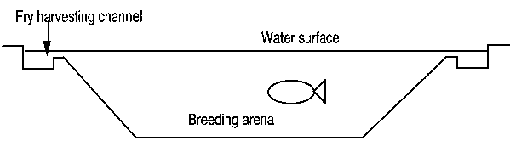
Figure
In this type of facilities, fry are collected daily using a small mesh, scoop net after dropping the water level by a few centimetres. They can be induced into the channel by feeding.
Hapas:
Hapas are small cages made of fine mesh (e.g. mosquito netting), generally suspended on stakes that are fixed in the bottom of the pond. Hapas are usually installed in shallow areas either in ponds or in protected areas alongside a lake. Brood fish are stocked in the hapas and fry are collected regularly, applying an appropriate harvesting technique (very common in Asia).
Note: If catfish (Clarias) farming is envisaged, a special hatchery has to be built. The main equipment is a water re-circulation system equipped with "zoug" bottles for the incubation and hatching of eggs.In the tropics, the catfish-breeding season starts at the beginning of the rainy season. Natural (or synthetic) hormones are used to both induce and synchronise the spawning. Breeding this fish requires technical knowledge and practise (See: Bibliography).
2. Fingerling production
For this purpose, fingerlings are any fish of a body weight between 10 and 40 g..
The facilities for fingerling production are many; one can use earthen ponds, fibreglass or concrete tanks, raceways (see below), and even floating cages. These different systems all have strong and weak points, being described as follows:
Earthen ponds:
Fingerling production in ponds is done under semi-intensive fanning conditions; fish are reared at low densities but supplementary (pellet) feeding is applied and, sometimes, aeration is needed. The water exchange rate is low (15-25 % per day). The main goal and advantage of this system is to produce high quality fish.
In fact, the combination of using a low rearing density (1 to 4 kg per m3) with the production of natural food (zoo- & phytoplankton) allows the production of healthy, vigorous fingerlings. Under normal conditions, very low mortality rates are recorded.
However, in this system, harvesting is not as easy as in concrete tanks and the ponds require regular maintenance.
Concrete ponds & raceways:
When these types of construction are envisaged, intensive farming is to be applied. This means:
· High stocking densities (> 40 kg of fish per m3).
· Feeding with pre-formulated, high quality pelleted feeds.
· Use of artificial aeration or oxygenation.
· High water exchange rates (total exchange of 1 to 3 times per hour).
This type of rearing method should only be applied when water and energy supplies are extremely secure. The main advantages are the ease of management (requires little labour) and farm control. However, the inherent mortality rate is often higher (4 to 6 % of the population) than in other systems. Nonetheless, the degree of control that can be exercised often counters the registered mortalities, since predation (birds) and unexplained losses (including theft) can be reduced.
Cages:
Cages can be a good compromise, as an operating system, when the possibility exists for their use. Cage farming is an intensive system but does not impose the need for supplementary aeration. These facilities offer more security than raceways or concrete ponds because they do not require any energy supply (for pumping water or for mechanical aeration), which is thus cheaper. Countering this is the need for workboats and travelling time to and from a site to land-based support.
Major technical risks come from storm damage or the accidental tearing of cage nets. Rearing densities (max. 40 to 50 kg/m3) are lower than land-based intensive systems. Additionally, the longevity of cages is shorter than concrete tanks/ponds and they require more regular maintenance (notably the nets).
The types and characteristics of the cages will be described in the following chapter that covers the technical details.
3. On-growing - the production of marketable fish
The commercial size of fish varies according to local and international market demand and the price obtained per kg is usually a direct function of the individual size of the fish.
Globally, the market size for tilapia varies between 200 to 800 g.. Local markets often have outlets for a wide range of sizes while export markets require the production of larger fish because they are more likely to be sold as individual fillets of 100 to 140 g. (corresponding to a fish of 600-800 g.). It is important to remember that is always easier to produce smaller fish for economical and technical reasons but that the market is king.
For this stage of production, as for the others, different types of rearing can be used: extensive -semi-intensive - intensive and done in ponds, tanks, raceways or cages. These possibilities are summarised in the following table:
|
Facilities |
Extensive |
Semi-intensive |
Intensive |
|
Earthen ponds |
Yes |
Yes |
No |
|
Tanks |
No |
Yes |
Yes |
|
Concrete ponds |
No |
Yes |
Yes |
|
Raceway |
No |
Yes |
Yes |
|
Cages |
No |
Yes |
Yes |
Definition of the terms employed:
Extensive rearing: Growing fish in ponds of a surface area which can be more than 1 Ha, low density, no formulated feeds (pellets), but sometimes using edible by-products or stimulating natural feed production by applying organic or inorganic fertilisers. There is no aeration and a low water exchange. Production to forecast with this type of system can be estimated at 5 to 8 tonnes per hectare per year. Polyculture can be used to increase the overall production; polyculture is the rearing, in the same facilities, several different species.
Semi-intensive rearing: Growing fish in ponds or cages at low to medium densities (5-15 kg/m3), using supplementary feeds (formulated feeds or agro-industry by-products), a daily 10 to 20 % water exchange, aeration used sometimes and particularly at night.
Intensive Rearing; Growing fish at high stocking densities (20-120 kg/m3 for tilapia and more than 300 kg/m3 for catfish), use of high quality formulated feeds, high water exchange rates (e.g. 1 to 3 times per hour and more), and use of artificial aeration in most circumstances.
E. Technical characteristics of the facilities
The following information should serve to help the estimation of the technical value of the facilities described when visiting existing fish farms. For further details, it is necessary to refer to the appropriate technical handbooks (see Bibliography).
1. Earthen ponds
Earthen ponds are more commonly used in tropical fish farming and represent the oldest fish farming facility. A good pond will show the following characteristics:
· A well designed water supply but also easy drainage. This means a slight slope (0,5 %) of the pond floor from the water inlet to the drainage point.· The drainage outlet (standpipe or monk) must be studied with care.
· Water inlet and outlet will be at opposite ends in order to ease water exchange within the pond.
· Good impermeability of the pond as a whole and strength/integrity of the pond's walls and edges.
· Access and possibility to work around the pond which must be accessible to vehicles (tractors/trucks & trailers etc.).
· Size of ponds must be adapted to the species but also be easy to manage. If the width exceeds 50 metres, it becomes difficult to pull nets for harvest (e.g. 3 to 4 men on each side are necessary to pull a 60 m. net) rendering the ponds impractical.
2. Concrete ponds
Concrete ponds are used for intensive fish farming; concrete walls/banks eliminate erosion due to currents caused by mechanical aeration, waves generated by the wind and fish activity (notably nesting behaviour). This type of pond is more expensive to build and, therefore, should be made profitable by a higher production per volume utilised. Conversely, the firmer walling reduces maintenance and re-building costs that will be necessary after a few years of operation,
This type of pond is smaller than earthen ponds and should not exceed 1,000 m2 surface area. The bottom can also be in concrete but for reasons of construction costs, only if the pond size does not exceed 200 m2. Brick or stone walls must have strong foundations and, if they are built with bricks or blocks, they must be plastered, in order to avoid the effects of erosion.
3. Raceways
Raceways are concrete canals that can be partitioned with screens. This type of facility is often used for trout farming but is not as suitable for tilapia that prefers the calmer waters of a pond. One must note that is necessary to aerate the water along the entire length of a raceway because the oxygen can often be totally consumed by the fish that are sited at the beginning of the raceway. The complete drainage of a raceway is often difficult because different batches of fish are grown simultaneously in the different sections and the whole of the raceway must be completely empty of fish.
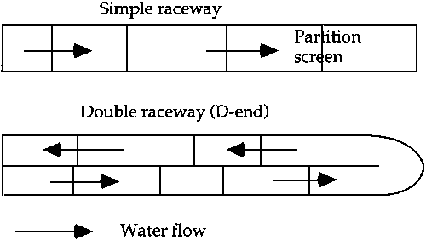
Raceway, top
view
4. Floating cages
There are many possibilities for obtaining floating cages for growing fish, from locally-made ones (usually cheaper but more fragile) to high technology cages (more expensive and more robust) which are usually used in exposed sites. The selection can only be made according to the overall practical considerations concerning the site, the production targets, and the project's economics.
While the optimal size for a tilapia cage is unknown, one should consider that the bigger the cage, the cheaper it costs in both material and equipment elements. Choice will be determined by considering the ease of management and the final production cost.
It appears that a cage of a dimension of 100 m2 is a good compromise. Concerning the depth of the nets, the. technical possibilities and maintenance expertise will determine the choice. If the net is deep, special diving equipment will be required for daily checking of the nets and eventual repairs. If the depth does not exceed 3 to 3,5 m., repairs & maintenance can be made through free diving.
Materials used for the floating structure.
1. Locally made cages. The floating structure of cages can be made out of metal or polyethylene floats, on top of which some walkways will be fixed, in order to obtain a square floating structure from which nets will be hung. The size of the cage will be adapted according to the material's strength and the physical constraints faced (waves, storms, and wind).
6. Industrial cages. With the development of salmon and other marine species farming, equipment manufacturers have developed a large range of cages made from different materials and components. High-density polyethylene is often used for the retaining structure, this material offering the advantages of strength and longevity. Cage structures can be square or circular and of many different sizes. Circular cages are invariably cheaper to buy (relation between diameter and surface) while square cages are easy to assemble and facilitate work and fish handling tasks.7. Finally, some cages are made from assembled polyethylene cubes, easy to mount and adaptable to different sizes and forms.
Nets.
Nets are; the subject of very careful selection. Their quality must be beyond reproach since the security of the fish stocks depends largely on the net strength. Mesh size must be adapted to the fish size and. must not allow the fish to trap itself by the gills. On the other hand, small size mesh is subject to fouling which restricts the water flow through the cage. Nets are sold by weight and, therefore, those with a small size mesh are more expensive.
Large farms will also invest in net-washing equipment, which imposes the need to have cages with adequate net-removal facilities.
Predation
Predation risks must also be studied, where these can be birds or aquatic animals. Dependent on the predator species, a physical barrier may need to be installed to avoid contact with the 'rearing' net. Strong nylon nets can be fixed at a distance of about 50 cm. from the rearing net. For birds, light nets (large mesh) are stretched above the water surface.
Mooring systems.
Good care must be paid for the mooring (anchoring) system. This will be selected following the speed of the current, winds and any effect that could move the cage and require a special study. Note that mooring systems for square cages are cheaper than those for round cages.
F. Problems for aquaculture projects
1. Pollution
During the investigations for the suitability of an aquaculture project, it is important to identify any potential sources of pollution; these may be of organic, chemical or physical origin. Sites exposed to any major pollution risk must be rejected.
It is also important to evaluate auto-pollution risks for the project. The fish farm must be adapted to the environment within which it is to be implemented in order that the project itself not be considered as a source of pollution.
2. Diseases
Diseases often occur when rearing conditions deteriorate (poor tank/cage maintenance, pollution incidence, too high stocking densities, etc.). A good maintenance programme will reduce considerably the risks and incidence of disease. The tilapia species used for fish farming are generally very robust fish but poor sanitary conditions will inevitably lead to a decrease in productivity with the possibility of mortalities.
Numerous types of fish diseases can occur which can be of bacterial, parasitic or viral origin. It is advisable in all cases to obtain expert advice and take rapid action.
Holding a large variety of different species within the same fish farm will also increase the risks significantly.
The introduction offish from other fish farms to the project must be severely controlled before entry and mixing with the fish population on the farm (e.g. quarantine, disinfecting the new stock...).
3. Predation
The predation of fish stocks is an aspect that is often neglected in feasibility studies. However, it is an important issue to appreciate, not only because of fish losses incurred, but also because predators can be vectors for numerous fish diseases. In tropical regions, predators are particularly abundant and diversified being;
· Birds: Herons, cormorants...
· Reptiles: Iguanas, crocodiles, turtles...
· Fish: Piscivorous fish (tiger fish, Nile perch, etc.)
· Mammals: Otter...
· Batrachian: Frogs...
· Insects: Dragon fly larvae...
4. Storms
Climatic conditions causing floods are seen as the most dangerous. Sometimes, atmospheric conditions can create additional serious problems; e.g. a rapid drop of atmospheric pressure lowers the water surface tension and therefore causes oxygen depletion in the water. This phenomenon can lead to substantial fish losses. Fortunately, tilapia is particularly resistant to these conditions and, providing that rearing densities allow it, the fish will be able to take oxygen from the water surface (richer in 02) during a few hours.
5. Theft
This problem exists in almost every fish farm in the world and in-depth reviews of the security aspects of individual farms must be considered case by case.
G. Fish processing
Only when the fish has reached its commercial size does it obtain its full commercial value (prior to this stage it has only a relative & calculated stock value). Harvesting, processing and packaging are therefore important and critical operations, which represent the source of income and profit for the project explaining why care and attention must be paid to these final parts of the process.
1. Harvest and transport
In tropical regions, any fish handling is tricky due to the high ambient temperatures. When the fish is harvested, its body temperature is the same as the water temperature (often >25°C.) and the air temperature is usually the same or higher. It is therefore very important to chill the fish as quickly as possible and to maintain it at a low temperature. It is recommended that, following harvesting, the fish are stocked on ice for immediate transportation to the processing plant which, ideally, will be as close as possible to the fish farm on-growing installations).
Ideally the processing factory would be air conditioned in order to keep the ambient temperature below 15°C. The size and equipping of the factory will be adapted to both the products envisaged and the production volumes e.g. fresh or frozen products, whole fish, fish fillets. It must obviously be capable of accepting and storing the harvest volumes anticipated.
If fillets are to be made, the quantities to be processed will determine the degree of automation allowed. When the volume offish to be filleted becomes important (e.g. >1 ton per day), the installation of a complete filleting line can be considered. This consists of
· a fish gutter and cleaner
· a drum-based de-scaling machine
· a de-heading machine,
· a filleting machine,
· a skinning machine
· A fillet washing system.
A fillet-grading machine (separation by weight) can also be installed using plate or tunnel freezers if the product is to be deep-frozen. Different machines are available on the market and selection can only be based on the production and technical specifications of the products to be made.
Any packing system will also be studied in line with the nature of the finished products. Such a processing line increases the quality and added value of the products and could allow the project to target export markets. However, processing and packing usually represent an investment of more than 250.000 ECU. Storage installations (cold rooms and freezers) are also very important in the concept of a factory whose design must not allow any break in the cold chain.
Additionally, the acceptance of HACCP5 principles as the modus operandi of food processing requires expertise and rigour in the management of food production. The employment of technical staff uniquely for quality control and product follow-up is essential.
5 Hazard Analysis and Critical Control Points: The Food and Agricultural Organisation of the United Nations is able to provide complete documentation for application of these techniques
2. Yields and losses to be forecast on tilapia filleting
The yield of the gutting operation varies between 88 to 92 %. In other words, 8 to 12 % of the body weight of the fish constitutes the offal (for 0. niloticus). This is obviously an important element to include in the calculation of production costs.
Variability in the yield
Filleting yields for tilapia is relatively low. For skin-on fillets, a 40 to 42 % yield can be obtained. For skin-off fillets, some 32% can be achieved if the filleting is done by hand (only 30% if a machine does the filleting). Once again, yields are variable following fish size and species.
Freezing can, if done before packing, generate a small loss (1 to 2 % in a blast freezer system). The freezing process must be done as quickly as possible and the frozen material must be packed before or just after freezing (according to the system), in order to avoid important dehydration losses.
The activities of processing and packaging, despite being directly linked to the fish farming activity, need a complete and specific study and presentation for investment decisions.
H. Ideas about fish farming management
Good management is essential to have a successful project and the conditions and constraints are similar to the livestock agricultural sector.
1. Planning of production programmes
The breeding periods must be identified in addition to the number of fry required, in order to start and reach the final production targets (calculations should include an allowance for mortalities and other sources of loss). A good forecast of realistically obtainable growth rates and knowledge of the facilities available will aid the accuracy of the production targets.
Potential project promoters must be careful when using theoretical projections which may only be valid in a different context and not necessarily transferable to the site under assessment. It is always advisable to adopt a prudent and conservative approach by allowing adequate security margins on the production forecasts.
2. Stocking
Before stocking a pond or a cage, the number of fish, the average individual weight and the total biomass of population must be known. Initial stock control followed by regular controls will allow reliable projections and a professional follow up.
3. Stock Measurements and follow up
Regular follow up of stock populations, their evolution and growth, is essential. These controls will be done at least monthly and sometimes twice a month for certain batches. These controls will also account for feed consumption and feed conversion ratios. Data will then be analysed and compared to general reference standards. Options for rearing can then be decided for the following time period (e.g. increase/decrease of feeding rates, grading, harvest, etc.). Every fish batch needs to be followed individually. For those farms with adequate computer facilities (PC), specific stock management programmes exist which are very useful for eliminating paperwork and providing up-to-date information on stock performance.
4. Optimal use of Growing Facilities
Based on productivity values, expressed in weight gain (grams) per unit of facility volume (or surface) (expressed in m3 or m2) and per day, production standards can be established. Production objectives will take into account some additional factors such as the time necessary for maintenance (where tanks/ponds cannot be used for growing), grading (where growth is lost due to stress), mortality rates, etc.. In fact, any factor that has a direct effect on the growth obtained within a given production unit.
The principle objective is to keep the farm's facilities at an optimal level of use, accompanied by the highest daily productivity, during the whole of the year in order to obtain the best annual production possible.
I. Some criteria used for economic projections
Some general parameters used for economic assessment will be presented in this section and which can be considered as indicators of the potential for commercial fish farming within the context of preliminary project study.
1. Investments
Each project, dependent on the physical terrain, its accessibility, slope and vegetal cover etc., needs to be studied in detail for assessing structural capital investment. However, on the basis of our experience in the field, the following are some guidelines used to evaluate the investments required for tilapia farming projects.
In 1995, in Gabon, a study of a fish-farming project (300 tonnes per annum) with a small processing factory, vehicles and buildings, indicated an investment of about 1.000.000 ECU or 3.333 ECU/ton of fish produced.
In 1995, in Southern Africa, a fish farm of 2,000 tons production potential (in cages), with a processing factory, equipped with a filleting line and meeting European hygiene standards, had an investment value of 3,000,000 ECU or 1.500 ECU/ton.
Bigger projects benefit from the economy of scale and give a lower investment figure per ton produced. One should also note that specific construction items are highly variable in value between individual countries and that extreme care must be taken when cross-referencing to similar projects.
Also, cage culture, even if it represents a lower initial capital investment, will have to be depreciated (amortised) over a shorter period (5-6 years) than either ponds (20 years) or concrete structures (15-20 years).
It is not recommended to foresee the construction of a fish farm for a production inferior to 300 tonnes per year, representing an investment of about 1,000,000 ECU (with processing plant). Below this production level, the financial returns are too low and it is difficult to justify the construction and operation of a processing plant.
2. Production costs
Following the market study for the fish concerned by the project, the costs of production give the best indication of the feasibility and hence the profitability of the potential venture.
Fish feeds.
Feeds, in a commercial fish farm, represent the most important single item in the costs of production. It usually corresponds to at least 50% of the global production cost and can reach as much as 60-70 %.
On the other hand, feed prices range between 0,32 to 0,50 US$/Kg (1995) in the developing countries where it is available, price changes being dependent on the availability of local components and the value of imported items (usually quoted in US$ prices). While recognising that the feed conversion ratio of tilapia is variable, a value of 2 can be used for the purposes of calculation, which brings the feed cost to between 0,64 and 1,00 US$ for 1 Kg offish produced.
Labour
In developing countries, this item should represent between 10 to 12 % of the global production cost. Sometimes, one must allow for the presence of an experienced expatriate technician or manager for a 2-3 year period; this item will obviously affect significantly the personnel costs.
Depreciation
Depreciation of both capital investments should not exceed 15% and the total is usually around 12% of the total production cost.
Overheads
This item comprises all consumable goods (i.e.. chemicals, small equipment, staff obligations etc.), diverse operating expenses (such as bank charges, taxes, telephone etc.) and other administrative costs. These items, within the 'Overheads' label should represent about 10 % of total production costs.
Repairs & maintenance
These costs should be a maximum of 5 % of production costs.
Note:
For financial projections, two factors (which are inter-connected) have to be considered:
1. Fish farming, as for nearly all agricultural activities, does not generate immediate sales on the day after starting the business. According to the species and the time that it takes to obtain the market-size fish, the venture will have to invest and operate without any income for a certain period. In the case of tilapia, dependent on the time required for construction and equipping the project and then reaching the commercial size of the fish, a period of 18 to 24 months of self-sufficiency will be needed and must be allowed for.
2. The second point concerns the building up of live stock fish. The 'permanent or working stock'6 required represents about 50 % of the yearly production of the farm i.e. a fish farm that produces 200 tonnes of fish per annum needs, at the beginning of the year, a 'permanent stock' of about 100 tonnes of live fish of different sizes. This should remain the same at the end of each year if the farm is in a state of steady-state operation.
6 The permanent stock is the fish stock level that is carried over each year and forms the basis of the production stock for the year to come.
This stock must be financed at the beginning of the activity and will eventually be recovered when the farm closes down or if the venture is sold. Building up such a stock of fish must also be considered as the establishment of an important company asset.
These two parameters have to be studied and integrated correctly within the financial projections where it is worth contacting a local accountant as to the rules concerning stock valuation and the means of incorporating 'start-up' expenses within the overall financial structure of the company.
3. Market
Local markets.
Tilapia's reputation in tropical countries does not need any major promotion; the fish is well distributed and commonly accepted as a preferred fresh water fish. However, prices are very variable according to the country (see below: Actual price estimates). It is, however, strongly recommended to complete, first of all, a market study that will demonstrate:
· The importance of tilapia on the local market· The main commercial products (whole fish, fillets, fresh, frozen, etc.)
· Realistic volumes of production that can be envisaged by the project (without causing market disruption)
· General market prices for competitive products (from aquaculture and fisheries activities).
· Competition in the market from other producers or farmers and, especially, imports
Export markets.
In order to have successful access to European or American markets, 2 major points have to be considered:
The first is related to product quality and quality control procedures that we can not tackle in this publication. Regulations and recommendations for fish processing factories must be respected in order to match European and American standards otherwise there is no point in hoping for the export opportunity.
The second aspect concern production levels. For fresh products (airfreight and all related constraints), relatively small quantities can be considered; for example 500 kg to 1 tonne per week. Regularity of supply is not only very important for negotiations with airfreight companies, but also for negotiations with the client whose prime interest is surety of supply at known prices. For frozen products, shipments are usually around 20 tonnes (a complete container). Knowing that western markets are favouring fish fillets, and that the filleting yield of tilapia is around 32% (skin-off fillets), it appears that commercial projects have to look at substantial production levels.
Markets in neighbouring countries or countries of the same continent have also to be studied since they can provide interesting spot and long-term opportunities (usually for frozen products).
Current price estimates.
On local markets, as was indicated previously, the sales values of tilapia can vary considerably dependent on the country. As an example, we will present approximate prices (first 6 months 1995) for 3 African countries and 1 South American.
|
Country |
Fresh gutted tilapia (US$/kg) |
|
Mali (Fisheries) |
1,00 US$ |
|
Gabon (Fisheries) |
2,40 US $ |
|
Zimbabwe (Fisheries & aquaculture) |
2,10 US $ |
|
Colombia (Aquaculture) |
2,85 US $ |
Export markets concern tilapia fillets mainly. While this product is already well introduced on the US market, it has only recently been available on European markets. Tilapia fillet is marketed as a fresh or frozen product, the fresh fillet having a higher sales value. Regular prices for tilapia fillets on the European market remain to be established due to the variability in supply and the lack of consumer knowledge concerning the product.
For the US market, the CIF price for fresh fillet is about 7 US$/Kg and about 6 US$/Kg for the frozen product.
Eventually, one could predict that prices in Europe will follow the US prices; the first imports in Europe seem to be based on 6,54 US$/Kg, CIF price for the retail market. In Europe, in order to estimate the tilapia fillet price, one can base valuations on two product indicators. Firstly, the fresh cod fillet price (reference fish) which fluctuates between 6,00 and 8,3 US$/Kg. Secondly, the Nile Perch7 fillet price which is worth about 6,00 US$/Kg for fresh fillet and 5,00 US$/Kg for frozen fillet.
7 Nile Perch is fished from Lake Victoria and other Regional Lakes; exporting countries are mainly Keny, Uganda and Tanzania
J. Legislative and legal aspects
Before the implementation of a fish farm, it is absolutely necessary to obtain all of the permits concerned by the construction and operation of the activity. Operating permits, water regulation rights (input and output-drainage), construction permits etc.
This aspect is particularly important because, in many countries, several months (sometimes, even years) are necessary to obtain all of the permits required.
Some countries do not allow the import of 'exotic'8 species. Even in the case of tilapia, the problem must be considered because the local tilapia species are not necessarily adequate for fish farming while a non-native tilapia species may provide a better economic performer.
8 'Exotic species' usually refers to non-native species
A stronger and important recommendation is to envisage the achievement of an environmental impact study (EIA), a study which shows that the promoter is conscious of environmental matters and has taken this particular aspect into consideration. Obviously, demonstration that there is no negative impact on water resources or other local environmental matters is a desirable position.
Conclusions
Aquaculture has developed considerably during the last decade and, actually, it represents today 20 % of the aquatic resource supply compared to 80 % from fisheries9. Specialists consider that aquaculture will represent 40% of the aquatic resources in 2010 (World Bank).
9 Source: Food and Agricultural Organisation (FAO) of the United Nations
In terms of volume, tilapia is already the fifth most important fish produced in the world. There is no doubt, that, in the near future, this fish will have an important position on the market place in Europe, due to its physical and gustatory characteristics (white flesh, no bones, and light taste).
At the present, Asia is responsible for some 80% of the world's aquaculture production, while Africa produces 1% and Latin America 2% despite both regions having very good aquaculture potential.
Demand for fish and fish products is increasing by about 2 to 2,5 % per year and fisheries resources are considered to be at their maximum potential now and cannot be increased without compromising the equilibrium in the oceans.
The challenge for aquaculture is to double production during the next 15 years. Within such a context, aquaculture should have a good outlook for the future and particularly for species that are less demanding in protein, such as tilapia.
However, commercial aquaculture is a highly specialised field that requires a particular expertise. This activity, as for all agricultural projects, is also very demanding and requires a high level of motivation at all level if success is to be achieved.
|
| ||||||||||||||||||||||||||||||||||||||||||||||||||||||||||||||||||||||||||||||||||||||||||||||||||||||||||||
Technical Guide for Tilapia Farming (CDI, 1998, 51 p.)
PART TWO: A CHECK LIST FOR THE FEASIBILITY STUDY
Complete and detailed information on the state of aquaculture and fisheries in the country concerned by the study is necessary. The study should show:
· A brief description of the history of these activities, in the country describing successes and failures and analysing the causes for their incidence.· The actual situation of both the aquaculture and the fisheries sectors (industrial and artisanal); annual production, species, markets, imports, exports etc..
· An outlook and forecast for these sectors.
Moreover, it is necessary to answer the following questions:
A. Technical information
1. Fish Species
· Which are the endemic fish species?· Which are the targeted species for fish farming, species that are already farmed in the region and the possibilities of supply for fry and/or broodstock?
2. Potential Sites
2.1. Land
· What is the soil composition?
· What is the nature of vegetal cover?
· Establish the site topography (particular for drainage and flood risk)
2.2. Water
Measurements required:
· Water quality; both physical analysis (temperature graph, conductivity) and chemical analysis (pH, nitrite, ammonia, etc) are essential.· Water volumes available (annual graph, m3/sec. etc.) Water supply by gravity, pumping? Seasonal variation?
· National legislation, Riparian Law?
· What is the human or industrial activity upstream and downstream?
2.3. Geographical situation
· Site description (localisation on map, altitude, etc.)
· Road networks (+ railways).
2.4. Climate
· What is the type of climate, temperatures and monthly/annual rainfall?
B. Economic information
1. Markets
1.1. Local markets:
· Types of product consumed and requested/desired?
· Quantification of the market by product?
· Estimation or records of product values (ex-farm, wholesale, and retail)?
· Evaluation of competition (local producers, imports, fisheries)?
1.2. Export markets:
· What is the actual situation?
· What is the export potential?
2. Potential in fish feed supplies
· Are there any fish or animal feed processing factories?
· Appraisal of the interest and motivation of the existing factories to produce fish feeds?
· What are the raw materials available for the manufacture of fish feeds?
· Estimation of formulated feeds costs and raw material costs?
3. Civil engineering, construction
What are the possibilities for
· Earth works?
· Construction (concrete, buildings etc)?
· Supply of requisite materials (Cement, PVC pipes, etc.)?
4. Labour
· What is the availability and cost of labour and personnel (workers, employees, management)? Documentation on social regulations, employees rights and company obligations.
5. Services
5.1. Electricity:
· Has the site accessibility to supply and what is the cost of electricity?
· Appraisal of electricity supply security?
5.2. Transport:
· Possibility and cost for transport of goods (including refrigerated transport); roads, railways, air.
5.3. Fuel:
· Availability and cost of different fuels (diesel, petrol, and gas.)?
5.4. Telecommunications, post, banks, insurance and different services.
· Availability and cost?
5.5. Repairs & maintenance
· Service stations, mechanical engineering, electricians, etc.
6. Current economical situation
6.1. Inflation - average rates and forecasts.
6.2. Interest rates (overdraft - short, medium and long term loans) applied by local banks.
6.3. Currency stability towards reference currencies (US$ and Deutschmark).
6.4. Potential for access to local and international financial assistance programmes or investment incentive schemes
C. Information on legislation
1. Company registration
Collect all useful information on this topic.
2. Exploitation/Operating permits
· Which are the local administrative offices concerned and what are the permits required for construction and operation?· What is the legislation concerning the import and production of exotic species?
3. Immigration
What are the conditions for expatriate personnel regarding residence and work permits?
4. Taxes
Collect documentation on custom duties (equipment imports), personal and corporate taxation. Taxes on vehicles, boats, service use etc.
|
| ||||||||||||||||||||||||||||||||||||||||||||||||||||||||||||||||||||||||||||||||||||
Technical Guide for Tilapia Farming (CDI, 1998, 51 p.)
PART THREE: FISH FARMING EQUIPMENT AND RECOMMENDED EUROPEAN SUPPLIERS
A. Fish farming equipment
The equipment requirements of a project depend largely on the type of rearing to be done and the level of production envisaged. The degree of the use of automation needs to fit within the global context of the project.
1. Pumping
When it is not possible to have a water supply by gravity, pumping needs to be studied. It is not advised, at this time, to implement an intensive fish farm in tropical countries on a site where pumping is required; for an intensive commercial production (300/400 tonne per year), a flow exceeding 1,000 m3/h will be necessary. When pumping is necessary, it is more appropriate to consider extensive or semi-intensive farming under tropical conditions
Water needs for extensive systems are not so high as for the other alternatives described. In these conditions, the water supply should compensate the water lost through evaporation and infiltration into the soil. In a semi-intensive system, a water exchange of 15 to 25% per day has to be accounted for.
In order to evaluate exact pumping needs, the calculation will be based on the water requirements of the rearing system, the size of the ponds, on the soil nature (losses through infiltration) and also the climate (rainfall and evaporative loss). Each case demands a specific study that will determine the type of pumps to be used and their capacity.
2. Harvest
The equipment for this is the basic (and most used) equipment in fish farming. Nets for harvest must be adapted to the facilities (i.e. the size and depth of ponds). Large mesh nets must be used for harvesting bigger fish while small mesh nets must be foreseen for fry. Nets must be well maintained and be checked after each use, in order to maintain an efficient standard of operation. Not only the condition of the mesh but also floats and ballast must be subject to constant checks.
3. Aeration
There are two main types of aeration systems used in commercial aquaculture.
Aeration by pulsed air: A blower generates air at relatively low pressure through pipes to air stones or other diffusers. This system is particularly well adapted to small-scale facilities and for fry and small fish since it does not cause damage due to water turbulence.
Aeration by mechanical agitation: There are many different types of aerators (fountain aerator, paddlewheel, and Venturi system) and each has strong and weak points.
Fountain aerators suck the water from the bottom of the pond and throw it into the air as a fountain. This is done very simply by the use of a motor-driven propeller. It is a very efficient aeration system because it takes the water from the bottom that is poor in O2 and creates an important water movement within the pond. The main disadvantage is that it creates waves that can damage the dams of the ponds by erosion and a build-up of heavy silt underneath the aerator, imposing maintenance of the pond structure at regular intervals.Paddle wheel aerators use motor-driven paddles on floats to throw the water into the air for aeration and create a movement on the surface of the pond. While these might be not seen to be so efficient as the fountain aerator, on the other hand, they offer the advantage of creating less erosion and of not creating turbidity.
The aerators equipped with a Venturi system are also very efficient because the system creates an important aeration effect and induces a good gaseous exchange. They can sometimes cause turbidity and create a hole on the bottom of the pond if the flow is badly oriented or if the ponds are not deep enough.
The selection of the aeration system needs to be done following the type of facilities being used (earth ponds, concrete pond, size of the facilities etc.) and the rearing conditions applied (density, fish size, etc.)
Notes:
These different types of aerator are available in different motor powers, for scaling to the size of ponds and/or stocking densities to be used.
In a hyper-intensive system, the relationship between the kilowatts consumed and the feed distributed has been followed: this corresponds to approximately 1 kW consumed per Kg of food distributed.
Another oxygenation system is the "super-saturation oxygen" system, which is mainly used in trout farming. This system super-saturates the water in oxygen and therefore allows even higher rearing densities while easing the digestion for the fish. In tropical aquaculture, it is premature to envisage this type of installation due to expense.
4. Fish graders
Fish graders are used to grade and separate fish according to their individual size. This operation is very important because it allows a dramatic improvement in growth performance and improves the overall management of the use of the farm's facilities. If the fish are not graded properly, the smallest ones have difficulty in gaining access to the food (due to physical competition with larger fish) and are stressed, resulting in poor growth performance. Since the size of fish pellets is uniform, the fish size must also be uniform. There are two main types of fish grading equipment:
Manual fish graders: They are made of boxes that are fitted with differently sized screens, each relating to a range of physical fish size. It is a very simple system that allows small fish to go through the screen while retaining the larger ones in the box. An advantage of the system is that it does not require any electric energy. However, it generates more stress than an automatic grader that is due to heavier handling of the fish.
Mechanical graders are more sophisticated. Without going into details, it is a machine that is able to grade fish into 3, 4 or 5 different size batches. The system is made of 2 mobile bands or rollers, fixed opposite each other with, a gap between that becomes progressively wider. Fish are conveyed between the bands, being constantly sprayed with water, and they then fall through the gap when the width (corresponding to their size) allows it, smaller fish falling through first. Fish are then transferred to the different tanks through plastic pipes by gravity. The main advantage of this system is that the job is done quickly and without excessive damage to the fish. In intensive fish farming, this type of equipment is very interesting to use, especially when temperatures are high and the fish must be handled with care.
As complementary equipment to the fish grader, fish counters can also be used, often called "bioscanners"; it consists of an electronic register/counter that is placed at the end of an outlet of the fish grader. Using this equipment, the exact number of fish is known after the grading.
5. Fish pumps & fish elevators
This equipment is used to move fish out of the growing units for grading, for loading on a truck or simply for harvest.
Fish pumps function on the same principles as water pumps; they suck fish and water together and pump them out afterwards. All of the movement is done through (flexible) pipe-work. This system is particularly well adapted to floating cage culture.
Fish elevators are based on the concept of the Archimedes screw. This system lifts the water and the fish together.
These two systems are adaptable to a large variety offish sizes (from few grams to more than 5 kg) and species. When high production levels are envisaged, this equipment is very useful indeed almost essential. The ratings for this type of machinery can reach 10 tonnes of fish per hour for the biggest ones.
6. Feeding
There are numerous feeding systems. As discussed in the chapter on nutrition, tilapia is a fish that must be fed often with small quantities. Demand feeders are then particularly well adapted to this fish.
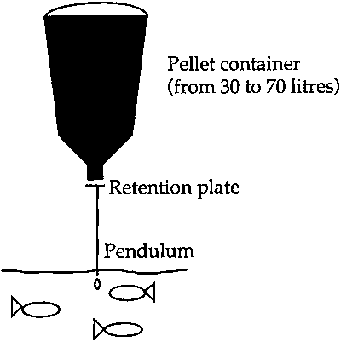
Sketch of a demand feeder.
For smaller fish, clockwork-driven belt feeders are often used. This is basically a container equipped with a belt that is rolled by clockwork action10 on an axis. Feed is placed on the belt that is going to roll up progressively during 10 hours (clock system) on its axis, releasing the feed slowly. It is a system that is particularly well adapted to small fish. These feeders can distribute 5 to 10 kg of food per day.
Other systems are electrical and distribute feeds periodically according to a pre-defined feeding programme. Feed is distributed within the rearing facilities, usually by mechanical or air-compressed spreading in order to a good distribution over the pond/tank/cage surface. Sometimes, these systems can be equipped with solar power units.
The latest feeding systems used in Europe are highly automated and allow, through a distribution network installed throughout the fish farm, the supply of food to the fish without any handling. The feeds are stored in silos and the weighing of food rations, the feeding frequency and general feeding rates are calculated by computer and are automatic.
Obviously, there are many different systems that cannot all be described in this short paper.
If manual feeding is to be done (which is often the case under the tropics), one tries to train the fish to adjust their behaviour to regular, frequent feedings in specific areas, this being done so as to limit feed wastage. Daily feeding rates must be reconsidered and calculate every week, following t the parameters described earlier (average weight, water temperatures, water quality, etc.). Workers charged with feeding have to pay close attention to fish behaviour (appetite, aggressiveness) and, with experience, a lot of information on the state of the stocks can be obtained during the daily feeding operations.
10 It is also possible to fit such feeders with small electric motors
7. Transport of live fish
During the complete period that is required to take fry up to market size, the fish will be physically transferred several times (from pond to pond, pond to cage etc.) and it is important to foresee the acquisition of all the equipment necessary for these movements.
For short distances and for limited quantities of small fish, such transfers can be done in plastic drums or barrels without using aeration.
When large quantities of fish have to be transferred, it is necessary to use special transport tanks (usually made from fibreglass) that are equipped with an oxygenation system. These tanks can have different volumes, from 0,3 to 2,5 m3, and must be equipped with oxygen (gas) bottles, and appropriate diffusers (micro perforated pipe, air stones etc.) that are placed in the tanks. The principle is to have an excellent dissolution and distribution of oxygen within the transport tank and, given the correct preparation of the fish and the use of adequate stocking densities, live fish can be transported for long periods of time and over considerable distances.
The transport tanks are either fixed permanently on a trailer or will be handled and moved using a forklift tractor.
Long distance transport requires a separate and complete study and the details of this will not be discussed here.
8. Complementary equipment
Amongst: the general equipment required by a fish farm, the oxygen-measuring meter is one of the more important. A daily check on temperature and oxygen is essential and is an integral part of a fish farm's management. It is recommended to choose a reliable machine of high quality, even if its cost seems high. Electronic oxygen monitors give both temperature and dissolved oxygen measurements that can be expressed as p.p.m.11 (mg/1) and as a percentage of saturation, taking into account the atmospheric pressure.
It is not necessary to make an exhaustive inventory of all the equipment required which are mainly scoop nets, buckets, drums, scales, sets of tools, etc. but good maintenance and repair facilities are needed. Basic laboratory equipment is also useful, including a microscope, a water analysis set, dissecting materials (for disease analysis) etc. parts per million
B. Equipment suppliers recommended
FAIVRE SARL
7, me de l'Industrie,
25110
Beame-les-Dames.
FRANCE. Tel: (33) 81 84 01 32 - Fax: (33) 81 84 16 15
A wide range of professional fish fanning equipment.
SAGNIER
42, avenue du Panorama,
B- 6001
Charleroi
Tel & fax: 71 432554
Range of fish farming equipment. Specialised in aeration.
S.C.I.M S.A. (Ph. Veyri�re)
25 rue
Aubert
50580 Portbail
FRANCE. Tel: 33 04 50 00 - fax: 33 04 82 33
Modular system of floating cages.
CORELSA
c/ Severo Ochoa, 25,
Poligano de La
Grela,
15008 La Coruna
SPAIN. Tel: + 34 81 27 1001 - fax: 34 81 270823.
Range of fish farming equipment, including floating cages.
MILANESE SNC
Zona Artigianale, 4
33032
Bertiolo (Udine)
ITALY. +39 432 91 72 24 - fax: 39 432 91 70 34.
Range of fish farming equipment and fish processing equipment.
DUNLOP AQUACULTURE
Moody Lane,
Pyewipe,
Grimbsby, DN31 2SP
South Humberside,
ENGLAND. + 44 1472 35 92
81 - fax: 44 1472 36 29 48.
Floating cages with a specialisation for exposed sites.
NCC SUPPLIES Ltd
Middlewich Road
Byley,
Middlewich,
Cheshire CW10 9NT
ENGLAND. Tel. 44 1606 836 811 - fax: 44 1606
836 088.
Specialised in air and oxygen diffusion equipment.
FISHTECHNICK Dr Gerhard M�ller GmbH
D-37186
Moringen
Fredel
GERMANY. Tel: +49 55 55 1022 - fax: +49 55 55 384.
Fish farming equipment, floating cages and fish processing equipment.
VIKING GLOBAL A/S
Fabrikkgt. 10,
5037
Solheimsviken
NORWAY. Tel: + 47 55 29 28 30 - fax: 47 55 29 20 55.
Floating cages.
FARMOCEAN International AB
Bellmansgatan
4
S-41128 G�TEBORG
SWEDEN.
Floating cages.
DRYDEN AQUACULTURE Ltd
Buttlerfied,
Bonnyrigg
Edinburgh EH19 3JQ
ENGLAND. Tel: 44 187 58 22222 - fax: 44 187
58 22229.
Fish farming equipment. Specialised in water treatment and recirculating systems.
C. Bibliography
AQUACULTURE. of G. Barnab� (1990)
A major publication in two volumes presenting all aspects of numerous species farmed worldwide. It constitutes a reference book, edited by a well-known specialist, Professor Gilles Barnab� from the University of Montpellier. Available in French and English.
INTRODUCTION TO AQUACULTURE. of M. Landau. (1991)
Considered as a best seller in that field, this general work is very useful for any person concerned by aquaculture.
THE BIOLOGY AND CULTURE OF TILAPIAS. of R. Pullin & R. Lowe-McConnell. (1982)
Classic work on tilapia farming. Very useful for a good comprehension of this type of fish.
CAGE AQUACULTURE, of M. Beveridge. Fishing News Books. (1987)
It is almost the only work dedicated exclusively to cage aquaculture. This is "the" reference book on cage aquaculture.
|
NB.: An important bibliographical list is proposed by: ARGENT Chemical Laboratories, This list (with order forms) is available free of charge on request at the above mentioned address. |
TECHNOLOGIE DE L'�LEVAGE INTENSIF DU TILAPIA. of Ch. M�lard, Ch. Ducarme. J. Lasserre. Edit. CERER Pisciculture/Piscimeuse S.A. 8b. Chemin de la Justice. 4500 Tihange.
This booklet summarises several years of research and practical experience from both a research centre and a commercial farm. It tackles all aspects of intensive tilapia farming; breeding, growth, nutrition, pathology and economical aspects bound to this type of fish farming.
LA REPRODUCTION DU TILAPIA. of P Kestemont & Micha. FAO Editions.
This FAO publication compiles a lot of breeding methods of different tilapia species throughout the world. Tilapia biology is described as well as all the problems encountered in this activity.
|
| ||||||||||||||||||||||||||||||||||||||||||
Annex: Centre for the Development of Industry: A tool for the Development of Industrial enterprises in ACP countries

The Centre for the Development of Industry (CDI) is an ACP-EU institution financed by the European Development Fund (EDF) under the Lom� Convention bringing together the European Union and the 70 ACP countries (Africa, Caribbean and the Pacific). Its objective is to encourage and support the creation, expansion and restructuring of industrial companies (mainly in manufacturing and agro-industry) in the ACP countries. To this effect, it promotes partnerships between ACP and European companies which may take various forms: financial, technical or commercial partnership, management contracts, licensing or franchise agreements, subcontracts, etc.
The CDI's services are easily accessible and are subdivided into 4 facilities (see table) to support the different stages in the creation, expansion and rehabilitation of industrial companies. In this framework, the CDI intervenes free of charge by providing its own expertise or making a non-reimbursable financial contribution. The CDI does not finance the investment of the project but helps to seek out and put together a financing package.
The requests for assistance submitted to the CDI are evaluated on the basis of the financial and technical viability of the projects and their contribution as regards the development of the country concerned. All dossiers submitted to the CDI are treated confidentially. The total amount invested in these projects, or the value of the assets in the case of existing companies, must normally be between ECU 200,000 and ECU 10 million. Smaller companies may be accepted in certain cases: pilot projects, grouping together of several companies with a view to joint assistance, priority industrial sectors, etc.
By "project", the CDI means an industrial unit or group of units in the process of being created or undergoing expansion, diversification, rehabilitation or privatisation.
CENTRE FOR THE DEVELOPMENT OF INDUSTRY (ACP-EU LOME
CONVENTION)
Avenue Hermann Debroux 52, B-1160 Brussels, Belgium
Tel.: +32
2 679 18 11 - Fax: +32 2 675 26 03
|
|
|
|
ACP Group |
European Union |

FACILITIES WITH A VIEW TO THE CREATION, EXPANSION, DIVERSIFICATION, REHABILITATION AND PRIVATISATION OF INDUSTRIAL ENTERPRISES
| |
FACILITY 1 |
FACILITY 2 |
FACILITY 3 |
FACILITY 4 |
|
TYPE OF OPERATION |
Identification of company projects and potential
partners |
Operation prior to implementation of the
project |
Mounting the project |
Project start-up and development |
|
BENEFICIARIES |
Development, promotion and finance institutions |
Promoters and/or companies in an ACP country or an European Union member country wishing to become involved individually or jointly in an industrial project in an ACP country | ||
|
TYPE OF CONTRIBUTION |
Advice, technical assistance or subsidy | |||
|
AMOUNT |
Case by case |
Max. ECU 150,000 per project per year | ||
|
LIMITS TO THE CDI CONTRIBUTION |
Maximum 50% of the total cost |
Maximum 2/3 of the total cost | ||
|
WHERE TO SUBMIT YOUR REQUEST |
Applicants may approach the CDI directly or contact one of the correspondents in the CDI's ACP network or one of the member institutions of the CDI's European Union network, a list of which is available on request | |||
|
PRESENTATION OF THE REQUEST |
Companies and promoters must clearly define the assistance that they require from the CDI. A brochure entitled "How to benefit from the CDI facilities" is also available on request. This describes in detail the way in which to present dossiers requesting assistance, a summary of which is given below. | |||
SUBSTANCE OF THE REQUEST
In general, the information to be provided is as follows:
|
FACILITY 1: Identification of industrial projects and potential partnerships · description of the organisation putting forward the proposal and, if applicable, the companies on whose behalf this identification process is being conducted, FACILITY 2: Operations prior to implementation of the project · description of the company or promoter presenting a proposal, including information on their financial situation, FACILITY 3: Mounting the project · description of the existing company and/or investment envisaged (sector, size, financial projections, etc.), «project feasibility study from the technical, economic and financial points of view. FACILITY 4: Project start-up and development · description of the company, including its financial position, · detailed budget proposal. |
THE CDI'S ACP ANTENNAE NETWORK
WEST AFRICA REGION
BENIN
· Centre de promotion pour
remploi et la petite et moyenne entreprise (CEPEPE)
T�l.: +229 31 44 47 Fax:
+229 31 59 50
BURKINA FASO
· Minist�re de l'industrie, du
commerce et des mines
T�l.: +226 307305 Fax: +226 307 305
CAPE VERDE
· I.A.D.E.
T�l.: +238 61 44
44 Fax: +238 61 24 34
C�TE D'IVOIRE
· Chambre de commerce et de
l'industrie de C�te-d'Ivoire
T�l.: +225 324700 Fax: +225 272117
GAMBIA
· Mass
T�l.: +220 229 848
Fax: +220 229 024
GHANA
· Ghana Investments Promotion
Centre (G.I.P.C.)
T�l.: +233 21 665 125 Fax: +213 21 663 801
GUINEA
· Office de promotion des
investissements priv�s (O.P.L.P.)
T�l.: +224 444985 Fax: +224 413161
GUINEA BISSAU
· Ministerio dos Recursos
Naturais e da Industria
T�l.: +245 215659 Fax: +245 221050
LIBERIA
· Subah-Belleh
Associates
T�l.: +231 221 519 Fax: +231 226262
· Venture Development
Incorporated
T�l.: +231 225229 Fax: +231 225217
MALI
· Centre d'assistance aux
projets, entreprises et soci�t�s (CAPES)
T�l.: +223 222259 Fax: +223 228085
MAURITANIA
· F�d�ration des industrie, et
des mines (FIM)
T�l.: +222 2 595 83 Fax: +222 2 595 83
· Association professionnelle
promotion de la p�che artisanale et du cr�dit maritime mutuel en
Mauritanie
T�l.: +222 2 451 44 Fax: +222 2 450 46
NIGER
· Minist�re de l'industrie et de
l'artisanat
T�l.: +227 733783 Fax: +227 733783
· Afelen
T�l.: +227 741821
Fax: +227 741812
NIGERIA
· N.I.D.B. Ltd.
T�l.: +234 1
663470
· New Nigeria Development Ca.
Ltd. (N.N.D.C.)
T�l.: +234 62 200250 Fax: +234 62 35482
· G. Odia and
Associates
T�l.: +234 1 822712 Fax: +234 1 2662315
· Mitecs Ltd.
T�l.: +234 1
834 108 Fax: +234 1 261 44 96
· Grid Consulting
T�l.: +234
1 266 5657 Fax: +234 1 266 7905
SENEGAL
· Sonepi
T�l.: +221 25 51 80
Fax: +221 246565
SIERRA LEONE
· Ajua Consultants Ltd.
T�l.:
+232 22 229028 Fax: +232 22 229680
TOGO
· Chambre de commerce,
d'agriculture & d'industrie du Togo (CCAI)
T�l.: +228 212065 Fax: +228
214710
CENTRAL AFRICA REGION
BURUNDI
· B.N.D.E.
T�l.: +257 222888
Fax: +257 223775
CAMEROON
· BETA Conseil
T�l.: +237
432585 Fax: +237 431691
CENTRAL AFRICAN REPUBLIC
· C.C.I.M.A
T�l.: +236 611668 Fax: +236 613561
· Kode Conseil, sarl
T�l.:
+236 610035 Fax: +236 610035
CHAD
· O.P.L.T.
T�l.: +235 515364
Fax: +235 515884
CONGO
· B.D.E.A.C.
T�l.: +242 8302
12 Fax: +242 830266
· CODIS Consult
T�l.: +242
837135 Fax: +242 836199
GABON
· ASIAFCO Gabon, Sarl
T�l.:
+241 724061 Fax: +241 724061
EQUATORIAL GUINEA
· Ministerio de Industria,
Comercio y Promocion Empresarial
T�l.: +240 9 2586 Fax: +240 9 3339
RWANDA
· Minist�re de l'industrie et de
l'artisanat
T�l.: +250 76715
SAO TOME E PRINCIPE
· Ministerio de Econom�a e
Finan�as
T�l.: +239 12 22747 Fax: +239 12 22182
ZAIRE
· SOFIDE
Tel.: +243 12 25619
EAST AFRICA REGION
COMOROS
· Banque de d�veloppement des
Comores
T�l.: +269 73 08 18
· Centre d'appui au secteur
priv� (CASP)
T�l.: +269 73 03 38 Fax: +269 73 03 13
ERITREA
· Asmara Chamber of
Commerce
T�l.: +291 1 121 388 Fax: +291 1 120 138
ETHIOPIA
· M. Ashenafi Shifferaw
T�l.:
+251 1 553330 Fax: +251 1 553330
KENYA
· 4M Entreprises
T�l.: +254 2
744955 Fax: +254 2 750 396
MADAGASCAR
· Soci�t� d'�tudes et de
r�alisations pour le d�veloppement (SERDI)
T�l.: +261 2 21315 Fax: +261 2
29669
· Association thoni�re
commission de l'oc�an indien
T�l.: +261 2 32183 Fax: +261 2 32184
MAURITIUS
· Chambre de commerce et
d'industrie de Maurice (CCIM)
T�l.: +230 208 3301 Fax: + 230 208 0076
SEYCHELLES
· Development Bank of
Seychelles
T�l.: +248 224471 Fax: +248 224274
SUDAN
· Sudan Development
Corporation
T�l.: +249 11 452151 Fax: +249 11 452148
TANZANIA
· International Services &
Supplies Ltd. (ISS)
T�l.: +255 51 21401 Fax: +255 51 32 895
· Small Industries Development
Organization (SIDO)
T�l.: +255 51 27691 Fax: +255 51 21011
· Tanzania Development Finance
Company Ltd.
T�l.: +255 51 46 144
UGANDA
· Centre for Trade Promotion
Ltd.
T�l.: +256 41 24 29 62 Fax; +256 41 24 55 97
SOUTHERN AFRICAN REGION
ANGOLA
· Ministerio da
Industria
T�l.: +244 2 33 70 55 Fax: +244 2 39 2400
BOTSWANA
· Economic Consultancy (PTY)
Ltd.
T�l.: +267 31 31 31 Fax: +267 31 20 90
LESOTHO
· Lesotho National Development
Corporation (LNDC)
T�l.: +266 32 20 12 Fax: +266 31 0038
MALAWI
· Investment and Development
Bank of Malawi Ltd. (INDEBANK)
T�l.: +265 62 00 55 Fax: +265 63 5703
MOZAMBIQUE
· Instituto Nacional de
Desenvolvimento da Industria Local (IDIL)
T�l.: +258 1 42 21 79 Fax; +258 1
43 0226
NAMIBIA
· Investment Centre
T�l.:
+264 61 22 99 33 Fax: +264 61 22 02 78
· Chamber of Commerce &
industry
T�l.: +264 22 20 00 Fax: +264 33 690
SWAZILAND
· Swaziland Industrial
Development Company
T�l.: +268 433 91 Fax: +268 45 619
ZAMBIA
· Small Industries Development
Organisation (SIDO)
T�l.: +260 1 22 42 84 Fax: +260 1 22 2568
ZIMBABWE
· Zimbabwe Investment
Centre
T�l.: +263 4 75 79 31 Fax; +263 4 75 7937
CARIBBEAN REGION
ANTIGUA and BARBUDA BAHAMAS
· Bahamas Chamber of
Commerce
T�l.: +1 809 3222145 Fax: +1 809 3224649
BARBADOS
· Barbados Investment and
Development Corporation (BIDC)
T�l.: +1 809 4275350 Fax: +1 809 4267802
BELIZE
· Belize Chamber of commerce
& Industry
T�l.: +501 2 75108 Fax; +501 2 274984
DOMINICA (COM)
· Insurance Marketing &
Promotion Services Ltd.
T�l.: +1 8094485392 Fax: +1 809 4485592
DOMINICAN REPUBLIC
· DOMINEX
T�l.: +1 809
5355540 Fax: +1 809 53132 15
GRENADA
· Grenade Industrial Development
Corporation (IDC)
T�l.: +1 809 4441035 Fax: +1809 4444828
GUYANA
· The (private) Sector
Commission of Guyana Ltd.
T�l.: +592 2 57170 Fax: +592 2 70725
JAMAICA
· JAMPRO Ltd.
T�l.: +1 809
9297190 Fax: +1 809 9249650
ST CHRISTOPHER and NEVIS
· Chamber of Commerce and
Industry
T�l.: +1 809 4652980 Fax: +1809 4654490
ST LUCIA
· St. Lucia National Development
Corporation
T�l.: +1 809 4523074 Fax: +1 809 452 1841
ST VINCENT and GRENADINES
· St. Vincent Development
Corporation
T�l.: +1 809 4571358 Fax: +1 809 4572838
SURINAME
· Chamber of Commerce and
industry
T�l.: +597 473527 Fax: +597 474779
TRINIDAD and TOBAGO
· Caribbean Business Services
Ltd.
T�l.: +1 809 633 2103 Fax: +1 809 633 2103
PACIFIC REGION
FIJI
· Fiji Trade and Investment
Board
T�l.: +679 31 59 88 Fax: +679 30 1783
KIRIBATI
· Ministry of Natural Resources
Development
T�l.: +686 21099 Fax: +686 21120
PAPUA NEW GUINEA
· Department of Trade and
Industry Central
T�l.: +675 27 11 15 Fax: +675 25 2403
SOLOMON ISLANDS
· Ministry of Commerce &
Primary Industry
T�l.: +677 262 30 Fax: +677 250 84
TONGA
· Tonga Development
Bank
T�l.: +676 213 33 Fax: +676 22 755
TUVALU
· Development Bank of
Tuvalu
T�l.: +688 20 850 Fax: +688 20 850
WESTERN SAMOA
· Development Bank of Western
Samoa
T�l.: +685 228 61 Fax: +685 23 888
VANUATU
· Ministry of Economic
Affairs
T�l.: +678 22770 Fax: +678 25640
THE CDI'S EUROPEAN INSTITUTIONAL NETWORK
AUSTRIA
· Wirtschafstakammer �sterreich
Aussenwirtschaftsorganisation
Tel.: +43 1 50105 4403 Fax: +43 1 50206 255
BELGIUM
· Administration g�n�rale de la
coop�ration au d�veloppement - AGCD
Tel: +32 2 519 02 11 Fax: +32 2 500 65 85
· Minist�re de la R�gion
Wallonne - DARE
Tel.: +32 2 211 55 11 Fax: +32 2 211 55 37
· Minist�re de la R�gion
Bruxelles-Capitale
Tel.: +32 2 513 97 00 Fax: +32 2 511 52 55
DENMARK
· The Industrialization Fund for
Developing Countries - IFU
Tel.: +45 33 14 25 75 Fax: +45 33 32 25 24
FINLAND
· Finnfund
Tel.: +358 0 348
434 Fax: +358 0 348 433 46
· Ministry of Foreign Affairs,
Department for Development Cooperation
Tel.: +358 0 134 151 Fax: +358 0 134
162 09
FRANCE
· Assembl�e des chambres
fran�aises de commerce et d'industrie - ACFCI
Tel.: +13 1 40 69 37 00 Fax:
+33 1 47 20 61 28
· Association r�gionale pour le
d�veloppement et la coop�ration industrielle internationale - ADECI
Tel.: +33
91 14 42 28 Fax: +33 91 91 85 37
· INTERCO Aquitaine - Agence de
coop�ration internationale
Tel.: +33 56 51 20 92 Fax: +33 56 48 28 19
· Institut r�gional de
d�veloppement - IRCOD
Tel. +33 26 70 31 31 Fax: +33 26 64 10 95
· Caisse fran�aise de
d�veloppement - CFD
Tel.: +33 1 40 06 31 31 Fax: +33 1 47 42 75 14
· ERAI - Entreprise Rh�ne Alpes
international
Tel.: +33 78 34 83 48 Fax: +33 78 34 59 85
GERMANY
· Deutsche Investitions und
Entwicklungsgesellschaft - D.E.G.
Tel.: +49 221 498 63 81 Fax: +49 221 498 61
11
GREECE
· Organization for the
Development of Small and Medium Sized Industries and Handicrafts -
EOMMEX
Tel.: +30 1 77 00 654 Fax; +30 1 77 78 694
IRELAND
· Irish Trade Board -
ITB
Tel.: +353 1 269 50 11 Fax: +353 1 269 58 20
ITALY
· Ente Regionale per la
Valorizzazione Economica del Territorio - ERVET
Tel.: +39 51 23 05 67 Fax:
+39 51 22 23 52
· Istituto Nationale per il
Commercio Estero - ICE
Tel.: +39 6 59 921 Fax: +39 6 59 926 899
GRAND-DUCHY OF LUXEMBOURG
· Minist�re des Affaires
�trang�res Direction des Relations �conomiques Internationales et de h
Coop�ration
Tel.:: +352 478 23 62 Fax: +352 22 20 48
· Lux-Development
s.a.r.l.
Tel.: +352 43 39 68 Fax: +352 43 38 08
PORTUGAL
· Banco de Fomento e Exterior
BFE
Tel.: +351 1 356 10 71 Fax: +351 1 352 27 58
· Banco Portugu�s do Atl�ntico -
BPA
Tel.: +351 1 346 33 52 Fax: +351 1 342 32 94
· Fundo Para a Coopera��o
Economica - FCE
Tel.: +351 1 352 06 07 Fax: +351 1 315 85 43
· Investimentos, Comercio e
Turismo de Portugal - ICEP
Tel.: +151 1 793 01 03 Fax: +351 1 794 08 26
SPAIN
· COPCA
Tel.: +34 3 48 49 605
Fax: +34 3 48 49 666
· Instituto Espa�ol de Comercio
Exterior - ICEX
Tel.: +34 1 349 61 00 Fax: +34 1 431 61 28
· Sociedad para la Promoci�n y
Reconversi�n Industrial - SPRI
Tel.: +34 4 47 97 000 Fax: +34 4 47 97 023
· Instituto de Fomento de
Andaluc�a - IFA
Tel.: +34 5 490 00 16 Fax: +34 5 490 63 00
· Promociones Exteriores de
Canarias - PROEXCA
Tel.: +34 28 41 14 34 Fax: +34 28 41 43 04
SWEDEN
· Swedish International
Development Cooperation Agency, Business and Enterprise Development Division -
Sida.
Tel.: +46 8 698509 Fax: +46 8 249290
· Swedfund International -
AB
Tel.: +46 8 7259400 Fax: +46 8 203093
UNITED KINGDOM
· Commonwealth Development
Corporation - CDC
Tel.: +44 171 828 44 88 Fax: +44 171 828 65 05
· Department of Trade and
Industry - DTI
Tel.: +44 171 215 57 50 Fax: +44 171 215 57 12
These lists of the CDI's ACP and European Union networks, published In November 1995, are regularly updated. If you would like to receive the most recent lists, together with the names and references of the people to contact, please send your request to:
CDI
Avenue Herrmann Debroux 52, B-1160 Brussels,
Belgium
Tel.: +32 2 679 18 11 - Fax: +32 2 675 26
03
November
1995
|
| ||||||||||||||||||||||||||||||||||||||||||
Back Cover
Through the compilation of this publication, Damien Legros (Aquaculturist - Gabriel) has tried to summarise the concept of tilapia farming in the climatic and economic conditions of tropical countries.
Courtney Hough (Gabriel Group) and Christian Ducarme (Piscimeuse - Tihange, B.), through their comments and advice, have also contributed to the preparation of this publication.
We hope that this guide will assist project promoters in the African, Caribbean and Pacific zones, in their search for information and support in the specific field of tilapia culture.
OTHER TITLES
"Technologies series"
· 1 - Briquetting of vegetal residues
· 2 - Valorisation of phosphate In Africa
· 3 - Soap production
· 4 - Paint production
· 5 - Compressed earth blocks production equipment
· 6 - Flexible polyurethane foam: discontinuous process
· 7 - The intensive poultry industry in the Sahelian zone
· 8 - Sand and aggregates production equipment
· 9 - Small bakeries and the valorisation of local cereals in ACP countries
· 10 - Packaging of fruit juices and non carbonated fruit drinks
· 11 - Compressed earth blocks: Standards
· 12 - Technical guide for Tilapia Farming
"Contracts and partnerships series"
· 1 - Purchasing industrial equipment
· 2 - Setting up in ACP countries
· 3 - ACP-EU; A guide to partnerships in industry
"Project evaluation and financing series"
· 1 - Financial resources for industrial projects In ACP countries
· 2 - FINAN Manual
· 3 - Facilities and Instruments for industrial cooperation
"Export development series"
· 1 - Exporting sea products
"Forum series"
· 1 - The agri-food sector in Western Africa. 1995
· 2 - Construction and building materials in Central Africa, 1995
"CDI Dossiers series"
· 1 - Lake fishing in Uganda: the Nile perch
· 2 - Commercial perspectives for rose farms in East and Southern Africa
· 3 - Developing the fishing sector in Mozambique
· 4 - Export opportunities for processed fruit from the Caribbean