 |
| ||||||||||||||||||||||||||||||||||||||||||||||||||||||||||||||||||||||||||||||||||||||||||||||||||||||||||||||||||||||||||||||||||||||||||||
|
| ||||||||||||||||||||||||||||||||||||||||||||||||||||||||||||||||||||||||||||||||||||||||||||||||||||||||||||||||||||||||||||||||||||||||||||
TDRI Tropical Development and Research Institute
Compiled by I. J. Clucas with contributions from
R. C.
Cole
I. J. Clucas
T. W. Bostock {Tropical Development and Research
Institute
J. F. Rogers
A. D. Stephens
G. B. Debling
M. Clifford {Grimsby College of
Technology
W. Homer
September 1982 Tropical Development and Research
Institute
(Reprinted 1985 127 Clerkenwell Road, London EC1R 5DB
and 1990)
Overseas Development
Administration
|
| ||||||||||||||||||||||||||||||||||||||||||||||||||||||||||||||||||||||||||||||||||||||||||||||||||||||||||||||||||||||||||||||||||||||||||||
Summaries
Summary
Fish handling, preservation and processing in the tropics: Part 2
This report is the second of two TPI Reports, G144 and G145, which together present 52 lectures for an eight-week training course suited to people working at middle-management level in both Government and Industry. The lectures should be used in conjunction with audio-visual aids, demonstrations and practical sessions.
In this report, traditional processes, such as salting, drying and smoking, as well as fermented, marinated and boiled products, are discussed in detail. More advanced processes, such as canning, freeze-drying and irradiation, and various fisheries products and by-products are also described. Other subjects include quality assessment, the microbiology of spoilage, public health microbiology, landing and retail facilities, extension services and training.
R�sum�
Manutention, conservation et transformation du poisson dans les pays tropicaux: 2eme partie.
Ce rapport est le deuxi�me de deux rapports du TPI, G144 et G145, qui ensemble pr�sentent 52 conf�rences pour un cours de formation de huit semaines destin� � des personnel travaillant � un niveau de cadres moyens dans le gouvernement et l'industrie. Les conf�rences doivent �tre utilis�es en liaison avec des moyens audio-visuels, des d�monstrations et des s�ances d'application pratique.
Dans ce rapport, on pr�sente en d�tail les proc�d�s traditionnels, tels que salaison, s�chage et fumage de m�me que les produits ferment�s, marin�s et cuits. On d�crit �galement des proc�d�s plus avanc�s, tels que mise en conserve, Iyophilisation et irradiation ainsi que diff�rents produits et sous-produits de la p�che. D'autres sujets comprennent l'�valuation de la qualit�, la microbiologic de la d�t�rioration, la microbiologic sur le plan de la sant� publique, les installations de d�barquement et de vente en d�tail, les services d'extension et de formation.
Resumen
Manejo, conservaci�n y elaboraci�n de pescado en las regiones tropicales: Parte 2.
Este es el segundo de dos informes del TPI - G144 y G145 - los cuales en conjunto ofrecen 52 conferencias pare un curve de preparaci�n de ocho semanas de duraci�n apropiado pare personas a nivel administrativo medio, tanto en el gobierno como en la industria. Las conferencias deber�n usarse en conjunci�n con ayudas audiovisuales, demostraciones y sesiones de tipo pr�ctico.
En este informe se analizan detenidamente aquellos procesos tradicionales tales como la salaz�n, el secado y ahumado, adem�s del fermentado, salmuera y hervido de productos. Tambi�n se describen procesos mas avanzados tales como el enlatado, el secado por congelaci�n y la irradiaci�n, as� como varios productos y subproductos de pesquer�as. Entre los dem�s temas cabe mencionar la valoraci�n de calidad, la microbiolog�a del deterioro, la microbiolog�a de sanidad publica, los servicios de desembarque y de venta al por menor, los servicios de extensi�n y de adiestramiento.
|
| ||||||||||||||||||||||||||||||||||||||||||||||||||||||||||||||||||||||||||||||||||||||||||||||||||||||||||||||||||||||||||||||||||||||||||||
Acknowledgements
© Crown copyright 1982
This report was produced by the Tropical Development and Research Institute (formed by the amalgamation of the Tropical Products Institute and the Centre for Overseas Pest Research) a British Government organisation, funded by the Overseas Development Administration, which provides technical assistance to developing countries. The Institute specialises in post-harvest problems and pest and vector management.
Short extracts of material from this report may be reproduced in any non-advertising, non-profit context provided that the source is acknowledged as follows:
Clucas, I. J. (Compiler). (1982). Fish handling, preservation and processing in the tropics: Part 2. Report of the Tropical Products Institute, G145, viii + 144pp.
Permission for commercial reproduction should, however, be sought from the Head, Publications and Publicity Section, ODNRI, Central Avenue, Chatham Maritime, Chatham, Kent ME4 4TB, United Kingdom.
No charge is made for single copies of this publication sent to governmental and educational establishments, research institutions and non-profit making organisations working in countries eligible for British Aid. Free copies cannot normally be addressed to individuals by name but only under their official titles.
Tropical Development and Research Institute
ISBN: 0 85954 126
6
ISSN:
0264-763X
|
| ||||||||||||||||||||||||||||||||||||||||||||||||||||||||||||||||||||||||||||||||||||||||||||||||||||||||||||||||||||||||||||||||||||||||||||
Introduction
The set of fifty-two lectures covered by TPI Reports G144 and G145 has been prepared for a course lasting approximately eight weeks. The course is designed for people at middle-management level in both Government and Industry. Government staff would include Fisheries Officers and Senior Extension Workers who have a fisheries background and degree level qualifications.
Each lecture session would normally last for about 45 minutes, although some might be expanded to provide two such sessions. Much depends on the linguistic competence of the lecturers and participants and also on the students' level of understanding of basic science. The course should include many practical and demonstration sessions to illustrate the theoretical considerations presented here. In general terms one half of the course time could be devoted to lecture sessions and one half to practice and observation. Extensive use of overhead projector, blackboard, colour transparencies and films is recommended. A list of films suitable for showing during the course is appended.
|
| ||||||||||||||||||||||||||||||||||||||||||||||||||||||||||||||||||||||||||||||||||||||||||||||||||||||||||||||||||||||||||||||||||||||||||||
Salting of fish: salt
Salting of fish is a traditional processing method in most countries of the world. Very often salting is used in combination with drying and smoking; the following lectures on salting, drying and smoking outline the basic principles and discuss the practical application of the various methods that are in common use.
The presence of sufficient quantities of common salt (sodium chloride) in fish can prevent, or drastically reduce, bacterial action. When fish are placed in a strong solution of salt (brine) which is stronger than the solution of salt in the fish tissue, water will pass from the tissue into the brine until the strength of the two solutions is equal. At the same time, salt will penetrate into the tissue. This phenomenon is known as osmosis. A concentration of between 6 and 10 per cent salt in the tissue will prevent the activity of most spoilage bacteria; the removal of some water from the tissue during the salting process will also reduce the activity of the spoilage bacteria.
If fish are salted before drying, less water needs to be removed to achieve preservation. A water content of 35 - 45 per cent, depending on the amount of salt present, will often prevent, or drastically reduce, the action of bacteria.
Salt: sources, composition and properties
Pure common salt is sodium chloride (NaCl) but almost all commercial salts contain varying levels of impurities depending on the source and method of production.
Commercial salt can be classified into three main groups depending on the source and the method of manufacture:
(i) Solar salt - prepared by the evaporation of sea or salt lake waters by the action of sun and wind. Major centres of production tend, therefore, to be found in tropical or sub-tropical countries.
(ii) Brine evaporated salts - underground salt deposits are brought to the surface in solution (a brine) and this is evaporated, usually by heating.
(iii) Rock salt - natural deposits of salt are ground to varying degrees of fineness without any purification.
The suitability of salt for any particular application depends upon several factors, the most important of which are:
(i) the chemical composition;
(ii) the microbiological purity;
(iii) the physical properties.
Chemical composition
Commercial salts vary widely in their composition; high quality salt may contain 99.9 per cent sodium chloride, whereas low quality salt may only contain 80 per cent sodium chloride. Apart from contaminants such as dust, sand and water, the main chemical impurities of commercial salts are calcium and magnesium chlorides and sulphates, sodium sulphate and carbonate, and traces of copper and iron. Solar salts tend to be less pure than mine-evaporated salts.
Calcium and magnesium chlorides, even when present in small quantities, tend to slow down the penetration of salt into the flesh; the presence of these salts may also increase the rate of spoilage. Magnesium chloride is hygroscopic and tends to absorb water, making the fish more difficult to dry and to keep dry.
Fish salted in pure sodium chloride may be soft and yellow in colour. Calcium and magnesium salts give a whiter colour but tend to impart a bitter taste. Very often the consumer demands a whitish colour in salted fish products and small quantities of calcium and magnesium compounds in the salt are usually considered desirable. Excessive quantities, however, lead to a bitter flavour and the dried product tends to be brittle which can cause problems during packaging and distribution.
Trace quantities of copper can cause the surface of salted fish to turn brown; this does not reduce the eating quality but it does make the fish look like a spoiled or poor quality product.
Microbiological purity
Many commercial salts, particularly solar salts, contain large numbers of salt tolerant bacteria (halophiles) and counts of up to 105/g have been recorded. One group of halophiles, the red or pink bacteria, can be a problem in commercial fish curing operations as they cause a reddening of wet or partly dried salt fish. They do not grow when the fish are fully immersed in brine or when they are fully dried. Halophilic moulds can grow on fully dried fish and cause the formation of dark patches, which is called 'dun'. Halophilic moulds tend to occur more frequently in rock salt.
It is possible to sterilise or add preservative agents to salt to control the growth of halophilic organisms but this is very often too expensive for commercial use. Most salt used in fisheries contains appreciable numbers of halophiles.
Physical properties
Fine grain salt dissolves more rapidly in water and is preferred for making brines. If fine grain salt is used directly on a fish, it may cause a rapid removal of water from the surface which becomes hard and prevents the penetration of salt to the inside of the fish; this condition is called 'salt burn'. For dry salting, a mixture of large and small grain sizes is recommended.
Uptake of salt by fish
Several factors which affect the rate at which salt is taken up and water is replaced in fish are:
(i) the higher the fat content, the slower the salt uptake;
(ii) the thicker the fish, the slower the penetration of salt to the centre;
(iii) the fresher the fish, the more slowly salt will be taken up;
(iv) the higher the temperature, the more rapid the salt uptake.
During subsequent drying the presence of salt has the following effects:
(i) the higher the salt concentration, the greater the replacement of water and, therefore, the less water that remains to be removed during drying;
(ii) the higher the salt concentration, the less water that needs to be removed to produce a satisfactorily preserved product;
(iii) the higher the salt concentration, the more slowly the fish dries;
(iv) salt tends to absorb moisture from the air and at relative humidities of more than about 75 per cent during the drying process or during subsequent storage, fish will not dry further; they may even absorb more moisture.
|
| ||||||||||||||||||||||||||||||||||||||||||||||||||||||||||||||||||||||||||||||||||||||||||||||||||||||||||||||||||||||||||||||||||||||||||||
Salting of fish: methods
Methods of salting
Salt is applied to fish by the following basic methods:
|
Brine salting |
- the fish are immersed in a solution of salt in water. |
|
Dry salting |
- granular salt is rubbed into the surface of the fish. |
|
Kench salting |
- granular salt is rubbed into the surface of split fish and the fish are stacked with a sprinkling of salt between each layer of fish. The liquid (pickle) which forms is allowed to drain away. |
Pickle salting - fish are covered with salt and then packed in water-tight containers in layers with salt sprinkled between each layer. The pickle which forms covers the fish; if the fish are not completely covered in 3 - 4 hours, saturated brine is normally added to completely immerse them. A cover should be placed on top of the fish to hold them below the surface of the pickle.
With most brine salting techniques, a saturated brine solution is used. The presence of impurities may reduce the actual concentration of sodium chloride in solution and, in practice, the brine strength ranges between 80 and 100 per cent, which corresponds to 270 - 360 grams of salt to each litre of water. When fish are placed in saturated brine, the concentration of the brine begins to fall as soon as salt begins to penetrate the fish and water is removed. Unless plenty of brine is used and the fish are stirred frequently, the rate of salt penetration and water removal may be seriously reduced.
During pickle curing, the fish are surrounded by granular salt which, initially, dissolves in the surface moisture of the fish. Sufficient salt is then available to go into solution and maintain the pickle at saturation point as salt penetrates the fish and water is removed. The water extracted from the fish also contains blood and other compounds that help to reduce the rate at which fat in the fish is oxidised.
Dry or kench salting cannot be recommended for general use in the tropics as the fish are not covered by the brine or pickle and are, therefore, more susceptible to spoilage and insect attack. Exposure to the air and the presence of salt also encourages the rate of fat oxidation which gives rise to discoloration and the characteristic rancid flavours. Fish should be covered with a saturated brine or pickle as rapidly as possible and kept covered until salting is completed.
The various chemical and physical effects of using salt on fish were discussed earlier. Several of these are apparently contradictory and in commercial salted fish production a compromise may have to be reached to resolve the various factors. The rate of salt penetration of the flesh increases as the temperature rises; increasing the temperature also increases the rate of spoilage. If fish are salted at a reduced temperature, e.g., +5°C, although the rate of salt penetration is reduced, the rate of spoilage is more drastically reduced and it may be possible to salt the fish to the centre before any serious spoilage occurs. Similarly, salt penetration is slower in fresh fish than it is in partly spoiled fish but it is impossible to make a good salt fish product from spoiled fish. If fish spoil in the centre before the salt can penetrate, it produces in cod (Gadus sp.) what has been termed 'putty fish', where the centre is very soft and the texture is destroyed. In many fisheries, large fish are split before salting; this increases the surface area and also reduces the depth of flesh that the salt has to penetrate.
Wooden and plastic barrels are suitable for brine or pickle curing fish; the container should be of a size and shape which allows the largest fish normally handled to be laid flat. Cement-lined vats or tanks are suitable for larger quantities of fish and the vats should be able to hold one days' catch with an internal depth of one metre. Wooden lids fitting internally to the tanks which can be weighted down to hold the fish beneath the brine should be provided. Vats and tubs should be situated in the shade to keep the fish as cool as possible.
The quantity of salt used depends upon the type of cure required, the type of fish and the method used. For a strongly cured product, approximately 30 kg of salt per 100 kg of fish is required.
Spoilage of salted fish
Although salt prevents the growth of spoilage bacteria, other micro-organisms are not so affected by the presence of salt. Micro-organisms can be conveniently divided into three groups by their sensitivity to salt:
(i) Low tolerance - growth is stopped, or the organism is killed, by the presence of low concentrations of salt. Most of the normal spoilage organisms fall within this group and a salt content of a few per cent will prevent growth.
(ii) High tolerance - organisms which can tolerate high concentrations of salt although the rate of growth is usually reduced, or stopped, at very high salt concentrations.
(iii) Halophiles - those organisms which cannot grow without salt.
With dry salted fish, the salt-tolerant and halophilic organisms can continue to grow but they cannot do so in pickle-cured products: most of them are aerobic organisms and the fish and brine of pickle-cured fish contains very little, or no, oxygen.
Most enzymic activity is stopped in heavily salted fish but, with lighter cures, the fish may develop characteristic flavours as a result of enzymic activity and the growth of certain salt-tolerant organisms. If the salt levels and fermentations are not carefully controlled, putrefactive spoilage may occur.
References
1. BURGESS, G. H. O.et al. (Eds) (1965) Fish handling and processing. HM Stationery office, Edinburgh. 390 pp.
2. COLE, R. C. and GREENWOOD-BARTON, L. H. (1965) Problems associated with the development of fisheries in tropical countries l l l: The preservation of the catch by simple processes. Tropical Science 7, 165 - 183.
3. SHEWAN, J. (1951) Common salt: its varieties and their suitability for fish processing. In: World Fisheries Yearbook, 1951. London: British Continental Trade Press Ltd.
|
| ||||||||||||||||||||||||||||||||||||||||||||||||||||||||||||||||||||||||||||||||||||||||||||||||||||||||||||||||||||||||||||||||||||||||||||
Drying of fish: basic principles
Drying is the removal of water from fish. Normally the term 'drying' implies the removal of water by evaporation but water can be removed by other methods: for example, the action of salt and the application of pressure will remove water from fish. Since water is essential for the activity of all living organisms its removal will slow down, or stop, microbiological or autolytic activity and can thus be used as a method of preservation.
Where drying has evolved as a traditional method of preserving fish, the action of the sun and wind is used to effect evaporative drying. In recent times, the controlled artificial dehydration of fish has been developed in some industrialised countries so that fish drying can be carried out regardless of weather conditions.
In any process of drying, the removal of water requires an input of thermal energy. If the outward movement of water occurs in the following sequence: migration within the material to the surface - removal from the surface - mixing with the atmosphere surrounding the material - removal from the vicinity of the surface,
it must be accompanied by the inward transfer of heat in the following sequence: emission from the heat source - transfer to the surface of the material - conduction within the material - provision of latent heat of evaporation and the partial enthalpy of dilution of the system which is regarded as a solution.
The thermal energy required to drive off the water can be obtained from a variety of sources, e.g., the sun or the controlled burning of oil, gas or wood. The thermal energy can also be supplied directly to the fish tissue by microwave electromagnetic radiation or ultrasonic heating.
At normal temperatures, fish muscle can be considered to be a gel; it remains a gel until a considerable quantity of water has been removed. During drying, considerable shrinkage takes place, as well as other irreversible changes, and dried fish will not reconstitute to their original condition.
During air drying, water is removed from the surface of the fish and water moves from the deeper layers to the surface. Drying takes place in two distinct phases. In the first phase, whilst the surface of the fish is wet, the rate of drying depends on the condition (velocity, relative humidity etc.) of the air around the fish. If the surrounding air conditions remain constant, the rate of drying will remain constant; this phase is called the 'constant rate period'. Once all the surface moisture has been carried away, the second phase of drying begins and this depends on the rate at which moisture can be brought to the surface of the fish. As the concentration of moisture in the fish falls, the rate of movement of moisture to the surface is reduced and the drying rate becomes slower; this phase is called the 'falling rate period'.
Constant rate drying
During this period the rate of drying depends on the speed at which moisture can be carried away from the surface of the fish. Several factors influence the rate of drying:
(i) Relative humidity (RH) of the air: if the air is fully saturated with water vapour (relative humidity 100 per cent), it cannot carry any more water and no drying of the fish will occur. If the RH is less than 100 per cent, the air has the ability to absorb water and drying will proceed; the lower the RH, the greater the ability to absorb water and the faster the rate of drying.
(ii) Air velocity: the greater the speed of the air over the fish, the greater the drying rate. The air around fish can be considered as three layers: a stationary layer close to the fish, a slowly moving layer outside this and an outer turbulent layer. The stationary layer of air next to the fish is saturated with moisture that passes into the slowly moving layer. The higher the air speed in the outer layer, the thinner the slow moving layer, which allows more rapid movement of water away from the fish.
(iii) Air temperature: the evaporation of water produces a cooling effect. At the beginning of drying, the temperature of the fish is reduced below ambient; after a short while it reaches a steady value. At this steady value, the heat energy required for evaporation is balanced by the heat supplied by the surrounding air. The degree of cooling is related to the wet bulb depression of a hygrometer and reflects the ability of the air to hold water. Warm air can provide more heat energy and, provided that the air speed and relative humidity will allow a high rate of water movement, the rate of drying will be increased.
(iv) Surface area of the fish: the larger the surface area, the faster the rate of drying. If a fish is split, the surface area increases relative to the weight/thickness; the rate of drying will, therefore, be faster.
Falling rate drying
Once the free surface moisture has been removed, the rate of drying depends on the movement of moisture to the surface of the fish. Several factors influence the rate of drying:
(i) The nature of the fish: a high fat content in the fish retards the rate of drying.
(ii) The thickness of the fish: the thicker the fish, the further the water in the middle layers has to travel to reach the surface.
(iii) Temperature of the fish: diffusion of water from the deeper layers to the surface is greater at higher temperatures.
(iv) The water content: as the water content falls, the rate of movement to the surface layers is reduced.
Provided that the air passing over the fish is not fully saturated with water, the rate of drying is independent of the condition of the air. Under certain conditions, where the constant rate drying has been very rapid, the surface of the fish can become 'case hardened' and the movement of moisture from the deeper layers to the surface is prevented. This can result in a fish that is dry on the surface and looks, to all intents and purposes, fully dry but the centre will be wet and spoiled. This can be a particular problem with some designs of mechanical and solar driers.
|
| ||||||||||||||||||||||||||||||||||||||||||||||||||||||||||||||||||||||||||||||||||||||||||||||||||||||||||||||||||||||||||||||||||||||||||||
Drying of fish: methods
Natural drying
The energy of the sun and/or the wind is used in many countries to dry fish. To obtain the best possible rate of drying under natural conditions, several factors should be considered:
(i) Air movement at ground level is usually very slow; if fish are raised above the ground, by even one metre, the air movement is greater.
(ii) Drying fish at ground level does not allow air to pass under the fish; drying fish above the ground on raised, slatted or mesh racks allows drying from the upper and lower surfaces.
(iii) Fish placed on racks above the ground are less likely to be contaminated by dust or sand; fish placed on mats on the ground are likely to be contaminated by dust kicked up by people walking past. Raised racks provide some protection from animals.
(iv) Fish dried on racks can be more easily protected from rain by covering them with plastic sheets. Fish on the ground can be covered for protection against rain but not against water on the ground.
(v) Sloping racks allow any surplus water on the surface of the fish to drain away. Water trapped in the gill or body cavities can cause localised spoilage and/or increase the drying time.
The use of drying racks obviously has many advantages. However, they should be located to take the maximum advantage of climatic conditions:
(i) low lying swampy areas with a high relative humidity should be avoided and
(ii) racks should be sited away from forests or high buildings which will reduce the air movement or cast a shadow over the racks.
Salted fish will take up moisture from the surrounding air if the relative humidity rises above 75 per cent. It may, therefore, be necessary to remove the fish from the racks at night, or during rain, when the humidity tends to rise. If the fish are piled and covered in plastic overnight, the absorption of water is minimised until the fish can be put out for further drying the next day. If the fish are press-piled at night by placing weights on top of a stack of fish, movement of water to the surface of the fish is encouraged and the subsequent drying rate will be increased.
Other methods
Mechanical driers
Several types of mechanically powered driers have been developed and used commercially in different parts of the world. Fish are dried in a fan driven air-stream; the air is usually heated and, in some cases, the air can be recirculated to control the relative humidity.
Freeze drying
Evaporation of moisture from fish placed in a vacuum quickly cools the fish due to the transfer of heat energy. The fish freeze after about 15 per cent of the water has evaporated. If the fish are allowed to freeze during drying, they do not shrink and will dry with an open porous structure. They will rapidly reconstitute to look very similar to fresh fish although the water will not be as tightly bound as in fresh fish. If heat is applied to the fish in a vacuum drier and they are not allowed to freeze, shrinkage similar to that found in normal air dried fish occurs.
For rapid freeze drying, some heat must be supplied to the fish if evaporation is to proceed at a rapid rate. Moisture must also be removed from the vacuum chamber, otherwise it will become saturated and no further drying will be possible.
Freeze drying requires a high energy input and is only feasible for very high value products. Freeze dried products have the advantage that they can be stored under ambient conditions as long as the packaging is impervious to water.
Solar driers
Considerable interest has been shown in the development of solar powered driers in recent years. In these, the energy of the sun is collected and concentrated to produce elevated temperatures and an increased rate of drying. Raising the air temperature increases the amount of water the air can hold, thus the relative humidity will be reduced and the air will be able to absorb additional water vapour. In the humid tropics, the relative humidity is often too high for rapid natural drying and it is hoped that solar powered units which are simple, inexpensive and efficient can be developed for drying fish.
There are two basic methods of collecting and concentrating the sun's energy:
1. Parabolic reflectors: sunlight falling on a mirror is focused to a point, where the temperature becomes much higher. Reflectors have not been applied to fish drying, since the normal requirement is to slightly increase the temperature of large volumes of air.
2. Absorption units: a black surface absorbs heat energy from the sun far more effectively than a light coloured surface. If an insulated box, painted black on the inside and covered with clear glass or plastic, is placed in the sun, the temperature of the enclosed air is increased considerably. If the box has openings at the top and bottom, the air, as it is warmed, will rise and create a flow. Fish placed in the box will, therefore, be exposed to a flow of air that is warmer and of a lower relative humidity than the ambient air.
The black heat collection units can be connected to a drying chamber to supply a flow of warm air and it is not then necessary to expose the fish to the direct rays of the sun which can cause problems with case hardening and cooking of the fish if the temperature is not adequately controlled.
Several experimental designs of solar fish driers have been developed but, at the present time, none are in widespread commercial use.
|
| ||||||||||||||||||||||||||||||||||||||||||||||||||||||||||||||||||||||||||||||||||||||||||||||||||||||||||||||||||||||||||||||||||||||||||||
Smoking of fish
Methods and equipment
Smoking is a method of preserving fish which combines three effects:
1. Preservative value of the smoke: the smoke produced from burning wood contains a large number of compounds, some of which will kill bacteria, e.g., phenols.
2. Drying: the fire which produces the smoke also generates heat and this will dry the fish.
3. Cooking: if the fish are smoked at a high temperature, the flesh will be cooked and this will destroy the enzymes and kill bacteria.
The long storage life of some smoked fish products is due more to drying and cooking than to the preservative value of the chemical compounds deposited on the fish from the smoke.
The burning of wood or sawdust to produce smoke is extremely complex since the smoke is the result of incomplete combustion and this will vary with the source of the fuel and the ventilation of the fire. A slow burning fire will produce much more smoke than a small intense fire. Wood smoke is a mixture of gases, vapours and droplets. Droplets form the visible part of the smoke although the invisible vapours contribute to the characteristic smell. It has been shown that it is mainly the vapours that are taken up by fish during smoking. The substances in the vapours dissolve in the liquid on the surface of the fish and the rate of uptake depends on the moisture on the surface of the fish and the rate of flow of the smoke.
Smoked fish can be divided into two general categories:
(i) Cold smoked: during the smoking process, the temperature at no time rises to a level where the flesh is cooked (i.e., the protein is denatured). In practice, this means a maximum temperature of approximately 30 - 40°C and is only really possible in temperate climates.
(ii) Hot smoked. during the smoking process, the flesh is cooked. Traditional smoking in tropical countries falls within this category.
Almost all traditional smoked products are heavily smoked and dried; often the fish are salted before smoking. Since the advent of rapid communications (railways) and the use of chilling or freezing to hold perishable commodities, a change towards lighter cured products has occurred in the industrialised countries. In such products, the amount of salt, smoke and drying will not give a long storage life at ambient temperatures and they must be treated as fresh fish to retard spoilage. In developing countries, the fish are heavily smoked and dried so that they can be distributed and stored without specialised facilities.
Methods and equipment
Fish smokers are often very simple and, in the simplest form, fish are suspended above a slowly burning fire. This may be adequate for the subsistence fisherman who wishes to preserve a few fish for his own consumption but it is not suitable for smoking larger quantities of fish caught by a professional fisherman. A variety of kilns have been developed and these fall into two categories: natural convection smokers and mechanical smokers.
Natural convection smokers
With these smokers, the heat from the fire causes a warm column of smoky air to rise; the fish are hung or laid on openwork trays above the fire.
In one of the simplest types, a fire is burnt in a pit over which a table carrying the fish is built. Since the sides of the table are open, a considerable proportion of the smoke and heat can escape without passing over the fish. A number of designs of smoker have been developed in different parts of the world which utilise locally available materials. Although these may be very cheap to construct, they tend to suffer from some, or all, of the following disadvantages:
(i) They have a high fuel consumption compared to output.
(ii) They have a low capacity.
(iii) They require constant attention.
(iv) They are affected
by wind and/or rain.
(v) They are difficult to control and the product is not uniform.
(vi) The materials used in construction are often inflammable.
Several designs of improved natural convection smokers have been developed to overcome some of these problems: they range from the small units based on an old 200-litre oil drum to the multiple units based on the 'Altona' design developed by the Food and Agriculture Organization (FAO). Publications by FAO describe the construction and operation of these kilns. The 'Ivory Coast kiln' is a modification of the 'Altona' design and is simple and inexpensive to construct.
Mechanical smokers
In these smokers, electric fans or blowers are used to circulate the smoke instead of natural convection. In most designs, the flow of smoke is horizontal. Trolleys can be used to hold the fish and these reduce the time and labour necessary to load or empty the kiln. The smoke density, air velocity, temperature and humidity of the air may all be controlled. Although mechanical smokers are expensive, they can produce a uniform product and are particularly suitable for large-scale commercial production. Mechanical kilns are not in widespread use.
|
| ||||||||||||||||||||||||||||||||||||||||||||||||||||||||||||||||||||||||||||||||||||||||||||||||||||||||||||||||||||||||||||||||||||||||||||
Marinades
Marinades are made by preserving fish and shellfish in a mixture of acetic acid and salt; the resulting product has an extended shelf life and characteristic flavour. Pelagic fish, with a high fat content in the flesh, such as herrings and sardines, are normally the raw material for the preparation of marinated products. Good quality marinades can only be made from high quality raw material.
The acetic acid produces the tenderness characteristic of marinades; this is largely due to the action of certain of the proteolytic enzymes which cause a partial breakdown of the proteins with the release of some free amino acids. This gives the products their characteristic taste. The fat content of the flesh is also important in giving the characteristic flavour. Some of the acetic acid combines chemically with the proteins while the remaining acid controls the pH and selectively allows the autolytic reactions to take place.
The salt (sodium chloride) causes the removal of water and coagulates the protein. It also controls the hydrolytic action and allows it to proceed within desired limits.
Marinades may be conveniently divided into three groups:
(i) Cold marinades: in which raw fish, with or without the backbone, are preserved in a mixture of acetic acid and salt. At no stage during the process are the fish heated.
(ii) Cooked marinades: the fish are placed in a hot solution (+85°C) of acetic acid and salt. At approximately 85°C, most of the bacteria are killed and the enzymes are inactivated (denatured).
(iii) Fried marinades: the fish are fried or baked before being packed in an acetic acid and salt solution. The frying kills most of the bacteria and denatures the enzymes.
Examples of each type of marinade are given below.
Cold marinades
A pH of 4.5 is considered the optimum for most cold marinade products. At pH 4.5 and approximately 10 per cent salt, most bacterial activity is halted; some activity does occur and this contributes to the characteristic flavour of marinades. Since autolytic and bacterial activity occur, the shelf life of cold marinated products is limited, even under chill storage conditions. Eventually reactions will occur that produce off-flavours and make the product unacceptable. Shelf life at chill temperatures may be several months; at tropical ambient temperatures it may only be a few weeks.
Preparation of cold marinades - herring
The following recipe is for herring:
1. Wash the fish in a 10 per cent salt solution (brine) to harden them and remove slime.
2. Head, gut or fillet as required.
3. Wash in a 5 per cent brine to remove traces of blood from the muscle.
4. Immerse in a solution containing 7 per cent acetic acid and 14 per cent salt for up to three weeks. The strength of the solution depends on the ratio of fish to solution and the type of product required. If the fish are held at chill temperatures, the strength of the solution may be reduced. If the fish are held at high ambient temperatures, a stronger solution may be necessary to prevent spoilage. The process will proceed more rapidly at higher temperatures. If the acid and salt concentrations are too high the characteristic flavours may not be developed. The container should be full and have a tightly fitting lid; otherwise the fish may develop rancid flavours.
5. Packing: after the marinating process is completed, the flesh should be firm, white, opaque and tender. Discard any discoloured pieces. Glass jars are frequently used to pack the final product; the fish or fish pieces are packed in the jars and covered with a solution containing 1 - 2 per cent acetic acid and 2 - 4 per cent salt. The acid taste of the final product may be reduced by substituting citric or tartaric acid for some or all of the acetic acid; the pH of the final solution should not be more than 4.5. Spices, such as coriander, cloves, peppers and bay leaves, may be added to the final pack to improve the flavour.
Cooked marinades
1. Pretreatment: washing, cutting and pre-salting are similar to those processes used for cold marinades.
2. Bleaching: the fish or pieces of fish are spread on perforated trays that are immersed in a bleaching bath containing 1 - 2 per cent acetic acid at 85° C; some salt may also be added. Normally, 10 - 15 minutes immersion is adequate; a slightly longer time may be necessary for larger pieces.
3. Cooling: after bleaching, the product should be cooled with cold, clean water to remove fat and protein foam.
4. Packing: glass, porcelain or laquered cans may be used. Spices may be added to the final pack as required. With some European products, the fish are packed in a jelly. The jelly or final liquid should contain 1 - 2 per cent acetic acid and 3 per cent salt.
Fried marinades
1. Pretreatment: cleaning, cutting and pre-salting as with cold marinades. After draining, the fish or fish pieces are breaded.
2. Frying: the breaded fish are fried for 5 - 12 minutes in fat at a temperature between 160 and 180°C. If a deep fat system is used, frying can be considered completed when the fish or fish pieces rise to the surface (the specific gravity is altered as fat is absorbed and water is lost).
3. Packing: the fish are packed in cans and covered with a brine containing 2 - 3.5 per cent acetic acid and 3 - 5 per cent salt. As with the other types of marinade, spices may be added to taste.
Shelf life
Marinades have a limited storage life because of the methods of preparation used. Cooked and fried marinades are not usually given sufficient heat treatment to make them sterile. Spoilage of marinated products occurs in differing ways depending upon the cause:
(i) Physical spoilage: if a pack is frozen, expansion of the contents may damage the glass jar or tin can.
(ii) Chemical spoilage: the acetic acid will attack the metal of a can if the cans are badly laquered or tinned. The action of the acid on the metal will cause the formation of hydrogen which may cause the can to swell. Metal dissolved in the acid may alter the flavour of the product.
(iii) Biological spoilage: the protein of the fish itself may be broken down to such an extent that off-flavours develop due to the action of bacteria or autolytic enzymes. If any of the spices or other additives contain sugar, bacteriological fermentation may occur.
Since marinated products are not sterile, it is essential that preparation is only carried out under hygienic conditions. All containers, working surfaces, tools and ingredients should be clean.
|
| ||||||||||||||||||||||||||||||||||||||||||||||||||||||||||||||||||||||||||||||||||||||||||||||||||||||||||||||||||||||||||||||||||||||||||||
Fermented fish products: a review
The fermentation processes are those in which organic catalysts (enzymes or ferments) break down complex organic molecules to simpler ones. The enzymes responsible for digestion in the higher animals were once referred to as digestive ferments. Alcoholic fermentation is a process in which sugars are converted to alcohol with the evolution of carbon dioxide; yeast enzymes are commonly used and this process is important in the production of beers, wines and spirits.
If wet fish protein, that is fish flesh, is protected from contamination by microorganisms, and if the enzymes present in the flesh are rendered inactive, the flesh does not break down. It would, in fact, remain stable for a considerable period. Many of the processes used in fish preservation aim at keeping the fish flesh as near as possible to its original condition. With fermentation, however, we are considering methods by which the wet protein is broken down to simpler substances which are themselves stable at normal temperatures. In some of the processes we shall be considering, breakdown is only partial and is controlled by the addition of salt; thus the process is designed to produce a particular flavour as well as to preserve the product. Sometimes the breakdown is effected by enzymes present in the fish (autolysis); sometimes micro-organisms are involved. In many cases, the breakdown is hydrolysis or 'splitting-with-water'.
Three quite different types of product can be recognised:
1. Products in which the fish retain, substantially, their original form or in which large chunks of fish are preserved.
2. Products in which the original fish are reduced to the form of a paste.
3. The so-called fish sauces in which the flesh is reduced to a liquid.
Very few of these processes are employed outside Asia.
Fermented fish
Any fish which are subjected solely to a salting process are likely to be subject to a degree of fermentation. The degree of fermentation depends on factors such as whether the fish are completely or partially gutted; the proportion of salt used; the fat content of the fish; which additives, if any, are added during the salting process; and, finally, the temperature at which the salted fish are kept. The temperature is particularly important: using precisely the same process but holding the fish at a higher temperature than is normal may produce a quite different result.
Herring
Herring (Clupea harengus) were formerly used for a variety of different types of product. The commonest of these was pickled herring. The fish were typically dry salted in barrels, the proportion of salt varying from 15 to 36 per cent in different cures. A brine formed and covered the fish; in most cures, the barrels were topped up after a period with fish and brine from the same day's curing. There were special cures known as, e.g., Dutch, Scotch and Icelandic. Fish pickled in this way could be kept for more than one year at European ambient temperatures. The fish flesh was then only very moderately softened; the ripening process took several months. Such products typically contained 10-12 per cent salt; the only bacteria which would survive in these conditions would be salt-tolerant or halophilic. When fermentation was to be encouraged a proportion of sugar was added to the salt, and spices such as peppers, mace, coriander, hops, cinnamon, ginger, cardamom and even sandalwood were also added. Benzoic acid was sometimes used as a preservative; boric acid was also used until recently by some packers but is now generally prohibited.
Anchovies
Cured anchovies are a delicacy popular in the Mediterranean area. The only genuine anchovies are made from Engrautis encrasicolus by salting and fermentation. Although similar processes are sometimes applied to sardines and to sprats, the product is not of comparable quality. The best anchovies for curing weigh about 35 - 40 fish to the kg and they should have as high a fat content as possible. They are headed and gutted by pulling off the head without any particular care. The fish are salted down in layers, using from 5 to 6 kg of salt per 10 kg of anchovies. A final layer of salt is put on top and a weighted wooden disc is used to keep the fish well pressed. A brine forms, the fish sink down under the brine and additional fish and salt may be added a few days later. The fish are kept in the brine under pressure for a period of at least 6 - 7 months. During this time, water and fat are pressed out of the fish and form a layer of brine covered with fat. The liquid overflows and is collected and later used to spray the anchovies during the cure. The process can be carried out in sterile containers using sterile salt and it would thus appear that no micro-organisms are involved in the process. Traditionally, the cured anchovies are sold from the containers in which they have been manufactured; these vary from wooden barrels holding 50 to 200 kg to hot-dipped tin plate cans (plain on the inside and laquered on the outside) holding 20 kg; however, the fish are now sometimes filleted and packed in small retail cans.
Mackerel
In the tropics fermented fish are often made from the various mackerel species, especially Scomberomorus commerson. In India, a specialised cure known as the Colombo cure is used in South Kanara. Absolutely fresh fish are gutted, the gills are removed and the fish washed in seawater. They are then rubbed with salt (ratio 1:3) and put in cement tanks. About 8 kg of the fruit of Garcinia camboges, which is similar to tamarind, is added per tonne of fish. The fruit is extremely acid. Fish remain in the brine which forms for 2 - 4 months and are then exported packed in wooden barrels. The fish are reported to keep well for a year or more. The same fish used to be salted in Aden in cement tanks using about 1 part of salt to 3 parts of fish and the brine was allowed to flow away. No acid fruit pulp was used. These fish were exported in a very soft condition, sewn up in palm leaf bags, to the East Coast of Africa. A number of other products, including Makassar fish, are made in Asia; many of these include a proportion of cooked rice.
Shrimp and fish pastes
These should not be confused with the fish pastes made in Western countries, for little, if any, fermentation takes place in these; they are typically made merely by comminuting fish flesh, which might be smoked as a preliminary.
The processes used in making fermented fish pastes are all essentially similar to one another. Typically, the fish or shrimps are pounded with a proportion of salt so that a paste results; this is subjected to varying periods of sun drying before being packed to mature in a container from which air is excluded. Sometimes a period of sun drying follows salting before any comminution is attempted. The moisture content of a typical paste varies from 35 to 50 per cent so that almost half the water present in the fresh material would have been lost during processing.
Typical pastes include the ngapi of Burma, the pra hoc and various mams of Cambodia, belachan of Malaysia and the trassi of Indonesia. Trassi may be made from shrimp or fish. Details of the process vary almost from village to village but, typically, where sun drying is possible, the raw material is sun dried for a day before it is salted. After sun drying, the material is traditionally pounded in a wooden mortar; the following day the dough is exposed for a second time. Later the product is pounded and mixed with salt. In some cases, the raw material is salted in the catching vessels and is only later subjected to sun drying. The Malaysian process for making belachan is similar: the raw or partially dried material used to be crushed in wooden trays by a treading process similar to that in which wine is made; nowadays, the process has been mechanised and butchers' choppers are used for the mixing and pounding.
In a typical process, Acetes shrimp (udang gragok, udang team ng) and smaller proportions of mysid shrimp are used. The process is as follows:
1. The fish and larger prawns are sorted from the catch so that only the smaller shrimp remain.
2. The small shrimp are mixed with salt in bamboo baskets or wooden tubs using a ratio of 4 - 5 kg salt: 100 kg wet shrimp.
3. The pickled shrimps are spread out in thin layers on mats to dry in the sun.
4. Drying continues for 4 to 8 hours; about 50 per cent of the moisture is evaporated. The material is again sorted and rubbish, fish and crabs are removed.
5. The salted shrimps are minced and then pressed into a paste in wooden tubs or boxes. It is important that all air bubbles are excluded at this time.
6. The minced paste ferments for up to 7 days and is then dug out of the tub and spread to dry in the sun for 3 - 5 hours. The paste is then minced again and returned to the wooden tubs where it ferments for about a month. It is then minced for a third time and packed in blocks wrapped in cellophane or brown paper.
The yield of paste is 40-50 per cent of the raw shrimp weight. A typical analysis of good quality belachan is as follows:
|
pH |
7.6 - 7.8 |
|
Moisture |
27 - 40 per cent |
|
Ash (including salt) |
20 - 24 per cent |
|
Salt |
13 - 18 per cent |
|
Protein |
30-40 per cent |
Artificial colouring matter such as Rhodamine B has sometimes been used to produce the desired deep pink colour. Some curers have been observed to be most liberal in their application of this poisonous dye. There are no records of anyone being poisoned by these materials but it would be advisable to replace them with one of the safer food colours.
Fish sauces
In these processes, the fermentation of the fish
is carried out for a longer period than in the manufacture of fermented fish and
fermented fish paste; the sauces are liquids containing a mixture of amino acids
and other protein degradation products. They are thus similar to soya sauce;
like soya sauce, they have high salt contents and this is a limitation to their
use as a food; they are used principally as condiments for flavouring rice
dishes, indeed they may be eaten with plain boiled rice. They are also freely
used in vegetable cookery.
In the manufacture of the classic sauces such as the nuoc-mam of Cambodia and the nam-pla of Thailand, fish are mixed with salt in tubs or vats and left to stand for periods varying from 5 to 18 months. Figures 1 and 2 illustrate the type of vat used for the manufacture of nuoc-mam. The best sauces are made from anchovies (Stolephorus spp.); a typical process is as follows:
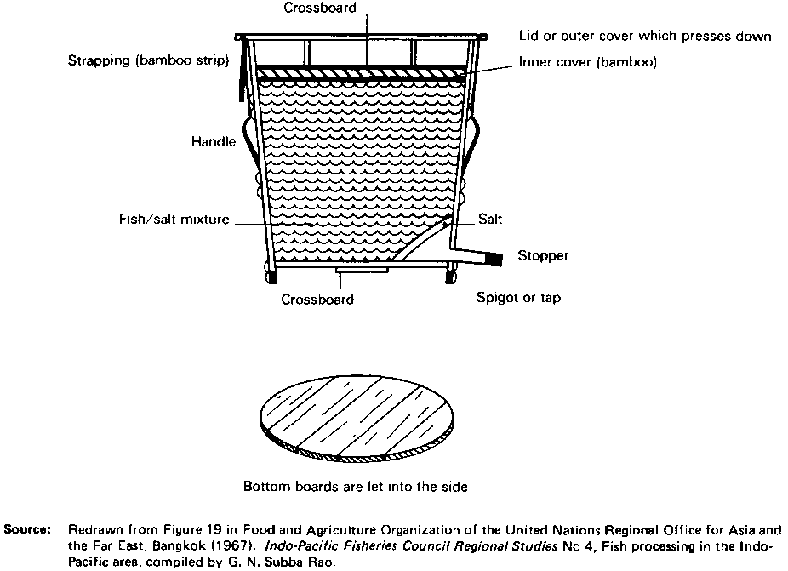
Figure 1 - Vietnam: Section of the
vat used for making nuoc-mam (Courtesy Institut Oceanographique de Nha-Trang)
1. The fish are washed in sea water and then mixed with salt in tubs or vats make of wood or cement, the ratio of fish to salt being from 1:5 to 1:1. A weight is also placed on top to keep the fish below the brine.
2. The vat stands for 5 to 18 months then the clear liquid is skimmed off the top or drained through a spigot near the bottom of the container.
3. The liquid is then filtered and bottled or barrelled and exposed in the sun until it is ripe.
4. The liquid sauce is finally packed in bottles or earthenware containers for distribution.
After the first liquid has been drawn off at stage 2 the residue may be extracted several times with salt water to make a lower grade product. Sometimes this is followed by extraction with boiling brine. The yield is typically about 90 per cent of fish sauce by weight. The chemical composition of low grade and high grade nam-pla (Thailand) is given in the table below.
| |
Low grade |
High grade |
|
Salt (g/100cm³) |
28.4 |
28.15 |
|
Total nitrogen (g/100cm³) |
0.92 |
1.92 |
|
Ammonia nitrogen (g/100cm³) |
0.28 |
0.28 |
|
TMA nitrogen (g/100cm³) |
0.02 |
- |
|
Organic nitrogen (g/100cm³) |
0.62 |
0.64 |
|
Formol nitrogen (g/100cm³) |
0.83 |
1.13 |
|
Amino nitrogen (g/100cm³) |
0.55 |
0.85 |
|
pH |
5.75 |
5.58 |
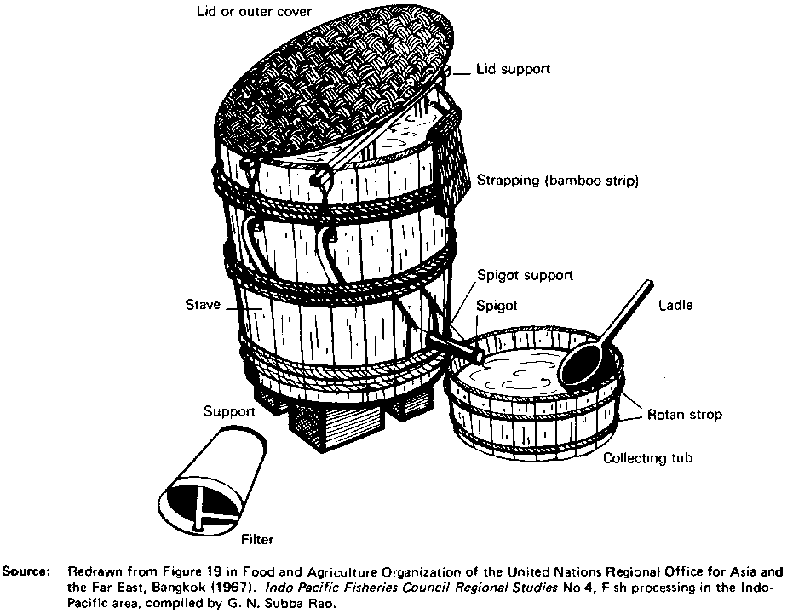
Figure 2 - Vietnam: General view of a
nuoc-mam vat at Nha-Trang (Courtesy Institut Oceanographique de Nha-Trang)
A first-grade product should contain 20 - 23 g/litre of nitrogen and, of this, 50 per cent should be formol titratable and not more than 15 - 20 per cent titratable as ammonia. The salt content should be 20 - 25 9/100 9 and the pH should be below 6.0.
A good deal of research has been undertaken in an effort to speed up the process of manufacture of fish sauces. The process proceeds faster as the temperature increases up to about 45°C; unfortunately, the liquids that are produced at such high temperatures do not have the characteristic flavour of the classic sauces. This fact is well known amongst the producers who endeavour to keep the areas in which the vats are situated relatively cool. Although some work has been carried out on the flavouring substances of fish sauces, no accelerated process has so far been brought into commercial use.
|
| ||||||||||||||||||||||||||||||||||||||||||||||||||||||||||||||||||||||||||||||||||||||||||||||||||||||||||||||||||||||||||||||||||||||||||||
Boiled fish products
Boiling fish in water is a method of short-term preservation used in many countries especially in South East Asia; although the method is used in other parts of the world, it is in fact only of major commercial significance in South East Asia. The shelf life of the products varies from one or two days to several months depending on the method of processing.
Basic method
The action of boiling fish in water at normal temperatures and pressures denatures (cooks) the proteins and enzymes and kills many of the bacteria present on the fish. The normal spoilage that occurs in a dead fish is thus stopped or drastically reduced. With the normal methods of packaging which are employed with cooked fish, they are very soon contaminated with bacteria again and spoilage can thus begin. Boiling fish in water will not produce a completely sterile product and, even if they were packed in completely sealed packaging, spoilage would still occur.
Very many variations of the basic method of preparation are used, depending on the raw material available, the required shelf life and consumer preferences. Often salt is added before, during or after processing; high levels of salt in the final product will help to extend the shelf life. In hot humid countries, therefore, where drying fish may be difficult, boiling may allow distribution of the catch to market in an acceptable condition with simple, low-cost facilities and equipment.
Products where the fish are boiled for a relatively short time with little salt should be treated in the same way as fresh fish. Where fish are cooked for several hours with plenty of salt, the product will not resemble fresh fish and can be treated in a similar manner to other salted fish products.
Variety of production methods in Asia
Some idea of the range of boiled fish products produced in Asia is given from the outline of methods below.
Cambodia
Raw material: Eleutheronema, Stromateus, Polynemus, Cybium, Sardinella spp.
Processing method: Immerse the fish in boiling brine (5 kg NaCI per 20 litres sea water) for 3 minutes. The fish are boiled in small baskets which are used both for cooking and distribution.
Storage life: 1-3 days.
Malaysia
Raw material: Rastrelliger sp. (kembung)
|
Processing method: |
1 Wash the fish in sea water. |
| |
2 Immerse them in saturated brine for 3 - 4 hours. |
| |
3 Arrange the salted fish in bamboo baskets. |
| |
4 Immerse the baskets in boiling brine containing 25 - 34 per cent salt. |
|
|
5 Allow the baskets to cool. |
| |
6 Store in a cold room. |
Yield: Approximately 70 per cent of raw material weight.
Packaging: The processing baskets.
The Philippines
Raw material: Tulingan, frigate mackerel etc.
|
Processing method: |
1 Prepare the fish. They may or may not be gutted; the side of the fish |
|
|
may be cut. |
| |
2 Rub salt into the fish. |
| |
3 Place the fish on a mat in a clay pot. |
| |
4 Fill to the top of the pot with fish. |
| |
5 Heat the pot gently until the fish are steamed. |
Packaging: The processing pot.
Indonesia
In Indonesia, various boiled fish products are produced, generally known as pindang. One of the methods used is as follows:
Raw material: Many species, including sharks, but commonly Rastrelliger (kembung), Decapterus (lejang), Euthynnus (tonkol) and Caranx spp.
|
Processing method: |
1 Gut and cut the fish to fit the container; small fish may not be gutted. |
|
|
2 Wash. |
| |
3 Arrange the fish in the containers (clay pots or metal bowls) in alternating layers of fish and salt; the ratio of fish to salt varies between 20:1 and 3:1 depending on the shelf life and taste required. |
| |
4 Add a little water. |
| |
5 Heat above a fire (wood or oil) until nearly cooked. |
| |
6 Drain most of the liquid from the bottom of the container. |
| |
7 Add more salt to fish on the surface and cook until no free water remains in the bottom of the container. |
| |
8 Seal the top of the container with leaves or paper. |
Yield: 80 - 90 per cent of raw material weight.
Packaging: The product is distributed in the processing container.
Shelf life: May be from a few days to 3 months depending on the quantity of salt and effectiveness of sealing the container.
Chemical composition: For Caranx leptolepis,
|
Moisture |
66.5 |
per cent |
|
Protein |
22.3 |
per cent |
|
Fat |
2.5 |
per cent |
|
Salt |
0.9 |
per cent |
Research: Some investigation has been undertaken into sterilising the clay pots before cooking. Rubber rings have also been used to seal the top of the container and wax has been used to coat the outside of the pot to seal it: the shelf life may then be extended up to 9 months.
Some concern has been expressed in Indonesia over the public health and safety of boiled fish and some cases of sickness, or even death, have been allegedly caused by eating pindang. Traditionally, clay pots have been used for cooking and distribution but recently these have been replaced, to some extent, by pots made from galvanised sheet. It has been suggested that the zinc of the galvanising may contaminate the fish, and also there may be contamination from the lead used to solder the seams. In addition, insufficient cooking or too little salt allows the growth of harmful micro-organisms. Although some work has been carried out to extend the shelf life of pindang, it has been proposed that a detailed study of processing, packaging, storage and spoilage is needed.
Conclusion
Boiled products are acceptable to large numbers of consumers in South East Asia and the process used may be suitable for introduction to other tropical countries where conditions of high temperature and humidity make normal salting and sun drying difficult for part or all of the year.
|
| ||||||||||||||||||||||||||||||||||||||||||||||||||||||||||||||||||||||||||||||||||||||||||||||||||||||||||||||||||||||||||||||||||||||||||||
Fish canning: theory and practice
Canning is a relatively modern technology which enables man to preserve food in an edible condition under a wide range of storage conditions for long periods - from a few months to several years. Essentially, the process involves hermetically sealing the food in a container, heat 'sterilising' the sealed unit and cooling it to ambient temperature for subsequent storage.
Filling and sealing
Fish, being a physically delicate food and, therefore, easily damaged and fragmented by mechanical handling operations, are still largely packed into cans or other retortable containers by hand, with brine, edible oil or sauce which may be metered in mechanically. Often, the fish, after the usual heading, gutting, cleaning and trimming operations, are subjected to pre-processing operations such as salting, brining, drying, smoking, cooking or a combination of these. Such pre-processing operations have the advantages of:
(a) denaturing the proteins and thus rendering the fish muscle firmer and more capable of withstanding handling during the filling operation; and
(b) removing water from the fish making them less subject to shrinkage and unsightly aqueous exudation inside the can during heat treatment.
Canned fish is famous for the way it is packed so tightly within the container, leaving very little space for additional liquids.
Heat transfer through the fish is by conduction and, therefore, very slow; at a processing temperature of 121°C, it would take 6 hours to raise the centre temperature of a 145.5 mm (diameter) by 168 mm (height) can from 10 to 100°C by conduction alone. In this time, the fish nearest the walls of the container would be grossly overcooked. By comparison, if ail the heat could be transferred by convection, in the same size can under the same conditions, it would only take 20 minutes to achieve the same temperature rise at the can centre. Obviously, it is best to have the fish surrounded by liquid so that the distance through which heat is transferred by conduction is kept to a minimum. Most fish canners increase in-can heat transfer rates even further by processing the cans in a rotary retort. The movement of the headspace bubble during rotation forces an increase in liquid movement and, therefore, convection heat transfer. The fish are more evenly cooked throughout the can and, those nearest the can walls are less likely to be overcooked (See Figure 3).
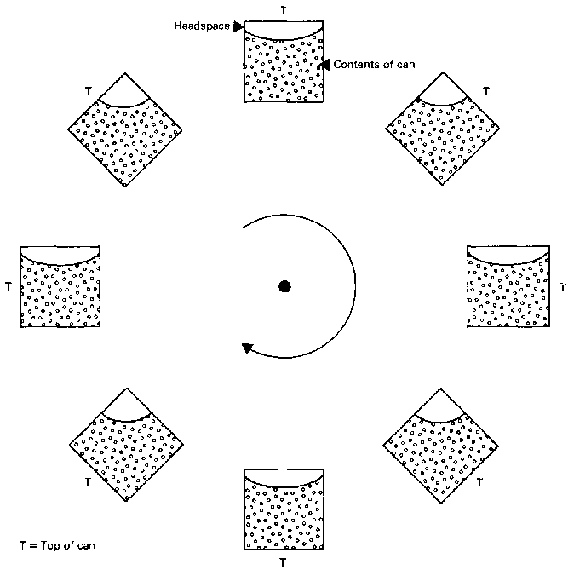
Figure 3 - Movement of headspace in
rotary retort
The headspace (or ullage) is the space left in the top of the can to allow for expansion of the contents during the heating process. However, leaving air in this headspace causes considerable internal pressure during processing and leads to oxidation of the contents (surface discoloration and rancidity) and the container (corrosion) during subsequent storage. it is, therefore, necessary to seal the can under vacuum (See Figures 4 and 5).
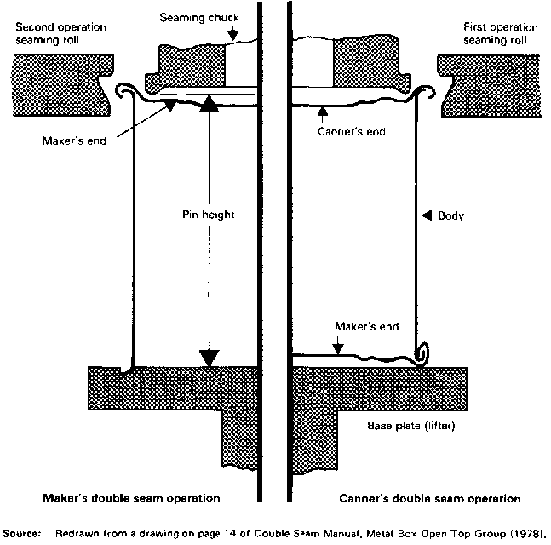
Figure 4 - Basic seamer design
The Figures show how the lid (or end) is attached to the body of the can in the two DOUBLE-SEAMING operations. It is vitally important that the side seam and the double seams are completely hermetic. The former uses solder (98 parts lead: 2 parts tin) to complete the seal whilst the latter is sealed by the melting and resetting of a plastic sealing compound on the inside curl of the end-piece (See Figure 5).
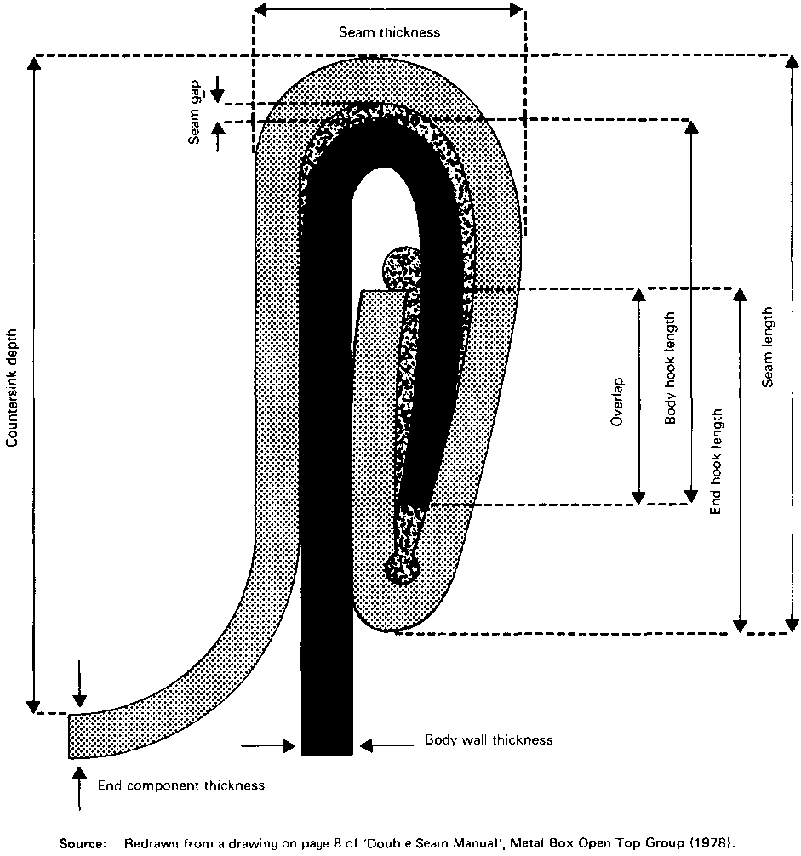
Figure 5 - Double seam dimensional
terminology
It is important that double seams are checked regularly both for visible faults and, by measurement for slackness, for the extent to which the body hook penetrates the sealing compound in the curl of the end-piece.
Sterilisation
Not all fish which are sealed into cans are heat processed. Anchovies, for example, are packed in salt and then sealed in cans without any further processing: the very high salt content prevents subsequent growth of micro-organisms. However, the product can only be eaten in very small quantities in this form and is generally used as a condiment or flavouring in other dishes.
If heat sterilisation is to be the method of preservation, it is essential that the effect of severe heat treatment on the fish tissues is known.
Firstly, it is impossible to produce a high quality canned fish product from fish which are at an advanced stage of spoilage.
Secondly, as the temperature rises, the muscle proteins become increasingly denatured and progressively lose the water which is loosely bound in the undenatured protein network. The watery exudate is unsightly and may cause a sauce to curdle whilst the partially dehydrated fish muscle, although surrounded by liquid, has a dry 'woolly' feel in the mouth. Besides this denaturation, the severe heat treatment may cause some degradation of proteins to amino acids and other simple (but often malodorous) breakdown products which may also react with the metal of the can walls, producing unsightly black deposits.
The quality of oily fish is much less impaired by the severe heat process than that of non-oily fish, which generally yield a product only suitable for fish paste or pet food manufacture. This may merely be a physical effect of the oil in the muscle tissue acting as a barrier to water loss from the protein structures, so enabling canned oily fish to retain their succulence through the heat process.
For the purpose of determining the degree of heat treatment which is needed to preserve food within a can, three pH groupings are recognised:
(i) Acid foods at less than pH 4.5 cannot support the growth of heat-resistant spore forming pathogens like Clostridium botulinum. To effectively preserve such foods (e.g. most fruits and pickles), it is necessary only to destroy the relatively heat sensitive acid tolerant microorganisms which could otherwise grow and cause spoilage. A mild heat process (e.g. the coldest point in the can should receive a minimum process of 5 minutes at 100°C) only is required.
(ii) Medium-low acid foods between pH 4.5 and 5.3 will support the growth of pathogenic heat-resistant spore formers like C. botulinum and must, therefore, be processed to reduce the chance of such a spore surviving to virtual insignificance (e.g. the coldest point in the can should receive a minimum process of 10 minutes at 121°C).
(iii) Low acid foods with a pH greater than 5.3 will support the growth of organisms like C. botulinum, as well as the germination and growth of highly heat-resistant spores like those of Bacillus stearothermophilus which cause flat-sour spoilage. Fortunately, these organisms will only germinate and grow at temperatures greater than 37°C because, if it were deemed necessary to heat process to destroy them, the severity of the process would probably render the food inedible.
Fish are a low acid food and it should, therefore, be remembered that canned fish which have been processed to eliminate the chance of C. botulinum spore survival should be stored at temperatures below that at which possible surviving spores of B. stearothermophilus could germinate.
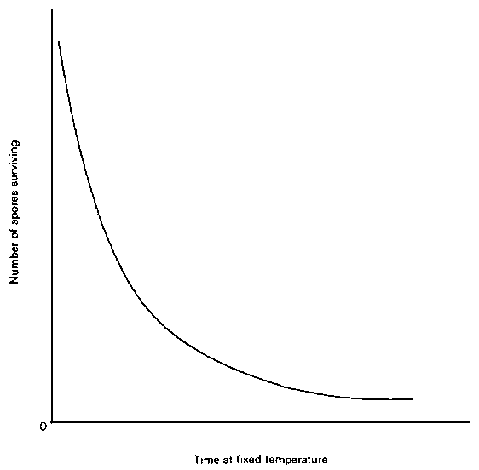
Figure 6 - Thermal death curve for
hypothetical organism
Figure 6 is a thermal death curve showing the number of surviving spores against time at a given process temperature. Figure 7 is a death rate curve and shows the log10 number of surviving spores against time at a given process temperature. These figures show that the destruction of bacterial spores at a given process temperature is not instantaneous but decreases logarithmically with the exposure time to that temperature. The time taken for the graph to traverse one log cycle (i.e. the time taken at a given temperature to reduce a particular bacterial spore population to one tenth of its original number) is called the Decimal Reduction Time, D(O) (O being the given temperature).
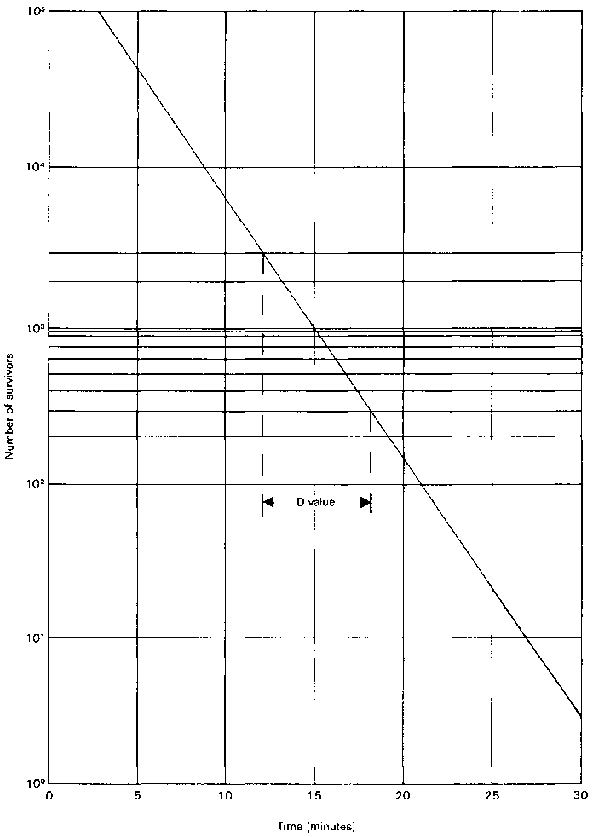
Figure 7 - Death rate curve
Figure 8 is a thermal death time curve and it shows the Decimal Reduction Time against the process temperature. From this figure, the temperature interval over which a ten-fold increase or decrease in the value of D(O) occurs is called the Z value.
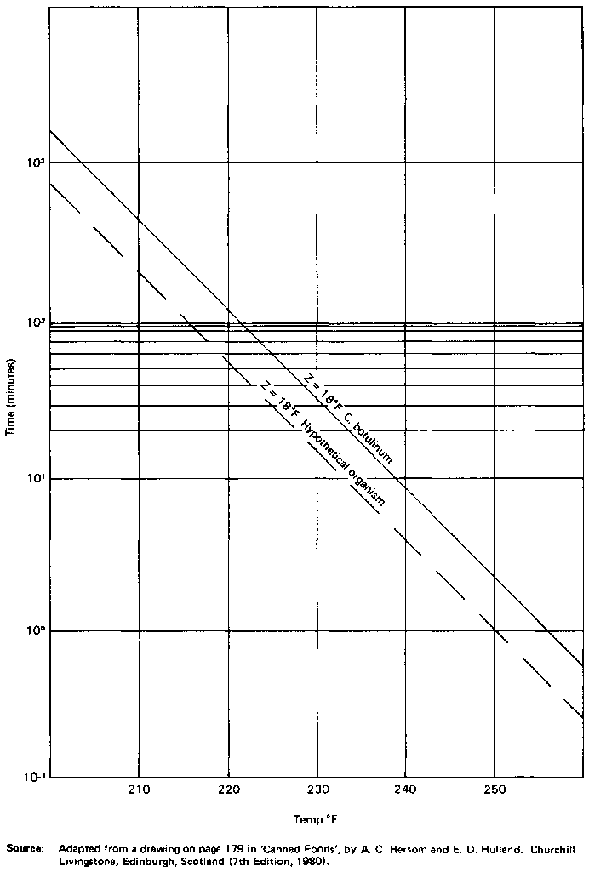
Figure 8 - Thermal death time curve
Most fish canning heat processes are based on the elimination of C. botulinum spores, which is reasonable since this is the most heat-resistant pathogen which could grow in the canned fish. However, it can be seen from Table 1 that a process achieving 12 decimal reductions of C. botulinum spores (i.e. 12 x 0.2 = 2.4 minutes at 121°C) would only achieve approximately half a decimal reduction of B. stearothermophilus spores.
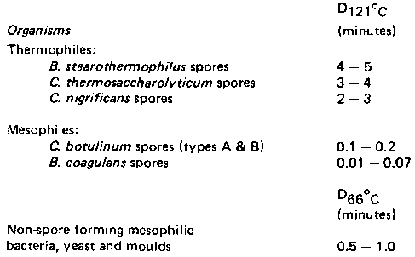
Table 1 Bacterial groups and their
heat resistance
Obviously it is not possible to achieve a 'cold spot' temperature instantaneously. The temperature at the cold spot rises slowly throughout the process which may use a temperature below 121°C anyway. It is therefore necessary to know the 'lethality' of all temperatures with respect to the lethality of 1 minute at 121°C. For this we use the reciprocal of D called L value or 'lethal rate'.
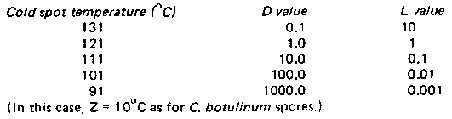
Table 2
So, in this example, it takes 1000 minutes at 91°C to achieve the same killing effect on bacteria as 1 minute at 121°C: or 1 minute at 91°C has 1/1000 the lethal effect of 1 minute at 121°C.
If the initial concentration of bacterial spores is N1, which must be reduced in number to an acceptable level, No, the quantity log N1/N0 is called the 'Order of Process Factor'
Thus, if Nf is the number of spores surviving after processing
log Nf/N1 = log N0/N1
to ensure commercial sterility.
This can be expressed as follows:

where
|
L |
is the L value for the related temperature occurring during the process lasting from time 0 to time tf, |
|
m |
is the order of process factor for commercial sterility, and |
|
D |
is the decimal reduction time for the spoilage organism under consideration at the reference temperature. |
L values are available from tables or may be calculated from

where T is the related temperature.
Once the temperature history of the process of a canned food has been plotted and the main spoilage organism identified and its Z value found, a graph of L versus time of processing may be plotted throughout the process. The area beneath this graph must exceed mD for commercial sterility. This value has been called the 'equivalent time' end is the F value.
Packs with pH 4.5 are generally processed to commercial sterility with reference to C. botulinum, the minimum order of process factor 'm' being taken as 12. Thus, mD(q) should be 12 x 0.3 = 3.6 minutes at 121°C at the cold spot.
However, in different foods, there are often spoilage organisms with more heat labile spores than C. botulinum (See Table 3).
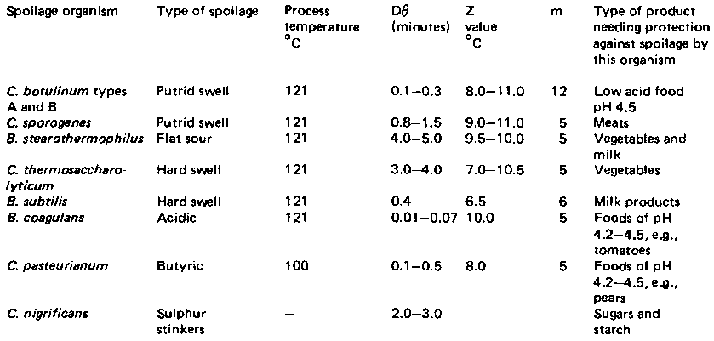
Table 3
Sterilisation equipment (See Figure 9)
To achieve processing temperatures above 100°C, condensing steam under pressure is used in most conventional systems, although other processing media include gas flames, steam and air mixtures and even hot fluidised sand.
After the cans are sealed in the retort, steam is admitted and the temperature of the retort allowed to rise to 100°C and maintained at this temperature until all air is flushed out of the retort. Air pockets left in the retort can lead to localised under-processing, as air insulates any cans it may surround from the steam.
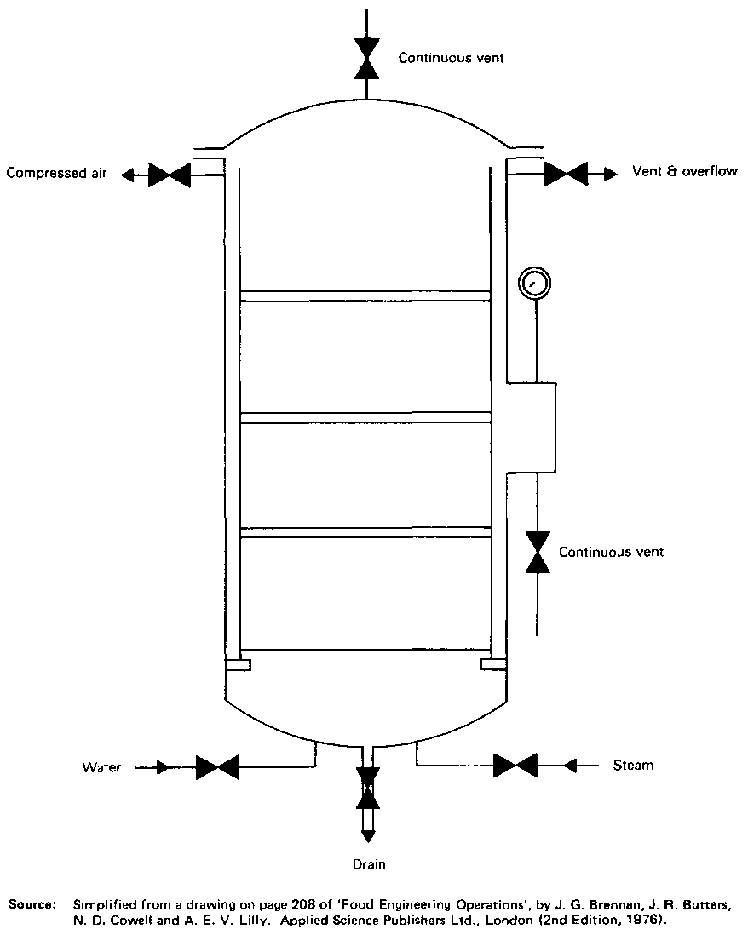
Figure 9 - Static vertical retort
Pressure is applied by closing off the drain and steam exit valves whilst still allowing steam into the retort. Various petcocks are left open to allow any air, which may be admitted with the steam, to escape. Common processing temperatures are 115.5°C and 121°C. The pressure, and hence the retort temperature, is controlled by an automatic steam pressure control valve; this opens when the set pressure is exceeded and closes again when the pressure falls below that set.
Cooling
The pressure in the retort is maintained after closing the steam inlet valve by admitting compressed air to the retort. If this were not done, the large pressure inside the can compared with the low pressure inside the retort would cause the cans to distort outwards ('peaking'), possibly damaging the integrity of the seams. As the retort pressure is being maintained with the compressed air, chlorinated cooling water is admitted to the retort.
The cooling water is chlorinated because, at this stage, the sealing compound in the double seams is still molten and the vacuum forming in the headspace due to condensing steam could pull drops of cooling water through the double seam. If this cooling water contains viable micro-organisms, this leakage may lead to 'leaker spoilage'. This type of spoilage is by far the most common that is implicated in food poisoning attributed to canned food. Cooling water is generally recirculated and dosed automatically with chlorine. A residence time of at least 20 minutes between dosing and utilisation for can cooling is necessary to allow the free residual chlorine responsible for the bactericidal effect to accumulate. The free residual chlorine content of the cooling water should be measured in water draining from the retort rather than in that entering the retort. Common chlorination levels lead to 5 - 20 ppm free residual chlorine in the drain water. Too high chlorination levels can lead to can corrosion problems.
As cooling proceeds, it becomes necessary to reduce compressed air pressure in the retort since the pressure inside the can falls with the temperature of its contents, eventually becoming a partial vacuum. If, then, the pressure outside the can far exceeds the pressure inside, the can may buckle inwards ('panelling') which could also damage the can seam.
When the cooling process has been completed (the can contents having reached a sufficiently low temperature and the retort pressure having been reduced to atmospheric), the retort is opened and the wet cans lifted out. It is essential that the wet cans are not handled at this stage: the danger of contaminating the can contents via a leaking seam still exists. Cans should be conveyed mechanically to a can drier along chlorinated runways before they are labelled and packed into cases or shrink-wrapped.
Other special problems related to fish canning
Can lacquers
Fish proteins, and especially crustacean and shellfish proteins, are rich in sulphur amino acids which, on heat processing, release hydrogen sulphide. This can react with iron in the tinplate producing black ferrous sulphide ('sulphur staining'). To avoid these unsightly black deposits, a special lacquer incorporating zinc oxide or zinc carbonate is used to coat the internal can walls. The hydrogen sulphide released now reacts preferentially with the zinc oxide or carbonate producing white zinc sulphide which remains embedded in the lacquer so that an attractive internal appearance is maintained.
Struvite
In some canned fish products, glass-like crystals of calcium struvite may form on storage and become the reason for many 'foreign body' complaints in canned fish. This phenomenon may be avoided by the addition of small amounts of citric acid to the product prior to filling and processing. Citric acid complexes available calcium ions, thus preventing them from forming calcium struvite.
Conclusion
In conclusion, it should be noted that, although fish may be canned to provide an excellent long shelf life product, which in the case of some canned oily fish products like sardines and pilchards is said to improve with keeping, setting up a commercial canning operation involves extremely high capital expenditure. Also in the case of fish canneries, the method of packing the fish in cans makes the operation highly labour intensive.
The canning line should be designed so that the retorts, can driers, and labelling and packing sections are well removed from the raw fish handling sections because of the danger of leaker contamination.
Quality inspection of raw materials, can seams and cooling water chlorination levels at regular intervals is essential but it is also normal quality control practice to hold back samples of cans from each retort batch for incubation tests - this means that canned products should carry some device which enables their production batch to be identified.
In general, it may be said that good quality canned fish products can only be made from good quality, clean fish. White fleshed fish tend not to make good canned products whatever their quality: the heat process makes a dry, discoloured product which falls apart.
|
| ||||||||||||||||||||||||||||||||||||||||||||||||||||||||||||||||||||||||||||||||||||||||||||||||||||||||||||||||||||||||||||||||||||||||||||
Freeze drying
The boiling point of water depends on pressure - at atmospheric pressure, 1 bar, it boils at 100°C.
If water is held in a sealed container in which we can draw a vacuum, the lower the pressure or the better the vacuum, the lower the temperature at which the water boils but more heat is needed to evaporate 1 kg of water:
|
Pressure (bar) |
Temperature (° C) |
Latent heat of vaporisation (kJ/kg) |
|
1.0 |
100 |
2257 |
|
0.5 |
81 |
2305 |
|
0.2 |
60 |
2358 |
|
0.1 |
46 |
2392 |
|
0.01 |
7 |
2485 |
At a pressure of about 0.006 bars, the boiling point of water is 0°C. The latent heat would be 2500 kJ/kg but, in evaporating, the water would take some of the heat from itself causing that remaining to freeze (this releases 334 kJ/kg), leaving ice at 0°C. If the vacuum is maintained at about 0.006 bars, the ice will sublime, that is, not melt but go straight to water vapour. As long as heat is available, the latent heat of sublimation at 0°C is 2834 kJ/kg.
In the same way as the boiling point is depressed by improving the vacuum, so taking the pressure below 0.006 bars will depress the sublimation temperature below 0°C:
|
Pressure (bar) |
Temperature (°C) |
Latent heat of sublimation (kJ/kg) |
|
0.0060 |
0 |
2834 |
|
0.0026 |
- 10 |
2836 |
|
0.0010 |
- 20 |
2837 |
|
0 0004 |
- 30 |
2838 |
|
0.0001 |
- 40 |
2838 |
When a pot of water is being heated at atmospheric pressure, it will boil at 100°C whatever the temperature of the flame. In the same way, ice at a pressure of 0.0001 bar will sublime at - 40°C, as long as the water vapour can escape, whatever the temperature of the source of heat. If the water vapour cannot escape the pressure will quickly increase and the sublimation temperature will rise in proportion until, at a pressure of 0.006 bars, the ice will start to melt.
The process of freeze drying
Developing the above principles, the freeze drying process involves:
1. Placing the food in a chamber which is then sealed, after which a vacuum is drawn so that the pressure is well below 0.006 bars (probably below 0.001 bars).
2. The temperature of the food is above the sublimation temperature and so, in cooling down and freezing, it supplies some heat for water to evaporate and then sublime (this is the same as evaporative cooling).
3. Once the food is at the sublimation temperature which corresponds with the pressure, heat is somehow supplied to the food to provide the latent heat of sublimation so that the frozen water sublimes to water vapour.
4. The water vapour is drawn out of the chamber by the vacuum system, thus maintaining the low pressure in the chamber until all the frozen water has sublimed, leaving the dried food.
The dried food does NOT need to be stored under refrigeration since it contains no water needing to be kept frozen in order to prevent microbial growth. The dried food DOES need to be well packed, however, probably in aluminium foil laminates, to prevent the food from reabsorbing moisture from the air; it may perhaps be packed in a vacuum or inert gas to prevent, otherwise rapid, oxidative deterioration. If the food has been previously frozen, stage 2 does not apply.
Advantages
(a) No shrinkage - the freezing of the food effectively fixes its shape.
(b) No case hardening - there is no water movement to carry solubles to the surface; the ice directly sublimes from within the food as the drying front penetrates.
(c) No thermal damage - no high temperatures to cause loss of flavour or development of 'burnt' flavours.
(d) Rapid rebydration - because a very open texture is obtained.
Disadvantages
These all relate to the economy of the process and the storage and distribution of the end product.
(a) Primary cost. - The equipment is sophisticated and expensive.
- The chamber (which is required by any mechanical drying method) has to be very strong: it must be capable of withstanding the pressure differences. The seals on the door must be airtight to ensure that low pressures are easily maintained.
- The low pressure required necessitates sophisticated vacuum equipment, steam ejectors and/or heavy duty piston pumps. If the latter are used, a vapour removal system is required between chamber and pumps.
- Some system is required to provide heat to the food during the drying process.
- To maximise the capacity of the system, it may be desirable to freeze the product before drawing a vacuum, either within the chamber or in a separate process.
(b) Operating costs. - In addition to the energy of evaporation (which is required by all drying processes), energy is required to develop and maintain the vacuum and for any refrigeration facility (to pre-freeze and perhaps to recondense vapour to stop it getting through to a piston vacuum pump).
- A high level of competence is required in operators and service engineers: there is, therefore, a relatively high labour cost.
- The technology is advanced: therefore, repair and maintenance costs (spares) are high, compared to more conventional drying systems.
- It is a batch process: there are periods of loading/unloading when equipment is unoperational.
(c) End product.
The high prime and operating costs mean that this process is only suitable for high value foods which can carry a high production cost. However, the consumer expects good quality from high cost goods.
- The lack of shrinkage and case hardening associated with a very low moisture content means that freeze dried foods are very brittle and so need to be protected by rigid packaging.
- The open structure and low water content mean that freeze dried foods are very vulnerable to oxidative deterioration and so, as already mentioned, gas tight packaging associated with inert gas purging is often adopted.
Therefore, expensive packaging is the norm.
Accelerated freeze drying (AFD)
Although freeze drying takes no longer, and is often faster, than more conventional systems, attempts have been made to accelerate the process in order to reduce production costs and increase the capacity of the process. The limiting factor is the transference of heat to the food: convection is impossible in a vacuum. Therefore, radiant heat, a relatively inefficient method is used.
A technique for accelerating the drying process for slabs of food or relatively uniform particles of food (e.g. whole prawns) has been developed and commercially adopted. The food is arranged in single layers between expanded metal mesh, held in a tray and covered by a sheet of stainless steel or aluminium (See Figure 10). This sandwich is placed between hollow plates in the chamber (See Figure 11).

Figure 10 - Food and metal grid
arrangement for AFD process
Once the chamber is at the required pressure and the food is at the sublimation temperature, fluid contained within the hollow plates is heated to a temperature between 60 and 100°C. The heat is conducted rapidly through the metal sheets/trays and mesh to the food surface allowing rapid sublimation. The mesh is important because the water vapour is allowed to escape into the chamber; this would not be possible if the food was in contact with a continuous metal surface. If the water vapour could not escape, the pressure at the food surface would increase and the food would melt.

Figure 11 - Arrangement of food in
chamber for AFD process
As the sublimation front penetrates the food, the pressure is applied to the plates (generally by a hydraulic ram as indicated in Figure 11) up to a maximum force of about 8 Ib/in², which causes the mesh to penetrate the surface of the food giving more direct heat conduction to the sublimation front. Simultaneously, the temperature of the heating material is reduced since, after sublimation, the surface temperature of the food will be the same as the heat source.
Care has to be taken not to force the mesh beyond the sublimation front because this will cause thawing at the centre. Similarly this process cannot be used for foods containing bone, cartilage or substantial fatty tissue, all of which will conduct heat beyond the sublimation point resulting in thawing.
Where the fat is distributed more evenly, as with fatty fish, a lower temperature is used while, with other products, the risk of mechanical damage limits the pressure that can be applied to the plates.
Adoption of AFD may halve the process time associated with freeze drying (from 10 - 12 hours to 6 - 7 hours) but this depends very much on the thickness of the food, acceptable temperatures and plate pressures. Current research is attempting to further accelerate heat transfer.
Practical investigations often indicate that freeze dried prawns are frequently superior to those frozen individually using liquid nitrogen, and always superior to those frozen by other techniques, but production costs are higher. For fin fish produce, the production cost is too high unless weight and reconstitutability considerations outweigh all others. The end product has to be cooked during or after rehydration and it has been reported that water retention is poor.
Conclusions
Freeze drying and accelerated freeze drying are processes which have high capital, running and maintenance costs and are, therefore, limited to high cost and speciality foods. However, when used for such products, superior quality goods are obtained if the process is carefully controlled.
|
| ||||||||||||||||||||||||||||||||||||||||||||||||||||||||||||||||||||||||||||||||||||||||||||||||||||||||||||||||||||||||||||||||||||||||||||
Irradiation
Possible use in food preservation
Ionising irradiation is the only alternative to heat processing for food preservation that has a lethal effect on micro-organisms. Further, it is the only novel method of food preservation suggested for many centuries. It, therefore, lacks the confidence of other systems derived from years of experience. This is rightly so. There have been mistakes in the past and the food processor has a responsibility to the consumer. As a result of this cautious approach, the use of irradiation for treating foods is heavily restricted in most countries, permission having to be sought before irradiated foods are sold to the public.
It is obviously desirable that the irradiation process should in no way affect the fitness of the food for human consumption. An important effect of this consideration is that the radioactivity of the foodstuff should not be increased appreciably above its natural level.
The two types of radiation considered for use are, therefore:
(a) particle or electron beam type: cathode ray and, B-ray (limited energy and poor penetrative power).
(b) electromagnetic wave type: X-ray and '-ray (deeper
penetrative power).
The high frequency electromagnetic waves, high energy
electrons and beams of the heavier atomic particles, being capable of inducing
nuclear transformations in the atoms of the target food, are not acceptable.
Energy of radiation
Whether particle or wave type radiation is used, its energy is measured in electron volts, eV, or more normally as MeV (106eV)
1 eV ~ 1.6x 10⁻¹² ergs. (1 Joule = 1 x 10⁶ ergs.)
A source of 5 MeV will induce radioactivity in food at a level of about 0.3 per cent above the natural level; this is considered not to represent a health hazard.
When the material which is being irradiated has absorbed 100 ergs energy per gram, it is said to have received a dose of 1 red.
Radioactive sources
(a) Spent fuel-rods from atomic reactors have been used for experimental purposes but as their activity falls rapidly (about 97 per cent in 100 days), it is unlikely that they will be used industrially.
(b) Cobalt 60, an artificial isotype emitting '-rays at energy levels of 1.17 and 1.33 MeV, has a half life of 5.3 years, losing activity at the rate of about 1 per cent per month. (A typical layout of a cobalt 60 irradiation plant is illustrated in Figure 12.)

Figure 12 - Typical layout of
irradiation plant using cobalt 60
(c) X-ray machines have the advantages of being switched on/off as required but are expensive in energy demand.
Chemical and biological effects in foodstuffs
A direct hit by a wave or particle beam on the cell nucleus may cause total chromosomal disorder, or mutation in micro-organisms or food tissue, but this effect is now considered to be less important in food preservation. Of greater importance is the production of free radicals, the most significant of which is the ionisation of water in the presence of oxygen to give the peroxide ion. The oxidative effect of the peroxide ion no doubt plays a major part in the inhibition of microbial spoilage, demonstrated by the fact that catalase positive micro-organisms are least affected.
Unfortunately, the peroxide ion also causes many undesirable changes in the composition of the food e.g. deamination of amino acids, denaturation of protein and both deamination and dephosphorylation of nucleo proteins. While carbohydrates are relatively stable, cellulose may be depolymerised, resulting in a softening of texture. Fats are particularly vulnerable to oxidation as are fat-based pigments susceptible to bleaching. Up to 50 per cent of the vitamin C may be lost while vitamin A and E losses depend on whether they are associated in protein or fat (the latter resulting in higher losses). The ionisation effect also causes concern when considering the possible hazards to the consumer. As many reactions are occurring in the food, it is thought possible that toxic chemicals, e.g. carcinogens, might be produced; therefore, considerable research effort is directed at testing irradiated foods.
Levels of treatment
Three levels are considered in processing foods:
Radappertisation (1 to 5 Mrads):
This level of treatment is the most severe and will destroy all spoilage and pathogenic micro-organisms. C. botulinum spores require 4.5 Mrad for a 12 D process (this requires that the process reduces a hypothetical C. botulinum population by 12 decimal logarithmic cycles). Unfortunately, there are no indicator micro-organisms that will survive such a process. Furthermore, it would stimulate off-flavours and odours and possibly cause textural damage as well. It has been claimed that such changes can be reduced either by blanching, by including antioxidants or by irradiating at - 80 to - 180°C.
Radurisation (0.5 Mrad)
This will eliminate most non-spore forming bacteria and give a significant reduction in the number of spoilage micro-organisms, thus extending the shelf life. Unfortunately, enzymes are not denatured and the ultimate spoilage pattern is changed, requiring a reappraisal of spoilage criteria. However, this process seems to offer the most promise in food preservation to date.
Low dose (50 krad)
This inhibits sprouting in vegetables and cereals, and kills tapeworms and insects.
Legislation and control
It has been proposed that the use of irradiation should be prohibited unless specific approval is granted by Governmental authority. Permission should define the food and the type and level of treatment. Plants should be licensed and the regulations should cover plant design and qualifications of the staff. There should be continuous records available relating to the process, e.g. speed, load, period of irradiation etc. International standards should be established covering the measurement of the dose. Biological tests should be continually carried out to check the effectiveness of the process. Labels should declare the treatment and give sufficient detail to assist public health control and to inform the consumer on handling and shelf life.
Irradiation of fish and seafood
In general, it is thought that, at doses higher than 0.3/0.5 Mrads, discoloration, production of off-flavours etc. would make irradiation unacceptable. Russian workers have claimed favourable results, however, on boiled fish using doses of 1.5/2.0 Mrads with a shelf life of 2 years; also the Americans have obtained favourable results on treating shrimps at a similar level. However, most work has centred on the milder radurisation of seafoods.
Such a mild treatment is ineffective against spores of C. botulinum and there must, of course, be concern about the ability of type E to produce toxin at 3.3°C. As radurisation only extends shelf life and does not destroy C. botutinum spores, refrigeration is necessary, and possible production of botulinum toxin is of considerable concern. Type E has a widespread geographic distribution in temperate waters; little information is available about tropical waters.
Some workers have claimed that toxin formation may be more rapid in irradiated fish. However, it is also markedly influenced by the initial number of spores and the actual foodstuff. The inclusion of 5 per cent (w/w) sodium chloride apparently inhibits outgrowth of spores. While the doses under consideration will not reduce numbers of C. botulinum spores, the normal spoilage organisms Pseudomonas sp., which cause putrefaction and ammoniacal odours, and Lactobacillus sp., occurring in shellfish, are significantly reduced in number (thereby extending the shelf life). Therefore, such doses are liable to change the apparent spoilage pattern. Radurisation could, therefore, increase the botulinum hazard. Other pathogenic organisms have been shown to be resistant to mild doses.
|
Limiting doses of various pathogens: | |
|
0.1/0.25 Mrad |
- Shigella, Enteropathogenic Escherichia coli, Proteus vulgaris. |
|
0.3/0.5 Mrad |
- Streptococcus faecalis, S. pyogenes, Staphylococcus aureus, Salmonella typhosa, S. paratyphi B, S. wichita, S. choleranius. |
Chemical changes
From the limited data available, it is clear that generalisations should not be drawn. There are very definite species differences in behaviour and, even when the species is the same, or similar processing conditions pertain, the results are not easily comparable. Moreover, many reports do not make it clear whether the changes they record occurred only during irradiation, or whether they occurred only during storage after irradiation.
However, it would seem that, even with the radurisation treatment of 0.3 - 0.5 Mrad, there is some destruction of vitamins and of cysteine, and a range of oxidative changes. Enzyme inactivation is far from complete and many autolytic reactions continue.
Changes caused during treatment
Treatment of cod fillets and mackerel by doses of 50 head to 4.5 Mrad caused no changes in the Biological Value (BV) or Net Protein Utilisation (NPU) of the fish protein. This does not indicate that no changes occurred, only that changes did not alter BV or NPU. In fact, the non-essential amino acid cysteine was destroyed at doses in the range of 0.1 - 0.5 Mrad; it was very probably derived from a sulphur-containing amino acid (i.e. cysteine itself, cystine, methionine) or vitamin (thiamine). Thiamine is known to be destroyed by doses in the range 0.6 - 1.0 Mrad.
There have been reports that the lipids of the shrimp Peneaus setiferus are unchanged by irradiation, and that the carotenoid pigments of the shrimp Crangon vulgaris are not significantly altered during irradiation. However, it is possible that free radicals produced during irradiation may cause the loss of polyunsaturated compounds during storage after irradiation.
Trimethylamine oxide (TMAO) is degraded during irradiation by doses of 0.6 Mrad upwards. The products are variously reported as trimethylamine (TMA), dimethylamine (DMA), tetramethylenediamine, formaldehyde and water. Formaldehyde is known to insolubilise protein and is thought to be partially responsible for toughening of fish flesh during storage. In non-irradiated material, DMA is only encountered in gadoid species during frozen storage; these species possess an enzyme system capable of converting TMAO to DMA. In irradiated samples, DMA seems to be formed also in non-gadoid species.
Changes occurring during storage
In Bangladesh, freshwater carp irradiated at a level of 200 - 250 head were found to have an extended storage life (8 - 10 days) compared to untreated fish (1 day). During storage, the volatile acid number (VAN) was found to be a better chemical index of quality than either TMA or TVB (total volatile bases) nitrogen.
Similar findings have been reported from the Philippines: VAN increased during storage of dried alakaok (plain croaker) and bisugo (ribbon-finned nemipterid) irradiated at 50 head, alumahon (striped mackerel) and banak (long-finned mullet) irradiated at 100 head, and tribe (shrimp) irradiated at 300 head. VAN increased during storage at 6 and 30°C but TVB and TMA contents did not change after irradiation. This procedure seems most promising, as a quality assessment technique, at present.
Shrimp irradiated at 200 head had less than 3 ppm carbonyls immediately after irradiation and this value remained essentially constant during 28 days' storage. Non-irradiated samples contained about 3 ppm carbonyls initially and showed a more rapid increase and spoiled after 21 days. Incipient spoilage corresponded to 5 ppm.
Generally, irradiated samples show no increase in TMA or TVB during storage, probably because the bacteria capable of producing these substances have been destroyed.
Quality control
With the risk of food poisoning, quality and methods of quality assessment require careful and precise definition. This has not yet proved to be possible.
Sensory tests are satisfactory is assessing consumer acceptability. However, they cannot indicate the presence of pathogenic micro-organisms and could be hazardous for panelists.
Chemical tests are of limited value for untreated fish. Also, greater variance is found in irradiated fish, as indicated above.
Microbiological tests give the only reliable check but take too long to complete. For fresh fish, a total count of about 1 x 10(6)/g coincides with definite signs of spoilage, but for irradiated fish the level is 1 x 10(8)/g, thus increasing the chance of toxic effects if consumed. From the above, it should be evident that there is a need for more research into quality checks, particularly indicative tests.
Commercial application
While results will vary with species, time of year, etc., it has been demonstrated that at any temperature a 100 per cent increase in maximum shelf life can be expected for samples irradiated at 0.2 Mrad, or about 65 per cent increase for a dose of 0.1 Mrad. Irradiation pre-rigor gives better results (probably because the fish are more fresh). Other results indicate that combined irradiation processes might also offer increases in shelf life, e.g. 0.05 Mrad on board ship and 0.15 Mrad on shore after 3 - 7 days' storage in ice. No loss in nutritional value up to doses of 0.6 Mrad have yet been demonstrated.
It is claimed that, if the problem of quality assessment can be overcome, the following advantages would accrue from radurisation:
(a) market expansion;
(b) better quality than iced fish;
(c) reduction of spoilage losses;
(d) easier distribution;
(e) easier
handling.
Overall, radurised fish will have to compare well with frozen fish if it is to become acceptable. In adopting radurisation, the following will have to be considered:
(a) ambient temperature;
(b) hygiene standards;
(c) water
quality;
(d) equipping of vessels;
(e) scarcity of other processes;
(f) consumer acceptance.
Use of ultraviolet (uv) irradiation
UV of wavelength 2000-2950� is generally permitted. However, it has very poor penetrative power and so is limited to treatment of surfaces (e.g., packaging) or relatively transparent liquids. Furthermore, there is no apparent lethal effect on spores; it is only bactericidal. In fisheries its main use is in purifying water used to cleanse oysters.
References
For up-to-date information contact: INTERNATIONAL PROJECT IN THE FIELD OF FOOD IRRADIATION, Institut fur Strahlentechnologie, 75 Karlsruhe Postfache 3 640, Federal Republic of Germany.
Other general sources:
1. AYRES, P. A. (1978) Shellfish purification in installations using ultraviolet light. Lowestoft: Ministry of Agriculture, Fisheries and Food Directorate of Fish Research, Laboratory Leaftet 43.
2. DESROSIER, N. W. and ROSENSTOCK, H. M. (1960) Radiation technology in food. Westport, Connecticut: Avi Publishing Company, 401 pp.
3. KREUZER, R. (Ed.}1969. freezring end irradiation of fish, Published by arrangement with the Food and Agriculture Organization of the United Nations, by Fishing News (Books) Ltd, West Byfleet, Surrey, 528 pp.
|
| ||||||||||||||||||||||||||||||||||||||||||||||||||||||||||||||||||||||||||||||||||||||||||||||||||||||||||||||||||||||||||||||||||||||||||||
Miscellaneous products: crustaceans
The crustaceans comprise a large group of animals all of which have an external skeleton composed of chitin; in some species, the skeleton is largely calcified. The crustaceans used for food are almost all from the order Decopoda, which means literally ten-legged, and include the prawns or shrimps; crabs; true lobsters; rock lobsters or crawfish and crayfish.
The group is more primitive than the true fish since they lack the backbone of vertebrates. However, like the true fish, they obtain oxygen by means of gills and, if these are kept moist, the larger animals can be kept alive for quite long periods out of water; all are easily kept alive in well oxygenated water.
Feeding habits vary but many feed on other animals and some, e.g., crabs, have large claws which are used for foraging or capture of prey. Others feed on detritus or dead plant or animal matter. The food is ground up in the gastric mill and then passes through the intestine. In many species, the faecal waste is passed out as pellets. Some species, e.g., the penaeid prawns grow rapidly and reach maturity in less than a year; others, such as rock lobsters (crawfish), grow more slowly and reach maturity at the age of 4 or 5 years.
The parts which are eaten include the muscles (flesh), which provide the white meat; the liver, which largely forms the brown meat; and the eggs (roe). The gills are always thrown away in the larger species.
All types of crustaceans may be sold whole, sometimes alive, other times freshly killed or cooked. All may be used to make frozen or canned products; some are dried after cooking; others are used to make fermented products. The shells are usually discarded but may be used to make a meal for animal feeding or chitosan. Meal made from whole small shrimp or the heads of larger animals is used for fish feeding, especially salmonids, e.g., rainbow trout, to produce the pink colour in the flesh which is desired by consumers.
Crabs
Most species are cannibalistic and scavengers. Most of them are quite easily kept alive out of water (for example mangrove crabs); others can be kept alive only in water, so live boxes must be used. All species spoil rapidly once dead, so they should be kept alive if possible until they are landed. Where this is impossible, they should be chilled but in this case they must be sold and eaten very soon after capture. In Europe, crabs are invariably boiled immediately before sale. They are killed first to prevent the claws and legs dropping off and then boiled in water containing 2 - 3 per cent salt for 20 - 30 minutes depending on size. Boilers should be fitted with a thermometer and a timer. After cooking, the animals should be cooled to set the meat.
Cooked crabs are sold either whole, or 'picked', i.e., the meat is removed. The yield is variable and can be up to 30 per cent of the total weight but only a third of this is white meat. Yield depends on the species, the size of the animal and the season. For example, animals which have just spawned yield very little meat.
It is possible to use machines for meat removal. These normally operate using the principle of centrifugal force to remove the flesh. The yield is then rather low, however, and the machines are expensive to buy.
Freezing crabs
Crabs or their meat should always be cooked prior to freezing. If crabs are frozen raw, the meat becomes very watery and the yield is very low. Crabs can be frozen whole in air blast freezers; alternatively, the meat can be frozen in waxed cartons or consumer packs, or in blocks for caterers and manufacturers. The blocks must be glazed to prevent drying and then wrapped. Freezing must be rapid so that the temperature is reduced from 0 to - 5°C in less than 2 hours and the material must be kept in the freezer until the warmest part is at - 20°C. Storage should be at - 30°C; at this temperature, whole crabs can be kept for 6 months and meat for 4 months. At - 23°C, whole crabs can be kept for 3 months and meat for only 2 months.
Canning crabs
It is normally only the white meat that is canned. The meat is washed and dipped in a weak acid to prevent the blue discoloration which otherwise occurs. The dip may be made using 2 oz of glacial (28 per cent) acetic acid to one gallon of water, or 70 parts of 9 per cent salt brine and 30 parts of 1 per cent citric acid. The meat is then packed in parchment paper lined cans or in cans which have a special lacquer lining.
Prawns (shrimps)
Prawns have usually been feeding actively when caught and the organs in the head contain large quantities of very active enzymes. Bacterial counts on tropical prawns are often high (104 to 10(6)) and dead prawns spoil rapidly unless chilled properly. Even when well chilled immediately after catching, prawns start to lose their delicate flavour after 2 - 4 days. In 5 - 8 days, black spot or melanosis usually occurs in tropical species. This is due to the production of the black pigment melanin by the action of the enzyme tyrosinase on tyrosine. In itself, black spot is harmless but it spoils the appearance of the prawn and indicates that spoilage has started.
Good handling practice in boats used for chilling prawns
1. The trip length should not exceed 5 days after catching starts.
2. The trawling time should be short in order to prevent crushing in the net.
3. The net should be towed at the surface for a short time to wash off any mud and clean the catch; this should not be done for too long because the surface water is relatively warm.
4. On hauling the net on board, the prawns should be sorted from the by-catch at once. They should be protected from the sun and wind and handled carefully.
5. After sorting, they should be washed carefully in clean sea water.
6. In all the traditional fisheries in which very high quality material is produced, the prawns are headed at sea, that is, the heads are removed from the bodies and only the tails are stored. This is because (a) heading removes a major source of enzymes; (b) in some places, it is known that the bacterial load on the prawn is heavier in the head; (c) both bulk and weight are reduced so that there is less material to chill.
7. The material should be cooled quickly. This requires that plenty of ice in very small pieces should be used, the prawns being stowed in shallow layers. Where boxes are used, it is important that these should not be over-filled so that the prawns are crushed when one box is stood on another. The boxes should be labelled as to species, and each day's catch should be kept separate. The boxes should be stowed in insulated holds. It is important that only clean ice should be used.
8. If chilled or refrigerated sea water is used, the water must be at ice temperature.
Good practice in boats used for freezing prawns
1. Follow points 1 - 6 above.
2. Quick freezing must be practised. It is better to freeze in blocks rather than to individually quick freeze (IQF) the prawns; this causes less damage, there is less drying and less storage space is needed.
3. The prawns should be placed in a cold store at - 30°C.
Control of black spot in prawns
Some control is possible by using solutions of sodium metabisulphite or ascorbic acid. Control is effected either by dipping in a 1.25 per cent solution of sodium metabisulphate for 1 minute before icing or by dipping in 1 per cent ascorbic acid. In either case, it is most important that the dip should be kept at the right strength. When using metabisulphite, it is also important that the dipping time should be kept to 1 minute; shorter times are ineffective and longer times produce the discoloration.
Unloading and handling prawns ashore
Chilled material
1. The material should be unloaded as quickly as possible.
2. The material must not be washed in dock water to remove ice nor must it be left lying around on the ground.
3. The material must be kept chilled.
Preparation for freezing
The details of suitable plant construction will be discussed in another lecture because many of the details are similar for prawns, fin fish and other material. Ideally, a plant should process only prawns or other crustaceans. In factories where other material such as fin fish or squid must be processed, there should be a separate line. Where frogs must be processed within the same building, this should be carried out in a separate room because in most places frogs carry a very high bacterial load. Tables and implements used for work on frogs should only be used for other material after very thorough sterilisation.
1. All work surfaces should be of smooth, impervious, non-toxic material which is corrosion-resistant.
2. Unfrozen material must be kept chilled in clean containers using plenty of small pieces of ice. Material which has been frozen at sea should be kept frozen until it is required for thawing.
3. A typical sequence for either chilled or thawed material would be:
|
(i) |
wash |
|
(ii) |
head (if not done at sea) |
|
(iii) |
sort into species (if not done at sea) |
|
(iv) |
sort into sizes and grades |
|
(v) |
check weight to ensure that sizing is accurate |
|
(vi) |
peel, or peel and de-vein, as necessary |
|
(vii) |
wash all material |
|
(viii) |
pack into trays or containers |
|
(ix) |
quick freeze |
|
(x) |
knock out of trays or remove containers from freezer trays |
|
(xi) |
wrap and carton and then master carton. |
4. Absolute cleanliness is essential at all stages. All surfaces should be cleaned frequently. The water used must be clean and fit to drink. It may be chlorinated but the free chlorine level should be kept low so that flavour and colour are not impaired. A level of 10 ppm should be regarded as the maximum.
5. Personnel should be properly dressed. They must wash their
hands on entering the plant, using soap and hot water and drying their hands
only on paper towels which cannot be re-used. Where people are to work on wet
processes, there is no need for them to dry their hands but they must wash off
the soap. The plant should not have hand-operated taps. Foot taps are ideal.
Workers should also wash their hands or gloves at intervals and during
processing. They must wash their hands whenever they have been to the
toilet.
Drying prawns
While very small prawns are sometimes dried without boiling, the larger ones are almost invariably boiled in brine before drying. Local preferences as to saltiness vary but often a brine of about 5 per cent is used. A typical process would be as follows:
1. The cooking time should be controlled; about 3 - 5 minutes at 100°C is sufficient for all but the largest prawns. The boiling time should be timed only from when the brine has come up to boiling point. Some processors use stronger brine and cook for longer in order to remove as much water as possible but this produces a slightly inferior over-salted product.
2. Cool rapidly by spreading in a thin layer.
3. Air-dry on a raised surface. Dried prawns are a relatively valuable material and, in some places, it is profitable to use hot air driers to produce better quality material than would be obtained by slow air drying when the humidity is high. Some degree of fermentation is, however, liked by some consumers.
Rock lobsters (spinylobster, crawfish)
In order to achieve a top quality product, these must arrive in the freezing plant while still alive. Although it was shown some years ago that, as with many other crustaceans, the best results were obtained by cooking rock lobsters before freezing, almost all importers insist on buying frozen raw material. This enables the purchaser to use a variety of different cooking methods.
A typical freezing operation would be:
1. Remove tails from live animals and grade for size.
2. Remove the hind gut.
3. Wash.
4. Freeze - this is usually done in a blast freezer. The material should be quick frozen as for other fish products. The anterior end of the tail is usually wrapped in a small piece of plastic sheet which may be secured with a rubber band.
5. Pack the material and then place in cold storage.
True lobsters
As with crabs most species are quite easily kept alive out of water, and all spoil rapidly once dead. They should be kept alive until landed and can be chilled in this condition using ice. In Europe, these are again marketed live and are normally carried in wooden or cardboard boxes which may contain insulating materials and ice; lobsters can remain alive for up to 36 hours, depending on the conditions prevailing. When eaten fresh they are boiled whole immediately prior to consumption.
Lobsters can be frozen and either the whole animal, which has just died, or the tails are used. They are also canned: the meat is cooked in its own juice or in jelly, mayonnaise or cream sauce.
|
| ||||||||||||||||||||||||||||||||||||||||||||||||||||||||||||||||||||||||||||||||||||||||||||||||||||||||||||||||||||||||||||||||||||||||||||
Miscellaneous aquatic products used as food
In this session we will consider some aquatic resources that are used as food but are not 'fish' in the strict sense of the word. Many fisheries enterprises and government departments dealing in fisheries take other products such as these under their umbrella, and so it is important that you should know something about them.
Frog legs
Frog legs are a popular commodity in many European countries, Japan and North America, and much of the production comes from tropical areas of the world including the sub-continent of India, Mexico, Cuba and the Far East, e.g., Indonesia. The most common products are frozen frog legs. There are a number of different species used, most of which belong to the genus Rana.
Processing for freezing, as recommended by FAO, is as follows:
1. Use live frogs only.
2. Place live frogs in a 10 per cent solution of salt (NaCl) containing 250 ppm chlorine for 15 minutes. This treatment partially paralyses and anaesthetises the animal.
3. Cut hind legs at the abdomen, not more than 2.5 cm above the waist so as not to disrupt the gut contents.
4. Wash the legs in chlorinated running water.
5. To reduce Salmonella, hold the legs in chilled (with ice) chlorinated water (500 ppm chlorine) for 2 minutes.
6. Skin the legs and clip the feet as soon as possible.
7. Wash again in iced, running water containing 20 ppm chlorine for 20 minutes to facilitate bleeding.
8. Trim excess pieces of skin, guts etc. and examine for defects such as blood spots, parasites etc.
9. Wash again in chlorinated (500 ppm) chilled water.
10. Finally, wash in 4 - 5 changes of chilled chlorinated (20 ppm) water.
11. Grade into different sizes.
12. During packaging, take care not to contaminate the product. Pack the legs in individual polyethylene bags or film and secure with a rubber band. Treat the wrappers with 20 ppm chlorinated water before use.
13. Freeze the packs into blocks and store at a low temperature (- 40°C).
We can see that the above regime involves multiple washing and treatment with chlorinated water. This is necessary because of the high incidence of Salmonella (a pathogenic bacterium) in frogs. Salmonella is present only in the intestine and on the skin of healthy frogs and has no deleterious effect on the living frog; however, once the frog is cut open, contamination of the end product can easily occur unless scrupulous cleanliness and strict separation of raw material and end product are exercised. The end product should comply with the following bacteriological standards according to FAO:
|
1 Total viable count at 37°C |
Max 5 000 000/9 |
|
2 Escherichia coli |
Max 1019 |
|
3 Coagulase positive staphylococcus |
Max 100/g |
|
4 Salmonella or Arizona |
Zero/25 g sample |
Many exporting countries run into difficulties with health regulations in the importing countries because of high incidence of Salmonella in frog legs.
Frog legs and crustaceans such as shrimp and prawns should not be processed in the same working area.
Molluscs
Many different molluscs are used as food throughout the world. They can be processed in a great variety of ways including smoking, drying, canning, freezing, or eaten fresh or even alive. The same basic principles which apply to the processing of other more conventional fishery products are used in the processing of most molluscs.
With gastropods such as conch and trochus, the large head/foot is usually eaten fresh or sometimes marinated with vinegar. The muscle is particularly tough and requires tenderisation by beating with a mallet before cooking if eaten fresh. The process of marination also helps to tenderise the flesh.
Squid and octopus can be prepared fresh and frozen for use in a variety of dishes and are particularly popular in countries of southern Europe. They can also be dried. Squid is prepared for drying by splitting the ventral side of the body and carefully removing the ink sack and internal shell. The inside is scraped and thoroughly washed before sun drying. Drying can take 10 days and a translucent product is formed.
Many bivalves such as mussels and oysters are marinated or brined and bottled or canned. Alternatively, they can be lightly smoked and canned in vegetable oil. In many countries, bivalves such as oysters are dried and smoked to preserve them for local markets. These form a useful supplement to otherwise low-protein diets.
Sea cucumbers or beche-de-mer
Sea cucumbers (also known as beche-de-mer, sea slugs or trepang) are holothurians which occur, usually, on coral reefs in many tropical areas. They vary in size and colour from species to species. Their market value depends primarily on the species concerned, the most valuable being the teat fish (Microthele nobilis), but also depends largely on the size of the specimen (the larger the better), appearance, odour, colour and moisture content.
The basic processing consists of removing the viscera from the animals and cleaning the gut cavity; boiling for up to 1 - 1½ hours; a second cleaning to remove the remains of the guts usually by making a longitudinal cut on the top of the animal, then drying either by sun drying, if climatic conditions allow, or by smoking.
The main market for beche-de-mer is amongst the Chinese community of the Far East. Most marketing is through agents in Hong Kong and Singapore.
Fish roes
True caviar is made from the roe of the female sturgeon but an inferior caviar may be made from the eggs of a number of fish such as salmon and cod. A number of tropical species could yield roes which are suitable as a caviar substitute. The roes are removed from freshly killed fish and rubbed gently through a sieve to remove the membrane. The eggs are mixed with salt (4 - 1 0 per cent by weight), stirred and left for 10 - 15 minutes; they are then drained, bottled and stored at chill temperatures or pasteurised.
Some female roes (e.g., from mullet, shad or Spanish mackerel) are salted and dried in the round. The roes may be dry salted or brined (10 per cent salt by weight) and the salting time varies from 10 to 15 hours. After draining, the roes are sun dried for 5--10 days. The roes may also be smoked to dry them. The shelf life of the dried products depends on the extent of their drying but it can be extended by coating them with a 50:50 mixture of beeswax and paraffin wax. Some female roes can be lightly smoked to give them a characteristic flavour. Soft or male roes from, for instance, herring find a market in Britain when canned.
Turtles
Turtles and turtle products have formed the basis of a sizeable industry until recently. However, worries of over-exploitation and dwindling stocks of wild turtles have caused a recent decline.
The most important turtle used for food is the green turtle (Chelonia mydas) which has been used for the production of high value turtle soup in the canned form. For soup manufacture, the calipee and calipash are primarily used. The red meat of all turtles is also eaten. The leathery turtle (Dermochelys coriacea) is chiefly exploited for its oil. The Hawksbill turtle (Eretmochelys imbricata) is exploited chiefly for its shell as an ornament.
The eggs of all turtles are eaten in many parts of the world. Rearing of green turtles particularly has been practised in various parts to try to overcome conservation problems. These projects have had some degree of success. Many countries, however, now have very strict conservation measures in force to help conserve wild stock whilst others are restricting the imports of turtle products.
|
| ||||||||||||||||||||||||||||||||||||||||||||||||||||||||||||||||||||||||||||||||||||||||||||||||||||||||||||||||||||||||||||||||||||||||||||
Food by-products
In this session, we will consider the many different products from the fishing industry which do not make up a main livelihood for a processor or processing plant but could be said to be by-products from the main industry. Many of the examples used are from the Japanese fishing industry. Japan is a great fish-eating nation and almost all the products from the fishing industry in Japan are used in one form or another.
Shark fins
Dried shark fins are used in Chinese cookery and produced in considerable quantities in many parts of the world. The main exports are to China, Hong Kong and other Chinese-orientated societies. The process used for shark fins is similar throughout the different countries. The fins, mostly the spinal and caudal, are cut from the animal and any adhering flesh is removed as far as possible. The fins may be dusted with salt in a ratio of approximately 1 part of salt to 10 parts of fish, the cut portions being liberally sprinkled with salt and then set aside for about 24 hours. The fins are then washed in water and either hung up or spread out to dry in the sun for a very long period (up to one month). The moisture content after drying is generally about 7 to 8 per cent. The dried fins are then packed in sacks under pressure so that they are flattened during storage.
Shark fins are prepared not only as plain dried fins but also as dried fin rays. By boiling shark fins to remove the outer skin, naked fin rays can be obtained. Shark fins are removed from the fish bodies and soaked in fresh water to soften for 4 to 5 days. After softening, the fins are heated in water at 90°C for 20--30 minutes so as to swell them and remove the epidermis. Once the epidermis has been removed, the rays can be separated from one another by softening the gelatine between them in hot water. The rays are called shisai in Japan and can be either white or black; the fin rays which have been dried in the sun are called taishi.
Also in Japan the cartilage from rays and sharks is prepared for export to China in the same way as shark fins. The cartilage of the jaw, fin and head is cut into pieces 7 - 9 cm long and soaked in hot water to remove the adhering meat. The prepared cartilage is then boiled in water and dried in the sun. The product should be an amber colour after drying. The product is known as meikotsu in Japan.
The dried fins and cartilage are generally used in Chinese cookery as thickening agents in soups.
Fish entrails
In Japan, cod stomachs together with the gills and gullets are salted for preservation and consumption. In many countries, the entrails of fin fish, sea cucumbers and urchins etc. are fermented in much the same way as products from whole fish and fish flesh to make sauces and pastes for condiments. In many parts of the world, fish entrails are included in a process or a preserved product and are consumed with the rest of the fish. In other areas where guts are removed, they may be sold separately at the retail market usually at a very low price; they may even be given away to beggars. In other circumstances, of course, the guts etc. may be converted into fish meal, silage etc. for animal feeding.
Fish extract
In many fish preparation procedures, the fish may be salted in brine or boiled in brine or plain water as part of the procedure. Sometimes this water is used as a food because it contains fishy flavours and some nutrients. Most often it is used as a condiment to other dishes.
In Hong Kong, boiled dried oysters are produced. After boiling and removal of the oysters, the water in which they have been boiled is concentrated to form a brown liquid. Starch is added to this liquid to thicken it and sodium benzoate to preserve it. It is then bottled or canned and used as a condiment.
On the Minicoy Islands of India, a tuna fish paste is prepared from diluted sea water in which tuna fillets have been boiled. After this water has been used up to eight times for tuna boiling the liquid is concentrated to a thick paste.
The petis produced in Indonesia is made from the concentration of water used in boiled fish preparation. Sugar is added to the water after the fish have been boiled in it and the mixture slowly concentrated to a brown viscous fluid. The petis can also be produced from the water used in the production of shrimp products such as matsuurazuke in a similar fashion.
In Vietnam, a shrimp extract is prepared from the heads and shells of dried shrimp. The shrimp waste is boiled in water for several hours, sugar is added and the liquid concentrated to a thick syrup.
Miscellaneous products
In Japan, the soft bone of whale may be sliced and pickled in salt and rice wine lees to produce a product known as matsuurazuke. Also in Japan the eggs of sea cucumber may be salted and dried for consumption as hoski konoka.
There are many other such products throughout the world using bits and pieces which would otherwise go to waste.
Pet foods
Much fish which would otherwise be wasted is not used in fact for human consumption but can be used as pet food. In Japan, the dark meat of tuna, which can constitute up to one sixth of the total from the fish, is canned and used for pet food. In many countries similar sorts of operations are undertaken either with canning the entrails or possibly freezing them into packs for retail sale.
References
SUBBA RAO, G. N. (1967) Fish processing in the Indo-Pacific area. Food and Agriculture Organization of the United Nations, Rome (FAO) Indo-Pacific Fisheries Council Regional Studies, No. 4.
TANIKAWA, E. (1971) Marine Products in Japan. Tokyo: The Koseisha-Koseikaku Company, 507 pp.
|
| ||||||||||||||||||||||||||||||||||||||||||||||||||||||||||||||||||||||||||||||||||||||||||||||||||||||||||||||||||||||||||||||||||||||||||||
Non-food by-products
Fish body oils
Fish body oils are usually produced during the wet reduction process used for meal manufacture, the liquor from the press being passed either to a series of settling tanks or to a series of centrifuges. The press liquor is an oil/water emulsion containing dissolved proteins and other substances as well as particulate matter; the quantity of organic matter other than oil depends on the condition of the fish when processed, the degree to which the fish is cooked and the manner in which the press is operated. Pressing stale, soft fish, or over-cooking fish, can result in a press liquor containing large quantities of valuable organic matter and, even in a well conducted plant, the quantities may be considerable.
Both the settling tanks and centrifuges are heated to help to break the emulsion and prevent the solidification of the stearin portion of the oils. Five or more heated tanks may be used in series; the press liquor is admitted to the first tank at a point well below the surface, the oil rises to the top and is passed to the bottom of the second tank of water, the process being repeated in succeeding tanks. The oil is finally heated to dry off remaining water. In a centrifuge system the water phase is spun off and the almost clean oil is heated to about 200°F (94°C), mixed with clean water at the same temperature, then passed to the polishing centrifuge which yields a clean bright oil. In modern plants, centrifuging is more usual since the oil produced is finer, cleaner and brighter and has a lower moisture content than the oil from a settling tank system. The oils produced by settling, being poorer in quality, fetch lower prices than centrifuged oils and are less suitable for some commercial purposes.
It is unusual to attempt to produce oil by pressing the meal scrap from a dry reduction process. Oil extracted in this way would, in most cases, be darkened by contact with the metal surfaces of the drier and a hydraulic press would be required for the extraction.
Fish body oils (and liver oils) consist principally of the esters of fatty acids and glycerol (glycerides) together with unsaponifiable matter; they represent the fishes' energy store. As noted previously, the oil content of a fish species may vary appreciably at different seasons and this variation may be related to either a feeding or spawning cycle. Watts, working with the West African shad, known locally as the bonga (Ethmalosa dorsalis), found that the fat content varied during the year from two to seven per cent of the wet weight. The variation in fat content appeared to be related to the abundance of diatoms in the diet; larger fish also had higher fat contents than smaller ones.
The percentage of oil plus water present in any fish species remains almost constant at different seasons, the water content falling as oil is stored and vice versa; this means that the form of the fish body changes much less than that of land animals which store fat as a food reserve. This is of obvious importance in animals which are streamlined for ease of passage through a relatively dense fluid.
While the oils from different species show considerable variation in their fatty acid composition, a common feature is the high percentage of unsaturated fatty acids present. It is this feature which renders fish oils more reactive than those of most land animals and vegetables. It is generally believed that the characteristic odour of fish oils is at least partly due to the presence of highly unsaturated fats, for when such oils are hydrogenated the odour is lost.
The main features which affect the quantity and quality of fish oils obtained during processing are the fish species, the food consumed, the spawning cycle and the water temperature. Fish are generally able to modify oils taken into the body; if large quantities of a particular oil are ingested this mechanism may fail. Carp fed on maize may thus develop a peculiar flavour due to the presence of quantities of maize oil. With the onset of the spawning season, many fish cease to feed and stored oil is used to build up the gonads as well as for the supply of energy. Fish caught in cold water are reported to show a higher degree of unsaturation in the oil than those of the same species caught in warmer waters.
Deterioration in fish oils results from the development of free fatty acids and the development of oxidative rancidity. The former is brought about by lipases present in the oil and in contaminating micro-organisms, the latter by atmospheric oxidation or by lipoxidases present in the fish or contaminating micro-organisms. Flavour reversion in deodorised oil may also take place. Deterioration may be controlled by heating to 176 - 212°F (80 - 100°C) for 15 - 20 minutes which inactivates the enzymes, by the addition of anti-oxidants, by halogenation or by storage under an inert gas, usually nitrogen. Brody reviews the literature and gives an account of deterioration and its control.
Many fish oils are converted into solid compounds when atmospheric oxygen is absorbed, and such drying oils are suitable for use in paints and varnishes. A few oils are classified as semi-drying and these are not suitable for such purposes. Any fish body oil can be converted into a form suitable for human consumption; examples include canning oils, margarine and cooking fat. These oils are also used in animal feeding especially as carriers for the oil soluble vitamins A and D. Other processes in which fish oils are used include the manufacture of linoleum, detergents, rubber, lubricants, printing inks, leather and cosmetics.
Fish liver oils
Fish liver oils were formerly the most important source of vitamins A and D. Vitamin A can now be manufactured synthetically by cheap processes and there has thus been some decline in interest in the production of liver oils in western countries. Vitamin oil production would of course be of interest in the developing countries where any manufacturing process using local materials could reduce the use of foreign exchange but, unfortunately, the two most important fish species used in the past for vitamin oil production (cod and halibut) are cold water fish. Some tropical fish species, however, possess livers rich in vitamins and these represent a little exploited resource of considerable nutritional significance.
The two most obvious possible sources of vitamin oil would be the various tunas and allied species and some of the sharks. Tuna livers are small in relation to the fish body but the liver oils themselves contain relatively large quantities of vitamins A and D. The sharks vary greatly in their liver oil vitamin content: certain species such as the soupfin and hammerhead have high vitamin contents in the liver oils; other species such as the tiger, dusky and leopard sharks have liver oils poor in vitamins. It would, in most situations, be difficult to obtain tuna livers as the fish are gutted and then frozen at sea; in other cases, the fish are landed in small numbers at isolated points on the coast. The second difficulty also applies to the use of shark livers. The utilisation of shark livers presents a further problem in that it would be necessary to sort the livers of the various species in order to avoid the processing of livers having oils of low vitamin content.
Various procedures for the extraction of oil from livers are used depending on the percentage of oil present in the liver and on the vitamin potency of the oil. Livers with high oil content and low vitamin A potency are usually extracted by steaming; the released oil floats and can then be collected by bailing or permitting it to overflow; the cooked mass may be centrifuged. Temperatures of 185 - 190°F (85 - 88°C) are used in Norway when direct steaming is practised; indirect heating may also be employed, the livers being heated to 158 - 167° F (70 - 75°C) and stirred to make them disintegrate more readily. Bailey (See Figure 13) describes a simple small-scale apparatus for the extraction of oil from cod livers; a similar apparatus would appear to be suitable for the extraction of oil from shark livers.

Figure 13 - Small-scale extractor of
cod-liver oil
Excessive heating and oxidation must be avoided or the potency of the vitamins may be destroyed. As vitamin A is inactivated by light, the oils must be stored in the dark.
Livers of low oil content cannot be steam-treated satisfactorily since the oil yield would then be too low; suitable methods include alkali and alkali/enzyme digestion processes and solvent extraction. In a typical alkali digestion process, 1 - 2 per cent by weight of sodium hydroxide or 2 - 5 per cent sodium carbonate is added to ground livers and the mass stirred while being heated to 180 - 190°F (77 - 88°C). The liquified mass is centrifuged to extract the oil.
Fish livers spoil very rapidly and oil extraction must take place before spoilage sets in, unless the livers are suitably preserved. Freezing offers the best method of preserving livers as freezing ruptures some of the cells thus releasing the oil. Salting is a cheaper alternative: the livers should be washed and cleansed of blood and slime and then cut into slices 2 - 3 inches in thickness and butt salted using 10 per cent by weight of salt. Salted livers must be stored in airtight containers to prevent oxidation.
Uses of fish skins and scales
Fish glue
A slow setting liquid glue can be made from fish skins and fish heads, which is suitable for furniture making, small repair work, and in book binding, labelling and similar uses. It would almost certainly be impractical to consider the use of fish heads in the developing countries and the use of skins could only be practised in the few countries where skinned fillets are frozen. In the United States, only thick skins from cod and similar species have been used in the past, the skins coming mainly from the cod salting and drying industries. Most tropical fish species have large scales and relatively thin skins and these would be unsuitable for glue manufacture. Fresh skins may be used or the skins may be salted and dried to provide buffer storage.
The skins are washed in cold fresh water, all salt and rubbish being removed. Fresh skins require up to two hours washing, salted skins may need as much as 18 hours. The washed skins are cooked for about eight hours in steam jacketed cookers fitted with perforated plates near the base, a weight of water equal to the skin weight being added. A second run may be made in a similar manner yielding a weaker glue.
The liquid glue can be concentrated in open-heated pans at atmospheric pressure but it is now more usual to use a vacuum evaporator. Concentration should proceed until the liquid contains from 50 - 55 per cent solids. Small amounts of inexpensive volatile essential oils are added to preserve the glue and mask the fishy odour.
Leather manufacture
An alternative use for fish skins would be to make leather from them. Only shark skins can be used to make an attractive hard wearing leather but suffer from the disadvantage that the shagreen (the shark tooth-like 'scales') must be removed; this cannot be achieved by scraping without damaging the skin and chemical methods must be used. There is no reason why fresh skins should not be processed, given an adequate and regular supply, but it is normal practice to clean, salt and dry the skins. Reader gives details of the skinning and preservation procedures. Skinning sharks is not difficult provided that plenty of space is available and proper preservation is quite simple. Correct skinning does, however, waste quite large quantities of meat. Unless the skin is removed with adhering meat, it is easily cut and thus spoiled; however, a somewhat mutilated carcase results if the main objective is to obtain the skin, and the meat is then less suitable for drying or sale as human food in some other way. The collection of skins for leather production is thus probably only possible where large sharks are not eaten. The carcases could, of course, be reduced to meal but the reduction of shark carcases also offers some problems as the large quantities of cartilage present may cause balling in a drier.
Dried salted skins are freshened in cold water and placed in lime liquor to open the fibre bundles. The liming process may be repeated several times and lime is afterwards removed with ammonium chloride or sulphate and the elastin removed with pancreatic enzymes (bating). Either vegetable or chrome tannage follows, both being preservative processes. Where vegetable tannages are used, an acid milling process follows in which the shagreen is removed. When a chrome tannage is employed, the removal of the shagreen takes place before tanning. Various drying and fat liquoring processes follow, the purposes of the latter being to make the skins more pliable and water resistant; the skins are finally dried and finished.
The skins of some of the smaller cetaceans (dolphins or porpoises) can be used to make very strong and durable leather. In many tropical species, the skin is too thin for this purpose.
Artificial pearl manufacture
Artificial pearls are made by coating glass or alabaster beads with guanine crystals in a lacquer base, or by coating the inside of hollow glass beads with the same material and then filling these with wax. The guanine crystals from which the lacquer is made are obtained from a variety of species of silvery fish, principally the clupeoids, such as herrings and sardines. It is these crystals, which are brilliantly lustrous, which provide such fish with their sky camouflage. Most of the guanine is in the skin but some adheres to the scales which are the source of the guanine used in pearl lacquer manufacture. Pearl essence is used in the manufacture of a number of articles other than artificial pearls, such as plastic trays, door furniture, fishing rods and textile finishes.
The types of fish which yield suitable scales are among the commonest of all fish species and it is unlikely that a developing country would find an export market for pearl essence. Lacquers could, however, be produced for local use.
Scales are collected from the holds of fishing boats, usually by providing these with a false bottom. The scales may be preserved by storing in weak brine but they must not be dried. The guanine crystals are removed by mechanical scrubbing and centrifuging; they are then cleaned and suspended in water or an organic solvent or acid, acetone and amyl acetate being commonly used.
Pharmaceutical and biochemical products
Several of the substances commonly used in medicine which are obtained from mammals could be obtained instead from fish in developing countries where meat animals are not available. The most important of these are bile salts and insulin; since the insulin-containing islets of Langerhans are found attached to the gall bladder which contains the bile salts, the manufacture of the two products could be undertaken conveniently in the same small plant. This, of course, pre-supposes that fish are being marketed in such a way that they pass through a plant where the entrails are removed or that a sufficient number of large fish are gutted at sea to yield a worthwhile number of large gall bladders. Such situations are at present somewhat rare. The raw material must be taken from freshly dead fish and suitably preserved. The best way to preserve the insulin-containing caps would be to freeze in dry ice and hold the material thus frozen until it could be processed; an alternative is to hold the material in 95 per cent alcohol acidified with 0.3 per cent hydrochloric acid but even then the material must be chilled with crushed ice, kept in the dark and processed in less than 24 hours. Brody gives details of the preparation of insulin, and he also gives a method for the collection of bile.
Proteolytic enzymes suitable for use in leather bating, meat tenderising or in preparing fermented, liquified products from meal or fish could be obtained from the pyloric caecae of the larger tropical species of carnivorous fish. However, the collection of such material would be subject to the difficulties already discussed.
Fish albumin
In those few developing countries where substantial quantities of egg albumin are used in the food industry, fish albumin, which would have similar physical and chemical properties, could be manufactured from fish scrap, fillet waste or unwanted small fish. Unrefined or technical grades for use in the manufacture of foam rubber, paper, cosmetics, textiles and a number of similar industrial products could also be made.
According to Brody, a technical grade could be manufactured by mincing the raw material, heating it to 160 - 176°F (70 - 85°C) for an hour in an aqueous solution with 0.5 per cent acetic acid in order to produce partial hydrolysis. The partially hydrolysed material should be washed in cold water, then pressed to leave less than 40 per cent of water in the cake. Any oil present is then removed from the cake using ethyl alcohol or trichloroethylene chloride, following which it is dried under vacuum at about 120°F (50°C). The food grade is produced by caustic digestion of the technical grade.
Swim bladders
These are also known as air bladders, sounds and fish maws. The Chinese use the dried bladders as a base for soups; the principal international market is for isinglass, which is used to clarify wines and beers. In the UK, the better grades are used for beer fining; continental markets accept lower grades for wine fining.
Possible sources are the polynemids (thread fins), sciaenids (jewfish), Lates spp., catfish and carps. Generally speaking, fish of 25 - 100 lb (10 - 40 kg) are used.
Preparation: The bladders should be removed and all blood and adhering fat scraped off; they are washed and air dried. They may be dried whole or split. They should be stored in dry conditions.
Shipment: Shipments of several hundredweights are packed in wooden boxes, crates etc. Samples of 2 - 3 lb (1 - 1½ kg) will establish a value.
Prices: Top quality £1.50 per pound (£3.30 per kg); low grades £0.20 per pound (£0.44 per kg).
Fertilisers
There are still a few minor tropical fisheries in which small fish or otherwise unutilisable species are reserved for manure; usually the unsalted carcases are sun dried for ease of transport. Fillet waste from freezing or drying operations could also be used; the fillet waste from Maldive fish processing is dried beside the smokehouse fire for use in this way. The heads and shells of sun dried shrimps can be ground to make a useful fertiliser as can the carapaces of crawfish. Crawfish waste should never be discarded on the fishing grounds as the breakdown products are through" to drive other crawfish off the grounds.
Drying operations of this kind are certain to attract insects and should therefore be carried out at a distance from any processing for human consumption.
Turtle products
There is a small market for green turtle as soup. In view of the conservation issue, it is very doubtful whether the turtle should at present be exploited at all in most areas. Exploitation for this luxury (high value) trade may be a better alternative than local consumption of eggs.
Tortoise shell from the hawksbill finds a small market; local crafts for the tourist trade possibly offer the best outlet. Items produced must be attractive and of first rate workmanship.
|
| ||||||||||||||||||||||||||||||||||||||||||||||||||||||||||||||||||||||||||||||||||||||||||||||||||||||||||||||||||||||||||||||||||||||||||||
New and delicatessen products
New products
With the rapidly expanding world population and limited size of the world's food resources, it is becoming increasingly important that all fish resources should be fully used. It is estimated that, for instance, 5 000 000 tonnes of shrimp by-catch are wasted each year when they are thrown back into the sea. Similar quantities of presently unmarketable and unpopular fish are wasted in other areas. Considerable quantities also of fish offals and waste are either completely wasted or turned into animal feeds or fertilisers. These products have a less significant effect on human nutrition than they would if used directly for human consumption. The search for new products able to make use of these otherwise wasted fish is a continuing one. The products must be acceptable to a consumer willing to pay the price of the processing involved in their production. Presently, the most active field of research and development is the use of fish minces.
Fish minces
The flesh from species of fish which are unmarketable as whole fish or in conventional fish products can be used as a mince. The removal of flesh and subsequent mincing disguises the original nature of the fish and the consumer may well accept a product made from the fish mince when he would not have accepted the original whole fish.
Production of the mince
It is feasible for the flesh to be removed from the fish using hand tools such as filleting knives and then passed through a conventional meat mincer (either hand-operated or powered by an electric motor). On a small scale, and where relatively large fish are concerned, this may well be the most economical way of producing the mince. However, many of the fish that might be used for production of minces are small and occur in relatively large quantities (e.g., shrimp by-catch). Under these circumstances, it may be more advisable to contemplate the use of a mechanical device for removing the flesh from the fish. There are a number of machines capable of achieving this, generally known as 'meat/bone separators'. These are able to separate the soft parts of the fish (flesh, guts, nervous system etc.) from the harder parts (bones, scales, skin etc.). The yield of flesh from a meat/bone separator is greater than that from manual filleting and filleting machines since it will recover the flesh from the head, belly flaps etc., which may not be included in a normal fillet. Indeed, the carcases of fish after fillets have been removed will yield a significant proportion of minced flesh if passed through a meat/bone separator.
It is feasible for whole ungutted fish to be passed through a separator but the guts will also pass through the machine with the flesh, producing a non-white mince containing gut contents, blood etc. In certain cases, this sort of mince may be acceptable but often the fish need to be gutted and washed before separation.
Uses of the mince
Having produced a mince by one means or another what sort of products can be made? In many fish freezing operations where products such as fish fingers, sticks, cakes, balls etc. are being produced, fish mince stripped from the frames after filleting using a separator is incorporated into the final product. This maximises yields, and the production of these types of fish products is almost entirely confined to the developed countries of the world as convenience-type foods. Apart from these conventional products, other uses of minced fish, particularly from underutilised species, may be as additives to the preparation of processed meat products.
In the context of developing countries, however, a major area of interest is the use of minced fish for the production of low-cost salted and dried products. This process may be particularly suitable for the utilisation of shrimp by-catch and other waste fish. Salted fish is an integral part of the diet in many developing countries. With traditional techniques, the salting operation takes several days to complete and during the early stages there may be insufficient salt to prevent spoilage. The need for a more efficient technique to rapidly salt fish was recognised by Del Valle and co-workers who developed a method in which minced fish was mixed with sufficient salt to denature the proteins; the water thus released was pressed out and the pressed cake was sun dried. The technique was designed for use in developing countries and, as such, required little processing equipment. The process was subsequently adopted by several other workers using a similar technique and more sophisticated equipment, producing a blander product more akin to the taste of the western countries. This was the subject of acceptability trials by the World Food Programme in the tropics. This type of product has considerable potential in the tropics if it can be made from more oily fish, the current products being made from species of low fat content. In our own laboratories and overseas programmes, we are attempting to develop a salted/dried fish product using processing methods which could be applied at the village level in the tropics.
The work is concentrated on two main areas and two types of product. Firstly, the production of salted minced fish cakes similar to those produced by Del Valle but which do not require excessive pressure during production and, secondly, the production of salted fish powders. It is important that salt is evenly distributed through fish minces if they are to be adequately preserved. When a mincer is being used to comminute fish flesh this can be achieved simply by mincing the fish and salt together. This method has been used successfully in the field to produce salted/ dried fish cakes from waste fish resulting from commercial filleting operations. If other methods of comminution are used, mixing of salt into the mince can be achieved by hand but there are obvious advantages in the use of mechanical mincers. Addition of salt to minced fish muscle releases some of the bound water. In order to reduce subsequent drying times, as much of this water as possible should be expelled before subjecting the material to drying either mechanically or in the sun. This can be done by decanting, pressing or draining through cheesecloth. Once produced, the salted and drained fish mince can be dried either in thin layers in trays or in the form of cakes moulded using a hand-operated hamburger press. The drying operation can be undertaken using a mechanical drier, a solar drier or by simple sun drying. At the village level, simple sun drying would probably be the most economical method provided that the climatic conditions are suitable. Many tropical countries suffer periods of high rainfall and, during these periods, sun drying would not be possible. A non-mechanical kiln of the Ivory Coast type has been used during these periods in the tropics to produce a smoked/dried product. It has been shown that the optimum concentration of salt for the production of fish cake from raw fish is approximately 15 per cent. At salt concentrations below 15 per cent, the water-holding capacity of the proteins in the flesh is high and it is difficult to dry these minces. At higher salt concentrations, the water-holding capacity of the mince is destroyed and, therefore, it is easier to dry but, on the other hand, the gelling capacity of the salt and protein in the muscle is destroyed and the mince will not form cakes using a hand press. The main difference between fish of different salt concentrations as far as the consumer is concerned is in the area of the textural changes which occur. At salt concentrations below 15 per cent, a cohesive mass of fish is produced and it is difficult to remove the salt from the finished dried cake. With fish treated with higher concentrations of salt, a spongy open-textured cake is formed from which the salt can be easily removed. In practice, therefore, higher salted cakes have, after leaching of the water prior to final cooking, lower salt concentrations than the salted mince fish cakes that originally had lower salt concentrations (See Table 1).
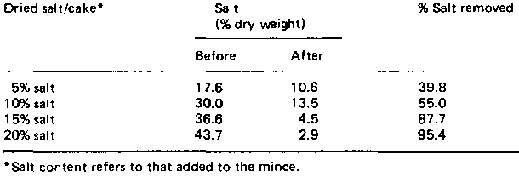
Table 1 Salt content of salt/chambo
cakes before and after de-salting
Delicatessen products
Fish sausage
There are many sorts of sausage that can be produced using fish. Most recipes are based on recipes for meat sausages where the meat portion is replaced by fish.
Frying sausage
The ingredients for this sort of sausage include white fish fillet meat, pork fat, rusk, water, salt, coriander, polyphosphates, pepper, and dye if required. The fillets are chopped in a chopper until the flesh is finely mashed. The other ingredients are added and the chopping is continued for 4 - 5 minutes. The mixture is then filled into edible sausage casings and then twisted into sausages of the lengths required. The product resembles a normal frying sausage in appearance and in taste; it is perishable and should be kept chilled or frozen. The sausages must be cooked before being eaten: they can be fried, grilled or cooked in the same way as meat sausages.
Slicing sausage
This product resembles a polony sausage. Although it is cooked and ready to eat cold, it can if desired be fried. The ingredients are as follows: skinless white fish fillets, pork fat, water, rusk, salt and pepper, powdered cereal filler, and cayenne pepper. The fillets are chopped in a bowl chopper until finely mashed, then the other ingredients are added to the bowl and mixing continues for another 5 minutes. The sausages are then filled into cellulose casings and tied off. The sausages are then heated for 2 hours in water at 80 - 90°C. To prevent bursting, the water temperature must not rise above 90°C. The sausages are then cooled in iced water for half an hour. The product should be kept chilled or frozen but will keep for longer than a year when frozen and stored at - 30°C.
A variation on the above recipe can be made inasmuch as the fish sausage once prepared can be smoked to produce a smoked slicing sausage.
Frankfurter sausage
This product is similar to a frankfurter made with meat. It is only partially cooked during the process and must be cooked by the consumer before it is eaten. The ingredients for these sausages are similar to those for slicing sausages but the proportions are different. Following production, the sausages can be smoked for 3½ hours at 60°C in a mechanical kiln to give them a smokey flavour. They are usually then skinned prior to sale. An acceptable fish sausage can be produced using fish which have been smoked, such as kippers. It is more usual, however, to use nonsmoked fish such as herring to produce a normal sausage and then to hot-smoke the sausage to give it a kippery taste.
Kamaboko
Kamaboko is a traditional Japanese fishery product which may be likened to a meat loaf or a sausage without casing. It can be made in various sizes and shapes. The first procedure in the manufacture of kamaboko is the manufacture of a product known as surimi which is a paste or a dough. The prime requirements for making surimi is that the minced fish meat must be elastic. In the main, croakers, lizard fish and conga eel have the desired elasticity. White croakers (Nibea argentata) are generally favoured because the kamaboko made from this fish is highly elastic. The other raw materials, apart from fish, include potato or wheat starch, salt, sugar, ajinomoto or monosodium glutamate, chopped vegetables (carrot and burdock) and vegetable oils (if the product is fried).
The preparation of surimi is as follows:
1. The head, scales and viscera are removed.
2. The flesh is cut into single fillets.
3. The bones and skin are removed. This can be done either manually or in a machine.
4. The meat is washed three times in drums of fresh water to remove the fat. Different kinds of fish may be mixed with the main species at this stage.
5. Excess water is removed either in a basket centrifuge or by squeezing through a cloth.
6. The meat is kneaded in a machine for about 15 minutes.
7. Salt is added to the meat and the mixture kneaded for a further 15 minutes; 20 - 40 9 of salt/kg are normally used.
8. Potato or wheat starch is added (100 - 250 g/kg of fish) and the mixture kneaded for a further 15 minutes.
9. Sugar may be added at the rate of 30 - 100 g/kg of meat to improve the flavour; monosodium glutamate is added and the mixture kneaded for a further 20 - 30 minutes until it assumes a doughy consistency. Chopped vegetables may be added if desired during the latter stages.
The resulting surimi is a stiff paste. The yield is around 40 per cent of the whole fish.
To produce kamaboko, the surimi must be shaped into half cylinders or into the shape of bread loaves on wooden blocks. The loaves are cut manually into pieces approximately 200 9 each and subjected to infra-red ray treatment, or they may be roasted on the top to get a brown crust similar to bread. They may then be dipped into dilute hydrogen peroxide to sterilise them. The product is then steamed for 40 minutes at a temperature of about 80°C and then cooled for 2 hours in the air. Packaging is in cellophane or polyethylene which is heat sealed. The products can keep for about one week during warm times of the year and up to two weeks in winter.
There are many variations on the basic kamaboko product, the main ones being in size and shape. Hampen is square-shaped and chikuwa is like a tube that is broiled instead of being steamed. There are also products such as fish noodles which are by-products of the kamaboko plant since the process is very similar except that the surimi is extruded through a vermicelli or spaghetti machine (See the flow sheet).
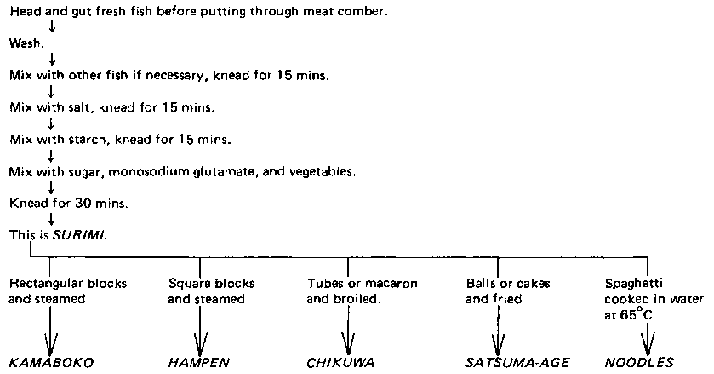
Flow sheet for the manufacture of
kamaboko and allied products
Tuna ham
Fresh or frozen tuna, marlin, swordfish, whale meat, pork, salt, spices, wheat or potato starch, and a natural casing are the main ingredients of tuna ham which is produced in Japan. Tuna ham is really a smoked fish sausage similar to salami but cut into thin slices.
The tuna, whale meat and pork are cooked at 86°C and minced. The minced meats are mixed with the salt, sugar, starch and spices in a mechanical mixer and kneaded well for about half an hour. The mixture is put into large-size natural casings and smoked over smouldering oak chips for about 12 hours. The smoked ham is then cut by machine into thin slices and vacuum packed in polyethylene-cellophane bags. The ham will keep for about 10 - 14 days at room temperature.
Fish balls
In China, low price fish such as sharks and lizard fish are used to produce fish balls. The meat is removed from the skin and bone and ground to a paste with water added. Ingredients such as starch, sugar, flavour essence, salt, water and spices are added and the balls are formed either by hand or by machine. Once formed they are put into cold water for a short time and then cooked for 15 minutes in boiling water.
Fish crisps
Fish crisps, shrimp crackers or krupuk in Indonesia are produced in considerable amounts. The product is also available in Thailand where it is made from fish. In Indonesia, the product is known as krupuk udang or shrimp krupuk. The krupuk industry is concentrated in East Java.
Shrimp or fish are used but the product made from white shrimp is more popular and higher priced than the others. The fish material should be absolutely fresh. Tapioca flour, sugar and salt are required. Eggs may also be added. To produce 100 kg of krupuk the following amounts of raw materials are required:
|
Shrimp meat |
100 kg |
|
Tapioca flour |
100 kg |
|
Sugar |
200 g |
|
Salt |
5 kg |
|
Water |
25 litres |
|
Eggs |
100 |
The fish or shrimp are mixed with tapioca flour in various proportions depending on the quality of the product desired. The best quality contains at least as much shrimp as tapioca. Lower grade products may contain much less shrimp and may be as low as one part of shrimp to ten of tapioca. The mixture of shrimp meat and tapioca is either pounded with wooden poles in a stone mortar for 1 - 2 hours or mixed mechanically. Machine mixing is not favoured in Indonesia as the product develops a slightly darker colour. During pounding or mixing of the shrimp meat and tapioca, the other materials such as sugar, salt and eggs are also added and mixing continues after addition of water. When mixing is complete the material forms a paste. This paste or dough is put into metal moulds in the shape of half cylinders; the filled moulds are placed in racks in a boiler containing some water. The moulds are exposed to steam but not immersed in the water. The steam gelatinises the starch and coagulates the proteins of the shrimp meat. Steaming continues for about 3 hours. After steaming the moulds are separated and the blocks of cooked fish/tapioca dough are allowed to cool for 2 - 4 hours. When cooled, they may be sliced in a machine to a thickness of 4 - 7 mm. The slices are then dried in the sun. The product is packed in paper cartons of different sizes depending on consumer requirements.
Krupuk is fried in oil before being eaten. This makes it expand several times and it is used as a side dish in Indonesian, Chinese and Thai cookery.
References
1. SUBBA RAO, G. N. (1961) Fisheries Products Manual. Food and Agriculture Organization of the United Nations, Rome (FAO). Indo-Pacific Fisheries Council.
2. TORRY RESEARCH STATION (1970) Torry Advisory Note No. 43, Torry Research Station, Aberdeen.
|
| ||||||||||||||||||||||||||||||||||||||||||||||||||||||||||||||||||||||||||||||||||||||||||||||||||||||||||||||||||||||||||||||||||||||||||||
Fish meal
The fish meal and oil industry began during the early 1800s in northern Europe and North America based primarily on surplus herring catches. The early industry was geared to the production of fish oil for the leather and soap industries with the solid residue being used as a high nitrogen and phosphorus fertiliser. More recently the solid residue, or meal, has become too expensive for use as a fertiliser and the high protein content makes it very suitable as an animal feedstuff. At present the bulk of the world's production of fish meal is used for incorporation into compound feeds for livestock such as poultry, pigs and fish. The world fish catch is in the region of 70 million tonnes per annum of which about one third is used for the production of fish meal.
Raw material
The raw material used for production of fish meal can be divided into three main categories:
1. Fish caught for the sole purpose of fishmeal production (often referred to as 'industrial fish'), e.g., anchovies in Peru, anchovies and pilchards in South Africa, herring and capelin in Norway and Denmark, and menhaden in America.
2. The 'by-catch' from other fisheries, e.g., prawn by-catch.
3. Fish offal and fish wastes from processing operations, e.g., carcases from a filleting operation, heads and guts from a canning line etc.
It is extremely important when planning the establishment of a fishmeal industry that a realistic estimate is obtained of the raw material available. Many fishmeal operations have failed because of over-optimistic assessment of the raw material available. In general, because of the high capital investment, running costs etc., a meal plant requires a regular large supply of fish to be economically viable. It is also very necessary to assess the price of the raw material and seasonal fluctuations in supply. Additional factors, such as the situation and distance from landing places etc., must also be taken into account.
It is also important to have information on the suitability of the raw material for meal manufacture. A number of tropical species of fish are known to contain toxins which could be harmful to livestock. If such toxic fish are likely to be included in the catch, it is important to carry out preliminary feeding trials to establish the suitability of the meal for livestock production.
The fat content of the raw material to be used for meal manufacture is also an important factor in determining the type of processing equipment necessary, the economics of production and the nature of the final product. Fish are normally grouped into two categories, namely oily (or fatty) fish of more than 2.5 per cent fat and non-oily (lean or white fish) with a fat content of less than 2.5 per cent.
Production methods
There are two main methods and many minor variations of commercial fishmeal production but all have the following steps in common (See Figure 14).
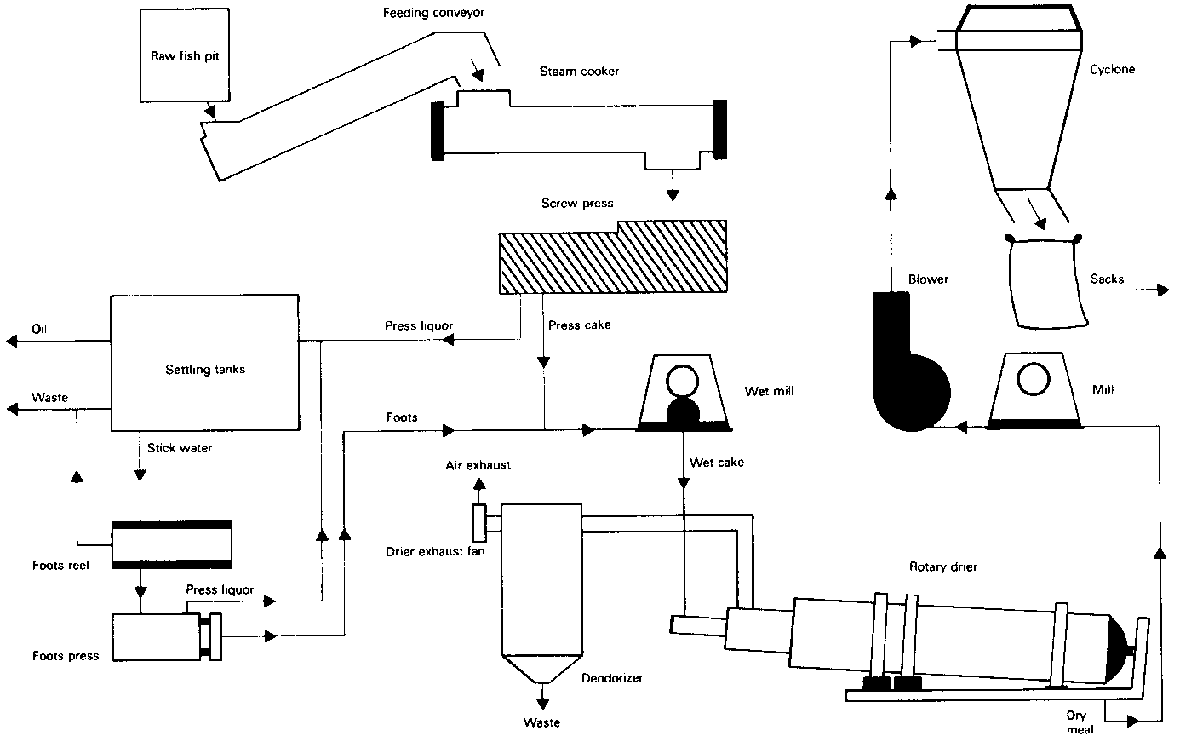
Figure 14 - Generalised fish meal
plant showing process sequence
1. Heating or cooking to coagulate protein and release water and
oil.
2. Pressing to separate liquids from solids.
3. Drying.
4.
Grinding to produce a powdered or granular end product.
Wet reduction
The wet reduction process is used primarily for the production of meal from fatty fish such as menhaden, herring, pilchard, anchovy etc., which are caught specifically for fishmeal production. The process is a continuous rather than a batch process and is particularly suitable for large-scale operations. The essential steps in the wet reduction process are as follows:
1. Grinding or hashing of large fish.
2. Cooking and heating usually with steam.
3. Pressing to squeeze out water and oil. The liquid portion is known as press liquor and is passed through a screen to remove solid particles of fish which are then returned to the press cake.
4. Fluffing out of the press cake.
5. Drying the press cake.
6. Grinding and packing the dried meal.
The press liquor can be treated, after screening to remove solids, in a number of different ways; generally, however, the liquid is heated and centrifuged to remove the suspended solid particles and the oil. The oil may then be further refined or polished whilst the solids are returned to the meal plant for drying. The liquor or stickwater can be concentrated by evaporation of the water to about 50 per cent solids. The concentrated liquor can either be sold separately as concentrated solubles or returned to the meal plant and incorporated into the press cake for drying.
Dry rendering or reduction of fish meal
The dry reduction process is principally applied to the conversion of fish or fish offal of low fat content. It is a batch process and is easier to manipulate than the wet rendering continuous process.
The essential steps in the dry reduction process are as follows:
1. Fish are coarsely ground in a hacker or grinder.
2. The hacked fish are cooked in a steam jacketed cooker with a stirrer. The cooker also acts as a drier and is usually referred to as a cooker/drier.
Presses and separate driers are optional extras with this type of plant. The cooker/ drier may be operated at atmospheric pressure or under slight vacuum to facilitate drying. The cooker will handle only one charge at a time. In recent years, the dry reduction process has gone out of favour for a number of reasons.
Advantages and disadvantages of the two methods
DRY RENDERING
|
Advantages |
Disadvantages |
|
1 High yield of oil even for non-fatty fish. |
1 Oil of inferior quality. |
|
2 Suitable for small batch operation. |
2 High installation and operating costs. |
|
3 Easy to manipulate cooking/drying times. | |
|
4 Greater flexibility. |
3 Production is slow. |
|
5 Produces whole meal including solubles. | |
WET RENDERING
|
Advantages |
Disadvantages |
|
1 Good quality oil produced. |
1 Meal is low in water solubles |
|
2 Faster process. |
unless concentrated stickwater is |
|
3 Lower installation and operating costs. |
added back. |
|
4 Suitable for processing large quantities |
2 Lower yield. |
|
Of material. |
3 Rigid operation conditions. |
|
5 Can yield a valuable by-product, i.e. fish solubles. | |
Cooking
For successful operation of a meal plant, the cooking step is one of the most important. If the time and temperature of cooking is insufficient the fluids (oil and water) will not be released from the protein and pressing out will be difficult. If the material is over-cooked, however, the fish become a soft mush and sufficient pressure will not build up in the press to expel the liquids.
Oxidation and antioxidants
Fish meals with high oil contents can present problems during storage. Fish oil in the meal will oxidise after production and the reaction can lead to considerable rises in temperature. This can become a fire hazard. One method of overcoming this problem is to allow the oil to oxidise before packing by holding the meal in bulk stacks or spread out on the floor. Sacks of meal can also be stacked singly for a few weeks while oxidation occurs. These procedures allow dissipation of the heat generated by oxidation rather than allowing it to build up in confined spaces. Another way of overcoming this problem is to pack the meal in airtight, polyethylene laminated multilayer sacks which will hamper the diffusion of oxygen into the meal.
The use of antioxidants to stabilise fish meals is common these days. The amount of antioxidant required depends on the degree of unsaturation of the oil and varies with fish species. The two most common antioxidants used for fish meal are ethoxyquin and butylated hydroxytoluene (BHT). It is common practice to add between 400 and 700 ppm ethoxyquin to fish meal immediately after drying and prior to packaging. The antioxidant will prevent the uptake of oxygen by the meal and so prevent spontaneous heating.
Bags and storage
Fishmeal bags normally contain 50 kg. In tropical areas, the bag material is often hessian made from woven jute. This relatively open structured material allows the passage of water vapour and oxygen. Under humid conditions, the meal which is hygroscopic may absorb moisture and, if the moisture content rises above 15 per cent, moulds and bacteria may become active and the meal will compact into a solid lump in the bottom of the bag.
In many modern fishmeal operations, paper and polyethylene laminated sacks are used. These sacks have advantages over the more traditional hessian ones in that:
1. They prevent the rapid movement of oxygen and water.
2. To some extent the meal is protected from rodents and insect attack and from contamination by moulds and bacteria.
3. The meal cannot seep from the sack as it can through hessian.
Pollution
Fishmeal production can pollute the environment in two ways: firstly, from vapours arising primarily during the drying stage and, secondly, from liquid effluent from the washing down of plant etc.
Air pollution, which is not in fact harmful, is most easily noted by the public and can often be a source of embarassment and a problem area for a meal factory. There are a number of ways of eliminating the malodorous vapours but the following should be considered:
1. The volume of gases to be dealt with.
2. The freshness of
the raw material.
3. The drying method used.
4. The location of the plant.
The methods used for abatement include:
1. Scrubbing the vapours by passing them through water.
2. Chemical inactivation, using chlorine or permanganate to oxidise the volatile reducing substances which are the main odour producing substances involved.
3. Combustion of the gases either at high temperatures or at lower temperatures using a catalyst.
In most cases, these methods are used in combination with the primary reduction of odorous gases with a scrubbing tower followed by a chemical or combustion stage. In many instances, the chemical reduction is incorporated into a scrubber by the addition of chlorine or permanganate to the scrubbing water.
Water pollution may be reduced by the use of screens and settling tanks and by the adjustment of the pH in the effluent to floculate the protein solids. These proteinaceous solids may then be removed and recycled into the plant.
Composition and quality
Fish meal is a high protein feed supplement which is mixed with other feed supplements to produce a balanced diet for livestock.
Constituents of the meal vary depending on the type of raw material and the process used. Protein is generally around 65 per cent but can vary from 50 per cent to 75 per cent. Fat content may vary between 5 and 10 per cent but preferably should be below 8 per cent. Ash or mineral content can vary considerably between 12 and 33 per cent depending on the raw material. High protein/whole fish meals tend to have lower mineral contents than meals produced from scrap and filleting waste: 18 per cent ash is the norm. Moisture content should be about 8 per cent (6 - 10 per cent); at moisture contents of 12 per cent or above, moulds may grow. Crude fibre is generally below 1 per cent and fish meal is considered as a low-fibre feed.
In the trade, fish meal is evaluated on the basis of its crude protein content. Prices are often given as price per unit protein (the unit of protein being the percentage of protein per tonne of meal). This means that if a plant produces a meal with say 60 per cent protein and the price quoted is $7 per unit, the price per tonne of that meal will be 60 x $7/tonne, i.e. $420 per tonne. The protein in fish meal is particularly good as a source of the essential amino acids. Most meals contain sufficient quantities of all 10 essential, and the 11 non-essential, amino acids to produce a well balanced diet. Of the essential acids, lysine is often the most critical. Lysine which can be high in fish meals can also be destroyed at high temperatures. Cereal-based diets which are used in feed rations are often deficient in Iysine and fish meal can be the sole source for a balanced feed.
Although fish meal is particularly valuable as a source of protein for livestock, it also contains useful quantities of other nutrients. Fish meals contain considerable quantities of vitamins, particularly the B group. These days, most mixed feeds incorporate a vitamin supplement formulated to include vitamins in sufficient quantities. However, the intrinsic vitamin content of fish meal leads to a good security margin in most feeds.
Fish meals can also be an important provider of minerals. Of particular interest to feed formulators are calcium, phosphorus, sodium, magnesium, potassium, iron, copper, zinc, manganese, iodine and selenium which can be deficient in a mixed diet. The following table gives the mineral contents of some fish meals and the mineral requirements for chickens and pigs:
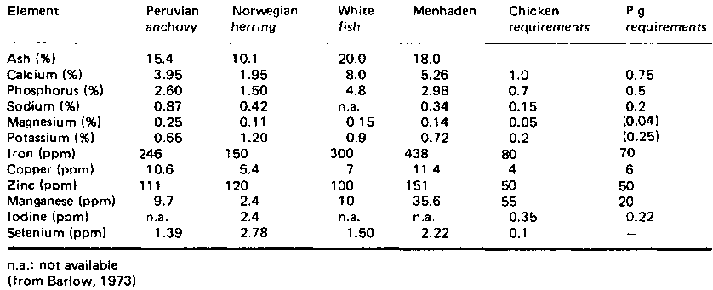
Table Important provider of materials
From the above table, by examining the mineral requirements of chickens, it can be seen that feeding 10 per cent Peruvian anchovy meal meets 40 per cent of the bird's calcium and phosphorous requirements and all the selenium needs. With the exception of manganese, this percentage of fish meal would also fulfil up to 50 per cent of the bird's requirements for the trace minerals.
Prior to 1948, there was no doubt that fish meal contained an unknown growth factor which was termed the 'animal protein factor' (APF). This factor was found not only in fish meal but in many animal protein feeding stuffs. Vegetable matter did not possess this factor and, although poultry could be kept for some considerable time on 'all-vegetable' diets, they failed to survive in isolated cages for more than one complete generation. Subsequently, intensive research led to the isolation from ox liver of vitamin B12, which was shown to be the APF. Addition of vitamin B12 to all-vegetable rations improved the performance of these diets considerably, particularly with respect to growth and reproduction. Even with the presence of this vitamin in all-vegetable rations, however, the addition of fish solubles to the diet still resulted in increased growth. By a series of experiments conducted around 1955, it was discovered that fish solubles were a rich source of zinc, and this mineral was deficient in all-vegetable rations. Apparently the soyabean protein had the property of binding zinc and so increased the requirement for it several times.
These two examples illustrate the important role that the micronutrients in fish meal and fish solubles have played in ensuring high performance in livestock. However, in the light of modern understanding of the nutritional requirements of livestock, fish meal still possesses unknown dietary factors which improve performance. The scientific literature on this question is extensive and clearly this is not the place to review it.
|
| ||||||||||||||||||||||||||||||||||||||||||||||||||||||||||||||||||||||||||||||||||||||||||||||||||||||||||||||||||||||||||||||||||||||||||||
Fish silage
An interest in fish silage is related to the desire to make maximum use of waste fish and fish offal in situations where the quantity involved, or the transport costs, prohibit conversion into fish meal. In small-scale fisheries in the tropics, this situation is common. Daily and/or seasonal gluts of fish occur and, because of transport difficulties and inadequate processing facilities, these surplus fish are often underused. The quantities involved do not permit profitable fishmeal manufacture since even the most modest fishmeal plant requires regular supplies of several tonnes of raw material per day for viable operation. Ironically, countries in this situation are often importing substantial quantities of fish meal to support their expanding animal production industries.
In countries where investment capital is available and fish waste is concentrated in one area, the obvious solution is reduction to fish meal. Where this is not possible, the fish could be utilised by the cattle, pig and poultry industries in the form of silage. The technology of fish silage production is simple; essential equipment is cheap; and the scale of production may be varied at will. These are distinct advantages in developing countries.
Silage production relies on the fact that at acidic pH, the microbial flora of fish is eliminated or greatly reduced and the enzyme systems in the fish which break down fish protein are able to function more efficiently. Fish silage methods can be divided into two major groups:
1. those employing acids, either mineral and/or organic, to lower the pH and to produce the conditions necessary for silage production, and
2. those employing a process of fermentation with the generation of organic acids to conserve the product.
Acid ensilage
The acid ensilage of fish offal was developed originally from a method invented by A. 1. Vertanen in the 1920s. Sulphuric and hydrochloric acids were used to acidify fish waste and the product was neutralised with chalk. Methods using organic acids, where the pH can be higher and neutralisation is unnecessary, have also been investigated. In the preparation of acid silage, the choice of preservative is between a mineral acid, mineral acid mixtures, organic acids such as formic or propionic, or mixtures of inorganic and organic acids. The choice will depend upon the cost and availability of the acids and the conditions under which the product is prepared. Formic acid is usually more expensive than the common mineral acids but it produces silages which are not very acidic and which do not require neutralisation before use. Care must be exercised with silages made from mineral acids and with all acids in the concentrated form. Equipment, tanks and machinery used for the production or storage of silage must be acid-resistant. Formic acid is not only acid in nature but it also has bacteriocidal properties which means that the quantities required are less than if mineral acids alone are used. It has already been said that the preparation of fish silage is a fairly simple process. An outline of the steps involved in preparation is as follows:
1. The raw material should be as fresh as possible (this may include whole fish, filleting waste, offal or other suitable protein material).
2. The fish are comminuted by mincing, cutting or chopping (this operation may be manual or mechanical).
3. For manual preparation 10 - 15 kg quantities of minced fish are placed in a suitable container (this must be acid-resistant).
4. The minced fish is acidified with mineral acid or with formic acid to the required pH. The mix is constantly stirred until the desired pH is reached.
Note: The optimum amounts of mineral acid to lower the pH and formic acid must be determined by experiment if they are used in combination. Generally, addition of sufficient mineral acid to reach pH 3 plus 0.5 per cent formic acid has been found to be acceptable in many situations. If formic acid is to be used alone, a concentration of 3 per cent formic acid by volume to weight of fish seems to be acceptable.
5. The container is left, preferably covered, for the fish mix to liquefy. This can take 3 or 4 days but the rate depends on the species of fish and the degree of comminution as well as the temperature at which the mixture is kept. It should be stirred daily.
Experience in the UK has shown that the successful production of fish silage, irrespective of scale, requires certain conditions:
1. The material should be reduced in size preferably to pieces no larger than 3 - 4 mm in diameter.
2. Acid must be thoroughly dispersed throughout the minced fish to avoid pockets of untreated material where bacterial spoilage can continue.
3. Periodic agitation is necessary to bring about rapid liquefaction.
4. Temperatures of at least 20°C are desirable since, below this, liquefaction takes place rather slowly. The enzymes responsible for liquefaction can be inactivated at higher temperatures but samples heated to 40°C have been found to liquefy rapidly.
Equipment used for silage production can vary considerably and, on a small scale, it might be sufficient to pulp the raw material, add the acid manually, mix in a suitable container, and store in a warm place. For larger-scale production, however, a mincer capable of reducing material to the required size is necessary, together with suitable heavy-duty mixing equipment, to ensure that a uniform mixture of fish and acid is made. For safety, a pump or measuring device for handling the acid is advisable. Suitable tanks are required for initial liquefaction of the fish, together with other tanks for bulk storage of the finished product and formic acid.
After liquefaction, oil removal may be necessary where fish with a high fat content are used. To do this, it is necessary to raise the temperature of the silage to 65 - 70°C when coarse suspended solids can be removed by decantation; this is followed immediately by centrifugation to remove the oil. In many situations, this process would be too costly and it may be possible to skim a certain amount of the oil from the top of the silage but experience has shown that oil is generally emulsified and that the formation of a distinct easily separated fraction does not occur.
The liquid nature of fish silage has always presented difficulties in the transportation and distribution of the product. Where production is for a local pig farm, then this may not matter but, where the silage is to be moved long distances or be fed to livestock which require a dry food e.g. poultry, there may be problems. Recent work at TPI has concentrated on the production of a dry product. The liquid silage is mixed with a powdered or granular carbohydrate source (cassava, wheat meal, rice, bran etc) which absorbs some of the moisture and makes it possible to sun dry the resultant paste. The end product is a dry powder or granular material which contains not only nitrogenous protein constituents but also an energy source from the carbohydrate added. This dry material can be sacked or bagged and is much easier to handle than the straight liquid fish silage.
Fermented silages
Fermented fish silages rely on the biological production of lactic acid by bacteria to lower the pH. In general, lactic acid bacteria such as Lactobacillus plantarum ferment sugars to organic acids (primarily lactic), thus lowering the pH of the mixture.
Fish contain only small quantities of fermentable carbohydrates and it is usually necessary to add suitable carbohydrates for the bacteria to convert to acid. Addition of mixtures of malt and cereal meal, molasses and cereal meal, malt and tapioca meal, and molasses and tapioca meal have all proved successful.
The fermentation process for conversion of carbohydrate to lactic acid is anaerobic and can be divided into three stages:
1. The starch of the carbohydrate source is hydrolysed to maltose by alpha and beta amylase.
2. Maltose is broken down to glucose by maltase.
3. Glucose is converted to lactic acid by bacteria. Small amounts of other substances such as acetic acid and alcohol are also formed.
Lactic acid bacteria can be divided into two types: (a) homofermentative, which convert one molecule of glucose to two of lactic acid, and (b) heterofermentative, which convert one molecule of glucose to one molecule of lactic acid plus ethyl alcohol and water. It is, therefore, better to use a homofermentative bacterium if possible. Since fish do not contain many lactic acid bacteria themselves, it is essential to add a starter culture, usually of lactobacilli, for successful fermentation. In addition, it is also necessary to add a source of amylase since the first step in the fermentation relies on the hydrolysis of carbohydrate. In most processes, the amylase is provided by the addition of malt to the mixture since malt is a rich source of amylases.
In essence, the production of fermented silage requires that the fish be comminuted in the same way as for acid silage. A carbohydrate is then mixed with the fish and a starter culture of a suitable bacterium added.
The fermentation should be carried out in full airtight containers so that conditions are anaerobic and successful fermentation is indicated by a rapid drop in pH, as the lactic acid is formed, and the production of gas. The anaerobic conditions may encourage the growth of Clostridium spp. which could be of public health significance; however, if the conditions are allowed to become aerobic, yeasts capable of growth at low pH may develop resulting in the loss of protein.
There are other methods used for production of fermented fish products which use other micro-organisms and/or salt. These are covered in the chapter on fermented fish products.
|
| ||||||||||||||||||||||||||||||||||||||||||||||||||||||||||||||||||||||||||||||||||||||||||||||||||||||||||||||||||||||||||||||||||||||||||||
Chemical and physical methods of quality assessment
Attributes of the hypothetical ideal method
Over the years many different methods have been developed and investigated in an attempt to find the most suitable index for use in quality control testing. The 'ideal' method would have the following attributes:
(a) It would be non-destructive.
(b) The equipment would be cheap to purchase and maintain.
(c) The equipment would be robust, portable and simple to operate and suited to minimum facility 'field' operations.
(d) It would produce consistent results on standard material.
Few methods even approach this ideal.
Precautions applicable to any quality assessment operation
(a) Ensure that your sample of fish from the bulk truly represents the bulk.
(b) Ensure that, when a part of a fish is analysed, it is always the same part. As discussed previously, composition differs markedly from head to tail of true fish, and depends particularly upon the relative amounts of skin, dark muscle and light muscle that are in the sample.
(c) Ensure that a rigidly standardised method is employed. The result obtained frequently depends upon the analytical method employed. Accordingly, standards specifying grades related to the content of a particular component should also specify the method of obtaining the result.
(d) Never attempt to compare directly results obtained by different methods.
(e) In export operations, levels of acceptance and rejection must correspond to the importer's legislation and/or specifications.
(f) In local operations, levels of acceptance and rejection should be related to local requirements.
Chemical methods
(a) Trimethylamine (TMA)
Trimethylamine, N(CH3)3, smells like ammonia and is chemically similar to ammonia, NH3. It is produced by many spoilage micro-organisms from a compound known as trimethylamine oxide (TMAO), O=N(CH3)3.
This conversion can only occur if:
(i) TMAO is present
and
(ii) suitable spoilage
micro-organisms are present.
TMAO is not normally present in freshwater fish but is found in marine species at a level related to the salinity of the habitat. The level of TMAO may change as a fish migrates from water of one salinity to another. High salinity is associated with high TMAO contents. It has been observed that freshwater fish may contain TMAO if they have been fed with fish meal made from marine species.

Table 1 Variations in TMAO content
(mg N/100g) in Indian prawns: effect of fishing ground salinity
If TMAO is present in the muscle, then micro-organisms will normally invade postmortem and produce TMA, slowly at first, then with increasing rapidity in fish stored at ambient temperature, in ice or in refrigerated seawater.
Careful processing, e.g. heavy salting, salting and hot smoking,
drying thoroughly, freezing, canning etc., either destroys or inhibits the TMA
producing microorganisms and any TMA in such products was probably already
present at the time of processing.
If fish are stored or processed in contact
with water or melt-water, some TMA will be washed out, masking the degree of
spoilage. This occurrence is most pronounced in small prawns which have a large
surface area in relation to volume.
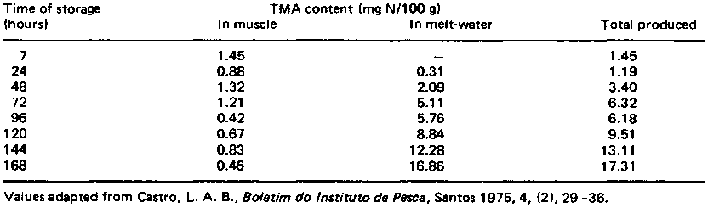
Table 2 The leaching of TMA from
prawns (Xiphopenaeus croyeri) stored in ice
Measurements of TMA are often used to assess the quality of fresh and frozen fish but the result obtained depends upon the method used: rigid standardisation is essential and it is unsound to make direct comparisons of results obtained by different methods. All methods require an acidic extract of the fish muscle and it is usually necessary to prevent interference by ammonia.
Simple methods of analysis:
(i) Conway microdiffusion or steam distillation. This method is relatively simple and uses relatively cheap equipment.
(ii) Trimethylamine sensitive electrode and pH meter. The assembly of equipment for this method is not yet commercially available; the capital cost probably approaches £1 000 but the equipment is cheap and simple to operate; it is essentially portable but a power supply is required; it is promising for the future.
More sophisticated methods of analysis:
(i) Measurement of the colour produced by treating TMA with picric acid. This method requires a colorimeter and mechanical sample shaking equipment, and a practised and conscientious operator.
(ii) Gas liquid chromatography. This method requires sophisticated equipment and a skilled operator; ammonia does not interfere.
Many workers feel that TMA content has only a poor correlation with eating quality, particularly in the early stages of spoilage. Typically, the presence of more than a trace is taken to indicate that spoilage has already occurred. It is not possible to use the TMA content to predict the remaining useful storage life.
(b) Total volatile nitrogen (TVN)
The abbreviation TVN refers to any volatile nitrogen-containing compounds that are produced post-mortem. The main components are TMA and ammonia. In a few species, dimethylamine is also produced e.g. Japanese hake (Lutella sp.). The relative amounts of these compounds depend upon the type of fish being examined and its quality. The following figures may be considered typical:
1. Freshwater fish - almost entirely ammonia.
2. Bony marine
fish - ammonia equalling or slightly exceeding the TMA.
3. Cartilaginous
marine fish - ammonia usually markedly exceeding the TMA.
4. Crustacean
shellfish - ammonia usually more extensive than in bony marine fish but not as
extensive as in cartilaginous marine fish.
TMA has already been fully discussed. The ammonia is mainly produced by bacterial attack on proteins and also by attack on amino acids (particularly arginine in crustacea) and on urea in cartilaginous species.
TVN determinations can be made by any of the methods mentioned for TMA but without the need to prevent interference by ammonia.
(c) Nucleotide degradation products
Adenosine triphosphate (ATP) is the major nucleotide of living muscle. Post-mortem, it is degraded by enzymes that are naturally present in the muscle and probably by micro-organisms which have invaded the flesh. It is generally accepted that a measure of nucleotide breakdown is more closely related to eating quality than a measure of TMA or TVN, especially in the early stages of spoilage.
A full discussion of ATP breakdown is beyond the scope of this course, but the possible pathways are summarised below:
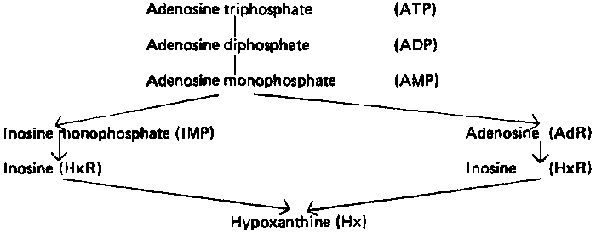
Figure
In crustacean species which are cooked alive, the degradation probably does not proceed beyond adenosine monophosphate. In a few species, degradation may occur via adenosine but, in the majority of species of commercial importance, degradation occurs via inosine monophosphate. The rate at which this degradation occurs is variable with species and with season, being markedly influenced by the pH value of the flesh. It is also influenced by temperature, occurring more rapidly above ambient temperature than in frozen storage. In most species, the final product is hypoxanthine but Japanese workers have reported that, in many Pacific species of commercial importance, inosine may be the final product (See Table 3).
Inosine monophosphate is considered to be a desirable component contributing to the characteristic flavour of fresh fish. In contrast, hypoxanthine is said to have an undesirable bitter taste. Opinion is divided about the taste of inosine but it is clear that nucleotide degradation involves at least a loss of a desirable component (IMP) and, in many cases, the accumulation of an undesirable component (Hx).
Hypoxanthine is not very soluble in water and so is not easily leached, as are TVN and TMA. It is essentially stable during processing and its presence in canned fish is indicative of the pre-processing quality.
It has been observed that, for a given species, the rate of accumulation of Hx is proportional to the temperature of storage. If this rate is known, and the Hx concentration corresponding to the reject limit is also known, then the remaining useful storage life can be estimated by measuring the Hx content.
Simple methods of analysis:
(i) The simplest method is to use test papers that are dipped in an aqueous extract of fish and to compare the colour so generated with preestablished standards. The test papers contain the enzyme xanthine oxidase and the dyestuff dichlorophenolindophenol (DCPIP). This enzyme converts hypoxanthine to uric acid, at the same time bleaching the pink DCPIP. At present, these papers are not commercially available but may be prepared in a moderately equipped laboratory. They are stable if kept dry, and easily portable.
(ii) The older enzymic methods require more sophisticated equipment and use acidic protein free extracts. A colorimeter, or UV spectrophotometer, is required.
More sophisticated methods of analysis:
(i) Hypoxanthine may be precipitated by silver or barium salts and the precipitate recovered and weighed. This method is essentially simple but requires accurate balances and very careful operators.
(ii) Ion exchange resins may be used to separate individual nucleotides, and their degradation products, but this method is not suited to the analysis of a large number of samples. A modification is possible, permitting a separation of the degradation products into two groups: those containing phosphate and those which do not. The ratio of phosphate-free to phosphate-containing products may be used to calculate the K value. It is claimed by Japanese workers to be more useful than a Hx value for those species where degradation stops at inosine (See Table 3).
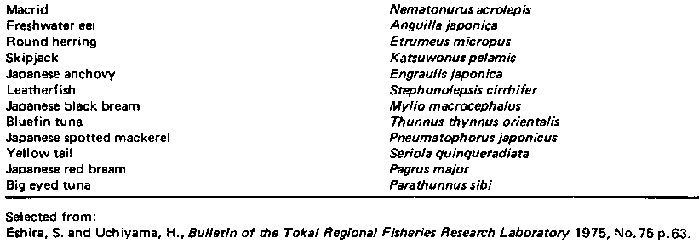
Table 3 Pacific fish species known to
yield inosine as the major nucleotide degradation product
(d) Fat degradation products
Whether a fish contains a little or a large amount of fat, the degradation of this fat during storage can cause undesirable changes in flavour, odour and texture. Unfortunately, fat degradation (or rancidity) is only conveniently measured on extracted oils. Therefore, it is necessary to extract the oil from the flesh first. In practice, this means that such tests can only be applied to those fish of high fat content.
The standard analyses of fat rancidity appear to be simple but, in practice, fat extraction and/or fat analysis may alter the composition to such an extent that the results are meaningless. Such methods are much more appropriate for assessing the quality of extracted oils obtained as commercial by-products.
The routine analyses are:
(i) Free fatty acids content, which
is a titration.
(ii) Peroxide value, which must be performed in subdued
light, and is a titration.
(iii) Aldehyde detecting reactions, which are
colorimetric.
(e) Salt and moisture content
The quality of products such as salted fish, sun dried fish and smoked fish is essentially determined by:
1. The quality of the fish before processing.
2. The adequacy
of the processing.
3. The adequacy of the storage.
The tests previously referred to may be applied to the fish before processing. If good quality fish are used and they are carefully processed and properly stored, then a good quality product will be obtained. The products are preserved primarily by reducing the water activity, i.e. by reducing the water content and/or increasing the salt content; analyses of these components serve as a check on the processing.
Moisture analysis:
Take an accurately weighed sample and cut into small pieces. Dry in an oven at 105°C for 3 hours. Break up the pieces, taking care not to lose any sample, and dry to constant weight. The weight loss is taken as the water content.
Salt analysis:
Take a small sample and homogenise in distilled water to thoroughly extract the salt. Centrifuge and dilute the supernatant to volume. Determine salt by titration with silver nitrate. The volume of silver nitrate used is proportional to the salt content.
Chloride meters are available but their performance may be erratic when used on protein-rich extracts.
Physical methods
(a) Measurements of flesh impedance and capacitance
The term impedance may, in practical terms, be considered as resistance to alternating current. (In fact that is an over-simplification and it is more accurate to refer to resistance and inductance.) The term capacitance may be considered as a measure of the ability to retain electrical charge.
Instruments capable of measuring either impedance, or impedance and capacitance, have been developed over the last 30 years. The most recent and most satisfactory instrument is known as the Torry Fish Freshness Meter (TFM). The TFM has four electrodes which are placed upon the fish. It is most important that a consistent position is used for all measurements. Two electrodes measure the impedance and capacitance; the other pair ensure good electrical contact and automatically correct the reading to the value which would be observed at 0°C. The reading is displayed digitally in the range 1 to 19; rarely does the value exceed 16 for UK fish, such high values corresponding to the highest quality fish.
The rate at which the TFM reading declines depends upon the species. It is known that changes in proteins and cell membranes caused by enzymes and microorganisms are responsible for the fall in the TFM reading as the fish deteriorate. Physical damage caused by rough handling and bruising also markedly reduces the TFM reading, probably to a greater extent than the physical damage reduces the eating quality, and many workers consider this a disadvantage. When applied to fatty fish, the TFM reading is also markedly influenced by the fat content (and thus the season) and, although the fat content may genuinely influence the eating quality, this fact is also looked upon as a disadvantage. Since the properties of the flesh and skin are different, fish with the skin on show different results from fish that have had the skin removed.
Current cost of the TFM is in the region of £400. However, it is easy to use, robust, portable and ideally suited to field operations. The only routine maintenance is to recharge the batteries daily. So far, this instrument has been little used in the tropics but UK experience suggests it could be of some value.
Summary
With reference to the hypothetical ideal quality assessment method mentioned at the beginning of this lecture, the chemical and physical methods most closely approaching the ideal are:
(i) the xanthine oxidase impregnated test paper;
(ii) the
Torry Fish Freshness Meter;
(iii) a trimethylamine or total volatile nitrogen
sensitive electrode system;
(iv) the Conway microdiffusion method for TVN.
References
For Trimethylamine (TMA) Method
1. CASTRO, L. A. B. (1975) Boletim do Instituto de Pesca, 4, (2), 29 - 36.
2. CHANG, G. W., CHANG, W. L. and LEW, K. B. K. (1976) Journal of Food Science, 41, 723 - 724.
3. MONTGOMERY, W. A., SIDHU, G. S. and VALE, G. L. (1970) Council for Scientific and Industrial Research Food Preservation Quarterly, 30 (2), 21 - 27.
4. RUITER, A. (1971) Voedingsmiddelentechnologie, 2, 1 - 10.
5. VELANKAR, N. K. and GOVINDAN, T. K. (1960) Proceedings of the Indian Academy of Science, 52B, pp. 111 - 115.
For Total Volatile Nitrogen (TVN) Method
1. BURT, J. R. (1977) Process Biochemistry, 12 (1), 32 - 35.
2. CLIFFORD, M. N. and KUMAR, N. Grimsby College of Technology (Unpublished results).
3. ESHIRA, S. and UCHIYAMA, H. (1975) Bulletin of the Tokai Regional Fisheries Research Laboratory, No.75, p. 63.
4. JAHNS, F. D., HOWE, J. L., CODURI, J. R. and RAND, A. G. (1976) Food Technology (USA), 30 (7), 27 - 30.
For Physical (TFM) Method
CHEYNE, A. (1975) Fishing News International, 14, (12), 71 - 76.
|
| ||||||||||||||||||||||||||||||||||||||||||||||||||||||||||||||||||||||||||||||||||||||||||||||||||||||||||||||||||||||||||||||||||||||||||||
Organoleptic (sensory) measurement of spoilage
Quality assessment methods
The food manufacturer has to produce a product at a quality which will satisfy:
(a) the customer
and
(b) statutory food legislation.
Much has been written on the analytical techniques developed to establish the nutritional and chemical composition of foods to ensure their compliance with food law, and it is not proposed to explore this area in this lecture.
In many ways, the quality requirements of the customer are more difficult to satisfy since the customer assesses the quality of a product entirely by subjective means, i.e. by sensory evaluation of a food's appearance, colour, odour, taste and texture, plus the visual appeal of its packaging and presentation.
Hence, it is the responsibility of the manufacturer to develop methods which can, as accurately as possible, evaluate the sensory properties of a food which the customer finds important. This will often mean using subjective methods of testing such as sensory (taste panel) methods or, in some cases, it may be possible to use objective methods.
However, it must be remembered that objective measurements of food quality are preferable only if the objective tests can provide a precise measure of the subjective quality being considered.
Sensory methods
A sensory method is one in which subjective measurements are made by individuals. Numerical scoring systems may be developed for such methods, or methods of ranking, or results may be expressed simply in attribute form, e.g. pass/fail, acceptable/defective.
Objective methods
An objective method uses a calibrated scientific instrument to measure a specific quality parameter usually on a numerical scale.
Problems of assessing fish quality
1. Many hundreds of species are sold throughout the world, all with distinct physical, chemical and sensory characteristics.
2. Fish, alone among the major items of food, are susceptible to virtually no control before harvesting or slaughtering. In addition, they are one of the most perishable items of food eaten.
3. Fish freshness/spoilage may be investigated objectively by assessment based on, for example:
(a) Physical changes, e.g., measurement of conductivity using the Torrymeter.
(b) Chemical and biochemical tests, e.g.
- tests dependent on bacterial action such as estimation of
trimethylamine (TMA);
- tests dependent on autolytic action such as enzymic
assays of nucleotide breakdown products, e.g., hypoxanthine;
- tests
dependent on fat oxidation, such as peroxide value estimation.
(c) Bacteriological changes, e.g., counting and identification of various micro organisms.
However, none of these methods produces results which may be regarded as providing a precise measure of consumer acceptability. Therefore, any system adopted to measure the quality of fish must, at some stage, be related to consumer acceptance. This must involve sensory ('taste') panels and consumer research. in the following sections, it is planned to consider the problems and methods of establishing a taste panel and assessment of results.
Classification of sensory characteristics
Sensory appreciation of food quality may be divided into the following categories:
1. Appearance and colour;
2. Odour and taste;
3. Texture.
The above three categories cannot be treated in isolation since sensory evaluation is often a combination of several overlapping factors, e.g., 'flavour' includes elements of odour, taste, texture and even the psychological effect of colour.
Taste panels
Aims
Taste panel techniques may be used in many different ways:
1. To characterise sensory changes in foodstuffs, e.g., changes that occur during spoilage or changes brought about by processing methods such as freezing or dehydration.
2. To distinguish (often with the hope of failure) between batches or samples of a particular foodstuff.
3. To ascertain whether 'qualify' can be represented by a simple numerical index or whether it is multidimensional.
4. To help establish standards, in some defined area, of raw or unprocessed food products.
5. To grade products according to some agreed quality classification system.
6. To help establish a usable relation between sensory data and consumer acceptability.
Methods to achieve the above aims roughly divide into two categories:
(a) Product rating
Grading on some agreed numerical or
descriptive/hedonic scale is carried out by a small panel of well-trained
judges.
(b) Difference testing
Usually done by a panel of sensitive
judges, without any great expertise or elaborate training.
Panel selection and training
Prospective taste panel members must be in sound health, self-motivated and of even temperament. They should first be screened for primary taste sensitivity and reliability. Members should be consistently able to detect and recognise the following levels of the four primary taste components:
|
Sweetness |
- 1.5 per cent sucrose |
|
Saltiness |
- 0.15 per cent sodium chloride |
|
Sourness |
- 0.06 per cent citric acid |
|
Bitterness |
- 0.005 per cent quinine sulphate |
Many individuals will be able to detect levels considerably lower than these values. It is also important to remember that initial detection of a component (say differentiation from water) is likely to occur at a lower concentration than recognition of the primary taste concerned.
If evaluation of odour is a major part of the sensory test then prospective judges must also be able to demonstrate a good 'odour memory'. On a general level, it is wise to find out how well the candidates will perform on an odour recognition test carried out with stoppered bottles of some of the commoner chemical smells such as acetic acid, ammonia, amyl acetate, aniseed, benzaldehyde, linseed oil, menthol, peppermint, vanillin etc.
Finally, prospective members should be able to display discriminatory skill with different qualities of the foodstuff under test. Discriminatory skill need not be general, e.g. a good wine taster may not be a good judge of teas or fish.
Having chosen members for the 'taste panel', a preliminary training period should be carried out, designed to acquaint the tasters with the quality factors involved in the fish product under test. The group should be asked to evaluate a selection of fish of the same type, at different stages in deterioration, from fresh to wholly unacceptable.
Tasting room
Control of environmental factors is universally recognised as being of value in sensory work with foods. Thus, a special 'taste panel' room where as many variables as possible can be controlled is highly recommended.
For maximum privacy and concentration, the use of screened
tasting booths is recommended.
Although natural or white fluorescent lighting
should be used where possible, a coloured light facility should be made
available to disguise any minor colour differences between samples that may
occur on occasion and which would otherwise distract the taster.
All possible sources of extraneous odour should be excluded, e.g. samples should be prepared in a separate room to eliminate cooking odours. Beware also of odours from detergents, floor polishes and other cleaning compounds.
Preparation of samples
The cooking method selected should not add any extraneous flavour to the food, e.g. frying is a poor method, but all sample flavour should be retained where possible, e.g. for fish, steaming "casserole) is recommended.
All samples should be presented at the same temperature.
In 'difference testing', the difficulty of presenting a 'standard reference sample' is acknowledged since: (a) any standard will deteriorate with time and (b) any standard will be quickly used.
Many workers use a standard control taken from a frozen stock of acceptable material.
Bias
In order to neutralise errors associated with the order of presentation of samples, the order in which items are presented should be balanced between the possible alternatives, e.g. in a triangular test:
|
AAB |
ABA |
BAA |
|
ABB |
BAB |
BBA |

Samples should also be labelled in
such a way as to eliminate any subconscious bias in the taster. For example,
labelling samples with
Fatigue
The maximum number of samples which can be reasonably assessed in one session will vary depending on the nature of the product. In general, fewer strongly tasting foods may be tested in one session than more bland products.
In order to avoid transfer ('carry-over') of flavour from one sample to the next, a warm water rinse between samples is recommended. (Some authors also recommend the use of white bread, unsalted biscuits, apple, lemon juice etc.).
Some commonly used test designs
(a) Methods of product rating
The sensory panel should consist of 4 to 6 individuals, who have undergone a period of intensive training both with the product under test and with the procedures being used.
Ranking
Ranking tests require that judges arrange a series of two or more samples in an ascending or descending order of intensity of a specific characteristic. Samples may be ranked in order of degree of acceptability, or in order of general quality, or by specific attributes of colour, texture or flavour intensity.
Grading
The panel is asked to grade samples according to some agreed numerical or descriptive hedonic scale.
Numerical scoring systems: Freshness, or degree of spoilage, may be assessed in a raw fish from:
(i) the general appearance of the fish including that of the
eyes, surface slime, and texture of the flesh and
(ii) the odour of the gills
and belly cavity.
In addition, marks may also be awarded for cooked fish odour, texture and flavour.
Various numerical scoring systems have been devised to cover some or all of the above sensory parameters. The most intensive investigation of this type of sensory evaluation has been that of Shewan and co-workers, who have devised detailed descriptive schemes in which numerical scores are given to:
(i) Raw fish - appearance, odour and texture;
(ii) Cooked
fish - flavour, odour and texture.
Such schemes have been devised for cod, haddock, whiting and redfish, and similar schemes have been developed for various other species.
Generally speaking, the full Shewan's scheme is probably too complex for regular commercial use although abbreviated versions may prove useful for routine quality grading.
Hedonic seales: For example,
|
Excellent |
Good |
Average |
Poor |
Bad |
|
Like |
Like |
Neither like |
Dislike |
Dislike |
|
definitely |
slightly |
nor dislike |
slightly |
definitely |
For a scoring or grading system to be effective certain prerequisites must be met:
1. With numerical scoring systems, quality factors must be properly 'weighted' to reflect their relative importance.
2. The scale should be such that a difference in score reflects a reproducible variation in the quality factor being scored, i.e. scale not too large with too many elements.
3. Agreement is necessary between judges as to quality relating to specific scores given.
4. Whenever possible, physical and chemical analysis of the commodity should be carried out to supplement sensory evaluation.
(b) Methods of difference testing
The panel should consist of 10 to 20 individuals with, ideally, 3 or 4 replications per judge per 'difference test'.
The panel do not require any intensive training as long as members are reasonably motivated and have passed the sensitivity requirements.
The three most commonly used test designs are the pair comparison, duo-trio test and the triangular test.
Pair comparison involves simultaneous presentation of one coded sample each of material A and B with the question: -
'Which is the...................er of the two?' or
'Which is
the regular sample?'
In the Duo-trio test, three samples, two of A with one of B, or one of A with two of B, are presented. One of the duplicates is coded, say, S and the other samples are coded, say, 1 and 2 and the question asked is 'either 1 or 2 is identical with S; which is it?'
In the Triangular test, three coded samples are presented, of which two are identical and one is different but, this time, the question is 'which one is the odd sample?'
Statistical calculations can be carried out to establish whether the number of 'correct' answers obtained is sufficient to demonstrate a significant difference in the flavour of the 'odd' sample.
Conclusions
The introduction of sensory panel evaluation of fish quality requires research, good organisation and proper training.
An established visual and organoleptic scale is probably one of the easiest and least expensive ways of evaluating fish spoilage. It has the advantage of meaning something to the fisherman, the fish seller and the consumer. Its main disadvantage is that it is often open to discussion and disagreement.
Each country should develop its own standards under its own conditions. Consumer acceptability must always be the criterion on which to base methods. If fish products are for export, retraining of taste panel personnel and review of quality methods may be necessary to meet new market requirements.
References
1. AMERINE, M. A., PANGBORN, R. M. and ROESSLER, E. B. (1965) Principles of sensory evaluation of food. New York and London: Academic Press, 602 pp.
2. EHRENBERG, A. S. C. and SHEWAN, J. M. (1953) The objective approach to sensory tests of food. Journal of the Science of Food and Agriculture, 4, 482 - 490.
3. EHRENBERG, A. S. C. and SHEWAN, J. M. (1959) Applied Statistics, 8, 186.
4. HERSCHDOERFER, S. M. (Ed.) (1967 - 72) Quality control in the food industry, Vols. 1 and 2, London: Academic Press.
5. KREUZER, R. (Ed.) (1971) Fish inspection and quality control. Published by arrangement with the Food and Agriculture Organization of the United Nations. West Byfleet, Surrey: Fishing News (Books) Ltd.
6. SHEWAN, J. M., MACINTOSH, Ruth G., TUCKER, C. G. and EHRENBERG, A. S. C. (1953) The development of a numerical scoring system for the sensory assessment of the spoilage of wet white fish stored in ice. Journal of the Science of Food and Agriculture, 4, 283 - 297.
|
| ||||||||||||||||||||||||||||||||||||||||||||||||||||||||||||||||||||||||||||||||||||||||||||||||||||||||||||||||||||||||||||||||||||||||||||
Microbiology of spoilage
Morphology, structure and growth of bacteria
Morphology
With a few exceptions, bacteria come in two types: cocci, which are spherical, and rods, which are cylindrical. Cocci are 0.5 - 1µ in diameter; rods are 0.3 - 1 µ in diameter and 1 - 10µ in length. 1 µ is 1/1000 mm. The size of cells can be measured directly by microscopic observation or by the ability of cells to pass through a filter with pores of known size.
The normal method of reproduction in bacteria is binary fission in which a single cell divides into two identical daughter cells. It is often found that the cells do not separate after division and the mass of cells that results adopt characteristic patterns. If the planes of division are random the pattern will resemble a bunch of grapes and is called staphylococci; divisions in the same plane will result in a chain called streptococci.
Rod shaped cells can be regular cylinders or cigar shaped. They are sometimes found in chains but are more often as single units. Some cells contain a resistant spore which can be seen under the microscope; this will be discussed in more detail later.
When bacteria are cultured on a solid nutrient, the colony which is formed by the growing mass of cells is often of use in identifying the bacterium; the addition of reagents and indicators can modify the appearance of the colony and provide further information.
Structure
Microscopic examination of cells shows very little unless special staining techniques are used. This is because the cell contents have a refractive index which is similar to that of water which is the suspending medium. In order to make a stained preparation, the cells must be spread thinly on a glass slide and then fixed by gentle heating. Special dyes are then applied to the smear and, after a suitable time, the excess is washed away leaving a stained film of bacteria against a clear background. The dyes which are used differ according to the chemical nature of the structure under study.
The nucleus contains the deoxyribonucleic acid (DNA) of the cell and it is this which dictates the nature of the cell. In many cells, the nucleus is a diffuse structure and can only be seen clearly during cell division when it becomes thicker.
The ribosomes are the parts of the cell that translate the coded information in the DNA into proteins, which are used to build the cell, and enzymes, which control the biochemical processes which occur in the ceil.
The nucleus and the ribosomes are contained in the cytoplasm which is bounded by the cytoplasmic membrane. The shape of the cell is governed by the presence of a rigid cell wall, which may be protected by a slime layer.
Some cells are motile and they achieve this by means of a whip-like flagellum. The flagellum arises from a basal granule in the cytoplasm and protrudes through the cell wall. The position of the flagellum, or the arrangement if there are more than one, is sometimes of use in identifying bacteria.
The resistant spores referred to earlier are produced as a means of surviving extremes in the environment. The spore is formed from only part of the cell but always includes the nucleus with its DNA. When conditions are once again favourable for growth the spore germinates and a new generation of cells is produced. The spore which is dormant is protected by a tough spore coat and by the fact that it has a very low water content. The position and size of a spore within the cell is often of diagnostic use.
The chemical composition of the cell determines the way in which it reacts to staining. In practice, the majority of cells fall into one of two types. The first worker to discover this was a Dane, Gram, and this effect is now called the Gram reaction in memory of him. He discovered that, using a combination of dyes and decolourising solutions, cells would either stain blue or red. We now know that this effect is determined by the chemistry of the cell wall. The Gram reaction has proved to be a most valuable diagnostic tool.
Growth
When we talk about growth in bacterial terms, we usually refer to the increase in numbers of cells and not the enlargement of individual cells. It is a fairly simple procedure to count the numbers of cells in a liquid nutrient medium and, from this data, we can produce a growth curve for the population.
In most spoilage situations, there is a limited supply of nutrients and the growth curve under these conditions usually takes the form shown in Figure 15. For reasons that need not concern us here, the numbers of cells is plotted as the logarithm of the actual number counted against time.
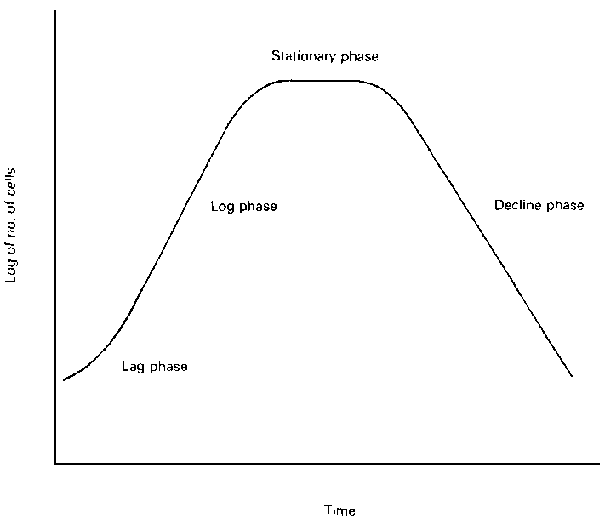
Figure 15 - Typical growth curve
At the start of the curve, the cells are adapting to the new environment and the rate of division is so slow that it does not keep pace with the number of cells which are dying. This tends to give a straight horizontal line or a slight downward curve. This is called the lag phase,
At the end of the lag phase, the cells begin to divide more rapidly and the total number of cells in the culture rises. At best, the cells will reproduce logarithmically which on our graph is shown by a straight line, the slope of which is a measure of the rate of growth. This is called the log phase.
After a time, the nutrients become exhausted and there may be a build up of toxic waste products. These and other factors lead to a reduction in the rate of cell division and a consequent flattening of the growth curve. At this point cell division and death are equal and this is called the stationary phase.
Following the stationary phase, the rate of division falls even more and there is an increase in cell death which leads to a logarithmic decline phase. Introduction of fresh nutrients, or the transfer of some cells to a new source of nutrient, will result in a repeat of the cycle.
From experiments of this type, it is possible to calculate the time taken for a newly formed cell to mature and reproduce itself: this is called the generation time. Different bacteria, and even the same bacteria under different conditions, have different generation times. Many preservation techniques control spoilage by inducing a prolongation of the generation time.
Microbial classification
Bacteria, like most living things, have been sorted into groups which have similarities. The distinguishing features are normally biochemical and morphological. The system as a whole need not concern us except to point out that in referring to a particular organism use is made of both the generic and specific names. Thus Staphylococcus aureus is usually abbreviated to S. aureus.
Yeasts and moulds
Yeasts are usually ellipsoidal and are about 6µ by 3µ in size. They reproduce by budding although some do divide in a manner similar to bacteria. Moulds consist of cylindrical filaments called hyphae which form a mass known as the mycelium. The hyphae may or may not have crosswalls. Moulds reproduce both sexually and asexually, in both cases a spore (or spores) is formed which can germinate to form a new mycelium. Fragments of hyphae will also produce a new mycelium if the environment is suitable.
Yeasts are not important as far as seafoods are concerned but moulds, due to their ability to grow where water is limited, can be a problem on smoked or dried fish. Where water is abundant, the bacteria grow so much more rapidly that moulds are only of secondary importance.
Culturing bacteria
In order to study bacteria, or for that matter moulds, they must be separated from the sample and grown on an artificial food source. The composition of the growth medium must be optimal for the particular organism and this means that the exact requirements of each organism must be known. Fortunately, most of this work has been done for the commonly isolated organisms and we have only to prepare the medium as laid down in the standard texts on the subject.
The temperature at which the medium is incubated must suit the organism and there are three groups: psychrotrophs which grow at 0 - 5°C but have higher optimum temperatures; mesophiles which favour temperatures between 10 and 45°C; and thermophiles which grow at 80°C. At chill temperatures, the psychrotrophs are important spoilage organisms whereas organisms of public health significance are almost always mesophiles.
When an organism is growing on a suitable medium, it becomes easy to test its various biochemical properties and study the shape and size of the colonies. The ability to ferment certain sugars or utilise unusual carbon or nitrogen sources can be determined and is useful in identifying unknown cultures.
Bacteria may be grown in tubes of liquid media, or on slopes or plates of media solidified with agar. Cotton wool plugs are the traditional method of sealing tubes and bottles of media but screw caps have the advantage that there is a reduction in evaporation which means that media have a longer shelf life.
|
| ||||||||||||||||||||||||||||||||||||||||||||||||||||||||||||||||||||||||||||||||||||||||||||||||||||||||||||||||||||||||||||||||||||||||||||
Microbiology of fish spoilage
Post-mortem bacterial growth
As soon as a fish dies, a series of changes starts to take place which is collectively known as spoilage. The degradation of the tissue is brought about both by indigenous fish enzymes and by micro-organisms which are present on the surface of the skin, on the gills and in the intestines. The chemical and autolytic changes that take place are the subject of another lecture and will not be dealt with here.
Where do bacteria come from?
It is a fact that newly caught healthy fish have sterile tissues and that bacteria can only be found on the skin, gills and in the intestines. Whilst still alive, the fish and the bacteria exist in a state of equilibrium and it is only after death that the bacteria can invade the tissues and spoil the fish. Invasion of the muscle from the gut is, of course, made easier by the autolysis brought about by the gut enzymes. The numbers of bacteria in the gut are highest when the fish has recently been feeding. It is reasonable to assume that fish caught in polluted waters will be more heavily contaminated than fish from clean areas, and the literature on the subject bears this out. The situation changes when we consider the fate of the fish once it is caught: it will be contaminated to some extent by all the materials with which it comes into contact, e.g., ice, fish boxes, the boat itself and even the crew.
What do they do?
The bacteria grow using the fish as a food source and producing various waste products which accumulate and produce off-odours and bad flavours. It is well known that trimethylamine oxide can be reduced by bacteria to give trimethylamine which imparts an off-odour to the fish. Other bacterial by-products are ammonia and hydrogen sulphide, both of which have objectionable smells. In the quest for nutrients, bacteria make use of the simplest compounds first and intact proteins may only be used when they have been broken down by autolytic enzymes.
The result of the activities of bacteria, coupled with the autolytic changes, is fish which are organoleptically, and often visually, spoiled. In some cases, the production of bacterial waste products may be such that fish become inedible before the tissue is visibly damaged.
Methods of controlling spoilage
The lecture on the fundamentals of microbiology has provided us with some hints as to the methods to be used for controlling spoilage. The technology of preservation will be dealt with elsewhere and we will only by considering how the techniques affect the bacteria themselves. Even under ideal conditions, fish will only keep for a defined period with the possible exception of canned fish; the purpose of preservation is to make the storage life of the product suitably long whilst not adding too much to the selling price.
You will recall that we have discussed generation times of bacteria in the first lecture on microbiology. An increase in the generation time will mean that the time scale of the typical growth curve will be lengthened. This can be achieved in a number of ways, the first of which is to lower the temperature of the environment. It is of little consequence to the cells how the cooling is effected: it is the temperature which is important assuming that there are no other factors at work such as dehydration (often found in refrigerators).
The lowering of the temperature means that the enzymes in the cell cannot function at their optima and, since the metabolism of the whole cell relies on enzymes, the cells are slow to grow and divide. The effectiveness of a particular temperature in preserving a food will depend on a number of factors as follows:
(a) What proportion of the flora is psychrotrophic (i.e., able
to grow at low temperatures).
(b) The growth rate of the organisms at the
given temperature.
(c) The previous treatment given to the food.
The last factor requires a little explanation. If a food is heated to a temperature which is sufficient to kill all vegetative cells but not the resistant spores of Bacillus spp. or Clostridium spp., then storage in the refrigerator can be quite lengthy since the spores will not germinate unless the temperature rises into the normal mesophilic range. It is difficult to be precise about this since the conditions, as well as the particular organism, will influence the temperature at which germination takes place.
If the temperature is taken to below freezing, the situation is a little different. In most cases, growth is completely stopped and the change in state of the water may well kill a large proportion of the cells. Death can be attributed to many factors including mechanical damage, dehydration, concentration in cellular solution, cold shock and metabolic injury. The fact that the last mentioned of these factors does occur is demonstrated by the exacting nutritional needs of cells recovered from frozen foods.
For some time, it has been known that fish from tropical waters can be stored for longer in ice than fish from temperate waters. This is due, in some measure, to the tropical flora being unable to adjust rapidly to the large drop in temperature upon the addition of ice: a drop of the order of 30°C. In temperate waters, the corresponding drop may be only a few degrees Centigrade.
The growth of bacteria can also be arrested by shifting the pH of the environment so that the cells' enzymes are again not able to function at their optima. This is what occurs in pickles and marinades. Many spoilage organisms find the low pH so hostile that they die during storage. Spoilage of pickled foods is usually the result of mould growth, the mycelium being visible on the surface of the liquid. The growth of mould may bring about a rise in the pH of the pickle and this will enable yeasts and perhaps specialised bacteria to grow. The following table shows the pH minima and maxima of a few common organisms:
|
Organism |
Minimum pH |
Maximum pH |
|
Escherichia cold |
4.4 |
9.0 |
|
Salmonella typhi |
4.5 |
8.0 |
|
Streptococcus lactis |
4.3 - 4.8 |
- |
|
Lactobacillus spp. |
3.8 - 4.4 |
7.2 |
|
Moulds |
1.5 - 2.0 |
11.0 |
|
Yeasts |
2.5 |
8.0 - 8.5 |
It will be obvious that since the pH of fish tissue will be 5.6 or more, almost any micro-organism can grow on and spoil it. Some bacteria, particularly Lactobacillus spp., have the ability to reduce the pH to a level where the normal spoilage flora is inhibited, the usual mechanism being the production of lactic acid from the carbohydrate in the substrate or food. Many of the traditional fermented foods of South East Asia owe their long shelf life to such a mechanism as this. Unfortunately, there is not much information on the exact nature of these products or the organisms which are responsible for the preservative effect.
All the reactions which take place in the cell require an aqueous environment for their proper functioning. Thus, reducing the amount of available water in the foodstuff will bring about a slowing, or complete cessation, of bacterial growth. Water content is usually recorded as percentage moisture but, in bacterial terms, it is the free water which is important. Microbiologists measure water content as water activity (aw), which is derived from the following formula:
Equilibrium relative humidity = 100 aw
Here is a table showing the minimum aw at which different groups of microorganisms can grow:
|
Organisms |
aw |
|
Most spoilage bacteria |
0.91 |
|
Most spoilage yeasts |
0.88 |
|
Most spoilage moulds |
0.80 |
|
Halophilic bacteria |
0.75 |
|
Xerophilic moulds |
0.65 |
|
Osmophilic moulds |
0.60 |
The water activity of a food can be lowered by removal of water or the addition of a solute which makes the water no longer available to the cells. Sodium chloride is such a solute; the aw obtained for different concentrations of salt are given in the table below:
|
Per cent salt w/v |
aw |
|
0.9 |
0.995 |
|
1.7 |
0.99 |
|
3.5 |
0.98 |
|
7.0 |
0.96 |
|
10.0 |
0.94 |
|
13.0 |
0.92 |
|
16.0 |
0.90 |
|
19.0 |
0.88 |
|
22.0 |
0.86 |
It is obvious that although a 22 per cent salt solution is too salty for the average palate, it still does not give complete control of spoilage organisms, especially moulds and halophilic bacteria. In order to provide the best protection to the food, it is usual to remove some of the water and add salt. The removal of water can be by the direct application of heat but a more interesting technique is the smoking of foods.
Tests for assessing microbial spoilage
All the operations involved in these tests must be carried out in such a way that there is no contamination of the sample by the technician; this is known as aseptic technique. The sample is weighed out into a sterile bottle from which it is transferred to a blender and homogenised with 450 cm³ of sterile diluent. The resulting suspension is returned to the bottle. One cm³ of this suspension is pipetted into each of two petri dishes and 1 cm³ is transferred to a bottle containing 9 cm³ of diluent. Two more petri dishes are inoculated in a similar fashion from this bottle; this process is repeated until a suitable dilution has been reached. About 20 cm³ of nutrient agar, cooled to 45°C, is poured into each dish and after mixing with the sample the agar is allowed to set. The prepared plates are placed in an incubator for a defined period at a set temperature. After incubation, the plates are examined; those for the dilution which has between 30 and 300 colonies growing are counted. By multiplying by the dilution factor, the actual count for the sample can be calculated.
|
| ||||||||||||||||||||||||||||||||||||||||||||||||||||||||||||||||||||||||||||||||||||||||||||||||||||||||||||||||||||||||||||||||||||||||||||
Public health microbiology
Organisms which cause infection in man
The field of microbes and their activities is a vast one including everything from the useful to the downright dangerous. These notes are intended to provide basic information on those organisms which cause intoxication and infection in man and are either water or food borne.
Staphylococcus aureus
Staphylococcus aureus is a spherical shaped cell which tends to occur in clusters resembling bunches of grapes. It can cause infections in man and is often found in the nose, throat, skin, and in septic lesions. Symptomless carriers are often found. The most important factor of this organism is its ability to produce a heat-stable enterotoxin which, when ingested, gives rise to nausea, cramps and diarrhoea. The incubation period between ingestion and illness is usually 2 - 4 hours. The organism is normally transmitted to the food from the hands of food handlers and, if the food is kept warm for some time, growth occurs and toxin is produced. The addition of preservatives or low temperature storage will prevent growth, as will adverse pH or lowered water content. Once the toxin has been formed, it is very difficult to destroy and often survives treatments which kill the causative organism.
Salmonella spp.
Salmonella spp. form a large group of cylindrical shaped organisms which is commonly associated with the intestinal tracts of warm-blooded animals. Although this is their principal habitat, they are capable of prolific growth on a wide variety of foodstuffs. As with Staphylococcus aureus, symptomless carriers do occur but at much lower rates. The organisms are passed in the faeces and are transmitted thence to the food. Salmonella produces infections in man and there is no toxin production in food; this means that sufficient cells (the minimum infective dose) must be ingested in a living state to cause disease. Following contamination of a food there must, therefore, be a period during which growth can occur followed by ingestion; if there is any form of cooking, then the Salmonella will probably be killed and the food will be rendered safe. The heat-resistance of Salmonella is, except for a few strains, low and pasteurisation is normally adequate to eliminate them. The symptoms of salmonellosis are fever, abdominal pain, diarrhoea, prostration and frequent vomiting. The symptoms usually occur between 12 and 24 hours after ingestion but can occur between 6 and 48 hours. The illness may last for & days or even longer. During the period of the illness, and for some time afterwards, the patient will be passing Salmonella in the faeces and for this reason should not be allowed to handle food until he is fully recovered. Control of this organism in the factory is effected by the exclusion of carriers and an insistence that all staff wash their hands before entering a food handling area.
Clostridium perfringens (welchii)
This organism is widely distributed in nature, it is a commonly found inhabitant of the bowels of man and many other animals, and its spores can persist in soil, dust and water for considerable periods. The cells are cylindrical and may contain a resistant spore. This organism is anaerobic and grows most rapidly when oxygen is absent or in low concentrations. When food is cooked, oxygen is driven off and, thus, if cooked food is kept warm for any length of time, the spores which may well have survived the cooking process will germinate and growth will occur. if food in which C. perfringens has proliferated is eaten, the illness which usually develops within 10 - 12 hours is thought to be due to the release of a toxin within the intestine. The symptoms are abdominal pain, diarrhoea and prostration and they may last for 12 - 24 hours. Due to widespread distribution of this organism, it is difficult to ensure its absence from foods although normal procedures for hand washing and plant sanitation will help. The principle method of control must be to ensure that all cooked foods are stored at temperatures outside the normal growth range for the organism. For most practical purposes, the safe temperatures are below 10 or above 60°C, and food should only be at temperatures in between whilst being actively heated or cooled. Foods in which a preservative is incorporated or some other physical condition is growth limiting may be exempt from this requirement.
Clostridium botulinum
This is an organism which is in many respects similar to C. perfringens but differs in that, during growth on suitable substrates, an extremely potent toxin is released. The toxin, when ingested, attacks the nervous system causing paralysis and frequently causes death. Fortunately, the toxin is sensitive to heat and foods can be rendered safe by boiling for a few minutes.
Spores of C. botulinum are widely distributed in nature and it is not uncommon to find them on raw materials. If it is accepted that there is a high probability that raw materials will be contaminated, then control measures must centre on the prevention of growth and subsequent elaboration of toxin. Except in the case of canned seafoods, there is little hope of destroying the spores by heat treatment and it is necessary to control growth by physical or chemical means. Commonly used methods are: refrigeration/freezing, drying, pickling, salting, and curing with nitrite. If, despite such precautions, toxin is produced and the food is consumed without further cooking, then the symptoms mentioned above will occur after approximately 6 hours but may be delayed for up to 24 hours and sometimes even longer. Death, if it occurs, will follow at the earliest at 24 hours but sometimes as late as one week after ingestion of the toxin.
Vibrio parahaemolyticus
This is an organism which is frequently found in seafoods and in coastal waters. The organism grows on the food, and ingestion of the living cells gives rise to the symptoms which are as follows: abdominal pain, nausea, vomiting and diarrhoea. Symptoms may start within 2 hours but may be delayed for up to 48 hours. The illness usually lasts for 1 - 2 days. This organism does not produce resistant spores and can be easily destroyed by heat. For this reason, it is only a problem where seafood is consumed raw, e.g., in Japan. There is still a great deal to be discovered about the pathogenicity of this organism and its significance in seafoods which will be cooked before consumption. After initially over-reacting to the presence of V. parahaemolyticus, many importing countries now accept shipments containing the organism provided that they are raw products.
Vibrio cholerae
This organism is traditionally regarded as waterborne but the use of polluted water in a seafood processing plant can lead to contamination of the product. Mild forms of the disease do occur and there is a danger that personnel with mild diarrhoea may in fact be excreting cholera vibrios, which might be transferred to the food. This in itself is sufficient reason to exclude anyone suffering from a gastro-intestinal disturbance from the processing plant. The symptoms are similar to many of the other types of food poisoning but the passing of rice water stools is peculiar to cholera. The illness starts 1 - 5 days after ingesting the contaminated food and may cause death due to loss of fluid and electrolyte depletion. V. cholerae is not heat resistant so that, like V. parahaemolyticus, it is destroyed by normal cooking procedures.
Bacillus cereus
This is a rod shaped organism which can form heat-resistant spores. It is common in many foods and in soil and produces two fairly distinct types of illness. The first, or classical, form resembles C. welchii poisoning, with an incubation period of 10 - 13 hours. The second form is more acute and resembles staphylococcal intoxication and has an incubation period of 1 - 5 hours. This suggests that, in the first form, there is some type of infective process taking place, whilst in the second form the symptoms are indicative of a straightforward intoxication. In either case, illness only develops when the food contains extremely large numbers of the organism (usually in excess of 10 million per gram). This fact means that effective control of the growth of B. cereus by means of temperature control, drying, salting etc. will greatly reduce the possibility of illness. Foods are most susceptible when they are cooked and then held in a warm state for protracted periods. Under these conditions, the spores which survive cooking grow very rapidly and large numbers will be produced in a matter of hours.
Indicator organisms
The tests needed to ascertain the presence of the principal intestinal pathogens are very elaborate and, particularly in the case of water samples, it has been found to be more expedient to look for organisms which indicate that contamination with faecal material has taken place. Organisms used in this way include C. perfringens, Escherichia cold type I and Streptococcus faecalis, al I of which can be isolated from human faeces. From time to time, these organisms can cause diseases in their own right but their principal importance is in assessing plant hygiene. This is true of the coliform group in general and particularly of E. cold I with its association with faecal matter from humans and other warm blooded animals. It should not be assumed that the presence of the indicators is always associated with the presence of pathogens and, indeed, on some occasions, organisms such as Salmonella can be found when there are no indicator bacteria. Nevertheless, tests for these organisms do provide a fair indication of the hygienic state of the production facilities and the personal hygiene of the staff working in them.
|
| ||||||||||||||||||||||||||||||||||||||||||||||||||||||||||||||||||||||||||||||||||||||||||||||||||||||||||||||||||||||||||||||||||||||||||||
International standards for fisheries products
Food laws
Food laws deal primarily with two areas of food quality:
1. SAFETY of food: the law protects the consumer's health, e.g., by ensuring that reasonable standards of hygiene are practised and that food additives and contaminants are controlled.
2. COMPOSITION of foods: the law protects the consumer against fraud, e.g., by preventing:
(a) the sale of adulterated, impure or low quality foods,
(b)
the sale of food which is of short weight, and
(c) extravagant claims being
made on labels or in advertisements.
The main concern of the law maker is, therefore, to produce laws for the safety, identification, compositional quality, labelling and advertising of foods, both to inform and protect the consumer and to sustain a fair basis for honest trading.
In addition to statutory food laws which are legally binding in the countries in which they are passed, various national and international standards and codes of practice exist which are predominantly voluntary or recommended.
An exporting company, therefore, needs to be aware of:
(a) The relevant national legislation of the consumer country to which the product is being exported.
(b) Any recommended international standards or codes of practice which may be applicable.
It must be emphasised that legislation is not usually simple and may vary significantly from one country to another. Legislation is never static: it is constantly being revised and updated in all countries of the world. It is, therefore, essential to obtain up-to-date information on any changes likely to affect product standards.
The objective of the following information is to be illustrative rather than comprehensive. Detailed regulations may be obtained from national Ministries and summaries are often compiled by relevant Food Research Associations.
Regarding international standards and codes of practice, most countries have a Codex Alimentarius Contact Point where information should be available.
International standards
The Codex Alimentarius Commission
The main international food standards organisation is the Codex Alimentarius Commission which was set up in 1962, under joint auspices of the two United Nations bodies:
(i) The Food and Agriculture Organization (FAO) and
(ii) The World Health Organization (WHO).
Membership of Codex is open to all countries who are members of either FAO or WHO but, in practice, only about 40 - 50 countries are regularly represented at the Codex annual meetings.
Purpose of Codex
Its purpose is to develop international food standards which can be agreed and adopted on a world-wide, regional or group-of-countries basis. These food standards aim at protecting consumers' health and ensuring fair practices in the food trade. Their publication is intended to guide and promote the elaboration and establishment of definitions and requirements for foods, to assist in harmonisation of standards between countries and, in so doing, to facilitate international trade by removing technical barriers.
Scope of Codex
Ultimately, it is hoped to produce standards for all the principal foods, whether processed, semi-processed or raw. Codex documents also include provisions in respect of food hygiene, food additives, pesticide residues, contaminants, labelling and presentation, and methods of analysis and sampling.
The Commission has established various specialist committees to deal with separate areas. These are of two types:
|
1 Commodity committees | |
|
e.g. |
Fish and fish products (Norway) |
| |
Fats and oils (United Kingdom) |
| |
Meat and meat products (West Germany) |
| |
Poultry and poultry meat (USA) |
| |
etc. |
|
2 General subject committees | |
|
e.g. |
Hygiene (USA) |
| |
Labelling (Canada) |
| |
Additives (Netherlands) |
| |
Pesticide residues (Netherlands) |
| |
Analysis and sampling (Hungary) |
| |
General Principles (France) |
The responsibility for running each committee and for piloting standards through the various stages is taken by the member government responsible for that particular committee (given in brackets above).
Codex procedure
Currently, many countries are collaborating in the drafting of comprehensive minimum standards for a wide range of fishery products. Almost all are for products meant for direct sale to the consumer. In order for a 'Recommended International Standard' to be agreed it must pass through a complicated 10-step procedure. Following various draft stages the final standard is eventually submitted to governments for their formal acceptance (step 9). The 'recommended standard' is then published as a Codex standard when the Commission determines that this is appropriate, in the light of the acceptances received (step 10). The assumption is that standards acceptable on a world-wide basis and published as Codex Alimentarius standards will be legally binding in those countries operating them. It has been possible to reach agreement on such matters as hygiene, contaminants and specifications for defects. However, there is still considerable disagreement on numerical methods for measuring staleness, chemical deterioration or microbiological contamination. Thus, for example, there are still no internationally agreed microbiological standards for fishery products.
Codex Recommended International Standards for Fishery Products
Recommended International Standards have been produced for,
e.g.,
Canned shrimps or prawns
Canned Pacific salmon
Quick frozen
gutted Pacific salmon
Quick frozen fillets of Ocean perch
A typical standard document will include the following:
1. Name of standard
Should be clear and concise, and should
normally be the common name by which the commodity is known.
2. Scope
Should contain a clear statement as to the food or
foods to which the standard is applicable.
3. Description
Should contain a definition of the product,
with an indication of the raw materials, processing, types and styles, and form
of pack.
4. Essential composition and quality factors
Should give
detailed quality specifications of all controllable quality factors, with
tolerances where appropriate, e.g., odour, flavour, texture, size designation
etc.
5. Food additives
Should give names of additives permitted
and, where appropriate, maximum amounts permitted.
6. Contaminants
May highlight special problems. Should refer
to WHO limits for contaminants.
7. Hygiene
The product should be prepared in accordance with
the appropriate sections of the General Principles of Food Hygiene as
recommended by the Codex Committee on Food Hygiene.
8. Weights and Measures
Should give minimum total fill and
minimum drained weight.
9. Labelling
Should be in accordance with the 'Recommenced
International General Standard for the Labelling of Prepackaged Foods'.
10. Methods of analysis and sampling
All methods should be
endorsed by the Codex Committee on Analyses and Sampling.
Sampling is usually
in accordance with the document 'The Sampling Plans for Prepackaged Foods
(1969)'.
FAO Codes of Practice
In addition to the Codex Alimentarius Recommended International Standards for fishery products, a comprehensive and widely used set of Codes of Practice has been compiled by the Fisheries Products and Marketing branch of the FAO Department of Fisheries, advised by an ad hoc Consultation of international experts.
These voluntary codes are meant to provide technical guidance to manufacturers wishing to make products which meet Codex Alimentarius Standards.
Codes have been prepared for:
(i) Fresh fish (FAO Fisheries Circular 318)
(ii) Frozen fish
(FAO Fisheries Circular 145)
(iii) Smoked fish (FAO Fisheries Circular
321)
(iv) Canned fishery products (FAO Fisheries Circular 315)
(v) Salted
fish (FAO Fisheries Circular 336)
A typical code-of-practice document contains sections on:
(i) scope
(ii) definitions
(iii) raw material and
ingredient requirements
(iv) handling and processing requirements at sea and
on shore
(v) end-product specifications.
National standards
Governments of all countries recognise that they must assume ultimate responsibility for health. Thus, public health problems arising from the consumption of fish products are embraced by the national or local food laws; these are usually enforced by a team of official inspectors whose responsibilities, in addition to hygiene surveillance, may include ensuring absence of parasites, certain chemicals or pathogens in fish products.
Most governments also assume responsibility for ensuring the operation of fair trading practices which affect the fish industry, e.g., correct descriptions, labelling, weights and measures, etc.
There is still disagreement on use of certain additives in fish products, e.g.
- Traditional preservatives such as salt, vinegar and smoke compounds are usually permitted, but antibiotics such as tetracyclines may be banned.
- Colouring matters (from a permitted list) are often not permitted in raw or unprocessed fish but may be allowed in certain processed fish products. Different countries have different permitted lists.
- Use of polyphosphates is controlled by many countries and maximum limits are set.
- Use of permitted antioxidants in fatty fish may be allowed.
Canada
Canada probably has the most highly developed and extensive system of official inspection for fish products of any nation. On arrival at port, all types of fresh fish are graded into three freshness grades. A somewhat similar compulsory system is in operation for the canned salmon industry using a relevant grading scheme. Canada also has a comprehensive set of mandatory standards for most commercial fish products. These are very detailed, usually with two acceptable grades, and are drawn up by the Fisheries and Marine Service (Department of the Environment).
USA
The Food and Drug Administration (FDA) is engaged in the formulation of processing standards, in the inspection of imported products and in the public health surveillance of processing establishments. USA product 'grade standards', using a three-grade system, have been drawn up for most of the 15 or so major frozen products sold by the National Marine Fisheries Service in conjunction with industry and other interested parties.
Japan
Mandatory inspection of chilled and frozen fish landed at Japanese ports from fishing vessels is carried out by highly trained officials employed by the Food Inspection Service. The aspects included are:
(i) checking for spoilage or contamination;
(ii) bacterial
testing of raw shellfish;
(iii) ensuring that edible fish containing
poisonous organs are identified and segregated;
(iv) ensuring that adequate
sanitary conditions prevail.
Detailed mandatory standards issued by the Ministry of Agriculture are also in force in conjunction with compulsory inspection of exported canned and frozen products. The canned product standards are two-grade, while those for frozen products are minimum standards. Similar standards are used for products within the country.
Norway
Various regulations lay down the exact way in which the fish should be gutted, bled, washed, iced, stowed, dried, salted, frozen, cold stored and transported. In addition, compulsory standards of construction of vessels and premises, and of cleanliness, hygiene and sanitation are prescribed.
Detailed two-grade mandatory standards have been drawn up for approximately 15 canned products. They are used as the basis for inspection by the Quality Control Institute for Canned Fish Products.
European Community (EC) countries
(a) General
The arrangements for inspecting fish and fish products in the nine EC countries are very varied. Denmark probably has the most highly developed system of official inspection.
Inspection of chilled fish invariably occurs during laying out for auction at the main port markets. Inspection, carried out by public health or veterinary officials, is of three kinds:
(i) To ensure that fish unfit for human consumption is identified and discarded.
(ii) To ensure good general standards of preservation and sorting on fishing vessels and at point of first sale.
(iii) To supervise and control grading into defined categories of size and freshness.
A mandatory regulation controls the grading system at first sale of chilled fish. The fish must be sorted into three freshness grades and, depending on species, into several size grades. However, this scheme has still not been fully adopted at all ports and landing places.
Inspection for public health aspects of chilled, frozen or processed fish may also be carried out at ports of entry, in factories, at inland markets or at retail outlets.
The general aim of the Community is to harmonise legislation
throughout the nine countries, so that legal barriers to the free movement of
goods within the Community can be effectively removed. However, progress towards
this ideal remains slow.
(b) United Kingdom
In the UK, the White Fish Authority and the Herring Industry Board have jointly published detailed minimum standards for a range of chilled and frozen products.
Various codes of practice have also been published jointly by the Ministry of Agriculture, Fisheries and Food and the Department of Health and Social Security relating to hygiene in the retail industry and in transport and handling of fish. These are complemented by the British Standards Institution's 'Recommendations on cleaning in the fish industry' (BS 4259/1968). The UK Association of Frozen Food Producers have also published a code giving recommendations for the handling, production, distribution and retailing of frozen food, much of which is relevant to the frozen fish industry.
UK legislation also covers minimum compositional standards for fish pastes, spreads and fish cake products, and controls the addition of colouring matters, preservatives and antioxidants.
The labelling of food regulations clearly define which species of fish can be used for a particular 'appropriate designation'.
Finally, the general provisions of the Food and Drugs Act offer general protection to the consumer concerning safety and composition of fish products while weights and measures is also thoroughly covered by legislation.
Conclusion
The increasing number of standards for fish products reflects a growing interest in, and movement towards, the standardisation of foods generally. If a company is to compete successfully in world markets it must increasingly be aware of national and international quality requirements.
References
International
1. CONNELL, J. J. (1975) Control of fish quality. West By fleet, Surrey: Fishing News (Books) Ltd., 179 pp.
2. BRITISH FOOD MANUFACTURING RESEARCH ASSOCIATION. Overseas Food Legislation Manual. Leatherhead, England: British Food Manufacturing Research Association.
3. KREUZER, R. (Ed.) (1971) Fish inspection and quality control. Published by arrangement with the Food and Agriculture Organization of the United Nations, Rome. (FAO). West By fleet, Surrey: Fishing News (Books) Ltd.
4. SHEWAN, J. M. (1974) Microbiological standards for frozen fish - a help or a hindrance. In: Symposium on freezing, Institute of Food Science and Technology, London.
5. EUROPEAN ECONOMIC COMMUNITY. (1973) Secondary legislation of the European communities. Volume 24: Fisheries.
UK
Food Hygiene (General) Regulations 1970.
Code of Practice -
Hygiene in the retail fish trade.
Code of Practice - Hygienic transport and
handling of fish.
Food and Drugs Act 1955.
Weights and Measures Act
1963.
Fish and Meat Spreadable Products Regulations 1968.
Food Standards
(Fish Cakes) order 1950.
Labelling of Food Regulations 1970.
Colouring
Matters in Food Regulations 1973 and amendments.
Preservative in Food
Regulations 1975.
Antioxidant in Food Regulations
1974.
|
| ||||||||||||||||||||||||||||||||||||||||||||||||||||||||||||||||||||||||||||||||||||||||||||||||||||||||||||||||||||||||||||||||||||||||||||
Large-scale fish landing facilities
Suitability of site Unloading systems
Fish landings of all sizes tend to be by their very nature focal points of the fishery industry. On the one hand, catching vessels from different fishing areas focus on the centre for landing their fish and for obtaining essential supplies and, on the other hand, traders, processors, marketeers etc. from different inland areas focus on the landing for their supplies of raw material (see Figures 16 and 17).
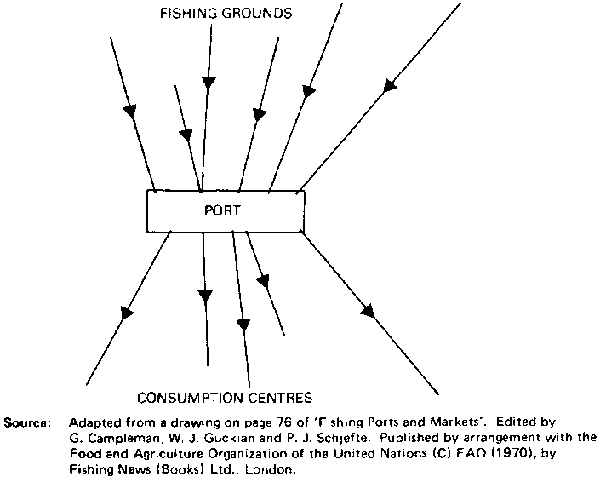
Figure 16 - Fishing grounds -
consumption centres
Suitability of site
Due to the multiplicity of different functions that a fishing harbour, therefore, has to perform, it is extremely important that the site is selected with care. In many cases, the final decision as to the site for a new fishing harbour will be a political one but the technical requirements must be made clear at the planning stages. The following list of requirements gives some idea of the many factors which must be taken into account during the planning stages:
1. It must be at a convenient distance from the fishing grounds.
2. It must be in a convenient location with regard to existing or planned fish markets and must have good communication with such markets.
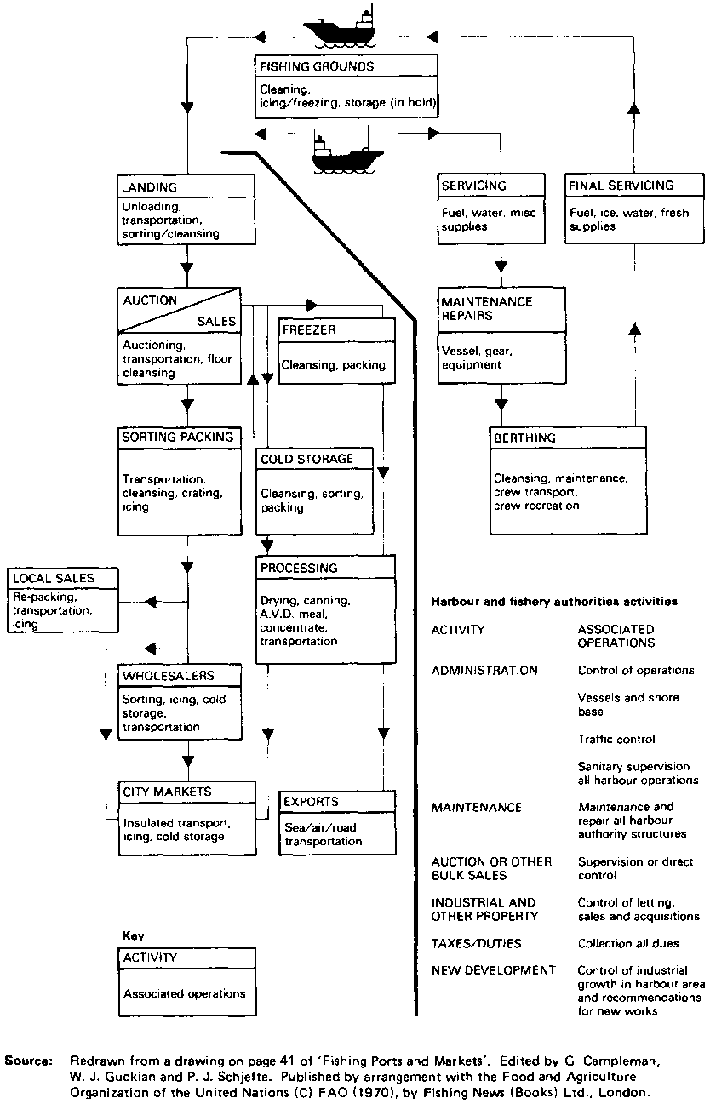
Figure 17 - The fishery harbour:
chain of activities
3. There must be adequate and suitable space both on the sea and landward sides for development of an efficient fishing station. This should include areas for fish processing and auxiliary industries, shipbuilding and repair, offices, shops, space for the parking of lorries and cars etc.
4. It must be remembered that the fishing industry depends on people and there must be sufficient attractive residential accommodation for fishermen, traders and workers in the fishing industry and their families.
5. There should be safe access from the open sea in all weathers and all states of tide.
6. The site should provide safe shelter for vessels likely to use it.
7. There must be adequate depth of water in the harbour and approaches for the sizes of vessel contemplated. This depth must be able to be obtained and maintained at reasonable cost.
8. There must be suitable ground conditions for building of harbour walls, quays, breakwaters etc., and for the land-based factories and infrastructure.
The suitability of a particular site depends on the type, size and number of fishing vessels; the type of fish to be caught and landed; the processing that may be done in the immediate vicinity of the harbour; the neighbouring communications network which may serve the site etc.
Once a site which meets the necessary requirements has been chosen, then the actual facilities required must be detailed and the following points are worth considering:
(a) A safe and easily identified approach from the open sea with adequate depth at all tides should be marked.
(b) A safe well-defined entrance and approach channel of adequate depth at all tides should be constructed.
(c) There must be a sufficiently large, deep and protected basin to cater for all types of vessel. This must take into account turning and manoeuvring of vessels within the harbour area and anchorage of the vessels awaiting landing space. There should also be permanent anchorage for vessels unable to use the berthing quays, and also servicing facilities for dredgers and other maintenance vessels etc.
(d) There must be, within the complex, provision of all necessary navigational beacons and visual and electronic aids to assist vessels in the safe use of the port.
(e) Where necessary, protective breakwaters of adequate structural design and suitable layout should be provided to reduce wave or storm effects within the approach channel and port facilities.
(f) There must be adequate landing, servicing and provisioning, berthing and repair quays or jetties to cater for the number and types of vessels using, or likely to use, the facility in the foreseeable future. This particular point brings out the necessity for forward planning. A well-designed and adequate harbour facility will attract more fishing business. It is necessary to plan ahead to make sure that there are going to be adequate services for future expansion.
(9) All necessary utility services must be planned and provided: for instance, fuel oil loading points and storage; water, ice-making plants and ice storage for the supply of vessels and the shore-based activities; electricity supply for public, industrial and domestic use; surface water drainage and sewerage systems; fire precaution services for vessel and shore use.
(h) Consideration must be given to the buildings required for: display, auction and sales; sorting; agents' and wholesalers' activities; harbour and fishery administration offices; storage accommodation for containers, gear and equipment; workshops and maintenance stores; possibly, training centres and laboratories; wholesale and retail suppliers for ships supplies; sheds or other buildings for repair of nets and vessel maintenance at the berthing quays; storage for repairing items such as ropes, nets, fish boxes, lobster pots; accommodation sheds for port transportation machines, for instance, fork-lift trucks, mobile cranes, tractors, waggons.
(i) There must be adequate space for the development of the necessary processing industries. It may be decided that public cold stores and freezing facilities are required from the start and these should be planned and built at the same time as the rest of the fishing harbour. If private industry is likely to need to build its own factories for fish processing, then there should be adequate areas made available for them at reasonable cost.
(j) If the harbour complex is not already on a main road or rail head, there should be connections made to the main trunk road or rail head for the movement of fish to and from the harbour area. These roads and rail connections should also include any connections that need to be made within the harbour area itself for taking provisions from one part to another.
(k) Provision of parking space for industrial and private vehicles must be made; adequate space around halls and industries, for loading and unloading vehicles, which does not upset the free flow of through traffic, must be provided.
(1) There must be provision of vessel, engine and gear repair facilities in the vicinity of the harbour, and the inclusion of a boatbuilding establishment where the fleet is rapidly expanding or replacing itself from local resources.
Unloading systems
One of the most important functions that a fishing port must perform is that of unloading fish from vessels returning from sea. The type of unloading system adopted obviously depends on a number of factors, for instance:
1. The type of fish being landed, e.g., fresh, frozen etc.
2. The use to which the fish are to be put, e.g., for human consumption or for industrial processing.
3. The types of vessel landing fish and the stowage methods used on the vessels themselves, e.g., box, bulked, shelved etc.
4. The tidal rise and fall in the harbour.
5. The number of vessels being unloaded.
6. The cost and availability of labour as opposed to the cost and availability of energy.
7. The ambient temperatures.
It must be remembered that, whichever system is chosen, it should be as efficient as possible, especially in terms of the time taken to get the fish from the hold of the vessel to cold storage, the auction floor or to transport because it is at this stage that unacceptable rises in temperature of cooled fish can occur. In addition, crews of vessels returning from long voyages may be anxious to return to their families for leave or to return to sea as soon as possible.
Unloading fresh fish
There are many ways of unloading fresh fish.
1. Bulked fish are often put into boxes on board the vessel and handed up on to the dockside.
Comments: This method is labour-intensive, it may be slow and can cause physical damage to the fish.
2. Bulked fish may be put into baskets which are swung on to the dockside using either the ships derrick or shore-based cranes.
Comments: This Is a reasonably fast method of unloading with experienced labour. Derricks can be powered and are, therefore, subject to failure; hand powered derricks are sometimes used. Fish are handled twice (i.e. into the baskets and then out again into a second container at the dockside); therefore, physical damage can be a problem.
3. Lifting boxes of fish directly from the hold to dock with a
derrick.
Comments: This means that there is minimal handling of the fish.
Boxes can be used for further transportation of the fish. Any ice left will
remain in the boxes, thereby helping to keep the fish cool.
4. Mechanical elevators and conveyors are used in some fisheries.
Comments: This method can be fast but it often separates the fish from the ice and, therefore, unacceptable rises in temperature can occur. It enables direct transport of fish to the auction hall along conveyors. Fish can be sorted and/or re-iced from the conveyors. If well-designed, these methods cause no physical damage to the fish.
Unloading frozen fish
1. When uniform blocks of frozen fish, for instance from freezer trawlers, are to be unloaded, a mechanical tailor-made system is often used.
2. Frozen bulk stowed fish, such as tuna, are often unloaded using swinging derricks, baskets, nets or boxes. These methods can cause physical damage to the fish.
Unloading industrial fish
Vessels catching pelagic fish, such as anchovy, menhaden, capelin, herring etc., for conversion into fish meal often catch large quantities of fish of fairly uniform size. The care needed in handling fish for the domestic market is not as necessary with these fish although they must be unloaded quickly. Industrial fish can obviously be unloaded in the same way as other fresh fish but, to speed up the operation and save on manpower, various pumps and mechanical unloading devices have been produced for this purpose.
|
| ||||||||||||||||||||||||||||||||||||||||||||||||||||||||||||||||||||||||||||||||||||||||||||||||||||||||||||||||||||||||||||||||||||||||||||
Small-scale landing facilities: design and operation
Siting of fishing communities
Before considering what facilities are needed in a modern fishing village, it is interesting to speculate about the reasons for the siting of some existing small fishing centres. If we go back far enough, of course, we arrive at the situation in which families tended to group together in villages purely for protection. People farmed and fished only for home consumption. At a somewhat later stage, specialisation in farming or fishing and trade began. It was probably at this stage, when some people became full-time or almost full-time fishermen, that the majority of fishing centres which exist nowadays first became established.
The first essential would seem to be that the fishermen should live close to the place where they expect to fish: the village would be sited somewhere close to the fishing grounds. The reasons for this are obvious: the shorter the journey to and from the grounds, the greater the proportion of the time that can be spent fishing and the shorter the time the fishermen are at risk from the elements.
Sometimes different grounds may be fished, possibly for quite different fish and with quite different gear at different times of the year. The siting of the village might then be a compromise based on ease of access to a number of different points at which fishing might take place.
A second and most important consideration as far as the fishing activity is concerned would be boat safety. The village must be sited where it is possible to ensure that the boats, which are the most expensive item owned by the fishermen, could be kept in safety when not in use. In many cases, this has meant that villages have been sited on river estuaries or in enclosed bays where the boats can be left afloat. In other cases, where suitable ports do not exist, the boats have been drawn up on beaches and this restricts the design and, more particularly, the size of the fishing vessels. In Europe, as we shall see later, quite large vessels, certainly some over 50 feet in length, have been operated from open beaches.
In some cases, the fact that suitable timber for boatbuilding was available close at hand seems to have influenced the siting of fishing centres. In other cases, however, this has had no influence at all. For example, in south Arabia, no boatbuilding materials are available and small fishing vessels, many of them less than 15 feet in length, have traditionally been imported from the Indian subcontinent. In some cases, siting appears to have been influenced by the need for suitable land on which to build housing and grow a cereal crop. In other cases, neither seems to have been an important factor. For example, many of the villages of South East Asia are built in mangrove swamps where it is difficult to erect housing, no crops can be grown and there is no supply of drinking water. The mangrove forests do however provide another important element - a supply of fuel for cooking.
The villages of south Arabia lie along sandy beaches where water can only be obtained by driving a well down 80 or 100 feet, where there is no fuel for cooking, where boats have to be imported and where there is no possibility of growing food.
The fishermen of the African lakes often establish camps on papyrus islands floating in the middle of the lake where there are no facilities of any kind. In these latter two cases, it would seem that nearness to the fishing grounds is all-important.
It might be thought that proximity to a market in which the catch could be sold profitably would be an important point. Again, this is not necessarily so: in cases where there is a good supply of fish but no nearby market, the catch has traditionally been salted and dried or smoked and dried, often for sale in markets many hundreds of miles distant.
So, while it may be difficult to establish an order of priorities for the needs of a fishing community, it becomes obvious that proximity to the fishing grounds and safe harbourage for the fishing craft are all-important.
Facilities needed at modern fish landings
Assuming that the landing is sited so that it provides ease of access to nearby fishing grounds and a safe harbourage, the next most essential feature is surely ease of access. It is important that the catch can be moved from the village to the nearest market as expeditiously as possible. The fishermen and their families also need to travel, so a road which lorries can always use, and on which bus and taxi services can run, is of first importance.
Where no access road can be provided, access may be possible by water. Many fishing villages operate on the basis of a ferry service. The provision of roads is expensive and the ntervention of fisheries department headquarters may be needed before roads can be provided. The remainder of the points listed here should be within the compass of an extension service. One of the prime duties of an extension service is to see that facilities are provided for fishermen and their families.
Facilities which would be required at every landing include:
1. Bunkerage: Provision must be made for fuel; often both diesel and petrol will be required. Where possible, these should be made available alongside a point at which the boats can draw direct from a pump. Where there is a heavy duty on fuel, it may be possible to arrange nationally that fishermen draw duty-free fuel on the grounds that they are performing an essential public service in providing fish.
2. Repair of fishing vessels: Facilities must be made available for this; they may be of the simplest possible kind. Facilities should preferably be available for drawing the boats out on to hard ground; concrete standing makes for easier working and it is preferable that the vessels should be raised so that it is easier for men to work underneath them. At its simplest, this facility can be provided by means of a sled running on greased ways. More complicated systems include the use of wheeled trolleys on railway lines, even proper slipways. Winches, whether hand or power-operated, are also extremely useful.
3. Engine maintenance: This is a high priority. The more commonly needed spares should be kept to hand; trained mechanics should be available and a small simple workshop should be provided. At the small fish landings, there is no need to provide a workshop with power tools. It goes without saying that the extension service should encourage the fishermen to restrict their purchase of engines to those for which spares are readily available within the country.
4. Fishing gear: Except at the very smallest fish landings, it is useful if the fishermen can buy some of their fishing gear requirements without travelling to a nearby town. The advantages of co-operative purchase are well-known and obvious.
5. Fishing gear repair: It is often found that even the simplest facilities for this are not available. All that is required is an open space with a clean, hard, dry floor and a roof to protect the gear and the men working on it from the weather. Where a village is strung out along a river, it may be impracticable to provide a central facility.
6. Food and water: Ordinary everyday living requires that these should both be available. The extension service should see that every village has a properly designed, hygienically operated market facility. Water is needed both ashore and at sea. Life for everyone becomes much easier when a piped supply becomes available, so that water is on tap instead of having to be carried from a well. In the earlier stages of development, stand pipes can be provided at intervals in a village street: later on, it may be possible to take the water into the houses so that individual piped supplies are available.
7. Medical facilities and schooling: These should be available in all but the very smallest landings. Where these cannot be provided within the village itself, it may be possible for the extension service to assist with the organisation of transport to school, and to arrange visits by a travelling dispensary and provision of an ambulance for emergency cases.
8. Recreation: Although this is not necessarily the most important feature, some facilities should be provided if possible. These may include such things as badminton courts, tennis courts, football pitches and a small library. A Community Centre in which meetings can be held, films shown and lectures arranged is obviously useful. Where people cannot afford their own television set, it may be possible to provide a shared one for a community. Regrettably little use has been made of television for educational purposes in developing countries.
9. Fish handling, processing, preservation and marketing: These are the facilities with which we are primarily concerned. The type of facilities needed depends primarily on whether the fishery is based on selling fish fresh or frozen, or in some dried or smoked form. Often, of course, the fishermen from a particular landing will sell their catch in a variety of forms.
Correct fish handling starts in the boat the moment the fish are caught. However, preparations for proper handling must begin before the craft puts to sea. If fish are to be landed in good condition, they must either be brought ashore within a few hours of death or they must be chilled to the temperature of melting ice as quickly as possible. An ever increasing number of vessels are carrying ice to sea; in Europe, and more particularly in the Arctic fisheries, the fish room or fish hold was often uninsulated. In the tropics, it would make no sense at all to carry ice to sea without very good insulation; ice is invariably expensive and everything possible should be done to avoid loss through melting. Often ice is seen being carried on open lorries; in these circumstances, money pours on to the road. Ice should be loaded into the fishing boat as quickly as possible; the ice-making plant or machine should always be as near as possible to the point at which the fishing boats berth. In most modern installations a flake ice machine is sited on a jetty so that ice can be shot straight into the fishing boats. Where this is impossible or where an existing plant, possibly a block ice plant, supplies the fishery, there should be a well-insulated (and possibly refrigerated) ice store close to the berthing point of the vessels. Quite satisfactory arrangements can be made for storing ice very cheaply by packing it in sawdust under cover. If block ice is used, an ice crusher or breaker should be provided if possible; sometimes fishermen prefer to carry unbroken ice to sea because losses through melting are then less.
Often fishing boats are washed down with water from the river or harbour in which they are berthed. This defeats the object of washing since such water is invariably heavily laden with bacteria, often food poisoning bacteria, and the vessel may in effect be dirtier after washing than before. A piped water supply, the water containing free chlorine, should be provided wherever possible. If this cannot be done, the final cleaning down should be carried out in the open sea, as oceanic sea water should be tolerably clean.
The inside of the fish hold should be thoroughly scrubbed with water containing detergent and given a final rinse in water containing plenty of free chlorine. Boxes or tubs of some kind are needed for removing the fish from the boats. Aluminium and plastic containers have many advantages over wooden ones but cannot always be afforded. Whatever containers are provided, facilities should also be made available for properly cleaning these. A good scrub in detergent-loaded water, followed by a soaking in water containing free chlorine, provides the best results.
Where quantities have to be moved, wheeled trolleys of some kind should be provided. These may be rubber tyred vehicles which can be moved over almost any surface; in some cases, railways are laid so that simple iron wheeled trucks can be used. They are often manipulated manually; they may equally well be drawn by winches or tractors and, in some cases, fork-lift trucks may be the best answer.
Nowadays, the advantages of boxing fish on board (ease of handling, ease of sorting and better condition on landing) are usually recognised. Unless the fish can always be moved expeditiously from the landing point, a refrigerated, or at least well-insulated, chill store should be provided. There may also often be a need for one or more packing sheds.
The larger landings should be provided with a fish market - a point at which fish can conveniently be auctioned.
At some landings, facilities will be needed for salting and drying fish and for the storage of the dried products.
All too often the catch is handled ashore by men who have to wade through surf or yards of muddy foreshore to the detriment of both the crew and the catch. Obviously, where possible, facilities should be provided so that boats can come alongside a jetty or wharf so that the catch can be handled ashore as quickly as possible. Either the boat's gear can be used to land boxes or tubs of fish, or small cranes can be provided on the jetty. Neither pumping nor the use of elevators is usually practicable at the smaller landings.
Once a jetty is available, of course, not only the handling of the fish but also the provision of other facilities becomes easy. Pipelines can be laid so that fuel and water are available at a number of points and fishing gear is easily loaded into the vessels or put ashore. The provision of good facilities for berthing alongside is one of the most important points in fishing village improvement.
Management of small fish landings
Almost all of the facilities so far described might be in private ownership (operated for the benefit and profit of a single owner); owned communally (operated for the joint benefit of a number of people as in a co-operative society); or they might be owned publicly. Publicly-owned facilities may be provided from taxes for the common welfare and good, or they may be used by individuals on payment of a statutory fee.
Harbour dues are often lower for fishermen than for other users; in some places, fishermen pay no dues. Berthing fees are usually charged on overall length of the vessel, which seems fair since the longer vessel uses more quay than a shorter one. Again fishing vessels are often exempted. Where fish are auctioned, a statutory percentage of the value is often charged. Where fish are put in chill storage, there is usually a standard charge per day; where fish are frozen and held in cold storage, similar arrangements apply.
A common arrangement is for most of the communally used facilities to be publicly or commonly owned; for example, the jetty, quay or wharf and the auction point or market. Other facilities, however, such as the ice plant, packing sheds, factories, and repair and maintenance facilities are usually operated as private businesses. The advantages of co-operative society ownership and management are as well-known as the difficulties involved in establishing a co-operative society amongst fishermen.
Whatever arrangement is made for management of the landing's facilities, someone should be in a position of sufficient authority to ensure that the common practices required for good hygiene are observed both to protect the consumer and to make certain that the fishermen get the best possible prices for their catches.
|
| ||||||||||||||||||||||||||||||||||||||||||||||||||||||||||||||||||||||||||||||||||||||||||||||||||||||||||||||||||||||||||||||||||||||||||||
Retail sale facilities
Retail facilities may be provided in markets and this is common in South East Asia, where a number of stallholders rent facilities from a municipal or other authority and display their wares alongside one another. The advantages of this system are that wholesalers have to deliver only to one central point; housewives can easily compare prices and values offered by particular stallholders; retail markets for other goods can be nearby so that housewives can buy all their daily supplies at one point in the city; and waste disposal is a relatively simple matter. This does, however, have the disadvantage that housewives have to travel to the market.
In many other parts of the world, shops are provided near to where people live. In other cases, as in outlying country districts in England, mobile retail facilities are provided: a van carries fish into the villages and the fish are sold direct, from the back of the van. Pedal-driven facilities have also been used in some parts of the world.
Whatever arrangement is decided upon, facilities should be provided for the retail sale of wet, smoked, dried and frozen fish. The requirements for each are quite different. In many cases, it is also necessary to provide facilities for the sale of live fish.
Sales of wet fish
Fish spoil mainly because of the activities of bacteria and the speed at which these grow on fish flesh depends largely upon the temperature. Fish taken straight out of the sea and kept at 0°C by placing them in crushed ice can remain fit to eat for almost 3 weeks. If kept at 6°C, they can keep for only about 6 days and, at 11°C, they will be inedible after 3 or 4 days.
The first essential in looking after wet fish is, therefore, to keep them as close to the temperature of melting ice as possible. The best way to do this is, of course, to keep them buried in melting ice. Obviously, it is easiest for the fishmonger to keep his fish buried in melting ice by holding them in boxes with ice rather than attempting to display them on a bench. Some fish must, however, be displayed on the bench so that people can see what is for sale. Therefore, a sales bench must be provided; this is best made in the form of a slab which is sloped to provide drainage and for ease of cleaning. The slope should not be excessive or the fish and ice placed upon it will slide down. The slab should be covered with a bed of ice and the fish pushed into this; ice should be piled round them so that only the top surface of the fish is visible, which allows the fish type to be identified. Where possible, a glass cover should be provided so that fish are kept under a pool of cool moist air and are shielded from draughts. Figure 18 shows a suitable arrangement. The sales slab should be backed up by storage boxes or by a chill store.
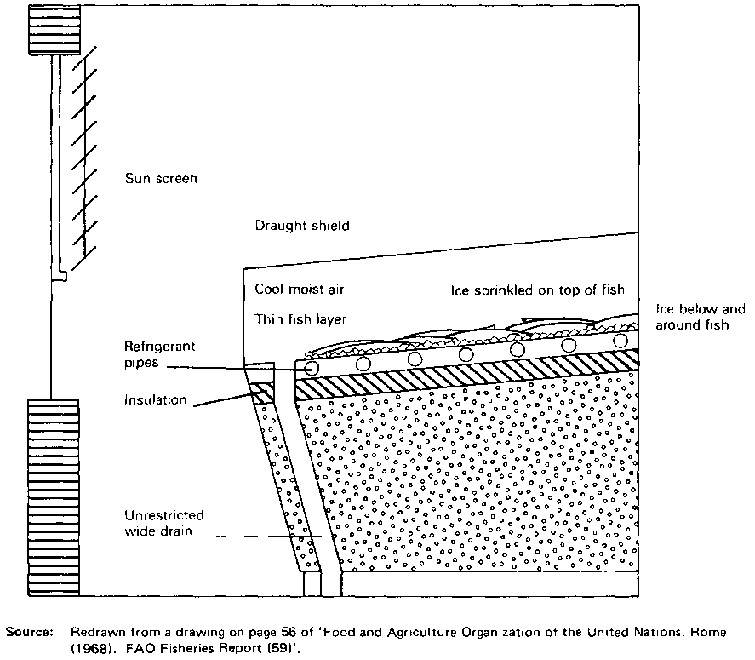
Figure 18 - Fresh fish ideally
displayed on ice
The use of chill stores alone for cooling fish is very bad practice: the appearance of the fish will rapidly be spoiled by the drying of the surface and, if the room thermostat is not sufficiently accurate, it is possible to freeze the fish, which will give very poor results when they are finally eaten. The best way to store wet fish is to put them in boxes with plenty of ice and then to put the boxes in a refrigerated store which is set at about 2°C. There would then be no risk of freezing the fish. There should be at least one and preferably two thermometers in different parts of the store to make sure that it is not too cold. The thermometers should not be hung on or near the cooling grids but near the actual fish.
There are a number of practices which should be avoided in constructing a sales slab. There is really little point in attempting to refrigerate it except where fish are to be sold in a sophisticated store. Even there, the fish must be surrounded by ice, the refrigeration being used only to prevent excessive wastage of ice. The fish must not be piled deeply on the slab. They should not be subjected to an air current from a fan, even the coldest moving air will dry them out. Whilst it is obviously desirable to have a light over the fish so that they can be seen clearly, the light should not be too powerful or too close to the fish or it will cause an increase in their temperature. All draughts which are likely to bring in dirt and bacteria should be avoided and, of course, the fish should not be displayed where the direct rays from the sun can warm them. A slab should be arranged so that it is sloping and can be easily cleaned. The drain should be as straight as possible and it must be large enough to take pieces of fish. Small narrow twisted drains can rapidly become blocked and useless. Figure 19 illustrates some points of bad practice.
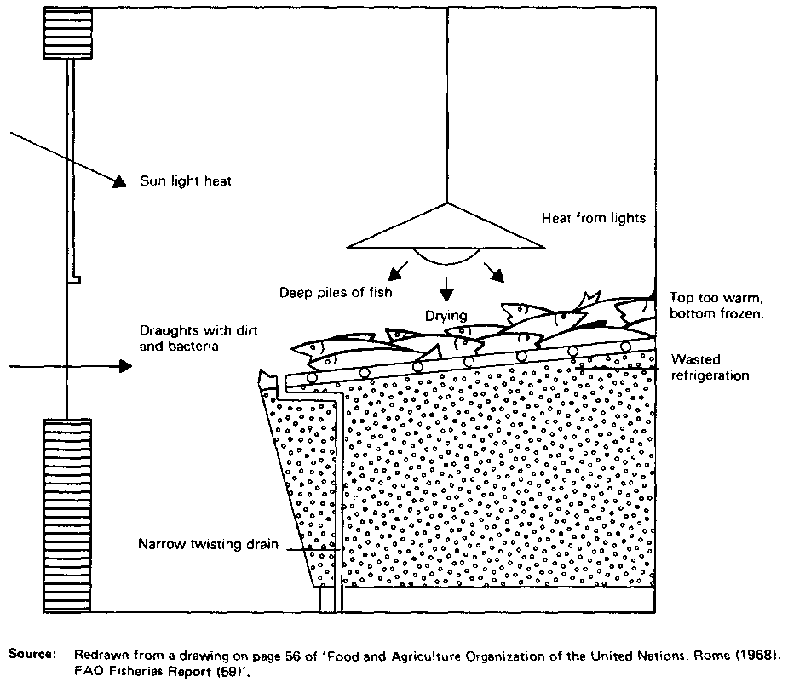
Figure 19 - Bad practice in retail
display
The floor in any retail facility should be made from material which is easily kept clean by scrubbing. Concrete provides a reasonable compromise between the ideal and that which is cheap enough in practice. The floors should slope to wide gullies which should in turn slope to a trap at which fat and fish waste are easily removed; the effluent should pass either to a sewer or to a septic tank.
The walls should also be easily cleansed. While tiling may be considered ideal, plastered concrete which can be scrubbed will have to suffice in most cases.
The comers between the walls and the floors should be curved for
ease of cleaning. A high roofed building is obviously more easily kept at an
equable temperature than one with a very low roof but will be more expensive to
construct. Adequate ventilation must be provided and this should be screened to
keep birds out.
It should not be necessary to screen to keep flies out and,
provided waste is disposed of properly, there should be no fly problem. Where
flies do exist in large numbers, screening is usually ineffective because every
time the door is opened flies enter. Every stallholder should have a covered bin
in which he places waste which is discarded at the end of the day.
Fish should be cut on boards, not on the slab surface. The best fish cutting boards, which are made of plastic, are extremely expensive and the best substitute for these is a board made of edge grained hardwood. Knives and choppers should be kept sharp and facilities for sharpening should be available.
All the facilities so far discussed for the sale of wet fish should also be provided in a mobile fish shop. Usually this must be provided with a tank to hold chlorinated washing water, which is kept at a high level so that it feeds by gravity to the points at which it is needed, and with a storage tank, at a low level, which can later be emptied into a sewerage system.
Both retail markets and fish shops should have some means of storing ice. In the larger markets, it is perfectly easy to manufacture ice and hold this for sale to stallholders. It is now possible to buy small ice-making machines which will manufacture 100 kg of ice a day which is adequate for many shops. Where possible, a flake ice machine should be used; some of the small machines manufacture ice in the form of pellets or small cubes which are not really suitable for use on fish.
Sales of frozen fish
Frozen fish may arrive at the point of sale in a number of different forms; sometimes it arrives as whole fish which have not been wrapped, sometimes as fillets which have been wrapped, packaged and frozen; in other cases, it arrives as cooked frozen fish which only needs re-heating before serving.
If frozen fish are to be sold as frozen fish, they must be kept in refrigerated storage. Prior to delivery to the retail facility the frozen material should have been held at - 30°C. In practice, however, the storage is likely to have been slightly warmer and, during carriage from the cold store to the retail shop, the fish may warm up further.
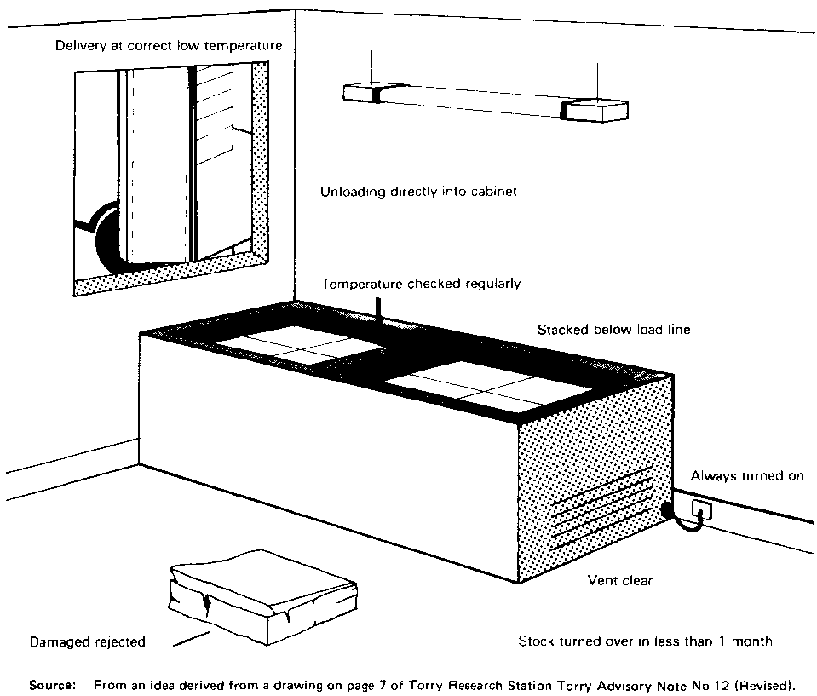
Figure 20 - Correct use of zero
cabinet
Much of the frozen fish sold in Western countries is sold from what are calied 'zero' cabinets because they are held at 0°F (this equates to - 18°C.). If fish are held for a month at this temperature, they will suffer little harm; however, if they are held for several months at this temperature, they will be of somewhat poor eating quality. It is important, therefore, that the retailer should hold as little frozen fish as possible.
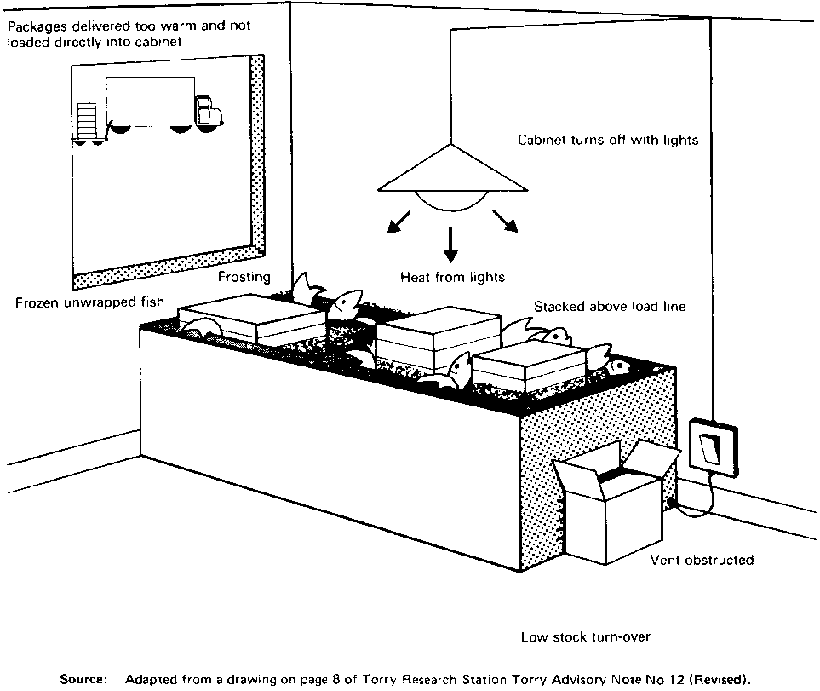
Figure 21 - Misuse of zero cabinet
Material which is kept in a zero cabinet should be treated like any other frozen fish in cold storage; it should be kept glazed and properly packaged to prevent dehydration. It is particularly important that the practice of 'first-in, first-out' should be followed so that material is held for as short a time as possible. This may mean that the retailer must personally date-mark the produce which he has for sale. If he does not wish the public to know how long he is holding material, he can devise a simple code.
There are a number of points to watch when handling frozen material. Good storage practice is illustrated in Figure 20; poor practice, in which a cabinet is misused, is illustrated in Figure 21.
Remember that material will deteriorate in the cabinet. The cabinet must be kept switched on so that it remains cold. it should not be loaded above the marked load line; if it is, the material above the load line will suffer an increase in temperature.
No attempt should be made to use the cabinet as a freezer since this will result in damage to the material already in storage because its temperature will increase before the new material is frozen.
Where one is available, a competent refrigeration engineer should be employed to service the cabinet at regular intervals. Some cabinets defrost automatically at short intervals. If the cabinet is not automatic, it should be defrosted regularly. It is a good idea to make a daily check of the temperature of the air in the cabinet; the best way to do this would be to place at least two accurate, adequately protected thermometers in different positions in the cabinet. Neither of these should be in contact with, or near, the cooling coils.
If the wrapping of any of the packages delivered is broken or torn, drying of the commodity will occur. Quite apart from the fact that there will be a loss of weight, the final product will be dried and unattractive (i.e. freezer burn). Such damaged materials should not be accepted at delivery and, if damage occurs within the shop, the material should be destroyed. The cabinet should be situated so that it is not in direct sunlight, lighting should be sited so that it cannot warm the cabinet and, most important of all, the cabinet's vent should be unobstructed so that the refrigeration machinery can operate efficiently without overheating.
In some developing countries, a system of retail marketing of frozen fish has been developed in which the fish are delivered frozen to a cold store and are then removed so that they thaw at point of sale. This material competes directly with wet fish. This system can work quite well but it is debatable whether it can be as effective as an ice storage chain. Where the system has developed, it seems to have done so because the market is readily supplied by large trawlers freezing the catch at sea as in West Africa. There is little doubt that better quality material can be provided by icing in most other circumstances; it seems likely that an icing chain would also be more profitable but, in designing a marketing chain for new points of sale, the alternative possibilities should be costed. As in other areas of fish handling and processing, much depends on the market demand.
Sales of smoked and dried fish
Fully cured, smoked and dried products are much easier to handle than wet or frozen fish since they do not require chilled or cold storage. They should, nonetheless, be carefully handled.
All cured products deteriorate quicker at high temperatures than at low temperatures so it is worthwhile taking some trouble to ensure that the products are not over-heated. At the same time, the products should be protected from excessive drying where they are sold by weight since considerable weight losses could occur if the products continue to dry.
The product should of course be kept clean. Generally this requires that items be either weighed into packets or individually packaged. The modern plastics have revolutionised packaging but should be used with care. Most dried products are really only semi-dried and, if these are packaged in a sealed container, they will sweat and spoil. Most products therefore require a ventilated packet.
Sales of live fish and crustacea
Both fin fish and crustaceans, such as rock lobsters and lobsters, can only be kept alive for reasonably long periods by keeping them in water. A few catfish and other species with accessory air breathing mechanisms are exceptions to this rule.
Molluscan shellfish, such as cockles, oysters and mussels, can be kept alive in cool moist air. All that is needed for these is a container made so that it drains readily, i.e., a wickerwork or wire mesh basket in which the shellfish can be refreshed occasionally by pouring water over them. The container must, of course, be stored in the shade, not in the open sun.
Almost any container of suitable size can be used to hold live fin fish and lobsters for sale, including glass sided tanks in which the animals can be seen swimming. Such expensive and elaborate facilities are, however, not really necessary. Concrete tanks, galvanised iron baths and plastic dustbins have all been used successfully. Metal containers should always be treated with some suspicion, particularly for sea fish, since very minute quantities of copper, zinc and heavy metals will kill fish.
Any of the catch which dies should be destroyed and not sold.
The water in which the fish are kept must itself be clean and uncontaminated; chlorinated public water supplies are quite unsuitable since relatively small quantities of chlorine in the water will quickly kill the fish. Where the public supply is not chlorinated {as it should be), it could be used to keep fish alive and, under these circumstances, no aeration would be needed; water could be permitted to flow through the storage tanks. Water usually has to be bought, however, and, even under these circumstances, it might well be cheaper to provide aeration to the tanks.
Aeration
Aeration would best be provided by driving air stones from pumps operated from the electric main. The air stones should be sited at one end of a rectangular tank so that the water is caused to roll. This provides far more effective aeration than can be obtained just with the air stone bubbles. The aeration should be as vigorous as possible without causing physical damage to the fish. The fish must not be unduly crowded; a tank which holds 100 litres of water will not hold more than 25 - 30 kg of fish when fully loaded and, under these circumstances, even with very vigorous aeration, the fish are likely to die in a day or two. No hard and fast rules can be set. Oxygen deficiency is the cause of most deaths: different species have different oxygen demands and the warmer the water, the less oxygen it can hold and so on.
Certain obvious precautions should be taken: the fish should be permitted to scour before storage; they should not be fed in store; and the water should be kept as cool as possible, consonant with not killing the fish by cold shock.
It is perfectly possible to design a closed system, even for marine fish, at a distance from the nearest supply of clean, unchlorinated, running water. Such closed systems must include a good filter as well as good aeration. Simple biological filters can be constructed using sand and these, when run in, can be very effective.
|
| ||||||||||||||||||||||||||||||||||||||||||||||||||||||||||||||||||||||||||||||||||||||||||||||||||||||||||||||||||||||||||||||||||||||||||||
Fisheries extension services: their role in rural development
At the lowest levels of rural existence, there is no room for failure because there are no reserves. The failure of migratory fish to appear in their appointed season, the loss of a catch through gear failure, loss of gear through stress of weather or the loss of a batch of processed fish through spoilage are major disasters. In extreme cases, such disasters lead to starvation and death. No one should be surprised, therefore, if peasant fishermen are reluctant to give up established and thoroughly tested practices in favour of untried innovations. This is especially so when the new practices are presented by people who would probably starve on the beach if they tried to make a living out of fishing, fish handling or fish marketing.
Arguments against new practices range from, 'that is not our way', through, 'maybe that does work elsewhere but it won't work here', to, 'the spirits would not approve of that'. At the root of the speaker's objections lies the knowledge that his own operations are on such a tiny scale and offer such low margins of profit that he cannot afford to experiment. He dare not take any unnecessary chances with his all too fragile means of livelihood. So changes come slowly and, at each stage, the profitability must be adequately proved and demonstrated before a new practice can become acceptable. There is seldom any problem in introducing changes which can be shown to be profitable or to make life easier. The introduction of synthetic materials for net and line manufacture and of internal combustion engines to drive fishing craft are obvious examples. So is the use of ice to preserve the catch although it is often much more difficult to effect improvements in product quality. Such improvements almost invariably raise the price of the product as, of course, does icing and most consumers in developing countries are unable to pay a premium price for better quality, much as they may prefer a better product.
Problems of relocation
If we define rural development as the improvement of the living standards of the people living in rural areas, we need to look far beyond the concepts of fisheries development which are usually uppermost in the minds of fisheries department administrators. Typically the eight or nine million artisanal fishermen of the tropics live in small groups in ramshackle housing, totally lacking the amenities of modern life such as piped water, electricity, effective sanitation, education, and perinatal, medical and dental care. Often villages are isolated by poor roads; some can be reached from outside only by water; some are seasonally inaccessible. So development requires attention to all these factors, as much as to the improvement of fishing boats, fishing gear, berthing or beaching facilities, and handling, processing, preservation and marketing methods.
One simple way to overcome many of the difficulties would seem at first sight to be to uproot entire villages and move them to new locations where the facilities, previously lacking, either exist or can readily be provided. This is seldom an acceptable solution. Many of the people involved are fishermen/farmers who own housing and land (Lawson, 1972). The land which provides much of the villages' subsistence could not easily be provided elsewhere. There are religious objections, too, based on such factors as the desire to be near ancestral graves; these and similar factors render the people immobile. Most Governments are already battling against the ill-effects of the city ward drift of the peasantry and would wish to do nothing which might increase or accelerate this.
However, the main reason for deciding against relocation of whole villages lies in the factors which are responsible for their development on the existing sites. The most obvious of these is proximity to the fishing grounds which include estuaries, mud flats, shallow banks, lagoons, mangrove swamps and coral reefs. Such grounds can be fished most profitably from small vessels of shallow draught and, in producing fish from such areas, the artisanal fisheries can make useful contributions to the economy (Cole, 1973). Long runs to and from the grounds reduce fishing time, and thus profitability, and, of course, increase the time the fishermen are at risk in times of bad weather.
Research and development
The fish landed in these villages often include both low bulk, high value items, such as prawns and crawfish, on which export industries may be based, and bulky low value items, such as mussels, cockles and clams, which provide cheap food of high quality. These artisanal fisheries also provide much employment using low levels of capital inputs; such important national assets should be developed so that the fisheries continue productive while the people involved enjoy at least some of the amenities of life which many take for granted. This usually requires that improvements are made in both the working and living conditions. While some of the improvements may be paid for by the injection of capital from outside, in the long run the improvements, or at least the maintenance of these, must be paid for by increasing the profitability of the fishing and fish marketing operations, thus increasing the real income of those engaged in the fisheries. James (1977) elaborates these points.
The development of the industrial elements of an artisanal fishery requires, as does the development of any other fishery, that all sectors of the industrial operations should be considered for improvement. Thus, a proposal to fish further to seaward or to use bigger nets may generate a need for bigger boats of deeper draught, which in turn need deeper water and mooring, more fuel and ice, and which demand a higher degree of skill in the crew. The heavier catches expected will require more, or possibly different, processing facilities, bigger or more markets, more transport and better roads and possibly the development of an export market with the attendant necessity to meet foreign standards of hygiene, packaging and product quality. Thus expertise in a number of very different specialisations might be needed, and there will be a need for research and development (R&D) in many of these specialisations.
R & D is, of course, totally wasted unless the results are applied and, in the case of the artisanal fisheries, the results must be applied by people who suspect that all change is not necessarily for the better. Like any other people, they are likely to accept advice most readily from someone they trust as having their best interests at heart. R & D must, therefore, logically be followed by extension work (E) and, particularly in the artisanal fisheries context, it makes better sense to talk of R, D & E rather than R & D alone. It should certainly not be assumed that extension can stand alone either, for there are few cases where unmodified technology transplants successfully from temperate to tropical conditions.
Thus, the development of an artisanal fishery in most circumstances requires a modest amount of applied research and a great deal of hard work at the basic village level by officials (or non-officials) who have received adequate technical training, understand the intricacies of the technical and socio-economic aspects of the industry and are trusted and respected by the people who run the industry. This should be an extension service. During visits to eighteen developing countries in 1974/75 (in South East Asia, South America and Africa), no single fisheries extension service was found which was thought to be even reasonably effective. So perhaps it may be worthwhile to examine the concept of a fisheries extension service in somewhat greater detail.
Organisation and administration of extension services
Wherever possible the extension service should be organised at the national or federal level rather than at the state or other subsidiary level. Of course, much good extension work is done by universities, regional laboratories and similar organisations. This is particularly so in the developed countries where the fishing industry is at an advanced level and where high level expertise is needed. In these situations, the industry solves the simpler problems for itself. Those working in the industry are educated to secondary school or higher levels and, if they cannot resolve a problem themselves, they can contact a laboratory or other organisation and explain their needs. The illiterate or semi-literate peasant fisherman cannot do this and needs a very different kind of service. He needs someone close at hand who can satisfy his simpler needs and can translate the more complex needs into terms easily understood by the more expert. Simple problems can often exist undetected for years, simply because there is inadequate contact between the fishermen and those paid to serve them. Sometimes there appears to be no contact at all between Government and the fishermen, other than the minimum required for the collection of taxes and statistics.
This essential contact between Government and industry requires the employment of rather large numbers of people at the village level and the basic principle of the fisheries extension service is the employment of workers who live among the fishermen. Such people must inevitably be trained as generalists rather than as specialists. This means that their skill and knowledge in any particular subject will be limited and will, indeed, often be rather basic. They should be trained so that they can identify the need for a particular kind of expert assistance and know where this can be found. Thus, the service as a whole should be able to draw on the expertise and experience of various branches of the fisheries department, other government departments, research and experimental stations, universities, and the fisheries training institutes and schools. Co-operation from these organisations would best be assured by central controls.
Control structures
Where the fisheries department is responsible for fisheries development, it follows that the fisheries extension service should be a branch of the fisheries department. Other arrangements are, of course, possible but this is the one that usually seems to work best. Among other things, this permits financing of the service from the national treasury. It also provides for one of the essential requirements of the extension service, i.e., that those employed should work on a full-time basis. It also helps to provide a career structure offering the possibility of promotion within the extension service or into other branches of fisheries work. If the service is organised on a very small scale, it can provide few posts above the basic level and a further problem is that it cannot provide adequately for specialist posts for technologists above this level. The very smallest countries, of course, can afford to employ only one man as a fisheries extension worker and must seek from outside the expertise which he is unable to provide.
A further reason for suggesting that the extension service provided by universities and similar bodies in the developed countries would prove unsatisfactory in the developing world, is the need for assistance with the socio-economic factors which control living, rather than working, conditions in the artisanal fisheries of the developing country.
A senior member of the fisheries department should be in charge of the extension service and it is preferable that he should have no other duties. In addition to employing approximately one worker for every 500 fishing families, the service should employ people in a supervisory grade at a ratio of roughly one to every five field workers; in very large countries, it may be necessary to employ people who control the supervisors at a similar ratio. Whether it will be necessary for the service itself to employ specialists or not depends largely on the size of the country and the way in which the fisheries department is organised. Where the extension service is large, it is obviously best to employ specialists who are trained in their own technology but have also been taught how to operate as extension workers. Where the service is smaller, it is certainly not essential that specialists should be employed; the specialists employed in other branches of the fisheries department can be trained for extension work and be required to perform extension duties as part of their normal functions.
Terms and conditions for the extension workers
The terms and conditions of service for the extension workers should be made as attractive as possible. It is extremely important that extension workers should be able to travel freely and quickly through the district in which they are required to work. In some cases, it may be possible for them to do this on a pedal bicycle but this is an energy-sapping and time-consuming means of transport. It is usually better to provide extension workers with motor bicycles; these are more useful than motor cars or other forms of four-wheeled transport in the isolated village conditions in which they are working. They should be taught to ride, service and maintain these.
All that has so far been said about the workers applies with equal force to their wives and families. It is important for the service to keep the wives and families happy in their isolation and arrangements should be made so that, as far as possible, they can enjoy the facilities available to the wives and families of workers at equivalent levels in the towns. Where this is impossible, an allowance should be paid.
One of the tenets which is often quoted by people discussing the organisation of an extension service for agriculture, fisheries or allied industries is that the extension worker should not be burdened with any duties other than those normal to an extension service (Maunder, 1972). As far as is possible, it is certainly desirable that the extension worker should be able to concentrate full-time on his extension duties. The fisheries extension worker must be seen by the fisheries community as their friend: someone who is on their side, rather than a member of a revenue-collecting government department. Most fisheries departments have some responsibility for collecting revenue in the form of licence fees for fishing boats, fishing gear or both; because the officers who work in this department are seen as part of the government, they are often suspected of being in league with the collectors of income and other taxes as well. This is another powerful reason for saying that fisheries extension workers should be used solely as extension specialists wherever this is possible.
It must be recognised, however, that, in some countries, it is impossible to employ specialists for extension work because the country simply cannot afford this. In these circumstances, the fisheries assistants who have other duties, such as the collection of fisheries statistics, may also have to do the extension work. It is, however, best if licensing duties are not undertaken by these people. It is always possible to arrange for a team from regional or national headquarters to undertake licensing duties so that the extension worker is seen by the fishermen as being part of a different organisation.
Responsibilities of the extension branch
While the head of the fisheries department will obviously be responsible to the government for the control of the department's expenditure, the head of the fisheries extension branch should be responsible for the preparation of an annual budget for extension work and should control it. This should include capital expenditure for major items which the extension branch needs for its work, annual salaries for the staff, and recurrent expenditure for purchase of minor items, travel and similar matters. This should enable the extension branch to plan its work rather more than one year ahead; indeed the branch should normally be planning the work that it will be undertaking during the next two or three years. Similarly, the extension branch should be responsible to the head of the fisheries service for the recruitment of extension workers and for their training. The branch should not be responsible for the recruitment of specialist technologists; generally, it is better if these are recruited by the fisheries service. The extension branch should, of course, be responsible for training specialists in extension work and for the preparation of extension material.
Very few fisheries departments have arranged to give regular broadcasts to fishermen; these have generally been extremely well received and have proved very useful in circumstances where there is a considerable variation in fish prices either seasonally or from one part of a country to another. A very limited number of training manuals suitable for artisanal fisheries is at present available. For some of the simpler technologies, it should surely be possible to prepare suitable manuals in one of the major languages of the world which could be translated into local languages wherever they are needed. There are, of course, some difficulties in this; even the illustrations which would be needed are not necessarily universally applicable.
Finally the extension branch should be responsible for regular reports to the head of the service indicating the progress that has been made. More important, it should perhaps be responsible for preparing an annual assessment of the effectiveness of the various aspects of the work of the extension service.
The head of the extension branch must obviously be responsible to the head of the fisheries service for the planning of future work as well as for the execution of the current programme. Equally obviously, any programme which is developed should comply with the objectives of the national development plan where one exists. However, while the head of the branch has this responsibility, he and his headquarters colleagues should not attempt to produce a master plan without consulting right down to the working level. The successful extension worker will be a self-reliant, intelligent individual who is in close contact with the people he serves. Together, they inevitably have a much clearer idea, not only of what is needed but also of what is practicable, than the headquarters staff. Planning should stars 'from the bottom up'.
In consultation with the members of the community he serves, the extension worker should plan a programme of work at least one year in advance; where problems which will obviously need a long-term solution exist, the programme may well look two or three years ahead. The programme should include possible means of solving the problem and must be agreed with the worker's superiors. They may be able to suggest alternative solutions and must, in any case, be aware of the budget that will be needed to see the plans through and of the calls that may be made on other staff, such as specialists. The plan should include the problems which most urgently require solution but, within these, there should be a list of priorities and the worker must, of course, also be prepared to tackle unforeseen problems on an ad hoc basis whenever these arise.
Work of the field staff
The work of the extension staff in an artisanal fishery is very different from the work pattern followed by the members of a university staff who undertake extension work. The university worker normally lives in a community apart from that in which the fishermen live and he is almost invariably a specialist. The extension worker in the artisanal fishery, on the other hand, is a generalist and he lives right among the people with whom he works so that he can develop an understanding of the pattern of life in the fishing community. He must learn how local conditions affect the way in which fish are caught or cultured, the way in which they are processed and marketed, and how these operations are financed. He also needs to know how profits and earnings are used. Thus, the first task of any extension worker newly appointed to a particular district must be to prepare an inventory of the capital equipment available, including the human resources, and the ways in which these are employed (Yaseuda, 1972).
In preparing his inventory, the extension worker should note any obvious deficiencies in the infrastructure (such as lack of berthing facilities, communications, transport and marketing facilities) as well as noting what particular skills are present or absent in the community. He will succeed in his job only when he gains the confidence of the community in which he is working and must, therefore, be on the look-out for obvious deficiencies which can be quickly and easily remedied. Examples might include: the placing of leading marks or lights in the approach to the landing point; the marking of a known hazard to navigation; improving the supply of engine spares, fuel, bait, salt or ice; making dental, medical and perinatal facilities available on a regular basis; improving marketing or storage facilities. If he does find that something simple is obviously lacking, he should not proceed to make good this deficiency without consulting the community first; many communities have a pet project of their own. If the extension worker can discover what this is and, if it is something which is practicable, then he should go ahead with this rather than attempting to introduce a project of his own. His own projects are likely to be equally important, or more important, than the ones that the community prefer but it is also important that the community should recognise early on that the extension service is intended to help them, not to indulge its own 'fancy' ideas (Cole, 1975).
Identification and handling of problems
As soon as the extension worker has obtained a good working knowledge of the pattern of life in the communities for which he is responsible, has established good working relationships with the members of the communities, and has set out his inventory, he should identify the most important and urgent problems in consultation with the communities and should work on these. He must, of course, prepare a work plan and discuss this with his superiors. He should meet his immediate superior at least once a month, report on the previous month's work and outline his plans for the coming month. In some cases he may be able to find solutions to local problems himself. In other cases, he will need to seek the help of colleagues or workers from other departments. Sometimes no-one in the government will be able to help and he must go to a commercial company for assistance. However, it is important that problems should be reported up through the service because sometimes the answer to a particular difficulty will already be available, a solution having been found in another part of the country or elsewhere. Sometimes no answer is readily available and research is needed to provide a solution.
The extension worker can, thus, be an important link between the research stations and the fishing communities. This is one of the many reasons for saying that research stations carrying out fisheries work should be under the direct control of the officer in charge of the fisheries service. It then becomes possible for the extension branch to ensure that the work which they know is needed is given proper weight in the programme of work of the research stations. The immediate superiors of the fieldworker should require that he provides regular reports, which can conveniently be submitted verbally, as well as in writing, at a monthly meeting. The reports should note progress achieved, new problems that have arisen and any other matters of interest in the area in the worker's charge. There will be failures as well as successes and the reasons for both must be assessed and analysed; the service as a whole should adopt a very flexible outlook and be prepared to modify and change its plans as this becomes desirable.
A list of national objectives is, of course, a useful guide to the individual worker; a number of districts can often work on the same aspect at one time. The provision of literature is then a simple matter and the districts can be backed up with radio or television programmes.
Education
An extension programme is essentially an educational programme; the extension worker has to create situations in which others can learn and be stimulated to learn through the teaching systems (Bradfield, 1966). Since no two people have precisely the same physical or mental ability, some will learn faster than others; some will learn most easliy by listening, others by seeing, doing or by discussion. Some people will need all four processes, so the extension worker must be prepared to vary his approach and to use a variety of methods.
Suitable methods fall into three broad groups: those used with individuals, those used with groups and mass methods. Contacts with individuals may include home visits, office calls, casual contacts and personal letters. Home visits can be particularly useful since they provide opportunities for discussion of private problems which may not take place in other circumstances; they also give the extension worker an opportunity to meet the families as well as the fishermen to learn about family problems. Particular care is needed in writing letters to give advice. These should be as simple and to the point as possible and all letters must be readily understandable. Whenever possible, a suitably illustrated fact sheet or pamphlet should be sent rather than a long personal letter. Even where there is no regular postal service, it is often possible to send letters by hand through delivery men or, for instance, through fish buyers.
Once an extension worker becomes known in his district, he can expect to do much useful work by means of casual contacts made in such places as fish markets, gear supply shops and boat yards or even by visiting fishing villages. Fishermen who do not come to his office or who cannot write will contact him informally in this way and he should treat these approaches just as seriously as the more formal ones.
Proper detailed records should be kept of all individual contacts; reference to these records would tell the extension worker, or his successors, all that they need to know about a particular fisherman, his way of life, his methods and problems, what has already been done to help him and the results. It is vitally important that any promises made during these contacts are kept. If an extension worker promises to send written advice, to make a contact on someone else's behalf or obtain advice for him, he must carry out his promise. Every extension worker should keep a detailed daily diary in which he records all contacts and promises made besides his other activities. The diary is an official document and should be kept in such a form that it will be useful, and available, to his superiors and his successors.
Chambers (1974) suggests that agricultural extension workers should issue notebooks to the farmers in their district in which they record notes of their visits. This has the two-fold advantage of enabling superiors to check on the number of visits made to individual farmers and of providing a form in which any advice given can be left with the farmer. As far as is known, no fisheries extension service has ever done this but there are obviously some situations in which it might be useful. It might not be necessary to issue notebooks to individuals: these might be left with village headmen and then serve just as useful a purpose as if issued to individuals.
Group methods generally require even more careful planning than individual contacts. They may include meetings on a village or larger scale, demonstrations of methods or results, visits to other villages or fish landings and participation in shows. Group meetings are particularly useful in developing countries. They should be treated as opportunities for discussion rather than as lectures; the people, more particularly the leaders, should be fully involved and encouraged to take active roles.
Fishermen are accustomed to learning by 'method demonstrations' since this is the way in which fathers teach their sons to fish. Subjects which would best be taught in this way include net making and hanging, net repair, new methods or variations in old methods of handling, processing and preservation (such as salting, smoking, drying and icing fish), manufacture of fish boxes and smoking kilns - all the usual practical skills.
'Result demonstrations' differ only in that they go a step further and show what happens as a result of varying or carrying out a particular process, for instance: that by hanging a net to the correct length you catch more fish; that properly iced fish keep longer than poorly iced fish; that well made smoked fish look and taste better and keep longer than poorly made smoked fish: that by doing it the new way, you can show a bigger profit for your labours. The essence is to compare two or more procedures.
Visits should be made when some parts of the country are carrying out advanced techniques which are not used in other parts. They are then especially useful as the visitors can imagine for themselves what conditions were like before the changes were made, and can see the advantages of making the changes. It would obviously be very difficult to reach all members of the fishing communities; when new laws are enacted, fish prices changed or new methods prove outstandingly successful, then the mass media and other mass methods should be used. Newspapers, magazines and television cannot be used to reach all developing country fishermen; methods which can be used include radio (fishermen often sit mending their nets beside transistor radios), posters and handouts. Such material should be prepared for the extension service as a whole rather than by the individual extension worker.
As with any other educational programme, in an extension service programme it is necessary to check the progress being made and to evaluate results. This is more difficult with extension programmes than with any others because the students and teachers meet at undefined times in a variety of different places. Nonetheless an attempt must be made, otherwise no one will know whether the service is succeeding in its objectives or not. In most countries it would be difficult, if not impossible, to attempt to use even moderately sophisticated methods of evaluation such as systematic formal enquiries by teams of trained research workers; much simpler methods are needed, particularly when dealing with illiterate or semi-literate people.
Effective checks on progress are made by requiring extension workers to submit regular reports in which they detail what they have done, where they have been and what they think the results have been, not only for the current period of work but also of work done in the past. Such reports are best presented verbally with accompanying notes at a regular meeting with the individual extension worker's immediate superiors. Every extension worker should of course have a clear planned programme showing exactly what he is going to do during the year and, in particular, what points he is trying to convey to fishermen or their families. This gives the individual workers confidence and makes it easier to check on the effectiveness of their programme. The extension programme is really aiming to change the attitudes of people in the fishing villages; even in the best circumstances, it is difficult to make anything other than a purely subjective evaluation of this.
Liaison between government departments and with other bodies
Advice about the technologies involved in fishing and fish handling will almost invariably be available within the fisheries department. However, not all fisheries departments are able to advise on matters such as boat construction and, in most countries, there are specialised departments which deal with the marketing of agricultural and fisheries products and with the formation and operation of cooperative societies. Many of the projects with which an extension worker will be involved require that capital is provided from outside the immediate area in which he is working, often by the national government. Sometimes the running costs for some of his projects will be provided in the same way. Often fishermen or their families need advice on the care of their animals, the growing of their crops, fruit, coconut trees, or vegetables. Where major public works such as roads or bridges are required, then the public works department or its equivalent will be involved. In medical matters, workers at the Ministry of Health will be involved.
Clearly the people needed, some of them fairly senior in government service, will not 'come-a-running' when the extension worker, who is comparatively junior, whistles. Indeed, officers of other departments often show a marked reluctance to appear in fishing villages at all. When they do appear, their visit is often so brief that the dust raised by their arrival still hangs in the air as they make their departure. It is necessary to evolve a method of working which will ensure that the fisheries extension worker is able to obtain the advice and assistance he needs from other departments and to integrate the efforts being made by the various government departments to develop a particular area.
Management of rural development
In recent years, a variety of different methods of providing for the integration of development have been tried in different parts of the world. Chambers (1974) provides a very valuable review of the management of rural development based on ideas and experience obtained in East Africa. The methodology recommended by Chambers is based on what he calls the programming and implementation management (PIM) system which was developed in Kenya from 1971 onwards. According to Chambers the PIM system has three main components:
|
1 |
A programming exercise, (which was annual and held just before or just after the beginning of the financial year). This is a meeting attended by all those directly concerned with implementation at which they jointly and freely draw up a phased work programme for the year. |
|
2 |
A management meeting, (which was usually monthly). At this meeting attended by those concerned directly with implementation, progress is reviewed against the phased work programme, bottle necks are identified and remedial action agreed upon. |
|
3 |
An action report, (which was described as a monthly management report), summarising briefly the progress made and problems encountered, naming those responsible for action. It is sent quickly and simultaneously to those concerned at different levels in Government. |
Anyone concerned with rural development would find Chambers exposition of great value. In some situations, it is possible to hold regular meetings attended by all departments involved in rural development. However, the group meeting must be small or it degenerates from a 'workshop' to a 'talk shop'.
A somewhat similar system was evolved in Malaysia in the 1950s and 1960s, which suggests that a system of this kind can be made to work under widely differing conditions. Like everyone else who has been involved in the development process, Chambers is insistent that the people who are being helped should be intimately involved at every stage of the process and that their thoughts and ideas should be incorporated in any programme which is developed. Development must come from the bottom up not from the top down.
Training for extension workers
In Europe and North America, the people who carry out extension work in the field are often university graduates. Such people are seldom broadly trained generalists; most usually they are specialists and, in some cases, so highly specialised that they may be responsible, for example, for quality control aspects of fish processing rather than working in fish handling generally. These people could, of course, be very useful in the development of an artisanal fishery; unfortunately, they are far too expensive to be employed in these situations. In the developing world, the fisheries extension worker should be a well-trained generalist technician who has a good understanding of a number of different technologies including boat-building and maintenance, fishing gear maintenance and fish handling, processing and marketing, among other subjects. In most territories which were formerly under British control, three levels of grading in the government service are recognised: the more senior posts being filled by university graduates, the middle level posts by diploma holders who have attended a three-year course of instruction following secondary school and the more junior posts by certificate holders who have attended a two-year course of instruction following secondary school. Cole and Hall (1973) discuss job specifications and standards of proficiency in considerable detail. The fisheries extension worker would normally be a certificate holder, his immediate superior would have a diploma while the more senior officers in a fisheries department are usually graduates.
Cole and Hail (1973) set out in their curriculum No. 39 'Fisheries Assistants' the training syllabus used for fisheries assistants in Uganda. The course was designed for people who would be working in freshwater fisheries and needs modification for people working in marine fisheries in other parts of the world. In addition to the basic science, mathematics and technology set out in this course, a student who is to work as a fisheries extension officer needs training in the principles of adult education and mass communication, and the management and operation of fisheries co-operative societies. Cole (1975a) suggests a curriculum for use in Nigeria for training extension workers during a two-year certificate course; unlike the Uganda course, this one is not yet in operation.
Any course of this type needs to include subjects such as basic sciences and mathematics, statistics, fisheries co-operative societies, principles of adult education and mass communication, ecology, fisheries biology and aquatic sciences, handling, preservation, processing and marketing, fisheries management, fish culture, fishing gear technology, navigation and seamanship. It is also very important that students should be taught to write clearly and concisely; they should be given plenty of practice in this and in taking part in and controlling meetings, delivering lectures and carrying out demonstrations. In general, the aim should be to arrange the course so that at least half the student's time is spent in practical work.
In some countries, students are selected for a three-year diploma course rather than for a two-year certificate course at the time they leave school. Since this frequently results in the training of people who then prove unsuitable for the type of work they are expected to do, it seems to be much more sensible to arrange that new recruits to the fisheries department work for at least several months in the field before they undergo any training at all. They should then attend a two-year certificate course before returning to the field; only those who have passed the two-year course satisfactorily and have then proved themselves useful in the field should be selected for a third year of training leading to a diploma and, in most cases, to immediate promotion. No one should fill, or attempt to fill, a supervisory role in a fisheries extension service unless he has himself worked at the most basic field level.
References
BRADFIELD, D. J. (1966). Guide to extension training. Rome: Food and Agriculture Organization of the United Nations, 169 pp.
CHAMBERS, R. (1974).Managingrura/development. Uppsala: Scandinavian Institute of Management Studies, 216 pp.
COLE, R. C. (1973). Report on fisheries development and requirements of fishery education end training in Malaysia, Thailand, Fiji and the Philippines. Rome: Food and Agriculture Organization of the United Nations.
COLE, R. C. (1975). Fisheries education and training in Zambia. Fl: DPZAM/73/009/1, Rome: Food and Agriculture Organization of the United Nations.
COLE, R. C. (1975a). Report of the FAO Mission to Nigeria to determine the needs for training in in/and fisheries and wild life management. Part 1. Inland fisheries. Rome: Food and Agriculture Organization of the United Nations.
COLE, R. C. and HALL, D. N. F. (1973). Guide to fishery education and training. Rome: Food and Agriculture Organization of the United Nations.
JAMES, D. (1977). Fish processing and marketing in the tropics: restrictions to development. In: Proceedings of the Conference on Handling, Processing and Marketing of Tropical fish, pp. 447 - 454. London: Tropical Products Institute, 511 pp.
LAWSON, R. M. (1972). Report on credit for artisanal fishermen in South East Asia Rome: Food and Agriculture Organization of the United Nations.
MAUNDER, A. H. (1972). Agricultural extension: a reference manual. Rome: Food and Agriculture Organization of the United Nations, 336 pp.
YASEUDA, T. (1972). Fisheries extension service. FIE: FET/73/BP3. Rome: Food and Agriculture Organization of the United Nations.
|
| ||||||||||||||||||||||||||||||||||||||||||||||||||||||||||||||||||||||||||||||||||||||||||||||||||||||||||||||||||||||||||||||||||||||||||||
Training in the field
Most developing countries have training programmes designed to help the rural community improve its standard of living. These are often in the form of extension services aimed at the peasant farmer or fisherman. The aim of extension services is to help the villager to help himself and the aim of every extension worker should be 'to leave the community in a better state than he found it'. The extension worker usually has a general knowledge covering a particular field; however, he must have easy and direct access to experts in other fields, in case problems arise with which he is not capable of dealing. The extension worker must ascertain what is best for the community in which he is to work and he must also realise that there are many constraints which tend to prevent any improvement. It is most important that, as far as possible, the results of his efforts should be quantified; for example, he should be able to demonstrate that any innovation he may suggest to a fisherman or his family will show some benefit. This should ideally be in the form of cash benefits to the fisherman; for example, he may be able to sell his processed fish at a higher price because it is of better quality or he may be able to catch more fish for the same effort because of improved gear or boats.
Not only should an extension worker be able to give advice and demonstrate improvements in his own particular field but he should also be able to see what is necessary for the improvement of the community as a whole. For instance, a village may require a clinic, a water supply or better sanitation, a primary school or advice on growing crops. The worker may not be able to do any of these things himself but he should know whom to contact in order that something can be done.
Training extension workers
Before an extension worker can go out into the villages and start training others, he will need training himself. It is in this area that many difficulties begin to arise. To determine the most appropriate training for an extension worker, we need to know the sort of problems he is likely to encounter in his work and the training organisers must, therefore, be familiar with the village situation. All too often, people from outside the country come into a particular area to teach extension workers improved methods for the fisheries industry and, before they start work, they do not get to grips with the real problems that are being encountered in the local fishing community. To import known technology from other countries without at least seeing whether it is appropriate to the particular situation is foolhardy to say the least. The technology and knowledge that should be imparted to an extension worker comes from various areas i.e. from the experience of others in similar situations, from the experience of the trainer himself, and from people working in the country concerned The trainee should be able to ascertain from this information and from his own experience the sort of improvements that are most likely to be of use to the fishermen. This groundwork is most important; otherwise the extension worker may get into the field and find that what he has learned is of little value. Once the method to be taught (e.g., improved processing, net mending etc.) has been decided, a syllabus can be drawn up. The details and background to be included depend to a large extent on the education and the previous experience of the extension workers.
This brings us to the next point for consideration. Whom does one select for training? In most cases, the prospective extension worker will be someone who is already employed by the fisheries department. He will, therefore, have some knowledge of the fishing industry in his own country and should know something about the fishery in which he is going to work particularly. Before undergoing any training, the extension worker must also realise that his life in the field will not be easy: extension work can entail spending many months away from home and family under fairly arduous conditions. It is often advisable that a worker should spend a probationary period in the field with an already established extension worker before he undergoes any training. This will select out from prospective candidates those that really do not fit in to the type of life-style which will be encountered. He will be working without direct supervision most of the time and must, therefore, be conscientious and hard-working. He must be able to get on with people without losing his patience and drive. He will also be working in a strange environment where he will be unknown and his presence may be resented by some members of the community which he is in fact trying to help. He must not tee 'put off' by the initial reaction of the group in which he is to work; he may find them hostile to begin with but, if he is doing his job properly, they should accept him and gain confidence in him. However, when improvements can be introduced and adopted by the community, extension work can be very rewarding. It is extremely important, therefore, that the right sort of people are chosen to become extension workers.
In addition to the personal qualities outlined above, there are professional qualifications that must be taken into account. The most important consideration is that the extension workers must be more able than those they set out to advise. If extension workers are to demonstrate fishing techniques, they must be able to out-fish the local fishermen; if they are to demonstrate processing techniques, they must be able to show that the products they make will keep better than the traditional ones, or fetch a better price or both. Extension workers must be well-educated in the first place so that they can keep abreast of developments within their own country and they must be well-trained. This training must include practical instruction and practice in the methods they are likely to be demonstrating. The level to which the workers must be trained depends on the level of competence of the fishermen themselves. The general principal is that the workers should be at least one stage ahead.
Methods of getting information to the fishermen
In the previous session, three separate methods were outlined for making sure that a fisherman gets the information which he requires to increase his livelihood:
1. Individual training on a one-to-one basis
2. Group
discussions and meetings
3. Mass media methods.
Individual methods
The purpose of making individual visits to fishermen includes: giving information to a particular fisherman that suits his own individual situation and problems; arousing interest in problems which the fisherman has yet to recognise; and obtaining information from the fisherman about his own problems and the local situation.
By making these visits, the extension worker gains first-hand knowledge of the actual problems encountered by the fishermen. He develops the goodwill and confidence of the fishermen in himself and his recommendations. Individual teaching on a one-to-one basis is most effective. However, these types of visit require a great deal of time and the number of people who can be reached through this method are few. The visits are, therefore, a costly method of extension. Another disadvantage is that there will be a tendency for the extension worker to visit the same fisherman time and time again after he has built up a relationship with him. This will make problems of contact with the community as a whole and may arouse jealousy and resentment amongst the other fishermen who are not visited as regularly. It is important that a visit to an individual fisherman should be planned beforehand. Some points worth noting are as follows:
Plan the visit by:
(a) Making an appointment if possible.
(b) Deciding the purpose of the visit.
(c) Reviewing the record of previous visits.
(d) Checking any subject matter and information which is needed by the fisherman that may have arisen from previous visits or may be likely to arise during the planned visit.
(e) Scheduling visits to a number of different fishermen to save on time and travel.
Whilst making the visit:
(a) Be punctual.
(b) Be friendly and greet the man with whom you are going to talk openly with good manners.
(c) Find something to praise amongst the fisherman's activities. This will give him confidence in you.
(d) Get the fisherman to talk about the problems which he has at present.
(e) Get the fisherman to ask you for a solution to the problem that he has outlined.
(f) Give alternative solutions and information so that the fisherman could follow any one of the different alternatives.
(g) Demonstrate any skills that the fisherman may need to learn to put into practice any of the new methods demonstrated.
(h) Encourage the fisherman to come to a decision as to which of the alternative solutions may be the best for him.
(i) If the fisherman is able to read, give him essential information about the methods in writing.
(j) Keep any information about the fisherman confidential, especially his personal circumstances.
(k) Make notes for your own records of what has been achieved.
(1) Encourage the fisherman to participate in any group extension activities.
Follow-up
Fill in a record card or book and send any literature requested to the fisherman. If there is need for specialist help in any particular areas, make arrangements for this to be provided.
Not only does the extension worker need to make visits to individual fishermen but he will also have the fishermen call on him in his office. These will be either personal visits or in the form of letters written to him individually asking for information and advice. It is important that these visits are treated with as much importance as the visits by the extension worker to the fisherman. If the fisherman has a problem and has taken the trouble to come to the extension worker's office, then he must feel that it is an important problem and that the extension worker can help him.
Literate fishermen will write for information and these letters must be answered punctually and with all the information that is required by the fisherman. Letters should be clear and concise and should not be too long. Badly written letters may destroy any confidence that the extension worker has built up within the community. Although extension workers do not reach many people by means of individual letters, they are important in gaining confidence and creating a good impression of the extension service.
Group methods
Individual extension teaching methods as outlined above are costly to undertake in terms of time and effort and only reach a limited number of people. For these reasons, much extension teaching activity consists of group methods. Group activities are organised for a variety of purposes. It may be to give and receive information about a programme; to encourage and advise and train leaders; to create awareness and interest in a new fishing practice; or to focus attention on group problems and possible solutions. Very often, fishing skills can be taught to a group at demonstrations or in a training centre. Group methods can be divided into three broad types:
Extension meetings
Extension meetings are held to introduce and discuss a new idea or practice and to obtain from the community their opinions as to whether it is feasible within their own situation. If meetings are to be really effective, then they must be planned carefully and good publicity given to the meeting so that all the important people within the community are available. Meetings should not be held unless they are absolutely necessary. Unnecessary meetings are a waste of everyone's time and, if one meeting proves to be unnecessary, then support for further meetings will not be forthcoming. For a check list of the areas that must be considered in planning a meeting, one should refer to 'Guide to Extension Training' by D. J. Bradfield published by FAO.
Demonstration meetings
The main purpose of a 'result demonstration' is to prove to fishermen that a new recommendation is practicable and increases either his catching ability or the quality of his product. For example, if an extension worker wishes to introduce a different sort of fishing gear to the community, he may well make a demonstration comparing the traditional gear with the new design. From this demonstration, it will be clear to the community that there are advantages to the new gear proposed by the extension worker. It is important that, as much as possible, the local community and fishermen should themselves be involved in making the demonstration. For instance, they should be responsible for actually setting a new net using their own boat etc. for that purpose. If the extension worker was to do all the work himself, there would be doubts amongst the community as to the validity of the results obtained. A demonstration meeting must be planned very well in the beginning if it is to be effective. Again reference to 'Guide to Extension Training' by Bradfield should be made.
A second type of demonstration meeting is the 'method demonstration'. The purpose of a method demonstration is to actually teach a fisherman or a group of fishermen new skills rather than suggest why a new skill might be worthwhile. A method demonstration is usually attended by fishermen who have already accepted that the particular practice being demonstrated is of benefit to them. They have been taught why it is of benefit by means of a results demonstration or some other extension method. Now they want to know how to carry it out themselves. These sorts of demonstrations must again be carefully planned and carried out. It is important that, before the meeting, an outline is made of the operation to be demonstrated in logical steps. Certain points will need particular emphasis and these should be clearly defined during planning. If possible, a fisherman himself should carry out the demonstration. He will need to be rehearsed in advance to explain to the audience what he is doing and why. Again a useful list of points to bear in mind when planning a demonstration of this sort is in the book by Bradfield.
Field days
It is often useful for an extension worker to be able to demonstrate a particular practice in the actual situation in which the fisherman finds himself. With the co-operation of a local fisherman who has adopted a particular method, a field visit to that fisherman will be useful for others in the community. Field visits are usually organised for small groups. If too many people are involved, they will not have enough time for discussion, questions, and inspection. People invited to attend a field visit should usually be those who will benefit most from the visit and who are likely to be most effective in supporting the extension programme. Once again, field visits need very careful planning. Another sort of visit can be arranged as a tour. A number of people from the fishing community may be invited to visit various places of interest to them so as to acquaint themselves with practices used by other fishermen.
Mass methods
Individual and group methods involve personal contact between the extension worker and the fisherman as an individual or a member of a group. In mass media methods, there will be no direct personal contact between individuals but messages of importance to all fishermen can be imparted through such media as the newspapers, radio, publications, agricultural exhibits etc. It is found throughout the world that many fishermen have a radio and will listen to it whilst sitting beneath a tree mending their nets or they will take a radio with them when they go fishing. To impart information concerning new methods and to give publicity for meetings, a radio may well be the most important means. Mass media are not especially costly when it is remembered that, with little effort and experience, an extension worker can reach very many people with his message. Newspaper stories can also reach many people who might not otherwise seek information from extension workers. However, it must be remembered that many fishermen throughout the world are illiterate and would not be able to read the message if it was printed in their local paper.
Reference
BRADFIELD, D. J. (1966) Guide to extension training. Rome: Food and Agriculture Organization of the United Nations.
|
| ||||||||||||||||||||||||||||||||||||||||||||||||||||||||||||||||||||||||||||||||||||||||||||||||||||||||||||||||||||||||||||||||||||||||||||
Appendix
Films shown during the course
1. 'Handling the Catch': Colour (10 mins) 1962 Illustrates good practice in handling the catch on a distant-water trawler.
Producer and distributor: Central Office of Information Overseas Distribution Section Hercules Road London SE1 7DU
2. 'Cold as Ice': Black and white (10 mins) 1960 Stresses the need for good icing of wet fish in the UK at all stages in the distribution chain.
Producer and distributor: Central Office of Information (address as for 1)
3. 'Freezing Fish at Sea': Colour (14 mins) 1970 Demonstrates good practice in handling, freezing and storing the catch aboard a freezer trawler.
Producer and distributor: Central Office of Information (address as for 1)
4. 'Handling Frozen Fish': Colour (18 mins) 1969 Illustrates bad practices in handling fish before and after freezing on shore and during the distribution chain, and points out ways of improving these practices to maintain quality.
Producer and distributor: Central Office of Information (address as for 1)
5. 'Allibert Plastic Fish Crates': Colour (22 mins) Plastic stack/nest fish crates are shown to have many advantages over wooden and metal boxes. Their use in several French fishing ports is demonstrated.
Producer: The Allibert Co., France
Available from: Film and
TV Section
Food and Agriculture Organization of the United Nations,
Via
delle Terme di Caracalla
00100 Rome
(Film No 282A, FAO Film Loans
Catalogue)
6. 'Fish Spoilage Control': Colour (10 mins) 1957 Animated cartoon illustrates the importance of care and hygiene in avoiding bacteriological contamination of fish at all stages of distribution. Correct methods of handling are shown.
Producer and distributor: National Film Board of
Canada
Available from: FAO (address as for 5) (Film No 855, FAO Film Loans
Catalogue)
7. 'Como se Produce el Bacalao': Black and white (10 mins) in Spanish Demonstrates the production of salted cod in Norway for export to world markets. Shows handling on board fishing vessels, processing stages on shore and transport in refrigerated vessels.
Producer: Toralf Sand, Norway
Distributor: Association of
Norwegian Codfish
Exporters
Available from: FAO (address as for
5)
(Film No 285, FAO Film Loans Catalogue)
8. 'The Key to Cleanliness': Colour (22 mins) Demonstrates potential hazards from bad handling practices in handling foods. Illustrates that microbiological safety can be ensured through proper attention to cleanliness. The film is aimed at improving hygienic standards in food processing factories.
Producer: J Lyons & Co.
Hired from: Guild Sound &
Vision
Ltd.
Woodston House
Oundle Road
Peterborough PE2 9PZ
9. 'Fisheries Development on Lake Malawi': Colour (17 mins) 1976. Also available with Spanish commentary. Illustrates co-operation between the Government of the Republic of Malawi, the Food and Agriculture Organization of the United Nations and the Tropical Products Institute in a fisheries development project.
Producer: Tropical Products Institute
Distributor: Central
Office of Information
(address as for 1)
10. 'Shark Processing in the Caribbean': Colour (13 mins) 1972 Shows part of a UNDP/FAO fisheries development project, aided by Surinam Fisheries Foundation, in which shark are caught, processed and marketed. The shark meat is salted, dried and smoked or prepared as a smoked salmon substitute.
Producer and Distributor: UNDP/FAO
FAO (address as for 5)
(Film No 860, FAO Film Loans Catalogue).
Printed in the United Kingdom for HMSO
(7Z9/90) Dd8973890
3/90 C5 G3390
10170