 | | | Traditional Storage of Yams and Cassave and its Improvement (GTZ) | | | 4 Yams | | | (introduction...) | | | 4.1 The environmental requirements of yams | | | 4.2 The yam tuber | | | 4.3 Farm-economic aspects of yam production | | | 4.4 Yam harvesting | | | 4.5 Causes of storage losses for yams | | | (introduction...) | | | 4.5.1 Dormancy | | | 4.5.2 Transpiration | | | 4.5.3 Respiration | | | 4.5.4 Germination | | | 4.5.5 Rot due to mould and bacteriosis | | | 4.5.6 Nematodes | | | 4.5.7 Insects | | | 4.5.8 Mammals | | | 4.6 Traditional storage systems for fresh yams | | | (introduction...) | | | 4.6.1 Leaving the yam tubers in the ridges after maturity | | | 4.6.2 Storing the yam tubers in trench silos | | | 4.6.3 Storage of yam tubers in heaps on the ground | | | 4.6.4 Storage of yam tubers in clamp silos | | | 4.6.5 Storage of yam tubers under a conical protective roof made of maize or millet stalks | | | 4.6.6 storage of yam tubers in mud huts | | | 4.6.7 The storage of yam tubers in the yam barn. | | | 4.7 Measures to improve traditional yam storage | | | (introduction...) | | | 4.7.1 Care in harvesting transport and storage | | | 4.7.2 Curing | | | 4.7.3 Influencing dormancy | | | 4.7.4 Influencing the storage climate | | | 4.7.5 control of rot | | | 4.7.6 Control of nematodes | | | 4.7.7 Control of insects damaging stored produce | | | 4.7.8 Measures for protection from mammals | | | 4.7.9 The improved traditional yam barn |
|
Traditional Storage of Yams and Cassave and its Improvement (GTZ)
4 Yams
Yams are widespread in the humid tropics throughout the world
and in a wide variety of species. Of particular significance are the white
Guinea yam (Dioscorea rotundata Poir), the water yam Dioscorea alata L.), the
yellow yam Dioscorea cayenensis Lam.) and the Chinese yam Dioscorea esculenta
(Lour.) Burk.)
The white yam originates in West Africa, however, without a wild
variety being known of it is the most important variety of yam cultivated for
human nutrition not only in this region, but throughout the world.
Most widespread, but not of the greatest economic status, is the
water yam. This variety is native to South East Asia and probably originates in
Burma, today's Myanmar. The water yam, with the white yam, is the most important
variety of yam cultivated in West Africa today.
The appearance of the yellow yam is very similar to that of the
white yam Many authors also speak of a subspecies here (ONWUEME, 1978). Apart
from some morphological differences, the yellow yam has a longer period of
vegetation and shorter dormancy than the white yam. The yellow yam is native to
West Africa where wild varieties also exist. Apart from the region of its
origin, the yellow yam is only found with economic significance in the West
Indies.
The Chinese yam comes from lndo-China. Nowadays it is most
widespread in South East Asia, in the South Pacific and in the West Indies The
Chinese yam has only recently been introduced to Africa and has only played a
subordinate role here so far
The bitter yam (Dioscorea dumetorum (Kunth) Pax) is marked by
the bitter flavour of its tubers. Some sorts are highly poisonous. The
cultivation of the bitter yam is mainly limited to the West African region where
wild varieties cam be encountered
There are many other varieties of yam, some of these are only of
regional significance and do not occur in West Africa For this reason, a more
detailed description of these can be dispensed with
here.
4.1 The environmental requirements of yams
The yam is a plant of tropical climates and does not tolerate.
Temperatures below 20°C impede the growth of the plant which needs
temperatures between 25 and 30°C to develop normally.
Most varieties of yam have a growing phase of 7 - 9 months up to
maturity. The yam requires an annual precipitation of over 1,500 mm distributed
evenly over the vegetation period to take full advantage of its production
potential. For this reason, a long rainy season during the growth period has a
positive effect on the yield of yams Off the other hand, the plant is able to
survive longer dry periods which, however, reduce the yield considerably
The yam makes high demands on soil fertility. Soils with a high
humic content correspond best to the requirements of the yam. On soils which are
low in nutrients and which are predominant in the humid tropics, the yam is
often the first member in crop rotation so that its high demand on nutrients can
be fulfilled In addition to a high concentration of nutrients, the soils should
have good water-bearing properties as yams are not able to tolerate stagnant
water. They also need deep soil which is free of stones. Shallow or soils impede
the formation of the tubers and or result in deformity.
Although not completely analysed, there are many indications of
light intensity affecting growth - in particular of the tuber. Thus staking for
the tendrils promotes the yield Semi-shade, e.g. in a greenhouse or under trees,
leads to a noticeable loss in yield (ONWUEME,
1978).
4.2 The yam tuber
Economically the most important part of the yam is its tuber
This can vary greatly in shape and size and makes manual harvesting very
difficult and has so far prevented any kind of mechanisation in harvesting.
Cultivated forms of yam mostly produce cylindrical tubers which cam be very
heterogeneous in size and weight.
The outer part of the tuber forms several layers of cork. These
layers constitute effective protection from lesions, water loss and against the
penetration of pathogens in the soil as well as in storage after the harvest The
inner part of the tuber is formed by a tissue which is interwoven with vascular
channels Carbohydrates, mainly in the form of starches, are stored in this
tissue. Apart from the most important constituents of the tuber, water and
carbohydrates, this also contains small quantities of proteins, fats and
vitamins. As can be seen from Table 6, the tubers of various varieties of yam
differ in the relative composition of their constituents.
Table 6: The composition of various species of yam tubers
|
Variety |
Moisture |
Carbohydrates |
Fats |
Crude protein |
|
D. alata |
65-73 |
22-29 |
0,1-0,3 |
1,1-2,8 |
|
D. rotundata |
58 - 80 |
15 - 23 |
0,1 - 0,2 |
1,1 - 2,0 |
|
D. esculenta |
67-81 |
17-25 |
0,1 -0,3 |
1,3- 1,9 |
|
D. bulbifera |
63-67 |
27-33 |
0,1 |
1,1-1,5 |
NB. The figures have been rounded. The results for D. rotundata
correspond to those for D. cayenensis which was not included in the
table
Source: Coursey, 1967 (modified)
The yam tuber is primarily for vegetative propagation if
complete tubers are used for propagation, germs will form in the region of the
head. Also segments of the tuber can germinate as long as these include a piece
of the outer surface of the tuber. The ability of the tuber to form germs at any
point on its surface is made use of by the "Miniset Propagation Method" (INPT,
1988). Using this method, the plants required per hectare can be reduced from
approximately two tons to approx. 400
kg
4.3 Farm-economic aspects of yam production
The yam is a demanding plant in every respect. Its demands on
the soil fertility mean that it is mostly the first member in crop rotation.
The preparation of the fields, ridging, vegetative propagation
mulching, weed control and harvesting mean a great input of work. About 500
working days have to be calculated per hectare with a harvest yield of 10 tons
of tubers (COURSEY, 1966) There is also little indication of relief through
mechanization, even for parts of activities (ONWUEME, 1978).
According to the variety and sort of yam, the production
potential to 20 - 50 tons per hectare. The average yield m Africa however. only
amounts to around 10 tans per hectare (FAO, 1985). Of these, 2 tons per hectare
have to be reserved for traditional propagation, leaving only 8 tons for
consumption.
The output per unit area for the yam is very high However, it
must be considered that yams can only be grown in primary locations. Labour
productivity is low. This may be a reason why yam production is stagnating m
many places or is even declining. In Togo between 1911 and 1986 yam production
fell from 807,000 tons to 409,000 (INPT, 1988). This is mainly due to a shortage
of manpower m rural regions. The stagnating production must also partly be seen
as a result of an increasing concentration of the population. This effects a
higher and higher production index for arable land and the cultivation of
boundary locations Both restrict the cultivation of yams; but promote the
cultivation of cassava (cf. Chapter 5.3) which is gradually replacing the yam in
many
places.
4.4 Yam harvesting
There are two processes of harvesting yams:
- single harvest
- double harvest
The single harvest involves harvesting all the tubers of a plant
in one working procedure. The time for harvesting is not a critical date since
one month prior to wilting point (sign of physiological maturity of the tuber)
the growth of the tuber is extensively completed. Harvesting should however be
finished within 1 - 2 months of the wilting point, or otherwise losses due to
tuber rot must be expected (ONWUEME, 1 978).
The double harvest is divided into a first and a second harvest
Depending on the sort of yam, the first harvest takes place about 4 - 5 months
after emergence of the plants. The tubers are carefully uncovered and separated
from the plant without damaging it. After the harvest, the bed which has been
dug open is re-prepared The plants react to this interference with increased
production of tuber tissue so that a second harvest can take place after the
wilting point.
The double harvest the properties of the tuber The tubers from
the second harvest have pronounced "planting features.' and are less suitable
for eating. Thus the high work input in the process of double harvesting is
mainly for the purpose of producing plants for vegetative propagation.
The tubers from the first harvest are available early. They are
highly estimated and attain correspondingly high prices on the markets.
The double harvest is a process with a very high input of
labour. Mechanisation is very difficult which means work relief through the use
of technical progress is hardly possible (ONWUEME,
1978).
4.5 Causes of storage losses for yams
Losses which can occur during the storage of fresh yams have
very varying causes Some of the losses are endogenous, i.e. physiological These
include transpiration, respiration and germination Other losses are caused by
exogenous factors like insect pests, nematodes, rodents, rot bacteria and fungi
on the stored
produce
4.5.1 Dormancy
The possibility to store fresh yam tubers is decisively
influenced by their dormancy Dormancy occurs shortly after physiological
maturity of the tubers (wilting point). During dormancy, the metabolic functions
of the tubers are reduced to a minimum. Dormancy evidently serves to facilitate
the tuber, as an organ of vegetative propagation, to overcome an unfavourable
climatic period. Consequently, varieties of yam native to regions with marked
arid seasons have a longer period of dormancy that those native to regions with
shorter dry seasons. The duration of natural dormancy fluctuates according to
the variety of yam between 4 and 18 week (cf. Table 7).
Table 7: Comparison of dormancy duration for different
varieties of yams in selected locations
|
Varieties |
Location |
Dormancy (in weeks) |
|
D. alata |
Caribbean |
14 -16 |
|
West Africa |
14-18 |
|
D rotundata |
West Africa |
12 -14 |
|
D. cayenensis |
West Africa |
4 -8 |
|
D esculenta |
West Africa |
12 -18 |
|
Caribbean |
4 - 8 |
Source: PASSAM, 1982 (data from various sources compiled by the
author)
The varying length of natural dormancy determines that the
different varieties of yam have more or less good natural storage properties.
The duration of dormancy however does not only depend on the plant but is also
influenced by physical factors. A fall in temperature, even if this is only a
few degrees Centigrade, prolongs dormancy. Vice versa, a rise in temperature
reduces dormancy (PASSAM, 1982). Relative humidity also has a similar effect.
High humidity e.g. at the beginning of the rainy season, promotes germination
Low humidity on the other hand, prolongs dormancy (WICKHAM,
1984)
4.5.2 Transpiration
Depending on the variety, yams have a water content of 60 - 80%
During storage, the water content of the fresh tubers reduces continually. Water
loss vanes depending on the phase of storage During the first weeks after
harvesting, a reduction in the water content of the tuber is hardly noticeable
in some cases, water content will even rise slightly during this phase (COURSEY,
1961 )
During a storage period of five months, the weight of the tuber
falls by up to 20% due to transpiration (COURSEY and WALKER, 1960) Data
concerning the loss of weight due to transpiration show some difference. The
reason for this is that the intensity of transpiration is considerably
influenced by the predominant climatic conditions (temperature and relative
humidity).
Loss of weight due to transpiration has no influence on the
nutritional value of the tubers can even rise in relation due to transpiration.
Despite this, a great loss in weight from transpiration is not desired Due to
this, the tubers lose their viability (germination), shrink, become unattractive
and undergo a change in flavour which is not wanted (ONWUEME, 1978). As yams are
mainly sold according to fresh weight and appearance, it is in the interest of
the farmer to preserve the water content of the fresh tuber as much as possible
(ONWUEME,
1978).
4.5.3 Respiration
The yam tuber is a living organ. This is why metabolic functions
continue during dormancy to preserve its viability. The energy essential for
this is taken by the tuber from its store of carbohydrates. Carbohydrates are
burned to gain energy during which process CO2 and H2O are
emitted to the environment as gases.
In contrast to transpiration which only causes water loss in the
tuber, respiration involves the use of stored energy. This consequently is lost
for human nourishment. During dormancy, one kilogram of tubers stored at
25°C loses the equivalent of 3 ml CO2 per hour (PASSAM and NOON,
1977)
Table 8: Proportion of respiration in the total loss of
weight during storage using the example of 1). rotundata
|
Age of tuber weight loss in % |
weight loss per day in % |
Proportion of respiration in |
|
25°C |
35°C |
25°C |
35°C |
|
After harvesting |
0,22 |
0,36 |
27 |
30 |
|
During dormancy |
0,15 |
0,28 |
7 |
10 |
|
During |
0,21 |
0,34 |
35 |
20 |
|
germination |
|
|
|
|
Source: Passam, 1982 (modified)
The weight losses occurring during storage due to respiration
and in general are shown in the table. It becomes clear here that the weight
losses depend on the storage phase and the storage temperature. It is also clear
that respiratory losses are not as strongly influence by the as the
transpiratory
losses.
4.5.4 Germination
Germination marks the end of dormancy for the yam tuber
Germination does not occur at the same time for all tubers of one variety which
are stored together. Germination is more a dynamic process and takes place
gradually.
Environmental effects, in particular relative humidity and
temperature, affect germination It was observed by PASSAM (1977) that tubers of
Dioscorea rotundata already germinated after 20 days at a humidity of 100% and a
temperature of 25°C. At the same temperature and a relative humidity of 60
-70%, germination began after 40 days, and at 17-C and a humidity of 100% after
30 - 40 days (ibid ).
Whether in addition to humidity and temperature, of her factors
e.g. direct sunlight, affect the beginning of germination, has not yet been
clarified. Whether the plants own growth hommones affect germination is also not
clear.
Energy required to form the germ is taken from the carbohydrate
reserves. During the process of germination, the tuber quickly loses nutrients,
dries out and rot pathogens penetrate it so that further storage becomes
impossible (PASSAM and NOON,
1977).
4.5.5 Rot due to mould and bacteriosis
Tuber rot caused by various pathogens is one of the most
significant causes of loss during the storage of fresh yam tubers.
The fungi causing rot are normally lesion pathogens. They can
only actively penetrate the tuber through lesions, cuts, holes bored by
nematodes or where rodents have bitten the tubers (COURSEY, 1967). Frequently
only one variety of fungus penetrates the tuber initially and is then followed
by others
There are various types of rot on the yam tuber. Depending on
the consistency these are distinguished by "dry", "watery" and "soft" rot
(CENTRE FOR OVERSEAS PEST RESEARCH, 1978) Rot can infest only parts or the
complete tuber "Dry" rot can often not be observed externally Rot effects
changes in consistency and flavour frequently the tubers no longer suitable for
consumption or causing a considerable loss in market value. Bacteria can also
cause rot However, these are not as aggressive as mould fungi
There are numerous species of mould fungi which infest yam
tubers but often these are only of regional importance. The following are among
the most significant species:
- Botryodiplodia theobromae,
- Penicillium.spp,
-
Aspergillus spp,
- Fusarium bulbigenum (COURSEY,
1982).
4.5.6 Nematodes
Nematodes occur on yams as root and tuber parasites The
nematodes mostly infest the plant during the vegetation period and remain in the
tubers after the harvest. They damage not only the tubers themselves but also
create entries for other pests, in particular for mould fungi For this reason
infestation by nematodes is often accompanied by tuber rot which mostly causes
greater economic damage than infestation only by nematodes.
The yam worm (Scutellonema bradys) is one of the most important
nematode parasites of the yam tuber. The yam worm particularly damages the
periderm and subperiderm, cell layers which are directly under the cork shell.
The beginning of infection can be detected by narrow, yellow wounds which are
directly under the shell. In the course of time these wounds become brown. On
the exterior, deep cracks indicate infection The yam worm can cause symptoms of
dry rot if other pathogens are missing (CENTRE FOR OVERSEAS PEST RESEARCH,
1978). As the yam worm destroys the meristem, the tuber often loses its
germination capacity as a result of infection (ibid.)
The root-knot nematode (Meloidogyne spp. ) is a widespread pest
in the tropics. Several varieties of this pest also infest the roots and tubers
of yams. The root-knot nematode lives freely in the soil and can penetrate
softer parts of the tuber. The larvae grow quickly in the adult phase only the
females are parasites These lay their eggs in the tuber as well as in the earth
surrounding it. After harvesting, the larvae and eggs continue to live in the
tuber The root-knot nematode causes nodulated and often wrinkled and shrunk yam
tubers (CENTRE FOR OVERSEAS PEST RESEARCH, 1978).
The root-lesion worm (Pratylenchus spp. ) infests the tubers as
a larva or as an adult worm It causes dark-brown dry rot which penetrates the
tuber irregularly In some cases, the shell of the tuber is tom open by the
infection leaving the way free for secondary infections (CENTRE FOR OVERSEAS
PEST RESEARCH, 1978).
In addition to the nematodes mentioned above there are a number
of others which are parasites to the yam tuber. However, these are only of
secondary
importance.
4.5.7 Insects
There are varying statements in literature about damage caused
by insects to stored tubers (incl. COURSEY, 1967; ONWUEME, 1978). According to
investigations carried out by SAUPHANOR and RATNADASS(1985), it can be assumed
that the pressure of pests will become regionally more important due to pests
which are introduced accidently.
Insects damage the yam tubers in two different ways: on the one
hand they cause losses of substance due to injury and in addition, can reduce
germination capacity. On the other hand they damage the epidermis allowing rot
fungi in particular to penetrate the tuber and cause secondary damage.
The yam beetle (Heteroligus spp.) according to details stated by
ONWUEME (1978), is the insect which causes the most damage to yams in West
Africa it attacks the tuber during the growth phase which then only rarely dies.
The epidermis is destroyed during eating leaving the way open for secondary
infections leading to mould, which can cause high storage losses
Other extensively widespread pests which infest the yam tuber
during storage are mealy bugs and yam mealy bugs (Aspidiella hartii and
Planococcus dioscorea). These from whitish colonies which can cover the whole
tuber The insects suck the juice out of the tuber leading to a certain loss in
weight. However, what is more significant is that the tubers which are infested
are not suitable for sale and the mealy bugs have a negative effect on
germination capacity (SAUPHANOR and RATNADASS, 1985).
The most important insect pests of stored yam tubers are a
pyralid moth (Euzopherodes vapidella) and a moth (Tineidae sp ). The pyralid
moth normally infests the tubers shortly after the harvest it lays its eggs in
existing wounds but can also penetrate the epidermis for this purpose The
pyralid moth prefers D. alata varieties, which in to other varieties have a high
water content Infestation causes a loss of substance in the tuber.
The tinned moth prefers D. cayenensis varieties as these contain
comparatively more starch. The tineid often occurs as a secondary pest after the
pyralid moth when the plant has already lost moisture due to the pyralid moth.
The moth's larvae can eat out the infested tuber within a month leaving only the
corked epidermis Both species seem to be gaining in importance in the region of
West Africa although in the past the pyralid moth was only widespread in
Nigeria. Since the seventies it has also appeared in the ivory Coast (SAUPHANOR
and RATNADASS, 1985).
Other groups of pests are termites which cam penetrate storage.
These voracious insects penetrate the epidermis and set up corridors in the
tuber. Termites can eat out whole yam tubers within only a few weeks
Losses in storage due to insects are difficult to quantify.
Investigations carried out in the ivory Coast came to the conclusion that 25% of
losses after four months of storage were caused by insects Secondary infections
were not taken into account in the calculations (SAUPHANOR and RATNADASS,
1985).
4.5.8 Mammals
Among mammals, rodents are the most important pests for stored
yam tubers. In the region of West Africa most damage is caused particularly by
the giant rat (Cricetomys) and the common rat. (Rattus) (ONWUEME, 1978). Stored
yam tubers are also popular with monkeys and warthogs as well as with domestic
animals like goats and sheep.
Mammals primarily cause quantitative losses by gnawing. However,
they frequently contaminate the stored produce with their excrements. By eating,
mammals damage the epidermis of the yam tubers which promotes rot infection
Tubers showing only slight damage from gnawing cam thus be completely destroyed
by a secondary infection.
Mammals cam cause damage in all kinds of open storage
facilities. Particularly at risk are stores where the tubers lie directly on the
ground
4.6 Traditional storage systems for fresh yams
Climatic conditions m humid and semi-humid tropics promote
continous methods of production. Despite this, the yam is a seasonal fruit and
can only be harvested at certain times throughout the year. Even if several yam
varieties are included in crop rotation, a continuous supply of fresh yams
cannot be provided over the whole year. For this reason, they have to be stored
so that bottlenecks in supply cum be avoided Storage is also necessary for the
purpose of preserving plants for vegetative propagation
For appropriate storage, very varied systems of storage for yams
have been developed m West Africa, the centre of yam cultivation. These systems
are mostly marked by simple technical solutions and frequently have existed
since time immemorial without having undergone any substantial changes..
The types of storage structures are influenced by various
factors. These include climate, purpose of the yam tubers in storage and
socio-cultural aspects of storage (symbols of prosperity, use for cult
purposes). However, the storage structures are also influenced by the type of
building materials available and the resources of the farms, in particular, the
availability of labour and d capital (FAO, 1990)
The storage systems existing in West Africa have only been
mentioned rudimentarily m literature so far. Many determinants and interactions
concerning these systems have to be considered unknown (CHINSMAN and FIAGAN,
1987) All systems are in need of further analyses to define the features
relevant to storage. In the following chapters a number of storage systems
widespread in West Africa, will be described. Due to the limited amount of
literature on this subject the descriptions cannot be seen as complete
Statements on possible storage periods and storage losses are
very varied (COURSEY, 1967; NKPENU and TOUGNON, 1991). Apart from this, a
standardised method of defining storage loss does not yet exist. This means that
the methods and approaches in analysing and defining the losses are not
standardized Furthermore, it must be remembered that the farmers under some
circumstances may judge the losses in a different way from us as their
assessment is primarily oriented to quantity. In view of this uncertainties the
small amount of data illustrating storage periods and losses is to be dispensed
with
here.
4.6.1 Leaving the yam tubers in the ridges after maturity
The yam tubers are ripe for harvesting when the foliage has
died. Without having to fear any great loss in yield, the harvest cum then take
place some time afterwards and the tubers can simply be left in the ridges. The
duration of this type of storage depends on the particular variety of yam and
cum extend over 1 to 4 months (COURSEY, 1983).
From an economic point of view, this method of storage is quite
feasible since no costs are incurred in erecting a store. However, opportunity
costs have to be allocated to this method as the field cannot be, or only
partly, used otherwise due to the yam tubers remaining there. This method
provides no protection from pests (insects, nematodes and rodents) or rot
(COURSEY, 1967). Neither does this method allow a periodic check of the
condition of the stored produce. During the dry season when the ground dries out
and becomes as hard as rock, harvesting without greater losses becomes almost
impossible (NWANKITI and MAKURDI,
1989).
4.6.2 Storing the yam tubers in trench silos
The yam fields often have to be located a considerable distance
away from the settlements As particularly during harvest time labours is only
available to a limited extent, the farmers make silos in the fields or on the
edges of the fields This saves on labour necessary for transportation during the
harvest
A typical storage facility made in the fields is the trench silo
To make this, a pit approximately corresponding to the expected volume of yams
to be harvested is excavated The pit is lined with straw or similar material
(NWANKITI and MAKURDI, 1989) The tubers are then stored on the layer of straw
either horizontally on top of each other or with the tip vertically downwards
beside each other So far it is not known whether the method of storing -
horizontally or vertically - influences storage behaviour
The trench silo cum be built underground or so that put of the
store is above the ground. It is covered with straw or similar materials. In
some cases a layer of earth is also added. This type of storage system cum
mainly be found in regions with a pronounced dry season
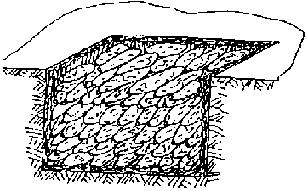
Fig.1: Storage of yam tubers in trench
silos (Source: NWANKITI and MAKURDI, 1 989)
The trench silo provides protection from respiration and
transpiration weight losses of the tubers. A disadvantage is the lack of
ventilation and the direct contact of the tubers. This causes the stored produce
to become warm and thus promotes the formation of rot (NWANKITI and MAKURDI,
1989). The contact existing between the tubers promotes the spread of rot within
the silo. The closed structure of the trench silo does not allow regular
checking of the produced stored. Apart from this, the silo offers good refuge
for rodents who cum cause the corresponding damage to the stored produce
(ONWUEME,
1978).
4.6.3 Storage of yam tubers in heaps on the ground
According to this method of storage the yam tubers are piled on
a carpet made of dead yam climbers into a heap. This normally happens under a
tree providing shade and the heap is covered with maize or millet stalks or
similar materials (FAO, 1990).
This method of storage can be erected without any costs The
shady tree somewhat balances out the temperatures occurring throughout the day
and provides certain protection against overheating of the produce.
This storage is badly ventilated. As it is closed, the produce
cannot be checked regularly. This promotes rapid spreading of rot which means
that storage duration is strictly limited The stored produce is also damaged by
insects and rodents which can hide themselves very well in the store (NWANKITI
and MAKURDI,
1989)
4.6.4 Storage of yam tubers in clamp silos
In Nigeria, attempts have been made to store yam tubers in clamp
silos. The technique of building the clamp silo was oriented to experience
gained in northern Europe (WAITT, 1961). The results of storage in clump silos
in Nigeria were contradictory. They were better for some varieties of yam in
comparison to the traditional yam ban but were worse for others. The clump silos
met with little acceptance for the storage of yams among the local population
for socio- cultural reasons (COURSEY, 1967
).
4.6.5 Storage of yam tubers under a conical protective roof made of maize or millet stalks
This type of storage is often erected under a shady evergreen.
It consists of a conical protective roof which can also be lengthened as e.g. in
Fig. 2. The tubers lie on top of each other under this protection (N'KPENU and
TOUGNON, 1991 )
This method requires no financial investment. The additional
work input required is also limited. The shady tree makes temperature
fluctuations throughout the day milder and the light protective roof allows
sufficient ventilation (ibid. )
Problems arise with the possible entry of insect pests and
rodents in addition, there is also the risk of wild and domestic animals
damaging the roof construction in their search for food and causing damage by
feeding on the tubers which can lead to rot As the tubers are piled on top of
each other and the roof completely covers the tubers, it prevents regular visual
checking of the produce stored
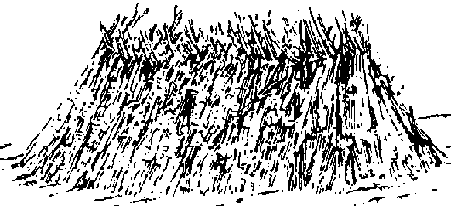
Fig. 2: Example of storage for yam
tubers with maize and millet stalks (Source: ASIEDU,
1986)
4.6.6 storage of yam tubers in mud huts
This type of storage is often encountered in the savanna areas
of the Yam Belt -i.e. in regions with a pronounced dry season (NWANKITI and
MAKURDI, 1989) They have firm walls erected in the traditional mud style The
roof consists of grass or other plant materials The construction is generally
oriented to the particular regional architectural customs
The yam tubers are piled on top of each other in the hut The mud
hut provides very good protection from rain and direct sunlight. With the roof
made out of plant materials, this method of mud construction evens out
temperatures.
The lack of ventilation and the piling of the yams are problems
here. Both promote the formation of rot and the stored yams can only be checked
with difficulty (ibid ).
To build the mud hut requires a relatively high input of capita
and labour However, the hut acknowledges this by having a low degree of
maintenance need and a service life of 20 - 30 years (N'KPENU and TOUGNON,
1991).
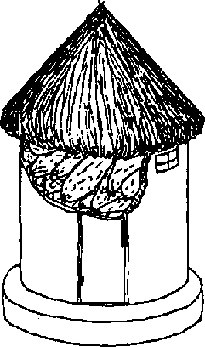
Fig 3: Traditional mud hut for the
storage of yam tubers (Source: NWANKITI and MAKURDI,
1989)
4.6.7 The storage of yam tubers in the yam barn.
This system of storage is the most widespread among traditional
yam farmers in West Africa. A yam barn consists of vertically erected wooden
posts of about 3 meters in length and set at a distance of 50 cm to each other
The vertical posts are stabilised by attaching horizontal posts to them
Frequently trees which are still growing are integrated into the storage system
for static reasons and also to provide natural shade (NWANKITI and MAKURDI,
1989)
The yam bum is erected in the open air and it is important that
there is sufficient shade available. To provide this, a roof is sometimes made
of palm leaves, or evergreens are used as natural shade. The bum has to be
constructed in an airy spot so that the surplus humidity in the air occurring
from respiration and transpiration of the tubers can be emitted Sufficient
ventilation also reduces the risk of the tubers heating and thus limits weight
loss due to respiration and transpiration (ONWUEME, 1978).
The yam tubers are tied above each other to the vertical posts -
mostly using plant fibres - starting from the bottom.The farmers use a
particular method of tying for this (NWANKITI and MAKURDI, 1989)
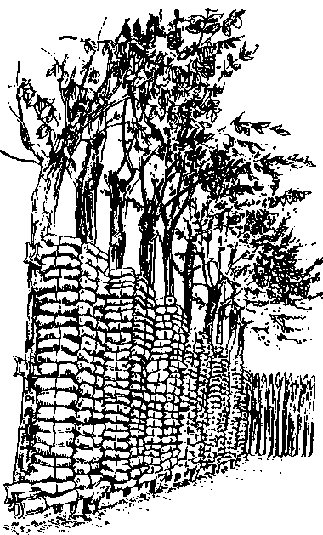
Fig 4 yam bum with living trees to
provide shade (Source: WILSON, undated)
The yam bum is a well-aerated storage system which is easy to
check. Germs and rotting tubers are easily removed This system shows no problems
during the dry season. During the rainy season the high humidity however leads
to rapid rotting of the tubers (ONWUEME, 1978).
The construction of the yam barn for use over several requires
not only a high input of costs (wood for construction) but also of work, Repair
work normally occurs annually Putting the tubers into storage, i.e. tying each
individual tuber up, is a great amount of work The tubers are often injured
during tying which promotes the formation of rot (NWANKITI and MAKURDI, 1989)
The traditionally open method of building provides no protection from insect
pests or termites Often no measures are taken to protect the produce from
rodents.
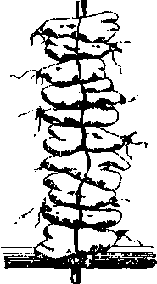
Fig. 5 The technique of tying the
individual yam tubers up in the yam barn ( Source: ASIEDU,
1986)
4.7 Measures to improve traditional yam storage
Any measures to improve existing storage structures have to be
in harmony with the relevant reasons and purposes for these improvements must
not have a negative effect on the socio-cultural symbolic character which many
storage systems have in addition to their purpose of providing protection.
Furthermore, measures towards improvement have to be economic from viewpoint of
the farmers and must not place excessive demands on his resources (e.g. work and
d capital).
The suggestions made below primarily serve to improve the
traditional storage structures and methods. The basis for the suggestions
towards improvement derives mostly from experience gained by the yam farmers
themselves or experiences shared by these. The results of research are also
taken into consideration as far as these appear suitable for use by smaller
farmers
In addition to measures towards improving traditional storage
structures new, extensively technical solutions were worked upon These include
systems like storing the yam tubers m refrigerated storage facilities or in a
controlled atmosphere and the use of radioactive radiation to inhibit
germination and to prevent rot (DEMEAUX and VIVIER, 1983)
These processes are not to be discussed in greater depth here.
Nevertheless, these technically extensive processes offer bases for the
reduction of storage losses caused by germination transpiration and respiration
and thus involve the central problems of storing fresh yam tubers. The high
degree of technical requirements and the investments required of the farmers do
not allow these processes to be successfully applied to the level of the small
farm producers at present. In view of a demand which is becoming more and more
centralised in African countries due to advancing urbanisation, these systems
which could contribute to food self-sufficiency should not be completely
disregarded.
4.7.1 Care in harvesting transport and storage
Although the yam tuber looks very hardy, the epidermis car be
easily injured. Each injury, regardless of its size, increases the risk of
infection and d thus early deterioration due to rot (FAO, 1981). For this
reason, it is absolutely essential to keep the risk of injury as low as possible
if storage is to be long-term and successful (PLUMBLEY, 1 982).
To reduce the risk of injury, the yam tubers have to be
harvested with great cue and caution. This is indubitably made more difficult by
the size and irregularity of the tubers (SADIK, 1987). Tubers are often also
damaged during transport For this reason, the tubers should be moved very
carefully and not thrown. High piles on transport vehicles increase the risk of
injury stemming from pressure and should consequently be avoided. A further
cause of injury is when they are heaped and tied when the tubers are stored in
the yam barn.
Many farmers are not aware of the relationship between injury
and tuber rot. For this reason, the farmers should be sensitized to this. It
should also be made clear how the success of storage quite decisively depends on
the condition of the stored produce at the time of puffing these into storage
(SADIK, 1987).
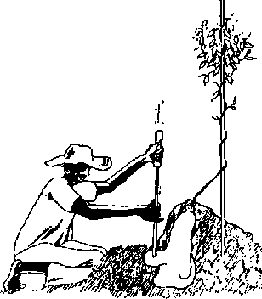
Fig. 6: Example of how yam tubers can
be injured during harvesting (Source: WILSON,
undated)
4.7.2 Curing
Curing allows injured fruits marked by a high water content to
heal themselves. The process was initially tested on potatoes and sweet potatoes
but a positive effect was also shown for yams (DEMEAUX, 1984). So that the
healing process for the wound car occur and the wound is not only dried out it
is essential for temperature and humidity to be increased
Increased temperature and humidity stimulate the yam tubers to
from cork cells which can hermetically close the lesions The cork cells are
formed in the cork cumbium and then make their way to the wound areas which they
close with several layers of wound periderm (BAUTISTA, 1990)
To form the wound periderm certain metabolic processes are
necessary These processes use energy which is gained by expiring starch stored
in the tuber. During the respiration processes, water, carbon dioxide and heat
are released into the environment (BAUTISTA 1990) Thus the healing of wounds is
always connected with a certain loss in tuber weight.
The losses in weight depend on the "curing conditions", i.e. on
temperature, humidity, duration of the process and the size of the wound
Experiments in Togo (temperature 35 - 40°C, relative humidity 80 - 95%,
duration of treatment 3 days) showed losses in weight due to curing of approx. 1
% of he fresh weight of the tubers (FAO, 1990).
Curing car seal a wound so that neither the water in the fruit
can emerge (certain weight loss and shrinking of the tuber) nor can rot enter
the tuber. The germination capability of the tuber is not affected by this
process so that tubers which have been treated can be used for vegetative
propagation.
Healing the wound should be carried out directly after
harvesting the tubers (BOOTH, 1978) Clean and smooth cuts heal best of all.
injuries due to squashing do not normally heal but remain as a centre of
infection (COURSEY, 1982) All wounds, squashed areas and other injuries should
consequently be cleanly cut out.
There are various processes for healing wounds. These differ in
their technical methods, their demands on the climate and in the duration of
treatment (FAO, 1990; DEMEAUX, 1984; BEEN et al, 1977).
Curing under a jute sheet or under jute sacks is a process
developed by the FAO in Togo (FAO, 1990). The tubers, after the appropriate
preparation are piled horizontally over each other and covered with a thick
layer, about 15 cm, of straw. The whole pile is then covered with a jute sheet
or with jute sacks.
This process is very costly since approx. 50 US Dollars have to
be estimated for the sacks (FAO, 1990). If the process were carried out with a
sheet, the costs would be even higher. The management of this process is also
demanding since keeping the temperature (35 - 40°C) and the humidity (80 -
95%) is quite difficult. Cost and management requirements give rise to the
question as to whether this process can at all be adopted by the farmers.

Fig 7 Healing wounds under a sheet
made of natural fibres (Source: WILSON, undated)
Another process is the so-called "pit-curing system" which is
widespread among yam farmers in Bendel State in Nigeria. For this process, a pit
of approx. 2.5 x 1.5 x 1 metre is excavated and the bottom is covered with
sawdust. The tubers are put in and covered with a thin layer of soil (NNODU,
1987).
This process shows its best effect at a temperature of 26°C
and a relative humidity of 92%. Duration of treatment amounted to 11 and 15
days. In comparison to untreated tubers which were all affected by rot after 4
months of storage in a yam barn, the cured tubers showed only 53% and 40% rot
(duration of curing: 11 days and 15 days respectively) (NNODU, 1987).
To define optimum "curing conditions" is very difficult and is
influenced amongst others, by the type of yam, the type of wound and the degree
of tuber maturity (BOOTH, 1978). It is thus not surprising that the statements
on temperature, relative humidity and duration of treatment greatly vary in the
relevant literature (DEMEAUX, 1984; FAO, 1990).
Farmers prefer curing processes with low additional costs and a
low input of extra work which effect a substantial improvement in the storage
behaviour and which are simple to handle. Future activities regarding
improvements in the curing process should be oriented to these requirements of
the farmers.
The work of BEEN et al. (1977) also goes in this direction.
These determined that tubers which had only been placed in direct sunlight for a
certain time showed similar storage behaviour to tubers which had been subjected
to more extensive treatment. It must be remembered here that the extensive
curing processes require a climate which also promotes the reproduction of
pathogens and which consequently, under some circumstances, could have a
counterproductive effect (ONWUEME, 1978).
Table 9: The influences of curing processes on the storage
losses of D. rotundata
|
Climatic |
Weight loss after |
After 70 days uncontrolled storage |
|
conditions |
treatment in % |
Weight loss % |
Germination % |
|
Direct sunlight |
|
11,0 22,5 |
77 |
|
26°C/66% RH |
|
9,1 35,5 |
33 |
|
30°C/91% RH |
|
2,1 36,1 |
50 |
|
40°C/98% RH |
|
4,3 20,9 |
73 |
Source: BEEN et al., 1977
(modified)
4.7.3 Influencing dormancy
As already stated earlier, the length of time the tubers can be
stored strongly depends on the length of dormancy (cf. 3.5.1). Prolonging
dormancy is thus essential in extending the storage of fresh yam tubers.
The duration of dormancy can be influenced to a certain extent
by temperature and relative humidity. Low temperatures and low relative humidity
rates prolong dormancy (PASSAM, 1977). The possibilities of changing the
temperature and humidity to influence dormancy are limited as the tube tissue is
destroyed when the temperature falls below 15°C (ibid.). A humidity which
is too low also hinders storage quality as early drying of the tubers is induced
by this.
Influencing the storage climate by external energy
(refrigeration) is restricted economically due to the low product value of yams
and the high energy costs.
Another possibility to influence dormancy is by using chemical
agents to inhibit germination like are used, for example, in successfully
storing potatoes (PERLASCA, 1956). When applied to yams, the substances used for
potato storage showed no effect. The reason is that yams, in contrast to
potatoes, do not germinate until late and then not in the epidermis but in the
cell layers below this. The agents applied in storing potatoes could have a
counterproductive effect on yams as they impede the healing process and can
promote the formation of rot (DEMEAUX, 1984).
Experiments to influence germination with natural and synthetic
growth hormones showed positive beginnings. Amongst others, gibberellic acid, a
synthetic hormone available in several compositions, and batatasins were tested.
The latter are natural growth hormones which occur, amongst others, in different
Dioscorea varieties. Batatasins applied endogenously showed no or a very limited
effect on dormancy (PASSAM, 1984) so that further progress in this direction is
doubtful.
Experiments with gibberellic acid were positive in some cases,
i.e. dormancy was clearly prolonged by the effect of this hormone. If
gibberellic acid is applied to the foliage prior to harvesting, dormancy is only
extended for Dioscorea esculenta. Applied to Dioscorea alata, gibberellic acid
showed no effect at all (WICKHAM, 1984,a). If gibberellic acid is applied after
harvesting the dormancy of Dioscorea esculenta as well as Dioscorea alata can be
extended. Use on Dioscorea bulbifera remained without effect (WICKHAM,1984,b).
Table 10: The effect of various chemical growth regulators
(germination inhibiting agents) on the storage quality of yam tubers
|
Yam variety |
Chemical agent |
Effect on the storage quality |
|
D.alata |
methyl-a-NAA |
+ 1,5 - 2 months |
|
chlorethanol |
promotes germination |
|
gibberellic acid |
+ 4 weeks |
|
D. rotundata |
methyl-a-NAA |
no effect |
|
gibberellic acid |
no effect |
|
IAA |
no effect |
|
kinetin |
no effect |
|
D. esculenta |
gibberellic acid |
+ 6 weeks |
Source: PASSAM, 1982 (modified)
According to WICKHAM (1984,b) the best effect occurs when the
tubers have been treated for 22 hours in a solution of 150 mg/litre gibberellic
acid. Other authors recommend other concentrations in some cases for the same
agent (MARTIN, 1977; DEMEAUX and VIVIER, 1984). According to OSIURO (1992),
dormancy can be extended for longer, the higher the concentration of the agent
is.
Apart from the concentration of the agent, the point of time
when it is applied is a critical factor in influencing the hormones for
dormancy. MARTIN (1977) defines application towards the end of natural dormancy
to lengthen this, a fact which is disputed by WICKHAM (1984,a). For PASSAM
(1985), the condition of the tuber is a decisive factor in the effect of
gibberellic acid. If gibberellic acid is applied to freshly germinated tubers
this will promote the formation of germs. If the germs are removed prior to
application it will delay re-formation of germs. The most favourable time for
the application of gibberellic acid according to DEMEAUX and VIVIER (1985) is
just after harvesting.
According to research findings so far, it can be assumed that
gibberellic acid delays the formation of genes, i.e. prolongs dormancy However,
there is a necessity for application methods, times and agent concentrations to
be clarified. Only when these points have provided precise results and the
economic efficiency of the process has been proven can recommendations on
practical application be expressed.
Until such information is available, the germs should be removed
manually. Since too frequent removal of the germs stimulates re-growth, the
germs should not be removed until these have attained a length of approx. 50
cm.
4.7.4 Influencing the storage climate
During storage, certain metabolic processes have to take place
so that the tuber retains its viability and reproductive quality. The intensity
of respiration and transpiration is partly dependent on the "storage phase" at
which the tuber is (cf. Chapters 3.5.2 and 3.5.3). In addition, the storage
climate, i.e. temperature and humidity, have an effect on this. These two
determinants in storage behaviour are not given quantities but can be
manipulated by means of certain methods.
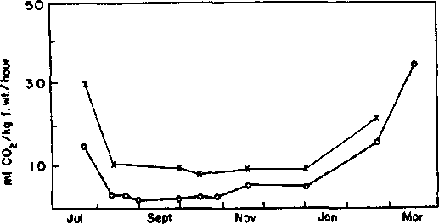
Fig.8 Respiration of yam tubers during
storage at varying temperatures (0 = at 25°C, X = at 35°C storage
temperature) (Source: PASSAM et al., 1978)
4.7.4.1 Influencing the storage temperature
In general, it can be determined that a longer storage period is
possible at lower temperatures. At lower temperatures, respiration is lower and
simultaneously, the formation of germs is delayed (DEMEAUX and VIVIER, 1984).
For many tropical fruits there is a "critical" temperature.
Below this, an irreversible change in tissue occurs resulting in rapid
deterioration of the fruit. The critical temperature for tropical fruits, also
referred to in literature as causing the irreversible "chilling injury"
alteration to the tissue, is well above freezing point. For yams, depending on
the variety, it is between 13 and 15°C (DEMEAUX and VIVIER, 1984) Other
authors state the critical range as being between 10 and 12°C (DEMEAUX and
VIVIER, 1984).
Consequently, a reduction in temperature to improve the storage
quality of yams is very limited and this should not fall below 15°C.
Without using external energy for cooling even this value can hardly be retained
under tropical conditions. The use of external energy also making the
construction of closed and insulted storage structures essential, cannot be
considered a possibility to improve the storage of yams on a small-farm level
for reasons of cost.
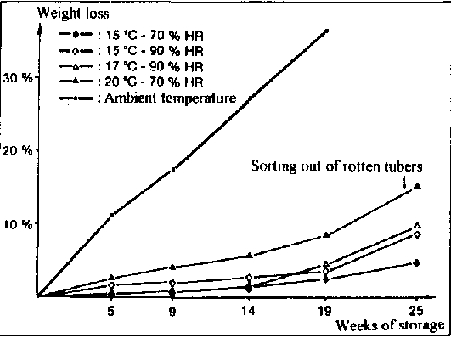
Fig 9: The influence of temperature
and air humidity on the losses in yam tuber storage (Source: DEMEAUX and VIVIER,
1984)
Even low reductions in temperature lengthen the period of
storage for yams. For this reason, all possibilities available for this which
are economically feasible should be made use of Initially and primarily to be
thought of here are simple changes in the construction of traditional storage
structures to take advantage of the natural temperature fluctuations between day
and night. Planting shady trees and the use of air currents can also lead to a
noticeable reduction in storage temperatures and thus provide a contribution to
improving the storage climate.
4.7.4.2 Influencing humidity of the air
There is an exchange of water vapour between the stored produce
and their environment for the purpose of balancing out the moisture content of
the produce and its surroundings. Dried crops e.g. cereals, tend more to
re-absorb moisture from the surrounding air. Crops like yams which have a high
moisture content tend to emit moisture to their environment during storage.
Loss of moisture from stored yams is not desired since this
leads to economic loss (loss in weight and shrinking of the tubers) without
improving storage quality. Consequently, the air in storage should have a
humidity rate at which the exchange of water vapour is minimal. At a storage
temperature of 26 - 28 °C which can be assumed typical for West Africa, a
relative humidity of 70 - 80% leads to an equilibrium, in which the exchange of
air between the tuber and its surroundings is very low.
With these storage conditions, the tuber retains the properties
which define its quality like colour, aroma, flavour and chemical composition.
At a higher relative humidity, there is the risk of water vapour condensing
which promotes the formation of mould on the tubers.
When considering measures to influence humidity, only those
should be taken into account which are technically and financially feasible for
the target group of farmers. In the foreground here are alterations in
construction which promote the exchange of air and thus remove superfluous air
moisture from storage. The changes in construction can be supported by selecting
a location which encourages air exchange.
4.7.4.3 Promoting ventilation
Normal atmospheric air consists of 78% hydrogen, 21% oxygen,
0.03% carbon dioxide and a varying content of water vapour.
The supply of oxygen from the air is essential for the metabolic
functions to preserve the life of the tuber. At the same time the tuber releases
water vapour and carbon dioxide. If the composition of the atmosphere in storage
deviates from the normal state of the air as a result of the metabolic functions
this can have an unfavourable effect on the condition of the stored produce.
Excessive air moisture which can condense if the temperature
falls, promotes the formation of rot. Very low concentrations of oxygen prevent
respiration and promote an undesired fermentation of the tubers in storage.
Increased carbon dioxide and ethylene concentrations where yams are stored are
not desired either. Increased carbon dioxide concentrations cause destruction of
the tuber cell structure. Ethylene is a growth hormone which promotes
germination (BATISTA, 1990).
For the above reasons it becomes clear that changes in the
composition of the atmosphere in storage are not desired as these can have a
negative effect on storage. To avoid undesired changes in the atmosphere the
store must be sufficiently ventilated. Ventilation is not only for the purpose
of gas exchanges between the store and the environment but also affects the
temperature in storage.
Controlling ventilation is not simple and easily leads to
counterproductive effects. If, e.g. the store is ventilated during the day, this
can, at raised temperatures, lead to undesired heating of the stored produce.
Inadequate ventilation at very low humidities promotes drying out of the tubers
in storage. The store should consequently be ventilated at night as far as
possible since temperatures are lower during this time and the relative humidity
is normally higher (SADIK, 1987).
As with other improvement measures, the improvements in
ventilation should be as simple as possible to carry out and not incur any
additional cost. Where storage facilities are to be newly erected, locations
allowing natural ventilation by means of air currents should be selected. Apart
from this, the tubers should be stored so that ventilation is not hindered.
Storage in huge heaps and in trench silos are consequently not suitable to meet
the demands of sufficient ventilation.
4.7.4.4 Providing shade for storage facilities
On the one hand, the direct effect of sunlight on stored produce
increases storage temperatures. On the other hand, the formation of germs is
promoted by this. For this reason, the store should be sufficiently m the shade.
Sufficient shade can be attained by constructions where storage
structures are covered by a roof. Roofs should be made of plant materials
available locally for cost reasons but also due to the high heat insulation
provided by these. A roof not only keeps the rays of the sun out but also
protects the stored produce from rain showers which promote the formation of
rot.
In addition to building roofs, natural shade should also be made
use of, as protection for the produce e.g. evergreen trees. When mounting roofs
for shade and taking advantage of natural sources of shade, it must be observed
that the ventilation of the store is not affected
negatively.
4.7.5 control of rot
As already stated, rot is caused particularly by fungus and
bacteria pathogens. These can however only penetrate the skin of the tuber
through damaged spots, like injuries, lesions and holes made by nematodes.
An important precaution is consequently to minimise the risk of
injury to the tuber during harvest, transport and storage by treating it
carefully. Tubers already showing rot at the time of being stored should be put
to some other purpose.
The danger of rot can be reduced by curing processes (cf.
4.7.2). In this way wounds are closed so that agents causing rot can no longer
enter the tuber. In addition to curing, the wounds can be treated with
traditional means like ash and limedust (ONWUEME, 1978).
Since rot can be passed from tuber to tuber the stored produce
must be checked on a regular basis so that infested tubers can be removed from
the store in good time.
Treating the tubers with fungicides is also a measure which can
be used to control rot. Satisfactory results have only been achieved with
thiabendazol and benomyl (DEMEAUX and VIVIER, 1984). These substances only have
a low degree of toxicity and remain locally in the tuber skin, i.e. they do not
move into the flesh of the tuber (DEMEAUX and VIVIER, 1984).
Treatment with fungicides is recommended as a bath. The
concentration of the agent is stated as 250 - 2500 ppm at a treatment duration
of 2 - 30 minutes (ibid.). It is considered necessary that further experiments
to define the treatment with fungicide be carried out in view of the wide range
of agent concentrations.
To avoid subsequent damage but also to achieve the appropriate
effect, the treatment with fungicide requires a very precise procedure. This
necessitates a high degree of extension and backstopping for small African
farmers in the use of
fungicides.
4.7.6 Control of nematodes
The control of nematodes is simultaneously also a precautionary
measure against rot agents who follow the nematodes and often cause greater
damage than the nematodes themselves.
Nematodes as parasites on roots and tubers are spread by plants
which are infested. For this reason, only plants which are free of nematodes
should be used for vegetative propagation.
As nematodes are also freely existent in the soil the relevant
crop rotation (long periods between the planting of two yam crops) can reduce
the pressure of the pests. To qualify this, it must be said mat most nematodes
which are parasites on yams also have other host plants. Control of the
nematodes by appropriate rotation is thus made more difficult.
Measures like chemical control or the treatment of tubers with
hot water (CENTRE FOR OVERSEAS PEST RESEARCH, 1978), seem less suitable for use
on small farms. On the one hand the processes are not yet mature, and on the
other the essential financial and labour inputs are too high to encounter
sufficient
acceptance.
4.7.7 Control of insects damaging stored produce
Measures to control insects causing damage within yam stores
basically have two purposes: firstly the damage caused by insects (eating and
loss of quality) are to be avoided or at least reduced. Secondly, control
measures are to avoid secondary damage caused by rot pathogens which can
penetrate the tuber through the injuries to the epidermis caused by insects.
As precautionary measures, separate storage of infected and
healthy tubers can be considered. In some cases, e.g. with the yam moth, this is
difficult since infestation cannot always be observed externally. For hygienic
reasons, all parts of the tuber which are infested by insects should be burned
and not kept in the proximity of the store (WILSON, undated).
The types of storage also have an influence on the infestation
of the produce by insects. SAUPHANOR and RATNADASS (1985) report that tubers
stored in trench silos are not infested by moms or pyralid moms which can cause
great damage in storage above ground. As storage structures are also selected on
the basis of other criteria no particular type of storage can be recommended at
this point to reduce storage losses due to insects.
The control of scale insects can be carried out with
pyrimiphos-methyl in a concentration of 25 g per litre water. The tubers remain
in this solution for 10 minutes and are subsequently dried (SAUPHANOR and
RATNADASS, 1985).
Deltamethrin is recommended for the control of tineid and
pyralid moths. The product is applied in concentration of 2.5 grammes per 100
litres water as a dip with a duration of 10 minutes. If infestation occurs this
should possibly be repeated. For economic reasons, the agent can also be sprayed
onto the stored produce (ibid.).
The statements on chemical control of insect pests on stored
yams in the literature available are very limited. Further investigations are
necessary or should be repeated to define suitable insecticides, concentrations,
application techniques and the time of application.
Farmers tend to take the problem into their own hands when a
certain intensity of damage is evident. When this happens, chemical products
which are not appropriate are often used, and which can lead to food poisoning
in some cases if the yams treated are eaten. The products are often improperly
concentrated and applied. In view of possible mistakes in application but also
in view of the possible economic damage the insects can cause to yam storage,
clear recommendations should be compiled for application during chemical
control.
The matter of biological control of pests has hardly been
mentioned so far. According to SAUPHANOR and RATNADASS (1985), Phanerotoma
leucobasis Kriech is a natural enemy of E. vapidella whose eggs it eats. In how
far there is a basis for biological control here will have to be a question for
future
research.
4.7.8 Measures for protection from mammals
To protect stored produce from mammals, measures depending on
the species and on the type of storage have to be undertaken.
Domestic animals can mostly be kept away from stores by fences.
Stores erected on stilts, e.g. a platform store, due to their construction
provide good protection from domestic animals which could damage the stored
produce. These stores can be quite easily protected from rats. Metal funnels are
mounted on the stilts with the wide end downwards at a height of approx. 100 cm
Rats and other rodents are not able to get past these obstacles.
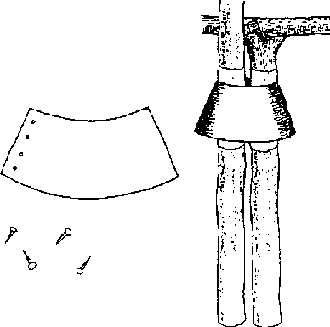
Fig 10: Material for and mounting of a
device to provide protection against rodents (Source: PROJET BENINO-ALLEMAND
undated)
4.7.9 The improved traditional yam barn
In view of reducing losses and long storage, the yarn barn shows
the best results in comparison to other storage systems widespread in West
Africa. This is one of the reasons for the yam barn frequently being selected as
the basis for improvement measures to traditional systems of storage on which
this work is based. Without changing the type of storage some measures and
extensions to the construction can be carried out and can lead to a considerable
improvement of the barn.
Improved storage of fresh yam tubers begins during harvesting.
Injuries should be avoided as much as possible as these constitute doors for rot
viruses. For this reason, harvesting, transport and storage have to be carried
out with as much care as possible (NWANKITI et al., 1989). When transporting
over longer distances, the tubers should not be piled up too high or this will
quickly lead to injury to the epidermis and the formation of bruises.
Immediately after harvesting, the tubers should be subjected to
curing (cf. Chapter 4.7.2). Bruises and lesions on the tubers should be cut out
as smooth wounds heal better. For hygienic reasons the soil clinging to the end
of the tubers should be removed. In how far treatment of wounds with ash or
other traditional means improves storage ability will have to be clarified by
further experiments. Prior to storage, the remains of the previous year's
harvest should be removed and burned as this can constitute a source of
infection.
The traditional yam barn has some disadvantages. Consequently,
the following improvements should be made.
- A roof construction similar to a hut and made out of local
materials like straw, palm leaves etc. should cover the barn. A roof made of
plant materials not only provides sufficient protection from sunlight or rain
but also regulates temperature fluctuations due to its insulation features. The
roof should have a height of at least 2.50 metres so that ventilation of the
barn is not restricted (FAO, 1990).
- The barn should be made safe from
rodents and domestic animals. There are several possibilities here. It can be
surrounded by a fence made of oil barrels which have been cut open. Possible
would also be a wall which, however, would have to be at least one metre high.
As rodents can easily overcome a wall (in contrast to an oil barrel barrier) the
space between the top of the wall and the roof should be protected with fine
wire mesh. It is important that the barn is fitted with a door which closes well
and will also prevent theft.
- In the modified yam barn the tubers are stored
on multi-level shelves. The shelves can be constructed of various locally
available materials as far as these provide sufficient support. The lowest board
should be about 50 cm above the ground so mat no moisture is taken up from the
ground. The shelves should be arranged so that a visual control of the tubers is
possible quickly and all around. This is facilitated by the tubers only being
stored in two or three layers on each shelf. It will also prevent too much
weight exerting pressure on individual tubers and thus reduces the risk of
bruising.
- The selection of the site is very important in making use of the
advantages for the system. This should be chosen so mat natural air movements
can be used for ventilation. The store should be set sideways to the main wind
direction so that the natural movement of the air can be used to its full
effect. Existing natural sources of shade, e.g. evergreens, should also be taken
into account during selection of the site as the temperature in the interior of
the barn can be considerably reduced by these.
The natural shade and its temperature reducing effect can mean
too strong ventilation during the day. Consequently it must be ascertained mat
not too much hot air enters the store as ventilation during the day.
The size of the store can be adapted to individual needs. There
is no documented experience on costs for construction and maintenance of the yam
barn. As local materials are mostly used, the extra financial means necessary
should be limited in comparison to the traditional yam barn.

Fig 11 Example of a rodent-proof
fence for storage of yam tubers in the yam barn and in similar storage systems
(Source: Wilson, undated)
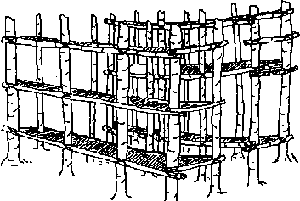
Fig 12 Simple shelves made of local
materials for the storage of yam tubers (Source: NIGERIAN STORED PRODUCTS
RESEARCH INSTITUTE 1982)
The use of germination inhibiting agents like gibberellic acid,
treating the tubes with fungicides and insecticides can be considered as
complementary means of improving storage systems. The lack of practical
experience in the application of these prevent any concrete recommendations on
the use of such products at this stage.
Regular inspection of the stored products is important for the
success of storage systems. Rotting tubers must be sorted out and removed. Germs
have to be removed regularly. The INPT (1988) recommends removing germs when
these are approx. 50 cm long. Removing the germs too frequently induces the
tuber to produce more germs.
According to investigations by NWANKITI et al. (1988), the
improved yam barn can contribute considerably to reducing losses. The weight
losses observed after six months storage in the traditional yam barn were 41.7%,
in the improved yam barn these were 13.3% and with the improved yam barn with
extra protection from rodents, 10.8%.
The results of investigations by NWANKITI et al. (1988) indicate
that even simple improvements to the traditional yam barn can substantially
reduce losses. For this, not all of the improvements mentioned above have to be
carried out. Also individual improvements can clearly reduce losses. This means
that improvements can be oriented to particular local conditions and
requirements of farmers.
Considered macroeconomically, the improved yam barn leads to an
increase in the supply of foodstuffs which can be produced on the domestic
market. A contribution can be made to the balance of trade if the foodstuffs
produced substitute food imports.
For the farmer, improved storage means an increase in
subsistence security. At the same time he gains larger scope for decisions on
selling and is better able to take advantage of price movements to improve his
income.
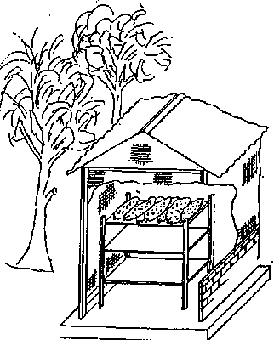
Fig. 13: Model of an improved yam barn
with protective roof and walls (Source: NWANKITI and MAKURDI, 1989
(modified))
| | | Traditional Storage of Yams and Cassave and its Improvement (GTZ) | | | 5 Cassava | | | (introduction...) | | | 5.1 The environmental requirements of cassava | | | 5.2 The cassava root | | | 5.3 Economic aspects of cassava production | | | 5.4 Causes of limitations to storage for fresh cassava roots | | | 5.5 Ways of and limits to. storing fresh cassava roots | | | (introduction...) | | | 5.5.1 Storing cassava roots in the soil after maturity | | | 5.5.2 Traditional methods of storing fresh cassava roots | | | 5.5.3 Storage of fresh cassava roots in clamp silos | | | 5.5.4 Storing fresh cassava roots in crates | | | 5.5.5 Storing fresh cassava roots in a dip | | | 5.5.6 Storing fresh cassava roots in plastic bags | | | 5.5.7 Use of modern methods to store fresh cassava roots | | | 5.5.8 Measures to prepare fresh cassava roots for storage | | | 5.5.9 Suitability of storage systems for fresh cassava roots on a small farmholder level | | | 5.6 The processing of cassava roots | | | 5.6.1 The purpose of processing | | | 5.6.2 Hydrogen cyanide and its release | | | 5.6.3 The production of cassava chips |
|
Traditional Storage of Yams and Cassave and its Improvement (GTZ)
5 Cassava
Cassava is a plant of the new world which originates in the
northeast Brazil. Central America is assumed as another source (ONWUEME, 1978).
Having begun with these two regions, cassava is now cultivated in all tropical
regions of the world.
In contrast to yams, mere is only one species of cassava bearing
the scientific name Manihot esculenta Crantz and belonging to the family of the
Euphorbiaceae.
There is a wide range of cassava varieties. Individual varieties
can be recognised by the leaf and root form, the duration of vegetation, the
yield and the content of hydrogen cyanide. The latter constitutes the difference
between the sweet and the bitter cassava.
The bitter varieties of cassava have a high hydrogen cyanide
content which can amount to up to 250 mg pa kg fresh root (GRACE, 1977). To
avoid poisoning, the roots have to be detoxified before consumption. The
vegetation period for bitter cassava varieties lies between 12 and 18 months.
After ripening, the roots can be left unharvested in the soil for a long period
and will not spoil (ONWUEME, 1978).
The sweet cassava varieties only contain low quantities of
hydrogen cyanide so mat detoxification prior to eating is normally not
necessary. The vegetation period is relatively short at 6 - 9 months. The roots
of this variety rot quickly if they are left in the soil after maturity.
The content of hydrogen cyanide is not constant according to the
varieties, but is subject to fluctuation due to the environment. For this
reason, the content of hydrogen cyanide is unsuitable as the only criterion in
defining the varieties of cassava (ONWUEME, 1978).
Cassava is a perennial plant. Apart from for purposes of
research and breeding, propagation is exclusively vegetative. In contrast to
yams which are propagated via the tuber, the cassava can be reproduced by
cuttings taken from the stalks of the plant. As the stalks, in contrast to the
root, are used neither for consumption nor other economic purposes, the cost of
propagating cassava where planting material is concerned, is practically
zero.
5.1 The environmental requirements of cassava
Cassava is a plant of tropical lowlands. Its cultivation is
restricted to regions between the latitudes of 30° north and 30° south
It is most widespread near the equator between 15° north and south Since
cassava is a short-day plant, the highest yield of roots is in this region.
Cassava finds the most favourable growing conditions in
humid-warm climates at temperatures of between 25 - 29°C and precipitations
of between 1000 - 1500 mm which ideally should be evenly distributed (ONWUEME,
1978).
In view of the climate, cassava has an enormous ability to
adapt. There are locations in the Andes where cassava is cultivated at an
altitude of 2000 metres. Cassava can even survive slight frosts although the
plant then loses its leaves which grow again when temperatures rise. Where mere
are high temperature fluctuations, the annual average temperature must amount to
20°C. With low fluctuations in temperature, 17°C is also sufficient
for successful cultivation (COCK, 1985).
Cassava is able to survive longer arid periods. During this
period, the plant loses all its leaves and suspends growth even of the thick
roots. When precipitation again begins, the plant regenerates without any great
loss in yield occurring. This ability is why it is particularly suitable for
locations marked by indefinite and irregular precipitation.
Cassava likes light, sandy loam soils with medium soil fertility
and with good drainage. Saline, strongly alkaline and stony soils, and soils
with stagnant water are unsuitable for the cultivation of cassava. Stony soils
inhibit the formation of the root tuber. Where soil fertility is concerned,
cassava is easily satisfied. Even on very poor and acidic soils which are
totally unsuitable for the cultivation of other plants, the cassava will still
provide a relatively good crop. For this reason, the cassava is frequently grown
on edge locations which can otherwise not be used arably. The low demands of the
cassava mean mat it is often the last member in crop
rotation.
5.2 The cassava root
The economically most important part of the cassava plant is the
tuber-like thick root. This develops from thin roots which take the nutrients
out of the soil. Only a few roots per plant develop into tuberous, thick roots.
The thick root is connected to the plant by a short, wooden
neck. It has a longish round form and can grow to between 15 and 100 cm and
reach a weight of 0.5 to 2.0 kg.
The cassava root consists of three layers. The cork periderm and
the cortex below this form the exterior protection for the root. Both cell
layers are only a few millimetres thick. The central part of the root is a
storage tissue where starch is kept. In the centre of the root there is a small
vascular bundle running lengthwise. There are cells which can secrete latex in
the storage tissue as well as in the cortex.
The thickening growth of the roots does not begin until the
roots absorbing the nutrients have penetrated the soil to prepare the way. The
arrangement of thick roots is influenced by how the cuttings are planted. If
these are planted vertically, thick roots develop and lie close to each other
like in a bundle. If the cuttings are planted horizontally, roots will form at
each node. The thick roots then develop at some distance from each other at the
nodes of the cuttings (ONWUEME, 1977).
The thick roots have no function in vegetative propagation which
occurs through cuttings from the stalk. The reason why reserve substances
accumulate in the thick roots has not been completely clarified. It can however
be assumed that these reserves serve to help the plant survive unfavourable
situations e.g., longer arid periods. This ultimately also defines the good
resistance of cassava to dryness.
The thick root in a fresh condition contains approx. 62% water,
35% carbohydrates (mainly in the form of starch), 1 - 2% proteins, 0.3% fats, 1
- 2 % fibres and 1 % minerals (ONWUEME, 1977). In comparison to the yam tuber,
the cassava root contains more energy but far less protein. An unbalanced diet
containing only cassava can lead to deficiency. Deficiency and poisoning can
also be caused by the high concentration of hydrogen cyanide especially when
cassava is not processed or insufficiently processed before eating (.cf. Chapter
6.2).
5.3 Economic aspects of cassava production
Cassava was introduced to Africa in the 16th century and became
established at various locations on the continent in the subsequent centuries.
However, not until the beginning of the 20th century did cassava become
extensively widespread and find a permanent home in numerous small farm systems.
In some cases, cassava clearly took over from other staple foods e.g. bananas in
East Africa and maize and sorghum in southern parts (LYNAM, 1991).
In Africa, but also on other tropical continents, cassava is
mostly grown by small farmers. In Africa, only 10% of production reaches the
market; 90% is cultivated as food for the producers themselves. Cassava provides
central benefits particularly for subsistence-oriented farms from an economic
aspect.
Cassava has a potential tuber yield of 70 tons per hectare and
with this, has the highest output per unit area among all staple foods providing
starch (COCK, 1985). Decisive for subsistence-oriented small farmers who avoid
risks is the ability of cassava to provide secure yields of 7 - 9 tons of roots
per hectare even on marginal and acid soils and under unreliable precipitation
conditions (ONAYEMI, 1982). In addition, the annual fluctuations in the yield of
cassava are among the lowest for all food crops (HAHN, 1987).
In comparison to other roots and tubers, the labour productivity
of cassava is very high. For a yield of 10 tons per hectare, a labour input of
approx. 120 days (manual phase) can be estimated (COCK, 1985). This corresponds
to about one quarter of the work input required to produce the same quantity of
yams.
After the plants have closed their leaves, cassava can be left
to itself. On the one hand, a contribution is made here to evening out peak
seasonal work (HAHN, 1987). On the other hand, this encourages the seasonal
migration of male labourers in search of an income, without endangering the
production of cassava.
Production input, e.g. fertilisers, plant protection and
propagation, is very low. Fertilisers can be completely dispensed with without
fear of losing any part of the yield (COCK, 1985).
The economic features and modest requirements of the plant are
the reason for it being called a "starving plant". Cassava is able to provide
secure yields on marginal sites and under unfavourable weather conditions which
cause crop failure for other
plants.
5.4 Causes of limitations to storage for fresh cassava roots
The starch-storing root of cassava is of no importance for
vegetative propagation. This means that the cassava, in contrast to the yam
tuber, has no period of dormancy which naturally favours storage after the
harvest.
When the cassava root has been harvested, a rapid process of
deterioration sets in after 2 - 3 days at the latest. This can be differentiated
in two phases.
Primary deterioration comes from the central vascular bundle in
the root. This begins to take on a dark-blue to black colouring starting from
broken and cut surfaces. The adjacent storage tissue is also affected and the
starch stored undergoes structural changes (PLUMBLEY and RICKARD, 1991).
Experiments have shown mat no microorganisms are involved in the
change of colour. This is based on an endogenous oxidative process. The
colouring can be delayed by cutting off oxygen, e.g. by storing the roots in a
water bath (PLUMBLEY and RICKARD, 1991).
Secondary deterioration mainly results from microbial activities
but can also be due to fermentation and softening of the root tissue (PLUMBLEY
and RICKARD, 1991). Secondary deterioration is caused by rot viruses which can
occur in very complex compositions and vary from location to location (ibid.).
Considered economically, primary deterioration is more
significant than secondary deterioration. Discolouring parallel to primary
deterioration causes a distinct decline in the value of the roots and makes them
impossible to sell. For this reason, it is initially essential to develop
processes which allow primary deterioration to be
controlled.
5.5 Ways of and limits to. storing fresh cassava roots
The cassava roots deteriorate within 2 - 3 days of harvesting.
This means a high selling risk for the seller as the produce becomes unsaleable
after a short time. The seller tries to compensate for his sales risk by asking
the appropriate prices. This means mat urban consumers have to pay relatively
high prices for fresh cassava roots (FAO, 1988).
The problem of the storage ability of fresh cassava roots is
also known to the traditional producers in tropical America. These societies
already developed processes during historical times to allow extension of
storage (RICKARD and COURSEY, 1981).
Also various research establishments have concerned themselves
with the specific problems around cassava and have searched for a solution on
how to lengthen storage of fresh cassava roots. The most significant results of
these efforts and traditional methods are described
below.
5.5.1 Storing cassava roots in the soil after maturity
The method of leaving cassava roots in the soil after maturity
is still widespread today. The roots can be kept in this way for several months
without deteriorating.
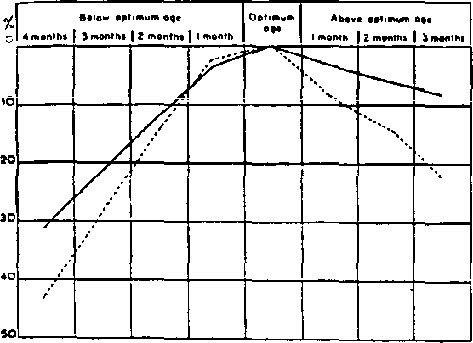
Fig 14 Yield loss for cassava when
harvest takes place before and after the optimum time (in percent) (Source:
GRACE, 1977)
With this method of storage, the rhythm of the harvest can be
adapted to that of consumption. If the optimum harvest age has been missed, the
root loses more and more substance and particularly starch, the constituent
which defines its value (cf. Fig. 14), the longer storage is. At the same time,
the root begins to become woody and impairments to the flavour occur (LANCASTER
and COURSEY, 1984).
During storage in the soil there is also the danger of roots
being infested by pathogens. Another disadvantage of this method of storage is
that area which could be planted with other crops is occupied by storage
(CHINSMAN and FIAGAN, 1987). Particularly in densely populated areas, this leads
to shortage of land and increases production costs for cassava as the
opportunity costs incurred have to be allocated to this method of
production.
5.5.2 Traditional methods of storing fresh cassava roots
Freshly harvested roots can be buried in the soil to preserve
them. This method is evidently oriented to the process of leaving ripe cassava
roots unharvested in the earth (INGRAM and HUMPHRIES, 1972). It is said that by
using this method in South America, cassava roots have been stored from one
season to the next (RICARD and COURSEY, 1981).
Storage methods oriented to this process are widely distributed.
In West Africa and India, roots which cannot be directly consumed or processed
after the harvest are piled into heaps and watered daily. The roots can also be
coated with a loam paste to attain a storage ability of 4 - 6 days (RICKARD and
COURSEY, 1981).
In older reports on traditional storage methods processes are
described which allow a storage of up to 12 months (RICKARD and COURSEY, 1981).
However, there is justified doubt here as recent practical experiments have not
been able to confirm these results. BAYBAY (1922) tested various traditional
methods of storage on the Philippines. He came to the conclusion that all the
traditional processes he had tested could only prolong storage by a few days.
Only storage in trench silos showed a somewhat more favourable
picture.
5.5.3 Storage of fresh cassava roots in clamp silos
The storage of fresh cassava roots in clamp silos was tested by
the Tropical Products Institute (TPI) and the Centro Internacional de
Agricultura Tropical (CIAT) in Columbia. Setting up the clamp silos was oriented
to traditional silos of the Indians and to experience gained in northern Europe
with the storage of potatoes.
A more or less thick layer of straw is laid out on a dry area
and the roots are piled on this in conical heaps. The heaps, weighing between
300 and 500 kg are covered by straw and soil and - as with potatoes - openings
are left for ventilation (RICKARD and COURSEY, 1981). Storage periods of up to 4
weeks were reached with this method in experiments. Losses in weight and the
formation of rot were low (BOOTH, 1976).
Controlling temperature for this method which should be below
40°C for successful curing of wounds and for storage, was difficult.
Several structural changes towards improving temperature control were tested.
These led to very varied and unforeseen results (BOOTH, 1976).
Although storage in clamp silos allowed a substantial
lengthening of storage duration of up to 4 weeks, the system hardly experienced
any practical dissemination. On the one hand, building the silos requires a
relatively high labour input. On the other hand, management of such storage
demands a great deal of experience (LOZANO et al., 1978). What remains
completely open is whether the storage duration of 4 weeks reached corresponds
to the requirements of the
farmers.
5.5.4 Storing fresh cassava roots in crates
Freshly harvested cassava roots can be stored in wooden crates.
The crates are lined with a layer of sawdust. The spaces between the roots are
also filled with sawdust. Finally, the roots are then covered with sawdust..
The sawdust, which can be replaced by any other resorbent
material e.g. dust from coconut fibres, has to be damp but must not be wet. If
the sawdust is too dry the roots will deteriorate quickly. Sawdust which is too
moist promotes the formation of mould and rot. To prevent the roots drying out
too early, the crate should be lined with plastic foil (RICKARD and COURSEY,
1981). A storage period of 4 - 8 weeks was attained with crates in experiments.
In Ghana this method of storage was modified and the crates were
replaced by large baskets. The baskets were lined with fresh banana leaves which
also served as a cover for the stored produce. Before storing the roots these
were subjected to three days of curing. Storage periods in Ghana using this
method reached 2 months (injured and cured roots) and up to 6 months (uninjured
roots) (OSEI-OPARE, 1990).
The limited availability of crates and lack of suitable baskets
which can only take up a small amount of roots in comparison to the value of
products, have prevented this storage method from spreading. Both types of
container are relatively expensive and the labour input involved in preparing
the store and the produce is quite high.
However, this storage method could be interesting where fresh
(sweet) cassava roots are sold over long distances. On the one hand, this method
allows sufficient storage ability and distinctly reduces the risk of early
deterioration. Secondly, the crates or baskets can simultaneously be used as
containers during transport (also several times) which saves on handling costs
and also reduces injury to the roots during
transport.
5.5.5 Storing fresh cassava roots in a dip
Storing fresh cassava roots in water is a widespread method on a
household level and with traders in Ghana. For this, various sized containers
are filled with water and the roots are completely submerged (OSEI-OPARE, 1990).
Storage duration can only be extended minimally by this method
The roots stored in this way normally begin to ferment or spoil after 3 days.
The effectiveness of this method depends greatly on the degree of freshness of
the roots when they are stored (OSEI-OPARE, 1990). As the roots passed on to the
dealers are mostly already 1 - 2 days old, the storage ability of the roots is
hardly improved by this method
The limited extension of storage is not the sole criterion for
the selection of this method of storage. This process is far more a method of
simultaneously detoxifying the roots which contain hydrogen cyanide (cf. Chapter
5.6.2).
5.5.6 Storing fresh cassava roots in plastic bags
The use of plastic bags to preserve cassava roots can be seen as
a consistent extension of traditional storage methods which serve the purpose of
avoiding the loss of moisture and water stress (RICKARD and COURSEY, 1981).
Freshly harvested roots are put into bags. Fungicides should be
applied before the bags are closed to avoid the formation of mould and rot
(BEST, 1990). When the roots which are packed airtight, breathe the oxygen
content in the bags is reduced creating a preserving effect (RICKARD and
COURSEY, 1981). High temperatures (above 40°C) as well as low temperatures
(below 10°C) both have a positive effect on the duration of storage.
A storage duration of more than 14 days was reached in Columbia
using this method (BEST, 1990). This method is particularly interesting for
dealers and consumers. As with storing in crates, the risks involved in
transport and sales is reduced for the trader. Consumers profit as the roots can
be kept for a certain time after purchase. with the relevant infrastructure,
this method of storage can provide new sales potential for production locations
which are distant from the market.
One problem however, is that the consumer has to be convinced of
the quality and the benefits (e.g. less frequent buying, storing to some extent
in the home) of this "product innovation". The experience gained here in
Columbia is quite positive (BEST, 1990). Direct transfer of this experience to
conditions in Africa is however a problem as there are considerable differences
between the living and eating habits. In addition, it must be determined whether
the consumer is willing to bear the extra costs involved in
storage.
5.5.7 Use of modern methods to store fresh cassava roots
The modern methods of storage involved here comprise
refrigeration and freezing, waxing of the roots and chemical storage protection.
Reduced temperatures extend the storage ability of cassava roots
by delaying the rot processes which occur rapidly at normal storage
temperatures. Experiments have shown mat the most favourable temperature for the
storage of fresh cassava roots is 3°C. Stored at this temperature, the
total loss after 14 days amounted to 14% and after 4 weeks, 23% (RICKARD and
COURSEY, 1981). A bluish mould occurs on the surface of the roots at higher
storage temperatures and the flesh of the roots turns brownish. Both cause
quality and storage losses (ibid.).
Cassava roots, or pieces of these, can be packed into plastic
bags and frozen. Although the texture of the tissue becomes somewhat spongy the
flavour is preserved (RICHARD and COURSEY, 1981). After defrosting, the roots
remain edible for about 4 days. In some Latin American countries this method of
preservation is used commercially. There are various preparations of freshly
frozen cassava roots in shop refrigerators. These products are also entering
supermarkets in European and American cities where a large number of African or
Latin American inhabitants are potential customers.
Preliminary experiments towards preserving fresh cassava roots
by coating them in wax were carried out in India. The wax contained a fungicide
and the roots were dipped in it to coat them Storage duration could be extended
to about 10 days with weight losses amounting to 10% (RICKARD and COURSEY,
1981). In Columbia fresh cassava roots were simply dipped in paraffin at a
temperature of 90° - 95°C. Without any fungicide being used, the
storage duration could be extended to 1 - 2 months (ibid.). Whether the storage
ability is improved by the effect of the fungicide or whether this is due to the
wax coating reducing respiration and the supply of oxygen has not finally been
investigated.
The use of chemical agents to avoid mould and rot on foodstuffs
is restricted for reasons of hygiene. The universal fungicide "Benomyl" was the
only agent with which the formation of rot could be satisfactorily controlled
for more man 10 days (RICKARD and COURSEY, 1981). This substance also had a
reliable effect on treating the mould on roots stored in plastic bags.
Various commercial products tested had no effect on the
discolouring of the vascular bundle. Only when this initial stage of
deterioration can be controlled, will the control of the second phase of
microbial root deterioration become interesting (RICKARD and COURSEY,
1981).
5.5.8 Measures to prepare fresh cassava roots for storage
For physiological reasons cassava roots are far less suitable
for fresh storage than yam tubers. Despite this, the cassava roots have to be
treated with just as much care as the yam tubers so that the maximum period of
storage may be attained (cf. Chapter 3.7. 1 ).
It must be made sure mat the cassava roots are not injured or
squashed during harvesting, transport and storage as injuries accelerate the
physiological destruction of the tissue (blue coloration of the vascular
bundle).
The most serious injuries occur at the shoulder of the root
where it is connected to the plant by the root collar. This kind of injury can
be avoided by harvesting the whole plant or by leaving a short piece of stalk on
the root (INGRAM and HUMPHRIES, 1972). The roots harvested in this way discolour
far more slowly than those harvested in a conventional fashion.
The deterioration of the roots can be delayed by cutting off the
parts of the plant above the ground except for a short stalk stump. This should
be done about 3 weeks prior to harvesting. The positive effect of cutting the
above-ground parts of the plant off on storage ability is only retained when the
roots are stored without any injuries (RICKARD and COURSEY,
1981).
5.5.9 Suitability of storage systems for fresh cassava roots on a small farmholder level
There are differences among farmers cultivating cassava, e.g.
regarding the economical status of the crop, the resources for production input
(work, capital and soil) and the market orientation and proximity. This makes
the requirements of small farmholders regarding the storage of fresh cassava
roots, very varied and not at all homogeneous.
The majority of West African small farmholders produce for the
purpose of self-sufficiency with minimum resources. Cassava which is an
undemanding plant in every respect, primarily serves the purpose of
self-sufficiency and risk reduction. The proportion of production sold is
generally very low.
The processes described above allow a very limited prolongation
of storage. They mostly require an additional input of work and/or of capital
which, in relation to the status of the cassava production, is relatively high.
Some methods, i.e. cooling by means of external energy, constitute a
technological leap and necessitate a functioning infrastructure.
For the majority of small farmholders, the methods described
provide no solution to their specific storage problems (long-term, secure, low
losses and low-cost).
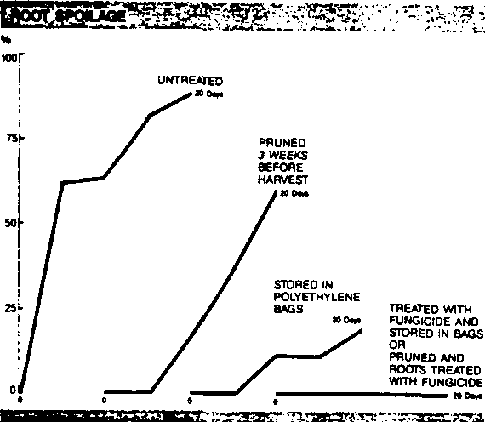
Fig 15 The effect of various measures
on losses of freshly stored cassava roots with a storage period of 20 days
(Source: COCK, 1985)
For farmers who have attained a certain integration into the
market (fresh selling), individual methods are definitely of some interest.
These can serve to bridge time gaps by minimally prolonging storage ability and
by solving logistic problems by providing transport containers. The use of the
methods described however, will only be successful if production and sales up to
the final consumer can be integrated into a system.
For the majority of farmers who produce cassava at some distance
from the markets, other strategies become essential if their storage problems
are to be solved. These strategies go in the direction of processing in order to
produce products which can be stored. Some processes, e.g. the production of
cassava chips as described below, can skill be included in the fields of storage
and post-harvest technology. Other processes, e.g. the production of gari, are
clearly a matter for foodstuff technology and are no longer a subject for this
investigation.
5.6 The processing of cassava roots
5.6.1 The purpose of processing
As stated in the preceding chapters, the storage ability of
fresh cassava roots is very limited in time This can only be prolonged slightly
by the use of technical processes which, in some cases, are very costly (e.g.
refrigeration). In view of this it is not surprising mat processes to conserve
cassava roots have been developed.
There is a great variety of such processes ranging from simple
drying through to processes which have to be considered as foodstuff technology
(GRACE, 1977; COCK, 1985). Traditional methods of processing which are typical
for some regions, e.g. the production of gari in West Africa, have been
completely mechanised during the course of time. This has contributed to
relieving particularly women of work (NZOLA-MESO and HAHN, 1982).
The main purpose of processing cassava roots is to get a product
which will keep and which can be stored. Numerous production processes achieve
this by drying the cassava roots. A welcome side-effect of drying is the
concentration of the contents which determine its value. The ability of the
product to be transported is considerably improved.
In addition to conserving, processing also detoxifies the
cassava. This is necessary since the bitter varieties of cassava in particular
have very high concentrations of hydrogen cyanide which can lead to serious
health
hazards.
5.6.2 Hydrogen cyanide and its release
Cassava roots contain hydrogen cyanide (HCN) which is a very
strong poison. The lethal dose for an adult is approx. 60 mg per day (HAHN,
1989). Due to the high content of HCN, an unbalanced diet containing only fresh
cassava products can lead to poisoning, deficiency and deformity. These occur
especially if cassava roots have not been sufficiently detoxified and if there
is a protein deficiency in particular of amino acids containing sulphur. The
latter promote a very effective natural body detoxification process (HAHN,
1989).
The concentrations of hydrogen cyanide in the cassava roots
depend on the variety. The content can amount to only a few milligrams but also
to over 300 mg per kilogram of fresh root (HAHN, 1989). HCN is also unevenly
distributed within the root. There are high concentrations in the outer cell
layers and in the upper part of the root (HAHN, 1989). The bitter flavour
cassava roots have does not indicate the content of HCN (LANCASTER and COURSEY,
1984).
Hydrogen cyanide does not occur freely in the cassava root but
is combined with linamarin and lotaustralin, two cyanoglycosides. HCN is
released by means of a hydrolytic process which is activated by the enzyme
linamarase (COURSEY, 1982). Hydrolysis always takes place when the enzyme comes
into contact with the cyanoglycoside. The natural release of hydrogen cyanide is
encouraged by the mechanical destruction of the tissue or the disintegration of
the cellular structures due to storage (LANCASTER and COURSEY, 1984).
Drying, boiling, immersing in water over a longer period and
fermenting also encourage the release of HCN. What is promoted here is less
hydrolysis and more the release of HCN which has already been detached due to
the activity of the enzymes with the glycoside.
Even when the cassava roots are properly processed a residue of
hydrogen cyanide remains. The concentrations however are mostly so minute that
no hazard to health will occur from eating them (HAHN,
1989).
5.6.3 The production of cassava chips
The production of cassava chips is the most simple way of
obtaining a product, on the basis of cassava, which will keep and which can be
stored. Cassava chips are for the purpose of self-sufficiency, as e.g. in West
Africa (STABRAWA, 1991) as well as for obtaining income and foreign currency.
The latter applies particularly to Thailand (COCK, 1985).
The production process always follows the same pattern and more
or less shows a high degree of mechanization. Slight deviations from this lead
to chips with varying quality features reflecting the regional demand and
flavour preferences. The possible variations on the standard processes here,
will be dispensed with at this point. Firstly, these are far too numerous,
often-only of regional importance, and secondly, documentation on this is rare.
Chips are not only made from cassava but can also be produced
from yams. Due to the lower content of dry matter in yams in comparison to
cassava correspondingly more energy has to be used to dry them. Seen from the
volume of production, cassava chips are far more significant than yam chips. As
the production processes for both products are virtually identical the method of
producing yam chips is not to be discussed at this point.
5.6.3.1 Preparation of the cassava roots for the production of
chips
The cassava roots are peeled immediately after harvesting with
the traditional cutting tools, e.g. brushwood knife (machete). The peeling,
mainly carried out manually by women, requires a great deal of work. One woman
can peel about 20 -25 kg roots in one hour (SADIK, 1987). The loss in weight
occurring due to peeling amounts to about 30% of the fresh weight (ibid.).
Various peeling machines have been developed in West Africa.
These have not been widely accepted because the purchase prices are too high and
the machines cause too great a loss in peeling (ibid.).
The roots peeled are men washed. If the chips are obtained from
bitter cassava varieties, the roots frequently are kept in water after peeling.
This causes hydrogen cyanide to be released, reducing the danger of poisoning
(JAKUBCZYK, 1982). For a sufficient release of hydrogen cyanide, the roots
should be soaked for 2 - 4 days (JOSEPH, undated). A good release of hydrogen
cyanide is attained if the roots are cut into pieces prior to soaking. These are
men soaked in water for 15 minutes and then boiled for 2 minutes (JAKUBCZYK,
1982).
Another method of preparation is to briefly boil the freshly
peeled roots in water. Then they are halved lengthwise and soaked in water for 1
- 2 days. The water should be changed once to twice during this time (ONWUEME,
1978).
Which process is preferred, particularly regarding the release
of hydrogen cyanide, has not yet been sufficiently investigated.
The cassava roots prepared in this way are cut into pieces for
drying. How the roots are split up and how large the pieces are, vary from
region to region and depend on the relevant eating. The size of the pieces of
root is also influenced by climatic drying conditions. Thus the pieces are
mostly larger in the dry northern parts of Ghana man those in the south of the
country (KWAKU, 1991).
In some cases the cutting of the roots has also been mechanised.
The machines used for this chip the roots into small pieces which dry
correspondingly well (COCK, 1985).
5.6.3.2 Drying the cassava chips
To store well, the chips have to be dried to a moisture content
of about 12% (COCK, 1985). Completely dried chips are white and break easily
without crumbling (INGRAM and HAMPHRIES, 1972). Drying is frequently inadequate
when the chips are to be sold directly after they have been dried (INGRAM and
HAMPHRIES, 1972). Pricing which is oriented to the weight of the product, can be
manipulated in favour of the seller by increased moisture content.
The prepared chips are spread out on all sorts of supports to
dry. They are laid out on the roofs of houses, the edges of roads or in yards.
No special constructions developed for chip drying are known of in West Africa.
Chips laid out to dry are often soiled by rain, sand and animal excrement which
leads to losses in quality due to hygiene (JAKUBCZYK, 1982).
The energy from the sun and wind are mainly used to dry the
chips. High energy costs normally make the use of external energy (wood and
fossil fuels) to dry the chips unviable. The drying process however, is often
supported by wood fires and the use of heat from stoves (CHINSMAN and FIAGAN,
1987). The smoke emitted is said to act as an insecticide. But smoke also leads
to discolouring and changes in the flavour of the chips which is not always
desired.
The duration of drying depends on the size of the chips and on
climatic conditions. Under optimum conditions. the chips can be completely dried
within 2 days by using the energy from the sun and the wind (COCK 1985 )However
the drying period is mostly much longer and frequently takes between two and
three weeks (INGRAM and HAMPHRIES, 1972).
During the long drying period the chips often become mouldy and
ferment. This makes the originally white chips discoloured and also changes
their flavour. The Ada, an ethnic group native to Ghana, want this qualitative
change to take place during drying (NICOL 1991). In the opinion of the Ada, the
fungus settling on the chips is evidence of a low content of hydrogen cyanide.
Consequently, they believe that chips infested by mould are quite suitable for
human consumption (ibid.). Mould as an indicator for the non-toxicity of chips
has not yet been proven scientifically.
Chips are often briefly boiled in water (parboiled) after drying
and men dried again. This makes the chips harder and is to improve their storage
ability and reduce their susceptibility to infestation by pests. Investigation
however show varying results (STABRAWA, 1991;INGRAM and HUMPHRIES, 1972).
5.6.3.3 The storage of cassava chips
The demands cassava chips have on storage conditions are similar
to those of cereals (COURSEY, 1982). Cassava chips are hygroscopic and tend to
draw moisture which promotes the formation of mould and thus early
deterioration.
Many stored product insects which cause damage to cereals also
infest cassava chips (cf. Chapter 5.6.3.4). Consequently, storage structures
should on the one hand provide some protection from reabsorbing moisture, but
should also avoid infestation by pest insects. This must be qualified by saying
that cassava chips are often infested by pest insects during the drying process.
For this reason, as already mentioned in Chapter 5.6.3.2, the drying process is
of particular importance in the storage of chips.
In contrast to the yam tubers for which specific storage systems
have been developed, cassava chips are kept in stores which are also used to
store cereals and grain legumes (STABRAWA, 1991). Thus, cassava chips are stored
in baskets, in wooden containers, in sacks or in bulk in storage rooms as well
as in various traditional storage systems intended for cereals (INGRAM and
HAMPHRIES, 1991). Frequently varying storage systems are used side by side which
can serve to fulfill the varying storage requirements (STABRAWA, 1991).
Of great importance in the selection of certain storage systems
are the availability of various building materials, the existence of certain
artisanal knowledge, capital and labour. In contrast, cultural customs and
traditions play only a minor role (COMPTON, 1991). In many areas, there are
however skill close associations between the structural features of storage
systems and certain ethnic groups. These are normally a result of artisanal
traditions and experience being passed down within certain groups. This
experience is also freely passed on to members of other groups and used by these
('bid.), indicating some openness regarding technical storage innovations.
In Togo, there are three traditional types of storage in
particular which are preferred for storing cereals but also for cassava chips.
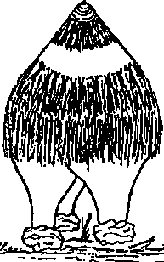
Fig 16: "Kpeou", a traditional storage
system for cassava chips (Source: LAMBONI, undated)
The "kpeou" is a storage structure which consists of mud or
often of the material from termite mounds. It is shaped like a water jug and is
often divided into several chambers (Fig. 16). The store often reaches a height
of over 2 metres. The upper edge of the "kpeou" has an opening for filling and
entering which can be firmly closed. The "kpeou" is relatively expensive to
erect but has a service life of 20 - 30 years. In Togo the "kpeou" is the only
closed storage system. As there is no method of ventilation due to the way of
building, the produce which is to be stored must be dried optimally (chips
should not have a moisture content greater than 12%).
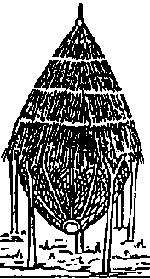
Fig. 17: "Katchalla", a traditional
storage system for cassava chips (Source: LAMBONI, undated)
The "katchalla" is made of wood and straw. It looks like a cone
which is upside down and is stabilized by wooden supports (Fig. 17). The
"katchalla" has an opening at the peak of the cone which is closed by a conical
roof. The storage system is not airtight, but has some ventilation.
The "tonneau" can be compared to a large barrel and is erected
on a low platform. The "tonneau" consists of a wooden frame in which mats are
stretched. The "tonneau" is open at the upper edge and is closed by a conical
roof (Fig. 18). It is often constructed to a height of more than 2 meters. This
system is also open and allows air exchange between the stored produce and the
atmosphere.
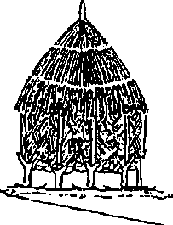
Fig 18: "Tonneau", a traditional
storage system for cassava chips (Source: LAMBONI, undated)
According to the studies by COMPTON ( 1991 ) and STABRAWA
(1991), about 60% of cassava chips are stored in traditional storage systems
(34% "kpeou" and 26% "katchalla) in the central region of Togo. The remaining
40% are kept in varying types of storage of which storage in sacks and as bulk
produce in storage rooms are the most significant.
The average storage duration for cassava chips amounts to 7
months, but can extend to over one year (STABRAWA, 1991). Other sources state a
storage duration of 3 - 6 months for sun-dried and of up to 12 months for
"parboiled" cassava chips before serious mould begins (INGRAM and HAMPHRIES,
1972).
The duration of storage is influenced by a large number of
factors which can vary greatly from region to region. In addition to natural
influences, the duration of storage is also affected by socio-economic factors.
In Togo, for example, the chips which are intended for sale are stored for 7 - 8
months in order to take advantage of price fluctuations due to quantities in
supply. Chips serving self-sufficiency purposes are stored up to a period of 12
months, i.e. until the new harvest is brought in (STABRAWA, 1991).
5.6.3.4 Losses in storage due to pest insects
Stored product insects cause high losses in the storage of
cassava chips. These pests infest not only cassava chips but also other foods
which are stored under tropical conditions (HODGES et al., 1985). According to
LAMBONI (undated), Prostephanus truncatus (Horn), Dinoderus minutus and
Tribolium sp. are among the most significant pest insects in the storage of
cassava chips among small farmholders in Togo.
Prostephanus truncatus (Horn) which did not appear as a pest in
Togo until the beginning of the eighties, can be easily confused with Dinoderus
which also causes damage to stores of cassava chips (STABRAWA, 1991). The losses
caused by Prostephanus truncatus (Horn) can be very high. HODGES et al. (1985)
determined weight losses of up to 50% for unfermented and up to 70% for
fermented chips after a storage period of 4 months which were ascribed to this
storage pest.
The differences in the amounts of loss are caused by the varying
density of the two types of chips. Unfermented chips are denser making it more
difficult for the grain borer to penetrate them man fermented chips. The
production of unfermented chips cannot be recommended as protection from
infestation by Prostephanus as these are also subject to serious infestation
(HODGES et al., 1985).
To quantify the storage losses for cassava chips which are
caused by insects is very difficult as firstly, suitable methods for an
estimation of the losses do not exist. The NRI has been endeavouring to find a
basis for a solution to this for some time now. Secondly, the farmers evaluate
the losses of cassava chips due to insects in a different way than for e.g.
maize. The badly damaged chips and the flour from boring are mostly still used
for human consumption, the insects being sieved out beforehand (STABRAWA, 1991).
The farmers consider the worse plasticity of the cassava paste made from this to
be a considerable disadvantage of this insect infestation in comparison to that
made out of uninfested chips (COMPTON, 1991). Since only a third of the paste
mixture consists of cassava chip flour, the negative effect of the insect on the
consistency of the paste is limited (ibid.).
Insects often infest the chips during drying (cf. Chapter
5.6.3.2). They can also not infest the stored produce until it is put in
storage. Since farmers consider the losses caused by the insects only as partial
losses, practically no traditional preventive measures have been developed. In
particularly the high losses caused by Prostephanus truncatus (Horn) have led to
isolated farmers making use of chemical products for storage protection
(COMPTON, 1991). The selection of insecticides is made at random and depends
only on market supply. So far, the effect of these products and the formation of
possible residues which could constitute a health hazard have not been
investigated. For this reason, no insecticides, dosages or application methods
can be recommended here.
5.6.3.5 Storage losses due to mould
Mould frequently infests the cassava chips during the drying
stage. However, mould also forms if the chips again become moist in storage
(INGRAM and HUMPHRIES, 1972). Not only one variety of fungus but several occur
on the chips simultaneously. It teas not yet finally been determined which
metabolites form the various varieties of fungus, or whether mycotoxins are
possibly among these.
The formation of mould cannot be basically seen as a loss in
quality or a cause of loss. Some ethnic groups appreciate infestation of the
chips by mould and even speak of improvements in the flavour here (cf. Chapter
5.6.3.2). In Burundi, a Belgian company attempted to improve the nourishing
qualities of cassava chips by directed mould infestation (JOSEPH, 1986).
Disregarding the regionally varying preferences for particular flavouring, mould
on chips mostly leads to distinct losses in value. This applies particularly if
the chips are intended for sale. For these reasons the only recommendation at
this time can be to avoid the formation of mould on chips during production.
5.6.3.6 Measures to improve the production and storage of
cassava chips
The storage ability of cassava chips is strongly influenced by
the drying process. Drying which takes too long, promotes insect infestation
leading to extensive storage losses. If the chips are only insufficiently dried
and still have mote than 12% moisture content, the danger of mould will exist.
Mould also forms when the hydroscopic chips are not sufficiently protected from
the moisture in the atmosphere and re-absorb moisture during storage.
Improvements to the production and storage of cassava chips have
thus to begin at the drying stage. At the same time, a storage has to be
practiced which not only has to provide protection from the penetration of
insects, but also against re-moisturising of the stored products.
Peeling the cassava roots requires a great deal of labour. The
mechanisation processes devised so far are more for peeling large quantities
(e.g. for gari production) man for use on small farms. A technology which saves
labour and hardly causes any extra costs, which substantially improves the
labour productivity of peeling and thus seems predestined for introduction to
the a.m. target group is the peeling knife developed by the IITA. In Togo at
least, this knife is not widespread and should thus be put to practical tests as
a measure of improving the labour productivity. A direct contribution to
relieving the woman of labour could be made here since the peeling of the roots
is her responsibility.
The drying process can be shortened by increasing the surface
area of the chips in relation to their volume. The larger chips which are often
spread out to dry in many regions of Africa have to be reduced in size to
improve their drying properties. The principle to be followed here is: the
smaller the chips, the faster drying takes place.
Before measures can be recommended, the reasons for the size of
the chips must be investigated. If mere are reasons for this which stem from
work management, it must be investigated whether a technology can be introduced
to increase labour productivity. In this respect, the microeconomic viability
has to be analysed just as the acceptance of the procedure by the population
concerned. Examples of mechanisation for chip production using slicers can be
seen in work by COCK (1985) amongst others.
In the past, only the rays of the sun were normally used for
drying the chips. These are extensively reflected by the white chips and are
partly lost for the drying process. As experiments have shown, drying can be
substantially improved if wind energy is also used in addition to the energy
from the sun (COURSEY, 1982).
For this purpose the chips are laid out to dry on a wooden frame
covered with wire mesh. The frame can be any size but should be chosen so mat it
can be easily handled. This is the case when it is has an approximate size of
1.5 x 1 m. The wire used to stretch over the frame should be fine enough to
prevent the chips falling through the mesh. This wire can be substituted by any
locally available materials which can be permeated by air.
The wooden frames are set up at a definite angle so that the
rays of the sun fall on the chips and so that the natural movement of the wind
constantly aerates these (cf. Fig. 19). In this way, cassava chips can be
optimally dried within 2 days (COCK, 1985).
In addition to this mobile frames offer further advantages. If
unexpected rain showers occur, they can be cleared away with the chips which
prevents with during the drying process and thus a reduction in quality. There
are also hygienic benefits of using the frames since the chips no longer come
into contact with the dirt from the streets or the yard as is usual in
traditional drying processes.
Storage structures where chips are traditionally stored do not
always provide sufficient protection from pest insects or with Of the
traditional storage structures used in Togo, the "kpeou" (cf. 5.6.3.3) seems to
be suitable for the storage of cassava chips. However, the storing features of
this structure must be investigated in more detail. Apart from this traditional
system, other containers can be used to store cassava chips under some
circumstances. Literature mentions e.g. plastic sacks. Plastic barrels and used
oil barrels also seem suitable for storing cassava chips. The storage properties
of these must be initially investigated before any recommendation for storage in
these containers can be made.
There are no proven results on processes of chemical storage
protection for cassava chips. From Togo, it is known, and this definitely also
applies to other countries as well, mat the farmers use chemical insecticides
for cassava chips at random when pest infestation occurs. Since considerable
health hazards can occur when treated chips are consumed, investigations should
be carried out to define recommendations on products and on application which
will men allow storage protection without any risk to
health