 |
| ||||||||||||||||||||||||||||||||||||||||||||||||||||
|
| ||||||||||||||||||||||||||||||||||||||||||||||||||||
A Publication Of The Nitrogen Fixing Tree Association
(Nfta)
P. O. Box 680
Waimanalo, Hawaii 96795, U.S.A.
With Support From:
International Development Research
Centre
P. O. Box 8500, Ottawa,
Canada
|
| ||||||||||||||||||||||||||||||||||||||||||||||||||||
Acknowledgments
LEUCAENA WOOD PRODUCTION AND USE is a practical manual prepared for NFTA by a panel of authors during the IDRC-sponsored conference on leucaena (Singapore, Nov., 1982). A sister publication, LEUCAENA FORAGE PRODUCTION AND USE will soon be released. NFTA encourages enquiries on overrun copies by interested development institutions.
Editors:
Dr. Rick J. Van Den Beldt, Executive Secretary, Nitrogen Fixing Tree Association.
Dr. James L. Brewbaker, President, Nitrogen Fixing Tree Association.
Panel of Authors:
James L. Brewbaker
Frank H.
Denton
Ta-Wei Hu
E. Mark Hutton
Raymond J. Jones
Kenneth G.
MacDicken
Rick J. Van Den Beldt
Artist: Neil Baldoza
Published by:
Nitrogen Fixing Tree Association, P. O. Box
680, Waimanalo, Hawaii, 96795 U.S.A.
With Support From:
International Development Research Centre, P. O. Box 8500, Ottawa, CANADA
Thailand Institute of Scientific and Technological Research, 196 Phahonyothin Road, Bangkhen, Bangkok, THAILAND
|
| ||||||||||||||||||||||||||||||||||||||||||||||||||||
Chapter 1 - What is leucaena?
1-1 WHAT IS LEUCAENA?
Leucaena is a tropical tree with many uses. This manual deals with leucaena grown primarily for wood production. In a companion publication the production of leucaena forage for animal feed and other uses is considered. Leucaena is also the subject of a publication of the U.S. National Academy of Science (1984) and the annual LEUCAENA RESEARCH REPORTS published by the Nitrogen Fixing Tree Association. Other references on Leucaena may be found in the section on additional reading.
Leucaena is known botanically as Leucaena leucocephala (Lam.) de Wit. The name "leucaena" is the accepted international name for this one species, but it is also the name of the genus that includes at least 9 other species. Some of the common names for leucaena are:
|
-huaxin (Central America) |
-lamtoro (Indonesia) |
|
-guaje (Mexico) |
-koa haole (Hawaii) |
|
-ipil-ipil (Philippines) |
-yin ho huan (China) |
|
-kubabul or subabul (India) |
-tangantangan (Pacific Islands) |
Leucaena is a tree that has been used widely for wood, fuel, forage, and other purposes. It has been said to be a "miracle tree" because of its fast growth and wide adaptability. Experience has shown that there are no miracle trees, that every species has limitations in site requirements and utilization. Leucaena is limited to the lowland tropics and sub-tropics by temperature and light requirements, and to non-acid (pH > 5.0) soils.
Leucaena is a member of the sub-family Mimosoideae of the family Leguminosae, a family of some 18,000 species. Legumes are noted for their ability to fix atmospheric nitrogen in forms available as nutrients to the growing plant. Most of this fixed nitrogen is found in the leaves as protein. The nitrogenrich leaves of leucaena can be used to improve soil fertility, to nourish other plants as a source of green manure, and as an animal feed.
Nitrogen fixation occurs on the roots, in small nodules that are infected with bacteria. In the case of leucaena, the nodule-forming bacteria are of the genus Rhizobium. Some soils lack this bacterium, and it must be provided together with the seed if nitrogen fixation is to take place.
1-2 ORIGIN AND DISTRIBUTION
Leucaena originated in Central America and Mexico, where it is still widespread today, primarily in dry lowland regions. The precise location of its origin is not known, but its earliest center of diversity is presumed to be the Yucatan in Mexico. Most leucaenas found in natural stands are very similar to the aggressive, freely-seeding, shrubby type of the west coast of Mexico. This shrubby type is often referred to as "Hawaiian type" due to its domination of lowland forests in Hawaii.
Leucaena was transferred to Asia from West Mexico in the 16th and 17th centuries at the time of the galleon trade. It moved further in the 19th century, becoming popular as a feed or forage plant, and later as a shade tree (nurse tree) for coffee, cacao, and other plantation crops. Today leucaena may be found in almost all tropical countries, especially on coral-derived soils of islands, where it often dominates the vegetation. This is particularly true on Pacific islands such as Corregidor, Saipan and Oahu where seed of the Hawaiian type were aerially sown. More recently, the species has generated wide interest as a fuelwood, and as a source of wood for charcoal, pulp, and other industrial uses.
1-3 APPEARANCE
Leucaena has become best known to the forester through tall, arboreal types known as "giant" or "Salvador-type". The giants are native not only to Salvador but have been found as a genetic variant throughout the region of origin. The trees grow rapidly on good sites to 15m in 4-5 years, and mature trees reach heights of approximately 20m. The common leucaena, however, is a shorter tree or shrub, often overpopulating and producing a canopy of 5lOm i5-10m in height. This common type has been used for fuelwood, but is low in yield and is best replaced with the giant cultivars. Individual trees growing without competition form a relatively branchy crown. However, when planted at high stocking densities branching is suppressed and lateral branches self-pruning (Figure 12).
Leucaena leaves are divided bipinnately into short branches (pinnae) 8 to 15mm in length with 11-22 pairs of leaflets per pinna. In extreme drought, the leaves fall off. None of the leucaenas are thorny. Leucaena produces dense, globular white flowers which when fertilized bear brown, flat pods that hang in clusters. Pods and seeds of the giant types are much larger than those of the Hawaiian type.
1-4 USES
Leucaena produces a medium hardwood that is widely used as a firewood, producing little ash and smoke. The wood produces a satisfactory pulp, which can be used for paper and rayon. The wood can be used for parquet flooring and small furniture, but trees generally do not become large enough for major use as lumber. Poles can be harvested from leucaena for use as posts and props.
The leucaena tree or shrub in nature often acts as a soil enriching plant, and helps in erosion control. The trees have been interplanted as sources of nutrients ("nurse trees") for plantation crops like cacao, coffee, pepper and forest species such as teak. They can also be used as windbreaks or firebreaks when planted at high population densities. They grow back rapidly after harvesting, or following low-intensity fire or light frost.
An expanding use of leucaena is to provide leaves for green manure to fertilize staple food crops. Leucaena can be cut or trimmed regularly as a shrub to provide nutrients to intercropped corn, cassava, and other nitrogen-demanding row crops. It is also a protein-rich leaf meal for use in animal rations.
Among the many other uses of leucaena are seed mats and lets, craftwood, food products for human use (young leaves, young seeds), and small poles to prop beans, bananas, and climbing plants.
|
| ||||||||||||||||||||||||||||||||||||||||||||||||||||
Chapter 2 - Where does leucaena grow?
2-1 SOIL TYPE
Leucaena grows best in well-drained soils that are moderately alkaline (pH 7.5) to moderately acid (pH 6). These soils usually have good fertility due to adequate available calcium, magnesium, potassium, and sulfur. However, in many tropical soils phosphorous may be limiting even within the optimum pH range.
Leucaena will also grow well in strongly alkaline soils with pH greater than 7.5. These include moderately saline soils. However, minor element deficiencies of zinc, copper, or iron may occur in such soils.
Leucaena may be grown successfully in relatively acid soils, with a pH of 5.5 to 6.0, or even as low as pH 5 provided attention is given to the application of amendments like phosphorous and calcium (Figure 2-1). Some varieties of leucaena have been shown in preliminary trials to tolerate acid conditions better than others. These include the varieties Cunningham, K29, K132 and K420.
There are no varieties available at present for strongly acid soils with pH less than 5. Acid oxisols, as in tropical South America and Africa, have high levels of free aluminum and low calcium as well as low organic matter content and cation exchange capacities. This makes it difficult to grow many crops including currently available leucaena varieties. Research is underway to breed leucaena for soils of this type.
Small pilot trials of a standard leucaena variety such as K8 can indicate in a few months whether leucaena is adapted to an area. Where large scale production of leucaena is planned, such pilot trials and soil analyses are strongly recommended. Since leucaena is deep-rooted, special attention should be given to properties of the subsoil (50-200 cm depth). Especially important are soil pH, exchangeable Al and Ca levels and available phosphorus. If subsoil pH values are less than 5.0, difficulties in growing leucaena can be expected.
2-2 RAINFALL
In the humid and sub-humid tropics, rainfall usually varies from 2000 mm/yr or more down to less than 600 mm/yr. Leucaena can grow well over this range, provided soil drainage or moisture retention conditions are satisfactory. In areas where root development is not restricted by high exchangeable aluminum or low calcium and available water is plentiful in the subsoil, very good leucaena growth can be obtained even through extended dry seasons.
Leucaena growth may be severely limited by rainfall less than 600 mm/yr, particularity during the establishment period when the roots are unable to utilize available water in the subsoil. However, rainfall limitations are highly dependent on soil moisture retention capacity, the ability of roots to penetrate subsurface soil horizons, seasonal rainfall distribution and the timing of planting.
Annual rainfall of approximately 1500 mm and a four month dry season provide perhaps the best environment for leucaena production. Higher annual rainfall and even distribution of rain throughout the year may complicate harvesting and maintenance operations.
2-3 TEMPERATURE AND LIGHT
Optimum temperatures for leucaena appear to occur in the 2530° C range. Growth rates presumably relate directly to temperature. In the tropics, temperature is directly related to latitude, elevation and topography. Thus, temperature limitations to the production of leucaena may be described in terms of both elevation and distance from the equator. Generally, temperatures suitable for leucaena occur:
- Within 10° latitude of the equator, to 1000 m
elevation
- Within 10-25° latitude, to 500 m elevation
In the sub-tropics, it is difficult to establish leucaena beyond 30° latitude. The frosts which occasionally occur in the subtropics do not kill leucaena unless they are severe and prolonged. Often the above-ground growth is killed, but grows back vigorously from the base as a many-branched shrub. Leucaena growth can be strongly seasonal in the sub-tropics, with low yields in the cool dry months and higher yields (2-4 times) in the hot wet season.
As a pioneer species, the growth of leucaena is greatest under high light intensities, and is greatly reduced by shading (Figure 2-2). Leucaena is thus best grown in situations in which it has maximum exposure to sunlight, i.e in newly opened clearings or as a dominant or co-dominant species in any intercrop system. While the species does not tolerate shading well, suppressed or shaded trees are slow to die and often persist for years with very little growth until the canopy is opened.
|
| ||||||||||||||||||||||||||||||||||||||||||||||||||||
Chapter 3 - Varieties and seeds
3-1 VARIETIES
The many leucaena varieties commonly sold can be divided into three main types:
- Giant: Tall and sparsely branched, good wood production (to
20m in height)
- Common: Short and bushy (3-8m in height)
- Peru:
Multi-branched, leafy, medium height (5-12m)
Varieties that have proved superior in wood yields and for the production of roundwood, pulp, fuelwood, and afforestation are all of the giant type. Some outstanding and widely used giants are K8 (Mexico), K28 (Salvador), K29 (Honduras), K67 (Salvador), K132 (Mexico), and K636 (Mexico). These varieties have shown little apparent difference in yield, and composites can be considered for major plantations. Peru and common types should not be used for wood production.
Leucaena crosses readily with other species in the genus, and hybrids with I" diversifolia and L. pulverulenta show promise as high-yielding types in preliminary trials. Such hybrids may ultimately be used to expand the range of leucaena to colder and more acidic sites. It should be noted, however, that seed from such hybrids will probably not be marketed for several years.
A current list of seed dealers marketing these varieties can be obtained from the annual publication LEUCAENA RESEARCH REPORTS (NFTA, PO Box 680, Waimanalo, HI 96795, USA).
3-2 SCARIFICATION
Mature leucaena seeds have a hard seed coat that cannot absorb water. In nature, this usually results in seed germination over a long period of time. In order to promote uniform germination the seed coat must be cracked (scarified) to permit entry of water and thus hasten germination. There are 3 major methods of scarification:
1. Hot-water scarification: Water is heated to a temperature of approximately 80° C. Seeds are added to the water in a ratio of about 1:3 (or 1 part seeds to 3 parts water), stirred for 3-4 minutes, then removed from the heat and washed with cool water. A cloth bag can be used to hold the seeds for immersion.
A common method of hot-water treatment is to use water brought to a vigorous boil, as if for coffee. This is poured over the seeds, allowing at least twice the volume of water to the volume of seeds. The mixture is stirred for 3-5 minutes, and the water poured off and replaced with cold. Care should be taken never to boil leucaena seeds.
Figure 3-1 Leucaena scarification methods:
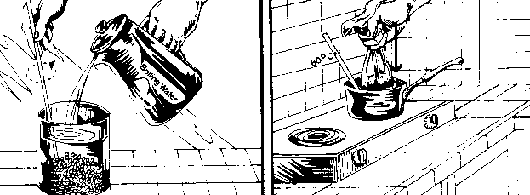
HOT WATER SCARIFICATION - Seed is
soaked for 5 minutes in 80°C water and rinsed with cold water.
Alternatively, boiling water may be poured over seeds and allowed to cool to
room temperature. Cooled water is then decanted. Seed is dried for storage.
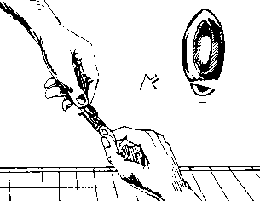
BAND SCARIFICATION - A small
fingernail clipper is a useful means to hand scarify Leucaena Clip the rounded
end of the seed just enough to expose the endosperm. Use mostly limited to small
samples of seed for experimental purposes.
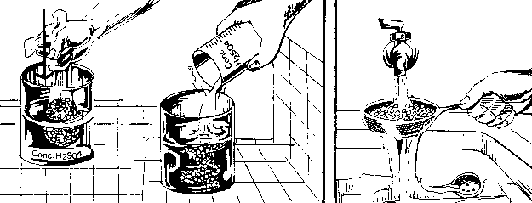
CHEMICAL SCARIFICATION - Concentrated
sulfuric acid is poured over seed just enough to wet them. Alternatively, seed
may be dipped into cone. sulfuric acid in a nylon bag. Seed is stirred with a
glass rod for 10-12 minutes, then exhaustively rinsed with running water to
remove all acid. Dry seed for storage.
2. Mechanical scarification: Individual seeds can be scarified with a razor, knife, fingernail clipper or scissors by cutting the rounded end of the seed, resulting in nearly perfect germination. Seed can also be scarified with sandpaper, carborundum or emery cloth by scratching the seed manually or by using a rotating drum designed for this purpose. Care should be taken to remove only enough of the seed coat to allow the seed to imbibe water. The seed coat need only be removed enough to barely be able to see the edge of the cotyledons, without actually cutting into the cotyledons themselves. Seeds which are prepared in this way should be used soon after scarification.
3. Chemical scarification: Concentrated sulfuric acid weakens seed coats to permit the entry of water. It must be used with great care to avoid burns, and to avoid violent reaction with water. Seeds need only enough acid to be thoroughly moistened, and should be left about 13-15 minutes, stirring with a glass rod. Excess acid should be poured off and can be reused. The seeds should be poured into a plastic or nylon sieve and washed thoroughly in running water (3-5 minutes) prior to drying and use. Sodium hydroxide (lye) at a 20% concentration for one hour has also been reported as a useful agent for scarification. More experience is needed with this method.
Chemically scarified seed can be air dried and stored for years in a cool, dry place. Viability is reduced much more rapidly in warm, moist storage conditions.
Table 3-1 Comparison of scarification methods for leucaena.
| |
80°C Water for 3-5 minutes |
H2SO4 for 12 minutes |
Hand Scarification |
No Treatment |
|
Percent germination after 2 weeks |
90% |
95% |
95% |
10% |
|
Expense |
low |
medium |
high |
- |
|
Storage capability (dried) |
6-12 mo |
6-12 mo |
6-12 mo |
1-5 yr |
|
Safety risk |
medium |
high |
low |
- |
|
Germination time |
4-7 days |
4-7 days |
4-7 days |
4-60 days |
|
Ease of operation |
medium |
difficult |
simple |
- |
3-3 SEED STORAGE
Dry leucaena seeds store well for many years. It appears they can be kept indefinitely under dry (30% relative humidity) and cool conditions. Scarification reduces the storage life of the seeds, if kept at ambient temperatures. Seeds that are scarified in hot water at 8P C for 2 minutes, followed by rapid drying, may be stored for as much as a year. However, it is generally best to sow seed immediately after scarification to avoid viability loss in storage.
Maintaining dry storage conditions is difficult in the humid tropics. Sealed polyethelene bags, cans, drums or dehumidified rooms are necessary. If seeds are dry, no damage may be expected from disease or insects. Seeds may need to be mixed with insecticide (e.g. Sevin) and fungicide (e.g., Captan) to prevent infestation during storage.
3-4 SEED PRODUCTION
Seed production of leucaena is relatively simple compared to many tree species. The trees flower in the first year, and seed yields are high by the second year. However, caution is needed to ensure purity of the seed from which the seed orchard is planted, and to ensure that harvested seeds are of high purity. Seeds can be collected in two major ways:
1. From trees allowed to bear pods at the margins of plantations or hedgerows;
2. From seed orchards planted and managed expressly as a seed source.
In the first approach, trees should not be identified for seeds until the second year, when their qualities are obvious. Since the purpose is to harvest seed of improved varieties, the roguing of off-types is extremely important. Rogues will normally be small shrubs, highly branched, highly flowering with small seed pods. Most certified seed will be highly pure to type and should not contain more than 2-5% rogues. Seed trees should be isolated from common types by a minimum of 100m.
Some of the important procedures in a seed production orchard are given below:
- Obtain seeds from a reputable source of certified origin
- Plant at a spacing of 1 x 2m
- Remove common leucaenas within 100m of the orchard
- Thin after 1-2 years to 2 x 3m or 3 x 3m spacing, removing any off-type plants carefully at this time
- Cut trees to a stump height of one meter to force side branching
Insect damage in the pods (weevils) can be eliminated by the application of a systemic insecticide like Cygon while pods are still green.
Seeds are collected when pods are completely brown, and should be removed before the pods begin to split. Tree pruners work well in seed collection, and the pods can be gathered in cloth bags. Alternatively, seed harvest can be made during pruning when branches are cut back vigorously to encourage further branching. Seed pods should be thoroughly sun dried until they shatter or are easily broken apart. Pods can be threshed by placing them in a bag, beating the bag and removing seeds from the bottom. Various sized threshers made for crops such as soybeans are available and work well for larger-scale operations.
|
| ||||||||||||||||||||||||||||||||||||||||||||||||||||
Chapter 4 - Nursery management
4-1 NURSERY DESIGN AND OPERATION
Seedlings may be grown in a variety of ways and in a number of different containers. The decision to use seedlings must be made carefully, as either direct seeding or transplanting of seedlings have site specific advantages and disadvantages which must be considered (Section 5-2). Once it has been decided to plant seedlings rather than direct seed an area, the type of planting materials to be used must be determined. Leucaena is easily grown in containers, or in seedbeds from which they will be transplanted as stump cuttings or bare root seedlings.
The nursery operation for containerized seedlings should include a seedling bed or bench, a removable shade system, a reliable source of water, and a secure place to store materials and equipment. Benches or beds should be raised off the ground in container operations in order to permit air pruning of roots. It is most convenient for handling operations to raise the benches to waist height, however this requires substantial material inputs. Air pruning can be encouraged by raising the seedlings to a height of 20-40 cm above the ground. If this is not done, pots invariably become rooted into the soil, resulting in considerable expense and damage to seedlings when the seedlings are lifted out of the seedbed.
Shade is not a requirement for leucaena seedlings, but light shade is recommended for the first few weeks of seedling growth to slow drying of the potting media. Leucaena seedlings like full sunlight, and if grown under heavy shade will become spindly and less hardy than seedlings grown in full sunlight. A temporary or removable shading structure is convenient for the first few weeks of growth, and should be removed as soon as seedlings are well established.
4-2 CHOICE OF CONTAINERS
Leucaena seedlings are easily grown in almost any container, yet there are distinct advantages to selecting a readily available container which will produce high quality seedlings at the lowest possible cost.
Seedling quality is an important consideration in container selection due to the effects of container size and shape on the early growth of transplanted seedlings. The taproot of a leucaena seedling develops very rapidly during early growth and when given a large pot will either grow through the bottom of the container into the soil or will grow spirally in the bottom of the pot. Root development after transplanting may be severely inhibited if seedling roots have been broken following lifting of seedlings which have grown into the ground or if seedlings have a mat of roots which have grown spirally in bottom of the container. This is especially true for plantings on sites with low pH, poor soil fertility, low rainfall, or excessive weed competition.
There is no justification for the use of pots larger than 6 cm in diameter. In addition to the higher quality of seedlings produced in narrower containers (to a minimum of 2 cm), smaller containers have the advantage of lower costs for potting medium, transport, and transplanting because of reduced volume per pot.
Ideal containers for leucaena are the reusable polyurethane pots called dibble tubes (Figure 4-2), which are 2.5 cm in diameter and 15 cm in length. These tubes must be placed in specially designed flats made of hard plastic, styrofoam, wood or sheet metal. The tubes are tapered at the base, with ridges which run longitudinally to prevent root spiralling and a hole in the bottom to permit drainage and air pruning of roots. Alternative containers that are more commonly used are soft polyethylene bags (4-6cm x 1015 cm). The bags should be provided with holes in the bottom to allow drainage. Relative advantages and disadvantages of the two container systems are listed in Table 4-1.
Plastic bags are widely available and cost US $1-3 per thousand. Dibble tubes are manufactured in several countries and cost about US $30 per thousand (but can be used 5-10 times). Further information about dibble tubes and suppliers may be obtained from the Taiwan Forest Research Institute (attn. TaWei Hu), 53 Nan Hai Road, Taipei, Taiwan or from the Hawaii State Division of Forestry (attn. Carl Masaki), 1151 Punchbowl Street, Honolulu, Hawaii, USA 96813.
Table 4-1 Relative advantages and disadvantages of dibble tube and plastic bag seedling containers
DIBBLE TUBE
|
Advantages |
Disadvantages |
|
- Reusable |
- Higher capital cost |
|
- Little potting medium required per pot |
- Need special support racks |
|
- Suitable for automated or manual operations |
- Require more frequent watering and fertilization |
|
- Easy to fill and transport | |
|
- Adapted to raised beds | |
|
- Prevents root spiraling | |
|
- Seedlings easily transplanted | |
PLASTIC BAGS
|
Advantages |
Disadvantages |
|
- Cheap |
- Not reusable |
|
- Suitable for manual operations |
- Seedlings may root through bags |
|
- Do not require special support structure |
- More medium required per pot |
| |
- Harder tofill, transport |
|
- Contain more soil with |
- Root spiraling may occur |
|
greater water and nutrient holding capacity |
- Transplanting of seedlings more time consuming |
4-3 PREPARATION OF MEDIUM
Many media are suitable for growing leucaena in nurseries. A good medium is one that promotes seedling development, drains well, and has good nutrient and water holding capacity. A 1:1 mixture of peat and vermiculite has these qualities and is an excellent medium but is expensive and often difficult to obtain. Thus, where availability or cost rule out the use of this media, a media should be prepared that has as many of the superior qualities of this mixture as possible.
Native soil often provides a suitable base, if the pH is between 5.5 and 7.5. The texture of the potting medium is an important variable which can be manipulated through the addition of organic matter, sand, or other soil improving materials. Loamy, friable soil is best, but clayey soils may be used if screened and mixed with coarse sand or crushed gravel (2 parts soil, 1 part sand). Sandy or excessively drained soils might be improved by mixing in greater proportions of compost, manure or heavier topsoil. Topsoil should be obtained if possible from areas where leucaena is already growing (provided it is free of weed seeds) to provide locally adapted rhizobia (see Section 44). Organic matter should be added to enhance drainage and to provide nutrient and water retention. Suitable sources of organic matter include coconut coir, rice hulls, peat moss, crushed fern or bark, compost, and leaf litter.
A source of fertility is essential for good seedling development. Normally it is necessary to add cow dung, chicken manure, guano, compost, chemical fertilizer (12-12-12 preferred) or similar substance. Fertilizer requirements will vary with native soil fertility, however as a general rule chemical fertilizers should be mixed with the media at a rate of 2-4 heaping tablespoons per 20 liters of media. Organic fertilizers such as manure or compost should constitute approximately 20% of the total media if chemical fertilizer is unavailable. Foliar application of nutrients may be called for if deficiency symptoms appear.
4-4 RHIZOBIA
Leucaena is able to fix atmospheric nitrogen for use as a nutrient through the action of bacteria on the roots. Nodules on roots are the sites of N-fixation, and require very specific strains of bacteria. The strains of Rhizobium isolated from leucaena are fast growing and neutral or mildly acid-producing. In these respects, they are very different from most rhizobia of many other tropical legumes.
In most countries where leucaena is native or naturalized, it is nodulated well by native bacteria. In some areas, however, it fails to nodulate, resulting in extremely slow growth. Vigorous green growth occurs when nodulation is initiated.
In areas new to leucaena, trial plantings should be made to examine for the presence of nodulating bacteria. Established seedlings can be carefully uprooted and checked for the presence of nodules. If there is any doubt, inoculum containing suitable strains of rhizobia should be obtained from laboratories producing strains which specifically nodulate leucaena. These preparations are usually supplied in peat, and must be kept refrigerated (7° C) until used. The inoculum is mixed with water to make a slurry which is then mixed with scarified seed just before planting. Alternatively, it may be stuck on the seed with preparations like methofas or gum arable, or mixed directly with potting medium.
Information on reliable sources of rhizobial inoculant for leucaena may be obtained from NiFTAL Project; P.O. Box "O"; Paia, Maui, Hawaii, 96779; USA, or Bharatiya Agro-Industries Foundation; attn: N. Hegde; Ramadhenu, Senapati Bapat Marg; Pune, 411061, India.
4-5 SOWING SEEDS
Scarified seeds should be sown directly on top of the medium, with one seed per pot if top quality seed are used and two seeds per container if germination is less than 70%. Overseeding should be avoided, as later thinning is timeconsuming and may disrupt root development. Seeds may also be pre-germinated on damp towels and then potted when the radicle just emerges. Seeds should not be pressed into the soil, but left on top and covered with a layer of coarse washed sand, crushed rock or gravel (3-5 mm thick) (Fig. 43). This provides excellent air exchange and water drainage, allows rapid emergence of cotyledons, and prevents dampingoff.
4-6 IRRIGATION AND FERTILIZATION
Seedlings should be kept moist and watered as needed. Watering schedules should be set, but kept flexible enough to account for weather changes. Seedlings may require two or more waterings on hot and clear days and none on rainy, cloudy days. Generally, however, a good soaking in the morning before the heat of the day is recommended.
Water requirements are a function of seedling age and pot size as well as the moisture holding characteristics of the media. Older seedlings require more water than young seedlings and larger containers can be watered less frequently than small containers. Irrigation equipment will vary with availability of materials and water supply, so it is a good plan to visit local forest nurseries for specific designs.
Fig. 4.3 Nursery practices for leucaena:
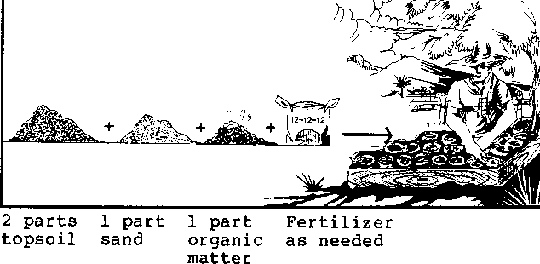
POTTING MEDIUM
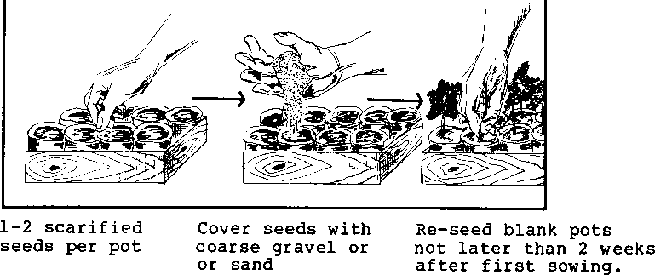
SOWING SEEDS
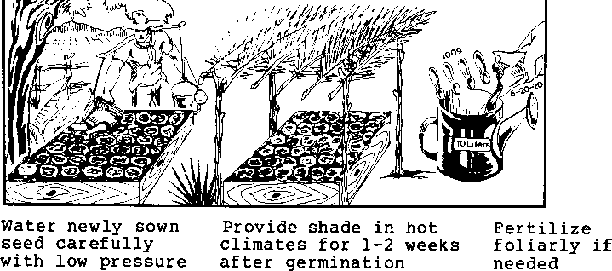
WATERING AND CARE
Foliar fertilizer is often desirable particularity when small containers are used. This can be scheduled about 4 weeks after sowing, using a low nitrogen fertilizer (e.g., 5-20-20) in water (10g/liter), sprinkled over the seedlings during regular watering.
4-7 PESTS AND DISEASES
Leucaena has few serious pests and these are rarely encountered in the nursery. Weeds may be a problem when seedlings are grown in a seedbed or when soil is used as a component in the potting media. Insect pests are usually minor, especially if seedling beds are raised, and can be controlled with low intensity chemical spray programs. Mealy bugs can be a serious problem, and can be controlled with systemic insecticides (e.g., Cygon).
There have been reports of seed purchased from certain locations having infections of fungal and bacterial pests. This may be avoided by purchasing disease-free seed from reputable sources. Disinfesting seed surfaces with a commercial compound such as Chlorox diluted 1:9 with water or with sulfuric acid during scarification procedures will generally control superficial diseases.
Fungal pests in the nursery are a problem if a gravel or rock layer is not applied, notably when the medium is soil-based. Damping off can be controlled by roguing, reducing watering, and applying a fungicide like Captan.
4-8 WHEN TO TRANSPLANT
Leucaena seedlings are ready for transplanting in 8-12 weeks, assuming the use of suitable pots and good growing conditions, longer if pots are too large or conditions less suitable. It is best not to transplant seedlings much beyond this age in most containers as root spiraling will occur in bag-grown seedlings. Stem elongation will be greater than in younger seedlings which increases the risk of dessication and die back upon transplanting. Once root spiraling occurs, little can be done but to transplant as soon as possible.
Stem pruning is normally not an acceptable practice with leucaena, and may induce forking. It should not be relied on to correct poor nursery practice, e.g., elongated seedlings caused by heavy shading. When seedlings are grown under full light, they are relatively dwarfed and woody, and survive transplanting exceedingly well.
4-9 SEEDLING TRANSPORT
The transport phase of nursery management involves removal of seedlings from the seedling bed, packing for shipment, and maintenance until planting. A thorough watering before transport will help avert losses due to drying.
Bagged seedlings should be lifted from the bed taking care to cut roots that may have grown into the soil below. The seedlings should be packed closely and not stacked prior to transport to the field. Dibble-tubed plants are removed from the tubes, packed laying horizontally in closed boxes (preferably with plastic liner). They can then be opened for aeration and watering if they are to be transported over long distances. Seedlings packed this way can survive for a week, but planting is recommended within 2 days of removal from the nursery. With care, such seedlings will lose few leaves when transplanted.
4-10 STUMP CUTTINGS AND BARE ROOT SEEDLINGS
Stump cuttings are seedlings which have been severely pruned, leaving only a short stump and a short piece of the main root. This is in contrast to bare root seedlings, which are seedlings from which soil has been removed. Stump cuttings and bare root seedlings can often be used in place of bagged seedlings and are lighter and much easier to handle. They can survive brief periods of drought after planting, but are less tolerant to drought and weed competition that bagged seedlings. One person can carry up to 600-700 stump cuttings or bare root seedlings from the nursery site to the planting site. Approximately twice as many stump cuttings per day can be planted than bare root seedlings.
Stump cuttings are produced by preparing a well-tilled, raised seedbed approximately 1 m in width. Beds are fertilized, watered, and sown thickly with scarified seeds (e.g., 30 x 10 cm). Seedlings are grown 4-5 months or until basal diameter averages 1 cm and height is over 1 meter. The bed is then thoroughly soaked, and the plants pulled out, leaving as much of the root attached as possible. The stems are then cut to about 10-20 cm above the root collar, and to 15-20 cm below.
Similarly, bare root seedlings are prepared by thickly sowing leucaena seed in a bed that can be flooded. Bunded rice paddies work well for this. Seedlings are allowed to grow for 2-3 months, until seedlings are at least 50 cm tall. The bed is then flooded and seedlings carefully pulled out. Roots and tops are left intact. Bare root seedlings should be transplanted as soon as possible.
Both bare root seedlings and stumps are packed in compact bundles and wrapped in moistened gunny or rice sacks. Root ends are puddled in the mud to protect them from drying and then wrapped. Rhizobia may be added to the mud if desired. Bundles should be kept damp during transport. Stump cuttings can survive several weeks if kept moist, although survival is improved by transplanting as soon as possible after preparation.
|
| ||||||||||||||||||||||||||||||||||||||||||||||||||||
Chapter 5 - Field preparation and planting
5-1 SEASON OF PLANTING
The season of planting can be critical in the establishment of leucaena, particularly in the sub-humid and dry tropics. Severe dry seasons will kill newly planted seedlings. Planting at the onset of the monsoon season may be essential for establishment in many areas. Direct-seeded plantings are even more sensitive to early rains than are transplanted seedlings.
A useful guide for early rainy season plantings might be to plant leucaena at the same time corn, rice or similar crops would be planted. If rainfall is fairly well distributed through the year, season of planting is perhaps of little importance, although seedling growth is greatest in months of high incident light and temperature.
5-2 SITE PREPARATION
Site preparation methods vary depending on intended use, type of planting materials, topography and vegetation of the area to be planted. Site preparation is very important to the success of establishment, as weed growth can easily outgrow young seedlings. In general, the site should be cleared of vegetation and burned, plowed, or herbicide-killed before planting.
In areas where they are economical to use, herbicides provide the best insurance towards successful leucaena establishment. A number of currently available herbicides are suitable for several types of weed problems, yet there is no entirely satisfactory herbicide for every soil and climatic situation.
It is essential to prepare a field in which all perennial weeds have been killed or severely damaged for pre-plant herbicides to be effective. In areas where grassy perennials like Imperata exist, foliar application of glyphosate (Roundup 2 kg ate. /ha) 1 month prior to site preparation can save much time and followup post-plant weedings.
Some herbicides such as trifluralin (0.5 kg a.i./ha)* and alachlor (3 kg a.i./ha) require incorporation into the soil by tilling or rotovating the top 10 cm. Others may be applied after direct seeding the leucaena. These include 2,4-D amine (4 kg a.e./ha) DCPA (8-10 kg a.i./ha) and Oryzalin (3kg a.i./ha). For most of these herbicides to be effective, the soil should be moist at sowing, or should receive rain or irrigation within a few days of sowing.
Pre-plant herbicides generally control weeds for only a limited period of 6-8 weeks. This may be adequate to give leucaena a good start, although further control by post-emergence sprays or cultivation may be required. Where seedlings are transplanted, the herbicide rates given above may be increased by 25% for better weed control.

Figure 5-1 Total weed elimination,
either mechanical, chemical, or manual is advised for leucaena establishment.
Cultivated lands. The best stand establishment is obtained using land preparation similar to that used for row crops or forage plantings. This is especially true for direct seeding where weed competition during the establishment period can lead to failure. Tillage can be done more roughly for plantations by seedlings, although thorough tillage on cultivated lands generally results in fewer weed problems after planting.
Grasslands Most leucaena plantings are likely to involve marginal lands covered with coarse. perennial grasses. These grasses must be suppressed by cultivation, heavy grazing, burning, herbicide, or some combination of these methods. A common practice is to burn the area at the end of the dry season, or, if possible, just after the beginning of the rainy season when new shoots have begun to emerge. Rows may be prepared by cultivation early in the rainy season before planting using plows or manual hole digging.
Brushland or secondary forest. Cutting and burning, tractor clearing or herbicide killing can be practiced to prepare brush or forest lands for transplanting. Land preparation on this type of land is nearly always more expensive than land preparation on other types of land unless there is a market for the trees being removed.
5-3 DIRECT SEEDING
Direct seeding is an increasingly favored approach to the establishment of leucaena wood plantations. The success of direct seeding hinges on timing, land preparation, and weed management. The primary advantage of direct seeding over transplanting is the elimination of nursery operations, resulting in substantial cost savings. The major constraint is the need for intensive weed management during the early months after establishment. Although a greater level of management is implied in direct seeding, effective establishment has been achieved by planting leucaena seeds in the same manner as row crops (notably corn) with which small farmers are most familiar.
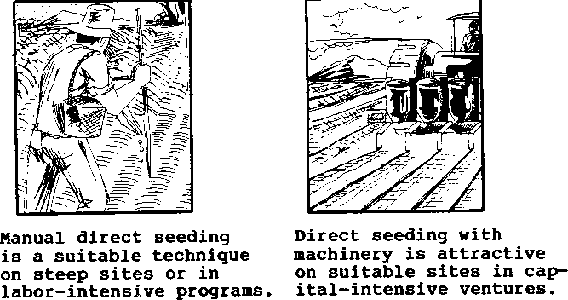
Figure 5-2 Direct seeding of leucaena
is an establishment method that can be either capital or labor intensive.
Site preparation should be as thorough as possible, to suppress or eliminate perennial grasses. Burning alone is not adequate in most grasslands, but may be effective as part of a weed control program utilizing repeated burnings or a combination of burning and herbicide or mechanical controls. Chemical weed control using herbicides such as glyphosate are often most effective, but are usually expensive and require knowledge of the methods and precautions necessary for effective and safe control. Scarified seed should be sown at 2-3 times the rate finally desired and should not be deeply covered with soil, but planted at a depth of 1-2 cm. Weed growth must be monitored carefully, and not allowed to overtop the seedlings. Seedlings should be thinned in 2-3 months to one per hill at the desired spacing.
5-4 TRANSPLANTING
Transplanting techniques may require less field preparation than direct seeding, but require more attention to placement of seedlings and watering during the early establishment period.
Seedlings grown in dibble tubes are best placed into holes made with a tool which makes holes similar in shape and size to the tube itself (Figure 4-1). Special tools similar to planting bars used in forestry practice are made for this purpose, although tapered rods or sticks can also be used. Care must be taken to provide a planting hole which is large enough to accommodate the tap root without bending or breaking and yet small enough to leave as little potential air space as possible. Containers should be completely removed from seedlings before transplanting. Soil should be firmly packed around the seedling after it is placed in the planting hole.
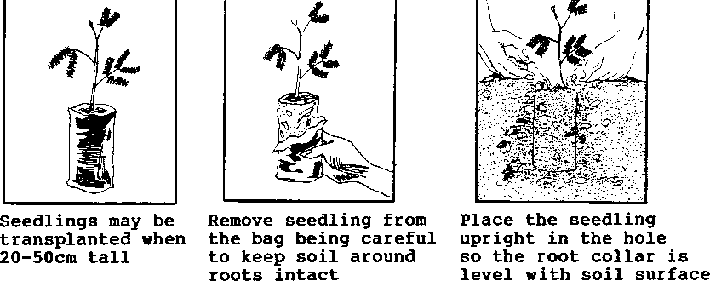
Figure 5-3 Transplanting of bagged
leucaena seedlings.
5-5 FERTILIZATION
Pre-plant fertilization is recommended for leucaena in many tropical soils, due to their poor nutrient status. Soils allocated to tree plantations have often been impoverished by agriculture or coarse grasses and have become poor in phosphorous and calcium. Fertilization practices for leucaena are largely indicated by soil pH, which is often low on these degraded sites. Leucaena has a strong positive response to phosphorous, and treatments of 100-200 kg/ha of single superphosphate are wisely applied to soils recovered from grass or agricultural use.
Where soils are between pH 6 and 8, nutrients are usually adequate, but may be deficient. Basic soils with pH above 7.5 may be deficient in nutrients such as iron and zinc, and these can be used to supplement phosphate.
In acid soils with pH of less than 6.0, low fertility is common and calcium deficiency may be a major limiting factor to leucaena. Dolomite at 200 kg/ha can be added to supply sufficient Ca and Mg. Rock phosphate could replace superphosphate, at 200 kg/ha plus 100 kg/ha of calcium sulfate.
In highly acid and aluminous soils, special methods usually are needed to establish leucaena, but they may be worth the trouble. Holes can be prepared by removing soil, treating with appropriate fertilizers, dolomite or lime, replacing the soil and planting. A less costly alternative is to plant nitrogen-fixing tree species which are more tolerant of acid soils. Examples of such species would be Albizia falcataria or Acacia auriculiformis.
5-6 SPACING
Diameter and height development of leucaena is influenced by per hectare populations (Figure 5.3). Generally, diameter growth is affected more by high populations than height growth. Thus, spacing is an effective management tool which when considered in conjunction with rotation age can be used by the manager to produce material of suitable diameter and length for many different purposes.
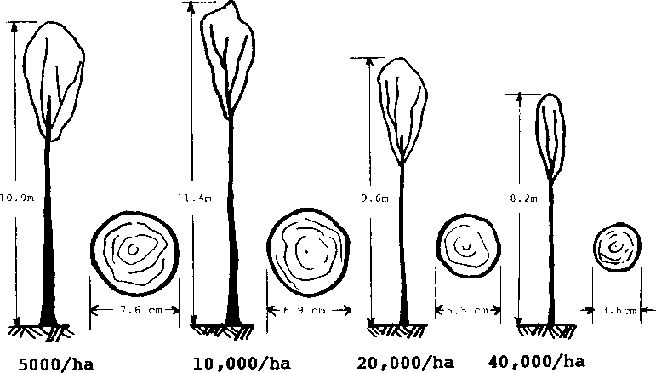
Figure 5-4 Effects of population
density on height and diameter development of 4-year-old leucaena trees. Values
are averages of plots in Hawaii spacing study.
The trick to using spacing as a management tool is to keep in mind three major determinants:
-The use intended for the product. If small diameter material is required, closer spacing is indicated. Larger diameter products require more growing space per tree.
-Site quality. On weedy or infertile sites, it may be necessary to opt for closer spacings to lessen the time of crown closure. Arid lands may require wide spacings, lest competition for water become a limiting factor.
-The age at which a particular spacing will inhibit growth. Different spacings give optimum per-hectare volumes at particular ages. The closer the spacing, the less time it takes to complete one rotation.
Maximum total wood yield of leucaena, without regard to wood quality is achieved by high population densities of between 10,000 20,000/ha. For fuelwood plantations, where high labor intensity is acceptable, these high populations lead to small diameter trees of somewhat shorter stature, but with more total wood per ha than wider spacings.
Postwood, props, and household fuelwood are best grown at close spacings (10,000 - 40,000/ha) and harvested on a 1-3 year cycle. Larger diameter materials (poles, charcoal stock) require spacings of 5000-10,000/ha with a rotation age of 3-5 years. Large diameter products (pulpwood, timber for sawing) are perhaps best produced at 5000-10,000/ha and later thinned to lower densities, leaving superior stems. Rotation age can be extended to 6 or more years.
5-7 THINNING AND PRUNING
Thinning involves the removal of offtype and immature trees to reduce plant populations, thereby accelerating incremental diameter growth and improving the form of remaining trees. This practice is less important in leucaena than with other tree species since leucaena is a self-pollinating plant with little or no true differences from plant to plant. Observed differences will be primarily due to micro environment, and to competition at high population densities.
Thinning is normally uneconomical in capital-intensive projects, especially when population densities are high. For laborintensive operations, it may be an economic method of providing small firewood, green manure and fodder, or postwood. Thinning can be practiced in pulpwood or sawtimber plantations to improve stem form, e.g., establishment at 1 x 1m with thinning to 1 x 2m or 2 x 2m during the second or third year.
The removal by pruning of dead or dying branches is usually unnecessary in leucaena plantations. The species is highly selfpruning at normal densities. Dead branches fall early, or are easily knocked from the tree for gathering as fuelwood. Some live branch pruning for this purpose may be condoned.
|
| ||||||||||||||||||||||||||||||||||||||||||||||||||||
Chapter 6 - Management and protection
6-1 WEED CONTROL
Weeds are a major cause of failure and irregular field establishment of leucaena. Weed control is essential for reliable results. Regular hand weeding or cultivation between rows combined with hand hoeing within rows until plants are 1-2 m tall will give best results (Figure 6-1). On large plantations, or in areas where labor is expensive, the use of herbicides may be an attractive option.
Leucaena seedlings are susceptible to damage from a number of herbicides, notably to glyphosate. Post-plant sprays are best directed to the base of the seedlings rather than as a cover spray, to reduce damage. Both MSMA (2-5 a.i./ha) and paraquat (1 kg a.i./ha) can be used in this way, using shields to reduce drift onto the leucaena. Dalapon has been shown to be extremely promising when used as a touch-up herbicide on grassy weeds.
Weeds can also be controlled by careful application of glyphosate through wick applications.
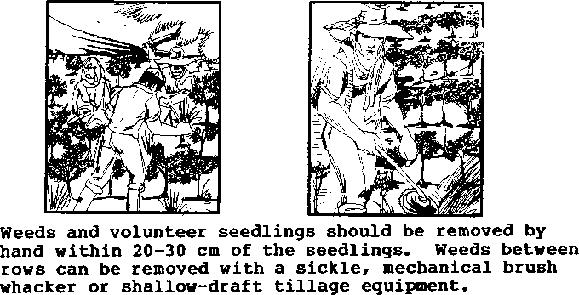
Figure 6-1 Weed control in closely
spaced Leucaena
6-2 INSECTS
The most serious insect pests of leucaena have been by ants on young seedlings, and seed weevils on seed pods. Mound-building ants have caused severe damage in some regions by eating seedling leaves and girdling young seedlings. Scale insects have caused mortality in Taiwan. Minute leafhoppers have affected height growth in Hawaii and the Caribbean during the dry season but have not been known to cause mortality in otherwise healthy trees. Suitable systemic insecticides may be employed if such sucking insects are noted.
Seed production can be reduced greatly and seed quality lowered by seed weevils, which may lead to disease infections as well. Chemical control is feasible (see Section 3-4). An occasional problem on seedlings and young shoots is caused by mites, but it is normally kept under control by predatory insects. Few chewing insects attack leucaena, although a defoliating looper and a twig borer have been reported.
6-3 DISEASES
Leucaena has been widely spread around the world for more than a century with surprisingly few reported disease problems. Reported diseases include a bark gummosis, one defoliation leafspot, and some fungal diseases of seedlings in nurseries.
Gummosis has been identified in several countries as a disease invading the plant at the soil surface, growing up the trunk and forming bleeding cankers. Although it is not known if the symptoms are caused by disease or harsh environmental conditions, fungal species including Fusarium semitectam and Phythophthora dreschsleri have been associated with it. Some leucaena varieties are unusually susceptible (i.e., K132), but most lines show less than 10% mortality. Wood quality can be severely affected by the cankers which begin to heal about 6 months after infection. Environmental stresses such as wind, drought, sunscald, or damage during weeding and harvesting increase disease incidence. Roguing of diseased plants is advisable, but generally no treatment is indicated.
Sunscald can occur in widely-spaced plantations or along breaks in the crown canopy caused by trails, rest houses and the like. Symptoms of sunscald closely mimic the gummosis disease, but are restricted to the side of the trunk facing the sun. Mortality from sunscald is rare.
Fungal diseases occur in nurseries, the most serious being damping-off caused by Pythium or Rhizoctonia spp. Sanitary procedures can reduce disease, and control with fungicides like Benlate and Captan is effective.
A defoliation disease of Central and South America that can be serious on wet sites is the leafspot fungus, Camptomeris leucaenae. Although the disease rarely causes death, it can affect wood increments in bad years. No control measures are reported. Several bacterial and fungal seed diseases have been recorded, normally as secondary invasions after pod damage from seed weevils. Systemic insecticides that control the weevil should prevent these diseases.
6-4 ANIMALS
The tender, nutritious foliage of leucaena is relished not only by livestock but also by many wild animals. In addition to cattle, sheep and goats, wild animals such as deer, elephants, wild pigs, kangaroos, rabbits and monkeys may also attack leucaena plants. Protection of the plantation may be necessary during early stages of establishment.
Few economic and practical methods exist for isolating plantations from such animals. Permanent fencing or individual tree barriers are expensive and hedges of thorny species require too much time in advance. Planting in small blocks and provision of constant field maintenance is advised. Ditches serve as useful barriers to cattle. A new approach in more capitalized ventures is to use portable, battery-powered electronic fences made of sigle flexible wires that can be powered up to 20 km from solar-powered batteries.
6-5 FIRE AND STORM
Leucaena has rather thin bark and is very susceptible to fire when young. Damage is more severe if grassy weeds are present in the stand or in surrounding areas. Wind-blown grass fires can do the greatest damage, although leucaena in full leaf is fairly slow to burn. Slow-moving, low intensity fires do less damage, burning out a short distance into leucaena stands. There is little likelihood of fire burning very far into a plantation since most undergrowth is eliminated by the leucaena, thus limiting the amount of fuel for a ground fire. Burned trees normally resprout from the base. Care should be taken to keep animals out of burned plantations to allow swift coppice regrowth.
Probably the best fire control measure is to plant leucaena with good fertilization and management, in order to hasten crown closure and suppress understory vegetation before the dry season. Plantation boundaries can be located below ridge lines or extended to bottoms of slopes to minimize fire damage.
Wind damage is generally restricted to minor branch breaking and defoliation, unless trees are rooted into waterlogged soils or are directly exposed to extreme winds (e.g. 150 kph). Typhoon damage is generally less than with other tree species, and regrowth is rapid from damaged trees. In typhoon-prone regions, plantings should be avoided on soils with shallow water tables, clay pans, or highly acid subsoil.
6-6 MAINTENANCE FERTILIZATION
The need for maintenance fertilization is best assessed on the basis of symptoms in the field. Slow growth and low yields often indicate a need for more phosphate, best supplied as single superphosphate banded or placed next to each tree at the rate of 100 kg/ha. In more acid soils, Ca deficiency in the subsoil can occur. Application of 100 kg/ha of calcium sulfate along the rows would alleviate this problem.
A general leaf yellowing can be due to sulfur deficiency, and the use of calcium sulfate can overcome this. Yellow leaf mottling may indicate zinc deficiency, easily corrected by application of zinc sulfate. Death of leaflet margins can indicate potassium deficiency.
The only reliable basis for maintenance fertilization is foliar analysis. Leaf samples need to be taken at the height of the growing season from newly matured leaves. For good growth, leaves should contain approximately 3.5% N. 0.15% P. 1.5% K, 1.0% Ca, 0.2% Mg, 7 ppm Cu. and 35 ppm Zn on a dry matter basis. If foliar analysis shows levels much lower than this, requisite amounts of appropriate fertilizers need to be applied.
Any large-scale leucaena operation which does not monitor fertilizer needs with foliar analysis is liable to make some costly mistakes.
6-7 IRRIGATION
Leucaena is a hardy, drought-tolerant plant which does not usually require irrigation after the initial establishment period, but the species does respond well to irrigation. Under severe drought conditions, growth is slowed by a reduction in height and diameter growth and dropping of leaves. A well distributed rainfall of approximately 1500 mm seems important for maximum yields. Supplemental irrigation, when feasible, may be especially important in seedling establishment, and can mean the difference between success and failure during unexpected dry periods.
|
| ||||||||||||||||||||||||||||||||||||||||||||||||||||
Chapter 7 - Harvest
7-1 AGE OF HARVEST
Harvest age is dependent on site quality and the type of end product desired. There is no fixed rotation age for the harvest of wood from leucaena. The tree is harvestable for small poles in one year on good sites, and appears to continue height growth for 5 years and diameter growth for 10 or more years thereafter. Spacing affects both diameter and height development, and may be used as an effective management tool to alter rotation age as desired (see Section 5-6).
Site quality directly affects rotation age. Efforts to predict rotation age should consider soil pH, soil depth and fertility, rainfall, wind stress and other factors. Poor sites can extend the rotation age by many years, notably when rainfall is limiting, temperatures are low, or soils are deficient in one or more important nutrients. Leucaena should not be planted on poor sites for production of large poles or pulpwood.
Four years appears to be a suitable rotation age for fuelwood use of leucaena in large plantations on most sites. Trees planted at 1 x 1m spacing maximize yields, show good form, and are of manageable size for manual harvesting and extraction in four years (Figure 7-1). Rotation cycles may be decreased following first coppicing, as regrowth is rapid.
7-2 WOOD YIELD
Reported wood yields of leucaena are based primarily on experimental plantings and small plantations, and range from 7 to 77 m³/ha/yr. In general yields below 15 m³/ha/yr are considered poor, indicating lack of adaptability, soil fertility or management. Yields above 30 m³/ha/yr are very good, indicating good sites and management.
Unusually low yields have been reported (less than 1 m³/ha/yr) in regions of Taiwan with low soil pH and cool temperatures. Exceptionally high yields exceeding 130 m³/ha/yr) have been reported, but should be taken with great caution until experimental and mensurational techniques have been verified.
Yield increments of 90 sample plots in 20 Philippine dendrothermal plantations (avg. age = 2.5 years) ranged from 0.25 to 47.0 t/ha/yr. This range is a reflection of a variety of sites, ages and management practices. Yield increments of the best 10 plantations ranged from 13 to 32 t/ha/yr.
As these observations make clear, leucaena plantations must be established on good sites to attain high growth rates without soil amendments. Fertilizer applications improve leucaena yields on poor quality sites, just as they do for major farm crops, and must be considered long-term investments necessary to obtain maximum yields on poor quality sites. In many cases, yields will be greater for coppice regrowth, where weed competition no longer exists' and existing root systems are well established.
7-3 MANUAL HARVEST
Leucaena is ideally suited to manual harvesting operations, as trees are not usually grown so large that two men cannot easily handle stems. Studies in Hawaii and field operations in the Philippines indicate that about 70 man-days/ha are required for manual felling at 10,000 stems/ha. Care must be taken to fell trees correctly, leaving sound, healthy stumps. Excessive damage to remaining trees should be lessened by controlling the direction of fall to avoid branch and stem breakage.
Tools used in harvesting include machetes, axes, and saws of various types. The most efficient and cost-effective tool is probably the hand or bow saw. Hacking a tree with axe or machete shatters the wood and invites disease infection. Infected stumps can be killed by fungal attacks, and coppice regrowth greatly reduced. The saw should be used to cut the stems at a slight angle to allow for water drainage. Optimum cutting height is 1025 cm. Larger stumps leave much wood behind and produce coppice shoots more susceptible to wind damage.
Harvesting can be done by 1- or 2- man teams. A two man team is perhaps most effective when one man holds the stem, directs its fall and assists the second man who saws. Trees should be directed while falling so that the butt end faces the direction of haul. Slash is best piled in alternate rows, leaving clear lanes for hauling trees out of the plantation. On larger stems, more skill is needed. An undercut must first be made in the intended direction of fall, followed by an overcut made in the opposite side of the stem.
Figure 7-2 Manual harvesting techniques in a closely spaced plantation:

MACHETE HARVESTING - Trees are felled
by bending stem and striking cleanly. Felled stems are forwarded to assistant
for delimbing and pruning. Suitable for small diameter stems.
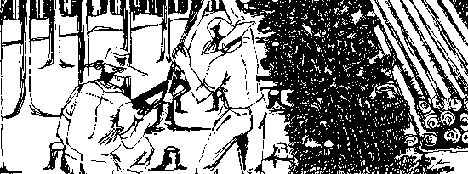
SAW HARVESTING - Two-man teams fell
larger diameter stems with bow saw. Operation is facilitated by assistant
bending the tree while the saw cut is made. Cut stems are forwarded to
delimbers. Slash and wood are piled in alternate rows.

CHAINSAW HARVESTING - Economic for
largest diameter stems. Fellers and assistants work together down a row, the
assistant pushing felled stems so the butt faces the direction of haul. Machete
teams follow to prune, buck, and forward felled trees.
Trees might be left in the field for several days while the leaves fall off and the wood begins to dry. Transport must be arranged in a way which does not damage stumps and allows for efficient extraction of the wood.
7-4 MECHANICAL HARVEST
No major plantation experience exists with mechanical harvesting of leucaena. Two mechanical harvesting system alternatives have been proposed for use in Hawaii in the production of wood chips for fuel. These are briefly reviewed below:
1. Feller bunchers, grapple skidders, roadside chipper. This system involves major equipment investments with skilled operators and is not economically feasible with large numbers of small diameter trees.
2. Swath-felling mobile chipper. Self-propelled, in-field chippers are able to fell trees and chip them directly. This system is capital-intensive, but has low labor requirements.
7-5 COPPICE MANAGEMENT
The management of leucaena during and after coppicing is perhaps the least understood area of plantation operations. Experimentation with cutting tools, heights of cutting, and pruning of coppice shoots is encouraged on all large plantations. A 10-15 cm stump height is probably best for coppice regrowth and root expansion, however evidence from trial plantings suggest that higher stumps produce fewer dominant shoots and may promote natural pruning. Thinning of shoots may or may not be necessary, depending on the density of the plantation, and the type of end product desired. In an irregular stand with high between-tree variability, it may be desirable to kill small or diseased stumps with diesel oil and allow larger, healthier stump to grow, retaining more coppice shoots per stump to compensate.
In Hawaii, 4-year-old trees pruned naturally to 1.5 stems per stump (avg.) after a chainsaw felling. Spacing was 1.5 x 1.5m, with a stump height of 1m. Shoot thinning has been necessary in Taiwan, however, to obtain this number of shoots. Harvesting of closely spaced plantations in the Philippines has resulted in a high degree of sprouting, and thinning shoots in these plantations may be necessary. The number of shoots is obviously affected by the season and growth conditions, but will generally be higher rather than lower than desired.
|
| ||||||||||||||||||||||||||||||||||||||||||||||||||||
Chapter 8 - Utilization
8-1 PROPERTIES OF WOOD
Leucaena produces a medium density (bolewood specific gravity = 0.54), pale yellow sapwood with light reddish heartwood. It machines easily, and is without irritant or tooldulling properties. The wood takes water-soluble preservatives (e.g., pentachlorophenol) readily, and is of low-tomoderate durability. It dries without splitting or checking.
Giant varieties of leucaena are the most suitable for wood use. They are largely self-pruning in dense plantations, and forking is rare and can be eliminated by pruning. Trees on plantation borders show drastic butt sweep, leaning into areas of greater sunlight. Clear boles of 5 m must be considered very rare, and the tree generally is too irregular to be particularly attractive for long sawtimber or telephone poles.
Leucaena wood has generally high ratings as a source of fuelwood; pulpwood, rayon, postwood, wood for parquet flooring and for craftwork, and particleboard. As supply is increased, other optional end-uses are expected to develop. It is evident that the giant leucaenas have opened to users a variety of options not available with the common types.
8-2 FUELWOOD AND CHARCOAL
The pressure of human over-population on land use is often felt as a fuel shortage before it is felt as food shortage. This has led in some instances to disastrous deforestation and soil degradation problems, which often occur before their seriousness is fully recognized. A major value of leucaena is that it can rapidly provide fuelwood, removing pressure from existing forests and wood resources.
In rural areas, fuelwood use combines well with animal feeding. Whole leucaena branches are given to penned animals which strip the leaves and twigs. The defoliated stems dry rapidly, and can then be cut for fuel. The net heating value of leucaena wood varies greatly with moisture content, so that drying of the wood to 25% moisture content (wet basis) before burning will be equivalent to increasing wood yields yield by 50% (Figure 8-1).
The calorific value of air-dried (15% m.c. wet basis) leucaena wood is about 3,900 kcal/kg (4,640 kcal/kg oven dried), similar to that of other non-resinous hardwoods. The burning properties are good (steady flame, low smoke and sparks). The major value of leucaena is still associated with its high productivity as a fuelwood, and this applies to both village and industrial use.
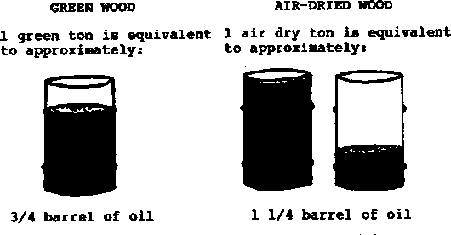
Figure 8-1 Fuel value yields can be
greatly improved by drying
Large-scale industrial development of leucaena fuelwood plantations is already in progress. The most spectacular example is the construction in the Philippines of a number of dendro-thermal power plants, in which 3-5 mW, wood-fired steam turbine generators are fueled directly from adjoining plantations. Most of the environmental problems associated with fossil fuels, geothermal, or nuclear plants do not apply to wood-fired plants, and the technology is already proven and available. Economic feasibility depends largely on land quality and production costs in relation to the costs of other energy sources.
When wood is converted to charcoal, there is a 50-70% loss of energy overall, but the product has nearly double the heating value of wood. This compactness and its clean, smokeless burning properties give charcoal many fuel-use advantages. There is a traditional urban demand for charcoal as a cooking fuel which may increase as oil products become more expensive. Leucaena makes a clean and high-quality charcoal, and is being used in gasifiers. When produced to uniform specifications, it can also have industrial uses as an activated and reducing carbon source. Conversion of wood to charcoal is likely to be most appropriate on difficult sites where wood transport is uneconomical.
8 - 3 PULP
Leucaena is well suited to the production of either paper pulp or dissolving pulp. The bark is thin (8% of dry weight at age 7) and easily removed. Silica and extractives contents are low (2% dry weight), thus minimizing consumption of alkalai in chemical pulping. The holocellulose content (71%) is somewhat higher than the average for hardwoods (64%). Fiber characteristics are within the range expected for fast-growing tropical hardwoods.
The main use of leucaena pulp is to blend with long-fibre pulp for production of printing papers. The fiber is also useable for rayon and other products. Because pulping operations must be on a large scale and are highly sensitive to the cost of wood, development of Leucaena plantations for this purpose must be closely integrated with requirements of the pulping plant.
8 - 4 ROUNDWOOD
Rapid height growth and generally good form make leucaena ideal for small pole production. Untreated roundwood is not durable on ground contact, however, it readily absorbs waterborne preservatives (copper-chromearsenate), or creosote-based compounds. Treated posts can be used for fences or light construction.
Pole houses, traditional in Asia, may provide an additional use for leucaena poles. A major market has already developed for leucaena poles 4 m in length with diameters 3-7 cm as banana props. Leucaena poles are also used as supports in the cultivation of vanilla, pepper, climbing beans and yams. Some use is made of the larger trees for telephone or power transmission poles.
8 - 5 LUMBER
Plantation-grown giant Leucaena can produce a medium hardwood with good working properties. Good recoveries are possible even with 7 year old trees. For example, a 24 cm diameter log gave a recovery of 62% when sawn to 2.5 cm thickness. The stems are usually defect-free, but no definitive grade or recovery studies appear to have been made.
The sawn wood has been used successfully in parquet flooring. It also produces suitable wood for small furniture. Colors are light in the sapwood, with the heartwood ranging to deeper yellows and light reds on aging, and are considered quite attractive.
|
| ||||||||||||||||||||||||||||||||||||||||||||||||||||
Chapter 9 - Alternate uses
9-1 FARMING SYSTEMS
Leucaena can be harvested as frequently as every 4 weeks, or as infrequently as every 10 years for a variety of end uses. This versatility is seen in the farming systems into which it has been integrated, each calling for a different approach to establishment and management. Leucaena grows well in solid stands as a forage or wood crop and can be used in a variety of management systems that allow harvest of both wood and foliage. Among the most important of these to the small farmer are farming systems that also stabilize soils, providing erosion control, fuelwood and green manure. It is in these multiple uses that the crop is best demonstrated and tested for local farm acceptance and economic exploitation.
Leucaena is often planted on farm boundaries, roadsides, and canal and pond banks. It can be planted into marginally productive lands for soil restoration, or for fuelwood-forage uses. Some of these multiple uses are discussed in this chapter.
9-2 SOIL EROSION CONTROL
Soil erosion and degradation is an important problem throughout the tropics. Deforestation, agriculture, grazing, and fire contribute to increased erosion rates which may result in irreplaceable soil and vegetation losses, lowered crop production potential, siltation of rivers and reservoirs, and often irreversible ecological damage. Leucaena has been used as an erosion control species for many years in Southeast Asia (Figure 91).
For erosion control, leucaena can be planted in contour strips of closely spaced trees. Small branches and stems are placed along the contour rows at the base of the stumps when wood or foliage is harvested. Over time, these strips form vegetative terraces which accumulate eroded soil, and can minimize soil loss on steep slopes. Litterfall provides nitrogen and organic matter to help restore soil fertility for crop plants which can be planted between the terraces. Spacing between contour strips depends on the erosion risk of the slope. For steep sites with a high erosion risk, contour rows should be as close as 3m. Contour strips are planted at wider intervals as the risk lessens. Spacing of trees within the contour rows should be 1025 cm. Rows should be managed low enough to encourage development of ground cover.
Planted as a monocrop, leucaena is not an ideal erosion control species, and if left to grow to maturity at high population densities without management, may actually increase erosion rates. This outcome is not likely to occur except in cases where the trees are established on steep slopes and allowed to completely shade the understory vegetation.
Several measures may be used to insure the effectiveness of leucaena based erosion control systems. Grasses, pulses or pasture legumes can be intercropped with leucaena to provide close ground cover. Moderately shade tolerant pulse crops such as Vigna unguiculata (cowpea) provide a number of useful products in addition to their value as cover crops. Centrosema pubescens and Pueraria phaseoloides are examples of climbing cover crops which could be planted into leucaenabased erosion control plantings. Leucaena could also fertilize intercropped grasses, which would provide ground surface protection, although grasses are not generally as shade tolerant as legumes.
9-3 NORSE TREE
Leucaena is an excellent nurse tree which provides light shade, nitrogen and other nutrients to plantation tree crops. It has been used as a nurse crop or support crop for such diverse crops as cacao, coffee, nutmeg, vanilla, black pepper, teak and other species. More research is needed on its use with fast growing fuelwood and pulpwood species such as eucalyptus and gmelina which do not fix nitrogen.
It is common to plant nurse trees on a 5 x 5m to 8 x 8m center, and to trim them periodically. The rapid early growth of leucaena may completely overtake the plantation crop unless the leucaena is trimmed back. Some of the advantages of leucaena use as a nurse tree are:
- It is deeply taprooted, and does not present surface root problems
- Leaflets are fine textured and small in size thus providing lighter shade than larger leafed species. Leaflets also decompose more rapidly after falling
- Arboreal types of leucaena grow vertically with narrow canopies
- Leucaena has few disease and pest problems
- Leucaena thinnings may provide a number of useful end products
9-4 WINDBREAKS AND FIREBREAKS
Leucaena varieties, notably the giants, provide a quick growing windbreak or firebreak. These have been used primarily to protect vegetable and other horticultural operations. Dense, tall leucaena growth is preferred, and is best achieved with multiple row plantings 1-2 m apart. Soil preparation, fertilization, and watering should be optimal to encourage vigorous establishment.
Windbreaks can consist of single rows with trees as closely as 25 cm, but will not achieve the height of more widely spaced trees. Major windbreaks are best made with multiple rows of leucaena together with slower growing trees such as Casuarina spp.
Firebreaks have been found to be effective with 15 to 20 leucaena rows spaced 1-2 m apart. Once established, grass growth under the canopy, which is a major source of fuel, is eliminated. Coppicing of some border row trees may enhance effectiveness of the firebreak by providing a bank of dense green growth at the margins. Loss of leaves during drought or other conditions can make any firebreak more vulnerable, and trees may be burned. However, trees often grow back well from stumps despite fire damage.
- Cut and carry. Harvesting and carrying branches or leaves grown in one area to the planting area, then incorporated into the soil prior to planting or as a side dressing
- Intercropping. Leucaena is grown with other crops on the same piece of land with periodic felling or pruning of the leucaena to provide nutrients available to the intercrop. Also referred to as Alley Cropping.
The nitrogen in leucaena foliage begins to be released to warm, moist soils within 10 days of application. About 50% of the nitrogen in the foliage will be used by the crop, but this percentage is reduced if the foliage is not incorporated into the soil. Nitrogen levels are about 4% in foliage (dry weight basis), or 1% on a fresh weight basis. About half of this is effectively provided to the crop, the rest being lost to the air or leached out of the soil. In order to obtain a yield increase in corn equivalent to 100 kg/ha of ammonium sulfate (20% N. assuming 70% efficiency), one should apply:
- About 3 tons of fresh leucaena per hectare, or
- About 60
gm per corn hill (assuming 50,000 hills per ha.)
9-5 LEAF AS A CO-PRODUCT
Leucaena foliage from tree plantings is a valuable coproduct with several important uses. It is widely known as an animal feed--its use and management for this purpose is fully described in the companion NFTA volume on leucaena animal feed. It is also an excellent green manure and mulch, and has been shown to double yields of corn and cassava. Its suitability as animal ration and green manure in terms of nutrient content and digestibility is presented in Table 9-1.
Table 9-1 Composition of leucaena as percentages of dry matter.
|
Nitrogen |
3.5% |
Fiber |
20% |
|
Phosphorus |
0.15% |
Ash |
10% |
|
Calcium |
1.0% |
Crude Protein |
24-33% |
|
Sulfur |
0.14% |
N-Free Extract |
40-44% |
|
Magnesium |
0.2% | | |
Leucaena leaf meal has a rich history as a backyard browse and cut and carry animal feed. Branches from vigorous trees, either in boundary, windbreak or forestry plantings can be pruned and carried to animals. Trees maintained as a shrub or hedge can provide both small diameter firewood and leaf meal products on a sustained use basis.
Leucaena leaf meal is now entering the international market, notably as exports from countries like the Philippines to industrialized Asian nations like Japan and Korea. Although most large scale leucaena forage plantings are mowed frequently from low hedges, it is possible to harvest leaf meal from forest plantations in one of two ways:
- Mechanical. Whole tree chipping operations utilize vacuums to extract leaf and twig waste from chips prior to batching. Similar devices have been proposed by Brewbaker (1980) to extract leaf meal from chipped leucaena prior to burning in a proposed Hawaiian dendrothermal plant.
- Manual. Branches trimmed from harvested leucaena trees may be propped up in the field for 4-7 days until the leaves dry and just begin to fall. Branches are then shaken over mats and leafmeal gathered and sacked. This method has been tested successfully in Malawi for small stemmed Leucaena at rather close spacings.
Organic matter contributions from green manuring can improve soil filth, cation exchange capacity, and water holding capacity. There are two major methods of using leucaena as a fertilizer.
Figure 9-5 Agro-forestry technique for establishment of leucaena with rice and pigeonpeas on good upland sites:

Upland rice, pigeonpeas, and leucaena
are direct-seeded at the onset of rains in a weeded, prepared field.

Rice is harvested, leaving leucaena
and pigeonpeas behind. Rice straw is applied to soil as a mulch, effectively
supressing weeds.

As leucaena grows, pigeonpeas are
harvested until they decline and are overtopped. Result is closed leucaena
stand, to be grown to economic maturity.
Additional leaf meal can be added after the crop is established to improve grain fill and yield. The foliage also acts as a mulch, shading and cooling the soil, suppressing weeds and reducing moisture losses.
9-6 LEUCAENA IN AGROFORESTRY SYSTEMS.
Besides the green manuring capabilities of leucaena described above, leucaena has many more application in the field of agroforestry. One such system, in wide use in the Philippines, is similar to the tayunga method of forest establishment.
In this management technique, leucaena is planted at the same time as upland crops and allowed to develop slowly underneath. As young plants, leucaena seedlings tolerate competition from well managed agricultural crops (Figure 9-4). Crop harvest releases the small leucaena plants, which rapidly grow and dominate the site. This system has been employed by the Philippine National Electric Administration dendrothermal plantings, and has been shown in several sites to pay for the cost of clearing and establishment.
Leucaena is well suited as a fallow improvement crop in shifting cultivation areas due to its nutrient-rich foliage, rapid regenerative capability and ease of establishment. Leucaena might also be used to recover grasslands for use in shifting cultivation. Grassland areas can be planted to leucaena and allowed to remain in fallow for a number of years before harvesting and planting to food crops. Coppice shoots can be pruned and used as a green manure while the grain or root crop matures, and then left to regrow when crop yields decline or pest problems become severe.
|
| ||||||||||||||||||||||||||||||||||||||||||||||||||||
Additional reading
The following list is by no means comprehensive. Rather, it is intended to introduce the serious reader to the growing body of world literature on leucaena. All publications listed here contain bibliographical listings for further reference. Please note that price and mailing costs are not listed, as they may change.
--Brewbaker, J.L., ed. 1980. Giant leucaena energy tree farm: an economic feasibility analysis for the Island of Molokai, Hawaii. HNEI 81-04. Hawaii Natural Energy Institute, Honolulu. 90pp.
An economic analysis of a 420 ha leucaena biomass plantation. Copies available from: Hawaii Natural Energy Institute; Holmes Hall, University of Hawaii; 2540 Dole St.; Honolulu, HI 96822; U.S.A.
--Brewbaker, J.L., and E.M. Hutton. 1979. Leucaena: versatile tropical tree legume. In: G.A. Ritchie, ed. New Agricultural Crops. AAAS Selected Symposia 38. Westview Press, Boulder, Colorado. Pp. 207-259.
A concise discussion of the uses, qualities, and production of leucaena. Copies may be obtained from: Westview Press; 5500 Central Avenue; Boulder, Colorado 80301; U.S.A.
--Demon, F.H. 1983. Wood for Energy and Rural Development-the Philippines Experiences. Published by author. 232pp.
A good discussion of the Philippine Dendrothermal program, which has established about 20,000 ha of leucaena plantations. Copies may be obtained from the author: Dr. Frank Denton; 3181 Readsborough Ct.; Fairfax, VA 22031; U.S.A.
--Leucaena Research Reports. Nitrogen Fixing Tree Association, Honolulu.
An annually-published periodical featuring summaries of original, international research on leucaena. Back issues and subscriptions available from: Nitrogen Fixing Tree Association; P.O. Box 680; Waimanalo, HI 96795; U.S.A.
--NAS. 1984. Leucaena: Promising Forage and Tree Crop for the Tropics. Second Edition. National Academy Press, Washington D.C. 100 pp.
A good introduction to leucaena, with excellent bibliography, listings of research contacts and seed/inoculum sources. Copies available from: BOSTID (JH-217D); National Research Council; 2101 Constitution Ave.; Washington, D.C. 20418; USA.
--Oakes, A.J. 1982-1984. Leucaena Bibliography. USDA Germpalsma Resources Lab, Beltsville, Maryland.
A 3-volume bibliography with over 2500 listings. Available from: NFTA; PO Box 680; Waimanalo, HI 96795; USA.
--Pound, Barry, and L. Martinez Castro. 1983. Leucaena; its Cultivation and Uses. Overseas Development Association (UK), London. 287 pp.
The most comprehensive review of leucaena research to date. A must for any serious student of leucaena. Copies may be obtained from: Overseas Development Association (Attn: M. Vowles); Eland House; Stag Place; London SW1 5DH, UK.