 |
| ||||||||||||||||||||||||||||||||||||||||||||||||||||||||||||||||||||||||||||||||||||
CTD/MAL/AFRO/97.4
Original:
English
Distr.: limited
TRIAL
EDITION
WORLD HEALTH ORGANIZATION
DIVISION OF CONTROL
OF TROPICAL DISEASES,
GENEVA
AND REGIONAL OFFICE
FOR AFRICA, BRAZZAVILLE

This document is not issued to the general public, and all rights are reserved by the World Health Organization (WHO). The document may not be reviewed, abstracted, quoted, reproduced or translated, in part or in whole, without the prior written permission of WHO. No part of this document may be stored in a retrieval system or transmitted in any form or by any means - electronic, mechanical or other -without the prior written permission of WHO.
|
| ||||||||||||||||||||||||||||||||||||||||||||||||||||||||||||||||||||||||||||||||||||
1. Introduction
Malaria continues to be a major public health problem in many endemic countries and is one of the major causes of morbidity and mortality in sub-Saharan Africa. It is estimated that malaria causes from 300 to 500 million clinical cases, and 1.5 to 2.7 million deaths worldwide each year, with 80 to 90% of the clinical cases and one million deaths occurring in Africa alone. Malaria also considerably affects the health of children, leaving sequelae, increasing susceptibility to other infections and hampering their development. Even non-fatal cases have severe consequences. The disease is associated with considerable economic burden, including direct cost to governments and patients for hospital admissions and outpatient consultations, cost to households for treatment sought outside the official system, and cost due to absenteeism from productive work, or education.
The governments concerned have decided to intensify efforts to deal with the malaria problem in Africa and have agreed to implement the Global Malaria Control Strategy (GMCS) endorsed at the Ministerial Conference in Amsterdam (1992).
The GMCS advocates four technical measures:
|
· to provide early diagnosis and prompt treatment; · to plan and implement selective and sustainable preventive measures, including vector control; · to detect early, contain or prevent epidemics; · to strengthen local capacities in basic and applied research to permit and promote the regular assessment of a country's malaria situation, in particular the ecological, social and economic determinants of the disease. |
The implementation of the vector control component involves the selective use of methods based on personal protection, use of insecticides, environmental management, and biological control. Insecticide-treated mosquito and other materials (ITMNs) are options combining one aspect of personal protection (mosquito nets) with insecticides.
The inherent tendency to avoid insect bites and disturbances often prompts people to resort to physical and/or chemical means. Records on the use of mosquito nets date back to the 6th century B.C. They have been used for decades as protection against nuisance insects, dust and roof debris falling on sleepers as well as for privacy. Nets, curtains and clothing impregnated with insecticides have been used even during the Second World War to protect from malaria and other vector-borne diseases. DDT impregnated bednets were among the malaria control tools used in the 1950s; their utilization was short-lived due to the introduction of malaria eradication approaches. The potential usefulness of insecticide-treated mosquito nets (ITMNs) in malaria control was reconsidered in the 1980s with the advent of the photostable synthetic pyrethroids.
Large-scale implementation of ITMNs as part of an integrated approach to malaria control started in the WHO Western Pacific Region in the 1980s. The practical experience thus gained highlighted the need, for adaptation to local conditions, appropriate resources, and local capacities, and the importance of addressing the managerial and operational issues relevant to large-scale implementation, including community and intersectoral actions, and decentralization. In the African Region, ITMNs application is recognized as one of the three key elements i.e. i) appropriate case management, ii) use of insecticide-impregnated bednets and other materials, and iii) strengthening of local and national capabilities, which form the basis for intensified malaria control (AFR/RC45/R4: Resolutions of the Regional Committee for Africa, Regional Programme on Malaria Control, 1995).
Studies have been carried out on the short-term efficacy of pyrethroid-treated mosquito nets on malaria vectors and disease in many parts of the world; some with positive results, others inconclusive or contradictory. However, recently, four randomized controlled large-scale field trials in Africa have shown that appropriate use of insecticide-treated bednets can reduce mortality among children aged 1-4 years by 17-33% (average 25%) depending on the site; thus clearly demonstrating opportunities for significant improvements in child survival through the use of ITMNs. The results of the studies were reviewed at a meeting on insecticide-impregnated materials (Brazzaville, 18-20 March 1996). The recommendations made included the strategic introduction of ITMNs to high risk groups wherever possible, taking into account the experience gained in programmes that are being implemented. This, in addition to ITMNs already being a key element of intensified malaria control in Africa, has led to the development of these guidelines to support their implementation.
So far, the experience gained in the implementation, especially on a large-scale is limited in Africa. Many managerial and operational aspects involved in their delivery and financing, as well as the overall issues of sustainability are not yet ascertained. The implementation (within the framework of the intensified malaria control strategy) in Africa therefore has to be phased and closely monitored and the various issues of sustainability addressed. The programme expansion is to benefit from the experience gained in the implementation, and the outcome of further research including the issues in relation to immunity.
|
| |||||||||||||||||||||||||||||||||||
Guidelines on the Use of Insecticide - Treated Mosquito Nets for the Prevention and Control of Malaria in Africa (WHO - MAL - WHO - AFRO - WHO, 1997, 88 p.)
2. Purpose, structure and the potential users of the Guidelines
Purpose
These guidelines cover the technical, operational/managerial, policy and political aspects of large-scale ITMN implementation and are intended:
i) to provide preliminary guidance for the large-scale implementation of ITMNs within the framework of the Global Malaria Control Strategy;ii) to serve as a basis for the development of county-specific handbooks adapted to national/local needs; and
iii) to be used to develop training materials on specific aspects of ITMN programme implementation.
These guidelines will be field evaluated and modified, based on practical experience gained in their implementation and the research findings. The contents of this draft document are thus far from prescriptive. As the potential usefulness of other insecticide-treated materials such as curtains and hammocks is not yet fully established, the focus here is on insecticide-treated mosquito nets (ITMN). Relevant aspects may however be extrapolated for the use of other materials.
Structure
To help the users, the guidelines include:
· A description of the activities to be carried out, and relevant information;· A matrix for a quick reference to the expected activities, probable mechanisms, support needs and conditions to be met for sustainable implementation;
· Examples and models for carrying out technical assessments; and
· Models of institutional/collaborative frameworks.
Potential users
The guidelines are intended for use by the implementers, promoters and supporters (i.e. all partners) of ITMN programmes, and who are expected to be:
· Relevant national malaria control programme personnel;· National level macro-economic policy and decision-makers concerned with funding malaria control and ITMN activities, development or approval of ITMN related policies and legislation on insecticide registration and importation, tax and import duty exemptions;
· Government sectors within and outside the health system, the private sector, NGOs, and other community organizations involved, or in a position to contribute to ITMN implementation;
· Those responsible for, or in a position to influence health system reform processes and policies; and
· Personnel of relevant international and bilateral agencies, and other potential donors.
|
| ||||||||||||||||||||||||||||||||||||||||||||||||||||||||||||||||||||||||||||||||||||
Guidelines on the Use of Insecticide - Treated Mosquito Nets for the Prevention and Control of Malaria in Africa (WHO - MAL - WHO - AFRO - WHO, 1997, 88 p.)
3. Basic concepts
There are some basic concepts which should be taken into consideration in planning and implementing ITMN programmes. These are for example:
Objectives
The overall objectives of ITMN programmes are to ensure the prevention or reduction of mortality and morbidity.
However, the primary and immediate emphasis is on the reduction of severe malaria and deaths, prioritized to high risk groups i.e. children under 5 years, pregnant women, and other high risk groups as identified at local levels.
The programmes will provide facilitating environments, and create opportunities to ensure easy access to ITMNs to all those exposed to a high risk of contracting malaria.
Strategy concepts
ITMN implementation as a public health (malaria prevention and control) intervention follows three basic patterns:
· As a method of personal protection for high risk groups;· As a method of transmission control with a target of high coverage exceeding 80% of the entire population in an operational area;
· General promotion of ITMN use as a method of personal and family protection by communities in endemic areas, and focused on information, education and communication (IEC).
Target groups
· Children under 5 years, and pregnant women as the first priority in all situations;· Non-immunes and refugees moved to areas with stable or intense malaria transmission;
· All those living in areas of unstable malaria;
· Populations living in areas where resistance to antimalarial drugs seriously interferes with treatment of clinical cases
· Populations/work forces such as in development projects (agriculture, irrigation, industrial), regimented/armed forces who may receive ITMN services through their employers for malaria prevention; these however will not be target groups for health authorities
· Older children and adults who can be more easily accessed through schools, hospitals/health clinics etc. where the organization provides better opportunities for distribution;
Efficacy
ITMN implementation is relevant where its efficacy has been ascertained or is anticipated. The efficacy predisposing factors or determinants related to the vectors, the insecticides used for net treatments, and the potential net users must be clarified or known. The behaviourial characteristics of the vector involved, i.e. feeding habits (indoors/outdoor feeding preferences, peak biting periods) in relation to the people's sleeping patterns (indoors or outdoors); the preferences for feeding on humans or animals; the night time movements of people (varying according to age, gender, occupation), and seasonal variations in net use patterns could influence the efficacy of an ITMN strategy.
ITMNs are expected to be more effective when the target vectors are anthropophilic (primarily human biting), endophagic (feeding indoors) and when peak feeding times occur when people are under the protection of the ITMNs. The efficacy will be less when the vectors feed and rest outdoors, and when people are outdoors (not under the protection of ITMNs) when vector mosquitoes are biting.
Socio-cultural characteristics
A number of socio-cultural aspects influence community compliance and the prospects and opportunities for ITMN implementation, either positively or negatively.
ITMN implementation may be favoured where:
· people already use mosquito nets or are accustomed to do so,· people are sensitive to nuisance insects/mosquito disturbances, recognize the benefits of mosquito net-use and can therefore be motivated to use them,
· people incur heavy expenses on household mosquito control, may not be aware of the relative benefits of ITMNs use (compared to most other anti-mosquito measures) and the relative costs and benefits of ITMNs are convincing and can be demonstrated,
· people have experienced house spraying programmes, insecticide uses and their benefits,
· people are willing to have the mosquito nets already owned by them treated with insecticides,
· other vector borne diseases are also major public health problems and against which the use of ITMNs are proven or known to provide cross-benefits.
ITMNs delivery may be difficult and their usefulness questionable when people sleep outdoors due to hot humid weather or to protect their harvest from theft or wild animals (unless they can be motivated to use suitable nets under such circumstances/outdoors), or if they stay outdoors most of the night such as during religious or other festivals.
Delivery
ITMN service delivery may be more realistic and promising where potential delivery systems already exist or can be accessed within the operational areas. These may be:
· Properly functioning district health management systems including primary health care (PHC) systems;· Other formal and non-formal, structured networks/systems which may exist within and outside the health sector and which may reach or are accessible to the communities. These may be already involved in ITMN related activities or may have the potential to do so;
· Well structured, operationally functional NGOs, local associations which are already engaged in ITMN activities or may be motivated to do so, given the necessary inputs;
· When people have confidence in the community leaders;
· When women play lead roles in health care in the community, or can make decisions in the household, and when the potential exists for women's associations to be involved in ITMN activities such as sewing/selling of nets;
· When private sector/marketing services reach the peripheral communities.
The availability of, or the potential to access, such services are important for immediate and long-term planning.
Economics
Economic feasibility and affordability relates to the ITMN users, providers and the programme implementers.
The economic status of the target populations varies among and within communities, the rural and the urban, those in the private and public sectors, and others such as work forces in development projects. This affects net ownership, and the ability to pay for insecticides and net (re)treatments. It is necessary to ensure that those at highest risk and who cannot afford also have access to ITMNs. Prospects of providing all or some of the services free or subsidized, at least initially, may be examined for this purpose.
Economic feasibility at the programme or provider level should be viewed as a long-term commitment. Programmes started in haste with no long-term prospects in view are not sustainable. This may happen with donation of nets with no plans for insecticide-(re)treatments, or net-replenishment. Programmes with communities paying for the nets, ideally also for the insecticide treatments, with the financial management of procurements/sales being handled through community-based cost-recovery systems/revolving funds, are likely to be more sustainable. Initial investments/external inputs could contribute favourably to start the programme through guidance and support to establish and manage cost-recovery systems. Support may be provided for capacity building/training, with seed money, logistics and technical inputs. Sustainability issues must be clarified from the beginning to avoid breakdown of programmes initiated with external funding and free supplies.
Institutional arrangement
ITMN programmes are integral parts of National Malaria Control Programmes (NMCP). Their implementation however involves a range of actors within and outside health services including communities, the private sector and the donor community. Suitable arrangements are needed to link these with NMCPs, for effective partnerships at each level of implementation, and to manage the overall implementation.
Sustainability issues
Resources, service delivery, and impact on malaria are main concerns; to sustain these it is necessary to:
|
· Make proper arrangements for effectively functioning logistic services, management, and coordination with other agencies, including bulk procurements; · Establish and incorporate ITMN-based information bases/systems into those of national malaria control programmes, and develop close links with the information systems of other relevant sectors and bodies; · Ensure continued availability of nets and insecticides at community/user levels to prevent loss of community confidence and interest in the programme. This may be linked with sustained low prices of nets and insecticides, and suitable management systems for the cost-recovery to ensure renewal of stocks and finances; · Ascertain efficacy of insecticides and ITMNs on the target vectors and additional benefits on nuisance pests; · Demonstrate and disseminate information periodically on the efficacy and cost/effectiveness of ITMNs to the providers and users; · Find ways to maintain motivation and sustained commitment of all partners, for instance by making adequate provisions for recognition of contributions, especially of NGOs and national partners whose normal renumerations and benefits do not match those in the private sector/external partners; · Consider incorporating (as relevant) nets, insecticides for net treatments, and ITMNs in the essential drug programmes, sick child programme, home package, and other sustainable delivery services which provide opportunities and access to specific target groups; · Ensure institutional and collaborative arrangements for malaria control which also incorporates ITMNs, to support the management, effective partnerships, community, intersectoral and multidisciplinary actions, decentralization, and policy issues; · Clarify responsibilities, including those of the promoters and the community. |
|
| ||||||||||||||||||||||||||||||||||||||||||||||||||||||||||||||||||||||||||||||||||||||||||||||||||
Guidelines on the Use of Insecticide - Treated Mosquito Nets for the Prevention and Control of Malaria in Africa (WHO - MAL - WHO - AFRO - WHO, 1997, 88 p.)
4. Planning
Epidemiological factors
Planning for the introduction of ITMNs must be based on adequate knowledge of malaria transmission patterns and relevant vector characteristics. This must include the collection and analysis of the following information:
· Malaria morbidity and mortality data categorized by age, sex, occupation, and ethnic groups. Based on these, plans for the ITMN activities may be made in relation to the specific target, or priority groups. Capacity for the collection, analysis and use of such information must be developed· Seasonal patterns that will be used to develop a schedule for the distribution, treatment and re-treatment of the nets. In most cases treatment or re-treatment should take place just prior to the peak period(s) of transmission.
· Vector habits play a major part in determining how effective ITMNs will be. In areas where the major vector(s) bite(s) primarily indoors or late at night, the nets can be expected to be more effective than in areas where the vectors feed outdoors before people go to sleep or after they get up.
· Levels of nuisance insects, including all species of mosquitos, bed bugs, lice, and other biting insects. Elimination of these nuisance insects may be a major factor in determining how well the nets are accepted and used.
Population estimates
The first step is to define the size of the population to be covered by ITMNs. This requires the collection of basic demographic data on the population in the operational area. This should be the population:
· In the general (major) administrative areas within which activities are envisaged;· In the specified areas where ITMN operationalization is ongoing/planned;
· Involved in each type of high/special risk groups i.e. children under 5 years, pregnant women, and displaced persons/refugees;
· In different types of high or special risk areas, e.g. with exceptional drug resistance problem.
Identification of target groups
Based on the epidemiological data, and taking into consideration the available resources, the target groups to receive ITMNs can be defined. These are usually one or more of those above and in particular the priority group.
Socio-cultural factors
The acceptance and use of ITMNs depends on a range of social and cultural factors, some of which are:
Sleeping patterns: What time do people go to sleep?, where do they sleep?, and which members of the family sleep together?, and do they get up before dawn when Anopheles gambiae is still biting;Current usage of nets: Do people already use nets?, what kind of nets do they use?, where do they get them from?, and how much they cost ? etc.;
Cultural attitudes towards nets: In some cultures nets are a form of privacy, define individual space or define relationships within a family;
Colours: In some cultures white or black may have significance; so the choice of the colour of nets may be of major importance. Some may prefer specific colours, and
Sizes: Proportion of each size of net to fit the available beds and sleeping mats; typically four sizes of nets will be required;
Once the target population is defined, the planners must get an idea of these characteristics. These may be accessed from available data, and/or through sample surveys. An estimate should also be made on the existing net usage, and the expected acceptance of ITMNs. These will determine the amount and type of health promotional needs to achieve high levels of acceptance and usage. Subsequent development/delivery of IEC messages should accommodate the socio-cultural backgrounds and practices of the target populations. Programme adjustments must aim to counter any negating influences.
Plans of action and assessment of needs
Short- and medium-term plans of action must be developed and integrated within those of the NMCPs. These should cover activities/events leading to the end-use of ITMNs (Annex 1). For each activity area and level of implementation, the roles/responsibilities must be specified in terms of primary, support, participatory and collaborative functions. The mechanisms or processes to be followed, and the support needs and conditions to be met must be clarified.
The plans should indicate how the resources (human, logistic and financial) are to be mobilized, the arrangements for procurement, storage and distribution, the potential sources, and the estimated timings of activities. Wherever possible, the activities must be linked with other aspects of malaria control as would be relevant for example in training and information management. Plans must include arrangements to ensure effective partnerships/collaboration and linked to the institutional/administrative framework for malaria control. Some of the basic concepts to be considered, including the objectives and ITMN targets, are discussed above.
The needs assessments to operationalize plans of action must be made for the country, as well as for the target populations and areas, and for each major activity area. Estimates must be made on human resources, logistics and finances including costs of imports, communications and transport, distribution systems including stock management, storage, net treatment sites, and training and operational research. The needs must be assessed according to what is already available and the projected needs. Allowances must be made for inflation and population increases, in long-term planning.
|
Examples of issues to be considered in needs assessment for a target population are: ¨ Number of people targeted for protection (based on recent census); ¨ Number of mosquito nets to be introduced and treated, according to size of the target population; ¨ Number, types and sizes of nets estimated to be already available and treated; ¨ Number of nets to be treated, yearly for a period of 5 years; ¨ Number of personnel needed for each activity based on experiences/estimates on work outputs, e.g. average number of nets to be treated per worker/day in collective dipping; ¨ Number of people from each participating body, and at each managerial level involved in ITMN programme to be trained and the specific training needs for each category in the immediate, and medium-term; ¨ Amount of insecticides needed for 6-months, one year or more, according to types of insecticide and formulations, transmission season, and net washing practices. An assumption may be made for a specified coverage achievement of the operational targets e.g. 80%; ¨ Number and locations of storage sites and insecticide-treatment centres, and the number of mobile teams needed for net-treatments; ¨ Transport requirements; when, how often, from where to what points of use; ¨ Funding needs for each activity, their potential sources (if known or earmarked); |
Annex 2 provides an example of estimating the number of mosquito nets needed for an ITMN programme covering a 5 year period and where net targeting is focused on high risk groups (children 0-4 years, pregnant women). Some of the assumptions made here are:
|
¨ The overall population in the country is 12 million, with 66.7% assumed to be in areas of stable transmission; ¨ Coverage achievement expected not more than 50%; ¨ Net use: Two children aged 2 years per net; each pregnant women one net; ¨ Total fertility rates, 6.0 per woman; ¨ Rate of increase in population 3%; ¨ Mosquito nets have a useful life of at least 5 years; this however may apply more to polyethylene nets as experience has shown even the 100 denier polyester nets do not last that long. |
Annex 3 provides an example of estimating the number of mosquito nets needed for the same population but with nets distributed to the entire household irrespective of the epidemiological stratification (not in malaria free areas). Here the assumptions are:
|
¨ All age groups are at
risk; |
When budgeting in both instances, some of the considerations may be that, the price of a family size net is US$ 5 (including freight and insurance); the cost of treating a net is approximately US$ 0.5 per year (i.e. US$ 2.5 for 5 years); thus the total cost for one treated net is US$ 7.5 for 5 years, and the insecticide cost is already included in the cost of net treatments.
Budgeting needs to take into account the capital costs involved in e.g. supplies for net treatments, vehicles, and office equipment and furniture; and the recurrent costs such as for personnel (salaries, per diem and overtime), other supplies, and transport (fuel, etc.).
The needs assessment for these may take into account whether the ITMN programmes are being newly established, or are incorporated or linked with other components of malaria control activities, or with other services. Many of the resources and costs may be shared, and often equipment loaned temporarily.
Thus the needs estimations will depend on the objectives, and resource status at national and local levels.
Materials
A) nets
Many types of materials are being used for making nets. The most common are: cotton, nylon, polyester, | polyethylene, polypropylene, and synthetic/cotton mixtures. These are either knitted or woven to create the netting material which is made into different shapes and sizes of nets.
In insecticide-treatment of nets, the amount of diluted insecticide emulsion absorbed depends on the type of material, i.e. weight, fabric weave, and size/surface area of net. The fabric-insecticide interaction depends on the type of material, the formulation and dosage of insecticide. These and the effects of washing influence the effectiveness of treated nets. Better understanding is needed on these interactions. In general, cotton absorbs more emulsion while insecticides such as permethrin, lambdacyhalothrin, and alphamethrin are less insecticidal on cotton than on the synthetics. This allows a single dilution strength of these insecticides to be used on cotton and the synthetics. No difference is reported between cotton and nylon with deltamethrin.
Nylon and polyester nets being light and flexible can be wrung well after dipping with little emulsion wasted from dripping while drying. With cotton, the insecticide solution drips even after thorough wringing leading to some waste of insecticide. Polyethylene and polypropylene nets with thick rather stiff fibres are difficult to wring.
In general, multi-filament synthetic materials (polyester, nylon) are preferred because:
· they are generally cheaper than cotton materials; although cheap cotton nets are also made e.g. in China and India;· they are easier to impregnate;
· they absorb less insecticide;
· a given dose of pyrethroids is more effective on them, and less insecticide is lost during washing and drying;
· they are more durable; and
· they allow more aeration to the net users.
When selecting nets for a programme the other important factors to be considered are:
Mesh - the number of holes per square inch. For example, 156 mesh has 12x13 holes per sq. inch, and 196 mesh with 14x14 holes per sq. inch. The wide mesh allows better ventilation. The 156 mesh is considered a standard for bednets.
Denier - the strength of the thread expressed as the weight of 9 000 meters of thread in grams. Three options, 40, 75, 100 deniers are available at present. Of these, the 40 and 75 denier nets are too fragile. The 100 denier 156 mesh is the strongest providing more durability against wear, tear and use. The extra cost for this compared to the lower denier ones is considered worthwhile.
Shape - the more commonly used designs are the rectangular (fig. 1), and conical (fig. 2). The rectangular nets can be hung from strings or frames to beds and are more spacious. This reduces the chances of arms and legs touching nets and risks of mosquito bites. Rectangular nets (without a door) are preferred over other styles because they allow a larger area of coverage inside the net. Elimination of the door slit reduces the cost while ensuring full protection to the occupants. The conical nets are generally easier to hang and fold and are especially useful in smaller rooms where the beds may also be used for sitting etc. in the daytime. Some nets are designed for travelers, e.g. conical ones with trade names Spider, (fig. 3), Klamboe, or Louisiane; the pyramid shaped Tracker (fig. 4); and wedge shaped Solo (fig. 5), or Rallye. Each type has its specifications in terms of weight, fabric, mesh, denier, suspension system, packaging and costs.
Shapes of nets commonly used
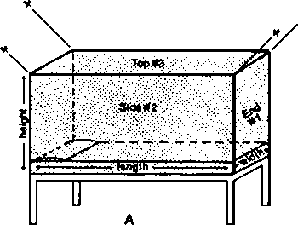
Fig. 1 Rectangular
shape

Fig. 2 Conical shape
Example of shapes of nets designed mainly for travelers
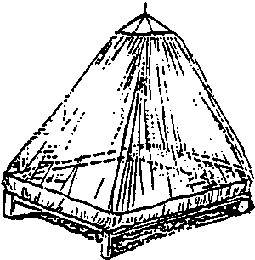
Fig. 3 Conical shape
Spider

Fig. 4 Pyramid shape
Tracker
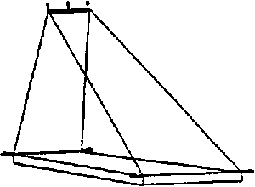
Fig. 5 Wedge shaped
Solo
Size - four sizes of rectangular nets are commercially available and have become the de facto standards:
|
|
width |
length |
height |
|
Single |
70 |
180 |
150 |
|
Double |
100 |
180 |
150 |
|
Family |
130 |
180 |
150 |
|
X-Family |
190 |
180 |
150 |
The conical nets in use are approximately 8.76 m2 for the single nets, 10.20 m2 for the double nets, 11.64 m2 for the family size, and 14.52 m2 for X-family size.
Colour - green, blue or pink nets are preferred because they avoid cultural problems often associated with white. In some areas however white nets may be preferred even though they show the dirt more than coloured nets. Coloured nets usually cost slightly more than the white nets. The prices may be negotiated especially when making bulk purchases.
Coding - logos, numbers or lettering can be imprinted on the nets by the manufacturer. Alternatively, blank tags can be sewn into one of the seams for writing numbers or other identifying marks. This may be useful to identify nets at family/household, individual, or donor levels, and by net sizes, or otherwise to identify the nets for re-treatments, and in monitoring, including checks on net washing.
Skirting - a solid fabric skirt can be sewn around the bottom of each net to avoid sagging and tearing of nets, or to reinforce the weight bearing apex of conical bednets. They can protect sleepers from insects and dirt falling when used at the top. The heavier materials however absorb large amounts of insecticide mixture, a waste and a problem in calculating insecticide requirements. Some suggestions being made to limit insecticide absorbency are to:
· use detachable borders,
· make narrow borders with non-absorbent material such as synthetics, and
· bind the borders with plastic and string during dipping as with tie and dyeing.
Reinforcement - special reinforcement of the corners or other seams can be requested. Although adding to the cost, reinforced corners may increase the effective life of a net. Selection of shapes, sizes and colours depend on the beds and sleeping arrangements, and people's beliefs, perceptions and preferences for colours. These must be taken into consideration in planning to improve compliance when introducing ITMNs.
Local production of nets - nets may be sewn locally, using netting rolls often available from the same companies that produced the finished nets. Rolls are generally 100 or 200 yards long, 78 inch wide, 75,156,196 denier (holes per square inch); and come in various colours. The prices vary with the material, mesh and denier.
Local community organizations, village committees, women's groups, cottage industries, and commercial sectors may be involved. Experience in the Western Pacific has shown that the quality of locally sewn nets can be as good or better than those produced commercially. Special sizes and shapes adapted to local needs can be made this way, including special nets for traditional infant carriers, hammocks or other special sleeping arrangements. It is important to set standards for materials, and train those sewing how to handle, cut the netting fabric, and stitch it. They must be monitored and guided periodically.
Often the final cost of locally sewn nets exceeds that from commercial sources. This must be balanced against a number of other considerations:
¨ Locally made nets identified as local products may be more readily accepted;
¨ Income accrues to those making the nets;
¨ Ability to produce specialized shapes and sizes.
¨ However in the long-term, local production must be directed to ensure adequate and ready availability of nets at affordable prices.
B) insecticides
The choice of insecticide may depend on the vector susceptibility, established or anticipated efficacy, availability, cost and affordability. The insecticides selected must have been evaluated through the WHO, Division of Control of Tropical Diseases (CTD) where the specifications and conditions for use etc. are also stipulated. The insecticides should also be registered in the country, or in a neighbouring country where the appropriate pesticide registration procedures and requirements are being followed. Updated information on these must be maintained at procurement levels and through the management information system.
Types
So far only the synthetic pyrethroids, and the “near pyrethroid” etofenprox are suitable for bednet treatments. They are excito-repellent, quick-acting, and effective in small quantities that can be made to adhere to fabrics. Those available at present are:
|
Insecticide |
Formulation |
Dose (mg/m2) |
Toxicity: oral LD50 of a.i. for rats (mg/kg of body weight) |
|
Alphacypermethrin |
SC |
20-40 |
79 |
|
Bifenthrin |
SC |
25 |
55 |
|
Cyfluthrin |
EW |
30-50 |
250 |
|
Deltamethrin |
SC |
15-25 |
135 |
|
Etofenprox |
EC |
200 |
> 10 000 |
|
Lambdacyhalothrin |
CS |
10-20 |
56 |
|
Permethrin |
EC |
200-500 |
500 |
SC= suspension concentrate; EW= oil-in-water emulsion;
CS= capsule suspension; EC= emulsifiable concentrate
There may also be other suitable formulations.
Permethrin
Permethrin the first pyrethroid to be used is the most widely used in net-treatment outside China. It exists in two isomers, the cis and trans. The cis form is more insecticidal and toxic to mammals. Formulations are available with cis:trans isomer ratios of 40:60, and 25:75.
Permethrin can be used in dosages of 200-500 mg a.i./m2. However, because of possible underdosing and reduced efficacy with washing and handling the recommended and most used dosage is 500 mg a.i/m2. The efficacy of unwashed treated-nets may last about 6 months, allowing 6-monthly re-treatments where year round protection is expected. Washing can remove about half the permethrin and more than half the insecticidal activity. Higher dosages (e.g. 1000 mg/m2) have been effective in curtains.
Deltamethrin, lambdacyhalothrin
These belong to the sub-group of pyrethroids with an alpha-cyano group in the molecular structure. They can be used in small quantities in a net allowing better adherence to the substrate and longer residual activity. Their use may be cheaper per individual net treatment. However they tend to be more toxic (than permethrin) to mammals and insects. Dermal exposure can cause sensory side effects which are reported to be temporary, toxicologically harmless but may be disturbing. Splashes on skin can cause a tingling or burning sensation lasting hours. Sleeping under a freshly treated net can cause a running nose and sneezing for a few days. So far these effects are reported more for lambdacyhalothrin.
Deltamethrin and lambdacyhalothrin may be used at dosages of 15-25 mg a.i./m2
Other alpha-cyano compounds
With the other alpha-cyano compounds, e.g. cyfluthrin and alphacypermethrin, the preliminary observations suggest that these are no different to the other alpha-cyano pyrethroids.
Etofenprox
The pyrethroid-like (pseudopyrethroid) etofenprox is structurally different, but functionally similar to the conventional pyrethroids. Its efficacy and dosage requirements are similar to permethrin. The mammalian toxicity is remarkably low, much lower than even permethrin.
Formulations
The formulations considered for fabrics so far are the emulsifiable concentrates (EC), the suspension concentrates (SC), emulsion oil-in-water (EW), and microencapsules (CS). Wettable powders are unsuitable except deltamethrin. Formulations for agriculture which may contain offensive solvents are not recommended and should be avoided.
Emulsifiable concentrates (EC)
The most common pyrethroid formulations in use for net-treatment are the emulsifiable concentrates (EC). These are distinctive in that the clear often yellowish liquid concentrate turns milky when mixed with water. The ECs contain solvents often more toxic to mammals than the insecticide itself and which help the pyrethroids to penetrate the skin. Solvents often give freshly treated nets a characteristic smell which could influence communities' perceptions on safety and discourage the use of ITMNs. Most experience acquired relates to EC formulations of permethrin, deltamethrin and lambdacyhalothrin. EC formulations for public health are expected to be different from those for agriculture, and the latter may contain more hazardous solvents. The formulations used for ITMNs must meet the specifications for public health use.
Wettable powders (WP)
The WP formulations are generally not suitable for net treatment as the powder falls off easily with rapid loss of insecticidal activity. An exception so far is deltamethrin WP which is reported better on cotton but worse on synthetics than SC.
Suspension or Flowable concentrates (SCs)
These are aqueous formulations, the use of which can avoid side effects which may occur sometimes to the dippers working long-hours above dipping baths.
Emulsion oil-in-water (EW)
Except for permethrin, water-based formulations are available for the other pyrethroids used in the treatment of nets. Their efficacy is comparable to the relevant EC formulations. The water-based formulations have the solvent and the insecticide suspended as an emulsion in a water medium. Skin penetration and oral toxicity are expected to be reduced. It is not yet clear if they reduce paraesthesia.
Microcapsules (CS)
Lambdacyhalothrin is available in a formulation consisting of a viscous suspension of minute plastic capsules from which the insecticide slowly diffuses.
Packaging
Currently, insecticides can be obtained in 0.5 to 2 litre bottles, 20, 25 and 50 litre metallic drums, and in individual sachets for treatment of individual nets. Bulk purchases in bigger containers are generally cheaper. The bulk procurement in drums may be repacked at national or programme level, according to the local needs. This may however cause insecticide losses from spillage/leakage during repackaging, leverage for dilution, misuse, and pilferage. Arrangements are needed to avoid such losses. WHO recommended safety precautions must be adhered to during handling and repackaging. Quality control, and stringent measures along with supervision and monitoring are therefore needed. Where people can afford sachets/doses for individual treatments, they may be delivered through commercial outlets. The package labels should provide adequate information to the users on the composition, procedures for use, and safety precautions.
Improvements are needed in developing packaging systems which accommodate the insecticide requirements for different types of net materials and sizes, insecticides and formulations, and for individual and bulk uses. These must be at prices affordable to the potential users.
|
| |||||||||||||||||||||||||||||||||||||||||||||||||||||||||||||||||||||||||||||||||||||||||||||||||||||||||||||||||||||||||||||||||||||||||||||||||||||||||||||||||||||||||||||||||||||||||||||||||||||||||||||||||||||||||||||||||||||||||||||||||||||||||||||||||||||||||||||||||||||||||||||||||||||||||||||||||||||||||||||||||||||||||
Guidelines on the Use of Insecticide - Treated Mosquito Nets for the Prevention and Control of Malaria in Africa (WHO - MAL - WHO - AFRO - WHO, 1997, 88 p.)
5. Implementation
Insecticide treatment of nets
Nets to be treated are those already owned/used traditionally by communities, or introduced as a public health intervention. In the former instance, the nets could be of different sizes, shapes, and fabric. An assessment of these can help to prepare the dipping mixtures more accurately so that the insecticide treatments achieve targeted dosages. Where nets are introduced, the specified standards and quality requirements can be met more easily with appropriate planning.
To correctly treat a net with an insecticide, a net of a given size/surface area is treated with an appropriate insecticide mixture (which has been prepared by mixing a specified amount of insecticide formulation, with a specified quantity of water) in order to obtain the target dosage of the insecticide.
Logistic requirements
The supply/material requirements for insecticide treatment of nets are:
· water,· insecticide formulation,
· measuring devices for water and insecticide,
· container to dip the net(s), and to collect insecticide drips after dipping,
· rubber gloves and protective clothing including a face-mask especially when many nets are treated, when treatments are done daily or for prolonged periods, and
· spray equipment when nets are sprayed.
Preparation of insecticide mixtures
The preparation of an insecticide mixure for net treatment requires information on:
· the number of nets to be treated, and their sizes or the surface area involved;
· the amount of water to prepare the mixture (depending on how much water they absorb; and
· amount of insecticide to treat the nets.
Calculating surface area of net to be treated
The surface area is usually presented in square meters (m2). Examples of calculating this for the more commonly used rectangular, and conical designs are as follows:
Rectangular net
Hang the net up, measure the width, length, and height (in metres), and
a) Calculate the area of the top: i.e. width x length
b) Calculate the area of the sides, and ends: i.e. height x total distance around base of the net;
c) Add a) and b) calculations to get the total area of the net.
Thus total surface area (S) = sum of the surfaces of, the 2 sides, the 2 ends, and the area of top = 2 (L x h) + 2 (w x h) + 1 (L x w),
where L = length, w = width, and h = height, or perimeter x height + area of top.
For example assume, length = 1.8 m; width = 1.3 m; height = 1.5 m. Then the,
a) Area of the top = 1.3 x 1.8 = 2.3 sq m
b) Area of sides and ends = 1.5 x 2 (1.3 + 1.8)= 1.5 x 6.2 = 9.2 sq m
c) Total area of net = 2.3 + 9.2 = 11.5 sq m
Conical net
Total surface area (S) = circumference x distance up the slope x 0.5
Calculating the amount of water to prepare the mixture
This is the same as the amount of water to saturate the net, i.e. the water retention capacity of the wet fabric. This depends on the type of fabric. To determine this:
· Select about 3 nets of each type of net (i.e. with same material, size);· Dip each net thoroughly for few minutes in a known quantity of water (Vi) in a bucket or basin;
· Remove the net from the container, wring and hold for 5-30 seconds over the bucket or basin to catch any drips;
· Repeat with each net;
· Measure the remaining water in dipping bucket (Vr);

The amount of water needed for each type of net can be determined by checking a sample, and calculating for the total number of nets to be treated.
Calculating of amount of insecticide to treat nets
The amount of insecticide to treat a net depends on the total surface area of the net, the type of fibre, and the insecticide, i.e. the type, strength, formulation, and the target dosage (TD) presented in mg or g/m2
In calculating the insecticide requirements, the active ingredient (a.i), and the commercial formulation (c.p.) are taken into account.
(a) Amount of active ingredient (a.i):
The active ingredient (a.i) in mg or g (or ml for the WP formulations) = surface area of net (m2) x target dose (mg or g a.i/m2). For example,
|
Insecticide |
Target dosage (mg a.i./m2) |
Net surface (m2) |
Active ingredient for one-net (in mg) |
Active ingredient for 100 nets in mg (g) |
|
Permethrin |
200 |
12 |
2400 |
240 000 (240) |
| |
500 |
12 |
600 |
600 000 (600) |
|
Deltamethrin |
15 |
12 |
180 |
18 000 (18) |
|
Lambdacyhalothrin |
25 |
12 |
300 |
30 000 (30) |
(b) Amount of commercial product (c.p.):
Commercial formulations are generally presented as:
a) percentage (%),
b) g/litre for the liquids, and
c) g/kg for powders.
The labels must be read carefully for the concentration, a) keeping in mind that some manufacturers label their products in % i.e. g/100 ml, and some in g/litre, and b) that fifty per cent (50%) is the same as 500 g/litre. Thus care is needed in relating the active ingredient (a.i) to the commercial product. For example, Permethrin, expressed as EC 50 (50%) contains 500 g a.i/litre; Deltamethrin, SC 2.5 expressed as 2.5%, contains 25 g/litre.
The amount of insecticide formulation required can be calculated as shown in the following examples:
|
Example 1: Assume water retention/absorbant capacity of net is 500
ml; |
Thus a 500 ml dipping mixture that would be needed for one net (based on water retention capacity) will comprise of 10 ml of insecticide formulation, and 490 ml of water.
|
Example 2: Assume water retention/absorbant capacity of net is 500 ml; Assume size of net to be 10 m2: Insecticide used is Deltamethrin SC 2.5 (2.5%) which contains 2.5 g in 100 ml or 25 g in 1 litre, or 25 mg in 1 ml Target dosage = 25 mg a.i./m2; One net requires 25 mg a.i./m2; x 10 (area of net) = 250 mg Amount of EC 25 formulation needed = 250/25 = 10 ml Thus a 500 ml dipping mixture that is needed for one net will comprise of 10 ml of insecticide formulation, and 490 ml of water. The amount needed for dipping a specified number of nets may be calculated accordingly. |
|
Example 3: The following formula can also be used to calculate the amount of insecticide required:
For example, the amount of permethrin 50% needed to give a recommended dosage of 500 mg/m2, on a net measuring 102 is:
Multiply this amount by the number of nets to be dipped. |


The commercial product and the water (measured previously) must be mixed thoroughly and carefully in wide, shallow containers (buckets or basins), the latter to limit side effects from insecticide inhalation on the workers. The insecticide container must be rinsed well with the water to be used for the solution to prevent waste.
To simplify the calculations in preparing dipping mixtures for collective dipping, it may be necessary to treat together: a) nets/sets of nets belonging to a family assuming these to be of comparable/similar material; and b) nets made of more or less the same fabrics and bearing in mind that cotton absorbs more (about twice) liquid than the synthetics, and that the efficacy of insecticides varies with the materials.
Charts and tables may be prepared (and made readily available) indicating the quantities of mixtures to be prepared with each insecticide according to the target dosages and water retention capacities, and on the amounts of insecticides (commercial products) for nets of different sizes.
Insecticide treatment methods
Nets can be insecticide-treated by dipping, or spraying with standard hand compression sprayers. Irrespective of method, all nets must be washed properly before being treated.
Dipping
Nets can be dipped individually or collectively in batches of ideally similar types in terms of materials. Each net is unfolded, fully submerged in the insecticide solution, and kneaded (fig. 6) until saturated with liquid. Dipped nets are wrung above the dipping container to collect the drips (fig. 7).
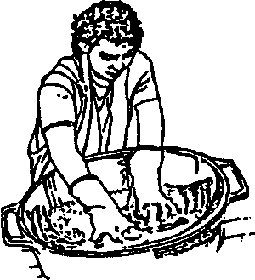
Fig. 6 Dipping/kneading

Fig. 7 Dipped net wrung
(a) Individual treatment (dipping) of nets:
Dipping nets one by one may lead to non uniform impregnation, unless care is taken to knead the net until it is evenly wetted. This is time consuming and less practical when large numbers of nets are to be treated in a short time.
Individual dipping is possible in plastic bags. The net is placed first in the bag, the exact amount of mixture needed to saturate the fabric is poured, and kneaded thoroughly. The net is removed and dried; wringing is not necessary.
(b) Collective dipping:
Here several nets, e.g. batches of five or tens are dipped together. In planning, an estimate must be made (e.g. through sample KAP surveys) of the numbers of nets of each type (fabric/material, size, and shape). This helps more accurate calculation of the water and insecticide requirements, and the preparation of dipping solutions to meet the target dosages. If such an assessment is not possible a compromise may be a dilution of one litre of insecticide e.g. deltamethrin SC 25, or lambdacyhalothrin CS 25 or 1 litre of permethrin EC 50, with 49 litres of water. Nets of different fabrics must be sorted out and dipped accordingly. This may necessitate dipping together the nets of individual families assuming these to be of comparable material. Dipped nets removed one by one after a few minutes are wrung thoroughly above the dipping container, and placed in an open plastic basket for some time over the decantation part to allow draining. Some families may not wish their nets to be mixed and immersed in the same dipping bath with those of others. Nets of each family may be kept separately to avoid accidental interchange.
As pointed out earlier, more absorbent material such as cotton absorbs more insecticide per square metre than with synthetic nets. However for the same insecticide effect of e.g. permethrin or lambdacyha�othrin, a higher dose per square metre is required on cotton than on synthetic material. These differences on cotton and synthetic tends to balance out and where a mixture of light cotton and synthetics nets have to be dipped, a single mixture could be used.
A team of 2-3 trained persons assisted by a few local people can dip at least 200 nets a day.
Spraying of nets
Spraying allows collective treatment of a large number of nets in a short time. This is quick and a net could be treated in a few seconds, often less than half a minute. Spraying nets is to some extent comparable to spraying of walls where an insecticide solution is sprayed aiming at a target dosage on the net surface. Spraying nets requires more expertise and may be undertaken by those experienced in the use of spray machines and in spraying operations such as those undertaken in malaria control programmes and in agriculture.
Nets must be cleaned and ready for spraying, hung in situ over the bed (in Sichuan, China more than one million nets are sprayed annually in situ, without taking them outside)., or outdoors, away from windy places, children, food and water bodies such as rivers and streams. Sprayed nets must be kept outdoors to dry and must not be used before they are completely dry.
Achievement of good quality spraying requires, properly functioning spray machines with correct nozzles, etc. to deliver proper swath width, and flow rates, and correct spray procedures/techniques that ensure the required pressure, the distance/angle between nozzle and the surfaces sprayed, and the speed. The equipment must be checked regularly. Procurement of the same type of equipment/spare parts facilitates replacement, maintenance of equipment, and training compared to the use of different types of machines. Spray personnel must be appropriately trained including refresher training, and supervised to ensure quality of equipment and performance. Spraying nets may be relevant and/or can be easier in:
· Areas where house spraying is ongoing or has been discontinued, and where experienced staff could be trained in net treatments in a short time and with minimum inputs;· Other areas where people are familiar with the use of insecticides and spray equipment such as in agricultural areas;
· In refugee camps, resettlement areas where treatment of tents, temporary shelters and nets are urgently needed to deal with disease outbreaks; and
· Where a large number of nets have to be treated in a very short period of time.
Pre-treated nets
Effective, permanent insecticide treatments which allow easy, safe and cheap distribution would be ideal for ITMN programmes. However net pre-treatment methods have not yet been proven to allow residual effects of insecticide treatment to cover the life of the nets. Olyset nets have not been long enough to know how long their efficacy lasts.
As re-treatment is needed eventually, pre-treatment (at factory, warehouse, shops, or otherwise) prior to transport, distribution and sales would only delay opportunities to address the re-treatment issues from the start of the programme. It is pointed out that this could be useful to start programmes until other arrangements are being made.
Drying treated nets
Treated nets may be dried, placed flat on clean non-absorbent surfaces such as plastic sheeting, (fig. 8), or spread on beds or mattresses (with bedsheets removed, and this may help kill bed bugs etc)., or hung up in the shade in the open (fig. 9).

Fig. 8 Drying treated nets
flat
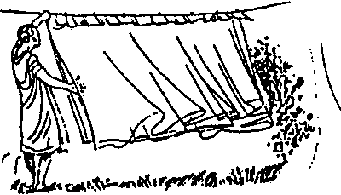
Fig. 9 Drying treated nets
hung
In all instances, the nets should be arranged with minimum folds as possible, and turned occasionally to ensure that the insecticide is deposited evenly. Hanging nets immediately after dipping must be avoided to prevent dripping, loss of solution, and uneven spread of insecticide. The insecticide adheres better to nets dried in horizontal position; in vertical position they may dry faster as would also be when exposed to sun and wind. Long exposure to bright sunlight should be avoided as the pyrethroids can be destroyed.
Time taken to dry also depends on the fabric, the amount of insecticide absorbed, and the surface area. Cotton takes longer. Drying should be done close to the dipping sites. Nets treated should be kept clean during dipping or drying.
Organization of net treatment sessions
People must be informed in advance of the treatment schedules in their respective areas and asked to wash the nets on the day before the treatment. If several teams work in a village or an area, they must communicate their schedules with the exact locations. The locations for refilling spray tanks must be identified especially for the mobile teams.
The number of nets to be treated should be determined as far as possible, and the water and insecticide requirements estimated correctly. Buffer stocks of insecticides and solutions must be ensured to avoid interruption due to their shortage. Having to wait a long time to get the nets retreated can discourage people and eventually compromise the programme.
As already pointed out, the dipping must be done outdoors in large shallow containers to protect the dippers from inhaling insecticide fumes. This is particularly important when large numbers of nets are to be treated continuously over a period of time, or daily. Care is needed to prevent insecticide splashing on skin, and nasal irritation of the dippers. The dippers must be interchanged periodically to avoid over exposure of any one individual to insecticide fumes. During net dipping, use of strong rubber gloves are recommended to avoid risk of skin irritation. Goggles or other eye protection are also recommended for those who work close to the dipping container, to avoid risks of splashes in the eye.
Spraying nets against the wind must be avoided to prevent any insecticide falling on people spraying. People, especially children, and also food must be kept at a distance to avoid contamination.
Spillage and waste of insecticides or water must be avoided when preparing the mixtures. After the treatment, the equipment used must be cleaned, but never in rivers, streams, or ponds as pyrethroids are toxic to fish. Surplus insecticide, waste packaging and contaminated material should be disposed of e.g. in pit latrines, or buried far away from human settlements, water sources (wells, rivers, streams and fish ponds). Empty insecticide boxes, contaminated containers must be destroyed to prevent their use for other purposes. Adequate care must be taken to avoid environment contamination throughout the work.
Net owners, other members of the community should be invited to observe, and where appropriate to participate in net-treatment so that they may recognize and appreciate the importance and implications of the activity. The community health workers (CHW) and other health providers in the village/community must be active partners, properly motivated to participate in the (re)treatment, and in the support of the overall programme.
People must be advised to keep and use treated nets away from fire places and lamps to prevent fire hazards, informed that such risks are higher where people cook and sleep in the same room. They must also be advised to prevent children putting treated nets in their mouth.
The community must be informed of the potential risks and effects of insecticide contamination, and be taught measures to be taken if contamination occurs. The need to seek prompt medical assistance and to refer to a physician if any signs of such effects are detected or suspected must be emphasized.
Effect of washing treated-nets, care and use
The effectiveness of treated nets can be reduced with treatment with an inadequate dose, and from loss or reduced dosages insecticide from washing treated nets. The treatment efficacy is considered to be more dependent on the amount of washing than on the time after the treatment.
Thus people should be, a) advised to get nets (re)treated on time, b) to wash the nets before the insecticide treatment, but discouraged from doing so after the treatment, c) informed of the consequences of frequent washing of treated nets, and d) advised to retreat the nets which have been washed more than twice to sustain efficacy, through appropriate information, education and communication (IEC) messages, and opportunities to get the required net (re)treatments must be provided.
When in use, nets should be hung down to cover the entire bed, and tucked under the mattresses or sleeping mats etc.. During daytime, they should be tied up, out of the way to avoid being damaged.
The insecticidal effect on a treated net at a given time may be checked, to provide guidance for re-treatment of nets in operational use, through “bio assay tests”. Here a sample of anophelines (susceptible to the insecticide under consideration) is allowed to contact insecticide on treated net for a standard time (e.g. 3 minutes) by confining the mosquitoes in the WHO bioassay cones attached to the net. Subsequent observations are made on, the percentage knocked down after one hour, and the mortality after 24 hours. Generally nets freshly treated with the recommended dose of an insecticide is expected to give almost a 100% mortality. After a period of use, and in particular after washing, the mortality tends to decline. From an operational context, the efficacy of the pyrethroids in treated nets is expected to last 6-12 months depending on the insecticide, but less with nets washed frequently. In general, nets may be treated at 6 monthly intervals, depending on the transmission pattern; with timing of treatments planned immediately prior to the transmission season.
Safety, side effects from pyrethroid exposure
Reports on side effects from pyrethroid use are related to the workers who spend long hours mainly in net-dipping (often compelled to inhale solvent vapour), and the ITMN users. The former in particular are reported to suffer from non specific symptoms of mild intoxication such as headaches which have been transient. Exposure to skin especially the mucous membrane have caused paraesthesia (tingling, burning sensations) caused by temporary transient effects on sensory nerves. Such symptoms are common with the alpha cyano compounds (deltamethrin and lambdacyhalothrin etc.) and are rare with permethrin. Deltamethrin is reported with more severe side effects on polyethylene nets.
Other reports include painful irritation caused when emulsions splash in the eyes, tingling sensation when droplets fall on the skin, facial swellings of those handling freshly dipped, dried ITMNs, and nasal irritation and sneezing (lasting a few days to 2 weeks) of those sleeping under freshly treated nets. Closer monitoring with documentation and dissemination of information on related observations and experience are needed, especially for the alphacyano compounds.
The side effects could have operational consequences in discouraging people from the use of ITMNs, and/or prompt them to wash the nets soon after treatment. Appropriate IEC messages should be developed and delivered to convey to the public, the potential side effects and the conditions under which they may occur, the precautionary possibilities and actions to be taken if side effects are encountered or suspected.
Vector response to insecticides
Vector response to insecticides in terms of behaviour and insecticide susceptibility is an important determinant of the efficacy of ITMNs. If and how ITMNs impact on the vector and/or malaria must be known or ascertained when planning, and monitoring the implementation.
A) Vector behaviour
Insecticide use can lead to changes in the vector behaviour such as resting, biting sites and times, sometimes causing shifts in peak biting periods.
The vectors' behavioural responses to pyrethroids can have significant epidemiological implications. The behavioural response depends on the type of insecticide, dosage/formulation, and the inert material/solvent used in the formulations. The pyrethroids can cause deterrent, irritant, killing, and knock down effects, or feeding inhibition on the vectors. Deterrence may prevent entry and favour mosquito exit from houses; thus providing personal protection to people indoors. Where such mosquitos are not killed outdoors, adequate impact on transmission and community level protection may not occur unless a good level of ITMN coverage is achieved to effect mass killing of the vector populations.
Different mosquito species e.g. Culex quinquefasciatus and Anopheles gambiae have responded differently with permethrin-treated nets. Such information is important in planning ITMN programmes in urban areas, and other situations where protection from nuisance insects has been a strong motivation for ITMN use.
The choice between insecticides with high deterrency or high killing effect may depend on the targeted objective of the intervention, whether personal protection, or mass protection of a community. The insecticide/vector interaction however is not very clear at present, and the relevant information is inadequate. More information is needed: a) on the effects, advantages and disadvantages in relation to the deterrent/repellent, irritant, knock down and killing effect of different insecticides, and dosages including sub-lethal dosages, and at different periods after the insecticide treatments, and b) on their impact in relation to personal and community level protection, and transmission. The relevant information is necessary for the selection of insecticides, and in preparing IEC messages to convey to the people the expectations from insecticides used in net-treatment. Some of the information can be collected with monitoring during operational implementations; others through relevant operational research.
B) Vector resistance to insecticides
Vector susceptibility is basic for the efficacy of insecticides. The eventual development of insect/vector resistance to insecticides is inevitable if the insect populations concerned are continually exposed to insecticides, irrespective of the purpose for which they are used. The types of resistance/resistance spectra depend on the mechanism(s) prevalent in the insect population and are being selected. A number of resistance mechanisms are known in insects/mosquitos; some conferring broad multiple resistance and which also involve the different pyrethroids. At present the insecticides for net-treatment are limited to the pyrethroids and a pseudopyrethroid, etofenprox. Anopheles strains which are resistant to one of these compounds are often cross resistant to others also. Despite limited monitoring and reporting, such resistances are already encountered in a number of malaria vectors including some populations of An. gambiae in Africa. The operational implications of these resistances are not yet known, or investigated; but the findings may alert potential threats to the continued use of the pyrethroid group of insecticides and the sustainability of the ITMN strategy.
The use of the pyrethroid insecticides is also spreading fast, in public health (house spraying, ITMNs, space spraying) in addition to their already extensive use in agriculture and in household pesticides. Insecticide resistance related information is thus necessary to guide planning, implementation and evaluation of insecticide uses. It is therefore necessary that the insecticide susceptibility or resistance status of the vectors be assessed, with the practical implications of resistances already encountered (especially at high levels) in different representative situations investigated.
(i) Assessment of insecticide susceptibility status
At present, monitoring coverage, and information base on susceptibility or resistance status is limited and patchy. Monitoring must be undertaken/improved for the insecticides in use, and for the potential alternatives. These must be focused in representative areas where:
· Insecticide use has been ongoing for a known period of time, or is planned for bednet treatment and for other malaria/vector control interventions and public health purposes;· resistance and multiple resistance (especially involving the pyrethroids) are reported or suspected; and
· considerable amounts of insecticides have been in use for a known period of time:
- for agriculture,
- in indoor residual spraying,
- for treatment of bednets and other material, and
- as domestic insecticides.
In each of the above areas, the monitoring should cover diverse epidemiological situations, and vectors with different breeding, resting and feeding habits which are likely to influence their exposures to insecticide selection pressures. The monitoring may be supported by networking activities.
As pyrethroid resistance levels vary with mosquito age; tests are needed on adults collected directly from the field, as well as on adults emerged from the field collected larvae.
The WHO test procedure for the use of “discriminating dosages” must be used in the monitoring, as is also the standard formats (WHO/CTD/VBC/Resis.1a.97 (adult), WHO/CTD/VBC/Resis.1b.97 (larva), WHO/CTD/VBC/Resis.1c.97 (pesticide use) developed to record and report relevant data. These will enable collation and comparison of data from different sources based on standardized test procedures and collection of information, to facilitate exchange, use and extrapolate experience.
(ii) Practical implication of resistance, and other investigations
It is emphasized that the WHO test alone is not the criterion to establish whether an insecticide in use is effective or not under field operational use. The results do not simulate or represent the actual insect response under the field operational use of the insecticide concerned. Resistance detected during these tests however is a strong indication that mosquito populations are responding to selection, thus signaling the need for further monitoring and field observations in order to guide the planning of insecticide uses. The information also provides opportunities to examine the resistance spectra. When investigating reports of resistance, the operational elements of the programme, and the entomological and disease impact indicators must be examined critically in order to determine the conditions and levels at which resistance can lead to control failures.
Information on resistance must be collected and correctly documented, and disseminated and exchanged, as for all other important aspects of the programme.
Some nuisance insects may be more tolerant and/or have already developed resistance to pyrethroids. Others may rapidly develop resistance. Whether such occurrence could compromise compliance of the people whose motivation to use ITMNs is primarily linked to the protection from nuisance insects, needs to be examined. Appropriate action, and IEC messages must address this issue.
Information management
ITMN implementation related information must be readily available, ideally as part of the information management systems already available, or being developed for malaria control. Linkages must be established with other relevant information systems, within and outside the health system including NGOs who may contribute to the implementation.
Purpose
The use of information must be directed to:
· Convince the macro-economic level policy and decision makers including financial bodies and other support agencies, and the implementers concerning specific requirements, including support;· Select and prioritize targets for ITMNs;
· Select materials (nets, insecticides, spray equipment);
· Guide net (re)treatment;
· Identify the types and contents of IEC messages, and assess communication skills and success of community mobilization and intersectoral actions;
· Identify gaps, shortcomings;
· Identify training and research needs, and evaluate their performance and achievements;
· Examine the relevance and/or effectiveness of the ITMN strategy, the processes and activities, of the insecticides used, and the use of ITMNs by the community;
· Provide information for programme adjustments.
Type of information
The information needs could be general, or target-oriented. The types of information that may be required are listed in Annex 4. It is to be noted that most of this information need not be collected exclusively for the ITMN programmes. Many could be accessed from what is already available and through other sources as listed in Annex 5.
How to collect
There is no single method to collect information. Examples for planning are:
¨ List the minimum data/information that is required, for what and at each level of implementation;¨ Clarify from where, by whom, how and when to collect;
¨ Establish processes to collect, and identify the channels to obtain the information with minimum efforts and inputs;
¨ Develop suitable data collection formats;
¨ Train the data collectors and users of information;
¨ Make the best use of the existing information systems, adapting them to ITMN programme needs.
Documentation, exchange and sharing of information
As indicated earlier, experience gained in ITMN implementation is limited, and the programmes are to be progressively expanded, benefiting from experience. Existing information and that collected during the implementation must be made widely available. Mechanisms must be established providing for opportunities to promote reporting, publishing and dissemination of information and experience. These should be in relation to the operational aspects and related research undertaken in different epidemiological situations and institutional arrangements. Information updating, rapid transfer, exchange and sharing within and outside the country must be promoted.
An updated inventory may be maintained of all ongoing ITMN related activities (operational and research) in the country indicating, for example, their location, coverage, time frames, and expenditures. The experience gained and achievements made in each of these activities must be periodically updated in qualitative and quantitative terms. Suitable formats must be developed and used to guide and standardize the information gathered and reported on activities from different sources. Information exchange within and among the countries may necessitate periodical meetings of relevant personnel in workshops and seminars, regular communication through newsletters, and through national, regional networking programmes (which may be established) involving relevant scientists and institutes.
Operational aspects
The end-point determinant of the effectiveness of an ITMN programme is the use of ITMNs by those at risk of contracting malaria. Others' inputs must lead to this end in order to ensure:
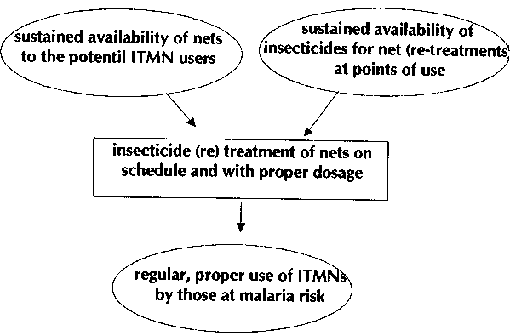
Figure
ITMN programmes require that the potential ITMN-users have access to nets, and have opportunities to get them treated on time with correct amounts of insecticides. Appropriate insecticides must be selected and good quality procurements made at low cost. They must be stocked and delivered to treatment levels. The efficacy and retention of insecticides on treated nets must be assured. Nets must be used properly (to prevent mosquitos from entering the nets in use) and at least during periods of peak vector biting and disease transmission. People must know the conditions for using them to get optimal benefits. The costs must be met and operations sustained, thus requiring appropriate support. These actions, especially on a large-scale, have a number of technical, socio-cultural, operational and managerial implications. Policy, institutional and collaborative arrangements may be involved.
Annex 1 lists the activities necessary to sustain large-scale implementation. For each activity area, indications are given as to who may be responsible and at what level. The probable processes or mechanisms, and the needs and conditions of support to be met are indicated but are neither prescriptive nor comprehensive. They may be considered in overall programme planning, and in planning participation and support to specific activity areas. The format may be adapted to local circumstances, and can include resources, training, and research issues.
Political and policy framework
Political commitment, policies or legislation are involved in some aspects of programme implementation.
A) ITMNs and malaria control
“Selective and sustainable preventive measures including vector control” is one of the four technical measures of the GMCS. ITMNs is a vector control option involving personal protection and insecticides; the concept and the objectives of ITMN implementation in Africa are in keeping with those of the GMCS. In the commitments for intensified malaria control by the African Ministers of Health, “the use of insecticide-impregnated bednets and other materials (ITMNs)” is recognized as one of the three key elements to be addressed (AFR/RC45/R4: Resolutions of the Regional Committee for Africa, Regional Programme on malaria control, 1995). A national policy specifying “ITMNs as an integral component of National Malaria Control Programmes (NMCPs)” could help ensuring that ITMN implementation is in keeping with the NMCP's strategies and objectives.
B) Insecticides
National policies and legislation in relation to the selection, importation, and use of insecticides are needed to ensure efficacy, quality, safety of insecticides, and in the long-term, vector resistance management. The specific issues are:
(i) Mechanism for registration of pesticides
This can regulate pesticide imports/use in the country. The registration must be based on adequate evaluation data which can be obtained through WHO/CTD, supplemented where possible by data from evaluations undertaken in the country itself. Where registration mechanisms do not yet exist in the country, the insecticides considered should be registered, at least in a neighbouring country, but in the long-term the countries should have their own pesticide registration mechanisms so that the insecticides used are registered in the country of use. WHO/CTD may be consulted for further information on registration requirements and procedures.
(ii) Specifications
The insecticides imported and used must conform to WHO specifications for public health. When procuring insecticides, reports of conformity of the selected insecticides to WHO specifications must be requested and examined by an independent authority or institution before the insecticides concerned leave the place/country of origin.
C) Vector resistance
The current trends in pyrethroid resistance development and the possible implication are discussed above.
These highlight the urgent need for new insecticide groups which do not fall within the resistance spectra conferred by the resistant mechanisms in the vectors. At the same time, precautionary measures must be taken to delay or avoid pyrethroid resistance in the malaria vectors. A recommendation related to the latter reads that, “Synthetic pyrethroids should not be used for indoor residual spraying in areas targeted for insecticide-treated bednet use if physiological resistance is to be prevented or delayed ......” (WHO Technical Report Series 857). A policy in this connection may help to ensure that the recommendation is followed.
D) Nets/material, insecticides: Availability, low cost
National governments can facilitate the availability of appropriate materials at low cost through a policy directed at:
· Tax/import duty exemption for nets, netting, and insecticide formulations designed for net treatments· Promotion of local manufacture of nets, netting, other material by removal (or reduction) of import duty/taxation on raw material, removal of other regulatory measures, and providing subsidies and other concessions to business and consumers;
· Establishment of an efficient procurement system at national level to enable speedy procurement of quality assured materials at lesser costs. The ITMN related procurement systems may be incorporated in the systems which may already exist or may be established for other aspects of the health system's activities.
Potential partners
In addition to the ITMN users, others expected to participate in ITMN activities are:
· Health services/malaria control programmes (NMCPs);· National level macro-economic policy and decision makers;
· Non-health public (government) sectors/agencies;
· Academic and research institutes;
· NGOs within (national, district, and community levels) and outside the country;
· Local community groups;
· Private/commercial sector;
· Support agencies, both domestic (DSAs) and external (ESAs), and the proposed networking programmes.
The expected roles/responsibilities of each are listed in Annex 6.
Potential users of ITMNs
Irrespective of the targets which may be established at national or local levels, there will in fact be other users of ITMNs in a large-scale ITMN programme which is adequately established and properly functional. The potential users are likely to be those already listed under target groups, and in addition the following:
· People accustomed to using nets and who will continue to buy/use them on their own initiative; and who may seek access to insecticide-treatment facilities and opportunities;· People who may be motivated to use ITMNs as a consequence of IEC and other promotional activities of the programme.
Institutional framework and collaboration
The implementation may entail the participation of many actors within and outside the health services, the private sector, the communities, and other support agencies (though not all in the same location or activity area at a given time). Some inputs may be on an ad hoc basis, limited in space and/or time. The expertise needs and responsibilities will vary at different levels of management and implementation. Such diverse inputs/activities must be coordinated and linked at each level:
· to ensure adherence to specifications, standards and the national malaria control programme's objectives and targets,· for optimal utilization of resources, sharing of inputs avoiding wasteful duplication, and
· for overall effectiveness and sustenance of delivery services.
The necessary linkages and coordination among these must be formalized through appropriate institutional and collaborative arrangements. These may necessitate adjustments to the administrative/institutional structures of the Ministries of Health and NMCPs. Equally important are issues of decentralization, managerial flexibility, intersectoral/agency collaboration, and community mobilization.
Fig. 10 provides an example of a possible framework covering the institutional and collaborative links among different partners, in particular with malaria control/health services at each level of management and implementation. The format in Annex 7 listing the tasks and the expected possible actors of an ITMN programme may be considered in planning collaborative/partnership linkages. Which activities need collaboration, who will collaborate at what level, and how the collaboration should function depends on local circumstances. Therefore not all the actors are expected to be present all the time at all levels for a given activity.
Some activities which may need continued collaboration and interaction may be effected through committees representing relevant expertise. Other time-limited activities may often require major managerial and policy-related decisions and may be implemented by specific task forces. In order to ensure interest, efficiency and sustainability, making the best use of partners' expertise, skills and potential, it is important that the “right persons” are involved in a given functional body, committee or task force.
Collaboration at national level is needed, for example in establishing policies, regulatory measures, procurement systems, pesticide registration mechanisms, and for import duty exemptions. These are of a limited time frame and may be effected through task forces. Decision making and ensuring concurrence on service delivery concepts (e.g. to make use of the resources/facilities of other sectors/agencies) by higher level management, including those from other relevant ministries/sectors, the private sector, etc. are also time limited and may be effected through task forces. Committees may contribute to subsequent implementation and monitoring which will be continuous. Continued collaboration at national level is also expected on information management, training, operational research, and the assessment of needs at country level. A suitable coordinating structure at national/central level could be “A National Committee for Malaria Control (NCMC)” which may already exist or is likely to be established to deal with the overall malaria control issues. The partnerships involved in such a body are indicated in fig. 10. Members of this body with relevant expertise may be co-opted for specific tasks involving ITMN implementation.
District level collaboration will occur in a number of areas. The structure concerned may be comparable to that at central level, “District Coordinating Committee for Malaria Control (DCMC)”. Similarly, activities at community/peripheral level could be coordinated through community-based committees for malaria control (CBCMC). Fig. 10 indicates the possible linkages and roles and responsibilities at each level. These may be adapted to national and local needs.
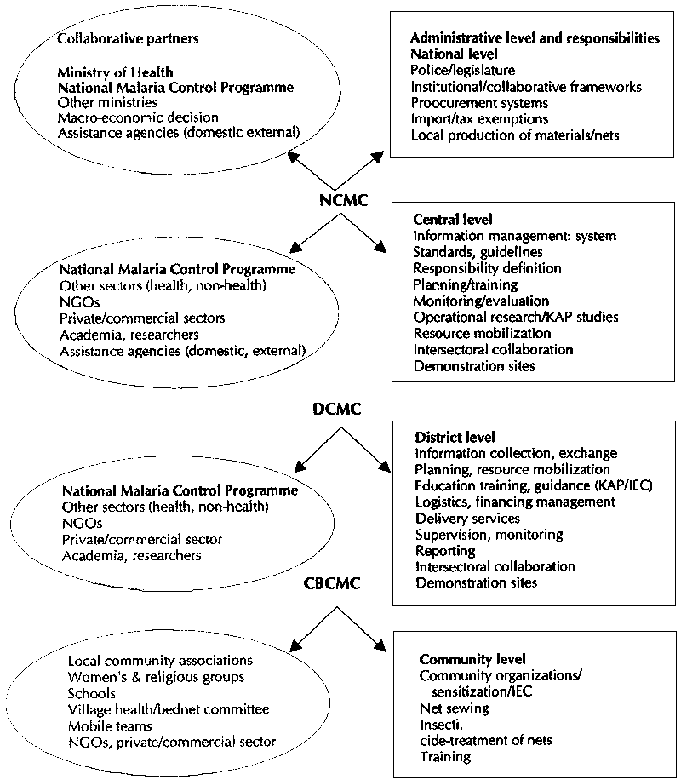
Fig. 10:
Institutional/Collaborative Framework for ITMN Implementation (Collaborative
linkages with Malaria Control Services)
NCMC = National coordinating committee for malaria control
DCMD = District coordinating committee for malaria control
CBCMC = Community-based committee for malaria control
|
Examples of interagency/intersectoral collaboration for ITMN programmes are: The Malaria control services and other implementers collaborating: a) with Ministries of Education to incorporate educational messages in schools, universities and other relevant educational curricula, and b) with decision makers concerned with communication and media in support of development and delivery of IEC messages. The malaria control services and other relevant persons may interact/collaborate with macro-economic and policy makers, with the customs and immigration authorities concerning the establishment of policies, import duty exemptions for materials, and the establishment of procurement systems, and with finance authorities to seek financial commitments, and to promote local production of nets/netting. The NGOs and other local level community organizations may collaborate on financial/logistic matters, including management of cost-recovery systems/revolving funds. Collaboration within country and at international level can support resource mobilization, speedy procurement, and information exchange. Continuing collaboration is expected among malaria control services and other sectors and agencies, the private or commercial sector, NGOs and other community organizations on service delivery issues; malaria control services and academia and researchers on monitoring of insecticide resistance, training, operational research, quality control on insecticide treated nets/biological efficacy and information exchange. Continued collaboration is also needed among WHO, WHO collaborating centres, and the proposed networking programmes for exchange and sharing of information/experience, technical inputs, insecticide resistance monitoring, procurement, and with donor communities for financial, logistic and other support. |
Delivery systems
The ITMN delivery services are expected to ensure wider net ownership and insecticide-treatment of the nets on time, and to provide relevant information to encourage proper use of ITMNs. The specific issues to be addressed include:
¨ Quality assurance of products delivered;¨ Gaining access to other formal and non-formal public and the private sector and community-based structures and processes in support of ITMN delivery;
¨ Access to populations at highest risk of contracting malaria, focusing on those who may live in less accessible areas, and/or cannot afford the services.
There are different delivery, quality assurance and regulation, and promotional needs and approaches for the nets, and the net-treatment. The methods according to which nets are distributed, insecticide-treated and re-treated may vary depending on local circumstances. Reliable channels that can get the nets and insecticide to the target population on a sustainable basis are critical for the success of the programme.
ITMN service delivery is likely to be more realistic and promising where potential delivery systems exist or can be accessed within the operational areas; such situations are referred above. The availability of, or the potential to access such services in ITMNs activities must be considered in immediate and medium-term planning. All such structures/bodies in the target areas should be listed, earmarked and explored for partnership potentials in the delivery services. This will entail collaborative planning.
Access to quality assumed material, affordability equity
Key elements in ensuring that nets are accepted and used on a sustainable basis are the quality and cost of the nets provided.
The cost of the nets should be set so that they are affordable to all members of the target population. Experience has shown that this may require the costs to be heavily subsidized. Setting a price for nets should be based on two principles:
1) Every member of the target group(s) should be able to afford and have an opportunity to obtain the required nets; and get them treated with insecticides.2) The price should not be so low that people would rather buy new nets than maintaining the existing ones.
There are two important factors that determine the quality and durability of nets: first, the strength of the fiber and second the quality of sewing/construction of the nets. The general rule is that net purchases should not be made on price alone. Better quality costs more in terms of the initial investment but in the end will cost less because high quality nets will last longer. A good quality net that is taken care of should last about 5 years.
Ensuring availability of the best quality nets at the lowest possible cost may require one or more of the following strategies:
· Bulk procurement: The country's overall import needs for nets, material and insecticides may be planned, assessed, coordinated with orders for bulk procurement made jointly by all concerned at the central, district and peripheral levels. These may include health sector/malaria control programme personnel, NGOs, the private sector and donor communities. Estimates may be made for specified periods, at least a year and preferably more often:· Tax exemptions on imports;
· Efficient import clearance processes: at ports of entry to avoid unnecessary payments of demurrage etc.;
· Sales price control system: Mechanisms may be established for the control of net sale prices. The prices may be stipulated after making the necessary allowances for transport/distribution, for sustenance of cost-recovery systems, and marginal profits to business (when the latter is involved);
· Taking appropriate measures to encourage and ensure quality assurance of commercially marketed nets and netting;
· Access to temporary transport/distribution services through other sectors or partner's facilities;
· Inputs from the macro-economic policy and decision making levels in support of policies and legislation recommended under political and policy framework).
The economic feasibility and/or affordability at the ITMN user's, provider's and programme implementer's levels will determine net ownership, the ability to pay for insecticides and net (re)treatment, and sustained support of the providers. Plans must be made to ensure that those at highest risk who cannot afford can also have access to ITMNs. The prospects of providing all or some of the services free of charge or subsidized, at least initially, must be explored. People who already spend on other anti-mosquito methods, or those who are accustomed to using nets and can afford should be motivated to pay for the services. The benefits of ITMNs should be clearly demonstrated.
Payments (whether in full or subsidized) for nets and/or insecticide-treatment may be effected through revolving-funds, preferably through local community groups. The decisions on the level of payments, the amount and types may be made by the communities concerned. Women who look after the nets at home, women or women's organizations participating in other community-based decision making enterprises can play an important role in the decisions concerning the payments for nets and treatments at the household and community levels. The timing of net-treatment can affect affordability. For example, money could be scarce during periods of rain (favouring malaria transmission) when the ITMNs are most needed. Ways of sharing and spreading costs need to be explored with the communities themselves making decisions on the most appropriate forms of payments. Options may include extended payments such as pre-payments, hire purchases, credit schemes, salary deductions for employees or through saving schemes, and village development funds. Communities' decisions on the level of subsidy also affect the service delivery outside the targets.
Seed money will invariably be needed to start such programmes, i.e. cost-recovery systems. Subsequent use of sales income for running costs, to buy replacements, to give services free to the most deserving, and for the insecticides for net-treatment are options to be examined. Temporary subsidies have been used along with promotional messages to stimulate a general level of demand. While distribution free of charge is considered advantageous, most equitable, and avoids problems of handling money, the possibility depends on national resources, the potential donors, and more importantly their continuity.
At the programme/providers level long-term commitment must be ensured and support prospects planned including for donations. Lack of provisions for insecticide-(re)treatment, or net replenishment will compromise the programme. Communities paying for the nets, ideally also for insecticide treatment, and with financial management of procurement/sales handled through community-based cost-recovery systems/revolving funds are thus considered to be more sustainable. Here external inputs/initial investments could contribute favourably to start the programme through capacity building/training and managerial aspects, seed money and logistics support and technical inputs. Support and guidance must be given to establish and manage cost-recovery systems. To avoid breakdown of programmes initiated well with free supplies and external funding, it is important that the sustainability issues are clarified at the planning itself. Projections are also needed on the responsibilities, including of the promoters and the community.
Cost-effectiveness is important to sustain implementation. Information and experience on cost-effectiveness of ITMNs are extremely limited. Information on these aspects from different epidemiological situations and conditions of use is essential. To enable such assessments in the medium and long-term, it is necessary that relevant information (on inputs, and the outcome achievements) which enables cost-effectiveness assessments, is collected and documented. The information to be gathered must be detailed.
Distribution structures and systems
A) Nets
Net usage varies within and among communities and countries. Nets are already sold commercially in many places and are being used by some people and communities.
They are thus a familiar household personal protection item for some, while others may not recognize the potential benefits of ITMN uses. Sometimes, the people who use nets or would like to use these may not always have adequate access to the nets and/or in particular nets of quality recommended for ITMNs.
When nets are available through regular commercial channels the retail prices are often too high for families to afford enough nets for everyone in the household. The purchase of a net or nets often represents a major investment; a choice has to be made between a net that should last for five years or some more immediate need. For this reason special attention may be necessary to create opportunities outside commercial channels to reach/access the most direct and immediate targets of ITMNs at affordable prices. The distribution of nets may require close cooperation of many agencies and sectors and the community.
During distribution and insecticide-treatment, it is often necessary to make use of staff, transport and facilities of other health and non health government sectors, and the private sector to get the work done.
The delivery services may include mobile services to reach the target areas and populations when the net-treatment is scheduled. The activities can be coordinated by a core staff expected from the local (district, peripheral) health services, and others such as school teachers, leaders of community organizations. The delivery services with prospects to incorporate ITMNs (some successfully utilized in the Western Pacific Region) may be:
· The existing formal health structures/networks (e.g. district health systems including PHC systems, MCH clinics covering antenatal care, nutritional and vaccination programmes, sick child initiative, home package intervention, etc.). These programmes generally draw-in, or could reach-out to the risk groups such as children, pregnant women;· Non-health government sectors, e.g. education in particular schools and universities, the irrigation and agricultural extension networks/services, the water sector whose network of services often pervade even the peripheral communities, and the school children;
· Other health and development based systems, schools, community-based programmes, e.g. village based structures, women's and church/religious groups, NGOs;
· Development projects, in particular the major large-scale ones such as irrigation, agriculture, and industrial establishments and armed forces with well structured, organized distribution or delivery services and where the populations are easily accessible to allow a high coverage;
· Local commercial outlets.
Reach of scattered rural settlements/populations is often more difficult. Prospects of involving local traders, hawkers who reach these may be explored; house-to-house service through health services is time consuming, logistically demanding and unrealistic.
In planning the introduction of nets to a community, it is important that as far as possible the local needs and preferences are taken into account. Estimates may be taken on the sizes and shapes of nets, sleeping arrangements, perceptions and preferences for colours e.g. through sample surveys. While nets already owned and in use are to be insecticide-treated irrespective of the type and quality assurance, the IEC messages must be directed to create demand for the most suitable nets.
Nets must be stored securely with careful records maintained at each level, and stage of distribution. Precautions must be taken to protect nets from being eaten/damaged by termites and other insects, and from theft.
B) Services for insecticide-treatment of nets
Insecticides are moderately hazardous, necessitating special safety requirements in their use. In addition, the issues of efficacy and vector resistance management necessitates continued regulatory/control measures in terms of registration, stringent quality control in imports, distribution, and precautions in handling, net treatment and use. Net-treatment is a recurrent expense. A treatment lasting 6-12 months is reported to cost US$ 0.25 to 0.50 depending on the nature, quantities and costs of procurement. Insecticides may be seen more as a public health product in personal protection. Options so far considered for insecticide-treatment of nets are:
(i) Communal (re)treatment services
This involves the coordinated treatment of nets in a community at once, a practice in most net projects including in China. The approach is useful when a high coverage of a population in an area is required, for instance in order to coincide with transmission seasons. It also enables making use of the existing forms of insecticide packaging, supervision of treatments to ensure proper dosing, and quality assurance checks. This is an easy method and appropriate to initiate the insecticide distribution for this purpose, and may be the most cost-effective approach in terms of cost per net treated. The programmes can be organized through existing health services' structures such as malaria control, PHC systems, MCH, health centres, hospitals and clinics, through mobile arrangements, and properly managed/functioning community-based structures.
(ii) Net (re)treatment and demonstration centres
These may be more or less permanent net-treatment and demonstration centres which can serve a given catchment area, or a target population. The centres can also provide opportunities for the use of existing insecticide packaging systems.
The system allows timing of collective treatment to coincide with the transmission seasons. These and related centres can also provide individual treatment services adapted to peoples' convenience. For example, people may bring their nets at their own convenience or when they can afford to pay. The nets left behind for treatment and drying may be collected later.
These systems require premises, staff, subsidies for service related costs, for advertising/publicity and for other operational maintenance. The centres can serve as training and demonstration sites. These may be coordinated or operated through local community organizations such as women's groups, village health or bednet committees and managed through cost-recovery systems, revolving funds.
(iii) Mobile facilities
The facilities of the communal and demonstration sites (discussed above) may be extended to include mobile teams in order:
· To reach target populations especially in remote areas;· To achieve high coverage in population groups such as in schools, hospitals, army camps/regimented groups, and development/industrial projects; and
· To achieve high coverage of a population or area within a limited/short time e.g. to cover a transmission period.
Permanent or semi-permanent staff trained and skilled on relevant techniques are required in all systems. The systems must be self-sustaining, but seed money must be provided to start cost-recovery/revolving-fund systems.
To ensure and facilitate proper net-treatment, charts/tables must be prepared and made readily available to the users with information on the water, insecticide, and dilution requirements for different insecticides and formulations, and the categories of nets (sizes, shapes, fibre) available locally.
Net treatment must be guided and supervised through the relevant malaria control and other appropriate services.
(iv) Do-it yourself
This involves a system to allow people to dip their own nets at home with insecticide in single dose sachets, for each category of nets. The insecticides will be added to water during washings. The need for special staff, training on treatment, and spillage and adulteration can be avoided. Where such a distribution system seems affordable, appropriate kits may be made available (if relevant marketed) through licensed pharmacies as a standard medical commodity, or through other suitable arrangements. It is necessary to ensure that the insecticides taken home for the treatment are water-based formulations in sealed packages and confined to one or two single net dosages. Quality assurance may be difficult but the need is less. The packaging system at present is costly and should be made affordable.
(v) Pre-treated nets
Some pre-treated types of nets are available. Their introduction is considered relevant to start a programme until other arrangements are made for the net-treatment. It is also useful to gain time to demonstrate the efficacy of ITMNs, and to convince people of the benefits of ITMNs. However as retreatment is needed in the long-term, this approach may only postpone the development of local capacities for insecticide-treatment of nets.
The expectations of the overall delivery processes are to focus initially on defined subgroups, and for promoting a gradual increase in coverage over a wide area depending on the local circumstances including the strategy objectives at local level. More exploratory work is needed to examine and improve the delivery processes for nets and insecticide-treatment, especially the latter.
Promotion
The success of the programmes depends on the ITMN net uses, and the continued efficacy and sustainability of events leading to this. Thus all concerned, the net users, and the providers (the implementing partners including potential donors) who are expected to sustain the chain of events must be promoted to carry out their expected roles.
Promotional elements
The overall and major ITMN promotional elements may involve:
· Providing resources (human, logistic and financial);· Creating supporting/facilitating environments through appropriate policy, institutional or administrative and collaborative arrangements;
· Developing skills;
· Providing appropriate IEC to:
- convince,- create awareness and sensitivity, and
- influence perceptions, practices, attitudes, and behaviours, for motivating positive actions.
Annex 1 on activities expected, related support needs and conditions to be met provides leads to the promotional requirements and elements.
Promotion of events leading to net-use/providers
Large-scale implementation requires major decisions/action some with policy implications which are beyond the scope of the health sector/malaria control programme management. The promotional targets here are the macro-economic level decision makers. They must be sensitized and convinced of the need and the type of support expected from them. Relevant information must be provided for this purpose. The potential donors must be sensitized to the need and type of support by projecting the disease burden and the potential role of ITMNs. They must be made aware of the need to meet the specifications and standards, and the technical, logistic and procedural requirements to be met in their inputs, and which are also conducive to sustainability. At the peripheral level, the community organizations who manage net distributions, insecticide-treatment of nets and revolving funds need information, training and skills. Their contributions must be appreciated/recognized. Thus the promotional needs and approaches depend on the level of contribution expected. Table 1 gives more examples in this connection, as to who should be promoted, to do what, and how to promote.
Table 1: Examples of promotional events leading to ITMN use
|
Who should be promoted |
To do what |
How to promote |
|
Policy, decision makers, financing bodies |
establish policies, clarify institutional, collaborating frameworks |
demonstrate benefits of ITMNs, provide information to convince of needs for support and of conditions to be met for delivery |
|
Malaria control programme staff |
ensure overall planning, coordination of implementation, training, monitoring, evaluation and guidance |
provide guidance, train/develop skills, create opportunities, provide resources |
|
Decision makers, relevant staff of other sectors (public/private) |
incorporate ITMN delivery within their networks of delivery services |
convince of the need/importance, provide inputs and guidance, appreciate/recognize contributions, partnerships in planning |
|
Community-based bodies, e.g. village communities, NGOs |
treat nets with insecticides, convince people to buy nets, get them treated with insecticides and use ITMNs properly, manage cost-recovery, revolving funds |
train/provide skills, enable access to insecticides, help establish/manage cost-recovery systems, provide seed money, guidance, recognize contributions |
|
Private/commercial sector |
participate in ITMN delivery, reduce costs |
convince potential actors of the value of their contributions, recognize/acknowledge and give visibility to contributions |
Promotion at net-use level
A high rate of ITMN use by those at risk of contracting malaria is expected. Research, KAP surveys, field experience, and hearsay point to wide variations among and within countries and communities on the perceptions and beliefs concerning mosquitos, (a nuisance or transmitter of malaria), on attitudes and reasons for using nets and other domestic anti-mosquito measures, and on the understanding of the role of ITMNs. These influence net procurement, insecticide-treatment, net-use, coverage and effectiveness of the strategy. These must be taken into consideration in planning promotional activities such as the development and dissemination of IEC messages used as vehicles to influence changes in behaviours, attitudes and practices. The potential net-users must be aware of the benefits of the ITMNs, the need and conditions for insecticide treatment, and proper use of ITMNs. They need access to good quality nets, and opportunities to get insecticide-treatment.
Promotional needs at net-user level being net ownership, insecticide-treatment of nets, and their use, the promotional requirements are to:
· meet the costs of nets and/or insecticides,· to create a new behaviour to use nets,
· to get net (re)treatment on time,
· wash nets before treatments, limit washing after treatment, and get them retreated if they are washed too often;
· convince that those at the highest risk of contracting malaria (under 5 years, pregnant women) be given priority access/opportunities for ITMN uses.
Table 2 provides an example for promoting these.
Table 2: Examples of promotion of net-use level
|
Current status |
Expectations/desired |
Promotional elements |
|
accustomed to use net (cultural habit) already buy/own nets |
purchase right type of nets, get nets insecticide-treated on time, make proper use of ITMNs |
insecticide-treatment opportunities/facilities, education on optimal conditions of ITMN use; information on sources, cost, standards, specifications |
|
no habit of using nets |
change in behaviour to use nets; buying right type of nets, getting nets insecticide-treated on time, proper use of ITMNs |
information, IEC on role of ITMNs, and conditions for proper use, access to good quality nets and treatment facilities, information on sources, cost |
|
at malaria risk, likes to use ITMNs but cannot afford |
access to ITMNs at subsidized cost or free of charge (selective basis) |
mechanisms to provide free of charge or at affordable prices, revolving funds, cost-recovery systems, other free of charge services |
|
can afford, not convinced of benefits of nets/ITMN, spends on coils, sprays and even nets |
to be convinced and ready to use ITMNs, buying nets, paying for insecticide treatments, motivated to use ITMNs |
IEC messages, comparative benefits and costing with other antimosquito measures, access to good quality nets, treatment facilities and informed of conditions for use, standards, specifications |
|
can afford to pay for insecticide treatment of nets |
paying for insecticide (re)treatments, convinced of benefits of ITMNs |
insecticide-treatment facilities, cost-recovery systems, information on treatment, sites/cost |
|
cannot afford to pay for insecticide treatments |
opportunities provided for insecticide treatments |
subsidies, cost-recovery systems, support (domestic, external) |
Messages communication channels
The types and choice of promotional messages should be guided by the current situation, and the expected outcome after promotional activities. For example, the outcome expected at user-level is improved net ownership, insecticide-treatment and proper use of ITMNs and those which influence communities' access to nets, and the insecticide-treatment facilities.
Where nuisance reduction has been a motivation to use nets, it is important that the potential role of ITMNs in malaria prevention is conveyed emphatically as the knowledge is vital for sustainability.
Other important messages to be conveyed include that:
· Children under 5 years and pregnant women are at highest risk of contracting malaria and that proper use of ITMNs can help prevent this risk;· Nets must be washed before the insecticide-treatment, but that too much washing should be avoided after insecticide-treatment, giving reasons (e.g. that washing reduces the insecticidal efficacy); and that treated nets washed too often must be retreated;
· ITMNs uses can have a number of benefits compared to other household anti-mosquito measures and specifying what they are;
· ITMNs can be used without beds and even outdoors, explain how;
· Mosquitos of a given type transmit malaria and the proper use of ITMNs reduces risks of contracting the disease;
· Importance of using the right type of nets/material, and information on them.
Different communication approaches are expected. Social marketing with an overview on the perceptions, behaviours, and the perceived and actual needs of the target populations will provide leads to the types of audience, choice of messages, communication and delivery approaches. Their uses will be determined by the local circumstances, resources available or can be accessed with minimum inputs. A combination of methods (radio, posters, role plays, interpersonal communications, etc.) are expected to be used. Promotion of the younger generation, school children will not only be a highly effective route to transmit messages, access people, and stimulate actions, but a long-term investment for the future.
|
| ||||||||||||||||||||||||||||||||||||||||||||||||||||||||||||||||||||||||||||||||||||
Guidelines on the Use of Insecticide - Treated Mosquito Nets for the Prevention and Control of Malaria in Africa (WHO - MAL - WHO - AFRO - WHO, 1997, 88 p.)
6. Monitoring and evaluation
Monitoring and evaluation are important integral components which must be undertaken throughout programme implementation.
Purpose of monitoring
· Monitoring/evaluation are intended to:· Ensure that the ITMN strategy, the objectives and targets are in keeping with those of the national malaria control programmes;
· Ensure that the policies/legislations, standards and specifications such as those related to insecticides (selection, import and use) are adhered to;
· Check if activities and processes are appropriate/relevant, quality assured, and adequate to achieve the objectives and targets;
· Identify training and research needs;
· Guide allocation and distribution of resources;
· Assess, the efficacy and impact of ITMNs on the target vectors and disease;
· Assess overall effectiveness of the ITMN strategy;
· Identify shortcomings/limitations, confounding factors, and gaps affecting effective implementation and allow feedback to guide and lead programme adjustments and improvements.
Planning for monitoring
In planning, the elements to be monitored and the data to be collected must be specified; thus specify the following for each element or related group of elements monitored: · Indicators to be used, and the critical thresholds beyond which a programme may need reorientation or adjustments;
· Method(s) to monitor;· Timing (when) including a schedule or time table;
· Sources of information;
· Who is responsible:
- for the activities being monitored;- for carrying out the monitoring itself;
- for analysis, interpretation, feedback and information exchange at different levels and points of decision-making;
- for making decisions and recommendations based on monitoring;
- for taking appropriate follow-up actions including remedial or corrective, and replanning targets, activities, and resources allocation.
Formats or data collection forms must be developed for each or related groups of activities or elements monitored to facilitate, and standardize to ensure comparability of information collected through different sources.
Plans must be made to assess effectiveness of the processes, the achievement of coverage and operational targets, and the results. The monitoring must be designed and directed to focus on experience, to pinpoint problems and probable causes and constraints whether operational, logistic, delivery delays, or technical. Processes must be established for exchange/feedback on information collected, the outcome of their analysis and interpretation to each level and points of action. The processes planned should enable expeditious solutions to problems. Plans should make provisions for follow-up actions based on the outcome of monitoring.
What to monitor
The choice of targets and the indicators to be monitored will depend on the objectives of the NMCPs and the ITMN implementation.
The monitoring should assess the operations (the processes, activities, service quality), the outcome targets, and the costs, eventually also cost-effectiveness. Large-scale implementation of ITMNs in Africa is relatively recent and the current coverage limited and patchy/scattered. These necessitate initial thrust for adequate monitoring of the operational elements in order to examine experiences, achievements and progress, and based on which programme improvements or adjustments may be effected. Monitoring of impact may be more selective.
Processes, tasks/activities
The processes and activities to be monitored may include those concerned with:
· Information management: the types of information, how they are collected, stored, analyzed, interpreted, disseminated and used. This includes feedback processes for use of information, i.e. decision making, and programme adjustments;· Processes for sensitizing and convincing macro-economic level decision makers, financial bodies; and other support agencies;
· Effectiveness of procurement systems in terms of speed, cost reductions, quality assurances of materials;
· Distribution systems/processes for nets, insecticides, in terms of their adequacy and quality of services, availability on time at user levels, access to high risk groups, and suitability of existing services examining prospects for improvements if necessary;
· Storage: of nets/material, insecticides, spray equipment (conditions and adequacy of sites), and stock situation;
· Insecticide (re)treatment of nets: adherence to specified techniques and procedures, dosing, timing and frequencies of treatment in relation to transmission periods, and the quality and efficacy of treated nets;
· Safe use of insecticides: handling during storage, net-treatment, use and disposal;
· Efficacy of approaches to monitor vector susceptibility status, adequacy of monitoring, and how data is used for decision making;
· Insecticide persistence in treated net surfaces; adequacy of checks on quality and coverage;
· Assessments of ongoing approaches on cost estimations;
· Strengths and shortcomings of cost-recovery systems for nets, insecticide-treatment;
· Community mobilization/participation: adequacy and suitability of IEC activities and messages, their delivery mechanisms, community involvement processes and their effectiveness, and impact. Whether communities get net-treatment on time, proper use and washing of ITMNs;
· Intersectoral collaboration: suitability of institutional and collaborative arrangements in terms of efficacy and sustenance;
· Effectiveness of collaborative or participatory work among scientists of malaria control programmes, national research/academic institutes in ITMN related work;
· Mechanisms of coordination, coherence, and utilization patterns of inputs to different levels in the country from diverse sources within and outside the country.
Outcome targets
(i) Operational targets
These may address coverage achievements in terms of targets, services and compliance.
Coverage may be monitored in relation to the types and numbers projected, and targeted e.g. risk groups, nets compared to the available and to be treated, and in relation to periods of transmission. Monitoring may include accessibility of nets and treatment facilities (net sales, treatment sites, mobile arrangements, cost recovery systems) in relation to the targeted/needed coverage, the reach of IEC messages to potential ITMN users, and the proper use of ITMNs by target populations. Monitoring should include distribution systems: the number and types, the processes, and channels for delivery within the health, non-health, and private sector, access or accessibility to risk populations. It may also include assessment of community involvement, the number of community based structures established, their sustainability.
Annex 8 provides examples of process targets and indicators to be monitored.
(ii) Impact
The impact expected of ITMNs is the desired changes in the health status of the target groups; and which is effected through their impact on the disease transmitting mosquito vector. Some monitoring is expected on both aspects.
a) Efficacy and impact on target vectors
The following aspects may be monitored in order to assess the impact of ITMNs and the insecticides used on the target vectors:
· the vector behavioural response to different formulations, and dosages (including the sub-lethal dosages) of different insecticides;· insecticide susceptibility status of vectors and the operational implications of high levels of resistance encountered with WHO test procedure;
· the persistence and efficacy of insecticides on treated surfaces; and
· reduction in vector biting and of other mosquito and nuisance insects.
Some aspects are discussed under the section on vector response to insecticides.
b) Efficacy and impact on malaria (mortality, morbidity, severe malaria)
The insufficient knowledge on the efficacy and impact of ITMNs in diverse transmission/epidemiological situations makes monitoring of these particularly important. The impact of ITMNs on malaria must be monitored in areas representing different epidemiological characteristics, with vectors having developed high levels of insecticide/pyrethroid resistance, and in cultural environments with and without net use practices.
The existing infrastructures, and routine arrangements or practices for malaria surveillance for disease trends, and the relevance of already used impact assessing data should be reviewed in order to use them in the current context, or to examine their adequacy and the potential for improvements or modifications and use for this purpose. Where relevant, the personnel involved must be trained.
Sample surveys and special studies may be needed in most instances for monitoring impact on vectors, as well as on malaria.
Indicators
Indicators may be qualitative and/or quantitative. Those used must be reliable and be able to assess that the processes, the operational achievements, and the outcome targets are being achieved. They should represent adequately the activity monitored, and critical for programme implementation. The indicators must be easy to obtain, measure, interpret and evaluate.
From the operational aspects, the indicators may be in relation to coverage, speed of performance, quality, and logistics. From a technical point of view, these involve the entomological and epidemiological aspects, and from the managerial position, the infrastructures, service delivery; and the policy-based aspects. Annex 8 provides examples of monitoring indicators in relation to the process targets, and of problem definition.
Methods, sources
Monitoring must be undertaken through methods involving:
· Measurement, collection, analysis and interpretation of data using the indicators, parameters and criteria selected specifically for this purpose;· Structured questionnaires;
· Field visits with direct, indirect and unobtrusive observations;
· Analysis/use of existing reports, data, and information on technical, and operational aspects.
All partners and partner institutes referred above and the relevant coordinating committees NCMC, DCMC, CBCMC are expected to contribute: this must be planned appropriately.
Follow up on monitoring
Monitoring and evaluation have no relevance unless the findings lead to prompt follow-up action which may include:
· Problem recognition/definition, in terms of what, where, when the problem occurs, and degree of its importance in relation to the indicator threshold and influence on success of the programme;· Problem understanding: what are the reasons, e.g. poorly defined tasks, inadequate personnel and/or skills, logistic (shortage or quality of materials), or those related to community perceptions and behaviours, or technical reasons such as vector behaviour and resistance. The reasons should lead to the identification of the probable solutions;
· Probable solution may include, for example, better definition of tasks and responsibilities, job-oriented training, improved involvement/participation of other sectors/agencies, more relevant IEC, or need for changing an insecticide;
· Feedback: the outcome of the analysis and interpretations of the data/information collected should in turn lead to appropriate recommendations and guidance for decision making, and subsequent actions, including adjustments or reorientation of programme and activities. Mechanisms and processes must be established to effect such feedback processes.
Those responsible for monitoring, data analysis, interpretation and feedback should be given appropriate training and skills.
|
| ||||||||||||||||||||||||||||||||||||||||||||||||||||||||
Guidelines on the Use of Insecticide - Treated Mosquito Nets for the Prevention and Control of Malaria in Africa (WHO - MAL - WHO - AFRO - WHO, 1997, 88 p.)
7. Training
Appropriately trained and skilled personnel are needed at each level (national, central, district and community) for quality assured and sustainable implementation.
Guidelines, specifications and standards
It may be necessary to adapt and elaborate any global and/or regional guidelines on ITMN implementation to meet the specific needs at country, district and local levels. Training and IEC materials should be similarly adapted. Country-specific handbooks, preferably in loose-leaf formats may be prepared with provisions for updating based on experience gained during the implementation, as well as any new developments including techniques. Standards/specifications for the materials, e.g. insecticides, nets and guidance for their use/procedures are expected to be included. They must be widely disseminated and made accessible to all potential users, i.e. the providers (public, private sector, NGOs, other community organizations) and when relevant the net users. All training and educational materials, and other documentation may be translated into local languages. These will require collaboration at all levels.
Training elements/topics
All training must be task-oriented, and the tasks vary at different levels. The extent to be covered and detailed for a specific training activity depends on expected functions, and the levels of responsibility. Training should cover the concepts, knowledge and skills involved in the technical, operational and managerial elements in each activity area.
Major topic areas to be addressed may include:
· Information management: collection, collation, transfer, analysis, interpretation and feedback;· Planning: at national, district and community levels;
· Specific techniques: e.g. net-treatment procedures including calculations of net surfaces, insecticide and water requirements, impregnation or spraying techniques, vector resistance monitoring, and quality assurance of sprayed nets;
· Logistics management: needs assessment, planning of procurements, storage, distribution, repackaging of insecticides;
· Monitoring and evaluation: operational, technical;
· Supervision skills;
· Community mobilization and intersectoral collaboration; skills in communicating, convincing and harnessing support;
· IEC activities;
· Costing and cost-effectiveness estimations;
· Managerial issues including financial/cost-recovery systems.
|
An example of relevant training topics in relation to insecticide resistance is given below: · Mosquito sampling, indicators and parameters for monitoring insecticide resistance; · Insecticide susceptibility test procedures, data recording/reporting, analysis, interpretation and use; · Practical implications of resistance (encountered by WHO test) in relation to field operational use of the relevant insecticides, and making resistance-based decisions on insecticide uses; · Study of resistant mechanisms (more relevant to research); · Cross resistance implications of resistant mechanisms and their relevance for the selection of insecticides. |
Potential trainees
All ITMN partners, whether within and outside health services, communities, NGOs, the private sector, or from academic and research institutes, need skills in their respective functions irrespective of the magnitude of the work. The most crucial and first step, however, is the development of a core group of expertise, and of trainers to lead and effect a sustainable programme. They could in turn improve the skills and capacities of other programme implementers.
Training approaches
The training should be structured to cover each major activity area. Approaches may include focus group exercises, individual training, workshops, and seminars, and through training material/documentation. The timing, locations, participation must be detailed and curricula developed for each category of persons and training activity. The training, curricula and the processes themselves must be evaluated.
The locations for training will depend on the type of activity. Some may be permanent, others temporary. For example, the more permanent net impregnation/demonstration sites may be used to train and demonstrate on insecticide-treatments at group or individual levels. National academic/research institutes may be relevant for training on insecticide resistance monitoring techniques; and field-based training is needed on insecticide treatment of nets, on mosquito sampling, and investigations on operational implications of resistance. Some training activities can be linked with those related to other aspects of malaria control.
Capacity strengthening: networking programme
It may be relevant to consider establishing closely-linked networking programmes involving scientists with the necessary qualifications, experience and expertise, and of institutes having appropriate facilities. These may be at national, regional and global levels, depending on the issues addressed. The networking can contribute to and expedite the development and reinforcement of local and regional capacities. Depending on the needs and capacities at national level, the networking partners may coordinate, assist, participate, or undertake training and monitoring activities, including vector resistance to insecticides, special investigations on resistance, information management and exchange, and operational research.
|
| ||||||||||||||||||||||||||||||||||||||||||||||||||||||||||||||||||||||||||||||||||||
8. Operational research
Operational research is expected to cover the technical, operational and managerial issues. Annex 9 refers to examples of priority needs.
The research issues and priorities should be identified jointly by the decision makers, implementers and the potential researchers. Those involved in management or field activities in particular should draw attention to specific issues and problems that are encountered in the field, and which may warrant investigation. Ideally and to the extent possible, the operational research must be undertaken jointly by the implementers and the researchers; if not, at least all may interact and participate in the planning, and interpretation of the data collected. National academic and research institutes can also play an important role. To promote utilization of research findings, it is important to provide evidence-based, convincing information resulting from research findings, to those who make decisions on their subsequent application, as well as to those who use them.
|
| ||||||||||||||||||||||||||||||||||||||||||||||||||||||||||||||||||||||||||||||||||||
9. Acknowledgement
CTD/MAL acknowledges the contributions made by Dr J. Lines, London School of Hygiene and Tropical Medicine, UK, and the colleagues in the World Health Organization, both at Headquarters and in the Regional Offices, to the preparation of this draft document.
The illustrations in figures 3, 6, 7, 8 and 9 are those prepared by Mrs. L. Robertson, Palmstraat 61, 1015 HP Amsterdam, The Netherlands, for the WHO publication “Vector control methods for self-protection by individuals and communities” by Dr J. Rozendaal (in press).
|
| |||||||||||||||||||||||||||||||||||||||||||||||||||||||||||||||||||||||||||||
Guidelines on the Use of Insecticide - Treated Mosquito Nets for the Prevention and Control of Malaria in Africa (WHO - MAL - WHO - AFRO - WHO, 1997, 88 p.)
10. Annexes
Annex 1. Events contributing to end use of ITMNs
|
NCMC = National Coordinating Committee for Malaria Control |
||
|
MC = Malaria Control Programme | ||
|
n = national level |
c = central level |
d = district level |
|
p = peripheral level |
com = community level | |
|
Activities |
By whom & (at what level) |
How/mechanism |
Conditions/Support needs |
|
Political commitment | |||
|
Establish policy framework |
Ministry of health, macro-economic level policy/decision makers (n) |
Collaboration/participation of NCMC |
Relevant technical and policy implied information |
|
Institutional set up and characteristics | |||
|
Establish institutional, collaborative framework |
Policy, decision makers, health services, NCMC |
Macro-level in collaboration with NCMC; clarify roles |
Motivated partners, collaborators; clear responsibilities |
|
Incorporate MC/ITMNs in health systems reform structures |
Ministry of Health, |
Macro-level decisions, in consultation with NCMC |
Health systems reforms planned/ongoing |
|
Define & delegate responsibilities |
NCMC, MC |
Participatory, decisions led by MC |
Clear idea of needs from each actor |
|
Establish framework to motivate workforce |
NCMC |
Develop formal/informal processes |
Managerial commitments |
|
Establish procurement systems |
Macro-economic level, NCMC |
Interact with import regulatory bodies |
Commitment/motivation macro-level decisions |
|
Planning | |||
|
Establish target priorities |
NCMC, MC |
Stratification, analysis of information/data |
Reliable information & efficient information management system |
|
Prepare plans of action |
NCMC, MC programme planners |
In consultation with district level, other relevant partners |
Clarified objectives, resource status |
|
Make needs assessments |
NCMC, MC programme planners |
In consultation with district level, other relevant partners; compare with available and needs according to plan, assess targets |
Information on available, additional needs |
|
Information, education and communication | |||
|
Establish/maintain efficient information management system |
NCMC, MC |
Plan, exchange/use information, computerization |
Trained, motivated personnel; processes for information flow |
|
Convince policy/decision makers, financing bodies (DSAs, and ESAs) |
Malaria control programme managers/scientists, NCMC |
Demonstrate/highlight disease problem, potential role of ITMNs and promotional needs |
Convincing data, information, and presentation |
|
Create motivated workforce |
NCMC, MC, all partners |
Recognize/appreciate contributions Give special remunerations |
Processes/mechanisms to recognize exceptional contributions |
|
Mobilize community |
All partners |
KAP surveys, IEC, training, skills |
Knowledge on communities' needs, attitudes, perceptions, practices, interest, resources |
|
Use insecticide-treated nets properly |
Individuals, households, communities |
IEC on potential, & conditions for use |
Community awareness, knowledge, interest, access, affordability |
|
Technical information and choices | |||
|
Assess needs-resources, training and research |
NCMC, MC |
Situation analysis, collaboration |
Proper planning, & information |
|
Provide information on insecticides, nets, sources, specifications, costs, safety aspects to the providers & implementers |
MC personnel |
Interaction with WHO, industry, dissemination of information, documentation guidelines, newsletters |
Efficient information management systems, regular access to new information |
|
Choose insecticide(s), formulations, dosages |
Scientists of NCMC, MC (n, c) |
Local experiences Seek guidance Use information system |
Access to information knowledge, guidance, insecticide registration, vector susceptibility |
|
Select treatment method: dipping or spraying |
District level implementers |
Estimate number of nets to be treated & decide |
Knowledge on local needs and on methods |
|
Select monitoring indicators |
Scientists in MC, academic/research institutes |
Decisions according to target objectives |
Clear objectives, guidance |
|
Establish treatment processes, undertake (re)treatments on schedule |
Relevant scientists, field implementers |
Prepare (re)treatment schedules, mobile systems |
Treatment sites, access to insecticides/basic supplies on time, trained/skilled personnel, and delivery services |
|
Training | |||
|
Provide guidance |
Competent technical personnel |
Use guidelines, training material |
Availability of guidelines, training material, knowledge, skills |
|
Train for treatments |
Trainers, implementers |
Select trainers, trainees, implementers and train |
Knowledge skills, facilities |
|
Funding | |||
|
Mobilize funds |
a) Central level, NCMC (n, c) b) Malaria control programme managers & NCMC |
a) Convince financing bodies, seek support b) Needs assessment, convince policy & decision makers, interact with potential donors, & partners |
National level commitment to malaria control and financing, donor interests, and commitment, sound plans of action |
|
Procurement, local manufacture | |||
|
Make timely and effective bulk procurements |
NCMC, MC managers, NGOs, donors |
Coordinate country's needs for a specified period, use of national, regional or sub-regional procurement systems (to be established) |
Efficient procurement system(s), import tax/duty exemptions, knowledge on specifications, sources, costs |
|
Purchase/sell at costs, subsidized prices |
Net-users, immediate providers |
Suitable distributory channels, subsidized costs Cost recovery systems |
Information on sources/distribution systems, low costs, affordability, access/availability, storage, distribution channels at all levels |
|
Obtain/procure material, promote local sewing of nets |
All promoters, supporters, implementers, NGOs |
Encourage NGOs community, community-based and cost-recovery systems, private sector; provide information on specifications, facilitate access to sewing machines |
Community, private sector, NGO interest Access to netting/material, sewing machines Information on designs, measurements, sizes, mesh, denier, loans to buy, subsidized costs, donations, seed money |
|
Promote/encourage, commercial manufacture of nets in the country |
Decision/policy makers, NCMC |
Remove/reduce tax, regulatory measures, provide subsidies, loans to business/consumer |
Commitments, recognition of the need, guidance, monitoring, supervision |
|
Storage and delivery, marketing | |||
|
Store nets and material properly |
Implementers |
Seek storage facilities within & outside health sector |
Easily accessible storage near or within target areas |
|
Retail nets, netting/material |
Implementers |
Identify/access to distributory mechanisms within and outside health including private sector |
Infrastructures, distribution processes |
|
Distribute to stores & user levels/treatment sites |
District level management |
Seek help of other delivery systems |
Access to transport, delivery mechanisms/schedules |
|
Ensure insecticide (re)treatments on schedule |
Providers, implementers, individuals, households, communities (d, p, com) |
Establish treatment sites, mobile arrangements, seek treatments |
Planning, insecticide availability on time, (re)treatment mechanisms, access to (re)treatments sites, skills knowledge, awareness |
|
Financing: subsidies, grants, cost recovery | |||
|
Sale at cost, or at subsidized prices |
Managers of MC, community organizations |
Cost-recovery systems, through suitable government channels, NGOs, community organizations, private commercial sector/shops |
Price control, cost-recovery systems, financial management processes, monitoring and supervision |
|
Provide free (exceptionally) |
MC/health services, managers of ITMN programmes |
Prioritize targets, prioritize/identify those at highest risk, deserving free |
Information on most deserving i.e high risk/cannot afford; resources/funds |
|
Provide seed money, financial, and managerial support to community-based net delivery systems |
Planners, managers |
Cost recovery systems, subsidized supplies, donor inputs |
Availability of seed money, donor support |
|
Meet costs of (re)treatments: free, subsidized, or at full cost |
Net users, managers, implementers |
Support from public funds, cost-recovery systems |
Financial commitment and management/cost recovery mechanisms, affordability |
|
Monitoring, evaluation, quality control | |||
|
Ensure adherence to policies, standards |
Planners, managers, supervisors of malaria control & ITMN
implementers |
Disseminate relevant information, provide guidance, monitor including procurements, supervise, undertake quality control |
Guidelines, information, knowledge, competence and resources/facilities for quality control |
|
Ensure proper mixing, dosage, treatment, drying of treated nets |
Managers, implementers (c, d, com) |
Training, monitoring, supervision, quality control |
Guidelines, knowledge, information, skills |
|
Quality assurance of pyrethroids used |
Scientists of control programmes, academic, research
institutes |
Special studies, collaborate with academic, research institutes, networking programme |
Access to quality control facilities, external/WHO support |
|
Ensure continued efficacy (including vector amenability) to pyrethroids in use Make quality assurance of pyrethroids used & treatment efficacy Undertake resistance monitoring |
MC, academic, research institute scientists |
Vector resistance monitoring, field investigations, Bioassays & chemical analysis on samples of treated nets Collaborate with research/academic institutes |
Skills, training, supplies, access to field material Access to quality control facilities Special studies, external (WHO) support |
|
Ensure net washing preferences, i.e. to wash before (re)treatments, avoid/minimize after treatments, when washed often to get retreatments |
Providers, supporters, implementers of ITMNs (d, p, com) |
IEC on requirements, provide treatments opportunities |
Communication opportunities, access to treatment facilities, resources for lECs |
|
Ensure proper use of treated-nets |
Providers, implementers (d, p, com) |
IEC including on conditions for proper use, benefits etc. |
Communication opportunities, resources |
|
Monitor operational process, target indicators |
MC and ITMN programme managers and implementers |
Based on sound plan with clear indicators, formats, guidelines, etc. |
Monitoring plan, resources, defined indicators and processes |
|
Assess impact on disease |
MC and ITMN programme managers and implementers, and
researchers |
Use of surveillance data, sample surveys, specific plans developed |
Efficient information management & surveillance systems, good recording, reporting |
|
Operational research | |||
|
Identify operational research needs |
MC and ITMN programme managers and implementers, and
researchers |
Consultation among MC and ITMN programme managers and implementers and researchers |
Knowledge/exposure, field operations, experiences, issues of concern including non-response to intervention |
|
Carry out problem-solving research |
MC personnel, research/academic institutes |
In collaboration with malaria control, field implementers |
Resources, skills technical inputs/guidance |
|
Support operational research |
Planners, supporters/funding agencies |
Provide resources/funds, guidance, technical inputs |
Competence, resources, guidance |
|
Guidelines to country-specific needs | |||
|
Develop country-specific handbook based on AFR guidelines |
MC staff in collaboration with other partners |
Adapt accommodated to national/local needs |
Exposure to field, real life issues and needs |
Annex 2. Examples of estimating required number of mosquito nets: (net targeting focused on special risk groups)
|
Year |
1 |
2 |
3 |
4 |
5 |
| | | | | | |
|
Total population |
12,000,000 |
12,360,000 |
12,730,800 |
13,112,724 |
13,506,106 |
|
Proportion living in stable malaria transmission areas |
66.70% |
66.70% |
66.70% |
66.70% |
66.70% |
|
Proportion aged 0-4 years |
18.40% |
18.40% |
18.40% |
18.40% |
18.40% |
|
Proportion aged 15-44 years |
41.30% |
41.30% |
41.30% |
41.30% |
41.30% |
|
Population living in stable malaria transmission areas |
8,004,000 |
8,244,120 |
8,491,444 |
8,746,187 |
9,008,573 |
|
Number of children aged 0-4 years living in stable malaria transmission areas |
1,472,736 |
1,516,918 |
1,562,426 |
1,609,298 |
1,657,577 |
|
Number of people aged 15-44 years living in stable malaria transmission areas |
3,305,652 |
3,404,822 |
3,506,966 |
3,612,175 |
3,720,540 |
|
Number of females in age group 15-44, assuming a sex ratio of 1:1 |
1,652,826 |
1,702,411 |
1,753,483 |
1,806,088 |
1,860,270 |
|
Proportion of pregnant women aged 15-44 living in stable malaria transmission areas |
25.00% |
25.00% |
25.00% |
25.00% |
25.00% |
|
Number of pregnant women in a stable malaria transmission areas (SMTA) |
413,207 |
425,603 |
438,371 |
451,522 |
465,068 |
|
Target protection coverage for children 0-4 years |
50.00% |
50.00% |
50.00% |
50.00% |
50.00% |
|
Number of children 0-4 years covered by the program |
736,368 |
758,459 |
781,213 |
804,649 |
828,789 |
|
Number bednets for children age 0-4 years assuming that 2 children sleep under 1 bed net |
368,184 |
379,230 |
390,606 |
402,325 |
414,394 |
|
Target protection coverage for pregnant women |
50.00% |
50.00% |
50.00% |
50.00% |
50.00% |
|
Number of pregnant women under the impregnated bed nets intervention living in SMTA |
206,603 |
212,801 |
219,185 |
225,761 |
232,534 |
|
Number of pregnant women provided bet nets in previous years |
- |
41,321 |
75,617 |
104,331 |
128,617 |
|
Number of new bed nets required for pregnant women each year |
206,603 |
171,481 |
143,569 |
121,430 |
103,917 |
|
Number of children aged 0-4 provided bed net in the previous year |
- |
276,138 |
284,422 |
292,955 |
301,743 |
|
Number of new bed nets for children aged 0-4 years each year |
368,184 |
103,092 |
106,184 |
109,370 |
112,651 |
|
Total number of bednets required for children 0-4 and pregnant women (at 50% coverage) |
574,787 |
274,572 |
249,753 |
230,800 |
216,568 |
Annex 3. Examples of estimating required number of mosquito nets: (targeted for an entire population at risk)
|
Year |
1 |
2 |
3 |
4 |
5 |
|
Total population |
12 000 000 |
12 360 000 |
12 730 800 |
13 112 724 |
13 506 106 |
|
Proportion (%) living in stable transmission areas |
66.7 |
66.7 |
66.7 |
66.7 |
66.7 |
|
Proportion (%) living in unstable transmission areas |
20.00 |
20.00 |
20.00 |
20.00 |
20.00 |
|
Population living in stable transmission areas |
8 004 000 |
8 244 120 |
8 491 444 |
8 746 187 |
9 008 573 |
|
Population living in unstable transmission areas |
2 400 000 |
2 472 000 |
2 546 160 |
2 622 545 |
2 701 221 |
|
Total population to be protected |
10 404 000 |
10 716 120 |
11 037 604 |
11 368 722 |
11 709 794 |
|
Number of nets required to protect entire population |
5 202 000 |
5 358 060 |
5 518 802 |
5 684 361 |
5 854 897 |
|
Number of nets required to protect 50% of population |
2 601 000 |
2 679 030 |
2 759 401 |
2 842 180 |
2 927 448 |
Annex 4. Information to guide ITMN implementation
A. Types of General Information
1. Country background e.g. major socio-economic, demographic, and climatological.
2. National policy on ITMNs, and existing institutional and collaborative arrangements for malaria control, and (if any) for ITMN activities.
3. Major areas/situations in the country likely to be priorities for ITMN implementation, i.e. areas with high malaria-related mortality and morbidity, and severe malaria, drug resistance problem, and high and seasonal transmission, and with other special risk groups such as mobile populations, refugees moved to highly endemic areas.
4. National structures/authorities responsible for, or could facilitate or influence:
¨ Establishment of policy, institutional and collaborative framework for health services and malaria control;¨ Exemption of taxation/duty on imported materials;
¨ Creation of opportunities for local production of material including removal/reduction of regulatory measures which may deter local manufacture;
¨ Registration, and decisions on insecticide imports in particular for public health and IIMNs;
¨ Establishment of procurement systems;
¨ Interaction/co-ordination with support agencies (domestic and external) of national malaria control and ITMN programmes;
5. Types of ongoing health sector reform structures/processes which can accommodate ITMN related issues.
6. National Institutes of Public Health, academic and research institutes, and scientists involved in ITMN related work, or with such potential.
7. Existing formal and informal structures within and outside the health services (both public and private), and community-based ones involved in, or have the potential to participate in ITMN services.
8. Types, status, magnitude of ongoing ITMN activities (organised or ad hoc) in the country.
9. Types of experiences (positive & negative), of other community based programmes, on community mobilisation, inter-sectoral activities, in the involvement of volunteers so that they may be used as examples for extrapolation, or may be avoided in ITMN programmes.
B. Types of ITMN target/delivery specific information
1. Transmission intensity and seasonality.
2. Disease status/incidence: Estimates on mortality/morbidity (or parasitological if available) especially in relation to children and pregnant women.
3. Estimated populations
¨ In the general (major) administrative areas within which ITMN activities are envisaged;¨ In the specified areas where ITMN operationalization is ongoing/planned;
¨ Involved in each type of high/special risk population groups, i.e. children under 5 years;
¨ Pregnant women, displaced persons/refugees;
¨ In different types of high or special risk areas, e.g. with drug resistance problem.
4. Entomological/vector related information: The main vectors and their host feeding preferences, biting locations (inside, outside houses), the periods of maximum feeding, and recent information on vector susceptibility status to insecticides in use and to be used for net-treatment.
5. Nets/material, insecticides, insecticide-(re)treatment:
Nets:
¨ types, material, designs, mesh sizes, etc. of nets which are most suitable and are available or accessible, their sources and costs;¨ types (material, sizes, shapes) commonly used by target communities.
Sewing nets: suitable measurements, designs.Insecticides: recommended/suitable, the types, formulations, dosages; sources/costs.
(Re)treatment of nets:
¨ Opportunities/facilities for net-treatment (locations of treatments, demonstration sites, mobile arrangements), timing/schedules, treatment frequencies according to insecticides/formulations.¨ Net treatment procedures and costs.
6. Existing “formal” structures/networks
Within health (e.g. PHC, MCH/antenatal, EPI, sick child), and outside health (e.g. education, communications/media, water, irrigation, agriculture) and which of these (a) are already involved in ITMN activities, the type of activities and processes, and those efficient and have grass root linkages, and (b) have potential to participate in ITMN activities.
7. Existing “less formal or informal” structures/networks/bodies
Schools, village committees, women's and religious/church groups, NGOs already involved in ITMN activities; their membership, types of activities and processes. Which of these have good, efficient grass root linkages, political strengths; or have potential to do so.
8. Ministries, extension services which work effectively with communities.
9. Knowledge/experiences on women's:
a) status, and social and economic participation in any development activities in the community,b) influence in the household with decision making implications on net ownership and use at household, payments for nets, insecticide treatment,
c) influence in community-based activities including ITMNs.
10. Socio-cultural, and economic aspects (documented, known or experiences, and through KAP surveys) on:
¨ Estimates on proportion of people using nets;¨ Type of nets (designs, sizes, materials, colours), preferences and in use;
¨ Net washing habits.
¨ Community perceptions related to malaria, mosquitos, use of mosquito nets and curtains, and on their associations with each other;
¨ Social and economic issues likely to influence ITMN programme including the choice, and use of nets, and affordability of the communities concerned and their perceived benefits of bednets; attitudes, beliefs concerning net use;
¨ Educational and literacy status including of women;
¨ Types of occupations in households at highest malaria risk, their ability to buy nets and pay for insecticide-treatment;
¨ General sleeping habits and movements at night of people of different age groups in relation to, and influencing net use patterns;
¨ People's sensitivity to nuisance from mosquitos, bedbugs, fleas, lice, etc.;
¨ Types of anti-mosquito methods (nets, coils, other repellents) in use, and costs incurred.
Annex 5. Potential sources of information for ITMN programmes
¨ Health services/malaria control programmes;¨ Non-health sectors (e.g. education, communication/media, agriculture, water and sanitation, industry, and other private sectors;
¨ Tropical diseases, epidemiological or preventive departments;
¨ Research and academic institutes;
¨ Schools, local leaders, households, NGOs, community organizations (women's groups, church/religious groups, village community groups/workers), private sector/companies, other social structures;
¨ International organizations (e.g. WHO);
¨ Development banks;
¨ Findings from special studies/research;
¨ Publications, documents/reports;
¨ Networking programmes (proposed), WHO collaborating centres.
Annex 6. Roles/responsibilities of potential partners
1. National/Central Level
Political commitment.
Establishment of policy frameworks.
Establishment/adjustment of institutional and collaborative frameworks.
Establishment of procurement systems, import duty/tax exemptions for nets, material, and insecticides.
Creation of opportunities to motivate local tailoring of nets.
Participation in the National Coordinating Committee for malaria.
2. Health services/malaria control programme (central level)
Information management systems
¨ Maintain an updated national level information management system.¨ Maintain global information covering specifications/standards, sources of nets, material, insecticides, equipment, costs, technologies, processes.
¨ Stimulate documentation, dissemination and sharing of ITMN implementation related experiences within and outside the country including WHO.
Standards/guidelines
¨ Establish and ensure adherence to policies, legislations, standards and procedures related to insecticides, nets and insecticide treatment of nets.¨ Develop, adapt/elaborate global/regional guidelines and training, educational materials to meet the country specific needs, and disseminate to potential users.
Planning
¨ Establish national procurement system for ITMNs, and interact with regional or sub-regional procurement systems (expected to be developed) for speedy procurement of quality assured materials at low costs.¨ Undertake national/macro-level stratification, define major priority targets (areas, populations) for ITMNs.
¨ Prepare country level plans of action, assess needs to operationalize activities, mobilize and distribute resources.
¨ Make decisions and commitments on ITMN distribution/delivery systems and processes, in consultation with the collaborators.
¨ Define/assign responsibilities and tasks of malaria control services personnel, and other collaborating partners at each level of implementation.
¨ Assign health workers to participate in the insecticide-treatment of nets.
¨ Support district level macro-, micro-level stratification, planning, needs assessments, resource mobilization, and training activities.
¨ Help/organize financial management, revolving fund/cost-recovery systems.
Training
¨ Undertake training and education (mainly of trainers, and district level implementers), and where necessary in collaboration with national academic and research institutes, WHO collaborating centers/networking programmes.¨ Establish and maintain a national ITMN demonstration centre for training, education, sensitization, and demonstrations and net treatment.
Collaboration/coordination
¨ Participate and collaborate in NCMC activities.¨ Interact with other promoters and supporters including DSAs and ESAs of ITMN implementation.
¨ Interact, coordinate, influence, or link-up (as relevant) with those who could make commitments, or influence national level financing, policies, legislature.
* Inputs and activities to the country or operational areas through different sources within and outside the country.* With relevant personnel of other sectors already involved in, or have the potential for ITMN delivery services, or for making decisions and commitments on distribution or delivery systems and processes.
* In KAP surveys, and development and dissemination of IEC messages.
* With district level, in monitoring and evaluations.
Monitoring and evaluation
¨ Select indicators to meet national/local needs, and target objectives.¨ Monitor, evaluate, supervise.
* Processes, activities, delivery/distribution systems, storage, net-treatment, financial management; and achievements/progress, and impact.* Maintenance of standards, specifications.
* Coordinating systems.
* District level implementations.
¨ Ensure implementations according to strategy, achievement of objectives and targets, and that the guidelines are followed, and the policies and legislations are adhered to.¨ Feedback, suggest or guide adjustments, improvements.
¨ Establish, undertake a programme for monitoring vector resistance to pyrethroids, investigate practical implications of resistances in field operational, if necessary in collaboration with other national research/academic institutes, and WHO collaborating centres/networking programme.
Operational research
In collaboration with relevant district level personnel, and academic/research institutes identify, prioritize, promote, support or undertake operational research of immediate relevance to ITMN implementations
3. District level
Many national level activities are also applicable to the district level though some of them only to a limited degree. The primary responsibilities may be:
Planning
¨ Undertake district level macro- and micro-level stratification, target prioritisation, needs assessment including for community-based activities, and prepare district level plans of action.¨ Mobilise resources if relevant in consultation with the central level.
Information management: collection, use/exchange
¨ Maintain updated district/peripheral level information relevant to guiding, planning, implementation and evaluation.¨ Collect information on operations, processes, experiences, attitudes/perceptions of communities on implementations, develop and disseminate appropriate IEC messages.
¨ Exchange information with the central, peripheral/community levels.
¨ Feedback for concurrence and advise from the central level, and for remedial actions at peripheral levels.
¨ Make appropriate programme adjustments.
Co-ordination/partnership
¨ Identify and collaborate with district level partners in planning, and resource mobilisation.¨ Define responsibilities of collaborating partners in consultation with central level management, and with the collaborators.
¨ Interact with health/non-health public sectors, private sector, NGOs to access their networks of delivery services for ITMN delivery, and for collaborative activities.
Training, guidance and education
¨ Adapt national guidelines to district/local-specific needs.¨ Train district, peripheral level health personnel, and other ITMN collaborators including communities.
¨ Undertake/promote community education and sensitisation activities:
¨ Establish district level ITMN demonstration center(s) for insecticide treatment, training and community sensitisation activities.
Logistics, financing, delivery services
¨ Co-ordinate supply management, storage, distributions.¨Identify and establish distribution structures, mechanisms, processes (in consultation with central level management).
¨ Prepare and adhere to distribution schedules to ensure material availability at user-levels on time.
¨ Help/guide establishment and management of financing processes (e.g. revolving funds) at the periphery and community levels.
Supervision, monitoring
¨ Supervise district, peripheral and community level activities and processes, e.g. net and insecticide distribution, net (re) treatment, community use of nets, financial management.¨ Participate in monitoring vector resistance to insecticides, quality assurance of insecticides and their applications; (in collaboration with central level, and academic/research institutes).
¨ Monitor adherence to standards and specifications.
Reporting
¨ Report to national/central level relevant findings (especially of any significance) and achievements/progress, shortcomings.
4. Peripheral/community level
Planning
¨ Participate in the planning/replanning of community activities, if needed with district level inputs.
Information, training, education, sensitisation
¨ Share information with community members and the district level.¨ Collate information on community perceptions, beliefs, practices, compliance coverage (use, washing, re-treatment).
¨ Contribute to, or participate in the district level development of IEC messages, and in their dissemination including education, and community sensitisation.
Logistics, financing
¨ Ensure/manage logistics at this level.¨ Establish and manage suitable funding mechanisms, cost-recovery systems for nets, and net-treatment.
Training
¨ Co-ordinate, facilitate or undertake training at local/community levels.¨Establish local demonstration center for insecticide treatment and training.
Coordination
¨ Co-ordinate and facilitate net distribution, and insecticide (re)treatment.¨ Interact and collaborate with local level NGOs, community associations, schools, churches/religious centres, commercial outlets, health and non-health networks operating in the areas, on ITMN related activities.
¨ Participate in or undertake monitoring of community level activities.
¨ Feedback to district levels and the community for necessary adjustments.
¨ Promote or organize net sewing by community members/groups.
5. Non-governmental organizations (NGOs)
The responsibilities/contributions vary at different levels depending on the respective strengths. Overall they may:
¨ Participate in respective collaborative committees depending on level of location.¨ Collaborate with the national level concerning procurements, imports, storage, distribution of nets/insecticides.
¨ Provide financial/logistic support, and help manage community-based actions.
¨ Assist or participate with the health authorities and other public and private sectors/agencies in relevant activities, mainly on service delivery.
¨ Participate in education, and sensitisation of communities.
¨ Contribute to information bases depending on their sources of information, and what they collect.
6. Local community groups
¨ Co-ordinate or undertake storage, and distribution of nets, insecticides, and insecticide-treatment of nets.¨ Co-ordinate and promote sewing of nets at community level, when applicable.
¨ Undertake financial management e.g. cost-recovery systems/revolving funds.
¨ Monitor community compliance, e.g. net washing practices, use of nets.
¨ Examine community perceptions, beliefs, practices on net, insecticide uses, etc., and influence community towards proper use of treated-nets.
¨ Participate/undertake community educational/sensitisation activities.
¨ Exchange information with the NGOs ate local and district level, and with the community members.
7. Private sector/industry
¨ Contribute to service delivery through own networks of delivery services especially in the reach of populations in remote areas.¨ Provide relevant co-ordinating committees with information on nets/material, insecticides, their sources, specifications and costs.
¨ Undertake local sewing of nets, production of material for ITMNs at prices and of quality which compete with the imported.
¨ Contribute with financial, logistic support.
8. Individuals/Households at malaria risk (the net-users)
¨ Procure nets.¨ Pay for insecticide treatment of nets.
¨ Get nets (re)treated on schedule, but wash nets before treatment, avoid frequent washing of treated nets, when washed often get them re-treated.
¨ Ensure proper use of treated nets in the house.
9. Research and academic institutes and scientists
In collaboration with the central and district level malaria and ITMN implementers:
¨ Participate/undertake training, operational research, insecticide resistance monitoring, KAP surveys; checks on bio-efficacy insecticide treated nets, and quality of the insecticide applications.¨ Contribute to the information systems providing relevant technical information such as on vector behaviour, insecticide susceptibility status.
10. Other Domestic Support Agencies (DSAs), and External Support Agencies (ESAs)
¨ Provide financial, and logistic support.
¨ Participate in relevant activities, e.g. training, development of training and educational materials.
¨ Contribute to development of information systems.
11. Regional, sub-regional networking programmes
¨ Support and co-ordinate:
* Speedy, low cost, quality assured bulk procurement.
* Monitoring of vector resistance, to some extent of nuisance insects.
* Information sharing including on operational and research experiences.
* Training.
Annex 7. Framework for collaborative/partnership planning
|
PARTNERS/PARTNER INSTITUTES | |||||||||
|
Activity/Task |
Macrolevel decision makers |
Health/malaria control staff |
Other government sectors |
Academic/research institutes |
NGOs |
Community groups |
Private sector |
Other support agencies | |
|
Political commitment, Institutional set up and characteristics | |||||||||
|
Establish policy framework | | | | | | | | | |
|
Establish institutional, collaborative framework | | | | | | | | | |
|
Incorporate MC/ITMNs in health systems reform structures |
| | | | | | | | |
|
Define & delegate responsibilities | |
| | |
| | |
| |
|
Establish framework to motivate workforce | |
| | |
| | |
| |
|
Establish procurement systems | | | | | | | | | |
|
Planning | |||||||||
|
Establish target priorities | | | | | | | | | |
|
Prepare plans of action | | | | | | | | | |
|
Make needs assessments | | | | | | | | | |
|
Information, education and communication | |||||||||
|
Establish/maintain efficient information management system | | | | | | | | | |
|
Convince policy/decision makers, support agencies | | | | | | | | | |
|
Create motivated workforce | | | | | | | | | |
|
Mobilize community |
| | |
| | |
| | |
|
Promote proper use of ITMNs | | | | | | | | | |
|
Technical information and choices | |||||||||
|
Assess resources, training and research needs | | | | | | | | | |
|
Provide information on materials (sources, specifications, costs, safety) to providers, implementers | | | | | | | | | |
|
Choose insecticide(s), formulations, dosages | |
| | |
| | |
| |
|
Select treatment method(s) | | | | | | | | | |
|
Select monitoring indicators | | | | | | | | | |
|
Establish treatment processes, undertake (re)treatments |
| | | | | | | | |
|
Training | |||||||||
|
Provide training and guidance | | | | | | | | | |
|
Funding | |||||||||
|
Mobilize funds |
| | |
| | |
| | |
|
Procurement, local manufacture | |||||||||
|
Make procurements on time | | | | | | | | | |
|
Purchase/sell nets at cost, subsidized | |
| | |
| | |
| |
|
Promote local sewing of nets | | | | | | | | | |
|
Promote local commercial manufacture of nets | |
| | |
| | |
| |
|
Storage and delivery, marketing | |||||||||
|
Store nets and material properly | | | | | | | | | |
|
Distribute to stores, user levels/treatment sites | | | | | | | | | |
|
Ensure insecticide (re)treatments on schedule | | | | | | | | | |
|
Financing: subsidies, grants, cost recovery | |||||||||
|
Sale at cost, or subsidized | | | | | | | | | |
|
Provide free (exceptionally) | | | | | | | | | |
|
Provide seed money, other support to community based net delivery systems | | | | | | | | | |
|
Meet costs of (re)treatments free, subsidized, or full cost | | | | | | | | | |
|
Monitoring, evaluation, quality control | |||||||||
|
Ensure adherence to policies, standards | |
| | |
| | |
| |
|
Ensure proper mixing, dosages, treatment procedures | | | | | | | | | |
|
Ensure quality assurance, treatment efficacy, efficacy on vectors of pyrethroids used, |
| | |
| | |
| | |
|
Undertake vector resistance monitoring | |
| | |
| | |
| |
|
Ensure adherence to net washing requirements, i.e before (re)treatments, not soon after treatments | | | | | | | | | |
|
Ensure proper use of treated-nets | | | | | | | | | |
|
Monitor operational process, activities, target achievements | | | | | | | | | |
|
Assess impact on disease | | | | | | | | | |
|
Operational research | |||||||||
|
Identify operational research needs | |
| | |
| | |
| |
|
Carry out problem-solving research | | | | | | | | | |
|
Support operational research | | | | | | | | | |
|
Guidelines to country-specific needs | |||||||||
|
Develop country-specific handbook based on AFR guidelines |
| | | | | | | | |
Annex 8. Examples of monitoring process targets and monitoring indicators
|
Process targets |
Monitoring indicators |
Problem definition |
|
200 000 nets of sizes ..., delivered at each of the 10 districts in Region A before day.... month .... year.... |
Number of districts out of 10 that received 200 000 nets as scheduled |
Not enough nets |
|
5 million nylon nets of size ...., mesh .... to be imported to country before December 1996 |
Date of ordering nets |
Orders made too late |
|
In district A, 5 insecticide treatment centres will be established in 1996 to serve 25 groups of villages (communities) at high malaria risk |
Number of treatment centres established in district A in
1996 |
Time inadequate to establish all 5 |
|
Before peak transmission period in 1996, at least 70% of children < 5 years in all 5 communities in ........ will receive treated nets through PHC services |
Estimated number of children < 5 in the 5
communities |
Not enough nets |
|
In area A, to increase use of treated nets by children < 5 years in at least .... % of the households by January 1997, compared to January 1996 |
Total number households |
Shortage of nets; inadequate treatment facilities; children not given priority; lack, inadequate promotional activities including IEC |
|
In district B, one net treatment centre will be established to serve each group of 5 villages by December 1996 |
Number of villages in district |
No resources |
|
By ...., to increase to ..... % the proportion of households using at least one ITMN |
Of the households targeted the proportion with a net per bed and
in use | |
Annex 9. Examples of operational research priorities
¨ Insecticide resistance status of malaria vectors to the insecticides in use, and potential alternatives.¨ Vector behaviour and response to individual, household, community or village level use of ITMNs.
¨ Interaction of different types of fabrics with different insecticides (active ingredients and solvents); their effect on target vectors, and persistence of insecticides.
¨ Simple tests to quantify insecticide persistence on treated nets.
¨ Safety of insecticides (active ingredients and solvents) to humans on exposure during handling, insecticide-treatment, ITMN uses.
¨ Efficacy, stability of insecticides following storage under different conditions.
¨ Establishment and review of system for delivery of nets, insecticide (re)treatments.
¨ Training, educational and IEC materials for use at central, regional/district, community level and within and outside the public/health services.
¨ Rapid assessment methods for review, KAP before and after ITMN uses.
¨ Insecticide repackaging options.
¨ Duration of efficacy of insecticide-treated surfaces on target and nuisance insects following use, washing, and exposure to smoke, dust.
¨ Impact of IEC, training, and community involvement on communities' perceptions on mosquitos and disease, and knowledge and attitudes to ITMNs in areas with and without net-use habits.
¨ Insecticidal, killing, repellent and knockdown effects of different dosages of insecticides (including sub-lethal dosages on nets, on mosquito longevity, fertility and susceptibility to infection.
¨ Review of sensitivity, specificity, relevance of indicators, and data collection methods in use under different malaria transmission conditions, and in relation to the ITMNs programme objectives.
¨ Effects of ITMNs on malaria pregnancy in primiparous women in different epidemiological conditions.
¨ Major determinants of feasibility and sustainability of ITMN programmes.
¨ Mechanisms for effective integration of ITMNs in NMCPs, and other services within and outside public health services.
¨ Relevance of low dosages of insecticides for (re)treatment to accommodate frequent net washings.