 |
| ||||||||||||||||||||||||||||||||||||||||||||||||||||||||||||||||||||||||||||||||||||||||||||||||||||||||||||||||||||||||||||||||||||||||||||||||||||||||||||||||||||||||||||||||||||||||||||||||||||||||||||||||||||||||||||||||||||||||||||||||||||||||||||

A. August Burns
Ronnie Lovich
Jane
Maxwell
Katharine Shapiro
Editor: Sandy Niemann
Assistant editor: Elena Metcalf
|
|
|

The Hesperian Foundation and the contributors to Where Women Have No Doctor do not assume liability for the use of information contained in this book. This book should not replace properly supervised, hands-on training. If you are not sure what to do in an emergency situation, you should try to get advice and help from people with more experience or from local medical and health authorities.
This health guide can be improved with your help. We would like to hear about your experiences, traditions and practices. If you are a midwife, traditional birth attendant, village health worker, doctor, nurse, mother, or anyone with suggestions for ways to make this book better meet the needs of your community, please write to us. Thank you for your help.
The Hesperian Foundation encourages others to copy, reproduce or adapt to meet local needs any or all parts of this book, including the illustrations, provided that the parts reproduced are distributed free or at cost - not for profit.
Any organization or person who wishes to copy, reproduce or adapt any or all parts of this book for commercial purposes must obtain permission from the Hesperian Foundation.
Before beginning any translation or adaptation of this book or its contents, please contact the Hesperian Foundation for suggestions about adapting the information in the book, updates on the information provided, and to avoid the duplication of efforts. Please send the Hesperian Foundation a copy of any materials in which text or illustrations from this book have been used.
© Copyright text The Hesperian Foundation 1997
©
Copyright illustrations The Hesperian Foundation 1997
First edition 1997
Published by The Hesperian
Foundation,
1919 Addison Street, Suite 304,
Berkeley, California 94704,
USA
This edition 1997
Published by MACMILLAN EDUCATION
LTFD
Companies and representatives throughout the world
ISBN 0-333-64933-8
|
10 |
9 |
8 |
7 |
6 |
5 |
4 |
3 |
2 |
|
06 |
05 |
04 |
03 |
02 |
01 |
00 | | |
This book is printed on paper suitable for recycling and made from fully managed and sustained forest sources.
Printed in Malaysia
A catalogue record for this book is available from the British Library.
Credits:
Project coordinator: Jane Maxwell
Art coordination: Deborah Wolf and August Burns
Design and production: Elena Metcalf and Jane Maxwell
Book format: Laughing Bear Associates, Montpelier, Vermont
Cover design: Sara Boore
Cover scans and layout: Paul Marcus and Shareen Harris
Field testing coordination: Katharine Shapiro, Deborah Wolf, August Burns, and Elsa Aegerter
Additional writing: Susan McCallister, Elena Metcalf, Sandy Niemann and Sarah Shannon
Medical editor: Melissa Smith
Additional research: Ronnie Lovich
Additional medicines research: Todd Jailer and Brian Linde
Copy editor: John Kadyk
Proof readers: Marc Polonsky, Lorraine Mann, and Rose Hauer
Index: Ty Koontz
Production manager: Susan McCallister
|
Illustrations The artists deserve special mention. The skill and sensitivity with which they have so gracefully illustrated this book gives it a quality that we hope will allow women all over the world to feel connected with each other. The artists are: Namrata Bali (India) Cover collage courtesy of Lauren Goldsmith, Ren�e Burgard, Guo Hui Fen, Gilberte Vansintejan, Elizabeth Cox, Suzanne C. Levine |
|
| ||||||||||||||||||||||||||||||||||||||||||||||||||||||||||||||||||||||||||||||||||||||||||||||||||||||||||||||||||||||||||||||||||||||||||||||||||||||||||||||||||||||||||||||||||||||||||||||||||||||||||||||||||||||||||||||||||||||||||||||||||||||||||||
Women’s health is in your hands
Around the world, millions of women live in rural or urban areas ‘where there is no doctor’ or where health care is not affordable. Many women suffer and die needlessly because they lack access to health care and clear, useful information about their health.
This book is written for these women, and for anyone interested in improving women’s health. Using simple language and hundreds of pictures, it provides information about a wide range of women’s health problems. We hope that everyone - girls, women, and health workers - will find it useful, even life-saving. Our goal is to provide this information to as many women as possible, in as many places as possible.
We did not write this book alone. To make it useful, we asked women around the world about their health needs, beliefs, and practices - and what they would most like included in the book. Women from many countries met in groups to discuss health topics and sent us the results. This showed us that although women’s health services often focus on reproductive health, these women considered other topics just as important to their health. So this book covers a wide range of issues that affect women’s health.
These same women also helped us write the book. Their voices, experiences, and stories helped shape the writing. We were guided by their comments about what was most helpful, what was unclear or incorrect, and whether this information would be useful in their communities.
If you can read, perhaps you could read this book to someone who cannot. If you know others who suffer from poor health, please share this book with them - this is not a book to be used by a woman alone. As we discover actions and ideas that can help solve women’s health problems, working together and learning from each other become important and necessary parts of change.
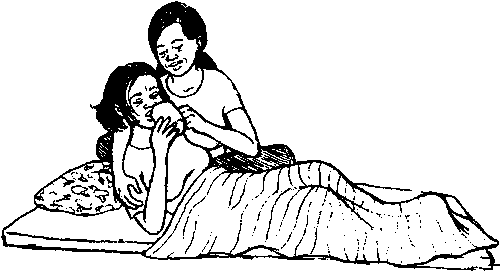
Any woman can be a health
worker
|
| ||||||||||||||||||||||||||||||||||||||||||||||||||||||||||||||||||||||||||||||||||||||||||||||||||||||||||||||||||||||||||||||||||||||||||||||||||||||||||||||||||||||||||||||||||||||||||||||||||||||||||||||||||||||||||||||||||||||||||||||||||||||||||||
Thanks
It is impossible to adequately thank all the people who made Where Women Have No Doctor a reality. This book started as a good idea shared by a small group of women and ended up as a remarkable international collaboration spanning 5 continents. Now we find ourselves wanting to thank everyone who helped, but simply listing their names does not do justice to the tremendous and generous contributions so many have made: from the groups of women who met early on to discuss topics related to women’s health care, and who later reviewed chapters we wrote based on what they told us; to others who sent us original materials or reviewed (often several times) different sections of the book; to others who wrote drafts of chapters; to the specialists in women’s health care who reviewed parts of or the entire manuscript; and to the artists - women from 23 countries - whose illustrations reflect just how diverse a project this was. We thank you all, for through your combined efforts, this book now rightfully belongs to any woman who reads or uses it.
Wholehearted thanks to the following friends of Hesperian for their work on writing specific chapters, or for contributing the time or ideas that helped complete them:
Abortion: Judith Winkler of IPAS, and Judith TysonBreastfeeding: Felicity Savage King, Helen Armstrong, Judy Canahuati, and Nikki Lee
Female Circumcision: Jane Kiragu, Leah Muuya, Joyce Ikiara, the women of Mandaeleo Ya Wanawake, Nahid Toubia and Zeinab Eyega of Rainbo, Grace Ebun Delano, Abdel Hadi El-Tahir, Inman Abubakr Osman, and Dehab Belay
Mental Health: Carlos Beristain
Pregnancy: Suellen Miller
Rape and Violence: Elizabeth Shrader Cox
Sex Workers: Eka Esu-Williams
Women with Disabilities: Judith Rogers, Pramila Balasundaram, and Msindo Mwinyipembe
In addition, we are deeply indebted to Sara Boore, Heidi Broner, Regina Faul-Doyle, Susan Fawcus, Blanca Figueroa, Sadja Greenwood, May Haddad, Richard Laing, Lonny Shavelson, Richard Steen, and Deborah Wachtel, for their constant availability and selfless efforts in ways too diverse and numerous to mention. It’s hard to imagine what we would have done without them.
Thanks also to the following groups of women in different countries who contributed so much of their time, hearts and minds to review these materials and enrich the book: in Bangladesh: The Asia Foundation; in Botswana: Thuso Rehabilitation Centre, Maun; in Brazil: the Association of Community Health Workers of Canal do Anil, and the health educators of Itaguai; in Cyprus, Egypt, Jordan, Lebanon, Palestine, Syria and Yemen: the many groups of women who are members of the Arab Resource Collective; in El Salvador: the women of Moraz�n and Chalatenango; in Ethiopia: the groups of women who met in Addis Ababa; in Ghana: The Association of Disabled Women, Dorma Ahenkro, the school girls of Wa, and the women of Korle Bu; in Honduras: the women of Urraco Pueblo; in India: CHETNA, SEWA, Streehitikarini, the women of Bilaspur, Madhya Pradech, and the exiled women of Tibet; in Kenya: Mandaeleo Ya Wanawake - from the districts of Machakos, Kitui, Kerugoya and Murang’a - the Dagoretti Clinic Community Health Workers, the Mwakimai Self Help Group of Kisi, Crescent Medical Aid, the women of Population and Health Services (PHS) of Nairobi, and the women of VOWRI, Nairobi; in Mexico: the women of Ajoya, and the community health promoters of Oaxaca; in Nigeria: the Nigeria Youth AIDS Programme; in Papua New Guinea: the East Sepik Women and Children’s Health Project; in the Philippines: GABRIELA, HASIK, LIKKHAN, REACHOUT, and the People’s Organizations for Social Transformation; in Sierra Leone: the women of Matatie Village; in the Solomon Islands: the women of Gizo; in Uganda: the Kyakabadiima Women’s Group, and WARAIDS; and in Zimbabwe: the Women’s Action Group.
And heartfelt gratitude to the countless others who gave so freely of their time and talents, especially:
Hilary Abell
Jane Adair
Niki Adams
Christine Adebajo
Vida Affum
Stella Yaa Agyeiwaa
Baldreldeen Ahmed
Felicia Aldrich
Bhim Kumari Ale
Jennifer Alfaro
Thomas Allen
Nancy Aunapu
Adrianne Aron
Fred Arradondo
Rosita Arvigo
Leonida Atieno
Kathy Attawell
Elizabeth de Avila
Enoch Kafi Awity
Marie Christine N. Bantug
David Barabe
Naomi Baumslag
Barbara Bayardo
Carola Beck
Rayhana Begum
Medea Benjamin
Marge Berer
Denise Bergez
Stephen Bezruchka
Pushpa Bhatt
Deborah Bickel
Amie Bishop
Edith Mukisa Bitwayiki
Michael Blake
Paulina Abrefa Boateng
Simone Bodemo
Nancy Bolan
Peter Boland
Bill Bower
Christine Bradley
Paula Brentlinger
Verna Brooks
Mary Ann Buckley
Sharon Burnstien
Mary Ann Burris
Sandra Tebben Buffington
Elizabeth Bukusi
Elliot Burg
May Florence Cadiente
Indu Capoor
Ward Cates
Mary Catlin
Denise Caudill
Barbara Chang
Amal Charles
Andrew Chetley
Casmir Chipere
Lynne Coen
Louise Cohen
Mark Connolly
Karen Cooke
Kristin Cooney
Chris Costa
Elizabeth Cox
Clark Craig
Betty Crase
Mitchell Creinin
Marjorie Cristol
Bonnie Cummings
George Curlin
Philip Darney
Sarah Davis
John Day
Grace Ebun Delano
David de Leeuw
Junice L. Demeterio-Melgar
Lorraine Dennerstein
Kathy DeReimer
Maggie Diaz
Gerri Dickson
Becky Dolhinow
Efua Dorkenoo
Brendon Doyle
Sunun Duangchan
Deborah Eade
Beth Easton
Christine Eber
Tammy Edet
Abdel Hadi El-Tahir
Erika Elvander
Li Enlin
John Ensign
Nike Esiet
Steven A. Esrey
Clive Evian
Zeinib Eyega
Melissa Farley
Betty Farrell
Anibal Faundes
Sharon Fonn
Claudia Ford
Diane Jinto Forte
Daphne Fresle
Anita Gaind
Loren Galv�o
Monica Gandhi
Sabry Khaill Ghobrial
Gayle Gibbons
Marta Ginebreda
Lynn Gordon
Nora Groce
Gretchen Gross
Dora Gutierrez
Ane Haaland
Kathleen Haley
Shirley Hamber
Janie Hampton
Joanne Handfield
Barbara Harrington
Richard Harvey
Fauzia Muthoni Hassan
Elizabeth Hayes
Lori Heise
N.S. Hema
Shobha Menon-Hiatt
Hans Hogerzeil
Jane Holdsworth
Nap Hosang
Douglas Huber
Ellen Israel
Genevieve Jackson
Jodi Jacobson
Carol Jenkins
Signy Judd
Margaret Kaita
Mustapha Kamara
Tom Kelly
Mary Kenny
Joyce Kiragu
Susan Klein
Ahoua Kon�
Zoe Kopp
Anna Kretsinger
Diana Kuderna
Anuradha Kumar
Dyanne Ladine
Mart�n Lamarque
Joellen Lambiotte
Kathleen Lankasky
Lin Lap-Chew
Hannah Larbie
BA Laris
Laura Laski
Carolyn Lee
Jessica Lee
Pam Tau Lee
Susan Lee
Felicia Lester
Abby Levine
Cindy Lewis
Sun Li
Peter Linde
Betsy Liotus
Stephanie Lotane
Susan Lovich
Nellie Luchemo
NP Luo
Esther Galima Mabry
Martha Macintyre
Margaret Mackenzie
Rebecca Magalh�es
Monica Maher
Fardos Mohamed Mahmoud
Lisa Maldonado
J. Regi Manimagala
Karin Manzone
Alan Margolis
Kathy Martinez
Rani Marx
Sitra Maunaguru
Danielle Mazza
Pat Mbetu
Dorothy Mbori-Ngacha
Gary Mcdonald
Sandy McGunegill
Katherine McLaughlin
Molly Melching
Tewabetch Mengistu
Tasibete Meone
Sharon Metcalf
Ann Miley
Jan Miller
Kathy Miller
Donald Minkler
Eric Mintz
Barbara Mintzes
Linda Mirabele
Nanette Miranda
David Modersbach
Rahmat Mohammad
Gail Montano
Maristela G. Monteiro
Mona Moore
David Morley
Sam Muziki
Arthur Naiman
Nancy Newton
Elizabeth Ngugi
Eunice Njovana
Folashade B. Okeshola
Peaches O’Reilly
Emma Ottolenghi
Mary Ellen Padorski
Lauri Paolinetti
Jung Eun Park
Sarah Parsons
Laddawan Passar
Palavi Patel
Jamel Patterson
Andrew Pearson
Mar�a Picos
Gita Pillai
Linda J. Poole
Malcolm Potts
Alice Purdy
Robert Quick
Zahida Qureshi
Lisa Raffel
Rita Raj-Hashim
Narmada Ranaweera
Rebecca Ratcliff
Augusta Rengill
Dawn Roberts
Kama Rogo
Nancy Russel
Carolyn Ryan
Mira Sadgopal
Valdete Sala
Estelle Schneider
Kimberly Schultz
Violet Senna
Shalini Shah
Nicolas Sheon
Mira Shiva
Kathy Simpson
Mohindra Singh
Elise Smith
Cathy Solter
Barbara de Souza
Judith Standly
Fatima Jubran Stengel
Kay Stone
Marianne Stone-Jimenez
Eleanor Sullivan
Susan Sykes
Michael Tan
Linda Teitjen
Judith Timyan
Susan Toft
Rikka Transgrud
Nhumey Tropp
Barbara Trott
Sandy Truex
Ilana Trumbull
Janis Tunder
Nanette Tver
Aruna Uprety
Gilberte Vansintejan
Sarah Verbiest
Carol Vlassoff
Bea Vuylsteke
Bela Wabi
Martha Wambui
Judith Wasserheit
Ruth Waswa
Barbara Waxman
Jane Weaver
Vivienne Wee
Ellen Weis
Rachel West
Eve Whang
Kate White
Wil Whittington
Laura Wick
Pawana Wienrawee
Christine van Wijk
Everjoyce Win
Kathryn Wirogura
Erin Harr Yee
Irene Yen
Rokeya Zaman
Marcie Zellner
Kaining Zhang
Lisa Ziebel
Margot Zimmerman
The following persons and groups kindly gave us permission to use their artwork: Family Care International for numerous drawings by Regina Faul-Doyle from their book Healthy Women, Healthy Mothers: An Information Guide; Macmillan Press Ltd., for Janie Hampton’s drawing from Healthy Living, Healthy Loving; the Environmental and Development Agency, New Town, South Africa for the drawing from their magazine, New Ground; Honto Press for Akiko Aoyagi Shurtleff’s drawing from Culinary Treasures of Japan; the Movimento de Mulheres Trabalhadoras Rurais do Nordeste for the drawing from O Que � G�nero?; and the Colectivo de Mujeres de Matagalpa and the Centro de Mujeres de Masaya for the drawing from their manual ¡M�s all� de las l�grimas!. And thanks to Connexions magazine.
We also thank the following foundations and individuals for their generosity in financially supporting the project: Catalyst Foundation; Conservation, Food and Health Foundation; C.S. Fund; Domatila Barrios de Chungara Fund; Ford Foundation; Greenville Foundation; John D. and Catherine T. MacArthur Foundation; Norwegian Agency for Development Cooperation; David and Lucile Packard Foundation; San Carlos Foundation; Swedish International Development Cooperation Agency; Kathryn and Robert Schauer; and Margaret Schink. Thanks also to the many individuals who made contributions to match a Catalyst Foundation grant. Finally, a special thanks to Luella and Keith McFarland for their early support and encouragement, and to Davida Coady for believing in this project and pushing it forward during a difficult time.

|
| ||||||||||||||||||||||||||||||||||||||||||||||||||||||||||||||||||||||||||||||||||||||||||||||||||||||||||||||||||||||||||||||||||||||||||||||||||||||||||||||||||||||||||||||||||||||||||||||||||||||||||||||||||||||||||||||||||||||||||||||||||||||||||||
About this Book
This book was written to help women care for their own health, and to help community health workers or others meet women’s health needs. We have tried to include information that will be useful for those with no formal training in health care skills, and for those who do have some training.
Although this book covers a wide range of women’s health problems, it does not cover many problems that commonly affect both women and men, such as malaria, parasites, intestinal problems, and other diseases. For information on these kinds of problems, see Where There Is No Doctor or another general medical book.
Sometimes the information in this book will not be enough to enable you to solve a health problem. When this happens, get more help. Depending on the problem, we may suggest that you:
· see a health worker. This means that a trained health worker should be able to help you solve the problem.· get medical help. This means you need to go to a clinic that has trained medical people or a doctor or a laboratory where basic tests are done.
· go to a hospital. This means you need to see a doctor at a hospital that is equipped for emergencies, for surgery, or for special tests.
|
If you need to get help immediately, this picture will also appear.
|

|
| ||||||||||||||||||||||||||||||||||||||||||||||||||||||||||||||||||||||||||||||||||||||||||||||||||||||||||||||||||||||||||||||||||||||||||||||||||||||||||||||||||||||||||||||||||||||||||||||||||||||||||||||||||||||||||||||||||||||||||||||||||||||||||||
How to Use this Book
Finding information in the book
To find a topic you want to know about, you can use the list of Contents.
The Contents, at the front of the book, lists the chapters in the order in which they appear. There is also a list of contents at the beginning of every chapter.
To find information about the medicines used in this book, look in the Green Pages toward the back of the book.
If you do not understand the meanings of some of the words used in this book, you may find them in the List of Difficult Words. The first time these words appear in a chapter, they are printed in slanted letters, like this. You can also look up the word in the index to see if it is explained in another part of the book.
Many chapters end with a section called ‘Working for Change’. These sections give suggestions for working to improve women’s health in your community.
Finding information on a page
To find information on a page, first look over the whole page. You will see that the page is divided into 2 parts: a large, main column and a small column on the outside of the page. The main column gives most of the information about a topic. The small column has additional information that can help you better understand the topic.
Whenever you see a picture of a book in the small column, this means more information about a topic can be found in another part of the book. The words under the book say what the topic is. The page number on the book says where that topic can be found. If there are several topics, the book is shown once and the topics and their page numbers are listed below.
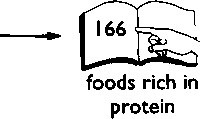
Figure
What the different things on a page mean:
Most pages have several headings. The headings in the small column give the general topic that is being discussed on that page. The headings in the main column give more specific topics.
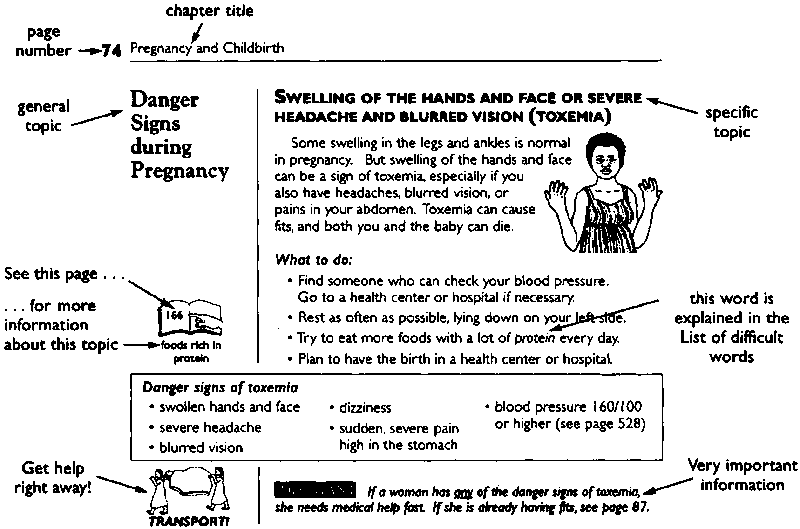
Figure
|
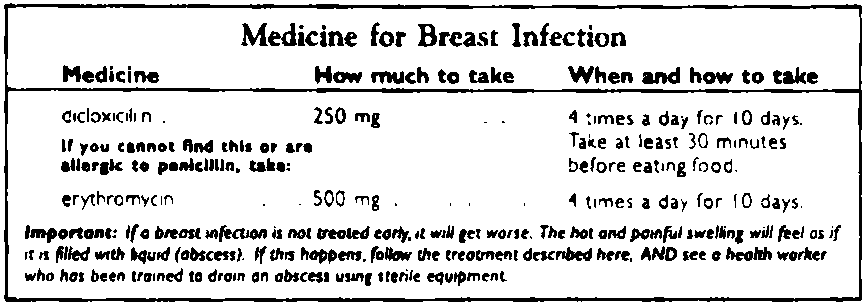
Some pages also contain medicine boxes, which look like this: These boxes tell you the amount of medicine to give, how often to give it, and for how long. Sometimes we recommend medicines without putting them in a box. In either case, look up each medicine in the Green Pages before using it.
|
|
| ||||||||||||||||||||||||||||||||||||||||||
Where Women Have No Doctor - A Health Guide for Women (Hesperian Foundation, 1997, 600 p.)
Chapter 1: Women’s Health Is a Community Issue
Figure
What Is ‘Women’s Health’?
When a woman is healthy, she has the energy and strength to do her daily work, to fulfill the many roles she has in her family and community, and to build satisfying relationships with others. In other words, a woman’s health affects every area of her life. Yet for many years, ‘women’s health care’ has meant little more than maternal health services such as care during pregnancy and birth. These services are necessary, but they only address women’s needs as mothers. Except for the ability to produce babies, a woman’s health needs have been treated as no different from a man’s.
¨ Good health is more than the absence of disease. Good health means the well-being of a woman’s body, mind, and spirit.
In this book we offer a different view of women’s health. First, we believe that every woman has a right to complete health care, throughout her life. A woman’s health care should help her in all areas of life - not just in her role as a wife and mother. Second, we believe that a woman’s health is affected not just by the way her body is made, but by the social, cultural, and economic conditions in which she lives.
While men’s health is also affected by these factors, women as a group are treated differently from men. They usually have less power and fewer resources, and lower status in the family and community. This basic inequality means that:
· more women than men suffer from poverty.
· more women than men are denied the education and skills to support themselves.
· more women than men lack access to important health information and services.
· more women than men lack control over their basic health care decisions.
This larger view helps us understand the underlying (root) causes of women’s poor health. Improving women’s health includes treating their health problems, but it also requires changing the conditions of their lives so they can gain more power over their own health.
Figure
When this happens, everyone - the woman, her family and community - benefits. A healthy woman has a chance to fulfill all of her potential. Plus, she will have healthier babies, be better able to care for her family, and can contribute more to her community. This kind of view also helps us see that a woman’s health problem is almost never her problem alone. Women’s health is a community issue.
Women Are More at Risk for Disease and Poor Health
Because a woman’s body is different from a man’s, and because of the basic inequalities between men and women, women face a greater risk of disease and poor health. Here are some of the health problems that affect women most.
Poor nutrition
Poor nutrition is the most common and disabling health problem among women in poor countries. Starting in childhood, a girl is often given less food to eat than a boy. As a result, she may grow more slowly and her bones may not develop properly (which may later cause difficulty during childbirth). The problem worsens as she becomes a young woman, because her need for good food increases as her workload increases, and as she starts her monthly bleeding, becomes pregnant, and breastfeeds.
¨ Not getting enough good food can keep a girl from growing properly, and can lead to serious health problems.

Figure
Without enough good food, she may begin to suffer from general poor health, including exhaustion, weakness, and anemia. If a woman who is already malnourished becomes pregnant, she is more likely to have serious complications with childbirth, such as heavy bleeding, infection, or a baby that is born too small.
|
A woman’s health cannot be isolated from her social status. In most of rural India, women drink less milk than their husbands and sons and they eat only after the men have been served. This usually leaves women with a limited diet, and it also tells about how she is valued. - CHETNA, Ahmedabad, India |

Reproductive health problems
Sexually transmitted diseases (STDs), including HIV/AIDS. A woman is physically more at risk for getting STDs and AIDS than a man. This is because a man’s semen stays inside her and the germs it carries can pass through the lining of the vagina into her blood. And, since a woman often has no signs of infection, she may not get treatment.
Figure
¨ Because women must often have unsafe sex against their will, STDs are a social issue.
But the problem is really a social one. Women often have little control over decisions about sex and often cannot refuse unsafe sex. As a result, 165 million women get an STD every year, and 1.65 million became infected with HIV in 1995 alone. Without treatment, STDs can cause disabling pain, severe pelvic inflammatory disease (PID), infertility, problems during pregnancy, and an increased risk of cervical cancer. HIV/AIDS causes death.
Frequent pregnancies. In many parts of the world, a third to half of young women become mothers before they are 20 years old. Without family planning, many of these women will not have time to get strong again between births. This puts a woman at risk for poor health and complications of pregnancy and childbirth. Frequent childbirth also means she is less able to control her own life, to get an education, and to learn skills to support herself.

Figure
Complications from pregnancy and birth. In the last 30 years, the number of infant deaths has been greatly reduced. Yet the number of women who die from pregnancy and birth has not, Every minute, one woman dies from a problem related to pregnancy. Every minute, 30 women develop a lasting health problem related to pregnancy. This means that over time, about a quarter of all women living in poor countries will be seriously affected by complications from pregnancy and birth.
¨ Every minute, one woman dies from a problem related to pregnancy.
Unsafe abortion. When a woman tries to end a pregnancy by having an unsafe abortion, she risks her life. But every day about 50,000 women and girls try to end their pregnancies in unsafe ways because they have no way to get a safe abortion. Many are left unable to have children or with lasting pain, infection, and other health problems.
¨ Every year 75,000 women die from unsafe abortions.
Female circumcision. Female circumcision, in which part or all of a girl’s outer genitals are cut off, can cause serious health problems. These include pelvic and urine system infections, sexual and emotional problems, and difficulties during childbirth. Yet despite these problems, it continues to be widely practiced. Every year about 2 million girls are circumcised, mostly in Africa, but also in the Middle East and Asia.
General medical problems
Women are more likely than men to suffer from certain health problems because of the work they do, because of poor nutrition, or from being too tired. A disease can also cause a different kind of harm to a woman than a man. For example, a woman who suffers from a disease which weakens or disfigures her may be rejected by her husband.
¨ Men and women get many of the same diseases, but women can be affected differently.
Once they are sick, women are less likely to seek and receive treatment until they are seriously ill. For example, tuberculosis (TB) is spreading among both men and women, but fewer women than men get treatment. Almost 3000 women die every day from TB - at least 1/3 of whom did not receive proper treatment or never even knew they had the disease. Other health problems that in the past affected mostly men are now risks for women, too. For example, more women are suffering from problems related to smoking cigarettes or drinking too much alcohol.
Figure
Work hazards
Women face health risks every day from the work they do. At home, lung diseases from smoke or burns from cooking fires are so common that they are considered the main work-related health problem for women. Diseases spread through water are also common, because of the amount of time women spend washing clothes, hauling water, or standing in water while farming.
Figure
¨ A woman faces health risks from her work inside and outside of the home. Working long hours, the ‘double work day’, can make her body too tired to fight disease.

Figure
Millions of women who work outside the home suffer health problems due to unsafe conditions in the workplace. And when they come home from their jobs, they usually continue to work at home, so they end up with twice as much work. This leads to exhaustion and an increased risk of illness.
Mental health problems
Women and men have about the same risk of developing a mental health problem. Severe depression, however, affects many more women than men. It often affects women who are poor, who have experienced loss or violence, or whose communities have been destroyed or undergone great change. But women who suffer any kind of mental health problem are much less likely than men to get help.
¨ Problems with mental health can be as serious as other health problems.
Figure
Violence
Violence is often overlooked as a health problem. But violence can lead to serious injuries, mental health problems, physical disabilities, and even death. Many girls are sexually abused by family members or friends. Many women are forced to have sex or are physically abused by their partners. Rope and sexual harassment are a constant threat to all women. These kinds of violence happen in almost all parts of the world, and under all social conditions.
¨ Women usually suffer violence from men they know. But most violence is not reported, and the men are not punished.
Figure

Figure
Still, most violence against women is not reported, because the police and others often blame women rather than men for the problem. The men causing the violence are rarely punished.
|
How women are forced into a life of poor health Although not all women suffer from the health problems described above, most will suffer from 3 of them: poor nutrition, pregnancies that are too close together, and overwork. Each of these problems affects a woman’s general health and wears her body out, making her more likely to get sick. Pregnancy also makes certain medical problems - like malaria, hepatitis, diabetes, and anemia - worse, just as they make pregnancy more difficult. All these things make a woman much more likely to suffer from general poor health than a man.
|

Causes of Poor Health in Women
It is easy to name the direct causes of most of women’s health problems. For example, we can say that STDs are caused by different germs, poor nutrition comes from not eating enough good food, and problems during pregnancy are often caused by a lack of prenatal (before birth) care. But beneath these direct causes are 2 root causes - poverty and the low status of women - that contribute to many of women’s health problems.
|
POVERTY Two out of three women around the world are poor. Women are not only much more likely than men to be poor, but are most often among the poorest of the poor. Millions of women are caught in a cycle of poverty that begins even before they are born. Babies born to women who did not get enough to eat during pregnancy are likely to be small at birth and to develop slowly. In poor families, girls are less likely than their brothers to get enough to eat, causing their growth to be further stunted. Girls are often given little or no education, so as women they must work at unskilled jobs and receive less wages than men (even if they do the same kind of work). At home, their daily work is unpaid. Exhaustion, poor nutrition, and lack of good care during pregnancy place the woman and her children at risk for poor health. Poverty forces her to live under conditions that can cause many physical and mental health problems. For example, poor women often: · live in bad housing, with little or no sanitation or clean water.
Poverty often forces women into relationships in which they must depend on men for survival. If a woman depends on a man for her - or her children’s - support, she may have to do things to keep him happy that are dangerous to her health. For example, she may allow him to be violent or to have unsafe sex because she fears losing his economic support. |

LOW STATUS OF WOMEN
Status is the importance that a person has in the family and community. Status affects how a woman is treated, how she values herself, the kinds of activities she is allowed to do, and the kinds of decisions she is allowed to make. In most communities in the world, women have lower status than men. Women’s lower status leads to discrimination - that is, being treated poorly or denied something simply because they are women. Discrimination may take different forms in different communities, but it always affects a woman’s health.

Figure
Wanting sons rather than daughters. Many families value boys more than girls because boys can contribute more to the family’s wealth, support their parents in old age, perform ceremonies after their parents die, and carry on the family name. As a result, girls are often breastfed for a shorter time, are given less food and medical care, and receive little or no education.
Lack of legal rights or power to make decisions. In many communities, a woman cannot own or inherit property, earn money, or get credit. If she gets divorced, she may not be allowed to keep her children or her belongings. Even if a woman has legal rights, her community’s traditions may allow her little control over her life. Often a woman cannot decide how the family’s money is spent or when to get health care. She cannot travel or participate in community decisions without her husband’s permission.
¨ Because so much of the work that women do is not recognized, they often lack legal protection in the workplace.
When women are denied power in these ways, they must depend on men to survive. As a result, they cannot easily demand things that contribute to good health, like family planning, safer sex, enough food, health care, and freedom from violence.
Having too many children, or having children too close together. Discrimination against women can also lead them to get pregnant more often, because bearing children may be the only way that women can gain status for themselves or their partners.
¨ Women make up half of the world’s population, but work 2 out of every 3 hours worked in the world, receive only a tenth of the world’s income, and own only a hundredth of the world’s property.
Under all these conditions, women live less healthy lives and get less health care. They also often accept their low status, because they have been raised to value themselves less than men. They may accept poor health as their lot in life and seek help only when health problems are severe or life-threatening.
The medical system does not meet women’s needs
Poverty and discrimination in the family and community not only lead to more health problems for women, they also make the medical system less likely to provide the services women need. Government policies and the global economy may add to this problem.
¨ The medical system does not provide all the services women need.
In poor countries, many people do not have access to health services of any kind. (The box below explains one reason why this problem has become worse in recent years.) And because of discrimination against women, the little money that does exist will probably not be spent on women’s health needs. So a woman may not be able to get good care even if she can afford to pay for it. Some reproductive health services may be provided, but to meet all of her health needs, she will probably have to travel to the capital city or perhaps even leave her country.
In many countries, the skills needed to care for women are considered ‘special’ and are provided only by doctors. Yet many of these services could be provided at lower cost by trained community health workers.
|
Debt and structural adjustment: keeping the poor poor During the 1970s, many poor countries were pressured to borrow money from banks in rich countries. Some poor countries used this money to try to improve the lives of their people. Many new schools, hospitals, clinics, and other projects were started. But as the banks demand that their money be paid back, the poor countries have been forced to change or “adjust” their economies. They are forced to pay these banks much of the wealth the people produce, and to make it easy for foreign companies to make money by using the poor countries’ resources and labor. As a result, poor countries can no longer spend as much money on programs that help the poor - such as schools, health centers, hospitals, and programs that help people get food and fuel at a fair price. Governments now are left with less money to pay doctors, nurses, and other health workers, or to provide medical supplies or equipment. The health of all poor people suffers from these changes, but the health of poor women and children suffers most of all.
|

|
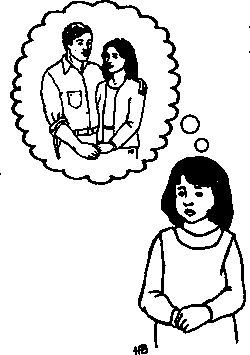
Mira’s Story When Mira was a little girl, she dreamed of living in a big house, with electricity and a tile floor. Her husband would be handsome and kind, and she would be able to do whatever she wished. But Mira’s family was poor, and she was the youngest of four daughters. Sometimes, when her father was drinking, he would beat her mother, and weep at his misfortune of having so many girls.
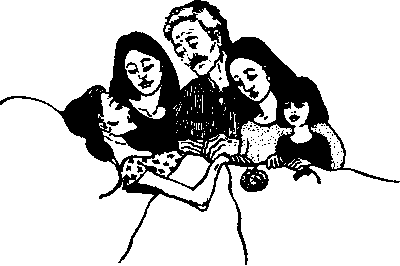
When Mira was 14, and old enough to be married, she cried when she learned her dreams would never come true. It was already arranged: Mira would marry a man whom her father had chosen. He had some land, and Mira’s father thought the family would benefit from their marriage. Mira had no choice in the matter. With the birth of Mira’s second child - a son - her husband stopped insisting on sex so often. Mira was very glad for that. Although he did not hurt her, he had warts all over his penis that disgusted her. Over the next 20 years, she had 6 more children, including a little girl who died at age 3, and a boy who died at birth. One day, Mira was using the latrine and she noticed a bloody discharge coming from her vagina when it wasn’t time for her monthly bleeding. She had never had a health exam, but now Mira asked her husband if she might see a health worker. He replied that he didn’t trust doctors, and besides, he didn’t have the money to spend every time she felt worried about something. Mira was 40 when she began to suffer constant pain low in her belly. The pain worried her, but she didn’t know who to talk to about it. Some months later, Mira finally decided she had to go against her husband’s wishes and get medical help. She was frightened for her life, and borrowed some money from a friend. At the health center, Mira got some medicine for the vaginal discharge, although the health worker did not examine her first. Mira returned home that night, exhausted and upset that she had defied her husband and spent her friend’s savings. As weeks passed, Mira’s health continued to worsen, and she became discouraged, realizing that something was still wrong. Finally, Mira became so weak that her husband believed she really was ill, and they begged a ride to a hospital in the big city far away. After waiting several days, Mira was seen at the hospital. Finally, she was told that she had advanced cancer of the cervix. The doctor said they could remove her womb, but that the cancer had already spread. The one treatment that might save her life was available only in another part of the country, and was very expensive. The doctor asked, “Why didn’t you get regular Pap tests? If we had found this earlier, we could have treated it easily.” But it was too late for that. Mira went home, and in less than two months, she died.
|
WHY DID MIRA DIE?
¨ There are many reasons why poor women get - and die from - diseases that can be prevented or cured.
Here are some common answers to this question:
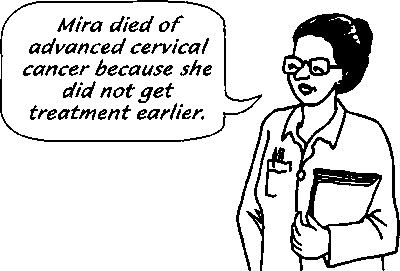
A doctor may say...
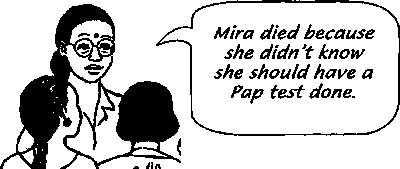
Or a teacher...

Or a health worker...
All these answers are correct. Women who start having sex at a young age and are exposed to genital warts are at a greater risk for cancer of the cervix. And if the cancer is found early (usually by having a Pop test), it can almost always be cured.
Yet these answers show a very limited understanding of the problem. Each of them blames one person - either Mira or her husband - and goes no further. Mira was at greater risk of dying of cervical cancer because she was a poor woman, living in a poor country.
How poverty and the low status of women worked together to cause Mira’s death
Mira and her family were poor, so she was forced to marry and start having sex when she was very young. As a woman, she lacked power in her relationship with her husband. She had no control over when and how many children to have, or over her husband’s relationships with other women. Her family’s poverty meant that she suffered from poor nutrition her whole life, which weakened her body and left her more at risk for disease.
¨ You can explore the root causes of Mira’s death or other health problems by using the excercise called “But Why?”.
Although Mira’s community lacked health services, the nearest health center did have some women’s health services, like family planning and information about preventing HIV/AIDS. But the health workers had no information or training about other women’s health problems, even such serious ones as cancer of the cervix. They did not know how to do a pelvic exam (to look at the vagina, cervix and other reproductive parts) or a Pap test. So even if Mira had gone for medical care sooner, the health worker would not have been able to help her.
As a result, Mira had to travel a long distance at great cost to see a doctor who could tell her what was wrong. By that time it was too late.
Finally, Mira’s country was poor, with little money to spend on health care. Like the governments of many poor countries, her government chose to focus on other important health services, but not on women’s health. What money her government did spend on women’s health went to expensive hospitals in the big city instead of community health programs that women like Mira can get to. This meant that the services to find and treat cervical cancer - and many other women’s health problems - early were not available.
Poverty and the low status of women worked against Mira at all 3 levels - in her family, in her community, and in her country - to create the health problem that caused her death.

These are some of the links in
the chain of causes that led to Mira’s death. They are the same links that
cause many of women’s health
problems.
Working for Change
IT DOES NOT HAVE TO BE THIS WAY
The way societies are organized forces most women into lives of poverty and poor health. But societies could be organized in a way that favors health instead of disease.
Since the causes of poor health exist at the family, community, and national levels, changes to improve women’s health must happen at each of these different levels.
Working for change in your family
You can improve your health by learning about women’s health problems and by making changes in your own life and in your family. Talk with your partner about what you each need to have better health, including practicing safer sex and sharing the workload fairly. You can also work to improve the health and future of your children. Here are some ideas:
|
Raising our children for a better world How we raise our children, from the moment they are born, will determine much of what they believe and how they act as adults. As mothers, we teach our children every day of their lives: · When we feed our husbands and sons first, we teach our children that girls’ and women’s hunger is less important.
As mothers, we have the power to change who our children will become: · We can teach our sons to be kind and compassionate, so they will grow up to be kind and compassionate husbands, fathers, and brothers.
We can raise our children for a better world. |
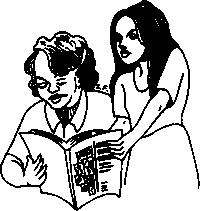
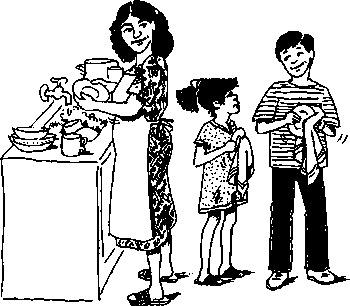
¨ For other ideas of how your partner can help, see HOW MEN CAN HELP
Working for change in your community
You can improve your health and the health of other women in your community by sharing this book and by talking with them about women’s health problems.
Talking with others can be hard. Women often feel shame (for example, when talking about parts of the body) or fear about what others will think. Yet talking with others is the only way to learn more about health problems and to discover their causes. Often you will find that other women are worried about the same things, and want to discuss them.
¨ Because social conditions affect them differently, women and men may need to find different solutions for the same health problems.
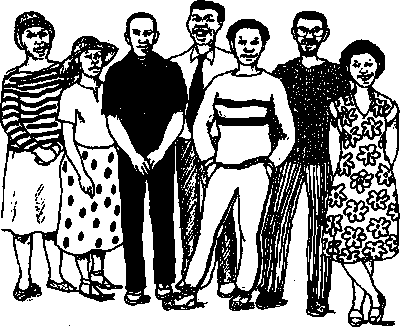
Get a small group of women together to talk about health problems in your community. Try inviting women who are friends of your friends, neighbors, or women you work with. Once you have identified a health problem that many women share, it is often helpful to meet again and invite others to discuss it and learn more. When you meet, think about the root causes of the health problem, and plan the changes you can make in your families and community.

By meeting with a small group
of women, you can learn more about a health problem and what can be done to
solve it.
Think about involving men as well as women in discussions about women’s health. It may seem difficult to talk about women’s health problems with men, because this kind of talk is considered taboo, or ‘women’s secrets’. But since men are often in positions of power, their help can be very important. Look for men who are supportive of women, are good role models for boys, or who treat women as their equals.
Figure
|
HOW MEN CAN HELP Any man can help improve women’s health by: · raising his children to respect women, and treating boys and girls as equals. A man can also set a good example in his community by: · encouraging women in his community to come to meetings, and making sure that they have a chance to speak. Or by encouraging women to hold their own, separate meetings, where men will not speak. · working to change the image that a strong man is one who has sex with many women. A strong man is a strong partner. |
|
Here are some other activities that can help improve health in a community:
· Share information. Find ways to spread information about the common health problems in your community, so that everyone will know about them.· Form support groups. Women who share common problems - such as women who have survived rape or abuse, breastfeeding mothers, women with disabilities, or sex workers - can form groups to support each other and work together to overcome their problems.
Figure
|
In Zimbabwe, the Musasa Project was created to help women who suffered from violence, particularly violence in the home and sexual assault Musasa found that women who were beaten by their partners were not protected by the law. Many people said that men should have power over women because that was the way it had always been or because it was part of their community’s beliefs. These people also said that regular beatings reminded women of their ‘place’.
Musasa’s goal is to change this attitude through public education and by counseling those who have survived violence. In this way, women, men, teachers, students, police, and health workers are learning that violence is an abuse of power. Musasa plans to set up a house where women and children can stay when they are in danger. |
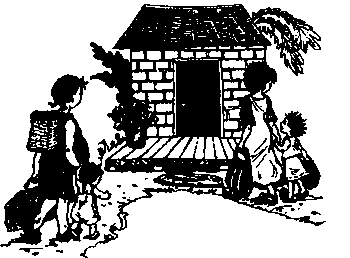
· Work toward more independence. Projects that help women earn money and improve their working conditions also help women start to make their own decisions and gain self-esteem.
|
In a tiny Mayan village in Guatemala, a group of women formed a weaving group. They sold their weavings through a cooperative store for women’s crafts in the capital city. The women now earn more income than most of the men in their area. As a result, women have gained new status in their families and communities and have more opportunities in their lives.
|


Figure
· Develop community projects. For example, try to find ways for every family in the community to get enough to eat, or to improve community sanitation and access to clean water.
|
The Green Belt movement in Kenya has involved many women in planting and protecting trees, which prevent soil erosion and provide fuel, The women’s success at protecting the environment and providing fuel for their families has built their confidence and helped them earn a living.
As one Green Belt member said, “Our forests were running out because of our constant need for firewood. We meet weekly to collect seeds, to do potting land fencing, and tend the trees in our nursery. We also talk to groups and schools about the environment In this way, we are both helping ourselves and bettering the environment.” |

Simple and low-cost community efforts can make a difference
Figure
When you first look at a problem, it often seems very hard to make changes. But, in fact, communities can make many improvements that do not cost too much. For example, here are some of the suggestions this book contains for preventing or helping solve women’s health problems:
· Start a community stove project. Women often suffer from lung infections, burns, and back problems. Low-cost cook stoves that are safer, use less fuel, and produce less smoke can prevent many of these problems.· Establish an emergency transportation system. Many women die from complications of pregnancy, childbirth, and unsafe abortion. These deaths could often be prevented by reaching medical care quickly.
· Low-cost cancer screening can prevent many women from dying from cervical and breast cancer. Cancers are much easier to treat if they are found early.
· Make family planning services and good prenatal care accessible to all women. Doing so can prevent many deaths due to complications of pregnancy, childbirth and unsafe abortion.
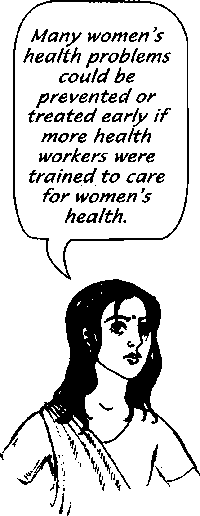
· Train health workers to care for women’s health. They should be trained in pelvic exams, Pap tests and visual inspection, manual vacuum aspiration (MVA), breast exams, and counseling. They should also learn how to use medicines for women’s health.
Working for change in your country
You can improve your health, and the health of many other women in your country, by working together with other groups in different parts of the country. By working together, you can make important changes in the way your government treats women and women’s health. For example, community groups can pressure the government to punish men who rape or abuse women, or to make safe abortion available. Or you can get laws passed to allow women to own or inherit property - so that women are not forced to depend on men.
|
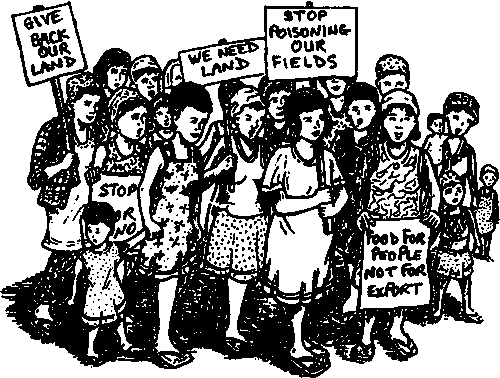
Many women and men are struggling to get their governments to: · equip rural clinics and train health workers to treat common women’s health problems. This way, rural women will not be forced to go to urban hospitals for care. · distribute unused land to those who have been forced from their land.
|
GAINING POWER OVER OUR OWN HEALTH
Just as ‘women’s health’ means more than maternal health, it also means more than access to health care. To be truly healthy, women need the chance to make the decisions necessary for good health. And they need access to a fair share of the resources in their communities and in the world.
By joining other women and men in the struggle for health, we can demand the chance to live healthy, full, and joyful lives - free of disease, pain, and fear.
|
| ||||||||||||||||||||||||||||||||||||||||||||||||||||||||||||||||||||||||||||||||||||||||||||||||||||||
Where Women Have No Doctor - A Health Guide for Women (Hesperian Foundation, 1997, 600 p.)
Chapter 2: Solving Health Problems

Figure
Whenever a woman has signs of a health problem, she needs information in order to solve it. She needs to know what the problem is, its cause, what can be done to treat it, and how to prevent it from happening again.
¨ Some problems must be treated with skilled medical care. But most health problems can be treated at home or can be prevented by healthy living.
In this chapter we tell the story of one woman, Juanita, and how she solved her health problem. Although the details apply only to Juanita, the way she thinks about her problem and works to solve it can apply to all health problems. You can use this method to solve a health problem yourself or to make decisions about getting good medical care.
Juanita discovered that a lasting solution to her health problem involved looking beyond her own situation. She also had to identify the root causes of the problem in her community and country, and work to change them. Like Juanita, you and your community can use this method to identify all the causes of women’s poor health - and to plan ways to make your community a healthier place for women.
Juanita’s Story
Juanita lives in a small village in the mountains of western Honduras where she and her husband grow corn on a small plot of land. Their land does not produce enough to feed their 3 children, so several times each year Juanita’s husband, Raul, goes off to the coast with other men from the village to work on the banana plantations.
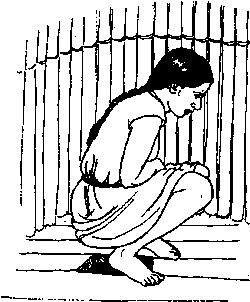
About 3 weeks after the last time her husband returned home from the coast, Juanita began to notice more discharge than usual from her vagina. Then she started having pain when passing urine. Juanita knew that something was wrong, but she had no idea what it was.
Figure
Juanita decided to ask her friend Suyapa for help. Suyapa suggested drinking teas made from corn silk, because this had helped her when she had had pain passing urine. So Juanita tried the teas - but the pain and discharge did not go away. Suyapa then recommended the remedy her friend Mar�a del Carmen had used for pains after childbirth. The local midwife had given Mar�a a cotton cloth filled with plant medicines to wrap around her belly. When Juanita tried the remedy and it didn’t work, she thought putting the medicines inside her vagina might be better But nothing helped, and her signs kept on bothering her.
Finally Juanita decided to go to see the health worker, Don Pedro. She felt shy about having a man examine her, but by this time she was scared that something serious was wrong.
What is the problem?
|
Step I: Start with doubt. This means admitting you do not know the answer yet |
Don Pedro told Juanita that in order to help hen he needed to learn as much about the illness as possible. So he asked Juanita these questions
|
Step 2: Find out as much as possible about the problem. Ask questions like these: |

Figure
Some illnesses are hard to tell apart
|
Step 3: Think about all the different illnesses that could be causing the signs. |
After listening carefully to Juanita describe her pain and discharge, Don Pedro explained that signs often tell us the general kind of health problem someone has. But sometimes several different illnesses can cause the same signs. For example, a change in the amount, color, or smell of a woman’s vaginal discharge could be caused by:
· a sexually transmitted disease (STD).· an infection of the vagina that is not an STD.
· pelvic inflammatory disease (PID), which is an infection of the womb and tubes, often caused by an STD.
· cancer of the cervix.
|
Step 4: Look for clues that can tell you which answer is most likely. |
To get a better idea about which of these problems was causing Juanita’s signs, Don Pedro needed to know whether Juanita and her husband used condoms, and whether either of them had had other sex partners. Juanita admitted that she suspects her husband has sex with other women, since he is gone for months at a time to work. But they had never discussed it, so she did not know for sure. The last time her husband came home, however, he had complained of some pain when passing urine. He blamed it on the foods he ate at the coast.
|
Step 5: Decide which answer is probably the right one. |
With this added information, Don Pedro said he suspected Juanita had an STD, probably gonorrhea or chlamydia. Because it is difficult to tell these diseases apart, it is better to treat both of them.
What is causing the problem?
|
Infectious diseases are those that are spread from one person to another. They can be spread through touching infected people or objects, or through the air or water. The germs Don Pedro thinks are causing Juanita’s illness are spread through sexual contact. Non-infectious diseases (not spread between people), may be caused by: · something that goes wrong in the body, such as weak bones from aging. But illnesses rarely have just one cause. Often people’s beliefs and cultural practices contribute to disease, as do conditions in their surroundings, and the way that land, wealth, and power are distributed. |
What Is the Best Treatment?
Is a treatment helpful or harmful?
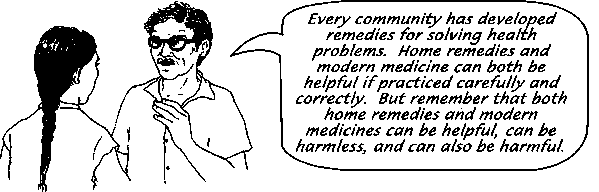
Although Don Pedro was certain that medicines would solve the problem, Juanita wanted more information before deciding on a treatment. She knew, for example, that home remedies had often helped her mother and grandmother when they were ill. Why, then, did the remedies she had tried fail to work? Here is Don Pedro’s explanation:
Figure
In Juanita’s case, she had used all 3 kinds of remedies:
Corn silk tea would have been very helpful if Juanita had an infection of the urine system. This is because corn silk tea makes a person pass urine more and so flushes germs out of the body. But these teas probably did not help Juanita because her infection was not in the urine system.

Figure
Wrapping plant medicines around the belly is a harmless remedy. It will not make a health problem worse, because the medicines stay outside the body, but it will not help, either.
Figure
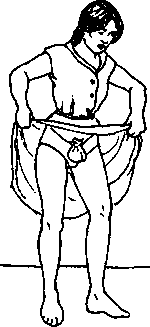
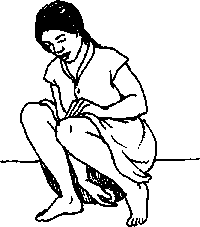
Putting plant medicines into the vagina is harmful and should never be done. Plant medicines can irritate the vagina and cause dangerous infections.
Figure
Don Pedro told Juanita that she could learn about a particular treatment and how well it works by talking to many different people who have used it. Here are some questions to ask:
· Why do you use this method?
· When do you use it?
· How do you use it?
· What happens when you use it?
· How often does it help the problem?
· Do things ever go wrong?
Think carefully about what different people say about treatments they have used. Then, when you try a remedy yourself, pay attention to what happens to your signs to see if the remedy helps you. Be careful about trying too many remedies at once.

Figure
|
To decide if a treatment will be helpful, harmless, or harmful, learn all you can about it first. If you are still unsure whether a treatment is harmless or harmful, consider these things: 1. The more remedies there are for any one illness, the less likely it is that any of them works. 6. Methods that blame people for their problems usually add to their suffering and pain. |
|
|
Step 6: Decide on the best treatment Always remember to think about possible risks and benefits (see below). |
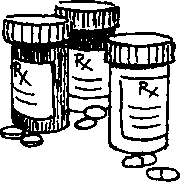
When Juanita felt satisfied that modern medicines were the best treatment for her health problem, Don Pedro gave Juanita some pills called doxycycline and co-trimoxazole and told her to come back in a week, after she had taken them all. He also explained that her husband, who was away again, must be treated with the medicines when he comes back, and that they must begin to practice safer sex.
|
Step 7: See if there is some improvement. If there are no results, start over again. |
When Juanita returned to see Don Pedro the next week, she told him that she had taken all the pills he gave her but her signs had not gone away. She also said her discharge was getting worse and becoming yellow in color. So Don Pedro asked Valeria, a health worker with more training, for help.
Valeria agreed that Juanita had an STD. But because the medicines had not helped, Valeria suspected that Juanita may have a form of gonorrhea that is resistant to co-trimoxazole. Valeria explained that many resistant forms of gonorrhea had come from foreign soldiers at the military base on the coast, who have been infecting the local women when they had sex. Valeria recommended that Juanita go to the city where she could get a more complete exam and be tested for gonorrhea, syphilis (another STD), and cancer. She could also get newer; more effective medicines, if needed.
Figure
Risks and benefits
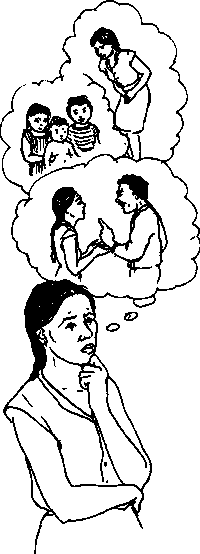
Juanita went home to think about what to do. She would have to spend most of her family’s savings to pay for a trip to the city and the medicine. Since she would be gone at least two days (the trip is almost 6 hours each way by bus and walking), and her husband was still away at the coast, she would also have to find someone to watch her children while she was gone.
Figure
Juanita was afraid that her husband would be angry if he came back and found out that she had spent so much money to see a doctor But she was also scared that if she did not go she would get worse. Valeria told her that without treatment she could pass the infection on to a new baby if she became pregnant. With time she would probably become unable to have more children, would develop severe pain in her lower belly, and would have problems with her urine system and monthly bleeding. Her husband could also develop many serious health problems.
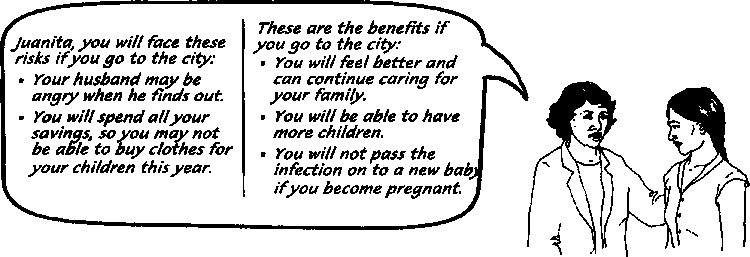
Juanita felt so uncertain about what to do that she went to see Valeria again. When Juanita explained her fears, Valeria suggested thinking about the problem this way:
|
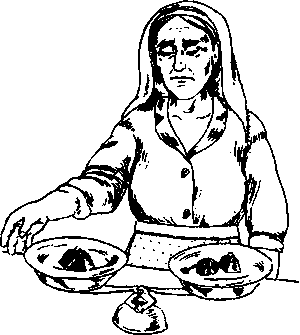
Every treatment has risks and benefits. A risk is the chance that something may cause harm. A benefit is the good that something may bring. The best choice is to do something that will cause the greatest benefit and the smallest risk.
It may help to think about scales you use to weigh food in the market. When one side weighs more than the other, that side of the scale tilts downward. If the benefits weigh more than the risks, that means the action is worth doing. If the risks weigh more, then the action is not worth doing. |
Figure
Juanita decided that the benefits of going for treatment weighed more than the risks.

Figure

Figure
So Juanita went to the city for treatment, where the doctors said it was true that she had gonorrhea and probably chlamydia, but no signs of other STDs or problems. They explained that the medicine she took no longer works in her country. They gave Juanita a newer medicine for both her and her husband.

Figure
Working for Change
When Juanita had taken the medicine and was feeling better, it was tempting to think that her health problem had been solved. But she knew this was not true. When her husband returned from the coast, she would get infected again if he did not take the medicine and use condoms. She discussed the problem with Suyapa and other women whose husbands work at the coast, and together they decided to ask Valeria for advice.
Looking for the root causes of health problems
|
Step 8: Look for the root causes of the problem. |
Valeria agreed that Juanita’s health problem was not yet solved, because many of the conditions that created the problem still existed. She suggested playing a game called “But why....?” to help everyone identify all the conditions that created the problem.
Valeria gathered the women in a circle, and asked them to try and answer her questions:

Figure
And so on.
|
Step 9: It may help to group the causes together to think about what can be done to address them. |
When the women had named a long list of causes, Valeria suggested putting the causes in groups. This way it is easier to see the different kinds of conditions that cause health problems:
Physical causes: germs or parasites, or something that goes wrong in the body or that the body lacksEnvironmental causes: conditions in the physical surroundings that harm the body, such as cooking smoke, lack of clean water or crowded living conditions
Social causes: the way people relate to or treat each other, including their attitudes, customs, and beliefs
Political and economic causes: causes having to do with power - who has control and how - and money, land, and resources - who has them and who does not
When the women put the causes of Juanita’s problem into these groups, they came up with the following list:

Figure
Organizing to solve community health problems
|
Step 10: Decide which causes you and your community can change. |
The next step, Valeria told the women, is to look at the different causes and decide which ones you and others in the community can change. Then think about what actions must be done to make the changes happen.
|
Step 11: Decide what actions can make those changes happen. |
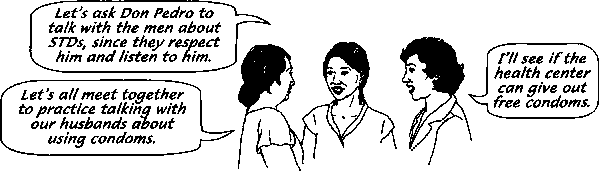
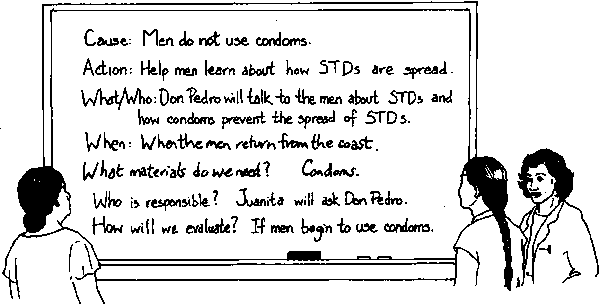
Juanita and Suyapa thought they could get their husbands to use condoms if their husbands understood more about STDs, and if the condoms were not so costly. The actions they decided to take were:
Figure
Other members of the group suggested these actions:
· Organize a community group to talk about health problems, and include STDs in the topics discussed.· While women are washing clothes at the river, talk to them about STDs and how to prevent them.
· Talk to their sons about STDs before they leave the village to go to the coast.
|
Step 12: Make a plan for carrying out the actions. |
The last step, said Valeria, is to make a plan to carry out each of these ideas for action. The plan, she said, should answer each of these questions:
· What are we going to do? What steps will we take?
· When are we going to do these things?
· Who are we going to do them with?
· What materials will we need?
· Who is responsible for making sure that the plan is carried out?
· How will we evaluate whether the plan is working?
Figure
To help you use this method of solving health problems yourself, here is a chart with a list of all of the steps. On the left are the steps and on the right are the parts of Juanita’s story that go with each step. Any time you have a health problem you can use this chart to help you remember this method for thinking about and taking action to solve the problem.
|
The Steps |
Juanita’s Story |
|
1. Start with doubt. |
1. Juanita noticed unusual discharge from her vagina and pain when passing urine. She asked friends and a health worker for help. |
|
2. Find out as much as possible about the problem. Ask questions. |
2. Don Pedro asked her questions to find out what could have caused the problem. |
|
3. Think about all the different illnesses that could be causing the signs. |
3. Don Pedro thought about all the illnesses with these signs. |
|
4. Look for clues that can tell you which answer is most likely. |
4. Don Pedro tried to find out if an STD could have caused Juanita’s illness. |
|
5. Decide which answer is probably the right one. |
5. Don Pedro decided Juanita probably had an STD. |
|
6. Decide on the best treatment. |
6. Don Pedro chose a treatment that works for several STDs. |
|
7. If there are no results, start over again. |
7. Juanita took the pills but did not improve and developed new signs. Valeria thought Juanita had a new form of gonorrhea, and that she should go to the city for an examination, tests, and other medicine. |
|
8. Look for the root causes of the problem. |
8. Juanita and her friends thought about the reasons why there was this kind of STD in their community. |
|
9. Put the causes into groups to think about what can be done. |
9. The women put the causes into physical, environmental, social, political, and economic groups. |
|
10. Decide which causes you and your community can change. |
10. Juanita and Suyapa think they can get their partners to use condoms. |
|
11. Decide what actions can make those changes happen. |
11. They decided to practice how to talk to their partners about using condoms, to see if the health center will give out free condoms, and to ask Don Pedro to talk with their partners about STDs. |
|
12. Make a plan for carrying out the actions. |
12. They made a plan for each action they decided to take. |
To the Health Worker
Helping women help themselves
In this chapter Don Pedro and Valeria played an important role in helping the women in Juanita’s community solve a health problem. The reason that Don Pedro and Valeria were so effective was that they did not tell Juanita and her friends what to do. Rather, Don Pedro and Valeria helped the women learn how to help themselves.
You, too, can help the women in your community by following Don Pedro’s and Valeria’s example. You can:
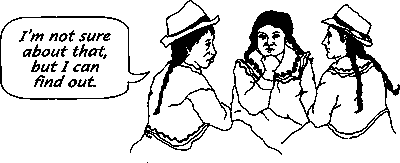
· Share your knowledge. To help themselves, women need information. Many health problems can be prevented if people know how. But remember that you do not have to have all of the answers to help people. Many times there are no easy answers. It is fine to admit when you do not know something. The people you work with will be glad for your honesty.
Figure
¨ Share your knowledge with other women, other health workers, and with the people who make decisions in the community.
· Treat women with respect. Each person should be treated as someone who is capable of understanding her health problems and of making good decisions about her treatment. Never blame a woman for her problem or for past decisions she has made.· Keep health problems private. Health problems should not be discussed where others can hear Never tell anyone else about a problem someone has unless the person with the problem says it is OK.

Figure
· Remember that listening is more important than giving advice. A woman often needs someone who will listen to her without judgment. By listening, you let her know you care and that she is important. And as she gets a chance to talk, she may find that she has some of the answers to her problem.· Solve problems with others, not for them. Even when a woman’s problems are very large and cannot be solved completely, she usually has some choices she can make. As a health worker, you can help her realize she has choices, and help her find the information she needs to make her own decisions.
· Learn from the people you help. Learning how others solve their own problems can help you to help others better (and sometimes yourself, too).
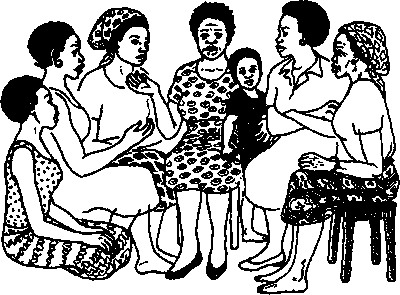
You learn from those you help,
and those you help learn from you.
· Respect your people’s traditions and ideas. Modern science does not have all the answers. And many modern medicines come from studying plant medicines and traditional ways of healing. So it is important to respect and use what is good in both methods - and to realize that both methods can cause harm when used in the wrong way.

Figure
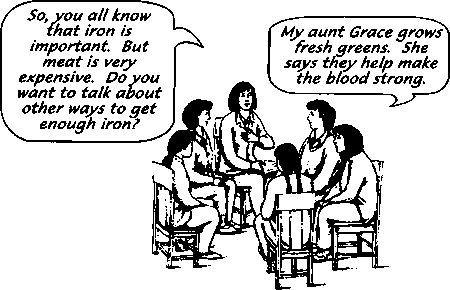
· Find out what people really want to learn about. It is easy to fall into the trap of giving information without finding out if it will be helpful. This often happens with health workers who give prepared talks. But if you find out exactly what people want to know, they will get knowledge that is useful to them. This also helps them build on their own knowledge.· Plan with people, not for people. When you plan your work, be sure to talk first with women and men in your community. Find out how they view the problem you are working to solve. Together, talk about what they think causes the problem and how they would like to solve it. Working together brings the best results!
Figure
|
| ||||||||||||||||||||||||||||||||||||||||||||||||||||||||||||||||||||||||||||||||||||
Where Women Have No Doctor - A Health Guide for Women (Hesperian Foundation, 1997, 600 p.)
Chapter 3: The Medical System
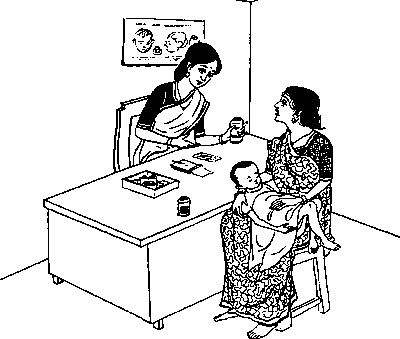
Figure
Most people use some combination of modern medicine and traditional remedies to treat their health problems themselves. In many cases, this is all that they need to do. But for some health problems, a woman may need to seek medical advice.
¨ There are times when you cannot treat a health problem yourself. You may need to seek help from the medical system.
In most areas of the world, there are 4 different levels of health care: community health workers or traditional healers, health posts, health centers, and hospitals. Together, they are called the medical system. A medical system can include health workers, nurses, doctors, and others. They may be in private practice (charge money for their services), or they may be supported by the community, the government, a church, or another organization. Sometimes they are well trained and equipped - and sometimes they are not,
This chapter describes the medical system and how a woman can use it to get help for her health problems. Not every community has each of these 4 levels, and there can be many different combinations of health services that make up the medical system. But no matter what combination of health services is available, women - and all sick people - will get better care if there are good connections between the different levels of health care.
Figure
The Medical System
Community health workers

Figure
Some communities have well-trained, skilled health workers. These health workers often work out of health posts or centers, but not all do. Community health workers may or may not have formal training. But by working closely with the people in their communities, they can help prevent many common health problems, and help people treat their problems before they become more serious. A health worker can be trained to provide the same services as a health post.
¨ When health care is provided by trained health workers within the community, everyone can get better care, for less money.
Health posts
Many communities have health posts. In some places, this level of care is called a clinic or an MCH (Maternal Child Health). A health post should be able to provide:
· health information so that everyone can make better decisions about their health.· immunizations or vaccinations that can prevent many diseases, including tetanus, measles, diphtheria, whooping cough, polio, tuberculosis, rubella, and hepatitis.
· care during pregnancy (prenatal care) that can help a woman find and treat problems affecting her or her unborn baby before they become serious.
· family planning services and supplies. Family planning can save lives by helping women control how many children they have, and the amount of time between births.
· health exams to help find and treat problems such as weak blood (anemia), high blood pressure, and sometimes sexually transmitted diseases (STDs).

Figure
Health centers
Health centers provide a middle level of care. They are usually in larger towns, so people from nearby communities as well as from the town use them. Health centers usually offer all the services a health post offers, and they may also have a few beds where sick people can stay while being cared for.
Health centers are more likely than health posts to have trained nurses and doctors. They are also more likely to be crowded, and the doctors and nurses may know less about the people they see.
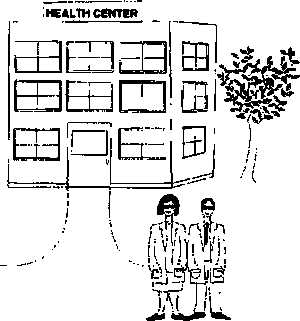
Figure
Some health centers have laboratories with special equipment. This means they can do tests that give more information about the cause of a health problem. Often, however, a person must go to a hospital to have tests done.
Hospitals
Hospitals are usually in large towns or cities, and can be expensive. They usually have many doctors and nurses, and special equipment for treating serious illnesses. A person with a serious illness may need to go to a special hospital that can treat certain problems. A woman might need to go to a hospital for:
· problems that cannot be treated elsewhere.
· complications of childbirth or abortion.
· emergencies such as a pregnancy in the tube.
· health problems that require an operation.
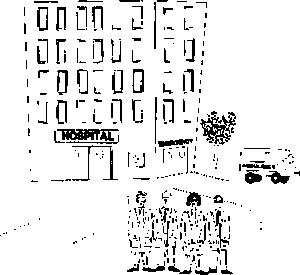
Figure
|
No matter where you go for health care, you should be treated with respect. All people who care for your health should do their best to provide you with: 1. Access. Everyone who needs medical care should be able to have it. It should not matter where you live, how much money you have, what your religion is, how much status you have in the community, the color of your skin, your political beliefs, or what health problem you have. 8. Follow-up care. If you need more care, you should be able to go back to the same person, or be given a written record of the care you have received to take to a new doctor, nurse, or health worker.
|
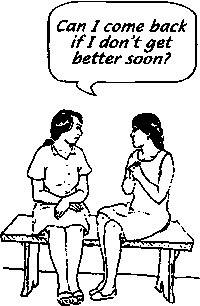
How to Get Better Care
There are many decisions to make when you have a health problem. One decision is whether to see a health worker, and what kind of health worker you think you need. If there is more than one way to treat a problem, you will need to consider the risks and benefits of each kind of treatment before you make a decision. You will be able to make the best decisions - and get the best care - if you can take an active role in working with your doctor, nurse, or health worker to solve your health problem.
Figure
Know what to expect
You will be best able to take an active role in your health if you are prepared and know what to expect when you seek medical care.
Questions about your health
It is best to learn as much as you can about your health problem before you use the medical system. Reading this book may help you understand your health problem and the possible causes. For help thinking about health problems, see “Solving Health Problems.”
The doctor, nurse, or health worker who sees you should ask about the problem you are having now and about your past health. Try to give complete information, even if you feel uncomfortable, so that the person asking the questions can learn as much as possible about your health. Always tell about any medication you are taking, including aspirin or family planning methods.
¨ It often helps to think of the questions you want to ask before you go for medical care.
You should also have a chance to ask any questions you may have. It is very important to ask as many questions as you need to make a good decision about how to solve your health problem. If these questions have not already been answered, you may want to ask:

Figure
Many doctors and nurses may not be used to giving good information, or they may be busy and not take the time to answer your questions. Be respectful, but firm! They should answer your questions until you understand. If you do not understand, it is not because you are stupid, but because they are not explaining well.
The exam
In order to know what is wrong with you and how serious your problem is, you may need an examination. Most exams include looking at, listening to, and feeling the part of your body where the problem is. For most problems you need to undress only that part of your body. If you would feel more comfortable, ask a friend or female health care worker to be in the room with you during the exam.

Figure
Tests
Tests can give more information about a health problem. Many tests are done by taking a small amount of urine, stool, or coughed-up mucus and sending it to a laboratory. Or. a needle is used to take a small amount of blood from your finger or arm. Other common tests include:
· taking some fluid from your vagina to test for sexually transmitted diseases (STDs).· scraping cells from the opening of your womb (cervix) to test for cancer. (This is called a Pap test.)
· taking tissue from a growth to test for cancer (biopsy).
· using X-rays or ultrasound to see inside your body. X-rays may be used to find broken bones, severe lung infections, and some cancers. Try not to be X-rayed during pregnancy. Ultrasound can be used during pregnancy to see the baby inside your womb. Neither of these tests causes any pain.
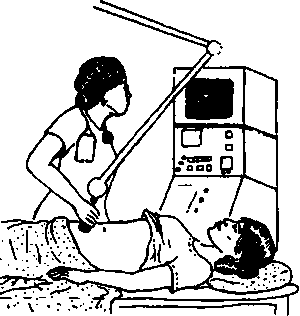
ultrasound machine
¨ X-rays ore safe if they are used properly. A lead apron should be used to protect your reproductive organs.
Before you have any test, discuss the cost. Ask the doctor, nurse, or health worker to explain what he or she will learn from the test, and what would happen if the test was not done.
Bring a friend or family member
Many people feel worried about seeking medical care - even for illnesses that are not serious. And when a person is sick, it can be even harder for them to demand the care they need. If another person can go along, it can help.
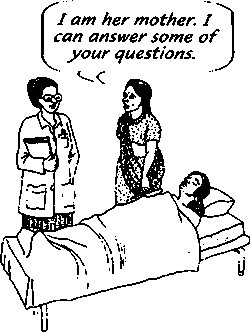
If a woman is very sick,
someone who can give information should go with her.
A friend can:
· watch the woman’s children.· help think of questions to ask, remind the woman to ask them, and make sure they are answered.
· answer questions if the woman is too sick to talk.
· keep the woman company while she waits.
· stay with the woman while she is being examined, to support her and make sure the doctor acts in a respectful way.
If You Need to Go to the Hospital
If you need to have an operation or you have a serious illness, first find out if it is possible to be treated without having to stay in a hospital. If a hospital is the only place you can get the care you need, this advice may help:
· Bring someone with you who can help you get the attention you need and help you make decisions.· Different people may examine you. Each one should write down what he or she did on a card that stays with you. This way the next person who cares for you will know what has already been done.
· Before anyone begins a test or treatment, it is very important to ask what they are going to do and why. This way you can decide if you want them to do it and help prevent mistakes.
· Try to make friends with the staff at a hospital. They can help you get better care.
· If you need to have some kind of operation, ask if it is possible to have an injection to stop pain only in the area being operated on (local anesthetic). It is safer and you will get better more quickly than if you are given medicine to make you sleep during the surgery (general anesthetic).
· Ask what medicines you are being given and why.
· Ask for a copy of your records when you leave.
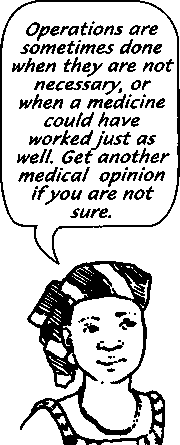
Figure
|
Common operations for women An operation is sometimes the only answer to a serious health problem. During many operations, a doctor makes a cut in the skin in order to fix problems inside the body or to change the way the body functions. Here are some of the operations women commonly have: · Emptying the womb by either scraping or suctioning (D and C, or MVA.). Sometimes the lining of the womb must be removed - either during or after an abortion or miscarriage, or to find the cause of abnormal bleeding from the vagina. · Removing the womb (hysterectomy). A hysterectomy is a serious operation, so it should be done only when there is no better way to solve your health problem. Ask if you can have your ovaries left in. |
|
|
Blood transfusions A blood transfusion may be given in an emergency, when you have lost a lot of blood. It can save your life. But if the blood has not been tested properly, it can carry diseases, such as hepatitis or HIV/AIDS, that are passed through the blood. Avoid blood transfusions except in cases of life or death emergencies. If you must have an operation that you know about ahead of time, see if it is possible to have some of your own blood taken in advance and stored at the hospital. Then if you need it, you will get your own blood back. If you cannot have your own blood stored, ask a friend or relative to come with you to the hospital. Be sure she has been tested for hepatitis and HIV, and that neither she nor her partner has had a new sex partner in the last 6 months. Her blood must also be tested to make sure that it will work in your body.
If you must receive blood from an unknown person and the hospital does not test its blood for HIV, there is a risk that you might become infected. After the transfusion, protect your partner by practicing safer sex for 6 months and then try to get tested for HIV/AIDS. For more information, see the chapters on “AIDS” and “Sexual Health.” |

After you have an operation
Before you leave the hospital, ask:
· What should I do to keep the cut clean?· What should I do about pain?
· How long should I rest?
· When can have sex again? (If you feel too shy to ask this, perhaps the doctor or health worker can talk to your partner.)
· Do I need to see a doctor again? If so, when?
To keep your lungs healthy and
prevent pneumonia, move around if you can. While in bed, take deep breaths and
try ti sit up often
Eat soft, mild foods that are easy to digest.
Rest as much as you can. If you are at home, ask your family to take care of your daily chores. A few days spent taking care of yourself can help you get better faster
Watch for signs of infection: yellow discharge (pus), a bad smell, fever, hot skin near where you were cut, or more pain. See a health worker if you have any of these signs.
If your operation was in the abdomen, try not to strain the area that was cut. Press against it gently with a folded cloth, blanket, or pillow whenever you move or cough.
Working for Change
Millions of people throughout the world suffer and die from illnesses that could have been prevented or treated if they had access to good medical care. And even where health services do exist, there are many barriers that keep women, especially poor women, from using them.
But together, health workers and groups of women can change the medical system. They can make it a resource - rather than a barrier - for women as they try to solve their health problems. The medical system will not change on its own, though. It will change only when people demand it, and when they offer creative ways to bring the health care that people need within the reach of all.
A good place to begin changing the medical system is by discussing the health care problems that affect people in your community - including lack of access to good care - with other women and men.
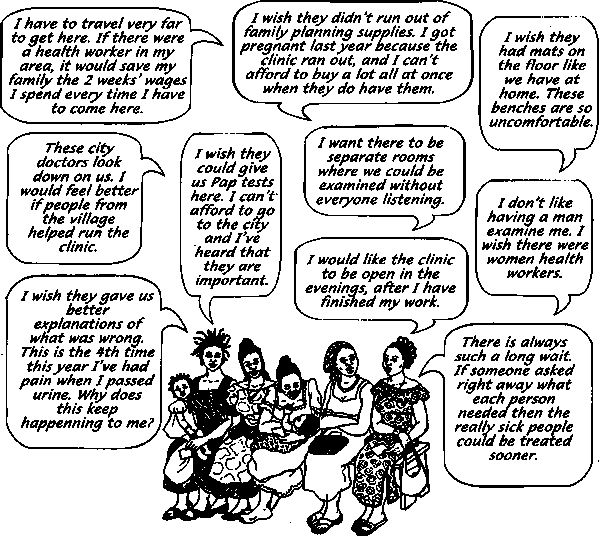
Figure
Women can also work together to:
· help every member of the community to learn about women’s health problems. For example, you can organize a campaign to explain how important it is that women get good prenatal care. If women and their families know about women’s health needs, women will be more likely to use the health services that already exist. They will also be more likely to demand that new ones - such as better treatment and screening for cervical and breast cancer - be made available.
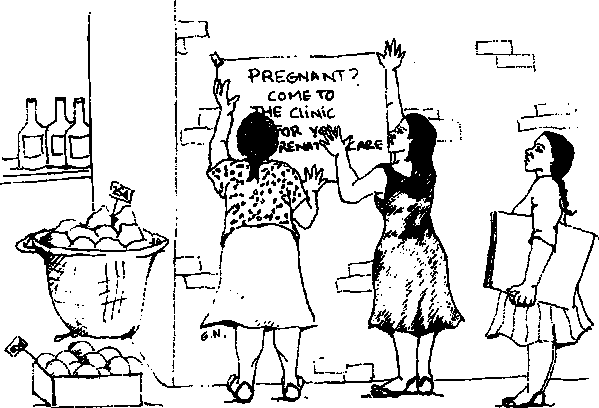
Figure
· see how existing health resources can be improved. For example, if there is already a community midwife, how can she get training in new skills?· find new ways to make health care available. It is important to think about what health services you want to have, and not just what you have now. So, if there is no health worker now, how can one be trained and supported? If there is already a clinic, could it offer new services like workshops or counseling?
· share the knowledge each woman has about health care. Women already do much of the ‘health work’ in the community. For example, it is usually women who care for the sick, teach children to stay healthy prepare food, keep the home and community clean and safe, and help other women have babies. Through this work, they have learned many skills that they can use to care for each other and every member of the community.
|
| ||||||||||||||||||||||||||||||||||||||||||||||||||||||||||||||||||||||||||||||||||||||||||||||||||||||||||||
Where Women Have No Doctor - A Health Guide for Women (Hesperian Foundation, 1997, 600 p.)
Chapter 4: Understanding Our Bodies
This chapter is about the parts of the body that make up a woman’s or a man’s sexual and reproductive system. This information will help you to use the rest of this book.

Figure
In many ways, a woman’s body is no different from a man’s. For example, women and men both have hearts, kidneys, lungs, and other parts that are the same. But one way they are very different is in their sexual or reproductive parts. These are the parts that allow a man and a woman to make a baby. Many of women’s health problems affect these parts of the body.

You can feel your hips bones
just below your waist. They are part of the pelvis. The pelvic area is
everything between the hips. This is where a woman’s reproductive parts
are.
Sometimes talking about the sexual parts of our bodies can be difficult, especially if you are shy, or do not know what different parts of the body are called. In many places, the reproductive parts of the body are considered ‘private’.
¨ No one should feel ashamed of any part of his or her body.
But knowing how our bodies work means we can take better care of them. We can recognize problems and their causes and make better decisions about what to do about them. The more we know, the more we will be able to decide for ourselves if the advice that others give us is helpful or harmful.
¨ The more we know about our bodies, the more we can teach our children how to have better health.
Since different communities sometimes have their own words for parts of the body, in this book we often use medical or scientific names. This way, women from many different regions of the world will be able to understand the words.
A Woman’s Reproductive System
A woman has sexual parts both outside and inside her body. They are called the reproductive organs, or genitals. The outside parts are called the vulva. Sometimes people may use the word vagina for the whole area. But the vagina is the part that begins as an opening in the vulva and leads inside to the womb. The vagina is sometimes called the ‘birth canal’.

Figure
The drawing below shows what the vulva looks like and what the different parts are called. But every woman’s body is different. There are differences in the size, shape, and color of the parts, especially of the outer and inner folds.
The reproductive parts on the outside
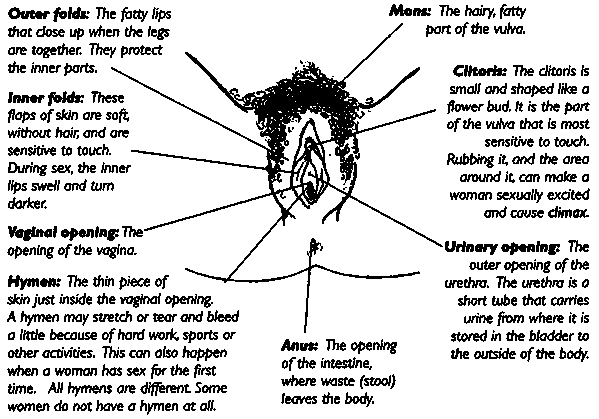
Vulva: All the sexual parts
you can see between your
legs.
The breasts
Breasts come in all shapes and sizes. They start to grow when a girl is between 10 and 15 years old, when she changes from a girl to a woman (puberty). They make milk for babies after pregnancy. When they are touched during sexual relations, a woman’s body responds by making her vagina wet and ready for sex.
Inside the breasts:
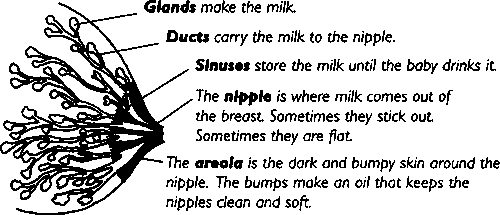
Figure
The reproductive parts on the inside

Figure

Figure
A Man’s Reproductive System
A man’s sexual parts are easier to see than a woman’s because they are mostly outside the body. The testicles (balls) make the main hormone in a man’s body, called testosterone. When a boy goes through puberty, his body begins to make more testosterone. It causes the changes that make a boy look like a man.
|
The testicles also make a man’s sperm. A man begins to produce sperm during puberty, and makes more every day of his life. Sperm travel from the testicles through a tube in the penis where they mix with a liquid produced by special glands. This mixture of liquid and sperm is called semen. The semen comes out of the penis when a man climaxes during sex. Each drop of semen has thousands of sperm which are too small to see.
|
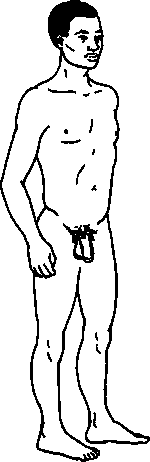

Having a baby - Will it be a boy or a girl?
About half of a man’s sperm are boy sperm and half are girl sperm. Only one sperm will join with the woman’s egg. If it is a boy sperm, the baby will be a boy. If it is a girl sperm, the baby will be a girl.
Because most communities value men more than women, some families would rather have boys than girls. This is unfair because girls should be valued just as much as boys. It is also unfair because in some places a woman is blamed if she does not have any sons. But it is the man’s sperm that makes a baby either a boy or a girl!
Boy or girl? It is up to
chance - much like flipping a
coin.
How a Woman’s Body Changes
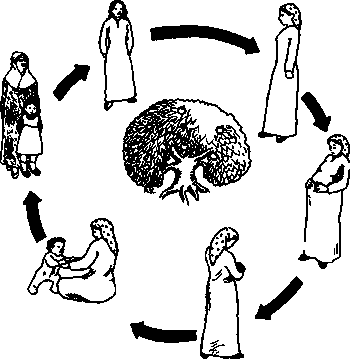
The Life Cycle
A woman’s body goes though many important changes during her life - at puberty, during pregnancy and breastfeeding, and when she stops being able to have a baby (menopause).
In addition, during the years she can have a baby, her body changes every month - before, during, and after the time of her monthly bleeding. The parts of the body where many of these changes happen are the vagina, womb, ovaries, fallopian tubes, and the breasts, also called the reproductive system. Many of the changes are caused by special chemicals called hormones.

Figure
Hormones
|
Hormones are chemicals the body makes that control how and when the body grows. A little while before a girl’s monthly bleeding first starts, her body begins to produce more estrogen and progesterone, the main female hormones. These hormones cause the changes in her body known as puberty. During the years when she can have a baby, hormones cause a woman’s body to prepare for possible pregnancy each month. They also tell her ovaries when to release an egg (one egg every month). So hormones determine when a woman can get pregnant. Many family planning methods work to prevent pregnancy by controlling the hormones in a woman’s body. Hormones also cause changes during pregnancy and breastfeeding. For example, hormones keep a pregnant woman from having her monthly bleeding, and after childbirth they also tell the breasts to make milk. When a woman is near the end of her reproductive years, her body slowly stops producing estrogen and progesterone. Her ovaries stop releasing eggs, her body stops preparing for a pregnancy, and her monthly bleeding stops forever. This is called menopause. The amount and kind of hormones produced by a woman’s body can also affect her moods, sexual feelings, weight, body temperature, hunger, and bone strength. |
Monthly Bleeding
About once each month during her reproductive years, a woman has a few days when a bloody fluid leaves her womb and passes through her vagina and out of her body. This is called ‘monthly bleeding’, the ‘monthly period’ or ‘menstruation’. It is a healthy process and is part of the way the body gets ready for pregnancy.
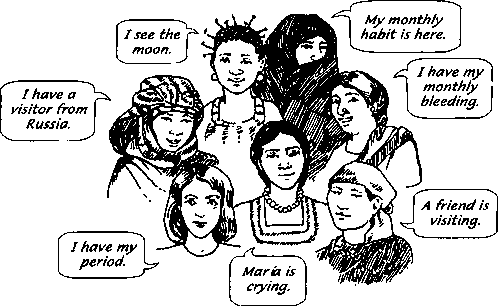
Around the world, women have
many different names for their monthly bleeding.
Most women think of their monthly bleeding as a normal part of their lives. But often they do not know why it happens or why it sometimes changes.
The monthly cycle (menstrual cycle)
The monthly cycle is different for each woman. It begins on the first day of a woman’s monthly bleeding. Most women bleed every 28 days. But some bleed as often as every 20 days or as little as every 45 days.
The amount of the hormones estrogen and progesterone produced in the ovaries changes throughout the monthly cycle. During the first half of the cycle, the ovaries make mostly estrogen, which causes a thick lining of blood and tissue to grow in the womb. The body makes the lining so a baby would have a soft nest to grow in if the woman became pregnant that month.
In the middle of the cycle, when the soft lining is ready, an egg is released from one of the ovaries. This is called ovulation. The egg then travels down a tube into the womb. At this time a woman is fertile and she can become pregnant. If the woman has had sex recently, the man’s sperm may join with her egg. This is called fertilization and is the beginning of pregnancy.
During the second half of the cycle - until her next monthly bleeding starts - a woman also produces progesterone. Progesterone causes the lining of the womb to prepare for pregnancy.
¨ A woman may find that the time between each monthly bleeding changes as she grows older, after she gives birth, or because of stress.
Most months, the egg is not fertilized, so the lining inside the womb is not needed. The ovaries stop producing estrogen and progesterone, and the lining begins to break down. When the lining inside the womb leaves the body during the monthly bleeding, the egg comes out too. This is the start of a new monthly cycle. After the monthly bleeding, the ovaries start to make more estrogen again, and another lining begins to grow.
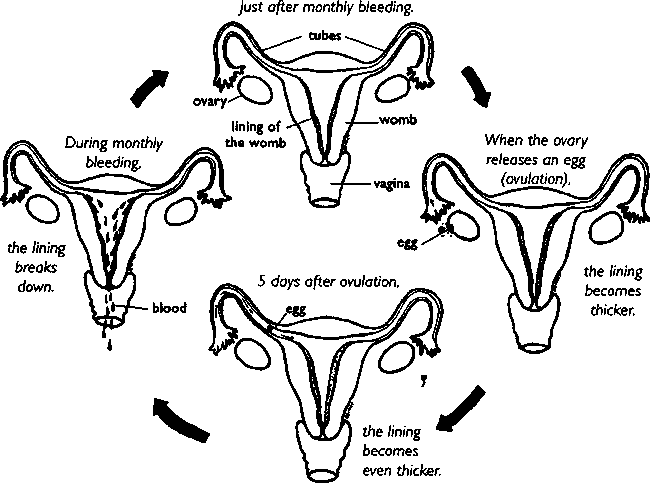
The monthly
cycle
Problems with monthly bleeding
If you have problems with your monthly bleeding, try to talk with your mother, sisters or friends. You may find that they have them too and they may be able to help you.
Changes in bleeding
Sometimes the ovary does not release an egg. When this happens, the body makes less progesterone, which can cause changes in how often and how much a woman bleeds. Girls whose monthly bleeding has just begun - or women who have recently stopped breastfeeding - may only bleed every few months, or have very little bleeding, or too much bleeding. Their cycles usually become more regular with time.
Figure
Women who use hormonal family planning methods sometimes have bleeding in the middle of the month. See Hormonal Methods of Family Planning for more information about changes in bleeding caused by hormonal family planning methods.
Older women who have not yet gone through menopause may have heavier bleeding or bleed more often than when they were younger. As they get closer to menopause, they may stop having monthly bleeding for a few months and then have it again.
Pain with monthly bleeding
During monthly bleeding the womb squeezes in order to push out the lining. The squeezing can cause pain in the lower belly or lower back, sometimes called cramps. The pain may begin before bleeding starts or just after it starts.

Pressing hard on the tender
place between your thumb and first finger can ease many kinds of pain. For other
places where pressure can ease pain from monthly bleeding see Acupressure
Massage
What to do:
· Rub your lower belly. This helps the tight muscles relax.· Fill a plastic bottle or some other container with hot water and place it on your lower belly or lower back. Or use a thick cloth you have soaked in hot water.
· Drink tea made from raspberry leaves, ginger, or chamomile. Women in your community may know of other teas or remedies that work for this kind of pain.
· Keep doing your daily work.
· Try to exercise and walk.
· Take a mild pain medicine. Ibuprofen works very well for the pain that comes with monthly bleeding.
· If you also have heavy bleeding and nothing else works, taking a low-dose birth control pill for 6 to 12 months may help.
Pre-menstrual syndrome (PMS)
Some women and girls feel uncomfortable a few days before their monthly bleeding begins. They may have one or more of a group of signs that are known as pre-menstrual syndrome (PMS). Women who have PMS may notice:
· sore breasts
· a full feeling in the lower belly
· constipation (when you cannot pass stool)
· feeling extra tired
· sore muscles, especially in the lower back or belly
· a change in the wetness of the vagina
· oiliness or spots (pimples) on the face
· feelings that are especially strong or harder to control

Figure
Many women have at least one of these signs each month and some women may have all of them. A woman may have different signs from one month to the next. For many women, the days before their monthly bleeding starts are a time of unrest. But some women say they feel more creative and better able to get things done.
What to do:
What helps with PMS is different for each woman. To find out what will help, a woman should try different things and notice what makes her feel better. First, try following the suggestions for pain with monthly bleeding.
These ideas may also help:
· Eat less salt. Salt makes your body keep extra water inside, which makes the full feeling in your lower belly worse.· Try to avoid caffeine (found in coffee, tea and some soft drinks like cola).
· Try eating whole grains, peanuts, fresh fish, meat and milk, or other foods that are high in protein. When your body uses these foods, it also gets rid of any extra water, so your belly feels less full and tight.
· Try plant medicines. Ask the older women in your community which ones work.
Exercise can sometimes help
with the signs of
PMS.
|
| ||||||||||||||||||||||||||||||||||||||||||||||||||||||||||||||||||||||||||||||||||||||||||||||||||||||
Where Women Have No Doctor - A Health Guide for Women (Hesperian Foundation, 1997, 600 p.)
Chapter 5: Health Concerns of Girls
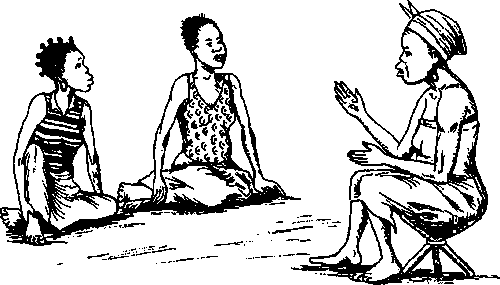
Figure
Sometime between the ages of 10 and 15, a girl’s body begins to grow and change into an adult body. These can be exciting and difficult years. A young woman may not feel exactly like a girl or a woman - her body is somewhere in between and is doing new things she is not used to. What can make it harder is when no one talks about the changes, and so a girl may not know what to expect. This chapter describes these changes, tells how a girl can stay healthy as she grows, and gives information to help her make the right decisions for a healthy life.
|
Eating for healthy growth One of the most important things a girl can do to stay healthy is to eat well. Her body needs to get enough protein, vitamins, and minerals during her years of growth. A girl needs at least as much food as a boy. Getting enough to eat leads to less sickness and more success in school, healthier pregnancies, safer births, and a healthier old age.
Girls also need the right kinds of food. When a girl begins her monthly bleeding she will lose some blood each month. To prevent weak blood (anemia), she will need to replace the lost blood by eating foods with iron in them. Also, girls and women both need foods with calcium to help their bones grow strong. |
Changes in Your Body (Puberty)
All girls go through changes in their bodies, but the changes happen differently for each girl. So do not worry if your body does not look exactly like your sister’s or friend’s.
Growing. Your first change will probably be that you grow fast. You may be taller than all of the boys your age for a while. You will usually stop growing 1 to 3 years after your monthly bleeding starts.
Body changes. Besides growing fast, your body will begin to change. There are natural chemicals in the body called hormones that tell your body to grow and that make these changes happen.
|
How a girl’s body changes in puberty · You grow taller and rounder. · Your face gets oily and pimples or spots may grow. · You sweat more. · Hair grows under your arms and on your genitals. · Your breasts grow as they become able to make milk. As they get larger, it is common for the nipples to hurt sometimes. One breast may begin to grow before the other, but the smaller breast almost always catches up. · Wetness (discharge) starts to come out of your vagina. · Your monthly bleeding starts (menstruation).
|
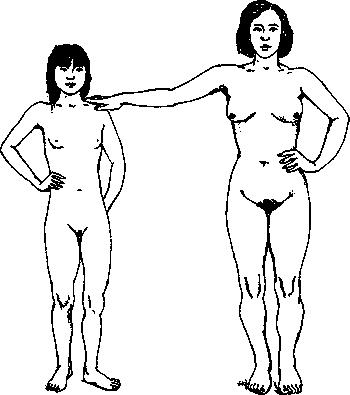
Figure
Inside your body. There are other changes that you cannot see. The womb (uterus), tubes, ovaries, and vagina grow and change position.
¨ Changes of puberty do not all happen at the same time or in the same order.
What you feel. As you go through these changes you become more aware of your body. You may also become more interested in boys, and in your friends. There may be times when your feelings are hard to control. In the days before monthly bleeding, it is even more common to have strong feelings of all kinds - joy, anger, and worry, for example.
Monthly bleeding (period, menstruation)
Monthly bleeding is a sign that your body can become pregnant. No girl can know exactly when she will get her first monthly bleeding. It usually happens after her breasts and the hair on her body start to grow. Several months before her first monthly bleeding, she may notice some wetness coming from the vagina. It may stain her underclothes. This is normal.

Figure
Some girls are happy when they have their first monthly bleeding, especially if they know what to expect. Girls who were never told about it often worry when the bleeding starts. It is something that happens to all women, and you can feel accepting and even proud of it. Do not let anyone make you think it is something dirty or shameful.
Caring for yourself during your monthly bleeding
Staying clean. Many girls prefer to make pads of folded cloth or wads of cotton to catch the blood as it leaves the vagina. They stay in place with a belt, pin, or underwear. The pads should be changed several times each day, and washed well with soap and water if they are to be used again.
Some women put something inside the vagina that they buy or make from cotton, cloth, or a sponge. These are called tampons. If you use tampons, be sure to change them at least twice each day. Leaving one in for more than a day may cause a serious infection.
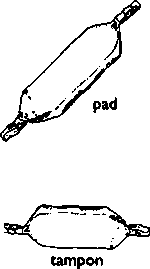
Figure
Wash your outside genitals with water each day to remove any blood that is left. Use a mild soap if you can.
Activities. You can continue all your regular activities.
It is healthy to bathe during
your monthly bleeding.
Exercise can make the pain
that some girls have with monthly bleeding feel
better.
Changes that Can Lead to a Better Life
The way a woman sees herself forms as she grows. It is important that a girl learns to feel good about herself when she is young, so that she will be able to develop fully and help make her community a better place. A girl is much more likely to learn this when her family and community show her that they value her.
In many places girls are raised to believe they are less important than boys. They are taught to feel shame about their bodies and about being female, and they learn to accept less education, less food, more abuse, and more work than their brothers. This not only hurts their health directly, but it makes them feel bad about themselves and less able to make the right decisions for a healthier life in the future. When girls are raised in this way, it shows that their communities do not value them as much as males.
Figure
But if a girl’s community recognizes the value of each person - whether the person is a man or a woman - she will grow up feeling she can make a better life for herself and for her family and neighbors.
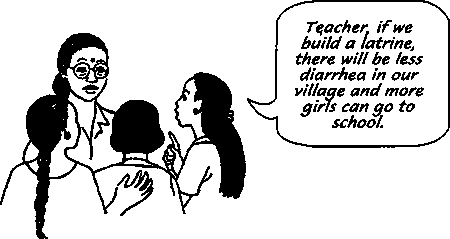
A girl will feel proud if she
sees that her efforts can make her community better.
The way a community treats females also affects how families treat their girl children. For example, if a community believes that girls should learn skills, a family that lives there is more likely to want their daughter to go to school for as long as she can. But in a community where women are allowed to do only ‘women’s work’ and are not allowed to participate in any public meetings, families are much less likely to believe that their daughters should be educated.

Figure
There are many ways to help girls feel better about themselves and to help their families and communities understand that girls’ lives can be different. On the next few pages are some ideas.
Ways girls can work for a better life
Find someone to talk to who you think will listen and understand - a friend, a sister, or another female relative. Talk about your fears and problems. Together, you can talk about strong women in your community, your goals, and dreams for the future.
Do things that you and your friends think are important. If you see a problem in your community, get together with your friends to do something to change it. You will all feel proud when you see that your efforts can make your community better.
|
Try to plan your future. The first thing you can do to plan for your future is to set goals. A goal is something you would like to happen. For most girls this is not easy. Many feel their lives are controlled by their families or the traditions of their communities. But you can start to help yourself by knowing what you want.
Next, try to talk to a woman or man who works at something you would like to do. It could be someone you admire, or a leader in your community. Ask if you can spend time with that person to learn more about their work.
Sometimes girls feel frustrated because their dreams and hopes for their future may conflict with the beliefs in their community and family about what a woman should do. It is important to explain your dreams and hopes carefully to adults and to listen to their concerns also. |
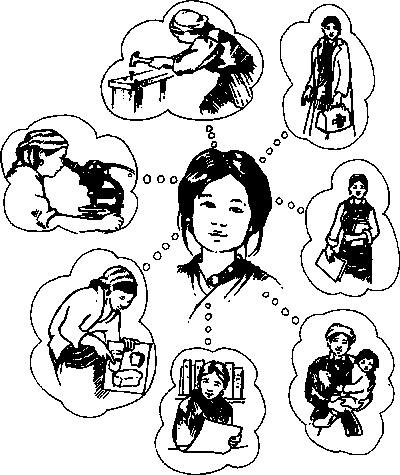
Decisions for a better future
There are important decisions that you can make with your family to create new possibilities for your future.
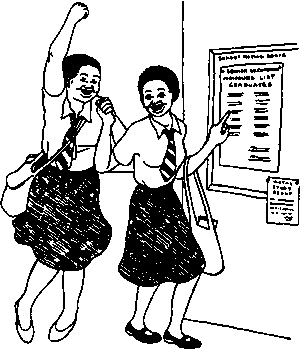
Figure
Education and training. Education can help you feel proud of yourself, earn a better living, and live a happier and healthier life. For many girls, education opens the door to a better future. Even if you cannot go to school, there are other ways to learn to read and develop skills. For example you can study at home, join a literacy program, or learn a trade from a skilled person (apprenticeship). When you have new skills, you have something special to give to your community, and you can support yourself and your family better. Learning new skills can help you have more choices in your life.
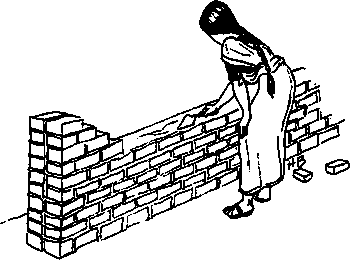
Figure
Waiting to get married. Talk with your family about waiting to get married until you feel ready and until you find the right partner. Many girls are able to finish school and find work before starting families. This can help you learn more about yourself and what you want. If you wait, you may even find a partner who feels the same way about life as you do.
Waiting to have children. It is easier to raise a happy and healthy child when you wait until you and your partner feel ready to start a family. If you are thinking about having a baby, these are some things to think about: Will you be able to continue your education? How will you fulfill the child’s physical needs - food, clothes, shelter, etc? Are you ready to provide the emotional support a baby needs to grow up into a healthy child? Will your partner commit himself to helping with child raising? How will your family help you?
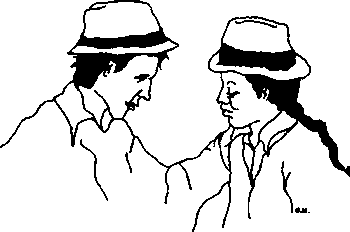
Figure
|
Parents and girls can work together to organize ways for girls to learn about how the body works, sexuality and prevention of early pregnancy. This can be done at home, and programs can be held in schools, community meeting places, or places of worship. |
Deciding about Boyfriends and Sex
Decisions about boys and men are difficult. Most young people begin to have loving or sexual feelings as they get older. Thinking about touching or being touched by someone in a sexual way is not unusual. (Girls may even think about another girl or woman in this way.) But people often have these feelings before they are ready to act on them.
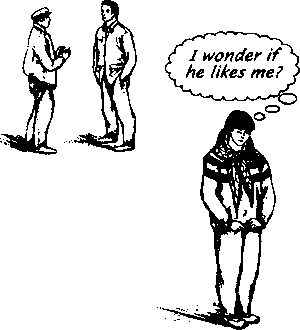
Figure
Young women have sex for many different reasons. Some do it because they want to have a baby. Others do it because it makes them feel good or wanted. Some women feel they have very little choice because it is their duty as a wife. Some are forced to trade sex for money or for other things they need to survive, such as food, or clothes for their children, or a place to live.
¨ Only have sex when you decide that you are ready and know how to protect yourself from harm. Sex can be enjoyed by both people, but not if there is fear or shame.
Others have sex because they think it will make a man love them more. Sometimes a friend or a boyfriend can make a girl feel that she should have sex when she is not ready.
No one should have sex when she does not want to. Only have sex when you decide you are ready. Sex can be enjoyed by both people, but it is difficult to enjoy something when you feel fear or shame.
If you are ready for a sexual relationship, always protect yourself against pregnancy and disease. For more information on how, see the chapters on “Family Planning,” “Sexually Transmitted Diseases,” “AIDS,” and “Sexual Health.”
|
Health risks of early pregnancy Most girls’ bodies are not ready for a safe and healthy birth. Young mothers are more likely to develop toxemia (which causes fits) during pregnancy. Because their bodies may still be too small for a baby to come out, mothers under age 17 are more likely to have long, difficult labors, and blocked births. Without medical help, a woman with any of these problems can die. Blocked births can also damage the vagina, causing urine and stool to leak. Babies born to girls younger than 17 are more likely to be born too small or too soon. If you are already pregnant, try to see a trained midwife or health worker as soon as possible to find out how to have the safest birth. |
|
What girls should know about having sex
· You can get pregnant the first time you have sex. · You can get pregnant any time you have sex without a family planning method (even if it is only once). · You can get pregnant even if the man thinks he did not let his seed (sperm) come out. · You can get an STD or HIV/AIDS if you do not use a condom when you have sex with an infected person. And you cannot always tell by looking at a person if he is infected. · It is easier for a girl to get a sexually transmitted disease (STD) or HIV from a boy or man than it is for her to give these diseases to him. This is because of the way sex works - because she is the ‘receiver’. It is also harder to know if a girl has an infection because it is inside her body. Always use a condom for protection against STDs and HIV/AIDS. But the most certain way to avoid pregnancy, STDs, and HIV/AIDS is not to have sex. |
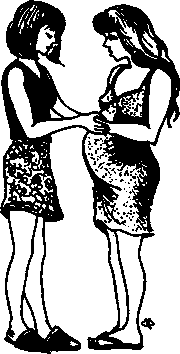
Having a relationship with no sex
Figure
Building a loving relationship takes time, caring, respect, and trust from both sides. Sex is not the only way of showing someone that you care. Having sex does not mean that you will fall in love.
You can spend personal time together without having sex. By talking and sharing experiences you can learn something more important about each other - how you view life, decisions you would make together, what kind of partner and parent you would each make, and how you feel about each other’s plans for life. Touching each other (without sexual intercourse) can be satisfying by itself, and is not dangerous as long as it does not lead you to lose control and to have sex when you are not ready.

Figure
Talk to your boyfriend. If you are sure he is right for you, but you are not sure you want to have sex, talk about ways to wait. You may find that he is not ready for sex, either. If you respect each other, you will be able to decide together
Talk to your friends. You may find that some girl friends are facing the same difficult choices. You can help each other find ways to have good relationships without sex. But think twice about advice from a friend who is already having sex. A friend may try to convince you to do something she is doing to make herself feel better about doing it. This is called ‘peer pressure’.
Protecting yourself if you are ready for sex
When you decide you are ready for a sexual relationship, you must protect yourself against pregnancy and disease. There are many ways to make sex safer. This means you have to plan before you have sex.
Talk to your boyfriend before you have sex. Let him know how important it is to protect yourself. If you find it hard to discuss, perhaps you can first pretend you are talking about another couple.

If he really cares about you,
he will want to protect you. If he is pushing for sex, he may care only about
himself.

Figure
Many communities have people who are trained to provide condoms and other family planning methods. Talk to them or ask a health worker where to get a method of protection. If you feel embarassed to ask, find someone you trust to help you. Some family planning clinics have special services for teenagers and may have trained teenagers as peer counselors who can give you information.
Figure
Since you cannot tell by looking if a man has a sexually transmitted disease or AIDS, sex is safer only if you use a condom every time. If a man has a discharge coming from his penis or a sore somewhere on it, he has an infection and will almost certainly give it to you!
Figure

Figure
If you had sex and notice a new discharge from your vagina, sores on your genitals, or pain in your lower belly, you could have an STD. See the chapter on “Sexually Transmitted Diseases.”
Pressured or Forced Sex
Pressure to have sex with a boyfriend (‘Date rape’)
All over the world, young girls and women are forced to have sex when they do not want to. Often it is done by boyfriends who claim to love them. In some places this is called ‘date rape’. The force is not only physical. You can feel pressure from words or feelings. He may say “please” or somehow make you feel guilty or ashamed if you do not have sex. This is still wrong.
No one should be made to have sex when they do not want to have it.
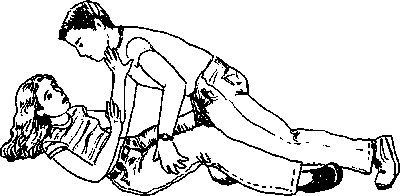
If someone has forced you to
have sex when you do not want it, it is rape.
Prevention:
· If he wants to have sex and you do not, you can tell him you are flattered by his desire for you but that you are not ready. If you are afraid of being alone with the person, bring someone with you, or ask someone else to talk with him.· Say “NO” loudly if you are pushed to have sex. Keep saying “NO” if you have to. Also say no with your body. If you say “NO,” but give in with your body, he will think that you really mean “yes.”
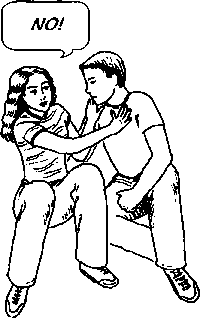
Figure
· Move away if you are touched in any way that you do not like. Your feelings are warning you that something worse may happen. Make a lot of noise and be ready to run if you have to.
Figure
· Do not drink alcohol or take drugs. Alcohol and drugs make you less able to use your judgement and control what happens to you.· Go out in groups. In many places, young couples court or date in groups. You can still get to know a boy, but you are less likely to be pushed into having sex because you will not be alone.
· Go only to safe places where others can see you.
· Plan ahead. Decide how much touching will be too much for you. Do not get caught by your feelings and let things happen to you.
If someone in your family tries to have sex with you (Incest)
It is never right for someone to touch you if you do not want to be touched. Family members, such as your cousin, uncle, brother, or father should not touch your genitals or any other part of your body in a sexual way. If this happens, you need to get help. Even if the man says he will hurt you if you tell, you need to tell an adult you trust as soon as possible. Sometimes it is best to tell someone outside your family such as a woman teacher or religious leader in your community.

Figure
Young girls and older men
Some girls are attracted to older men. Going with an older man may seem very exciting, especially if he is well known or important in your community, or if he has money and can buy things. In some places a man who buys his girlfriend many presents is called a ‘Sugar Daddy’. Often a girl who goes with an older man ends up feeling she was used for sex or treated badly, especially if the man is married or has other women.
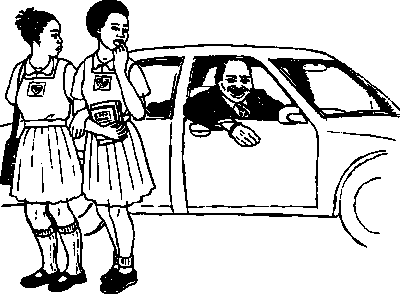
Figure
Sometimes an older man can make a young woman feel more pressured to have sex than boys her own age can, especially if he has power over her.
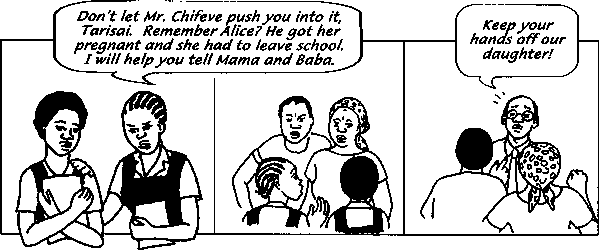
Figure
Trading girls for money or other needs

Figure
Sometimes a poor family will give a young daughter to an older man to pay a family debt. Or they may trade her for money or something the family needs.
Sometimes the girls are taken away to another town or city. They think they are going to work in factories, or as maids, but they are often forced to have sex for money.
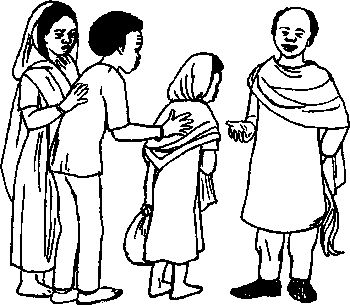
Figure
If you think that you or another girl in your community is going to be sold into marriage, or sent away to work, try to get help from another adult. Perhaps an older aunt or uncle, or a woman teacher can help.
If you get pregnant and did not plan to
You may be pregnant if you had sex and your monthly bleeding is late, your breasts hurt, you pass urine often or you feel like vomiting. See a health worker or midwife as soon as you can to find out for sure if you are pregnant.
Figure
Many young girls get pregnant when they did not want to. Some of them are able to get the support they need from family and friends. For others, it is not so easy.
If you are feeling trapped by a pregnancy you did not plan and you want to end the pregnancy, please be careful in the decisions you make. All over the world, girls and women die from trying to end pregnancies in dangerous ways. There are safe ways to end a pregnancy.
Talk to someone older who you
trust Your life is too valuable to lose.
|
In many communities, a higher number of young women and girls are getting infected with the HIV/AIDS virus than any other group of people. There is more risk for girls who have sex with older men, but it can happen with a man of any age. |

Figure
Getting Help From Adults
Talking with your mother or father can be hard sometimes. Your parents may want you to live by tradition, but you feel that times are changing. You may feel that your parents do not listen or try to understand you. Or you may be afraid they will get angry.
Your family can love you without agreeing with everything you say. They may get angry because they care - not because they do not like you. Try to talk with them respectfully and help them to understand you better.
|
Ideas for better communication · Choose a good time to talk, when your parents are not busy, tired, or worried about something else. · Share your concerns, worries and goals with them. Ask what they would do in your situation.
· Give them something to read or show them a picture to get them started talking. You can read a part of this book together if it is related to your problem.
· If you get angry, try not to shout. You can make your parents angry and they may think you do not respect them. · If you have tried these things and you still cannot talk to your parents, find another older person you can talk to. It could be a teacher, the mother of a friend, an aunt, an older sister grandmother; someone in your place of worship, or a health worker. |
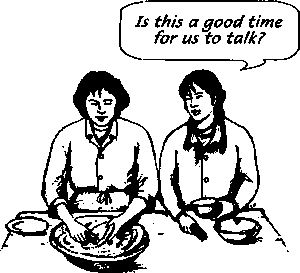
How mothers can help their daughters
You may have grown up in a time when girls were not allowed to have an education, plan their families, or make decisions about their lives. Life can be different for your daughter. If you listen to her, share your own experiences, and give her useful information, you can help her make her own good decisions. You can help her to see the good things about being a girl and a woman.
|
| ||||||||||||||||||||||||||||||||||||||||||||||||||||||||||||||||||||||||||||||||||||||||||||||||||||||||||||
Where Women Have No Doctor - A Health Guide for Women (Hesperian Foundation, 1997, 600 p.)
Chapter 6: Pregnancy and Childbirth
Most women in the world today do not get prenatal care or trained help during birth. They usually have their babies at home with the help of a local midwife or a family member. This chapter has information for both the pregnant woman and her helpers, about care during pregnancy, and care both during and after the birth.
For more complete information about caring for women in pregnancy and helping them with both normal and difficult births, see the Hesperian Foundation’s A Book for Midwives (for how to order it, see the last page of this book).
Figure
Every pregnant woman needs good health, good food, and the love and support of her family and community. Many women feel very healthy during pregnancy and do not have difficult births. Most babies are born healthy.
Without water, the crops would die; and without children, life in the community could not continue.
- Mixtec saying, Mexico
At the same time, pregnancy can be one of the main dangers a woman faces in her life. About half a million women die each year from problems of pregnancy and birth (this is also called maternal mortality), mostly in poorer countries.
Most of these deaths could be prevented with basic care. This chapter has information that can help pregnant women care for themselves, or help others care for them.
HOW TO TELL IF YOU ARE PREGNANT
· You miss your monthly bleeding.
· Your breasts feel sore and grow bigger.
· You feel sick to your stomach and sometimes vomit.
· You have to pass urine more often.
· You feel tired.
HOW TO KNOW WHEN THE BABY IS DUE
Add 9 months plus 7 days to the date when your last normal monthly bleeding began. Your baby will probably be born any time in the 2 weeks before or after this date.

Many women know when their
baby will be born by counting the passing of 10
moons.
Staying Healthy during Pregnancy
If you can take good care of yourself while pregnant, you are more likely to have a safe pregnancy and birth and a healthy baby.
· Try to eat enough nutritious foods. Good nutrition gives strength, prevents infection, builds a healthy baby, and helps prevent too much bleeding during birth. Remember that you are feeding both yourself and your baby. Use iodized salt to make sure your baby will not suffer from mental slowness.· Sleep and rest whenever you can. If you work standing up, try to sit or lie down several times during the day.

Figure
Do your daily work...

... but rest whenever you
can
· Go for prenatal (before-birth) check-ups to make sure there are no problems, and to find problems before they become serious. If you have never had a tetanus immunization, get one as soon as you can. Get at least 2 before the end of the pregnancy.
Figure
¨ Read about the ‘Danger signs during pregnancy’, to learn when it is important to see a health worker.
· Keep clean. Bathe or wash regularly and clean your teeth every day.· Practice squeezing exercises, so your vagina will be stronger after the birth.
· Try to get daily exercise. If you sit down at work, try to walk a little every day. But try not to tire yourself.
· Get treatment if you think you have a sexually transmitted disease (STD) or other infection.

Figure
· Avoid taking modern or plant medicines, unless a health worker who knows you are pregnant says it is OK.· Do not drink alcohol or smoke or chew tobacco during pregnancy. They are bad for the mother and can harm the developing baby.
· Avoid pesticides, herbicides, or factory chemicals. They can harm the developing baby. Do not touch or work near them, or breathe in their fumes. Never store food or water in their containers.
· Stay away from a child with a rash all over its body. It may be caused by German Measles, which can harm the baby.
¨ If there is malaria where you live, sleep under a bed net to avoid being bitten by mosquitos.
Common Problems during Pregnancy
When you are pregnant your body changes and you may have some of the following common problems. But remember, most of these problems are normal in pregnancy.
SICK STOMACH (NAUSEA)
Although it is often called ‘morning sickness’, during pregnancy you may feel sick to your stomach at any time during the day or even all day long. It usually goes away by the end of the 3rd or 4th month.
What to do:
· Drink a cup of ginger or cinnamon tea 2 or 3 times a day, before meals.· Eat small meals often, and avoid foods that are oily or hard to digest.
· Lick a lemon.
· Ask the midwives in your community for good local plant medicines or remedies.
|
To help with morning sickness...
... try eating a biscuit, a tortilla, a piece of bread, a chapati, or a little rice or porridge when you wake up in the morning. |
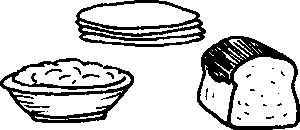
IMPORTANT
See a health worker if you vomit so
much that you cannot keep any food down, or if you are losing weight. Also watch
for signs of dehydration.
HEARTBURN OR INDIGESTION
Heartburn causes a burning feeling in the throat and chest. It is most common in later pregnancy, after eating or when lying down.
What to do:
· Eat several small meals instead of one large meal.
· Avoid spicy or oily foods.
· Drink plenty of water and other clear liquids.
· Try not to lie down right after eating.
· Sleep with your head higher than your stomach.
· Take a cup of milk or yogurt, some bicarbonate of soda in a glass of water, or calcium carbonate (antacid).
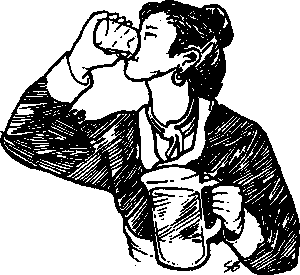
Figure
DISCHARGE FROM THE VAGINA
During pregnancy, it is normal to have more white discharge than usual from the vagina. But if the discharge itches, burns, or has a bad smell, you may have an infection of the genitals, which should be treated. If the discharge is bloody or has mucus in it, or if there is a lot and it looks like water, see a health worker. You may be starting labor too early.

Figure
SWOLLEN VEINS (VARICOSE VEINS)
Blue swollen veins in the legs and around the vagina are called varicose veins. They are caused by the weight of the growing baby. They can become quite large and painful.
What to do:
· Try not to stand up for too long. If you have to stand, walk in place or move your feet and legs. When you are sitting down, put your feet up as often as possible.· Be sure to walk every day. If you have a disability and cannot walk, ask someone in your family to help move and exercise your legs.
· If the problem is severe, wrap your legs with cloths. Begin wrapping at the ankles and work up to just below the knee. The bandage should be tighter around the ankle and looser further up the leg. Take off the bandages at night.
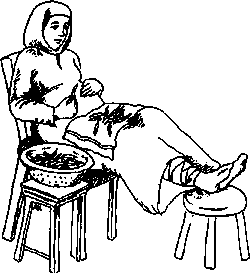
Women with swollen veins
should try to put their feet up when they can, and wrap their legs if the
swelling is very bad.
CONSTIPATION (DIFFICULTY PASSING STOOL)
Pregnancy makes the bowels work more slowly. This can make the stool harder, so it is more difficult to pass.
What to do (these things also help prevent constipation):
· Drink at least 8 glasses of liquid every day.· Get regular exercise.
· If you are taking iron tablets, try taking only one a day with fruit or vegetable juice. Or skip a few days.
· Eat plenty of fruits, vegetables, and foods with fiber - like whole grains and cassava (manioc) root.
· Do not take laxatives. They only solve the problem for a short while and then you need to take more.
PILES (HEMORRHOIDS)
Hemorrhoids are swollen veins around the anus. They often itch, burn, or bleed. Constipation makes them worse.
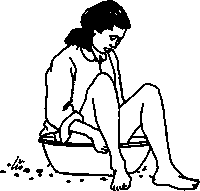
If you have hemorrhoids,
sitting in cool water can help with the pain.
What to do:
· Sit in a basin or pan of cool water to relieve the pain.· Follow the advice above for preventing constipation.
· Soak some clean cloth in witch hazel (a liquid plant medicine) if you can find it, and put it on the painful area.
· Kneel with your buttocks in the air. This can help relieve the pain.

Figure
LEG CRAMPS
Pregnant women often get foot or leg cramps - especially at night, or when they stretch or point their toes down. Leg cramps may be caused by not enough calcium in the diet.

Figure
What to do:
· Eat plenty of foods that contain calcium, such as milk, cheese, sesame seeds, and green leafy vegetables.· If your foot or leg cramps:

Figure
LOW-BACK PAIN
Low-back pain is caused by the weight of the growing baby.
What to do:
· Ask someone to rub or massage your back.
· Ask your family for help with some of the heavy work.
· Take care to stand and sit with your back straight.
· Sleep on your side with a pillow or rolled up cloth between your knees.
· Do the ‘angry cat’ exercise for a few minutes, 2 times each day, and whenever your back hurts.

Figure
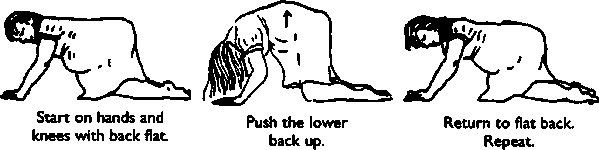
Angry cat exercise
SWELLING OF THE FEET AND LEGS
Some swelling of the feet is normal during pregnancy - especially for women who must stand all day.
What to do:
· Put your feet up as often as you can during the day.· When resting, lie on your left side.
· If your feet are very swollen, or they are swollen already when you wake up in the morning, or your hands and face also swell, these are signs of danger during pregnancy.

Figure
Risks and Danger Signs during Pregnancy
WOMEN WHO HAVE EXTRA RISKS
Women with any of the following problems can have more dangerous pregnancies and births. They should plan to go to a health center or hospital for the birth. If possible, they should try to get prenatal care during pregnancy.
· Weak blood (anemia) makes a woman more likely to bleed heavily (hemorrhage) during birth, become ill after childbirth, or even die.· Sugar sickness (diabetes) often causes very serious problems for the mother and the baby. The baby can die before birth or sometimes grows very large and gets stuck in the pelvis.
· High blood pressure can lead to severe headaches, fits, and even death.
· Older mothers who have had many babies often have long, difficult labors, and heavy bleeding after the birth.
· Mothers under the age of 17 are more likely to have toxemia (which causes fits), long, difficult labors, babies born too early (premature), and blocked births, which may damage the bladder, vagina, and womb.
· Mothers who had problems with past pregnancies - such as fits, birth by operation, heavy bleeding, a too-early or too-small baby, or a baby born dead - are more likely to have problems in another pregnancy or birth.
· Women with disabilities, especially women with a loss of feeling in the body or difficulty walking, can have problems during both pregnancy and birth.

A woman who is likely to have a
dangerous birth should plan to have her baby in a health center or
hospital.
|
Other women who should try to give birth at a health center or hospital Some women - who have none of the extra risks listed above - are still likely to have dangerous births. These women should also try to give birth at a health center or hospital: · A woman with a baby in the wrong position for birth at the end of pregnancy can have a long, difficult labor. The mother, the baby, or both may die. · Women who have been infibulated can have severe tearing of the genitals during the birth. This can cause great pain, heavy blood loss, and infection. |
|
|
DANGER SIGNS DURING PREGNANCY In addition to the problems just listed, these danger signs may occur during pregnancy. A woman with any of these signs may be in serious danger and should see a health worker See the next few pages for more about them. · feeling very weak or tired · swelling of hands and face, or bad headache and blurred eyesight |
|
Feeling very weak or tired (anemia)
If you feel very weak or tired, you could be anemic. Women who are very anemic are much more likely to have heavy bleeding after the baby is born.

Figure
What to do:
· Eat foods rich in iron - meat, fish, chicken, eggs, beans, peas, and leafy green vegetables.· Take 325 mg of iron 2 times a day, and 1 mg of folic acid once a day, until the baby is born. If you take iron tablets with fruits like oranges, mangoes, or papayas, your body uses the iron better.
Figure
Pain in the lower belly (abdomen)
1. Strong, constant pain in the first 3 months may be caused by a pregnancy that is growing outside the womb in the tube, (a tubal pregnancy). As the tube stretches, it causes pain. If the pregnancy grows large enough, the tube will burst and bleed. This is very dangerous. You will bleed inside your abdomen and may die.
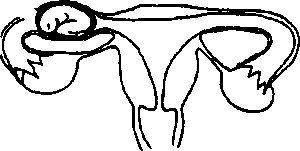
Figure
Signs of tubal pregnancy:
· missed monthly bleeding, and
· pain in the lower abdomen on one side, and
· slight bleeding from the vagina
· feeling dizzy, weak, or faint

Figure

What to do:
Go to the nearest hospital.
¨ Strong pain in the abdomen does not always mean something is wrong with a pregnancy. For information about other possible causes, see Pain in the Lower Abdomen.
2. Strong pain that comes and goes (cramping) in the first 6 months could mean you are losing the pregnancy (having a miscarriage).
3. Strong, constant pain in late pregnancy. This could mean the afterbirth (placenta) is coming off the wall of the womb. This is very dangerous. You could die if you do not get help. Go to the nearest hospital.
4. Pain that comes and goes in the 7th or 8th month could mean you are going into labor too early.
Bleeding from the vagina
1. Bleeding early in pregnancy. Light bleeding from the vagina during the first 3 months of pregnancy can be normal. But if you have pain with the light bleeding, it could mean a pregnancy is developing outside the womb, which is very dangerous. If the bleeding gets heavier and stronger than a normal monthly bleeding, you are probably losing the pregnancy (having a miscarriage).

Figure
2. Bleeding later in pregnancy. Bleeding after the first 3 months can mean there is something wrong with the afterbirth (placenta). Both you and the baby are in danger.
What to do:
· Go to the nearest hospital.
· On the way, lie down with your feet up.
· Do not put anything in your vagina.
Fever
High fever, especially along with shivering, body aches and severe headache, can be caused by malaria. Treatment for malaria depends on where you live. See Where There Is No Doctor for more information.
Swelling of the hands and face or severe headache and blurred vision (toxemia)

Figure
Some swelling in the legs and ankles is normal in pregnancy. But swelling of the hands and face can be a sign of toxemia, especially if you also have headaches, blurred vision, or pains in your abdomen. Toxemia can cause fits, and both you and the baby can die.
What to do:
· Find someone who can check your blood pressure. Go to a health center or hospital if necessary.· Rest as often as possible, lying down on your left side.
· Try to eat more foods with a lot of protein every day.
· Plan to have the birth in a health center or hospital.

Figure
|
Danger signs of toxemia · swollen hands and
face |
IMPORTANT
If a woman has any of the
danger signs of toxemia, she needs medical help fast If she is already having
fits.
BABY IN THE WRONG POSITION WHEN LABOR STARTS
If the baby is buttocks first (breech) when labor starts, the birth can be more difficult. If the baby is lying sideways when labor starts, the baby cannot be born without an operation.
¨ If the baby’s head is down, the birth is more likely to go well.
|
Positions that cause difficult or dangerous births
If the baby’s head is up, the birth may be more difficult. It may be safer for the mother to give birth in a hospital.
If the baby is lying sideways, the mother should give birth in a hospital. She and the baby are in danger. Birth may not be possible without an operation. |
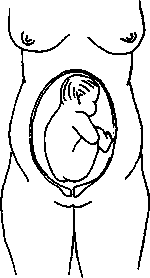

During the last month of pregnancy, it may be possible to change the baby’s position by lying in this position for 10 minutes, 2 times a day:
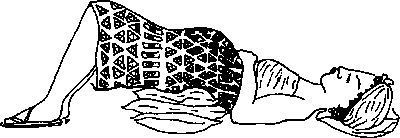
Lie on the floor with pillows
under the hips. Try to get the hips higher than the head.
Do this exercise every day with an empty stomach, until the baby changes to a head-down position and then stop. The baby’s position should be checked each week.
· If labor starts and the baby is still sideways, the mother must go to a health center or hospital where the baby’s position can be changed, or where she can have an operation. Without medical help, the mother and her baby will almost certainly die.· If labor starts and the baby is still buttocks first.
IMPORTANT
DO NOT try to change the baby’s
position by hand yourself unless you have been trained to do it and have done it
before successfully. You can tear the womb and harm both the mother and the
baby.
|
IF LABOR STARTS TOO EARLY (BEFORE THE 8TH OR 9TH MONTH) Some babies born too early might not live. A woman may be able to slow or stop labor by lying in bed with her hips raised, and resting until the labor stops (see the picture above). If she can go to a hospital, they may be able to stop the labor. Even if they cannot stop the labor, they can sometimes keep the baby alive. |
Prenatal Care (Check-ups during Pregnancy)
Prenatal check-ups are important to find and take care of problems early - before they become dangerous. Good prenatal care is not difficult to give and does not require very expensive equipment. Many birth attendants, midwives and health centers, as well as hospitals, can give this care. It can save many lives.
If you are pregnant, try to have at least 3 check-ups:
1. As soon as you think you are pregnant.
2. Around the 6th month of pregnancy.
3. A month before the baby is due.
¨ Prenatal check-ups can help you decide the best place to have your baby: at home, or at a health center or hospital.
A midwife, birth attendant, or health worker will ask about past pregnancies and births, including any problems, such as a lot of bleeding or babies that died. This information can help you both prepare for similar problems in this pregnancy and birth. A midwife may also be able to:
· make sure a woman is eating well enough and suggest ways for her to eat better food, if necessary.· give iron and folic acid tablets, which help prevent anemia.
· examine the mother, to make sure she is healthy and that the baby is growing well.
· give vaccinations to prevent tetanus, a disease that can kill both mothers and babies.
· give medicine to prevent malaria if it is common in the area
· give tests for HIV and syphilis, along with other sexually transmitted diseases.
|
What to expect at a prenatal check-up A birth attendant or midwife should do these things at a prenatal check-up: · Check the eyelids and finger nails for signs of anemia.
· Check the hands and face for swelling.
· Check blood pressure.
· Check the growth of the baby in the womb. Normally the womb will grow 2 fingers each month. At 4° months it is usually at the level of the navel. If the womb seems too small or too big or grows too fast, it may mean there is a problem.
|
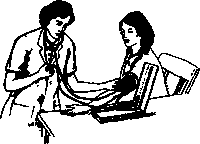
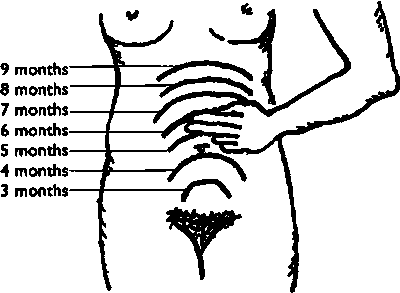
To check whether the baby is healthy, a midwife may listen for the baby’s heartbeat. It may be possible to hear it by putting one ear against the woman’s abdomen, but often you cannot tell the baby’s heartbeat apart from the mother’s. It is easier with a fetoscope. Another sign the baby is healthy is if the mother feels the baby move every day, and if she has felt it move on the day of the check-up.
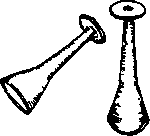
fetoscope
|
Checking the baby’s position During pregnancy, it is common for a baby to change position several times in the womb. By the end of the pregnancy, the baby should be lying in the womb with its head down. This is the best position for birth. To make sure the baby is head down, feel for the head like this: 1. Have the mother breathe out all the way. Using both hands, feel the baby.
2. Push gently from side to side, first with one hand, then with the other. At the same time, feel what happens to the baby’s body with the other hand as you push.
3. Just before birth, a baby will move lower in the womb to get ready for birth. So, late in pregnancy, you may not be able to feel the baby’s head move.
|

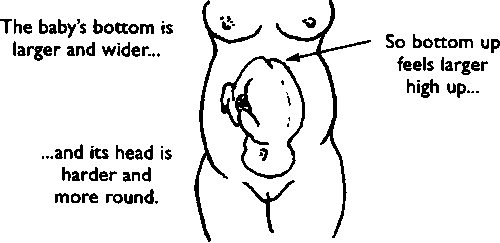
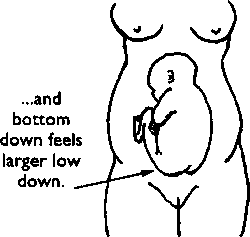
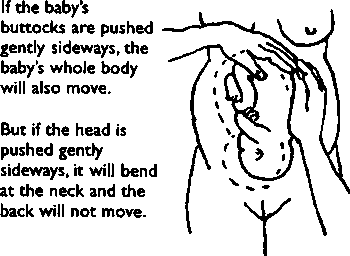
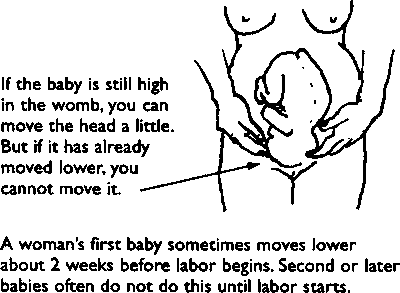
Preparing for Labor and Birth
THINGS TO HAVE READY BEFORE BIRTH
A pregnant woman should have these things ready by the seventh month of pregnancy:
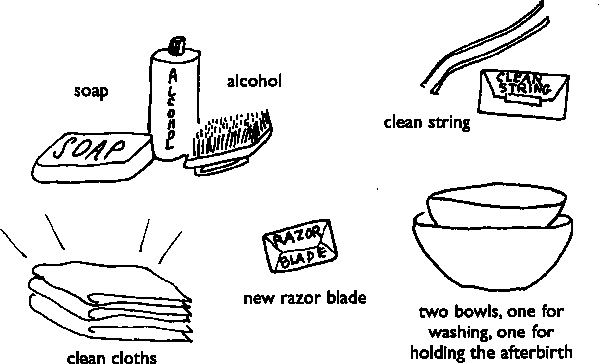
Figure
¨ If you do not have a new razor blade, you can use rust-free scissors or a knife if you boil them for 20 minutes just before cutting the cord.
|
These are some additional supplies a midwife or birth attendant may have:
|
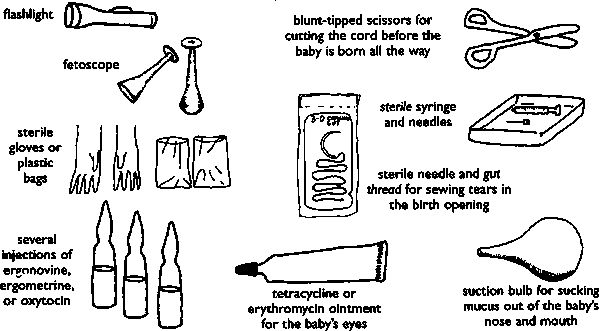
This is also the time to:
· plan transportation in case you need to go to the hospital.
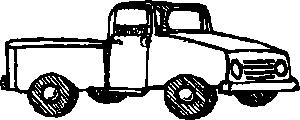
Figure
· clean the birth place.
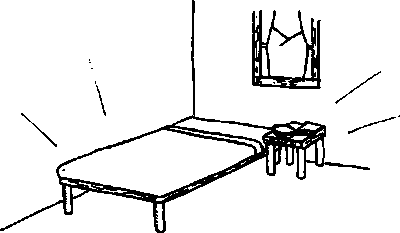
Figure
HELPING A WOMAN GIVE BIRTH
If you are pregnant, read this information to know what to expect during labor and after the baby is born. It will also make you better able to help other women during birth.
If you are helping a woman give birth, you can make a big difference in helping her have a safe and healthy birth. Remember that most babies are born without problems.
Stay calm and cheerful. Reassure the mother so that she will not be afraid. Let her know that you trust her ability to give birth.

Figure
DO
· Keep your nails clean and cut short.· Wash your hands with soap and clean water. Let them dry in the air.
· Know which women have extra risks and learn the ‘Danger Signs during Pregnancy’. Make sure the mother gives birth in a health center or hospital if she has any of these risks or danger signs.
· Learn the ‘Danger Signs during Labor’. Take the woman to a hospital if she has any of these signs.
· Treat her with kindness and respect.
¨ For safe childbirth practice the 3 cleans:
1. Clean hands
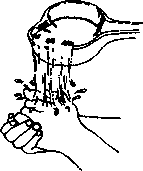
Figure
2. Clean place to give birth

Figure
3. Clean tool to cut the cord

Figure
IMPORTANT
Protect yourself from HIV and
hepatitis by wearing clean gloves during a birth. If you do not have gloves, use
washed plastic bags.
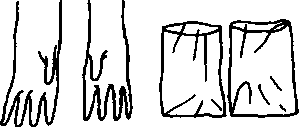
Figure
DO NOT
· Do not put your fingers or anything else in the woman’s vagina. Checking how much the womb has opened does not help the baby to be born, and may cause a dangerous infection.· Do not give any medicine to speed up labor or to make labor stronger. These medicines can kill the mother and the baby. (Medicines that cause the womb to contract should only be used to stop bleeding after the baby is born.)
· Do not tell her to push before she is ready. When it is time for the baby to be born, she will feel like she has to pass stool and will start pushing on her own.
· Do not push on the outside of her womb to make the baby come out faster This can tear her womb or cause the placenta to separate from the womb too soon. Both the mother and the baby can die.
Giving Birth
Signs that labor is near
These 3 signs show that labor is starting or will start soon. They may not all happen, and they can happen in any order.
1. Clear or pink-colored mucus comes out of the vagina. During pregnancy, the opening to the womb (cervix) is plugged with thick mucus. This protects the baby and womb from infection. When the cervix starts to open, it releases this plug of mucus and also a little blood.
2. Clear water comes out of the vagina. The bag of waters can break just before labor begins, or at any time during labor.
3. Pains (contractions) begin. At first contractions may come 10 or 20 minutes apart or more. Real labor does not begin until contractions become regular (have about the same amount of time between each one).
When any one of these signs occurs, it is time to get ready for the birth. Here is a list of things you can do:
· Let your midwife know that labor is starting.· Make sure that the supplies for the birth are ready.
· Wash yourself, especially your genitals.
· Continue to eat small meals and drink whenever you are thirsty.
· Rest while you can.
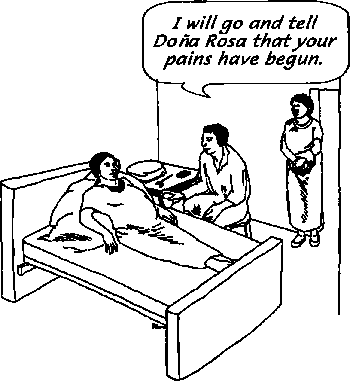
Figure
The 3 stages of labor
Every birth has these 3 parts.
Stage 1 begins when contractions start to open the cervix and ends when the cervix is fully open. When it is the mother’s first birth, this stage usually lasts 10 to 20 hours or more. In later births, it often lasts from 7 to 10 hours. It can vary a lot.
Stage 2 begins when the cervix is open and ends when the baby is born. This stage is usually easier than Stage 1, and should not take more than about 2 hours.
Stage 3 begins when the baby is born and ends when the placenta comes out.
Stage 1: The cervix opens
To make sure that labor is going well, check:
1. How long has the woman been having contractions and how often do they come? At first, they may come every 10 or 20 minutes and last for a minute or less. After some time they will come more quickly - about every 2 to 5 minutes - and each one will last longer, about a minute and a half, until the baby is born. If she has had a contraction every 10 minutes or faster for more than 1 day and 1 night (24 hours) and the baby is not ready to be born, see ‘Too long labor’.2. Have her waters broken? If they have, ask when. If it has been more than a day, see ‘Waters break and labor does not start in a few hours’. If the waters are green or brown, see ‘Green or brown waters’.
3. Is the baby in a head-down position? Feel the mother’s abdomen. If the baby is sideways or breech, you must take her to a health center or hospital.
Figure
You can also help the mother by reassuring her that she is doing well and by encouraging her to:
· stay active.
· eat light foods, not heavy or oily foods.
· drink as much sweet liquid and warm tea as she wants.
· pass urine often.
· take deep, slow breaths during contractions, and to breathe normally between them.
· not push until she feels a strong need to push.
Walking helps the womb open.
It can also make the pain less and help the mother feel calmer.
|
During labor, let the woman choose the most comfortable positions. For many years, doctors and some midwives asked women to lie on their backs, but this is often a difficult position for going through labor and giving birth. Encourage a woman in labor to try different positions. Most women find it easier to push the baby out when they are kneeling, squatting or sitting propped up.
|
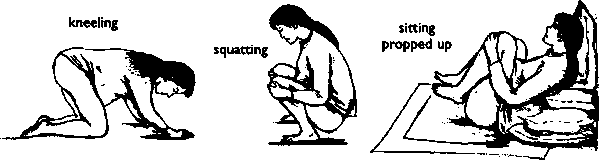
Stage 2: Pushing the baby out
Signs that it is time to push (this means the cervix is fully open):
· The mother feels a strong need to push. It may feel like needing to pass stool.· During contractions, you can see the mother’s bottom bulging and you may see the baby’s head at the opening of the vagina. At first, the baby’s head moves back inside between contractions.
What to do:
· Stay with the mother all the time and reassure her that she and the baby are doing well.· Each contraction will come with a very strong urge to push. When the mother feels like pushing, have her take a deep breath and push as if she were passing stool, but with all her strength. Many women find it helpful to moan or groan in a deep voice with the pushes.
· Make sure that everything is going well and is ready for the birth. If the woman has been pushing for more than 2 hours, see Too-long labor,’.

Figure
Birth of the head
When the baby’s head stays at the opening of the vagina, even between contractions, it is time for the head to be born:
1. Tell the mother not to push hard, but to give little grunts or little pushes.2. Allow the head to come out slowly, between contractions. This will help to prevent the mother’s skin from tearing.
3. After the head is born, wipe the baby’s mouth and nose with a clean cloth.
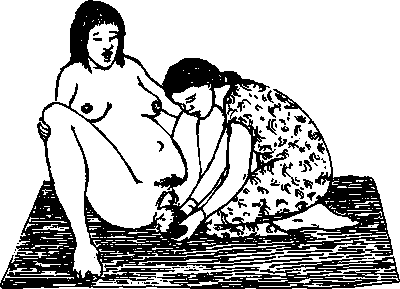
Figure
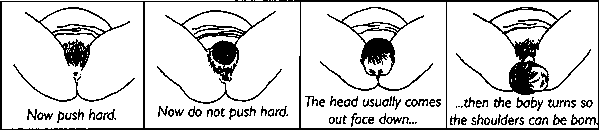
Figure
Birth of the shoulders
To help the shoulders come out:
1. Gently hold the baby’s head and guide it toward the mother’s back (away from her abdomen). This lets the front shoulder be born first Never pull or twist the head.2. The rest of the baby will then come out easily. Be ready! Hold the baby so it does not fall.
Care of the baby at birth
A healthy baby will start breathing, move its arms and legs, and start crying right away. To care for the baby:
· Wipe its mouth and nose with a clean cloth. To help the mucus drain, keep the baby’s head lower than its body. If there is a lot of fluid or mucus, remove it with a suction bulb.· Give the baby to the mother right away. Put a clean cloth around both of them. Do this as soon as possible so the baby stays warm.
· Put the baby to the mother’s breast immediately. When the baby sucks, the mother’s womb tightens and stops the bleeding. This will also help the placenta come out more quickly.
· Tie and cut the cord only when it turns white and stops pulsing. To prevent tetanus, a serious disease that kills many babies, cut the cord close to the baby’s body.
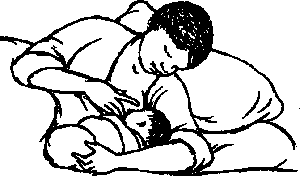
Figure
|
To cut the cord: 1. When the cord stops pulsing, put 2 clean ties around it, using square knots. Put one tie about 2 finger widths from the baby and put the other one about 2 more finger widths farther from the baby.
2. Cut the cord between these 2 ties with a new razor blade. If you must use something else to cut the cord, make sure it has been boiled for 20 minutes.
IMPORTANT |

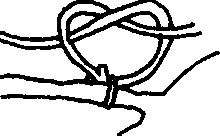
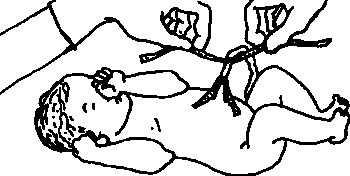
Care of the eyes
To prevent infection from gonorrhea, put 1% tetracycline, erythromycin, or chloramphenicol eye ointment in each eye within an hour of birth.
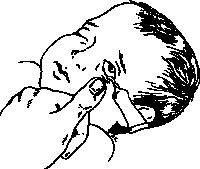
Pull down the lower lid to put
a little bit of ointment inside. Putting ointment outside the eye does no
good.
Figure
Stage 3: The placenta comes out
When the baby is wrapped and at the mother’s breast, it is time for the placenta to come out.
Watch the vagina to see when the cord gets longer. This means the placenta is separating from the womb. Also watch to make sure there is no heavy bleeding. When the cord lengthens, tell the mother to push out the placenta. Do not pull on the cord.
If the placenta does not come out right away and there is no bleeding, it is OK to wait up to 1 hour.
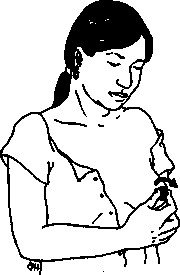
Rolling the nipples can help
the womb contract and stop bleeding.
To help the placenta come out:
· Have the mother squat and push. If she cannot push, have her blow into a bottle, sneeze, or cough.· Ask the mother to pass urine.
· Encourage the baby to nurse, or have someone roll the mother’s nipples. This will help make her womb contract.
· If nothing else works, give her an injection of 10 milligrams of oxytocin in her hip or thigh.
· If the mother starts to bleed.
Check the placenta
Usually the placenta comes out whole, but sometimes a piece gets left inside. This could cause bleeding or infection later. To see if everything has come out, check the top and bottom of the placenta, and the membranes from the bag of waters.
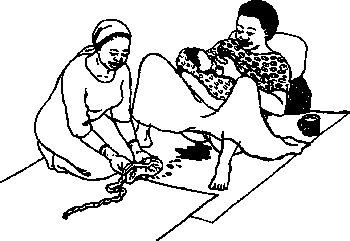
Figure
¨ When the placenta is out, put it in a bowl and check it to make sure it is all there.
If the mother is bleeding, or there seems to be a piece of the placenta or membranes missing, follow the instructions for too much bleeding.

Figure
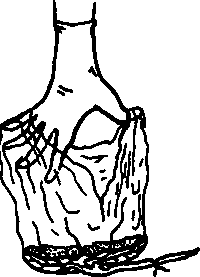
Try to make sure the membranes
are all there. You should be able to imagine them fitting together as a
sack.
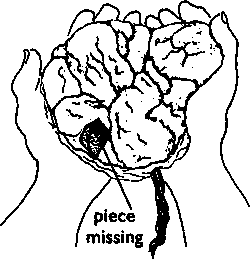
Figure
Danger signs during labor
|
· waters break but labor does
not start |
Waters break but labor does not start
Most women will start labor within 24 hours after their waters break. If labor has not started after 1 day and 1 night, the woman and her baby could get a serious infection.
DANGER!! Do not use injections to start labor. They can cause contractions that are so strong that they can kill the woman or the baby.
What to do:
· The mother must not put anything in her vagina. She should not have sex. This could cause an infection.· If she has a fever or there is a bad smell in the vagina, an infection is starting. She needs intravenous (IV) antibiotics. Even if labor starts, the woman and her baby could die. Go to a health center or hospital.
· Try to get labor started. The woman should swallow 2 tablespoons of castor oil, roll her nipples, or have someone suck them for a while every few hours until labor starts. There may also be special local teas that women use to start labor. If labor still does not start after a few more hours, she should go to a health center or hospital.
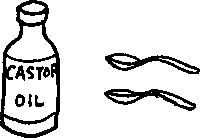
Figure
Baby lying sideways (transverse)
If labor has started and the baby’s arm comes out first, it almost always means the baby is sideways. Check the baby’s position. A baby lying sideways cannot be born without an operation. Do not try to change the position of the baby once labor has started. This can tear the womb or separate the placenta from the womb wall.

Figure
What to do:
Take the mother to the hospital.
Bleeding before the baby is born
Some light, pink-colored fluid, or mucus and brown blood during labor is normal. But if the mother is bleeding bright red blood, it could mean that the placenta is separating from the womb wall or is covering the opening of the womb. This is very dangerous.
What to do:
Take the mother to the hospital right away. If possible, start an IV and give her IV fluids.
Too-long labor
If the mother has been in good strong labor for more than 1 day and 1 night, or she has been pushing for more than 2 hours without any signs that the baby will be born soon, there may be a problem.
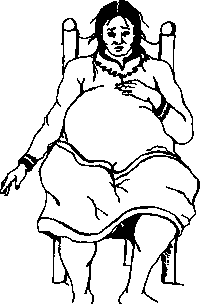
A woman in labor should not
see the sun rise twice. - Proverb from Niger
What to do:
If her contractions are not coming every 2 or 3 minutes and lasting for a full minute, she may not be in good labor yet. Encourage her to sleep. If she cannot sleep, ask her to roll her nipples and walk between contractions to help labor get stronger. Encourage her to drink and eat light foods. Fruit juices or tea with sugar can give her energy.If the mother is getting exhausted and she has been in labor for more than 24 hours, or has been pushing for more than 2 hours, take her to a health center or hospital. She may need medicines to help her labor or an operation for the baby to be born.
Green or brown waters
Brown or green waters can mean that the baby is in trouble.
What to do:
If it is still early in labor or if the mother has not started pushing, it is best for this baby to be born in a hospital.If the mother is in Stage 2 of labor and the baby is going to be born soon, have the mother push as hard as she can and get the baby out quickly. As soon as the baby’s head is born, wipe its mouth and nose with a clean cloth or use a suction bulb to suck the mucus out. Keep the baby’s head lower than its body to help the mucus come out.
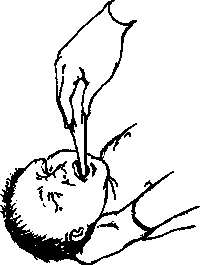
Figure
Fever
Fever is usually a sign of infection.
¨ A woman who is only a little warm may just need to drink more fluids.
What to do:
Touch the woman’s forehead with the back of one of your hands, and touch your own forehead with your other hand. If she feels a little warmer than you, she may just need fluids. Give her plenty of water, tea, juice, or soda pop. Remind her to pass urine every few hours.If she feels very hot to touch and she has chills, take her to a health center or hospital. She needs antibiotics right away. Give ampicillin, 500 mg by mouth every 6 hours, or inject 1.2 million Units of procaine penicillin into her buttock or thigh, every 12 hours until you can get to a hospital.
Fits, or very swollen hands and face (toxemia)
Figure
If the mother starts to have a fit:
· Put something under her head to protect it, and put her on her left side if possible. But do not try to hold her down.· Keep her cool.
· Send someone to get emergency transportation and take her to the nearest hospital.
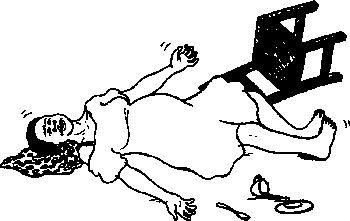
Figure
If possible, give one of the following medicines:
· magnesium sulfate, 50% solution. Inject 10 ml into each buttock muscle once. Repeat after 4 hours if needed.· diazepam.
¨ For more information about these medicines, see the “Green Pages.”
|
How to give diazepam A woman having fits cannot swallow pills, and diazepam may not work well when injected into a muscle during a fit. So it is usually best to put either liquid (injectable) diazepam or diazepam pills that have been crushed and mixed with water into the mother’s rectum. Liquid diazepam. Give 20 mg after the first convulsion. If there are other convulsions, give 15 mg after each one. To give liquid diazepam, first load a syringe and then TAKE OFF the needle.
Put the barrel of the syringe gently into the rectum about 2 inches and empty it inside. Hold the barrel of the syringe in place for at least 5 minutes. It will act as a plug to keep the medicine from coming out. If some fluid leaks out of the anus, it is OK to give 5 mg more.
Diazepam pills. If you only have diazepam pills, you can crush them and mix them with water. The pills will not completely dissolve. Crush 20 mg of pills. To give the pills, draw the water and pill mixture up into a syringe with the needle already removed, and put it into the rectum - the same as above. |

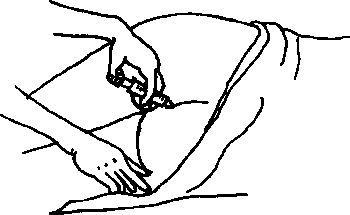
Difficult Births
Cord comes out before the baby
If the cord comes out before the baby’s head, the cord gets squeezed when the head comes down. The baby can die or get brain damage from too little oxygen.
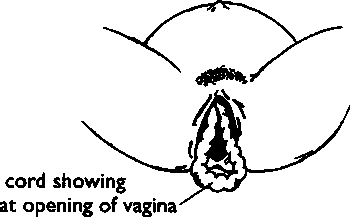
Figure
What to do:
If the baby is coming very fast and is almost born, have the mother push as hard as she can in a squatting position and get the baby out.
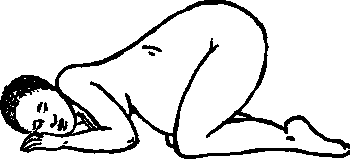
Figure
If the baby is not coming quickly, put the mother in the knee-chest position, help her to stop pushing, and get her to a hospital. The baby needs to be born by operation.
|
Baby’s shoulders get stuck If a baby is very big, the shoulders can sometimes get stuck after the head is born. The baby can die or be harmed if it is not born soon. What to do: 1. Have the mother get on her hands and knees, and push. The stuck shoulder will usually slip out and the baby can be born.
2. If the hands-and-knees position does not work, bring the mother’s bottom to the edge of the bed. Ask her to pull her knees back as far as she can while someone else pushes straight down just above the mother’s pubic bone. Have the mother push as hard as she can during her next contraction. DO NOT try to pull the baby out. This can hurt or kill the baby.
3. If the baby still does not come out, slide your hand along the baby’s neck until your fingers are touching the baby’s back. Push the baby’s upper shoulder forward at the same time the mother pushes with a contraction.
IMPORTANT |

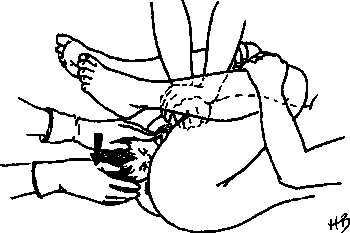
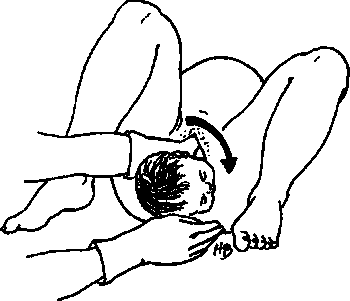
Twins
When a mother is carrying more than one baby, it is best for her to give birth in a health center or hospital. It is more likely that one baby will be in a wrong position, or that there will be heavy bleeding after the birth. But if you must help a woman give birth to twins here is what to do:
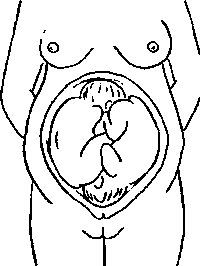
Figure
What to do:
1. Deliver the first baby just as you would any single baby.2. When you cut the first baby’s cord, carefully tie the end that is coming out of the mother. If you do not, the second baby could die.
Figure
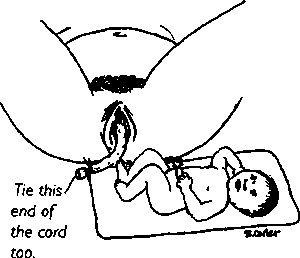
Figure
3. DO NOT give any injections.4. Give the first baby to the mother to begin breastfeeding. This will help get the second baby born.
5. The second baby should be born within 15 to 20 minutes. Feel for its position. If the second baby is sideways, you can gently try to turn it If it will not turn easily, you must go to the hospital.
Cord around the baby’s neck
Sometimes the cord is wrapped around the baby’s neck. Usually you can just loosen the cord and slip it over the baby’s head or shoulder.

Figure
If the cord is very tight and seems to be holding the baby back, you may have to tie the cord in 2 places and then cut it. Use clean string and clean scissors. Be careful not to cut the baby or the mother.
Breech birth
A breech birth is when the baby comes out buttocks first. If this is a first baby, it may be best for the woman to have the baby in the hospital. If she stays at home, try to have an experienced midwife or doctor there to help her.
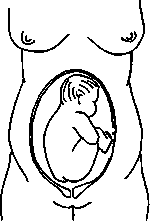
Figure
|
What to do for a breech birth: 1. Help the mother keep from pushing until you see the baby’s bottom at the vagina. It is very important for the cervix to be fully open. 2. Have the mother get into a standing squat position.
Or if the mother is unable to squat, help move her bottom to the edge of the bed as soon as the baby’s legs or bottom come out.
3. Encourage her to push the rest of the baby’s body out slowly. The legs usually fall out but you may need to put your fingers inside the mother to bring them out.
4. Gently loosen the cord a little so it does not get pulled tight later. If the cord is still under the mother’s pubic bone, move the cord to the side where the flesh is softer.
5. Wrap the baby’s body in a dry warm cloth. This will help you hold the baby better and will keep the baby from trying to breathe before the head is born. (In the rest of the pictures, we will not draw the towel. This is so that you can see better. But in a real birth, keep the baby wrapped while you deliver it.)
6. Have a helper put pressure on the mother’s pubic bone (not her abdomen). This is to keep the baby’s head tucked to its chest, not to push the baby out. Carefully guide the baby’s body down to deliver the top shoulder. Hold the baby by the hips or legs. Be careful! Pressure on the baby’s back or abdomen can injure its insides!
You may need to put your fingers inside the mother to bring the arms out. Try to grasp the arms by following them down from the shoulder. Bring the arm across the chest by gently pulling on the elbow. Deliver the top shoulder.
7. Carefully lift the baby to deliver the back shoulder.
8. The baby now needs to turn so it faces down towards the mother’s bottom. You may wish to support its body with your arm, placing your finger in the baby’s mouth to help the head stay tucked. This is because when the baby’s chin is tucked to its chest, it passes more easily through the hip bones.
9. Lower the baby until you can see the hairline on the back of the neck. Do not pull the baby! Do not bend the neck or it may break!
10. Keep the baby’s head tucked in while you raise the body to deliver the face. Let the back of the head stay inside the mother.
11. The mother should relax, stop pushing, and ‘breathe’ the baby out. The back of the head should be born slowly. If it comes too fast, the baby could bleed in the brain and die or be damaged.
|
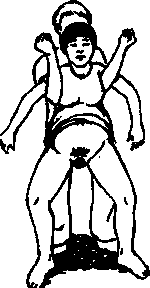

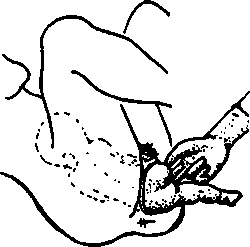
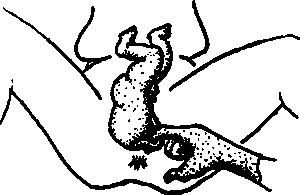


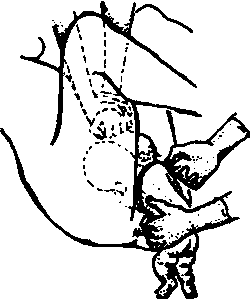
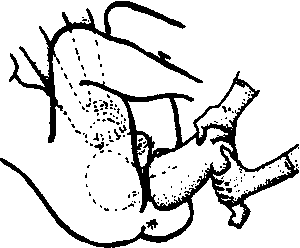
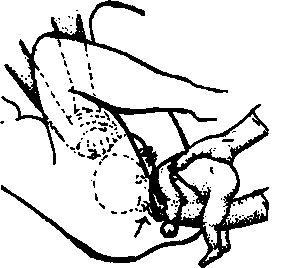
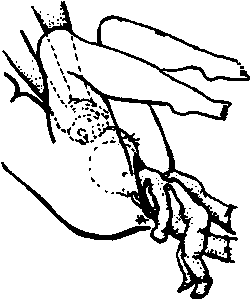
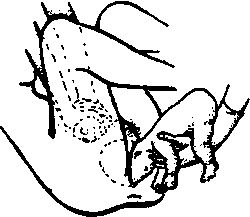

Too much bleeding (hemorrhage)
It is normal for a woman to bleed a little after childbirth. But bleeding is a serious problem if it does not stop within an hour after birth, or if there is a lot of blood - more than 2 cupfuls, or enough to soak through 2 thick rags in an hour.

Figure
What to do:
1. Send for emergency help.
2. While you are waiting do the following.
For too much bleeding before the placenta comes out:
· Ask the mother to squat and push the placenta out.· Ask her to pass urine.
· Put the baby to the mother’s breast to start suckling. If the baby will not suckle, have the mother roll her nipples or have someone else suck on her breasts. This will help her womb contract and push the placenta out.
· If you have it, you can also give 10 mg oxytocin by injection in the buttock or thigh.
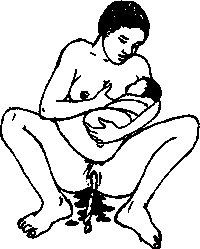
Figure
|
If the mother is too weak to deliver the placenta herself or if she is bleeding so heavily she becomes faint, you may need to help guide the placenta out. Only do this if you believe the woman’s life is in danger. First look for signs that the placenta has separated. 1. Mark the cord by tying a clean string around it about a hand’s width from the opening of the vagina. 2. Put one hand on the mother’s abdomen just above her pubic bone. Wait until her womb feels hard and then push upward toward her head. 3. If the string you tied to the cord moves toward the mother, the placenta is probably still attached to the womb. Take the mother to the nearest hospital. If the string on the cord does not move, the placenta may be lying in the vagina and you can try to help guide it out. 4. With your other hand, hold the cut end of the cord (a dry cloth will help), and pull slowly and firmly. Do not pull hard. If you do not feel the placenta moving down, STOP. 5. When the placenta comes out, rub the top of the womb with one hand until it stays very hard. At the same time, push the bottom of the womb upward with your other hand. 6. Give fluids either in the vein (IV) or in the rectum. If the placenta does not come out and the mother continues to bleed, take her to a health center or hospital. |
If the bleeding starts after the placenta comes out:
· Ask the mother to pass urine.· Keep the mother lying down and put the baby to her breast. If the baby will not suckle, try rolling the mother’s nipples. This will make the womb contract and stop bleeding.

Rolling the nipples can help
the womb contract and stop bleeding.
· Firmly rub the top of her womb at the level of her navel until the womb becomes hard. Keep rubbing until the bleeding has stopped.
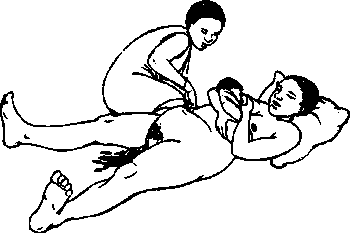
Figure
· If the womb does not become hard after a few minutes of rubbing, or if bleeding continues, give ergometrine, 0.2 mg by mouth, or 0.5 mg by injection in her buttock or thigh. If she is still bleeding after 10 minutes, give the same amount of ergometrine again.

Figure
If the mother continues to bleed, take her to the health center or hospital. Send 2 family members with her to give blood if needed. In the meantime, watch her for signs of shock.
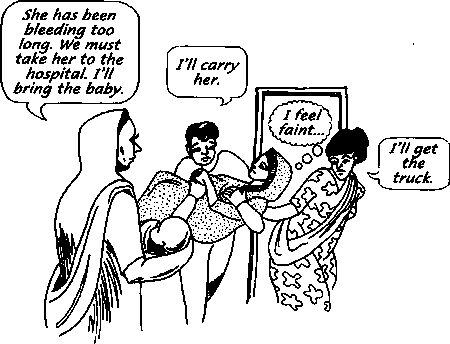
Figure

Figure
Danger Signs for the Baby at Birth
Baby born too early or too small
A baby born before 9 months is born too early. A baby that weighs less than 2500 grams or 5 pounds is born too small. These babies need special care.
Treatment:
1. Dry the baby with a warm, clean cloth immediately after birth.2. Put the naked baby against the mother’s body. Cover the baby with many warm cloths or blankets. Make sure the head is covered and the room is warm.
3. Put the baby to the mother’s breast. Small babies need to nurse at least every 2 hours.
4. DO NOT bathe the baby. It must stay warm.
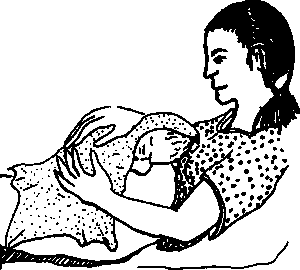
Keep baby warm and
dry.
Figure
|
Baby does not breathe A baby must begin to breathe on its own within 2 to 3 minutes after the cord becomes white or the placenta separates from the womb wall. If the baby does not start to breathe, it can suffer serious brain damage or die. What to do: Clear the baby’s mouth and nose, and firmly rub its back and feet. If the baby still does not start to breathe, do rescue breathing: 1. Lay the baby on a hard surface, like a table or the floor
IMPORTANT |
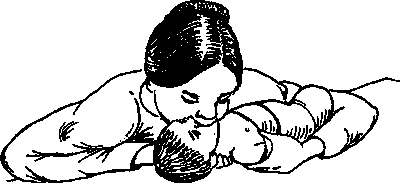
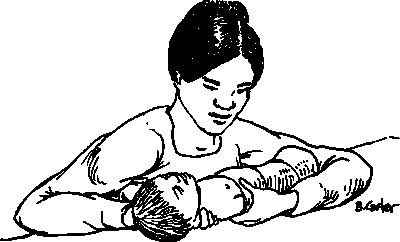
Caring for the Mother and Baby after Birth
CARING FOR THE MOTHER JUST AFTER THE BIRTH
Encourage the mother to breastfeed her baby, which will help her to stop bleeding sooner. Also:
· Feel the top of the mother’s womb. It should be hard and rounded, at about the level of her navel. If the womb feels soft, ask the mother to pass urine, then rub her womb until it gets hard. Keep checking the womb to see if it gets soft again. Check for bleeding. Teach the mother how to feel her womb and rub it if it gets soft.· Look at the mother’s vagina. If she has a long, deep tear, or a tear that will not stop bleeding, she should have it stitched by someone who knows how.
· Give her plenty to drink and eat if she is hungry.
BABY CARE
Make sure the mother knows that breastfeeding is the best food for her baby. Keep the baby with the mother so it can suck the breast and stay warm. Encourage the mother to keep the baby warm and clean and to let it suckle as often as it likes.
Figure
Babies often have a little yellowish mucus coming from their eyes in the first weeks after birth. You can wash out the eyes with breast milk or cool, boiled water and a clean cloth. If the baby’s eyes get red, swollen, and have a lot of pus in them, the baby should be seen by a health worker.
Care of the cord
Keep the cord stump on the baby clean and dry. If possible, clean it with alcohol and a clean cloth with every diaper (nappy) change. It will turn black and fall off during the first week. You do not need to cover it with anything unless there are flies or dust Then you can use a very clean piece of gauze or cloth to cover it loosely.
If you notice redness or pus around the cord, the baby may have an infection. The baby should be seen by a health worker and be given antibiotics right away.
Tetanus of the newborn
|
Danger signs of tetanus in the newborn · fever
|

What to do:
Take the baby to a health center or hospital right away. If the hospital is more than 2 hours away and you know how, first inject the baby with 100,000 units of benzylpenicillin.
IN THE FIRST WEEKS AFTER BIRTH
Caring for a new mother
Mothers need care after birth just as the baby does. People are often so busy looking after the baby that the mother’s needs may be forgotten.
· To prevent infection the mother should not have sex or put anything in her vagina until her bleeding stops.· She should get a lot of rest for at least 6 weeks.
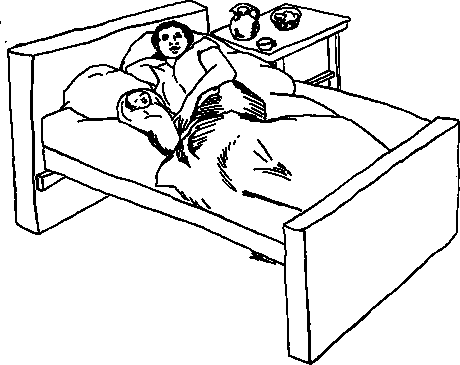
Figure
· She should try to stay clean. It is good for her to wash and to keep her genitals very clean. While bathing, do not sit in water until 1 week after the birth.· A new mother needs to eat more food than usual. She can eat any kind of food: fish, meat, beans, grains, vegetables, and fruit will all help her heal from the birth and have energy to be a good mother.
· She should drink plenty of fluids.
Figure
· If she is breastfeeding her baby and giving no other milk, the breastfeeding can protect her from getting pregnant again too soon.

Figure
· If she has a tear at the opening of her vagina, she should keep it clean. She can apply a hot, damp cloth and honey to the tear to help it feel better and to heal more quickly. If the tear causes burning, she can pour water over her genitals while she passes urine.Any plant medicines used to help her genitals heal should be clean (boiled is best). Do not put plant medicines inside the vagina.

Figure
· She should start a family planning method soon, especially if she ever feeds her baby something other than breast milk. For her good health, she should start using a family planning method before she has sex again, or she could become pregnant too soon.
DANGER SIGNS IN THE FIRST FEW DAYS AFTER BIRTH
Bleeding
Bleeding that starts more than a day after the baby is born is usually caused by pieces of the placenta that have been left in the womb.
|
Danger signs of too much bleeding: · soaks more than 2 pads or thick rags an hour in the first day after birth · has a continuous small flow of blood |
|
What to do:
1. Rub the top of her womb until it gets very hard and the bleeding stops. Have the baby suck on her breasts, or have someone roll her nipples.2. Inject 0.5 mg of ergometrine in a large muscle, or give 0.2 mg of ergonovine by mouth every 6 hours for 4 to 7 days.
3. If the bleeding will not stop, get medical help. Continue to rub her womb as you take her to the hospital.
4. If she has signs of infection, give the same antibiotics as for womb infection described below.
Womb infection
Infection of the womb is very dangerous. It must be treated or the woman can become infertile or die.
|
Danger signs of womb infection: · fever and chills
|
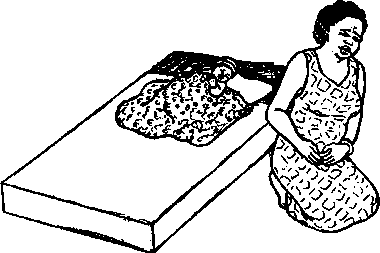
Treatment:
1. If these signs are present, give one of these combinations of medicines:
· 1st choice: amoxicillin, 1 g (1000 mg) by mouth, 3 times a day for 10 days, plus metronidazole, 500 mg by mouth 2 times a day for 10 days.· 2nd choice: procaine penicillin, 800,000 Units by injection in the buttock 2 times a day for 7 days, or penicillin tablets, 400,000 Units (250 mg) by mouth 4 times a day for 7 days, plus chloramphenicol, 1 g by mouth the first time, then 500 mg 4 times a day for 7 days.
2. Encourage her to drink a lot of fluids. If she does not start to feel better by the next day, take her to the nearest hospital.
¨ If the mother complains that she does not feel well, watch her carefully for signs of infection.
Women with Special Needs
LOSS OF A PREGNANCY (MISCARRIAGE)
A miscarriage is a pregnancy that ends by itself before the baby is fully developed. It is often the body’s way of ending a pregnancy when the unformed baby has a serious problem that would have kept it from developing well. Most miscarriages happen in the first 3 months of pregnancy. After a miscarriage, a woman can still become pregnant again and have a normal pregnancy and a healthy baby.
The signs of miscarriage are pain and bleeding. The bleeding and pain usually begin like normal monthly bleeding and then get heavier and stronger. There may also be some tissue or clots with the blood.
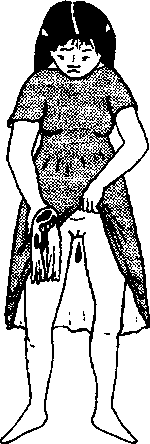
Figure
If the bleeding and pain continue for more than a few days, if the bleeding is much heavier than normal monthly bleeding, or if a woman gets a fever or has a bad-smelling fluid from her vagina, part of the pregnancy may still be inside the womb. This is called an incomplete miscarriage. It can lead to heavy blood loss, a dangerous infection, or even death. The woman should go to a health center or hospital where a trained health worker can empty the womb.

Figure
If a woman has strong, constant pain in her lower abdomen, she may have a pregnancy in the tube. This is very dangerous.

Figure
After a miscarriage a woman should rest and avoid heavy work or lifting for 2 weeks. She should not douche or wash inside her vagina. Also she should avoid sex until all bleeding stops because her womb is still open and could get infected.
Many women feel very sad after a miscarriage. Some do not. This is all normal. Some women may find it helpful to talk with other women who have lost a pregnancy.
A woman who wants children may
feel very sad if she loses a pregnancy.
HELPING WOMEN WHO HAVE TROUBLE CARING FOR THEMSELVES AND THEIR BABIES
Some women are more likely to have difficult births and problems following birth, and their babies are more likely to be unhealthy. Mothers who are alone, very poor, very young, mentally slow, or who already have poorly nourished or sick children may have a harder time caring for themselves and their babies,
If someone takes special interest in these mothers, and helps them get the food, care, and companionship they need, it can often make a great difference in the well-being of both the mothers and their babies.
Do not wait for those in need
to come to you. Go to them.
IF THE BABY DIES
Most women have healthy pregnancies and give birth to healthy babies. But sometimes, no matter what anyone does, the baby dies.
This is always a hard time for a mother. She feels great sadness and loss. At the same time, she has been through a pregnancy and birth and she needs to rest and get her strength back, just like a mother with a new baby.
The following advice may also help:
· Her breasts will probably be sore, especially around the 3rd day after the birth when her milk comes in. Cloths soaked in cool, clean water may reduce the soreness.
She should:
· not squeeze out either the first yellow milk (colostrum) or the regular breast milk. Removing milk will cause the body to make more.· watch for signs of breast infection and treat if necessary.
· wait for at least 3 months before trying to get pregnant again. A woman’s body needs time to heal.
· start using a family planning method as soon as possible. She can become pregnant again too soon.

Figure

Figure
¨ A woman needs extra care and support when her baby dies.
For many women, this is a death like any death of someone she is close to, and she will need to mourn her loss. She needs special care, kindness, and support.
To the Father
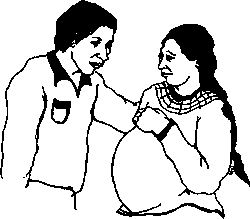
Figure
PREGNANCY
Showing your wife that you care about her can help her both physically and emotionally. Make sure she has help with her work. If you cannot do some of the work yourself, try to get someone else to help. Make sure she eats healthy foods and goes for prenatal care.
CHILDBIRTH
You can help your wife feel strong and safe during labor and childbirth by:
· making sure there is enough water and food in the house.
· bringing her midwife or health worker to the house to help with the birth.
· taking care of the other children.
If you stay with her during the birth, you can help by giving her both emotional and physical support. Encourage her and tell her she is doing well. Give her water to drink. Help her walk or squat during contractions or rub her back.
¨ Throughout pregnancy, childbirth and after, be alert for danger signs in the mother and baby. Seek help if you think there is a problem.
AFTER BIRTH
The first 6 weeks after birth are the most important time for a woman to feel strong and healthy again. During this time she needs a lot of healthy foods and plenty of rest. You can help her rest more by doing some of her work - like fetching water or fire wood, taking care of your other children, or preparing some of the meals. If you cannot help, try to find someone else who can.
If you take time to hold and care for your baby, your wife will have a chance to sleep and you can be close to your new child.
Do not have sex until the bleeding stops to prevent an infection in her womb.
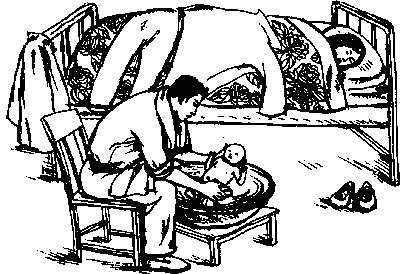
Figure
FAMILY PLANNING
To have healthy mothers and babies, it is best to wait at least 2 years between pregnancies. One of the most important ways you can help your family be more healthy is by using family planning. Visit the family planning clinic with your wife and decide together which method will work best Then share the responsibility for using it.

Figure
Working for Change
Throughout the world, millions of women die needlessly from problems during pregnancy and childbirth. Many of these deaths happen because a woman or her family wait too long to get help for emergencies.
Here is the story of a group of women who worked in their community to understand and solve some of these problems.
|
During the last rainy season, my friend Ekwefi was pregnant When it was time for her to give birth, her husband had gone away on a trip. Several wise women were there to help her. But the labor was too long and Ekwefi started bleeding. I said that we needed to take her to the health center. No one could decide what to do. Her husband was gone and he was the one who should decide. Soon after we realized that Ekwefi and the baby would not survive, they both died in front of us. This made me very sad. Ekwefi was my friend, and we could not help her. I started talking with other women in my village. We had to do something about this problem. Ekwefi was not the first woman to die while she was giving birth. Many other women lost their babies during birth. Some women said this is how things are in our small village and we should accept it. But we said no, we can do something to solve this problem.: We decided to have a meeting to learn more about the problem of women and babies dying during birth. During our meeting we decided to talk to the families with this problem. Six women in our group agreed to visit families where a woman had died from a difficult birth during the past two years, or where a woman was still recovering from one.
We learned several important things. Everyone agreed that the biggest problem was that women wait a very long time before they call a doctor or go to the health center. Sometimes a woman cannot ask for help without her husband’s permission. Many times, like with my friend Ekwefi, the husband is not in the village when the woman needs to ask his permission to get help. The neighbors are afraid to give help, because they do not want the husband to be angry or offended. We also learned that most husbands do not know about the many risks women face during labor.
We decided to walk the 7 miles to the health center to talk to the midwife. We told her what we had learned and asked her to help us find ways to solve this problem. The midwife was very happy to help us. She talked to the head of our village and asked for a meeting with the elders. During the meeting, the midwife talked to the elders about the health risks of a long labor. She also told them what we had learned about women dying while giving birth in our village. The elders all agreed that this was a very serious problem for the whole village. They asked the midwife how this problem could be solved. The midwife told the elders that this was not just a problem in our village but in many villages in Nigeria. She suggested that the village pick 12 men and 12 women to go to a five-day training on reproductive health and family planning. These villagers would become reproductive health workers, and would work to teach and motivate the rest of the village.
After the training, the men who had gone realized that they had to be actively involved in solving this serious problem. They decided to work hard to teach the other men in the village about the risks of labor and how to help women in labor. They also decided to have a transportation committee to help women get to the health center when they needed it. We all worked very hard to solve this health problem in our village. In the beginning, many people said that women often die giving birth and there was nothing we could do about it But we did not get discouraged. By working together with the women, the midwife, the elders, and the men of the community, we came up with a solution that works in our village. And the answer to our problem wasn’t more money or a new technology. The answer was in our time and effort. All of us from the village of Lado encourage you to work together to improve the life and health of your community. |


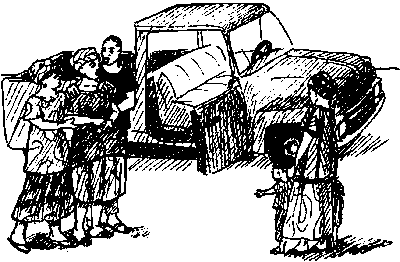
To learn more about thinking about and solving health problems, read the chapter on “Solving Health Problems.”
How to help save more childbearing women’s lives
Most deaths and injuries from pregnancy and birth could be prevented through better nutrition, child spacing (with family planning), access to safe abortion, good care during pregnancy and birth, good transportation, and good blood services. To reduce these deaths:
· learn the danger signs during pregnancy, birth, and after birth.· plan how to get help before it is needed.
· when problems arise, get help early.
· try to organize your community so that emergency transportation, money, and blood donations will be ready when difficult births happen.
· work with local leaders to build small houses near a hospital where women from remote areas can stay until it is time to give birth.

Figure
How health workers can help save women’s lives
· Offer family planning services to prevent unsafe abortions and to help women avoid having births too close together.· Offer STD treatment and prevention to all women and girls old enough to have children.
· Make tetanus vaccines available to all women, even if they are not pregnant.
· Learn how to detect problems during pregnancy, birth, and after birth.
· Refer women with problems in a pregnancy (now or in the past) to a health center that has emergency transportation.

Figure
· Teach birth attendants and midwives how to prevent infection and how to watch for and treat danger signs during pregnancy and birth.· Encourage all women to breastfeed for at least 2 years.
· Have a medicine box that includes:
- oxytocin, ergometrine, and local plants to prevent and control severe bleeding after the birth.
Figure
- antibiotics to treat infection.- equipment to do injections in the muscle (IM) and the vein (IV).
- medicines to treat toxemia.
- gloves or clean plastic bags.
- new razor blades.
- enema bag or can for rectal fluids.
|
| ||||||||||||||||||||||||||||||||||||||||||||||||||||||||||||||||||||||||||||||||||||||||||||||||||||||||||||||||||||||||||||||
Where Women Have No Doctor - A Health Guide for Women (Hesperian Foundation, 1997, 600 p.)
Chapter 7: Breastfeeding
It is possible to breastfeed your child for as long as you like and never have any problems. But if you have a problem, there are many ways you can help yourself and continue to breastfeed. This chapter has information on healthy breastfeeding practices and help for common problems.
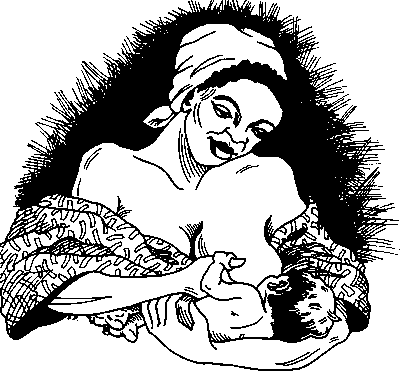
Figure
Why Breast Is Best
Breastfeeding is one of the oldest and healthiest practices in the world. But as the world changes, women sometimes need information and support to keep breastfeeding their babies.
Breastfeeding is important because:
· Breast milk is the only perfect food to help a baby grow healthy and strong.· Breastfeeding helps the womb stop bleeding after birth.
· Breast milk protects the baby against illnesses and infections like diabetes, cancer, diarrhea, and pneumonia. The mother’s defenses against illness are passed on to the baby through her milk.
· Breastfeeding helps protect the mother against diseases like cancer and weak or brittle bones (osteoporosis).
· When a woman breastfeeds her baby, the milk is always clean, always ready, and always the right temperature.
· Breastfeeding helps the mother and baby feel close and secure.
· For some women, giving their babies nothing but breast milk can help protect them from becoming pregnant again too soon.
· Breastfeeding is free.
¨ It is best to give your baby nothing but breast milk for about the first 6 months.
Why Other Feeding Can Be Harmful
Companies that make artificial milk (infant formula) want mothers to feed their babies formula instead of breast milk so that the companies can make money. Using bottles or giving formula is often very unsafe. Millions of babies fed with bottles or formula have become malnourished or sick, or have died.
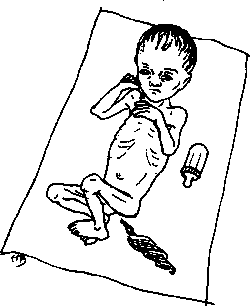
Figure
· Formula and other milks, such as tinned milk or the milk of animals, do not protect babies from disease.
· Formula and other milks can cause sickness and death. If the bottle, nipple, or water used to make the formula is not boiled long enough, the baby will swallow harmful germs and get diarrhea.
· When babies drink from the breast, they use their tongue to ‘milk’ the breast. This is called suckling. It is very different from what a baby’s mouth does when sucking on a bottle. By sucking on a bottle or rubber teat (pacifier, dummy), the baby may forget how to suckle well on the breast because the bottle teaches it a different kind of sucking. And if the baby does not suckle on the breast enough, the mother’s milk supply will decrease, and the baby will stop feeding from the breast completely.
· Bottle-feeding costs a lot of money. For one baby, a family would need 40 kg of formula powder in the first year. Buying a day’s worth of formula and enough fuel to boil water can cost more than the family earns in a week - or even a month.
¨ More than 1 million babies die each year because their mothers were discouraged from breastfeeding.
Some parents try to make the milk or formula last longer by using less powder or more water. This makes a baby malnourished, grow more slowly, and get sick more often.
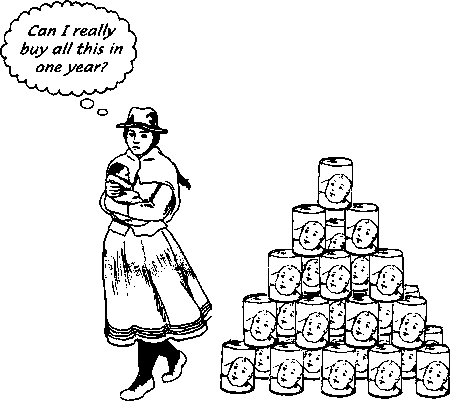
Figure
How to Breastfeed
For the new baby
After birth, a mother should breastfeed during the first hour. It will help her womb to stop bleeding and return to normal. Skin-to-skin contact between mother and baby, and the baby’s suckling, will help her milk to start flowing.
Newborn babies need the first yellow-colored breast milk (colostrum) that comes out of the breasts for the first 2 or 3 days after birth. Colostrum has all the nutrition that a new baby needs, and it protects against disease. Colostrum also cleans the baby’s gut. There is no need to give herbs or teas to do this.
¨ Babies want to suckle when they are hungry, thirsty, fighting off a sickness, growing a lot, or need comfort. If you are not sure what your baby wants, try breastfeeding.
For any baby
Feed from both breasts, but let the baby finish one breast first before offering the other. The whiter milk that comes after the baby has been feeding for a few minutes is richer in fat than the first milk. The baby needs this fat, so it is important to let the baby finish one breast before offering the other. The baby will let go when it is ready to stop or switch. If the baby takes only one breast at a feeding, begin the next feed on the other breast.
Feed your baby whenever it is hungry, day and night. Many new babies will suckle about every 1 to 3 hours, especially in the first months. Let the baby suckle as long and as often as it wants. The more it suckles, the more milk you will make.
Mothers who keep their babies
close by at night can breastfeed more easily. If she sleeps with the baby, the
mother can breastfeed and sleep at the same time.
You do not need to give cereals, other milk, or sugar water - even in hot climates. These can make the baby take less breast milk and may be harmful before 4 to 6 months.
|
Helping the baby burp (wind) When some babies suckle they swallow air, which can make them uncomfortable. You can help a baby bring this air up if you hold it on your shoulder or chest and rub its back, or rub its back while it sits or lies on your lap.
Both of these positions will also help comfort a restless baby or a baby that cries more than usual. |
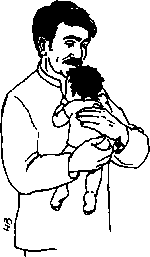
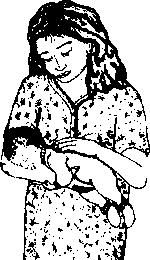
How to hold the baby
When breastfeeding, it is important to hold the baby so it can suckle and swallow easily. The mother should also be in a relaxed, comfortable position so that her milk can flow well.
¨ Do not pinch the nipple when giving the breast to the baby.
Support the baby’s head with your hand or arm. Its head and body should be in a straight line. Wait until its mouth is open wide. Bring the baby close to the breast and tickle its lower lip with the nipple. Then move the baby onto your breast. The baby should have a big mouthful of the breast, with the nipple deep inside its mouth.

This baby has a good mouthful
of breast.

This baby does not have enough
breast in its mouth.
|
|
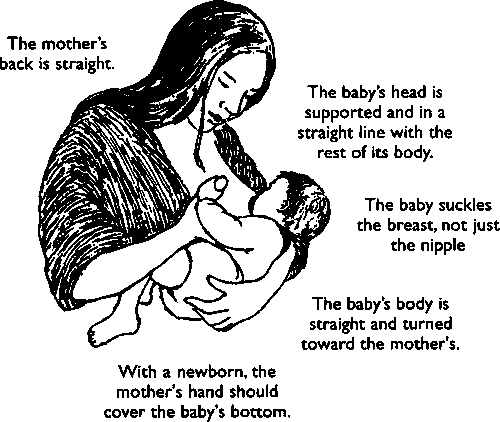
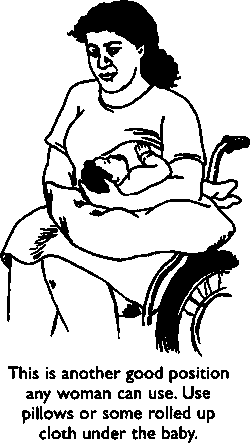
If you are having trouble breastfeeding, get help from a woman who has experience. She can often help more than some health workers. Do not use a bottle. It will teach the baby a different kind of sucking. Keep trying. Sometimes it takes practice for you to find good positions for your baby, or for a baby to learn to suckle well.
|
These are signs that something may be wrong with how you are holding the baby, or how much breast the baby has in its mouth: · If the baby is restless, cries, or does not want to feed, it may be in an uncomfortable position. · If you feel pain, or get a cracked nipple, you may need to help the baby get the nipple farther back in its mouth. |
|
Advice for the Mother
Mother’s diet while breastfeeding

Figure
Mothers need to eat well to recover from pregnancy, to care for their babies, and for all the other work they do. They need plenty of foods rich in protein, fats, and lots of fruits and vegetables. They also need to drink plenty of liquid - clean water, milk, herb teas, and fruit juices. But no matter how a woman eats and drinks, her body will make good breast milk.
Breastfeeding saves money. If she can, a mother should use some of that savings to improve her own diet, especially with extra foods with protein like beans, nuts, eggs, milk, yogurt, cheese, fish or meat.
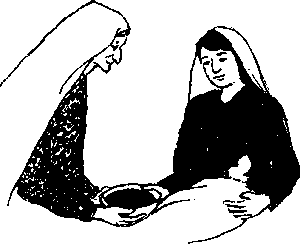
Figure
Some people believe that new mothers should not eat certain foods. But if a mother does not get a balanced diet, it can lead to malnutrition, weak blood (anemia), and other sickness.
¨ Eat and drink enough to satisfy hunger and thirst Avoid alcohol, tobacco, drugs and unnecessary medicines. Clean water, fruit and vegetable juices, and milk and herb teas are better than coffee and sodas.
Sometimes women are given special foods during breastfeeding. These practices are good, especially if the foods are nutritious. Good foods help a woman’s body to grow healthy and strong more quickly after childbirth.
A woman needs extra food if:
· she is breastfeeding 2 young children.
· she is breastfeeding one child and is also pregnant.
· her children are spaced closer than every 2 years.
· she is sick or weak.
Breastfeeding and child-spacing
Child-spacing means having babies at least 2 or 3 years apart. This allows a woman’s body to get strong before another pregnancy. For some women, breastfeeding helps them space their children.
Giving other foods
If a baby does not seem happy with breastfeeding, and it is between 4 and 6 months old, it may simply need to suckle more so that the mother’s breasts will make more milk. The mother should breastfeed the baby as often as the baby wants for about 5 days. If the baby is still unhappy, then she should try other foods.
A baby is ready for other feedings when:
· it is about six months old, or older.
· it starts to grab food from the family or from the table.
· it does not push food out with its tongue.

Do not give other foods before
4 months.
Between 6 months and 1 year, give breast milk whenever the baby wants it. Even if it is eating other foods, it still needs as much breast milk as before. Follow breastfeeding with other foods, 2 or 3 times a day at first. Begin with a soft, mild food, like cereal or porridge. Some women mix these with breast milk. You do not need expensive baby cereals.

Mash all foods very fine at
first until the baby can chew by itself.

Use a cup or bowl and spoon to
feed the baby.
¨ Add new foods one at a time. By about 9 months to 1 year, a baby can eat most family foods if they are cut up and made easy to eat.
Babies need to eat often - about 5 times a day. Each day, they should have some main food (porridge, maize, wheat, rice, millet, potato, cassava), mixed with a body building food (beans, finely ground nuts, eggs, cheese, meat or fish), brightly colored vegetables and fruits, and an energy-rich food (finely ground nuts, spoonful of oil, margarine or cooking fat). You do not have to cook 5 times a day. Some meals can be given as a cold snack.
¨ Even in the second year, breast milk continues to protect your child against infection and other health problems.
If you can, keep breastfeeding until the child is at least 2 years old, even if you have another baby. Most babies will slowly stop breastfeeding on their own.
When the Mother Works Outside the Home
Many women now work away from their homes. This can make it hard for a mother to give her baby nothing but breast milk during the first 6 months.
¨ A working mother should not have to choose between her work and her child’s health.
Working mothers need help. Some jobs allow a mother to bring her baby for a few months. This makes breastfeeding the easiest. Or maybe the person caring for a woman’s children can bring the baby to the mother at feeding time. If a mother has child care nearby, she might be able to breastfeed during the day, on her breaks. Some employers organize child- care centers so that parents can have their children close by.
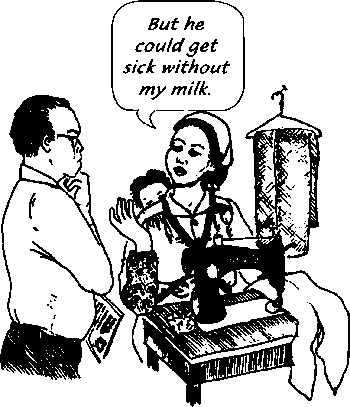
Figure
Here are some ways to make sure your baby gets only breast milk while you are at work:

Keep your baby nearby for 6
months.
Or have someone bring the baby
to you at feeding time.
When you are with your baby, feed it only from your breasts. If you sleep with the baby at night, it may feed more, and this will help you to make enough milk.
Some women ask a friend or a relative, like the baby’s grandmother, to breastfeed their baby. If you want another woman to breastfeed your baby, it should be someone you know is healthy and has no risk of getting HIV/AIDS.

Figure
Removing Milk by Hand
Another way a woman can give her baby breast milk during the day is if she can have time at work to remove the milk from her breasts. Then someone else can feed the baby for her.
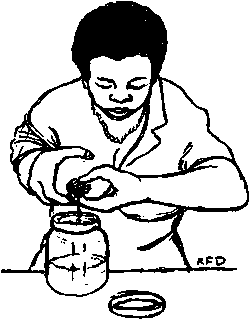
You can remove your milk by
hand 2 or 3 times each day...
...then send or store the milk
for someone to feed your baby.
¨ If a mother removes more milk than her baby needs, she can give it to another baby whose mother is sick, or whose milk has not come in yet.
You may also need to remove your milk by hand if your breasts are too full, or if your baby cannot breastfeed for some reason, and you want to keep a good milk supply.
|
How to remove your milk by hand 1. Wash and rinse a wide-mouth jar and lid with soap and clean water, and leave them in the sun to dry. Just before using them, pour boiling water, that has boiled for 20 minutes, into them and let the water sit for a few minutes. Then pour the water out. 2. Wash your hands well before touching the jar or your breasts. 3. Find a quiet place if you can. Think about the baby as you remove your milk. Be patient and try to relax. Massage the breasts lightly with your finger tips or fist, moving toward the nipples.
4. To make the milk come out, place your fingers and thumb at the back edge of the areola (the darker part), and press in toward the chest. (Do not squeeze the nipple. The milk comes from behind the areola.) Then relax your fingers. Continue to press and relax your fingers, moving them all the way around the areola. You should not feel any pain.
5. Repeat several times on each breast. At first, not much milk will come out. With practice you will remove more. Plan to remove about half a cup of your milk as often as your baby eats, or at least 3 times each day. (The person who gives your milk to the baby can let you know if there was enough.) If you start to practice 2 weeks before you return to work, you will be able to remove enough milk by the time you must be separated from your baby. |

How to store the milk
Keep your milk in a clean, closed container. You can store milk in the same jar used to remove the milk. Keep the milk in a cool place away from sunlight. The milk can be used for up to 8 hours. Or you can bury the closed container in wet sand, or keep it wrapped in a cloth that is kept wet all the time, and it will keep for about 12 hours.
¨ Breast milk can change color. The color comes from what you eat. No matter what color it is, your milk is good for your baby.
The container can be stored
longer in a cool place such as a clay pot with water in it.
Milk can be kept in a glass jar in a refrigerator for 2 or 3 days. The cream (fat) in the milk will separate, so before giving it to the baby, shake the container to mix the milk. Heat it gently in warm water. Test the milk to make sure it is not too hot by shaking a few drops onto your arm.
|
Warm bottle method This method may work best if the breasts are too full or very painful. This may happen right after birth, or if a woman gets a cracked nipple or breast infection. 1. Clean a large glass bottle that has a 3 to 4 cm-wide mouth. Warm it by filling it with hot water. Fill it slowly so the bottle does not break. Wait a few minutes and then pour the water out.
2. Cool the mouth and neck of the bottle with clean, cool water so that it does not burn you. 3. Fasten the bottle mouth over your nipple so that it makes a seal. Hold it firmly in place for several minutes. As it cools, it will gently pull the milk out.
4. When the milk flow slows down, use your finger to loosen the seal around the breast. 5. Repeat on the other breast if it is also painfully full. Now you can comfortably breastfeed your baby. |
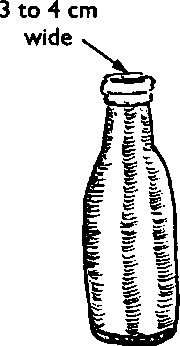
Sometimes a woman may not want to save the milk to give her baby - for example, when she is just softening her breast to make it easier for the baby to suckle. In that case, since she is throwing the milk away, she does not need to clean the container for the milk with boiling water.
Common Concerns and Problems
Fear there is not enough milk, or that milk is not good enough
Figure
Many women think they do not have enough milk. This is almost never true. Even mothers who do not have enough to eat can generally make enough milk for their babies.
The amount of milk your breasts make (your milk supply) depends on how much the baby suckles. The more the baby suckles, the more milk you will make. If you skip a feeding and give a bottle instead of breast milk, your body will make less milk.
Some days it may seem like the baby is always wanting to breastfeed. If you feed your baby whenever it is hungry, your milk supply will increase. In a few days the baby will probably seem satisfied again. Night feeding helps to build up a mother’s milk supply. Try not to believe anyone - even a health worker - who says that you do not have enough milk.
Breasts do not have to feel full to make milk. The more babies a woman has breastfed, the less full her breasts will feel. Small breasts can make as much milk as large breasts.
A baby is getting enough milk if:
· it is growing well, and seems happy and healthy.· it wets 6 or more times and dirties the diaper (nappy) about 1 to 3 times in a day and night. You can usually tell this after the baby is 5 days old, when the baby will start to pass urine and stool more regularly.
¨ A baby older than 2 weeks may not pass stool every day. If the baby is feeding well, wetting, and seems content, the stool will come.
Because breast milk looks different from other milks, some women fear that it is not good milk. But breast milk gives babies everything they need.
Nipple concerns and problems
Flat or pushed-in (inverted) nipples
Most women with nipples that are flat or pushed-in can breastfeed without a problem. This is because the baby suckles on the breast, not just the nipple. You do not need to do anything to prepare your nipples during pregnancy.
¨ The size and shape of your nipple is not important - the baby suckles from the breast, not just the nipple.
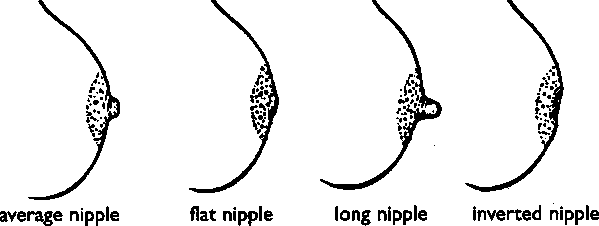
Figure
These ideas may make it easier for your baby to suckle:
· Start breastfeeding right after birth, before your breast; become full. Make sure your baby takes a good mouthful of breast.· If your breasts become too full, remove some milk by hand to make them softer. This will make it easier for the baby to get more breast in its mouth.
· Lightly touch or roll your nipple before you feed. Do not squeeze it.
· Try cupping your hand around the breast and pushing back to make your nipple stick out as much as possible.
Offer the whole breast. This
helps the baby get a good mouthful of the breast.
Sore or cracked nipples
If you feel pain from breastfeeding, the baby probably does not have enough of your breast in its mouth. If the baby suckles only on the nipples, they will soon become painful or cracked. A cracked nipple makes it easier for a woman to get an infection. You can teach your baby to take more breast in his mouth. Here are some suggestions.

Figure
Prevention and treatment:
· Be sure to hold the baby so it can get a good mouthful of the breast.· Do not pull your breast out of the baby’s mouth. Let the baby feed as long as it wants. When it is done, it will let go of the breast itself. If you need to stop before the baby is ready, pull down on its chin or gently put the tip of a clean finger into its mouth.
Figure
· Soothe sore nipples with breast milk at the end of a feed. When the baby has stopped feeding, squeeze out a few drops of milk and rub them on the sore places. Do not use soap or cream on your breasts. The body makes a natural oil that keeps the nipples clean and soft.· Avoid rough or tight clothing.
· To help sore nipples heal, leave your breasts open to the air and sun, if possible.
· Continue to feed from both breasts. If a nipple is very sore or cracked, start on the less painful breast and then switch to the other breast when the milk is flowing.
· If the pain is too great when the baby suckles, remove the milk by hand and feed the baby with a cup or spoon. The sore should heal in 2 days.
Pain and swelling in the breasts
A woman’s breasts are too full (engorgement)
When the milk first comes in, the breasts often feel swollen and hard. This can make it difficult for the baby to suckle, and the nipples may get sore. If you breastfeed less because of the pain, your milk supply will be less.
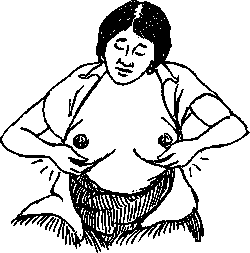
Figure
Prevention and treatment:
· Start breastfeeding within the first hour after birth.· Make sure you are holding the baby well.
· Feed the baby often, at least every 1 to 3 hours, and on both breasts. Sleep with the baby nearby so you can breastfeed easily during the night.
· If the baby cannot suckle well, remove some milk by hand - just enough to soften the breast - and then let the baby suckle.
· After feeding, apply fresh cabbage leaves or cool wet cloths to the breasts.
After 2 or 3 days, the swelling should go down. Engorgement that does not improve can become mastitis (a hot, painful swelling of the breast).
Blocked duct, mastitis
If a painful lump forms in the breast, it may mean that a duct is blocked by thick milk. When milk flow stops in part of the breast, it can also cause mastitis. If a woman has a fever and part of her breast is hot, swollen and painful, she probably has mastitis. It is important to continue breastfeeding so that the duct can empty and the breast does not get infected. The milk is still safe for the baby.
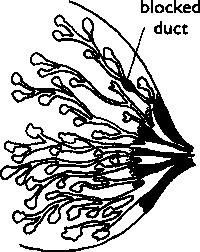
Figure
|
Treatment for blocked duct and mastitis: · Apply warm wet cloths to the painful breast before you breastfeed. Most mastitis clears up in 24 hours. If you have fever for more than 24 hours, you need treatment for breast infection. |

Warm, wet cloths can help with
blocked ducts or mastitis.
Breast infection (mastitis with infection)
If you have had signs of mastitis with no improvement after 24 hours, or severe pain, or a crack in the skin where germs can enter, you must get treatment for breast infection right away.
Treatment:
The most important part of treatment is to continue breastfeeding often. Your milk is still safe for the baby. Medicines and rest are necessary too. If you can, take time off from work and get help with your household work. Also follow the treatment for blocked duct and mastitis. If needed to keep the milk flowing, you can milk your breast by hand or use the warm bottle method.
|
Medicine for Breast Infection | ||
|
Medicine |
How much to take |
When and how to take |
|
For infection take: | | |
|
dicloxicillin |
250 mg |
4 times a day for 10 days. |
|
If you cannot find this or are allergic to penicillin, take: | |
Take at least 30 minutes before food. |
|
erythromycin |
500 mg |
4 times a day for 10 days. |
|
Before taking medicines, see the “Green Pages.” |
||
|
For fever and pain, take: paracetamol (acetaminophen) or aspirin until the pain goes away. Important: If a breast infection is not treated early, it will get worse. The hot and painful swelling will feel as if it is filled with liquid (abscess). If this happens, follow the treatment described here AND see a health worker who has been trained to drain an abscess using sterile equipment. | ||
Thrush (yeast)
If you are holding the baby so it is comfortable and feeding well, and the pain in your nipples lasts for more than a week, it may be caused by thrush in the baby’s mouth. Thrush can feel like an itchy, stabbing or burning pain, moving through the breast. You may see white spots or redness on your nipple and in the baby’s mouth.
Treatment:
Mix Gentian Violet with clean water to a strength of 0.25% and paint on the nipples and on the white patches in the baby’s mouth once every day for 5 days, or until 3 days after healing is complete. Use a clean cloth or finger to apply. If it does not get better, see the “Green Pages” for other medicines. You can continue to breastfeed. The medicine will not hurt you, your milk or the baby.
|
How to mix Gentian Violet with clean water to make a 0.25% solution: | |
|
If your Gentian Violet says... |
Use |
|
0.5% |
1 part Gentian Violet plus 1 part water |
|
1% |
1 part Gentian Violet plus 3 parts water |
|
2% |
1 part Gentian Violet plus 7 parts water |
Special Situations
Babies with special needs can breastfeed
Small baby. If a small baby cannot suckle strongly enough to feed itself, you will need to remove your milk by hand and feed the baby with a cup and spoon. Begin right after birth, and continue even when the baby can suckle some by itself. This will help your breasts make more milk. If your baby weighs less than 1° kilos or 3° pounds, it may need special medical care, including a tube that goes through the nose and down to the stomach. Your milk can be given through that tube. Talk with a health worker about this.
Baby born too early. Babies born too early need warmth. Place the baby naked, with a hat and a diaper or nappy, upright inside your clothing, against your skin and between your breasts. (It helps to wear a loose blouse, sweater, or wrap tied at the waist.) In some places this is called ‘Kangaroo Care’. Keep skin-to-skin contact inside your clothing day and night, and breastfeed often. If the baby suckles weakly, also give milk you have removed by hand.
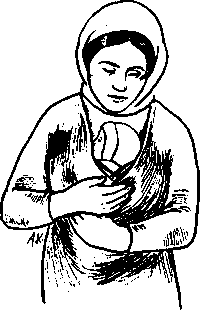
Figure
Cleft lip or deft palate. These babies may need special help to learn how to suckle. If the baby has only a cleft lip, it can still suckle well. (To help make a seal, use your finger to cover the cleft.) If the roof of the mouth is also open, try to hold the baby up straight while keeping a good feeding position. You may need to get special help. You can remove your milk by hand to keep up a good supply while the baby is learning to suckle.
Yellow baby (jaundice). A yellow baby needs plenty of sunlight and breast milk to get the jaundice out of its body. Some babies with jaundice are very sleepy. If a baby is too sleepy to take the breast, remove milk by hand and give it with a cup and spoon, at least 10 times in 24 hours. Put the baby in the sun in the early morning and late afternoon. Or keep the baby in a bright room.
Most jaundice does not start until after the first 3 days of life and clears up by the 10th day. If the baby has jaundice or very yellow eyes at any other time, or if a jaundiced baby was also born very early, or if the yellow or sleepiness gets worse, the baby could have a serious illness. If possible, take the baby to a health center or hospital.
|
Twins. Sometimes one twin is smaller or weaker. Be sure that each baby gets plenty of your milk. You have enough milk for both babies.
|

When your baby is sick
· If your baby is sick you should not stop breastfeeding. Your baby will get better more quickly if it is breastfed.
· Diarrhea is especially dangerous in babies. Often no medicine is needed, but special care must be taken because a baby can die very quickly of dehydration.
· For diarrhea, breastfeed more often and also give sips of Rehydration Drink.
Figure
· Breastfeed more often if the baby is weak. If the baby is too weak to breastfeed, remove the milk by hand and give the milk with a spoon. Take the baby to a health worker.
· For vomiting, give shorter feeds more often, and also give Rehydration Drink in small sips with a cup or spoon every 5 to 10 minutes. If you can, see a health worker - dehydration can lead to death.
· Keep breastfeeding your baby even if the baby needs to go to the hospital. If you cannot stay at the hospital, remove your milk by hand and get someone to give it to the baby with a cup or spoon.

Figure
|
How to feed a baby with a cup or spoon (first clean the cup and spoon with soap and water if boiling is not possible). 1. Hold the baby upright or almost upright on your lap. 2. Hold a spoon or small cup of milk to the baby’s mouth. Tip the cup or spoon so the milk just reaches the baby’s lips. If you are using a cup, rest it lightly on the baby’s lower lip and let the edges of the cup touch the baby’s upper lip. 3. Do not pour the milk into the baby’s mouth. Let the baby take the milk into its mouth from the cup or spoon. For very small or ill babies, it may be better to use a spoon.
|
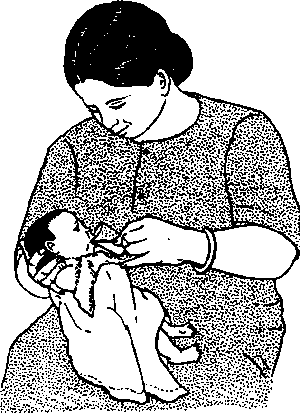
When the mother is sick
If she can, it is almost always better for a sick mother to breastfeed her baby than to feed other foods too soon. If you have a high fever and sweat a lot, you may make less milk. To prevent this, you should:
· drink plenty of liquid.
· continue to breastfeed often.
· breastfeed in the lying-down position.
· remove the milk by hand (if necessary someone can help you).
To prevent passing any infection to the baby, wash your hands well with soap and water before touching your baby or breasts.
¨ Get treatment right away for any serious disease caused by infection, like TB, typhoid or cholera, so it does not get passed on to the baby.
When the mother needs medicine
Most medicines pass into breast milk in very small and weak amounts, so they do not harm the baby. It is usually more harmful to the baby to stop breastfeeding.
There are a few drugs that cause side effects. In this book we have marked these medicines with a warning and suggest other medicines that will be safer (see the “Green Pages”).
If a health worker tells you to take a medicine, remind her that you are breastfeeding so that a safe one can be selected.
Figure
HIV/AIDS and breastfeeding
A woman with the HIV virus or AIDS must make a decision about feeding her baby. For more information on making this decision and on other ways to feed your baby, see the chapter on “AIDS.”

Figure
When a woman becomes pregnant or gives birth to another child
If a nursing mother becomes pregnant, she can continue to breastfeed. Since breastfeeding and pregnancy take a lot from her own body, she should eat plenty of good foods.
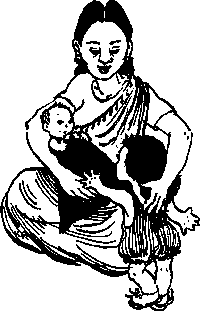
A woman with a new baby and an
older baby can safely breastfeed both of them.
It is safe to continue breastfeeding an older child when a woman has a new baby. The new baby should be fed before the older child.
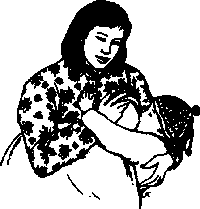
It is safe to breastfeed when
you are
pregnant.
Working for Change
If you are a health worker, it is not enough to talk about breastfeeding. Women need information and support. Teach women to give nothing but breast milk for the first 6 months. Teach them that other kinds of feedings may harm the baby.
Support women with breastfeeding before problems start. Help women feel confident that they have enough milk. Mother-to-mother support is the best help for common problems. Try starting a breastfeeding group in your community led by women who have breastfed exclusively, and whose children are growing well.
Learn how to make your health center friendly to breastfeeding. Help mothers to breastfeed within the first hour after birth. Allow babies to sleep with or near their mothers. When a mother is sick, let the baby stay with her.
If you are a mother yourself, breastfeed your own baby to show other working mothers they can work and breastfeed too.
Remove any posters or educational materials that promote artificial milks. Do not pass on samples or gifts from the infant formula companies and do not let representatives from these companies come to the clinic.

Figure
|
| ||||||||||||||||||||||||||||||||||||||||||||||||||||||||||||||||||||||||||||||||||||||||||||||||||||||||||||||||||||||||||||||||||||
Where Women Have No Doctor - A Health Guide for Women (Hesperian Foundation, 1997, 600 p.)
Chapter 8: Growing Older
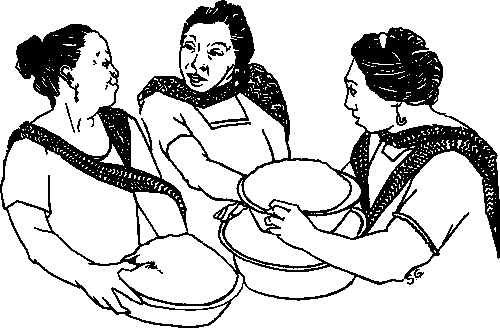
Figure
Today more and more people are living longer. Cleaner living conditions, vaccinations and better nutrition help prevent many diseases and modern medicines cure others.
¨ Everyone is the age of their heart.
- Guatemalan proverb
But longer life has also brought difficulties. First, older people tend to have more health problems than younger people. Although most of these problems are not caused by age itself, the changes age makes in a person’s body can make the problems more serious or difficult to treat.
Second, as the world changes and younger family members move away from their communities to earn a living, many older people are left to care for themselves. Or, if they do live with their children, older people may feel like a burden in a family or community that no longer values and respects age.
Older women are more likely to face these problems than older men, because women usually live longer and often reach old age without a partner. So in this chapter we describe how older women can take care of their health, treat common health problems of aging, and work to improve the difficult conditions under which many older women live.
The End of Monthly Bleeding (Menopause)
One of the main signs of growing older is that a woman’s monthly bleeding ends. It may end suddenly, or it may stop gradually over 1 to 2 years. For most women this change happens between the age of 45 and 55.
Signs:
· Your monthly bleeding changes. It may just stop, or you may bleed more often for a while. Or you may stop bleeding for a few months and then bleed again.· At times you may suddenly feel very hot or sweaty (this is also called having ‘hot flashes’). This can wake you up at night.
· Your vagina becomes less wet and smaller
· Your feelings change easily.
These signs happen because a woman’s ovaries stop making eggs, and her body makes less of the hormones estrogen and progesterone. The signs will start to go away as her body gets used to less estrogen.
Figure
How a woman feels about the end of her monthly bleeding sometimes depends on how she is affected by the changes in her body. It also depends on how her community thinks about and treats older women. She may be relieved not to have her monthly bleeding every month. But she may also feel sad that she cannot have any more children.
|
What to do during menopause: If you are having signs that make you uncomfortable, try the following: · Dress in clothes that you can take off easily when you begin to sweat.
· Get regular exercise.
· Avoid hot or spicy foods or drinks. They can cause hot flashes.
· Do not drink much coffee or tea. They contain caffeine, which can make you feel nervous and prevent you from sleeping.
· If you drink alcohol, drink only small amounts. Alcohol can increase bleeding and hot flashes.
· Stop smoking or chewing tobacco. It can cause unusual bleeding and make problems with weak bones much worse.
· Explain to your family that your feelings may change easily. It may also help to discuss how you feel with other women who are going through menopause. · Ask about the use of traditional remedies in your community. Often women who have already been through menopause will know ways to help you feel better. |
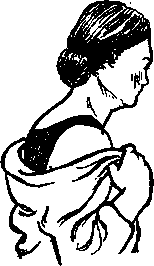



Medicines for problems during menopause
If a woman’s signs of menopause are so severe that they stop her from doing her daily work or keep her from sleeping at night, she can try taking medicine for a few months to see if she feels better. This is called ‘hormone replacement therapy’, or HRT. The most common medicine is made from estrogen and progesterone. If a woman decides to take HRT, she should always take both hormones, unless she has had her womb removed by surgery. Estrogen taken by itself can cause cancer of the womb.
¨ Although women sometimes feel uncomfortable during menopause, only a few need medical treatment.

Figure
HRT can stop hot flashes and make the vagina more wet. If taken for a long time, HRT may also help reduce other health risks, such as weak bones and heart disease, which come from having less estrogen in the body. But HRT can be costly, and may cause an increased risk of gallbladder disease. The medicine may also cause side effects, such as bleeding from the vagina, cramping pains, nausea, tender breasts, weight gain, and depression.
¨ Taking hormones does not cause breast cancer. But if a woman already has cancer, hormones can make it worse.
Before taking HRT, a woman needs to think about its risks and benefits. HRT is usually not recommended for women who have had trouble with blood dots, breast cancer, or liver or gallbladder disease. Be sure to talk to a health worker about the right dose.
¨ Always take the lowest possible dose of the medicines.
A woman can stop taking the medicine at any time, but she should do so slowly - or her signs may come back.
Taking Care of Your Health
Just as a girl’s body changes when she becomes a woman, so a woman’s body changes when her childbearing years end. Menopause and aging cause changes in bone strength, muscle and joint strength and flexibility, and overall well-being.
A woman can make a big difference in living her later years with energy and good health by:
Eating well. As a woman grows older she still needs nutritious food to keep her body strong and to fight disease. Her need for certain kinds of food also increases. Because her body makes less estrogen, it helps to eat foods high in plant estrogens, such as soy beans, tofu (bean curd), lentils, and other beans. Since her bones become less dense as she ages, it helps to eat foods high in calcium, a mineral that makes strong bones.

Figure
Sometimes older people feel less like eating than they used to. This may be caused by changes in taste and smell, which make eating less pleasurable. Or changes in the body that come from aging can make a person quickly feel full after starting to eat. But this does not mean that older people need less nutritious food. They need encouragement to continue to eat well, and to eat a variety of foods.
Drinking a lot of liquids. As a person ages, the amount of water in the body decreases. Also, some older people drink less to avoid having to pass urine during the night or because they are afraid of leaking urine. All these things can cause dehydration. To prevent this, drink 8 glasses or cups of liquid every day. To avoid getting up at night to pass urine, try not to drink anything for 2 to 3 hours before going to sleep.
Getting regular exercise. Everyday activities, such as walking, playing with grandchildren, going to the market, cooking, and farming can all help keep a woman’s muscles and bones strong, and prevent stiff joints. Regular exercise will help maintain weight and prevent heart disease.
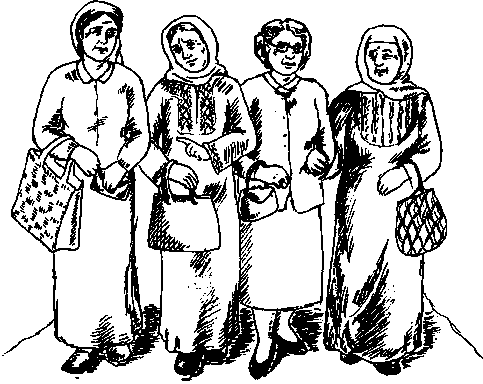
Figure
Treating illness early. Some people think that getting older means being sick much of the time. But this is not true. If a woman does not feel well, she may have an illness that can be treated, and that has nothing to do with age. She needs treatment as soon as possible.
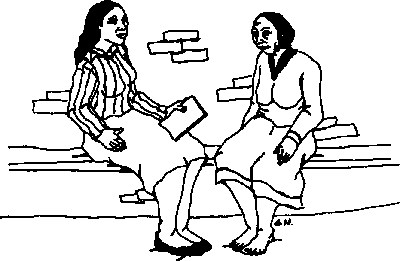
Figure
Staying active. A woman will stay healthier and happier if she is active and productive. Try to take up an activity, join a group, or work on a community project. This may be a good time for a woman to work for better conditions in the community. Here is an example:
¨ Try to see a health worker if you feel ill and have been unable to treat the problem yourself.
|
Louise Waithira Nganga is a coffee farmer in Kandara town, in Kenya. In 1991, as a member of an organization planting trees in Kenya, she met a group of women farmers who complained about a coffee factory upstream. The fertilizers and chemicals the factory used to make coffee were getting into the river, and the women’s cows were getting sick and dying from drinking the dirty water. Soon many of the women began meeting to talk with Louise. They became aware of how the river also affected their health and their children’s health. They decided to put pressure on the district officers to force the factory to keep waste out of the river Louise, however, always insisted that rights and responsibilities go together So she also helped the women realize how their own habits affected other people down the river. For example, when they cleaned their fertilizing machines or washed their clothes in the river, it was harmful for the health of the people downstream. As Louise said, “We must first be responsible ourselves so that we may, in clear conscience, demand our rights.” In 1993, Louise and her women farmers created an organization called Rural Women’s Sanitation. Whenever the river is in danger from polluting factories, Louise is able to organize as many as 100 women, who ‘pay a visit’ to the local authorities, and inform them of the problem. Besides taking care of the river, the group is building latrines and demanding that local governments reclaim public wells that have been taken over by private owners. Louise has stopped planting trees, but has no regrets. “There were more pressing problems that were part of Kandara soil itself.” She tells her fellow women, “God will not come to earth to solve your problems. The government cannot know what your problems are. Only you can make sure they get solved.” |
Sexual Relations
¨ There is no reason based on age alone that a woman cannot enjoy sex for as long as she lives.
For some women, menopause means freedom from the sexual demands of marriage. Other women become more interested in sex because they no longer fear an unwanted pregnancy. All women, though, continue to need love and affection.
Figure
As a woman grows older, some of the changes in her body may affect her sexual relations:
· She may take longer to become excited during sex (this also happens to men).· Her vagina may be more dry, which can make sex uncomfortable, or make her get an infection of the vagina or the urine system more easily.

Figure
¨ Do not use petroleum gel or oils that contain perfumes to increase wetness in the vagina. These can cause irritation.
What to do:
· Try to take more time before having sex, so your vagina can make its natural wetness. You can also use spit (saliva), oils made from vegetables (peanut oil, corn oil, olive oil), or other lubricants like spermicides during sex.IMPORTANT
DO not use oils for wetness if you are using condoms. Oil will weaken the condom and it may break.· If it is difficult for your partner to get or keep his penis hard (erection), try to learn what he likes. Touching him may help make him excited.
· To prevent urine problems, do not try to make the vagina dry before having sex. Pass urine as soon as possible after sex to flush out germs.
Figure
|
Protecting yourself against pregnancy and sexually transmitted diseases (STDs) You can still become pregnant until your monthly bleeding has stopped for one full year. To prevent unwanted pregnancy, you should continue to use a family planning method during that time. If you are using a hormonal method of family planning (the pill, injections, or implants), stop using it around the age of 50 to see if you are still having monthly bleeding. Use another method of family planning until you have no monthly bleeding for one whole year (12 months). Unless you are certain neither you nor your partner has an STD, including HIV/AIDS, be sure to use a condom each time you have sex - even if you can no longer become pregnant.
|

Common Health Problems with Aging
The following pages describe some of the most common health problems of older women. For other problems, like gallbladder problems, heart trouble, stroke, thyroid gland problems, sores on the legs from poor blood flow, and difficulty sleeping, see Where There Is No Doctor or another general medical book.
Weak blood (anemia)
Although many people think that anemia is a problem only of young women, it also affects many older women - most often because of poor nutrition or heavy monthly bleeding.
Heavy monthly bleeding or bleeding in the middle of the month
Between the ages of 40 and 50, many women have changes in their monthly bleeding. Some have heavier bleeding, or bleeding that lasts longer. Heavy bleeding that goes on for months or years can cause anemia.
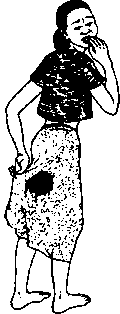
Figure

Figure
The most common causes of heavy monthly bleeding and bleeding that lasts longer are:
· hormone changes
· growths in the womb (fibroids or polyps)
Treatment:
· Eat foods every day that are rich in iron, or take iron pills.· Take 10 mg medoxyprogesterone acetate once a day for 10 days. If bleeding has not stopped at the end of 10 days, take the medicine for another 10 days. If you are still bleeding, see a health worker.
· Try to see a health worker for heavy bleeding that has lasted for more than 3 months, for bleeding in the middle of the month, or for bleeding that starts 12 months or more after menopause. A trained health worker will need to scrape out the inside of the womb (D and C) or do a biopsy and send the tissue to a laboratory to be checked for cancer.
Figure
If you have had pain and heavy monthly bleeding for years, see the chapter on “Cancer and Growths.”
Breast lumps
Older women often find lumps in their breasts. Most breast lumps are not dangerous, but some may be a sign of cancer. The best way to find lumps in your breasts is to examine your breasts yourself.
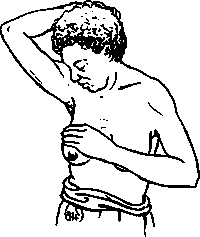
Figure
High blood pressure
High blood pressure can cause many problems, like heart disease, kidney disease, and strokes.
Signs of dangerously high blood pressure:
· frequent headaches
· dizziness
· ringing sound in the ears
¨ All these signs can also be caused by other diseases. For more information, see Where There Is No Doctor or another general medical book.
If you are visiting a health worker for any reason, try to have your blood pressure checked at the same time.

Figure
IMPORTANT
High blood pressure at first causes no
signs. It should be lowered before danger signs develop. People who are
overweight or who think they might have high blood pressure should have their
blood pressure checked regularly.

Figure
Treatment and prevention:
· Get some exercise every day.
· If you are overweight, try to lose weight.
· Avoid foods with a lot of fat, sugar, or salt.
· If you smoke or chew tobacco, try to stop.
If your blood pressure is very high, you may also need to take medicine.
Figure
Problems passing urine and stool
Many older women have problems with leaking urine or have difficulty passing stool. They may be too embarrassed to speak about these problems, especially to a male doctor. So they suffer alone.
Urine problems are often caused by a weakness in the muscle inside the vagina. The ‘squeezing exercise’ helps strengthen this muscle. Also, to help push the stool out during a bowel movement, a woman can put 2 fingers into her vagina and push toward her back.
Figure
An older woman may also have trouble passing stool because her intestines work more slowly as she ages. It helps to drink a lot of liquids, to eat foods with a lot of fiber (like whole grain breads or vegetables), and to get regular exercise.
Fallen womb (prolapsed uterus)
Sometimes, as a woman gets olden the muscles that hold up her womb become weak. The womb can fall down into her vagina and part of it may even stick out between the folds of the vulva. In very bad cases, the whole womb can fall outside the vulva when a woman passes stool, coughs, sneezes, or lifts heavy things.

Figure
A fallen womb is usually caused by damage during childbirth - especially if the woman has had many babies or babies born close together. It can also happen if the woman pushed too early during her labor, or if the birth attendant pushed on the mother’s belly from the outside. But both aging and lifting heavy things can make it worse. The signs often appear after menopause, when the muscles become weaker.
Signs:
· You need to pass urine often, or it is difficult to pass urine, or urine leaks out of your body.
· You have pain in your lower back.
· You feel as though something is coming out of your vagina.
· All of the above signs disappear when you lie down.
Treatment:
The ‘squeezing exercise’ can make the muscles around the womb and vagina stronger. If you have been doing this exercise every day for 3 or 4 months and it does not help, talk to a health worker. You may need a vaginal pessary (a piece of rubber shaped like a ring) that you put in the vagina to keep the womb in place. If this does not work, you may need an operation.
Figure
|
Put the pessary high up in your vagina to hold your womb in place. |
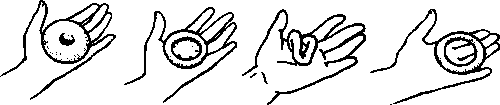
If pessaries are not available where you live, ask older women in your community what they use for this problem.
Swollen veins in the legs (varicose veins)
Varicose veins are veins that are swollen and often painful. Older women who have had many children are most likely to suffer from this problem.
Treatment:
There is no medicine for varicose veins, but the following can help:
· Try to walk or move your legs at least 20 minutes every day.· Try not to spend much time standing or sitting with your feet down, or with your legs crossed.
· If you have to sit or stand for a long time, try to take breaks to lie down with your feet above the level of your heart. Do this as often as possible during the day.
· When you have to stand for a long time, try to walk in place.
· Sleep with your feet up on pillows or on a bundle of cloth.
· To help hold in the veins, use elastic stockings, elastic bandages, or cloth that is not wrapped too tightly. But be sure to take them off at night.
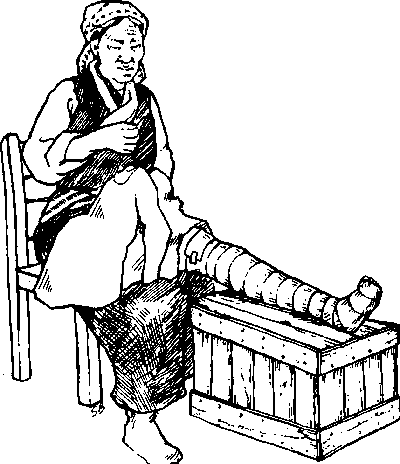
This woman is keeping her leg
up as she
sews.
Back pain
Back pain in older women is often caused by a lifetime of heavy lifting and carrying.
It can often be helped by:
· exercising every day to strengthen and stretch the muscles in the back. It may be more enjoyable if you organize a group of women to exercise together.· asking younger members of your family to help you, if you must continue to do hard work.
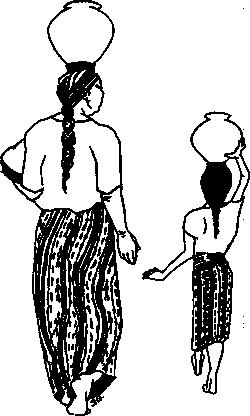
Figure
Figure
Joint pain (arthritis)
Many older women suffer from joint pain caused by arthritis. Usually it cannot be cured completely, but the following treatment may help.
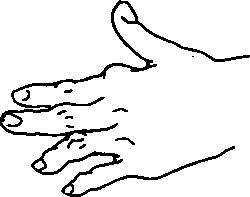
Figure
Treatment:
· Rest the place that hurts.· Soak cloths in hot water and place them on the painful areas. Be careful not to burn your skin. (Some people with joint pain lose their sense of feeling from the skin on the painful areas.)
Figure
· Keep your joints moving by gently rubbing and stretching them every day.· Take a mild pain medicine. Aspirin works best for arthritis. For very bad pain, take 600 to 1000 mg of aspirin up to 6 times a day, with food, milk, or a large glass of water. Ibuprofen also works well. Take 400 mg 4 to 6 times a day.

Figure
IMPORTANT
If your ears start to ring or you
start to bruise easily, take less aspirin. Also, if you are having a lot of
bleeding from your vagina, you should not take
aspirin.
Weak bones (osteoporosis)
After menopause, a woman’s body starts to make less estrogen, and her bones become weaker. Weak bones break easily and heal slowly.
¨ Weak bones are a major cause of disability for older women.
A woman is more likely to get weak bones if she:
· is over 70 years old.
· is thin.
· does not exercise.
· does not eat enough foods rich in calcium.
· has been pregnant many times.
· drinks a lot of alcohol.
· smokes or chews tobacco.
¨ Both exercise and calcium make the bones stronger.
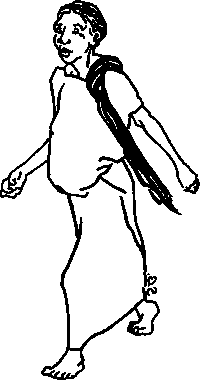
Figure
Treatment:
· Walk for 20 to 30 minutes every day.
· Eat foods rich in calcium.
It may also help to take hormone medicines.

Figure
Problems with seeing and hearing
As they get older, many women are not able to see and hear as well as they used to. Women with seeing or hearing problems are more likely to have accidents, and less likely to work outside the home or to take part in community life.
Problems with seeing
Figure
After the age of 40, it is common to have problems seeing close objects clearly. This is called being farsighted. Often eye glasses will help.
A woman should also watch for signs of too much pressure from fluid in the eye (glaucoma), which can damage the inside of her eye and lead to blindness. Acute glaucoma starts suddenly, with severe headache or pain in the eye. The eye will also feel hard to the touch. Chronic glaucoma usually is not painful, but a woman slowly starts to lose vision to the side. If possible, older women should get their eyes checked at a health center for these problems. For more information, see Where There Is No Doctor or another general medical book.
Problems with hearing
Figure
Many women over the age of 50 have hearing loss. Other people may overlook the problem since they cannot see it. Or they may start to leave the person out of conversations and social activites.
If you notice that you are losing your hearing, here are some things you can do:
· Sit facing the person you are talking to.· Ask family members and friends to speak slowly and clearly. But tell them not to shout. Shouting can make words even more difficult to understand.
· Turn off radios or televisions when participating in conversations.
· Ask a health worker if your hearing loss can be treated with medicines, surgery, or by using a hearing aid.

Figure
Anxiety and depression
Older women sometimes feel anxious or depressed because their role in the family and community has changed, because they feel alone or worried about the future, or because they have health problems that cause pain and discomfort. For more information on anxiety and depression, see the chapter on “Mental Health.”
Mental confusion (dementia)
Some older people have difficulty remembering things and thinking clearly. When these problems become severe, it is called dementia.
Signs:
· difficulty concentrating, or getting lost in the middle of a conversation.· repeating the same thing over and over. The person will not remember having said the same thing before.
· difficulty with daily tasks. The person may have trouble knowing how to dress or prepare food.
· behavior changes. The person may become irritable, angry, or do sudden, unexpected things.
These signs are caused by changes in the brain, and usually develop over a long period of time. If the signs begin suddenly, the problem probably has other causes, such as too much medicine in the body (toxicity), a serious infection, malnutrition, or severe depression. The confusion will often go away if these problems are treated.
Treatment:
There is no special treatment or cure for dementia. Caring for someone who is confused can be very hard on family members. It helps to share the responsibility of care and get support from people outside the family when possible.

Figure
To help the person with dementia, try to:
· make her surroundings as safe as possible.· keep daily routines regular so she knows what to expect.
· keep familiar objects around the house.
· talk to her in a calm, slow voice. Give her plenty of time to answer.
· set clear limits without a lot of choices. Ask questions that can be answered “yes” or “no.”
Working for Change
It is traditional in most places for families to live together and for young people to care for their elders. But now many women and men work away from their communities, often traveling far from their homes to earn money to support their families. Older people are now often left to care for themselves.
Older women are more likely than men to live alone. Women usually live longer than men and often marry older men. In many places women whose partners have died are considered less important than married women. When an older woman lives in a community that no longer values elders, she - as well as her family - may feel that her health problems are not worthy of treatment. Or services to treat her health problems may not exist.
When an older woman is also very poor, the problems she faces are much worse. She may not have the money to pay for health care and medicines, to buy healthy foods, or to pay for a healthy place to live.
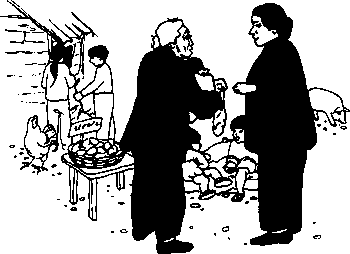
Figure
Income earning projects. One way that older women can improve their situation is by finding ways to earn money to support themselves and even help their families, such as:
· raising animals, like chickens, goats, or cows, and then selling the eggs, milk, cheese, or meat.· making bread or other food to sell.
· making traditional crafts or sewing things to sell.
|
Six widows living in a small community in, EI Salvador decided they wanted to earn some money by raising chickens to sell for meat. None of them had ever raised chickens before, but they asked a group that supports cooperatives to help show them how. After a local community association loaned them money, the group started to work. At night the women took turns sleeping in the chicken coop to keep animals and people from stealing the chickens. At dawn the women rose to kill and clean chickens. Every day the women walked for miles to other communities to sell the chickens, carrying them in baskets on their heads. Men from their community - and even a specialist who worked with an agency - all told them their project would not be successful. But the women earned enough money to cover their costs, buy new chickens, and pay themselves each about $45 a month. Although it was not much money, it was more than any of them had ever earned before. And they gained respect in their community because they had a successful business. As one of them said, “We never imagined that we could run our own business. Now look at us. We are the bosses!” |
Community services for older women. By working together, older women can encourage their communities to:
· create less costly housing for older women, or form groups that live together to cut down on living expenses.· include older women in nutrition programs.
· train health workers in the special health needs of older women.
Older women can teach others. Older women are the main keepers of traditional healing practices, and only they can pass on this knowledge to the next generation. To preserve these practices and remind others that older women have important skills, women can teach these practices to their children and grandchildren. Older women can also help health workers learn traditional healing practices, so that health workers can use the best methods of both traditional and modern medicine.

Figure
¨ Older women have much wisdom and experience. Working together can make them very powerful.
Changing government policies and laws. Many governments provide monthly income (pensions), housing, and health care for older people. If your government does not, try to work together with other women to change these laws. This kind of change takes time. But even if a woman does not see the changes herself, she will know she has worked toward a better life for her daughters and grand-daughters.
|
Accepting death Every culture has a system of beliefs about death and ideas about life after death. These ideas, beliefs, and traditions may comfort a person facing death. But she also needs support, kindness, and honesty from her loved ones. You can help a dying person most by listening to her feelings and needs. If she wants to die at home - surrounded by the people she loves - rather than in a hospital, try to respect her wishes. If she wants to talk about death, try to be honest. Anyone who is dying usually knows it, partly by what her body tells hen and partly by the reactions she sees in those she loves. Let her talk openly about her fears, and about the joys and sorrows in her life. This way, when death comes, she may more easily accept it as the natural end of life. |
|
| ||||||||||||||||||||||||||||||||||||||||||||||||||||||||||||||||||||||||||||||||||||||||||
Where Women Have No Doctor - A Health Guide for Women (Hesperian Foundation, 1997, 600 p.)
Chapter 9: Women with Disabilities
In this chapter we use the word ‘women with disabilities’ rather than ‘disabled women.’ We do this to remind people that although a disability can prevent a woman from doing certain things, in other ways she is just like other women. She is a woman first.
No matter what causes a woman’s disability, she can be just as productive as a woman without a disability. She just needs the opportunity to develop her skills to their fullest.
For more complete information on health care and disabilities, see the Hesperian Foundation book, Disabled Village Children. For information about ordering, see the last page of this book.
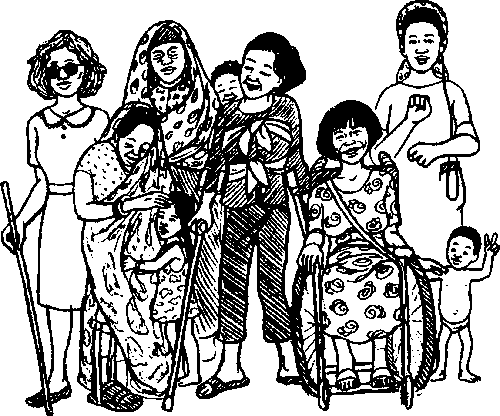
Figure
About 1 out of every 10 women has a disability that affects daily living. She may have difficulties with walking, lifting, seeing, hearing or using her mind. Yet many of these women are never seen or heard. They are often hidden away and do not take part in community activities because they are thought of as less useful and of less value than women without disabilities.
1 out of every 10 women has a
disability that affects daily living.
WHAT CAUSES DISABILITY?
Local customs and beliefs often give people false ideas about disability. For example, people may think a woman has a disability because she did something bad in a former life and is now being punished. Or they may think her disability is ‘catching’ (contagious), so they are afraid to be around her.
But disabilities are not caused by anything a person does wrong. In poor countries, many disabilities are caused by poverty, and sometimes by wars, which few people can control. For example:
· If a mother does not get enough to eat when she is pregnant, her child may be born with a disability (birth defect).· If a baby or young child does not get enough good food to eat she or he may become blind or mentally slow.
· Poor sanitation and crowded living conditions, together with poor food and a lack of basic health services and vaccinations, can lead to many disabilities.
· In today’s wars, more women and children are killed or disabled than are soldiers or other men.
But even if these reasons for disability are eliminated, there will always be persons with disabilities - it is a natural part of life.
Self-esteem
The following letter came from a group of women with disabilities in Ghana, West Africa. But it could have come from any community, because all over the world, women - and especially women with disabilities - are taught not to value themselves.
|
Our Association was formed in 1989 by women with disabilities to help promote the welfare of the woman with a disability. We have 21 members with various disabilities (sight, hearing, speech, and movement). We hold a meeting once a month to talk about our problems and to try to find solutions. We all agree that women with disabilities are often discriminated against because: · we are women.
We are: rejected as suitable marriage partners or regarded as the ‘wrong’ image in the work place. Girls and women with disabilities are often not able to get an education, even when education is available. For example, even in special schools for children with disabilities, boys usually receive priority. We are unlikely to receive training for any kind of work. We experience abuse - physically, emotionally, and sexually. Unlike all men and women without disabilities, we are seldom allowed to make decisions at home or in the community. But for each of us in the Association, the biggest problem is lack of self-esteem. We are taught by society not to value ourselves. We are generally considered to be incapable of keeping a man and bearing children, and unable to do meaningful work. Therefore we are considered worthless. Even our extended families only want us if we prove valuable to them. - Doarmaa Ahenkro, Ghana |
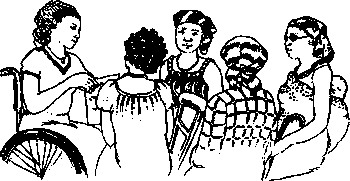
If a woman grows up with the support of her family, school and community to live the best life she can, her feelings of self-worth will be very high, whether or not she has a disability. But if a woman grows up feeling she is worth less than others because she has a disability, she has to work hard to learn to value herself. This process is never easy, but it can be done by taking small steps.
Figure
The first step is to meet other people. If you are a woman with a disability, you might try sitting at the door of your home and greeting your neighbors. Then, if you are able, go to the market and talk to people there. As they get to know you, they will find out that women with and without disabilities are not really very different from each other Each time you go out it will become easier to meet and talk with others.
A second step is to start or join a group for women. Talking with others can help you begin to learn about your strengths and weaknesses. A group can provide a safe place for women to speak freely - if you all agree not to speak outside the group about anything that is said inside the group.

Figure
You can also join or start a group for women with disabilities and share your thoughts and experiences about the special challenges that come from having a disability. You can all support each other during both happy and difficult times.
You can support each other in learning how to become independent, too. All over the world women with disabilities are working as doctors, nurses, shop keepers, writers, teachers, farmers, and community organizers. With each other’s help, you can begin to prepare for the future, just as any woman would.
Focus on what you can do, not
on what you cannot
do.
Taking Care of Your Health
If you have a disability, most of your health problems are probably no different from those of other women, and you can find information about them in other chapters in this book. But the following issues can be of special concern for women with disabilities, especially women with a loss of feeling in the body.
Knowing when you are sick
Some women with disabilities may find it difficult to tell when they have a health problem. For example, a woman who has an infection in her womb may not be able to feel pain from it But she may notice an unusual discharge or smell from her vagina that an infection can cause.
As a woman, you know and understand your body better than anyone else. So if you have an unusual feeling, or body reaction, or a pain somewhere, try to find out as soon as possible what might be causing it. If necessary, ask a family member, friend, or health worker to help.
Skin care
If you sit or lie down all or most of the time, you can develop pressure sores. These sores start when the skin over the bony parts of the body is pressed against a chair or bed. The blood vessels get squeezed shut, so that not enough blood can get to the skin.
¨ Pressure sores ore one of the main causes of death in persons with spinal cord injury.
If too much time passes without moving, a dark or red patch appears on the skin. If the pressure continues, an open sore can develop and work its way deeper into the body. Or the sore can start deep inside near the bone and gradually grow out to the surface. Without treatment, the skin can die.

Figure
Treatment:
For information on how to treat pressure sores.
Prevention:
· Try to move at least every 2 hours. If you lie down all the time, have someone help you change position.

Figure
· Lie or sit on a soft surface that reduces pressure on bony areas. A cushion or sleeping pad that has hollowed-out areas around the bony parts will help. Or make a simple cushion or sleeping pad from a plastic bag filled with uncooked beans and rice. It must be refilled with new rice and beans once a month.· Examine your whole body carefully every day. You can use a mirror to look at your back. If you notice a dark or red place, try to avoid any pressure on this area until your skin returns to normal.

Examine your skin every
day.
· Try to eat plenty of fruits, vegetables, and foods rich in protein.

Figure
· During monthly bleeding, do not use cloth or tampons inside your vagina to catch the blood. They can press against your bones from inside your body and cause a sore in your vagina.

Figure
· Try to bathe every day. Pat your skin dry, but do not rub it. Avoid lotions or oils, because they can make your skin soft and weaker. And never use alcohol on your skin.
Figure
Exercise
Some women - for example, those who suffer from arthritis or strokes, or who are in bed because of AIDS or old age - have difficulty moving their arms and legs enough to keep their joints flexible. When this happens, and an arm or a leg is kept bent for a long time, some of the muscles become shorter and the limb cannot fully straighten. Or short muscles may hold a joint straight so that it cannot bend. This is called a ‘contracture’. Sometimes contractures cause pain.
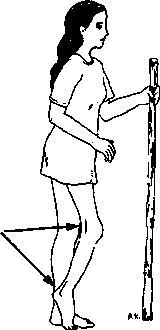
Figure
To prevent contractures and keep your muscles strong, you need to find someone who can help you exercise your arms and legs every day. Try to make sure that every part of your body is moved. If you have had contractures for many years, it will be difficult to completely straighten your joints. But these exercises will prevent the contractures from getting worse and can make your joints a little less stiff and keep your muscles strong.
|
Examples of exercises that prevent some contractures and help keep muscles strong
IMPORTANT |



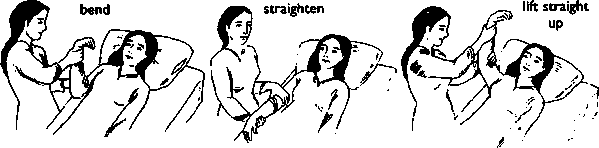
Sexuality and Sexual Health
Many people believe that women with disabilities cannot have, or should not have, sexual feelings. They are not expected to want to have close, loving relationships or to become parents. But women with disabilities do have a desire for closeness and sexual relations just like anyone else.
¨ Be careful not to let other people take advantage of you. It can be difficult to protect yourself against violence and abuse.
If you were born with a disability, or it happened when you were very young, you may have a hard time believing you are sexually attractive. Talking with other women who have disabilities about their own fears, and how they overcame them, is often the best way to learn to feel differently about yourself. But remember to have patience. It takes time to change beliefs you have held for a long time.

Figure
If you are a woman with a new disability, you may already be used to thinking of yourself as a sexual person. But you may not realize that you can continue to enjoy sex. You may think you are not sexually attractive any more and feel sad that sex may be different now.
All women with disabilities can be helped by reading the same information about sexuality that women who are not disabled read. Try to talk about sexuality with them and with trusted teachers, health care workers, and other women with disabilities.

Figure
You and your partner will both need to experiment with how to please each other. For example, if you have no feeling in your hands or genitals, during sex you can find other body parts that will create sexual feeling, such as an ear, or breast, or neck. This can also help if a disability has made sex in the vagina uncomfortable. You can also try different positions, like lying on your side, or sitting on the edge of a chair If you and your partner can talk together honestly, a satisfying sexual relationship can happen. But remember that you do not have to settle for less than you would like. You do not have to have sex with someone who does not care about you.

Figure
Family planning
Many girls with disabilities grow up with no information about sex or family planning. Yet most women with disabilities can become pregnant - even those with no feeling in the lower body. So if you plan to have sex and do not want to become pregnant, you will need to use a family planning method.
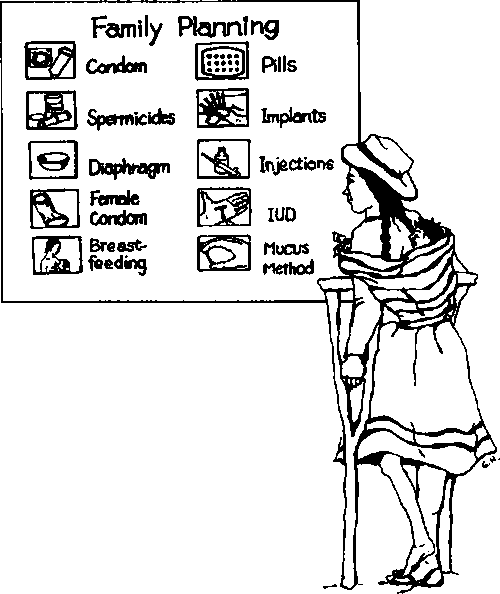
Figure
Here are some guidelines for deciding which family planning method might be best for you:
If you have had a stroke, or cannot walk and you must sit or lie down all the time, do not use hormonal methods, such as birth control pills, injections, or implants. They can cause problems with blood clots.If you have no feeling or only a little feeling in your belly, do not use an intra-uterine device (IUD). If it is not put in correctly, or if there is a possibility you might get a sexually transmitted disease, it can cause an infection. Without feeling you may not be able to tell that you are infected.
If you cannot use your hands well, it may be difficult for you to use barrier methods, such as the diaphragm, the female condom, or foam. If you feel comfortable asking your partner, he may be able to put them in for you.
If your disability changes over time, you may need to change your family planning method as your disability progresses.
¨ Condoms will help prevent both pregnancy and STDs, including HIV/AIDS.

Figure
Pregnancy and disability
|
A woman with a disability can become pregnant and have a healthy baby. Here are some things to consider, especially if you cannot move your body very much, or if you use a walking aid: · As your belly gets larger, your balance changes. Some women can use a stick or crutch to prevent falls. Some women may want to use a wheelchair while pregnant. · To prevent stiff joints (contractures) and to keep your muscles strong, exercise as much as you can. · For more general information on pregnancy and birth, see Pregnancy and Childbirth. |
Personal Safety
Since a woman with a disability may be less able to protect herself, she is more at risk for violent attack and abuse than a woman without a disability. But there are things a woman can do to defend herself. It may help to practice some of these things with a group of women with disabilities:
· If you are in a public place and someone tries to hurt or abuse you, shout as loudly as you can.· Do something he might find disgusting, such as drooling spit (saliva), or trying to vomit, or acting as though you are ‘crazy’.
· Use your stick, crutches or wheelchair to hit or try to hurt the person.
· If the abusive person is someone in your family, try to talk about it with another family member you trust. It may also help to talk about it privately with a group of women with disabilities.
Figure
Figure
|
Special care for women who have mental disabilities Women and girls who have problems with understanding or learning (mental disabilities) may need special care, as it can be even more difficult for them to defend themselves. If there is a girl or woman in your family with these problems, it is important to talk openly with her about abusive or harmful people. Talk about when it is OK for someone to touch another person in a sexual way and when it is not, and about what is safe and unsafe in public and private situations. Let her know it is OK to tell you if anything she does not like happens to her Help her learn how to say “No.” Teach her how to defend herself. It is also a good idea to talk with persons with mental disabilities about sexually transmitted diseases (STDs) and pregnancy, and to give them what they need to protect themselves. But be careful not to treat girls and women with mental disabilities like prisoners. When it is safe, let them go outside, or to the market, or to work in the fields. |
Working for Change
To build a better life, women with disabilities need health, education, and the ability to move around independently and earn a living. The first step toward achieving these things may be to form a group with other women with disabilities. Together you can decide what things in your community can be changed, in order to make life better for you all.
Here are some suggestions:
· Start a literacy class for the women who cannot read or write.· Try to get funds - either as a low-interest loan or through a donation - to begin an income-earning project so you can all make your own living.
· As a group, go to the local authorities and ask them to:
- make the village water supply, schools, and health centers easier to get to, and easier for people who are blind and deaf to use.- help you start a library, and to find more information about disabilities.
- work with you to make disability aids and equipment available.
¨ The particular tasks your group chooses are not as important as just working together. Start with what you as a group feel is most important, and work from there.
To give you an idea of what a group working together can do, here is the rest of the letter from the women in Ghana:
|
Being in this Association gives us a new value, a way to be a part of something which counts, and a chance to organize ourselves for our rights.
Most members have learned skills such as weaving, sewing, candle making, shoe repairs, basket making, and typing. Some of our other activities are: · Involving women with disabilities in community activities. Friendship and trust between women with disabilities gives rise to many new ideas. We run the Association by and for ourselves, and we are encouraged in our efforts. This helps to raise the image of all women with disabilities. |

Just like the women in Ghana, working with others can help you achieve an independent, productive life. You do not have to stay inside your house unless you want to. Go after your dream, whether it is a job, a relationship, or motherhood!
|
| ||||||||||||||||||||||||||||||||||||||||||||||||||||||||||||||||||||||||||||||||||||||||||||||||||||||||||||||||||||||||
Where Women Have No Doctor - A Health Guide for Women (Hesperian Foundation, 1997, 600 p.)
Chapter 10: Staying Healthy
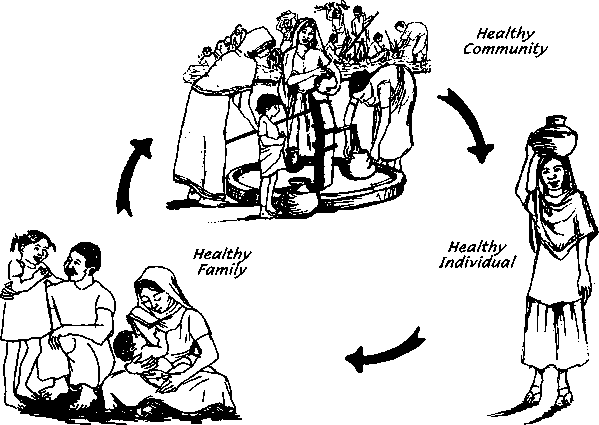
Figure
Most of this book describes health problems and what to do about them. But many of these problems can be prevented (stopped before they start) by better nutrition, cleanliness, rest, and by meeting women’s special health needs. So in this chapter we describe some of the things a woman, her family, and her community can do to prevent illness.
¨ Healthy communities help women stay healthy. Healthy women can care for their families. Healthy families can contribute more to the community.
It is not always easy for women to prevent illness. Although they do a lot to keep their families and communities healthy, many women have difficulty finding the time, energy, and money to pay attention to their own health needs. Since women are often taught to put the needs of others first, they have little time left for themselves after caring for their families. And the family’s limited resources are often spent on the children and men first.

Figure
Yet, in the long run, it saves a lot of pain and stress to prevent health problems before they start rather than treating them later. Some of these things do not take much time or money. Others take some extra time, effort, and money - at least in the beginning. But since prevention builds the health and strength of a woman, her family, and her community, life will be easier and better later on.
Cleanliness
¨ Different germs are spread in different ways. For example, tuberculosis (TB) germs are spread through the air. Lice and scabies are spread through clothes and bed covers.
Many illnesses are spread by germs that pass from one person to another. Here are some of the most common ways that germs are spread:
· by touching an infected person.
Figure
· through clothes, cloths, or bed covers.
Figure
· through the air. For example, when someone coughs, germs in small drops of spit (saliva) can spread to other people or objects.

Figure
· by eating contaminated food.
Figure
· through insect bites or animal bites.
Figure
Cleanliness in the community (sanitation), cleanliness in the home, and personal cleanliness are all important to prevent these sicknesses by stopping the spread of germs. For example:
|
|
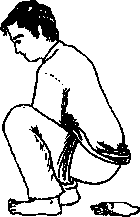

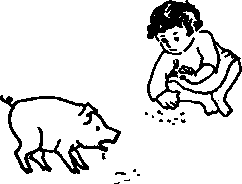

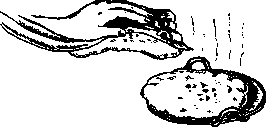
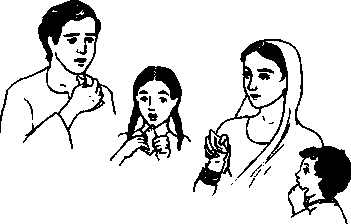
What could have prevented the family’s illness?
If the family had used any of these precautions, the spread of illness could have been prevented:
· if the man had used a latrine or toilet.
· if the pig had not been allowed to run free.
· if the mother had not used her skirt to wipe the child’s hands and then touched the food.
· if the mother had washed her hands after touching her child and before preparing food.
Cleanliness in the community (sanitation)
Many common health problems are best solved in the community. When the community works together to improve sanitation, everybody benefits. For example:
Work together to develop a source of clean water for drinking and cooking. The source should be close enough to the community for people to get water easily.
To keep drinking and cooking water clean:
· do not let animals go near the water source. If necessary, build a fence to keep them out.
· do not bathe, or wash clothes, cooking pots, or eating utensils near the water source.
· do not pass stool or throw garbage (rubbish) near the water source.
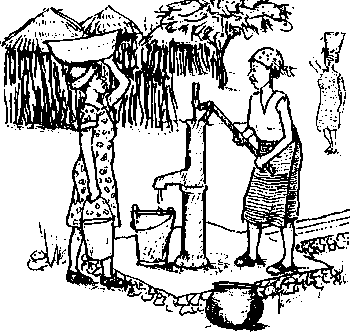
Clean drinking water can help
prevent diarrhea and parasites.
Get rid of garbage in a safe way. If possible, bury, compost, or burn garbage. If you bury it, make sure the pit is deep enough to keep animals and bugs away. If the garbage is above ground, fence off the dump and cover the garbage with dirt to reduce flies. Also, find safe ways to get rid of dangerous and toxic materials. For example, do not burn plastic near the house, because the fumes can be toxic, especially to children, old people, and sick people.
¨ Use composted food waste to fertilize your crops.
Drain standing water in washing areas, and in puddles, tires, and open containers. Malaria and dengue fever are spread by mosquitos, which breed in water that is not flowing. If possible, use mosquito nets when sleeping.
Organize your community to build latrines (see how to build a latrine).
How to build a latrine
1. Dig a pit about ° meter wide, 1° meters long, and 3 meters deep.
2. Cover the pit, leaving a hole about 20 by 30 centimeters.
3. Build a shelter and roof out of local building materials.
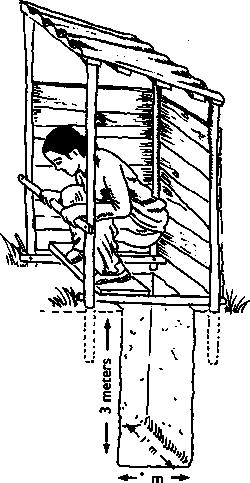
Figure
¨ For more information about building latrines, see Where There Is No Doctor.
¨ After using the latrine, throw a little lime, dirt, or ash in the hole to reduce the smell and keep flies away.
To be safe, a latrine should be at least 20 meters from all houses, wells, springs, rivers, or streams. If it must be anywhere near a place people go for water, be sure to put the latrine downstream.

Figure
Cleanliness in the home
Since family members are in close contact with each other, it is very easy to spread germs and illness to the whole family. A family will have less illness if they:
· wash cooking and eating pots and utensils with soap (or clean ash) and clean water after using them. If possible, let them dry in the sun.· clean the living space often. Sweep and wash the floors, walls, and beneath furniture. Fill in cracks and holes in the floor or walls where roaches, bedbugs, and scorpions can hide.
· hang or spread bedding in the sun to kill parasites and bugs.
¨ Sunlight kills many germs that cause illness.

Figure
· do not spit on the floor. When you cough or sneeze, cover your mouth with your arm, or with a cloth or handkerchief. Then, if possible, wash your hands.· get rid of body wastes in a safe way. Teach children to use a latrine or to bury their stools, or at least to go far away from the house or from where people get drinking water.
¨ If children or animals pass stool near the house, clean it up at once.

Figure
Personal cleanliness
It is best to wash with soap and clean water every day, if possible. Also:
· wash your hands before eating or preparing food, after passing urine or stool, and before and after caring for a baby or someone who is sick.· wash the genitals every day with mild soap and water. But do not douche. The vagina cleans and protects itself by making a small amount of wetness or discharge. Douching washes away this protection and makes a woman more likely to get a vaginal infection.
Figure
· pass urine after having sex. This helps prevent infections of the urine system (but will not prevent pregnancy).· wipe carefully after passing stool. Always wipe from front to back. Wiping forward can spread germs and worms into the urinary opening and vagina.
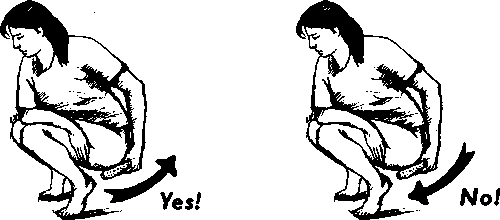
Figure
Protect your teeth
Taking good care of the teeth is important because:
· strong, healthy teeth are needed to chew and digest food well.· painful cavities (holes in the teeth caused by decay) and sore gums can be prevented by good tooth care.
· decayed or rotten teeth caused by lack of cleanliness can lead to serious infections that may affect other parts of the body.
· people who do not care for their teeth are more likely to lose them when they get old.

Figure
Teeth should be cleaned carefully twice a day. This removes the germs that cause decay and tooth loss. Clean the surface of all front and back teeth, then clean between the teeth and under the gums. Use a soft brush, tooth stick, or finger wrapped with a piece of rough cloth. Toothpaste is good but not necessary. Salt, charcoal, or even plain, clean water will also work.

You can make a toothbrush to
keep your teeth
dean.
Clean water
Drinking water should be taken from the cleanest possible source. If the water is cloudy, let it settle and pour off the clear water. Then, before drinking, kill the harmful germs as described below. This is called purification.
Store the purified water in clean, covered containers. If the container has been used for storing cooking oil, wash it well with soap and hot water before storing clean water in it. Never store water in containers that have been used for chemicals, pesticides, or fuels. Wash water containers with soap and clean water at least once a week.
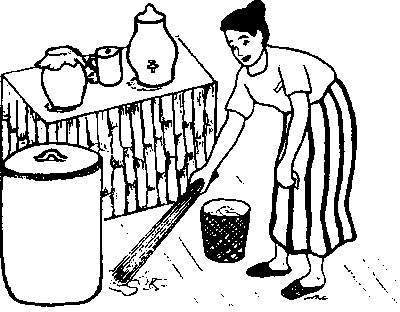
Store water in covered jars
and keep your living space clean.
|
Here are some simple and inexpensive ways to purify your water: Sunlight. Sunlight kills many harmful germs. To purify water using sunlight, fill clean, clear glass or plastic containers with water, and leave them outside from morning to late afternoon. Be sure to place the containers in an open space where they will be in the sun all day. (If drinking water is needed right away, putting the containers in the sun for 2 hours in the middle of the day should be enough for purification.)
To avoid getting germs in the water, choose a spot away from children, dust, and animals. If you want the water to cool before using, bring the containers inside overnight. Water can be stored for a day or two in the same container. Sunlight purification works best in warm climates.
Boiling water for 5-10 minutes will kill most germs. Because boiling water uses so much fuel, use this method only if there is no other way to purify your water. If you want to kill all possible germs, you will have to boil the water for 20 minutes.
|
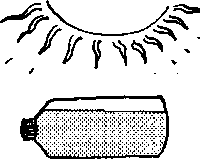
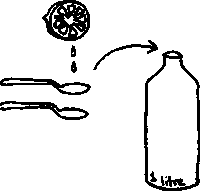
Food safety
Many common diseases of the intestines are spread through food. Sometimes people who harvest, handle, or prepare food pass germs from their hands into the food. Sometimes germs and molds in the air begin to grow in the food and it goes bad (spoils). This happens when food is not stored or cooked properly, or when it gets old.
¨ Washing your hands prevents the spread of disease. Keep a special dean rag for drying your hands. Wash it often and dry it in the sun.
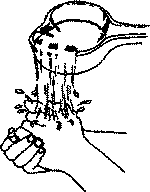
Figure
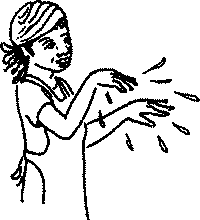
Or dry your hands in the air
by shaking the water off.
To prevent the spread of germs in food:
· wash your hands with soap and water before preparing food, before eating, and before feeding your children.· wash or peel all fruits and vegetables that are eaten raw.
· do not let raw meat, poultry, or fish touch other food that is eaten raw. Always wash your hands, knife, and cutting board after cutting these meats.
· avoid coughing, spitting, and chewing things like gum or betel near food so your saliva does not get in the food.
· do not allow animals to lick dishes or utensils clean. If possible, keep animals out of the kitchen.
· throw food out when it spoils.
Here are some of the most common signs of spoiled foods:
· bad smell· bad taste or a change in taste
· changed color (for example, if raw meat changes from red to brown)
· many bubbles on the top (for example, on the top of old stew or soup) along with a bad smell
· slime on the surface of meat or cooked foods
Cooked food
Cooking food kills germs. All meats, fish, and poultry should be well cooked. Nothing should look raw or have a raw color.
¨ In some communities there are special ways to prepare raw meat or fish that make them safe to eat.
If the food begins to cool, the germs quickly start to grow again. If the food is not eaten within 2 hours, reheat it until it is very hot. Liquids should be bubbling, and solids (like rice) should be steaming.
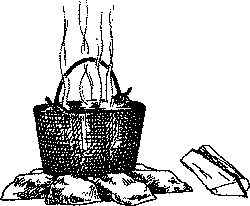
Figure
|
Food selection. Sometimes food is bad even before it is cooked or stored. Here are some things to look for when selecting food. Fresh (raw) foods should be: · fresh and in season. Processed (cooked or packaged) foods should be stored in: · tins that look new (no rust, bulges, or dents).
|
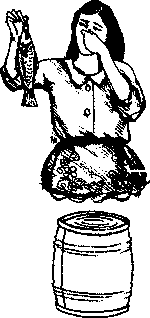
Food storage
Whenever possible, eat freshly prepared food. If you store food, keep it covered to protect it from flies and other insects, and dust.
¨ Women in the community who know which local foods keep well and good ways to store them can teach others.
Food keeps best if it stays cool. The methods described below cool food using evaporation (the way that water disappears into the air). Put the food in shallow pans for more complete cooling.
Pottery cooler. This double-pot cooler is made of a small pot inside a large pot. The space between the pots is filled with water. Use a large pot and lid that have not been glazed (coated with a hard, smooth, baked-on covering) so that the water will evaporate through the pot. The small pot should be glazed on the inside to stop water from seeping into the stored foods.
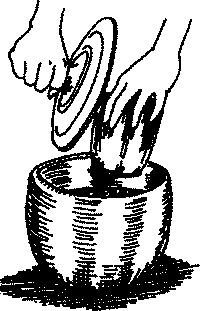
Figure
Cupboard cooler. Put a wooden crate or box on its side, and then set it on bricks or stones to raise it off the floor Put a container of water on top of the crate and drape sackcloth or other coarse cloth over the bowl and around the crate. The cloth should not quite reach the floor. Dip the cloth in the water, so that the wetness spreads throughout the cloth. Place the food inside the crate. As the water in the cloth evaporates it will cool the food.This method works best if you can keep the cloth wet all the time.
Cover the entire crate when
you make a cupboard cooler. The front is open here just so you can see
inside.
Special Needs of Women
Rest and exercise
Rest
Most women work very hard cooking, carrying water, and collecting fuel to help their families survive. If a woman also works outside her home, she has a double burden. She may work all day at a factory, in an office, or in the fields, and then return home to her second job - caring for her family. All this hard work can lead to exhaustion, malnutrition, and sickness, because she does not have enough time to rest or enough food to give her energy for her tasks.
Figure
¨ Work with your community to lower women’s workload. Stoves that use less fuel and village water sources improve everyone’s lives.
To help reduce a woman’s workload, family members can share the burden of work at home. Cooking, cleaning, and gathering fuel and water with other women (together or in turns) can also help make a woman’s burden lighter. Whether she works for pay or not, she probably needs help caring for her children. Some women organize child care cooperatives, where one woman cares for young children so that others can work. Each woman pays something to the woman caring for the children or they each take a turn.
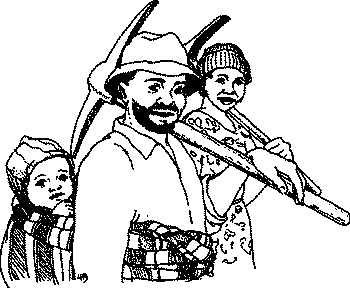
Figure
If a woman is pregnant, she needs even more rest. She can explain to her family why she needs rest, and ask them for extra help with her workload.
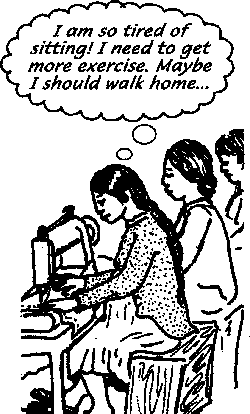
Figure
Exercise
Most women get plenty of exercise doing their daily tasks. But if a woman does not move much while she works - for example, if she sits or stands all day in a factory or office - she should try to walk and stretch every day. This will help keep her heart, lungs, and bones strong.
Figure
Regular health exams
If possible, a woman should see a trained health worker to check her reproductive system every 3 to 5 years, even if she feels fine. This exam should include a pelvic exam, a breast exam, a test for weak blood (anemia), and an exam for sexually transmitted diseases (STDs) if she is at risk. It may also include a Pop test (explained below) or other test for cervical cancer. This is especially important for women over 35, because women are more likely to get cancer of the cervix (the opening of the womb) as they get older.
¨ Many STDs and cancers do not show signs until the illness is very serious. By then it may be too late to treat the problem.
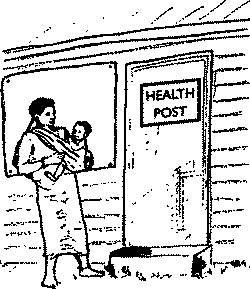
Figure
Figure
|
These are the steps in the pelvic exam: 1. The health worker will look at your outer genitals for any swelling, bumps, sores, or changes in color. 2. Usually, the health worker will put a speculum into your vagina. A speculum is a small metal or plastic tool that holds the inside of the vagina open. He or she can then examine the walls of the vagina and the cervix for swelling, bumps, sores, or discharge. You may feel slight pressure or discomfort with the speculum inside, but it should not hurt. The exam is more comfortable if your muscles are relaxed and your bladder is empty.
3. If the clinic has laboratory services, the health worker will do a Pap test for cancer and, if needed, tests for STDs. To do a Pap test, the health worker scrapes a few cells from the cervix. This is not painful. You should only feel a little pressure. The cells are sent to a laboratory where they are checked for signs of cancer. If the cancer is found and treated early, it can almost always be cured. 4. After the health worker removes the speculum, she will put on a clean plastic glove and put two fingers of one hand into your vagina. She will press her other hand on your lower belly. In this way she can feel the size, shape, and location of your womb, tubes, and ovaries. This part of the exam should not be painful. If it is, tell her. It may mean something is wrong. 5. For some problems, the health worker may need to do a rectal exam. One finger is put into your rectum and one finger into your vagina. This can give the health worker more information about possible problems of the vagina, and of the womb, tubes, and ovaries. |

Safer sex
Having unprotected sex or sex with many partners makes a woman more at risk for getting an STD, including HIV/AIDS. Untreated STDs can cause infertility, pregnancies in the tube, and miscarriage. Having many partners also makes a woman more at risk for developing pelvic inflammatory disease (PID) and cancer. A woman can help prevent all these problems by practicing safer sex.

Figure
¨ AIDS has become a major cause of death among women.
Family planning
A young woman should use family planning to delay her first pregnancy until her body is fully grown. Then, after her first baby is born, she should wait 2 or more years between each pregnancy. This method, called child spacing, lets her body get strong again between pregnancies, and her baby can finish breastfeeding. When she has the number of children she wants, she can choose not to have any more.

Figure
|
For healthy mothers and babies, it is better not to have:
|
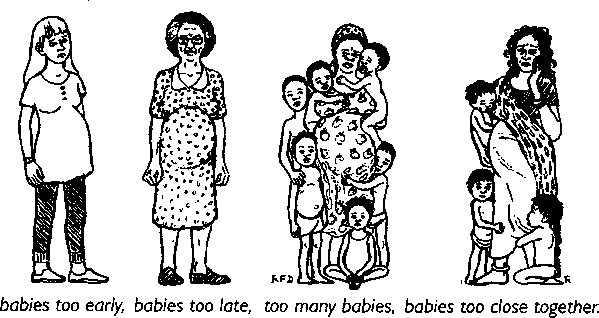
Good care during pregnancy and birth
Many women do not seek care during their pregnancy because they do not feel sick. But feeling well does not mean there are no problems. Many of the problems of pregnancy and birth, such as high blood pressure or the baby lying the wrong way, do not have any signs. A woman should try to get regular prenatal (before birth) checkups, so that a midwife or health worker trained in giving care during pregnancy can examine her body and see if her pregnancy is going well. Good prenatal care can prevent problems from becoming dangerous.
Family planning and good care during pregnancy and birth can prevent:
Fallen womb (prolapse). If a woman has been pregnant often, had long labors, or pushed too early during labor, the muscles and ligaments that hold up her womb may have become weak. When this happens the womb can fall part or all of the way into the vagina. This is called a prolapse.

Figure
Signs:
· leaking urine
· in severe cases, the cervix can be seen at the opening of the vagina

Figure

Figure

Figure
Prevention:
· Space children at least 2 years apart.
· During labor, push only when the cervix is fully open and there is a strong need to push. Never let anyone push down on your womb to get the baby out quickly.

Figure
Urine leaking from the vagina (VVF). If a baby’s head presses too long against the wall of the vagina during labor, the vaginal tissue may be damaged. Urine or stool may leak out of the vagina.
Prevention:
· Wait to get pregnant until your body is fully grown.
· Avoid labor that goes on too long.
· Space babies at least 2 years apart so that your muscles can get strong again in between pregnancies.
Vaccinations against tetanus
|
Tetanus is an infection that kills. A woman can get tetanus when a germ that lives in the stools of people or animals enters her body through a wound. Although anyone can get tetanus, women and babies are especially at risk during childbirth. Tetanus can enter the body if an instrument that is not properly disinfected is put into the womb or used to cut the baby’s cord. All girls and pregnant women should be vaccinated against tetanus. If a woman is pregnant and has not been vaccinated, she should have an injection at her first prenatal checkup, and a second injection at least a month later. Then, if possible, she should follow the rest of the schedule. Tetanus immunization schedule: No. 1: at first visit No. 2: at least 1 month after first injection Then get an injection every 10 years. |
Regular breast exams
Most women have some small lumps in their breasts. These lumps often change in size and shape during her monthly cycle. They can become very tender just before a woman’s monthly bleeding. Sometimes - but not very often - a breast lump that does not go away can be a sign of breast cancer.
¨ A woman should examine her breasts every month, even after her monthly bleeding has stopped forever.
A woman can usually find breast lumps herself if she learns how to examine her breasts. If she does this once a month, she will become familiar with how her breasts feel, and will be more likely to know when something is wrong.
¨ If a woman has a disability that makes examining her breasts difficult, she can ask someone she trusts to do it for her.
|
How to examine your breasts Look at your breasts in a mirror, if you have one. Raise your arms over your head. Look for any change in the shape of your breasts, or any swelling or changes in the skin or nipple. Then put your arms at your sides and check your breasts again.
Lie down. Keeping your fingers flat, press your breast and feel for any lumps.
Be sure to touch every part of your breast. It helps to use the same pattern every month.
What to do if you find a lump If the lump is smooth or rubbery, and moves under the skin when you push it with your fingers, do not worry about it. But if it is hard, has an uneven shape, and is painless, keep watching it - especially if the lump is in only one breast and does not move even when you push it. See a health worker if the lump is still there after your next monthly bleeding. This may be a sign of cancer. You should also get medical help if there is a discharge that looks like blood or pus. |
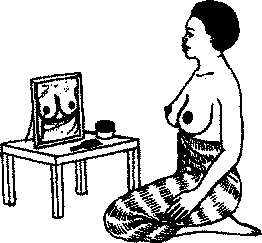
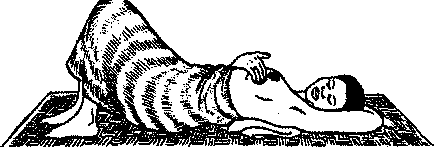

|
Things to Avoid to Stay Healthy Tobacco, alcohol, and other drugs can all be bad for a woman’s health. |
Working for Change
Working toward a balance between treatment and prevention
Health workers, or anyone working to improve the health of women in the community, can play an important role in stopping illnesses before they start. But often a woman’s main need is not preventing illness but getting relief from an illness she already has. One of the first concerns of a health worker, then, must be to help with healing.
But treatment can be used as a doorway to prevention. One of the best times to talk to a woman about prevention is when she comes to see you for help. For example, if a woman comes to you with an infection of the urine system, treat the problem first. Then take time to explain how she can prevent these infections in the future.
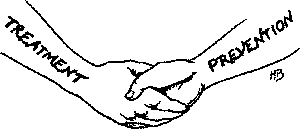
Figure
Work toward a balance between prevention and treatment that is acceptable to the women you see. This balance will depend a lot on how the women already feel about sickness, healing, and health. As daily survival becomes less of a challenge, as their ideas about health change, and more diseases are controlled, you may find that they become more interested in prevention. Then much needless suffering can be avoided, and you can help women work toward more effective self-care.
¨ Health workers can play an important role in helping women work together to prevent women’s health problems in the community.
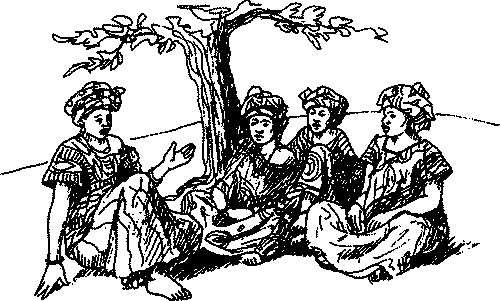
Figure
|
| ||||||||||||||||||||||||||||||||||||||||||||||||||||||||||||||||||||||||||||||||||||||||||||||||||||||
Where Women Have No Doctor - A Health Guide for Women (Hesperian Foundation, 1997, 600 p.)
Chapter 11: Eating for Good Health

Figure
A woman needs good food to do her daily work, to prevent illness, and to have safe and healthy births. And yet, around the world, more women suffer from poor nutrition than any other health problem. This can cause exhaustion, weakness, disability, and general poor health.
¨ Many illnesses could be prevented if people had enough good food to eat.
There are many reasons for hunger and not eating well. One main reason is poverty. In many parts of the world, a few people own most of the wealth and the land. They may grow crops like coffee or tobacco instead of food, because they can make more money that way. Or poor people may farm small plots of borrowed land, while the owners take a big share of the harvest.
This poverty is hardest on women. This is because in many families women are fed less than men, no matter how little there is to eat. So the problems of hunger and poor nutrition will never be completely solved until land and other resources are shared fairly, and women are treated equally with men.
Still, there are many things people can do now to eat better at low cost. By eating as well as they can, they will gain strength. And when people are not feeling hungry every day, they are more able to think about their families’ and communities’ needs and to work for change.
Main Foods and Helper Foods
In much of the world, most people eat one main low-cost food with almost every meal. Depending on the region, this may be rice, maize, millet, wheat, cassava, potato, breadfruit, or plantain. This main food usually provides most of the body’s daily food needs.
By itself, however, the main food is not enough to keep a person healthy. Other ‘helper’ foods are needed to provide protein (which helps build the body), vitamins and minerals (which help protect and repair the body), and fats and sugar (which give energy).
The healthiest diets have a variety of foods, including some foods with protein, and fruits and vegetables rich in vitamins and minerals. You need only a small amount of fat and sugar. But if you have problems getting enough food, it is better to eat foods with sugar and fat than to eat too little food.
¨ Good nutrition means eating enough food and the right kind of food for the body to grow, be healthy, and fight off disease.
A woman does not need to eat all the foods listed here to be healthy. She can eat the main foods she is accustomed to, and add as many helper foods as are available in her area.
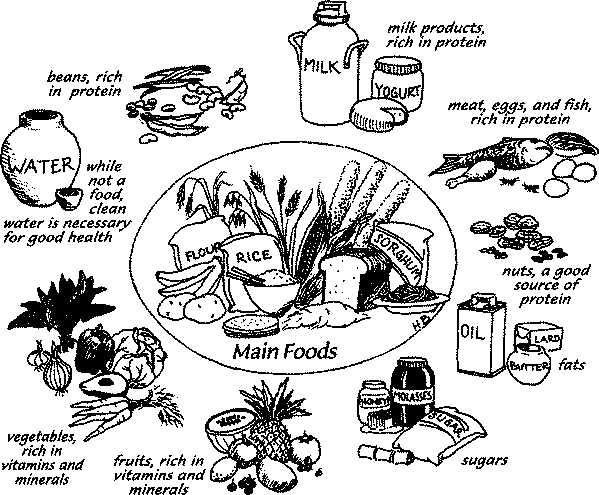
Helper
Foods
Important vitamins and minerals
There are 5 important vitamins and minerals that women need, especially women who are pregnant or breastfeeding. The 5 are: iron, folic acid (folate), calcium, iodine, and vitamin A.
Iron
Iron is needed to make blood healthy and to help prevent weak blood (anemia). A woman needs to get a lot of iron throughout her life, especially during the years she has monthly bleeding and during pregnancy.
|
These foods have a lot of iron: · meat (especially liver, heart, and kidney)
These foods also have some iron: · cabbage with dark-colored leaves · black-strap molasses |
|
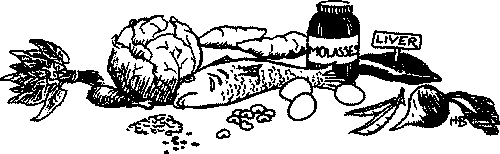
It is possible to get even more iron if you:
· Cook food in iron pots. If you add tomatoes, lime juice, or lemon juice (which are high in vitamin C) to the food while it is cooking, more iron from the pots will go into the food.· Add a clean piece of iron - like an iron nail or horseshoe - to the cooking pot. These should be made of pure iron, not a mixture of iron and other metals.
· Put a clean piece of pure iron, like an iron nail, in a little lemon juice for a few hours. Then make lemonade with the juice and drink it.
¨ It is best to eat iron foods along with citrus fruits or tomatoes. These contain vitamin C, which helps your body use more of the iron in the food.

Figure
Folic acid (folate)
The body needs folic acid to make healthy red blood cells. Lack of folic acid can lead to anemia in women and severe problems in newborn babies. So getting enough folic acid is especially important during pregnancy.
¨ Avoid cooking food for a long time. This destroys folic acid and other vitamins.
|
Good sources of folic acid are: · dark green leafy vegetables · eggs
|
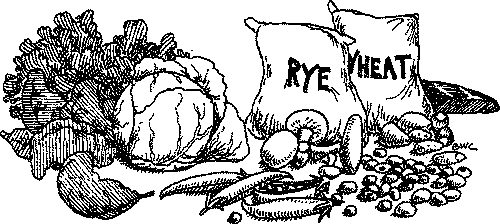
Calcium
Everyone needs calcium to make their bones and teeth strong. In addition, girls and women need extra calcium:
· during childhood. Calcium helps a girl’s hips grow wide enough to give birth safely when she is fully grown.· during pregnancy. A pregnant woman needs enough calcium to help the baby’s bones grow, and to keep her own bones and teeth strong.
· during breastfeeding. Calcium is necessary for making breast milk.
· during mid-life and old age. Calcium is needed to prevent weak bones (osteoporosis).

Figure
|
These foods are rich in calcium: · milk, curd, yogurt
|
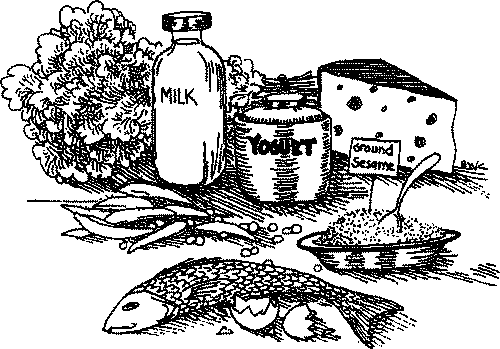
To increase the amount of calcium you get from food:
· Soak bones or egg shells in vinegar or lemon juice for a few hours, and then use the liquid in soup or other food.· Add a little lemon juice, vinegar, or tomato when cooking bones for soup.
· Grind up egg shells into a powder and mix with food.
· Soak maize (corn) in lime (carbon ash).
Sunshine will help you use
calcium better. Try to be in the sun at least 15 minutes every day. Remember
that it is not enough to just be outdoors. The sun’s rays must touch the
skin.
Iodine
Iodine in the diet helps prevent a swelling on the throat called goiter and other problems. If a woman does not get enough iodine during pregnancy, her child may be mentally slow. Goiter and mental slowness are most common in areas where there is little natural iodine in the soil, water, or food.
Figure
|
The easiest way to get enough iodine is to use iodized salt instead of regular salt. Or you can eat some of these foods (either fresh or dried): · shellfish (like shrimp) · cabbage
|
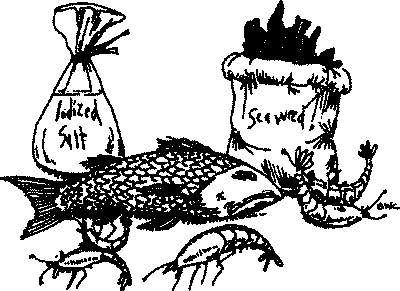
¨ The easiest way to get enough iodine is to use iodized salt instead of regular salt.
If iodized salt or these foods are hard to get, or if there is goiter or mental slowness in your area, check with the local ministry of health to see if they can give iodized oil by mouth or by injection. If not, you can make an iodine solution at home with polyvidone iodine (an antiseptic that is often available at a local pharmacy). It contains 6 ml of iodine per drop. To make an iodine solution to drink:
|
1. Pour 4 glasses of clean drinking water into a jug or jar. Store iodine at room temperature and in dark containers to protect it from light.
2. Add 1 drop of polyvidone iodine. In areas where there is little natural iodine, everyone over 7 years old should drink 1 glass of this iodine solution every week of her or his life. This is especially important for pregnant women and children. |

Vitamin A
Vitamin A prevents night blindness and helps fight off some infections. Many pregnant women have problems with night blindness, which probably means that their diet lacked vitamin A before they got pregnant. The problem shows up when pregnancy places extra demands on the body.
Dark yellow and green leafy
vegetables, and some orange fruits, are rich in vitamin A.
Lack of vitamin A also causes blindness in children. By eating foods rich in vitamin A during pregnancy, a woman can increase the amount of vitamin A her baby will get in breast milk.
Eating Better for Less Money
When money is limited, it is important to use it wisely. Here are some suggestions for getting more vitamins, minerals, and proteins at low cost:
1. Protein foods. Beans, peas, lentils, and other similar foods (called legumes) are a good, cheap source of protein. If allowed to sprout before cooking and eating, they have more vitamins. Eggs are one of the cheapest sources of animal protein. Liver, heart, kidney, blood, and fish are often cheaper than other meats and are just as nutritious.2. Grains. Rice, wheat, and other grains are more nutritious if their outer skins are not removed during milling.
3. Fruits and vegetables. The sooner you eat fruits and vegetables after harvesting, the more nutrition they have. When you store them, put them in a cool, dark place to preserve vitamins. Cook vegetables in as small an amount of water as possible, because vitamins from the vegetables go into the water during cooking. Then use the water in soups or drink it.
The tough outside leaves or tops from vegetables like carrots or cauliflower contain many vitamins and can be used to make healthy soups. For instance, cassava (manioc) leaves contain 7 times as much protein and more vitamins than the root.
Many wild fruits and berries are rich in vitamin C and natural sugars, and can provide extra vitamins and energy.
4. Milk and milk products. These should be kept in a cool, dark place. They are rich in body-building proteins and in calcium.
5. Avoid spending money on packaged foods or vitamins. If parents took the money they often use for sweets or sodas (fizzy drinks) and spent it on nutritious foods, their children would be healthier for the same amount of money.
Since most people can get the vitamins they need from food, it is better to spend money on nutritious foods than on pills or injections. If you must take vitamins, take pills. They work as well as injections and cost less.
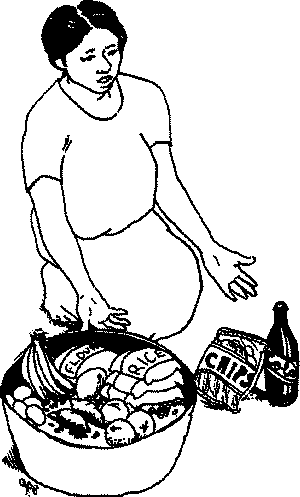
You can buy more nutritious
food than packaged food for the same amount of
money.
Harmful Ideas About Eating
In many parts of the world, certain traditions and beliefs about women and food are more harmful than helpful. For example:
It is not true that girls need less food than boys. Some people believe that boys need more food. But these people are wrong! Women work just as hard as men in most communities, if not harder, and need to be as healthy. Girls who are healthy and well-fed during childhood grow up into healthy women, and have fewer problems at school and at work.It is not true that women should avoid foods during pregnancy and breastfeeding. In some communities, people believe that a woman should avoid certain foods - like beans, eggs, chicken, milk products, meat, fish, fruits, or vegetables - at different times in her life. These times may include her monthly bleeding, pregnancy, immediately after childbirth, while breastfeeding, or during menopause. But a woman needs all these foods, especially during pregnancy and while breastfeeding. Avoiding them can cause weakness, illness, and even death.
It is not true that a woman should feed her family first. A woman is sometimes taught to feed her family before herself. She eats only what is left and often does not get as much food as the rest of the family. This is never healthy. And when a woman is pregnant, or has just had a baby, it can be very dangerous.
If a family does not help a woman eat well, we encourage her to do what she must to get enough food. She may need to eat while cooking, or hide food and eat it when her husband is out of the house.
It is not true that a sick person needs less food than a healthy person. Good food not only prevents disease but also helps a sick person fight disease and become well again. As a general rule, the same foods that are good for people when they are healthy are good for them when they are sick.
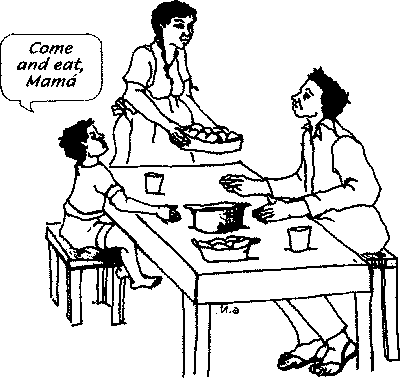
Figure
Poor Nutrition Can Cause Disease
Because girls and women often get less food - and less nutritious food - than they need, they are more likely to get sick. Here are some common illnesses caused by poor nutrition.
Anemia
A person with anemia has weak blood. This happens when red blood cells are lost or destroyed faster than the body can replace them. Because women lose blood during their monthly bleeding, anemia is often found in women who are between puberty and menopause. About half of the world’s pregnant women are anemic, because they need to make extra blood for the growing baby.
Anemia is a serious illness. It makes a woman more likely to get other kinds of diseases, and affects her ability to work and learn. Anemic women are more likely to bleed heavily or even die during childbirth.
Signs:
· pale inner eyelids, tongue, and nails
· weakness and feeling very tired
· dizziness, especially when getting up from a sitting or lying position
· fainting (loss of consciousness)
· shortness of breath
· fast heartbeat
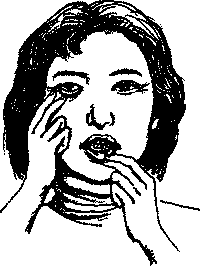
Figure
Causes of anemia:
The most common cause of anemia is not eating enough food rich in iron, since iron is needed to make red blood cells. Other causes are:
· malaria, which destroys red blood cells· any kind of blood loss, such as:
- heavy monthly bleeding (an intra-uterine device, or IUD, can make bleeding heavier)
- childbirth
- bloody diarrhea (dysentery) from parasites and worms
- bleeding stomach ulcers
- a wound that bleeds a lot
¨ For more information about malaria, parasites, and worms, see Where There Is No Doctor or another general medical book.
Treatment and prevention:
· If malaria, parasites, or worms are causing your anemia, treat these diseases first.· Eat foods rich in iron, along with foods rich in vitamins A and C, which help the body absorb iron. Citrus fruits and tomatoes are rich in vitamin C. Dark yellow and dark green leafy vegetables are rich in vitamin A. If a woman cannot eat enough foods rich in iron, she may need to take iron pills.
· Avoid drinking black tea or coffee, or eating bran (the outer layer of grains) with meals. These can prevent the body from absorbing iron from food.
· Drink clean water to prevent infection from parasites.
· Use a latrine for passing stool, so that worm eggs will not spread to food and water sources. If hookworms are common in your area, try to wear shoes.
· Space births at least 2 years apart. This will give your body a chance to store some iron between pregnancies.
Figure

Figure
Beriberi
Beriberi is a disease caused by lack of thiamine (one of the B vitamins), which helps the body turn food into energy. Like anemia, beriberi is most often seen in women from puberty to menopause, and in their children.
Beriberi occurs most often when the main food is a grain whose outer skin has been removed (for example, polished rice) or a starchy root, like cassava.
Signs:
· not wanting to eat
· severe weakness, especially in the legs
· the body becomes very swollen or the heart stops working
Treatment and prevention:
Eat foods rich in thiamine, like meat, poultry, fish, liver, whole grain cereals, legumes (peas, beans, clover), milk, and eggs. If this is difficult, a person may need thiamine pills.
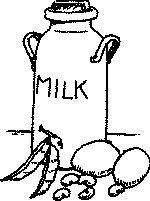
Figure
Problems from eating too much food or the wrong kind of food
Figure
If a woman weighs too much or eats too much fat, she is more likely to have high blood pressure, heart disease, a stroke, gallstones, diabetes, and some cancers. Being overweight can also cause arthritis in the legs and feet.
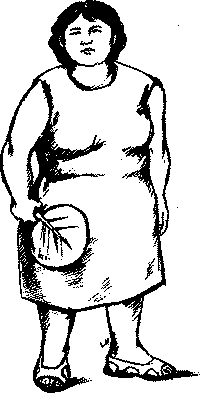
Figure
People who weigh too much should lose weight by exercising more, and by replacing fatty and sweet foods in their diet with fruits and vegetables. Here are some suggestions for cutting down the amount of fat in the diet:
· When cooking, try to use as little butter, ghee, lard, or oil as possible. Or cook with broth or water instead.· Remove fat from meat before cooking. Do not eat the skin of chicken or turkey.
· Avoid processed snack foods that are high in fat, like chips and crackers.
Diabetes
People with diabetes have too much sugar in their blood. This disease is usually more serious if it starts when a person is young (juvenile diabetes). But it is most common in people over age 40 who are overweight.
Early signs:
· always thirsty
· urinates often and a lot
· always tired
· always hungry
· weight loss
· frequent vaginal infections
¨ Diabetes is more likely to develop during pregnancy than at other times. If you are pregnant and are always thirsty or are losing weight, see a health worker who can test your urine for sugar.
Later, more serious signs:
· itchy skin
· periods of blurry eyesight
· some loss of feeling in the hands or feet
· sores on the feet that do not heal
· loss of consciousness (in extreme cases)
All these signs may be caused by other diseases. To find out whether you have diabetes, you can test your urine yourself. Use special paper strips, like Uristix, that change color when dipped in urine that has sugar in it. If the strips are not available, see a health worker to get a simple urine test for sugar.
Treatment:
If you have diabetes and are less than 40 years old, you should be treated by a health worker whenever possible. If you are over 40, you may be able to control diabetes by watching your diet:
· Eat smaller meals more often. This helps keep the same amount of sugar in the blood.· Avoid eating a lot of sweet foods.
· If you are overweight, try to lose weight.
· Avoid foods high in fat (for example, butter, ghee, lard, and oils), unless you have trouble getting enough food to eat.
If possible, you should also see a health worker regularly to make sure your illness is not getting worse.
¨ There may be plants in your area that are helpful for diabetes. Check with a health worker.
To prevent infection and injury to the skin, clean your teeth after eating, keep your skin clean, and always wear shoes to prevent foot injuries. Check your feet and hands once a day to see if you have any sores. If you have a sore and there are any signs of infection (redness, swelling, or heat), see a health worker.

Check your feet once a day to
see if you have any sores or signs of infection.
Whenever possible, rest with your feet up. This is especially important if your feet get darker in color and become numb. These signs mean that the blood flow to and from your feet is poor.
|
Other health problems that can be caused or made worse by poor nutrition: · high blood pressure For more information on stomach ulcers, indigestion, and heartburn, see Where There Is No Doctor or another general medical book. |
Ways to Work toward Better Nutrition
There are many different ways to approach the problem of poor nutrition, because many different things help cause the problem. You and your community must consider the possible actions you might take and decide which are most likely to work.
Here are a few examples of ways to improve nutrition. These suggestions can help you grow more food or different kinds of food, or store it better so the food does not spoil. Some of these examples bring quick results. Others work over a longer time.
|
Some ways people can improve their nutrition
Rotation of crops Every other planting season, plant a crop that returns strength to the soil - like beans, peas, lentils, alfalfa, peanuts, or some other plant with seeds in pods (legumes or pulses).
Try to grow a variety of foods. That way, even if one crop fails there will still be something to eat.
The community can buy large amounts of food at lower prices.
|
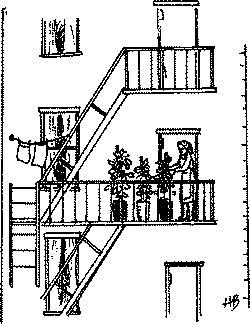


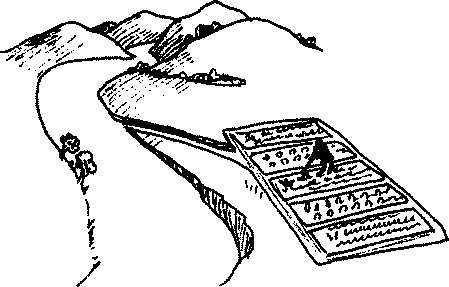

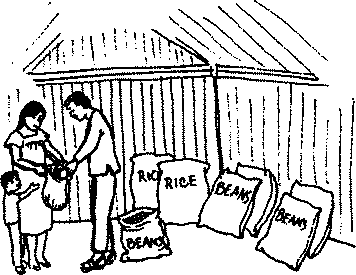
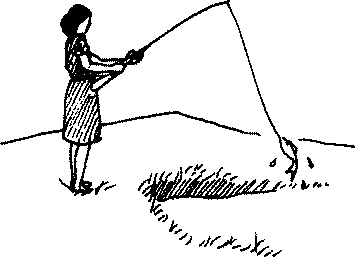
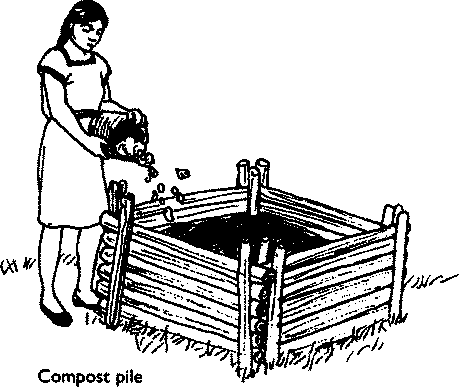

Trying a new idea
Not all the suggestions in this chapter are likely to work in your area. Perhaps some will work if they are changed for your particular community and the resources at hand. Often you can only know whether something will work or not by trying it - that is, by experiment.
When you try out a new idea, always start small. If you start small and the experiment fails, or something has to be done differently, you will not lose much. If it works, people will see that it works and can begin to use it in a bigger way.
Here is an example of experimenting with a new idea:
You learn that a certain kind of bean, such as soya, is an excellent body-building food. But will it grow in your area? And if it grows, will people eat it?
Start by planting a small patch - or 2 or 3 small patches under different kinds of conditions (for example, with different kinds of soil or using different amounts of water). If the beans do well, try cooking them in various ways, and see if people will eat them. If so, try planting more beans using the conditions in which they grew best.
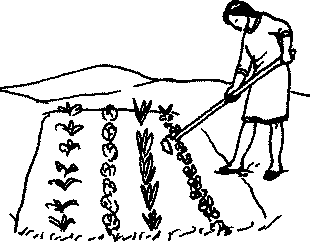
Figure
You can also try out even more conditions (for example, adding fertilizer or using different kinds of seed) in more small patches to see if you can get an even better crop. To understand what helps and what does not, try to change only one condition at a time and keep the rest the same.
¨ Do not be discouraged if an experiment does not work. Perhaps you can try again with certain changes. You can learn as much from your failures as from your successes.
|
Here is an example of adding animal fertilizer (manure) to see if it helps beans grow. This person planted several small bean patches side-by-side, under the same conditions of water and sunlight, and using the same seed. Before planting, each patch of soil was mixed with a different amount of manure, something like this:
This experiment shows that a certain amount of manure helps, but that too much can harm the plants. This is only an example. Your experiments may give different results. Try for yourself! |
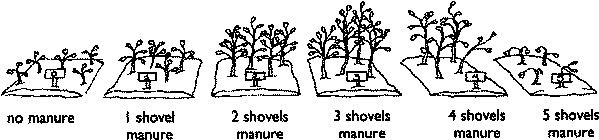
|
Other ideas to experiment with · To increase the amount of food a piece of land will produce, try planting different kinds of crops together. For example, plants that grow along the ground can be mixed with plants that grow tall. Fruit trees can be planted above both. Or plants that take a shorter time to grow can be mixed with those that take a longer time. Then the first crop can be harvested before the second crop gets too large. · If you must plant cash crops (non-food crops that you sell), try planting food crops together with the cash crops. For example, plant nut or fruit trees to shade coffee. Or plant cassava with cotton. · Try to find nutritious plants that grow well in local conditions, so that you will need less water and fertilizer for good results.
|

Working toward a balance between people and land
Most food comes from the land. Land that is used well can produce more food. But even the best used piece of land can only feed a certain number of people. And today, many of the people who farm do not have enough land to meet their needs or to stay healthy.
For this reason, some people argue that ‘the small family lives better’. For many poor families, however, having many children is an economic necessity. Because of the work they do to help the family, children of poor families often produce more than they cost by the time they are 10 or 12 years old. Having a lot of children also makes it more likely the parents will have someone to give the help and care they need in old age.
So lack of social and economic security creates the need for parents to have many children. Therefore, the answer to gaining a balance between people and land does not come from telling poor people to have smaller families. It comes from sharing the land more fairly, paying fair wages, and taking other steps to overcome poverty. Only then can people afford small families. Then we can hope to achieve a lasting balance between people and land.
|
| ||||||||||||||||||||||||||||||||||||||||||||||||||||||||||||||||||||||||||||||||||||||||||||||||||||||
Where Women Have No Doctor - A Health Guide for Women (Hesperian Foundation, 1997, 600 p.)
Chapter 12: Sexual Health

Figure
We have been ignorant for so long, and full of fear about our bodies.
- Oaxaca, Mexico
Sex is a natural part of life. For many women, it is a way to feel pleasure, express love or sexual desire for their partners, or to become pregnant with the children they hope for.
But sex can also lead to serious problems, such as pregnancies that are unwanted or that threaten a woman’s health, sexually transmitted diseases (STDs), or physical and emotional harm from forced sex.
To be free from these problems, a woman must have control over her sexual life. This control should include:
· choosing her sexual partner.
· negotiating when and how to have sex.
· choosing if and when she becomes pregnant.
· preventing STDs, including HIV/AIDS.
· being free from sexual violence, including forced sex.
When a woman has this control, we say she has good sexual heath. But in many communities, harmful beliefs about what it means to be a woman make it hard for women to have good sexual health. This chapter gives information and suggestions about how women can overcome these beliefs and gain control over their sexual lives.
Sex and Gender Roles
Each person is born with either a girl’s body or a boy’s body. These physical differences determine a person’s sex, which does not change overtime.
A person’s gender role refers to the way a community defines what it is to be a woman or a man. Each community expects women and men to think, feel, and act in certain ways, simply because they are women or men. In most communities, for example, women are expected to prepare food, gather water and fuel, and care for their children and partner. Men, however, are often expected to work outside the home to provide for their families and parents in old age, and to defend their families from harm.
Figure
Unlike the physical differences between men and women, gender roles and the activities associated with them are created by the community. Some activities, like preparing food and caring for children, are considered ‘women’s activities’ in many communities. But others vary from place to place - depending on a community’s traditions, laws, and religions. Gender roles can even vary within communities, based on how much education a person has, her race, or her age. For example, in some communities women of a certain race are expected to do domestic work, while other women have more choice about the jobs they hold.

Figure
How gender roles are learned
Gender roles are passed down from parents to children. From the time children are very young, parents treat girls and boys differently - sometimes without realizing they do so. Children watch their parents closely, noticing how they behave, how they treat each other, and what their roles are in the community.
As children grow up, they accept these roles because they want to please their parents and. because parents have more authority. These roles also help children know who they are and what is expected of them. So in the same way that children learn their own names, they also learn about their gender - that is, what it means to be a woman or a man.
As the world changes, gender roles also change. Many young people want to live differently from their parents. But they sometimes find it difficult to change, because the family and community expect them to continue following old ‘rules’. As women struggle to gain the freedom to redefine their gender roles, they can also gain more control over the things that determine sexual health.
When gender roles cause harm
|
Fulfilling the roles expected by the community can be satisfying and can give a woman a sense of belonging. But these roles can also limit a woman’s activities and choices, and make her feel less valued than a man. When this happens, everyone - the woman herself, her family, and her community - suffers. In most communities, women are expected to be wives and mothers. Many women like this role because it can be very satisfying and it gives them status in the community. Other women would prefer to follow their own interests - , or they want to have only a few children - but their families and communities do not give them this choice. If she is expected to have many children, a woman may have less chance to learn new skills or go to school. Most of her time and energy will be spent taking care of others’ needs. Or, if a woman is unable to have children, her community may value her less than other women.
Most communities value men’s work more than women’s work. For example, this woman has worked all day - and then cooks, cleans, and cares for her children at night. But because her husband’s work is considered more important, _ she is concerned about his rest - not her own. Her children will grow up thinking men’s work is more important, and value women less.
Women are often considered more emotional than men, and they are free to express these emotions with others. Men, however, are often taught that showing emotions like sadness or tenderness is ‘unmanly’, so they hide their feelings. Or they express their feelings in angry or violent ways that are more acceptable for men. When men are unable to show their feelings, children may feel more distant from their fathers, and men are less able to get support from others for their problems.
Women are often discouraged from speaking - or forbidden to attend or speak - at community meetings. This means the community only hears about what men think - for example, how they view a problem and their solutions for it. Since women have much knowledge and experience, the whole community suffers when they cannot discuss problems and offer suggestions for change.
Women and men who have sexual relations with people of the same sex (homosexuals) are sometimes made to feel like outcasts in their own communities. Even if they are community leaders in other ways, they may be forced to live and love in secrecy and shame. In some communities, fear or lack of understanding of people in same sex relationships may even lead to physical violence against them. Any time a person is made to feel afraid or ashamed about who he or she is, it harms the person’s mental and sexual health. |
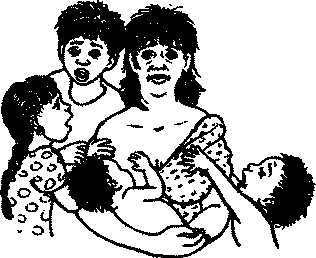
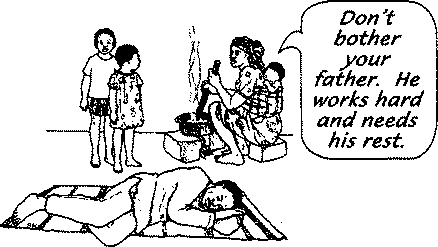


How Gender Roles Affect Sexual Health
Harmful beliefs about women’s sexuality
What it means to be a woman or a man in a particular community includes beliefs about men’s and women’s sexuality - that is, about sexual behavior and how people feel about their own bodies.
A few harmful beliefs about women’s sexuality that are common in many communities are described below. These beliefs and other harmful effects of gender roles - the lack of opportunity and choice for women, and the lack of value they feel - prevent women from having control over their sexual lives. This puts them at great risk for sexual health problems.
Harmful belief: Women’s bodies are shameful
Mothers and fathers begin to teach their children about their bodies as soon as they are born. Parents do not do this directly. But a baby learns it by the way the parents hold her, and the tone of their voices.
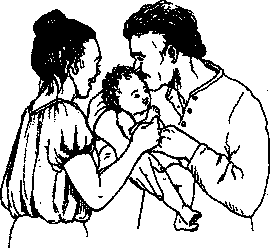
Figure
As a little girl grows, she becomes curious about her body. She wants to know what the different parts are called and why her genitals are different from a boy’s. But unlike little boys, she is often scolded for being curious, and is told that ‘nice girls’ do not ask such things. If she touches her genitals, she is taught that it is dirty or shameful - and that she should keep her sexual parts hidden.
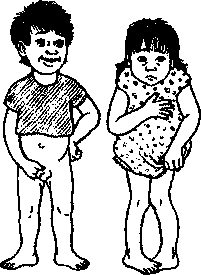
Parents act differently when
little boys and little girls touch their bodies.
Her parents’ reactions teach a little girl that her body is shameful. As a result, she will find it difficult to ask questions about changes in her body as she enters puberty, and about her monthly bleeding, or about sex. She may be too embarrassed to talk to a health worker, because she does not know what parts of her body are called or what questions to ask. When she starts having sex, she is less likely to understand how her body feels sexual pleasure, or to know how to protect herself from unwanted pregnancy or sexually transmitted diseases (STDs).
¨ A woman’s body is NOT shameful. Her body is something to discover, love, and value.
Our bodies are not causes for shame. Our bodies allow us to touch and care for others, and to feel sexual pleasure. Our bodies are something to discover, love, and value.
Harmful belief: Women’s bodies belong to men
In many communities, a woman is treated like the property of her father or husband. As a child, she belongs to her father, and he can arrange to have her marry whomever he chooses. Sometimes she will be sold - like property - to her husband or to an employer. Her future husband wants his property to be ‘pure’ and unspoiled by other men, so he expects her to be a virgin. After marriage, he feels he has the right to use her body for his pleasure whenever he wants. He may have sex with other women, but she is to be his alone.
These beliefs can cause great harm. A girl learns that other people make the important decisions about her life - it does not matter what she wants or what skills she could contribute to the community. Because virginity is valued so highly, she may be forced to marry at a young age. Or she may try to remain ‘virgin’ by using unsafe sexual practices. For example, she may have sex in the anus (so that her hymen will not be torn), which puts her at great risk for STDs, including HIV/AIDS. When she starts having sex, she may have little power to discuss family planning methods with her partner or to protect herself from STDs.

Some girls ore married as
children to moke sure they will be virgins. This can cause serious health
problems for a girl and her babies.
But men do not own women’s bodies! A woman’s body is hers alone, and she should be able to decide how, when, and with whom to share it.
Harmful belief: Women have less sexual desire
A woman is often taught that it is part of her duty as a wife to meet her husband’s sexual demands. But if she is a ‘good’ woman, she will endure sex, not want it.
Again, these beliefs harm a woman’s sexual health. First, a woman who believes she should not think about sex will be unprepared to have sex safely. She is less likely to learn about family planning or about how to get and use condoms. Even if she has the information, it will be hard for her to discuss these things with her partner beforehand. If she can discuss sex, her partner may think she is sexually experienced, and therefore ‘bad’.
Once she is in a sexual relationship, she is likely to let her partner control the kind of relationship they have. This includes when and how they have sex, whether they try to prevent pregnancy or STDs, and whether he has sex with other women. This puts her at great risk for getting STDs.
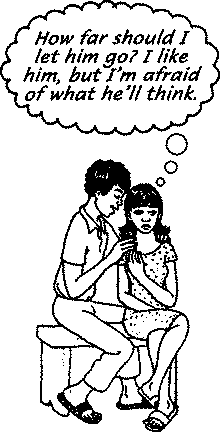
Figure
But sexual desire is a natural part of life, and a woman can feel as much sexual desire and pleasure as a man.
Gaining More Control over Your Sexual Health
Improving sexual health means:
· reducing the risk of unwanted pregnancy and STDs. This means women must have access to information about family planning methods and ways to prevent STDs, including HIV/AIDS (safer sex methods and practices). Women also need control over when to use these methods. For information about family planning and choosing a method that works best for you, see the chapter on “Family Planning.” For information about safer sex, see the next section below.· feeling more pleasure from sex. What brings pleasure to one person should not be harmful to another.
· changing harmful gender roles, including harmful beliefs about women’s sexuality. This kind of change takes time, because it means women and men must develop different ways of relating to each other See suggestions about how you and your community can work to change these roles.
¨ It is best for family planning and STD services to be included in the other health services women already use.

Figure

Figure
Safer sex for sexual health
In the past, the main danger from sex was unwanted pregnancy. Now STDs, including HIV/AIDS, have become a serious sexual health problem.
STDs are caused by germs that are passed from one person to another during sex. Some STDs, like genital warts and herpes, are spread by germs on the outer genitals of an infected person. Other STDs are passed by contact with germs in a man’s semen, the liquid in a woman’s vagina, or blood. Infection can happen when the germs pass through the cervix into the womb, or through breaks in the skin - especially in the vagina, onus, tip of the penis, or mouth.
¨ Safer sex can save your life.
Because STDs are spread through sexual contact, avoiding direct contact with an infected man’s genitals, semen and blood is the best way to avoid getting an STD. This is called ‘safer sex’.
When should a woman practice safer sex?
Everyone should always have sex safely. Women have many different kinds of sexual relationships. Some have one faithful sex partner their entire lives. Others have one sex partner at a time but several partners over the course of their lives. And others have multiple partners (or their partners have multiple partners) at one time. This means different women have different risks of getting STDs.
Many women think they are not at risk for an STD if they have just one sex partner. This is true ONLY if you and your partner know for sure that neither of you already has an STD, and that both of you have sex only with each other
Most women cannot be sure of this because:
· it is possible to have an STD and not know it. If a woman’s past partners - or her partner’s past partners - had an STD, she or her partner could have one, too.· they do not know for sure that their partner does not have other sex partners now. If someone your partner has sex with has an STD, you can get it too.

You can be infected by past
partners - and your partner’s past partners.
|
F�tima’s story: Every woman should protect herself F�tima lives in a rural town called Belem - and she is dying of AIDS. When she was 17, she married a man named Wilson. He was killed a few years later in an accident at the cooperative where he worked. F�tima had to leave her baby with Wilson’s parents and go to the city to find work. When she had extra money, she sent it back home. The work was hard, and she was very lonely. When she learned that the government was building a highway near Belem, F�tima got a job cooking for the road construction workers so that she could stay at home. It was there that she met Emanuel. He was handsome, had cash in his pockets, and charmed her little girl when he came around after work. When the work crew had to move on, he promised to return. Emanuel did come back, but he never stayed long. He got a new job driving trucks that kept him on the road most of the time. F�tima thought he probably had other women, but he always told her she was his only one. They had a baby boy, but he was small and sickly and died after a year. Soon F�tima began to feel sick, too. The nurse at the health post gave her different medicines, but nothing helped. Finally she went to the hospital in the city. They did some tests, and later told her she had AIDS. When she asked how she could have got AIDS, the doctor replied, “You shouldn’t have slept with so many men.” F�tima did not think she was at risk for HIV/AIDS - she had only had sex with 2 men in her life! She thought that only prostitutes and homosexuals in the cities got AIDS. |
Practicing safer sex means using barriers that keep germs from being passed between you and your partner during sex (safer sex methods), and having sex in ways that make infection with an STD less likely (safer sex practices).
Safer sex methods condom for women
Using condoms for either men or women can protect you from STDs, including HIV/AIDS. If they are used correctly, they keep a man’s genitals and semen from touching your genitals. Condoms can also prevent unwanted pregnancy.
¨ The more often you use a condom, or avoid sex in the vagina or anus without one, the less likely you will be to get AIDS.
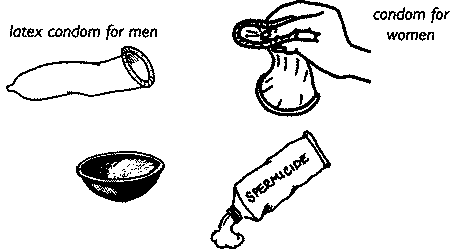
Figure
Note: Spermicides - chemicals that kill sperm - used alone or with a diaphragm, also provide some protection against the germs that cause gonorrhea and chlamydia.
|
To encourage your partner to use condoms: |
||
| | ||
|
If he says... |
|
try saying... |
|
It will not feel as good. |
It may feel different, but it will still feel good. Here, let me show you. |
You can last even longer and then we will both feel good! |
|
I do not have any diseases. |
I do not think I have any, either. But one of us could and not know it. | |
|
You are already using family planning. |
I would like to use it anyway. One of us might have an infection from before that we did not know about. | |
|
Just this once without a condom. |
It only takes one time without protection to get an STD or HIV/AIDS. And I am also not ready to be pregnant. | |
|
Condoms are for prostitutes. Why do you want to use one? |
Condoms are for everyone who wants to protect themselves. |
NO CONDOM, NO SEX! |
|
Do what you can to make sure that you both enjoy having sex with a condom. That way, it may be easier to get him to use one the next time. |
||

Safer sex practices
Sexual practices in which there is less contact with a man’s semen are also less likely to spread STD germs, including HIV. The box below shows which kinds of practices are safer than others. Sex with the penis in the vagina (vaginal sex) is the most common kind of sexual practice for many men and women. But other couples give and receive sexual pleasure by using many different kinds of talk and touch. If your partner does not want to use condoms, try to get him to have other kinds of sex with you. These other practices may feel just as good to him - and mean less risk for you.
¨ Moke sex safer:
· Use a latex condom every time.
· Replace risky practices with touching and kissing.
· If you cannot use a condom, it is better to use spermicide alone or with a diaphragm.
|
Some kinds of sex are safer than others Kissing. Kissing mouth-to-mouth is safe, even if your mouths are open or your tongues touch. But if you or your partner has a sore in the mouth, you should wait until the sore has healed.
Touching. Touching is always safe, as long as neither person has blood, discharge, or sores on the genitals or hands.
Oral sex. Oral sex is much safer than vaginal or anal sex. But the less time you have semen in your mouth, the better. So, if the man ejaculates into your mouth, you should swallow or spit right away, and rinse your mouth afterward. If you get a sore throat a couple of days after having oral sex, be sure to have it checked by a health worker. You can get gonorrhea in your throat and herpes sores in your mouth. The safest way to have oral sex is if the man’s penis is covered with a condom before you take it into your mouth.
Vaginal sex. Vaginal sex is less safe than oral sex, but safer than anal sex. Always use a condom to keep the semen from touching your vagina. If you cannot, try to have the man withdraw his penis before he ejaculates. You can still get HIV and you can still get pregnant, but it is safer because less semen gets into your body.
Anal sex. Sex in the anus is very dangerous because the skin there tears even more easily than the skin in the vagina. If you and your partner have anal sex, it is important that you use condoms and make the anus wet first. Never have sex in the vagina after having sex in the anus without the man washing his penis first, or you could get an infection.
Avoid ‘dry sex’. In some places people prefer to have sex when the vagina is very dry, so some women put herbs or powders in their vaginas or douche before sex. But if the vagina (or anus) is dry or irritated, it will tear easily during sex and make infection more likely. You can make the vagina less dry by not using powders, herbs, or douches, and by taking more time with sex to allow the body to make more of its own wetness. Or use saliva, spermicide, or lubricant to make the vagina slippery so the skin will not tear Do not use oil or petroleum gel, which can make a condom break. |





Making changes for safer sex
Everyone needs to think about ways to make sex safer, even if you do not think you are at risk. How you make these changes will depend on whether you expect your partner to support your wish to have safer sex.
If your partner is supportive, it is best to talk together about the health risks of STDs. But this is not always easy! Most women are taught that it is not ‘proper’ to talk about sex - especially with their partners or other men - so they lack practice. A man may talk with other men about sex, but is often uncomfortable talking with his partner Here are some suggestions:

Figure
Practice talking with a friend first. Ask a friend to pretend to be your partner and then practice what you want to say. Try to think of the different things he might say and practice for each possibility. Remember that he will probably feel nervous about talking too, so try to put him at ease.
Talk with your partner. Do not wait until you are about to have sex. Choose a time when you are feeling good about each other and when you are not likely to be interrupted. If you have stopped having sex because you have a new baby, try to talk with him before you have sex again. If you and your partner live far apart or must travel often, talk ahead of time about what having other partners would mean for your sexual health.
Figure
¨ Work with your community to educate women and men about condoms and how to use them. This will help make condoms more acceptable.
Learn as much as you can about the risks of unsafe sex, and about safer sex methods and practices. If your partner does not know much about STDs and how they are spread, or about their lasting health effects, he may not understand the real risks involved in unsafe sex. If you give him this information, or encourage him to talk to a health worker about it, you can help convince him of the need to practice safer sex.
If you think your partner will not want to practice safer sex, you will need to be more creative to get what you want:
|
Bargaining for safer sex Think about how you bargain for the other things you need. In these situations, you must know what you want and then talk to the other person in such a way that you get it. Start by asking yourself: Exactly what changes do I want my partner to make? Is there something I can offer him that will make him more likely to agree? What am I willing to offer?
Focus on safety. When you talk about safer sex, your partner may say that you do not trust him. Tell him the issue is safety, not trust. Since a person may have an STD without knowing it, or may get HIV/AIDS from something other than sex, it is difficult for a person to be sure he or she is not infected. Safer sex is a good idea for every couple, even if they only have sex with each other.
But if you or your partner has had or now has another sexual partner, it may be hard to talk about. If your partner is having sex with others now, do not use this discussion to punish him. Try to talk honestly about why you are scared and how each of you will behave in the future. If he is not willing to stop having sex with others, ask him to use condoms every time he has sex with you and with anyone else. Use other people as examples. Sometimes learning that others are practicing safer sex can help influence your partner to do so, too.
Ask for help if you need it. If you are afraid your partner will get angry or violent when you talk, you may need someone to help you discuss safer sex with him. Ask someone you trust for help. |

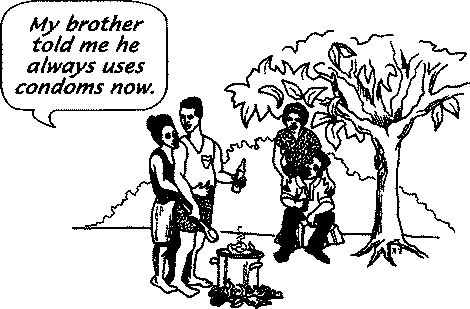
If your partner does not want to change
If your partner does not want to change his sexual habits, you must decide what to do. You may be able to choose not to have sex, to find protection you can control - like the female condom, or the diaphragm with spermicides - or think about ending the relationship.
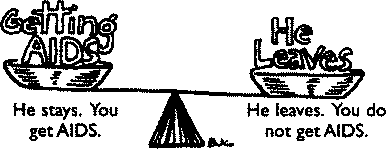
What you must weigh if your
partner is unwilling to stop unsafe sexual
practices.
Feeling more pleasure from sex
Figure
It is natural for women and men to want to share sexual pleasure with their partners. When each partner knows the kind of sexual talk and touch that the other likes, they can both enjoy sex more.
¨ Both men and women are capable of feeling - and controlling - their desires.
If a woman does not feel pleasure with sex, there may be many reasons. Her partner may not realize that her body responds to sexual touch differently from the way a man’s body does. Or she may have been taught that women should enjoy sex less than men, or that she should not tell her partner what she likes. Understanding that women are capable of enjoying sex just as much as men, and that it is OK to do so, may help her like sex more. But she should remember that these kinds of changes often take time.
¨ What brings pleasure to one person should not be harmful to another.
|
How the body responds to sexual pleasure Both women and men feel sexual desire but their bodies respond differently to sexual thoughts and touch. When men and women have sexual thoughts or are touched in a sexual way, they feel excited. More thought and touch makes the body more excited. It is easy to see sexual excitement in a man, because his penis gets hard. When a man reaches his peak of pleasure, his penis releases fluid with his sperm (ejaculation). This is called orgasm, or climax. After orgasm, the penis becomes soft again. The woman’s body also gets excited, but it is harder to see. The clitoris gets hard and may swell, and the labia and walls of the vagina become sensitive to touch. If sexual touch and thought continue, sexual tension builds up until she reaches her peak of pleasure and has an orgasm. Touching the clitoris is the most common way this happens. It often takes longer for a woman to reach orgasm than a man. But when orgasm happens, the energy and tension in her body releases, and she feels relaxed and full of pleasure. It is possible for almost all women to have orgasms, but many women have them only once in a while, or never. If she wants, a woman may be able to learn how to have an orgasm, either by touching herself, or by letting her partner know what feels good. It may make him feel good too, to know that he pleases her
|
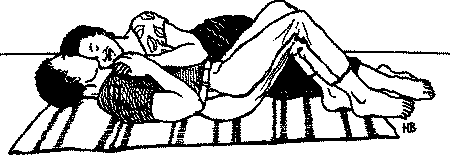
Touching oneself for pleasure (masturbation)
A woman can touch herself in a way that gives sexual pleasure. This is a good way for her to learn about her body and what kinds of sexual touch feel best. Many communities have beliefs that touching oneself is wrong, so sometimes people feel shame about doing it. But touching oneself does not cause harm or use up sexual desire.
Figure
Lack of desire
Many things - including everyday life events - can affect how much sexual desire a woman or man feels. For example, when life seems exciting - such as when starting a new relationship or a new job - a woman or man may feel more sexual desire. But you may feel ess desire when:
· you feel stress from hard work, not enough food, illness, or a new baby.
· you have a partner you do not like.
· you fear that others will see or hear you having sex.
· you are afraid of becoming pregnant or getting an STD.
¨ If a woman has been raped or forced to have sex, she may need time - or to talk with someone she trusts or a trained mental health worker - before she wants to have sex again.
When a woman lacks desire, her body makes less of its natural wetness, and she may need to use lubrication, like saliva, so that sex is not painful. When a man lacks desire, it is more difficult for his penis to get hard (impotence). He may feel ashamed, and this may make it more difficult for him to get hard the next time.
If you or your partner are having less desire, try to forgive each other and to talk about it. Plan time for sex when you both want it, and try to do things that awaken sexual thoughts and feelings for both of you.
|
If sex is painful Sex should not be painful. Pain during sex is usually a sign that something is wrong. A woman may feel pain with sex when: · her partner enters her too soon, before she is relaxed or wet enough.
IMPORTANT |
Working for Change
Changing harmful gender roles
Changing harmful gender roles takes time, because ideas about gender are some of the most deeply-held beliefs a community has. But overtime, women and men can learn to take on new roles, especially if they understand how these roles will help girls and women live healthier, more productive lives.
To begin changing these gender roles, you will need to find ways to help your community. Here are some suggestions:
· Develop an awareness of what gender roles are, and how they are passed on by parents, community traditions, and the media (the radio, television and newspapers).· Examine different gender roles to see which are harmful and need changing.
· Make plans for change.
Here are some suggestions for fun activities that have been used in some communities to help women and men think about gender roles and how they affect sexual health:
|
Using sexual language Understanding that men and women see each others’ sexuality differently can help people think about how gender roles affect their beliefs about sexuality. This activity can help women and men learn how to talk openly about sex without shame, and to begin to think about the different ways that men and women view sexuality. 1. Write down (or draw) several sexual terms, each at the top of a separate piece of paper: for example ‘male genital organ’, ‘female genital organ’, ‘sex’, ‘condoms’, etc. 2. Divide into groups of 2 or 3 people. Give each small group one of the pieces of paper. Let each group have a few minutes to think of every polite, rude, medical, and common way to say the words on their paper, and call them out. Then pass the papers to a different group until each group has had a chance to add to each list. 3. Discuss the words with the whole group. What does each word make people feel? Do they make the women in the group feel differently from the men? What words are used more by men? Which are used more by women? If a woman uses these words, what do people think of her? What do they think of a man who uses the same words? Why? What words are the best to use in different situations? Why?
|
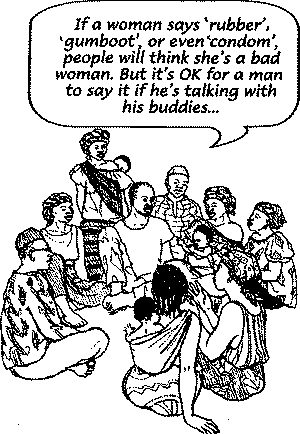
|
Gender messages in the media If people understand how harmful ideas about women’s sexuality and gender roles are learned, they can begin to think about how to change those ideas. This activity will help people think about how radio, movies, popular songs, and advertising communicate ideas about gender roles. 1. Listen to some popular songs on the radio (record them ahead of time if you have a tape recorder) or have members of the group sing (or act out) the songs. Listen carefully to what the words of the songs are saying about women and men. How are the women and men being described? Are these songs passing on ideas about women’s roles and sexuality? Note each ‘gender’ message the group identifies in the songs, and decide whether it is harmful or helpful to women. 2. Divide into small groups. Give each group an advertisement cut out of a magazine or newspaper, or copied from a billboard (pick advertisements that have women in them). Ask each group to identify what the advertisements say about women’s roles and sexuality. Then, bring everyone together again to say what messages are being passed on in each advertisement. Then decide as a group whether the messages are harmful or helpful to women. 3. Discuss how messages about women are passed on by radio, songs, and advertisements. How do these ideas influence us, our husbands, our children? Do these ideas lead to practices and beliefs which are harmful to women? 4. Identify ideas about women’s roles and sexuality that are important and helpful to pass on. How can these ideas be communicated in advertisements, songs, and movies? Ask small groups to draw an advertisement, or prepare a song or a skit that teaches helpful and healthy ideas about women. Have each group present their work to the others.
|
Improving sexual health in your community
Gender roles are different in each community, and so are the difficulties women and men face when trying to improve their sexual health. Here is a way to begin a discussion about why it may be hard for women to practice safer sex in your community.
¨ To work for change in your community, it is important to identify the barriers to practicing safer sex.
|
1. Begin by telling a story, like “F�tima’s story”. Talk about F�tima and Emanuel as if they lived in your community. 2. After telling the story, start a discussion with questions like, “Why didn’t F�tima protect herself from AIDS?” “Do you think she realized that she could get AIDS?” “If no, why not?” 3. Once the group has talked about the importance of understanding risk, you can talk about other barriers to safer sex. For example: What are the difficulties that women like F�tima face if they try to practice safer sex? Why do women find it hard to talk with their partners about safer sex? What can women do to convince their partners to practice safer sex? 4. Talk about what can be done in your community to help women like F�tima. Discuss how you can help to overcome barriers to safer sex in your community. End the discussion by making a plan to improve sexual health in your community. |
|
| ||||||||||||||||||||||||||||||||||||||||||||||||||||||||||||||||||||||||||||||||||||||||||||||||||||||||||||||||||||||||||||||||||||||||||||||||||||||||||||||||||||||||||||||||||||||||||
Where Women Have No Doctor - A Health Guide for Women (Hesperian Foundation, 1997, 600 p.)
Chapter 13: Family Planning
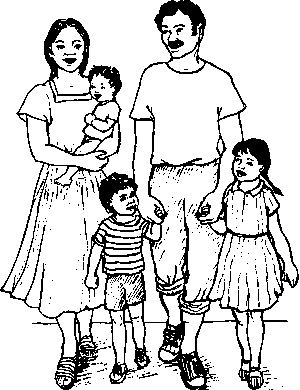
Figure
Having the number of children you want, when you want them, is called family planning. If you decide to wait to have children, you can choose one of several methods to prevent pregnancy. These methods are called family planning methods, child spacing methods, or contraception.
¨ Family planning saves lives.
Benefits of Family Planning
¨ In poor countries about half of all deaths in women of child-bearing age are caused by problems of pregnancy and childbirth. Family planning prevents these pregnancies and deaths.
Every year, half a million women die of problems from pregnancy, childbirth, and unsafe abortion. Most of these deaths could be prevented by family planning. For example, family planning can prevent dangers from pregnancies that are:
· too soon. Women under the age of 17 are more likely to die in childbirth because their bodies are not fully grown. Their babies have a greater chance of dying in the first year.· too late. Older women face more danger in child bearing, especially if they have other health problems or have had many children.
· too close. A woman’s body needs time to recover between pregnancies.
· too many. A woman with more than 4 children has a greater risk of death after childbirth from bleeding and other causes.
|
As well as saving lives, family planning has other benefits Mothers and babies will be healthier, because risky pregnancies are avoided.
Fewer children means more food for each child.
Waiting to have children can allow young women and men time to complete their education.
Fewer children can mean more time for yourselves and your children.
Family planning can also help you and your partner enjoy sex more, because you are not afraid of unwanted pregnancy. And some methods have other health benefits. For example, condoms and spermicides can help protect against the spread of sexually transmitted diseases (STDs), including HIV/AIDs. Hormonal methods can help with irregular bleeding and pain during a woman’s monthly bleeding. |
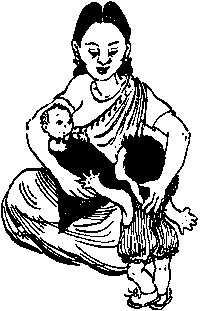
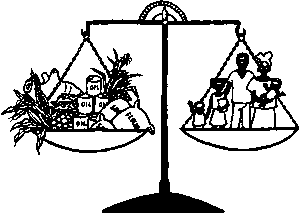
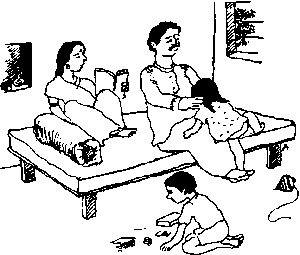
Is Family Planning Safe?
All of the family planning methods found in this chapter are used safely by millions of women. In fact, these methods are much safer than pregnancy and childbirth:
Of 15,000 women who become pregnant, 500 are likely to die from problems of pregnancy or childbirth.

Figure
Of 15,000 women who use family planning methods, only one is likely to die from using these methods.

Figure
Choosing to Use Family Planning

Figure
You have a right to make your own decisions about family planning.
Some women want a lot of children - especially in communities where poor people are denied a fair share of land, resources, and social benefits. This is because children help with work and provide care for their parents in old age. In these places, having just a few children may be a privilege only wealthier people can afford.
Other women may want to limit the number of children they have. This often happens where women have opportunities to study and earn income, and where they can negotiate with men in a more equal way.
No matter where a woman lives, she will be healthier if she has control over how many children she has, and when she will have them. Still, deciding to use - or not to use - family planning should always be a woman’s choice.
|
Talking with your husband or partner about family planning It is best if you can talk together with your husband or partner about choosing to use family planning and what method you will use. Some men do not want their wives to use family planning, often because they do not know very much about how different methods work. A man may worry about his wife’s health, because he has heard stories about the dangers of family planning. He may fear that if a woman uses family planning, she will have sex with another man. Or he may also think it is ‘manly’ to have lots of children. Try sharing the information in this chapter with your partner. It may help him understand that: · family planning will allow him to take better care of you and your children. If your husband still does not want you to use family planning even after learning about its benefits, you must decide whether you will use family planning anyway. If you do, you may need to choose a method that can be used without your partner knowing about it. |
Choosing a Family Planning Method
Once you have decided to use family planning, you must choose a method. To make a good decision you must first learn about the different methods, and their advantages and disadvantages.
There are 5 main types of family planning methods:
· Barrier methods, which prevent pregnancy by keeping the sperm from reaching the egg.· Hormonal methods, which prevent the woman’s ovary from releasing an egg, make it harder for the sperm to reach the egg, and keep the lining of the womb from supporting a pregnancy.
· IUDs, which prevent the man’s sperm from fertilizing the woman’s egg.
· Natural methods, which help a woman know when she is fertile, so that she can avoid having sex at that time.
· Permanent methods. These are operations which make it impossible for a man or a woman to have any children.
|
These methods of family planning are described on the following pages. As you read about each method, here are some questions you may want to consider: · How well does it prevent pregnancy (its effectiveness)? After reading about these methods, you can get more help with choosing one on Choosing the Best Method. It may also help to talk with your partner, other women, or a health worker about different methods. Only you can decide which family planning method is right for you.
|
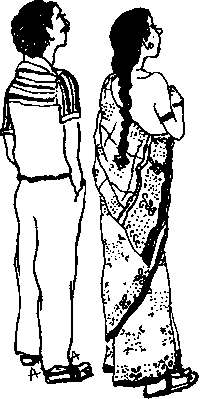
How well each method works
Here is some basic information about the effectiveness of the different methods, their usefulness in protecting against STDs as well as pregnancy, and whether you can use them while breastfeeding.
|
For every 100 women who use this method for one year... |
This many women will become pregnant: |
Protection against STDs |
|
Condom |
12 |
good |
|
Condom for Women |
20 |
good |
|
Diaphragm |
18 |
some |
|
Spermicide |
20 |
some |
|
Pill (the combined pill) |
3 |
none |
|
Progestin Only Pill |
5 |
none |
|
Implants |
Less than 1 |
none |
|
Injections |
Less than 1 |
none |
|
IUD |
1 |
none |
|
Breastfeeding (1st 6 mo.) |
2 |
none |
|
Natural Family Planning |
20 |
none |
|
Sterilization |
Less than 1 |
none |
|
No Method |
85 |
none |
|
All of these methods can be used safely while breastfeeding except the combined pill, and injections that have estrogen. | ||




Barrier Methods of Family Planning

Barrier methods prevent pregnancy by blocking the sperm from reaching the egg. They do not change the way the woman’s or man’s body works, and they cause very few side effects. Barrier methods are safe if a woman is breastfeeding. Most of these methods also protect against STDs, including HIV/AIDs. When a woman wants to become pregnant, she simply stops using the barrier method.
The most common barrier methods are the condom, condoms for women, the diaphragm, and spermicides.
The condom
The condom is a narrow bag of thin rubber that the man wears on his penis during sex. Because the man’s semen stays in the bag, the sperm cannot enter the woman’s body.
Condoms work best when they are used with spermicide. Condoms made of latex are the best protection against STDs and HIV/AIDS, and can be used alone or along with any other family planning method.
Condoms can be bought at many pharmacies and markets, and are also available at health posts and through AIDS prevention programs. They can help some men last longer during sex.
¨ Condoms can help some men last longer during sex.
Be careful not to tear the condom as you open the package. Do not use a new condom if the package is torn or dried out, or if the condom is stiff or sticky. The condom will not work. Do not unroll the condom before putting it on.
|
How to use a condom: 1. If the man is not circumcised, pull the foreskin back. Squeeze the tip of the condom and put it on the end of the hard penis.
2. Keep squeezing the tip while unrolling the condom, until it covers all of the penis. The loose part at the end will hold the man’s sperm. If you do not leave space for the sperm when it comes out, the condom is more likely to break.
3. After the man ejaculates, he should hold on to the rim of the condom and withdraw from the vagina while his penis is still hard.
4. Take off the condom. Do not let sperm spill or leak.
5. Tie the condom shut and dispose by burning or burying it away from children and animals.
|
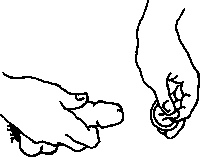
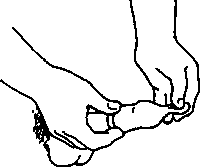
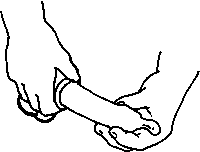
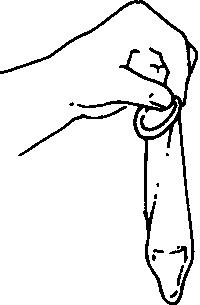
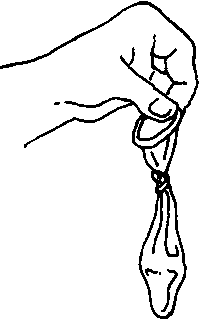
¨ If the condom tears or slips off, the woman should immediately put spermicide into her vagina. If possible, use an emergency method of family planning.
The condom must be put on the man’s penis when it is hard, but before it touches the woman’s genitals. If his penis touches the woman’s genitals or goes into her vagina, he can make the woman pregnant or can give her an STD, even if he does not spill his sperm (ejaculate).
Remember:
· Use a condom every time you have sex.· If possible, always use condoms made of latex. They give the best protection against HIV. Condoms made of sheepskin will not protect against HIV.
· Keep condoms in a cool, dry place away from sunlight. Condoms that are from old or torn packages are more likely to break.
· Use a condom only once. A condom that has been used before is more likely to break.
¨ Since condoms are the best protection against STDs and HIV/AIDS, they should be used with other family planning methods when a woman needs protection from both pregnancy and STDs.
Use lubricants to keep condoms from breaking. Lubricants should be water based, such as spit (saliva), spermicide, or K-Y Jelly. Rub the lubricant on the sides of the condom after it is on the hard penis. Do not use cooking oils, baby oil, mineral oil, petroleum gel, skin lotion, or butter. They can make the condom break.

Figure
A man may not want to use a condom at first, but often a woman can convince her partner to use condoms by explaining the advantages of family planning and the importance of protection against HIV/AIDs and STDs.
Condoms for women (female condoms)

Figure
A female condom, which fits into the vagina and covers the outer lips of the vulva, can be put in the vagina any time before sex. It should be used only once, because it may break if it is washed and reused. But reusing a female condom is better than no condom.
¨ Female condoms are larger than condoms made for men and are less likely to break.
The female condom is the most effective of the methods controlled by women in protecting against both pregnancy and STDs, including HIV/AIDS. It is available only in a few places now. But if enough people demand this method, more programs will make them available.
The female condom should not be used with a male condom.
|
How to use the female condom: 1. Carefully open the packet
2. Find the inner ring, which is at the dosed end of the condom.
3. Squeeze the inner ring together.
4. Put the inner ring in the vagina.
5. Push the inner ring up into your vagina with your finger. The outer ring stays outside the vagina.
6. When you have sex, guide the penis through the outer ring.
7. Remove the female condom immediately after sex, before you stand up. Squeeze and twist the outer ring to keep the man’s sperm inside the pouch. Pull the pouch out gently, and then burn or bury it. Do not flush it down the toilet. |
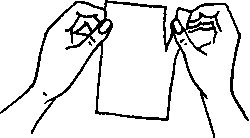
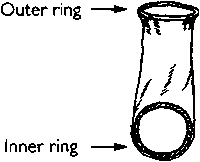
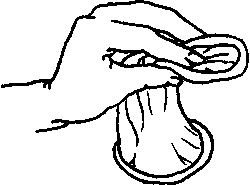

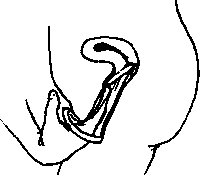
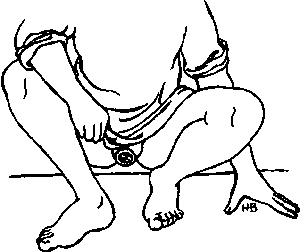
The diaphragm
The diaphragm is a shallow cup made of soft rubber that a woman wears in her vagina during sex. The diaphragm works by covering the opening to the womb (cervix), preventing the sperm from entering it. The spermicide jelly used with the diaphragm helps kill the sperm, and also protects against gonorrhea and chlamydia (2 common STDs).

¨ New research shows that using a diaphragm without spermicide can also help prevent pregnancy. You can leave the diaphragm in all the time, except during monthly bleeding. Remove it once a day for cleaning.
Diaphragms come in different sizes, and are available at some health posts and family planning clinics. A health worker who has been trained to do pelvic exams can examine you and find the right size diaphragm.
Diaphragms can get holes, particularly after being used for more than a year. It is a good idea to check your diaphragm often. Replace it when the rubber gets dry or hard, or when there is a hole in it.
When you use a diaphragm with spermicide, it can be put in just before you have sex, or up to 6 hours before.
|
How to use a diaphragm: 1. If you have spermicide, squeeze it into the center. Then spread a little bit around the edge with your finger.
2. Squeeze the diaphragm in half.
3. Open the lips of your vagina with your other hand. Push the diaphragm into your vagina. It works best if you push it toward your back.
4. Check the position of your diaphragm by putting one of your fingers inside your vagina and feeling for your cervix through the rubber of the diaphragm. The cervix feels firm, like the end of your nose. The diaphragm must cover your cervix.
5. If the diaphragm is in the right place, you will not be able to feel it inside you. 6. Leave the diaphragm in place for 6 hours after sex. |
|
To remove the diaphragm: Put your finger inside your vagina. Reach behind the front rim of the diaphragm and pull it down and out. It sometimes helps to push your muscles down at the same time, as if you were passing stool. Wash your diaphragm with soap and water, and dry it. Check the diaphragm for holes by holding it up to the light. If there is even a tiny hole, get a new one. Store the diaphragm in a clean, dry place. |
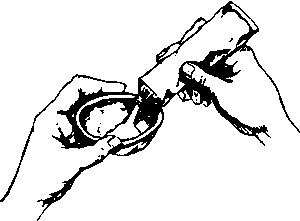



Spermicide (contraceptive foam, tablets, jelly, or cream)

Foam

Tablets

Cream or jelly
Spermicide comes in many forms - foam, tablets, and cream or jelly - and is put into the vagina just before having sex. Spermicide kills the man’s sperm before it can get into the womb. Spermicide made with nonoxynol-9 also provides some protection from gonorrhea and chlamydia, which are 2 common STDs.
If used alone, spermicide is less effective than some other methods. But it is helpful when used as extra protection along with another method, like the diaphragm or condom.
Spermicides can be bought in many pharmacies and markets. Some women find that some types of spermicides cause itching or irritation inside the vagina.
When to insert spermicide:
Tablets or suppositories should be put in the vagina 10 to 15 minutes before having sex. Foam, jelly, or cream work best if they are put in the vagina just before having sex.
If more than one hour passes before having sex, add more spermicide. Add a new tablet, suppository, or applicator of foam, jelly, or cream each time you have sex.
|
How to insert spermicide: 1. Wash your hands with soap and water 2. To use foam, shake the foam container rapidly, about 20 times. Then press the nozzle to fill the applicator.
To use jelly or cream, screw the spermicide tube onto the applicator. Fill the applicator by squeezing the spermicide tube. To use vaginal tablets, remove the wrapping and wet them with water or spit on them. (DO NOT put the tablet in your mouth.)
3. Gently put the applicator or vaginal tablet into your vagina, as far back as it will go. 4. If you are using an applicator, press in the plunger all the way and then take out the empty applicator. 5. Rinse the applicator with clean water and soap. Leave the spermicide in place for at least 6 hours after sex. Do not douche or wash the spermicide out. If cream drips out of your vagina, wear a pad, cotton or clean cloth to protect your clothes. |
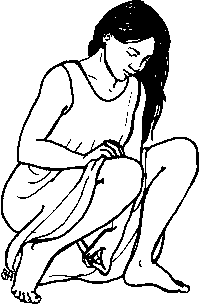
Hormonal Methods of Family Planning hormones
These methods contain hormones, called estrogen and progestin, that are similar to the estrogen and progesterone a woman makes in her own body.
Hormonal methods include:
· birth control pills, which a woman takes every day.
· injections, which are given every few months.

· implants, which are put into a woman’s arm and last for several years.
Hormonal methods work by preventing the woman’s ovaries from releasing an egg. The hormones also make the mucus at the opening of the womb very thick, which helps stop the sperm from getting inside the womb.
IMPORTANT
Hormonal methods do not protect
against STDs, or HIV/AIDS.
Most birth control pills and some injections contain both estrogen and progestin. These are called ‘combination’ pills or injections. The two hormones work together to give excellent protection against pregnancy. However, some women should not use pills or injections with estrogen for health reasons, or because they are breastfeeding.
¨ A woman controls hormonal methods and they can be used without a man knowing.
‘Progestin-only’ pills (also called mini-pills), implants, and some injections contain only one hormone - progestin. These methods are safer than combined pills or injections for women who should not use estrogen, or are breastfeeding.
These women should avoid ANY kind of hormonal method:
· Women who have breast cancer, or a hard lump in the breast. Hormonal methods do not cause cancer. But if a woman already has breast cancer, these methods can make it worse.
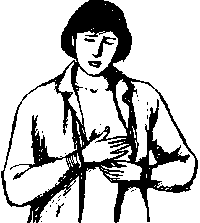
Figure
Figure
· Women who might be pregnant or whose monthly bleeding is late.
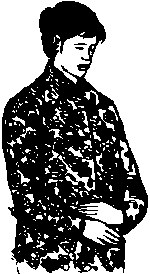
Figure
· Women who have abnormal bleeding from the vagina during the 3 months before starting hormonal methods. They should see a health worker to find out if there is a serious problem.

Figure
Some hormonal methods are harmful for women with other health problems. Be sure to check each method to see if it is safe for you. If you have any of the health problems mentioned and still wish to use a method, talk to a health worker who has been trained in hormonal methods of family planning.
¨ Some medicines for seizures (fits) or for tuberculosis (TB) make hormonal methods less effective. A woman taking these medicines should use other family planning methods.
|
Side effects of hormonal methods Because hormonal methods contain the same chemicals that a woman’s body makes when she is pregnant, these things may happen during the first few months:
Side effects often get better after the first 2 or 3 months. If they do not, and they are annoying or worrying you, see a health worker. She may be able to help you change the amount of the hormones in your method or to change methods. |
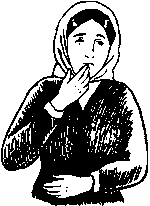
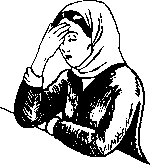
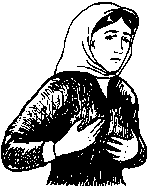

The pill
Birth control pills that contain estrogen and progestin
¨ Some women find that taking the pill helps their monthly bleeding to be more regular, with less bleeding and less pain.
If you take birth control pills every day, they will protect you from pregnancy for your entire monthly cycle. These pills are usually available at family planning clinics, health posts, pharmacies, and through health workers.
There are many different brands of pills. The pill you get should be what is called a ‘low-dose’ pill. This means it has 35 micrograms (mcg) or less of estrogen, and I milligram (mg) or less of progestin. (Mini-pills and low-dose pills are different - low-dose pills have both estrogen and progestin, while the mini pill has only progestin.) Never use a method with more than 50 mcg of estrogen.

Figure
Once you start taking pills, you should try to stick with one brand (and if you can, buy several packets at once). If you must change brands, try to get another with the same hormone names and strength. You will have fewer side effects and better protection.
Who should not take combined pills:
Some women have health problems that make it dangerous for them to use the pill. NEVER take the pill if you have any of the conditions listed, or if you:
· have hepatitis, or yellow skin and eyes.
· have ever had signs of a stroke, paralysis, or heart disease.
· have ever had a blood clot in the veins of your legs or in your brain. Varicose veins are usually not a problem, unless the veins are red and sore.
¨ If you must change to a lower dose pill, use a barrier method of family planning or do not have sex during the first month.
If you have any of the following health problems, try to use a method other than combined birth control pills. But if you cannot, it is still better to take the combined pill than to become pregnant. Try not to take combined pills if you:
· smoke and are over 35 years old. You have a greater chance of having a stroke or heart attack if you take combined pills.· have diabetes or epilepsy. If you are taking medicine for fits (seizures) you will need to take a stronger (50 mcg estrogen) birth control pill. Get medical advice from a health worker or doctor.
· have high blood pressure (more than 140/90). If you have ever been told you have high blood pressure or think you might have it, have your blood pressure checked by a health worker. If you weigh too much, have frequent headaches, get out of breath easily, feel weak or dizzy often, or feel pain in the left shoulder or chest, you should be tested for high blood pressure.
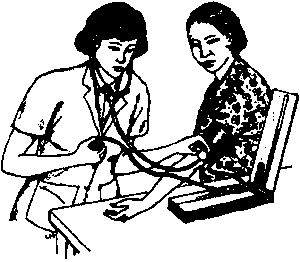
Figure
¨ If you are breastfeeding you should also try not to take the combined pills. The estrogen in combined pills will reduce your milk supply. This could affect your baby’s health.
Common side effects of combined pills:
· Irregular bleeding or spotting (bleeding at other times than your normal monthly bleeding). Combined pills often make your monthly bleeding shorter and lighter. It is also normal to sometimes skip your monthly bleeding. This is the most common side effect of combined birth control pills. To reduce spotting, be extra careful to take the pill at the same time every day. If the spotting continues, talk with a health worker to see if changing doses of progestin or estrogen will help.· Nausea. Nausea, the feeling that you want to throw up, usually goes away after I or 2 months. If it bothers you, try taking the pills with food or at another time of day. Some women find that taking the pill just before going to sleep at night helps.
· Headaches. Mild headaches in the first few months are common. A mild pain medicine should help. If the headache is severe or comes with blurred eyesight, this could be a serious warning sign.
¨ If your monthly bleeding does not come at the normal time and you have missed some pills, continue to take your pills but see a health worker to find out if you are pregnant.
Warning signs for problems with combined pills:
STOP taking the pill and see a health worker if you:
· have severe headaches with blurred vision (migraines) that begin after you start taking the pill.· feel weakness or numbness in your arms or legs.
· feel severe pain in your chest and shortness of breath.
· have severe pain in one leg.
If you have any of these problems, pregnancy can also be dangerous, so use another type of family planning such as condoms until you can see a health worker trained in hormonal family planning methods.
¨ If you are given a new medicine while on the pill, ask your health worker if you should use a barrier method or not have sex while taking the medicine. Antibiotics and some other medicines make the pill less effective.
|
How to take combined birth control pills: The pill comes in packets of 21 or 28 tablets. If you have a 28-day packet, take one pill every day of the month. As soon as you have finished one packet, begin taking pills from another packet.
If you have a 21 -day packet, take a pill every day for 21 days, then wait 7 days before beginning a new packet. Your monthly bleeding will usually happen during the days you are not taking pills. But begin a new packet even if your monthly bleeding has not come.
With both 21 -day and 28-day packets, take the first pill on the first day of your monthly bleeding. This way you will be protected right away. If it is after the first day, you can start taking a pill on any of the first 7 days of your monthly cycle. But you will not be protected right away, so for the first 2 weeks you are taking the pill you should also use another family planning method or not have sex. You must take one pill every day, even if you do not have sex. Try to take your pill at the same time every day. It may help to remember that you will always start a new packet on the same day of the week. |
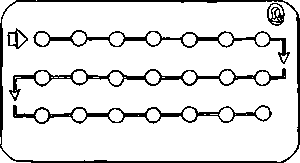
Forgetting to take pills:
If you miss pills you could get pregnant.
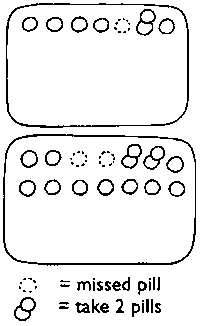
Figure
If you forget one pill, take it as soon as you remember. Then take the next pill at the regular time. This may mean that you take 2 pills in one day.
If you forget to take 2 pills in a row, start taking them again immediately. Take 2 pills for 2 days and then continue taking I pill each day until you finish the packet. Use condoms (or do not have sex) until you have taken a pill for 7 days in a row. If you forget to take 3 or more pills, stop taking the pills and wait for your next monthly bleeding. Use condoms (or do not have sex) for the rest of your cycle. Then start a new packet.
Late or missed pills will cause some bleeding, like a very light monthly bleeding.
If you have trouble remembering to take pills, try taking a pill when you do a daily task, like preparing the evening meal. Or take the pill when you see the sun go down or before you sleep. Keep the packet where you can see it every day. If you still forget to take your pills often (more than once a month), think about changing to a different method of birth control.

Figure
If you vomit within 3 hours after taking your pill or have severe diarrhea, your birth control pill will not stay in your body long enough to work well. Use condoms, or do not have sex, until you are well and have taken a pill each day for 7 days.
Stopping the pill:
If you want to change methods or get pregnant, stop taking the pills when you finish a packet. You can get pregnant right after you stop. Most women who stop taking pills because they want to get pregnant will get pregnant sometime within the first year.
The Mini Pill or Progestin-only Pills
Figure
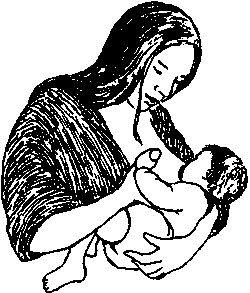
Figure
Because this pill does not contain estrogen, it is safer for women who should avoid combined birth control pills and for women who have side effects from combined pills. But this pill is less effective than combined birth control pills.
The mini pill is also a better choice for women who are breastfeeding because it does not cause a decrease in the milk supply. The mini pill is very effective for most breastfeeding mothers. Like the combined pill, it is usually available at family planning clinics, health posts, pharmacies, and through health workers.
Women with any of the conditions and women who are taking medicine for seizures should not take the mini pill. The medicine makes the mini pill less effective.
Common side effects of the mini pill:
· irregular bleeding or spotting. This is the most common side effect. If it becomes a problem, taking ibuprofen may help stop spotting.· no monthly bleeding. This is fairly common, but if you go more than 45 days without bleeding you may be pregnant. Keep taking your pills until you can see a health worker to find out if you are pregnant.
· occasional headaches.
¨ If you forget a pill, use a barrier method (or do not have sex) for 7 days, AND keep taking your pills.
|
How to take the mini pill: · Take your first pill on the first day of your monthly bleeding. If you are breastfeeding and have not started your monthly bleeding, you can start taking the pills any day. You may not begin bleeding. This is normal. What to do if you miss a mini pill: Take it as soon as you remember. Take the next pill at the regular time, even if it means taking 2 pills in one day. You may have bleeding if you take your pill at a later time than usual. Stopping the mini pill: You can stop taking the pill any time. You can get pregnant the day after you stop, so be sure to use another family planning method right away if you do not want to become pregnant. |
Implants
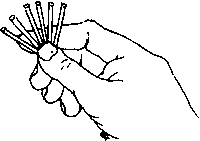
Figure
Implants are 6 small, soft tubes that are placed under the skin on the inside of a woman’s arm. These tubes contain the hormone progestin and work like mini pills. They prevent pregnancy for 5 years. The only brand available when this book was written is called Norplant.
|
How to use implants: A trained health worker makes a small cut in the skin to insert and remove the implants. This is usually done at a clinic or family planning center.
|
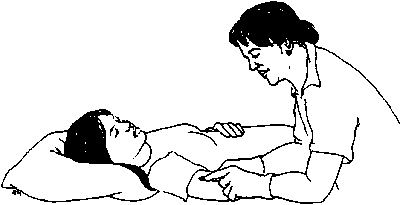
IMPORTANT
Before trying implants, be sure a
health worker near you is trained and willing to remove the implants, in case
you want them removed. It is harder to take implants out than it is to put them
in.
Implants can be used by women who are breastfeeding and others who have problems with estrogen. Women should not use implants if they have any of the conditions described, if they have heart disease, or if they want to become pregnant in the next few years. If you are taking medicines for seizures, you will need to use a backup method, like a condom or a diaphragm, as well as the implants.

Figure
Common side effects of implants:
During the first months, the implants may cause irregular bleeding (in the middle of your monthly cycle) or more days of monthly bleeding. Or you may have no bleeding at all. This does not mean that you are pregnant or that something is wrong. These changes will go away as your body becomes used to having more progestin. If this irregular bleeding causes problems for you, a health worker may have you take low-dose combined birth control pills along with the implants for a few months.
You may also have occasional headaches and the same side effects common with progestin-only injections.
¨ Ibuprofen or aspirin will also help control irregular bleeding.
To stop using implants:
Although Norplant implants last for 5 years, they can be removed at any time - though it can be hard to find a health worker who knows how to remove them. After removal, you can get pregnant right away, so use another family planning method if you do not want to become pregnant.
¨ Many women want their implants removed early because they do not like the side effects. The most common concern is irregular bleeding.
Birth control injections
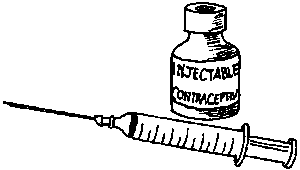
Figure
In this family planning method, a woman is given injections of hormones every 1 to 3 months, usually at a health center or family planning clinic, by someone who knows how. The protection lasts until you need a new injection, and can be used without others knowing.
Progestin-only injections
Progestin-only injections, such as Depo Provera and Noristerat, contain only the hormone progestin. These are especially good for women who are breastfeeding and women who should not use estrogen. They are given every 2 to 3 months.
Women should not begin progestin-only injections if they have any of the conditions listed, if they are unable to get regular injections, or if they want to become pregnant within the next year.
Common side effects of progestin-only injections:
Because of the large doses of progestin given with each injection, women experience more changes in their monthly bleeding during the first few months than with other hormonal methods.
Other common side effects are:
· irregular bleeding or heavy spotting. If this is a problem, a health worker can give 2 cycles of a combined low-dose birth control pill to take along with the injections to stop the spotting. Most irregular bleeding will stop after a few months.· no monthly bleeding.
· weight gain.
¨ Progestin-only injections almost always cause changes in the monthly bleeding. You may have light bleeding every day or every once in a while. You will probably stop having monthly bleeding by the end of the first year. These changes are normal.
Combined injections
Other injections, such as Cyclofem and Mesigyna, contain both estrogen and progestin. This type of injection is good for women who want to have regular monthly bleeding. Combined injections are given every month, are more expensive than progestin-only injections, and are harder to find.
Women who should not take combined birth control pills or progestin-only injections should not take combined injections either. Do not begin combined injections while breastfeeding.
Common side effects of combined injections:
Because the injection contains the same hormones as combined birth control pills, the same side effects are common.
|
How to use birth control injections: It is best to get your first injection during your monthly bleeding. This way you know that you are not pregnant. You can start the injections any time if you are breastfeeding and have not started your monthly bleeding. The injection protects you against pregnancy immediately if it is given within 5 days after your monthly bleeding begins. If the injection was given 6 or more days after the beginning of your monthly bleeding, you should use condoms or not have sex for the next 2 weeks. You must have an injection every 1, 2, or 3 months, depending on the kind of injection: · Depo Provera: every 3 months Try not to be late getting injections. The injection becomes less effective the longer you wait.
|
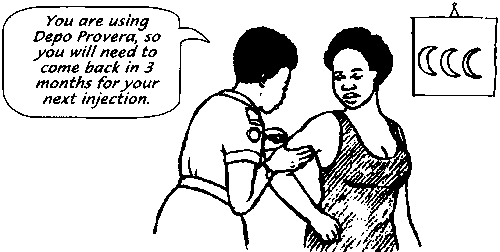
To stop using injections:
You can stop having birth control injections any time you want. But after you stop, it can take a year or more to become pregnant and for your monthly bleeding to return to normal. But it also may come back sooner. So if you do not want to become pregnant right away, you must use another family planning method during this time.

Figure
Intra-Uterine Devices (Devices that go into the womb)
THE IUD (IUCD, Copper-T, The Loop)
The IUD is a small object or device that is inserted into the womb by a specially trained health worker or midwife. Once in the womb, the IUD prevents the man’s sperm from fertilizing the woman’s egg. The IUD can stay in the womb for up to 10 years (depending on the kind of IUD it is) before it must be removed and replaced. An IUD can be used without the man knowing you are using it (although sometimes a man can feel the strings).
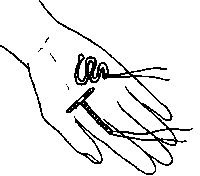
Figure
The most common IUDs are made of plastic, or plastic and copper.
Figure
|
Progestin IUD This kind of IUD also contains the hormone progestin and is available in some countries. Progestin decreases the pain and bleeding that some women have with the IUD. It protects against pregnancy for 5 years. |
IMPORTANT
IUDs do not protect against STDs,
including HIV/AIDS. Not only that, but if a woman has an STD, the IUD can lead
to more serious complications, such as pelvic inflammatory disease (PID). PID
can lead to infertility.

Figure
Who should not use an IUD:
¨ IUDs can be used safely by women who are breastfeeding.
Do not use an IUD if you:
· are pregnant or might be pregnant.· are in danger of getting an STD. (This includes any woman who has more than one partner, or whose partner may have other sex partners.)
· have ever had an infection in your tubes or womb, or an infection after giving birth or after having an abortion.
· have had a pregnancy in your tubes.
· have a lot of bleeding and pain during your monthly bleeding.
· are very anemic.
· have never been pregnant.
¨Do not use an IUD if you are unable to get to a health center or clinic where you can have the IUD removed if necessary.
Common side effects:
You may have some light bleeding during the first week after getting an IUD. Some women also have longer, heavier, and more painful monthly bleeding, but this usually stops after the first 3 months.
|
How to use the IUD: An IUD must be inserted by a specially trained health worker after doing a pelvic exam. The best time to have the IUD put in is during your monthly bleeding. After childbirth, it is best to wait 6 weeks for the womb to return to its normal size and shape before getting an IUD. Occasionally an IUD will slip out of place. If this happens, it will not be effective in preventing pregnancy, so it is important to learn to check your IUD to make sure it is still in place. Most lUDs have 2 thread-like strings attached which hang down into the vagina. You should check the strings after each monthly bleeding to make sure the IUD is in place.
How to check the IUD strings: 1. Wash your hands. 3. Take out your fingers and wash your hands again. |
|
Warning signs for problems with an IUD:
Pelvic inflammatory disease is the most serious problem that can result from having an IUD. Most infections happen in the first 3 months, usually because the woman already had an infection when the IUD was put in. Or it may happen because the health worker did not put in the IUD under clean conditions.
If you have any of the following signs, you should see a health worker trained to insert lUDs and to treat complications, or go to a hospital immediately:
· Your monthly bleeding is late.
· You have pain in your lower belly or pain during sex.
· You have a heavy or bad-smelling discharge from the vagina.
· You do not feel well, or have fever or chills.
· Your IUD string is missing, or is shorter or longer than usual.
· Your partner can feel the IUD (not just the strings) during sex.
To stop using an IUD:
When you want to stop using an IUD, it must be removed by a trained health worker. Never try to remove an IUD yourself.
You can become pregnant as soon as it has been removed.
Natural Methods of Family Planning
There are also 3 methods to avoid pregnancy that do not require any devices or chemicals (as with barrier methods) or medicines (as with hormonal methods). The methods are:
· breastfeeding for the first 6 months
· the mucus method
· the rhythm method
IMPORTANT
Natural methods of family planning do
not protect against STDs, including HIV/AIDS. If you use any of the natural
methods listed in these pages, you still need to think about ways to protect
yourself from these
diseases.
Breastfeeding for the first 6 months (Lactational Amenorrhea Method, LAM)
Breastfeeding under certain conditions can prevent the ovaries from releasing an egg. This method does not cost anything, but it is most effective for only the first 6 months after childbirth.
|
How to use breastfeeding to prevent pregnancy: Breastfeeding is not an effective method of family planning unless these 3 conditions are true: 1. Your baby is less than 6 months old.
2. You have not had your monthly bleeding since giving birth.
3. You are giving your baby only breast milk, and feeding it whenever it is hungry - with no more than 6 hours between feedings - day and night. Your baby does not sleep through the night without feeding.
Use another method of family planning that is safe with breastfeeding as soon as any of the following things happen: · Your baby is more than 6 months old, or · You must be away from the baby for more than 6 hours and cannot remove milk from your breasts during that time. |
|



The mucus method and the rhythm method
To use either of these methods, you must understand when you are fertile during your monthly cycle. This is sometimes called ‘fertility awareness’. Then, to avoid pregnancy, you and your partner must not have sex, or must use a barrier method of family planning, during your fertile days.
¨ All these methods require the man’s cooperation or they will not be effective.

Figure
Because there are no costs or side effects, these methods can be used by women who cannot or do not want to use other methods, or when other methods are not available.
To practice fertility awareness more effectively, both you and your partner should visit a specially trained health worker to learn about your bodies and about fertility. It usually takes about 3 to 6 months of practice to learn how to use these methods.
Natural family planning methods do not work as well if:
· you have little control over when you will have sex. During your fertile times, your partner must be willing to wait and not have sex or to use condoms or some other barrier method.· your fertility signs change from month to month. You will not be able to know when you are fertile.
· you have just had a baby or miscarriage. It is hard to know when you are fertile at these times.
Figure
What you should know about a woman’s cycle of fertility:
· A woman produces one egg each month.· The egg is released from the ovary about 14 days before the next monthly bleeding.
· The egg lives for about 24 hours (1 day and 1 night) after it has been released from the ovary.
· The man’s sperm (seed) can live up to 2 days inside the woman’s body.

Figure
|
To make all natural family planning methods more effective: · Have sex only on the days between the end of the fertile time and your next monthly bleeding. · Use condoms whenever you are not sure if you are fertile, or do not have sex. |
|
Mucus Method
To use the mucus method, you must pay careful attention to the mucus (wetness) in your vagina. Your body produces wet mucus during your fertile time to help the sperm get into the womb. So if you check your mucus every day, you will know when you are becoming fertile. Then you can avoid sex during this time.
|
How to tell when you are fertile: 1. Wipe the outside of your vagina with your finger or a piece of paper or cloth. 2. If there is mucus there, take some between your fingers. How does it feel? Wet and slippery? Dry and sticky?
How to use the mucus method: · Do not have sex on any day you see or feel wetness or mucus. Or, if you want to have sex on those days, use a condom or a diaphragm without spermicide (these are the only methods that do not change the mucus). · Do not have sex until 4 days after the last day of clear, slippery mucus. · Do not have sex during your monthly bleeding. There is a small possibility you could be fertile and not be able to tell. · Do not douche or wash out your vagina at any time. · If you are having trouble knowing when you are fertile, or if you have a vaginal infection, you should use another method. |



Rhythm Method
The rhythm method teaches you to find your fertile time by counting the days in your monthly cycle. You CANNOT rely on the rhythm method if:
· you are breastfeeding and your monthly bleeding has not returned.· you have recently been pregnant and your monthly bleeding is not yet regular.
|
How to use the rhythm method: · Count the number of days in each of your monthly cycles for 6 months, from the first day of one monthly bleeding until the first day of the next. For example: Julia kept track of her monthly bleeding for 6 months. Her shortest cycle was 26 days and her longest cycle was 34 days:
You must use another method of family planning while you are counting your 6 monthly cycles. But you should not use the pill, implants, or injections during the time you are counting, because these methods change the time when your monthly bleeding starts. |

Traditional and Home Methods to Prevent Pregnancy
Every community has traditional methods to prevent or stop pregnancy. Many of these can be very useful in limiting the number of children a couple has, although they are usually not as effective as modern methods. But some traditional methods are not effective at all, and some can even be very harmful.
TRADITIONAL METHODS THAT WORK
Withdrawal or pulling out (coitus interruptus). With this method, a man pulls his penis out of the woman and away from her genitals before he ejaculates. This method is better than no method, but it does not always work. Sometimes a man is not able to pull out before he ejaculates. Even if the man pulls out in time, some liquid that contains sperm can leak out of his penis before ejaculation and cause pregnancy.

Figure
Separating partners after childbirth. In many communities, couples do not have sex for months or years after the birth of a baby. This allows the mother to give more time to the care of the new baby and to regain her strength without fear of pregnancy.
TRADITIONAL METHODS THAT DO NOT WORK OR THAT CAN BE HARMFUL
· Omens and magic do not prevent pregnancy.· Putting grasses, leaves, pods, and dung in the vagina can cause infection and irritation.
· Washing out the vagina (douching) with herbs or powders does not prevent pregnancy. Sperm move very fast and some will reach the inside of the womb before they can be washed out.
· Urinating after sex does not prevent pregnancy. (But it can help to prevent infections of the urine system.)
Permanent Methods of Family Planning
STERILIZATION (the operation for no more children)
There are operations that make it almost impossible for a man or a woman to have any children. Since these operations are permanent, they are only good for those women or men who are certain that they do not want any more children.
To have one of these operations, you must go to a health center or hospital. The surgery is fast and safe, and does not cause side effects.
The operation for the man (Vasectomy)
A vasectomy is a simple operation in which the tubes that carry the sperm from the testicles to the penis are cut. The man’s testicles are not cut. This operation can be done in any health center where there is a trained health worker. It takes only a few minutes to do.
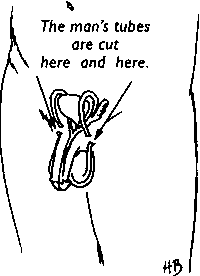
Figure
Figure
The operation does not change a man’s ability to have sex or to feel sexual pleasure. He still ejaculates semen but there are no sperm in the semen. He must ejaculate 20 times after the operation before all the sperm are gone. During this time, keep using your regular method of family planning.
The operation for the woman (Tubal Ligation)
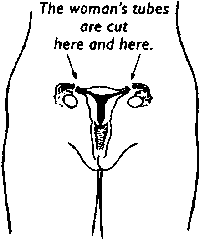
Figure
A tubal ligation is a slightly more difficult operation than a vasectomy, but it is still very safe. It takes about 30 minutes.
A trained health worker makes I or 2 small cuts in the woman’s belly, and then cuts or ties the tubes that carry the eggs to the womb. It does not change a woman’s ability to have sex or to have sexual pleasure.
IMPORTANT
Sterilization does not protect against
STDs, including HIV/AIDS. So you will still need to think about ways to protect
yourself from these
diseases.
Emergency Methods of Family Planning
Emergency methods are ways for women to avoid pregnancy after having unprotected sex. These methods prevent a fertilized egg from attaching to the womb wall. They are only effective if used soon after having sex.
Emergency methods are safe and effective. But they are not as effective as consistent use of the other family planning methods discussed in this chapter and they can cause unpleasant side effects.
EMERGENCY PILLS
The pills used for emergency family planning are the same combined birth control pills that some women take each day. But in emergencies, you take a much higher dose for a short time. You must take the pills within 3 days (72 hours) of having unprotected sex. The pills will not work if you are pregnant from having sex more than 3 days earlier.

Figure
¨ Emergency family planning methods should not be used instead of other methods.
|
How to take Emergency Pills: Low dose pills. Take 4 low-dose birth control pills, which contain 35 mcg of the estrogen called ethinyl estradiol. Then take 4 more tablets 12 hours after the first dose. Some common brands are Brevicon 1 + 35, Lo-Femenal, Lo-Ovral, Microgynon 30, Microvlar, Neocon, Nordette, Ortho-Novum 1/35, 1/50. OR High dose pills. Take 2 high-dose birth control pills, which contain 50 mcg of the estrogen called ethinyl estradiol. Then take 2 more tablets 12 hours after the first dose. Some common brands are Ovral, Femenal, Primovlar, Norlestrin, Ovcon 50, Nordiol, Eugynon, and Neogynon. Emergency pills can make you have headaches or feel nauseous. Try eating something at the same time you take the pills and, if possible, take a medicine that will keep you from vomiting. If you vomit within 3 hours of taking the pills, you should take them again. |
Until your next monthly bleeding, you should use a barrier method of family planning, like condoms, or not have sex. After your monthly bleeding, you can use any family planning method you choose.
Your next monthly bleeding should begin in about 2 weeks. If it does not, you may have become pregnant despite the emergency family planning. You should continue to use a barrier method of family planning until you know for sure.
OTHER EMERGENCY METHODS
Mini pills (progestin only pills). These pills contain no estrogen, so they cause less nausea than combined birth control pills. They only work if taken within 2 days (48 hours) of having unprotected sex.
· Take 20 mini pills followed by 20 more pills 12 hours after the first dose.
Figure
Mifepristone, also known as RU 486 or the ‘French Pill’, causes less nausea and vomiting than the other emergency pills.
· Take 600 mg within 3 days of having unprotected sex. Take this amount only once.

Figure
IUD (Intra-Uterine Device): An IUD can also keep the egg from attaching to the womb wall.

Figure
· The IUD must be inserted by a specially trained health worker within 5 days after having unprotected sex. The IUD can be kept in and continue to protect you from pregnancy for up to 10 years. Do not have an IUD inserted if you are at risk of having an STD.
Figure
|
New methods of family planning The following new methods of family planning are available or are being developed. They may only be available in some places and may be expensive. We include them here because the more women know about new methods and ask for them, the more likely it is that the methods will become available for everyone and perhaps be less costly. The more methods there are, the more likely it is that every woman who wants to prevent pregnancy will be able to find a method that suits her needs. 1. Plastic condoms are made from very fine polyurethane. They are thinner than latex condoms and allow for more feeling. They are less likely to be damaged by heat or oils. If you are offered a new method of family planning, be sure to discuss any concerns you have before choosing that method. Make sure you have all the information you need to make a good choice, and that you are not being pressured into using a method that is not right for you. |
Choosing the Best Method
After reading this chapter, if you still have questions about which family planning method is best for you, the chart below may help. It is important to choose a method that meets your needs, because then you will be likely to use it regularly and it will be more effective.
|
Personal Needs |
You Might Prefer |
You Should Probably Avoid |
|
Your partner is not willing to take an active role in family planning. |
Hormonal methods, diaphragm, female condom, IUD |
Male condoms, natural methods |
|
Other bleeding, besides your normal monthly bleeding, worries you or creates difficulties for you. |
Barrier methods, IUD |
Hormonal methods |
|
You do not want any more children. |
Sterilization, implants, IUD, injections |
Natural methods, barrier methods |
|
No matter what you say, your partner does not want you to use family planning. |
Injections, inserts, lUDs |
Barrier methods, pills, natural methods |
|
You feel embarrassed to touch your vagina. |
Hormonal methods, male condoms |
Diaphragm, female condoms |
|
You do not feel comfortable asking your partner to avoid or to interrupt sex. |
IUD, hormonal methods |
Barrier methods, natural methods |
|
Your are concerned that your partner has had sex with others and may infect you with STDs |
Male or female condom, or other methods combined with condoms |
IUD, hormonal methods |
|
You have more than one sex partner or have had STDs. |
Male or female condom |
IUD |
|
You think you will want to have a child within a year |
Male or female condom, diaphragm, natural methods, combined or progestin-only pills |
IUD, injections, implants |
|
You are breastfeeding. |
IUD, male or female condoms, diaphragm with spermicide, mini pill, progestin-only injections |
Combined birth control pills, injections with estrogen |
|
You have not had a child. |
Hormonal methods, barrier methods |
IUD |
|
You do not want to have to remember to do anything. |
IUD, implants, injections |
Birth control pills, natural methods |
After you choose a new method
Figure
Working for Change
Sometimes a woman would like to space her children or limit the number she has, but cannot use family planning. This can happen because:
· she cannot get the information about different methods.· some family planning methods are not easily available or cost too much for the family to afford.
· there are no women’s health or family planning services nearby, or the local health worker is not trained to provide family planning services.
· religious beliefs forbid the use of family planning.
· a woman’s husband does not agree to use family planning.
|
Here are some things that groups of people can do to make family planning services more available to all women in the community, and to encourage the use of family planning: · Provide education. Make information about family planning available to everyone - boys and girls as well as women and men. Education programs can show the benefits of family planning and help couples choose the best methods for them. Perhaps you can lead discussions with women or couples about their concerns and experiences related to family planning. Include information about preventing STDs and HIV/AIDS when you talk about family planning.
As you talk about family planning in your community, it helps to remember and remind others that family planning is important to improve not just women’s health and well being, but the health and quality of life of everyone in your community. |

|
| ||||||||||||||||||||||||||||||||||||||||||||||||||||||||||||||||||||||||
Where Women Have No Doctor - A Health Guide for Women (Hesperian Foundation, 1997, 600 p.)
Chapter 14: Infertility (When You Are Not Able to Have a Baby)

Figure
¨ When a couple cannot have a baby, it may be because the man, the woman, or both have a fertility problem. It is a problem that few people talk about.
Most men and women assume they will be able to have children. The truth is that about I out of every 10 couples has trouble getting pregnant. Some men and women do not want to have children. But for couples who look forward to having children, infertility can bring sorrow, anger, and disappointment.
Often it is the woman who is blamed if a couple does not have children. But about half the time, it is the man who is infertile. Sometimes a man will not believe it is his problem, or that it may be a shared problem. He may refuse to go for an examination, or he may react with anger. Most often this is because infertility causes shame in communities where a man is expected to produce children as a sign of his manhood.
Infertility has many causes. Some of them can be treated and some cannot. This chapter will help you understand infertility and what you can do about it.
What Is Infertility?
We say a couple is infertile if they cannot get pregnant after having sex together a few times a month for a year, without using a family planning method. A couple may also have a fertility problem if they have had 3 or more miscarriages (lost pregnancies) in a row.
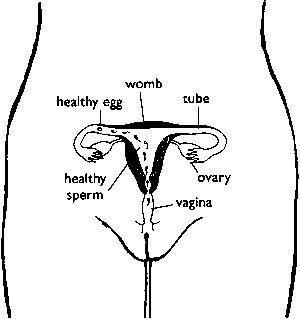
Normal fertility Healthy sperm
swim through the womb to the healthy egg.
A man or woman who has already had a child can also become infertile. A problem can develop in the years after the last child was born.
Sometimes the problem is not the man’s or the woman’s alone but a combination of the two. And sometimes both partners seem to be healthy and no doctor or test can find out what is causing the problem.
Habits such as drinking too much alcohol, smoking or chewing tobacco, and using drugs can all affect a man’s or a woman’s fertility.
What Causes Infertility?
Infertility in a man
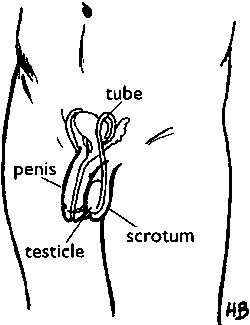
Figure
The main causes of infertility in a man are:
1. He does not produce enough sperm. Or his sperm may not be able to swim to the woman’s tubes or to fertilize the eggs.2. He had mumps after puberty that harmed his testicles. When this happens, the man can still climax (ejaculate), but the liquid that comes out has no sperm in it.
3. His sperm cannot leave his penis because he has scars in his tubes from a past or present sexually transmitted disease (STD).
4. He has a swelling of the veins in his scrotum (varicocele).
5. He may have problems during sex because:
· his penis does not get hard.
· his penis gets hard but does not stay hard during sex.
· he has a climax too quickly, before his penis is deep in the woman’s vagina.
6. Illnesses such as diabetes, tuberculosis, and malaria can all hurt a man’s fertility.
Infertility in a woman
¨ Infertility caused by infection can be prevented.
Infertility in the woman

1. blocked tube
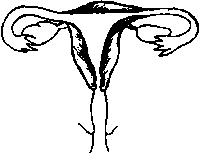
2. ovary does not produce an
egg

3. fibroids
The main causes of infertility in a woman are:
1. She has scarring in her tubes or inside her womb. Scarring in the tube can prevent the egg from moving through the tube, or the sperm from swimming to the egg. Scarring in the womb can prevent the fertilized egg from attaching to the wall of the womb. Sometimes a woman gets scarring but does not know it because she does not feel ill. But years later she learns she is infertile.
Scarring can be caused by:
· an infection from an untreated STD that goes up into the womb or tubes (pelvic inflammatory disease or PID).· unsafe abortion or problems in childbirth that caused damage or infection in the womb.
· unclean conditions when an IUD is put in that caused an infection.
· problems from an operation of the vagina, womb, tubes, or ovaries.
2. She does not produce an egg (no ovulation). This can be because the body does not make enough of the needed hormones at the right time. If her monthly bleedings are less than 25 days apart, or more than 35 days apart, she may have a problem with ovulation.
Sometimes a woman does not produce eggs if she loses weight very quickly, or if she is too fat.
3. She has growths in her womb (fibroids). Fibroids can prevent conception or make it difficult to carry the pregnancy.
4. Illnesses such as diabetes, tuberculosis, and malaria can also hurt a woman’s fertility.
|
Family Planning Is Safe
Family planning methods are often blamed for infertility. But family planning methods (other than sterilization) do not cause infertility except in some cases when an IUD has not been put in correctly and causes an infection in the womb or tubes. For more information, see the chapter on “Family Planning”. |

Dangers at Work or Home That Can Hurt Fertility
These dangers can hurt fertility in many ways - from the making of sperm and eggs to the birth of a healthy baby:
· Contaminated air, food, or water caused by dangerous pesticides or toxic chemicals used in factories and farms.
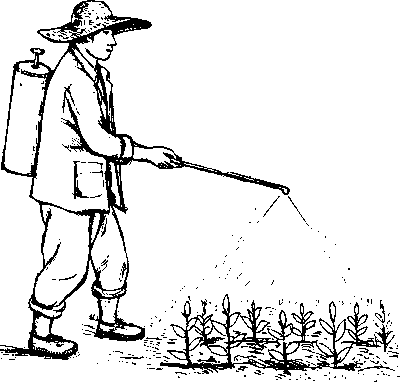
Pesticides and other harmful
chemicals can hurt a man’s sperm while he works...
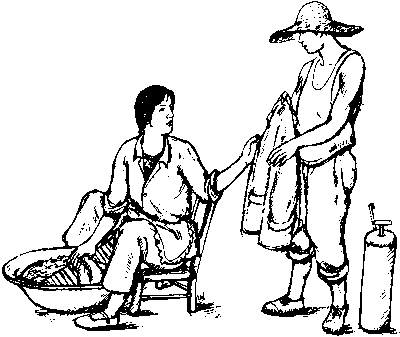
...and if the woman washes his
clothes, the harmful chemicals are passed to her.
· Smoking or chewing tobacco, or drinking alcohol or strong coffee. Women who smoke or chew tobacco, or who drink a lot of alcohol or strong coffee take longer to become pregnant and have more miscarriages. Men who smoke or drink a lot have fewer sperm, and these are often damaged or weak.

Working in hot places, like
sitting near the hot engine of a truck for many hours, can kill sperm and cause
a man to be infertile.
· High temperatures. A man’s sperm need to stay cool. That is why the testicles hang in the scrotum outside a man’s body. When the testicles get too warm they can stop making healthy sperm. For example, this can happen if a man wears tight clothes that press his testicles up inside his body, or if he takes a hot bath, or works near hot things such as boilers, furnaces, or the hot engine of a long-distance truck - especially if he drives for many hours without a break. Once the testicles become cool, they start making healthy sperm again.
· Medicines. Some medicines can hurt fertility. The best choice is for you and your partner not to use any medicines while you are trying to become pregnant. If you must use medicines because of illness, talk to a health worker and tell her you are trying to get pregnant.
What to Do for Infertility
If you or your partner think you have a fertility problem:
1. Try to have sex during your fertile time. Although a man makes millions of sperm every day, a healthy woman releases only one egg a month. This is called her fertile time - the only time during the month when she can get pregnant. For most women their fertile time starts about 10 days after the first day of the monthly bleeding and lasts about 6 days.
The body has several signs that tell you when you are in a fertile time. The easiest signs to check are the changes in the mucus in your vagina.
|
Checking your mucus During your fertile time, your cervix makes mucus that helps sperm get into the womb. This mucus looks clear and wet, like raw egg white, and can be stretched between your fingers. Later in your monthly cycle, you may see sticky or dry mucus. This kind of mucus stops the man’s sperm from getting into the womb.
See The mucus method and the rhythm method to learn how to check your mucus. Write down the changes every day on a chart. During the week that you see wet, shiny, clear mucus, try to have sex every day. |

When you have sex, the best positions for getting the sperm close to the opening of your womb are:
· to lie on your back with the man on top.
· to lie on your side.
Then, after having sex, lie flat on your back for about 20 minutes. This will help the sperm swim into your womb and find the egg.
¨ Try not to worry if you do not get pregnant right away. Many couples get pregnant within a year if they continue to have sex during the woman’s fertile days.
Avoiding these things can also help:
· Do not use oils or creams during sex. They can kill the sperm or stop it from reaching the egg.· Do not douche or wash inside your vagina. Douching before or after sex can change the wetness inside your vagina, making it harder for the sperm to live.
· Your partner should not have a hot bath before having sex. Heat on the testicles kills sperm.

Figure
2. Treat any health problems.
Both you and your partner should have medical exams and be checked for STDs. If either of you has an STD, both of you must be treated. Be sure to finish all the medicines you are given.
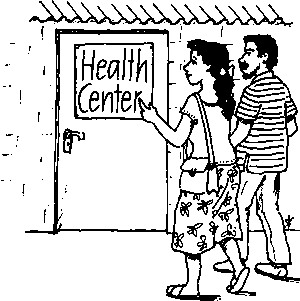
Figure
3. Practice good health habits:
· Eat good, healthy food. If you do not have regular monthly bleeding and you are very thin or very fat, try to gain or lose weight.· Avoid smoking or chewing tobacco, using drugs, or drinking alcohol.
· Avoid caffeine in drinks like coffee, black tea, and cola drinks.
· Get plenty of rest and regular exercise.
Figure
4. Try to see a health worker if you are not pregnant after one year. There are some simple tests that do not cost much that may be able to tell you what the problem is. For example, the health worker may look at your partner’s sperm under a microscope to see if they are healthy. She may give you a pelvic exam to check your vagina, womb, and tubes for infection or growths. Or she may teach you to tell if your ovaries are releasing an egg by taking your temperature every morning.
It is important to remember that these tests only tell you what the problem is - they will not solve it. Even the most expensive medicines and operations often cannot cure infertility.
Losing a Pregnancy (Miscarriage)
For many couples, the problem is not getting pregnant but staying pregnant. Losing I or even 2 pregnancies is common. It can be the body’s way of ending a pregnancy that is too weak to survive.
But if you have lost 3 or more pregnancies, there may be another problem, such as:
· unhealthy eggs or sperm.
· a problem with the shape of the womb.
· growths (fibroids) in the womb.
· the wrong balance of hormones in your body.
· infection in the womb or vagina.
· an illness, such as malaria.
Figure
The warning signs of miscarriage are:
· small amounts of brown, red, or pink blood from your vagina.
· pains or cramping, no matter how small.
¨ Miscarriage often happens no matter how careful you are. Do not blame yourself.
Figure
What to do when signs start:
Once a miscarriage starts there is usually not much that can be done to stop it. If you are bleeding slightly, without pain:
· lie down and rest for 2 or 3 days.
· do not have sex.
If bleeding continues or becomes heavy, or if you are more than 4 months pregnant, go to a hospital and tell them you are pregnant.
IMPORTANT
If you are in the first 3 months of
pregnancy and you have severe pain, feel faint, and have some bleeding, you
could have a pregnancy in the tube. Go to a hospital immediately. Be sure to
tell them you are pregnant.
Before you try to get pregnant again:
· Follow the guidelines about treating health problems and practicing good health habits. It is especially important to avoid caffeine, to stop smoking or chewing tobacco, and to stop drinking alcohol or using drugs. These things can all help cause miscarriage.· If your miscarriages always happen after you have been pregnant for 3 months, it may be that the opening to your womb is weak. This can sometimes be treated by having a doctor put a small tie around the cervix to keep it closed. Make sure that the doctor has experience giving this treatment. When it is time to give birth, the tie has to be removed.
If you do become pregnant:
· try not to lift heavy things.
· try not to have sex for the first 6 to 8 weeks of your pregnancy.
· rest when you can.
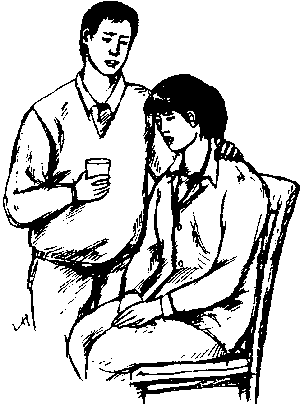
Losing a pregnancy is common.
If it happens to you, it does not mean you cannot have a healthy pregnancy the
next
time.
Living with Infertility
Infertility can make a woman or man feel sad, nervous, alone, frustrated, or angry.
When this happens, it is important to know you are not alone. Try to talk with people who love and care about you. You may also be able to find other couples with the same problem and learn to help each other.
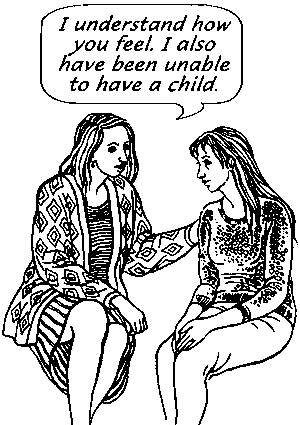
Figure
Figure
The stories below describe some ways that people have coped with infertility:
|
Adopting a child: Lina’s story Lina was 25 years old and had been married 3 times. She was very unhappy because each of her husbands divorced her when she did not become pregnant. In the village, people spoke about her and blamed her, saying that she must have used some magic to avoid pregnancy before she was married, and that it must have been so strong it had made her infertile. Her sisters all had children, and sometimes Lina cared for them. Her older sister had tuberculosis (TB) and she was very ill when she gave birth to twins. Lina asked if she might adopt one of the twins and her sister agreed. Lina went to the health center and asked the health worker to help her find a way to feed the baby. The health worker taught Lina how to feed the baby from a cup and spoon and arranged to have the baby breastfed during the day by a healthy woman in the village with another baby. At night Lina fed her baby from a cup, with breast milk that another sister gave her each evening. Lina’s friends and neighbors were not sure that her baby would be healthy. But when they saw the baby grow strong, they were pleased and proud of Lina. In fact, Lina came to be seen as an expert in raising adopted babies. When a village mother died in childbirth, her baby was given to Lina to care for.
The twins have grown up now, and people often say that the one Lina adopted is taller and stronger than the other. They credit this to Lina’s loving care. - Bundoora, Australia |
|
Building a life without children: Sara and Tito’s story Sara and Tito tried for many years to have children, but they were not able to. At first they were sad, because in their community, couples were expected to have as many children together as they could. But then they decided to stop thinking that their lives were not complete without children and to plan a future for themselves. They decided to start a business and to travel from town to town, market to market, selling pots and pans and other goods. With children, it would have been very difficult for them to travel in this way.
Now that Sara and Tito are older, people say they look alike in their faces and attitudes. They care for each other, share many laughs and many friends. They are not grandparents like their neighbors, but they have many interesting stories to tell. They are respected by everyone in the community. - Lima, Peru |
Working for Change
To help others with infertility problems:
· be kind and sympathetic. It is a difficult time, and they need support and understanding. Do not blame couples who cannot get pregnant.· teach couples to value and respect each other as companions.
· help a couple who cannot have children to look for other ways to be with children or to make peace with their lives.
Health workers can also:
· provide information on ways to adopt children.· teach young people about STDs and how to prevent them.
· make sure your local health center is prepared to diagnose and treat STDs and to take women’s complaints about pelvic pain seriously. Too often women are sent home without treatment after being told there is nothing wrong with them.
· teach women the signs of pelvic infection and the importance of getting immediate and complete treatment.
· teach men and women the signs of STDs, the importance of getting treated right away, and the importance of treating all partners.
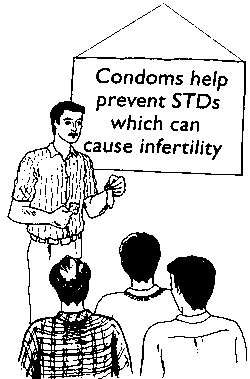
There are many causes of
infertility, but STDs are the easiest to
prevent
|
| ||||||||||||||||||||||||||||||||||||||||||||||||||||||||||||||||||||||||||||||||||||||||||||||||||||||||||||||||||||||||||||||
Where Women Have No Doctor - A Health Guide for Women (Hesperian Foundation, 1997, 600 p.)
Chapter 15: Abortion and Complications from Abortion
If family planning methods fail, safe and legal abortion is a woman’s safety net.

Figure
When a woman does something to end a pregnancy, this is called an ‘abortion’. We use the word abortion in this book only to describe an action that is planned. The unplanned, natural loss of a pregnancy we call a ‘miscarriage’.
¨ Lack of family planning services and lack of information about sex lead to unwanted pregnancy and abortion.
Deciding to have an abortion is always hard. A woman may seek abortion because:
· she already has all the children she can care for.
· a pregnancy is a danger to her health or her life.
· she has no partner to help support the child.
· she wants to finish school.
· she does not want to have children.
· she got pregnant after being forced to have sex.
· someone is forcing her to have an abortion.
· the child will be born with serious problems (birth defects).
Why Do Some Women Have Abortions?
|
Unplanned and unwanted pregnancy can happen when...
|


Emergency Family Planning Methods
A woman who has had unprotected sex within the last 3 days may be able to prevent pregnancy if she acts quickly.
Safe and Unsafe Abortion
A safe abortion is less likely to cause harm than having a baby.
Abortion is very safe when it is done:
· by a trained and experienced health worker.· with the proper instruments.
· under clean conditions. Anything that goes into the vagina and womb must be sterile (without any germs).
· up to 3 months (12 weeks) after the last monthly bleeding.
Abortion is unsafe when it is done:
· by someone who has not been trained to do it.
· with the wrong instruments or medicines.
· under unclean conditions.
· after 3 months (12 weeks) of pregnancy, unless it is done in a health center or hospital that has special equipment.
DEATH FROM UNSAFE ABORTION
Around the world, 55 million abortions are done every year. Women survive most of them, even if they are not legal. But unsafe abortions can cause death, or complications like infection, lasting pain, and infertility.
Out of 100,000 women getting a safe abortion, only I will die.

Figure
But out of 100,000 women having unsafe abortions, between 100 and 1000 will die.

Figure
¨ Avoid unsafe abortion. Try to prevent unwanted pregnancy before it happens.
Women have always tried to find ways to end pregnancy when they are desperate. Stay away from the following methods. They are very dangerous.
· Do not put sharp objects like sticks, wire, or plastic tubing into the vagina and womb. These can tear the womb and cause dangerous bleeding and infection.· Do not put herbs or plants in the vagina or womb. These can burn or irritate badly, causing damage, infection, and bleeding.
· Do not put substances such as bleach, lye, ashes, soap, or kerosene in the vagina or womb. Also, do not drink them.
· Do not take medicines or traditional remedies in large amounts to cause abortion (either by mouth or in the vagina). For example, taking too much of the medicines for malaria (chloroquine) or to stop bleeding after childbirth (ergometrine, oxytocin) can kill you before they cause abortion.
· Do not hit your abdomen or throw yourself down stairs. This can cause injury and bleeding inside your body, but may not cause abortion.
IMPORTANT
Never put anything inside the womb
yourself or allow an untrained person to do so. This can kill you.
ACCESS TO SAFE ABORTION
When a woman is faced with an unwanted pregnancy, she should be able to get a safe and legal abortion. But laws about abortion differ from one country to another
Legal abortion. If abortion is legal a woman can walk into a health center or hospital, pay a fee, and have a safe abortion. In countries where this happens, almost no women get sick or die from complications of abortion.
Legal abortion in some cases. In some countries an abortion is only legal for certain reasons, such as:
· if a woman becomes pregnant from rape or incest (sex with a close family member).
· if a doctor says pregnancy would be a danger to a woman’s health.
But abortion is often difficult to get, even for those reasons. Doctors and health workers may not be sure what the law really says. They may be unwilling to do abortions openly, or they may charge a lot of money. Women may not know if abortion is legal or available in their country.
¨ Even if abortion is illegal, a woman should be able to get medical help for complications after an abortion. It is often difficult to tell the difference between abortion and miscarriage, unless something from the abortion has been left in the womb.
Illegal abortion. If abortion is not legal, both the women who get abortions and those who perform them can be arrested.
In most places this does not happen. But where abortion is against the law, more women die from unsafe abortion and unsafe pregnancies. Money that could be spent on women’s health services is spent instead on treating complications of unsafe abortion.
Never assume abortion is illegal. Try to find out about the laws in your own country. It may be easier to work around the laws than to try and change them. Even if abortion is illegal, there may be people providing safe abortions. Finding a safe abortion may mean the difference between staying alive and dying.
|
Other barriers to finding a safe abortion Legal or not, it can be hard to get a safe abortion because it is too costly, too far away, or because there are confusing rules, or papers to fill out.
These reasons often make it especially difficult for women who are poor, or who are not familiar with the medical system, to get safe abortions. Unfortunately, in many places, the only women who can easily get a safe abortion are women who can afford to pay a private doctor. |
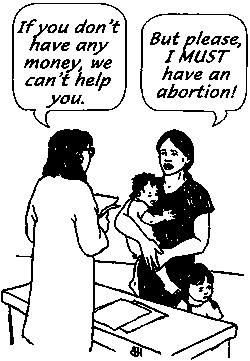
Deciding about an Abortion
¨ If safe abortion is not available, you might consider giving the baby up for adoption, if this is acceptable to you and your community.
Your decision to have an abortion will often depend on whether safe abortion is available where you live. It also depends on how an abortion or a baby would affect your life.

Figure
It may help to think about these questions:
· Will you be able to care for a baby? Do you have enough money to raise a child?· Is pregnancy a danger to your health?
· Do you have a partner or husband who will help support a child? Can you talk with him about this decision?
· Is your religion or family against abortion? If yes, how will you feel if you have one?
· How will the abortion be done?
· For how long have you been pregnant?
· Could you have a sexually transmitted disease (STD)? You may be at more risk of having an STD if you are young, single, and have a new partner, or if you have signs of an STD. If you feel that you are at risk, see the STD chapter. You may need treatment before the abortion.
· What complications (problems) can be caused by the abortion?
· Where can you go for emergency care if you have complications? How will you get there?
Figure
The information on the next pages may help you decide whether safe methods of abortion are available in your community.
|
If you are helping someone decide about an abortion:
She needs respectful advice and friendly support. Do not tell anyone else about her decision unless she wants others to know. |
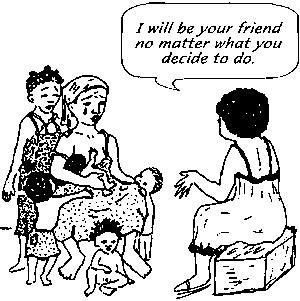
Safe Methods of Abortion
A pregnancy can be removed from the womb by a trained health worker in the following ways:
Abortion by suction (vacuum aspiration, MVA)
The pregnancy is removed by suction using a special tube (cannula) that is put into the womb through the vagina and cervix. This can be done without putting the woman to sleep, though sometimes medicine is injected into the cervix to help with the pain. When vacuum aspiration is done by hand (manual vacuum aspiration or MVA), the pregnancy is removed using a special syringe. Otherwise, a small electric machine is used.
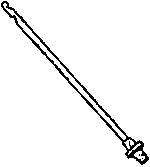
Cannula
Vacuum aspiration is simple and safe, and takes only about 5 to 10 minutes. It is usually done in a clinic or health post, or doctor’s office. This kind of abortion is easiest to do during the third month of pregnancy, but is sometimes done a bit later Vacuum aspiration causes fewer complications than dilation and curettage (described below).

Vacuum aspirator
In some places MVA is used to bring on late monthly bleeding. The woman may not even know if she is pregnant - just that her monthly bleeding has not come. This is called menstrual regulation.
Abortion by scraping (dilation and curettage, or D and C)
The pregnancy is scraped out with a curette, a small spoon-shaped instrument that is made especially to go into the womb. A curette is larger than a cannula and because it is sharp, the cervix must first be stretched open. This stretching can cause some pain.
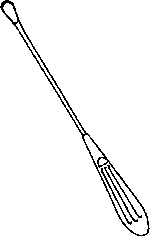
Curette
The D and C takes more time to do (about 15 to 20 minutes), is more painful, and costs more than vacuum aspiration. It is usually done in an operating room, and the woman is often given medicine to make her sleep.
Abortion by medicine (medical abortion)
Certain medicines are now being used by doctors and health workers to cause abortion. These medicines work by causing the womb to contract and squeeze out the pregnancy. Some medicines are put into the vagina (NOT in the womb), some are swallowed, and some are injected. If the right medicine to cause abortion is used, it may be safer than putting something inside the womb, which may cause severe injury or infection.
¨ As time goes on, medicines for abortion may be used in more places and be more available to women who need them.
|
If you use medicines for abortion · Never use a medicine you are not sure of. · Medicines to cause abortion should only be used if there is a health clinic or hospital close by, so you can get there soon after bleeding starts. The clinic or hospital should have trained health workers who can empty a womb in case the abortion medicines do not work. · Go to the clinic or hospital when bleeding starts so your womb can be checked to see if it has emptied completely. If it has not, you must have the rest of the pregnancy removed by suction or scraping. If you do not, you could suffer dangerous complications. (If you go on to give birth, the baby may be born with severe birth defects.) |
Some medicines used for abortion
1. Mifepristone (RU-486, the ‘French Pill’) is available in some countries to cause abortion in women who are up to 9 weeks pregnant. It is given only in special programs in clinics and hospitals where the woman can be watched for complications and treated if needed. Two days later a second medicine, such as misoprostol, is given. This usually causes complete abortion.2. Misoprostol is a medicine used to treat stomach ulcers, and is used with mifepristone or other medicines to cause abortion. It can also be used by itself to start abortion, but usually the abortion will not finish, so a woman must get medical care after bleeding starts. Misoprostol can be used during the first 3 months (12 weeks) of pregnancy, and works better close to 12 weeks. The tablets are put into the vagina, not swallowed.
3. Methotrexate is an anti-cancer medicine which has been used together with misoprostol to cause abortion. It has dangerous side effects for the woman, and if it fails to cause abortion, it can cause severe birth defects in the baby. Not enough is known yet about how to use methotrexate safely, especially in places without modern hospital equipment.
IMPORTANT
Follow the instructions for
misoprostol very carefully. If you do not, the womb can split open (rupture) and
cause death.
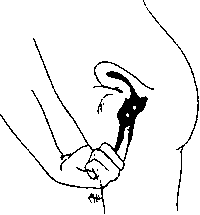
Figure
¨ For more information about these medicines, see the Green Pages
|
Incomplete abortion An incomplete abortion is when part of the pregnancy remains in the womb after an abortion. The signs are heavy bleeding for more than one day after the abortion, cramping pains, and passing tissue and clots or lumps of blood from the vagina. If this happens, go to a hospital right away to have the pregnancy completely removed. If not, you could have serious complications and even die. See What to Expect after an Abortion for danger signs after abortion. |
How to tell if an abortion will be safe
|
It is not always easy to tell if an abortion will be safe. Try to go to the place where the abortion will be done, or ask someone who has been there these questions: · Have you heard of women getting sick or dying from having an abortion here? If so, go somewhere else.
· Is the room where the abortion will be done clean and neat? If it is dirty and messy, probably the abortion will be also.
|
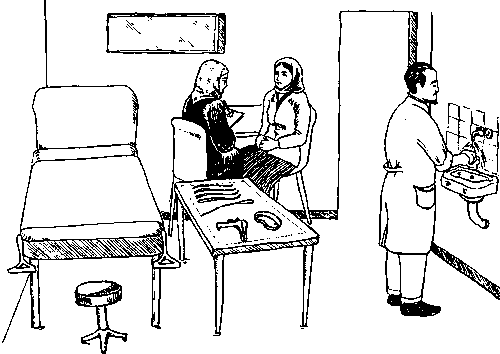
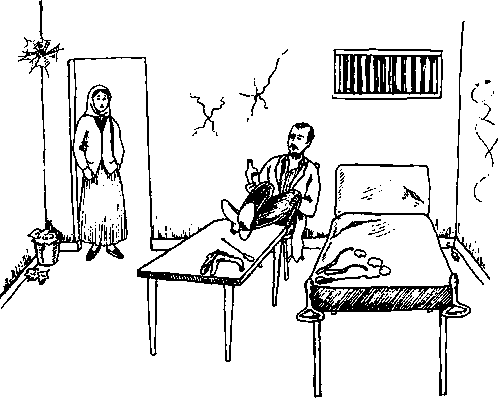
|
IMPORTANT · your last monthly bleeding was more than 3 months ago.
The longer you have been pregnant, the greater the chance of complications after abortion. For your safety, an abortion after more than 3 months of pregnancy must be done with special equipment in a clinic or hospital. |
What to Expect during a Safe Abortion
Safe abortions, especially abortions by suction (MVA), are done in both health centers and hospitals. An abortion by scraping (D and C) is usually done in a hospital. An abortion by medicine should be done at a health center or hospital that also has equipment to do MVAs and D and Cs, and health workers trained to do them. For more information about how these abortions are done, see Safe Methods of Abortion.
¨ Drink plenty of liquids the day before you have an abortion. This will help you recover more quickly.
When you go to a health center or hospital for an abortion, you should be welcomed and treated with respect. A counselor should talk with you about your decision and explain how the abortion will be done and what the risks are.
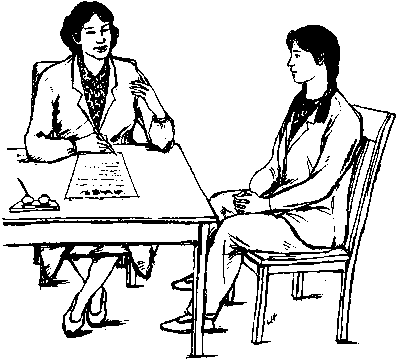
Figure
The information below tells what to expect from a safe abortion. An abortion that - is very different from this could be dangerous.
· You should be asked about the time of your last monthly bleeding and whether you might have an STD.· A health worker should do a medical exam. This includes feeling carefully in your vagina and on your belly for the size of your womb.
· During both abortion by suction and by scraping you will feel strong pains in the lower belly. But soon after the abortion is over, the pains will become less strong.
· After the abortion, your genitals should be cleaned, and then you should be taken to rest. A health worker should be there to check you for about an hour.
· Someone should tell you what to do after the abortion, the danger signs to watch for, and who to contact if you have a complication.

Figure
In addition, someone should discuss family planning methods with you. You can start using a method the day of the abortion. You should be given an appointment to come back for a check-up in 1 or 2 weeks.
What to Expect after an Abortion
After an abortion, signs of pregnancy, like nausea and sore breasts, should disappear within a day. If they do not, you could still be pregnant, either in your womb or in one of your tubes (ectopic pregnancy). This is an emergency. See a health worker right away.
You may feel a little tired and have some cramps or pains for a day after the abortion. You will have some bleeding from the vagina for as long as 2 weeks. But after the first day it should be no more than a light monthly bleeding. Your next normal monthly bleeding should start about 4 to 6 weeks after an abortion. It might take longer if you were more than 5 to 6 months pregnant.
¨ Normal monthly bleeding should start about 4 to 6 weeks after an abortion. But you can become pregnant again after 11 days.
If you had no one to talk to before the abortion, it may help to talk to someone now. Talking about your feelings with someone you trust can make you feel better.
How to care for yourself after an abortion:
· To prevent infection, take 100 mg of doxycycline twice a day for 5 days starting the day of the abortion. (But if you are breastfeeding, take 500 mg of amoxicillin 3 times a day for 5 days instead.)· Do not have sex or put anything into your vagina for at least 2 days after bleeding stops.
· If you have cramps or pains, rest and use a hot water bottle on your abdomen. Or take paracetamol or ibuprofen.
· To lessen pain and bleeding, rub or massage your lower abdomen often. This helps the womb to squeeze down to normal size and lessen bleeding.
· Drink plenty of liquids to help you recover faster.
· You can go back to your usual activities as soon as you feel well, usually within a day.
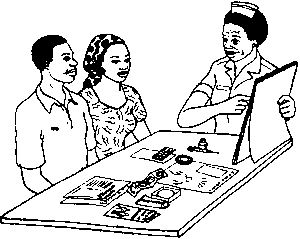
After an abortion, start family
planning right away. You can get pregnant again before your next monthly
bleeding.
|
Danger signs If you have any of these signs, get medical help fast: · Heavy bleeding from the vagina (see Complications of Abortion) · Bad-smelling discharge from the vagina (see Infection) |
|
Family Planning after an Abortion
After an abortion you can get pregnant again right away - in as soon as 2 weeks. Many methods of family planning take time to start working, so talk with someone about family planning and start using one of these methods as soon as possible:
· The Pill: You can start taking pills on the same day as the abortion. Do not wait more than one week.
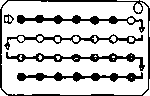
Figure
· Intra-Uterine Device (IUD): If there is no risk of infection, a trained health worker can put in an IUD right after the abortion.
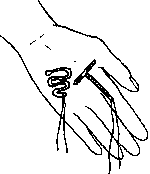
Figure
· Injections: The first injection should be given on the day of the abortion, or up to one week after.
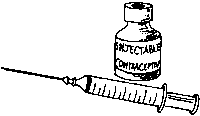
Figure
· Implants: Implants can be put in just before or just after the abortion, or up to one week later.
¨ A woman who has just had an abortion most likely did not want to become pregnant. This is a good time to offer her information about family planning methods and how to get them.
· Female sterilization: If your pregnancy was less than 3 months, you can be sterilized during the abortion or right after it. It is very important that you make this decision carefully. Sterilization is permanent.· Male sterilization: Sterilization for a man can be done any time and is permanent. This decision must be made carefully.
· Condoms: You and your partner can use condoms as soon as you have sex again. Condoms also protect against STDs, including HIV.
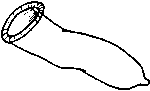
Figure
· Spermicide: You can use spermicide as soon as you have sex again. Spermicides made with nonoxynol-9 also give some protection against gonorrhea and chlamydia, 2 common STDs.
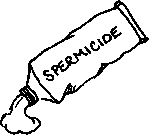
Figure
· Diaphragm: If there was no infection or injury, you can be fitted with a diaphragm before or after the abortion. Diaphragms with spermicide give some protection against gonorrhea and chlamydia.

Figure
· Natural methods (mucus and rhythm): These methods do not work until your normal monthly bleeding returns.

Figure
¨ For more information on all these methods, see the chapter on “Family Planning.”
Complications of Abortion
A woman with any of the danger signs after abortion needs medical help fast! She should go immediately to a health center or hospital where she can get the care she needs. Most of the time the womb must be emptied completely using vacuum aspiration or a D and C. In the meantime, the information on the next pages may help if transport is not available immediately or if medical care is very far away.
¨ Early treatment of abortion complications prevents illness, infertility, and death. Seek help quickly if you have problems after an abortion. DO NOT WAIT!
Heavy bleeding from the vagina
Heavy bleeding is the most common problem after an abortion. It is usually caused by pieces of the pregnancy that are left in the womb. The womb cannot squeeze itself shut and keeps bleeding. If the pieces are removed, often the bleeding will stop. Sometimes the bleeding is caused by a torn cervix which must be stitched for the bleeding to stop.
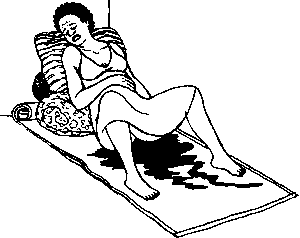
Figure
A woman is bleeding too much if she soaks a pad, towel, or clothing with bright red blood in less than 30 minutes. A slow, steady trickle of bright red blood is also dangerous. When this happens, a woman may quickly lose a dangerous amount of blood. If it is not possible to get medical help immediately, try to stop the bleeding.
To stop the bleeding
A woman who is bleeding too much may be able to help her womb squeeze shut with massage. She can do this herself or have someone else do it. Rub or massage the lower belly very hard while lying down or squatting.
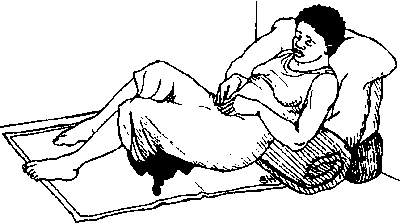
Figure
If there are pieces of tissue stuck in the womb or cervix, she may be able to push them out herself by squatting and bearing down as if passing stool or giving birth.
Even if these treatments seem to work, get medical help as soon as possible. The woman will need antibiotics and may still need to have her womb emptied completely.
Emergency help for too much bleeding
Health workers and others trained in giving a woman a pelvic exam may be able to follow these steps to try and stop the bleeding until the womb can be emptied.
IMPORTANT
Because the entrance to the
woman’s womb is open, putting anything inside her vagina is very dangerous.
She can get a serious infection. Only do this if the bleeding is so heavy the
woman’s life is in danger. See the previous page for how much bleeding is
too much.
1. Wash your hands and the woman’s genitals with soap and clean water
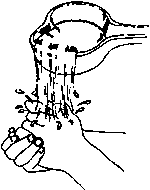
Figure
2. Put a clean latex or plastic glove or a very clean plastic bag on one hand. The gloved hand should not touch anything before it goes into the woman’s vagina.
Figure
3. Have the woman lie on her back with her feet and knees apart. Help her relax.
Figure
4. If you have a sterile speculum (you can get the right instruments from an IUD kit if you have one), put it into the vagina so you can see the opening of the womb. If you can see tissue or clots or lumps of blood there, try to get hold of them with sterile forceps or clamps and gently remove them.
Use sterile forceps to remove
any tissue you see at the opening of the womb.
5. If you do not have a speculum, reach inside the woman’s vagina with your gloved hand, first with 1 finger, and then with 2 fingers.
6. Feel for the cervix. It will feel more firm and smooth than the skin around it. It looks like this and is about this size.
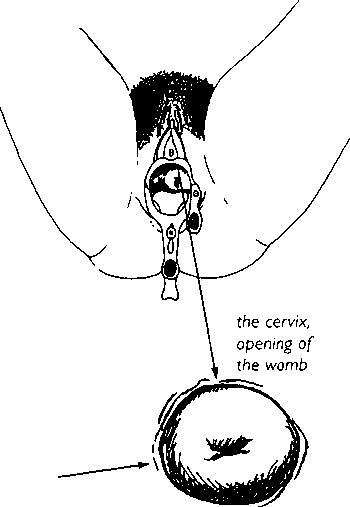
Figure
7. Move your finger across the opening and feel for bits of the pregnancy that may be sticking out of the opening. They will feel like soft meat. Gently try to remove them. If the pieces are too slippery, take your hand out and wrap 2 fingers with sterile gauze, or a clean cloth that has been boiled in water, and try again to remove them.

Figure
8. After you have removed the pieces, put your gloved hand into the woman’s vagina with two fingers under the womb. With your other hand, rub or massage her belly to help stop the bleeding. Her womb should be between your 2 hands.
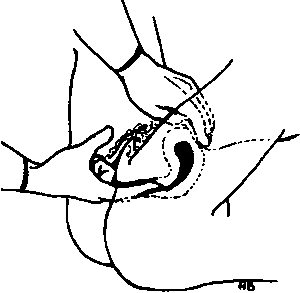
Figure
9. Give the woman an injection of ergometrine (0.2 mg) in a large muscle, such as her buttock or thigh. Then give her one 0.2 mg pill of ergometrine, or a 0.1 mg injection, every 4 hours for 24 hours.

Figure
10. Give antibiotics for mild infection immediately to prevent infection. She is at high risk of infection because the womb is open to germs.
11. If she is awake, give her fluids to drink. If she is unconscious, see the next page.
12. Take her to a hospital right away, even if you think you have removed the tissue and the bleeding has stopped. She still needs to have her womb emptied completely. If the bleeding does not stop, continue to rub or massage her lower belly while taking her to the hospital.
|
When there is no health worker to help If you are bleeding too much after an abortion, you can also try to remove tissue stuck in your cervix by yourself.
First wash your hands and genitals well with soap and clean water. Then squat and bear down, as in childbirth or passing stool, and follow the instructions above in steps 6 and 7. After you have removed any pieces, massage your lower belly. You should still get medical help, even if the bleeding becomes less. |

Shock
Shock is a life-threatening condition that can result from heavy bleeding. Bleeding inside the body can also cause shock.
DANGER! Heavy bleeding can cause SHOCK, which can kill. Transport immediately.
Signs:
· very fast heart rate, more than 110 beats a minute
· pale, cold, damp skin
· pale inner eyelids, mouth, and palms
· fast breathing, more than 30 breaths a minute
· confusion or unconsciousness (fainting)
Treatment if she is conscious:
· Lay the woman down with her feet higher than her head.
· Cover her with a blanket or clothes.
· If she can drink, give her sips of water or rehydration drink.
· Help her to stay calm.
· If you know how, start a fast intravenous drip (IV) with a wide needle, or start rectal fluids.
Figure
Treatment if she is unconscious:
· Lay her on her side with her head low, tilted back and to one side, and her feet high.
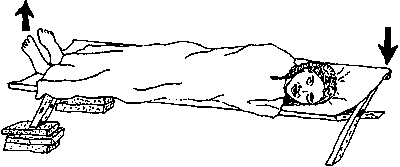
Make sure her feet are higher
than her head.
· If she seems to be choking, pull her tongue forward with your finger.· If she has vomited, clean out her mouth immediately. Be sure her head is low, tilted back and to one side, so she does not breathe vomit into her lungs.
· Do not give her anything by mouth until she has been awake for one hour
· If you know how, start a fast IV drip with a wide needle. If you do not, start rectal fluids.
Do not wait for a health worker. Take the woman for medical help or to a hospital right away. She needs medical help fast!
Infection
If there is infection, it is more likely to be a mild infection if the abortion was done sooner than 3 months (12 weeks) after the last monthly bleeding.
Serious infection is an infection that has spread into the blood (sepsis). A woman is more likely to have a serious infection if the abortion was done later than 3 or 4 months from the last monthly bleeding, or if there was an injury to the womb during the abortion. Sepsis is very dangerous and can also cause shock.
Infection can happen because:
· an unclean hand or object was put inside the womb.
· pieces of the pregnancy were left inside the womb and they have become infected.
· the woman already had an infection when she had the abortion.
· a hole was made in the wall of the womb.
Signs of mild infection:
· slight fever
· mild pain in the abdomen
Figure
Treatment for mild infection:
To keep mild infection from becoming serious, treat it immediately with the medicines listed below. A woman needs more than one medicine because infections after abortion are caused by several different kinds of germs. If the medicines listed below are not available, see the “Green Pages” for others that will work. A woman who is breastfeeding should use the treatment for womb infection after childbirth.
|
Medicines for mild infection after abortion | ||
|
Medicine |
How much to take |
When and how to take |
|
Take both medicines: | ||
|
amoxicillin |
3 grams |
all at once, 1 time only, by mouth |
|
and | ||
|
doxycycline |
100 mg |
2 times a day for 10 days, by mouth |
|
IMPORTANT | ||
Signs of serious infection:
· chills and high fever
· muscle aches, weakness, and tiredness
· swollen, hard, and painful belly
· bad-smelling discharge from the vagina

Figure
Treatment for serious infection:
· Take the woman to a health center or hospital immediately.· Start the following medicines right away, even if you are already on your way to the hospital. If she can swallow, give her these medicines, with plenty of water:
|
Medicines for serious infection after abortion |
||
|
Medicine |
How much to take |
When and how to take |
|
Take all 3 medicines: | ||
|
amoxicillin |
3 grams |
all at once, 1 time only, by mouth |
|
and | |
|
|
doxycycline |
100 mg |
2 times a day by mouth until you reach a hospital |
|
and | |
|
|
metronidazole |
500 mg |
3 times a day by mouth until you reach a hospital |
If the woman cannot swallow medicines and you know how to give injections or IV medicines, start giving the medicines listed on the next page. But do not delay. Take the woman for medical help or to a hospital right away. She needs medical help fast.
|
TETANUS A woman with an infection or bleeding from an injury after abortion can get a tetanus infection, especially if a dirty object or instrument was put into her womb. She needs a tetanus toxoid vaccination immediately.
|
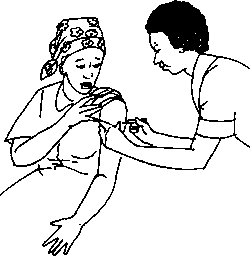
|
Injectable medicines for serious infection after abortion IMPORTANT · Choose one box and give ALL the medicines in that box. For complete information on these medicines, see the “Green Pages.” | ||
|
Best treatment: Give all 3 medicines | ||
|
Medicine: |
How much to give: |
When and how to give: |
|
benzylpenicillin |
5 Million Units |
4 times a day, IV |
|
gentamicin |
80 mg first dose, then 60 mg each dose |
3 times a day, IM |
|
metronidazole |
1 gram |
2 times a day, by mouth or IV |
|
Second best treatment: Give both medicines |
||
|
Medicine: |
How much to give: |
When and how to give: |
|
doxycycline |
100 mg |
2 times a day, by mouth or IV |
|
metronidazole |
1 gram |
2 times a day, IV or by mouth |
|
Third best treatment: Give both medicines |
||
|
Medicine: |
How much to give: |
When and how to give: |
|
benzylpenicillin |
5 Million Units |
4 times a day, IV |
|
chloramphenicol |
1 gram |
4 times a day, IV |
|
After 48 hours without fever, give this medicine by mouth: | ||
|
Medicine: |
How much to give: |
When and how to give: |
|
doxycycline |
100 mg |
2 times a day, by mouth, for 10 days |
|
If a woman is breastfeeding, give amoxicillin instead, 500 mg 3 times a day for 10 days. | ||
Fainting or loss of consciousness
|
Fainting can be a sign of shock after abortion, either from heavy bleeding, severe injury to the internal organs, or infection. For signs and treatment of shock, see Shock. If a woman faints but wakes up very soon afterward and does not have signs of shock, give her plenty of liquids to drink and watch her carefully. |

Injury inside the body (Internal Injury)
An internal injury from an abortion is most often caused by a sharp object that makes a hole in the womb. The object may also cause damage to other internal organs, such as the tubes, ovaries, intestines, and bladder.
When a woman has internal injuries she may have severe bleeding inside her abdomen but almost no bleeding from her vagina.
Signs (she will have some or all of these):
· her abdomen feels stiff and hard with no sounds or gurgles inside
· very bad pain or cramps in the abdomen
· fever
· nausea and vomiting
· pain in one or both shoulders
Listen for gurgles for 2
minutes.
Treatment:
· Immediately take the woman to a hospital or clinic where she can have surgery. An injury inside the body must be repaired right away by a surgeon or it can lead to infection, shock, and death.· Do not give her anything by mouth - no food, no drink, not even water - unless it will take more than I 2 hours to get to a health center. Then give water only in small sips. Or let her suck on a piece of cloth soaked in water.
· If she has signs of shock, treat her for shock. Make sure nothing is blocking her mouth and that she can breathe.
· Give her the medicines for severe infection, but only by injection or IV. If possible, give her a tetanus toxoid vaccination.
Preventing Unsafe Abortion

Family planning education can
prevent the need for abortion.
Here are some things any woman or group of women can do in a community to help prevent illness and death from abortion:
· Educate men, women, and the community about how family planning can help prevent the need for abortion. Get training to provide family planning services to women in your community.· Educate women and girls in your community about the dangers of unsafe abortion.
· Visit the people in your community who do abortions to make sure they are doing them safely.
· Learn about the complications of abortion and what to do for them. Find out where to take a woman in your community for emergency treatment of complications.
· Find out who could transport a woman who needs emergency care. If there is no emergency medical transport, is there someone in the community with a car or truck? Store extra containers of fuel (gas or petrol) for emergencies.
· Keep some of the medicines in a village pharmacy or clinic to treat emergency abortion problems.
If you are a health worker, here are some more suggestions:
· Try to get trained to do MVA, so you can treat women with abortion complications. Perhaps someone can train health workers at your local hospital. Do not do abortions unless you have been trained and have the instruments to do them safely.· Organize health workers in your community to talk with health authorities about the risks of unsafe abortion. Even where abortion is not legal, treatment for abortion complications should be available to save women’s lives.
¨ Encourage women who are sick to seek help after an abortion, not to hide from it.
|
Treat women who need your help with kindness Many women who seek help after abortion are refused treatment or treated very badly. Some are made to feel ashamed or are given no care as ‘punishment’ for what they have done. Whatever your own beliefs, try not to judge women who have had an abortion, but rather care for them with compassion. Many of us could have an unwanted pregnancy at some time in our lives. Treat others as you would want yourself or your daughter to be treated. |
|
| ||||||||||||||||||||||||||||||||||||||||||||||||||||||||||||||||||||||||||||||||||||||||||||||||
Where Women Have No Doctor - A Health Guide for Women (Hesperian Foundation, 1997, 600 p.)
Chapter 16: Sexually Transmitted Diseases and Other Infections of the Genitals
How to use this chapter:
Many STDs have no signs in men or women. This chapter can help you learn when you are at risk for getting STDs and how to treat them. The chapter will also help you treat some problems of the genitals that are not sexually transmitted.
If you have signs: Look up the sign that is bothering you most. You may have to look in more than one place. For example, if you have a discharge but you also feel itchy, look first in the section called ‘Abnormal Discharge’. If your problem is not there, look in the section called ‘Itching of the Genitals’.
If you do not have signs: Read What to do if you have an STD to learn when you are at risk for getting an STD.
This chapter suggests many different medicines that treat different STDs. Before you take any medicine, read about how to use medicines safely in the chapter called “Use of Medicines in Women’s Health. There is also information you should know about each medicine listed in the “Green Pages”.

Figure
Sexually Transmitted Diseases, or STDs, are infections passed from one person to another during sex. Any type of sex can cause an STD. It can be penis to vagina sex, or penis to anus sex, or oral sex (mouth to penis, mouth to vagina). Sometimes STDs can happen from just rubbing an infected penis or vagina against another person’s genitals. STDs can be passed from a pregnant woman to her baby before it is born, or during childbirth.
¨ Early treatment of STDs in both partners can prevent many serious problems.
Unless they are treated early, STDs can cause:
· infertility in both men and women.
· babies born too early, too small, or blind.
· pregnancy in the tube (outside the womb).
· death from severe infection or AIDS.
· lasting pain in the lower abdomen.
· cancer of the cervix.
¨ This chapter will also help you treat some problems of the genitals that are not sexually transmitted.
Why STDs Are a Serious Problem for Women
Men and women can both get STDs. But a woman gets infected from a man more easily than a man gets infected from a woman. This is because a man’s penis goes into some part of a woman’s body - such as her vagina, mouth, or anus - during sex. Without a condom, the man’s semen, which may carry infection, stays inside her body. This gives her a greater chance of getting an infection in the womb, tubes, and ovaries.
Because most STDs are inside a woman’s body, the signs of an STD in a woman are harder to see than in a man. So it is often hard to tell if a woman has an infection in her genitals - much less what kind of infection she has.
¨ More than half of all women who are infected with an STD do not have any signs.
There are tests that can show if a woman has a particular STD. But these tests are not available in many places, and sometimes they do not give accurate results or do not find all possible STDs. Tests can also be expensive.
Since many women are not able to be tested accurately for STDs, if you are at risk for being infected it is usually better for you to take medicine to treat all the STDs you may have - just in case.
¨ If low-cost, accurate testing for STDs were available, women could avoid taking medicines that they do not need, may not be able to afford, or that cause side effects.
Why so many women get STDs
It can be hard for a woman to protect herself from an STD. Often, she must have sex when her partner demands it. She may not know if her partner has sex with other partners, or if he is infected with an STD. If he has another partner who is infected, he may infect his wife.
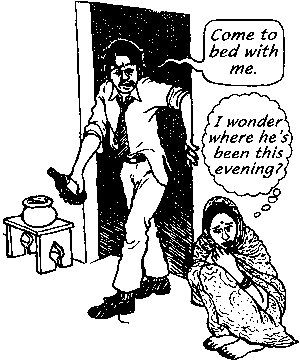
Figure
A woman may not be able to persuade her partner to use condoms.
Latex condoms are the best way to protect both partners, but the man has to be willing to use them.

Figure
|
STDs hurt men, too
When they are not treated, STDs can cause a man to: · become infertile. · die of AIDS or other serious infections. |
|
You may have an STD if you have one or more of the following signs:
· unusual discharge from the vagina
· pain in your lower abdomen
· a rash, bump, or sore on your genitals
How to know if you are at risk for an STD
|
Even if you do not have any signs, you may be at risk (more likely to have an STD) if: · your partner has signs of an STD. He has probably passed the STD to you, even if you have no signs. · your partner lives away from home, or you believe your partner has other partners. This means he is more likely to become infected with an STD and infect you. |
|

What to do if you have an STD
|
If you already have an STD or think you are at risk of getting one: · treat it early. If you have signs described in this chapter, follow the treatments given. Remember that it is very common to have more than one disease at the same time. If you have no signs but are at risk, take the medicines for discharge. · try to get tested for syphilis. If you have one STD, you could be infected with another and have no signs. Also consider being tested for HIV. |
|

Abnormal Discharge
It is normal to have a small amount of discharge, or wetness, that comes from the vagina. This is the way the vagina cleans itself. The amount of discharge changes during the days of your monthly cycle. During your fertile time, your discharge is more wet and slippery, and clear in color. If you are pregnant, you may have more discharge.
A change in the amount, color, or smell of the discharge from your vagina sometimes means you have an infection, but it can be difficult to tell from your discharge what kind of infection you have. Infections are often passed during sex (sexually transmitted), but not always.
If your discharge continues even after taking medicines, see a health worker to have an exam and if possible get tested to see what infection you may have. The discharge could also be caused by another problem like cancer.
IMPORTANT
If you have discharge from the vagina
with pain in the lower abdomen, you could have a serious pelvic infection. Get
treatment immediately!
COMMON CAUSES OF ABNORMAL DISCHARGE
Abnormal discharge may be caused by several different types of infections. Below is a list of them and their most common signs.
Yeast (candida, white discharge, thrush)
Yeast is not sexually transmitted. It does not cause complications. You are most likely to have a yeast infection when you are pregnant, taking antibiotics, or have some other illness like diabetes or HIV/AIDS.
Signs:
· white, lumpy discharge, like milk curd or yogurt
· bright red skin outside and inside your vagina that sometimes bleeds
· you feel very itchy inside or outside your vagina
· a burning feeling when you pass urine
· a smell like mold or baking bread
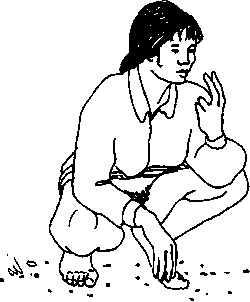
A change in the smell or color
of your discharge can mean you have an infection
Bacterial vaginosis
Bacterial vaginosis is not sexually transmitted. If you are pregnant, it can cause your baby to be born too soon.
Signs:
· more discharge than usual
· a fishy smell, especially after sex
· mild itching
Trichomonas
Trichomonas is not a dangerous infection, but the itching can make you miserable. A man usually does not have any signs, but he can still carry the disease in his penis and give it to others during sex.
Signs:
· gray or yellow, bubbly discharge
· bad-smelling discharge
· red and itchy genital area and vagina
· pain or burning when you pass urine
Figure
Gonorrhea (clap, gono, VD) and chlamydia
Gonorrhea and chlamydia are both serious illnesses. But they are easy to cure if they are treated early. If not, they can cause severe infection and infertility in both women and men.
¨ Gonorrhea and chlamydia have the same signs, so it is best, if possible, to get treated for both.
In a man, the signs usually begin 2 to 5 days after he had sex with an infected person. But a man can have no signs and still be infected. In a woman, the signs may not begin for weeks or even months. Even if you do not have any signs, you can still give both gonorrhea and chlamydia to another person.
Signs in a woman:

Figure
· yellow or green discharge from the vagina or anus
· pain or burning when passing urine
· fever
· pain in the lower belly
· pain or bleeding during sex
· or no signs at all
Signs in a man:
Figure
· discharge from his penis
· pain or burning when he passes urine
· pain or swelling of the testicles
· or no signs at all
|
Itching of the genitals Itching of the genitals can have many causes. Itching around the opening of the vagina could be yeast or trichomonas.
Itching in the hair of the genitals or close to the genitals could be caused by scabies or lice. Scabies or lice can be treated with local remedies, or with medicines found in most pharmacies. For more information, see Where There Is No Doctor, or another general medical book. Some itching is caused by soaps or deodorants that have perfume in them. It can also be caused by plants and herbs that are used for douching or washing out the vagina. Wash with plain water to see if the itching goes away. |
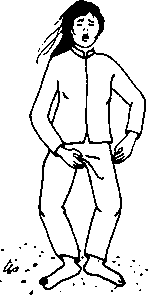
Treatment:
If you have an abnormal discharge and you DO NOT think you have an STD, treat the discharge with these medicines:
|
Medicines for Discharge if you are NOT at risk for an
STD | ||
|
Take 2 medicines: 1 medicine from Box 1, and also the medicine in Box 2. | ||
|
Medicine |
How much to take |
When and how to take |
|
Box 1 (choose 1): | ||
|
clotrimazole inserts |
500 mg |
Put the inserts high into the vagina for 1 night only. |
|
or | |
|
|
Gentian Violet |
1% liquid |
Soak clean cotton wool and put high into the vagina each night for 3 nights. Remove the cotton each morning. |
|
Box 2 (also take): | ||
|
metronidazole |
2g (2000 mg) |
Take all the tablets by mouth at the same time (this will not harm you), unless you are pregnant (see note). |
|
If you are pregnant, do not take all the metronidazole at
once. Instead, take 400 mg, 2 times a day for 7
days. | ||
|
For other medicines that treat vaginal discharge NOT caused by an STD, see Box 1. | ||
If you have an abnormal discharge and you DO think you are at risk for an STD, treat the discharge with these medicines:

Figure
|
Medicines for Discharge if you think you are at risk for
an STD | ||
|
Take all these medicines. | ||
|
Medicine |
How much to take |
When and how to take |
|
co-trimoxazole... |
480 mg tablets (80 mg trimethoprim and 400 mg sulfamethoxazole) |
10 tablets daily, all at once, by mouth, for 3 days (this will not harm you). |
|
and | ||
|
doxycycline. |
100 mg |
By mouth, 2 times a day, for 7 days. |
|
and | ||
|
metronidazole |
2 g (2000 mg) |
Take all the tablets by mouth all at the same time (this will not harm you) unless you are pregnant (see above). |
|
Important: |
||
|
For other medicines that treat vaginal discharge caused by an STD, see Boxes 2 and 5. | ||
Growths (Warts) on the Genitals
Warts are caused by a virus. Warts on the genitals look like warts on other parts of the body. It is possible to have genital warts and not know it, especially when they are inside the vagina or inside the tip of the penis. Warts may go away without treatment, but it can take a long time. Usually they continue to get worse and should be treated.
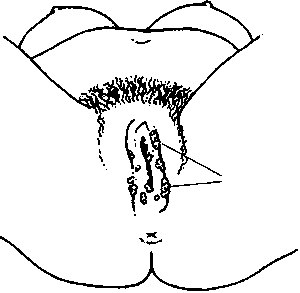
Warts on the vulva

Warts on the penis
Signs:
· itching
· small, painless, whitish or brownish bumps that have
a rough surface.
- In women, these bumps usually grow on the folds of the vulva, inside the vagina, and around the anus.- In men, they usually grow on the penis, (or just inside it) and on the scrotum, or the anus.
IMPORTANT
Large, flat, wet growths that look
like warts may be a sign of syphilis. Try to get a test for syphilis, and DO NOT
use the following treatment.
¨ Your partner should use condoms during sex until you both have no more warts.
Treatment:
1. Put some petroleum gel or other greasy ointment on the skin around each wart to protect the healthy skin.2. With a small stick or tooth pick, carefully put on a very small amount of trichloroacetic acid (TCA) until the wart turns white. You can also use bichloracetic acid (BCA).
OR
Apply 20% podophyllin solution in the same way until the wart turns brown. Podophyllin must be washed off 6 hours later. Do not use podophyllin while you are pregnant.
If the treatment is working, it will cause a painful sore where the wart used to be. Keep the sores clean and dry. Try not to have sex until they are gone, but if you must have sex, your partner should use a condom. The sores should heal within a week or two. Watch them to make sure they do not get infected.
¨ Warts grow faster during pregnancy. If you have a lot of them, this can cause problems with childbirth. Talk with a health worker about this.
Several treatments are usually necessary to get rid of all the warts (it does not matter which solution you use). You can repeat the treatment after one week. Try not to get acid on a sore where a wart used to be. If there is too much irritation, wait longer before the next treatment.

Figure
IMPORTANT
Having genital warts can increase your
risk of cancer of the opening of the womb (cancer of the cervix). If you have
had genital warts, try to have a Pap test done every 1 or 2
years.
Sores on the Genitals (Genital Ulcers)
COMMON CAUSES OF SORES ON THE GENITALS
Most sores or ulcers on the genitals are sexually transmitted. It can be difficult to know which disease is causing the sores because the ones caused by both syphilis and chancroid often look alike. Sores on the genitals are one of the easiest ways that the AIDS virus passes into the body.
¨ If you have ever had an open sore on your genitals that was not treated, try to get a blood test for syphilis. Some countries have free testing programs.
Syphilis
Syphilis is a serious STD that has effects throughout the body and can last for many years. It is caused by bacteria and can be cured with medicine if treated early.
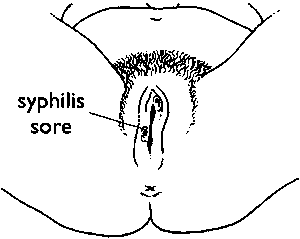
Figure
Signs:
· The first sign is a small, painless sore that can look like a pimple, blister, a flat, wet wart, or an open sore. The sore lasts for only a few days or weeks and then goes away by itself. But the disease continues to spread throughout the body.· Weeks or months later, you may have a sore throat, fever, rash (especially on the palms of the hands and soles of the feet), mouth sores, or swollen joints. During this time you can infect others.
All of these signs go away by themselves, but the disease continues. Without treatment, syphilis can cause heart disease, paralysis, mental illness, and even death.
Pregnancy and syphilis. A pregnant woman can pass syphilis to her unborn baby, which can cause it to be born too early, deformed, or dead. You can prevent this by getting a blood test and treatment during pregnancy. If a pregnant woman and her partner have blood tests that show they have syphilis, they should both be treated with benzathine penicillin, 2.4 million Units, by injection (IM), once a week for 3 weeks.
¨ If you are pregnant, try to get a blood test for syphilis.
Chancroid
Chancroid is an STD caused by bacteria. It can be cured with medicine if it is treated early.
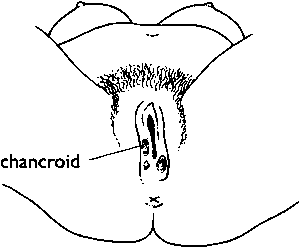
Figure
Signs:
· one or more soft, painful sores on the genitals or anus that bleed easily
· enlarged, painful glands (lymph nodes, bubos) may develop in the groin
· slight fever
Treatment:
|
Medicines for Genital Sores | ||
|
Medicine |
How much to take |
When and how to take |
|
benzathine penicillin |
2.4 million Units |
one injection in the muscle (IM) |
|
and | ||
|
erythromycin |
500 mg |
by mouth, 3 times a day, for 7 days |
|
Important: · If you still have a sore
after 7 days, continue taking erythromycin for 7 more days. | ||
|
For other medicines that work to treat genital sores, see Box 3 and Box 5. | ||
Sores on the genitals should be kept clean. Wash them every day with soap and water, and dry carefully. Do not share the cloth you use to dry yourself with anyone else.
IMPORTANT
The AIDS virus can easily pass through
a sore on the genitals during sex. To help prevent the spread of HIV/AIDS, do
not have sex when you have a sore, or when your partner has one.
¨ A person with AIDS can get herpes infections all over the body that take much longer to go away.
Genital herpes
Genital herpes is an STD caused by a virus. It can happen on the genitals or on the mouth. It produces sores that come and go for months or years. There is no cure for herpes, but there is treatment to make you feel better.
Not all herpes sores on the mouth are spread by sex. Children and adults often get herpes sores on their mouths when they have a cold or fever.

Figure
Signs:
· a tingling, itching, or hurting feeling of the skin in the genital area or thighs
· small blisters that burst and form painful, open sores on the genitals
The first time you get herpes sores, they can last for 3 weeks or more. You can have fever, headache, body ache, chills, and swollen lymph nodes in the groin. The next infection will be milder.
Treatment for genital herpes:
To help you feel better:
· Put ice directly on the sore as soon as you feel it.· Make a compress by soaking some cloth in clean water that has black tea in it and put it on the sore.
· Sit in a pan or bath of clean, cool water.
· Mix water and baking soda or corn starch into a paste and put it on the sore area.
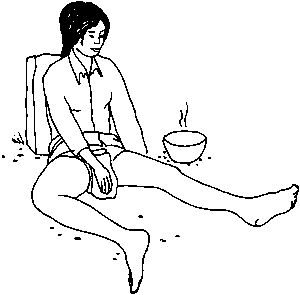
A compress can make genital
sores feel better.
· If your signs return again and again, try the medicine acyclovir. Although it cannot cure herpes, it can help the pain and make your signs go away more quickly.· You can also try the suggestions from How to Feel Better.

Figure
IMPORTANT
· Wash your hands with soap and water after touching the sores.· Be careful not to touch your eyes or your children’s eyes. A herpes infection in the eyes is very serious.
· Try not to have sex any time you have herpes sores. You can easily spread herpes to your sex partner.
|
Pregnancy and herpes. A pregnant woman who is infected with herpes and has sores at the time of the birth can pass the disease on to her baby. This can cause dangerous problems for the baby. Try to give birth in a hospital. They may be able to do an operation to get the baby out, or give the baby special medicines when it is born.
|
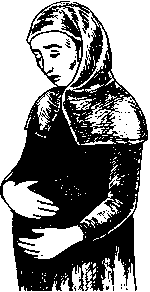
Other STDs
AIDS (ACQUIRED IMMUNE DEFICIENCY SYNDROME, HIV, SLIM DISEASE)
AIDS is a sexually transmitted disease caused by a virus called HIV. It is spread when blood, fluid from the vagina, or semen of someone already infected with the HIV virus gets into the body of another person.
¨ STDs can make it easier to get AIDS, because HIV, the virus that causes AIDS, can get into your body through open sores or be carried in discharge.
Women can get HIV more easily than men during sex. You can get HIV from someone who looks completely healthy.

Figure
There is no cure for HIV. If possible, do not have sex with someone who may be at risk for having HIV or AIDS. To protect yourself, use a latex condom every time you have sex.
HEPATITIS B (YELLOW EYES)
Hepatitis B is a dangerous infection caused by a virus that harms the liver. Hepatitis B is spread when the blood, saliva (spit), fluid from the vagina, or semen of someone already infected with the virus gets into the body of another person. It spreads very easily from one person to another, especially during sex.
Signs:
· fever
· no appetite
· tired and weak feeling
· yellow eyes and/or skin
· pain in the belly
· dark urine and whitish stools
· no signs at all

Figure
¨ If your partner has had some of these signs, do not have sex until he is completely well. Ask a health worker if you can get vaccinated.
Treatment:
There is no medicine that will help. In fact, taking medicine can hurt your liver even more.
Most people get better from hepatitis B. A small number of people may have liver problems that never go away, including cancer. Rest as much as you can, and eat foods that are easy to digest. Do not drink any alcohol for at least 6 months.
Figure
Pregnancy and hepatitis. If you have any of these signs when you are pregnant, see a health worker You may be able to get a vaccination to prevent your baby from getting hepatitis B.
Complications of STDs
Pelvic inflammatory disease (PID)
Pelvic Inflammatory Disease or PID is the name for an infection of any of the reproductive parts in a woman’s lower abdomen. It is often called a ‘pelvic infection’.
Pelvic infection can happen if you have had an STD that was not cured, especially gonorrhea or chlamydia. It can also happen if you recently gave birth, or had a miscarriage or abortion.
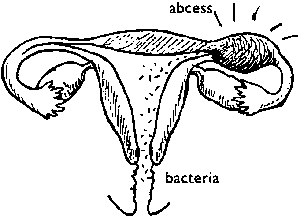
Figure
The germs that cause pelvic infection travel up from the vagina through the cervix and then into the womb, tubes, and ovaries. If the infection is not treated in time, it can cause chronic pain, serious illness, or death. An infection in the tubes can leave scars that make you infertile or at risk for a pregnancy outside the womb (tubal or ectopic pregnancy).
Figure
Signs (you may have one or more of these):
· pain in the lower belly
· high fever
· you feel very ill and weak
· green or yellow bad-smelling discharge from the vagina
· pain or bleeding during sex
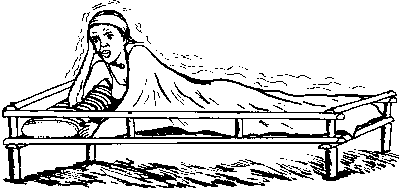
Treat pelvic infection right
away.
¨ To prevent PID, always treat STDs correctly. Be sure to:
· take all the medicine.
· make sure your partner gets treated.
· stop having sex until you and your partner have finished all the medicine and your signs have gone away.
Treatment:
Start taking the medicines on the next page right away. If you do not feel better after 2 days and 2 nights (48 hours), or if you are very ill with a high fever or vomiting, or if you recently had an abortion or gave birth, go to a health center or hospital immediately. You may need strong medicines in the vein (IV).
|
Medicines for Pelvic Infection (PID) | ||
|
Take all these medicines: | ||
|
Medicine |
How much to take |
When and how to take |
|
norfloxacin |
800 mg |
by mouth, once only (do not use if pregnant, breastfeeding, or under age 16). |
|
and | ||
|
doxycycline |
100 mg |
by mouth, 2 times a day, for 10 days (do not use if pregnant or breastfeeding). |
|
and | ||
|
metronidazole |
500 mg |
by mouth, 2 times a day, for 10 days. |
|
For other medicines that work for pelvic infection, see Box 4. | ||
|
My husband taught school in a town far away from our village and returned home to visit me only a few times a year. After one of his visits, I became very ill with fever and a terrible pain in my abdomen. I did not know what was causing my sickness.... I tried remedies from the local healer, but they did not work. I did not want to leave my village to look for help because I did not want to leave my children, and I did not have much money. I got so sick that my neighbors thought I was going to die. So they took me in a truck to the nearest hospital, 90 miles away. The doctor at the hospital said I had gonorrhea, and that this had caused a bad infection inside my abdomen. He said I would need expensive surgery and many days of medicines to cure me. He also said I would probably not be able to have more children. Now, I only wish I had taken the right medicines when I first became sick. - Central African Republic
|
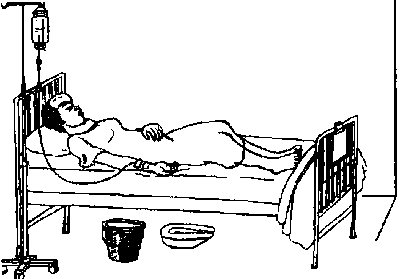
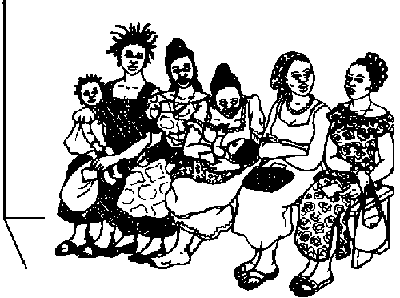
In addition to PID, STDs can cause other problems for a woman. A woman with an STD that is not cured is more likely to have problems with infertility and tubal pregnancies. STDs can also cause:
¨ Early treatment of STDs can prevent complications.
SWOLLEN VAGINA (BARTHOLIN GLAND INFECTION)
Just inside the vagina there are 2 small pockets of skin called ‘glands’. They make a liquid that helps to keep the vagina wet. Sometimes germs get inside, and one or both glands become infected.
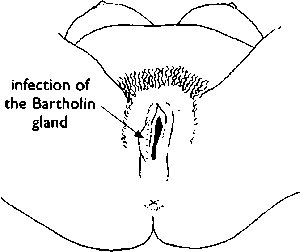
Figure
Signs:
· Swollen, hot, painful vaginal fold that is darker in color. Usually it happens on one side only.· Sometimes there is swelling with no pain.
Although not always caused by an STD, this infection often happens when a woman has gonorrhea or chlamydia.
Treatment:
1. Soak a cloth in clean, hot water and place it on the swelling. Do not make it so hot that you burn yourself. Do this as often as you can until the swelling opens and pus comes out, or until the swelling goes down.2. Also, you and your partner both need to take medicines for gonorrhea and chlamydia.
3. If the area is painful and stays swollen, see a trained health worker who can cut it open and drain out the pus.
PROBLEMS IN NEWBORN BABIES

Figure
Women who have gonorrhea or chlamydia while they are giving birth can pass these diseases to their newborn babies. The babies’ eyes become infected with gonorrhea (neonatal conjunctivitis) which can cause blindness. To prevent neonatal conjunctivitis, put antibiotic ointment in the baby’s eyes right after birth. Chlamydia can also cause pneumonia in newborn babies.
Figure
How to Feel Better
To cure yourself of an STD, you must take the medicine described in this chapter. To get relief from the discomfort of an STD:
1. Sit in a pan of clean, warm water for 15 minutes, 2 times a day. Do this until you feel better. If you think you have a yeast infection, you can add lemon juice, vinegar, yogurt or sour milk to the pan of warm water.
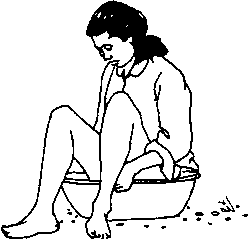
Figure
2. Do not have sex again until you feel better.
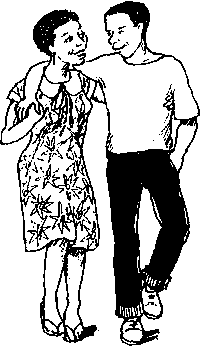
Figure
3. Try to wear underclothes made of cotton. This lets air in around your genitals which will help you heal.
4. Wash your underclothes once a day and dry them in the sun. This kills the germs that cause infection.
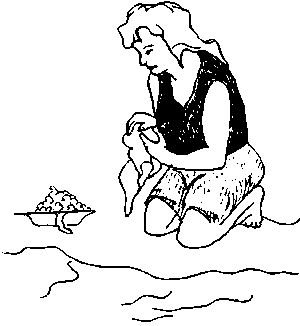
Figure
5. Take a mild pain medicine.

Figure
6. If you have genital ulcers and it is painful to pass urine, pour clean water over your genital area while you urinate. Or sit in a pan of cool water while you urinate.
Other Medicines to Treat STDs
On several pages of this chapter we have recommended medicines to treat STDs and other problems. We selected these medicines because they are:
· effective (they work to cure the problem).
· easy to find.
· not too costly.

Figure
However, different kinds of medicines are sold in different parts of the world, and the prices may vary. So one of these medicines may not be available where you live, or there may be a different medicine that is both effective and less costly. You may also need to take a different medicine if:
· you are pregnant or breastfeeding and the medicine is not safe to take during those times.· the STD you are trying to treat has become resistant to the medicine (see below).
· you have an allergy to the medicine. Some people are allergic to medicines like penicillin or sulpha antibiotics. See Kinds of Medicines for how to substitute antibiotics.
¨ Warnings are given in this chapter if pregnant or breastfeeding women should not take a medicine. If a medicine does not have a warning, it is safe to take.
In this section we have listed other medicines that will work for each problem. Remember that most people have more than one STD or problem of the genitals at the same time, so it is often necessary to take more than one medicine. Whichever medicines you choose, be sure to take them correctly.
¨ Before you take any medicine, you should read about it in the “Green Pages.” There may be more information you should know.
DRUG RESISTANCE AND STD MEDICINES
When using antibiotics for treating STDs and other diseases, it is very important to take all the medicine. If a person does not take enough of the right kind of medicine - or stops taking the medicine before the treatment is finished - the germs causing the infection are not all killed. The strongest germs survive and multiply and create stronger forms of the disease. Then a medicine that once worked against that disease is no longer able to cure it This is called resistance.
¨ If you are not sure which medicine will work best for a problem, try to check with a health worker or pharmacist who will know which medicines are best where you live.
For this reason, in many places gonorrhea has become resistant to the drugs usually used to treat it. Talk with a health worker to find out if there are drug-resistant STDs where you live, and what are the best, locally-available medicines to treat them.
|
Box 1 - Other Medicines for Vaginal Discharge if you are
NOT at risk for an STD For yeast infections of the vagina: · miconazole, 200 mg inserts: put 1 high into the vagina each night for 3 nights. For trichomonas and bacterial vaginosis: · metronidazole: 2 g (2000 mg) by mouth all at once (this will not harm you). If you are pregnant, do not take this medicine all at once. Instead, take 400 mg, 2 times a day for 7 days. · tinidazole: use the same dose as for metronidazole (see above). |
|
|
Box 2 - Other Medicines for Vaginal Discharge if you may be at risk for an STD (This box inclines medicines for gonorrhea and chlamydia. Since it is very difficult to tell these infections apart, take medicines for both. These medicines also treat infections in men. Treat for trichomonas by taking metronidazole. See Box 1.) For gonorrhea: · norfloxacin: 800 mg by mouth, once only (do not use either of these 2 medicines if you are pregnant or breastfeeding or under age 16) · ceftriaxone: 250 mg by injection into a muscle (IM), once only (do not use if pregnant or breastfeeding) · cefixime: 400 mg by mouth, once only For chlamydia · tetracycline: 500 mg, by mouth, 4 times a day for 7 days (do not use if pregnant or breastfeeding) · erythromycin: 500 mg, 4 times a day for 7 days · amoxicillin: 500 mg, 3 times a day for 7 days |
|
Be sure to take medicines correctly
Figure
Remember, when treating STDs, always:
· make sure your partner gets treated too.· take all the medicine.
· stop having sex until your signs have gone away AND you and your partner have finished all the medicine.
· see a health worker if you do not get better by the end of your treatment.
· start practicing safer sex when you do have sex again.
|
Box 3 - Other Medicines for Genital Sores (These medicines treat early syphilis and chancroid. Since it is very hard to tell the cause of genital sores, treat for both syphilis and chancroid.) For syphilis: The best medicine for early syphilis is benzathine penicillin, 2,4 Million Units, by injection into a muscle (IM), once only. If you are allergic to penicillin, you can use instead: · doxycycline: 100 mg, by mouth, 2 times a day for I 5 days (do not use if pregnant or breastfeeding) · tetracycline: 500 mg, by mouth, 4 times a day for 15 days (do not use if pregnant or breastfeeding) · erythromycin: 500 mg, by mouth, 4 times a day for 15 days (erythromycin will also treat chancroid) For chancroid: The best medicine for chancroid is erythromycin, 500 mg, by mouth, 3 times a day for 7 days. Other medicines that work for chancroid are: · ciprofloxacin: 500 mg, by mouth, once only (do not use if pregnant or breastfeeding or under age 16) · ceftriaxone: 250 mg, by injection into a muscle (IM), once only · co-trimoxazole 480 mg (80 mg trimethoprim and 400 mg sulfamethoxazole) tablets: 2 tablets, by mouth, 2 times a day for 7 days |
|
|
Box 4 - Other Medicines for Pelvic Infection (PID) (This infection is usually caused by a mix of germs. If possible, 3 medicines should be taken.) These are the first choice: · norfloxacin: 800 mg, by mouth, once only (do not use if pregnant, breastfeeding, or under 16) · doxycycline: 100 mg, by mouth, 2 times a day for 10 days (do not use if pregnant or breastfeeding) · metronidazole: 500 mg, by mouth, 3 times a day for I 0 days Instead of norfloxacin you can use any one of these medicines: · ceftriaxone: 250 mg, by injection into a muscle (IM), once only (do not use if you are pregnant, breastfeeding, or under age 16) · kanamycin: 2 grams, by injection into a muscle (IM), once only (do not use if pregnant or breastfeeding) Instead of doxycycline you can use any one of these medicines: · tetracycline: 500 mg, by mouth, 4 times a day for 10 days (do not use if pregnant or breastfeeding) · erythromycin: 500 mg, by mouth, 4 times a day for 7 days · amoxicillin: 500 mg, by mouth, 3 times a day for 10 days |
|
Box 5 - Medicines for Those at Very Great Risk for STDs (For women who have a very great risk of getting many different STDs - anyone who has unsafe sex with many different partners - this is a medicine that can be useful. It works to treat drug-resistant gonorrhea, as well as chlamydia and genital ulcers. But it is very expensive and can be hard to find.) · azithromycin: 1 gram, by mouth, once only For almost all women, 1 gram is enough medicine. In a very few cases, 2 grams may be necessary for effective treatment, but this amount can cause severe nausea and vomiting. |
Working for Change
HOW TO PREVENT STDs
· Practice safer sex (see the chapter on “Sexual Health”).· Use condoms every time you have sex. To learn how to encourage your partner to use condoms, see Safer sex methods.
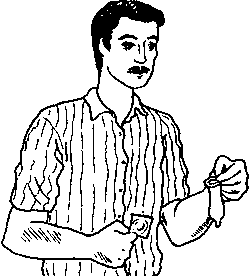
Condom for men
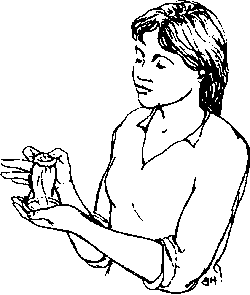
Condom for women
¨ Preventing STDs can protect you and your partner from serious illness and infertility.
· If your partner will not use a condom, use spermicide alone or with a diaphragm. This will give you some protection against gonorrhea and chlamydia.· Wash the outside of your genitals after sex.
· Pass urine after having sex.
· Do not douche, or use herbs or powders to dry out the vagina. Douching (and washing out the vagina with soap) works against the natural wetness the vagina makes to stay healthy. When the vagina is dry, it can become irritated during sex, making it more likely to be infected with AIDS and other STDs.

Figure
|
Latex condoms will:
· protect you from STDs including HIV/AIDS. Do not have sex when you or your partner has signs of an STD. |
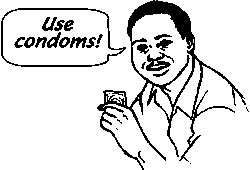
WORKING FOR SAFER SEX IN THE COMMUNITY
Sexually transmitted diseases are a health problem for the whole community. To help prevent STDs in your community you can:
· teach men and women about the risks to their health and the health of their families from STDs. Find opportunities when women are together in groups, such as at the market or waiting at health centers, to explain how STDs are passed, and how to prevent them.· work with others to find ways to convince men to wear condoms. Practice in the group what to say to your partner to get him to use a condom.

Figure
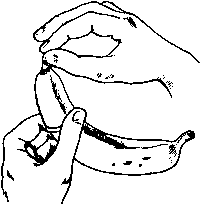
You can explain what a condom
is and practice how to put one on using a banana.
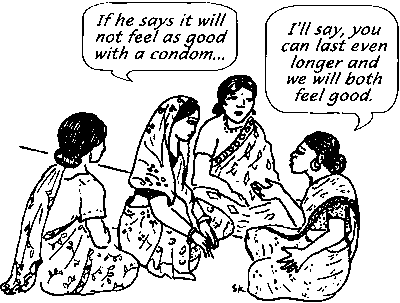
Figure
· make latex condoms available in your community. Work to make sure that free or cheap condoms are available at local shops, bars, and cafes as well as from health workers and at health centers.· train men to teach other men in the community about using condoms.
· organize a community group to talk about health problems and include STDs, HIV, and AIDS. Explain how preventing STDs will also prevent the spread of HIV infection and AIDS.
· support education about sex in your local schools. Help parents understand that teaching children about STDs, including HIV/AIDS, helps the children make safe choices later on when they start having sex.
· encourage teenagers to teach their friends about STDs, including HIV/AIDS.
|
After a health worker came to speak with a group of women in our community about STDs and AIDs, we began talking about our lives. Some of the women began by saying they did not have anything to worry about. But the more we talked the more we realized that every woman and every man should worry about STDs and AIDS. We thought about how to get men to use condoms and decided that we needed to educate the entire community about the dangers of STDs and AIDS and how to prevent them. We organized a play and got people from the community to act in it. We created a special character called “Commander Condom” to come to the rescue with condoms. Everyone came to watch the play. People enjoyed it and they also learned. Now the men make jokes about “Commander Condom,” but they are also more willing to use them. - Oaxaca, Mexico
|
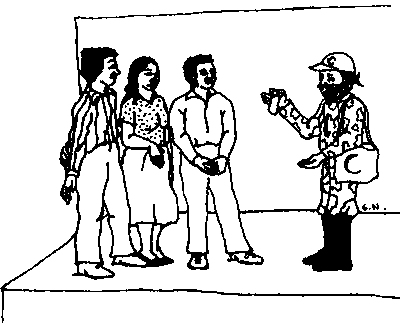
To the health worker:
· Find out from your local health center, hospital, or Ministry of Health what medicines work best to treat STDs in your community.· Try to start a community pharmacy so that it will be easier for people to get medicines, latex condoms, and spermicides.
· Talk to the people you see who have an STD. Give them good information on how to cure their STD, how to keep from infecting others, and how to keep from getting an STD again. Make sure their partners also get treatment.
· Include information about preventing STDs and HIV/AIDS in family planning programs.
· Do not judge or blame those who come to you for help with an STD.
· Respect the privacy of those with STDs or other health problems. Never talk about their problems with others.
|
See the chapter on “Sexual Health,” for information about: · sex and gender roles · feeling pleasure from sex |
|
|
| ||||||||||||||||||||||||||||||||||||||||||||||||||||||||||||||||||||||||||||||||||||||||||||||||||||||||||||||||||||||||||||||||||||||||||||||||||||||||||||||||||||||||||||||||||||
Where Women Have No Doctor - A Health Guide for Women (Hesperian Foundation, 1997, 600 p.)
Chapter 17: AIDS (Acquired Immune Deficiency Syndrome)
Figure
¨ AIDS is everyone’s problem.
You must have heard about AIDS by now - on the radio, in the market, from your neighbors, or at the health center. You may think AIDS is not your problem. Yet millions of people are infected with the AIDS virus. More and more of them are women.
We can only protect ourselves from AIDS if we understand what AIDS is, and if we talk about AIDS with our families and friends.
|
“AIDS is a disease that shines in hush and thrives on secrecy. It was prospering because people were choosing not to talk about it... I wanted to talk about AIDS so that at least my children, and yours, would be spared. They would know and have the information about AIDS before they became sexually active, and be able to talk about it.” - Noerine Kaleeba, Uganda, whose husband died of AIDS |
|
WHY SO MANY WOMEN GET HIV/AIDS
AIDS is spreading fastest in parts of the world where people are poor and do not have education. If there is famine (not enough food), war, or not enough work, people are often forced to move to cities, away from their families. Traditions often break down and sex with new partners is common.
These conditions are especially hard for women. Poor women have even less power to control their lives. Often laws and tradition keep women from getting an education, skills to support themselves, or information about their bodies.
¨ Lack of power and information make women more vulnerable to AIDS.
What Are HIV and AIDS?
HIV (Human Immunodeficiency Virus) is a very small germ, called a virus, that you cannot see. AIDS is a disease that develops later, after a person has been infected with HIV, the AIDS virus.
HIV
When a person becomes infected with HIV, the virus attacks the immune system, the part of your body that fights off infection. HIV slowly kills the cells of the immune system until the body cannot defend itself against germs anymore. Although a person may feel well for only a short time, many people feel well for 5 to 10 years after getting HIV. But eventually the immune system will no longer have enough cells to fight off germs that normally do not make you sick. Because HIV takes many years to make someone sick, most people with HIV feel healthy and do not know they have it.
¨ As long as you feel well you have HIV, but you do not yet have AIDS.
IMPORTANT
You can pass HIV to others as soon as
you are infected, even though you look and feel healthy. You cannot tell from
looking at a person if he or she has HIV. The only way to know if you are
infected is to get the HIV test.
|
| |
|
The body has millions of white blood cells that attack germs and fight off infection. |
HIV kills the white blood cells until there are not enough cells left to attack the germs. This is when the person has AIDS. |
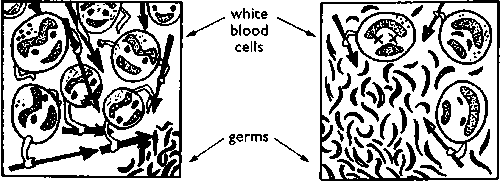
AIDS
A person has AIDS when the immune system gets so weak that it can no longer fight off common infections and illnesses. The signs of AIDS are different in different people, and they can be different for women than for men. Often the signs are lasting infection with other common illnesses.
Good nutrition and some medicines can help the person’s body fight infections caused by AIDS and allow her or him to live longer. But there is no cure for AIDS itself. So after a while, a person infected with HIV will get more and more illnesses until the body is too weak to survive.
How HIV/AIDS is spread and is not spread
|
HOW HIV/AIDS IS SPREAD HIV lives in body fluids - such as blood, semen, and the fluids in the vagina - of people infected with HIV. The virus is spread when these fluids get into the body of another person. This means that HIV/AIDS can be spread by:
HOW HIV/AIDS IS NOT SPREAD HIV does not live outside the human body for more than a few minutes. It cannot live on its own in the air or in water. This means you cannot give or get HIV in these ways:
|




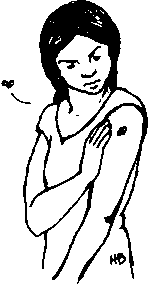
Why HIV and AIDS Are Different for Women
HIV and AIDS are different for women because:
· women get infected with HIV more easily than men do. A man puts his semen in the woman’s vagina, where it stays for a long time. If there is HIV in semen it can pass easily into a woman’s body through her vagina or cervix, especially if there are any cuts or sores.· women are often infected at a younger age than men. This is often because young women and girls are less able to refuse unwanted or unsafe sex.
· women get more blood transfusions than men because of problems during childbirth.
· women become sick with AIDS more quickly after becoming infected with HIV than men do. Poor nutrition and childbearing may make women less able to fight disease.
· women are blamed unfairly for the spread of AIDS. But men are just as responsible as women (if not more). For example, they are the ones who buy sex, which is a common way that AIDS spreads.
· a pregnant woman infected with HIV can pass it to her baby.
· women are usually the caretakers for family members who are sick with AIDS, even if they are sick themselves.
Preventing HIV/AIDS
You can prevent AIDS in these ways:
· If possible, have sex with only one partner who has sex only with you.· Practice safer sex - sex that prevents the germs in a man’s semen from getting into your vagina, anus, or mouth.
· Avoid piercing or cutting the skin with needles or other tools that have not been disinfected between uses.
· Avoid blood transfusions except in emergencies.
· Do not share razors or toothbrushes.
· Do not touch someone else’s blood or wound without protection.
Figure

Women and girls should have a
right to protect their lives against AIDS. To do this we need
|
PREVENTING HIV/AIDS IS NOT ALWAYS EASY
|
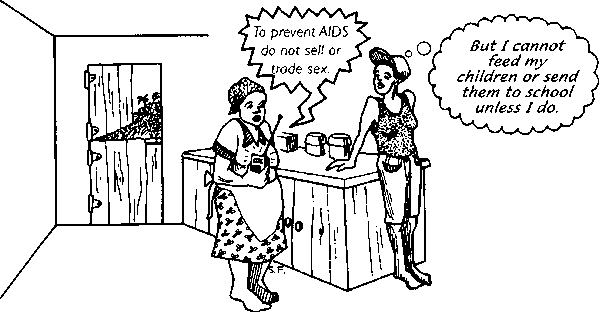
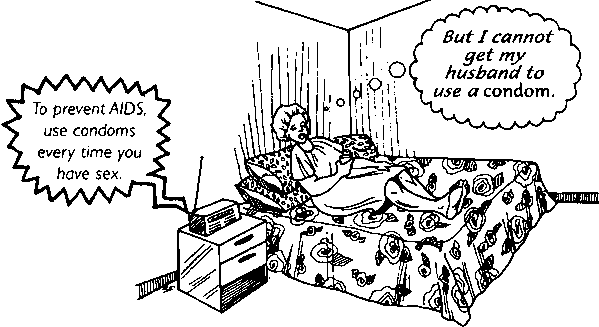

The HIV Test
When HIV enters the body, the body starts to make antibodies right away to fight the virus. These antibodies usually show in the blood 4 to 8 weeks later, but it can take as long as 6 months for the body to make enough of them to show up in a test. This time between infection and when the antibodies appear in the blood is called the ‘window period’.
¨ Your local Red Cross or Red Crescent may offer testing and counseling at a low cost, Check with your national AIDS control program to find out where you can be tested in your country. It can take about 2 weeks to get the test results.
The HIV test looks for these antibodies in the blood. It is the only way to know if a person has been infected with HIV. It is not a test for AIDS.
A positive HIV test means that you are infected with the virus and your body has made antibodies to HIV. Even if you feel completely well, you can spread the virus to others.
A negative HIV test means I of 2 things:
· you are not infected with HIV, or
· you are infected but have not yet made enough antibodies to HIV to test positive (the window period).
If you have tested negative for HIV but think you might be infected, you should take the test again in a few months. Sometimes a positive test also needs to be repeated. A health worker can help you decide.
¨ If possible, have someone you trust go with you to get your HIV test results.
|
THE WINDOW PERIOD This is different for different people. Here is an example of how long the window period was for one woman: 1. He was HIV-infected. They had unprotected sex. She became infected too.
2. Three weeks later, she tested negative for HIV. But she was still infected and could give the virus to others. She was in the ‘window period’.
3. Nine weeks later she tested positive for HIV.
4. The time between her first contact with HIV, and when antibodies appear in her blood is the window period.
Since the window period can be as long as 6 months, it is best to wait that long after being exposed before getting the HIV test If you think you may have come into contact with HIV again during that 6-month window period, you will need to get another test in 6 months from the date of the new contact. |

WHEN SHOULD YOU HAVE THE HIV TEST?
It is usually more important to change unsafe behavior than to have an HIV test. But you and your partner may want to be tested if:
· you want to get married (or start a faithful sexual relationship with one person) or have children.· you, your partner, or your baby have signs of AIDS.
· you or your partner have had unsafe sex.
¨ The HIV test should always be done:
· with your permission.
· with counseling before and after the test.
· with privacy. No one should know the results except you and those you want to know.
The advantages of knowing the test results
If your test is negative, you can learn how to protect yourself so that you stay negative and never get HIV/AIDS.
If your test is positive, you can:
· prevent the spread of HIV to your partner.
· get treatment early for health problems.
· make changes in how you live so you can stay healthy longer.
· get support from other HIV-infected people in your community.
· plan for yourself and your family’s future.
The disadvantages of knowing the test results
You may have many different feelings if you find out you are infected. It is normal at first to be shocked and deny that your test results are positive. You may also feel anger and despair, and blame yourself or others.
AIDS is not a curse or a
punishment.
It often helps to talk with someone, such as the health worker who gave you the test results or someone close to you. But be careful who you tell. Your husband or partner may blame you, even if he is also infected with HIV. Other people may act afraid and shun you, because they do not understand HIV/AIDS or how it is spread. If possible, see a trained HIV/ AIDS counselor, who can help you decide who to tell and how to face this change in your life.
|
IMPORTANT
Practice safer sex. |
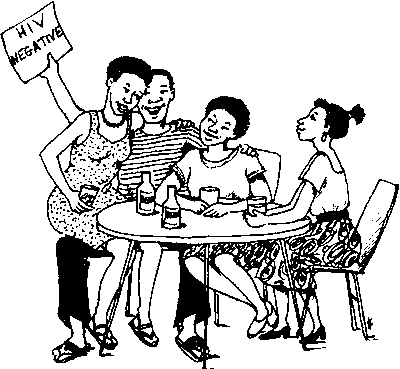
Counseling
A counselor is someone who listens and talks with a person and his or her family to help them to cope with their worries, concerns, and fears, and to make their own decisions.
¨ Counseling for HIV-infected people and their families can mean the difference between hope and despair. As an HIV-infected woman from Kenya says, “When you meet a good counselor, you feel as if you have healed.”
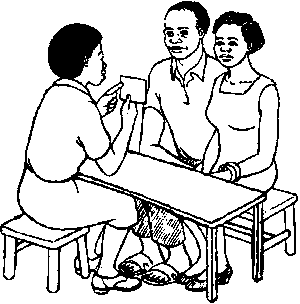
Figure
Counseling is important throughout the life of a person with HIV, not only when they first discover they are infected. If you are infected, a skilled counselor may be able to help you:
· decide who to tell about being HIV-infected.· find the support of others who are also HIV-infected.
· get the care you need from health centers.
· explain to your family what it means to be HIV-infected, and how HIV is spread. This will help them to accept and care for you without being afraid.
· understand how to stay healthy for as long as possible.
· plan for your future.
· learn how to be sexual in a safe way.
|
If you are a health worker or a leader of a religious group, you are in an ideal position to get training to help those suffering with the problems of HIV. Some people who have lost family members to AIDS have learned to counsel others about living with HIV. |
Living Positively with HIV and AIDS
¨ Most people with HIV can be healthy for many years.
Modern medicine and traditional healers still do not have a cure for AIDS. But most people with HIV can be healthy for many years. During this time it can help to:
· make the best of every moment of your life.
· spend time with friends and family.
· try to keep active by doing your daily work.
· be sexual if you want to. Enjoying sexual touch can help you stay healthier longer
|
If your partner is HIV infected Although it is risky, if you practice safer sex carefully, you can continue to have sex with an HIV infected partner without becoming infected yourself. Besides using safer sex methods, watch your own health carefully. Watch for breaks in the skin or other places where infection could occur. And remember, there are other ways to be sexual besides having sex. It is safe to hug, to hold someone in your arms, and to kiss them.
|
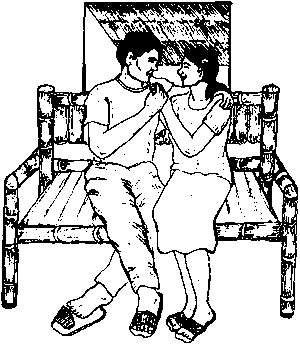
· Try joining or starting a group of people with HIV and AIDS. Some people with HIV and AIDS work together to educate the community, to provide home care to those who are sick with AIDS, and to support the rights of people with HIV and AIDS.

Figure

Figure
· Look after your spiritual and mental health. Your faith and traditions can bring you hope and strength.

Figure
· Think about the future. If you have children:
- spend time with them now, and give them care and guidance.- make arrangements for family members to look after them when you are no longer able to do so.
- make a will. If you have some money, a house, or property, try to make sure that they will go to those you want to have them. Sometimes women who are not legally married cannot leave their possessions to their children and other family members. So it may be helpful to get legally married in order to leave your possessions to those you want to have them.
¨ If you have children, make staying healthy for them a goal.
|
Take care of your health · Take care of medical problems early. Each infection can weaken your immune system more. · Eat nutritious food to keep your body strong. The same foods that are good to eat when you are healthy are good for you when you are sick. Buy nutritious food instead of spending money on vitamin tablets or injections. · Avoid tobacco, alcohol, and other drugs. · Practice safer sex for your own health as well as your partner’s. Safer sex can prevent new infections and unplanned pregnancies that could weaken the immune system even more. · Try to get enough rest and exercise. This will help your body stay strong to fight infection. · Prevent infection by washing often.
|

Pregnancy, Childbirth, and Breastfeeding
Preventing pregnancy may keep you healthier and help you live longer. If you are HIV infected and already pregnant, it is especially important to take good care of yourself.
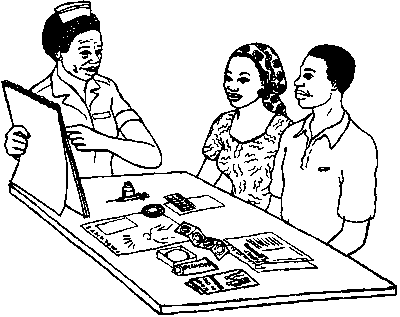
Figure
PREGNANCY
Pregnancy can be dangerous for a woman with HIV or AIDS. During pregnancy and childbirth she is more likely to have some of the following problems than a woman who does not have HIV or AIDS:
· lose the baby during pregnancy (miscarriage)
· fevers, infections, and poor health
· serious infections after giving birth, which are hard to treat and may threaten her life
In addition, her baby may:
· be infected with HIV.
· be born too soon, or be sickly and die.
Some women who become infected with HIV may still want to get pregnant Or they may have no way to prevent pregnancy.
If you want to get pregnant
If you are not sure whether you or your partner are infected with HIV and you can get a test for HIV, both of you should wait 6 months before having the test. While you wait, use condoms every time you have sex, and have sex with only each other.
If you cannot get an HIV test, you can reduce your risk by following this advice:
· Have sex with a condom, except during your fertile time.
· When you are not fertile, practice safer sex.
· Never have sex when there are signs of an STD.
Figure
|
About 1 out of 3 babies born to HIV-infected mothers becomes infected.
A baby can become infected while it is in your womb, or during birth, or while breastfeeding. Some anti-viral drugs (like AZT) are being tested that may reduce the risk of passing HIV to your baby. Check with a health worker who has been trained to treat HIV/AIDS during pregnancy. An HIV-positive mother always passes antibodies (but not always HIV itself) to her unborn baby. This means that a new baby will always test positive for HIV because the mother’s antibodies show up in the baby’s blood. But many babies later have a negative test. This means they were not actually infected with HIV itself. It is impossible to tell from the usual HIV test if the baby has the virus or just the antibodies until the baby is I 8 months old. At that time, the mother’s antibodies will disappear from its blood. |

CHILDBIRTH
If you think your midwife or birth attendant would be understanding, tell her that you are HIV infected so she can protect both of you from infection.
After the birth, wash your genitals 2 times a day with mild soap and clean water Learn the signs of infection after birth and get treated immediately if necessary.

Figure
BREASTFEEDING
HIV infection is sometimes passed to the baby in breast milk. No one knows yet how often this happens or why it happens to some babies and not others. There is more HIV in the breast milk of mothers who have become infected recently, and in those who are very sick with AIDS.
Figure
Some mothers find a friend or relative who is not HIV infected who can breastfeed their baby for them. This can be the safest choice for your baby. But even if you are HIV infected, it is usually better to breastfeed than to use other milks or formula. In many communities the risk of diarrhea and malnutrition from other milks is greater than the risk of HIV, especially in the baby’s first 6 months of life.
After 6 months, when your baby is bigger and stronger, there is less danger of diarrhea and infection. You can then switch to other milks and feed your baby other foods. This way your baby has many of the benefits of breastfeeding with less risk of getting HIV.

Figure
Talking with a trained health worker about breastfeeding and HIV can help you answer some of the following difficult questions and make a decision about whether to breastfeed your baby:
· Are you certain you have HIV or AIDS? Perhaps you should be tested.· Do children in your area often get sick or die from infections, diarrhea, or poor nutrition? If the answer is yes, then breastfeeding may be best.
· Are other clean, nutritious milks or formula available? You will need to buy them for at least 6 months, which is very costly. You will also need enough clean, boiled water and some training in how to feed other milks or formula with a cup or spoon.
· Is there another woman who can breastfeed your baby? Are you certain she is not infected with HIV?
Figure
Whatever you choose to do, do not blame yourself if your baby becomes infected with HIV. There is no way to know for sure how to protect your baby.
Care for Persons with AIDS
The health and medical problems of AIDS may last a long time. These problems can take a lot of the energy and resources of the sick person and her or his family.
If you have AIDS, you will probably need to see a health worker or go to a clinic from time to time to have an infection treated. But you may never need to stay in the hospital. You may be more comfortable at home, cared for by family members in familiar surroundings.
If you have a problem that does not get better with home treatment, try to find a health worker, clinic, or doctor you trust who is experienced with AIDS. Then go to the same person whenever you have a problem. Going from clinic to clinic wastes time, energy, and money.
A stay in the hospital usually costs more than the food and medicine needed for good care at home.
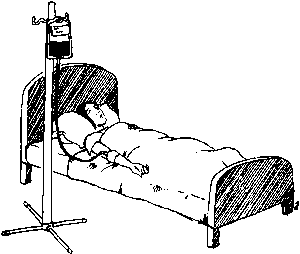
Figure
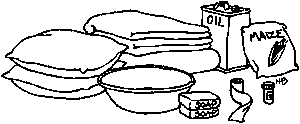
Figure
¨ A good counselor is key to helping you care for someone with AIDS at home.
Much of the work in caring for sick people at home is done by women, who are usually the family’s caregivers. If you are caring for someone with AIDS, be sure to take care of your own needs, too. Try to get help from other family members, friends and people in the community. Community clubs, religious groups, youth clubs, and AIDS self-help groups may assist you.
|
When Rosa was in bed because of AIDS complications, her mother kept a cheerful attitude. Every day she bathed her daughter dressed her with nice clothes, and put a little flower next to her bed. Rosa was not hungry but her mother arranged the food in a way that could make her want to eat. The family would talk to Rosa about daily life, and their work and community. With their good humor and positive comments, Rosa felt that she was not cast aside. Even though Rosa was often tired or didn’t feel well, the family arranged for her friends to visit her in the moments she felt better. Music, conversation, and good spirit made the house full of life. Rosa felt that she was loved and needed, and that AIDS could not ruin her closeness and her time with her family.
|
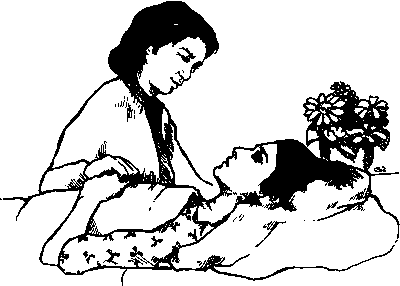
Preventing HIV infection at home
If you follow these rules, there is no risk of spreading HIV from an infected person to others around her, or of getting HIV yourself:
· Avoid touching body fluids, like blood, vomit, stool, and urine.· Do not share anything that touches blood. This includes razors, needles, any sharp instruments that cut the skin, and toothbrushes. If you must share such things, disinfect them before another person uses them. If you are unable to disinfect them, boil them in water for 20 minutes.
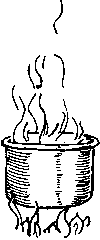
Figure
Figure
¨ Burn or bury soiled bandages that cannot be rewashed.
· Keep wounds covered. Both caregivers and persons with HIV or AIDS should cover all open wounds with a clean bandage or cloth.· Use a piece of plastic or paper gloves, or a big leaf to handle dirty bandages, cloths, blood, vomit, or stool.
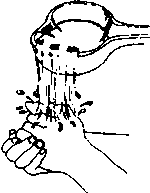
Figure
· Wash your hands with soap and water after changing dirty bedding and clothes.· Keep bedding and clothing clean. This helps keep sick people comfortable and helps prevent skin problems. To clean clothing or sheets stained with blood, diarrhea, or other body fluids:
- keep them separate from other household laundry.- hold an unstained part and rinse off any body fluids with water. Be especially careful if there are large amounts of blood, such as after childbirth.
- wash the bedding and clothing in soapy water, hang to dry - if possible in the sun - and fold or iron as usual.

You will not get HIV from
washing the clothes of an infected person if you follow the advice
above.
¨ The following things are helpful but not necessary:
· Add bleach to the soapy water and soak 10 minutes before washing.
· Wear gloves or plastic bags on your hands.

Figure
Staying Healthy for as Long as Possible
When a person has AIDS, the body’s immune system is no longer able to fight off common infections and illnesses. The immune system gets weaker with each illness, making it even less able to fight infection the next time. This continues until the person’s body is too weak to survive.
Preventing infections and illness is the best way to slow down the weakening of the immune system. It is also important to treat any infections to keep them from spreading or getting worse. This way a person with AIDS can stay healthy for as long as possible.
|
Preventing some infections with medicines For persons with AIDS, regular use of the antibiotic co-trimoxazole may help prevent some kinds of pneumonia and diarrhea. You can start taking it as soon as you begin to fall ill from serious lung infections, diarrhea, and skin infections. Take: co-trimoxazole 480 mg (80 mg trimethoprim and 400 mg sulfamethoxazole), I tablet by mouth daily, or 2 tablets by mouth 2 times a week. Drink a lot of water every day if you take co-trimoxazole. IMPORTANT Women will usually have more problems with yeast infections of the vagina when they take antibiotics. Eating yogurt or sour milk, or sitting in a bowl of water with yogurt or vinegar in it can help. |
MENTAL HEALTH
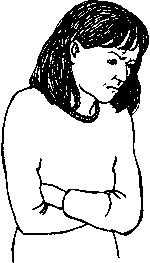
Figure
Good mental health is very important for staying healthy and avoiding illness. AIDS places a heavy stress on the mind and the emotions. Often people feel very afraid and tense (anxiety), or feel sadness or have no feelings at all (depression). Sometimes these feelings are so strong they cause physical signs. Anxiety and depression can also weaken the body and make a person more likely to get sick.
It is important to try to tell the difference between signs of illness that are caused by physical problems, and signs that are caused by anxiety or depression. Knowing the cause of a problem may make it easier to treat. It is also important to try and overcome these feelings so that they do not contribute to making a person with AIDS become sicker.

Figure
Common Medical Problems
A person with AIDS can get sick very easily from many different common medical problems. The rest of this chapter has information about the most common of these problems and how an individual or family may care for them.
Just because someone has one of these problems does not mean she has AIDS. This information will be helpful to anyone suffering from one of these illnesses.
¨ For the medical problems mentioned in this chapter, also see Where There Is No Doctor or another general medical book.
Fever
Fevers often come and go. It is hard to know if the fever is from an infection that can be treated, like tuberculosis, pelvic inflammatory disease (PID), or malaria, or if it is from HIV itself. If the fever is caused by an infection, then make sure the infection itself is also treated.
To check for fever, use a thermometer, or put the back of one hand on the sick person’s forehead and the other on your own. If the sick person feels warmer, she probably has a fever.
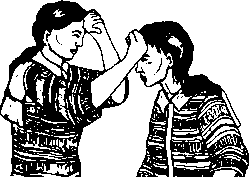
Figure

Figure
Treatment:
· Remove extra clothing and let fresh air into the room.· Cool the skin by pouring water over it, wiping the skin with wet cloths, or putting wet cloths on the chest and forehead and fanning them.
· Give plenty of liquids even if the person is not thirsty. With fever it is easy to become dehydrated (lose too much water).
· Take a medicine like paracetamol, aspirin, or ibuprofen to help reduce fever.
· Keep the skin clean and dry. Use lotion or corn starch to help prevent sores and rashes.
Get help when:
· the temperature is very high.· the fever goes on for many days.
· there is coughing, difficulty breathing, and loss of weight.
· there is a stiff neck, severe pain, or sudden, severe diarrhea with the fever.
· the person with the fever is pregnant or recently had a baby, miscarriage, or abortion.
· the person is being treated for malaria, and the fever has not gone away after the first treatment.
· there is discharge from the vagina and pain in the belly with the fever
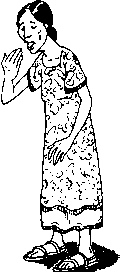
Figure
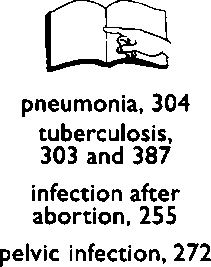
Figure
Diarrhea
Diarrhea is passing 3 or more loose or watery stools in a day. Passing many normal stools is not the same as having diarrhea. Diarrhea may come and go and can be hard to cure. The most common causes of diarrhea in persons with AIDS are infections in the intestines from unclean food or water, infection because of HIV, or the side effects of some medicines.
Diarrhea can cause:
· malnutrition, if the food passes through the body so quickly that the body cannot use it. Also, people with diarrhea often do not eat because they are not hungry.· dehydration, if the body loses more liquid in the stools than you take in. Dehydration happens faster in hot climates and in people who have fever.
Signs of dehydration:
· thirst
· little or no urine
· dry mouth
· loss of stretchiness of the skin
· feeling dizzy when standing up
Lift the skin between two
fingers...

...if the skin fold does not
fall right back to normal, the person is dehydrated.

IMPORTANT
If someone has these signs and is also
vomiting, she needs liquids in the vein (IV) or in the rectum. Get medical help
fast. Severe dehydration is an emergency.
Treatment:
· Prevent dehydration by drinking more liquids than usual. Fruit juices, coconut milk, sweetened weak tea, gruel, soup, rice water, and rehydration drink are good for fighting dehydration. Even if the person does not feel thirsty, she should still sip something every 5 to 10 minutes.· Keep eating. Try to eat small amounts of foods that are easy for the body to digest. Cook food well, and then mash and grind it. Some good foods are cereals mixed with beans, meat, or fish; dairy products, such as milk, cheese and yogurt; and bananas. Do not eat uncooked vegetables, whole grains, fruit peels, hot peppers, or food or drink with a lot of sugar. These make diarrhea worse.
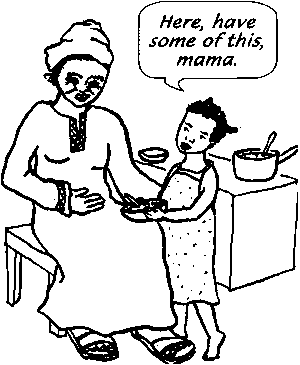
Figure
Take medicine only for these kinds of diarrhea:
· Sudden, severe diarrhea with fever (with or without blood in the stool). Take co-trimoxazole 480 mg (80 mg trimethoprim and 400 mg sulfamethoxazole), 2 tablets twice a day for 10 days. If you are allergic to sulfa drugs, take norfloxacin instead, 400 mg, one time only. If you are no better after 2 days, see a health worker.· Bloody diarrhea without fever, which can be caused by amoebas (tiny animals that live in water or in the intestines). Take metronidazole 500 mg, 3 times a day for 7 days. If you are not better after 2 days, see a health worker.
· When someone has diarrhea for a long time, she may get a red, sore area around the anus. It may help to apply petroleum gel or zinc oxide cream each time after passing stool. The person may also get piles (hemorrhoids).
¨ If you are pregnant or breastfeeding, do not take norfloxacin. For more information about these medicines, see the “Green Pages.”

Figure
Get help if the person:
· has the signs of dehydration.
· cannot eat or drink as usual.
· does not seem to be getting better no matter what she does.
· has a high fever.
· passes many watery stools in a day.
· passes bloody stools the do not go away with medicine.
· is also vomiting.
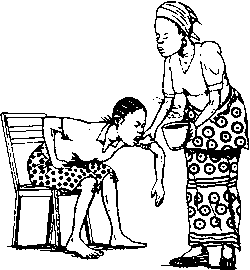
Figure
Prevention:
· Drink clean water. Purify your water before using it in food or drink.· Eat clean, safe food. Make sure raw foods are washed or peeled, and that meat is well cooked. Protect food from dirt, flies, crawling insects and animals, which can give you germs.
· Always wash your hands:
- after using or helping someone use the latrine or toilet.
- after cleaning soiled children or sick people.
- before making food or drink.

Figure
· Protect your community’s water source.

Figure
Skin rashes and itching
It is often difficult to know what causes skin rashes and itching. Many skin problems can be helped by keeping the body clean. Try to wash once a day with mild soap and clean water
If the skin becomes too dry, wash less often and do not use soap. Try rubbing petroleum gel, glycerin, or vegetable oils into the skin after bathing. Wear loose cotton clothing.

Figure
Allergic reactions
Allergic reactions, which often cause an itchy rash, are more common in people with AIDS. Medicines that contain sulfa (like co-trimoxazole) may cause especially bad reactions. If you are using these medicines and you get an itchy rash, itchy eyes, vomiting or dizziness, stop taking them immediately and see a health worker. She may be able to give you a non-sulfa medicine that will work.
Fungal infections (yeast, Candida)
Fungal infections are difficult to describe because they can look like many different things. Some fungal infections look like round, red, or scaly patches that itch. Women with AIDS can also get frequent yeast infections in the vagina.
You may have a fungal infection if you have a skin problem in one of these areas:
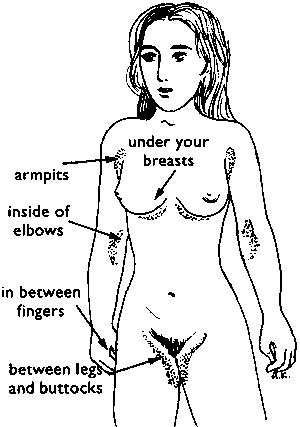
Figure
Treatment:
· If you have red, itchy patches, keep the area clean and dry. If possible, keep the area uncovered and open to the air and sunlight.· Apply nystatin cream 3 times a day or Gentian Violet 2 times a day until the rash is completely gone.
· If you have a very bad fungal infection, taking ketoconazole by mouth may help. Take one 200 mg tablet each day for 10 days (but do not take this medicine if you are pregnant).
Brown or purple patches on the mouth or skin
These patches are caused by a cancer of the blood vessels or lymph nodes called Kaposi’s sarcoma. Medicines are not helpful. If you are having problems, like difficulty eating because of patches in your mouth, see a health worker.
Itching
Treatment without medicines:
· Cool the skin or fan it.· Avoid heat and hot water on the skin.
· Avoid scratching, which causes more itching and sometimes infection. Cut the fingernails short and keep them clean to avoid infection.
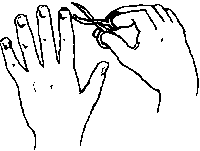
Figure
· Use cool cloths soaked in water from boiled and strained oatmeal, or plant medicines from local healers.
|
These can also help itching: · tincture of tea tree from Australia
|
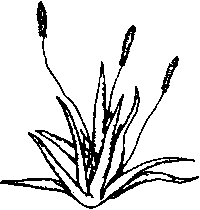
Treatment with medicines (use any one of these):
· Apply calamine lotion with a clean cloth as needed.· Apply small amounts of 1% hydrocortisone cream or ointment 3 times a day.
· Take an antihistamine, such as diphenhydramine or hydroxyzine, by mouth. Take 25 mg, 4 times a day. Antihistamines may make you sleepy.
¨ Antihistamines should be used with caution by women who are pregnant or breastfeeding (see the “Green Pages”).
Herpes zoster (shingles)
Shingles is an infection caused by a herpes virus. It usually begins as a painful rash with blisters, which may then break open. It is most common on the face, back, and chest. The area may burn and be very painful. The rash may start to heal in a few weeks, but the pain may last longer.
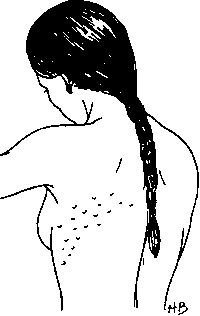
Figure
Treatment:
· Apply calamine lotion 2 times a day to help with pain and itching.· Keep sores dry. Cover with a loose bandage if clothing rubs the sores.
· To prevent infection, apply Gentian Violet liquid. If the sores do become infected, see Wounds and Sores.
· Pain medicine is often needed.
· The medicine acyclovir may help.
Do not touch your eyes because shingles can damage your eyesight and can cause blindness.
Nausea and vomiting
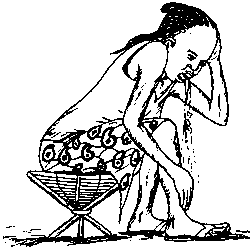
Figure
If nausea and vomiting prevent a person from eating or drinking, she can become weak, malnourished, and dehydrated. For some people, nausea or vomiting may go on day after day. Nausea and vomiting may be caused by:
· infections.
· some medicines.
· problems with the stomach and intestines.
· HIV infection itself.
Treatment:
· Take small bites of dry food (bread, crackers, chapati, tortilla) when you wake up in the morning.· Try to avoid the smell of food as it cooks. If a food or smell seems to cause nausea, avoid that food.
· Drink small amounts of mint, ginger, or cinnamon tea.
· Lick a lemon.
· Clean the teeth and rinse the mouth often, to get rid of the bad taste after vomiting.
· Let fresh air into the house or room often.
· Soak a cloth in cool water and put it on the forehead.
· If the problem is caused by a medicine, see if another medicine can be used instead.

Figure
If vomiting is severe:
1. Do not drink or eat for 2 hours.2. Then, for the next 2 hours, sip 3 tablespoons of water, rehydration drink, or other clear liquid every hour. Slowly increase the amount of liquid to 4 to 6 tablespoonfuls every hour. If the person does not vomit, keep increasing the amount of liquid.
4. If the person cannot stop vomiting, use promethazine 25 mg to 50 mg every 6 hours as needed.
5. As nausea gets better, start to eat small amounts of food again. Start with plain foods such as bread, rice, cassava, or porridge.
Figure
When to get help:
· The person cannot keep any food or drink in her body for 24 hours.· The person vomiting has pain in the belly or a high fever
· The vomiting is very strong, it is dark green or dark brown, it smells like stool, or has blood in it.
· The person has signs of dehydration.
Cough
Coughing is the body’s way of cleaning the breathing system and getting rid of mucus. Coughing is also a common sign of lung problems, such as pneumonia or tuberculosis. The lungs make more mucus when they are irritated or infected.
¨ DO NOT smote if you have a cough.
When a cough produces mucus, do not take medicine to stop the cough. Instead, do something to help loosen and bring up the mucus. This will make the cough heal faster
¨ Persons with AIDS often get pneumonia or TB. For more information, see below.
Treatment:
· Drink lots of water. Water is better than any medicine. It loosens the mucus so you can cough it up more easily.· Cough several times during the day to clear the lungs. Be sure to cover your mouth.
· Keep active by walking, or by turning in bed and sitting up. This helps the mucus come out of the lungs.
· Soothe the throat by drinking tea with lemon and honey, or your own herbal remedy. Cough syrups that you buy are more expensive and no more helpful.
· If the cough is very bad and keeps you awake at night, take codeine, 30 mg, or codeine cough syrup.
Have someone hit you on the back of the chest (postural drainage). This can make it easier to cough up the mucus.
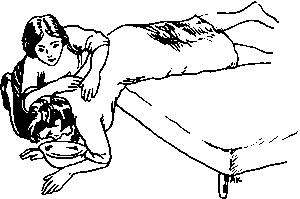
Figure
IMPORTANT
If you cough up yellow, green, or
bloody mucus, the cough could be caused by pneumonia or TB, and you will need
special medicines.
TUBERCULOSIS (TB)
Tuberculosis (TB) is a serious infection caused by a germ that usually affects the lungs. The signs of AIDS and TB are similar, but they are different diseases. Most men, women, and children with TB do not have AIDS.
But someone with AIDS can get TB very easily because the person’s body is too weak to fight it. In I out of every 3 people who die from AIDS, it is TB that actually kills them.
A woman infected with HIV/AIDS is even more likely to get TB if her body is also weak from many pregnancies, poor nutrition and weak blood (anemia).
TB can be cured, even in persons with AIDS, so it is important to get treatment early. But people with AIDS should never take thiacetazone for TB. For complete information, see the chapter on “Tuberculosis”.
|
You can make this syrup for all kinds of cough, especially a dry cough. Take 1 teaspoon every 2 or 3 hours. Mix:
|
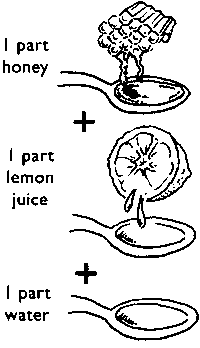
Pneumonia
Pneumonia is caused by germs that infect the small breathing tubes deep in the lungs. Old people and very sick or weak people often get pneumonia.
Pneumonia can be very serious for people with AIDS. It should be treated with antibiotics right away. Sometimes pneumonia must be treated in the hospital with medicines in the vein (IV).
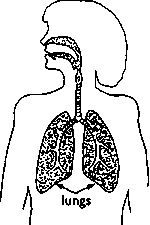
Figure
Signs:
· Breaths are small and fast (more than 30 breaths a minute in an adult). Sometimes the nostrils open wide with each breath.· You feel as if you cannot get enough air
· You have a sudden, often high, fever.
· You cough up mucus that is green, rust-colored, or bloody.
· You feel very ill.
Treatment:
· Take co-trimoxazole for 10 days or more (see the “Green Pages”).
· Drink plenty of liquids.
· Try to bring the fever down.
· If you are no better in 24 hours or if you are getting worse, get medical help right away.
Problems with the mouth and throat
Problems with the mouth, or with other parts of the body that food passes through, can keep a person from eating normally. She may then become weak, malnourished, and have a harder time fighting infections. She should try to:
· eat small amounts of food often.
· add vegetable oil or groundnut paste (peanut butter) to foods to give more energy.
· avoid uncooked vegetables. They are hard for the body to digest and may have germs.
· drink a lot of liquids and watch for dehydration.

Figure
Using a straw to drink can help with painful mouth problems.
Soreness in the mouth and throat
Many people with AIDS have soreness in the mouth, and problems with their teeth and gums. Try to:
· eat soft foods - not hard or crunchy foods.
· eat plain foods - not spicy foods.
· use a straw to drink liquids and soups.
· try cold foods, drinks, or ice to help ease pain.
Sores, cracks, and blisters around the mouth
Painful blisters and sores (also called cold sores or fever blisters) on the lips can be caused by the herpes virus. A healthy person can get these sores after a cold or fever. Someone with AIDS can get these sores at any time. The sores may last a long time, but they usually go away on their own. To help prevent infection, apply Gentian Violet to the sores. A medicine called acyclovir may also help (see the “Green Pages”). Wash your hands after touching the sores.
Figure
¨ Cracks and sores in the corner of the mouth can also be caused by malnutrition.
White patches in the mouth (thrush)
Thrush is a fungal infection that causes white patches and soreness on the skin inside the mouth, on the tongue, and sometimes down the tube that connects the mouth and stomach (esophagus). This can cause pain in the chest.

Figure
The patches look like milk curds stuck to the cheek or tongue. If the patches can be scraped off, it is probably thrush. Thrush happens more often when someone is taking antibiotics.
Treatment:
Gently scrub the tongue and gums with a soft toothbrush or clean cloth 3 or 4 times a day. Then rinse the mouth with salt water or lemon water and spit it out (do not swallow). In addition, use any ONE of these remedies:
1. Suck a lemon if it is not too painful. The acid slows the growth of the fungus. Or,2. Rinse the mouth with 1% Gentian Violet liquid 2 times a day. Do not swallow. Or,
3. Put I ml of nystatin solution in the mouth and hold it there I minute and then swallow it. Do this 3 or 4 times a day for 5 days. Or,
4. If thrush is very bad, ketoconazole may help. Take one 200 mg tablet, 2 times a day for 14 days (but do not take this medicine if you are pregnant).
Wounds and sores
Wounds are caused by an injury that breaks the skin. Sores are often caused by bacteria or pressure on the skin (pressure sores). They can happen very easily to people who stay in bed a long time. Take special care of any cut, wound, or open sore so that it does not become infected.
Figure
General care of open wounds and sores:
1. Wash the wound or sore with clean water and mild soap at least once a day. Wash around the edge of the wound first, then wash from the center out to the edges. If possible, use separate pieces of cloth for each wipe.
Figure
2. If the wound has pus or blood in it, cover the area with a clean piece of cloth or bandage. Leave the bandage loose, and change it every day. If the wound is dry, it can be left open to the air. It will heal more quickly that way.3. If the wound is on the legs or feet, raise the leg above the level of the heart. Do this as often as possible during the day. During the night, sleep with the feet raised. Avoid standing or sitting for a long time. Some walking is helpful.
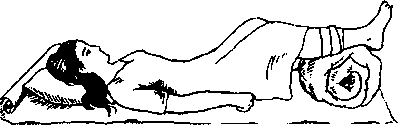
Figure
4. Wash soiled cloth and bandages in soap and water, then put them in the sun to dry. Or boil them for a short time and hang them to dry. If the cloths and bandages will not be used again, burn them or throw them in a pit latrine.
|
Home treatments for pressure sores Papaya (paw paw): This fruit contains chemicals that help make the old flesh in a pressure sore soft and easy to remove.
Soak a sterile cloth or piece of gauze in the ‘milk’ that comes from the trunk or green fruit of a papaya plant. Pack this into the sore. Repeat this 3 times a day. Honey and sugar: These will kill germs, help prevent infection, and speed healing. Mix honey and sugar together into a thick paste. Press this deep into the sore, and cover with a thick, clean cloth or gauze bandage. (Molasses or thin pieces of raw sugar can also be used.)
IMPORTANT |

Treatment of open wounds and sores that ore infected:
Wounds and sores are infected if they:
· become red, swollen, hot, and painful.
· have pus in them.
· begin to smell bad.
Treat the infected area as in steps 1 through 4 on the previous page, and also do the following:
1. Put a hot compress over the wound 4 times a day for 20 minutes each time. Or try to soak the wound in a bucket of hot water with soap or potassium permanganate in the water. Use one teaspoon of potassium permanganate to 4 or 5 liters (or quarts) of water. When you are not soaking the infected part, keep it raised up above the level of the heart2. If part of the wound looks gray or rotten, rinse it with hydrogen peroxide after soaking it. Try to pick off the gray parts with a clean piece of gauze or tweezers that have been properly cleaned.
3. If you can, put Gentian Violet on the wound before putting on the dressing.
4. If there are many infected sores at the same time, especially with a fever, treat with antibiotics. Use erythromycin, dicloxacillin or penicillin for 10 days (see the “Green Pages”).
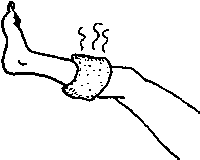
Hot compress
¨ Be careful: If you use too much potassium permanganate or very hot water, you will burn the skin.
|
Treatment of closed wounds that are infected (abscesses and boils): Abscesses and boils are raised, red, painful lumps on the skin. They are most common in the groin and armpits, and on the buttocks, back, and upper legs.
If you notice a lump, start using warm compresses right away for 20 minutes, 4 times a day. Often this will make the lump open and the pus inside will come out. Keep applying clean, warm cloths until the pus stops coming out and the area begins to heal. Cover the lump with a loose, clean bandage. If it becomes too large and painful, see a health worker who has been trained to drain abscesses using sterile equipment. When to get help: See a health worker trained to treat the signs of AIDS if you have a wound and: · a fever. Get medical help if you have a wound and: · you can feel swollen glands in your neck, groin, or armpits. · you are taking antibiotics and not getting better |
|
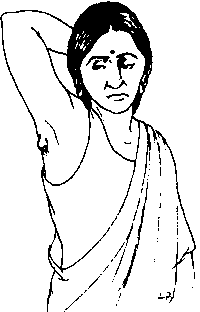
Mental confusion (Dementia)
Some mental confusion or mental change is common among people with AIDS, especially if a person has been sick for a long time. These changes may be caused by HIV infection in the brain, by other infections, by depression, or by the side effects of a medicine.
Pain
In the later stages of AIDS (and other serious illnesses like cancer), pain may become a part of daily life. Pain can be caused by many things, such as:
· not being able to move.
· pressure sores.
· swelling of the legs and feet.
· infections, like herpes.
· headache.
· nerve pains
Treatment for pain, without medicines:
· Try relaxation exercises, meditation, or prayer.· Try to think about other things.
· Play music, or have someone read aloud or tell stories.
· For pain from swelling in the hands and feet, try raising the swollen part.
· For a burning feeling in the hands and feet caused by nerve pain, put the body part in water.
· For skin that hurts to touch, line the bed with soft covers and pillows or animal skins. Be gentle when touching the person.
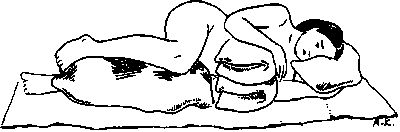
Figure
· For headache, keep the room dark and quiet.· Acupressure may help some kinds of pain.
Treatment for pain, with medicines:
The following medicines may be used to control pain that comes day after day (chronic pain). Take the medicines regularly, according to instructions. If you wait until the pain has become very bad, the medicines will not work as well.
· mild pain medicine, like paracetamol
· ibuprofen - if you need something stronger
· codeine - if the pain is very bad
¨ Pain medicines work best if you take them before the pain gets very bad.

Figure
Caring for Someone Who Is Near Death
At some point there is nothing more that can be done for a person with AIDS. You may know this time has come when:
· the body starts to fail.
· medical treatment is no longer effective or is not available.
· the person says she is ready to die.
If the sick person wants to remain at home, you can help her die with dignity by:
· giving comfort.
· having family and friends stay with her.
· allowing her to make decisions.
· helping her prepare for death. It may help her to talk about death, about fears of dying, and about worries for the family’s future. It does not help to act as if she is not dying. Assure her that you will do what you can to prevent pain and discomfort. Talk about funeral arrangements if she wishes.
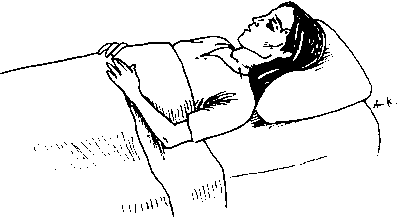
Figure
As she nears death, she may be unconscious, stop eating, breathe very slowly or very fast and unevenly, stop passing urine, or lose control of passing urine or stool.
|
Care of the body of someone who has died of AIDS The AIDS virus can live up to 24 hours in a person’s body after death. During that time, take the same precautions with the body as you did when the person was alive. |
Working for Change
AIDS IS EVERYONE’S PROBLEM
It is important that everyone in the community know how AIDS is spread and how to prevent it. But this information will not help them unless they also realize that AIDS can happen to anyone - even them. If people think that AIDS can not touch them, they will not act to prevent infection.
¨ Fight AIDS, not the people who have it.
Placing the blame on any group of people (such as sex workers, homosexuals, or drug users) makes others think that only that group is at risk. It is true that some people, like sex workers, may be more likely to get AIDS (because their work requires that they have sex with many men). But everyone - especially young women - is at risk for AIDS. And every person in the community needs to take responsibility for fighting it.
It is also important to remember to fight against the conditions that lead to the spread of AIDS, and not against the people who have AIDS.
How you can help prevent AIDS
In the community
Education is one of the main ways a community can work to keep AIDS from spreading. Here are some ideas:
· Train girls and women to work as peer educators. They can talk with others alone or in groups to help girls and women understand their bodies and sexuality, and gain the self-confidence and skills to demand safer sex.· Tell the truth about women’s risk of AIDS. Help people see that AIDS has roots in poverty and in women’s lack of control over their sexual relations.
· Use theater and media to help women feel it is OK to know about and to prevent AIDS. For example, use a play or comic book to show that ‘good’ girls or women can discuss AIDS with their partners, or can buy condoms and ask their husbands or boyfriends to use them.
Figure
At the same time, you can show different ideas about what it means to be a man or a woman. Help people question the idea that men should have many sex partners and that women should be passive about sex. Show how these ideas are dangerous to both men’s and women’s health.
· Help parents, teachers, and other adult role models become more comfortable talking about sex and AIDS with young people.· Make sure that all people have access to information and sexual health services, including condoms, to keep AIDS from spreading in the community.
· Bring education about AIDS to community meeting places - like bars, schools, religious meetings, and military bases.

Figure
Train men as outreach workers. They can go to the places where men gather and talk to them about AIDS.
|
Here is an example of how women can work together to protect themselves from AIDS: To help fight the spread of AIDS, the women of Palestina, a small town in northeastern Brazil, began a ‘sex strike’. After women in the community learned that a man infected with HIV had unsafe sex with at least two women in the town, they decided to stop having sex with their husbands and boyfriends. They demanded that their partners take the test for HIV before they would begin to have sex again and then insisted upon safer sex practices. The women will now demand safer sex and proof of an HIV test before they have sexual relations with a partner One woman said, “If he won’t practice safer sex, we won’t go together anymore. |
If you are a health worker
Health workers can play a very important role in helping to stop the spread of AIDS. You can do this if you:
· give information about how AIDS is spread and how it is not spread to every person you see - especially if they already have other STDs.· encourage both men and women to use condoms, even if they are already using another form of family planning.
· use precautions against HIV infection with every person you see. Since most people with HIV appear healthy, it is best to act as if everyone you care for is HIV-infected. Any time you have to cut the skin or touch body fluids, follow the advice. This includes any time you must give an injection, stitch skin or tissue, help with childbirth, or examine a woman’s vagina.
· make health services private, confidential, and accessible to all members of the community, including young people.
· invite someone from a regional AIDS organization to meet with health workers in your area. He or she can help you learn about the best ways to treat the infections that people with AIDS often get. Discuss the other problems that people with AIDS face. Try to decide how you can help people using the resources you have, and think about where you might find more resources to help meet people’s needs. If health workers can work together and share resources, they will not have to confront this huge problem alone.
¨ If every health worker can offer the same information and services, it will save people time, money, and energy because they will not have to search for the best treatment.
|
Fight the fear and negative attitudes that many people have about AIDS A good way to begin is to plan a meeting with other health workers in your area to discuss AIDS. Help all the health workers learn about AIDS so they will be able to provide accurate, consistent information to the people in their communities. If all health workers can give the same information, it will help prevent the fear caused by wrong ideas about AIDS. With less fear from their neighbors, people with AIDS - as well as those who care for them - can become more accepted in the community. Then they can help others understand every person’s real risk of getting AIDS.
A health worker’s sympathy and compassion can also help others change their attitudes toward people with AIDS. Then she can fight HIV/AIDS together with the community. |
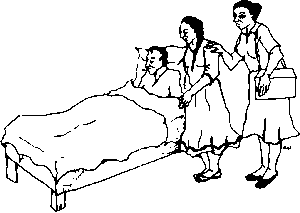
|
| ||||||||||||||||||||||||||||||||||||||||||||||||||||||||||||||||||||||||||||||||||||||||||||||||||||||||||||||||||
Where Women Have No Doctor - A Health Guide for Women (Hesperian Foundation, 1997, 600 p.)
Chapter 18: Violence Against Women

Figure
Every day, women are slapped, kicked, beaten, humiliated, threatened, sexually abused, and even murdered by their partners. But often we do not hear about this violence, because the women who are abused may feel ashamed, alone, and afraid to speak out. Many doctors, nurses, and health workers do not recognize violence as the serious health problem it is.
¨ There is no reason why a person should be beaten or abused in any way.
This chapter is about the violence that occurs between a woman and her male partner. It can help you understand why violence happens, what you can do about it, and how you can work for change in your community.

Figure
|
Although this chapter talks about violence between a woman and a man, violence can happen in any close relationship: for example, between a mother-in-law and her son’s new wife, between parents and their children, between an older and younger child, between family members and an older person living in the home, and between partners of the same sex. |
The Story of Laura and Lu�s
|
Lu�s was 12 years older than Laura and was already a successful merchant when they met, He sold his goods to the store where Laura worked as a clerk to help her family pay the rent Lu�s was charming and would talk about the kind of life they could have together. He told Laura he would buy her anything she wanted and she would be his “best woman.” He often bought her new clothes that he liked to admire her in, telling her how pretty she would be if she stopped dressing the way she did. He eventually began to see her every day, and soon asked her to quit her job and marry him. After they married, Laura expected Lu�s to keep his promises. Instead, things began to change. He would not allow her to go out, because she “looked so ugly.” In fact, he took all the beautiful clothes he had bought her and burned them, saying, “That stupid, ugly woman didn’t deserve such clothes.” One day Lu�s came home in the middle of the day and tore all the clean washing down from the line, accusing Laura of sleeping with his friend. When she said that she had just gone to visit her mother, Lu�s called her a lying whore and hit her. He said she would not go to visit her family - they did not want her either. He never said anything more about it, but when he came home later that night, he brought her a present and told her how much he loved her and wanted to take care of her.
When Laura got pregnant, she thought Lu�s would start treating her better. But it seemed to give him more excuses to hurt her. When he got angry, he started hitting and kicking her in the stomach. She was terrified she would lose the baby, but she had no place to go. She believed Lu�s when he said her family did not want her, and besides, she had no money of her own. There were times when Lu�s would go several weeks without losing control, and Laura would convince herself that everything was OK. He really did love her, after all. If only she could learn how to avoid setting him off. She would try even harder than before, but nothing helped. Through the years, Lu�s drank too much, threw her against walls, and would force her to have sex even when her body ached from his beatings. Laura awoke one night to find him holding a knife to her throat. The next day, he told her she was imagining things, that she was crazy. He always said that if she told anyone “lies” about him he would kill her She didn’t tell anyone and she went out as little as possible. She hated the thought of anyone seeing her bruises and knowing what he did to her Laura often thought about: leaving, but she did not know where to go. After 12 years of being his wife, not only was Laura afraid of what he would do to her, but without him she would have no home, no money, no father for her children. Lu�s had said bad things about her to the people at the store where she used to work, and she knew that, because of her children, no one would take her in as a domestic servant. Laura felt so alone. Laura’s father was dead now and her mother lived with her brother’s family. They did not have room for her and her children. Her sister was deeply religious and told Laura it was her duty to stay with her husband, even if she were killed. “That is the way it is meant to be.” She had so much work to do at home she was always busy. And since Lu�s got mad when she went out or when someone came to visit, Laura stopped seeing her friends. She was sure they had long since given up on her. Besides, most people thought that it was okay for men to ‘punish’ their wives. Then came the night when Laura’s oldest daughter was 11. She came to Laura crying, saying Lu�s had hurt her “down there.” Laura was shocked. She had thought the children would not be affected by Lu�s’ behavior. She knew it would do no good to confront him, but she would NOT let it happen again. When Laura lost her last pregnancy, the health worker who examined her asked about her injuries. Laura had made some excuse. The health worker nodded her head and gave Laura a card with an address in the next town. She told her if Laura ever needed to leave, she and her children could go there, but to make sure that she was ready to leave when she did. Laura was ready now. |

Why did Lu�s hit Laura? These are some of the wrong ideas that people have:
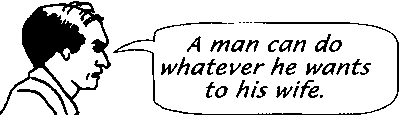
Figure
The truth: No man has the right to beat his wife. Nothing a woman does gives a man the right to hurt her, even if he thinks she deserves it - even if she herself thinks she deserves it.
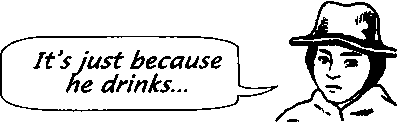
Figure
The truth: Alcohol does not cause violence, but it often makes it worse. Violence is also common in places where people do not drink alcohol.

Figure
The truth: Beating is not a sign of love. Love means showing respect and kindness.
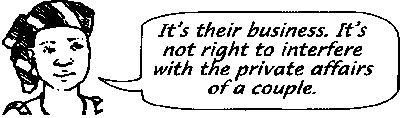
Figure
The truth: Violence is not just a family matter. Many women are hurt or killed. Violence is a social and community health problem.
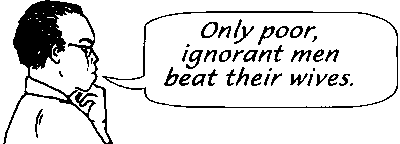
Figure
The truth: Violence is not just a problem of poverty or ignorance. Violence can happen in any home: rich or poor, educated or less educated, in the city or in rural areas.
Figure
The truth: It is not always better for the family when a woman stays with a violent man. He is teaching the children terrible, wrong ways to deal with their feelings, and about how women should be treated. He is not being good to his children if he is beating their mother - or them.
Why Does a Man Hurt a Woman?
A man may offer many excuses for hurting a woman - that he was drunk, that he lost control, or that she ‘deserved it’. But a man chooses to use violence because it is a way he can get what he needs or what he feels is rightfully his as a man.
¨ These reasons may explain why a man abuses his wife, but they do not give him permission to do so.
When a man does not feel that he has power over his own life, he may use violence to try and control another person’s life. It is natural for someone to want to control his or her own life in normal ways, but it is wrong to try and control someone else’s life, especially with violence. Here are some of the reasons why some men hurt women:
1. Violence works.
· It offers the man a quick end to a disagreement without having to talk about the real problem or find a real solution.· A man may find the fight exciting, and have lots of energy afterward. He may want to have these feelings again.
· If a man uses violence, he ‘wins’ and gets his way. The victim is likely to give him his way again the next time to avoid being hurt. This gives the man even more power.
¨ Violent or abusive relationships often happen when one person has more power over the other.
2. The man has a wrong idea about what it means to be a man.
· If a man believes that to be a man, he must control what a woman does, he may feel it is OK to hurt her· Some men think that they have a ‘right’ to certain things - to a ‘good’ wife, to sons, to making all the decisions in the family - just because they are men.

Figure
3. The man feels that the woman belongs to him, or that he needs her.
· If the woman is ‘strong’, the man may feel afraid that he will lose her, or that she does not need him. He will take steps to make her more dependent on him.
4. He does not know any other way to be.
· If a man has seen his father or other people in his life react with violence when life is difficult and stressful, then he may have never learned any other way to behave.

Figure
If men think of women and girls as their property - something they own - they are more likely to feel as though it is their right to treat them however they want.
Kinds of Violence
There are many different ways that a man tries to gain power over a woman. Beating is only one of them. But all of them can hurt a woman.
Imagine that the circle below is a wheel. Power and control are at the center of the wheel because they are the reasons behind all of the actions. Each section of the wheel is a behavior that a violent man may use to control a woman. Violence is the rim of the wheel - what holds it together and gives it strength.

Figure
|
One form of abuse often turns into another In many cases, verbal abuse becomes physical abuse after a while. It may not seem like it at first, but the man may slowly begin to ‘accidentally’ push or bump the woman, or begin to sit down in the place the woman usually sits, so that she has to move. If this behavior works for him, it may get worse until he becomes violent. Not all women who suffer other forms of abuse are beaten, but all women who have been beaten have suffered from other forms of abuse. |
Warning Signs
When an abusive relationship becomes violent, it is much harder to leave. The longer a woman stays, the more control the man has over her, and the less faith she may have in herself. Some men are more likely to become violent than others. There are certain signs that may mean a man will become violent. If you see these signs, and have a way to get out of the relationship, think carefully.
¨ It does not matter how much you love a person. Love cannot change someone. Only that person can choose to change himself.
Ask yourself these questions:
· Does he act jealous when you see other people, or accuse you of lying to him? If you find you change your behavior to keep him from acting jealous, then he is controlling you.· Does he try to keep you from seeing your friends and family, or from doing things on your own? It does not matter what reason he uses. He is trying to keep you from having their support. It will be easier for him to abuse you if you have nowhere else to go.
· Does he insult you or make fun of you in front of other people? You may start to believe what he says. This can make you feel as though you deserve to be treated badly.
· What does he do when he gets angry? Does he break or throw things? Has he ever physically hurt you or threatened to hurt you? Has he ever hit another woman? All of these things show that he has trouble controlling the way he acts.
Figure
· Does he feel insulted by people with authority, such as his teachers, bosses, or his father? He may feel he has no power. This can make him try to gain power over other people in other areas of his life by using violence.· Does he claim that alcohol, drugs, or stress are the reasons he acts the way he does? If he puts the blame on something else, he may say things will get better if he gets a new job, moves to a new town, or stops using drugs or alcohol.
· Does he blame you or someone else for the way he acts, or deny that he is doing anything wrong? He is less likely to want to change himself if he thinks that the way he acts is your fault.
|
Some women are more likely to be abused In many couples, the man becomes violent for the first time when the woman is pregnant He may feel as though he is losing control because he cannot control the changes in her body. He may feel angry because she is paying more attention to the baby and less to him, or because she may not want to have sex with him. Also, many couples feel extra worried about money when they are expecting a new baby.
Women with disabilities are also more likely to be abused: · Some men may feel angry that they did not get a ‘perfect’ woman.
|
The Cycle of Violence
The first violent attack often seems like an isolated event. But in many cases, after the violence first happens the following pattern, or cycle, develops:
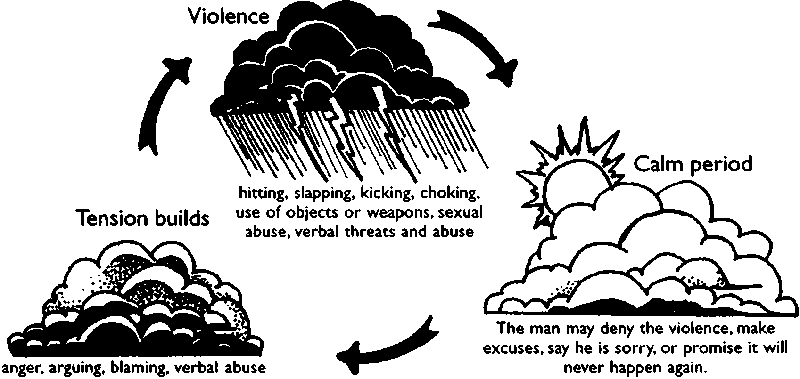
Figure
As the violence goes on, the calm period gets shorter and shorter for many couples. As the woman’s will is broken, the man’s control over her becomes so complete that it is no longer necessary for him to make promises that things will get better.
¨ Some women try to make the violence happen so that it will be over with more quickly, and to get to the calm period sooner.
Harmful Effects of Violence
Violence not only hurts women. It also affects their children, and the whole community.
Women
In women, men’s violence can cause:
· lack of motivation or lack of a sense of self-worth.· mental health problems, like anxiety and problems eating and sleeping. As a way to cope with the violence, women may begin harmful or reckless behavior - such as using drugs or alcohol, or having many sex partners.
Figure
· serious pain and injuries: broken bones, burns, black eyes, cuts, bruises, as well as headaches, belly pain, and muscle pains that may continue for many years after the abuse happens.· sexual health problems. Many women suffer miscarriages from being beaten during pregnancy. They may also suffer from unwanted pregnancies, sexually transmitted diseases (STDs) or HIV/AIDS as a result of sexual abuse. Sexual abuse often also leads to a fear of having sex, pain during sex, and lack of desire.
Figure
· death.
Children
In children, seeing their mothers abused can often cause:
· angry or aggressive behavior - copying the violence. Or they may become very quiet and withdraw to escape notice.· nightmares and other fears. Children in abusive families often do not eat well, grow and learn more slowly than other children, and have many illnesses, like stomach aches, headaches, and asthma.
· injury and death if the violence is turned on them.
When a woman is abused at home, her children believe that this is how girls and women should be treated.

Figure
Community
In a community, violence can cause:
· the cycle of violence to continue into new generations.
· the continued false belief that men are better than women.
· everyone’s quality of life to suffer because women take part less in their communities when they are silenced or killed by the violence.
Why Women Stay with Men Who Hurt Them
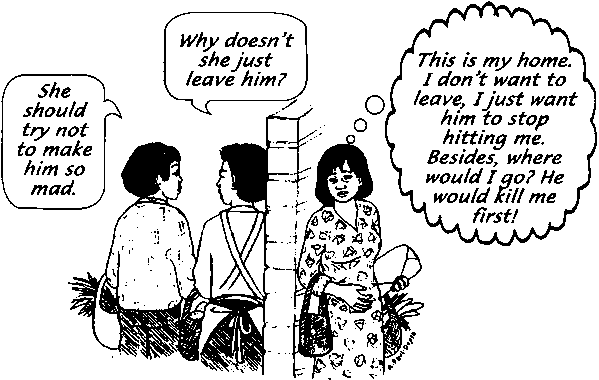
Figure
¨ If we ask why she does not leave, it says that we think the violence is her personal problem to solve. The whole community needs to be responsible for the health and well-being of every person in that community.
“Why does she stay?” is the first question most people ask when they hear about a woman who is being abused. There are many reasons why a woman might choose to stay in an abusive relationship. They include:
· fear and threats. The man may have told her, “I will kill you, kill the children, kill your mother... if you try to leave.” She may feel she is doing everything she can to protect herself and others by staying.· no money, and no place to go. This is especially true if he has controlled all the money and not allowed her to see her family and friends.
· no protection. There may be nothing to stop him from coming after her and killing her.
· shame. She may feel the violence is somehow her fault, or that she deserves it.
· religious or cultural beliefs. She may feel it is her duty to keep the marriage together, no matter what it costs her.
· hope for change. She may feel she loves the man and wants the relationship to continue. She may think there is some way to make the violence stop.
· guilt about leaving the children with no father.
But perhaps a better question to ask is, “Why doesn’t he go?” If we ask why she does not leave, it says that we think it is her personal problem to solve. It is wrong to think of the violence as only her problem.
· The whole community needs to be responsible for the health and well-being of every person in that community.· It is the man who is committing a crime by violating the woman’s right to live free from physical harm, or by killing her. His actions should be challenged and stopped.
What to Do
Make a safety plan
A woman does not have control over her partner’s violence, but she does have choices about the way she responds to him. She can also try to plan ahead how she can get herself and her children to safety until the man stops being violent.
¨ Think about these things even if you do not think the violence will ever happen again.
Safety before the violence happens again
· Tell someone nearby about the violence. Ask that person to come or to get help if the person hears that you are in trouble. Perhaps a neighbor, male relative, or a group of women or men can come before you are seriously hurt.· Think of a special word or signal that will tell your children or someone else in your family to get help.
· Teach your children how to get to a safe place.
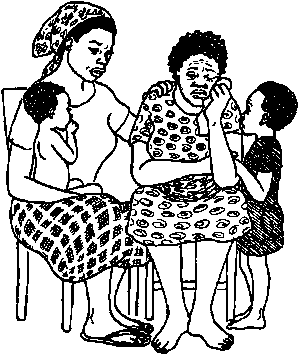
Find someone you trust who can
help you sort out your feelings and think about your choices.
Safety during the violence
· If you can tell that he is going to become violent, try to have it happen where there are no weapons or objects that he can use to harm you, and where you can get away.· Use your best judgement. Do whatever you need to do to calm him down so that you and your children are safe.
· If you need to get away from him, think about how you can escape. Where is the safest place to go?
Safety when a woman gets ready to leave
· Save money any way that you can. Put money in a safe place (away from the house) or open a bank account in your own name so you can become more independent.· If you can do so safely, think of other things you can do to become less dependent on him, such as making friends, joining a group, or spending more time with your family.
· See if there are ‘safe houses’ or other services for women who have been abused. These are special places in some towns and cities where abused women and their children can stay for a while. Try to find out before you leave if there is one that you can get to.
· Ask friends or relatives you trust if they would let you stay with them or lend you money. Be sure they will not tell your partner that you asked.
· Get copies of important documents, such as your identification or your children’s vaccination records. Keep a copy at home and give a copy to someone you trust.
· Leave money, copies of your documents, and extra clothes with someone you trust so that you can leave quickly.
· If you can do it safely, practice your escape plan with your children to see if it would work. Make sure the children will not tell anyone.
Do you have skills that you
can use to earn extra
money?
If you leave
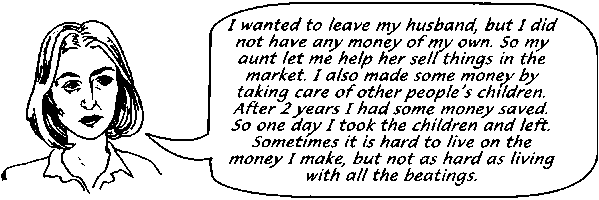
Figure
If you decide to leave, you will need to be prepared for some of the new difficulties you will face:
Safety. The most dangerous time for a woman is after she leaves. The man has lost control over her and will usually do anything to get it back. He may even try to follow through on his threat to kill her. She must make sure she is staying in a safe place that he does not know about or where she is protected. She should not tell anyone where she is staying. He may be able to force them to tell him where she is.Surviving on your own. You need to find a way to support yourself and your children. If you can stay with friends or family, use that time to get more education or learn job skills. To save money, maybe you can share a place to live with another woman who also was abused.
Feelings. All the things you need to do to set up a new life may feel like too much to face. You may feel scared and lonely because you are not used to being alone in a strange place. You may miss your partner - no matter what he did to you. When things seem very difficult, you may not remember how bad it really was before you left. Give yourself time to feel sad about the loss of your partner and your former life. Try to stay strong. See if you can find other women in the same situation as you. Together you can support each other.
Figure
Working for Change
For change to happen, people must stop thinking of violence against women as something that ‘is just the way things are’ or that is the woman’s fault. Here are some ideas for helping stop violence in your community.
Talk about it
Talking about the abuse is the first step to changing it. Try to find other women who have the same problems with violent and abusive men and share ideas with each other Find men who believe that violence is wrong. Make violence something people talk about. Make it into something that people think is wrong.
¨ Be careful! In some communities, working against violence can be dangerous.
Set up services to help women who leave
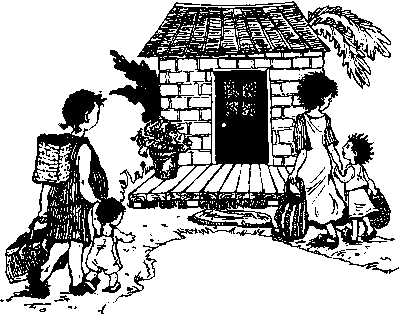
Figure
· Set up a ‘safe house’ or shelter as soon as possible. Keep the place hidden and secret.· Get support from others - especially larger, more powerful organizations. For example, see if there is a network of health organizations in your country that can help. You can also talk with respected community members whom you trust. Get as many men as possible to work with you.
· Help women learn about their rights under the law. There may be special laws about families and violence that women can use.
· Find ways to train women in new skills, so that abused women have a way to support themselves.
Use social pressure
|
In some communities in Central America, men volunteer to patrol their communities to warn the people of attacks, and to keep them safe from crime. In these communities, violence against women is not tolerated. If a man is caught beating his wife, he knows the other men in the town will punish him. |
What are the pressures that prevent people where you live from doing things that most people believe are wrong? In some places, it is the police. In others it may be the military, the family, or religion. In most places, it is a combination of these things.
Encourage community leaders and other men to speak out against violence against women and to show their disapproval of men who beat women. Try and use all of the pressures that work where you live to keep men from abusing women.
In some countries, women have organized to get laws passed that punish men who abuse their wives. But laws do not always work well for abused women. In some places, the people who are supposed to enforce the laws - especially the police, the lawyers, and the judges - cannot be trusted to help. But if the legal system and the police both work to protect women where you live, try to learn as much as you can about the laws and about women’s rights.
Raise your children to lead non-violent lives. You can work for change at home by helping your children find peaceful ways to solve problems. Teach boys to respect themselves and to respect girls and women.
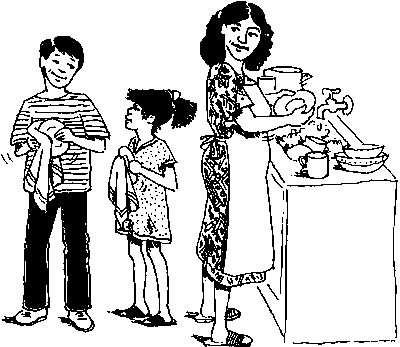
Figure
To the Health Worker
Health workers can take a more active role in stopping violence against women. It is not enough just to take care of a woman’s wounds.
When you examine a woman, look for signs of abuse. Men often beat their wives where the marks will not show. Women who have been beaten may wear clothing to hide it. As a health worker, you are one of the few people who sees the private parts of her body.
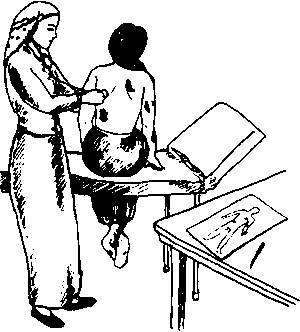
Figure
If you see an unusual mark, bruise, or scar, ask her how it happened. Or if a woman comes to you in pain, bleeding, or with broken bones or other injuries, ask her if she has been beaten. Remember that many beaten women will say they got injured by accident. Assure her that you will not do anything she does not want you to do.

Figure
Write everything down. When you see a woman who has been abused, draw a picture of the front and back of her body and mark the places where she has been injured. Write down the name of the person who abused her. Try to find out how many times this has happened before. Ask if other family members, such as her sisters or her children, have also been abused. If she is in danger, help her decide what she wants to do. Whether or not she wants to leave, you can help her make a safety plan. If she wants to go to the police, go with her. You can help make sure they take her claim seriously. Also, you can put her in contact with other women who have been abused. Together they may be able to find solutions.

Figure
¨ For Information about how to treat a woman’s injuries, see Where There Is No Doctor or another general medical book.
|
What resources are available in your community or nearby for abused women? Look for: · legal help. · programs that teach adults to read and write, or other education services. |
|
Help the man. Men who are violent need help themselves. Talk to community or religious leaders to see if they can help find a way for men in your community to take responsibility to stop violence against women.
¨ Help your community to see the harmful effects of violence.
|
| ||||||||||||||||||||||||||||||||||||||||||||||||||||||||||||||||||||||||||||||||||||||||||||||||||||||||||||||||||||||||||||||||||||||||||||||||
Where Women Have No Doctor - A Health Guide for Women (Hesperian Foundation, 1997, 600 p.)
Chapter 19: Rape and Sexual Assault

Figure
Rape and sexual assault both mean sexual contact that a woman does not want. Rape is any time a man puts his penis, finger, or any object into a woman’s vagina, anus, or mouth without her consent.
¨ Rape is sexual violence. Women are not to blame for it.
Rape is sometimes called sexual ‘assault’ because it is an act of violence, using sex as a weapon. Sexual assault can include rape as well as other kinds of unwanted sexual attention.
Some people think that forced sex is rape only if the man beats up a woman or leaves her unconscious. They think she must try hard to get away and risk being killed rather than be raped. But even if a woman does not fight back, it is still rape. No matter what she decides to do, if it was not her choice, it was rape, and it is never her fault.
¨ As with other kinds of violence, the goal of the rapist is to gain power over and control his victim.
|
Any woman can be raped, but there is an even greater risk if she: · has a disability - if she is in a wheelchair, deaf, blind, or mentally slow. A rapist may see these women as easy victims - because of their disabilities, or because they have lost the protection of a community. |
Kinds of Rape and Sexual Assault
There are many different kinds of sexual assault. But only a few of them are seen by most people as rape. For example, sometimes life events can push a woman into having sex when she does not really want to. This can happen in a marriage. Some married women are made to feel that having sex is their duty, whether they want to or not. Although society does not punish this type of forced sex, it is still wrong.
¨ A woman often finds it harder to ask for help if the man is someone she knows. It is also harder to feel safe if she must see him again.
For other women, having sex is a way to survive - to get support for their children, to have a place to live or some money, or to keep a job. No matter what the reason is, a woman should not be forced to have sex if she does not want to.
In any relationship, a woman can choose to accept or refuse a sexual approach. If she refuses, the man then has a choice to either respect her and accept her decision, to try and change her mind, or to force her. Even if the woman knows the man and says “yes,” if saying “no” was not really an option, then it is rape.
Any time a woman is forced to have sex, whether or not there is other violence too, it can cause many problems with her health and emotions.
Rape by someone the woman knows
Most women who are raped know the man who rapes them. If the woman must continue to have contact with him, it can make it very hard for her to recover from the rape and to tell others about it.
Rape by a husband or ex-husband. If the law or traditional custom treats a woman as the property of her husband, he may think he has the right to have sex whenever he wants, even if the woman does not want it.

Figure
A woman can be raped by her boyfriend. Her boyfriend may say he has the right to have sex because he has spent money on her, because they have had sex before, because she has teased him sexually, or because he has offered to marry her. But if he forces her, it is still rape. A woman may find it hard to talk about this kind of rape, because she fears others will blame her

Figure

Figure
Sexual harassment. A woman may be forced to have sex by a co-worker or by her supervisor or boss so that she can keep her job. She may be threatened with losing her job or other punishment if she tells anyone.

Figure
Sexual abuse of children. A girl or boy can be raped by a man in the family or any adult. If a father, stepfather, uncle, brother, cousin, or any other family member makes a child have sex, or touches her or him in a sexual way, this is rape. It is important to realize that children may be confused and may not understand what is happening to them, especially if they trust the person who is abusing them. Other members of the family may not know of the abuse, they may deny that it happens, or they may say it is the child’s fault. It is never right to blame the person who has been raped, but especially not a child.
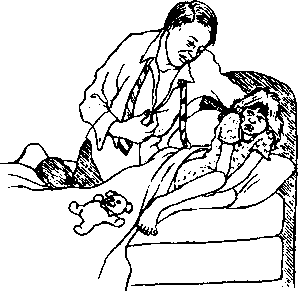
Touching a child sexually is
rape.
Rape by a stranger
This is the kind of sexual assault that most people think of when they hear the word ‘rape.’ A woman may be grabbed on the street, or attacked in her home. This kind of rape is very frightening, but it is much less common than rape by someone the woman knows.
Gang rape. A woman can be raped by more than one man. Sometimes a man starts raping a woman and other men see it and join in. Or sometimes young men and boys get together and rape a woman to prove their ‘manhood ‘to one another
Prison rape. Many women are raped by police or prison guards after they have been arrested. Also, rape is common between male prisoners as a way to establish who has more power.
War. Soldiers or fighters often use rape to terrorize women and their community, and to make people feel ashamed. Soldiers may gang rape women and girls in front of their families to show the enemy’s power. Women may be held in camps, and forced into prostitution or sexual slavery in order to stay alive, to keep their children safe, or to get food.
¨ Those who survive war rape need special care. If a woman gets pregnant, she and her child may suffer from the reminder that she was raped by an enemy.

Rape is a form of tenure when
it is used in
war.
How to Avoid Rape
There is no one right or wrong way to behave to avoid rape. But there are some things a woman can do that may make her less likely to suffer some kinds of rape. What a woman does depends on how well she knows the man, how afraid she is, and how much danger she thinks she is in. Remember, if a woman is raped, it is not because she failed to avoid the rape, but because someone stronger forced himself on her.
These ideas may help any woman avoid rape
· Do your work with other women. You will be safer and stronger if you work together in groups.· Do not let anyone who makes you feel nervous into your home. Do not let him know if you are there alone.
· Try not to walk alone, especially at night. If you must go alone, hold your head up and act as though you feel confident. Most rapists will took for a woman who looks easy to attack.
· If you think you are being followed, try walking in another direction, or go up to another person, a house, or a store. Or, turn around and ask him very loudly what he wants.
· Carry something with you that will make a loud noise, like a whistle. Also, carry something that you can use to defend yourself. This could be a stick, something you can spray in his eyes, or even some hot spicy powder - like hot pepper or chili powder - to blow in his eyes.
· If you are attacked, scream as loudly as you can or use your whistle. If this does not work, hit back quickly to hurt him, so that you may be able to get away.
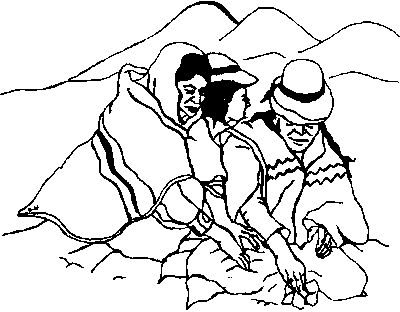
Protect yourselves. Work with
others.

Figure
Avoiding rape by someone you know
Learn to trust your feelings. A woman can learn to recognize when she feels good about a person or a situation, and when she does not. When a woman feels good about someone, she may feel warmth, caring, or attraction toward him. If she can learn to act on these good feelings, it can make her more confident that she will know when she does not like someone.
Be aware if you:
· have a lasting feeling that something is not right.
· feel afraid, or like you want to leave.
· feel uncomfortable with comments or suggestions the person is making.
· dislike the physical contact he makes.
It can be hard to act on these feelings because you may be afraid of what other people will think. In addition, if the person is someone you know or care about, you may not want to admit that he would do you harm. But it is always best to trust your feelings and get out of a situation that feels uncomfortable before anything bad happens.

Trust your feelings. It is
better to offend someone if you are wrong than to be raped.
Be prepared to get away:
· Avoid going somewhere alone with a person who makes you feel uncomfortable or who you do not know well.· Always have a way to get home if you decide you need to leave. It is better not to go somewhere if you will not be able to get back without the person’s help.
· Tell the person that his comments or touch make you uncomfortable. If he does not change the way he is acting you should get away from him as soon as possible.
If he has power over you (for example if he is your boss, your doctor, a teacher, or an official):
· The first time he does something that makes you feel uncomfortable, tell him to stop. If he is trying to take advantage of his power, he will look for someone who is easy to frighten. Let him know that you are not frightened. He is less likely to treat you badly (for example to fire you, refuse you medical care, or deny your request) if you can get him to stop bothering you before he has done anything that makes him look foolish.· Talk to other women about him. You are probably not the only one he has bothered. If you must continue to deal with him, try to bring a friend with you so you are never alone with him. Warn other women to be careful.
¨ Be aware that if a man cannot gain control over a woman through sexual violence, he may try to gain control over her in other ways.
Help children avoid sexual abuse
· Teach children about the possibility that they may be touched sexually, and how to tell the difference between touching that is affectionate and touching that is sexual.· If possible, have girls and boys sleep separately, especially after age 10 or 11 years old.
· Make sure children know who they can talk to if something should happen to them.
· Believe a child who says he or she feels uncomfortable around an adult or older child - no matter who that person is.
¨ Sometimes sexual abuse of children continues for many years. A girl may be told that she will be harmed or even killed if she tells anyone about it.
Self Defense for Women
Practice these self defense movements with a friend, so that you will be prepared to fight off an attacker. Hit him as hard as you can. Do not be afraid to hurt him - he is not afraid to hurt you.
|
If you are attacked from behind
|
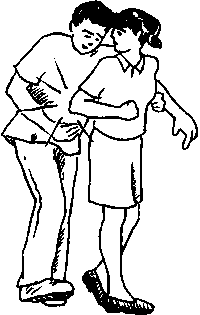

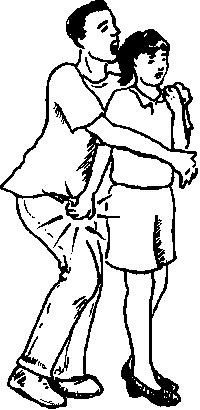

|
If you are attacked from the front
|


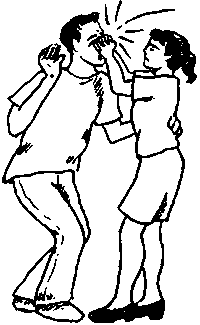

If You Are Sexually Assaulted
If a woman is able to resist her attacker, she will usually be able to avoid the rape, even if the rapist has a weapon. The more different ways a woman tries to keep from being raped, the more likely she is to be able to avoid the rape, or to suffer fewer injuries and mental health problems from the rape afterward.
It is impossible to know ahead of time how a woman will react when someone is trying to rape her. Some women are filled with rage and feel strength they did not know they had. Others feel like they cannot move. If this should ever happen to you, know that you will do what you can.
Here are some ideas that may help you during a sexual assault:
· Do not cry, plead, or give in. It usually does not help. In fact, women who try this often suffer more injuries than women who fight back.· Stay aware. Watch the rapist carefully. There may be times when he is not watching you, or when he loses his control.
· Try different things. Kick, yell, bargain, trick him - do whatever you can think of to make him realize you are not an easy victim. Try to make him realize that you are a person, not an object.
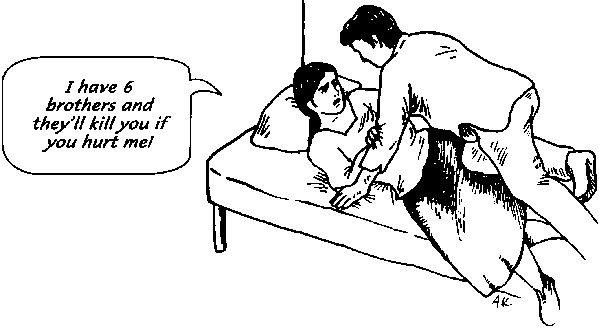
Figure
· If you know the rapist, tell him how you feel. Do not let him believe that women like to be raped. Make him be aware of what he is doing to you.· If the rapist is a stranger, try to memorize what he looks like. How big is he? Does he have scars, marks, or tatoos? What kind of clothes is he wearing? Try to remember them so that you can tell the police and warn the other women in your community.
· Use your best judgement. Only you can decide how much to fight back. In some rape situations, for example, during war, the rapist may have no reason to keep you alive if you resist.
¨ If there are several people trying to rape you, or if the rapist has a weapon, you can still resist, but it is usually better not to fight back physically.
What to Do if You Have Been Raped
Every woman’s experience with rape is different. But there are a few things you need to do to help yourself recover.
First, ask yourself these questions:
· Who can you ask for help?
· Do you want to tell the police about the rape?
· Where can you go for medical care?
· Do you want to try to punish the rapist?
You need someone to talk to when you feel sad, hurt, scared, or angry, to go with you for medical care, and to help you figure out what to do. Choose someone who cares about you, who you trust will not tell others, and who is strong and dependable. Sometimes a woman’s husband or parents are too upset themselves to be able to give much support.
¨ Do not blame yourself. You did not deserve to be raped. There was nothing you did that made it right for a man to force sex on you.
|
If someone you know has been raped
· Reassure her that it is not her fault. · Do not protect the rapist if you know him. He is a danger to every woman in the community. |
|
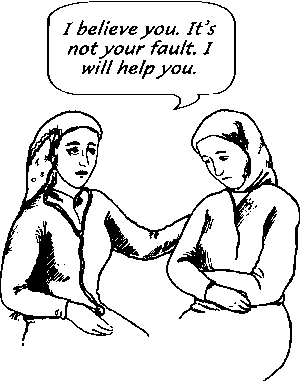
The decision to use the law must be made carefully.
· Can someone go with you to talk to the police?· Has the law helped other women in your community who have been raped?
· Do you want the rape to remain private? Can the police keep others from learning about the rape?
· Did the rapist threaten to hurt you more if you reported the rape?
· If the rapist is caught and you can prove that he raped you, how will he be punished?
If you think you may want to report the rape to the police, do it as soon after the rape as possible. Do not wash before you go, and bring the clothes that you were wearing in a bag. These things can help you prove that you were raped. Take a friend with you, and ask to have a female health worker examine you, if possible.
¨ If there is no health worker who can treat you, the information from Sexually transmitted diseases (STDs) and Tears and cuts can help you prevent and treat some of the problems yourself.
If you do not want to go to the police, or if you cannot go until later you should see a health worker anyway - even if you are not badly hurt. Tell the health worker that you have been raped. She should then check you for cuts or tears, and give you some medicines to prevent pregnancy and sexually transmitted diseases (STDs). Ask her to write down everything that she finds because it will help prove to the police or to others in the community that you were raped.
Figure
|
To the health worker If you see someone who has been raped: Treat her with kindness and understanding. Do not blame her. Since she may find it difficult for you to see or touch hen explain everything and wait until she is ready to be touched. Remember that her feelings about the rape may last for a long time, even years.
Write down who raped her and exactly what happened. If your clinic does not keep records, make one and keep it somewhere safe. If you can, draw a picture of the front and back of her body and mark the places where she has been hurt. Show or tell her what you have written and that it can be used to support the fact that she was raped if she goes to the law.
Treat her mental health needs. Ask her whether she has someone to talk to. Help her to respect herself again and to gain control of her life. Help her to tell her partner or her family. If they do not know already, offer to help her tell them. You can help them find ways to support her until she recovers. Remember that family members usually also need help to overcome their feelings about the rape. |
|
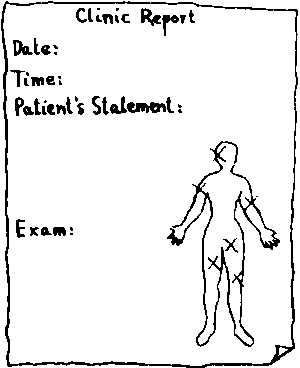
If you go to the police
In most places rape is a crime. But it may take a long time and be very difficult to prove you were raped.
The police will ask you what happened. If you know the rapist, tell them who it is. If you do not, you will need to describe what he looks like. You may have to go with the police to try to find him. You may also be asked to get a medical exam from a legal doctor who works with the police. This is not an exam to help you get well, but to help prove that you were raped.
In some countries, women have worked with the police to have specially trained female police officers to help victims of rape and violence.
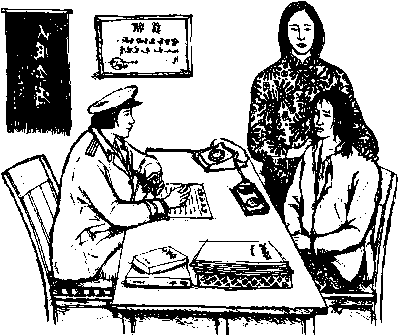
Figure
If the rapist is arrested, you will have to identify him, either in front of the police or in front of a judge in court. If there is a trial, try to find a lawyer who has worked with rape cases before. The lawyer will tell you what to expect and help you prepare for the trial. Always take someone with you.
Going to court for a rape is never easy. Describing what happened may make you have the feelings of being raped all over again. Not everyone will be understanding. Some may try to blame you or say you are lying.
¨ Always take someone with you to the police.
Health Problems of Rape
Pregnancy
Pregnancy can be prevented if you act quickly and use emergency family planning. You must use it as soon as possible, but no later than 3 days (72 hours) after the rape.
IMPORTANT
In some countries, abortion is
safe and legal if a girl or woman has been raped. Ask a health worker or
women’s organization if this is true in your
country.
Sexually transmitted diseases (STDs)
STDs are passed more easily with violent sex because the skin in the vagina is often torn and the infection can get into the woman’s body easily. If the man who raped you had an STD, he may have passed it to you. Since you cannot know if he was infected, you should be treated just in case, so you can keep from getting the disease and passing it on to others. Take medicines for gonorrhea, syphilis, and chlamydia, and watch for signs of other STDs. Take the medicines whether or not you think you were infected. It is better to prevent an STD than to wait for one to start.
Figure
You should also try to have an HIV test in 6 months. Until then, it is better to use condoms if you have sex to protect your partner from possible infection.
Tears and cuts
Sometimes rape damages the genitals by causing tears and cuts. These usually cause pain, but will go away in time. If there is a lot of bleeding, you may need to see a health worker trained to stitch tears. For small cuts and tears:
· Soak your genitals 3 times each day in warm water that has been boiled and cooled. Putting chamomile leaves in the boiling water can help soothe the tears and help with healing. Or you can put gel from an aloe plant on the tears.· Pour water over your genitals while passing urine so that it will not burn. Drinking a lot of liquid makes the urine weaker so it will burn less.
· Watch for signs of infection: heat, yellow liquid (pus) from the torn area, a bad smell, and pain that gets worse.
· After violent sex it is also common for women to have a bladder or kidney infection.
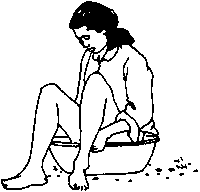
Figure
Figure
Sexual relations after rape
You can have normal sexual relations again after rape. You will need to wait until your genitals no longer hurt and any tears have healed. For many women, having sex makes them think about the rape. If this happens to you, talk with your partner about why you need to wait.
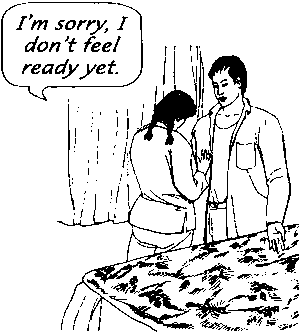
Figure
Sometimes a woman’s partner may reject her after she has been raped. He may feel ashamed or act as though he is angry with her. This can be very hard for a woman who is already dealing with many difficult feelings.
Overcoming feelings about the rape
The rape may still bother you long after your body has healed. Here are some common reactions:

Figure
It is important for a woman who has been raped to talk to someone or to do something to help herself feel better after the rape - every woman needs to find her own way to heal. For some women, this can mean performing a ritual. For others it means trying to punish the rapist, or working to prevent other women from being raped. Whatever you do, be patient with yourself and ask others to be patient, too.
¨ It may take a long time before you feel better, but talking with someone you trust, or who has also survived rape, can help you to heal.
Working for Change
Rape affects everyone in a community. Women who have been raped can suffer long-lasting problems because of the rape. But almost all women, whether they have been raped or not, learn to be afraid. They learn not to trust men, and they learn not to do things that attract attention. Women learn not to walk alone, or not to talk to men they do not know.
To create a world in which rape does not happen, we need to work toward having:
· communities where a person’s choices and behavior are not limited by whether the person is a man or a woman.· an equal chance for everyone to participate in the community.
· the chance for men and women to talk openly and honestly with each other about what they each expect from a sexual relationship.
But until we achieve these goals, we need to find ways to help women who have been raped. We can:
· educate elected leaders, clergy, and teachers about rape. Ask for their help and make a plan for change.· train doctors and health workers to treat women who have been raped. They should be trained to provide STD testing, emergency family planning, and how to listen and be kind to the woman and her family.
· encourage health workers to find out what information their country’s laws require in order to punish a rapist, so they can help the woman fill out legal forms.
· teach women and girls how to defend themselves.
· teach boys and girls about sex and sexuality. Teach girls to be clear about their wishes, and teach boys to ask girls about their wishes and then respect them.
· learn about laws in your country that protect women who have been raped, and teach them to others.
|
In a small town in El Salvador, the police refused to stop a known rapist because he was the son of a wealthy man. So the women of the town began painting the word ‘rapist’ outside his house. His family was so ashamed that they forced him to stop.
|

|
How a community in South Africa organized against rape Early one Saturday morning, a 59-year-old woman was raped and stabbed by a man who had raped other women in the past. The victim pointed the rapist out to the police. He was arrested and the woman was taken to the hospital. But the police released the rapist the same afternoon. He was not charged with rape or assault - he was free. We women of the township were very angry. The police had protected a man who made women afraid to walk alone on the streets. The township’s women’s organization decided to organize a protest. Most of us work as domestic servants for rich white women who live in a nearby city. So all of us stayed away from our jobs, demanding that the police charge the rapist with rape and assault, before we would go back to work. We also asked the women we worked for to come to speak with us. We wanted to show and tell them about our problems. We know that all women, black and white, fear rape. We felt the white women might understand and be sympathetic to us. We also wanted the women whose husbands worked for the police to explain our problems to their husbands and how bad it was for them to release a violent rapist back into the township. But the white women were not sympathetic - they just got angry. We think they were upset because they had to do their own housework. When the Employers’ Federation came to see about the protest, we told the men, “Please do not speak for us. This is a women’s problem. Men do not get raped.” The Employers’ Federation would not meet with us, but after a week, a group of white women came to talk to us. We showed them around the township, and they decided to meet with us again. We called off the protest, even though the rapist was only charged with assault, and not rape. But people in the township were so angry that the rapist could no longer live there. The police arrested several of us who had organized the protest. They did not believe that women had organized the protest. They think men are behind everything that women do. But we women had become very strong. It is very important to talk openly about the problem of rape. Most people don’t talk about rape - they feel ashamed and shy. Often the family of the raped girl or woman does not want to talk about it. But here it is different. We started organizing in the community for education, child care, pensions, and so on. We started talking about all the problems and things that we need to change. So we talk about rape, and any sexual assault on a woman. People now see sexual assault as another kind of oppression. Men and women think the same about this; we are united in the struggle. A raped woman is trusted. If she says she was raped, we support her, no matter who she is. Even if she is a drunkard, a rape is still a crime against her. In fact, it is worse because she was in a weak position. Our women and men do not blame a woman for a rape. We do not say that the rape was the woman’s fault. So women can talk about sexual violence openly and they will get community support.
|

|
| ||||||||||||||||||||||||||||||||||||||||||||||||||||||||||||||||||||||||||||||||||||||||||||||||
Where Women Have No Doctor - A Health Guide for Women (Hesperian Foundation, 1997, 600 p.)
Chapter 20: Sex Workers

Sex workers’ unions are
demanding protection of their legal and human rights.
A sex worker is anyone who trades sex for money or other favors. Many people picture sex workers as women who do not wear many clothes, flirt with men, and work in brothels or on the street But women who sell sex are a diverse group. A sex worker may be a young girl or an older woman with 6 children at home. She may work in a brothel, in a bar or a club, on the street with a pimp, or in her own home. What most of these women share in common, though, is that they sell sex because they desperately need money.
¨ Sex workers, like other women, are working to make a living.
In this book we use the term ‘sex worker’ instead of ‘prostitute’. We do this because many people think of a prostitute as a bad woman who should be punished. The term ‘sex worker’ emphasizes that sex workers, like other women, are working to make a living. For the same reason, we call the men who buy sex ‘clients’ or ‘customers’.
There are also many women who do not think of themselves as sex workers, yet occasionally they trade sex for favors, like a place to live or a job. We call this ‘survival sex’. These women face many of the same problems that sex workers face.
The purpose of this chapter is to provide information on the health problems sex workers face, and about ways sex workers can help themselves. It also helps people understand what life is like for women who must trade sex to survive.
Why Women Become Sex Workers
Many people think women become sex workers because they are immoral or too lazy to find other work. But most women do so because they need money and have no other way to earn it. These women need money for food and shelter, to support their children and families, to pay debts, or to buy drugs.
¨ Most women who sell sex would rather have a job that pays well and that gives them dignity and respect.
This desperate need often arises in situations a woman cannot control: for example, her husband dies, or she gets divorced, or her husband or family abandons her. Or she may be raped or have an unplanned pregnancy and find that no one will marry her. If she has no job skills or ways to get money, she sells the only thing she has - her body - in order to survive.

This young girl did not have
enough money to be able to finish her education. She cannot find a job, so she
must sell sex to buy food and
clothes.
Story of a poor woman
|
Every morning around 9 o’clock, Nawal (not her real name) steps out of the tiny room she shares with her husband, locks her two small children inside, and walks to the wealthy area of town where she ‘works’. Wearing a traditional dress with faded colors and a cheap black scarf thrown loosely around her head, she looks just like any other poor woman you see everywhere in Cairo, Egypt. She is not. Nawal is 20 years old and she is a prostitute. ‘Working’ a certain street until it is time to go home around 2 or 3 in the afternoon, Nawal earns an average of LE. 20 (US $6) a day. She does not work on Fridays or religious holidays so she can spend time with her family: her husband, who works occasionally as a construction worker, a 4-year-old son, and a 1-year-old daughter. Nawal’s father was blind, and he made money by begging in central Cairo. When she was a young girl, Nawal spent more time in the street guiding her father around than at home. She never saw her mother. At 13, she got married. Two years later, after giving birth to her son, she had to look for a job. Her husband was getting less and less work. With no education or skills, Nawal tried working as a house cleaner in an apartment building. But she stopped when the building guards refused to introduce her to customers unless she had sex with them. Nawal does not use the word ‘prostitute’ to describe herself. She refers to herself as a servant. She knows she has to save money for her children: “I want my children to go to school so that they don’t grow up to be criminals.” Because her work is not considered ‘real’ work, Nawal, and thousands of women like her, get no help from the government or the police. Nawal has been robbed several times, but no one would help her. Officially, she does not exist. And the thing that really puzzles her is that a lot of people think that she enjoys sex work. She does not. She just does not know any better way to survive. - from an interview by Ahmed Badawi |
¨ Because many men fear they will become infected with HIV/AIDS when they have sex with older sex workers, there is an increasing demand for younger girl children to work in the sex trade.
Other women are forced into sex work. Often women are tricked into thinking they are going to get jobs or rich husbands in other countries and are sold into sex work instead. Then it is almost impossible to stop selling sex. The woman may be in a new country illegally where she has no rights, no money, and no way to return home. She may have large debts to repay, or her employer may threaten to hurt her if she leaves. She has become a sexual slave.
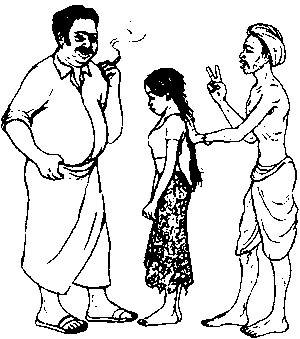
This girl was sold by her
family, thinking she would get a job in another country. Instead, she was sold
again to a brothel owner who forces her to sell sex.
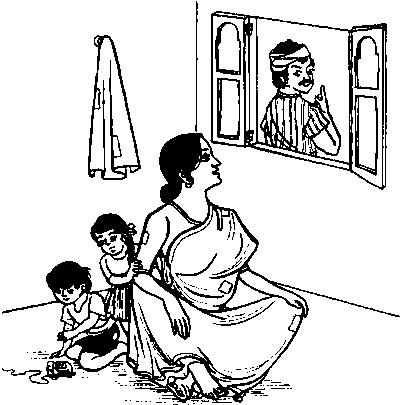
This woman lost her home and
land when her husband died, because there were no laws saying his property must
be given to his wife. Now she has no money. She started selling sex to feed her
children.
Health Problems of Sex Workers
STDs, INCLUDING HIV/AIDS
Because of her work, a sex worker has a greater risk of getting sexually transmitted diseases (STDs) and HIV/AIDS than other women. Her risk is increased because sex work does not pay well, and so she must take a large number of clients each day. She may want to protect herself by using condoms and other safer sex practices, but the men who pay her can make this difficult. They may demand sex in the vagina or anus but refuse to use condoms. They may even become violent if she refuses unsafe sex practices.
If a sex worker is addicted to drugs, her need for drugs may make her more willing to exchange unsafe sex for money or drugs, and less able to take care of herself.
As with any woman, if a sex worker gets an STD, it may lead to infertility or cancer of the cervix. Infection with an STD like herpes, syphilis, gonorrhea, or chlamydia greatly increases her chance of also becoming infected with HIV/AIDS. These risks are even more serious for young girls. Since their genitals are not fully grown, they can be damaged more easily during sex.
In some communities up to 9
out of 10 sex workers ore infected with HIV.
Many sex workers do not have good information about STDs, or about how to treat or prevent them. Information and health services are often not available to sex workers because of people’s prejudice against them. When sex workers do go to a health center for help, they may be treated badly or refused services.
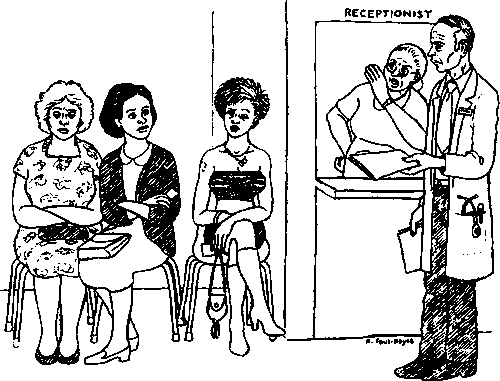
Figure
|
Are sex workers responsible for HIV/AIDS? Sex workers are blamed for much of the AIDS epidemic. But it is the men who buy sex from them who infect sex workers and often their own wives. By blaming sex workers, these men fail to take responsibility for spreading the disease. Sex workers want to practice safer sex. But HIV and AIDS may not seem like the most important problem they face. They often have more immediate, daily problems - such as bad treatment by the police, low wages, dirty and expensive hotels, difficult or violent men, and problems with keeping clean, getting enough to eat, and taking care of their children. If a sex worker does become infected with HIV, she may have no choice but to continue selling sex to survive. As one sex worker says: “Those who blame us do so on full stomachs. I should feed myself and my children adequately. My children should go to school. To say that AIDS kills without giving me a well-paid job is like saying I should die of hunger. To me, that is the only way to survive.” |
|
Pregnancy
Women who sell sex need safe, effective, and low-cost family planning methods to prevent pregnancy. If these methods are not available in her community, a sex worker is likely to have an unwanted pregnancy. If she continues the pregnancy and must also continue selling sex, she puts both herself and her unborn baby at risk for complications or STDs. Or she may feel she has no other choice but to have an unsafe abortion. All these situations are dangerous.
Figure
Figure
Violence
A sex worker may live with others in a house for sex work (brothel) or work on the street These conditions make it easy for her to be violently attacked, raped, or robbed, especially if she is a child. If a sex worker is ‘owned’ or controlled by a man who gets part of her money (pimp), he will often use violence to keep her under his control.
¨ In some places, women can be arrested for sex work simply by having condoms for their own protection.
Because sex work is illegal in most countries, a sex worker is often denied any legal rights, including protection from the police. Or she may have to pay the police a large part of her earnings in exchange for ‘protection’. Since most laws are made to protect men from ‘immoral’ women, a sex worker may be arrested, beaten, harassed, or even raped by the police instead.

Figure
If you are being mistreated by the law because you are a sex worker, try to learn more about your rights. There may be a prostitutes’ rights group in your city or country. Or you can write to one of the organizations listed for advice on how to organize a group.
How to Protect Yourself from STDs, Including HIV/AIDS
Many women do not have the choice to stop selling sex. If you must continue, it is important to protect yourself from STDs and HIV/AIDS. For more information, see the section on ‘Safer Sex’, and the chapters on “Sexually Transmitted Diseases and Other Infections of the Genitals” and “Family Planning”.
Here are some other ideas:
· Use latex condoms every time you have sex. Make sure you always have condoms when you work.

Figure
· Hand sex (manual masturbation), oral sex, or sex stories (fantasy), are safer than sex in your vagina or anus if you cannot get a client to use a condom.
¨“If they don’t want to use a condom, I ask them if they ever listen to the news, if they have ever heard of AIDS. I tell them I’m not willing to take the chance.”
- Jolanda
· If you are unable to use a male or female condom, using spermicide alone or with a diaphragm will give less protection than a condom, but it is better than no method at all.
- Spermicides give some protection against 2 common STDs, gonorrhea and chlamydia. But using spermicides too often can also irritate the skin in your vagina, making it easier for germs to pass through the skin and infect you with an STD, especially HIV. Spermicides used every other day are less likely to cause irritation.
Figure
- You can put your diaphragm in before you begin work, in case the man refuses to use a condom. Add spermicide between sex acts, but do not remove the diaphragm. It must stay in for 6 hours after you have finished working.

Figure
¨ Protecting yourself and others from STDs means having safer sex with your clients, and also with your husband or boyfriend.
IMPORTANT
Do not use chemicals like bleach or
detergent to wash our your vagina. They can cause serious injury!
· Inspect your clients’ genitals for sores or discharge before you have sex. Refuse to have sex with any man who has signs of an STD. Remember you cannot tell by looking if a person has HIV/AIDS.
Treatment for STDs when protection fails
It is always best to prevent STDs by practicing safer sex. But sometimes these methods fail. Condoms can break, or clients can refuse to use them.
¨ STDs that are not treated quickly can lead to serious illness and even death.
Get early treatment
If you think you have been exposed to an STD, early treatment can prevent the infection from getting worse. STDs that are not treated quickly can lead to serious illness and even death.
If possible, have regular exams for STDs. If you are having signs of an STD - discharge or bleeding from your vagina, pain or sores on your genitals, or pain in your lower belly - see a health worker trained to treat STDs as soon as possible. Even if you have no signs of infection, go to a health center or clinic at least once a month for treatment if you have unsafe sex often. If you use condoms every time you have sex, you may need to visit a health center less often.

Figure
Since you probably do not know what STDs you have been exposed to, you should be treated for as many as possible. Different antibiotics can treat different STDs, so you may need to take several medicines at once. Remember, no medicine can cure HIV/AIDS. See the chapter on “Sexually Transmitted Diseases and Other Infections of the Genitals” for information about how to treat STDs.
¨ If you are at very great risk for getting STDs because of unsafe sex, a medicine called azithromycin can be useful because it treats a number of STDs with only one dose.
Testing for AIDS
If you want to be tested for the HIV/AIDS virus, see The HIV Test. Check with your local clinic to see if they have a National AIDS Control Program. They may have special programs for testing sex workers for HIV and for treating their problems if they have AIDS.
IMPORTANT
When you take antibiotics to treat
STDs, be sure to take the recommended dose for the full amount of time. If you
take too small an amount, or do not take it for the right number of days, your
signs may go away, but the infection stays in your body and continues to cause
damage. And the next time you try to treat the infection it will be harder to
cure. Then you may need to use other, more expensive drugs. Many medicines that
once worked for STDs are no longer effective because people used them
incorrectly.
Working for Change
Negotiating condom use
In order to get more men to use condoms, men must believe that it is in their own interest and that of their sex partners to prevent STDs, including HIV/AIDS. This kind of education is best done at the community level.
As a sex worker, you can help by joining together with other sex workers to make condom use the expected or normal practice. Then clients will begin to want to use condoms.
¨ Use role plays to practice negotiating condom use with your clients. Ask other sex workers to practice with you.
When you are with clients, your attitude is important. If you believe in yourself and know what you are talking about, you are more likely to convince a man that condom use makes good sense. Here are some ideas:
· Explain that condoms can:
- protect him as well as you from disease.
- make him less likely to pass on STDs to his wife.
- make his pleasure last longer
· Assure him that you will still make sex good for him.· If you practice oral sex, learn to put the condom on with your mouth.
Figure
|
A sex worker in a discotheque in Duala, Cameroon, tells the following story: Where I work, we understand the risk to our health and our lives from HIV and AIDS, so all the girls are given condoms. We teach our clients that it is in their own interest to protect themselves. Most clients now agree. We make sure that the act will be enjoyable, so they will come back for more. But there are always those men who think that by not using condoms, they are being ‘real men’. That going ‘live’ is getting the real thing. We almost always find that after a guy has tried without luck to get 4 or 5 of us to have unsafe sex, he will either just leave or agree to see if he can have just as much pleasure with a condom on. If he insists on unsafe sex, we gather together and chase him out! We do not like to lose clients, but we value our lives and our health. Slowly, things are changing. Where we work, Using condoms has become the smart thing. |

Sex workers are organizing to
improve their lives. They want the same things as other
women.
Strength through organizing
Because of their low status as poor women and as sex workers, women who sell sex sometimes feel unworthy and unable to change their lives. Working alone, it can be very difficult for a sex worker to make her clients use condoms, or to protect herself from violence.
¨ “I used to work in a club where we didn’t always use condoms. There was a lot of pressure NOT to. So I left. Now I work in a house where condoms are the RULE. It saves me a lot of worrying and arguing.” - Anita
But in many places sex workers have learned that by working together they have more power to make the changes necessary to improve their lives. In some places sex workers are organizing to improve their working conditions, by insisting that their clients use condoms, or organizing against rough treatment from police. In other places, sex workers with the help of others in their community have started programs to get training, or to learn new skills so they will be less dependent on sex work.
Here are some ideas that sex workers from around the world have shared about how they are working together and working with others to make their lives better.
|
Teach each other how to make your work safer. You can get a group of sex workers together to talk about: · how to use condoms to prevent STDs, including HIV/AIDS, and how to get treatment for STDs when necessary. · how to limit the time a sex worker spends with clients. |
|
Organize for greater safety. Working together and supporting each other can help sex workers reduce the threat of violence from clients, police, and pimps. Join with other sex workers to plan how you can support and protect each other.
Learn new skills. You can work to organize programs that teach reading and writing or job skills. Sometimes sex workers can teach each other new skills, or it may be possible to get help from people in your community who can be teachers.
Figure
When a sex worker has other skills, she can earn some money doing other jobs. She then has more choice over which man to have sex with, or she can refuse a client if she does not feel safe.
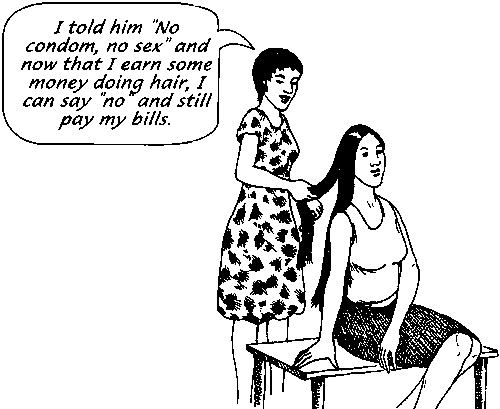
Figure
Create a loan fund. A group of sex workers in Nairobi, Kenya, joined their money to create a loan fund for their members. Many use the fund to pay their children’s school fees. Other groups have used loan funds to help each other set up small businesses so they can earn money in other ways besides sex work.
|
Many groups of sex workers are trying to change the negative ways other people think about them. For example, a sex workers’ organization in Calabar, Nigeria does not allow members to fight in the streets or in the brothel. Members are also not allowed to use language or wear clothes that may offend the community. By changing the things that had made it easy for the community to criticize sex workers, they hope that people will begin to understand that sex workers are just women doing a job to survive. |
The community can help
Community members can help sex workers to organize for safer working conditions. You can:
· demand laws that punish those who exploit sex workers. This includes brothel owners, pimps and middlemen, police, clients, and drug pushers.· pressure police to stop violent treatment of sex workers.
· work for laws that encourage condom use by clients of sex workers. For example, in Thailand, the Ministry of Health requires sex workers to use condoms. If they do not, the brothel can be shut down or have to pay a fine. This law has helped sex workers to insist upon condoms. This protects the sex workers, the men who pay them, and their wives.
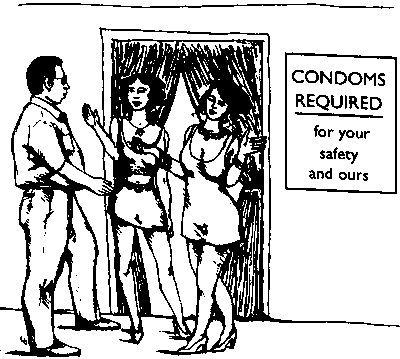
Figure
You can also work to prevent children from being sold or forced into sex work:
· Talk with parents in your community about the dangers of selling girls into service in other countries.· Provide help, such as jobs, counseling, and a place to stay, for children who run away from their families. With your help they will not be forced to sell sex to survive.
|
To the health worker You can make the biggest difference in the life of a sex worker by helping her to get the care she needs: · Give the same respectful care to sex workers as you give to others. · Make sure health services are available, including family planning, abortion, and free or low-cost treatment of STDs and drug abuse. |
|
|
| ||||||||||||||||||||||||||||||||||||||||||||||||||||||||||||||||||||||||||||||||||||||||||||||||||||||||||||||||||
Where Women Have No Doctor - A Health Guide for Women (Hesperian Foundation, 1997, 600 p.)
Chapter 21: Pain in the Lower Abdomen
How to use this chapter:
1. For sudden, severe pain in the belly or abdomen, see Sudden, Severe Pain in the Abdomen and follow that advice.2. Look up the different kinds of pain on Kinds of Pain in the Lower Abdomen. Most of these problems are described in other parts of the book.
3. If you are still unsure of the cause of the pain, look at the questions on Questions About Pain in the Abdomen.
4. For information on how to examine a woman with pain in the abdomen, see How to Examine the Abdomen.
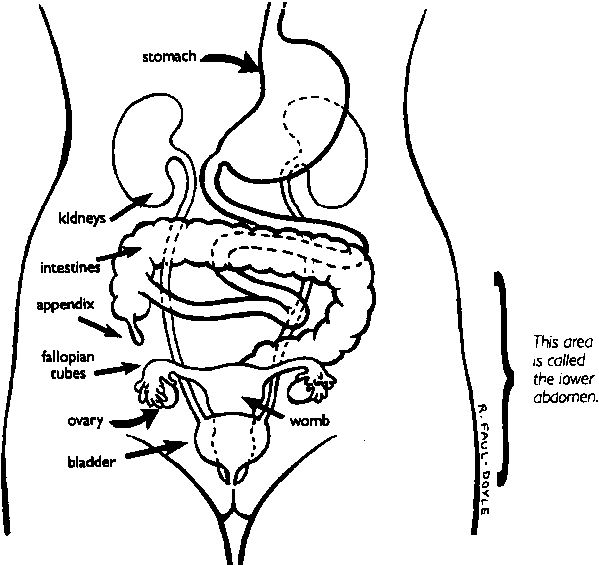
The reproductive organs are in
a woman’s lower abdomen, along with other internal organs.
Most women have pain in the lower belly or abdomen at some time in their lives. Often women are taught that this pain is normal for them, and that they should endure such pain in silence. Some people think that a woman’s pain is not serious until she cannot stand, walk or talk. But when a woman waits that long to seek care for pain, the result could be serious infection, infertility, loss of a pregnancy, and even death.
¨ Pain should not be a normal part of a woman’s life - it is a sign that something is wrong. Seek care before you are so ill that you cannot stand, walk, or talk.
This chapter describes different kinds of pain in the lower abdomen (below the navel), and what might be causing the pain. Some pain in the lower abdomen spreads above the navel and could have other causes. Some problems of the lower abdomen will also cause pain in the low back. If the pain seems different from what is described in this chapter, see a health worker trained to give an abdominal exam.
Sudden, Severe Pain in the Abdomen
Some lower abdominal pain is an emergency. If you have any of the following danger signs, go to the nearest hospital. A trained health worker will need to do an examination of your abdomen, a pelvic exam, and perhaps special tests. For information about how to do an abdominal exam and a pelvic exam, see How to Examine the Abdomen.
|
Danger signs: · sudden, severe pain in the abdomen
|
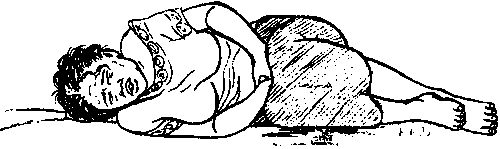
Kinds of Pain in the Lower Abdomen
Pain in the lower abdomen can have many causes. It can be difficult to find the cause because so many organs in the abdomen are close together.
During monthly bleeding
Pain in the lower abdomen can have many causes. It can be difficult to find the cause because so many organs in the abdomen are close together
|
Kind of pain |
May be caused by |
What to do |
|
Severe, unusual pain during monthly bleeding or after a monthly bleeding was missed |
|
URGENT! Go to a hospital right away. |
|
Ongoing pain during monthly bleeding |
|
See ‘pain with monthly bleeding’, and ‘problems of the womb’ Use a mild pain medicine. |
|
Cramps during monthly bleeding |
normal squeezing of the womb. Some kinds of intra-uterine devices (IUDs) may make the pain worse. |
See ‘pain with monthly bleeding’ |
|
If the monthly bleeding is late |
|
If pain becomes severe, go to a hospital. |
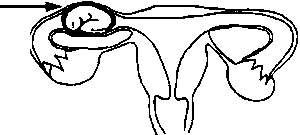
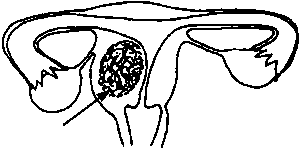
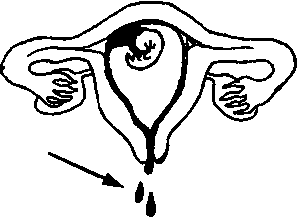
After childbirth, abortion or miscarriage
|
Kind of pain |
May be caused by |
What to do |
|
Pain after childbirth, miscarriage, or abortion |
infection from pieces of afterbirth (placenta) left in the womb, or germs that got into the womb during the birth or abortion |
See ‘womb infection’, and ‘infection after abortion’. |
With fever
|
Kind of pain |
May be caused by |
What to do |
|
Severe pain with fever (infection) | ||
|
with or after having an STD or pelvic infection on |
|
URGENT! Go to a hospital right away. |
|
one side of the abdomen, with fever, nausea, vomiting, and no appetite |
appendicitis or other intestinal infection |
URGENT! Go to a hospital right away. |
| |
kidney infection |
See ‘bladder and kidney infections’ |
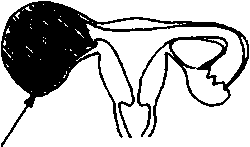
With diarrhea
|
Kind of pain |
May be caused by |
What to do |
|
Pain with diarrhea |
intestinal infection from bacteria or parasites |
See ‘diarrhea’. |
During pregnancy
|
Kind of pain |
May be caused by |
What to do |
|
Severe pain in the first 3 months of pregnancy, often with bleeding that comes and goes |
|
URGENT! Go to a hospital right away. |
|
Severe pain in the last 3 months of pregnancy, with or without bleeding |
|
URGENT! Go to a hospital right away. |
|
Mild, occasional pain during pregnancy |
probably normal |
No treatment needed. |


With urination
|
Kind of pain |
May be caused by |
What to do | |
|
Pain with frequent urination |
bladder or kidney infection |
|
See ‘bladder and kidney infections’, |
|
Pain with blood in the urine |
kidney stone |
|
See ‘kidney or bladder stones’. |
With discharge or light bleeding from the vagina
|
Kind of pain |
May be caused by |
What to do |
|
Pain with discharge or light bleeding from the vagina, sometimes with fever |
pelvic infection which may be caused by a sexually transmitted disease (STD), or by infection after miscarriage, abortion, or childbirth |
See ‘pelvic inflammatory disease’, ‘womb infection’, and ‘infection after abortion’. |

During sex
|
Kind of pain |
May be caused by |
What to do |
|
Pain during sex |
pelvic inflammatory disease (PID), or scars from an old pelvic infection |
See ‘PID’. |
| |
|
See ‘problems of the ovaries’. |
| |
fibroids |
See ‘problems of the womb’. |
| |
unwanted sex |
See ‘if sex is painful’. |
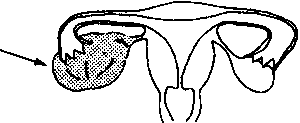
When moving, walking or lifting
|
Kind of pain |
May be caused by |
What to do |
|
Pain when moving, walking, or lifting |
old pelvic infection, or any of the reasons listed above |
Use mild pain medicine if needed. |
In the middle of the monthly cycle
|
Kind of pain |
May be caused by |
What to do |
|
Pain that lasts only a few hours in the middle of your monthly cycle |
|
Use mild pain medicine if needed. See the chapter on “Understanding Our Bodies.” |
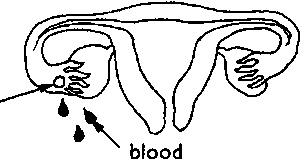
Within 3 weeks of getting an IUD
|
Kind of pain |
May be caused by |
What to do |
|
Pain within 3 weeks of getting an intra-uterine device (IUD) |
|
See a health worker right away. |

Without other signs
|
Kind of pain |
May be caused by |
What to do |
|
Pain without other signs |
pelvic infections, which can cause constant or on-and-off pain in the abdomen or lower back that lasts for months or years |
See a health worker trained to do a pelvic exam. |
| |
intestinal infection from bacteria or parasites |
See a health worker or Where There Is No Doctor. |
| |
tumor or growth on the womb or ovary |
See a health worker trained to do a pelvic exam. |
Questions about Pain in the Abdomen
If your pain does not fit one of the kinds described on the previous pages, these questions may help to learn more about it.
What is the pain like? Is it sharp and severe - or dull, achy, and not so bad? Does it come and go, or is it constant?
· Terrible pain that comes and goes could be from a kidney stone. Severe grabbing, clenching, or cramping pain could be from an intestinal problem.· Sharp, severe pain, especially just in one place, could be appendicitis or a pregnancy outside the womb in the tube.
How long has the pain lasted?
· Sudden, severe pain that does not get better is probably serious. It could be from a pregnancy in the tube, appendicitis or other gut problems, something wrong with the ovary, or pelvic inflammatory disease (PID).· Pain that lasts for many days or weeks, especially if it is not severe, may be caused by scars from an old infection, indigestion, or nerves. It may be possible to treat this at home.
Does the pain affect your hunger?
· If you have pain in the abdomen and you DO NOT want to eat anything, you may have a serious infection in your intestines, or appendicitis.· If you have pain and you DO feel like eating, you probably do not have one of these problems.
For more information on pain in the lower abdomen, see Where There Is No Doctor or another general medical book.

A woman who walks with pain
today could die from it tomorrow. Get help early if you are not
sure.
|
| ||||||||||||||||||||||||||||||||||||||||||||||||||||||||||||||||||||||||||||||
Where Women Have No Doctor - A Health Guide for Women (Hesperian Foundation, 1997, 600 p.)
Chapter 22: Abnormal Bleeding from the Vagina
How to use this chapter:
Most of the causes of the bleeding problems in this chapter are described in other parts of this book. If you have a bleeding problem, look it up here and then turn to the numbered page listed for more information. If the problem is not covered in this book, see a health worker trained to do pelvic exams,

Figure
It is normal for monthly bleeding to change from time to time because of illness, stress, pregnancy, breastfeeding, a long journey, overwork, or a change in diet. But if a change in monthly bleeding happens suddenly, lasts more than a few months, or if it comes with other problems, it may be a sign of a more serious problem.
¨ If monthly bleeding suddenly changes, always think about the possibility of pregnancy - even if a family planning method is being used.
|
Danger signs If a woman has any of these danger signs, she may need medical help right away. Turn to the numbered page listed for more information. · bleeding and pain in the abdomen when regular monthly bleeding has been missed · heavy bleeding after childbirth, miscarriage, or abortion |
|

Figure
Figure
Problems with Monthly Bleeding
Heavy monthly bleeding, or bleeding that lasts a long time
· Monthly bleeding is heavy if a pad or cloth is soaked through in less than one hour· Monthly bleeding is long if it lasts for more than 8 days.
· Blood clots (soft, dark red, shiny lumps in the blood that look like liver) are also a sign of heavy bleeding,
· Heavy bleeding that goes on for many weeks, months or years can cause weak blood (anemia).
|
Causes: · The hormones may be out of balance so the ovary does not release an egg. This is common for women under 20 and women over 40 years of age. · An intra-uterine device (IUD) may be making monthly bleeding more heavy.
· Miscarriage, even if you did not think you were pregnant.
· If you have pain in the abdomen with bleeding, you may have a pregnancy outside the womb in the tube. URGENT. Go to a hospital right away.
· You may have a problem with the thyroid gland. · You may have growths (fibroids or polyps) or cancer in your womb.
|
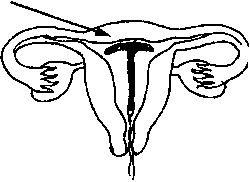
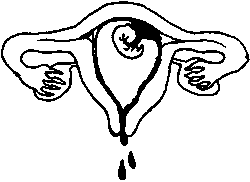
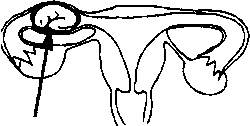
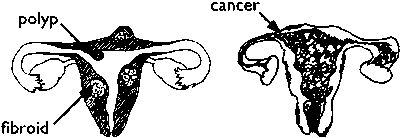
IMPORTANT
See a health worker trained to do
pelvic exams if you have heavy bleeding and:
· blood gushes from your vagina.
· monthly bleeding has been heavy and long for 3 months.
· you think you might be pregnant.
· you have severe pain with the bleeding.
Light monthly bleeding
Light bleeding each month is not a health problem.

Figure
Causes:
· Some family planning methods - like injections, implants, and the pill - can make you bleed less after you have been using them for some time.· Your ovaries may not have released an egg.
Monthly bleeding that comes too often, or bleeding at other times
Something may be wrong if monthly bleeding comes more often than every 3 weeks, or if it comes and goes without a regular pattern.
Causes:
· The ovary may not have released an egg.· There may be growths (fibroids or polyps) or cancer in the womb, especially if monthly bleeding is heavy and not regular.
· Taking the medicine called estrogen after menopause.
Figure
· Some family planning methods - like the pill, implants, and injections - can cause you to bleed more often.

Figure
¨ Hormonal family planning methods such as pills, implants, or injections, can change monthly bleeding.
When monthly bleedings come too far apart, or have stopped
Monthly bleeding usually comes about every 21 to 35 days. It may be normal to have an even longer time between bleeding. But something may be wrong, or you may be pregnant, if your monthly bleeding does not come at all.
¨ If you are over 18 and have never had a monthly period, get medical help.
Causes:
· You may be pregnant.
· You may be pregnant and having a miscarriage.
· The ovary may not have released an egg.
· You may have a serious illness - like malaria, tuberculosis or AIDS.
· If you are over 40 or 45, you may be nearing menopause.
· Some family planning methods - like the pill, injections, and implants - can make monthly bleedings come far apart.
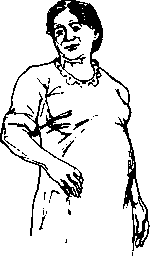
When a woman grows older, her
monthly cycle
changes.
Other Kinds of Bleeding Problems
Bleeding during pregnancy or after childbirth
|
Bleeding problem |
May be caused by |
What to do |
|
Bleeding during the first 3 months with constant pain or pain that comes and goes |
|
URGENT! Go to a hospital right away. |
|
Bleeding during the last 3 months of pregnancy |
the afterbirth (placenta) is coming off the wall of the womb
the placenta is covering the cervix |
URGENT! Go to a hospital right away. |
|
Bleeding during the first 6 months of pregnancy |
may be a miscarriage (especially if you also have cramping pains like birth pains) |
Watch and wait. If bleeding becomes heavy, go to a hospital. |
|
Heavy bleeding during or just after childbirth |
pieces of the placenta are left in the womb
the womb is too tired to squeeze or tighten |
URGENT! See a midwife or go to a hospital if bleeding is heavy. |
|
Light, pink bleeding during the first 3 months of pregnancy without pain |
this can be normal, or it may be a sign of early miscarriage |
See ‘bleeding early in pregnancy’. |
|
Spotting or light bleeding instead of your normal monthly bleeding |
the developing baby (fetus) is attaching to the wall of the womb (implantation). This is normal.
|
See the chapter on “Pregnancy and Childbirth.” |
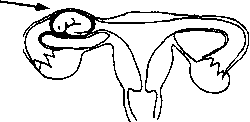
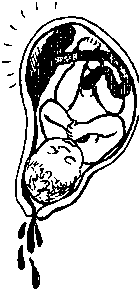

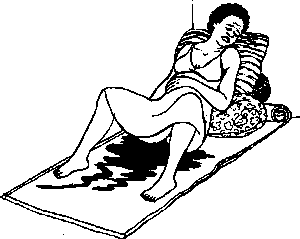
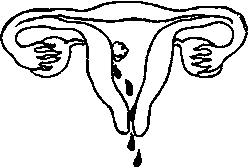
Bleeding after an abortion or miscarriage
|
Bleeding problem |
May be caused by |
What to do |
|
Heavy bleeding, or bleeding that lasts longer than 15 days, or bleeding with pain or fever |
pieces of the pregnancy may still be in the womb
infection in the womb |
Go to a hospital or clinic right away. |
|
Bleeding like a normal monthly bleeding, but lasting 5 to 15 days, getting lighter and lighter |
this is normal
|
See ‘what to expect after an abortion’. |
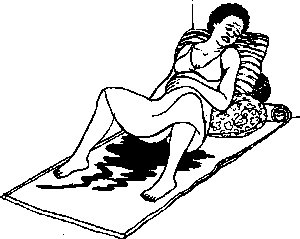
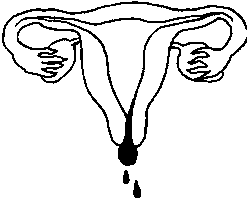
Bleeding after sex
|
Bleeding problem |
May be caused by |
What to do |
|
Bleeding during or after sex |
sexually transmitted disease (STD) |
See ‘gonorrhea and chlamydia’. |
| |
pelvic inflammatory disease |
See’PID’. |
| |
forced sex |
See “Rape.” |
| |
growths or cancer of the cervix or womb |
See ‘cancer of the cervix’ and ‘problems of the womb’. |
Bleeding after menopause
|
Bleeding problem |
May be caused by |
What to do |
|
Bleeding that begins 12 months or more after menopause |
growths or cancer of the womb
|
See a health worker trained to do a pelvic exam. |
| |
growths or cancer of the cervix |
You may need to have a Pap test or a D and C. |
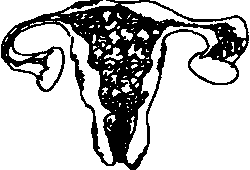
|
| ||||||||||||||||||||||||||||||||||||||||||||||||||||||||||||||||||||||||||||||
Where Women Have No Doctor - A Health Guide for Women (Hesperian Foundation, 1997, 600 p.)
Chapter 23: Problems of the Urine System
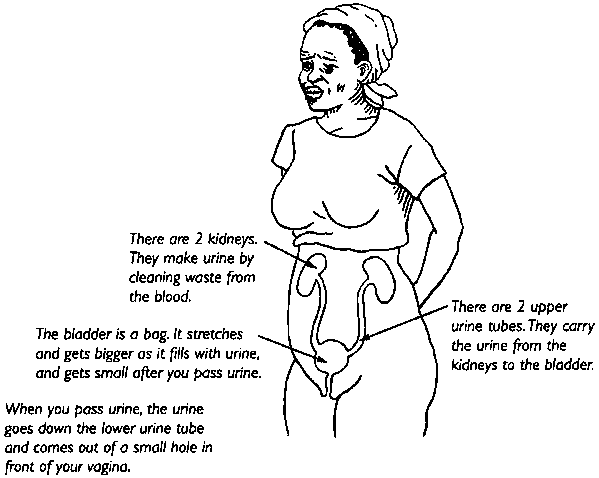
Figure
This chapter describes the most common problems that affect the urine system. Sometimes these problems are difficult to tell apart. So if your problem seems different from those described here, get medical help. You may need special tests to find out what the problem is.
If you can identify the problem, it may be possible to treat the problem at home - especially if treatment is started right away. But remember that some serious problems begin with signs that do not seem very bad. These problems can quickly become painful and dangerous. So if you do not feel better within 2 to 3 days, get medical help.
|
Female circumcision This can damage the urine system and cause serious health problems for a woman all her life. If you have been circumcised and have problems passing urine, or infections that return again and again, talk to a health worker. You may need surgery to correct the problem. For more information, see the chapter on “Female Circumcision”. |
Infections of the Urine System
There are 2 main kinds of urine system infections. A bladder infection is the most common and the easiest to treat. A kidney infection is very serious. It can lead to permanent damage to the kidney and even death.

A girl or woman of any age -
even a small baby - can get an infection of her urine
system.
What causes bladder and kidney infections?
Infections of the urine system are caused by germs (bacteria). They get into the body from the outside through the urinary opening near the vagina. Infection is more common in women than in men because a woman’s lower urine tube is much shorter. This means germs can more easily climb up the short urine tube into the bladder.
Germs often enter a woman’s body or start to multiply when she:
· has sex. During sex, germs from the vagina and onus can be pushed up through the urinary opening into the lower urine tube. This is one of the most common causes of a bladder infection in women. To prevent infection, pass urine after having sex. This washes out the urine tube (but does not prevent pregnancy).· goes for a long time without drinking, especially if she works outside in hot weather and sweats a lot. Germs will start to multiply in the empty bladder. Try to drink at least 8 glasses or cups of liquid a day. When working in the hot sun, drink even more.
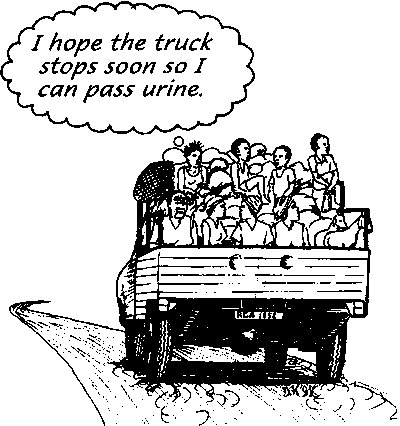
Figure
· goes for a long time without urinating (for example, when traveling). Germs that stay in the urine system for a long time can cause an infection. Try to pass urine every 3 to 4 hours.· does not keep her genitals clean. Germs from the genitals - and especially the anus - can get into the urinary opening and cause infection. Try to wash the genitals every day, and always wipe from front to back after passing stool. Wiping forward can spread germs from the anus into the urinary opening. Also, try to wash your genitals before having sex. Keep the cloth and pads used for your monthly bleeding very clean.
· has a disability, especially those from backbone (spinal cord) injuries, or with a loss of feeling in the lower body. For more information, see the books Where There Is No Doctor and Disabled Village Children.
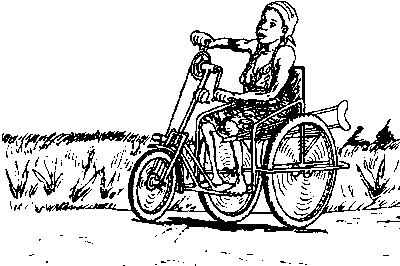
Figure
¨ Teach little girls the correct way to wipe after passing stool.
Signs and treatment
|
Bladder infection signs: · need to pass urine very often. (It may also feel as though some urine is still left inside.)
Kidney infection signs: · any bladder infection signs If you have signs of both a bladder and a kidney infection, you probably have a kidney infection.
When a woman has a kidney infection, she may be in great pain and feel very ill. This can be very frightening. If this happens to you, try to get a family member or a neighbor to help you get to a health worker or health post. IMPORTANT |

Treatment for a bladder infection:
Bladder infections can often be treated with home remedies. Start treatment as soon as you notice the signs. A bladder infection can sometimes travel quickly up the urine tubes into the kidneys.
· Drink a lot of water. Try to drink at least one cup of clean water every 30 minutes. This will make you pass urine often. Sometimes the germs will wash out of your urine system before the infection gets worse.

Figure
· Stop having sex for a few days, or until the signs have gone away.· Make a tea from flowers, seeds, and leaves that are known to help cure urine infections. Ask the older women in the community which plants will help.

Figure
If you do not feel better in I to 2 days, stop taking the home remedies and start taking the medicines in the box below. If you do not feel better in 2 more days, see a health worker. You may have an STD rather than a urine system infection.
¨ STDs, especially chlamydia, can cause a burning feeling when a woman passes urine.
IMPORTANT
Before taking any of these medicines,
especially if you are pregnant or breastfeeding, first read about them in the
“Green Pages” of this book.
|
Bladder Infection Medicines | ||
|
Medicine |
How much to take |
When to take |
|
amoxicillin |
3g (3000 mg) |
once only by mouth |
|
or | ||
|
co-trimoxazole 480 mg |
4 tablets |
once only by mouth |
|
(80 mg trimethoprim and 400 mg sulfamethoxazole) | ||
Treatment for a kidney infection:
If you have signs of a kidney infection, home remedies are not enough. Start taking these medicines right away. But if you do not start to feel better after 2 days, see a health worker.

Figure
|
Kidney Infection Medicines | ||
|
Medicine |
How much to take |
When to take |
|
amoxicillin |
500 mg |
3 times a day, by mouth, for 10 days |
|
or | ||
|
co-trimoxazole 480 mg |
2 tablets |
2 times a day, by mouth, for 10 days |
|
(80 mg trimethoprim and 400 sulfamethoxazole) | ||
|
If you cannot swallow medicines because you are vomiting, take: | ||
|
ampicillin |
500 mg |
Inject into a muscle 4 times a day. |
|
or | ||
|
gentamicin |
80 mg the first time only, then 60 mg each other time |
Inject into a muscle 3 times a day. |
|
When you can swallow medicine again without vomiting, stop injections and continue with the medicine by mouth for kidney injections, for 7 more days. | ||
Other Problems of the Urine System
Blood in the urine
If your urine has blood in it, and if there are no other signs of a bladder or kidney infection, you may have bladder or kidney stones (see below). Or you may have one of these diseases, if they are common in your community:
· Bilharzia (blood flukes, schistosomiasis) can cause permanent damage to the urine system if it is not treated early enough. See a health worker trained in problems of the urine system for treatment, and to learn how to prevent bilharzia from happening again. For more information about bilharzia, see Where There Is No Doctor or another general medical book.· Tuberculosis (TB) can damage the bladder and kidneys.

Figure
Kidney or bladder stones
These are small hard stones that start to grow in the kidney, and then move through the urine system.
Signs:
· Sudden, very bad pain:
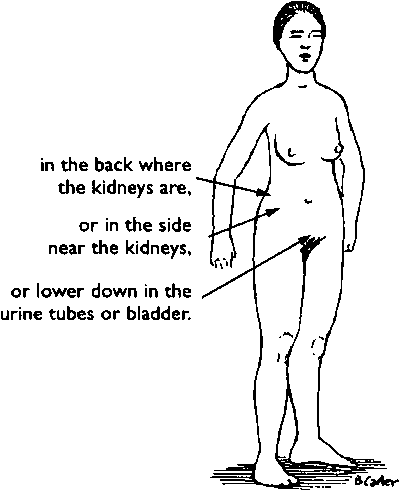
Figure
Other signs are:
· Blood in the urine. This can happen if the stones scratch the inside of the urine system.
· Difficulty passing urine. This can happen if a stone blocks the tubes.
Treatment:
· Drink large amounts of liquid (at least 1 or 2 cups every 30 minutes). This will help wash the stone out of the kidney and down the urine tube.· Take a pain medicine. If the pain is very bad, get medical help.

Figure
Sometimes the blocked urine tubes become infected. Treat this problem the same way you would treat a kidney infection.
Need to pass urine often
This may happen because:
· the muscles around your bladder and womb have become weak. The ‘squeezing exercise’ may help strengthen these muscles.· a growth (like a fibroid) in your abdomen is pushing against the bladder so it cannot hold much urine.
· you have a bladder infection.
· you have diabetes.
Figure
Leaking urine
Poor control of urine (incontinence)
This can be caused by weak or damaged muscles around the bladder. It happens mainly to older women or to women after childbirth. The urine leaks out when a woman puts pressure on the weak muscles in her lower belly during sex, or by laughing, coughing, sneezing, or lifting. The ‘squeezing exercise’ may help.
Urine leaking from the vagina (vesico-vaginal fistula, VVF)
When a woman leaks urine all the time, she may have a hole between her vagina and bladder. (Sometimes the hole is between the rectum and the vagina, and stool leaks out.)
This serious problem happens as a result of a blocked birth. It happens to girls who have babies when they are very young, before their bones are fully grown. The problem can also happen to older women who have had many babies, if their muscles are no longer strong enough to push a baby out. In both cases, it is difficult for the baby to get out. Its head presses on the skin between the bladder and the vagina, and damages the skin. This causes an opening (fistula) to form between the bladder and the vagina. Often the baby is born dead.
After the birth, the fistula does not heal and urine leaks from the bladder out through the vagina all the time. The girl or woman has to wear a cloth or pad all day and night to catch the urine.
If she cannot get help, fistulas can cause serious problems for a girl or woman in her daily life. Her husband, family, and friends may avoid her because she smells of urine all the time.
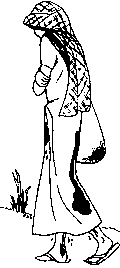
This girl’s husband was
embarrassed by the smell of her leaking urine. He made her leave his
house.
Treatment:
After the birth, if you are leaking urine or stool, talk with a health worker as soon as possible to find out if she or he knows of a hospital where the fistula can be repaired. You should go to the hospital as soon as possible. If you cannot get to the hospital quickly, the health worker may know how to put in a plastic or rubber tube (catheter) through the urine hole into the bladder. This tube will drain the urine and may help the fistula heal. But you must still go to the hospital. When you get there, the doctor will examine you to see if the fistula has healed or if you need an operation to repair the fistula.
¨ If you have leaking urine after giving birth, seek medical help right away.
Do not despair. The problem can often be made better.
IMPORTANT
To help prevent infection while the
tube is in, drink a lot of fluid (at least 10 to 12 cups a day). This will make
you pass urine often and flush out germs.
Prevention:
· Avoid marriage and pregnancy until a girl is fully grown.· If a girl under 17 is pregnant, she should try to see a trained midwife or health worker as soon as possible to find out how to have the safest birth.
· Do not have babies too close together, so that your muscles can get strong again in between births.
Figure
|
The squeezing exercise This exercise can help strengthen weak muscles that cause you to pass urine often or to leak urine. First practice while you are passing urine. As the urine comes out, stop it by tightly squeezing the muscles in your vagina. Count to 10, then relax the muscles to let the urine come out. Repeat this several times whenever you urinate. Once you know how, practice the squeezing exercise at other times during the day. No one will know. Try to practice at least 4 times a day, squeezing your muscles 5 to 10 times each time.
Some women may need surgery to help control leaking urine. If your urine leaks a lot and this exercise does not help, get advice from a health worker trained in women’s health. The squeezing exercise is good for all women to do every day. It helps keep muscles strong and can prevent problems later in life. |
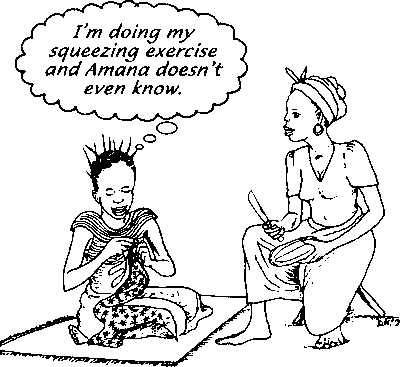
When You Have Problems Passing Stool or Urine
Many women (and men) do not have normal control over when they pass stool or urine (especially persons who are near death, or who have a spinal cord injury, or a disability that affects the muscles of the lower body). This can be inconvenient and embarrassing. It can also cause skin problems and dangerous infections, so it is important to stay clean, dry, and healthy.
Bowel control
This information will help those persons who have hard stools (constipation) or who have difficulty passing stool. You can learn to help the stool come out when it is easiest for you. The bowels work best when you are sitting rather than lying, so try to remove the stool when you are sitting on a toilet or pot If you cannot sit, try to do it lying on your left side.
How to remove stool:
1. Cover your hand with a plastic or rubber glove, or a plastic bag. Put oil on your pointing (index) finger (vegetable or mineral oil both work well).

To keep your finger clean, use
a thin rubber glove or ‘fingercot’.
2. Put your oiled finger into the anus about 2 cm (1 inch). Gently move the finger in circles for about I minute, until the muscle relaxes and the stool pushes out

Figure
3. If the stool does not come out by itself, remove as much as you can with your finger.4. Clean the anus and the skin around it well, and wash your hands.
|
To prevent hard stools: · drink lots of water every day. · exercise or move your body every day. |
|
Bladder control

catheter
Sometimes it is necessary to remove urine from the bladder by using a rubber or plastic tube called a catheter. Never use a catheter unless it is absolutely necessary. Even careful use of a catheter can cause infection of the bladder and kidneys. So it should only be used if someone has a:
· very full, painful bladder and cannot pass urine.
· vesico-vaginal fistula (VVF).
· disability or injury, and cannot feel the muscles that control passing urine.
|
How to put in a catheter 1. Boil the catheter (and any syringe or tool you may be using) for 15 minutes.
2. Wash well with soap and clean water between the folds of the vulva and skin around the genitals.
3. Wash your hands. After washing, only touch things that are sterile or very clean.
4. Put very clean cloths under and around the genitals.
5. Put on sterile gloves, or rub hands well with alcohol or surgical soap.
6. Cover the catheter with a sterile lubricant (slippery cream) that dissolves in water (not oil or petroleum gel).
7. Open the folds of the vulva and wipe the opening with a sterile cotton cloth made wet with soap and clean water or with a solution of I teaspoon of povidone iodine to I cup of clean water.
8. If you do this for yourself, use a mirror to help you see where the urinary opening is, and use your pointing (index) finger and third finger to hold the folds of the vulva open. The urinary opening is below the clitoris almost at the opening to the vagina.
9. Then, with your middle finger, touch below your clitoris. You will feel a sort of small dent or dimple, and right below that is the urinary opening. Keep your middle finger on that spot, and with your other hand, take the clean catheter and touch the tip to the end of your middle finger, and gently guide the catheter into the opening until urine starts to come out.
You will know if the catheter goes into the vagina instead of the urinary opening because it will go in easily, but no urine will come out. Also, when you remove it, the catheter will have discharge (mucus from the vagina) in it. Try again with a clean catheter. IMPORTANT |
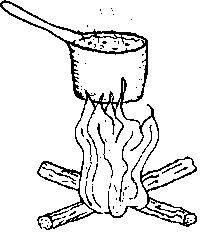
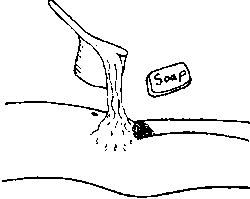
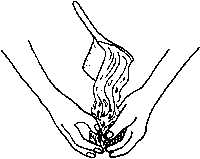
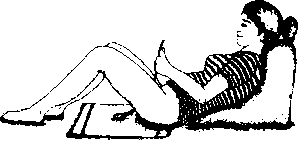
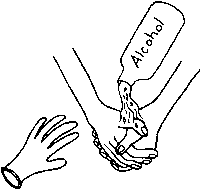
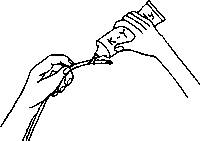
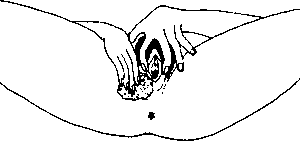
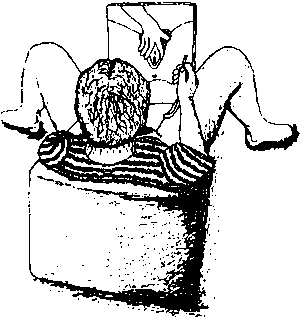
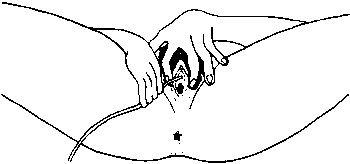
|
| ||||||||||||||||||||||||||||||||||||||||||||||||||||||||||||||||||||||||||||||||||||||||||||||||||||||||||||||||||||||||||||||||||||||||||||||||||||||||||||
Where Women Have No Doctor - A Health Guide for Women (Hesperian Foundation, 1997, 600 p.)
Chapter 24: Cancer and Growths
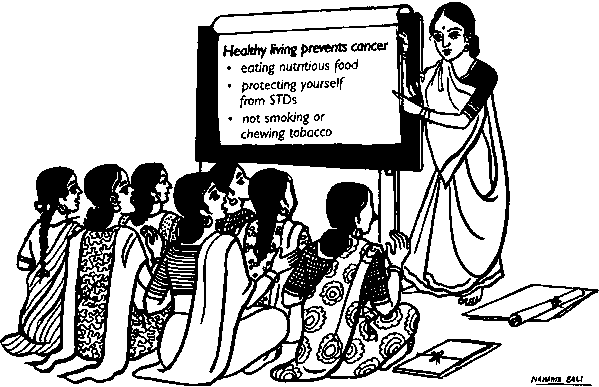
Figure
Cancer is a serious sickness that can affect many different parts of the body. If it is treated early it is often curable, but if left too long it can cause death. Many people who get cancer die from it, especially those with little access to health care.
Women often do not see a health worker or doctor unless they are very sick. So women who get cancer are more likely to get very sick or die because the cancer is not found early enough. Also, women who get cancer are sometimes considered ‘cursed’ and may be shunned by their families or communities. This isolation is not only bad for the women who are sick, but also for the whole community, since it keeps everyone from knowing about how cancer makes people sick.
WHAT IS CANCER?
All living things, like the human body, are made up of tiny cells that are too small to see without a microscope. Sometimes these cells change and grow in an abnormal way, causing growths (tumors). Some growths go away without treatment. But some growths get larger or spread and may cause health problems. Most growths do not become cancer, but some do.

Figure
Cancer starts when some cells begin to grow out of control and take over parts of the body. When cancer is found early, it can often be removed by surgery, or treated with medicines or radiation, and the chance of it being cured may be good. Once cancer spreads, however, curing it is more difficult and eventually becomes impossible.
¨ ‘Tumor’ is another word for growth or swelling. Some tumors are cancer and some are not.
Cancer
Cancer of the cervix, breast, and womb are the most common ‘women’s’ cancers. Other common cancers that both men and women get are cancer of the lung, colon, liver, stomach, mouth, and skin.
Causes of cancer
The direct causes of most cancers are not known. But these things may make you more likely to get cancer:
· smoking tobacco, which is known to cause lung cancer, and also increases the risk of getting most other cancers· certain viral infections, like hepatitis B or genital warts
· eating foods with too much fat or with harmful chemicals
· using some medicines, like hormones, incorrectly
· working with or living around certain chemicals (like pesticides, dyes, paints, and solvents)
· living or working near nuclear power plants
Also, if others in a woman’s family (blood relatives) have had a certain kind of cancer, this may mean she is more likely to get that same kind of cancer (this is called a hereditary risk).
¨ Cancer is not an infection. It is not ‘catching’ and cannot spread from one person to another.

Figure
Healthy living can prevent many cancers. This means eating nutritious food and avoiding things that may cause cancer. For example:
· Do not smoke or chew tobacco.· Try to avoid harmful chemicals in your home or workplace, including foods grown or preserved with them.
· Protect yourself from sexually transmitted diseases (STDs).

Figure
Finding and treating cancer early
Finding cancer early can often save a woman’s life, because she can get early treatment, before the cancer spreads. Some cancers have warning signs that show something may be wrong. But usually, to find out if you have cancer, you must have a test that takes a few cells from the part of your body where the cancer may be. Then the cells must be examined with a microscope, by someone who is trained to recognize cancer

Cancer cells are so small, you
need a microscope to see them.
Cancers that do not have early signs can often be found with screening tests, routine tests given to people to see if everything is normal. A Pap test for cancer of the cervix is one kind of screening test.
If you have warning signs, or a test shows something may be wrong, do not wait. Follow the advice in this chapter for finding and treating the problem as soon as possible.
Problems of the Cervix (the Opening of the Womb)
Common problems of the cervix
Nabothian cysts are small blisters or bumps on the cervix that are filled with fluid. There are no signs, but they can be seen during a pelvic exam (with a speculum). These cysts are harmless, so no treatment is needed.
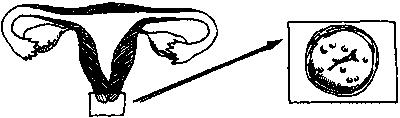
Nabothian cysts on the
cervix
Polyps are dark red growths, sometimes found at the cervix. They also grow inside the womb. For more about them, see ‘Common Growths of the Womb’.
Inflammation of the cervix. Many infections of the vagina - like trichomonas - and some STDs affect the cervix, and can cause growths, sores, or irritation and bleeding after sex. For information about those types of problems, including treatment, see the chapter on “Sexually Transmitted Diseases and Other Infections of the Genitals.”
Figure
Cancer of the cervix
Cancer of the cervix is the most common cancer in the less-developed world. The main cause is a virus - human papilloma virus, or HPV - which is the same virus that causes genital warts. This cancer grows slowly for about 10 years, and if it is treated early it can be completely cured. But many women die every year from cancer of the cervix because they never knew they had it.

Figure
A woman is at greater risk of getting cancer of the cervix if she:
· is older than 35.
· began to have sex at a young age (within only a few years of starting her monthly bleeding).
· has had many sex partners, or has a partner who has had many sex partners.
· has had frequent STDs, especially genital warts.
· has HIV/AIDS.
· smokes tobacco.
Figure
Warning signs:
There are usually no outward signs of cancer of the cervix until it has spread and is more difficult to treat. (There are often early signs on the cervix, which can be seen during a pelvic exam. This is why regular exams are so important.)
Abnormal bleeding from the vagina, including bleeding after sex, or an abnormal discharge or bad smell from the vagina can all be signs of a serious problem, including advanced cancer of the cervix. If you have any of those signs, try to get a pelvic exam and a Pap test.
IMPORTANT
If you are treated with medicines for
a vaginal discharge and do not get better, you should try to have your cervix
examined and get a Pap test to look for cancer.
Finding and treating cancer of the cervix
Because cancer of the cervix does not have early warning signs, but can be cured if it is found early, it is good to be tested for it regularly, if possible. The tests are designed to look for abnormal tissue on the cervix. Such tissue may be slightly abnormal (mild dysplasia), more abnormal (severe dysplasia), or early cancer (before it has spread).
¨ If you are a health worker, try to get training in testing for cervical cancer. Encourage your community to offer cancer screening.
The Pap test
The most common test is the Pap test. For this test, a health worker scrapes some cells from the cervix (this is not painful) during a pelvic exam and sends them to a laboratory to be examined with a microscope. When you have this test, you must return for the results, usually after several weeks.
Visual inspection
A new, low-cost method of screening women for cancer of the cervix uses a vinegar solution (acetic acid) which is painted on the cervix, and turns abnormal tissue white. The cervix is examined, sometimes with the aid of a small lens that makes it easier to see. If a woman has abnormal tissue, she may need other tests or treatment.
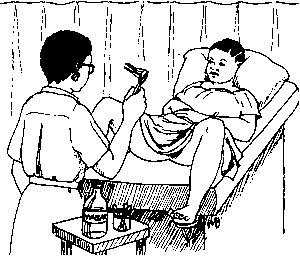
Regular testing for cancer of
the cervix can save many lives.
Other tests used to find cancer
· Biopsy. A piece of tissue is taken from the cervix and sent to a laboratory to be examined for cancer cells.· Colposcopy. This tool, available in some hospitals, magnifies the cervix (makes it look bigger) so it is easier to see signs of cancer
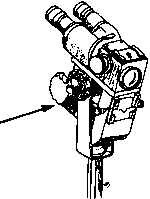
Figure
|
How often women should be tested To find cancer of the cervix early enough to treat it simply and successfully, women should be tested at least every 3 years. In places where this is not possible, women should try to get tested at least every 5 years, especially women over 35. You should be tested more often, if possible, when: · you are more at risk for developing cancer of the cervix. · you have a Pap test that shows some slightly abnormal cells. These cells often do not become cancer, and they return to normal in 2 to 3 years. But since those cells could be early signs of cancer, you should have another Pap test in 1 to 2 years to make sure cancer is not growing. |
|
Treatment:
If a test shows that you have severe dysplasia or a more advanced cancer, you will need treatment You and your doctor should decide together what treatment is best. Treatment in the early stages can be simple, using methods that remove or destroy the cancer tissue.
Figure
In some places a method called cryotherapy is available, which freezes the cervix and kills the cancer. Another treatment is to remove part of the cervix (cone biopsy). If it is available, this treatment may be best if you still want to have children and the cancer has not spread, because you can keep your womb. When cancer is found and treated before it spreads, it can be cured.
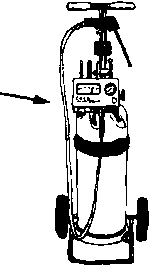
Figure
¨ You may need to go to a large, special hospital for cancer treatment.
If the cancer is found after it has grown for a long time, it may have spread beyond the cervix to other parts of the body. In this case you will usually need surgery to remove both the cervix and womb (hysterectomy). Sometimes radiation therapy can help.

Figure
Deaths from cancer of the cervix can be prevented
When people do not know about the risks for cancer of the cervix and how finding it early can prevent death, more women die. To change this, we can:
· learn what increases a woman’s risk, and work together on finding ways to reduce these risks. It is especially important for girls to be able to wait until they are grown women before having sex. All women also need to be able to protect themselves from STDs.· learn about cancer screening. Finding cancer of the cervix early can save lives.
In some parts of the world Pap tests are available to women who live near hospitals. Other women are able to get Pap tests from clinics that offer maternal and child health services, family planning, and treatment for STDs.
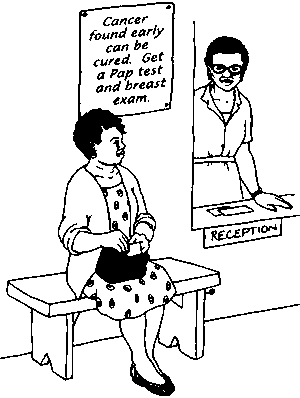
Figure
Developing screening programs may seem too costly but it is cheaper than treatment. Screening programs can help the most women while costing the least if they:
· target older women. Young women can also get cancer of the cervix, but women over 35 are most at risk.· test as many women as possible, even if this means testing them less often. Testing all women at risk every 5 to 10 years will find many more cancers than testing only some women more often.
· train local health workers in how to give Pap tests and do visual inspection.
Problems of the Womb
Common growths of the womb
Fibroid tumors
Fibroids are growths of the womb. They can cause abnormal bleeding from the vagina, pain in the lower belly, and repeated miscarriage (losing a pregnancy). They are almost never cancer.
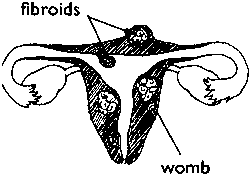
Figure
Signs:
· heavy monthly bleeding or bleeding at unusual times of the month
· pain or a heavy feeling in the lower belly
· deep pain during sex
Finding and treating fibroids
Figure
Fibroids are usually found during a pelvic exam. The womb will feel too large or be the wrong shape. A test called an ultrasound, if it is available, can show how large the fibroids are.
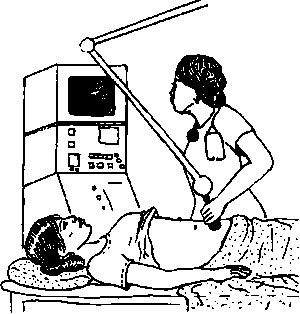
An ultrasound test can show
how large fibroids are.
If fibroids cause problems, they can be removed with surgery. Sometimes the whole womb is removed. But most of the time, surgery is not necessary because fibroids usually become smaller after menopause and stop causing problems. If monthly bleeding is heavy because of fibroids, anemia may develop. Try to eat foods rich in iron.
Figure
Polyps
Polyps are dark red growths that can grow inside the womb or at the I cervix. They are rarely cancer.
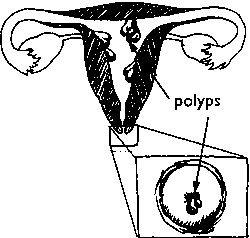
Figure
Signs:
· bleeding after sex
· heavy monthly bleeding or bleeding at unusual times of the month
Finding and treating polyps
Polyps at the cervix can be seen and removed easily and painlessly during a pelvic exam by someone who has been trained. To find polyps inside the womb, the inside of the womb must be scraped out (this is called a D and C). The D and C also removes the polyps. The growth is sent to a laboratory to make sure there is no cancer. Once polyps are removed, they usually do not grow back.
Figure
Cancer of the womb (cancer of the uterus, endometrial cancer)
Cancer of the womb usually starts in the lining inside the womb (the endometrium). If it is not treated it can spread to the womb itself and to other parts of the body. This cancer happens most often to women who:
· are over 40 years old, especially if they have gone through menopause.
· are overweight.
· have diabetes.
· have taken the hormone estrogen without also taking progesterone.
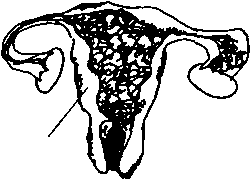
Cancer of the womb

Figure
Signs:
· heavy monthly bleeding
· irregular monthly bleeding, or bleeding at unusual times of the month
· bleeding after menopause
IMPORTANT
If you have any bleeding at all, even
light spotting, after you have finished menopause (12 months without monthly
bleeding), get checked by a health worker to make sure you do not have
cancer.
Finding and treating cancer of the womb
To find out if a woman has cancer of the womb, a trained health worker must scrape out the inside of the womb with a D and C, or do a biopsy, and send the tissue to a laboratory to be checked for cancer. If cancer is found, it must be treated as soon as possible with an operation to remove the womb (hysterectomy). Radiation therapy may also be used.
Figure
|
Hysterectomy
In a hysterectomy, sometimes only the womb is removed and sometimes the tubes and ovaries are also removed (total hysterectomy). Since your ovaries make hormones that help protect you against heart disease and weak bones, it is always better to leave them in, if possible. Talk to a doctor about this. |
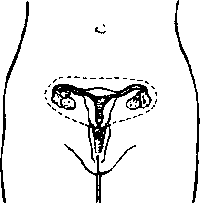
If cancer of the womb is found early, it can be cured. If it is more advanced, curing it is more difficult.
IMPORTANT
Any woman who is over 40 years old and
has unusual bleeding should get checked by a health worker.
Figure
Problems of the Breasts
Breast lumps

Figure
Breast lumps are very common in most women, especially soft, fluid-filled ones (called cysts). These usually change during a woman’s monthly cycle, and sometimes feel sore or painful when pressed. Few breast lumps are cancer. But since breast cancer is always a possibility, a woman should try to examine her breasts for lumps once a month (see ‘warning signs’ below).
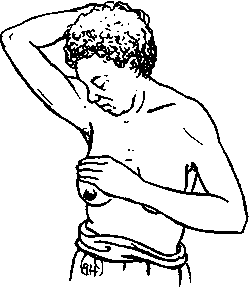
Figure
Discharge from the nipple
Milky or clear discharge from one or both nipples is usually normal if a woman has breastfed a baby within the last year. Brown, green, or bloody discharge - especially from only one nipple - could be a sign of cancer Get checked by a health worker who can examine your breasts.
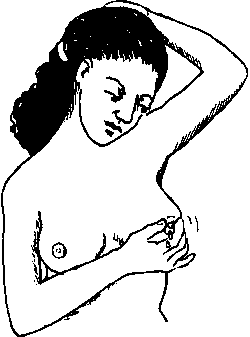
Figure
Breast infection
If a woman is breastfeeding a baby and gets a hot, red sore area on the breast, she probably has mastitis, or an abscess. This is not cancer and is easily cured. If the woman is not breastfeeding, it may be a sign of cancer
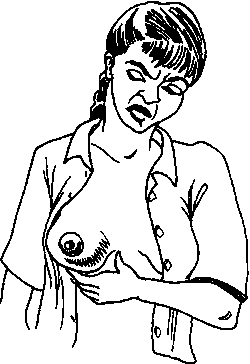
Figure
Figure
Cancer of the breast
Breast cancer usually grows slowly. If it is found early, it can sometimes be cured. It is hard to tell who will get breast cancer. The risk might be greater for a woman whose mother or sisters have had breast cancer, or for a woman who has had cancer of the womb. Breast cancer is more common in women over age 50.
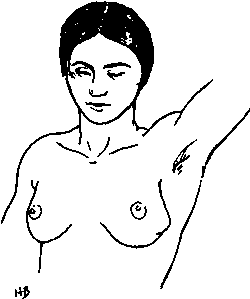
Figure
Warning signs:
· a hard painless lump with a jagged shape, that is in only one breast and does not move under the skin· redness, or a sore on the breast that does not heal
· skin on the breast that is pulled in, or looks rough and pitted, like orange or lemon peel
· a nipple that is pulled inward
· abnormal discharge from a nipple
· sometimes, a painful swelling under the arm
· rarely, pain in the breast
If there is one or more of these signs, get help from a trained health worker right away.
Finding and treating breast cancer
Figure
If you examine your breasts regularly, you are likely to notice if there are any changes or if a new lump develops. A special X-ray called a mammogram can find a breast lump when it is very small and less dangerous. But mammograms are not available in many places, and they are very expensive. And it cannot tell for sure if a lump is cancer.
The only way to know for sure that a woman has breast cancer is with a biopsy. For this, a surgeon removes all or part of the lump with a needle or a knife and has it tested for cancer in a laboratory.
Treatment depends on how advanced the cancer is and what is available where you live. If a lump is small and found early, just removing the lump may be effective. But for some cases of breast cancer, an operation may be needed to remove the whole breast Sometimes doctors also use medicines and radiation therapy.
No one knows yet how to prevent breast cancer. But we do know that finding and treating breast cancer early makes a cure more likely. For some women it never comes back. In other women, the cancer may come back years later. It may come back in the other breast or, less often, in other parts of the body.
¨ See a health worker right away if you have already had breast cancer and find another lump in the breast or notice other warning signs of cancer.
Problems of the Ovaries
Cysts on the ovaries
These cysts are fluid-filled sacks that women can get on their ovaries. They happen only during the reproductive years, between puberty and menopause. A cyst can cause pain on one side of the lower abdomen and irregular monthly bleeding. But most women only find out they have a cyst if a health worker feels one during a pelvic examination.
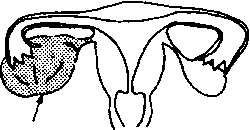
Cyst
Most cysts last only a few months and go away on their own. But some can grow very large and must be removed by surgery. If you have severe pain, see a health worker right away.
Figure
Cancer of the ovaries
Cancer of the ovaries is not common. There are usually no warning signs, but a health worker might feel an ovary that is very large while doing a pelvic examination. Surgery, medicines, and radiation therapy are all used for treatment, and cure is very difficult.
Other Common Cancers
Lung cancer
Lung cancer is a growing problem that is often caused by smoking tobacco. It is more common in men because they usually smoke more than women. But because many women now smoke as much as men, they are starting to get more lung cancer. In some countries, more women now die from lung cancer caused by smoking than from any other kind of cancer. And in many places, girls are starting to smoke as early and as much as boys. As more girls and women smoke, even more women will end up getting lung cancer.
Lung cancer does not usually affect people until they are over 40 years old. If a woman stops smoking, her risk of getting lung cancer becomes much less. The signs (coughing up blood, losing weight, difficulty breathing) appear when the cancer is advanced and difficult to cure. Surgery to remove part of the lung, medicines, and radiation therapy are all used to treat lung cancer.
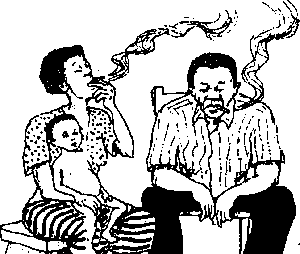
Smoking causes cancer.
¨ The signs of lung cancer are the same as tuberculosis (TB). Seek medical help if you have these signs.
Mouth and throat cancer
Mouth and throat cancer can be caused by smoking and chewing tobacco. If you smoke or chew tobacco, and have sores in your mouth that do not heal, get medical advice.
Cancer of the liver
Some people who become infected with hepatitis B develop cancer of the liver years later. Signs of liver cancer are a swollen abdomen and general weakness. See a health worker if you think you may have liver cancer.
Hepatitis B can be prevented by having safer sex and by getting vaccinated. Babies can be protected against hepatitis B by vaccination at birth. Adults can be vaccinated at any time.
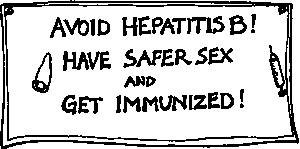
Cancer of the liver can be
caused by hepatitis B.
¨ Try to make hepatitis B vaccine available in your community.
Figure
Cancer of the stomach
Cancer of the stomach can occur in women and men over age 40. Usually there are no signs until it is advanced. Surgery is the only treatment and may not be successful.
When Cancer Cannot Be Cured
Many cancers can be cured, but others cannot, especially if the cancer has spread to several parts of the body. Also, hospitals that treat cancer are often far away, in large cities, and treatment is costly.
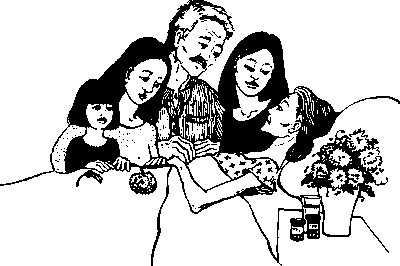
Figure
Sometimes, when cancer is found late, there is no cure. Then it may be best to stay at home in the care of your family. This time can be very difficult. Eat as well as you can and get enough rest. Medicines for pain, anxiety, and sleeping problems can make you more comfortable. Talking with someone close to you can help you prepare for death, and help you plan for your family’s future after you are gone.
Working for Change
Many unnecessary deaths from cancer could be prevented if more cancers were found and treated earlier. To help make this happen, organize women and men to promote:
· better cancer screening in local health services and rural areas.· training for local health workers to do visual inspection for cancer of the cervix, Pap tests, and breast exams.
· more labs and trained technicians to read Pap tests.
· better education and more community awareness about how cancer can be prevented, who is at risk, what the warning signs are, and the benefits of cancer screening.
· lower cost care for women who have cancer.
It is also important for women to:
· learn to do breast self-examinations.
· know the signs of cancer especially cancer of the womb, breast, and cervix.
When people in the community know more about the things that are likely to cause cancer, they may be better able to avoid them. This could prevent many cancers from starting. Help people in your community learn that they can prevent many unnecessary deaths from cancer if they avoid smoking or chewing tobacco, and if women are able to protect themselves from STDs.
|
| ||||||||||||||||||||||||||||||||||||||||||||||||||||||||||||||||||
Where Women Have No Doctor - A Health Guide for Women (Hesperian Foundation, 1997, 600 p.)
Chapter 25: Tuberculosis
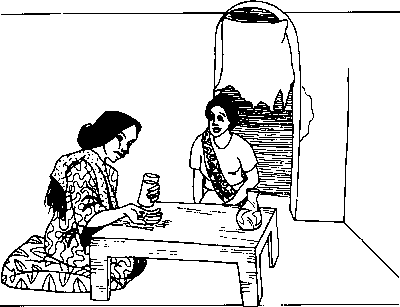
Figure
¨ With proper treatment, TB can almost always be cured.
Tuberculosis (TB) is a serious disease that usually affects the lungs. Every year TB causes more deaths than any other infectious disease - more deaths than tropical diseases, malaria, and AIDS combined. About 2 billion people (1/3 of the world’s population) carry the TB germ in their bodies. Of these, 10 million people are actually sick with TB right now.
As living and work conditions become more crowded, even more people are becoming infected or sick with TB. This is because TB spreads easily in crowded conditions - for example, in cities, slums, refugee camps, factories, and office buildings - especially in indoor areas where the air does not move much. Also, people who are infected with HIV and TB can easily get sick with TB because their immune systems are weak and unable to fight disease.
WOMEN AND TB
TB affects both men and women, but fewer women than men get treatment. Nearly 3000 women die every day from TB, and at least 1/3 die because they never knew they had the disease or because they did not receive proper treatment. It is often more difficult for a woman to get health care to cure TB because she may not be able to leave her family and work, or does not have the money to travel to a clinic. In some places a woman may not seek treatment for TB because she fears her husband will reject her as ‘sickly’ or too weak to do her work. A woman who works outside the home is often afraid she will be dismissed because her employer may think she will infect others.
¨ Caring for sick family members may also put a woman at greater risk of becoming infected with TB.
What Is TB?
TB is caused by a small germ, or bacteria. Once this germ enters a woman’s body, she is infected with TB and will remain so for many years, probably for life. Healthy people can usually fight off the sickness, and only a small number of people who are infected actually get sick with TB. About I out of 10 persons infected becomes sick with TB in his or her lifetime.

Figure
But if a person is weak, malnourished, diabetic, very young or very old, or infected with HIV, the TB germs may start to attack her body. Usually this happens in the lungs, where germs eat holes in the tissue and destroy blood vessels. As the body tries to fight the disease, the holes fill with pus and small amounts of blood.
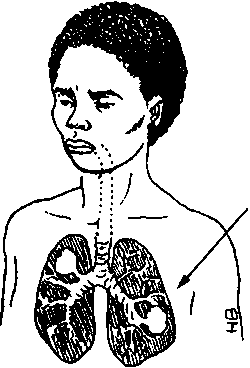
This is what lungs look like
inside the body.
Without treatment, the body starts to waste away, and the person usually dies within 5 years. If a person is infected with HIV and TB, she or he may die in a few months without treatment.
¨ Sometimes TB germs attack other body organs, the lymph nodes, or the bones and joints. This is called extrapulmonary TB. When TB germs attack the spine and brain, it is called TB meningitis.
How TB Is Spread
TB spreads from one person to another when someone who is sick with TB coughs germs into the air The TB germs can live in the air for hours.
People who are sick with TB in their lungs can spread the germs to others. People who are infected with TB but not sick with signs of TB, and those who are sick with TB in other parts of the body, are not contagious.
If not treated correctly, a person sick with TB will infect about 10 more people with TB each year. But once a person has been taking medicines for about a month, he or she is probably no longer contagious.
¨ Women who are sick with TB often infect their children and others they take care of every day.
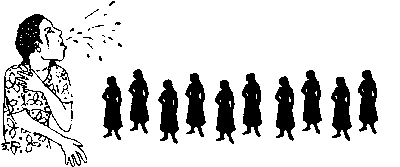
This year, about 10 people
will be infected by each person who is sick with TB
today.
How to Know if a Person Has TB
A person with these signs is likely to have TB in the lungs:
· cough for more than 3 weeks, especially if the cough brings up mucus (sputum) from the lungs· blood in the sputum
· weight loss
But the only way to know for sure that a person has TB is to have the sputum tested. To get a sample of sputum - and not just saliva (spit) - a person must cough hard to bring up material from deep in her lungs. The sputum is then examined in a laboratory to see if it contains TB germs (is positive).
A person should take at least 2 sputum tests, ideally 2 mornings in a row. If both of her sputum tests are positive, the woman should begin treatment. If only one of the 2 tests is positive, she should have her sputum tested again and, if it is positive, begin treatment. If the third test is negative, she should get a chest x-ray, if possible, to be certain that she does not need treatment.
¨ If someone with signs of TB in the lungs has negative sputum tests, she should see a health worker trained in treating problems of the lung. She may have pneumonia, asthma, or cancer of the lungs.
How to Treat TB
TB can almost always be cured if a woman has TB for the first time, and if she takes the right kinds of medicines in the right amounts for the full length of the treatment.
The treatment has 2 parts. In the first, a woman takes 3 to 4 medicines for 2 months, and then her sputum is tested. If it is negative, she begins part 2, in which she takes 2 drugs for another 4 to 6 months (a total of 6 to 8 months of treatment). When the treatment is finished, her sputum should be checked again to make sure that she has been cured.
The medicines usually given to treat TB include ethambutol, isoniazid, pyrazinamide, rifampicin, streptomycin, and thiacetazone. For information about these medicines see the “Green Pages.” But the treatments used to cure TB vary from country to country. A health worker should always follow the recommendations of the TB program in her or his country.
If a woman’s sputum is still positive after 2 months of treatment, she should see a health worker for more tests. These can show if her TB germs are resistant to the medicines.
¨ TB medicines can make hormonal methods of family planning (like birth control pills) less effective. Women being treated for TB should use a different family planning method.
|
TB treatment during pregnancy A pregnant woman should never take streptomycin, because it may cause deafness in her unborn baby. She should also avoid taking pyrazinamide whenever possible, because its effect on the baby is not known. TB medicines may cause pain and numbness in the hands and feet, especially during pregnancy. Taking 50 mg of pyridoxine (vitamin B6) daily will help. |
IMPORTANT
Persons infected with HIV must not
take thiacetazone, because it can cause their skin to peel off. If there is any
possibility that a person is infected with HIV, other medicines should be used
instead.
Anyone who is being treated for TB should follow these rules:
· Take all the medicine. Never stop treatment when you feel better. If you do stop, the illness will come back and you can infect others.· Learn which side effects are normal and which are serious for the medicines you are taking. If you have serious side effects, you should stop taking the medicines and see a health worker immediately. The health worker may have you start them again one at a time or give you a new medicine.
· Get plenty of rest and eat as well as possible. If you can, stop working until you begin to feel better.
· Keep from spreading TB germs to others. If possible, sleep separately from those who are not sick with TB for one month after starting medicines. Cover your mouth when coughing and spit sputum into a piece of paper. Throw it into a latrine or toilet, or burn it.

Figure
· If you give birth during treatment, your sputum should be tested. If it is negative, your baby should be given a BCG (Bacille Calmette-Guerin) vaccine, but no medicines. If your sputum is positive, your baby will need medicines. You do not need to be separated from your baby or to stop breastfeeding.
¨ After the first 2 months of treatment, it is sometimes possible to take medicines 2 or 3 times a week, instead of every day. Talk to a health worker to see if you can get this kind of treatment.
Resistance to TB medicines
If a person does not take enough of the right kinds of medicine, or stops taking medicines before the treatment is finished, not all the TB germs will be killed. The strongest germs will survive and multiply, and then the medicine will be unable to kill them. This is called ‘resistance’. Anyone whose sputum is still positive after 2 months of treatment may have TB germs that are resistant to the medicines she is taking. She should see a health worker trained in treating TB to get other medicines to take.
¨ If a woman is infected by someone with drug resistant TB, the germs causing her sickness will also be resistant.
Germs that have become resistant to both isoniazid and rifampicin can cause drug-resistant TB, which is very difficult to treat. The treatment takes between 12 to 18 months, and is much less successful and more expensive than treatment for ordinary TB. A person with drug-resistant TB can still spread the disease to others for several months after beginning treatment.
¨ Health workers should always ask if a person has been treated for TB before. If she has, she is more likely to have drug-resistant TB.
|
Because the treatment for TB is so long and the effects of stopping treatment are so serious, extra care should be taken to make sure that a person takes all her medicine. A health worker or community volunteer should watch the sick person take every dose and record that it is taken. This is called ‘directly observed treatment, short-course’, or DOTS. Health workers should use DOTS whenever possible, but it is most important for the first 2 months of treatment. |
Preventing TB
IMPORTANT
The best way to prevent the spread of
TB is to cure people who are sick with TB.

Figure
These things can also help:
· Encourage people to get tested for TB if they live with a person who is sick with TB and have any signs, or if they have a cough for 3 weeks or more.· Try to keep the air moving in enclosed areas. This reduces the number of TB germs in that area.
· Let sunlight in whenever possible. Sunlight helps kill TB germs.
· Immunize healthy babies and children with BCG vaccine to prevent the most deadly forms of TB. But children sick with AIDS should not get BCG vaccine.
Working for Change
Creating effective TB control in your community requires:
· community and family education about the signs of TB and how it is spread. Encourage women to seek treatment for the signs of TB.· trained health workers or community volunteers to participate in the DOTS program, and to find and work with persons sick with TB if they stop treatment early. DOTS programs must be flexible to be able to meet each person’s needs.
· a continual supply of medicines so that treatment does not get interrupted, and laboratory equipment and trained workers for testing sputum.
· a good system for keeping track of who has TB, how the treatment is going, and when a person is cured.
A good TB program must give care to all people sick with TB, including women. TB services can help more women by:
· providing care and treatment in women’s homes or as near to the home as possible.· including midwives and traditional birth attendants in TB screening and DOTS programs.
· combining TB screening and treatment with other health services women are more likely to use.
|
| ||||||||||||||||||||||||||||||||||||||||||||||||||||||||||||||||||||||||||||||||||||||||||
Where Women Have No Doctor - A Health Guide for Women (Hesperian Foundation, 1997, 600 p.)
Chapter 26: Work

Figure
Nearly every woman spends most of her life working. Women farm, prepare food, carry firewood and water, clean, and care for children and other family members. Many women also work to earn money to help support their families. Yet much of women’s work goes without notice, because it is not considered as important as men’s work.
¨ When a woman works to keep her family dean and fed, and to earn income to support her family, she is actually working two jobs.
The work women do, and the conditions in which they work, can create health problems - which often go without notice as well. This chapter describes some of these problems, their causes, and ways to treat them. But unless women’s working conditions are changed, these problems cannot really be solved. Women must work together to make these changes happen.
|
One type of work that some women do - getting paid for sex - involves some specific and serious health risks, so we have devoted a whole chapter to it. Health workers, and others who care for sick people, are at risk for getting illnesses from the people they treat. |
Cooking Fires and Smoke
Most women spend many hours a day preparing food. This puts them at risk for health problems caused by cooking fires and smoke.
FIRES
Figure
Kerosene and other liquid and gas fuels can cause explosions, fires, and burns. To use these fuels more safely:
· do not let the fuel touch your skin or drip anywhere. If it does, wash it off right away.· keep anything that can burn away from the stove. This will prevent fires from spreading and causing great damage. Store extra fuel in a safe place away from where you cook (and do not use matches or cigarettes nearby).
· put the stove where air can move freely around it.
· always be careful when lighting the stove.
SMOKE
Women who cook with fuels that produce a lot of smoke - such as wood, coal, animal dung, or crop remains - often have health problems. These fuels cause more problems when they are burned indoors where the smoke does not move out quickly. And if the fuel has chemicals in it - such as pesticides or fertilizers in the crop remains - the smoke is even more harmful.
¨ Small children who spend much of their day playing near a smoking cookstove are at greater risk for colds, coughs, pneumonia, and lung infections.
Breathing smoke from cooking fires can cause chronic coughs, colds, pneumonia, bronchitis, lung infections, and lung disease. Breathing coal smoke can also cause cancer in the lungs, mouth, and throat.
¨ Women are at greater risk for these health problems than men, because women spend more time breathing smoky air.
Pregnant women who breathe cooking smoke can suffer from dizziness, weakness, nausea, and headaches. And because a woman’s body is less able to fight infection when she is pregnant, she is even more likely to get the lung problems mentioned above. Smoke can also make her baby grow more slowly, weigh less at birth, or be born too early.
Preventing health problems from smoke

Figure
To reduce the amount of smoky air you breathe:
Cook where air can move freely. If you cannot cook outdoors, then make sure there are at least 2 openings for air in the room. This creates a draft, so the smoke will leave the room.Cook in turns with other women. This way each woman will breathe less smoke.
Find ways to prepare food that require less cooking time (but still cook foods completely). This way you will breathe in less smoke, and you will also use less fuel. Food cooks more quickly and completely if you:

protect the fire from wind. A
nest of rock, clay, or iron sheets can help keep heat around the pot.
Use stoves that produce less smoke. This is the best way to prevent health problems caused by cooking smoke. Stoves that burn less fuel and produce very little smoke may be available in your area, but they can also be made easily with local materials.
¨ Smoke is a sign that fuel is being wasted, since it is caused by fuel that does not burn completely. Finding ways to cook with less smoke can save money as well.
|
Stoves burn less fuel and produce less smoke when they have: · protective lining (insulation) between the fire and the outside of the stove. Materials that trap a lot of air - like ash, pumice rock, dead coral, or aluminum foil - keep heat inside, instead of escaping out of the sides of the stove. This keeps the fuel burning hotly, which reduces smoke. Avoid using clay, heavy rock, sand, cement, and brick to prevent heat escaping from your stove because they do not trap enough air. · a small burning chamber that allows you to burn one end of a piece of fuel in the chamber while the rest of the fuel stays outside. As the part inside burns, you can push the fuel further in. |
|
|
How to make a stove and cooker that reduce smoke The rocket stove This is one example of a stove that is easy to make. You may need to adapt it for the fuel you use and the materials available in your area. You will need: · a large (5 gallon) can, such as a cooking oil can, soy sauce can, large paint can (well-cleaned), or a can that medical supplies were packed in. This will be the body of the stove. Cinderblocks or bricks may also be used, but a large can is better because it is thin and does not absorb as much heat.
· a 4-inch wide metal stove pipe with a 90-degree bend (elbow) in it. The pipe on one side of the elbow should be longer than the pipe on the other side. You will also need a straight stove pipe to attach to the short end of the elbow. These pipes will be used to create the burning chamber and chimney for your stove. (4 or 5 tin cans with their tops and bottoms cut out can be used instead of stove pipes.)
· insulation such as wood ash, pumice rock, vermiculite, dead coral, or aluminum foil.
· tin snips and a can opener for cutting the metal. · extra metal for creating a ‘skirt’ around the pot.
· grating or thick fencing for the top of the stove, where the pot rests for cooking. How to make the stove: 1. Use the can opener or tin snips to take the lid off the big can. Cut a 4-inch round hole in the middle of the lid for the chimney. Cut another 4-inch round hole in the lower front side of the can, about I inch up from the bottom of the can, for the burning chamber. The holes you cut should fit around your stove pipe or tin cans.
2. Place the stove pipe with the elbow inside the can so that one end sticks out of the front of the can. Make 2 parallel cuts 1/2 inch apart at the long end of the pipe and bend the section back to create a lip. This way the pipe will not slip back into the can. The long section of this pipe will be the burning chamber (where the fuel burns). Attach a straight section of pipe to the short end of the elbow to make a chimney that ends 1 inch below the top of the can. Make a lip on this pipe, too, so the top of the pipe will not fall into the can. Note: A chimney made from tin cans will only last 1 to 3 months, and then you will need to replace it. To prevent this, try making a fired clay chimney with a mixture of 3 parts sand and 2 pans day. Put this clay around the chimney of tin cans. When the cans burn through, you will have a day chimney supported by all the insulation packed around it. 3. Fill the body of the stove, around the chimney, with insulation such as wood ash. 4. Replace the can lid over the insulation and around the chimney.
5. Use a tin can to make a shelf inside the burning chamber. Remove the ends of the can and flatten it. Then cut it into a T shape that will fit inside the pipe. The top of the T will stick out and keep the shelf from slipping inside. Place a brick or rock under the outside part of the shelf to support the twigs while they are burning. 6. Use your grating or fencing for resting the pot on the top of the stove.
If you need to cook inside, place the stove near a wall with an opening in it. The smoke can climb along the wall and leave the building 7. Make a skirt with extra metal. It should surround the pot, leaving a 1/4- inch gap between the skirt and the pot at its base. For an even better skirt, make a double skirt and put insulation between the 2 sheets of metal.
The haybox cooker To save even more fuel, use a haybox cooker to keep food warm or to simmer it after it has come to a boil on your stove. This cooker can cut fuel use by more than half when cooking beans, meat, rice, or grains. Rice and grains will use 1/3 less water, because not as much water will evaporate.
Make a haybox by lining a cardboard box with 4 inches of hay (or use straw, sawdust, old clothing, feathers, chaff, cotton, wool, styrofoam, or corrugated cardboard). Leave space inside the box for your cooking pot and for more insulation on top of the pot. The lid of the box should fit tightly. When using the haybox cooker, remember: · food cooked in the haybox takes 1° to 3 times longer to cook than over a fire. · keep the pot closed and boil meat dishes again before eating. This prevents bacteria from infecting your food. |
|

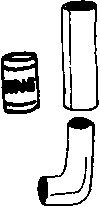


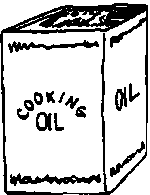

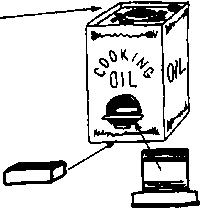

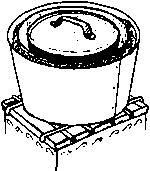

For more information on stove and oven designs, including easy-to-build solar stoves, contact Aprovecho Research Center.
Lifting and Carrying Heavy Loads
HEALTH PROBLEMS
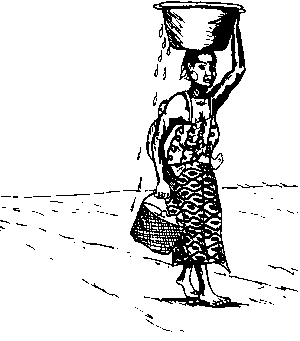
Figure
Women everywhere suffer from back and neck problems, usually from heavy lifting during their daily work. Carrying water, wood, and older children for long distances can cause serious strain.
Young girls who carry many heavy loads - especially water - have problems with the back and spine (backbone). Their pelvic bones also develop poorly, which can lead to dangerous pregnancies later on.
Carrying heavy loads can cause young women to suffer more miscarriages, and can make older women and those who have recently given birth more likely to have fallen womb (prolapse).
Prevention:
How to lift safely:
· Use leg muscles - not back muscles - when lifting. When you lift objects or children from the ground, kneel or squat to pick them up rather than bending over.· Keep your back, shoulders, and neck as straight as possible.

Figure
· Do not lift or carry heavy objects during pregnancy or right after childbirth.· Get someone to help you lift heavy objects. It may seem quicker to lift something by yourself. But later on you may lose time because of a back injury.
¨ It is easier to prevent back problems than to cure them. Whenever possible, let your legs do the work - not your back.
How to carry safely:
· Carry objects close to your body.· If possible, carry objects on your back rather than on the side of your body. This way the muscles on one side of your back do not need to do all the work. Carrying loads on your side also makes your spine twist too much. This can cause back strain.
· If you must carry objects on one side, try to switch sides often. This way the muscles on both sides of your back are working the same amount, and your spine twists both ways. Or split the load and carry it on both sides.
· Try to avoid using head straps. They can strain your neck muscles.
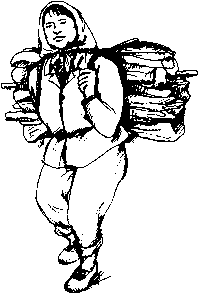
Figure
If you already have back problems:
· Sleep on your back with a rolled cloth or pillow under your knees. Or sleep on your side with some rolled cloth behind your back and another between your knees to keep your body straight and support the spine.· Do the exercises on the next page every day to strengthen the muscles in your back and lower belly. Stop if any of these exercises cause pain.
· Try to keep your back as straight as possible during the day. Do not slump forward.
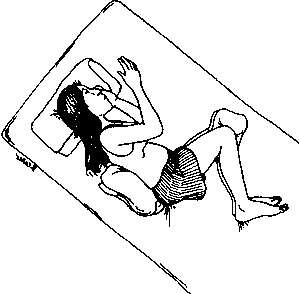
Figure
|
Bending
Bending forward for long periods of time - which women often do when washing, farming, or with other chores - can cause back strain. If you must work this way, try to stretch often. If you start to feel pain in your back, it can help to try some different positions, like squatting or kneeling. Change positions often.
|
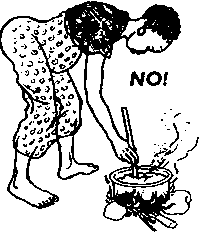
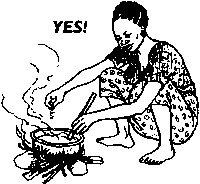
|
Exercises to relax and strengthen your back and belly muscles: Try to do these exercises every day, in the order that they are listed: 1. Stretching your lower back. Lie on your back and hug your knees. Hold this position for 10-15 seconds as you breathe deeply. As you breathe out, gently rock your knees even closer to your chest to increase the stretch. Repeat 2 times, or until you feel some release in your lower back.
2. The twist. Lie on your back with your arms straight out from your sides. Bend your knees, and then move them slowly to one side. At the same time, turn your head to the opposite side, trying to keep your shoulders flat on the ground. Stay in this position as you breathe in and out a few more times. Then raise your knees to the center, and slowly bring them over to the other side. Turn your head the other way. Repeat this exercise 2 times on both sides, or until you feel some release in your lower back.
3. The pelvic tilt. Lie on your back with your knees bent. Flatten your lower back onto the floor Slowly tighten your lower abdominal and buttock muscles and hold as you count to 3. Keep breathing as you hold. Then relax. As you do, your back will curve up the way it normally does. Repeat.
|
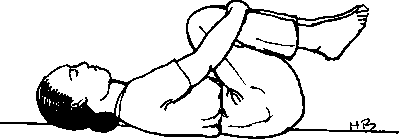

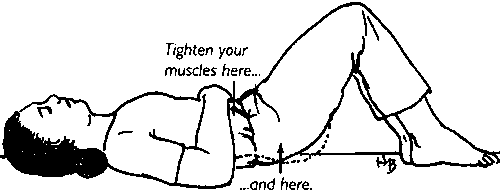
Work with Water

Figure
Women must often find and carry all the water for their families. Women also do most of the washing and cleaning, and are usually the ones who bathe children. All of these tasks are important for a woman’s health and the health of her family.
However, these same tasks can cause health problems.
Health problems from work with water:
· Women who spend long hours in contact with contaminated water are exposed to parasites and germs that live in and near water. These women are more likely to get infected with bilharzia, guinea worm, the germs that cause river blindness and cholera, and other parasitic diseases.· Women who live downstream from a factory or large farms may be exposed to chemicals in the water. Chemicals can cause many health problems.
· Water is one of the heaviest things women must carry, so collecting and carrying it can cause back and neck problems, as well as other health problems.
¨ For information about how to treat these infections, see Where There Is No Doctor.
Prevention:
Clean water helps keep everyone healthy. All over the world, people are working together to improve health by organizing community water projects. But women are often left out of the meetings and decisions about these projects, such as where to put community taps, where to dig wells, and what kind of system to use.
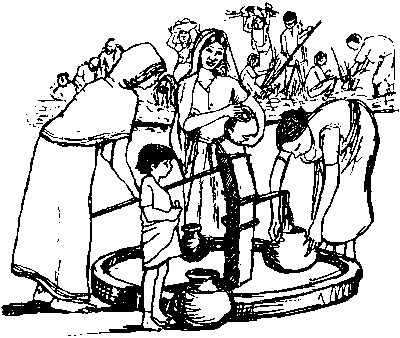
Figure
If your community does not have easy access to clean water work with others to plan and organize a water project. If your community already has a water system, ask for women to be trained in how to fix and take care of the system used for the water supply.

Women should help take care of
the system used for the water supply.
¨ If you live downstream from a factory that dumps chemicals into the water, try to organize your community to work for better conditions.
Work with Chemicals
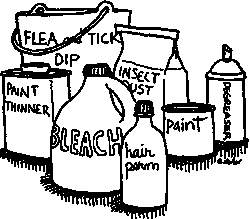
Figure
Many women have contact with dangerous chemicals, often without knowing it. This is because many modern products used in daily life and at work contain hidden chemicals. Some of them can be very harmful, such as:
· pesticides, fertilizers, weed killers, and animal dips.
· paints, paint thinners, paint remover and solvents.
· fuels and pottery glazes with lead in them.
· cleaning products containing bleach and lye.
· hair dressing products.
HEALTH PROBLEMS
Some chemicals cause harm to your body right away. Others cause harm that shows up later on, even after you have stopped using the chemicals. Some damage lasts only a short time. Other damage is permanent.
¨ Avoid all unnecessary contact with chemicals.
|
Signs of health problems caused by chemicals:
IMPORTANT: Other general warning signs: · You feel nervous or irritable. If you cannot explain why any of these problems are happening to you, they may be caused by chemicals, especially if you are using solvents or cleaning fluids, pesticides, or materials containing lead. |
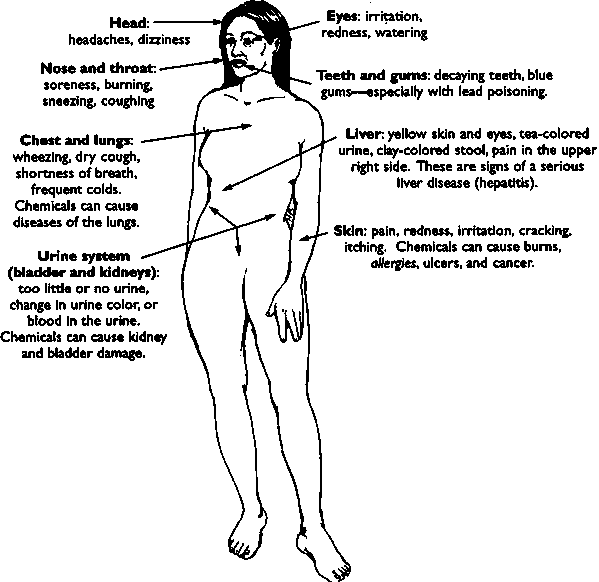
Prevention:
To reduce the health risks from working with harmful chemicals, try to:
· avoid getting chemicals on your skin. When using chemicals at home, use rubber kitchen gloves (or plastic bags). When farming with pesticides and other chemicals, use thicker gloves and wear shoes. Otherwise, chemicals in the soil can get into your body.· wash your hands after touching chemicals. If you have been using strong chemicals, like pesticides, change your clothes and wash yourself before eating or coming into the house. Use rubber gloves when you wash these clothes.
· avoid breathing in fumes (vapors) from chemicals. Work where fresh air flows freely. Wear a mask or a cloth over your nose and mouth.
· keep chemicals away from food. Never use chemical storage containers for food or water, even after they have been washed. A container that looks very clean can still have enough chemical to poison the food or water. Do not use sprays near food or on a windy day.

Keep chemicals away from
children. Always look for poison warnings, or this picture, on the
label.
If a chemical gets in your eye, flush it immediately with water. Keep flushing 30 times. Do not let the water get into the other eye. If your eye is burned, see a health worker.
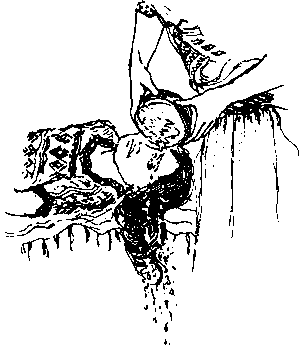
Figure
|
Lead poisoning Lead is a poisonous part of some common materials - like pottery, paint, fuel, and batteries. Lead poisoning happens when people eat from pots with glazes containing lead or when they eat even a tiny amount of lead dust. It can also happen from breathing in lead dust or from breathing fumes from fuel containing lead. Lead is especially harmful for babies and children. It can cause low birth weight, poor development, damage to the brain (which can be permanent), and death. So it is important to avoid working with lead during pregnancy. If you work with lead, try to protect yourself and your family by: · not getting powdered glaze on your hands or in your mouth. · eating foods that contain a lot of calcium and iron. These foods help keep lead from getting into your blood. |
|
Sitting or Standing for a Long Time
If you must sit or stand for many hours at work, you may suffer health problems. Sometimes they only show up after months or years. Most of these problems can be prevented.
HEALTH PROBLEMS
Back and neck problems. These come from sitting a long time with your back bent or from standing in one place.
Varicose veins, swollen feet, and blood clots in the legs. When you sit or stand for a long time, it is hard for blood to flow easily through your legs, especially with your legs crossed.
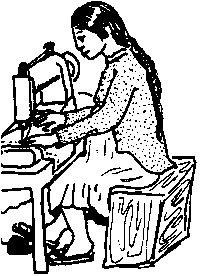
Figure
Prevention:
· Take short, fast walks during your break. Also try to walk around the room or at least stretch every hour.· If possible, wear socks or hose with support. They should go above the knee.
· Do each of the exercises described below whenever you feel stiffness or pain, or slump forward. Repeat them 2 or 3 times, taking slow, deep breaths.

Head: Roll it slowly in a full
circle.

Shoulders: Move them up and
down, roll them forward and backward, and pull your shoulder blades together
behind your back.

Waist and upper body: With
your back straight, turn from the hip to face the side. You should feel relief
in the upper and lower back.
If you sit at work:
· Use a chair with a straight back - with your head, neck, and shoulders straight. If it feels better, put some rolled cloth or pillows behind you to support your lower back.· If necessary, adjust the height of your chair or table to allow you to work in a better position. You can try sitting on a pillow, or putting a desk or table up on blocks.
· Do not cross your legs at the knees.
· Avoid wearing tight clothing.
Repeating the Same Movement Over and Over
Joints are places in the body where bones come together. At these joints tendons connect the bones to muscle. If you repeat the same movement over and over while working, the tendon can be damaged. Injuries to the wrists and elbows are common with farming and factory work. Injuries to the knees are common among domestic workers (‘house-maid’s knee’), miners, and other workers who kneel for a long time.
Signs:
· Pain and tingling in the part of your body that repeats the movement.· For wrists, you will feel pain in your hand or here when your wrist is gently tapped.
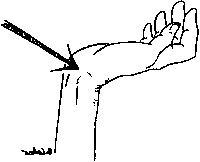
Figure
· A grating feeling when you place your hand over the joint and move it.
Treatment
· Rest the joint in a comfortable position as much as possible. If you must continue to use that joint as you work, wear a splint to keep it as still as possible. Try some of the ideas below in the prevention section.· Make a soft splint by wrapping the joint with cloths so it does not move. Wrapping the cloth around a thin piece of wood first can help keep the joint straight. The cloths should be wrapped tightly enough to keep the joint from moving, but not so tightly that the blood flow is blocked or the area gets numb. Wear the splint while you work, and also while you rest or sleep.

Figure
· If the joint is painful or swollen, take aspirin or use one of the pain medicines that reduce inflammation. Hot, moist cloth compresses can also help decrease pain and swelling.
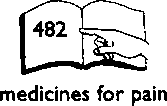
Figure
· If the joint does not get better after 6 months, get medical help. You may need to have medicine carefully injected into the joint, or you may need an operation.
Prevention:
· If it is safe, switch hands or body positions as you work. Try to work in a way that bends the joint less and puts less pressure on it.· Try to exercise the joint every hour, by moving it through all of the motions it can make. This will stretch and strengthen the tendons and muscles. If exercise causes pain, move the joint slowly and gently.
¨ If a joint is red or hot, it might be infected. See a health worker right away.
Crafts
Many types of crafts are done in the home, where women work alone. This makes them less likely to know of common health problems caused by work and how to prevent them.
|
COMMON HEALTH PROBLEMS FROM WORK WITH CRAFTS |
||
|
Craft or skill |
Problem |
What to do |
|
Pottery making |
Lung diseases similar to those miners get (fibrosis, silicosis) |
Open windows and doors for better air flow. Blow air out with a fan if there is electricity. Wear a protective mask that keeps dust out. |
|
Pottery painting |
Lead poisoning |
See ‘Lead poisoning’. |
|
Sewing, embroidery, knitting, lace making, weaving |
Eye strain, headaches, low back and neck pain, joint pain |
If possible, increase the amount of light on your work and rest often. See ‘Sitting or Standing for a Long Time’ and ‘Repeating the Same Movement’. |
|
Work with wool and cotton |
Asthma and lung problems from dust and fibers |
Improve air flow (see above), and wear a mask that will not let fibers through. |
|
Use of paints and dyes |
See ‘Work with Chemicals’ |
See the prevention information in ‘Work with Chemicals’. |
|
Soap making |
Skin irritation and burns |
Use protective gloves and avoid contact with lye. |
Unsafe Working Conditions
Many factories have unsafe working conditions, such as:
· closed and locked doors and windows, which make it impossible for workers to get out during emergencies, and which keep air from flowing freely.· exposure to toxins, such as chemicals and radiation, without protective barriers or clothing.
· unsafe equipment.
· fire hazards, like loose electrical wires, or chemicals or vapors that burn easily.
· no safe water, toilets or latrines, or rest breaks.

Figure
If your workplace is hot, drink plenty of liquids and eat salted foods - especially if you are pregnant. Women are more likely to get heat stroke than men.

Figure
Many of these conditions cannot be changed unless workers get together and demand change. But here are some things you can do yourself to prevent problems:
· When you begin a new task, get instructions about how to safely use all equipment and chemicals. Always ask for advice from women with experience using the same equipment or the same chemicals.· Whenever possible, wear protective clothing - like hats, masks, gloves, or earplugs for loud noises. When working with machines, avoid wearing loose clothing. Keep long hair tied up and covered.
Sexual Harassment
Sexual harassment is unwanted sexual attention from an employer, manager, or any man with power over a woman. This includes saying something sexual that makes a woman uncomfortable, touching her in a sexual way, or making her have sex. Every woman is in danger of sexual harassment. It does not matter if she works for her family in the country or in a factory in the city.
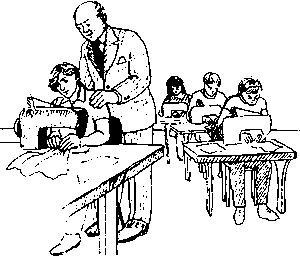
Figure

Figure
There are many reasons why it is hard for a woman to say ‘no’ to sexual harassment:
· She may be afraid she will lose her job, which she needs to support herself and her family.
· She may have been raised to obey and respect the wishes of older men and men in power.
· The man may be a relative, and she may be afraid if she says no or complains he will be made to look bad.
But no matter what situation a woman is in, sexual harassment is wrong. It is also against the law in many countries. If you have been sexually harassed, try to find someone to confide in and to give you support. You can also share your experience with other women. Although you may not be able to end the harassment, sharing your story with others can help them avoid being harassed.
¨ In some countries sexual harassment is called the “lay down or lay off” policy. This is because women are often fired if they do not have sex with the man who is harassing them.
|
What you can do to avoid and stop sexual harassment: · Try to avoid the men who have
harassed other women where you work. |
Migration
Many women work away from their homes. Some women travel daily from home to work, while others have moved many miles to live near work. This is called ‘migration’.
Most often women move from rural areas to cities where big factories offer jobs, or where they can get jobs as domestic workers. Some women choose to move, but others are forced to move because there is no food or work at home, or because factories offer more money. Often the money these women make is very important for supporting their families back home.
When women migrate, they may be alone for the first time. This can be very frightening because they are away from the family and friends who gave them support.
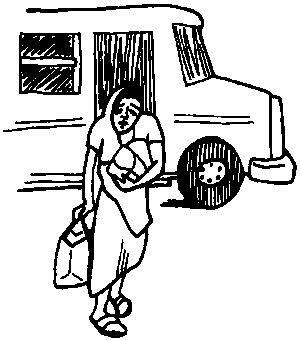
Remember that everyone feels
alone at first. This is natural.
Here ore a few things you can do to make yourself feel more comfortable in a new home:
· Make friends with other women at work. These women can become a new source of support.· Find a safe place to live. Many companies run their own hostels. Some are safe, but many are not. Sometimes they are places where women live in poor conditions and pay too much money for rent. The company may also take advantage of these women because they do not have control over where they live.
Avoid dangerous situations
like walking home alone at night
Sometimes the only way to get safe housing is to find it yourself. Here is an example of a woman’s group that organized for safe housing:
|
Women who work making clothes in factories in Dhaka, Bangladesh, became tired of their poor, unhealthy living conditions, where they were often sexually harassed and abused. With help from; a woman with management experience, they set up 2 hostels. Now the workers pay part of their wages to the hostel. In return, the staff, who are all women, provide food, cooking utensils, blankets, clothing, and other help. The workers are safe and close to work, and are able to save more of their wages. - Bangladesh |
Forgotten Workers
Many women earn money working at tasks - like selling in the marketplace, making home crafts, and domestic work - that are not considered formal jobs. These jobs have very few protections, so women who do them are at risk for being exploited and abused.
Domestic workers
A domestic worker faces many of the same health problems already described in this chapter. Because she works in someone else’s home, she has few rights and little protection. She faces:
· exhaustion and poor nutrition from long hours and poor pay. Even though she may cook for her employer, she is often given little to eat.· constant fear of losing her job and of being mistrusted by her employer. She may lose her job if she becomes pregnant. These fears, and the separation from her family, can cause mental health problems.
· sexual harassment, especially if she lives in her employer’s house. Because he has power over her job, she may be forced to have sex.
· painful bone and muscle problems from working on her knees for long periods (‘house-maid’s knee’).
· skin and nail problems (‘washer-woman’s hands’) from working with chemical cleaners without using gloves.

Washer-woman’s
hands
|
Washer-woman’s hands When a woman uses a lot of cleaning chemicals without using gloves, her skin may become red, cracked, and painful, and develop open sores. The nails often get thick and damaged, and separate from the skin underneath.
What to do: · If possible, use rubber or plastic gloves to protect your hands · Use the juices of fresh plants that are known in your area for helping skin problems like rashes, burns, or itching. Gather and wash fresh plants, and grind them into a watery paste. Put your hands in this mixture as often as you can. |
|

Working for Change
|
In South Africa, domestic workers have a Domestic Workers’ Union to help them demand laws to protect themselves. They began by knocking on doors, and by educating people through pamphlets and radio announcements. Now they are a national union. They work with domestic workers’ unions in other countries to help workers get fair working hours, fair pay, social security benefits, and other basic protections. |
Unions like the South African Domestic Workers’ Union are a very good way to organize and protect workers’ rights. But it is often difficult to start a local union because there are no larger unions for support or because the company does not allow them. In this case there are other ways women can work together to help themselves.
When women start to work together for better conditions, they sometimes fear that they may lose their jobs or that they will be treated badly if their employers find out. In these cases it is important that women trust those they are organizing with. If it is not possible to talk at work, it may be best to meet in secret in private homes or in the community.
To begin organizing your workplace:
· Talk with the women you work with to identify common problems and possible ways to solve them.· Meet together regularly as a group to build trust and help support one another. Be sure to include women who are new at work and make them feel welcome. Remember, there is strength in numbers.

Figure
Once you are organized as a group or a workers’ association, you may feel strong enough to join a union or start your own. The company may be less likely to challenge you if you are already organized.
WHAT YOUR ORGANIZATION CAN DO
When your group has identified common problems and possible solutions, decide which problems can be changed and what you need to do to make change happen. Even if the company is not willing to change anything, you can do a lot for yourselves. The next page gives some examples.
Teach each other about safety. Women who have been doing the job for a long time will have learned the safest way to do things. Ask them to share ideas about how to make the job easier and safer.
Help new women. New women may be afraid to join your group, especially if the employers do not support you. But it is still important to share your knowledge about safety, because the safer every women is, the safer you are.
Support each other. Many women experience conflict at home when they start working, because their role in the family changes. Share advice on solving family problems, and on balancing housework and child care with paid work. Some women even help take care of each other’s children. They may organize a child care center, where one woman is paid to care for young children so that others can work. Or the women may take turns minding the children.
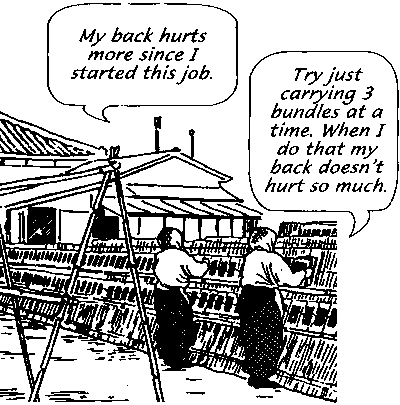
Figure
You might also try meeting together with men to discuss women’s workload. For example:

Figure
|
In workshops at the Center for Health Education, Training, and Nutrition Awareness (CHETNA) in India, men and women are asked to list their daily tasks. Many are surprised to learn that a woman’s work day starts before a man’s does and ends long after his, and that she rarely gets a chance to rest. This helped men to see how work is distributed unfairly between men and women. Then they were able to talk about dividing work fairly, based on the needs of the family and not only by gender roles. |

If you can, negotiate with your employer for better working conditions, such as:
· child care at work.
· bathroom breaks.
· a private place to remove breast milk by hand (for mothers with babies).
· higher wages.
· maternity leave (time off when a woman has a baby, with the right to return to the same job).

Figure
|
| ||||||||||||||||||||||||||||||||||||||||||||||||||||||||||||||||||||||||||||||||||||||||||||||||||||||||||||||||||||||||||||||||||||||||||||||||||||||||||||||||||
Where Women Have No Doctor - A Health Guide for Women (Hesperian Foundation, 1997, 600 p.)
Chapter 27: Mental Health
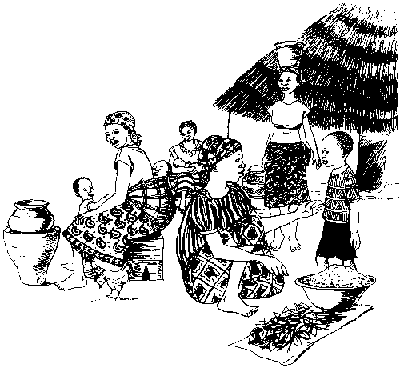
Figure
¨ Good mental health is just as important as good physical health.
Just as a woman's body can be healthy or unhealthy, so can her mind and spirit. When her mind and spirit are healthy, she has the emotional strength to take care of her physical needs and those of her family, to identify her problems and attempt to solve them, to plan for the future, and to form satisfying relationships with others.
Almost everyone has difficulty doing these things at times. But if the difficulty continues and keeps a woman from carrying out her daily activities - for example, if she becomes so tense and nervous that she cannot care for her family - she may have a mental health problem. These problems are harder to identify than problems in the body, which we can often see or touch. Yet mental health problems need attention and treatment, just as physical problems do.
This chapter describes the most common mental health problems and their causes. It also offers suggestions for how a woman can help herself or others with these problems.
Self-esteem
When a woman feels she makes a valuable contribution to her family and community, she is said to have good self-esteem. A woman with good self-esteem knows that she is worthy of being treated with respect.
Self-esteem begins to develop in childhood. The amount of self-esteem a woman develops depends on how she is treated by the important people in her life - like her parents, brothers and sisters, neighbors, teachers, and spiritual guides. If these people treat her as someone who deserves their attention, if they praise her when she does something well, and if they encourage her to try things that are difficult, she will begin to feel she is valued.
In some cases, girls have a hard time developing good self-esteem. For example, if their brothers are given more education or more food, girls may feel less valued simply because they are girls. If they are criticized a lot or their hard work goes unnoticed, they are more likely to grow up feeling unworthy. Then, as women, they may not believe they deserve to be treated well by their husbands, to eat as much good food as others, to have health care when they are sick, or to develop their skills. When women feel this way, they may even think that their lack of importance in the family and community is natural and right - when, in fact, it is unfair and unjust.

As a child, Malika felt less
valued than her brothers. The family thought the boys were important enough to
be given an education, but that she was not.
Self-esteem is an important part of good mental health. A woman with good self-esteem will feel more able to cope with (manage) daily problems and better able to work for changes that can improve her life and her community.
Building self-esteem
¨ A woman's self-esteem will influence the choices she makes about her health.
Building self-esteem is not an easy task. This is because a woman cannot just decide to value herself more. Rather, she must change deeply held beliefs that she may not know she has.
Often these changes must happen indirectly, through experiences that allow a woman to see herself in a new way. Change can come through building on strengths a woman already has, like her ability to form close, supportive relationships with others, or from learning new skills. For example:
|
As a child Malika was expected to be quiet and follow orders. When she was 18, her mother forced her to marry a military man. Malika was in love with someone else, but her mother did not care. The military man was an important man. After they had been married for a number of years and Malika had given birth to 4 children, her husband stopped coming home at night. Friends would report that he had been with other women. Malika complained to her mother, and her mother told her to just live with it - this was how her life would be. Eventually Malika's husband moved out to live with his girlfriend. Malika felt very sad and worthless. One day Malika was given the opportunity to enter a program where she would learn to take care of children at the community school. She decided to try, even though she had never worked away from home before. Learning new skills and being with the children and other women in training changed Malika. She began to see she had some worth outside her marriage and that she could be a productive worker. Malika then began to think about what she could do for her family and what she hoped to accomplish in her lifetime.
|

Common causes of mental health problems in women
Not everyone who has to cope with the problems listed below will develop a mental health problem. Rather, a woman usually develops a mental health problem when these pressures are stronger than her ability to cope. Also, not all mental health problems have causes that can be identified. Sometimes we just do not know why someone develops a mental health problem.
¨ To have better mental health, women need to have more control and power over their lives.
Stress in daily life
Daily activities and events often put pressure on a woman, causing tension in her body and mind (stress). Stress can come from physical problems, like illness or overwork. Or it can come from emotional events, like conflict in the family or being blamed for problems that a woman has no control over. Even events that often bring pleasure - like a new baby or getting a job - can be stressful because they create changes in a woman's life.
¨ It is easy not to notice the stress in daily life because it is always there. But it takes a lot of a woman's energy to cope with this kind of stress.
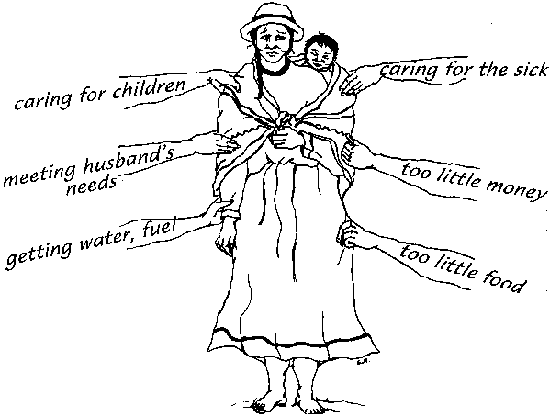
Most women hove many kinds of
stress pressuring them from all sides.
|
When a woman faces a lot of stress every day and for a long time, she may begin to feel overwhelmed and unable to cope. The problem may be made worse if she has been taught to take care of others first and neglects her own needs. With little time to rest or to enjoy things that could help reduce her stress, she may ignore signs of illness or overwork. And as a woman, she may have little power to change her situation.
|
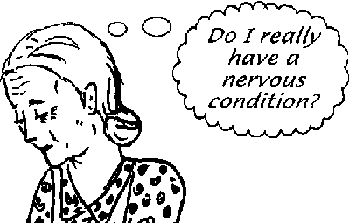
Other kinds of stress happen less often, but can also contribute to mental health problems:
Loss and death
When a woman loses someone or something important - a loved one, her work, her home, or a close friendship - she may feel overwhelmed with grief. This can also happen if she becomes ill or develops a disability.
Grieving is a natural response that helps a person adjust to loss and death. But if a woman faces many losses at once, or if she already has a lot of daily stress, she may begin to develop mental health problems. This can also happen if a woman is unable to grieve in traditional ways - for example, if she has been forced to move to a new community where her traditions are not practiced.

Figure
Changes in a woman's life and community
In many parts of the world, communities are being forced to change rapidly - because of changes in the economy or because of political conflict. Many of these changes require families and communities to alter their entire way of life. For example:
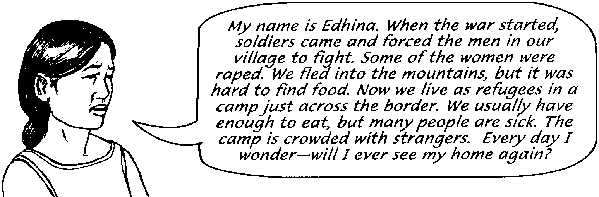
Figure
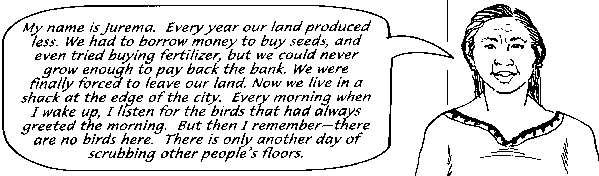
Figure
When families and communities break apart, or when life changes so much that old ways of coping do not work any more, people may begin to have mental health problems.
Trauma
When something horrible has happened to a woman or to someone close to her, she has suffered a trauma. Some of the most common kinds of trauma are violence in the home, rape, war, torture, and natural disasters.

Figure
Trauma threatens a person's physical or mental well-being. As a result, a person feels unsafe, insecure, helpless, and unable to trust the world or the people around her. It usually takes a long time for a woman to recover from trauma, especially if it was caused by another person, not by nature. Trauma suffered as a child, before she could understand what was happening or talk about it, can affect a woman for many years without her even knowing it.
Figure
Physical problems
Some mental health problems are caused by physical problems, such as:
· hormones and other changes in the body.
· malnutrition.
· infections, such as HIV.
· pesticides, herbicides, and industrial solvents.
· liver or kidney disease.
· too much medicine in the body, or the side effects of some medicines.
· drug and alcohol misuse.
· strokes, dementia, and head injuries.

Figure
Always consider the possibility of a physical cause when treating mental health problems. Remember, too, that physical problems can be the sign of a mental health problem.
Common mental health problems for women
Although there are many kinds of mental health problems, the most common ones are anxiety, depression, and misuse of alcohol or drugs. In most communities, women suffer from these problems more than men do. But men are more likely than women to have a problem misusing alcohol or drugs.
To decide whether someone has a mental health problem, keep the following things in mind:
· There is no clear line between normal responses to life's events and mental health problems.· Most people have some of the signs below at different times in their lives, because everyone faces problems at one time or another.
· Signs of mental health problems can vary from community to community. Behavior that looks strange to an outsider may be a normal part of a community's traditions or values.
¨ For information about treating mental health problems, see "Helping Yourself and Helping Others".
Depression (extreme sadness or feeling nothing at all)
It is natural for a person to feel depressed when she experiences a loss or death. But she may have a mental health problem if the signs below last for a long time.
¨ Some people call depression 'heaviness of heart' or 'loss of spirit or soul'.

Figure
Signs:
· feeling sad most of the time· difficulty sleeping or sleeping too much
· difficulty thinking clearly
· loss of interest in pleasurable activities, eating, or sex
· physical problems, such as headaches or intestinal problems, that are not caused by illness
· slow speech and movement
· lack of energy for daily activities
· thinking about death or suicide
Figure
|
Suicide Serious depression can lead to suicide (killing oneself). Almost everyone has thoughts of suicide once in a while. But if these thoughts come more and more often or get very strong, a woman needs help right away. See "helping someone who wants to kill herself" for how to identify people who are most at risk for suicide and how to help them. |
Anxiety (feeling nervous or worried)
¨ Other common names for anxiety are 'nerves', 'nervous attacks', and 'heart distress'.
Everyone feels nervous or worried from time to time. When these feelings are caused by a specific situation, they usually go away soon afterwards. But if the anxiety continues or becomes more severe, or if it comes without any reason, then it may be a mental health problem.
Signs:
· feeling tense and nervous without reason
· shaking hands
· sweating
· feeling the heart pound (when there is no heart disease)
· difficulty thinking clearly
· frequent physical complaints that are not caused by physical illness and that increase when a woman is upset
¨ When a woman has severe chest pain or difficulty breathing, she should get medical help. These may be a sign of serious physical illness.
Figure
Panic attacks are a severe kind of anxiety. They happen suddenly and can last from several minutes to several hours. In addition to the signs above, a person feels terror or dread, and fears that she may lose consciousness (faint) or die. She may also have chest pain, difficulty breathing, and feel that something terrible is about to happen.
Reactions to trauma
Figure
After a person has experienced trauma, she may have many different reactions, such as:
· Going over the trauma again and again in her mind. While she is awake, she may keep remembering the terrible things that happened. At night she may dream about them or be unable to fall asleep because she is thinking about them.· Feeling numb or feeling emotions less strongly than before. She may avoid people or places that remind her of the trauma.
· Becoming very watchful. If she is constantly looking out for danger, she may have difficulty relaxing and sleeping. She may overreact when startled.
· Feeling very angry or full of shame about what happened. If a person has survived a trauma where others died or were seriously injured, she may feel guilty that others suffered more than she did.
· Feeling separate and distant from other people.
· Having outbursts of strange or violent behavior, in which she is confused about where she is.
Figure
¨ People suffering from reactions to trauma may also feel anxious or depressed, or misuse alcohol or drugs.
Many of these signs are normal responses to a difficult situation. For example, it is normal to feel angry that a trauma has happened, or to be watchful if the situation is still dangerous. But if the signs are so severe that a person cannot carry out daily activities, or if the signs start months after the trauma has happened, the person may have a mental health problem.
Physical changes and disease caused by stress
|
When a person experiences stress, the body gets ready to react quickly and fight off the stress. Some of the changes that occur are: · The heart starts beating faster. If the stress is sudden and severe, a woman may feel these changes in her body. Then, once the stress is gone, her body returns to normal. But if the stress is less severe or happens slowly, she may not notice how the stress is affecting her body, even though the signs are still there. Stress that goes on for a long time can lead to the physical signs common in anxiety and depression, like headache, intestinal problems, and lack of energy. Overtime, stress can also cause illness, like high blood pressure. In many places, emotional problems are not considered as important as physical problems. When this happens, people may be more likely to have physical signs of anxiety and depression than other signs. While it is important not to ignore physical signs, it is important to also be sensitive to the emotional causes of illness. |
Helping yourself and helping others
A person suffering from mental health problems can begin to feel better with treatment. Although most communities lack mental health services, there are things a woman can do on her own, with very few resources (personal coping skills). Or she can form a 'helping relationship' with another person or group.
The suggestions that follow are just a few of the many ways a person can work toward better mental health. These suggestions will be most effective if they are adapted to a community's needs and traditions.
Personal coping skills
¨ For severe problems, medicines may be necessary. Try to talk to a health worker who knows about medicines for mental health problems.
Women do not often take time out of their busy day to do something for themselves. But every woman needs to put her problems aside sometimes and do what she likes. Simple things that you may not do very often - like spending time alone, or shopping, gardening, or cooking with a friend - can all be helpful.
Figure
Activities to let your feelings out. Making up poems, songs, and stories can be helpful when you have trouble saying things to others. Or you can draw your feelings without using words - you do not have to be an artist.

Figure
Creating pleasing surroundings. Try to fix your living space so that it feels right to you. No matter how small it is, you will feel more order and control when it is arranged the way you like. Try to have as much light and fresh air as possible.
Try to have some beauty around you. This could mean putting some flowers in the room, playing music, or going where there is a nice view.
Practice traditions that build inner strength. Many communities have developed beliefs and traditions that help calm the body and mind, as well as build inner strength. For example:
Yoga

Prayer
Meditation
T'ai Chi
Practicing these traditions regularly can help a person cope better with stress and other difficulties in her life.
Helping relationships
In a helping relationship, two or more people make a commitment to get to know and understand each other. This can happen in any relationship - between friends, family members, or women who work together, or in a group that already meets for another purpose. Or a new group may form because the people share a common problem. These are often called 'support groups'.
¨ It is often easier to turn an existing group into a support group than to create a new one. But be careful when choosing helping relationships. Form relationships only with people who will respect your feelings and your privacy.
These women agreed to listen
to each other's problems as they worked.
Building a helping relationship
¨ No two people have exactly the same life experiences. There is always more to understand about another person.
Even when two people know each other well, helping relationships develop slowly, because people usually hesitate to share their problems. It takes time to get over these worries and begin to trust one another. Here are some ways to build trust between people or members of a group:
· Try to be open to hearing everything another person says, without judging it.· Try to understand how the other person feels. If you have had a similar experience, think about how you felt. But avoid seeing someone else's experience as exactly like your own. If you do not understand her, do not pretend that you do.
· Do not tell another person what to do. You can help her understand how the pressures of her family, community, and work responsibilities affect her feelings, but she must make her own decisions.
· Never think of a woman as beyond help.
· Respect the woman's privacy. Never tell others what she has told you unless it is necessary to protect her life. Always tell her if you plan to speak with someone else for her protection.
|
Starting a support group 1. Find 2 or more women who want to start a group. 2. Plan when and where to meet It helps to find a quiet place, such as a school, health post, cooperative, or place of worship. Or you can plan to talk while doing your daily work. 3. At the first meeting, discuss what you hope t accomplish. If you are in a group, decide how the group will be led and whether new members can join later.
Although the person who began the group will probably need to take the lead at the first meetings, she should not make decisions for the group. Her job is to make sure everyone has a chance to talk and to bring the discussion back to the main point if it wanders off. After the first few meetings members may want to take turns leading the group. Having more than 1 leader can also help shy women lead. |

|
Meeting together with others can help a woman: · get support. Mental health problems often drain a woman's energy and make her discouraged. Meeting together can give a woman more energy, which then helps her cope with daily problems.
· recognize feelings. Sometimes women hide their feelings (or do not even realize they have them) because they think the feelings are bad, dangerous, or shameful. Hearing others talk about feelings can help a woman notice her own.
· control impulsive reactions. Group members can help a woman think through a problem, so that she will not act on her first impulse, without thinking.
· understand underlying causes. By talking together, women begin to realize that many of them suffer from the same kinds of problems. This helps them identify root causes of the problem.
· put forth solutions. Solutions that are discussed in a group are often more easily accepted and used than those that a woman thinks of by herself.
· develop collective power. Women acting together are more powerful than a woman acting alone.
|
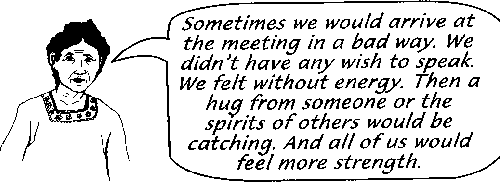
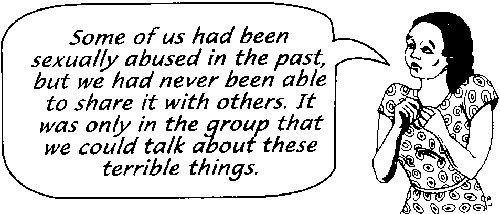

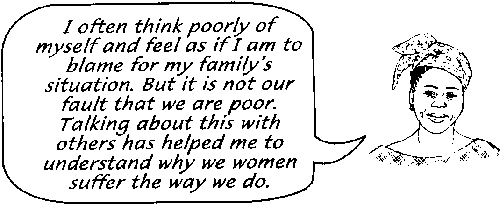
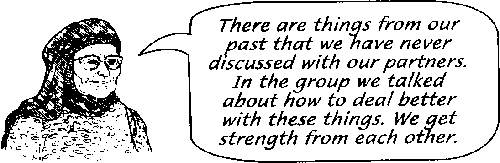
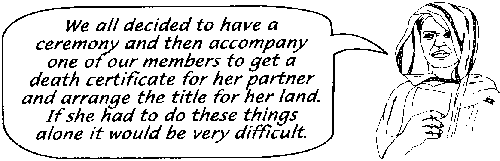
Exercises for learning how to help
Most members of a group need to understand what a helping relationship is and what makes it work before they can really help one another with a mental health problem. These exercises can help:
¨ These exercises are most often done in groups, but they can also be used by just 2 people.
1. Sharing experiences of support. To become more aware of what support is, the leader can ask members to tell a personal story in which they have received or given support. Then the leader asks questions like: What kind of help was it? How did it help? What are the similarities and differences between the stories? This can help the group come up with general ideas about what it means to support and help another person.Or the leader can pose a story of someone with a problem - for example, a woman whose husband drinks too much and beats her. She becomes withdrawn and pretends nothing is wrong, but no longer participates in the community. Then the group can discuss: How could we as a group help her? How can she help herself?
¨ Some women may feel more comfortable listening as they work with their hands - for example, as they weave or sew.
2. Practicing active listening. In this exercise the group divides into pairs. One partner talks about a topic for about 5 to 10 minutes. The other partner listens, without interrupting or saying anything, except to encourage the speaker to say more. The listener shows that she is listening by her attitude and by the way she moves her body. Then the partners switch roles.

Figure
When the partners are finished, they think about how well it worked. They ask each other questions like: Did you feel listened to? What difficulties did you have? Then the leader begins a general discussion among everyone about the attitudes that best show listening and concern. The leader can also emphasize that listening sometimes means talking: asking questions, sharing experiences, or saying something that makes the other person feel understood. It may also mean admitting that you have tried but still do not understand.
Exercises for healing mental health problems
Once the group has learned how to help and support one another they are ready to begin working on their mental health problems. Here are some ways for the group to help healing begin:
1. Share experiences and feelings in the group. People who have mental health problems often feel very alone. Just being able to talk about a problem can be helpful. After one person has told her story the leader can ask for other similar experiences. When everyone has listened to these, the group can discuss what the stories have in common, whether the problem was partly caused by social conditions, and if so, what the group might do to change these conditions.2. Learn to relax. This exercise is particularly helpful for people who are suffering from stress. In a quiet place where everyone can sit down, the leader asks the group to follow these instructions:
· Close your eyes and imagine a safe, peaceful place where you would like to be. This might be on a mountain, by a lake or ocean, or in a field.· Keep thinking about this place as you breathe deeply in through your nose and then out through your mouth.
· If it helps, think of a positive thought, such as "I am at peace," or "I am safe."
· Keep breathing, focusing either on the safe place or the thought. Do this for about 20 minutes (as long as it takes to boil rice).
¨ If you start to feel uncomfortable or frightened at any time during this relaxation exercise, open your eyes and breathe deeply.

Figure
A woman can also practice this exercise at home whenever she has difficulty sleeping, or feels tense and afraid. Breathing deeply helps calm nervous feelings.
3. Creating a story, drama, or painting. The group can make up a story about a situation similar to those experienced by members of the group. The leader starts the story, and then another member continues to tell another part - and so on until everyone has contributed something and the story is complete. (The group can also act out the story as it is told or paint a picture of the story.)
¨ If you tell a story about a problem, it is important to also talk as a group about ways to overcome the problem.
Then the group analyzes the different ideas that have been developed. These questions can help people begin to talk:
· What feelings or experiences are most important in this story?
· Why did these feelings occur?
· How is the person coping with these feelings?
· What can help her develop a new balance in her life?
· What can the community do to help?

Figure
¨ If a group has lived through a trauma and enough time has passed, they can analyze their own experiences rather than creating a story.
4. Creating a picture of your community. This exercise works best after the group has been meeting together for a while. The leader first asks the group to draw a picture of their community. (It may help for the leader to draw a simple picture to get things started.) Then the group adds to the picture, drawing in those parts of the community that contribute to good mental health, and those that cause mental health problems.
Figure
Then the group studies the picture and starts to think about ways to improve the community's mental health. The leader can ask questions like these:
· How can we strengthen those parts of the community that now contribute to good mental health?· What new things need to be done?
· How can the group help bring about these changes?
|
In El Salvador, a group of women from an urban squatters' community decided to form a support group. They had lived through the civil war and now worked with victims of the war through their church. One member tells how the group began and how it has helped her: "One day, all of us felt sad without knowing why. It wasn't as though anything special had happened that day, but all of us were feeling this way. Then one of us realized that it was the anniversary of the war that all of us had lived through. That was when we decided to form this group. We needed to feel close, to understand the things we had experienced, and to cope with how we felt about losing our sons, daughters, husbands, and neighbors to the war - and for what? In the group we spoke of many experiences we had never been able to share with anyone else. This way we slowly left behind the silence and the feelings of helplessness each of us had. We learned that fears become smaller when we can give them a name. We discovered that we all had the same fears: the fear that others wouldn't understand, of not finding an answer, and that in speaking of our memories they would become more painful. We spoke, cried, and laughed, but this time we did it together. The group supported us, helped us to change, and helped us see new directions for our lives. We were able to bring new energy and strength to our work. Now we help victims of the war - not just to rebuild their homes and health, but also to overcome their fears and hopelessness. This way they can create a new future for themselves and for their community. Even though we all lost so much to the war - and peace has not delivered on its promises - we feel as though we have given birth to something new. And like a new baby, this group brings new spirit into the world and gives us the strength to go on."
|
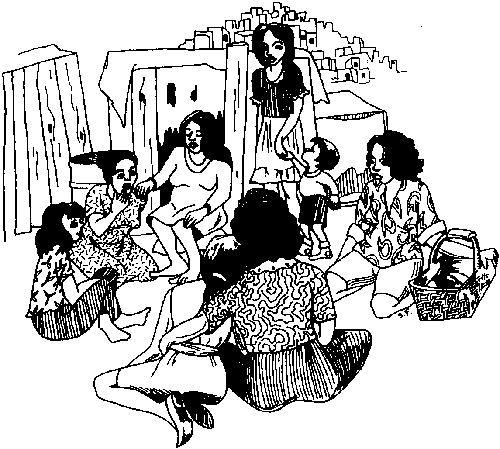
Helping women with reactions to trauma
· The most important way to help someone suffering from trauma is to help her learn to trust others again. Let her control how fast the relationship between you develops. She needs to know you are willing to listen, but that she can wait until she feels ready to talk. Doing everyday activities together may be best at first.
¨ Once a woman understands her reactions, the feelings usually have less control over her.
· It may help a woman to talk about her life before the trauma as well as her current experiences. This may help her realize that although life has changed a lot, in many ways she is the same person as before. If it seems right, encourage her to do some of the same activities she enjoyed before or that were part of her daily routine.
· Some painful things may be too difficult to talk about, or may be 'buried' away where they cannot be remembered. Exercises like drawing or painting, or a physical activity like massage, can help a person express or relieve these painful feelings.
· If a woman dreams of the trauma, she can put an object from her new life next to her as she sleeps. This helps her remember, when she wakes from a bad dream, that she is safe now.
· If reminders of the trauma make a woman react in fearful ways, help her make a plan for those reminders that cannot be avoided. For example, a woman might tell herself: "His face is like the man who attacked me, but he is a different person and does not wish to hurt me."
· If a person was tortured or raped, remind her that she is not responsible for what she said or did while being tortured. All responsibility lies with those who tortured her Help her understand that one aim of torture is to make a person feel she can never feel whole again, but that this is not true.
Massage can help relieve
painful
feelings.
Helping someone who wants to kill herself
Anyone who suffers from serious depression is at risk for suicide. A woman may not readily talk about thoughts of suicide, but she will often admit them if asked. If she does, then try to find out:
· Does she have a plan about how to kill herself?· Does she have a way to carry out the plan? Is she planning to kill others as well (for example, her children)?
· Has she ever tried suicide before?
· Is her judgment affected by alcohol or drugs?
· Is she isolated from family or friends?
· Has she lost the desire to live?
· Does she have a serious health problem?
· Is she young and going through a serious life problem?

If a woman has made a plan for
killing herself, she needs help right away.
If the answer to any of these questions is 'yes', she is at a greater risk for attempting suicide than other people. To help, first try talking with her. Some people may begin to feel better simply by telling you about their problems. If so, or if she still feels bad but is more in control of her feelings than before, ask her to promise that she will not hurt herself without talking to you first.
Figure
If talking about her problems does not help, or if she cannot promise to talk to you, then she needs to be watched closely. Always tell the person considering suicide that you plan to talk with others to help protect her. Talk to her family and friends, encouraging someone to be with her at all times. Ask them to remove dangerous objects from her surroundings.
If there are mental health services in her community, find out if someone can talk with her regularly. Medicine for depression may also be helpful.
Mental illness (psychosis)
A person may be mentally ill if she has any of these signs:
· She hears voices or sees unusual things that others do not hear or see (hallucinations).· She has strange beliefs that interfere with daily life (delusions) - for example, she thinks that loved ones are trying to rob her.
· She no longer cares for herself - for example, she does not get dressed, clean herself, or eat.
· She behaves in a strange way, like saying things that make no sense.
¨ Similar signs can be caused by illness, poisoning, medicines, drug abuse, or damage to the brain.
People who are not mentally ill sometimes act this way, particularly if these behaviors are part of their community's beliefs or traditions. For example, if a woman says that she received guidance in a dream, she may be drawing upon traditional sources of knowledge and guidance - not suffering from mental illness. These signs are more likely to be signs of mental illness if they come so often and are so strong that a person has difficulty carrying out daily activities.
¨ No matter what treatment is given, a person with a mental illness should be treated with kindness, respect, and dignity.
|
Getting care for mental illness Although in most places family members care for those who are mentally ill, it is best if the person can also be treated by a trained mental health worker In some situations medicines are necessary, but they should never be the only treatment. Traditional healers can also play an important role in treating mental illness. If they come from the same community as the person with the problem, they may know and understand her. Some healers also have treatments or rituals that can help a woman overcome her problem.
Ask these questions before deciding on a treatment: · What is the purpose of each step in the treatment? What should be expected to happen? · Do any of the treatments cause physical harm or shame? If someone must be treated in a hospital, always ask to see it before leaving her there. Make sure that the hospital is clean, that patients are safe and can have visitors, and that they will get regular treatment with trained mental health workers. Patients should be free to move about, unless they are a danger to themselves or others. Also, make sure you find out what must be done to have the person let out of the hospital later |
Ways to improve your community's mental health
Identify those who are at risk for mental health problems. Women are at risk if they have:
· had mental health problems in the past
· lost family members or are separated from their families.
· witnessed violence or have violent partners.
· little social support.
Look for other behaviors that may indicate mental health problems. If you suspect that someone has a mental health problem, get to know her better. Listen to what other people are saying about her behavior and the ways she has changed. Since mental health problems often have roots in the family or community, think about how these may contribute to the problem.
Build on a woman's strengths. Every woman has developed ways of coping with everyday problems. Help a woman identify the positive ways she has dealt with problems in the past and how she might use these strengths in her present situation.
Work within a woman's traditions and culture. Every community has traditional ways of dealing with mental health problems, such as prayer and ritual. These practices are not always helpful, but they should always be considered and used as much as possible. Try to learn as much as you can about a woman's traditions and how they may be a source of strength for her. Anything that helps a woman recognize or give meaning to her experience can help her mental health.

Figure
¨ The most important pan of any treatment is to make the woman feel supported and cared for. Try to involve her family and friends in the treatment
Remember that there are no quick solutions to mental health problems. Beware of anyone who promises this.
Ask for help when you need it. If you do not have experience with a mental health problem, try to talk to a trained mental health worker who does. Listening to other people's mental health problems can make you feel burdened, especially if you listen to a lot of people. Watch yourself to see if you are feeling pressured, if you are losing interest in helping others, or if you get irritable or angry easily. These are signs that you are making other people's problems your own. Ask for help, and try to get more rest and relaxation so you can work effectively.
|
| ||||||||||||||||||||||||||||||||||||||||||||||||||||||||||||||||||||||||||||||||||||||||||||||||||||||||||||||||||
Where Women Have No Doctor - A Health Guide for Women (Hesperian Foundation, 1997, 600 p.)
Chapter 28: Alcohol and Other Drugs
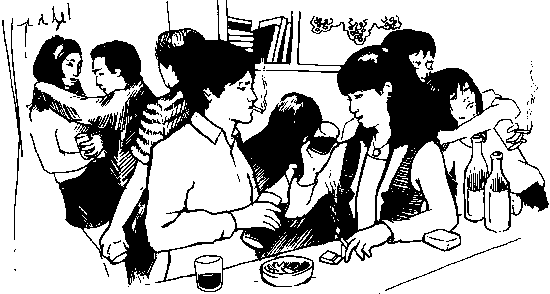
Figure
¨ Many people do not realize that alcohol and tobacco are harmful drugs.
Many kinds of drugs are used in everyday life. In some places, drugs or brewed drinks have a sacred role in traditions. In other places, alcoholic drinks like wine or beer are commonly served with meals. Drugs and alcohol are often part of festive or social events. And some drugs are used as medicines.
Some drugs that are often used in harmful ways are:
· alcohol: drinks such as brew, beer, spirits, liquor, wine.
Figure
· cocaine, heroin, opium.
Figure
· betel, khat, tobacco leaf.

Figure
· marijuana and hashish

Figure
· glue, fuels, and solvents.
Figure
· pills that help a person lose weight or stay awake.
· medicines, especially those for severe pain, or that help a person sleep or relax.
Figure
In this chapter we talk about the health problems these drugs can cause, their effects upon women, and ways to stop using drugs, especially alcohol and tobacco, the most commonly misused drugs in many communities.
Use and misuse of alcohol and drugs
Why do people begin to use alcohol or drugs?
People often begin to use alcohol or drugs because of social pressure. Boys and men may face pressure to drink or use other common drugs to prove their manhood. A man may believe that the more he drinks, or the more drugs he uses, the more manly he is.
Many girls and women are also beginning to face social pressure to start drinking or using drugs. They may feel that they will appear more grown-up or more modern. Or they may think they will be accepted more easily by others.
Companies that make and sell alcohol and drugs use social pressure, too. Advertisements that make using drugs and alcohol look glamorous, especially to young people, encourage people to buy them. And when companies that make alcohol, or places that sell alcohol, make it seem easy and even fun to buy, people want to buy more. This kind of pressure is especially harmful, because often people are not aware it is affecting them.
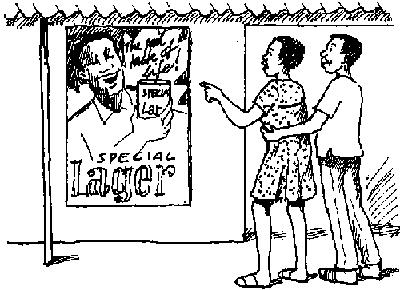
Some advertisements, music, and
movies encourage young people to drink and use
drugs.
When does use become misuse?
Whatever the reason for starting, alcohol and drugs can easily become misused. A person is misusing drugs or alcohol if she loses control over when she uses alcohol or drugs, over the amount she uses, or over the way she acts when using alcohol or drugs.
Here are some common signs that people are misusing drugs or alcohol. They:
· feel they need a drink or a drug to get through the day or night. They may use it at unusual times or places, such as in the morning, or when they are alone.· lie about how much they or others use, or hide it.
· have money problems because of how much they spend on buying drugs or alcohol. Some people commit crimes to get money for drugs or alcohol.
· ruin celebrations because of how much they drink alcohol or use drugs.
· are ashamed of their behavior while using drugs or alcohol.
· are not working as well as before or are not going to work as often because of using alcohol or drugs.
· have problems with violent behavior. A man may become more violent towards his wife, children, or friends.
¨ If using a drug is changing your life, it is time to stop or to use less. It is better to stop before the drug harms you, your family, or your friendships.
Why people misuse drugs and alcohol
Many people end up misusing drugs and alcohol in order to escape from problems in their lives.
All types of people do this. But people whose parents misused alcohol or drugs are much more likely to try and solve their problems in the same way. This is because a 'weakness' to misuse drugs or alcohol may be passed from parents to children. And as children watch their parents use alcohol or drugs to escape problems, they learn this same behavior.
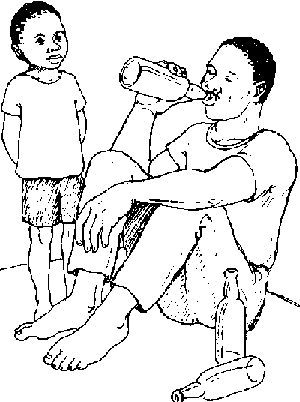
Figure
Alcohol and drug misuse is also common among people who do not feel any hope about changing the miserable conditions of their lives. People who are displaced from their homes or facing desperate problems - like losing their jobs or way of earning a living, losing family members, or being abandoned by a partner - are also more at risk for misusing drugs and alcohol.
Women often begin to misuse drugs or alcohol because they do not feel that they have any control over - or power to change - their lives. They may feel dependent upon, or at the mercy of, their partner or male family members. And if women have low status in the community, it may be hard for them to value themselves.
Unfortunately, drugs and alcohol usually make all these problems worse, and people feel even less able to improve their lives. Instead of looking for ways to improve their situations, most people who misuse drugs or alcohol spend their time, money, and health on trying to avoid and forget their problems.
|
Dependence and addiction When a person misuses drugs or alcohol, both the mind and the body can begin to feel an overpowering need for the drug. When the mind feels this need, it is called dependence. When a person's body feels such a strong need for the drug that she gets sick without it, it is called physical addiction. Alcohol and some drugs can cause addiction. Once a person becomes addicted, she will need more and more alcohol or drugs to feel their effects. (For information about overcoming the physical addiction caused by alcohol) |
Problems from alcohol and other drugs
Common health problems
People who use alcohol and drugs a lot get sick more often and more severely than others. They are more likely to have:
· poor nutrition, which causes more sickness.· cancer, and problems of the heart, liver, stomach, skin, lungs and urine system - including ones that cause permanent damage.
· brain damage or fits (seizures).
· memory loss - waking up not knowing what happened.
· mental health problems, such as seeing strange things or hearing voices (hallucinations), being suspicious of others, having flashbacks, or feeling severe depression or anxiety.
· death from using too much at one time (overdose).
Using drugs and alcohol can
permanently damage your health.
In addition, injuries or death from accidents happen more often to these people (and often to their families). This is because they make bad decisions or take unnecessary risks, or because they can lose control of their bodies while using alcohol or drugs. If they have unprotected sex, share needles used to inject drugs, or trade sex for drugs, they are at risk for hepatitis and sexually transmitted diseases.
¨ People who chew tobacco are at risk for most of the same health problems as those who smoke tobacco.
Drugs that are chewed. Chewing tobacco and betel nut often ruin a person's teeth and gums, and cause sores in the mouth, cancer of the mouth and throat, and other harm throughout the body. Khat can cause stomach problems and constipation. Many chewed drugs can cause dependence.
Sniffing glues and solvents. Many poor people, and particularly children who live on the streets, sniff glue and solvents to forget their hunger. This is very addictive and causes serious health problems, such as problems with seeing, trouble thinking and remembering, violent behavior, loss of judgement and body control, severe weight loss, and even heart failure and sudden death.
|
Any use of drugs and alcohol is dangerous if a person: · is driving, using a machine, or dangerous tool. · has liver or kidney disease.
|

Drugs and alcohol can be worse for women
In addition to the problems that anyone who misuses drugs or alcohol may suffer, women face some special health problems:
· Women who drink large amounts of alcohol or use a lot of drugs are more likely to get liver disease than men.· Many women and girls are pushed into sex they do not want when they drink alcohol or use drugs. This may result in unwanted pregnancy, STDs, and even HIV/AIDS.
· If used during pregnancy, drugs and alcohol can cause children to be born with birth defects and mental disabilities, such as:
- problems of the heart, bones, genitals, and head and face.
- low birth weight.
- slow growth.
- learning difficulties.

When a pregnant woman drinks
alcohol, smokes, or uses drugs, the baby does too.
A baby can also be born dependent on drugs and suffer the same signs of withdrawal as an adult.
Women feel more shame
In most communities, women's behavior in public is more strictly controlled than men's behavior. Often it is considered normal for men to use alcohol or drugs, but not for women to do so. If a woman loses control of her behavior because of using too much alcohol or drugs, she is thought to be a 'loose woman', even if she is not having sex with others.
To avoid the shame that comes from making her drug or alcohol misuse public, a woman is more likely to drink steadily over a long period of time, rather than drinking a lot at one time. This kind of drinking makes it easier for her to control her behavior. She is also more likely to keep her misuse a secret and to put off getting treatment. All these behaviors increase the harm that comes from alcohol or drug misuse.
|
Misuse and violence in the home Misusing alcohol and drugs makes violent situations worse, especially in the home. Women who have partners who misuse drugs and alcohol often suffer injuries and even death. For more information, see the chapter on "Violence." |
Overcoming problems with alcohol and drugs
Although it may seem difficult to overcome a dependence or addiction to alcohol and drugs, it can be done. There are 2 stages: quitting and then learning ways to stay free of drugs and alcohol.
Quitting
If you think you have a drinking or drug problem and want to quit:
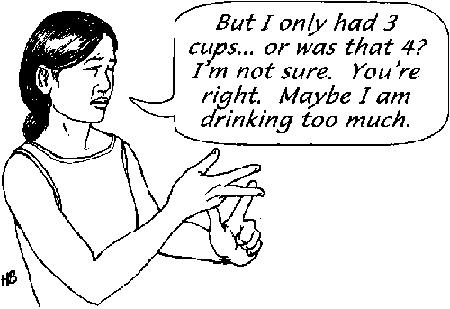
1. Admit you have a
problem.

2. Decide to do something
TODAY.
¨ Stopping is often easier with the help and support of others.
3. Stop. Or use less and then stop. Many people can stop drinking or using drugs all at once. All it takes for them is the will to stop and the belief they can do it. Others need help from a group or treatment program like Alcoholics Anonymous (AA) that helps people with drinking or drug problems. There are AA groups in many countries. There may also be other groups or treatment programs in your area. Most women feel more comfortable in a group with women only. If there are no groups in your area, try starting your own group with someone who has been successful in helping people to stop drinking or using drugs.
Figure
4. If you start drinking or using drugs again, do not blame yourself. But try to stop again right away.
|
Alcoholics Anonymous (AA) To become a member of AA, a person needs only one thing: a desire to stop drinking. As a member; you will regularly meet with others who have quit drinking, in order to share your experience, strength, and hope. You will also have a sponsor - a person who has stopped drinking for a period of time, and who can give you individual support and guidance. AA does not charge any money. It does not support or oppose any causes, or have connections to any religious or political groups. Instead, AA tries to stay free of conflict with other groups in order to fulfill its main purpose: to carry its message to the drinking person who still suffers. |
Physical addiction and withdrawal
When a person is physically addicted to alcohol or a drug and quits using it, she will go through a period of withdrawal. During this time her body must get used to being without the drug.
¨ Some herbal teas can help the liver cleanse the body of poisonous effects of alcohol or drugs. A traditional healer may be able to suggest good local herbs.
Alcohol addiction and withdrawal. After quitting drinking, it can take about 3 days for most signs of withdrawal to stop. Many people get through these days without problems. But since some people have very serious signs, it is important to have someone watch over the person and give help when needed.
Early signs of withdrawal:
· slight shaking
· nervous and irritable feelings
· sweating
· trouble eating and sleeping
· aches all over the body
· nausea, vomiting, stomach pain
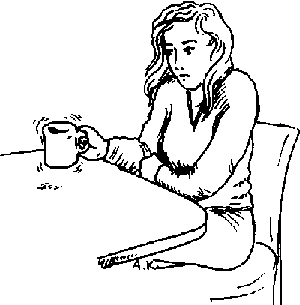
Figure
These signs may go away on their own, or they may get stronger. If they do, the woman should go to a health worker immediately. If help is far away, give her 10 to 20 mg of diazepam by mouth to prevent seizures. Give another 10 mg an hour later if the signs are not getting better. If you are still traveling, you can repeat the dose every 4 to 5 hours.

The following signs are an emergency. Any person with these signs must get medical help immediately:
· mental confusion
· seeing strange things or hearing voices
· very fast heartbeat
· seizures
¨ When someone is addicted to alcohol, lack of alcohol in the body can cause seizures.
|
After you have quit drinking As soon as possible, start eating foods (or drinks) with a lot of protein, vitamins, and minerals. These foods help the body heal itself: liver, yeast, breads made from whole wheat, other whole grains, beans, and dark green vegetables. If you cannot eat, vitamins may be helpful. Take a multi-vitamin or B-complex vitamin that contains folic acid. |
Learning to stay free of drugs and alcohol
Once a person has overcome physical addiction, it is important to learn how to stay free of drugs and alcohol to prevent the problem from developing again. The best way to do this is to learn better skills for coping with life. This is not easy to do and will take time.
Figure
A woman who has misused alcohol or drugs often feels powerless and full of shame. She needs to learn that she is able to make changes to improve her life. One way to begin is to make small changes that help prove to herself and to others that she can cope with problems.
¨ If you are trying to stay free of drink or drugs, avoid places where you will feel pressure to use them. Work with others to organize social events where drugs and alcohol are not used.
Here are some ideas that have helped women build coping skills:
· Develop a network of support among those close to you and ask for help when you need it. It is much easier to think about problems and begin to solve them when you can talk and work with others.· Try to solve one problem at a time. That way problems will not seem so large that you cannot cope with them.
· Try to tell a friend or someone you trust about things that worry or upset you, or that make you sad or angry. You may begin to understand why you feel the way you do and what you can do to feel better.
· Work with other people on a project to improve your community. This proves to you and to others that you know how to work for change. You may also find that doing this helps you make personal changes, too.
· Meet together regularly with other people who are working to stay free of alcohol or drugs.
Figure

Figure
Problems from tobacco
Health problems from smoking
Persons who smoke become addicted to a drug in tobacco called nicotine. Without a cigarette, they may feel sick or nervous. It is very hard to stop smoking, because nicotine is a very addictive drug.
Since more men than women smoke, smoking has mainly been seen as a men's health problem. But smoking is a growing cause of poor health among women. It is also a growing cause of health problems in poor countries. One reason for this is that tobacco companies are trying harder to sell cigarettes in these countries, as more people in rich countries stop smoking.
In both men and women, smoking can cause:
· serious diseases of the lungs, including chronic bronchitis and emphysema.· severe colds and coughs.
· cancer of the lung, mouth, throat and neck, and bladder.
· heart attack, stroke, and high blood pressure.
Some of these problems can cause death. In fact, 1 out of 4 people who smoke will die from a health problem connected to smoking.
¨ Smoking can cause disease in those around you who do not smoke.

Children whose parents smoke
have more lung infections and other lung and breathing health problems than
children whose parents do not
smoke.
Smoking is worse for women
In addition to the problems above, women who smoke have a greater risk of:
· difficulty getting pregnant (infertility).
· miscarriage, and babies born too small or too soon.
· problems when using birth control pills.
· monthly bleeding that ends earlier in life (menopause,).
· weaker bones that break more easily during mid-life and old age (osteoporosis).
· cancer of the cervix and womb.
A woman who is pregnant should try to avoid other people who are smoking, so that the smoke will not harm her baby.
Living with someone who has a drinking or drug problem
Often women must care for someone, like a partner or a male relative, who has a drinking or drug problem. Living with someone with these problems is very difficult, especially if the person does not want to change. You can help yourself and your family if you:
· do not blame yourself. It is not always possible to help another person control his or her drug or alcohol use.· try not to rely on the person's opinion of you to feel good about yourself.
· try to find a support group for you and your family. Sometimes this is the only way a family can cope with the problem.
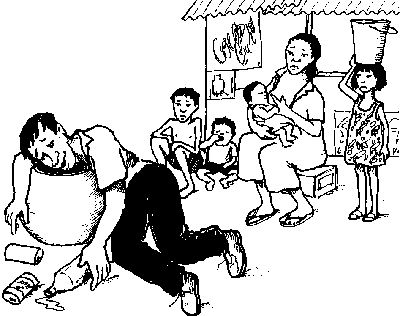
Figure
¨ Al Anon is an organization like AA, that provides support and help for family members of alcoholics.
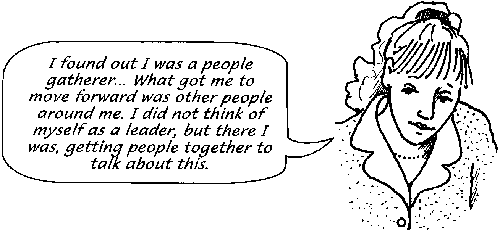
Bonnie, from the USA, talks of
her struggle with her husband's drinking. She now works with Al Anon.
How to help someone with a drinking or drug problem:
· Help him admit he has a problem. This may be all that is needed for him to use less or stop, unless he is addicted.· Talk to him about stopping when he is not drunk or on drugs.
· Try not to blame him.
· Help him to avoid situations where he may feel pressured to drink or take drugs. This means not being with people with the same problem, even if they are friends.
· Help him to find other ways to cope with life's problems and to have better mental health.
· Help him make a plan for stopping and follow that plan.

Figure
Preventing drug and alcohol misuse
To prevent drug and alcohol misuse successfully, you must consider the social forces that contribute to drug use.
Try meeting with others to discuss why alcohol or drugs have become important in community life. How did the problem start? What makes people use more? Are there new pressures on men or women that make it harder for them to control their use of alcohol and drugs? How can the drugs or alcohol be made less important in your community?
Once you understand the reasons for the problem, your group might want to work on ways to reduce social pressures to drink or use drugs.
|
A group of men and women in Chiapas, Mexico organized against alcoholism as part of their movement for democracy and social justice. They realized that people who drink heavily sometimes impose their will on others, in the same way as the police had used force to control the community. The group gave warnings to individuals whose misuse of alcohol was hurting other people, and intervened in cases where drunk men abused their wives. Alcohol played both negative and positive roles in the community. Shamans often drink rum, a sacred symbol, as part of their healing rituals/The group found ways to combat alcoholism and keep the spirit of their tradition by substituting non-alcoholic drinks in these rituals. |
Helping young people resist alcohol and drugs
Many people who have drug and alcohol problems as adults began using them when they were young. Drugs or alcohol can seem like an easy way to have fun or escape from problems, especially if others are using them. Young people often feel confused and powerless about the many changes they must cope with - their growing bodies and new responsibilities. Young people are also influenced by many pressures, especially their friends, older people they admire, and advertising.
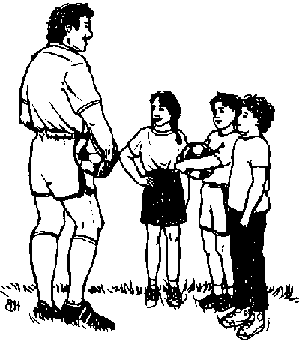
Find popular role models who
speak out against drugs. Your children may find the message more powerful if it
comes from a person they admire.
One way to reduce drug and alcohol misuse is to help young people learn to resist harmful pressures. Here are some ideas that have worked in many communities:
· Encourage the schools in your community to teach young people about the problems of using drugs and alcohol.· Make it harder for people to sell drugs to young people.
· Organize to remove advertisements that make cigarettes and alcohol look glamorous and modern.
· Become a good role model. If you drink a lot or use drugs, chances are your children will too.
· Teach your own children about the problems drug and alcohol use can cause. They can then influence their friends.
· Help young people have fun without drugs and alcohol.
· Help your children develop skills and self-esteem to resist the social pressure to use drugs and alcohol.
|
| ||||||||||||||||||||||||||||||||||||||||||||||||||||||||||||||||||||||||||||||||||||||||||||||||||||||||||||
Where Women Have No Doctor - A Health Guide for Women (Hesperian Foundation, 1997, 600 p.)
Chapter 29: Refugees and Displaced Women

Figure
¨ Out of every 10 refugees and displaced persons in the world, 8 are women and children.
Refugees are people who cross the border of their country into another country, because they fear for their safety at home. Displaced people are people who are forced to leave their homes but remain in their own country. Many refugees and displaced people are victims of a group that has gained power and is prejudiced against the ethnic group, religion, nationality, or political views of others. If this group controls basic resources like food and water, people must leave their homes to survive.
Women and children make up more than 80% of refugees and displaced people. This is because men have often died fighting or been forced to leave their families. Like all refugees and displaced people, women need to be protected from forced return to their homes. They also need laws that give them economic and social rights, so they can get basic resources like food, shelter, clothing, and health care. As women, they need special protection from armed attacks, and from sexual and physical abuse.
This chapter will focus on some of the health problems that refugee and displaced women face. Most importantly, this chapter looks at the role these women can play in their new communities.
Flight and arrival
The route to a new place to settle is often very difficult. Families may be separated during their travel (flight). Younger children or older relatives may die of hunger or disease on the way. Women and girls may be attacked by pirates, border guards, army units, and male refugees. All these losses and dangers can make a woman emotionally and physically exhausted even before she arrives at a new home.
Once settled, a woman may face a situation very different from her old home. Often women from small communities find themselves in large, crowded camps that are organized differently from a traditional village or town. Or they may live in cities, often trying to avoid capture by government authorities. Some refugees are thousands of miles away in countries that have allowed refugees to enter and settle there permanently. In addition, a woman often faces some of these difficulties:
· living among people who do not like her being there or do not speak her language.
· not knowing whether she can return home soon or must stay away for years.
· needing papers showing her refugee status.
· adjusting to new family relationships.
· living in danger if a war is nearby.
¨ Having identity documents from either the United Nations or the authorities in the country of refuge can give refugees some protection against being forced to leave (deported).
Living in a refugee camp and being recognized as a refugee by a new government or the United Nations may give women some protection. But displaced women do not have these protections and are even more at risk.
Basic needs
In many communities, women are responsible for providing most of their families' basic needs: they grow most of the food, prepare it, collect water, manage the home, keep the living space clean, and try to maintain the family's health. Away from the home, refugee and displaced women must suddenly depend on outside help to meet basic needs. Often this help is not adequate. Some displaced women may not have any outside help, so meeting basic needs is even more of a problem.
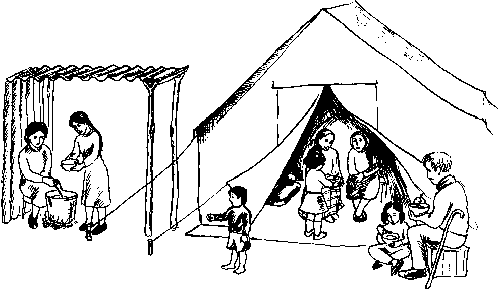
Figure
Food
¨ Malnutrition is one of the leading causes of death for refugee and displaced women.
Many refugees and displaced women do not have enough food to eat before they flee or during their journey. When they arrive at a new settlement, there still may not be enough food. Or there may not be enough different kinds of food to provide a nutritious diet.
You may be able to improve your diet if you:
· get involved in food distribution. Food should be given directly to women, because men may not be as familiar with the family's needs. Also, women are more likely to feed their families with the food they receive than trade it for weapons or alcohol.
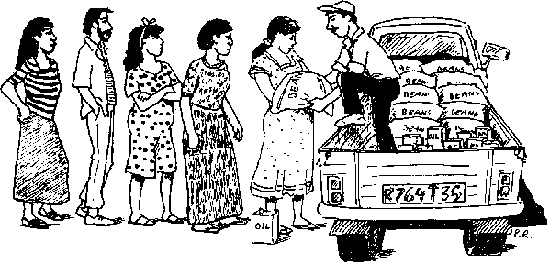
Figure
· demand that women get the same amount of food as men and eat at the same time.· fight for extra food for pregnant women, women who are breastfeeding, and women who are malnourished or sick.
· make sure that women have cooking pots and utensils.
· share cooking tasks with other women. Even if food is prepared in a central place, women can stay involved. This will give them some control over their family's diet.
|
Emergency Food Distribution Even in emergency situations, food distribution should involve women. This honors the important role women have had in food management. In Kenya, for example, Oxfam has tried to strengthen traditional social roles by distributing food directly to women. Food is distributed in an open place, overseen by an elected committee of elders. Women are encouraged to give their opinions about what is being done. This kind of food distribution will continue until the local food supply improves. |
Water and fuel
Refugee and displaced women often have limited water and cooking fuel. Sometimes water and fuel must be collected away from the camp in an unsafe area. Or the water may be unclean and will make people sick if they drink it. All these problems make women's lives more difficult, because they are responsible for washing and cooking for themselves and their families.
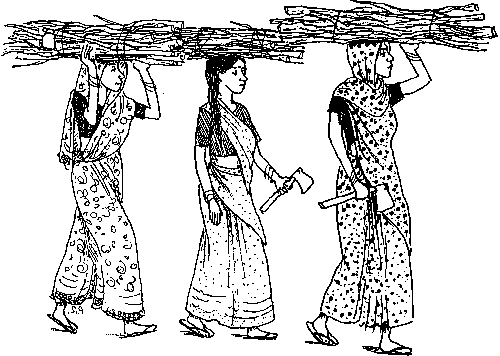
Figure
These things can help:
· Learn how to purify your water.· Ask organizations that provide support and aid for containers that are not too heavy to carry water
· Ask those in charge to patrol places where water and fuel are collected, to make sure they remain safe and women can get to them. When you go for water or fuel, go with other people.
Protection from sexual violence
¨ Sexual violence is a violation of human rights.
Rope and sexual violence are common when people are displaced. This happens because:
· guards, government authorities, and workers may demand sexual favors in exchange for food, protection, legal papers, and other help.· if the area is too crowded, women may be forced to stay with strangers, or even with people who have been enemies. Women who are forced to stay among strangers are in greater danger.
· male refugees, who have lost opportunities they had at home, often become angry and bored. These problems are made worse when men see women taking on new responsibilities. Since men may have weapons with them, they may act violently toward women. This is more common if the men use alcohol or drugs.
· people in a nearby community may attack.

Figure
There are many ways to prevent attacks:
· Women should try to stay with family and friends. Single women and girls without adults looking after them should stay in a safe place that is separate from men.· Men without much to do should be encouraged to begin activities like skills training, sports, or cultural activities.
· Women should be directly in charge of distributing basic resources, like food, water, and fuel, so they do not have to negotiate for their basic needs.
¨ You may risk attack if you have to go a long distance for food, water, fuel, or to use sanitation facilities.

Figure
· The camp should be arranged so that latrines and other facilities for basic needs are close by and well lit. Women should also demand more protection at night, including women guards.· Try to arrange meetings for men and women to discuss preventing sexual violence. Make sure everyone understands the dangers. Protection against violence can be included in other programs, such as health and nutrition meetings.
· Ask for education about alcohol and drug misuse.
If you are attacked:
· Request a physical exam right away from a woman health worker. You may be able to prevent pregnancy and sexually transmitted diseases (STDs) by taking medicine. If you might be pregnant, be sure to discuss ALL your options - abortion, adoption, or keeping the baby - with a health worker.· If it seems safe to do so, report the attack. Officials will be required to investigate. Remember that you do not have to answer any questions you do not want to, especially about your past sexual history.

Figure
· Talk over what happened with a trained mental health worker. This will help you realize you are not to blame for the attack and that many other people have overcome such experiences. If no mental health worker is available, see the chapter on "Mental Health."· In some cultures, rape is seen as a woman's failure to guard her virginity or her dignity in marriage. If your family is angry at you or ashamed that this happened, they may need counseling also.
· If you can, you may want to move to a safer place, away from your attacker. Request that your family or friends come also, if you want them with you.
Reproductive health
Refugee and displaced women often find it very difficult to get proper health care. Health workers may have difficulty reaching displaced persons in dangerous or faraway areas. Or, if services are available, health workers may not know the language of the women they help or the cultural beliefs and practices that affect health care.
In addition to these general problems, women's specific health needs are often overlooked. These needs include:
· care during pregnancy and birth. Women need regular care before giving birth (prenatal care) and traditional birth attendants (TBAs) who understand a woman's traditional birthing practices.
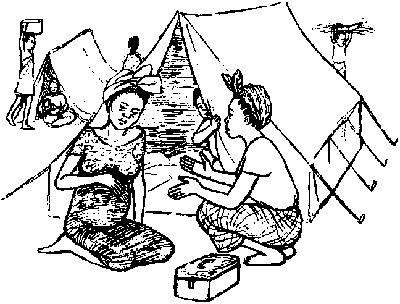
Figure
· family planning. In many refugee communities, the birth rate is very high. Part of the reason for this is that agencies often do not provide family planning information or supplies. Also, crowded refugee camps offer little privacy to use these methods, or secure, personal space to keep things.
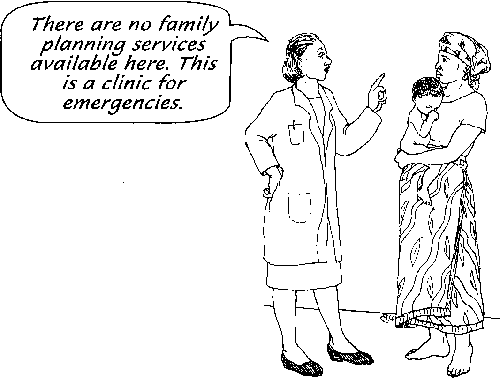
Figure

Figure
· supplies for monthly bleeding.· information about and treatment for STDs.
· health workers trained to detect serious health problems of women, like pelvic infections and cervical cancer.
· safe abortion. This is often unavailable, especially if the agencies providing health care are against it
· extra calcium, iron, folk acid, iodine, and vitamin C in the diet, especially for pregnant or breastfeeding women.
· being cared for by women health workers. Some women cannot be examined by men because cultural beliefs forbid it.
Ways to improve women's health
You may be able to improve health services by becoming a link between health services and your refugee community. Help staff understand the traditions and needs of your people. You can also request some of the following changes:
· If the clinic is far away, ask for it to be open more hours at least one day a week. Ask for women health workers to be available on that day, especially if the women in your community cannot be examined by men.· If the health workers do not speak your language or understand your birthing practices, ask to have a birth attendant or midwife from your community explain these practices to those at the health center.
· Ask for classes for adolescent girls and women on family planning, STDs, prenatal care and birth, and nutrition. Remind health center staff that women need a private area for discussing STDs.
· Request extra feedings for pregnant and breastfeeding women. If there is not enough food available for a healthy diet, these women should receive vitamin pills.
· Request that health workers receive training in treating the special health needs of women.
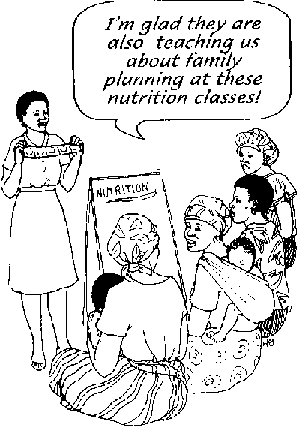
Figure
|
Becoming a health worker Many camps train refugee women to be health workers, community health workers (CHWs). TBAs, and health educators, since they can speak the language of the other women and help improve the health of the whole camp. In Camp Kakuma in northern Kenya, for example, southern Sudanese refugee women are very involved in health care. Many TBAs have been given more training and birthing kits, and other women are now CHWs and health educators. They are being trained in a way that will allow them to work in both the southern Sudan and in Kenya when they leave the camp. Sara Elija, a refugee from the Sudan, says that her new role as a TBA trainer has given her hope for work when she is no longer a refugee.
|
Mental health
Figure
¨ A woman must be able to cope with sudden and forced change in order to help her family survive.
Causes of mental health problems
Refugee and displaced women face many of the difficulties listed below, which can cause mental health problems or make them worse. Mental health problems include feeling extreme sadness or not feeling anything at all (depression), feeling nervous or worried (anxiety), or feeling unable to get over horrible things that happened in the past (severe reactions to trauma).
· Loss of home. Because home is the one place where a woman often has some authority, losing her home may be especially painful.· Loss of support from family and community. As her family's caregiver, a woman must provide security for her children, and support her partner and parents. If her husband and older sons have died in fighting or joined military forces, she must also become head of the family. All these responsibilities can make her feel afraid and alone. This can happen even when other adults in the family are with her, because often they cannot support her as they did before.
· Witnessing or being a victim of violence.
· Loss of independence and useful work. Although a woman still has the important job of caring for her family, in other ways her life may be more limited now. For example, before leaving her home, a woman might have been responsible for growing crops, weaving, sewing, and baking bread. If she can no longer do these things, she may feel useless and sad.
· Crowded living. Without space, it is much harder for a woman to cope with the extra demands of caring for her family.
· Difficulty mourning or grieving. Refugee and displaced women may have lost family members before reaching their new home, but have been unable to carry out traditional burial or mourning ceremonies. Once in a place of refuge, it may still be impossible to bury or mourn in traditional ways. In many places, women are responsible for carrying out these ceremonies, which are important in order to grieve and accept the death of a loved one.
Signs of mental health problems
For information about the signs of mental health problems like depression, anxiety, and severe reactions to trauma, see the chapter on "Mental Health."

Figure
Working for better mental health

Figure
The best way to help overcome mental health problems and to prevent them from becoming worse is to talk with other women about feelings, worries, and concerns. Here are some suggestions for encouraging the women you know to listen to and support each other:
· Organize activities that let women spend time together, such as nutrition or literacy classes, or child care and religious activities. Make extra efforts to include women who seem afraid or uninterested in getting involved. Often these women are the ones who most need to participate and talk with others.
|
A group of Guatemalan refugee women who felt a deep loss when they left their land worked together to plant vegetables and flowers. This helped them feel close to the earth, to begin to feel like a community again, and to provide some food for their families.
|
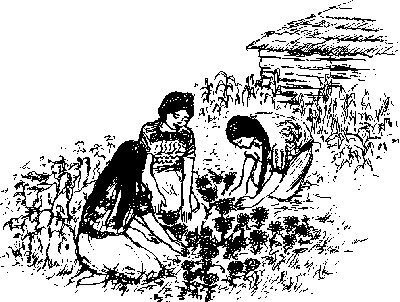
· Organize a support group.· Work with other women to find ways to grieve and mourn. You may be able to adapt some of your traditional rituals to your new situation. If you cannot, at least plan some time to grieve as a group.
· Become a mental health worker. You can organize a group of friends to talk with women who may not ask for help but who are suffering from mental health problems. Find out if your community has trained mental health workers or religious workers trained in counseling who can also help.

Figure
|
The destruction of homes, families, and communities is very traumatic. Sometimes refugees and displaced women become so affected by these terrible experiences that they cannot work, eat, and sleep in a normal way for a long time. Women need special support and understanding to help them recover and to begin to trust other people again. For more information on how to help people recovering from trauma. For more information on helping a woman who has been raped. |
Women as Leaders
Women should be involved whenever plans or decisions are made that affect refugees and displaced people. Women should also be encouraged to become leaders in their new communities. This builds self-esteem, reduces feelings of loneliness and depression, encourages self-sufficiency, promotes safety for women, and helps those providing services to avoid mistakes.
¨ When programs are developed without consulting the women who will be affected by them, the programs are less effective.

Figure
Here are some ways women can take leadership:
· Participate in planning the way your settlement is arranged - for example, where the latrines, gardens, and water are located.· Organize separate meetings for women and men about safety, basic needs, nutrition, and community involvement.
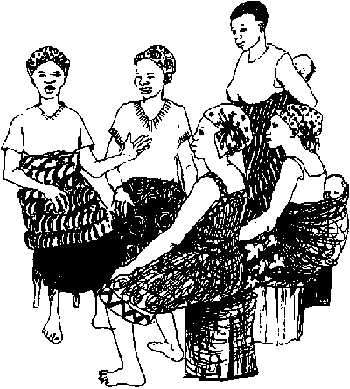
Figure
· Encourage women to talk about how they feel about their situation. Elect a leader who can talk to those who run the camp.
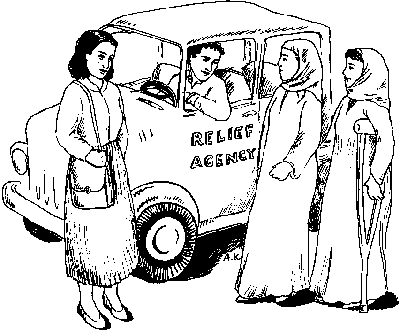
Figure
· Help with public information campaigns.· Organize nutrition and health worker training programs.
· Organize child care centers. Child care is an important way to help women participate in activities where they can talk with others.
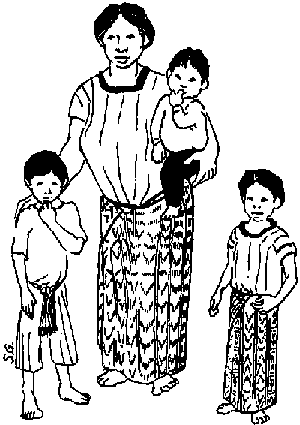
Figure
· Organize schools for children. Women are concerned about their children even in difficult times. The United Nations says that all refugee children have the right to an education, but few programs are available. Classes are sometimes overcrowded or there may be a shortage of teachers.· Help organize reading classes, skills training, music, and sports for women and men.
|
When we arrived in Honduras we were weak from hiding in the hills and walking long distances to reach safety. There were many sick and malnourished children and old people with us. There was nothing here for us, so the women all worked together to organize nutrition centers. Then we got the local parish to bring us some extra food for the centers and we began to plant vegetables and raise chickens, goats, and rabbits to add to the food we prepared at the centers. Our projects have grown and now we are also able to give every family in the refugee camp a few eggs, a little bit of meat, and some vegetables at least once a month. We needed to repair our clothing and shoes, so we organized workshops and convinced the agencies to bring us a few sewing machines and tools. Some of the women had worked as seamstresses and an older man knew how to make shoes and they taught others their skills. We are proud of what we have achieved here - we have shown that women can do more than cook The agencies trained us to become health and nutrition workers and to raise livestock. We have learned to add, subtract, and plan our expenses so that we can manage these projects ourselves. Because of our experience with these projects, many women are now leaders in the camp and when we return to our country we will be able to run community projects and businesses. - Aleyda, a Salvadoran refugee in Colomoncagua, Honduras |
Ways to earn a living
Refugee and displaced women often find it hard to get enough work to support their families. They may lack skills needed to work in their new home or find it difficult to get a work permit. But even in these situations there is often some work women can do.
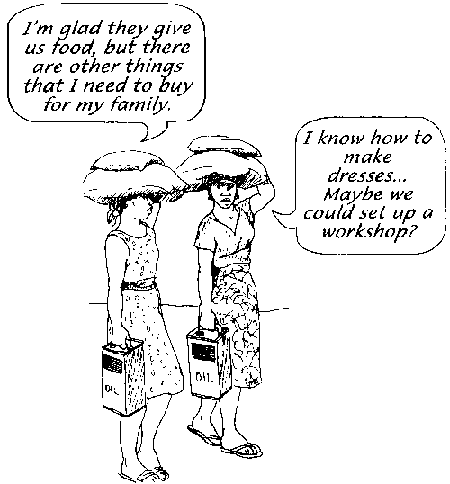
Figure
¨ Refugee and displaced women need choices, so they will not be forced to sell sex to survive and support their families.
For example, some refugee women do domestic work in people's homes or work as health workers in organizations that provide aid. Sometimes these organizations also give women money to start projects in traditional women's activities, like handicrafts. But since it can be hard to support a family with these activities, women should also try to find out about larger projects - like planting trees or building shelters - that pay more. Or, if women are given plots of land, they can grow food for their families or to sell. And if a woman has training, she may be able to work in a trade or small business.
|
| ||||||||||||||||||||||||||||||||||||||||||||||||||||||||||||||||||||||||||||||||||||||||||||||||||||||||||||
Where Women Have No Doctor - A Health Guide for Women (Hesperian Foundation, 1997, 600 p.)
Chapter 30: Female Circumcision
This chapter was written by women who are living and working in communities where female circumcision is practiced.

Figure
Throughout history, customs harmful to women's health have been practiced in order to make women seem more attractive or likely to marry. For example, in some European communities, a woman was thought to be more beautiful if she had a very small waist. So starting when they were girls, women were forced to wear a band of stiff cloth called a 'corset' tied so tightly around the waist and hips it sometimes broke their rib bones, and kept them from breathing or eating properly. It was very difficult for them to do anything but sit still or walk slowly.
And in parts of China, a woman had higher status if she had very tiny feet. So the bones of some girls' feet were broken and their feet tightly wrapped in cloth so that when they became women, their feet were deformed and they were unable to do more than walk slowly.
¨ Sometimes this practice is called excision.
These customs have been stopped, but in some parts of the world, other customs continue. Female circumcision is one them. It is practiced in many communities of Africa, in some communities in the Middle East, and in a small number of communities in Southeast Asia. It involves cutting part of a girl's or woman's genitals. Female circumcision is practiced for a variety of reasons, most of them based on culture and tradition. It is often a cause for great celebration in the community.
¨ In some communities, a girl must be circumcised before she can become a wife and mother and, in some cases, to own property.
Female circumcision does not stop a woman's need for love and companionship or affect her moral behavior. But it does interfere with her normal body functions, and can harm her relationship with her husband or partner. Circumcision also causes many health problems, and some of these problems can lead to lasting harm or death.
Types of female circumcision
There are 3 types of female circumcision:
1. The clitoris is partly or completely removed.2. The clitoris is removed along with the small skin folds of the outer genitals.
3. The outside genitals are cut away, and the opening to the vagina is sewn almost closed. This is called 'infibulation'. A small hole is left for urine and monthly bleeding to flow out. This type of circumcision is the most dangerous and causes the most serious health problems. But all types of female circumcision can cause bleeding, infection and death.
The way that a girl is cut is different in different places, but it is almost always done as part of a ceremony in which a girl moves from childhood into adulthood.
Health problems caused by female circumcision
These problems may happen right away, or in the first week:
· heavy bleeding
· infection
· shock from severe pain, bleeding, or infection
· problems with passing urine

Figure

Figure
All these problems are extremely dangerous. Get help right away.
These problems may happen later, and can last for many years:
· problems with monthly bleeding
· problems with sex
· problems during and after childbirth
· leaking urine and stool
· being unable to get pregnant (infertility)
· lasting pain
· mental health problems
What to do for health problems
Heavy bleeding and shock
Heavy bleeding from a deep cut or tear can happen quickly and is very dangerous. If a girl loses too much blood, she can go into shock and die.

Figure
Warning signs of shock (one or more of the following):
· severe thirst
· pale, cold, and damp skin
· weak and fast pulse (more than 110 beats per minute)
· fast breathing (more than 30 breaths per minute)
· confusion or loss of consciousness (fainting)

Figure
What to do:
· Get help immediately. Shock is an emergency.· Press firmly on the bleeding spot right away. Use a clean, small cloth that will not soak up a lot of blood. Keep her lying down while you take her to get medical help.
· Help her drink as much as she can.
· If she is unconscious and you live far from health services, you may need to give her rectal fluids before taking her for help.
Figure
Infection
If the cutting tool is not cleaned properly (disinfected) before and after each use, germs can cause a wound infection, tetanus, HIV/AIDS, or hepatitis.
¨ Signs of infection can begin any time during the first 2 weeks after the circumcision

Figure
Signs:
· of wound infection: fever, swelling in the genitals, pus or a bad smell from the wound, pain that gets worse.· of tetanus: tight jaw, stiff neck and body muscles, difficulty swallowing and convulsions.
· of shock (see the list above).
· of an infection in the blood (sepsis): fever and other signs of infection, confusion and shock.
Figure
For signs of HIV/AIDS or hepatitis, see the chapters on "AIDS", and "Sexually Transmitted Diseases and Other Infections of the Genitals".
IMPORTANT
If a girl begins to show signs of
tetanus, shock, or sepsis, take her for medical help right away.
What to do for infection:
· Give an antibiotic, such as amoxicillin or erythromycin.· Keep watching for warning signs of tetanus, sepsis, and shock. If she has not yet had a tetanus vaccination, she should get one immediately.
· Give modern or plant medicines for pain.
· Keep the genitals very clean. Wash them with water that has been boiled and cooled and has a little salt in it.
Figure
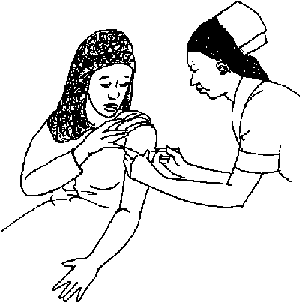
Cutting is even more dangerous
for girls who have not had a tetanus vaccination. All girls should be
vaccinated.
Urine problems
Since circumcision often causes severe pain when a girl passes urine, some girls try to hold their urine back. This can cause infection and damage to the urine tubes, bladder, and kidneys. Holding back urine frequently can cause stones to form in the bladder.
What to do:
· Run clean water over the genitals when passing urine. This makes the urine less acid, so it causes less pain. Drinking more liquids will also help.· Pour water into a bucket or pan. The sound of the running water sometimes helps the person start to pass urine.
· Apply a damp towel soaked in warm water to the genitals. This may help relieve the pain.
· Watch for signs of bladder and kidney infection.

Figure
If a girl has not been able to pass urine for more than a day or night, and her lower belly feels tight and full over the bladder, it is an emergency. She must see a trained health worker immediately who can put a tube in the bladder to drain the urine. Do not give her more liquid to drink, because this will add pressure on her bladder and kidneys.

Figure
Figure
Problems with monthly bleeding
If the vaginal hole that is left after infibulation is too small, or if it is blocked by scarring inside the body, the flow of a girl's monthly bleeding can be blocked. This can cause:
· very painful monthly bleeding.· long monthly bleeding, lasting 10 to 15 days.
· no monthly bleeding because the vaginal opening is blocked and the blood cannot get out.
· trapped blood that can lead to serious pelvic inflammatory disease (PID) and scarring in the womb and tubes. This can cause infertility.
What to do:
· Apply a towel soaked in hot water to the lower abdomen to relieve pain. (Be careful not to burn the skin.)· It may help to walk around and do light work or exercise.
If the problems are severe, the vaginal opening may need to be made larger. This should be done by a skilled health worker to prevent harm to the reproductive parts inside.
Problems with sexual relations and sexual health
If a circumcised woman has none of the health problems described in this chapter, she may be able to enjoy sex. But many women who have been circumcised, especially those who have been infibulated, find sex difficult.
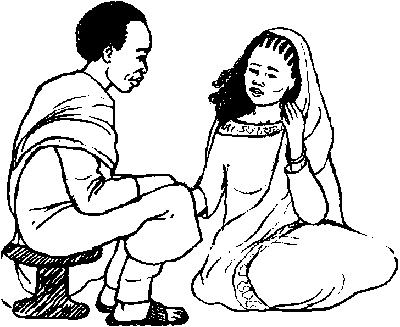
Figure
In some communities, young women are circumcised and married on the same day. Or a woman who was circumcised at a young age may have her vaginal opening made larger just before first sex in marriage. If she is expected to have sex before the wound has healed, sex will be very painful and dangerous, and the wound may take longer to heal. Open wounds also increase her risk of catching HIV/AIDS or sexually transmitted diseases (STDs).
¨ All wounds must be completely healed before having sex.
During sex, a woman may find it difficult to become aroused, since the clitoris has been cut off.
|
If you live where infibulation is practiced, help men to understand that the vaginal opening should be safely and gently made larger. Opening should be done long before the first time a woman has sex, to allow time for complete healing. Opening should be done by a health worker who uses properly cleaned cutting tools, and who cares for the wound afterward to prevent infection. |
¨ If you can encourage married couples to talk to one another, it will be easier for them to talk about how circumcision affects their sexual relations.
What to do for problems with sex:
A woman can talk with her partner about finding ways to become more sexually aroused, and explain that she may need more time to feel aroused.
She can also talk about ways to make sex less painful. Having enough wetness (lubrication) can make sex safer and hurt less.
|
Getting reproductive health care If an infibulated woman's vaginal opening is not large enough, she cannot get a pelvic exam or a Pop test for cancer. This means she has fewer choices for protecting herself against pregnancy, cancer, and STDs. |
Figure
Problems with childbirth
¨ Blocked births are more common in young girls whose bodies are not fully grown.
With some types of circumcision, there is a greater risk that the baby will have difficulty getting out of the vagina (blocked birth). If the hole left after infibulation is very small, it must be opened so the baby's head can pass through. This is called 'deinfibulation' (see the box). If the person who does the opening is not skilled, it can cause other complications.

Figure
¨ If a woman lives far from emergency services, having a baby at home may be dangerous - especially if she has been infibulated.
Scarring from circumcision can also cause the genitals to tear more during childbirth, since scarred skin does not stretch easily. Heavy bleeding may result.
¨ Some traditional midwives have had special training for helping circumcised women have safe births, and for problems from infibulation.
What to do:
Plan in advance for childbirth. During the second half of pregnancy, a pregnant woman should try to see a trained midwife or other health worker trained in helping circumcised women give birth. The midwife can tell her if there is a risk of complications, or if the vaginal opening should be made larger. If there are risks, a woman can make plans for getting medical care ahead of time.
|
Emergency: If an infibulated girl or woman is giving birth and the baby will not come out (a blocked birth) the scars must be cut so the baby can be born. If possible, this should be done by a trained health worker. But if there is no health worker nearby, wash your hands well with soap and clean water before you begin, and wear clean rubber or plastic gloves or bags on your hands. The cutting tool must be cleaned and disinfected first. If you have to cut someone, get her to a health worker who knows how to repair the cut right after the birth.
To cut the scars open (deinfibulation): 1. Put 1 or 2 fingers under the band of scar tissue. 5. To prevent infection, give antibiotics: amoxicillin, 3 grams all at once, or erythromycin, 500 mg 4 times a day for 7 days. |
|
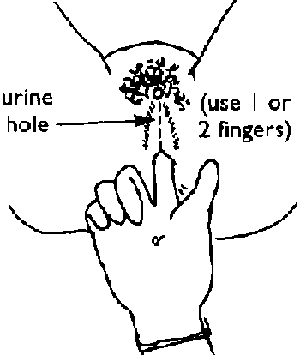
Leaking urine and stool
During a blocked birth, the lining of the vagina, bladder or rectum can tear, causing urine or stool to leak out of the vagina.
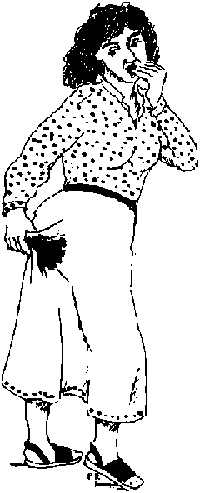
Figure
If a couple has and sex because the woman's vaginal opening is too small, the anus may become stretched or torn. Stool may leak out of the anus.
Leaking urine and stool are terrible problems to live with. Many young women have been rejected by their partners because of the smell and because they cannot control the leaking. Seek medical help as soon as the problem is discovered.
Figure
Infertility
Infection can cause scarring of the womb and tubes, which make it difficult for a woman to get pregnant. If you think there may be an infection caused by a sexually transmitted disease, see the chapter on "STDs and Other Infections of the Genitals". If you think there are problems with scarring in the womb or tubes from blocked flow of monthly bleeding, see a trained health worker about making the opening larger.

Figure
Mental health problems
A girl who has been circumcised can become overwhelmed with fear, worry (anxiety), or sadness. When circumcision is done in front of women that a girl knows and trusts to protect her from harm, she may feel that she can no longer trust anyone. It is worse if the girl did not wish to be circumcised.

Figure
Chronic pain and suffering can cause other lasting mental health problems, such as deep sadness (depression), and feelings of helplessness and worthlessness. Sexual problems can also cause severe strain between a woman and her partner. A woman may feel she is unable to please him because the pain makes her afraid of sex.
What to do:
· Encourage her to talk about her feelings.
· If she seems withdrawn, distant, and unable to do daily activities.
Figure
Working for change
If you are not sure how you feel about female circumcision, weigh the risks to help you decide. Are the benefits of being circumcised worth the health problems? Culture is always changing to meet new community needs. Can this practice also be changed?

Figure
What you can do:
If you do not agree with this practice, there are many ways you can help girls in your community:
· If you are a mother, help your daughters feel valued and loved, whether they are circumcised or not.· Encourage your daughters to continue with their education and to learn enough to make their own decisions about their lives and their futures. Every child has a right to good health and an education.
· Share the information about the health problems caused by female circumcision with other women and men in your community. Work with them for change.
· Find out what women's organizations in your community or region are doing.
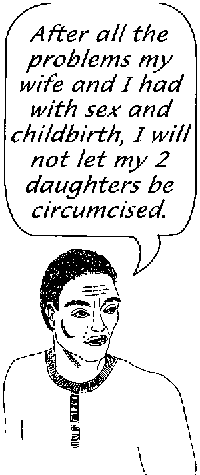
Figure
· If you are a health worker who does circumcisions, explain the risks to those who ask you.· Get training on what to do for health problems of female circumcision.
· Work for change with traditional and religious leaders. Religion does not support female circumcision, but this has not been well understood. Try to discuss this with your religious leaders.
¨ For real change to happen in your community, people must work together to end this harmful practice.
· Find ways to discourage circumcision ceremonies in your community. Find other rituals that can mark a girl's passage from childhood to adulthood. These rituals could include prayers to the ancestors, or sacrifices that are not harmful to women. In many places there are coming-of-age rituals for girls that do not harm their health.· Recognize the important role traditional birth attendants (TBAs) play in the health of the community. Since TBAs often perform circumcision, they need to be trained about its harmful effects. Find ways to replace the gifts they are given after circumcision ceremonies, and look for other ways their help is needed in the community. If other rituals are used to replace circumcision, include TBAs as an important part of the giving and receiving of any gifts.

Figure
Female circumcision, human rights, and the law
|
This chapter has mainly described the health problems that female circumcision often causes. But even if no health problems occur, a circumcised girl has still been harmed and her human rights to bodily integrity, safety, and health have been violated in the name of tradition. Many believe that circumcision also violates the right to privacy and choice because it is done mainly to girl children who are not old enough to agree to the practice. Some groups are calling for new laws to make female circumcision illegal and punish those who practice it. These laws need to be written carefully so that in communities where circumcision is practiced, it will not continue in secrecy, which would be even more dangerous. Also, girls and women who have been circumcised should not feel afraid to seek medical help if they have problems. |
|
| ||||||||||||||||||||||||||||||||||||||||||||||||||||||||||||||||||||||||||||||||||||||||||||||||||||||||||||||||||||||||||||||||||||||||||||||||||||||
Where Women Have No Doctor - A Health Guide for Women (Hesperian Foundation, 1997, 600 p.)
Chapter 31: Use of Medicines in Women’s Health
In this book we recommend many medicines. This chapter explains how to use them safely. For more information on side effects, warning signs, medicines that need special instructions, and antibiotics, see the “Green Pages”.
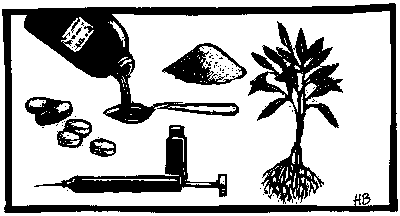
Figure
¨ Medicines can be useful, but they cannot replace healthy living, good food, or good health care.
Medicines are drugs that can be used to help the body fight disease or feel better when sick. Medicines can be either modern or traditional. In this book, we mostly talk about how to use modern medicines. This is because traditional remedies vary greatly from one region to another. A remedy that works in one community may not exist or may not work in another community. Ask traditional healers where you live to help you find remedies that may work for your problem. (For more information about using traditional remedies.)
It is important to use medicines safely. Used properly, medicines can save lives. But used improperly, medicines can hurt and even kill you. For example, some medicines can cause health problems for a pregnant or breastfeeding woman and her baby. And some medicines may cause other problems (side effects) that can be annoying, worrisome, or even dangerous to a person’s health. If you take too much of a medicine at once, or if you take it too often, it may harm you.
This chapter talks about how to use safely the medicines mentioned in this book to treat women’s health problems. It also provides information to help you decide when to use medicines to improve women’s health.
Deciding to use medicine
Some people think that you always need medicine to get good health care. But medicines can only treat health problems - not solve the conditions that cause them. And not all health problems are best treated with medicine. For some, drinking lots of liquids and resting are most important. A medicine should be used only if you know what the problem is and that the medicine will work for that problem.
¨ See the chapters called “Solving Health Problems” and “The Medical System” for more information to help you decide if you need to take medicine.
To decide whether or not you need a medicine, think about these things:
· How serious is my illness?
· Can I get better without this medicine?
· Can I get better by changing my living or eating habits?
· Is there a traditional remedy that works?
· Are the benefits of using this medicine greater than the risks and costs?
Figure
|
To the health worker: When giving medicine, remember these guidelines: 1. Medicine is not a substitute for good health care. Good health care means explaining why people have a health problem, what they can do to get better; and how they can prevent that problem in the future. 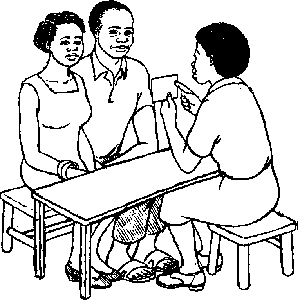 Figure |
Harmful uses of medicines
Medicines are used to fight dangerous illnesses, but medicines have their own dangers. Used improperly, medicines can hurt or even kill you. These are some common examples of ways medicines can be misused in women’s health:
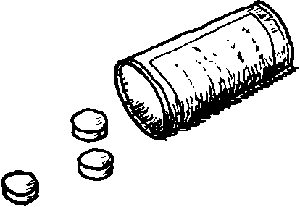
Figure
|
· Oxytocin and ergometrine are sometimes misused to hurry the birth of the baby or the afterbirth (placenta). This is dangerous. These medicines can kill the woman and her baby. Unless you are a trained health worker, use these medicines only to stop heavy bleeding AFTER childbirth. Also, do not use them to cause abortion. They may burst (rupture) the womb and kill the woman before they cause an abortion. · Women and girls sometimes try using dangerous medicines - such as aspirin, malaria medicines, and ergometrine - to cause abortion. These medicines almost never work. Instead of ending the pregnancy, some medicines can cause serious problems, such as poisoning and death from too much medicine. For more information on new medicines that can be used for safe abortion, read the chapter on “Abortion”. · Some women have died from using bromocriptine to stop the flow of breast milk. Never take it. Your breast milk will dry up naturally when your baby stops suckling. · In many places, women are encouraged to take medicines to calm their fears, to improve their mood, or to help them sleep. But these problems are usually caused by life’s difficulties. Most of the time, medicines will not make these difficulties go away, and the cost can quickly use up a family’s money. If you have difficulty getting through each day, see a trained mental health worker before using a medicine for your nerves or mood. · DES (diethylstilbestrol), a hormone, was used by women in Western Europe and North America from 1941 to 1981 to prevent miscarriage. It is no longer used because it can cause cancer of the cervix and vagina in girls and of the testicles in boys whose mothers used it while pregnant. This medicine may still be used in other places, such as parts of Africa and Latin America, to prevent miscarriage and stop the flow of breast milk. Do not take this medicine. · Some doctors prescribe hormone replacement therapy (HRT) for problems that can happen when your monthly bleeding stops forever (menopause). Sometimes these medicines are helpful. But most women can have a normal and healthy menopause without taking medicines. · Buying vitamins and minerals can be a waste of money, unless you have an illness that will be helped by them. Nutritious food is cheaper and healthier for the whole family. If possible, women who have weak blood (anemia) and who are pregnant should take iron pills and folic acid. But injections of vitamin B12 and liver extract do not help anemia - iron pills and good nutrition will do more good. |
How to use medicine safely
Any time you use a medicine, follow these guidelines:
· Be sure it is necessary.· Get good instructions from the person who told you to take it. You should know:
- how much to take (the dose).- how often to take it each day and for how many days.
· Take the full amount. If you stop taking the medicine too soon, the problem may come back.· Know the warning signs for any problems (side effects) the medicine can cause.
· Know if the medicine reacts badly with particular foods and if you should take it on a full or empty stomach.
· Avoid taking many medicines at the same time. Some medicines can stop other medicines from working. Some medicines can combine with other medicines to cause problems that neither would cause by itself.
· Be careful when buying combination medicines (2 or more medicines in 1 tablet). Some combination medicines are necessary, but they usually cost more, and you may be putting medicine in your body that you do not need. For example, some eye drops and eye ointments contain both antibiotics and steroids. The steroids can be harmful. Combination medicines can also cause more side effects.
· Make sure the package is labeled. If there is no label, ask the person to show you the bottle or box the medicine came in, and to write down the name and dose for you.
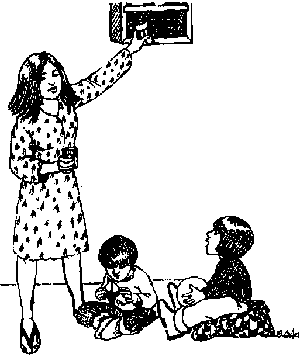
Keep all medicines in a cool,
dry place or they may lose their usefulness before the expiration date. Make
sure children cannot reach them. They can be deadly to a child.
|
Avoid medicines that are too old It is best to use a medicine before its expiration date. This date is written in small print on the package or bottle. For example: If you see ‘exp. 10/29/98’ or ‘exp. 29/10/98’ or ‘exp. Oct. 29, 1998’, this means the medicine should be used before the 29th day of October, 1998. Sometimes expired medicine is better than no medicine. But do not use expired medicines if they are: · pills that are starting to fall apart or change color. IMPORTANT |
Using the medicines in this book
Throughout this book, we have given the names and doses of medicines that can be used to treat some common women’s health problems. But to be able to buy and then use a medicine safely you must also know:
· what the medicine is called where you live (see below).· in what forms the medicine comes.
· how to take the medicine correctly.
· whether the medicine is safe for you to take.
· if the medicine causes side effects.
· what happens if you take too much (or not enough) of the medicine.
· what to do if you cannot find (or afford) the medicine, or if you should take another medicine because you are pregnant or breastfeeding or have an allergy.
This information for each medicine is presented at the end of this chapter in the “Green Pages”. The rest of this chapter explains more about how to buy and safely use all of the medicines mentioned in this book.
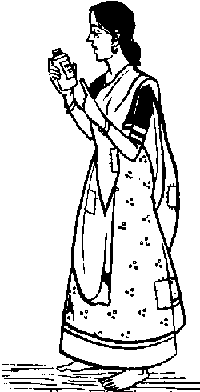
Read the label carefully
before you take any
medicine.
Generic names and brand names
Most medicines have 2 names - a generic or scientific name, and a brand name. The generic name is the same everywhere in the world. The brand name is given by the company that makes the medicine. When several companies make the same medicine, it will have several brand names but only one generic name. As long as the medicine has the same generic name, it is the same medicine.
In this book, we use the generic or scientific name for medicines. For a few medicines, such as those used in family planning, we also use the most widely available brand name. If you cannot find the first medicine we recommend, try to buy one of the others listed in the same treatment box.

It is OK to substitute one
medicine for another if the generic names are the same. Always take the same
dose.
For example: Your health worker has told you to take Flagyl. But when you go to the pharmacy, they do not have any. Ask the pharmacist or health worker what the generic name is for Flagyl (metronidazole) and ask for another brand that has the same generic name. The generic name is usually printed on the label, box, or package. If you ask for the medicine by its generic name, you can often buy it more cheaply.
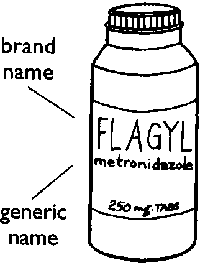
Figure
Medicine comes in different forms

Figure
Figure
Medicines come in many different forms:
· Tablets, capsules and liquids are usually taken by mouth. In some cases (rarely) they may need to be used in the vagina or rectum.· Inserts (suppositories, pessaries) are made so they can be put into the vagina or the rectum.
· Injections are given with a needle directly into a person’s muscle, under the skin, or into the blood.
· Creams, ointments, or salves that contain medicine are applied directly to the skin or in the vagina. They can be very useful for mild skin infections, sores, rashes, and itching.
Which kind of medicine, and how much of it you take depends on what is available and on the disease you are trying to treat.
How much medicine to take
|
How to measure medicine Many medicines, especially antibiotics, come in different weights and sizes. To be sure you are taking the right amount, check how many grams, milligrams, micrograms, or Units each pill or capsule contains. If the pharmacy does not have the weight or size you need, you may have to take part of a pill, or more than one. Here are some helpful symbols to know: = means equal to or the same as
Fractions. Doses that are less than one whole tablet or pill are sometimes written as fractions: 1 tablet = one whole tablet = ½ tablet = half of a tablet = 1 ½ tablet = one and one-half tablets = ¼ tablet = one quarter or one-fourth of a tablet = If you are not sure you have the right dose, ask someone who is good at numbers to help you. Kinds of measurements Grams and milligrams. Medicine is usually weighed in grams (g) and milligrams (mg): 1000 mg = 1 g (one thousand milligrams makes one gram) 1 mg =.001 g (one milligram is one-thousandth part of a gram) For example: | |||||||
|
One aspirin tablet has 325 milligrams of aspirin. |
|
.325 g |
All of these are different ways to say 325 milligrams. |
||||
|
1 µcg = 1 mcg = 1/1000 mg (0.001 mg) This means there are 1000 micrograms in a milligram. Units. Some medicines are measured in units (U) or international units (IU). For liquid medicine: Sometimes instructions for syrups or suspensions tell you to take a specific amount, for example, 10 ml or 10 milliliters or 10 cc (cubic centimeters). A cubic centimeter is the same as a milliliter. If the medicine does not come with a special spoon or dropper to measure liquid, you can use household measures: 1 tablespoon = 1 Tb = 15 ml So, for example:
| |||||||
|
Amoxicillin tablets come in 2 sizes: |
|
| |||||
|
If you need to take: ‘amoxicillin 500 mg 1 tablet 2 times a day’, but you only have 250 mg tablets, you need to take 2 tablets each time. |
| |
| |
| ||
| |
250 mg |
+ |
250 mg |
= |
500 mg | ||
|
In this book we have given dosages for adult women. But for some medicines, especially ones that can be dangerous, it is better to figure out the dosage according to a person’s weight (if you have a scale). For example, if you need to take gentamicin, and the dosage says 5 mg/kg/day, this means that each day you would give 5 milligrams (mg) of the medicine for each kilogram (kg) the person weighs. So a 50 kg woman would receive 250 mg of gentamicin during 24 hours. This amount should be divided up depending on how many times it is given each day. Gentamicin is given 3 times a day so you would give 80 mg in the morning, 80 mg in the afternoon, and 80 mg in the evening. | |||||||
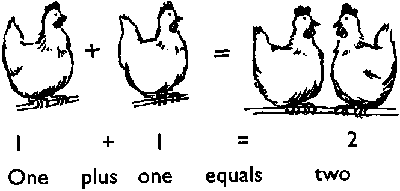


 250 mg and
  500 mg
 When to take medicines
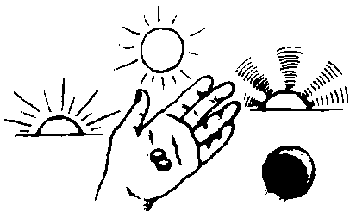
Figure
It is important to take medicines at the right time. Some medicines should be taken only once a day, but others must be taken more often. You do not need a clock. If the directions say’ 1 pill every 8 hours’, or ‘3 pills a day’, take one at sunrise, one in the afternoon, and one at night. If they say’ 1 pill every 6 hours’, or ‘4 pills a day’, take one in the morning, one at midday, one in the late afternoon, and one at night. If the directions say ‘1 every 4 hours’, take 6 pills a day, allowing about the same time between pills.
IMPORTANT
· If
possible, take medicines while standing or sitting up. Also, try to drink a
glass of liquid each time you take a medicine.
· If you vomit and can see the medicine in the vomit,
you will need to take the medicine again.
· If you vomit within 3 hours after taking a
birth-control pill, take another one to make sure you will not get
pregnant.
If you are writing a note for someone who does not read well, draw them a note like this:

Figure
In the blanks at the bottom, draw the amount of medicine to take and carefully explain what it means. For example:
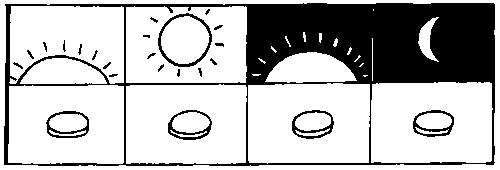
This means they should take 1
tablet 4 times a day: 1 at sunrise, 1 at midday, 1 in the late afternoon, and 1
at night.
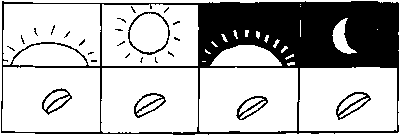
This means ½ tablet 4
times a day.
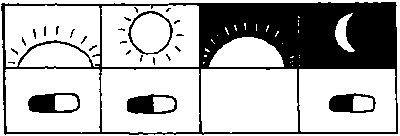
This means 1 capsule 3 times a
day.
Who should not take a certain medicine

Figure
CAUTION
= read carefully if you are pregnant
= read carefully if you are breastfeeding
= do not take if pregnant
= do not take if breastfeeding
Some medicines can be dangerous for certain people, or during certain times of their lives. You should be especially careful if:
· you are pregnant or breastfeeding. Many of the medicines that you take during pregnancy and breastfeeding will be passed on to your baby. Before you take any medicine, find out if it will harm your baby. Medicines in this book that are harmful during pregnancy and breastfeeding are marked with a warning.But if you are sick, it is important that you get treated. Do take medicines to treat serious illnesses and anemia. It is possible to find medicines that will not harm your baby.
· you have long-term liver or kidney disease. Your liver and kidneys clear the medicine from your body. If they are not working well, the medicine may build up and become poisonous.
¨ In the Green Pages, medicines that may be harmful during pregnancy and breastfeeding will be marked with the above signs.
· you have a stomach ulcer or a stomach that upsets easily (heartburn). Medicines such as aspirin and ibuprofen can cause bleeding in the stomach and a painful or burning feeling. If you must take a medicine that bothers your stomach, take it with food.· you are allergic to the medicine. If you have ever had any of these signs after taking a medicine, you are probably allergic to that medicine:
- a skin rash (raised, red and itchy, usually with swelling)
- swelling
- trouble breathing or swallowing
Being allergic means your body fights against the medicine rather than using it to fight disease. Allergic reactions happen more often with antibiotics from the penicillin and sulfa families. Avoid taking other medicines from the same ‘family’ of medicines as the one you are allergic to. You may also be allergic to them.
IMPORTANT
If you have an allergic reaction to a
medicine, never take the medicine again. The next time it may cause a more
serious reaction or even death.

Figure
|
IMPORTANT |
|
Side effects

Figure
Medicines fight disease but can also cause other effects to happen in the body. Some are harmless but annoying. Others are harmful. For example, metronidazole makes your mouth taste bad, which is annoying but harmless. Some very strong antibiotics, such as gentamicin and kanamycin, can cause permanent harm to your kidneys and hearing if too much is taken.
Before you take a medicine, find out what the possible side effects are. When using the medicines in this book you can look at the “Green Pages” to learn about possible side effects.
IMPORTANT
If you have unusual signs such as
dizziness, ringing in the ears, or fast breathing, and these are not listed as
side effects for the drug you are taking, see a health worker trained in giving
medicines. These signs can mean that you are taking too much
medicine.
Precautions (warnings)
Figure
Some medicines have specific warnings you should learn about. But you should check with a health worker before taking the medicine if:
· you are taking other medicines. Medicines that are safe when taken alone can be harmful when taken with another medicine, or they can be made weaker.· giving medicine to a child. Children have smaller bodies and may need to take less medicine. Check with a pharmacist or health worker for the right dose for a child.
· you are older. Older people sometimes need smaller doses because medicine will stay in their bodies longer.
· you are very small, thin or poorly nourished. You may need a smaller dose of some medicines, such as medicines for tuberculosis, high blood pressure, and seizures and other problems.
Information you should know
Figure
Food and medicine
With most medicine, you can continue eating the foods you normally eat. Some medicines work better if you take them when your stomach is empty - when it has been more than 2 hours since you last ate.
Medicines that upset the stomach should be taken with food or just after eating.
If you have nausea or vomiting, take the medicine with a dry food that calms the stomach - like rice, bread, or a biscuit.
Taking too much medicine
Figure
Some people think that taking more medicine will heal the body faster. This is not true and can be dangerous! If you take too much medicine at one time or too often, or if you take some medicines for too long, the medicine may harm you.

Never take more medicine than
the amount advised.
Some common signs of taking too much of a medicine are:
· nausea
· vomiting
· pain in the stomach
· headache
· dizziness
· ringing in the ears
· fast breathing
But these can also be side effects for some medicines. If you have one or more of these signs and they are not common side effects of the medicine you are taking, then you should talk to a health worker trained in giving medicines.
Poisoning. Taking too much of a medicine (for example, half a bottle or more) can poison a person, especially children. You should do the following:
· try to make the person throw up. She may be able to get the extra medicine out of her body before it harms her more.· give activated charcoal. Activated charcoal can absorb some kinds of drugs and keep them from acting as poison.
· Get medical help immediately.
Kinds of medicines
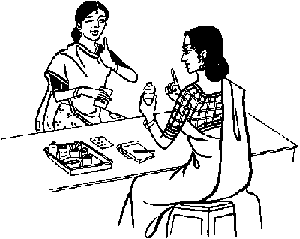
Figure
Different medicines are used to treat different problems. Some cure the problem itself and others relieve only the signs of the problem. Sometimes you cannot take the best medicine for your problem because:
· it is not available where you live.· it is not safe if you are pregnant or breastfeeding.
· you are allergic to it.
· it no longer works where you live, because of drug resistance (see box below).
When this happens, you can substitute one medicine for another, but only if you are sure it will work. The treatments we recommend in this book often give you choices if for some reason you cannot use the best medicine. If you are unsure of what medicines to take, talk to a health worker.
Antibiotics
|
Antibiotics are important medicines that are used to fight infections caused by bacteria. They do not fight viruses or cure the common cold, But not all kinds of antibiotics will fight all kinds of infections. Antibiotics that share the same chemical make-up are said to be from the same family. It is important to know about the families of antibiotics for 2 reasons: 1) antibiotics from the same family can often treat the same problems. This means you can use a different medicine from the same family. The major families of antibiotics used in this book are: Penicillins: amoxicillin, ampicillin, benzathine penicillin, benzyl penicillin, dicloxacillin, procaine penicillin, and others. Medicines of the penicillin family are very effective for a variety of infections. They have very few side effects and are safe to take if pregnant or breastfeeding. They are widely available, cheap, and come in oral and injectable forms, but they cause more problems with allergic reactions than many other medicines. They have been overused and some diseases are now resistant to penicillins. Macrolides: azithromycin, erythromycin, and others Erythromycin is an older, commonly used and widely available antibiotic that works for many of the same infections as penicillin and doxycycline. It is often a good substitute for doxycycline when a woman is pregnant or breastfeeding, or if there is penicillin allergy. Tetracyclines: doxycycline, tetracycline Tetracycline and doxycycline both treat many different infections and are cheap and widely available. Neither drug should be taken by pregnant or breastfeeding women or by children under 8 years of age. Sulfas (sulfonamides): sulfamethoxazole (part of co-trimoxazole), sulfisoxazole These medicines fight many different kinds of infections and they are cheap and widely available. But they are less effective now because some infections are resistant to them. They cause more problems with allergic reactions than other medicines. They can be taken during pregnancy, but it is better to take a different medicine just before you give birth and during the first few weeks of the baby’s life. Stop using sulfonamides immediately if you develop signs of allergy. Aminoglycosides: gentamicin, streptomycin, and others These are effective and strong medicines, but most of them can cause serious side effects and can only be given by injection. They should only be used when infection is severe and no safer drug is available. Cephalosporins: cefixime, ceftriaxone, cephalexin, and others These are a large family of new and powerful drugs that treat many women’s infections that have become resistant to the older antibiotics. They are often safer and have fewer side effects than the older antibiotics but can be quite expensive and hard to find. They are safe to use during pregnancy and breastfeeding. Quinolones: ciprofloxacin, norfloxacin, and others Ciprofloxacin and norfloxacin are new and powerful antibiotics. They are expensive and may be hard to find. They cannot be taken while pregnant and breastfeeding or by children less than 16 years old. |
|
Use antibiotics only when necessary Many antibiotics, especially penicillin, are used too often. Use antibiotics only when necessary because: · while they kill some germs, antibiotics allow others - ones that are normally in the body and usually harmless - to grow out of control. This can cause problems like diarrhea and vaginal yeast infections. For example: In the past it was easy to cure gonorrhea, a sexually transmitted disease, with penicillin. But penicillin has been used incorrectly and too often for many other, less serious problems.
|

Medicines for pain
|
Pain is a sign of a problem, such as an injury or infection. So it is very important to treat the problem that is causing the pain, and not just the pain. But during the treatment, the pain can be eased with pain medicines. With some illnesses that cannot be cured, like AIDS and cancer, pain can be disabling and last a long time. When treating pain: · try to find and treat the cause of the pain.
For mild to moderate pain, as with monthly bleeding or a headache: Paracetamol is widely available and cheap. It is the safest pain medicine for pregnant and breastfeeding women, and it also works to reduce fever. Do not take it with alcohol or to treat a hangover, or if you have liver or kidney problems. Aspirin is also widely available, cheap, and works well to lower fever and to treat pain and inflammation in muscles and joints, and for pain with monthly bleeding. Breastfeeding women can use aspirin one week after the baby is born, but pregnant women should use paracetamol instead. It is safe when taken in the correct amounts, but it can irritate the stomach, so it should not be taken by people with stomach ulcers. Aspirin keeps blood from clotting normally, so it should not be taken if the person is bleeding or before any surgery, Ibuprofen is widely available but more expensive than aspirin or paracetamol. Like aspirin, it is very effective in lower doses for pain with monthly bleeding, and for muscle and joint pain and inflammation. Ibuprofen is a good medicine for the lasting pain of arthritis. It can also cause irritation of the stomach and bleeding problems, so it should not be taken before surgery or by people with stomach ulcers. Breastfeeding women can use ibuprofen but pregnant women should not use it during the last 3 months of pregnancy. For moderate to severe pain: Ibuprofen in larger doses can be effective (up to 800 mg 3 to 4 times daily). Codeine is a drug of the opiate family which is useful for pain after surgery or an injury. Taking codeine for too long can cause addiction. For severe or ongoing pain: Codeine in higher doses can be used for severe pain. Morphine is a very strong medicine of the opiate family that is good for pain during the last stages of cancer or AIDS. Morphine is usually difficult to get unless you are in a hospital, but it may be available with a doctor’s prescription. It is highly addictive. |

Medicines for heavy bleeding from the vagina after birth or abortion
Medicines that contain ergometrine or oxytocin cause contractions of the womb and its blood vessels. They are important medicines to control heavy bleeding after childbirth.
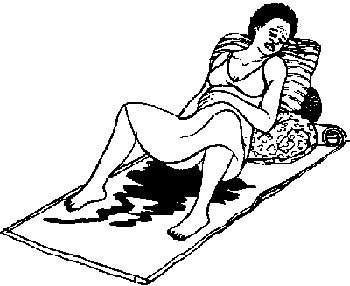
Figure
Ergometrine is used to prevent or control severe bleeding after the placenta has come out. Do not inject ergometrine into the vein (IV). It should be injected into a large muscle. Never give this medicine before the baby is born or the placenta has come out! Do not give this medicine to a woman with high blood pressure.
Oxytocin is used to help stop severe bleeding of the mother after the baby is born. It is very rare for oxytocin to be needed before the baby is born. For this purpose, it should only be given in the vein by a doctor or trained birth attendant. Using oxytocin to speed up labor or give strength to the mother in labor can be dangerous to both mother and child.
Medicines for allergic reactions
A person can be allergic to medicines, foods, or things that are breathed in or touched. Reactions may be mild - with itching, hives or rash, or sneezing - or they can be moderate or severe. Some reactions can worsen and bring on allergic shock. Severe reactions and allergic shock can be life-threatening and must be treated.

Figure
In this book, we talk about how some medicines may cause allergic reactions. Any medicine that causes an allergic reaction should be stopped and never given again - even if the reaction was mild.
Depending on how strong the reaction is, allergic reactions are treated with 1, 2, or 3 kinds of medicines:
1. Antihistamines, like diphenhydramine, hydroxizine, or promethazine. None of these medicines are good for pregnant or breastfeeding women, but promethazine is the least dangerous of them. Otherwise diphenhydramine is usually the cheapest and most widely available.2. Steroids, like dexamethasone or hydrocortisone. Dexamethasone is a better choice for pregnant or breastfeeding women.
3. Epinephrine or adrenaline. These medicines are safe for pregnant or breastfeeding women.
Medicines that can save a woman’s life
Starting a community emergency medicine kit is one way you can help save the lives of women where you live. The medicines in this chart will help you start treatment until other medical help is available. Make sure these medicines are in your kit or at the nearest health post. If you need to buy them, try meeting with leaders in your community. Explain how these medicines can help, and see if you can find ways together to buy them.
What to include in a medicine kit:

Figure
|
| ||||||||||||||||||||||||||||||||||||||||||||||||||||||||||||||||||||||||||||||||||||||||||||||||||||||||||||||||||||||||||||||||||||||||||||||||||||||||||||||||||||||||||||||||||||||||||||||||||||||||||||||||||||||||||||||||||||||||||||||||||||||||||||
Table of Medicines: Green Pages
HOW TO USE THE GREEN PAGES
This section gives information about the medicines mentioned in this book. For general information about medicines, be sure to read the chapter called “Use of Medicines in Women’s Health”. For specific information about each medicine, you can look it up in these Green Pages. Medicines are listed by their generic (scientific) names, the same names used in the chapters. The medicines are arranged in the order of the alphabet:
a b c d e f g h i j k l m n o p q r s t u v w x y z
For example, if you are looking up hydroxyzine, it comes after doxycycline but before metronidazole.
You can also find a medicine in the Green Pages by using:
· the problem index. This index lists the health problems discussed in this book and medicines used to treat them. The index gives the page number where information about the health problem can be found. Be sure to read about the problem before treating it with medicine. Remember: good health does not depend only on medicines! The most important ‘medicine’ for good health is good health information.· the medicine index. This index lists the generic names of medicines and some common brand (commercial) names. If there is a medicine you want to use, you can look it up here to find the number of the page where you can learn more about that medicine.
Both the problem and medicine indexes are arranged in the order of the alphabet.
Information about specific medicines
The information about each medicine appears in a box like this:
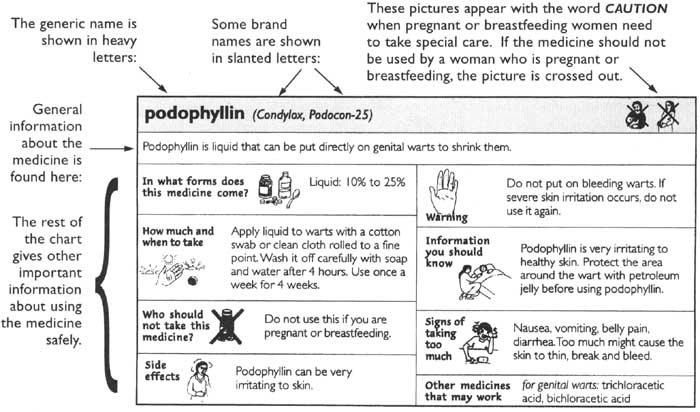
Figure
Problem Index
This is a list of the health problems discussed in this book that are sometimes treated with medicines. The problems are listed in order of the alphabet in the column on the left. You should read these pages before taking any medicine. The column on the right has medicines that can be used to treat each problem on the left. To learn more about a medicine, look it up in the medicine tables.
|
Problem |
See medicines | |
|
arthritis |
aspirin, ibuprofen | |
|
bleeding from the vagina | | |
| |
after abortion |
ergometrine |
| |
after childbirth |
ergometrine, oxytocin |
| |
around menopause |
medroxyprogesterone |
|
chancroid |
ceftriaxone, ciprofloxacin, erythromycin, co-trimoxazole |
|
|
chlamydia |
co-trimoxazole, doxycycline, erythromycin, tetracycline |
|
|
cough |
codeine | |
|
diarrhea |
co-trimoxazole, metronidazole, norfloxacin | |
|
emergency birth control |
low-dose birth control pills (groups 2 and 3) | |
|
fever |
aspirin, paracetamol, ibuprofen | |
| |
after abortion |
amoxicillin, doxycycline, metronidazole |
| |
after childbirth |
amoxicillin, metronidazole, procaine penicillin, chloramphenicol |
| |
during labor |
ampicillin, procaine penicillin |
|
fits during pregnancy |
diazepam, magnesium sulfate | |
|
fungal infection | ||
| |
mouth (thrush) |
Gentian Violet, ketoconazole, nystatin |
| |
skin |
Gentian Violet, ketoconazole, nystatin |
| |
vagina |
Gentian Violet, clotrimazole, miconazole, nystatin, vinegar, ketoconazole |
|
gonorrhea |
cefixime, ceftriaxone, ciprofloxacin, co-trimoxazole, doxycycline, kanamycin, metronidazole, norfloxacin | |
|
herpes sores |
acyclovir | |
|
infection (prevention) |
amoxicillin, doxycycline | |
| |
in deinfibulation |
amoxicillin, erythromycin, tetanus vaccine |
|
infection (treatment) | | |
| |
after abortion |
amoxicillin, benzyl penicillin, chloramphenicol, doxycycline, erythromycin, gentamicin, metronidazole, tetanus vaccine |
| |
bladder |
amoxicillin, co-trimoxazole |
| |
breast infection |
dicloxacillin, erythromycin |
| |
after childbirth |
amoxicillin, chloramphenicol, erythromycin, metronidazole, penicillin, procaine penicillin |
| |
after circumcision |
dicloxacillin, erythromycin, tetanus vaccine |
| |
kidney |
amoxicillin, co-trimoxazole, ampicillin, gentamicin |
|
itching | |
|
| |
of the genitals (see vaginal discharge) | |
| |
of the skin |
diphenhydramine, hydrocortisone, hydroxyzine |
|
nausea |
promethazine | |
|
newborn eye care |
erythromycin eye ointment, tetracycline eye ointment, chloramphenicol eye ointment | |
|
pain | | |
| |
mild to moderate |
aspirin, paracetamol, ibuprofen |
| |
severe |
codeine |
|
pelvic inflammatory disease (PID) |
doxycycline, metronidazole, norfloxacin | |
|
pneumonia for people with AIDS |
co-trimoxazole | |
|
sores, infected |
dicloxacillin, erythromycin, penicillin, potassium permanganate | |
| |
on the genitals |
benzathine penicillin, erythromycin |
|
syphilis |
benzathine penicillin, doxycycline, erythromycin, tetracycline | |
|
tetanus in newborn |
penicillin G | |
|
toxemia/fits |
magnesium sulfate, diazepam | |
|
trichomonas |
metronidazole | |
|
vaginal discharge (see Chapter 16) | | |
| |
at risk for STD |
co-trimoxazole, doxycycline, metronidazole |
| |
not at risk for STD |
clotrimazole, Gentian Violet, metronidazole |
|
warts on the genitals |
podophyllin, trichloroacetic acid | |
|
womb infection |
amoxicillin, chloramphenicol, metronidazole, penicillin, procaine penicillin | |
|
yeast, thrush |
Gentian Violet, clotrimazole, miconazole, nystatin, vinegar, ketoconazole | |
List of Medicines
This list of medicines has two different kinds of names - brand (commercial) names and generic (scientific) names. You can look up the name of a medicine you want to use here to find the page number in the Green Pages where you can learn more about it. Brand names are shown in slanted letters like this. Brand names have the generic name of the medicine next to it.
|
acetaminophen or paracetamol (APAP, Panadol, Tempra, Tylenol, others) |
|
Acetaminophen and paracetamol are 2 names for the same drug that is used to ease pain and lower fever. It is one of the safest pain killers. It does not cause stomach irritation and can be used instead of aspirin by people with stomach ulcers. It can also be used by pregnant women. See paracetamol. |
|
acyclovir (Zovirax) |
|
Acyclovir is a medicine that kills viruses and is used to fight herpes, which can cause painful blisters on the genitals, and anus, and in the mouth. Acyclovir will not stop herpes from coming back, but it makes it less painful and keeps it from spreading. In what forms does this medicine come? How much and when to take Who should not take this medicine? Information you should know Side effects Signs taking too much |


|
adrenaline or epinephrine (Adrenalin) |
|
Adrenaline and epinephrine are two names for the same drug. It is used for severe allergic reactions or allergic shock, for example, allergic reaction to penicillin. It is also used for severe asthma attacks. See epinephrine. |
|
amoxicillin (Amoxifar, Amoxil, Himox, Megamox, Sumoxil) |
|
Amoxicillin is an antibiotic of the penicillin family used to treat womb infections, urine system infections, pneumonia, and other infections. It is now used instead of ampicillin in many places. In what forms does this medicine come? How much and when to take For kidney infection: Take 500 mg by mouth 3 times a day for 14 days. For infection of the womb after childbirth: Take 1 gram 3 times a day for 10 days (also use other drugs). To prevent infection after abortion: Take 500 mg by mouth 3 times a day for 5 days. For bladder infection or infection after abortion: 3 grams by mouth one time only (for drug combinations to treat infection after an abortion). Who should not take this medicine? Side effects Information you should know Other medicines that may work |
|
amoxicillin with clavulanate potassium (Augmentin) |
|
Amoxicillin with clavulanate potassium (Augmentin) is an antibiotic of the penicillin family used to treat gonorrhea and other infections. In some places, however; gonorrhea is now resistent to this drug. It is much more effective for some infections than amoxicillin alone but is expensive and often hard to find outside of rich countries. Unfortunately, clavulanate potassium cannot be purchased by itself and combined with regular amoxicillin. In what forms does this medicine come? How much and when to take Who should not take this medicine? Other medicines that may work |
|
ampicillin (Amcil, Ampicin, Omnipen, Penbritin, Polycillin) |
|
Ampicillin is an antibiotic of the penicillin family used to treat many kinds of infections. In what forms does this medicine come? How much and when to take For bladder infection: Take 3 grams all at once unless you are pregnant. If you are pregnant, take 250 mg by mouth 4 times a day for 7 days. For kidney infection: Take 500 mg by mouth 4 times a day for 14 days. If vomiting, inject 500 mg into muscle 4 times a day and change to tablets when the vomiting stops. For fever during pregnancy: Who should not take this medicine? Side effects
Information you should know Other medicines that may work |

|
aspirin (acetylsalicylic acid, ASA,
others) |
|
Aspirin works against pain, swelling, and fever. In what forms does this medicine come? How much and when to take Who should not take this medicine? Side effects Information you should know Signs taking too much Other medicines that may work |
|
azithromycin (Zithromax) |
|
Azithromycin is an antibiotic of the macrolide family used to treat many STDs. It is expensive and often hard to find, but it works well against STDs when many other antibiotics do not In what forms does this medicine come? How much and when to take Who should not take this medicine? Side effects Information you should know Azithromycin is an excellent treatment for most STDs that cause discharge or genital sores. It is good for treating STDs where there is resistance to other medicines. Other medicines that may work |
|
AZT (azidothymidine, Retrovir, zidovudine) |
|
AZT is a medicine used to treat AIDS and to help prevent passing the HIV virus to a baby during pregnancy and birth. It is a difficult drug to use, and should be given in a hospital or under the care of a qualified health worker. Also, it is very expensive and often hard to find in poor countries. |
|
benzathine penicillin (Bicillin L-A, Penadur L-A, Permapen) |
|
Benzathine penicillin is a long-acting antibiotic of the penicillin family used to treat syphilis, genital ulcers, and other infections, including some sore throats. It is always given as an injection into muscle. In what forms does this medicine come? How much and when to take For late syphilis: Inject 2.4 million Units into muscle every week for 3 weeks. Who should not take this medicine?
Other medicines that may work |
|
benzylpenicillin (Celinex, Hi-Do-Pen, penicillin G potassium or sodium) |
|
Benzylpenicillin is an antibiotic of the penicillin family used to treat many serious infections, including infection after an abortion. In what forms does this medicine come? How much and when to take Who should not take this medicine?
Other medicines that may work |
|
cefixime (Suprax) |
|
Cefixime is an antibiotic of the cephalosporin family that is used to treat many infections including gonorrhea, pelvic inflammatory disease, and others. In what forms does this medicine come? How much and when to take Who should not take this medicine? Side effects
Other medicines that may work |
|
ceftriaxone (Nitrocephin,
Rocephin) |
|
Ceftriaxone is a very strong antibiotic of the cephalosporin family that is injected into muscle. It is used for many infections including gonorrhea, pelvic inflammatory disease (PID), kidney infections, and serious infections after abortion, childbirth, or miscarriage. In what forms does this medicine come? How much and when to take For gonorrhea, chancroid, or PID: Inject 250 mg into muscle one time only. Who should not take this medicine?
Other medicines that may work |
|
Cephalexin (Ceporex, Keflex, Keftab) |
|
Cephalexin is an antibiotic of the cephalosporin family used to treat breast and bladder infections, bronchitis and some skin infections. In what forms does this medicine come? How much and when to take Who should not take this medicine? Side effects
Information you should know Other medicines that may work |
|
activated charcoal (Activated Carbon, Liquid Antidote) |
|
Activated charcoal is a specially prepared charcoal used to treat some poisonings by drugs like aspirin, acetaminophen, phenobarbitol, or other medicines or chemicals, or poisonous mushrooms. After giving activated charcoal, get medical help immediately. In what forms does this medicine come? How much and when to take Who should not take this medicine? Side effects
|
|
chloramphenicol (Chloromycetin, Kemicetine, Mychel,
Pharex) |
|
Chloramphenicol is a very strong antibiotic used for serious infections after childbirth, miscarriage, or abortion. It should only be used when less dangerous drugs do not work or are not safe to take. As an ointment, it is also used for baby eye-care if tetracycline or erythromycin ointments are not available. In what forms does this medicine come? How much and when to take For serious infection after abortion: Inject 1 g into vein (IV) 4 times a day. For baby eye care: put a little in each eye at birth. Who should not take this medicine? Side effects
Information you should know Signs taking too much Other medicines that may work |
|
ciprofloxacin (Ciloxan, Cipro, Ciprobay) |
|
Ciprofloxacin is a strong antibiotic of the quinolone family that is used to treat skin and kidney infections, and some STDs like gonorrhea, chancroid and PID. In what forms does this medicine come? How much and when to take For kidney infection: Take 500 mg by mouth 2 times a day for 10 days. Who should not take this medicine? Side effects
Information you should know Other medicines that may work |
|
clotrimazole (Canesten, Fungistin, Gyne-lotrimin, Mycelex-G) |
|
Clotrimazole is used to treat yeast infections of the vagina, mouth and throat. In what forms does this medicine come? How much and when to take For mouth and throat infections: Take a 10 mg lozenge by mouth 5 times a day for 14 days. Who should not take this medicine? Side effects
Information you should know Other medicines that may work |
|
Codeine |
|
Codeine is a pain killer of the opiate family that also calms coughs and helps you relax and sleep. Only use codeine to calm very bad coughs after you have treated the cause for the cough. Only use codeine for pain when milder pain medicines do not work. In what forms does this medicine come? How much and when to take Side effects Information you should know Signs taking too much Treatment for taking too much Other medicines that may work |

|
co-trimoxazole = trimethoprim +
sulfamethoxazole |
|
Co-trimoxazole is a combination of 2 antibiotics (one from the sulfa family) that is used to treat bladder and kidney infections, vaginal discharge caused by gonorrhea, and chancroid. It also helps prevent diarrhea and pneumonia for people with AIDS. In what forms does this medicine come? How much and when to take Who should not take this medicine? Side effects
Signs taking too much Other medicines that may work |
|
dexamethasone (Decadron, Decilone, Inflam, Maxidex) |
|
Dexamethasone is a steroid medicine used to treat allergic shock. In what forms does this medicine come? How much and when to take Side effects Other medicines that may work |
|
diazepam (Anxionil, Calmpose,
Valium) |
|
Diazepam is a tranquilizer used to treat and prevent convulsions and seizures. It also relieves anxiety and helps promote sleep. In what forms does this medicine come? How much and when to take Who should not take this medicine? Side effects
Information you should know Signs taking too much Other medicines that may work |
|
dicloxacillin |
|
Dicloxacillin is an antibiotic of the penicillin family used to treat breast and skin infections. In what forms does this medicine come? How much and when to take Who should not take this medicine? Side effects
Other medicines that may work |
|
diphenhydramine hydrochloride (Bectivo,
Benadryl) |
|
Diphenhydramine is an antihistamine that dries up mucus in the nose and also makes you sleepy. It is useful for treating chronic itching and sleep problems for people with AIDS. It is also a treatment for allergic reactions and allergic shock. In what forms does this medicine come? How much and when to take Who should not take this medicine? Side effects
Information you should know Other medicines that may work |
|
doxycycline (Biocolyn, Doryx, Monodox, Vibramycin,
Vibra-Tabs) |
|
Doxycycline is an antibiotic of the tetracycline family used to treat many different infections including STDs, pelvic infections, infections after abortions, and others. It is used instead of tetracycline. In what forms does this medicine come? How much and when to take Who should not take this medicine? Side effects
Information you should know Other medicines that may work |
|
epinephrine or adrenaline (Adrenalin) |
|
Epinephrine and adrenaline are two names for the same drug. It is used for allergic reactions or allergic shock, for example, allergic shock caused by penicillin. It is also used for severe asthma attacks. In what forms does this medicine come? How much and when to take Side effects
Information you should know Signs taking too much |
|
ergometrine maleate, methylergonovine
maleate |
|
Ergometrine causes contractions of the womb and its blood vessels and is used to control heavy bleeding after childbirth or an abortion. Ergometrine and methylergonovine are the same drug. After giving this medicine, get help. In what forms does this medicine come? Tablets: 0.2 mg How much and when to take Side effects
Information you should know Other medicines that may work |
|
erythromycin (E.E.S., E-Mycin, Ery-max, Ethril, Ilosone, Ilotycin) |
|
Erythromycin is an antibiotic of the macrolide family used to treat many infections, including some STDs, respiratory and skin infections. It can be safely used during pregnancy and is widely available. In what forms does this medicine come? How much and when to take Who should not take this medicine? Side effects Information you should know Other medicines that may work |
|
estrogen (ethinyl estradiol, mestranol) |
|
Chemical forms of estrogen are used in birth control pills and injections. They are similar to the hormone estrogen made in a woman’s body. Estrogen can also be used to treat abnormal bleeding or problems of menopause (see Chapter 8). For more information, see the section on birth control pills, injections, and emergency family planning (see Chapter 13). |
|
ethambutol (Interbutol, Myambutol, Mycrol, Odetol, Triambutol) |
|
Ethambutol is used to treat tuberculosis (TB) especially where other TB medicines are no longer strong enough. It is used in combination with other drugs. See Chapter 25. In what forms does this medicine come? How much and when to take Who should not take this medicine? Side effects Information you should know |
|
gentamicin (Bactiderm, Garamycin,
Servigenta) |
|
Gentamicin is a very strong antibiotic of the aminoglycoside family that is used to treat gonorrhea, kidney and other serious infections, and for pelvic inflammatory disease in combination with other drugs. You should use this drug only when the woman is vomiting and cannot keep other medicines down or no other antibiotic is available. In what forms does this medicine come? How much and when to take Who should not take this medicine? Side effects
Information you should know Signs taking too much Other medicines that may work |
|
Gentian Violet (Crystal Violet, methylrosanilinium chloride) |
|
Gentian Violet is a disinfectant used to help fight infections of the skin, mouth, and vagina. In what forms does this medicine come? How much and when to take Side effects
Information you should know Other medicines that may work |
|
hepatitis B vaccine (Engerix-B, Recombivax HB) | ||
|
This vaccine provides immunity to Hepatitis B. In what forms does this medicine come? How much and when to take Doses for these 2 brands of the vaccine are different: |
||
|
|
Engerix-6 |
Recombivax HB |
|
Adults: |
20 mg |
10 mg |
|
Children |
|
|
|
0 to 11 years |
10 mg |
2.5 mg |
|
11 to 19 years |
20 mg |
5 mg |
|
Information you should know Other medicines that may work | ||
|
hydrocortisone or cortisol |
|
Hydrocortisone is an anti-swelling and anti-itch skin cream used to treat rashes. It is also useful for treating hemorrhoids (piles). In its injection form and as tablets it is an important drug for treating allergic shock. In what forms does this medicine come? How much and when to take Side effects
Signs taking too much Other medicines that may work |
|
hydroxyzine (Atarax, Iterax, Marax, My-Pam,
Vistaril) |
|
Hydroxyzine is an antihistamine used for allergic reactions, to control itching, and sometimes to treat nausea, vomiting, and anxiety. In what forms does this medicine come? How much and when to take Who should not take this medicine? Side effects Signs taking too much Other medicines that may work |
|
ibuprofen (Actiprofen, Advil, Genpril, Motrin, Nuprin,
Rufen, others) |
|
Ibuprofen works against pain, swelling, and fever. It is very useful to relieve discomfort during monthly bleeding and pain from arthritis and AIDS. In what forms does this medicine come? How much and when to take Who should not take this medicine? Side effects
Information you should know Other medicines that may work |
|
isoniazid (Bisonid, INH, Isoniazdum, isonicotinic acid hydrazide, Odinah, Zidrid) |
|
Isoniazid is used to treat tuberculosis (TB) in combination with other medicines. See Chapter 25. In what forms does this medicine come? How much and when to take Who should not take this medicine? Side effects Information you should know Signs taking too much |
|
kanamycin (Kantrex) |
|
Kanamycin is a very strong antibiotic of the aminoglycoside family that is used to treat gonorrhea and other serious infections. Kanamycin should only be used when other, safer antibiotics are not available. In what forms does this medicine come? How much and when to take Who should not take this medicine? Side effects
Signs taking too much Other medicines that may work |
|
ketoconazole (Nizoral) |
|
Ketoconazole is a strong anti-fungus medicine that is used to treat thrush and other yeast infections. Use only if you have AIDS and other remedies do not work. It is expensive and sometimes hard to find. In what forms does this medicine come? How much and when to take Side effects
Information you should know Other medicines that may work |
|
magnesium sulfate |
|
Magnesium sulfate is the best medicine to prevent convulsions in pregnant women with toxemia. In what forms does this medicine come? How much and when to take Who should not take this medicine?
Information you should know Signs taking too much Other medicines that may work |
|
medroxyprogesterone acetate |
|
Medroxyprogesterone acetate is a chemical form of progesterone, a hormone produced naturally in a woman’s body. It can be used to treat irregular bleeding caused by changing hormones, especially around the time of menopause. For more information, see Chapter 8 “Older Women.” For family planning, see Chapter 13. In what forms does this medicine come? How much and when to take Who should not take this medicine?
|
|
methyl ergonovine (Methergine) |
|
Methyl ergonovine causes contractions of the womb and its blood vessels and is used to control heavy bleeding after childbirth. It is the same drug as ergometrine and ergonovine. See ergometrine. |
|
metronidazole (Flagyl, Methoprotostat, Metro, Metroxyn,
Satric) |
|
Metronidazole is used for vaginal infections caused by yeast and trichomonas. It is also effective against some bacteria and amebic dysentery (also see Where There is No Doctor). In what forms does this medicine come? How much and when to take Who should not take this medicine? Side effects
Information you should know Other medicines that may work |
|
miconazole (Daktarin, Fungtopic, Micatin, Monistat) |
|
Miconazole is an anti-fungus medicine used to treat vaginal yeast and other fungus infections. In what forms does this medicine come? How much and when to take Who should not take this medicine? Side effects
Other medicines that may work |
|
mifepristone (RU 486) |
|
Mifepristone, used together with misoprostol or other drugs, can be used for abortion. This drug is available now only through special programs in some countries, and is given in clinics and hospitals where the woman can be watched and treated for complications. In what forms does this medicine come? How much and when to take Who should not take this medicine? Information you should know If this medicine fails, an abortion by manual vacuum aspiration (MVA) or dilation and curettage (D and C) may be necessary. (See Chapter 15, “Abortion.”) Other medicines that may work |
|
misoprostol (Cytotec) |
|
Misoprostol is used for stomach ulcers. It can be used for abortion because it makes the womb contract, bleed, and expel the pregnancy. In what forms does this medicine come? How much and when to take Who should not take this medicine? Side effects
Information you should know Signs taking too much |
|
nitrofurantoin (Furadantin, Macrobid,
Macrodantin) |
|
Nitrofurantoin is an antibiotic used to treat kidney and bladder infections. In what forms does this medicine come? How much and when to take Who should not take this medicine? Side effects Signs taking too much Other medicines that may work |
|
norfloxacin (Lexinor, Noroxin, Uritracin) |
|
Norfloxacin is an antibiotic of the quinolone family used to treat gonorrhea, bladder and kidney infections, and serious cases of diarrhea. In what forms does this medicine come? How much and when to take Who should not take this medicine? Side effects
Other medicines that may work |
|
nystatin (Dermodex, Mycostatin, Nilstat, Nystat) |
|
Nystatin is an anti-fungus medicine used to treat yeast infections in the mouth (thrush), the vagina, or the skin. In what forms does this medicine come? How much and when to take
Information you should know Other medicines that may work |
|
oxytocin (Oxtimon, Pitocin, Syntocinon, Uteracon) |
|
Oxytocin is used to cause contractions of the womb and its blood vessels to control heavy bleeding after childbirth or if the placenta takes more than 1 hour to come out. In what forms does this medicine come? How much and when to take Side effects
Using oxytocin to speed up labor or give strength to the mother in labor can be dangerous to both mother and child. Do not give it before the baby is out. Other medicines that may work |
|
paracetamol, acetaminophen (APAP, Panadol, Tempra, Tylenol, others) |
|
Paracetamol and acetaminophen are 2 names for the same drug that is used to ease pain and lower fever. It is one of the safest pain killers. It does not cause stomach irritation and so it can be used instead of aspirin or ibuprofen by people with stomach ulcers. It can also be used by pregnant women, and is safe at lower doses for children. In what forms does this medicine come? How much and when to take Who should not take this medicine?
Information you should know Signs taking too much Other medicines that may work |
|
penicillin (Betapen VK, PenVee K, phenoxymethyl penicillin) |
|
Penicillin is an antibiotic used to treat mouth, tooth, skin, womb and many other infections. In what forms does this medicine come? How much and when to take Who should not take this medicine? Side effects
Other medicines that may work |
|
podophyllin (Condylox, Podocon-25) |
|
Podophyllin is a liquid that can be put directly on genital warts to shrink them. In what forms does this medicine come? How much and when to take Who should not take this medicine? Side effects
Information you should know Signs taking too much Other medicines that may work |
|
probenecid (Benemid,
Probalan) |
|
Used with some antibiotics of the penicillin family, probenecid increases the amount of penicillin in the blood and makes it last longer, increasing the effectiveness of treatment. In what forms does this medicine come? How much and when to take Who should not take this medicine? Side effects
Signs taking too much |
|
procaine penicillin (Benzylpenicillin Procaine, Bicillin C-R, Crysticillin, Duracillin AS, Penadur, Pfizepen AS, Wycillin) |
|
Procaine penicillin is an antibiotic used to treat womb and other infections. In what forms does this medicine come? How much and when to take Who should not take this medicine?
Information you should know Other medicines that may work |
|
progesterone, progestin |
|
Progestin is a chemical found in birth control pills and injections that is similar to the hormone progesterone produced in women’s bodies. It is also used to treat irregular bleeding caused by changing levels of hormones. For information about birth control pills, injections, and emergency pills, see Chapter 13. |
|
promethazine (Mepergan, Phenergan,
Thaprozine) |
|
Promethazine is an antihistamine that dries up mucus and makes you drowsy. It is used for allergic reactions, to sleep at night, and to help stop uncontrollable vomiting. In what forms does this medicine come? How much and when to take Who should not take this medicine? Side effects
Signs taking too much Other medicines that may work |
|
pyrazinamide (Isopas, Pyzamed, PZA, Zinamide,
Zinastat) |
|
Pyrazinamide is used to treat tuberculosis (TB) (see Chapter 25). In what forms does this medicine come? How much and when to take Who should not take this medicine? Side effects
|
|
rifampicin (Resimin, rifampin,
Rifastat) |
|
Rifampicin is an antibiotic used to treat tuberculosis (TB) (see Chapter 25) and other kinds of infections, including leprosy (Hansen’s Disease). In what forms does this medicine come? How much and when to take Who should not take this medicine? Side effects Except for yellow skin or eyes, these side effects usually happen 2 to 3 hours after taking this medicine and can sometimes be avoided by taking the medicine with food. Information you should know |
|
streptomycin |
|
Streptomycin is an antibiotic of the aminoglycoside family used to treat tuberculosis (TB). It is given only by injection into muscle. It is used for TB in combination with other medicines. See Chapter 25. In what forms does this medicine come? How much and when to take Who should not take this medicine? Side effects Information you should know It is very important that you take the entire course of treatment for tuberculosis. If not, you might infect other people. |
|
sulfisoxazole (Gantrisin) |
|
Sulfisoxazole is an antibiotic of the sulfonamide family used to treat bladder infections. In what forms does this medicine come? How much and when to take Side effects Who should not take this medicine? Information you should know Other medicines that may work |
|
tetanus toxoid (Tetavax) | |
|
Tetanus toxoid is an immunization given to prevent a tetanus infection. It can be given during or after pregnancy, or after an abortion. If a woman gets 2 injections (or better still, 3 injections) when pregnant, it will also prevent this deadly infection in her newborn baby. In what forms does this medicine come? How much and when to take For each immunization: Give 1 injection of 0.5 ml into the muscle of the upper arm. Side effects Information you should know The schedule below gives the minimum time in between injections for adults. | |
|
First................................ |
As soon as possible |
|
Second.......................... |
4 weeks after the first |
|
Third.............................. |
6 months after the |
|
Fourth............................ |
1 year after the third |
|
Fifth................................ |
1 year after the |
|
tetracycline (Achromycin, Sumycin, Terramycin, Theracine,
Unimycin) |
|
Tetracycline is an antibiotic of the tetracycline family. It is used to treat many infections including chlamydia, syphilis, pelvic inflammatory disease, kidney and bladder infections, respiratory infections, diarrhea, and other infections. Doxycycline works for all the same infections, costs less and is easier to take In what forms does this medicine come? How much and when to take Who should not take this medicine?
Information you should know Side effects Other medicines that may work |
|
thiacetazone |
|
This drug is combined with isoniazid to fight tuberculosis (TB). People who have the HIV virus must not take this drug! See Chapter 25. In what forms does this medicine come? How much and when to take Who should not take this medicine? Side effects |
|
trichloroacetic acid, bichloroacetic acid |
|
Either trichloroacetic acid or bichloroacetic acid can be used to treat genital warts. In what forms does this medicine come? How much and when to take Side effects
Information you should know Other medicines that may work |
ORAL CONTRACEPTIVES (BIRTH CONTROL PILLS)
Most birth control pills contain 2 hormones similar to those produced in a woman’s body to control her monthly bleeding. These hormones are called estrogen and progesterone (progestin).The pills come under many different brand names with different strengths and combinations for the 2 hormones. A few of the brand names are listed in the groups below.
Usually, brands that contain a smaller amount of both hormones are the safest and work best for most women. These “low dose” pills are found in Groups 1, 2, and 3.
Group 1 - Triphasic pills
These contain low amounts of both estrogen and progestin in a mix that changes throughout the month. Since the amounts change, it is important to take the pills in order.
Brand names:
Logynon
Tricyclen
Trinovum
Triphasil
Synophase
Trinordiol
Triquilar
Group 2 - Low dose pills
These contain low amounts of estrogen (35 mcg of the estrogen “ethinyl estradiol” or 50 mcg of the estrogen “mestranol”) and progestin in a mix that stays the same throughout the month.
Brand names:
Brevicon 1 + 35
Norinyl 1 + 35, 1 + 50
Neocon
Noriday 1 + 50
Ortho-Novum 1/35, 1/50
Ovysmen 1/35
Norimin
Perle
Group 3 - Low dose pills
These pills are high in progestin and low in estrogen (30 or 35 mcg of the estrogen “ethinyl estradiol”).
Brand names:
Lo-Ovral
Microvlar
Lo-Femenal
Microgynon 30
Nordette
To assure effectiveness and minimize spotting (small amounts of bleeding at other times than your normal monthly bleeding), take the pill at the same time each day, especially with pills that have low amounts of hormones. If spotting continues after 3 or 4 months, try one of the brands in Group 3. If there is still spotting after 3 months, try a brand from Group 4 (see the next page).
As a rule, women who take birth control pills have less heavy monthly bleeding. This may be a good thing, especially for women who are anemic. But if a woman misses her monthly bleeding for months or is disturbed by the very light monthly bleeding, she can change to a brand with more estrogen from Group 4.
For a woman who has very heavy monthly bleeding or whose breasts become painful before her monthly bleeding begins, a brand low in estrogen but high in progestin may be better. These pills are found in Group 3.
The higher progestin pills in Group 3 may sometimes cause or increase pimples or hair growth on your arms or upper lip. If this bothers you, you may want to change to a pill that is lower in progestin.
Women who continue to have spotting or miss their monthly bleeding when using a brand from Group 3, or who became pregnant before while using another type of pill, can change to a pill that has a little more estrogen. These “high dose” pills are found in Group 4.
Group 4 - High dose pills
These pills are higher in estrogen (50 mcg of the estrogen “ethinyl estradiol”) and most are also higher in progestin.
Brand names:
Eugynon
Femenal
Minovlar
Neogynon
Nordiol
Norlestrin
Ovcon 50
Ovral
Primovlar
If spotting continues even when taking pills from Group 4, the brands Ovulen and Demulen will often stop it. But these are very strong in estrogen and so are rarely recommended. They are sometimes useful for women with severe acne.
Women who are disturbed by morning sickness or other side effects after 2 or 3 months of taking birth control pills, and women who have a higher risk for blood clots, should try a Triphasic birth control pill, low in both estrogen and progestin, from Group I,
Women who are breastfeeding, or who should not use regular pills because of headaches or mild high blood pressure, may want to use a pill with only progestin. These pills in Group 5 are also called “mini-pills.”
Group 5 - Progestin only pills
These pills, also known as “mini-pills,” contain only progestin.
Brand names:
Femulen
Mocrolut
Micronor
Mocronovum
Nor-Q D
Ovrette
These pills should be taken at the same time every day, even during the monthly bleeding. Menstrual bleeding is often irregular. There is also an increased chance of pregnancy if even a single pill is forgotten.
EMERGENCY FAMILY PLANNING (EMERGENCY PILLS)
Emergency pills are special doses of certain birth control pills for a woman who has had unprotected sex and wants to avoid pregnancy. Using birth control pills this way is safe, even for many women who should not use pills all the time.
Dose:
The sooner you take the pills after unprotected sex, the more likely you will not get pregnant. For emergency family planning, carefully follow these instructions:
|
Take 2 “high dose” birth control pills from GROUP 4 within 3 days of unprotected sex, followed by 2 more GROUP 4 pills 12 hours later. or Take 4 “low dose” birth control pills from GROUP 2 or GROUP 3 within 3 days of unprotected sex, followed by 4 more GROUP 2 or GROUP 3 pills 12 hours later. or Take 20 progestin only pills or “mini-pills” from GROUP 5 within 2 days of unprotected sex, followed by 20 more GROUP 5 pills 12 hours later. |
New birth control pills have been developed just for emergency family planning and may be available where you live. Some brand names include: PC4, Postinor-2, and Tetragynon. With Postinor-2, for example, which contains only progestin, you take 1 pill within 2 days of unprotected sex, followed by 1 more pill 12 hours later.
Side effects:
More than half of all women who use emergency pills will have nausea and even vomiting. If vomiting occurs within 3 hours after taking the pills, another dose must be taken. If vomiting is a problem for you, you can take 25 mg of promethazine by mouth 2 times a day (see Green Pages). Or, instead of taking the emergency pills by mouth you can place them high in the vagina. This method works just as well to prevent pregnancy. It does not reduce the side effects of nausea or vomiting, but it does prevent you from vomiting the pills.
Progestin only pills cause less nausea and vomiting, but must be taken within 2 days of unprotected sex.
INJECTABLE CONTRACEPTIVES
With this type of family planning, an injection of hormones is given to a woman every 1, 2 or 3 months, depending on the brand. It is very effective.
Two brand names, Depo Provera (DMPA) and Noristerat (Net-En) are progestin only injections. Like the mini-pill and implants, these injections may be a good choice for women who cannot take the regular pill because of medical risks or side effects. The dose for Depo Provera (DMPA) is 150 mg once every 3 months, and the dose for Noristerat (Net-En) is 200 mg once every 2 months.
Sometimes these injections cause sore breasts or nausea, or make women feel tired. This usually goes away after two months. Some women have headaches or feel nervous, depressed or dizzy. Any side effects may last until the injection wears off. While some women can get pregnant 3 or 4 months after their last injection, other women have to wait up to 18 months to get pregnant again.
Do not use injectable contraceptives if you think you might be pregnant, if you have vaginal bleeding and do not know why, if you have liver problems, breast cancer, or blood clots in the legs, lungs, or eyes.
Two other brand names, Cyclofem and Mesigyna, are injections of both progestin and estrogen. These injections do not cause the problems with irregular bleeding that progestin only injections cause, but women who cannot take regular birth control pills because of medical risks or side effects should not use them. The dose for Cyclofem is 25 mg DMPA with 5 mg estradiol cypionate once every month, and the dose for Mesigyna is 50 mg Net-En with 5 mg estradiol valerate once every month.
With all injectable contraceptives, monthly bleeding may be irregular and often becomes very light or stops after the first year. This is not serious, but it worries some women. Older women may mistake this for menopause, stop getting injections and then become pregnant. If very heavy bleeding occurs, seek medical advice.
CONTRACEPTIVE IMPLANT (NORPLANT)
Implants are a very convenient and effective form of birth control. Because they contain only progestin, they can be used by women who should not use regular pills because of headaches or mild high blood pressure.
Six small rubber tubes are put under the skin in a woman’s upper arm by a specially trained health worker. They prevent pregnancy for about 5 years, but can be removed sooner if the woman wants to become pregnant. The tubes should be inserted 5-7 days after the woman starts her monthly bleeding.
SPERMICIDES
Spermicides are foams, jellies, and tablets which are placed in the vagina to kill sperm and prevent pregnancy. Some spermicides contain nonoxynol-9, which may also prevent some STDs, but not all brands have this. Remember, no spermicide can prevent the passing of the HIV virus which can give you AIDS. Use a condom.
Contraceptive foam (Delfen, Emko, Koromex)
Contraceptive foam is put in the vagina with a special applicator. The foam will kill sperm for 1 to 2 hours. You must put in another applicator full of foam every time you have sex. Foam prevents pregnancy better than inserts, jellies, or creams, and is very effective when used together with a condom.
Contraceptive inserts (Encare, Koromex, Neo Sampoon)
This is a tablet containing spermicide that a woman puts deep in her vagina near her cervix. The insert should be put in 10 to 15 minutes before having sex, and works for up to one hour. It is a fairly effective method of birth control alone, and very effective if used with a condom. Use one insert each time you have sex.
Contraceptive jellies and creams (Conceptrol, Koromex, Ortho Gynol)
Jellies and creams work best with a diaphragm. They do not cover the vagina as well as foam or inserts. They are put in the vagina with an applicator and kill sperm for at least 1 hour. Used with a diaphragm, they work for 6 to 8 hours. For even better protection against pregnancy and to prevent STDs or HIV infection, also use a condom.
|
| ||||||||||||||||||||||||||||||||||||||||||||||||||||||||||||||||||||||||||||||||||||||||||||||||||||||||||||||||||||||||||||||||||||||||||||||||||||||||||||||||||||||||
Where Women Have No Doctor - A Health Guide for Women (Hesperian Foundation, 1997, 600 p.)
Health Care Skills
In many parts of this book we refer to certain skills that can help a person give the best care to someone who is ill, These skills include preventing infection, giving an exam and getting information about a person’s body, giving life-saving fluids, and giving injections.
This section gives more complete information about these skills. You may think of these as ‘doctor’s’ or ‘nurse’s’ skills, but they are all skills that anyone can learn with time and practice. Some skills, like giving an exam or an injection, are best learned by having a skilled person show you how. Once learned, all of these skills can make a careful person better able to help others safely.
Preventing infection
Infections cause many kinds of sickness. People who are already sick or hurt are often more at risk for getting an infection, and getting one can make them much sicker. So it is important to do everything you can to keep infections from developing. It is also important to protect yourself from getting an infection from those you care for.
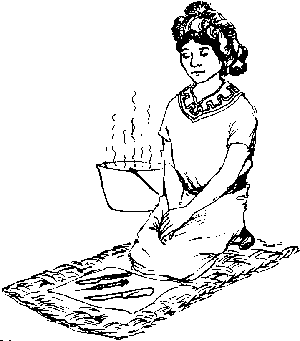
Figure
Infections are caused by germs, such as bacteria and viruses, that are too small to see. Every person carries bacteria on her skin, and in her mouth, intestines, and genitals all the time. These germs do not usually cause problems, but they can cause infections if passed to sick people. Germs also live on the equipment and tools used when caring for a sick person and can easily be passed to others you help.
You can prevent infection by following the guidelines in this chapter. For other ways to prevent infection.
IMPORTANT
You must follow these guidelines
every time you help someone, whether you use your hands, tools, or special
equipment If you do not, you may get a dangerous infection, or pass an infection
to the people you are
helping.
Washing your hands

Let your hands dry in the air
instead of using a towel. Do not touch anything until your hands are
dry.
Wash your hands before and after caring for another person. It the most important way to kill germs living on your skin. You need to wash your hands even more thoroughly and for a longer time:
· before and after helping someone give birth.
· before and after touching a wound or broken skin.
· before and after giving an injection, or cutting or piercing a body part.
· after touching blood, urine, stool, mucus, or fluid from the vagina.
· after removing gloves.
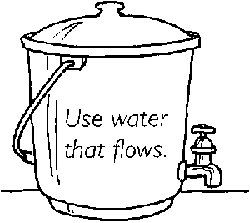
Figure
Use soap to remove dirt and germs. Count to 30 as you scrub your hands all over with the soapy lather. Use a brush or soft stick to clean under your nails. Then rinse. Use water that flows. Do not reuse water if your hands must be very clean.
|
Try making a Tippy Tap. It will save water and will make it easy to keep a supply of clean water for washing hands. Use a large, clean plastic bottle with a handle. 1. Pinch the handle together here with a pair of hot pliers or a hot knife.
2. Make a small hole in the handle, just above where you sealed it.
3. To hang the tippy tap, make 2 more holes in the other side of the bottle and pass a string through them. Now you can hang it on a peg or tree branch. 4. Fill the bottle with clean water and replace the lid. 5. When you tip the bottle forward, the water will flow out, so you can wash your hands. Do not make the hole too large or it will waste water.
You can also hang a bar of soap from the string. |


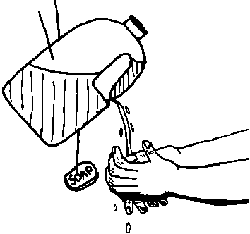
How to disinfect equipment and tools
Cleaning tools and equipment to get rid of nearly all the germs is called high-level disinfection.
Tools must first be washed and then disinfected if they are used to:
· cut, pierce, or tattoo skin.
· give an injection.
· cut the cord during childbirth.
· examine the vagina, especially during or after childbirth, a miscarriage, or an abortion.
· when giving fluids in the rectum.

Figure
High-level disinfection: 3 steps
Steps 1 and 2 should be done right after using your tools. Try not to let blood and mucus dry on them. Step 3 should be done right before you use the tools again. All the steps can be done together if you can store your tools so they will stay disinfected (see the next page).
1. Soaking: Soak your tools for 10 minutes. If possible, use a 0.5% solution of bleach (chlorine). Soaking your tools in bleach solution first will help protect you from infection when cleaning the tools. If you do not have bleach, soak your tools in water.
Figure
How to make a disinfecting solution of 0.5% bleach:
|
If your bleach says: |
Use: |
|
2% available chlorine |
1 part bleach to 3 parts water |
|
5% available chlorine |
1 part bleach to 9 parts water |
|
10% available chlorine |
1 part bleach to 19 parts water |
|
15% available chlorine |
1 part bleach to 29 parts water |
For example:
If your bleach says 5% available chlorine, use this much bleach:

Figure
and this much water:
Figure
Mix just enough solution for one day. Do not use it again the next day. It will not be strong enough to kill germs anymore.
2. Washing: Wash all tools with soapy water and a brush until each one looks very clean, and rinse them with clean water Be careful not to cut yourself on sharp edges or points. If possible, use heavy gloves, or any gloves you may have.

Figure
3. Disinfecting: Steam or boil the tools for 20 minutes (as long as it takes to cook rice).
To steam them, you need a pot with a lid. The water does not need to cover the tools, but use enough water to keep steam coming out the sides of the lid for 20 minutes.

Figure
To boil them, you do not need to fill the whole pot with water. But you should make sure water covers everything in the pot the entire time. If possible, put a lid on the pot.
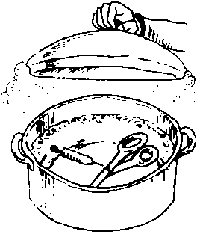
Figure
For both steaming and boiling, start to count the 20 minutes after the water is fully boiling. Do not add anything new to the pot once you begin to count.
IMPORTANT
Never use a tool on more than one
person without washing and disinfecting all the parts between each use.

Figure
|
Storing your tools If you store your tools properly you can do Steps 1, 2, and 3 at one time, and the tools will be ready to use whenever you need them. To store tools: · After boiling, pour off the water and let the tools dry by themselves. Do not dry them with a cloth. Put a lid or a thin, clean cloth over the pot to prevent flies and dust from getting in. Be sure to let the tools dry completely. Metal objects will rust if they are not dry.
|
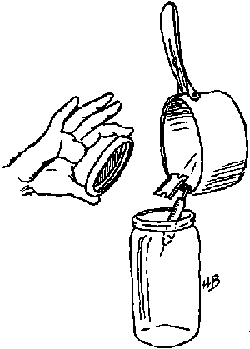
Disinfecting needles and syringes, gloves, and bandages
Needles and syringes. If a needle and syringe can be used more than once (reusable), squirt bleach or soapy water through the syringe 3 times right after using it. Then take everything apart and follow Step 2 and then Step 3. Carefully store the syringe until the next use. Be sure not to touch the needle or the plunger.
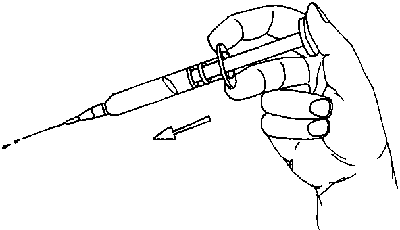
Figure
If you are not able to store things in a clean and dry place, boil or steam them again before use.
If a needle and syringe can be used one time only (disposable), carefully put them in a covered container that cannot be pierced by the needle, and bury the container deeply. If you cannot dispose of the needle safely, squirt bleach solution through it 3 times.
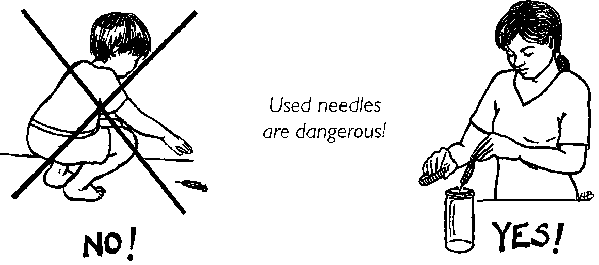
Figure
Gloves
Gloves protect both you and the people you help against the spread of infection. If you do not have gloves, use clean plastic bags to cover your hands.
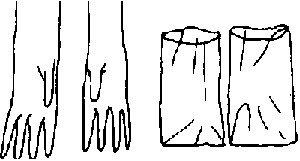
If you do not have gloves, you
can use dean plastic bags to cover your hands.
Sometimes it is OK to use gloves that are clean but not disinfected - as long as you are not reusing them. But you should always use high-level disinfected gloves when:
· putting your hand inside the vagina during an emergency exam before or after childbirth or abortion.· touching broken skin.
|
Using high-level disinfected gloves:
¨ If you have a pair of ‘sterile ‘gloves in a package, save them for a time when you must be especially careful not to spread infection. |
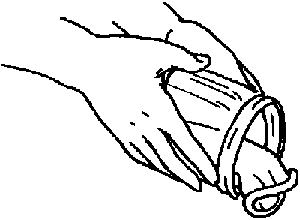
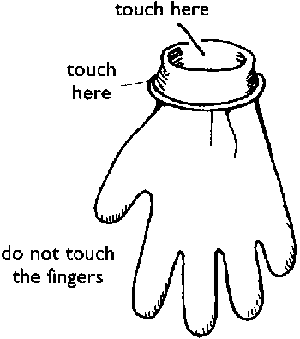
If you use gloves more than one time, they should be cleaned, disinfected, and stored following the instructions. Always check washed gloves for holes, and throw away any that are torn.
If possible, it is best to steam gloves rather than boil them because they can stay in the pot they were steamed in until they are dry. If you are unable to steam gloves and must boil them, try to dry them in the sun. You will probably have to touch them to do this, so they will no longer be disinfected, but they will be clean. Keep them in a clean, dry place.
Cloth dressings
If you do not have sterile gauze, use cloth dressings. Follow the instructions for disinfection and storage. Dry the dressings in the sun, but be sure to keep them off the ground, and to protect them from dust, flies, and other insects.
|
Any items that have touched blood or body fluids (urine, stool, semen, fluid from the bag of waters, pus) should be burned, or disposed of carefully so that children or animals will not find them. This includes supplies that are no longer useful but are contaminated, such as syringes, torn gloves or gloves that can only be used once, gauze, or cotton.
|

How to take temperature, pulse, respiration, and blood pressure
When a person is sick or has a health problem, her basic physical signs may change. The next few pages tell how to measure these signs to know if a person has a problem.
Temperature
If you need to know a person’s temperature and do not have a thermometer, touch the back of your hand to the person’s skin, and compare it with your own skin. If her skin feels much warmer, she probably has a fever. To learn what to do for a fever.
Figure
If you have a thermometer, you can take a person’s temperature in the mouth, armpit, or rectum. A person’s temperature is normally cooler in the armpit, warmer in the mouth, and warmest in the rectum. There are 2 kinds of thermometer scales. Either can be used to measure a person’s temperature. Here is how they compare:

The levels listed here for
normal and fever temperatures are for the mouth.
|
How to take the temperature 1. Clean the thermometer well with soap and cold water, or alcohol. Hold it at the end without the silver (or red) and shake it hard, with a snap of the wrist, until it reads less than 36 degrees. 2. Put the thermometer... under the tongue (keep the mouth dosed around it)
OR in the armpit if there is danger that the person might bite the thermometer
OR carefully, in the rectum (wet or apply petroleum gel first).
3. Leave it there for 3 or 4 minutes. 4. Read it.
5. Wash the thermometer well with soap and cold water. Then, if you can, soak it for 20 minutes in a bleach solution and rinse with clean water. |

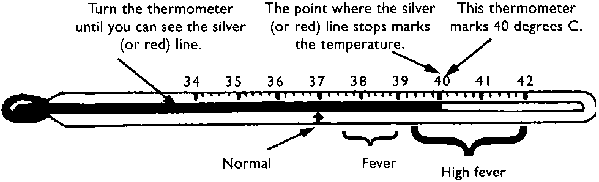
Pulse (heartbeat)
The pulse tells how fast the heart is beating and how hard it is working. After hard work or exercise, the heart of a healthy person beats fast, but slows back to normal in a few minutes. The heart usually increases 20 beats a minute for each degree (C) rise in fever.
A normal pulse in an adult is between 60 and 90 beats per minute. A fast pulse can be a sign of:
· blood loss or fluid loss, or shock.
· fever and infection.
· problems with the lungs and breathing system, or with the heart.
· thyroid problems.
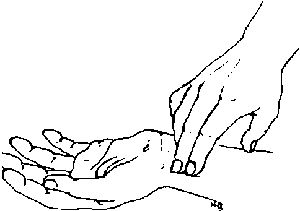
To take the pulse, put your
fingers on the wrist as shown (do not use your thumb).
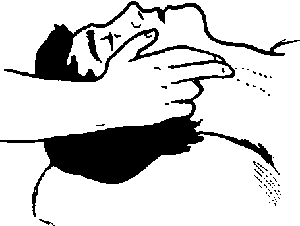
If you cannot find the pulse
in the wrist, feel for it in the neck beside the voicebox,
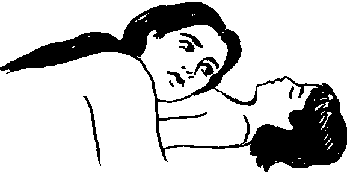
or put your ear directly on
the chest and listen for the
heartbeat.
Respiration (breathing rate)
The breathing rate tells you about health of the lungs and breathing system. It can also give information about a person’s general health. To take the breathing rate, watch the chest rise and fall when a person is at rest. Normal breathing in an adult is 12 to 20 total breaths per minute (a complete breath equals one breath in and one breath out).
Breathing usually speeds up (along with the pulse) when there is infection, fever, blood loss or dehydration, shock, lung problems, or other emergencies.
Very slow pulse and breathing in a very sick person can mean she is near death.
Fast, shallow breathing can be a sign of infection of the breathing system. A breathing rate of more than 30 breaths per minute may be a sign of pneumonia.
Blood pressure
Blood pressure is a measure of how hard the blood presses on the inside of the blood vessels.
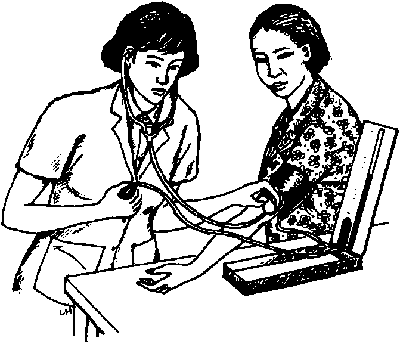
Figure
It is useful to know a woman’s blood pressure at these times:
· during pregnancy, childbirth, miscarriage, or abortion.
· if she is using or planning to use birth control pills.
· in emergencies, such as shock, severe abdominal pain, or a difficult childbirth.
What the numbers mean
A blood pressure measurement (BP) has two numbers:
|
|
120 is the top (systolic) reading |
|
| |
| |
80 is the bottom (diastolic) reading |

Normal blood pressure for an adult is usually around 120/80, but anything from 907 60 to 140/85 can be considered normal.
The bottom number usually gives more information about a person’s health. For example, if a person’s blood pressure is 140/90, there is not much need for concern. But if it is 225/110, a person has seriously high blood pressure and should lose weight (if she is fat) or get treatment. A bottom number of over 100 usually means the blood pressure is high enough to require attention (diet and perhaps medicine).
If a person regularly has low blood pressure, there is no need to worry. In fact, blood pressure on the low side of normal - 90/60 to 110/70 - means a person is likely to live long and is less likely to suffer from heart trouble or stroke.
A sudden drop in blood pressure is a danger sign, especially if it falls below 90/60. Watch for any sudden drop in the blood pressure of persons who are losing blood or at risk of shock. If you get an abnormal blood pressure reading and you do not think the person is in shock, wait a few minutes and take the blood pressure again.
You will often need to watch a person’s blood pressure overtime (for example, during a woman’s pregnancy) to see how it changes. It will help to keep a record:

This woman’s blood
pressure goes up and down a little from month to month. This is normal.
How to take blood pressure
There are several types of blood pressure equipment Some have a tall gauge that looks like a thermometer. Others have a round dial.
Blood pressure equipment usually comes with a stethoscope.
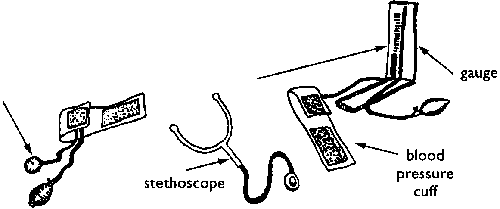
Figure
|
To take a person’s blood pressure, first tell her what you are going to do. Then follow these steps: 1. Fasten the cuff around the bare upper arm.
2. Close the valve on the rubber bulb by turning the screw to the right. The valve will get shorter.
3. Feel for a pulse just below the elbow, on the Inside of the arm, and put the stethoscope over the pulse. Sometimes you may not feel the pulse. If you cannot, put the stethoscope over the center of the skin crease inside the elbow.
4. Pump the cuff up by squeezing the bulb.
5. As you pump, the needle will move. When it reaches 200, stop pumping.
6. Then release the valve a little so that the air leaks out slowly.
7. The needle will begin to go back down. (If the valve is closed, it will stay at 200.)
As the air leaks out, you will start to hear the person’s pulse through your stethoscope. Notice where the needle or the silver bar is when you start to hear the pulse (this will be the top number) and when the pulse disappears or gets very soft (this will be the bottom number).
|
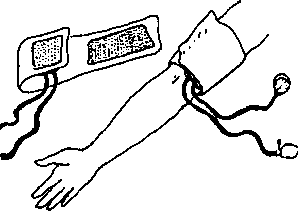
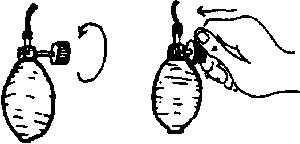
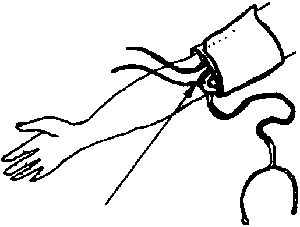
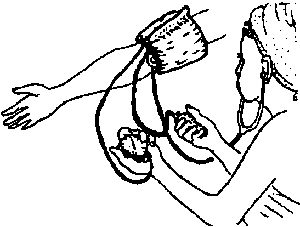
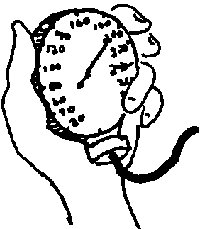
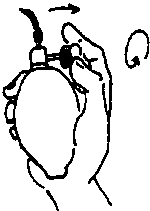
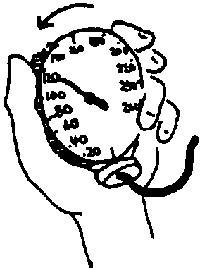
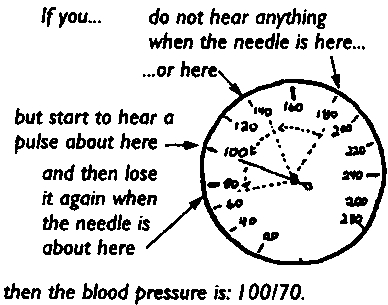
How to examine the abdomen
If a woman has pain in the lower abdomen, first read the chapter on “Pain in the Lower Abdomen”.
Then examine her abdomen:
1. Ask her to undress so that you can see her abdomen from just below her breasts down to the hair between her legs.2. Ask her to lie flat on her back on a firm bed, a table, or a clean floor with her knees bent and her feet close to her buttocks. Ask her to relax her abdominal muscles as much as she can. This may be difficult for someone who is in pain.
3. Listen for bubbling and gurgling noises by putting your ear on her abdomen. If you do not hear anything for 2 minutes, this is a danger sign.
Figure
4. Ask her to point to where it hurts most. Then begin pressing gently on the other side. Keep pressing gently as you move around her abdomen to see where it hurts most.5. As you press her abdomen, feel for lumps. Also, see if her abdomen is soft or hard, and if she can relax it under your hand.
Figure
6. To make sure she does not have another problem like appendicitis, an infection in her gut, or a pelvic infection (PID), slowly but firmly press on her abdomen on the left side, just above where the leg joins the body (the groin). Press until it hurts a little. Then quickly remove the hand. If a very sharp pain (rebound pain) happens when the hand is removed, she may have a serious infection. Take her immediately to a health center or hospital to see if she needs surgery. If she does not have rebound pain, continue to examine her by looking at the outside of her genitals for sores, discharge, bleeding, or other signs of sexually transmitted diseases (STDs). For signs and treatment of STDs. If you know how, do a pelvic exam (see the next page).
How to examine a woman’s genitals (the pelvic exam)
Knowing how to examine a woman’s genitals can save lives. It is necessary for giving some family planning methods and for finding out about many serious women’s health problems, such as pregnancy in the tubes, cancer of the cervix and of the womb (uterus), many STDs, and complications from abortion. It is not difficult to learn, and with practice, most women or health workers can:
· examine the outer genitals.
· feel the reproductive parts inside the abdomen.
But only do a pelvic exam if it is really necessary. Any time you put something inside a woman’s vagina you increase her risk of infection.
IMPORTANT
Do not do a pelvic
examination:
· when a woman is
pregnant and bleeding, or if her waters have broken.
· after a normal birth or uncomplicated
abortion.
Before you start:
1. Ask the woman to pass urine.
Figure
2. Wash your hands well with clean water and soap.
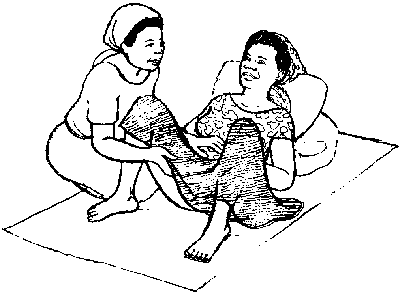
Always examine a woman where
others cannot see.
3. Ask her to loosen her clothing. Use a sheet or her clothing to cover her.
4. Have her lie on her back, with her heels close to her bottom and her knees up. Explain what you are about to do.
5. Put a clean glove on the hand you will put inside the vagina.
Look at the outside genitals:
Using the gloved hand to gently touch the woman, look for lumps, swelling, unusual discharge, sores, tears, and scars around the genitals and in between the skin folds of the vulva. Some diseases have signs that appear on the outside of the genitals (see the chapter on STDs).
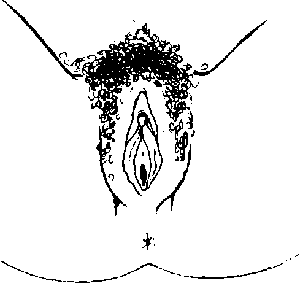
Figure
|
How to do a speculum exam A speculum is useful for looking at the cervix and vagina. If you have one, follow the steps below and then continue with the exam on the next page. If you do not have a speculum, you can get much of the same information by following the steps on the next page.
1. Be sure the speculum has been disinfected before you use it. Wet the speculum with clean water before using it. 2. Put the first finger of your gloved hand in the women’s vagina. As you put your finger in, push gently downward on the muscle surrounding the vagina. (Work slowly, waiting for the woman to relax her muscles.) Use this finger to find the cervix, which feels like the tip of the nose. 3. With the other hand, hold the speculum blades together between the pointing finger and the middle finger. Turn the blades sideways and slip them into the vagina. (Be careful not to press on the urine hole or clitoris, because these areas are very sensitive.) When the speculum is halfway in, turn it so the handle is down. Remove your gloved finger. 4. Gently open the blades a little and look for the cervix. Move the speculum slowly and gently until you can see the cervix between the blades. Tighten the screw on the speculum so it will stay in place. 5. Check the cervix, which should look pink and round and smooth. Notice if the opening is open or closed, and whether there is any discharge or bleeding. If you are examining the woman because she is bleeding from the vagina after birth, abortion, or miscarriage, look for flesh coming from the opening of the cervix. If you think she may have an infection, check for green or yellow discharge, or bleeding from the cervix. If the woman has been leaking urine or stool, gently turn the speculum to look at the walls of the vagina. Bring the blades closer together to do this.
6. To remove the speculum, gently pull it toward you until the blades are clear of the cervix. Then bring the blades together and gently pull back. Be sure to disinfect your speculum again. |

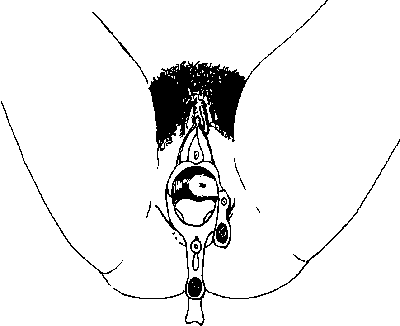
How to feel the reproductive parts inside the abdomen
1. Put the pointing finger of your gloved hand in the woman’s vagina. As you put your finger in, push gently downward on the muscle surrounding the vagina. When the woman’s body relaxes, put the middle finger in too. Turn the palm of your hand up.
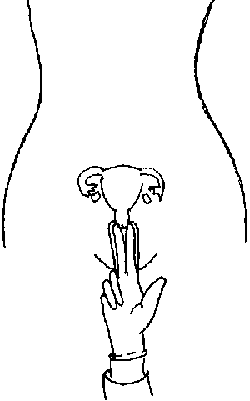
Move the cervix gently from
side to side.
2. Feel the opening of her womb (cervix) to see if it is firm and round. Then put one finger on either side of the cervix and move the cervix gently. It should move easily, without causing pain. If it does cause pain, she may have an infection of the womb, tubes, or ovaries. If her cervix feels soft, she may be pregnant.
3. Feel the womb by gently pushing on her lower abdomen with your outside hand. This moves the inside parts (womb, tubes, and ovaries) closer to your inside hand. The womb may be tipped forward or backward. If you do not feel it in front of the cervix, gently lift the cervix and feel around it for the body of the womb. If you feel it under the cervix, it is pointed to the back.
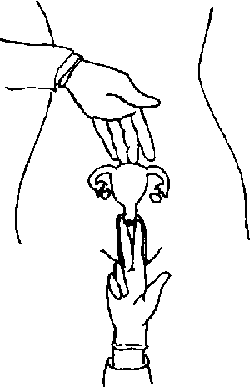
Figure
4. When you find the womb, feel for its size and shape. Do this by moving your inside fingers to the sides of the cervix, and then ‘walk’ your outside fingers around the womb. It should feel firm, smooth, and smaller than a lemon.
If the womb:
· feels soft and large, she is probably pregnant.· feels lumpy and hard, she may have a fibroid or other growth.
· hurts when you touch it, she probably has an infection inside.
· does not move freely, she could have scars from an old infection (pelvic inflammatory disease - PID).
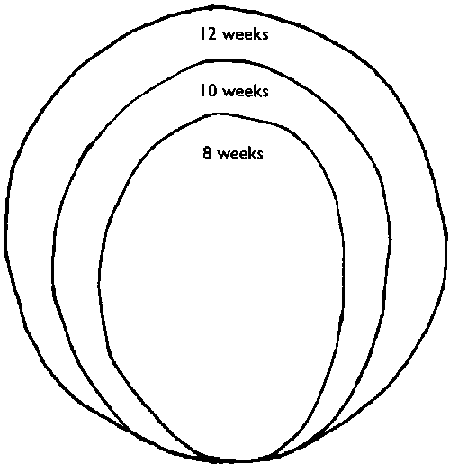
Size of the womb during
pregnancy
5. Feel her tubes and ovaries. If these are normal, they will be hard to feel. But if you feel any lumps that are bigger than an almond (this size) or that cause severe pain, she could have an infection or other emergency. If she has a painful lump, and her monthly bleeding is late, she could be pregnant in the tube. She needs medical help right away.
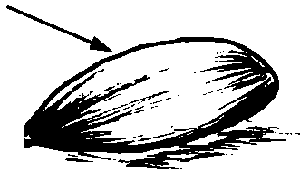
Figure
6. Move your finger and feel along the inside of the vagina. If she has a problem with leaking urine or stool, check for a tear. Make sure there are no unusual lumps or sores.
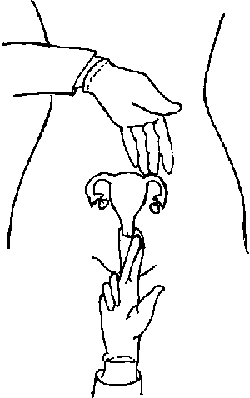
Figure
7. Have the woman cough, or push down as if she were passing stool. Watch to see if something bulges out of the vagina. If it does, she could have a fallen womb or fallen bladder.
8. When you are finished, clean and disinfect your glove. Wash your hands well with soap and water
Caring for burns
Burns are a common injury for women and children. All burns should first be cooled for 15 minutes with ice, cold water; or cloths soaked in cold water. After cooling, treatment depends on how serious the burn is. It is very important to keep burns as clean as possible. Protect them from dirt, dust, flies, and other insects. For better healing, never put grease, fat, animal skins, coffee, herbs, or stool on a burn. It is important for persons who have been burned to eat body-building foods (protein). There is no type of food that needs to be avoided.
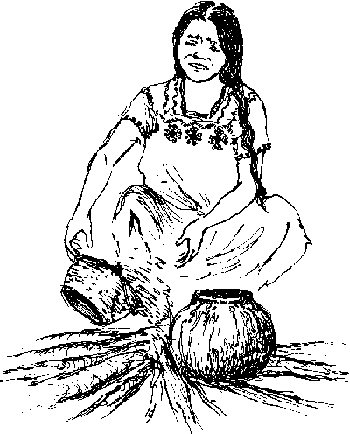
Figure
There are 3 basic kinds of burns:
1. Minor burns (1st degree)
These burns do not form blisters, but the skin will get darker or red. After cooling, no other treatment is needed. Use aspirin or paracetamol for pain.
IMPORTANT
Wash your hands carefully before
caring for burns to prevent infection.
2. Burns that cause blisters (2nd degree)
After cooling, do not break the blisters. Do not make a hole in the blister or take out the liquid inside - not even with a needle and syringe that has been disinfected. If the blister does break, use scissors that have been disinfected to gently remove all the dead skin. Then use mild soap and boiled, cooled water on sterile cotton or gauze, or disinfected cloth, to gently clean the burn. You can also use hydrogen peroxide. Remove any remaining burned skin on and around the burn until you see the fresh pink skin underneath. Cover this fresh skin with a piece of sterile gauze or disinfected cloth. If the cloth sticks to the burn when you want to remove it, wet it with water that has been boiled and cooled.
To prevent infection in the burn area, apply a sterile gauze or disinfected cloth that has been soaked in a salt water solution for 15 minutes, 3 times a day. Each time you change the cloth, remove the dead skin and flesh carefully with very clean tweezers, until you see fresh pink skin.
To make a salt solution:

Use 1 teaspoon of salt for 1
liter or quart of water. Boil both the cloth and water before use and cool
before putting on the burn.
If the burn does become infected, it will be even more painful, more swollen, and the skin spreading out away from the burn will become hard and red. Use an antibiotic, such as penicillin or ampicillin, 250 mg, 4 times each day for 7 days. But if the infection has not gone away after 5 days, change to dicloxicillin or erythromycin, 250 mg, 4 times a day for 7 to 10 days. Give the person plenty of liquids.
3. Deep Burns (3rd Degree)
These are burns that destroy the skin and expose blackened and charred flesh. These burns are always serious. Take the person for medical help at once. In the meantime, wrap the burned part with a disinfected damp cloth or towel. Make sure the water used to dampen the cloth has been boiled and cooled. Give the person plenty of fluids.
If it is impossible to get medical help, treat the burn as you would a 2nd degree burn. To protect the burn from dust and insects, cover it with a loose, sterile cotton cloth or sheet. Change the cloth at least 4 times a day, or 2 times a day if the cloth stays dry.
Give ‘rehydration drink’ as often as possible, until the person passes urine frequently. If the person is unconscious or cannot swallow, give the rehydration drink in the rectum.
Any person who has been badly burned can easily go into shock, caused by the loss of body fluids from the oozing burn.
Comfort and reassure the burned person, and treat her or him for shock if necessary. Give any strong pain medicine you have. Bathing open wounds in slightly salty cold water also helps ease pain.
How to give fluids to treat shock
If a women loses a lot of blood - for example, during childbirth after a complicated miscarriage or abortion, or if she is badly burned - she may go into shock.
When this happens a woman needs fluids fast in order to save her life. If she is awake and can drink fluids, let her do so. Also, if you know how, you can start an intravenous drip (IV). In an emergency, an enema can be used instead (see the next page). But enemas should be used for emergencies only. Using too many enemas can be harmful.
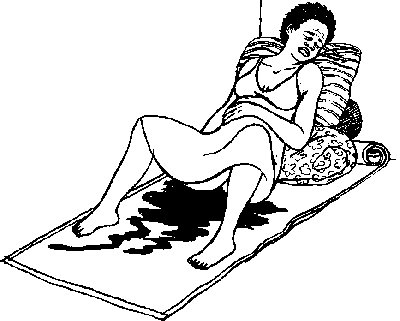
Figure
How to make rehydration drink
|
2 ways to make rehydration drink If you can, add half a cup of fruit juice, coconut water, or mashed ripe banana to either drink. These contain potassium, a mineral which helps a sick person accept more food and drink. | |
|
1. With sugar and salt. (You can use raw sugar or molasses instead of sugar.)
CAUTION: Before adding the sugar, taste the drink and be sure it is less salty than tears. |
|
|
2. With powdered cereal and salt. (Powdered rice is best. But you can use finely ground maize, wheat flour, sorghum, or cooked and mashed potatoes.)
Boil for 5 to 7 minutes to form a liquid gruel or watery porridge. Cool the drink quickly and begin ton give it to the sick person. CAUTION: Taste the drink each time before you give it to make sure that it has not spoiled. Cereal drinks can spoil within a few hours in hot weather. |


Rehydration drink will also help treat and prevent dehydration, especially in cases of severe watery diarrhea.
How to give rectal fluids
You will need:
· a clean enema bag, or a can or tin with tubing.· a cloth to place under the person.
· 600 ml (a little more than ° a liter bottle) of warm (not hot) drinking water If you have them, sugar and salt rehydration drink or a bag of IV solution can be used instead.
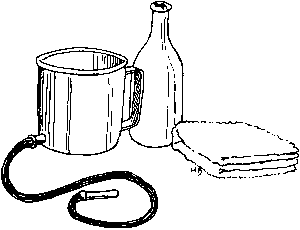
Figure
What to do:
1. Tell the woman what you are doing and why.2. Wash your hands.
3. Ask her to lie on her left side if she can. If possible, her body should be a little higher than her head.

Make sure her body is higher
than her head.
4. If you have them, put on clean gloves.5. Let the water come down to the end of the tube to get the air out. Then pinch the tubing to stop the flow.
6. Wet the end of the tube with water, and slide it into the anus. Ask her to take slow, deep breaths to help her relax.
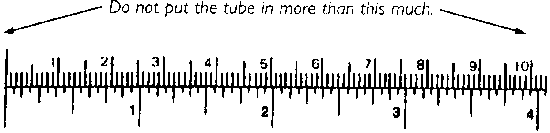
Figure
7. Hold the bag or can just high enough for the water to run in very slowly (about the level of the woman’s hips). It should take about 20 minutes. If the water runs out of her body, the bag may be too high. Lower the bag so the water runs in more slowly.
8. Gently remove the tube. Tell her to try and keep the water inside, and that the urge to pass stool will go away soon. If the woman is unconscious, you can hold her buttocks together.9. Clean and dry the woman. Then remove your gloves and wash your hands.
10. Transport the woman for medical help right away. If the woman is still in shock, you can give another enema one hour later. If she is not in shock, try to give sips of rehydration drink as you transport her.
How to give an injection
Injections are not needed often. Many medicines sometimes given by injection are safer when given by mouth. But it can be necessary to give an injection:
· when the medicine does not come in a form that can be given by mouth.· when the person cannot swallow or keep medicine down without vomiting.
· in some emergencies, such as bleeding or infections after childbirth or abortion.
It is important to give injections properly. They can be dangerous when given in the wrong place, in the wrong way, or without properly cleaning the syringe, hands, and injection site. Carefully follow all of the instructions on ‘How to inject’.
Preventing infection
Needles and syringes that are not cleaned and disinfected properly can pass a disease like HIV/AIDS or liver disease (hepatitis’) to another person. They can also cause a serious infection at the injection site or in the blood.
· Never use the same needle and syringe to inject more than one person without cleaning and disinfecting the needle and syringe first.· After the needle has boiled, do not touch it with anything that has not been disinfected.
· If needles are for one-time use only.
Where to give an injection
There are 2 basic kinds of injections:
· injections that go into a muscle (intramuscular or IM)
· injections that go into the fatty layer under the skin (subcutaneous).
Where you choose to inject depends on how much medicine you need to inject, the size of the person receiving the injection, and what kind of medicine you are using. For information about how to give both kinds of injections.
Most of the medicines in this book that need to be injected should go into the muscle. IM injections can be given in a large muscle in the buttock, upper arm, or thigh. It is best to use the buttock or thigh instead of the arm if:
· the amount to inject is more than 2 ml (2 cc). (But you should never inject more than 3 ml (3 cc) in a single dose. Use 2 injections instead.)· the medicine is likely to cause pain when injected.
· the person being given the injection is very small or poorly nourished.
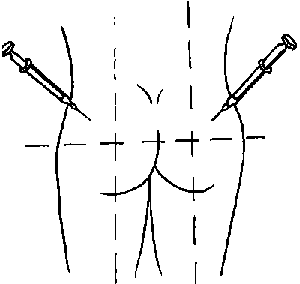
In the buttock, always inject
in the upper, outer quarter.
In the upper arm, keep the arm relaxed against the body. Measure 2 finger widths down from the bone at the edge of the shoulder.
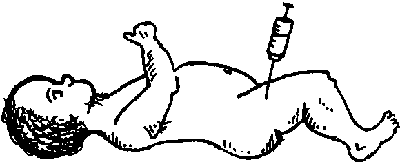
In the thigh, inject into the
upper outer part. (This is the best way to inject babies.)
How to prepare a syringe for injectionBefore preparing a syringe, wash your hands with soap and water. If the syringe is reusable, start with step I. If you have a disposable syringe, open the package carefully and start with step 2. 1. Follow the instructions for disinfecting syringes.
2. Put the needle and syringe together, touching only the base of the needle and the end of the plunger.
3. Some medicines come ready to use. If you have this kind of medicine, follow steps 4, 5, and 10. If the medicine needs to be mixed with distilled water, follow steps 4 through 10. 4. Clean the glass container (ampule) of medicine or distilled water. Then break off the top.
5. Fill the syringe. Be careful that the needle does not touch the outside of the ampule.
6. Rub the rubber top of the medicine bottle with a clean cloth or cotton that is wet with alcohol or boiled water
7. Inject the distilled water into the bottle with the powdered medicine.
8. Shake until the medicine mixes completely with the water.
9. Fill the syringe again.
10. Remove all air from the syringe. To do this, hold the syringe with the needle upright and tap it lightly here to make any air bubbles rise to the top. Then slowly push a little on the plunger until all the air comes out through the needle.
Be very careful not to touch the needle with anything - not even the cloth or cotton that is wet with alcohol. If the needle touches anything, boil it again. |
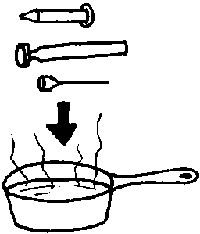
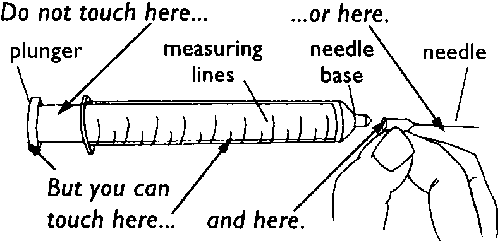
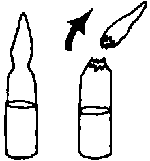
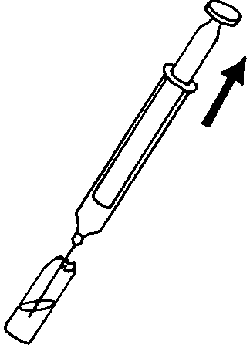
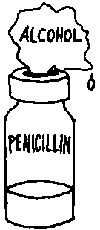


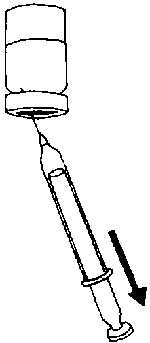
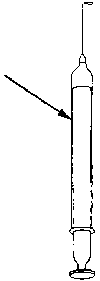
How to inject into the muscle (intramuscular, or im)
The pictures below show how to inject into the buttock. Steps 2 through 6 are the same for injections into the arm or thigh.
1. The person should sit or lie down. Pointing the toes together will relax the muscle to be injected.
2. Clean the skin with alcohol, or soap and water (it will hurt less if you let the alcohol dry before injecting).
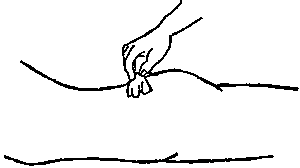
Figure
3. Put the needle straight in, all the way. If it is done with one quick movement, it hurts less.
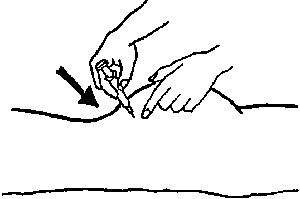
Figure
4. Before injecting the medicine, gently pull back on the plunger a little bit (do not pull until the plunger falls out). If blood enters the syringe, take the needle out and put it back in somewhere else close by in the area you have cleaned.

Figure
5. Pull back on the plunger again. If no blood enters, inject the medicine slowly.
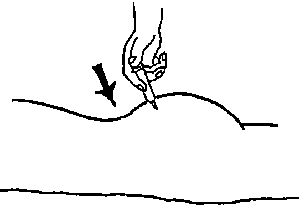
Figure
6. Remove the needle and clean the skin again.

Figure
How to give an injection under the skin (subcutaneous injection)
· Grab the fatty part on the underside of the arm. Hold the skin like this:· Put the needle under the skin at this angle. Make sure the needle does not go into the muscle.

Figure
Be prepared to treat allergic reaction and allergic shock
Some medicines, especially antibiotics like penicillin and ampicillin, can produce an allergic reaction, usually within 30 minutes after an injection. An allergic reaction can progress to allergic shock, which is an emergency. To prevent allergic reaction and allergic shock, before giving an injection ask the person: “Have you ever had a reaction to this medicine - like hives, itching, swelling, or trouble breathing?” If the answer is yes, do not use that medicine in any form, or any medicine from the same family of medicines. Whenever you inject medicines, watch for signs of allergic reaction and allergic shock and have medicines for treating them nearby.
Mild allergic reaction
Signs:
· itching
· sneezing
· hives or rash
Treatment:
Give 25 mg diphenhydramine by mouth 3 times a day until the signs disappear.
Pregnant or breastfeeding women may find the discomfort of a mild allergic reaction better than the risks of taking an antihistamine.
Moderate to severe allergic reaction
Signs:
· itching
· swollen mouth and tongue
· difficulty breathing
· hives
Treatment:
1. Inject 0.5 mg of epinephrine immediately under the skin. Give a second injection in 20 minutes if the signs do not get better.
2. Give 25 mg diphenhydramine or promethazine by mouth or by injection into a muscle. Repeat in 8 hours or less if the signs do not get better.
3. Watch the person for at least 4 hours to make sure the reaction does not progress to allergic shock.
Allergic shock
Signs:
· itching or hives
· swollen mouth and tongue
· weak, rapid pulse or heartbeat (more than 100 beats per minute)
· sudden paleness or cool, moist skin (cold sweats)
· difficulty breathing
· loss of consciousness
Treatment:
1. Inject 0.5 mg of epinephrine immediately under the skin. Give a second injection in 20 minutes if the signs do not get better.
2. Inject 50 mg diphenhydramine or promethazine into muscle. Repeat in 8 hours or less if the signs do not get better
3. Inject 500 mg hydrocortisone (cortisol) into muscle and repeat in 4 hours if needed. Or inject 20 mg dexamethasone into muscle and repeat in 6 hours if needed.
4. Watch the person for 8 to 12 hours to make sure the signs do not come back. Leave her with steroid medicines to take by mouth if her signs return. She should take 500 to 1000 mg of hydrocortisone and repeat after 4 hours if needed. Or she can take 20 mg of dexamethasone and repeat after 6 hours if needed.
Acupressure Massage
Pressing on special ‘points’ on the body can help relieve some of the common health problems of women. These points come from an ancient Chinese way of healing called acupressure. Local healers may know other kinds of massage.
Use your own sense of how long and how often to press on these points (an average amount of time is 3 to 10 minutes). Many women feel tender at these points. If a point is very tender, be careful not to irritate it. If there is an injury, do not use acupressure in that area.
Sometimes there are several points to help the same problem. You can try all these points. If one seems tender or makes you feel better, focus on that point. If not, use all of the points in any order.
IMPORTANT
Pressing on some of these points can
cause problems during pregnancy. If you are pregnant, watch for the warnings
mentioned below.
General pain from monthly bleeding
(For information
about monthly bleeding,)
1. To help prevent general discomfort during monthly bleeding, such as sore breasts, feeling tired, and a full feeling in the lower abdomen:
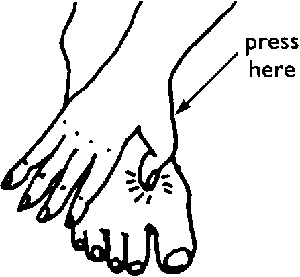
Figure
2. To lessen pain and cramps during monthly bleeding, firmly hold and massage the tender place on your hand you will find between your thumb and first finger. Pressing hard on this spot can ease many kinds of pain.
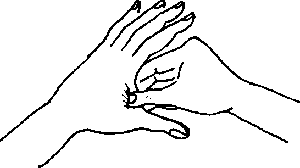
Figure
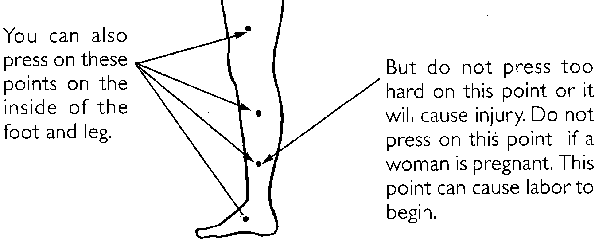
Figure
The following massage is also useful to relieve pain and cramps, as well as signs of pre-menstrual syndrome (PMS).
Massage in between the toes, around the ankle bones, and up the ankles on the outside of the feet. Look for areas that are sensitive and massage these places longer. For a pregnant woman, do not massage the outside of the big toe, the arch or the middle of the bottom of the foot or above the outside of the ankle. It can make labor start.
Hand, wrist, and ear massage can also help with pain or signs of PMS.
Pregnancy and childbirth
(See the chapter on
“Pregnancy and Childbirth”)
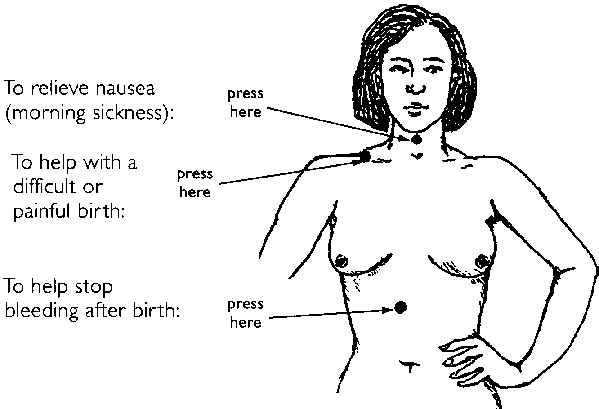
Figure
To bring on labor, or to make a weak labor stronger:
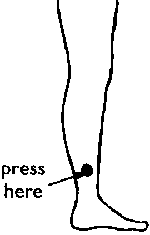
Figure
Menopause
(See the chapter on “Growing
Older”)
To help relieve general discomfort, press the following points about once a day for 10 minutes:
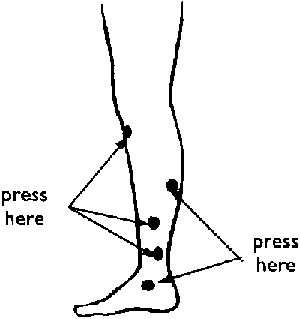
Figure
It can also help to press these points on the ear:
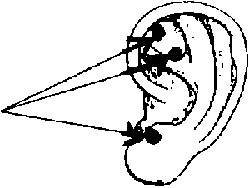
Figure
|
| ||||||||||||||||||||||||||||||||||||||||||||||||||||||||||||||||||||||||||||||||||||||||||||||||||||||||||||||||||||||||||||||||||||||||||||||||||||||||||||||||||||||||||||||||||||||||||||||||||||||||||||||||||||||||||||||||||||||||||||||||||||||||||||
Vocabulary: List of difficult words
Here is a list of words that may be difficult to understand. Knowing what these words mean can help you use the book better.
Some of the words included here are explained in the chapters, but many are not. The first time they are used in a chapter, the words are written in slanted letters. Some of the explanations here in this vocabulary also contain words written in slanted letters. This is because an explanation for these words can be found somewhere else in this list.
This vocabulary is listed in the order of the alphabet:
A B C D E F G H I J K L M N O P Q R S T U V W X Y Z
A
abdomen The part of the body that contains the stomach, liver, guts and reproductive organs. The belly.
abnormal bleeding Bleeding that is different from what is usual, natural, or average. Not normal.
abortion When a woman does something to end a pregnancy.
abscess A raised, red, painful lump on the skin that is filled with pus (for example, a boil).
abuse When someone hurts another person's body (physical abuse), humiliates or insults a person (emotional abuse) or makes a person do sexual things against her will (sexual abuse).
access (to health services) When health services are available, and a woman has the freedom, the money, and the time to use them.
acute When something happens suddenly, lasts for a short time, and is usually serious or strong - for example, acute pain or acute infection. Compare with chronic.
addiction When the body feels a strong need for alcohol or a drug.
afterbirth See placenta.
AIDS (acquired immune deficiency syndrome) A sexually transmitted disease caused by the HIV virus. A person has AIDS (rather than just being infected with HIV) when the immune system gets so weak it can no longer fight off common infections and illnesses.
allergy, allergic reaction, allergic shock A problem - such as itching, sneezing, hives or rash, and sometimes difficult breathing or shock - that affects certain people when specific things are breathed in, eaten, injected, or touched. Allergic shock is a severe form of allergic reaction.
anal sex Having sex in the anus.
anemia A disease in which the blood gets weak and thin because it lacks red blood cells. This happens when blood is lost or destroyed faster than the body can replace it.
anesthesia General anesthesia is when you are given medicine to make you sleep during an operation so you will not feel pain. Local anesthesia is when you are given an injection in one place so that you will not feel pain in that area.
antacid Medicine used to control too much stomach acid and to calm stomach upset See heartburn.
antibiotic Medicine used to fight infection caused by bacteria.
antibodies Substances the body makes to fight infection.
anus The opening of the intestine where waste (stool) leaves the body.
anxiety Feeling nervous or worried.
appendicitis An infection of the appendix.
appendix A finger-like sac attached to the large intestine.
areola The dark, bumpy area around the nipple.
artery A thin, tube-like vessel that carries blood from the heart through the body. Arteries have a pulse. Veins, which return blood to the heart, have no pulse.
arthritis Pain and swelling in the joints.
asthma A disease of the lungs, which causes attacks of difficult breathing. There is often a hissing or wheezing sound when a person breathes out.
B
bacteria Germs that cause many different infectious diseases. Bacteria are too small to see without a microscope.
bacterial vaginosis An infection of the vagina caused by bacteria.
bag of waters The sac (or amniotic sac) inside the womb that holds the baby. When the sac breaks and releases fluid, this usually means that labor has begun.
balls Part of the man's outer genitals. Also called the testicles.
barrier methods Family planning methods that prevent pregnancy by keeping the sperm from reaching the egg.
Bartholin's glands Small glands on either side of the vaginal opening that make a liquid to keep the vagina wet.
benefit The good that something may bring.
bile A liquid found in the gallbladder that helps digest fatty foods.
bilharzia An infection caused by a kind of worm that gets into the bloodstream.
biopsy When a piece of tissue or fluid is taken from somewhere on or in the body and examined to see if it is healthy or diseased.
birth canal See vagina.
birth control See family planning.
birth control pills A hormonal family planning method.
birth defects Physical or mental problems a child is born with, like a deft lip or cleft palate, or an extra finger or toe.
birth spacing Using family planning methods to space your children.
blackouts When you are using too much alcohol or other drugs and wake up not knowing what happened.
bladder The bag inside the abdomen that stores urine. As the bladder fills, it stretches and gets bigger.
blood clots Soft, dark red, shiny lumps in the blood that look like liver.
blood pressure The force or pressure of the blood upon the walls of the blood vessels (arteries and veins). Blood pressure varies with the age and health of the person.
blood transfusion When someone's blood is given to another person, in a vein and using a special needle, to replace blood the person may have lost.
blurred eyesight When the eyes cannot see things clearly.
bowels The intestines.
brand name The name for a medicine that is given by the company that makes it. Compare with generic.
breast exam Checking the breasts for lumps that might be a sign of cancer.
breast infection (mastitis) An infection inside the breast that can be very painful for the mother, and make it difficult for the baby to suck the nipple.
breech When a baby is born feet or buttocks first, instead of head first This can be dangerous for the baby.
bronchitis An infection of the large tubes in the lungs.
buttocks The round, fleshy part of the body a person sits on.
C
caffeine A drug found in coffee, tea, and cola drinks that causes the heart to beat faster and makes a person feel more awake, calcium A mineral found in some foods that helps make bones and teeth strong.
cancer A serious disease that causes cells to change and grow in an abnormal way, causing growths. Cancer can affect many different parts of the body.
cannula A small tube used to suction out the contents of the womb.
cassava (manioc root) A starchy root grown in the tropics.
cataracts An eye problem in which the lens or covering of the eye becomes cloudy, making it more and more difficult to see. The dark, round, center part of the eye (pupil) looks gray or white when a light is shined on it.
cell The smallest unit of living matter in the body.
cervix The opening of the womb at the back of the vagina.
cesarean section (c-section) When it is dangerous for a baby to be born through the vagina, the woman can have an operation in which her abdomen is cut open and the baby is taken out.
chart A file where information about a person's illnesses and treatments is kept.
chemicals Substances found in all living and nonliving things. Many chemicals used in women's work cause harm to the body.
child spacing Having children at least 2 or 3 years apart so that a woman's body has a chance to get strong again between pregnancies.
chlamydia A sexually transmitted disease.
chlorine solution A chemical liquid that can be used to kill germs. Also known as bleach.
cholera A serious infectious disease with severe vomiting and bloody diarrhea.
chronic Something that lasts for a long time, or that occurs often. Compare with acute.
circulation Blood flowing through the arteries and veins in the body.
circumcision (in a man) When the loose fold of skin at the end of a man's penis is cut off.
circumcision (in a woman) When part or all of a girl or woman's outer genitals are cut off.
cleft lip An opening or gap on a baby's upper lip, often connecting to the nostril.
cleft palate A split or abnormal opening in the roof of the baby's mouth.
climax When the body reaches its peak of sexual pleasure.
clitoris The part of the vulva most sensitive to touch.
clots See blood clots.
cold sores See herpes.
colostrum The yellow-colored milk that comes from the breasts for the first 2 or 3 days after birth.
community health workers Health workers who work in the community and may or may not have formal training.
complications Problems or things that go wrong.
compost A mixture of plant and animal waste that is allowed to rot for use as a fertilizer. Hay, dead leaves, vegetable waste, animal droppings, and manure all make good compost.
compress A folded cloth or pad that is put on a part of the body. The compress may be soaked in hot or cold liquid.
conception When the egg and sperm join to begin making a baby.
condom (rubber) A narrow bag of thin rubber that the man wears on his penis during sex. The bag traps the man's sperm so that it cannot get into the woman's womb and make her pregnant Condoms also help prevent the spread of sexually transmitted diseases.
condom for women See female condom.
constipation When a person has a difficult time passing stool.
contagious An illness that can be spread easily from one person to another.
contaminated When medical supplies or food contain harmful germs.
contraception (birth control) Any method of preventing pregnancy. See family planning.
contraceptive gel A slippery gel or cream that is put into the vagina before sex to prevent pregnancy.
contractions (pains, labor pains) When the womb squeezes and becomes hard. Contractions open the cervix and help push the baby out of the womb.
convulsion An uncontrolled fit A sudden jerking of part or all of the body.
cord (umbilical cord) The cord that connects the baby at its navel (belly button) to the placenta.
counseling When a trained person helps you think about your situation or decisions you need to make. For example, some people are trained especially to help people cope with HIV/AIDS.
cramps A painful tightening or contraction of a muscle. Many woman have cramps that begin just before monthly bleeding or just after it starts.
cretinism When a baby is born mentally slow because its mother did not have enough iodine in her diet during pregnancy.
curette A small tool used to scrape out the lining of the womb during a dilation and curettage (D and C).
D
D and C See dilation and curettage.
date rape When a woman is forced to have sex by a man she is dating or courting.
dehydration When the body loses more liquid than it takes in.
dementia When a person has severe difficulty remembering things and thinking clearly.
dengue fever A serious illness caused by a virus that is spread by mosquitos.
dependence When the mind feels an overpowering need for a drug.
depression When a person feels extremely sad or feels nothing at all.
diabetes When a person has too much sugar in her blood.
diaphragm A family planning method in which a soft rubber cup, usually filled with contraceptive gel or cream, is worn over the cervix during sex.
diarrhea Passing 3 or more loose, watery stools in a day.
digestion When food is broken down by the stomach and intestines to be used by the body or to pass out of the body as waste.
dilation and curettage (D and C) To gradually open the cervix and then scrape out the womb. Often used for an abortion or to find the cause of abnormal bleeding from the vagina.
disability Physical or mental limitations that affect daily living.
discharge (from the vagina) The wetness or fluid that comes out of the vagina.
discrimination When people are ignored or treated badly because of who they are (for example, because they are women or old or poor).
disinfection Cleaning tools and equipment in a certain way to get rid of nearly all the germs. Also called high-level disinfection.
divorce To legally end a marriage.
dizziness Feeling lightheaded or unsteady.
dose The amount of a medicine you should take at one time.
douche Washing out the vagina. This can cause harm because it washes out the natural wetness in the vagina.
drugs Substances, like alcohol and cocaine, that can be used in harmful ways to alter the mind, to feel good, or to cope with life.
dysentery Diarrhea with mucus or blood in it, usually caused by an infection.
E
ectopic pregnancy See pregnancy in the tube.
ejaculate When a man reaches his peak of sexual pleasure and his semen comes out.
embryo An unborn baby is called an embryo between the second and eighth weeks after conception.
emphysema A serious lung disease.
enema A solution of water put up the onus to make a person pass stool or to increase the amount of fluid in the body.
epilepsy A disease in which a person has, convulsions and loss of consciousness.
erection When a man becomes sexually excited and his penis gets hard.
esophagus The tube connecting the mouth and the stomach that food goes down.
estrogen A female hormone.
examination (exam) When a health worker, nurse, or doctor looks at, listens to, or feels parts of the body to find out what is wrong.
exhaustion Extreme tiredness.
F
fainting See loss of consciousness.
fallen womb. See prolapse.
fallopian tubes The tubes that lead from the ovaries to the womb. When the ovary releases an egg, it travels down these tubes to the womb.
family planning When a woman uses methods to prevent pregnancy, so that she can have the number of children she wants, when she wants them.
farsighted Being able to see things that are far away but not things close by. Often happens after age 40.
fats Foods, like oils and butter, that give the body energy.
female condom A thin piece of rubber that fits into the vagina and covers the outer folds of the vulva. The condom prevents a man's sperm from reaching the woman's womb.
fertile time The time in a woman's cycle when she can get pregnant. For most women, this time starts about 10 days after the start of the last monthly bleeding and lasts for about 6 days.
fertility awareness (Natural Family Planning) A family planning method that teaches a woman how to know her fertile time.
fertilization See concept/on.
fertilizer A material used to make the land richer so that more crops can be produced.
fetoscope A tool for listening to and counting the heartbeat of the baby inside the mother's womb.
fetus The baby growing inside the womb.
fever When the body temperature is higher than normal.
fiber Parts of certain plants that when eaten help the body pass stool.
fibroids Growths in the womb that can cause abnormal bleeding from the vagina, pain, and repeated miscarriage.
fistula A hole in the skin between the vagina and the urine tube or rectum that causes urine or stool to leak from the vagina.
fit See seizure.
flashback When a person suddenly remembers something from the past as if it is happening now.
flexibility When the muscles and joints can move easily, without stiffness or pain.
folic acid or folate A B-vitamin that helps make healthy red blood cells. It is especially important that a pregnant woman get enough folic acid in her diet in order to prevent birth defects in the baby.
fumes Vapors that can contain harmful chemicals.
G
gallbladder A small, muscular sac attached to the liver. The gallbladder collects a liquid that helps digest fatty foods.
gallstones Hard material that forms in the gallbladder and can cause severe pain.
gang rape When a woman or girl is raped by more than one man.
gangrene When skin and tissue dies because of a lack of blood to that area.
gauze Soft, loosely woven kind of cloth used for bandages.
gender discrimination See discrimination.
gender role The way a community defines what it means to be a woman or man.
generic The name of the main ingredient in a medicine.
genital herpes A sexually transmitted disease that produces sores on the genitals or on the mouth.
genital warts Growths on the genitals, which are caused by a virus spread during sex.
genitals The sexual parts both inside and outside a woman's body.
German measles A disease spread by a virus that can harm a baby growing in the womb.
germs Very small organisms that can grow in the body and cause some infectious diseases.
gland A small sac that produces fluid.
glaucoma A disease of the eye in which too much pressure builds up inside the eyeball and damages vision. Glaucoma can happen slowly (chronic glaucoma) or suddenly (acute glaucoma).
glaze The liquid coating on a clay pot that hardens when fired and keeps water from seeping through the clay.
goiter A swelling on the lower front of the neck (enlargement of the thyroid gland) caused by lack of iodine in the diet.
gonorrhea A sexually transmitted disease.
groin the very top of the leg where it joins the body in the front, next to the genitals.
gut thread A special thread for sewing or stitching tears from childbirth. The gut thread is slowly absorbed (disappears) so that the stitches do not need to be taken out.
H
hallucinations Seeing strange things or hearing voices that others do not see or hear.
health centers Places that provide a middle level of health care, usually in larger towns. Health centers may have trained nurses and doctors.
health post A place that provides health care like immunizations, prenatal care, family planning, and health exams.
heartburn A burning feeling in the throat that is common in later pregnancy.
helper foods Foods that provide nutrition - like protein, vitamins, minerals, fats, and sugar - that are needed in addition to the main food.
hemorrhage Heavy bleeding.
hemorrhoids Small, painful bumps or lumps at the edge of the onus or inside it They are a type of swollen veins that may burn, hurt, or itch.
hepatitis A serious disease of the liver caused by a virus. Some forms of hepatitis can be sexually transmitted.
herbicides Chemicals used to kill unwanted plants.
herpes A disease caused by a virus that causes sores on the mouth or genitals. Herpes can be sexually transmitted.
herpes zoster (shingles) A painful rash caused by the herpes virus, with blisters on the face, back, and chest.
high blood pressure When the force or pressure of the blood upon the walls of the arteries and veins is harder than normal.
HIV/AIDS HIV, or human immune-deficiency virus, is the virus that causes AIDS. We sometimes use the word 'HIV/AIDS' since infection with HIV eventually leads to AIDS.
HIV virus See HIV/AIDS.
hives Hard, thick, raised spots on the skin that itch severely. They may come and go all at once or move from one place to another. A sign of allergic reaction.
home remedies Traditional ways of healing.
hookworm A parasitic worm that infects the intestines.
hormonal methods Family planning methods that prevent the woman's ovary from releasing an egg and keep the lining of the womb from supporting a pregnancy.
hormones Chemicals the body makes that tell it how and when to grow. Estrogen and progesterone are the most important hormones for women.
hospital A medical center with doctors, nurses, and special equipment for finding or treating serious illnesses.
hydrogen peroxide A chemical that kills germs, often used for cleaning wounds.
hymen A thin piece of skin that partially closes off the vaginal opening. In some communities, a woman is no longer considered a virgin if her hymen is torn, even though it can be torn by activities other than sex.
hysterectomy An operation in which the womb is removed. In a 'total hysterectomy', the tubes and ovaries are also removed.
I
immune system The parts of the body that recognize harmful germs and try to fight off infection.
immunization See vaccination.
implantation When the fertilized egg attaches to the womb wall at the beginning of pregnancy.
implants A family planning method in which small tubes containing hormones are put under the skin.
impotence When a man is unable to have sex, usually because his penis will not get or stay hard.
incest Sexual relations between family members or relatives.
incision A cut made into the body.
incomplete abortion When part of a pregnancy remains in the womb after an abortion.
indigestion See heartburn.
infant formula Artificial milk for babies used instead of breast milk. Infant formula does not have the same health benefits as breast milk.
infection A sickness caused by bacteria, viruses, or other organisms. Infections may affect part of the body or all of it.
infectious disease Diseases caused by germs or parasites that can be spread from one person to another.
infertility When a woman has had sex regularly during her fertile time for one year but has been unable to get pregnant. A woman with repeated miscarriages is also considered infertile.
infibulation A form of female circumcision in which the outside genitals are cut away and the opening to the vagina is sewn almost closed.
inheritance The possessions, property, or money a person receives after someone dies.
injections When medicine or other liquid is put into the body using a syringe and needle.
inner folds The part of a woman's genitals that lie just inside the hairy outer folds of the vulva. The inner folds are soft flaps of skin without hair that are sensitive to touch.
intestines The guts or tube-like part of the food canal that carries food and finally waste from the stomach to the anus.
intimacy Sharing your private thoughts and feelings with someone.
intramuscular injection (IM) Injection deep into the muscle.
intra-uterine device (IUD, IUCD) A small object that is put into the womb to prevent pregnancy.
intravenous (IV) When medicines or fluids are put into a vein.
iodine A mineral found in the ground and some foods that prevents goiter and mental slowness at birth.
iron A mineral found in some foods that helps make the blood healthy.
J
jaundice Yellow color of the skin and eyes. Jaundice can be a sign of hepatitis or of newborn jaundice.
joints Places in the body where bones come together.
K
Kaposi's sarcoma Brown or purple patches on the skin or in the mouth caused by a cancer of the blood vessels or lymph nodes. Occurs most often in persons with AIDS.
kidneys Two large organs in the lower back that make urine by cleaning waste from the blood.
L
labia Large and small folds of skin that are part of the vulva.
labor The work a woman's body does in childbirth, when her womb squeezes or contracts, causes her cervix to open, and pushes her baby down through the vagina and out of her body.
latex A material like thin rubber. Condoms and gloves are often made of latex.
latrine A hole or pit in the ground for passing urine or stool. A toilet.
laxatives Medicine used for constipation to make stools softer and more frequent.
lice Tiny insects that attach on the skin or hair of people and other animals.
ligaments Strong fibers in a person's body that help hold muscles and bones in place.
literacy The ability to read and understand written information.
liver A large organ under the lower right ribs that helps clean the blood and get rid of poisons.
loss of consciousness When a sick or injured person seems to be asleep and cannot be awakened. Unconscious.
lubricants A slippery cream or gel used to make dry surfaces wet. Lubricants are often used on condoms during sex.
lymph nodes Small lumps under the skin in different parts of the body that trap germs. Lymph nodes become swollen and painful when they get infected.
M
main food The main food, usually low-cost, that is eaten with almost every meal. This main food usually provides most of the body's daily food needs. For good nutrition, the body also needs he/per foods.
malaria An infection that causes chills and high fever, which is spread by mosquitos. The mosquito sucks up the malaria parasites in the blood of an infected person and injects them into the next person it bites.
malnutrition When the body does not have enough of the foods it needs to stay healthy.
massage A way of touching the body to relieve pain, tension, or other signs. Massaging the belly can help the womb contract and stop heavy bleeding after birth, miscarriage or abortion.
mastitis See breast infection.
masturbation Touching one's own body to bring personal sexual pleasure.
maternal mortality When a woman dies due to problems from pregnancy and birth.
medical abortion Using certain medicines to end a pregnancy.
membranes A thin layer of skin or tissue that either covers organs inside the body or lines other parts. An example is the sac that surrounds and protects the baby when it is in the mother's womb.
menopause When a woman's monthly bleeding stops forever.
menstrual cycle See monthly cycle.
menstruation See monthly bleeding.
microscope An instrument that makes very tiny objects look larger.
midwife Someone with special training or experience to help a woman give birth.
migraines Severe headaches with blurred eyesight.
minerals Substances in foods - like iron, calcium, and iodine - that help the body fight disease and recover after injury or illness.
miscarriage When a woman loses a developing baby before it is old enough to survive outside the womb.
monthly bleeding (menstruation, monthly period) When a bloody fluid leaves a woman's womb and passes through the vagina and out of her body. It happens about every 28 days and lasts for a few days.
monthly cycle The period of time between the beginning of one monthly bleeding and the beginning of the next. About 2 weeks after a woman starts her monthly bleeding one of her ovaries releases an egg, and about 2 weeks after that she starts another monthly bleeding.
monthly period See monthly bleeding.
morning sickness See nausea.
mucus method When a woman checks the mucus in her vagina every day to find out when she is most fertile.
mucus A thick, slippery wetness that the body makes to protect the inside of the vagina, nose, throat, stomach, and intestines.
mumps A contagious disease caused by a virus and common in children. Mumps can be prevented by vaccination.
N
natural methods (of family planning) Methods of preventing pregnancy that do not require any devices or chemicals.
nausea When a person feels sick to her stomach, as though she wants to vomit. This often happens to women during the first 3 or 4 months of pregnancy. Also called 'morning sickness'.
nipple The center of the dark-colored part on the outside of the breast where milk comes out.
nonoxinol-9 A chemical that kills sperm and so helps prevent pregnancy. It also provides some protection against gonorrhea and chlamydia.
nutrition Good nutrition is eating enough food and the right kind of food so the body can grow, be healthy, and fight off disease.
O
operation When a doctor makes a cut in the skin in order to repair damage inside, or to change the way the body functions.
oral sex When a person uses his or her mouth on a partner's genitals to give the partner sexual pleasure.
organ A part of the body that is more or less complete in itself and does a specific job. For example, the lungs are organs for breathing.
orgasm See climax.
osteoporosis Weak, brittle bones that break easily. Osteoporosis is more common in older women, because they produce less estrogen after menopause.
outer folds The fatty lips of the vulva that protect the outside genitals and close up when the legs are together.
ovaries Small sacs about the size of an almond or grape, one on each side of the womb. Ovaries produce eggs that join with a man's sperm to make a baby.
overdose Taking too much of a drug or medicine at one time. This can cause serious injury or death.
ovulation When an egg is released from one of the ovaries during the middle of a woman's monthly cycle.
oxygen A chemical in the air that is necessary for life.
P
Pap test A test in which some skin cells are scraped from the cervix during a pelvic exam and then examined under a microscope to see if there are any early warning signs of cancer
paralysis Loss of the ability to move part or all of the body.
parasites Tiny worms and animals that can live in a person (or animal) and cause disease.
peer counselor Someone who is trained to talk with another person who is in a similar situation. For example, one young woman may counsel another young woman, or someone who used to drink too much may counsel another person who is trying to quit.
pelvic area Everything between a woman's hips. This is where a woman's reproductive parts are.
pelvic exam An examination of a woman's genitals both inside and outside her body. A pelvic exam sometimes includes a speculum exam.
pelvic inflammatory disease (PID) An infection of the reproductive parts in a woman's lower abdomen. Also called pelvic infection.
penis The male sex organ, also used to pass urine. The penis gets hard during sex and releases a fluid called semen that contains sperm.
pension fund A fund - often set up by a union, employer, or the government - that pays people when they get older and stop working.
period See monthly bleeding.
permanent methods (of family planning) See sterilization.
pesticides Poisonous chemicals used to kill insects that destroy food crops.
PID See pelvic inflammatory disease.
piles (hemorrhoids) Swollen veins around the anus, which can itch, burn, or bleed.
pimp A man who finds clients for a sex worker and who often keeps all or part of her money.
pimple A spot or small infected swelling that grows, often on the face, due to extra oil on the skin. Common in adolescent girls and boys. Also called acne.
placenta (afterbirth) A spongy organ in a woman's womb that gives the baby everything it needs to grow during pregnancy. The baby is connected to the placenta by the cord. After the baby is born, the placenta also comes out of the womb.
plant medicines Flowers, leaves, roots and other parts of plants that can be used to treat diseases.
pneumonia An infection of the small breathing tubes deep in the lungs.
polyps Growths found usually in the womb. Polyps are almost never caused by cancer.
pregnancy in the tube A pregnancy that grows in one of the fallopian tubes, instead of in the womb.
prenatal The time between when a woman gets pregnant and when she gives birth.
prenatal care Checkups during pregnancy, when a midwife or specially trained health worker examines a pregnant woman to make sure the pregnancy is going well.
premature When a baby is born too early.
prevent Stopping something before it starts.
pressure sores (bed sores) Sores that form over bony parts of the body when a person lies or sits on that part of the body for too long without moving.
privacy When a person gives information to a health worker, nurse, or doctor and knows it will not be overheard by, or repeated to, others.
progesterone A female hormone.
progestin A hormone made in a laboratory that is similar to the progesterone made naturally in a woman's body. It is found in some hormonal family planning methods.
progestin only pill A method of family planning that contains one hormone - progestin - but no estrogen.
prolapsed uterus When the muscles that hold up the womb become weak, causing it to fall or drop down into the vagina.
prostitute See sex worker.
proteins Body-building foods necessary for proper growth and strength.
puberty The time when a girl changes into a woman and her monthly bleeding begins, or when a boy changes into a man.
pubic bone The front part of the pelvic bones, just beneath the hair on a woman's genitals.
pulse The heartbeat, which tells how fast and how hard the heart is working. The pulse can be felt at certain points on the body, like the inside of the wrist or the neck.
purification Killing harmful germs in water before drinking it.
pus White or yellow fluid that is filled with germs, often found inside an infected tear or wound.
R
radiation Rays of energy given off by certain elements. Radiation is harmful because it kills cells in the body. But it can also be used to treat cancer by killing cancer cells.
radiation treatment When a machine sends rays of energy into a person's body to kill cancer cells. The rays cannot be seen or felt.
rape When a man puts his penis, finger, or any object into a woman's vagina, anus, or mouth without her consent.
rectal exam Checking the rectum for growths or other problems. A rectal exam can also give information about the wall or lining of the vagina.
rectum The lower part of the intestine that is connected to the onus.
rehydration drink A drink to treat dehydration. The drink can be made with boiled water, salt, sugar, or powdered cereal.
reproductive health Health services like family planning services or prenatal care, that help prevent or treat health concerns connected to a woman's reproductive pans.
reproductive parts The parts of a man's and a woman's body that allow them to make a baby.
resistance The ability of something to defend itself against something that would normally harm or kill it. Many bacteria become resistant to the effects of certain antibiotics.
rhythm method A family planning method in which a woman counts the days of her monthly cycle to find out when she is most fertile. She then avoids having sex during her fertile time.
S
safer sex Avoiding direct contact with a sexual partner's genitals, blood, semen, or vaginal wetness.
saliva A person's spit.
sanitation Public cleanliness to prevent disease, such as providing clean drinking water and keeping public places free of waste.
scabies A contagious skin disease caused by a parasite.
scar A cut or wound that leaves the skin or tissue rough and raised after it has healed.
scrotum The bag between a man's legs that holds his testicles or balls.
seizures See convulsion.
self-esteem How a woman feels about herself, and about her role in her family and community.
semen The liquid containing a man's sperm, which is released from his penis during ejaculation.
sepsis A serious infection that has spread into the blood.
sex worker Anyone who exchanges sex for money or other favors, goods or services.
sexual abuse See abuse.
sexual assault Unwanted sexual contact.
sexual harassment Unwanted sexual attention from anyone who has power over a woman.
sexual health When a woman has control over her sexual life.
sexual intercourse Sex with the penis in the vagina.
sexual roles The way a community defines what it means to be a woman or a man.
sexually transmitted diseases (STDs) Infections passed from one person to another during sex.
shock A dangerous condition with severe weakness or loss of consciousness, cold sweats, and fast, weak pulse. It can be caused by dehydration, heavy bleeding, injury, burns, or a severe illness.
side effects When medicines or hormonal methods cause changes in the body other than those needed to fight disease or prevent pregnancy.
speculum A small metal or plastic tool that holds the vagina open.
sperm Tiny cells in a man's semen that can swim up a woman's vagina and fertilize an egg. This is how a pregnancy starts.
spermicide A slippery, lubricating cream or gel that helps prevent pregnancy by killing sperm, and may help prevent some STDs.
squeezing exercise An exercise to help strengthen weak muscles that cause a woman to pass urine often or to leak urine.
status The importance a person has in her or his family and community.
STDs See sexually transmitted diseases.
sterile When something is completely free from germs.
sterilization A permanent way of making a woman or man unable to have children.
steroids A class of medicines used to treat many different health problems. Steroids can have serious side effects if used for a long time.
stethoscope An instrument used to listen to sounds inside the body, like the heartbeat.
stomach The sac-like organ in the belly where food is digested.
stool The waste that passes from the onus during a bowel movement.
stress Any activities or events that put pressure on a woman, causing tension in her body and mind.
stroke A sudden loss of consciousness, feeling, or ability to move caused by bleeding or a clot inside the brain.
subcutaneous injection An injection into the fatty tissue under the skin, not into the muscle.
sugar Sweet foods, like honey or sugar cane, that give energy.
support groups When people with a common problem meet together to help one another.
surgery When a doctor cuts into the body to find out what is wrong or to treat an illness. An operation.
syphilis A sexually transmitted disease.
syringe An instrument used to inject medicine.
T
tampons Cotton, cloth, or sponges that are put inside the vagina to catch monthly bleeding before it leaves the body.
temperature The degree of heat of a person's body.
testicles The part of the male genitals that is inside the scrotum and makes the sperm.
testosterone The main hormone in a man's body.
tetanus A serious disease caused by a germ that lives in the stools of people or animals. Tetanus enters the body through a wound.
thrush A fungal infection that causes white patches and soreness on the skin inside the mouth, on the tongue, and the tube that connects the mouth with the stomach.
thyroid gland A gland in the front of the throat that makes hormones that affect growth and development. The thyroid needs iodine to work properly.
thermometer An instrument used to measure how hot a person's body temperature is.
tissue The material making up the muscles, fatty areas, and organs of the body.
toxemia A dangerous condition during pregnancy, which can lead to seizures.
toxic A harmful substance that can cause disease or death when it enters the body is said to be toxic.
toxicity When a person takes too much medicine and it builds up to a dangerous level in the body.
traditional healers Healers who use methods based on beliefs that have been passed down from generation to generation.
trauma When something horrible happens to a person or to someone the person is close to.
trichomonas A disease of the genitals that is usually sexually transmitted, but not always.
tubal ligation An operation in which the fallopian tubes are cut or tied so the egg cannot travel to the womb to be fertilized.
tubal pregnancy See pregnancy in the tube.
tuberculosis A serious infection caused by a germ that usually affects the lungs.
tubes See fallopian tubes.
tumor Abnormal growth.
U
ulcer A chronic open sore of the skin, the stomach, or the intestines.
ultrasound A machine that uses sound to take a picture of the inside of the body without cutting it open. It is often used during pregnancy to see the baby inside the womb.
unconscious See loss of consciousness.
unsafe sex Direct contact with a sexual partner's genitals, blood, semen or vaginal wetness - if there is any chance you or your partner has a sexually transmitted disease (STD).
urethra A short tube that carries urine from the bladder to the hole a person urinates from.
urine Liquid waste that collects in the bladder and leaves the body through a hole just above the vagina.
uristix Special paper strips that change color when dipped in urine that has sugar in it. Uristix can be used to find out if a person has diabetes.
uterus See womb.
V
vaccinations or vaccines Medicines that are injected to give protection against specific diseases like tetanus.
vagina (birth canal) A tube made of muscle that goes from the opening of the woman's genitals to the cervix.
varicose veins Abnormally swollen veins - often blue, lumpy, and winding - on the legs of older people, pregnant women, and women who have had a lot of children. Pregnant women also sometimes have varicose veins in the genitals.
vasectomy A permanent method of preventing pregnancy, in which the tubes that carry sperm from the testicles to the penis are cut.
veins Thin, tube-like vessels that carry blood back to the heart. Also see artery.
virgin A person who has not had sex.
virus Germs smaller than bacteria, which cause some infectious diseases.
vitamins Foods that the body needs to work properly, to fight disease, and to get better after a sickness or injury.
vomiting Throwing up the contents of the stomach through the mouth.
vulva All the parts of a woman's genitals that can be seen on the outside of her body between her legs.
W
withdrawal The period of time in which the body gets used to being without a drug or alcohol to which it is physically addicted.
womb (uterus) A sac of strong muscle inside a woman's belly. Monthly bleeding comes from the womb, and the baby grows inside the womb during pregnancy.
X
x-rays Pictures of parts of the inside of the body, like the bones or the lungs, which are created by rays sent through the body. The body does not need to be cut open.
Y
yeast infection A vaginal infection with white, lumpy discharge, itching, and burning. These infections are common during pregnancy and when taking antibiotics.
|
| ||||||||||||||||||||||||||||||||||||||||||||||||||||||||||||||||||||||||||||||||||||||||||||||||||||||||||||||||||||||||||||||||||||||||||||||||||||||||||||||||||||||||||||||||||||||||||||||||||||||||||||||||||||||||||||||||||||||||||||||||||||||||||||
Where to get more information
Here is a small selection of organizations and printed materials that can provide useful information about women's health care. We have tried to list organizations and materials covering as many of the topics in this book as possible, and to include groups working in all areas of the world. Many of the printed materials are easy to adapt and often include other helpful resource lists.
Organizations
AHRTAG (Appropriate Health Resources and Technologies Action
Group)
Farringdon's Point, 29-35 Farringdon Road, London
ECIM 3JB, UK.
Tel: (44-71)242-0606;
Fax: (44-71)242-0041; Email:
ahrtag@gn.apc.org
Information on primary health care in developing
countries. Publishes several newsletters and resource guides on health
topics.
Alcoholics Anonymous
World Services Incorporated, PO
Box 459, Grand Central Station, New York, NY 10163, USA
Information
about alcoholism and materials on how to start community support groups for
persons with drug or alcohol problems. Contact them for information about groups
in your area.
Aprovecho Research Center
80574 Hazelton Rd., Cottage
Grove, Oregon
97424, USA
Tel: (1 -541)942-8198; Fax: (1
-541)942-0302
Information and training in organic gardening,
sustainable forestry, and appropriate technology. Publishes an excellent book
called Capturing Heat - illustrated, easy to follow instructions for
making 5 simple cooking stoves that use less fuel and produce less smoke. Useful
for any community.
Arab Resource Collective
PO Box 7380, Nicosia,
Cyprus
Tel: (357-2)476-741; Fax: (357-2)476-790;
Email:
arccyp@spidernet.com.cy
Written and audio-visual materials in general
health care, community development, skills training, and promotion of networking
among grass-roots organizations in the Middle East
Disabled People International (DPI)
101-7 Evergreen
Place, Winnipeg, Manitoba, R3L 2TS Canada
Tel: (1-204) 287-8010; Fax:
(1-204)453-1367;
Email: dpi@dpi.org; Web:
htpp://www.dpi.org
Information on a wide range of issues and concerns
for persons with disabilities, including women's health care, human rights,
independent living, and social justice. Special focus on grass-roots development
Has local offices in many countries.
English Collective of Prostitutes
PO Box 287, London,
NW6 5QU, UK
Information and health education materials for women who
exchange sex for money or services. Has international connections with other
similar groups.
Gender and Learning Team
Policy Department Oxfam
UK/Ireland,
274 Banbury Road, Oxford, OX2 7DZ, UK
Tel: (44-1865) 31 1311;
Fax: (44-1865)31 3133
Email: ssmith@oxfam.org.uk
Provides advice and
support on gender and learning issues, including health, natural resources,
capacity building and rights. Networks with groups worldwide to exchange
experiences and offer mutual support Also publishes a newsletter called
"Links."
Global Fund for Women
425 Sherman Ave., Suite 300,
Palo Alto, California
94306-1823, USA
Tel: (1-415)853-8305; Fax:
(1-415)328-0384;
Email: gfw@igc.apc.org;
Web:
https://www.globalfundforwomen.org
Gives small grants to community-based
women's groups, especially those working on controversial issues and in
difficult conditions. Areas of special interest are human rights, communications
technology, and economic independence. Contact them for grant request
information.
Health Action Information Network (HAIN)
PO Box 1665,
Central Post Office, Quezon City,
Philippines
Tel: (632)978-805; Fax:
(632)721-8290
General health care information. Networking with many
general and women's grass-roots health groups, especially in Pacific Island
countries.
Health Action International
Jacob Van Lennepkade 334T,
1053 NJ Amsterdam, The Netherlands
Tel: +31 (0)20 683 3684; Fax: +31 (0)20
685 5002
Email: hai@hai.antenna.nl
Network of 200 consumer, health,
development, and other public interest groups involved in health issues and the
rational use of drugs. Has contacts in over 70 countries. Contact Amsterdam
office for local groups that can help.
Inter-African Committee on Traditional Health Practices
Affecting Women
c/o Economic Commission for Africa.
ATRCW, PO
Box 3001, Addis Ababa, Ethiopia
c/o Inter-African Committee.
147,
rue de Lausanne, CH-1202 Geneva,
Switzerland
Monitors world-wide
practices harmful to girls and women, including female circumcision.
International Development Research Center (IRDC)
PO
Box 8500, Ottawa, Ontario, K1G 3H9 Canada
Magazines, brochures, films,
and other publications on health, agriculture, and development Materials in
English, Spanish, French, and Arabic, some at no cost. Write for a
catalogue.
International Labour Organization
4, rue des
Morillons, CH 1211, Geneva 22, Switzerland
Tel: (41 -22)799-7940; Fax: (41
-22)788-3894
An agency of the United Nations that promotes
international workplace standards for: equality, justice, human rights, worker
safety and health, job protection and safety for pregnant women, and the hours
children work.
International Planned Parenthood
Federation
International Headquarters, Regent's College; Inner Circle,
Regent's Park, London NW14NS, UK
Tel: (44-171) 486-0741
IPPF
promotes and supports family planning activities worldwide. They also publish
information on all aspects of family planning.
International Women's Tribune Center
777 United
Nations Plaza, New York, NY 10017, USA Tel: (1-212) 687-8633; Fax: (1-212)
661-2704
Works to empower women. Some IWTC publications include: The
Tech and Tools Book: A guide to technologies women are using worldwide; Women
Organizing; Women and Small Business.
ISIS International
Ricardo Lyon 1735, Casilla 2067,
Correo Central
Santiago, Chile
or
85-A East Maya Street,
Philamlife Homes
Quezon City, Phillipines
Information and
communication services. Has contact with many women's groups worldwide.
Publications, technical assistance and training in communication skills
and management
Musasa Project
112 Harare Street, Box A172, Avondale,
Harare,
Zimbabwe. Tel/Fax: (263-4) 794983
Provides information and
support to abused women. Also provides education programs to women, girls and
others on domestic violence and rape.
TALC (Teaching Aids at Low Cost)
PO Box 49, St.
Albans, Herts, ALI 4AX, UK Tel: (44) 1727-853869; Fax: (44)
1727-846852
Publishes low-cost books, slides and accessories in
English, French, Spanish and Portuguese in health care and development for use
in poor communities. Free booklist.
Voluntary Health Association of India (VHAI)
40,
Institutional Area, South of NT, New Delhi
110016, India. Tel: (91-11)668071
or 668072;
Fax: (91-11) 6853708
Publishes Health for the
Millions, a journal about low-cost health care. Also has teaching materials
in English and local Indian languages.
Women in Law and Development in Africa (WiLDAF)
PO Box
4622, Harare, Zimbabwe
Tel: (263-4) 752-105; Fax:
(263-4)733-670
Umbrella organization for many people and organizations
using law to promote women's rights.
Women's Global Network on Reproductive Rights
Nieuwe
Zijds Voorburgwal 32, 1012 RZ Amsterdam, Netherlands. Tel: (31 -20)20 96
72
Networking; collecting and sharing information; quarterly
newsletter; international campaigns; monitoring research in reproductive
health.
Women's Health Project
PO Box 1038, Johannesburg 2000,
South Africa
Tel: (011)489-9917; Fax: (011) 89-9922
Provides
training, research, resource materials, networking, policy development and
promotion, and a newsletter on issues concerning women's health. Materials can
be adapted for other communities.
World Alliance for Breastfeeding Action (WABA)
PO Box
1200, 10850 Penang, Malaysia
Tel: (604) 658-48 16, Fax: (604)
657-2655
A global network of NGOs and individuals whose common goal is
to promote, support and protect breastfeeding. Contact WABA for local groups
that can help.
World Neighbors
4127 NW 122 Street, Oklahoma City, OK,
73 120, USA
Tel: (405) 752-9700; Fax: (405) 752-9393,
email:
order@wn.org
Teaching materials designed from program experience for
use in the specific country and locality. Topics include health and nutrition,
family planning, community development and agriculture. In English and local
languages.
Printed Materials
Across Borders: Women with Disabilities Working
Together
Diane Driedger, Irene Feika, Eileen Giron Batres (Eds.), Council
of Canadians with Disabilities, gynergy books, PO Box 2023, Charlottetown, PEI,
CIA 7N7 Canada
Accounts of political activism and personal stories of
women with disabilities from around the world.
Adding Health to Years
Gill Garrett, Health Age
International, 67-74 Saffron Hill, London ECIR OBE, UK
Fax: (44-171)404-7203;
Email: helpage@gn.apc.org
Self-help health guide for older persons.
Health Age also has a network of over 50 organizations worldwide, working to
achieve a lasting improvement in the quality of life for older persons.
AIDS Home Care Handbook
World Health Organization,
Global Programme on AIDS, 20 avenue Appia, CH-1211 Geneva 27, Switzerland. Tel:
(41-22)791-4651 or 4745;
Fax: (41 -22)791 -4187; Email:
UNAIDS@WHO.CH
Good information about caring for someone sick with AIDS
at home. Designed for health workers and trainers, but useful for anyone caring
for someone with AIDS. Written for Africa, but easy to adapt for any
community.
Arab Women: A Profile of Diversity & Change
The
Population Council
West Asia and North Africa Regional
Office
Cairo, PO Box 115, Egypt
Tel: (20-2) 570-1733; Fax: (20-2)
570-1804
New York Office
One Dag Hammarskjold
Plaza
New York, NY 10017 USA
Tel: (212) 339-0500; Fax: (212)
755-6052
This book focuses on women's social and political position in
Arab countries. It is a source book for women in the region and a tool for
advocacy and change.
Asia and Pacific Women's Resource and Action Series:
Health
Published by Asian and Pacific Development Centre, Persiaran Duta,
Kuala Lumpur, Malaysia
This book reflects the ideas, perspectives,
strategies and action in the 1980s of women from all parts of the
Region.
Contact
Christian Medical Commission, Box 66, 150
Route de Ferney, 1211 Geneva 20, Switzerland
Newsletter about
appropriate health care, published in French, Spanish, English and
Portuguese.
South Pacific Community Nutrition Training
Project,
The Director; Extension Services, The University of the South
Pacific, PO Box 1168, Suva, Fiji
Publishes a series of books on food
and nutrition for Pacific Islanders, but useful everywhere. The books include
stories, drawings, summaries, and questions to help educate people on making
good choices about food and living healthy lives.
Gender and Women's Health
Resource Centre for Primary
Health Care
PO Box 117, Bagbazar, Kathmandu, Nepal
Tel./Fax:
(977-1)225675
A manual describing a workshop in Nepal that takes a
holistic approach to women's health. Useful for group discussions and workshops
on women's health core. Could be adapted for any community and region.
Health Alert
Health Action Information Network, PO Box
1665, Central Post Office, Quezon City, Phillipines
Journal that
provides news on health-related issues, as well as economic and political
developments that shape the health care situation.
Healthy Women Counselling Guide, and Health Workers Training
Guide
Gender and Health Research Group, World Health Organization,
CH-1211, Geneva 27, Switzerland
Written together with women and health
workers in Kenya, Nigeria, Sierra Leone and South Africa. Includes topics in all
areas of women's hearth and gender relations. Useful for any community.
Healthy Women, Healthy Mothers
A.A. Arkutu, Family
Care International, Inc. (FCI),
588 Broadway, Suite 503, New York, NY
10012,
USA
A book on pregnancy and birth for health workers and
others who work with women at the community level. Easy to read and well
illustrated. Written for Africa, but useful for all
communities.
Also from FCI: Strengthening Communication Skills for Women's Health: A Training Guide, by Jill Tabbutt, and Getting the Message Out: Designing an Information Campaign on Women's Health, by Ann M. Starrs and Rahna R. Rizzuto.
Helping Mothers to Breastfeed
F. Savage King, African
Medical and Research Foundation, Publishing Department, PO Box 30125, Nairobi,
Kenya
Summarizes the most current information on breastfeeding,
including a section on breastfeeding and family planning.
Managing Drug Supply: The Selection, Procurement,
Distribution and Use of Pharmaceuticals (Second Edition)
Edited by J.D.
Quick, et al (Management Sciences for Health). Order from: Kumarian Press, Inc.,
14 Oakwood Ave., West Hartford, Connecticut 061 19-2127, USA. Tel:
(1-860)233-5895; Fax: (1-860)233-6072; Email:
kpbooks@aol.com
Information on essential drugs management in developing
countries. Illustrated with over 300 figures, tables, 'how-to boxes', sample
forms, and address lists, this is an excellent resource for anyone who
prescribes and dispenses medicines.
Montreal Health Press
Montreal Health Press, PO Box
1000, Station Place du Parc, Montreal, Quebec, H2W 2NI Canada Tel: (514)
282-1171
Publishes several excellent guides about menopause, birth
control, STDs, and sexual assault.
Our Bodies, Ourselves
Boston Women's Health Book
Collective, PO Box 192, West Somerville, MA 02144, USA
Published by:
Touchstone, Simon & Schuster Building, Rockefeller Center; 1230 Avenue of
the Americas, New York, NY 10020, USA
This classic book provides
complete information on women's health issues.
Practical guidelines for preventing infections passed by
blood or air in health-care settings
AHRTAG, 29-35 Farringdon Road,
London
ECIM 3JB, UK
Easy to understand and useful for home, clinic,
and hospital settings. Free to persons in developing countries.
Primary Clinical Care Series
Health Services
Development Unit, Department of Community Health, University of the
Witerwatersrand, Medical School, York Road Parktown, Johannesburg 2193, South
Africa
A series of manuals to train primary health care workers in
rural and developing areas. Topics include: urinary and genital problems,
sexually transmitted diseases, infectious diseases, family planning, and basic
medical sciences. Written for Africa, but useful for any community.
Reproductive Health in Refugee Situations
United
Nations High Commissioner for Refugees Programme and Technical Support Section
UNHCR Headquarters, Case postale 2500, CH-1211 Geneva 2 Depot 2, Switzerland
Fax: (41 22) 739 73 71
Manual to assist any interested person in
promoting reproductive health services in refugee and other emergency
situations.
Safe Motherhood Newsletter
World Health Organization,
1211 Geneva 27, Switzerland
Published 3 times a year in English, Arabic
and French. Information on pregnancy, the health of mothers and newborns, and
general health concerns of women. Contains good resource section. Write for a
free subscription.
Sexual and Domestic Violence: Help, Recovery and Action in
Zimbabwe
Jill Taylor and Sheelagh, Published by A. von Glehn and J.
Taylor in collaboration with Women and Law in Southern Africa, PO Box UA 171,
Union Avenue, Harare, Zimbabwe
Designed for people in developing
countries to help raise awareness of and develop skills to fight sexual and
domestic violence. Can be adapted for any community.
South African Women's Health Book
Oxford University
Press, Southern Africa, Harrington House, 37 Barrack Street, Cape Town 8001,
South Africa
Comprehensive information on women's health in South
Africa including stories from women in local communities. Includes chapters on
gender, culture, healthy living, violence, work, sexuality, and reproductive
health.
Training Course in Women's Health
Institute for
Development Training, 212 East Rosemary Street, Chapel Hill, NC, 275 14, USA
Tel: (1-919) 967-0563; Fax: (1-919) 929-2353
A series of easy-to-read,
adaptable clinical training manuals in women's health services for health
workers. Series includes trainings in: The Female Reproductive and Sexual
System, Communication and Counseling Skills, Infection Control, Gyn Exams and
Common Problems, Urine System and Problems, Family Planning, Breastfeeding,
Sterilization, Reproductive Tract Infections, FGM, and Abortion.
Understanding and Reacting: Women Partners in
Health
Association Genevoise d'Entraide aux Refugies (A.G.E.R.), route de
Bardonnex 27b, CH-1228 Geneva, Switzerland
Illustrated, simply-written
first aid manual for women in exile.
Women & Health
Patricia Smyke, Zed Books Ltd, 57
Caledonian Road, London NI 9BU, UK
An overview of women, health and
development One book in the "Women and Development" series. Other books in the
series are on: economics, disability, the environment, refugees, literacy, work,
and the family.
Other Books from Macmillan
Where There Is No Doctor, by David Werner with Carol Thuman and Jane Maxwell, is perhaps the most widely used health care manual in the world. The book provides vital, easily understood information on how to diagnose, treat and prevent common diseases. Special importance is placed on ways to prevent health problems, including cleanliness, a healthy diet and vaccinations. The authors also emphasize the active role villagers must take in their own health care. 512 pages.
Figure
|
ISBN: |
International Edition |
0-333-51651-6 |
| |
African Edition |
0-333-51652-4 |
Refugee Health
During recent refugee crises, relief workers have faced rapidly changing and complex environments, new disease patterns, enormous humanitarian needs and relatively limited resources. MSF have drawn on their extensive experience of working with refugees to produce this comprehensive operational manual of the issues which arise during refugee health programmes.
Written by M�decins Sans Fronti�res, Refugee Health is intended for professionals involved in public health assistance to refugees and displaced persons. It deals with a wide variety of specific refugee health issues at decisional level, and discusses the priorities of intervention during the different phases of a refugee crisis, from emergency to repatriation. 384 pages.
Figure
|
ISBN: |
0-333-72210-8 |
A Book for Midwives, by Susan Klein, is written for midwives, traditional birth attendants, community health workers and anyone concerned about the health of pregnant women and their babies. The book is an invaluable tool for midwives facilitating education and training sessions as well as an essential reference for practice. The author emphasizes helping pregnant women stay healthy; giving good care and dealing with complications during labor, childbirth and after birth; family planning; breastfeeding; and homemade, low cost equipment. 528 pages.

Figure
|
ISBN: |
0-333-66059-5 |
Guidelines to Rational Drug Use provides up-to-date unbiased information on the rational prescription of drugs in developing countries. It gives details of the uses of a broad range of available drugs, how to administer them, their centra-indications and side effects. Disease coverage is wide and special emphasis is given to diseases that are particularly important in tropical countries.
Figure
The book gives the comparative costs of different drugs which will enable doctors, nurses and medical supply officers to minimize expenditure. Designed in tabular form, it will prove invaluable to hospitals and general practitioners throughout the world. 264 pages.
|
ISBN: |
0-333-69922-X |
|
| ||||||||||||||||||||||||||||||||||||||||||||||||||||||||||||||||||||||||||||||||||||||||||||||||||||||||||||||||||||||||||||||||||||||||||||||||||||||||||||||||||||||||||||||||||||||||||||||||||||||||||||||||||||||||||||||||||||||||||||||||||||||||||||
Back cover
|
Weight (how heavy something is) 16 ounces (oz) = 1 pound (lb)
Here is an example of how a girl's and woman's body can change over the years:
Volume (how much space or bulk something has; for measuring liquids) 1 000 milliliters (ml) = liter
|

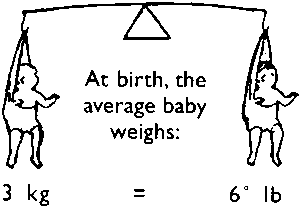
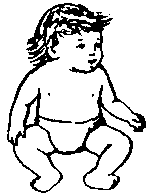
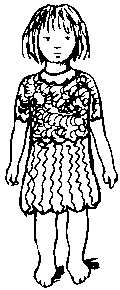


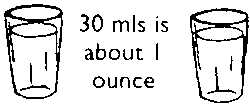
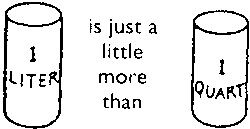
WHERE WOMEN HAVE NO DOCTOR
A health guide for women
All over the world women rise to their daily work, care for their families and participate in community life. Too often, women must face these challenges while struggling against illness - lacking even basic information about their health.
Where Women Have No Doctor combines self-help medical information with an understanding of the ways in which poverty, discrimination and cultural beliefs limit women's health and access to care. Developed with community-based groups and medical experts from more than thirty countries, this book can help anyone understand, treat and prevent many of the health problems that affect women.
Clearly written with over 1000 drawings, Where Women Have No Doctor is an essential resource for any woman who wants to improve her health. It is also invaluable for health workers who want more information about the problems that affect only women, or that affect women differently from men. It helps women identify the obstacles to good health in their communities and shares ideas on how to overcome them.
Topics include:
· how to solve health problems
· ways to stay healthy
· understanding the reproductive parts of women's bodies
· sexual health
· HIV/AIDS and other sexually transmitted diseases
· pregnancy, birth and breast feeding
· mental health
· health concerns of women with disabilities, girls, older women and refugees
· the politics of women's health
· rape and other violence against women
· the use of medicines in women's health
