 | | | Infant Feeding in Emergencies: A Guide for Mothers (WHO, 1997, 48 p.) | | | (introduction...) | | | Foreword | | | Introduction | | | Why is breastfeeding so important? | | | Are commercially-made baby milks as good as breastfeeding? | | | Why are commercially-made baby milks not so good? | | | But can every woman breastfeed? | | | But why don't the experts tell us this if breastfeeding is so important? | | | Do babies also need tea and water? | | | When do babies need more than just breast-milk? | | | So a sick baby should go on breastfeeding? | | | Do breastfed babies get fewer diseases? | | | But my friend's baby got ill and he was breastfed | | | So breastfeeding is like a medicine? | | | People say that stress stops the milk, so during stressful times how can we breastfeed? | | | What about women who have lost a lot of weight? Can they produce milk? | | | Do we need special nutrition for breastfeeding? | | | But what about anaemic women? Does breastfeeding drain their strength? | | | Someone told me breastfeeding stopped you getting pregnant, but isn't that just a story? | | | How does breastfeeding work? | | | What about women with small breasts or flat nipples? | | | You said the baby has a part too. What can he do? | | | Why is the baby's suckling-action important? | | | How does a baby stimulate the milk? | | | The first principle of breastfeeding: good attachment | | | Why does good attachment not always come naturally to the baby? | | | Why does the baby not always get this right? | | | Sometimes it is hard to get a baby close because he is swaddled and his clothing gets in the way | | | Even if my baby attaches well, how can I be sure there will be enough milk? | | | You said earlier that milk changes during a feed. Can you explain that? | | | But I thought you must feed from both breasts? | | | You said earlier that confidence was important but not everyone has that. What can we do? | | | I know women with breastfeeding problems. Can they be helped? | | | My mother told me that you always get sore nipples and you just have to put up with them | | | What about special creams for sore nipples? How can we get them during an emergency? | | | With this baby-led feeding how can I be hygienic and wash my nipples? | | | So if I get my baby well-attached, I will never get sore nipples? | | | You say breastfeeding should not hurt, but what about the engorgement that every woman gets a few days after the birth? | | | You mentioned blocked ducts, mastitis and abscess. Are they common and how can we treat them? | | | All these problems make breastfeeding look too difficult | | | You said earlier that you can breastfeed even if you have stopped completely. How can this be done? | | | Food supplies can be precarious. How can we feed the babies over 6 months who need more than breast-milk alone? | | | What about premature or very small babies? | | | I can see the reason for expressing milk for sick or premature babies, but must all women learn to express? | | | How do I express milk? | | | I can see that breastfeeding is possible in most cases, but we still have to face the times when it is not possible: emergencies create orphans, abandoned babies and severely ill or wounded mothers | | | Is it possible to feed a baby artificially without a bottle? | | | How do you cup-feed a baby? | | | A final word |
|
| | | Infant Feeding in Emergencies: A Guide for Mothers (WHO, 1997, 48 p.) | | | (introduction...) | | | Foreword | | | Introduction | | | Why is breastfeeding so important? | | | Are commercially-made baby milks as good as breastfeeding? | | | Why are commercially-made baby milks not so good? | | | But can every woman breastfeed? | | | But why don't the experts tell us this if breastfeeding is so important? | | | Do babies also need tea and water? | | | When do babies need more than just breast-milk? | | | So a sick baby should go on breastfeeding? | | | Do breastfed babies get fewer diseases? | | | But my friend's baby got ill and he was breastfed | | | So breastfeeding is like a medicine? | | | People say that stress stops the milk, so during stressful times how can we breastfeed? | | | What about women who have lost a lot of weight? Can they produce milk? | | | Do we need special nutrition for breastfeeding? | | | But what about anaemic women? Does breastfeeding drain their strength? | | | Someone told me breastfeeding stopped you getting pregnant, but isn't that just a story? | | | How does breastfeeding work? | | | What about women with small breasts or flat nipples? | | | You said the baby has a part too. What can he do? | | | Why is the baby's suckling-action important? | | | How does a baby stimulate the milk? | | | The first principle of breastfeeding: good attachment | | | Why does good attachment not always come naturally to the baby? | | | Why does the baby not always get this right? | | | Sometimes it is hard to get a baby close because he is swaddled and his clothing gets in the way | | | Even if my baby attaches well, how can I be sure there will be enough milk? | | | You said earlier that milk changes during a feed. Can you explain that? | | | But I thought you must feed from both breasts? | | | You said earlier that confidence was important but not everyone has that. What can we do? | | | I know women with breastfeeding problems. Can they be helped? | | | My mother told me that you always get sore nipples and you just have to put up with them | | | What about special creams for sore nipples? How can we get them during an emergency? | | | With this baby-led feeding how can I be hygienic and wash my nipples? | | | So if I get my baby well-attached, I will never get sore nipples? | | | You say breastfeeding should not hurt, but what about the engorgement that every woman gets a few days after the birth? | | | You mentioned blocked ducts, mastitis and abscess. Are they common and how can we treat them? | | | All these problems make breastfeeding look too difficult | | | You said earlier that you can breastfeed even if you have stopped completely. How can this be done? | | | Food supplies can be precarious. How can we feed the babies over 6 months who need more than breast-milk alone? | | | What about premature or very small babies? | | | I can see the reason for expressing milk for sick or premature babies, but must all women learn to express? | | | How do I express milk? | | | I can see that breastfeeding is possible in most cases, but we still have to face the times when it is not possible: emergencies create orphans, abandoned babies and severely ill or wounded mothers | | | Is it possible to feed a baby artificially without a bottle? | | | How do you cup-feed a baby? | | | A final word |
|
Prepared for the
Programme for Nutrition Policy,
Infant Feeding
and Food Security
Lifestyles and Health Unit
World Health
Organization
Regional Office for Europe, Copenhagen
EU/ICP/LVNG 01 02 08
Revised September 1997
|
Target 16 HEALTHY LIVING
By the year 2000, there should be continuous efforts in all
Member States to actively promote and support healthy patterns of living through
balanced nutrition, appropriate physical activity, healthy sexuality, good
stress management and other aspects of positive health behaviour. |
Keywords
BREASTFEEDING
EMERGENCIES
INFANT NUTRITION
© World Health Organization
All rights in this document are reserved by the WHO Regional
Office for Europe. The document may nevertheless be freely reviewed, abstracted,
reproduced or translated into any other language (but not for sale or for use in
conjunction with commercial purposes) provided that full acknowledgement is
given to the source. For the use of the WHO emblem, permission must be sought
from the WHO Regional Office. Any translation should include the words: The
translator of this document is responsible for the accuracy of the
translation. The Regional Office would appreciate receiving three copies of
any translation. Any views expressed by named authors are solely the
responsibility of those
authors.
| | | Infant Feeding in Emergencies: A Guide for Mothers (WHO, 1997, 48 p.) | | | (introduction...) | | | Foreword | | | Introduction | | | Why is breastfeeding so important? | | | Are commercially-made baby milks as good as breastfeeding? | | | Why are commercially-made baby milks not so good? | | | But can every woman breastfeed? | | | But why don't the experts tell us this if breastfeeding is so important? | | | Do babies also need tea and water? | | | When do babies need more than just breast-milk? | | | So a sick baby should go on breastfeeding? | | | Do breastfed babies get fewer diseases? | | | But my friend's baby got ill and he was breastfed | | | So breastfeeding is like a medicine? | | | People say that stress stops the milk, so during stressful times how can we breastfeed? | | | What about women who have lost a lot of weight? Can they produce milk? | | | Do we need special nutrition for breastfeeding? | | | But what about anaemic women? Does breastfeeding drain their strength? | | | Someone told me breastfeeding stopped you getting pregnant, but isn't that just a story? | | | How does breastfeeding work? | | | What about women with small breasts or flat nipples? | | | You said the baby has a part too. What can he do? | | | Why is the baby's suckling-action important? | | | How does a baby stimulate the milk? | | | The first principle of breastfeeding: good attachment | | | Why does good attachment not always come naturally to the baby? | | | Why does the baby not always get this right? | | | Sometimes it is hard to get a baby close because he is swaddled and his clothing gets in the way | | | Even if my baby attaches well, how can I be sure there will be enough milk? | | | You said earlier that milk changes during a feed. Can you explain that? | | | But I thought you must feed from both breasts? | | | You said earlier that confidence was important but not everyone has that. What can we do? | | | I know women with breastfeeding problems. Can they be helped? | | | My mother told me that you always get sore nipples and you just have to put up with them | | | What about special creams for sore nipples? How can we get them during an emergency? | | | With this baby-led feeding how can I be hygienic and wash my nipples? | | | So if I get my baby well-attached, I will never get sore nipples? | | | You say breastfeeding should not hurt, but what about the engorgement that every woman gets a few days after the birth? | | | You mentioned blocked ducts, mastitis and abscess. Are they common and how can we treat them? | | | All these problems make breastfeeding look too difficult | | | You said earlier that you can breastfeed even if you have stopped completely. How can this be done? | | | Food supplies can be precarious. How can we feed the babies over 6 months who need more than breast-milk alone? | | | What about premature or very small babies? | | | I can see the reason for expressing milk for sick or premature babies, but must all women learn to express? | | | How do I express milk? | | | I can see that breastfeeding is possible in most cases, but we still have to face the times when it is not possible: emergencies create orphans, abandoned babies and severely ill or wounded mothers | | | Is it possible to feed a baby artificially without a bottle? | | | How do you cup-feed a baby? | | | A final word |
|
Foreword
This booklet is designed to help you if you are a mother,
soon-to-be a mother, or want to help one of your friends or relatives to
breastfeed their baby. Once you have finished with this booklet, please pass it
on to a friend who needs help to breastfeed her baby.
The concept for this booklet was born during the last war in
Europe, in Bosnia and Herzegovina in 1994, when it was clear many mothers had
become so accustomed to bottle-feeding that most women had lost their knowledge
on how to breastfeed.
Although originally developed for mothers during emergency
situations, we at WHO are hopeful and confident that this booklet can be of use
to all mothers everywhere.
Many breastfeeding experts throughout the world have commented
and contributed to the development of this booklet and WHO would like to express
their sincere gratitude to all those who worked to make this booklet one of the
best up-to-date guides for mothers.
Aileen Robertson, Ph.D.
Acting Regional
Adviser
Nutrition Policy, Infant Feeding and
Food Security
(NIF)
| | | Infant Feeding in Emergencies: A Guide for Mothers (WHO, 1997, 48 p.) | | | (introduction...) | | | Foreword | | | Introduction | | | Why is breastfeeding so important? | | | Are commercially-made baby milks as good as breastfeeding? | | | Why are commercially-made baby milks not so good? | | | But can every woman breastfeed? | | | But why don't the experts tell us this if breastfeeding is so important? | | | Do babies also need tea and water? | | | When do babies need more than just breast-milk? | | | So a sick baby should go on breastfeeding? | | | Do breastfed babies get fewer diseases? | | | But my friend's baby got ill and he was breastfed | | | So breastfeeding is like a medicine? | | | People say that stress stops the milk, so during stressful times how can we breastfeed? | | | What about women who have lost a lot of weight? Can they produce milk? | | | Do we need special nutrition for breastfeeding? | | | But what about anaemic women? Does breastfeeding drain their strength? | | | Someone told me breastfeeding stopped you getting pregnant, but isn't that just a story? | | | How does breastfeeding work? | | | What about women with small breasts or flat nipples? | | | You said the baby has a part too. What can he do? | | | Why is the baby's suckling-action important? | | | How does a baby stimulate the milk? | | | The first principle of breastfeeding: good attachment | | | Why does good attachment not always come naturally to the baby? | | | Why does the baby not always get this right? | | | Sometimes it is hard to get a baby close because he is swaddled and his clothing gets in the way | | | Even if my baby attaches well, how can I be sure there will be enough milk? | | | You said earlier that milk changes during a feed. Can you explain that? | | | But I thought you must feed from both breasts? | | | You said earlier that confidence was important but not everyone has that. What can we do? | | | I know women with breastfeeding problems. Can they be helped? | | | My mother told me that you always get sore nipples and you just have to put up with them | | | What about special creams for sore nipples? How can we get them during an emergency? | | | With this baby-led feeding how can I be hygienic and wash my nipples? | | | So if I get my baby well-attached, I will never get sore nipples? | | | You say breastfeeding should not hurt, but what about the engorgement that every woman gets a few days after the birth? | | | You mentioned blocked ducts, mastitis and abscess. Are they common and how can we treat them? | | | All these problems make breastfeeding look too difficult | | | You said earlier that you can breastfeed even if you have stopped completely. How can this be done? | | | Food supplies can be precarious. How can we feed the babies over 6 months who need more than breast-milk alone? | | | What about premature or very small babies? | | | I can see the reason for expressing milk for sick or premature babies, but must all women learn to express? | | | How do I express milk? | | | I can see that breastfeeding is possible in most cases, but we still have to face the times when it is not possible: emergencies create orphans, abandoned babies and severely ill or wounded mothers | | | Is it possible to feed a baby artificially without a bottle? | | | How do you cup-feed a baby? | | | A final word |
|
Introduction
Every emergency is different. It may be a natural disaster such
as an earthquake or a flood. It may be political unrest leading to fighting or
bombardment. It may be an industrial accident, contamination of the water
supply, a power failure, road or rail crash or other tragedy. The common factor
in all emergencies is that normal daily life is disrupted and essential services
become overstretched or collapse. People may have to leave their homes. Supplies
of food, water or energy may be scarce, wages may not be paid and the value of
money may change rapidly. Whether the emergency is great or small, short or
long, the main anxiety for parents is their children's health and survival. This
booklet is written to help you feed your baby during an emergency.
· Breastfeeding is
the best way to keep your child and yourself healthy.
· Your breast-milk alone is all
your baby needs for the first 6 months.
· You can start breastfeeding
again even if you stopped some months ago.
· At around 6 months introduce
solid foods, but breastfeeding is still important into the second year and
beyond.
· This booklet answers the
questions that people ask about infant feeding in difficult times. It helps you
to feed your baby safely and to get your breastmilk back if you have stopped
breastfeeding.
| | | Infant Feeding in Emergencies: A Guide for Mothers (WHO, 1997, 48 p.) | | | (introduction...) | | | Foreword | | | Introduction | | | Why is breastfeeding so important? | | | Are commercially-made baby milks as good as breastfeeding? | | | Why are commercially-made baby milks not so good? | | | But can every woman breastfeed? | | | But why don't the experts tell us this if breastfeeding is so important? | | | Do babies also need tea and water? | | | When do babies need more than just breast-milk? | | | So a sick baby should go on breastfeeding? | | | Do breastfed babies get fewer diseases? | | | But my friend's baby got ill and he was breastfed | | | So breastfeeding is like a medicine? | | | People say that stress stops the milk, so during stressful times how can we breastfeed? | | | What about women who have lost a lot of weight? Can they produce milk? | | | Do we need special nutrition for breastfeeding? | | | But what about anaemic women? Does breastfeeding drain their strength? | | | Someone told me breastfeeding stopped you getting pregnant, but isn't that just a story? | | | How does breastfeeding work? | | | What about women with small breasts or flat nipples? | | | You said the baby has a part too. What can he do? | | | Why is the baby's suckling-action important? | | | How does a baby stimulate the milk? | | | The first principle of breastfeeding: good attachment | | | Why does good attachment not always come naturally to the baby? | | | Why does the baby not always get this right? | | | Sometimes it is hard to get a baby close because he is swaddled and his clothing gets in the way | | | Even if my baby attaches well, how can I be sure there will be enough milk? | | | You said earlier that milk changes during a feed. Can you explain that? | | | But I thought you must feed from both breasts? | | | You said earlier that confidence was important but not everyone has that. What can we do? | | | I know women with breastfeeding problems. Can they be helped? | | | My mother told me that you always get sore nipples and you just have to put up with them | | | What about special creams for sore nipples? How can we get them during an emergency? | | | With this baby-led feeding how can I be hygienic and wash my nipples? | | | So if I get my baby well-attached, I will never get sore nipples? | | | You say breastfeeding should not hurt, but what about the engorgement that every woman gets a few days after the birth? | | | You mentioned blocked ducts, mastitis and abscess. Are they common and how can we treat them? | | | All these problems make breastfeeding look too difficult | | | You said earlier that you can breastfeed even if you have stopped completely. How can this be done? | | | Food supplies can be precarious. How can we feed the babies over 6 months who need more than breast-milk alone? | | | What about premature or very small babies? | | | I can see the reason for expressing milk for sick or premature babies, but must all women learn to express? | | | How do I express milk? | | | I can see that breastfeeding is possible in most cases, but we still have to face the times when it is not possible: emergencies create orphans, abandoned babies and severely ill or wounded mothers | | | Is it possible to feed a baby artificially without a bottle? | | | How do you cup-feed a baby? | | | A final word |
|
Why is breastfeeding so important?
Breastfeeding is important everywhere for the best child health,
growth and development. Breast-milk is superior to any other product given to a
baby. It contains the ideal balance of nutrients and anti-infective factors,
tailor-made for each individual child.
A breastfed baby receives the most nutritious, luxurious and
appropriate food ever known. A millionaire's baby fed with commercial baby milk
has a poorer diet than the poorest family's baby who is
breastfed.
| | | Infant Feeding in Emergencies: A Guide for Mothers (WHO, 1997, 48 p.) | | | (introduction...) | | | Foreword | | | Introduction | | | Why is breastfeeding so important? | | | Are commercially-made baby milks as good as breastfeeding? | | | Why are commercially-made baby milks not so good? | | | But can every woman breastfeed? | | | But why don't the experts tell us this if breastfeeding is so important? | | | Do babies also need tea and water? | | | When do babies need more than just breast-milk? | | | So a sick baby should go on breastfeeding? | | | Do breastfed babies get fewer diseases? | | | But my friend's baby got ill and he was breastfed | | | So breastfeeding is like a medicine? | | | People say that stress stops the milk, so during stressful times how can we breastfeed? | | | What about women who have lost a lot of weight? Can they produce milk? | | | Do we need special nutrition for breastfeeding? | | | But what about anaemic women? Does breastfeeding drain their strength? | | | Someone told me breastfeeding stopped you getting pregnant, but isn't that just a story? | | | How does breastfeeding work? | | | What about women with small breasts or flat nipples? | | | You said the baby has a part too. What can he do? | | | Why is the baby's suckling-action important? | | | How does a baby stimulate the milk? | | | The first principle of breastfeeding: good attachment | | | Why does good attachment not always come naturally to the baby? | | | Why does the baby not always get this right? | | | Sometimes it is hard to get a baby close because he is swaddled and his clothing gets in the way | | | Even if my baby attaches well, how can I be sure there will be enough milk? | | | You said earlier that milk changes during a feed. Can you explain that? | | | But I thought you must feed from both breasts? | | | You said earlier that confidence was important but not everyone has that. What can we do? | | | I know women with breastfeeding problems. Can they be helped? | | | My mother told me that you always get sore nipples and you just have to put up with them | | | What about special creams for sore nipples? How can we get them during an emergency? | | | With this baby-led feeding how can I be hygienic and wash my nipples? | | | So if I get my baby well-attached, I will never get sore nipples? | | | You say breastfeeding should not hurt, but what about the engorgement that every woman gets a few days after the birth? | | | You mentioned blocked ducts, mastitis and abscess. Are they common and how can we treat them? | | | All these problems make breastfeeding look too difficult | | | You said earlier that you can breastfeed even if you have stopped completely. How can this be done? | | | Food supplies can be precarious. How can we feed the babies over 6 months who need more than breast-milk alone? | | | What about premature or very small babies? | | | I can see the reason for expressing milk for sick or premature babies, but must all women learn to express? | | | How do I express milk? | | | I can see that breastfeeding is possible in most cases, but we still have to face the times when it is not possible: emergencies create orphans, abandoned babies and severely ill or wounded mothers | | | Is it possible to feed a baby artificially without a bottle? | | | How do you cup-feed a baby? | | | A final word |
|
Are commercially-made baby milks as good as breastfeeding?
Artificial feeding, using commercially-made baby milks and
bottles, is promoted by companies to make profits. This undermines
breastfeeding. Even some health professionals believe that artificial feeding is
as good as breastfeeding and their belief influences us to think that it is
modern and safe. Artificial feeding can cause health problems in stable
situations. It is an even greater risk during an
emergency.
| | | Infant Feeding in Emergencies: A Guide for Mothers (WHO, 1997, 48 p.) | | | (introduction...) | | | Foreword | | | Introduction | | | Why is breastfeeding so important? | | | Are commercially-made baby milks as good as breastfeeding? | | | Why are commercially-made baby milks not so good? | | | But can every woman breastfeed? | | | But why don't the experts tell us this if breastfeeding is so important? | | | Do babies also need tea and water? | | | When do babies need more than just breast-milk? | | | So a sick baby should go on breastfeeding? | | | Do breastfed babies get fewer diseases? | | | But my friend's baby got ill and he was breastfed | | | So breastfeeding is like a medicine? | | | People say that stress stops the milk, so during stressful times how can we breastfeed? | | | What about women who have lost a lot of weight? Can they produce milk? | | | Do we need special nutrition for breastfeeding? | | | But what about anaemic women? Does breastfeeding drain their strength? | | | Someone told me breastfeeding stopped you getting pregnant, but isn't that just a story? | | | How does breastfeeding work? | | | What about women with small breasts or flat nipples? | | | You said the baby has a part too. What can he do? | | | Why is the baby's suckling-action important? | | | How does a baby stimulate the milk? | | | The first principle of breastfeeding: good attachment | | | Why does good attachment not always come naturally to the baby? | | | Why does the baby not always get this right? | | | Sometimes it is hard to get a baby close because he is swaddled and his clothing gets in the way | | | Even if my baby attaches well, how can I be sure there will be enough milk? | | | You said earlier that milk changes during a feed. Can you explain that? | | | But I thought you must feed from both breasts? | | | You said earlier that confidence was important but not everyone has that. What can we do? | | | I know women with breastfeeding problems. Can they be helped? | | | My mother told me that you always get sore nipples and you just have to put up with them | | | What about special creams for sore nipples? How can we get them during an emergency? | | | With this baby-led feeding how can I be hygienic and wash my nipples? | | | So if I get my baby well-attached, I will never get sore nipples? | | | You say breastfeeding should not hurt, but what about the engorgement that every woman gets a few days after the birth? | | | You mentioned blocked ducts, mastitis and abscess. Are they common and how can we treat them? | | | All these problems make breastfeeding look too difficult | | | You said earlier that you can breastfeed even if you have stopped completely. How can this be done? | | | Food supplies can be precarious. How can we feed the babies over 6 months who need more than breast-milk alone? | | | What about premature or very small babies? | | | I can see the reason for expressing milk for sick or premature babies, but must all women learn to express? | | | How do I express milk? | | | I can see that breastfeeding is possible in most cases, but we still have to face the times when it is not possible: emergencies create orphans, abandoned babies and severely ill or wounded mothers | | | Is it possible to feed a baby artificially without a bottle? | | | How do you cup-feed a baby? | | | A final word |
|
Why are commercially-made baby milks not so good?
Commercially-made baby milks1 can never match
breast-milk, even those made by the most sophisticated and scientific methods.
They do not contain anti-infective factors. Even if a manufacturer could copy
human milk, it could never be right for each child, because each mother's milk
changes according to her child's needs. Colostrum, the early, thicker,
yellow-coloured breast-milk, acts as the first immunization, and provides a
super-dose of antibodies and vitamins. Colostrum helps expel the baby's first
dark faeces (meconium). The change from colostrum into mature milk matches the
newborn's needs. Breast-milk then changes composition during a breastfeed and
changes according to the child's age.
1 Also called infant formula,
breast-milk substitute or artificial
milk.
| | | Infant Feeding in Emergencies: A Guide for Mothers (WHO, 1997, 48 p.) | | | (introduction...) | | | Foreword | | | Introduction | | | Why is breastfeeding so important? | | | Are commercially-made baby milks as good as breastfeeding? | | | Why are commercially-made baby milks not so good? | | | But can every woman breastfeed? | | | But why don't the experts tell us this if breastfeeding is so important? | | | Do babies also need tea and water? | | | When do babies need more than just breast-milk? | | | So a sick baby should go on breastfeeding? | | | Do breastfed babies get fewer diseases? | | | But my friend's baby got ill and he was breastfed | | | So breastfeeding is like a medicine? | | | People say that stress stops the milk, so during stressful times how can we breastfeed? | | | What about women who have lost a lot of weight? Can they produce milk? | | | Do we need special nutrition for breastfeeding? | | | But what about anaemic women? Does breastfeeding drain their strength? | | | Someone told me breastfeeding stopped you getting pregnant, but isn't that just a story? | | | How does breastfeeding work? | | | What about women with small breasts or flat nipples? | | | You said the baby has a part too. What can he do? | | | Why is the baby's suckling-action important? | | | How does a baby stimulate the milk? | | | The first principle of breastfeeding: good attachment | | | Why does good attachment not always come naturally to the baby? | | | Why does the baby not always get this right? | | | Sometimes it is hard to get a baby close because he is swaddled and his clothing gets in the way | | | Even if my baby attaches well, how can I be sure there will be enough milk? | | | You said earlier that milk changes during a feed. Can you explain that? | | | But I thought you must feed from both breasts? | | | You said earlier that confidence was important but not everyone has that. What can we do? | | | I know women with breastfeeding problems. Can they be helped? | | | My mother told me that you always get sore nipples and you just have to put up with them | | | What about special creams for sore nipples? How can we get them during an emergency? | | | With this baby-led feeding how can I be hygienic and wash my nipples? | | | So if I get my baby well-attached, I will never get sore nipples? | | | You say breastfeeding should not hurt, but what about the engorgement that every woman gets a few days after the birth? | | | You mentioned blocked ducts, mastitis and abscess. Are they common and how can we treat them? | | | All these problems make breastfeeding look too difficult | | | You said earlier that you can breastfeed even if you have stopped completely. How can this be done? | | | Food supplies can be precarious. How can we feed the babies over 6 months who need more than breast-milk alone? | | | What about premature or very small babies? | | | I can see the reason for expressing milk for sick or premature babies, but must all women learn to express? | | | How do I express milk? | | | I can see that breastfeeding is possible in most cases, but we still have to face the times when it is not possible: emergencies create orphans, abandoned babies and severely ill or wounded mothers | | | Is it possible to feed a baby artificially without a bottle? | | | How do you cup-feed a baby? | | | A final word |
|
But can every woman breastfeed?
Most women are able to breastfeed, but unfortunately a lot of
common practices make breastfeeding go wrong. In this century, breastfeeding
skills have been lost. Mistaken ideas went into medical textbooks and training.
Separation of the mother and baby after birth, feeding to a timetable, giving
extra bottles of artificial milk or any other fluid, and other common practices
can all make breastfeeding go wrong and reduce a mother's breast-milk supply.
|
The following practices can make breastfeeding go wrong
Separation of mother and baby
Delaying the first
feed
Restricting the frequency of feeding
Washing the
nipples before or after a breastfeed
Feeding to a
timetable
Taking the baby off the breast before the baby is
finished
Giving other fluids before the first
breastfeed
Giving supplementary feeds of artificial
milk
Giving plain water, dextrose, glucose or sucrose water or 'teas'
between feeds
Saying anything which makes a mother doubt her ability
to produce milk
Giving free samples of commercial baby
milks
Isolating the mother from those who support
breastfeeding
Using nipple shields, bottle teats and dummies
(pacifiers)
Using drugs during childbirth which sedate the baby
|
|
The following practices can help breastfeeding go well
Breastfeeding soon after birth
Skin-to-skin contact
between mother and baby
Good positioning and attachment of the baby at
the breast
Frequent baby-led feeding
Letting the baby come
off the breast spontaneously
Exclusive
breastfeeding2
Building a mother's confidence
through kindness and encouragement
Having contact with people who give
emotional support
Avoiding bottle teats, dummies and nipple
shields
Avoiding creams and ointments on the
nipples
Avoiding soap on the breasts and washing them only during
normal daily bathing |
2 Exclusive breastfeeding means
feeding the baby frequently, on demand (baby-led) day and night, without giving
bottles, dummies or other foods or fluids, but allowing for essential
medicines.
| | | Infant Feeding in Emergencies: A Guide for Mothers (WHO, 1997, 48 p.) | | | (introduction...) | | | Foreword | | | Introduction | | | Why is breastfeeding so important? | | | Are commercially-made baby milks as good as breastfeeding? | | | Why are commercially-made baby milks not so good? | | | But can every woman breastfeed? | | | But why don't the experts tell us this if breastfeeding is so important? | | | Do babies also need tea and water? | | | When do babies need more than just breast-milk? | | | So a sick baby should go on breastfeeding? | | | Do breastfed babies get fewer diseases? | | | But my friend's baby got ill and he was breastfed | | | So breastfeeding is like a medicine? | | | People say that stress stops the milk, so during stressful times how can we breastfeed? | | | What about women who have lost a lot of weight? Can they produce milk? | | | Do we need special nutrition for breastfeeding? | | | But what about anaemic women? Does breastfeeding drain their strength? | | | Someone told me breastfeeding stopped you getting pregnant, but isn't that just a story? | | | How does breastfeeding work? | | | What about women with small breasts or flat nipples? | | | You said the baby has a part too. What can he do? | | | Why is the baby's suckling-action important? | | | How does a baby stimulate the milk? | | | The first principle of breastfeeding: good attachment | | | Why does good attachment not always come naturally to the baby? | | | Why does the baby not always get this right? | | | Sometimes it is hard to get a baby close because he is swaddled and his clothing gets in the way | | | Even if my baby attaches well, how can I be sure there will be enough milk? | | | You said earlier that milk changes during a feed. Can you explain that? | | | But I thought you must feed from both breasts? | | | You said earlier that confidence was important but not everyone has that. What can we do? | | | I know women with breastfeeding problems. Can they be helped? | | | My mother told me that you always get sore nipples and you just have to put up with them | | | What about special creams for sore nipples? How can we get them during an emergency? | | | With this baby-led feeding how can I be hygienic and wash my nipples? | | | So if I get my baby well-attached, I will never get sore nipples? | | | You say breastfeeding should not hurt, but what about the engorgement that every woman gets a few days after the birth? | | | You mentioned blocked ducts, mastitis and abscess. Are they common and how can we treat them? | | | All these problems make breastfeeding look too difficult | | | You said earlier that you can breastfeed even if you have stopped completely. How can this be done? | | | Food supplies can be precarious. How can we feed the babies over 6 months who need more than breast-milk alone? | | | What about premature or very small babies? | | | I can see the reason for expressing milk for sick or premature babies, but must all women learn to express? | | | How do I express milk? | | | I can see that breastfeeding is possible in most cases, but we still have to face the times when it is not possible: emergencies create orphans, abandoned babies and severely ill or wounded mothers | | | Is it possible to feed a baby artificially without a bottle? | | | How do you cup-feed a baby? | | | A final word |
|
But why don't the experts tell us this if breastfeeding is so important?
Awareness of the importance of breastfeeding is growing fast.
However there is still lack of understanding about how to help mothers, even
among well-educated health professionals. This is not their fault; established
medical practices have unknowingly damaged breastfeeding for years. Now
practices are changing. In both rich and poor regions, enlightened health
authorities encourage the reform of hospital practices and community support for
breastfeeding. Training for health professionals is improving. Global
initiatives such as The WHO/UNICEF3 Baby-Friendly Hospital
Initiative (BFHI) promote 'The Ten Steps To Successful
Breast-feeding'. These are based on the best knowledge of practices which
help mothers and babies breastfeed happily right from the start. WHO and UNICEF
urge all health professionals to implement The Ten Steps in all health
facilities.
3 WHO is the World Health
Organization. UNICEF is the United Nations' Children's Fund. These organizations
work together to promote breastfeeding.
|
Ten Steps to Successful Breastfeeding
Every facility providing maternity services and care for newborn
infants should:
1. Have a written breastfeeding policy that is
routinely communicated to all health care staff.
2. Train all health care staff in skills necessary to
implement this policy.
3. Inform all pregnant women about the benefits and
management of breastfeeding.
4. Help mothers initiate breastfeeding within a half-hour of
birth.
5. Show mothers how to breastfeed, and how to maintain
lactation even if they should be separated from their infants.
6. Give newborn infants no food or drink other than
breast-milk, unless medically indicated.
7. Practise rooming-in - allow mothers and infants to remain
together - 24 hours a day.
8. Encourage breastfeeding on demand.
9. Give no artificial teats or pacifiers (also called dummies
or soothers) to breastfeeding infants.
10. Foster the
establishment of breastfeeding support groups and refer mothers to them on
discharge from the hospital or clinic. |
In an emergency we cannot wait for practices to change. When
water or fuel supplies are disrupted, breastfeeding can save lives.
Breastfeeding keeps babies and toddlers healthy and well nourished, even in bad
conditions; it can also protect women's
health.
| | | Infant Feeding in Emergencies: A Guide for Mothers (WHO, 1997, 48 p.) | | | (introduction...) | | | Foreword | | | Introduction | | | Why is breastfeeding so important? | | | Are commercially-made baby milks as good as breastfeeding? | | | Why are commercially-made baby milks not so good? | | | But can every woman breastfeed? | | | But why don't the experts tell us this if breastfeeding is so important? | | | Do babies also need tea and water? | | | When do babies need more than just breast-milk? | | | So a sick baby should go on breastfeeding? | | | Do breastfed babies get fewer diseases? | | | But my friend's baby got ill and he was breastfed | | | So breastfeeding is like a medicine? | | | People say that stress stops the milk, so during stressful times how can we breastfeed? | | | What about women who have lost a lot of weight? Can they produce milk? | | | Do we need special nutrition for breastfeeding? | | | But what about anaemic women? Does breastfeeding drain their strength? | | | Someone told me breastfeeding stopped you getting pregnant, but isn't that just a story? | | | How does breastfeeding work? | | | What about women with small breasts or flat nipples? | | | You said the baby has a part too. What can he do? | | | Why is the baby's suckling-action important? | | | How does a baby stimulate the milk? | | | The first principle of breastfeeding: good attachment | | | Why does good attachment not always come naturally to the baby? | | | Why does the baby not always get this right? | | | Sometimes it is hard to get a baby close because he is swaddled and his clothing gets in the way | | | Even if my baby attaches well, how can I be sure there will be enough milk? | | | You said earlier that milk changes during a feed. Can you explain that? | | | But I thought you must feed from both breasts? | | | You said earlier that confidence was important but not everyone has that. What can we do? | | | I know women with breastfeeding problems. Can they be helped? | | | My mother told me that you always get sore nipples and you just have to put up with them | | | What about special creams for sore nipples? How can we get them during an emergency? | | | With this baby-led feeding how can I be hygienic and wash my nipples? | | | So if I get my baby well-attached, I will never get sore nipples? | | | You say breastfeeding should not hurt, but what about the engorgement that every woman gets a few days after the birth? | | | You mentioned blocked ducts, mastitis and abscess. Are they common and how can we treat them? | | | All these problems make breastfeeding look too difficult | | | You said earlier that you can breastfeed even if you have stopped completely. How can this be done? | | | Food supplies can be precarious. How can we feed the babies over 6 months who need more than breast-milk alone? | | | What about premature or very small babies? | | | I can see the reason for expressing milk for sick or premature babies, but must all women learn to express? | | | How do I express milk? | | | I can see that breastfeeding is possible in most cases, but we still have to face the times when it is not possible: emergencies create orphans, abandoned babies and severely ill or wounded mothers | | | Is it possible to feed a baby artificially without a bottle? | | | How do you cup-feed a baby? | | | A final word |
|
Do babies also need tea and water?
Breast-milk, including the first milk colostrum, is the
perfectly balanced food and drink for babies. No other food or liquid is
needed in the first 6 months of life. Plain water, glucose, dextrose or
sugar water, teas, herbal drinks, juices, gripe water, milk or any other fluid
(including commercial baby milks) all reduce the amount of breast-milk that the
baby takes in. All these products are unnecessary, except in the rarest cases,
and they can all do harm. They can introduce germs, cause allergies and irritate
the baby's intestines. If given soon afterbirth they will delay the
establishment of breastfeeding and reduce breast-milk supply. Exclusive
breastfeeding is the ideal and all other fluids interfere with the
process. Breast-milk contains the exact amount of water that the baby needs,
even in the hottest, driest climates. The fluid in breast-milk is better
absorbed by the baby than any other that might be
given.
| | | Infant Feeding in Emergencies: A Guide for Mothers (WHO, 1997, 48 p.) | | | (introduction...) | | | Foreword | | | Introduction | | | Why is breastfeeding so important? | | | Are commercially-made baby milks as good as breastfeeding? | | | Why are commercially-made baby milks not so good? | | | But can every woman breastfeed? | | | But why don't the experts tell us this if breastfeeding is so important? | | | Do babies also need tea and water? | | | When do babies need more than just breast-milk? | | | So a sick baby should go on breastfeeding? | | | Do breastfed babies get fewer diseases? | | | But my friend's baby got ill and he was breastfed | | | So breastfeeding is like a medicine? | | | People say that stress stops the milk, so during stressful times how can we breastfeed? | | | What about women who have lost a lot of weight? Can they produce milk? | | | Do we need special nutrition for breastfeeding? | | | But what about anaemic women? Does breastfeeding drain their strength? | | | Someone told me breastfeeding stopped you getting pregnant, but isn't that just a story? | | | How does breastfeeding work? | | | What about women with small breasts or flat nipples? | | | You said the baby has a part too. What can he do? | | | Why is the baby's suckling-action important? | | | How does a baby stimulate the milk? | | | The first principle of breastfeeding: good attachment | | | Why does good attachment not always come naturally to the baby? | | | Why does the baby not always get this right? | | | Sometimes it is hard to get a baby close because he is swaddled and his clothing gets in the way | | | Even if my baby attaches well, how can I be sure there will be enough milk? | | | You said earlier that milk changes during a feed. Can you explain that? | | | But I thought you must feed from both breasts? | | | You said earlier that confidence was important but not everyone has that. What can we do? | | | I know women with breastfeeding problems. Can they be helped? | | | My mother told me that you always get sore nipples and you just have to put up with them | | | What about special creams for sore nipples? How can we get them during an emergency? | | | With this baby-led feeding how can I be hygienic and wash my nipples? | | | So if I get my baby well-attached, I will never get sore nipples? | | | You say breastfeeding should not hurt, but what about the engorgement that every woman gets a few days after the birth? | | | You mentioned blocked ducts, mastitis and abscess. Are they common and how can we treat them? | | | All these problems make breastfeeding look too difficult | | | You said earlier that you can breastfeed even if you have stopped completely. How can this be done? | | | Food supplies can be precarious. How can we feed the babies over 6 months who need more than breast-milk alone? | | | What about premature or very small babies? | | | I can see the reason for expressing milk for sick or premature babies, but must all women learn to express? | | | How do I express milk? | | | I can see that breastfeeding is possible in most cases, but we still have to face the times when it is not possible: emergencies create orphans, abandoned babies and severely ill or wounded mothers | | | Is it possible to feed a baby artificially without a bottle? | | | How do you cup-feed a baby? | | | A final word |
|
When do babies need more than just breast-milk?
At around 6 months introduce solid foods (any family foods
available: see section "Food supplies can be precarious. How can we feed the
babies over 6 months who need more than breast-milk alone?"), but ideally
continue breast-feeding for 2 years or beyond. When your baby starts to eat
solid foods, then you can give her cooled boiled water, though breast-milk will
supply enough fluid if safe water is unavailable. Babies should not drink
sugared drinks or teas. These drinks contain no useful nutrients and damage
the teeth. Tea reduces iron-absorption and can lead to iron deficiency anaemia.
Breastfeeding into the second year and beyond can provide about a third of the
child's energy and protein needs, is a good source of the important vitamins A
and C and protects against infection. Sick toddlers can breastfeed even when
they refuse other foods. This maintains nutrition, speeds recovery and gives
comfort.
| | | Infant Feeding in Emergencies: A Guide for Mothers (WHO, 1997, 48 p.) | | | (introduction...) | | | Foreword | | | Introduction | | | Why is breastfeeding so important? | | | Are commercially-made baby milks as good as breastfeeding? | | | Why are commercially-made baby milks not so good? | | | But can every woman breastfeed? | | | But why don't the experts tell us this if breastfeeding is so important? | | | Do babies also need tea and water? | | | When do babies need more than just breast-milk? | | | So a sick baby should go on breastfeeding? | | | Do breastfed babies get fewer diseases? | | | But my friend's baby got ill and he was breastfed | | | So breastfeeding is like a medicine? | | | People say that stress stops the milk, so during stressful times how can we breastfeed? | | | What about women who have lost a lot of weight? Can they produce milk? | | | Do we need special nutrition for breastfeeding? | | | But what about anaemic women? Does breastfeeding drain their strength? | | | Someone told me breastfeeding stopped you getting pregnant, but isn't that just a story? | | | How does breastfeeding work? | | | What about women with small breasts or flat nipples? | | | You said the baby has a part too. What can he do? | | | Why is the baby's suckling-action important? | | | How does a baby stimulate the milk? | | | The first principle of breastfeeding: good attachment | | | Why does good attachment not always come naturally to the baby? | | | Why does the baby not always get this right? | | | Sometimes it is hard to get a baby close because he is swaddled and his clothing gets in the way | | | Even if my baby attaches well, how can I be sure there will be enough milk? | | | You said earlier that milk changes during a feed. Can you explain that? | | | But I thought you must feed from both breasts? | | | You said earlier that confidence was important but not everyone has that. What can we do? | | | I know women with breastfeeding problems. Can they be helped? | | | My mother told me that you always get sore nipples and you just have to put up with them | | | What about special creams for sore nipples? How can we get them during an emergency? | | | With this baby-led feeding how can I be hygienic and wash my nipples? | | | So if I get my baby well-attached, I will never get sore nipples? | | | You say breastfeeding should not hurt, but what about the engorgement that every woman gets a few days after the birth? | | | You mentioned blocked ducts, mastitis and abscess. Are they common and how can we treat them? | | | All these problems make breastfeeding look too difficult | | | You said earlier that you can breastfeed even if you have stopped completely. How can this be done? | | | Food supplies can be precarious. How can we feed the babies over 6 months who need more than breast-milk alone? | | | What about premature or very small babies? | | | I can see the reason for expressing milk for sick or premature babies, but must all women learn to express? | | | How do I express milk? | | | I can see that breastfeeding is possible in most cases, but we still have to face the times when it is not possible: emergencies create orphans, abandoned babies and severely ill or wounded mothers | | | Is it possible to feed a baby artificially without a bottle? | | | How do you cup-feed a baby? | | | A final word |
|
So a sick baby should go on breastfeeding?
Yes, a sick baby must continue to breastfeed4
because breast-milk actively fights disease. Breast-milk contains numerous
disease-fighting substances. For example, if germs which cause diarrhoeal
disease are in your environment, your body produces antibodies against them in
your breast-milk to protect your baby. Breast-milk is easy to digest so a sick
baby is less likely to vomit after feeding.
4 If the baby is too weak to
suckle he should be given expressed breast-milk
(EBM).
| | | Infant Feeding in Emergencies: A Guide for Mothers (WHO, 1997, 48 p.) | | | (introduction...) | | | Foreword | | | Introduction | | | Why is breastfeeding so important? | | | Are commercially-made baby milks as good as breastfeeding? | | | Why are commercially-made baby milks not so good? | | | But can every woman breastfeed? | | | But why don't the experts tell us this if breastfeeding is so important? | | | Do babies also need tea and water? | | | When do babies need more than just breast-milk? | | | So a sick baby should go on breastfeeding? | | | Do breastfed babies get fewer diseases? | | | But my friend's baby got ill and he was breastfed | | | So breastfeeding is like a medicine? | | | People say that stress stops the milk, so during stressful times how can we breastfeed? | | | What about women who have lost a lot of weight? Can they produce milk? | | | Do we need special nutrition for breastfeeding? | | | But what about anaemic women? Does breastfeeding drain their strength? | | | Someone told me breastfeeding stopped you getting pregnant, but isn't that just a story? | | | How does breastfeeding work? | | | What about women with small breasts or flat nipples? | | | You said the baby has a part too. What can he do? | | | Why is the baby's suckling-action important? | | | How does a baby stimulate the milk? | | | The first principle of breastfeeding: good attachment | | | Why does good attachment not always come naturally to the baby? | | | Why does the baby not always get this right? | | | Sometimes it is hard to get a baby close because he is swaddled and his clothing gets in the way | | | Even if my baby attaches well, how can I be sure there will be enough milk? | | | You said earlier that milk changes during a feed. Can you explain that? | | | But I thought you must feed from both breasts? | | | You said earlier that confidence was important but not everyone has that. What can we do? | | | I know women with breastfeeding problems. Can they be helped? | | | My mother told me that you always get sore nipples and you just have to put up with them | | | What about special creams for sore nipples? How can we get them during an emergency? | | | With this baby-led feeding how can I be hygienic and wash my nipples? | | | So if I get my baby well-attached, I will never get sore nipples? | | | You say breastfeeding should not hurt, but what about the engorgement that every woman gets a few days after the birth? | | | You mentioned blocked ducts, mastitis and abscess. Are they common and how can we treat them? | | | All these problems make breastfeeding look too difficult | | | You said earlier that you can breastfeed even if you have stopped completely. How can this be done? | | | Food supplies can be precarious. How can we feed the babies over 6 months who need more than breast-milk alone? | | | What about premature or very small babies? | | | I can see the reason for expressing milk for sick or premature babies, but must all women learn to express? | | | How do I express milk? | | | I can see that breastfeeding is possible in most cases, but we still have to face the times when it is not possible: emergencies create orphans, abandoned babies and severely ill or wounded mothers | | | Is it possible to feed a baby artificially without a bottle? | | | How do you cup-feed a baby? | | | A final word |
|
Do breastfed babies get fewer diseases?
Yes, definitely. Breastfeeding protects against common
infections, especially diarrhoeal and respiratory diseases. Even in the best,
most hygienic conditions, artificially-fed babies are 5 times more likely to
suffer diarrhoeal disease. When water and fuel supplies are disrupted,
infections spread rapidly. Artificially-fed babies are 14 times more likely to
die from diarrhoeal diseases and 3 times more likely to die from respiratory
diseases than breastfed babies. Breastfeeding lowers the risk of a baby getting
urinary tract infections which can lead to kidney disease, and ear infections
which can lead to
deafness.
| | | Infant Feeding in Emergencies: A Guide for Mothers (WHO, 1997, 48 p.) | | | (introduction...) | | | Foreword | | | Introduction | | | Why is breastfeeding so important? | | | Are commercially-made baby milks as good as breastfeeding? | | | Why are commercially-made baby milks not so good? | | | But can every woman breastfeed? | | | But why don't the experts tell us this if breastfeeding is so important? | | | Do babies also need tea and water? | | | When do babies need more than just breast-milk? | | | So a sick baby should go on breastfeeding? | | | Do breastfed babies get fewer diseases? | | | But my friend's baby got ill and he was breastfed | | | So breastfeeding is like a medicine? | | | People say that stress stops the milk, so during stressful times how can we breastfeed? | | | What about women who have lost a lot of weight? Can they produce milk? | | | Do we need special nutrition for breastfeeding? | | | But what about anaemic women? Does breastfeeding drain their strength? | | | Someone told me breastfeeding stopped you getting pregnant, but isn't that just a story? | | | How does breastfeeding work? | | | What about women with small breasts or flat nipples? | | | You said the baby has a part too. What can he do? | | | Why is the baby's suckling-action important? | | | How does a baby stimulate the milk? | | | The first principle of breastfeeding: good attachment | | | Why does good attachment not always come naturally to the baby? | | | Why does the baby not always get this right? | | | Sometimes it is hard to get a baby close because he is swaddled and his clothing gets in the way | | | Even if my baby attaches well, how can I be sure there will be enough milk? | | | You said earlier that milk changes during a feed. Can you explain that? | | | But I thought you must feed from both breasts? | | | You said earlier that confidence was important but not everyone has that. What can we do? | | | I know women with breastfeeding problems. Can they be helped? | | | My mother told me that you always get sore nipples and you just have to put up with them | | | What about special creams for sore nipples? How can we get them during an emergency? | | | With this baby-led feeding how can I be hygienic and wash my nipples? | | | So if I get my baby well-attached, I will never get sore nipples? | | | You say breastfeeding should not hurt, but what about the engorgement that every woman gets a few days after the birth? | | | You mentioned blocked ducts, mastitis and abscess. Are they common and how can we treat them? | | | All these problems make breastfeeding look too difficult | | | You said earlier that you can breastfeed even if you have stopped completely. How can this be done? | | | Food supplies can be precarious. How can we feed the babies over 6 months who need more than breast-milk alone? | | | What about premature or very small babies? | | | I can see the reason for expressing milk for sick or premature babies, but must all women learn to express? | | | How do I express milk? | | | I can see that breastfeeding is possible in most cases, but we still have to face the times when it is not possible: emergencies create orphans, abandoned babies and severely ill or wounded mothers | | | Is it possible to feed a baby artificially without a bottle? | | | How do you cup-feed a baby? | | | A final word |
|
But my friend's baby got ill and he was breastfed
Of course some breastfed babies get infections, but most get
them less severely. They recover more quickly, and are less likely to die from
infections or become malnourished, than artificially-fed babies. The more
vulnerable the baby the more he needs
breast-milk.
| | | Infant Feeding in Emergencies: A Guide for Mothers (WHO, 1997, 48 p.) | | | (introduction...) | | | Foreword | | | Introduction | | | Why is breastfeeding so important? | | | Are commercially-made baby milks as good as breastfeeding? | | | Why are commercially-made baby milks not so good? | | | But can every woman breastfeed? | | | But why don't the experts tell us this if breastfeeding is so important? | | | Do babies also need tea and water? | | | When do babies need more than just breast-milk? | | | So a sick baby should go on breastfeeding? | | | Do breastfed babies get fewer diseases? | | | But my friend's baby got ill and he was breastfed | | | So breastfeeding is like a medicine? | | | People say that stress stops the milk, so during stressful times how can we breastfeed? | | | What about women who have lost a lot of weight? Can they produce milk? | | | Do we need special nutrition for breastfeeding? | | | But what about anaemic women? Does breastfeeding drain their strength? | | | Someone told me breastfeeding stopped you getting pregnant, but isn't that just a story? | | | How does breastfeeding work? | | | What about women with small breasts or flat nipples? | | | You said the baby has a part too. What can he do? | | | Why is the baby's suckling-action important? | | | How does a baby stimulate the milk? | | | The first principle of breastfeeding: good attachment | | | Why does good attachment not always come naturally to the baby? | | | Why does the baby not always get this right? | | | Sometimes it is hard to get a baby close because he is swaddled and his clothing gets in the way | | | Even if my baby attaches well, how can I be sure there will be enough milk? | | | You said earlier that milk changes during a feed. Can you explain that? | | | But I thought you must feed from both breasts? | | | You said earlier that confidence was important but not everyone has that. What can we do? | | | I know women with breastfeeding problems. Can they be helped? | | | My mother told me that you always get sore nipples and you just have to put up with them | | | What about special creams for sore nipples? How can we get them during an emergency? | | | With this baby-led feeding how can I be hygienic and wash my nipples? | | | So if I get my baby well-attached, I will never get sore nipples? | | | You say breastfeeding should not hurt, but what about the engorgement that every woman gets a few days after the birth? | | | You mentioned blocked ducts, mastitis and abscess. Are they common and how can we treat them? | | | All these problems make breastfeeding look too difficult | | | You said earlier that you can breastfeed even if you have stopped completely. How can this be done? | | | Food supplies can be precarious. How can we feed the babies over 6 months who need more than breast-milk alone? | | | What about premature or very small babies? | | | I can see the reason for expressing milk for sick or premature babies, but must all women learn to express? | | | How do I express milk? | | | I can see that breastfeeding is possible in most cases, but we still have to face the times when it is not possible: emergencies create orphans, abandoned babies and severely ill or wounded mothers | | | Is it possible to feed a baby artificially without a bottle? | | | How do you cup-feed a baby? | | | A final word |
|
So breastfeeding is like a medicine?
Yes, and it protects long-term health too. Breastfeeding lowers
the risk of a child developing diabetes. Exclusive breastfeeding can delay
allergies such as asthma and eczema. Studies show breastfed children to be more
intelligent, especially premature babies who received breast-milk. Immunization
works better in breastfed babies.
Studies suggest that breastfeeding reduces the risk of badly
formed teeth, poor eyesight, some childhood cancers, raised blood pressure and
coronary heart disease in adult life.
Some studies suggest that the longer a woman breastfeeds the
lower her risk of ovarian and pre-menopausal breast cancer, and bone disease
(osteoporosis) and hip fractures when she is old. Diabetic women need less
insulin when they breastfeed.
|
Breastfeeding protects against:
Diarrhoeal diseases
Respiratory
infections
Urinary tract infections
Ear infections (otitis
media)
Diabetes mellitus
Asthma and wheezing |
| | | Infant Feeding in Emergencies: A Guide for Mothers (WHO, 1997, 48 p.) | | | (introduction...) | | | Foreword | | | Introduction | | | Why is breastfeeding so important? | | | Are commercially-made baby milks as good as breastfeeding? | | | Why are commercially-made baby milks not so good? | | | But can every woman breastfeed? | | | But why don't the experts tell us this if breastfeeding is so important? | | | Do babies also need tea and water? | | | When do babies need more than just breast-milk? | | | So a sick baby should go on breastfeeding? | | | Do breastfed babies get fewer diseases? | | | But my friend's baby got ill and he was breastfed | | | So breastfeeding is like a medicine? | | | People say that stress stops the milk, so during stressful times how can we breastfeed? | | | What about women who have lost a lot of weight? Can they produce milk? | | | Do we need special nutrition for breastfeeding? | | | But what about anaemic women? Does breastfeeding drain their strength? | | | Someone told me breastfeeding stopped you getting pregnant, but isn't that just a story? | | | How does breastfeeding work? | | | What about women with small breasts or flat nipples? | | | You said the baby has a part too. What can he do? | | | Why is the baby's suckling-action important? | | | How does a baby stimulate the milk? | | | The first principle of breastfeeding: good attachment | | | Why does good attachment not always come naturally to the baby? | | | Why does the baby not always get this right? | | | Sometimes it is hard to get a baby close because he is swaddled and his clothing gets in the way | | | Even if my baby attaches well, how can I be sure there will be enough milk? | | | You said earlier that milk changes during a feed. Can you explain that? | | | But I thought you must feed from both breasts? | | | You said earlier that confidence was important but not everyone has that. What can we do? | | | I know women with breastfeeding problems. Can they be helped? | | | My mother told me that you always get sore nipples and you just have to put up with them | | | What about special creams for sore nipples? How can we get them during an emergency? | | | With this baby-led feeding how can I be hygienic and wash my nipples? | | | So if I get my baby well-attached, I will never get sore nipples? | | | You say breastfeeding should not hurt, but what about the engorgement that every woman gets a few days after the birth? | | | You mentioned blocked ducts, mastitis and abscess. Are they common and how can we treat them? | | | All these problems make breastfeeding look too difficult | | | You said earlier that you can breastfeed even if you have stopped completely. How can this be done? | | | Food supplies can be precarious. How can we feed the babies over 6 months who need more than breast-milk alone? | | | What about premature or very small babies? | | | I can see the reason for expressing milk for sick or premature babies, but must all women learn to express? | | | How do I express milk? | | | I can see that breastfeeding is possible in most cases, but we still have to face the times when it is not possible: emergencies create orphans, abandoned babies and severely ill or wounded mothers | | | Is it possible to feed a baby artificially without a bottle? | | | How do you cup-feed a baby? | | | A final word |
|
People say that stress stops the milk, so during stressful times how can we breastfeed?
In societies where women never doubt their ability to
breastfeed, mothers have suckled their babies for centuries during famines and
wars and saved their lives. In societies where bottle-feeding has become common
and confidence in breastfeeding has declined, women have breastfed even less
during emergencies. Aid workers did not realize that when they distributed
commercial milks and bottles, they were destroying women's confidence, stopping
their babies stimulating their breast-milk production and increasing the risk of
illness.
If you understand how women's bodies work, despite the stress,
you can help yourself and others to cope with a difficult situation. Stress has
no effect on the milk-making hormone (prolactin), but it can have a temporary
effect on the hormone which makes the milk flow out of the breast (oxytocin).
The temporary stoppage of this reflex is a useful biological mechanism to stop
milk being ejected from the breast at difficult moments.
Stress has always been part of life and if it destroyed
breastfeeding, the human race would never have evolved. When an early human
mother and her baby were escaping from a wild animal, it would help for the milk
flow to stop while she was running away. But as soon as she reached shelter, the
flow would re-start through putting her baby to the breast.
We know the signs of fear: a dry mouth, increased heart beat,
cold feet and trembling. These signs slow down after a while, even when the
cause of the fear continues. It is the same with the oxytocin reflex: the milk
flow may stop for a short time when you are very shocked, but even though the
cause of the shock remains, the flow of breast-milk will resume as long as you
keep putting your baby to your breast.
The milk-making system is very robust. The oxytocin reflex is
sensitive: it can stop temporarily, but it resumes quickly. We all need comfort
during stressful times. Ask someone to give you a gentle back massage. This can
help your oxytocin reflex, together with the baby suckling freely, to stimulate
the breast-milk to start flowing again.
Breastfeeding, with skin-to-skin contact, helps you feel closer.
This can help your baby feel secure and limit the damage of the emotional
traumas of stressful situations. The breastfeeding hormones help many women feel
calmer in stressful situations.
Show this booklet to the health professionals or anyone who is
trying to help you. The most important point for health professionals, aid
workers, family or friends to remember is that a few minutes of comfort and
reassurance can get breast-milk flowing and protect a baby's health and life.
Distributing bottles and artificial milk can cause illness and
death.
| | | Infant Feeding in Emergencies: A Guide for Mothers (WHO, 1997, 48 p.) | | | (introduction...) | | | Foreword | | | Introduction | | | Why is breastfeeding so important? | | | Are commercially-made baby milks as good as breastfeeding? | | | Why are commercially-made baby milks not so good? | | | But can every woman breastfeed? | | | But why don't the experts tell us this if breastfeeding is so important? | | | Do babies also need tea and water? | | | When do babies need more than just breast-milk? | | | So a sick baby should go on breastfeeding? | | | Do breastfed babies get fewer diseases? | | | But my friend's baby got ill and he was breastfed | | | So breastfeeding is like a medicine? | | | People say that stress stops the milk, so during stressful times how can we breastfeed? | | | What about women who have lost a lot of weight? Can they produce milk? | | | Do we need special nutrition for breastfeeding? | | | But what about anaemic women? Does breastfeeding drain their strength? | | | Someone told me breastfeeding stopped you getting pregnant, but isn't that just a story? | | | How does breastfeeding work? | | | What about women with small breasts or flat nipples? | | | You said the baby has a part too. What can he do? | | | Why is the baby's suckling-action important? | | | How does a baby stimulate the milk? | | | The first principle of breastfeeding: good attachment | | | Why does good attachment not always come naturally to the baby? | | | Why does the baby not always get this right? | | | Sometimes it is hard to get a baby close because he is swaddled and his clothing gets in the way | | | Even if my baby attaches well, how can I be sure there will be enough milk? | | | You said earlier that milk changes during a feed. Can you explain that? | | | But I thought you must feed from both breasts? | | | You said earlier that confidence was important but not everyone has that. What can we do? | | | I know women with breastfeeding problems. Can they be helped? | | | My mother told me that you always get sore nipples and you just have to put up with them | | | What about special creams for sore nipples? How can we get them during an emergency? | | | With this baby-led feeding how can I be hygienic and wash my nipples? | | | So if I get my baby well-attached, I will never get sore nipples? | | | You say breastfeeding should not hurt, but what about the engorgement that every woman gets a few days after the birth? | | | You mentioned blocked ducts, mastitis and abscess. Are they common and how can we treat them? | | | All these problems make breastfeeding look too difficult | | | You said earlier that you can breastfeed even if you have stopped completely. How can this be done? | | | Food supplies can be precarious. How can we feed the babies over 6 months who need more than breast-milk alone? | | | What about premature or very small babies? | | | I can see the reason for expressing milk for sick or premature babies, but must all women learn to express? | | | How do I express milk? | | | I can see that breastfeeding is possible in most cases, but we still have to face the times when it is not possible: emergencies create orphans, abandoned babies and severely ill or wounded mothers | | | Is it possible to feed a baby artificially without a bottle? | | | How do you cup-feed a baby? | | | A final word |
|
What about women who have lost a lot of weight? Can they produce milk?
Thinness or weight loss rarely influence breast-milk supply.
Human lactation is a remarkably resilient process. Most women gain body fat
during pregnancy which acts as an energy store to make milk after the baby is
born. However, even thin women who do not gain weight during pregnancy still
produce enough good quality milk for their babies. The important thing is their
babies suckle freely. Even in the Dutch famine in 1945 and the African famines
in the 1980s, women continued to breastfeed and their babies grew. Only severe
starvation makes lactation stop. In emergencies everyone is worried about
getting food and of course you need sufficient food for yourself. The one food
supply that you need not worry about is
breast-milk.
| | | Infant Feeding in Emergencies: A Guide for Mothers (WHO, 1997, 48 p.) | | | (introduction...) | | | Foreword | | | Introduction | | | Why is breastfeeding so important? | | | Are commercially-made baby milks as good as breastfeeding? | | | Why are commercially-made baby milks not so good? | | | But can every woman breastfeed? | | | But why don't the experts tell us this if breastfeeding is so important? | | | Do babies also need tea and water? | | | When do babies need more than just breast-milk? | | | So a sick baby should go on breastfeeding? | | | Do breastfed babies get fewer diseases? | | | But my friend's baby got ill and he was breastfed | | | So breastfeeding is like a medicine? | | | People say that stress stops the milk, so during stressful times how can we breastfeed? | | | What about women who have lost a lot of weight? Can they produce milk? | | | Do we need special nutrition for breastfeeding? | | | But what about anaemic women? Does breastfeeding drain their strength? | | | Someone told me breastfeeding stopped you getting pregnant, but isn't that just a story? | | | How does breastfeeding work? | | | What about women with small breasts or flat nipples? | | | You said the baby has a part too. What can he do? | | | Why is the baby's suckling-action important? | | | How does a baby stimulate the milk? | | | The first principle of breastfeeding: good attachment | | | Why does good attachment not always come naturally to the baby? | | | Why does the baby not always get this right? | | | Sometimes it is hard to get a baby close because he is swaddled and his clothing gets in the way | | | Even if my baby attaches well, how can I be sure there will be enough milk? | | | You said earlier that milk changes during a feed. Can you explain that? | | | But I thought you must feed from both breasts? | | | You said earlier that confidence was important but not everyone has that. What can we do? | | | I know women with breastfeeding problems. Can they be helped? | | | My mother told me that you always get sore nipples and you just have to put up with them | | | What about special creams for sore nipples? How can we get them during an emergency? | | | With this baby-led feeding how can I be hygienic and wash my nipples? | | | So if I get my baby well-attached, I will never get sore nipples? | | | You say breastfeeding should not hurt, but what about the engorgement that every woman gets a few days after the birth? | | | You mentioned blocked ducts, mastitis and abscess. Are they common and how can we treat them? | | | All these problems make breastfeeding look too difficult | | | You said earlier that you can breastfeed even if you have stopped completely. How can this be done? | | | Food supplies can be precarious. How can we feed the babies over 6 months who need more than breast-milk alone? | | | What about premature or very small babies? | | | I can see the reason for expressing milk for sick or premature babies, but must all women learn to express? | | | How do I express milk? | | | I can see that breastfeeding is possible in most cases, but we still have to face the times when it is not possible: emergencies create orphans, abandoned babies and severely ill or wounded mothers | | | Is it possible to feed a baby artificially without a bottle? | | | How do you cup-feed a baby? | | | A final word |
|
Do we need special nutrition for breastfeeding?
You need enough food to maintain your own health and energy.
Your breast-milk supply will continue as long as you let your baby suckle freely
and effectively. When there is food rationing, pregnant and lactating mothers
should have priority among the adult population. The extra energy needed by the
body to make breast-milk is about 500 extra calories a day above basic needs.
This means, for example, two extra slices of bread, or an extra helping of
potatoes or any other food available. However, women's bodies adjust to
lactation by using nutrients more efficiently. You may feel hungrier, but you
need not worry that you need special foods to make breast-milk. Diets vary
around the world. Meat is not essential; vegetarian women who never eat meat or
fish, and women who never drink milk, all breastfeed successfully and stay
healthy. Eat a varied diet with vegetables if you can get them. Try to get salt
which has iodine added, since iodine deficiency is common in most countries.
There is no need to avoid certain foods while breastfeeding. In an emergency eat
whatever is available. There is no need to take extra fluid. Just drink when you
are
thirsty.
| | | Infant Feeding in Emergencies: A Guide for Mothers (WHO, 1997, 48 p.) | | | (introduction...) | | | Foreword | | | Introduction | | | Why is breastfeeding so important? | | | Are commercially-made baby milks as good as breastfeeding? | | | Why are commercially-made baby milks not so good? | | | But can every woman breastfeed? | | | But why don't the experts tell us this if breastfeeding is so important? | | | Do babies also need tea and water? | | | When do babies need more than just breast-milk? | | | So a sick baby should go on breastfeeding? | | | Do breastfed babies get fewer diseases? | | | But my friend's baby got ill and he was breastfed | | | So breastfeeding is like a medicine? | | | People say that stress stops the milk, so during stressful times how can we breastfeed? | | | What about women who have lost a lot of weight? Can they produce milk? | | | Do we need special nutrition for breastfeeding? | | | But what about anaemic women? Does breastfeeding drain their strength? | | | Someone told me breastfeeding stopped you getting pregnant, but isn't that just a story? | | | How does breastfeeding work? | | | What about women with small breasts or flat nipples? | | | You said the baby has a part too. What can he do? | | | Why is the baby's suckling-action important? | | | How does a baby stimulate the milk? | | | The first principle of breastfeeding: good attachment | | | Why does good attachment not always come naturally to the baby? | | | Why does the baby not always get this right? | | | Sometimes it is hard to get a baby close because he is swaddled and his clothing gets in the way | | | Even if my baby attaches well, how can I be sure there will be enough milk? | | | You said earlier that milk changes during a feed. Can you explain that? | | | But I thought you must feed from both breasts? | | | You said earlier that confidence was important but not everyone has that. What can we do? | | | I know women with breastfeeding problems. Can they be helped? | | | My mother told me that you always get sore nipples and you just have to put up with them | | | What about special creams for sore nipples? How can we get them during an emergency? | | | With this baby-led feeding how can I be hygienic and wash my nipples? | | | So if I get my baby well-attached, I will never get sore nipples? | | | You say breastfeeding should not hurt, but what about the engorgement that every woman gets a few days after the birth? | | | You mentioned blocked ducts, mastitis and abscess. Are they common and how can we treat them? | | | All these problems make breastfeeding look too difficult | | | You said earlier that you can breastfeed even if you have stopped completely. How can this be done? | | | Food supplies can be precarious. How can we feed the babies over 6 months who need more than breast-milk alone? | | | What about premature or very small babies? | | | I can see the reason for expressing milk for sick or premature babies, but must all women learn to express? | | | How do I express milk? | | | I can see that breastfeeding is possible in most cases, but we still have to face the times when it is not possible: emergencies create orphans, abandoned babies and severely ill or wounded mothers | | | Is it possible to feed a baby artificially without a bottle? | | | How do you cup-feed a baby? | | | A final word |
|
But what about anaemic women? Does breastfeeding drain their strength?
No. Anaemic women can breastfeed quite normally, though it is
best for their own health if they get treated. Drinking tea with your food
reduces the absorption of iron, so try to drink tea two hours after a meal. In
fact, exclusive breastfeeding can protect women from anaemia because it delays
the return of menstruation. The small amount of iron that goes from your
bloodstream into the breast-milk is less than that lost through
menstruation.
| | | Infant Feeding in Emergencies: A Guide for Mothers (WHO, 1997, 48 p.) | | | (introduction...) | | | Foreword | | | Introduction | | | Why is breastfeeding so important? | | | Are commercially-made baby milks as good as breastfeeding? | | | Why are commercially-made baby milks not so good? | | | But can every woman breastfeed? | | | But why don't the experts tell us this if breastfeeding is so important? | | | Do babies also need tea and water? | | | When do babies need more than just breast-milk? | | | So a sick baby should go on breastfeeding? | | | Do breastfed babies get fewer diseases? | | | But my friend's baby got ill and he was breastfed | | | So breastfeeding is like a medicine? | | | People say that stress stops the milk, so during stressful times how can we breastfeed? | | | What about women who have lost a lot of weight? Can they produce milk? | | | Do we need special nutrition for breastfeeding? | | | But what about anaemic women? Does breastfeeding drain their strength? | | | Someone told me breastfeeding stopped you getting pregnant, but isn't that just a story? | | | How does breastfeeding work? | | | What about women with small breasts or flat nipples? | | | You said the baby has a part too. What can he do? | | | Why is the baby's suckling-action important? | | | How does a baby stimulate the milk? | | | The first principle of breastfeeding: good attachment | | | Why does good attachment not always come naturally to the baby? | | | Why does the baby not always get this right? | | | Sometimes it is hard to get a baby close because he is swaddled and his clothing gets in the way | | | Even if my baby attaches well, how can I be sure there will be enough milk? | | | You said earlier that milk changes during a feed. Can you explain that? | | | But I thought you must feed from both breasts? | | | You said earlier that confidence was important but not everyone has that. What can we do? | | | I know women with breastfeeding problems. Can they be helped? | | | My mother told me that you always get sore nipples and you just have to put up with them | | | What about special creams for sore nipples? How can we get them during an emergency? | | | With this baby-led feeding how can I be hygienic and wash my nipples? | | | So if I get my baby well-attached, I will never get sore nipples? | | | You say breastfeeding should not hurt, but what about the engorgement that every woman gets a few days after the birth? | | | You mentioned blocked ducts, mastitis and abscess. Are they common and how can we treat them? | | | All these problems make breastfeeding look too difficult | | | You said earlier that you can breastfeed even if you have stopped completely. How can this be done? | | | Food supplies can be precarious. How can we feed the babies over 6 months who need more than breast-milk alone? | | | What about premature or very small babies? | | | I can see the reason for expressing milk for sick or premature babies, but must all women learn to express? | | | How do I express milk? | | | I can see that breastfeeding is possible in most cases, but we still have to face the times when it is not possible: emergencies create orphans, abandoned babies and severely ill or wounded mothers | | | Is it possible to feed a baby artificially without a bottle? | | | How do you cup-feed a baby? | | | A final word |
|
Someone told me breastfeeding stopped you getting pregnant, but isn't that just a story?
Exclusive breastfeeding lowers your risk of getting pregnant.
During the first 6 months, as long as you do not menstruate, and you breastfeed
fully day and night, you have 98% protection from pregnancy. This is equivalent
to the protection from other modern contraceptive methods. As you will learn
from the following section (How does breastfeeding work?), the
stimulation by your baby's mouth at your breast influences the hormones which
affect your fertility. If your baby gets bottle feeds, even of your expressed
breast-milk, or is given a dummy, the suckling stimulus is reduced and the
contraceptive effect of breastfeeding is less effective. You should not rely on
this method of contraception after the baby is 6 months old.
|
Breastfeeding protects women's health
Less risk of:
Anaemia
Early breast
cancer
Ovarian cancer
Bone disease in old
age
Pregnancy in the first 6 months
Diabetic
women need less insulin |
| | | Infant Feeding in Emergencies: A Guide for Mothers (WHO, 1997, 48 p.) | | | (introduction...) | | | Foreword | | | Introduction | | | Why is breastfeeding so important? | | | Are commercially-made baby milks as good as breastfeeding? | | | Why are commercially-made baby milks not so good? | | | But can every woman breastfeed? | | | But why don't the experts tell us this if breastfeeding is so important? | | | Do babies also need tea and water? | | | When do babies need more than just breast-milk? | | | So a sick baby should go on breastfeeding? | | | Do breastfed babies get fewer diseases? | | | But my friend's baby got ill and he was breastfed | | | So breastfeeding is like a medicine? | | | People say that stress stops the milk, so during stressful times how can we breastfeed? | | | What about women who have lost a lot of weight? Can they produce milk? | | | Do we need special nutrition for breastfeeding? | | | But what about anaemic women? Does breastfeeding drain their strength? | | | Someone told me breastfeeding stopped you getting pregnant, but isn't that just a story? | | | How does breastfeeding work? | | | What about women with small breasts or flat nipples? | | | You said the baby has a part too. What can he do? | | | Why is the baby's suckling-action important? | | | How does a baby stimulate the milk? | | | The first principle of breastfeeding: good attachment | | | Why does good attachment not always come naturally to the baby? | | | Why does the baby not always get this right? | | | Sometimes it is hard to get a baby close because he is swaddled and his clothing gets in the way | | | Even if my baby attaches well, how can I be sure there will be enough milk? | | | You said earlier that milk changes during a feed. Can you explain that? | | | But I thought you must feed from both breasts? | | | You said earlier that confidence was important but not everyone has that. What can we do? | | | I know women with breastfeeding problems. Can they be helped? | | | My mother told me that you always get sore nipples and you just have to put up with them | | | What about special creams for sore nipples? How can we get them during an emergency? | | | With this baby-led feeding how can I be hygienic and wash my nipples? | | | So if I get my baby well-attached, I will never get sore nipples? | | | You say breastfeeding should not hurt, but what about the engorgement that every woman gets a few days after the birth? | | | You mentioned blocked ducts, mastitis and abscess. Are they common and how can we treat them? | | | All these problems make breastfeeding look too difficult | | | You said earlier that you can breastfeed even if you have stopped completely. How can this be done? | | | Food supplies can be precarious. How can we feed the babies over 6 months who need more than breast-milk alone? | | | What about premature or very small babies? | | | I can see the reason for expressing milk for sick or premature babies, but must all women learn to express? | | | How do I express milk? | | | I can see that breastfeeding is possible in most cases, but we still have to face the times when it is not possible: emergencies create orphans, abandoned babies and severely ill or wounded mothers | | | Is it possible to feed a baby artificially without a bottle? | | | How do you cup-feed a baby? | | | A final word |
|
How does breastfeeding work?
Both you and your baby have a part to play.
Every woman who gives birth produces colostrum and then
breast-milk. As soon as a mother delivers her baby and the placenta
(afterbirth), the milk-making process starts to work. This happens whether you
are healthy or ill, overweight or underweight, have a normal or assisted birth
or a Caesarean section. The only time this does not happen is if part of the
placenta stays in the womb or if a mother suffers extremely severe bleeding
during childbirth - both very rare
events.
| | | Infant Feeding in Emergencies: A Guide for Mothers (WHO, 1997, 48 p.) | | | (introduction...) | | | Foreword | | | Introduction | | | Why is breastfeeding so important? | | | Are commercially-made baby milks as good as breastfeeding? | | | Why are commercially-made baby milks not so good? | | | But can every woman breastfeed? | | | But why don't the experts tell us this if breastfeeding is so important? | | | Do babies also need tea and water? | | | When do babies need more than just breast-milk? | | | So a sick baby should go on breastfeeding? | | | Do breastfed babies get fewer diseases? | | | But my friend's baby got ill and he was breastfed | | | So breastfeeding is like a medicine? | | | People say that stress stops the milk, so during stressful times how can we breastfeed? | | | What about women who have lost a lot of weight? Can they produce milk? | | | Do we need special nutrition for breastfeeding? | | | But what about anaemic women? Does breastfeeding drain their strength? | | | Someone told me breastfeeding stopped you getting pregnant, but isn't that just a story? | | | How does breastfeeding work? | | | What about women with small breasts or flat nipples? | | | You said the baby has a part too. What can he do? | | | Why is the baby's suckling-action important? | | | How does a baby stimulate the milk? | | | The first principle of breastfeeding: good attachment | | | Why does good attachment not always come naturally to the baby? | | | Why does the baby not always get this right? | | | Sometimes it is hard to get a baby close because he is swaddled and his clothing gets in the way | | | Even if my baby attaches well, how can I be sure there will be enough milk? | | | You said earlier that milk changes during a feed. Can you explain that? | | | But I thought you must feed from both breasts? | | | You said earlier that confidence was important but not everyone has that. What can we do? | | | I know women with breastfeeding problems. Can they be helped? | | | My mother told me that you always get sore nipples and you just have to put up with them | | | What about special creams for sore nipples? How can we get them during an emergency? | | | With this baby-led feeding how can I be hygienic and wash my nipples? | | | So if I get my baby well-attached, I will never get sore nipples? | | | You say breastfeeding should not hurt, but what about the engorgement that every woman gets a few days after the birth? | | | You mentioned blocked ducts, mastitis and abscess. Are they common and how can we treat them? | | | All these problems make breastfeeding look too difficult | | | You said earlier that you can breastfeed even if you have stopped completely. How can this be done? | | | Food supplies can be precarious. How can we feed the babies over 6 months who need more than breast-milk alone? | | | What about premature or very small babies? | | | I can see the reason for expressing milk for sick or premature babies, but must all women learn to express? | | | How do I express milk? | | | I can see that breastfeeding is possible in most cases, but we still have to face the times when it is not possible: emergencies create orphans, abandoned babies and severely ill or wounded mothers | | | Is it possible to feed a baby artificially without a bottle? | | | How do you cup-feed a baby? | | | A final word |
|
What about women with small breasts or flat nipples?
Every woman's breasts are suitable for feeding. They can be
large, small or flat. The areola (the darker area surrounding the nipple) can be
large or small, dark or pale, protrude or not show at all. The nipples can be
long, short or flat. Women with inverted nipples can breastfeed as long as they
get help and encouragement. What matters in all cases is that the baby takes in
a large mouthful of the breast, and not just the nipple. It is important that
every woman feels confident that she can breastfeed her baby. Family, friends or
health professionals can make or break that
confidence.
| | | Infant Feeding in Emergencies: A Guide for Mothers (WHO, 1997, 48 p.) | | | (introduction...) | | | Foreword | | | Introduction | | | Why is breastfeeding so important? | | | Are commercially-made baby milks as good as breastfeeding? | | | Why are commercially-made baby milks not so good? | | | But can every woman breastfeed? | | | But why don't the experts tell us this if breastfeeding is so important? | | | Do babies also need tea and water? | | | When do babies need more than just breast-milk? | | | So a sick baby should go on breastfeeding? | | | Do breastfed babies get fewer diseases? | | | But my friend's baby got ill and he was breastfed | | | So breastfeeding is like a medicine? | | | People say that stress stops the milk, so during stressful times how can we breastfeed? | | | What about women who have lost a lot of weight? Can they produce milk? | | | Do we need special nutrition for breastfeeding? | | | But what about anaemic women? Does breastfeeding drain their strength? | | | Someone told me breastfeeding stopped you getting pregnant, but isn't that just a story? | | | How does breastfeeding work? | | | What about women with small breasts or flat nipples? | | | You said the baby has a part too. What can he do? | | | Why is the baby's suckling-action important? | | | How does a baby stimulate the milk? | | | The first principle of breastfeeding: good attachment | | | Why does good attachment not always come naturally to the baby? | | | Why does the baby not always get this right? | | | Sometimes it is hard to get a baby close because he is swaddled and his clothing gets in the way | | | Even if my baby attaches well, how can I be sure there will be enough milk? | | | You said earlier that milk changes during a feed. Can you explain that? | | | But I thought you must feed from both breasts? | | | You said earlier that confidence was important but not everyone has that. What can we do? | | | I know women with breastfeeding problems. Can they be helped? | | | My mother told me that you always get sore nipples and you just have to put up with them | | | What about special creams for sore nipples? How can we get them during an emergency? | | | With this baby-led feeding how can I be hygienic and wash my nipples? | | | So if I get my baby well-attached, I will never get sore nipples? | | | You say breastfeeding should not hurt, but what about the engorgement that every woman gets a few days after the birth? | | | You mentioned blocked ducts, mastitis and abscess. Are they common and how can we treat them? | | | All these problems make breastfeeding look too difficult | | | You said earlier that you can breastfeed even if you have stopped completely. How can this be done? | | | Food supplies can be precarious. How can we feed the babies over 6 months who need more than breast-milk alone? | | | What about premature or very small babies? | | | I can see the reason for expressing milk for sick or premature babies, but must all women learn to express? | | | How do I express milk? | | | I can see that breastfeeding is possible in most cases, but we still have to face the times when it is not possible: emergencies create orphans, abandoned babies and severely ill or wounded mothers | | | Is it possible to feed a baby artificially without a bottle? | | | How do you cup-feed a baby? | | | A final word |
|
You said the baby has a part too. What can he do?
The baby has a major part to play. After the birth, a healthy
baby has the strength and skill5 to crawl up
his6 mother's stomach, find the breast and nuzzle and lick his
mother's nipple. In his own time he will open his mouth and start suckling. If
no one stops the baby and he stays close to his mother, the baby looks for the
breast whenever he feels hungry and suckles. Skin-to-skin contact stimulates the
hormones that make breastfeeding and digestion go well. If your baby is healthy
he should not be separated from you (see The Ten Steps). You can rest together.
Routine medical observations can be done while you are holding your baby (Figure
1).
5 If drugs have been used late in labour
they may make your baby less alert and he may take longer to be interested in
the breast. Be patient. Your baby does not need other fluids; they will only
delay his interest in the breast.
6 He/she, his/her are used alternately
from paragraph to paragraph, thus referring to a balance of male and female
babies. The translator can do what is appropriate in her/his
language.
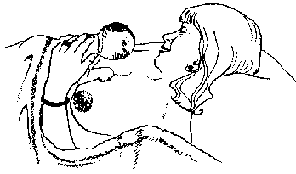
Figure
1
| | | Infant Feeding in Emergencies: A Guide for Mothers (WHO, 1997, 48 p.) | | | (introduction...) | | | Foreword | | | Introduction | | | Why is breastfeeding so important? | | | Are commercially-made baby milks as good as breastfeeding? | | | Why are commercially-made baby milks not so good? | | | But can every woman breastfeed? | | | But why don't the experts tell us this if breastfeeding is so important? | | | Do babies also need tea and water? | | | When do babies need more than just breast-milk? | | | So a sick baby should go on breastfeeding? | | | Do breastfed babies get fewer diseases? | | | But my friend's baby got ill and he was breastfed | | | So breastfeeding is like a medicine? | | | People say that stress stops the milk, so during stressful times how can we breastfeed? | | | What about women who have lost a lot of weight? Can they produce milk? | | | Do we need special nutrition for breastfeeding? | | | But what about anaemic women? Does breastfeeding drain their strength? | | | Someone told me breastfeeding stopped you getting pregnant, but isn't that just a story? | | | How does breastfeeding work? | | | What about women with small breasts or flat nipples? | | | You said the baby has a part too. What can he do? | | | Why is the baby's suckling-action important? | | | How does a baby stimulate the milk? | | | The first principle of breastfeeding: good attachment | | | Why does good attachment not always come naturally to the baby? | | | Why does the baby not always get this right? | | | Sometimes it is hard to get a baby close because he is swaddled and his clothing gets in the way | | | Even if my baby attaches well, how can I be sure there will be enough milk? | | | You said earlier that milk changes during a feed. Can you explain that? | | | But I thought you must feed from both breasts? | | | You said earlier that confidence was important but not everyone has that. What can we do? | | | I know women with breastfeeding problems. Can they be helped? | | | My mother told me that you always get sore nipples and you just have to put up with them | | | What about special creams for sore nipples? How can we get them during an emergency? | | | With this baby-led feeding how can I be hygienic and wash my nipples? | | | So if I get my baby well-attached, I will never get sore nipples? | | | You say breastfeeding should not hurt, but what about the engorgement that every woman gets a few days after the birth? | | | You mentioned blocked ducts, mastitis and abscess. Are they common and how can we treat them? | | | All these problems make breastfeeding look too difficult | | | You said earlier that you can breastfeed even if you have stopped completely. How can this be done? | | | Food supplies can be precarious. How can we feed the babies over 6 months who need more than breast-milk alone? | | | What about premature or very small babies? | | | I can see the reason for expressing milk for sick or premature babies, but must all women learn to express? | | | How do I express milk? | | | I can see that breastfeeding is possible in most cases, but we still have to face the times when it is not possible: emergencies create orphans, abandoned babies and severely ill or wounded mothers | | | Is it possible to feed a baby artificially without a bottle? | | | How do you cup-feed a baby? | | | A final word |
|
Why is the baby's suckling-action important?
The baby's suckling action stimulates the milk supply. The
earlier and more frequently the baby goes to the breast, the more quickly
breastfeeding is established. Sometimes mothers cannot control the procedures
after childbirth. Even if you could not have your baby near you, with a little
help and confidence, your baby can restimulate the milk even if you have stopped
breastfeeding. Women have breastfed adopted babies simply by letting the baby
suckle their breasts (see section "You said earlier that milk changes during
a feed. Can you explain
that?").
| | | Infant Feeding in Emergencies: A Guide for Mothers (WHO, 1997, 48 p.) | | | (introduction...) | | | Foreword | | | Introduction | | | Why is breastfeeding so important? | | | Are commercially-made baby milks as good as breastfeeding? | | | Why are commercially-made baby milks not so good? | | | But can every woman breastfeed? | | | But why don't the experts tell us this if breastfeeding is so important? | | | Do babies also need tea and water? | | | When do babies need more than just breast-milk? | | | So a sick baby should go on breastfeeding? | | | Do breastfed babies get fewer diseases? | | | But my friend's baby got ill and he was breastfed | | | So breastfeeding is like a medicine? | | | People say that stress stops the milk, so during stressful times how can we breastfeed? | | | What about women who have lost a lot of weight? Can they produce milk? | | | Do we need special nutrition for breastfeeding? | | | But what about anaemic women? Does breastfeeding drain their strength? | | | Someone told me breastfeeding stopped you getting pregnant, but isn't that just a story? | | | How does breastfeeding work? | | | What about women with small breasts or flat nipples? | | | You said the baby has a part too. What can he do? | | | Why is the baby's suckling-action important? | | | How does a baby stimulate the milk? | | | The first principle of breastfeeding: good attachment | | | Why does good attachment not always come naturally to the baby? | | | Why does the baby not always get this right? | | | Sometimes it is hard to get a baby close because he is swaddled and his clothing gets in the way | | | Even if my baby attaches well, how can I be sure there will be enough milk? | | | You said earlier that milk changes during a feed. Can you explain that? | | | But I thought you must feed from both breasts? | | | You said earlier that confidence was important but not everyone has that. What can we do? | | | I know women with breastfeeding problems. Can they be helped? | | | My mother told me that you always get sore nipples and you just have to put up with them | | | What about special creams for sore nipples? How can we get them during an emergency? | | | With this baby-led feeding how can I be hygienic and wash my nipples? | | | So if I get my baby well-attached, I will never get sore nipples? | | | You say breastfeeding should not hurt, but what about the engorgement that every woman gets a few days after the birth? | | | You mentioned blocked ducts, mastitis and abscess. Are they common and how can we treat them? | | | All these problems make breastfeeding look too difficult | | | You said earlier that you can breastfeed even if you have stopped completely. How can this be done? | | | Food supplies can be precarious. How can we feed the babies over 6 months who need more than breast-milk alone? | | | What about premature or very small babies? | | | I can see the reason for expressing milk for sick or premature babies, but must all women learn to express? | | | How do I express milk? | | | I can see that breastfeeding is possible in most cases, but we still have to face the times when it is not possible: emergencies create orphans, abandoned babies and severely ill or wounded mothers | | | Is it possible to feed a baby artificially without a bottle? | | | How do you cup-feed a baby? | | | A final word |
|
How does a baby stimulate the milk?
Signs of hunger start long before crying: a baby turns her head,
opens her mouth wide, sticks her tongue out and salivates. When you stay close
together, you learn to recognize these signs. You can then offer your breast
before your baby cries. A baby learns to breastfeed better if she is not
distressed before a feed.
Every baby is born with reflexes to enable him to breastfeed.
You may have noticed a baby doing the following:
1. A baby instinctively turns his head from side to
side to look for his mother's breast.
2. A mother offers her breast and holds her baby close. The
touch of her nipple stimulates him to open his mouth wide and take in a 'good
mouthful' of breast (Figure 2). He takes in much of the underpart of the areola
(the darker area surrounding the nipple). He holds his tongue down so that it
goes under the breast. His lower lip is turned outwards and his chin indents the
breast. The tip of the nipple touches the roof of his mouth far back. This
stimulates him to make the milking action or
'suckling'.7
7 The term 'suckling'
in English is different from sucking, although in English and many other
languages the word sucking is often used for feeding at the breast. It is
important to differentiate as sucking is a different action from suckling.
Suckling is the milking action at the breast (as described) whereas sucking is
how we drink through a straw. A baby usually sucks on a bottle or dummy, but
suckles at the breast. If the translator can use different words or phrases for
the two actions this will help get the information
across.
Figure 2
3. The suckling action is like a wave. The baby's
tongue and lower jaw compress the darker area behind the nipple (the areola).
The movements of the baby's tongue press the mouthful of breast against the roof
of his mouth. This action presses out the milk. The baby's suckling stimulates
nerves in the areola to send messages to the mother's brain which then releases
two breastfeeding hormones which go through the bloodstream to the breast. The
first hormone (called prolactin) stimulates the breast to make milk. The second
hormone (called oxytocin) makes the milk flow (Figure 3).
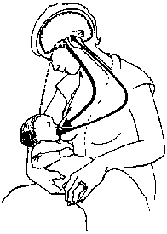
Figure 3
The baby does not suckle continuously. At first he
suckles quickly a few times to start the milk flowing. Then he changes to deep
rhythmic suckling, sometimes pausing. Sometimes a mother mistakenly thinks her
baby wants to stop feeding when he pauses and she takes the baby off. In fact
the pauses mean the milk is flowing and feeding is going well. Always let the
baby end the breastfeed in his own time. Of course in a special situation, a
feed must be interrupted. Put your little finger in your baby's mouth and take
him off gently so that he does not pull on your breast and hurt your nipple.
4. When the milk flows out of the breast, we call it the
oxytocin or milk ejection reflex. Some women feel this as a tingling sensation
in their breasts.
5. You can see now why nipple shape does not matter. What is
important is that the baby gets 'a good mouthful' of breast and not just the
nipple. This enables the baby to stimulate the nerves which trigger the hormones
and also to press out the milk which collects in little 'sinuses' under the
areola. A baby should breastfeed, not just suck the nipple. If she is
'well-attached' she can make a good milking action (suckling).
|
Three principles for happy breastfeeding
Make sure breastfeeding does not hurt you - the good
attachment principle.
Let your baby suckle as often and as long as
she wants - the supply and demand principle.
Know that you can
make enough milk for your baby - the confidence principle. |
| | | Infant Feeding in Emergencies: A Guide for Mothers (WHO, 1997, 48 p.) | | | (introduction...) | | | Foreword | | | Introduction | | | Why is breastfeeding so important? | | | Are commercially-made baby milks as good as breastfeeding? | | | Why are commercially-made baby milks not so good? | | | But can every woman breastfeed? | | | But why don't the experts tell us this if breastfeeding is so important? | | | Do babies also need tea and water? | | | When do babies need more than just breast-milk? | | | So a sick baby should go on breastfeeding? | | | Do breastfed babies get fewer diseases? | | | But my friend's baby got ill and he was breastfed | | | So breastfeeding is like a medicine? | | | People say that stress stops the milk, so during stressful times how can we breastfeed? | | | What about women who have lost a lot of weight? Can they produce milk? | | | Do we need special nutrition for breastfeeding? | | | But what about anaemic women? Does breastfeeding drain their strength? | | | Someone told me breastfeeding stopped you getting pregnant, but isn't that just a story? | | | How does breastfeeding work? | | | What about women with small breasts or flat nipples? | | | You said the baby has a part too. What can he do? | | | Why is the baby's suckling-action important? | | | How does a baby stimulate the milk? | | | The first principle of breastfeeding: good attachment | | | Why does good attachment not always come naturally to the baby? | | | Why does the baby not always get this right? | | | Sometimes it is hard to get a baby close because he is swaddled and his clothing gets in the way | | | Even if my baby attaches well, how can I be sure there will be enough milk? | | | You said earlier that milk changes during a feed. Can you explain that? | | | But I thought you must feed from both breasts? | | | You said earlier that confidence was important but not everyone has that. What can we do? | | | I know women with breastfeeding problems. Can they be helped? | | | My mother told me that you always get sore nipples and you just have to put up with them | | | What about special creams for sore nipples? How can we get them during an emergency? | | | With this baby-led feeding how can I be hygienic and wash my nipples? | | | So if I get my baby well-attached, I will never get sore nipples? | | | You say breastfeeding should not hurt, but what about the engorgement that every woman gets a few days after the birth? | | | You mentioned blocked ducts, mastitis and abscess. Are they common and how can we treat them? | | | All these problems make breastfeeding look too difficult | | | You said earlier that you can breastfeed even if you have stopped completely. How can this be done? | | | Food supplies can be precarious. How can we feed the babies over 6 months who need more than breast-milk alone? | | | What about premature or very small babies? | | | I can see the reason for expressing milk for sick or premature babies, but must all women learn to express? | | | How do I express milk? | | | I can see that breastfeeding is possible in most cases, but we still have to face the times when it is not possible: emergencies create orphans, abandoned babies and severely ill or wounded mothers | | | Is it possible to feed a baby artificially without a bottle? | | | How do you cup-feed a baby? | | | A final word |
|
The first principle of breastfeeding: good attachment
When we understand the first principle of 'good attachment', we
can help breastfeeding start well and we can prevent most common difficulties so
that it continues
well.
| | | Infant Feeding in Emergencies: A Guide for Mothers (WHO, 1997, 48 p.) | | | (introduction...) | | | Foreword | | | Introduction | | | Why is breastfeeding so important? | | | Are commercially-made baby milks as good as breastfeeding? | | | Why are commercially-made baby milks not so good? | | | But can every woman breastfeed? | | | But why don't the experts tell us this if breastfeeding is so important? | | | Do babies also need tea and water? | | | When do babies need more than just breast-milk? | | | So a sick baby should go on breastfeeding? | | | Do breastfed babies get fewer diseases? | | | But my friend's baby got ill and he was breastfed | | | So breastfeeding is like a medicine? | | | People say that stress stops the milk, so during stressful times how can we breastfeed? | | | What about women who have lost a lot of weight? Can they produce milk? | | | Do we need special nutrition for breastfeeding? | | | But what about anaemic women? Does breastfeeding drain their strength? | | | Someone told me breastfeeding stopped you getting pregnant, but isn't that just a story? | | | How does breastfeeding work? | | | What about women with small breasts or flat nipples? | | | You said the baby has a part too. What can he do? | | | Why is the baby's suckling-action important? | | | How does a baby stimulate the milk? | | | The first principle of breastfeeding: good attachment | | | Why does good attachment not always come naturally to the baby? | | | Why does the baby not always get this right? | | | Sometimes it is hard to get a baby close because he is swaddled and his clothing gets in the way | | | Even if my baby attaches well, how can I be sure there will be enough milk? | | | You said earlier that milk changes during a feed. Can you explain that? | | | But I thought you must feed from both breasts? | | | You said earlier that confidence was important but not everyone has that. What can we do? | | | I know women with breastfeeding problems. Can they be helped? | | | My mother told me that you always get sore nipples and you just have to put up with them | | | What about special creams for sore nipples? How can we get them during an emergency? | | | With this baby-led feeding how can I be hygienic and wash my nipples? | | | So if I get my baby well-attached, I will never get sore nipples? | | | You say breastfeeding should not hurt, but what about the engorgement that every woman gets a few days after the birth? | | | You mentioned blocked ducts, mastitis and abscess. Are they common and how can we treat them? | | | All these problems make breastfeeding look too difficult | | | You said earlier that you can breastfeed even if you have stopped completely. How can this be done? | | | Food supplies can be precarious. How can we feed the babies over 6 months who need more than breast-milk alone? | | | What about premature or very small babies? | | | I can see the reason for expressing milk for sick or premature babies, but must all women learn to express? | | | How do I express milk? | | | I can see that breastfeeding is possible in most cases, but we still have to face the times when it is not possible: emergencies create orphans, abandoned babies and severely ill or wounded mothers | | | Is it possible to feed a baby artificially without a bottle? | | | How do you cup-feed a baby? | | | A final word |
|
Why does good attachment not always come naturally to the baby?
|
Good positioning leads to good attachment |
You now know how a baby feeds: the baby is stimulated by the
touch of your nipple on his lip to open his mouth wide and take in a good
mouthful of
breast.
| | | Infant Feeding in Emergencies: A Guide for Mothers (WHO, 1997, 48 p.) | | | (introduction...) | | | Foreword | | | Introduction | | | Why is breastfeeding so important? | | | Are commercially-made baby milks as good as breastfeeding? | | | Why are commercially-made baby milks not so good? | | | But can every woman breastfeed? | | | But why don't the experts tell us this if breastfeeding is so important? | | | Do babies also need tea and water? | | | When do babies need more than just breast-milk? | | | So a sick baby should go on breastfeeding? | | | Do breastfed babies get fewer diseases? | | | But my friend's baby got ill and he was breastfed | | | So breastfeeding is like a medicine? | | | People say that stress stops the milk, so during stressful times how can we breastfeed? | | | What about women who have lost a lot of weight? Can they produce milk? | | | Do we need special nutrition for breastfeeding? | | | But what about anaemic women? Does breastfeeding drain their strength? | | | Someone told me breastfeeding stopped you getting pregnant, but isn't that just a story? | | | How does breastfeeding work? | | | What about women with small breasts or flat nipples? | | | You said the baby has a part too. What can he do? | | | Why is the baby's suckling-action important? | | | How does a baby stimulate the milk? | | | The first principle of breastfeeding: good attachment | | | Why does good attachment not always come naturally to the baby? | | | Why does the baby not always get this right? | | | Sometimes it is hard to get a baby close because he is swaddled and his clothing gets in the way | | | Even if my baby attaches well, how can I be sure there will be enough milk? | | | You said earlier that milk changes during a feed. Can you explain that? | | | But I thought you must feed from both breasts? | | | You said earlier that confidence was important but not everyone has that. What can we do? | | | I know women with breastfeeding problems. Can they be helped? | | | My mother told me that you always get sore nipples and you just have to put up with them | | | What about special creams for sore nipples? How can we get them during an emergency? | | | With this baby-led feeding how can I be hygienic and wash my nipples? | | | So if I get my baby well-attached, I will never get sore nipples? | | | You say breastfeeding should not hurt, but what about the engorgement that every woman gets a few days after the birth? | | | You mentioned blocked ducts, mastitis and abscess. Are they common and how can we treat them? | | | All these problems make breastfeeding look too difficult | | | You said earlier that you can breastfeed even if you have stopped completely. How can this be done? | | | Food supplies can be precarious. How can we feed the babies over 6 months who need more than breast-milk alone? | | | What about premature or very small babies? | | | I can see the reason for expressing milk for sick or premature babies, but must all women learn to express? | | | How do I express milk? | | | I can see that breastfeeding is possible in most cases, but we still have to face the times when it is not possible: emergencies create orphans, abandoned babies and severely ill or wounded mothers | | | Is it possible to feed a baby artificially without a bottle? | | | How do you cup-feed a baby? | | | A final word |
|
Why does the baby not always get this right?
A common reason is that a mother is not holding her baby in the
best position to achieve good attachment. For example if a baby is held too high
or too much to the side he cannot aim his mouth in the best direction. This is
more common with first-time mothers or mothers who have previously bottlefed.
However every baby is different and even experienced mothers may need a little
help with a new baby. Here are the key points of good positioning:
Sit or lie wherever you feel most comfortable.
1. Your baby's head and body should be in a straight line.
Whether you hold her sideways, upright or under your arm, her body should 'face'
yours. A baby cannot suckle or swallow easily if her head is twisted to one side
or her arm is in front of her. Try drinking with your head twisted round
sideways and you will realize it is not easy.
2. Her face should face your breast, with her nose level with
your nipple. This enables her to take in more of the underneath of the areola
than the top part. The touch of the nipple on her lips will stimulate her to
open her mouth wide (Figures 4a, 4b and 4c).
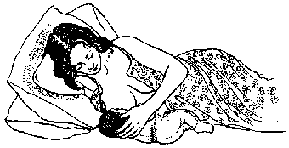
Figure 4a
3. Hold your baby close to your body so that she can take in a
good mouthful of breast. Bring your baby to your breast, not your breast to the
baby. Do not lean forward as this may give you backache.
4. If the baby is newborn, support her whole body, and not just
her head and shoulders. This helps her stay close but still be able to move her
head and neck freely.
5. If you feel your breast needs support, cup it from below with
your spare hand. Avoid holding your fingers like scissors8 as
this can pull the breast out of your baby's mouth and spoil the good attachment.
This common practice comes from a mistaken idea that a baby cannot breathe
easily at the breast. Actually nature has designed a baby's nostrils to be at
the sides of her nose so that she can breathe while she breastfeeds. A baby can
look squashed at the breast and that is fine. As long as she can extend her head
freely she will adjust herself to breathe comfortably.
8 Also called 'the cigarette
hold'.
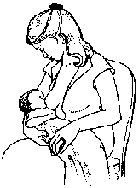
Figure 4b
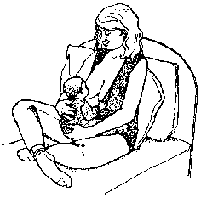
Figure 4c
|
If you are exclusively breastfeeding, your baby is healthy
and growing and your breasts are comfortable, then you are doing it right,
whatever the position. |
| | | Infant Feeding in Emergencies: A Guide for Mothers (WHO, 1997, 48 p.) | | | (introduction...) | | | Foreword | | | Introduction | | | Why is breastfeeding so important? | | | Are commercially-made baby milks as good as breastfeeding? | | | Why are commercially-made baby milks not so good? | | | But can every woman breastfeed? | | | But why don't the experts tell us this if breastfeeding is so important? | | | Do babies also need tea and water? | | | When do babies need more than just breast-milk? | | | So a sick baby should go on breastfeeding? | | | Do breastfed babies get fewer diseases? | | | But my friend's baby got ill and he was breastfed | | | So breastfeeding is like a medicine? | | | People say that stress stops the milk, so during stressful times how can we breastfeed? | | | What about women who have lost a lot of weight? Can they produce milk? | | | Do we need special nutrition for breastfeeding? | | | But what about anaemic women? Does breastfeeding drain their strength? | | | Someone told me breastfeeding stopped you getting pregnant, but isn't that just a story? | | | How does breastfeeding work? | | | What about women with small breasts or flat nipples? | | | You said the baby has a part too. What can he do? | | | Why is the baby's suckling-action important? | | | How does a baby stimulate the milk? | | | The first principle of breastfeeding: good attachment | | | Why does good attachment not always come naturally to the baby? | | | Why does the baby not always get this right? | | | Sometimes it is hard to get a baby close because he is swaddled and his clothing gets in the way | | | Even if my baby attaches well, how can I be sure there will be enough milk? | | | You said earlier that milk changes during a feed. Can you explain that? | | | But I thought you must feed from both breasts? | | | You said earlier that confidence was important but not everyone has that. What can we do? | | | I know women with breastfeeding problems. Can they be helped? | | | My mother told me that you always get sore nipples and you just have to put up with them | | | What about special creams for sore nipples? How can we get them during an emergency? | | | With this baby-led feeding how can I be hygienic and wash my nipples? | | | So if I get my baby well-attached, I will never get sore nipples? | | | You say breastfeeding should not hurt, but what about the engorgement that every woman gets a few days after the birth? | | | You mentioned blocked ducts, mastitis and abscess. Are they common and how can we treat them? | | | All these problems make breastfeeding look too difficult | | | You said earlier that you can breastfeed even if you have stopped completely. How can this be done? | | | Food supplies can be precarious. How can we feed the babies over 6 months who need more than breast-milk alone? | | | What about premature or very small babies? | | | I can see the reason for expressing milk for sick or premature babies, but must all women learn to express? | | | How do I express milk? | | | I can see that breastfeeding is possible in most cases, but we still have to face the times when it is not possible: emergencies create orphans, abandoned babies and severely ill or wounded mothers | | | Is it possible to feed a baby artificially without a bottle? | | | How do you cup-feed a baby? | | | A final word |
|
Sometimes it is hard to get a baby close because he is swaddled and his clothing gets in the way
It will help to unwrap your baby's clothing to improve
breastfeeding. In cold conditions wrap a shawl around you and your baby
together. Your own body's heat will keep your baby warm. Tight swaddling around
the head and body stops babies extending their necks freely to attach well.
Tightly swaddled babies have a higher risk of respiratory infections. Free
movement of arms and legs is good for babies' physical development and warms
them through increased circulation. Wrap the baby warmly but loosely. Layers of
looser clothing trap more air and keep your baby warmer.
|
Tight swaddling can prevent easy breastfeeding |
| | | Infant Feeding in Emergencies: A Guide for Mothers (WHO, 1997, 48 p.) | | | (introduction...) | | | Foreword | | | Introduction | | | Why is breastfeeding so important? | | | Are commercially-made baby milks as good as breastfeeding? | | | Why are commercially-made baby milks not so good? | | | But can every woman breastfeed? | | | But why don't the experts tell us this if breastfeeding is so important? | | | Do babies also need tea and water? | | | When do babies need more than just breast-milk? | | | So a sick baby should go on breastfeeding? | | | Do breastfed babies get fewer diseases? | | | But my friend's baby got ill and he was breastfed | | | So breastfeeding is like a medicine? | | | People say that stress stops the milk, so during stressful times how can we breastfeed? | | | What about women who have lost a lot of weight? Can they produce milk? | | | Do we need special nutrition for breastfeeding? | | | But what about anaemic women? Does breastfeeding drain their strength? | | | Someone told me breastfeeding stopped you getting pregnant, but isn't that just a story? | | | How does breastfeeding work? | | | What about women with small breasts or flat nipples? | | | You said the baby has a part too. What can he do? | | | Why is the baby's suckling-action important? | | | How does a baby stimulate the milk? | | | The first principle of breastfeeding: good attachment | | | Why does good attachment not always come naturally to the baby? | | | Why does the baby not always get this right? | | | Sometimes it is hard to get a baby close because he is swaddled and his clothing gets in the way | | | Even if my baby attaches well, how can I be sure there will be enough milk? | | | You said earlier that milk changes during a feed. Can you explain that? | | | But I thought you must feed from both breasts? | | | You said earlier that confidence was important but not everyone has that. What can we do? | | | I know women with breastfeeding problems. Can they be helped? | | | My mother told me that you always get sore nipples and you just have to put up with them | | | What about special creams for sore nipples? How can we get them during an emergency? | | | With this baby-led feeding how can I be hygienic and wash my nipples? | | | So if I get my baby well-attached, I will never get sore nipples? | | | You say breastfeeding should not hurt, but what about the engorgement that every woman gets a few days after the birth? | | | You mentioned blocked ducts, mastitis and abscess. Are they common and how can we treat them? | | | All these problems make breastfeeding look too difficult | | | You said earlier that you can breastfeed even if you have stopped completely. How can this be done? | | | Food supplies can be precarious. How can we feed the babies over 6 months who need more than breast-milk alone? | | | What about premature or very small babies? | | | I can see the reason for expressing milk for sick or premature babies, but must all women learn to express? | | | How do I express milk? | | | I can see that breastfeeding is possible in most cases, but we still have to face the times when it is not possible: emergencies create orphans, abandoned babies and severely ill or wounded mothers | | | Is it possible to feed a baby artificially without a bottle? | | | How do you cup-feed a baby? | | | A final word |
|
Even if my baby attaches well, how can I be sure there will be enough milk?
The second principle of breastfeeding:
The supply
and demand system
Your baby's suckling sends a message to your brain to say how
much milk she needs. If your baby is hungrier today, she suckles more. In
response, your brain sends out more milk-making hormones telling your breast to
make more milk. It is a supply and demand system. If your baby is
separated from you, or taken off your breast too soon or poorly attached, she
cannot stimulate the amount of milk she needs. If your baby's stomach is filled
with other fluids, she will not suckle so vigorously. Giving your baby a dummy,
especially in the early days, may stop her stimulating your breast often enough.
Breast-milk contains a substance called 'inhibitor'. If milk is
not removed from the breast, the inhibitor makes your body reduce milk
production. The 'inhibitor' is there to shut down the milk-making system if the
baby does not feed. So you can understand that restricting breastfeeding and not
removing the milk will reduce the supply. Many women believe that their bodies
cannot make enough milk and some health professionals mistakenly tell them this.
In fact most women can produce far more milk than their babies need. All women
are designed to feed twins, so producing enough for one is easy if you respond
to your baby's need to suckle. When a baby wants to suckle frequently, she is
ordering the milk-making system to increase production; within a few days her
orders are fulfilled. Supplementary feeds interrupt the baby's clear message to
her mother's
body.
| | | Infant Feeding in Emergencies: A Guide for Mothers (WHO, 1997, 48 p.) | | | (introduction...) | | | Foreword | | | Introduction | | | Why is breastfeeding so important? | | | Are commercially-made baby milks as good as breastfeeding? | | | Why are commercially-made baby milks not so good? | | | But can every woman breastfeed? | | | But why don't the experts tell us this if breastfeeding is so important? | | | Do babies also need tea and water? | | | When do babies need more than just breast-milk? | | | So a sick baby should go on breastfeeding? | | | Do breastfed babies get fewer diseases? | | | But my friend's baby got ill and he was breastfed | | | So breastfeeding is like a medicine? | | | People say that stress stops the milk, so during stressful times how can we breastfeed? | | | What about women who have lost a lot of weight? Can they produce milk? | | | Do we need special nutrition for breastfeeding? | | | But what about anaemic women? Does breastfeeding drain their strength? | | | Someone told me breastfeeding stopped you getting pregnant, but isn't that just a story? | | | How does breastfeeding work? | | | What about women with small breasts or flat nipples? | | | You said the baby has a part too. What can he do? | | | Why is the baby's suckling-action important? | | | How does a baby stimulate the milk? | | | The first principle of breastfeeding: good attachment | | | Why does good attachment not always come naturally to the baby? | | | Why does the baby not always get this right? | | | Sometimes it is hard to get a baby close because he is swaddled and his clothing gets in the way | | | Even if my baby attaches well, how can I be sure there will be enough milk? | | | You said earlier that milk changes during a feed. Can you explain that? | | | But I thought you must feed from both breasts? | | | You said earlier that confidence was important but not everyone has that. What can we do? | | | I know women with breastfeeding problems. Can they be helped? | | | My mother told me that you always get sore nipples and you just have to put up with them | | | What about special creams for sore nipples? How can we get them during an emergency? | | | With this baby-led feeding how can I be hygienic and wash my nipples? | | | So if I get my baby well-attached, I will never get sore nipples? | | | You say breastfeeding should not hurt, but what about the engorgement that every woman gets a few days after the birth? | | | You mentioned blocked ducts, mastitis and abscess. Are they common and how can we treat them? | | | All these problems make breastfeeding look too difficult | | | You said earlier that you can breastfeed even if you have stopped completely. How can this be done? | | | Food supplies can be precarious. How can we feed the babies over 6 months who need more than breast-milk alone? | | | What about premature or very small babies? | | | I can see the reason for expressing milk for sick or premature babies, but must all women learn to express? | | | How do I express milk? | | | I can see that breastfeeding is possible in most cases, but we still have to face the times when it is not possible: emergencies create orphans, abandoned babies and severely ill or wounded mothers | | | Is it possible to feed a baby artificially without a bottle? | | | How do you cup-feed a baby? | | | A final word |
|
You said earlier that milk changes during a feed. Can you explain that?
Babies know what they need. Like many adults they need to
satisfy their thirst before they eat the heavier part of the meal. The milk at
the start of a feed (called foremilk) is more watery and high in lactose (milk
sugar). The milk becomes fattier towards the end of a feed (called hindmilk). If
you take your baby off one breast before he wants to come off spontaneously,
then he may not get the fat-rich hindmilk. If you offer the second breast before
he wants to stop at the first, he gets a second helping of foremilk. This
unbalanced meal can lead to a restless, unsatisfied baby with wind, pain and
colic.
|
Always let the baby end the feed in her own time |
| | | Infant Feeding in Emergencies: A Guide for Mothers (WHO, 1997, 48 p.) | | | (introduction...) | | | Foreword | | | Introduction | | | Why is breastfeeding so important? | | | Are commercially-made baby milks as good as breastfeeding? | | | Why are commercially-made baby milks not so good? | | | But can every woman breastfeed? | | | But why don't the experts tell us this if breastfeeding is so important? | | | Do babies also need tea and water? | | | When do babies need more than just breast-milk? | | | So a sick baby should go on breastfeeding? | | | Do breastfed babies get fewer diseases? | | | But my friend's baby got ill and he was breastfed | | | So breastfeeding is like a medicine? | | | People say that stress stops the milk, so during stressful times how can we breastfeed? | | | What about women who have lost a lot of weight? Can they produce milk? | | | Do we need special nutrition for breastfeeding? | | | But what about anaemic women? Does breastfeeding drain their strength? | | | Someone told me breastfeeding stopped you getting pregnant, but isn't that just a story? | | | How does breastfeeding work? | | | What about women with small breasts or flat nipples? | | | You said the baby has a part too. What can he do? | | | Why is the baby's suckling-action important? | | | How does a baby stimulate the milk? | | | The first principle of breastfeeding: good attachment | | | Why does good attachment not always come naturally to the baby? | | | Why does the baby not always get this right? | | | Sometimes it is hard to get a baby close because he is swaddled and his clothing gets in the way | | | Even if my baby attaches well, how can I be sure there will be enough milk? | | | You said earlier that milk changes during a feed. Can you explain that? | | | But I thought you must feed from both breasts? | | | You said earlier that confidence was important but not everyone has that. What can we do? | | | I know women with breastfeeding problems. Can they be helped? | | | My mother told me that you always get sore nipples and you just have to put up with them | | | What about special creams for sore nipples? How can we get them during an emergency? | | | With this baby-led feeding how can I be hygienic and wash my nipples? | | | So if I get my baby well-attached, I will never get sore nipples? | | | You say breastfeeding should not hurt, but what about the engorgement that every woman gets a few days after the birth? | | | You mentioned blocked ducts, mastitis and abscess. Are they common and how can we treat them? | | | All these problems make breastfeeding look too difficult | | | You said earlier that you can breastfeed even if you have stopped completely. How can this be done? | | | Food supplies can be precarious. How can we feed the babies over 6 months who need more than breast-milk alone? | | | What about premature or very small babies? | | | I can see the reason for expressing milk for sick or premature babies, but must all women learn to express? | | | How do I express milk? | | | I can see that breastfeeding is possible in most cases, but we still have to face the times when it is not possible: emergencies create orphans, abandoned babies and severely ill or wounded mothers | | | Is it possible to feed a baby artificially without a bottle? | | | How do you cup-feed a baby? | | | A final word |
|
But I thought you must feed from both breasts?
There is no rule. Do what suits your baby and you. Offer the
second breast, but do not worry if she refuses. Some babies want the second
breast, others do not. Some want one at one feed and two at another. Some babies
change their habits as they grow and develop. Your baby's appetite guides her
according to her needs. Letting a baby feed when and how she wants to is
called baby-led feeding.9 Baby-led feeding produces the
best milk supply and a more satisfied baby who cries less and grows well.
9 Baby-led feeding is also called
'feeding on demand'. Exclusive breastfeeding also means baby-led
feeding.
|
Babies know best what they need so let them guide you
|
| | | Infant Feeding in Emergencies: A Guide for Mothers (WHO, 1997, 48 p.) | | | (introduction...) | | | Foreword | | | Introduction | | | Why is breastfeeding so important? | | | Are commercially-made baby milks as good as breastfeeding? | | | Why are commercially-made baby milks not so good? | | | But can every woman breastfeed? | | | But why don't the experts tell us this if breastfeeding is so important? | | | Do babies also need tea and water? | | | When do babies need more than just breast-milk? | | | So a sick baby should go on breastfeeding? | | | Do breastfed babies get fewer diseases? | | | But my friend's baby got ill and he was breastfed | | | So breastfeeding is like a medicine? | | | People say that stress stops the milk, so during stressful times how can we breastfeed? | | | What about women who have lost a lot of weight? Can they produce milk? | | | Do we need special nutrition for breastfeeding? | | | But what about anaemic women? Does breastfeeding drain their strength? | | | Someone told me breastfeeding stopped you getting pregnant, but isn't that just a story? | | | How does breastfeeding work? | | | What about women with small breasts or flat nipples? | | | You said the baby has a part too. What can he do? | | | Why is the baby's suckling-action important? | | | How does a baby stimulate the milk? | | | The first principle of breastfeeding: good attachment | | | Why does good attachment not always come naturally to the baby? | | | Why does the baby not always get this right? | | | Sometimes it is hard to get a baby close because he is swaddled and his clothing gets in the way | | | Even if my baby attaches well, how can I be sure there will be enough milk? | | | You said earlier that milk changes during a feed. Can you explain that? | | | But I thought you must feed from both breasts? | | | You said earlier that confidence was important but not everyone has that. What can we do? | | | I know women with breastfeeding problems. Can they be helped? | | | My mother told me that you always get sore nipples and you just have to put up with them | | | What about special creams for sore nipples? How can we get them during an emergency? | | | With this baby-led feeding how can I be hygienic and wash my nipples? | | | So if I get my baby well-attached, I will never get sore nipples? | | | You say breastfeeding should not hurt, but what about the engorgement that every woman gets a few days after the birth? | | | You mentioned blocked ducts, mastitis and abscess. Are they common and how can we treat them? | | | All these problems make breastfeeding look too difficult | | | You said earlier that you can breastfeed even if you have stopped completely. How can this be done? | | | Food supplies can be precarious. How can we feed the babies over 6 months who need more than breast-milk alone? | | | What about premature or very small babies? | | | I can see the reason for expressing milk for sick or premature babies, but must all women learn to express? | | | How do I express milk? | | | I can see that breastfeeding is possible in most cases, but we still have to face the times when it is not possible: emergencies create orphans, abandoned babies and severely ill or wounded mothers | | | Is it possible to feed a baby artificially without a bottle? | | | How do you cup-feed a baby? | | | A final word |
|
You said earlier that confidence was important but not everyone has that. What can we do?
The third principle of breastfeeding: Confidence
Older people may remember poor, hard-working women who breastfed
all their children easily. These women unconsciously knew the basic principles
of breastfeeding and assumed they would have breast-milk. In common with many
modern women you may lack confidence in your ability to breastfeed. Perhaps your
mother suffered the problems brought about by the mistaken medical practices.
Perhaps you do not know anyone who has breastfed exclusively and you find it
hard to believe that you can.
This booklet may give you some helpful facts, but your heart
might still doubt. You can help yourself and your baby by asking your partner or
a relative, a friend or any sympathetic person to support you, especially
through the early days until breastfeeding is well-established. Ask them to read
this book or at least the parts you find most helpful. Your helper can be like a
trainer who helps a sports person. But unlike a trainer they must never be
strict and always be gentle. In the past female relatives helped new mothers to
breastfeed. In difficult situations we need to help each other whoever we are.
Breastfeeding mothers can support each other. If you are helping
another mother remember that encouragement and kindness are as important as good
information. Your confidence in her ability to breastfeed is vital. Never judge
her, listen sympathetically and do not overwhelm her with advice.
A little relevant information is far more effective than a
long lecture.
|
Multiple births
All the above information also applies to multiple births.
Twins give double the stimulation; as long as they are well-attached you can
produce enough milk. Mothers have breastfed triplets and even quadruplets.
Mothers of multiples need lots of practical help to cope with the extra
work. |
| | | Infant Feeding in Emergencies: A Guide for Mothers (WHO, 1997, 48 p.) | | | (introduction...) | | | Foreword | | | Introduction | | | Why is breastfeeding so important? | | | Are commercially-made baby milks as good as breastfeeding? | | | Why are commercially-made baby milks not so good? | | | But can every woman breastfeed? | | | But why don't the experts tell us this if breastfeeding is so important? | | | Do babies also need tea and water? | | | When do babies need more than just breast-milk? | | | So a sick baby should go on breastfeeding? | | | Do breastfed babies get fewer diseases? | | | But my friend's baby got ill and he was breastfed | | | So breastfeeding is like a medicine? | | | People say that stress stops the milk, so during stressful times how can we breastfeed? | | | What about women who have lost a lot of weight? Can they produce milk? | | | Do we need special nutrition for breastfeeding? | | | But what about anaemic women? Does breastfeeding drain their strength? | | | Someone told me breastfeeding stopped you getting pregnant, but isn't that just a story? | | | How does breastfeeding work? | | | What about women with small breasts or flat nipples? | | | You said the baby has a part too. What can he do? | | | Why is the baby's suckling-action important? | | | How does a baby stimulate the milk? | | | The first principle of breastfeeding: good attachment | | | Why does good attachment not always come naturally to the baby? | | | Why does the baby not always get this right? | | | Sometimes it is hard to get a baby close because he is swaddled and his clothing gets in the way | | | Even if my baby attaches well, how can I be sure there will be enough milk? | | | You said earlier that milk changes during a feed. Can you explain that? | | | But I thought you must feed from both breasts? | | | You said earlier that confidence was important but not everyone has that. What can we do? | | | I know women with breastfeeding problems. Can they be helped? | | | My mother told me that you always get sore nipples and you just have to put up with them | | | What about special creams for sore nipples? How can we get them during an emergency? | | | With this baby-led feeding how can I be hygienic and wash my nipples? | | | So if I get my baby well-attached, I will never get sore nipples? | | | You say breastfeeding should not hurt, but what about the engorgement that every woman gets a few days after the birth? | | | You mentioned blocked ducts, mastitis and abscess. Are they common and how can we treat them? | | | All these problems make breastfeeding look too difficult | | | You said earlier that you can breastfeed even if you have stopped completely. How can this be done? | | | Food supplies can be precarious. How can we feed the babies over 6 months who need more than breast-milk alone? | | | What about premature or very small babies? | | | I can see the reason for expressing milk for sick or premature babies, but must all women learn to express? | | | How do I express milk? | | | I can see that breastfeeding is possible in most cases, but we still have to face the times when it is not possible: emergencies create orphans, abandoned babies and severely ill or wounded mothers | | | Is it possible to feed a baby artificially without a bottle? | | | How do you cup-feed a baby? | | | A final word |
|
I know women with breastfeeding problems. Can they be helped?
Some women experience difficulties with breastfeeding such as
sore and cracked nipples, engorgement, blocked ducts, mastitis and abscesses.
Many mothers and health professionals accept these difficulties as
inevitable, but they are all avoidable.
|
Most breastfeeding difficulties are avoidable |
These difficulties are more common where bottle-feeding has
become usual. Many people, even some health professionals, have not learned to
recognize how a baby breastfeeds well. This is partly because when you see more
bottle-feeding than breastfeeding, you lose the chance to observe.
A bottle-fed baby is held differently (see section on
positioning) and he uses his mouth differently on an artificial teat.
|
Breastfeeding should never hurt the mother |
| | | Infant Feeding in Emergencies: A Guide for Mothers (WHO, 1997, 48 p.) | | | (introduction...) | | | Foreword | | | Introduction | | | Why is breastfeeding so important? | | | Are commercially-made baby milks as good as breastfeeding? | | | Why are commercially-made baby milks not so good? | | | But can every woman breastfeed? | | | But why don't the experts tell us this if breastfeeding is so important? | | | Do babies also need tea and water? | | | When do babies need more than just breast-milk? | | | So a sick baby should go on breastfeeding? | | | Do breastfed babies get fewer diseases? | | | But my friend's baby got ill and he was breastfed | | | So breastfeeding is like a medicine? | | | People say that stress stops the milk, so during stressful times how can we breastfeed? | | | What about women who have lost a lot of weight? Can they produce milk? | | | Do we need special nutrition for breastfeeding? | | | But what about anaemic women? Does breastfeeding drain their strength? | | | Someone told me breastfeeding stopped you getting pregnant, but isn't that just a story? | | | How does breastfeeding work? | | | What about women with small breasts or flat nipples? | | | You said the baby has a part too. What can he do? | | | Why is the baby's suckling-action important? | | | How does a baby stimulate the milk? | | | The first principle of breastfeeding: good attachment | | | Why does good attachment not always come naturally to the baby? | | | Why does the baby not always get this right? | | | Sometimes it is hard to get a baby close because he is swaddled and his clothing gets in the way | | | Even if my baby attaches well, how can I be sure there will be enough milk? | | | You said earlier that milk changes during a feed. Can you explain that? | | | But I thought you must feed from both breasts? | | | You said earlier that confidence was important but not everyone has that. What can we do? | | | I know women with breastfeeding problems. Can they be helped? | | | My mother told me that you always get sore nipples and you just have to put up with them | | | What about special creams for sore nipples? How can we get them during an emergency? | | | With this baby-led feeding how can I be hygienic and wash my nipples? | | | So if I get my baby well-attached, I will never get sore nipples? | | | You say breastfeeding should not hurt, but what about the engorgement that every woman gets a few days after the birth? | | | You mentioned blocked ducts, mastitis and abscess. Are they common and how can we treat them? | | | All these problems make breastfeeding look too difficult | | | You said earlier that you can breastfeed even if you have stopped completely. How can this be done? | | | Food supplies can be precarious. How can we feed the babies over 6 months who need more than breast-milk alone? | | | What about premature or very small babies? | | | I can see the reason for expressing milk for sick or premature babies, but must all women learn to express? | | | How do I express milk? | | | I can see that breastfeeding is possible in most cases, but we still have to face the times when it is not possible: emergencies create orphans, abandoned babies and severely ill or wounded mothers | | | Is it possible to feed a baby artificially without a bottle? | | | How do you cup-feed a baby? | | | A final word |
|
My mother told me that you always get sore nipples and you just have to put up with them
Like many women your mother suffered unnecessarily. Sore
nipples can and should be prevented. In most cases they are a sign of poor
attachment. The baby is sucking on the nipple causing friction and
damage instead of suckling on the breast with the wave-like action
which cannot hurt the nipple.
|
About 90% of problems are caused by poor attachment
|
Sometimes the baby looks well-attached, but if you are not
comfortable then try again. Sometimes a small change of position can help the
baby get closer and open her mouth wider. Experiment with different positions.
Let the baby's lips touch your nipple to stimulate her to open her mouth really
wide. If the feeding feels uncomfortable, gently put your finger into your
baby's mouth to detach her from the breast and start again. The baby may need
time to learn, especially if she has been bottle-fed. Be patient and keep
trying. You can both do it. Babies can smell their own mother's milk and
this can make them frantic for the breast. If your baby's crying makes you
tense, ask a calm person to hold the baby closely and calm her before you try
again.
|
Ask for the help you need, give the help she needs
|
| | | Infant Feeding in Emergencies: A Guide for Mothers (WHO, 1997, 48 p.) | | | (introduction...) | | | Foreword | | | Introduction | | | Why is breastfeeding so important? | | | Are commercially-made baby milks as good as breastfeeding? | | | Why are commercially-made baby milks not so good? | | | But can every woman breastfeed? | | | But why don't the experts tell us this if breastfeeding is so important? | | | Do babies also need tea and water? | | | When do babies need more than just breast-milk? | | | So a sick baby should go on breastfeeding? | | | Do breastfed babies get fewer diseases? | | | But my friend's baby got ill and he was breastfed | | | So breastfeeding is like a medicine? | | | People say that stress stops the milk, so during stressful times how can we breastfeed? | | | What about women who have lost a lot of weight? Can they produce milk? | | | Do we need special nutrition for breastfeeding? | | | But what about anaemic women? Does breastfeeding drain their strength? | | | Someone told me breastfeeding stopped you getting pregnant, but isn't that just a story? | | | How does breastfeeding work? | | | What about women with small breasts or flat nipples? | | | You said the baby has a part too. What can he do? | | | Why is the baby's suckling-action important? | | | How does a baby stimulate the milk? | | | The first principle of breastfeeding: good attachment | | | Why does good attachment not always come naturally to the baby? | | | Why does the baby not always get this right? | | | Sometimes it is hard to get a baby close because he is swaddled and his clothing gets in the way | | | Even if my baby attaches well, how can I be sure there will be enough milk? | | | You said earlier that milk changes during a feed. Can you explain that? | | | But I thought you must feed from both breasts? | | | You said earlier that confidence was important but not everyone has that. What can we do? | | | I know women with breastfeeding problems. Can they be helped? | | | My mother told me that you always get sore nipples and you just have to put up with them | | | What about special creams for sore nipples? How can we get them during an emergency? | | | With this baby-led feeding how can I be hygienic and wash my nipples? | | | So if I get my baby well-attached, I will never get sore nipples? | | | You say breastfeeding should not hurt, but what about the engorgement that every woman gets a few days after the birth? | | | You mentioned blocked ducts, mastitis and abscess. Are they common and how can we treat them? | | | All these problems make breastfeeding look too difficult | | | You said earlier that you can breastfeed even if you have stopped completely. How can this be done? | | | Food supplies can be precarious. How can we feed the babies over 6 months who need more than breast-milk alone? | | | What about premature or very small babies? | | | I can see the reason for expressing milk for sick or premature babies, but must all women learn to express? | | | How do I express milk? | | | I can see that breastfeeding is possible in most cases, but we still have to face the times when it is not possible: emergencies create orphans, abandoned babies and severely ill or wounded mothers | | | Is it possible to feed a baby artificially without a bottle? | | | How do you cup-feed a baby? | | | A final word |
|
What about special creams for sore nipples? How can we get them during an emergency?
Unfortunately, nipple creams and sprays sometimes get sent with
aid supplies. Do not use them. Most products worsen sore nipples by
destroying the natural protective oils in the areola. Suckling the breast cannot
make the nipples more sore if the baby has taken a good mouthful of breast. A
sore or cracked nipple starts to heal within 24 hours once attachment is right.
If the soreness gets worse then the attachment is not yet quite right. Some
women massage a little expressed hindmilk onto their nipples. This is soothing
and may help healing.
Sore nipples can lead to cracked nipples which can be a source
of infection and mastitis, so do not ignore them but try to improve your baby's
attachment. Your baby and you are learning all the time. A baby has an in-built
talent to feed well and within a few days you can both get it
right.
| | | Infant Feeding in Emergencies: A Guide for Mothers (WHO, 1997, 48 p.) | | | (introduction...) | | | Foreword | | | Introduction | | | Why is breastfeeding so important? | | | Are commercially-made baby milks as good as breastfeeding? | | | Why are commercially-made baby milks not so good? | | | But can every woman breastfeed? | | | But why don't the experts tell us this if breastfeeding is so important? | | | Do babies also need tea and water? | | | When do babies need more than just breast-milk? | | | So a sick baby should go on breastfeeding? | | | Do breastfed babies get fewer diseases? | | | But my friend's baby got ill and he was breastfed | | | So breastfeeding is like a medicine? | | | People say that stress stops the milk, so during stressful times how can we breastfeed? | | | What about women who have lost a lot of weight? Can they produce milk? | | | Do we need special nutrition for breastfeeding? | | | But what about anaemic women? Does breastfeeding drain their strength? | | | Someone told me breastfeeding stopped you getting pregnant, but isn't that just a story? | | | How does breastfeeding work? | | | What about women with small breasts or flat nipples? | | | You said the baby has a part too. What can he do? | | | Why is the baby's suckling-action important? | | | How does a baby stimulate the milk? | | | The first principle of breastfeeding: good attachment | | | Why does good attachment not always come naturally to the baby? | | | Why does the baby not always get this right? | | | Sometimes it is hard to get a baby close because he is swaddled and his clothing gets in the way | | | Even if my baby attaches well, how can I be sure there will be enough milk? | | | You said earlier that milk changes during a feed. Can you explain that? | | | But I thought you must feed from both breasts? | | | You said earlier that confidence was important but not everyone has that. What can we do? | | | I know women with breastfeeding problems. Can they be helped? | | | My mother told me that you always get sore nipples and you just have to put up with them | | | What about special creams for sore nipples? How can we get them during an emergency? | | | With this baby-led feeding how can I be hygienic and wash my nipples? | | | So if I get my baby well-attached, I will never get sore nipples? | | | You say breastfeeding should not hurt, but what about the engorgement that every woman gets a few days after the birth? | | | You mentioned blocked ducts, mastitis and abscess. Are they common and how can we treat them? | | | All these problems make breastfeeding look too difficult | | | You said earlier that you can breastfeed even if you have stopped completely. How can this be done? | | | Food supplies can be precarious. How can we feed the babies over 6 months who need more than breast-milk alone? | | | What about premature or very small babies? | | | I can see the reason for expressing milk for sick or premature babies, but must all women learn to express? | | | How do I express milk? | | | I can see that breastfeeding is possible in most cases, but we still have to face the times when it is not possible: emergencies create orphans, abandoned babies and severely ill or wounded mothers | | | Is it possible to feed a baby artificially without a bottle? | | | How do you cup-feed a baby? | | | A final word |
|
With this baby-led feeding how can I be hygienic and wash my nipples?
Washing nipples before or after breastfeeds is one of those
harmful practices that got into the medical books many years ago. Never use
soap on your nipple area. Soap removes the natural oils which keep the skin
healthy and protected against infection. Washing once a day is sufficient and if
water is short and you have to wash less do not worry.
The most important hygiene practice is washing your hands
thoroughly after defecation, changing nappies or cleaning your children's
bottoms. Hand washing after defecation is a priority for everyone, but frequent
nipple washing is unnecessary and can do harm.
|
In all cases of difficulty, the priority is to keep the milk
flowing. Never 'rest' the breast. This can make engorgement or sore nipples turn
to mastitis and mastitis turn to an abscess. The baby is best at removing milk,
but if you really feel you cannot feed for a day or two, you must keep the milk
flowing with gentle expression. |
| | | Infant Feeding in Emergencies: A Guide for Mothers (WHO, 1997, 48 p.) | | | (introduction...) | | | Foreword | | | Introduction | | | Why is breastfeeding so important? | | | Are commercially-made baby milks as good as breastfeeding? | | | Why are commercially-made baby milks not so good? | | | But can every woman breastfeed? | | | But why don't the experts tell us this if breastfeeding is so important? | | | Do babies also need tea and water? | | | When do babies need more than just breast-milk? | | | So a sick baby should go on breastfeeding? | | | Do breastfed babies get fewer diseases? | | | But my friend's baby got ill and he was breastfed | | | So breastfeeding is like a medicine? | | | People say that stress stops the milk, so during stressful times how can we breastfeed? | | | What about women who have lost a lot of weight? Can they produce milk? | | | Do we need special nutrition for breastfeeding? | | | But what about anaemic women? Does breastfeeding drain their strength? | | | Someone told me breastfeeding stopped you getting pregnant, but isn't that just a story? | | | How does breastfeeding work? | | | What about women with small breasts or flat nipples? | | | You said the baby has a part too. What can he do? | | | Why is the baby's suckling-action important? | | | How does a baby stimulate the milk? | | | The first principle of breastfeeding: good attachment | | | Why does good attachment not always come naturally to the baby? | | | Why does the baby not always get this right? | | | Sometimes it is hard to get a baby close because he is swaddled and his clothing gets in the way | | | Even if my baby attaches well, how can I be sure there will be enough milk? | | | You said earlier that milk changes during a feed. Can you explain that? | | | But I thought you must feed from both breasts? | | | You said earlier that confidence was important but not everyone has that. What can we do? | | | I know women with breastfeeding problems. Can they be helped? | | | My mother told me that you always get sore nipples and you just have to put up with them | | | What about special creams for sore nipples? How can we get them during an emergency? | | | With this baby-led feeding how can I be hygienic and wash my nipples? | | | So if I get my baby well-attached, I will never get sore nipples? | | | You say breastfeeding should not hurt, but what about the engorgement that every woman gets a few days after the birth? | | | You mentioned blocked ducts, mastitis and abscess. Are they common and how can we treat them? | | | All these problems make breastfeeding look too difficult | | | You said earlier that you can breastfeed even if you have stopped completely. How can this be done? | | | Food supplies can be precarious. How can we feed the babies over 6 months who need more than breast-milk alone? | | | What about premature or very small babies? | | | I can see the reason for expressing milk for sick or premature babies, but must all women learn to express? | | | How do I express milk? | | | I can see that breastfeeding is possible in most cases, but we still have to face the times when it is not possible: emergencies create orphans, abandoned babies and severely ill or wounded mothers | | | Is it possible to feed a baby artificially without a bottle? | | | How do you cup-feed a baby? | | | A final word |
|
So if I get my baby well-attached, I will never get sore nipples?
Almost never, but there is one condition, a fungal infection
called candida albicans or thrush, which can occur, especially after
anti-biotic treatment. Women with thrush experience a stinging pain in the
breast which continues after a feed. The skin may look red, shiny and flaky. The
baby may or may not have white patches in his mouth or a rash on his bottom. Try
to get nystatin or gentian violet.
|
Show this to a health professional
Table 2: Treatment of candida of the breast
Gentian violet paint:
To baby's mouth: 0.25% apply daily or alternate days for 5
days or until 3 days after the lesions have healed.
To mother's nipples: 0.5% apply daily for 5 days.
OR:
Nystatin cream 100 000 U/g.
Apply to nipples 4
times daily after breastfeeds.
Continue to apply for 7 days after
lesions have healed.
Nystatin suspension 1000 000 U.ml
apply 1 ml by dropper to child's mouth 4 times daily after
breastfeeds for 7 days, or as long as mother is being treated.
Stop using pacifiers, teats and nipple shields. |
The baby needs treatment too otherwise he will reinfect his
mother's nipples. The same oral preparation can be used for baby's mouth (and
bottom) and for your nipples.
Continue breastfeeding, even if it is a bit uncomfortable.
Stopping breastfeeding suddenly can lead to a worse situation. If it is really
too painful to feed, gently express the milk (see section on expression "How
do I express milk?") and give it to your baby in a clean cup. But you must
keep the milk flowing to avoid mastitis.
|
Bottle teats and dummies can be a source of candida
infection |
| | | Infant Feeding in Emergencies: A Guide for Mothers (WHO, 1997, 48 p.) | | | (introduction...) | | | Foreword | | | Introduction | | | Why is breastfeeding so important? | | | Are commercially-made baby milks as good as breastfeeding? | | | Why are commercially-made baby milks not so good? | | | But can every woman breastfeed? | | | But why don't the experts tell us this if breastfeeding is so important? | | | Do babies also need tea and water? | | | When do babies need more than just breast-milk? | | | So a sick baby should go on breastfeeding? | | | Do breastfed babies get fewer diseases? | | | But my friend's baby got ill and he was breastfed | | | So breastfeeding is like a medicine? | | | People say that stress stops the milk, so during stressful times how can we breastfeed? | | | What about women who have lost a lot of weight? Can they produce milk? | | | Do we need special nutrition for breastfeeding? | | | But what about anaemic women? Does breastfeeding drain their strength? | | | Someone told me breastfeeding stopped you getting pregnant, but isn't that just a story? | | | How does breastfeeding work? | | | What about women with small breasts or flat nipples? | | | You said the baby has a part too. What can he do? | | | Why is the baby's suckling-action important? | | | How does a baby stimulate the milk? | | | The first principle of breastfeeding: good attachment | | | Why does good attachment not always come naturally to the baby? | | | Why does the baby not always get this right? | | | Sometimes it is hard to get a baby close because he is swaddled and his clothing gets in the way | | | Even if my baby attaches well, how can I be sure there will be enough milk? | | | You said earlier that milk changes during a feed. Can you explain that? | | | But I thought you must feed from both breasts? | | | You said earlier that confidence was important but not everyone has that. What can we do? | | | I know women with breastfeeding problems. Can they be helped? | | | My mother told me that you always get sore nipples and you just have to put up with them | | | What about special creams for sore nipples? How can we get them during an emergency? | | | With this baby-led feeding how can I be hygienic and wash my nipples? | | | So if I get my baby well-attached, I will never get sore nipples? | | | You say breastfeeding should not hurt, but what about the engorgement that every woman gets a few days after the birth? | | | You mentioned blocked ducts, mastitis and abscess. Are they common and how can we treat them? | | | All these problems make breastfeeding look too difficult | | | You said earlier that you can breastfeed even if you have stopped completely. How can this be done? | | | Food supplies can be precarious. How can we feed the babies over 6 months who need more than breast-milk alone? | | | What about premature or very small babies? | | | I can see the reason for expressing milk for sick or premature babies, but must all women learn to express? | | | How do I express milk? | | | I can see that breastfeeding is possible in most cases, but we still have to face the times when it is not possible: emergencies create orphans, abandoned babies and severely ill or wounded mothers | | | Is it possible to feed a baby artificially without a bottle? | | | How do you cup-feed a baby? | | | A final word |
|
You say breastfeeding should not hurt, but what about the engorgement that every woman gets a few days after the birth?
People confuse full and engorged breasts. Fullness is normal;
engorgement can and should be prevented. A few days after the birth, your
breasts may feel full, heavy and lumpy, but the milk flows easily. Offer your
baby your breast frequently to remove the milk. Your breasts will gradually
adjust to your baby's needs, and become softer and more comfortable. If the baby
is ill (see section on feeding sick babies "I can see the reason for
expressing milk for sick or premature babies, but must all women learn to
express?") and you cannot feed her directly, then express your milk
frequently to keep it flowing.
Engorgement is when your breasts are overfull with milk and are
swollen with tissue fluid and the extra blood supply. The skin looks shiny and
stretched, your breasts feel painful and the milk does not flow easily. It may
be difficult for your baby to attach and remove the milk. Follow these
instructions.
Causes and prevention of breast engorgement
|
Causes |
Prevention |
|
· Plenty of milk |
· Start breastfeeding soon after
delivery |
|
· Delay starting to breastfeed
|
· Ensure good attachment |
|
· Poor attachment to breast
|
· Encourage unrestricted
breastfeeding |
|
· Infrequent removal of milk
|
|
|
· Restriction of length of feeds
|
|
Never 'rest' the breast. Always keep the milk
flowing.
| | | Infant Feeding in Emergencies: A Guide for Mothers (WHO, 1997, 48 p.) | | | (introduction...) | | | Foreword | | | Introduction | | | Why is breastfeeding so important? | | | Are commercially-made baby milks as good as breastfeeding? | | | Why are commercially-made baby milks not so good? | | | But can every woman breastfeed? | | | But why don't the experts tell us this if breastfeeding is so important? | | | Do babies also need tea and water? | | | When do babies need more than just breast-milk? | | | So a sick baby should go on breastfeeding? | | | Do breastfed babies get fewer diseases? | | | But my friend's baby got ill and he was breastfed | | | So breastfeeding is like a medicine? | | | People say that stress stops the milk, so during stressful times how can we breastfeed? | | | What about women who have lost a lot of weight? Can they produce milk? | | | Do we need special nutrition for breastfeeding? | | | But what about anaemic women? Does breastfeeding drain their strength? | | | Someone told me breastfeeding stopped you getting pregnant, but isn't that just a story? | | | How does breastfeeding work? | | | What about women with small breasts or flat nipples? | | | You said the baby has a part too. What can he do? | | | Why is the baby's suckling-action important? | | | How does a baby stimulate the milk? | | | The first principle of breastfeeding: good attachment | | | Why does good attachment not always come naturally to the baby? | | | Why does the baby not always get this right? | | | Sometimes it is hard to get a baby close because he is swaddled and his clothing gets in the way | | | Even if my baby attaches well, how can I be sure there will be enough milk? | | | You said earlier that milk changes during a feed. Can you explain that? | | | But I thought you must feed from both breasts? | | | You said earlier that confidence was important but not everyone has that. What can we do? | | | I know women with breastfeeding problems. Can they be helped? | | | My mother told me that you always get sore nipples and you just have to put up with them | | | What about special creams for sore nipples? How can we get them during an emergency? | | | With this baby-led feeding how can I be hygienic and wash my nipples? | | | So if I get my baby well-attached, I will never get sore nipples? | | | You say breastfeeding should not hurt, but what about the engorgement that every woman gets a few days after the birth? | | | You mentioned blocked ducts, mastitis and abscess. Are they common and how can we treat them? | | | All these problems make breastfeeding look too difficult | | | You said earlier that you can breastfeed even if you have stopped completely. How can this be done? | | | Food supplies can be precarious. How can we feed the babies over 6 months who need more than breast-milk alone? | | | What about premature or very small babies? | | | I can see the reason for expressing milk for sick or premature babies, but must all women learn to express? | | | How do I express milk? | | | I can see that breastfeeding is possible in most cases, but we still have to face the times when it is not possible: emergencies create orphans, abandoned babies and severely ill or wounded mothers | | | Is it possible to feed a baby artificially without a bottle? | | | How do you cup-feed a baby? | | | A final word |
|
You mentioned blocked ducts, mastitis and abscess. Are they common and how can we treat them?
They do not need to be common conditions as they result from
engorgement, infrequent feeding or poor attachment. They become rare if The
Ten Steps are implemented. They all need rapid help.
A blocked duct shows as a tender red lump. This can happen if
one part of the breast is not well-drained.
· Try to improve the
baby's attachment, perhaps by changing the position when you feed.
· Check that your bra or other
clothing is not tight. Bras with flap openings can put pressure on one area of
the breast and obstruct the milk flow. If you cannot get another bra, cut the
cloth where it presses. If you feel comfortable without the bra, stop wearing
it.
· Do not use the 'scissor hold'
as that can obstruct the flow.
· If it feels more comfortable
support your breast from underneath with your hand.
· Gently massage the affected
area while the baby is suckling.
· If possible apply warmth to
the breast between feeds.
Mastitis is when the breast is red, swollen and painful. Unlike
engorgement it may be in one breast only or just a part of the breast. You may
feel ill and have a fever. Mastitis is caused by poor drainage of milk from
sections of the breast. Sometimes germs will multiply because of the poor
drainage and cause infective mastitis. It is difficult to tell, but if fever and
flu-like illness persist it may be infective mastitis. If you can, ask a health
professional to give you the following antibiotics and finish the course. See
box below. They will not harm the baby.
|
Show this to a health professional
Antibiotic treatment for infective mastitis
The commonest bacterium found in breast abcess is
Staphylococcus aureus. Therefore it is necessary to treat breast
infections with a penicillinase-resistant antibiotic such as either
flucloxacillin or erythromycin. |
|
Drug |
Dose |
Instructions |
|
Flucloxacillin |
250 mg orally |
Take dose at least 6 hourly 30 minutes before food for 7-10
days |
|
Erythromycin |
250-500 mg orally |
6 hourly for 7-10 days |
The commonly used antibiotic ampicillin is not usually
effective.
If you can get paracetamol tablets for the pain, use them. They
are safe to use while breastfeeding.
Whether you can get antibiotics or not, it is very important
that you keep the milk flowing. The best way to remove the milk is to let
your baby suckle.
The germs from infective mastitis will not harm your baby and
are destroyed by his digestive enzymes.
It is a risk for both you and your baby to stop feeding. It may
be hard to attach a baby to a swollen hard breast, so gently express a little
milk first.
Some women do not want to breastfeed when they have mastitis.
They need help to keep the milk flowing through gentle hand expression several
times a day. The baby can be cup-fed with the milk which is still the best food
for the baby. Resume breastfeeding as soon as possible.
An abscess is a hard, painful swelling filled with pus that can
result from neglected mastitis. Use the same treatment as for mastitis. You may
need a health professional to excise and drain the abscess, but you can still
carry on feeding. If it is too painful, continue feeding from the unaffected
breast and gently express milk from the affected breast for 2-3 days. Then
resume
feeding.
| | | Infant Feeding in Emergencies: A Guide for Mothers (WHO, 1997, 48 p.) | | | (introduction...) | | | Foreword | | | Introduction | | | Why is breastfeeding so important? | | | Are commercially-made baby milks as good as breastfeeding? | | | Why are commercially-made baby milks not so good? | | | But can every woman breastfeed? | | | But why don't the experts tell us this if breastfeeding is so important? | | | Do babies also need tea and water? | | | When do babies need more than just breast-milk? | | | So a sick baby should go on breastfeeding? | | | Do breastfed babies get fewer diseases? | | | But my friend's baby got ill and he was breastfed | | | So breastfeeding is like a medicine? | | | People say that stress stops the milk, so during stressful times how can we breastfeed? | | | What about women who have lost a lot of weight? Can they produce milk? | | | Do we need special nutrition for breastfeeding? | | | But what about anaemic women? Does breastfeeding drain their strength? | | | Someone told me breastfeeding stopped you getting pregnant, but isn't that just a story? | | | How does breastfeeding work? | | | What about women with small breasts or flat nipples? | | | You said the baby has a part too. What can he do? | | | Why is the baby's suckling-action important? | | | How does a baby stimulate the milk? | | | The first principle of breastfeeding: good attachment | | | Why does good attachment not always come naturally to the baby? | | | Why does the baby not always get this right? | | | Sometimes it is hard to get a baby close because he is swaddled and his clothing gets in the way | | | Even if my baby attaches well, how can I be sure there will be enough milk? | | | You said earlier that milk changes during a feed. Can you explain that? | | | But I thought you must feed from both breasts? | | | You said earlier that confidence was important but not everyone has that. What can we do? | | | I know women with breastfeeding problems. Can they be helped? | | | My mother told me that you always get sore nipples and you just have to put up with them | | | What about special creams for sore nipples? How can we get them during an emergency? | | | With this baby-led feeding how can I be hygienic and wash my nipples? | | | So if I get my baby well-attached, I will never get sore nipples? | | | You say breastfeeding should not hurt, but what about the engorgement that every woman gets a few days after the birth? | | | You mentioned blocked ducts, mastitis and abscess. Are they common and how can we treat them? | | | All these problems make breastfeeding look too difficult | | | You said earlier that you can breastfeed even if you have stopped completely. How can this be done? | | | Food supplies can be precarious. How can we feed the babies over 6 months who need more than breast-milk alone? | | | What about premature or very small babies? | | | I can see the reason for expressing milk for sick or premature babies, but must all women learn to express? | | | How do I express milk? | | | I can see that breastfeeding is possible in most cases, but we still have to face the times when it is not possible: emergencies create orphans, abandoned babies and severely ill or wounded mothers | | | Is it possible to feed a baby artificially without a bottle? | | | How do you cup-feed a baby? | | | A final word |
|
All these problems make breastfeeding look too difficult
This is a dilemma with breastfeeding information. These
preventable conditions still occur too often and they have to be treated. They
are all signs that women are not getting enough help. In an emergency it is
vital that a woman can help herself or request the right help. In societies
where everyone breastfeeds these conditions are rare. You can use the knowledge
in this book to help yourself and other mothers to avoid these difficulties. You
can also share it with health
professionals.
| | | Infant Feeding in Emergencies: A Guide for Mothers (WHO, 1997, 48 p.) | | | (introduction...) | | | Foreword | | | Introduction | | | Why is breastfeeding so important? | | | Are commercially-made baby milks as good as breastfeeding? | | | Why are commercially-made baby milks not so good? | | | But can every woman breastfeed? | | | But why don't the experts tell us this if breastfeeding is so important? | | | Do babies also need tea and water? | | | When do babies need more than just breast-milk? | | | So a sick baby should go on breastfeeding? | | | Do breastfed babies get fewer diseases? | | | But my friend's baby got ill and he was breastfed | | | So breastfeeding is like a medicine? | | | People say that stress stops the milk, so during stressful times how can we breastfeed? | | | What about women who have lost a lot of weight? Can they produce milk? | | | Do we need special nutrition for breastfeeding? | | | But what about anaemic women? Does breastfeeding drain their strength? | | | Someone told me breastfeeding stopped you getting pregnant, but isn't that just a story? | | | How does breastfeeding work? | | | What about women with small breasts or flat nipples? | | | You said the baby has a part too. What can he do? | | | Why is the baby's suckling-action important? | | | How does a baby stimulate the milk? | | | The first principle of breastfeeding: good attachment | | | Why does good attachment not always come naturally to the baby? | | | Why does the baby not always get this right? | | | Sometimes it is hard to get a baby close because he is swaddled and his clothing gets in the way | | | Even if my baby attaches well, how can I be sure there will be enough milk? | | | You said earlier that milk changes during a feed. Can you explain that? | | | But I thought you must feed from both breasts? | | | You said earlier that confidence was important but not everyone has that. What can we do? | | | I know women with breastfeeding problems. Can they be helped? | | | My mother told me that you always get sore nipples and you just have to put up with them | | | What about special creams for sore nipples? How can we get them during an emergency? | | | With this baby-led feeding how can I be hygienic and wash my nipples? | | | So if I get my baby well-attached, I will never get sore nipples? | | | You say breastfeeding should not hurt, but what about the engorgement that every woman gets a few days after the birth? | | | You mentioned blocked ducts, mastitis and abscess. Are they common and how can we treat them? | | | All these problems make breastfeeding look too difficult | | | You said earlier that you can breastfeed even if you have stopped completely. How can this be done? | | | Food supplies can be precarious. How can we feed the babies over 6 months who need more than breast-milk alone? | | | What about premature or very small babies? | | | I can see the reason for expressing milk for sick or premature babies, but must all women learn to express? | | | How do I express milk? | | | I can see that breastfeeding is possible in most cases, but we still have to face the times when it is not possible: emergencies create orphans, abandoned babies and severely ill or wounded mothers | | | Is it possible to feed a baby artificially without a bottle? | | | How do you cup-feed a baby? | | | A final word |
|
You said earlier that you can breastfeed even if you have stopped completely. How can this be done?
Even if you stopped breastfeeding several months ago you can
probably still squeeze a drop of fluid from your breast. Your milk-making system
has not completely shut down. Re-starting breastfeeding after you have stopped
is called relactation. Women who have never given birth have breastfed
adopted babies, this is called induced lactation. The first is easier
than the second.
The three principles of easy breastfeeding still apply.
· Good
attachment
· Supply and demand
· Confidence
The aim is to persuade your baby to play her part. If she is now
fully bottle-fed, she may have temporarily forgotten her natural skill to
breastfeed and she needs reminding. Some babies just restart suckling easily,
others need gentle persuasion. The delicate period is when you want your baby to
suckle a lot to stimulate the milk, but she still needs to get enough to eat.
She needs to be hungry enough to suckle effectively at the breast, but not so
hungry that she gets frustrated when the milk supply is still low.
Every baby is different. Some babies who are bottle-fed, attach
well at the breast. Others are so used to the bottle they do not work at the
breast. Ask someone to give you emotional and practical support through the
first days: for example perhaps a relative or friend could help with housework,
queue for food or care for your other children. You will need to spend a lot of
time with your baby at the beginning.
· Put your baby to
the breast frequently, at least 10 times in 24 hours.
· Offer your breast
whenever she wants to feed. Never force the breast; try to remind her how
pleasant breastfeeding can be.
· Make sure that the
position and attachment are right and comfortable for both of you.
· Whenever possible,
enjoy skin-to-skin contact, even when the baby is asleep.
· It helps to sleep
all night with the baby skin-to-skin.
· Do not use a
dummy.
· Whether you are
bottle-feeding or cup-feeding gradually reduce the amount of milk in these feeds
as your milk increases.
· Use gentle hand
expression to stimulate the breast.
· If you can squeeze
a droplet of milk onto your baby's tongue, do this to awaken her
interest.
· You can try
dripping artificial milk from a spoon onto your breast so that it trickles into
the baby's mouth while she suckles.
If the baby is getting frustrated before the milk comes back you
can try making a breastfeeding supplementer. Only use this method if you know
you can sterilize the equipment for every feed. Ask a health worker for very
fine infant feeding tubes. Put donated expressed breast-milk, commercial baby
milk or diluted cow's milk in a cup, jar or other available container.
Place the end of the tube along your nipple, so that the baby
suckles the breast and the tube at the same time. Hold the tube in place,
ideally with surgical tape (Figure 7).
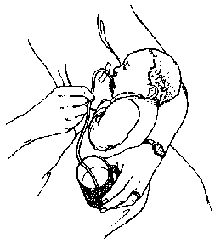
Figure 7
Ask someone to hold the cup, if you find it awkward to hold. To
start off the milk can be held higher than your breast and baby. As soon as the
milk flows through the tube, hold it lower. The idea is to make the baby
stimulate your breast-milk by effective suckling, so only a trickle must get
through the tube. Reduce the milk in the cup by a
teaspoonful10 at each feed as the breast-milk increases.
10 If a teaspoon is inappropriate,
use an equivalent local measure for up to 5 ml, for example, a soft drink bottle
cap.
Stay confident. Many women, including grandmothers, have
successfully restimulated breast-milk, many years after they stopped
breastfeeding.
| | | Infant Feeding in Emergencies: A Guide for Mothers (WHO, 1997, 48 p.) | | | (introduction...) | | | Foreword | | | Introduction | | | Why is breastfeeding so important? | | | Are commercially-made baby milks as good as breastfeeding? | | | Why are commercially-made baby milks not so good? | | | But can every woman breastfeed? | | | But why don't the experts tell us this if breastfeeding is so important? | | | Do babies also need tea and water? | | | When do babies need more than just breast-milk? | | | So a sick baby should go on breastfeeding? | | | Do breastfed babies get fewer diseases? | | | But my friend's baby got ill and he was breastfed | | | So breastfeeding is like a medicine? | | | People say that stress stops the milk, so during stressful times how can we breastfeed? | | | What about women who have lost a lot of weight? Can they produce milk? | | | Do we need special nutrition for breastfeeding? | | | But what about anaemic women? Does breastfeeding drain their strength? | | | Someone told me breastfeeding stopped you getting pregnant, but isn't that just a story? | | | How does breastfeeding work? | | | What about women with small breasts or flat nipples? | | | You said the baby has a part too. What can he do? | | | Why is the baby's suckling-action important? | | | How does a baby stimulate the milk? | | | The first principle of breastfeeding: good attachment | | | Why does good attachment not always come naturally to the baby? | | | Why does the baby not always get this right? | | | Sometimes it is hard to get a baby close because he is swaddled and his clothing gets in the way | | | Even if my baby attaches well, how can I be sure there will be enough milk? | | | You said earlier that milk changes during a feed. Can you explain that? | | | But I thought you must feed from both breasts? | | | You said earlier that confidence was important but not everyone has that. What can we do? | | | I know women with breastfeeding problems. Can they be helped? | | | My mother told me that you always get sore nipples and you just have to put up with them | | | What about special creams for sore nipples? How can we get them during an emergency? | | | With this baby-led feeding how can I be hygienic and wash my nipples? | | | So if I get my baby well-attached, I will never get sore nipples? | | | You say breastfeeding should not hurt, but what about the engorgement that every woman gets a few days after the birth? | | | You mentioned blocked ducts, mastitis and abscess. Are they common and how can we treat them? | | | All these problems make breastfeeding look too difficult | | | You said earlier that you can breastfeed even if you have stopped completely. How can this be done? | | | Food supplies can be precarious. How can we feed the babies over 6 months who need more than breast-milk alone? | | | What about premature or very small babies? | | | I can see the reason for expressing milk for sick or premature babies, but must all women learn to express? | | | How do I express milk? | | | I can see that breastfeeding is possible in most cases, but we still have to face the times when it is not possible: emergencies create orphans, abandoned babies and severely ill or wounded mothers | | | Is it possible to feed a baby artificially without a bottle? | | | How do you cup-feed a baby? | | | A final word |
|
Food supplies can be precarious. How can we feed the babies over 6 months who need more than breast-milk alone?
At around 6 months, start to introduce whatever foods you are
eating yourself. Do not replace the breastfeeds; give solid foods in addition to
your baby's usual breastfeeding pattern. Babies over 6 months can eat almost any
food but should not have a high salt diet. When you prepare food, reserve some
for the baby before you add salt; use iodised salt wherever possible, since
iodine deficiency is common in most countries for the rest of the family. After
6 months, whether your baby has teeth or not, she will have a chewing reflex.
There is no need to pur�e foods, just mash them with a fork, spoon or whatever
is available. If there is enough food and you are still breastfeeding and your
baby is growing well, restrict sugar. Sugar contains no useful nutrients, only
energy. Some people describe sugar as 'empty calories'. Sugar harms a baby's
growing teeth. Most other foods are more nutritious. However when there are
serious food shortages, it is better to use sugar than nothing.
Always use a cup or spoon to feed your baby other foods. If the
food is easily held, let the baby feed himself with his
hands.
| | | Infant Feeding in Emergencies: A Guide for Mothers (WHO, 1997, 48 p.) | | | (introduction...) | | | Foreword | | | Introduction | | | Why is breastfeeding so important? | | | Are commercially-made baby milks as good as breastfeeding? | | | Why are commercially-made baby milks not so good? | | | But can every woman breastfeed? | | | But why don't the experts tell us this if breastfeeding is so important? | | | Do babies also need tea and water? | | | When do babies need more than just breast-milk? | | | So a sick baby should go on breastfeeding? | | | Do breastfed babies get fewer diseases? | | | But my friend's baby got ill and he was breastfed | | | So breastfeeding is like a medicine? | | | People say that stress stops the milk, so during stressful times how can we breastfeed? | | | What about women who have lost a lot of weight? Can they produce milk? | | | Do we need special nutrition for breastfeeding? | | | But what about anaemic women? Does breastfeeding drain their strength? | | | Someone told me breastfeeding stopped you getting pregnant, but isn't that just a story? | | | How does breastfeeding work? | | | What about women with small breasts or flat nipples? | | | You said the baby has a part too. What can he do? | | | Why is the baby's suckling-action important? | | | How does a baby stimulate the milk? | | | The first principle of breastfeeding: good attachment | | | Why does good attachment not always come naturally to the baby? | | | Why does the baby not always get this right? | | | Sometimes it is hard to get a baby close because he is swaddled and his clothing gets in the way | | | Even if my baby attaches well, how can I be sure there will be enough milk? | | | You said earlier that milk changes during a feed. Can you explain that? | | | But I thought you must feed from both breasts? | | | You said earlier that confidence was important but not everyone has that. What can we do? | | | I know women with breastfeeding problems. Can they be helped? | | | My mother told me that you always get sore nipples and you just have to put up with them | | | What about special creams for sore nipples? How can we get them during an emergency? | | | With this baby-led feeding how can I be hygienic and wash my nipples? | | | So if I get my baby well-attached, I will never get sore nipples? | | | You say breastfeeding should not hurt, but what about the engorgement that every woman gets a few days after the birth? | | | You mentioned blocked ducts, mastitis and abscess. Are they common and how can we treat them? | | | All these problems make breastfeeding look too difficult | | | You said earlier that you can breastfeed even if you have stopped completely. How can this be done? | | | Food supplies can be precarious. How can we feed the babies over 6 months who need more than breast-milk alone? | | | What about premature or very small babies? | | | I can see the reason for expressing milk for sick or premature babies, but must all women learn to express? | | | How do I express milk? | | | I can see that breastfeeding is possible in most cases, but we still have to face the times when it is not possible: emergencies create orphans, abandoned babies and severely ill or wounded mothers | | | Is it possible to feed a baby artificially without a bottle? | | | How do you cup-feed a baby? | | | A final word |
|
What about premature or very small babies?
As we said earlier, the more vulnerable the baby the more
important it is he receives breast-milk. Breastfeeding is less stressful than
bottle-feeding for a premature or small baby who can suckle.
If a baby is too premature or too weak to breastfeed, he can be
tube fed with your expressed breast-milk. A cup can be safely used to feed a
healthy pre-term baby from around 32 weeks gestation. Cups have several
advantages over tubes. The baby controls his own intake and the contact with the
expressed breast-milk may stimulate the digestive enzymes in his mouth. He is
also held closely to be fed which is good for his development.
If a baby has to be tube-fed he can benefit from nuzzling at
your breast. He will then learn to associate the smell and taste of your breast
with a full stomach. You can express a little breast-milk directly into his
mouth. Stay near your baby as much as you can. Express your milk as soon as
possible after the birth. Express frequently, at least 6-8 times a day. However
small the amount any breast-milk is valuable for your baby's progress. Some
mothers of premature or low birth weight babies can produce sufficient
breast-milk, others need to supplement, ideally with expressed breast-milk from
other mothers.
It is important when feeding expressed breast-milk to ensure
that the baby gets enough of the fat-rich hindmilk. This fattier milk is more
likely to stick to the sides of the feeding tubes. Less fat is lost from cup
feeding.
| | | Infant Feeding in Emergencies: A Guide for Mothers (WHO, 1997, 48 p.) | | | (introduction...) | | | Foreword | | | Introduction | | | Why is breastfeeding so important? | | | Are commercially-made baby milks as good as breastfeeding? | | | Why are commercially-made baby milks not so good? | | | But can every woman breastfeed? | | | But why don't the experts tell us this if breastfeeding is so important? | | | Do babies also need tea and water? | | | When do babies need more than just breast-milk? | | | So a sick baby should go on breastfeeding? | | | Do breastfed babies get fewer diseases? | | | But my friend's baby got ill and he was breastfed | | | So breastfeeding is like a medicine? | | | People say that stress stops the milk, so during stressful times how can we breastfeed? | | | What about women who have lost a lot of weight? Can they produce milk? | | | Do we need special nutrition for breastfeeding? | | | But what about anaemic women? Does breastfeeding drain their strength? | | | Someone told me breastfeeding stopped you getting pregnant, but isn't that just a story? | | | How does breastfeeding work? | | | What about women with small breasts or flat nipples? | | | You said the baby has a part too. What can he do? | | | Why is the baby's suckling-action important? | | | How does a baby stimulate the milk? | | | The first principle of breastfeeding: good attachment | | | Why does good attachment not always come naturally to the baby? | | | Why does the baby not always get this right? | | | Sometimes it is hard to get a baby close because he is swaddled and his clothing gets in the way | | | Even if my baby attaches well, how can I be sure there will be enough milk? | | | You said earlier that milk changes during a feed. Can you explain that? | | | But I thought you must feed from both breasts? | | | You said earlier that confidence was important but not everyone has that. What can we do? | | | I know women with breastfeeding problems. Can they be helped? | | | My mother told me that you always get sore nipples and you just have to put up with them | | | What about special creams for sore nipples? How can we get them during an emergency? | | | With this baby-led feeding how can I be hygienic and wash my nipples? | | | So if I get my baby well-attached, I will never get sore nipples? | | | You say breastfeeding should not hurt, but what about the engorgement that every woman gets a few days after the birth? | | | You mentioned blocked ducts, mastitis and abscess. Are they common and how can we treat them? | | | All these problems make breastfeeding look too difficult | | | You said earlier that you can breastfeed even if you have stopped completely. How can this be done? | | | Food supplies can be precarious. How can we feed the babies over 6 months who need more than breast-milk alone? | | | What about premature or very small babies? | | | I can see the reason for expressing milk for sick or premature babies, but must all women learn to express? | | | How do I express milk? | | | I can see that breastfeeding is possible in most cases, but we still have to face the times when it is not possible: emergencies create orphans, abandoned babies and severely ill or wounded mothers | | | Is it possible to feed a baby artificially without a bottle? | | | How do you cup-feed a baby? | | | A final word |
|
I can see the reason for expressing milk for sick or premature babies, but must all women learn to express?
If your baby is too small or sick to suckle at your breast, your
milk can save his life. If you can express some milk directly into your baby's
mouth this can stimulate him when he is learning to breastfeed.
If you ever get an overfull or engorged breast you can relieve
the pressure in order to get the baby well attached.
If you have to be separated from your baby for work or any other
reason, you can leave your breast-milk for your baby. Breast-milk can be stored
at room temperature for 6 to 8 hours. It can be stored in a refrigerator for 24
to 48 hours and for 3 months in a freezer. If power cuts stop fridges and
freezers working, throw away any thawed milk you cannot use within 8 hours.
Never refreeze thawed
milk.
| | | Infant Feeding in Emergencies: A Guide for Mothers (WHO, 1997, 48 p.) | | | (introduction...) | | | Foreword | | | Introduction | | | Why is breastfeeding so important? | | | Are commercially-made baby milks as good as breastfeeding? | | | Why are commercially-made baby milks not so good? | | | But can every woman breastfeed? | | | But why don't the experts tell us this if breastfeeding is so important? | | | Do babies also need tea and water? | | | When do babies need more than just breast-milk? | | | So a sick baby should go on breastfeeding? | | | Do breastfed babies get fewer diseases? | | | But my friend's baby got ill and he was breastfed | | | So breastfeeding is like a medicine? | | | People say that stress stops the milk, so during stressful times how can we breastfeed? | | | What about women who have lost a lot of weight? Can they produce milk? | | | Do we need special nutrition for breastfeeding? | | | But what about anaemic women? Does breastfeeding drain their strength? | | | Someone told me breastfeeding stopped you getting pregnant, but isn't that just a story? | | | How does breastfeeding work? | | | What about women with small breasts or flat nipples? | | | You said the baby has a part too. What can he do? | | | Why is the baby's suckling-action important? | | | How does a baby stimulate the milk? | | | The first principle of breastfeeding: good attachment | | | Why does good attachment not always come naturally to the baby? | | | Why does the baby not always get this right? | | | Sometimes it is hard to get a baby close because he is swaddled and his clothing gets in the way | | | Even if my baby attaches well, how can I be sure there will be enough milk? | | | You said earlier that milk changes during a feed. Can you explain that? | | | But I thought you must feed from both breasts? | | | You said earlier that confidence was important but not everyone has that. What can we do? | | | I know women with breastfeeding problems. Can they be helped? | | | My mother told me that you always get sore nipples and you just have to put up with them | | | What about special creams for sore nipples? How can we get them during an emergency? | | | With this baby-led feeding how can I be hygienic and wash my nipples? | | | So if I get my baby well-attached, I will never get sore nipples? | | | You say breastfeeding should not hurt, but what about the engorgement that every woman gets a few days after the birth? | | | You mentioned blocked ducts, mastitis and abscess. Are they common and how can we treat them? | | | All these problems make breastfeeding look too difficult | | | You said earlier that you can breastfeed even if you have stopped completely. How can this be done? | | | Food supplies can be precarious. How can we feed the babies over 6 months who need more than breast-milk alone? | | | What about premature or very small babies? | | | I can see the reason for expressing milk for sick or premature babies, but must all women learn to express? | | | How do I express milk? | | | I can see that breastfeeding is possible in most cases, but we still have to face the times when it is not possible: emergencies create orphans, abandoned babies and severely ill or wounded mothers | | | Is it possible to feed a baby artificially without a bottle? | | | How do you cup-feed a baby? | | | A final word |
|
How do I express milk?
Even where women have the choice to use pumps, many prefer hand
expression. Hand expression imitates a baby's suckling action more naturally.
Also sterilization of breast pumps is essential for safety and may be difficult
to control in emergencies.
· Wash your hands
thoroughly.
· Have a clean cup or container
with a wide neck.
· Make yourself
comfortable.
The following instructions are just guidelines. You find the
way that suits you (Figures 6a, 6b and 6c).
· Hold your breast
with your four fingers underneath and your thumb on top behind the nipple. Do
not squeeze the nipple.
· Gently feel the
little thickenings inside your breast under the areola. These are 'lactiferous
sinuses' which is where the milk collects as it comes down.
· Compress your
fingers and thumb rhythmically in a way that suits you.
· Move your hand
round your breast, expressing milk from the sinuses.
· Do the same with
the other breast.
· If you prefer use
both hands on each breast.
You may find that your milk does not 'come down' as quickly as
when your baby is near you. Think about your baby. If you have a photo look at
it or smell some of his clothing. Ask someone to massage your back gently. This
is where women can help and support each other. If you can find another mother
who has hand expressed already, ask her to teach you.
Two helpful methods to teach another woman are:
· if you are
lactating let her watch you do it
OR
· make sure she is
comfortable, then stand behind her and guide her own hand on her breast. In this
way she has had practice under your guidance.
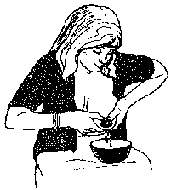
Figure 6a
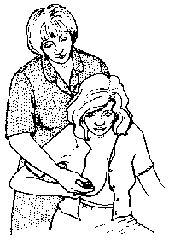
Figure 6b
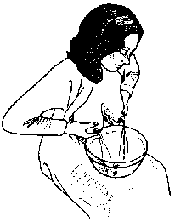
Figure
6c
| | | Infant Feeding in Emergencies: A Guide for Mothers (WHO, 1997, 48 p.) | | | (introduction...) | | | Foreword | | | Introduction | | | Why is breastfeeding so important? | | | Are commercially-made baby milks as good as breastfeeding? | | | Why are commercially-made baby milks not so good? | | | But can every woman breastfeed? | | | But why don't the experts tell us this if breastfeeding is so important? | | | Do babies also need tea and water? | | | When do babies need more than just breast-milk? | | | So a sick baby should go on breastfeeding? | | | Do breastfed babies get fewer diseases? | | | But my friend's baby got ill and he was breastfed | | | So breastfeeding is like a medicine? | | | People say that stress stops the milk, so during stressful times how can we breastfeed? | | | What about women who have lost a lot of weight? Can they produce milk? | | | Do we need special nutrition for breastfeeding? | | | But what about anaemic women? Does breastfeeding drain their strength? | | | Someone told me breastfeeding stopped you getting pregnant, but isn't that just a story? | | | How does breastfeeding work? | | | What about women with small breasts or flat nipples? | | | You said the baby has a part too. What can he do? | | | Why is the baby's suckling-action important? | | | How does a baby stimulate the milk? | | | The first principle of breastfeeding: good attachment | | | Why does good attachment not always come naturally to the baby? | | | Why does the baby not always get this right? | | | Sometimes it is hard to get a baby close because he is swaddled and his clothing gets in the way | | | Even if my baby attaches well, how can I be sure there will be enough milk? | | | You said earlier that milk changes during a feed. Can you explain that? | | | But I thought you must feed from both breasts? | | | You said earlier that confidence was important but not everyone has that. What can we do? | | | I know women with breastfeeding problems. Can they be helped? | | | My mother told me that you always get sore nipples and you just have to put up with them | | | What about special creams for sore nipples? How can we get them during an emergency? | | | With this baby-led feeding how can I be hygienic and wash my nipples? | | | So if I get my baby well-attached, I will never get sore nipples? | | | You say breastfeeding should not hurt, but what about the engorgement that every woman gets a few days after the birth? | | | You mentioned blocked ducts, mastitis and abscess. Are they common and how can we treat them? | | | All these problems make breastfeeding look too difficult | | | You said earlier that you can breastfeed even if you have stopped completely. How can this be done? | | | Food supplies can be precarious. How can we feed the babies over 6 months who need more than breast-milk alone? | | | What about premature or very small babies? | | | I can see the reason for expressing milk for sick or premature babies, but must all women learn to express? | | | How do I express milk? | | | I can see that breastfeeding is possible in most cases, but we still have to face the times when it is not possible: emergencies create orphans, abandoned babies and severely ill or wounded mothers | | | Is it possible to feed a baby artificially without a bottle? | | | How do you cup-feed a baby? | | | A final word |
|
I can see that breastfeeding is possible in most cases, but we still have to face the times when it is not possible: emergencies create orphans, abandoned babies and severely ill or wounded mothers
Yes of course. Let us confront the issue of substitute feeding.
1. The best possible substitute used to be for another lactating
mother to breastfeed the baby. We must now be cautious because in some
situations there might be a risk of HIV transmission through breast-milk if the
lactating foster mother happens to be infected with HIV. In some regions there
may be very few people with HIV but it is always difficult to know when rates of
the infection are rising.
In an emergency your own breast-milk may be the only source of
food for another baby. If you are feeding your own baby, another baby will not
'steal' his milk, but will stimulate a larger supply. Women have done this for
sisters and friends who were extremely ill or had died. This can be a life
saver.
2. The next best substitute is expressed breast-milk given by
another mother or mothers. This should be heated to 57°C for 30 minutes.
This kills viruses (including HIV) and bacteria. Most breast-milk does not carry
infection, but it is best to be cautious. You will need the support of a health
professional and equipment to be able to do this. You can help organize donation
and collection of expressed breast-milk.
In an emergency you may have no choice and must use raw
breast-milk. The safest way to give the expressed breast-milk is in a clean cup.
3. If breast-milk is not available, you can use commercial baby
milk (also called infant formula). Only use commercial milk if you know you can
get a regular supply and you can afford it. Always use this product very
carefully. Sterilize all the utensils before every feed. A cup is safer than a
bottle.
You must also boil the water for each feed. Follow the
instructions on the tin carefully. The babyfood companies are obliged to provide
label instructions in your local language. If the labels are not in your
language try to report this to the health authorities or aid workers. Such
labels break the WHO/UNICEF International Code Of Marketing Of Breast-milk
Substitutes.
Ask a health professional or aid worker to get a proper
translation and to explain the instructions carefully. Different products need
different measures of milk powder to water. Never save left-over milk for the
next feed. When food is short give the left-over feed immediately to an
older child or drink it yourself.
4. If you cannot get any commercial baby milk and you can obtain
a regular supply of local cow's milk. Use the following recipe:
- Boil 1/3 cup of water and
- 2/3 cup of boiled
cow's milk, to make 1 cup (200 mls) of feed.
- Add 1 level teaspoonful (5 g)
of sugar.
You can also use this recipe if you make up the milk from tinned
whole milk powder. First make up the milk to the label instructions, then modify
it to the recipe.
|
Never use whole milk (whether fresh or tinned) for a baby
under 6 months without modifying it to the recipe above |
5. An artificially fed baby will not be getting the perfect
balance of nutrients that a breastfed baby gets. It therefore may be necessary
to introduce solid foods a little before 6 months to widen the intake of
nutrients. If you decide to do this make sure these foods are prepared as
hygienically as possible. Remember he will not be getting the anti-infective
protection of breast-milk and will be more vulnerable to any germs in solid
food.
6. Sterilization is important in all artificial feeding. Wash
your hands thoroughly with soap and water before preparing any feed for a baby.
If you have fuel, boil all utensils for at least 20 minutes in water. You must
do this before every feed.
OR
If you can obtain hypochlorite (bleach) keep utensils in a
covered container or pan. Add one dessertspoonful (10 ml)11 of
hypochlorite to a litre of water. Household bleach may be a different strength.
If the label says it is 0.5%, add 2 dessertspoonfuls (20 ml).
11 Please investigate and use
local common measures for translation.
Keep this out of the reach of children. You will need to change
this solution daily. You can use the discarded fluid to soak cloth nappies or to
disinfect the toilet area.
Wash the hypochlorite off with boiled water before you use the
cup and other utensils.
If fuel is scarce and hypochlorite unobtainable, scrub
everything very thoroughly with soap or detergent. Never use feeding tubes (for
relactation) or a bottle unless you know you have continuous means of
sterilization.
|
Cups are safer than bottles |
| | | Infant Feeding in Emergencies: A Guide for Mothers (WHO, 1997, 48 p.) | | | (introduction...) | | | Foreword | | | Introduction | | | Why is breastfeeding so important? | | | Are commercially-made baby milks as good as breastfeeding? | | | Why are commercially-made baby milks not so good? | | | But can every woman breastfeed? | | | But why don't the experts tell us this if breastfeeding is so important? | | | Do babies also need tea and water? | | | When do babies need more than just breast-milk? | | | So a sick baby should go on breastfeeding? | | | Do breastfed babies get fewer diseases? | | | But my friend's baby got ill and he was breastfed | | | So breastfeeding is like a medicine? | | | People say that stress stops the milk, so during stressful times how can we breastfeed? | | | What about women who have lost a lot of weight? Can they produce milk? | | | Do we need special nutrition for breastfeeding? | | | But what about anaemic women? Does breastfeeding drain their strength? | | | Someone told me breastfeeding stopped you getting pregnant, but isn't that just a story? | | | How does breastfeeding work? | | | What about women with small breasts or flat nipples? | | | You said the baby has a part too. What can he do? | | | Why is the baby's suckling-action important? | | | How does a baby stimulate the milk? | | | The first principle of breastfeeding: good attachment | | | Why does good attachment not always come naturally to the baby? | | | Why does the baby not always get this right? | | | Sometimes it is hard to get a baby close because he is swaddled and his clothing gets in the way | | | Even if my baby attaches well, how can I be sure there will be enough milk? | | | You said earlier that milk changes during a feed. Can you explain that? | | | But I thought you must feed from both breasts? | | | You said earlier that confidence was important but not everyone has that. What can we do? | | | I know women with breastfeeding problems. Can they be helped? | | | My mother told me that you always get sore nipples and you just have to put up with them | | | What about special creams for sore nipples? How can we get them during an emergency? | | | With this baby-led feeding how can I be hygienic and wash my nipples? | | | So if I get my baby well-attached, I will never get sore nipples? | | | You say breastfeeding should not hurt, but what about the engorgement that every woman gets a few days after the birth? | | | You mentioned blocked ducts, mastitis and abscess. Are they common and how can we treat them? | | | All these problems make breastfeeding look too difficult | | | You said earlier that you can breastfeed even if you have stopped completely. How can this be done? | | | Food supplies can be precarious. How can we feed the babies over 6 months who need more than breast-milk alone? | | | What about premature or very small babies? | | | I can see the reason for expressing milk for sick or premature babies, but must all women learn to express? | | | How do I express milk? | | | I can see that breastfeeding is possible in most cases, but we still have to face the times when it is not possible: emergencies create orphans, abandoned babies and severely ill or wounded mothers | | | Is it possible to feed a baby artificially without a bottle? | | | How do you cup-feed a baby? | | | A final word |
|
Is it possible to feed a baby artificially without a bottle?
Yes. Cups are safer than bottles because the teats and screw
tops of bottles trap germs which get into the milk and make the baby ill. Babies
can drink from cups from birth. Some people worry that the baby needs to suck on
a teat, but it is safer for them to suck their thumbs or fingers. Also cup-fed
babies must be held and this is vital for orphans who need lots of cuddling.
There is always a temptation (especially in emergency situations) to leave
babies to hold their bottles. This is dangerous and deprives babies of essential
physical
contact.
| | | Infant Feeding in Emergencies: A Guide for Mothers (WHO, 1997, 48 p.) | | | (introduction...) | | | Foreword | | | Introduction | | | Why is breastfeeding so important? | | | Are commercially-made baby milks as good as breastfeeding? | | | Why are commercially-made baby milks not so good? | | | But can every woman breastfeed? | | | But why don't the experts tell us this if breastfeeding is so important? | | | Do babies also need tea and water? | | | When do babies need more than just breast-milk? | | | So a sick baby should go on breastfeeding? | | | Do breastfed babies get fewer diseases? | | | But my friend's baby got ill and he was breastfed | | | So breastfeeding is like a medicine? | | | People say that stress stops the milk, so during stressful times how can we breastfeed? | | | What about women who have lost a lot of weight? Can they produce milk? | | | Do we need special nutrition for breastfeeding? | | | But what about anaemic women? Does breastfeeding drain their strength? | | | Someone told me breastfeeding stopped you getting pregnant, but isn't that just a story? | | | How does breastfeeding work? | | | What about women with small breasts or flat nipples? | | | You said the baby has a part too. What can he do? | | | Why is the baby's suckling-action important? | | | How does a baby stimulate the milk? | | | The first principle of breastfeeding: good attachment | | | Why does good attachment not always come naturally to the baby? | | | Why does the baby not always get this right? | | | Sometimes it is hard to get a baby close because he is swaddled and his clothing gets in the way | | | Even if my baby attaches well, how can I be sure there will be enough milk? | | | You said earlier that milk changes during a feed. Can you explain that? | | | But I thought you must feed from both breasts? | | | You said earlier that confidence was important but not everyone has that. What can we do? | | | I know women with breastfeeding problems. Can they be helped? | | | My mother told me that you always get sore nipples and you just have to put up with them | | | What about special creams for sore nipples? How can we get them during an emergency? | | | With this baby-led feeding how can I be hygienic and wash my nipples? | | | So if I get my baby well-attached, I will never get sore nipples? | | | You say breastfeeding should not hurt, but what about the engorgement that every woman gets a few days after the birth? | | | You mentioned blocked ducts, mastitis and abscess. Are they common and how can we treat them? | | | All these problems make breastfeeding look too difficult | | | You said earlier that you can breastfeed even if you have stopped completely. How can this be done? | | | Food supplies can be precarious. How can we feed the babies over 6 months who need more than breast-milk alone? | | | What about premature or very small babies? | | | I can see the reason for expressing milk for sick or premature babies, but must all women learn to express? | | | How do I express milk? | | | I can see that breastfeeding is possible in most cases, but we still have to face the times when it is not possible: emergencies create orphans, abandoned babies and severely ill or wounded mothers | | | Is it possible to feed a baby artificially without a bottle? | | | How do you cup-feed a baby? | | | A final word |
|
How do you cup-feed a baby?
The baby needs to be held slightly upright and the cup held
against the upper lip (Figure 7).
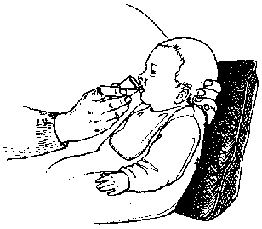
Figure 7
Pre-term babies will lap the milk like a kitten. Full-term
babies will sip the milk. Never pour the milk down the baby's throat. Always
let the baby lead the sipping and
swallowing.
| | | Infant Feeding in Emergencies: A Guide for Mothers (WHO, 1997, 48 p.) | | | (introduction...) | | | Foreword | | | Introduction | | | Why is breastfeeding so important? | | | Are commercially-made baby milks as good as breastfeeding? | | | Why are commercially-made baby milks not so good? | | | But can every woman breastfeed? | | | But why don't the experts tell us this if breastfeeding is so important? | | | Do babies also need tea and water? | | | When do babies need more than just breast-milk? | | | So a sick baby should go on breastfeeding? | | | Do breastfed babies get fewer diseases? | | | But my friend's baby got ill and he was breastfed | | | So breastfeeding is like a medicine? | | | People say that stress stops the milk, so during stressful times how can we breastfeed? | | | What about women who have lost a lot of weight? Can they produce milk? | | | Do we need special nutrition for breastfeeding? | | | But what about anaemic women? Does breastfeeding drain their strength? | | | Someone told me breastfeeding stopped you getting pregnant, but isn't that just a story? | | | How does breastfeeding work? | | | What about women with small breasts or flat nipples? | | | You said the baby has a part too. What can he do? | | | Why is the baby's suckling-action important? | | | How does a baby stimulate the milk? | | | The first principle of breastfeeding: good attachment | | | Why does good attachment not always come naturally to the baby? | | | Why does the baby not always get this right? | | | Sometimes it is hard to get a baby close because he is swaddled and his clothing gets in the way | | | Even if my baby attaches well, how can I be sure there will be enough milk? | | | You said earlier that milk changes during a feed. Can you explain that? | | | But I thought you must feed from both breasts? | | | You said earlier that confidence was important but not everyone has that. What can we do? | | | I know women with breastfeeding problems. Can they be helped? | | | My mother told me that you always get sore nipples and you just have to put up with them | | | What about special creams for sore nipples? How can we get them during an emergency? | | | With this baby-led feeding how can I be hygienic and wash my nipples? | | | So if I get my baby well-attached, I will never get sore nipples? | | | You say breastfeeding should not hurt, but what about the engorgement that every woman gets a few days after the birth? | | | You mentioned blocked ducts, mastitis and abscess. Are they common and how can we treat them? | | | All these problems make breastfeeding look too difficult | | | You said earlier that you can breastfeed even if you have stopped completely. How can this be done? | | | Food supplies can be precarious. How can we feed the babies over 6 months who need more than breast-milk alone? | | | What about premature or very small babies? | | | I can see the reason for expressing milk for sick or premature babies, but must all women learn to express? | | | How do I express milk? | | | I can see that breastfeeding is possible in most cases, but we still have to face the times when it is not possible: emergencies create orphans, abandoned babies and severely ill or wounded mothers | | | Is it possible to feed a baby artificially without a bottle? | | | How do you cup-feed a baby? | | | A final word |
|
A final word
This booklet shares some basic, up-to-date information. In an
emergency this information is crucial because during difficult times many other
factors threaten babies' and young children's health. Breastfeeding can protect
them from much of the harm. Artificial feeding must be avoided as much as
possible, but if it is unavoidable it must be done with the greatest care.
No one wants to experience an emergency or difficult situations,
but when it does happen, many people find they have more strength and initiative
than they believed they had. Many women who once thought they could not produce
enough milk, breastfeed successfully during emergencies. They feel proud when
they realize how much they have contributed to their children's health and
survival. If this booklet has helped you to be one of those women, please share
your knowledge and experience with others. When an emergency ends, it is still
important to support breastfeeding. Only when it becomes the standard method of
infant feeding everywhere during untroubled times, can we be surer that an
emergency will not be such a threat to our babies' health and lives.
The information in this booklet comes from international experts
on breastfeeding, including health professionals, scientists and breast-feeding
mother-to-mother support groups. Please contact WHO or UNICEF (addresses below)
if you want more information.
Dr Aileen Robertson
Acting Regional Adviser
Nutrition
Policy, Infant Feeding and Food Security (NIF)
WHO Regional Office for
Europe
Scherfigsvej 8
DK-2100 Copenhagen �
Tel: (+45) 39 17 13
62
Fax: (+45) 39 17 18 54
e-mail: aro@who.dk
Ms Hind Khatib
Coordinator, Baby-Friendly Hospital
Initiative
UNICEF
Palais des Nations
CH-1211 Geneva
10
Switzerland
Tel: 41 22 909 51 11
Fax: 41 22 909 59 00
e-mail:
hkhatib@unicef.ch