 |
| ||||||||||||||||||||||||||||||||
|
| ||||||||||||||||||||||||||||||||
Institut f�r berufliche Entwicklung e.V.
Berlin
Original title:
Lehrbeispiele f�r die berufspraktische Ausbildung
"Sch�rfen
einfacher Werkzeuge"
Author: B. Zierenberg
First edition © IBE
Institut f�r berufliche Entwicklung e.V.
Parkstra�e
23
13187 Berlin
Order No.: 90-33-3112/2
|
| ||||||||||||||||||||||||||||||||
Introduction
The present documentation comprise 5 selected instruction examples with additional versions by means of which the grinding of tools can be exercised.
The exercises should be carried out, on principle, on worn-out original tools, but possibilities for substituting such tools are mentioned as well if original tools are not available.
To facilitate the preparation and execution of the work, the materials, working tools, measuring and testing tools as well as accessories required for each instruction example are given. Moreover, the previous knowledge is mentioned which is necessary for the individual exercises.
On the basis of the working drawings enclosed and the appertaining sequences of operations the exercise pieces can be manufactured or worked.
Explanations to the working drawings:
The hardness of the tools is given to the hardness test with the Rockwell symbol "HRC" in connection with the unit of Rockwell. Marking of the characteristic pattern of the ground surface is shown on the working drawing in a circular detail representation.
|
| ||||||||||||||||||||||||||||||||
Instruction example 12.1. Centre punch and scribing punch
Exercising of sharpening of punches
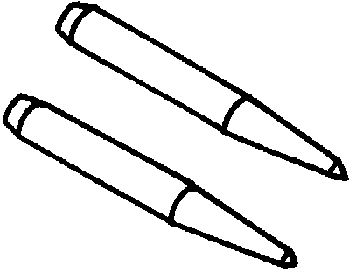
Figure
Material
- Worn punches or
- Round material of silver steel:
(carbon content 1.1. to 1.25 %)
|
Diameter: |
10 mm |
|
Length: |
122 mm |
Working Tools
Hand hacksaw
Measuring and testing tools
Vernier caliper, grinding gage or protractor
Accessories
Coolant (water)
Required previous knowledge
Reading of the drawings, measuring, testing, scribing, prick-punching, (sawing - when producing the punches)
|
Sequence of operations |
Comments |
| | |
|
1. Arrange workplace prepare working material |
- Check for completeness |
| | |
|
2. Sawing of the round material to length |
- only if a original tool is not available! |
|
3. Face grinding of one face |
- Press workpiece in vertical direction against the wheel, turn it slowly around its axis |
| | |
|
4. Grinding of a 4 mm chamver on this face - horizontal or vertical position |
- Press workpiece against the wheel with a setting angle of 45°, in doing so, turn is speedily and uniformly around its axis |
| | |
|
5. Grinding of a 50 mm long taper, proceeding from the other face-horizontal position |
- The right hand guides the workpiece, the left forefinger lies between the workpiece and the grinding support - press workpiece in horizontal direction against the wheel, turn is speedily as well as push it forward and back |
|
| |
|
6. Grinding of the point - vertical position! |
- Press against the wheel only slightly with quick turning of it around its axis -risk of drawing the temper! |
| | |
|
7. Final check |
- Angle, accuracy to sice grinding pattern (as per drawing) |
Completion:
Have the point hardened to HRC 50
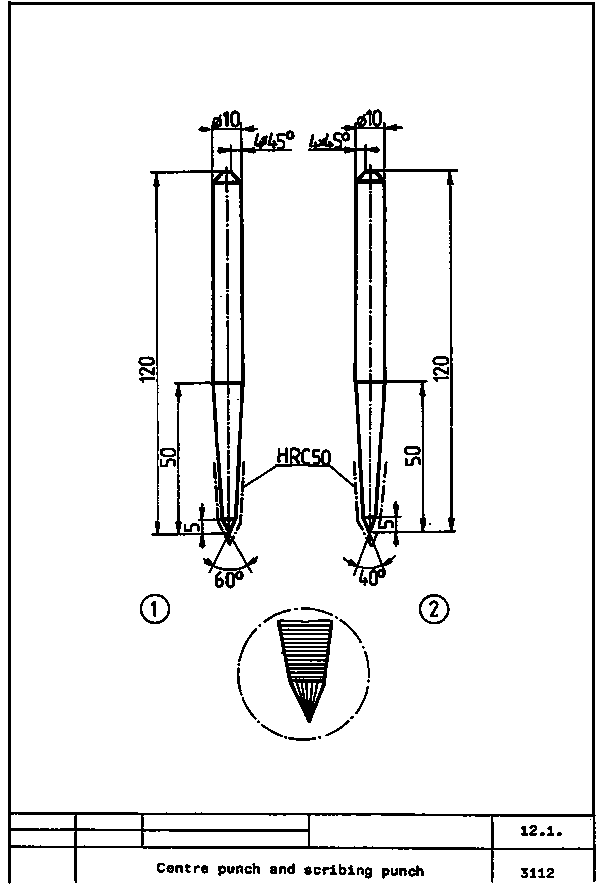
Centre punch and scribing
punch
|
| ||||||||||||||||||||||||||||||||
Instruction example 12.2. Steel scriber
Exercising of the sharpening of steel scribers
Material
- Worn steel scriber or
- Round material of silver steel:
(carbon content 1.1 to 1.25 %)
|
Diameter: |
4 mm |
|
Length: |
150 mm |
- Hexagonals of standard steel (380 MPa)
|
width across flats: |
10 mm |
|
Length: |
78 mm |

Figure
Working Tools
Hand hacksaw, drill 3.3 mm dia.; tap and threading die M4
Measuring and testing tools
Vernier caliper
Accessories
Coolant (water), cutting oil, tap wrench
Required previous knowledge
Reading of the drawings, measuring, testing, scribing, prick-punching, (sawing, drilling, countersinking/counterboring, threading - when manufacturing the steel scriber)
|
Sequence of operations |
Comments |
| | |
|
1. Arrange workplace prepare working material |
- Check for completeness |
| | |
|
2. Manufacturing of the individual components as per drawing |
- Only if original tools are not available |
| | |
|
3. Grinding of a chamfer of 4 mm at both sides of the handle - horizontal or vertical position! |
- Press the workpiece against the wheel with a setting angle of 30° |
|
| |
|
4. Screwing of the scriber with the handle |
- Firm joint! |
| |
|
|
5. Grinding of a 15 mm long taper on the scriber - horizontal position! |
- Attention I Forefinger lies between the grinding support and the distance between the grinding support and the wheel, 2 mm max.! |
| | |
|
6. Grinding of the point - vertical position! |
- Turn quickly -cool much! Risk of drawing the temper |
| | |
|
7. Final check |
- Accuracy to size grinding pattern (as to drawing) |
Completion: Have the point hardened to HRC 55
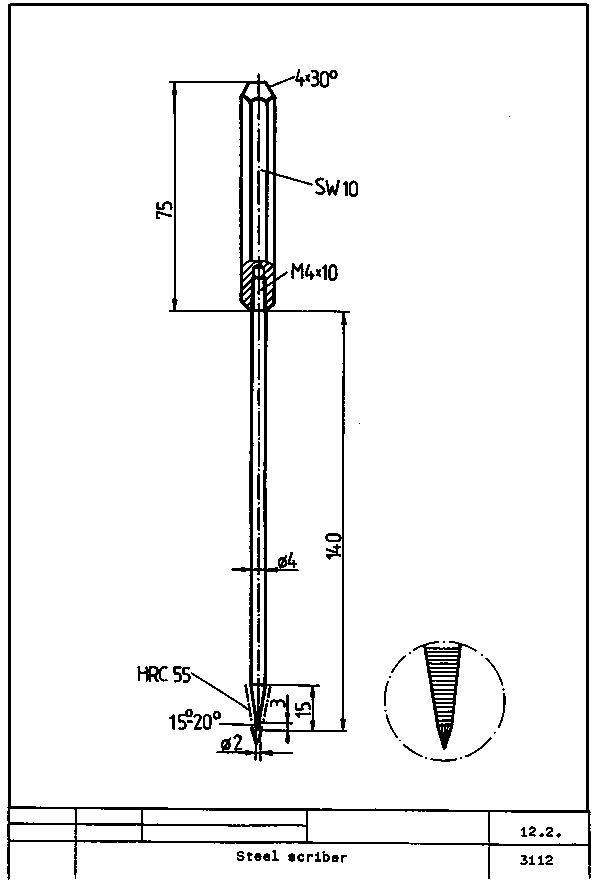
Steel
scriber
|
| ||||||||||||||||||||||||||||||||
Instruction example 12.3. Screw driver
Exercising of grinding of screw drivers
Material
- Worn screw drivers
or
- Round material of tool
steel
(carbon content: 1 to 1.1 %)
Diameter: 5 mm

Figure
Working Tools
Hand hacksaw, engineer's hammer
Measuring and testing tools
Vernier caliper
Accessories
Surface plate, coolant (water)
Required previous knowledge
Reading of the drawings, measuring, testing, hammering
|
Sequence of operations |
Comments |
| | |
|
1. Arrange workplace prepare working material |
- Check for completeness |
| | |
|
2. Sawing of the round material to length |
- Only if original tools are not available |
| | |
|
3. Hammering of the screw driver blade (both sides) with the hammer face |
- See to uniformity of the width! |
|
| |
|
4. Grinding of the screw driver blade in vertical position by placing it flat against the wheel and slightly pushing up and down |
- Place the screw driver blade far above against the grinding wheel! - Cool! |
| | |
|
5. Checking of the concaving and of the accuracy to size |
|
| | |
|
6. Grinding of the tang in horizontal position |
- Turn quickly! |
| |
|
|
7. Final check |
- Accuracy to size, grinding pattern (as to drawing) |
Completion:
Hardening of the blade to HRC 42
Hammering of the enlargement of the handle below the tang
Fixing of a wooden handle
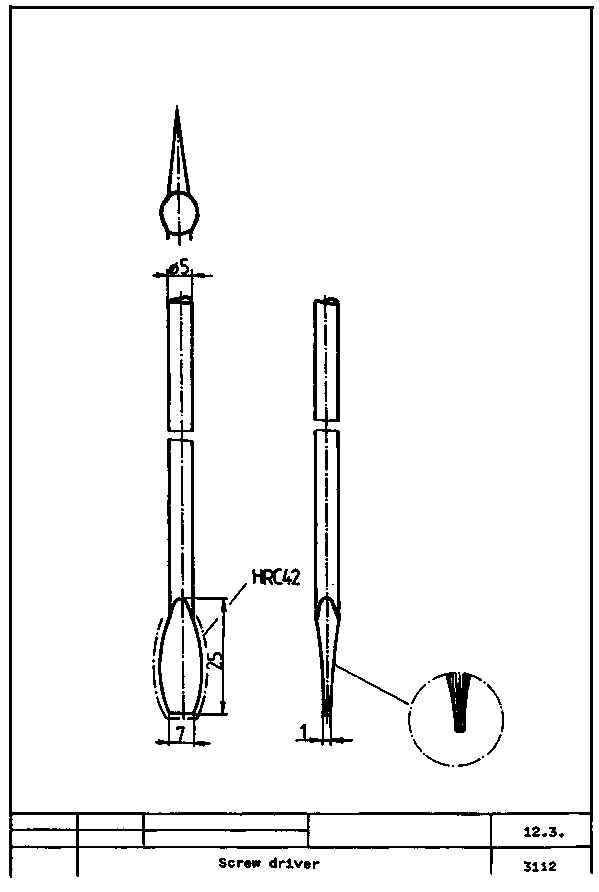
Screw
driver
|
| ||||||||||||||||||||||||||||||||
Instruction example 12.4. Flat chisel and cape chisel
Exercising of sharpening of chisels
Material
- Worn flat or cape chisels
or
- Flat material of tool steel (carbon content: 1 to 1.1 %)
|
Thickness: |
12 mm |
|
Width: |
20 mm |
|
Length: |
162 mm |
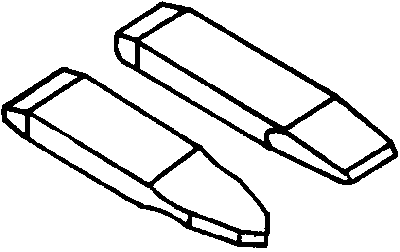
Figure
Working Tools
Hand hacksaw, steel scriber, whetstone
Measuring and testing tools
Steel rule, vernier caliper, grinding gage or protractor
Accessories
Vice, coolant (water)
Required previous knowledge
Reading of the drawings, measuring, testing, sawing, chiselling
|
Sequence of operations |
Comments |
| | |
|
1. Arrange workplace prepare working material |
- Check for completeness |
| | |
|
2. Sawing of the flat material to length |
- Only if original tools are not available |
| | |
|
3. Place the flat chisel (1) with its wide side horizontally against the wheel and uniformly move to and fro until the taper has reached a length of 60 mm |
- Uniformly grind the taper by permanently changing the
sides! |
| |
|
|
4. Grinding of the blades in vertical position by uniform pressure against as well as to-and fro movements |
- Forefinger lies between the chisel and the grinding support! |
| |
|
|
5. Checking of the surface of the taper as well as of the quality of the blades |
- Surfaces to be smooth, blades to be sharp as well as parallel and angular to the outer edges |
| |
|
|
6. Place the cape chisel (2) with its flanks horizontally against the wheel and grind (move to and fro) |
- Permanently change the sides and cool! |
| | |
|
7. Place the blades in vertical position against the wheel and grind alternately by a short pressure against |
- Attention! |
| | |
|
8. Checking of the surfaces as well as of the quality of the blades |
- Same as for flat chisel |
| | |
|
9. Clean whetting of the blades with the whetstone (removing of the burr) |
- Pull along the side of the blade |
| | |
|
10. Final check |
- Accuracy to size, appearance, grinding pattern (as per drawing) |
Completion: Have the blades hardened to HRC 48
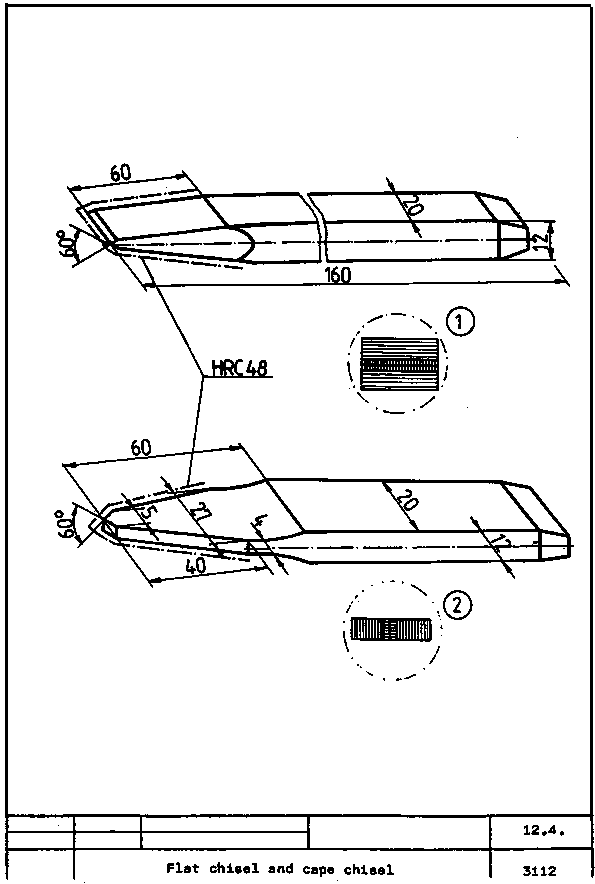
Flat chisel and cape
chisel
|
| ||||||||||||||||||||||||||||||||
Instruction example 12.5. Drill with standard drill point as well as flat drill point and centre point
Exercising of sharpening of drills in the most used types of drill point grinding
Material
worn-out drills
diameter: 4 to 12 mm
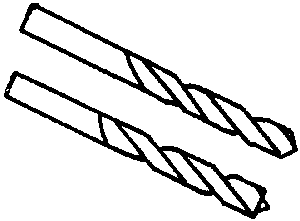
Figure
Working Tools
Measuring and testing tools
Grinding gage or protractor
Accessories
Coolant (water)
Required previous knowledge
Reading of the drawings, measuring, testing, drilling
|
Sequence of operations |
Comments |
| | |
|
1. Arrange workplace prepare working material |
- Check for completeness |
| | |
|
2. Lay the drill with the standard drill point (1) between thumb and forefinger (left hand) and advance the drill with the right hand towards the grinding wheel so that the main cutting edge lies horizontally and the drill itself exactly horizontally. The setting angle is about 56° from the left-hand side | |
| | |
|
3. Press the drill slightly against the wheel and push it towards above and at the same time slightly to the right-hand side -at the top take it off |
- Grind both cutting edges uniformly (alternately) - and cool! |
| |
|
|
4. Check for grinding faults as well as for adherence to the angles given | |
| | |
|
5. Take the drill with the flat drill point and centre point (2) as described above and press it with the main cutting edge exactly vertically against the horizontally lying grinding wheel, in doing so, the centre point must project at the right-hand grinding wheel edge! | |
| |
|
|
6. Push the drill with a slight pressure in vertical direction towards above, at the top take it off |
- Cool! |
| | |
|
7. The centre point is sharpened by lateral grinding at the right-hand grinding wheel edge |
|
| | |
|
8. Checking for grinding faults |
|

Drill