 |
| |||||||||||||||||||||||||||||||||||||||||||||||||||||||
John P. Grierson
Introduction by Kenneth
King
Swiss Centre for Development Cooperation in Technology and Management
The Centre of African Studies, the University of Edinburgh
Swiss Agency for Development and Cooperation
|
Title: |
Where There Is No Job |
|
Author: |
John P. Grierson |
|
Introduction: |
Kenneth King |
|
ISBN no. |
3-908001-70-6 |
|
Copyright: |
SKAT, 1997 |
|
Copyright waiver: |
Permission is granted to use the material found in this volume for educational and development purposes. Acknowledgment is requested. |
|
Original Edition: |
Niedermann Druck AG, St. Gallen, 1997, 1000 copies |
|
Layout: |
Catherine Dia. SKAT |
|
Cover Photograph: |
Milad Mansour |
|
Published by: |
Swiss Centre for Development Cooperation in Technology and
Management (SKAT) |
|
Distributed By: |
Intermediate Technology Publications |
|
Also Available from: |
Centre of African Studies |
|
Inquiries to: |
SKAT |
|
Key Words: |
enterprise development, informal sector, networks, microenterpise, self-employment, small enterprise, training, training for self-employment, skills training, vocational training, Egypt, India, Somalia, Zimbabwe |
Printed and bound in Switzerland
Where There Is No Job
Vocational Training for
Self-Employment in Developing Countries
|
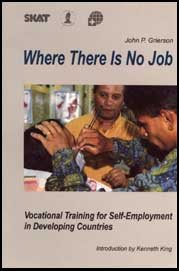
Cover Photo: Golden Fingers Barbershop, al-Minya, Egypt The owner of Golden Fingers, Mr. Salama Mohamed Ahmed, a master barber and successful businessman, is shown supervising one of his apprentices, Mr. Sayed al-Sagheer Mohamed Abdel Hamid. Following training, Mr. Sayed returned to his village and became a self-employed barber. Mr. Salama continues to serve as both mentor and business adviser to his former apprentice. Mr. Sayed's training was arranged by the Enterprise-Based Training Programme (EBT) of the Coptic Evangelical Organisation for Social Services (CEOSS). The EBT programme is described in the CEOSS case study in Chapter II. Cover Photo: Milad Mansour, 1994 |
for my father
|
| |||||||||||||||||||||||||||||||||||||||||||||||||||||||
Acknowledgements
|
I am grateful to Mr. K. K. Dutt, Chairman of CYSEC, Calcutta, for permission to use the materials cited in the CYSEC case study; to Ms. Jean Thomas, Director of NCNW's Cairo office and Mr. Nabil Samuel Abadir, Assistant General Manager of CEOSS, for permission to use the materials cited in the CEOSS case study; and to David Hancock, Chief Technical Adviser, ISTARN Zimbabwe, for permission to cite ISTARN documents. I would like to thank Fred Fluitman and Jim Tanburn of the ILO, Geneva, and Professor Donald C. Mead of Michigan State University, for their helpful comments on portions of the draft manuscript. I owe a special debt of gratitude to Professor Kenneth King of the University of Edinburgh, and to dose C. Zarraga, recently retired from the ILO, for reviewing several drafts of the manuscript. Funding for Where There Is No Job has been provided by a grant from the Swiss Agency for Development and Cooperation (SDC) While grateful to many, for insight, assistance, patience and critical comment, the views expressed in Where There is No Job, are mine and I alone am responsible for any errors or omissions. John Grierson |
|
| |||||||||||||||||||||||||||||||||||||||||||||||||||||||
The structure of the volume
In his Introduction Professor Kenneth King sets the stage by outlining the larger forces that are shaping the growing interest in self-employment, and makes the case for practical responses that are grounded in the experiences of informal sector businesspeople.
Chapter I argues for learning from traditional training systems and identifies aspects of the "crisis of vocational training" that influence the effectiveness of self-employment training programmes. Chapter I uses this combined perspective as the basis for evolving a Planning and Assessment Framework for designing, managing and evaluating vocational training for self-employment programmes.
Chapter II comprises case studies which examine the working practices of three successful vocational training for self-employment programmes: The Calcutta Youth Self-Employment Centre (CYSEC); the Refugee Enterprise Development Project (REDP), which operated in Somaliland from 1984 - 1987; and the Enterprise-Based Training Programme of Egypt's Coptic Evangelical Organisation for Social Services (CEOSS). Chapter II includes a section summarising the case studies, to facilitate the use of the case studies as training material.
Chapter III offers a brief overview of pertinent best practice in small enterprise development, and explores a number of the design issues which influence the success of vocational training for self-employment programmes.
Chapter IV is a response to Professor King's call for practical solutions to pressing problems. This concluding chapter opens with a summary of the basic characteristics of successful vocational training for self-employment programmes, and goes on to draw together the evidence of the earlier chapters into a package of practical guidelines for those directly involved in designing, managing and evaluating vocational training for self-employment programmes.
|
| |||||||||||||||||||||||||||||||||||||||||||||||||||||||
Introduction
Kenneth King1
1 Kenneth King is Professor of International and Comparative Education and Director of the Centre of African Studies, The University of Edinburgh.
Unemployment and under-employment are huge and growing global problems. The International Labour Office describes the problem as a long-term persistent trend affecting up to 30% of the global labour force, some 820 million men and women (ILO, 1994). These figures, for all their magnitude, do little to convey a full sense of the poverty and insecurity of those who face the daily challenges of life without an adequate means of livelihood. Their numbers are growing in almost all countries, and the categories of the unemployed are growing as well. Tens of millions of young school leavers, women, the recently "down-sized", demobilised combatants, displaced persons, retrenched civil servants and others are joining the ranks of those many already seeking work. Much too little is known about the extent to which training can help those who are struggling to find or create productive employment.
During the 1990s more and more governments and agencies have become aware that their policies towards education, training and employment require fundamental rethinking. At least two major dimensions of these recent policy shifts can be detected. On the one hand, the World Conference on Education For All, at Jomtien, Thailand, in March, 1990, put basic education back on to the agenda. In both sector policies as well as projects and programmes there is marked evidence of renewed commitment to basic education. On the other hand, the very search to deliver Education for All (EFA) by the year 2000 has confronted national governments as well as development agencies with the question of what might follow EFA, and the dilemma that most countries have no possibility of offering "employment for all". Perhaps surprisingly, employment has not yet been the focus of one of the grand series of world conferences, which, since 1990, have covered women, population, human rights, the environment and social development. Certainly there is at least an equal need to consider the issue of employment.
Structural adjustment programmes, the forces of globalisation and increasingly competitive markets have stripped away the protective barriers that have shielded the economies of many developing countries. In many countries, formal sector employment is too large to be sustainable, even while absorbing only a small and decreasing fraction of the economically active population. Traditional agriculture and family farms are less and less able to absorb the surplus. One of the most obvious outcomes has been the rise in the numbers of those being squeezed out of modern sector employment, and the loss of what Ronald Dore once termed "real jobs" (Dore, 1976). By the late 1980s even many of the remaining real jobs, while notionally still in the modern sector, had lost their glitter. They still offered some security, but the financial rewards had fallen steeply. It is now clear that "real jobs" offer no hope of being the answer to the growing demand for more and more jobs.
It is increasingly obvious that the great majority of the population will have to find work in small family businesses or as employees in the large and growing informal economy. The World Bank recently reported that a quarter of all non-agricultural workers in Asia and Latin America are already in the informal sector, and that the informal sector comprises up to 60% of the labour force in the urban areas of many Sub-Saharan African countries (World Bank, 1991). The Organisation for Economic Cooperation and Development estimates that, in many developing countries, the informal sector is already 30 - 70% of the economically active population, and projects that this might grow to 95% in some parts of Africa by the year 2020 (Halvorson-Quevedo, 1992).
This recognition of the informal economy as the "ordinary economy", the one where most people work and learn, has been a long time coming. Not many planners responded to the recognition of a clearly emerging trend when the Nigerian traditional apprenticeship system was first revealed, by Callaway in the early 1960s, as the entry point to a large and growing informal sector (Callaway, 1964). And when the International Labour Organisation began promoting the potential of the informal sector as a result of their 1972 Employment Mission to Kenya (ILO, 1972), there was still, for years afterwards, a tendency to think of it as merely a peripheral urban phenomenon.
Only in the late 1980s and in the 1990s has it been recognised, especially in the low and lower middle income countries, that the informal sector is a phenomenon of considerable significance and scale. It has also become understood that, due to the absence of employment benefit schemes in most developing countries, the huge majority of the population, young and old, male and female, have not been unemployed. They have always worked. The problem is that a very large number of these workers have been engaged in what is often called subsistence or survival work (McGrath, King et al., 1995).
Just as there are different levels of self-employment, there are different motivations for seeking self-employment. Many can aspire to little more than subsistence. For some self-employment is a temporary safety-net, used to prevent a personal or family problem from becoming a tragedy. But many others are seeking a step up, a firm grasp on the first rung or a second or third of the economic ladder. For these the goal is entrepreneurial self-employment rather than merely subsistence or survival. Though the ranks of the self-employed include relatively few true entrepreneurs they do include many millions who own and operate viable small businesses - and the ranks of the unemployed include many millions who aspire to join them.
The title of this book is an important pointer to several basic and inter-related truths. First, there are practically no new jobs, and especially not the "real jobs" that once inspired so much rural-urban migration and sacrificial investment in schooling and in vocational training during the 1960s and 1970s. Secondly, self-employment cannot, like a conjuring trick, solve the problem of joblessness. Thirdly, there is an important distinction to be made between subsistence or survivalist self-employment and the more viable and beneficial self-employment that is characteristic of successful self-employed microentrepreneurs.
Grierson accepts that the poor (and the not-so-poor) necessarily do work, and for long hours under often arduous conditions, in all developing countries. But his purpose here is not to present a formula that will somehow offer Enterprise For All or Productive self-employment For All. That would be a cruel mirage. His mission in this book is much more limited and more focused, and concerns the extent to which vocational training can be utilised selectively to support the creation and growth of microenterprises that are viable businesses, however modest in scale.
Where There Is No Job is not a textbook. It is a straightforward account of some of the basic principles underpinning vocational training for self-employment, with the evidence of case studies and examples to show how these principles are being applied in a variety of different circumstances. Where There Is No Job is a brief practical guide for designers, practitioners and evaluators.
Any discussion of what training can and cannot do for job creation in the face of the enormous and increasing populations of many developing countries is very timely. Most existing vocational training systems - barring traditional apprenticeships and many forms of on-the-job training - are of questionable usefulness to those seeking self-employment. They provide neither readily marketable skills, nor enterprise opportunities, nor access to business development services. Indeed, it is commonly accepted that the growing inability of training systems to support self-employment is itself a problem of crisis proportions. Hence, the growing interest in self-employment is driven by both the quest for effective means of addressing the unemployment crisis and the need to address this growing crisis of vocational training.
These twin forces are driving many agencies to rethink their education and training policies. Many have been reconsidering their attachment to formal sector-oriented vocational training and higher education, and have begun to acknowledge the potential of the informal sector. The International Labour Organisation was among the pioneers, first in its reports Rural and Urban Vocational Training (ILO, 1985: 45), and Rural and Urban Training in Africa (ILO, 1988: 14- 15), and later in the report The Promotion of Self-employment (ILO, 1990). In 1991 the World Bank devoted a sub-section of its Vocational and Technical Education and Training policy paper to "training for rural and urban self-employment (World Bank, 1991: 59-61). Germany's BMZ followed, in 1992, with a subsection of its policy paper, Vocational Training, devoted to "promoting target groups from the informal sector" (BMZ, 1992:17-20). Britain's DfID argued, in its Education Policy Paper, that there was likely to be a link between the provision of basic education and enterprise development, and that education and training might provide a link between income generation and poverty reduction (DfID, 1994: 3). The Swiss Agency for Development and Cooperation is very explicit about the priority of the "qualification needs" and development potential of the informal sector. This new priority is clearly stated in SDC's two main vocational education policy objectives:
1. Vocational and personal qualifications for craftsmen, craftswomen and workers, both employed and self-employed; and
2. Target-group, poverty alleviation and employment oriented vocational education for... people in the informal sector (SDC, 1994:17).
The problem with this rather recent pre-occupation with the informal sector, and with self-employment training, is that few development agencies (whether multilateral, bilateral or NGOs) have had long term exposure to the informal sector, and many that have, especially among NGOs, are still troubled by the very notion of individual enterprise. Those bilaterals that are particularly concerned with vocational training (e.g. BMZ/GTZ, SIDA, DANIDA, SDC) have little direct experience of the microenterprise sector amongst those responsible for formal sector vocational training. And though the multilaterals, such as the World Bank and the European Commission, have a great deal of experience in support of microenterprise, very little of this has been associated with the divisions responsible for Education and Training. In general, most agencies have until very recently talked too loosely about training for the informal sector and for self-employment. But then, so too did many national governments as they proposed that all education and training institutions be re-oriented to education and training for self-employment.
John Grierson has been intimately identified with the nuts and bolts of what works and doesn't work in microenterprise development for over 20 years. His message is refreshingly direct. It is particularly important to recognise that it is a message that does not come from a vocational trainer suddenly made aware of the informal sector, or from an educationalist worried about the follow-on to EFA, or from a social science researcher caught up in the new fascination with globalisation and its implications for local industry. Grierson is a former businessman who has been working in the field of enterprise development since arriving in Botswana in 1974 to help initiate Botswana's first business extension programme.
Because he has been a businessman he recognises both the self-help potential and the unavoidable rigours of enterprise. As a result he has long been apprehensive about approaches that treat self-employment as an option of last resort, and concerned about the often overly optimistic use of microenterprise as a mechanism for direct assistance to the severely disadvantaged and those in greatest need. Enterprise assistance for Grierson is not a medicine that can be administered to all. It is a potion best taken by those who recognise its potential, who have a personal vision of how to capture this potential - and who have at least the minimum capacities and resources to master the challenges involved. And as with all medicines, its formulation must be for a clear and specific need and its application must be in limited carefully prescribed doses.
This book looks at situations where "vocational training" seems to be an appropriate medicine to treat the problem of "no job", and at a number of programmes that have been rigorous in defining and controlling the dosage of training provided. A sense of great need and an acute awareness of limited resources underpin the thinking and practices of most of these programmes. In most cases the approaches described are based upon traditional practices - and in particular upon traditional apprenticeships. While imperfect in many respects, traditional practices have shown themselves to be widespread, low-cost, culturally appropriate, and economically sustainable. Traditional practices also have less well-known benefits. Because they are an integral part of local markets and communities they offer access to the networks of customers, contacts and suppliers that are essential if trainees are indeed to become self-employed. However, when adapted to emphasise self-employment, traditional practices present new design and management challenges. The subtle balance of incentives that motivates both employers and their apprentices changes when self-employment is the ultimate objective. Established entrepreneurs are not so clearly motivated to provide training opportunities when the apprentice's goal is self-employment. The programmes described here have had to detect and adjust to the different incentive patterns that have resulted from their emphasis on self-employment.
Grierson urges us to use the characteristics that are the strengths of traditional apprenticeship systems to enhance the design of self-employment initiatives, and to recognise the benefits of approaches that, like apprenticeship, put obligations on the trainees to be pro-active and, in a sense, the masters of their own training. This is why the case studies are so suggestive; they powerfully reinforce the message that runs through the book about the need for both market and client responsive designs for the selection, training and support of new entrants to microenterprise.
There is a strong sense that the experience distilled in this volume is reinforced by lessons from the literature. But even more persuasively, the text bears all the hallmarks of experience hard won through many years' involvement in the design, management and evaluation of training for self-employment programmes.
Kenneth King
Edinburgh, Scotland
April,
1997
|
| |||||||||||||||||||||||||||||||||||
Where there is no Job - Vocational Training for Self-employment in Developing Countries (SKAT, 1997, 81 p.)
I. Vocational training for self-employment
An aspiring microentrepreneur's perspective
My mama say that if I am apprentice to this driver, after some time I will get my own licence and then I can get my own lorry to drive. And if I save my salary end my chop money I can buy my own lorry end then I will be big man like any lawyer or doctor. So I like that and after we have paid money to the driver of "Progres" plus one goat and one bottle of Gordon gin and one piece of cloth, I become his apprentice.
Ken Saro-Wiwa, SOZABOY
Longman, 1994: 11-12
This passage, from Saro-Wiwa's novel about a young Nigerian during the Biafran War, describes a common arrangement for vocational training for self-employment, and gives evidence of just how widespread and normal such practices are. Teasing out the fundamental elements of this useful arrangement yields valuable insights for those concerned with training for self-employment.
There is an eager apprentice with a clear sense of a market opportunity, and of the training needed to take advantage of that opportunity. There is a willing master, chosen from an array of willing masters, and a well established if informal system for passing along marketable skills. Barriers to entry are low. At the outset "Sozaboy" need demonstrate little beyond the willingness to work and to learn. The apprenticeship itself is the entry point to a large, loose, overlapping and ever-changing network of owners and operators, customers, mechanics, policemen, petrol sellers and others. This enterprise network will become the market, the resource base, and the principal support system for the apprentice's future enterprise.
The training to be undertaken will serve both the apprentice's need for skills and income and the master's need for skilled labour. The investment in training needed to achieve these ends promises to be a good one for all parties. The apprentice's income will provide for his immediate needs and help capitalise his future self-employment, and as his skills increase he will become an increasingly productive employee.
Good use will be made of existing productive assets. There is little or no need for additional investment in training equipment or infrastructure and little administrative expense. Because the arrangement is culturally embedded, flexible, economically sensible, and useful to all parties, the potential for replication is good and the likelihood of sustainability is high. Indeed, utility and sustainability are being demonstrated daily in dozens of countries.
Learning from traditional practices
|
Box 1 - The Benefits Of Traditional Training Practices Traditional training practices, in common with all forms of on-the-job training, are strongly oriented towards practical work and local market demand. Informal sector trainees are exposed to most aspects of microenterprise while becoming thoroughly enmeshed in local society and the local economy. Traditional training practices provide useful skills, broad exposure to business realities, and the opportunity to cultivate the social and economic networks needed to overcome obstacles to self-employment. The business relationships that result are a low intensity, low cost and long-term form of follow-up assistance. The networks formed during training, especially the links with business owners and apprentice masters, provide readily available support during the critical early stages of enterprise "birth and survival" and opportunities for business linkages and mentoring support thereafter. Traditional training practices can provide marketable skills, access to economic opportunities, and the support system needed to capitalise on both. Source: Grierson (1995) |
Programmes to encourage self-employment and the informal sector through training and other measures are proliferating. Increasingly, self-employment support programmes are trying to learn from and emulate the traditional training practices long used by the informal sector.
Typically, training for self-employment is offered outside formal training systems, though there are noteworthy exceptions in Kenya and elsewhere, and a growing interest in formal sector training institutions becoming more familiar with traditional training practices (King, 1996b). Nonetheless, the everyday reality is that both self-employment and training for self-employment are essentially informal sector phenomena. Most self-employment is characterised by the modest physical and financial scale; low levels of technology and profitability; and uncertain and insecure legal status that are typical of the informal sector. Most training for self-employment takes place in this uncertain yet dynamic environment. Because this is the dominant reality, this book is primarily concerned with nonformal approaches to training for self-employment and specifically concerned with nonformal approaches that feature some form of vocational training as their essential element.
It is probably reasonable to ask early on: Why vocational training? Indeed, why training at all? Can training really help those hoping to become self-employed? In virtually all quarters, the current view of training is a well justified mix of scepticism and enthusiasm. Encapsulating both views, a recent report on the 1994 International Jobs Summit in Chicago observed that "the pro-training camp hugely overstate the ability of training to curb long-term unemployment" (The Economist, 1994). The simple answer though, and the answer that is the basis for most common practice and much of what follows, is that "the possession of some kind of skill or technical knowledge will make self-employment easier to enter and more productive" (King, July, 1984). Those hoping to become active in today's competitive markets need something to bargain with and the opportunity to begin bargaining. Vocational training for self-employment, when carefully designed to do so, can provide both. Increasingly, it is being recognised that market linkages through mechanisms such as apprenticeships in small enterprises, help training programmes impart marketable skills while creating access to market opportunities (Caillods, 1994).
There is much that can be learned about training for self-employment from the informal and traditional practices honoured in Sozaboy and used successfully in virtually all developing countries. Typically, these durable practices use enterprises as both the primary place of learning and as the starting point for new enterprise creation. But, durable as they are, traditional systems are in some respects quite fragile. Though the enterprises of the self-employed are typically of low technological sophistication, they operate in environments of high socio-cultural complexity. The noise and clutter of the informal sector often serves to hide the fact that traditional apprenticeships are sophisticated and subtle manifestations of the cultures they serve. This, and their clear success in their present state, are often the basis for arguing that governments and assistance agencies should not tamper with them (Fluitman and Oudin, December 1991). The limits of our current knowledge are such that it is probably best to err on the side of caution. Hence, learning from tradition - rather than proposing to modify it is the essential message offered here. The primary purpose of this book is to describe how the fundamental elements of common traditional practices have been adopted and adapted by a number of successful vocational training for self-employment programmes.
Where There Is No Job uses the term "vocational training" quite broadly to mean "learning a skill or trade in order to pursue a livelihood". For many vocational training will result in a "vocation" - which the Oxford English Dictionary defines as "one's ordinary occupation, business or profession". "Self-employment" refers to the considerable accomplishment of those who create a job for themselves and who work for their own account.
There is one fundamental aspect of self-employment that sets it apart and that highlight its importance as a means of combating unemployment and under-employment. Self-employment is economic self-help The self-employed have created new small units of economic activity; tiny businesses that are for the most part managed by their worker-owners. Successful self-employed businesspeople often go beyond this and employ others as well. And they are sometimes quite prosperous. There are, to be sure, impressive numbers of wealthy self-employed businesspeople, including many doctors, engineers, brokers and others. This book is lime concerned with this elite group of the self-employed. The vast majority of the self-employed are to be found in modest enterprises which generate little value-added and which earn only small profits, but which provide their owners sufficient income to live in modest comfort and dignity. It is this level of enterprise that we are primarily concerned with here.
Self-employment training and the ''crisis of vocational training''
Vocational training is commonly said to be "in crisis" (UNESCO, 1996), to be failing to respond to the needs of growing populations and rapidly changing labour markets. This crisis of vocational training is by no means limited to formal sector vocational training, though it is particularly pronounced there. Nonformal and NGO-based vocational training programmes also struggle to provide useful skills at reasonable cost to sufficient numbers of those in need. The crisis of vocational training has three interrelated aspects: the crisis of cost, the crisis of relevance, and the crisis of equity. Each of these aspects is examined briefly below.
The Crisis of Cost: Vocational training is inherently expensive.
Vocational training is expensive; infrastructure, equipment, training materials, and institutional and personnel overheads are all relatively costly. A large proportion of these costs is fixed. Vocational training tends to be lengthy. These structural factors, and the modest scale of many programmes, result in high unit training costs; a situation exacerbated by low and declining levels of enrolment, high drop-out rates, low post-training placement rates and limited application of the skills taught during training. Expensive under-utilised training facilities, that are seldom if ever used for commercial production, realise only a modest portion of their economic potential (Gent, 1979). The combined pressures of great need, growing numbers, and declining resources are compelling the search for less costly, more efficient and more appropriate forms of vocational training.
The Crisis of Relevance: There is a growing mismatch between the training offered by vocational training programmes and the skills needed for dynamic competitive markets.
Relevance refers to the degree to which the skills acquired in vocational training programmes can be used to meet the needs and aspirations of those who undergo training. If training is to be relevant, it must attract people, by responding to their aspirations, and serve them, by imparting skills that help them gain access to and compete in local markets. Ultimately, the principal measure of relevance is "jobs" - some form of work, either as an employee or through self-employment Overall, by this critical standard of measure, vocational training has demonstrated declining relevance in recent years. Training is not leading to work to the degree that it can and must.. And because of this well-known declining relevance, many of those who need marketable skills are "voting with their feet"; they are leaving or avoiding all types of vocational training programmes. The growing numbers of empty desks and abandoned workbenches are compelling evidence of the crisis of relevance. Many institutions and programmes are seeking renewed relevance through increased involvement in self-employment training. "In practice it has become very common to regard a reorientation towards self-employment as a major contribution towards revitalising" vocational training programmes and institutions (Hoppers, 1994).
There is as yet little to guide these efforts. Approaches based upon linkages with enterprise and industry are showing promise and are on the increase. Approaches based upon traditional practices, though newly popular in the literature and on the conference circuit, remain poorly understood and seldom effectively applied. There are still relatively few training initiatives that focus specifically on self-employment, and many of these are new and unproven. As a result, relatively little is known about how to enhance practical relevance.
The Crisis of Equity: Vocational training programmes are often difficult to access and use, especially for those in greatest need of self-employment skills.
Those seeking or needing self-employment, because of economic duress or social disadvantage, are increasingly among the target groups designated for vocational training assistance. The long-standing "crisis of equity" in vocational training poses particular problems for many of these new candidates for vocational training. Vocational training programmes often present considerable barriers-to-access and barriers-to-participation.
In practical terms, "equity" means "access" in the first instance. Equitable vocational training programmes present the lowest possible barriers-to-entry, in terms of gender, age, literacy levels, education, fees and physical proximity. Equity is not just about access, however. A foot-in-the-door is not enough. When the obvious problem of barriers-to-access has been overcome, the issue of equity quickly becomes the more formidable matter of addressing barriers-to-participation. The range and type of training choices on offer; the level, style and language of training; the manner of presentation and the teaching methods used; as well as course schedules, course structures and cultural considerations, are all common barriers-to-participation. These are just the areas that must be carefully considered when designing to avoid a crisis of equity. Vocational training for self-employment programmes must be at least as flexible as their clients, if they are to serve them equitably. Effective self-employment training programmes must be designed to reflect and accommodate the lives and the customs of those they intend to serve.
Great need, limited resources
The best way for low-income countries to use vocational training to "prepare for the future relatively efficiently and equitably" is to focus on "immediately applicable skills for self-employment in agriculture, crafts, light industrial production and commerce" (Carnoy, 1994). However, the resources available to pursue this goal are in most cases quite limited, while those in need of self-employment assistance are many. This harsh reality argues in favour of low-cost approaches, both to allow for adequate economic returns on investments in training, and to ensure that necessarily limited resources serve the largest possible number of people. Vocational training for self-employment programmes must keep costs and access barriers low, while keeping relevance and participation levels high, and they must do so for steadily expanding numbers and categories of those in need.
The following section presents a framework for designing individual approaches to vocational training for self-employment. This framework, along with careful consideration of the issues of cost, relevance and equity, will serve as the basis for much of the discussion and analysis that follows.
A framework for considering vocational training for self-employment
There are three broad stages in the training for self-employment process:
· The Selection Stage;
· The Training Stage; and
· The Enterprise Stage.
These three stages can be represented as a simple production process:
|
RAW MATERIAL |
PROCESSING |
PRODUCT |
|
————————————————————® | ||
This conceptualisation, though deceptively simple, is a useful one because it emphasises the fact that vocational training for self-employment is a process comprised of several distinct yet interrelated elements. In addition, it helps make clear the distinction between processing and product. That is, it highlights the difference between what a training programme or enterprise development agency does directly and what is expected to result from their efforts. When "jobs" - whether as employment and self-employment - rather than qualifications or numbers of graduates becomes the ultimate measure of success, it becomes both necessary and useful to think of selection, processing and product as distinct stages in a complex process.
· The Selection Stage involves the criteria and systems used for target group designation and trainee ("raw material") selection.
· The Training Stage includes the design and delivery of all forms of vocational training ("processing"), whether institution, project or enterprise based.
· The Enterprise Stage encompasses the techniques used and services provided in support of self-employment ("product") at the start-up stage, and later as follow-up assistance.
All three stages are integrated into the Planning and Assessment Framework for Vocational Training For Self-Employment, shown in Figure I, overleaf.
Figure I
Planning and Assessment Framework for Vocational Training for Self- Employment
|
Selection Stage —® |
Training Stage —® |
Enterprise Stage |
|
· Target group designation |
· Course identification & design |
· Start-up support |
|
· Trainee selection criteria |
· Training venue choice |
· Follow-up support |
|
· Trainee selection |
· Training technique choice | |
| |
· Training delivery | |
|
Raw material —® |
Processing —® |
Product |
Source: Derived from Grierson and McKenzie, 1996.
Interventions in favour of self-employment can focus on any or all of these stages, and can do so with quite varying degrees of intensity and effectiveness. The points of intervention, and the nature of the intervention, have considerable influence on the degree of self-employment success, as well as on costs and on management complexity.
Perhaps the single most important design principle is that there should be consistency throughout the training for self-employment process. Selection criteria, training approach and follow-up strategy must all be consistent in their pursuit of self-employment. Though training approaches will vary considerably according to context, target group, and the characteristics of individual training agencies, the principle of consistency applies in all cases. Vocational training for self-employment programmes must be consistent throughout all three stages of the training for self-employment process.
Errors of inconsistency are all too common. For example, those intending to use vocational training solely for access to higher education often comprise a large proportion of those enrolled in formal vocational training programmes. When allowed to do so, they severely constrain efforts to support self-employment. In cases, such as Bangladesh's rural trade schools, inconsistent selection criteria cause both inefficiency, by draining resources and misdirecting well-intentioned training efforts, and inequity, by blocking access for those who both want and need to learn self-employment skills (Becker in Fluitman, 1989).
Whether formal or informal, vocational training is inherently expensive. Vocational training for self-employment is a largely untested use of this expensive mechanism. Good programme design increases cost-effectiveness, by making best use of available resources, by helping reduce and share training costs, and by increasing overall effectiveness. When self-employment criteria and approaches are not used consistently, inefficiency will be the likely result. Ultimately, inefficiency will manifest itself in the form of high relative cost per person successfully self-employed, and low relative impact in terms of the proportion of those assisted who become self-employed. Or, more succinctly put: inconsistent programmes will usually have poor results.
|
Box 2 - The Effects of Inconsistency In 1988 the Indian government initiated a 5 year programme to re-orient 95 vocational training institutes (VTIs) to self-employment and to give 4,170 VTI graduates additional training in entrepreneurship and "demand based trades". At its conclusion the programme had admitted only 228 trainees to 18 institutions, of which 171 completed training. Few of these became self-employed. One institute, the Industrial Training Institute, Bangalore, was evaluated to ascertain the reasons for the disappointing performance. The evaluation found that was there was no provision for seeking "entrepreneurs" at the selection stage, that there was only limited local market involvement at the training stage, and that no start-up or follow-up support was available at the enterprise stage. Source: Awashti (1996) |
Though the evidence is still largely anecdotal, it is increasingly clear that the later in the self-employment process that specific support for self-employment is initiated, the less likely that self-employment will result. Merely adding self-employment support services late in the vocational training process will do little to stimulate self employment. Correspondingly, getting an early start - that is, selecting those with self-employment potential and intent - is an important success factor. The evidence strongly suggests that the sheep must be separated from the goats early on; it is unlikely that they can be changed into goats late in the process.
The actions and objectives at the raw material stage (equitable selection for self-employment potential) and the product stage (successful self-employment) must be consistent and well matched. Vocational training is simply the link between the two, though it may well be the basis for the self-employment that results. Nonetheless, even if otherwise well designed, training can do little to correct for "errors of inconsistency" at the selection stage. Getting an early start, and being consistent throughout, emerge as the basic vocational training for self-employment design principles.
|
Box 3 - Training for Self-employment: Design Principles 1. Be consistent throughout the training for self-employment process Training programmes must apply self-employment criteria and approaches curing all three stages of the training for self-employment process. 2. Concentrate on the early stages. Training programmes should concentrate on the first two stages of the training for self-employment process. They should identify and select those with self-employment potential; and they should use "training approaches that provide marketable skills and access to self-employment opportunities and support. Source: Grierson and McKenzie, 1996 |
The Case Studies in the following chapter present a variety of approaches to vocational training for self-employment. Yet in spite of their considerable diversity, they have much in common: all have responded effectively to the issues of cost, relevance and equity, all have started early, and all have been consistent in their focus on self-employment throughout all stages of the training for self-employment process. Together, they demonstrate that the careful application of a few basic principles can have considerable impact in terms of self-employment creation.
|
| ||||||||||||||||||||||||||||||||||||||||
Where there is no Job - Vocational Training for Self-employment in Developing Countries (SKAT, 1997, 81 p.)
II. Case studies: India, Somaliland, Egypt
Introduction to the case studies
The case studies that follow describe three quite different approaches to vocational training for self-employment. Two of the case studies describe programmes run by local NGOs. One of these is a long-established Egyptian social and community development organisation that is relatively new to the field of self-employment; the other, an Indian NGO created more than 25 years ago expressly to promote self-employment The third case study describes a self-employment pilot project, funded by a bilateral donor agency, that operated in Somaliland (Northwest Somalia) between 1984 and 1987.
All of these programmes demonstrate the benefits of close involvement with local markets and local communities; all work closely with other organisations having a similar interest in encouraging self-employment Though their respective locations, design details and operating practices vary considerably, all manifest a common faith in enterprise-based training. All have found that their clients form enterprise networks as a direct result of training, and that these networks do much to provide the start-up and follow-up support so needed by new microenterprises.
The chapter concludes with Case Study Summaries and a Summary of Principal Points, both of which are included to facilitate the use of the case studies for training purposes.
Case study 1 Calcutta, India
The Calcutta Youth Self-Employment Centre
|
SUMMARY | |
|
Self-employment Rate: |
68.5% |
|
Status: |
Indian NGO |
|
Location: |
Calcutta, INDIA |
|
Established: |
1970 |
|
Current Annual Budget: |
$26,4701 |
|
Trainees per annum: |
230 - 240 |
|
Cost/trainee (1994/95): |
$113 |
1 Though the annual budget has increased from 600,000 Indian rupees in 1987 to 900,000 Indian rupees in 1995, and there has been an increase in rupee terms in the cost/trainee, both the "current annual budget" and "cost/trainee" have declined in dollar terms due to the devaluation of the Indian rupee (Dutt, 1996).
The Calcutta Youth Self-Employment Centre (CYSEC) was established in 1970 by the Calcutta Rotarians (a businessmen's society) in response to the political turmoil in West Bengal State in the late 1960s. The Rotarians concluded that unemployment and underemployment, especially amongst educated youth, was a root cause of dissatisfaction and unrest. In 1985 Calcutta had 4.2 million registered unemployed. Fully half of these were classified as "educated unemployed". CYSEC was created to address this considerable problem.
CYSEC is a local initiative created in response to local needs. Over the years the support of the business community has expanded and the programme's linkages with the local economy and the local community have grown. The programme is staffed, managed and funded locally. Currently, CYSEC's funding is comprised of "interest income" (49%) and "membership fees" (1%), with most of the balance coming from local donors, local industry and the Indian government. Foreign donors provide less than I % of CYSEC's current budget (Dust, 1996). Since inception CYSEC has been shaped by its pragmatic business origins, its modest funding, and its mandate to seek low-cost local solutions to problems of daunting scale and socio-cultural complexity. Reflecting these factors, operations are characteristically lean and efficient. The operational practices of the programme reflect CYSEC's business origins. There is an aversion to "overheads" and a single-minded focus on their speciality: training for self-employment A formal evaluation carried out in 1986 by the Indian Institute of Management credited CYSEC with creating 2,000 jobs in 17 years, and with having contributed indirectly to the creation of 28,000 others (Mishra, 1986).
CYSEC has offices, workshops and classrooms on the site of the Oxford Mission of the Brothers of the Epiphany, where they enjoy security of tenure at a nominal annual rental. The site is well located in a commercial and light industrial area of south Calcutta. CYSEC's workshops and equipment are similar to those found in local light industries and small enterprises.
Approximately 12 courses, for up to 240 trainees, are run annually at the CYSEC centre. These centre-based courses are supplemented by on-the-job training and attachments in local enterprises. The completion rate is approximately 80%2, though some of the dropouts also become employed or self-employed (Mishra, 1986). Currently, 68.5% of those completing training become self-employed, 15% find wage employment, and a few become teachers. The balance are unemployed or untraceable (Dust, 1996).
2 Having recovered from a low of 69%, a rate which is itself not unreasonable by Indian standards for programmes of this type.
The annual intake of 230 - 240 trainees is selected from among approximately 700 applicants. In light of the need in Calcutta and CYSEC's track record of successful self-employment, this modest pool of applicants seems remarkably low. Two related explanations have been given for this. Firstly, there is the reported lack of an "enterprise culture" amongst the Bengalis. It is a commonplace in print and conversation that "Bengali youth are not by tradition drawn to entrepreneurial risk, and training in manual skills is not popular in the culture". This aspect of Bengali culture is reinforced by a growing worldwide "cultural bias against technical subjects" (World Bank, 1991). Secondly, CYSEC clearly presents itself as a self-employment programme. The focus on self-employment is emphatically announced in the organisation's name and consistently applied in all its practices. This may well serve as an effective "pre-selection 2 system, and discourage those who do not aspire to self-employment. CYSEC's high self-employment success rate suggests that the small number of candidates includes a high proportion of those who are predisposed to self-employment.
CYSEC has a straightforward procedure for selecting trainees. Most candidates are literate and numerate young males and females with at least 8 years of education. They must have a clear idea of the trade they wish to pursue (from among the options offered by CYSEC) and they must pass a skill test. They are then extensively interviewed and may be asked to carry out a market survey to supplement the interview process. The selection process normally requires several visits to CYSEC offices and the local market. The selection system considers four aspects: 1) general appearance and fitness, 2) business knowledge, 3) initiative and effort, and 4) a "cross check for consistency" (Grierson, 1989). Perseverance and preparation clearly increase an applicant's chances of admission, as they are expected to. Selection involves an essentially subjective assessment of the candidate's interest, perseverance and initiative as indicators of self-employment potential. There is long-standing support for this pragmatic approach. Malcolm Harper, writing in Entrepreneurship for the Poor in 1984, reported that "commitment, initiative and enthusiasm are more important than any particular skills for entrepreneurs (and that) a well managed interview procedure is probably the most effective single selection method" (Harper, 1984a).
CYSEC's success would seem to endorse Harper's early observation on what continues to be an elusive topic. CYSEC expresses confidence in their system, while noting that it is frequently modified. Clearly, a degree of credit for CYSEC's success is due to the combination of their internally evolved selection system and the "pre-selection" effect that results from their efforts to market themselves exclusively as a self-employment institution.
CYSEC offers very pragmatic training in technical and business skills along with training in 'entrepreneurship'3 . Training is offered in:
3 Principally achievement motivation training.
|
CYSEC TRAINING COURSES | |
|
· Air-conditioning / Refrigeration Repair |
· Leather Crafts |
|
· Radio & Television Repair |
· Plastic & Bakelite Products |
|
· Watch & Clock Repair |
· Computers |
|
· Bicycle Repair |
· Colour TV & VCR Repair |
|
· Women's Tailoring |
· Commercial Arts & Crafts |
|
· Men's Tailoring |
· Jute Products |
This array of courses has been considerably modified over the years and continues to evolve in response to market demand. The market for individual courses is continuously assessed, based largely upon the number of applicants for each training place, and the history of each course's success in terms of self-employment. Course identification and assessment is both market and client responsive.
In addition to their own modest workshop-cum-classrooms, CYSEC uses a wide variety of other training sites, including small enterprises, and local industries and indeed any "real" site where marketable skills can be acquired. Workshop practice and classroom training is supplemented by enterprise-based training to give trainees exposure to market realities, and to help them develop the market contacts which result in sub-contracts and other types of business linkages and support4 .
4 The 1986 evaluation recommended less training in large businesses and encouraged more interaction with "relevant trades" and more "experience learning" in the small and informal enterprises which correspond in style, scale and scope to the enterprises trainees intend to start. (Mishra, 1986.
In 1986 CYSEC provided credit (loans) to 60% of all graduates, and had a 70% loan recovery rate. While low by international development lending standards, this recovery rate compared favourably at that time with the Indian norm (~ 40 %) for lending to the microenterprise sector (Mishra, 1986). CYSEC's Revolving Credit scheme has since been discontinued in that loans are now easily available from state owned banks. CYSEC trainees now deal directly with local banks. CYSEC limits it credit role to "liaising with the banks on their behalf" (Dust, 1996).
CYSEC is noteworthy for its limited volume, but relatively wide and unstructured range of follow-up support. Follow-up support includes retraining, customer referrals, marketing advice, intervention with suppliers and officials, and access to CYSEC workshops for up to one year following graduation. The 1986 evaluation found that most follow-up involved problem cases, loan collection, general fact finding and ad hoc advice. Most graduates received only an annual visit (Mishra, 1986). Interviews with extension staff revealed that "liaison with the local market", rather than the delivery of conventional support services, was a typical follow-up action (Grierson, 1989). The proportion of follow-up devoted to general networking, liaison and referral has increased markedly since the winding down of the revolving credit scheme. The distinguishing characteristics of CYSEC's follow-up system are responsiveness to entrepreneur-diagnosed problems, low-cost, and the limited level yet wide range of support services available.
CYSEC's impressive 68.5% success rate and very low cost together make a strong case for the merit of their specialised and minimalist approach. CYSEC's self-employment system is consistent and successful, particularly in the early stages. The combination of careful selection for self-employment potential, followed by training in marketable skills using techniques that help develop individual enterprise networks, clearly works. As a result, little is needed following training. CYSEC is a model programme in this regard.
CYSEC is a busy dynamic organisation one with a businesslike approach to translating the social concerns of some quite senior business people and officials into a low-cost pragmatic self-employment programme.
CYSEC's defining characteristics are:
· CYSEC has been specialised and minimalist since its inception more than 25 years ago.
· CYSEC is a local organisation CYSEC was locally initiated, and is locally funded, staffed and managed.
· There is a secure institutional base and a stable if modest funding base.
· The programme's approach is pragmatic, flexible and responsive.
· There are extensive linkages with local markets and communities through vibrant institutional networks.
· The training approach used helps trainees develop the enterprise networks needed to start and sustain self-employment
· Programme administration has been consistently businesslike and efficient.
Case study 2 Hargeisa, Somaliland (Somalia)
The Refugee Enterprise Development Project
|
SUMMARY | |
|
Self-employment Rate: |
45% |
|
Status: |
Pilot project, bilateral donor |
|
Implementing Agency: |
International NGO |
|
Location: |
Hargeisa, Somaliland (Somalia) |
|
Established: |
1985 |
|
Concluded: |
1987 |
|
Annual Budget: |
$450,000 |
|
Trainees per annum: |
125 - 175 |
|
Overall Cost/trainee (1987): |
$2,500 |
|
Direct cost/trainee: |
$20 - 60 / trainee / month |
The Refugee Enterprise Development Programme (REDP) operated from 1985 - 1987 in Northwest Somalia, a land now identified by its citizens as the Republic of Somaliland. The REDP was suspended in 1987, following the escalation of civil war and the breakdown of civil order. The primary objective of the REDP was self-employment creation. The REDP approach was based on a modified form of traditional apprenticeship. The principal target group was a stable refugee community who were, for the most part, ethnic Somalis from the Ogaden region of Ethiopia. The balance of the REDP's self-employment trainees included at least an equal number of local citizens. The programme also worked closely with and assisted many local businesspeople. In spite of a long period of war and social disruption a number of the microenterprises started with the REDP's assistance are still in business today. Some of these self-employed entrepreneurs have become master craftsmen and trainers as well.
The training approach used, "supervised traditional apprenticeship", is derived from common West African practices. Self-employment training in local enterprises was arranged and structured by the REDP, usually in close collaboration with the trainees themselves. The inherent familiarity of the traditional apprenticeship approach contributed to its immediate and easy acceptance by both refugees and local business people.
In a period of 26 months from January 1985 through February 1987 the REDP arranged 31 traditional apprenticeship programmes in 17 different skills for more than 250 trainees. A few of the courses had 20 or more apprentices - notably building construction and cash-crop farming though most had only four or five. Nearly half of all trainees started new microenterprises as a direct result of their apprenticeships, usually within a few weeks after completing training. Training courses included men's and women's tailoring, baking and confectionery, specialised building construction (e.g. roof construction), general building contracting, leather and metal work, sign painting and commercial art, poultry production, and cash-crop farming.
A fundamental aspect of the programme was that every course was ultimately determined the trainees themselves, rather than by project staff or by a pre-existing plan. The course identification and design process began with the business ideas of prospective trainees. The REDP assessed the viability of the trainees ideas, worked with the trainees to identify suitable businesses to serve as "apprentice masters", and structured training programmes that emphasised a quick transition to self-employment. Identifying self-employment opportunities was the responsibility of the trainees. The role of the REDP was to test and confirm the viability of the trainee's ideas, to identify a point-of-entry through an apprentice master, and to structure a training programme that aspired to provide little more than the minimum needed to initiate self-employment..
The types of opportunities that emerged in Somaliland in the late 1980s, and the courses used to capture these opportunities, are themselves of no particular significance. Different opportunities emerge in different circumstances. The opportunities for self-employment that existed in Somaliland in the mid- 1980s would not have been the same elsewhere. Indeed, they were not the same in Somaliland a few years later, and would not have been the same even then for a different group of trainees. Hence, this case study does not emphasise types or categories of skills, and cautions against efforts to try to identify and pre-select lists of courses or self-employment opportunities.
The REDP had no classrooms, equipment or machinery. Tools and expendables were purchased from the local market as needed. The REDP's design took advantage of one of the principal benefits of enterprise-based training: training resources are available in local businesses because they are needed there for work. The REDP co-opted the infrastructure of the enterprises the programme co-operated with, but did so only for the limited time needed for each individual training course. As a result, the programme had a high degree of ability to respond to the insights and imagination of the trainees.
The REDP did not attempt to respond to all trainee identified market opportunities. Course selection was guided by the following selection criteria:
· a minimum of 3-5 qualified candidates per course, to make it worthwhile for the project to organise an apprenticeship programme;
· the availability of a willing and capable local businessperson, to serve as the "apprentice master";
· the possibility of capitalising each new business with less than US $50 (local currency equivalent);
· trainees were responsible for raising their own start-up capital;
· the training proposed had to offer clear evidence of self-employment potential;
· training, to entry-level competency, had to be possible within six months.
Many proposals were rejected; including welding (because of the high capital requirement) and motor mechanics (because of the lengthy training required). Most apprenticeships lasted less than 6 months. Some were as short as a few weeks. Apprenticeships usually lasted between four and six weeks. The minimum time needed to acquire entry-level self-employment skills was the primary factor affecting the length of individual apprenticeships.
Apprentice masters were recruited from the local business community, usually following a trainee request or recommendation. The masters then helped programme staff test and select trainees and design training courses. The course identification and design process was highly interactive and participatory. The ideas of the trainees were important because the REDP looked at the local economy through their eyes. The judgement and the participation of the masters was critical because the masters, rather than the project, were the trainees' principal mentors as they struggled to become self-employed. Apparent potential for self-employment was the key factor in the trainee screening and selection process. In some cases the selection criteria included specific skills required by the apprentice masters, such as basic literacy and numeracy for the sign painting apprenticeships. In all cases, the REDP required prospective trainees to demonstrate evidence of entrepreneurial ability. The REDP's selection system looked for the following evidence of self-employment potential:
· candidate trainees had to show initiative, first by approaching the REDP (they were not recruited by the programme);
· they had to be able to clearly describe their business idea or plan (in spoken Somali);
· they had to find their own start-up capital;
· they had to obtain and present bureaucratic approval from the local government or the refugee authorities (an often arduous task);
· they had to help design their own apprenticeships; and
· (if requested to do so) they had to carry out an informal market feasibility study.
When a course had been agreed, and the trainees selected, the programme staff worked with the apprentice masters to develop a self-employment focused training curriculum. This curriculum served as the basis for the supervision that was to follow. The REDP provided limited materials, technical advice if needed, and close supervision throughout. The masters had a formal contract with the programme, and each trainee had a formal contract with his or her master. Masters were paid a "master's fee", based on the number of trainees they trained, and trainees were paid an "apprentice wage". The apprentice wage, set at half the prevailing rate for unskilled day labour, was paid by the REDP to the trainer, who then paid the apprentices. The details of this arrangement are important in several respects. By having apprentices paid directly by their masters, the programme sought to foster normal commercial relationships from the start of training. The apprentice wage was set very low to discourage dependency on the programme or, indeed, on any form of wage employment. No other payments or subsidies were provided to trainees.
The REDP provided no form of credit or other direct financial assistance. The REDP did, however, assist apprentices in identifying potential lenders and investors, and occasionally helped arrange commercial (supplier) credit. In most cases, however, the trainees provided their own start-up capital. The ability to so was a key selection criterion. In practice enterprises were readily financed with personal savings, informal loans from friends and relatives, and eventually from the internal cash flow of the enterprises themselves. This approach to startup credit, as with the approach to skills training, attempted to understand and co-opt traditional mechanisms. The refugee entrepreneurs of northwestern Somalia confirmed the conventional wisdom that self-financing is overwhelmingly the normal process of self-employment capitalisation.
The REDP encountered no resistance from local entrepreneurs. Indeed, the supply of masters willing to train in their own businesses always exceeded demand by a large margin. Asked why they would agree to train their future competitors the apprentice masters of Somaliland responded as follows:
Competition improves the quality of work and motivates me to work more. [Electrical contractor]
Today's trainees are my competitors in the long term, but presently they cannot compete with me. Competition is the spice of business development by creating the will to work, to improve and to be alert. [Restaurant owner]
I am confident of my ability and my business. The trainee graduates do not threaten me. Besides, I would like to help others get into business. [Commercial baker]
I provided training for economic reasons. Trainees are future competitors but present economic circumstances influenced me in my decision to train them. I would encourage more persons to be in the tailoring industry as it creates more fashion, more designs and competition. [Tailor]
Source: Ferrera and LaTowsky (1987)
In many cases the enterprise networks of the former apprentices continue to include the master craftsman or craftswomen who trained them. Many self-employed former apprentices continue to have commercial dealings with their former masters; some joined their trainers as employees for a time before going on to become self-employed. A number of those trained in building construction sub-contracted their former masters to inspect their work at building sites; others used their embryonic enterprise networks to borrow tools or obtained scarce supplies. Still others, when self-employed, paid their masters to provide further training in specialised skills. Not all trainees maintained ties with their masters, but many of those who did derived valuable support from the relationship (Ferrera and LaTowsky, 1987).
Said Ahmed Elmi, now 30 years old, is one of those who has used the training provided by the REDP to become self-employed, and the network relationships established during training to help his business survive and grow. He has used his skills and networks to overcome considerable adversity, and he has gone on to become a teacher and apprentice master himself. When Said was 14 years old he lost the use of his left leg as the result of an allergic reaction to medical treatment. In 1986, when he was 19, he received training as a shoemaker from Omar Ayeda, a master shoemaker brought from Mogadishu by the REDP to train aspiring shoemakers. After completing training he became a self-employed shoemaker in Hargeisa. In 1988, following the outbreak of war in Northern Somalia (now Somaliland), he fled to Mogadishu where he joined his former apprentice master as an employee. When war broke out in Mogadishu in 1991 he returned to Hargeisa, where he again established himself as a self-employed shoemaker. Though his work has been disrupted several times by the civil war that broke out in Somaliland in 1994, he continues to produce shoes and to train others as well. Said Ahmed Elmi has become a master shoemaker. For many years now he has been a member of the workers cooperative of the Somaliland Handicap Training Centre in Hargeisa, and one of the Centre's shoemaking instructors (Grierson, 22 March 1997).
The supervised traditional apprenticeship approach used by the REDP is relatively management intensive. Because enterprise-based training, including traditional apprenticeship, is not fundamentally oriented to self-employment; supervision is needed to ensure that self-employment is consistently emphasised and that appropriate training is imparted during short intense programmes. The essential simplicity and familiarity of the model does not reduce the importance of close supervision. In the REDP's case all apprenticeship supervision was provided by local non-professional staff5 .
5 The two other case studies included in this chapter also demonstrate that the management skills needed to administer and supervise enterprise-based training for self-employment are readily available locally at relatively low cost.
The REDP's cost per trainee was approximately US $2,500, a level of cost that is not thought unreasonable for a short-term pilot project under expatriate management. There is, however, little evidence to form a sound basis of comparison. More importantly, and more usefully, the REDP had direct training costs (exclusive of overheads and international and expatriate costs) of less than US $60 per trainee per month. This moderate level of direct cost compares favourably with many other programmes, and probably gives a more realistic sense of the likely cost of replication elsewhere.
The financial lesson of the REDP is clear: the principal resource needed - local businesspeople - is both low-cost and readily available. Many of these businesspeople are already providing training to apprentices. Careful design and close supervision, rather than expatriate staff and external funds, are the basic elements needed make local enterprises effective partners in the process of vocational training for self-employment
The principal characteristics of the traditional apprenticeship approach used by the REDP are:
· The REDP approach is based on traditional West African apprenticeship practices.
· Enterprise-based training is emphasis Ed, requiring strong and active linkages with local small enterprises.
· Local enterprises were willing partners in the self-employment training process.
· Enterprise-based training uses the infrastructure, equipment and staff of local enterprises; teaching staff are not needed; infrastructure and equipment requirements are minimal.
· Direct training costs are low, there is a high degree of operational flexibility.
· The market-based approach of the REDP is both client and market responsive.
· Business opportunity identification, and training course selection, are based on the trainee's ideas.
· The principal role of the project is to test, validate and respond to the trainee's ideas.
· Supervised traditional apprenticeships require close and constant management.
· Traditional apprenticeships facilitate enterprise network formation.
· Enterprise networks help create access to self-employment opportunities, and reduce the need for assistance programmes to offer start-up and follow-up support.
Case study 3 Cairo, al-Minya and Asyut, Egypt
The Enterprise Based Training Programme of the Coptic Evangelical Organisation for Social Services
|
SUMMARY | |
|
Self-employment Rate: |
18%6 |
|
Status: |
Egyptian NGO |
|
Location: |
Alexandria, Cairo, Upper Egypt |
|
CEOSS Established: |
1952 |
|
EBT Programme Established: |
1993 |
|
Annual Budget (EBT programme only): |
$46,0007 |
|
Trainees per annum: |
80 |
|
Cost/trainee(December. 1995): |
$179 |
6 The EBT programme's principal outcome objective calls for 40% of all trainees to get new wage jobs or start new self-employment:. The cumulative result as of the December 1995 was 31%, of which 18% was new self-employment (Grierson and Makarem, December, 1995).
7 The EBT programme operates considerably below budget. When evaluated in November 1995 it was operating at approximately one-third of projected costs (Grierson and Makarem. December. 1995).
CEOSS, the Coptic Evangelical Organisation for Social Services, was established in 1952 as a literacy program. CEOSS, said to be the largest NGO in the Arab world, is a private, non-profit Egyptian social development organisation registered with the Egypt's Ministry of Social Affairs. CEOSS provides social, educational and economic services and support to poor communities of all religious denominations in al-Minya and Asyut Governorates, Metropolitan Cairo and Alexandria. CEOSS is a large, well-established and multifaceted institution with a clear and constant focus on the disadvantaged and a reputation for commitment and effectiveness.
Economic development programmes are among CEOSS's newest activities. Collectively, they represent a distinct broadening of operational focus, one that is consistent with a long-standing tradition of thoughtful innovation and continuous and careful expansion of services. CEOSS is organised into five operational "sectors". CEOSS has a large number of long-standing agricultural and dairy programmes, and a diverse array of continuing education, training and community development programmes. Economic development activities fall under the Development Sector, and are administered by the Economic Development Department. The Economic Development Department is responsible for two principal areas: "housing and basic services", and "income generation". The Income Generation Unit is in turn responsible for all enterprise development activities. There are three recently introduced enterprise development activities:
· Credit for small
enterprise;
· Business Management Skills
Training;
· Enterprise-Based Training.
The Enterprise-Based Training (EBT) program is the newest and probably the most innovative of CEOSS's economic development activities. The EBT program is a pilot project designed to develop and test a low-cost, replicable model for NGO-managed skills training for employment and self-employment. The programme's numerous target groups include the rural poor, women, unemployed youth, the educated unemployed and apprentices with self-employment potential. The basic approach adopted, enterprise-based training (EBT), uses the enterprises of successful businesspersons as the principal training venue. Enterprise-based training is being tested as an alternative to the conventional and expensive "institute-based training" approach CEOSS has used in the past. The EBT programme is CEOSS's response to a "crisis of vocational training" within its own vocational training programmes. CEOSS has largely withdrawn from formal institute-based vocational training.
In Egypt some form of enterprise-based training, commonly traditional apprenticeship, is still by far the normal system of skill acquisition for both employment and self-employment (Assad, 1993), as it has been for 5,000 years. CEOSS's EBT pilot project is a modern adaptation of this centuries old traditional training technology. The innovations that are an important aspect of this adaptation, and that are the defining characteristics of the EBT programme, are:
· expanding the range of intended outcomes, principally to stress self-employment;
· expanding the categories of those intended to benefit, specifically to include the socially marginalised, women, and educated youth;
· using the business ideas of prospective trainees as a mechanism for helping ensure that the EBT programme is "demand-led":
· emphasising the benefits for the trainees, as well as the benefits for the trainers; and
· experimenting with NGO management of the EBT process, with a view to developing a replicable methodology for training for self-employment within a balanced focus on both social and economic issues.
CEOSS's attempt to adopt and adapt a traditional training technology is though to be unique amongst Egyptian development agencies. Logically, it might be inferred from this that there is a high degree of risk inherent in the EBT pilot project. However, because the basic methodology is common, culturally embedded, and cheap, and because the programme is supported by CEOSS's strong and efficient institutional base, there is little apparent risk. The EBT experiment is already demonstrating steadily improving results in terms of employment, self-employment and enhanced economic productivity. An evaluation of the first two year phase of the EBT programme found that the CEOSS EBT approach was well established, operating efficiently, and clearly demonstrating the potential to develop into a useful and replicable model for enterprise-based vocational training for self-employment (Grierson and Makarem, December 1995). There are a number of aspects of the EBT programme that are of particular interest.
The programme includes a high proportion of women. Overall, more than 50% of the trainees are women, an impressive accomplishment for a vocational training programme of this type. It is worth noting that this has been achieved while operating in the villages and rural areas of a traditional conservative society. This accolade requires some qualification. Though apprenticeships have been arranged in more than 27 different skill areas, only a few of these include women. This pattern of concentration is not unique to Egypt or North Africa. Broad-based evidence from many developing countries confirms that there is a common and consistent pattern of concentrating women's small business activities within a narrow range (Liedholm and Mead, March, 1997). In spite of the constraints of the limited range of opportunities for women, CEOSS strives with some success to maximise the number of opportunities within this limited range. The near universality of the phenomenon of gender concentration of economic activity would seem to confirm the wisdom of CEOSS's approach.
The EBT is a conspicuously low-cost programme. In part this is due to the inherent efficiency of enterprise-based training, but much of the credit is due to the fact that the EBT programme operates as a department of a large well established organisation that is itself operationally efficient. The EBT programme operates within a administrative context characterised by low operating costs, long outreach, extensive institutional networks and considerable management capacity. The EBT programme gets many benefits from this strong institutional base. Among the most direct is that CEOSS can assign the skilled field staff needed to administer an inherently management intensive mechanism. There are more subtle, and perhaps more important, benefits that derive from belonging to a large locally integrated social development institution. Because of the nature of its work, and the nature of how it goes about this work, CEOSS is a well-established and respected member of many urban and rural communities in Egypt. This high degree of community credibility and involvement gives the EBT programme automatic access to an extensive and useful array of social, economic and institutional networks. The EBT programme has used and expanded these networks, both in pursuit of enterprise-based training opportunities for their trainees, and as part of their efforts to help their trainees find jobs or start and sustain self-employment.
Being a small part of a large parent organisation is not without its costs. The fundamental values and practices of CEOSS are based on its principal mission as a social development organisation The EBT programme has not always found it easy to reconcile the need to be consistent in pursuit of self-employment with the corresponding need to operate within the values and practices of an organisation with a strong social and community development culture. While there is no evidence that seeking a suitable balance has compromised consistency at the selection stage, it has made it relatively easy for the programme to justify a degree of reversion to institute-based training, and to gradually expand the extent and the range of training subsidies and follow-up support. In its struggle to balance a challenging array of social and economic values, the EBT programme has lost some of its original emphasis on minimalist demand-led self-employment training.
This is most apparent, at the training stage, in the reversion to institute-based training, for the most part in quest of additional training opportunities for women. A well-intentioned effort to emphasise equity has come at the cost of a reduced emphasis on relevance. By reverting to the earlier CEOSS practice of being "training opportunity-led", the EBT programme has inadvertently reduced the degree to which it is led by clear evidence of client and market demand for self-employment opportunities.
The reduced emphasis on minimalism is most apparent, at the enterprise stage, in the tendency to increase the array of EBT programme supplied follow-up services, particularly for those who have not been successful in becoming employed or self-employed. These two tendencies; a degree of operational inconsistency and a reduced emphasis on demand-led minimalism, are mutually reinforcing. The reversion to institute-based training has probably reduced the likelihood of immediate self-employment, which in turn has led to a tendency to increase start-up and follow-up support in an effort to compensate.
CEOSS's EBT programme is a useful demonstration of the formidable challenge of struggling to maintain the principle of consistency in the face of the often conflicting demands of cost, relevance and equity. It must be noted that the somewhat diminished attention to the principal of consistency has had only a modest effect on the programme's comparative efficiency. The EBT is, in any case, a very low-cost programme. In all likelihood, however, it has constrained effectiveness, by reducing the degree of emphasis on approaches with high self-employment potential, and by directing management efforts and project resources towards practices that do little to support self-employment.
A universally recognised self-employment maxim is that work experience is good preparation for self-employment. Formal vocational training, particularly for those with work experience, also seems to be an asset. The EBT programme includes among its trainees many who have either or both work experience and some previous formal vocational training. Many of these educated unemployed have sought access to the EBT programme in the hope of using these assets to become self-employed. Though this particular issue has not been investigated in detail the anecdotal evidence suggests that the EBT programme is very effective in adding, quickly and at low cost, the market access opportunities and practical business skills needed to convert work experience and previous formal skills training into productive self-employment..
The principal characteristics of the CEOSS Enterprise-Based Training programme are:
· The EBT is an innovative pilot project, charged with testing and refining a model that can be widely replicated by other NGOs.
· The EBT programme is a small innovative component of a large long-standing organisation which has excellent linkages with many urban and rural communities.
· The EBT programme draws on CEOSS's community linkages to generate training opportunities.
· The enterprise-based training approach used by the EBT facilitates the formation of individual enterprise support networks, and these, in turn, increase access to both self-employment opportunities and follow-up support.
· No project based teaching staff are needed, the EBT approach is being developed as an alternative to institution based vocational training.
· Operating costs are very low.
· There is a high degree of operational flexibility, the EBT approach is both client and market responsive.
· The parent organisation has sufficient numbers of qualified and motivated staff to ensure the level of supervision that enterprise-based training for self-employment requires.
· The EBT programme is efficiently administered, clearly documented, and closely monitored.
Case study summaries
· India's CYSEC is in all respects a local NGO. CYSEC was founded for the specific purpose of self-employment creation, using vocational training as its basic approach from the outset. CYSEC was initiated by business interests for the purpose of business creation. It has retained its clear focus and strongly 'businesslike' character over more than 25 years. CYSEC manifests a high level of consistency in its objectives, values, operational emphasis, and style of management. CYSEC is an efficient successful low-cost programme.
· Somaliland's REDP was a short-term (2.5 year) self-contained pilot project funded by a major bilateral donor and implemented under expatriate management by an international NGO specialising in small enterprise development. The purpose of the REDP was to develop and document an effective approach to vocational training for self-employment in a severely distressed economy. The "supervised traditional apprenticeship" approach used was based upon well-documented West African practices. The traditional apprenticeship approach was specifically selected for its emphasis on local resource use and its ability to facilitate the social-economic integration of socially marginalised groups. The REDP was more effective than anticipated (in terms of successful self-employment), though at relatively high cost. The REDP's cost structure was typical of an externally derived and expatriate managed pilot project.
· The Enterprise Based Training (EBT) Programme of the Egyptian NGO CEOSS is a recent initiative of a large long-established Coptic NGO with a strong background in education, literacy, health, agriculture and community development. Bilateral donor support helps fund the EBT's operations and pays for periodic external evaluation. The EBT programme is CEOSS's response to a "crisis of vocational training" within its own vocational training programmes. CEOSS has largely withdrawn from formal vocational training. The EBT programme uses a low-cost traditional apprenticeship approach. The programme includes many women among its trainees, and operates successfully in both urban and rural areas. Though the EBT programme is markedly market-oriented in conception and notably efficient in practice it is struggling to reconcile the realities of a fundamentally economic design with the values of an organisation with a strong social orientation. The EBT is moderately effective (in terms of self-employment) after only a short period of operation.
Summary of principal points
· In all three cases there is a consistent focus on self-employment principles and practices throughout the training process.
· All of the programmes place considerable emphasis on selection, with selection in most cases based on a careful balance of equity and self-employment potential.
· Extensive use is made of enterprise-based training and traditional training techniques, particularly traditional apprenticeships.
· There is extensive and multifaceted involvement with local markets and local communities; all of the programmes described in the case studies are active members of local institutional networks.
· All of the programmes are "minimalist" training programmes; all of them specialise in training for self-employment. Relatively little start-up or follow-up support is provided by the programmes directly.
· All three programmes are effective; the two local NGOs (India and Egypt) are also very low-cost. Self-employment success rates are in general quite good, with the well-established specialist programme in Calcutta achieving exceptional results.
· In two cases (Somalia, and to a much more limited extent, Egypt) funds and expertise are provided by external donors. In all cases, however, management skills and training resources are drawn primarily from local communities and markets. As a result the approaches described in the case studies offer good prospects for replication and sustainability.
|
| ||||||||||||||||||||||||||||||||||||||||
Where there is no Job - Vocational Training for Self-employment in Developing Countries (SKAT, 1997, 81 p.)
III. Designing for self-employment: Evidence from best practice
Self-employment policy
The clearest lesson learned about enterprise development in recent years is that all types of business are easier to establish and ultimately more successful if framework conditions are positive - that is, if there is an "enabling policy environment". It is widely accepted "that the creation of employment and incomes through the promotion of self-employment and microenterprises is foremost determined by macro policies" (Haan, 1994). Ideally, there should be positive economic incentives for enterprise and a supportive legal and regulatory environment to encourage people to take advantage of the opportunities created by positive economic incentives. There has been great improvement in recent years in the overall economic policy in most countries. In general, the trend is towards policies that are increasingly favourable for small enterprise. Somewhat paradoxically, however, the very forces that are shaping an improved overall environment for small enterprise in the long term are exacerbating the unemployment crisis and driving more and more people into self-employment in the short term. The purpose of this book is to help improve self-employment training; primarily for those struggling to accommodate the negative effects of this rapid and dramatic change, but also for those more fortunate individuals who are simply taking advantage of the improved business climate. The emphasis here is on responding effectively to current reality, rather than on attempting to shape broaden economic policy.
The conventional wisdom: still valid
In all countries, rich and poor alike, policy improvement alone will not be sufficient incentive, particularly in those many cases where macroeconomic change is slow or ineffective or considerable social disadvantage need be overcome. In such cases external support is needed to compensate for the market's inevitable failings. Much has been learned in recent years about direct interventions in support of micro and small enterprise and much of the conventional wisdom remains valid. First and foremost, the evidence past and present continues to affirm that all types of enterprise development initiatives benefit greatly from close involvement with local markets and local communities, and that the local knowledge available in these communities has much to offer:
Those who are anxious to promote small enterprises should always look first at existing practices and institutions rather than attempting to create new ones (Harper, 1984b).
The most effective projects ... are responsive to the plans and desires of those they serve and reflect the level of skills and knowledge that commonly exists in the community (Farbman cited in Remenyi, 1991).
Beyond these solid basics much has been learned about micro-credit delivery and traditional apprenticeship training techniques, about the need for careful target group identification and entrepreneur selection, and about the need for follow-up, and about many other aspects of a diverse and complicated field. Taken together, the current knowledge of enterprise development is probably the single most useful contribution to the training for self-employment learning process that many agencies and institutions are going through today. A number of best practice principles have emerged to help guide the design and management of self-employment training initiatives.
Design is important. Though this simple statement invites little dispute there is a considerable gap between best practice and common practice. In all too many cases opportunities for efficiency are lost to the twin failures to accurately determine what is needed and to then provide appropriate services in timely convenient fashion. Characteristically microenterprise development programmes offer either low-level standardised packages of services, a supply-oriented approach that is inherently inefficient and "particularly prone to subsidy to encourage use" (K�nig, 1992), or they approach enterprise creation through the careful formulation of a "business plan". Neither approach is likely to address the real needs of the prospective self-employed because neither is consistent with small enterprise realities and neither is sufficiently responsive to the transitory opportunities offered by fast changing informal sector markets.
It is characteristic of small and micro-enterprises everywhere to want and need quick, short-term, specialised services that are tailored to immediate and specific needs. Few self-employment programmes manage to respond to such needs in a businesslike way. In small and micro-enterprise development generally, and in enterprise training particularly, supply and demand are not well matched. This mismatch is the fundamental failing of self-employment training programmes everywhere, and the root cause of so many discouraging evaluation reports and discouraged entrepreneurs. All too often self-employment creation programmes remain mired in the comfort of responding to their own plans rather than face the challenge of planning to respond to the needs of their clients.
Small enterprise creation is an erratic, iterative process. Howard Aldrich describes the process as rapid, incremental, and unplanned and questions the viability of approaches based on "careful long-term planning" (Aldrich et al., 1987). Alan Gibb has long been on record with the view that business start-up "will not be one of scientific and logical progress but frequently one of trial and error" with setbacks and diversions likely as changes in the environment and the entrepreneur affect progress (Gibb and Ritchie, 1982). He stress the importance of being able to respond to needs that are unpredictable in type and pattern: because "most small business will not operate with highly formal business plans", their time horizon is short and their thinking and planning strategic in nature (Gibb, 1996). This accords with the growing evidence that the function of support interventions, is not that of predicting or "diagnosing needs, but rather of satisfying them by responding to specific requests" (Birley, 1985). "It therefore makes no sense to work out in advance a standardised action plan for all enterprises covering discrete aspects of their promotion (i.e. credit, training, technology, technical advice or market access)" (Maldondo and Sethuraman, 1993).
''Minimalism'' and vocational training for self-employment
In spite of considerable diversity of programme design and approach, basic issues are often reasonably clear. It has been more than adequately demonstrated that it is neither efficient nor effective for individual programmes to have extensive menus of resources available in the hope of having the right combination available when opportunities arise or problems appear (McLaughlin, 1989; K�nig, October, 1992). "The cost and complexity of 'package' based approaches make sustainability unlikely" (Boomgard, 1989). Integrated packages of services seldom work well, are prohibitively expensive, and are extremely difficult to staff and manage (Tendler, 1989). Because of these factors, approaches based on packages of services offer little hope of serving the huge and growing numbers of entrepreneurs needing assistance (McGrath et al., 1995).
Impact and efficiency tend to follow focus and specialisation. There is ample evidence that narrowly focused and specialised approaches are more effective. Carl Liedholm and Donald Mead, in an early opinion many times endorsed, found that "successful projects have typically uncovered a situation where there is only a single 'missing ingredient' ... where intervention was to provide an integrated set of multiple ingredients the results were largely failures" (Liedholm and Mead, 1987). This narrowing of focus to a few key elements is commonly referred to as "minimalism" - an understanding sometimes narrowed further in popular usage to mean "micro-credit only". Certainly it is micro-credit that has earned minimalism its good reputation. In terms of accuracy of needs assessment, efficiency of delivery and progress towards institutional sustainability, minimalist credit systems are more "developed" than all other forms of small enterprise assistance. Nonetheless, minimalism is not a concept that is limited to micro-credit alone.
Key aspects of minimalism, in both financial and non-financial services, are the degree to which it reveals the real demand for the specific service on offer - the basis for effectiveness - and its potential for low relative cost and high relative value - the basis for efficiency. In general, there is a pragmatic trend in training programmes towards a more businesslike focus on specialisation. a trend tempered by concerns that: "the question of how to reach the enterprises whose needs cannot be satisfied by the minimalist strategy remains unanswered" (Boomgard, December, 1989). The successes of minimalism offer certain evidence that a great deal has been learned about how to respond with reasonable efficiency to demands for a wide variety of business development services and - much credit due - how to design training programmes that reach the poor and disadvantaged.
To be sure, many of these success stories describe minimalist credit and poverty lending programmes. However, this should not be taken as evidence that little more than credit is needed, or that small enterprises do not want or cannot afford training and other non-financial services. The many fee-charging for-profit training agencies, consultants, and schools in evidence in every developing country all serve to question the wisdom of this all-too-common view. The market for useful training certainly exists though serving this market is a challenge that has yet to be mastered. Doing so will involve identifying effective operating approaches as well as identifying missing ingredients. There is an opportunity at hand to learn from many of the well known traditional practices that are efficiently minimalist in their approach to vocational training for self-employment.
The market and community context
There is a broad and eclectic endorsement of the trend in vocational training and self-employment towards increased market and community involvement at all levels, and particularly with the informal sector (King, 1996b). There is a growing recognition of the need to take into account the "dynamics of the informal sector, and to draw upon the organisation ingenuity and skills of the small producers themselves in upgrading skills (to include) training of artisans, by artisans, who are themselves involved in all stages of the process of designing and delivering training" (ILO, 1990).
Increasingly, effective self-employment programmes are developing institutional networks that include partnerships with the local business community and co-operative relationships with many types of enterprise support institutions. These new partnerships with small businesses and the informal sector are often more complex than classic "dual system" arrangements. They are characterised by a much higher degree of socio-cultural complexity, they have a different fundamental objective and they involve quite different incentives to participate (Grierson and McKenzie, 1996).
The mutual self-interest that underpins most wage employment oriented co-operative arrangements and training partnerships is not nearly so well defined in the case of self-employment. Even though industry and enterprise have clear incentives to train, and "in-company training is alive and well without benefit of public subsidy" (Economist, 6 April 1996), this willingness does not so clearly apply in the case of training for self-employment. Employers do not get long-term labour benefits from their worker-trainees when the trainees quickly become self-employed. They do, however, get many other benefits. In both modern and traditional on-the-job training, there are an array of benefits for the enterprises that participate; benefits in terms of short-term low cost labour, training fees earned, prestige, current and future business linkages, and a host of other factors (LaTowsky and Grierson, 1992). An oft-cited reason for businesses to collaborate with training programmes is to use them as consultants: to help upgrade in-house training capacity and to improve their finance, marketing and personnel systems. The fact that the enterprises that host self-employment are not training only for themselves is not an overwhelming constraint. Participating enterprises often do so because they can chose employees from amongst a known and tested group, and because they have no long-term obligations to the others. From the employees point of view it is clearly in their best interest to bear some of the costs of training - commonly by accepting an apprentice's low wage - precisely because the skills acquired are portable, and can be transferred to the trainee's future micro-enterprise. It is abundantly clear that the market offers a sufficient array of incentives for businesses to participate in enterprise-based self-employment training. The burden is clearly on training institutions and programmes to design training programmes that capture and balance these incentives.
Self-employment training programmes cannot hope to impart marketable skills without market involvement, and they cannot be effective if operating in isolation from other institutions with self-employment interests and responsibilities. Vocational training for self-employment programmes must become actively involved in local networks of enterprises, industries, institutions, agencies and banks. Indeed, learning to build effective networks of enterprise support agencies is one of the "broad issues" involved in meeting the training needs of small enterprises (Gibb, 1996).
Designing training for self-employment
A. The First Stage: Selection
There are no scientifically proven methods of entrepreneur selection, though there are many hundreds of systems in active and effective use and steadily improving general guidelines. In all countries selection systems that screen for enterprise potential have a positive impact on business start-up and survival rates (Wilson and Adams, 1994). Selection remains, however, an uncertain area, with much disagreement about the usefulness and fairness of various criteria. This presents a formidable challenge to the designers and managers of vocational training for self-employment programmes. Because "getting an early start" and keeping "a consistent focus on self-employment" are such important factors in training for self-employment, selection - the first stage in the training process - is both the point where programmes must get it right, and one of the easiest places to get it wrong.
All too often those who are unsuited to the rigours of self-employment will have been pre-selected. This can include the severely disadvantaged, the socially marginalised, and very young people with little or no work experience, as well as "elite" groups such as retrenched civil servants and the unemployed graduates of universities and technical colleges. Individual programmes often have little scope to identify and select those with high self-employment potential, or even to select those with apparent potential from among groups who are not in general good candidates for microenterprise. The expanding interest in self-employment as a multiple purpose social and economic development tool will undoubtedly lead to many errors of inconsistency at the selection stage.
Because of the lack of readily available and proven selection systems every programme must deal with the unavoidable issue of developing a selection system. The guiding principle should be the principle of consistency. Selection systems are the cornerstone of consistency. If the objective is self-employment, selection should seek out those with self-employment potential. It may be necessary for designers and managers to stubbornly insist to their donors and directors that "errors of inconsistency at the selection stage are difficult to correct later in the training and enterprise stages".
The process of evolving a selection system must begin with a clear understanding of the target group. Selection standards must realistically accommodate the weaknesses of the target group while focusing on areas of enterprise potential. Few programmes will be able to base their selection criteria solely on "best potential for enterprise" irrespective of other factors; many will need to reconcile political realities and equity issues with the principle of consistency.
Selection systems normally fall in one or more of the following categories:
· Automatic selection: normally based on qualifying under a designated standard or by belonging to a particular group; common examples include ax-combatants and certain categories of graduates;
· Self-selection: often on a simple first-come-first-served basis, though commonly qualified by the need to belong to a designated group or to pre-qualify self-selection by complying with other selection criteria;
· Competitive selection: using application forms; tests; interviews; tasks or assignments (e.g. carrying out a market study, developing a business idea, or identifying a source of capital); or combinations of these, and;
· Assisted selection: making information or assistance available in order to meet otherwise competitive selection criteria.
Assisted forms of selection include three basic types: 1) those that help applicants through access to credit or training8; 2) those which provide only information about available opportunities, a minimalist approach in common use; and, 3) those which alter the selection criteria for certain categories of applicants, or which reserve quotas based on modified criteria.
8 Achievement motivation training is sometimes used as a pre-qualification for selection for vocational training, perhaps the best use of this particular form of training (Hailey, 1993).
None of these forms of assisted selection are necessarily inconsistent with seeking those with self-employment potential. Indeed, many of them facilitate the consistent application of high self-employment standards. Information, for example, can be used to good effect in seeking out and including enterprising women who might otherwise be excluded (Kraus-Harper and Harper, 1992). Assisted selection often enhances consistency by helping match entrepreneurs and training opportunities.
Self-selection - that is, effectively transferring responsibility for selection to the aspiring self-employed themselves - is often used because it is both minimalist and demand responsiveness. Self-selection facilitates decentralisation of control over access, and thereby makes self-employment programmes "more appropriate" (Pyke, 1992). However, self-selection is usually more appropriate for self-employment programmes with a distinct economic focus. The parameters and the results of self-selection systems must be carefully designed and constantly monitored, to ensure that equity considerations are respected and that programme focus is not lost.
Some form of competitive selection is probably the most common, and arguably the most effective. As noted in the CYSEC case study, there is strong basis for asserting that a well managed interview procedure is probably the most effective single selection method. All selection systems use some form of selection criteria, however informal. These criteria are typically subjective and specific to individual programmes. Hence, establishing selection criteria is a task best left to individual programmes. A few of the issues likely to arise and a few of the inevitable dilemmas to be faced are discussed below.
Age appears to be under-estimated as a constraint. Young people are very often selected for self-employment training in spite of much evidence that their life experiences are an insufficient endowment for the rigours of enterprise. Both lack of experience, particularly work experience, and cultural norms make the problem of youth a difficult factor to overcome.
Conversely, work experience is a known asset and useful predictor of self-employment potential (Mead et al., 1993). Those who are familiar with business operations, particularly during their young and formative years, "are more predisposed to venture into entrepreneur ship than those lacking these experiences", business exposure gives them "esteem for entrepreneurship ... business sense ... the rudimentary knowledge of how to run a small business ... contacts ... and confidence" (Tolentino in the Introduction to Hoppers, 1994).
Though formal qualifications are often of little use for self-employment the lack of formal qualifications is frequently an insurmountable barrier for those seeking self-employment training. In all countries the level of education of those undergoing training is rising (Caillods, 1994), a situation that applies in many countries to nonformal training and traditional apprenticeships as well (Birks et al., 1992). In general, access barriers tend to rise along with rising levels of education. Precisely the opposite is often needed if selection systems are to be equitable. And at least as often, the opposite is also needed if selection systems are to relevant.
Those in need of self-employment training are seldom free of social obligations and other demands on their time. The time and timing constraints of multiple social roles and diversified economic survival strategies must be taken into account if selection systems are to be equitably structured. This is particularly important in the case of women (Kraus-Harper and Harper, 1992), though the underlying principle applies broadly.
|
Box 4 - Selecting for Equity and Self-employment Potential The Don Bosco Self-Employment Training Institute (DBSETI) in Calcutta takes selection based upon enterprise potential to its logical conclusion, and does so while retaining equity as a principal value. DBSETI's standards are high. They have two basic criteria: they are seeking the unusual combination of young men with: 1) evidence of severe physical and social disadvantage, and 2) evidence of demonstrated self-employment potential. The DBSETI programme is sub-sector specific, concentrating solely on micro-scale metal machining. DBSETI gives start-up assistance to aspiring metal sector microentrepreneurs as part of their selection process. Assistance with securing a commercial loan to buy equipment is part of their lengthy "selection" procedure. If the loan is approved the future entrepreneur is automatically "selected". His microenterprise is then immediately set up in the modest residential property that DBSETI uses as its "mini-estate". The DBSETI estate includes office space for several private "jobbing brokers". These brokers identify, allocate and check the sub-contracts that comprise the bulk of the work carried out on the estate. All self-employment training takes place on-the-job in the trainees' own enterprises. The fledgling businesses leave the estate after an initial incubation period; in practice, when the start-up loan is repaid or the business fails. DBSETI provides a limited amount of very pragmatic follow-up assistance, usually in the form of technical advice and commercial sub-contracts. Source: Grierson (1992); Grierson (1989). |
Programmes that serve the disadvantaged will inevitably encounter dilemmas of equity in evolving and applying their selection criteria. It is quite common for programmes to present deliberate access barriers to some while facilitating ease of access for others. In most cases access barriers are there to generate evidence of "character", "personality", "perseverance" or other traits thought typical of entrepreneurs. In many cases they are simple bureaucratic filters; popular programmes use them to reduce the numbers of applicants to manageable levels. Overtly economic selection criteria normally seek evidence of entrepreneurial potential by requiring applicants to demonstrate that they have specific entrepreneurial abilities, networks or resources. In some cases, as described in the REDP case study, the selection criteria require that applicants provide a component of the proposed venture. Examples abound, including requiring that a market study be carried out or requiring evidence of access to credit to ensure that training can be put to good use (LaTowsky and Grierson, 1992). Among the most subjective and difficult aspects of design and management is the challenge of balancing equitable selection, efficient management and a consistent focus on self-employment.
B. The Second Stage: Training
The art of training for self-employment is in developing systems that can accurately determine real needs and provide the minimum training needed in timely, convenient fashion. Training for self-employment is a very heterogeneous product, and, hence, difficult to design, target and deliver effectively. There are five basic steps in the process:
· clear target groups designation;
· careful selection for high self-employment potential;
· using approaches that continuously identify local self-employment opportunities;
· using training techniques of suitable type, duration and level of sophistication to capture fleeting informal sector opportunities; and
· working through institutional networks to allow the specialisation and the efficiency of minimalism while providing access to broad-based follow-up support.
There are three common approaches to training for self-employment two that are typical of public sector and NGO programmes, the third found largely in the private sector. Broadly categorised, these three approaches are:
· general training in entrepreneurship, often in combination with business plan development and sometimes credit;
· NGO and project-based vocational training, again, often in conjunction with business planning and credit assistance; and
· Vocational training through on-the-job training and traditional apprenticeships; with most start-up and follow-up support provided through the enterprise networks established during training.
How do businesspeople usually acquire their skills? Productive self-employment requires hands-on practical skills, allied with personal and business skills. Few training programmes manage to provide such skills, and fewer yet offer broad-based easily accessible training. The most widespread systematic forms of skills acquisition are various forms of entrepreneur arranged enterprise-based training, including on-the-job training, and traditional apprenticeships (ILO, 1990; World Bank, 1991). The strengths of this form of training include:
· training can be specialised and responsive to individual needs;
· direct costs are low; there is little institutional rigidity;
· barriers-to-entry are minimal;
· the training process is embedded in local markets and local communities;
· skills are acquired in the markets where they will be applied, hence, training facilitates the natural social process of enterprise network formation that is critical in the early stages of enterprise start-up;
· low-cost follow-up support is available naturally, largely through enterprise networks; and
· there is a reasonable likelihood of both enterprise and institutional sustainability because of low costs, shared responsibility and benefits for all parties.
|
Box 5 - Learning on-the-job "Training in the private sector - by private employers and in private training institutions - can be the most effective and efficient way to develop the skills of the workforce ... even the very small, unregulated enterprises of the rural and urban informal sectors can provide the training needed for existing technologies and production practices" Source: World Bank (1991) All "learning mechanisms" have an impact on productivity. However, on-the-job training "has relatively the largest impact on value added", in firms of all sizes including very small firms and microenterprises. Source: Biggs et al. (1995) |
Enterprise-based training, for all its advantages, has a number of weaknesses. Private-sector based training systems are often highly fragmented and difficult to co-ordinate; the strengths of diversity and flexibility combine to present a considerable management challenge. Enterprise-based training is not fundamentally oriented to self-employment employers are often reluctant to support training that does not serve their businesses directly. Enterprise-based training is typically weak on both theoretical content and on opportunities for technology transfer. Enterprise-based training tends to re-cycle the practical skills that are readily available in local markets. In general private-sector training, including enterprise-based training, tends to reinforce existing social patterns; quity considerations are often difficult to accommodate (Lauglo, 1992). Training programmes that use enterprise-based training techniques must allow for these inherent weaknesses, if they are successfully to address the issues of cost, relevance and equity.
Self-employment skills are seldom acquired through formal training. Training approaches that recognise this, and that stimulate "normal" processes of skill formation have proven both more cost-effective and more successful in creating self-employment. Marketable skills are crucial to enterprise formation. Marketable skills, and specifically technical skills, are considered by some to be "perhaps the essential ingredient" (King, 1984). Formal training has long been criticised for its remoteness from market realities and "petty production" (King, 1987) and its failure to provide the specific skills needed for self-employment (World Bank, 1991). In stark contrast, enterprise-based training, and particularly traditional apprenticeships and other traditional practices, are noted for imparting the skills needed for self-employment, including the range of management and organisational skills needed in order to negotiate with suppliers and customers, cost products, train others, and absorb the customs and ethics of each profession (Fluitman, 1992). Because training that is remote from the action and interaction of the market is "less stimulating and lacks the socio-psychological influence factors of the work environment", vocational training in general is increasingly being shifted back to the workplace to take advantage of the one environment offering "complete identity between learning and working" (Loose, 1988).
These lessons have not been lost on either employers or the self-employed and they are becoming part of the conventional wisdom of business expansion and business improvement programmes as well. "Businesses can and do learn from each other very rapidly" (Tanburn, 1996). The ILO's Farm Implement Technology (FIT) programme, in recognition of this simple truth, includes a business-to-business "exchange visit" component that has resulted in distinct benefits to participants in terms of new ideas, improved management skills; increased self-confidence; expanded business linkages, and improved specific technical skills (FIT, 1995). Enterprise-based vocational training for self-employment programmes are simply extending the application of the tried and tested formula of business-to-business assistance to include business-to-emerging-business assistance. And, as the case studies in Chapter III demonstrate, they are doing so to good effect in a wide variety of challenging circumstances.
C. The Enterprise Stage: Getting Started, Overcoming Barriers to Entry
For the aspiring entrepreneur getting started - actually initiating a small business and beginning production and trade - is probably the most difficult part of the self-employment process. The prospective self-employed face a formidable array of barriers-to-entry. Barriers-to-entry can be grouped into two broad categories: 1) economic and administrative barriers; and 2) social barriers, such as exclusion based on gender, poverty or minority status, and including restricted access to the social networks needed to start and sustain an enterprise.
Economic and administrative barriers to entry include: 1) biases against productive self-employment in incentive structures which favour large, public sector or formal sector enterprises; 2) bureaucratic and institutional barriers such as licensing and regulation; 3) limited access to capital, raw materials, equipment, and markets; and, 4) limited and inappropriate training opportunities. Self-employment training programmes can usually only hope to address the latter, to expand the range and improve the usefulness of vocational training opportunities.
Social barriers-to-entry, though less well recognised and understood, also present a formidable challenge to the prospective self-employed Many aspiring entrepreneurs, particularly women, the young, the socially disadvantaged, and those from cultures with only modest enterprise traditions, do not have ready access to the networks needed to start and sustain new enterprises (Aldrich et al., 1987). Ease of entry to self-employment is related to the ability to access or create the social networks needed to provide information about self-employment opportunities and access to the resources and skills needed to take advantage of these opportunities.
The enterprises of the self-employed, like other social processes, do not take place in a vacuum. Small enterprises are active members of local communities and local markets. Their day-to-day operations are characterised by overlapping and vibrant networks of customers, suppliers, employees, moneylenders, trainers, family and friends. These networks are one of the "most relevant factors" contributing to the success of new enterprises (Tomecko and Kolshorn, 1997). When working effectively enterprise networks provide access to the "opportunities, information, capacity and capital" that result from linkages with and between businesses of all sizes (Grierson and Mead, May 1995). Although enterprise networks are by no means unique to the informal sector they are vitally important there because: "there is a tendency for the informal economy to rely predominantly on networks, and their connection with the formal economy, through subcontracting, is also network based" (fortes et al., 1989).
Self-employment creation is fundamentally a social process. It has been argued that *the personal network of the entrepreneur should be regarded as his/her major asset" (Johannisson, 1986). An important element in determining the speed and ultimate success of enterprise formation is the degree to which enterprise supporting social networks are created and exploited (Aldrich, et al., 1987). Steven Balkin, citing Muhammed Yunus, notes that the "planner's job is to design a programme that will make constraints crumble away (and) help the poor use their full capacity' (Balkin, 1989). Effective self-employment programmes stimulate network creation, particularly during the preparatory stages of enterprise formation - the stage when network growth is most dynamic and critical. "The social networks established during [enterprise-based] training link prospective entrepreneurs with the labour, capital, customers, suppliers and counselling needed to sustain their future enterprises" (LaTowsky and Grierson, 1992).
Of all forms of training, enterprise-based training best supports the process of self-employment creation by placing the prospective entrepreneur, during the skill acquisition stage, in the ideal environment to form the networks needed to test and validate self-employment concepts, identify resources, and initiate the process of enterprise creation. Penetrating social barriers to entry and forming the personal networks needed to sustain a new enterprise are key steps in the self-employment process. Traditional apprenticeships have been performing this service world-wide for many centuries. The degree to which vocational training for self-employment programmes help aspiring microentrepreneurs penetrate barriers and establish viable networks is very much a function of the training methods they use. Enterprise-based training approaches and traditional training techniques are the most effective training methods for stimulating enterprise networks.
Support and follow-up through networks
The needs of the nascent self-employed are best met by networks of institutions providing complementary self-employment services. A well regarded study of 57 projects in Africa, Latin America, Europe and Asia found that effective small enterprise development institutions linked training with counselling, finance, and other forms of support, "not as a bureaucratic service" but through linkages and networks (Gibb and Manu, 1990). Effective programmes complement their own specialised services by stimulating network and linkage formation, rather than by providing packages of services. Minimalism, specialisation and institutional networking are complementary characteristics found in most effective self-employment training programmes.
National level co-operation and networking among specialist institutions is increasingly the norm in Latin America, Africa and elsewhere, reflecting both the growing sophistication of self-employment practitioners and the increasing pressures for programme efficiency. Chile, has been able to greatly expand training and other support for self-employment through a national network of interrelated agencies, private institutions and enterprises (Corval�n, 1996). In Africa, the lead is often being taken by informal sector business associations. In Ghana, the Ghanaian National Association of Garages, representing thousands of informal sector motor mechanics, panel beaters and garages, has drawn together both formal and informal institutions into a network offering a broad-based programme of support (Abban and Quarshie, 1996). Effective networks of support services are a natural outgrowth of interaction among enterprise promotion agencies, local markets and local communities.
Vocational training for self-employment programmes must become network facilitators as well as vocational trainers. They need to use operational approaches and training techniques that both stimulate and use two distinct types of networks:
· Enterprise networks - made up of the trainee's own enterprises, their competitors, their suppliers, their creditors and their customers. Enterprise networks are both social and economic in character.
· Institutional networks- comprised of training programmes, complementary support institutions, banks and credit cooperatives, and the wide variety of other educational, social and economic organisations that training programmes work together with to support self-employment. Institutional networks are essentially co-operative and administrative in character.
Enterprise networks allow small enterprises to establish and sustain profitable operations. Institutional networks allow vocational training for self-employment programmes to operate efficiently and effectively while providing their clients with access to an array of specialised services. Designers and administrators of self-employment promotion programmes must have a clear operational grasp of the conceptual and practical differences between these two types of networks.
The networks needed by small enterprises are for the most part personal and informal. Enterprise networks offer, first and foremost, access to markets, and thereafter to the resources needed to sustain and expand the microenterprises of the self-employed. The success of enterprise-based training for self-employment is related to the fact that the networks formed during training provide a low-cost, enduring and flexible form of follow-up support. The success or failure of new enterprises often "depends on the networks developed and exploited by their founders" (Szarka, 1990). This natural, flexible, widely available, and inexpensive support system reduces the need for programme supplied follow-up, limits its scope, and facilitates early support programme withdrawal. The likelihood of sustainability for both enterprises and support programmes is greatly increased when the self-employment process helps create the enterprise networks that provide follow-up support to fledgling enterprises.
There are a number of implications suggested by the available evidence:
· the enterprise networks formed during enterprise-based training are for the most part sufficient to address "birth and survival" problems;
· the usefulness of support programme follow-up is closely related to the degree to which it complements the follow-up provided by enterprise networks;
· the effectiveness of an unstructured approach to follow-up may be due to its responsiveness to entrepreneur diagnosed problems; and,
· readily available assistance - a "helping hand" when needed - may be more important than the type of assistance actually provided.
Institutional networks, on the other hand, are the networks of self-employment support institutions and the institutions and agencies they cooperate with in order to provide broad-based support for self-employment They are important and necessary because they facilitate synergy and the efficient provision of specialised services (Hailey, 1991). Vocational training projects should stimulate multi-faceted linkages among institutions, assistance agencies and businesses; "what is actually important is not to develop or expand institutions, but to integrate them to form networks ... sustainability can be more easily achieved with limited, not too ambitious projects" (Hillebrand et al., 1994). Institutional networks enhance the capacity and the cost-effectiveness of microenterprise support institutions (Liedholm and Mead, March 1997).
|
Box 6 - Zimbabwe's ISTARN Project: Institutional Networking in Support of the Informal Sector Zimbabwe's Informal Sector Training and Resources Network (ISTARN) is a pilot project of the Ministry of Higher Education, initiated in November 1995 and funded under the German (GTZ) sponsored National Vocational Training and Development Programme. ISTARN was designed with two principal objectives in mind: 1) to respond to Zimbabwe's unemployment crisis by drawing together a wide variety of interest groups and support institutions into an informal sector support network; and, 2) to create mechanisms that will help trainees in formal vocational training institutions use their skills to take up self-employment when they graduate. ISTARN's approach builds on existing traditional apprenticeship practices to help create the skills and provide the resources needed for successful self-employment. The network created to do this includes more than a dozen local institutions, agencies and NGOs as formal members, including a number of district level informal sector associations that the project has helped initiate. ISTARN members fall into two broad categories: service providers and membership-based organisations In addition, the project works with and through a wide variety of other enterprises, agencies and institutions. ISTARN is based at the Masvingo Technical College (MTC) in Masvingo Province in southern Zimbabwe. The MTC is the formal vocational training component of ISTARN. ISTARN's original premise was that an umbrella organisation, representing a voluntary network of institutions, could direct useful self-employment support services to trade based groupings of informal sector clients. In practice, ISTARN's leadership and participation in a broad-based informal sector networking process appears to be a more important contribution than the formal network formed by the ISTARN project. The viability of the networking approach that the ISTARN project initiated might prove to be the primary factor influencing ISTARN's success in terms of self-employment creation. If ISTARN is successful it will help revitalise and reorient the MTC, without requiring it to undergo a substantial internal restructuring. The early indications on both counts are encouraging. Sources: Nell and Manganje (December
1996); |
Specialised self-employment programmes that operate as members of dynamic institutional networks can help their clients gain access to a variety of services, and can do so without causing any single institution to risk a "crisis of cost" by assuming direct responsibility for the costs and complications of delivering multiple services (Gibb, 1993). In some cases, as Zimbabwe's ISTARN project demonstrates, vocational training institutions as well as other service providers are greatly expanding their emphasis on self-employment, largely through institutional networking, and are doing so without having to make substantial modifications to their existing structures and practices.
|
| |||||||||||||||||||||||||||||||||||
Where there is no Job - Vocational Training for Self-employment in Developing Countries (SKAT, 1997, 81 p.)
IV. Guidelines for planning, management and evaluation
The characteristics of successful programmes
The common characteristics of successful vocational training for self-employment programmes include:
· they apply self-employment focused criteria and practices consistently throughout the self-employment training process;
· they use approaches that are based on enterprise-based training, traditional apprenticeships and other on-the-job training techniques;
· they use training methodologies that help their clients develop enterprise networks;
· they actively involved in local markets and local communities, and they are active members of local institutional networks;
· they offer only limited follow-up assistance, but use training approaches and operational practices that help their clients gain access to a broad array of follow-up support from local businesses and institutions.
The following sections offer design and management recommendations that seek to incorporate the characteristics of successful programmes.
Identifying principles from practice
This investigation into vocational training for self-employment has highlighted a number of adaptations of enterprise-based training technologies. The case studies have demonstrated the diversity of design detail and operational practice that is possible within even a limited sample of training programmes. A number of principles have emerged which underpin the practices of successful programmes, and a number of conceptual tools for applying these principles have been offered.
No attempt is made to distil this evidence into models or blueprints. There is thought to be little likelihood of doing so successfully. While there is an emerging sense of what constitutes best practice, this is accompanied by evidence that models based on the limited experiences of individual projects defy replication elsewhere (Grierson and McKenzie, 1996) and warnings that, in any case, the "large-scale delivery of standardised training programmes is not likely to be viable" (Middleton et al., 1993). Hence, it is thought most useful to conclude with general guidance on programme design, management and evaluation rather than with detailed descriptions of individual projects or models.
This chapter uses the tools that have been presented in earlier chapters to draw together the evidence from the case studies and the small enterprise literature into a consolidated framework for planning, managing and assessing vocational training for self-employment. The primary purpose of this framework is to help planners, managers and evaluators focus on basic principles and basic issues. Though the planning framework presented here makes few assumptions about the details of individual programmes, it has been strongly influenced by evidence that enterprise-based training is the cornerstone of many successful vocational training for self-employment programmes.
The Consolidated Planning and Assessment Framework that follows draws together best practice evidence, basic concepts and critical issues into a single planning and management device. The component parts of this framework are reviewed below:
· There are three principal stages in the training for self-employment process:
Selection Stage, Training Stage, and Enterprise Stage.
· There are three key issues that influence the design components at each stage of the self-employment training process:
Cost, Relevance, and Equity
This complexity of elements is consolidated, in Figure 2, overleaf, into a framework for planning and assessing vocational training for self-employment.
Figure 2
CONSOLIDATED PLANNING AND ASSESSMENT FRAMEWORK FOR VOCATIONAL TRAINING FOR SELF-EMPLOYMENT
|
VOCATIONAL TRAINING for SELF-EMPLOYMENT |
|||
| |
SELECTION STAGE —® |
TRAINING STAGE—® |
ENTERPRISE STAGE—® |
|
COST | | | |
|
RELEVANCE | |
| |
|
EQUITY | | | |
Planning vocational training for self-employment
The guidelines that follow assume that most vocational training for self-employment programmes will have been created to address specific problems, and that as they respond, each programme will become involved in institutional networks comprised of other agencies with similar goals and responsibilities. Both of these factors exert considerable influence on the design details of individual programmes.
Self-employment training programmes do not take place in a vacuum. They are but one of a wide variety of influences on the informal sector and the unemployed. Ultimately, the most important of these influences are the array of economic opportunities available in local markets, and the characteristics of the enterprises that will be involved in the self-employment training process. But there will also be many local institutions and agencies - banks, NGOs, business associations, community organisations and others - which can and should complement the efforts of self-employment training programmes. Taken together these form the networks that provide the market access and training opportunities that constitute each programme's strength and range. The specialities and capacities available within this network will have a direct and continuous influence on the details of programme design.
When this all-important context has been established, operating standards and the working details of programme design will begin to emerge; guided by the dictates of best practice, the application of basic principles, and the experiences and "culture" of the programme itself. It is at just this stage that the basic principles of vocational training for self-employment become most important and exert the most influence. They are repeated here, to set the stage for the process of determining design details and operational practices that follows.
|
TRAINING FOR SELF-EMPLOYMENT DESIGN PRINCIPLES 1. Be consistent throughout the training for self-employment
process. |
Determining design details and operational practices
This section uses the Consolidated Planning and Assessment Framework (Figure 2) to structure and present planning, management and assessment guidelines in terms of cost considerations (Table 1, overleaf), relevance considerations (Table 2), and equity considerations (Table 3). Costs, relevance and equity are considered in relation to each of the three stages of the vocational training for self-employment process.
Table 1
VOCATIONAL TRAINING for
SELF-EMPLOYMENT
Planning Assessment
Guidelines
COST CONSIDERATIONS
|
SELECTION STAGE —® |
TRAINING STAGE —® |
ENTERPRISE STAGE —® |
|
· selection for enterprise potential increases overall cost-effectiveness and impact |
· training programmes should concentrate on their "core competency": training |
· training programmers: should strictly limit the range of support services they offer directly |
|
· self-selection works best when the programme's objectives are fundamentally economic, and there are strict criteria mandating selection based on 'self-employment potential' |
· training approaches should minimise manpower, equipment, infrastructure and materials costs |
· direct follow-up support should concentrate on liaison with local enterprises and institutions |
|
· self-selection can be weak in terms of equity and relevance |
· programmes should share costs with trainees, network members, and local enterprises |
· training approaches that build enterprise networks increase self-employment start-up potential and reduce follow-up costs |
|
· selection systems should seek to identify current market demand in the local economy |
· there should be clear incentives for all parties to participate |
· follow-up should stress |
|
· trainee participation in course selection and design increases the likelihood of self-employment success; requiring trainees to identify their own training courses can be an effective self-selection mechanism |
· training approaches should maximise the economic benefit of existing productive resources |
· follow-up services can do little to correct for errors of inconsistency in the selection stage or the training stage |
|
· complex selection procedures are costly and time consuming; however, a careful selection process can increase overall cost-effectiveness |
· enterprise-based training is an effective cost-sharing technique; one that makes efficient use of the productive capacity of local businesses for training | |
| |
· attempts to "lead the market" or to create new markets are relatively high risk; in such cases little use can be made of local enterprises as trainers | |
| |
· training should be short |
|
Table 2
VOCATIONAL TRAINING for
SELF-EMPLOYMENT
Planning and Assessment
Guidelines
RELEVANCE CONSIDERATIONS
|
SELECTION STAGE —® |
TRAINING STAGE —® |
ENTERPRISE STAGE —® |
|
· selection criteria must be consistent with the designated development objective |
· training must impart flexible skills that reflect current demand in local markets |
· all programmes should regularly trace a sample of their trainees to continuously monitor success in employment |
|
· (within any specified development objective) selection criteria should seek those with 'high self- employment potential' |
· course determination should respond to the insights and aspirations of the trainees |
· good self-employment programmes can expect a significant portion of their trainees to become self- employed immediately after training or within a very short period (usually between 1 - 6 months) |
|
· selection, criteria, training approach and outcome objective must be consistent |
· training courses should build upon and complement the business ideas of the trainees |
· the level of successful self- employment (measured as a percentage of all trainees) is the best simple measure of both course and programme relevance |
| |
· as a general rule, the best course selection method is to seek out, assess and respond to the ideas of those who will receive self-employment assistance |
· as a rough "rule of thumb" one-third of all trainees can be expected to use their training to start become self-employed within six months after training; good programmes do much better |
| |
· the training design should make maximum use of local resources |
· a declining rate of self employment start-up is a good simple indicator of declining market demand or of inappropriate or irrelevant training |
| |
· training methodologies should facilitate early direct market involvement and quick transition to self- employment |
· vocational skills depreciate rapidly trainees should be encouraged to start self- employment as soon as possible following training |
| |
· training should be as similar as possible in style and content to the self- employment that is expected to result from training |
· many trainees will work after training; there are many good reasons for this to refine skills, to accumulate capital, to further self-employment planning, and to build the enterprise networks |
|
|
· training methodologies must facilitate the establishment of enterprise networks |
· follow-up must facilitate a rapid "weaning" process; new microenterprises must not depend on support programmes for markets resources or skills |
| |
· market simulations, such as "production units" and "sheltered workshops" are never as effective as the market itself |
· follow-up must enhance market skills not attempt to substitute for them |
| |
· there should be clear incentives for all parties to participate |
· all follow-up assistance should be demand driven |
| |
· course offerings must be continuously assessed in terms of demand, cost and new self-employment that results |
· follow-up assistance should not be mandatory |
| |
· the business ideas of prospective trainees the level of trainee demand (measured as a simple multiple of training places available), and trends in trainee demand are all good basic indicators of current local market demand |
· access to follow-up sup port should be based on need, entitlement |
| |
· the level and trend in demand for individual courses, and the level and trend of self-employment outcome for each course, must be monitored continuously |
· follow-up assistance should be available on demand, not on a scheduled or sequenced basis |
| | |
· access to one type of assistance (e. g. credit) should not require completion of another type (e.g. training) |
|
| |
· as a general "rule of thumb", the most effective and efficient form of follow-up is "liaison" with local markets and local institutions |
Table 3
VOCATIONAL TRAINING for
SELF-EMPLOYMENT
Planning and Assessment
Guidelines
EQUITY CONSIDERATIONS
|
SELECTION STAGE —® |
TRAINING STAGE —® |
ENTERPRISE STAGE —® |
|
· selection criteria must be consistent with the designated development objective |
· training methodologies should be suitable for those with only modest levels of educational |
· programme support, to 'facilitating access' to follow-up assistance, may be needed to ensure equitable access to support services from specialist providers |
|
· standards of equity are influenced by the development objective and the designation of the target group |
· literacy and educational requirements should be set as low as possible |
· equity motivated follow- up at the enterprise stage can do lime to compensate for "errors of inconsistency" at the selection and training stages equity assurance measures are most effective at the selection and stages |
|
· selection mechanisms and criteria may need to be structured to ensure equitable access |
· training should use local or indigenous languages whenever possible |
· equity cannot be added late in the process through follow-up assistance or long-term subsidy; ultimately those who aspire to be self-employed, from all target groups, must be able to survive unassisted in local markets |
|
· self-selection will usually favour those with drive, access or ability |
· training structures and schedules should be designed to accommodate both multiple social roles(including family care responsibilities) and diversified economic strategies | |
|
· when using self-selection, special attention may be needed to define the development objective and specify the target group, if equity considerations are to be emphasised |
· training sites should be as physically close as is practicable to both trainee's homes end local markets | |
|
· equity considerations must be introduced early and applied throughout the training for self- employment process |
· training venues should be as similar as possible in style and facilities to the enterprises that are expected to result from training | |
| |
· training venues, languages, and practices should be familiar and non threatening in terms of style, choice, complexity and cultural appropriateness | |
| |
· most forms of private sector training tend to reinforce existing social patterns; special provision might be needed to address equity issues |
|
A final word
Self-employment is about very small enterprise. Vocational training for self-employment is about helping those with modest resources but great need acquire the skills and opportunities to become self-employed. Effective self-employment training programmes have close links with local institutions and local markets. They use both sets of linkages to help their trainees become self-employed. Enterprise-based training and traditional training practices are the most effective tools training institutions have to develop linkages with local markets.
Even the most modest enterprises need something to sell, the opportunity to sell, and help when problems or opportunities arise. Traditional forms of enterprise-based training can help provide all three. Enterprise-based training is particularly effective when it takes place in very small enterprises that are similar in style and scale to those that trainees hope to start following their training. Traditional forms of enterprise-based training are a well known, widely available, inexpensive and culturally appropriate means of imparting self-employment skills. Though imperfect, traditional practices are highly effective. Perhaps the most important single aspect of their effectiveness is the degree to which they facilitate the formation of the enterprise networks needed to identify, test and validate self-employment opportunities, and to start and sustain self-employment.
Enterprise networks are the diverse and dynamic relationships that all businesspeople, including those in the early stages of self-employment have with customers, competitors, suppliers and support agencies. Enterprise networks are a normal and natural source of training, capital and counsel. Traditional training practices combine skills training and network formation in a flexible package that provides marketable skills, access to market opportunities and a helping hand with business problems.
There is much that remains to be learned about the subtleties of traditional training systems, and about how these systems can help serve the millions seeking self-employment. This purpose of this book is twofold: to show how a few programmes have used traditional training practices to help create self-employment, and to provide some practical guidance for the many other programmes who are certain to follow in their footsteps.
|
| |||||||||||||||||||||||||||||||||||||||||||||||||||||||
References
The word processed' indicates informally produced works that may not be commonly available through library systems.
ABBAN, C. K. and J. Q. Quarshie (1996) 'Integrated skills training for self-employment: The case of Ghana' in John P. Grierson and lain McKenzie, (Eds.) (1996) Training for self-employment through vocational training institutions. ILO, Geneva, and the International Training Centre of the ILO, Turin, Italy.
ALDRICH, Howard, Ben Rosen and William Woodward (1987) 'The impact of business networks on business founding and profit: A longitudinal study'. Paper for the Babson Entrepreneurship Conference, 29 April - 2 May, 1987. Processed
ASSAD, R. (1993), 'Formal and informal institutions in the labour market with applications to the construction sector in Egypt'. World Development, V21 N6.
AWASHTI, Dinesh (1996), 'Vocational training and self-employment: The Indian experience', in John P. Grierson and lain McKenzie (Eds.) Training for self-employment through vocational training institutions. ILO, Geneva, and the International Training Centre of the ILO, Turin, Italy.
BALKIN, Steven (1989) Self-employment for low-income people. Praeger, New York.
BIGGS, Tyler, Manju Shah and Pradeep Srivastava (1995) Technological capabilities and learning in African enterprises. World Bank Technical Paper No. 288. The World Bank, Washington DC.
BIRKS, Stace, Fred Fluitman, Xavier Oudin, Bernard Salom� and Clive Sinclair (March 1994) 'Skill acquisition in microenterprises: Evidence from West Africa'. OECD, Paris, ILO, Geneva, World Bank, Washington, DC.
BIRLEY, Sue (1985) 'The role of networks in the entrepreneurial process'. Journal of Business Venturing, V 1 .
BOOMGARD, James (December, 1989) A.I.D. microenterprise stocktaking: synthesis report. USAID Evaluation Special Study No. 65. USAID, Washington, DC.
BMZ (Federal Ministry for Economic Cooperation) (1992) Vocational training: sector concept. Bonn.
CAILLODS, Fran�oise (1994) 'Converging trends amidst diversity in vocational training systems'. International Labour Review, V133 N2. Geneva.
CALLAWAY, A. (1964) 'Nigeria's indigenous education: The apprenticeship system'. Odu, The University of Ibadan Journal of African Studies, V 1. Processed.
CARNOY, Martin (1994) 'Efficiency and equity in vocational education and training policies'. International Labour Review, V133 N2. Geneva.
CORVAL�N, Oscar (1996) 'Training for self-employment through vocational training institutions (VTIs); A case study of Chile' in John P. Grierson and lain McKenzie, (Eds.) (1996) Training for self-employment through vocational training institutions. ILO, Geneva, and the International Training Centre of the ILO, Turin, Italy.
Department for International Development (1994) Aid to education in 1993 and beyond: Education policy paper. London.
DORE, Ronald (1976) The diploma disease. Unwin, London.
DUTT, K. K. (22 Jan 1996). 'CYSEC case study (draft): Observations and amendments'. Personal correspondence.
The ECONOMIST (6 April 1996) 'Learning to cope'. London.
The ECONOMIST (12 March 1994) 'Training for Jobs'. London.
FERRERA, Mercuria D., and Robert LaTowsky (I March 1987) 'Refugee enterprise development project: Final assessment report'. Report to USAID. PfP Somalia. Processed.
FIT (March 1995) 'Strengthening informal sector networks in Kenya through exchange visits'. FIT Synthesis Report. ILO/FIT, Geneva. Processed.
FLUITMAN, Fred (February 1992) 'Traditional apprenticeship in West Africa: Recent evidence and policy options'. ILO, Discussion Paper No. 34. Geneva.
FLUITMAN, Fred, and Xavier Oudin (December 1991) 'Skill acquisition and work in microenterprises: Evidence from Lom�, Togo'. Discussion Paper No. 31. ILO, Geneva.
FLUITMAN, Fred (Ed.) (1989) Training for work in the informal sector. ILO, Geneva.
GANT, George F. (1979) Development administration: Concepts, goals, methods. The University of Wisconsin Press, USA.
GIBB, A. A. (28 May 1996) 'The Role of Education and Training in Small Enterprise Development in Europe: Creating an agenda for action". Discussion Paper for the Italian Presidency Inter-Ministerial Conference. Processed.
GIBB, A. A. (1993) 'Key factors in the design of policy support for the small and medium enterprise (SME) development process: An overview', Entrepreneurship and Regional Development, V5. UK.
GIBB, A. A., and George Manu (1990) 'The Design of extension and related support services for small-scale enterprise development'. International Small Business Journal, V8 N3. UK.
GIBB, A. A., and John Ritchie (1982) 'Understanding the process of starting small businesses'. European Small Business Journal, VI N1 . UK.
GRIERSON, John P. (22 Mar 1997) 'Training for Self-employment in Somaliland: Project Proposal'. Report to the Somaliland War Veteran's Association (SOOYAAL) and Swiss Group, Somaliland. SKAT. Processed.
GRIERSON, John P. and lain McKenzie, (Eds.) (1996) Training for self-employment through vocational training institutions. ILO, Geneva, and the International Training Centre of the ILO, Turin, Italy.
GRIERSON, John P. and George Makarem (15 December 95) 'Made to order: Enterprise-based training in Egypt'. Final evaluation report of the CEOSS Enterprise-based Training Programme. Report to the National Council of Negro Women (NCNW), Cairo. SKAT, St. Gallen, Switzerland. Processed.
GRIERSON, John P. (1995) 'Using traditional apprenticeships for self-employment’. Development + Cooperation, V6/ 1995. Frankfurt.
GRIERSON, John P. (30 October 1995) 'Training and support for the informal sector in Zimbabwe: Report on a visit to ISTARN'. Report to GTZ, Zimbabwe. SKAT, St. Gallen, Switzerland. Processed.
GRIERSON, John P. and Donald C. Mead (May 1995) 'Business linkages in Zimbabwe: Concept, practice, and strategies'. GEMINI Working Paper No. 49. Bethesda, Maryland and PACT Publications, NY.
GRIERSON, John P. (1992) 'Accessing appropriate technology in Calcutta's informal sector'. GATE, V 2/92, Eschborn.
GRIERSON, John P. (March 1989) 'Vocational training and self-employment Lessons from the field'. Report to ODA. Cranfield University School of Management, UK. Processed.
HAAN, Hans Christian (1994) Community-based training for employment and income generation: A guide for decision makers. ILO, Geneva.
HAILEY, John (1993) 'Training for entrepreneurs: International perspectives on the design of enterprise development programmes'. SWP 24/93. Cranfield University School of Management, UK. Processed.
HAILEY, John (1991) 'Small business development in the developing world: An overview of contemporary issues in enterprise development'. SWP 72/91. Cranfield University School of Management, UK. Processed
HALVORSON-QUEVEDO, Raundi (December 91/January 92), 'The growing potential of micro-enterprises'. OECD Observer, Paris.
HARPER, Malcolm (1984a) Entrepreneurship for the poor. IT Publications, London.
HARPER, Malcolm (1984b) Small business in the third world. John Wiley, UK.
HILLEBRAND, Wolfgang, Dirk Messner and J�rg Meyer-Stamer (1994), 'Strengthening technological capacity in developing countries: Lessons from German technical cooperation'. Working Paper 12/94. German Development Institute, Berlin.
HOPPERS, Wim (1994) 'The Promotion of self-employment in education and training institutions: Perspectives in East and Southern Africa'. Discussion Paper (draft). ILO, Geneva. Processed.
ILO (1994) World Labour Report, V7, Geneva.
ILO (1990) The Promotion of Self-employment. Report VII, 77th International Labour Conference. Geneva.
ILO (1988) Rural and urban training in Africa. Report II. Geneva.
ILO (1985) 'Rural and urban vocational training'. Report II. Geneva.
ILO (1972) Employment, incomes end equality: A strategy for increasing productive employment in Kenya. Geneva.
JOHANNISSON, Bengt (1986) 'Network strategies: Management technology for entrepreneurship and change'. International Small Business Journal, V5, NI . UK.
KING, Kenneth (1996a) Jua Kali Kenya: Change and development in an informal economy: 1970-1995. James Currey, Oxford.
KING, Kenneth (1996b) 'Training for self-employment through vocational training institutions (VTIs): Lessons from experience' in John P. Grierson and lain McKenzie, (Eds.) (1996) Training for self-employment through vocational training institutions. ILO, Geneva, and the International Training Centre of the ILO, Turin, Italy.
KING, Kenneth (March, 1987) 'Training for the urban informal sector in developing countries: Issues for practitioners'. ILO, Geneva. Processed.
KING, Kenneth July, 1984) 'The planning of technical and vocational education and training'. International Institute for Educational Planning (UNESCO), Paris.
K�nig, Wolfgang (Ed.) (October, 1992) 'In search of new and innovative concepts for small enterprise development in Third World countries'. Institute of Small Business, University of G�ttingen. Processed.
KRAUS-HARPER, Uschi and Malcolm Harper (1992) Getting down to business; A Manual for training businesswomen. IT Publications, London.
LaTOWSKY, Robert and John P. Grierson (September 1992) 'Traditional apprenticeships and enterprise support networks'. Small Enterprise Development, V3 N2. IT Publications, London.
LAUGLO, Jon (May 1992) 'Vocational training and the banker's faith in the private sector' in Comparative Education Review V36 N2.
LIEDHOLM, Carl and Donald C. Mead (March 1997) 'The structure and dynamics of micro and small enterprises in developing countries'. Draft. Michigan State University. Processed.
LIEDHOLM, Carl and Donald Mead (1987) 'Small-scale industries in developing countries: Empirical evidence and policy implications'. MSU Development Paper No. 9. Michigan State University/USAID, USA.
LOOSE, Gert (1988) Vocational education in transition: A seven-country study of curricula for lifelong vocational learning. UNESCO Institute for Education. Paris.
McGRATH, Simon, Kenneth King et al. (March, 1995) Education and training for the informal sector. Volume I, Serial No. II. Overseas Development Administration, London.
McLAUGHLIN, S. (1990) 'Skill training for the informal sector: Analysing the success and limitations of support programmes', in David Turnham, Bernard Salom� and Antoine Schwarz (Eds.) The informal sector revisited. OECD, Paris.
MALDONDO, Carlos and S. V. Sethuraman (Eds.) (1992) Technological capability in the informal sector: Metal manufacturing in developing countries. ILO/WEP, Geneva.
MEAD, Donald C., Hilary O. Mukwenha and Larry Reed (1993), 'Growth and transformation among small enterprises in Zimbabwe'. GEMINI Working Paper, Bethesda, Maryland/PACT Publications, NY.
MIDDLETON, John, Adrian Ziderman and Arvil Van Adams (1993), Skills for productivity. The World Bank, Washington, DC.
MISHRA, M. S. (September, 1986), 'An evaluation study of CYSEC '. Indian Institute of Management, Ahmedabad. Processed.
NELL, Marian and John Manganje (December 1996) 'ISTARN: Progress Report Review'. Report to GTZ, Zimbabwe. Processed.
PETERS-BERRIES, Christian and O. Mutapuri (October 1994) 'Establishing a regional training and resources network for target groups from the informal sector in Masvingo'. Report to the Ministry of Higher Education & GTZ-National Vocational Training Development Programme. Harare. Processed.
PORTES, Alejandro, Manuel Castells and Lauren A. Benton, (Eds.) (1989) The informal economy: Studies in advanced and less developed countries. The Johns Hopkins University Press. Baltimore, USA.
PYKE, Frank (1992) Industrial development through small firm cooperation: Theory and practice. ILO, Geneva.
REMENYI, Joe (1991) Where credit is due: Income-generating programmes for the poor in developing countries. IT Publications, London.
SARO-WIWA, Ken (1994) Sozaboy. Longman, UK.
SHORTER OXFORD ENGLISH DICTIONARY (1987). Third Edition. Guild Publishing, London.
SDC (Swiss Agency for Development and Cooperation) (1994) 'Sector policy on vocational education'. Bern. Processed.
SZARKA, Joseph (1990) 'Networking and small firms', International Small Business Journal, V8 N2. UK.
TANBURN, Jim (23 December 1996) Personal correspondence.
TENDLER, Judith (1989) 'Whatever happened to poverty alleviation?', in Jacob Levitsky (Ed.) Microenterprises in developing countries. IT Publications, London.
TOMECKO, Jim and Rainer Kolshorn (1997) 'Promoting entrepreneurship - the CEFE method', Small Enterprise Development V7 N4. IT Publications, London.
UNESCO (1996) 'Analyses, Agendas and Priorities for Education in Africa'. Report of the Working Group on Education Sector Analysis. Working Series Number: ED-96/WS/ 13 (E).
WILSON, Sandra and Arvil Van Adams (1994) Self-employment for the unemployed: Experience in the OECD and transitional economies. World Bank Discussion Paper No. 263, Washington, DC.
WORLD BANK (1991) Vocational and technical education and training. World Bank Policy Paper. Washington, DC.
|
| |||||||||||||||||||||||||||||||||||||||||||||||||||||||
Acronyms
|
BMZ |
Federal Ministry for Economic Cooperation (Germany) |
|
CAS |
Centre of African Studies (The University of Edinburgh) |
|
CEFE |
Competency-based Economies through the Formation of Enterprise |
|
CEOSS |
Coptic Evangelical Organisation for Social Services (Egypt) |
|
CYSEC |
Calcutta Youth Self-Employment Centre (India) |
|
DANIDA |
Danish International Development Agency |
|
DfID |
Department for International Development (UK) |
|
EFA |
Education For All |
|
GTZ |
Deutsche Gesellschaft f�r Technische Zusammenarbeit GmbH |
|
ILO |
International Labour Office |
|
ISTARN |
Informal Sector Training and Resource Network (Zimbabwe) |
|
EBT |
Enterprise-Based Training |
|
NGO |
Non Government Organisation |
|
REDP |
Refugee Enterprise Development Project (Somaliland) |
|
SDC |
Swiss Agency for Development and Cooperation |
|
SIDA |
Swedish International Development Agency |
|
SKAT |
Swiss Centre for Development Cooperation in Technology and Management |
|
UNESCO |
United Nations Educational Scientific and Cultural Organization |