Table 2: Percentage of Third World population sufficiently
supplied with water (excluding China). In 1962, 67 countries were examined; in
1970: urban -97 countries, rural -90 countries, 1975: urban -79 countries; rural
- 75 countries; 1980, 74 countries were examined [1, 2, 3].
Year
Urban Population
Total
Rural Population
Total
House Connections
Public Standposts
1962
32
25
58
-
-
1970
50
17
67
14
29
1975
57
20
77
22
38
1980
-
-
75
29
43
To make a realistic attempt to reach this goal, considerable
thought has been put into what technological level should be reached and the
decision is to place increased emphasis on so-called "appropriate technologies."
The meaning of that phrase is closely bound up with the situation of the
location where it is to be considered.
Generally speaking, these technical methods and devices which
come under consideration should:
- be compatible with the social, cultural and economic
conditions of the target area; - be comprehensible to the users so they can
become familiar and habitual; - exploit locally available resources; - be
labor-intensive, inexpensive, and simple to operate and maintain.
The concept "appropriate technology" does not imply modern or
sophisticated technology versus basic technology, but, on the contrary, out of a
wide spectrum of possible methods, materials and systems, a choice must be made
that is specifically tailored to a particular place. In order to turn a
technically reasonable program into reality, the essential ingredient is the
motivation of the
political decision-makers who have to carry the financial
burdens over an extended period of time and appoint the institutions responsible
for the fulfillment of the project. To be successful, the program will, in its
long-range planning, have to take personnel matters into account, next to
financial and institutional aspects. Training of personnel at all levels,
supporting health care and counseling programs must be included.
This manual covers an area hitherto neglected within the
developmental aid projects that have sought to use appropriate technology for
rural water supply and sanitation. The treatment of drinking water in these
areas is generally viewed as too problematic to accomplish. But, as the study at
the beginning of the International Decade of Water shows, the shortage of clean
water hits the fringe areas of Third World countries the hardest. Hence, the
attempt to treat the available contaminated water with the help of simple and
safe methods must be considered a possible way of counteracting these
conditions. For this attempt, we must review known methods to see how readily
applicable they
are.
Simple Methods for the Treatment of Drinking Water (GTZ, 1985, 78 p.)
1. Treatment of Drinking Water an Introduction to the Subject
1.1 Cycles
1.2 Objectives and Scope of Possible Action
1.3 Limiting Factors
Simple Methods for the Treatment of Drinking Water (GTZ, 1985, 78 p.)
1. Treatment of Drinking Water an Introduction to the Subject
1.1 Cycles
Human beings intercept the natural water cycle in order to take
water for their purposes, and after using the water, they return it to the
cycle. During this usage, the water becomes polluted. Pollution can also occur
in other ways and at other stages of the water cycle. Through various naturally
occurring cleansing processes, the quality of the water is improved as it makes
its way through the cycle. It depends, however, on the type and quantity of the
contamination that entered the hydrologic cycle, whether the water can cleanse
itself.
Some of the main factors that contribute to the ever-increasing
amounts of non-degradable domestic, agricultural and industrial wastes are:
overpopulation, natural catastrophies and droughts, increasing industrialization
and the utilization of chemicals in agriculture. These contaminants interfere
with the balance of the hydrologic cycle and disturb the complex processes of
the natural breakdown of pollutants by entering that cycle in the following ways
directly, via the disposal of sewage, by percolating through the ground, by
aerosol dispersion due to precipitation or evaporation, or via plants. The
consequence of this is that most of the fresh water available to humans is
contaminated and moreso, the nearer the available water source is to the point
of contamination. Infection and toxicity in men and animals can result from the
intake of contaminated water and even from external contact. They, in turn,
discharge the orally ingested pathogens (disease causing agents) which then wind
up in the water cycle, reproduce, reinfect, etc.
Fig. 1: The natural hydrologic cycle
Fig. 2: Diagram patterned from the
natural hydrologic cycle to demonstrate the artificial flow of water utilized
for personal consumption. Water treatment is but one component of the entire
water supply and disposal system. It cannot be dealt with in insolation but
rather in the overall context of the artificial cycle of domestic water, and the
role of the individual with his/her habits and circumstances of life
In order to break through this chain, one could begin at various
points:
1. Identification and elimination of the source of
contamination: waste water treatment; collection, disposal and reuse of waste
and fecal matter; observance of hygiene.
2. Improving the quality of the water designated for personal
use: treatment of drinking water.
3. Controlling the effects: health care, especially in the case
of infectious diseases, to avoid spreading the contagion.
These measures can only be effective if they are simultaneously
undertaken. The most important factor is that the water consumer understands the
connections between the water cycle, water consumption' and contamination and
realizes the consequences of
interference.
1.2 Objectives and Scope of Possible Action
The intention of this manual is to make a contribution towards
solving the problem posed by contaminated drinking water in the Third World.
Different methods for the treatment of drinking water are discussed and the
conditions are highlighted under which plants and equipment could be built. The
manual intends to give planners of such projects a helping hand to realize their
plans and it points out the problems and risks inherent in these activities. The
immediate goal of the measures we are about to look at is the improvement of the
quality of the available water through treatment. A hoped-for long range
objective is to achieve the following beneficial side effects:
- a reduction in the occurrence and spread of water-induced
diseases; - reduction of health-care costs; - an increase in economic
productivity; - employment effects, strengthening of the self-help potential,
education and training of the population through their active participation.
Since the consequences of a poor supply of clean drinking water
affect the rural and urban slum populations the most, we will restrict ourselves
to these groups. That means:
- this manual will describe techniques that can be applied to a
range of settlements that goes from a single household to a community of some
two thousand inhabitants; - it is assumed that a water source is available.
We will pay special attention to surface water and shallow
ground water resources, which are typically severely contaminated through
pathogens and turbidity.
Before choosing the appropriate techniques, the following
criteria must be looked at in order to conform to the given limitations of our
target group in terms of the availability of material, financial and technical
resources:
- the lowest possible level of complexity; - construction and
operations for the maximum utilization of the locally available materials and
labor force; - minimal usage of mechanical and automated equipment and
chemicals that need to be imported; - simple operation and maintenance; -
low costs; - optimal employment of primary energy sources for construction
and operation.
The starting point for establishing a drinking water treatment
plant is an already existing water supply system. The spectrum of possible
schemes ranges all the way from the single household water supply from wells,
rain barrels or other types of water intakes(river, lakes, etc.) to a communal
piped water supply system. The effort of drafting guidelines for these differing
starting conditions is further complicated by different socio-economic and
infrastructural factors pertinent to the various locations.
Stating general recommendations is problematic, so this manual
must confine itself to present schematically possible methods for treating
drinking water in the target areas mentioned above. Furthermore, suggestions
shall be made for the application of these methods, along with possible
limitations. Several concrete examples will be presented. Recommendations for
the planning procedure of a given project are intended to aid in the selection
process.
1.3 Limiting Factors
Why is the treatment of drinking water in rural water supply
projects so seldom taken into consideration? Why have so few organizations
attempted to tailor known types of installations either by simplifying them, or
shrinking them down to suit the capacities and resources of smaller communities
in developing countries? Why do we so often see finished plants that are not in
use, or poorly maintained, while the inhabitants of the area know quite well how
to repair bicycles or radios?
The treatment of drinking water, indeed, seems costly, demanding
and complicated, especially when measured against the standards of the
industrial nations. Operation and maintenance of such installations require
knowledge and experience. Insufficient care and monitoring, interruption of the
operation or an incorrectly simplified design carry with them the danger that
the water quality will worsen and lead to the spread of infection. Often the
hygiene habits of the population for which the installation is intended are such
that its purpose is not self-evident. Why then should they feel themselves
responsible for the plant?
The reasons why conventional plants cannot succeed and why
alternatives are rarely considered, can be summarized as follows:
- The costs are too high, the benefits are difficult to quantify
in monetary terms. - Operation, maintenance and monitoring are problematic
since specially trained personnel are needed, spare parts and chemicals have to
be imported. - Socio-economic factors and insufficient instructions to
operators of the plant create an acceptance problem and a lessening of the
feeling of responsibility. - Information about feasible alternative concepts
and examples is lacking. A considerable amount of time is necessary for their
testing and evaluation. - The organizations are lacking that would take over,
locally, the responsibility for the planning, implementation and operation of
the project. - The administration of small projects is cumbersome. - The
motivation of political decisionmakers to invest in fringe areas is
minimal.
Simple Methods for the Treatment of Drinking Water (GTZ, 1985, 78 p.)
2. Aspects of Planning and Organization
2.1 Introduction
2.2 Data Collection: Questionnaire
2.3 Choice of Method
2.4 Design Decision
2.5 On the Organization of the Project Execution
Simple Methods for the Treatment of Drinking Water (GTZ, 1985, 78 p.)
2. Aspects of Planning and Organization
2.1 Introduction
Planning a water treatment plant requires that the best suited
technology for a given site be identified, the plant designed, and an
appropriate form of implementation be found. A methodology for the planning
procedure is described in the following sections.
The prerequisites of sound planning are knowledge of all the
possible techniques for the treatment of drinking water (Chapter 3) as well as
an assessment of the technical and financial input required for suitable plants
and facilities.
The selection process requires close examination of the
situation at the site and the consideration of all factos which could influence
the realization of the project (questionnaire, paragraph 2.2).
With this foundation, one can choose a workable procedure, or a
combination of different individual methods (paragraph 2.3). It is possible that
the choice of which technology to use can only be determined by a series of
compromises, since the optimal solution will not be entirely compatible with the
particular set of on-site circumstances.
The next step is to work out an appropriate plan for the plant,
evaluating the chosen procedure with an eye towards the specific onsite
situation. The individual steps are then laid out for the realization of the
project, as priorities are set and necessary concomitant measures
identified.
2.2 Data Collection: Questionnaire
Existing water supply and waste water disposal:
- Which water source is used by the inhabitants? - What is
the water quality like? - Where does the pollution possibly originate? -
Are there other sources of water in the immediate environs? - What is the
quality of that water like? - What kind of water supply system is
available? - In what condition are the supply facilities? - Is the
drinking water treated? By whom? How? - What are the costs of water
supply? - What sanitary facilities are available? In what condition are
they? - What kind of environmental problems occur?
Water Usage:
- How much drinking water is used per person per day? - How
much variablity is there in the daily usage? - How is the available water
used? - Is it possible to separate drinking water, household water and
irrigation water?
Population and Infrastructure:
- How many people must be supplied and what is the rate of
population growth? - What kind of settlement is it and how densely
populated? - What is the health situation of the population? Are there
specific frequently occurring illnesses that are connected with inadequate water
supply and waste water disposal? Are there professional health care, medical
counselling and advice? - What kind of technical training, or crafts skills
are native to the population? Which materials, what kind of artisanry,
manufacturing or small industrial operations are there? - How large are the
financial resources of the single household and the community? - What forms
of work and organization are common? - Describe the infrastructure in regard
to energy supply, the means and routes of transportation and supply of technical
goods.
Socio-cultural Factors:
- How carefully is drinking water handled? - How would you
rate the people's consciousness of hygiene and sense of responsibility to the
environment? - How does the population judge its situation regarding drinking
water? Is there any interest in changing things? - Can the people ration and
store water? - Are there religious or cultural customs connected to drinking
water and hygiene? - Are there traditional forms of water purification? Are
there connections to traditional medicine? - Does the population have
definite ideas about what constitutes "good" drinking water, i.e., clarity,
color, odor, taste, temperature, etc.? Are there preferences for how a treatment
plant should look and out of what material it should be built? - Who is
responsible for the water supply or purification of drinking water within the
family (women, children)? - Who deals with drinking water within the
community? Are there special responsibilities? - What is the attitude of the
people towards communal and individual water supply?
Climate and Location:
- What is the annual rate of precipitation' and how is it
distributed through the year? - What are the temperatures and their variation
over the day and the year? - How much daily sunshine is there? What are the
wind conditions? - What is the topography of the land? What are the soil
conditions? - Where is the ground water table?
Institutions:
- Which organizations are responsible for water supply and waste
water disposal (at the national, regional and local level)? - How is
responsibility divided up in the areas of water supply, health care,
education? - Is there a national policy on this? - Are there facilities
available that could be utilized for the realization of the project
(laboratories, water boards, etc.)? - What kind of regulations and laws exist
regarding water quality, regular monitoring, charges for water supply? - What
kind of possibilities exist for financing through national or private
organizations? - How large a pool of personnel is there for administration,
technical support and
training?
2.3 Choice of Method
2.3.1 Water Quality 2.3.2 Existing Resources 2.3.3
Socio-Cultural Factors
In a first phase, a preliminary choice will be made as to which
method among the various techniques suits the selected location and what is the
technical level that should be sought. The following parameters are the basis
for this:
- raw water quality of the existing water source(s); -
available resources; - socio-cultural factors.
A final decision can then be reached by taking into account the
geographic and climatic conditions, type of settlement and infrastructure, and
the compatibility of the existing water supply system. 2.3.1 Water Quality
The purpose of the treatment is to turn water of an existing
source -raw water - into drinking water. The basic quality requiremeets of
drinking water are that it should be free of pathogens and toxic substances. In
addition, water should have a pleasant appearance, and be of a neutral smell and
taste. So, the treatment process to be chosen should primarily be based on the
quality of the existent water. An examination of the water will disclose its
constituents and support the choice of a water source. Systematic analyses of
the water should be conducted at regular intervals over an extended period of
time (generally one year) so as to measure the variability of the quality. But a
well equipped laboratory and experienced personnel are prerequisites for any
complete analysis of all the bacteriological, viral and physical-chemical
constituents of the water. Since those prerequisites are generally not given in
the areas targeted by the manual, one is limited in a field study to determining
the most important parameters:
- the presence of coliform bacteria and E. coli, which indicate
pollution of the water through human and animal wastes; - measuring
turbidity, discoloration, odor, taste and temperature of the water; -
determination of total solid content, iron and manganese, total alkalinity, pH
value.
All but the last parameter should be determined immediately upon
sampling at the site. Simple bacteriological test-kits (membrane filter methods)
which are already manufactured in developing countries, and field analysis
equipment enable semi-skilled personnel to carry out these tests.
An epidemiological survey of certain illnesses in the
population, particularly those transmitted by water and fecal matter, can give a
further indication of the nature of possible pollutants in the water.
WHO has established guidelines and standards for the quality of
drinking water. Technically, these standards are attainable at any time. But
realistically, one must realize that due to limiting factors, only a lower water
quality level can be attained. A moderately effective water treatment that
raises the levels of the most important quality parameters -those that affect
health -without meeting all the parameters and standards, may already mean an
adequate solution.
Turbidity, pathogens and organic components of different origins
reach the surface via storm run-off and through ground water discharge. The
concentration of these constituents in water depends on the amount of
precipitation, and can rise dramatically during the rainy season. Lakes and
rivers do have their own self-cleaning processes, and when no further pollutants
are involved, can return the inflowing water's quality to its original state.
But that is only the case in sparsely settled areas. Surface water almost always
needs to be treated. Even water from shallow ground water resources (water table
between 0 and 10 meters below ground) can be contaminated by fecal matter,
depending on soil conditions, the placement of wells and other factors.
Generally, though, ground water, when deep enough and if lifted properly is free
from pathogens and turbidity and needs no treatment.
Table 3: Effectiveness of various treatment processes with
regard to the removal of water constituents
Process Parameter
Aeration
Pretreatment: Sedimentation
Coagulation
Coarse Filtration
Rapid Filtration
Slow Filtration
Chlorination
Turbidity
0
2
3
2
3
4
0
Bacteria
0
1-2
0-1
2-3
2
4
4
Color
0
1
3
1-2
1
2
2
Odor & Taste
2
1
1
2
2
2
1
Organic Substances
1
2
1
3
3
4
4
Iron & Manganese
2
1
1
3*
4*
4
0
No effect: 0 *in combination with aeration Increasing
effectiveness: 1-4
Table 4: Treatment processes and combinations as a function of
turbidity and E. Coli count in the raw water. Additional aeration generally
helps to increase the water's oxygen content. The turbidity values refer to the
contents of settleable and nonsettleable substances. The choice of pretreatment
method thus depends on the type and composition of turbidity.
Table 5: Comparisons of various treatment processes with regard
to input requirments,
Processes
Costs for
Level of skills of operating personnel
Materials/Procedures necessary for operation
Construction
Operation
Sedimentation
1-2
1
1
Regular Cleaning
Coagulation with
2-3
3
2-3
Regular supply with chemicals, monitoring
chemicals
Coarse filtration
1-2
1
1
Cleaning at longer intervals
Rapid filtration (conv.) 3
3
3
Frequent back-washing
Slow sand filtration
2-3
1
2
Regular cleaning
Chlorination
1-2
3
2
Regular supply with chemicals, monitoring
1: low, 2: medium, 3: high
In Table 3, the most important quality parameters are roughly
sketched, along with the effectiveness of various possible methods of treatment.
The effectiveness can only be drawn in general terms, because it is in turn
dependent on the design of the plants, the filter material, the proper layout
and operation, etc.
Some of the processes we have presented serve only one purpose,
but most can be used in different ways with varying effects. The same levels of
water treatment can often be achieved in different ways.
The treatment processes described here are shown in great detail
in Chapter 3, as well as possible gradations in size and equipment. We should
also mention here shore filtration and groundwater recharge, both methods of
water production which at the same time have a treatment component that is based
on the effect of a natural sand filter. If one of these processes can be
applied, it means a notable lessening of subsequent required treatment. Likewise
water storage may be considered in a certain sense as a treatment process (see
paragraph 3.2).
One single process is generally not enough, different treatment
processes must be combined and follow one another in order to achieve the
desired result. Table 4 shows possible combinations of different processes. The
guides to a possible process are the amount of turbidity and E. Coli in raw
water. 2.3.2 Existing Resources
The potential of existing resources, i.e., the availability of
the necessary materials, equipment, personnel and financial means for
construction, operation and maintenance is decisive when determining what
technical level the plant should have.
In choosing a technology, it is wise to make use of whatever
locally available materials and skills there are in the target area. This lowers
the cost, employs native manufacturing capacities, and avoids supply problems.
The available personnel must have the skills called for by the selected
technology in order to successfully run the construction, operation and
supervision. The costs should be brought down as low as possible, so that it is
affordable for the largest number of consumers.
For most treatment processes it is possible to design
alternatives of differing grades of complexity. It is therefore problematic to
ascribe a given process to a specific technological niveau. The classifications
in Table 5 can therefore only be regarded as guidelines.
Generally, when there are limited resources, sedimentation or
water storage and/or coarse filtration in combination with slow sand filtration
represents adequate prior treatment. An aeration effect can also be attained
easily. On the other hand, coagulation by means of chemicals and conventional
rapid filtration call for resources which, in general, are beyond those of the
regions considered here. But using alternative materials and simplifying the
designs lower the costs significantly.
Disinfection is almost always needed, but demands a continuous
supply of chemicals and constant maintenance. Naturally, the level of complexity
rises when different procedures are combined. 2.3.3 Socio-Cultural Factors
It is necessary to include the user of the plant before the
planning commences. The traditions and wishes of the populace must be known and
understood in order to reach acceptable decisions. The ultimate success of the
project depends largely on an enlightened consumer who is helped to understand
the goals of the project and the improvements anticipated.
The population must be involved in different phases:
- Investigation of the habits, rites, traditions, precepts and
prohibitions which govern the usage of water must first be conducted to
determine what measures are needed and what possible solutions are feasible or
which must, a priori, be excluded. To this end, surveys must be taken,
particularly of the women, since they are generally in charge of the water
supply and of educating the children about hygiene.
- The need for improvement must be assessed, and the interest in
such improvement must be stimulated along with the preparedness for change and
the willingness of the populace to contribute to the project materially,
financially and through their labor (see also section 2.5.1). Family and village
hierarchies and property rights must be taken into consideration.
- When feasible technical solutions are worked out, they should
be presented to the population and discussed with them in order to find an
acceptable solution. A planning program that is built upon the active
participation of the populace may be very time consuming, but experience has
shown that when the socio-cultural factors are not taken into account, little
efficiency can be expected from the
project.
2.4 Design Decision
2.4.1 Selection of the Plant Site 2.4.2 Sizing 2.4.3
Specification of the Individual Elements
After selecting the water source to be used and choosing a
technology, the next step is to turn these theoretical considerations into a
realistic design. The goal is to come up with a plant that will for a
sufficiently long period of time withstand changes in the quality of the raw
water and the water flow without changing the quality of the treated water. The
design calls for decisions such as:
- selecting a site for the treatment plant; - sizing of the
plant; and - specification of the individual elements.
In practice, the design is the basis for an accurate estimate of
the necessary inputs, for seeking funding and laying out the organizational
framework. 2.4.1
Selection of the Plant Site
It must be decided here as to whether the treatment facility
will be incorporated into the existing water supply system or whether a new
system should be built, of which treatment is just one element. The latter case
is simpler since mostly geographic, topographical and settlement-related aspects
determine the location of the plant.
If the existing water supply system is not to be changed, the
plant must be designed in such a way that it can be incorporated into it. The
first thing to decide here is whether the treatment is going to be operated by
the municipality or individually.
Municipal treatment is appropriate if a central piped water
supply system exists; the site of the plant lies somewhere between the water
intake and the distribution system. A preliminary survey of the existing system
may already suggest necessary modifications or upgrading. Potential problem
areas may be: contamination of wells due to wrong location; brokendown or
improperly designed water treatment plant; possible short circuiting between
supply and disposal within the transmission system. The comparison of water
qualities between the raw water and the water at the point of consumption may
offer leads toward the detection of trouble areas.
If the supply of water occurs individually by means of village
wells, public standposts or rain water collection, treatment can be incorporated
either right at the point of withdrawal or in the house. These places of
withdrawal should also be examined for their conditions, location and protection
against pollution. A remedy for those trouble spots may yield a considerable
improvement of the water quality. 2.4.2
Sizing
The size of a water treatment plant is determined by the maximum
required flow rate Q, which, in turn, is given by the daily water demand and the
mode of operation of the plant. In order to determine the water requirements for
a given target group, information is needed about:
- the per capita domestic usage; - the amount of water
necessary for other purposes (i.e., irrigation, livestock, public buildings,
industrial); - the number of people to be supplied; - an estimate of the
annual population growth; - the economic life of the plant.
Table 6: Typical values for domestic water consumption in litres
per capita and day (1/c.d.). Source [44]
Type of Water Supply
Average Consumption (e/c d)
Range (e/c · d)
Communal water source:
Distance > 1000 m
7
5-10
Distance 500-1000 m
12
10-15
Village Well:
Distance > 250 m
20
15-25
Public Standpost:
Distance > 250 m
30
20-50
Courtyard connection
40
20-80
House connection:
One tap
50
30-60
Several taps
150
70-250
Water usage is influenced by factors such as availability and
quality of the water, the income and size of a family, living standard, climate,
etc. Typical per capita values for different types of water supply in rural
areas of the Third World are given in Table 6. 30% should be allowed for
(unaccounted for) losses. If the plant is to be built for the whole community,
then the calculations must include usage for public facilities.
The required plant capacity is thus determined by the product of
per capita consumption, including "unaccounted for" population growth
(compounded growth) during the period for which the facility is planned (see
Table 7). It is necessary to take a survey of the fluctuation in water
consumption during the day, in order to correctly size the storage tank for the
treated water and to determine the plant's mode of operation (for example, see
3.5.2.3).
Table 7: Population Growth Factor
Time (Years)
Annual Growth Rate
2%
3%
4%
5%
10
1,22
1,34
1,48
1,63
15
1,35
1,50
1,80
2,08
20
1,49
1,81
2,19
2,65
2.4.3
Specification of the Individual Elements
The last step entails the selection of the individual structural
elements and their appurtenances, their size and materials. This selection
should be made according to the following criteria:
- Choice of a design which can be implemented by local artisans
and which makes the maximum use of locally available equipment and
material; - a robust type of construction for maximum durability and minimum
maintenance; - selection of the kind of outfitting that corresponds to the
preferences of the
consumer.
2.5 On the Organization of the Project Execution
2.5.1 Participation of the Population 2.5.2 Institutional
Factors 2.5.3 Concomitant Measures
Before beginning the implementation phase, it must be decided
how the construction of the plant is to be organized, who is putting up the
money for the project, and who will be responsible for operation and
maintenance. Besides that, it must be determined what accompanying measures are
necessary in order to successfully complete the project. 2.5.1 Participation of the
Population
The ways in which the local population can possibly participate
will have already been discussed with the community during the phase of the
choice of method. Their contribution will consist mainly of material and labor
during the construction of the plant. It must also be ascertained as to which
local producers are able to manufacture parts for the plant, i.e., where
production or ordering can be initiated. Personnel who shall take over the
operation and maintenance of the plant must be chosen. Collecting water charges
from the customers, necessary for cost recovery, is also part of the task of the
maintenance personnel. If the community has a clear organizational structure of
specific labor divisions along traditional lines, then the method of the project
implementation should be adapted accordingly. Responsibilities should be
assigned to accord with the existing hierarchies (as long as they are accepted).
Training of members of the community who will be involved in the
project should be a component of the program in order to ensure in the long run,
an operation which is self-sufficient and independent of outside support. 2.5.2 Institutional Factors
Participation of the population alone is not enough to ensure
success of the project. The support of national, regional, local, private or
public institutions is needed, which are to take over the management of the
project and oversee its operations on a long term basis. Those institutions must
also contribute financially to the project, since the people in the areas under
consideration generally do not have the means for such an undertaking. The
following inputs should come forward from the various institutions:
State:
- Development of long term master plans for introduction of
water supply and disposal, health care, sanitation and hygiene programs in
underdeveloped areas: - creation of executing agencies on regional and local
levels; - establishment of water quality standards and regular
monitoring; - provision of financing.
Regional and Local Agencies:
- Implementation of governmental plans, meaning the provision of
management personnel who are to be responsible for the project, technical
support and training, financing and information; - supply of material; -
setting up the necessary local manufacturers and workshops, laboratories; -
carrying out demonstrations; - training and employment of community workers
in the construction and operation of water supply and sanitation facilities'
hygiene, health, nutrition. 2.5.3 Concomitant Measures
As we have already mentioned, the construction of a water
treatment plant only makes sense within a larger picture. The scarcity of clean
drinking water is not the only reason for the catastrophic health conditions of
these regions. Sanitation facilities are lacking, and existing water supply and
disposal works are not properly constructed and are insufficiently protected
against contamination. The water consumers themselves, through insufficient
hygienic standards and environmental consciousness are often the cause of the
initial contamination, and the recontamination of treated water. Frequently,
cause and effect of the contamination, transmission and spreading are not known
to the people. Accounting for these factors in preparatory and attendant
measures is indispensable to the project. Some of these measures are:
- Explanation of purpose and goal of the project; -
Communicating information to the target group through appropriate channels; -
Counselling and training in hygiene, nutrition and health care; -
Construction of disposal facilities; - Instruction in the correct usage of
the new plant; - Technical training in construction, operation and
maintenance of the plant; - Training and employment of community workers.
Measures touching on personal and traditional habits and customs
such as hygienic practices, are not at all easy to effectuate. The inroads in
this sensitive area must be made on a long-term basis by people with easy access
to the population - not a foreigner. The difficulties are many, and include
picking the right ombudsman, and administering these measures adequately, since
'they fall into various areas of responsibility, and justifying the resulting
costs.
Simple Methods for the Treatment of Drinking Water (GTZ, 1985, 78 p.)
3. Technologies
3.1 Introduction
3.2 Aeration
3.3 Sedimentation
3.4 Coagulation and Flocculation
3.5 Filtration
3.6 Disinfection
Simple Methods for the Treatment of Drinking Water (GTZ, 1985, 78 p.)
3. Technologies
3.1 Introduction
The treatment processes introduced and outlined in this chapter
were selected according to their suitability and appropriateness for application
in less developed regions. They can be classified as:
In the following the basic features of these methods will be
presented to permit an understanding of the underlying physical, chemical and
biological processes of water treatment. For a more detailed description, see
the literature (appendix). Both abstract flow schemes and examples will be used
to demonstrate and emphasize simple versions of the more commonly known
treatment methods. Size and capacities of treatment components and of the whole
plant are discussed along with aspects of application, performance and
combination with other methods. The examples selected stress the possibility of
using locally available materials instead of imported ones. The exclusive use of
local materials may not always be possible. In particular, if certain treatments
of the raw water, such as chlorination are believed necessary, effective local
substitutes may not exist. These limitations require eliminating a number of
treatment technologies from further consideration - including those which are
either too expensive or too complicated, and whose high level of performance may
far exceed what is needed. A few technologies which are borderline for our
purposes will be discussed briefly (ozonation, uv-radiation).
Potential industrial and agricultural contaminants (chemicals
such as oil, phosphates, sulphates, heavy metals, etc.) which end up in water
resources in increasing amounts will also be addressed in this chapter. These
contaminants must be removed if the water is to be made potable. It must be
pointed out that it generally requires more advanced analytic methods to spot
these substances in the water, and their removal may be altogether impossible as
sophisticated technologies are required. It is therefore recommended that water
which is contaminated as described above not be used for the purposes of these
projects.
Since treatment generally presents the most demanding component
of a water supply system, it must be examined whether alternative methods exist
that yield a measure of quality improvement: several such methods include the
proper mode of water abstraction***, and protection of the water source from
contamination, as well as rehabilitation, upgrading and systematic monitoring of
already existing works, and construction of efficient sanitation
facilities.
3.2 Aeration
3.2.1 Range of Application 3.2.2 Aerators
The basic purpose of aeration is the reduction of the content of
substances which cause unpleasant tastes and odors as well as discoloration.
Aeration is frequently used for treatment of groundwater where it also has
additional positive side effects (precipitation of iron and manganese). When
treating surface water aeration is useful in adding oxygen to the raw water.
Aeration always precedes some other treatment process. The combination of
treatment components is determined by the desired result of the treatment. 3.2.1 Range of Application
Aeration equipment is used to intensively mix air and water so
as to facilitate the transfer of gases into or out of the water. The following
effects can be obtained:
- Addition of oxygen; this may be necessary for surface water
where the natural oxygen content was depleted due to the presence of large
amounts of organic substances. Aeration contributes positively to subsequent
biological treatment (e.g. slow sand filtration). - Removal of dissolved iron
and manganese; iron and manganese are oxidized and form nearly insoluble
hydroxide sludges. They can be removed in a settling tank or by means of a
coarse filter. - Removal of excess carbon dioxide (CO2) to prevent corrosion
of metal and concrete surfaces. - Reduction of H2S, CH4 and other volatile
compounds which produce objectionable taste and-odor. - Temperature
reduction.
Aeration can be done in various ways. In this manual only those
methods are discussed which are simple and facilitate gas transfer. Open
aeration is possible by means of spraying the water or running it over surfaces
multiple tray aerators or trickling aerators consisting of a series of vertical
trays with wire mesh bottoms over which water is distributed and made to fall
into a collection basin at the base. The water is dispersed in fine droplets of
spray which efficiently take in oxygen from the atmosphere. If the trays are
filled with coarse material, such as gravel, the efficiency can be increased.
A cascade aerator is another possible aeration device. A simple
cascade consists of a lateral sequence of basins (masonry, concrete or timber)
at various levels, the water spilling over from one basin to the next lower one.
Total height of the cascade may be between 1 and 6 meters. The large water
surface thus created allows simple and fast aeration. Baffles obstructing the
flow of the water increase the effect.
If there are only small amounts of iron and manganese to be
removed, or if the purpose of aeration is the addition of oxygen, it is
sufficient to install a small weir just above the downstream clarifying tank so
as to feed the water into that tank through a perforated pipe.
A third method of aeration which is the most efficient of all
-and the most expensive and complicated - is based on the principle of
diffusion. Water is forced into the air through fixed nozzles. Large contact
surfaces for gas transfer are commonly set up above a settling tank or a filter.
Aeration of water usually requires an interruption of the
gravity flow of water through -a treatment plant. This means that downstream
from the aeration, the water must be lifted once more. Exceptions may be
possible in cases of gravity flow with significant differences in altitude
(hills).
Small Aerators for Removal of Iron and Manganese
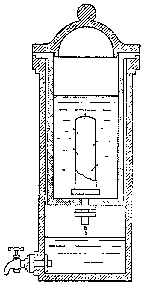
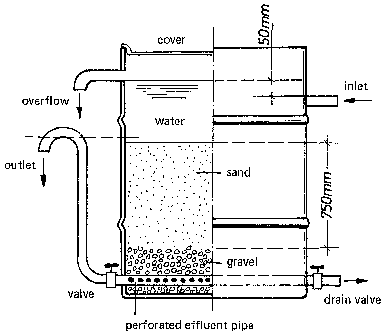
Figure 5 exhibits a simple device for domestic use. It consists
of four vertically stacked round concrete pipes (diem. 45 cm) or metal drums
(vol. 200 l) which are protected against corrosion. The two top segments are
filled with gravel. The third from the top is filled with sand. The bottom
consists of wire-mesh or grates. Aeration louvres are placed around the device.
A low ph value lime (CaO) is added to the gravel in the upper segments. The
device is mounted on a low pedestal made of masonry or concrete.
A handpump lifts the raw water, forcing it through nozzles on to
the gravel. The water then trickles through layers of stones and trays. It is
collected in the bottom segment and can-be drawn off by means of a faucet.
Particles precipitated from the water due to aeration accumulate on the lower
sand layer. The latter is to be exchanged once or twice a month.
An aerator of this size is capable of treating some 200 l/h,
i.e., some 1400 l/h m².It can be easily modified in size in accordance with
the actual needs.
Fig 5: Manual device for removal of
iron and manganese; capacity 200 a/h. Sources: [32, 46, 51,
57]
3.3 Sedimentation
3.3.1 Areas of Application 3.3.2 Simple Settling Basins
3.3.3 Design of a Rectangular Settling Tank With Horizontal Flow 3.3.4
Effect of Temperature and Salt Content of the Raw Water and Wind Conditions
Sedimentation is a phenomenon which occurs in nature
perpetually. It aids the natural purification of lakes and rivers. Use is made
of this physical process in the treatment of water by passing it through
settling basins or storage tanks at low and uniform velocities. This constitutes
a simple means of reducing the contents of suspended matter and partially of
bacteria.
Sedimentation is usually just one of several sequential
treatment processes. It can be combined by preceeding it with coagulation and
flocculation, and succeeding it with slow sand filtration. Following these
procedures, disinfection is required for high bacteria contents. 3.3.1 Areas of Application
Turbidity
Under the influence of gravity, suspended matter in rain water
settles out if it has a density greater than that of the water itself. The
efficiency of a settling basin depends on the nature (shape, size, density) of
the particles that are accountable for the turbidity; gravity, sand and silt,
which pollute surface waters heavily and settle easily, especially during the
rainy season. Colloidal matter which contributes much to turbidity is held in
suspension mainly by electrostatic forces and because of its low density.
Colloidal particles, when brought in contact with coagulants,
form flocculent material that can be settled or filtered out. Before designing a
settling tank, laboratory experiments should be carried out to determine the
contents of settleable and nonsettleable matter. Storage tank inlets should be
screened to prevent contamination by gross suspended matter. Tanks should also
be covered to protect them from birds and small animals.
Pathogenic Organisms
Simple sedimentation by means of passing water through a
settling tank does not achieve a significant removal of pathogens. Two to four
weeks storage, though, can reduce bacteria populations considerably (50- 90%) by
means of biological processes. Storage in excess of one month can reduce the
viral count. The degree of purification depends on the severity of pollution and
on the presence of other pollutants. Storage induced contamination (mosquito
breeding due to algal growth) must be avoided by covering tanks. Schistosoma
larvae, infectious agents of Bilharzia, usually cannot survive more than two
days of protected storage, provided suitable hosts (snails) are not present.
Color
Removal of color without the use of chemical procedures can only
be achieved by very long storage times. 3.3.2 Simple Settling Basins
Settling basins can be operated either continuously or in batch
mode. The choice of method may depend on whether water is readily available
and/or must be supplied continuously. Simple methods are available for either
mode. The most important considerations are discussed here.
Batch Mode
Batch operation is mainly used if only small amounts of water
are to be treated and stor-ed. A settling tank is filled with water, which is
retained for between two days and several months, depending on water
availability, demand and desired level of purification. When used, the water is
drawn off the top, down to a depth which just covers the layer of deposits. This
sludge layer at the bottom of the tank is to be removed from time to time. This
can be done manually after the tank has been emptied. A tank floor sloping
towards the drain greatly simplifies sludge extraction. Tanks can be constructed
simply by raising earth embankments, which have to be sealed to prevent seepage.
On the household level, clay vessels or other locally available jars can be
used. It is important to protect receptacles from contamination: the water must
not be taken out with soiled jars. Instead, an outlet spout should be provided.
A cover not only protects. Layout and design of settling and storage tanks are
determined by the desired retention time and the water demand of the consumers.
Continuous Mode
For larger amounts of water, it is more economical to operate a
settling tank continuously. The rain water is slowly and uniformly passed
through the tank either horizontally or vertically. The through flow velocity
must be kept smaller than the settling velocity of the suspended matter.
Horizontal flow tanks generally achieve higher rates of removal for high solids
concentrations.
The most common geometric form of sedimentation tanks are
circular, square or rectangular. Triangular shapes are possible. Water inlet and
outlet are to be positioned such that shortcircuiting is prevented, and the
detention time of the water is long enough to allow complete settling of
particles.
Circular tanks have radial flow patterns. The water can be
introduced either in the center or around the periphery. The clarified liquid is
then drawn off in a trough either at the rim or in the center. Rectangular tanks
have horizontal flow patterns. Inlet and outlet troughs are provided at the head
and tail ends of the tank.
Ideally, the tank may be divided into four distinct zones, each
of which acts characteristically different (Fig. 7).
1. Inlet Zone: In this zone, the entering water is spread out
uniformly and at low turbulence over the entire cross-section of the tank (Fig.
8).
2. Settling zone: Portion of the tank where sedimentation
occurs.
3. Outlet zone: Slow uniform draw-off of the clarified water
from the settling zone. The outward progression of the flow shall not disturb
the settling prozess.
4. Sludge zone: Collection of the deposits. If the sludge is to
slide down by itself, the floor of the tank should be sloped 45º. The draw
off occurs at a sludge drain.
The tanks may be built above ground with sealed masonry,
concrete, or reinforced concrete. Alternatively, earth basins may be used with
vertical or inwardly sloping watertight walls.
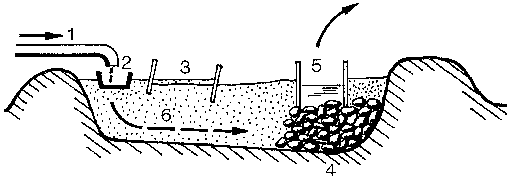
Fig 6: Settlement basin impounded by
earth embankments
Fig. 7: Sketch of a rectangular
settling basin with horizontal flow 3.3.3 Design of a Rectangular
Settling Tank With Horizontal Flow (Fig. 7)
Settling tanks are designed such that the reduced flow velocity
of the water allows suspended particles to settle out within the settling zone.
Generally, the smaller the particles, the smaller their settling velocity(s),
i.e., the lower the horizontal flow velocity of the water must be. The necessary
design parameters are determined as follows:
1. Decide on the hourly throughput Q (m³ /h) (see Sec.
2.4.2).
2. In a laboratory test, determine the settling velocity s, also
called surface loading rate, of the suspended matter in the raw water. The
settling velocity is obtained by measuring the time T (detention time) it takes
a particle to drop from the surface to the bottom of the tank at depth H.
s = H/T
s and T are both dependent on the nature of the particles to be
removed; s normally ranges between 0.1 and I m/h; for particles with diameter
° = 0.01 mm, the settling velocity is approx. s = 0.6 m/in. If flocculation
preceded settling, the aggregated particles settle at a velocity s between 1 and
3 m/in. The detention time T may range between 4 to 12 hours.
3. The volume V of the tank is then determined by the hourly
throughput Q, and the detention time:
V = H . B . L = Q . T
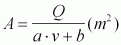
This gives S = Q/B + L, where B L is the surface area of the
basin. The efficiency or flow capacity of the basin is therefore determined by
the ratio of flow rate and surface area of the basin. Ideally, the flow capacity
is independent of the depth of the basin.
Fig. 8: Inlet zone of a settling
basin (example). The entering water first hits a baffle. It is then passed
through a perforated partition wall. Source [57].
Fig. 9: Inlet zone (example). The
clarified water leaves the basin flowing over a weir which extends over the
entire width of the basin. A slow, undisturbed draw off can be improved by using
a sawtooth weir. Another baffle before the weir also quiets the flow.
4. The required geometry of the tank can now be calculated. The
following ranges should not be exceeded:
Depth of the tank
1:5 m £ H £ 2.5 m
ratio H/L
1:5 £ H/L £ 1:10
ratio B/H
1:4 £ B/H £ 1:8
5. The horizontal flow velocity, v0, of the water
v0 = Q/B . H
ranges between 3 and 36 m/in. For suspensions with low
densities, lower velocities should be chosen. When flocculation precedes
sedimentation, higher velocities may be appropriate. Horizontal velocities
should be kept low enough, however, to avoid scouring from the bottom of the
basin.
6. The weir loading rate is given by the flow rate Q per unit
width of the weir, Q/R (m³ /m x h). It should be chosen in the range
between 3 and 10 m²/h. An increase in the width of the weir reduces the
effluent velocity.
7. The volume of sludge produced in m³ per m² of tank
area and per unit of time depends on the characteristics of the raw water and
the design, i.e., efficiency of the tank. From this, in turn, the size and slope
of the settling zone and the frequency of sludge removal can be
determined. 3.3.4 Effect
of Temperature and Salt Content of the Raw Water and Wind Conditions
Unfortunately, settling -tanks seldom perform in accordance with
the theory. A nonuniform density distribution across the depth of the tank may
disturb the settling process. Even small temperature differences (1º C) or
changes in the salt content (1 g/l and hour) of the entering raw water will
create density currents which reduce the efficiency of the plant. When designing
an open basin, wind conditions should be examined, since surface currents
induced by wind blowing over the basin affect the basin
performance.
3.4 Coagulation and Flocculation
3.4.1 Mechanisms of Coagulation 3.4.2 Coagulants 3.4.2.1
Chemicals 3.4.2.2 Materials of Soil Origin 3.4.2.3 Coagulants of Plant
Origin 3.4.2.4 Other Natural Coagulants 3.4.3 Jar Test for Assessment of
Proper Dosage of Coagulants 3.4.4 Application 3.4.4.1 Procedure for Alum
and Iron Salts 3.4.4.2 Coagulation on the Household Level With Materials of
Plant and Mineral Origin
Finely dispersed suspended and colloidal particles producing
turbidity and color of the water cannot be removed sufficiently by the ordinary
sedimentation process. Adding a coagulant and mixing and stirring the water
causes the formation of settleable particles. These flocs are large enough to
settle rapidly under the influence of gravity, and may be removed from
suspension by filtration. It must be noted that this treatment unit process,
although routinely applied in modern water treatment, requires more complex
technical equipment and experienced operating personnel. The choice and dose
rates of coagulants will depend on the characteristics of the water to be
treated and must be determined from laboratory experiments. The chemicals must
be readily available and their application must be closely monitored.
At the same time, on the household level, coagulation by means
of natural coagulants of plant and soil origin and simple devices has been
practiced traditionally by many peoples in developing countries. 3.4.1 Mechanisms of Coagulation
Colloidal particles generally carry a negative electrical
charge. Their diameter may range between 10-4 to 10-6 mm.
They are surrounded by an electrical double layer (due to attachment of
positively charged ions from the ambient solution) and thus inhibit the close
approach of each other. They remain finely divided and don't agglomerate. Due to
their low specific gravity, they don't settle out.
A coagulant (generally positively charged) causes compression of
the double layer and thus the neutralization of the electrostatic surface
potential of the particles. The resulting destabilized particles stick
sufficiently together when contact is made. Rapid mixing (a few seconds) is
important at this stage to obtain uniform dispersion of the chemical and to
increase the opportunity for particle-to-particle contact. Subsequent gentle and
prolonged (several minutes) mixing cements the still microscopic coagulated
particles into larger floes. These floes then are able to aggregate with
suspended polluting matter. When increased sufficiently in size and weight, the
particles settle to the bottom. 3.4.2
Coagulants 3.4.2.1 Chemicals
It is common practice to use aluminium and iron salts (see Table
8). Both salts hydrolyse when added to water. They form insoluble material
-aluminium and ferric hydroxides -when reacting with calcium and mangenese
hydrogen carbonates, which are almost always present in water (alkalinity and
hard-ness of the water). If those carbonates are not present in sufficient
concentration (soft water) hydrated lime Ca(OH)2 or sodium carbonate
Na2CO3 may be added also. In the case of aluminium
sulphate, these reactions can be represented as follows:
The formation of the insoluble hydroxides depends on the ph: it
has been shown that aluminium sulphate coagulates best in a ph range between 4.4
and 6. At higher ph values, higher rates of soluble aluminate ions form.
Sodium aluminate is generally used at medium ph values (6.5 to
8). Irons salts have the advantage of being effective over a wide range of ph
values (except for values between 7 and 8.5).
Whereas turbidity is best removed within a ph range of 5.7 to
8.0, color removal is generally obtained at acid ph's of about 4.4 to 6.0. To
improve the coagulation and flocculation process and to reduce the dose of
coagulants, flocculation aids may be used. The most commonly used material is
activated silica. Yet diatome (kieselgur), activated carbon in powder form,
bentonite and certain other types of adsorbtive clays, organic substances and
cellulose derived materials are also used. 3.4.2.2 Materials of Soil
Origin
It was mentioned that mineral substances are used as
flocculation aids in modern water treatment. A dose of 10 mg/l of bentonite, for
instance, together with 10 mg/l of aluminium sulphate, yield significantly
better results than a higher dose of aluminum sulphate alone.
In rural households in developing countries, however, various
naturally occuring materials are traditionally used as coagulants (see [62,65]):
e.g., fluvial clays from rivers and wadis (in Sudanese Arabic called "rauwaq",
clarifier), clarifying rock material from desert regions, earth from termite
hills. Their main constituents are quartz, montmorillonite, kaolinite, calcite
and feldspar; their coagulating mechanisms differ greatly from those of metal
salts. The processes and reactions which occur upon the addition of these
various mineral coagulants to waters of different quality are not yet
sufficiently known. This makes it difficult to specify optimal application
procedures and conditions. Case by case examinations are required.
Application of clay as a coagulant yields the following results:
- reduction of turbidy; - no effect on ph value; - an
initial mineral taste, later on normal; - no effect on bacteria count (more
conclusive research is not available).
Potential health hazards:
- Clays contain traces of heavy metals (mostly chromium and
manganese). High intakes of these metals may have toxic effects; - viruses
survive in the settled sludge. 3.4.2.3 Coagulants of Plant
Origin
Such substances are widely used in developing countries to
purify water. Usually the plants are not cultivated. Rather, according to passed
on experience, certain substances are gathered, prepared and added to the water
that is to be purified; seeds, leaves, pieces of bark, roots, fruit extracts and
plant ashes. Some examples of traditionally used coagulants and coagulant aids
as described in the literature [61-65] are:
- seeds from the Indian Nirmali tree (strychnos potatorum);
- seeds of the trees of the family of the Moringaceae: Moringa Olifeira,
occurring in India, Senegal, Sudan (Behenus tree) and Moringa Stenopetala,
Kenya; - sap from the stem of the tuna cactus (opuntia ficus indica)
occurring in Peru and Chile: two commercially available extracts are Tunaflex A
and B, - the bark of the south American tree Schinopsis Quebracho-Colorado?
which contains tannin: it is known commercially as "Floccatan ;" - potato
starch.
For most of these plant materials, it is not known which
particular substance actually triggers the coagulation. Neither is it known
whether there are toxic side effects from frequent use.
To obtain the optimal dose for various substances and raw water
qualities, coagulation experiments must be carried out; generally this dose is
smaller than that of aluminum sulphate.
For coagulation with Moringa Olifeira seeds, the following
effects can be obtained,
- significant reduction of turbidity; - pleasant taste; -
unchanged pH value; - initial reduction of the bacteria count, followed by a
secondary rise after only 24 hours, reaching or even surpassing the initial
concentration; - antibiotic effect on various bacteria and fungi.
Nirmali seeds and Tunaflex as natural coagulants and aid
substances combined with alum salts have been successfully used in municipal
water treatment. It was shown that substantial savings in primary coagulants
could be achieved which, in turn, reduced the overall cost considerably. 3.4.2.4 Other Natural
Coagulants
- Algae-derived substances; - Chitosan, acting faster than
any known coagulant from plant materials (produced from the shells of shrimp and
lobster); - dough from millet bread (Sudan) or curds (thin layers). 3.4.3 Jar Test for Assessment
of Proper Dosage of Coagulants
Coagulation and flocculation processes are dependent on a
multitude of variable interrelated factors: temperature! turbidity, color,
pH-value, alkalinity, nature of coagulant and intensity and duration of stirring
during mixing and flocculation. The optimal dose of the coagulant cannot be
found by analyzing the raw water. Rather, it must be determined by an experiment
on laboratory scale (approximation of real conditions). Such a test ought to
follow this procedure:
1. Measurement of color, turbidity, pH-value and alkalinity of
raw water.
2. Addition of the coagulant in different dosages to six samples
of 1000 ml each (e.g. 10, 20, 30, 40, 50, 60 mg/1 of a 1% aluminum sulphate
solution).
3. High speed stirring initially for 2 minutes and low speed
stirring for some 20 minutes using a laboratory mixer.
4. Allow the water to settle (up to 1 hour).
5. Measurement of color and turbidity of the clarified water.
Identify samples showing optimal result as regards dosage of coagulant.
A second test can be carried out for the optimal ph-value for
flocculation. The same procedure is followed as before. This time however,
different amounts of calcium hydroxide or sodium carbonate are added together
with the optimal dose of the coagulant as found in the first test. The resulting
range of pH values should extend from 4.5 to 8.5. After stirring, flocculation
and sedimentation, the optimal pH-value is determined from the samples. 3.4.4 Application
In this paragraph coagulation in larger scale treatment
operations is described, outlining simple techniques. Also coagulation by means
of natural materials at the household level is discussed. 3.4.4.1 Procedure for Alum and
Iron Salts
1. In a test the required dose of the coagulant is determined.
The pH-value is adjusted.
2. The coagulant solution is prepared. Usually the coagulant is
introduced in a solution or suspension of known concentration (3-7%). Jars made
of resistant material are to be used (see Table 8). Addition of the coagulant in
solid form is also possible.
Fig. 10: Dosing device for continuous
feeding of coagulant solution.
3. Constant dosing of the coagulant by means of an adequate
closer. A dosing apparatus should be used (such as those for chlorine dosing)
which delivers a constant yet adjustable dose rate. A simple example is
exhibited in Fig. 10.
4. Immediate rapid mixing: Upon the addition of the coagulant,
rapid mixing and dispersion must be provided for between I and 5 minutes. In
fact, hydrolisis and polymerisation occurs almost instantly. Also, the
destabilization of the colloids takes very little time. Principally, there are
two practical methods:
- hydraulic mixing: channels, weirs or hydraulic jumps are used
to create turbulence. At appropriate points the coagulant is introduced (Fig. 11
);
- mechanical mixing: electrically driven mixers create a uniform
dispersion. This requires a reliable supply of electricity and maintenance.
Also, mechanical parts are susceptible to wear. This is why the former method is
preferable.
5. Flocculation: slow and even mixing allows the particles to
collide and contact so as to form flocs (30-60 minutes). The efficiency of floc
formations is contingent on the frequency of particle-to-particle contact. -
hydraulic mixing: this can be done by routing water through a vertically or
horizontally baffled flocculation basin. The resulting turbulence has a mixing
effect (see Fig. 12). It must be noted that this method does not allow any
adjustment or control in case of changing characteristics of the water quality.
- mechanical mixing: flocculation takes place in tanks equipped
with an electrically driven stirring system. This stirring system consists of
screws, paddles or blades mounted on vertically or horizontally rotating shafts.
Fig. 11: Hydraulic mixing in water
flow. a) channel with baffles, b) overflow weir, c) hydraulic jump.
6. In the sedimentation tank, the particles are allowed to
settle. Or, alternatively, they are removed by filtration.
In order to obtain optimal coagulation and flocculation
performances, a number of design considerations must be followed: after finding
the required dose of coagulant through experimentation, the flocculation and
mixing chamber must be hydraulically designed. Approximate speed and duration of
mixing, flow velocity, hydraulic profile and detention time of the particles in
the tank must be determined. This procedure, however, is more suited to the
design of larger scale plants. Smaller plants usually operate without these more
sophisticated engineering solutions, e.g.:
- the introduction of the coagulant may be made in the feeder
pipe preceding a rapid filter; - the addition of the coagulant may be made at
the point of the inlet weir to the sedimenation basin.
Fig. 12: Hydraulic mixing in
flocculation tank. a) vertical, b) horizontal flow. 3.4.4.2 Coagulation on the
Household Level With Materials of Plant and Mineral Origin
The following are standard recipes for coagulation with locally
available materials which may be modified according to the specific conditions.
The doses for the coagulant are best determined by experiments.
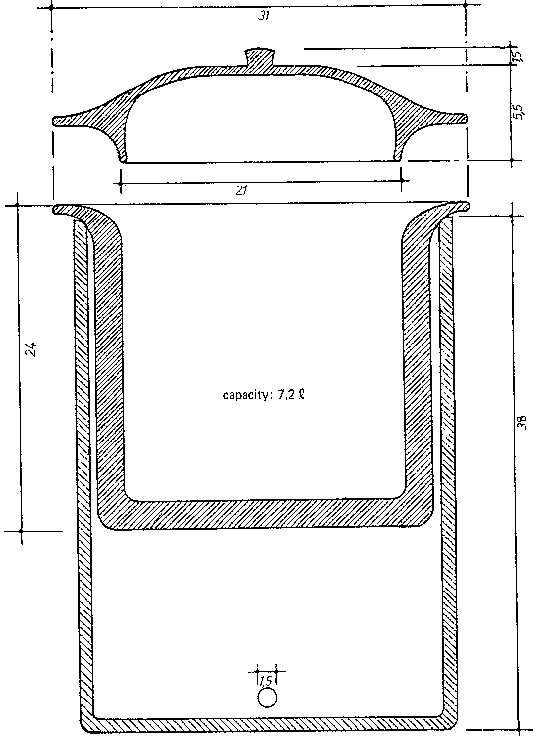
Locally used jars, e.g., clay vessels, may be used for the purification process
For mixing, wooden twirling sticks would be appropriate.
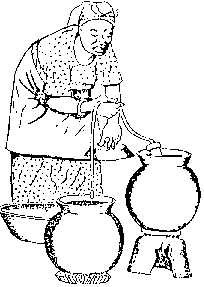
After the floes are settled, the supernatant water is to be
transferred carefully into a clean jar. To avoid secondary pollution by
unhygienic contact with a jug, the water could be scopped out with a ladle or
syphoned off into a nearby vessel. The purified water should be consumed within
a few hours, so as to avoid renewed contamination due to temperature-induced
growth of bacteria. Even better, is to boil the water prior to consumption or to
disinfect it by some other method.
The settled mud on the bottom of tile jar is to be collected
carefully. It should be exposed to the sun for some time (several days) to
assure that potentially existing pathogens be destroyed completely.
Coagulation with fluvial clay
Dose of coagulant: 3.5 g/l (rauswaq). For a 40 l capacity jar,
this translates into 140 g (1 teaspoon of the pulverized clay corresponds to 2.5
-3 g).
1. Dried clay is pounded to powder and added to water (possibly
clarified) in a small bowl. 2. The suspension is added to the turbid
water. 3. Very slow stirring of the water for about 5 min. 4. Jar is
covered and the water left to settle.
Coagulation with seeds of Moringa Olifeira
Dose: 150 -200 mg/l. For a jar of 40 l capacity this translates
into 30 seeds.
1. After removing the seed husks, the white kernel material is
crushed in a clean mortar or a stone covered with a piece of clean cloth. The
powder must be prepared fresh before every use. Humidity causes deterioration.
2. The power is then dissoleved in a small amount of clarified
water and a suspension is prepared.
3. The suspension is added to the raw water under short and
rapid mixing (coagulating).
4. Gentle and slow stirring follows (for flocculation, 10 to 15
min).
5. Finally, the water is left covered in the jar to allow the
floes to
settle.
3.5 Filtration
3.5.1 Rapid Filtration 3.5.1.1 Principle Mechanisms
3.5.1.2 Range of Application 3.5.1.3 Types of Rapid Filters 3.5.1.4
Conventional (Downflow) Filters 3.5.1.5 In Upflow Filter 3.5.1.6 Coarse
Filters 3.5.1.7 Household Size Rapid Filter 3.5.2 Slow Sand
Filtration 3.5.2.1 Mechanisms of Filtration 3.5.2.2 Range of Application
3.5.2.3 Design of a Slow Sand Filter 3.5.2.4 Construction 3.5.2.5
Operation and Maintenance 3.5.2.6 Modifications
Filtration is the deliberate passage of polluted water through a
porous medium, thus utilizing the principle of natural cleansing of the soil.
This widely used technique in water treatment is based on several simultaneously
occurring phenomena:
- mechanical straining of undissolved suspended particles
(screening effect); - charge exchange, flocculation adsorption of colloidal
matter (boundary layer processes); - bacteriological-biological processes
within the filter.
Filters may be divided into two principally different types:
- slow sand (or biological) filtration (v = 0.1 to 0.3
m/h), - rapid filtration (v = 4 to 15 m/h).
In-between types also exist. Depending on the filtration rate,
different mechanisms are operative within the filter. Resulting from this is a
variety of possible applications of the various types of filters. Several of
them are discussed in the subsequent sections.
Generally, a filter consists of the following components:
- filter medium (inert medium: quartz sand; or chemically
activated medium: burnt material), - support bed (gravel) and under-drain
system, - influent and effluent pipes, -wash and drain lines, -control and
monitoring appurtenances. 3.5.1
Rapid Filtration 3.5.1.1
Principle Mechanisms
Rapid filtration is mainly based on the principle of mechanical
straining of suspended matter due to the screening effect of the filter bed
(sand, gravel, etc.). The particles in the water pass into the filter bed and
lodge in the voids between grains of the medium. It is because of this
phenomenon that rapid filters are sometimes called space filters. The cleaning
of the rapid filter is facilitated by backwashing i.e., by reversing the flow
direction; a backwash may be conducted simply with water or by use of a
water-air mix (upward air scour). The impurities are thus dislodged and removed
from the filter bed. Also operative to some degree in rapid filters are boundary
layer and biological mechanisms - their extent largely depends on the filtration
rate' filter medium, depth of the filter bed, and quality of the raw water.
The performance of a rapid filter regarding the removal of
suspended matter is determined by the following filtration process variables and
parameters:
- filtration rate (v), - influent characteristics, i.e.,
particle size, distribution, etc., - filter medium characteristics which
control the removal of the particles and their release upon backwashing,
respectively.
Generally, it is true that the treatment effect can be improved
by:
- reduced filtration rates, - smaller granulation size of the
filter medium, - increasing depth of the filter bed, -increasing size of the
floes, - decreasing concentration of particles to be retained. 3.5.1.2 Range of Application
The range of application of rapid filtration and its performance
when combined with other treatment processes is illustrated in Table 9. 3.5.1.3 Types of Rapid Filters
There is a large variety of possibilities as re-yards setup and
operation of rapid filters. They are generally divided into two categories. The
majority of filters used for the treatment of drinking water are open, usually
concrete built, filters. They operate with atmospheric pressure and at
filtration rates between 4 and 8 m/h. Pressure filters are enclosed and usually
made of metal. They operate under (higher than atmospheric) pressure at
filtration rates between 8 and 1 5 m/in.
Both types can again be classified into subcategories, according
to the flow of the water:
- vertical, downward filtration, downflow, -vertical, upward
filtration, upflow, - horizontal, axial or radial, - biflow or dual flow.
Finally, the types of filter beds may be classified according to
the structure of the filter media:
- single medium, fine grain (deff = 0.5-1.5 mm) or coarse grain
(deff 610 mm), - single medium, decreasing grain size in the direction of the
flow, - multiple media, bed stratification with decreasing grain size in the
direction of the flow.
The range of common filter beds is between 1 and 2 m. The
operating head is between 1.5 and 2.5 m. The required filter surface area can
tee' determined according to the following relationship:
(see 3.5.2.3)
A: surface area (m²), v: filtration rate (m³/ m²
. h) = (m/h); Q: throughput of water per hour (m³ /h); a: operating hours
per day.
Table 9: Treatment Effect of Rapid Filters and Possible
Combinations with Other Unit Processes
Water Quality Parameters
Purification Effect
Coarse particles of organic origin up to 250 mg/l
Removal at high filtration rates, using coarse filter material
(backwashing is simple).
High turbidity due to gravel, sand or mud.
Removal by rapid filtration, preceding sedimentation is
recommended.
Low turbidity up to max. 100 NTU
Direct rapid filtration.
Colloids
Difficult to remove;
- low concentration
Addition of coagulant to inflowing water prior to sedimentation;
flocs are retained by the filter; backwashing is difficult.
- high concentration
Preceding coagulation/flocculation and sedimentation in separate
tank, rapid filtration
Bacteria of fecal origin, eggs of parasites
Removal of some 50 % at low filtration rate and fine material,
subsequent disinfection is required.
Iron and manganese contents up to 25 mg/l
Precipitated compounds are removed upon aeration (see Fig. 5).
3.5.1.4
Conventional (Downflow) Filters
Rapid filtration is a rather complex process. It is demanding
and expensive in design and operation. This is due to the need for frequent
filter washing which requires elaborate backwashing systems. Additional
complexities associated with the generation of pressure arise for pressure
filters. Monitoring, operation and maintenance of these filtration plants
require well-trained personnel. Combined with coagulation, flocculation and
sedimentation, rapid filtration is a very efficient treatment process for the
removal of impurities. However, it should only be used in larger plants and at
well equipped sites.
For smaller plants in rural areas, simple rapid filters -without
backwashing capabilities - are recommended. A number of filter types operating
at filtration rates lower than those for conventional filers are discussed
hereinafter. Generally, they serve as pretreatment units to reduce the turbidity
of the water. The removal of pathogens requires, in addition, either slow sand
filtration and/or disinfection. 3.5.1.5 Upflow Filter
In upflow filters, the direction of flow of the raw water is
upwards through the filter bed. Backwashing is done by abrupt reversal of the
flow direction. The effect of the filter depends on the type of the filter
medium, the filtration rate, and possible preceding aeration or addition of a
coagulant. For coarse organic and inorganic substances, the filter may act as a
simple screen. Or else it may retain precipitated iron compounds.~At low
filtration rates and sufficient oxygen content of the raw water, biological
activity can be observed.
The advantages of upflow filters as compared with gravity rapid
filters are:
- can be constructed from locally available materials, -
quality requirements (uniformity and gradation) and volume of the filter medium
are lower. Instead of sand, gravel, crushed bricks, coconut and other type
fibers can be used, - longer filter runs, - better turbidity removal.
Upflow filters can be constructed at a variety of degrees of
complexity. A rather simple type can be built from a 200 a-drum. It can be
equipped with a raw water inlet pipe, a somewhat larger size drain at the
bottom, and an outlet pipe for the clarified water near the top of the drum (see
Fig. 13).
Filtration effect: Reduction of between 50 and 70% of organic
and inorganic coarse and fine particles, slight reduction of bacteria.
Filter output: up to 230 a/h.
Filtration rate: 0.5 to 1.5 m/in.
Filter medium: Coarse sand, grain size between 3 and 4 mm
diameter.
Filter bed depth: 0.3 m.
Support layer and underdrain: gravel covered by perforated metal
tray. Cleaning:
Shut off of the inlet. Quick removal of drain stopper so that
supernatant as well as water in the filter bed drain out together with retained
particles.
Cost: for drain, send, pipes, tap and stopper.
Fig. 13: Upflow filter made from a 200
a drum. Source [46, 70].
As a rule, cleaning of the filter which takes no more than ten
minutes should be done every day. This is a simple means of preventing the
filter bed from clogging. The 200 l drum has a capacity to filter up to 230 l/h.
As bacteria cannot be sufficiently removed, subsequent disinfection is
indispensible in case of bacterial water contamination. This filter can also be
combined with the slow sand filter introduced in section 3.5.2.6.
Hence; the performance and technical complexity of this simple
upflow filter can be increased as much as one likes. It must be noted though
that higher filtration rates result in higher buoyancy forces on the filter
medium. The top layer of the sand may be spewn up. This can be avoided by
covering the filter bed with a metal grate or by raising the depth of the filter
bed. In the latter case' though, backwashing by means of simply draining the
water in a reversed direction may become increasingly impossible. Conventional
backwashing capability may have to be added.
Better results may be obtained by using smaller grains and
stratified filter beds with decreasing grain size from bottom to top (e.g., 0.7
to 2 mm over a depth of I to 1.5 m). 3.5.1.6 Coarse Filters
Rapid filters preceding slow sand filters are frequently used to
retain coarse particles and to sufficiently reduce turbidity. Coarse sand,
gravel or plant fibres are used as a filter medium. It can be replaced upon
cleaning.
Such prefiltration can be done either horizontally or
vertically. The filtration rates for a coarse filter are lower than those for a
conventional rapid filter.
Fig. 14: Coarse filtration followed
by slow sand filtration
Fig. 15: Coarse filter with
horizontal flow. Source [83]
Gravity rapid filter as coarse filter (Fig. 14)
Filtration effect:
Reduction of turbidity by between 50 and 80% (max. load 250 NTU)
Two or more layers of different material possible (coarser
material up top and finer material below).
Filter bed depth: 0.8 to 1.4 m.
Drainage system: same as slow sand filter.
Cleaning: replace medium completely when head loss exceeds
certain value, i.e., when too big (approximately once every 3-4 months).
Horizontal flow coarse filter
This type of treatment process unit which has the water flowing
horizontally through the filter medium exhibits a combination of filtration and
sedimentation effects. The concentration of suspended particles in the raw water
can be reduced significantly. The water thus attains a quality which is
satisfactory for subsequent slow sand filtration. Moreover, after a certain time
of maturation' a biological film forms on the surface of the stones.
Filtration effect: Reduction of turbidity by between 50 and 70%
(max load 150 NTU), reduction of bacteria by approx. 80%.
Filtration rate: 0.5 to 1.5 m/h (max 2.0 m/h).
Filter box: rectangular, similar to settling tank (design: see
3.3.3).
Length: 4 to 10 m width, according to Q/L v = B, floor slope
toward drain 1:100.
Filter medium: crushed stone and gravel, divided into zones of
different grain size, sequentially graded in coarse-fine-coarse pattern
(diameters between 4 and 30 mm).
Cleaning: Since clogging of the filter builds up rather
gradually, cleaning may only be necessary after several years of operation. The
filter may be cleaned by removing the medium, washing it and putting it back in
place. 3.5.1.7 Household
Size Rapid Filter
Household filters can be made from sand or gravel of different
grain sizes, from ceramics, porcelain or other fine porosity materials. They
basically operate on the principle of mechanical straining of the particles
contained in the water The filter performance depends on the porosity of the
filter medium. Through additives in the filter material, additional effects can
be obtained (adsorption, disinfection).
Multiple layer filter
Using metal drums, plastic containers or clay vessels and
filling them with several layers of sand, gravel or charcoal, simple household
filters can be put together. They do not perform well at removing pathogens,
though. After filtration, the water therefore needs to be disinfected.
Charcoal adsorbs organic substances which cause disagreeable
color and taste.* This effect can only be sustained, however, if the charcoal is
frequently renewed. If this is not possible, for whatever reason, or if the
filter (empty or filled with water) is left unused for some time, the charcoal
can become a breeding ground for bacteria. The result is that the filtered water
exhibits a higher bacteria count than the raw water. Monitoring of the filter
condition is rendered more difficult by the fact that there is no visual
indication given for the point when the charcoal should be replaced. Charcoal
cannot be regenerated. It is for these reasons that the use of filters with
charcoal media is not recommended.
Fig. 16: Multiple layer filter
Ceramics filter
On the household level ceramics filters may be used for the
purification of drinking water. If there are native potters, the filter can be
manufactured locally. Otherwise they can be readily obtained from various
commercial manufacturers.
The purifying agent is a filter element, also called candle,
through which the water is passed. Suspended particles are thus mechanically
retained, and, depending on the size of the pores, also pathogens. Ceramics
filters should only be used if the water is not too turbid, as the pores clog
rather quickly.
Ceramics filter elements can be made from various different
material compositions (e g., diatomaceous earth, porcelain); they have pore
sizes of between 0.3 and 50 ,u. If the pore size is smaller than or equal to
1.5,u all pathogens get removed with certainty. Post treatment of the water
prior to consumption is rendered unnecessary.
Filters with larger pores only retain macroorganisms such as
cysts and worm eggs. The filtered water must be boiled subsequently or otherwise
disinfected
The impurities held back by the candle deposit on the candle's
surface. At regular intervals, this coating can be brushed off under running
water. After the cleaning, the candle should be boiled. Candles made from
diatomaceous earth which contain silver, have the advantage that recontamination
of purified water due to infestation of the filter material with bacteria laden
washing water can be avoided (see also section 3.6.5).
Depending on their type, ceramics filters can be operated in the
following ways:
Filters operating at atmospheric pressure exhibit a very slow
rate of percolation. This can be increased considerably by forcing the water
through the medium. Ceramics filters must be handled with care. From time to
time they must be checked for fissures so as to prevent the water from passing
through the medium without being filtered.
Fig. 17 Household filter with candle
(gravity filter). The filtration rate depends on the filter material, the pore
size and the nature of the particles to be retained.
Fig. 18: Siphon filter. Filtration is
started by sucking the water by mouth into the siphon system
Fig. 19: Clay filter (vessel, insert,
lid) measured in cm. Source [67]
Clay fillers treated with silver (Fig. 19)
This small household filter is manufactured in local potteries
in Central America. It consists of a cylindrical clay vessel (diameter 28 cm,
height 40 cm) equipped with a lid and an insert (holds 7.2 a). Tests carried out
in Guatemala yielded excellent results as regards the removal of bacteria. Two
alternative filter elements with different material composition are available.
The raw water, poured into the insert, trickles through its
walls. The filtered water is collected in the lower part of the vessels, where
it can be released at will.
Filter element (composition): 55-70% loam, 20-40% sand, 5-10%
sawdust
Treatment: Colloid silver (3.2% Ag)
Longevity: 1 year
Cost of the filter (Guatemala 1980): U.S. $ 7.63
The filter insert can be treated as follows: Prepare a solution
of 6.1 ml colloid silver in 200 ml of clean water and lay it on the filter
element by means of a brush or a sponge. Finally, let the filter dry for 24
hours. The first two filter runs are to be discarded.
If feldspar is available, it is recommended to follow
alternative A, to produce the filter, since its filtration rate is higher. In
this case, silver is the only component which must be imported. Though it
represents the most expensive part of the filter, it is needed to achieve
disinfection.
Cartridge microfilter
Besides ceramics filters, other microfilters made from fine
porosity materials are also available: synthetics, paper, felt-like material
(pore size between 25 and 50 ,u). They are inserted into a bell-like filter
device, which is mounted on the top of a water pipe. When the filter material
becomes clogged, i.e., used up, it must be discarded and replaced new. Even
though these filters are cheaper to purchase than ceramics filters, their use is
more expensive, since the filter material cannot be regenerated. 3.5.2 Slow Sand Filtration
Slow sand filtration is accomplished by passing raw water slowly
- driven by gravity through a medium of fine sand. On the surface of the sand
bed, a thin biological film develops after some time of ripening (different from
the rapid filter). This film consists of active microorganisms and is called
"Schmutzdecke", or filter skin. It is responsible for the bacteriological
purification effect. The slow sand filter is therefore also called "surface
filler'' or biological filter. 3.5.2.1 Mechanisms of
Filtration
The principle purification processes taking place during slow
sand filtration are:
Sedimentation:
The water body sitting on top of the filter bed acts as a
settling reservoir. Settleable particles sink to the sand surface.
Mechanical straining:
The sand acts as a strainer. Particles too big to pass through
the interstices between the sand grains are retained.
Adsorption:
The suspended particles and colloids that come in contact with
the surface of the sand grains by following the passage of the water are
retained by:
- adhesion to the biological layer (Schmutzdecke), - physical
mass attraction (Van der Waals force), and - electrostatic and electrokinetic
attractive forces (Coulomb forces).
On account of these forces, an agglomerate of opposite charged
particles forms within the top layer of sand. This process needs some time of
ripening to fully develop.
Biochemical processes in the biological layer:
- partial oxidation and breakdown of organic substances forming
water, CO2 and inorganic salts, - conversion of soluble iron and manganese
compounds into insoluble hydroxides which attach themselves to the grain
surfaces, - killing of E. Coli and of pathogens.
Organic substances are deposited on the upper layer of sand,
where they serve as a breeding ground and food for bacteria and other types of
microorganisms (assimilation and dissimilation). These produce a slimy, sticky,
gelatinous film which consists of active bacteria, their wastes and dead cells
and partly assimilated organic materials. The dissimilation products are carried
away by the water to greater depth. Similar processes occur there. The bacterial
activity gradually decreases with depth. Different types of bacteria are
normally found at various depths.
Algae can contribute to the breakdown of organic material and
bacteria. They can improve the formation of the biological layer (filter skin).
In uncovered filters, growth of algae is driven by photosynthesis. The presence
of large amounts of algae in the supernatant reservoir of a filter generally
impedes the functioning of the filter. Dead cell material may clog the filter.
Increased consumption of oxygen due to the presence of dead cell material
increases the possibility that anaerobic conditions will occur. There is always
a diurnal variation in the oxygen content due to growth and decay of the algae
mass. When algae growth is strong, the algae must be either removed regularly or
the filter must be covered.
The conditions necessary for those biochemical processes are:
- sufficient ripening of the biological layers, - uniform and
slow flow of water through the filter, approx. 0.1 to 0.3 m/in, - a depth of
the filter bed of 1 m (0.5 m is needed solely for the biochemical process) of
specific grain sizes, - sufficient oxygen in the raw water (at least 3 mg/l)
to induce biological activity. 3.5.2.2 Range of Application
Table 10: Range of Application of Slow Sand Filters According to
Raw Water Quality
* At MPN-Contents Greater than 1000 E. Coli/100 ml, Raw Water
Should Subsequently Be Disinfected
Water Quality Parameters
Purification Effect
Bacteria
Pathogenic bacteria and E. Coli removed at 99 -99.9 %*; cysts,
helminth-eggs and Schistosoma-larvae removed completely.
Viruses
Complete removal.
Organic substances
Complete removal.
Color
Partial removal.
Turbidity
Significant reduction; average turbidity of raw water should not
be greater than 10 NTU. At higher turbidity, pretreatment necessary to prevent
clogging of filter.
Substances difficult to degrade biologically
e.g., detergents, phenoles, pesticides. Only minor degradation
possible.
Reference is made to Table 10.
It is worth noting that microbiological processes and chemical
activity are very sensitive to changes in temperature. Both slow down under
conditions of low temperature. A reduction in filtration rate can compensate for
this effect. Under prolonged cold conditions, the filter should be covered to
prevent heat loss, and subsequent disinfection should be provided. 3.5.2.3 Design of a Slow Sand
Filter
1. Determine the daily demand for treated water, Q (m3/d, m3/h,
peak flows), (see section 2.4.2).
2. Choice of the filtration rate v (m3/m² + h = m/h).
3. Determination of the number of daily operating hours, a.
Aside from shutting down the filter completely (overnight), it is possible to
operate it for a few hours a day (factor b), while the inlet valve is closed and
the outlet valve is open (mode of decreasing filtration rate -see section
3.5.2.5).
4. Parameters a and b are related to the total filtration area
as follows:
b = 0 for continuous operation, b = 0.5 for 8 hours of daily
uninterrupted operation, b = 0.7 for 16 hours of daily uninterrupted
operation.
The ratio of length to width should be in the range between 1
and 4.
5. Determine the number of filters n. There should be at best
two filters, so as to have a reserve during down time of one (due to cleaning or
ripening period).
The required area per filter is thus obtained by dividing the
total area A by the number of (equal size) filters, A/n. The filtration rate for
each filter for parallel operation is given by
6. The sizing of the subsequent storage capacity and of the
distribution system is to be carried out in accordance with the daily water
demand.
Fig. 20: Diagrammatic form of a slow
sand filter. Source [80]. A. Raw water inlet, B. Overflow, C. Outlet for
supernatant (for cleaning), D. outlet for water from filter bed (for cleaning),
E. gauge of flow rate, effluent (filtration rate v), F. valve for controlling
the filtration rate, G. inlet for filling with clean water after cleaning, H.
effluent weir, I. effluent valve, J. drain (during start up).
Fig. 21: Flow chart of a slow sand
filter 3.5.2.4 Construction
Filter box
The smaller the size of a filter unit, the simpler its
construction. It must be noted, however, that both the risk of leakage (along
edges) and initial capital cost per square meter decreases with the size of the
unit. For filter lengths greater than 20 m, the design becomes more complicated
because of the hydrostatic pressure. The walls must be watertight.
Table 11: Construction Characteristics of Various Tank
Geometries
Form
Tank Location
Size (m)
Slope
Walls Material
Thickness (m)
Earth basin
� 1-10
Vertical
Concrete or Masonry
0.2-0.3
Round
� 1-5
Vertical
Ferro-cement
0.06-0.12
In/above ground
All sizes
Vertical
Reinforced concrete
0.15-0.2
Rectangular or square
Earth basin
L and B
Sloped
Masonry
0.1
2-20
Sealed earth
0.05
Concrete
0.08
Sand/cement mix
0.08
Rectangular or square
In/above ground
AH sizes
Vertical
Reinforced concrete
0.25
Earth basins
Small sizes
Vertical
Masonry, concrete
0.2-0.3
Table 11 shows design characteristics for different filter
geometries. It must be noted that:
- Earth tanks with sloped side walls have the advantage of lower
initial costs. No particular skills are required for the workers to do the
excavation. At high groundwater levels, the walls must be absolutely watertight
(mainly to prevent the flow of potentially contaminated groundwater). Access to
pipework and appurtenances is relatively more difficult.
- Tanks with vertical walls should extend at least 0.3 m into
the ground and another 0.5 m above ground. The deeper the tanks reach into the
ground, the more favorable the pressure balance that acts on the walls. -
Circular shapes are used for small units. Rectangular tanks lend themselves to
forming batteries of filters. They are therefore well suited for expandable
larger systems.
- It is important for the tank to have a rigid base. The edges
between base slab and walls must be watertight. Artificial roughening of the
inner wall faces greatly reduces the risk of raw water leaking past the sand.
- Provisions should be made for the tank to receive a cover, if
necessary, in order to control algal growth and prevent pollutants from entering
due to rain, wind, vermin, etc.
See Table 12 regarding filter beds.
Table 12: Filter Medium -Structure and Materials
SUPERNATANT
Depth: At least 1 m, up to 1.5 m.
FILTERBED
Medium:
Sand (washed), or other locally available material (e.g., rice
husks), several layers possible.
Depth:
At least 0.7 m, better: 1.0-1.5 m.
Grain Size:
Effective size (E.S.): 0.15-0.35 mm.
Uniformity coefficient (UC): 2, max. 5.
Larger sizes reduce the effectiveness and increase the required
depth of the filter bed.
SUPPORT LAYER
Material:
Coarse sand or gravel: several layers with grain size increasing
with depth. Prevents escape of filter medium into drainage system, and blocking.
Depth:
0.1-0.4 m (in accordance with drainage system).
DRAINAGE SYSTEM
Collection of filtered water towards outlet, alternatively:
- layer of gravel or crushed rock; grain size 25-50 mm; depth,
0.15 m
- system of bricks, concrete slabs or porous material. See Fig.
22: lateral drains and main drain sloped toward outlet.
- system of perforated pipes, water and pressure-proof
materials: PVC, cast iron, asbestos cement, locally available porous material
(Fig. 23).
Fig. 22: Drainage system consisting of
bricks [83]. The system can be arrayed such that the main drain runs along the
sideof the tank.
Fig. 23: Under-drainage system
consisting of perforated pipes
Inlet Zone
The inlet zone of the tank should be designed such that the
entering raw water spreads out evenly over the filter bed. Turbulence must also
be avoided in order not to stir up the biological layer. This can be achieved
best by admitting the water just above the filter bed at a velocity of 0.1 m/in.
To prevent scouring near the inlet, a concrete plate may be placed on top of the
filter bed (see Fig. 24, b).
Fig. 24: Different design arrangements
for their inlet zone of a slow sand filter
If no extra provisions are made, the inlet of the raw water can
also serve as the drain for the supernatant for the purpose of cleaning. Since
for each cleaning of the filter, the top layer is scooped off, the surface of
the filter bed drops more each time. It is therefore more practical to have a
vertically adjustable sill along the inlet trough to control inflow and head
over the filter (see Fig. 24, a).
The width of the inlet should not be less than Q/20. Sufficient
aeration of the entering water can be obtained by means of uniformly spraying or
trickling of the water over cascades.
Outlet Zone
The outlet zone is generally arranged so that a weir controls
the effluent. It is common that the crest of the weir is placed some 0.1 m above
the level of the filter bed (Fig. 25). The purpose of the weir is, among other
things, to prevent the filter from running dry. The filtration rate can be
controlled by valve F. The effluent weir also serves the purpose of aerating the
filtered water. In case of an enclosed weir chamber, adequate ventilation must
be provided for air to enter and for gases to escape.
Fig. 25: Diagram of outlet chamber of
a slow sand filter 3.5.2.5 Operation and
Maintenance
A major advantage of slow sand filters is that operation and
maintenance of a well-designed and constructed filter is rather simple.
Unskilled personnel can be easily trained. The references in the following
sections pertain to Fig. 20.
Initial commissioning of a filter
1. First, with all outlet valves closed, the filter must be
charged with filtered water, introduced from the bottom (G) to drive out the air
from the voids of the filter bed. This is continued until the whole bed is
covered sufficiently (0.1 m) to prevent its being scoured or disturbed by
turbulence from the admission of raw water through A.
2. Backfilling valve G is closed, raw water is admitted through
A, until the desired working level for the supernatant is reached.
3. Valve J is opened to release filtered water at a filtration
rate of one-fourth of the design rate (controlled by efluent regulating valve
F).
4. During the start-up period, while ripening of the biological
layer proceeds and reaches its full effect, the filtration rate is gradually
increased by way of valve F until the desired rate v is attained. The cleaner
the raw water, the longer the ripening process will take.
5. From time to time, chemical and bacteriological analyses of
raw water and effluent must be taken to monitor the ripening process of the
filter.
6. When the filter is in full working condition (see from
analyses -from a few days to several weeks) valve J may be closed and valve I
opened to feed the clear well. Until then, the water is either run to waste or
returned to the raw water.
Normal operation
1. Normal throughflow: The filtration rate is controlled jointly
by valves E and F. Initially, F is all but closed. It is opened gradually as the
filter head loss increases so as to maintain a constant rate of filtration. The
increase in bed resistance is due to a gradual accumulation of retained
impurities in the interstices of the filter bed.
2. Operation at decreasing throughflow: This mode of operation'
which is well suited for overnights, reduces the required number of personnel
and related costs. The raw water inlet is closed, and the outlet remains open.
Consequently, the head of the supernatant drops and the filtration rate
decreases. The efluent weir should be fixed at such a height as to prevent the
supernatant from dropping below a certain minimum depth (e.g., 0.2 m) above the
filter skin (Schmutzdecke). When this period is terminated, raw water should be
admitted quickly.
3. Temporary shutdown: Close both inlet and outlet valves. (The
necessary quick-closing valves must be provided.) It is preferable to continue
filtration and divert the effluent to waste or other use since a shutdown of the
filter causes a deterioration of the quality of the biological agents (filter
skin, etc.).
Filter Cleaning
1. When the filtration rate starts to drop at fully opened
regulating valve F, it is time to clean the filter bed.
2. A, I, F valves are closed, C opened to allow the supernatant
to drain off. Alternatively, the foregoing mode of operation for decreasing
throughflow could be chosen.
3. By opening valves F and particularly D (waste valve) the
water within the bed is lowered still further until it is some 0.2 m below the
surface.
4. The filter skin and the surface sand adhering to it (top 1.5
to 2 cm of filter) are stripped off quickly and carefully so as not to pollute
or disturb the filter to a greater depth.
5. Refilling the filter box follows the pattern described for
initial commissioning. Only a day or two will be necessary for reripening (water
analysis).
Resanding
Since for each cleaning, the top layer of the filter is removed,
the depth of the filter material drops until the minimum design level is
reached. This is typically about 0.6 m above the supporting gravel. The filter
must then be resanded. The sand is to be washed thoroughly to remove all
impurities (especially organic coating). This can be rather difficult (use of
washing machine). If readily available, new sand may be better used instead.
Also, the reuse of the old sand replenished by new material has its economic
merits [79]. 3.5.2.6 Modifications
The procedures and characteristics discussed in the preceding
sections represent a complete scheme necessary to achieve the best possible
purification effects. There is room, however, to modify this scheme sufficiently
to scale it down to the household level. Examples are:
- substitution of sand by alternative filter material (see
example Fig. 29), - reduction of the depth of the supernatant reservoir, -
effluent discharge via rising pipe (Fig. 26) rather than by a weir. Mounted on
the effluent pipe is a stop cock to regulate the filtration rate and to shut off
the outflow during cleaning.
Further design alternatives, e.g., for the effluent collection
and discharge system, were discussed in earlier sections. Some selected modified
slow sand filters are introduced in the following paragraphs. Too drastic a
simplification of the full scale scheme may reduce the filter efficiency. It may
give rise to the danger of insufficient biological effectiveness, necessary
conditions for which are slow inflow and uniform throughfow. A pure and clean
appearance of filtered water is no assurance of sufficient bacteriological
quality.
Fig. 26: Simple slow sand filter
Horizontal sand filter
This type of filter (Fig. 27) is constructed by excavation of an
earth basin which is subsequently filled with sand. A biological skin develops
at the surface of the sand around the inlet point. The filtration rate of the
water percolating through the sand body is controlled by the filter resistance
and the head differential between inflow and outflow. The retention time in such
filters is between 36 hours and 30 days.
Filtration rate: 0,2 to 0.4m/h
Filtration effect: reduction of bacteria count, turbidity,
organic content
Filter basin: excavation, watertight lining (e.g., with plastic
sheets); depth between 0.5 m and 1.0 m; length 5 m; bottom slope 1: l0 to 1:20
Cleaning: When the filter starts clogging, the point of inflow
is simply switched. As soon as the water has drained from the clogged inflow
trough, the top sand layer is scraped off. The point of inflow can then be
switched back. This technique offers the possibility of uninterrupted operation.
Fig. 27: Horizontal flow sand filter
[46, 77, 81]. 1 Inlet pipe, 2 inlet trough to prevent scouring, 3 barriers, 4
gravel 50 mm, 5 outlet trough, 6 flow direction
Slow sand filter of household size
A household filter can be simply made from a used metal drum
(Fig. 28). A thorough cleaning and disinfection (e.g., with NaOCl) is necessary
prior to its use as a filter casing. A drum previously filled with oil or
chemicals should not be used.
Filter casing: 200 a metal drum, 0.5 m diameter
Depth of supernatant: 0.1 to 0.3 m so as to facilitate steady
flow conditions
Filter medium: sand
Filter bed depth: at least 0.6 m, better 0.75 m
Support layer and outlet: Collection of the filtered water in a
gravel layer. Effluent discharge via riser pipe, which is partly perforated. The
effluent pipe mounted with a stop cock rises just above the level of the filter
bed so as to prevent the filter from running dry.
Filter output: 60 a/h (as compared to up to 230 a/h for the
rapid version)
Operation: setting of the filtration rate through effluent stop
cock
Cleaning: necessary whenever filtration rate below certain
specified value (at fully open valve)
In case of high turbidity, pretreating the water is recommended,
by means of an upflow rapid filter (section 3.5.1.5).
This type of filtration plant was developed and tested in
Southeast Asia where it is widely used. Two filters are operated sequentially.
The first one acts as a coarse filter while the second one operates similarly to
a slow sand filter (see Fig. 14). The filtrate is free of color, disagreeable
odor and taste. The turbidity is greatly reduced, surplus iron and manganese is
removed. Since pathogen removal is not as high as using a slow sand filter,
subsequent disinfection (e.g., chlorination in the storage tank) is recommended.
The circumstance that the plant is mostly made from locally
available materials and residues keeps the initial capital cost and the
operating cost low. For filter vessels, clay jars or containers made of
concrete, metal or zinc-plated sheet metal can be used. Feasible operating
capacities range between 1 and 15 m3/h, depending mainly on the size of the
system.
Coarse filter (dispersible if raw water turbidity is low)
Filter medium: shredded fibers of coconut shells (washed)
Filtration effect: Reduction of turbidity by 60 to 70%. Removal
of dissolved particles; due to certain superficial phenomenon coagulation-like
effects are achieved by the medium. At high concentrations of colloidal
particles (turbidity > 300 NTU) the addition of a coagulant is recommended.
Depth of filter bed: 0.6 m to 0.8 m; depth of supernatant water
1 m above filter bed
Cleaning: Replacement of entire medium, when the supernatant
reaches the rim of the tank (every 3 to 4 months).
Fig. 29: Two stage filter. Source [74,
75, 76]
Slow filter
Filtration rate: 1.25 to 1.5 m/h
Filter medium: burnt rice husks (washed, deff between 0.3 and
0.5 mm; UC between 2.3 and 2.6)
Filtration effect: Removal of residual turbidity up to 95%,
reduction of coliform bacteria by 60 -90%, removal of iron and manganese up to
90%, removal of color, odor and objectionable taste through adsorptive effect of
the activated carbon of the burnt medium
Depth of filter bed: 0.6 to 0.8 m; depth of supernatant 1 m
Supporting layer: 0.05 to 0.1 m of gravel
Drainage: perforated drain pipe Cleaning:
Necessary when supernatant reaches rim of tank (approx. every
3-4 months). After draining of the tank, a layer of 5-10 cm of the filter medium
is removed from the top. A refill of the medium is called for when the depth of
the filter bed has dropped to a minimum of 0.6
m.
3.6 Disinfection
3.6.1 Chlorination 3.6.1.1 The Action of Chloride and its
Range of Application 3.6.1.2 Chemicals 3.6.1.3 Determination of Chlorine
Dose 3.6.1.4 Practical Application 3.6.2 Iodine 3.6.3 Ozonation
3.6.4 Potassium Permanganate 3.6.5 Disinfection by Silver 3.6.6
Boiling 3.6.7 Ultra-violate Radiation
It is essential that drinking water be free of pathogenic
organisms. Storage, sedimentation, coagulation, flocculation and filtration of
water both individually and jointly reduce the contents of bacteria in water to
a certain extent. None of these methods can guarantee the complete removal of
germs. Disinfection is needed at the end. Water with low turbidity may even be
disinfected without any additional treatment for bacteria removal.
Groundwater abstracted from deep wells is usually free of
bacteria. Surface water and water obtained from shallow wells and open dug wells
generally need to be disinfected.
Water disinfection processes are designed to destroy
diseaseproducing organisms by means of disinfectants. The degree or efficiency
of disinfection depends on the method employed and on the following factors
influencing the process:
- kind and concentration of microorganisms in the water, -
other constituents of the water which may impede disinfection or render it
impossible, - contact time provided (important for chemical disinfectants,
since their effect is not instantaneous, a time of contact is necessary), -
temperature of the water (higher temperatures speed up chemical reactions).
Water disinfection can be accomplished by several means:
- physical treatment: removal of bacteria through slow sand
filtration, straining of macroorganisms by means of microscreening (section
3.5.1.7), application of heat (boiling), storage, etc. - irradiation, such as
UV-light, - metal ions, such as silver (and copper), - chemical treatment,
use of oxidants (halogens and halogen compounds -chlorine, iodine, bromine -,
ozone, potassium permanganate, hydrogen peroxide, etc.).
A good chemical disinfectant should have the following
abilities:
- destroy all organisms present in the water within reasonable
contact time, the range of water temperature encountered, and the fluctuation in
composition, concentration and condition of the water to be treated; -
accomplish disinfection without rendering the water toxic or carcinogenic; -
permit simple and quick measurement of strength and concentration in the
water, - persist in residual concentration as a safeguard against
recontamination; - allow safe and simple handling, application and
monitoring; - ready and dependable availability at reasonable cost.
Just as important as the proper choice of the disinfectant,
applying the foregoing criteria, is that of the type of device to be used to add
the agent to the water in a safe and controllable fashion.
It cannot be emphasized strongly enough that there are potential
hazards for the human organism associated with prolonged ingestion of chemicals.
Nevertheless, the application of chlorine and its compounds for the purpose of
water disinfection is the best and most tested compromise when evaluated
according to the aforementioned criteria. It is therefore discussed here in
detail. The other methods differ significantly from each other in terms of their
effect, the technological level and particularly in their applicability. They
are introduced only briefly. 3.6.1
Chlorination
Chlorination is the most widely used method for drinking water
disinfection. It is effective and economical. Its use requires some knowledge
about the complex processes that take place during chlorination. Those processes
will be briefly summarized in the following paragraphs. 3.6.1.1 The Action of Chlorine
and its Range of Application
Chlorination is known as the addition of chlorine gas or some
other oxidizing chlorine compound (sodium or calcium hypochlorite, chlorinated
lime, chlorine dioxide) to the water to be treated. The actual agent is
hypochlorous acid (HOCl) which forms when chlorine is added to water:
Hypochlorous acid also forms subsequent to dissociation, when
chlorinated lime or hypochlorites are added:
The following chemical equilibrium
depends on pH and temperature. At pH levels between 3 and 6,
hypochlorous acid dissociates poorly. Chlorination is most effective in that
range of pH. At pH levels greater than 8, hypochlorite ions predominate or exist
almost exclusively. Hence the disinfecting effect drops off rapidly as the pH
level increases.
Simultaneously with the dissociation, hypochlorous acid partly
breaks up, forming monatomic oxygen, which contributes to the oxidizing effect:
HOCl ® HCl + O
The fraction that becomes effective as an oxidizing agent when
chlorine or some of its compounds is added to raw water is called "free
available" or "active" chlorine.
Small amounts of chlorine, due to its ability to penetrate cells
of microorganisms, are sufficient to destroy many different strains of bacteria.
Similarly, many types of viruses and macro-organisms such as schistosoma larvae
can be killed. A contact time of at least 30 minutes is required, at the end of
which the residual chlorine concentration in the water must still be between 0.1
and 0.5 mg/l (= ppm). Amoebic cysts and spores with resistant cell membranes
require higher doses and longer contact times.
Chlorine also reacts with many other oxidizable water
constituents such as iron and manganese compounds, ammonia, and compounds
thereof (forming chloramines), as well as numerous types of organic particles.
The presence of these substances reduces the germicidal effect considerably.
Sufficient chlorine must be added to the water to make sure that there is a
residual concentration to prevent recontamination.
It is advisable to remove or reduce prior to chlorination, those
substances by means of sedimentation and/or filtration which would impede
disinfection. Through such pretreatment, helminth eggs (parasitic worms) can be
removed which are insensitive to chlorination.
In recent times, it was found that through chlorination, certain
undesirable side effects may occur. Particularly in industrialized areas,
synthetic organic compounds may enter the hydrologic cycle in high
concentrations. The presence of chlorine enhances the danger of the formation of
carcinogenic compounds (e.g., chloroform and other trihalomethanes). 3.6.1.2 Chemicals
Chlorine gas and chlorine dioxide are widely used in water
treatment on account of their high efficiency and ease of application. Handling
and transport, however, are considered too demanding and hazardous for the
purposes described in this manual (explosive, toxic).
Several chlorine compounds which have various active chlorine
contents (cf. Table 13) are more easily applicable. In some form or another they
are available virtually anywhere.
Table 13: Strength of Various Chlorine Preparations
Name
% Active Chlorine
Amount for Preparation of 1 l of 1% Solution
Sodium Hypochlorite
14 (10-15)
71 g
Household Bleach
5 (3-5)
200 g
Javelle Water
ca. 1
1000 g
Chlorinated Lime
30 (25-37)
40 g
HTH
70 (60-70)
15 g
Sodium hypochlorite (NaOCl), commonly known as bleach or Javelle
water:
This is generally available in dissolved form. Its commercial
strength in terms of active chlorine is between 1 and 15%. It is stored in dark
glass or plastic bottles. The solution loses some of its strength during
storage. Prior to use, the active chlorine content should be tested. Sunlight
and high temperatures accelerate the deterioration of the solution. The
containers therefore should be stored in cool darkened areas. The stability of
the solution decreases with increasing contents of available chlorine. A 1%
solution is relatively stable. But it is not economical to store. Even though
hypochlorite solutions are less hazardous than chlorine gas, every precaution
should be taken to avoid skin contact and to protect containers against physical
damage.
In general, the powder is readily available and inexpensive. It
is stored in corrosion resistant cans. When fresh, it contains 35% active
chlorine. Exposed to air, it quickly loses its effectiveness. It is usually
applied in solution form which is prepared by adding the powder to a small
amount of water to form a soft cream. Stirring prevents lumping when more water
is added. When the desired volume of the solution has been prepared, it is
allowed to settle before decanting. Solutions should have concentrations between
5 and 1% of free chlorine, the latter being the most stable solution. Some 10%
of the chlorine remains in the settled sludge. The same precautions for the
NaOClNaomi solution pertain also to the storage of dissolved chlorinated lime.
High Test Hypochlorite (HTH) is a stabilized version of calcium
hypochlorite (Ca(OCI)2) containing between 60% and 70% available
chlorine. Under normal storage conditions, commercial preparations will maintain
their initial strength with little loss. Even though HTH is expensive, it may be
economical, thanks to its properties. It is available in tablet or granular form
(commercial names: Stabo-Chlor, Caporit or Para-Caporit).
These chemicals must be handled with great caution. They are
caustic, corrosive and sensitive to light. They should be stored in tightly
closed containers and in darkened spaces, accessible only to authorized
personnel. When handling the material, contacts with skin, eyes and other body
tissues must be avoided. Chlorine corrodes metal and to a less extent, wood and
some synthetic materials. Metal parts which come in contact with the chemicals
should be resistant. 3.6.1.3 Determination of
Chlorine Dose
Chlorine of any type must be added to water in closely
controlled concentrations which depend on the characteristics of the water. As
the use of dry chemicals doesn't always permit sufficient accuracy of dosing,
solutions are preferred. Chlorine is usually added to the water for disinfection
at the end of the treatment process. This allows the most effective treatment at
the lowest level of chlorine application. Measurements of the chlorine demand
and residual chlorine must be taken to assure that sufficient free chlorine is
available to accomplish disinfection.
Water characteristics and, hence, the chlorine demand may vary
due to external influences (e.g., rainy season, etc.). It is therefore necessary
to monitor the water quality from time to time, at the points of consumption in
cases where the chlorine dosage is fixed. The objective of disinfection via
chlorination can only be obtained if the chlorine dosage is adjusted to the
changed water characteristics.
In the field, the chlorine demand of water of a given quality
can be determined as follows: One lifer samples of the water are taken. Chlorine
solution of a known concentration is added and mixed with the water. After 30
minutes of contact time, the residual chlorine content is measured. The
difference to the amount added then yields the chlorine consumption.
Usually 1% chlorine solutions are applied. The chlorine flow is
set such that a chlorine residual level of between 0.1 and 0.3 mg/l is obtained.
Higher levels are recommended if rapid recontamination is likely.
Colorimetric tests are employed to determine total chlorine
residuals. Chemical agents (DPD or OT method) are used which are oxidized by
chlorine to produce a colored complex, the intensity of which is proportional to
the amount of chlorine present. Reading the colors and matching color standards
by means of a comparator and disks, gives the amount of free, available, and
residual chlorine. Various simple test kits are commercially available, using
permanent glass and containing DPD reagents in liquid or compressed tablet form.
Calculation of the required amount of chlorine: Given the amount
or flow of water to be chlorinated, the chlorine demand and the strength of the
chlorine solution to be used, the necessary amount of solution can be calculated
as follows:
chlorine demand (g/m³) x amount of water to be treated
(m³/h) = required amount of active chlorine per hour (g/h); required amount
of chlorine solution per hour (l/h) = required active chlorine per hour (g/h)
divided by active chlorine per liter of solution (g/a)
It must be noted that the manufacturers usually express the
available chlorine content in terms of percent weight (g/100 g). In the field,
however, it is often expressed in terms of percent volume (g/100 ml of
solution). Since the density of chlorine solutions is higher than that of water,
the percent weight measure for a given solution is lower than the percent volume
measure. 3.6.1.4 Practical
Application
Aside from using commercially available chlorine feeder
instruments, it is quite possible to make a simple dosing apparatus for a
constant feed rate. The most difficult part is the setting of the proper rate of
delivery. Reliable operation and regular maintenance must be provided.
Sufficient contact time for the chlorine must be ensured.
Chlorination should never be performed prior to slow sand
filtration (residual chlorine destroys biological agents). Sedimentation and
filtration preceding chlorination enhance the disinfection effect. The lower the
turbidity, the smaller the amount of chlorine necessary for effective
disinfection.
The chlorine solution can either be added to a batch of water
(non-continuous or diffusion chlorination) or alternatively, it can be fed
continuously to a constant flow of water.
Batch Chlorination
Where tanks are used for storage of drinking water, the required
amount of chlorine can be added to the tank periodically. It is advantageous to
alternate between two tanks (see Fig. 30). While one tank is in use, the other
one is refilled and treated with chlorine. The water can be used after a minimum
of 30 minutes contact time. This procedure allows uninterrupted supply.
The amount of chlorine required for a given size tank can be
calculated according to the foregoing formula. Using a 1% hypochlorite solution,
the dose is:
chlorine demand x tank capacity.
If the water quality of a given source varies, the chlorine
demand must be reevaluated from time to time. Before a tank is used the first
time for storing water, it must be cleaned carefully and disinfected
(application of between 50 and 100 ppm active chlorine). Once the water has been
disinfected, recontamination must be carefully prevented. Tanks should be
covered. A tap should be used to release the water so as to avoid scooping out
the water with unclean jars and the like. If the water is not used immediately
but left in the house for awhile, only well cleaned and covered jars should be
used.
Fig. 30: Batch-Chlorination with two
tanks
Chlorine Tablets: In certain situations, e.g., while travelling,
chlorine tablets can be used. They are available from various firms. They are
used for periodic chlorination of small batches of water.
Diffusion Chlorination
Open wells are often bacteriologically contaminated because of
non hygienic methods for lifting the water, or due to careless use of the
surroundings of the well.
CPHERI and NEERI (India) respectively, experimented with simple
devices that would allow providing water in a well or in a tank with a
sufficient amount of chlorine over a certain period of time (see Fig. 31 and
32).
Fig. 31: Diffusion chlorination a)
well, b) cistern
Fig. 32: Various devices for diffusion
chlorination. Source: [84, 85, 51]
Type I is a clay jar (12 to 15 l volume), filled nearly half-way
with a mix of 1.5 kg bleach powder and 3 kg coarse sand (grain size 1.4 to 1.6
mm). It has two holes above the sand surface. The jar is covered with a plastic
foil. The jar is suspended approximately 1 m below the water surface in the
well. The chlorine can thus diffuse through the two holes into the well water.
Range of application: Wells of 9 to 13 m³ volume of water,
daily removal some 10% (0.9 to1.3 m³);
Effectiveness: 1 week at a residual chlorine content of between
0.2 and 0.8 mg/a.
Type II also consists of a clay jar (volume 7 to 10 a). It has 6
to 8 holes in the bottom. These are covered with stones on top of which a layer
of gravel is placed. On top of that is put a mix of 1.5 kg bleaching powder and
3 kg of coarse sand. Stones are filled to the rim of the jar, which is then
lowered into the water.
Range of application: same as before Effectiveness: Two weeks at
a residual chlorine content of between 0.2 and 1.0 mg/a.
For larger wells and higher rates of water use, two jars should
be used which are refilled interchangeably.
Type III: For small household wells,a double jar is recommended
which releases less chlorine per time unit. The inner jar contains a mix of 1 kg
bleaching powder and 2 kg coarse sand. The diffusion openings are provided as
shown in Fig. 32.
Range of applications: Wells with 4.5 m³ volume of water
and daily removal of between 360 to 450 l.
Effectiveness: Two to three weeks at a residual chlorine content
of between 0.15 and 0.5 mg/l.
As these devices are not fit for large variations in water use,
insufficient chlorination may occur at higher rates of water use.
Continuous Chlorination
Simple chlorine dosing instruments can be installed in piped
water supply systems. Chlorine is fed to the water in proportion to the flow
rate.
Fig. 33: Diagram of a water supply
scheme with continuous chlorination by a drip dosing device. Source: [91].
Fig. 33 shows a water supply scheme including continuous
chlorination. A pipeline transmits the water from the source to the reservoir,
passing through some sort of pretreatment (e.g., coagulation/flocculation and
settling). Before entering the reservoir, the water is passed through a mixing
chamber where a dosing apparatus introduces droplets of chlorine into the water.
In the following paragraphs, some examples of drop dosers are
discussed:
- Glass or plastic bottles. Through a tap near the bottom, the
chlorine is released into the water. The tap also serves as a coarse control of
the delivery rate (Fig. 34a, b). A constant head H provides fine control of the
delivery rate. This head H is measured either between the faucet and the fine
bore air inlet tube (b) or between the two tubes which pass through the rubber
cap (c, d).
- 200 a metal drum. The drum (Fig. 35), painted inside with
bituminous paint to protect the metal from corrosion, holds the hypochlorite
solution. A floating bowl (plastic, glass or ceramics - two versions are shown
in Fig. 35) which is anchored and stabilized in the tank, controls the delivery
rate. The solution enters the bowl via a small bore glass inlet tube. From
there, it leaves the bowl through a wide bore delivery tube. The flow rate is
controlled by the head difference H (between the upper end of the glass tube and
the level of the liquid in the tank) and the diameter of the fine bore inlet
tube. The flow rate is given by the following expression (based on Bernoulli's
equation):
where Q = flow rate, g = gravitational acceleration, H = head
difference, C = empirical discharge coefficient, approx. 0.6, d = diameter of
small bore inlet tube.
From the above expression, it can be seen that the delivery rate
is proportional to the second power of the tube diameter and to the square root
of the head difference. That is to say, the smaller H or d, the smaller is the
flow rate. Hence, the flow rate is independent of the level of the solution in
the tank. As the level drops, so does the floating bowl. To stop the delivery
completely, the bowl must be lifted at least a distance H, so as to stop the
gravitational driving force of the closer. The outlet (wide bore tube) must not
be closed or else the bowl will gradually fill up and sink to the bottom,
possibly suffering damage.
Fig. 34: Mariotte type bottles for
dosing of chlorine solutions. Sources: [44, 46, 89, 91].
Fig. 36: Drip dosing device made from
a 20 a plate canister. Source: [44, 87]
- Similar instruments of different sizes are shown in Fig. 36.
The solution enters a glass or copper pipe through an inlet hole somewhat below
the surface. The pipe is connected to a rubber hose which runs to the outlet. A
float again provides a constant head difference between the liquid level and the
inlet hold. The delivery rate is controlled by the size of the hole and its
distance below the surface.
A variety of types of chlorine dosing instruments are
commercially available. They range from manually controlled types to fully
automated ones. Usually a unit consists of a storage tank and a diaphragm pump
for feeding the hypochlorite solution. The feed rate is proportional to the
water flow rate and, thus depends on the consumption. The use of these devices
is limited to piped water supply systems. Installation and setting up should be
carried out by professional personnel. 3.6.2
Iodine
Iodine is an excellent disinfectant, effective against bacteria,
amoeba cysts, cercerea and some viruses. It is added to the water mostly in the
form of an aqueous solution. WHO recommends the application of 2 droplets per
lifer of water of a 2% iodine tincture [56]. Iodine preparations are also
available in tablet form.
In comparison to chlorination, the use of iodine has the
following advantages:
- effectiveness over a wider range of pH values (up to pH 10),
except at very low temperatures; - amonia and organic nitrogenous compounds
have little effect on germicidal efficiency because they do not form
substitution compounds with iodine; - action depends less on contact time and
temperature; - effectiveness against more pathogenic organisms within short
times; - use and handling is simpler.
Since operating costs are too high, the use of iodine is not
expected to ever become an important widely applied disinfectant. The
applicability is limited due to the following disadvantages:
- higher concentrations than chlorine (on a ppm basis) are
necessary for effective action; -muddy or turbid water substantially affect
germicidal action; - iodine is about 20 times as expensive as chlorine per
unit of germicidal effectiveness; - taste and slight color produced by the
iodine affect palatability and aesthetic quality; - physiological effect of
prolonged use of iodine (especially in children) is suspected.
Allergies were ascertained.
In view of these economic and health implications the use of
iodine for disinfection is recommended only for occasional application (e.g., in
case of catastrophe or while travelling). Aside from that, iodine is a highly
effective and technically widely applicable disinfectant. 3.6.3 Ozonation
Ozone (O3) is one of the most effective
disinfectants. As a powerful oxidant, it reduces the contents of iron,
manganese, and lead, and eliminates most of the objectionable taste and odor
present in water. Its effectiveness does not depend on the pH value, temperature
or ammonia content of the water. Since ozone is relatively unstable, it is
generated almost invariably at the point of use. Ozone is obtained by passing a
current of dried and filtered air (or oxygen) through between two electrodes
(plates or tubes) subjected to an alternating current potential difference. A
portion of the oxygen is then converted into ozone.
This principle of ozone production has been used in Europe for a
long time, since it has the advantage of being applicable under a wide range of
conditions. It leaves no chemical residuals behind in the treated water. On the
other hand, no lasting protection against recontamination is provided either.
Capital costs for the instrumentation of ozone production and feeding, as well
as operating costs due to the electrical energy requirements, are very high.
Moreover, operation of ozonizers requires continuous and skilled monitoring. The
operational requirements therefore exceed the resources available in rural areas
of most developing countries. 3.6.4 Potassium Permanganate
Potassium permanganate (KMnO4), a powerful oxidant,
is rarely applied in water treatment for the purpose of disinfection. It is
sufficiently effective against cholera bacteria, but not against other
pathogenic germs. A dose of 1 to 5 ppm KMnO4 is recommended for
application. It must be noted, though, that it creates a purplebrown precipitate
which coats the walls of the tank. It cannot be removed easily.
In recent years, potassium permanganate has gained steadily in
the application in pretreatment since it has proved effective at:
- removing objectionable odor and taste by means of oxidation of
organic material, hydrogen sulfide; - preventing algal growth; - removing
iron and manganese compounds by means of oxidation and subsequent separation by
filtration. 3.6.5
Disinfection by Silver
Preparations containing silver may be used to reduce the germ
count of water. The products are commercially available, either as a liquid or a
powder. They are readily soluble in water and can be dosed easily.
The effectiveness of silver can be explained by the
oligo-dynamic properties of silver ions (silver nitrate or salt compounds). Even
minute concentrations (0.03 to 0.04 ppm) are notably effective. The silver ions
curb the growth of germs. After contact of between 30 minutes and 6 hours,
depending on the level of bacteriological contamination, water of a very low
germ content may be obtained. Odor and taste of the water are not affected by
the application of silver. Disinfection by silver is a simple and very effective
method. Its major advantage is that it provides already treated water with
long-lasting protection against recontamination by germs.
The effect of silver and other metals has been known to many
peoples for a long time. The tradition of storing drinking water in silver
vessels is still maintained in wealthier Hindu families. Although there is a
tendency at present to exchange the metallic containers for plastic ones, even
simple Indian villagers can still be seen fetching water from the well in brass
or copper vessels. The metallic vessels are believed to have antiseptic
qualities.
Silver preparations are also used in ceramic filters (see
section 3.5.1.7). Major disadvantages of silver for the purpose of disinfection
are the costs of treatment (about 200 times higher than gaseous chlorine),
relatively long contact periods are required, organic substances and iron,
sulphur, etc., inhibit action, thus limiting the applicability of the technique.
If combined with chlorine, silver preparations are more widely applicable
(direct disinfection and protection against recontamination). 3.6.6 Boiling
Boiling water is a very effective though energy-consuming method
to destroy pathogenic germs: bacteria, viruses, spores, cercerea and amoeba
cysts, worm eggs, etc.
The presence of turbidity or other impurities has little effect
on germicidal effectiveness. If boiling is the only type of treatment available,
it is recommended to let the water settle before, and decant it or filter it
through a fine-meshed cloth so as to remove coarse impurities and suspended
particles. The water is then brought to a strong boil which is maintained for at
least five, preferably twenty minutes. For storing, it must not be transferred
to a different vessel, but left in the former one and covered, so as to protect
it from recontamination.
Boiling, together with the associated release of gases,
especially CO2, alters the taste of water. But through stirring while
boiling and by letting the water sit in the partially filled vessel for a few
hours afterward, the water picks up air and loses its bland taste. To improve
the taste of the water, flavoring plant materials may be added during boiling.
If done properly, boiling is a very effective and simple
disinfection method. Since it requires a significant amount of energy, this
method is only recommended in exceptional castes. If it is not possible for any
reason to apply a different method, the most energy-efficient way of boiling
should be employed. 3.6.7
Ultra-violet Radiation
The germicidal effect of UV rays had been known long before the
first experiments were carried out to harness it for water disinfection. In
principle, the effect of sunlight on surface water is imitated in a more intense
and controllable way. The most commonly used source of UV-radiation is a low
pressure quartz mercury vapor lamp which emits invisible light at a wavelength
in the range between 200 and 300 nm with part of the energy in the spectral
region of 2537 A.
The germicidal effect depends on the electric power of the lamp
and on the time of exposure of the water to the radiation. It decreases with
increasing distance between water and lamp. Also, many substances present even
in pretreated water (e.g., small amounts of dissolved iron) absorb UV light.
Other constituents (turbidity, suspended matter) inhibit or prevent the
transmission of radiation. A disinfection unit is built such that the water is
made to flow through a pipe in a thin film around the lamp, which is located at
the pipe's center, emitting radiation. The flow rate is adjusted as required.
The water must be pre-filtered.
Disinfection by UV radiation is a "clean" process, since no
chemical additives are used. Residual matter doesn't occur, and tastes and odors
are neither produced in the water nor altered. Automatic devices are available
which indicate when the lamp's output is not sufficient.
Due to some severe disadvantages of this type of treatment, it
is not expected to find any consideration for application in the areas targeted
by this manual:
- commercially available devices are relatively expensive, -
there is a dependence on steady power supply ? - the lamp's powers of
penetration are limited; thin water films are necessary, - turbidity, and
impurities reduce the effectiveness notably, - the lamps gradually lose their
radiation power, accelerated by a coating of dirt. The lamp's average life is
1000 to 5000 hours, - disinfection occurs rather quickly and effectively (up
to 99.9%), though no protection for recontamination is
provided.
Simple Methods for the Treatment of Drinking Water (GTZ, 1985, 78 p.)
(introduction...)
Acknowledgments
Preface
1. Treatment of Drinking Water an Introduction to the Subject
that portion of total chlorine (or of a chlorine compound)
which exerts a germicidal effect when added to raw water, also called free
available chlorine
Alkalinity
in hydrology the ability of water to neutralize acid, due
primarily to the presence of bicarbonate, carbonate and hydroxide (expressed as
an equivalent amount of calcium carbonate, like hardness)
Carbon Hardness
is determined by the content of hydrogen-carbonate in water
(HCO3-ions, usually bonded to a calcium or magnesium ion). It is
governed by the equilibrium:
If the equilibrium is disturbed due to the escape of
CO2 (e.g., through heating), calcium precipitates. Excess
CO2 has a corrosive effect on pipes made of metal or concrete. It
therefore must be removed (e.g. by means of aeration). The ideal state is that
of the equilibrium of the water (pH of 7), i.e., when there is just enough
CO2 in the water to keep the calcium hydrocarbonates in solution.
Colloids
Electrically charged particles (mostly negative) which adsorb
particles of opposite charge on their surface (formation of an electric double
layer). They don't agglomerate because of the repelling force of similarly
charged particles. They don't settle to the bottom on account of their low
specific gravity.
E. Coli
Escherichia coli, serve as indicator organisms. Their presence
indicates fecal contamination. Water samples in disinfected jars must be
analyzed for E. coli within a few hours. Two standard methods of sorting are
available. They are based on the fact that germs multiply in a specific culture
medium and at a certain temperature. The germs are then counted. The Membrane
Filter (MF) procedure (number of germs in 100ml) and the Multiple Tube Method
(MPindex/100ml).
Filter Resistance
is equal to the head difference between inflow and outflow (head
loss), increases as the voids in the filter medium get clogged by retained
particles.
Filtration Rate, v
also called filtration velocity or flow velocity, amount of
water (m³) that passes through a filter area of 1 m² in 1 hour
(m³/m² · h = m/h).
Flow Rate, Q
amount of water passing a plant per hour or per day (usually
expressed in m³/d, m³/h or a/h), also called capacity of a plant
MF
Membrane Filter Technique (see E. coin)
MPN
Most probable number (see E. coli)
Percent Volume
measure of concentration for solutions: 1 Vol % = 1 g of
dissolved substance per 100 ml of solution
Percent Weight
Measure of concentration for mixtures solid/liquid or
liquid/solid: 1% weight = 1 g of substance per 100 g of mixture.
pH Value
pH is defined as the negative logarithm of the hydrogen-ion
concentration. Pure neutral water has equal concentration of H+ and OH-ions; 1
1iter contains 10^(-7) g, i.e., water at:
pH = 7 is neutral
pH= 0 to 7 is acid
pH = 7 to 14 is basic
Almost all water with pH < 7 has a corrosive effect on
metals, caused by excessive CO2 (see carbon hardness).
ppm
parts per million: measure for the concentration of a substance
in a mixture (e.g., 1 g per kg, 1 ml per m³ )
Turbidity
caused by suspended matter present in water. It is measured by
the interference with fine suspended particles of light penetrating the
solution. Units: 1 NTU (Nephelometric Turbidity Unit) = 1 FTU (Formazin
Turbidity Unit) ~ 1 mg SiO2/a
Uniformity Coefficient, UC
measures the ratio of d60 over d10 of a sieve analysis
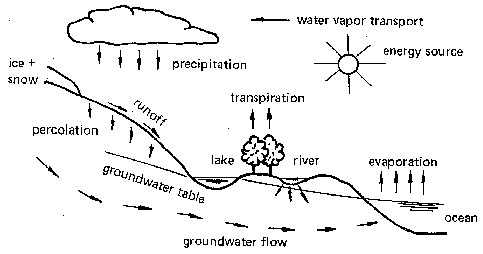
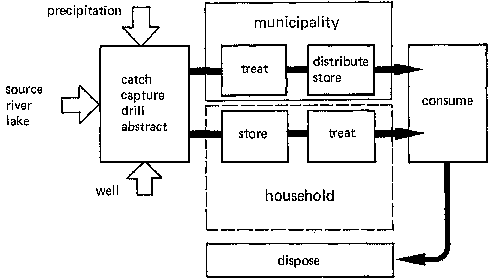
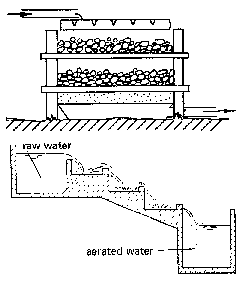
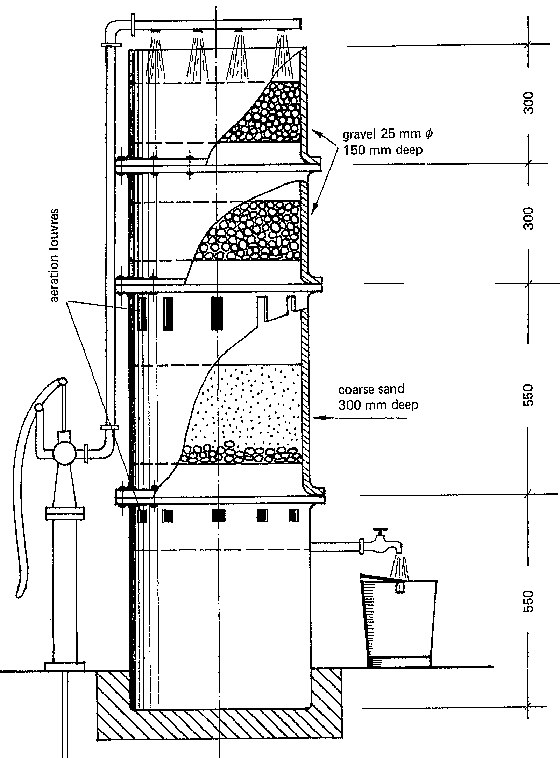
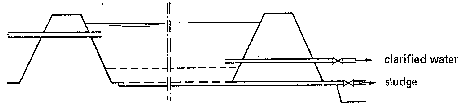
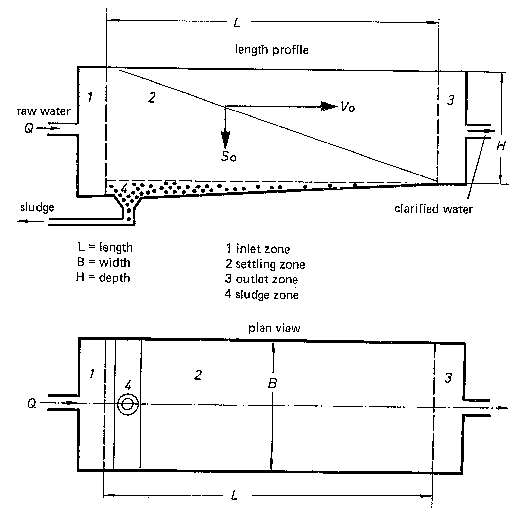
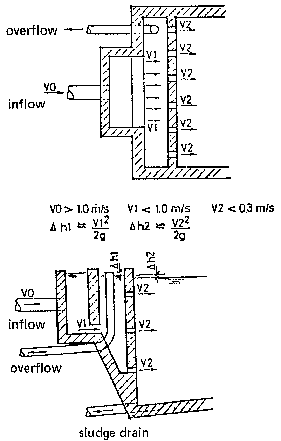
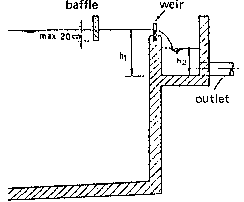
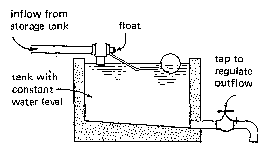
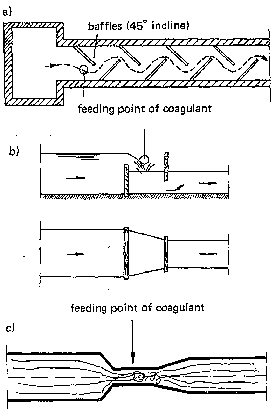
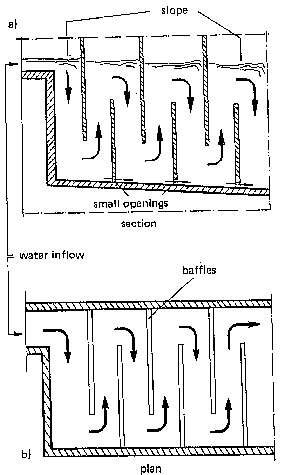
 (see 3.5.2.3)