 |
| |||||||||||||||||||||||||||||||||||||||||||||||||||||||||||||||||
Report of an Ad Hoc Panel of the Advisory Committee on Technology Innovation Board on Science and Technology for International Development Office of International Affairs National Research Council In Cooperation with the Perhum Perhutani, Jakarta, Indonesia
NATIONAL ACADEMY PRESS
Washington, D.C.
1983
|
| |||||||||||||||||||||||||||||||||||||||||||||||||||||||||||||||||
Acknowledgments
NATIONAL ACADEMY PRESS
Washington, D.C. 1983
NOTICE: The project that is the subject of this report was approved by the Governing Board of the National Research Council, whose members are drawn from the Councils of the National Academy of Sciences, the National Academy of Engineering, and the Institute of Medicine. The members of the committee responsible for the report were chosen for their special competences and with regard for appropriate balance.
This report has been reviewed by a group other than the authors according to procedures approved by a Report Review Committee consisting of members of the National Academy of Sciences, the National Academy of Engineering, and the Institute of Medicine.
The National Research Council was established by the National Academy of Sciences in 1916 to associate the broad community of science and technology with the Academy's purposes of furthering knowledge and of advising the federal government. The Council operates in accordance with general policies determined by the Academy under the authority of its congressional charter of 1863, which establishes the Academy as a private, nonprofit, self-governing membership corporation. The Council has become the principal operating agency of both the National Academy of Sciences and the National Academy of Engineering in the conduct of their services to the government, the public, and the scientific and engineering communities. It is administered jointly by both Academies and the Institute of
Medicine. The National Academy of Engineering and the Institute of Medicine were established in 1964 and 1970, respectively, under the charter of the National Academy of Sciences.
The Board on Science and Technology for International Development (BOSTID) of the Office of International Affairs addresses a range of issues arising from the ways in which science and technology in developing countries can stimulate and complement the complex processes of social and economic development. It oversees a broad program of bilateral workshops with scientific organizations in developing countries and conducts special studies. BOSTID's Advisory Committee on Technology Innovation publishes topical reviews of technical processes and biological resources of potential importance to developing countries.
This report has been prepared by an ad hoc advisory panel of the Advisory Committee on Technology Innovation, Board on Science and Technology for International Development Office of International Affairs, National Research Council. Program costs for the study were provided by the Office of Technical Resources, Bureau for Asia, Agency for International Development, under Grant No. ASB-0249-SS-00-1026-00 and the Office of the Science Advisor, Agency for International Development, under Crant No. DAN/5538-GSS-1023-00.
'Funding for the second printing was provided by the Office of Forestry and Natural Resources, Agency for International Development, Grant No. DAN-IW6-G-SS-4001-00.
First printing, July 1983
Second printing, August 1984
Panel on Calliandra
FRANCOIS MERGEN, Pinchot Professor of Forestry and Professor of Forest
Genetics, Yale University, New Haven, Connecticut, USA, Chairman
CHARLES S. HODGES, Director, Institute of Pacific Island Forestry, Honolulu, Hawaii, USA
DONALD 1. NICHOLSON, Forest Research Officer, Department of Forestry,
Atherton, Queensland, Australia
HUGH POPENOE, Director, International Programs in Agriculture, University of Florida, Gainesville, Florida, USA K. FREERK WIERSUM, Department of Forest Management, Agricultural University,
Wageningen, The Netherlands Indonesian Participants
R. ABDULKADIR S., Head, Production Bureau, Perum Perhutani, Bandung
ARMANA DARSIDI, Director, Directorate of Forest Planning,
Bogor
B. DJOEMADIONO, Forest Ranger, Deles, Surakarta Forest
District
DJURI, Calliandra plantation owner, Toyomerto, Malang
DULMAJID,
Calliandra plantation owner, Toyomerto, Malang
M. HAERANI, Deputy Regional
Manager, Perum Perhutani, Bandung
M. HAMZAH, Village Chief, Toyomerto,
Malang
ZOEFRI HAMZAH, BIOTROP, Bogor
HANDI SUHANDI, Forest Research
Institute, Bogor
HARTOJO, Forest Products Research Institute, Bogor
R. M.
ISRAJADI SOERJOKOESOEMO, Head, Planning Bureau, Perum Perhutani, Malang,
Indonesia
KOEN MARYATIN, Perum Perhutani, Surabaya
KOESWATA
KARTAWINATA, Lembaga Biologi Nasional, Bogor
MARSANTO, Forest Ranger, Pujon,
Malang Forest District
ODING ABDULKADIR, Head, Forest District,
Bogor
PARDIYAN, Faculty of Forestry, Gadjah Mada University, Yogyakarta
R.
I. S. PRAMOEDIBJO, Regional Manager, Perum Perhutani, Semarang
SRI
PURWANINGSIH, Perum Perhutani, Jakarta
SAMAS, Calliandra plantation owner,
Toyomerto, Malang
SA'UN, Calliandra plantation owner, Toyomerto,
Malang
SETIJATI SASTRAPRADJA, Director, Lembaga Biologi Nasional,
Bogor
SOEDIROHOESODO, Forest Ranger, Pananggungan, Pasuruan Forest
District
SOEDJADI MARTODIWIRJO, Head, Production Bureau, Perum Perhutani,
Jakarta
SOEDJARWO, Village Chief, Deles
SOEDJASMIRAN, Animal
Husbandry Specialist, Malang
R. SOEHARDJO, Head, Malang Forest District,
Malang
SOEHARDJONO, Animal Husbandry Specialist, Yogyakarta
SOEHERMAN
BUCHRON, Regional Manager, Perum Perhutani, Bandung
SOEJANTO, Head, Planning
Section, Perum Perhutani, Yogyakarta
SOEKADJI, Forest Guard, Punten, Malang
Forest District
SOEKlRNO, Faculty of Forestry, Gadjah Mada University,
Yogyakarta
B. SOEKODONO, Head, Pasuruan, Forest District,
Malang
SOEMAHADI, Head, Forest District, Surakarta
ACHMAD SOEMITRO,
Faculty of Forestry, Gadjah Mada University, Yogyakarta
SOENARDI, Faculty of
Forestry, Gadjah Mada University, Yogyakarta
SOENGADI DJOJOMIHARDJO, Head,
Production Bureau, Perum Perhutani, Surabaya
SOERJONO, Balai Penelitian
Hutan, Bogor
SOEROSO SISWODARSONO, Deputy Regional Manager, Perum Perhutani,
Surabaya
SOEROTO, Forest Guard, Deles, Surakarta Forest District
SUKIMAN
ATMOSUDARYO, Former President and Director, Perum Perhutani, Jakarta
OEMI
HANI'IN SOESENO, Faculty of Forestry, Gadjah Mada University,
Yogyakarta
SOEWARDI, Village Chief, Trawas, Malang
SUJARWO, Chief of Land,
Siderejo Village
SULAEYA, Village Chief, Gunung Arca, Sukabumi
SYARIEF M.
KEMAL, Regional Manager, Perum Perhutani, Surabaya
1. G. M. TANTRA, Forest
Research Institute, Bogor
YUHANA, Forest Guard, Gunung Arca,
Sukabumi
WAHJUDI, Deputy Regional Manager, Perum Perhutani, Semarang
NOEL D. VIETMEYER, Professional Associate, Board on Science
and Technology for
International Development, Calliandra Study Director National Research Council Staff
F.R. RUSKIN, BOSTID Editor
MARY JANE ENGQUIST, Staff
Associate
CONSTANCE REGES, Administrative
Secretary
|
| |||||||||||||||||||||||||||||||||||||||||||||||||||||||||||||||||
Preface
This report describes a little-known tree legume, Calliandra calothyrsus. In 1936, foresters transported seed in this small Central American tree from Guatemala to Indonesia. They were interested in calliandra and other legumes as possible green manures or shade trees in coffee plantations. In particular, they wanted an alternative to leucaena, notably for use at high altitudes, where leucaena did not perform well.
The foresters planted test plots of calliandra in a few places in East Java, but World War II and the subsequent fighting in Indonesia interrupted the investigations, and for 20 years the plant remained largely forgotten by science.
Then, in the 1960s, administrators of Perum Perhutani, the government forest corporation of Java, noted that villagers in East Java had spontaneously adopted calliandra and were cultivating it for their firewood needs. The villagers were so successful that in 1974 Perum Perhutani began encouraging the widespread testing and planting of calliandra. By 198 l the steadily expanding plantations, many planted by villagers themselves, covered almost 2,000 km2 on Java. Today Javanese cultivate calliandra widely, often intercropping it with fruit trees and vegetables. The tree has become so popular in rural areas that "Kaliandra" is now a widely used name for children.
However, calliandra remains essentially unknown elsewhere, and the purpose of this report is to recount Java's experience in the hope that other countries will be encouraged to investigate calliandra's promise for themselves. It is not our intent to recommend it over conventional reforestation species. Instead, we suggest testing calliandra as a possible supplementary species, particularly for villages and remote rural areas, where it may provide enough fuel and fodder that forest plantations and natural forests are spared destruction.
This report results from meetings and field trips held in Java from May 11 to 15, 1981. During this period a joint panel of Indonesian scientists and National Research Council panel members traveled to Bogor, Gunung Arca, Surabaya, Mojokerto, Toyomerto village, Punten,
Trawas, Tangkep, Deles, Tretes, Solo (Surakarta), Malang, Batu, Sidorejo village, Sekipan, Yogyakarta, and Jakarta. At most sites the panel met with local foresters and village chiefs and was able to see calliandra in use in forest and village situations.
The panel is indebted to Sukiman Atmosudaryo, professor emeritus and former director of
Perum Perhutani, and to the many members of his staff (especially Mrs. Sri Purwaningsih and Ir. Soedjadi Martodiwirjo) who made the complex field trips so pleasant and instructive.
The visitors were impressed with-and even overhelmed by-the precision and attention to detail that characterised the meetings.
The Advisory Committee on Technology Innovation of the National Research Council's Board on Science and Technology for International Development is assessing scientific and technological advances that might prove especially applicable to problems of developing countries.
This report is one of a series, Innovations in Tropical Reforestation.. Other titles are:
· Leucaena: PromisingForage and Tree Crop for the Tropics
(1977)
· Firewood Crops: Shrub and Tree Species for Energy Production,
Volume I (1980)
· SowingForests From the Air (1981)
· Firewood
Crops: Shrub and Tree Species for Energy Production, Volume II (1983)
·
Mangium and Other Fast-Growing Acacias for the Humid Tropics (1983)
·
Casuarinas: Nitrogen-Fixing Trees for Adverse Sites. (1983)
Information on promising fast-growing trees is also contained in Tropical Legumes:
Resources for the Future. An updated edition of the 1977 leucaena book is in preparation.
These activities are supported largely by the U.S. Agency for International Development (AID). This study was sponsored by AID's Bureau for Asia and the Office of the Science
Advisor.
Free distribution of this report in developing countries and to members of the development community is made possible by a grant from AID's Office of the Science Advisor.
|
| |||||||||||||||||||||||||||||||||||||||||||||||||||||||||||||||||
1 Introduction and Summary
Tropical Deforestation
Overexploitation, misuse, and poor management have significantly depleted what was once one of earth's most abundant natural resources: its forests. Today forests are being converted to other uses at the rate of nearly 11.3 million hectares a year, with most of the loss-7.5 million hectares-occurring in the humid tropical regions of the Third World.
Many nations in the humid tropics now confront the economic, social, and ecological problems caused by deforestation. A 1982 United Nations survey revealed that the closed tropical forests are declining at annual rates of 4.2 million hectares in Latin America, 1.8 million hectares in Asia, and 1.3 million hectares in Africa.
The decline is uneven. Some tropical forests are only slightly disturbed, but many others face extinction. For example, deforestation in Africa ranges from 0.2 percent a year in Zaire to 10 percent in Nigeria and the Ivory Coast. In Latin America the annual deforestation rate is 0.4 percent in Brazil and Venezuela, but 3.7 percent in Costa Rica. And in Asia the loss of forests each year ranges from 0.5 percent in Indonesia to 4.3 percent in Nepal.
Forests for People
Rapid population growth is a main cause of deforestation. In the less-affluent nations of the tropics, population has increased so much during the last half-century that the land's ability to provide food, shelter, and fuel is being overwhelmed.
New areas of forest are continually opened up for agriculture, particularly for shifting agriculture because population pressures no longer permit the traditional 10-15 years of fallow time required to regenerate a previously farmed area. This shortening of the rotation time destroys the land's capacity to recover its forest and nutrient resources. In Africa, shifting agriculture reportedly accounts for 70 percent of the deforestation; in Asia, 50 percent, and in the Americas, 30 percent. People are destroying the basis of their own livelihood as-out of necessity, and particularly without the fertiliser required to sustain continuous crop production-they exceed the carrying capacities of the available land.
A second major contributor to deforestation is the indiscriminate harvesting of firewood.
More than a third of the world's people depends on wood for cooking, for heating households, and for fueling cottage industries. In fact, more than 80 percent of all the wood consumed in developing countries is used for fuel. Deforestation already affects the supply and price, and many of the poor are so desperate that wood is poached from forest reserves, hedges around homes are cut and stolen at night, and even scaffolding disappears from building sites.
Today there is growing support for the idea of planting trees and managing forests not simply for commercial logging interests but for the diverse goods and services needed by the local community. This concept involves the planned use of trees for the benefit of villagers and for integrating trees into agricultural systems so as to sustain greater productivity of food, fodder, and fuel. The idea has yet to be accepted widely in practice. Nevertheless, there is a new awareness that standing trees can contribute much to the daily welfare of people and that to sustain productive agriculture demands balancing land use among crops, trees, livestock, and, in many cases, wildlife. Unfortunately, most of the conventional forestry species are poorly adapted to the varied and continually changing needs of a rural subsistence society.
Tropical Reforestation Species
Today's tropical reforestation programs concentrate on three traditional plantation trees: pines, eucalypts, and teak. These account for 85 percent of all the area on which reforestation is being attempted, yet they represent a small fraction of the trees that might prove useful in the tropics, especially as trees for village use.
It is now important to consider alternatives, because the three conventional plantation species alone appear incapable of keeping pace with the rapidly increasing deforestation. In part, this is because of the impoverished soils that are relegated to tree growing in the tropics. Characteristically, these lands have infertile, badly eroded, and shallow soils. Some are bare; others are covered by grassy and shrubby weeds that encourage devastating ground fires. Under such conditions, pines and teak, in particular, require careful site preparation and care.
Trees for the enormous task of rehabilitating vast areas of degraded forest and abandoned agricultural lands need not have the high commercial qualities of teak, pine, or eucalypt, but they must fulfill the needs of the local communities. Moreover, they should be fast growing (not only to cover bare ground, but also to compete with aggressive weeds), resist drought and fire, use limited supplies of nutrients efficiently, and be able to thrive on open sites with little or no silvicultural care. They must also produce seeds or other planting materials prolifically, so that large quantities can be available free or at low cost.
Calliandra
Calliandra is a small tree that seems to meet many of these requirements. Since it is a woody shrub rather than a forest tree, however, it is unknown in traditional forestry. Its stems are usually multibranched, crooked, and short, and even at maturity the trees are only 12 m tall and 20 cm in diameter, making the wood too small for most commercial forestry purposes.
Nevertheless, to the villagers on Java, calliandra is a useful plant. Its wood makes good fuel, its foliage is valued for animal feed, and bees use its nectar for producing honey. Over the last 25 years Java's plantings of calliandra have steadily expanded and now cover more than 170,000 hectares. Eighty percent of Indonesians live in rural areas, and on Java most of them now use calliandra as firewood.
On suitable sites this small tree grows with extraordinary speed. Nine months after planting it can be taller than a village house; in just one year it can be harvested for firewood. The remaining stump then resprouts so vigorously that within six months the new stems may rise above the houses again. Because of this rapid regrowth the trees can provide an annual firewood crop.
Calliandra is a good pioneer plant, especially for problem sites. On Java it grows well on steep hillslopes and poor soils. It adapts well to different soils, establishes easily by direct seeding or by planting seedlings, and requires little care. It grows successfully in a range of environments with widely differing altitudes, rainfall, and shade. It is, however, likely to prove useful only in the humid tropics; it is not a crop for arid or temperate regions.
Nitrogen Fixation
Like most other legumes, calliandra forms a mutually beneficial partnership with soil bacteria of the genus Rhizobium. These bacteria penetrate young rootless and multiply to form nodular swellings on the root surface. In the nodules the rhizobia absorb nitrogen gas from air in the soil and biologically transform it into nitrogen-containing organic and inorganic compounds. The plant then uses the nitrogenous products to produce protein, vitamins, and other nitrogen-containing compounds. This process converts an otherwise unusable gas into compounds that stimulate the plant's growth.
Calliandra usually has large, prolific nodules and requires little or no nitrogen fertilizer; the rhizobia provide adequate amounts of nitrogenous compounds for normal growth. This permits calliandra to thrive in soils where nitrogen levels are inadquate to sustain the growth of most other crops.
Nitrogen is one of the principal nutrients that limit the growth of both agronomic and forest crops, accounting for a substantial proportion of crop production. And nitrogen is the single most costly industrial input to agricultural productivity-the energy needed to obtain one kilogram of nitrogenous fertilizer requires 1.8 m3 of natural gas.
Nitrogen fertilizer is becoming increasingly expensive as the cost of natural gas rises. And as a country's foreign exchange becomes more precious, it seems probable that forestry will be allocated a lower priority for nitrogen than agriculture. Thus, although it is important to exploit biological ways to add nitrogen to agronomic crops, it may become critical to do so for forestry crops. Limitations So far, the only extensive experience with calliandra has been on Java.
Therefore, the potential for the tree elsewhere in the tropics is now only speculation: no information has yet been collected about calliandra's growth under different climatic and soil conditions, and comparative trials with other species have only recently been started. Thus the time has not come for widespread commercial planting. Instead, calliandra should be incorporated into trials with tropical multipurpose species such as leucaena and mangium.
From such comparisons will come a better understanding of calliandra's potential. In 10 years it will be known if this is as universally promising as the experience in Java now seems to suggest.
Calliandra has no thorns, it is not known to be toxic to animals, nor does it seem to have other serious drawbacks. But it is a resilient and spreading plant, and the possibility of its becoming a weed should be kept in mind.
Uses and Advantages
A summary of calliandra's main uses and advantages follows. Details are given in chapter 5.
Firewood
Calliandra seems to be an outstanding candidate for meeting village needs for fuel.
Calliandra wood is too small in diameter for lumber, but it is dense, burns well, and is ideally sized for domestic cooking needs. It can also be used for firing brick, tile, and lime kilns and for fueling copra and tobacco dryers.
Soil Improvement
Calliandra is particularly promising for improving the soil and preparing the site for crops.
This is dramatically exemplified in the village of Toyomerto in East Java. There the villagers routinely enrich worn-out agricultural land by growing calliandra on it for several years.
During that period, they make a good living selling calliandra firewood, actually sometimes earning more this way than from their food crops. After the calliandra stumps are removed (for charcoal), sugarcane, corn, and other crops grow vigorously.
Reforestation
Calliandra's ability to thrive on steep slopes, in marginal soils, and in areas with extended dry seasons makes it a prime candidate for restoring tree cover to watersheds, slopes, and grasslands denuded through deforestation and fire. Calliandra can be established on soils dominated by coarse grasses. Its quick growth, thick canopy, and rapid regrowth leave vigorous weeds, such as Imperata grass, little chance to compete.
On denuded watersheds in the tropics calliandra should prove particularly valuable. Its thick canopy and extensive root system may help rainfall to penetrate the soil, thereby retarding runoff and erosion, preventing landslides, improving the perennial flow of springs, and reducing the siltation of dams.
Calliandra is moderately shade tolerant and will grow between young pines, eucalypts, and other tree crops, adding nitrogen to the soil, which benefits the taller trees.
Amenity Planting
In Indonesia calliandra is often cultivated as a border crop along roads, ravines, rivers, and village boundaries. There it may act as a fire barrier or a screen to prevent unwanted grazing-particularly where forests border villages. It also provides shade and beautification.
Forage
Altough not widely tested as a forage source, calliandra foliage contains up to 22 percent protein. It is often produced abundantly and is well liked by cattle and goats. No toxic components have been found so far, although tannin levels are high.
Honey Production
The tree makes good bee forage because its flowers are rich in nectar and it blooms year- round. Calliandra honey is light colored and has a pleasant, bittersweet taste.
|
| |||||||||||||||||||||||||||||||||||||||||||||||||||||||||||||||||
2 Calliandra and Java's Greening Movement
Java's enormous population density (among the highest in the world) puts great pressures on its forest lands. About 80 percent of its people live in rural areas, and, as in many developing countries, most of them depend entirely on the land for their daily existence.
With little space of their own available, many villagers enter the forest to graze livestock, cut firewood and timber, and sometimes even to grow crops. As a result, in the early l970s the State Forest Corporation, Perum Perhutani, found itself spending millions of rupiah to keep people out of its commercial stands of teak, pine, and acacia.
Perum Perhutani is a government corporation, and in the 1970s its director at that time,
Sukiman Atmosudaryo, sought ways to make forestry fulfill the needs of the local population.
Among other things, he wanted a vigorous, fast-growing tree that would survive on poor land that was subject to erosion. A tree legume seemed to be the answer, and researchers at the corporation quickly found that calliandra was one of the fastest growing woody legumes on Java.
To learn more about this obscure species and where it would grow best, Perum Perhutani used its 1,700 forest guards, who are scattered through rural Java. In 1974 each was given a few seeds of calliandra and other fast-growing trees to plant. The resulting trial plots demonstrated that calliandra would be the most suitable for village fuelwood production in humid areas and at medium elevations (250-800 m).
The forest guards then distributed seed and gave planting advice to local village chiefs in appropriate regions. This program is known as the MA-LU (MAntri kehutanan is Indonesian for forest guards and LUrah for village leaders). The MA-LU program also oversees the distribution of tree species other than calliandra and is involved in additional forestry extension. (See papers by Sukiman Atmosudaryo in Selected Readings.)
Under the MA-LU program, regional demonstrations were organized and groups of 50 to 100 village chiefs were brought in to visit the test plots. Here, local village leaders told their visiting counterparts about calliandra and its value to their people. Unless questioned, the foresters remained silent.
With these activities, calliandra began to attract increasing recognition, and, as more village chiefs asked for help, a series of quarter-hectare, temporary nurseries were set up for the production of calliandra seedlings. Once trees were established, the seedling nurseries were moved to a new area. Perum Perhutani staff refer to this plan as a "creeping nursery."
In the late 1970s these efforts gave rise to a spontaneous distribution of calliandra seed among the network of village chiefs-a true sel[-perpetuating "greening" movement began.
Today people plant calliandra for themselves, and the plant can be seen in villages throughout Java. It is popular because it grows well in many types of soil, destroys the tangle of weeds, and improves soil fertility. It also increases the income of the village by providing firewood, honey, and feed for sheep, water buffalo, goats, and chickens.
Perum Perhutani now uses calliandra to foster a cooperative relationship between villagers and the surrounding forest. For example, it will plant stands of calliandra close to villages to provide forage and firewood. However, the village chief must pledge that, in exchange, the nearby forest plantings and native forests will be left untouched.
In a separate program on some sites, Perum Perhutani also lets villagers earn firewood. If they collect three stacked-meters of calliandra wood for the corporation, they receive a fourth stacked-meter of wood for themselves. The corporation also pays villagers to collect calliandra seed, which is then used for planting elsewhere in and outside Java. In this way calliandra is of daily benefit to the nearby villages.
This is a sensitive approach. Its success depends on motivating people to grow wood on fringe areas, including their yards, dry fields, and rice-field dikes, while protecting the forest plantation itself. It has not been successful everywhere-forest guards and forest administrators often have trouble seeing themselves as part of village development. But in many areas there is now cooperation between the forest guards and the villagers, and today calliandra is the source of the products that used to be stolen from the forests.
This enlightened program of forest management has helped Perum Perhutani engender the rural populace's enthusiastic support for its projects and for calliandra. In building village prosperity the corporation foregoes considerable profit, but in return its own plantations are protected and even improved by the nearby inhabitants. The idea, according to Sukiman Atmosudaryo, is to develop forests for the people and people for the forests.
Foresters have to live with the environment, he says, and people are part of it.
|
| |||||||||||||||||||||||||||||||||||||||||||||||||||||||||||||||||
3 The Plant
The genus Calliandra comprises more than 100 Central and South American shrubs or small trees as well as a few herbs. It occurs both in wet and dry tropical regions.
Several Calliandra species (notably Calliandra surinamensis, which produces masses of red flower balls resembling fiery pompons) have been widely planted as ornamentals in tropical countries. Only two species, however, have been planted for forestry purposes: Calliandra calothyrsus and Calliandra tetragona. As noted earlier, both were introduced to Indonesia in 1936 from Guatemala, and since then their use has gradually spread over the island of Java. In the main, Indonesians use Calliandra calothyrsus, which has red flowers. Calliandra tetragona, which has white flowers, has proved to be slower growing and less satisfactory and is not dealt with in this report.
Calliandra calothyrsus is a small tree (or perhaps more correctly, a tall shrub) that usually reaches a height of 4-6 m, but under favorable circumstances it may reach 12 m.
The dark-green compound leaves are feathery (like those of leucaena and other Mimosaceous species) and they fold at night. The crown of individual stems is moderately heavy, but many sprouts occur and the canopy of a stand can become very dense. In humid climates the tree remains evergreen, but in seasonal climates it sheds its leaves during the dry season. Under severe drought conditions young stems and branches may die back, but they usually regrow once rains start.
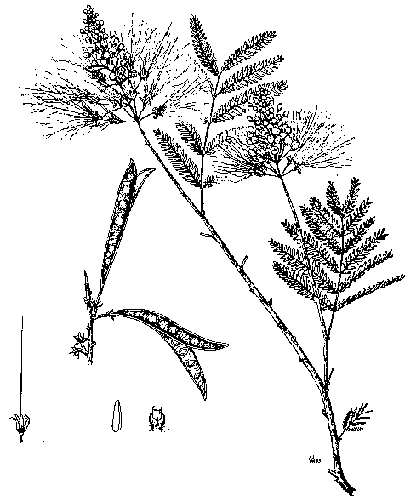
Calliandra calothyrsus. (Art by
Melissa Marshall )
Calliandra's blackish-brown stems are small, reaching a maximum base diameter of 30 cm in Indonesia. Mostly they are harvested when only 3-5 cm in diameter.
This species has both superficial and deep-growing roots. Sometimes a taproot is formed. Roots on seedlings only 4-5 months old can be 1.5 m deep and spread 2 m out from the stem.
The above-ground parts of the species are short lived, and after 12 years the old stem may get brittle. However, the root stock usually remains vigorous and will sprout readily. This rapid sprouting can be used to manage the trees under a coppice system. In eastern Java trees have been observed still sprouting well after 22 years of annual coppicing.
The flowers are subterminal inflorescences with numerous long, hairlike purple or red stamens, which give the plants a handsome, showy appearance. In Indonesia flowering occurs year-round but is heaviest in the dry season. The flowers begin appearing about 4-6 months after planting. They form more in the open than in shade and are pollinated by insects such as bees.
The fruits consist of pods (8-11 cm long and 12 mm wide) that contain 3-15 seeds. Seeds mature 2 months after pollination and apparently have no dormancy period, so they can be planted immediately.
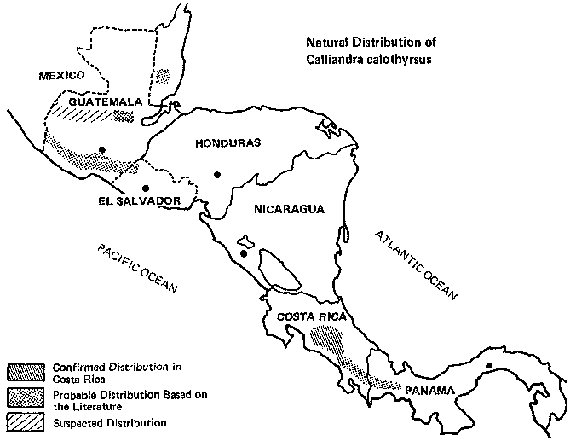
Calliandra is native to an
extensive area of Central America. The exact range has not been determined, but
so far it has been found in the areas shown here. (J. Bauer)
Native Habitat
Calliandra's native range is in Central America roughly from Mexico to Panama (see map, page 19). It does not seem to have been cultivated or studied there. It is a secondary species that grows in thickets, often on steep, open slopes. It can be found as a pioneer species on recently exposed soils such as those resulting from landslides. Under these conditions calliandra often forms low, bushy thickets only 1-3 m high.
Symbioses
As noted, calliandra establishes symbioses with rhizobial microorganisms. It appears not to need specific inoculation: wherever it grows, abundant nodules are dispersed over the root system.
Nodules are elongated and often branched, and they are red inside. Strains of Rhizobium isolated from the nodules are both fast and slow growing. No information is yet available on the amount of nitrogen each can fix.
In nature, calliandra's fine roots and root hairs are also usually infected with a beneficial mycorrhizal fungus, whose network of hyphae helps the plant to obtain phosphorus and other nutrients. This probably enables calliandra to grow in soils deficient in soluble phosphorus and other minerals necessary for quick growth.
These symbioses make calliandra very adaptable. This does not preclude the possibility that growth might be improved by inoculation with selected superior strains of rhizobia and mycorrhizae, however.
Environmental Requirements
In its native Latin American habitat calliandra sometimes grows up to 1,800 m, but normally it is found at mid-elevations below about 1,300 m. On Java it is cultivated at altitudes between 150 and 1,500 m; however, it seems to perform best at elevations between 250 and 800 m.
The plant probably requires rainfall in excess of 1,000 mm per year and does best in areas with 2,000-4,000 mm of annual rainfall. It can withstand drought periods lasting 3-6 months with no loss of leaves. Longer dry spells cause the leaves to fall, and some top dieback may occur.
In Indonesia calliandra is found in such soil types as andosols, vertisols, ultisols, latosols, and regosols, but no data are available on the comparative performances. The tree appears to prefer light soil textures and slightly acid conditions. The plant grows notably well on slightly acid clay soils of volcanic origin. It does not tolerate poorly drained soils, and the trees may die after 2 weeks of oxygen depletion caused by waterlogging. It will, however, grow well where the soil water level is high and if drainage is adequate, such as on stream banks or valley slopes.
On higher slopes or ridges with poorly drained, calcareous clay soils, growth is slow.
Pests and Diseases
In Indonesia calliandra has so far been free of any serious pests and diseases. Several undetermined insects-a scale on branches and stems, a trunk borer, and a looper eating the leaves-have been observed, but the damage they cause appears to be minimal. The only serious attacks have been in nurseries, where snails and rats sometimes destroy the tender, tightly packed seedlings.
The rough coppice harvesting that calliandra receives from villagers can leave the stumps vulnerable to fungus infections. If stems are not cut cleanly, or high enough for vigorous resprouting, then fungi (for example, Xylaria species and Corticium salmonicola) may infect and kill the weakened stumps.
|
| |||||||||||||||||||||||||||||||||||||||||||||||||||||||||||||||||
4 Production and Management
Seed Production
Calliandra trees mature rapidly and usually flower and bear fruit within their first year. In Indonesia they set flowers year-round, but most seed is produced in the dry season (June- September).
To obtain seed for planting, the pods are collected when they turn brown. After I or 2 days of drying in the sun, they open to expose the seed inside. These shiny, black, teardrop-shaped seeds look like those of leucaena but are slightly larger (14,000 seeds per kg). They store reasonably well. (Seeds kept in a refrigerator at 4°C had retained full viability after 2.5 years.
However, seeds stored in cotton bags at room temperature decreased in viability from 75 to 60 percent in 1 year.) Nevertheless, there is usually no need to store seeds for long periods because calliandra sets fruits continuously.
The seeds germinate without treatment, but they germinate more quickly if boiling water is poured over them and they are allowed to cool and soak for 24 hours.
Direct Seeding
Plantations can be established by direct seeding. This is best done on prepared sites. Before seeding, for example, the rows should be free of weeds and the ground between should be roughly cultivated.
Indonesians place about five seeds in each planting spot. Successful germination depends on the subsequent rainfall pattern.
Direct seeding can be done from the air. In Central Java two trials to grow calliandra by sowing seeds from aircraft on land covered with Imperata grass were reportedly satisfactory provided the lands were plowed or burned beforehand; only partial success was obtained on untreated sites. In one trial the number of calliandra seedlings surviving after 7 years was 10.4 percent of the number sown. This was the highest percentage among the species being tested.
Nursery Practices
Seedlings are commonly produced by two methods. In the first, calliandra seeds are planted in plastic bags filled with topsoil. No fertilizer is added. Two seeds are sown in each bag. (If both develop, the smaller seedling is removed.) Seedlings are allowed to grow until they are about 20-50 cm tall with a root collar diameter of 0.5-1.0 cm. They are then ready for transplanting. Depending on the amount and type of vegetation in the area to be planted, some site preparation is necessary before planting seedlings. This may include clearing the complete area, or just clearing strips or spots.
The second method is to produce "stumps." Seeds are sown on the surface of a prepared nursery bed and lightly covered with sand. Seedlings are allowed to develop to a height of 75-100 cm, which usually takes about 4 months. They are then lifted and top- and root- pruned to about 30 and 20 cm, respectively. Any remaining leaves are usually stripped off.
Bundles of these stumps can be stored for up to 1 week in a moist, shady place before planting in the field. Stumps are useful for interplanting among other trees or for planting directly into weeds. On steep slopes or river banks stumps are also often used to ensure satisfactory establishment. They can also be prepared from the prolific natural regeneration that occurs beneath established trees.
So far, attempts at propagating calliandra using cuttings have failed.
Planting is usually done at the beginning of the rainy season, and spacing varies according to purpose. Firewood plantings normally use spacings of 1m x 1m or 1m x 2m.
On poor soils the seedlings react well to an initial treatment of fertilizer, especially phosphate.
The trees often need to be weeded during the first year, but the tree canopy closes after that and weeds seldom get out of hand.
Yields
Calliandra grows fast. In moderately good soils in Indonesia the
plants may be 3-5 m tall and
5 cm in diameter at stump height within 12
months. This is an optimum size for firewood for village cookstoves.
Although extensive data are not available, some results indicate that on reasonable soils the trees grow with heights averaging 2.5-3.5 m in 6-9 months. They can be harvested after the first year, yielding 5-20 m3 of fuelwood per hectare. The stumps coppice readily, their sprouts often becoming 3 m tall within 6 months. In eastern Java calliandra trees have been harvested annually for 20 years or more, providing 35-65 m3 of fuelwood per hectare per year.
Harvesting is best done at the end of the dry season because the onset of rains will produce quick sprouting. The cutting is done 20-50 cm above the ground to foster rapid resprouting.
The main problem in coppicing the plants this way is that "shock" may prevent the buds from sprouting. As noted, the weakened, newly coppiced stumps can get fungal infections that prevent sprouting.
|
| |||||||||||||||||||||||||||||||||||||||||||||||||||||||||||||||||
5 Products and Applications
Firewood
In many parts of Java calliandra wood has become a favorite fuel. In one instance an experimental plantation of 0.5 hectares was established in 1963, and within 12 years villagers had independently established more than 250 hectares of their own firewood plantations on nearby farms and home lots.
Villagers favor calliandra because it is easy to establish, produces fuelwood quickly, is simple to harvest, and resprouts readily. The wood dries rapidly and, if necessary, can be used for fuel after only 6 days. (However, the cut branches are usually left on the ground a week or two for the leaves to fall off before being cut to length and stacked for further drying.) Calliandra wood is quite dense (specific gravity 0.5-0.8) and burns well, giving off about 4,600 kcal of heat per kg. It converts to charcoal (34 percent yield in one test) with a fuel value of 7,200 kcal per kg. Indonesians estimate that 1 hectare can produce up to 14 tons of charcoal.
Pulp and Paper
Apparently calliandra wood is suitable for pulp and papermaking. Its cellulose content is about 44-56 percent. Fiber length in the main stems averages between 0.66 and 0.84 mm but may be as long as 1.3 mm, the lumen diameter is 17.4-18.4µ and the fiber-wall thickness is 4.39-6.00 µ The wood contains about 3 percent extractive material.
Calliandra pulp is easily bleached. One factory in East Java uses it in papermaking, although it is used mainly as a filler at less than 10 percent of the total pulp. The small size of the calliandra wood makes handling and chipping difficult, and therefore the pulps from
Sesbania grandiflora and Maesopsis eminii are preferable.
Reforestation
Nitrogen-fixing trees such as calliandra hold particular promise for supplementing current reforestation efforts. Indeed, they seem to have special attributes for fighting deforestation.
As already discussed, Indonesians use calliandra to recover bare lands, to improve hydrological conditions, and to hamper the growth of noxious weeds (notably Imperata cylindrica, Eupatorium species, and Saccharum species) as well as to prevent soil erosion and landslides on slopes, ravines, and river banks.
Calliandra's rapid growth and dense foliage provide good ground cover, and its deep, extensive root system binds soil, thereby making calliandra particularly suitable for erosion control on slopes. There are plans to use it also for stream-bank protection in Java.
Calliandra trees are planted around state forest lands on Java to protect timber trees from being destroyed. By providing firewood and forage they reduce illegal woodcutting in the forests, and they help prevent the spread of ground fires, which are common in Imperata grass areas.
Indonesian foresters also plant calliandra as an intercrop to fill in the spaces between newly planted trees, especially on bare lands and where the trees are widely spaced. Strips of calliandra provide good shade for seedlings of plantation species such as damar (Agathis loranthifolia). The foresters now hope that strips of calliandra will encourage the early growth of partially shade-tolerant trees such as meranti (Shorea species), eboni (Diospyros species), or ulin (Eusideroxylon zwagerii).
Calliandra can be planted beneath stands of other trees. For example, it is being grown beneath stands of pines at both Tawangmangu and Deles on Java. Two-year-old calliandra grown beneath Pinus merkusii at Tawangmangu have yielded 60-70 stacked-meters of firewood per hectare. Elsewhere on Java it is planted beneath Eucalyptus deglupta.
Indonesian foresters use it for stabilizing eroding slopes. Calliandra has also been used as a firebreak to block the passage of grass fires. (K.F. Wiersum) ]
Soil Improvement
Calliandra helps enrich soil and aids neighboring plants. Natural leaf drop contributes nitrogen to the earth beneath the shrubs, and small leaflets decay quickly to build humus and improve soil texture. Moreover, calliandra's main root penetrates deep in the soil and exploits mineral nutrients from strata below the root zone of most agricultural crops.
Eventually these nutrients are deposited on the surface through the decay of leaves, again improving topsoil.
Farmers in East Java sometimes rotate agricultural crops with calliandra plantations.
Planting contour rows of calliandra on agricultural land and mountain slopes not only prevents erosion but also improves the fertility of soil. After 5-10 years these strips have successfully rehabilitated some poor agricultural lands; the calliandra trees are then harvested and the land is returned to cultivation.
One rotation sequence worked out by villagers at Toyomerto involves growing calliandra for 4 years, sugarcane for 4 years, and corn for 2 years. The villagers have found that it takes only 4 years for the calliandra trees to make the soil rich enough for good crops of sugarcane, a notably high user of nitrogen.
Forage
Indonesian rural communities frequently cut calliandra leaves to feed their livestock. Annual yields of 7-10 tons of dry fodder per hectare have been recorded. Calliandra is already grown for fodder, together with elephant grass, in large areas of Java previously unable to support any economic crop. Thus, forage production, perhaps in a silvipastoral system, is a promising use of the plant.
Calliandra foliage is browsed by sheep, goats, and cows. In sheep-feeding trials using mixed diets of grass and calliandra, best growth was obtained with 40-60 percent calliandra.
Calliandra leafmeal was also successfully used in chicken feed in amounts up to 5 percent.
Indonesia.
In Central Java dried calliandra leaves are often pulverized and pressed into pellets, either alone or mixed with leucaena leaves. Pellets are then used for feed on Javanese chicken farms or exported. Calliandra leaflets detach readily on drying, so that separating the leaflets for animal feed is easy.
The following observations have been made on the composition of calliandra forage:+
Leaves. Calliandra leaves, like those of leucaena, are rich in protein (up to 22 percent, dry weight basis) and contain 30-75 percent fiber, 4-5 percent ash, and 2-3 percent fat.
Simple polyphenols. Calliandra foliage has only one polyphenol, quercetin-3-rhamnoside, at a concentration of about 1 percent; leucaena foliage, on the other hand, has an array of seven flavonol glycosides comprising about 3.5 percent of the leafless' dry weight.
Tannins. There is a much higher content of vanillin-reacting compounds in calliandra than in leucaena, and the level of these condensed tannins seems to be in the range of 1-3 percent.
Antinutrition factors. No toxic substances have been found so far. Mimosine, which is of concern in feeding leucaena foliage to nonruminant animals, is absent in calliandra.
Honey and Shellac
Honey bees favor calliandra nectar, and the plant flowers almost year-round, which makes it a promising bee forage. With the large calliandra plantations in East Java, rural communities are increasingly rearing honey bees. The eagerness to grow calliandra for honey has been an important incentive in Perum Perhutani's re-greening activities. Honey from calliandra flowers has a bittersweet flavor. It has been estimated that calliandra plantations could yield one ton of honey per hectare annually.
In trials, calliandra has also proved to be a suitable host plant for the insect Kerria lacca (Lacciter lacca), which yields valuable shellac.
Ornamental Use
As already noted, the calliandra bush is an attractive ornamental and makes useful hedges with beautiful red flowers. Indonesians recommend calliandra for planting along roadsides, village boundaries, fields, dikes, canals, and forests.
|
| |||||||||||||||||||||||||||||||||||||||||||||||||||||||||||||||||
6 Recommendations and Research Needs
The work yet to be done on calliandra challenges researchers in many parts of the world, in such disciplines as botany, forestry, soil science, microbiology, ecology, and ethnobotany.
For philanthropic institutions, foundations, and international development agencies concerned with problems of fuel, fiber, and other resources, calliandra research is an area worthy of financial support.
The panel's recommendations for specific research needs follow.
Establishment of a Reliable Source of Seed
The limited availability of calliandra seed inhibits wider international use of this species, and the demand for seed is likely to be high. To meet the expected shortages, an organized seed production and distribution service is needed. A system of seed certification is also required, because quality control is imperative if such a new and untried crop is to be evaluated efficiently.
Comparative Trials With Other Species
Commercial experience with calliandra is restricted to Java. It is necessary to support international efforts to conduct carefully planned and replicated plantation trials elsewhere in the tropical and subtropical world. This will allow comparisons between species and ecotypes under different climatic conditions. Association, P.O. Box 680, Waimanalo, Hawaii 96795, USA.
Ideally, a standardized methodology and field layout should be used at each trial location.
Sites should be selected to test the responses of various species to such factors as soil type, altitude, latitude, temperature, moisture level, and pests. Information from the trials, once assessed and compared, will enable rational choices about the establishment of large calliandra plantations under the most favorable conditions.
This effort in international scientific cooperation will require sufficient funding to support an organization (or secretariat) that collects and distributes seeds; establishes contacts and maintains correspondence with research groups; and, ultimately, collects data and publishes the trial's results.
Germ Plasm Collection
All of Indonesia's seed comes from a single collection made in Guatemala in the 1930s.
New collections should now be made in calliandra's center of origin in Central America. This is likely to provide new provenances with special adaptation to specific sites and purposes.
Assessment of genetic resources should include:
· Mapping the natural distribution
· Collecting seed of identified provenances
· Assessing the importance of hybridization, both natural and experimental
· Distributing seed and exchanging genetic information.
Silvicultural Research
Silvicultural research on calliandra species is needed, especially in the following areas:
· Soil requirements
· Water requirements
·
Growth rates
· Cropping systems.
Research is also needed to quantify the soil improvement capacity of calliandra.
Microbiological Research
The following specific research is needed on calliandra's
symbioses:
· Isolation and culture of Rhizobium strains, optimum methods
of inoculation and nodule establishment, and determination of the combinations
that most enhance nitrogen fixation.
· Identification of mycorrhizal
fungi, along with development of inoculation methods and analysis of phosphorus
and micronutrient requirements of calliandra.
Research on Calliandra Use
Researchers should assess calliandra's use for:
· Cultivation in biomass plantations
· Land
stabilization and erosion control
· Soil rehabilitation in farming,
i.e., as a fallow crop
· Forage
· Honey production
·
Pulp and particle board manufacture
· Wood densification.
The contribution of calliandra cultivation to village economies should also be assessed.
Dissemination of Information
The panel recommends that calliandra researchers immediately publish two documents about the plant:
· A planting guide based on present knowledge. A handbook with practical step-by-step information on propagating, planting, managing, and utilizing the plant would be of considerable help to people who want to test calliandra.
· A newsletter. To explore calliandra's potential, it is important to establish communication among researchers working with the plant. Because they are likely to be situated in remote research stations, universities, missions, and villages, their findings may not be widely noted in technical journals. A newsletter would provide a means for exchanging information and would provide a forum for opinions, observations, and preliminary experimental data usually not accepted by standard scientific journals.
|
| |||||||||||||||||||||||||
Calliandra: a Versatile Tree for the Humid Tropics (BOSTID, 1983, 52 p.)
APPENDIXES
Selected Readings
Much information on calliandra is in internal Indonesian reports and is not easily accessible.
The references below are either in English or have an English summary.
Anonymous. 1977. Bushes needed for supply of fuelwood. Duta Rimba 3(16):26-31.
(Indonesian and English)
Baggio, A., and J. Heuvedlop. 1982. Comportamiento inicial de Calliandra calothyrsus en barreras vivas pare produccion de biomasa verde. Centro Agronomico Tropical de
Investigacion y Ensenanza, Departamento de Recursos Naturales Renovables, Turrialba, Costa Rica. 21 pp.
Basuki, S. 1977. A study on the financial investment for Calliandra calothyrsus fuelwood plantations. Thesis, Forestry Faculty, Gadjah Mada University, Yogyakarta. (Indonesian)
Dirdjosoemarto, S. 1981. The performance of some small legumes on eroded lands at Wanagama experimental forest. Pp. 90-96 in Observations on Agroforestry on Java,
Indonesia, K. F. Wiersum, ed. Forestry Faculty, Cadjah Mada University, Yogyakarta,
Indonesia, and Department of Forest Management, Agricultural University, Wageningen, The Netherlands.
Forest Products Research Institute. 1977. The possibility of Kaliandra wood as a source of energy. Special report of the Forest Products Research Institute Bogor in cooperation with the State Forest Enterprise (Perum Perhutani), Jakarta. 25 pp. (English summary of a report in Indonesian)
Hadipoernomo. 1979. Critical land rehabilitation with air seeding. Duta Rimba 5(31):9-12.
(Indonesian and English)
Karyono, D., and T. W. Riyanto. 1979. Calliandra calothyrsus as shading to the growth of Agathis loranthifolia. Duta Rimba 5(35):3-10. (Indonesian and English. Indonesian version also in Kehutanan Indonesia 6(7):33-39)
Kasmudjo. 1978. (;alliandra calothyrsus. Duta Rimba 4(28):17-22. (Indonesian and English. Indonesian version also in Kehutanan Indonesia 5(5): 16- 17, 20, 1978)
Natawiria, D. 1974/5. Pests and diseases of exotic forest trees at forest experimental garden Sumberwringin. Rimba Indonesia 18(1/2):1-45. (Indonesian with English summary)
Prayitno, T. A. 1980. Some notes on physical properties of sodapulp of Calliandra wood.
Duta Rimba 6(40) :13-16. (Indonesian and English)
Prayitno, T. A., and Muladi Wijaya. 1979. Comparative growth capacity of Calliandra and Gliricidia in critical soil. Duta Rimba 5(34):8-11. (Indonesian and English)
Renvoize, S. A. 1981. The genus Calliandra (Leguminosae) in Bahia, Brazil. Kew Bulletin 36(1):63-83.
Sambas Nadiar. 1979. Knowing the "land of honey" Gunung Arca. Duta Rimba 5(33): 15- 19.
(Indonesian and English)
Sukiman Atmosudaryo. 1982. Rural community development and its implementation in the forest areas of Indonesia. Paper presented at the FAO/SIDA Seminar on Forestry
Extension, Semarang, Indonesia January 18-30, 1982. (FAO paper FO:TRD/82-9)
Sukiman Atmosudaryo and Wahyudi. 1980. Forest management on Java in the development era. Netherlands Forestry Journal 52(6): 153-165.
Sukiman Atmosudaryo and S. G. Banyard. 1978. The prosperity approach to forest community development in Java. Commonwealth Forestry Review 57:89-96.
Soerjono, R., and H. Suhaendi. 1981. The prospect of Calliandra plantation in Indonesia.
Unpublished paper, Forest Research Institute, Bogor, Indonesia.
Suryono, R. 1975. Calliandra as fuelwood and forest protector. Duta Rimba 1(3):2-6, 11.
(Indonesian and English. Indonesian version also in Kehutanan Indonesia 2(6):738-742)
Suryono, R. 1975. Calliandra as a crop for interplanting and regeneration of poor soils. Duta
Rimba 1(4):9-12, 33. (Indonesian and English. Indonesian version also in Kehutanan Indonesia 2(7):765-766,782)
Thulin, M., P. Guinet, and A. Hunde. 1981. Calliandra (Leguminosae) in continental Africa.
Nordic Journal of Botany 1(1):27-34.
Verhoef, L. 1941. Preliminary results of some leguminous crops introduced from tropical America. Tectona 34:711 -736. (Dutch with English summary)
Researchers Working with Calliandra
Sukiman Atmosudaryo, Jl. W. Monginsidi 18, Kebayoran Baru, Jakarta Selatan, Indonesia
Balai Penilitian Ternak (BPT), P.O. Box 123, Bogor, Indonesia
J. Bauer, Forestry Department, CATIE, Turrialba, Costa Rica
J. Brewbaker, Department of Horticulture, University of Hawaii, Honolulu, Hawaii 96822, USA
Jeffrey Burley, Commonwealth Forestry Institute, South Parks Road, Oxford OX1 3RB, England
B. Chang, Forest Department, CATIE, Turrialba, Costa Rica
A. K. Dutt, Regional Research Laboratory, Canal Road, Jammu, Tawi, India
E. Forero, Instituto de Ciencias Naturales, Universidad Nacional, Apartado 7495, Bogota, Colombia
Forest Products Research Institute, Jalan Gunung Batu, Bogor, Indonesia
Forest Research Institute, P.O. Box 66, Bogor, Indonesia (K. Soemarna, Director)
Forest Research Station, Forestry Division, Munda, New Georgia, Solomon Islands
Forestry Faculty, Gadjah Mada University, Kampus Bulaksumur, Yogyakarta, Indonesia (Oemi Haniin Soeseno, S. Pirdjosoemarto)
J. Halliday, NifTAL Project, University of Hawaii, P.O. Box ´'O" Paia, Hawaii 96779 USA (association with rhizobia and mycorrhizae)
W. Heymann, Multiple Use Forest Management Project UNDP/FAO/PHI/011, c/o UNDP, P.O. Box 7285, Airmail Distribution Center, Metro Manila, Philippines
J. B. Lowry, Pajajaran State University, BPT, P.O. Box 123, Bogor, Indonesia (Calliandra as animal feed)
Pajajaran State University, Bandung, Indonesia (Animal Husbandry Faculty)
Perum Perhutani, Forest State Corporation, Jl, Jendral Gatot Subroto 17-18, Post Box 111, Jakarta, Indonesia (Hartono Wirjodarmodjo)
Pierre Poetiray, Plant Production and Protection Division, FAO, Via delle Terme di Caracalla, 00100 Rome, Italy
R. Reid, Davies Laboratory, Division of Tropical Crops and Pastures, CSIRO, Private Mail Bag, P.O. Townsville, Queensland 4810, Australia
G. Shivashankar, Professor of Agricultural Botany, University of Agricultural Sciences, Hebbal, Bangalore 560 024, India
Tahjan Usri, Faculty of Animal Husbandry, Pajajaran State University, Bandung, Indonesia (Forage)
K. Vivekanandar, Chief Research Officer, Forest Department, P.O. Box 509, Colombo 2, Sri Lanka
K. F. Wiersum, Department of Forest Management, Agricultural University, P.O. Box 342, 6700 AH Wageningen, The Netherlands
Seed Supplies
Small lots of seed for research purposes may be obtained from some of the above and are also available from:
Inland and Foreign Trading Co., (Pte) Ltd., P.O. Box 2090, Maxwell Road Post Office, Singapore 9040
Latin America Forestry Seed Bank, Department of Natural Renewable Resources, CATIE, Turrialba, Costa Rica
NifTAL Project, University of Hawaii, P.O. Box "O", Paia, Hawaii 96779, USA
Perhum Perhutani, Forest State Corporation, Jl, Jendral Gatot Subroto 17-18, Post Box 111, Jakarta, Indonesia
Tree Seeds International, 2402 Esther Court, Silver Spring, Maryland 20910, USA
George White, U.S. Department of Agriculture, Room 322, Building 001, Beltsville Agricultural Research Center West, Beltsville, Maryland 20750, USA
Biographical Sketches of Panel Members
FRANCOlS MERGEN, Pinchot Professor of Forestry and Professor of Forest Genetics, Yale University, was Dean of the School of Forestry and Environmental Studies at Yale during 1965-1975. He received his B.A. from Luxembourg College and B.Sc.F. from the University of New Brunswick in 1950 and his M.F. in ecology in 1951 and Ph.D. (forest genetics) in 1954 from Yale. He is especially knowledgeable about francophone Africa and was chairman of the Sahel program of the Board on Science and Technology for International Development and a member of the Advisory Committee on Technology Innovation. He was research collaborator at the Brookhaven National Laboratory, 1960-1965. He was the recipient of the Award for Outstanding Achievement in Biological Research by the Society of American Foresters in 1966 and was Distinguished Professor (Fulbright-Hays Program) in Yugoslavia, 1975. Before joining the Yale faculty, Dr. Mergen served as project leader in forest genetics for the U.S. Forest Service in Florida. He has served as a consultant to FAO, foreign governments, and private forestry companies and has traveled extensively in the tropical countries of Asia, Africa, and Latin America.
CHARLES HODGES is Chief Plant Pathologist and Director of the Institute of Pacific Islands Forestry, U.S. Department of Agriculture, Forest Service, Honolulu, Hawaii. He received his B.S. (1952) in forestry and M.S. (1954) in forest pathology from the University of Idaho and Ph.D. (1958) in mycology from the University of Georgia. His entire career has been spent with the U.S. Forest Service where he has worked in forest management of national forests and conducted research in the areas of pine management, nursery management, mycology, and pathology. During 1973-1975 he was on special assignment to FAO in Brazil to determine the major forest tree diseases in that country and to help establish a forest pathology research program within the Brazilian Forest Service. He has worked as a consultant in forest pathology to several South American countries and has traveled widely in the American, Pacific Island, and Southeast Asian tropics. He has collaborated in several projects in Eastern Europe and is active in international forestry and plant pathology organizations.
D. I. NICHOLSON is Forest Research Officer with the Department of Forestry, Atherton, Queensland. He received his education at Sydney University and the Australian Forestry School, Canberra, from which he was graduated in 1949. He worked with the Australian Forestry and Timber Bureau, Canberra, until 1954 on general silvicultural research and tree breeding. He then joined the Overseas Civil Service and spent I year in East Africa before joining the Forest Department in Sabah, where he worked on silvicultural and ecological research, chiefly in relation to regeneration of tropical highland forests after logging. He joined the Queensland Department of Forestry in 1965 and has worked on rainforest silviculture and management as well as with plantation species and tree breeding. He spent two periods with FAO (1968-1969 and 1978) on management of Southeast Asian dipterocarp forests.
HUGH L. POPENOE is Professor of Soils, Agronomy, Botany, and Geography and Director of the Center for Tropical Agriculture and International Programs (Agriculture) at the University of Florida. He received his B.S. from the University of California, Davis, in 1951, and his Ph.D. in soils from the University of Florida in 1960. His principal research interest has been in the area of tropical agriculture and land use. His early work in shifting cultivation is one of the few contributions to knowledge of this system. He has traveled and worked in most of the countries in the tropical areas of Latin America, Asia, and Africa. He is past Chairman of the Board of Trustees of the Escuela Agricola Panamericana in Honduras, Visiting Lecturer on Tropical Public Health at the Harvard School of Public Health, and is a Fellow of the American Association for the Advancement of Science, the American Society of Agronomy, the American Geographical Society, and the International Soils Science Society. He is Chairman of the Advisory Committee on Technology Innovation and a member of the Board on Science and Technology for International Development.
K. FREERK WlERSUM is staff member of the Forestry Institute "Hinkeloord," Wageningen Agricultural University, The Netherlands, where he worked first at the Department of Silviculture and is now at the Department of Forest Management. He completed his ingenieurs degree (M.Sc. equivalent) in tropical forest ecology and silviculture at Wageningen University in 1973 after having done field work in Surinam, Costa Rica, and Spain. After graduation he worked for 6 years in Indonesia, first in a UNDP/FAO watershed management project in Central Java, and then joined the Hinkeloord Forestry Institute where he was seconded to the Institute of Ecology, Padjadjaran University, at Bandung. He was also a guest lecturer at the forestry faculty of the Gadjah Mada University in Yogyakarta. During this period he worked on aspects of watershed management, agroforestry, and forest ecology. In Wageningen he continued studying aspects of agroforestry, fuelwood problems, and strategies for afforestation.
NOEL D. VIETMEYER, staff officer for this study, is Professional Associate of the Board on Science and Technology for International Development. A New Zealander with a Ph.D. in organic chemistry from the University of California, Berkeley, he now works on innovations in science that are important for developing countries.
|
| |||||||||||||||||||||||||||||||||||||||||||||||||||||||||||||||||
Advisory Committee on Technology Innovation
HUCH POPENOE, Director, International Programs in Agriculture, University of Florida, Gainesville, Florida, Chairman
Members
WILLIAM BRADLEY, Consultant, New Hope, Pennsylvania
HAROLD DREGNE, Director, International Center for Arid and Semi-Arid Land Studies, Texas Tech University, Lubbock, Texas (member through 1981)
ELMER L. GADEN, JR., Department of Chemical Engineering, University of Virginia, Charlottesville, Virginia
CARL N. HODGES, Director, Environmental Research Laboratory, Tucson, Arizona
CYRUS MCKELL, Native Plants, Inc., Salt Lake City, Utah
FRANCOIS MERGEN, Pinchot Professor of Forestry, School of Forestry and Environmental Studies, Yale University, New Haven, Connecticut (member through 1982)
DONALD L. PLUCKNETT, Consultative Group on International Agricultural Research, Washington, D.C.
THEODORE SUDIA, Deputy Science Advisor to the Secretary of Interior, Department of Interior, Washington, D.C.
|
| |||||||||||||||||||||||||||||||||||||||||||||||||||||||||||||||||
Board on Science and Technology for International Development
GEORGE BUGLIARELLO, President, Polytechnic Institute of New York, Brooklyn, New York, Chairman
Members
SAMUEL P. ASPER, Educational Commission for Foreign Medical Graduates, Philadelphia, Pennsylvania
DAVID BELL, Department of Population Sciences, Harvard School of Public Health, Boston, Massachusetts
LEONARD BERRY, Professor, Graduate School of Geography, Clark University, Worcester, Massachusetts
ERNEST J. BRISKEY, Dean, School of Agriculture, Oregon State University, Corvallis, Oregon
HARRISON S. BROWN, Director, Resources Systems Institute, East-West Center, Honolulu, Hawaii
ROBERT H. BURRIS, Department of Biochemistry, University of Wisconsin, Madison, Wisconsin
CLAUDIA JEAN CARR, Associate Professor, Conservation and Resource Studies, University of California at Berkeley, Berkeley, California
NATE FIELDS, Director, Developing Markets, Control Data Corporation, Minneapolis, Minnesota
ROLAND J. FUCHS, Chairman, Department of Geography, University of Hawaii at Manoa, Honolulu, Hawaii
ELMER L. GADEN, JR., Department of Chemical Engineering, University of Virginia, Charlottesville, Virginia
JOHN HOWARD GIBBONS, Director, U.S. Congress, Office of Technology Assessment, Washington, D.C.
N. BRUCE HANNAY, Foreign Secretary, National Academy of Engineering, Washington, D.C.
WILLIAM HUGHES, Director, Engineering Energy Laboratory, Oklahoma State University, Stillwater, Oklahoma
WILLIAM A. W. KREBS, Vice President, Arthur D. Little, Inc., Acorn Park, Cambridge, Massachusetts
GEORGE I. LYTHCOTT, University of Wisconsin, School of Medicine, Madison, Wisconsin
JANICE E. PERLMAN, Executive Director, Committee for a New New York, New York City Partnership, New York, New York
HUGH POPENOE, Director, International Programs in Agriculture, University of Florida, Gainesville, Florida
FREDERICK C. ROBBINS, President, Institute of Medicine, National Academy of Sciences, Washington, D.C.
WALTER A. ROSENBLlTH, Foreign Secretary, National Academy of Sciences, Washington, D.C.
FREDERICK SEITZ, President Emeritus, The Rockefeller University, New York, New York
RALPH HERBERT SMUCKLER, Dean of International Studies and Programs, Michigan State University, East Lansing, Michigan
GILBERT F. WHITE, Institute of Behavioral Science, University of Colorado, Boulder, Colorado
BILL C. WRIGHT, Assistant Dean for International Programs, Oklahoma State University, Stillwater, Oklahoma
JOHN G. HURLEY, Director
MICHAEL G. C. McDONALD DOW, Associate Director/Studies
MICHAEL P. GREENE, Associate Director/Research Grants
The National Academy of Sciences
The National Academy of Sciences was established in 1863 by Act of Congress a a private, nonprofit, self-governing membership corporation for the furtherance of science and technology, required to advise the federal government upon request within its fields of competence. Under its corporate charter the Academy established the National Research Council in 1916, the National Academy of Engineering in 1964, and the Institute of Medicine in 1970.
The National Research Council
The National Research Council was established by the National Academy of Science in 1916 to associate the broad community of science and technology with the Academy's purposes of furthering knowledge and of advising the federal government. The Council operates in accordance with general policies determined by the Academy under the authority of its congressional charter of 1863, which establishes the Academy as a private, nonprofit, self-governing membership corporation. The Council has become the principal operating agency of both the National Academy of Sciences and the National Academy of Engineering in the conduct of their services to the government, the public, and the scientific and engineering communities. It is administered jointly by both Academies and the Institute of Medicine. The National Academy of Engineering and the Institute of Medicine were established in 1964 and 1970, respectively, under the charter of the National Academy of Sciences.
The Office of International Affairs
The Office of International Affairs is responsible for many of the international activities of the Academy and the Research Council. Its primary objectives are to enhance U.S. scientific cooperation with other countries; to mobilize the U.S. scientific community for technical assistance to developing nations; and to coordinate international projects throughout the institution.
The Board on Science and Technology for International Development
The Board on Science and Technology for International Development (BOSTlD) of the Office of International Affairs addresses a range of issues arising from the ways in which science and technology in developing countries can stimulate and complement the complex processes of social and economic development. It oversees a broad program of bilateral workshops with scientific organizations in developing countries and conducts special studies. BOSTID's Advisory Committee on Technology Innovation publishes topical reviews of unconventional technical processes and biological resources of potential importance to developing countries.