 |
| |||||||||||||||||||||||||||||||||||||||||||||||||||||||
M. J. Dales
Bulletin 64
Natural resources institute
|
| |||||||||||||||||||||||||||||||||||||||||||||||||||||||
Acknowledgments
The author gratefully acknowledges the assistance and information given to her by the many individuals, companies and other organizations contacted.
© Crown copyright 1994
The Natural Resources Institute (NRI) is an internationally recognized centre of expertise on the natural resources sector in developing countries. It forms an integral part of the British Government's overseas aid programme. Its principal aim is to alleviate poverty and hardship in developing countries by increasing the productivity of their renewable natural resources. NRI's main fields of expertise are resource assessment and farming systems, integrated pest management, food science and crop utilization.
NRI carries out research and surveys; develops pilot-scale plant, machinery and processes; identifies, prepares, manages and executes projects; provides advice and training; and publishes scientific and development material.
Short extracts of material from this publication may be reproduced in any non-advertising, non-profit-making context provided that the source is acknowledged as follows:
M. J. Dales (1994) Controlling Insect Pests of Stored Products using Insect Growth Regulators and Insecticides of Microbial Origin. NRI Bulletin 64. Chatham, UK: Natural Resources Institute.
Permission for commercial reproduction should be sought from: Publishing Manager, Publishing and Publicity Services, Natural Resources Institute, Central Avenue, Chatham Maritime, Kent, ME4 4TB, United Kingdom.
Price £10.00
No charge is made for single copies of this publication sent to governmental and educational establishments, research institutions and non-profit-making organizations working in countries eligible for British Government Aid. Free copies cannot normally be addressed to individuals by name but only under their official titles. Please quote OB64 when ordering.
Natural Resources Institute
ISBN: 0-85954-386-2
ISSN:
0952-8245
|
| |||||||||||||||||||||||||||||||||||||||||||||||||||||||
Abbreviations
|
ADI |
Acceptable daily intake |
|
Agricola |
Agricultural on-line access |
|
Agris |
Agricultural Research Information Service |
|
a.i. |
Active ingredient |
|
CAB |
Commonwealth Agricultural Bureaux |
|
CCPR |
Codex Committee on Pesticide Residues (a committee that forms a subsidiary body to organization of the Joint FAO/ |
| |
WHO Food Standards Programme, the Codex Alimentarius) |
|
CINVESTAV |
Centro de Investigaciones y estudios Avanzados de IPN, Mexico |
|
CSIRO |
Commonwealth Scientific and Industrial Research Organisation |
|
EPA |
Environmental Protection Agency of the United States |
|
FAO |
Food and Agricultural Organization of the United Nations |
|
IUPAC |
International Union of Pure and Applied Chemistry |
|
HnRNA |
Heterodisperse nuclear ribonucleic acid |
|
JMPR |
Joint FAO/WHO Meeting on Pesticide Residues |
|
LC99 |
Concentration required to kill 99% of test animals |
|
LD50 |
Dose required to kill 50% of test animals |
|
MRL |
Maximum residue levels |
|
NOAEL (90-d) |
No observed adverse effect level within 90 days |
|
ppb |
Parts per billion (µg/kg) |
|
ppm |
Parts per million (mg/kg) |
|
RNA |
Ribonucleic acid |
|
r.h. |
Relative humidity |
|
WHO |
World Health Organization |
|
> |
Greater than |
|
< |
Less than |
|
| |||||||||||||||||||||||||
Controlling Insect Pests of Stored Products Using Insect Growth Regulators and Insecticides of Microbial Origin (NRI, 1994, 58 p.)
Summaries
Summary
The identification of alternatives to synthetic contact insecticides for the protection of durable foodstuffs has become a focus for research worldwide during the last 15 years. Candidate materials have included plants and plant extracts, inert dusts, insect growth regulators (IGRs) and microbial insecticides. The aim has been to find products to replace or enhance current control methods which rely on fumigation and insecticide application.
Progress of research into the use of IGRs and microbial insecticides is reviewed. So far, only methoprene and Bacillus thuringiensis have been approved for application; details of their current uses are described. Other candidate materials are either still at the early stages of evaluation, or have been discarded because their levels of persistence are too high. In these cases, results from both laboratory and field trials are outlined.
A few materials which have shown potential against agricultural, medical or veterinary insect pests have been included as they may be tested against storage pests in the future.
Recent experience with fenoxycarb has indicated that prolonged persistence may render some materials unsuitable for use on stored foodstuffs.
Inclusion of a material in this review does not imply its recommendation as a grain protectant. Novel insecticides are subject to the same stringent regulations as other pesticides, and their eventual approval will be a long and costly exercise.
It is concluded that although IGRs and microbial insecticides show considerable potential for the protection of stored products, further research is needed.
R�sum�
Au cours des 15 derrieres ann�es, I'identification de solutions alternatives aux insecticides synth�tiques de contact pour la protection des produits alimentaires durables est devenue un centre d'int�r�t pour la recherche dans le monde entier. Parmi les mat�riaux candidate, citons les plantes et extraits de plantes, les poussi�res inertes, les r�gulateurs de croissance d'insectes (IGR) et les insecticides microbiens. Son but �tait de d�couvrir des produits pour remplacer ou pour perfectionner les m�thodes actuelles de lutte qui d�pendent de la fumigation et de l'application d' insecticides.
Les progr�s r�alis�s dans la recherche dans l'emploi des IGR et des insecticides microbiens vent passes en revue. Jusque l�, seul m�thopr�ne et Bacillus thuringiensis ont fait l'objet d'une approbation pour application; on d�crit les d�tails de leurs utilisations actuelles. D'autres mat�riaux candidate vent encore dans les phases pr�coces d'�valuation ou ont �t� �limin�s, leurs niveaux de persistence �tant en effet trop �lev�s. Dans ces cas, il est fourni des informations g�n�rales concernant les r�sultats d'essais en laboratoires et sur le terrain.
Il a �t� d�montr� que quelques mat�riaux ayant pr�sent� un certain potentiel contre les insectes parasites agricoles, m�dicaux ou v�t�rinaires ont �t� inclus car ils pourront �tre test�s, � l'avenir, contre les parasites de 'tentreposage.
L'exp�rience r�cente faite avec f�noxycarb a indiqu� qu'une persistence prolong�e est susceptible de rendre certains mat�riaux inappropri�s pour mise en oeuvre sur les produits alimentaires entrepos�s.
L' inclusion d'un mat�riau dans cette revue ne sous-entend pas sa recommendation en tent qu'agent protecteur des c�r�ales. Les nouveaux insecticides vent soumis aux m�mes r�glementations rigoureuses que les autres pesticides et leur approbation �ventuelle sera un travail aussi on�reux que de longue haleine.
En conclusion, bien que les IGR et les insecticides microbiens pr�sentent un important potentiel pour la protection des produits entrepos�s, des recherches compl�mentaires sont exig�es.
Resumen
Durante los �ltimos 15 a�os, la identificaci�n de alternatives a los insecticidas sint�ticos por contacto para la protecci�n de productos alimenticios duraderos ha acaparado la atenci�n de la investigaci�n mundial. Entre los materiales sugeridos se hen incluido plantas y extractos vegetales polvos inertes, reguladores del crecimiento de los insectos (IGR) e insecticidas microbianos. El objetivo de estos trabajos ha sido el descubrimiento de productos capaces de sustituir o mejorar los m�todos actuales de control, que dependen de la fumigaci�n y de la aplicaci�n de insecticidas.
En este art�culo se pasa revista a los avances conseguidos en la labor de investigaci�n sobre el uso de los IGR y de los insecticidas microbianos. Hasta el momento, solamente se ha aprobado la aplicaci�n del metopreno y del Bacillus thuringiensis, describi�ndose sus usos actuales. Por cuanto respecta a otros materiales, bien se hallan en etapas tempranas de evaluaci�n o han quedado descartados, como resultado de sus muy elevados niveles de persistencia. En estos caves, el art�culo presenta una panor�mica general de las pruebas de laboratorio y sobre el terreno realizadas.
Tambi�n se ha incluido un reducido n�mero de materiales que hen mostrado potencial contra plagas agr�colas, m�dicas o veterinaries, puesto que, en el futuro, es posible que puedan probarse contra plagas de almacenamiento.
La reciente experiencia con fenoxicarb parece indicar la posibilidad de que la prolongada persistencia de algunos materiales impida su uso en productos alimenticios almacenados.
La inclusi�n de un material en este art�culo no podr� interpretarse como recomendaci�n pare su uso como protector de granos. Los nuevos insecticidas se hallan sujetos a las mismas normas estrictas impuestas sobre otros pesticides. Antes de que seen aprobados, deber�n someterse a un largo y costoso proceso.
El art�culo concluye que, si bien los IGR y los insecticidas microbianos muestran considerable potencial pare la protecci�n de productos en almac�n, se hace necesario llevar a cabo nuevos trabajos de investigaci�n.
|
| |||||||||||||||||||||||||||||||||||||||||||||||||||||||
Section 1: Introduction
Since the 1940s, insect pest control has depended mainly on the use of synthetic insecticides, most of which act as neurotoxins. In the storage of grain, such compounds have either been admixed with commodities or sprayed onto stack or store surfaces; they have often been used to supplement fumigation treatments.
High toxicity, persistence and a wide spectrum of activity, which were initially desirable features, have led to the withdrawal of many compounds in recent years. Highly persistent compounds were found to accumulate in food chains and affect a wide range of wildlife. Pesticide misuse, which still causes chronic and acute poisoning in humans and domestic animals, has also led to the development of resistance. The use of broad-spectrum insecticides has sometimes resulted in the elimination of beneficial predators and parasites without control of the pest species. Once these problems were recognized by governments and the agrochemical industry, a search was initiated for chemicals which were less persistent and more pest specific.
The development of any new pesticide is an increasingly expensive and time consuming exercise. Only a few compounds fulfil the stringent requirements necessary for registration and of these, few are able to satisfy the additional requirements for use as grain protectants. As the financial return to agrochemical companies from the grain protectant market is very small, compounds solely for use on stored food are unlikely to be developed.
The grain protectants currently approved are likely to be the main agents of insect pest control for the foreseeable future. The number of compounds in use may even be reduced as regulations change. However, in order to extend the options, alternative materials with desirable properties need to be evaluated for their potential as grain protectants before the need for new materials becomes critical.
Screening programmes, in addition to identifying new conventional synthetic insecticides, should consider substances with different modes of action, particularly those which control or interfere with biochemical processes found only in insects, such as metamorphosis. Other potential insecticides include toxic plant extracts, fungi and bacteria, and live microbial agents. However, the same stringent requirements in terms of efficacy and safety will be necessary for novel substances as for conventional grain protectants.
If candidate materials are to be utilized to their best effect, assuming that they ultimately obtain approval, careful consideration must be given to the role they will play in pest control strategies. Various approaches may be adopted, depending on the properties of the individual material. If the material proves effective against a broad spectrum of target pests, it may be introduced to replace conventional contact insecticides. Alternatively, it may be used together with contact insecticides applied at reduced dosages. In farm level storage, there may be scope for its application in association with traditional methods. However, whatever the proposed use of these materials, they will need to be competitively priced.
This bulletin reviews published work on the use of insect growth regulators (IGRs) and microbial insect control agents against stored product pests, and aims to identify promising substances and new areas of investigation. An extensive search was made of the databases held by the Natural Resources Institute, and those of Biosis Previews, CABI abstracts, Agris and Agricola for the period 1 977-1 992.
The text is presented in five sections. In Section 2, the different types of IGRs are described, methodologies utilized in trials are outlined, and the main procedures of insecticide registration are summarized. In Section 3, the modes of action of individual juvenile hormone analogues (JHAs) and chitin inhibitors are described, and data relating to their effects on specific insect species are collated; the merits of different methodologies and the potential impact of IGRs as grain protectants are discussed. Section 4 contains information on microbial agents isolated from insect pests and examines their potential for economic pest control. In Section 5, the problems associated with IGRs and microbial insecticides in the control of insect pests of stored products are summarized.
The appendices contain references and further reading. The compounds described in the review are listed with their IUPAC chemical names, code numbers, trade marks, manufacturers or distributors, and toxicological data. Toxicological data for the individual materials examined are compared with data for conventional grain protectants.
|
| |||||||||||||||||||||||||||||||||||||||||||||
Controlling Insect Pests of Stored Products Using Insect Growth Regulators and Insecticides of Microbial Origin (NRI, 1994, 58 p.)
Section 2: Insect growth regulators: general account
Insect growth regulators (IGRs) are compounds which interfere with insect metabolism in a manner which affects growth. During their development from egg to adult, insects go through larval or nymphal stages and gain biomass by feeding. Insects have an exoskeleton which cannot expand sufficiently to allow for growth. During pre-adult life, the exoskeleton is therefore renewed a number of times by the process of moulting or ecdysis. The formation of new cuticle at each moult and the shedding of the old exoskeleton, which are critical periods in the development of an insect, are under the control of a number of hormones. IGRs act in several ways. They may inhibit the formation of the chitin required to make a new cuticle at each moult, or they may replace or disrupt the production of the juvenile hormone (JH) which controls the moulting process. Short reviews of the effects of IGRs on storage insects have been published by various authors including Bengston (1987) and Mian et al.(1990).
Chitin inhibitors
Chitin inhibitors disrupt the synthesis of chitin. They act against the larval stages which, when affected, usually fail to survive the next moult. Death is caused by incomplete ecdysis and cuticle malformation. There are several known groups of substances which act as chitin inhibitors. The best known are probably the benzoylphenylureas which include diflubenzuron and its analogues teflubenzuron, flufenoxuron and triflumuron.
Juvenile hormone and juvenile hormone analogues
Insect juvenile hormone (JH) controls metamorphosis and development. Studies have shown that maintenance of JH at a high level prevents the development of larvae and nymphs into adults. They remain as juveniles, often continuing to grow, and sometimes producing what are known as super-larvae.
Once the structure and function of juvenile hormone has been established analogues were synthesized, of which several were exploited commercially. The best known of these juvenile hormone analogues (JHAs) are methoprene, hydroprene and fenoxycarb. These substances do not kill adult insects but they prevent juvenile stages from completing their development. Control of an insect population is therefore a gradual process.
Anti-juvenile hormones
Once the effects of JH and JHAs had been demonstrated, research
was directed towards determining the effect of their absence prior to the final
larval instar.
Bowers (1976) discovered that extracts from the plant Ageratum
houstonianum cause premature metamorphosis in some Hemiptera. It was
subsequently shown that the active molecules, or precocenes, destroy the glands
(corpora allata) which produce JH after first being converted to highly reactive
metabolites by tissue-specific enzymes within the glands (Menn et al., 1989).
Screening led to the discovery of anti-JHs such as fluoromevalonate (FMev). FMev showed activity against virtually all the Lepidoptera in which it was tested but little in other insect orders.
Although anti-JHs have become useful research tools, none have shown sufficient promise to be developed as practical pest control agents. Also, precocenes have been found to be toxic to the liver and kidneys of vertebrates (Steal, 1 986).
Insecticide development and registration
IGRs are arthropod-specific and as they are not neurotoxic, they are potentially less harmful to man and other vertebrates than conventional insecticides. The agrochemical industry has screened many compounds for potential IGR activity and isolated a number of active compounds.
If IGR activity is identified, a compound is given a company registration number and is then tested to determine its specificity against a range of economically important insect pests. For registration purposes, promising materials are also evaluated for their physico-chemical properties, mammalian and avian toxicity, effects, if any on the environment, and toxicity to other wildlife.
Before they can be used as grain protectants, compounds must first gain approval by the Joint FAO/WHO Meeting on Pesticide Residues (JMPR) which establishes the acceptable daily intake (ADI) levels and maximum residue limits (MRL) on produce. Once these levels have been approved, protectants are submitted to the Codex Committee on Pesticide Residues (CCPR). The CCPR carries out an 1 1 -step procedure to establish internationalIy acceptable MRLs for the food commodities moving in international trade. These standards are then recommended to governments by the Codex Alimentarius Commission.
Review of insect growth regulators
Where appropriate, the various methodologies used in the evaluation of each IGR are described. Most trials have been laboratory-based. The methods used to apply IGRs can be classified into the following three groups: topical application, admixture to food media and application to surfaces.
For topical application, 1-100 µg of IGR are applied in solvent to the insect body. Various solvent carriers in volumes between 0.03 µl to 2 µl are used. For the admixture of IGRs to insect food media, widely differing volumes of various solvents have been used. Generally, the treatment is applied directly to the food medium, although the compound is occasionally applied, in solvent, to the glass above the commodity in the treatment vessel. Distribution of active ingredient (a.i.) is achieved either by mechanical tumbling followed by controlled solvent evaporation, or by manual mixing followed by natural evaporation over 18 hours. An IGR in solvent may also be directly applied to paper or cardboard, but this is a method which is rarely used.
Many of the IGRs examined in this review have remained at the preliminary evaluation stage, whilst others have been approved and used commercially against insect pests. Cross-referencing of data for a particular compound is often difficult because various registration numbers have been issued by different chemical companies. It is possible that some of the registration numbers quoted may have been superseded as a result of a substance having being withdrawn by its manufacturer. As they form only a small fraction of the insecticide market, it is unlikely that substances will be evaluated solely as grain protectants.
Effect of insect growth regulators on non-target organisms
IGRs have generally been regarded as harmless to beneficial insects, but their effects on the parasitoid and predatory insects which occur in storage situations have not yet been investigated. These effects will need to be determined before IGRs are widely used as grain protectants.
|
| |||||||||||||||||||||||||
Controlling Insect Pests of Stored Products Using Insect Growth Regulators and Insecticides of Microbial Origin (NRI, 1994, 58 p.)
Section 3: Insect growth regulators: specific details
Juvenile hormone analogues
Methoprene
Hydroprene
Kinoprene
Fenoxycarb
Juvenile
Hormone Analog I (JHA I)
R-20458
MV-678
R-31026
Methoprene
Description
(Zoecon Corporation/Sandoz A G)
Toxicology Acute oral LD50 for rats, >34 600 mg/kg ADI for man 0.1 mg/kg
(Standard formulations of methoprene usually contain a 1:1 mixture of R:S stereoisomers, the S-isomer being the biologically active form.)
Methoprene is a synthetic analogue of naturally occurring insect JH. It has recently been registered for use against insect pests of stored products. In 1989, draft maximum residue limits in cereal grains were advanced to Step 8 in the process of the Codex Alimentarius Commission (Codex) (Bengston et al., 1991 a). A maximum residue limit (MRL) of 5 ppm on cereal grain was recommended to Codex by the JMPR for 1988 (Samson et al., 1990).
Laboratory efficacy experiments
Loschiavo (1976) examined the effects of methoprene and hydroprene on the survival, development and reproduction of the following six species of stored product insects: Tribolium castaneum, T. confusum, Oryzaephilus surinamensis, O. mercator, Sitophilus granarius and S. oryzae. Methoprene and hydroprene were applied to appropriate insect diets at 1-20 ppm. The cultures were maintained at 30 i 1 °C and 63 + 3% relative humidity (r.h.); the numbers of F1 adults emerging were recorded.
Methoprene at 20 ppm prevented the development of larvae to pupae in T. castaneum and significantly reduced pupal production in T. confusum. At 5 ppm or higher, it inhibited oviposition in both species. Methoprene also increased the time taken for larval development and led to the production of super-larvae. Fully developed larvae of either species which had failed to pupate on food treated at 5-20 ppm had more sclerotized integuments and were larger, than those on untreated food. Larvae of O. mercator and O. surinamensis treated with 1-20 ppm died as pupal-adult intermediates. Production of F1 progeny in S, granarius and S. oryzae decreased with increasing concentration. However, at 20 ppm the reduction observed was not sufficient for practical control.
Shaaya et al. (1986) found that methoprene interfered with the development of eggs and larvae of Ephestia cautella in an age-dependent manner, and showed that only certain stages were susceptible. Young embryos prior to the stage of blastokinesis, larvae shortly before pupation, and fresh pupae, were most sensitive to methoprene applied to filter papers at 1 g/m2. Metamorphosis was inhibited and super-larvae were produced. Measurement of the ecdysone titre indicated that methoprene had inhibited the shift from rRNA synthesis to giant HnRNA which normally occurs in the epidermal cells during the transition from larvae to pupae.
Chakravorty et al. (1989) carried out tests on Corcyra cephalonica using methoprene and hydroprene at 1 -100 µg/individual. Methoprene-treated larvae became giant-sized, and some pupal-imaginal intermediates were produced which generally died. Many treated larvae were unable to spin cocoons prior to pupation and died.
The effects of topical application of methoprene to last instar larvae and newly formed pupae of Sitotroga cerealella were examined by Stockel and Edwards (1981). They found that application to maize grains containing pupae, at a rate of 10 µg/pupa, resulted in 94% adult emergence. When the same dose was applied to extracted pupae, adult emergence was 45% compared with 80-90% in the control. Adults which emerged following treatment with methoprene appeared to be unaffected. Their reproductive capacity was also unaffected.
El-Sayed (1984) applied methoprene to food media infested with Tribolium confusum and Trogoderma granarium at 0.5-10 ppm. Pupation was substantially reduced on media treated with 10 ppm. At 0.5 ppm, oviposition was inhibited, and pupal-adult intermediates and malformed adults were produced. Overall, T. granarium was more susceptible to methoprene than T. confusum.
Persistence
Methoprene has been shown to be extremely stable, particularly when applied to commodities stored in dark conditions. The Zoecon Company, which manufactures the compound, treated 50 g samples of tobacco with 14C-methoprene and stored them in jars in the dark at 24°C and 64% r.h., for 4 years. Residue analysis indicated that little decomposition had occurred. Of the recoverable 14C content, 85% was 14C-methoprene, indicating that methoprene had remained largely stable for 4 years (Staiger et al., 1983).
Studies by Mian and Mulla (1982a) showed that the residual activity of methoprene at application rates of 5-10 ppm was sufficient to control Rhyzopertha dominica on stored wheat, barley and maize for a period of 12 months. They found that methoprene was less effective against Sitophilus oryzae, although after 12 months of treatment at 10 ppm, numbers had been reduced by 81%. An application rate of 50 ppm was suggested for Sitophilus spp., but this was considered uneconomic. Subsequent studies showed that only 35-40% of the initial dose (1-10 ppm) remained after 12 months, although this was sufficient to control R. dominica (Mien and Mulla, 1983).
In Malaysia, Tan and Tan (1978) applied methoprene at 160 ng/cm2 to corrugated paper pupation sites. The paper sites were maintained at 30 + 1 °C in semi-darkness for various time intervals. They were then placed in plastic cups, containing 10 g of culture medium and 15-30 migrating larvae of Ephestia kuchniella, and maintained in semi-darkness at 25°C and 65% r.h. for 28 days. Methoprene caused a 72% reduction in adult emergence. Residue analyses indicated that over a 50-day period, the loss of activity of methoprene was 4.6% per 10-day interval. These results suggest that, under Malaysian conditions, the half-life of methoprene is sufficient to extend over five generations of E. kuehniella and offers suitable control provided ambient temperatures do not exceed 25-30°C.
In Australia, Samson et al. (1990) applied methoprene to hard wheat, yellow dent maize and long grain paddy rice with initial moisture contents of 13.2-17.2%. The grain was then infested with R. dominica and F1 production was monitored. The activity of methoprene on the three commodities was found to be unaffected by their initial moisture contents during the relatively short period of the experiment (one insect generation). It was suggested that this insensitivity to grain moisture may be advantageous in situations where grain is not fully dried before treatment.
Metabolism
Edwards et al. (1988) studied methoprene metabolism in pupae of a susceptible strain of Tribolium castaneum. Pupae aged between 0 and 18 hours were treated topically with 0.05 µl of a 1% solution of 14C-methoprene, and examined after 10 days. Methoprene was found to have a half-life of 18 h in 0-18 h pupae and was metabolized into three major products: 11 -hydroxy ester, 11 -methoxy acid, and 11-hydroxy acid derivatives. Pupae produced more 11-hydroxy ester derivative than 11-methoxy acid. The 11-hydroxy ester metabolite of methoprene retains considerable JH activity, whereas the 11 -hydroxy acid is inactive. It was suggested that the observed variation in sensitivity of insect species to methoprene could be due to differences in their ability to break down methoprene to inactive derivatives. For example, there is a marked difference in sensitivity to JHAs between the Tenebrionidae and Curculionidae. The metabolic pathway used by T. castaneum pupae by which the active metabolite, 11-hydroxy ester, is produced during the breakdown of methoprene, may contribute to its greater sensitivity to methoprene when compared with Sitophilus.
Miscellaneous biological effects
Other studies have indicated that JH is involved in controlling the production of aggregation pheromone in certain forest Coleoptera. The implications of this for the control of stored product pests were studied by Pierce et al. (1986). They found that when methoprene was tested against Cryptolestes ferrugineus, Oryzaephilus mercator, O. surinamensis and Tribolium castaneum at concentrations which would prevent F1 emergence, there were indications of enhanced aggregation pheromone production, and additional beetles were drawn to the treated product.
Methoprene at 5 ppm stimulated egg production in O. surinamensis although the eggs did not hatch, and caused almost complete mortality in eggs of Rhyzopertha dominica (Mien and Mulla, 1982a).
Topical applications of methoprene to virgin female Trogoderma granarium at rates of 0.02-0.5 µg, induced egg laying within 12-24 h. The number of eggs laid increased with methoprene concentration (Chellayan and Karnarvar, 1989). Normally, virgin females do not lay eggs.
Kucerova and Zuska (1991) examined the effect of methoprene on Liposcelis bostrychophilus when applied to a diet of ground soft wheat, ground oat flakes and dried brewers yeast in the ratio 5:5:1. Application of 100 ppm had no effect on pre-adult development, and 1000 ppm was required to prevent adult formation completely. However, Buchi (1991) tested the effect of methoprene on L. bostrychophilus at 0-190 ppm admixed to a food medium of bruised grain with 10% dried yeast. After 4 and 8 weeks, numbers of live adults on media treated at 47.5 ppm had been reduced by 73.5% and 31.5%, respectively, compared to the control. At 190 ppm, numbers of adults had been reduced by 96.7% and 84.6% after 4 and 8 weeks, respectively.
Hussein (1983) applied methoprene to broad beans at rates varying from 100 to 1600 ppm and examined the effect on oviposition and F1 emergence in Callosobruchus maculatus. Adult emergence from eggs laid 21 days after treatment was reduced by 48%, compared to the controls.
Field trials
In Florida, United States (US), Vick et al. (1985) examined the effects of methoprene and the sex pheromone (Z,E)-9,12-tetradecadien-1-ol acetate on Ephestia cautella. Methoprene was applied at 10 ppm to peanuts stored in sections of a compartmentalized warehouse. For 9 months, it was effective in reducing feeding damage by E. cautella populations of 10 male and 10 female pupae introduced into each room twice weekly for 9 weeks. At the population densities tested, the effectiveness of the IGR treatment was not significantly enhanced by the presence of mating-disruptive doses of sex pheromone.
It was recommended that methoprene should only be used in situations of low infestation because the treated larvae feed intermittently over several months, producing a significant amount of damage. The need to evaluate the effectiveness of IGRs in terms of the reduction of damage to the commodity, rather than in terms of adult emergence, was emphasized.
IGR and insecticide combinations
Extensive studies are in progress in Australia on the effectiveness of IGR-insecticide combinations as long term grain protectants. A mixture of 1 ppm methoprene and 12 ppm fenitrothion was found to be effective, for 9 months, in controlling populations of Sitophilus oryzae, S. granarius, Rhyzopertha dominica, Tribolium castaneum, T. confusum, Oryzaephilus surinamensis and Ephestia cautella on wheat stored in unaerated silos (Bengston, 1987).
Bengston et al. (1991 b) carried out persistence trials in commercial stores at two sites in Australia. Bulk wheat was sprayed with emulsifiable concentrate (EC) formulations of S-methoprene (0.6 ppm) and fenitrothion (12 ppm) at a rate of 1 I/t during grain intake into concrete silos. The initial deposits of methoprene at both sites were approximately 80% of the calculated application rate; they persisted for the 9-month storage period, declining by only 20%. No natural infestations of insect pests were recorded during the trial. Laboratory bioassays using R. dominica and O. surinamensis were carried out on sub-samples of wheat over 8.5 months. A 100% reduction of adult F1 of both species was maintained for 8.5 months.
Arthur et al.(1990) compared the effectiveness of chlorpyrifos-methyl alone (6 ppm), and chlorpyrifos-methyl (6 ppm) mixed with methoprene at 1 ppm, when applied to maize in smalI bins. The treatments were tested against repeated artificial introductions of Cryptolestes pusillus, Plodia interpunctella, Sitophilus zeamais and T. castaneum. It was found that the addition of methoprene did not significantly improve the level of control achieved over a 12-month period. Both treatments effectively controlled the pest species, but it was suggested that the mixture would only be useful if the application rate of chiorpyrifos-methyl could be reduced, or if chlorpyrifos-methyl resistance developed.
Effect on seed germination
Kramer et al. (1985) found that an application rate of 10 ppm of methoprene reduced wheat germination by 13% 1 month after treatment.
Commercial applications
Sandoz market a formulation of methoprene, called Diacon, for use in controlling stored product pests including Lasioderma serricorne, Ephestia cautella, Plodia interpunctella, Rhyzopertha dominica, and Oryzaephilus surinamensis.
In the US, Bulgaria and the UK, methoprene has been registered for use as a residual spray in food and feed handling establishments. In the US, it has also been registered for use on stored agricultural commodities for the control of major pest species excluding Sitophilus. Temporary MRLs have been established for methoprene on cereal grains, beans (dry), nuts, apples, apricots, raisins, peaches, pears, cocoa, coffee, spices, peas (dried), corn grits, hominy, macaroni and prunes (Bengston, 1987).
In Australia, methoprene has been cleared by federal authorities for use as a grain protectant and is registered in some states. It has been used effectively for protecting 100 000 t of wheat in commercial storage (Bengston, et al., 1991 b). However, concern has been expressed about the cost of methoprene application in pest management programmes, compared with that of traditional chemicals (Arthur et al., 1990).
The effectiveness of methoprene against most stored product pests, and its stability in stores, led to the development by the Zoecon Corporation of the KABAT Tobacco Protector, in which methoprene is applied at 10 mg/kg to control Ephestia elutella and Lasioderma serricorne. By 1987, the treatment of tobacco with methoprene represented the largest use of IGRs against stored product insect pests. This treatment has been registered, or cleared for use, in 29 countries, and has replaced phosphine fumigation in some places (Bengston, 1 987).
Dianex (methoprene 60% a.i.) has been developed and approved by
the EPA for crack and crevice treatments in warehouses. Laboratory experiments
on Trogoderma granarium indicated that the fecundity of virgin and gravid
females was significantly reduced after contact with paper treated with Dianex
at 100 µg/cm; males, however, were unaffected. High mortality was observed
in 0-1 -day old eggs which had been in contact with treated paper prior to
hatching. Corrugated cardboard provides an ideal oviposition and moulting site
for Trogoderma. Therefore, scattering strips of Dianex-treated cardboard through
a commodity was suggested as one means of control; treatment of wrapping papers,
packaging papers, pallet coverings and box-car linings was also suggested (Klein
and Burkholder, 1984).
Conclusion
Methoprene has been registered for the control of specific insects including Ephestia cautella, Plodia interpunctella, Lasioderma serricorne, Rhyzopertha dominica and Oryzeephilus surinamensis. Unfortunately, it does not control all pests and is unsuitable for control of Callosobruchus maculatus, Liposcelis bostrychophilus and Sitophilus spp. This limits its usefulness as a stored product protectant. To overcome this problem, trials are being carried out on the efficacy of methoprene applied in conjunction with conventional insecticides. An IGR-insecticide combination may also allow the use of a lower dose of the conventional insecticide.
Hydroprene
Description
(Zoecon Corporation/Sandoz A G)
Toxicology Acute oral LD50 for rats, >5000 mg/kg
Hydroprene is a chemical analogue of insect JH. It is effective against many species of Coleoptera, Homoptera and Lepidoptera, and is used commercially against cockroaches.
Laboratory efficacy experiments
McGregor and Kramer (1975) tested hydroprene against adult Plodia interpunctella, Rhyzopertha dominica, Tribolium confusum, Oryzacphilus surinamensis and Sitophilus oryzae. It was applied to wheat and maize at 2 and 10 ppm, and numbers of F1 were recorded. At 2 ppm on wheat, F1 adult emergence was reduced by 99%, 89% and 100% for R. dominica, O. surinamensis and T. confusum, respectively. When applied at 10 ppm, numbers of F1 S. oryzae were reduced by 35%. Treatment with 2 ppm prevented the normal development of P. interpunctella larvae; they grew into super-larvae and exhibited reduced webbing activity. Hydroprene was not toxic to the aduIt stages of any species tested.
Loschiavo (1976) tested hydroprene against Tribolium castaneum, T. confusum, Oryzaephilus mercator, O. surinamensis, Sitophilus granaries and S. oryzae. It was applied at 1-20 ppm to diet media, and the numbers of F1 and F2 progeny produced were counted. At 5 ppm, adult emergence of T. confusum was reduced by 85%; at this concentration, no T. castaneum, O. surinamensis or O. mercator emerged. At 20 ppm, a 99.6% and a 52% reduction in numbers of S. granarius and S. oryzae occurred, respectively. Loschiavo suggested that IGRs would only be suitable for controlling certain storage pests and for treating high value commodities stored in small quantities.
Topical application of 0.1-0.75 µg of hydroprene to unmated adult Callosobruchus maculatus did not affect female fecundity, although egg fertiIity was reduced. Those insects which developed to adulthood often showed morphological abnormalities, and the period needed for development increased by 8 days (Rup and Chopra, 1984). Application of hydroprene also reduced male fertility. Males treated with either 0.1 or 0.5 µg of hydroprene were mated with virgin females; compared with untreated pairs, the number of eggs laid was reduced by 91% and 98%, respectively.
Stockel and Edwards (1981) examined the effects of topical application of hydroprene on Sitotroga cerealella. With an application rate of 10 or 100 µg/ pupa, adult emergence was reduced by 92% and 100%, respectively. Topical application to maize containing pupae was less effective than direct application to the pupa. When applied at 10 µg/grain, adult emergence was only reduced by 52%.
Application of hydroprene to Corcyra cephalonica reduced the rate of egg laying and hatching (Chakravorty et al., 1986). Subsequent studies by Chakravorty et al. (1989) showed that topical applications of 1-100 µg to larvae and pupae inhibited or disturbed metamorphosis, growth, and differentiation of larval labial gland, gut and gonads. Pupal web spinning was largely inhibited, and production of normal eggs and viable sperm was affected.
Commercial applications
Zoecon, the manufacturers of hydroprene, are intending to introduce a new formulation, called Gentrol, for crack, crevice and spot treatments against stored product pests in food processing areas in the US.
Conclusion
Like methoprene, hydroprene appears to have some practical potential, but storage pests are not all equally sensitive to the compound. Lepidoptera, especially S. cerealella, appear in laboratory tests to be relatively insensitive, thus limiting its possible range of use.
Kinoprene
Description
(Zoecon Corporation/Sandoz A G)
Toxicology Acute oral LD50 for rats, 4900 mg/kg
Kinoprene is another chemical analogue of insect juvenile hormone. It has been used in glasshouses to protect ornamental or vegetable seed crops against Homoptera such as aphids, mealybugs, scale insects and whiteflies.
Laboratory efficacy experiments
Shaaya and Pisarev (1986) exposed newly emerged Ephestia cautella larvae to media treated with either 6.5 or 65 ppm of kinoprene for 10 days; they were then transferred to IGR-free food. Kinoprene at 65 ppm prolonged the larval stage by only 9 days. Application of 6.5 or 65 ppm of kinoprene reduced adult emergence by 44 + 6% and 92 + 3.8%, respectively. An application rate of 65 ppm may, however, be uneconomic.
Conclusion
Kinoprene has been used commercially in glasshouses, but it is currently regarded as a compound which has been superseded and is of little commercial interest (Worthing and Hance, 1991). Research on its use as a stored product protectant appears to have been very limited.
Fenoxycarb
Description
(Dr R. Maag Ltd and Roche)
Toxicology Acute oral LD50 for rats, 16 800 mg/kg
Fenoxycarb is a non-neurotoxic, phenoxy-ethyl carbamate which exhibits JH activity against larvae and adults of many insect species.
Laboratory efficacy experiments
Edwards and Short (1984) carried out trials, using 5 g samples of wheat treated with fenoxycarb to assess its effect against adult Sitophilus spp. Fenoxycarb at 5 ppm reduced adult emergence in S. granarius to less than 2%; however, 10 ppm was required to reduce adult emergence in S. oryzae and S. zeamais to 4%.
Trials were undertaken in Australia to compare the effectiveness of fenoxycarb, methoprene and diflubenzuron against Rhyzopertha dominica when applied to wheat, maize and paddy rice at 25°C and 70% r.h. Aqueous solutions of the IGRs were pipetted onto the walls of glass containers holding 2 kg samples of commodity. The samples were then mechanically tumbled. Groups of SO R. dominica adults were introduced into sub-samples of 83 g; these were kept at 25°C and 70% r.h. for 26 days, and then at 30°C, until F1 and F2 progeny had developed into adults. This trial indicated that fenoxycarb was the least effective of the three IGRs, and that the minimum effective dose required to protect the commodity for a 48-week period would be 10 ppm on maize and 5 ppm on paddy (Samson et al., 1990).
Buchi (1991) tested the efficacy of fenoxycarb against Liposcelis bostrychophilus. At 4 ppm, fenoxycarb almost completely inhibited the formation of adult L. bostrychophilus (94% reduction in numbers of adults) for up to 8 weeks although super-nymphs were produced In Switzerland. where the investigation was conducted, fenoxycarb was regarded as a promising control agent against Liposcelis spp. in granaries.
Persistence
Edwards et al. (1991) found that following an initial application of 8.2 ppm, 67% of the applied dose was still present after 2 years. Despite its persistence, the residues of fenoxycarb found in milled flour derived from grain treated at 4.2 and 8.2 ppm, were 0 and 0.5 ppm, respectively; the level in baked bread did not exceed 0.4 ppm throughout the trial. The residues in bran derived from wheat treated with 4.2 and 8.2 ppm reached a maximum at 3 months of 19.6 and 40.7 ppm, respectively, declining to 6.2 and 20.3 ppm at 24 months.
Effects against insecticide-resistant strains
Thind and Edwards (1986) examined the effect of fenoxycarb against susceptible and insecticide-resistant strains of insect pests. The order of susceptibility was Tribolium castaneum > Cryptolestes ferrugineus > 0ryzaephilus surinamensis >Rhyzopertha dominica. GeneralIy, complete inhibition of adult emergence was achieved with 1 ppm, although R. dominica required 5 ppm. A strain of T. castaneum (Kano-C) resistant to malathion was found to be more susceptible to fenoxycarb than a comparatively susceptible strain. However, some degree of increased tolerance to fenoxycarb was observed in a non-specific, malathion-resistant strain of T. castaneum (CTC12). No evidence of cross-tolerance to fenoxycarb was observed in the insecticide-resistant strains of C. ferrugineus, 0. surinamensis and R. dominica tested.
Synergism
Ishaaya et al. (1984) showed that fenoxycarb could synergize the toxicity of the pyrethroids trans- and cis-permethrin (50:10 ppm), trans- and cis-cypermethrin (10:1 ppm), deltamethrin, and fenvalerate (1:50 ppm). When applied with 100 ppm of synergist (either fenoxycarb or piperonyl butoxide), the resultant toxicity was improved by factors of 1.5-2, and 4, respectively.
Application to surfaces
White (1987) examined the effect of fenoxycarb when applied to panels of wood, steel and concrete measuring 0.35 m2, at rates of 0.25 and 0.5 g/m2. Fourth instar larvae of Tribolium castaneum and Cryptolestes ferrugineus were kept in contact with the treated surfaces for 24 h,1 day after treatment, and at monthly intervals for 32 weeks, to investigate residual action. Steel- and wood-treated surfaces retained good residual action against both species. Treatments applied to concrete only remained active for 1 day. The high alkalinity of concrete may cause chemical breakdown of fenoxycarb by hydrolysis. Tests on wheat grains treated with 8 ppm fenoxycarb showed that treatment of one seed in four would give adequate protection of stored wheat against T. castaneum and C. ferrugineus. It was therefore concluded that fenoxycarb could be used to treat empty galvanized steel granaries. A rate of 0.25 g/m2 was thought to be adequate for long-term control of T. castaneum and C. ferrugineus, and it was suggested that a surface treatment would control populations in grain residues up to 2 cm deep. However, alternative formulations, such as impregnated dusts, were recommended for treatment of concrete floors.
Field trials
Edwards et al. (1991) treated 0.6 t lots of wheat, kept at 25°C, with either fenoxycarb at 4.2 and 8.2 ppm, or chlorpyrifos-methyl at 3.9 ppm. Immediately after treatment, adults of four insect species were added to give an initial infestation of 300 adults (0.5/kg) for each species; a further 300 adults of each species were added 6 months later. Over a 12-month period, in both the fenoxycarb and the chlorpyrifos-methyl treated wheat, insect populations were generally held at less than 1 insect/kg, but Sitophilus granarius in fenoxycarb-treated wheat increased to 10.1 adult insects/kg, and Oryzaephilus surinamensis in chlorpyrifos-methyl treated wheat increased to 49 adult insects/kg. After 2 years, fenoxycarb at 4.2 ppm had continued to maintain populations of Tribolium castaneum, Rhyzopertha dominica and O. surinamensis below 1 insect/kg while S. granarius had increased to 37 adults/kg; at 8.2 ppm, populations of all four species had remained below 2.3 adults/kg. By contrast, in chlorpyrifos-methyl treated grain, populations of all four species had increased to more than 100 adults/kg. Unlike chlorpyrifos-methyl, fenoxycarb does not kill adult insects at concentrations of 4.2-8.2 ppm. Therefore, adults in fenoxycarb treated grain will remain active for at least 6 months before they die of natural causes. It was suggested that if fenoxycarb were applied together with chlorpyrifos-methyl (which is particularly effective against S. granarius), very good control of the major insect pests could be achieved under UK conditions.
Trials were undertaken in the US, using 50 kg lots of wheat in small containers, to compare the insecticidal effectiveness of fenoxycarb at 10 ppm, malathion at 10 ppm, and Bacillus thuringiensis (Dipel dust). Groups of 200 adults of Tribolium confusum and Sitophilus oryzae were introduced into the treated wheat; these were then sampled monthly for two grain storage seasons in Kansas where temperatures fluctuated between -2 °C and 49 °C. The following year, 250 eggs of Plodia interpunctella were added to each bin and insect populations recorded after 3 months. Treatment of wheat with 10 ppm of either fenoxycarb or malathion controlled both T. confusum and S. oryzae for two seasons. However, only fenoxycarb suppressed the P. interpunctella population, and then, only for 4 months. In contrast, B. thuringiensis, applied at a rate of 125 ppm raked into the top 10 cm of the bins, prevented the development of P. interpunctella. However, this treatment alone did not control 7: confusum and S. oryzae. Analysis of wheat seed, treated with fenoxycarb at 10 ppm after 12 months of storage showed that the compound was very stable with no loss of activity. The highest residue levels in milled fractions were found in bran; an initial level of 35 ppm had declined to 25 ppm at 12 months (Kramer et al., 1985).
Field trials were also undertaken in Texas, US over 18 months, on 80 kg lots of paddy rice. Following treatment with 5 and 10 ppm of fenoxycarb, or 14 ppm of malathion, the rice lots were placed in fibreboard bins in a metal store. Once or twice a month, 1000-5000 adults of Sitotroga cerealella, Rhyzopertha dominica, S. oryzae and Tribolium castaneum were sprinkled onto paper on the floor and allowed to move throughout the store. A 3 kg sample was removed from each bin, using a suction device, immediately after treatment and after 1, 3, 6, 9,12 and 18 months. The number of insects in a 500 g sample, and the number of insects emerging from the sample over the following 6 weeks, were recorded. A 2 kg sample was also taken for residue analysis. Live insects were found in all treatments, on all sampling occasions. However, no appreciable reproduction of any species occurred in rice treated with fenoxycarb. Residue analysis showed that for paddy rice nominally treated with 10 ppm, between 7 and 8 ppm were recovered from the whole grain immediately after treatment. The highest residues of 20-25 ppm were found on the hulls; these were retained over 12 months. Fenoxycarb accumulated in the rice bran fraction; it had reached a maximum of 4.5 ppm at 3 months and had declined to 3.4 ppm at 12 months. Residues in brown rice never exceeded 1.5 ppm and declined to 0.4 ppm after 12 months of storage; residues in milled rice never exceeded 0.4 ppm (Cogburn, 1988).
Effect on seed germination
It was reported by Kramer et al. (1985) that fenoxycarb does not affect the germination of wheat seed.
Commercial applications
In 1986, the EPA registered fenoxycarb for use as a bait in the control of fire ants. The agency described fenoxycarb as having moderate acute toxicity to humans and non-target terrestrial organisms, and high toxicity to aquatic invertebrates.
Conclusion
Fenoxycarb appears to be a suitable post-harvest protectant, particularly for long-term storage. However, recent reports from Ciba-Geigy suggest that the manufacturers of the compound have stopped its further development as a protectant for stored grain because of its persistence on cereals and its resultant residues.
Juvenile Hormone Analog I (JHA 1)
Laboratory efficacy experiments
JHA I, when applied to diet media at 10 ppm, prevented pupation and adult emergence of Tribolium confusum. It did not affect feeding or the moult cycle of young larval instars, but the larvae moulted several more times to become super-larvae instead (Mkhize, 1983).
Similar effects were observed in trials against Tribolium castaneum reared on media treated with 10 ppm of JHA I. However, Rhyzopertha dominica failed to reproduce, and F1 adult emergence of Sitophilus oryzae was reduced to 8% (Mkhize, 1988).
Topical application of JHA I, at 2 ppm, to the cuticle of 1-day old last instar larvae or pupae of R. dominica, led to the production of larval-pupal or pupal-adult intermediates, al I of which died. In this trial, application of JHA I to wheat at 10 ppm reduced the production of R. dominica F1 adults to 10% (Mkhize, 1992).
Topical application of JHA I at 0.1 ppm, to the cuticle of 1-6 h old eggs of T. confusum reduced egg hatch to 2% compared with 96% in acetone-treated controls; application of JHA I, at 100 ppm, to 4-5 day old eggs did not reduce egg hatch (Mkhize, 1993).
Conclusion
JHA I has been shown to be effective against both internal and external grain feeders. Further laboratory and large-scale trials would need to be undertaken before it could be recommended as a candidate grain protectant.
R-20458
Description
(Stauffer Chemicals Co. Ltd/ZENECA Agrochemicals)
R-20458 is a JH mimic which was shown in laboratory and field trials to be useful for suppressing populations of the stable fly, Stomoxys calcitrans (Ivie et al., 1976). The possession of JH-mimicking properties led to the development of R-20458 in a number of Asian countries; it has been commercialized in China to increase silkworm productivity.
Laboratory efficacy experiments
Laboratory studies have shown that Sitophilus oryzae adults are
very tolerant of R-20458; dosage rates as high as 600 ppm, applied to a diet
medium, failed to induce total suppression of F1 progeny. At 100 ppm, the
reduction in adult emergence was 88%; at 600 ppm, a 98% reduction occurred.
R-20458 does not appear to interfere with either mating behaviour or fecundity
in Sitophilus, although it may reduce longevity. It did, however, suppress F2
progeny from F1 weevils which had developed in a treated medium. All the
offspring exhibited the same morphological abnormalities. At a treatment rate of
100 ppm, the reduction in adult emergence was 99.9%; a few normal F2 adults were
found. Nevertheless, S. oryzae was regarded as being highly tolerant of R-20458,
and although this product is not known to have a high mammalian toxicity,
application as a grain protectant at a rate of 100 ppm was considered
undesirable (Mkhize, 1986a).
Further studies by Mkhize (1988) using Tribolium
confusum and T. castaneum showed that larvae reared in media treated with 10 ppm
of R-20458 exhibit lethal morphological abnormalities and ecdysial failure. The
larvae subsequently develop into larval/pupal and pupal/adult intermediates.
Mkhize and Gupta (1985) treated wheat with solutions of acetone, or 5% polyoxyethylene trioleate (Tween-85) in acetone, solutions containing 6.25,12.5 or 25 ppm of R-20458. Formulating the IGR in Tween-85 increased the effectiveness of R-20458 against S. oryzae. At 25 ppm R-20458, adult emergence was reduced by 57.8% with acetone alone and by 88.7% with Tween-85 in acetone. Tween-85 belongs to the group 'Tweens' which are non-ionic compounds stable in the presence of hormones. Their molecules have both lipophilic and hydrophilic functional units that enable the more hydrophilic Tweens to form oil-in-water emulsions with oily IGRs. This is thought to facilitate dispersal of IGRs on wheat kernels and to increase their penetration into the kernels.
Conclusion
Research on the application of R-20458 against stored product insect pests appears to be limited to the work of Mhkize and colleagues. Stauffer Chemicals developed and, patented the compound, but due to its small market potential, it was withdrawn. Stauffer Chemicals/ZENECA Agrochemicals have no current plans to develop the compound further.
MV-678
Laboratory efficacy experiments
(Hoffman La Roche Inc.)
The efficacy of MV-678 was compared with that of diflubenzuron, triflumuron and methoprene (Mien and Mulla, 1982a). At 5 ppm, MV-678 was the least effective against first and late instar larvae of Rhyzopertha dominica, Oryzaephilus surinamensis and Tribolium castaneum.
Mkhize (1988) treated wheat with 10 ppm of MV-678, R-20458, JHA i and JHA II, and found that MV-678 was the least potent; it reduced adult emergence by 35% in Sitophilus oryzae and 48% in R. dominica. By contrast, JHA I, the most effective compound, reduced adult emergence of S. oryzae by 92% and that of R. dominica by 100%.
Persistence
Studies over a 12-month period on wheat, maize and barley showed that MV-678 has a short residual life on stored grain. At 1-10 ppm, MV-678 only suppressed R. dominica infestations for up to 2 months (Mien and Mulla,1982b).
Conclusion
MV-678 appears to be non-persistent and of low efficacy. It is therefore unlikely to be evaluated further as a protectant for stored products unless short persistence is an over-riding requirement in particular circumstances.
R-31026
Description
(Stauffer Chemical Co Ltd/ZENECA Agrochemicals)
R-31026, is an intermediate product in the synthesis of thiocarbamate herbicides and has been shown to possess properties similar to those of methoprene.
Laboratory efficacy experiments
Studies have shown that when R-31026 is applied to newly formed pupae of Tribolium confusum and T. castaneum, the formation and differentiation of tissues and organs is affected, and adult development is disrupted. When larvae of both species were reared on a diet treated with R-31026 at 20 mg/kg, 95% developed into pupa-adult intermediates.
Unlike many other potential IGRs, R-31026 does not prolong the larval feeding stage and is therefore considered to be suitable for further trials, particularly in view of its very low mammalian toxicity of >2300 mg/kg (Ishaaya, 1982).
Conclusion
Although this compound showed promise as an IGR, no further research appears to have been done on it. ZENECA Agrochemicals, the current holders of the patent, have no interest in developing the product further at the present time.
Chitin inhibitors
Diflubenzuron
Compounds related to diflubenzuron
Triflumuron
Teflubenzuron
Hexaflumuron
Chlorfluazuron
Flufenoxuron
Miscellaneous insect growth regulator compounds examined
against storagepests
Buprofezin
Other insect growth regulators of
agricultural importance for which information against storage pests is not
currently available
Diflubenzuron
Description
(Solvay Duphar B.V.)
Toxicology Oral LD50 for rats >4640 mg/kg
Diflubenzuron belongs to the benzoylphenylurea group of compounds which were developed because they interfere with the insect moulting process by inhibiting chitin synthesis. Diflubenzuron is currently registered for use against field, horticultural, vegetable and forestry pests.
Laboratory efficacy experiments
In 1977, McGregor and Kramer examined the effects of diflubenzuron against adult Sitophilus granarius, S. oryzae, Rhyzopertha dominica, Tribolium confusum, Oryzaephilus surinamensis and Lasioderma serricorne when applied to maize and wheat at application rates of 0.1 to 20 ppm. At 1 ppm on maize, a reduction in F1 progeny of more than 98% was achieved for five out of the six species tested; a reduction of only 72% occurred in L. serricorne. At 1 ppm on wheat, there was a 100% reduction of F1 progeny in T. confusum and O. surinamensis, a 99% reduction in R. dominica, and a 95% reduction in S. oryzae and S. granarius.
Mian and Mulla (1982a), found that diflubenzuron induced higher rates of oviposition in Tribolium castaneum and R. dominica compared with control samples; however, it also showed ovicidal activity against R. dominica, O. surinamensis and T. castaneum, producing 100%, 98.4% and 80.3% egg mortality, respectively.
Desmarchelier and Allen (1992) exposed adult S. granaries and S. oryzae to wheat treated with diflubenzuron at 0.05-9 ppm for 2 weeks, followed by a further 2 weeks on wheat treated at the same concentrations. Exposure of aduIt S. granarius to 0.2 ppm resulted in an 89% reduction of F1 adults in the first exposure, and a 100% reduction in the second; the reduction of F1 S. oryzae was 86% and 99.9%, respectively. It was suggested that for wheat stored at 30°C, a dose of 0.4 ppm would be adequate to control both species; at 20°C 0.6 ppm would be necessary. It was also suggested that if diflubenzuron is to be used as a prophylactic treatment to prevent population increase in lightly-infested commodities, this level of control would be adequate, but if immediate adult control were required, a co-application of diflubenzuron with low doses of dichlorvos or methacrifos would be needed.
Saxena and Kumar (1982) applied diflubenzuron topically to Trogoderma granarium (0-24 h old adults) at rates of 5-20 µg IGR/insect in 2 µl of acetone. All insects were kept at 35 + 1 °C and r.h. 70 + 5%. The fecundity and fertility of untreated, treated and cross-brads of treated and untreated males and females, respectively paired, were examined. Numbers of eggs laid and egg viability were both reduced by up to 90% if one or both parents had been treated.
In a subsequent study by Rajendran and Shivaramaiah (1983), the effect of diflubenzuron on 3, 7 and 14-day old T. granarium larvae was examined. Diflubenzuron was applied at a rate of 0.05-12.8 ppm to 300 g samples; these were divided into 15 g sub-samples to which 30 larvae of known age were added. The insects were then kept at 35°C and 40% r.h. Larval mortality was checked at intervals of 7 days and numbers of F1 progeny were recorded. Susceptibility of larvae to the compound varied with age. At 0.8 ppm, the highest mortality (99%) was recorded in 3-day old larvae. However, mortality was also particularly high in 3-day old control larvae (10-22%).
Studies were carried out by Rup and Chopra (1987) on the eggs of Callosobruchus maculatus treated with diflubenzuron at 5-1000 ppm. Eggs laid singly on individual mung beans were divided into three age groups of 0-4, 20-24 and 44-48-h old. The eggs were then dipped for 2 min. in aqueous suspensions of diflubenzuron made up from 25% wettable powder. The ovicidal activity of diflubenzuron was greatest in 0-4 in-old eggs. After treatment with 100 ppm, 40-50 times more adults were abnormal on emergence.
Daglish and Samson (1991) investigated the effectiveness of diflubenzuron, against five species of insect pest, when applied to wheat, paddy rice and milled rice. Diflubenzuron applied at 1 ppm was most active against S. oryzae on white rice and could prevent the emergence of an F1 generation for 48 weeks.
Experiments carried out by Webley and Airey (1982) showed that diflubenzuron applied to woven polypropylene bags at 500 mg/m2 was ineffective against Ephestia cautella larvae at the wandering stage, and against Tribolium castaneum confined to the treated surface. However, at 100 mg/m2, complete control of Dermestes maculates larvae was achieved, provided that the larvae remained in contact with the surface for 24 h. This activity persisted for at least 12 weeks. Diflubenzuron applied to fishmeal at 1-3 ppm killed early instar larvae of D. maculates within 3-10 days of contact and appeared to be ovicidal at 5 ppm. No reduction in activity was observed after 8 weeks. It was also very effective against D. maculatus on hides and skins. Sections of hide were dipped into diflubenzuron suspensions at rates of 125-500 mg/l. When 3-week old D. maculatus larvae were kept in contact with treated ox-hides, adult emergence was prevented at all rates of application. The activity and persistence of diflubenzuron led to the suggestion that the compound might be a useful alternative to conventional insecticides for the protection of hides, skins, or dried fish products, against D. maculatus.
Pigeon peas and red kidney beans were treated with diflubenzuron at 1 -5 ppm. Application of 1 and 5 ppm reduced emergence of F1 Callosobruchus chinensis from pigeon peas by 88% and 97% respectively; F2 emergence was completely prevented. Acanthoscelides obtectus was less susceptible to diflubenzuron, with 1 ppm resulting in a 52% reduction in emergence, and 5 ppm in a 74% reduction. X-ray analysis of the treated peas and beans following infestation showed that some larvae had entered the seeds but had failed to develop (Webley and Airey, 1982).
Persistence
The persistence of diflubenzuron on wheat, barley and maize over 12 months was investigated by Mian and Mulla (1982b). At treatment rates of 1 -10 ppm, diflubenzuron effectively controlled Rhyzopertha dominica and Sitophilus oryzae. Residue studies showed that initial applications of 1, 5 and 10 ppm of diflubenzuron declined to 0.59, 2.75 and 5 ppm after 23 months respectively (Mien and Mulla, 1983).
Field trials
Golob et al. (1987) carried out a 6-month trial in Kenya to compare diflubenzuron with pirimiphos-methyl, iodofenphos, fenitrothion and deltamethrin as a dip to protect dried fish against Dermestes maculatus and Necrobia rufipes. Pirimiphos-methyl, iodofenphos and fenitrothion were used as aqueous solutions at rates of 0.01% and 0.02% a.i.; deltamethrin was used at 0.001% and 0.002% a.i.. All treatments protected the fish against D. maculatus end N. rufipes throughout the trial period, but diflubenzuron was thought to have provided a lesser degree of protection than the other compounds. Also, the high residues of diflubenzuron found in the fish at 6 months (0.01% produced 14 ppm and 0.02% produced 26.6 ppm) were at least 20 times greater than the maximum limits currently recommended. Diflubenzuron was consequently regarded as unsuitable for application to fish.
Effect on seed viability
Diflubenzuron has been reported to affect seed viability. Application at 10 ppm had reduced wheat germination by 18% when tested 1 month after treatment (Kramer et al., 1985). However, Babu et al. (1991) found that at 20 ppm, diflubenzuron had no effect on mung bean germination.
Commercial applications
Diflubenzuron has generally been considered safe. However, during the Fourth International Working Conference on Stored Product Protection (1986) it was noted that in the US, the EPA had placed the compound on a restrictive list pending more thorough investigations of suspected carcinogenicity. Residue levels for chronic toxicity had not been established and up to 1986, diflubenzuron had not been used extensively on food in the US (Perry, 1987). However, by 1987, MRLs for its approved uses had been established for commodities such as soy beans, meat and meat products. The acceptable daily intake for humans (ADI) was 0.011 mg/kg day based on a 1.5 kg diet. Its restricted status was due to its toxicity to aquatic invertebrates (EPA, 1988).
Conclusion
Diflubenzuron might usefully undergo further evaluation in field trials for protection of hides and skins. Solvay Duphar B.V., the manufacturers of the compound, consider that a dose of 2-5 ppm would be necessary to provide adequate protection against stored product insects. However, at the end of the 1980s, it was decided to stop development of diflubenzuron as a grain protectant because of the persistence of high residue levels post-application.
Compounds related to diflubenruron
Penfluron, A13-63220, A13-63386, A13-63219, A13-63061, A13-63392 and A13-23939
Laboratory efficacy experiments
Tests were carried out on a range of IGRs with a similar structure to diflubenzuron which are produced by the Insect Reproduction Laboratory, US. No references to these compounds have been found other than those presented below.
Saxena and Mathur (1981) investigated the effect of six of these IGRs on the eggs of Tribolium castaneum. Application of a 1% dose of all six compounds affected egg hatch. Penfluron (A13-63223) produced the greatest effect, reducing egg hatch to 14% of the control; A13-63386 resulted in a 44% reduction in egg hatch and a 60% fall in adult emergence. The effectiveness was ranked as follows: penfluron >diflubenzuron >A13-63220 >A13-63219 >A13-63061 >A13-63386. It was suggested that the IGRs adversely affected chitin deposition in the cuticle.
Further trials against first instar larvae of Trogoderma granarium were undertaken with the IGRs applied to wheat flour at concentrations ranging from 1-1000 ppm; 100% insect mortality was obtained with penfluron (1 ppm), diflubenzuron (10 ppm), A13-63220 (10 ppm), A13-63386 (15 ppm) and A13-63219 (500 ppm). The larvae generally died within stages 1 to 3. Adults developed from larvae given sub-lethal doses of penfluron at 0.1 ppm, and A13-63219 at 50 ppm, produced eggs with reduced viability (Saxena and Kumar, 1982).
A13-63392 at 1 ppm prevented the development of T. castaneum pupae to adults in laboratory tests without increasing the duration and number of larval instars. It was considered worthy of more extensive testing (dir, 1981).
A13-23939, a pyrazinyl derivative, was applied to insect diet at 0.1 -100 ppm. Application of 1 ppm prevented the development of populations of Rhyzopertha dominica, Tribolium confusum and Oryzaephilus surinamensis. Infestations of Sitophilus oryzae, Plodia interpunctella, Ephestia cautella and Sitotroga cerealella were more tolerant, requiring 2-14 ppm for control (Kramer and McGregor, 1980).
Triflumuron
Description
(Bayer AG)
Toxicology Acute oral LD50 for rats, >5000 mg/kg
Triflumuron is a benzoylphenylurea which acts either by inhibiting chitin synthesis in larvae or by interfering with egg hatching. It has been registered for use against agricultural pests, including Lepidoptera, Coleoptera, Diptera and Hymenoptera, in various countries in Europe, South America, Africa, Australia and South-East Asia.
Laboratory efficacy experiments
Mian and Mulla (1982a) compared the ovicidal effectiveness of triflumuron, diflubenzuron and methoprene on wheat flour and wheat at 5 ppm, using Oryzoephilus surinamensis, Tribolium castaneum, Rhyzopertha dominica and Sitophilus oryzae. Sub-samples weighing 3 g were infested with 20 1-2 week old, unsexed adults. These were removed after 2 weeks and the subsequent F1 progeny monitored. Triflumuron induced 100% egg mortality in O. surinamensis, T. castaneum, and R. dominica for 4 weeks; in treated flour, it gave effective control of first instar T. castaneum (92.5%), O. surinamensis (97.5%) and R. dominica (100%) larvae.
Trials were conducted by Eisa et al. (1984) on 7: castaneum in wheat flour. At 0.5 ppm, triflumuron affected pupation and produced a 33.3% reduction in numbers; at 10-20 ppm, normal adults were not produced. Triflumuron applied to wheat flour at 0.4 ppm also prevented larval weight gain, pupation and adult emergence in Tribolium confusum (Ishaaya et al., 1981).
Babu et al. (1991) compared the effectiveness of triflumuron, diflubenzuron and flucycloxuron at 20 ppm against Callosobruchus chinensis on mung bean seed. Diflubenzuron prevented oviposition of C. chinensis for at least 10 months. Triflumuron and flucycloxuron reduced oviposition by 75% and 80%, and prevented adult emergence for 10 and 4 months, respectively.
Persistence
Further studies by Mian and Mulla (1982b) examined the effects of triflumuron on wheat, maize and barley against Rhyzopertha dominica and Sitophilus oryzae. Residual activity at 2, 4, 8 and 12 months was measured on all three commodities. At 1 -10 ppm, triflumuron effectively controlled R. dominica for 1 year; at 0.1 ppm and 0.5 ppm, control was achieved for 4 and 6 months, respectively. Reduction in numbers of S. oryzae increased with time; 1 ppm resulted in a 70% reduction at the beginning of the trial but this increased to >90% at 2 months and 95-99% after 4-12 months.
Residue analyses over 12-23 months (Mien and Mulla, 1983) showed that residue levels arising from an initial application of triflumuron of 1, 5 and 10 ppm decreased to 0.52, 2.46 and 5.13 ppm, respectively. It was concluded that doses of >1 ppm on grain retained sufficient residual activity to protect the grain against both internal and external feeders for almost 2 years.
Effect on seed germination
Triflumuron at 20 ppm had no effect on the seed viability of mung beans (Babu et al., 1991). However, 10 ppm on wheat was reported to have reduced germination by 24% when tested 1 month after treatment (Kramer et al., 1985).
Conclusion
The effectiveness of triflumuron in the laboratory trials described suggests that it is a suitable candidate for further trials on a larger scale, and on a wider range of storage pest species than have so far been tested.
Teflubenzuron
and three of its analogues: WB-271082, WB-148 and S-171
Description
(Celamerck GmbH and Co., now Shell International Chemical Company)
Toxicology: Acute oral LD50 for rats, >5000 mg/kg
Teflubenzuron acts as a stomach poison. It shows some contact activity, blocking chitin synthesis. It also reduces the fecundity of adult females and affects insect eggs (Fox, 1990). Teflubenzuron was first marketed in 1985 in Asia and Central America; in 1986 it was registered in the UK. It is currently used against horticultural pests and in locust control.
Laboratory efficacy experiments
The effectiveness of teflubenzuron, three analogues and diflubenzuron against Sitophilus granarius, Acanthoscelides obtectus, Tribolium confusum and Trogoderma granarium was compared. In S. granarius, teflubenzuron applied to grain at 5 ppm produced 87% parent mortality and a 100% reduction in F1 progeny; S-171 applied at 10 ppm produced 24% adult mortality and a 98% reduction in F1 progeny. The mortality observed amongst adult S. granarius controls was 19%. Teflubenzuron was applied at 10 ppm to oat flakes which were then stored for 6 months. After 20 days of exposure, 96% mortality in 3-5 day old 7: confusum larvae, and 69% mortality in T. granarium, were observed. By contrast 10 ppm of WB-148 and WB-271082 were ineffective against both species, producing less than 30% mortality (Nawrot et al., 1987).
Conclusion
Further information is required on teflubenzuron, in both laboratory and field trials, before it can be recommended as a candidate protectant for stored products.
Hexaflumuron
Description
(Dow Elanco Ltd)
Toxicology Acute oral LD50 for rats, >5000 mg/kg Feeding trials in rats, NOAEL (2 years) 75 mg/kg/day
Hexaflumuron has a broader spectrum of biological activity than the earlier benzoylphenylureas and is faster acting. Hexaflumuron is used to control Coleoptera, Diptera, Homoptera and Lepidoptera. It has been registered in France and Spain, and is registered, or under development, in Europe, Latin America and the Far East where development has focused on its application against pests of top fruit, potatoes, forestry, vines and cotton.
Laboratory efficacy experiments
The effects of hexaflumuron, chlorfluazuron and flufenoxuron on adult Sitophilus oryzae and subsequent F1 and F2 generations were compared by Ammar (1988). Exposure to all three IGRs produced an initially high parent mortality (18-41% at 0.5 ppm). Hexaflumuron at 25 ppm produced 56% adult mortality at time 0, declining to 18% at 3 months. All three IGRs reduced the development of F1 adults. Hexaflumuron produced the greatest effect, particularly at 0.5 ppm, resulting in an 89% reduction immediately after application, and increasing to a 96% reduction after 5 months. Generally, the bioactivity of all three IGRs increased with time, reaching a maximum at 5 months (>96%) and declining thereafter.
F1 progeny fed and developed on grain which had been treated with hexaflumuron 7 months earlier were unable to produce an F2 generation, even when they were subsequently placed on untreated media. As a consequence, it was suggested that 5 ppm of hexaflumuron would effectively control S. oryzae for 8 months.
Effect against resistant strains
Ishaaya et al. (1987) compared the effectiveness of hexaflumuron, teflubenzuron, chlorfluazuron and diflubenzuron against a multi-insecticide resistant strain of Tribolium castaneum, CTC12, and a susceptible strain. Hexaflumuron, teflubenzuron and chlorfluazuron were all found to be very effective against the susceptible strain, producing LC95s with less than 0.2 ppm (compared to 1.1 ppm for diflubenzuron). The toxicity of the compounds was similar against both' strains. By contrast, diflubenzuron was 1.5-2.5 times less toxic to the resistant strain at LC50 and LC95. This was thought to be due to the relatively high oxidative and hydrolytic enzyme activities of these insects.
Ishaaya et al. (1987) suggested that because of the high potency and prolonged stability of hexaflumuron, teflubenzuron and chlorfluazuron, these compounds may be suitable for controlling organophosphorus- and malathion-resistant insects, particularly as they also show low toxicity to man, predators and parasites.
Effect on seed germination
Hexaflumuron was found to have no effect on the seed germination of wheat (Ammar, 1988).
Conclusion
The investigations already carried out indicate that hexaflumuron may have considerable potential as a stored product protectant. Further laboratory and large-scale trials are necessary to determine the most suitable areas for its use.
Chlorfluazuron
Description
(Ishihara Sangyo Kaisha Ltd. Ciba-Geigy, Union Carbide Corp. and ZENECA Agrochemicals)
Toxicology Acute oral LD50 for rats, 8500 mg/kg Percutaneous LD50 for rats, 1000 mg/kg
Chlorfluazuron is a derivative of benzoylphenylurea which exhibits insecticidal and embryocidal activity against Lepidoptera and Coleoptera. It is used to control Noctuidae larvae on cotton. Chlorfluazuron is being developed and marketed in countries where orchard and vegetable pests have shown resistance to conventional insecticides (Fox, 1990).
Laboratory efficacy experiments
Laboratory studies were undertaken by Eisa et al. (1986) to determine the effects of chlorfluazuron and triflumuron, in media treated at 0.1-10 ppm, on the development of Tribolium castaneum eggs. Chlorfluazuron was shown to be the most effective. At 1 and 10 ppm, no adults emerged; at 0.1 ppm, female reproduction was adversely affected.
Effect against insecticide resistant strains
Gazit et al. (1989) investigated the biochemical detoxification processes in T. castaneum treated with 14C-labelled chlorfluazuron and diflubenzuron using the resistant strain, CTC12. Chlorfluazuron was found to be four times more potent than diflubenzuron against first instar larvae, and 37 times more potent against fourth instar larvae. Chlorfluazuron affected both larval and pupal stages and produced a high percentage of pupal-adult intermediates. The half-life of chlorfluazuron was found to be greater than 100 h, compared with 7 h for diflubenzuron. Very little metabolism occurred in insects treated with chlorfluazuron. The only detectable 14C label found in the larval, pupal and faecal remains was chlorfluazuron.
Effect on seed germination
Chlorfluazuron was shown to have no effect on the germination of wheat seed (Ammar, 1988).
Conclusion
Further laboratory and large-scale trials particularly against a wider spectrum of insect pests, are necessary to determine the most suitable areas for the use of chlorfluazuron. The investigations already carried out indicate that chlorfluazuron is a potential candidate stored-product protectant.
Flufenoxuron
Description
(Shell International Chemical Company)
Toxicology Acute oral LD50 for rats, >3000 mg/kg In feeding trials, NOAEL (90-d) for rats and mice 50 mg/kg
Flufenoxuron is an acylurea which has been shown to be effective against a range of pre-harvest insect and mite pests on maize, cotton, vegetables and top fruits. Flufenoxuron kills by interfering with the formation of chitin (Anderson et al., 1986). It has been field tested in Europe, North and South America, Japan, South-East Asia, Africa, Australia and New Zealand. It has been launched in several countries and submitted for registration approval in some major markets (Fox, 1990).
Laboratory efficacy experiments
Ammar (1988) conducted trials over 8 months to compare the residual activity of flufenoxuron, chlorfluazuron and hexaflumuron against Sitophilus oryzae on wheat. Flufenoxuron was not as effective as hexaflumuron, but 8 months after treatment at 0.5, 5 and 25 ppm, it had reduced numbers of F1 progeny by 60%, 93% and 96%, respectively.
If F1 progeny which had been exposed to wheat treated 8 months
earlier with flufenoxuron at the above levels were transferred to untreated
wheat, numbers of F2 progeny were reduced by 84%, 96%, and 100%, respectively.
Flufenoxuron was thus considered very effective against S. oryzae.
Miscellaneous biological effects
The IGR activity of flufenoxuron was found to be temperature-dependent in the tobacco hornworm, Manduca sexta. In in vitro experiments it was shown that inhibition of 14C N-acetylglucosamine incorporation into chitin by proleg epidermis is less pronounced at 20°C than at 25°, 30° and 35°C (Chandler et al., 1991). These observations may indicate a potential usefulness of flufenoxuron in controlling insect pests in warm climates.
Conclusion
Flufenoxuron shows considerable promise but large scale trials against a wider range of stored product pests would be needed to confirm its suitability as a candidate grain protectant.
Miscellaneous insect growth regulator compounds examined against storage pests
KA1488, KA416, KA860, KA1075, KA1205, KA1213 and KA1245
(Ciba-Geigy)
Laboratory efficacy experiments
Smet et al.(1989) investigated the activity of these seven IGRs against Tribolium confusum when applied to food media at rates of 0.1-1000 ppm. KA1488 showed the greatest activity, preventing F1 development at 5 ppm. KA1213, KA860 and KA1205 inhibited development at 50 ppm. KA1075 was effective only at 100 ppm, which was regarded as too high a concentration for use in protecting stored food products.
The activity of KA1488 was further tested by Smet et al. (1991) against T. confusum, T. castaneum, Sitophilus granarius, S. zeamais, Oryzaephilus surinamensis and Ephestia koehniella. It was applied to the insect diet at 0.1-100 ppm. Newly emerged adults of each species were then introduced to the diet medium, left for 3 weeks, and removed. KA1488 prevented production of the F1 generation in O. surinamensis at 0.1 ppm, and in T. confusum at 5 ppm; T. castaneum was less susceptible and required 100 ppm for the same level of control. At 10 ppm, although development of E. koehniella occurred, adult emergence was prevented. The response to KA1488 by the Sitophilus species also varied, with 5 ppm preventing larval development and F1 adult emergence in S. granarius, and 50 ppm being required for the same effect in S. zeamais.
Conclusion
KA1488 has only recently been described by Smet et al. (1989)
and few references are available. Ciba-Geigy UK, the manufacturers of these
compounds, have indicated that they have no interest in developing any of them
as grain protectants.
Buprofezin
Description
(ZENECA Agrochemicals Ltd and Nihon Nohyaku Co. Ltd)
Toxicology Acute oral LD50 for male rats, 2198 mg/kg and for females, 2355 mg/kg
This IGR acts by inhibiting chitin formation specifically in homopteran pests. It affects the developmental stages and, in some cases, oviposition and egg fertility, by inhibiting the biochemical processes leading to prostaglandin formation (Fox, 1 990).
Laboratory efficacy experiments
The effectiveness of buprofezin at 0.1-100 ppm was compared with that of five IGRs against Sitophilus granarius (Smet et al., 1991). Buprofezin had no adverse effect on the development of S. granarius and at application rates ranging from 1 to 100 ppm, the production of F1 insects was enhanced.
Conclusion
Based on the available data, this compound shows no promise as a food storage protectant.
Other insect growth regulators of agricultural importance for which information against storage pests is not currently available
Cyromazine
Description
(Ciba-Geigy)
Toxicology Technical grade Acute oral LD50 for rats, 3387 mg/kg
This novel triazine IGR acts specifically on dipteran species. It inhibits ecdysis and ultimately, apolysis, the first stage in the moulting process in which separation of the old cuticle from the underlying epidermal cells takes place.
Conclusion
Cyromazine is reported to be very effective in controlling
dipteran pests (Ishaaya, 1990). No references to investigations against stored
product insect pests have been found. Ciba Geigy, the manufacturers of the
compound, have indicated that although cyromazine has proved successful against
mushroom pests and also root pests, they currently have no plans to test the
product against stored product pests.
RH-5849
Description
(Rohm & Haas)
Toxicology Acute oral LD50 for rats, 435 mg/kg
This compound belongs to a new class of IGRs which are non-steroidal ecdysone agonists (Fox, 1990). They do not interfere directly with chitin synthesis but mimic the invertebrate moulting hormone, 20 hydroxyecdysone (20-OHE). They are able to induce relatively rapid and premature moulting at any point in larval development. RH-5849 also inhibits ovariole development, causing prevention or cessation of oviposition in adult Lepidoptera and some species of Coleoptera and Dipteral It has been shown to be effective in in vitro experiments on imaginal disc cells of Plodia interpunctella.
It is relatively safe for both mammals and non-target organisms, is negative in the Ames mutagenicity tests, and is essentially non-toxic to fish and birds (Wing and Aller, 1 990).
Conclusion
No further references to investigations against storage insects have been found. Rohm & Haas, the developers of this product, have indicated that they have no interest in developing it as a grain protectant.
Discussion
In this review, a wide range of IGRs have been considered. It appears that only a few have been sufficiently investigated to confirm their potential as stored product protectants. The available information largely describes the effects of IGRs when applied to grain, and their long-term efficacy against Curculionidae and Tenebrionidae. Information on the effects of chitin inhibitors on Bruchidae and Lepidoptera is scarce.
Most of the trials were laboratory based using three methods of application: topical application at various stages of the life cycle; admixture to food media; and application to paper or cardboard. Each of these methods has strengths and weaknesses.
In topical application, the very high doses used are unrealistic for practical purposes. Furthermore, the technique admits several possible errors. The chance of losing the topically-applied dose before penetration is greatly increased when a large volume of solvent is applied to a relatively small insect. An insect may rub off all, or part, of the material applied simply by moving about, especially if the solvent has not been allowed to evaporate. The solvent may also disrupt the protective wax layer of the cuticle, producing a toxic effect. The deleterious effects of the solvent is indicated in the high (20%+) mortality observed in control treatments in some of the trials.
Direct application to food media, which is comparable to an IGR being admixed with a commodity, also uses very high doses. In this method, the risk of inaccurate and non-uniform application is high, particularly when the food medium is a combination of mixed grains, flours or yeast. Most commonly used solvents do not appear to affect the commodity. Solvents may, however, soften the testa of pulses; this could affect the behaviour of bruchids when egg laying. The number of insects per unit weight of the food medium used in trials varied considerably from a minimum of 1-3 g, but it was always relatively high. Stress due to physical insect interaction, competition for egg laying sites, or starvation, may also have influenced the observed results.
Application to paper or cardboard was not widely used in the trials described. However, it has potential for the future as the grain trade is increasingly reluctant to apply insecticides directly to grain. Control agents may need to be applied to surfaces or packaging, particularly for the control of insect pests of seeds and processed commodities.
Persistence was a desirable feature for all the candidate grain protectants as commodities need to be protected against successive infestations. Methoprene, fenoxycarb, diflubenzuron, and triflumuron are very persistent on stored products. Unfortunately, diflubenzuron and fenoxycarb have been shown to be too persistent and are therefore not currently being pursued commercially as grain protectants.
Although IGRs show potential as insecticides, the limitations identified in the 1970s still remain. Loschiavo (1976) proposed the following four situations where methoprene and hydroprene could be used:
(i) as protectants for valuable edible crops, nuts, dried fruit
and spices;
(ii) in warm climates where low-bulk stored products are kept at
the farm, village or trader level, rather than in commercial stores;
(iii) as
protectants for high value commodities, stored in relatively small amounts, such
as plant breeding stock, oilseeds, bird seed and grass seed; and
(iv) in
areas where insects have become resistant to conventional insecticides.
The same conditions for use could be generally applied to other IGRs. However, assuming that IGRs are introduced by agrochemical companies, their final wholesale and retail pricing levels will determine which sectors of the stored product protection market will use them.
Unfortunately, IGRs act only against the juvenile stages and do not generally have a direct toxic action against adult insects. Before IGRs could be widely introduced, the grain trade and its customers would need to be willing to accept the presence of adult insects in treated commodities, on the assumption that these insects would be unable to reproduce. Treatment with an IGR would not prevent these adults from moving from a treated to an untreated commodity and laying viable eggs. However, in insect species with a short lived, non-feeding adult stage, IGR application may effectively prevent population growth in the treated commodity with minimal risk of the spread of infestation by adult migration.
Studies have been carried out on the use of IGRs combined with conventional insecticides such as chlorpyrifos-methyl and fenitrothion. Although such combinations could kill adult insects, they could also negate some of the conceptual benefits of using IGRs alone. The residual benefit would be that much lower doses of conventional insecticides would be needed. However, in order for such combinations to be successful, a close association between the manufacturers of IGRs and conventional insecticides would be required in order to produce suitable formulations.
Several IGRs, including methoprene, triflumuron and flufenoxuron, have been shown to exert an ovicidal action in some insect species. The ability of these compounds to reduce female fertility, or prevent egg development and hatching, would limit the damage caused by the larval feeding stages. It would also minimize the presence of dead insect bodies and thus reduce the costs of removing them from stored commodities in order to comply with national or international market standards.
IGRs should not be regarded as panaceas for the future. Inappropriate application of JHAs could pose problems; for example, super-larvae could be produced, which would result in greater damage to the commodity even though such larvae would die before reaching maturity. Inadequate application could also result in the development of resistance. The possibility of resistance, or cross-resistance, to synthetic JH1, methoprene and hydroprene, has been indicated in insecticide-resistant strains of Tribolium castaneum. However, the same or increased activity against these products has been demonstrated in insecticide-resistant strains of stored product pests compared with susceptible strains (Mien et al., 1990). The potential for storage insects pests to develop resistance across the IGR range should not be ignored.
It has been well established that certain IGRs, like many conventional insecticides, show different levels of activity against the full spectrum of insect pests of stored grain. The pest complex to be treated would therefore need to be carefully examined before considering the use of IGRs. Application of current JHAs such as methoprene will probably be restricted to storage situations where Sitophilus spp. are not important. Thus, the development of integrated pest management practices, which would optimize the potential benefits of IGRs, should seriously be considered.
|
| |||||||||||||||||||||||||||||||||||
Controlling Insect Pests of Stored Products Using Insect Growth Regulators and Insecticides of Microbial Origin (NRI, 1994, 58 p.)
Section 4: Microbial control
The concept of microbial control of insects has existed for a long time. Viruses, bacteria, fungi and protozoa have been developed for a broad range of applications by numerous companies, but their use as grain protectants requires further investigation.
Insect viruses
The use of naturally occurring viruses for the control of insect pests has long been considered to have great potential, as these viruses should be pest-specific and relatively safe to vertebrates. Recently, their introduction has attracted greater commercial interest due to developments in technology and closer collaboration between the disciplines of molecular biology, genetics, microbiology, and protein and nucleic acid chemistry.
The group of viruses which has attracted the most attention is the Baculoviridae. This group represent about 60% of the 1 100 insect viruses which had been isolated by 1990. Baculoviruses usually infect only a few closely-related insect species and frequently, only one susceptible host species is known (Huber, 1990).
Many obstacles to the use of viruses on stored food have been encountered. One of these has been the ethical question of treating material destined for human or animal consumption with insect pathogenic viruses. The general public often fear microbial agents because of their association with ailments such as the common cold, stomach flu, AIDS, etc. (Falcon, 1990). A prerequisite for the use of microbial control would be the implementation of a public awareness campaign to inform the public of the benefits of this type of control system. A possible by-product of such a campaign could be consumer pressure. This could act as an additional motivator to encourage the agrochemical industry to take more serious action on the development of alternative methods of pest control.
The Indian meal moth, Plodia interpunctella, is attacked by a granulosis virus. The experience gained in adapting this particular virus for commercial application highlights some of the difficulties which have been encountered routinely in the development of viral control methodologies. In 1979, Tinsley reviewed the suitability of viruses for insect pest control. He referred to preliminary trials in which a virus had been used at a rate of 8 billion granules/ml of water/100 g of nuts to produce a mean mortality of 98% on infected almonds and walnuts. This granulosis virus was thought to be worthy of further testing, especially on groundnuts stored in open air bag stacks in tropical countries.
Interest was shown in developing the granulosis virus from P. interpunctella (IMMGV) for use as a protectant in stored dried fruits and nuts. However, semipurified homogenates of larvae infected with the virus lost their infectivity through time, particularly at temperatures above 32°C. A freeze-dried, powdered formulation of IMMGV with a relatively long shelf life was then developed which could be applied as a spray or dust (Cowan et al., 1986).
Vail and Tebbets (1991) developed a modified rearing diet for P. interpunctella omitting glycerol and honey; 10-day old larvae inoculated with the granulosis virus and incubated at 26.7°C for 10 days were able to survive for at least one generation on this diet. The diseased larvae and diet were then harvested, homogenized in sterile distilled water, freeze-dried, and milled to a particle size which could be applied through a spray nozzle or as a dust. The LC99 for this formulation was 1 4 µg of granulosis virus formulation/g of diet.
Vail and Tebbets (1991) considered that the application rate for this formulation in the field should be the LC99, using the upper 95% confidence limits (LC99u95%cl). The estimated cost for an application rate at LC99 [14 µg/g] was US $ 2.45 compared with US $ 4.08 for the LC99u95%cl [25 µg/g]. The estimated production costs for the granulosis formulation were US $ 36 for 200 g, of which US $ 30 was for labour. It was estimated that at an application rate of 14 µg/g, a 200 g production lot would be sufficient to treat 14 000 kg of commodity. The cost of US $ 2.45-4.08 compared favourably with the cost of phosphine fumigation at US $ 2.58-4.98, or modified atmospheres at US $ 4.40-6.80. It was suggested that the formulation could be further improved by adjusting the time of inoculation and the larval densities used for production.
Commercial applications
Commercial trials were carried out on a dried fruit packing line in which the same formulation was applied to raisins. It was found that at 27°C, insect control could be achieved for up to 6 months; however at higher temperatures (32-38°C), efficacy was reduced after 1-3 months of storage (Vail and Tebbets, 1991).
The US Department of Agriculture is currently seeking a patent for a formulation using the granulosis virus of Plodia interpunctella (Falcon, 1990).
Discussion
The advantages and disadvantages of using viruses for insect control need to be examined as they may determine whether viral control of storage pests is a feasible option for the future. Several of these points also apply to other microbial control agents.
(i) Viruses are highly selective and generally species-specific. Unfortunately, this limits the market potential for manufacturers. Also, since most stored product infestations comprise several insect species, there would be a need for several different control techniques.
(ii) Viruses can be applied at very low doses as they will persist and multiply in the pest population to produce long-term control. However, like IGRs, viruses mostly affect the larval stage and are relatively slow acting. This can have serious economic implications if the larval stages of the pest cause the most damage.
(iii) The production techniques are labour intensive, which is a disincentive for commercial pesticide manufacturers. However, the technology involved is thought to be simple and therefore suitable for cottage industry production in Third World countries using local resources. Brazil, Guatemala, Thailand, Columbia and Zimbabwe have already exploited certain viruses for pest control in non-storage situations (Huber, 1 990).
(iv) Preparations have to be registered and subjected to the same regulations as conventional chemical pesticides. This is a very expensive procedure.
Many of the standard tests designed for chemical pesticides may also be inappropriate for viruses (Falcon, 1990).
(v) Naturally-occurring biological control agents cannot be patented which thus preclude the payment of royalties. There is a suggestion, however, that federal governments could establish central microbial pesticide development centres which could mass produce and formulate viruses into standardized experimental products available for distribution to cooperating insect specialists. Registration could then be completed at the centre so that the product could become available for production and marketing by private industries (Huber, 1990).
(vi) An alternative approach would be a 'non-patentable product licensing programme' by which private sector interests could pay fees and thus acquire exclusive rights to the development and marketing of a microbial pesticide for a specified time and for as long as significant development activity was sustained (Falcon, 1990).
A major criticism of virus research to date is that individual research bodies have isolated and selected particular strains from pest species for their own purposes only, so there are no standardized materials to work on.
Conclusion
Commercial use of insect viruses to control stored product pests is in its infancy. However, the success already achieved with the P. interpunctella granulosis virus indicates that if other pathogenic viruses can be isolated from the major insect pests of durable foodstuffs, the method could have considerable potential.
Bacteria
Bacillus thuringiensis
Pseudomonas syringae
Other
bacterial species
Bacillus thuringiensis
Description
(Abbott Laboratories, Solvay Duphar B.V., Novo Ind., Sandoz and Mycogen)
Toxicology Acute oral LD50 for rats Javelin >5000 mg/kg Thuricide > 13 000 mg/kg
Bacillus thuringiensis (BT) is a gram-positive, peritrichously flagellated rod-shaped bacterium which produces a parasporal crystal during sporulation. When ingested, this proteinaceous crystal is responsible for the toxic effect in susceptible Lepidoptera, Diptera and Coleoptera larvae.
The several isolates of BT are placed under 14 serotypes based on their flagellar or 'H' antigenic properties. These serotypes are divided into 19 varieties (Subramanyam and Cutkomp, 1985). All the varieties produce crystals which differ in shape and insecticidal potency. At least eight varieties of BT have been recovered from stored-product moth larvae following natural infections. These are as follows:
|
Larval source |
BT variety |
|
Corcyra cephalonica |
var. galleriae |
|
Ephestia cautella |
var. kenyae |
|
E. elutella |
var.kurstaki morrisoni |
|
E. kuehniella |
var. kurstaki morrisoni |
|
E. kuehniella |
var. thuringiensis |
|
Plodia interpunctella |
var. galleriae |
|
P. interpunctella |
var. subtoxicus |
|
Nemopogan granella |
var. tolworthi |
The histological symptoms in the infected host are enlargement, distension and disintegration of the midgut epithelial cells. Pathogenic spores germinate in the gut and the multiplying vegetative bacterial rods invade the haemocoel producing toxaemia and septicaemia. The external signs of the disease are larval sluggishness, flaccidity and dark brown spots on the cuticle. Cadavers which have turned dark brown are filled with bacterial spores.
Toxicity data for BT obtained from a single strain of a stored-grain moth species cannot be extrapolated to other populations of the same species with any degree of confidence. It is particularly necessary to evaluate the toxicity to local populations before control recommendations can be made. The dosage required to achieve a kill increases with larval age; early instar larvae are the most susceptible.
Commercial preparations
Commercial preparations of BT var. kurstaki have been developed for the control of Lepidoptera. BT can be applied as a wettable powder (WP), liquid formulation or dust. It was initially granted approval in the US in 1979 as Dipel WP for controlling moth infestations, particularly Ephestia cautella and Plodia interpunctella in stored grains and soya beans. Approval was subsequently extended to other formulations and for use on other commodities.
In 1988 the global retail insecticide market was estimated to be US $ 6075 million, of which BT sales were believed to be less than 1%. BT was used mostly in forestry, vegetables, maize production and public health, and sales consisted mainly of the whole organism (such as the product Dibeta) rather than the isolated toxin (Jutsum et al., 1989). BT sales are expected to increase in the future, mainly because of the development of new products with increased potency and a broader host spectrum. In 1990 it was possible to register a new BT product in the US in less than one year and for less than US $ 300,000.
Fermentation processes have been widely used for the commercial production of bacteria. Initially, semi-solid fermentation was used but this has largely been abandoned and replaced by deep-tank liquid fermentation. Unfortunately, this method is expensive in terms of initial capital investment and operational costs. However, careful monitoring of physical parameters during the fermentation process enables product quality to be maintained. Media can also be adjusted to optimize the quality and quantity of the active ingredient produced. The final potency and crystal toxin yield in BT fermentation beers is influenced by various factors. Genetically related strains, grown in the same medium under identical conditions, can produce different by-products and widely different yields. To ensure product consistency the growth medium and fermentation conditions must be carefully defined. Overall, the cost effectiveness of the process is governed by the cost of the medium relative to productivity as measured by the amount of toxin protein produced. In the US, all BT products must be labelled for their delta-toxin (active ingredient) content as a percentage of the total ingredients (Daoust, 1990).
Formulations developed by different companies can vary in toxicity. Toxicity is also influenced by the commodity to which the formulation is applied. Dust and wettable powder formulations can be used for either crop seed or stored food grain. The liquid formulations are easily applied in water, but in the US, their use is frequently limited to seed for planting. The dust consists of 5 g of formulation/kg of wheat flour. Generally, the formulation is mixed with the grain in augers, or other handling equipment, as the last layer of grain is elevated into the storage bin; alternatively, it is raked into the surface of the grain bulk. In either case, the recommended depth for effective control of Ephestia cautella and Plodia interpunctella is 10 cm. Both methods are labour intensive and alternative application means are being sought.
Field trials
The application of BT dust using high-velocity grain drying fans to draw airborne dust downwards from the overspace onto the grain bulk, has been assessed in grain bins at farm level. The initial trials proved promising; at the normal rate of air flow, 25% of the dust penetrated 2.5-12.5 cm into the corn and prevented infestation by Plodia interpunctella (McGaughey, 1986). Further testing was considered to be necessary, and it was suggested that the method may be more effective in commodities with large kernels or pods (McGaughey, 1987).
BT is compatible with most other protectants, seed fungicides and fumigants, but not methyl bromide. BT deposits remain active on grain indefinitely except at very high temperatures. In stores, they are usually protected from solar radiation as the ultra-violet (UV) content would cause rapid loss in activity.
Toxicity
BT is rated as a safe microbial insecticide which is harmless to vertebrates including man, and also harmless to beneficial insects such as bees. In the US, commercial BT is placed under the lowest toxicity category of the EPA, and an LD50 for rats has not been established. It is exempt from residue tolerances on all raw agricultural commodities in the US.
There have, however, been two recorded instances of mammalian toxicity associated with BT application. Various abnormalities were observed in sheep which had been fed on maize treated with 250 and 500 mg of formulation/kg. Endocardial and myocardial haemorrhages, and lesions in the heart, liver and lungs were reported. Histological examination revealed the presence of bacterial rods, subsequently identified as BT in the infected organs. It was thought that an inert material in the formulation may have created a route of entry for the bacteria, and further studies using pure spores were recommended (Subramanyam and Cutcomp, 1985). The second instance concerned a labourer who, when applying Dipel for the control of Lepidoptera, accidently splashed the formulation into his eye. A corneal ulcer developed which required treatment with gentamicin to cure the infection. Eye protection was recommended as a safety procedure for operators (Samples and Buettner, 1983).
High residues of BT on grain are not thought to pose toxic or physical problems as grain processing eliminates most of the spores (Subramanyam and Cutcomp, 1985).
Development of insect resistance
Resistance to BT developed in the laboratory amongst strains of Plodia interpunctella and Ephestia cautella reared on a treated diet. Resistance in P. interpunctella strains varied from double to 29-fold within three generations, and from 15-fold to 100-fold in 40 generations, under relatively low selection pressure. By contrast, resistance in E. cautella increased only seven-fold in 21 generations. Resistance was stable if selection was discontinued when resistance levels reached a plateau, but it declined if selection was discontinued earlier. Resistance was considered to be a partially recessive characteristic.
The ability of these moths to develop resistance, and the speed with which it developed in laboratory trials, caused much concern. Many scientists had believed that resistance to the spore and endotoxin was unlikely, but this trial showed that it could occur in one storage season in the US (McGaughey and Beeman, 1988)
Chiang et al. (1986) examined the defence reaction of midgut cells of Corcyra cephalonica during an infection using scanning and sectioning techniques. They found that following an infection, the epithelial cells become loose, the columnar cells swell, and new cells develop in the basal portion of the epithelium. A protective mucous layer covers the surface of the epithelium cells and thus protects the new cells from toxic attack. These defence mechanisms of the midgut cells prolonged the life span of the infected larvae.
Subsequent work has shown that the host spectrum and potency of BT isolates differs extensively. As many isolates have yet to be fully examined, it is thought that their introduction might overcome the short-term problems encountered if resistance develops in stored grain treatments (McGaughey, 1987).
BT screening programmes
Many major agrochemical companies have undertaken massive screening programmes to search for natural isolates which show better intrinsic activity and a broader spectrum of activity. An initial screening carried out by ZENECA Agrochemicals of more than 500 strains isolated from soil, insects, and grain samples, led to the isolation of the B. thuringiensis var. kurstaki strain (A20) which showed enhanced activity against various Lepidoptera of forestry and agricultural importance (Jutsum et al., 1989).
The discovery of a natural plasmid transfer system by Gonzales and Carlton (1982) led to the production of new BT strains with improved intrinsic activity and spectrum. This system also allowed the transfer of lepidopteran-active crystal genes into coleopteran-active BT strains for the generation of new hybrid clones active against both orders.
A new strain of BT belonging to the pathotype C was isolated from Tenebrio molitor by Krieg et al. (1983) and identified as belonging to a new subspecies, B. thuringiensis var. tenebrionis. It was hoped that this subspecies would have potential for controlling coleopteran pests (McGaughey, 1987). However, no further references to the subspecies and its effects on stored product pests have been found.
Many organizations, such as CINVESTAV in Mexico, are attempting to isolate BT strains for the control of stored-product Coleoptera. In 1988-89, CSIRO in Australia isolated 200 samples of BT; these were screened against Tribolium castaneum to find a bacterium effective against stored-product coleopteran pests (Beckett,1989).
B. thuringiensis is frequently indistinguishable from B. cereus by DNA/DNA hybridization and immunological assays. The characteristic which distinguishes the two species is the toxic, proteinaceous crystal produced only in B. thuringiensis during sporulation. One of the difficulties of using the crystal as a taxonomic trait is that it is an unstable characteristic which is normally coded for on a plasmid. When the ability to synthesize the parasporal crystal is lost, B. thuringiensis is indistinguishable from B. cereus. These plasmids are also capable of being transmitted to B. cereus strains, thereby converting B. cereus to a crystal-producing phenotype. These features have led several authorities to suggest that B. thuringiensis should be regarded as a variety of B. cereus (Kawanishi and Held, 1990).
Conclusion
The use of BT against storage pests has considerable potential and application of BT is a registered method for the control of lepidopteran storage pests. However, it has been shown in the laboratory that these pests can develop resistance to B. thuringiensis.
Therefore, the priority for the future is the adoption of an integrated pest management (IPM) programme which includes the use of BT where and when appropriate, and which is closely supervised by the authorities for resistance monitoring.
Pseudomonas syringae
The ability of ice-nucleating bacteria to reduce the cold hardiness of stored product pests has recently been exploited. The use of low temperatures to control stored product pests has been extensively studied because of the potential benefits to countries with low winter temperatures.
Laboratory efficacy experiments
Fields (1991 ) carried out preliminary tests to investigate the potential of Pseudomonas syringae which is used commercially in snow-making equipment at ski resorts. P. syringae (strain 31 a) is a common foliar bacterium isolated from maize leaves. It can be grown under conditions which maximize its ice-nucleating activity and then concentrated, freeze dried and killed with electron beam irradiation.
Pellets of P. syringae at 10, 100 and 1000 ppm were added to 8 g of wheat. Groups of 100 cold-acclimated or non-cold acclimated Cryptolestes ferrugineus were then added to the wheat and held at a range of temperatures (-10°C to -30°C) for various times. P. syringae greatly reduced the cold-hardiness of non-cold acclimated C. ferrugineus adults. Increasing the concentration of P. syringae raised the supercooling points of the treated insects; this reduced their tolerance of sub-zero temperatures and, therefore, increased cold-induced mortality. In insects treated with 100 and 1000 ppm of P. syringae, mortality of cold-acclimatized adults held at -10°C for 21 days was 61% and 64%, respectively, compared with 45% in the controls.
Toxicity
P. syringae has been used commercially for snow-making and toxicity data have been established. The live end-product has been shown to be non-toxic, with an acute oral LD50 for rats greater than 5 g/kg. It is non-pathogenic to other mammals and plants.
Conclusion
These preliminary trials indicate that P. syringae has potential for reducing the cold-hardiness of insect pests of stored products. However, practical applications would be limited to those situations where stored grain can be cooled in winter to sub-zero temperatures.
Other bacterial species
Other bacterial species isolated from the gut of Tribolium castaneum have been identified and examined for their pathogenicity. The four asporogenous species, Enterobacter aerogenes, E. cloacae, Proteus vulgaris and P. mirabilis, and two sporeformers, Bacillus subtilis and B. cereus, were administered orally to T. castaneum larvae by the diet dilution technique (at 0.01 ml of 1.0 optical density units). The rate of infectivity in terms of mortality was as follows: E. aerogenes and E. cloacae (94.3%); B. cereus (91.2%); the rest were below 50%. Larvae which survived the infection developed into adults. The three named bacteria were considered to be potential control agents by Kumari and Neelgund (1985).
Protozoa
Coccidia
Eugregarines
Neogregarines
Microsporidia
Conclusion
Several groups of Protozoa are of interest as agents for the natural control of insect pests.
Coccidia
Adelina tribolii infects several stored product pests and causes epizootics in laboratory and natural populations of Tribolium confusum (Brooks, 1988).
Eugregarines
Eugregarines are frequently encountered as commensals in the digestive tract of insects. Of those thought to be potentially pathogenic to their hosts, Ascogregarina spp. have received the most attention (Brooks, 1988). A. bostrichidorum has been isolated from Prostephanus truncatus collected in Tanzania. Examination of the gut of heavily infested larvae revealed that they contained masses of cysts and spores. However, the prevalence of infected larvae in the sample of 2 500 insects was only 2%. (Purrini and Keil, 1989).
Neogregarines
Neogregarines occur naturalIy in Lepidoptera, Coleoptera and Orthoptera. Some are highly pathogenic and have been considered as potential control agents against species belonging to these three orders.
Farinocystis tribolii is a parasite of Tribolium destructor, T. molitor, T. castaneum and T. confusum. Farinocystis spp. have also been isolated from Prostephanus truncatus (Schulz and Laborius, 1987). An infection can be spread by the dispersal of spores from dead larvae during the handling or processing of an infested commodity, or by adults feeding on the bodies of the dead larvae. F. tribolii infection results in a slow decline of Tribolium spp. in laboratory cultures. It has also been shown to increase significantly the susceptibility of T. castaneum larvae to the insecticides malathion, chlorpyrifos-methyl, fenvalerate and cypermethrin (Rabindra et al., 1988).
Mattesia trogodermae has been isolated from Trogoderma granarium. This protozoan is cosmopolitan, occurring as a common pathogen of laboratory and natural colonies of Trogoderma spp. (Brooks, 1988). Baits have been used to introduce M. trogodermae into populations of T. glabrum. It has been shown that males surface-contaminated with spores will inoculate females while mating. The efficiency of spore transfer can be increased by releasing a natural female sex pheromone at the site where the males become contaminated.
M. trogodermae is regarded as a potentially useful control agent specific to Trogoderma spp. It is non-pathogenic to vertebrates, and it is relatively easy to produce and isolate in usable quantities (Henry, 1981). Extensive acute oral or acute inhalation tests on M. trogodermae showed no evidence of infection or pathological effects in rats. Tests on non-target species were also negative.
Mattesia spp. have also been detected in Prostephanus truncatus collected from farm-stored maize in Togo. Studies on the distribution and infection rate, which was 1-6% in Togo, indicated that artificial enhancement of the infection source would be necessary for effective control by Mattesia (Leliveldt et al., 1988).
Microsporidia
Nosema species
Nosema spp. have been isolated in Prostephanus truncatus (Schulz and Laborius, 1987). Most published articles however, relate to the use of N. whitei in Tribolium spp.
Laboratory efficacy experiments
Al-Hafidh (1985) investigated the toxicity of N. whitei in first instar larvae of T. castaneum and found the LD50 to be 2.41 million spores/g. It also reduced fecundity and fertility and increased adult mortality. Further investigations into the effects of N. whitei on the physiology and behaviour of T. castaneum confirmed the observed reduction in fecundity and fertility in infected insects (Armstrong and Newton, 1985; Armstrong and Bass, 1986; Khan and Selman, 1988).
Onstad and Maddox (1990) created a simulation model of a T. confusum population infected with N. whitei. The model indicated that the infection could suppress the population to less than 10% of the original number in 300 days. Validation trials (over 60 days) showed that the predicted adult population was correct, but other developmental stages were only predicted accurately for the first 30 days of the 60-day trial.
Conclusion
Several pathogenic protozoan species have been isolated and identified from insect pests of durable foodstuffs. However, their use as control agents is in the early stages of development and requires extensive research before they can be recommended for use as grain protectants.
Fungi
Beauveria bassiana
Utilization of other fungal
species
Metarhizium anisopliae
Avermectins
Conclusion
Over 400 species of naturally occurring entomopathogenic fungi have been identified. Most do not have to be ingested by the insect to cause death. Fungal spores stick to the surface of the insect, germinate, and send out hyphae which penetrate the cuticle and invade the haemocoel. Death either occurs rapidly, due possibly to the production of complex toxic metabolites, or more slowly, due to hyphal proliferation and disruption of organs. The invading fungus then sporulates and re-enters the ambient environment to establish subsequent infections.
Entomopathogenic fungi were the first micro-organisms to be used as microbial insecticides. Only a few species have been mass produced, generally by government agencies rather than by private industries. Fungi are currently used regularly as microbial insecticides only in a limited number of countries such as Brazil, the former Soviet Union, the former Czechoslovakia, and China. Verticillium lecanii has been registered for use in the UK, and Hirsute//a thompsonii has been registered in the US (McCoy et al., 1988).
Beauveria bassiana
The application of Beauveria bassiana to glasshouse and field crops has been studied extensively. However, few researchers have considered its application for the control of storage pests.
Laboratory efficacy experiments
Laboratory trials were undertaken by Searle and Doberski (1984) to investigate the use of B. bassiana isolated from a soil sample against Oryzacphilus surinamensis. Humidity was found to be more critical than temperature, or inoculation rate. At 100% r.h., infection occurred rapidly within 20 days, whereas at lower humidities very little infection was observed. Tests were also carried out to determine the effect of temperatures between 7° and 25°C. The highest adult mortality occurred at 25°C and 100% r.h.; under these conditions 100% mortality had occurred within 13 days.
It was concluded that in grain stored at, or below, the recommended moisture content of 14% (70% r.h.), the fungus would be unlikely to control O. surinamensis populations.
Commercial applications
A method of surface fermentation has
been developed in the former Czechoslovakia for the mass production of two
preparations of B. bassiana known as Boverol and Boverosil. In trials using
Sitophilus zeamais, Oryzeaphilus surinamensis and Tribolium castaneum, Boverosil
was more effective than Boverol. 7: castaneum was the least susceptible of the
three stored-product pests studied (Frydocva et al., 1989).
The preparation, Boverosil, combined with the insecticide pirimiphosmethyl, has been registered in the former Czechoslovakia for the treatment of empty stores and silos against residual infestations of stored product pests.
Hluchy and Samsinakova (1989) examined the effects of a batch of Boverosil containing 50% dry fungal material and 50% amorphous silica gel (50-1 µg) against adult Sitophilus granarius and larvae of Galleria mellonella. S. granarius was the least susceptible; a dose which produced 50% mortality in G. mellonella larvae produced only 3% mortality in S. granarius adults. The LC50 appeared to be in the range of 2 x 10 8 and 5 x 10⁸ conidia/ml.
In Iraq investigations were carried out to determine inoculation spray rates for Ephestia cautella larvae in stored dates. The results indicated that 300 000-400 000 spores/cm3 were needed to produce 96-98% mortality (Jassim eta/., 1988).
Utilization of other fungal species
Studies by Schulz and Laborius (1987) on natural fungal parasites of Prostephanus truncatus strains from Costa Rica showed that several microfungi can be isolated from dead adults. Taxonomically, all the fungal isolates belonged to the Deuteromycotina; most were species of Aspergillus and Penicillium and included the mycotoxigenic A. flavus.
Pathogenicity and virulence of spore suspensions were tested in adult P. truncatus by topical application. Virulence differed considerably between the isolates; after 4 days of incubation, mortalities varied from 13.3% to 100%. These preliminary experiments highlighted the problems involved in developing techniques using micro-organisms. The potential of fungi for the regulation of natural populations of P. truncatus remains unclear.
Metarhizium anisopliae
Description
(Bayer AG)
Toxicology Acute oral LD50 for rats, >2000 mg/kg
Metarhizium anisopliae is an entomopathogenic fungus with a worldwide distribution. It can be cultivated on both solid and liquid sterile media. An insecticide, code name BlO 1020, has been developed from a wild-type strain. It is produced by a special patented fermentation procedure in the form of pellets which are dried to granules; they have a shelf life of at least six months, particularly if stored at low temperatures. The optimum growth temperature for the fungus is 25°C. The product is very effective against Coleoptera and Lepidoptera, and has been tested against pests of ornamental crops (Reinecke et al., 1990).
Laboratory efficacy experiments
Rodrigues and Pratissoli (1990) carried out small-scale laboratory trials to evaluate the pathogenicity of Beauveria brongniartii and M. anisopliae for Sitophilus zeamais and Acanthoscelides obtectus. Adult insects were dipped in conidial suspensions (10 8 conidia/ml), returned to maize or beans, respectively, and retained at 25°-28°C and 60% r.h. B. brongniarti caused 89% mortality in adult A. obtectus within 15 days and 47% mortality in adult S. zeamais; M. anisopliae caused less than 50% mortality in either species.
Discussion
The major drawbacks to the use of fungi for insect control are thought to be their poor stability in storage situations, and their high dependence, for efficacy, on climatic conditions in agricultural situations (Kirschbaum, 1985). Commercial formulations cannot be stored at room temperature so must either be shipped fresh after manufacture or stored under refrigeration, both of which may prove difficult.
A successful rate of infection depends on spore germination. This requires optimum temperatures and relative humidities in excess of 80%. Consequently, fungi are only regarded as suitable for application in humid tropical climates and greenhouse situations. If the problems of temperature and moisture requirement necessary for conidial discharge and spore germination could be overcome, use of fungi might be a practical method for controlling insects in stored products.
Avermectins
Description
(Merck Sharp & Dohme Research Laboratories)
Toxicology Acute oral LD50 for rats, >5.0 g/kg Acute dermal LD50 for rats, >2.0 g/kg
The avermectins are a mixture of natural products produced by a soil actinomycete, Streptomyces avermitilis. They are a family of macrocyclic lactones which consist primarily of four major components (A1 a, A2a, B1 a, B2a) and four homologous minor components (A1 b, A2b, B1 b, B2b). Avermectins designated as A1, A2, B1 and B2 refer to mixtures of the homologous pairs containing at least 80% of the major component.
The avermectins have nematicidal, acaricidal and insecticidal activity. Their insecticidal properties were first demonstrated in laboratory assays against Tribolium confusum. On the basis of its high intrinsic toxicity to arthropods compared to the other natural avermectins and synthetic variants, avermectin B1 was selected for crop protection purposes (Lasota and Dybas, 1991).
The selective toxicity of avermectins to specific invertebrates is believed to be due at least partially to the differential distribution of gamma-aminobutyric acid (GABAergic) neurons which, in mammals, are restricted to the central nervous system (Lasota and Dybas, 1991 ).
Laboratory efficacy experiments
Beeman and Speirs (1984) carried out tests with avermectin B1 against a range of storage pests. It caused 100% mortality in parent adult Sitophilus oryzae, Rhyzopertha dominica and Oryzacphilus surinamensis exposed to a dose of 320 ppb on wheat. Tribolium castaneum was more tolerant; at a dose of 2.6 ppm, only 36% mortality occurred although at 160 ppb the insects appeared sluggish.
Suppression of F1 progeny was achieved at doses of 10 ppb in Sitotroga cerealella, 20 ppb in R. dominica, 160 ppb in S. oryzae and O. surinamensis, and 640 ppb in Plodia interpunctella. The half-life decay for avermectin B1 on wheat at 26.7°C and 60% r.h. was 3-6 months.
Commercial application of avermectins
Annual sales of the isolated avermectin toxin and its analogues are worth about US $ 200 million. However, sales are primarily for the control of veterinary pests and only limited use is made of the products for insect control in pre-harvest crops. Avermectin research has largely been confined to investigations using the entire organism of Streptomyces avermitilis for the production of avermectins, or using the related S. bikokenkinki, for the production of milbemycins. Attempts to synthesize new avermectin-like compounds have proved unsuccessful. However, chemical modification of the natural toxins has led to commercial success with 22,23 dihydroavermectin B1 which is used in the animal health sector (Jutsum et al., 1989).
In 1983, the high cost of avermectins and their high level of mammalian toxicity, precluded them from registration as stored grain protectants. Since then, however, their use in veterinary and public health areas has been pursued, and avermectin has been registered in the US as an outdoor control agent for the imported fire ant. In 1986, when the product Affirm was registered, technical avermectin was considered to be highly toxic to birds, fish, aquatic invertebrates and mammals. However, its use was approved for fire ant control because of the low toxicity of the bait formulation in mammalian acute toxicity trials and the rapid rate of hydrolysis which occurred. Tolerance data were not required then as the registered use did not include crop or food use.
Merck Sharp & Dohme Research Laboratories have indicated that although they are seeking to increase the range of food crops on which the use of avermectin is approved, they have no current plans to develop avermectins as grain protectants. Insufficient information is available to recommend their use as candidate protectants of durable foodstuffs at the present time.
Conclusion
Fungi are unlikely to be generally useful for the control of storage pests because the climatic conditions which usually prevail in storage situations are unsuitable. Temperatures are frequently far higher than the 25°C mentioned by Searle and Doberski (1984), and humidities in the commodity are generally at, or below 70%; the r.h. may be as low as 20% in some tropical climates. Overall, fungal control of storage pests may warrant further investigation but it shows no clear promise at the moment.
|
| ||||||||||||||||||||||||||||||
Controlling Insect Pests of Stored Products Using Insect Growth Regulators and Insecticides of Microbial Origin (NRI, 1994, 58 p.)
Section 5: Overall summary
Insect growth regulators
A wide range of IGRs have been produced, many of which are currently at various stages of development. The agrochemical manufacturers of these compounds are seeking to register them in individual countries for use against specific insect pests of agricultural or horticultural importance. With the exception of methoprene, manufacturers do not, however, appear to be considering IGRs as potential grain protectants at the present time.
In this review, collation of current information on the IGRs which have been tested against insect pests of stored products has been attempted. Only the JHA methoprene has been commercially registered and accepted as a protectant for durable stored products. Its potential is limited by the need for an integrated pest management approach to enable the effective control of the more tolerant insects such as Sitophilus spp.
It has been suggested by Bengston (1987) that the speed at which IGRs will be introduced will depend largely on the following three factors: the speed of development of resistance to conventional pesticides; the acceptability of their residues; and the competitiveness of IGR prices. Another factor is the need to encourage the agrochemical industry to put forward candidate IGRs for consideration as grain protectants.
Microbial control agents
The use of microbial agents for the control of insect pests of stored products is still in its infancy and further research needs to be undertaken.
As with IGRs and chemical insecticides, the market potential for protectants of durable foodstuffs is limited, and this, in turn, limits the number of companies researching into microbial control. In spite of the costs, and the risks and time involved in screening, a few companies have succeeded in producing useful products. Frequently, progress has only been achieved when governments have supported research projects concerned with the control of agricultural or forestry pests.
Recommendations
Of the compounds reviewed, the following warrant further consideration as potential protectants of durable foodstuffs and stored products:
· methoprene
· fenoxycarb
·
diflubenzuron
· triflumuron
· teflubenzuron
·
hexaflumuron chlorfluazuron
·
flufenoxuron
· baculoviruses
· Bacillus thuringiensis
· protozoa
·
fungi
Conclusion
Only a few of the alternative materials examined in this review have reached the stage where they could be used commercially in the grain storage market. Most of the IGRs are still being tested in the laboratory or in small-scale field trials. Considerable research is needed to isolate and identify potential viral, protozoan, and fungal agents for the protection of stored food against a wide range of pests. Owing to their generally species-specific nature, microbial agents will have to be integrated with other control measures. Methods for the successful integration of promising agents with other control measures will therefore need to be explored.
There is, however, undeniable scope for using IGRs and microbial agents to control insect pests at both small farm and large central storage levels, particularly as the number of registered conventional insecticides is reduced. There may also be many economic, social and political benefits to be gained from using alternative materials.
|
| |||||||||||||||||||||||||
Controlling Insect Pests of Stored Products Using Insect Growth Regulators and Insecticides of Microbial Origin (NRI, 1994, 58 p.)
Appendices
Appendix 1: References and further reading
AL-HAFIDH, E. M. T. (1985) The Integration of Nosema whitei and some Insecticides on Tribolium castaneum. PhD Thesis, School of Agriculture, University of Newcastle-upon-Tyne, UK.
AMMAR, I. M. A. (1988) Residual bioactivity of insect growth regulators against Sitophilus oryzae in wheat grain. Anzeiger fur Schadlingskde Pflanzenschutz Umweltschutz, 61(3): 56-60.
ANDERSON, M., FISHER, J. P. and ROBINSON, J. (1986) Flufenoxuron - an acylurea acaricide/insecticide with novel properties. pp. 89-96. In: Proceedings of British Crop Protection Conference on Pests and Diseases, Brighton, UK, November 1986.
ARMSTRONG, E. and BASS, L. K. (1986) Effects of infection by Nosema whitei on the mating frequency and fecundity of Tribolium castaneum. Journal of Invertebrate Pathology, 47: 310-316.
ARMSTRONG, E. and NEWTON, P. B. (1985) The influence of starvation on mortality, development and protein content in parasitized and unparasitized Tribolium castaneum. Journal of Invertebrate Pathology, 46(1): 103-108.
ARTHUR, F. H., THRONE, J. E., SIMONAITIS, R. A. and ZEHNER, J. M. (1990) Evaluation of chlorpyrifos-methyl and chlorpyrifos-methyl plus methoprene as protectants of stored corn: small bin tests. Journal of Economic Entomology, 83: 1114-1121.
BABU, R. T., HUSSAINI, S. H., SRIRAMULU, M. and SIDDIQUI, M. K. H. (1991) Effect of inert clay and insect growth regulators on the development of Callosobruchus chinensis L. and the germination of mungbean seed [Vigna radiate (L.) Wilczek]. Tropical Science, 31: 217-221
BECKETT, S. (1989) Biocontrol of stored product beetles - the (re)search. Stored Grain Australia, Summer 1989, 4.
BEEMAN, R. W. and SPEIRS, W. E. (1984) Toxicity, persistence and antagonism of avermectin B1 against stored-product insects. pp. 246-255. In: Proceedings of the Third International Working Conference on Stored Product Entomology, Manhattan, US.
BENGSTON, M. (1987) Insect growth regulators. pp. 35-46. In: Proceedings of the Fourth International Working Conference on Stored Product Protection, Tel Aviv, Israel, September 1986.
BENGSTON, M., KOCH, K. and STRANGE, A. C. (1991a) Chemical control methods. pp. 471-481. In: Proceedings of the Fifth International Working Conference on Stored Product Protection, Bordeaux, France. September 1990.
BENGSTON, M., KOCH, K. and STRANGE, A. C. (1991 b) Development of insect growth regulators as grain protectants in Australia and South-East Asia. pp. 485-490. In: Proceedings of the Fifth International Working Conference on Stored Product Protection, Bordeaux, France, September 1990.
BOWERS, W. S. (1976) Discovery of insect antiallatropins. In: The Juvenile Hormones. GILBERT, L. l. (ed.). New York: Plenum.
BROOKS, W. M. (1988) Entomogenous Protozoa. In: Handbook of Natural Pesticides, vol. 5, Microbial Insecticides, Part A, Entomogenous Protozoa and Fungi. IGNOFFO, C. M. and MANDAVA, N. B. (eds). US: CRC Press.
BUCHI, R. (1991) Effects of the two IGRs methoprene and fenoxycarb on Liposcelis bostrychophilus and Acarus silo. pp. 491 -496. In: Proceedings of the Fifth International Working Conference on Stored Product Protection, Bordeaux, France, September 1990.
CHAKRAVORTY, S., DEB, D. C. and SAMUI, T. N. (1989) Feasibility of hormonal control of some insect pests: a laboratory-based conclusion. Indian Journal of Entomology, 51 (2): 139-149.
CHAKRAVORTY, S., ROYCHOUDHURY N. and MUKHOPADHYAY B. (1986) Feasibility of insect pest control through endocrine disturbance in imagines. pp. 157-169. In: Proceedings of a National Symposium on Pesticide Residues and Environmental Pollution, Muzaffarnagar, India, October 1985.
CHANDLER, D. R., KING, R. G., JEWESS, P. and REYNOLDS, S. E. (1991) Temperature effects on the action of acylurea insecticides against tobacco hornworm (Manduca sexta) larvae. Pesticide Science, 31: 295-304.
CHELLAYAN, S. and KARNARVAR, G. K. (1989) Juvenile hormone induced oviposition in virgin Trogoderma granarium. Entomon, 14(3-4): 187-190.
CHIANG, A. S., YEN, D. F. and PENG, W. K. (1986) Defence reaction of midgut epithelial cells in the rice moth larvae Corcyra cephalonica infected with Bacillus thuringiensis. Journal of Invertebrate Pathology, 47(3): 333-39.
COGBURN, R. R. (1988) Fenoxycarb as a long term protectant for stored rough rice. Journal of Economic Entomology, 81(2): 722-726.
COWAN, D. K., VAIL, P. V., KOK-YOKOMI, M. L. and SCHREIBER, F. C. (1986) Formulation of granulosis virus of Plodia interpunctella (Hubner) (Lepidoptera: Pyralidae): efficacy, persistence and influence on oviposition and larval survival. Journal of Economic Entomology, 79: 1085-1090.
DAGLISH, G. J. and SAMSON, P. R. (1991) Insect growth regulators as protectants against some insect pests of cereals and legumes. pp. 509-515. In: Proceedings of the Fifth International Working Conference on Stored Product Protection, Bordeaux, France, September 1990.
DAOUST, R. A. (1990) Commercialization of bacterial insecticides. pp 7-11. In: Proceedings and Abstracts of the Fifth International Colloquium on Invertebrate Pathology and Microbial Control, Adelaide, Australia, August 1990.
DESMARCHELIER, J. M. and ALLEN, S. E. (1992) Diflubenzuron as a grain protectant for control of Sitophilus species. Journal of Stored Products Research, 28(4): 283-287.
EDWARDS, J. P. and SHORT, J. E. (1984) Evaluation of three compounds with insect juvenile activity as grain protectants against insecticide-susceptible and resistant strains of Sitophilus species (Coleoptera:Curculionidae). Journal of Stored Products Research, 20(1): 11 -15.
EDWARDS, I. P., SHORT, J. E. and ABRAHAM, L. (1991) Large-scale evaluation of the insect juvenile hormone analogue fenoxycarb as a long-term protectant of stored wheat. Journal of Stored Products Research, 27(1): 31 -39.
EDWARDS, J. P., SHORT, J. E. and ROWLANDS, D. G. (1988) Metabolism and insect juvenile activity of methoprene and three major metabolites in Tribolium castaneum. Journal of Stored Products Research, 24(3): 165-172.
EISA, A. A., AMMAR, I. M. A. and EL-SHEIKH, A. E. A. (1986) Effect of two insect growth regulators and the ovicide isoxathion on the red flour beetle Tribolium castaneum when admixed with wheat flour and egg treatment. Annals of Agricultural Science, Moshtohor, 24(7): 1689-1696.
EISA, A. A., AMMAR, I. M. A., RADWAN, H. S. A. and EL-NABAWI, A. (1984) Larvicidal activity and development inhibition of the red flour beetle Tribolium castaneum fed insect growth regulator treated wheat flour. Minufiya Journal of Agricultural Research, 8: 405-414.
EL-SAYED, F. M. A. (1984) Effect of the synthetic insect growth regulator methoprene on larval development and reproduction of two species of stored product insects. Bulletin de la Soci�t� Entomologique d'Egypte, 65: 215-221.
ENVIRONMENTAL PROTECTION AGENCY (1988) Pesticide Fact Handbook. United States Environmental Protection Agency. New Jersey, US: Noyes Data Corporation.
FALCON, L. A. (1990) Innovative approaches to the industrialization of microbial insecticides. pp. 109-116. In: Pesticides and Alternatives: Innovative Chemical and Biological Approaches to Pest Control. Proceedings of an International Conference, Crete, Greece, September 1989.
FIELDS, P. G. (1991) The cold-hardiness of Cryptolestes ferrugineus and the use of ice nucleation-active bacteria as a cold synergist. pp. 1183-1192. In: Proceedings of the Fifth International Working Conference on Stored Product Protection, Bordeaux, France, September 1990.
FOX, P. (1990) Insect Growth Regulators. Richmond, UK: PJB Publications.
FRYDOCVA, B., VERNER, P. H. and BARTOS, J. (1989) The comparative effectiveness of two biopreparations based on the entomogenous fungus Beauveria bassiana, especially their effects on storage pests. Agronomicka. A (Rostlinna Vyroba), 1989(50): 247-264.
GAZIT, Y., ISHAAYA, I. and PERRY, A. S. (1989) Detoxification and synergism of diflubenzuron and chlorfluazuron in the red flour beetle Tribolium castaneum. Pesticide Biochemistry and Physiology, 34: 103-110.
GOLOB, P., COX, J. R. and KILMINSTER, K. (1987) Evaluation of insecticide dips as protectants of stored dried fish from dermestid beetle infestations. Journal of Stored Products Research, 23(1): 47-56.
GONZALES, J. M. and CARLTON, B. C. (1982) Plasmid transfer in Bacillus thuringiensis. pp. 85-95. In: Genetic Exchange: a Celebration and a New Generation. STREIPS, U. N., GOODGAL, S. H., GUILD, W. R. and WILSON, G. A. (eds). New York, quoted by JUTSUM, A. R., POOLE, N. J., POWELL, K. A. and BERNIER, R. L. (1989) Insect control using microbial toxins; status and prospects. In: Progress and Prospects in Insect Control. British Crop Protection Monograph No. 43 (Edited by N. R. McFarlane). Proceedings of an International Conference held at the University of Reading, UK, 18-20th September 1989, pp. 131-144.
HENRY, J. E. (1981) Natural and applied control of insects by Protozoa. Annual Review of Entomology, 26: 49-73.
HLUCHY, M. and SAMSINAKOVA, A. (1989) Comparative study on the susceptibility of adult Sitophilus granarius L. Coleoptera, Curculionidae and larval Galleria mellonella L. Lepidoptera, Pyralidae to the entomogenous fungus Beauveria bassiana Bals. Vuill. Journal of Stored Products Research, 25(2): 61 -64.
HUBER, I (1990) Viral insecticides: profits, problems, and prospects. pp. 117-123. In: Pesticides and Alternatives: Innovative Chemical and Biological Approaches to Pest Control. Proceedings of an International Conference, Crete, Greece, September 1989.
HUSSEIN, M. H. (1983) Altosid SR 10 as a seed protectant against the cowpea seed beetle Callosobruchus maculatus (Fab.). International Pest Control, 25(5): 140-141,158.
ISHAAYA, I. (1982) Biological and biochemical aspects of the disruption of adult formation in Tribolium by a novel Bis(thiocarbamate) R-31026 and the Juvenoid R-20458. Pesticide Science, 13: 204-210.
ISHAAYA, I. (1990) Benzoylphenyl ureas and other selective insect control agents - mechanisms and application. pp. 365-376.In: Pesticides and Alternatives: Innovative Chemical and Biological Approaches to Pest Control. Proceedings of an International Conference, Crete, Greece, September 1989.
ISHAAYA, I., ASCHER, K. R. S. and YABLONSKI, S. (1981) The effect of Bay Sir 8514, diflubenzuron and hercules 24108 on growth and development of Tribolium confusum. Phytoparasitica, 9(3): 207-209.
ISHAAYA, I., YABLONSKI, S. and ASCHER, K. R. S. (1987) Toxicological and biochemical aspects of novel acylureas on resistant and susceptible strains of Tribolium castaneum. pp. 613-622. In: Proceedings of the Fourth International Working Conference on Stored Product Protection, Tel Aviv, Israel, September 1 986.
ISHAAYA, I., YABLONSKI, S., ASCHER, K. R. S. and CASIDA, J. E. (1984) Pyrethroid synergism and prevention of emergence in Tribolium castaneum and Musca domestica (Vicina) by the insect growth regulator RO 13-5223. Phytoparasitica, 12(2): 99-108.
IVIE, G. W., WRIGHT, J. E. and SMALLEY, H. E. (1976) Fate of the juvenile hormone mimic 1 -(4-ethyl phenoxy)-3,7-dimethyl-6,7-epoxy-trans-2-octene (Stauffer R-20458) following oral and dermal exposure to steers. Journal of Agricultural and Food Chemistry, 24(2): 222-227.
JASSIM, H. K., ABDULLAH, L. M. and ABD-AL-AHAD, I. (1988) Determination of the exact concentration of Beauveria bassiana (Vuill.) to control the larvae of the fig moth, Ephestia cautella (Walk.) on stored dates in Iraq. Arab Journal of Plant Protection, 6(1): 44-45.
JUTSUM, A. R., POOLE, N. J., POWELL, K. A. and BERNIER, R. L. (1989) Insect control using microbial toxins; status and prospects. pp 131-144. In: Progress and Prospects in Insect Control. Proceedings of an International Conference, Reading, UK, September 1989. British Crop Protection Monograph no. 43, McFARLANE, N. R. (ed.).
KAWANISHI, C. Y. and HELD, G. A. (1990) Viruses and bacteria as sources of insecticides. pp. 351-383. In: Safer Insecticides: Development and Use. HODGSON, E. and KURU, R. A. (eds.). USA: Marcel Dekker.
KHAN, A. R. and SELMAN, B. J. (1988) On the mortality of Tribolium castaneum adults treated sublethally as larvae with pirimiphos-methyl, Nosema whitei and pirimiphos-methyl + N. whitei doses. Entomophaga, 33(3): 377-380.
KIRSCHBAUM, J. B. (1985) Potential implications of genetic engineering and other biotechnologies to insect control. Annual Review of Entomology, 30: 51 -70.
KLEIN, J. A. and BURKHOLDER, W. E. (1984) Effect of Dianex (methoprene) on growth and reproduction of Trogoderma glabrum (Herbst) (Coleoptera: Dermestidae). Environmental Entomology, 13(5): 1340-1345.
KRAMER, K. J., HENDRICKS, L. H., WOJCIAK, J. H. and FYLER, J. (1985) Evaluation of fenoxycarb, Bacillus thuringiensis and malathion as grain protectants in small bins. Journal of Economic Entomology, 78(3): 633-635.
KRAMER, K. J. and McGREGOR, H. E. (1980) Susceptibility of stored product insects to chitin inhibitors LY-131215 and LY-127063. Journal of the Kansas Entomological Society, 53(3): 627-630.
KUCEROVA, Z. and ZUSKA, J. (1991) Susceptibility of the psocid pest Liposcelis bostrychophilus to methoprene and to a new juvenoid. pp. 565-570. In: Proceedings of the Fifth International Working Conference on Stored Product Protection, Bordeaux, France, September 1990.
KUMARI, S. M. and NEELGUND, Y. F. (1985) Preliminary infectivity tests using six bacterial formulations against the red flour beetle, Tribolium castaneum. Journal of Invertebrate Pathology, 46(2): 198-199.
LASOTA, J. A. and DYBAS, R. A. (1991) Avermectins, a novel class of compounds: implications for use in arthropod pest control. Annual Review of Entomology, 36: 91-117.
LELIVELDT, B., LABORIUS, G. A. and SCHULZ, F. A. (1988) The distribution of Mattesia spp. (Neogregarinida: Ophryocystidae) a pathogen of Prostephanus truncatus (Horn) (Coleoptera:Bostrichidae) in Togo. Journal of Stored Products Research, 24(4): 241-243.
LOSCHIAVO, S. R. (1976) Effects of the synthetic insect growth regulators methoprene and hydroprene on survival, development or reproduction of six species of stored products insects. Journal of Economic Entomology, 69(3): 395-399.
McCOY, C. W., SAMSON, R. A. and BOUCIAS, D. G. (1988) Entomogenous fungi. pp. 151 -236. In: Handbook of Natural Pesticides vol. 5, Microbial Insecticides, Part A, Entomogenous Protozoa and Fungi. IGNOFFO, C. M. and MANDAVA, N. B. (eds). US: CRC Press.
McGAUGHEY, W. H. (1986) Bacillus thuringiensis applied to stored corn using grain drying fans. Journal of the Kansas Entomological Society, 59(2): 350-355.
McGAUGHEY, W. H. (1987) Bacillus thuringiensis: a critical review. pp. 14-23. In: Proceedings of the Fourth International Working Conference on Stored Product Pests, Tel-Aviv, Israel, September 1987.
McGAUGHEY, W. H. and BEEMAN, R. W. (1988) Resistance to Bacillus thuringiensis in colonies of Indian meal moth and almond moth (Lepidoptera: Pyralidae). Journal of Economic Entomology, 81(1): 28-33.
McGREGOR, H. E. and KRAMER, K. J. (1975) Activity of insect growth regulators, hydroprene and methoprene on wheat and corn against several stored-grain insects. Journal of Economic Entomology, 68(5): 668-670.
McGREGOR, H. E. and KRAMER, K. J. (1977) Activity of Dimilin (TH 6040) against Coleoptera in stored wheat and corn. Journal of Economic Entomology, 69: 479-480.
MENN, J. J., RAINA, A. K. and EDWARDS J. P. (1989) Juvenoids and neuropeptides as insect control agents: retrospect and prospects. pp. 87-105. In: Progress and Prospects in Insect Control. Proceedings of an International Conference, Reading, UK, September 1989. British Crop Protection Monograph no. 43. McFARLANE, N. R. (ed.).
MIAN, L. S. and MULLA, M. S. (1982a) Biological activity of insect growth regulators against four stored product coleopterans. Journal of Economic Entomology, 75(1): 80-85.
MIAN, L. S. and MULLA, M. S. (1982b) Residual activity of insect growth regulators against stored product beetles in grain commodities. Journal of Economic Entomology, 75(4): 599-603.
MIAN, L. S. and MULLA, M. S. (1983) Persistence of three IGRs in stored wheat. Journal of Economic Entomology, 76(3): 622-625.
MIAN, L. S., MULLA, M. S. and HUSSAIN, N. (1990) Insect growth regulators as control agents against stored product insects. Sarhad Journal of Agriculture, 6(3): 287-298.
MKHIZE, J. N. (1983) Susceptibility of Tribolium confusum to an insect growth regulator with juvenile hormone-like effects. Insect Science and its Application, 4(4): 415-416.
MKHIZE, J. N. (1986a) Activity of insect growth regulators with juvenile hormone-like effects against the rice weevil Sitophilus oryzae. Tropical Pest Management, 32(4): 324-326.
MKHIZE, J. N. (1986b) Dosage-mortality responses of the rice weevil Sitophilus oryzae (L.), to an insect growth regulator, R-20458. Insect Science and its Application, 7(1): 19-21.
MKHIZE, J. N. (1988) Synthetic juvenile hormone analogues against four species of stored product beetles. Insect Science and its Application, 9(2): 275-278.
MKHIZE, J. N. (1992) Activity of a juvenile hormone analogue as a protectant against the lesser grain borer, Rhyzopertha dominica (F.) (a). Insect Science and its Application, 13(2): 183-187.
MKHIZE, J. N. (1993) Ovicidal effects of four synthetic juvenile hormone analogues on the confused flour beetle, Tribolium confusum. Insect Science and its Application, 14(3): 351 -353.
MKHIZE, J. N. and GUPTA, A. P. (1985) The importance of formulating insect growth regulators with surfactants and their blends for the control of the rice weevil, Sitophilus oryzae (L) (Coleoptera: Curculionidae). Insect Science and its Application, 6(2): 183-186.
NAWROT, J., CZAPLICKI, E. and SOBOTKA, W. (1987) Effectiveness of new chitin synthesis inhibitors against some stored product pests. pp. 583-590. In: Proceedings of the Fourth International Working Conference on Stored Product Protection, Tel Aviv, Israel, September 1987.
ONSTAD, D. W. and MADDOX, J. W. (1990) Simulation model of Tribolium confusum and its pathogen Nosema whitei. Ecological Mode//ing, 51(1-2): 143-160.
PERRY, A. (1987) Promising novel compounds of low mammalian toxicity for use in stored product protection. pp. 662-664. In: Proceedings of the Fourth International Working Conference on Stored Product Protection, Tel Aviv, Israel, September 1987.
PIERCE, A. M., PIERCE, H. D., BORDEN, J. H. and OEHLSCHLAGER, A. C. (1986) Enhanced production of aggregation pheromones in four stored-product coleopterans feeding on methoprene-treated oats. Experientia, 42: 164-165.
PURRINI, K. and KEIL, H. (1989) Ascogregarina bostrichidorum n.sp. (Lecudinidae, Eugregarinida), a new gregarine parasitizing the larger grain borer, Prostephanus truncatus Horn (1878) (Bostrichidae, Coleoptera). Archiv fur Protistenkunde, 137: 165-171.
RABINDRA, R. J., JAYARAJ, S. and BALASUBRAMANIAN, M. (1988) Farinocystis tribolii induced susceptibility to some insecticides in Tribolium castaneum larvae. Journal of Invertebrate Pathology, 52(3): 389-392.
RAJENDRAN, S. and SHIVARAMAIAH, H. M. (1983) Effect of diflubenzuron on the productivity of the khapra beetle Trogoderma granarium. Entomologia Experimentalis et Applicata, 33: 15- 19.
REINECKE, P., ANDERSCH, W. and STENZEL, K. (1990) Bl0 1020, a new microbial insecticide for use in horticultural crops. pp 49-54. In Proceedings of Brighton Crop Protection Conference on Pests and Diseases, Brighton, UK, November 1990.
RODRIGUES, C. and PRATISSOLI, D. (1990) Pathogenicity of
Beauveria brongniartii (Sacc. Petch) and Metarhizium anisopliae (Moss Sorok) and
its effect on the corn weevil and bean beetle. Anais da Sociedade Entomologica
do Brasil, 19(2): 301-306.
RUP, P. J. and CHOPRA, P. K. (1984) Effect of
hydroprene on Callosobruchus maculatus (F.) (Coleoptera:Bruchidae). Journal of
Stored Products Research, 20(4): 229-232.
RUP, P. J. and CHOPRA, P. K. (1987) Ovicidal activity of diflubenzuron on Callosobruchus maculatus. Indian Journal of Agricultural Sciences, 57(5): 378-379.
SAMPLES, J. R. and BUETTNER, H. (1983) Corneal ulcer caused by a biological insecticide, Bacillus thuringiensis. American Journal of Ophthalmology, 95(2): 258-260.
SAMSON, P. R., PARKER, R. J. and HALL, E. A. (1990) Efficacy of the insect growth regulators methoprene, fenoxycarb and diflubenzuron against Rhyzopertha dominica (F.) (Coleoptera: Bostrichidae) on maize and paddy rice. Journal of Stored Products Research, 26(4): 215-221.
SAXENA, S. C. and KUMAR, V. (1982) Effect of 1 -(2, 6-disubstituted benzoyl)-3phenyl urea compounds on 1st instar larvae of Trogoderma granarium. Indian Journal of Entomology, 44(1): 49-55.
SAXENA, S. C. and MATHUR, G. (1981) Suppression of adult emergence on treating eggs of Tribolium castaneum (Herbs") by new synthesized all-substituted benzoylphenyl urea compounds. Current Science, 50(7): 336.
SCHULZ, F. A. and LABORIUS, G. A. (1987) Strategy for big-integrated control of Prostephanus truncatus (Horn) (Col., Bostrichidae). pp. 497-503. In: Proceedings of the Fourth International Working Conference on Stored Product Protection, Tel Aviv, Israel, September 1987.
SEARLE, T. and DOBERSKI, J. (1984) An investigation of the entomogenous fungus Beauveria bassiana (Bals.) Vuill. as a potential biological control agent for Oryzaephilus surinamensis. Journal of Stored Products Research, 20(1): 17-23.
SHAAYA, E. and PISAREV, V. (1986) The lethal effects of three insect juvenile hormone analogues on the developmental stages of Ephestia cautella. Journal of Stored Products Research. 22(3): 125-129.
SHAAYA, E., SPINDLER-BARTH, M. and SPINDLER, K. D. (1986) The effect of a juvenile hormone analogue on ecdysone titre during development and HnRNA formation in the moth, Ephestia cautella. Insect Biochemistry, 16(1): 181-185.
SMET, H., RANS, M. and DE LOOF, A. (1989) Activity of new juvenile hormone analogues on a stored food insect Tribolium confusum (J. Du Val) (Coleoptera:Tenebrionidae). Journal of Stored Product Research, 25(3): 1 65-169.
SMET, H., RANS, M. and DE LOOF, A. (1991) Comparative effectiveness of insect growth regulators with juvenile hormone, anti-juvenile hormone and chitin synthesis inhibiting activity against several stored food insect pests. pp. 649-658. In: Proceedings of the Fifth International Working Conference on Stored Product Protection, Bordeaux, France, September 1990.
STAAL, G. B. (1986) Anti-juvenile hormone agents. Annual Review of Entomology, 31: 391-429.
STAIGER, L. E., QUISTAD, G. B. and SCHOOLEY, D. A. (1983) Stability of 14C-methoprene on cigarette filler tobacco in glass jars and bright leaf tobacco in simulated hogsheads. Journal of Economic Entomology, 76(5): 999-1001.
STOCKEL, J. and EDWARDS, J. P. (1981) Susceptibility of Sitotroga cerealella (Oliv.)(Lepidoptera: Gelechiidae) to two insect juvenile hormone analogues. Journal of Stored Products Research, 1 7: 137-141.
SUBRAMANYAM, B. H. and CUTKOMP, L. K. (1985) Moth control in stored grain and the role of Bacillus thuringiensis: an overview. Residue Reviews, 94: 1 -47.
TAN, N. and TAN, K. M. (1978) Environmental persistency of some juvenile hormone analogues biological activity against the Mediterranean flour moth, Ephestia kuehniella under storage conditions. Malaysian Agricultural Journal, 51: 343-350.
THIND, B. B. and EDWARDS, J. P. (1986) Laboratory evaluation of the juvenile hormone analogue fenoxycarb against some insecticide susceptible and resistant stored product beetles. Journal of Stored Products Research, 22(4): 235-241.
TINSLEY, T. W. (1979) The potential of insect pathogenic viruses as pesticidal agents. Annual Review of Entomology, 24, 63-87.
VAIL, P. V. and TEBBETS, J. S. (1991) The granulosis virus of Indian meal moth: recent developments. pp. 1247-1254. In: Proceedings of the Fifth International Working Conference on Stored Product Protection, Bordeaux, France, September 1990.
VICK, K. W., COFFELT, J. A., SILHACEK, D. L. and OBERLANDER, H. (1985) Methoprene and sex pheromone as control agents for the almond moth (Lepidoptera: Phycitidae) on peanuts stored in the shell. Journal of Economic Entomology, 78(2): 258-262.
VIR, S. (1981) A13-63392: a highly effective juvenile hormone analogue for the control of Tribolium castaneum. Current Science, 50(11): 502-503.
VON KRIEG, A., HUGER, A. M., LANGENBRUCH, G. A. and SCHNETTER, W. (1983) Bacillus thuringiensis var. tenebrionis: ein neuer, gegen�ber larven von coleopteren wirksamer pathotyp. Zeitschrift fur Angewandte Entomologie, 96: 500-508. Quoted by McGAUGHEY, W. H. (1987) Bacillus thuringiensis: a critical review. In: Proceedings of the Fourth International Working Conference on Stored Product Protection, Tel Aviv, Israel, September 1987.
WEBLEY, D. J. and AIREY, W. A. (1982) Laboratory evaluation of the effectiveness of diflubenzuron against Dermestes maculatus (De Geer) and other storage insect pests. Pesticide Science, 13: 595-601.
WHITE, D. G. (1987) Control of Tribolium castaneum and Cryptolestes ferrugineus with the insect growth regulator fenoxycarb on wheat or structural surfaces. pp. 566-575. In: Proceedings of the Fourth International Working Conference on Stored Product Pests, Tel Aviv, Israel, September 1987.
WING, K. D. and ALLER, H. E. (1990) Ecdysteroid agonists as novel insect growth regulators. pp. 251-258. In: Pesticides and Alternatives: Innovative Chemical and Biological Approaches to Pest Control. Proceedings of an International Conference, Crete, Greece, September 1989.
WORTHING, C. R. and HANCE, R. J. (1991 ) The Pesticide Manual: A World Compendium, 9th edn., UK: British Crop Protection Council.
Appendix 2: List of compounds described in review, including IUPAC chemical name, code number, trade mark, manufacturers producing the compound and toxicological data
Methoprene
IUPAC chemical name [isopropyl (E,E)-(RS)-11-methoxy-3,7,11trimethyldodeca-2,4-dienoate]
Code no. 'ZR515'
Trade mark 'Altosid'
(Zoecon Corporation / Sandoz A G)
Toxicology Acute oral LD50 for rats >34 600 mg/kg ADI for man, 0.1 mg/kg
Hydroprene
IUPAC chemical name [ethyl (E,E)-3,7,11-trimethyidodeca -2,4-dienoate]
Code no. 'ZR-512'
Trade mark 'Altozar'
(Zoecon Corporation / Sandoz A G)
Toxicology Acute oral LD50 for rats, >5000 mg/kg
Kinoprene
IUPAC chemical name [prop-2-ynyl (±)-(E,E)- 3,7,11-trimethyldodeca-2,4 dienoate]
Code no. 'ZR777'
Trade mark 'Enstar'
(Zoecon Corporation / Sandoz A G)
Toxicology Acute oral LD50 for rats, 4900 mg/kg
Fenoxycarb
IUPAC chemical name [ethyl 2-(4-phenoxyphenoxy)ethylcarbamate]
Code no. PRO 13-5223'
Trade mark 'Insegar'
(Dr R Maag Ltd and Roche).
Toxicology: Acute oral LD50 for rats >10 000 mg/kg
Juvenile hormone analog I (JHA I)
6',7'-epoxy-3'-ethyl-7'-methyl-dec-2-enyl-6-ethyl-3-pyridyl ether
Dr K Mori, Tokyo, Japan
R-20458
At least four chemical formulations for R-20458 have been quoted
in references:
(i) 3- [5-(4-ethyl phenoxy)-3 -methyl pent-3 -enyl ] -2, 2
-dimethyloxirane
(ii) 6,7-epoxy-3,7-dimethyl-1 -(p-ethylphenoxy)-2-octene
(Mkhize and Gupta,1985)
(iii) 6,7-epoxy-1
-(p-ethylphenoxy)-3,7-dimethyl-trans-2-octene (Mkhize,1986b)
(iv) 4-ethyl
phenyl-6,7'epoxy-geranyl ether (Mkhize,1988)
(Hoffman La Roche Inc., Stauffer Chemical Co. Ltd.)
MV-678
Chemical name [2-methoxy,9(4-isopropylphenyl)-2,6-dimethyl nonane]
(Hoffmann La Roche Inc.)
R-31026
Chemical name [S,S-Di-isobutyl N-ethylethylenebis(thiocarbamate)]
(Stauffer Chemical Co. Ltd. California, US)
Diflubenzuron
IUPAC chemical name [1 (4-chlorophenyl)-3-(2,6-difluorobenzoyl)urea]
Code no. 'PH-60-40', 'TH-6040', 'A13-29054'
Trade mark 'Dimilin'
(Philips Duphar, now Duphar B.V.)
Toxicology Oral LD50 for rats, >4640 mg/kg
A13-63223 Penfluron
Chemical name [N-(2, 6-difluorobenzoyl)-N'-(4-trifluoromethyl)phenyl urea]
A13-63220
Chemical name [N-(4-bromophenyl)-N'-(2,6-difluorobenzoyl)urea]
A13-63386
Chemical name [2,6-difluoro-N-3-(trifluoromethyl)-phenyl amino carbonyl benzamide]
A13-63219
Chemical name [N-(4-butylphenyl)-N'-(2,6-difluorobenzoyl)urea]
A13-63392
Chemical name [2-fluoro-N [{4-(phenylmethoxy) phenyl} methylene] benzenamine]
A13-63061
Chemical name [N-(4-chlorophenyl)-N'-(2 [6-d if luorobenzoyl)-thiourea]
(Saxena and Mathur,1981)
(Insect Reproduction Laboratory, Beltsville, Maryland, US)
A13-23939
LY-127063
Chemical name [N-[(5-(4-bromophenyl)-6-methyl-2-pyrazinyl amino) carbonyl] -2-chlorobenzamide]
(Lilly Research Laboratory)
Triflumuron
IUPAC chemical name [1 -(2-=chlorobenzoyl)-3-(4-trifluoro-methoxyphenyl)urea]
Code no. 'SIR 8514'
Trade mark 'Alystin'
(Bayer AG)
Toxicology Acute oral LD50 for rats, >5000 mg/kg
Teflubenzuron
IUPAC chemical name [1-(3,5-dichloro-2,4-difluorophenyl)-3-(2,6 difluorobenzoyl)urea]
Code no. 'CME-134'
Trade mark 'Nomolt'
(Celamerck GmbH & Co., now Shell International Chemical Company)
Toxicology Acute oral LD50 for rats, >5000 mg/kg
Three of its analogues:
WB 271082
Chemical name [1 - [4-(7-methoxy-3,7-d i methyl-2-octenyl) oxyphenyl] -3-(2,6 dichlorobenzoyl)-urea]
WB-148
Chemical name [1 - [4-(7-methoxy-3,7-d i methyl-2-octenyl)oxyphenyl] -3-(2,6 difluorobenzoyl)-urea]
S-171
Chemical name [1-(4-phenoxyphenyl)-3-(2,6-difluorobenzoyl) urea]
(Ciba-Geigy)
Hexaflumuron
IUPAC chemical name [1-(3,5-dichloro-=4-(1,1,2,2 tetrafluoroethoxy)phenyl)-3-(2,6-difluorobenzoyl) urea]
Code no. 'XRD-473'
Trade mark 'Consult', 'Trueno'
(Dow Elanco Ltd)
Toxicology Acute oral LD50 for rats, >5000 mg/kg
Feeding trials in rats, NOAEL (2yr) 75 mg/kg daily
Chlorfluazuron
IUPAC chemical name [1 -(3,5-dichloro-4-(3-chloro-5-trifl uoromethyl-2pyridyloxy)phenyl)-3-(2,6-=difluorobenzoyl)urea]
Code no. 'IKI 7899' (Ishihara Sangyo Kaisha Ltd)
'CGA 112'913' (Ciba-Geigy)
'UC 64644' (Union Carbide Corp.)
'PP 145' (ZENECA Agrochemicals)
Toxicology Acute oral LD50 for rats, 8500 mg/kg
Percutaneous LD50 for rats,1000 mg/kg
Flufenoxuron
IUPAC chemical name [1-(4-(2-chloro a,a,a-trifluoro-p-tolyloxy)-2fluorophenyl)-3-(2,6-dif luorobenzoyl)ureal
Code no.'WL 115 110'
Trade mark 'CASCADE'
(Shell International Chemical Company)
Toxicology Acute oral LD50 for rats, >3000 mg/kg
In feeding trials, NOAEL (90-d) for rats and mice, 50 mg/kg
KA1488
Chemical name [N-ethylcarbamic acid 2-(4-phenoxyphenoxy)ethyl ester] ('CGA045128')
(Ciba-Geigy)
KA416
Chemical name [1-[(4-ethoxy-2-methyl-2,4pentadienyl)oxy]-3-(ph enylmethyl)benzene] ('CGAA013353')
(Ciba-Geigy)
KA860
Chemical name 15- [(4-phenoxyphenoxy)methyl 1 -1,3-benzodioxole] ('CGA028772')
(Ciba-Geigy)
KA1075
Chemical name [1 - [(4-ethyl phenyl)methoxy] -4-phenoxybenzene] ('CGA035452')
(Ciba-Geigy)
KA1205
Chemical name [2,3-dihydro-2- [(4-phenoxy-phenoxy)methyl] -1,4-benzodioxin] ('CGA042015')
(Ciba-Geigy)
KA1213
Chemical name [1 -(3-ethoxybutoxy)-4-phenoxybenzene] ('CGA038531')
(Ciba-Geigy)
KA1245
Chemical name [1 -(2-ethoxypropoxy)-4-phenoxybenzene] ('CGA038519')
(Ciba-Geigy)
Buprofezin
IUPAC chemical name
[2-tert-butylimino-3-isopropyl-5-phenyl-1,3,5 thiadiazinan-4-onel]
Code
no.'NNI-750','PP618'
Trade mark 'Applaud'
(ZENECA Agrochemicals Ltd. Nihon Nobyaku Co. Ltd)
Toxicology Acute oral LD50 for male rats, 2198 mg/kg, for females, 2355 mg/kg
Cyromazine
IUPAC chemical name [N-=cyclopropyl-1,3,5-triazine-2,4,6-triamine]
Code no. 'CGA 72 662'
Trade mark 'Larvadex' (veterinary) 'Neoprex' (veterinary) 'Vetrazine' (veterinary) 'Trigard' (plant protection)
(Ciba-Geigy)
Toxicology Technical grade Acute oral LD50 for rats, 3387 mg/kg
RH-5849
Chemical name [1,2-dibenzoyl-1-tert-butyl hydrazine]
(Rohm & Haas)
Toxicology Acute oral LD50 for rats, 435 mg/kg Dermal LD50 for rats, >5000 mg/kg
Bacillus thuringiensis
Trade mark, to control lepidopterous larvae: 'Dipel' (Abbott Laboratories) 'Bactospeine'(Duphar B.V.) 'Biobit'(Novo Ind.) 'Future' (Solvay); produced from B. thuringiensis var. kurstaki: 'Thuricide' (Sandoz) 'Javelin'(Sandoz); from B. thuringiensis var. aizawai: 'Certan' (Sandoz); to control coleopterous larvae from var. san diego: 'M-One' (Mycogen)
Toxicology Acute oral LD50 for rats, 'Javelin' >5000 mg/kg 'Thuricide' >13 000 mg/kg
Avermectins
Generic name avermectin B1 [a mixture of avermectins containing >80% avermectin B1a (5-O-dimethyl-avermectin A1a) and <20% avermectin B1b (5-O-demethyl-25-de(1 -methylpropyl)-25-(1 -methylethyl)avermectin A1a)]
Trade mark 'Affirm'
(Merck Sharp & Dohme Research Laboratories)
Toxicology Acute oral LD50 for rats, >5.0 g/kg Acute dermal LD50 for rats, >2.0 g/kg
Toxicological data for compounds examined, compared with data for conventional grain protectants
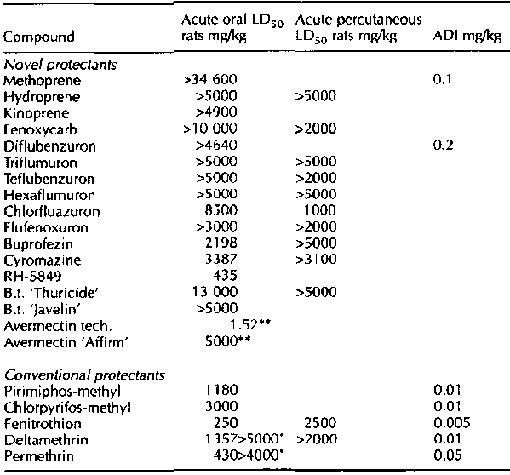
Figure
Notes:
* Figure depends upon the carrier used and the conditions of the
study.
LD50 Dose required to kill 50% of test organism.
ADI Acceptable
daily intake (the daily intake which, during an entire lifetime, appears to be
without appreciable risk on the basis of all the known facts at the time, agreed
by the joint FAO/WHO meeting on Pesticide Residues.
**Data taken from EPA,
1988. (Data taken from Worthing and Hance, 1991
)